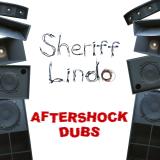
EM Records is proud to present the first new album release in 25 years from Australia's Sheriff Lindo, dubmaster of the Southern Hemisphere.
His "Ten Dubs That Shook The World" EM1119CD/LP, released in 1988, has been growing in stature since its release, supported by its re-issue on EM Records, and in the meantime the Sheriff has been working steadily, deep-local style, honing his skills with the Australian sound systems Firehouse Sound and Earthlink Sound. The tracks on "Aftershock Dubs", recorded between 1990 and 2005, while never officially released, have been played as dub plates at sound system parties, proved movers, tested in the heat of action. Recorded at Lindo's 4/5 Studios, these specials were chosen by Japanese sound system savants Takuto Kuratani (Ruv Bytes) and Atsushi Muneshige (Touch the Sky/Corner Stone Music) from a cornucopia of goodness supplied by Sheriff Lindo, mastered by Kuratani for maximum impact. EM Records' first-ever Dancehall release is available on vinyl and CD, with two bonus tracks on the CD. One track features the vocals of Ras Roni; all tracks feature the experience-forged Dub sense of the Sheriff. More than a quarter-century of love, knowledge and soul-science has been distilled here. Don't miss it.
A Modern Revisit to a Cult Classic: A fresh "Twentysix Mix" of the 2016 underground staple In Your Body, updated for 2026 dancefloors with contemporary BPM and sharp remaster.
Ten years after defining the early sound of his own label, Berlin-based electronic explorer Cosmin TRG revisits a cornerstone of his discography. In Your Body (Twentysix Mix) sees the Romanian-born producer breathe new life into the 2016 underground anthem that helped cement the Sportiv label's reputation for high-end, functional techno.
This updated iteration retains the propulsive, hypnotic spirit of the original while sharpening the edges for a contemporary club environment. The package is rounded out by the driving, industrial-tinged cuts "Erodat" and "Iradiat," plus an exclusive digital remix by mysterious newcomers TRYL. Delivered as a classic hand-stamped white label, this release continues the Sportiv tradition of marrying stripped-back, high-impact club aesthetics with meticulous sound design.
out of Stock
Last delivered 6 days ago available to reorder, subject to availability
Thursday, 2025. Philadelphia. South Philly, to be precise. A basement, to be even more precise. And not just any basement, but the subterranean headquarters of Zillas On Acid.
Which is where Roman Flügel found himself, presumably with good intentions. Some time before that, he had decided to wake Sister Midnight from its slumber.
But rather than simply carrying on where things had left off, a new idea was needed. Enter Sister Midnight Special Products: a new series dedicated to collaborations, chance encounters and other musical situations that deserve to become records.
No grand manifesto, no five-year plan. Just making music with people you like, in places you happen to find yourself, and seeing what happens. Special Product 01 is “Conga Dream,” born from a basement jam with Zillas On Acid and apparently unwilling to behave itself ever since.
Three musical free spirits meet somewhere between the basement, the dancefloor and the more pleasantly confused corners of the mind. Club music is involved, certainly, but functionality has been politely asked to wait outside. Instead: pocketprotector synthesizers, a little E-mu Proteus 3, assorted electronic activity and, as advertised, congas.
The result is less a tool than a small trip. Or perhaps a tool for taking small trips.
Either way, it works.
Zillas On Acid put it like this:
“A basement jam deep beneath the streets of Zilladelphia yields surprising results: pocket protector synths, a dash of E-mu Proteus 3, and yes of course the aforementioned congas.”
And with that, Sister Midnight Special Products is officially open for business.
Emerging from a suspiciously warm corner of the edit underground, this limited white label press sees NYU & NS (or N-You-Up & Nick Studer) quietly tampering with two choice modern soulful cuts from a certain Mr .P, 'Come' and 'Wrong'.
While the originals do quite a lot of the heavy lifting, these two have been given a little more room to misbehave.
The edits keep the soul, swagger and unmistakable DNA of the originals intact, while adding extra groove, punch and just enough dancefloor mischief to cause problems after midnight
out of Stock
Last delivered 13 days ago available to reorder, subject to availability
Belgian artist Jennifur announces MAZDA, an album inspired by long car rides, emotional transitions, and the strange beauty of existing between places, people, and versions of yourself.
Musically, MAZDA moves fluidly between genres and emotional textures, blending electronic love songs, indie rock structures, UK bass influences, cinematic electronica, and flashes of classical composition.
The project began when Jennifur's brother sent him a playlist called MAZDA, filled with songs their father used to play in the car. What started as a nostalgia gesture quickly became the emotional blueprint for the album.
While writing MAZDA, Jennifur realized he was unknowingly creating the soundtrack to a fictional romcom film that existed only in his imagination. Rather than avoiding clichés like love, heartbreak, growing older, or transition, he chose to embrace them wholeheartedly.
"In a car, you exist in a kind of in-between space," Jennifur explains. "You've left something behind, but you haven't arrived yet. That feeling became the entire record."
The album opener, From A to B, sets the emotional framework for the entire project. Its extended introduction mirrors the exact moment you pull out of your street and realisethat something new has begun.
Highlights include "I Need You To Hold On", written for Jennifur's brother as a message of encouragement. The song "I Once Had a Dream Where I Could Fly" originated from a conversation with his father about recurring dreams of flying. Meanwhile, "From The Sideline" confronts a quieter existential fear, becoming a coming-of-age anthem for anyone who suddenly realizes they have become more of a spectator than an active participant in their own life.
Tracks like "In The Sun" bring a softer, almost cinematic intimacy to the album. Written around the image of spending one final Sunday at the seaside with someone who is seriously ill, the song captures the beauty and fragility of fleeting moments. The closing track "The Dialogue Before We Left" serves as the emotional final scene of the album.
"For me, it's the moment after a long drive when you turn off the engine but stay seated for a minute," Jennifur explains. "You realise something happened. You listened to my story, and we travelled from A to B together."
Laura Nyro was an astonishing talent. She was born into a musical family in The Bronx, NY in 1947; her father, Louis Nigro (pronounced Nigh-gro), was a jazz trumpeter, and music was her coping mechanism during a difficult childhood. By the time she was 8 she had taught herself to play piano and was composing her own songs, and during high school she would sing with a group of Puerto Rican friends, harmonising on street corners and in subway stations.
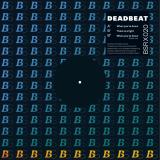
Scott Monteith makes his debut on Berlin's own Bright Sounds under his DEADBEAT alias, bringing three unreleased dub tracks steeped in the deep, cavernous low end he's known for. A pioneer of the Canadian dub techno scene, DEADBEAT has spent over two decades shaping the genre's darker, more spacious corners, and this EP marks a fitting first outing for the label. Pressed in a strictly limited deep blue vinyl edition, it's a must for collectors and dub heads alike.
out of Stock
Last delivered 12 days ago available to reorder, subject to availability
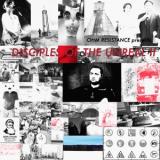
20 Years into the future, we return to you with the world’s illest hard drum n bass beats. In 2006, we released Counterstrike, Identity (BTK Spleen), Corrupt Souls, and Lethal & Khanage, making a 4 continent super weapon of drum n bass.
We arrive in 2026 with the hottest new talent - Rawbreaker, Anika D, paired with legends such as Jaise, Submerged, and inimitable voice of Flowdan. Disciples of the Unreal II is our return to wax also, with a 2x12" mastered hot for the DJs and distributed worldwide.
Each artist contributes a piece of the hard sound in their own fashion - from the roughneck beats of Medium, Rawbreaker, Submerged, and Scartat, to the Sinthetix-fueled neurofunk of Code2 and Anika D, and a foray into industrial techno from Slave to Society’s rework, and landing in the world of original Jungle sound with Jaise. From every corner - we come correct with the drum n bass intellect.
The practice of dub techno and its tendrils is a fundamental for me, both aesthetically and from an engineering perspective.
I start every recording session with a dub inspired jam, the first piece I ever recorded in 1996 was an effort to recreate Phylyps Trak with only a Korg X3 and an Ibanez PUE5 (borrowed from Gary Howell). It was an awesome introduction to jamming, and the footing stones of noise, delay and saturation were explored with my foot hard on the enthusiasm pedal.
These practice jams are in some sense cathartic, the first step taken again & again, which helps me move forwards each session and additionally helps to 'warm the circuits' both of myself and the machines.
After realising the genius of Basic Channel is akin to the genius of peasant food, using every ingredient with nothing left to waste, (up to and including the oft maligned working noise of the machines themselves), this was a watershed moment for my own subjective progression. No longer tied to just emulation of something inspiring, but taking these learned tools into other areas of music helped to break free from a strong current of influence and also to progress into other areas with the new toolbox.
Dub:
The importance of the dub pioneers should never be understated, in modern music and my own practice. Yet with my initial inspiration being two german dudes issuing extreme techno variants with obscured label designs, who then signposted their listeners to their own inspirations (via their Wackies re-issues or nodded to on their Rhythm & Sound/Burial Mix sub-labels), meant that I started late and travelled backwards.
Learning to notice the live mixing of Mikey Dread or Lee Perry when the faders are bleeding through even when turned down, (echoed in BC's Quadrant Dub), or the brash send effects literally thrown into the mix also taught me that 'rough' mixing can inject a recording with life, uniqueness and the most right wrongness. Looking back Basic Channels very few elements helped me realise that the rules to be understood, are also the best ones to be broken.
Push the mixer into the red.
Amp that noise up from the tape delay cos it sounds sick.
Pseudo side-chain effects cos the kicks are way too loud and the mixer can't sum it nicely.
Spam the send knob into the delay units now, now and now.
Carelessness.
Noise:
Once I wrapped my head around the intrinsic 'noise' element that set those records apart, this became a torchlight into the alt noise movements which I was tentatively exploring at the time, and also is evidently a connection or thread into them.
Whether the Industrial/Post Punk UK scene (This Heat, TG, A Tent, F.E.) or the prolific output of the US Noise scene (Wolf Eyes, Live & Shave in LA, and subsequently following the lineage all the way back to Chrome's Alien Soundtracks), I had finally discovered a connection from techno to this 'free for all' corner of music.
This input from the Noise arena of sound is, in my experience, an all important step for a sonic artist, taking it's roots and extending out from Stockhausen/Pierre Henry and utilised/warped/mangled by thousands of adventurous pioneers ever since, I now see the line separating the high brow and the low brow is actually an artery carrying information from the head to the heart.
Vault is a selection of these jams that precede each of my solo recording sessions, for 30 years I've recorded hundreds of these 'workouts'. They are never intended as serious statements, just moments of naive enjoyment, yet most importantly they are time & space captured as practice.
The objective is always a warm up exercise, but sometimes those exercises turn a different corner, with a certain focus or direction dependent on what random samples are left in my machines from the previous session, instead of conscious choices, these unconscious elements can facilitate those 'positive mistakes' that make a piece of sound retain a different feel or colour and thus become special, or at least special to the creator.
I am quite conscious that the 'record everything' aspect of my ethos has been invaluable in cataloguing and saving these jams, while the attitude of carelessness during this process (after all, it's only a warm up jam) invites more enjoyment than seriousness ever could. Even if you don't feel the piece at the time, record it, because some years later it may well fit, or become relevant in a way you never intended.
-Miles
out of Stock
Last delivered 20 days ago available to reorder, subject to availability
Originally released in 1978. A Classic Reggae album re-released on 180 gram vinyl and produced by Linval Thompson with extensive sleeve notes.
Recorded at Channel One Recording Studio & Harry J's Recording Studio.
Cornell Campbell is one of an elite group of Jamaican reggae singers who has weathered the changes throughout the music's development - in his case, from the ska era to right up to date - whilst retaining their relevance. Witness his recent alliance with UK Afrobeat/reggae band The Soothsayers or Jazmine Sullivan's R & B hit Need U Bad, which sampled his classic 'Queen Of The Minstrel' -a song that still sounds fresh more than thirty years later.
Sweet Baby was pressed on bright red vinyl, which only added to the excitement when you saw the selector position it carefully on the deck.
On the LP cover was a painting of Cornell wearing an emerald green shirt and framed by a lurid sky, which might have left some people wondering if it was a soul album. It wasn't, although there is certainly soul in the grooves, and especially on R&B covers like Gonna Take A Miracle - first recorded by the Royalettes -and Darling You Send Me, which Sam Cooke had introduced to the US Billboard charts some twenty years earlier.
Both are among the highlights but then the whole album is good in truth, and a heartfelt I Need Somebody and My Sweet Baby, plus the two-step favourite Just Enough were regularly played on sound system. Blinded By Love, I Didn't Know and Can't Hide My Love are tinged with melancholy and like the seductive Whenever You Need Me, display all the hallmarks of a classic Cornell Campbell side -swooping vocals, a driving rhythm and seductive lyrics included.
Nearly forty years later, it is gratifying to know there is still no mistaking him when his records are played in a dance. That relaxed vocal style draws you in but it's his falsetto, quivering with understated emotion that hooks you and turns you into a lifelong fan.
The Veils' first three albums are returning to vinyl thanks to Rough Trade Records.
The Runaway Found (2004), Nux Vomica (2006) and 2009's Sun Gangs established the New Zealand band as purveyors of lush, romantic indie, able to sweep through cinematic vistas into intimate emotional corners, via gothic orchestration and atmospheric driving rhythms.
Founded and fronted by singer-songwriter Finn Andrews while still a teenager, over their first three albums, The Veils carved out a musical landscape of their own that was in turn deep and enveloping yet emotionally raw and direct.
Having only enjoyed a limited vinyl run on their releases, due to the format's neglected commercial status during the 2000s, the repressing of The Runaway Found, Nux Vomica and Sun Gangs, offers audiences a fresh opportunity to enjoy these records with the full depth, fidelity and artwork they deserve, and reminding listeners of the musical secrets The Veils revealed to the world.
“It is a sincere joy to see these records that are so important to us and to so many others reissued on vinyl by the label that nurtured us right from the start. I remain hugely grateful to them and to all the songs on these searching, impassioned, and magnificently youthful first attempts.” - Finn Andrews, The Veils
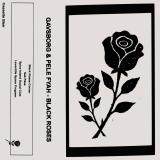
Picture the scene - October 2025, while staying at a friend’s apartment in Chennai, Gavsborg created umpteen ideas and contacted his good friend and bassist from back home, Delroy Pele Fyah Hamilton to collaborate. Hamilton, now based in Singapore performs and records regularly with F.Y .A.H. (successor band from Raging Fyah).
Both Blair and Hamilton share a love for Caribbean music. With this foundation the two set out to create something a bit different that sits between Bouyon, Dancehall & Dennery. The amalgamation resulted in this unique four-track instrumental EP . While the track titles are packed with broader Caribbean references, the project name and title track is an ode to the 90s dancehall pioneers, “Black Roses Crew” , who were based in Arnett Gardens (aka Jungle), Kingston, Jamaica, one of the important homes of 90s dancehall. Roses helped shape dancehall culture through dance, style, crew affiliation, and performance, largely soundtracked by Computer Paul’s Corduroy Riddim with Gerald Levy aka Bogle being the poster human.
Arnett Gardens (Jungle) is one of the key engines that produced the version of dancehall both Gavsborg and Pele draw here from. Think tight, bubbling, bouncing riddims, rolling basslines unlike anything you’ve heard before. Jamaican Dance Music for the movers and shakers
„Take Me Back / Live from the Gorge“ ist ein bahnbrechendes Live-Album, das 2025 während des jährlichen Labor-Day-Wochenendes der Band im Gorge Amphitheater in Washington aufgenommen wurde. An diesem Wochenende spielte DMB zum ersten Mal das Album „Before These Crowded Streets“ in voller Länge live. Weitere Songs sind: Dylans „All Along The Watchtower“, „You Never Know“ und „It Could Happen“. Béla Fleck (der auf „Before These Crowded Streets“ als Gastmusiker mitwirkte) begleitet die Band bei „Last Stop“ und „Don’t Drink the Water“.
»Pipe Dreams II & III« presents two new, side-long organ works by Mary Jane Leach, extending the sonic investigations of her 1989 landmark »Pipe Dreams«. Recorded in Ghent and Cologne, the two side-long pieces use shifting stops, resonance and beating tones to turn the pipe organ into a vivid, physical field of sound.
When »Pipe Dreams« was issued on vinyl for the first time by Blume in 2017, it was effectively the first time many of us encountered Mary Jane Leach’s music, finally placing her work in its proper historical context amid the searching Downtown milieu of Julius Eastman, Arthur Russell, Arnold Dreyblatt, Ellen Fullman, Philip Corner, Daniel Goode, and Peter Zummo. Leach collaborated with most of these artists at one point or another, either in Downtown Ensemble or as a guest on their records.
Now »Pipe Dreams II« and »Pipe Dreams III« arrive, recorded in 2023 and 2024 at Miry Concertzaal in Ghent, Belgium, and Kunst-Station Sankt Peter in Cologne, respectively.
»When I was a young child, my family lived next door to a church, where my mother was the organist. I spent many hours lying on the floor of the sanctuary listening to the music, letting the sound of the organ envelop me. I also liked to play the piano loudly with the pedal down, producing clouds of sound, much to my family’s annoyance. These two organ pieces explore some of my earliest musical interests and aesthetics.
In 1989, I lived in a tower attached to St Peter’s Church in Cologne, where I had access to its organ. It had two sets of pipes, front and back, which could create antiphonal effects. I spent countless hours exploring the possibilities of all the permutations of notes, space, and the resulting sound phenomena. I wrote »Pipe Dreams« for that organ. Fast forward to 2023, when I was asked to create a piece for organ for a concert at the Miry Concertzaal in Ghent, Belgium: »Pipe Dreams II«. I had a few days to familiarise myself with the organ, its available stops, and the layout of the console. I choreographed stop changes for a volunteer, as I couldn’t reach them myself. Some amazing sounds began to happen, and at one point the sound was so visceral that I felt as though I were taming a wild beast.
»Pipe Dreams III« was performed in 2024 on the organ that I had spent so much time playing in 1989–90. One big difference, though, was that the console was totally new and computerised. Having access to the organ for only a few hours before the concert, I decided that I did not have enough time to feel comfortable with the console and should not attempt to recreate the piece I had written in 1989. I would instead use the same sequence of stops and perform an improvised piece. I loved the sounds that were being created, and I was having so much fun that at one point I even started to laugh quietly. I began to visualise the beating notes as if they were atoms, opening them up to expose their innards, with the beating, higher-pitched notes — neutrons and protons — shimmering at the top, and the lower notes — the electrons — throbbing away at the bottom. I was playing notes not so much for their pitch value, but for how they affected the notes and sound phenomena already being played. Instead of a time signature, I timed the entries by listening to the beating patterns, waiting for the right moment to enter. And no, I wasn’t hallucinating.«
Can you believe it Fall of 2014 marks the 20TH ANNIVERSARY of YOSHITOSHI, the seminal record label founded by Deep Dish in 1994.
To celebrate, we are bringing the classics back, remastered and with new remixes from an amazing group of heavy hitters from all corners of the dance world.
Given that Yoshitoshi's roots are ingrained in house music, it's only fitting to start the re-release campaign with Eddie Amador's classic House Music.
Released in 1997 it went on to become a global phenomena with its hypnotic hook and infectious Not Everyone Understands House Music that has become the preach anthem for generation of house music lovers.
Along with the remastered original the package includes remixes by Uto Karem, Robosonic & Anthony Attalla...
out of Stock
Last delivered 4 days ago available to reorder, subject to availability
Heads down, steady and to the point — Squash returns to Healer Records with 3 understated club cuts, tracing deeper corners of dub, prog and tech house. All function, no excess.
out of Stock
Last delivered 4 days ago available to reorder, subject to availability
Some recordings herald the future in ways that are impossible to see in real time. Teodros Makonnen With His Organ (ቴዎድሮስ መኮንን ከኦርጋኑ ጋር), by the artist Teodros Makonnen, also known as Teddy Mak, is one of those. Today, electronic sounds, synthesizers, and digital production are taken for granted in Ethiopian music, but in the early 1980s, they were novelties that polarized opinion. Even to this day, the story of Teodros Makonnen’s legacy has never been properly told. He played a decisive role in defining the sound of the digital era of Ethiopian music that emerged in the 1980s and beyond, both as a keyboard player and as a producer, songwriter, performer, and sound designer.
Ethiopian music was at a crossroads in the early 1980s. Much like music in the rest of the world, technology and automation heralded either a quantum leap in musical development or the annihilation of musicianship, depending on who you’d ask. The changes were incremental nonetheless, but with the benefit of hindsight one can clearly see that the changes meant different things in different contexts. Drum machines and electric organs came to replace many hotel bands because, all of a sudden, one musician could control drums, melody, and accompaniment. Teodros was one of the first musicians in Ethiopia to explore the possibilities this opened up.
Teodros’ father, Captain Makonnen Beri, was a chief pilot at Ethiopian Airlines and a music enthusiast at that. This would prove important to his development, as Makonnen brought back a piano from Germany, which would lead to the first steps in Teodros’ long musical career. Captain Makonnen’s work as Head of Flight Operations and as a pilot exposed him to the wider world that was far from commonplace for most Ethiopians. In a house where music captivated the whole family, the piano gave Teodros’ talent an outlet. Not only was a piano at home rare in Ethiopian households, his father also brought an Indian teacher to their home to teach Teodros and his brother, Captain Samuel Makonnen, music theory (solfeggio or ear training) and piano. Teodros and his youngest brother, the late great Dereje, a member of both the legendary Ibex Band and the Ethiopian reggae group Dallol, took up music from that point onward, with Teodros beginning to develop his proficiency at the age of eight. His father encouraged him to practice tirelessly at home, and Teodros later received musical schooling at the German School in Addis Ababa. His obvious talent led to studies and formal education at the Yared School of Music, followed by continued studies in American jazz at Northern Virginia Community College in Virginia. Teodros cut his teeth professionally in his mid-teens, not only as a keyboardist, but also as an arranger for the Wabi Shebelle and Dahlak bands in the 1970s. He mastered electronic sequencing early, rising to prominence through the midnight recording sessions held during the military curfew. The pressures imposed by the curfew required precise and disciplined recordings, and Teodros delivered just that. This, in turn, led to collaborations with iconic artists such as Mulatu Astatke, Aster Aweke, Menelik Wossenachew, Tilahun Gessesse, Mahmoud Ahmed, and Alemayehu Eshete. In those days, he sat in as a keyboardist with the Dahlak Band when Dawit Yifru took a hiatus to study in Russia, and also with the Ethiostar Band. He secured a residency at the Wabi Shebelle Hotel with the Shebele Band, together with Zelalem Tadese (drums), later succeeded by Elias Bekele, Mulugeta Hailu (bass), Teferi ‘Bibisha’ Mengesha (guitar), Kumelachew G/Selassie (trumpet), and Teshome Deneke (saxophone). A friendly competition developed between the bands associated with the Ras Hotel (the Ibex Band), Ghion Hotel (the Dahlak Band), and Wabi Shebelle Hotel (the Shebele Band). The music scene at Wabi Shebelle saw teenagers commanding the spotlight in an industry otherwise dominated by musicians of an older generation. At the Wabi Shebelle Hotel, Teodros met a diplomat from Saudi Arabia and later visited him at his home in Addis Ababa, a meeting that had unexpected musical consequences. The man owned a Yamaha double-deck keyboard. That evening, they recorded Teodros Makonnen With His Organ (ቴዎድሮስ መኮንን ከኦርጋኑ ጋር) in one take. This recording, a cornerstone in the early digital sound of Ethiopian music, came about almost by chance, simply because Teodros got the opportunity. Traditional Ethiopian songs were cast in a wholly electronic style. Once freed from backing duties, Teodros’ keyboards could explore dreamlike soundscapes that took Ethiopian music in new directions. Even though the cassette contained well-known Ethiopian songs, they were given highly original arrangements, performed on an electric organ with drum machine backing and rhythm patterns that left the listener with suggestive, lingering sounds. “Libesh Kabashen” (also known as “Anchi Bale Game”) and “Odu Gol Golesa” wrap you in the very stuff that dreams are made of. Originally released on cassette only, this recording exudes a mystique that surpasses even some of the most obscure Ethiopian recordings of the day. It remained more or less unknown outside of Ethiopia until now. Some of the tracks, like “Addis Fikir,” are permeated with an almost naive buoyancy, free-floating sounds that lost contact with the ground the moment they were conceived. Others, like “Meche New Hageren Yemayew” and “Lelitu Alnega Alegn,” carry a moodier, quirkier timbre, with pulsating rhythms in the background. Yet even the darker pieces contain an unmistakable wave, something essentially Ethiopian. If most recordings of Teodros’s contemporaries at the time were teeming with atmosphere, his songs seem instead at home in the stratosphere, almost ethereal. Some of the music here could be filed under “lullabies,” were it not for the recurring, almost brooding feeling that engulfs the listener on the aforementioned tracks. You could easily be forgiven for drifting into a blissful haze as the music washes over you.
Up to the advent of electronic music production, Ethiopia was totally dominated by big bands on the one hand, and small groups on the other. The former were tied to large institutions such as the military, the latter emerged from the entertainment industry, in hotel bars and nightclubs. These groups were commercially driven, and bands ultimately had to foster a mercenary approach to employment, albeit not to the passion for music. In the light of this, Teodros’ musical legacy can be seen in two ways. On the one hand, he is a key player in Ethiopian music from the 1970s onwards, leaving an indelible mark through hundreds of compositions and arrangements, including soundtracks for numerous documentary films and advertisements for different companies. On the other hand, the way he and others employed electronics brought Ethiopian music onto a fork in the road.
The replacement of traditional instruments with electronic equipment was seen as impending doom by some. Others, like Teodros, saw new avenues for performance, production, and creativity. Just as later producers like Abegasu Shiota of Admas, Teodros was a trailblazer who opened paths that it took Ethiopian music as a whole more than a decade to rush into. The hotel scene had already been pushed toward electronic music by financial necessity and cost-cutting. Today’s revived global interest in Ethiopian music from the seventies and eighties, alongside a broader resurgence, has changed the reasons for using digital means of music production. They have become tools for musical dreaming. This is where the dreaming began.
out of Stock
Last delivered 14 days ago available to reorder, subject to availability
ONE STEP CLOSER TO FULFILLING THE GLOBAL DREAMLAND CONTINUUM. THE RESULTS WILL KEEP YOU MOVING… ALL NIGHT. THE CIA ATTEMPTED TO CONFISCATE OUR TECH BUT HOUSE NATION INTERCEPTED THE CASE. THEY CAN’T STOP US FROM GROOVING. 4TH DIMENSION SONIC ENGINEERING PREVAILS AGAIN.
Label head GD returns to global swing with new EP, "Come Closer."
Following "Gary's Dreamland," his last outing on the label, Garrett continues to refine a sound that's distinctly his own. With "Come Closer," he delivers another confident, fully realized EP. Featuring a collaboration with Shanny Wise of Fcukers, marking a first-time collaboration between the two.
Garrett doesn't cut corners, and it shows. Every track here reflects the same attention to detail that's defined his output for years, pushing his catalog forward while staying true to the underground sensibility he's known for.
out of Stock
Last delivered 4 days ago available to reorder, subject to availability
Death Is Not The End present the first volume in a survey of a form of Brazilian country music known as música caipira ("hillbilly music") - a stripped-back forerunner to música sertaneja, the Brazilian equivalent to US country & western which in it's contemporary form has come to dominate the domestic music industry in recent decades. This collection covers some of the earliest recordings made by the pioneering folklorist Cornélio Pires at the end of the 1920s, through to records from the 30s, 40s & 50s and the beginning of the 60s.
Somewhat rooted in Portuguese troubadour folk traditions, música caipira is typically performed by a duo singing in parallel thirds and sixths, drawing upon a Portuguese-Brazilian style known as moda de viola - with the viola being the viola caipira, a Brazilian-style ten-string guitar that is the core instrument of the music. Born out of the "outback"-style region in north-eastern Brazil, these songs tell stories of pain, love, loss & betrayal - often backed by homemade guitars using invented tunings. Away from the polished pop country & western-stylings of the sertaneja, these recordings could be viewed as the Brazilian equivalent to the roots music of the American dustbowl or Appalachia.
Tucked in the heart of Koreatown, Los Angeles, lies The Libra Hotel—the titular architecture of Nick Malkin's new album and site of his musical and psychogeographic exploration. Unlike most musical "site-specific" studies, Malkin remains wholly ambivalent to the documentarian approach, instead sharpening an auteur-like focus on the site as a conceptual and highly expressive backdrop. The Libra is musically explored as a space that houses a noir fragmentation of identity—the exhausted trope of a complicated protagonist walking through rain-soaked street corners and fumy neon lights—where an inner monologue is rendered in both miniature and at a cosmic scale. Casting aside stifling tropes around field recording, ambient, and improvised music, Malkin's work finds its own unique fidelity and emotional core through the assembly and reassembly of memory. Nearly every sound on the album—from frayed saxophones, lambent pianos, and dissected jazz drum kits—are multiplied, shattered, and reconstituted into shapes that adorn The Libra in a motion-blurred fog. The narrative of the Hotel suddenly appears as if out of the mist, with intersecting characters interacting within its walls by happenstance. Adminst the languid set pieces, wraith-like sonic grains gravitate around wide subbass beams that give structural form to The Libra, a narrative tension like when a scene is shot from hundreds of different perspectives: an image both luminous and veiled.
Much like Frank Sinatra's own spatial residency immortalized on "Live at The Sands," "At The Libra Hotel" showcases an exuberant view of entertainment, hospitality, and a form of masculinity, one that can quickly detourn into darkness. Knowing this, Malkin extracts a melancholic core out of The Libra locale. The flickering shadows of American decadence are shown in their ephemeral honesty, lines that trace how even in everyday life virtue is tested, sanity is tested, even reality is tested within the confines of desire, within the night. The album is draped in fleeting textures, carefully arranged with a trance-like microtonality, the faint inflections and articulations of a jazz band cascading into dissipated stillness. Voicemails about changed locations and covert eavesdropping on guests' whispered conversations provide an atmosphere of missed connection and voyeurism—a purloined letter of desire receding into a vanishing point. Like the music itself, The Hotel, a chapel perilous at the intersection of desolation row, the center of it all, yet simultaneously at the edge of town, becomes a structure between libidinous virtuality and actuality—our inevitable half-light.
Ultimately, the pensive atmosphere of "At The Libra Hotel," powerfully asserts a plea for the kinds of intimacy only possible in transient spaces. Here, memory cascades into a force that feels like something supernatural, perhaps even religious, yet always subject to the infidelity of our imagination. Here, the album opens into its primary psychodrama, the transient nature of subjectivity itself and how this becomes fractured in the tumult between our commitments and desires. Within this nocturnal space, to quote Louise Bourgeois, "you pile up associations the way you pile up bricks. Memory itself is a form of architecture."
Do Da Doo' Returns with New Life on Definitive Recordings
SPECIAL VINYL ONLY RELEASE
Definitive Recordings revisits one of its most iconic releases with a fresh reissue of Robotman feat. Marshall Jefferson - 'Do Da Doo', originally released in 1992. A cornerstone of the label's early catalogue, the track returns with newly re-recorded vocals by house legend Marshall Jefferson, bringing renewed energy to a timeless classic.
Robotman, a moniker of Richie Hawtin (aka Plastikman), represents an essential chapter in the evolution of house and techno. As one of the most influential figures in electronic music, Hawtin helped shape the sound of acid and minimal techno while co-founding the legendary Plus 8 label alongside John Acquaviva. His forward-thinking productions and groundbreaking DJ sets have defined generations of dance music culture.
On this release, the original Plastikman Acid House Mix stands as a true highlight. Spanning 12 minutes, it delivers a deep and hypnotic acid journey driven by classic TR-909 drums and a signature TB-303 bassline. The instantly recognizable vocal 'Got the Do Da Doo' sits prominently within the groove, creating a powerful and timeless club moment that defined an era.
On the flipside, Detroit's DJ Minx brings a fresh perspective with a groove-heavy house interpretation. Known as the 'First Lady of Wax' and a key figure in Detroit's scene, Minx reshapes the vocal into a rhythmic element, layering it into a shuffling and classic house framework. Her version adds warmth and swing while staying rooted in the track's original spirit.
With this reissue, Definitive Recordings celebrates a landmark release that continues to resonate across generations, combining legendary artists, timeless production, and the enduring energy of house music.
out of Stock
Last delivered 6 days ago available to reorder, subject to availability
Over the last decade, Medlar has carved out a unique corner of the underground with releases on labels including Delusions of Grandeur, Wolf Music, Razor n Tape and Make A Dance, developing a sound that effortlessly bridges deep house, leftfield disco, broken rhythms, and jazz-infused electronics. Here he is with a brand-new Celestial Bodies EP on Delusions of Grandeur, deep, warm, Balearic sounds for the soul!
out of Stock
Last delivered 4 days ago available to reorder, subject to availability
Remastered limited edition double vinyl with double-sided screenprinted poster-cover (sleeve folds out to be one huge poster). A real collectors item!
When Off Off came out around June 1984, one couldn’t speak of an independent music scene in Portugal. Warm Records’ vague existence didn’t have any impact and Dansa do Som’s inaugural release appeared only in December. 10 years after the revolution, after two IMF interventions, a lot of political instability (not to say turmoil, in the first couple of years) and the natural excesses of a sudden burst of freedom, the Portuguese consumer had more choices but a generally poor standard of living. There was no entrepreneurial culture and serious second thoughts about investing private money in risky ventures.
After many complaints about the whole music scene (institutions, critics and record label executives, popular and classical music alike), something that would continue well beyond the end of the decade, Telectu decided to finance, record, produce, release and sell an album with complete independence from outside structures. Their karmic reward was profit. According to Vítor Rua, Off Off was the only album fully payed by the duo and the only one that really payed off. Not an easy accomplishment for a double LP housed in a large (also double-sided) screenprint with complicated cuts and folds. The artwork was conceived by António Palolo, a friend and multidisciplinary artist. It was based on a collage of heavily saturated and xeroxed polaroids framed in shocking pink and green. Palolo was considered the third member of Telectu, regularly producing slides, video and other visual support for their shows. The inspiration for the type of cover came from GRM’s Gramme series.
Off Off is divided in four distinct sides, each one corresponding to a “theme” or “function” related to Telectu’s manifold artistic interests and interactions. The titles are also gateways to influences and a small portion of Portuguese cultural life:
- Side 1 / “Diagonale” is dedicated to Egídio Álvaro, art critic and gallery director (he opened Diagonale in Paris). Performance art was arguably his main artistic concern over the years, so the music on this side is suggested for use by one or more performers in live or playback situations. The three tracks segue into each other, linked by a synth arpeggio much in the same way as Telectu’s previous “Belzebu” álbum (1983);
- Side 2 / “Anarké” is dedicated to the composer Filipe Pires, one of Jorge Lima Barreto’s recurring invocations when asked about worthwhile contemporary music in Portugal. It is subtitled “concert music”, proposing «a new form of listening». Three tracks also, and these are separated by “clap interludes”, which basically consisted in the following: JLB and VR each had a pair of headphones on, and they clapped their hands according to the rhythm of the music each one was listening. Both musicians were interacting with a different Steve Reich piece: Vítor with “Music for Mallet Instruments”, Jorge with “Six Pianos”. The result is disjointed clapping, an awkwardly deliberate celebration of their own music. Telectu applauded themselves.
- Side 3 / “Cornucópia” is subtitled “music for theatre” and dedicated to Luís Miguel Cintra and Luís Lima Barreto (JLB’s brother), both connected to the Cornucópia theatre company. The side consists of several short pieces previously used as interludes in the Cornucópia staging of “Mariana Espera Casamento” (1983). Field recordings, mood pieces, ambience and a numeric poem (“Soneto Soma 14x”, by E.M. de Melo e Castro) read by João Perry, a quite well-known stage actor. His voice is treated with a flanger effect;
- Side 4 / “Palolo” is “video music”. It’s a one-take mix recorded from cassette sources (Telectu studio experiences) and done live while watching António Palolo’s Om film (1978) projected on the living room wall. It’s a deep, immersive, quasi-mystical 20-minute piece perfectly suiting the meditative, abstract, fluid images created by Palolo by mixing paint and water inside a bathtub. One imagines the Cosmos, hardly suspecting the technique. The film is 90 minutes long, so the music on the LP is of course edited.
The six titles on sides 1 and 2 evoke demons, all of them with conflicting symbolism, since it varies from culture to culture, religion to religion. No explanation is given and Vítor Rua has no idea where this imagery comes from. During virtually the whole stretch of the 1980s, Jorge was the one in charge of titles and concepts, and Vítor didn’t bother too much even reading the liner notes :) In any case, when you synchronize the listening experience with the imagery, a powerful impression emerges, a feeling of being in the presence of these entities while placing yourself inside the sonic narrative.
Off Off is undoubtedly a seminal album in the history of electronic music, as much Heldon as Fripp & Eno, jazz and American minimalism, cosmic out-thereness, mantric miniatures. Telectu at the height of their powers, still very early on, delivering an album-manifesto advocating intermedia art and the fierce independence of Portuguese musicians «from the scum of capitalist music industry monopolies. It’s a path to follow, albeit one that requires enduring hardships and retaliation from music industry gangsters.» Despite a few journalists deemed «capable of being free», the media are «enslaved by the dominant and fascist imbecility of the speculators of light music.» Off Off is addressed to those journalists «and to an audience angry at the cultural misery imposed upon us ..., certain that this music will open new horizons of musical pleasure in the conception of Portuguese avant-garde music, and in the open consciousness of us all. OFF OFF repeats Freedom.»
Those two words are a direct lift from Alberto Arbasino’s 1968 book Off Off, the basis of which is a critical analysis of Theodor Adorno’s and Dwight MacDonald’s ideas concerning the stratification of culture in different levels (high, mid and low) and the pervasiveness of mass culture in the form of a culture industry. In very simplistic terms, and that is precisely the point that inspired Jorge, Arbasino argued that it was possible and desirable to effect a revolution from below, cultivating alternative circuits completely cut-off from what he termed the in-in reality. Telectu’s record was a deliberate demonstration that it could be done, displaying Freedom in the face of all the gatekeepers and other human obstacles.
NEIL ARDLEY – KALEIDOSCOPE OF RAINBOWS The Definitive 2LP Reissue of a Landmark in British Jazz Fusion
Analogue October Records proudly presents the long-awaited reissue of Kaleidoscope of Rainbows, Neil Ardley’s 1976 masterpiece, originally released on Gull Records. Produced by Neil Ardley and recorded at London’s famed Morgan Studios, the sessions were engineered and mixed by Martin Levan, capturing one of the most ambitious and beloved works in British jazz. Following the acclaimed reissues of Courtney Pine’s Journey to the Urge Within (AOR-001-ST) and Neil Ardley’s Harmony of the Spheres (AOR-002-ST)—both praised by the audiophile press including The Tracking Angle—this third release confirms Analogue October as one of today’s most meticulous and exciting reissue labels.
A Suite of Sound and Colour
Commissioned for the 1975 Camden Jazz Festival, Kaleidoscope of Rainbows is structured as a seven-part suite, each movement reflecting a colour of the spectrum. Ardley’s composition weaves together jazz improvisation, progressive rock energy, and orchestral elegance in one of the most imaginative British jazz recordings of the era. Featuring Ian Carr, Barbara Thompson, Tony Coe, Trevor Tomkins, and Geoff Castle, the album is a who’s who of the UK’s vibrant 1970s jazz scene.
Cut at Abbey Road, Pressed at Record Industry
For this definitive edition, Analogue October worked directly from the original Gull master tapes. Mastering was entrusted to Miles Showell at Abbey Road Studios, using his renowned half-speed process to extract every detail and dynamic from Ardley’s score. To give the music the headroom it deserves, the reissue has been expanded to a deluxe 2LP set, pressed on the highest-quality vinyl at Record Industry in Haarlem, Netherlands. The result is a presentation that finally does justice to the scope and brilliance of Ardley’s vision.
Deluxe Package – Restored from the Source
The artwork has been meticulously restored from the original film elements, ensuring a sleeve of unmatched vibrancy and fidelity. Inside, a 12-page booklet printed on heavyweight card features an in-depth essay on Neil Ardley and the making of Kaleidoscope of Rainbows, written by Jazzwise magazine editor Mike Flynn, alongside rare photographs from the period.
Curated and Produced by Craig Crane
As with every Analogue October release, Kaleidoscope of Rainbows has been curated and produced by label founder Craig Crane with a collector’s eye for detail and a deep respect for the music’s legacy. This reissue is not only the definitive vinyl edition of one of the great British jazz fusion albums—it also continues the label’s mission to restore and celebrate the most vital recordings of the era.
Neil Ardley’s Kaleidoscope of Rainbows—vivid, expansive, and timeless—returns as the essential edition for audiophiles and jazz lovers alike.
Retail-ready product description (short form):
Produced by Neil Ardley and recorded in 1976 at London’s Morgan Studios, engineered and mixed by Martin Levan, Kaleidoscope of Rainbows is a cornerstone of British jazz fusion. This definitive 2LP reissue, mastered at Abbey Road by Miles Showell from the original Gull master tapes and pressed at Record Industry (NL), finally gives the music the dynamic headroom it deserves. The deluxe edition includes restored artwork and a 12-page booklet featuring an in-depth essay by Jazzwise editor Mike Flynn.
Her sound remains vast and yearning, with gut-punch drums pushing through explosions of colored powder; her voice is a chrome-plated sigh, and her agile melodies soar effortlessly. - Pitchfork *BEST NEW MUSIC*
she achieves some serious cinematic grandeur. - Stereogum
Simply too sublimely crafted to ignore. - Consequence of Sound
A catchy ethereal piece of pop - Brooklyn Vegan
Rose's layered, reverb-laden vocals hit like waves of sunlight, warming her lines almost to the point of wordlessness. - Paste Magazine
"Hila. A record about loss. What persists beyond the range of ordinary perception? The place mourning keeps returning to - not quite transcendence, not quite doubt. The edge of what we can see."
Frankie Rose has spent fifteen years building one of the most quietly distinctive bodies of work in American independent music. Bursting out of the shackles of her legacy on 2024's Love As Projection, 2026's Hila builds on the muscular, dance-ready songwriting and transcendent melodies to result on Rose's most exploratory and affecting record of her career. Imbued with yearning melodies and brooding post-punk dynamics, Hila is Frankie Rose at her most impressionistic and expansive.
Self-produced at her home studio featuring collaborations with drummer Justin Welch (Elastica/Lush), Hila was recorded following extensive touring with The Jesus & Mary Chain and Swervedriver. The result is the most confident, searching music Rose has produced; muscular in its production yet emotionally vulnerable in its diffracted neon glow. A record informed by loss and the way grief mutates our senses, it's fitting that Rose channels the nuanced darkness of later Coil, at times the pounding EBM-production of Skinny Puppy and the near-spiritual alien-ness of Cocteau Twins. On Hila, the doors of perception are constantly melting, revealing the porous nature of the seen and unseen. The result is a synesthesia that flips the senses.
If Love As Projection was an outward-looking record looking to embrace the world, Hila brings the dark cosmos into inner space. Rose's love for 80s production and soaring melodies remain, they're cornerstones to her craft after all, but there's something more assured and gothic underneath the massive waves of sound. Opener Olo shimmers into a pulsating, cinematic brooder, Rose's vocal transcending and swan diving between registers in the chorus breakdowns. First single Cant Be Wrong serves as a transition from the optimistic pop of Rose's previous album, introducing a thumping 80s funk rhythm track under the soaring vocal performance. The ebullient Shadow Twin is that song's sibling, recalling major label-era Strawberry Switchblade melancholy mixed with Robin Guthrie's twinkling guitar work.
Hila blossoms darkly from here on in, blowing out into a glacial wide-screen sonic dynamic. On Rainman and the title track the listener is transported to a rain-soaked, nocturnal cityscape ridden with desire, moonlight cutting through blinds, intoxicating chasms without bounds. Rose's use of saxophone and digital synthesis recalls the nightmusic of Hats-era Blue Nile or the more ambient end of Emeralds' catalog. Indeed, in the towering synthetic cello sounds that climb into the mind on Hila, there's a distinct flavour of the instrumentals on Bowie's Low. This is musick to play in the dark, to light the way a little, just enough to trick the senses.
Leading into the strobe-filled haze, single Manifest pounds forward with a massive Industrial 4/4 beat and post-punk/goth musicality, an exercise in unlit ecstasy. For Best Of Times, the liberal saxophone passages feel like a suppressed, 80s Michael Mann soundtrack with Frankie Rose's effortless, melodic vocal performance probing, searching for connection. Navigating through the dry, iced landscape into a rising sun, closer Velvet Refrain flips the melancholy of the preceding passages. With a massive sound dripping with harmony, the clanging guitar and vocal duet feels they're sound-tracking an unexpected happy ending after bouts of darkness."
Shaped in the shadows and sounds of the legendary Topanga Canyon, California. The debut album from Biita Houdei is buoyed by a magic that feels wildly and beautifully untamed; wild-hearted sentiments that are shaped by the world around it, fascinated by the enchantment of it all, and delivered via a collective (harmony layered) voice that understands the complex nature of what it means to be alive in the here and now.
Produced by Haley Heynderickx, 'This Bed Was Made For Me' is a striking collection of stirring, signature folk songs animated by subtle instrumentation and orchestral flourishes. It feels lived in: vocals weave together in a beautiful harmonic dance, seasons shift, sunshine appears and bold psychedelic colours warm the horizon.
In the early stages of making her debut album, Biita Houdei knew two things: that she wanted the recordings to feel distinctly and palpably warm, and that she would sew a unique patch for every song on the album. The first of those things is subjective, though brightness pours in from all corners of This Bed Was Made For Me. The second became a laborious task she undertook throughout the process, the completion of which is testament to the slow process of it all, to the physical commitment and patience required to make a full work of art.
The patches she crafted during the making of This Bed Was Made For Me became a full quilt, one that now adorns the album’s front cover. Beneath it sits a striking collection of Houdei’s stirring, signature folk songs, brought into fruition with the help of fellow songwriter Haley Heynderickx, in her first lead production role, and the album’s producer/engineer Sahil Ansari. It’s also the first release Biita (pronounced “bee-tah”) is releasing under her newly-taken name, one that was gifted to her by her auntie and means "unique" in the Farsi language. “I proudly take this name,” Biita says of the change. “It makes me feel that much closer to my Persian heritage.”
Recorded across ten back-to-back and full days, the album touches on themes of love and heritage, of taking chances, the preciousness of time and the impact we all have on the world around us. A number of the songs were written in Topanga, California, while Biita settled into a new home as wild fires raged, and as she adjusted to a life which no longer held distinct seasonal changes, far from the Ozark Mountain home she felt so attached to. Such themes reveal themselves in a variety of ways across the album’s fourteen songs, that key sense of warmth retained in the bones of the album whether they are stepping into darkness or seeking out light.
The album feels lived in and alive; dust swirls, seasons shift, sunshine appears and is held. Biita calls it ‘psychedelic’ and there is indeed a sense of that in the world building, in the way the bold colours are always shifting. Formed of fourteen songs, and filling nearly forty-five minutes, This Bed Was Made For Me not only builds a whole world for listeners to inhabit but also implores you to stay a while. This was deliberate, indeed it’s Biita’s wish that listeners give the album dedicated time; to learn its shape, to explore it fully, away from the instant grab of playlists and skewed algorithms.
“Many of my favourite albums didn’t reveal themselves instantly to me,” Biita, now based in the Catskill Mountains of New York, explains. “Some did, of course, but I had to work to understand the full scope of the piece as a whole. I encourage people to dive deeper into everything that they choose to consume. It is not my intention to sound pretentious, but instead, I am trying harder to explain the gratitude I have for being able to craft every part of this album— using my hands, my brain, my voice, my visions. To me, it is an all encompassing work of art,” she continues. “Making the quilt was laborious. Taking the cover photo was laborious. No shortcuts, but rather a manual and tangible approach. I am thankful for the time it took.”
"The 1969 self-titled album by Koko Taylor cemented her place as Chicago’s undisputed Queen of the Blues. Scouted by Chess Records house bassist and producer Willie Dixon at Chicago’s legendary Sylvio’s Lounge, Dixon provided his new protégé with “Wang Dang Doodle,” a song that would sell more than a million copies and become her signature tune. Drawing heavily from her recent run of hit 45s, Koko Taylorfeatures, in addition to “Wang Dang Doodle,” Dixon-penned classics including “Twenty-Nine Ways (To My Baby's Door)” and “Yes, It’s Good for You,” alongside Taylor’s own “Nitty Gritty,” highlighted by Johnny Shines’ poignant slide guitar. Koko Taylor remains a cornerstone of Chicago electric blues.
Bring home the sound of America’s greatest blues label in high fidelity with the Chess Records Acoustic Sounds Series. These audiophile reissues of classic albums and compilations from the Chess discography are remastered from the original analog tapes and pressed on 180-gram vinyl at Quality Record Pressings (QRP). Each disc is packaged in tip-on gatefold sleeves printed on high-grade board."
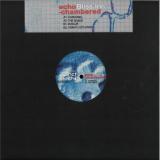
As has been the case with a number of releases on Punctuality so far, Echo Chambered has already gained notoriety as a sleeper hit for those in the know. Fans of Evan Baggs and Rey Colino’s Radar stream from Dekmantel 2025 will instantly recognise Carousel, pulled from a white-label dubplate about half an hour into the set. Fast forward nine months and a flood of track ID requests later and PNCT011 is finally here: five expertly crafted rollers from a modern master of the craft, Bliss Inc.
It’s easy to see why there has been so much demand for Carousel. Its earworm vocal, delicate percussion programming, undulating low end and spacey sound design land it squarely in the sweet spot between the minimal, progressive and contemporary tech house that so many
diggers are seeking out.
While the A1 is an undeniable hit, each track truly sounds like a hard-to-find early 2000s gem—the kind of record a Discogs shark will flip for extortionate rates. Why? Maybe it’s the rolling basslines, the understated grooves, the organic but club-ready percussion, the vocal samples or the cerebral FX.
Maybe it’s the mature, floor-focused arrangements, or the way Bliss Inc. nods to different corners of the dance music spectrum while maintaining a distinct signature. Or more simply, perhaps it’s because each track is an expertly constructed club tool —built for DJs, but just as rewarding for listeners.
However you want to hear it, Echo Chambered has all the markings of a Punctuality classic. With all five tracks doing damage in equal measures, you know what to do…
out of Stock
Last delivered 27 days ago available to reorder, subject to availability
The Weather Channel is the new instrumental album from Bad Brains bassist Darryl Jenifer. It follows his 2010 solo debut, In Search of Black Judas. The record features a venerable lineup of heavy-hitters from the jazz world, including the likes of John Medeski, Ben Perowsky, Jack DeJohnette, and Lenny White, among others. The tracklist includes nine new compositions, as well as new interpretations of two Bad Brains classics.
out of Stock
Last delivered 20 days ago available to reorder, subject to availability
With Foreverglades, Miami’s independent rap cornerstone Pouya delivers a cohesive, highly anticipated body of work that serves as a gritty love letter to the Sunshine State. Moving away from the claustrophobic trap beats that defined the early SoundCloud era, Pouya steps fully into his veteran status by embracing a distinctly rich and organic Southern sonic palette. The album's title plays heavily on the Florida Everglades, signaling a destination that is both a permanent state of mind and a humid, unforgiving landscape where only the strongest survive. Over the course of 12 tracks, the project balances hazy nostalgia with modern underground rap execution, highlighting Pouya's sharp technical growth and deep roots in his hometown culture.
The production on Foreverglades is remarkably cohesive, leaning into thick basslines, melting instrumentation, and classic Southern rap influences that give the tracks a heavy, atmospheric depth. Behind the boards, the album leans on a talented collective of underground producers—including Alexis Martin, Boohmii, Esthetic Gloom, and Oleg—who construct a soundscape that is both menacingly smooth and psychedelic. Rather than relying on the frantic tempos of his early catalog, the backdrops here allow Pouya to showcase his immense vocal versatility. He flows effortlessly, seamlessly shifting from his signature rapid-fire, triplet-flow delivery to a more grounded, melodic cadence that mirrors the thick humidity of the Florida landscape.
Lyrically, Foreverglades is a self-reflective journey that finds Pouya confronting the psychological realities of a decade-long independent career. While his trademark dark humor and raw bravado remain intact, they are balanced by a vulnerable perspective on success, mortal anxieties, and the paranoia that comes with staying independent in a shifting industry. The tracklist is meticulously curated, anchored by atmospheric standouts like "Found You," "Florida Baby," "In My City," and the Rocci-assisted "Burnt Down." By anchoring the project with raw storytelling and a distinct sonic identity, Foreverglades stands as a defining moment in Pouya's discography—a project best experienced with the bass turned all the way up and the windows rolled down.
1xLP, pressed on Whirlpool colored vinyl, includes 12x12 double-sided insert.
out of Stock
Last delivered 4 days ago available to reorder, subject to availability
* `Let the Light Shine’ is a hazy selection of 10 heavyweight dubs out of the Conscious Sounds studio, which originally surfaced on the Dubhead label in 2000 and has been out of press ever since.
* The thunderous mixes are a salute to the likes of King Tubby, King Jammy and Scientist.
out of Stock
Last delivered 35 days ago available to reorder, subject to availability
STANDING ON THE CORNER wurde 2015 in Brooklyn, New York, gegründet und zählt zu den spannendsten Kollektiven der zeitgenössischen Musik. Die Gruppe verbindet Einflüsse aus Soul, Punk, Salsa, Doo-Wop, Jazz, Funk, Avantgarde und Rap zu einem unverwechselbaren Sound, der die kulturellen Verbindungen zwischen den USA, Puerto Rico und Afrika widerspiegelt. Mit ihrem genreübergreifenden Ansatz und ihrer konsequent unabhängigen Arbeitsweise hat sich die Band als wichtige Stimme der New Yorker Kreativszene etabliert. Mit dem Album "STANDING ON THE CORNER" führt das Kollektiv seine künstlerische Vision auf einen neuen Höhepunkt. Die 15 Songs wurden von Bandleader Gio Escobar gemeinsam mit den Kernmitgliedern Jack "Wacko" Nolan, Buz "Manman" Donald und Clérida "Ca$h Clay" Eltime aufgenommen. Entstanden ist ein intensives, stilistisch grenzenloses Werk zwischen psychedelischem Rock, No-Wave-Rap, R&B und Post- Hardcore-Energie. Das Album spiegelt die Unsicherheit, Entfremdung und Sinnsuche einer ganzen Generation wider. Gleichzeitig unterstreicht es die besondere Bedeutung von STANDING ON THE CORNER als Band, die musikalische Konventionen aufbricht und neue Ausdrucksformen schafft - kompromisslos, herausfordernd und gleichermaßen zeitgeistig wie visionär.
We Jazz Magazine, Issue 20 / Fall 2026 "Brilliant Corners" for Thelonious Monk. 128 pages, 170 x 240 mm in size and printed on 140g Edixion paper with laminated 300g Invercote covers. Thelonious Monk By Francis Gooding, Mats Gustafsson, Fielding Hope, Patrick Preziosi, Andy Thomas, Arttu Tolonen, Bret Sjerven, Daniel Spicer & Wif Stenger, Miles Okazaki by Andrew Scott, Kiri Ra! by Wif Stenger, Jazz Is Dead By Tina Edwards, Dirar Kalash by Henry Boon, Dewey Redman on Impulse by Andy Beta, Water Damage by Matt Sonzala, Mikel Patrick Avery by Patrick Romanowski, The Torched Torch Singers by Alex Coles & more.
Friends of Jesse Malin: I Would Do It For You – Vol. 1 brings together musicians from the worlds of rock, punk, Americana, and the underground to celebrate one of modern rock's most respected songwriters. "I've been a fan of Jesse Malin for decades now so I was thrilled when Valley Lodge was asked to be a part of the tribute album,”says Dave Hill. The song originally appeared on D Generation’s 1996 album, No Lunch. "'Too Loose' has always been one of my favorites—a great and timeless rock song that we had a blast re-interpreting." Produced by Lyle Hysen, Friends of Jesse Malin: I Would Do It For You Vol 1. is the first in a two-volume series of nearly 80 songs (!) recorded by Jesse’s friends and community. Proceeds from the album will benefit Malin’s healthcare as he recovers from a paralyzing spinal stroke. Vol. 2 will feature Thurston Moore, Willie Nile, and many more. "Friends, collaborators, and artists from every corner of Jesse's world wanted to be involved," says Hysen. "The songs just kept coming. What started as a single collection quickly grew into something much bigger, encompassing almost the entire Malinverse. We're excited that this is only the first chapter." The compilation features contributions from Amanda Cross, Bebe Buell, Trapper Schoepp, Valley Lodge, Danny Sage, James Maddock, Gogol Bordello, Ursa Minor, Sami Yaffa, Prima Donna, Das Damen, Rene & Grace Mata, Dead Milkmen, Cat Popper & Sasha Dobson, Robinlee Garber, The Seashore Sharks featuring Jesse and Alexei Sanoff, Derek Cruz, Jill Fiore, Matt Madly & Co., Davey La, American Dream, Joe McGinty, Randy Schrager, Stephen Chopek, Ben Foley, and Kelley Swindall. Friends of Jesse Malin: I Would Do It For You – Vol. 1 will be available digitally, on vinyl, and as a deluxe double-CD edition. The vinyl release features twelve tracks across two sides and includes a download code for the complete digital collection, while the CD edition presents all 26 songs across two discs.
There is an important difference between "mature" club vibes (leather porkpie hats) and "adult" club vibes (a post-ego-death experience of the world through the eyes of an Eames chair). Extrawelt's Jamborghini EP exemplifies the latter in ways that extend beyond sophisticated wordplay*. Well beyond.
Sophisticated electro-techno hybrids occupy an incredibly dangerous space. One false move and you corner listeners into an unsolicited conversation about "gain staging." The four tracks on the vinyl EP thread the needle in thrilling fashion, and then use that needle to stab at the sweet spot between sentient cell tower admin software vibes and the kind of architecture hot people like.
And with the digital exclusives, we've once again saved you from the depths of "bonus beats" hell by supplying three tracks that are as good as anything that has ever been pressed to vinyl. If your knee-jerk reaction is to doubt this, we would simply point out you haven't even heard them yet, and here you are talking shit. Go push your hateful agenda somewhere else.
Extrawelt are fast becoming a Turbo Recordings staple, and don't think the globalist EDM cabal hasn't taken notice. Jamborghini has already received heavy DJ support from Jumpin' Josh Junior, Monoburglar, Now or Never, Tiga, Never Say Never, Rumpled Glory, Moment of Truth, and the Hamburg Chamber of Commerce.
*Our best guess is that the title is meant to evoke a Lamborghini you can have a musical "jam session" in, and not the striking metallic purple Diablo SE30 driven by Jamiroquai frontman Jay Kay in the 1996 video for "Cosmic Girl."
out of Stock
Last delivered 34 days ago available to reorder, subject to availability
With S.I.K. (Sociedad Internacional de la Kumbia), Conjunto Media Luna maps a constellation of sounds, friendships, and underground connections stretching across Colombia, Mexico, the United States, and beyond.
Produced in Bogotá between 2024 and 2026 by Iván Medellín, the album draws energy from rebajada culture, low-end frequencies, vinyl obsession, rap, and the hypnotic pull of cumbia. Accordion melodies, sampled fragments, drum machines, and sound system pressure intertwine throughout the record, creating a world where tradition is constantly reimagined through contemporary urban culture.
Featuring contributions from artists such as La Gallo 3:20, Turbo Sonidero, Amantes del Futuro, Mextape, León Pardo, Mismo Perro, and Hito de Piedra, S.I.K. unfolds as a dialogue between scenes that have spent years exchanging records, ideas, aesthetics, and frequencies.
The artwork comes from Mateo Rivano, one of the key visual architects of Bogotá's experimental tropical underground, whose imagery perfectly captures the album's blend of street mythology, sonic futurism, and tropical psychedelia.
Part sound system manifesto, part love letter to the global kumbia underground, S.I.K. is dedicated to everyone expanding the culture from their own corner of the map, through music, dance, graphics, fashion, and noise.
Edition of 600 copies, not sealed
Made with Love by Little Beat More 2026
Published by Little Beat More
Mikkel Rev returns to A Strangely Isolated Place with Evocation, his third full-length album shaped deep within the forests of Norway.
Since Mikkel’s debut, The Art of Levitation first arrived on ASIP in 2023, Mikkel has been quietly building his own corner of the label’s catalog. Last year's Journey Beyond expanded that vision further, revealing an artist increasingly comfortable balancing the emotional pull of early trance with a more reflective, ambient-leaning approach. While his work elsewhere naturally gravitates towards the dance floor through his own collective, Ute Recordings and other club-focused outlets, his ASIP releases have always evolved differently. Beginning with a larger body of material that’s gradually shaped together, each album seeks to find a narrative without a dancefloor in place; one that moves naturally between momentum and stillness, carrying something of the spirit found in those early-'90s records that drifted effortlessly between peak-time energy and the quiet hours in room two.
Long-form compositions like "Step Inside" and "MRI" favor gradual development over immediate impact, while "Dream Sand" introduces shimmering rhythms that subtly shift the album's momentum and pace. The piano-led "The Infinite" offers a definitive nod to the enduring emotional pull of classic trance before "Sanitorium" closes the record with one of Mikkel's most restrained and affecting pieces to date.
Evocation continues Mikkel Rev's remarkable run on ASIP, extending a catalog where echoes of trance's formative years find new expression through the communal energy and natural surroundings of the Nordic forest gatherings that have become an integral part of his world.
Ventral Is Golden returns on artwork duties, with Lupo handling the mastering and cut. Released on August 28th as a gatefold double LP on dusty purple smoke and digital.
out of Stock
Last delivered 45 days ago available to reorder, subject to availability
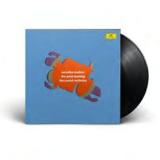
Album #4 der brandneuen Vinyl-Serie mit zukunftsweisenden Aufnahmen der musikalischen Avantgarde.
Unter den 24 Alben, aus denen sich die Originalausgabe der Avant-Garde-Reihe der Deutschen Grammophon zusammensetzt, die zwischen 1968 und 1971 erschien, zählt die Interpretation von „Paragraph 2
& 7“ aus „The Great Learning“ des englischen Komponisten Cornelius Cardew mit dem Scratch Orchestra
nach wie vor zu den beliebtesten und komplexesten.
Nach Abschluss seines Studiums an der Royal Academy of Music in London zog Cardew 1958 nach Köln
und arbeitete dort als Assistent von Karlheinz Stockhausen im Studio für elektronische Musik des Westdeutschen Rundfunks (WDR).
John Tilbury sagte, dass es Cardews Ziel sowohl mit dem Scratch Orchestra als auch mit „The Great
Learning“ war, „die grundlegendsten Prinzipien der westlichen Kunst und insbesondere das des Künstlers
als Aristokraten zu überwinden. Das Scratch Orchestra war ein Ausdruck der Universalität der Kunst;
Kunst als Lebensweise.“
Diese 1971 aufgenommene Veröffentlichung von „The Great Learning“ ist nach wie vor die wichtigste
Quelle für eine klangliche Erfahrung mit dem Scratch Orchestra und der bedeutendste Beitrag zu seinem
bleibenden Vermächtnis.
Gemastert und geschnitten von den originalen analogen ¼-Zoll-2-Spur-Masterbändern von Rainer Maillard
und Sidney Claire Meyer in den Emil Berliner Studios.
Limitierte und nummerierte Auflage mit Original-Artwork und einer neu gestalteten, wunderschön gearbeiteten Sammler-Cover mit neuen Liner Notes von Bradford Bailey, gepresst auf 180-g-Vinyl.