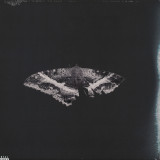
Zur Feier des 10-jährigen Jubiläums von Kendrick Lamars bahnbrechenden Album „To Pimp A Butterfly” erscheint dieser Fan-Favorit in drei verschiedenen, exklusiven Vinyl-Editionen, jede mit unterschiedlichem Cover und Vinyl-Farbe. Mit Hits wie „Alright” und „King Kunta”, Grammy-Auszeichnungen zum „Best Rap Album” und „Album of the Year” sowie seiner zeitlosen gesellschaftlichen Relevanz, bleibt „To Pimp A Butterfly” ein unübersehbarer Bestandteil der Hip-Hop-Geschichte! Jetzt als limitierte doppel LP erhällich.
out of Stock
Last delivered 12 months ago available to reorder, subject to availability
Show Your Power” music was part of a studio session with Nickodemus & Costa Rican rising star & versatile producer Barzo. Produced around the time Nickodemus was working on his album "Soul and Science". After many weeks of searching for the right vocalist Nickodemus finally connected with Ghanian vocalist Zongo Abongo who collaborated on 3 of his songs. Musically, "Show Your Power" is an uptempo joint with hard hitting afro-Caribbean beats & Rhythms, a UK inspired dub bassline & ska horns.
On the flip side, Mr. Doris shows his diversity also in the studio with good friend & producer Much Maligned for this heavy hitting Afro-Caribbean dance-floor shaker "Want Some More"
out of Stock
Last delivered 16 months ago available to reorder, subject to availability
The project by Jens-Uwe Beyer and Thomas Venker boasts a remarkable origin story. In 2017, Venker, co-founder and co-editor-in-chief of Cologne’s Kaput magazine, hosted a gathering at Beyer's house, bringing together journalists, creatives, and musicians. To mark the occasion, the pair decided to join forces for an impromptu ambient-electronic performance, presenting themselves as a two-man band. That evening, donned in special costumes designed by artist Sarah Szczesny and fuelled by a generous amount of Japanese whisky, Hasan Poppu was born. Over the course of the pandemic, the duo thought about creating a record based on the live recording of their premiere show. However, the synergy of their collaborative creative energies led them in entirely novel directions. Their self-titled, double-sided album traverses a wild and raucous terrain, moving swiftly from hybrid noise-techno to giddy party ecstasy, to strange and shadowy atmospheres.
Including remixes by YPY, Hibotep, Lena Willikens, Efdemin and Barnt, the 11 tracks span a dizzying array of experimental dance-facing styles. 'Die-Biden' kicks off as a high-vibrational vocal experiment seemingly voiced by a sentient German vocoder. 'Kodō' follows, featuring Venker's playful mantra set against a stomping beat. Willikens' reimagining of 'Teiko' transports the track to obscure realms inhabited by strange creatures emitting ungodly sounds. Meanwhile, Efdemin's take on 'Ekusutashī' pulsates with a kinetic buzz. Flipping over to the B-side, 'Sakura' is a euphoric wall of drone punctuated by eerie whispers and mystical singing. Then, the second installment of 'Kodō' takes a fresh trajectory with a touch of Barnt’s electronic groove stylings. Finally, Hibotep's 'Shojo no yo ni flp' serves as the finsher – an unrepentant trance belter that disintegrates into sampled fragments. Loosely translating to "broken pop music," Hasan Poppu is informed by Beyer and Venker's shared love for Japan. The band takes their cues from the country’s rich sonic cultures while also drawing on Venker's wordsmith background and Beyer's flair for melding melodic tech-house with song-based synth-pop. Originally out on Beachcoma Recordings, Hasan Poppu’s debut album gets a new lease of life on Osàre! Editions with a digital and limited edition cassette tape release. Sarah Szczesny reprises her role in shaping the visual identity of Hasan Poppu by creating beautiful, painterly artwork for the record. words by Hannah Pezzack
out of Stock
Last delivered 16 months ago available to reorder, subject to availability
"Dame café", originally released on Discos Fuentes in 1965 to meet the tropical music demand of the time, features a mix of traditional rhythms like vallenato and cumbia, alongside more experimental beats. The vibrant musical scene of the 1960s in Colombia owes much to a group of versatile accordionists who blended genres such as cumbia, charanga, guaracha, vallenato, and Cuban-influenced rhythms. This group included notable figures like Andrés Landero, Aníbal Velásquez, Lisandro Meza, and Alfredo Gutiérrez, among others. A prime example of their diverse musical styles is the album "Dame café", released in November 1965, which features a mix of traditional rhythms like vallenato and cumbia, alongside more experimental beats such as paseaíto and pasaje. The album includes six previously released singles composed by José Castro, Policarpo Calle, and others. The album highlights the commercial strategy of Discos Fuentes, which often created short-lived studio bands to meet the tropical music demand of the time. Los Gavilanes de la Costa, the band behind "Dame café", had a brief existence but left a lasting impact, especially in Mexico's sonidero scene. The group's creation was driven by the high demand for tropical music in the 1960s, with many musicians adjusting to market trends. Most of the members, including composers Campillo and Castro, vanished from the scene, while others, like Calle and Zambrano, went on to have notable careers in music. Calle, in particular, became a cumbia legend, later settling in Mexico City. The album "Dame café" has gained cult status due to its rarity and the intrigue surrounding its origins. The album features a remarkable contribution from Colombian jazz legend Justo Almario, who, at just 16 years old, played tenor sax on the track 'Pues no da pa' más'. Over the years, pirate editions and elusive original copies have made it a highly sought-after collector's item. The album's lively sound, combining accordion melodies, deep bass, and vibrant guacharaca rhythms, continues to resonate in the tropical music scene.
out of Stock
Last delivered 14 months ago available to reorder, subject to availability
Tàrrega 91’s straightforward take on Discharge-inspired hardcore punk is a glass of fresh water in a polluted sea of bands trying to break through the algorithm and grab a few seconds of our ever-decreasing supply of attention. There are no gimmicks on Ckaos Total, just simple three and four-chord riffs, a driving drumbeat (you can guess which one), and thoughtful lyrics delivered with power and passion. Tempos vary from fast, to really fast, to ultra fast, with most songs in the latter category. Without studio effects, silly costumes, or metal chops to distract, the focus falls on the songs themselves, which distill a profound sense of hopelessness and frustration into a few defiant words to yell into the void. In their lyrics and artwork, Tàrrega 91' continues to draw inspiration from the 1991 uprising in their town that ended with the arrest of 86 young people, a history that makes them keenly aware of exactly what they’re pushing against. While so many contemporary bands emulate the aesthetics of punk’s classic era, on Ckaos Total Tàrrega 91 taps into the power of bands like Discharge, Wretched, and MG-15 by creating simple, sincere—and sincerely pissed—protest music.
CINEMATIC VOYAGE THROUGH COSMIC RITUAL AND ETERNAL SOUND - a work that exists outside time—equally at home in the temples of antiquity and the neon-lit voids of speculative futures, merging ceremonial percussion, interstellar synthwaves, and wordless incantations into a 31-minute ritual for the infinite. Born from a three-year metamorphosis between studio and stage and rooted in a Takhmira (a Zar ritual poem), Ninety Nine Eyes channels the archetypal quest—a search for the “land where light is seated.” Its soundscapes evoke the grandeur of forgotten civilizations and the hum of celestial machinery: droning mizmar lines and drowning tombak and duff rhythms dissolve into maximalist synth storms; choirs of phantom voices rise like starlight through the static of ages. - Sound: Structured like a Sufi Hadra, the LP’s undulating peaks pull at old ways of communing with the divine - Part I builds tension, a breath before the storm, while Part II erupts into unfettered synth-drenched trance, gates flung open - only the listener can close the circle through their own interpretation.- For fans of Vangelis’ Blade Runner, Jon Hassell’s Fourth World, Alice Coltrane’s spiritual jazz, Autechre’s glitch rituals, and Pauline Oliveros’ deep listening.- Production: Mixed by VII, mastered by Heba Kadry (Björk, Ryuichi Sakamoto).- Artwork: Features a portrait of Yunis by Cairo underground photographer Kafrawy and hand-sewn costume design by Alaa Eideh, with graphic design by Giovanni Murolo (Countersubject). EU Tour spring 25
out of Stock
Last delivered 14 months ago available to reorder, subject to availability
I’m Sad as Hell and I’m Not Going to Fake It Anymore is the best, sharpest, briefest, and fourth record from Paper Castles, the band fronted by Jericho, Vermont’s Paddy Reagan. In one way, it’s a simple and modest collection of nine fuzzy guitar-led pop songs. The title, a play on the iconic scene from Network (written by Paddy Chayefsky), can be clocked as nothing more than that at first glance, playful. But like the music behind it, Reagan thinks you can sit with the title if you want.
I'm Sad as Hell... was tracked by Benny Yurco (Michael Nau, Lily Seabird, Robber Robber) in a little over eight hours across two days, a testament to the quartet’s perfection of these songs on stage, and to Yurco’s comfortable Little Jamaica Recordings in Burlington.
Tompkins and Mangan lock into a wonderful foundation for Kitz’s lolling guitar lines on “Clean + Organized,” while on “Avalon,” the band sings harmony for the most ironic line in the waltz (“We don’t really want company”) before their instruments explode into technicolor. “Lying Here” showcases PC deftly navigating washed out verses and tight knit, twangy choruses, all in a tidy, under-three minute package.
Lyrically, Reagan is at his finest: playful and savage, biting and beautiful. Double entendres and clever wordplay abound—a line like “it's not the ideals but the high heels that’ll make you a man” from “Modern Myth” will make you wish John Prine was still around to hear it. On “Name Changer,” when Reagan sings “I’ll never change my name again / Got a real good handle and I don’t want to give it in,” what kind of “handle” is he referring to? I’d like to think Elvis Costello would smile at most lines in the Attractions rave-up “Content Creator.”
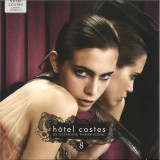
The iconic Hôtel Costes music collection, a veritable benchmark of Parisian luxury and refinement, continues to captivate lovers of sophisticated sounds. Famous for its unique blends of warm vocals, funk, jazzy and pop grooves, fusing electronic sounds and acoustic instruments, this series is a must for connoisseurs of refined music.
This seventh volume, orchestrated by the talented Stéphane Pompougnac, offers light electro soul and racy house, perfect for livening up the most elegant evenings and keeping the most reluctant dancing until the wee hours. The Hôtel Costes series has revealed exceptional talents such as Pink Martini, Flight Facilities, General Elektriks, Angus & Julia Stone and Brigitte, while mixing hidden nuggets with masters such as Gotan Project, Femi Kuti, Trentemøller, Thievery Corporation, Shirley Bassey and Grace Jones.
With over 5 million copies sold worldwide, following the resounding success of the reissue of the first six volumes, this seventh opus is finally available for the first time on vinyl. A true gem that will delight long-time fans and appeal to a new generation of listeners worldwide.
out of Stock
Last delivered 3 months ago available to reorder, subject to availability
The iconic Hôtel Costes music collection, a veritable benchmark of Parisian luxury and refinement, continues to captivate lovers of sophisticated sounds. Famous for its unique blends of warm vocals, funk, jazzy and pop grooves, fusing electronic sounds and acoustic instruments, this series is a must for connoisseurs of refined music.
This eighth volume, orchestrated by the talented Stéphane Pompougnac, offers light electro soul and racy house, perfect for livening up the most elegant evenings and keeping the most reluctant dancing until the wee hours. The Hôtel Costes series has revealed exceptional talents such as Pink Martini, Flight Facilities, General Elektriks, Angus & Julia Stone and Brigitte, while mixing hidden nuggets with masters such as Gotan Project, Femi Kuti, Trentemøller, Thievery Corporation, Shirley Bassey and Grace Jones.
With over 5 million copies sold worldwide, following the resounding success of the reissue of the first six volumes, this eighth opus is finally available for the first time on vinyl. A true gem that will delight long-time fans and appeal to a new generation of listeners worldwide.
out of Stock
Last delivered 3 months ago available to reorder, subject to availability
Get Heavy, released in 2002, is the debut album by Finnish hard rock and heavy metal band Lordi. Known for their theatrical personas and monstrous costumes, Lordi burst onto the scene with this high-energy, anthem-packed release. The album features fan favorites like "Would You Love a Monsterman?" and "Devil Is a Loser," blending catchy melodies, heavy guitar riffs, and powerful vocals from lead singer Mr. Lordi.
Produced by T.T. Oksala, Get Heavy showcases the band’s ability to combine hard rock with a horror-inspired aesthetic, making it a standout debut that immediately captured attention. The album’s infectious energy and memorable hooks laid the foundation for Lordi’s unique style, setting them apart in the heavy metal scene. For fans of theatrical rock and unforgettable anthems, Get Heavy remains a must-listen and an essential part of Lordi’s legacy. Get Heavy is available as a limited edition of 666 individually numbered copies on black & white marbled vinyl.
"Dances With Wolves is the original soundtrack to the 1990 seven-time Academy Award and three-time Golden Globe Award-winning film of the same name. It is produced and directed by Kevin Costner, who also stars in the film himself. The original score and songs were composed and conducted by John Barry. Barry won the 1991 Academy Award for Best Original Score and the 1992 Grammy Award for ""Best Instrumental Composition Written for a Motion Picture or for Television."" John Barry's fifth Oscar-winning score is a profoundly moving body of music. Dances With Wolves is available as a 35th anniversary edition of 1000 individually numbered copies on translucent yellow coloured vinyl and comes in a deluxe sleeve finished with linen laminate."
An official retrospective (1967 to 1985) of the legendary Beninese Composer, Gentleman & Salsero Gnonnas Pedro, who recorded dozen of albums & singles from the 1960s the 2000s with mythical bands such as Los Panchos, Les Dadjes & Africando !
21 tracks covering the extremely wide musical spectrum of this mythical artist in 40 years of career : Afrobeat, Salsa, Funk, Soul, Jerk & Folk frenzied grooves that will set any dancefloor on fire !
Available in a beautiful Limited Deluxe 2xLP gatefold edition (with a digital voucher including a Bonus track) & in HQ digital format with very detailed biography & liner notes in French & English, + Exclusive pictures, never seen before.
Bonus track : "À Ma Fille" (Digital only, includes with the download voucher of the album that comes with the release)
out of Stock
Last delivered 16 months ago available to reorder, subject to availability
Embryo Issue 5 - Interviews and Mix series Exome
Quiet Husband
Jim KirkwoodSvartvit
Trenchfoot
Necropolis Festival White Centipede Noise Cryptworm Hyperdonitia
Crawl of Time
Night Terror Records Disengagement
Snet
Ineffable Slime
Marie Queau
Personal Hell
Natural Sciences Recs started in 2015 before mutating into the Embryo magazine series. Flesh Renewed marks ten years of the label with the fifth issue of Embryo. A light into the gutter of the fringe underground, through new tracks from the labels catalogue, 100 pages of interviews by labels and artists kicking against the grain and ties forged from the 80’s tape network. We invite you to witness the next stage of the evolution.
e A1. Osiris - Starlight Scorpio 1989 - 7"
f B1. SEEMEN - Floating Gently 1989 - 7"
out of Stock
Last delivered 17 months ago available to reorder, subject to availability
After months of developing elaborate acoustic guitar versions of the songs for what he at first intended to be a solo acoustic guitar album, a burst of inspiration hit and he rearranged the music for electric guitar, where he has long been at home with his two decades of work as composer and bandleader for morphing avant-prog outfit Ahleuchatistas. What Parish ended up with are arrangements in his intuitive, intense, and intimate style, more directly aligned with his flagship electric band. While acoustic guitar produces resonance through tactile manipulation, the electric guitar harnesses the flow of electricity, allowing Parish to cut a more urgent and colorful slice through our historical moment with these haunting melodies which were first formed under the most ruthless of working conditions, defiantly affirming the creative human spirit's ability to burst forth from any circumstances.
After months of developing elaborate acoustic guitar versions of the songs for what he at first intended to be a solo acoustic guitar album, a burst of inspiration hit and he rearranged the music for electric guitar, where he has long been at home with his two decades of work as composer and bandleader for morphing avant-prog outfit Ahleuchatistas. What Parish ended up with are arrangements in his intuitive, intense, and intimate style, more directly aligned with his flagship electric band. While acoustic guitar produces resonance through tactile manipulation, the electric guitar harnesses the flow of electricity, allowing Parish to cut a more urgent and colorful slice through our historical moment with these haunting melodies which were first formed under the most ruthless of working conditions, defiantly affirming the creative human spirit's ability to burst forth from any circumstances.
The second instalment in George Miller’s disturbing post-apocalyptic film series, The Road Warrior (1981), saw Mel Gibson return as
Mad Max Rockatansky to defend a community from a violent band of raiders. The film won a clutch of awards, was a box office hit and
has achieved cult status, helped by its stylised costumes and sets. The last Mad Max film (Mad Max: Fury Road) was released in 2015,
receiving ten Academy Award nominations.
Australian composer Brian May wrote the music to the first two films (Mad Max and Mad Max 2 : The Road Warrior) as well a host of feature
films including Patrick, Gallipoli, Freddy’s Dead : The Final Nightmare and Dr. Giggles. He won multiple awards during his lifetime and is feted as one of Australia’s most highly rated soundtrack composers.
This release was originally issued for Record Store Day 2019 on “Sand with Oil Splatter” coloured vinyl.
Hardcore time whatever... Bryan Fury loves Break and Hardcore, Dancefloor and Skillz... Exploring views to distort ways... Surprise you with a dark or cheezy dimension.
He did and will never let you down with his pityless drops...
A rare album from one of the soundmaster killing around !
And many collabs with people who can say : "waou.... too !"
Enjoy and play LOUD !
out of Stock
Last delivered 8 months ago available to reorder, subject to availability
Produziert von Will Yip (Turnstile, Title Fight, Mannequin Pussy, etc.), der auch schon an der 2023er "Psychic Dance Routine" EP der Hardcore-Band Scowl aus Santa Cruz mitgewirkt hat, findet man auf "Are We All Angels" die giftige und antagonistische Band, die ihre Aggression durch eine expansivere Version ihrer selbst leitet. Das Album wurde von Rich Costey (Fiona Apple, My Chemical Romance, Vampire Weekend, etc.) gemischt. "Are We All Angels" ist geprägt von Entfremdung, Trauer und Kontrollverlust, und setzt sich größtenteils mit ihrem neu gefundenen Platz in der Hardcore-Szene auseinander, einer Gemeinschaft, die die Band in den letzten Jahren sowohl umarmt als auch zu einer Art Blitzableiter gemacht hat. Auf "Are We All Angels" erkunden Scowl auf Schritt und Tritt ehrgeizige neue Richtungen und verbiegen Genre-Normen. Sängerin Kat Moss macht die am unmittelbarsten erkennbare Entwicklung, indem sie einen strukturierteren und manchmal zarten Ansatz wählt. Sie spielt mit Harmonien und melodischem Feingefühl, das selbst die eingefleischtesten Scowl-Fans überraschen dürfte. Moss nennt eine breite Palette von Einflüssen außerhalb des harten Rock - alles von Billie Eilish bis Radiohead, Car Seat Headrest bis Julien Baker. "Die meisten von uns waren wirklich keine geübten Musiker, als die Band begann", gibt sie zu. "Es war in dieser Hinsicht sehr Germs-esque, wie die erste Hardcore-Band eines Babys, was großartig ist. Jetzt wissen wir vielleicht immer noch nicht, was wir tun, aber wir haben eine bessere Vorstellung davon, was wir tun wollen." Instrumental gibt die Band Einflüsse von Negative Approach, Bad Brains, Hole, Mudhoney, Garbage, Ramones, Pixies, Sonic Youth, Rocket From The Crypt und anderen an. Bassist Bailey Lupo merkt an: "Das Songwriting für die neue Platte war das bisher kollaborativste in der Geschichte von Scowl. Jeder hat so viele Ideen eingebracht, und wir konnten sie alle in Ruhe analysieren und uns Zeit nehmen. Wir haben alle so unterschiedliche Geschmäcker, Einflüsse und Persönlichkeiten, und das kann man auf diesem Album wirklich in jeder Ecke hören." Selbst durch diesen eklektischen Ansatz verlieren Scowl nichts von ihrer Schärfe und schaffen es immer noch, die Wut und Frustration zu vermitteln, die dahinter steckt. Sie sind zutiefst dem Ethos des Punk und seinem Gemeinschaftssinn verpflichtet. "Hardcore und Punk haben uns geprägt, wie wir arbeiten, was wir als Band tun wollen und wie wir uns beteiligen", sagt Greene. "Im Kern sind wir eine Punk- und Hardcore-Band, unabhängig davon, wie sich der Song verändert." Das Album wird von dem bereits veröffentlichten "Special" eröffnet, einen Song mit großer, hymnischer Energie, der die rohe Intensität von Scowl beibehält. Scowl haben sich schnell als einer der dynamischsten und fleißigsten Acts in der Rockszene etabliert und ausgiebig in den USA und international mit Bands wie Limp Bizkit, Destroy Boys, The Bronx, Militarie Gun, Show Me The Body, Zulu, Touche Amore, A Day To Remember, Speed, Sunami und vielen anderen getourt, sowie Festivalauftritte beim Coachella, Reading & Leeds, No Values, Outbreak, Primavera und Sick New World, um nur einige zu nennen, absolviert. Die Band - Malachi Greene (Gitarre), Bailey Lupo (Bass), Cole Gilbert (Schlagzeug), Mikey Bifolco (Gitarre) und Kat Moss (Gesang) - gründete sich 2019 und feierte 2021 mit ihrem Debütalbum "How Flowers Grow" ihren Durchbruch. Seitdem sind sie unaufhaltsam auf dem Vormarsch.
Andrew Duhon has a knack for telling the kind of stories that clearly cost the writer something to tell- the kind of honesty that feels noble and never half hearted. When a song written by a stranger heals you, even in the smallest way, that's a connection beyond entertainment, and that is the journey Andrew Duhon sets out on from his home in Louisiana. His songs are about recognizing our story as much as they are about telling his, and his coast to coast pursuits have given him a clearer view of the American Landscape than most are privy to. Still, after years of voyaging off to every corner of the country, a new sensation arises with each return home to New Orleans. From that familiar return comes The Parish Record, a snapshot of life venturing from and returning to one of America's purest cultural vignettes, and the beauty, conflict, and stories that come with it. The Parish Record was recorded at Dockside Studios in Maurice, LA, where deep in Cajun country sits a wood-panel barn engulfed in oak and cypress trees along the slow butterscotch bayou pace of the Vermillion River. In this isolated hub of Acadiana, Andrew Duhon embarked with his trio of most trusted musicians - Myles Weeks (James Hunter Six, Eric Lindell) on Bass, Jim Kolacek (Feufollet) on Drums, and Daniel Walker (Heart, Ann Wilson, Amy Ray) on Keys - to harness of the sound and feeling of their surroundings. "I wanted this record to feel like home. It wasn't time to get out of town or try out something new on this one. It was about believing in the songs from where the songs came from," Duhon says.
Googling “paradise house”, the first results to pop up are an endless list of European b&b’s with whitewashed lime façades, all of them promising “…an unmatched travel experience a few steps from the sea”. Next, a little further down, are the institutional websites of a few select semi-luxury retirement homes (no photos shown, but lots of stock images of smiling nurses with reassuring looks). To find the “paradise house” we’re after, we have to scroll even further down. Much further down.
It feels like yesterday, and at the same time it seems like a million years ago. The Eighties had just ended, and it was still unclear what to expect from the Nineties. Mobile phones that were not the size of a briefcase and did not cost as much as a car? A frightening economic crisis? The guitar-rock revival?! Certainly, the best place to observe that moment of transition was the dancefloor. Truly epochal transformations were happening there. From America, within a short distance one from the other, two revolutionary new musical styles had arrived: the first one sounded a bit like an “on a budget” version of the best Seventies disco-music – Philly sound made with a set of piano-bar keyboards! – the other was even more sparse, futuristic and extraterrestrial. It was a music with a quite distinct “physical” component, which at the same time, to be fully grasped, seemed to call for the knotty theories of certain French post-modern philosophers: Gilles Deleuze, Félix Guattari, Paul Virilio... Both those genres – we would learn shortly after – were born in the black communities of Chicago and Detroit, although listening to those vinyl 12” (often wrapped in generic white covers, and with little indication in the label) you could not easily guess whether behind them there was a black boy from somewhere in the Usa, or a girl from Berlin, or a pale kid from a Cornish coastal town.
Quickly, similar sounds began to show up from all corners of Europe. A thousand variations of the same intuition: leaner, less lean, happier, slightly less intoxicated, more broken, slower, faster, much faster... Boom! From the dancefloors – the London ones at least, whose chronicles we eagerly read every month in the pages of The Face and i-D – came tales of a new generation of clubbers who had completely stopped “dressing up” to go dancing; of hot tempered hooligans bursting into tears and hugging everyone under the strobe lights as the notes of Strings of Life rose up through the fumes of dry ice (certain “smiling” pills were also involved, sure). At this point, however, we must move on to Switzerland.
In Switzerland, in the quiet and diligent town of Lugano, between the 1980s and 1990s there was a club called “Morandi”. Its hot night was on Wednesdays, when the audience also came from Milan, Como, Varese and Zurich. Legend goes that, one night, none less than Prince and Sheila E were spotted hiding among the sofas, on a day-off of the Italian dates of the Nude Tour… The Wednesday resident and superstar was an Italian dj with an exotic name: Don Carlos. The soundtrack he devised was a mixture of Chicago, Detroit, the most progressive R&B and certain forgotten classics of old disco music: practically, what the Paradise Garage in New York might have sounded like had it not closed in 1987. In between, Don Carlos also managed to squeeze in some tracks he had worked on in his studio on Lago Maggiore. One in particular: a track that was rather slow compared to the BPM in fashion at the time, but which was a perfect bridge between house and R&B. The title was Alone: Don Carlos would explain years later that it had to be intended both in the English meaning of “by itself” and like the Italian word meaning “halo”. That wasn’t the only double entendre about the song, anyway. Its own very deep nature was, indeed, double. On the one hand, Alone was built around an angelic keyboard pattern and a romantic piano riff that took you straight to heaven; on the other, it showcased enough electronic squelches (plus a sax part that sounded like it had been dissolved by acid rain) to pigeonhole the tune into the “junk modernity” section, aka the hallmark of all the most innovative sounds of the time: music that sounded like it was hand-crafted from the scraps of glittering overground pop.
No one knows who was the first to call it “paradise house”, nor when it happened. Alternative definitions on the same topic one happened to hear included “ambient house”, “dream house”, “Mediterranean progressive”… but of course none were as good (and alluring) as “paradise house”. What is certain is that such inclination for sounds that were in equal measure angelic and neurotic, romantic and unaffective, quickly became the trademark of the second generation of Italian house. Music that seemed shyly equidistant from all the rhythmic and electronic revolutions that had happened up to that moment (“Music perfectly adept at going nowhere slowly” as noted by English journalist Craig McLean in a legendary field report for Blah Blah Blah magazine). Music that to a inattentive ear might have sounded as anonymous as a snapshot of a random group of passers-by at 10AM in the centre of any major city, but perfectly described the (slow) awakening in the real world after the universal love binge of the so-called Second Summer of Love.
For a brief but unforgettable season, in Italy “paradise house” was the official soundtrack of interminable weekends spent inside the car, darting from one club to another, cutting the peninsula from North to centre, from East to West coast in pursuit of the latest after-hours disco, trading kilometres per hour with beats per minute: practically, a new New Year’s Eve every Friday and Saturday night. This too was no small transformation, as well as a shock for an adult Italy that was encountering for the first time – thanks to its sons and daughters – the wild side of industrial modernity. The clubbers of the so-called “fuoriorario” scene were the balls gone mad in the pinball machine most feared by newspapers, magazines and TV pundits. What they did each and every weekend, apart from going crazy to the sound of the current white labels, was linking distant geographical points and non-places (thank you Marc Augé!) – old dance halls, farmhouses and business centres – transformed for one night into house music heaven. As Marco D’Eramo wrote in his 1995 essay on Chicago, Il maiale e il grattacielo: “Four-wheeled capitalism distorts our age-old image of the city, it allows the suburbs to be connected to each other, whereas before they were connected only by the centre (…) It makes possible a metropolitan area without a metropolis, without a city centre, without downtown. The periphery is no longer a periphery of any centre, but is self-centred”.
“Paradise house” perfectly understood all of this and turned it into a sort of cyber-blues that didn’t even need words, and unexpectedly brought back a drop of melancholic (post?)-humanity within a world that by then – as we would wholly realise in the decades to come – was fully inhuman and heartless. A world where we were all alone, and surrounded by a sinister yellowish halo, like a neon at the end of its life cycle. But, for one night at least, happy."
out of Stock
Last delivered 3 months ago available to reorder, subject to availability
Yellowstone is an American neo-Western drama television series. The series stars Kevin Costner, Luke Grimes, Kelly Reilly and follows the conflicts along the shared borders of the Yellowstone Dutton Ranch, a large cattle ranch, the Broken Rock Indian reservation, Yellowstone National Park, and land developers. The first part of the fifth and final season premiered on November 13, 2022, with the second part scheduled to premiere on November 10, 2024. Composer Brian Tyler, who once worked and performed in a Native American musical group, said he worked hard to blend his knowledge of traditional Native American music with the melting pot of western cultures in his score. “What I ended up doing was finding ways to incorporate some of the percussion, some of the woodwinds, some of the instrumentation and weave it into things like cellos, basses, cimbaloms and all these exotic instruments,” Tyler said. The package includes an insert.
'Baby’ – cross it off your Wants List at last. Written by Caetano
Veloso, arranged by Arthur Verocai, covering Gal Costa. An
absolutely killer Brazilia modern soul jam – a rarity in Brazil
that we hammer in DJ sets and have been wanting to release for a
while. Taken from the Quinteto Ternura self-titled LP from 1974.
‘Filhos De Zambi’ is uptempo samba-funk of the highest order, and now very difficult to find at a decent price in it’s original RCA ’compacto’ format. Percussion high on the mix, hands claps and a brilliant harmonised chorus line.
out of Stock
Last delivered 14 months ago available to reorder, subject to availability
Worldship Music returns for 2025 with a brand new various artists EP sure to set all soulful dancefloors on fire. The second installation of the Herald Traccs series welcomes back label stalwarts Roberta and Trilaterals while bringing Reelsoul into the fold as well, of course alongside a cut by imprint head Teflon Dons.
Reelsoul kicks proceedings off with a stunningly beautiful version of an all time classic jazz inflected dance jam “La Costa”. Leaning into the sophisticated vocal harmonies, a bed of warm instrumentation carries this familiar joint seamlessly into the modern era. New crowds and veterans alike will be swept away on an unforgettable lover’s holiday to the seashore.
Trilaterals come through in full on party mode on “Flo Jo”. Filtered and chopped samples from a funk staple are twisted into a swinging groove that will have house dancers going off. The stripped back arrangement teases with energy before exploding into dancefloor ecstasy. Adept sample spotters will be sure to get the title reference, a wink and a nod to two legends of black American culture.
Teflon Dons can’t help but put their underground edge into the music, with “DONTWANTU2GO”’s tough drums immediately signaling the late nite intentions of this banger. Pleading vocals and pitched chords add a twinge of that distinctive deep house melancholy before the strings drop in and take the jam to the next level.
Roberta is a perfect choice to end the EP with the smoky jazz club vibes of “Hang Back”. Gritty drums and electric piano riffs provide the hypnotic backbone, while flute and vibes add funky flourishes on top. This is the kind of cut that is sure to elicit whoops of joy from exhausted dancers catching a second wind thanks to its undeniable electricity.
out of Stock
Last delivered 8 months ago available to reorder, subject to availability
180gr) 10 YEARS ON, ARTHUR VEROCAI'S ENCORE GETS A VINYL RELEASE. The highly anticipated follow up to Arthur's eponymous debut album from 1972, Encore saw Arthur joining the dots over 35 years to createa modern classic of Brazilian music that, like his debut, combined Brazilian influences with his take on American soul and cinematic experimentation, and shows Arthur's sound is as poignant now as it ever was.
To celebrate the album's 10th anniversary, Far Out Recordings announces the first ever vinyl edition of Arthur Verocai's 2007 masterpiece Encore. Remastered from the original tapes, Encore features 11 original compositions from Arthur with guest musicians including Azymuth, Ivan Lins and a nine-piece string section. The highly anticipated follow up to Arthur's eponymous debut album from 1972, Encore saw Arthur joining the dots over 35 years to create a modern classic of Brazilian music that, like his debut, combined Brazilian influences with his take on American soul and cinematic experimentation, and shows Arthur's sound is as poignant now as it ever was.
In the mid-2000's, following on from Marcos Valle, Joyce and of course Azymuth, Arthur Verocai joined the long-line of Brazilian musicians whose music was to be introduced to a whole new legion of fans by Far Out. The story of 'Encore' of course begins with Joe Davis, Far Out's head honcho who stumbled upon Arthur's debut in a dusty record store in downtown Rio in the late 80s. At the time of its release in 1972 critics panned Arthur's debut and both the album and artist subsequently vanished into obscurity. Fast forward to winter 2004 and Joe's at the studio of Far Out Recording artists Harmonic 313 - aka production duo Mark 'Troubleman' Pritchard and Dave Brinkworth - playing them some of his favourite Brazilian albums. Dave recalls the moment Joe put on Arthur's debut, 'As soon as the needle hit the record and we heard the fantastic arrangements, songs and sounds, Arthur completely blew our minds'.
Three months later and Dave was in Brazil with Arthur Verocai, and the plans for what was to become 'Encore' were being laid down. Produced by Dave, 'Encore' sees Arthur on incredible form, the 35 plus years between the recording of his debut and this the follow-up just melting away as Arthur picked up the (conductor's) baton once again to create 11 epic tracks of stirring samba-soul and experimental cinematic movements that sees him creating a record to rival his debut.
Born in Rio de Janeiro on 17 June 1945, Arthur Verocai began his professional music career in 1969 and over the next few years he was responsible for the orchestration of albums by Ivan Lins, Jorge Benjor, Elizeth Cardoso, Gal Costa, Quarteto em Cy, MPB 4 and Marcos Valle, among others. In the 1970s he was hired by Brazil's biggest TV station, TV Globo, as musical director and wrote the arrangements for many of the stations biggest shows. In 1972, following the success Arthur had with the production of Ivan Lins 1971 album "Agora", Arthur recorded his self-titled debut album on Continental Records. 'Arthur Verocai' challenged the musical conventions of the day, combining Brazilian influences with folksy soul and lo-fi electronic experimentations of American artists like Shuggie Otis or the orchestration of producer Charles Stepney.
Joni Void, the artistic persona of Montréal-based French-British producer Jean Néant (he/them) returns to songcraft on their warmest and most welcoming record yet, where the acclaimed sampledelic sound collagist chills out with an emotionally resonant song cycle tinged by downtempo, lo-fi, avant-pop, and trip-hop. Guests include Haco, Ytamo, Sook-Yin Lee, Pink Navel and N NAO. Every Life Is A Light expands on Void's recent stylistic turn towards more languorous and mellow lo-fi production, foreshadowed by the drifting looseness and ambient bricolage of their preceding experimental sound-art record. This transitional sensibility now shapes more defined song structures and styles, with loops are given time and space to unspool, and rhythms shot through the softer-focus lens of trip-hop and dub. Every Life Is A Light swaps the twitchy insistence of Void's acclaimed early albums for a newfound lightness and suppleness, still imbued with all the restlessness, sonic detailing, and emotional resonance that made their name. The neurotic brokenmachine kinetics of earlier Void, summarized by Sasha Geffen as "drawing despair and wonder from within the vast unfeeling of digital communication" in an 8.0 Pitchfork review, may be chilling out, but Void is becoming an ever better conjurer of hauntological feeling. Every Life Is A Light summons this in a comparatively buoyant, benevolent, head-nodding journey more open to tenderness and modest joys. Perhaps it's the sound of Void at greater peace with themselves and the world, despite the bittersweet cost: even as it channels grief, memorializing comrades and companions recently deceased, this album wants light. Void's raw materials continue to draw heavily from samples (their own Walkman cassette fieldrecordings and songs by others) and from a wide community of musical guests. Vocalists Haco on "Time Zone" and Ytamo on "Cloud Level" help levitate what could be lost tracks from a mid-90s Too Pure Records compilation of skewed-lounge electronica. Canadian musician Sook-Yin Lee sings on lead single "Vertigo," a sinewy 80bpm tape-loop and bassline groove propelled by psychedelically-layered lyrics that eventually turn the song in on itself entirely, like Grace Jones' "Nightclubbing" covered by Animal Collective. One of Void's greatest hip-hop loves is the Ruby Yacht collective; charter member Pink Navel drops some brilliant verses on "Story Board." The album's two minimal tracks, an extended piano loop set to a slow beat and shimmering electronics on "Muffin-A Song For My Cat" and the languid sampled bass riff and breakbeat of "Event Flow," are perhaps most overtly `lofi chill.' Indeed the whole album could be said to sit adjacent to those viral (if not already AI-generated) genre trends, which maybe begs the question on a lot of our minds: can specificity and authenticity of musical materials still be heard, still meaningfully signify substance and difference, still matter? Perhaps a question that fades in comparison to the career break Void could catch by landing on generic streaming playlists. More likely, these tracks remain too off-kilter, too genuinely lo-fi and ineffable, and too disqualified by the status of its peasant rights-holders, to catch the algos. Context remains the poor cousin of content. Meanwhile Void marches on, as a tireless organizer of local music events, bouncing around and often living in DIY venue, depending on the latest apartment eviction. With an ubiquitous polaroid camera in tow, they also document each communal happening with a single shot (and often a blinding flash bulb): a memory and metaphor for lives illuminated preciously, singularly, `imperfectly' in the moment. Dozens of these polaroids adorn the album's back cover and inner sleeve art in grid-like montages, as a fitting analog for the careful construction, grainy intimate materiality, and ephemeral feeling of these songs. Every Life Is A Light is Joni Void's most coherent and congenial record while relinquishing none of their experimentalist acumen as a producer or emotional attunement as a composer. Instead these qualities flourish, on an album that lights a humble flame for the fragile promise of homespun creative collaboration as unalienated labour and therapeutic communion, making an enchantingly idiosyncratic contribution to downtempo sample music along the way. Thanks for listening.
New Collaborative label from four individuals focusing on four on the floor songs that cover multiple decades of electronic music. Split Records 4444.1 includes a UK influenced Lofi House track on the A1 from Stereotype. It follows with an old school acid house track by Bobby Metronome that switches the emotion of the record with its heavy dynamics. On the B (dark) side we have unique Central American prowess by Diego Calix and Emilio Dahmen from El Salvador and Costa Rica. These 2 tracks in the b side encompass the minimal electro wave of producers in the region, young and fresh.
out of Stock
Last delivered 15 months ago available to reorder, subject to availability
(Limited edition to 500 copies, remastered audio, pressed and printed in Indonesia) The 13 tracks contained in this compilation “Begadang: Soneta Group Best Songs, 1975-1980” are some the most innovative music that came out of Indonesia’s music scene in the 1970s, tunes that has cemented Rhoma Irama’s status as the king of the genre.
Dangdut is the biggest musical genre in Indonesia. Dangdut, onomatopoetic name from the sound of hand drums used in this type of music, is what reggae to Jamaicans, country to Americans or skiffle to mid 20th century British people. And in this genre of dang dut, the name Rhoma Irama looms large. He is until today the undisputable king of dangdut and his role as pioneer of the music is already in the history book. In fact, there's one book documenting the outsized role of Rhoma in establishing dangdut as the father of this music. The book is aptly titled Dangdut Story, written by Pittsburgh University music professor Andrew N. Weintraub.
Among Indonesian fans of dangdut, there’s this one misconceptions that dangdut music is that it is an indigenous art form from Indonesia and that it constitutes an amalgamation of local, traditional music of this Southeast Asian nation, with Malay music being the most prominent feature in the mix.
Dangdut pioneer Rhoma Irama is among the first to reject this assertion. “Dangdut music may have originated in Deli (in North Sumatra) but then got the influences from the West and India”, he said.
Indeed, most of Rhoma’s well-known compositions may have been influenced by Indian tunes but some of his best quality works owed much to the West.
Rhoma had long found home in Western pop music. In the early 1960s, after honing his guitar playing skill, Rhoma set up his first band Gayhand to play the tunes of The Beatles, Paul Anka and Tom Jones. In 1972, Rhoma won best singer title in a Southeast Asia singing competition in Singapore playing Tom Jones “I Who Have Nothing.”
Yet, nothing changed Rhoma’s fortune in the music industry, to a point where he decided to leave pop and switched to playing Orkes Melayu (Malay Orchestra) music, first with Orkes Melayu Purnama and later with Soneta Group.
His career soon took off with Soneta, especially after he introduced what ethnomusicologist William H. Frederick considered as “theatre”, through which Rhoma borrows many elements from stage performances of British and American rock bands. These elements, kitsch and pomp, he liberally adopted and became an inseparable part of dangdut itself; tight pants, long hair, platform shoes, glitter and glamour which would not be out of place in Elton John and David Bowie stage show.
And this is actually the contradiction of Rhoma’s brand of Malay music. “One might legitimately ask how imaginative, not to say bizarre, costuming and dancing with abandon could be related to some of the objectives of Rhoma has set for himself and soneta group”, Frederick wrote on his seminal work on the singer, Rhoma Irama and the Dangdut Style: Aspects of Contemporary Indonesian Popular Culture, published in 1982.
From technical point of view, Rhoma not only replaced the acoustic elements from Melayu Music with electric instruments but also created new synthetic sounds that has never been attempted before in Indonesia’s music industry.
Detractors like to point out how much he was indebted to Deep Purple, but a closer inspection reveals how he in fact had mined his influences even deeper.
Notice how Rhoma reproduced funk, which is all the rage in early 1970s, in the song “Santai” (Relax), this album’s closer or “Credit Title (Instrumentalia)” which opens this Darah Muda (Young Blood) soundtrack. The rubbery bass lines that open both songs can easily find home in any Sly and the Family Stone’s or Isaac Hayes’ tunes from that era. Other highlights of the song is the funky guitar licks and the droning Hammond a la George Clinton that stabs deep in the record groove. In the guitar solo, you can also hear the bark of George Harrison’s licks from “Taxman”.
The 13 tracks contained in this compilation “Begadang: Soneta Group Best Songs, 1975-1980” are some the most innovative music that came out of Indonesia’s music scene in the 1970s, tunes that has cemented Rhoma Irama’s status as the king of the genre. Only 500 copies were pressed for this compilation.
Chaz Bear (formerly Bundick) has been immersed in music from a young age, shaped by a household rich with sounds ranging from Michael Jackson and Elvis Costello to The Specials. Growing up biracial in South Carolina, these diverse influences contributed to the unique blend of styles Chaz weaves into his work. Nominated for Best Dance Recording at the 2020 Grammy Awards for his collaboration with Flume on “The Difference”, Chaz’s genre-defying sound has won critical acclaim. His journey began in earnest with early home recordings that showcased his prolific nature, leading to over 10 Toro y Moi albums released independently before signing with Carpark Records in 2009.
Chaz’s debut album under Carpark, Causers of This, was a seminal release that sparked a movement of sample-heavy bedroom recordings. Its success led to early assumptions that he was limited to this sound, but Chaz quickly proved his versatility with 2011’s Underneath the Pine, recorded between tours and featuring entirely live instrumentation. This pivot set a pattern for Chaz’s career: each subsequent release explored new terrain, from the psych rock of What For? to the R&B-influenced Boo Boo, all tied together by his signature production and melodic sensibilities.
Following Boo Boo, 2019’s Outer Peace marked Chaz’s return to the Bay Area after a year in Portland, embodying a celebratory homecoming filled with collaborations and vibrant playfulness. Featuring friends and eclectic references to contemporary hip hop, funk, Eurodance, and ambient textures, Outer Peace was a sharp contrast to the contemplative, isolation-driven Boo Boo and solidified Chaz’s place on the cutting edge of music.
Five days post-release, Chaz teased Soul Trash on Instagram, sharing a cassette titled SOUL TRASH V1 with a Dropbox link, which was later removed. The mixtape was officially released digitally on October 29, 2019, and has since garnered over 39 million streams. This album was also his first collaboration with Elijah Kessler, who later released an album on Chaz’s Company Records. Now available on vinyl for the first time, Soul Trash epitomizes Chaz's experimental spirit, featuring ambient sounds, lo-fi loops, and contributions from Old Grape God, and Caleon Fox. Released alongside more recent projects like Mahal and Hole Erth, Soul Trash bridges his past with his ever-evolving artistry, proving Chaz’s creative well is far from dry.
Nachdem sie gesehen haben, wie die Abholzung die Landschaft Costa Ricas bedroht, stecken Metalheads weltweit ihre Köpfe zusammen, um das Ökosystem der Welt zu erhalten.
Seit Gründung der Band im Jahre 2022 hat die 501 (c) (3) gemeinnützige Organisation 100.000 Quadratmeter Regenwald in Costa Rica geschützt. Savage Lands arbeitet mit lokalen und globalen Organisationen wie dem Jane Goodall Institute sowie mit vielen Entscheidungsträgern in der Metallindustrie zusammen. Auf „The Last Howl“ gibt es die Growls von John Tardy (Obituary) und hochfliegende Soli von Sepultura-Gitarrist Andreas Kisser. Heilung's Zeremonienmeister Kai Uwe Faust segnet den Black 'n' Roll von „Black Rock Heart“, während Maria Franz (ebenfalls Heilung) die melancholische Power-Ballade „No Remedy“ mit ihren beruhigenden hohen Tönen anmutig auflockert.
"Army of the Trees" führt mehrere neue Arten von Metalheads in das Ökosystem von Savage Lands ein. Die Eurovisions-Lieblinge Lord of the Lost versprühen bei „Out of Breath“ ihr Blut und ihren Glitter, und die Leadsingle „Ruling Queen“ wird von keiner Geringeren als Alissa White-Gluz von Arch Enemy mit ihren schlangenartigen Clean vocals und dem Gebrüll einer Löwin vorgetragen. „Jetzt ist es an der Zeit, Stellung zu beziehen“, brüllt die Band während des donnernden Titeltracks des Albums, der von Julien Truchan (Benighted) und anderen Säulen der französischen Metal-Gemeinde unterstützt wird, in einem wilden Schlachtruf.
Erhebt eure Hörner und schließt euch der Army of the Trees an, um die gemeinnützige Metal-Bewegung zu unterstützen!
Wer Lacuna Coil kennt, weiss, dass jedes Album ihrer beeindruckenden Karriere mehr als nur einen typischen Bandsound liefer-te: Jedes Album ist ein reichhaltig strukturierter Soundtrack zur jeweiligen Epoche und zu einem bestimmten Ort. Bei "Sleepless Empire" ist dieser Ort düster, cineastisch und verströmt unverkennbar die Stimmung, die Lacuna Coil zu einem so gefeierten Eintrag in die Chronik der harten Musik gemacht haben. Ohne ihre spezielle Art von Gesang, Gitarrensound oder Schlagzeugarbeit wäre "Sleepless Empire" - der orchestrale Teil - ein cineastischer Soundtrack. Von den kolossalen Refrains des Album-Openers "The Siege" über das verrucht eingängige "I Wish You Were Dead" bis hin zum unbändig klassischen Feeling des Titeltracks von "Sleepless Empire" - die Souveränität von Lacu-na Coils neuestem Werk ist unüberhörbar, und doch hat es auch einige Überraschungen zu bieten. Sie erscheinen in Form zweier ganz besonderer Gastauftritte von niemand Geringerem als der New Years Day-Banshee Ash Costello auf ihrem Epos "In The Mean Time" und einem ohrenbetäubend überdrehten Beitrag von Lamb of God-Sänger Randy Blythe auf "Hosting the Sha-dow". Und wenn "Sleepless Empire" etwas Besonderes ist, dann ist es mehr als nur diese gesangliche Kreuzbefruchtung. Wie Sänger Andrea Ferro erklärt, liegt der Schlüssel zu Lacuna Coils ewig jugendlicher Ausstrahlung in ihrer Neugier und ihrer Fähigkeit, kreativ auf neue Inspirationen zu reagieren, ohne dabei die langjährigen Qualitäten aus den Augen zu verlieren, welche die Band zu dem machen, was sie ist - und er zählt Sleep Token, Spiritbox, Bad Omens und Bring Me The Horizon als Beispiele für andere Bands auf, die dasselbe tun, um die Szene und ihren eigenen Sound lebendig zu halten. Dieser unabhängige Geist ist der Schlüssel, um Lacuna Coils künstlerisches Vorrecht gegen das Gewicht der Erwartungen abzuwägen, und Ferro beschreibt mit Nachdruck, wie diese seltsamen Zeiten eine Fülle an Material hervorgebracht haben, die die gewichtigen Texte und die Stimmung von "Sleepless Empire" beeinflusst haben. Der Sound von Lacuna Coil ist düster, er spiegelt die Gesellschaft wider, in der wir leben - er ist ein Porträt unserer Zeit. Er zeugt von der Veränderung unserer Gesellschaft, dem "Sleepless Empire", in dem jeder immer am Handy ist, immer scrollt, immer et-was tut - von morgens bis abends, es hört einfach nie auf. Eine Philosophie, die sich in jedem Aspekt von "Sleepless Empire" widerspiegelt.
Wer Lacuna Coil kennt, weiss, dass jedes Album ihrer beeindruckenden Karriere mehr als nur einen typischen Bandsound liefer-te: Jedes Album ist ein reichhaltig strukturierter Soundtrack zur jeweiligen Epoche und zu einem bestimmten Ort. Bei "Sleepless Empire" ist dieser Ort düster, cineastisch und verströmt unverkennbar die Stimmung, die Lacuna Coil zu einem so gefeierten Eintrag in die Chronik der harten Musik gemacht haben. Ohne ihre spezielle Art von Gesang, Gitarrensound oder Schlagzeugarbeit wäre "Sleepless Empire" - der orchestrale Teil - ein cineastischer Soundtrack. Von den kolossalen Refrains des Album-Openers "The Siege" über das verrucht eingängige "I Wish You Were Dead" bis hin zum unbändig klassischen Feeling des Titeltracks von "Sleepless Empire" - die Souveränität von Lacu-na Coils neuestem Werk ist unüberhörbar, und doch hat es auch einige Überraschungen zu bieten. Sie erscheinen in Form zweier ganz besonderer Gastauftritte von niemand Geringerem als der New Years Day-Banshee Ash Costello auf ihrem Epos "In The Mean Time" und einem ohrenbetäubend überdrehten Beitrag von Lamb of God-Sänger Randy Blythe auf "Hosting the Sha-dow". Und wenn "Sleepless Empire" etwas Besonderes ist, dann ist es mehr als nur diese gesangliche Kreuzbefruchtung. Wie Sänger Andrea Ferro erklärt, liegt der Schlüssel zu Lacuna Coils ewig jugendlicher Ausstrahlung in ihrer Neugier und ihrer Fähigkeit, kreativ auf neue Inspirationen zu reagieren, ohne dabei die langjährigen Qualitäten aus den Augen zu verlieren, welche die Band zu dem machen, was sie ist - und er zählt Sleep Token, Spiritbox, Bad Omens und Bring Me The Horizon als Beispiele für andere Bands auf, die dasselbe tun, um die Szene und ihren eigenen Sound lebendig zu halten. Dieser unabhängige Geist ist der Schlüssel, um Lacuna Coils künstlerisches Vorrecht gegen das Gewicht der Erwartungen abzuwägen, und Ferro beschreibt mit Nachdruck, wie diese seltsamen Zeiten eine Fülle an Material hervorgebracht haben, die die gewichtigen Texte und die Stimmung von "Sleepless Empire" beeinflusst haben. Der Sound von Lacuna Coil ist düster, er spiegelt die Gesellschaft wider, in der wir leben - er ist ein Porträt unserer Zeit. Er zeugt von der Veränderung unserer Gesellschaft, dem "Sleepless Empire", in dem jeder immer am Handy ist, immer scrollt, immer et-was tut - von morgens bis abends, es hört einfach nie auf. Eine Philosophie, die sich in jedem Aspekt von "Sleepless Empire" widerspiegelt. Sleepless Empire ist erhältlich als Ltd. Deluxe CD Box mit Symbolwürfel-Orakel, als Ltd. CD Digipak, als schwarze LP + LP-Booklet, als limitierte farbige LP + LP-Booklet sowie als digitales Album.
Generally regarded as the first true 'new age' record, Steve Halpern's 1975 private press LP has long been in demand by collectors. In particular, the very first pressing of the album included an extraordinary long-form jazz funk track called 'Something for Every Body Suite' that was removed from subsequent versions. Eating Standing is proud to reissue Halpern's classic long-lost original version of the album, officially licensed from Halpern himself that includes this heavy groove-laden masterpiece. This is the very first ever full reissue of the first press album with full reproduction of the artwork. Original copies cost over $700 (assuming you can even find one) but now this incredible landmark album is available once more to enjoy. "Reissued for the very first time since 1975 in its original format and track listing, a legendary album that is considered a game-changer in music. Steve Halpern's landmark album 'Christening For Listening (A Soundtrack For Every Body)' is considered by many to be a crucial and defining album that pointed the way ahead. Predating the ambient/experimental work of Brian Eno, Steve Hillage and even Mort Garson's 'Plantasia', Steve Halpern's 'Christening For Listening' was the first album to explore what became known as 'new age' or ambient music, exploring the effect of tones and rhythms on the human body and mind as well as plants and other organisms. Originally issued as a private pressing in 1975, the very first issue of this album had an extraordinary extended jazz funk track on the B side, a DJ/Samplers delight – DJ Gaslamp Killer is a huge fan. This track, 'Something For Every Body Suite', was never included on any of the subsequent represses making the very first pressing incredibly rare and almost impossible to find. It's reissued here for the very first time, with full repro of the original artwork plus a Q&A by Tony Higgins with Steven Halpern himself.
Original artwork / Black vinyl / 400 mcn paper / Gatefold Sleeve / 4 page 30 x 30 cm insert printed on 300 mcn Shiro Eco paper with condensed interview to Riccardo Randisi and exclusive pictures / Exclusive poster printed on 90 mcn Fedrigoni Constellation Snow Vergato Paper.
Personnel:
Enzo Randisi - Vibrafono e Percussioni
Riccardo Randisi - Rhodes Piano e Sint. A.R.P.
Giuseppe Costa - Basso Elettrico
Enzo Palacardo - Chitarra Elettrica
Franco Lotà - Batteria e Percussioni
Mimmo Cafiero - Congas e Percussioni
Notes:
This is the lost gem, this is the most secret album coming from the ancient land of Sicily No Holy Grails here, we are not at the crusades, but in the presence of one of the busiest ensembles on the Italian scene during the 70s and 80s of the last century. Enzo Randisi and his son Riccardo, who signs the only unreleased song on the album, take us into a world of visionary jazz, ambient atmospheres of the track Windows, an opening towards a modern vision, a watershed between the live performances of standards American music at a new rate also in tracks like the 3/4 "Etna Sud" written by Riccardo Randisi for the album with digressions into Jazz Rock Rhythm à la Gary Barton and Bloody Funk which has its peak in the cover of the Czech musician Karel Ruzicka and his "Probu Zeni" a killer cub track that will smash your audio set-up! The very last mystery from Italian jazz scene available for the first time in a precious gatefold sleeve handcrafted in Italy with special insert and Poster for the first 100 copies.
Black vinyl / 505mcn paper / 30 x 60 cm Insert with Liner Notes by Tony Higgins printed on 250 mcn Lenza Top Recycling Paper / Condensed interview to Spata Sisters and exclusive pictures.
Personnel:
Enzo Randisi - Musser Percussion Keyboards
Riccardo Randisi - Acoustic Piano, Rhodes, ARP & Korg Keyboards
Marcello Pellitteri - Drums
Giuseppe Costa - Acoustic Bass & Electric Bass Guitar
Mimmo Cafiero - Congas & Percussions
Sandro Palacino - Tenor and Soprano Saxes
Loredana Spada - Vocalist
Cinzia Spata - Vocalist
Mary Lo Giudice - Vocalist
Mariella Gueli - Vocalist
Notes:
Did someone say Summer? Sicily is what Cuba is to the Caribbean, sun, sea, easy and friendly people with lots of troubles! You won't find anything better around that identifies the summer more than this album by Enzo Randisi who at the beginning of the 80s put together a Swing Ensemble as a tribute to that "cheerful" movement of Jazz music. But Enzo and his fellas just couldn't stay on track and put in the best that the alternative Palermo area could offer in that historical period, like the sisters Cinzia and Loredana Spata, who brought the production to a next level in the vocal version of All Blues or in Chic Corea's Spain. But what really struck us was Charles Cables' version of "Quite Fire" (here missspelled as "Quite Fair"), released a few months earlier only in Japan and which would only become famous in the 90s with the Acid Jazz movement, and this tells us a lot about how hungry Enzo and Riccardo were of musical knowle, to be able to find some pearls in a city with basically no record shops and isolated...well...it's on an island! For this re-press we enlisted Tony Higgins, who recently finished a very long commitment and greenlight to delight us with his polished English...Welcome back Tony!
Black Vinyl / 350 mcn double white coated paper / Poster sleeve / PVC outers / Original artwork / Exclusive 30x30 cm insert with Q&A by Tony Higgins with Ole Matthiessen printed on on 250 gram Gardamat coated paper. Archive picture from original recording session printed on 350 gram Gardamat paper. Archive pictures printed on 375 gram Vintage Bindakote Monolucido. All papers are acid free an printed with food based inks.
Personnel:
Jesper Nehammer - tenor saxophone
Ole Mathiessen – piano
Jon Finsen – drums
Henrik Hove - bass
Notes:
Danish jazz band founded in 1969. Band line up: Henrik Hove on bass, Ole Mathiessen on piano, Jesper Nehammer (later Thors Hammer, Alrune Rod and Entrance) on tenorsax, and Jon Finsen on drums. Played for a while every Monday in the famous Jazzhouse Montmatre in Copenhagen. Tordenskjolds Soldater only made this record (1970). The small record label Spectator Records was founded in 1969 by Jørgen Bornefeldt a former journalist from Danmarks Radio in coorporation with the jazz musician Carsten Meinert. Meinert recorded two albums on the label. He only joined the company in the beginning. Cindarellaistudiet The studio was destroyed august 6th 1972 by a major fire. And that was the end of Spectator Records. From 1969 to the end, the label recorded at least 23 lp albums and 9-11 singles/EP's. The picture shows Henning Kragh Pedersen from Cinderella in Spectators studio. The great Danish rock band Gasolin recorded their first single – Silky Sally - on Spectator Records. It was no success and sold only 155 copies. Silky Sally is now one of the most sought after Gasolin singles among collectors and is of course very expensive.
The music from Spectator Records is mostly jazz, progressive rock and hippie free style. But they also made strange records for children, education etc. Most records were issued in very small numbers (300-500). Some of the best progressive rock in Northern Europe was recorded here.
Quality of vinyl was often poor - even new looking records can have audible problems. Covers and labels are primitive and cheap. On the other hand the creativity could be outstanding - check the Furekaaben cover gallery or the artwork of William Skotte Olsen from Green Grass. Several record from the labels are cult today. A perfect copy of certain records costs a fortune.
Master tapes was never found after the fire in 1972. Unofficial reissues and bootlegs are therefore made on the base of the original records. Recordings that never made it to the vinyl got lost in the fire. Both Cinderella and The Copenhagen based band, Lines lyst, had material readdy for lp's which was never recorded. (Tony Higgins)
Volume 1 of this expertly curated project of 90s Italian House - put together by Don Carlos.
If Paradise was half as nice… by Fabio De Luca.
Googling “paradise house”, the first results to pop up are an endless list of European b&b’s with whitewashed lime façades, all of them promising “…an unmatched travel experience a few steps from the sea”. Next, a little further down, are the institutional websites of a few select semi-luxury retirement homes (no photos shown, but lots of stock images of smiling nurses with reassuring looks). To find the “paradise house” we’re after, we have to scroll even further down. Much further down.
It feels like yesterday, and at the same time it seems like a million years ago. The Eighties had just ended, and it was still unclear what to expect from the Nineties. Mobile phones that were not the size of a briefcase and did not cost as much as a car? A frightening economic crisis? The guitar-rock revival?! Certainly, the best place to observe that moment of transition was the dancefloor. Truly epochal transformations were happening there. From America, within a short distance one from the other, two revolutionary new musical styles had arrived: the first one sounded a bit like an “on a budget” version of the best Seventies disco-music – Philly sound made with a set of piano-bar keyboards! – the other was even more sparse, futuristic and extraterrestrial. It was a music with a quite distinct “physical” component, which at the same time, to be fully grasped, seemed to call for the knotty theories of certain French post-modern philosophers: Gilles Deleuze, Félix Guattari, Paul Virilio... Both those genres – we would learn shortly after – were born in the black communities of Chicago and Detroit, although listening to those vinyl 12” (often wrapped in generic white covers, and with little indication in the label) you could not easily guess whether behind them there was a black boy from somewhere in the Usa, or a girl from Berlin, or a pale kid from a Cornish coastal town.
Quickly, similar sounds began to show up from all corners of Europe. A thousand variations of the same intuition: leaner, less lean, happier, slightly less intoxicated, more broken, slower, faster, much faster... Boom! From the dancefloors – the London ones at least, whose chronicles we eagerly read every month in the pages of The Face and i-D – came tales of a new generation of clubbers who had completely stopped “dressing up” to go dancing; of hot tempered hooligans bursting into tears and hugging everyone under the strobe lights as the notes of Strings of Life rose up through the fumes of dry ice (certain “smiling” pills were also involved, sure). At this point, however, we must move on to Switzerland.
In Switzerland, in the quiet and diligent town of Lugano, between the 1980s and 1990s there was a club called “Morandi”. Its hot night was on Wednesdays, when the audience also came from Milan, Como, Varese and Zurich. Legend goes that, one night, none less than Prince and Sheila E were spotted hiding among the sofas, on a day-off of the Italian dates of the Nude Tour… The Wednesday resident and superstar was an Italian dj with an exotic name: Don Carlos. The soundtrack he devised was a mixture of Chicago, Detroit, the most progressive R&B and certain forgotten classics of old disco music: practically, what the Paradise Garage in New York might have sounded like had it not closed in 1987. In between, Don Carlos also managed to squeeze in some tracks he had worked on in his studio on Lago Maggiore. One in particular: a track that was rather slow compared to the BPM in fashion at the time, but which was a perfect bridge between house and R&B. The title was Alone: Don Carlos would explain years later that it had to be intended both in the English meaning of “by itself” and like the Italian word meaning “halo”. That wasn’t the only double entendre about the song, anyway. Its own very deep nature was, indeed, double. On the one hand, Alone was built around an angelic keyboard pattern and a romantic piano riff that took you straight to heaven; on the other, it showcased enough electronic squelches (plus a sax part that sounded like it had been dissolved by acid rain) to pigeonhole the tune into the “junk modernity” section, aka the hallmark of all the most innovative sounds of the time: music that sounded like it was hand-crafted from the scraps of glittering overground pop.
No one knows who was the first to call it “paradise house”, nor when it happened. Alternative definitions on the same topic one happened to hear included “ambient house”, “dream house”, “Mediterranean progressive”… but of course none were as good (and alluring) as “paradise house”. What is certain is that such inclination for sounds that were in equal measure angelic and neurotic, romantic and unaffective, quickly became the trademark of the second generation of Italian house. Music that seemed shyly equidistant from all the rhythmic and electronic revolutions that had happened up to that moment (“Music perfectly adept at going nowhere slowly” as noted by English journalist Craig McLean in a legendary field report for Blah Blah Blah magazine). Music that to a inattentive ear might have sounded as anonymous as a snapshot of a random group of passers-by at 10AM in the centre of any major city, but perfectly described the (slow) awakening in the real world after the universal love binge of the so-called Second Summer of Love.
For a brief but unforgettable season, in Italy “paradise house” was the official soundtrack of interminable weekends spent inside the car, darting from one club to another, cutting the peninsula from North to centre, from East to West coast in pursuit of the latest after-hours disco, trading kilometres per hour with beats per minute: practically, a new New Year’s Eve every Friday and Saturday night. This too was no small transformation, as well as a shock for an adult Italy that was encountering for the first time – thanks to its sons and daughters – the wild side of industrial modernity. The clubbers of the so-called “fuoriorario” scene were the balls gone mad in the pinball machine most feared by newspapers, magazines and TV pundits. What they did each and every weekend, apart from going crazy to the sound of the current white labels, was linking distant geographical points and non-places (thank you Marc Augé!) – old dance halls, farmhouses and business centres – transformed for one night into house music heaven. As Marco D’Eramo wrote in his 1995 essay on Chicago, Il maiale e il grattacielo: “Four-wheeled capitalism distorts our age-old image of the city, it allows the suburbs to be connected to each other, whereas before they were connected only by the centre (…) It makes possible a metropolitan area without a metropolis, without a city centre, without downtown. The periphery is no longer a periphery of any centre, but is self-centred”.
“Paradise house” perfectly understood all of this and turned it into a sort of cyber-blues that didn’t even need words, and unexpectedly brought back a drop of melancholic (post?)-humanity within a world that by then – as we would wholly realise in the decades to come – was fully inhuman and heartless. A world where we were all alone, and surrounded by a sinister yellowish halo, like a neon at the end of its life cycle. But, for one night at least, happy.
out of Stock
Last delivered 84 days ago available to reorder, subject to availability
At the forefront of a rising wave of Brazilian artists captivating international audiences, Nyron Higor brings a quiet yet potent sense of wonder to his new self-titled album. Born in Maceió, Higor’s latest work is rooted in the traditions of Northeastern Brazilian music and golden-era MPB. Within the peaceful surroundings of his home, Higor weaves these roots together with global influences and contemporary production techniques, for a uniquely dreamlike vision of hope.
Following the success of his self-released debut Fio de Lâmina—an instrumental record of delicately balanced rhythmic and harmonic patterns, which earned support from tastemakers like Mr. Scruff, Gilles Peterson, and John Gomez—Higor’s new album is a move towards a more expansive, lyrical exploration of transcendence and triumph. As Higor explains, “This album is a test of resistance and a big event in my life as a young Black man from the Northeast and coming from a humble background, financially speaking, its context is political.”
Taking his demos and unfinished tracks to São Paulo, Higor worked alongside friends and collaborators from Brazil’s vibrant contemporary music scene—including fellow Maceioense artists Bruno Berle, Batata Boy, and New York-based Brazilian vocalist Alici Sol—assembling a rich musical landscape and a cutting edge development on the musical world from which he emerges.
For Higor, the process of recording and producing in close collaboration with Berle and Batata Boy allowed him to fully cultivate the emotive power of his compositions. Album opener "Ciranda" sets the tone with a slow frevo rhythm, as wistful trombone melodies and melancholic acoustic guitar harmonies create an atmosphere both intimate and grand. Lead single "São Só Palavras," featuring Alici Sol and Bruno Berle, captures both the lightness and depth of young love in an all too fleeting minute-and-a-half moment of soaring brilliance.
Building upon the instrumental sound of his debut, “Louro Cantador” with its playful organ, birdlike whistles and elegant acoustic guitar, emanates a kind of rare natural beauty, as each sound dances amidst the gentle pulse of Higor's bass—his main instrument.
Through ten carefully crafted tracks, Higor’s acuity for sound and silence draws listeners into a place that feels both deeply personal and universally resonant. “Above all, I value making music that brings me genuine satisfaction. I’m always looking for depth in the things I create.”
This album is a testament to the timeless themes that define Higor’s artistry, as well as his creative drive to overcome the obstacles he faces. Conveying his feelings of jubilance for his work, Higor notes, “This work is liberating, contemplative and victorious!” Each track invites the listener to experience the raw intimacy, the joy and longing, and the otherworldly ingenuity of Brazilian music, which seems to endlessly keep us coming back for more.
CREDITS
Ciranda (Nyron Higor)
Tico Lima: Trombone, Nyron Higor: Drums, Bass, Synthesizers, Electric Piano, Guitar, Molho de Jatobá, Ganzá, Caxixi, and Indigenous Whistle
Louro Cantador (Nyron Higor)
Nyron Higor: Drums, Bass, Keyboards, Guitar, Percussion, and Direct Sound
Demo Love (Nyron Higor)
Nyron Higor: Drums, Bass Synth, Keyboards, and Synthesizers
São Só Palavras feat. Alici, Bruno Berle (Nyron Higor, Batata Boy, Alici Sol, and Bruno Berle)
Alici Sol: Vocals, Bruno Berle: Vocals and Bass, Nyron Higor: Drums, Guitar, Keyboards, Synthesizers, and Whistles
Estou Pensando Em Você feat. Johanna (João Menezes, Rubens Adati)
Nyron Higor: Vocals, Johanna: Vocals. Bruno Berle: Vocals, Rubens Adati: Piano, Guitar, Programming, Stefan Costilhes: Bass, Batata Boy: Programming
Som 24 (Nyron Higor)
Nyron Higor: Sampler, Keyboard, Bass Synth, Vocoder, and Steel Guitar
Pizzicato (Nyron Higor)
Nyron Higor: Double Bass and Keyboards
Eu Te Amo (João Menezes)
Nyron Higor: Vocals and Bass, João Menezes: Guitar, Batata Boy: Rhodes Piano, Bruno Berle: Xylophone
Me Vestir De Você feat. Johanna (Paulo Novaes and João Menezes)
Nyron Higor: Vocals, Johanna: Vocals, Bianca Godoi: Drums, Bruno Berle: Bass, Guitar, Percussion, and Rhodes Piano, Batata Boy: Rhodes Piano and Guitar
===================
Tracks 1, 2, 3, 4, 6, 7, and 8 were recorded by Nyron Higor in Maceió
Track 4: Bass and Synthesizers recorded by Ico dos Anjos. Vocals recorded by Batata Boy at Estúdio Rural
Track 5: Guitars, Bass, Programming, and Pianos recorded at Inhame Estúdio. Coproduced by Rubens Adati
Tracks 9 and 10 Recorded and Co produced by Ico dos Anjos
Mixed by Batata Boy, Ico dos Anjos, Bruno Berle, and Nyron Higor
Mastered by Batata Boy
Produced by Batata Boy, Bruno Berle, and Nyron Higor
Lacquer Cut by Caspar Sutton Jones @ Gearbox Records
Cover photo by Claudio Virginio
Vinyl centre label artwork by Tadáskía
Sleeve design by Alessandro Renaldin
out of Stock
Last delivered 6 months ago available to reorder, subject to availability
Released in October 1983, “North Of A Miracle” was Nick Heyward’s first solo album after leaving Haircut 100. Produced by Geoff Emerick (The Beatles, Elvis Costello, Badfinger, America, Supertramp and many more), the album features the hit singles “Take That Situation”, “Whistle Down The Wind”, “Blue Hat For A Blue Day” and “On A Sunday”. The album went on to sell over 100,000 copies in the UK, earning a Gold Disc Award.
Deluxe 3CD Edition:
Expanded to a Deluxe 3CD Edition, Disc One features the original album mastered from the original stereo tapes, Disc Two features the various 12” mixes, instrumental versions and non-album B-sides, while Disc Three, entitled “Recordings 1984”, features Nick’s 1984 single releases “Love All Day” and “Warning Sign”, along with the tracks from their accompanying 12” singles. Also featured are three previously unreleased tracks: “Teach Till You Reach” (an unreleased single), “Give Love More Time” (an alternate instrumental version of “Love All Day”), and “Kiss Those Tears Goodbye” (an unfinished recording featuring the backing vocals only). Annotated by author and journalist Daryl Easlea, based on a brand-new interview with Nick Heyward, this 3CD set is presented in Deluxe 7” Packaging, with a 20-page booklet.
180g Vinyl Edition:
This new edition has been expertly mastered by Barry Grint at AIR Mastering from the original stereo tapes using precision half-speed mastering. Half-speed mastering is a vinyl cutting technique that improves groove accuracy and transient information creating an incredibly detailed stereo image with a natural high frequency response.
Presented in its original gatefold sleeve, pressed on 180-gram heavyweight black vinyl, featuring an obi strip and housed in a poly-lined inner sleeve, with a 2-page insert.
Available for pre-order! Expected to be available from Jan 31, 2025. Your order will be shipped as soon as the item is in stock. If a partial delivery is desired, additional shipping costs may apply.
out of Stock
Last delivered 20 months ago available to reorder, subject to availability