Every coastline develops its own rhythm. The Adriatic is no exception.
For decades, Italy’s eastern coast has been shaped by funk, Cosmic Disco, Balearic sounds, Italo Disco, House, Latin rhythms, Brazilian music and countless other influences. Rather than blending into a single style, these musical worlds have lived side by side, constantly inspiring new generations of DJs, musicians and dancers. For more than fifteen years, Soul Fingers and Funk Rimini have explored that landscape from different perspectives. Founded by Claudio Cavallaro in 2013, Soul Fingers grew into a vinyl-driven community where groove matters more than genre. Its philosophy has always been simple: if the groove is right, genres stop mattering. Brothers Ricky and Francesco Cardelli developed Funk Rimini into a project rooted in funk, disco, live performance and electronic production. Anima Adriatica is where these two journeys meet.
The project didn’t begin with the ambition of making an album. It began behind the turntables. As DJs, Claudio Cavallaro and Ricky Cardelli found themselves constantly searching for records capable of connecting distant musical worlds inside their sets; from Afrobeat into disco, from hip hop into Latin, from Brazilian grooves into boogie, from cosmic electronics into deep funk. Sometimes those records existed. More often, they didn’t. So they stopped searching and started writing them. Not records designed to belong to one genre, but records designed to travel between genres. That space between musical worlds became Anima Adriatica.
The music grew through spontaneous jam sessions with Ricky and Francesco Cardelli, drummer Enrico Mao Bocchini and, gradually, a wider circle of musicians, singers and longtime friends, making Anima Adriatica less a traditional band than the beginning of an open collective. Recorded at SynthPosio Studio, founded by Ricky and Francesco Cardelli inside Rimini’s iconic skyscraper, the project also carries a symbolic connection to the building itself, where many Italo Disco classics (including records by Betty Miranda, The Creatures and many others) were recorded decades earlier.
Betty Miranda returns not as a nostalgic guest, but as a bridge between generations. On the title track she performs a spoken-word text written by Claudio Cavallaro, reflecting on the invisible thread connecting the Adriatic dancefloor across time. From Baia degli Angeli to Cocoricò, from the legendary clubs of Riccione to today’s independent communities gathered around projects such as Soul Fingers and Funk Rimini, the places have changed, but the dancefloor continues to tell the same story. Much like Pier Vittorio Tondelli’s Rimini captured the Adriatic through literature, Anima Adriatica imagines its soundtrack.
Brazilian musician Daniel Plentz (Selton) expands that vision on Açúcar and Alegria, bringing another coastline into the story. Across its four tracks, the EP moves naturally between analogue funk, boogie, Brazilian music, underground disco, cosmic textures and the wider Black musical tradition, with All Down The Line paying tribute to the Paradise Garage era.
Released by Bordello A Parigi, the project found its natural home through a shared love of adventurous dance music, records and club culture. More than the title of an EP, Anima Adriatica marks the beginning of an open collective; a meeting point where musicians, DJs, producers and friends continue building bridges between genres, generations and communities.
Because Anima Adriatica doesn’t live inside a genre. It lives between genres. If soul music has always reflected the places where it was born, Anima Adriatica is simply our own Adriatic Soul.
Strut proudly presents an expansive deep dive into the world of Quatermass Sound Lab, the prolific under-the-radar East London studio founded and run by producer, engineer and The Heliocentrics co-founder Malcolm Catto. Over the last two decades, Catto has quietly established himself as a sought-after sonic architect in contemporary music. Revered for his analogue-first approach, he has built Quatermass Sound Lab around vintage recording equipment, valve preamps and live performance, creating recordings that feel warm and timeless. Equally inspired by punk, hip-hop, psychedelic rock, jazz, funk and electronic music, Catto has developed a production style that rejects genre boundaries in favour of instinct and atmosphere. Describing himself as "50% musician and 50% listener," Catto approaches each session as a collaborator rather than a conventional producer. That philosophy has made Quatermass Sound Lab a creative home for an extraordinary range of musicians, from established innovators to emerging voices. His remarkable discography spans collaborations with Yussef Dayes, DJ Shadow, Madlib, Quantic, Mulatu Astatke, Orlando Julius, Idris Ackamoor & The Pyramids and countless others, each project using analogue wizardry to shape bold, contemporary recordings with a character all of their own.
Delsin is pleased to announce the second volume of their extensive compilation series combing through the catalogue of landmark Dutch techno label Djax-Up-Beats. The series, curated by Rush Hour co-founder Christiaan Macdonald, continues with a look at the label's legacy in the development of Dutch techno through the early 90s. This second volume in the Djax-Up-Beats 1990-2005 series comprises 25 tracks, presented again as a main triple-vinyl album plus three additional 12" EPs. The compilation also features again all-new illustration from Alan Oldham, design by Lost Communication and liner notes from music journalist Oli Warwick. Crucially, every track featured on the series has been carefully mastered by Johanz Westerman, bringing the best out of tracks that often had very little post-production treatment before they were originally pressed to wax. Volume 2 - The NL Connection takes a deep dive in the development of Dutch techno. Saskia Slegers didn't run her label with a specific focus on any one place, but she naturally connected with artists close to home. Emergent producers from across the Netherlands found a vital outlet in Djax-Up whether they were short-lived dabblers or dance music devotees on their way to lifelong careers. Volume 2 - The NL Connection looks at the first outings in Dutch techno by originators such as Stefan Robbers as Terrace, Dylan Hermelijn as Planet Gong and Edge Of Motion (with Gert-Jan Schonewille) and Sander Friedeman as Random XS. Whether it was sensitive, melodious machine dreaming, gnarly acid tweaking, jackhammer techno or oddball outliers, you could count on Slegers' label to point you to the best underground club music coming out of the Netherlands. With four more, equally extensive, volumes to come in this series, Djax-Up-Beats 1990-2005 is a thorough exploration of a true totem of techno culture -- a renegade label that operated on its own terms and carried surprises and slammers in equal measure.
Across the cosmic boundaries via spiritual exploration and in the void between shimmer and shadow you will find the astral soundscapes of Birds Of Pandaemonium...
Emerging from Brooklyn's late-night music ecosystem, 'Hazy James' Armstrong and Tim Wagner met nearly 20 years ago through the city's DJ and club scene. Each with different but complementary musical backgrounds which included a mix of folk, guitar, DJing, synths, drum machines, country rock, disco, jazz, and rhythm-heavy club music (being just a few!), the duo began various musical endeavours together & "exploring the darkness while pursuing light" which eventually lead to the birth of Birds Of Pandaemonium.
It was only a matter of time that the stars aligned (via an introduction from Shane Watson of Causeway) to bring the Birds onto the musical radar at Sprechen which led to the release of 3 renowned E.Ps and ultimately, their debut album, Eudaemonia. Obscure covers including Idris Muhammed's Loft classic 'Could Heaven Ever Be Like This', the rave defining Born Slippy by Underworld and the post punk/new wave 'On Islands' by New Musik sit alongside original songs shaped by fresh reflections on life, grief, and love with elements of dream pop, shoe-gaze & gothic pop to give wistful and pulse-driven listening experience that is hazy, romantic, and deliberately genre-blurring.
A truly unique listening experience that delivers broad strokes of sunsetting psychedelia and bleary-eyed optimistic, astral dream-pop across all 8 tracks.
Is it balearic? Not really, it's pretty much a genre all on its own (answers on a postcard).
Keni Burke's signature hit 'Risin' To The Top' gets an official remastered, reissue alongside the 12 inch mix of his '81 killer jam 'You're The Best'.
'Risin' To The Top' quickly became a clear favourite of the soul crowd back in the '80s, with Keni's sensuous vocals, a timeless bassline of epic proportions and those dreamy, sunshine chords proving a winning combination. Since then countless producers, from the likes of Doug E Fresh and Slum Village, to LL Cool J and Mary J Blige, have utilised 'Risin' To The Top' as a choice sample for their own productions. A quick glance at this seemingly endless list, just goes to show how much of an impact this record ended up having.
On the flip, 'You're The Best', takes a more boogie paved path, filled with an undeniably groove laden bass synth, cosmic keys and Keni's infectiously soulful vocals. It's early eighties synth boogie at it's best, placing the electronic elements at the forefront whilst holding onto that unquestionable funk at its core.
Two Keni Burke classics for soul heads, sample spotters and anyone with a keen ear for a gem.
Electrumos is said to be a lost continent hidden somewhere on Earth. Some believe it lies beneath the surface, others claim it drifts invisibly through the atmosphere or exists between different layers of time. Despite countless attempts, nobody has ever managed to locate it.
On this EP, pdqb becomes the first known traveller to access Electrumos, intercepting and decoding the mysterious electromagnetic transmissions emanating from within.
He transforms these signals into irresistible electro-cognitive frequency patterns.
Featuring remodels by dynArec and DMX Krew, along with artwork by John Armleder.
'Hive Mind are excited to have worked with Rio de Janeiro based label QTV, to bring you this retrospective from the cosmic joker of contemporary Brazilian music, Negro Leo.
'The music on this retrospective, which draws together songs from his 14 albums, EPs and singles released since 2012, ranges widely and wildly across genres and styles, from the urgent and angular no-wave inspired punk-funk of Niños Heroes or Ilhas de Calor, through the psychedelic hoedown of Noite Invertida or the beautiful and delicate Esferas and on to the maximalist hyperpop of more recent works like RELA or Desejo de Lacrar. Negro Leo consistently confounds, confuses, disturbs and provokes.
'His music is explicitly and fiercely Brazilian and draws on the history of black Brazilian music for inspiration - Gilberto Gil and Tropicalism, Itamar Assumpção and the Vanguard Paulista, Funk Carioca, the Boi's rhythm from the northern carnivals, the samba of the streets and the country - it's all thrown into the mix, along with free-jazz, noise and various chunks of non-Brazilian pop. Leo's music and songs serve as an essential documentation of the country's rapidly shifting social fabric in the digital age, a time in which the country and its people feel lost in a "jungle of pixels".
'Some of these surreal songs can feel overwhelming at times, like a wall of noise full of unfamiliar sounds and rhythms, but there's an unapologetic punk spirit behind it all, alongside a genius composer. It's worth pushing through the that sense of overwhelm to the place where the beauty and complexity of the composition and songwriting shines.'
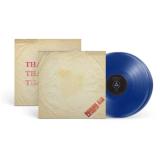
Jack Hamill concludes his trilogy of space saga albums with The World Overhead landing on Tiraquon Recordings on October 30, 2026, with a special limited transparent blue edition issued exclusively via Bandcamp from October 16, 2026.
Introducing the science fiction realm of Mikrosector-50 and Mr. 8040 on breakthrough electro funk 12-inch, The Love Quadrant (2009), Hamill signed to R&S Records with the double 12-inch "prequel", The Pathway to Tiraquon6 (2011), setting the stage for debut-album proper Welcome to Mikrosector-50 (2013), where Prince-inspired funk and sleek '80s synth-pop soundtracked Mr. 8040's hazardous journey home via heartbreak and drugs. By Love Beyond the Intersect (2019), Hamill's vocoded opus turned introspective, pairing gentle krautrock influences with themes of love, redemption and self-discovery, mirroring Hamill's personal life, sobriety and creative renewal. Through lockdown Hamill retreated to the countryside around Belfast to reacquaint himself with his machines, experimenting with driving acid and trance, and playing guitar, culminating in a fuzzy shoegaze meets banging IDM sound. Relocating to Amsterdam in 2024 and setting up a new studio, Hamill wrote the third installment of Mr. 8040’s saga, bringing the storyline – and himself – back to earth.
Presenting under the new moniker, Jack Tiraquon, and releasing via his own label, Tiraquon Recordings, The World Overhead is the sound of Hamill removing the guise of Space Dimension Controller and concluding the space-themed concept to move forward as the cinematic hardware musician he's always been at the core.
The much-admired southern soul singer Eddie Giles’ final single for his local Shreveport label Murco, was a self-penned bluesy plodder called ‘Ain’t Gonna Worry No More’. Hiding on the flip was ‘Tingling’ a catchy, atmospheric song written by Murco executive Dick Martin and Jimmy Johnson whose pop group the Peermonts were label-mates. His subsequent release by the same production team appeared on the Silver Fox label so his management may have felt his time at Murco was up - the few pressings of ‘Tingling’ are now in the rare soul big price league.
Around the same time Eddie cut a version of a 40s Country song written by Fred Rose which leant itself to being an excellent mid-tempo soul number; though not released at the time. Despite its sparse instrumentation, it is a very good performance, now on vinyl for the first time.
Bo Harwood (1946–2022) was one of those behind-the-scenes figures of American independent cinema: a self-taught musician, composer, sound editor, sound mixer and songwriter.
Harwood started out as the lead singer and guitarist of a Southern California rock band before a chance meeting with John Cassavetes changed the course of his career. He scored his first feature, The Bach Train, in 1969, and later joined Husbands as an inexperienced assistant in the editing room. He gradually became Cassavetes’s sound editor, music supervisor, composer and sound mixer, eventually working across six of his films, from Husbands and A Woman Under the Influence through The Killing of a Chinese Bookie, Opening Night and Love Streams.Harwood’s music is inseparable from the peculiar emotional universe of those films: strange, romantic, funny and often devastating.
Harwood and Cassavetes worked closely and instinctively together, developing music in the process of making the films. The surviving master tapes reveal something of this exchange: alongside finished pieces are improvisations, experiments and conversations, capturing the two of them working through ideas in real time. Harwood’s compositions were often recorded as rough “scratch tracks”, with Cassavetes preferring their immediacy and vulnerability to more polished arrangements.
This nine-track LP brings together some of that work. There is something wonderfully intimate about hearing these recordings outside the films: the songs stand on their own, while retaining the rawness and emotional charge that made Harwood’s collaboration with Cassavetes so distinctive.
A small document of a remarkable and largely overlooked body of work.
Seit der Gründung von 2nd Grade im Jahr 2018 hat der in Philadelphia ansässige Songwriter und Produzent Peter Gill (der auch Gitarrist der Alt-Country-Band Friendship ist) eine Reihe spektakulärer neuer Welten erschaffen ausgehend vom 20. Jahrhundert-Gitarrenpop, wobei er dessen typischen Klischees irgendwie meilenweit hinter sich lässt, indem er sie genau bis zu ihrem logischen Ende verfolgt. Girls and Boys" ist das neueste Album von 2nd Grade und das erste bei Lame-O Records eine Sammlung von zwanzig Songs, von denen keiner länger als drei Minuten dauert, vollgepackt mit unwiderstehlichen Gitarrenriffs, Power-Akkorden, rasanten Drumbeats und wirbelnden Melodien. Songs von schwindelerregender Komplexität, die man trotzdem nicht aufhören kann zu summen. Auf Girls and Boys" gelingt 2nd Grade immer wieder der wundersame Trick des perfekten Popsongs: Es so aussehen zu lassen, als wäre es ganz einfach.
Each year, countless people slip quietly out of their own lives, leaving no trace behind. The Japanese have a word – 蒸発 “joha’tsu” – the ones who “evaporate.”
Some flee mundane and heavy lives or simply the shadow of themselves. A few turn to the – 夜逃げーや “yonige-ya” or “night‑movers” – companies that specialize in helping someone vanish and begin again in some distant place.
After cutting his teeth in the late '70s No Wave scene with bands Theoretical Girls and The Static, Glenn Branca made his first solo statement, Lesson No. 1, in 1980. The inaugural release on legendary post-punk / dance label 99 Records, Lesson No. 1 unveils Branca's visionary guitar concepts with two monstrous, side-long compositions that helped forge NYC's downtown art-punk sound and acted as a massive influence on countless young groups, including Sonic Youth and Swans.
The title track is easily Branca's most-accessible moment; its driving beat and interlocking patterns resemble German pioneers Neu! playing Philip Glass. Never before (or since) has minimalism sounded so euphoric. "Dissonance" is the A-side's polar opposite. Dark, skittish and unhinged, Branca leads his band (guitar, keyboard, bass, drums and sledgehammer) through block after block of industrial terror, leaving listeners drained in the process.
WHIMM formed around the shadowy heart of the Toronto post-punk underground over a decade ago. The partnership between Mounir Al Shami and Andrew Matthews has emitted sporadic musical shards over time, while slowly evolving into something so much bigger than its beginnings. Ideas seep out of every corner of No Promotion, showcasing a burning desire to explore and challenge while delivering very direct sonic offerings. The result is an album that feels as if you took the entire Coil discography and smashed it into pieces, assembling these precious songs from the fragments. Or as if Vangelis beckoned Section 25 to the studio in hopes of recording the score to a seedy film. The resulting LP is in a state of flux – equal parts motion and decay.
Patrick Flegel, of Cindy Lee, welcomed Al Shami and Matthews into REALISTIK Studios in Montreal to engineer half of the tracks for the album, including lending guitar to the opening track "Five in Decline." That influence is evident early on, as the first three songs are taken from those sessions. "Five in Decline" throbs and barks before racing through the hallways closing in around it. "Another Labour" slows to a spidery waltz as anxious melodies call out to one another. "Returnal" pulses, floats through the night sky and haunts you forever. "Rye" carves a percussive pathway toward similar travellers like Terry Riley and Jon Hassell, before the lament of "A Death Remembered" forms the perfect midpoint for the record. A slow build countered by twitching drums and blanketed by organs recorded at Metropolitan United Church in Toronto, it feels like emotion right on the edge of resolve.
"Rhymes of December" screeches through on a solitary train under the towering cityscape as the flickering lights blur past, its doors opening to the candlelit altar of "After the Last Sky" (those beautiful organs again) with an operatic swirl. "K'20" throws you into a claustrophobic and chaotic cab ride (Who is talking? Are those sirens?) until you finally find the quiet of the early morning, waiting at the window for the sun to join you once again as the first notes of "No Promotion" are delicately plucked. The final song from the Flegel sessions, it is over eight minutes of contemplative beauty. A restless heart that is ready to rest. Closing with a final apparition in the key of The Caretaker, "After the Last Sky (Reprise)" is a return to melody when words lose all meaning.
Al Shami and Matthews weave their lyrics throughout, words describing a search for lucidity, and of reactions and reflections. Al Shami – speaking from the Palestinian diaspora – ruminates on displacement, both personal and collective. His journey from having "been without a land and I can still see clearly" in "Rhymes of December" to a more defiant "we will be back again, no matter how it ends or where we've been" in "Returnal" takes a very insular turn on No Promotion. That sense of alienation pulls at the very center of a relationship when land and circumstances separate: "And after our last breath, all that's left in me is our flesh and fears, your last words would swim for years, you'll never find a home in me." Hearts on the outskirts that know the direction.
Cosmic Romance presents the debut album from Sua Galera, a vibrant 8-track journey shaped by friendship, late-night sessions, and a shared love for groove-driven music.
Formed in Dortmund, Germany, located in the middle of the multicultural region Ruhr, Sua Galera brings together nine musicians who first connected through the city’s jazz music scene. Led by keyboardist and producer Eskil Bauer, the collective channels a multinational identity, reflected both in its sound and its name: “Sua Galera,” Portuguese for “your crew.” With vocalists with Brazilian and Moroccan background at the forefront, the project naturally blends diverse cultural influences into a warm and cohesive musical language.
The album moves effortlessly between Brasil funk and Mediterranean-inspired grooves, all filtered through the timeless sound aesthetics of 1970s and 1980s studio productions. Recorded through countless nights spent both in the studio and immersed in live music culture, the record captures the spontaneity and chemistry of a band deeply connected through performance and collaboration.
Perfectly aligned with the Cosmic Romance universe, Sua Galera’s debut delivers an organic, soulful, and rhythm-forward sound designed for DJs and listeners seeking emotionally rich groove music.
Battlefield sees No Ice Cream Sound knock on the door of the real foundations of Roots Reggae and Dancehall culture with a heavyweight, riddim-focused multi-vocalist release.
The release perfectly balances a bold and fresh contemporary sound while retaining the spirit; energy and rawness of the classic riddims we all know and love. Battlefield creates a sturdy platform for the carefully curated selection of vocalists to showcase their respective styles and patterns.
At the heart of the release is a unique vocal link-up that reflects the ever-growing globalisation of the Reggae Sound-system culture. Each of the men behind the microphones invites us to embark on a journey; connecting the dots on the map that represent the places they call home. We start in The South West of England and track across country to Southend-on-Sea; from here we make the mission all the way down to Madrid before taking a bearing on the North Star to guide us over hills and valleys to Scotland.
Where the riddim creates a constant, the vocals provide variety. Made by design the track allows them a spacious environment for the individual styles and messages to come across with precision and clarity.
Hailing from different backgrounds; accents of different origins, insights and perspectives drawn from their own stories all come together over one sound. This could be seen as an analogy of the ethos and motivation behind Reggae music itself. Reggae music as a genre tells the same story, Reggae artists tell their version of the story. Via this timeless format we are always building on the teachings of yesteryear while simultaneously learning something new. The gift that will forever more continue to give!
'Kiliae is a collection of pieces that tell the story of a homecoming. It is a cohesive narrative that captures the feeling of what a home can be, drawing its inspiration from life in that place itself - life that has now become something different after having lived in foreign places for an extended period of time.
'Kiliae captures a certain atmosphere, a feeling that has built up during countless walks and bike commutes in and around the city of Kiel.'
It’s that time of year again! Are your copies of “Now! That’s What I Ca l Christmas” and “A Motown Christmas” finaly feeling worn out? Strut has the ideal antidote this year, as we dive into the world of festive records made by African artists spanning the late 1960s to the 1980s with our new Krismasi: Christmas Sounds From Africa compilation.
Taking in music from across the continent from Nigeria and Ghana to South Africa and Zimbabwe, Krismasi draws from a wide range of sounds from fun novelty records and spur-of-the-moment jams to spiritual and gospel favourites. Featured artists include Ghanian great Kwadwo Donkoh with a meditative highlife praise song from his much-loved Christmas Africana album. Elsewhere, pop star turned pastor, Jerry Boifraind, has some fun with a song celebrating seeing friends at Christmas and Nigerian pop favourite Martha Ulaeto features with the lilting lead track from her own Christmas Africana release. We pick out some choice Central and East African sounds with Kakai Kilonzo’s bri liant Kilimambogo Brothers Band and Congolese legend Baba Gaston’s Orchestra Baba National capturing the joy of the festive season. We stop off in Zim for a rare Dorothy Masuka acoustic piece and one of the country’s great musicians post-independence, Paul “Dr. Love” Matavire with ‘Christmas Yaswedera’ (‘Christmas Is Near’). Township jazz star Reggie Msomi appears with a joyous township instrumental and, fina ly, we couldn’t release a Christmas co lection without some carols. Here we include here a great version of ‘Mary’s Boy Child’ by UK-based Nigerian highlife musician Flash Dominci and a hi-octane funky medley of favourite festive hymns by Ghana’s Oscar Suley.
The compilation is the first in-depth co lection of rare African Christmas recordings, uncovering a rich and often overlooked chapter of the continent's musical history. Krismasi is available on Red & White Inkplosion Vinyl LP and CD. Vinyl restoration is by Colin Young at See Why Audio, mastering is by Frank Merritt at The Carvery, and the album features striking new artwork by Liam Large.
First run of limited black and white vinyl versions of this huge cold war themed classic. Includes Devil's Dancers amongst other tracks. Huge!!
Minimal Wave proudly presents a newly remastered deluxe double album of archival material by pioneering 80s minimal electronic duo Oppenheimer Analysis. Oppenheimer Analysis formed in London, England in 1982 by Andy Oppenheimer and Martin Lloyd. Their first meeting though was at the 1979 World Science Fiction Convention in Brighton. They quickly became good friends, sharing an interest in the work of David Bowie, electronic music and early synthesizer bands such as the Human League and Soft Cell. They also shared a love of old science fiction movies, 1950s graphics and comic book imagery and a fascination with post-World War II propaganda, the politics and aesthetics of the Cold War, and the social impact of the atomic bomb. Over the next few years Andy and Martin frequented the growing club scene, including Studio 21 on Oxford Street, and became involved in the developing Futurist and New Romantic style sub-cultures. During this period Martin recorded as Analysis, both alone and with David Rome of Drinking Electricity. They released their first single, 'Surface Tension/Connections' on David's Survival label in 1981. In 1982, Oppenheimer Analysis began writing and recording together at Feedback Studio in Battersea, and performed several times at The Bell, Islington, the 1983 World David Bowie Convention in Hammersmith, the Starzone Birthday Party at Camden Palace, the 1984 European Science Fiction Convention in Brighton and other live venues. Their first demo tape and twelve song 'New Mexico' cassette were sold at gigs and by mail-order, and were reviewed in Melody Maker, Sounds and Soundmaker.
For the years to follow, Oppenheimer Analysis became recognized among electro-music aficionados as a pioneering duo who influenced countless other bands during the club and home-recording era of the early 1980s and beyond. Their cassettes became massively collectible. In 2005 they re-formed with the release of a self-titled four song 12' EP of selections from the New Mexico cassette, including 'Cold War' and 'The Devil's Dancers'. This marked the first release on Minimal Wave. Now in 2015, we're happy to present the entire New Mexico collection, newly remastered and cut to vinyl for the first time ever, to celebrate our 10 year anniversary. This first edition of 1000 copies is pressed on deluxe 'nuclear' style black and white 160 gram vinyl, housed in a glossy gatefold silver and black printed sleeve, featuring all the song lyrics on the inside of the sleeve. Release date: May 16th, 2015. This quintessential reissue has been produced in loving memory of Martin Lloyd.
Second Storey launches new record label High Canopy - with Ladakh EP, 20 years since the artist's first vinyl release. Storey's working template has always been to take on the observations of his inner and outer world experiences, folding them into his expertise as a highly skilled drummer, knack for dream-scape sound design and love of rave and soundsystem culture. High Canopy promises to be an environment that platforms full artistic freedom and homes the mechanised, cerebral dancefloor workouts of Second Storey's studio life alongside his deeper, more experimental terrain. The EP's first stop is 'Blue Eye' named after the spring source of the Bistrice river in Albania. Crystal-clear sound design that echoes the flow of this natural water and sits alongside softly distorted low end. Contrasting 'Urban Hermit' was written in Berlin, during a bout of cabin fever and is a heavy case of gnarled up, spat out, paranoid machine funk. 'Post Columbia' - recorded after an eye opening trip to Bogota- then shifts the tone for the B side into more heady melodic territory with luminous, floating synths evolving throughout the track. ' ABC Conjecture' builds an intense atmosphere as it crawls and morphs across growling, distorted bass with a creeping shuffle of layered elements building overhead. Title track 'Ladakh' completes the EP, inspired by the remote town in the Indian Himalayas on the border of Tibet, AKA snow leopard country. It takes on a special and expansive ambient quality of this deeply precious and spiritual mountain land.
Dylan Atlantis' Insta bio read 'amateur artist' at the start of the year.
Now she's on a billboard in Times Square.
With vocals and lyrics that extend well beyond her young years, Dylan Atlantis is the definition of meteoric rise.
Pitchfork describes her as ""the silky R&B singer, sliding in with the laid-back cool.""
THE PHILIPPINES-BORN, WEST SYDNEY BASED MUSICIAN WAS RAISED on a musical diet of RnB and Hip-Hop by her Mum. Now a self-professed lover of all genres of music (even country), she's out here sharing her innermost thoughts and lyrical experiments with the world. ""I kinda just treat music like a diary but also a science lab where I can experiment expressing myself in different ways until it's awesome enough that I feel compelled to share it.""
Impressed Recordings are proud to present Dylan Atlantis' release - It Starts Again, on limited edition vinyl.
A native of the island nation of Cape Verde, Cesaria Evora was known as the country's foremost practitioner of the morna, a combination of West African percussion with Portuguese fados, Brazilian modinhas, and British sea shanties. After a short singing career in the 1970’s, she returned in the late ‘80s with a string of critically acclaimed and increasingly popular albums.
Her 1999 album Café Atlantico (a reference to her home where she frequently entertained guests) is a much-acclaimed masterpiece, finding Evora venturing into more Latin American musical landscapes, as opposed to Portuguese, which dominated her previous albums. Evora draws from traditional Cuban and Brazilian music to mesmerizing effect. The music is heart-breaking and nostalgic, warm and tragic all at once.
Café Atlantico is available on black vinyl and includes an insert with lyrics.
Songs of Joy and Peace is a Christmas music album by cellist Yo-Yo Ma, originally released in 2008. The album features collaborations with many other artists, including vocalists Diana Krall & Alison Krauss, James Taylor, Dave Brubeck and Chris Botti.
This holiday disc doesn't exclusively stick to traditional Christmas songs, but covers a wide scope of material in a very ambitious manner. Ma opens with a lovely take of the traditional favorite “Dona Nobis Pacem (Give Us Peace)”, playing both the melody and counterpoint via overdubbing.
Jazz pianist/vocalist Diana Krall is superb in a swinging rendition of Jerome Kern's unjustly obscure "You Couldn't Be Cuter", adding bassist John Clayton. An arrangement of “Joy To The World” features pianist Dave Brubeck and cellist Matt Brubeck (his son). Chris Botti has never sounded better in the warm arrangement of “My Favorite Things”, playing both open and muted trumpet. James Taylor is featured on vocals on the Beatles cover “Here Comes The Sun”.
With one foot in the Mexican underground rock scene and the other one in the global tape trading circuit, Las Ánimas del Cuarto Obscuro found themselves in the middle of a crossroad after their first LP. México wasn´t the same country as when the band first started. Even though access to non-commercial music still was a difficult task in the late eighties, the fringes of culture had way more resources thanks to the stubbornness of certain anonymous heroes: dwellers of El Tianguis Cultural del Chopo, niche record stores, illegal underground parties and hosts of late night Mexican public radio shows.
Ubiquitous social unrest expressed itself in every way possible. The aftermaths of the 1985 earthquake weren’t the only matters on the table. Protests erupted after a rigged presidential election and a student strike hit Mexico’s biggest public university. This was just the tip of the iceberg of issues PRI’s perfect dictatorship was or wasn’t addressing. The clash of the authoritarian regime against new and fresh ideas.
If the first record was about the loneliness of self-destructive youth and it’s urban phantasmagories, LACO’s second LP dealt with change as the axis of human existence. Las Ánimas is just the beginning of the sonic metamorphosis Toño Sánchez went through until this very moment.
The departure of former bandmembers set a different approach towards more experimental and atmospheric sounds. As the project’s only member, Toño Sanchez took an alchemical trip aiming for more mysterious horizons.
Despite the fact that we can still find conventional dark pop and catchy songwriting, the record rests on sound landscapes closer to Jorge Reyes or Tuxedomoon and This Heat than the orthodox ways of so called post-punk, seasoned of course with the lack of music gear and the economic reality prevalent in Mexico of those convulsed times.
Las Ánimas is a goodbye letter to underground but not because the next move is the mainstream. Far away from it, it’s a farewell to traditional rock and a the first steps down into the depths. From now on, Toño Sánchez will dedicate his musical efforts to weirder sounds and scarcer audiences in the search of the arcane, possessed by a mania of constant change that infects the soul after crossing the black door’s threshold.
Synth driven perpetual punk rock, darkened by atmospheric touches in its production and songwriting, yet uplifted by its intention to distill that darkness into light. Pop music from France on either side of the punk explosion has never shy’d away from electronic elements and on Nuits Blanche’s Helás LP there is plenty to remind us of that legacy. The sounds we are given rub against neither pop or dance, but instead absorbs the impact of quite tough sounding street punk. Four on the floor drums, like Disco’s ghost stamped across the face by the weight of the electric guitar run with songs not out of place if “A Country Fit For Heroes” got shoved inside the sleeve of “Wanna Buy A Bridge” and the two became one. Helás has the heft and the violence of boots treading across concrete en masse but within that is the lightness and the style of a dark smokey room filled with people wearing dark glasses and considering the inevitability of the pointlessness of existence…off the dance floor anyway. (Jonah Falco)
Detroit underground's DJ Girl gracefully appears on Ultralow, with a (turbo) five track EP. Unapologetically in her style and attitude, for the second release of the label. Electro sounds by the ounce, something to look out for!
Ella Langley, who has redefined the next wave of country music with her magnetic, unmistakable voice, and fearless songwriting, has announced her highly anticipated sophomore album Dandelion, out April 10 on SAWGOD/Columbia Records. Co-produced by Ella, Miranda Lambert and Ben West, this 18-track album, which features her #5 Billboard Hot 100 hit “Choosin’ Texas,” is one about growth, and carries a deeper symbolism of hope, healing, and resilience. In Ella’s own words: "I've thought about this record every single day for the last year and a half, and I'm so excited to finally say: 'Welcome to Dandelion.’"
Agoro is a Franco-Ghanaian hip-hop group of four rappers and four musicians. After kicking off in 2023 with a 15-date tour in France, the group’s journey took a turn when a Ghanaian rapper vanished from the airport before boarding his return flight. Their new album chronicles this emotional roller coaster and the challenges of cultural exchange between Europe and Africa, with socially conscious lyrics in French, English, and Twi set to jazzy and electronic boom bap instrumental pieces.
A collaboration few would have predicted, and one that makes perfect sense once you hear it. Munich producer Skee Mask (Bryan Müller) has spent over a decade turning hazy, atmospheric techno, breakbeat, dub and jungle into some of electronic music's most acclaimed records, from 2018's Compro to 2024's Resort. North Americans, the ambient country-folk project of guitarist Patrick McDermott, brings a completely different palette of slow-unspooling drones.
Final Circle finds these two worlds colliding, pairing rhythmic electronic detail with the wide-open, meditative textures both artists are known for.
Anna Almani might be your new favourite producer. IFYKYK.. If you don't, then let's get to know..
Anna Almani is a Berlin based “Drag-DJ & Fun-House-Queen”. She is “Big Sister” at ‘Love Letter’ an imprint “for flinta & queer sonic goodness” and she is the alter ego of deep house producer and Poker Flat & Watergate artist ‘Iorie’.
Anna says “This EP is part of my queer expression. It’s all about the attitude to resist, it’s about being yourself unapologetically. It’s a big hug to the queer community and a love letter to resistance on the dancefloor. Be radical, have an attitude and lose yourself.”
When we picked the tracks for this EP we were completely spoiled for choice. There’s so much personality in Anna’s music that every track list made sense. And that’s because there’s a common thread that runs through all of Anna’s music - Balance. Ying & Yang. Dark & Bright, Passive & Assertive, Masculine & Feminine, Fun & Depth all in kept in amazing dynamic balance.
This is Share Now & Save for Later… Gratification immediate and delayed. .. . four tracks to take you through from open to close. From Berlin to NYC and round again
‘See Me Walk’ is gonna be the track that grabs the attention and connects with dancers everywhere. Fast, fun and full of attitude it’s a 909 workout with the energy and syncopation of Ballroom Vogue aaaaand a fabulous diva vocal to match. ’Tender T’ counters the audaciousness with some tenderness. Energetic yet embracing, this introspective proggy, dubby afterhours roller is a proper trip! Full of colour but hazy af.
On the flip ‘Gimme Some’ ramps up the tempo. Fast, urgent and cyclic grooving techno - with a strut - that’s both dubbed out and in your face. ‘Anladın mı’ is a collaboration between Anna and German/Turkish producer Zettka. Low slung house that both jacks and grooves. Rolling basses balanced with playful chords. “Anladın mı” it translates as “Do you understand? or “Got it?”. By now I think we do understand.. That certain je ne sais quoi… Anna Almani has definitely got it.
Finnish-American guitarist Raoul Björkenheim and Norwegian drummer Paal Nilssen-Love join forces on their new album PING, released by We Jazz Records on 30th October on LP, CD and digital formats. Recorded in Helsinki, the album finds the seasoned duo firing on all cylinders and delivering a remarkable set of contemporary free music.
PING brings together nine excursions beyond “guitar + drums” and way beyond “free jazz”. That being said, those are still good touching points for the music that is wild, imaginative, raw, yet also at times delicate and introspective. Friends and collaborators for decades in groups such as the lauded Scorch Trio, Raoul and Paal have the history and the trust to create memorable and original improvised music that stuns and moves the curious listener.
Raoul Björkenheim (b. 1956) is a Finnish-American guitarist and composer who has been creating original music for the past four decades living in New York City and Helsinki, where he is presently based. Describing his on-going work as investigative guitarism, he is best known for an expressionistic and lyrical guitar style. Björkenheim’s eclectic discography numbers 50+ albums, ranging from ambient soundscapes to visceral free jazz, from duo to big band. His large-scale works for symphony orchestra have yet to be recorded, and he has also composed scores for over ten films and dance productions. Björkenheim has collaborated musically with Bill Laswell, Toshinori Kondo, William Parker, Mats Gustafsson, Hamid Drake, Ingebrigt Håker Flaten, Gerald Cleaver, Henry Kaiser, Lukas Ligeti, Morgan Ågren, Paul Schütze, Edward Vesala and Juhani Aaltonen, for the labels ECM, Rune Grammofon, Cuneiform, Tum Records and Long Song records. Björkenheim has been awarded various prizes including the Emma prize for best jazz recording of the year, and been nominated three times for the Nordic Music Award.
Paal Nilssen-Love (b. 1974) is a Norwegian drummer, composer, bandleader, and producer known for his central role in Scandinavian free jazz and improvised music. Since the mid- 1990s, he has appeared on more than 280 albums, including 70 released through his label, PNL Records. He has performed with influential groups including Atomic, The Thing, Peter Brötzmann’s Chicago Tentet, Scorch Trio, and Frode Gjerstad Trio, and collaborates regularly with artists such as, Ken Vandermark, Akira Sakata, Otomo Yoshihide, David Murray, Arto Lindsay and more. Paal Nilssen-Love’s fascination with traditional and experimental music has taken him around the world. Since his first visit to Ethiopia in 2009, he has built strong connections with musicians and artists in Addis Ababa, leading to collaborations, performances, teaching, and artist exchanges with Norway. Since his first trip to Brazil in 2013, he has returned regularly, developing collaborations with artists and musicians across the country. His musical explorations have also brought him to Tsugaru and Aomori in northern Japan, where he has developed an interest in the region’s traditional music. Nilssen-Love is also an active organizer and educator. He started both Oslo’s all-Ears festival, the Blow Out festival and FRAM Kunstfest, and has led workshops internationally and in Norway.
Kalita presents the fourth and final instalment of their groundbreaking ‘Borga Revolution!’ series, uncovering another selection of essential recordings from the rich and far-reaching world of Ghanaian highlife. Spanning deep, hypnotic highlife through to the vibrant electronic productions of 1980s Burger Highlife, Volume 4 captures a period of extraordinary musical change, as Ghanaian artists absorbed influences from funk, disco, boogie, and new synthesizer technology. With previous volumes championed by tastemakers including Gilles Peterson, Antal, Tom Ravenscroft, and Hunee, this final chapter turns its attention once again to the music of the Ghanaian diaspora.
Volume 4 brings together rare recordings from artists such as Rex Omar, Nat Fredua, and CST Amankwah, alongside the elusive, deeply hypnotic and beautiful sounds of the Abibifo Dance Band of Ghana (led by the legendary bassist Ralph Karikari) and Baffour Kyei. Unearthing recordings that have languished in obscurity for over forty years, the compilation moves between deep highlife, rhythmic dancefloor cuts, and pioneering digital productions, revealing yet more musical ingenuity of Ghanaian artists both home and abroad. The final instalment in the ‘Borga Revolution!’ series, it offers another vital collection of forgotten favourites and hidden treasures for DJs, collectors, and anyone drawn to the endlessly inventive sounds of Ghanaian music.
The 1970s and 80s saw Ghanaian musicians begin to incorporate Western sounds like funk and disco into their music, reflecting the changing global musical landscape. However, the country's political instability and economic hardships, marked by military regimes and curfews, forced many artists to leave Ghana in search of better opportunities abroad. In Europe and the U.S., these musicians fused their traditional highlife roots with emerging digital sounds, using cutting-edge technology like the DX7 synthesizer and drum machines to create the genre now known as Burger Highlife.
With ‘Borga Revolution!’ Kalita offers a vivid exposition of this musical transformation, using rare interviews, archival photos, and detailed liner notes to bring to life the pioneering spirit of both well-known icons and unsung innovators of Ghanaian Highlife, one of West Africa’s most exciting musical movements.
· The final installment in Kalita's 'Borga Revolution!' series, examining the development of Ghanaian dance music in the 1970/80s, and focussing on the phenomenon of Burger highlife (a blend of Ghanaian highlife with disco, boogie and synths).
· 2xLP in gatefold sleeve, with printed inner sleeves examining the stories of the artists featured on the volume.
· Includes 10 highly sought-after and under-the-radar recordings, including those by the phenomenal Rex Omar, Nat Fredua, CST Amankwah, Baffour Kyei, Chief Kofi Sammy, and the Abibifo Dance Band of Ghana.
Riva Starr teams up with Australian duo Close Counters for a sun-soaked debut on Heist.
What do you get when you put an Italian house legend in the studio with 2 of the most talented artists from Melbourne? Have a listen to the newest release on Heist and you’ll find out. On their ‘Push your luck’ EP, Riva Starr, Close Counters and UK soul singer Andre Espeut bring a heavy dose of jazz & soul and most of all, upbeat dancefloor energy. Whether it’s the deep soulful vibe of the title track or the house meets jazz-funk energy of ‘Gearbox’, this EP brings together everything we love about house music.
‘Push your luck’ comes right in the middle of Close Counters’ world tour, just after Riva Starr’s album ‘Keep me on the dancefloor’ and is the follow up to their recent collab ‘Jinga’ on Riva Starr’s own Snatch Records. We all know Riva Starr from his 2013 Fatboy Slim collab ‘Eat sleep rave repeat’, his work with Groove Armada, and more recently his collab with Prunk on his PIV records debut album. Close Counters have already worked with Heist mainstays Fouk and had their breakthrough moment with their 2023 album ‘Soulacousta II’, which got wide support ranging from Gilles Peterson to Jyoto and Folamour.
Their ‘Push your luck’ EP kicks off with the title track featuring the silky vocals of Andre Espeut. When we first heard this song, we immediately got transported to the soulful sound of the mid 2000s led by Recloose’s unique track ‘Dust’ with Fat Freddy’s Drop singer Joe Dukie. It’s moody, stripped back, and bouncy at the same time. The lush chords, disco bassline, and vocal harmonies all make for a track that goes beyond genres and trends. This is a future classic.
‘Gearbox’ is a disco-tinged piano jam full of live elements, rolling congas and disco bleeps, where the musicality of the Close Counters boys comes in at full speed. This song takes its inspiration from the Brazilian jazz-funk of legends Marcos Valle and Azymuth, with a clear sense of modern-day dancefloors and a love for electronic noise. Also; 10/10 for creatively naming the track after the glitchy electronic sound that freaks & funks throughout the track.
On the flip, ‘Dizzy’ sees the trio go more into disco-house territory, again teaming up with Andre Espeut for a track that blends catchy vocal loops with a tight groove and lush chords. The EP finishes with a club dub of ‘Push your luck’ for those in favor of more groove and less vocals.
We’ve had Riva Starr and the Close Counters boys on our radar for a while, and they landed on Heist with the perfect combination of musicality and dancefloor power. We hope you like this release as much as we do!
Kokoroko today announce Tempos Difíceis Sempre Passam, a new remix EP reimagining tracks from their acclaimed album Tuff Times Never Last through the lens of some of Brazil's most exciting contemporary artists.
Translating the album's title into Portuguese, Tempos Difíceis Sempre Passam reflects both the enduring message at the heart of the original record and the creative dialogue between Kokoroko's expansive musical world and Brazil's rich, genre-defying music scene. The four-track collection brings together a handpicked group of artists whose individual approaches blur the boundaries between a variety of genres and contemporary Brazilian sounds.
To be released digitally and on limited vinyl, the EP also sees the return of acclaimed artist Luci Pina, whose artwork for Tuff Times Never Last is reimagined for this new chapter, creating a visual thread between the original album and its Brazilian counterpart.
Leading the announcement is Never Lost (Luedji Luna Remix), available now on all digital platforms. The celebrated Brazilian singer-songwriter brings her unmistakable warmth and emotive vocal sensibility to the track, offering a beautifully understated reinterpretation that deepens the song's themes of hope, resilience and togetherness.
Completing the EP are three further remixes from across Brazil's vibrant musical landscape. Onome of Kokoroko joins forces with acclaimed guitarist Nyron Higor for a richly textured rework of Da Du Dah, while producer Aleh Ferreira delivers a rhythm-driven reinterpretation of the same track. Closing the collection, Bruno Berle transforms Closer To Me with his signature blend of intimate songwriting, Brazilian groove and experimental pop sensibilities.
Together, the remixes offer fresh perspectives on Tuff Times Never Last, extending the album's spirit of optimism while celebrating the creative connections between London and Brazil.
Kokoroko today announce Tempos Difíceis Sempre Passam, a new remix EP reimagining tracks from their acclaimed album Tuff Times Never Last through the lens of some of Brazil's most exciting contemporary artists.
Translating the album's title into Portuguese, Tempos Difíceis Sempre Passam reflects both the enduring message at the heart of the original record and the creative dialogue between Kokoroko's expansive musical world and Brazil's rich, genre-defying music scene. The four-track collection brings together a handpicked group of artists whose individual approaches blur the boundaries between a variety of genres and contemporary Brazilian sounds.
To be released digitally and on limited vinyl, the EP also sees the return of acclaimed artist Luci Pina, whose artwork for Tuff Times Never Last is reimagined for this new chapter, creating a visual thread between the original album and its Brazilian counterpart.
Leading the announcement is Never Lost (Luedji Luna Remix), available now on all digital platforms. The celebrated Brazilian singer-songwriter brings her unmistakable warmth and emotive vocal sensibility to the track, offering a beautifully understated reinterpretation that deepens the song's themes of hope, resilience and togetherness.
Completing the EP are three further remixes from across Brazil's vibrant musical landscape. Onome of Kokoroko joins forces with acclaimed guitarist Nyron Higor for a richly textured rework of Da Du Dah, while producer Aleh Ferreira delivers a rhythm-driven reinterpretation of the same track. Closing the collection, Bruno Berle transforms Closer To Me with his signature blend of intimate songwriting, Brazilian groove and experimental pop sensibilities.
Together, the remixes offer fresh perspectives on Tuff Times Never Last, extending the album's spirit of optimism while celebrating the creative connections between London and Brazil.
Psychedelic rock, pop punk, and trippy hop tracks against animal exploitation.
Canine Cracks is the new artistic project of Benedetta and Romain Play (aka Camion Bazar). Known as DJs, event organizers, producers, and vinyl collectors, they're now returning to their roots and their first love: rock, post-punk, and massive mosh pits, instruments plus drum machines, and intense live performances. Everything is created in their own studio, located in the French countryside, where they retreat to escape the mad world. These two friends are animal rights activists fighting for animal liberation and are using this album and project to say ""fuck"" to animal exploitation and human supremacy over minorities."
Following the events of Pussy Disco (SCCD 021) ...
The nights in Hong Kong did not remain a secret for long. Word spread silently through the feline world, and the gatherings grew until the music no longer belonged to a single hidden basement. The cats had found something of their own.
Their new destination became Macau. Long after midnight, when the casino floors fall silent and the roulette wheels come to rest, they emerge from hidden passages and forgotten service corridors to throw their own secret parties. The gaming tables become dance floors.
The remixes played during these nights were all commissioned by the legendary feline Primadonna Disco Queen Beast (PDQB), reimagining tracks from the original Pussy Disco album. The most celebrated DJ cats perform with nothing but their claws, tracing the grooves like perfectly balanced styli. Their oversized ears become living loudspeakers, carrying every microscopic detail through the vast halls.
Before dawn, the music fades. The cats disappear without a sound, leaving the roulette tables exactly as they found them. When the first employees arrive, there is no sign that anything happened during the night.
Over the years, PDQB commissioned countless remixes of tracks from Pussy Disco. The eleven collected on this double vinyl were all played during the legendary Sunrise Sessions - the final hours before daybreak, when the parties reached their absolute peak. These are the remixes the cats returned to again and again, making them the undisputed classics of Macau's underground feline nightlife.
While there have been countless performances, recordings and releases of Glass's works, this is the first time that an entire album is devoted to new studio recordings of his original film scores. Over the past decades Philip Glass has become a household name in contemporary music thanks to his prolific activity and output across many music genres, including operas, concertos, symphonies and music for theatre. He has also systematically sought out collaborations with musicians and artists from all over the world. Due to his highly idiosyncratic and distinctive style, the American composer has been considered one of the frontrunners of minimalism in music, even though he himself regards his work rather as music with repetitive structures, in a continual search to integrate harmony, melody and rhythm into a single musical expression. In 2025 he received the World Soundtrack Lifetime Achievement Award for his contribution to the art of film music.
A limited 45, lifting two of the most transportive moments from Manifest, the fifth studio album from BALTHVS, and pressing them together on a standalone 7". "Eternal Flow" closes Side A of the LP, a slow-building groove that became the lead single of the album campaign. "Pale Blue Dot" opens Side B, a meditation on smallness and the cosmos that stretches out over nearly five minutes.
BALTHVS is the Colombian trio of guitarist and producer Balthazar Aguirre, bassist Johanna Mercuriana, and drummer Santiago Lizcano. Over five years the band has amassed more than 140 million streams, performed in over 26 countries, earned a Libera Awards nomination, and appeared at Electric Forest, Austin City Limits, Outside Lands, Lollapalooza, Jam Cruise, and SXSW Sydney. Manifest, out 10/9/2026, marks their most adventurous work to date, reaching past psychedelic rock into drum and bass, Ethio-jazz, and trip hop.
This 7" is a collector's companion to that album, not a reissue of it. Both sides are drawn from the LP sequence and paired here as a standalone 45 for the shops and the heads who chase the format. Limited to 300 copies worldwide. The band supports the release with a US fall tour running October 8 through 25.
Following his acclaimed ARTIFACTUAL RHYTHM album, Alexander Flood returns to ARCo. with an outstanding remix package, assembling a cast of renowned producers whose names will be instantly familiar to discerning listeners. Each remixer brings their own unmistakable touch, resulting in a rich and diverse body of work that honours the original music while showcasing the individuality of every artist involved.
Contributing to this superb release are Alexander Flood himself, ARCo.'s very own Peacey, the unmistakable sounds of Close Counters, Atjazz, and Fred Everything. Also joining the remix roster are Oliver Knight, Crowd Control & Karl Swisher, and the ever-inventive jazz scientist Kaidi Tatham, each offering a distinctive interpretation that makes this an essential companion to the original album.
A DJ, producer and significant figure in contemporary electronic music, Marcel Dettmann steps forward to contribute to Running Back’s ongoing Mastermix series. Whereas previous editions of Mastermix have taken an ear to the sound of lapsed, legendary clubs such as Wild Pitch and Front, Dettmann’s curation deftly captures the man himself in ongoing perpetual motion, raiding the vault for his own precision-tooled edits, long-employed on dancefloors to devastating effect. Alongside a continuous mix, this release arrives as a 3LP gatefold, and as a limited edition cassette.
Closely associated with Berlin’s techno landscape, Dettmann was born and raised in the former GDR, then later immersed in the bleary-eyed counter cultural landscape of post-unification Berlin. Initially oriented by post-punk, industrial and new-wave music, Dettmann has been DJing since 1993, always expanding and perfecting his repertoire. He later began working behind the counter at the city’s tastemaking rave boutique Hard Wax, and a decade after he first dropped a needle, became (and remains) resident at notable local nightspot Berghain/Panorama Bar, where his instincts have helped sculpt the signature sound of both main dancefloors.
Of course, you’re probably not asking, “Who is Marcel Dettmann?” More importantly, you might want to know; just what treats has he gifted us here? The trip begins with a simple pitch-shift skywards, transforming Identified Patient’s creeping ‘The Female Medical College of Pennsylvania’ into a peak-time freakout, before an alternate take on Toctronic’s ‘Bis uns das Licht vertreibt’ emerges from the vaults for the first time. Dating from 1995, and one of Dettmann’s all-time favourites, Cristian Vogel’s ‘Untitled’ clambers back into the box with respectable cuts, while John Bender’s ‘Victims of A Victimless Crime’ kicks off the flip sporting a new arrangement, transporting us back to the foundations of a confident, stripped-back sound.
A few subtle edits to Clark’s perilously funky ‘Dirty Pixie’ takes us to Dettmann’s remix of Junior Boys. Produced in 2010, it transposes the Canadian duo’s sophisticated pop with our curator in his minimal prime, and has since become an irresistible prize for high-minded diggers. The same can be said for Experimental Products’ explosive proto-electro anthem ‘Who Is Kip Jones?’, empowered from pricey Discogs purgatory with just the slightest of tweaks. It’s deservedly sandwiched between the guiding influences of Chicago and Detroit in the form of Mutant Beat Dance’s raw ‘The Human Factor’ and a shimmering new version of previous solo production ‘Water’, featuring close friend and Ostgut Ton ally, Ryan Elliot.
The second half of the Mastermix seamlessly connects the mechanical past and digital present of EBM and industrial in the dance, with Dettmann’s instincts as a guiding hand. Severed Heads’ iconic ‘We Have Come To Bless This House’ emerges with mere nips and tucks, while Nitzer Ebb’s ‘Shame’ is significantly reimagined as a highwire act of rhythm and tension, setting up a sensual second take on a 2017 remix of ‘Limbo’ from Swiss synth heroes, Yello.
Core musical memories are shaken and stirred with a context-shifting take on Frank Duval’s emotional classic ‘Ogon’, while Ian North’s ‘Sex Lust You’ and Ford Proco’s notable Coil collaboration ‘Expansion Naranja’ effectively throb with only minor adjustments, respectfully imagined as “shadow versions”. Meanwhile, a simple breakbeat lifts Albert Kuningas’s ‘Astraalprojektio’ in the direction of wide-eyed dancefloors, while a fresh take on K-Alexi Shelby’s ‘Season of The Real’ inexplicably emerges somehow even funkier than before.
The conclusion of the compilation leads back to Das Tier from the prolific experimentalist Conrad Schnitzler, whose swirling synths and hypnotic vocals are duly tightened by Dettmann, but only as he puts it, “in conversation with the original.” Concluding three discs and thirty years of commitment to the dancefloor, this Mastermix not only offers us the opportunity to eavesdrop on this endless exchange, but to gain some sought-after material for our own record collections.
Available in the following Territories: Wordwide minus Japan & Korea
NOTON is pleased to announce12 Conversations, a collaborative album by Ryuichi Sakamoto and Alva Noto to be released on 18 September 2026.
The partnership between the legendary musician and composer Ryuichi Sakamoto and the German artist Carsten Nicolai (aka Alva Noto) has produced some of the most distinctive and enduring works in contemporary electroacoustic music. Beginning with Vrioon in 2002, the artists spent more than two decades fusing and expanding their disciplines, with Sakamoto's evocative, sustain-drenched piano compositions finding their counterpart in Nicolai's skilful and sensitive electronic detailing.
Each successive project further deepened their artistic dialogue: from the five studio albums of the V.I.R.U.S. series (Vrioon, Insen, Revep, Utp_ with Ensemble Modern, and Summvs), to their score for Alejandro G. Iñárritu's The Revenant; Glass (2017), a wholly improvised performance inside Philip Johnson's iconic Connecticut landmark, in which the pair fixed contact microphones to the glass walls, playing the architecture itself as an instrument; and Two (2019), a document of their live performance at the Sydney Opera House.
Across these works, their distinct approaches achieved a rare synthesis, a brilliantly sustained dialogue between piano and electronics, Sakamoto's warmth and melodic finesse meeting Nicolai's abstract electronic formalism to invoke a mesmeric quietude as deeply satisfying in its melodic resolutions as in the merger of its filmic romanticism and meditative subtlety.
12 Conversations brings together musical exchanges recorded in November and December 2022. Rooted in the same creative period that gave rise to Sakamoto's final solo album 12, these recordings were not originally intended as a standalone release. It was only after the completion of 12 that Sakamoto and Nicolai decided to present these exchanges as a work in their own right.
The album reflects the vitality and curiosity that defined more than two decades of shared inspiration: fluid, exploratory, and forward-looking. Created with openness and trust, it captures a creative process in constant transformation - sounds expanding, altering, and evolving through attentive listening.
Conceived as the continuation of an artistic dialogue extending beyond the physical, 12 Conversations honours Sakamoto's wish that these encounters should exist beyond the archive, offering an enduring testament to one of contemporary music's most revered collaborations.
Carsten Nicolai writes:
"A heavy breath can be heard in the recordings. Yet this work is not about remembrance but continuation, vitality, curiosity, and the spirit of experimentation that shaped an artistic relationship over decades.
The twelve pieces we exchanged in November and December 2022 possess extraordinary density: sounds expanded, altered, recontextualized. Initially, every intervention felt almost inappropriate. Yet this was part of our openness and trust: adding, shifting and radically yet softly transforming.
Even in these final exchanges, plans for future projects continued to take shape, mindful of finite yet firmly believing in the power of new ideas. We chose the name Conversations, which has become a space of memory and vision, where past, present and future intertwine.
For a long time, releasing this music seemed impossible. The loss felt too sudden, and the emotional connection too profound. As time passed, it became clear that these twelve musical encounters should have life outside the archive. To honor Ryuichi's wish, these pieces are now being released as the continuation of a dialogue that extends beyond the physical."
The first single, Conversation 3, will be released on Tuesday, July 14, 2026. The second single, Conversation 6, will be be released on Wednesday, August 26, 2026.
12 Conversations will be available worldwide on vinyl, CD and digitally. A Japanese edition will be available on Ryuichi Sakamoto's commons.
fka boursin returns to Scissor & Thread with From Space Between, following his 2025 debut for the label, Listless Intertext. The Bristol producer continues to explore the more spacious edges of house music, drawing together dub, ambient detail and a loose rhythmic sensibility that has become increasingly characteristic of his work. From Space Between unfolds patiently with sounds appearing at the edges and gradually moving into focus. On the B-side Frank & Tony return with another Housebeat Dub, picking up the thread of their Listless Intertext rework. Francis Harris and Anthony Collins draw the original further into their own language of deep house, giving the rhythm more room and letting the dub elements stretch across the arrangement.
"A half-successful attempt at working with fewer elements in pursuit of a more minimalist approach," says Henry Murray aka fka boursin, "trying to find restraint and sit with gaps in the stereo image where previously I would have reflexively filled them with melodic content. Recorded whilst living alone in another country for a month, the track was borne out of meditations on living in and between unfamiliar places, seasons, languages, currencies, relationships, medications, economics, intentions, sanities, and spaces."
Marion Poncet delivers his heartbeats in full length format as 2x12“ on Smallville's Fuck Reality.
While Traumer might be the most prominent moniker of Romain Poncet- and the one he is currently touring the world as- there is countless other musical projects that the artist is operating as. And its the lesser-known side-projects, that complete the picture of a truly versatile musical mind. So next to Traumer, you'll meet Brako, Amine Laje, Jinger, Redspecs- Marion Poncet - and even more side-projects within the world of Romain. He has always seen his monikers as a form of expression and to showcase his musical broadness. Of course there is House music in all different shades & moods- but Romain also released techno, downbeat & trippy things for the heads as well as broken beat material.
„The Raging Swells Crushing The Cliff Of My Love” was written during a period of longing for his love – so here is a deeply personal album as a musical dedication. Expect thoughtful-but-crunchy house music with a chunk, that sounds as if it was made for Smallville's Fuck Reality imprint.
Fuck Reality LP 02 comes as a 2x12”, as always with a full cover artwork by Stefan Marx.
Love from Smallville - stay positive – Fuck Reality!
PANORAMA Records heads to South Africa for its next release, shining a light on one of the country's great unsung talents, Mpharanyana. Born Jacob Radebe, Mpharanyana was one of the defining voices of South African soul, disco and funk during the 1970s, recording with both The Cannibals and The Peddlers while helping shape a uniquely South African take on dance music. Working alongside future legends including Ray Phiri, his records fused soul, disco, mbaqanga and funk into something entirely his own.
On the A-side, "Get Down" by Mpharanyana And The Cannibals delivers exactly what the title promises. An irresistible blend of modern soul, boogie and disco, it's the kind of record that feels like sunshine from the first bar.
The flip features "Disco" by Mpharanyana And The Peddlers, a super-funky slice of South African Afro-disco that wont leave the record bad.
Despite Mpharanyana's cult status among collectors, "Get Down" has never previously been officially reissued, while the B side was introduced by Kalita Records, both sides remain incredibly rare.
Driven by tight musicianship, infectious hooks and a groove that refuses to quit, this is a genuine dancefloor record for the heads.
Together these two sides tell the story of an artist whose music deserves to be heard far beyond collector circles. As always, PANORAMA Records continues its mission of uncovering rare and essential music from around the world, bringing overlooked gems back into circulation for DJs, collectors and anyone who loves records with real soul.
- 2026 Edition, gepresst auf apricotfarbenem Vinyl - Erweitertes Gatefold-Cover - Enthält ein 20-seitiges Booklet mit seltenen Fotos und Liner Notes von Lenny Kaye sowie Beiträgen von Nick Cave und Devendra Banhart. Karen Daltons Album ,In My Own Time" aus dem Jahr 1971 gilt als wahres Meisterwerk einer der geheimnisvollsten, rätselhaftesten und nachhaltig einflussreichsten Künstlerinnen der Musikgeschichte. Das neu erweiterte, 20-seitige LP-Booklet mit selten gezeigten Fotos, Liner Notes des Musikers und Autors Lenny Kaye sowie Beiträgen von Nick Cave und Devendra Banhart rundet das Paket ab. Die in Oklahoma aufgewachsene Karen Dalton (1937-1993) brachte eine Vielzahl von Einflüssen in ihr Werk ein. Wie Lenny Kaye in den Liner Notes schreibt, hört man den Jazz von Ella Fitzgerald und Billie Holiday, die Intensität von Nina Simone, den Appalachen-Gesang von Jean Ritchie sowie den R&B und Country, die auf ihrem Weg nach New York unweigerlich in ihre Musik einflossen. Ausgestattet mit einem Langhalsbanjo und einer 12-saitigen Gitarre hob sich Dalton durch ihren unverwechselbaren, lebensmüden Gesang von ihren Kollegen ab. In den frühen 60er Jahren wurde sie zu einer festen Größe in der Folk-Szene von Greenwich Village, wo sie traditionelles Material, Blues-Standards und die Songs ihrer Zeitgenossen interpretierte, darunter Tim Hardin, Fred Neil und Richard Tucker, den sie später heiratete. Bob Dylan war unterdessen sofort von ihrer Kunst begeistert. ,Meine Lieblingssängerin dort war Karen Dalton", erinnerte er sich in *Chronicles: Volume One* (Simon & Schuster, 2004). ,Karen hatte eine Stimme wie Billie Holiday und spielte Gitarre wie Jimmy Reed." Wer Dalton kannte, wusste, dass sie kein Interesse daran hatte, sich den Launen der Plattenindustrie zu beugen. Auf der Bühne interagierte sie kaum mit dem Publikum. Im Studio fühlte sie sich beim Aufnahmeprozess ebenso unwohl. Ihr Debütalbum von 1969, *It's So Hard to Tell Who's Going To Love You The Best*, das 2009 von Light in the Attic neu aufgelegt wurde, entstand heimlich, als Dalton dachte, sie würde nur Songs proben. Als Michael Lang, Mitveranstalter von Woodstock, Dalton ansprach, ob sie ein Folgealbum für sein neues Label ,Just Sunshine" aufnehmen wolle, war sie, gelinde gesagt, skeptisch. Das Album musste nach ihren eigenen Bedingungen und in ihrem eigenen Tempo entstehen. Daraus wurde ein sechsmonatiger Aufenthalt in den Bearsville Studios in Woodstock, New York. Produziert wurde das Album von dem Bassisten Harvey Brooks, der bereits auf ,It's So Hard to Tell Who's Going To Love You The Best" an Daltons Seite gespielt hatte. Brooks, der stolz darauf war, unkompliziert, zuverlässig und unterstützend zu sein, verstand Daltons Arbeitsweise, war aber auch bereit, sie sanft zu ermutigen und die Künstlerin dazu herauszufordern, ihre kreativen Grenzen zu erweitern. ,Ich habe versucht, ihr einen flexiblen Rahmen zu bieten", erzählte er Kaye. ,Ich habe die Entscheidungen ihr überlassen - das Tempo, das Feeling festzulegen." Sie war sehr zurückhaltend, und ich habe ihr alles vorgelegt; wenn sie mehr brauchte, habe ich ihr Optionen angeboten. Alle gingen einfühlsam auf sie ein. Sie war die Anführerin. Dalton, die selten ihre eigenen Kompositionen aufführte, wählte eine Reihe von Stücken zur Interpretation aus - von traditionellen Liedern wie ,Katie Cruel" und ,Same Old Man" bis hin zu Paul Butterfields ,In My Own Dream" und Richard Tuckers ,Are You Leaving For The Country". Außerdem erweiterte sie ihr übliches Repertoire und fügte R&B-Hits wie ,When a Man Loves a Woman" und ,How Sweet It Is" hinzu. Im Gegensatz zu ihrer vorherigen LP bot Daltons neue Aufnahme vollere, poporientiertere Arrangements, an denen eine ganze Reihe talentierter Studiomusiker mitwirkte. Auch wenn das Publikum der 70er Jahre vielleicht noch nicht bereit für Daltons Musik war, stand eine neue Generation kurz davor, ihr Werk zu entdecken. In den Jahrzehnten nach ihrem Tod nannten viele Künstler Karen Dalton als Einfluss, darunter Lucinda Williams, Joanna Newsom, Nick Cave, Angel Olsen, Devendra Banhart, Sharon Van Etten, Courtney Barnett und Adele. In dem kürzlich gefeierten Dokumentarfilm ,Karen Dalton: In My Own Time" sinniert Cave über Daltons einzigartige Anziehungskraft: ,Es wird eine Art Anspruch an den Zuhörer gestellt", erklärt er. Ob man es mag oder nicht, man muss in ihre Welt eintauchen. Und es ist eine Welt voller Verzweiflung. Peter Walker, der ebenfalls im Film zu sehen ist, führt diesen Gedanken weiter aus: ,Wenn sie in ihrer Musik ein bestimmtes Gefühl empfinden und es so rüberbringen kann, dass man dieses Gefühl auch spürt, dann ist das wirklich das Magischste, was man tun kann." Er fügt hinzu: ,Sie hatte eine tiefe, tiefgründige und liebevolle Seele - das hört man in ihrer Musik."
Macedonia's own Stojche is Fuse's next guest for the club's freshly made imprint. The long standing DJ and producer has been known to keep Detroit's playfully hybrid style as the focus of his work and 'Metaphor' is the case in point. His four tracks bounce through a nostalgic balance of techno, house, and more with a modern crisp. A refreshing take on club music, Stojche keeps techno's sometimes nonchalant attitude at arms length with a charismatic record that hits its mark with every measure.
The record's first track 'Counterpunch' features heavily lined percussion but still brews up a storm far and wide with resonant dub stabs and open hi hats. The drum machine boasts a full spectrum, rolling through a light show of melodic flashes, perfect for a room compressing soundsystem. The maximalist, vintage detail that Stojche brings to his compositions blurs the lines between classic genres in a time of hasty hybridization, which gives it a sort of authenticity that can't be taken for granted. 'Chordal Tribe', on the other hand, raises the general euphoria of the EP. Luring in the listener with bright pads and full-on drums, Stochje's work is reliable main slot material that adds color to any mix while providing a persuasive low end. Shimmering hi hats give it an ethereal quality making it an appropriate interlude for almost any context. Moving on to the B side, the producer sharpens up his rhythm and emphasizes the hardgroove influence in 'Signal Drive'. Softening the pace of his drums with free use of melodic chord stabs, Stojche opens up his dance floor for a crowd bonding record once again, complete with filter transitions and pummeling toms. As the final contribution, his title track 'Metaphor' begins with a more obscure opening to conclude his EP for Fuse. Leaning more to a techno cut, the record remains flamboyant as ever with open hats and rides shuffling through his arrangement. A muted main synth becomes apparent to focus the energy of the track while allowing for liveset-like drum flickering to take shape beneath, claiming the immortality of old club records with the technical precision of a seasoned modern producer.
A love letter to Canada sees Adams explore new musical territory, drawing on country, folk and rock while telling stories inspired by the people, places and history of home. How's It Goin' could be the most Canadian album ever written! Inspired by the landscapes, characters, stories and current affairs that are all part of Canada's ongoing history, How's It Goin' sees Adams explore a different musical landscape of his own. Alongside the unmistakable songwriting and voice that have been at the heart of his music, the album introduces elements of country and folk, giving the record a warm, roots-y character. Among the songs are "Diesel and Dirt," "How's It Goin'," "Iron Ribbon" and "The Battle of Lundy's Lane". "The idea was simply to make a record about Canada," says Adams. "It started with writing the song for the documentary, 'Canada's Wild Eastern Edge' and after doing so much research, I was inspired to start writing more songs about Canada. Musically it took me somewhere a little different too, which made the whole thing exciting." One of the album's most poignant moments is "The Ballad of Terry Fox," Adams' tribute to one of Canada's most inspirational figures.The song will also be featured in the forthcoming new documentary film about Terry Fox, entitled "Run Terry Run". How's It Goin' acknowledges Adams' roots and delivers an album that is at times personal, cinematic and, occasionally, reflective but always unmistakably Adams.
A love letter to Canada sees Adams explore new musical territory, drawing on country, folk and rock while telling stories inspired by the people, places and history of home. How's It Goin' could be the most Canadian album ever written! Inspired by the landscapes, characters, stories and current affairs that are all part of Canada's ongoing history, How's It Goin' sees Adams explore a different musical landscape of his own. Alongside the unmistakable songwriting and voice that have been at the heart of his music, the album introduces elements of country and folk, giving the record a warm, roots-y character. Among the songs are "Diesel and Dirt," "How's It Goin'," "Iron Ribbon" and "The Battle of Lundy's Lane". "The idea was simply to make a record about Canada," says Adams. "It started with writing the song for the documentary, 'Canada's Wild Eastern Edge' and after doing so much research, I was inspired to start writing more songs about Canada. Musically it took me somewhere a little different too, which made the whole thing exciting." One of the album's most poignant moments is "The Ballad of Terry Fox," Adams' tribute to one of Canada's most inspirational figures.The song will also be featured in the forthcoming new documentary film about Terry Fox, entitled "Run Terry Run". How's It Goin' acknowledges Adams' roots and delivers an album that is at times personal, cinematic and, occasionally, reflective but always unmistakably Adams.
If Sylvie’s New Season were a movie, Ben Schwab would be the auteur, screenwriting and directing the vision, articulating his story through a cast of actors. In truth, New Season is a record of the freewheeling country-rock variety, Sylvie’s first with Ghostly International, and it finds the Los Angeles-based artist at the helm of a rotating ensemble, arriving at pure, joyous expression and renewed faith in the face of hardship. It’s a rare and refined kind of musical gesture, both intimate and all-embracing, self-produced, penned singularly, delivered collectively. An invitation to find beauty in life's trials and to trust that even the longest winters can give way to a new season. Like Sylvie’s self-titled effort, New Season still rings of the sunny, lighthearted, and smooth 1960s and ’70s pop, rock, and country sonics that have become the project’s signature. While Schwab constructed that 2021 project mainly with friends in his orbit, stemming from his time playing in Drugdealer’s band and other peripheral projects, he has broadened the scope tenfold for his full-length debut, New Season. The shapeshifting collective executes on an alluring mix of nostalgic and modern sensibilities, recalling the free-spiritedness of Laurel Canyon and bohemian-era Nashville with a contemporary sheen.
Colorful, powerful and elegant. A watershed masterpiece that embraces before then and after that by Kiyoshi Sugimoto, the master of the era.
Since turning professional in 1960, Kiyoshi Sugimoto has been active in many sessions and recordings. From the latter half of the 1960s, he joined groups such as Hideo Shiraki, Akira Ishikawa, and Terumasa Hino, gaining attention and solidifying his position with leader works such as “Country Dream” and “Babylonia Wind.” This work was recorded with Akira Ishikawa, Hiromasa Suzuki, Takao Uematsu and others right after studying in America for about a year. Starting with the groovy and luscious “Our Time” and “Marmalade Sky”, the dubious keyboards of “Jones Street”, and the melancholic and beautiful “Quiet Pulse”, it can be said to be a gap between jazz rock and fusion. There are attractive songs. This work represents Sugimoto’s work in the mid-1970s.
Twenty-five years after its original release, Markus Guentner's debut album In Moll returns in a special anniversary reissue on Black Knoll Editions, reaffirming its place as one of the defining ambient recordings of the early 21st century.
Released in 2001 during the formative years of Kompakt's influential Pop Ambient series, In Moll emerged from a period of rapid transformation in electronic music. New technologies, expanding digital networks, and shifting creative possibilities allowed artists to imagine entirely new sonic worlds. Amid this fertile landscape, Guentner's music stood apart. Combining delicate melodic fragments, slow-moving harmonies, and a remarkable sense of spatial depth, In Moll introduced a distinct artistic voice whose impact can still be felt a quarter-century later.
The album arrived shortly after Guentner's contributions to the inaugural Pop Ambient compilation, including the now-beloved "Regensburg 1," named after his Bavarian hometown. Those early recordings immediately captured the attention of Kompakt founders Michael Mayer and Wolfgang Voigt. Recalling his first encounter with the music, Mayer describes listening to a demo CDR with Voigt while wandering through Cologne late into the night, replaying the tracks for hours. "We knew that we had found something outrageously beautiful and we wanted the whole world to listen."
Across its running time, In Moll unfolds like a series of dreamlike landscapes, inviting the listener into a world that feels both familiar and strangely other. Bells, hisses, distant textures, and slow-moving bass tones drift through vast expanses of atmosphere while luminous synthesizer washes seem to blur the horizon in a fine digital mist. The album's transportive qualities are matched by a remarkable sense of compositional discipline. Every gesture feels deliberate, every texture carefully placed. Balancing warmth and melancholy with restraint, Guentner created a body of work that rewards both close listening and complete surrender.
Reflecting on the album twenty-five years later, Wolfgang Voigt describes Guentner as "one of the first, but also one of the most important ambient artists" associated with Kompakt, calling his music "an integral, timeless part of the long history of pop ambient." Music critic and former Pitchfork Editor-in-Chief Mark Richardson, who reviewed In Moll upon its original release, similarly noted that the album "marked the arrival of an important new voice," and today regards it as "one of the finest ambient releases of the decade."
The album's influence continues to extend far beyond its original audience. For many listeners, In Moll served as an entry point into a new understanding of what ambient music could be. Black Knoll boss Rafael Anton Irisarri first encountered the album shortly after its release in 2001. "It immediately opened a door to a world of music I didn't know existed," he recalls. "At a time when I was still discovering my own creative voice, Markus showed me entirely new possibilities for what electronic music could communicate." Simply put, "The Sight Below would not have existed without In Moll paving the way."
Far from a historical curiosity, In Moll continues to feel strikingly contemporary. What once sounded futuristic now feels timeless, its patient pacing, attention to detail, and sense of wonder remaining entirely intact. The album's enduring power lies not only in its influence, but in the curiosity it continues to inspire, inviting listeners to step inside its world and lose themselves within it.
To mark its twenty-fifth anniversary, Black Knoll Editions presents the most complete edition of In Moll to date. Newly remastered in full analog by Rafael Anton Irisarri, this expanded release pairs the original album with a newly reworked interpretation by Markus Guentner himself, revisiting the material through the lens of twenty-five years of artistic development. The anniversary edition also features a new visual presentation designed by Guentner, offering a visual counterpart to the album's continued evolution. Together, these recordings and visuals celebrate both the enduring legacy of In Moll and its ability to reveal new dimensions twenty-five years later.
This 25th Anniversary Edition on Black Knoll Editions celebrates a recording whose quiet impact has only grown with time, preserving a work that remains as evocative, singular, and essential today as it was in 2001.
Twenty-five years after its original release, Markus Guentner's debut album In Moll returns in a special anniversary reissue on Black Knoll Editions, reaffirming its place as one of the defining ambient recordings of the early 21st century.
Released in 2001 during the formative years of Kompakt's influential Pop Ambient series, In Moll emerged from a period of rapid transformation in electronic music. New technologies, expanding digital networks, and shifting creative possibilities allowed artists to imagine entirely new sonic worlds. Amid this fertile landscape, Guentner's music stood apart. Combining delicate melodic fragments, slow-moving harmonies, and a remarkable sense of spatial depth, In Moll introduced a distinct artistic voice whose impact can still be felt a quarter-century later.
The album arrived shortly after Guentner's contributions to the inaugural Pop Ambient compilation, including the now-beloved "Regensburg 1," named after his Bavarian hometown. Those early recordings immediately captured the attention of Kompakt founders Michael Mayer and Wolfgang Voigt. Recalling his first encounter with the music, Mayer describes listening to a demo CDR with Voigt while wandering through Cologne late into the night, replaying the tracks for hours. "We knew that we had found something outrageously beautiful and we wanted the whole world to listen."
Across its running time, In Moll unfolds like a series of dreamlike landscapes, inviting the listener into a world that feels both familiar and strangely other. Bells, hisses, distant textures, and slow-moving bass tones drift through vast expanses of atmosphere while luminous synthesizer washes seem to blur the horizon in a fine digital mist. The album's transportive qualities are matched by a remarkable sense of compositional discipline. Every gesture feels deliberate, every texture carefully placed. Balancing warmth and melancholy with restraint, Guentner created a body of work that rewards both close listening and complete surrender.
Reflecting on the album twenty-five years later, Wolfgang Voigt describes Guentner as "one of the first, but also one of the most important ambient artists" associated with Kompakt, calling his music "an integral, timeless part of the long history of pop ambient." Music critic and former Pitchfork Editor-in-Chief Mark Richardson, who reviewed In Moll upon its original release, similarly noted that the album "marked the arrival of an important new voice," and today regards it as "one of the finest ambient releases of the decade."
The album's influence continues to extend far beyond its original audience. For many listeners, In Moll served as an entry point into a new understanding of what ambient music could be. Black Knoll boss Rafael Anton Irisarri first encountered the album shortly after its release in 2001. "It immediately opened a door to a world of music I didn't know existed," he recalls. "At a time when I was still discovering my own creative voice, Markus showed me entirely new possibilities for what electronic music could communicate." Simply put, "The Sight Below would not have existed without In Moll paving the way."
Far from a historical curiosity, In Moll continues to feel strikingly contemporary. What once sounded futuristic now feels timeless, its patient pacing, attention to detail, and sense of wonder remaining entirely intact. The album's enduring power lies not only in its influence, but in the curiosity it continues to inspire, inviting listeners to step inside its world and lose themselves within it.
To mark its twenty-fifth anniversary, Black Knoll Editions presents the most complete edition of In Moll to date. Newly remastered in full analog by Rafael Anton Irisarri, this expanded release pairs the original album with a newly reworked interpretation by Markus Guentner himself, revisiting the material through the lens of twenty-five years of artistic development. The anniversary edition also features a new visual presentation designed by Guentner, offering a visual counterpart to the album's continued evolution. Together, these recordings and visuals celebrate both the enduring legacy of In Moll and its ability to reveal new dimensions twenty-five years later.
This 25th Anniversary Edition on Black Knoll Editions celebrates a recording whose quiet impact has only grown with time, preserving a work that remains as evocative, singular, and essential today as it was in 2001.
Twisted Teens - alias Caspian Halliwell und RJ Santos - gab es vor ihrem Debüt-LP aus dem Jahr 2024, das heute als The Orange Album bekannt ist, eigentlich gar nicht. Das Duo hatte unter dem Radar und abseits der Öffentlichkeit Musik von Cajun/Country bis hin zu Anarcho-Folk gemacht und dabei ein Leben als Nomaden geführt. Twisted Teens entstanden aus einem pandemiebedingten Inspirationsschub, der sie zusammenbrachte, um in passender Lo-Fi-Manier in Caspians Haus in New Orleans aufzunehmen. Ihr erstes Album wurde schnell zu einem modernen Klassiker des eingängigen, warmen Rocks, der Blues, Folk und Punk zu einer rohen und unwiderstehlichen Mischung vereint. Das Duo meldete sich 2026 stark zurück mit Blame the Clown - das sofort von Pitchfork und Paste begeistert gelobt wurde - und anschließend mit dem ebenso gefeierten Florida Water Blues, einer absurden Betrachtung ihrer Streifzüge rund um die Welt. Ihr drittes fesselndes und perfekt schräges Album aus dem Jahr 2026 ist eine Saga über Herzschmerz und verborgene Triumphe namens The Holy Cross Tigers. Die Songs sind Hymnen der Sehnsucht und unzähliger Enttäuschungen, angeheizt von allem Möglichen - von einer brutalen Trennung bis hin zu verräterischen Ex-Freunden. Trotz all dieser Leiden strahlt The Holy Cross Tigers eine gewisse Leuchtkraft aus, ein Gefühl von reflektiertem Licht, das sich gegen die Traurigkeit stemmt. Man kann sich sofort damit identifizieren - es fühlt sich an, als würden ein paar Freunde die Lasten des Lebens miteinander teilen, mit seltsamen und ekstatischen Ergebnissen, weil sie nach ihren eigenen Regeln handeln. Es ist eine übersteuerte Übertragung vom Rand des Herzschmerzes, einem Ort, an dem selbst die Glücklichen schon waren und von dem sie hoffentlich zurückgekehrt sind.
Twisted Teens - alias Caspian Halliwell und RJ Santos - gab es vor ihrem Debüt-LP aus dem Jahr 2024, das heute als The Orange Album bekannt ist, eigentlich gar nicht. Das Duo hatte unter dem Radar und abseits der Öffentlichkeit Musik von Cajun/Country bis hin zu Anarcho-Folk gemacht und dabei ein Leben als Nomaden geführt. Twisted Teens entstanden aus einem pandemiebedingten Inspirationsschub, der sie zusammenbrachte, um in passender Lo-Fi-Manier in Caspians Haus in New Orleans aufzunehmen. Ihr erstes Album wurde schnell zu einem modernen Klassiker des eingängigen, warmen Rocks, der Blues, Folk und Punk zu einer rohen und unwiderstehlichen Mischung vereint. Das Duo meldete sich 2026 stark zurück mit Blame the Clown - das sofort von Pitchfork und Paste begeistert gelobt wurde - und anschließend mit dem ebenso gefeierten Florida Water Blues, einer absurden Betrachtung ihrer Streifzüge rund um die Welt. Ihr drittes fesselndes und perfekt schräges Album aus dem Jahr 2026 ist eine Saga über Herzschmerz und verborgene Triumphe namens The Holy Cross Tigers. Die Songs sind Hymnen der Sehnsucht und unzähliger Enttäuschungen, angeheizt von allem Möglichen - von einer brutalen Trennung bis hin zu verräterischen Ex-Freunden. Trotz all dieser Leiden strahlt The Holy Cross Tigers eine gewisse Leuchtkraft aus, ein Gefühl von reflektiertem Licht, das sich gegen die Traurigkeit stemmt. Man kann sich sofort damit identifizieren - es fühlt sich an, als würden ein paar Freunde die Lasten des Lebens miteinander teilen, mit seltsamen und ekstatischen Ergebnissen, weil sie nach ihren eigenen Regeln handeln. Es ist eine übersteuerte Übertragung vom Rand des Herzschmerzes, einem Ort, an dem selbst die Glücklichen schon waren und von dem sie hoffentlich zurückgekehrt sind.
Kings of Leon return with 10th album, ‘O My Beloved’.
For this release, the four-time Grammy-winning family band draws from their own history and builds on their storied legacy to deliver their most personal effort to date.
Frontman Caleb Followill describes this—their first self-produced studio album—as “emotional" and a “love letter to family” that explores themes of "gratitude and appreciation."
Available on 2LP and CD, featuring packaging adorned with vintage family photos.
Kings of Leon return with 10th album, ‘O My Beloved’.
For this release, the four-time Grammy-winning family band draws from their own history and builds on their storied legacy to deliver their most personal effort to date.
Frontman Caleb Followill describes this—their first self-produced studio album—as “emotional" and a “love letter to family” that explores themes of "gratitude and appreciation."
Available on 2LP and CD, featuring packaging adorned with vintage family photos.
Endlich wieder auf Vinyl erhältlich! Im Jahr 2000, sechs Jahre nach der Veröffentlichung von "Heute ein König", erschien ein "Männer Rock'n'Roll". "Ein rockiges, gereiftes Werk voller Poesie von Männern im besten Lokalmatadorealter!!! Neunzehn Überhits bekannter, vielleicht etwas rockiger Machart inkl. musikalischen Ausflügen in den Garagenrock-, Schlager- und Country-Bereich. Die Coverfotoserie entstand schon Jahre vorher und fiel wohl auch einer Band namens Turbonegro in die Hände... Das "Sgt. Pepper"-Album des Punkrocks" - OX-Fanzine //
Amidst their illustrious presence in dance music, Âme have been - and seen - a tumultuous evolution in all that surrounds. Genres have splintered and sharpened, melodies reinvented.
Yet, Frank and Kristian continue to stay true to their own meticulously individual art form. The pair muse on all that's been in latest album, "Love Is The Dance", where they reflect on a multitude of sounds that have shadowed their career for 20 years and counting - presenting a collection of tracks that flicker between different worlds and feelings, whilst harmoniously paying tribute to icons such as Underground Resistance and Compass Point Studios.
Between slower gems such as "Water Be My Crown" and "Of Courage", where buttery chords melt into sleek solitude, comes catchy pop-leaning numbers like "Shadow Of Love" and "Pha Na Pha" that carve their own vibrancy; having already painted endless dance floors with endless memories following individual releases. Cemented with club-focused cuts "Asa" and "Love Is The Dance", the album also moves towards familiar Âme territory; and still, threaded through its DNA is the art of collaboration. A substantial essence to Âme's work throughout the years, the duo level-up, as they invite a curated list of friends and artists, including RY X, Henrik Schwarz, Curses and Busiswa. The result forms a curious, all-expansive record that sees Âme creating avenues bolder, stronger - and even more musically diverse.
Amidst their illustrious presence in dance music, Âme have been - and seen - a tumultuous evolution in all that surrounds. Genres have splintered and sharpened, melodies reinvented.
Yet, Frank and Kristian continue to stay true to their own meticulously individual art form. The pair muse on all that's been in latest album, "Love Is The Dance", where they reflect on a multitude of sounds that have shadowed their career for 20 years and counting - presenting a collection of tracks that flicker between different worlds and feelings, whilst harmoniously paying tribute to icons such as Underground Resistance and Compass Point Studios.
Between slower gems such as "Water Be My Crown" and "Of Courage", where buttery chords melt into sleek solitude, comes catchy pop-leaning numbers like "Shadow Of Love" and "Pha Na Pha" that carve their own vibrancy; having already painted endless dance floors with endless memories following individual releases. Cemented with club-focused cuts "Asa" and "Love Is The Dance", the album also moves towards familiar Âme territory; and still, threaded through its DNA is the art of collaboration. A substantial essence to Âme's work throughout the years, the duo level-up, as they invite a curated list of friends and artists, including RY X, Henrik Schwarz, Curses and Busiswa. The result forms a curious, all-expansive record that sees Âme creating avenues bolder, stronger - and even more musically diverse.
The wait is over, Return To The 37th Chamber is El Michels Affair's highly anticipated follow up to 2009's underground cult classic Enter the 37th Chamber. Churning out classic records since then for the likes of Lee Fields, The Arcs, The Shacks, and tons more, it is clear that EMA's signature sound is stronger & sharper than ever. This time, in addition to re-interpreting the Wu compositions for a live band, EMA pays homage to the production and sonic fog that makes a RZA beat so recognizable. Producer and bandleader Leon Michels recorded the album completely analog, sometimes hitting 6 generations of tape before it was ready for mixing, giving the Return to The 37th Chamber it's own hazy sound. Adding to the unique fidelity, the record is laced with psychedelic flourishes, John Carpenter' synths, heavy metal guitars, triumpha0nt horns, and traditional Chinese instruments that make up for the lack of the Wu's superlative vocals. From start to finish it's a dark trip that walks the line between RZA's timeless hip-hop aesthetic and the cinematic soul EMA has become known for. El Michels Affair tackles some classics like 4th Chamber and Wu Tang Aint Nuthin to Fuck Wit, as well as some deeper cuts like Ol Dirty Bastard's Snakes, Raekwon's Verbal Intercourse, and Shaolin Brew, Wu-Tang's contribution to the St. Ide's Hip Hop endorsement campaign from 1994. This time El Michels brings some of the Big Crown family along for the ride. Lee Fields handles vocal duties on Snakes and is joined by Shannon Wise of The Shacks for their version of Tearz, which pays as much homage to the Wendy Rene sample as it does to the Wu-Tang Clan. Lady Wray makes an appearance on the cover of Method Man's hit, All I Need, lending her vocal prowess to what gave the Wu one of their biggest hits of all time. Interspersed throughout the record are some original interludes that are like the rug that ties the room together,' giving Return To The 37th Chamber a cinematic narrative that makes it a proper El Michels Affair record and not just a collection of covers. From the music to the presentation, this album is a perfect example of what can only be achieved through diversity. The end result is as much a kaleidoscope of influences and multiculturalism as the city it was recorded in. El Michels Affair is once again, sounding out the city' that raised them, pulling elements of art and culture from across the country and around the globe to create an album truly unique in it's own right.
Remix by Shubostar, artwork by Neasden Control Centre
We're thrilled to welcome Lauer to XXX the label with XXX018.
Delivering his unmistakable blend of driving rhythms, uplifting melodies and club energy, Lauer presents three originals that capture his signature sound: fast-paced, euphoric and built for the dancefloor.
On remix duties, Shubostar takes things into deeper territory with a slower, hypnotic interpretation, stretching the originals into a cosmic journey while preserving their infectious groove.
A meeting of two distinct yet complementary visions, this is XXX018. Wrapped in an original artwork by Neasden Control Centre, the release finds its visual counterpart in bold shapes, playful abstraction and a touch of surrealism.
Statik Selektah links with Nina Sky for a limited 7" release, bringing together two names deeply rooted in the city’s hip-hop and club history.
Boston-born producer and DJ Statik Selektah has spent the last two decades building one of the most consistent catalogs in underground and independent hip-hop, working with artists including Nas, Joey Bada$$, Bun B, Action Bronson and countless others. Nina Sky — twin sisters Nicole and Natalie Albino — broke through in the early 2000s with their global hit “Move Ya Body,” becoming a defining voice in New York’s crossover between hip-hop, R&B, dancehall and club music.
The full vocal version appears on the A-side, backed with the instrumental on the flip.
Pressed in a strictly limited edition of 100 copies, this one is made for collectors, DJs and anyone looking to add a proper modern 45 to the crates.
Really very exciting to introduce this new project by Dadada & Eden Burns.
Together they offer their first collaborative outing with „Your Gonna Lose Vol 1“ that contains fabulous (dance)music
mixxed up w/ some fun, social studies.
This collection compiles all of Crow's studio albums with their original '69-'71 lineup. Crow Music, Crow By Crow and Mosaic are each individually packaged with a liner note insert - all contained in a pizza box style package!
Crow Music gives listeners organ-laden funk wonderment! Combining gritty blues with nasty, hard-charging garage rock, this album includes their Billboard Hot 100 hit "Evil Woman (Don't Play Your Games With Me)."
Crow By Crow sees the band really turning up the heat! Their sophomore release spawned two minor hits, the Larry Williams cover “Slow Down” and an original, “Cottage Cheese.”
Mosaic carried early ‘70s rock to new heights, blending a new mixture of country and blues. With heavy steel pedal on “Watching Can Waste Up The Time,” Mosaic was Crow’s last effort to make it big before vocalist David Wagner departed the group.
The chart-topping, multi-Platinum and Ivor Novello-winning Passenger returns with a new album ‘Wild Love’. Passenger - real name Mike Rosenberg - was inspired by recently (and unexpectedly) becoming a husband and father. ‘Wild Love’ captures the whirlwind of emotions as their relationship developed - the excitement, the upheaval, the trepidation and the joy. Passenger says, “Going from a working relationship to a romantic one is scary. The older you get, the more of the spikier sides of love you’ve seen. Things go sour for all sorts of reasons and with someone so close, the stakes are so much higher. ‘Wild Love’ is the title track because it sums up the theme of the album. Do you give in to your doubts and do nothing, or do you face your fears and go for it? I wrote the song as I was realising that the choice was obvious.” While the ‘Wild Love’ album charts the couple’s personal experiences - taking the plunge, cherished early memories together, the realisation that this new love could be one that lasts - the single ‘It Was Gonna Be You’ is an outlier from a previous chapter in his life, a story of discovering that relationships can rapidly unravel. It is set to a classic Passenger sound of bright, buoyant melody coloured with flourishes of piano and Americana-tinged guitar twangs. The uplifting, energised atmosphere of the ‘Wild Love’ album opens with its most direct moment, the infectious ode-to-change of the live favourite ‘Boomerang’. The title track and centrepiece ‘Wild Love’ will also be familiar from shows, a delicate piano-based country song which taps into the elation and fear that came as the couple’s relationship took shape. There are sonic surprises too, such as the way in which the frisky ‘Caution To The Wind’ draws on both ‘70s Elton John and the insistent keys of Bruce Hornsby and the Range’s ‘The Way It Is’, or the ‘80s synth embellishments on ‘Lightning Strikes’. A rare cover is also included with his take on Taylor Swift’s ‘Willow’, the song that soundtracked the couple’s blossoming love.
The chart-topping, multi-Platinum and Ivor Novello-winning Passenger returns with a new album ‘Wild Love’. Passenger - real name Mike Rosenberg - was inspired by recently (and unexpectedly) becoming a husband and father. ‘Wild Love’ captures the whirlwind of emotions as their relationship developed - the excitement, the upheaval, the trepidation and the joy. Passenger says, “Going from a working relationship to a romantic one is scary. The older you get, the more of the spikier sides of love you’ve seen. Things go sour for all sorts of reasons and with someone so close, the stakes are so much higher. ‘Wild Love’ is the title track because it sums up the theme of the album. Do you give in to your doubts and do nothing, or do you face your fears and go for it? I wrote the song as I was realising that the choice was obvious.” While the ‘Wild Love’ album charts the couple’s personal experiences - taking the plunge, cherished early memories together, the realisation that this new love could be one that lasts - the single ‘It Was Gonna Be You’ is an outlier from a previous chapter in his life, a story of discovering that relationships can rapidly unravel. It is set to a classic Passenger sound of bright, buoyant melody coloured with flourishes of piano and Americana-tinged guitar twangs. The uplifting, energised atmosphere of the ‘Wild Love’ album opens with its most direct moment, the infectious ode-to-change of the live favourite ‘Boomerang’. The title track and centrepiece ‘Wild Love’ will also be familiar from shows, a delicate piano-based country song which taps into the elation and fear that came as the couple’s relationship took shape. There are sonic surprises too, such as the way in which the frisky ‘Caution To The Wind’ draws on both ‘70s Elton John and the insistent keys of Bruce Hornsby and the Range’s ‘The Way It Is’, or the ‘80s synth embellishments on ‘Lightning Strikes’. A rare cover is also included with his take on Taylor Swift’s ‘Willow’, the song that soundtracked the couple’s blossoming love.
Forty years of cassette releases, pressed for the first time on vinyl
First of two instalments exploring the previously unreleased sonic archives of one of Poland’s most enigmatic
living artists - with its first volume focused on his deep listening practice and spiritual reverie (recorded 1990–2013)
The last time Andrzej Dudek-Dürer took a banknote bearing the face of the Polish anarchist Jarosław Dąbrowski from his pocket to trade it for a pair of shoes was in 1969. He bought them for 120zł - the equivalent of 100€ today - and never replaced them since then. Only rebuilt them, year after year, drawing a needle and thread through the leather each time it split, closing one wound before the next one opened. It became a ritual of precision, stitching a record of another year into their soles.
That same year, in Wrocław, he arrived at a conclusion that would recalibrate everything that followed. Convinced he was the reincarnation of Albrecht Dürer, he adopted the surname Dudek-Dürer, stopped cutting his hair and began wearing the same garments every day. It was the first ritual of many, though he wouldn't have called it that yet. Look closely enough, over the decades, and it is always the same gesture, returning in different material: hair growing in a single unbroken strand, a needle drawing thread through leather, sitar strings pulled taut across a neck he built with his own hands and magnetic tape spooling forward inside the cassette boxes stacked against his walls.
None of this began in a vacuum. Dudek-Dürer emerged from the Wrocław neo-avant-garde, in a Polish art world where an exhibition could be cancelled overnight by the stroke of a censor's pen. In 1973, his exhibition Auto-crucifixion was shut down by the state, and for a time he found himself blocked from exhibiting his own art at all - the one force in his life that ever came close to cutting the thread.
He seemed to experience it differently. In 1974, after long, patient research into sitar craftsmanship, he built his first prototype with his brother, a knowledgeable luthier. In 1978, in a smoked-out jazz club, he took his first steps into sound recording with the unreleased album Jazz From Underground with his first band. By 1979, recognition started to travel further than he could.
Turning toward Far-Eastern philosophy, meditation and the idea of reincarnation was another language of freedom for him. It was a way of claiming an inner territory the state could not reach, a border it could not close. Mail Art served a parallel function, reaching further out: in a country that restricted travel and expression, sending and receiving art through the postal system became an act of quiet rebellion.
The body, in his understanding, is only an envelope readied for constant transformation. From this came Metaphysical Telepathy: during the years he could not leave Poland, he treated that confinement as a rehearsal room, sending his mind out ahead on the same thread his body would later follow. Living Sculpture grew from the same root with performances of stillness beside static art objects, until the boundary between the object and the man beside it simply dissolved. Camera Meditation extended the same instinct into photography: a shutter click flattening three dimensions into two so that a single instant could be held forever. Inspired by the pioneers of self-portrait photography like Robert Cornelius, he used it to document time itself, and kept explaining to me: "You know. This is not about vanity. This is about observing time passing.”
The isolation did not end suddenly. It ended the way his own philosophy had already predicted it would, from the inside first. Mail Art quietly solved the problem politics couldn't. Correspondence built during years of confinement slowly worked its way through doors the state itself had kept locked. Contacts made through folded paper and stamps became invitations. Ultimately, invitations became passports.
In 1983 he made his first trip outside Poland, to Germany, in search of the audio technology he couldn’t get his hands on before. In 1985, he was invited by the Indian embassy in Poland to give a sitar concert on an instrument he had spent a decade patiently stringing together - half sitar, half tanpura, built from patience and determination. After the collapse of the People's Republic of Poland, the travels kept unspooling: South Korea, then Mexico, then Australia, Canada, New Zealand, Singapore, Japan and the United States - each stop leaving behind its own small knot of tape, tied off and carried home.
In the decades since, recognition arrived at the same unhurried pace: he conducted workshops at UC Berkeley, served as vice-president for artistic affairs of the Union of Polish Art Photographers and the Union of Polish Visual Artists between 2010 and 2014 and received the Bronze Medal for Merit to Culture - Gloria Artis. His visual work gradually entered collections including the National Museums of Warsaw, the Stedelijk Museum, Tate Modern, MoMA and the Venice Biennale. His musical practice, by contrast, never found that kind of room - left to circulate quietly, sharing his cassette tapes directly, waiting for someone willing to follow it further.
It took months before I could find a way to reach Andrzej Dudek-Dürer - his presence online is very close to nonexistent. Surprisingly, LinkedIn turned out to be the only door still open, a faintly absurd irony given everything else about him. I packed the strict minimum for a three-day trip and an empty notebook and made my way to Wrocław. His headquarters sits in the neighbourhood of Grabyszyn: a two-storey pre-war house that has belonged to his family for generations. The man who opened the door was long-haired, long-bearded, in his trademark leather shoes and patched jeans. We sat in his living room, in front of a computer where decades of recordings sat organised in cryptically named files, surrounded by books and objects that had arrived one layer at a time, leaving room for only two chairs in the middle. His shoes sat by the door, rebuilt so many times they had become their own quiet sculpture. Cassette tapes filled boxes against the walls, almost unlabelled, each one a spool of thread holding decades of sound that had never once been asked for, until now.
I listened for hours: meditating in front of strangers on the porch of a Seoul temple until the tourists stopped taking photos and simply waited with him; a stand-off with border guards at the US–Mexico crossing over an instrument they couldn't identify and didn't trust; a session with the Stockhausen family that he still, decades later, describes like it happened last week. All of it interrupted, occasionally, by the smell of soup boiling and fresh bread warming on the ceramic stove. After two days, it felt like being handed the end of a very long thread and asked, gently, to keep following it. I left with a USB drive holding his full discography, signed with his unmistakable signature.
Astral Meditations From A Living Statue is a length of that thread, drawn out from the boxes stacked against his walls - recordings gathered from different rooms, different countries, different decades. This first record breathes slowly: incense-thick, meditative, built for stillness. A cutting-edge séance in outer space where machines learn how to dream.
It begins with the neo-classical improvisations of Andrzej, space-delayed, recorded at Klub Muzyki i Literatury in Wrocław in 2002. 'When..So' opens the curtains with a deep-rooted meditation accompanied by slow-decaying piano figures illuminated by a candle-lit spirit gathering.
Los Angeles, 1990: a dormant villa, a grand piano, the voice of Bonnie Barnett. 'Exception' is captured in a single room, in a single afternoon - voice and keys circling each other, neither one leading, until the silence between the notes starts to feel like the instrument.
'The Meta...' and 'Tired Of...', recorded at Studio Morandi in Ponte Nossa, Italy, in 1992, settle into a sitar drone built entirely from patience - overtones stacking and beating against each other, strung by a man who never once set foot in India. 'Mastery Of...' follows, recorded the same year at Studio Suski in Łomianki, pushing that same hum further still, until pitch dissolves into a spectral reverie. 'Transcendental Sound', from 2000, closes the first record in a slow bath of celestial frequency - better heard beside the shores of the Odra river.
More than fifty years after deciding that a life could become an artwork, Andrzej Dudek-Dürer continues to inhabit that decision. His shoes keep wearing thin against the earth's crust. His hair keeps growing, one strand at a time. His cassette tapes keep spooling in the dark of their boxes.
Now the thread finds its last shape: a single unbroken groove, spiralling inward from the outer edge to the label at the centre. Never cut - the way nothing else in his life ever was. Drop the needle and it will find that groove and follow it, the same way a needle once followed leather, once followed a border it couldn't cross, once followed string into an instrument that didn't exist until he built it. This record is the other end of a thread that has been travelling for fifty years. For the length of both sides, it rests here, in your hands. This is a timeless proof that the Lord of the New Age was never lost."
12 Inch Lovers - Celebrating 15 Years of Vinyl Culture!
Belgian vinyl-only event concept 12 Inch Lovers celebrates its 15th anniversary with two new additions to its established sampler series. Now entering its seventh year, the series reflects the music and atmosphere of the events, combining dancefloor favourites with carefully selected discoveries.
Samplers 13 & 14 bring together sought-after classics, hard-to-find gems and selected tracks and versions making their vinyl debut. Each volume features nine full-length tracks across two 12-inch records, making both releases essential additions for DJs and collectors alike.
Sampler 13 includes Sorry I Am Late by Kollektiv Turmstrasse, Marea (We've Lost Dancing) by Fred again.. & The Blessed Madonna, and Lifetimes by Slam feat. Tyrone Palmer. Further highlights include Tocadisco's Morumbi and the Martijn ten Velden Remix of Guitarra G.
Sampler 14 features Dreams by Deep Dish feat. Stevie Nicks, All That Matters by Kölsch feat. Troels Abrahamsen, and the NiCe7 Remix of It's Yours by Jon Cutler feat. E-Man. Belgian favourites Decoy & Roy with Inner Life and The Mackenzie with Higher In The Sky add to the selection.
Rooted in 15 years of vinyl-only events, these two compilations capture the distinctive sound of 12 Inch Lovers, offering lasting appeal for long-time fans, record collectors and DJs looking to bring proven classics back to the dancefloor.
Nothing But (Future) Classix, Straight From Vinyl!
Sampler 13 opens with Kollektiv Turmstrasse - Sorry I Am Late, the club track many will recognise from Solomun's legendary Boiler Room set in Tulum. Its unmistakable bassline sets the mood straight away. Next comes Skape D'Jear - Everything In You (Dedicated Clubba Mix), a
lesser-known house gem making its first appearance on vinyl.
Side B features Karmon feat. Terry Shand - Take My Hand, a melodic house track with a strong vocal performance that remains hard to find on vinyl. Tocadisco - Morumbi then takes things up a notch. With its driving percussion, this is a record that has blasted through the speakers of countless Belgian clubs and beyond.
Side C brings Fred again.. x The Blessed Madonna - Marea (We've Lost Dancing). A track about missing the shared experience of dancing, it became closely linked to the return to the dancefloor for many. Next, we head to Berlin with Kotai - Sucker DJ (Marcin "Highfish" Kozlowski Remix), a distinctive club classic that still holds its own. Daddy's Groove & Little Nancy - It's Not Right, But It's Okay closes this side with a groovy reworking of Whitney Houston's well-known song, now available on vinyl for the first time.
Side D captures the spirit of Ibiza with G Club presents Banda Sonora - Guitarra G (Martijn ten Velden Remix). Its recognisable guitar lines and gradual build make this a track to lose yourself in. This remix makes its vinyl debut here. Closing the sampler is Slam feat. Tyrone Palmer -
Lifetimes. Palmer's distinctive voice and the Scottish duo's outstanding production make this a record that still hits home after all these years.
Nine tracks across two 12-inch records, each in its full-length version. Much-loved classics, lesser-known gems and tracks making their vinyl debut. Selected with the same love for music that has driven 12 Inch Lovers' events for 15 years.
Bristol trio Jabu return with their first release for two years. Following on from their widely acclaimed third LP ‘A Soft and Gatherable Star’, this stand-alone double A-side Disco Mix 12” features four exclusive new tracks, while signposting fresh material currently being written, recorded and mixed for their forthcoming LP, due 2027.
If 2023 LP ‘Boiling Wells’ documented Jabu learning to be a live band, leaning into writing collectively in-the-moment, ‘A Soft and Gatherable Star’ took that record’s ad-hoc/mixtape blueprint, and fleshed out their transformation from an outfit rooted in hiphop and dubstep, to a guitar-based band with a unique take on dream-pop. It saw them described by The Face as “an experiential trio blending the raw edge of industrial dub with dreamy layers of ambient pop and shoegaze", and by The Wire as “like Mazzy Star remixed by The Mad Professor“.
Jabu have continued to grow in the space between releases, touring regularly for the first time, playing festivals such as Rewire and Le Guess Who?, and supporting the likes of Maria Somerville and AR Kane. Their extended live line-up now regularly incorporates those that contributed to ‘A Soft and Gatherable Star’, with new material often further developed as it gets passed back and forth between collaborators. Cellist Josh Horsley (Powders / Nightingale Floor) and multi-instrumentalist Will Yates (aka Memotone) both feature here, under the guiding hand of Birthmark’s mixing.
Titled after the rural, estuarine landscape bordering their Bristol hometown, ‘Severn Flood Plain’ sees the band pivot towards a more jagged and up-tempo, post-punk sound. It runs on a nagging drum machine pulse that feels closer to Joy Division than Sly Stone; while the echo-laced vocals and tremolo guitar phrasing hark back to the ‘50s slapback sound of Lee Hazlewood or Duane Eddy. Written and sung by Jasmine Butt, the lyrics describe a visit to a friend near the mouth of the Severn, and hint towards a darkness that can also be felt across that tidal landscape.
Dropping the pace to a languorous, sensual sprawl, ‘Where You Run To’ is plaintive and yearning, an opiated, ethereal flipside to ‘Severn Flood Plain’s more urgent, anxiety-laced opener. Alex Rendall’s vocals glide over a stripped, metronomic backdrop, eventually entwining with Memotone’s ghostly, processed clarinet.
If the band’s musical reference points appear to have shifted, their process remains indebted to dub and still very much rooted in the multicultural cross-pollination peculiar to their home city of Bristol. Both tracks are extended, with dub versions courtesy of Birthmark. The band sat in on those sessions, completing the circle that began with J’s on-stage mixing of their live sets. The strands provided by Will and Josh provide introspective counterpoint to the sound system leanings.
Jabu’s influences are threaded together as naturally here as on their long-running NTS radio show, ‘Music For Lovers’, which now occasionally guests on the Early Bird show slot. They are due to play World of Echo’s ‘Expected Music 2.0’ at London’s Walthamstow Trades Hall on 21st November with Loopsel, Insides, Giulio Erasmus, Thomas Bush, and Raime amongst others.
The rock band Golden Earring is one of the world’s best-known Dutch bands. During the 70's, they made it to the Billboard charts with their hit "Radar Love". Over the years, they became known for their powerful live performances and timeless hits, playing to large audiences around the world.
During their acoustic touring in 1994, the Golden Earring recorded the album Face It. The album consists of a surprisingly fresh and versatile collection of songs. Recorded live at guitarist George Kooyman's home studio, it has a great vibe and brought the band three hit singles, “Hold Me Now”, “Angel”, and “Johnny Make Believe”. The last one grew into a classic by playing it dozens of times during concerts. Influences from the country music can be found on “The Unforgettable Dream”. Those experiments ensured that this band was still developing and could record a lot of different music styles.
Face It is available as a limited edition of 1000 individually numbered copies on white vinyl. The sleeve is finished with leather laminate, and the package comes with an A4 insert.
Mr Bongo proudly presents a first-time worldwide vinyl and CD issue of Rubel’s debut album Pearl. Self-released on YouTube in 2013, the album quietly became a huge hit in Brazil with the lead single and accompanying video for ‘Quando Bate Aquela Saudade’ amassing over 85 million views to date. Pearl laid the foundations for Rubel’s path to greatness - a first glimpse into the brilliance of a modern-day troubadour and ever-evolving Brazilian artist who deftly mixes classic and contemporary influences. Fusing MPB, folk, pop, and indie, it charts Rubel at his purest and most personal.
The journey of Pearl begins with Rubel in his early 20’s studying film in Austin, Texas. Immersing himself in the city’s vibrant DIY music scene and surrounded by countless musicians who he shared a large house with, he set up a home studio with an assortment of rented gear and recorded the album without any expectations. It was inspired by an environment of youth, music and experimentation Rubel found himself within. The seven songs are an attempt to record and take with him a little of what he lived and learned whilst there. He uploaded the album to YouTube, didn’t think much of it and continued to pursue a career in film in LA. Over the next few years however it became a viral hit in Brazil, with a subsequent Brazil only vinyl and CD issue, drawing him both back to Rio and a trajectory to musical stardom.
Ralf Hildenbeutel is an award-winning producer and film composer. His style is shaped by his eclectic background as of his classical education in piano and composition and his obsession for electronic music since the late '80s.
In the 1990s he collaborated with Sven Väth on Väth's major albums, released a countless number of club classics and founded his electronic live-project Earth Nation. He has been touring across Europe and playing at the Montreux Jazz Festival, London's Brixton Academy, Tribal Gathering Universe and others.
In that time he also produced various remixes for artists such as Anne Clark, Robert Palmer, Enigma and Yello and was awarded with the "Viva Comet" as Best Producer from Germany's music TV channel VIVA. His film music for the movie "Hommage á Noir" received the golden medal at the New York Festivals in 1996.
At the end of the '90s and first years of the 2000s it was the time for new directions and Hildenbeutel started focusing on artist-related productions and songwriting. He founded the production company Schallbau with Stevie B-Zet and A.C. Boutsen. They produced and co-wrote for artists such as Laith Al-Deen, Andreas Bourani, Yvonne Catterfeld, and Simon Collins (son of Phil Collins). That time they archived several top-ten entries and gold or platinum records.
In 2010 Hildenbeutel moved away from pop productions and focused on film music. He worked on feature movies such as "Vincent will meer" ("Deutscher Filmpreis", 2012 – German Film Academy Award) and international productions such as the Italian mini-series "Maltese".
His film music for the short movie "Momentum" (by Boris Seewald) received various awards such as "Cinedans" and a nomination for best music at the Newport International Filmfestival in the UK in 2014. In 2017 he won the "Goldene Reiter" at the esteemed Filmfest Dresden for his score for the movie "Eine Villa mit Pinien".
Hildenbeutel currently works on several international and German productions. He also collaborated with Chris Liebing on Liebing's latest solo album "Burn Slow", which has been released worldwide on Mute Records.
Celestial Echo Records heads to the Cayman Islands for CER014, produced in association with Whale Rider Records and longtime friend of the label Medlar.
This release shines a light on two incredible sides from the legendary Memory Of Justice Band, one of the Caribbean's best-kept musical secrets. Formed in Grand Cayman during the 1970s, the group blended soul, reggae, funk and island influences into a sound entirely their own, becoming one of the region's most beloved bands in the process.
On the A-side is a gorgeous piece of sweet modern soul — warm, uplifting and packed with the kind of effortless musicianship that makes you wonder how it stayed under the radar for so long. It's exactly the sort of record Celestial Echo was built for: soulful, timeless and impossible not to fall for.
Flip it over and things move firmly onto the dancefloor with a reggae-boogie burner produced by the legendary duo Sly and Robbie. Built around a heavyweight groove, tight rhythm section and infectious hooks, it's the perfect counterpart to the sweetness of the A-side and a reminder of just how interconnected Caribbean music was during this period.
As always, Celestial Echo is here to put proper soul records back into circulation — respectfully cut, properly pressed, and ready to play.
In January of 2004 recording commenced on Loretta Lynn's 42nd solo album. This particular album was poised from the start to be a unique and standalone installment in a long well established, unbelievable, legendary, career already spanning five decades due to the role of producer going to none other than a 28 year old Jack White. White, a long time admirer of Lynn's work, leapt at the chance to conduct this musical experimentation of blended styles and see what fruits the two very separate but cosmically intertwined approaches to writing, playing, and producing music could yield.
The album would go on to win the 2005 Grammy Award for "Country Album Of The Year", with the albums second single "Portland, Oregon" winning "Best Country Collaboration With Vocals". A litany of other accolades were to follow and the record firmly cemented itself in the annals of Country music history as the most successful crossover album of Lorettas historic career. Twenty-two years later, we're still celebrating it.
Third Man Records is proud to announce Van Lear Rose reissued and expanded. Now including the additional track "Just to Have You Back", previously only available to members of The Vault vinyl subscription series, rounding out the already impeccable tracklist. This LP is available in both a standard black and limited edition orange (while supplies last) colorways as well as CD.
In January of 2004 recording commenced on Loretta Lynn's 42nd solo album. This particular album was poised from the start to be a unique and standalone installment in a long well established, unbelievable, legendary, career already spanning five decades due to the role of producer going to none other than a 28 year old Jack White. White, a long time admirer of Lynn's work, leapt at the chance to conduct this musical experimentation of blended styles and see what fruits the two very separate but cosmically intertwined approaches to writing, playing, and producing music could yield.
The album would go on to win the 2005 Grammy Award for "Country Album Of The Year", with the albums second single "Portland, Oregon" winning "Best Country Collaboration With Vocals". A litany of other accolades were to follow and the record firmly cemented itself in the annals of Country music history as the most successful crossover album of Lorettas historic career. Twenty-two years later, we're still celebrating it.
Third Man Records is proud to announce Van Lear Rose reissued and expanded. Now including the additional track "Just to Have You Back", previously only available to members of The Vault vinyl subscription series, rounding out the already impeccable tracklist. This LP is available in both a standard black and limited edition orange (while supplies last) colorways as well as CD.
Das bahnbrechende Debütalbum ,Blue Horse" der Be Good Tanyas erscheint anlässlich des 25-jährigen Jubiläums als Vinyl-Ausgabe bei Birthday Cake Records. Das Album wurde im Jahr 2000 in Vancouver mit nahezu keinem Budget aufgenommen, und das Trio aus Frazey Ford, Trish Klein und Samantha Parton verwandelte Old-Time-, Folk- und Country-Blues-Klänge in etwas Unheimliches, Intimes und ganz Eigenes - und gelangte dank der Ausstrahlung im CBC von einer Independent-Veröffentlichung zu einem internationalen Publikum. ,Blue Horse" machte die Band in Großbritannien zu einem Phänomen: 83 Wochen in den offiziellen britischen Country-Künstler-Albumcharts (mit Platz 3 als Höchstplatzierung), ein Platz in den Top 50 der Alben des Jahres des Q Magazine, ein Auftritt auf der Acoustic Stage in Glastonbury und ein Auftritt bei ,Later_ with Jools Holland". Die Zeitung ,The Independent" lobte es als ,eines der bezauberndsten Debüts", während ,The Littlest Birds" zu einem Markenzeichen einer ganzen Generation wurde und später in der Showtime-Serie ,Weeds" zu hören war. Die Musik der Band hat seitdem ihren Weg in epochale Fernsehserien wie ,Breaking Bad", ,The L Word" und ,Hell on Wheels" gefunden. Ein Vierteljahrhundert später ist dies ein lebendiges Werk, kein Nostalgieobjekt: Die Band zieht monatlich rund 510.000 Spotify-Hörer mit über 139 Millionen Streams des Gesamtkatalogs an, und Frazey Fords gefeierte Solokarriere führt immer wieder neue Hörer dorthin zurück, wo alles begann. Gepresst von neu aufbereiteten Vinyl-Masterbändern aus dem Jahr 2026 bringt diese Single-LP-Ausgabe ,Blue Horse" zum ersten Mal seit 15 Jahren wieder auf Vinyl heraus.
Comfort with ambiguity, dynamic experimentation and melancholy are rife throughout Brody Price’s newest record, Leaf Miner’s Daughter. Classic alt-country at its core, this collection meticulously weaves together Americana into sluggish, heavy grooves; overdriven guitars, hook-laden acoustic dissonance - all bolstered by a songwriter full of heart and intention.
An integral member of the Dallas / Texas scene and national DIY touring community, Price has been quietly building a dedicated community of fans across the US since 2017, entirely independent and reliant on each other to build and shape the tours by word of mouth. Following a cassette recorded collection of country songs, ‘What’s The Point In Trying’ (2017), and the gorgeous and chaotic ‘Win A Trip To Palm Springs’ (2022), Price is tracing a sonic and narrative arc that feels specific, earnest and whimsical - not without its dark corners and deep questions.
The innate ability to find beauty among the rubble is rife throughout his newest, revealing an authentically tender desire to dig deeper to find relief and understanding. He invites us to empathize and sit alongside his turmoil in an effort to make ours more bearable. At home in his musicality and the discomfort of living, Price revels in the act of putting the pieces back together, giving us all permission to do the same.
After a stellar debut on the No Guestlist label Blay steps back into the light with an ambitious new record Wave Formations. This record finds Blay pushing further into the space where afro-centric jazz and deep house collide, weaving together synth heavy production with organic rhythms and live instrumentation.
From its opening moments its title track ‘Wave Formations’ holds you captive. From field recordings blurring into a dreamy atmosphere, taking you on a 9-minute spiritual journey across the cosmos.
Its counterpart ‘Rhythm Of Love’ is equally dreamy; A reverb-soaked vocal track with live-band-like energy shape-shifts around its steady and forward pushing rhythm before unwinding into a meandering, melancholic piano outro.
On the flipside, ‘New Teacher’ is an invitation to dance — call-and-response synth phrases on top of driving percussive polyrhythms. What starts off simple and stripped down transforms into a full-on celebration; a boisterous rush of sonic afrofuturism that tries to reach the sun.
Keeping the joyful spirit high, the record closes off with the festive and playful ‘Faith In Us’. This highlife and afro funk inspired record reimagines band members feeding off of one another, switching from recognisable motifs to energetic solos pushing each other further into the light.
Originally released in 2005 on Playhouse, isolée's second album we are monster received widespread critical acclaim and was featured in numerous year-end lists, including Pitchfork's Best Albums of 2005, where it is praised for breathing "so carefree, years from now crits might accuse it of sounding timeless-- maybe even of being so." (Nick Sylvester in his Pitchfork review in 2005)
While closely associated with the minimal and microhouse movement of the mid-2000s, the sound on we are monster resists categorization; its musical vocabulary is too expansive to be confined to a single genre. Tracks such as schrapnell, mädchen mit hase, my hi-matic and enrico avoid many of the production conventions that define its period, allowing the record to retain a freshness that continues to resonate with listeners and music producers alike.
We are monster proved to be significant in more ways than one. Alongside its musical legacy, the album introduced the first record sleeve by Stefan Marx, whose artwork would become a familiar presence across countless releases on influential labels like Smallville or Mule Musiq, but also fashion labels like Comme des Garçons and many art galleries in the years that followed.
This anniversary edition revisits an album whose influence extends well beyond its original context!
Originally released in 2005 on Playhouse, isolée's second album we are monster received widespread critical acclaim and was featured in numerous year-end lists, including Pitchfork's Best Albums of 2005, where it is praised for breathing "so carefree, years from now crits might accuse it of sounding timeless-- maybe even of being so." (Nick Sylvester in his Pitchfork review in 2005)
While closely associated with the minimal and microhouse movement of the mid-2000s, the sound on we are monster resists categorization; its musical vocabulary is too expansive to be confined to a single genre. Tracks such as schrapnell, mädchen mit hase, my hi-matic and enrico avoid many of the production conventions that define its period, allowing the record to retain a freshness that continues to resonate with listeners and music producers alike.
We are monster proved to be significant in more ways than one. Alongside its musical legacy, the album introduced the first record sleeve by Stefan Marx, whose artwork would become a familiar presence across countless releases on influential labels like Smallville or Mule Musiq, but also fashion labels like Comme des Garçons and many art galleries in the years that followed.
This anniversary edition revisits an album whose influence extends well beyond its original context!
Portuguese experimental musician António Feiteira returns to Perf with Amuleto Apotropaico’s sophomore album. Língua Espúria (Spurious Tongue) withdraws from the guitar-and-drums interplay that anchored the self-titled debut, moving toward fully electronic arrangements of concrète mechanics. What was once shaped through shared physical gesture now condenses into a singular current: a hermetic pulse carving its own labyrinth through the pandemonium.
The album draws inspiration from Milford Graves's visionary mapping of the body's secret rhythms into function generators. Amuleto Apotropaico has engineered a system that emulates Feiteira's own improvisational drumming language such that muscle memory becomes stochastic digital precision.
Língua Espúria opens with 'Abafador'. A track relishing in burnt afterimages as it patiently leads the listener into Amuleto Apotropaico’s new sound world. Its insistent double-tapped rhythm splinters into four cascading versions of itself, a pulse folding & refolding until it becomes its own perforated haze.
'Carpideira' follows as an algorithmic lamentation set in motion by shimmering temporal reversals: motion-captures of cyclic grief. The track persistently builds until only a few pure tones remainder.
The album's most pared-down moment is 'Espinha de Vidro'. It is the clearest statement of the system underlying Língua Espúria. Here, Feiteira's rhythmic concern is laid bare, every detail exposed in a distilled form, its melodic thread emerging with equal exactness.
'Apotropia III' begins as a subtle hinge in the catalogue, its brutalist‑liturgical atmosphere recast in a divined, techgnostic register. A narrative, gestural drift threads through the piece that connects it to Feiteira’s 'Killswitch Counterpoint', which appeared on his Eastern Nurseries release Performing the Heimlich on an Ouroboros. Shared samples cross-feed his parallel projects, letting them momentarily run on the same signal path. Stuttering percussion, flickers of glitched air & a brooding bass melodic line fill out the margins before the track finally shears off into harsh, serrated noise.
Helene Rikhard had remained a hidden gem in the Norwegian electronic music underground for years, before she fully emerged on the international scene with these two critically acclaimed albums. Her sound is an ingenious mix of psychedelic disco, 80’s wave music, techno, krautrock, ambient and it truly operates in a world of its own. Drawing inspiration from the cosmic disco of Daniele Baldelli, the jazzy depths of Detroit techno and the esoteric dreamscapes of Laraaji, it’s astral music for astral people! Psychedelic to the core, but also warm, adventurous and highly original.
Her debut album Unpredictable Express is a dark, brooding masterpiece combining elements of cosmic disco, electro and techno Everlasting High serves as a beautiful, atmospheric counterpoint to its moody and mysterious predecessor, Feeling like a blissed out, hazy summer day, echoing childhood memories from Helenes youth, in the beautiful southern part of Norway. Everlasting High also sees Helene’s vocals coming more to the front. Mad Girl and Lions Eye are both beautiful, dubbed out synth pop with traces of 80’s synth, shoegaze, and reveals a fine-tuned pop sensibility, with a vocal style that’s sits somewhere between Kate Bush, Enya and Fever Ray.
Both as a producer and DJ, Helene’s style is easily recognized for her bold, genre-blending approach to electronic music. Mixing elements of ambient, techno, and experimental sounds, creating immersive, intricate and psychedelic tracks. Her DJ sets work the same way, blending Italo, High Energy and synth nuggets, effortlessly with strange, modern club sounds.
Was genau ist Folk Soul? Es handelt sich nicht um den zeitgenössischen Roots-Rock oder die Country-nahen Balladen, die du wahrscheinlich kennst. Folk Soul steht direkt vor - wenn nicht sogar direkt neben - der schwarzen Musikszene der Mitte bis Ende der 60er bis in die frühen 70er Jahre. Während Spiritual Soul das Ethos der afroamerikanischen Befreiungsbewegung und den breiteren Kampf seiner Zeit verkörpert, beschäftigte sich Folk Soul mit der Analyse, Klassifizierung und regelrechten Ablehnung des Status quo - und stellte sich den komplexen, starren Machtkämpfen jener Zeit durch minimalistische, klassisch geprägte und zukunftsweisende Ansätze im Songwriting. Diese LP besiegt den Faschismus.
,Alas Time Has Passed" ist das Debütalbum von Fine Food Market und erzählt von Neuanfängen nach persönlichen Umbrüchen. Songwriterin Sophie Perras verarbeitet darin Erfahrungen wie das Ende einer langjährigen Beziehung, das Leben auf eigenen Beinen und die Auseinandersetzung mit Einsamkeit. Die neun Songs verbinden Folk und Pop mit Einflüssen aus Country und Kammermusik und wurden live in einer Hütte in den Laurentiden aufgenommen. Zwischen eingängigen Melodien, nostalgischen Erinnerungen und nachdenklichen Texten gelingt Perras ein emotional vielseitiges Album, das Melancholie, Selbstreflexion und Hoffnung auf besondere Weise miteinander verbindet.
Peach Discs sends their last record of 2026 to the pressing plant in the form of G-Zip's wigg(l)ed-out, tech'd-up, but very much tuned-in "The Mystic Dog" EP.
A new house-focused alias from Stephen Howe – who you may remember from his excellent "Mimesis" EP for Joe Delon's Welt Discos, or his abso-fucking-lutely everywhere remix of Oklou – the G-Zip sound sits in the centre of the Venn diagram between London's tech-house pump and the blissed/blessed relief of deep house.
Hats from early grime instrumentals, interviews in club smoking areas, compilation skit tracks, video essays and jazz interludes – "The Mystic Dog" EP is built from a library of samples that extend far beyond house, tracing a deeply personal line through Stephen's influences and inspirations both past and present. Meticulously sequenced synth lines sit atop tightly woven Digitakt grooves, all mangled together through FX boxes and the Mackie desk that sits at the heart of his Berlin studio.
The EP sets out its stall with "Juiced (Monomania Mix)." Written after Stephen's first visit to Open Ground and inspired by a standout set from Fumiya Tanaka, it pairs stomping, techy drums and phat bass with a restless collage of mono synth patches that donk, squiggle and gurgle throughout.
"Missing Track" leans into contrast as a staccato bassline rubs up against the tighter than tight percussion, before skyscraping synths enter the picture to respond to the rhythm section's call. Flipping the record puts us back into banger territory with "Talking About Drums", as the tuned percussion and heavier-than-heavy subs nail the track to the dancefloor. Until the halfway point that is, when post-dubstep-indebted synths briefly arc across the stereo field – a glistening glow-up amidst the locked-in groove.
Closer "Mystic Dog" showcases Stephen's knack for idiosyncratic melody, as a wonky modular sequence twists and turns across the track while smack-in-the-face drums offer a bashy counterpoint. A classic B2 track if ever there was one, and wicked way to round off the EP.
(Oh, and there's a cheeky alternative mix of "Juiced" as a digi bonus for the hip-house heads).
Returning to Discrepant after 2023's 'Atheitsaregods', Humboldt County, California's most mystical entity continues to reshape its own patented processes of lysergic invocations on 'Squall Lines'.
Conjuring a vast array of sound sources, both organic and electronic, from vocals, violins or flutes to synths and pedals, the duo of Brian Pyle and Merrick McKinlay conveys a carefully sequenced and ritualistic aural tapestry from ancient futures. The synth beam and out of reach field recordings at the beginning of 'Sin Idioma' unfolding a dirge-like procession of drums and bells, flowing into the cave-like ambience of 'Nightshade', populated by echoes of unidentified origin, bleeding seamlessly through a foggy half-light drone into the fractured melodies and creeping voices of the pummelling 'No Chance'.
The B side sequencing from 'Squall Line' to closer 'Totality', drifting from faraway war cries, dissonant strings and crumbling percussion through post- apocalyptic landscapes, hazy pads and murky atmospherics to a final glimmer of processed flutes. A revelation. End time visions for the unquiet spirit.
With »The Future Is Futuristic«, the fifth album for Haleiwa (and third with Morr Music), Stockholm’s Mikko Singh draws from a deep well of nostalgic feeling, while making music that feels razor-sharp, on point, and full of hazy dream-pop pleasure. After 2019’s »Cloud Formations« and 2022’s »Hallway Waverider«, which imagined psychedelic post-shoegaze and mantric pop songs into being, »The Future Is Futuristic« feels like both consolidation and magnification; the noise-drenched songs feel thicker, heftier; the electronic interludes playful and kinetic; the rhythms boundless. It’s as though Singh has truly found his metier, his voice, a place from which he’s comfortable to indulge in the kind of home-recorded worldmaking that has always marked Haleiwa out as something special.
»The Future Is Futuristic« passes by in a rush of whiteout tones and scurrilous energy; the whole thing is over within half an hour, Singh ensuring his songs say exactly what they need to say – no more, no less – before bustling through into the next ecstatic pop moment, pushing the music further into the zone. While his music often has a similar, drenched quality to shoegaze, on »The Future Is Futuristic«, Singh seems to be settling in alongside other spirits – there are touches of the experimentation of both A.R. Kane and Flying Saucer Attack here; the more motoric tunes recall New Zealand’s Snapper; the glitchtronics have a City Centre Offices sensibility, while the sparkling folksiness of the melodies can recall Bristol bands like Light or AMP.
But it’s ultimately not about influence, beyond perhaps Haleiwa nestling alongside some like-minded souls in perceptive listeners’ minds. Instead, thrill to the rush of rhythms that float between jungle and punk on »Flourishing« and »96«, the latter a reference, from Singh, to moments of early revelation – »it’s about being thankful for having found punk rock and skateboarding at a young age, in 1996.« There’s also the hypnotic dream-rush of the opening »Smoke Will Rise«, the beautiful Cure-esque guitars swimming through »Sunset Street« and »Strange Notes«, the tumbling rhythms and heady, elated chord changes that grant lift-off to »Wave Chaos«… A real panoply of pleasures, in fact.
»The Future Is Futuristic« was recorded solely by Singh on four- and eight-track in his home studio, with a quick trip to Telefonstudion to record drums. Recording at home grants a certain intimacy to »The Future Is Futuristic«, even as the songs, at times, bliss their way off into the skies; there’s something both expansive and intimate about the music here, as though Singh is grappling immensities into intimacies. It also feels deeply personal for Singh, a summation of much of what he’s done over the years; as he says, simply and clearly, »The album is in my interpretation a mix between punk, electronic music, and dream pop.« The threads that connect these creative phenomena? Energy, texture, melody, tone, sensuality; pure pop pleasure.
Was genau ist Folk Soul? Es handelt sich nicht um den zeitgenössischen Roots-Rock oder die Country-nahen Balladen, die du wahrscheinlich kennst. Folk Soul steht direkt vor - wenn nicht sogar direkt neben - der schwarzen Musikszene der Mitte bis Ende der 60er bis in die frühen 70er Jahre. Während Spiritual Soul das Ethos der afroamerikanischen Befreiungsbewegung und den breiteren Kampf seiner Zeit verkörpert, beschäftigte sich Folk Soul mit der Analyse, Klassifizierung und regelrechten Ablehnung des Status quo - und stellte sich den komplexen, starren Machtkämpfen jener Zeit durch minimalistische, klassisch geprägte und zukunftsweisende Ansätze im Songwriting. Diese LP besiegt den Faschismus.
Praised by Rolling Stone, NME and the New York Times on release — the1996 debut from the members who went on to form bright eyes & cursive. Back on vinyl for its 30th anniversary!
Blanket Warm is a genuine buried-treasure reissue: a record contemporary critics compared to the Rolling Stones, Guided by Voices, and Tindersticks, and one a new generation of listeners has rediscovered as a missing link to Neutral Milk Hotel and Sufjan Stevens’ chamber-folk.
Lullaby for the Working Class formed in Lincoln, Nebraska in the winter of 1994, when multi-instrumentalist Mike Mogis and singer-guitarist Ted Stevens began writing together. Working from two home-recorded demos — and without having played a single live show — the band signed to New Jersey’s Bar/None Records in 1995. Blanket Warm was recorded and mixed by the Mogis brothers between December 1994 and April 1996 at their own Whoopass Recording Studio in Lincoln. Bar/None issued the album on CD in September 1996, while the vinyl LP went out through Lumberjack/Saddle Creek imprint in a pressing of just 1,000 copies — long out of print, and the edition this reissue restores to the format.
The result splits the difference between rustic and ornate: acoustic guitar, banjo, mandolin, and upright bass sit alongside a chamber ensemble of violin, cello, clarinet, trumpet, and trombone. Critics at the time reached for an unusually wide range of comparisons — the Rolling Stones, Guided by Voices, Tindersticks, Van Morrison — united mainly by the sense that nothing else sounded quite like it. Ted Stevens’ plainspoken, image-driven lyrics and unhurried delivery anchor songs that unfold with more patience and more instrumental color than the alt-country and lo-fi indie rock the band got lumped in with on release.
n resurrecting the band Krill—declared dead over 10 years ago—Jonah Furman considered the turritopsis nutricula: the “immortal jellyfish” that reverts to juvenile form instead of dying. “I was always afraid of coming home,” he says. “But home is inescapable.” Now living in the same Chicago suburb he grew up in, Furman ponders the passage of time on Secret Language, a nostalgic and cerebral exploration of family, fatherhood, and fated love.
From 2010 to 2015, Krill recorded three LPs and two EPs, growing into a cult project revered for its complex, rapturous compositions. Anxious, anthemic, mathy, propulsive, they were beloved by Frankie Cosmos, Girlpool, Horse Jumper of Love, and countless others. Personal lives took priority and brought the project to an official close, save for two reunion shows and a 2020 album under the name Knot, but that's retroactively a Krill album, “because it's easier that way.”
The project was revived “on a whim” as Furman puts it: “Theo from Ovlov asked if Krill wanted to open a Chicago show. Then I started writing new stuff.” He recruited Krill’s longtime drummer Ian Becker who, too, had just moved back to town. Both had known guitarist Andrew Clinkman (also of Spirits Having Fun and Moontype) during their collective years in Boston and growing up in Chicagoland, and soon he joined the fold. On Secret Language, the trio tap into their reclaimed city’s famed music community, drawing inspiration from current locals the same way Krill were inspired by their Boston contemporaries like Pile and Speedy Ortiz instead of Pixies or Mission of Burma.
On Secret Language, home can be anything: a place, a person, a feeling. But Krill is “very much” a Chicago band now; a new beginning where it all began.
Social Distortion's third eponymous album from 1990 turned out to be their best-known work and would come to spawn the most hits, with singles 'Ball And Chain', 'Story Of My Life' and the Johnny Cash cover 'Ring Of Fire'. It mixed Punk with Rockabilly, Blues & Country, and split the difference between Rockabilly and Ramones-style Punk. It is albums like this that prove why Social Distortion was able to survive the demise of the LA Hardcore scene with flair and come out on top!
John Weldon "J.J." Cale was an American guitarist, singer, and songwriter. Though he avoided the limelight (being temperamentally averse to celebrity), his influence as a musical artist has been widely acknowledged by artists like Mark Knopfler, Neil Young, and Eric Clapton, who described him as one of the most important artists in the history of rock.
J.J. Cale is considered to be one of the originators of the Tulsa Sound, a loose genre drawing on blues, rockabilly, country, and jazz. Cale unfortunately passed away in 2013, but his legacy lives on. Number 10 is Cale’s 10th album and contains another wonderful and laid back/mellow collection of typical J.J. Cale tunes. "Traces", "Artificial Paradise", "Low Rides" and "Jailer" are considered part of his best 1990s songs.
Number 10 is available as a limited edition of 1000 numbered copies on turquoise vinyl, and includes an insert.
In their countless years of deep digging, Dark Entries has uncovered many curiosities, oddball Italo and synth-wave creatures too rare to live, too funky to die. Dark Entries’s conservationist efforts began with 2020’s Endangered Species Vol 1. Six years later, we are finally treated Endangered Species Vol 2, an even more ambitious effort which features eleven specimens previously deemed extinct, now safely preserved on vinyl. Things kick off with an extended mix of Palazzo di Danza’s “Play That Song For Me,” a lavishly produced German-Italo number propelled by a slinky bassline. Russian Olga Vosconyan’s “Cars” delivers what might be the moodiest song ever produced for a car commercial.
Fuzz Dance maestro Alexander Robotnick appears with a previously unreleased male vocal demo version of “I Wanna Believe,” a legendary track that would later appear under the name Gina & the Flexix. Canadian industrial royalty Dwayne R. Goettel (Psyche) and cEvin Key (Skinny Puppy) team up on the horror-sampling hit-heavy blaster “Bastards.” Belgian EBM progenitors à;GRUMH... report for duty with a slab of machine funk on “The Army.” UK DIY stalwarts Khmer Rouge bring Krautrock-inflected minimalism with “Take Me (Across the Floor Tonight) In Dub.” Endangered Species Vol 2 comes housed in a sleeve designed by Eloise Shir-Juen Leigh, and includes a 16 page booklet featuring liner notes, lyrics, and photographs of each featured project. Please assist Dark Entries in their efforts to preserve the rarest of beasts (and beats).
In the seclusion of a house in the Bavarian Forest, something unfolded that felt less like a conventional album production and more like an internal process of condensation. This house wasn’t a studio - it was a retreat. Its 1960s-inspired interiors, creaking wooden stairs, and crackling fireplace shaped the sound of Carl Gari as much as the instruments themselves. Though the house no longer exists, its atmosphere remains present in the recordings.
The music of Carl Gari - Jonas Yamer, Till Funke, and Jonas Friedlich - resists easy categorization, a trait that continues on this monumental new album. From the friction between electronic music and guitar textures, the trio forges a distinctive, idiosyncratic sound. Distorted electric guitars and pulsating basslines intertwine with analog drum machines, tape delays, and intricate effect chains, creating music that is raw, organic, and psychedelic. A new element on the album is the trio’s first use of vocals: Jonas Yamer, usually on bass, raises his voice in a punk-tinged, invented language that hints rather than narrates, unsettling more than it explains.
The guest artists do not merely decorate the sound - they alter its very structure at critical points. Polygonia contributes layered vocals that mesh seamlessly with the album’s technoid architecture. Will Brooks of Dälek delivers a dark rap feature on ‘Poison Shyness (Anti-Social)’, his words carving the sonic space with precision. Coby Sey adds introspective vocals that hover between experimentation and restraint on ‘Inner Link’. New York rap pioneer Sensational introduces a deliberately rough, individual counterpoint on ‘Disco Lights’, while the German percussionist Simon Popp drives the album forward with an uncompromising drum performance that insists rather than accompanies on ‘Zeitesser’.
The cover photographs, taken by Jonas Yamer, project images of corridors onto paintings located in the now demolished house where the album was recorded. Visually, this reflects a key motif of the album: spaces exist only as overlays and echoes - not mystical ghosts, but traces of a place that has physically vanished.
Recorded between 2016-2024 in Neunburg vorm Wald and Munich. With kind support by Kulturreferat der Landeshauptstadt München.
Mixed by Johannes Wagner aka J.Manuel at Apollo Studio, Berlin (A1, D1 w/ Fadi Mohem). Mastered & cut by Stefan Betke at Scape Mastering.
Photography by Jonas Yamer. Packaging design by Sepehr Mokhtarzadeh.
Kicking things off, Suavy AF sets the tone with a sensual, groove-driven cut that balances raw energy and playful finesse. Tight drums, cheeky edits and a laid-back swagger make this one built for both heads-down listening or late-night dancefloor moments. Lemon & Mint, showing they're not here to play it safe.
On the flipside, Synkro takes the original into deeper territory, stripping it back and reshaping it with weighty low-end and a more introspective swing. He offers a more hypnotic take that hits just as hard in its own way. A perfect counterbalance that rounds out the release with class!
Die Band ,The Holy Kiss" aus San Francisco erhebt sich aus dem Grab, um ihre letzte Aufnahme erstmals auf Vinyl zu veröffentlichen. Aufgenommen im Jahr 2009 von Skot Brown (The Phantom Limbs, Altar de Fey) und zuvor auf 50 handgefertigten CD-Rs veröffentlicht, ist ,Gunslinger" ein raues Meisterwerk aus der Blütezeit von The Holy Kiss mit vier Songs, die feurigen Blues mit Blut, Schweiß und einer kräftigen Prise The Birthday Party vermischen. Der Titeltrack der 12", ,Gunslinger", ist ein Cover eines Bo-Diddley-Songs, den die Band so arrangiert hat, dass er ihrem Hang zur melodischen Kakophonie entspricht. Frontmann Matty Rue Morgue singt mit dunkler Sonnenbrille aus tiefster Seele, während ,Schlagzeuger Nick Ott wie ein Riese über einem elfenhaften Schlagzeug thront und die Felle so fieberhaft bearbeitet, dass er eine Selbstentzündung riskiert" (Tatiana Simonian, L.A. Weekly). Das im Jahr 2000 offiziell gegründete, von schwarzem Humor geprägte, altmodische und gut gekleidete Quartett ,erzeugt einen dunklen und auf süße Weise dissonanten Krach, der an Mordballaden erinnert und perfekt dazu geeignet ist, die im Limbus schwebenden Geister der Betrüger, Verrückten, Säufer und anderer gesellschaftlicher Ausgestoßener heraufzubeschwören, über die die Band gerne in ihren schattenhaften, Dickens'schen Liedchen" (Bill Picture, San Francisco Chronicle). Die Veröffentlichung von The Gunslinger enthält außerdem eine Bonus-7"-Single mit Solo-Aufnahmen, die Matty Rue Morgue 2009 gemacht hat - nur wenige Jahre vor seinem viel zu frühen Tod im Jahr 2015. Darauf sind zwei Songs von Matty und ein Song von The Holy Kiss (,Go Head N Count `Em"), die für Solo-Akustikgitarre neu arrangiert wurden. In seiner Version von ,Go Head N Count `Em", gespielt mit Liebe und tiefem Respekt vor der Blues-Tradition, lässt sich Matty gleichermaßen von Lightnin' Hopkins und Lux Interior inspirieren.
Lex Walton (née Alex) is an American songwriter, actress, prose poet, and filmmaker whose work is unflinchingly confessional, and whose live performances are filled with ecstatic masochism and flailing. In addition to her catalog of a dozen or so mostly home-recorded albums, EPs, and singles, she has recorded collaborations with Devi McCallion (Black Dresses, Girls Rituals), Geese, and Ezra Furman, written the pop music manifesto The Sound Rocker's Prayer, and starred in Louise Weard's five-hour epic film Castration Movie Anthology II: The Best Of Both Worlds.
ULTIMATE LOVE FOREVER is Lex’s unwavering, iconoclastic Sub Pop debut. Some of the tracks already have fans and the music press heated up, so we’ll let the critics do the talking! PASTE: “Walton’s wiggly, anxious power pop wades through pages of dead links and forum threads to get to its incendiary hooks... anachronistic collage of Edwardian portrait artists, country greats, and noise rock heroes… a roadside altar… with its lo-fi hissing and tongue-twisting one-liners.” The Quietus: "For fans of early Jonathan Richman, NYC gutter punks Dollhouse, or staring at the fluorescent lights of the Walgreens ceiling on your third day withdrawing from psych meds, barely able to parse the words ‘Medicaid coverage has lapsed’ as a pharmacist misgenders you. And also, later Jonathan Richman."
ULTIMATE LOVE FOREVER was written by Lex Walton, produced by Lex and Dan Boeckner, recorded, mixed, and mastered by Ben Greenberg at Thump and Circular Ruin in Williamsburg, with assistant engineer Alice Cohen. ULTIMATE LOVE FOREVER features appearances from Boeckner (Wolf Parade, Handsome Furs), Emerson Borakove, Alice Cohen, Brendan Dunphy, Emily Green (Geese), Greenberg (Uniform, The Men), Scotty Malcolm, Sarah Neufeld (Arcade Fire), and Sam Revaz (Geese).
Coming in hot on Berlin's Toy Tonics label: a new EP by the talented duo ALMA NEGRA!
Founded in 2013, Alma Negra is a Swiss collective centered around the brother duo Dersu and Diego Figueira, whose diverse roots in Switzerland and Cape Verde inform their sound. The project was launched with the ambitious vision to explore the world's diverse rhythms and drive musical innovation by mixing different styles. Their work is anchored in a process of digging and sampling, skillfully blending traditional sounds-from Fela Kuti-influenced Nigerian afrobeat and Angolan Lamento to Caribbean Zouk and the Maloya sound of Réunion-into a contemporary dance music context.
The Figueira brothers' eclectic DJ sets embody this ethos, peppering disco and house with salsa, samba, jazz, and Afro-Caribbean carnival rhythms, all under their guiding motto: "As long as it's Funky."
Since 2014, Alma Negra has made an important contribution to intercultural exchange in their hometown of Basel. Their international presence began in 2015 with their first shows abroad in countries like France, the Netherlands, and Portugal. From 2016 to 2019, their reach expanded significantly, with performances in major hubs like London, Paris, and Berlin, as well as Istanbul, Tel Aviv, and Tunisia. Highlights from this period include sets at the Montreux Jazz Festival, Dimensions Croatia, and Fuse Club in Brussels. Their standing is further cemented by releases on respected labels like Heist Recordings, Sofrito, and Basic Fingers, alongside remixes from an elite group of peers, including Soulphiction, Kuniyuki, and Yuksek.
Parallel to their studio and DJ work, the project expanded into the Alma Negra Live Band, formed with jazz musicians from Basel. While the band is currently on hiatus, this collaboration made live instrumentation increasingly central to their productions, creating a dynamic they feel is essential for any dancefloor. The live band has performed in cities like London and Hamburg and has led to collaborations with artists such as French singer Pat Kalla and jazz trumpeter Bodo Maier.
The long-awaited vinyl re-issue of ‘Sunday At Devil Dirt’ from Isobel Campbell and Mark Lanegan.
Sunday At Devil Dirt is the second full-length collaboration between the former Belle & Sebastian member (Campbell) and Lanegan, the Screaming Trees frontman and part-time QOTSA vocalist.
Recorded between studios in the Catskills and Isobel's native Glasgow, Sunday At Devil Dirt is an album of dust bitten ballads and troubled wanderings, easily the equal of its predecessor. Again, Campbell and Lanegan complement each other beautifully, like silk on cracked leather. While continuing to mine the same rich seam of Alt-Country, Folk and Blues of their debut, the new record also embraces a dusty southern gothic, while a sultry, jazzy feel is evident on a number of tracks. As with their debut, the album has been written, produced and arranged by Isobel Campbell, with Lanegan providing lead vocal duties.
The Godfather of Hardcore, Marc Acardipane, needs no introduction. His outstanding releases over the past 30 years speak for themselves. He has been instrumental in helping to create electronic music history, with countless well-known productions which have been unsurpassed by any other artist of this calibre. His timeless masterpieces have been and always will be heard at hardcore raves spanning the circumference of the Planet. With "9 Is A Classic", "Slaves To The Rave", "Pitch-Hiker", "Stereo Murder" and "We Have Arrived", just to name a few, he clearly proves who's the boss. "The Most Famous Unknown" is a well compiled collection of Marc's music, which showcases a mere portion of what he has composed and produced since the early nineties! The vinyl and digital selection of "The Most Famous Unknown" features remixes by Body Sushi a.k.a. VTSS & Randomer, Dasha Rush, Gabber Eleganza feat. Delirio, Jasss, Kilbourne, Minimum Syndicat, Nina Kraviz, Perc, Solid Blake, Stranger, Umwelt and VTSS, which all deliver excellent interpretations of tracks they have chosen to revamp. All original tracks have been re-mastered to the highest possible standard of quality.
"La Duquesa", the most tender and most refined piece of the album Amygdala, perfectly casual and serious, deep and euphoric, all at the same time, is dedicated to the Spanish Duquesa de Alba, who, as holder of 46 titles of nobility, is even more highly decorated than Queen Elisabeth. Koze is fascinated by this lady: With her peculiarly creepy appearance she seems like a relic from the past era of the Spanish nobility. She is the most pictured woman in Spain and a pop phenomenon. When, in 2011, she married a man 24 years younger than herself, the entire country badmouthed her. Sometimes Koze would love to be that younger
man, who the Spaniards dismiss as a legacy hunter! Encore the needle is cookin'. Dj Koze did it again. His homage to Audrey Horne. "Burn with me" - a fucked up, deep and schizophrenic brainfoodbouncer with legato bass and hi hats way out of time. The beat burst like shagging, the dirty off hi-hat lashes remorseless in the twatherd - everyone just wants to get laid straight away.
Producer Addalog makes his mark on Memory Believes Before Knowing Remembers with a debut 12" that reads like a journey through desolate, sun-bleached landscapes, somewhere between a spaghetti western and a late-night basement rave.
Format: LP , Limited
With his first longplay EUROSTAR, the Danish disco-dj-turned-rock-crooner Boogie Rookie seeks to bridge the troubled waters between UK new-wavey rock and sleazy euro-disco. It's a ten track italo-rock outburst uniting extreme hedonism, climate crisis and the European railnet.
The album is produced partly in Copenhagen with Danish disco royalty Vinnie Who and balearic-proghouse wunderkind William Winding, and partly on the hills of Napoli with the Neapolitan Italo-don Whodamanny. In the middle of the album there are steamy vocal features from the Parisian disco queen Corine and the Danish model-chanteuse Klara Kristin.
The album is already remixed by the likes of Prins Thomas, Italo Deviance and Danger Boys and has gained traction amongst DJ's all over who fear neither kitsch or raw rock'n'roll power.
When he's not busy making punky HI-NRG tunes, Boogie Rookie is one of the busiest European cosmic disco dj's. On weekend nights, you're very likely to find him with a glass of red wine behind the booth of his countless Copenhagen residencies, his residency at Paris' hyped disco La Fète or at happening disco dances elsewhere in Europe.
Originally released on Flying Nun in 1983, Fall In A Hole is a double LP of an especially incendiary Fall show at Mainstreet Cabaret in Auckland, NZ in August 1982. The second of a two-night stand, this would be the band's final concert of its successful first tour of Australia and New Zealand. Recorded by longtime Flying Nun associate Chris Knox – who also made the striking cover artwork – Fall In A Hole follows the release of earlier live albums Totale's Turns and A Part of America Therein, 1981.
Besides capturing The Fall onstage during one of its most feral and exhilarating periods, Fall In A Hole is historically significant for several reasons. It heralds the end of Marc Riley's tenure with the band, an era considered by many Fall fans to be the group's peak, and showcases the two-drummer lineup heard on 1982's Hex Enduction Hour, with both Paul Hanley and Karl Burns sharing drumkit duties onstage. With Riley and Craig Scanlon on dual guitars and Stephen Hanley on bass, The Fall was stepping out in its final iteration with a majority of personnel rooted in their late '70s lineup.
The setlist is peppered with a mix of singles and album tracks old and new – including several that had yet to be released. Rarities like "Fantastic Life," "Backdrop" and "Solicitor In Studio" are given epic, feedback-drenched airings, while fan favorites like "Hip Priest," "Prole Art Threat" and "The Classical" radiate with lively, raucous energy.
Superior Viaduct's edition is the first time that Fall In A Hole has been reissued on vinyl. Includes liner notes by Roy Montgomery. Digital transfers made from analogue master tapes in the Flying Nun Collection and Chris Knox Collection held at the Alexander Turnbull Library (National Library of New Zealand).
Kisah Pasar Baru: The Modern Sound of 1950s Indonesia
When Indonesia gained its independence from the Dutch colonial government in 1945, politicians and soldiers weren’t the only ones playing a major role in building the sense of national identity.
Also working on the nationalist front were merchants and traders of phonograph records, who prior to the country’s independence served as local agents for foreign labels like Odeon and Beka. In Batavia, one of these traders were Tio Tek Hong, distributor of the international label Odeon and the other figure was Soejoso Soekarso, who also served in the Indonesian Military as an Air Force Marshall.
Irama Records, the music label he founded in 1951, was first attempt to “nationalize” the means of production of “indigenous music” from both foreign labels and intermediaries like Tio.
Soejoso stood at the intersection of music, business, and nationalism. He was the vanguard in the process of popularizing of a new breed of “national” music, especially the type he showcased in the compilation Kisah Pasar Baru: The Modern Sound of 1950s Indonesia, released in 1958.
Yet, the idea of an indigenous music championed by Soejoso was in fact the amalgamation of a myriad of cosmopolitan strands. As an air force officer, Soejoso spent some of his time playing in the Hawaiian band Lieve Souvenier in Semarang before relocating to Jakarta and started jamming with the band Elshinta Hawaiian Senior.
In addition to Hawaiian music, Soejoso was a versatile musician who also had the chops for jazz, a musical genre wildly popular in the 1940s and early 1950s Indonesia. And it was jazz that he first recorded for his Irama Records label.
One night in 1951, he squeezed pianist Nick Mamahit, bassist Max van Dalm, drummer Dirk van der Capellen, and guitarist Dick Abel into a 2×3-meter studio on Jl. H. Agus Salim, Central Jakarta, to record the first local jazz album of the post-independence era.
Kisah Pasar Baru is a compilation of hybrid music that Soejoso and his coterie of musicians championed in the early 1950s, a mix of Hawaiian, Keroncong and Jazz and it became a hit soon after being release.
One of the best compositions on this album, “Pajung Fantasi,” composed by the legendary composer Ismail Marzuki, is essentially built from Bing Slamet’s baritone—Indonesia’s equivalent of Bing Crosby--and the distinctive Hawaiian-styled steel guitar. The most famous song on the album, “Sabda Alam,” also written by Ismail Marzuki, follows the same pattern, its steel-guitar works now backing Theresa Zen’s hauntingly ethereal vocals.
Kisah Pasar Baru was never designed to be a long-playing record, and its presence on the market was to capitalize on a new trend in the recording industry. The album is a greatest-hits compilation, with songs in this album previously circulating individually on 78-rpm discs—a format that was gradually abandoned following the invention of the 7-inch single and the 12-inch long-play vinyl.
This is the first time this monumental record is being reissued for the international market outside of Indonesia.
HYPER PEARL'S ICONIC TRANCE ANTHEM "CAN YOU FEEL THE PAIN" RETURNS WITH NEW REMIXES BY BIESMANS AND ZZINO.
First released in the mid-1990s, Hyper Pearl's cult classic Can You Feel The Pain is set to make a powerful return. Released via Serious Beats Classics, the new package features brand-new remixes from Biesmans and Zzino, alongside remastered versions of the original mixes.
Biesmans: "I grew up with the Serious Beats compilations and started buying my first vinyls around the time "Can You Feel The Pain" got released. Remixing this project really felt like a full circle moment for me."
Joining the release is a brand-new remix from Zzino, one of the pioneers of the Belgian techno movement and a key figure behind Hyper Pearl. His version reconnects directly with the track's roots while bringing fresh energy and perspective.
Together, these remixes celebrate the enduring legacy of "Can You Feel The Pain" while introducing the track to a new generation of listeners. The release highlights the lasting influence of Belgian electronic music and demonstrates how truly great records continue to evolve across decades.
About Biesmans:
Biesmans is a Belgian producer residing in Berlin, composer, and DJ known for his cinematic approach to electronic music. Blending elements of house, techno, synth-pop, and ambient music, his work has earned support from tastemakers and audiences across Europe and beyond.
About Zzino:
Zzino is widely regarded as one of the founding figuresof Belgium's techno scene. As a DJ, producer, label owner, and creative force behind numerous influential projects, he has played a pivotal role in shaping the country's electronic music landscape for more than three decades.
Following the launch of the SOMA35 project with a celebration of Soma’s enduring catalogue, SOMA35.2 turns its attention to one of the defining releases in Soma Records history—Surgeon's seminal 1996 EP, Muggerscum Out. As Soma Records continues its 35th anniversary celebrations, the SOMA35 series shines a light on the records that helped define not only the label's identity, but the evolution of techno itself, creating a dialogue between the label's past, present and future. Originally released at a pivotal moment in UK techno, Muggerscum Out captured Surgeon at his most uncompromising. Its stripped-back intensity, industrial edge and hypnotic power would go on to become hallmarks of Birmingham techno, influencing countless artists while cementing Soma's reputation as a home for fearless electronic music. For SOMA35.2, four respected producers each take a unique approach to reimagining these timeless cuts.
On the occasion of the 40th anniversary of the release of Remek Depo, the very first electronic record from the former Yugoslavia, the group Beograd has decided to unveil eight previously unreleased tracks in the context originally intended. The band initially planned to title their first album as Mrak ( eng. Dark). Recorded with Du Du A and other collaborators, this album serves as a manifesto of resistance—not only in Belgrade and Yugoslavia but everywhere else.
The A-side opens with the track 1984, named after George Orwell’s seminal novel. This piece was recorded in a single night in the same year, featuring Zoran Zagorcic (Du Du A) and one of the first Yamaha DX7 synthesizers. It encapsulates the dark and tense atmosphere of Belgrade during a period marked by economic crisis, characterized by shortages of essential products like coffee and oil, as well as electricity restrictions. This oppressive environment also impacted personal relationships, leading to unconventional expressions of passion and desire, as exemplified by the subsequent track from 1985, Mracni Predjet Zelja (eng: That Obscure Object of Desire). However, the primary source of frustration was political, stemming from the abuse of nationalism and the incitement of inter-ethnic conflicts within the complex Yugoslav society. This sentiment is vividly illustrated in the songs Hare Krishna and Belgrade Beat, recorded just before the country’s collapse in 1991. Remarkably, despite their protest, these songs convey messages of strong optimism and hope. In “Belgrade Beat Dejan Kostic (Du Du A) raps and Dejan Stanisavljevic sings. ”Od Studija B do Amerike, Beograd širi svoje talase, mi nismo sami u nama je svet, dolazi veliki preokret” (eng. “From Studio B to the USA, Belgrade spreads its waves, we are not alone, the whole world is with us, a great change comes!”). It is no surprise that this song was frequently broadcast on student Radio Index during the student and anti-war protests in 1992.
The B-side features contemporary songs produced by Beograd, which reflect protests against the current societal conditions in post-war Belgrade. Crafted with musical clarity and irony, these tracks satirize figures of repression, hitting their mark with an almost childlike purity, reminiscent of Hans Christian Andersen’s fairy tale, “The Emperor’s New Clothes.” The collaboration between Dejan Stanisavljevic, the leader of the Beograd and the Du Du A group not only influenced his musical expression but also laid the groundwork for the group’s socially engaged music in their later career.
As we remember the two late leaders of the Du Du A group, Dejan Kostic and Zoran Zagorcic, alongside the recently departed member of the Beograd, Milan Bubalo, this gramophone record stands as an important testament to the contributions of previous generations of artists in the fight for a fairer society. We hope it will inspire the younger generation in their current struggles, especially at a time when such inspiration is needed more than ever.
DJ Support: Sam Don, Severino Panzetta (Horse Meat Disco), Chris Howler, Sean Johnston, Bill Brewster, For Mankind, Craig Thompson, Andy Taylor, Massimiliano Pagliara, Dean Dixon, Nathan Detroit and many more
Underground Institution Stompa Phunk Re-Launches Vinyl Label with Raw, Chi-House-Inspired Energy. After three decades of defining the UK’s underground club landscape, legendary Brighton party collective Stompa Phunk is officially moving from the dancefloor to the wax with the relaunch of Stompa Phunk Records Inc.
The Heritage: From The Warehouse: The releases will directly honour the roots of house music, a genre born in 1977 at Chicago’s legendary nightclub, The Warehouse. As that scene matured, a grittier, faster, and more experimental counterpart emerged. Defined by an uninhibited, bass-heavy style, it was a movement driven by local innovators who pushed drum machines and synthesisers to their breaking point... It wasn't just a genre; it was a collision between pure imagination and raw machines. A true "sound klash" transformed the local underground subculture into something global...
Release 1: You Had It (Edit) / Music Got (Dub): Capturing the exact spirit of rough, tape-spliced dubbed cuts. The 12-inch from SP resident Sound Klash pairs a vintage production ethos with old hardware pushed to its limits...
The Philosophy: This EP perfectly mirrors the exact philosophy that has fueled Stompa Phunk’s dancefloors since 1996: uncompromising electronic music rooted in heavy sample-delia, jackin' bodies, Acid energy, disco-dub mentality and second-hand technology. Jackinacidiscotech!
The raver returns !
Ken from the cliff-hanger of #2 with three more under-the-counter gems
The A Side brings us a welcome Convenanzan pulse, with two chugged-out bangers, while on the B, we flashback to an earlier, much sweatier episode with the plot-twist of the year !
On June 9, 2025, Rolling Stone Magazine - Australia captured the significance of PARKWAY DRIVE's landmark performance at the Sydney Opera House with the headline: "The AC/DC of Their Generation': Parkway Drive deliver career-defining performance at Sydney Opera House." The one-night-only event brought the Byron Bay metalcore legends into the Concert Hall for an unprecedented black-tie affair, pairing their explosive live show with the grandeur of a full symphonic orchestra. Bringing PARKWAY DRIVE's music to one of the world's most recognizable venues was an ambitious move for a band already celebrated for pushing the boundaries of live performance. Yet seeing the group's signature intensity framed by a symphony orchestra revealed a new emotional dimension to songs built for arenas and festivals. The result was both intimate and monumental-a rare collision of metal, orchestration, and occasion that transformed the Concert Hall into something entirely its own. The context of the performance only heightened its impact. Marketed as a historic black-tie celebration that would never be repeated, the event became one of the most coveted PARKWAY DRIVE shows in the band's history, selling out instantly and leaving countless fans outside the room. For those unable to witness it in person, Home - Live at the Sydney Opera House finally brings this extraordinary night to a wider audience, alongside a feature film and live album documenting this career-spanning performance. At its heart, Home is also a reflection on what "home" has meant to PARKWAY DRIVE over two decades. As their reach has expanded from Byron Bay to stages around the world, their connection to the landscapes, people, and community that shaped them has remained central. Now, that journey comes full circle at one of Australia's most iconic landmarks.
On June 9, 2025, Rolling Stone Magazine - Australia captured the significance of PARKWAY DRIVE's landmark performance at the Sydney Opera House with the headline: "The AC/DC of Their Generation': Parkway Drive deliver career-defining performance at Sydney Opera House." The one-night-only event brought the Byron Bay metalcore legends into the Concert Hall for an unprecedented black-tie affair, pairing their explosive live show with the grandeur of a full symphonic orchestra. Bringing PARKWAY DRIVE's music to one of the world's most recognizable venues was an ambitious move for a band already celebrated for pushing the boundaries of live performance. Yet seeing the group's signature intensity framed by a symphony orchestra revealed a new emotional dimension to songs built for arenas and festivals. The result was both intimate and monumental-a rare collision of metal, orchestration, and occasion that transformed the Concert Hall into something entirely its own. The context of the performance only heightened its impact. Marketed as a historic black-tie celebration that would never be repeated, the event became one of the most coveted PARKWAY DRIVE shows in the band's history, selling out instantly and leaving countless fans outside the room. For those unable to witness it in person, Home - Live at the Sydney Opera House finally brings this extraordinary night to a wider audience, alongside a feature film and live album documenting this career-spanning performance. At its heart, Home is also a reflection on what "home" has meant to PARKWAY DRIVE over two decades. As their reach has expanded from Byron Bay to stages around the world, their connection to the landscapes, people, and community that shaped them has remained central. Now, that journey comes full circle at one of Australia's most iconic landmarks.
Das fünfte Studioalbum von Psychic Ills, ,Inner Journey Out", feiert sein zehnjähriges Jubiläum. Ursprünglich erschien es 2016 als erstes Album der Band seit ,One Track Mind" (2013) und gilt als Höhepunkt einer dreijährigen Odyssee des Songwritings, die die Psych-Rock-Landschaft durchquert, die Psychic Ills im Laufe ihrer Karriere geprägt haben, während sie inspirierte Ausflüge in Country, Blues, Gospel und Jazz unternahmen. ,Inner Journey Out" begann so, wie viele Alben von Psychic Ills: mit den Demos von Frontmann Tres Warren. Wie bei allen ihren Alben ist Elizabeth Harts Bass das Bindeglied, das alles zusammenhält. Eine ganze Reihe von Musikern und Sängern - darunter Hope Sandoval von Mazzy Star, die beim Duett der Lead-Single ,I Don't Mind" mitwirkt - begleiten die Band auf dieser Reise. Dies ist zudem das erste Album, auf dem der Tour-Keyboarder Brent Cordero zu hören ist; sein Spiel auf Farfisa und Wurlitzer zieht sich wie ein roter Faden durch das Album. Diese Musiker bilden den Rahmen, auf den Warren seine verträumte Gitarre und seinen Gesang legt. Eine endlose Reihe von Freunden und Gästen beteiligt sich am Geschehen und steuert Pedal-Steel-Gitarre, Blasinstrumente, Streicher und Hintergrundgesang bei, was in einem karriereprägenden Moment für die Ills gipfelt. Thematisch ist ,Inner Journey Out" eine detaillierte Erkundung des Inneren und des Äußeren sowie des Weges zwischen beiden. Das fokussierte Songwriting sorgt dafür, dass sich die stilistischen Abweichungen nahtlos in das vielseitige Ethos der Band einfügen. Die mitreißende Gospel-Psychedelia von ,Another Change" und ,Baby" sowie die abgedrehte Free-Jazz-Erkundung ,Ra Wah Wah" tragen dazu bei, ,Inner Journey Out" zu einem facettenreichen, umfassenden Albumerlebnis zu machen. Abgesehen von dieser Weite ist es auch das persönlichste Album der Psychic Ills, das verlockend auf Liebe und Verlust anspielt, dem Hörer aber keine Auflösung bietet - es stellt Fragen, gibt aber nie Antworten; es sucht, kommt aber nie zu einem endgültigen Schluss. Stell es neben andere ,Drop-out"-Symphonien wie ,Ladies and Gentlemen We Are Floating in Space" von Spiritualized, ,Pacific Ocean Blue" von Dennis Wilson und ,Born to Be With You" von Dion - und lass deine Reise beginnen.
Donkey Trax kicks things off for the new 482 Studio Jack imprint with the Understand House EP. Four tracks that know exactly what they’re doing: loopy, tooly, soulful, funky and made for long nights and those tunes that won’t leave your head. No extra fluff, just straight-up groove that keeps rolling. The vibe’s clearly rooted in Chicago, no forcing it. No big room stuff, no drama, just house for people who actually feel it. A bit rough around the edges, but still warm where it counts. Best played when the floor’s already locked in and nobody’s thinking about going home.
Ruf Kutz reaches release twenty-two with something close to heart...
Mike Kee is a face from the early days - red-lit rooms of the Bodega mushroom squat parties in Sydney. This is a second release for Mike Kee on Ruf Kutz since 'Seeing Crystals' on RK2 in 2010.
Recorded in the rainforests of Bundjalung Country (northern NSW, Australia). Making good use of a Fender Rhodes and a JX-8P synthesiser.
WHITE CLOUD PLACE is a destination that doesn't exist. Glimpsed once on a street sign, filed away in the imagination and allowed to bloom into an imagined geography of warmth and weightlessness.
The music is lush dream house that elicits euphoria out of the speakers and into the body. Mike Kee has been chasing this feeling across his music and here it lands cleanly.
Flip the record and the temperature ratchets up. BANANA MOON is one for the dancers - shuffling congas push the pace while Rhodes chords and those big analog synth strings hold the whole thing aloft.
Where the A-side invites you to float, Banana Moon keeps it pitched up and jazzy.
NOTON is pleased to announce the release of LICHTSTIMME and SCHATTENSTIMME by Alva Noto: two soundtracks for a film that never existed.
The starting point is E. T. A. Hoffmann's The Sandman: a world where perception and reality drift apart, and the question of identity remains unresolved. Recognition, in Hoffmann, is never quite secure. The doppelgänger is less a figure than a condition, the point at which the self can no longer vouch for itself.
The first record, LICHTSTIMME begins in an open, almost weightless sonic world. Something still appears untouched. The music carries a sense of proximity, clarity and trust. But this sense of certainty does not remain. Gradually, the proportions begin to shift. Sounds lose their definitiveness; familiar structures become strange. The music begins to question its own surface. What initially appears as light already contains the possibility of its shadow.
With the second record, SCHATTENSTIMME, the instrument enters the sonic space. The pieces were recorded together with percussionist Rainer Römer and the Ensemble Modern. A central role is given to the Sixxen, the extraordinary metallic percussion instrument originally developed by Iannis Xenakis together with Les Percussions de Strasbourg and instrument maker Robert Hébrard for Pléiades. Its resonances, unusual microtonal structure and distinctive timbre make it an instrument that resists being placed within a familiar musical context. Complete Sixxen sets are extremely rare and require highly specialised construction.
The instrument appears only on the second record. Its absence from LICHTSTIMME and its arrival on SCHATTENSTIMME are structural. It behaves like a shadow: present only when something else has already changed. With its appearance, it is not only the sound that changes. The entire musical space seems to shift its character. The Sixxen's metallic sound becomes the unfamiliar. The unfamiliar becomes a counterpart.
The two records follow an inner movement: from light to shadow, from trust to doubt, from identity to doppelgänger, and back to a harmony that is no longer quite the same. What emerges as an independent, personal sonic language has been transformed by the journey. The unfamiliar has not disappeared. It has become part of the self.
LICHTSTIMME and SCHATTENSTIMME are records about the instability of the familiar. Something is always almost recognisable and never quite confirmed, in the story, and in the sound.
Album art designed by Carsten Nicolai & Nibo.
NOTON is pleased to announce the release of LICHTSTIMME and SCHATTENSTIMME by Alva Noto: two soundtracks for a film that never existed.
The starting point is E. T. A. Hoffmann's The Sandman: a world where perception and reality drift apart, and the question of identity remains unresolved. Recognition, in Hoffmann, is never quite secure. The doppelgänger is less a figure than a condition, the point at which the self can no longer vouch for itself.
The first record, LICHTSTIMME begins in an open, almost weightless sonic world. Something still appears untouched. The music carries a sense of proximity, clarity and trust. But this sense of certainty does not remain. Gradually, the proportions begin to shift. Sounds lose their definitiveness; familiar structures become strange. The music begins to question its own surface. What initially appears as light already contains the possibility of its shadow.
With the second record, SCHATTENSTIMME, the instrument enters the sonic space. The pieces were recorded together with percussionist Rainer Römer and the Ensemble Modern. A central role is given to the Sixxen, the extraordinary metallic percussion instrument originally developed by Iannis Xenakis together with Les Percussions de Strasbourg and instrument maker Robert Hébrard for Pléiades. Its resonances, unusual microtonal structure and distinctive timbre make it an instrument that resists being placed within a familiar musical context. Complete Sixxen sets are extremely rare and require highly specialised construction.
The instrument appears only on the second record. Its absence from LICHTSTIMME and its arrival on SCHATTENSTIMME are structural. It behaves like a shadow: present only when something else has already changed. With its appearance, it is not only the sound that changes. The entire musical space seems to shift its character. The Sixxen's metallic sound becomes the unfamiliar. The unfamiliar becomes a counterpart.
The two records follow an inner movement: from light to shadow, from trust to doubt, from identity to doppelgänger, and back to a harmony that is no longer quite the same. What emerges as an independent, personal sonic language has been transformed by the journey. The unfamiliar has not disappeared. It has become part of the self.
LICHTSTIMME and SCHATTENSTIMME are records about the instability of the familiar. Something is always almost recognisable and never quite confirmed, in the story, and in the sound.
Album art designed by Carsten Nicolai & Nibo.
Following the release of Haunted House Party, Bradley Thomas Turner was contacted by the Cryptozoological Society of New York City to create music for their museum’s holiday exhibitions. As enigmatic as they are controversial, the secretive society gave the composer free rein to create music that celebrated their profane (and, according to their critics, pseudoscientific) explorations of the darker side of yuletide folklore. The endeavour was denounced by religious groups, the scientific community and even parts of the cryptozoological community as “blasphemous,” “irresponsible”, and “a dangerous topic to make light of” respectively. Not much is known about the pandemonium that broke out on the night of the opening reception, but one journalist (who has been granted anonymity by request) infiltrated the event and captured the recordings that follow. Death cult ritual? Mishandling of cursed artifacts? Elaborate practical joke? Publicity stunt? No one can (or will) say for sure as no person in attendance has been willing to speak on record. Therefore, we present these recordings so the general public can decide for themselves.
Impressive Collective, BBE Music and Mark de Clive-Lowe present: Remixes & Reimaginations World-renowned for decades, Mark de Clive-Lowe is a New Zealand-born, Tokyo-based pianist, composer and producer, widely recognised as a pioneer in nu-jazz, broken beat and electronic music. In contrast to his previous release on Impressive Collective, the contemplative solo project 'past present (tone poems across time)', this collection brings together MdCL’s extraordinary reinterpretations of other artists’ work. As he explains: “Remixing has always meant more to me than just rearranging stems - it’s about uncovering a new reality inside the music.” From the uplifting gospel-house of Close Counters’ 'I’ll Be There For You', recontextualised for the broken beat dancefloor, to the timelessly angelic tones of We Are KING’s ‘Supernatural'; from Omar’s 'This Is Not A Love Song' reimagined almost 30 years later, to the politically charged intensity of Anthony Joseph’s 'Maka Dimweh' - every remix has been crafted with the progressive dancefloor in mind, while still resonating for the deep listener and always in service to the original artist’s essence. “I’m grateful to every artist who’s invited me to dive into their work - to deconstruct it and reimagine it with love, curiosity and respect. This compilation isn’t just a retrospective, it’s a celebration of the remix as an art form.”
Some records never really disappear. They wait for the right moment to be rediscovered.
Originally created in 1981 by legendary Italian composer and keyboardist Claudio Simonetti alongside producer Giancarlo Meo, Kasso emerged at a pivotal moment when disco, jazz-funk and electronic music were beginning to collide, and a distinctly Italian dance sound was taking shape.
Built around Simonetti’s unmistakable piano and keyboard work, Kasso developed a significant following across Europe, particularly in France and Italy. The project would produce cult favourites including “Kasso”, “Key West”, “One More Round” and “Walkman”, the latter becoming a major French success, reportedly selling around 500,000 copies.
Kasso’s influence travelled considerably further. Finding its way into the underground clubs of New York and Chicago, with original material receiving the remix and edit treatment from John “Jellybean” Benitez and, later, house music pioneer Frankie Knuckles.
Behind it all is Claudio Simonetti, a musician whose extraordinary career stretches from European disco to some of cinema’s most iconic soundtracks as keyboardist and composer with Goblin, including Deep Red, Suspiria and Dawn of the Dead. Now, more than four decades later, Claudio Simonetti’s Kasso returns.
Unlocking key elements from the original production, including Simonetti’s distinctive piano, the music has been placed in the hands of another European dance music pioneer: Ben Liebrand.
A hugely influential DJ, producer and remixer, Liebrand’s groundbreaking In The Mix radio shows and legendary Grandmix series have helped shape European DJ culture, while his extensive remix catalogue stretches across artists including Bill Withers, Phil Collins, Sting, Salt-N-Pepa and countless others.
His new interpretations of Kasso respect the musicianship and unmistakable character of Simonetti’s original while giving it a fresh, contemporary dancefloor life.
And this is only the beginning.
Kasso launches a series of four new singles, culminating in Kassologie, a definitive collection bringing together the essential Claudio Simonetti recordings alongside new remixes and updates. And all vinyl will be released in a colored-vinyl edition also!
Over forty years after it first emerged from Italy’s extraordinary early-’80s dance scene, Kasso is ready for another round.
Nippon Psychedelic Soul 1970-1979 is Time Capsule’s continuation of the deep dive into Japan’s rich history of folk and psychedelic soul music.
Vinyl LP with 4 page insert, original artwork and photos
The kaleidoscopic psychedelia of 1970s Japan captured a fragile and fertile moment as the country sought its future in funk grooves, heavy reverb and lyrical hallucinations.
The follow-up compilation to Time Capsule’s Nippon Acid Folk, Nippon Psychedelic Soul takes myriad pathways into the tripped-out undergrowth of 1970s Japan. Finding their feet at home and looking for inspiration abroad, the musicians featured here were engaged in the communal soul-searching that followed the breakdown of the 1960s protest movements. Some made it big, others drifted into oblivion. The music they left behind shimmers with intensity.
At the core was Happy End, the first project of YMO’s Haroumi Hosono, whose distortion-heavy guitar and crisp back-beat laid the foundations for Japanese lyrics that flipped the paradigm of Japanese rock music on its head. With it came a new found sonic ambition, such as in the bold Philly-soul style arrangements of producer Yuji Ohno, whose work with occult wandered Yoshiko Sai shares some of the bittersweet grandeur of Rotary Connection or David Axelrod.
Then there was Jun Fukamachi, a pioneer of Japanese synthesis, whose debut album was a carnival of orchestral funk, euphoric horn lines and rich production, complete with soaring guitar solos, psychedelic organ and a truly cinematic finale. The first and only time Fukamachi would sing on record, ‘Omae’ rips like the ultimate end-of-nighter.
Influenced by giants of the US soul scene, maverick composer Hiroshi “Monsieur” Kamayatsu (otherwise known as ‘the Brian Wilson of Japan’) went one step further, enlisting Tower of Power to play on ‘Have You Smoked Gauloises?’ The B-side to Monsieur’s biggest-selling single, it coasts with sophisticated cool - a liquid bassline and suave keys comping under a roaring trademark ToP sax solo. No surprise it found favour once more on the Acid Jazz dance floors of ‘90s London.
Such was the spirit of experimentation that big studio productions and private press releases sat side-by-side, with the likes of Momotaro Pink and Kazushi Inamura, taking their hopes of success into their own hands with the resources available to them. More reflective but no less robust, theirs was a heavy, fat-backed drum sound, soaked in dramatic, soulful psychedelia.
If some were dreamers and others space cadets, none were further out than sci-fi writer, musician, activist and self-made scientist Tadashi Goino, who transformed his own fantasy novel Messenger from the Seventh Dimension into an operatic prog odyssey with few discernible musical reference points – a majestic and completely bonkers outlier even among company as strange and brilliant as that which is collected here.
Less a compilation of a scene, as a compilation of a sentiment, Nippon Psychedelic Soul is a wild ride from start to finish, shattering the narratives of the Japanese folk and rock tradition into a million tiny pieces.
Zeta-Kognition is a rarely documented perceptual phenomenon in which thoughts are no longer experienced in the order in which they are formed.
The first reports appeared shortly after the promo release of this EP. Listeners described a strange effect while listening to pdqb's signature electro tracks: while the music was playing, memories, expectations, and present perceptions seemed to exchange places. Some felt they had already completed a thought before it had even occurred to them. Others reported that half an hour vanished in what felt like seconds, while a few minutes seemed to contain an unusual depth and density of experience.
Intriguingly, those who experienced side effects after listening could restore their normal perception by playing the entire EP in reverse. It was said that the reverse playback would unwind the cognitive displacement caused by the original sequence, gradually returning memories, expectations, and present awareness to their natural alignment.
Dr. Sascha Dornhöfer, who first documented the phenomenon, speculates that the remix by Carsten Nicolai (Alva Noto) may contain a unique balance of repetition and symmetry that survives both forward and reverse playback. This would explain why listeners experiencing the effects of Zeta Cognition consistently identify it as the point from which normal perception can be restored.
In any case, dear listener, there is no cause for concern - the antidote is hidden in reverse.
P.S. Then again, who knows. Persistent rumors suggest that Adam Pendleton's exclusive black-and-white artwork conceals a visual counterpart to the phenomenon, though no one has yet determined exactly what it reveals - or to whom.
60 artists from 9 countries gathered in Armenia for the first edition of Notations Laboratory: a two-week interdisciplinary platform initiated and curated by hosq Foundation, bringing together musicians, sound artists, composers, and visual artists to collaboratively explore new artistic forms. Using Avet Terterian’s Symphony No. 3 as a conceptual and sonic point of departure, the participants created 11 original compositions during the laboratory through collective experimentation, improvisation, electroacoustic composition, and cross-disciplinary exchange. Rather than a fixed-genre compilation, the record captures the energy of a temporary artistic ecosystem formed in real time through shared process and collective creation, moving between ambient, drone, contemporary electronic music, experimental folk, and electroacoustic sonic practices. Recorded and produced during Notations Laboratory 2025 at the State Philharmonia of Armenia.
This has been a very personal project and a mammoth undertaking for us folks here PACE HQ: 12 tracks unearthed from the cult Scottish figure’s completely overlooked back catalogue. Collected archive material from the past 25 years, originally composed as an OST for the feature length film The Flesher (1992) which was also written, shot and directed by Rae. No copies remain. Deep cuts that span G-funk, hip-hop, house, synth-pop, electro, dub, downtempo, funk/soul, R’n’B with appearances from Rae’s heavyweight list of frequent collaborators… Bernie Worrell, Adrian Sherwood and Jimmy Douglass.
"In 1991, the Scottish Rugby Union & the Royal Bank of Scotland, commissioned me tae make the world's first Scotland World Cup music video... they didn’t pay me so I fought back. It took 18 years tae win, and I nearly lost everything. I turned to audio visual art: under the pseudonym Jock Pleasure - I wrote and directed a feature length film called The Flesher as well as creating 100s of full length DVDs and tracks” (Jesse Rae).
One man took on the banks and won, but it took its toll and in this totemic corpus of work Jesse Rae counts the cost. The Flesher is art as pure defiance: “this stuff is very dark and deep, it is such a vast body o’ work, but when I won my battle against the bank, I secretly returned tae Hodge Close (in the Scottish borders) and dropped the entire work sealed in stone intae the deep deep murky depths of that water, where it has remained since 2009. There are no mair copies."
What we have here then is the salvaged remains. A hopeful dunt of Scottish erotica that gets you right in the pits.
Splice DJ Screw with Dean Blunt, Moodymann, Prince, Cocteau Twins, MF DOOM, Luther Van fuckin’ Dross, Barry fuckin’ White; run that through the B-movie videotape static meets Harmony Korine, Les Blank & early Grand Theft Auto. Empty boulevards. Small-town strip joints. Late-night dial-up. Sacrifice and solace. Outside of the OST, there’s a cast of forgotten characters: primary school kids making house jams, teenage popstars from the Scottish Borders, and the rhapsodic Ayrshire soprano NIKA laying down haunting vocals in Miami.
Celebrated as a cult figure in the USA, Jesse’s work has never fully had the appreciation it deserves at home. Not really. Aye, we know Inside Out and The Thistle. But he’s too easily fobbed off as an eccentric outsider: a helmet-wearing, claymore-wielding gimmick. But do we really know the extent of what this man has done - and gone through - for the sake of art?
The Mighty Diamonds are one of the most famous vocal groups to come out of the Jamaican Reggae scene.
Their perfect harmonies ride over the wholesome and Garveyite influenced lyrics to such great effect that they will always evoke memories of that time and place, but also like all great music never seems to date.
The Mighty Diamonds consist of Donald ‘Tappy’ Shaw (lead vocals) Fitzroy ‘Bunny’ Simpson and Lloyd ‘Judge’ Ferguson providing those fantastic harmonies.
They began their recording career working with producers Stranger Cole and Rupie Edwards but found their breakthrough success with producer Joseph ‘Joe Joe’ Hookim at the legendary Channel One Studios recording ‘Hey Girl’ and covering two foreign tunes namely ‘Country Living’ (The Stylistics) and ‘Stoned Out of Mind’ (The Chi-lites) which suited their vocal styles perfectly.
The vocal group also cut tracks with other famous producers of the time Joe Gibbs ,Gussie Clarke and Mr.Tappa Zukie of which we focus this release on.On listening, these tunes work perfectly with harmonies weaving together and lifting the songs to another level.
The group also leave some room for a history lesson in the shape of ‘Morgan the Pirate’ and the thought provoking ‘Do You Want to Spend Your Time Wasting Time’.
Well waste no more and enjoy this set by one of Jamaica’s finest vocal groups….
Younger Brother Live, with Shpongle and The Orb at Troxy, London 9th May
Twisted Records is thrilled to announce the release of the long-awaited fourth album by Younger Brother: Mutually Assured Distraction.
The first full-length release by the fabled electronica project in a decade features nine sumptuous tracks that each embody the project’s intoxicating fusion of profoundly human sonorities and etheric electronic soundscapes.
The title is a subversive reframing of the Cold War doctrine “Mutually Assured Destruction,” pointing to a world currently frozen not by the geopolitical threat of a Nuclear Winter but by a Digital Summer of mindless overstimulation. Mutually Assured Distraction is a sonic salve for the pervasive numbness induced by an emotionally disconnective artificiality that seeks to pacify with counterfeit happiness; the album offers an antidote to mundane superficiality with nine musical masterpieces that convey the depth of human experience and authentic creative expression.
The progression of track titles symbolically represents the arc of this soulful journey through an evocative auditory landscape of moods, harmonies, and textures, progressing from the haunting opening “I Belong to Nowhere” to the penultimate “Home In This World” before arriving at the concluding “Endless Drift.”
The synthesised musical mastery of renegade musicians Simon Posford and Benji Vaughan is complemented by the contributions of some supremely skilful musicians, with beguiling vocals by MiraBelle Rose and Jay Marsh and the rich cello of Rena Jones. With poignant lyrics that speak to the universal human condition in a world where voices are amplified yet so many feel unheard,
Mutually Assured Distraction provides, through its fusion of electronic and real-world music- making, an example of how technology can pair harmoniously with our humanity - an energetic homecoming as the music draws us away from the unconscious scroll into an open field where we can embody our essential nature.
The album stands as both a reflection of our times and a timeless reminder that beneath the noise, a deeper presence continually exists, waiting to be felt, heard, and expressed.
‘An Undying Love For A Burning World follows Converge’s Love Is Not Enough this year as a pivotal metal album about acknowledging the darkness for what it is and trying to accept it.’ - the QUIETUS
‘Neurosis Know You’re Hurting. Their Stunning New Album Is a Life Preserver.
An Undying Love for a Burning World, the band’s first album with new member Aaron Turner, is a reminder of how even the darkest music can be a guiding light’ - 9/10 ROLLING STONE
Evolution can be ugly and beautiful, painful and euphoric. An Undying Love For A Burning World is the first new release from Neurosis in a decade, and a potent statement of intent and rebirth - one that marks the first new steps of resolve and resilience.
An Undying Love For A Burning World is an epic album of colossal hypnotism - beautiful, fearsome and utterly compelling in a way that only Neurosis can be. Aaron Turner (Sumac, Isis) joins the band on vocals and guitar, a name whose legacy is intertwined with the band’s own and a true kindred spirit.
“From the moment I first heard Neurosis over 30 years ago, I felt this was the music my heart and mind had been seeking but not yet heard. Now after many years travelling along various musical paths of my own, the singular sound and spirit embodied by Neurosis continues to speak to the depths of my being. It is an honor and a true pleasure to have been welcomed so warmly into a band that not only shaped my perspective on the limitless possibilities of music - but has lived and exemplified the necessity of upholding creative integrity and camaraderie above all else.” - AARON TURNER
Neurosis have never been afraid of change, and here they embrace endless regeneration, surrendering to the emotional exorcism through heaviness and distortion that their music incites. Just as the universe tends towards balance, Neurosis’cacophony of noise, rhythm and dissonance always resolves towards moments of beauty. The addition of Turner's powerful vocals and wildly creative and unhinged approach to guitar proves to be a vital force as Neurosis find themselves again at the mercy of evolution and expression.
On every song in the band’s history, Neurosis shifts restlessly between tension and relief, invoking a feeling both feral and transcendent in listeners. The band describe their songwriting process as an inescapable impulse to create with each other - a need rather than a choice. Indeed, the band insist that their return is “not a reunion - we never broke up.”
The album was recorded by Scott Evans (Kowloon Walled City, Sumac, and Great Falls) at Studio Litho in Seattle during three weekends this winter, and mixed in three days just six weeks before release at Evan's Antisleep Audio in Oakland.
Neurosis will play their first show in seven years on the traditional lands of the Blackfeet Nation in Montana as part of Fire in the Mountains festival by special invitation of Firekeeper Alliance, a non-profit dedicated to reducing youth suicide in Indian Country.
FITM, is a unique festival known for bringing epic music to epic landscapes with the intent of reconnecting and immersing oneself with the natural world, and strengthening our ancestral roots as human beings - an aim which aligns directly with Neurosis’ deep-rooted power.
Stay tuned for further news over the coming months.
PREVIOUS PRESS:
‘In less skilful hands, this relentless sonic oppression would be gruelling, but by expressing human frailty with such visceral abandon, Neurosis have once again turned darkness into euphoria.’ - 4/5 THE GUARDIAN
‘The Oakland band has evolved from gritty metallic punk to harrowing post-hardcore prog to the majestic doom of their current phase’ - 7.9 PITCHFORK
‘It’s not often an album of such stature exceeds one’s anticipations, but Honor is too astounding to not be revered.’ - The QUIETUS
“Fires Within Fires is the summation of thirty years of experimentation in tonality and texture. Yes, NEUROSIS are firmly positioned within the extreme metal underground yet their music, with its ability to generate images of beauty akin to those many of us have experienced in our own lives – not to mention the loss that accompanies them – challenges this categorization. ‘’ - WIRE MAGAZINE - FULL PAGE REVIEW.
"Their intensity remains undimmed on Fires Within Fires...The already converted will take heart from the evidence that age is unable to wither the fury of this heaviest of bands." - KERRANG! 4K REVIEW
"Every monstrous sludge riff gnashes menacingly for the right amount of time and every delicate moment of folk-inspired drift is emotionally exacting. Neurosis continue to create art without equal, and Fires Within Fires is another worthy addition to an awe-inspiring canon containing a number of truly pioneering and timeless albums." - METAL HAMMER - 8/10 LEAD REVIEW
Younger Brother Live, with Shpongle and The Orb at Troxy, London 9th May
Twisted Records is thrilled to announce the release of the long-awaited fourth album by Younger Brother: Mutually Assured Distraction.
The first full-length release by the fabled electronica project in a decade features nine sumptuous tracks that each embody the project’s intoxicating fusion of profoundly human sonorities and etheric electronic soundscapes.
The title is a subversive reframing of the Cold War doctrine “Mutually Assured Destruction,” pointing to a world currently frozen not by the geopolitical threat of a Nuclear Winter but by a Digital Summer of mindless overstimulation. Mutually Assured Distraction is a sonic salve for the pervasive numbness induced by an emotionally disconnective artificiality that seeks to pacify with counterfeit happiness; the album offers an antidote to mundane superficiality with nine musical masterpieces that convey the depth of human experience and authentic creative expression.
The progression of track titles symbolically represents the arc of this soulful journey through an evocative auditory landscape of moods, harmonies, and textures, progressing from the haunting opening “I Belong to Nowhere” to the penultimate “Home In This World” before arriving at the concluding “Endless Drift.”
The synthesised musical mastery of renegade musicians Simon Posford and Benji Vaughan is complemented by the contributions of some supremely skilful musicians, with beguiling vocals by MiraBelle Rose and Jay Marsh and the rich cello of Rena Jones. With poignant lyrics that speak to the universal human condition in a world where voices are amplified yet so many feel unheard,
Mutually Assured Distraction provides, through its fusion of electronic and real-world music- making, an example of how technology can pair harmoniously with our humanity - an energetic homecoming as the music draws us away from the unconscious scroll into an open field where we can embody our essential nature.
The album stands as both a reflection of our times and a timeless reminder that beneath the noise, a deeper presence continually exists, waiting to be felt, heard, and expressed.
Around 1970, musician, music producer, and entrepreneur Fernando Arias founded the record label Discos Fernando Arias (Difa) in Lima, the capital of Peru. This label was crucial for the musical production, promotion, dissemination, and development of Peruvian tropical music; more specifically, the so-called “carretero style”, so named because it was rooted in the famous Central Highway (Carretera Central) of Peru, which crosses the country from west to east, from the coast to the jungle, through the Andes mountain range. This style is defined by sudden changes from ballad to fast and aggressive tropical music, with electric guitar lines drenched in fuzztone, reverb, and wah-wah. To this must be added the plaintive, melancholic vocal style characteristic of Andean Peruvian music.
A mix of post-Tropicalia Brazilian rock and some of the more soulful elements filtering through the country's music in the early 70s and one of the most enigmatic albums by this unique singer! Sergio's got a sound that's incredibly hard to describe at once sweet and melodic, but also kind of twisted, in an intimate singer/songwriter mode. The production of the album is compressed with a number of post-Beatles touches that make it sparkle like work by Caetano Veloso in the mid 70s, or some of the Peruvian rock by groups like We All Together and hearing the record gives us the same sort of excitement of new discovery as when we heard their best work. Titles include "Rulzito Seixas", Viajei De Trem, "Pobre Meu Pai", "Labirintos Negros", "Filme De Terror", and Lero E Leros E Boleros
If ever an album could transport you to the hazy sunshine and imagined halcyon paradise of Southern California in the mid-1980s, could capture the early evening warmth of hanging at an inclusive boogie jam as it approaches “magic hour” in Santa Ana or Anaheim, then it’s Vaughan Mason and Butch Dayo’s Feel My Love. A brilliantly produced deep slung, low rider funk classic originally released on Salsoul in 1983. It’s a masterpiece of “funk love music”.
Yes, this is indeed a perfectly formed five track “mini LP” of unparalleled heat, but there’s one song here that, above the rest, represents Orange County boogie-funk. A straight killer beloved by all that have had the pleasure of moving to it. A track that can fill up a dance floor within seconds of its starting. That song is the eternal title track, “Feel My Love”.
This is a work of art that made people fall in love with the funk. It transcends the limitations of genre. “Feel My Love”’s deceptive simplicity makes it perfect to drop during a house set, a classic funk party or at a west coast rap jam. It’s sexy, deeply emotional, melancholic, hopeful, passionate and just radiates so, so much raw energy. This is music.
The rest of the record is hardly filler though. Opener “Oh, Love” is a dizzying, emotional slow jam. With heaven-sent vocals riding gorgeous, sweeping keys that alternate between sweet twinkling lines and funk-fuelled stabbing. It’s sensational. A rollerskating jam named “Rollalong Songs” is an ultra-swish piece of dance floor dynamite. Its slick drums, staccato piano and neck snapping claps underscore Dayo’s buoyant vocals. It’s essentially “Bounce, Rock, Skate, Roll Part II”.
The flip begins with “Party On The Corner”. Smoother than silk vocals, day-glo synths, a bubbling bassline and guitar licks that surely received the Prince seal of approval. It’s another example of how Vaughan Mason and Butch Dayo flirt with perfection so routinely. The most majestic closer, the kaleidoscopic, cow-bell-assisted synth-funk heater “You Can Do It” is a proto-rap groover that truly smokes.
This prized LP is a stone cold jam and finding original copies on vinyl at affordable prices has been tough for years. Mastered brilliantly by Simon Francis, cut by Pete Norman and with lovingly reproduced artwork, this fresh Be With reissue ensures this legendary LP now sounds, looks and feels as sensational as it should.
This latest Disko Universal outing pays homage to lineage of the soundsystem, its ability to mirror our own volatile existence and culture.
Trademark Disco loops and all manner of 21st century sonic counterweight, to raise the roof, and create those timeless moments of escape.
The latest edition of 'Downtownsounds Classics' arrives from Dublin disco messers Fatty Fatty, just in time for the summer sunshine !
Fully licensed and cut loud on 12 inch vinyl the way God (aka Walter Gibbons) intended, it sees in-house producers Pablo and Shoey take on two choice cuts from the legendary Salsoul label.
Salsoul was the very first label to release a commercially available 12 inch remix - the aforementioned Gibbons and his 9 minute extension of Double Exposure's '10 Per Cent'. They would go on to issue a raft of underground disco classics with mixes by the legendary likes of Larry Levan, Tom Moulton and Shep Pettibone. Having robbed the famous 'Baker-Harris-Young' rhythm section from Philadelphia Records, they defined the disco sound in the second half of the 1970's and kept roaring well into the next decade.
The new mixes pay explicit tribute to two hugely formative influences on the Fatty fellas - The A extends the mysterious and wondrously wonky Big Bear edit of Bunny Sigler's 'By The Way You Dance'. Back in the day, these cosmic under-the-counter 12s helped show the Fatties how to disco real right, and they've stood the test of time wonderfully. This one has been at the front of Pablo's bag for longer than he cares to remember, and now the rest of the world can enjoy it, with some extra Pablo and Shoey disco magic thrown in for good measure...
Speaking of cosmic, the flip sees the lads turn in a stripped-back, ever-building mix of First Choice 'Hold Your Horses'. Having first heard this played by the Cosmic King himself, Danielle Baldelli, they found themselves let down by the commercially available mix. Through the disco haze, and with some subtle stemming, several outer-space whooshes and a string/vocal climax to die for, they've tried to recreate the way they heard Baldelli play it...
With the classic Salsoul artwork also present and correct, this is a love letter to perhaps the most important label in dance music history, with music that still sounds amazing five decades on... Don't sleep!
Kora Koumakan, or Word of the Kora, is a boundary-pushing Afro-Manding group from Conakry, Guinea. Led by master kora player and composer Sekouna Conte, Kora Koumakan channels Guinea's rich musical heritage into modern compositions, creating a sound that is both deeply rooted and forward-looking. Inspired by Guinea's iconic Ballets Africains and legendary artists like Bembeya Jazz National and Mory Kante, the band masterfully blends contemporary instrumentation with traditional West African instruments - handmade by the band themselves - including the kora, djembe, and balafon. Since 2018, they have been touring extensively across West Africa, honing their sound and earning a nomination for Best Band at the 2025 Guinea Music Awards.
This inaugural limited edition vinyl release on Jambulance Movement Records features two standout remixes by London's Tigerbalm and Ben Gomori, which transform the band's original Afro grooves into hypnotic house tracks already making waves on dancefloors worldwide. Tigerbalm's remix expertly layers the original percussion around a driving 4/4 beat, with the ethereal kora and powerful vocals weaving through the rhythm to create compelling dancefloor energy. Ben Gomori's remix takes a more atmospheric route, anchored by a groovy bassline loop with layered guitar and keyboard melodies that add depth and movement, gradually building into immersive moments of tension and release. The record also includes instrumental versions of these remixes, with the band's EP of original tracks set to drop in early 2026.
Jambulance Movement Records is a social enterprise record label and recording studio based in Guinea. Their mission is to empower the next generation of emerging African artists by providing free professional recording services. Operating a solar-powered mobile studio and a static studio in Conakry, the label discovers new talent through casting events across the country. Selected artists receive comprehensive training and mentorship, with the overall aim to foster sustainable careers for young African artists.
The album that launched a thousand heavy-hearted singer-songwriters on their not-so-merry way, Sweet Baby James was arguably the first shot in what became the soft revolution of the early '70s. Taylor struck commercial gold with Sweet Baby James by augmenting his acoustic guitar and soothing vocals with laid-back accompaniment and penning a slew of songs that drew upon folk, soul, and rock influences. Musically mellow and lyrically restive, it put Taylor in the Top 10 and set the tone for a popular school of '70s sound.
The Temptations Get High on Psychedelic Soul: Cloud Nine Soars with Ambitious Arrangements and Production, Features Standout Vocal Performances and Instrumentation by the Funk Brothers
The Temptations’ Cloud Nine announced that Motown — and “The Sound of Young America” — would never be the same. Influenced by the emergence of cutting-edge rock and pop currents, as well as increasing sociopolitical turmoil, the album broke down barriers between rock, psychedelia, and soul while heralding the arrival of visionary arrangements and production techniques. Bookended by traditional R&B numbers, the 1969 record sent the Temptations in bold new directions and signaled the advent of psychedelic soul.
Sourced from the original master tapes, strictly limited to 3,000 numbered copies, pressed at Fidelity Record Pressing, and housed in a Stoughton gatefold jacket, Mobile Fidelity’s 180g 45PM 2LP set presents Cloud Nine in audiophile sound for the first time on a domestic pressing. This collectible reissue bestows Norman Whitfield’s extraordinary production with the grand-scale dynamics, natural tonality, expansive openness, and low-end weight it deserves. The timbre of each of the five members’ voices is readily identifiable — even within the group harmonies — bestowing a realism never experienced outside the recording studio.
Making its debut on 45RPM, the album further benefits from the wide groove space by playing with greater separation and more realistic presence than prior editions. Everything from the brassiness of the horns to the dry snap of the snare comes across with reference-grade clarity and positioning. And since Motown’s renowned Funk Brothers backing band plays on many of the cuts, you’ll want to savor every note. The imaging, soundstaging, and organic bloom-and-decay of the notes make that possible.
Amid Cloud Nine, the instrumentation and architecture stand out as much as any element. Never before had a Motown album contained such ambitious patterns and complex passages. Seemingly conscientious of the departure from their past methods, the Temptations and Whitfield bunched together the tracks that mark a deep dive into psychedelic territory and counterbalance them with seven sterling soul cuts that dovetail with Motown tradition drenched with heartfelt vocals, swelling strings, and finger-snapping beats.
On the original 33RPM release, traditional Motown soul — laden with heartfelt vocals, swelling strings, and finger-snapping beats — occupies Side Two. These songs reveal an ensemble still very much on top of delivering pristine pop-soul material graced with romantic sweetness, persuasive insistent, and soaring highs. Re-energized after the departure of lead singer David Ruffin, who was fired for a variety of reasons in June 1968, the Temptations seamlessly meld with his replacement, Dennis Edwards, on one melodic gem after another.
The collective tackles five songs co-written by the legendary Motown team of Barrett Strong and Whitfield. Not the least of which are the smooth, shuffling “Why Did She Have to Leave Me (Why Did She Have to Go)” and deceptively simple, horn-spiked “Gonna Keep on Tryin’ till I Win Your Love.” On these tracks, as well as on a lush rendition of the ballad “Love Is a Hurtin’ Thing” and pleading, tender send-up of the Gerry Goffin-Carole King classic “Hey Girl,” Edwards and Paul Williams take turns on the lead with the estimable Eddie Kendricks, Melvin Franklin, and Otis Williams providing backing support.
All five vocalists trade-off leads on the simmering title track, a groundbreaking composition shot through with wah-wah-pedal effects, liquid funk, deep bass lines, Cuban percussion, saturated reverb, and gang choruses. Whitfield mines each member’s natural vocal range with spectacular results, keeps time with cymbals, and channels both the heated temperatures and escapist desires of a society embroiled in war, conflict, and experimental drugs.
Amazingly, the Temptations top themselves on the similarly revealing “Run Away Child, Running Wild.” Nearly 10 minutes in length, the song explodes R&B parameters and harbors a cinematic scope. Urgent pianos, distorted guitars, stripped-down percussion, steamy Hammond organs, minimal bass motifs, five distinct voices narrating the tale of a boy who fled home and now finds himself amid the scary, unforgiving external world: They combine to give the urgent tune a walls-closing-in atmosphere where fear and desperation reign. Bolstered by an extended instrumental section that precedes a climactic return of the singers’ voices, “Run Away Child, Running Wild” equaled the success of the record’s title track, with both reaching No. 6 on the pop charts.
How enduring is the signature song from Harry Chapin’s Verities & Balderdash? So timeless that it became the subject of a 2025 documentary in which artists from multiple generations weigh in on its impact on their lives and craft. “Cat’s in the Cradle” doubtlessly remains the main event on the singer-songwriter’s 1974 album. The legendary opening track also serves as a guidepost for the bold personal and social material that follows — as well as the gorgeous folk-rock arrangements that underpin the New York native’s most commercially successful work.
Sourced from the original master tapes, pressed at Fidelity Record Pressing, housed in a Stoughton jacket complete with a four-page insert, and strictly limited to 3,000 numbered copies, Mobile Fidelity’s 180g 33RPM LP of Verities & Balderdash presents Chapin’s fourth full-length in audiophile quality for the first time on vinyl. Captured during a golden era for sonics and production, the Top 5 effort features remarkable tonal balance, instrumental separation, and organic naturalism. Those valued aspects come into supreme focus on this reissue, which plays with dead-quiet surfaces and a low noise floor.
The newfound clarity, openness, and imaging underscore the lasting appeal of Chapin’s tender deliveries, soulful timbre, and careful phrasing. Every word comes across with incredible realism, while his underrated guitar playing occupies its own distinctive space. Also notable: The extension of the tasteful string accents; airiness of the backing vocals; depth and shape of the spare bass lines; and width and depth of the soundstaging. When on “Six String Orchestra” Chapin calls out names of instruments, they appear like magic, the band performing feet from you. Chapin has never sounded so lifelike on record.
Certified double platinum, Verities & Balderdash resonated with the times and public. “Cat’s in the Cradle” reached No. 1 on the chart on its way to being inducted into the Grammy Hall of Fame. The romantic ballad “I Wanna Learn a Love Song” flirted with the Top 40 and wrapped listeners in the equivalent of a cozy blanket. The record’s other single, the mini-epic “What Made America Famous?,” helped establish Chapin as one of the country’s most incisive and insightful commentators.
Verities & Balderdash teems with situational devices and topical matters. Chapin observes everything from the polarization of the nation to changes in moral standards and cultural priorities. He investigates pressing themes without ever turning preachy or elevating himself above the matters at hand. On “Halfway to Heaven,” whose coda races to the finish and ranks as the most urgent moment on the record, Chapin inhabits the mind of his frustrated protagonist akin to an eagle-eyed novelist.
Conveying emotions that range from melancholic to carefree, Chapin is as much of a singer as a storyteller. He assumes the voice of multiple characters within a single narrative. During the quirky “30,000 Pounds of Bananas,” a tale based on a delivery-truck accident in 1965, Chapin alters his delivery, pronunciation, and diction to become an old man reflecting on the mishap and mess. The tempo, too, adjusts to match the speed of the vehicle Chapin describes.
Adorned with timely laugh tracks to reinforce the bittersweet humor, the stripped-down “Six String Orchestra” takes everything up another notch, with Chapin intentionally missing guitar notes or playing a broken passage to illustrate the failures of the hopeful protagonist who doesn’t have what’s required to make it as an artist.
Chapin, of course, did not have any such problem. The lynchpin of a career cut short by a tragic traffic incident, Verities & Balderdash is Exhibit A of the savvy craft, feeling, and perspective he lent to American music.
The moment the instantly recognizable intertwined guitar passage on the title track to the Eagles' Hotel California begins, the record's genius becomes obvious all over again. Ranked the 118th Greatest Album of All Time by Rolling Stone, certified by RIAA as the third best-selling LP in history, and considered the foundation on which the Golden State's mid-‘70s music scene was built, the 1976 landmark is a music staple immune to shifts in trends, eras, and styles. Fearlessly addressing the chaos and consequences of American life, its songs remain strikingly prescient and gain creedence with each passing day.
Mastered from the original analogue master tapes, pressed on MoFi SuperVinyl, and limited to 17,500 numbered copies, Mobile Fidelity's UltraDisc One-Step 180g 45RPM 2LP vinyl box set ensures you will want to permanently check into and never leave this particular Hotel California. Up to the herculean task of standing head and shoulders above all prior reissues, this collectible edition plays with extreme clarity, organic richness, tube-like warmth, massive dynamics, and microscopic levels of detail. You'll be able to practically smell the colitas and feel the breeze in your hair. Songs come across with an epic sweep and feature immersive, front-to-back soundstages that allow the music unprecedented air, roominess, and separation. As for the noise floor? It's basically as invisible as the spirits that waft in the corridors of the unforgettable title song.
Aesthetically, the premium packaging and presentation of the UD1S Hotel California pressing befit its esteemed status. Housed in a deluxe box, it features gorgeous foil-stamped jackets and faithful-to-the-original graphics that illuminate the splendour of the recording. From every angle, this UD1S reissue exists as a curatorial artefact meant to be preserved, touched, and examined. It is made for discerning listeners that prize sound quality and production, and who desire to fully immerse themselves in the art – and everything involved with the album, from the renowned cover art to the meticulous finishes.
Indeed, the opportunity to zero in on all the particulars of the 26-million-selling Eagles record dubbed "a legitimate rock masterpiece" by vaunted Los Angeles Times scribe Robert Hilburn has never been better. A global phenomenon that marked the band debut of guitarist-singer Joe Walsh, Hotel California continues to resonate and connect with listeners of all generations taken by its narrative depth, stark directness, picturesque melodies, daring majesty, and ardent emotionalism. Adorned with a breathtaking exterior photograph of the Beverly Hills Hotel that serves as the simultaneously haunting and alluring cover art, and rounded out by a rear-cover shot of the Lido Hotel lobby that reinforces a notion that teeters between permanence and transience, Hotel California is brilliantly tied to a specific place that functions as a universally understood metaphor for the American Dream.
Confronting the darker undercurrents and oft-ignored constructs attached to that romantic notion, the record's songs revolve around a host of shared themes: excess, mobility, stability, illusion, fame, destruction, and idealism included. Notably, Hotel California appeared at a crucial junction in American history: During the country's bicentennial and amid escalating controversies related to the Vietnam War, energy crisis, and governmental corruption. That the Eagles manage to channel such cultural, social, and economical matters into a cohesive, stately, big-picture statement is alone a stupendous feat. That the album's reach, boldness, vitality, accessibility, and understated intensity have never waned make it a marvel.
Reflecting on Hotel California 40 years after its original release, and indirectly explaining its enduring appeal and increasing relevance, singer-songwriter Don Henley confirmed the record pertains to the "loss of innocence, the cost of naiveté...the difficulties of balancing loving relationships and work, trying to square the conflicting relationship between business and art; the corruption in politics, the fading away of the Sixties dream of ‘peace, love and understanding.'"
It can be argued that Henley and company squarely hit on and drove home those ideas in the surreal title track, chart-topping "Life in the Fast Lane," and grand "The Last Resort" alone. But that would miss the forest for the trees. Experienced as an unbroken whole, complete with the pristinely shot imagery and physical grooves, Hotel California unfolds like a geography-conscious saga by James Michener and plays like colour-saturated movie shot on 70mm film by Martin Scorsese. It's about our collective and individual decisions – and the shape of our past, present, and future. And, just like that conjured by our imaginations, Hotel California continues to take on a life of its own.
More About Mobile Fidelity UltraDisc One-Step and Why It Is Superior
Mobile Fidelity Sound Lab's UltraDisc One-Step (UD1S) technique bypasses generational losses inherent to the traditional three-step plating process by removing two steps: the production of father and mother plates, which are created to yield numerous stampers from each lacquer that is cut. For UD1S plating, stampers (also called "converts") are made directly from the lacquers. Since each lacquer yields only one stamper, multiple lacquers need to be cut. Mobile Fidelity's UD1S process produces a final LP with the lowest-possible noise floor. The removal of two steps of the plating process also reveals musical details and dynamics that would otherwise be lost due to the standard multi-step process. With UD1S, every aspect of vinyl production is optimized to produce the best-sounding vinyl album available today.
MoFi SuperVinyl
Developed by NEOTECH and RTI, MoFi SuperVinyl is the most exacting-to-specification vinyl compound ever devised. Analogue lovers have never seen (or heard) anything like it. Extraordinarily expensive and extremely painstaking to produce, the special proprietary compound addresses two specific areas of improvement: noise floor reduction and enhanced groove definition. The vinyl composition features a new carbonless dye (hold the disc up to the light and see) and produces the world's quietest surfaces. This high-definition formula also allows for the creation of cleaner grooves that are indistinguishable from the original lacquer. MoFi SuperVinyl provides the closest approximation of what the label's engineers hear in the mastering lab.
There was nothing in contemporary music like Chris Isaak’s Heart Shaped World when it hit shelves in June 1989. More than three decades later, the singer-songwriter’s third album still sounds unique — and claims a backstory nearly as fascinating as the retro-leaning material and standout performances that propelled it to sales of more than 2.5 million copies. Home to the Top 10 smash “Wicked Game,” the set remains a masterful mood piece that invites you to pour a late-night drink, sit in a dimmed room, and relish Isaak’s elegant albeit raw ruminations on love, relationships, and questionable decisions.
Sourced from the original master tapes, pressed at Fidelity Record Pressing, strictly limited to 3,000 numbered copies, and featuring the bonus track “Diddley Daddy,” Mobile Fidelity's UltraDisc One-Step 180g 45RPM 2LP box set of Heart Shaped World unearths the staggering inner details, saturated tones, and brilliant atmospherics of the crisp production. It brings you up close and personal with Isaak’s spectacular singing — impeccably controlled, tense, brooding, steamy, smoldering, haunted — situated amidst stripped-down backdrops that allow every note to fully bloom and decay.
While Isaak’s ever-steady baritone remains the anchor, the contributions of his trusty backing band, the aptly named Silvertone, come across with just as much cool, command, and realism. The indispensable playing of guitarist James Calvin Wilsey particularly emerges with superb clarity and dimensionality. The character of his 1965 Fender Stratocaster, shivering twang of his spring-coiled fills, and his signature use of reverb, delay, and vibrato seamlessly match Isaak's patient deliveries and the band’s unhurried rhythms. Experienced on UD1S with ultra-black backgrounds and a nearly invisible noise floor, Heart Shaped World is in every regard a demonstration disc.
The premium packaging of this UD1S pressing befits its elevated status. Housed in a deluxe slipcase, it features foil-stamped jackets and faithful-to-the-original graphics. Aurally and visually, this reissue is for discerning listeners who desire to immerse themselves in everything involved with the album, not the least of which is the cover art depicting a lost-in-thought Isaak staring ahead and sitting in what appears to be an efficiency apartment. The image epitomizes the record’s lonesome temperaments and pensive themes.
Of course, if not for director David Lynch hand-picking two cuts from Heart Shaped World for his 1990 film Wild at Heart, the record would’ve probably suffered the same fate as Isaak’s prior efforts and gone unnoticed by the mainstream. Despite receiving raves from outlets such as NME, Chicago Tribune, and Rolling Stone upon its original release, the album stalled in the lower quadrants of the Billboard charts and, after a few weeks, dropped off.
Cue the ear of Lee Chesnut. Then the music director for a large Atlanta radio station, Chesnut heard the instrumental version of “Wicked Game” on Lynch’s soundtrack and started airing the album rendition at all hours of the day. Aided by a sensual video featuring Isaak and supermodel Helena Christensen, the song found its way into the public consciousness by early ‘91 and helped make Isaak a most unlikely mainstream star in an era where his techniques had little to nothing in common with popular tastes.
Despite its vintage vibes and shared DNA with legends such as Roy Orbison, Chet Baker, and Glen Campbell, Heart Shaped World transcends nostalgia, rockabilly, and throwback tropes. For all the melodrama and sadness at hand, Isaak’s gorgeously transparent singing dives deep underneath emotional surfaces. He mines subtleties that indicate his feelings go beyond heartbreak and anguish, and occasionally suggest frustration, menace, and anger. You can hear it in his quivering falsetto, and the slow and methodical ways he allows delicate whispers to break into shadowy phrasing that crosses over to the darker sides of romance and desire.
That approach bolsters the title track, which suggests calm yet moves on ominous currents — its simmering pace and snare-drum snappiness foreshadowing Isaak raising the volume and urgency during the coda. The southwestern-tinged “Wrong to Love You” plays with similar concepts of hesitation, unease, and discord, Isaak careful never to fully erupt and give anything away. His poised deliveries offer a master class in the art of insinuation and hurt on “Nothing’s Changed,” sent up with a wordless backing chorus and crackling guitar lines straight out of a Memphis blues joint.
Heart Shaped World further boosts its merit via its abundant stylistic variations, from the upbeat country-and-western trot of “I’m Not Waiting” and Spanish acoustic shimmer of the jazz-based ballad “Blue Spanish Sky” to the swinging horn-accompanied grooves of “Don’t Make Me Love You” and desert smokiness of the understated “Kings of the Highway.” On the latter, Isaak comes across as resigned and absolute. His singing and pain worm their way into your soul, and echo akin to the way the music prepares to strike when you least expect.
“Trouble going 'round,” Isaak croons right as the album begins. “Trouble going down.” Damn straight.
If one thing is for sure, you can always count on FXHE to serve up the jams and surprise you in the process. Enter this new 12" from Bill Beaver aka William Beaver who has been serving up house jams under various guises since the late 80s. This one, 'Crusin Outer Drive', is, in the words of the label, "a back yard Boogie slash Hustle Summer Jam for those who live in the inner city and Beyond" and it comes with a 70s-style keyboard solo from Javonntte Garrett as well as signature off-grid drums, lo-fi charm and a raw analogue aesthetic. Vocals add the charm as the synths get passed through various filters, decay and change shape with a mind of their own and the chords never quit. Elsewhere, we get an instrumental version of the A-side and two takes on 'Down To The Sac', one a sultry, looped up affair from Jefferson, the other from Brett Fullerton, stripping it down to tribal drums and then building it right back up again via some super pimped synths. It's pure Detroit heat.
This isn’t Halloween however the spooky meters are showing abnormal levels of spookiness thanks to the French duo of producers Gogo Gadgeto and Lazer Man. These monsieurs of electronic groove have gathered together to craft “Vampire World” the disc which is categorically against the light, garlic or the silver bullets and in huge favor with the sir count Dracula himself. Audio trips which are telling the ritual story of nighttime and the creatures who are lurking deep in the shadows when the sun is tucked away and cozy sleeping. The 4 tracker is guaranteed to transport you to Transylvania, the original birthplace of vampires and to establish contact with them. At the end of the day, we are living in the vampire world where evil spirits must be respected as the undead are always watching.
LP,180g, 2027 REISSUE - REMASTERED FROM ORIGINAL TAPES, CAREFULLY REPRODUCED ORIGINAL ART
When Alan Parker recorded the killer library soul-funk LP The Voice of Soul with session vocalist Madeline Bell in 1976, some bright spark at Themes decided to also release all of the backing tracks as a separate, and equally innocuously title LP called The Sound of Soul. Thank goodness for bright sparks.
Released as a collection of unobtrusive musical backings in various rhythmic styles', the LP's original description dryly explains these tracks have been issued without melody and are therefore particularly suitable for use behind commentary. Female vocal versions of these tracks are issued on TIM 1021 The Voice Of Soul and it is possible to edit from vocal version to instrumental version or vica versa where commentary or scene changes occur'.Madeline Bell was backed by The Rhythm Section, who were for all intents and purposes the Themes International Music house band. So what we end up with here is entire album of instrumental work-outs by a band comprised of the formidable talents of Alan Hawkshaw on keyboards, Alan Parker on guitars, Barry Morgan on drums, Les Hurdle on bass guitar and Frank Ricotti on percussion.
Without Bell's vocals these backing tracks are given all the room they need to breathe. Each one more than stands up on its own.
The Sound of Soul is a real diggers' delight and, unsurprisingly, a must-have counterpart to The Voice of Soul.
As with all ten re-issues, the audio for The Sound of Soul comes from the original analogue tapes and has been remastered for vinyl by Be With regular Simon Francis. We've taken the same care with the sleeves, handing the reproduction duties over to Richard Robinson, the current custodian of KPM's brand identity.
A flash of light hits your eyes. Your ears hear muffled bass. As bright white fades to amber, you find yourself in a familiar place. A place you have been to many times. Though the edges of your memory are no longer sharp, the shape of it all is in your DNA.
The smell of rusted metal, dirt-covered floors that once hosted workers, machines and industry mixed with spilled beer and the sweat of a thousand bodies moving to syncopated music. As your vision comes into focus, you’re back there.
A warehouse in the former industrial part of town. You’re surrounded by hundreds of strange but familiar faces, each of you dancing into a frenzy countless times under the moonlight — moving, jumping, laughing and connecting.
Sunlight pours through warehouse windows or appears over a distant horizon.
The DJ plays a song that completes the journey you all just shared. You are desperate to hold on to the feeling of the last song that lands you safely from the night and into a new day. The feeling is deep. Pure.
Especially when communal ecstasy is juxtaposed against the edges of the warehouse floors, the intimacy of city lofts, the spiritual nature of open fields or forests.
The Custodian
I spent just shy of two decades in spaces like that — as a raver in early 1990s Los Angeles, then a DJ, producer, label owner and head of Moulton Studios in San Francisco.
The Custodian Project is a memoir of a life lived deep inside the culture and business of house music from 1990 to when I stepped away from music as a full-time life in 2015 — told through music, stories and DJ events.
Each release of new music draws inspiration from feelings, emotions and memories of that life — different rooms, different eras. It is an exploration to understand and capture what those feelings were, and in some cases still are.
The Music
This EP is the beginning. 1990. When I first found the rave and re-ordered my DNA based on the sounds, songs and feelings of that era that can be summed up in the title track — Sunrise Through Warehouse Windows.
All three tracks here are an attempt to reach back and touch those mornings again. To put the listener back in the warehouses or open spaces where we would dance as the sun rose over the horizon.
To capture what I felt back in 1990 when the night transitioned into daybreak. Bodies moving in unison. People, places and music all connect. An era before algorithms.
(tracklisting)
A1 — Sunrise Through Warehouse Windows — 7:51
B1 — *Truly Amazing — 8:16
B2 — Sunrise Through Warehouse Windows (Floating Beatless Mix) — 4:20
Written and produced by Chris Lum for Abitare Music (ASCAP)
* Written and produced by Chris Lum - Abitare Music (ASCAP) & Jay-J Hernandez Stopped in Time (ASCAP). Originally released on Leaf Recordings 2000
A counterculture movement united by an expansive, experimental and deeply soulful sensibility, Japan’s rebel protest music challenged the status quo and changed the country’s music industry in the process.
The birth of Japan’s nascent acid folk scene was rooted in the messy and invigorating political climate of the late 1960s. It is a story of Dadaists, communists, pharmacists and cult leaders, led by a young generation of upstart students, artists and dreamers hellbent on turning their world upside down.
Born on the campuses of Tokyo, Kyoto and Osaka, and centred around newly formed independent label and left-wing stronghold URC, this uniquely Japanese form of folk expression provided an outlet for musicians who were tired of aping Western sounds and instead found ways to sing in Japanese and integrate traditional forms in new ways.
At the forefront of this movement was Yellow Magic Orchestra’s Haroumi Hosono, a polymath innovator whose band Happy End released the first Japanese language rock album, and whose influence would go on to be felt across Japanese music for decades. Alongside, and informed by the Kansai scene’s Takashi Nishioka and Happy End collaborator Ken Narita, they experimented with cadences and accents of the Japanese language to open the door for others to experiment with their own forms of psychedelic folk too.
Some, like Nishioka, were more inspired by Dadaism than drugs, while others, like Kazuhisa Okubo, would ultimately find work as a chemist, having founded two further folk groups that flirted with varying levels of success. Obstinately uncommercial, relentlessly creative, the music featured on Time Capsule’s Nippon Acid Folk represents a broad church of influences.
Perhaps the wildest addition to this congregation however was Hiroki Tamaki, a classically-trained violinist and committed iconoclast, whose synth-prog odysseys hinted at his obsession with the divine. Subsumed by the teachings of Bhagwan Shree Rajneesh, he penned an album in praise of the infamous religious leader of which two superbly mind-bending tracks are featured on this compilation.
Charting the decade from 1970 to 1980 as the dreams of political and spiritual liberation seeded in the ‘60s turned to dust, Nippon Acid Folk surveys a little explored corner of Japanese music history, but one which ultimately laid the foundations for an independent music industry, launching the careers of Hosono and others in the process.
Nippon Acid Folk 1970-1980 is pressed on 12” vinyl and represents the start of Time Capsule’s deep dive into Japan’s rich history of folk and psychedelic soul music.
The new opus on Macadam Mambo is a very special double LP by the Italian artist Oltrefuturo.
Inspired by the Adriatic Sea where he is coming from, Valerio (Oltrefuturo) composed 8 tracks in between Ambient, Dub and Downtempo full of emotions reflecting his environment. The Music is gorgeous with special vocals and atmospheric lines, and very cool down beats. It’s an album to listen at home but it can easily be played in the club at the right moment (check the tracks “Die Kosmmische Trance” and “Ritmo Tre”).
8 long tracks specially pressed on 2 vinyls for a louder sound. TIP!
Gravity Pleasure welcomes Maude Vôs for their most intimate EP offering to date, Medicinal Properties. Dripping in serenity and grounded in connection, Medicinal Properties is a musical elixir concocted with the healing modalities of the natural world and derived from the intentional planting and nurturing of sapphic seeds. Through minor modes, swimming cinematics and mineral-rich textures, Vôs traverses an ecosystem of sensuality and bonding, a symbiotic journey of long-distance love colored and shaped by their affinity for the earth.
Taking root in California and continuing throughout Ireland, Iceland, and Montreal, the EP translates this cross-continental connection by blurring the lines of timezones, genres, and natural landscapes. Inspired by sea swims, country oyster cottages, diner pancakes, snow flurries, geothermal soaks, mossy mornings, and adventures to igneous formations, Vôs invites you to experience this potent body of work, which forms the harmonious emotional bedrock of both kinship and creation.
Support comes from Yushh (“LOVE, so good!!!”), Jossy Mitsu (“Incredible <3”), Mixtress (“v pretty”), Peder Mannerfelt (“hot”), Batu (“like Maude Vos, downloading”), Vladimir Ivkovic (“Good! Thank you”), and OM UNIT (“Orr kore is lush”), amongst others.
Maltese talent Human Safari debuts on Mutual Rytm with jazz-influenced techno EP, 'Culture Shock'.
Human Safari is a key player in his native scene in Malta. He's a resident at Glitch Festival, has played cult spots, and has a dynamic sound that brings jazz improvisation to techno, often featuring live instrumental elements. His music has found its place on top labels like R&S Records, and most of this new EP for SHDW's Mutual Rytm imprint was produced during his Colombian summer tour last year - written and recorded amongst inspiring and unusual settings with just a laptop and headphones.
"This EP represents embracing new beginnings that, though might bring uncertainty and fear, the
light always guides you to where you were always meant to be." - Human Safari.
Opener 'Mouse on Keys' has been a key cut for the label boss across the past year, a unique track that peaks curiosity from dancers to DJs whenever it's played. Its cantering techno rhythm is overlaid with delicate, heartfelt piano keys straight from a smoky jazz bar, making for a great counter to the physical drums. 'Fragments' is a deeply personal track dedicated to the artist's late grandfather. It's a funky, soulful techno roller with blissed-out and sunny chords full of hope.
Next, 'Classique' gets more gritty with loopy drums and bass and glitchy percussion that fizzes with energy, while 'The Labyrinth' features piano motifs recorded in just one take. It brings a dark paranoia in the uneasy, off-grid keys which dart about with nervous energy over the booming low ends. There is just as much intensity and edge to the unresolved keys that loop over the raw drums on 'A Rainy Day in Bogota', before digital bonus cuts 'Dorian' and 'Phantom' bring more jazzed out techno madness with warped keys and expressive elements bringing great invention.
Die Gründungsmitglieder von Mojave 3 sind Sänger/Gitarrist Neil Halstead, Bassistin/Sängerin Rachel Goswell und Schlagzeuger Ian McCutcheon. Die Band trat 1995 erstmals in Erscheinung, als ein Demo mit sechs Tracks 4AD so sehr beeindruckte, dass ihnen ein Plattenvertrag angeboten wurde - trotz des damals vorherrschenden musikalischen Klimas des selbstbewussten Britpop, der scheinbar völlig im Widerspruch zu dem stand, was Mojave 3 machten. Diese Unvereinbarkeit war kaum überraschend, wenn man bedenkt, dass Halstead, Goswell und McCutcheon zuvor Mitglieder der prägenden Shoegaze-Band Slowdive waren, während Gitarrist Simon Rowe zuvor bei den Dream-Pop-Verwandten von Chapterhouse gespielt hatte. Das Debütalbum von Mojave 3, Ask Me Tomorrow, war eine erfrischend reduzierte Sammlung von Songs, die sich kaum von den ursprünglichen Demos unterschied. Halsteads melodische, von Folk und Country geprägte Stücke wurden wohlwollend (wenn auch etwas oberflächlich) mit Künstlern wie Nick Drake, den Cowboy Junkies und Bob Dylan verglichen.
Bruno Berle is a singer, songwriter, producer, multi-instrumentalist and figurehead of a contemporary Brazilian music movement. With a quiet mastery of songwriting and an astonishing voice, his music has won hearts around the world. Since the release of his debut album No Reino Dos Afetos (2022), Berle has performed across the UK, Europe, Japan, South Korea, and China, only leaving his home country for the first time in 2023. Shaped by these journeys, Berle’s third studio album, Sem Fronteiras (Without Borders), reflects a utopian vision of a unified world.
Recorded across London, São Paulo, Minas Gerais, Germany, and Maceió, the album–co-produced alongside his longstanding musical partner Batata Boy–is the most expansive canvas Berle has worked on to date. Shot through with the imagery that has always animated his songwriting: open skies, morning light, vivid colours and the magic of human connection, Berle’s carefully crafted poetics and warm, delicate instrumentation drive this vivid body of work.
“I came from nothing”–Berle doesn’t take his rise to global prominence for granted.
Born to a working class family from Brazil’s northeastern Alagoas state, one of Brazil’s most economically deprived, Bruno moved frequently in his youth to follow any job opportunities his parents could find, before eventually settling in the coastal capital of Maceió. “I used to travel to Caruaru, Santa Cruz, Recife, Garanhuns, Arapiraca, which I loved and feel it made me ready to be in this rhythm i’, but at the same time I think not having friends from childhood and being in constant change made me a little numb to the constant upheaval”. On Sem Fronteiras, there is a similar duality at play. The album celebrates the collective joy and human connection that live touring brings, but it also sits with the darker realities of crossing borders. While music moves more freely around the world than ever before, our bodies are not granted the same privilege.
Though he’s never lacked self-belief, Berle recognises that talent alone doesn’t guarantee opportunity. “Before my second album No Reino Dos Afetos 2 everything I had ever recorded was made with the help and kindness of people who believed in my ability”. Determined to pay that kindness forward and help others from the sharp end of Brazil’s desperately unequal society, Berle produced and featured on the recent self-titled albums by his northeast Brazilian compatriots, Nyron Higor and Phylipe Nunes Araújo (both 2025), helping propel both onto the international stage. In turn, following the successes of Nyron & Phylipe’s albums alongside his own, Bruno finds himself at the forefront of a thriving community of artists now based in São Paulo, but primarily originating from northeastern states like Alagoas and Pernambuco.
Much like the famed Clube Da Esquina movement that spawned in 1970’s Minas Gerais, they operate with a free-exchange of ideas, writing songs with and for each other, performing on each other’s albums and on the live circuit together. Lead single ‘Manha’ flows from this ethos. It was written by Berle’s friend and fellow Alagoan João Menezes (writer of ‘Ate Meu Violao’ and ‘Te Amar Eterno’ from Bruno’s previous albums) and Marvin Viera, and originally recorded on their 2018 album Areia e Mar.
Sem Fronteiras opens with ‘Você Já Sabe Que Eu Te Amo’, just six beats of one nylon guitar chord ring out before changing key, paving the way for the gentle strike of fender rhodes and the arresting call & response duet between Berle and Higor. On ‘Amor Inteiro’, the album reaches a celebratory burst of catharsis, with the punch-packing drums of Pedro Lacerda and Nina Maia’s joyous backing vocals encapsulating the live energy that Berle and his band bring to the stage.
With the abundant talents of this musical community at its heart, Sem Fronteiras releases 10th July 2026 via Far Out Recordings, supported by a summer tour across Europe. Bruno Berle will perform in a four-piece band alongside Nyron Higor, Phylipe Nunes, and Batata Boy, culminating in an appearance at Roskilde festival, Berle’s biggest live show to date. He’ll continue to carry a hopeful vision of a world where artists and musicians can move as freely as their music flows.
Tracklist:
A1 “Você Já Sabe Que Eu Te Amo”
(Nyron Higor / Bruno Berle)
Nyron Higor – drums, bass, acoustic guitar, electric piano, synthesizers, vocals
Bruno Berle – piano, vocals
Batata Boy – piano
Jorik Bergman – score preparation and conducting
Klara Gronet – violin
Ségolène de Beaufond – violin
Cristina Ardelean Montelongo – viola
Ilektra Stevi – cello
A2 “Não Posso Viver Sem Você”
(Batata Boy / Bruno Berle)
Batata Boy – electric piano, organ, synthesizer
Bruno Berle – drums, bass, synthesizer, vocals
Jorik Bergman – score preparation and conducting
Klara Gronet – violin
Ségolène de Beaufond – violin
Cristina Ardelean Montelongo – viola
Ilektra Stevi – cello
A3 “A Noite de Estrelas”
(Nyron Higor / Bruno Berle)
Nyron Higor – synthesizers
Bruno Berle – bass, drums, vocals
A4 “Outra Noite”
(Bruno Berle)
Nyron Higor – drums
Bruno Berle – acoustic guitar, bass
Felipe Berle – congas
Lucca Francisco – guitar, vocals
B1 “Amor Inteiro”
(Bruno Berle)
Pedro Lacerda – drums, choir
Nyron Higor – bass, choir
Batata Boy – guitars, organ, electric piano, choir
Nina Maia – choir
Bruno Berle – guitars, acoustic guitar, congas, vocals
B2 “Ideias Mágicas”
(Batata Boy / Bruno Berle)
Heloisa Alvino – trombone
Batata Boy – synthesizers, beats, electric piano, organ, bass
Bruno Berle – synthesizer, vocals
B3 “Vim Dizer”
(Batata Boy / Bruno Berle)
Batata Boy – electric piano, organ, synthesizer
Thomas Stankiewicz – synthesizer
Nyron Higor – synthesizer
Bruno Berle – acoustic guitar, bass, vocals
B4 “Tô Assim”
(Bruno Berle)
Bruno Berle – acoustic guitars
Batata Boy – synthesizer
Nyron Higor – bass, synthesizer
B5 “Manhã”
(João Menezes / Marvin Silva)
Bruno Berle – acoustic guitar, vocals, congas, shaker
Batata Boy – piano, shaker, electric piano, vibraphone, synthesizers
Nyron Higor – drums, bass
B6 “Sem Fronteiras”
(Bruno Berle)
Filipe Mariz – guitar
Bruno Berle – acoustic guitar, vocals, bass
Jennifer Souza – vocals, acoustic guitar
Rudson França – drums
Credits:
Produced by Bruno Berle and Batata Boy
Mixed and mastered by Bruno Berle, Batata Boy and Felipe Berle
Audio engineering:
Nyron Higor (track 1 – production; track 4 with Felipe Berle)
Joe Osborne (tracks 7 and 9)
Victor Gelling (strings on tracks 1 and 2)
Filipe Mariz (track 10)
Photography: Claudio Virgínio
Design: Minchai
Recorded in:
Maceió, Alagoas, Brazil
Tamandaré, Pernambuco, Brazil
Belo Horizonte, Minas Gerais, Brazil
São Paulo, São Paulo, Brazil
London, England
Cologne, Germany
At the age of 72, "Evil" Graham Lee, the legendary pedal steel pioneer and veteran of the iconic Australian band The Triffids, delivers his first ever album under his own name titled ‘I Think I’m Alone Now’. In addition to his work with The Triffids, Graham’s place in ambient history was cemented in 1990 when his evocative pedal steel became the soulful centerpiece of The KLF’s masterpiece, Chill Out (specifically on the highlight “Baltimore to Fair Play”).
I Think I’m Alone Now is a profound exploration of the instrument's emotional range, blending traditional country infused melodies with vast, reverb drenched ambient textures. The album spans six tracks, anchored by the Side B title track, a 15 minute textural piece that leans heavily into the ambient genre. From the delicate melancholy of "Seeking Beauty in Sadness" to the curious abstraction of "Nursery in the Beehive," Lee uses his pedal steel and an array of pedals to sculpt unique, haunting soundscapes that exist between tradition and the avant garde.
The connection is brought full circle with exclusive liner notes written by The KLF’s Bill Drummond. Reflecting on a forty year friendship that began when The Triffids served as the backing band for Drummond’s solo debut, The Man, Drummond provides a personal and poignant context for this long awaited solo bow.
A 180g pressing housed in a full sleeve designed by Bradley Pinkerton with metallic sticker and bespoke inner sleeve featuring liner notes signed by Bill Drummond.














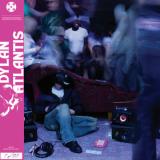
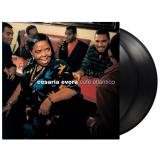






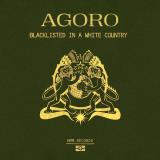
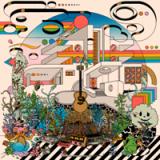
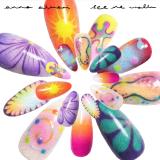







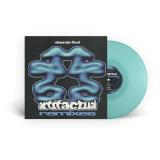

































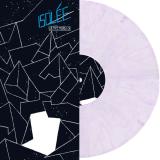


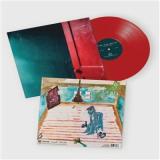

















![PARKWAY DRIVE - HOME [LIVE AT THE SYDNEY OPERA HOUSE] LP 3x12"](https://www.deejay.de/images/l/4/8/1270248.jpg)
![PARKWAY DRIVE - HOME [LIVE AT THE SYDNEY OPERA HOUSE] LP 3x12"](https://www.deejay.de/images/l/4/9/1270249.jpg)