Lavascar is a sound and music project by creative instigator and provocateur Michèle Lamy, multi-disciplinary artist Nico Vascellari and Lamy's daughter, the artist Scarlett Rouge.
Following the release of their debut album A Dream Deferred in 2017 - which was inspired by Langston Hughes' poem Montage Of A Dream Deferred, the trio will release new album Garden Of Memory through The Vinyl Factory label.
Drawing on the work of Lebanese-American poet, journalist and artist Etel Adnan, Garden Of Memory explores the tension between the organic and industrial, layering both Rouge and Lamy's idiosyncratic delivery over Vascellari's ambient and EBM-influenced electronics. After Vascellari described the debut LP as 'an evocation of Michèle Lamy sitting in a cave, surrounded by wild beasts ready to devour her', Lamy says the new record has loftier concerns: 'So far it seems like we are more in the cosmos... We are coming out of the hole!' Lamy continues: 'I like poetry, I don't like when there is sentence that tells you everything, I like suggestion.' It was for this reason that Lamy was drawn to the 93-year-old Adnan - 'a woman explaining what's going on in life. We can say everything is political, this is especially important.' It's a sentiment that Scarlett Rouge echoes: 'She wrote political poetry, and she is a journalist, so that's why I think when Michèle discovered her there was an immediate sense that this is now what needs to be felt and said.'
Search:creative
Rooted in Swedish psychedelic folk music, Hanna Ostergren (Hills, Trad Gras och Stenar) takes a creative new grip on the genre. Under the name of Laughing Eye, Ostergren creates spiritual Nordic raga, or nature music that stems back to prehistoric ages. Hoga Nord Rekords now releases her debut album.
Laughing Eye is more than just music, this is a distillate of ancient superstition, fear, euphoria and nature romanticism. The sound edges on the upper tree line and in the closing track, 'Agnetero / Huset' Ostergren takes a step off the mountain top, into space where the flute melodies float weightless to the outer rim of our solar system.
Laughing Eye is deep, warm and embracing sounds for cold urbanized souls, a buzz or a murmur from the far past, translated to music we can interpret.
- A1: Sea (3:02)
- A2: Island (2:46)
- A3: Tree (3:21)
- A4: The Archway (3:10)
- A5: Waiting (3:24)
- B1: Seed Change (3:49)
- B2: Moments (3:14)
- B3: Adjustment (3:14)
- B4: On Rope (3:06)
- B5: A Different Tree (2:56)
FLOAT proudly welcomes their second artist into the fold. UK electronic artistand Szun Waves band member Luke Abbott, presents a special 10-track album tocelebrate Piano Day 2019 - an international event series initiated by NilsFrahm which acts as a platform for piano-related projects. 'Music From The Edge Of An Island' sees Abbott divert from his typicallyexperimental electronic style to explore a more compositional approach centredaround VST instruments. Rather than the usual themes of synthesis andimprovisation, the album is lead by piano motifs, structured around emotivemelodies and sparkling arrangements. The record began as a part of asoundtrack commission by producer / actor Jessica Hynes for her film 'TheFight' and ultimately became a fully-realised album. The film script had acoastal setting that created the record's thematic idea: "I had this ideaabout being on the edge of England, almost ready to fall off a cliff into thesea but keeping your balance on the edge." The idea of writing for the piano had been ruminating for some months asAbbott found himself spending an increasing amount of time playing on theinstrument. Without a piano of his own though, he found a strangely enchantingway to fulfil his creative impulse. "I used to have an upright piano, but I'dgiven it away when I last moved house, so I ended up using a piano VST in thecomputer, which I actually really enjoyed. Writing the music became a bit of aweird fantasy process, I was in an odd headspace for a few days." The writing process was remarkably quick, resulting in simple yet inspiredpieces that subtly blur the lines between MIDI computer music and liveperformance. 'Music From The Edge Of An Island' can be seen as a collection ofgentle reveries that sway between the twilight hours, marked by moments ofsoft, contemplative ballads and more active and expansive motions. Openingtrack 'Sea' begins with a mysterious piano waltz before unnerving synth dronestake over. 'Island continues with piano triplet figures plus addedorchestration of cello strokes and airy glass pads, before heading into themelancholic 'Tree', bringing in more strings and added pathos heard in therestless piano motif. Quieter passages are contrasted with the Gamelan-esque'Moments' and the uplifting 'On Rope', whilst more lyrical moments on thealbum can be found in tracks such as 'Adjustment' and closing track 'ADifferent Tree'.
Recorded Between The Release Of Sand (1977) And Lost Secrets(1981), Symphonic Songs Is A Formerly Unreleased Work That Chronicles The Dynamic Shift And Development In Experimental Swedish Composer Ragnar Grippe's Canon.
Following His Seminal Release Sandin 1977, Swedish Experimental Composer Ragnar Grippe Worked On Various Art And Performance Commissions, Often Returning To Stockholm During The Summer Months To Focus His Efforts On His Compositional Practice. It Was There At The Famed Ems Studioswhere He Began Employing The Buchla Synthesizer And The Facilities Multi-tracking Capabilities As New Instruments To Map His Mining Of Sound And Movement.
During The Late 1970's, Grippe Formed A Creative Collaboration With Choreographer Susan Buirge, Specifically Writing Compositions For Her Works restes And tamis, Thus Pushing Grippe To Start Working In A More Intricate Studio Environment. These Passages Inspired Grippe Into A More Complex Layering Process That Focused More On Placement And Structure, Rather Than The Aural Floods And Flourishes Of His Previous Sand Album, Eventually Germinating In His First Full 24-track Composition Entitled orchestra.
After Debuting orchestra In 1980 At The Electronic Music Festival In Stockholm, Grippe Holed Up At Ems Studios With Those Lessons And The Fussy Buchla Synthesizer, In Which Grippe Affectionately Recalls needed To Be Tuned And Calibrated Every 20-30 Minutes. He Emerged With A New Commission For Susan Buirge Later Formally Titled Symphonic Songs And Used In Her Avant-garde Theater Piece ci-déla Which Debuted In Paris In 1981.symphonic Songsshowcased Grippe's Sound Au Courant, Pushing Dense Against Sparse, Calm Into Cacophonous, Using Each Track As Its Own Intersecting Plane. Using The Machinations Of Studio And Structure To Drive Symphonic Songs' Voice, Grippe Culled A Haunting, Often Cinematic Electronic Work That Dots And Darts Into Unexpected Corners With Curious Aplomb.
Listen To The Words, Both Terms Have Their Root In Classical Music, But Not In Its Form But Because Now I Had So Many More Stems Or Voices That Could Be Played Simultaneously Compared To My Earlier Pieces. Coming From A Classical Background, But With Big Nostrils For Pop And Jazz Music, I Can Now See A Thread In Which Classical Got A New Costume, Dressed Up In Buchla Synthesizer And Real Bass Sounds Grippe Says. Since Its Live Theater Debut Over 37 Years Ago, Dais Records Releases For The First Time Symphonic Songs, One Of Grippe's Most Ambitious Compositions, As A Deluxe Double Vinyl Lp (with Limited Edition Color Variants) And On Digital Formats. Artwork Packaging By Artist J.s. Aurelius (ascetic House) With Reflective Linear Notes By Ragnar Grippe.
After a brief wander 'round the garden, Chilean-born Ricardo Tobar returns to the ESP Institute bearing earthly delights. With 2017's Liturgia, he introduced his creative point-of-view—instantly substantiating a sense of rhythm that was deliberately complex yet slightly rough around the edges, while touching upon his musical origins from the guitar-driven corners of psychedelia— however with his debut 2xLP Continuidad, he leaves us gobsmacked and seeking shelter as he leaps from dancefloor comforts and descends into absolute chaos (in more ways than one). Emotionally, the artist has crossed all previously self-imposed and subconscious thresholds, putting his true imagination on display and exposing an unwavering attraction to all things loud, orgasmic and transcendent. He's not subtly hinting at a fetish, but opening his arms wide with conviction, abandoning genre taboos and personally inviting everyone to join his enchanted caravan. Sonically, his appetite for intensity is clear throughout—epic chord changes, ascending peaks in arrangement, accumulating layers of grit that build into impenetrable blankets of distortion and feedback—a kind of aural hedonism that translates visually into the potent video abstractions our Mario Hugo has summoned for the album's packaging. This might all sound like a warning for Hurricane Ricardo, but fear not, listeners will still find some security in the album's rhythmic underpinnings, and although this foray into primitive, ritualistic bang-the-drum percussion is significantly more dangerous than his previous programming, its the imperfection in his passionate studio performances that imbue Continuidad with something remarkably human.
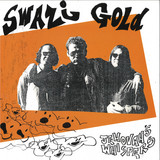
Swazi Gold have created a debut album that shimmers like the coast. There are six songs, two created by each member; through pure collaboration and participation. Swazi Gold are a true democracy.
Formed by the chief songwriters from Melbourne bands Crepes, Dreamin' Wild and Sagamore, this new band brings old friends together. Chris Jennings and Sam Cooper grew up in the Victorian coastal towns of Barwon Heads and Ocean Grove, while TimKarmouche was an inland man, hailing from Ballarat in the state's north-west
"We've been playing together for so long; in different mediums and in different bands. We've played our own key roles, but now we know what each other wants. Swazi Gold shows off our relationship from over the years, which is really cool," says guitarist and bassist Jennings.
Swazi Gold's other guitarist and bass player, Cooper, has a theory about the unifying power of their regional origins:
"It's this kind of small town thing where you strive to be different and creative. Because you're more isolated, you focus on your creativity and align yourself to similar people. I think growing up down the coast has meant I've continued to be drawn to people from other isolated places," he says.
It's this togetherness that's at the heart of Swazi Gold's debut album,Jehovah's Whispers.Recorded in a single weekend in 2017 at the Cooper's family home in Ocean Grove (affectionately termed the "Cooper Ranch")Jehovah's Whisperscaptures a musical intimacy and deep friendship between the three members.
"The bond with all the tracks on the album isn't necessarily lyrical, but it's 100% sonic. The simplicity of the instruments we use and the set-up we have is what's really rad," says Jennings.
"It's a fantasy of what we imagined Jehovah might be whispering in your ear," he adds, grinning.
Drawing from their collective love of African music, American funk, and quirky, melody-driven pop music, the album explores the space between conventional genres and styles of production.
"Using drum machines has made the song-writing process a lot quicker and opened up a whole new avenue stylistically.
Plr25.2 "spring", The Second Of Four Retrospective Records To Be Released In 2019. This One Is Packed With Robust Sf Talent: Elexos Park (formerly Ghosts On Tape), Lily Ackerman, Caltrop, Memeshift, And Kudeki. Copenhagen's The Hug Also Appears On The Release, Offering A Perfect Segue From Opening Track "sudden Bloom", A Truly Poignant Springtime Ode, To Ackerman's Highly Anticipated Vinyl Appearance Of Her Intriguing Track "bathroom". B3, meen Obat' From Oakland's Creative Memeshift, Is A Blistering Idm-esque Track Setting Us Up For The Next Record For The Collection, "summer", As It Promises Unstoppable Dance Floor Heat (stay Tuned For More Announcements.
Lakker Return To R&s With Their Stunning New Album, Época. Following 2016's Conceptual 8 Track Maxi-ep struggle And Emerge' (using Field Recordings Of Tv And Radio Broadcasts From The Dutch National Av Archive) Época Is A Bracing Return To Form, Combining Caustic Electronics With Fresh Inspiration From The Prepared Piano Of John Cage, Plaintive Folk Melodies, The Explorative Label Sublime Frequencies And The Raw Rhythms Of Kampala's Nyege Nyege Tapes.
Following A Restorative Creative Break To Pursue Their Own Solo Projects (as Arad And Eomac Respectively) The Duo Finally Returned To The Studio, Finding Themselves Working More Closely Than Ever Before. "we Wrote This Record Together, In The Studio As A Duo." Ian Explains "previous Records Involved A Lot Of Time Working On Tracks Individually, But Época Was Written Almost Entirely Together In The Studio - It Felt Much More Fun, More Organic And Democratic." We Allowed It To Happen Rather Than Push Or Pressure It" Dara Adds.
The Natural Evolution Of The Tracks And Their Rougher, Looser Production Sound Parallels The Duo's Interest In Two Separate Ideas: Ambient And Natural Sound, Especially The Background Noise - A Sense Of Time And Place - That Is Inherent In Old Recordings Of Folk And Classical Music, And An Interest In Herd Dynamics And Flock Patterns / Murmurations, Both In The Natural World And In Human Society. The Movements Which Affect The World At Large Through Cultural And Political Shifts. "like The First Starling That Causes A Wave In A Murmuration," Ian Explains "we Are Really Interested In How This Is Also Reflected In Human Society - A New Idea Appears And Then Reaches Critical Mass And Resonates Through Society As A Whole, And Change Happens (positive Or Negative)."
The Rich And Deep Work Of Época Finds The Duo Reinvigorated From Their Hiatus, Using Their Own Voices Extensively For The First Time, Alongsides Regular Vocal Collaborator Eileen Carpio. As Dara Explains "we Had Been Experimenting With Our Own Voices In Our Solo Music, So It Felt Like This Was The Moment To Step Out From Behind The Curtain And Put Our Own Vocals Front And Centre In A More Natural Way". This Leads To An At Times More Melodic And Poppier Feeling, Balanced Out By The Off Kilter Rhythms And Blasts Of Feedback And Weathered Reverbs That Intertwine Throughout The Record.
Once Again The Duo Look To The Outside World For Sonic Inspiration. Alongside The Use Of Physical Modelling Synths The Album Contains Recordings And Samples Of Violin, Guitar And Bodhrán, The Stringboard Of A Piano At Ems Stockholm, Phone Recordings Of Family Gatherings In Dublin And 1970's Dance Music From Jaipur.
'época' Is A Rich, Challenging Album Of Diverse And Intense Soundscapes That Expands On The Scope Of Lakker's Already Multifaceted Music That Finds Them At The Peak Of Their Artistic Powers.
'we Are Living Through Volatile Times, And As Musicians It Is Impossible To Avoid That Being Reflected In Our Work. Época Is A Our Personal Response To The Atmosphere Of These Times And The External Political And Cultural Events That Are Shaping Our World. Some Positive And Hopeful, Some Despondent And Angry, And Some Reflective And Introspective.'
Fifth part of the Strata-East Dolphy Series, Glass Bead Games is arguably the crown jewel of the Strata East movement, an amorphous genre that treads an unusual path between post-bop, 70's avant-garde and spiritual jazz, with a groove.
Glass Bead Games is full of revelations at many levels. First, the decade of the 1970s did produce genuinely creative, "human" new music flowing from the jazz mainstream; second, Bill Lee was more than Spike's dad: he was a superlative bassist, a team player of the first order, a powerful catalyst who, if anything, deserves to be better known than his son; third, Billy Higgins was, as so many musicians insist, a once-in-a-lifetime drummer—the bellows inspiriting the collective flame.
Most importantly, Clifford Jordan was an artist of the first order, his playing so effortless and unforced, unselfconscious and focused, mature and wise that, at a time when altissimo fury was all the rage, it's small wonder his authentic voice frequently went unheard. His musical rhetoric is so personally expressive, its substance so compelling, the listener couldn't care less about the extraordinary technique required to convey its captivating message. Compared to some of his more acclaimed peers he's a less aggressive yet paradoxically more directive and shaping influence. The climaxes, rather than spelled out, are merely suggested, registering with deep and lasting impact on the listener. It all comes down to learning the language, those precious little beads. Not every player, including Jordan or the listener, can use it like Shakespeare, but all can learn to read Shakespeare and understand its principles of arbitrariness and serendipity, of invariance and transformation.
Jordan, no less than Shakespeare, requires a like-minded cast of players—in this case four musicians of such redoubtable proficiency that each remains committed to keeping the beads in play. He's not a man content with a mere musical "dialogue" with his fellow musicians nor is he about to take the initiative in pulling his troops up to his level. Instead he begins to tell a musical story that's so compelling his three comrades are inspired equally to contribute to a collaborative narrative. This is brilliant music-making by a Coltrane- influenced successor who feels no obligation to mime the predecessor. It may be the most significant saxophone performance on record since Coltrane and, providing the listener stays with it for any length of time, the most deeply satisfying. Jordan's game—so effortless, unforced, and "level"—erases distinctions between composed and improvised, soloist and ensemble, narrator and narrative, the dancer and the dance. It seems incapable of wearing out its welcome.
By Samuel Chell/All About Jazz
- A1: I Made A Date (With An Open Vein)
- A2: I Can Tell You're Leaving
- A3: Ferrari In A Demolition Derby
- A4: Ain't Nothing Wrong With A Little Longing
- B1: Excursions Into Assonance
- B2: Everytime I Close My Eyes (We're Back There)
- B3: Love Is A Velvet Noose
- B4: My Husband's Got No Courage In Him
- B5: Riding
- B6: Lord Bless All
Alt. folker Will Oldham - better known as Bonnie 'Prince' Billy - is set to drop a joint record with gently psychedelic crew Trembling Bells
Just four years after their debut album Carbeth, Trembling Bells are amassing a formidable body of work at a startling velocity. Just twelve months after the release of their critically acclaimed third album The Constant Pageant, the Glasgow quartet return to share the billing with a similarly restless creative spirit. A few thousand miles separate Will Oldham and Trembling Bells' drummer and principal songwriter Alex Neilson, but their stories intersect as far back as 2005, when the young Leeds-raised Neilson found himself playing drums on Alasdair Roberts' No Earthly Man, with Oldham producing. In time, a friendship between mentor and student became one between two kindred musicians. Neilson augmented his work with free-psych-drone practitioners Directing Hand by playing with the Bonnie 'Prince' Billy band. The drummer's eagerness to experience new epiphanies yielded unforgettable memories. In Big Sur, he recalls, 'we took mushrooms at midnight, then visited a natural hot spring built into the dramatic cliffs overlooking the Pacific Ocean. The stars were as vivid as frozen fireworks.' All of which is worth dwelling on, because without that background of mutual openness and empathy, it's hard to imagine The Marble Downs existing.
Neilson recalls a conversation about a 'collaboration' in the summer of 2010, though stresses that it 'was nothing too formal at first'. By the end of that year, a limited-edition seven-inch New Year's Eve Is The Loneliest Night of the Year showed what an inspired match the vocals of Trembling Bells singer Lavinia Blackwall and Will Oldham made. The cut-glass precision of the classically-trained student of medieval music and the worldly, careworn tones of Oldham created an unlikely chemistry. It must have seemed that way to Neilson too. He set about assembling a cache of songs with the purpose of further harnessing that chemistry. The result is an album that has, once again, redrafted the boundaries of what Trembling Bells can achieve together. Indeed, genre-lines aren't terribly helpful this time around. Yes, Trembling Bells' love affair with traditional music remains a constant — most emphatically so on the unaccompanied Blackwall/Oldham two-hander, My Husband's Got No Courage In Him. Then there is Blackwall's musical setting of Dorothy Parker's poem Excursion Into Assonance — and the thorough-going new-found classicism of Neilson's increasingly assured songwriting. Albeit delivered with Trembling Bells' rain-lashed sense of abandon, Love Is A Velvet Noose sounds like a standard of sorts — a warped consequence of Neilson's increasing fascination with the songbooks of Cole Porter and Hoagy Carmichael. 'I'm not saying I stand any chance of emulating them,' he adds, 'but the appreciation is definitely there.'
The knowledge that Oldham and Blackwall would be sharing centre-stage on The Marble Downs gave Neilson extra impetus to flex his songwriting muscles. I Can Tell You're Leaving finds both vocalists on irresistible form, dissecting their dying relationship with no heed to the other's feelings. 'You treat me like a child,' sings Oldham. 'I need a man,' she responds, barely catching breath. 'Now like Merle Haggard, you'll see the fighting side of me,' he later promises. 'I guess that's one of the lighter moments on the album,' ponders Neilson, 'I was trying to get a Planet Waves-era Bob Dylan feel there, with the piano and walking bassline.'
Here and elsewhere, the band — Blackwall, Neilson, bassist Simon Shaw and guitarist Mike Hastings — has never sounded more psychically attuned to one-other. On the slow-reveal sonic establishing shot of I Made A Date (With An Open Vein), two minutes of manic modal chaos elapses before Oldham takes the narrative reins of a majestic call-and-response folk-rock epic. The electrifying free-folk portent of Riding — a revival of the Palace Brothers classic — is no less compelling, calling to mind the words of broadcaster Stuart Maconie when he praised Trembling Bells for their ability to invoke simultaneously 'the charm of folk music and the power of rock.' Ditto Ain't Nothing Wrong With A Little Longing, in which Neilson slams down a four-to-the-floor beat over a synergy of demonic krautrock keys and a dialogue between Oldham and Blackwall that scales Nancy & Lee levels of romantic intrigue.
With nine songs gone and one remaining, the album's sonic undulations find an arresting denouement in the form of an inspired cover. Adapted from Robin Gibb's 1970 solo masterpiece Robin's Reign, Lord Bless All sees Trembling Bells tease out the hymnal qualities of Gibb's original with a slow volcanic upswell which — on four minutes — explodes into heavy psychedelic technicolour. What pleases Alex Neilson when he listens back is 'a sense of a common vocabulary and identity being forged.' If, by that, he means that there isn't another band on the planet that quite sounds like Trembling Bells, it would be hard to disagree. The evidence is right here.
'I didn't know anything about Trembling Bells. I just heard them and was knocked out. I instantly became a fan.' Paul Weller
'Trembling Bells are my kind of band.' Joe Boyd
"Jesus fucking shit! These jamz claw so hard at the tatties below methinks the Lord misnamed them, having intended to say Trembling BALLS." Will Oldham
'A poetic incantation of British identity far brighter than Michael Gove's GCSE syllabus.' Stewart Lee
'This time, I'm attempting to reclaim the art of songwriting from the charity shop bargain bin.' Alex Neilson
R&S Records present the first key transmission from the Lost Souls Of Saturn's multidisciplinary conceptual project. The title track of the LSOS debut EP is revealed immediately, with the full 'Holes In The Holoverse' EP to follow on the 1st March.
Primarily LSOS are Seth Troxler and Phil Moffa, with opaque additional participants congregating to combine music, imagery, storytelling and communion into an inextricably linked whole, all wrapped-up in a philosophy of their own making.
Check the launch visual for 'Holes In The Holoverse' here:
The EP follows their performance debut as part of the 'GaiaMotherTree' installation with artist Ernesto Neto at Zurich Main Train Station, and a second show at Houghton Festival. Following these site-specific ambient renditions, the full LSOS live experience will be unveiled at the Village Undergound in London on the 18th April 2019, with further live performances to follow (including Field Day) and to be announced.
The classic-R&S-style groover 'Holes In The Holoverse' propels ever starwards, whilst the acid techno of 'World of the Wars' evokes a probe motoring through the cosmos. Further solar system surfing comes from world-renowned, Turner prize winning artist and photographer Wolfgang Tillmans. For his first ever remix, Tillmans tweaks the frequencies, adds extra percussion and his own 'va va voom' vocals.
Attempting something creatively that's above-and-beyond, LSOS explore new ways to open doors of perception and challenge the presumed reality, whilst capturing the spirit of Alejandro Jodorowsky, HG Wells, Sun Ra and the KLF within their music, live experiences and forthcoming films.
These spiritual, psychoactive aural vibrations resonate for a long distance, all the way back to something deeper and more enchanting than the prosaicism of modern life:
'We're searching for signs from another dimension and channelling a higher consciousness. We want to explore the concepts of reality vs simulation/hologram, ancient knowledge and ritualistic experiences. We're inspired by art, film, literature, astrology, mysticism, cults, rituals, paganism, synchronicity, conspiracy, altered reality, virtual states, spiritualism, chaos, cosmology and science. Both sci-fi and real science especially interest us - from Philip K. Dick books, to NASA articles, to the hexagonal storm at Saturn's North Pole.'
Lost Souls Of Saturn are preparing their debut album for release in June 2019.
- D2: Johnny Clarke - Time Will Tell
- D3: The Aggrovators - Drums Of Africa
- D4: Dillinger & King Tubby - Jah Jah Dub
- E1: Winston Wright - Marvelous Rocker
- E2: The Mighty Diamonds - You Should Be Thankful
- E3: King Tubby, Prince Jammy & The Aggrovators - A Thankful Version
- E4: Dillinger - Check Sister Jane
- F1: Prince Jazzbo - The Wormer
- F2: The Uniques - You Don't Care For Me
- F3: Shorty The President - Natty Dread Have Ambition
- F4: King Tubby & The Aggrovators - This A The Hardest Version
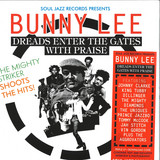
Johnny Clarke & King Tubby & Dillinger & Prince Jazzbo feat. Tommy McCook & The legendary Aggrovators & The Mighty Diamonds - Soul Jazz Records presents Bunny Lee: Dreads Enter the Gates with Praise - The Mighty Striker Shoots the Hits!
Soul Jazz Records presents this new collection featuring the heavy 70s roots reggae of Bunny
Lee - a living legend, one of the last of the great Jamaican record producers who helped shape
and define reggae music in the 1970s from a small island sound into an internationally
successful musical genre.
From teenage fan to young record plugger for Duke Reid, Sir Coxsone and other early
pioneering Jamaican musical entrepreneurs, Lee has spent his whole professional life inside the
Kingston music industry. In the 1970s he rose up to become one of the major record producers
in Jamaica alongside Lee 'Scratch' Perry and the other 'small axe' producers who broke the
dominance of the 'big tree' producers that had ruled Jamaican music in the 1960s.
Featuring some of the heaviest Jamaican artists, including Johnny Clarke, King Tubby, Dillinger,
Prince Jazzbo, Tommy McCook, The legendary Aggrovators (featuring Sly and Robbie), The
Mighty Diamonds and more, the album is a rollercoaster ride of rare, deep and classic 1970s
roots, dub and DJ sounds.
During this era, 'flying cymbals', crashing reverbs, dark echoing thunderclap gunshots and
other 'implements of sound' filled his record productions as Bunny Lee explored the outer limits
of dub with his friend King Tubby in the mix on wild versions that accompanied any 45. A
Bunny Lee record provides a creative and mysterious hidden guide to reggae music itself, a
double-sided three-minute intangible history lesson etched in wax.
Bunny Lee was one of the first Jamaican producers to travel to England in the late 1960s, at
the beginning of the nascent British reggae music industry as record companies such as
Trojan, Pama and others began licensing Jamaican music in the UK to supply the expanding
West Indian communities living up and down England. Lee encouraged other Jamaican
producers to do the same, including Lee Perry, Harry J and Niney The Observer and also
became a conduit between the British music industry and numerous younger Island-based
producers - a frequent flyer reggae ambassador, a musical courier exchanging tapes for
royalties.
Bunny Lee's first recordings in the late 1960s were mainly rock steady but as the 70s
approached the music soon began to mutate and slow down into 'reggae' as the sound became
heavier, more rootsy and the sound itself began to change with the explosion of dub.
Lee was at the forefront to this dramatic musical shift into roots reggae and by this time had
become a major producer, capable of working with whoever he chose as world-famous singers,
DJs and musicians lined up to work with the charismatic man. Lee also employed a fluid but
stable set of crack session musicians who he named The Aggrovators.
Most of the recordings featured here come from the mid 70s, a time when Bunny Lee was
definitely in the zone, releasing heavyweight singles at an almost unstoppable rate. Bunny
Lee's career stretches over five decades and he has upwards of 2,000 production credits on
vinyl.
This album comes with extensive sleevenotes, an interview with Bunny Lee and exclusive
photography. The album is available as a CD pack with 24-page booklet, massive triple LP vinyl
with digital download code, house inner and full notes, as well as digital album.
Mutima is the debut album led by bassist Cecil McBee recorded in 1974 and first released on the Strata-East label. In his review for Michael G. Nastos called it "A landmark recording in early creative improvised modern music" and states "McBee as a pure musician has staggering technique, rich harmonic ideas, and an indefatigable swing, but it is as a composer that he is set apart from other musicians of this mid-'70s era... Mutima (translated as "unseen forces") undoubtedly solidified his stature and brilliance as a major player". Dustygroove now calls it: 'A great bit of spiritual soul jazz - and one of the few albums as a leader recorded by the legendary bassist Cecil McBee! Cecil's joined here by a large group of players that includes Billy Hart on drums, George Adams on tenor, Onaje Allen Gumbs on piano, Jimmy Hopps on percussion, Art Webb on flute and Dee Dee Bridgewater on vocals - adding in just a touch of soulful color to the record as she did on a few other 70s sides like this.' Plus: 'The music's got that essential Strata East sound, with a rich and spiritual vibe on all tracks, and slight bits of funk hiding somewhere in the mix! Tracks are long and freely expressive - but never too outside, either.' A long lost classic we call it. And this latest reissue is the best vinyl version ever since it first appeared almost 45 years ago!
It's been a minute since we heard last from Montreal's CLARIAN on KOMPAKT (KOM 356 - ANKH EP ) but by no means has his universe stopped expanding as he released the 2017 full length SYNTH WAVE (BALANCED) and collaborated with TIGA on STAY CLOSE and THEY JUST WANT 2 B U (w/ JAMIE PRINCIPE and FELIX DA HOUSECAT) singles. We welcome back CLARIAN with TIME SAFARI. The majority of the EP was a 2 year long process from recordings made in South Africa as a team effort ofRICHARD MARSHALL, BLANE VENTER and of course CLARIAN (along with many locals along the way) with the 'ambient aspect' of the EP finished in India in summer 2018. By no means is this EP to be perceived as experimental recordings as each club track has a theme that is loyal to the dance floor with a goal of incorporated ambient recordings to create an immersive environment. The aim CLARIAN has with TIME SAFARI is to attempt to empower the idea that club music can go beyond simply being labeled as a genre and club motif but can also explore alternative, creative and most of all be a conduit to bring unity through all variations of art mediums into the night life scene. The ambient aspect of TIME SAFARI is CLARIAN's homage to his heroes. Think if TUXEDOMOON collaborated with CARL SAGAN to create a weirdo version of COSMOS. In the case of this EP - a mega brief journey of human evolution through South Africa.
Two sizzling South African boogie tracks from Kabasa's Tata Sibeko. A killer producer, arranger and bass wizard, Tata channels the gloomy current affairs landscape of 1985 into a glimmering Afro-synth nugget. As South African pop embraced 1980s synth sounds, Maxi Singles on 12-inch vinyl became a new canvas of expression with wider grooves for fat beats and extended mixes that suited dancefloors.
.
The supergroups of the 1970s fragmented into solo recording artists with the likes of Harari's Sipho 'Hotstix' Mabuse releasing his seminal 'Burnout' single in 1984. Former Kabasa frontman Tata Sibeko dropped 'It's A Mess' in 1985, addressing the world's Cold War climate with an appeal to 'learn to love each other' and 'save ourselves from catastrophe.' The B-side 'Afro Breakdance' marked the evolution of Tata's Afro-global sensibilities from 'Afro Funkin'' that had appeared five years earlier on Kabasa's self-titled debut in 1980. Tata Sibeko (RIP) passed away in 2017 after approving the restoration and reissue of this single. This release is dedicated to his kindness, charm and creative zeal.
To celebrate the 20th anniversary of this iconic release from Titonton we are reissuing these highly sought after tracks! Titonton is one of the very few artists out there who not only created their own individual production sound and DJ style but one of the few who has stuck to the creative energy that fueled the original works and continues to do so. And now, carefully remastered from the original DAT recordings these works sound fresher and better than ever!
- A1: Ikarie Xb-1
- A2: Surveillance On Standby-Alpha Centauri
- A3: A Small Stone In Space
- A4: Sunflower For A New Star
- A5: The Backwoods Of The Universe
- A6: Silver Ball (Vera In Cameo)
- A7: E.v.a. Will Teach You
- B1: The Tigers Breath
- B2: The Dark Star
- B3: Do Not Eat The Fruit
- B4: The Awakening
- B5: Voyage To The End (Of The Universe)
- B6: The White Planet
Liška, the Czechoslovakian word for fox. Beguiling in its beauty, cunning in it's charm. Said to be one of the most intelligent animals on the planet its global family consists of thirty-seven varieties; all of them recognised, respected and feared for their persuasive, creative, resourceful and elusive nature. The Liška we will talk about today is no exception to these hereditary rules and within the grooves of this record Finders Keepers present an 'elusive' musical artefact that best exemplifies every facet of this composer's animal namesake.
Had he not been born in the small Bohemian town of Smecno in the early 1920s the story of The Fantastic Mr. Liška might have well taken a different course. Alternatively, fettered by the hampers of communism, this lifelong resident of Czechoslovakia would never quite find his seat at the same table as the likes of John Barry, Ennio Morricone, Michael Nyman and Stanley Myers, nor drop enough phonographic breadcrumbs to track his legacy. But having waited patiently behind the borders of the wider landscapes of international cinema, Liška's musical brood, spanning multiple stylistic decades and generations, has now started to walk proudly amongst his would-be, latter-day compeers. In an era where music lovers have almost become immune to adjectives like 'lost', 'rare' and 'unreleased' in a climate where previously lesser-known off-kilter master composers such as Vannier, Kirchin and Axelrod have become widely revered, it is perhaps the perfect time for discerning listeners to advance above the feeding trough and seek out this truly pioneering and revolutionary Eastern European composer. Rivalled only by the likes of Krzysztof Komeda and Andrzej Korzynski in Poland, alongside Alexandr Gradsky in Russia, and often splitting workloads with fellow Czech composers like Luboš Fišer, Zdenek Liska's filmography of over almost 300 fully formed movie scores virtually eclipses the achievements of these socialist era luminaries. Respected unanimously in both Czech and Slovakian by studio bosses, producers, directors and actors alike Liška is widely known for his ability to take the existing energy in a reel of film and literally change the polarity to suit his own interpretation while maintaining the full support from his 'client' who would in-turn end up working under this composer's creative direction. Not only was Liška a genius of emotive orchestral and coral composition, his grasp on small group arrangements and intimate, minimal scores set him above the competition. By utilising primitive sample techniques by 'looping' a films existing ambient noise, or rearranging found sounds and dialog into subtle melodic arrangements, Liška would independently develop his own techniques which had simultaneously become known in Paris as musique concre`te. It is a direct extension of these experiments that saw Liška also draw parallels with Walter Branchi (Ennio Morricone's main electronic sidekick) in Italy as well as Daphne Oram in the UK, making Liška a relatively untravelled pioneer of early electronic composition and sound design due to his unlikely global environment. Imprisoned, preserved or reserved; time has been kind to Liška's music.
- A1: Okolona River Bottom Band Ft. Norah Jones
- A2: Big Boss Man Ft. Hope Sandoval
- A3: Reunion Ft. Rachel Goswell
- A4: Parchman Farm Ft. Carice Van Houten
- A5: Mornin' Glory Ft. Laetitia Sadier
- A6: Sermon Ft. Margo Price
- B1: Tobacco Road Ft. Susanne Sundfør
- B2: Penduli Pendulum Ft. Vashti Bunyan With Kaela Sinclair
- B3: Jessye Lisabeth Ft. Phoebe Bridgers
- B4: Refractions Ft. Marissa Nadler
- B5: Courtyard Ft. Beth Orton
- B6: Ode To Billie Joe Ft. Lucinda Williams
'Bobbie Gentry's The Delta Sweete Revisited' is
Mercury Rev's committed and affectionate
resurrection of an album that anticipated by three
decades their own pivotal expedition through
transcendental America, 1998's 'Deserter's Songs'.
From their recording lair in New York's Catskill
Mountains, the founding core of Jonathan
Donahue and Grasshopper with Jesse Chandler
(previously in the Texas group Midlake) honour
Gentry's foresight and creative triumph with
spacious invention and hallucinatory flair.
Gentry's stories and original resolve are brought to
new vocal life and empowerment by a vocal cast
from across modern rock and its alternative paths:
among them, Mazzy Star's Hope Sandoval; Laetitia
Sadier, formerly of Stereolab; Marissa Nadler;
Margo Price, the fiery new country star with a
punk rock heart; and Norway's Susanne Sundfør,
who cuts through 'Tobacco Road' with arctic-Nico
poise. Phoebe Bridgers, whose first record was a
softly stunning 2015 single for Ryan Adams' PAX
AM label, hovers through the acid-western
suspense of Gentry's 'Jessye Lisabeth' with floating
calm, like a comforting angel.
Lyra is DeWaltas fourth large solo-project and third full-length solo-album following Wander in 2012 (on Haunt), llumination in 2014 (on Meander) and Dark Matter in 2017 (on Amphia) besides - Residual' a collaboration-album with Mike Shannon.
The album consists of two individually available parts: a double LP (Lyra) with 6 tracks on Meander as well as a single LP (Lyra Pi) with 5 synth and ambient works. The Ambient-Part launches a new Meander Horizon Pi series-- a departure from Meander's well known dancefloor releases.
Lyra is by far DeWaltas most extensive and refined project to date. With 11 exclusive songs, a total running time of over 100 minutes - plus a collaboration with long time friend and Meander co-owner Fabian Geimer-Lorusso aka. Jupiter - it marks a new beginning of ambient and score-like modern electronic music works as well as the continuation of his inspired intellectual-emotional approach to dance music.
Lyra is a star-constellation in the northern hemisphere which is highest in the midnight sky in the early summer months. It contains one of the brightest stars in the sky - Vega. Many of the songs on this album were produced in these warm and gentle months during an inspirational creative time in Portugal.
In Greek mythology, Lyra represents the Lyre of Orpheus, Apollo's son. Made by Hermes from a tortoise-shell, it was given to Apollo who then passed it along to Orpheus. It is said to be the first music instrument ever made
"It's been nearly five decades since Joe McPhee assembled a group of musicians to perform the weekend concerts that would become Nation Time, his debut LP. It was December 1970, thirty-one-year-old McPhee was inspired by Amiri Baraka's poem 'It's Nation Time,' and the students at Vassar College didn't know what hit them. 'What time is it?' shouted the bandleader. 'C'mon, you can do better than that. What time is it?!'
"The music on Nation Time came out of the fertile, but little-known creative jazz scene in Poughkeepsie, New York, McPhee's home base. Two bands were deployed, one with a funky free foundation featuring guitar and organ, the other consisting of a more standard jazz formation with two drummers and the brilliant Mike Kull at the piano. Across the concert and the next afternoon's audience-less recording session, the band was ignited by McPhee's passion and his gorgeous post-Coltrane / post-Pharoah tenor. On 'Shakey Jake,' they hit a James Brown groove filtered through Archie Shepp, while the sidelong title track is as searching and poignant today as it was during its heyday.
"Originally released in 1971 on CjR, an imprint started expressly to document McPhee's music, Nation Time has a sense of urgency and inspiration. Additional material from those December days would later appear on Black Magic Man, Hat Hut's first release. In fact, the first four records on this seminal Swiss label all featured McPhee.
"Nation Time was largely unknown a quarter century or so later, when it was first issued on CD through Atavistic's Unheard Music Series. On Corbett vs. Dempsey, we reissued the album along with all known tapes leading up to and around it as a deluxe box set, but the standalone LP has long remained incredibly rare. Now is the time for a new generation of freaks to lose their shit when settling into the cushy beat of 'Shakey Jake' and answer McPhee's call with the only appropriate response: It's NATION TIME."
– John Corbett