
nicht am Lager
Bestelle jetzt und wir bestellen den Artikel für dich beim Lieferanten.
Last In: vor 5 Jahren
21,39€
Bestelle jetzt und wir bestellen den Artikel für dich beim Lieferanten.

ATOM SERIES 808[13,03 €]
ATOM SERIES 606[12,19 €]
ATOM SERIES 505[10,71 €]
ATOM SERIES 404[13,87 €]
Mental delicate tunes of a kind...
Bestelle jetzt und wir bestellen den Artikel für dich beim Lieferanten.

Demon Records is proud to present a new series of vinyl reissues from American singer-songwriter Black Francis / Frank Black
“Salutations from the Twilight Zone, and if you think I mean the 1960s sci fi television program you are correct;
I am quite literally inside of a 1960s sci fi television program. And in that context Demon have allowed
me to correct certain anachronisms in my published works and are releasing some for the first time on vinyl
(https://en.wikipedia.org/wiki/Polyvinyl_chloride).” - Black Francis
• First released in 1996, The Cult of Ray is Frank Black’s third studio album and includes the singles ‘Men In Black’, ‘The Marsist’
and ‘I Don’t Want To Hurt You (Every Single Time)’.
• Black Francis explains the Cult Of Ray “was the band that was also the band for the first Frank Black & The Catholics record. I
hadn't stumbled on to my live to 2 track obsession just yet, but I was quite enjoying the parameters of 16 track 2 inch. Fat and
warm, aided by my sweet as candy pal Lyle Workman on lead guitar. Lyle can be best described as a HOT DOG with a
telecaster in his large, supple hands. Super fun motorcycle ride.”
• Long out of print, this new vinyl reissue is pressed on 140g blue vinyl, housed in a printed inner sleeve.
erscheint voraussichtlich am 12.02.2021
Bestelle jetzt und wir bestellen den Artikel für dich beim Lieferanten.

Bestelle jetzt und wir bestellen den Artikel für dich beim Lieferanten.

Bestelle jetzt und wir bestellen den Artikel für dich beim Lieferanten.

Bestelle jetzt und wir bestellen den Artikel für dich beim Lieferanten.

Bestelle jetzt und wir bestellen den Artikel für dich beim Lieferanten.

Venezuela born, Barcelona based Cardopusher's career goes back over 12 years- the proverbial 10,000 hours to master a skill long fulfilled. His forthcoming LP "New Cult Fear" on Boysnoize Records proves it through disciplined, focused craftsmanship. It's the type of no-frills production that deceives the amateur listener with it's simplicity, while the seasoned listener knows that the simpler the elements, the harder it is to make a track that moves the dancefloor. Moving dancefloors it does, although there's few smiles to be had. This is music for dark rooms, for Nitzer Ebb's famous pairing of "muscle and hate." This is being electrocuted by a broken TB-303- only you find the feeling erotic, your exclamations recorded on a haunted reel-to-reel. And it's never sounded so good.
Bestelle jetzt und wir bestellen den Artikel für dich beim Lieferanten.
Munich. 1994. A group buck current trends with a ground-breaking release. Tikitaka by Tamburá left aside the techno of the time to focus on a the lesser known styles of afrobeat and tribal music. The result was three tracks that sail and soar on a primal energy, three works that whisk listeners away to exotic lands of wooden wind instruments, ritualistic vocals and, even, bag pipe majesty. For twenty five years this record has been an unattainable mystery, until now that is. Kalahari Oyster Cult have lovingly restored all three of the trailblazing original tracks alongside two very special remixes. Melbourne’s Tornado Wallace adds new layers of intensity as he cuts and reshapes melodies and beats to set any floor alight with this visionary remake. Dazion offers a very different interpretation. Focusing on vocals, this new talent accentuates the shamanic-like chants of Tikitaka, using them as a base from which throbbing synth lines grow as new depths are explored. An EP every bit as daring in 2019 as it was in 1994.
Bestelle jetzt und wir bestellen den Artikel für dich beim Lieferanten.

First opus of the new series is La Batterie, by the UK's Richard Podolor and Sandy Nelson in 1983 in the hypnotic shimmering disco of 'Let There Be Drums.' The music of Polodor and Nelson is being given new life by Kalahari Oyster Cult. Alongside the entrancing original are two remixes. First up is Australia via Amsterdam's very own Max Abysmal with his 'Spooky Remix.' Adopting and adapting the raw energy of the '83 version, Abysmal layers ghostly notes and spectral snares into his mechanical remake. The flip takes on a different slant with 'Shotgun' taken from the EP of twenty fives years ago. A super slick work of understated funk shot through with bold keys and powerful chants to show another side of the UK pair. The fiercely talented Benedikt Frey closes, turning his daringly able hand to 'Let There Be Drums.' He keeps the vocal line, the rest of his rework is dipped in a thick heart of darkness threat. Pulsing thumps, menacing notes and danger lurk in this jungle of Frey's own making.
Bestelle jetzt und wir bestellen den Artikel für dich beim Lieferanten.

More CULT EDITS from IÑIGO VONTIER, PIETNEV, DREEM LION, and ALEXI LE FAN. Everyone loves these. No one has them. Only edits in circulation requiring a vow of silence and a paid subscription. Cannot be stolen, shared, or caned to death. Rename the track titles in a random internet café for maximum secrecy/exclusivity/emotional well-being. CULTED002 - blood in, blood out.
Bestelle jetzt und wir bestellen den Artikel für dich beim Lieferanten.

erscheint voraussichtlich am 22.12.2017

Active Cultures proudly presents its first release, the Animate Objects EP by Tide Eman, a new recording project by Texan producer Bill Converse. 5 tracks in Converse's singular style meant to stimulate mind and body.
Bestelle jetzt und wir bestellen den Artikel für dich beim Lieferanten.

"Ess O Ess are back home on Not An Animal, with a track that both continues and develops their recognisable motif. Flamingoes and Wombles and The Blue Oyster cult is as maniacal as the name may suggest, Swamp Rock, Cosmic Disco, Techno and shamanistic vocals all play a part in a pleasingly out there confluence of styles that drives, spits and builds to an unhinged, but cohesive, finale."
Bestelle jetzt und wir bestellen den Artikel für dich beim Lieferanten.

* Portuguese-born producer Elite Athlete shines on his debut offering two heavy cuts for fledgling Australian label Cult Trip.
* Recorded in Hamburg during a one year sabbatical, the Californian Rites EP shares influences from around the world
with harrowing African drum samples contributing to the tribel slammer that is Pagan Conjurer, to the Berlin styled minimal bass lines that hold together the deep-burning title track, Californian Rites.
* Backed with remixes from Unknown to the Unknown's Palace and Forbidden Planet's Dan White making this record club ready and a must for any floor.
Bestelle jetzt und wir bestellen den Artikel für dich beim Lieferanten.

The 2010 studio opus featuring 11 sonic nightmares from the UK's supreme exponents of blistering Metal darkness. presented on double gatefold vinyl. 'Darkly, Darkly, Venus Aversa' was the band's ninth studio album; a gothic
horror themed slay-ride of fervour and perversion. Set amidst the orchestral melodrama and lush, cinematic production, there sits stalwart a ravening beast of furious riffing, flesh ripping vocals and monstrous, unstoppable percussion.
Described by Cradle's infamous frontman Dani Filth as 'without doubt the fastest and most brutal album we've created to date.' Unafraid of ruffling a few feathers, the band have continually refused to bow
to convention or to conform to prevalent trends and fads. Yet despite this uncompromising stance, the band are still the most successful British heavy metal band since Iron Maiden, with legions of fans around the globe.
erscheint voraussichtlich am 29.09.2023

The 1st album of Jape Du Marie & Jack Wax (J. de K.) isn't what you would expect. It's an old work album with all kinds of styles of music; which is created back in 1997-2000.
Bestelle jetzt und wir bestellen den Artikel für dich beim Lieferanten.

Spread across two 180g discs, spanning 24 cuts and served in a gatefold sleeve designed by members and affiliates, the Young Echo LP is a capsule intended for cementation through time.
It's been almost five years since their last album. As a group, extended radio submissions, prolonged studio sessions and notorious club nights make up the cogs of time. Over the course of these years, the network has grown continually, both as one, and with singular, multi-directional paths from each of the 11 artists that make up the Young Echo collective, counting Jabu, Vessel, Kahn, Neek, Ishan Sound, Ossia, Manonmars, Bogues, Rider Shafique, chester giles and Jasmine towards the crew, with projects such as Bandulu, FuckPunk, O$VMV$M, Gorgon Sound and ASDA adding to the table in their individual ways.However, this record aims not to be judged on any single producer or vocalist. It is most effective as a whole, simply titled Young Echo. Of course each of the artists has an important part to play, but it is very much about the act of balance, accepting individualism to form a greater whole.A good example is the welcome addition of new energy coming from Jasmine (1/3 of Jabu) who injects endless space with her vocals, perfectly answered by the cool-killin' wordplay of Manonmars - who makes his long awaited debut here - sharing stage with the immediate poetry of ASDA's very own chester giles, along the mighty sound of Rider Shafique, and Bogues' versatile style that can flit between rap & song within seconds. Five very different vocalists that could've tried to find a compromise, but instead choose to connect in different ways, finding their niche in the equal range of rhythms and sounds that sprawl in this shared space, the juxtaposition.
Detuned soundsystem stylings, love songs swaying in hacked up ambience, skeletal dancehall, microphone technique, dread electronics, outsider pop, this record manifests the outcome of the shapeshifting anarchy which rears it's head when no one idea can rule, embracing the diversities when one path must be made up of many.
Bestelle jetzt und wir bestellen den Artikel für dich beim Lieferanten.
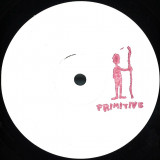
2026 Repress
25 years after this cult UK label first emerged, we're very happy to present some of their most sought after releases...
Primitive represented a stripped down and sonically heavyweight series of essential DJ tools, winning wide support from Techno an House DJ's alike & enduring - perhaps due to their raw, basic construction - way beyond their original inception.
This is the first compilation EP, featuring some favourites from the catalogue, remastered & repressed on limited, hand-stamped vinyl...
Despite serious demand, we will only be able to access limited quantities of these special 21st century repress editions, so buy or cry !
Bei uns am Lager und sofort versandfertig

Second chapter in the Alkaline series. Five electro cuts and one techno excursion, crafted by two artists with decades of dedication to electronic music.
On Side A, Raakel Bloody Raakel brings decades of discipline and formal training into a sharp, uncompromising sound. Active since the late 90s and rooted in both classical education and underground culture, his work reflects precision, intensity and structural control.
On Side B, Roi delivers three focused electro pieces forged through years of experimentation and dancefloor experience. His approach blends coherence, tension and forward motion, driven by a continuous commitment to evolving the language of electronic music.
Two trajectories. One alkaline framework. Built for those who understand the craft.
Cosmic Tribe · Research & Development in Sound.
Bei uns am Lager und sofort versandfertig

Some 15 years into the label's story, Japanese deep house minimalist Sasaki Hiroaki continues to offer up EPs rich in ultra-deep ambient chords, hushed and hypnotic beats, and the kind of beautiful musical touches that have always been a key part of Japanese deep house culture. Opener 'Geograph' sees him place echoing piano motifs and pulsing ambient electronics atop a sparse tech-house groove, while 'Projection' is a deliciously deep, dreamy and shuffling slab of ambient house excellence. Over on side B, 'Do It (repeat)' is a spaced-out chunk of minimalist dub techno goodness and title track 'The Last Bohemian' is a warming and meditative dancefloor drift.
Bei uns am Lager und sofort versandfertig

228 page photobook, printed on high quality Japanese paper.
Paperback
Size: 257 x 182 x 7mm
Enclosed in a printed clear plastic bag
Soi48 proudly presents this book, a photographic document of the unique dance music clubs
and culture of Southeast Asia and East Asia. The photos, from the years 2017 through 2025,
were taken in nightclubs, discos, festivals, raves, sound system parties, private parties and
migrant worker clubs — the places where Asia’s unique dance music genres are born and
thrive. ADM, with its exclusive on-the-spot snapshots, provides an extraordinary visual
archive of Asian contemporary dance music. Journeying through Thailand, Vietnam, Laos,
Malaysia, Indonesia, Philippines, Myanmar, Taiwan, Korea and Japan, Soi48 captures
glimpses of how people create their nights, visually comparing the differences between
countries in fashion, dance style, lighting, club interiors, flyers and more, showcasing the
distinctive entertainment culture that each country has created. The 167 photos also feature
the pioneering DJs and track makers who built unique music genres in each country, such
as Budots (Philippines), Vina House (Vietnam) and Saiyo (Thailand). Also of note: the book
provides a valuable record of nightlife during the COVID-19 pandemic; captures the energy
that migrant workers release in clubs on weekends; and in general showcases the ingenuity,
wit and passion of music lovers throughout the region.
Soi48:
A duo, comprising Tokyo natives Keiichi Utsuki and Shinsuke Takagi, that promotes the
magic of Asia and Asian music through DJ-ing, writing, design, and party activities. Their
interests range from traditional music to cutting-edge dance music, released on physical
media as well as on the internet. In addition to supervising the film Bangkok Nights (Kuzoku)
and the EM Records Thai music series, they introduce the joys of Asian music and travel
through talk events, TV, radio appearances, etc. Their books include TRIP TO ISAN: A
Traveling Thai Isan Music Disc Guide (DU BOOKS), OMK#001 (OMK), and ADM: Asia's own
unhinged club culture. As ever, they enthusiastically continue to research dance music and
sound system culture in Asian countries.
erscheint voraussichtlich am 30.09.2026

Raw deep house pressure from Sascha Dive, four cuts blending soul, groove, and late-night mood, with Roland Clark blessing the mic. Limited green vinyl for those who still move to the real sound.
DJ Feedbacks :
Laurent Garnier : Cool tracks
Josh Wink (Ovum) : Liking 'Im Inspired' the best here.
C-Rock : Those Nights for me, nice NYC dub House touch!
Radio Slave (Rekids) : I've always been such a big fan of Sasha's productions and "There Is No Tomorrow" hits the spot.
Fleur Shore (Undergrowth / Cuttin' Headz) : im inspired, beautiful track
Reboot (Cecille / Cadenza) : schöne tracks ️
Satoshi Tomiie (Abstract Architecture) : Solid release!
Alinka (Twirl, Classic, Crosstown Rebels, Batty Bass) : Nice one
PBR Streetgang : Invocation and Im Inspired are great
D'Julz (Bass Culture) : those night is the one for me here
Damian Lazarus (Crosstown Rebels) : Thanks for sending. Xx
Ben Sims : Now downloading... will check asap!
Archie Hamilton (Microhertz / FUSE) : Nice thanks
Eddie Fowlkes (Detroit Wax, Rekids, Classic Music Company) : thanks
Tim Sweeney (Beats In Space) : Lovely
Doc Martin (Sublevel) : Sascha on a good one,with the voice of house music Roland Clark no less!!!
Terry Farley : THOSE NIGHTS WORKS FOR ME
Chloe Caillet (Smile Records) : love this!
Oliver $ (Classic Music Company / Play It Down) : Sooo gooood!
Ame (Innervisions) : thanks
Danny Tenaglia : Downloading for Danny Tenaglia, thanks!
Robert Owens (Trax / Musical Directions) : Cool tracks
Kai Alce (Real Soon) : Nice deep tracks from Sascha
Mark Farina : dig them.
Lea Lisa (Phonica Records / Folklor Club) : Really good definition of House
Alexkid (Rawax / FUSE / NG Trax) : Phonogramme (and Sascha Dive) on fire at the moment...
Harri (Sub Club) : lovely stuff, will play and support
erscheint voraussichtlich am 30.09.2026

Introducing Relik.
A new sub-division from Earth Dog Records, reissuing overlooked gems from the North American underground
The ‘90s to early 2000s saw US dance music experience a uniquely innovative gold rush. Records from that period narrate a burgeoning rave-obsessed sub culture, experimenting with the psychedelic sounds of tech house and progressive, with further flirtations with trance, breaks and beyond.
Many of those era’s artefacts have been increasingly difficult to find, and even rarer to hear out in the contexts they were constructed for. Relik exists as a means to preserve the legacy of this formative era, honouring the artists and labels that helped shape an ethos and sound unique to North America, and pivotal to the Earth Dog vision, while exposing this music to a new generation of listeners.
Each reissue will be released with permission and in collaboration with the original artists.
R001: The Vortex Archives
Volume one shines a light on Gainesville’s legendary Vortex Records.
Founded in 1996 by Boyd Westerman and Kyle Hogan, lifelong underground innovators (with Boyd remaining the undisputed king of the Discogs comment section). Vortex was home to a catalog of sounds that helped define a unique tech house and progressive flavoured corner of the North American underground.
Vortex Archives compiles four of our favourite cuts from the label’s discography, that for our money showcases their unmistakable sound best; a seamless fusion of progressive house, tech house, trance and breaks.
Nearly three decades on, these tracks (and the label from where they came) are as timeless and prescient than ever. We’re honored to certify their legacy by bringing them back into circulation.
A huge thank you to Boyd for trusting us with this release and helping to bring a sample of the Vortex catalog back into the world.
Endless respect to all the OGs who archived their catalogues, continued to make incredible music and subsequently paved the way for future generations. We wouldn’t be here without you.
erscheint voraussichtlich am 30.09.2026

A defining electroclash anthem returns to wax. Tiga & Zyntherius's cult classic Sunglasses at Night gets the deluxe vinyl treatment, featuring the iconic original 12" mix that set dancefloors ablaze in the early 2000s-plus a thunderous rework by techno titan Chris Liebing, who injects it with deep, industrial muscle for the modern floor.
Whether you're chasing nostalgia or sonic intensity, this is a must-have release for collectors, selectors, and nocturnal creatures alike.
erscheint voraussichtlich am 30.09.2026
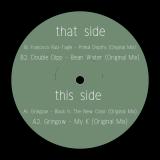
Feeling both familiar and forward-looking, MBK004 expands its reach with an international lineup of
producers united by a shared appreciation for the New York underground sound.
Crafted by Tunisian producer Gringow, our first two tracks take listeners to the darker side of minimal.
Also owner of the HeardOf label, Gringow lends his talent to Minimal Brooklyn with 15 minutes of
hypnotic rhythms. “Black is the new color” gives chills, while “My K” triggers introspection.
Flipping the record will bring listeners to a brighter space. We begin with Chilean DJ/producer
Francisco Ruíz-Tagle and his original track “Primal Depths”. Francisco introduces textures that have
been cultivated throughout his life. His submission to Minimal Brooklyn holds nothing back, delivering
a multidimensional auditory experience to listeners.
MBK004 ends with “Bean Water”, an original track from Chicago-based producer Double Dipp. This
spell-casting production truly highlights the attraction of minimal. Dynamic instrumentals with clean
resolution. This is Double Dipp’s formula for timelessness.
erscheint voraussichtlich am 30.09.2026
Healing Patterns is the debut full-length release on Appendix.files from Clima, following 2025's Transient State EP. Written between 2025 and 2026 during a period of chronic illness, the seven-track LP translates physical restriction into deep, spacious electronic compositions. Using palatial pads, slow-decaying echoes, and bodily low-end, Clima reminisces over residual club ambience and shared listening experiences with friends.
The record moves from the gradual, dub-heavy pressure of "Weight" through ASMR-like vocal glitter and tight rhythmic clusters, before dissolving into the quiet introspection of the title track's theme. Healing Patterns is a patient study in focus, repetition, and the spaces left behind.
Artist Info: Clima is an experimental electronic music project exploring spatial sound, texture, rhythm and the emotional residue of club culture. Their work moves between ambient environments, dub-weighted rhythm and abstract electronic composition, with a focus on deep listening and subtle shifts in perception.
erscheint voraussichtlich am 30.09.2026

Every coastline develops its own rhythm. The Adriatic is no exception.
For decades, Italy’s eastern coast has been shaped by funk, Cosmic Disco, Balearic sounds, Italo Disco, House, Latin rhythms, Brazilian music and countless other influences. Rather than blending into a single style, these musical worlds have lived side by side, constantly inspiring new generations of DJs, musicians and dancers. For more than fifteen years, Soul Fingers and Funk Rimini have explored that landscape from different perspectives. Founded by Claudio Cavallaro in 2013, Soul Fingers grew into a vinyl-driven community where groove matters more than genre. Its philosophy has always been simple: if the groove is right, genres stop mattering. Brothers Ricky and Francesco Cardelli developed Funk Rimini into a project rooted in funk, disco, live performance and electronic production. Anima Adriatica is where these two journeys meet.
The project didn’t begin with the ambition of making an album. It began behind the turntables. As DJs, Claudio Cavallaro and Ricky Cardelli found themselves constantly searching for records capable of connecting distant musical worlds inside their sets; from Afrobeat into disco, from hip hop into Latin, from Brazilian grooves into boogie, from cosmic electronics into deep funk. Sometimes those records existed. More often, they didn’t. So they stopped searching and started writing them. Not records designed to belong to one genre, but records designed to travel between genres. That space between musical worlds became Anima Adriatica.
The music grew through spontaneous jam sessions with Ricky and Francesco Cardelli, drummer Enrico Mao Bocchini and, gradually, a wider circle of musicians, singers and longtime friends, making Anima Adriatica less a traditional band than the beginning of an open collective. Recorded at SynthPosio Studio, founded by Ricky and Francesco Cardelli inside Rimini’s iconic skyscraper, the project also carries a symbolic connection to the building itself, where many Italo Disco classics (including records by Betty Miranda, The Creatures and many others) were recorded decades earlier.
Betty Miranda returns not as a nostalgic guest, but as a bridge between generations. On the title track she performs a spoken-word text written by Claudio Cavallaro, reflecting on the invisible thread connecting the Adriatic dancefloor across time. From Baia degli Angeli to Cocoricò, from the legendary clubs of Riccione to today’s independent communities gathered around projects such as Soul Fingers and Funk Rimini, the places have changed, but the dancefloor continues to tell the same story. Much like Pier Vittorio Tondelli’s Rimini captured the Adriatic through literature, Anima Adriatica imagines its soundtrack.
Brazilian musician Daniel Plentz (Selton) expands that vision on Açúcar and Alegria, bringing another coastline into the story. Across its four tracks, the EP moves naturally between analogue funk, boogie, Brazilian music, underground disco, cosmic textures and the wider Black musical tradition, with All Down The Line paying tribute to the Paradise Garage era.
Released by Bordello A Parigi, the project found its natural home through a shared love of adventurous dance music, records and club culture. More than the title of an EP, Anima Adriatica marks the beginning of an open collective; a meeting point where musicians, DJs, producers and friends continue building bridges between genres, generations and communities.
Because Anima Adriatica doesn’t live inside a genre. It lives between genres. If soul music has always reflected the places where it was born, Anima Adriatica is simply our own Adriatic Soul.
erscheint voraussichtlich am 30.09.2026

Quiet, from the Latin quies, evokes a state of being still. In its verb form, quiet means to clear so that something can gradually come into focus. Kind Stranger by Amedeo Cappelletti is where quiet materializes in a more transient, even foreign, way. Each track takes a step back from noise, borne out of a slow return to music, a different pace, and a familiar place left behind for years.
Kind Stranger, released on Aurora Edition on July 24th, is about the strangeness of a return. Cappelletti's melodic scores work their way between faint noise and disquiet, and sonically muse upon the familiar. That is, when given enough time and distance, the familiar can become unrecognizable, demanding stillness to resituate oneself within it.
The album began taking shape when Cappelletti performed at Aurora Edition at Silent Green, just after he had returned to music following a three-year hiatus. In one month, he wrote forty-five minutes of new material from scratch. Then Cappelletti left Berlin after eight years and returned to the Tuscan countryside where he had grown up, back into slowness.
The album develops as an atmosphere in the truest sense. Resampled voices, found sound, and years of sound design practice converge as compositions form by overlapping texture with spatial depth. Kind Stranger cultivates a quietude that envelops the listener.
Vocal recordings made with Matthew Walsh and Sarah McInerney, collaborators Cappelletti met by chance in a Berlin ice cream shop, appear throughout the album like a current, shaped during a residency at MONOM, Berlin's spatial sound institute. Thematically, the record moves through digital addiction, fragmented attention, and the grief of work done in the darkness.
Kind Stranger is an offering to whoever finds themselves here within the quiet, in this particular quality of sound between return and lingering.
erscheint voraussichtlich am 30.09.2026

We are delighted to welcome back one of our most cherished artists, Life Recorder, for the third instalment of his remarkable Time Moods series on Visions Recordings.
This latest release delivers four vibrant and immersive tracks, blending deep techno textures with refined grooves, another strong statement in the series.
Far from the hype, French DJ and producer Kriss, aka Life Recorder, has been steadily shaping a distinctive sonic identity over the years. Deeply influenced by the heritage of Detroit and Chicago’s house and techno scenes, his sound travels effortlessly across genres while remaining rooted in soulful depth.
Born in the French suburbs of Geneva and now based in Marseille, he began his journey in the 1990s, connecting with music through record shops, DJing, and the evolving club culture of the time.
With this third chapter of Time Moods, Life Recorder continues to craft a timeless and introspective musical narrative.
Alex and Stephane Attias
Der Artikel ist bereits auf dem Weg zu uns und voraussichtlich versandbereit ab 30.09.2026

Originally released in 1989 with the tagline “Bringing house music into the living room,” Fade Out is a landmark Japanese pop/club crossover produced by Haruo Chikada. At the dawn of Japan’s club culture, the track became a staple around Tokyo’s legendary Shibaura GOLD scene, widely embraced as a “danceable kayōkyoku (Japanese pop)” classic.
Today, among European diggers, Japanese techno kayō is undergoing a strong revival and growing reappraisal. Positioned at the heart of this movement, Fade Out now sees its long-awaited official release, featuring previously unreleased remixes with Soichi Terada, Haruo Chikada & OMB.
Performed by Kyoko Koizumi - still evolving as a cultural icon in Japan - Fade Out stands as one of her defining works and a key contribution to the Japanese underground music scene. A timeless piece, ready to be rediscovered in 2026.
1989年、「お茶の間にハウスを」をキャッチコピーに、近田春夫プロデュースのもと日本で発表された、小泉今日子「Fade Out」。
本作は日本のクラブシーン創世記において、芝浦GOLD周辺で「踊れる歌謡曲」として支持を集めた重要作です。
現在ではヨーロッパのディガーたちの間で再評価が進み、リバイバル真っ最中の「和製テクノ歌謡」ムーヴメントの中核を成す楽曲ともいえる本作が、秘蔵リミックスを収録し待望の公式リリース!
現在進行形で日本のカルチャーアイコンとして更なる進化を遂げているキョンキョンこと小泉今日子による、ジャパニーズアンダーグランドシーンでの貴重な功績のひとつであり代表的な国宝級ワークスを是非!
2026年のあなたのお茶の間にお迎えしましょう。
erscheint voraussichtlich am 01.10.2026

VOL. 4[25,84 €]
Following the success of Denshi Ongaku No Bigaku Vol. 1 and Vol. 2, Cosmocities returns with the third instalment of its celebrated compilation series dedicated to the rich and ever-evolving world of Japanese electronic music. Compiled by label owner Matt Soulie, Denshi Ongaku No Bigaku Vol. 3 continues the journey through Japan’s diverse sonic landscape, bringing together pioneering artists, cult favourites and contemporary innovators across ambient, house, jazz-infused electronics and experimental sound design.
A carefully curated snapshot of Japanese electronic music past and present, Denshi Ongaku No Bigaku Vol. 3 showcases the depth, innovation and enduring influence of one of the world’s most inspiring musical cultures.
Since its inception, the Denshi Ongaku No Bigaku project has paid tribute to a musical culture that has profoundly influenced the Cosmocities vision. Where the first volume explored dreamy ambient textures and deep electronic moods, and the second shifted focus towards boogie-laden rhythms and jazz-fuelled dancefloor excursions, Volume 3 finds a natural balance between introspection and movement.
The compilation opens with Yosi Horikawa’s sublime “Bubbles”, an ambient masterpiece whose delicate organic textures gently set the tone. Chari Chari’s “Luna de Ritmos” follows with deep, ethereal house atmospherics before Force Of Nature’s hypnotic “Skyy High” guides listeners further into immersive territory.
The journey continues through the experimental electronics of XTAL’s “Skygazer” and the analogue warmth of Takuya Matsumoto’s “Jump Rope Music”, while regular Cosmocities contributor Yuu Udagawa delivers the sophisticated high-tech jazz house groove of “Little Secrets”.
On the second half of the collection, Kuniyuki’s remix of Slow Didi’s “Follow Me” brings rich jazz-inflected elegance, leading seamlessly into the futuristic techno-swing fusion of DJ Eiji Takehana featuring Yusuke Nakamura’s “Deep Track Jazz”. Tominori Hosoya’s “Summer Dreamers” adds a deeply emotional and dreamlike house moment before Azzurro’s “Just A Touch Of Love” shifts the focus firmly towards the dancefloor with a hypnotic late-night thumper.
Closing the compilation is AcidGelge’s “Fatality 4”, a beautifully spacey and atmospheric finale that leaves the listener suspended somewhere between the club, the cosmos and the imagination.
Der Artikel ist bereits auf dem Weg zu uns und voraussichtlich versandbereit ab 01.10.2026
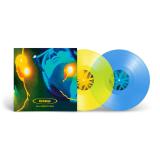
Black Vinyl[30,21 €]
The first ever full official release of Orbital's legendary Glastonbury 1994 performance !
Originally performed and broadcast to a generation discovering electronic music in real time, Orbital's set at Glastonbury '94 became a defining cultural moment - not only for the band, but for dance music itself. At a time when electronic acts were still fighting for recognition on major festival stages, Orbital proved that dance music could be as emotional, cinematic, and powerful as any headline rock performance. The iconic headtorches, the energy of the crowd, and the sheer ambition of the performance helped cement the set as one of the most important live electronic shows ever witnessed. A gamechanger for the dance music scence.
Although the performance has long circulated online and remained a fan favourite for decades, there has always been overwhelming demand for an official release.
Bei uns am Lager und sofort versandfertig
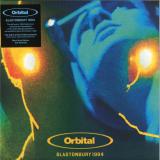
The first ever full official release of Orbital's legendary Glastonbury 1994 performance !
Originally performed and broadcast to a generation discovering electronic music in real time, Orbital's set at Glastonbury '94 became a defining cultural moment - not only for the band, but for dance music itself. At a time when electronic acts were still fighting for recognition on major festival stages, Orbital proved that dance music could be as emotional, cinematic, and powerful as any headline rock performance. The iconic headtorches, the energy of the crowd, and the sheer ambition of the performance helped cement the set as one of the most important live electronic shows ever witnessed. A gamechanger for the dance music scence.
Although the performance has long circulated online and remained a fan favourite for decades, there has always been overwhelming demand for an official release.
Bei uns am Lager und sofort versandfertig

Inner Lakes returns to Earth Dog with Muerte Deluxe, a heady twilight of no-nonsense lunar tek from the clubland shadows.
The Milanese psy-maestro commands the floor in a manner few can resist. A slew of in-demand transmissions for his own Lagunas imprint, Kalahari Oyster Cult and Francesco Del Garda’s Timeless label champion his command on the nocturne dance. The 2025 EP Bongdrift for djfix and Jek’s Earth Dog stable furthered this agenda, and now he seeks a second bite with follow up Muerte Deluxe.
Opener Control maneuvers the night with an acidic bite, its pulsating bassline and psychedelic groove synergised for the peak. The title track aligns ruder, a cheeky stomp igniting the low-slung rhythm with ragga-fuelled fervour. OneWayExit tracks on the infinite with unrelenting delirium in kinetic hypnosis, before R3vision rolls out on the finale; its moon-lit reflections on memories and reality tempering the discordant groove towards its melancholic conclusion.
erscheint voraussichtlich am 01.10.2026
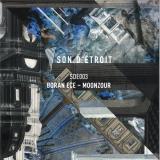
Inspired by the landscapes and cultural heritage of Munzur, Boran Ece returns with Moonzour, a deeply emotional and organic club record that blends melodic grooves with atmospheric textures. The release is complemented by two distinctive remixes from Hannes Bieger and Mickael Espinosa, each offering their own interpretation while preserving the emotional essence of the original. Released on Son d'Étroit as a limited 200-copy vinyl edition alongside the digital release, Moonzour marks another chapter in the label's journey, celebrating storytelling through electronic music.
- Limited vinyl edition of 200 copies
Bei uns am Lager und sofort versandfertig
![Denise Motto - I M N X T C (Jack Your Body To The Beat) [JD Twitch Remixes]](https://www.deejay.de/images/l/4/8/1232548.jpg)
We are heartbroken to announce this very special release — a tribute to the genius of Keith McIvor aka JD Twitch (Optimo), who sadly left us on September 19, 2025. Over 20 years ago, when Skylax had no money and was just starting out, Keith was among the very first to believe in us. He delivered four unforgettable remixes of Denise Motto – I M N X T C, sharp, uncompromising cuts that defined the true spirit of underground dance music. At the time, due to limited means, only one made it to vinyl. Now, for the first time, we are proud to present the complete set: four remixes — the unreleased acid mix, blackrabbit whorehouse mix, industrial mix, and alternative mix , all cut loud and mastered with love. This release is more than a record; it is a homage to Twitch, a true pioneer and tastemaker, our generation’s John Peel. His art of digging, his fearless intelligence in music choices, his no-compromise vision — all of it stands in stark contrast to the disposable culture of today’s Instagram DJs. What we celebrate here is the real thing: edgy, sharp, timeless. A piece of history, pressed in vinyl forever. Featuring a stunning artwork by H5 (Daft Punk, Air, Logorama), specially designed to pay homage to the legend. Ultra-limited, no repress.
Bei uns am Lager und sofort versandfertig

Bei uns am Lager und sofort versandfertig
DJ Support Mark Knight, Dj Spen, Brian Tappert, David Penn, The Shapeshifters and many others.
Serge Funk’s "You Treat Me Right" EP on Groove Culture is a definitive masterclass in modern disco-house that belongs on every DJ and collector’s turntable. Impeccably curated by the Italian imprint Groove Culture, this four-track 12" vinyl balances future funk playfulness with crisp, contemporary production. It delivers high-octane dancefloor energy that rewards listeners both in a packed club and on a high-fidelity home setup.
Der Artikel ist bereits auf dem Weg zu uns und voraussichtlich versandbereit ab 02.10.2026
