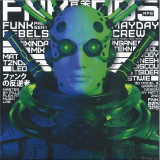
Emergent polymath Brother Aten makes his first outing on Bruk with an icy slice of system-ready
minimalism, guided by the cooly detached voice of Ze R.
Taking cues from cult sci-fi and early 80s no wave, Fragmented Dystopia is a crystal clear
statement trimmed of all unnecessary baggage. The title spells out the mood — Aten's
soundscapes are stark and synthetic machine mantras punched out on outboard instruments
navigating gritty, futuristic zones.
On 'Unavailable' steadily humming drones shape the space in which Ze R. hovers, initially
delivering a deadpan denial before their humanity sneaks in as the track snakes through an
intricate lattice of crisp digital percussion. Short and razor-sharp two-parter 'Fragmented Dystopia'
finds an even sparser corner to occupy within Aten's subtly cyberpunk vision, where Ze R.'s
scattered words cut a measured figure delivered at acute angles before breaking into wilder forms
at the end of Part 2.
Originally from Brooklyn and now based in Berlin, Brother Aten has been weaving a fascinating
tapestry of audio and visual work as MAF. His artwork examines the fraught relationship between
technology and society. Ze R. explores dimensions of sexuality, subjectivity and individualism
through writing, performance and community organisation.
Search:cyber s
In the neon-lit underbelly of Vilnius, where the pulse of the city syncs with the rhythm of the cosmos, Lithuanian sound architect Tourman emerges with his debut EP on Trance-Atlantyk entitled “Identification Mentale.” This electrifying release is a masterclass in neo progressive house soundscapes, featuring three original tracks and one hard-hitting remix.
The EP kicks off with „Restricted Airspace”, igniting senses with its relentless drive and pulsating bass. The track is a cybernetic symphony, weaving together glitchy synth lines and hypnotic beats that propel you into the heart of a digital dystopia. Embracing a darker, more introspective vibe, “Digitalog” is a proper roller that dances effortlessly between the realms of emotion and energy.
The title track boldly attacks your auditory membranes with its earwormy synth stabs, echoing the familiar yet exhilarating sensations of a sonic awakening. This cut also serves as a true manifesto for the modern trance movement, capturing the essence of euphoria and nostalgia in one exhilarating ride. The last word on the EP belongs to the polish power duo Penera, who transform the original title track into a hard-hitting, uncompromising dancefloor stomper that effortlessly blends hardgroove energy with trance nostalgia. Their remix amplifies the intensity, layering driving beats and electrifying synths that explode with energy.
- A1: Progetto Tribale - The Sweep
- A2: Onirico - Echo Giomini
- A3: Open Spaces - Artist In Wonderland
- B1: Alex Neri – The Wizard (Hot Funky Version)
- B2: M C.j. Feat. Sima - To Yourself Be Free - Instrumental Mix Energy Prod
- B3: Mato Grosso - Titanic Expande
- C1: Dreamatic - I Can Feel It (Part 1)
- C2: Carol Bailey - Understand Me Free Your Mind (Dream Piano Remix)
- C3: The True Underground Sound Of Rome - Secret Doctrine
- D1: Don Carlos - Boy
- D2: Lazy Bird – Jazzy Doll (Odyssey Dub)
Vol 2[28,99 €]
Volume 1 of this expertly curated project of 90s Italian House - put together by Don Carlos.
If Paradise was half as nice… by Fabio De Luca.
Googling “paradise house”, the first results to pop up are an endless list of European b&b’s with whitewashed lime façades, all of them promising “…an unmatched travel experience a few steps from the sea”. Next, a little further down, are the institutional websites of a few select semi-luxury retirement homes (no photos shown, but lots of stock images of smiling nurses with reassuring looks). To find the “paradise house” we’re after, we have to scroll even further down. Much further down.
It feels like yesterday, and at the same time it seems like a million years ago. The Eighties had just ended, and it was still unclear what to expect from the Nineties. Mobile phones that were not the size of a briefcase and did not cost as much as a car? A frightening economic crisis? The guitar-rock revival?! Certainly, the best place to observe that moment of transition was the dancefloor. Truly epochal transformations were happening there. From America, within a short distance one from the other, two revolutionary new musical styles had arrived: the first one sounded a bit like an “on a budget” version of the best Seventies disco-music – Philly sound made with a set of piano-bar keyboards! – the other was even more sparse, futuristic and extraterrestrial. It was a music with a quite distinct “physical” component, which at the same time, to be fully grasped, seemed to call for the knotty theories of certain French post-modern philosophers: Gilles Deleuze, Félix Guattari, Paul Virilio... Both those genres – we would learn shortly after – were born in the black communities of Chicago and Detroit, although listening to those vinyl 12” (often wrapped in generic white covers, and with little indication in the label) you could not easily guess whether behind them there was a black boy from somewhere in the Usa, or a girl from Berlin, or a pale kid from a Cornish coastal town.
Quickly, similar sounds began to show up from all corners of Europe. A thousand variations of the same intuition: leaner, less lean, happier, slightly less intoxicated, more broken, slower, faster, much faster... Boom! From the dancefloors – the London ones at least, whose chronicles we eagerly read every month in the pages of The Face and i-D – came tales of a new generation of clubbers who had completely stopped “dressing up” to go dancing; of hot tempered hooligans bursting into tears and hugging everyone under the strobe lights as the notes of Strings of Life rose up through the fumes of dry ice (certain “smiling” pills were also involved, sure). At this point, however, we must move on to Switzerland.
In Switzerland, in the quiet and diligent town of Lugano, between the 1980s and 1990s there was a club called “Morandi”. Its hot night was on Wednesdays, when the audience also came from Milan, Como, Varese and Zurich. Legend goes that, one night, none less than Prince and Sheila E were spotted hiding among the sofas, on a day-off of the Italian dates of the Nude Tour… The Wednesday resident and superstar was an Italian dj with an exotic name: Don Carlos. The soundtrack he devised was a mixture of Chicago, Detroit, the most progressive R&B and certain forgotten classics of old disco music: practically, what the Paradise Garage in New York might have sounded like had it not closed in 1987. In between, Don Carlos also managed to squeeze in some tracks he had worked on in his studio on Lago Maggiore. One in particular: a track that was rather slow compared to the BPM in fashion at the time, but which was a perfect bridge between house and R&B. The title was Alone: Don Carlos would explain years later that it had to be intended both in the English meaning of “by itself” and like the Italian word meaning “halo”. That wasn’t the only double entendre about the song, anyway. Its own very deep nature was, indeed, double. On the one hand, Alone was built around an angelic keyboard pattern and a romantic piano riff that took you straight to heaven; on the other, it showcased enough electronic squelches (plus a sax part that sounded like it had been dissolved by acid rain) to pigeonhole the tune into the “junk modernity” section, aka the hallmark of all the most innovative sounds of the time: music that sounded like it was hand-crafted from the scraps of glittering overground pop.
No one knows who was the first to call it “paradise house”, nor when it happened. Alternative definitions on the same topic one happened to hear included “ambient house”, “dream house”, “Mediterranean progressive”… but of course none were as good (and alluring) as “paradise house”. What is certain is that such inclination for sounds that were in equal measure angelic and neurotic, romantic and unaffective, quickly became the trademark of the second generation of Italian house. Music that seemed shyly equidistant from all the rhythmic and electronic revolutions that had happened up to that moment (“Music perfectly adept at going nowhere slowly” as noted by English journalist Craig McLean in a legendary field report for Blah Blah Blah magazine). Music that to a inattentive ear might have sounded as anonymous as a snapshot of a random group of passers-by at 10AM in the centre of any major city, but perfectly described the (slow) awakening in the real world after the universal love binge of the so-called Second Summer of Love.
For a brief but unforgettable season, in Italy “paradise house” was the official soundtrack of interminable weekends spent inside the car, darting from one club to another, cutting the peninsula from North to centre, from East to West coast in pursuit of the latest after-hours disco, trading kilometres per hour with beats per minute: practically, a new New Year’s Eve every Friday and Saturday night. This too was no small transformation, as well as a shock for an adult Italy that was encountering for the first time – thanks to its sons and daughters – the wild side of industrial modernity. The clubbers of the so-called “fuoriorario” scene were the balls gone mad in the pinball machine most feared by newspapers, magazines and TV pundits. What they did each and every weekend, apart from going crazy to the sound of the current white labels, was linking distant geographical points and non-places (thank you Marc Augé!) – old dance halls, farmhouses and business centres – transformed for one night into house music heaven. As Marco D’Eramo wrote in his 1995 essay on Chicago, Il maiale e il grattacielo: “Four-wheeled capitalism distorts our age-old image of the city, it allows the suburbs to be connected to each other, whereas before they were connected only by the centre (…) It makes possible a metropolitan area without a metropolis, without a city centre, without downtown. The periphery is no longer a periphery of any centre, but is self-centred”.
“Paradise house” perfectly understood all of this and turned it into a sort of cyber-blues that didn’t even need words, and unexpectedly brought back a drop of melancholic (post?)-humanity within a world that by then – as we would wholly realise in the decades to come – was fully inhuman and heartless. A world where we were all alone, and surrounded by a sinister yellowish halo, like a neon at the end of its life cycle. But, for one night at least, happy.
Music as the main vibration
the world shapes through its continuous flow,
able to lead the human mind,
who perceives its manifestation
through its physical properties,
into a deep state of trance,
enabling a connection to the soul,
who experiences space-time
alongside this sound flow,
to transmute it
in the image of itself.
A cybernetic rush of non-conformist techno from Italian maverick Piezo.
Milan-based Piezo is usually found at the helm of his Ansia label, exploring a versatile spectrum of experimental club music grounded in soundsystem presence and non-linear structures. On Ecstatic Nostalgia he edges his sound into a more driving, techno-spirited framework which lends itself to the energy of the UFO series beautifully. From tightly wound, artfully fractured 150 rumble and elegant sci-fi breakbeat on to needlepoint electronica and subtly trance-brushed atmospherics, Piezo's broad palette fuels an ear-snagging EP which balances visceral impact with a deft touch.
Anyone familiar with Dekmantel's flagship festival will know the UFO stages showcase spikier strains of modernist body music, and the label series serves to push these sounds forwards in the hands of consistently visionary producers. After a what could be seen as a brief pause in the UFO series - it's with a fresh wave of releases.
Crawling up from the cold underground in Toronto, Canada, Some Exercise delivers their debut record - Web Peril.
Uncompromising and unsettling, the project's inaugural full-length is a noisy yet rhythmic hybrid of classic New Wave tropes and forward-reaching experimentalism. It's a part-post punk, part-industrial analysis of our post-internet age.
Cybernetic beats pulsate beneath jagged and occasionally dissonant guitar licks - recalling the same abstract danceability as underground legends like SPK and Suburban Lawns. Evocative vocals are joined by EBM-style synthesizers, molasses-thick bass, and clanking drum machines.
In a contemporary music landscape where capitalist algorithms promise fame and fortune, Web Peril sinks its teeth the hand that feeds, offering this cautionary tale - the onus is yours. Online is offline. Consume what consumes you.
Synth Sense have been in imperious form as of late. Following on from their Alien Transmissions release and the collaborative effort
with ASC, on Reject The System, Fragments From an Infinite Sequence sees them back in familiar territory; the unknown. As you'd
imagine from the titles, this is a vast collection of music that spans short of 30 mins, but explores infinite possibilities. Close your
eyes, open your ears, sit back and indulge in the world of Synth Sense.
Broken Parallels - Coming in at a second short of 15 mins, this track is a monster. A behemoth actually. This is pure futurism sculpted
into experimental electronic music. Dystopian backdrops set against a wash of cyberpunk influences which give way to abrasive
sounds and metallic percussion. Each listen reveals a new layer to take something in every time. A science fiction world of audio
waiting for your exploration.
You and Your Ghost - More darkness and perhaps more sinister than the A side. More abrasive percussion and deep dark science
fiction sounds set the scene. This is the musical equivalent to a heist on a space colony set in the 25th century.
Sphere Of Influence - Keeping with the dark sci-fi theme, Sphere Of Influence rounds up proceedings with its cinematic widescreen
expanse. Transmissions from undiscovered colonies intercepted by rogue governments.
Evocative and thought provoking mood music at its finest.
This EP further cements Diode's platform for releasing deep original music. A vague template for techno has been well and truly
flipped on its axis with this release. We hope you enjoy it as much as we do.
Transformers One is the 2024 animated science fiction action blockbuster and the latest theatrical release in the Transformers franchise.
The film tells the untold origin story of Optimus Prime and Megatron, better known as sworn enemies, but once were friends bonded like brothers
who changed the fate of Cybertron forever. Transformers One is the first-ever fully CG-animated Transformers movie and features a star-studded voice
cast, including Chris Hemsworth, Brian Tyree Henry, Scarlett Johansson, Keegan-Michael Key, Steve Buscemi with Laurence Fishburne, and Jon Hamm.
Transformers One is available as a 2LP limited edition of 750 numbered copies on yellow coloured vinyl and includes a 4-page booklet.
Following his recent EP, The Circle of Life, on Pushmaster Discs, Milan's rising techno star Maike Depas returns with a brand-new release on his renowned The Innovation Studio Records. Titled “Sexy Devil Horse”, it is a powerful 10-track collection, featuring many iconic international artists from the Hard Techno space such as Etruria Beat’s headmaster Luca Agnelli, Dutch-based sensation OGUZ and the “Demon of hard techno” also known as Michael Katana, as well as Southern Italian talents CHRS and Gianni Di Bernardo.
This release marks a pivotal moment in Maike Depas’ journey to become one of the highest rated talents in the Hard Techno scene. It will also be followed by a key paradigm shift his label’s business model in 2025. For this occasion, Maike has lined up an amazing group of artists to celebrate those who have shared his musical vision along the way.
The title is meant to be provocative and captivating, just like its content: catchy and fresh enough to attract ravers and clubbers from around the world. Its artwork was created by the master Luden Works. It features a plastic female figure with an undefined appearance, yet with sensual curves and a powerful surge of energy, like a wave enclosed in a sphere, representing Maike’s and The Innovation Studio Records’ logos.
From the galloping rhythm of “Sexy Devil Horse” and “Hear The Sound” to the groovy and elegant “Ce Soir” there is an immediate feel about the artist’s singular touch and eclecticism. Same goes for the tangible contrasts which make a key element of this release, where the minimalistic mood of “StarKiller” and its maximalist counterpart “Dark Serenade” carry the listener through a full-spectrum emotional rollercoaster.
Hard Techno and Psy Trance vibes go hand in hand with ‘90s Trance and Rave echoes, creating a blend of recognisable and innovative samples that can resonate with many different types of audience and like-minded artists. This aspect is fundamental in the direction Maike and his team have decided to take.
It all comes from afar: starting with a classical musical background – playing the piano at Conservatory level for many years, including Berlin’s own Funkhaus. This theoretical and practical knowledge, mixed with a long-time passion for electronic music, made it easier for Maike to shape and cultivate his authentic sound since a very young age.
As part of its evolution, The Innovation Studio Records will officially open its doors to new talent and renowned artists starting in 2025. The team’s vision is to create an international reference point for quality and innovation, shaping a brand-new artistic movement based on combining the modern vision of our generation with our cultural heritage from the past, thanks to the team that we put together, both in terms of approach and technique.
It'll be a structure built from the ground up, combining the best of analogue technology in a modern workflow with the highest level of music hardware, audio monitoring and studio design. In their view, there are two types of productions: those that stay ‘inside the box’ and those that get into your heart.
The desire to unite instead of dividing, to join forces instead of competing, is the key to Maike’s success and a real drive to turn the studio lights on every single day. Despite playing a lot with dystopic, cyberpunk-like atmospheres throughout his artistic journey, music doesn’t feel like a means to escape reality for Maike. In fact, it’s quite the opposite.
The definition Maike uses the most to describe what The Innovation Studio Records wants to become is “a mysterious display cabinet”: a place where an artists will never know what emotion will arise or what direction will be taken next. Although hard work, professionalism and common inspiration will ultimately still be its main fuel, a true sense of community and empathy will be crucial to shape the future Maike and his team have in mind for it.
In a very romantic way, the idea is to re-create the same atmosphere from the Italian Renaissance masters’ workshops. Places where different artists - with opposite backgrounds and styles - could all mingle and inspire each other, in order to foster the creation of something unique. A collective effort for a greater good.
About MAIKE DEPAS
Young hard techno DJ-producer Maike Depas (born Michelangelo De Pasquale) has seen the future of music and it’s called metaverse: “In the future it will blow up,” he predicts. “And it’s going to revolutionize the way we experience music.” Bowled over by Skrillex and Martin Garrix by the age of eight, and DJing at smaller Milan clubs by the time he was eleven, Depas went on to study composition and piano at the prestigious
Milan Conservatory before learning ‘life- changing” lessons from the best in the business at Catalyst’s 4-week Advanced Sound Design course in Berlin’s Funkhaus . His production gets inspired by huge 90s trance synths as much as pounding hard techno from artists such as Kobosil, In Verruf and Amelie Lens.
2024 marked the launch of MAIKE DEPAS 2.0, a tectonic audio-visual shift that entails a wide array of content from DJ sets livestreamed from Berlin’s Teufelsberg and other dystopic locations around Europe to cyberpunk-inspired outfits designed by Demobaza, a cyberpunk-inspired casual couture brand best known for their sustainable Dune X Demobaza collection. Over the course of a developing metamorphosis from a flesh-and-bone individual to a mysterious CGI character, Depas is another step closer to revolutionize the dance music scene through the metaverse.
- Clockwork
- Feel Alright
- One Of These Days
- Love Me
- Serotonin
- Clementines
- Poor Boy
- On A Trip
- Into The Light
Black Vinyl[23,49 €]
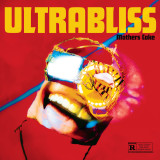
After the recent release of the first pre-single, "One Of These Days," the new and fifth studio album by Mother’s Cake, titled “Ultrabliss”, will be released on October 18, 2024, via Embassy of Music (available for pre-order starting July 17).
Inspired by Stanley Kubrick's cult film “A Clockwork Orange” (1971) and largely free from structural constraints of traditional songs, the Austrian band unleashes their musical imagination with the finest jams and dancefloor fillers. “Ultrabliss” unites nine extremely varied tracks with elements of classic rock, krautrock, and prog-rock that are sure to please fans of Jimi Hendrix and Pink Floyd, as well as followers of the Red Hot Chili Peppers or British indie icons like Franz Ferdinand, the Arctic Monkeys, or Kasabian. Like its predecessor “Cyberfunk!”, “Ultrabliss” was recorded at Sevenarts Studio, Überlärm Studio, and Moonwalker Productions Studio, and once again sonically brought to life by singer, guitarist, and songwriter Yves Krismer in collaboration with Manuel Renner and Raphael Neikes. Neikes, who plays guitar and keyboards live, has become the fourth band member. Founding drummer Jan Haußels has amicably left the band after the album sessions and will be replaced by Alex Kerbl on drums from now on.
Splatter Red / Yellow Vinyl[37,77 €]
After the recent release of the first pre-single, "One Of These Days," the new and fifth studio album by Mother’s Cake, titled “Ultrabliss”, will be released on October 18, 2024, via Embassy of Music (available for pre-order starting July 17).
Inspired by Stanley Kubrick's cult film “A Clockwork Orange” (1971) and largely free from structural constraints of traditional songs, the Austrian band unleashes their musical imagination with the finest jams and dancefloor fillers. “Ultrabliss” unites nine extremely varied tracks with elements of classic rock, krautrock, and prog-rock that are sure to please fans of Jimi Hendrix and Pink Floyd, as well as followers of the Red Hot Chili Peppers or British indie icons like Franz Ferdinand, the Arctic Monkeys, or Kasabian. Like its predecessor “Cyberfunk!”, “Ultrabliss” was recorded at Sevenarts Studio, Überlärm Studio, and Moonwalker Productions Studio, and once again sonically brought to life by singer, guitarist, and songwriter Yves Krismer in collaboration with Manuel Renner and Raphael Neikes. Neikes, who plays guitar and keyboards live, has become the fourth band member. Founding drummer Jan Haußels has amicably left the band after the album sessions and will be replaced by Alex Kerbl on drums from now on.
The sophomore studio album from rapper and singer Doja Cat, with the singles “Juicy,” “Rules” and “Say So,” plus guest appearances from Smino, Gucci Mane and Tyga.
Ihren Durchbruch hatte Doja Cat 2014 mit dem Track "So High" aus ihrer 1. EP "Purrr!", 2018 hat sie mit ihrem «crazy» Video zu "Mooo" mehr als 65 Millionen Views generiert. Ihr neues Album "Hot Pink" enthält unter anderem die Hits "Juicy" ft Tyga und "Say So". Gut 500 Millionen Mal wurde «Say So» weltweit gestreamt und katapultierte die aus Kalifornien stammende Rapperin, Sängerin und Songwriterin Doja Cat auf die Bildfläche des Mainstream Musikzirkus. Nachdem die von 70er Disco Musik inspirierte Nummer auf TikTok massiv durchgestartet ist, hat sie auch die Charts erobert. "Say So" hat in der Schweiz die Top 20 der Single- und Airplay-Charts geknackt. Der Longplayer "Hot Pink" erscheint jetzt auf Vinyl.
The eighth and latest slate of refined retro-futuristic synth-pop by Liz Wendelbo and Sean McBride aka Xeno & Oaklander is named after and inspired by "the study of what not to do, a negative image of a positive, the other side, the other:" Via Negativa (in the doorway light). Recorded in the fall of 2023 at their modernist Connecticut home fashioned into a two-story synthesizer laboratory and mixing studio, the album is uniquely visionary in spirit yet precision in execution, a contrast central to the duo's enduring chemistry. Embryonic piano sketches were translated to nuanced modular systems, which McBride weighted with "harmonic padding," tuned percussion, and a spectral transfer device capable of "rendering spasms of rhythmic overtonal filigree." Despite the technological complexity of their craft, emotively the songs require no deciphering - these are technicolor widescreen anthems of the cybernetic age. The eponymous opening track sets the pace, soaring sleekly over glittering synths and call-and-response vocals about arias, shattered light, and faces in stereo. From there the record expands and contracts, cycling through a gallery of moods and masks, animated by the band's fascination with drama, "the idea of personae," and theatrical characters. Track by track, a murky, tragic backstory reveals itself: forlorn figures navigating a treacherous mercury mine, alternately poisoned by fumes or buried in collapsing caverns. The tension between Teutonic, utopian synthetic pop and lyrical narratives of ghosts in silos, ruined mills, and the traumas of mineral excavation creates a compelling friction, alternately futurist and obsolete, elevated and subterranean. Wendelbo describes the music's polarities perfectly: "The heavy machinic din of extraction in contrast with the enchantment of the mined precious gems and metals." From bilingual odes to bloodstones ("O Vermillion") to cosmic chrome dance floor classics ("Lost & There" "The present tense can never feel real / So many pasts conspire in the burning sun") to strutting EBM sensualities ("Actor's Foil"), Xeno & Oaklander re-prove themselves masters of the axis of technology and poetry, snaking cables and synesthesia, mining melodies and myths across 15 years of focused artistry. Theirs is a muse still gilded and gleaming, burnished red and silver, attuned to "the unobservable, the unfamiliar, that which you don't see directly."
The eighth and latest slate of refined retro-futuristic synth-pop by Liz Wendelbo and Sean McBride aka Xeno & Oaklander is named after and inspired by "the study of what not to do, a negative image of a positive, the other side, the other:" 'Via Negativa (in the doorway light)'. Recorded in the fall of 2023 at their modernist Connecticut home fashioned into a two-story synthesizer laboratory and mixing studio, the album is uniquely visionary in spirit yet precision in execution, a contrast central to the duo’s enduring chemistry. Embryonic piano sketches were translated to nuanced modular systems, which McBride weighted with "harmonic padding," tuned percussion, and a spectral transfer device capable of "rendering spasms of rhythmic overtonal filigree." Despite the technological complexity of their craft, emotively the songs require no deciphering – these are technicolor widescreen anthems of the cybernetic age.
The eponymous opening track sets the pace, soaring sleekly over glittering synths and call-and-response vocals about arias, shattered light, and faces in stereo. From there the record expands and contracts, cycling through a gallery of moods and masks, animated by the band’s fascination with drama, "the idea of personae," and theatrical characters. Track by track, a murky, tragic backstory reveals itself: forlorn figures navigating a treacherous mercury mine, alternately poisoned by fumes or buried in collapsing caverns. The tension between Teutonic, utopian synthetic pop and lyrical narratives of ghosts in silos, ruined mills, and the traumas of mineral excavation creates a compelling friction, alternately futurist and obsolete, elevated and subterranean. Wendelbo describes the music’s polarities perfectly: "The heavy machinic din of extraction in contrast with the enchantment of the mined precious gems and metals."
From bilingual odes to bloodstones ("O Vermillion") to cosmic chrome dance floor classics ("Lost & There" "The present tense can never feel real / So many pasts conspire in the burning sun") to strutting EBM sensualities ("Actor's Foil"), Xeno & Oaklander re-prove themselves masters of the axis of technology and poetry, snaking cables and synesthesia, mining melodies and myths across 15 years of focused artistry. Theirs is a muse still gilded and gleaming, burnished red and silver, attuned to "the unobservable, the unfamiliar, that which you don’t see directly."
The eighth and latest slate of refined retro-futuristic synth-pop by Liz Wendelbo and Sean McBride aka Xeno & Oaklander is named after and inspired by "the study of what not to do, a negative image of a positive, the other side, the other:" 'Via Negativa (in the doorway light)'. Recorded in the fall of 2023 at their modernist Connecticut home fashioned into a two-story synthesizer laboratory and mixing studio, the album is uniquely visionary in spirit yet precision in execution, a contrast central to the duo’s enduring chemistry. Embryonic piano sketches were translated to nuanced modular systems, which McBride weighted with "harmonic padding," tuned percussion, and a spectral transfer device capable of "rendering spasms of rhythmic overtonal filigree." Despite the technological complexity of their craft, emotively the songs require no deciphering – these are technicolor widescreen anthems of the cybernetic age.
The eponymous opening track sets the pace, soaring sleekly over glittering synths and call-and-response vocals about arias, shattered light, and faces in stereo. From there the record expands and contracts, cycling through a gallery of moods and masks, animated by the band’s fascination with drama, "the idea of personae," and theatrical characters. Track by track, a murky, tragic backstory reveals itself: forlorn figures navigating a treacherous mercury mine, alternately poisoned by fumes or buried in collapsing caverns. The tension between Teutonic, utopian synthetic pop and lyrical narratives of ghosts in silos, ruined mills, and the traumas of mineral excavation creates a compelling friction, alternately futurist and obsolete, elevated and subterranean. Wendelbo describes the music’s polarities perfectly: "The heavy machinic din of extraction in contrast with the enchantment of the mined precious gems and metals."
From bilingual odes to bloodstones ("O Vermillion") to cosmic chrome dance floor classics ("Lost & There" "The present tense can never feel real / So many pasts conspire in the burning sun") to strutting EBM sensualities ("Actor's Foil"), Xeno & Oaklander re-prove themselves masters of the axis of technology and poetry, snaking cables and synesthesia, mining melodies and myths across 15 years of focused artistry. Theirs is a muse still gilded and gleaming, burnished red and silver, attuned to "the unobservable, the unfamiliar, that which you don’t see directly."