The opening track to the Alan Parsons Project’s Eye in the Sky remains the most recognized instrumental in sports—fanfare inseparably tied with introducing NBA legend Michael Jordan and his six-time world-champion Chicago Bulls mates before games, and still used by many teams as an energy-raising prelude. Indeed, the subdued grandiosity, cosmic bluster, and lights-out wonder of “Sirius” sets the table for the band’s smash 1982 album, whose hallmark smoothness, lushness, and balance extend to the music’s exquisite song writing, dreamy emotions, and underlying orchestral scope. Credit for the record’s craft, cohesiveness, and accessibility also falls to Alan Parsons and creative partner Eric Woolfson’s knack for recruiting session pros that translate their visions with unquestioned feeling—particularly, vocalists who include former Zombie leader Colin Blunstone and soul singer Lenny Zakatek.
Mastered from the original master tapes, Mobile Fidelity’s RTI pressed 180g 45RPM 2LP version of Eye in the Sky features succulent warmth, magnificent balance, low-end heft, and see-through transparency that take you into the studio with Parsons at Abbey Road Studios. Each note seems perfectly placed, every sequence painstakingly considered. Boasting front-to- back depth, concert-hall-level separation, realistic presence, and bang-on accuracy. This release will test the capabilities of the world’s finest stereo systems. There’s more information, more texture, more nuance— more of everything to be experienced. British progressive rock would never again sound so sophisticated, suave, or steady.
Buscar:d j sound
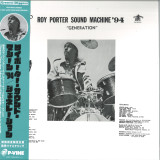
Roy Porter was approaching 50 years of age at the time when he released his first album, breaking a long period of silence and aiming for a comeback. The album is a hot one, with a superb sense of rhythm and vigorous drumming that clearly conveys his ambitious attitude. It is also his most expensive album, with the original selling for over $1000. The album includes 'Jessica', one of his best-known songs, which he wrote for his girlfriend, a long jazz-funk song with a melody of indescribable melancholy and colour, 'Funky Twitch', with its percussive beat and lush horns & guitar, and 'Wave', which quotes a phrase from Jobim's classic song 'Wave'. The LP comes on clear yellow vinyl, plus a 7" featuring a Kenny Dope re-edit of 'Jessica'!
SMN Records, the record label division of the Philadelphia-based addiction recovery nonprofit Sound
Mind Network, has released limited edition vinyl copies of its first compilation, Healing Through the Arts,
Vol. 1. The star-studded album features both up-and-coming artists as well as music legends
Enjoy The Ride Records and Drafthouse Films proudly present Miami Connection. Original Motion Picture Soundtrack. Composed and Produced by Angelo Janotti and performed by Dragon Sound, the soundtrack is finally making its debut outside of the cult classic film. Written and directed by 9th degree black belt philosopher/author/inspirational speaker Supreme Grandmaster Y.K. Kim, the film tells the story of the fearless synth rock band Dragon Sound as they embark on a roundhouse wreck-wave of crime-crushing justice in the streets of Orlando, in order to achieve world peace. Score music by Jon McCallum
Available for the first time on any physical format due to destruction from Hurricane Charley*, Miami Connection is pressed on four colorful vinyl variants, housed in a 400gsm gatefold jacket, featuring art by Garreth Gibson.
Two track EP from the Italian early 90's cult label, Interactive Test, helmed by legendary Falsini brothers. Both sides going generously past the 8 minute marker and well into the upper 120 BPM class of affairs, "Farf-Ability" is another show case of the experimentally excursive approach to the early Italian progressive sound, this time on behalf of Francesco Farfa. Two flavours served confidently: uplifting daytime ravey on the A side, and darker trancier night time on the B side, heavy on the percussive samples. Remastered and re-issued with new full cover artwork, featuring photographic evidence of a special moment in time for Italian rave culture.
Roy Porter released two albums in the 70's, "Inner Feelings" and "Jessica", which are now highly sought after as important rare groove albums. After a brief absence from the scene, he entered the 90s and challenged the times with a new Sound Machine! The killer funk tracks "Panama" and "Party time," which have been featured as sampling sources on numerous occasions, have been reconstructed by Roy Porter himself, and brushed up to sound with the texture of the 90s. It is no exaggeration to say that this album embodies the fusion of jazz and hip-hop that Robert Glasper and others have shown since the 2010s, 20 years ago.
Scruff Gilder and Nick `Manasseh’ Raphael and featuring the voice of roots singer Tena Stelin.
* A sound system anthem – particularly fot Jah Shaka - from the late 80’s / early 90’s alongside the original dub mix `New Style’ and dubplate cuts which are featured on Side B.
This vinyl reissue celebrates Roberto Roena y Su Apollo Sound’s first release for Fania Records in 1970. Founded in 1969, “Apollo Sound” was considered one of the best salsa bands in Puerto Rico. Standout tracks include “Tu Loco Loco, y Yo Tranquilo,” “El Escapulario” and the Bobby Capó classic “Soñando con Puerto Rico.” Featuring (AAA) lacquers cut from the original master tapes by Kevin Gray at Cohearent Audio, this 180-gram vinyl pressing is housed in a vintage-style tip-on jacket. US import.
Lauded with critical acclaim in the Audiophile market, Retrospective is the magnum opus of Rebecca Pidgeon's songs. The album attests to Chesky's commitment to detailed, clear, high-quality sound and perfectly introduces the label's unique approach to record production, which lets her vocals take center stage.
Thirty-five years after the label's debut release, Chesky Records has maintained its original ethos of creating "the illusion of live musicians in a real three-dimensional space." It achieves that by focusing on presenting an immersive listening experience for its customers that is unique in the music industry. The SACD- Hybrid Multi-Channel and 180g Black Vinyl will be released on the 5th July 2024.
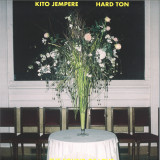
- A1: The Sound Of Love Feat Hard Ton
- A2: The Sound Of Love (Speechless)
- A3: Et Qua Je Dorme Feat Miriam Sekhon (Andras Remix)
- A4: Your Ghost In Me (Live At The Day When Time Stopped Moving)
- B1: The Sound Of Love (Eden Burns Remix)
- B2: Sergio Leone (Remix V1) (Eden Burns Remix)
- B3: Sergio Leone With Eden Burns (Remix V2)
As the summer season approaches, here comes Kito Jempere and Hard Ton with a perfect summer jam! Taken from upcoming fifth Kito Jempere album, ''The Sound of Love'' is a classic early nineties balearic beat ballad - 96 beats per minute of morning bliss, mellow
pads, enigma-esque drums and beautiful vocal drama by one and only Hard Ton.
Besides the title track and a new club driven remix from man-of-the-hour Eden Burns, vinyl is packed with an array of old and new goodies. Much requested Andras remix from 2020 previously available digitally only. Live version of previous Hard Ton collaboration, ''Your
Ghost in Me'', played by 8-piece Kito Jempere Live Band. Plus another two massive and previously ''digital only'' remixes from Eden Burns for all your dance-club needs. And all this comes with a beautiful sleeve from Berlin based photographer Alexey Kiselev.
With a squall of guitar and a crash of drums, two years on from the release of their exhilarating debut EP, Chicago noisemakers Babe Report finally release their debut album in 2024, in the form of the rough-and-ready Did You Get Better, released this Spring via Exploding In Sound. Formed of ten new songs, and all wrapped in under half an hour, it’s an immediate and breathless arrival.
Opening track ‘Turtle of Reaper’ arrives in a flurry of noise and energy. Presented as an indictment of the fear-mongering in click-bait media, it’s a cacophonous two-minutes of scorched vocals and frenetic drums, the chorus a call back to 12/31/99, when all the news told people to turn off their computers before Y2K hit.
‘Universal’ offers something somewhat more refined, with occasional moments of restraint amid the commotion that arrives in a hardy whack of heavy riffs.
“This one is all about climbing up onto your neighbor’s back to succeed,” the band explain. “Most aspects of life are not a zero-sum game, but when they are, it feels ethically wrong to win.”
Elsewhere, ‘Allergy 2000’ is the album’s weighty centre-point, characterized by its soaring guitar lead line and stifled, murky vocals what might have started out as an experiment in writing a Yo La Tengo song soon comes into its own with a rabid tempo shift that feels indicative of the album’s fervent nature, never allowing the listener to rest on their laurels.
However it finds you or you find it, Did You Get Better finds a way to take the reins, ploughing headfirst into its journey and rarely looking back for approval, to even worry if anyone else is joining for the ride."
Grief doesn’t have an endpoint. No matter how much time passes or how much healing you can muster, the absence stays ubiquitous. But with patience and care, you can endure and live with it. Sour Widows know this. The Oakland-based indie rock outfit was formed in 2017 by bandleaders and best friends Maia Sinaiko and Susanna Thomson during personal upheaval and tragedy: Sinaiko’s partner died and Thomson’s mother was diagnosed with cancer. Their bond and their band anchored them through this time and the songs they wrote processed the death surrounding them. Their debut album Revival of a Friend is resonant indie rock about the spiritually purifying power of connection and love in the face of loss. Across 10 winding and potent guitar-led tracks, they channel their mourning into solidarity and comfort.
- A1: Mode - Lo-Fi Odyssey (Stallions Remix)
- A2: Georgie Red - We'll Work It Out
- B1: Peter Jacques Band - Mighty Fine
- B2: Mozaika - Never See You Again
- B3: Pino Presti Ft. Roxy Robinson - You Know Why (Disco Version)
- C1: Twice Of Love - 24 Hours From Culture
- C2: Backbeat Convention - Love And Happiness (Quartz Ddub All Over Mix)
- D1: Chris & Cosey - Exotika (12" Mix)
- D2: Tavares - I Wanna See You Soon
- D3: Brass Construction - Now Is Tomorrow (Anticipation)
In The face of adverse clubbing conditions the irrepressible deejay harvey releases volume three of the mercury rising compilation triptych. Representing what could’ve been and what shall be in the hallowed hall which is Freddys nightclub pikes Ibiza in the future.
Put it on, turn it up, feel the magic till we meet again.
On their latest album, Sonido Cosmico, Hermanos Gutiérrez embark on a sonic exploration that defies the conventional boundaries of instrumental music. The collection is a richly textured tapestry, interwoven with the intricate threads of Latin rhythms and ephemeral atmospherics: each track a vignette, a carefully crafted narrative without words, where the brothers' transcendent guitars speak in a language all their own.
There is a subtle sophistication in the way Hermanos Gutiérrez fuses the elemental with the experimental. The album resonates with the echoes of their Latin musical heritage, yet it is undeniably contemporary in its execution, both nuanced and expansive.
Sonido Cosmico stands as a reflective mirror to the band's evolving artistry, united by music across age and geographical divides: a sound mosaic as celestial as its title, an expression of a band that has found its voice in the vast universe of modern instrumental music.
Long time Djoon club resident and one of Paris’ most prolific producers, Lucas Moinet (Groove Boys Project, Keraw, Projecture) makes his long overdue debut on The Djoon Experience. On the A side, the aptly titled "The Sounds of Deepness" (ft. Stupid Flash on bass) takes you on a raw & soulful journey - while the B side delivers two more 8mn long spiritual soundscapes, “Planet Earth” & “The Piano Ritual” - simply put, this lush, 3 track EP is nothing short of a deep house masterclass.
warehouse find
Sound Signature releases two amazing unreleased Chicago house tracks from the late eighties. Well recommended!!
This was southside Chitown '89. If you werent there you werent there.... lots of underground unreleased music circulated on the southside on maxell and tonemaster tapes from walgreens - 2 dollars for a pack of eight!
Three years in the making, Livity Sound alumni Azu Tiwaline and Forest Drive West combine their distinct but compatible styles into an EP of advanced, reduced soundsystem immersion.
The idea for the collaboration took shape not long after Tiwaline’s first Livity release, the Magnetic Service EP, and the pair took time to settle on a sound set which now shapes out Fluids In Motion. Drawing on a cohesive palette, the tracks they pieced together in a remote exchange between Tunisia and the UK explored a variety of tempos and rhythms ranging from pure ambience through to spring-loaded 4/4, with a focus on minimalism and dub-spirited spatial sound design.
The end result naturally evolves from each artist’s existing work, matching subtlety and space with intricate detail to present a complete, considered release that runs as deep as an album over the course of four tracks.
Livity Sound is a label set up by Peverelist in 2011 as a vehicle for a raw and exploratory strain of UK techno, rooted in the heritage of UK dance music and sound system culture. It has since become one of the UK's foremost protagonists for cutting edge underground electronic music.
After ‚Running in Waves‘ the Cologne based label ‚Serial Sound’ is back with the second release. ‚´till things ghost‘ is going to be Jonas Landwehr´s debut solo EP. After publishing collaborative works or various artist EPs he is now ready to take the next step. The newest project is tied around the idea of a diverse taste and inspirations while it’s centered around playing with different rhythms. Multiple styles such as House, Techno or Reggaeton as well as various tempos come together on this project. ‚ginko‘ serves as an intro and shows what kind of contrast the rest of the record will be about with it’s airy chord pads that cut to a growling bass accompanied by a slow burning reggaeton groove. ‚disaronno straight‘ adopts this idea but gives it a faster UK influenced twist with a wobbly bassline and chopped vocals ready for the club. ‚sin tí‘ closes the A-Side and aims for summer vibes and floating lightness. ‚overcome?‘ opens the B-Side with a hypnotic pulsing bass and percussion interaction and leads into ‚something about u‘, a soulful vocal feature from LAINE which sits on a broken beat with deep chords and House accents. ‚seeds‘ is closing off the record with an aggressive, faster paced metallic Dancehall rhythm contrasted with enthralling pad sounds.
*Jamaican artist Peter ‘Roots’ Lewis recorded various tracks with his brother Paul Lewis, for Lee Perry in the mid 1970’s at Black Ark studio JA, most notable track: ‘Ethiopian Land’. Here he features on an observational Roots Vocal track. The tracks date from the late 90’s and have previously been released on vinyl, now deleted. Alternate versions of the tracks can be found on the ISR Rootspective CD album, (IRONCD 05). Also available: 7” Peter Roots Lewis-It’s A Roadblock / Alien Dread–Dub Vs ((IRON 010-07).
The tracks have been re-mixed by Alien Dread and the B side features a different Dub Version. Rhythm is by the Hi-Tech Roots Dynamics, courtesy of Martin Campbell (Channel One Uk).
We have a subtly edit of “Soul Town” by The Motherhood, the psychedelic 1969 LP “I Feel So Free. Motherhood was the unlikely name of Klaus Doldinger's psychedelic fusion band, who eventually transmuted into the bands Passport (Klaus Doldinger, Lothar Meid & Udo Lindenberg) & Hallelujah (Paul Vincent & Keith Forsey). “Soul Town” appears as the B-side to the first single “Back In The Grass”, which fetches ~$275. It was produced by Siegfried E. Loch, & written/arranged by Paul Nero. Many will recognize it as the closing track on the Ocean’s 13 soundtrack. It’s a psychedelic, jazz-funk bomb that punches hard.
Pinball Number Count (Edit) by The Pointer Sisters b/w Soul Town (Edit) by The Motherhood | Galaxy Sound Company — GSC45-043, test pressing | You know the drill. It’s Galaxy Sound Co. It is cop-on-site. It is yet another GSC45 edit you need in your crates. & number 43 doesn’t disappoint. I have been wanting both of these jazz-funk nuggets on 7-inch for a minute now, so much love to the GSC crew!
Any of us who grew up on Sesame Street in the 1970s will know this A-side righ away. “The Pinball Number Count” (or Pinball Countdown) is a collective title referring to the 11 one-minute animated segments on the TV series Sesame Street that teach children to count to 12 by following the journey of a pinball through a fanciful pinball machine. These segments are notable for the colorful, imaginative animation as well as the funkysoundtrack with vocals by The Pointer Sisters. It was produced in 1976 by Imagination, Inc. in San Francisco, California for the Children's Television Workshop & debuted on Sesame Street during Season 8 .
Repress
For the first time ever this Modern Soul early '80s masterpiece finally gets a 7" release some 38 years later!
Quite simply "A Chance For Hope" is one of the all-time, under-rated gems from this era. How it never made to a single release before now we'll never know. One of the classiest 7 inch releases you're ever likely to see! Officially licensed, remastered and LTD 7 inch RSD release with replica artwork.
The album also includes newly-remastered versions of her best-loved songs, with Julienne adding a bewitching twist to timeless tracks like "I Knew You I Loved You," "I Don't Want To Talk About It" and "A Thousand Years". Julienne is known for her ability to craft breathtaking arrangements, "Forever Our Love Remains" is her second LP since her acclaimed release, "A Time For Love," and comes eight years after her 2016 album, "When We Are One."
This handpicked selection of songs truly reflects the best of Julienne Taylor's repertoire, and fans are sure to find it worth the wait.
The journey of BASIC RHYTHM, all the way from mid 90s pirate radio, to abstract electronic sounds, has eventually seen a return to his musical roots-jungle and drum & bass. Pushing forward into new territories, his tracks often stand out as brutalist and adventurous, while all the time keeping the dance bouncing. After recent collaborations with Sully and Blood Trust among others, there's plenty of more exciting new music to emerge, starting with 'Sound Killa EP' on Straight Up Breakbeat.
Kid Twist is back with their second release, which is an alias for DJ Phantasy with input from his good mate Simon. This corking 12" was originally released in 1993 on Liquid Wax. The tracks were engineered back then by Alex Reece when he was assistant engineer to Jack Smooth at his Sound Entity Studios.
- A1: Shikasta - Self Indulgence
- A2: Dance 2 Trance – Freaks
- A3: It's Anything You Want It To Be, And It's A Gas (Smoke Machine)
- B1: Eden Transmission – I'm So High
- B2: Fatal Error - Fatal Error
- B3: Scarecrow – Roe
- C1: Industrial – The Gauntlet
- C2: Eat Static Almost Human Abduction Mix
- C3: Pulse 8 - Radio Morocco (Mix 2 Youth Dub Mix)
- D1: Hno3 - Doughnut Dollies
- D2: Digital Connection – Heatwave (Hotter Mix)
- D3: Axel F - Geronimo (Special Instrumental M
Part 1[28,15 €]
A continuation of the extensive research project initiated last year between Sound Metaphors, Transmigration and surviving eye-witness/historian Ray Castle. An in depth analysis of the dancefloor landscape that developed in Goa during the 80s' and early 90's well before "Trance" became the unfortunate dirty word it is today. Before "trance" was even a genre, Goa was brewing a scene with unparalleled aesthetics, with a constant influx of dedicated collectors and DJs coming and going to this tropical underground dancefloor haven, filtering through vast amounts of emerging electronic music of the times and distilling only the finest of "Special Goa Music". Here is another compilation of our chosen most impactful tracks that would have been soundtrack to a very special and pure moment of freedom in dancefloor culture before the bastardisation of what we now know as "Goa Trance". A highly sought after selection of New Beat, Proto Techno, early Progressive/Trance, Industrial, EBM and House Music. Featuring photographs of the events presented in a double LP gatefold with poster and liner notes by Ray Castle himself. Re-mastered at Manmade mastering in Berlin. A generous body of research essential to any well rounded record collection.
Diamanda Galás In Concert is not simply a live album. With nothing but a piano and the full expressive range of her extraordinary voice, Diamanda Galás strips away the comforting patina of time, tradition and stylistic convention to expose and express the raw human emotion that is the living heart of a song. It explores an eclectic range of material; rembetika, soul, ranchera, country and free jazz, and her passionate eviscerations reveal their hidden kinship. Four of the songs-O Prósfigas, La Llorona, Let My People Go, and Anoixe Pétra are for and by the forsaken, outcast and debased; the other three are hardboiled love songs. "In Concert" features select recordings taken from performances at Thalia Hall in Chicago, and Neptune Theatre in Seattle from 2017.
First time released on Vinyl. Unheard since 2007. Artwork by Maliq Griffin aka DJ Porno (Tame’s long-time collaborator and friend.)
An unreleased Stretch Armstrong HOT 97 freestyle ft. Redman and Rah Digga. Remastered production by Shape, Mishap, and others.
We’re honoured to reissue an album by a truly unique voice in hip hop and dearly missed friend, Tame One. The year is 2007, Fresh off collaborations with the likes of El-P, Cage, and The Weathermen, Tame One - one half of the Newark duo The Artifacts, was approached by a Montclair skateboard shop Division East, as he personified their East Coast new school culture of skating, graffiti, and MCing. This relationship gave way to Division East Records and their first full length release entitled "The Grudge." Despite its merits and the efforts of those involved, the album went largely unheard outside of NJ hip-hop circles. Call it a casualty of the post-CD/pre-streaming musical landscape of the early 00’s. Now, 17 years later and almost 2 years after his heartbreaking transition, issued for the time on purple vinyl, Tame One’s The Grudge
Repress!
Melody A.M. is the debut studio album by Norwegian electronic music duo Röyksopp, released on 13 September 2001 by Wall of Sound. The album reached number one in the Norwegian Albums chart. In the UK, it reached number nine in the country's Album chart, and topped both the Dance Albums and the Independent Albums charts. As of 2005, the album had sold 750,000 copies worldwide,1 with 454,271 sold in the United Kingdom alone.
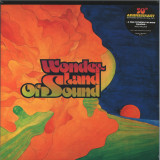
To mark its 50th anniversary, Farfalla Records is proud to announce the reissue of the highly sought after German library gem "Wonderland of Sound".
Originally released in 1974, the album was produced by Brillant-Musik's founder Werner Tautz and recorded in Zurich.
Wonderland of Sound is the epitome of the classic 70s library sound. A jazzy bliss orchestrated by the hottest European session players making up the Big Band "Rainbow-Orchestra".
A Splendidly funky and stunning set of compositions and arrangements with ultra-stylish horn section.
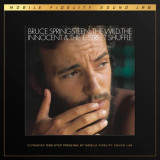
Released only eight months after his exhilarating debut, Bruce Springsteen's The Wild, the Innocent & the E Street Shuffle contains rousing dispatches from the boardwalk, the street, the beach, and the bedroom. It explodes with energy, dares to dream, teases with humour, crackles with tragedy, clings to hope, and overflows with discovery, youthfulness, and personality. It features an unforgettable cast of characters — corner boys, teenage hustlers, doomed lovers, jazz men, junk men, factory girls, fortune tellers, alley cats, pimps, escorts, and more — illuminated by vivid colour, breathtaking detail, and poetic action.
Musically, the heartfelt 1973 record is inhabited by sympathetic vignettes and cinematic arrangements steeped in rock 'n' roll, soul, jazz, and R&B. It finds the New Jersey native looking beyond the parameters of his preceding record and seeking to move on from environments he knows well (and chronicles here) by rushing headlong toward unknown territories, adventures, and people. Underpinned by the singer-guitarist's ambitious poetic enterprise and will to succeed, The Wild, the Innocent & the E Street Shuffle is the album on which Springsteen becomes the Boss.
Mastered on Mobile Fidelity's renowned mastering system, pressed at RTI on MoFi SuperVinyl, and strictly limited to 7,500 numbered copies, Mobile Fidelity's UltraDisc One-Step 180g 33RPM LP set is the definitive-sounding version of Springsteen's sophomore record. Benefitting from SuperVinyl’s nearly non-existent noise floor, superb groove definition, and dead-quiet surfaces, The Wild, the Innocent & the E Street Shuffle plays with a clarity, energy, presence, and openness that complement the expressiveness, dynamics, and scope of the seven restless songs that comprise a work Rolling Stone ranked the 345th Greatest Album of All Time.
Beyond the audiophile sonics that practically place you behind the console at 914 Sound Studios — listen to the separation between the instruments, natural decay of the notes, interplay within the widescreen soundstaging, and nothing-to-lose youthfulness of Springsteen’s voice — this reissue takes seriously this record’s influential merit by presenting it in packaging that underlines its status. Tucked in a beautiful slipcase, the LP is housed in a special foil-stamped jacket with faithful-to-the-original graphics. This reissue is made for listeners who prize sound quality and who want to engage themselves in everything involved with the invigorating set that busted Springsteen loose from the club circuit and landed him on the radio
Determined to liberate anyone within earshot and unafraid to come on strong, The Wild, the Innocent & the E Street Shuffle serves as the debut of the E Street Band — not only heard but seen for the first time by most of the public courtesy of the back-cover photograph. This is where saxophonist Clarence Clemons, organist-accordionist Danny Federici, and pianist David Sancious step out of the shadows — and drummer Vini Lopez and bassist Garry Tallent again stoke a fiery rhythmic engine that helps drive the untamed, reimagined big-band swing of “Kitty’s Back,” breathless R&B thrust of “Rosalita (Come Out Tonight),” and carefree dance steps of the funky “The E Street Shuffle.”
Of course, the main attraction remains a then-24-year-old visionary on the precipice of becoming a sensation and turning a then-bloated rock scene on its head. Recorded over three months while Springsteen and company were busy touring his debut LP, The Wild, the Innocent & the E Street Shuffle reflects the high-octane approach the vocalist embraced onstage and drifts away from the label-dictated acoustic-based frameworks of his debut. The set also witnesses Springsteen deepening his observational skills, with narratives such as the romantically tinged “4th of July, Asbury Park (Sandy)” and redemptive epic “Incident on 57th Street” mirroring changes taking place in the singer’s own life, small towns, and America at large.
A thrilling collision of memories, reflections, and composites — Sandy, Rosalita, and the latter’s parents are all based on actual people Springsteen knew, as is the community depicted in the opening track — the aptly titled The Wild, the Innocent & the E Street Shuffle resonates decades on due to its truths, authenticity, and spirit. Those characteristics — as well as the fact that many of its lengthy songs come on as the equivalent of sweaty, feverish soul revue that won’t stop until you’ve been exhausted — also explain how this now-iconic album triumphed over the reservations of industry “experts” that both demanded Springsteen re-record it and instructed deejays not to play it.
Yet there’d be no stopping a record that saw the past, present, and future, a band whose will would not be denied, and a phenomenon who was born to run. A never-ending invitation to act real cool and stay up all night, The Wild, the Innocent & the E Street Shuffle always feels alright.
A landmark recording and masterful symphony of performance, composition, and execution, Miles Davis' E.S.P. established the template jazz would follow for the following decade. The 1965 record splits the gap between accessible hard-bop and the cutting-edge approach Davis increasingly pursued into the 1970s. Adventurous, sophisticated, and yet altogether cohesive, E.S.P. stands out not only due to its elastic compositions but via its chemistry, interplay, and feeling attained by the instrumentalists. The first album Davis' classic second quintet made together, it's also very arguably the group's best. Never before has the effort been experienced in such transformational sound.
Pressed at RTI, this 180g 45RPM 2LP set of E.S.P. renders the music's dynamics, pitch, colors, and textures with lifelike realism and proper scale. Reference-caliber separation, wall-to-wall soundstages, and distinct images magnify the intensity and beauty of Davis and Co.'s creations. Whether it's the distinctive snap of Tony Williams' drum sticks against the snare head, air moving through Davis' trumpet, acoustic thrum of Ron Carter's bass, or upper register of Herbie Hancock's piano, the sound is better than you'd even hear in the most intimate jazz clubs. Prepare to be swayed on every level.
For many, E.S.P. looms among the decade's best albums if only because of the significance of Davis' line-up. While Hancock, Williams, and Carter are holdovers that began playing with one another on 1963's Seven Steps to Heaven, Wayne Shorter functions as the secret weapon and key addition responsible for this ensemble hitting a new peak. Indeed, the saxophonist helped pen two of the seven compositions here – notably, E.S.P. is entirely comprised originals and clocked in as one of the longest-running jazz LPs issued at the time – and, more importantly, grants Davis the confidence and leeway necessary for the eruption of enigma, steadiness, and tension.
As he did with John Coltrane year earlier, Davis hangs back and picks his moments to solo, with Shorter stepping up to supply the churn. Their bandmates respond in kind, itching to take off into new stratospheres all the while keeping their improvisations grounded and connected to the piece at hand. Guided by Davis' visions and inspired by current boundary-pushing works by the likes of Ornette Coleman, Cecil Taylor, and Coltrane, the magnificent results spark with variation, harmony, emotion, energy, and brilliant movement.
Interlocking lines drive "Little One," alternating rhythms pulse through the funky "Eighty-One," melodies soar on the balladic "Iris," the aptly titled "Mood" broods over minor-key structures, and "Agitation" – goosed by a two-minute percussive introduction by Williams – delivers on its promise. No record – and no group of musicians – have ever balanced coherent themes and exploratory playing in better fashion than Davis' quintet on E.S.P. It's the avant-garde record even jazz traditionalists love, and essential on every level.
Wormwood is undoubtedly one of the leading bands on the Swedish metal scene right now. The band now returns straight into the hot air to follow up the highly praised predecessors "Nattarvet" and "Arkivet". Albums that made the band soar on the national charts and led to numerous nominations for prestigious awards.
The release of "The Star", concludes the magnificent trilogy about death (NATTRAVET, ARKIVET, THE STAR). "NATTARVET" was about the grim famine that plagued the people in the 19th-century Nordic region. "THE ARCHIVE" focused on the inevitable downfall of mankind and "THE STAR" tells the story of the end of the universe.
There is no doubt that Wormwood musically has taken another big step forward, both in terms of songwriting and performance. Nothing is left to chance, and everything is refined down to the smallest detail, and this without sacrificing the bands unmistakable raw sound.
The album was mixed and mastered the renowned metal producer Sverker Widgren from Wing Studios in Stockholm, Sweden
Wormwood is undoubtedly one of the leading bands on the Swedish metal scene right now. The band now returns straight into the hot air to follow up the highly praised predecessors "Nattarvet" and "Arkivet". Albums that made the band soar on the national charts and led to numerous nominations for prestigious awards.
The release of "The Star", concludes the magnificent trilogy about death (NATTRAVET, ARKIVET, THE STAR). "NATTARVET" was about the grim famine that plagued the people in the 19th-century Nordic region. "THE ARCHIVE" focused on the inevitable downfall of mankind and "THE STAR" tells the story of the end of the universe.
There is no doubt that Wormwood musically has taken another big step forward, both in terms of songwriting and performance. Nothing is left to chance, and everything is refined down to the smallest detail, and this without sacrificing the bands unmistakable raw sound.
The album was mixed and mastered the renowned metal producer Sverker Widgren from Wing Studios in Stockholm, Sweden
Wormwood is undoubtedly one of the leading bands on the Swedish metal scene right now. The band now returns straight into the hot air to follow up the highly praised predecessors "Nattarvet" and "Arkivet". Albums that made the band soar on the national charts and led to numerous nominations for prestigious awards.
The release of "The Star", concludes the magnificent trilogy about death (NATTRAVET, ARKIVET, THE STAR). "NATTARVET" was about the grim famine that plagued the people in the 19th-century Nordic region. "THE ARCHIVE" focused on the inevitable downfall of mankind and "THE STAR" tells the story of the end of the universe.
There is no doubt that Wormwood musically has taken another big step forward, both in terms of songwriting and performance. Nothing is left to chance, and everything is refined down to the smallest detail, and this without sacrificing the bands unmistakable raw sound.
The album was mixed and mastered the renowned metal producer Sverker Widgren from Wing Studios in Stockholm, Sweden
Wormwood is undoubtedly one of the leading bands on the Swedish metal scene right now. The band now returns straight into the hot air to follow up the highly praised predecessors "Nattarvet" and "Arkivet". Albums that made the band soar on the national charts and led to numerous nominations for prestigious awards.
The release of "The Star", concludes the magnificent trilogy about death (NATTRAVET, ARKIVET, THE STAR). "NATTARVET" was about the grim famine that plagued the people in the 19th-century Nordic region. "THE ARCHIVE" focused on the inevitable downfall of mankind and "THE STAR" tells the story of the end of the universe.
There is no doubt that Wormwood musically has taken another big step forward, both in terms of songwriting and performance. Nothing is left to chance, and everything is refined down to the smallest detail, and this without sacrificing the bands unmistakable raw sound.
The album was mixed and mastered the renowned metal producer Sverker Widgren from Wing Studios in Stockholm, Sweden
Freedom is deeply rooted in the working-class rock of the 70's and 80's, giving us a sound like no other. With meaningful lyrics, power chords and mighty choruses, they're inevitably creating a soundtrack to the journey of life itself. Nicke Andersson once described Freedom as a "bargain basement Springsteen" - a band making music meant to follow you through thick and thin, far into those never-ending summer nights.
Since Freedom first started in 2019, they've established themselves as an amazing live act, filling clubs throughout Sweden with both energy and audience. In 2022 they were honorably chosen to play at the official release party of The Helicopters at the notorious Hamburger Börs in Stockholm.
The band recently added two new members to the crew: Ola Göransson (Heavy Feather, Stacie Collins) and Matte Gustafsson (In Solitude, Siena Root, Heavy Feather). Their combined experience of heavy roots-rock and sense of stage presence, makes Freedom one of Swedens strongest live bands - guaranteed.
Their self-titled debut album from 2021 became a great topic of conversation, leaving a permanent mark in the rock-world of Sweden. Finally, it's time for the awaited second album to be released - once again produced by Martin "Konie" Ehrencrona (Viagra Boys, Håkan Hellström and Les Big Byrd).
SIMON AND GARFUNKEL’S SWAN SONG: BRIDGE OVER TROUBLED WATER FEATURES METICULOUS PRODUCTION, GORGEOUS SONGWRITING, AND HEALING SPIRIT
Sourced from the Original Master Tapes and Limited to 4,000 Numbered Copies: Mobile Fidelity’s 180s SuperVinyl 33RPM LP Plays with Staggering Detail, Clarity, and Definition
1/4" / 15 IPS analogue master to DSD 256 to analogue console to lathe
Unifying, soothing, comforting: Simon and Garfunkel's Bridge over Troubled Water quickly became the album of an era upon release in 1970, the benchmark set serving as a beacon of hope and hymn of reassurance during a time marked by polarizing changes, social unrest, uncertain politics, and the dawn of a new era. These uplifting reasons — to say nothing about the gorgeous songwriting, meticulous production, and watershed performances — attest to why it is more relevant than ever in our current climate. Music, Bridge over Troubled Water simultaneously suggests and proves, heals all wounds and lifts all boats.
The seminal effort Rolling Stone named the 51st Greatest Album of All Time reaches illustrious sonic and emotional heights on Mobile Fidelity’s 180g SuperVinyl 33RPM LP. Pressed on MoFi SuperVinyl and strictly limited to 4,000 numbered copies, this ultra-hi-fi collector's edition brings you closer to music that picks up where the duo's Bookends leaves off. You'll enjoy deep-black backgrounds and pointillist details. Seemingly every note, breath, and movement is reproduced with exquisite accuracy, clarity, and balance. Each rotation benefits from SuperVinyl’s ultra-low noise floor and superb groove definition.
The best-selling record in the U.S. for several years running and winner of six Grammy Awards — including nods for Record of the Year, Album of the Year, Song of the Year, and Best Engineered Recording — Bridge over Troubled Water endures as a staple of accessible sophistication, angelic elegance, effortless singing, unhinged ambition, and therapeutic spirit. While it would turn out to be the final studio set for a duo surrounded by creative and personal disagreement, Simon and Garfunkel's collaborative ethos and soaring harmonies — combined with reflective narratives centred on the American experience, friendship, romance, and farewells — combine to turn the 11-track work into a paean to resolution, reconciliation, calm, and balance.
Home to the legendary title track graced by Garfunkel's pacifying solo lead vocals as well as the equally famous folk ballad "The Boxer," Peruvian-based "El Condor Pasa," upbeat "Cecilia," and rock ’n’ rolling "Baby Driver,” Bridge over Troubled Water remains as renowned for its musical diversity as its lyrical poignancy. Moving beyond the templates they'd perfected on four prior albums, Simon and Garfunkel embrace a then-unimaginable swath of styles. Rock, pop, gospel, country, R&B, South American, and jazz strains course throughout the songs, each sparked with bold experiments yet grounded in a well-orchestrated melange of melody, rhythm, and classicism that makes everything personal, familiar, and warm.
Not for nothing is Bridge over Troubled Water one of the finest-sounding albums ever made. Featuring instrumentation helmed by members of Los Angeles' fabled Wrecking Crew as well as multiple choral and string sections, songs took hundreds of hours to complete and involved pioneering recording techniques. Evoking both Phil Spector's live"Wall of Sound" approach as well as inventive effects, Bridge over Troubled Water is a triumph of texture, atmosphere, and architecture. Our audiophile edition brings the record's unique traits to the fore.
Whether the reverberation generated by Garfunkel's cassette recorder on "Cecilia," echoing drums captured in a corridor heard throughout "The Boxer," automobile noises peppering "Baby Driver," layer upon layer of voices dotting "The Only Boy Living in New York," or echo-chamber percussion on the title track, details comes through with stunning accuracy, clarity, and dimensionality. In every regard, Bridge over Troubled Water exudes genius.
AAA Audiophile 200g 45rpm Triple Disc LP!
Sourced from First Generation Analogue Recordings without Any Digital Corruption!
2xHD Mastering on Nagra Equipment by René Laflamme!
Sound Restoration by George Klabin & Fran Gala!
Cut All Analogue at Bernie Grundman Mastering on Tube Cutting Equipment!
There have been many guitar gods, but there's never been an electric bassist as deified as Jaco Pastorius. – Michael J. Agovino
This live album by Jaco Pastorius and the Word-of-Mouth Big Band, featuring harmonica virtuoso Toots Thielemans as special guest, was recorded in analog 24 tracks by the Record Plant mobile truck at Avery Fisher Hall in NYC on June 27, 1982, as part of George Wein's Kool Jazz Festival. This Deluxe 45rpm 200g edition is the first one to be mastered from the original 2 track master tapes that were found some 30 years later (the previous digital download versions were released from a digital remix of the 24 tracks). What we have here is the direct copy of the original pure analogue 2 track mix.
The brightest star in the electric bass firmament, Jaco Pastorius burst onto the national scene in 1976 with his audacious self-titled album on Columbia Records, featuring a line-up of top jazz musicians. With his extraordinary fretless electric bass playing as the centerpiece, Jaco Pastorius created an immediate sensation with the public and the media. His signature approach employed Latin-influenced funk, lyrical solos on fretless bass, bass chords, and innovative use of harmonics. In Jaco's work with Weather Report and beyond, the self-described "greatest bass player in the world" (an assessment shared with virtually the entire music world) established a new identity and role for his instrument and became the torch-bearer for a new way of playing both technically and conceptually. But behind it all was an ever present R&B and Latin-influenced groove and a screaming rock-'n'-roll attitude that he refined and incorporated into sophisticated jazz harmonic structures.
In addition to his extraordinary virtuosity, Jaco was also developing into an accomplished and sophisticated composer and arranger and those talents are gloriously on display on this album. The 3-time Grammy Award nominee was inducted into the Down Beat Jazz Hall of Fame in 1988, one of only seven bassists so honored (and the only electric bassist). His legacy as a bass innovator continues to this day, more than 30 years after his untimely death in 1987.
Der in Uganda geborene und in Austin lebende Singer-Songwriter Jon Muq veröffentlicht mit ”Flying Away” sein Debütalbum. Das Album erzählt die Geschichte von Muqs bisherigen Leben, wie er von klein auf seinen Traum von der Musik verfolgte und seine Odyssee von Kampala, Uganda, nach Austin, TX, antrat. Er sagt, “I never expected it to work this way. I never said, I’m going to get a job at a hotel. I’m going to get a job on a cruise line. I’m going to work with Dan Auerbach. Everything happened because I was following sound. I was chasing it. I was just singing.” Das Album erscheint auf Vinyl.
THE 1968 ALBUM ON WHICH JOHNNY CASH BECAME A LEGEND: AT FOLSOM PRISON AMONG THE MOST IMPORTANT AND POTENT STATEMENTS OF THE 20TH CENTURY
Johnny Cash already knew his way around Folsom Prison when he and his band stepped inside the institution’s forbidding walls on the morning of January 13, 1968 to record At Folsom Prison. He’d played there two years prior. But this time was different.
Cash took the stage that day for two shows amid a darkening sociopolitical atmosphere and a raging war in Vietnam, as well as the knowledge his career and health hung on by a thread. The Arkansas native shared many of the long odds and abject failures of the inmates for which he performed. The songs he chose, and the conviction with which he delivered them, say as much. The point at which Cash transformed from a country star into a legendary artist, and a bold statement about the American prison state and its commitment to rehabilitation, the triple-platinum At Folsom Prison remains one the most important, potent, and fabled records of the 20th century.
You can hear it echo off the walls of the room; pulse through the itchiness of the Tennessee Three’s acoustic-based boom-chick rhythms; crackle in the announcements conveyed over the intercom; ring in the comedy of the off-cuff remarks and pair of novelty tunes; sense it in palpable energy that wells up within Cash and his audience. And you can experience it like never before via Cash’s knockout singing. The bedrock foundation of all his music, the singer’s baritone resonates with profound degrees of depth, pliability, and passion that underscore how much this appearance meant to him — and the extent he was living the narratives.
Indeed, every song on At Folsom Prison serves a purpose and speaks to the conditions — mental, emotional, physical, geographical, legal, social — the inmates confronted on a daily basis. Beginning with the explicit messages of the opening “Folsom Prison Blues,” Cash makes it clear he understands and shares many of their plights. Not for nothing did the myth of Cash having done hard time persist for decades once this record hit the streets. That’s how real it is, and how dedicated Cash remains to conveying every note with the same truth he invests in the impromptu comments he makes between and amid songs.
Listen to the sorrow, regret, pity, and loneliness of Merle Travis’ “Dark as the Dungeon,” Cash pulling syllables til they threaten to break and inhabiting the mood of bleak phrases such as “pleasures are few” and “the sun never shines.” Witness the isolation, dejection, and sadness punctuating the walking-blues “I Still Miss Someone,” matched in gravity by a solemn reading of “The Long Black Veil” — a traditional dirge that involves murder, cheating, and deception. Cash cuts even deeper on a heartbreaking solo rendition of “Send a Picture of Mother” and plainspoken version of Harlan Howard’s “The Wall,” detailing a suicide disguised as jailbreak through cliched-jaw deliveries that softly curse the impossible situation.
In chronicling temptations, mistakes, mortality, punishment, and life “inside” — for better or worse, the stories of the disenfranchised, forgotten, written-off, and unrepentant — At Folsom Prison also has a blast playing the outlaw role. Cash captures wild-eyed craziness and out-of-control mayhem on a revved-up take of “Cocaine Blues,” taking extra satisfaction in its dastardly tales by way of voice that shifts into character for the sheriff and judge. The gallows humor and racing drama of “25 Minutes to Go”; quicksilver accents and resigned acceptance of “I Got Stripes”; train-whistle blare and twangy locomotion of “Folsom Prison Blues” — all fight the law only to see the law win.
Cash remains deeply committed at every moment, and inseparably connected with the tortured souls removed from the goings-on of the outside world. No wonder all but two songs here stem from the day’s first performance that saw Cash, Luther Perkins, Marshall Grant, and company give everything. As does the Man in Black’s soon-to-be-wife, June Carter. The couple’s fiery duet on “Jackson” scorches; their combination of surrender and fortitude “Give My Love to Rose” puts us in the dying protagonist’s shoes.
And with the closing “Greystone Chapel,” famously penned by convict Glen Sherley, who watched it all happen under the watchful eye of guards, Cash separates the corporeal from the spiritual, relaying lessons about salvation and survival. Heady themes to which he’d return for the remainder of his illustrious career.
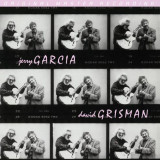
Unadorned with any post-production tricks or overdubs, Garcia/Grisman breathes with naturalism and presence. You will effortlessly detect the full body of the instruments, witness the woody grain textures, and get lost in the surprisingly velvety qualities of Garcia's lullaby-like singing. Our pressing also marks the first time this delightfully joyous affair has been issued in analogue form. You will never hear a better-sounding Americana-styled recording.
Pals since the mid-1960s, Garcia and Grisman bonded over their love for traditional folk and bluegrass. The two teamed up amidst what became a gold rush of top-notch productivity and creativity for Garcia. Partnering with bassist Jim Kerwin and percussionist/fiddler Joe Craven, the pair approaches every passage with innate ease, as if either musician could finish the others sentence. The affable chemistry and soothing interplay wash over a selection of songs as notable for their diversity as the way Garcia and "Dawg" turn them into the equivalent of old friends you haven't seen in years.
Exquisite melodies and jewel-shaped notes decorate the simple, convivial structures of tunes that hop, jump, skip, skitter, and bop. The atmosphere is reminiscent of the legendary gypsy-jazz exchanges between Django Reinhardt and Stephane Grappelli, and equally sharp. Swirling with Middle Eastern modality, the closing 16-minute-plus rendition of Grisman's rippling "Arabia" – complete with a section based on a Cuban fold theme - is alone enough worth the price of admission to this sensational session. But there's so much more.
The quartet delves into Celtic themes ("Two Soldiers"), jazz-grass ("Grateful Dawg"), old-world ballads ("Russian Lullaby"), and Appalachian flavours ("Walkin' Boss") with nonpareil skill and soulfulness. Garcia and Grisman's tandem picking throughout epitomize sublime. And for many listeners, the duo's revised version of the Grateful Dead staple "Friend of the Devil" ranks as the finest-ever recorded, the pace patient, the narrative vocals heartfelt, and the synchronous solos tailor-made for the enveloping progression. Better yet, it's all captured in astonishing fidelity.
Ebbot Lundberg (The Soundtrack of Our Lives, Union Carbide Productions) continue to explore music, time and space. In the midst of his reunion with TSOOL and their highly successful tour Ebbot manages to come up with one of his best records ever and we are proud to team up with his label Akashic to release this MLP of Village Green-era Kinks and Floydish introspection.
"Listen to This." As the original working title for Bitches Brew, the instruction and invitation resonates to this day as the best way to approach a record that shattered conventions, altered music history, and, more than five decades after its original release, still sounds far ahead of its time. The aural Mount Rushmore of jazz fusion, Bitches Brew is rightly ranked by virtually every significant outlet among the 100 greatest albums ever made in any genre. Sewn together with vibrant colours, voodoo textures, and ethereal moods, the 1970 landmark emerges with supreme detail on Mobile Fidelity's definitive 180g 33RPM 2LP set.
Sourced from the original master tapes and pressed on 180g vinyl at RTI, this numbered-edition version of Bitches Brew joins the audiophile ranks of other essential Miles Davis sets reissued by Mobile Fidelity. Having established new possibilities for studio-recording techniques, the record can now be experienced to maximum degree by way of a pressing that widens and deepens the soundstage, opens up separation between instruments, and broadens the dynamic range. If ever a jazz album can be said to have gone to outer space and back, this is it.
Davis conceived Bitches Brew by having the musicians stand in a semi-circle, where he pointed at them with vague directions for tempo, solos, and cues. The collective improvisation and interplay spawned a galaxy of melodies and grooves later spliced together by producer Ted Macero. On this reissue, these creations take shape with utmost realism. Compositions stretch across black backgrounds and paint abstract canvasses on par with those of Axis: Bold As Love and Abraxas. Juxtaposed percussion, loose jams, and melodic segues explode with impressionistic verve.
And "verve" defines Bitches Brew. Gathering a Hall of Fame-worthy lineup of musicians and tweaking it according to his desires, Davis follows through on his idea to "put together the greatest rock and roll band you ever heard." Central to his proposition is the presence of two (and sometimes three) drummers and two bassists, a tactical move that thrusts rhythms into central focus. Akin to the futuristic album cover art, the drum-driven suites head toward distant universes and uncharted territories. At once hypnotizing and grooving, they chart maverick adventures with quixotic rock, funk, and R&B elements.
Conceptually, Davis described Bitches Brew as "a novel without words" and "an incredible journey of pain, joy, sorrow, hate, passion, and love." The vast psychedelic expanses of warped echoes, liquid reverb, and tape loops confirm such ambitious contrasts of light and dark, fear and hope. Yet the most absolute characteristic of this watershed effort lies in how it resists definitive interpretation and encourages free thought — the very principles with which Davis conceived the everlasting beauty and fascination that remain Bitches Brew.
Carol Douglas is an American singer known for her contributions to the disco music scene in the 1970s.
During this time, she was signed with Bob Reno's Midland Records where she recorded a string of successful hits, including “Doctor’s Orders”.
This new compilation record showcases the best of Reno's four-to-the-floor 70s productions and remixes, remastered and pressed on fluorescent pink vinyl.
Some songs are so ingrained in our consciousness that they are immediately identifiable upon hearing one or two notes. Featuring one of the most indelible riffs ever played, Foghat's air-guitar anthem "Slow Ride" is such a tune. The hit single turned the British band into stars and catapulted 1975's Fool for the City up the charts. And what a ride it is.
We hear a lot of yearning today about the good-old, glory days of rock and roll, the simple kind that just locked into a good beat, turned out a raunchy groove, and simply kicked you in the butt. The no-pretense type meant for kicking back, letting loose, and surrendering to the melody. Bare-bones music that doesn't need image or looks as a crutch.
Well, this is it, friends, classic meat-and-potatoes 70s rock that comes with killer slide-guitar solos, crunchy leads, driving rhythms, and soaring vocals. No need for any further instructions or explanations. The pact between artist and audience is understood. Here, the band trusts that you know what to do and is ready to rock out with anyone in earshot.
Pressed at Fidelity Record Pressing, Mobile Fidelity's remaster of this Foghat gem bring to the surface the band's marble-solid sturdiness and bluesy structures like never before. Bass notes are thicker and richer, the dual guitars bite and snap, and Lonesome Dave Peverett's singing comes across with realistic grit. This LP invites you to hear and feel the energy Foghat brings to the boogie-infused title track, great cover of the Righteous Brothers' "My Babe," and, of course, the everlasting "Slow Ride."
Aided by her producer, the Osaka- born saxophonist Hisatsugu Suzuki, and his band, Wong has created a stylish jazz album brimming with her trademark soulful vocals drizzled over syncopated grooves. Taking well- known songs from the repertoires of pop music acts as diverse as Phil Collins ("Against All Odds"), Pet Shop Boys ("It's A Sin"), Dead Or Alive ("You Spin Me Round") and Toploader ("Dancing In The Moonlight"), Wong refashions her source material to reflect the cool jazz-flavored sophistication that is at the heart of her unique artistry. From emotive ballads to buoyant uptempo material, Susan Wong reveals her outstanding interpretative skills, revealing that she is a song stylist supreme.
Jonas Landwehr & Felix Fleer, the minds behind R-Imprint, are back with their youngest brainchild ‘Serial Sound’. They are starting the new label off with an expertly crafted five track EP ranging from emotive 4 to the floor anthems, over ideosyncratically spaced out IDM experimentation, to cutting edge UK-infused club weapons. ‘Secrets’ is opening the A-Side with a raw vocal performance by LAINE, fused with an infectious groove, building up to a euphoric climax of layered poly-synths, sample flipping and abstract textures. ‘Blinded’ is carrying this vibe over into a more toolish format while maintaining an intricate narrative arch. ’Water Seven’ rounds off the A-Side with a more dreamy excursion into ambient territory. ‘Windows’ opens the B-Side with a catchy theme of pulsing modulated chords supported by subtle, micro- percussive textures. Aeon is closing off the record with an aggressive, synthetic rhythm, featuring syncopated vocal slices, contrasted with enthralling pad sounds. With this release the duo has opened up their sound into a more mature & eclectic direction, while staying true to their signature brand of contemplative harmonies and detailed textural layering.
Dj Tsygan, an Integral Member of the Skylax Crew, Has Been Making Waves With His Latest Release, "Purple Dreams." He Ventures Into Uncharted Territory This Time, Infusing Elements From New Beat and Ebm, in Homage to the Late '80s Icons, Including Boytronic, Daf, and Visage. the Ep Opens With a Remarkable Track, the Exquisite "Putain," Which Effortlessly Transports Us Back to the Poetic Vibes Reminiscent of Belgian Legend Arno, All the While Seamlessly Intertwining the Aforementioned Influences. Following This, We Are Treated to a Starkly Different Yet Harmonious Piece, the House Anthem "Jestem Twoje," Evoking Memories of the Early '90s at Its Finest, Akin to the Iconic Latour Era (Sharon Stone, Anyone?). Concluding the First Side Is the Enchanting "Grey," a Barely Disguised Tribute to Visage's "Slow Is the New Fast." Flipping to Side B, We Are Greeted With the Aptly Named, Sultry, and Seductive "People Are Still Having Sex." It Instantaneously Conjures Images of Confetti (The Sound of C) but Without the Cheesy Undertones, Delivering a True, Vintage Banger. the Journey Concludes With the Deeply Personal and Profoundly Italian "Never Lost." This 12-Inch Record Is Nothing Short of Breathtaking, a Musical Odyssey That Resonates With Both the Nostalgic and the Contemporary, Promising an Unforgettable Auditory Experience....
- The Witch
- Make It
- Long Green
- Bent Scepter
- There's Something On Your Mind
- Tall Cool One
- Straight Scepter
- Big Big Knight (On A Big White Horse)
- Little Sally Tease
- I'm Real
- Hey There Mary Mae
- Stagger Lee
- Blue Turns To Grey
- Louie Louie
- Turn On
- Money
- Jolly Green Giant
- Little Latin Lupe Lu
- You Were Just A Child
- Running Not Walking
- Lip Service
- You Did It Before
- High Heel Sneakers
- And It's So Good
- I Could Be So Good To You
"Rave-up & turn on! Fueled by a classy high-stepping image and hot instrumental licks born of old R&B and Northwest stalwarts the Kingsmen, Wailers and Sonics, this collection shows their always excellent material ranging from '60s punk to sunshine pop. Includes their debut single!
In many ways they were one of the quintessential Northwest bands. Their credentials were impeccable - leader Don Gallucci was a classically trained pianist who, as a younger teenager, played keyboards for the Kingsmen on "Louie, Louie." Early guitarist Pete Oulette had been in the Raiders and his replacement, Jim Valley, had founded the white hot Seattle band the Viceroys. When Valley got the call to become "Harpo," his slot was filled by Charlie Coe, who had played with the Raiders and Jack Ely and the Courtmen. And the last Goodtime guitarist was Joey Newman, who had made his mark with the Enchanters and Merrilee Rush and the Turnabouts.
Their only hit single, "I Could Be So Good to You," a Jack Nitzsche song, was their only national hit (#56) in spring 1967. Their Nitzsche-produced Epic album So Good was a curious amalgam of Overman originals and British Invasion covers.
Their earlier sound is much more raw – "You Were Just a Child" could have been a national hit. The dynamics and bridge in this are killer, as is the pulverizing fuzz bass. "I'm Real" may be the punkiest Don and the Goodtimes got; Note the cool reference to LA disc jockey "The Real" Don Steele. Other cuts like like "Make It" are as Northwest as they come. Rough and raunchy, this hot instrumental was the B side of their first single."
Finally, the stand-out cuts of Rasa’s 1978 LP feature on 45 for the first time - ‘When Will The Day Come’, coupled with ‘Within The Sound’. Back in the summer of ’78, when London McDaniels and his brother Chris frequented a Krishna temple to take advantage of the weekly open feasts, the heads of the temple soon learnt the duo were Berklee College Of Music students and asked them to record an album of contemporary Hare Krishna worship songs. The result was Everything You See Is Me by Rasa, a jazz funk laced classic that’s gained notoriety amongst record collectors across genres, steered by the sons of singer-songwriter Eugene Mcdaniels. Produced and composed by guitarist London McDaniels, with Chris McDaniels on vocals and drums, and lyrics written by Hare Krishna devotee Andrew Marks, the album is coveted by beat heads, rare groove, soul, and balearic heads alike. The songs feature an A-list collective of session players including bassist Anthony Jackson and trumpeter Randy Brecker and have been a sample-source for numerous hip-hop records including Common’s ‘Take It Ez’, Black’ Rob’s Can I Live’ and BDP’s ‘Beef’.
- A1: Lapsed - Moin
- A2: <3Less - Space Afrika
- A3: All The Rest Of It - V/Z
- B1: Mass And Mess, Dispersion Of Subjectivity - Labour
- B2: Impressioni Dinamiche - Alessandro Adriani
- C1: Untitled) - Emma Dj
- C2: Nzimba Zinyota - Mc Yallah & Debmaster
- C3: Vacuum - Ziúr
- C4: Boiling Ice In Frozen Cup - Quelza
- D1: Never - M - Ziq
- D2: Let Love Decide - Regis
- D3: Medieval Sui - Lucy Railton
For its second release, following SALO"s feverish self-titled debut album, Berlin-based platform Kuboraum substantiates its musical perspective, bringing together an eccentric set of tracks from friends and family. Each artist was invited personally by the platform to write a piece of music inspired by Kuboraum"s philosophical and aesthetic principles. This Kuboraum Editions compilation that features tracks from Space Afrika, LABOUR, Moin, V/Z, o-Ziq, Lucy Railton, Alessandro Adriani and many more.
DJ Polo returns to Livity Sound with an EP that moves beyond the UK funky styles he established alongside Tribal Brothers on The Link Up EP in 2021. Through his productions and steady online radio presence, the Bristol-based producer has been flying the flag for lean, punchy rhythms with a low-end focus, but on If The Glove Fits Polo has branched out to explore different tempos and sounds taking influence from gqom, techno and Afrobeats.
Much like his approach to funky, this isn’t a set of genre exercises but more a celebration of the shared qualities which bind together dance music from different parts of the world. The result is four sharply-defined club workouts unique to DJ Polo that balance tension and release, flair and subtlety and a consistent physical weight true to Livity’s emphasis on soundsystem suitability.
Livity Sound is a label set up by Peverelist in 2011 as a vehicle for a raw and exploratory strain of UK techno, rooted in the heritage of UK dance music and sound system culture. It has since become one of the UK's foremost protagonists for cutting edge underground electronic music.
Matching his signature melodic futurism with enduring club music structures, Pev brings the Pulse series to a natural conclusion with the Pulse Phase EP. On this third release he underlines the broader approach to tempos and styles he’s taken across this latest period of his output, soon to be coalesced into a new live set.
If there’s been a nostalgic streak detectable amongst the crisp modernism of the Pulse series, it comes through clearer than ever in the looped-up house jack and starry-eyed techno synth hooks of ‘Pulse IX’. ‘Pulse TEN’ pares back for a lean soundsystem workout driven by a strafing arp and fractured drums while ‘Pulse XI’ revisits 90s bleep techno with a deep, dubby intention. ‘Pulse XII’ completes the picture capturing the skeletal pressure of 2-step at its most slender and deadly.
There’s never a sense of over-familiarity — the exacting angles of the drums and alien hue of the synths maintain Pev’s distinctive sound first and foremost. But this series has also been an opportunity to hear some of his musical DNA more explicitly than before, cast in universal rave motifs propelled by the unrelenting pursuit of new forms for the dance.
Livity Sound is a label set up by Peverelist in 2011 as a vehicle for a raw and exploratory strain of UK techno, rooted in the heritage of UK dance music and sound system culture. It has since become one of the UK's foremost protagonists for cutting edge underground electronic music.
Freedom is deeply rooted in the working-class rock of the 70's and 80's, giving us a sound like no other. With meaningful lyrics, power chords and mighty choruses, they're inevitably creating a soundtrack to the journey of life itself. Nicke Andersson once described Freedom as a "bargain basement Springsteen" - a band making music meant to follow you through thick and thin, far into those never-ending summer nights.
Since Freedom first started in 2019, they've established themselves as an amazing live act, filling clubs throughout Sweden with both energy and audience. In 2022 they were honorably chosen to play at the official release party of The Helicopters at the notorious Hamburger Börs in Stockholm.
The band recently added two new members to the crew: Ola Göransson (Heavy Feather, Stacie Collins) and Matte Gustafsson (In Solitude, Siena Root, Heavy Feather). Their combined experience of heavy roots-rock and sense of stage presence, makes Freedom one of Swedens strongest live bands - guaranteed.
Their self-titled debut album from 2021 became a great topic of conversation, leaving a permanent mark in the rock-world of Sweden. Finally, it's time for the awaited second album to be released - once again produced by Martin "Konie" Ehrencrona (Viagra Boys, Håkan Hellström and Les Big Byrd).
Most Perfect Solitude" ist das sechste Studioalbum von The Third Sound, das am 17. Mai auf Fuzz Club erscheint und ein neues Kapitel für die Berliner Psychedelic-Post-Punk-Band um den isländischen Musiker und Autor Hakon Adalsteinsson markiert.
Geschrieben und aufgenommen wurde das Album in weniger als zwei Wochen, während einer seltenen Lücke in seinem Non-Stop-Tourplan als Gitarrist von Brian Jonestown Massace und seinem neuen Projekt Golden Hours. Auf "Most Perfect Solitude" glänzen schräge 12-Saiter aus den 60ern und luftige Melodien, doch die Platte ist auch nicht ohne ihre dunkleren, schwereren Momente - siehe die schaurige Psych-Rock-Drohne "Veiled" oder "Wasteland", der eine alptraumhafte Vision einer Stadt in Trümmern zur Melodie schwerer Fuzz-Gitarren-Wiederholungen und hypnotischer Drums entwirft.
Most Perfect Solitude" ist das sechste Studioalbum von The Third Sound, das am 17. Mai auf Fuzz Club erscheint und ein neues Kapitel für die Berliner Psychedelic-Post-Punk-Band um den isländischen Musiker und Autor Hakon Adalsteinsson markiert.
Geschrieben und aufgenommen wurde das Album in weniger als zwei Wochen, während einer seltenen Lücke in seinem Non-Stop-Tourplan als Gitarrist von Brian Jonestown Massace und seinem neuen Projekt Golden Hours. Auf "Most Perfect Solitude" glänzen schräge 12-Saiter aus den 60ern und luftige Melodien, doch die Platte ist auch nicht ohne ihre dunkleren, schwereren Momente - siehe die schaurige Psych-Rock-Drohne "Veiled" oder "Wasteland", der eine alptraumhafte Vision einer Stadt in Trümmern zur Melodie schwerer Fuzz-Gitarren-Wiederholungen und hypnotischer Drums entwirft.
- A1: Mr Farmer
- A2: Pictures & Designs
- A3: Tripmaker
- A4: I Tell Myself
- A5: A Faded Picture
- A6: Rollin' Machine
- B1: Just Let Go
- B2: Up In Her Room
- C1: The Wind Blows Your Hair (Version 1)
- C2: Dreaming Of Your Love (Version 2)
- C3: Out Of The Question (Version 4)
- C4: I Tell Myself (Take 1)
- C5: Pictures & Designs (Take 14)
- C6: Just Let Go (Take 4)
- D1: Mr. Farmer (Single Edit)
- D2: Rollin' Machine (Take 3)
- D3: Up In Her Room (Single Edit)
- D4: A Faded Picture (Take 1)
- D5: Tripmaker (Mono Mix)
The Seeds’ second album released in 1966 is a pop-art garage rock classic. ‘Mr Farmer’ was to become a Billboard Hot 100 single in 1967 and the second side of the album features the 14-minute epic ‘Up In Her Room’
"Miranda Winters, as the voice of Chicago’s much-loved noisemakers Melkbelly, has spent the past few years happily in her own shadow. While she has quietly written and occasionally released her own music for 15 years, Winters finally steps out into the bright light with the release of Lawn Girl, the debut album under her Mandy moniker.
The album, a combination of older songs and newer creations, feels positively and endearingly alive–like a freeing of pent-up energy, an intimate rebuilding of the self. While Winters recorded and produced a number of the songs herself, she worked with Taylor Hales at Electrical Audio to feed those songs back into the studio, where they were re-recorded with room mics and worked back into the original versions. “I see it like photocopying,” she says of the process. “I’ve always loved working with photocopying and related printing techniques in my visual art because of the way everything decays and falls apart. It was nice to honor that on the record.”
Performed by an all-women band–Linda Sherman (guitar), Lizz Smith (bass) and Wendy Zeldin (drums)–the songs on Lawn Girl suitably find Winters ruminating on the idea of femininity; about her mom (who graces the album cover) and being a mother herself; her female friends; and what it means and what is required to make art and music in a female space intentionally."
Australian bass collective Echo Chamber get busy with this supreme VA featuring a range of talented friends old and new. LQ takes the lead with the sublime 'Way Down' that bubbles and flexes in two system-primed forms: the spacious heavyweight Dubkasm mix and LQ and MSHCode's own breakbeat-heavier shakedown. Flip for more LQ goodies as he links up with Kloke for the fittingly titled groove-up 'Computer Bubblers' while Duburban and Galvatron finish the EP with the furious drum funk up 'Let Off The Music'. The only echo here is the reload.
Theo Parrish has green-lit a couple of back catalogue reissues from his Sound Signature label this month and this one originally came back in 2010 and found him on production duties and Bilal Love on the vocals. The Melloghettomental EP is an archetype Parrish offering - dusty, lo-fi beatdown and house fusions with muted but meaningful chords and aching vocal hooks. You get all that on blissed-out opener 'Can't Keep Running Away', superbly soulful live bass work on 'U Bring Me Up' and heavier, more griding grooves but still sublime vocals on 'Why Wait'. The title cut is an off-grid mix of sci-fi melodies and diffuse chords, shimmering drums and low slub bass. Sublime.
Dub & Sound International returns for a third time and this one welcomes legendary Jamaican trombonist Vin Gordon who is rightly 'Digging The Vibes.' The title track kicks off and pairs his playful patterns with a Dubsetters rhythm and some nice sunny and soothing melodies from Trommie aka Don Drummond Jr.. After the horn-led, organic and unhurried instrumental comes a dub that is fleshed out with a little more echo and is a sublime bit of roots. A second version adds another perspective to the original and we already look forward to hearing more from this project.
One of electronic music’s most prolific and beloved figures, Roman Flügel checks in to Phantasy for his debut single on Erol Alkan’s equally storied London label, presenting ‘Hotel Karthago / Energies’, two contrasting dancefloor tracks that capture distinct shades of Flügel’s boundless creativity.
Arranged with energy front and centre, ‘Hotel Karthago’ promises to be an essential addition to Flügel’s peerless back catalogue of club classics. Bolting with the requisite tempo of contemporary dance floors, and accelerated by a joyous piano line, this particular property balances the elegance of vintage house with analogue machines operating at their most energetic.
In keen contrast. ‘Energies’ expertly pours a measure of melancholy, teasing out a twinkling melody that recalls the warmth and wistful moods of his classic LPs such as Fatty Folders and Happiness Is Happening. Illuminating and then unravelling with ease, ‘Energies’ concludes in underscoring the Frankfurt-to-Berlin producer’s skill as a composer, as well as a trusted rave alchemist.
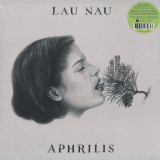
The title of the Lau Nau's 10th album, Aphrilis, derives from the Latin word aperire, meaning "to open." A fitting verb for the month of the year it is closely associated with — April. And while the images of plants and blossoms coming back to colorful life after a long, cold winter feels appropriate when listening to the rich and lustrous bloom of music on Aphrilis, another definition of open feels even more apt. For under the abundance lies the memory of times of austerity, the friction of hard choices, the acceptance that nothing is fixed and the future is unknown. This literal and metaphorical exploration of complexity and contradiction makes Aphrilis a multi-dimensional antidote for our troubled times, one that emphasizes the quiet and communal over noise and spectacle. Laura Naukkarinen, the Finnish artist behind this project, has long kept her mind and spirit open to whatever sounds and creative ideas felt appropriate for the moment. For the past six years that has meant primarily working with modular synthesis — learning how to build modules and releasing acclaimed work centered on its sounds like 5x4 (2023) or Puutarhassa (2022). Running parallel to this work, however, has been a continued exploration of acoustic instruments and group performances with her trio Lau Nau ja Seitsemäs Taivas. Aphrilis arrives then like fresh growth in a creative season cycle. A companion to her brilliant 2017 release Poseidon, the album, says Naukkarinen, "felt like a needed moment to embrace songs with lyrics again." And through the creation of this work, she remained open not only to her own creative muse, but also the input of her chosen collaborators. Each player on Aphrilis — Matti Bye on celesta and synths, Pekko Käppi on jouhikko, Hermanni Yli-Tepsa on violin and contrabass, Topias Tiheäsalo on electric guitar, Samuli Kosminen (Múm) on various instruments — was given free reign to arrange their own parts to accompany Naukkarinen's compositions. Kosminen’s lush fingerprint can also be heard in the mixing and production of the album, as with Poseidon six years ago. The moniker of this project may be taken from Naukkarinen’s own name, but Lau Nau feels more like a band than ever before. The delicacy and softness of the music is reflected in Naukkarinen’s lyrics. Each song is rife with imagery and creatures from the natural world. The spiders in the forest. The animals that keep a young woman company in her refuge in the woods. Wet grass. The feeling of the music is almost tactile, as if listening to the album will leave a bit of dew or sap on your fingers. The theme of this material, says Naukkarinen, runs even deeper. “The songs tell about cracks and changes of direction in different histories: personal, societal, planetary,” she says. “About moments when a yes can become a no and vice versa. The album wants to propose that at the moment of a crisis there is a possibility to influence the histories by our choices.” That may feel like a lot for such a fragile sounding collection of songs to bear. But Aphrilis is an album of surprising strength and resilience
The lines of genre have blurred beyond recognition. The landscape flickers between haunting ambiance and noisy immersion, electronic and acoustic elements expressing emotional and mental states that are ever changing. "Somebody Else's Song" was their first true "New York album" since the band's relocation from Chicago, and much of the weight comes from the personal change inherent from living in a new place as life continues to whir around us. The duo took their time, the ideas coming into formation over the course of two years. That patience is apparent as the album unfolds, a balance between vulnerability and enormous shapeshifting rhythms.
colored LP[26,85 €]
The Moon Is In The Wrong Place is an upbeat, yet poignant narrative on grief and resilience from Shannon & The Clams. Woven from the threads of devastating loss and communal ties in the aftermath of profound loss – the sudden passing of Shannon's fianceé just months before their wedding – this record unfolds as the Clams' most introspective to date. With Dan Auerbach's production, the album delves deep into themes of heartache and healing, and showcases the band's trademark wry psychedelia, energetic nostalgia, and flourishes of retro beauty. It's a tribute to the power of art and community to triumph over tragedy, and a milestone in Shannon & The Clams' venerable oeuvre.
black LP[26,85 €]
Another well kept secret from the Italian cult electronic music imprint - Interactive Test. A 4 track EP with a wide range of flavours in "house" music, very much dependent on the different samples employed. A side starts off with a deep house track echoing similar atmospheric qualities as to some of the dancefloor oriented productions making their way into US underground scene around that time, specifically Chicago and Detroit. The Percapella Mix makes the dedication to the Canadian Disco legend Gino Soccio very clear with a lengthy sample of "There's a Woman", a track which uses early electronics in a pioneering way, with what could possibly be one of the first examples of an Acid Bass line. On the B-side, things slow down a a notch with more clear cut explorations in Acid house featuring layers of synths and percussive samples and occasional placement of vocal samples from countries far away from Italy, all made possible thanks to the new exciting technologies that had recently been made available to producers at the time. Remastered by Man Made Mastering in Berlin and re-released with new full cover artwork.
The brainchild of ex-Mother Earth organist Bryn Barklam, “The In Sound” is a new Hammond Groove instrumental organ trio from Japan. Playing live in Tokyo for just over a year, their debut single “The Modernist” & “Our Man in Tokyo” is out soon on BDQ Records. Look out for the follow-up single this summer, with their debut LP in the works for later this yearcus
Pull the Rope, the new record by Ibibio Sound Machine, casts the Eno Williams and Max Grunhard-led outfit in a new light. The hope, joy, and sexiness of their music remain, but, further honing the edge of their acclaimed 2022 album Electricity, the connection they aim to foster has shifted venues from the sunny buoyancy of a sunlit festival to a sweat-soaked, all-night dance club. Williams and Grunhard attribute this shift to a matter of collaborators, recording Pull the Rope with Sheffield-based producer Ross Orton (Arctic Monkeys, M.I.A.) over the course of two weeks. The way the pair wrote songs changed significantly_rather than Eno penning lyrics to music generated by Max and company's jamming, Orton started with Eno and Max writing together before adding the band. With less time in the studio and a new way of considering how they built songs, the duo found making decisions about Pull the Rope's sound quicker and more instinctual than before. "Ross is from Sheffield, which has an edgier, more industrial vibe than London," Grunhard explains. "He hears things differently than us, is more grounded in rave and grungier sounds, and knew when to add drums or push the instrumentation more. It was very different for us, but it lends itself to where Ibibio Sound Machine is going." In melding their songwriting process, Grunhard and Williams have, impossibly, pulled the trick of making Ibibio Sound Machine a tighter band than ever before, building out from their core in a way that highlights the electrifying group of musicians they play with. Rather than recording with the full band in the room, Pull the Rope was sculpted, elements added and shaped by Grunhard, Williams, and Orton along the way. As a result, Pull the Rope is a nimble, sleek machine that's thrilling from the first note of the opening title track, Eno's otherworldly voice and PK Ambrose's throbbing bass driving through a kaleidoscopic array of house, post-punk, funk, Afrobeat and disco, bangers and ballads, making an argument for unity that begins on the dancefloor. "We are the places we grew up, the places we've been, and the people we've met along the way," Williams says. "Hopping around the globe, we've found that people are fundamentally the same_they're people. Opposing sides push and pull, but there is an alternative to war, violence, and suffering." Lead single "Got to Be Who U Are" literally globetrots, name checking locales across the world that would feel disparate were it not for how well-traveled they are. Eno growing up in the musical melting pot of the Ibibio region of Nigeria and Max being a conservatory-trained musician from Australia, one could call their meeting in London and formation of Ibibio Sound Machine predestined. "Mama Say" and "Let My Yes Be Yes" touch themes of female empowerment. They're indicative of the band's depth as they push further into the electronic; "Mama Say" hits notes of electropop while "Let My Yes Be Yes" fuses electro to Afrobeat. Ibibio Sound Machine have always imbued their music with political consciousness, and the light that shines through in Williams' vocals and voice has never felt more necessary. The sound of Pull the Rope, then, is hope in darkness, bliss in spite of bleakness. Once again, Ibibio Sound Machine are here to provide the soundtrack to the best night of your life, and the better world to come.
"Pull The Rope", das neue Album von IBIBIO SOUND MACHINE, rückt die von Eno Williams und Max Grunhard geleitete Band in ein neues Licht. Die Hoffnung, die Freude und der Sexappeal ihrer Musik sind geblieben, aber die Verbindung, die sie mit ihrem hochgelobten Album "Electricity" (2022) herstellen wollen, hat den Schauplatz gewechselt, von der sonnigen Beschwingtheit eines sonnenbeschienenen Festivals zu einem schweißgetränkten, nächtelangen Tanzclub. Die Atmosphäre hat sich geändert, aber man hat immer noch die beste Zeit seines Lebens. Williams und Grunhard führen diese Veränderung auf die Zusammenarbeit mit dem in Sheffield ansässigen Produzenten Ross Orton (ARCTIC MONKEYS, M.I.A.) zurück, mit dem sie "Pull The Rope" innerhalb von zwei Wochen aufnahmen. Die Art und Weise, wie die beiden Songs schrieben, änderte sich erheblich - anstatt dass Eno die Texte zu der Musik schrieb, die Max und Co. beim Jammen kreierten, begann Orton damit, dass Eno und Max gemeinsam schrieben, bevor sie die Band hinzufügten. Mit weniger Zeit im Studio und einer neuen Art, über die Entstehung von Songs nachzudenken, gelang es dem Duo, Entscheidungen über den Sound von "Pull The Rope" schneller und instinktiv zu treffen als zuvor. Bei der Verschmelzung ihres Songwriting-Prozesses haben Grunhard und Williams das Kunststück vollbracht, IBIBIO SOUND MACHINE zu einer strafferen Band als je zuvor zu machen, die sich von ihrem Kern aus in einer Weise entwickelt, die die elektrisierende Gruppe von Musikern, mit denen sie spielen, hervorhebt. Anstatt mit der gesamten Band im Raum aufzunehmen, wurde "Pull The Rope" von Grunhard, Williams und Orton geformt, Elemente hinzugefügt und während des Prozesses endgültig gestaltet. Die Botschaft ihres fantastischen neuen Albums "Pull The Rope" ist Hoffnung in der Dunkelheit, Glückseligkeit trotz Tristesse. Wieder einmal sind IBIBIO SOUND MACHINE hier, um den Soundtrack für die beste Nacht deines Lebens und die bessere Welt zu liefern.
Pull the Rope, the new record by Ibibio Sound Machine, casts the Eno Williams and Max Grunhard-led outfit in a new light. The hope, joy, and sexiness of their music remain, but, further honing the edge of their acclaimed 2022 album Electricity, the connection they aim to foster has shifted venues from the sunny buoyancy of a sunlit festival to a sweat-soaked, all-night dance club. Williams and Grunhard attribute this shift to a matter of collaborators, recording Pull the Rope with Sheffield-based producer Ross Orton (Arctic Monkeys, M.I.A.) over the course of two weeks. The way the pair wrote songs changed significantly_rather than Eno penning lyrics to music generated by Max and company's jamming, Orton started with Eno and Max writing together before adding the band. With less time in the studio and a new way of considering how they built songs, the duo found making decisions about Pull the Rope's sound quicker and more instinctual than before. "Ross is from Sheffield, which has an edgier, more industrial vibe than London," Grunhard explains. "He hears things differently than us, is more grounded in rave and grungier sounds, and knew when to add drums or push the instrumentation more. It was very different for us, but it lends itself to where Ibibio Sound Machine is going." In melding their songwriting process, Grunhard and Williams have, impossibly, pulled the trick of making Ibibio Sound Machine a tighter band than ever before, building out from their core in a way that highlights the electrifying group of musicians they play with. Rather than recording with the full band in the room, Pull the Rope was sculpted, elements added and shaped by Grunhard, Williams, and Orton along the way. As a result, Pull the Rope is a nimble, sleek machine that's thrilling from the first note of the opening title track, Eno's otherworldly voice and PK Ambrose's throbbing bass driving through a kaleidoscopic array of house, post-punk, funk, Afrobeat and disco, bangers and ballads, making an argument for unity that begins on the dancefloor. "We are the places we grew up, the places we've been, and the people we've met along the way," Williams says. "Hopping around the globe, we've found that people are fundamentally the same_they're people. Opposing sides push and pull, but there is an alternative to war, violence, and suffering." Lead single "Got to Be Who U Are" literally globetrots, name checking locales across the world that would feel disparate were it not for how well-traveled they are. Eno growing up in the musical melting pot of the Ibibio region of Nigeria and Max being a conservatory-trained musician from Australia, one could call their meeting in London and formation of Ibibio Sound Machine predestined. "Mama Say" and "Let My Yes Be Yes" touch themes of female empowerment. They're indicative of the band's depth as they push further into the electronic; "Mama Say" hits notes of electropop while "Let My Yes Be Yes" fuses electro to Afrobeat. Ibibio Sound Machine have always imbued their music with political consciousness, and the light that shines through in Williams' vocals and voice has never felt more necessary. The sound of Pull the Rope, then, is hope in darkness, bliss in spite of bleakness. Once again, Ibibio Sound Machine are here to provide the soundtrack to the best night of your life, and the better world to come.
* The Blackstones were formed by Leon Leiffer in 1974. Since the initial group formation, there have been several line up changes, currently the group consists of: Leon Leiffer, Tony Mahoney, Jr. Bailey, and they have recently been joined by A.J. Franklin (Chosen Few, Federals). On tours they have supported Curtis Mayfield and the Impressions, Rufus Thomas, Dennis Brown, Owen Grey, John Holt, Alton Ellis and many more Soul / Reggae greats.
Over the years they have worked with many notable Jamaican producers, Count Shelly, Fatman, Phill Pratt, Lloyd Charmers, Lindel Lewis, Tony “Ruff Cut” Phillips, Winston Curtis, Jah Larry, Tony Owens, and the late great Bunny ‘Striker’ Lee and the legendary, Clement "Sir Coxsone" Dodd, at Studio One in JA.
This release features two rootical vocal sides of their consistent repertoire. The 4 track EP features a re-work of “Selection Train” (Orig,”Selected Few”-JA) and “Hell & Heaven” (Orig-Lloyd Clarke-JA). The vocal tracks are replete with Instrumental Versions from Alvin Davis (Horns / Steven 'Marley' Wright (Guitar) / Asha B (Perc/Congos)..
One of the longest-serving and most consistently intriguing artists within the fold of Phantasy, U returns to the label with another two-track trip of sonic mystery and erratic magic, ‘Parade/Watchers’.
Presented on limited-pressing 12” vinyl with a sleeve riso printed by U with London's Error Press.
With the texture and earthy promise of a psychedelic mulch, ‘Parade’ presents a glorious timelapse of acid-inflected minimalism. Unfolding defiantly at nearly fifteen minutes, U’s driving but subtle composition transports from guttural, electronic uncertainty to a wide-eyed denouement in one illusionary transition.
With inverse effect but no less power, ‘Watchers’ unexpectedly drops listeners into a rough wash of digital hardcore, spinning it’s initial warehouse chords into a collage of decay and regrowth, a nephilim-scaled journey and arguably U’s most ambitious production to date.
For our 50th release on Delusions Of Grandeur we're pleased to bring you seven exclusive tracks from a mighty-fine collection of both existing DOG artists and veritable newcomers alike.
Part Two opens with Underground Quality key player Son Of Sound who brings a bucketful of attitude on Under The Son, laying down a rough-edged groove and getting on one with his vintage keys.
Up next we have Sebastien Vorhaus & Ponty Mython who bring us the beast that is I'm The Slime. Easing us into things with gentle rhodes samples and a skippy groove, Vorhaus (of Soul Of Hex fame) and Mython soon develop things with hints of acid before unleashing a jazz piano riff that can be best described as unhinged.
Flipping over the mysterious Zepp001 hunt and gatherer brings us Enemy. There's elements of disco with bouncing syndrum fills and a mysterious mood prevails as shakers rattle, bells chime and congas slap but when the bassline drops it's clear we're into some serious future s**t here.
Finally, we have our very own Norm De Plume who lays down a bad-boy groove with a rocking bassline, clattering cowbells and tension-building pads bringing an intense build and rounding off our 50th release in fine fashion, we hope you agree.
Warehouse Find!
Son Of Sound aka Henry Maldonado has been producing influential house music dating back right back to 1991.
He has released on Strictly Rhythm as House 2 House, Maxi Records as Deja Vu and MAW Records as Rhythm Section.
Son Of Sound has recently appeared on Tirk and Local Talk before dropping the bomb that is Jewel Eye Nights on Jus Ed's Underground Quality. He also has releases scheduled for later in the year on Razor n Tape and City Fly.
Currently working on a collaboration EP with Recloose for his own District 30 Label. Henry is also host of the highly regarded 'Hit It and Quit It' radio show on The Lot and East Village radio with Recloose and Private Panther.
Quantum´s upcoming album, "Down the Mountainside", contains eight very elaborate and intense compositions, spanning 45 minutes of music that shimmers in acoustic soundscapes one minute to explode into spastic grooves in the next. The lyrical themes deal with humans alter egos - or masks - that people in our society rely on in order to get by with their everyday lives, and how these affect them psychologically and eventually lead them towards a breaking point. There is also commentary on how this behavior affects the general attitude in the society we live in. Overall, with "Down the Mountainside", Quantum has created a timeless progressive rock album, which feels both fresh and innovative, which will appeal to old prog diggers as well as listeners of the more modern school.
The album features guitar solos from the brilliant Richard Henshall and Tom MacLean from the band Haken.
Quantum´s upcoming album, "Down the Mountainside", contains eight very elaborate and intense compositions, spanning 45 minutes of music that shimmers in acoustic soundscapes one minute to explode into spastic grooves in the next. The lyrical themes deal with humans alter egos - or masks - that people in our society rely on in order to get by with their everyday lives, and how these affect them psychologically and eventually lead them towards a breaking point. There is also commentary on how this behavior affects the general attitude in the society we live in. Overall, with "Down the Mountainside", Quantum has created a timeless progressive rock album, which feels both fresh and innovative, which will appeal to old prog diggers as well as listeners of the more modern school.
The album features guitar solos from the brilliant Richard Henshall and Tom MacLean from the band Haken.
Die schwedische Progressive/Power/Death/Black Melodic-Band Loch Vostok veröffentlicht den zweiten Teil ihrer Opus Ferox Trilogie. 'Opus Ferox II - Mark of the Beast' ist voll von eingängigen Refrains, ohne dabei die Vielfalt und das dynamische Songwriting zu beeinträchtigen, für das Loch Vostok bekannt sind. Klingt wie Extol, Devin Townsend oder Haken.
Lucinee debuts on Brvtalist S.R. with a striking new 12″ EP of future forward techno. “Pacemaker” contains 3 original tracks of the artist’s razor sharp sound and one big collab track with Lifka and New Frames.
Artwork & Layout: Luca Hinrichs
Mastering: Conor Dalton at Glowcast Audio
All tracks written, produced and mixed by Lucinee
B2 written, produced and mixed by Lucinee, Lifka, New Frames
Recorded in the past 25 years in different parts of the world, Encyclopedia Sónica Vol. 1 compiles the music and sounds of Leo Heiblum. Comes with insert.
Since Leo Heiblum was a little boy, he always found music everywhere. Listening to the engine of his mother's car and hearing incredible rhythms. He always thought every sound we hear can be made into music, every sound that we hear can be heard as music and it can be felt and understood as music. Every sound has an attack, a decay; some have a pitch. What is more beautiful, the sound of a flute, a bird, a trumpet, a car horn, a violin or a mosquito buzzing? They can all be used to make music.
Leo Heiblum believes that If we learn to hear all sounds as “musical” or at least to have the potential to be used to make music, we might look at the world and listen to the world more lovingly. That car passing by had a beautiful crescendo. That dog barking in the distance created a fantastic melody with an impossible-to- transcribe rhythm. Is there no creative intention behind those sounds? Can the listener give them an intention, can the listener transform them into art? Leo Heiblum is trying to organise them and use them in a way that will be musical for us. He hopes that the next time we hear an ocean wave breaking a bond, fire crackling, or a fly flying, we can enjoy the notes and the rhythms they are making. They are being created by something; who knows what the intention is, but some of the most unique beats he's heard come from rocks falling in cenotes or ice breaking down in a glacier. And the melodies he's heard from bats, dogs fighting, or a newborn dog are both haunting and beautiful. The timber from sounds such as the thorn of a cactus, the voice of a homeless person in the street or a mosquito buzzing can be used to create instruments as beautiful as any instrument. And they have a new sound or a familiar old sound used differently. A way that invites us to hear the music created by this planet.
Kaito Cuts: Revert / Sequoia b/w Trek / Wait Up/ Sloan by Kaito | Galaxy Sound Co. — GSC45-042, Test Pressing | With their 42nd donut in the always-on-point 45 edit series, @galaxy_sound_company drops a new batch of lo-fi hip-hop beats instrumentals. This time out GSC is showcasing a newcomer to the head-nodding beat maker scene — @kaitoian.
Kaito, an out cold skater as well, has a couple of self-releases you can find on his Bandcamp page, which are solid & sound at home alongside his pop’s ( Todd Osborn) Ghostly International releases. This 7” EP outing spins at 33 1/3 to pack in as much as GSC can squeeze in & is straight up beatloverz heaven. What is impressive, for this old timer, is how clearly deep Kaito’s musical knowledge goes. He clearly has learned well from his father & all the good music he certainly has had at his fingertips. From Madlib to Os Mutantes to Fela Kuti to J Dilla & other artists who were not afraid to dig deep & unearth beats & melodies to tickle your fancy, Kaito’s tastes are as refined as anyone in the game. I know a number of the original source materials that comprise each track, but that I leave to you to dig out for yourself. Here I encourage you to open your eardrums & listen deep with your fav pair of headphones & let each track wash over you. From straight forward head-nodding hip-hop thumpers to beautiful Brazilian femme fatale vocals that lure you into the loop, to a Afrobeat driver that’ll break ya neck, to a mellow, soulful MPC hopper that will lovingly recall a Arlo Parks joint, to then closes out with a synth-laden spaced-out dreamy loop to end credits.
- A1: Get Innocuous!
- A2: Time To Get Away
- B1: North American Scum
- B2: Someone Great
- C1: All My Friends
- C2: Us V Them
- D1: Watch The Tapes
- D2: Sound Of Silver
- D3: New York, I Love You But You're Bringing Me Down
Foil Jacket- Black, Red and Gold Merge with Splatter.
Die Heavy Metal-Institution DEATH veröffentlichte ihr letztes Studioalbum „The Sound of Perseverance“ 1998 und erntete weltweit massiven Beifall der Kritiker. Der Abschied von den Metal-Legenden, endlich wieder in einer Gatefold-Doppel-LP erhältlich.
Although one could imagine that by 1993 any Italo Disco nuances would have been vanquished from sophisticated Italian production setups of the time, it is hard to ignore its presence in this particular work of Italian DJ and producer Gianpiero Pacetti. Much more so than in the work of his contemporaries at the time who would have shifted into full on early progressive trance in pursuit of novelty. Resulting in a refreshingly playful exploration of melodic themes, an aesthetic only to be heard again more than 10 years later with Dutch works like Alden Tyrell. With exception of Alvorada which distinguished itself as completely detached from any of the previously mentioned influences, diving deep into percussive samba elements adjoined by alluring arpeggios and other subtle melodic ornaments characteristic of early progressive trancey movements of the time. Includes new remix of “Alvorada” by Berlin's E-Talking. Remastered with new artwork.
Compiled by Per Nilsen & Carlton P. Sandercock. Hardback 14 x 11 300p plus dust jacket. 3.5 kilos.
Fully detailed and comprehensive list of every Stooges live show from 1967-1974 with reports from journalists & fans • Over 300 Photographs, most unseen before from professional photographers and fan’s snapshots.
“I'm always amazed by the Stooges photos I've never seen before. Easy Action does a great job finding and publishing them. I only wish my brothers were still here to see the very cool stuff their friend Carlton is doing, with his never-ending love for The Stooges“ Kathy Asheton
“It is the last word in illustrated Stooges books. Big statement, and the competition has been stiff. Change my mind!” I-94 Bar
“The Stooges book to end all Stooges books” ***** Shindig
“The ultimate document of the band that rewired rock for punk.” 8/10 Classic Rock
The sheer amount of content (not to mention the enthusiasm and love) that comprises this book is simply staggering…” 9/10 Vive Le Rock
Jamwax presents the resurrection of a hard-hitting space synth masterpiece that's set to ignite your senses and shake the very foundations of sound systems worldwide. 'In Ting Sound' is a sonic juggernaut, a hard-as-nails sound bwoy killer that refuses to be confined to the constraints of time. With its pulsating beats and infectious rhythms, this track commands attention from the moment the first note hits. But it's the heavy drums that truly set it apart, pounding with relentless force and driving the groove forward with unstoppable momentum.
Get ready to embark on a sonic journey like no other as this reissue comes with three exclusive unreleased tracks :
'Mandela': Feel the pulse of liberation with this uptempo digital killer, featuring Winston's impassioned plea to "Free Nelson Mandela...he never done no wrong, he is just a conscious man..."
Let the rhythm of justice resonate as you groove to this powerful anthem of freedom. 'Life All Over': Flip over to the B-side for a digital roots tune that- hits hard with its strong bassline and conscious lyrics. "Life AllOver" dives deep into the essence of existence, delivering a message of hope and resilience that reverberates with every beat. 'Finnegan' aka 'Life All Over Dubwise': Prepare to enter the realm of dub mastery. The second part of "Life All Over" takes you on a journey through the echoes of space and time, where the music transcends boundaries and the spirit of dub reigns supreme.
About Winston Fergus : Winston Fergus, a stalwart of the UK reggae scene whose career spans over four decades. Winston kickstarted his journey in 1976 as the vibrant lead singer of The Equators, renowned for their iconic track 'Father Oh Father' released under Joe Sinclair's esteemed Klik label. Not only did The Equators make waves in their own right, but they also provided the musical backdrop for rising star Pablo Gad, solidifying Winston's reputation as a mentor in the industry.
In 1977, Winston ventured into solo territory with the soulful release 'Give Me Love' on Jah Jah Bus, marking the beginning of a prolific solo career. Lightning Records recognized his talent and signed him, resulting in the release of 'African Woman'. Throughout the '80s, Winston remained a prominent figure, collaborating with luminaries like Clement Bushay, Clive Stanhope, and John Dread, producing hits such as 'Jezebel Woman', 'Keep On Dancing', and 'Hope For The World'.
In the late 80's, Winston's entrepreneurial spirit led him to establish his own imprint, Fergie Music label, marking a new chapter in his illustrious career.
- A1: Lq - Crown The King (Rsd Bristol Remix)
- A2: Lq & Midnight Dubs - Emerald Version
- A3: Lq & Midnight Dubs - Dx Steppa
- B1: Bukkha & Lq - Sensi Request
- B2: Time Travel - Ghost Note
- C1: Lq & Midnight Dubs - Broader Than Broadway (Lq Vip Mix)
- C2: X Nation - Toughest
- D1: Lq & Midnight Dubs - Exclusive To I (Mshcode Remix)
- D2: Pugilist & Tamen - Naru
repressed !
'Due to an unforeseen pricing increase at the pressing plant, this products price has been updated. Any copies purchased before the pricing update will be honoured at the original price'
Arriving at the height of the antipodean summer, after the traditional series of short delays – and where would we be without delay lets face it – we here Echo Chamber Sound and Run It Red are proud to present the vinyl component of our first compilation LP. Featuring 9 tunes across two plates, and including exclusive tunes from from Bukkha and LQ, as well as a showstopping remix from RSD and star turns from X-Nation Pugilist & Tamen, this is our most ambitious statement to date, and we hope you enjoy it as much as we have enjoyed pulling it all together.
Ein wahrer Dub-Klassiker von 1980: Rückwärtstapes voller interplanetarer Soundeffekte, gespenstischer Stimmen und klingelnder Percussion, 'Starship Africa' hört sich wie ein schräger 'Alien' Film-Soundtrack an, der die Dub-Reggae-Horizonte ins Unermessliche erweitert. Mit Mitgliedern der Roots Radics, Misty In Roots und Prince Far I’s Arabs war es der einzige Release auf dem Pre-On-U-Sound-Label 4D Rhythms. Reissue mit ausführlichen Linernotes, Archivfotos und DL-Card. Kürzlich in der MOJO-Rubrik 'How To Buy… On-U Sound' zur am meisten empfohlenen Platte des gesamten Katalogs gewählt.
Close Encounters Of The Third World' ist ein erhabener Mix aus Roots-, Vocal- und synchronisierter Instrumental-Magie und der gefragteste Titel im reichhaltigen Creation Rebel-Katalog. Teils aufgenommen im Channel One Studio in Jamaika und gemischt von Prince Jammy in London, erschien das chronologisch zweite Album der Band ursprünglich auf dem Pre-On-U-Sound-Label Hitrun und war 45 Jahre nicht mehr erhältlich. Die neu geschnittene Reissue enthält erweiterte 12"-Discomix-Versionen von 'Beware' und 'Natty Conscience Free', neue Sleevenotes des Reggae-Forschers David Katz mit der Entstehungsgeschichte des Werks, sowie eine DL-Card.
'Rebel Vibrations' ist ein seltenes Creation Rebel-Frühwerk, das seit Veröffentlichung 1979 auf dem Pre-On-U-Sound-Label Hitrun erstmals wieder nachgepresst wird. Entstanden aus einer der ersten Aufnahmesessions von Adrian Sherwood unter Teilnahme des jamaikanischen Top-Schlagzeugers Lincoln 'Style' Scott (Roots Radics) und Musikern wie Crucial Tony, Lizard Logan, Doctor Pablo und Clifton Morrison, ist das Ergebnis eine Reihe kompromissloser Dub-Tracks mit heavy Basslines und grossen Melodien. Neu geschnitten für maximale Dynamik, enthält die Reissue ausführliche Linernotes, Archivfotomaterial und DL-Card.
Erstmals seit 1982 auf Vinyl erhältlich: 'Psychotic Jonkanoo' war das sechste Creation Rebel-Album in drei Jahren, ursprünglich lizenziert an das Glasgower Post-Punk-Label Statik. Ein weiterer solider Killer-Dub, weniger instrumental, mehr ausgereichtet auf bewusste Vocals im militanten Stil samt unterstützenden Harmonien im Black Uhuru-Stil. Mit Backing-Vocals der Punk-Legende John Lydon (The Sex Pistols, Public Image Limited) und einer ausgesprochen experimentell-britischen Herangehensweise an traditionell-jamaikanischen Roots-Reggae, was zu einem unverwechselbaren Hybrid-Sound führt, der immer noch frisch klingt.
'Anybody searching Adrian Sherwood's catalogue for an easy point of entry would do well to start here, and everyone else can simply applaud Psychotic Jonkanoo as the last truly great roots reggae album of the 1980s.' - All Music
Repress
Needing no introduction, The Chemical Brothers make a very special appearance on Phantasy with a limited-edition vinyl pressing of Erol Alkan’s triumphant remix of ‘Goodbye’, a highlight from their recent, Grammy-nominated album, ‘For That Beautiful Feeling’.
Masterfully bridging soulful vocals and widescreen techno with their typical psychedelic edge, Alkan’s interpretation demonstrates his unique brotherhood with Tom Rowlands and Ed Simons. Across a near ten-minute journey, Alkan pushes the Brothers’ irresistible synth line further into dissonant analogue bliss, which coupled with celestial breakdowns, already counts as a personal favourite in the London DJ and producer’s diverse, enviable back catalogue of reworks. The other side of the record includes Alkan's previously unreleased instrumental.
Janis Joplin wouldn't be denied on Pearl. The powerhouse vocalist had kicked her addictions, teamed with a stupendous band, and partnered with a producer that knew how to best showcase her voice on record. She came to the sessions with an armload of astonishing songs, and a burst of creative energy that mirrored her rejuvenated emotional state and undeniable spirit. You can hear it on every note of the 1971 record. Ranked #135 on Rolling Stone's 500 Greatest Albums of All Time list, Pearl sold more than four million copies and stands as the first female rock superstar's definitive studio work.
Mastered from the original master tapes, cut at 45RPM, and pressed on dead-quiet vinyl at RTI, the iconic audiophile label's reissue takes Joplin and Co.'s stupendous performances to newly transcendent levels. Boasting a fidelity that further magnifies the singer's passion and producer Paul A. Rothchild's clear production, this pressing benefits from increased spaciousness, dynamics, and openness afforded by the wider grooves. Joplin's husky, strong, and penetrating singing has never sounded so vibrant or made deeper connections. Warm, organic, and free of any artificial ceilings, this version lets you step into Sunset Sound Recorders with the performers, such is the degree of realism and authenticity. Indeed, few, if any words, describe Joplin better than "authentic," and her spirit comes to life on this 2LP set in positively transcendent fashion. Like its headliner, this pressing leaves it all on the floor.
While Joplin's electrifying vocal prowess is universally lauded – she's recognized as the greatest white female blues singer the world has ever seen – her mix of compassion, confidence, and charm play as large a role in attracting listeners and keeping them ensnared more than four decades after her tragic death. And on Pearl, she burrows into deeper stylistic veins, teasing out sides of her persona and craft she'd never previously displayed. Her signature desperation, sadness, and vulnerability remain – the harrowing, lonely wail that begins her soul-ravishing take on Jerry Ragovoy's "Cry Baby," underlined with a Wall of Sound-like piano accompaniment, could only come from a person severely scarred by loss and disappointment – yet Joplin also reveals a sense of humour and beatnik innocence that helped propel the album to the top of the charts for nine straight weeks.
Playfully introduced as "a song of great social and political import," the acapella "Mercedes Benz" reflects Joplin's throaty timbre as well as her enhanced, sunnier mood. Similarly, her definitive read of Kris Kristofferson's "Me and Bobby McGee" signals a laidback demeanour and a move into country strains, with the delivery as natural, carefree, and loving as any in the rock canon. As she does throughout the record, Joplin invests her all in the narrative so that there's no line between the performer and the song. She makes everything on Pearl feel autobiographical, and by extension, gut-wrenchingly honest, and devastatingly intimate. Joplin achieved these feats often during her brief career, yet there are differences on Pearl, chiefly among them her balance of impeccable timing and raw emotion. Heart-aching anthems such as "A Woman Left Lonely" offer both grit and control, subtlety and attack, resulting in cathartic releases distinguished with originality, personality, and instinctual passion.
Pearl remains Joplin's finest hour, with credit also owed to the Full Tilt Boogie Band – the only group she ever considered to be her own – as well as the Doors alum that sat behind the boards. Joplin and Rothchild both admitted to sharing a common bond and understanding, with the latter inheriting the role of teacher and Joplin, a willing student ready to discover how she could use her voice in new, more expressive ways. The fruits of the pair's labours fill Pearl, be it the guardedly optimistic "Get It While You Can" or assertive, fleet-footed "Move Over."
Experienced in the new light brought to fore by this definitive Mobile Fidelity edition, Joplin's swan song is no longer about a masterpiece that its creator never lived to see finished. Rather, it's about a once-in-a-lifetime vocalist realizing mammoth potential and wringing passion out of every note. It's not a tragedy, but a triumph. Get it while you can.
Miles Davis' boundlessly influential On the Corner was so far ahead of its time upon release in 1972, the jazz cognoscenti rejected its groundbreaking concoction as middling in nature. Yet time has a way of righting wrongs and shifting views by adding needed context and perspective to visionary ideas, music, and approaches — the likes of which fill Davis' boldest and most controversial — undertaking. Designed to bring the focus back on the groove and bottom-end frequencies, the funk-loaded On the Corner revolutionized jazz. It also set new standards for record production, presaging remixing and electronica by more than a decade. And the work has never sounded more thrilling thanks to this very special pressing.
Sourced from the original master tapes and pressed on MoFi SuperVinyl, Mobile Fidelity's numbered-edition 180g 33RPM SuperVinyl LP of On the Corner exposes the internal mechanisms, free-associated playing, and then-unmatched studio techniques in vivid fashion. The low end, crucial to every composition here, is both heard and felt, with locked-in bass lines and low-range percussion conveyed as taut, solid, and visceral passages. You can discern the multiple layers of rhythm Davis employed on complex tracks such as "Black Satin," as On the Corner stands as his first effort to use overdubbing and multiple tape machines. As a pioneer, Davis likely would’ve loved MoFi’s groundbreaking SuperVinyl profile that features the lowest-possible analogue noise floor as well as pristine transparency, dead-quiet surfaces, and superb groove definition.
New degrees of spaciousness and airiness — equally important to the musique concrete arrangements — give the impression Davis and Co.'s creations float in space. Instruments are portrayed in three-dimensional manners, rhythmic loops retain tonal purity, and horn solos skitter across an extra-wide soundstage that takes listeners into Columbia's Studio E. Mobile Fidelity's SuperVinyl LP captures Teo Macero's innovative production — and the trumpeter's cutting-edge aural collages — in definitive fashion.
Heavily inspired by Sly and the Family Stone, On the Corner portrays street vibes and remains Davis' Blackest-sounding record. The conscious attempt to connect with youthful audiences tapped into rock and funk is evident not only on the colorful cartoon cover art depicting hot-pants and zoot-suit revelers, but in the music's emphasis of recurring drum and bass grooves. Distinct from Davis' earlier fusion experiments, the record's long-misunderstood set dials back improvisation in favor of beats, loops, and atmospherics that generate trance-like effects. While Davis utilizes his band for core duties — Chick Corea and Herbie Hancock prominently figure — he also relies on an all-star cast of side-men for concentrated soloing and additional support.
With rhythm providing the basic foundation, other notes fall into place, with their positioning steered by Macero and Davis' editing-room techniques. Looking to the manipulation-based work of Karlheinze Stockhausen and teaming with Stockhausen disciple Paul Buckmaster, Davis re-imagines what grooves constituted and could accomplish throughout On the Corner. The shapes of the songs become completely transformed as they progress. Faint melodies, spacey chords, chunky riffs, wah-wah fills, and repeated motifs bounce in and out of a sonic funhouse that wouldn't be out of place at a Harlem block party.
Exotic, intrepid, and filled with Davis' "jungle sound," On the Corner remains daringly hip more than four decades later.
Whitney Houston’s self-titled debut album has few parallels. Viewed solely through the lens of sales numbers, Whitney Houston is a watershed statement on par with the most commercially successful and culturally dominant LPs ever released. Having sold more than 14 million copies in the U.S. and upwards of 25 million units worldwide, the 1985 LP became the equivalent of the television show or blockbuster film that everyone collectively experiences and discusses. Nearly four decades later, it’s lost none of its appeal or magnetism — and its artistic significance and historical import have only grown.
Sourced from the original master tapes, pressed at RTI on MoFi SuperVinyl, and strictly limited to 4,000 numbered copies, Mobile Fidelity's 180g SuperVinyl LP of Whitney Houston presents the breakthrough in audiophile sound for the first time. The signature traits Houston exhibits on every song — her three-octave range, radiant warmth, personal conviction, impossibly controlled register — come across with exceptional clarity, focus, and presence. Free of artificial ceilings and constricted dynamics, this reissue plays with an openness, airiness, and balance that put the singer’s once-in-a-lifetime instrument and immortal artistry into proper perspective.
It does the same for the songs’ cascading melodies and captivating arrangements. Individually produced by one of four renowned industry veterans — Kashif, Micheal Masser, Jermaine Jackson, and Narada Michael Walden — each composition feels grander, closer, more genuine. A vocal spectacular, Whitney Houston benefits from the high-end characteristics of SuperVinyl, which include a nearly inaudible noise floor, superb groove definition, and dead-quiet surfaces. This is how an album that changed the direction of popular music — opening previously inaccessible doors for Black artists; bringing smooth-singing vocalists back into the mainstream; kickstarting a movement that soon included several “divas” who would command the charts through the early 21st century — should look and sound.
Though Houston’s seemingly effortless performances suggest otherwise, creating the record Rolling Stone ranks as the 257th Greatest Album of All Time wasn’t easy. Nearly 18 months were required to identify songs suitable for a still-unknown singer who did not fit into the conventional frameworks of the mid ‘80s. Confident, powerful, and prodigiously talented, Houston would forge her own parameters with Whitney Houston. In the process, she obliterated the stubborn lines between R&B and pop, Black and white radio. She dared to reimagine who could be a superstar and then went out and defined the role. Recorded for nearly $400,000 and released on Valentine’s Day, the LP exceeded the wildest expectations of those most closely associated with it — save for Houston and her family.
Having made her first public appearance at the age of 11 singing at a Baptist church, Houston understood pressure and knew her way around, inside, and through a song. The invaluable guidance and support she received from her mother, Cissy, an accomplished gospel vocalist who backed Aretha Franklin and Elvis Presley, are on display throughout Whitney Houston. They arrive in the types of authoritativeness, discipline, and diction rare for even most seasoned veterans — and unheard-of for a 21-year-old newcomer. Houston brings a soulful elegance, understated glamour, and in-the-moment rapture to every note. Moving up, down, or staying in the middle of the vocal ladder; channelling softness or sweetness; showing restraint or increasing the volume, she is a marvel of emotionalism, a dynamo who can seamlessly transition from one mood to another within a verse.
Though the 10-track LP largely concerns itself with the ballad tradition, Houston covers the bases, getting into an R&B groove on the fleet “Thinking About You,” turning up the heat on the duet “Take Good Care of My Heart,” and investing the contagious dance-pop confection “How Will I Know” with all the anxiety, hope, energy, and enthusiasm its lyrics demand. Featuring her mom on background vocals and Houston’s pitch-perfect tone, uncanny precision, and skyscraper highs (no AutoTune here, friends), the synth-based anthem propelled Whitney Houston into the stratosphere, the vocalist into regular MTV rotation, and the term “crossover” into popular parlance. The double-platinum single reached No. 1 on the Hot 100, Hot R&B, and Adult Contemporary charts — a trifecta that foreshadowed accomplishments that would ultimately crown Houston as the most-awarded female artist of all time.
Whitney Houston became the first album by a Black female performer to top the Billboard charts. It remained there for 14 non-consecutive weeks en route to claiming the title of the best-selling LP of 1986. It stands as the first debut and first album by a solo female artist to spawn three No. Hits, as well as the first album by a Black female artist to top the year-end charts in Australia and Canada. These are just a handful of the accolades — along with four Grammy nominations — that surround a set that also contains the unforgettable ballad “Saving All My Love,” string-accompanied “Greatest Love of All,” and sensual “You Give Good Love.”
As TIME observed in an article written two years after the album took the world by storm: “This is infectious, can't-sit-down music, and her performance dares the listener not to smile right back.” We’re still smiling.
Primitive Love is the ninth studio album by Miami Sound Machine, originally released in August 1985. The album has sold over six million copies worldwide. Primitive Love was the band’s first appearance on the American albums chart, reaching #21 on the Billboard 200. The album ended the year on the 1986 Billboard Year End Charts at #10. It spawned 4 hit singles; “Words Get In The Way”, “Conga”, “Bad Boy” & “Falling In Love (Uh-Oh)”.
Primitive Love is available as a limited edition of
individually numbered copies on red coloured vinyl. 1000
$1 Bin Breaks: Sakura (Edit) by Odetta / On The Hill (Edit) by Oliver Sain / Enchanted Lady (Edit) by Milt Jackson With The Ray Brown Big Band b/w Survival (Edit) by Annette Peacock / Sunrise (Edit) by The Originals / A Few More Kisses To Go (Edit) by Issac Hayes / Go On & Cry (Edit) by Les McCann | Galaxy Sound Company — GSC45-041 | Very special hot-off-the-test-presses donut via the always on-point @galaxy_sound_company crew. This will be number 41 in their cop-on-site 45 series, set to be released in 2024. This time out we are treated to 7 “$1 Bin Breaks” &, as with many in the GSC45 series, these are the sources of some of your fav hip-hop jams.
Side A:
1) “Sakura” by Odetta; Sampled in “Tried By 12” by The East Flatbush Posse
2) “On The Hill” by Oliver Sain; Sampled in “Tell Me” by Pete Rock & C.L. Smooth, “Day One” by D.I.T.C., “Young G’s” by Puff Daddy, The Notorious B.I.G., Jay-Z & Kelly Price
3) “Enchanted Lady” by Milt Jackson With The Ray Brown Big Band;
Sampled in “Dinnit” by De La Soul, “Escape” & “Carmel City” by Pete Rock & C.L. Smooth, & “Ijuswannachill“ by Large Professor
Side B:
1) “Survival” by Annette Peacock; Sampled in “Braggin' Writes” by J-Live, “Rules We Live By” by Lord Finesse, “Scientists of Sound” by Brand Nubian, “Kunta Fly Shit “by Ghostface Killah, “Video Game” by J Dilla
2) “Sunrise” by The Originals; Sampled in “Accepte Mon Concept” by 2 Bal 2 Neg' & “Guess Who’s Back” by Scarface, Jay-Z & Beanie Sigel
3) “A Few More Kisses To Go” by Issac Hayes; Sampled in “Tonight's Da Night” by Redman, “Ain't No Fun (If the Homies Can't Have None)” by Snoop Dogg, “Rough Life” by Shabba Ranks, “Is There a Heaven 4 a Gangsta?” by Master P, “B-Cuz I Got a Girl” by Nate Dogg, “The Life” by Alicia Keys
4) “Go On & Cry” by Les McCann; Sampled in “Tha Next Episode” by Snoop Dogg & Dr. Dre, “Runnin' Wit No Breaks" by Warren G, “No Pain” by Lords of the Underground
Mr. Thelonious Edits
File under: HIp Hop breaks , Jazz Funk, Funk, Samples breaks
Nur wenige Wochen nach seinem Kollaborationsalbum mit der langjährigen Thievery Corporation-Sängerin Natalia Clavier liefert Thievery-Mitbegründer Eric Hilton mit dem neuen Solowerk 'Sound Vagabond' eine atemberaubende 14-Track-Klangreisereportage ab. Für Hilton, der Jahrzehnte damit verbracht hat, verschiedene globale Genres zu einer einzigartigen Musikvision zu verschmelzen, ist 'Sound Vagabond' die ultimative Umsetzung dieses Ethos, bei der jeder Titel eine Audio-Fotopostkarte eines realen oder imaginären Ortes ist.
Axis of Time is the stunning debut album from Philadelphia mallet percussionist and poet Angelo Outlaw. Featuring Eraserhood Sound's signature synth & soul production, Axis of Time is a dazzling blend of jazz, rare groove, funk, soul and r&b. According to Outlaw, the album is meant to transport the listener to a dream-like state, where space and time slowly fade away and reality is merely a distant memory. Each song sets a unique scene, as the pace of the music swells and sways_from the euphoric highs of lead single "Free My Mind" and uninhibited groove of "Speed of Light" to the trance-like meditation of "Dreams" and mournful melodies of "Invisible Clock," Angelo and the Eraserhood Sound house band truly go to the cosmos and back. The record is an extraordinary debut from Outlaw, a young gay Black man who hopes to serve as an inspiration to others who might be perceived as different or other. His work transcends race, creed, religion, and politics, and has the power to speak to the universality of time, space, and human connection.
Rock & Roll, indeed. Ruth Brown’s sizzling full-length debut — also known by its eponymous title — symbolizes what was exciting, fresh, invigorating, and raw about the burgeoning style in its halcyon days. Originally released in 1957, and reissued here in audiophile quality for the first time in partnership with Atlantic Records’ 75th anniversary, the set remains a testament to one of the most pioneering and talented vocalists to ever command a stage.
Mastered on Mobile Fidelity Sound Lab's renowned mastering system in California, pressed at RTI, housed in a Stoughton jacket, and strictly limited to 2,000 numbered copies, Mobile Fidelity’s 180g mono LP of Rock & Roll plays with an immediacy, vibrancy, and fullness that showcase the reach, power, and emotionalism of Brown’s voice. The sound of her support musicians — brassy horns, swinging rhythm combos, echoing backing vocalists, rollicking pianists, jaunty guitarists — is made clear and vivid, helping the upbeat fare to jump, juke, and jive with newfound energy and exuberance. In a related manner, Brown’s slower, more understated material crackles with an intimacy and passion that let you know you're in the presence of a woman who has lived what she sings. The longtime Rock and Roll Hall of Fame member deserves nothing less.
In an era dominated by big-throated vocalists, few — if any — came grander than Brown. The singer, whose repeat million-selling ‘50s success with Atlantic Records led many to call the then-indie label “The House That Ruth Built,” charted two dozen R&B hits in the span of a decade for the fledgling imprint. Rightly coined “Miss Rhythm,” the extroverted Brown put Atlantic on the national map, became the best-selling female musician of the ‘50s, and established a precedent that would ultimately lead to Grammy and Tony Awards. Her early works have lost none of their fire or flair.
Akin to many full-length LPs of its era, Rock & Roll doubles as a collection. Its 14 tracks comprise some of the more famous sides Brown recorded for Atlantic, beginning in 1949 with the all-time-great rendition of the ballad “So Long,” and continuing through 1956. After the song caught the public’s ear, the Virginia native briefly became known for her smoldering style with lovelorn material and torch songs, approaching them (see “Oh What a Dream,” “Old Man River”) with a combination of pained sadness and hardened resilience that had no contemporary equal. Encouraged to pursue the style by Atlantic Records co-founder Ahmt Ertegun, her R&B-driven material soon made her a constant chart presence.
Demonstrating what fellow legend Bonnie Raitt deemed “sex with class and dignity,” Brown merges blues and jazz, swing and gospel in electrifying fashion. She dares you not to move, dance, and get on your feet. A majority of Rock & Roll explodes with uptempo runs and jaunty readings of hot-blooded R&B numbers. Sweaty and sultry, bawdy and bold, Brown eclipses the anthemic blare of the saxophones and joyful clatter of the 88s, singing with a slight catch in her voice and hurricane-gale force that threatens to blow the roof off whatever room her voice occupies.
Evidence abounds. Listen to her prod the band and encourage the band members to blow a fuse on a sizzling “Hello Little Boy,” complete with cries and wails; stretch her phrasing to the heavens on the swaying “Wild Wild Young Men,” laden with romp-and-stomp beats; plead and persuade on the snaking “5-10-15 Hours,” which flips the script on the age’s notions of dominance; use her raspy tones, high notes, and breath control to mesmerizing effect on the smash “Mama He Treats Your Daughter Mean,” recorded with a group led by Ray Charles; survey the scene and take charge on the steaming “As Long as I’m Moving”; and tap a classy albeit flirtatious vein on “Lucky Lips,” which dented the pop charts as her first crossover hit.
Throughout Rock & Roll, Brown knows the lyrical connotations and spirited architecture of the songs inside-out. Her assertive voice — never harsh, strident, or false — is the epitome of the passionate desires and sonic strains that turned into nascent rock ’n’ roll. Brown played a pivotal role in helping the style develop, the record a timeless reminder of a lasting legacy that will never be forgotten.
Of the countless accolades and analyses that surround Blue, no point is more significant than the fact that the 1971 Joni Mitchell album continues to become more popular, revered, referenced, and relevant with each passing day. Such vitality is not only extremely singular; it is the ultimate measure of great art and, in the context of Blue, indisputable proof of the record's accessibility, integrity, and timelessness. If the most brilliant and everlasting music seeks to find truths shared by all of humanity, Blue can be said to be universal doctrine.
Sourced from the original analogue master tapes, pressed on MoFi SuperVinyl, and strictly limited to 12,000 numbered copies, Mobile Fidelity's UltraDisc One-Step 180g 45RPM 2LP box set presents the landmark album with reference-grade detail, tonality, and directness. Marking the first time the beloved LP has received audiophile-quality treatment, it's one of six iconic 1970s Mitchell records Mobile Fidelity is reissuing on definitive-sounding vinyl and SACD sets.
Everything about Blue sounds more intimate, involving, and inescapable on this transparent pressing, which benefits from a virtually non-existent noise floor and superior groove definition. Mitchell's voice, positioned front and center, and primarily accompanied by minimalist acoustic guitar, piano, and dulcimer playing, comes across clearly and prominently. Suspended notes and radiant chords double as question marks, commas, and phrases. The in-the-room presence and spatial dimensionality make absolute the full-range spectrum of introspective emotions — hurt and distress, self-awareness and joy, difficulty and uncertainty, warmth and desire — Mitchell navigates, queries, and contemplates throughout the record. The defencelessness the singer once spoke about is laid bare here like never before.
The packaging of the Blue UD1S set complements its distinguished status. Housed in a deluxe box, both LPs come in special foil-stamped jackets with faithful-to-the-original graphics that illuminate the splendor of the recording. This UD1S reissue exists as a curatorial artifact for listeners who prize sound quality and production, and who desire to engage themselves in everything involved with the album, including the unforgettable cover photograph of a ruminative Mitchell shot by Tim Considine.
Deemed the third Greatest Album of All Time by Rolling Stone; universally celebrated by critics, fans, artists, and educators; and defined by a spell of disarmingly vulnerable songs that are at once confessional, intense, spare, honest, painful, hopeful, and exquisite, Blue charts love, spiritualism, independence, and loss like no record before or since. Widely considered the album that established the singer-songwriter template, the largely autobiographical LP changed everything shortly after its original release in June 1971. Amazingly, it continues to do so more than five decades later.
An incalculable influence on generations of artists, it stands as the through-line from Carole King, Elton John, James Taylor, Joan Armatrading, and Leonard Cohen to Patti Smith, Carly Simon, Emmylou Harris, and Rosanne Cash to 21st century contemporaries like Brandi Carlile, Taylor Swift, Sharon Van Etten, and Courtney Barnett. Teetering between agony and optimism, it is — to borrow a phrase from Mitchell's eternal "A Case of You" — a bottomless "box of paints."
The beauty of the stripped-down arrangements, intoxicating melodies, and Mitchell's wisdom on Blue didn't go unnoticed. Critical acclaim, coupled with the depth of the material and Mitchell's reputation, propelled the album into the Top 20 in the U.S. and Top 10 in the U.K. Yet while so much pop music diminishes with age, Blue has defied norms and headed in the opposite direction. Its 50th anniversary year witnessed an outpouring of tributes, reflections, and testimonials that helped frame the record's escalating importance and symbolism — apt in an age in which women have become the prominent trailblazers in rock, R&B, and hip-hop.
Perhaps most succinctly, in a 2021 article celebrating the LP, the Los Angeles Times declared: "In 1971, nothing sounded like Joni Mitchell's Blue. 50 years later, it's still a miracle." Nothing, indeed. Yet "miracle" suggests Blue partially owes to a divine agent or inexplicable circumstance. And though Mitchell's bracing conviction and forthright sincerity can appear otherworldly, her musical approach and lyrical storytelling is nothing if not personal and human. What we hear is pure truth — no matter how aching, complicated, or stark.
Much has been written about the circumstances that inspired the songs on Blue: Mitchell's romances; her time overseas; her disdain for celebrity; her lingering sense of loss at having given up her daughter for adoption; her treatment by the very same industry that her music made uncomfortable; her prolonged search for resolution. These situations and experiences pushed Mitchell to question everything — especially big-picture concepts that have always obsessed mankind: fulfilment, autonomy, love, honesty, being.
"I wanna make you feel free," Mitchell sings on the record-opening "All I Want." Mission accomplished. Blue is liberation — and the start of a freedom that continues to impact music, culture, and identity today.
More About Mobile Fidelity UltraDisc One-Step and Why It Is Superior
Mobile Fidelity Sound Lab's UltraDisc One-Step (UD1S) technique bypasses generational losses inherent to the traditional three-step plating process by removing two steps: the production of father and mother plates, which are created to yield numerous stampers from each lacquer that is cut. For UD1S plating, stampers (also called "converts") are made directly from the lacquers. Since each lacquer yields only one stamper, multiple lacquers need to be cut. Mobile Fidelity's UD1S process produces a final LP with the lowest-possible noise floor. The removal of two steps of the plating process also reveals musical details and dynamics that would otherwise be lost due to the standard multi-step process. With UD1S, every aspect of vinyl production is optimized to produce the best-sounding vinyl album available today.
Most audiophiles know Alan Parsons Project's I Robot by heart. Engineered by Parsons after he performed the same duties on Pink Floyd's Dark Side of the Moon, the 1977 record reigns as a disc whose taut bass, crisp highs, clean production, and seemingly limitless dynamic range are matched only by the sensational prog-rock fare helmed by the keyboardist and his creative partner, Eric Woolfson. Not surprisingly, it's been issued myriad times. Can it be improved? Relish Mobile Fidelity's stupendous UltraDisc One-Step 180g 33RPM box set and the question becomes moot.
Mastered from the original master tapes and pressed at RTI on MoFi SuperVinyl, I Robot comes to life with reference-setting realism on this numbered, limited-edition reissue. Boasting immaculate highs and lows, generous spaciousness, and see-through transparency that takes you into the studio with Parsons and Woolfson at Abbey Road, this definitive edition is designed to demonstrate the full-range capabilities of the world's best stereo systems while offering listeners the convenience of having all the music on one LP.
Featuring a nearly inaudible noise floor, this transcendent UD1S edition functions as a repeat invitation to savor reference-grade soundstages, immersive smoothness, sought-after instrumental separation, three-dimensional imaging, and consummate tonal balances. Able to be played back at high volumes without compromise or fatigue, it is a demonstration record for the ages – the likes of which are no longer being made. This is the very reason you own and invest in high-end audio gear.
The special characteristics of this UD1S version extend to the premium packaging. Housed in an elegant slipcase, the reissue features special foil-stamped jackets and faithful-to-the-original graphics. Aurally and visually, it is made for discerning listeners who prize sound quality and production, and who desire to fully immerse themselves in everything about this conceptual landmark. The Alan Parsons Project's most famous record deserves nothing less.
Inspired by and loosely based around the Isaac Asimov stories of the same name, I Robot delves into themes of artificial intelligence and technological dominance that make the record extremely relevant in the 21st century. Indeed, Parsons and Woolfson's pinnacle creation dovetailed with the ascendency of Star Wars, which itself is experiencing a rebirth in an age of self-driving cars, smart devices, and mindless automation. Lyrically, songs such as "The Voice" call into question human behavior – and their relationship to increasing robotic supremacy – in everyday life. Parsons and Woolfson reflect the associated paranoia, dichotomy, and transformation via shifting sci-fi arrangements steeped in drama and moodiness.
The absorbing tunes on I Robot also continue to fascinate due to their perfectionism and innovation. Borrowing from Pink Floyd's strategies, Parsons and Woolfson utilize a looped sequence on the title track to create new downbeats. "Some Other Time" employs two different lead vocalists and yet gives the illusion that only one is involved. Captivating strings, a piccolo trumpet, and bona fide pipe organ grace "Don't Let It Show." The origins of "Nucleus" stem from a unique analog keyboard concoction dubbed "the Projectron," devised by Parsons and electronic engineer Keith Johnson. Andrew Powell's orchestral and choral arrangements top it all off, with "Total Eclipse" arriving as a frightening track that presages the climactic "Genesis Ch. 1 V. 32."
Does man or machine win in the end? Decide as you get lost in Mobile Fidelity's UltraDisc 180g 33RPM LP pressing. Secure your numbered copy today!
More About Mobile Fidelity UltraDisc One-Step and Why It Is Superior
Mobile Fidelity Sound Lab's UltraDisc One-Step (UD1S) technique bypasses generational losses inherent to the traditional three-step plating process by removing two steps: the production of father and mother plates, which are created to yield numerous stampers from each lacquer that is cut. For UD1S plating, stampers (also called "converts") are made directly from the lacquers. Since each lacquer yields only one stamper, multiple lacquers need to be cut. Mobile Fidelity's UD1S process produces a final LP with the lowest-possible noise floor. The removal of two steps of the plating process also reveals musical details and dynamics that would otherwise be lost due to the standard multi-step process. With UD1S, every aspect of vinyl production is optimized to produce the best-sounding vinyl album available today.
MoFi SuperVinyl
Developed by NEOTECH and RTI, MoFi SuperVinyl is the most exacting-to-specification vinyl compound ever devised. Analogue lovers have never seen (or heard) anything like it. Extraordinarily expensive and extremely painstaking to produce, the special proprietary compound addresses two specific areas of improvement: noise floor reduction and enhanced groove definition. The vinyl composition features a new carbonless dye (hold the disc up to the light and see) and produces the world's quietest surfaces. This high-definition formula also allows for the creation of cleaner grooves that are indistinguishable from the original lacquer. MoFi SuperVinyl provides the closest approximation of what the label's engineers hear in the mastering lab.
Axis of Time is the stunning debut album from Philadelphia mallet percussionist and poet Angelo Outlaw. Featuring Eraserhood Sound's signature synth & soul production, Axis of Time is a dazzling blend of jazz, rare groove, funk, soul and r&b. According to Outlaw, the album is meant to transport the listener to a dream-like state, where space and time slowly fade away and reality is merely a distant memory. Each song sets a unique scene, as the pace of the music swells and sways_from the euphoric highs of lead single "Free My Mind" and uninhibited groove of "Speed of Light" to the trance-like meditation of "Dreams" and mournful melodies of "Invisible Clock," Angelo and the Eraserhood Sound house band truly go to the cosmos and back. The record is an extraordinary debut from Outlaw, a young gay Black man who hopes to serve as an inspiration to others who might be perceived as different or other. His work transcends race, creed, religion, and politics, and has the power to speak to the universality of time, space, and human connection.
- A1: There Is No Time (Prelude)
- A2: The Call
- A3: Theme De Crabtree
- A4: Road Of The Lonely Ones
- A5: Loose Goose
- A6: Dirtknock
- A7: Hopprock
- A8: Riddim Chant
- B1: Sound Ancestors
- B2: One For Quartabe/Right Now
- B3: Hang Out (Phone Off) (Phone Off)
- B4: Two For 2 - For Dilla
- B5: Latino Negro
- B6: The New Normal
- B7: Chino
- B8: Duumbiyay
MUSIC BY MADLIB / ARRANGED BY KIEREN HEBDEN (Four Tet)
Gil Evans to Miles Davis…. Holger Czukay to the ensemble known as Can….Jean Claude Vannier to Serge Gainsbourg on Histoire de Melody Nelson. That’s the only way to explain the specificity of Four Tet and Madlib’s collaboration, in this special album that showcases a two-decade long friendship that has resulted in an album that follows Madlib’s classics like Quasimoto’s The Unseen, Madvillainy and his Pinata and Bandana albums with Freddie Gibbs.
“A few months ago I completed work on an album with my friend Madlib that we’d been making for the last few years. He is always making loads of music in all sorts of styles and I was listening to some of his new beats and studio sessions when I had the idea that it would be great to hear some of these ideas made into a Madlib solo album. Not made into beats for vocalists to use but instead arranged into tracks that could all flow together in an album designed to be listened to start to finish. I put this concept to him when we were hanging out eating some nice food one day and we decided to work on this together with him sending me tracks, loops, ideas and experiments that I would arrange, edit, manipulate and combine. I was sent hundreds of pieces of music over a couple of years stretch and during that time I put together this album with all the parts that fitted with my vision.” - Kieren Hebden AKA Four Tet
Dire Straits never made a big to-do about its final run. In classic understated British fashion, the band simply let its music speak for itself. And how. Originally released in September 1991, On Every Street became the group's swan song – a lasting testament to the influence, musicianship, and integrity of an ensemble whose merit has never been tainted by cash-grab reunions or farewell treks. It remains an essential part of the Dire Straits catalog and a blueprint of the distinctive U.K. roots rock the collective played for its 15-year career.
Sourced from the original master tapes, housed in gatefold packaging, and pressed at RTI, Mobile Fidelity's 180g 45RPM 2LP set of On Every Street presents the album like it has always been meant to be experienced: in reference-grade audiophile sound. Recorded at AIR Studios in London and produced by Dire Straits leader Mark Knopfler, it features all of the band's sonic hallmarks – wide instrumental separation, visceral textures, seemingly limitless air, broad soundstages, atmospherics that you can almost reach out and feel. Each element is made more vibrant, physical, and lifelike on this collectible reissue, which marks the first time this 60-minute work has been available at 45RPM speed.
Afforded generous groove space and black backgrounds, the songs from On Every Street burst with nuanced details and vibrant colors. Dire Straits' playing appears to float, their intricate performances organized amid hypnotic, fluid, three-dimensional arrangements. Mobile Fidelity's definitive-sounding set also brings into transparent view Knopfler's finely sculpted guitar lines, expressive tones, and laid-back vocals – as well as the balanced accompaniment from his band mates. Here's a record on which you can hear the full blossom and decay of individual notes, and imagine the size and shape of the studio. It is in every regard a demonstration disc. And it happens to be filled with timeless fare.
Remarkably, On Every Street almost never came to light. Dire Straits initially dissolved in September 1988 after touring behind its blockbuster Brothers in Arms and suffering the departure of two members. At the time, Knopfler professed his desire to work on solo material; bassist John Illsley also explored side projects. But Knopfler's decision in 1989 to form the country-leaning Notting Hillbillies reignited a spark to reconvene his primary band and craft a fresh batch of songs. Six years removed from Brothers in Arms, Knopfler, Illsley, keyboardist Alan Clark, and keyboardist Guy Fletcher teamed with A-list session pros – steel guitarist Paul Franklin, percussionist Danny Cummings, saxophonist Chris White, guitarist Phil Palmer included – to create what still stands as an unforgettable farewell.
The platinum record brings the band full circle in that it returns Dire Straits to a quartet formation; finds the group refreshingly out of step with the era's prevailing trends; and sees Knopfler and Co. knocking out song after song with the deceptive ease of a punter tossing back a pint at a pub. That subtle cool, clever poise, and innate control – signature traits that no other band ever matched – dominate On Every Street. Knopfler's clean, virtuosic six-string escapades unfurl with dizzying melodicism and economical efficiency. Led by his winding fills and focused solos, Dire Straits traverse a hybrid landscape of rock, jazz, country, boogie, blues, and pop strains with near-faultless prowess.
More than any other entry in the group's oeuvre, On Every Street welcomes quick detours down back alleys and into the depths of human souls. What makes it more brilliant is its staunch refusal to cater to commercial expectations or take advantage of prior successes; every passage feels true, every measure echoed in the service of song. It's evident in the humorous satire of "Heavy Fuel," closeted desperation of the witty "Calling Elvis," and shake-and-bake bounce of "The Bug." It pours from the album's darker corners, as on the high-and-lonesome melancholy of the title track and bruised emotionalism of "When It Comes to You."
Hinting at the open-minded approaches and boundless curiosity he'd embrace as a solo artist, Knopfler doesn't limit himself when it comes to style or subject matter. Look no further than "You and Your Friend," a shuffle whose all-inclusive lyrics encourage an array of interpretative meanings. Another of the album's deep cuts, "Iron Hand," comes on as one of the band's most memorable moments – the narrative addressing the abuses of power at the 1984 Battle of Orgreave during the U.K. miners' strike. Given cinematic heft by the expert production, the true-fiction account puts into perspective the richness, poetry, and depth of On Every Street.
"Every victory has a taste that's bittersweet," sings Knopfler on the title track. At least that bittersweetness seldom sounded so damn good on record.
Miles Davis created just one studio album with his original sextet: Milestones. And he made every moment count. Pairing with Cannonball Adderley, John Coltrane, Red Garland, Paul Chambers, and Philly Joe Jones, Davis not only laid the groundwork for the modalism that immediately followed but tailored a genuine modern-jazz masterwork laden with performances among the most explosive of his distinguished career. Sandwiched between the more famous 'Round About Midnight and the epochal Kind of Blue, Milestones remains a seminal work of art.
Sourced from the original master tapes and pressed on dead-quiet SuperVinyl, Mobile Fidelity's numbered-edition 180g LP grants each musician their own space amid broad soundstages. Afforded the benefits of a nearly non-existent noise floor and supreme groove definition, this vinyl reissue doubles as a time machine back to the February-March 1958 recording sessions.
Colors, shapes, and dimensions appear in the manner that resembles what you'd glean from behind a studio control room's window. Davis' burnished trumpet is rendered in three-dimensional perspective and seemingly coaxes the band to play with unburdened zest. Coltrane's trademark saxophone teems with lifelike tonality and images with specificity; his solos work in tandem with and against the driving rhythms. Garland's swaggering piano lines? Visualize the keys as he hits full stride, the chords and fills slithering around skeletal frameworks.
Inducted into the Grammy Hall of Fame and selected as a "Core Collection" record by the Penguin Guide to Jazz, Milestones is as famous for its title track – widely considered ground zero for modalism and bolstered by Jones' hallmark "Philly Lick" rim shot – as the players that produced it. The launching pad for many of Davis' improvisational flights, the album teases the explorations Coltrane would soon chase. Davis' own solo work broaches territories that far exceed what he had done in his bop-rooted past. Every song is a highlight.
Take the bravado "Dr. Jackle," featuring a hot-foot pace and bebop strains, or "Sid's Ahead," which continues the album's blues theme while juggling edgy harmonics and inside-out structures. On "Billy Boy," distinguished with an arco bass solo from Chambers, Garland gets a turn in the spotlight and channels the openness practised by one of his heroes, Ahmad Jamal. Even more instructive is the band's reading of Dizzy Gillespie's "Two Bass Hit." Three years removed from the version Davis and company recorded for the trumpeter's Columbia debut, this interpretation demonstrates the extent to which the group had jelled in a relatively short amount of time.
Then there's "Straight, No Chaser," the definitive rendition of Thelonious Monk's signature piece. Coltrane's marbled playing pulls at the tune's borders, Adderley takes liberty with solos, and Davis dances around his mates, at one point quoting "When the Saints Go Marching In" while demonstrating his knowledge of tradition and casting an eye towards the future.
About that future. Garland already had one foot out the door during the Milestones sessions to the extent Davis spells him on "Sid's Ahead." Jones would stick around for a bit longer but soon plot his exit. History proves Davis navigated the changes with visionary aplomb. Yet the chemistry, excitement, and beauty the sextet achieves on Milestones cannot be overstated. This reissue helps put the album in proper perspective – and presents the music the fidelity it deserves.
Miles Davis' A Tribute to Jack Johnson is the best jazz-rock record ever made. Equally inspired by the leader's desire to assemble the "greatest rock and roll band you have ever heard,” his adoration of Johnson, and Black Power politics, Davis created a hard-hitting set that surges with excitement, intensity, majesty, and power. Bridging the electric fusion he'd pursued on earlier efforts with a funkier, dirtier rhythmic approach, Davis zeroes in on concepts of spontaneity, freedom, and identity seldom achieved in the studio — and just as infrequently accepted by the mainstream.
Sourced from the original analog master tapes, pressed on MoFi SuperVinyl, and housed in a Stoughton jacket, Mobile Fidelity's 180g LP reissue brings it all to fore with startling realism. Benefitting from SuperVinyl’s nearly inaudible noise floor, superb groove definition, and clean, ultra-quiet surfaces, this 180g LP showcases everything — from the bold tonality of the headliner's white-hot trumpet solos to the decay of crashing cymbals, carry of wiry guitar notes, and echoes of the studio — in reference fashion.
Bristling with exuberance, Davis' high-register passages explode with authority and commanding presence. Around him, a barrage of urgent backbeats, knifing riffs, and supple bass lines emerge amidst black backgrounds. One of the most prominent differences long-time fans will notice is how much more aggressive, immediate, and vibrant the music sounds, with those aspects central to the composer's original desires.
Utilizing wah-wah and distortion, the go-to instrumentalist of the performances— guitarist John McLaughlin — attacks with a nasty edge, slashing style, and vicious streak that allows A Tribute to Jack Johnson< cross the until-then-impenetrable divide between rock and jazz. Davis puts both feet in the former camp and erases any gap. The stories of the record’s creation are nearly as legendary as the sounds within: Two sessions, multiple jams, different sets of musicians (several uncredited), and near-miraculous production perfectionism that made it all appear cohesive.
The least-well-known masterpiece of Davis' career, the 1971 record — seamlessly assembled and spliced together by producer Teo Macero — was a victim of limited record-label promotion. Audiences also didn’t immediately know what to make of its original cover art — faithfully replicated here. In addition, the powers that be at Columbia Records were directing the public’s attention to Miles at Fillmore, a completely different kind of album guided by two keyboardists. A Tribute to Jack Johnson practically lives in a different universe, one from the future. To many listeners who did manage to hear it — among them critic/musician Robert Quine, Stooges leader Iggy Pop, and renowned critic Robert Christgau — it surpassed everything that came before.
Indeed, Davis treated it as a personal manifesto: An opportunity to salute the Black championship boxer admired for his threatening image to the establishment and impeccable taste in clothes, cars, women and music. Davis explains in the liner notes his affinity for Johnson — a stance mirrored by the defiant music, which hits with a prize fighter's force and reflects the graceful elegance with which a pugilist navigates the ring — and closes the album with a Johnson quote read by Brock Peters.
Inspired not only by Johnson but by Jimi Hendrix and Sly Stone, Davis changed his approach and his band. He surrounds himself with a cadre of musicians in their 20s and, in the case of bassist Michael Henderson, a 19-year-old fresh from touring with Stevie Wonder. Henderson gives Davis what he requested: boogie-based grooves that don’t lose shape or direction. Soprano saxophonist Steve Grossman, drummer Billy Cobham, and organist Herbie Hancock adhere to a similar aesthetic that prizes brazenness, innovation, and energy.
In that vein, during a portion of “Yesternow,” Davis segues into a separate performance (which became known in its entirety as “Willie Nelson”) played by guitarists McLaughlin and Sonny Sharrock, bass clarinetist Bernie Maupin, keyboardist Chick Corea, bassist Dave Holland, and drummer Jack DeJohnette. Dig it!
Talking with jazz scholar Bill Milkowski — who himself noted how McLaughlin’s unrestrained style, decibel-forward volumes, and rapid-fire power chords engendered himself to the rock crowd at the same time that his harmonics and syncopation still definitely made him a jazz player — guitarist Henry Kaiser summed up part of the appeal of A Tribute to Jack Johnson as well as anyone, saying: “It’s a jazz record that way way more open than other jazz records at the time, but still not free jazz. McLaughlin’s rhythm guitar playing on ‘Right Off’ — the use of different chords in a rock shuffle than what anybody had used before — was revolutionary.”
And to think that’s just one aspect of a record that contains multitudes. “Never let them forget it.” Indeed.
Some artists embrace their success by repeating the steps that originally granted them fame. Billy Joel did the opposite, refusing to be contained by prescribed approaches or constrained by a given label. The follow-up to the breakthrough The Stranger, 52nd Street further expands on its predecessor's bold production techniques and inventive arrangements, incorporating more sophisticated textures as well as reflecting a jazz edge gleaned from New York City's thriving club scene.
A key piece of Mobile Fidelity's Billy Joel catalogue restoration series, 52nd Street is here sourced from the original master tapes and pressed on 45RPM 180g LP at RTI. The wider and deeper grooves – as well as the meticulous mastering – yield resplendent dynamics, broad soundstages, three-dimensional perspectives, and tonal balances absent from prior editions. This is how you want to experience the 1978 LP that captured the Grammy Award for Album of the Year.
Teaming again with producer Phil Ramone, Joel capitalizes on his momentum, churning out another direct-sounding affair replete with captivating melodic devices, showmanship accents, and penetrating lyrics. The singer's concision and focus is evident via the tune's lengths, with only "Until the Night" breaking the six-minute mark. Hit singles "Big Shot" and "My Life" rattle forth with an urgency and intensity that Joel had not previously demonstrated, the combination of passionate deliveries, snide overtones, and insistent grooves setting the table for what follows.
Broadening his palette, and drawing from New York's thriving jazz club scene and the city's late-70s grit, Joel splashes Latin and jazz colours on several pieces, employing veterans such as Dave Grusin and Freddie Hubbard to contribute along with a cast that includes a team of background vocalists and horn players. Everything is tastefully appointed, and yet the vocalist's trademark Broadway gaze and knack for the grand gesture coincide with the straight-ahead swagger.
52nd Street is one of the main reasons why Joel has always been championed for consistency. Everything here, from the production to the stand-up songs, helped redefine mainstream pop-rock. Decades later, it's finally available in fidelity that nears that of the Columbia Records' master tapes produced right on 52nd Street.
Kane Pour is a songwriter and multimedia artist who lives in Gainesville, FL, and has been making loop and guitar-based electronic music since 2004. His work often leans into the subtle and murky emotions that dwell beneath the surface, calling forth themes of care, sadness, and tenderness of the human soul. With a wide sonic palette and sense of humor, he puts his love of harmony and space first, slowly dimming through soft landscapes of various textures. The Last Wave is a spiritual successor to Sun People Sleepwalker, an album Kane Pour released as Pospulenn in 2010. The album is a series of ambient guitar meditations on reconciling painful memories, growing, and reclaiming identity. The Last Wave was recorded at the onset of the Covid pandemic when Pour was home isolating. He put together the songs and walked around at night listening to them, feeling intense loneliness in the present, but finding comfort in having time to reflect on his past. The tone and aesthetic of the album evolved over time but Pour named it The Last Wave because he thought it might be his last album or the last living remnant of his soul left after the world fell apart.
»Sound of Matter« is the debut album by Romanian sound artist and composer Simina Oprescu. The two pieces draw on research conducted with 15 historical church bells at the Märkisches Museum and the Stadtmuseum Berlin. After the artist had presented the results of her studies of the connection between matter and harmony in the form of a multi-channel installation, she has translated the underlying approach of this site-specific work into an album that unfolds slowly, consistently setting in motion subtle tonal changes that continuously change the mood of the two pieces. »Sound of Matter« is both minimalist and maximalist, creating an infinitely rich and multi-layered dronescape that modestly invites its audience to get lost in the sonic experience.
Oprescu has been fascinated by church bells since her childhood spent in Transilvania since the instruments were shrouded in mystery, as she explains in an in-depth essay that accompanies the album. Having received a Bachelor’s degree at UNArte in Bucharest and after studying at the Royal Conservatory of Mons in Belgium, Oprescu enrolled at Berlin’s Universität der Künste for an M.A. in Sound Studies and Sonic Arts. She started working with the archive of the Märkisches Museum, which included 15 historical church bells that were built between the 15th and the early 19th century.
Since every bell sounds different according to its shape, material, and density, Oprescu abstracted these qualities in the formula f = K1t/d^2√E/s(1-m^2). This enabled her to recreate the harmonic tone of the individual bells with Max/MSP. She then composed a piece with semi-overlayed tones, i.e. overlapping frequencies. Naturally, this resulted in a beating effect that provided the music with a sense of urgency, though the five second-long natural reverb of the Märkisches Museum’s Große Halle turned it into a »warm blanket of sound,« as the artist herself puts it. This is perfectly recreated on »Sound of Matter« due to the music being presented in mono, bringing out the intrinsic movement of the beatings with more nuance than a stereo version would.
»Sound of Matter« feels warm and welcoming even when different frequencies seem to create friction between each other or when the subtle beating effects turn into throbbing rhythms, like at the end of the record. It manages to explore both Oprescu’s personal fascination with church bells and psychological and psychoacoustic questions relating to them as well as philosophical issues connected with them. This music is profoundly physical, but also intellectually stimulating—perfectly at home in the catalog of the Swiss Hallow Ground label between records by Kali Malone, Lawrence English, or Siavash Amini.
The booklet features an in-depth essay on church bells by Simina Oprescu.
For the first chapter of its discography, Exxtra Beats join forces with well known artists Paradise City Breakers. The EP is composed by 4 tracks.
Sweet Sound and Harmonies and This Was Intense are solid hypnotic peak time anthems with old school influences . Howerdose will bring you into more dark amotsphere, while Empateia will guide you through a mellow and heavenly trip.
Unreleased, "lost" 7inch off the Bruton library music album "Deep Funk". Two killer cuts by the Sound Stylistics: The Message is a piece of heavy soul featuring the vocals of late great UK soul singer Noel McKoy, Freedom Sound is a space funk groove with moog synth on top. Officially licenced from BMG Zomba Production Music in 2007, manufactured and forgotten. These 45s have just been unearthed from the pressing plant's storage room after more than 15 years.
Unreleased, "lost" 7inch off the Bruton library music album "Deep Funk". The last two cuts by the Sound Stylistics: Heavy Soul is exactly what the title suggests, an "instrumental with a driving groove" and a perfect tune to get a party started, while "Move It Up" has a more relaxed vibe while still being gritty.Officially licenced from BMG Zomba Production Music in 2007, manufactured and forgotten. These 45s have just been unearthed from the pressing plant's storage room after more than 15 years.
- 01: Little Boats...with Love (Feat. Dwindl13)
- 02: Reflections
- 03: Dream Traffic
- 04: Amore (Feat. Bryan Wilson)
- 05: Sargasso
- 06: Radio Bamako (Feat. Bunk Bed)
- 07: Lazy Summer Halo
- 08: Smile (Feat. Bryan Wilson)
- 09: Teacher, Tell Me (Feat. Opoku Mensah)
- 10: Cold War Frontier
- 11: Daughter Of Ra
- 12: Forest Of Swords (Feat. Bunk Bed)
No Wahala Sound Orchestra is a contemporary, London-based collective with members from backgrounds as diverse as Jamaica, Ghana, Bangladesh, Poland, Trinidad, Denmark, Ireland and the UK.Gideon Coe ( 6Music) Neil Luscombe (BBC Radio 3) and Steve Barker ( BBC Radio Lancashire) have all offered their support over the years.
The music takes in elements of electronica, jazz, reggae, dub poetry, Afrobeat, classical Indian music and many other global sounds."On Gossamer Clouds" is a compilation of some key recordings over the last ten years. It features 12 tracks which vary in styles and mood, but form a coherent whole.
- A1: Pushing Feat Derane Obika
- A2: Right Of Me Feat Derane Obika (On My Dace Side Version)
- A3: Back In The Underwater Feat Reiwa Pia
- A4: Walkin’ A Dream Feat Derane Obika
- A5: Hold The Line Feat Derane Obika
- A6: Cat With Camera
- B1: Fall Into The Flame Feat Derane Obika
- B2: I Am Believe Feat Derane Obika
- B3: Don’t You Worry Feat Derane Obika
- B4: Are U Ready? Feat Derane Obika
- B5: Watergate Feat Manuela Amalfitano
- B6: I Am Believe Feat Derane Obika (Dreamy Vibe)
The debut album by musician and producer GO.SOUL.MAP. is a little gem in which pop and soul intersect and the clichés between
mainstream and underground leap. A sexy and pensive nocturnal journey, immersed in thirteen songs between soft bass and space disco trips, with the voice of Londonbased Derane Obika of Living Sounds.
The selection of songs in this album were made with the hope to bring the listener to deep thought, the lyrics and melodies seamlessly
married to tracks that drive the listener's emotions.
Produced, written and performed by Derane and Salvo, they came together by chance and were inspired to make the album making
sure to balance the sound between the Lyrics, Melody and Music to insure that not only the songs are heard but the experience
remembered and both spirit and soul are touched.
The album is truly "Music From The Heart"
Behind the alias GO.SOUL.MAP. hides one of the most authentic and purest talents of the current Catania music scene. Of which,
moreover, under other guises and names, he has been an indispensable pillar for over a decade. An artist of immediate sensitivity, not only artistic. His training is fairly canonical: as a child, he studied piano. From there, as if following the movements of concentric circles, the passion for synths, drum machines, the world of samples and the recording studio. Above all, an uncommon ability to breathe in music. Accepted and found without prejudice, but always with the need to reveal a distinctive track, a signature. Touring between bars, streets, concerts and clubbing. An experience very consistent with the subject matter of this disc. Which is, in fact, the debut of a nonrookie. An ambitious record, because it possesses a sound that is as sexy as it is thoughtful and a writing style, exemplary, that lies on that borderline that, in the stereotype, defines underground and mainstream. Fields that instead it crosses naturally and between which it moves without any particular problems. After all, the music comes not from the malice of the intellect but from the nuances, tender or vehement, of naivety.
Peaceful Sound For Broken Minds is a pop record, pop soul, of modern urban pop. Yes, labels, even in the sense of tags, are definitely that. Of course, it is the way in which ideas are rendered that makes the difference. The record is about the need to find one's peace, but it is the fall that it shows and not the landing. With honesty and, above all, style. That is, mastery of means and an important file work with which to decline that therapeutic soul pain in which his songs are immersed.
We wait for hours more, the initial Fall Into The Flame and I Am Believe seem to tell us from there we move on. Hold The Line is where trip hop forgets itself, immersing itself, to the point of blurring, with the retro atmospheres of someone like Curtis Harding. Pushing has a space disco cadence that, more pronounced, we also find in the lunar expedition sound of Watergate. The exotic visions of Back In Underwater, between the stardust of Air and the innocence of Plone, become more jazzy in Cat With Camera. Just as in the urban streaks of Don't You Worry, which in upbeat mode would sound like a great reggae song, or Are U Ready, or in the disco funk of Right Of Me, the soulful accent of Derane Obika of Living Sounds emerges, a Londoner of Nigerian origin who grew up listening to gospel, Prince and Stevie Wonder, whose voice guides us through the songs of Peacefull Sound For Broken Minds. Which is a new point for that work of redefining the standards of pop today that Space Echo is doing. Throwing the clock overboard, because the time it wants to capture is nothing more than the movement of its hands.
Idriss D welcomes to Memento Records UK electronic mavericks Dark Globe. The famed duo consisting of Pete Diggens and Matt Frost has been releasing influential music for the last 30 years, starting off with industrial noise inspired tunes and later developing their sound into an experimental blend of breakbeats and twisted melodies, in what they call “epic pop”, taking in influences from classical English composers to hip hop grooves. Collaborations with Television’s Tom Verlaine and Boy George add to the magic of their artistic journey.
For this special EP, Idriss D has acquired the licensing rights to Dark Globe’s own Take Me To The Sound: along with the original track, two exclusive remixes are included, one from Howie B. and one by Pete and Matt themselves.
The original version, although hailing directly from the early 90s, boasts timeless vibes and flavours: marching beats, drum rolls and analog squelching synth tones make it as relevant as ever, a sophisticated Electronica piece that would fit perfectly in every club compilation these days.
Howie B’s masterful version flows with a syncopated rhythm and trippy vibe, a stripped down rendition designed for an afterhour party in a dark basement. Dark Globe’s own remix features quieter vocals with reverb splashed over the 303.
Stunning outernational funk for the psych breaks dancefloor featuring the mesmerizing vocals of Ukrainian jazz singer Mona. Sung in her mother language, "Moya Vode" is about the "ancient ritual to put a spell on water and remove all negativity through its power".
Mona and MC Fame, a well-known Ukrainian hiphop producer and activist, both left their hometown Kyiv last year and found a new home in the Hammerbrook district of Hamburg, Germany, where they quickly connected with the lively funk scene of the city. Together with the Mocambo crew they set off to work out some magic by combining universal funk grooves and Ukrainian folklore.
Mona's mystical soulful vocals are backed by the "Hammerbrook Sound Machine", a group featuring members of Bacao Rhythm & Steel Band and the Mighty Mocambos, with instruments like the Tsymbaly or Drymba added on top. The "folk-funk" continues more electronically on the instrumental flip side when MC Fame takes over the lead on Moog synthesizer. Dive into this spell!
Violet Vinyl
Das 3. Imperial State Electric Albums 'Reptile Brain Music' jetzt erhältlich als Ltd. Violet Vinyl. Imperial State Electric ist eine schwedische Rockband, die 2010 von Nicke Andersson (Entombed, The Hellacopters) mit Dolph de Borst (The Datsuns, The Hellacopters), Tobias Egge sowie Thomas Eriksson gegründet wurde. Empfehlung geht raus an alle Rock N Roll-, Power-Pop-, Hellacopters- und Beatles-Fans!
Following his 2021 debut on the reverse label with Retreat Ites EP and a spot on the Molten Mirrors compilation, Jurango is back on Livity Sound with another four tracks of low-slung soundsystem pressure.
On An Amorphous Mass EP Jurango presents a particularly focused sound which draws on halftime D&B, dancehall and broken techno all filtered through the meditative pulse of low tempo club music. The measured pace of the tracks doesn’t detract from their weight, whether it manifests in the heavy roll of murky opener ‘Big Saver’, ‘Inner Seam’s mutant dembow rhythm or the heady breakbeat chops of the title track. The stripped-back subs and fractured percussion of ‘Muni Ce Boa’ close the record in potent yet understated style, proving minimal music doesn’t have to compromise on impact for the dance.
Livity Sound is a label set up by Peverelist in 2011 as a vehicle for a raw and exploratory strain of UK techno, rooted in the heritage of UK dance music and sound system culture. It has since become one of the UK's foremost protagonists for cutting edge underground electronic music.
When not knocking it out of the park with his garage alias Instinct, James Burnham is somehow also managing to find time to revert to his original Burnski moniker and the minimal and tech sounds with which he first made his name. On this latest 12" via his own Constant Sound label, 'Boom' is a rude boy jam for sure - the filthy bass and low-end wobble are accompanied by ragga vocals up top.
'Toxic' is a more straight-up tech pumper with slinky hi-hat designs, smart filters and bass-driven drums. As always with this powerhouse, the subtle production details really elevate this one into a standout cut.
2024 REPRESS
RAWAX proudly welcomes The Legend Adonis the the Family!
We're very honoured to present you on the 30th edition of our Chiwax Classic series the man who produced 1986 his fist of many House Anthems, "No Way Back"! Now in the rebound: The 1989 originally on Jack Trax released "Do You Wanna Jack/ Lost In The Sound". As bonus track Adonis gave us "My Space". Another outstanding track, he did with Virgo aka Marshall Jefferson! This release is quite unique in this combination - so don't sleep on it! We'll have it on black solid vinyl and also on purple vinyl - it's up to you!
DUST BOLT melden sich mit ihrem neuen Modern-Metal-Album SOUND & FURY mit einer geballten Ladung Thrash Metal-Vibes, schweren Gitarren, rollenden Drums und True-Metal-Vocals zurück!
Die Band ist bekannt für ihre klaren Aussagen und ihr großes Engagement, z.B. unterstützen sie Fridays for Future. Dust Bolt ist dieses Jahr für große Festivals wie Wacken 2023 gebucht. Für Fans von Lost Society, Architects oder Crisix. Ihr neues Album wird am 23. Februar 2024 veröffentlicht!
- A1: What A Little Moonlight Can Do
- A2: There's No You
- A3: I Don't Want To Set The World On Fire
- A4: Remember
- A5: My Reverie
- A6: Mean To Me
- B1: Don't Weep For The Lady
- B2: Jazz (Ain't Nothin' But Soul)
- B3: For You
- B4: Stormy Weather (Keeps Rainin' All The Time)
- B5: At Sundown
- B6: On The Alamo
This 1960 album’s inventive Richard Weiss arrangements combine with Carter’s uniquely masterful – and modern - vocals for fresh takes on standards. Highlights include a lively run through ‘What A Little Moonlight Can Do’, inspired scatting on ‘On The Alamo’ and a beautifully tender take on ‘There’s No You’.
This Verve By Request title is pressed on 180-gram vinyl at Third Man in Detroit.
'Reet' is a lost treasure of late 1960s folk/psych-folk. The only album she ever put to tape, with clear pure voice and guitar. luckily recorded by Andres Raudsepp in 1969.
Reet will be loved in the same breath as ;Sibylle Baier, Vashti Bunyan, Molly Drake, Bridget st John, Reet Hendrikson deserves wider listening and recognition.
Reet Hendrikson was born in Estonia only months before the "great escape" into exile in 1944. Brought up and educated in Sweden, she went to study in the US in 1967 on a Fulbright scholarship, before she made her mark as an Estonian musician in Canada. While her arrangements of Estonian folksongs on the guitar reflected the styles of the sixties, her voice and choice of material sounded authentic and made a connection with ages past.
When Hendrikson arrived in Canada in 1968 via the US, her Estonian was native-like because of the high quality of Estonian schools in Sweden. She was thus able to characterise the identity of young ex-patriate Estonians – especially those born in exile from Soviet occupation – in a new and meaningful way. A formal musical background allowed her to create the arrangements that accompanied her simple but pure singing voice. Having heard her under northern Muskoka pines at an Estonian summer seminar, it didn't takeAndres Raudsepp ( of raindeer records)long to bring her to a recording studio. "Reet – Estonian folksongs" appeared in 1969.
Hendrikson soon found her way to the scholarly atmosphere of Boston where, as a multi-instrumentalist, she joined a group of musicians who favoured traditional folk music. Back in Sweden in the 1980ies, she was invited to join a scholarly society of Estonian young women, which she led during musical sessions. She visited Estonia as frequently as possible, trying in particular to be helpful to Estonian musicians by providing sheet music and much-needed repertoire from the Swedish National Radio Archives, where she worked for a while..
Reet Hendrikson died in Stockholm in the autumn of 2000.
Best remembered for his partnership with the rapper Will Smith in the duo DJ Jazzy Jeff & the Fresh Prince, the duo won the first rap Grammy as well as scoring some big pop hits back in the day, including their 1987 smash, "A Touch Of Jazz," which famously sampled Bob James' classic track "Westchester Lady."
In a full circle moment, James and Jeff have joined forces on the tune "That Bop," a thumping dance track overlain with elegant piano hooks. "It was fun to work with him so many years after he had sampled me in the past," says James, who reveals they collaborated by sharing music files across the internet during the pandemic.
"We also did a couple of other tunes that may see the light of day soon," discloses James, who is keen to work with the hip- hop legend again. "I hope the next time we'll actually be in the studio at the same time so that we can interact," he says. The B-side features Bob James' original jazz-funk classic and DJ favorite, "Shamboozie", available for the first time on 7" vinyl.
Released by evosound on a 7" Vinyl Single on the 6th of October, 2023. Limited Edition of 1,200 copies worldwide.
Debütalbum des amerikanischen Melodic-Metal-Projekts DESTROYER OF DEATH von Martin Simson. 'Eternal Reign' enthält 10 Titel, acht davon mit Rob Rock als Leadsänger und zwei mit Jørn Lande als Sänger. Weitere bekannte Musiker, die mitwirken, sind Rex Carroll (Whitecross) an der Gitarre und Anders Köllerfors (All For the King) am Schlagzeug. Eine Empfehlung für Fans von Bands und Künstlern wie Narnia, Impellitteri oder Rob Rock Solo!
A collection of unreleased tracks from the early 90's Jumpin' & Pumpin' era, when FSOL hid behind various guises
Paperback: 304 pages
Product Dimensions: 12.9 cm x 19.8 cm x 2.1 cm
• Details the story of the legendary DiY Collective in all their eclectic, outrageous and occasionally deranged glory from early acid house to DJ collective, sound system and record label.
• The first autobiographical account of the remarkable and historically overlooked nineties free party/festival movement from someone who played a pivotal role and was involved from the start.
• Covers truly historic events such as the huge Castlemorton free festival and Criminal Justice Bill riots via wild stories of Britain’s rave counter-culture and mass trips to Ibiza, Amsterdam and San Francisco.
Emerging from Nottingham in the summer of 1989, the DiY Collective were one of the first house sound systems in the UK. Merging the anarchic lineage of the free festival scene, the cultural and political anger of bands like Crass with the new, irresistible electronic pulse of acid house, they bridged the idealistic void left by the moral implosion of the commercial rave scene.
From Castlemorton to the Café del Mar, the DiY sound and DJs became internationally renowned and beneath their banners of liberty, collectivism and untrammelled hedonism achieved an underground cult status that endures to this day. Having celebrated their thirtieth anniversary in 2019, DiY continue to challenge the idea that dance music is apolitical and to celebrate the ideology of liberation through fun.
Written by Harry Harrison, one of DiY’s founding members, this book traces their origins back to early formative experiences, describing in detail the seminal clubs, parties, festivals and records that forged the collective. Dreaming in Yellow is an attempt to distil the story of DiY’s tumultuous existence and the remarkably eclectic, outrageous and occasionally deranged story of them doing it themselves.
“Culturally, the most dangerous people in the country.”
Tony Wilson’s In the City Music Festival brochure 1997
Fresh from delivering a stellar remix on Subtle Audio, Earl Grey drops a stellar four tracker of dark and smoke-filled vibes on Rua Sound. Its a moody, doped-up trip worth taking as a scary soundtrack into the darkness with plenty of frantic, detailed precussion to lead you off the beaten track.


![ROY PORTER SOUND MACHINE - JESSICA [DELUXE EDITION] (LP+7")](https://www.deejay.de/images/l/8/4/1071884.jpg)