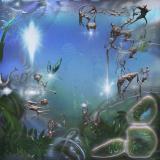
After releasing his stunning debut "Diamond Days" on Traum and the follow up "Nothingness EP" Egokind told us he had the idea for an album already sitting in the back of his head.
To be able to convert all of his ideas he asked his long time friend and collaborator Ozean to work with him. For both of them "Transition" is their debut album, but both artists can draw on a lot of experience recording music from multiple genres.
The A1 track "Mega" is a track which illustrates Egokind & Ozean's approach to touch many grounds resulting in something gigantic. The track itself begins rather acoustic inviting you to the private world of Egokind & Ozean, before it becomes a joyous balearic tune that despite its wealth keeps slight dissonances coming and going.
"Every Time You Smile" is an energetic piece of warped music which swells and and then in the next moment is diminished to small islands of voices that turn like mad creating a new cosmos almost comical at times, but always very kind and gentle as well.
On the flipside "Light Realms" flows into "Silverbird" with no pause: "Silverbird" then opens the curtain and lets the sun fill out the whole room with yellow golden rays. Egokind & Ozean then unfold a garage house track which makes small turns but stay very organic and warm.
And "Everybody Dance Now" by its title makes things very clear. Egokind & Ozean have crammed all their skills here into an hi-energy dance track, still keeping one big surprise to come halftime, when they decide to leave the trail of club culture by introducing a fantastic acoustic intermezzo, juggling and bending their sounds to the max.
After the success of the first A-sides compilation in 2012, Adam Beyer has decided its time to release another. With Adam's stature steadily growing as one of the leading talents in the Techno scene and the rise of Drumcode, the standard of demo's that have been sent to Adam have been top notch.
Adam has now decided to release two compilations with 10 tracks each, consisting of tracks that Adam has tried and tested. There are also new artists that have been invited to release on Drumcode for this compilation and others who are a staple in Drumcode's core family.
Combining both old and new talents Drumcode have come up with something unique and distinctive to make this two-part compilation something extra special.
Bavaria is John Tejada and Kimi Recor. While We'll Take a Dive is the first for the duo's newly cemented partnership they have appeared as guests on each other's releases for nearly a decade. The duo decided to exclude any extraneous instrumentation so that Tejada could focus solely on his modular synth programming while Recor took on the role to provide that all-too-vital human element by way of her silky vocal delivery. In theory We'll Take a Dive might sound like an exercise in minimalism, which couldn't be further from the truth. The album highlights the duo's deftness in getting maximal use from their instruments of choice while creating a superb darkly-hued electronic pop album that showcases its own unique strain of affecting tension and restraint.
God is an Astronaut's seventh full-length album, Origins, is their first as a five-piece and cements their place as one of the world's most intense, musically- and visually-inventive post rock bands. Renowned for their searing live shows in which the music is married with provocative projected imagery, GIAA consider each of their albums to be a sonic 'photograph or snapshot of who we are in that moment of time' and Origins is perhaps their most saturated, striking snapshot to date.
*Origins is notable also in GIAA's return to Rocket Girl records, who licensed the band's breakthrough album, All is Violent, All is Bright in 2005. In the eight years since then, GIAA have continued to release albums and an EP on their own Revive Records (A Moment of Stillness EP, 2006, Far From Refuge, 2007, God is an Astronaut, 2008 and Age of the Fifth Sun, 2010), amassing a vast following on social media sites (150,000 fans on Facebook, half a million listeners on ) and touring extensively, establishing themselves as Ireland's most intense, incandescent live act.
*Comprising a dozen tracks, Origins fluctuates from controlled ferment ('Calistoga') to plaintive, piano-led reverie ('Autumn Song') to rhapsodic, unapologetically melodic fever ('Signal Rays') while never losing its focus.
Experimenting with 'a multitude of stompboxes', the newly bolstered line-up gives the songs an added richness, apparent on Origins perhaps most obviously on the first single, 'Spiral Code' which has already received numerous radio plays on specialist radio.
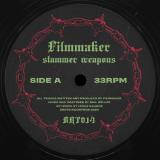
BRK first vinyl !!!!! With a full printed sleeve and all the stuff to make it a superb unique item. Between downtempo breakcore and dancefloor hard techno, Speedcore and Techno core, Tribe Breakcore... Unlimited Crazyness, ritch of its own weirdness..And.. the return o
Dennis Busch is an artist who is well-known to all Pingipung fans for his 'James Din A4' contributions to our catalogue. This man of many faces has also developed a reputation as visual artist. Therefore he decides to present his music under the same name: Dennis Busch - which we think might be his real one.
Arriving at their fourth release, Emotional Rescue's knowledge of forgotten musical gems and their commitment to give them the chance of wider appreciation they fully deserve cannot be in question! After digging out that Bob Chance classic, the focus switches to something of an equally balearic nature with the release of Jaki Whitren & John Cartwright's lost folk rock album International Times. Originally released as a private press on the obscure French label Living Records back in 1983, this eight track album is filled with dusty soul nuggets which are given extra life by the silky vocal stylings of Whitren - formerly a backing singer for Alan Parson. Opening track "Stay Cool" sounds quite ahead of it's time, whilst there are some true dancefloor gems for the more adventurous DJs out there, such as the title track and the laid back bump of "Go With The Flow."
Laurel Halo's first full album following well-received EPs on Hippos in Tanks and Liberation Technologies (the latter under her King Felix alias), plus a cassette-only ambient record on NNA Tapes, it's also her most vocal-led affair since her debut EP - eschewing the techno flyovers of Hour Logic for a slower, squishier brand of synth-pop that features often untreated, raw vocals.
Quarantine's striking artwork is taken from a piece by Tokyo artist Makoto Aida called Harakiri Schoolgirls 2002.
Fantastic new LP on Pin Cushion Records featuring eight superb tracks of the finest funky rock, folk and soul. The A side kicks off with the awesome funky monster 'Save Me', an absolute dancefloor bomb with slamming b-line from Nanette Workman's self titled 1976 LP. Next up is the super funky 'Lucky Lost Sin', a wicked female vocal funk-folk-jazz cut that also works well in the clubs, followed the great uplifting vibe of Rory Block's 'Lovin' Of Your Life'. Closing this side we have the wonderfully laid-back 'Santa Cruz Mountains' taken from Eddie Callahan's hugely in-demand and impossible to find 'False Ego' LP. The flip side features the excellent 'Spill The Wine', a great Rhodes-driven workout from Eric Burden's WAR, followed by David Amram's 'Message To The Politicians of the World', a killer spoken word track over a sweet melody. Next up is Friends Of Distinction's 'Light My Fire', an amazing funky cover of the Doors' classic taken from their rare 1969 Highly Distinct LP and last but not least a cool breezy summer groover from Bay Area band Kingfish whose lineup included the legendary Bob Weir, founder member of The Grateful Dead. A superb selection of tracks, not to be missed.
Cruise Music continues to serve up irresistible nuggets with its Vinyl Jams series, now reaching volume 15. Once again, it is a various artists affair that blends high production value with the right amount of emotional depth and dance floor kicks, this time looking at the warmer side of house. Keller's 'Stressed Out' is clean vocal house with a catchy wiggle and soulful bass roll, Mirko & Meex that layer a soaring diva vocal into 'There's A Light' that could well become an instant classic. Pianos rule on Oliver Knight & Angelala's 'Your Sunshine,' which is a perfect outdoor cruiser for the hotter days and Dino DZ closes down with the well-sampled 'I Like It.' These are refined, accessible summer house sounds but done with a touch of class.
Charlotte de Witte now unleashes her slamming three-track EP ‘The Resistance’, featuring Theo Nasa and XSALT, out on KNTXT. It follows the astonishing summer tour of her new audiovisual show ‘The Resistance’, including a spectacular ‘XXL’ version at Belgium’s Rock Werchter in July, for a 40,000 audience watching from inside and outside the tent.
World #1 techno artist Charlotte de Witte’s new show continues a standout year of experimental ventures and celebrations, global pop-up shows, monster street parties, incredible new music (EPs and Deluxe LP)… and most recently ‘The Resistance’ AV show world premier at UNVRS Ibiza and the EU tour. The new ‘The Resistance’ EP is hard, fast, and uncompromising. It features Theo Nasa, whose raw, deep techno EP ‘Lifeline’ was released on her KNTXT label; vocal artist / longtime collaborator XSALT, (previously on ‘No Division’, ‘Overdrive’, ‘Roar’, ‘How You Move’); and Charlotte’s own vocals on a personal track ten years in the making.
‘The Resistance’ EP title track feat. Theo Nasa is urgent, demanding, unapologetic. Juddering main theme, rattling hyperspeed beat, spacey hoover swoops form a matrix for the deep, amused authoritative voice of Nasa – ‘we are unity, we are techno’. The brief ‘The Resistance (Intro Version)’ opens with futuristic FX and Nasa’s voice to the fore introducing the techno credo.
‘Never have I ever teased a track this much as I teased ‘The Resistance’. From the moment the track was being made in the studio, I knew this was going to be a special one. Theo Nasa captures the spirit of the underground and guides you through the essence of club culture like no one did before. An entire A/V show grew out of this feeling, this philosophy. It’s one of the biggest tracks I’ve ever made.’ Charlotte de Witte
‘See Through The Lies’ feat. XSALT: futuristic FX, fast stabby synth theme, and XSALT intoning ‘see through the lies. It’s time to take control’. A message of defiance. ‘XSALT delivers again on ‘See Through The Lies’, offering his own take on the EP's theme. Open your eyes. Break the illusion, see through the lies. Release the pressure. It’s time to take control!’ de Witte says.
‘Another Place’ has relentless pace, twanging pizzicato synth, and de Witte’s whispered phrases becoming full voice. ‘’Another Place’ has been in the making for over a decade. It saw the light of day in Brussels, where the lyrics took shape together with my friend One Track Brain. The track was forgotten and resurfaced years later, leading to an entirely new track created around that magical vocal from all those years ago. This is an EP very close to my heart.’
At the heart of ‘The Resistance’ EP and AV show is a message central to de Witte’s work: Protect Club Culture and the communities that sustain it. That’s why de Witte is donating all proceeds from The Resistance EP to The Nighttime Foundation, a global nonprofit dedicated to safeguarding and shaping the future of nightlife, empowering grassroots communities and promoting nightlife as a vital form of culture worldwide.
Originally released in the fall of 2009, Love 2 was entirely written and produced by Air in their Atlas studio in Paris and marked a return to the band's trademark atmospheric and dreamy sound.
Yuvi Havkin aka Rejoicer returns with an exceptional collaborative album, California Space Craft. On this aptly titled record, he joins forces with seasoned LA bass polymath Sam Wilkes — known for his inspired studio work with Sam Gendel and his dynamic live performances alongside Louis Cole and KNOWER — and drummer Tamir Barzilay, completing the LA-connected trifecta alongside a select handful of key featured guests. The idea for California Space Craft was born out of a series of inspired live sessions in Los Angeles between 2019 and 2022, notably at Listen to Music Outside in the Daylight Under a Tree, where the trio’s natural chemistry first began to bloom. The resulting recordings encompass a wide variety of inspired sound stylings, as one would expect from any of these accomplished artists on their own; however, the sum is truly greater than the parts here, with the fluidity of their freeform improvisations over a dedicated three-day recording session feeling remarkably focused as a cohesive whole. Opening track “Traveling Light” sets the LP’s tone with equal parts Sly & Robbie-style, space echo– drenched rhythms and the cozy kosmische, guitar-led feel of early-2000s genre-fluid explorers like Tortoise. As we continue on to “Ritual in G#,” we are reminded that this is indeed a unique and timeless sonic space the trio has created, as Havkin’s crisp Rhodes chords anchor an ever-evolving psychedelic sound bed. The soaring trumpet of Avishai Cohen adorns the Afrobeat-indebted “Lion Water,” with Barzilay laying down a proper Allen-esque groove, while “Further (with you),” featuring Nitai Hershkovits on keys, offers a defining look at the titular concept of the album — with pure Cali feels coalescing effortlessly into sciNew Release Information fi narrative modes and a proper dose of Rejoicer futurism. Elsewhere, “Her Hair in the Air” shines with fresh polyrhythmic intention, illustrating the balanced bond between the three collaborators at their conversational peak, and the brisk synth strokes of “Early Porpoises,” alongside LP closer “Oceanic Friends” — again ideally named — double as a grand, in-stereo ride into the blissful Pacific sunset horizon. California Space Craft embodies the power of open, collective intention and musical kinship, offering memorable, uplifting moments and an aural glimpse of hope, warmth, and loving melodious calm in an otherwise quite chaotic time for humanity.
Welcome Tori Kudo back to A Colourful Storm with a new edition of Maher Shalal Hash Baz's Faux Départ, a document of a stateside tour that culminated in a recording session at the legendary Dub Narcotic Studio with a one-time ensemble of Greg Saunier and Chris Cohen (Deerhoof), Andrew Maxwell, McCloud Zicmuse, Arrington de Dionyso, Takashi Ueno, Saya Ueno, Naoki Otani, Akiko Hotaka, Masaaki Endo and Naoki Otani. Always spontaneous, never rehearsed. Music in and of this world, seemingly teetering on the verge of collapse.
"We flew to the US for a show with Red Crayola in Los Angeles and initially stayed at Rick Potts' house. There, I met up with The Curtains and hit the road in their car. We headed north, writing down every melody that came to mind. I slept in the gap between the wall and the sofa and got interrupted by a herd of cows along the way, but I finally arrived in Olympia and recorded all the melodies I'd written down, which became Faux Depart. There, I found McCloud, a noble beggar who was sleeping in the studio and playing the bassoon on the street." - Tori Kudo, 2026
"Chris Cohen, who played in Deerhoof from 2001-2006 or so, was an obsessive Maher fan. When our other band, The Curtains, was given a chance to support Maher on a West Coast tour, we got to see up close how Tori leads - often by not leading. He is an unpredictable, wild musical genius and card-carrying eccentric." - Greg Saunier, 2026
Carrying the torch of Freeez, Light of the World, Incognito & The Warriors, INTA-CITY is the clandestine jazz-funk operation from Daniel Maunick alongside Zaidi Kiggundu & Jamie McShane AKA Zaime.Limited edition remix 12” (500 Units) with dancefloor-ready cuts from Kon, Danielle Baldelli and G&D.
Formed between London and the outskirts of Glasgow, INTA-CITY is a new clandestine jazz-funk project from Daniel Maunick alongside Zaidi Kiggundu and Jamie McShane AKA Zaimie.
With the rebellious spirit of the British funk hustlers of the 1980s — Freeez, Light of the World, Incognito The Warriors, all of which counted Maunick's father Jean Paul 'Bluey' Maunick among their founding members — INTA-CITY adopt the DIY, solidaristic and dancefloor-first ethos of the original movement: no frontman, no band photos or fancy music videos. Just music to move to.
Ahead of their debut album release next year, the band have enlisted Boston edit master Kon, Italian cosmic royalty Daniele Baldelli & DJ Rocca, and Bolognese duo G&D for a limited edition remix 12” and digital release out 18th September 2026 via Far Out Recordings.
The sun sat high above the desert outside Joshua Tree on October 17, 2024, baking the rocks and shrubbery outside the Farrington Observatory as a small group of invited guests ventured up a steep path towards the telescope. Kyle Simon, the artist and printmaker who founded the Observatory, was standing outside the print studio sat below the towering cylindrical building, greeting friends alongside his wife Sarah and lifelong friend Brian Weitz, the musician widely known as Geologist of Animal Collective. Simon and Weitz had spent the previous day testing and retesting a system that would transform the light of the oncoming full moon captured by the gigantic telescope into a signal that would modulate the control voltage of Weitz’s modular synthesizer. As the sun dipped below the horizon line, the audience gathered on a small wooden patio surrounded by speakers while Weitz readied himself behind the array of patches and knobs. Simon addressed the group, presenting the history of The Sirens, the sonic exploration of the night sky’s mystical and scientific significance about to unfold.
The music conjured under the Hunter’s Moon that night is now documented on this first official release of The Sirens, which was conceived by Simon and Weitz as a recurring performance piece and sound installation. Over a decade ago, Simon began immersing himself in literature on humanity’s sonic relationship to the celestial realm, including Homer’s Odyssey, Plato’s “Spindle of Necessity, ” Kepler’s Harmonices Mundi, and the field of astroseismology. He fitted homemade telescopes with photodiodes and optical sensors to make the images audible, finding latent patterns in the noisy sonic signals he began receiving from the stars. With Weitz, the process expanded as the signal was routed through an analog amplifier and set to modulate the pitch, filter, and other elements of his synthesizer. Together they developed a system of improvisation, with Simon adjusting the telescope to change the intensity of the light based on its relationship with the moon’s position (imagine a theremin player moving their hands in subtle, meaningful motion), and Weitz responding to that input in real time: bending it, amplifying it, or letting it stand on its own. The duo debuted the piece at the Integretron in Joshua Tree in 2018, providing a crucial proof of concept for the performance at Farrington featured here.
The first thing the listener hears on The Sirens is the opening of Farrington Observatory, the cranking of motor and metal. As the lens of the telescope is exposed to the evening air, a wavering drone emerges from the synthesizer, flickering at the margins, the tuning of the oscillators adjusting to the rapidly cooling desert air. The piece progresses and the drone becomes a luminous, spherical constant, bathing the listener in pure tone as Weitz draws out harmonically ambiguous melodies that spiral upwards. Electronics crackle and convulse, coalescing into dense dissonance before widening out into an open octave. Just as the moon orbits the Earth and the stars shift as the planet rotates, so each sonic element appears in flux, interrelationships slowly forming and falling away. Divided into two parts, The Sirens flows as a continuous conversation between the artists and the starlight completing its thousand-year journey across the galaxy.
The Sirens belongs primarily to a lineage beyond music: of sea captains navigating by looking skyward, of astrophysicists studying the formation of the Milky Way, of the modern myths of werewolves, of the stories embedded in constellations. As Simon writes in the album’s extensive liner notes, “These stories and explorations reveal a collective yearning to become conscious of our connection to the universe, our deep-seated desire to understand how we fit into it all.” This music underscores the history of the night sky as the place where poetry and science find common ground, where exploration hinges on the imagination. Driven by curiosity and ingenuity, Weitz and Simon look up and wonder.
Ąnis is a Lithuanian producer and DJ working in the space between broken rhythms and atmospheric weight. His tracks blur the line between club tools and introspective pieces - raw, textured, and unpolished in the best way.
Ąnis’ debut album “I Swear I’m Not Delusional” builds from late-night sketches into fully formed pressure systems. Ambient passages fall into break-driven grooves, each track shifting like a mood swing. It's rooted in tension, repetition, and space - think the grit and movement of early Skee Mask filtered through a more personal, less polished lens. Tracks like “Mountain People” carry warmth without needing to explain themselves, while others feel like they were made at 3am with no lights on. It’s not chasing a scene - just locked into its own pulse. This isn’t background music. It asks you to sit with it - or move to it. Either way, it sticks.
Credits
Original tracks written, produced, arranged and recorded by Jonas Zubavičius in Vilnius. Mastering by Pranas Gudaitis aka audiomastering.lt. Artwork and design by Povilas Baranauskis.
Acclaimed harpist and songwriter Mikaela Davis’ new album, Graceland Way (due TK via Kill Rock Stars), builds an expansive, kaleidoscopic neo-western dystopia from the cozy origin point—that duality compounded by a subtle exploration of light and dark, grace and struggle, rose and thorn, as well as the mystical power found at their meeting points. The “canyon country” epic born of that work is indebted to the titular street in Chevy Chase Canyon where she recorded the album, the lineage of Laurel Canyon, the mythos of Elvis’s Graceland, and Paul Simon’s restless reinvention. “At the end of the journey, the place you were destined for all along isn’t even a place, it’s a state of mind: Graceland Way,” Davis says. Featuring an unreleased Cass McCombs track (Mizmoon) as well as contributions from Karley Hartzman (Wednesday), Tim Heidecker, Madison Cunningham, Neal Francis, James Felice (The Felice Brothers), Clay Finch (Mapache) & Hannah Read.
Sublime frequencies from the golden era of ambient electronica.
Plumbing hidden depths beneath a deceptively tranquil surface, MLO's mid-90s masterpiece Io is an overlooked gem from a golden era for ambient electronic music. Originally released in 1994, Jon Tye and Pete Smith's collaborative album responded to the growing chill-out movement by leaning into classical and avant-garde influences from Satie, Debussy and Cage through to Soft Machine, Incredible String Band and Eno. Recorded across various studios stacked with classic and rare synths, Io was patiently composed into slowly unfolding suites punctuated with ripples of arrhythmic interference to arrive at a purist vision of true ambient.
The next instalment in Forever Records' ongoing reissue series shines a light back on this landmark piece of UK electronica with the first official reissue since its original edition on Rising High. As well as the original double LP pressing and a new CD digipak version, there will also be a uniquely numbered, limited edition housed in a gatefold sleeve that comes with a bonus 10" featuring two previously unreleased versions of the album's opening cut, 'Wimborne'.
Press response to Io:
"Not so much ambient, more environmental music, Io lets you bring as much (or as little) of your surroundings in as suits your mood. Every listen can be different. Interactive ambient at last.”
IO is pure ambience. Relying on motif as opposed to melody, MLO have produced a truly evocative album.
Peter McIntyre, Mixmag, UK 1994.
"MLO's influences range from the likes of Eric Satie and the intellectual salon music of his era to the more predictable reference point of dubby, modern techno, though they feel, perhaps rather contentiously, that "ambient music can exist in isolation from the rest of the dance music arena". Can it? Take a trip to Io, and find out."
Generator Magazine, UK 1994.
"If you like your ambient deep and moody with long chords that creep along at approximately the speed of drying paint then check out MLO’s Io."
Mixology, UK 1994.
"MLO set the controls for the heart of headspace for their first full album release. Io is top grade ambient brain… Ace album…"
Select, UK 1994.
Sublime frequencies from the golden era of ambient electronica.
Plumbing hidden depths beneath a deceptively tranquil surface, MLO's mid-90s masterpiece Io is an overlooked gem from a golden era for ambient electronic music. Originally released in 1994, Jon Tye and Pete Smith's collaborative album responded to the growing chill-out movement by leaning into classical and avant-garde influences from Satie, Debussy and Cage through to Soft Machine, Incredible String Band and Eno. Recorded across various studios stacked with classic and rare synths, Io was patiently composed into slowly unfolding suites punctuated with ripples of arrhythmic interference to arrive at a purist vision of true ambient.
The next instalment in Forever Records' ongoing reissue series shines a light back on this landmark piece of UK electronica with the first official reissue since its original edition on Rising High. As well as the original double LP pressing and a new CD digipak version, there will also be a uniquely numbered, limited edition housed in a gatefold sleeve that comes with a bonus 10" featuring two previously unreleased versions of the album's opening cut, 'Wimborne'.
Press response to Io:
"Not so much ambient, more environmental music, Io lets you bring as much (or as little) of your surroundings in as suits your mood. Every listen can be different. Interactive ambient at last.”
IO is pure ambience. Relying on motif as opposed to melody, MLO have produced a truly evocative album.
Peter McIntyre, Mixmag, UK 1994.
"MLO's influences range from the likes of Eric Satie and the intellectual salon music of his era to the more predictable reference point of dubby, modern techno, though they feel, perhaps rather contentiously, that "ambient music can exist in isolation from the rest of the dance music arena". Can it? Take a trip to Io, and find out."
Generator Magazine, UK 1994.
"If you like your ambient deep and moody with long chords that creep along at approximately the speed of drying paint then check out MLO’s Io."
Mixology, UK 1994.
"MLO set the controls for the heart of headspace for their first full album release. Io is top grade ambient brain… Ace album…"
Select, UK 1994.
Celebrating the 30th anniversary of its original release, Night Song returns in a special edition on rose leaf green coloured vinyl. A Grammy Award nominee, the album captures the extraordinary meeting of the legendary Nusrat Fateh Ali Khan and Canadian guitarist, producer and composer Michael Brook, whose atmospheric soundscapes provide the perfect setting for Nusrat’s ecstatic, transcendent vocals.
With Nusrat’s legacy continuing to reach new audiences following the landmark 2024 release of the unearthed archive recording Chain of Light, Night Song remains one of the defining cross-cultural collaborations of its era. This anniversary edition includes a printed inner sleeve with updated liner notes and photographs.
On Left At Sunset, Tornado Wallace taps into those fragile, glowing moments after a long night in the club, when the lights come up just enough, the bass softens, and the first hint of morning slips through the windows. Time feels suspended.
The lead track Asahi Ga Yondeiru (“the morning sun is calling”) captures that feeling perfectly. Built around Courtney Bailey’s gentle vocal, it drifts somewhere between late-night house and early morning reflection. It is not about the peak. It is about what comes after it. That quiet euphoria when you realize the night gave you something you will carry back into the real world. The rest of the EP stays in that same emotional zone: warm, slightly melancholic, but full of light. These are tracks for the very last dance, when the floor is half-empty, hearts are wide open, and every sound feels a little more meaningful. Not an ending, really. Just the beginning of whatever comes next.
SECOND REISSUE ON THIS HEAT’s OWN NEW IMPRINT FOLLOWING ‘THIS HEAT’ (TH01LP) WHICH WAS UNCUT ‘REISSUE OF THE MONTH’ RECENTLY WITH 9/10 REVIEW + 4-PAGE FEATURE WITH Q+A.
*24 bit/96 kHz re-master from original analog tapes.
*Heavyweight 180gm vinyl and heavyweight sleeve with pantone printing to match original 1979 release.
Simon Reynolds on Health and Efficiency:
“For some fans, Health and Efficiency is This Heat’s peak achievement – their most concentrated blast of visceral intensity and wayward experimentalism….Lead track “Health & Efficiency” combines fierce angular rock that fully lives up to Cunningham’s belief that This Heat could become a postpunk King Crimson, with a multi-part babble of vocals, clattering percussive timbres, and found sounds.’’
Flipside “Graphic/Varispeed” is more subdued and hypnotic: a wavering tonescape whose duration depends on whether you play it at 45 rpm or 33 rpm. This reissue reproduces the original release’s striking cover image of a human figure painted in blue by Pete Cobb, along with the cryptic flipside of text in many different languages.
Although widely considered to be Post-Punk’s finest, This Heat actually began performing and recording their music in 1976, the early days of London’s punk era. Within their two albums and an EP they perfected a strange and volatile new strain of avant-garde rock that time has proved to be massively influential, a blueprint for much that would follow: post-rock, math rock, homemade musique concrète, experimental electronica. Numerous critics have recognised the band's influence on the music of Sonic Youth, Glenn Branca, Steven Wilson, Public Image Ltd., Radiohead, Swans, Shellac, Young Knives, Black Dice, Lightning Bolt and numerous other experimental and post-rock bands.
Disbanding in 1982 they have left an undeniable legacy that has only continued to grow in stature and relevance.Having recently passed the 50 year anniversary of their first gig, and the recording of material that appears on their debut album, the group’s surviving members Charles Bullen and Charles Hayward, true to their DIY roots, have set up an imprint to release their recordings for their growing fan base that is increasingly recognising their influential place in music history.
‘They went beyond punk before punk had properly started…the entire album is a controlled explosion of ideas. Nearly fifty years on, This Heat’s debut is something the world has still not completely caught up with.’ - Simon Reynolds
‘Over the years, there have been bands to play as aggressively, or even as strangely, but very few have been able to rise from their collective influences and histories to create music so singularly distinctive and inspiring.’ – Pitchfork 9/10
‘This Heat sounded like the future then ... and still do now.’ - Dan Snaith (Caribou)
‘This Heat had a certain kind of force the post-punk bands were unable to adequately control without falling foul of rawk excess, and which the punk bands—albeit blitzing and rowdy—were too basic in form to build.’ – John Calvert , The Quietus
Keen listeners who have dug below the surface of Oren Ambarchi"s triple-digit discography know that alongside hypnotic minimalism, veins of irreverent and joyously wayward exploration run deep. Cooked is something of a landmark in Oren"s work, bringing this gloriously cuckoo sensibility right into the heart of his most high-profile solo work. Carrying on the grand Ambarchi tradition of meticulously constructed all-star studio jams (which reached new heights with Shebang), Cooked brings together collaborators from Australia, Germany, Japan and Sweden for two side-long epics where the foot keeps tapping even as the mind boggles. Cooked is a long way from the spacious, light-dappled grooves of Ghosted, but Oren"s Swedish bandmates play starring roles here, with Johan Berthling"s double bass anchoring both sides, and drummer Andreas Werliin lending his delicate touch to the second piece, "Sleight of Hand". Beginning with glistening layers of electric 12-string guitar, "Sleight of Hand" takes some key cues from electric Miles touchstones like "Feio" or his epic take on David Crosby"s "Guinnevere", with Berthling"s sparse basslines punctuating an almost weightless cornucopia of shifting detail, glimmering with subtle contributions from Michiko Ogawa on sho and James Rushford on a panoply of acoustic keyboards. Suddenly, everything is overwhelmed by a knotty, hyper-complex "solo" from Marcus Pal on digital synthesis, teleporting us to an alternate history where Allan Holdsworth traded the SynthAxe for Xenakis" UPIC. Building with additional drums and percussion from Will Guthrie to a peak of sizzling intensity, the music then goes sideways into a gently surreal coda, where some distinctly Zawinul-esque chords and Fredrik Rasten"s guitar float over a sprightly rhythm box, the avian inventions of Swedish virtuoso whistler Isak Hedtjärn wafting atop the sunlit stew.
Tiki for the Atomic Age feels like a mid-century transmission intercepted from a parallel timeline—one where hi-fi futurism, Polynesian fantasy, and postwar optimism never lost their sense of wonder. Kava Kon isn’t recreating exotica so much as reviving its original promise: escape, elegance, and possibility, rendered in warm, widescreen stereo.
Built on shimmering vibraphones, reverb-drenched guitars, analog organs, and ritual-leaning percussion, these tracks move at an unhurried pace. This is oceanic music—designed for dim lights, glowing glassware, and time stretched just enough to breathe. The lineage is clear: lounge exotica, bachelor-pad modernism, space-age pop. But this isn’t pastiche or museum work. It’s retro-futurism with intention, imagined from the future looking back.
The “Atomic Age” isn’t just aesthetic shorthand. It speaks to contrast—leisure in the shadow of anxiety, beauty alongside uncertainty, fantasy as a necessary technology. Kava Kon understands that tiki was never about geography; it was about psychology. A constructed elsewhere. A permission slip to slow down.
Pressed on vinyl, Tiki for the Atomic Age comes fully alive: tactile, immersive, and meant to be lived with. For listeners drawn to mid-century dreamscapes and modern exotica that honors the past without freezing it, this is an invitation—step sideways out of the present and into something more elegant.
The Hypnus clergy is pleased to present the debut album of our beloved initiate Luigi Tozzi.
Released in the light of the summer solstice full moon of 2016.
Supported by Cio D'Or, Claudio PRC, Deepbass, Evigt Morker, Ness, Svreca, Oscar Mulero, Artefakt, Ben Buitendijk, Giorgio Gigli, Exium, I/Y, Jonas Kopp, Kwartz, Samuli Kemppi, Eric Cloutier, Abstract Division, Brando Lupi, Nobody Home and many more.
Prologue: Wearied by our endless travelling under a burning sun, we stopped by the margins of a tiny stream, embraced by a timid vegetation. The scorching heat made our throat parched and weak: yearning to quench our thirst, we immersed ourselves into the waters without any hesitation, drowning our dryness and our exhausted limbs. I pointed my face, revived by water, towards the sky and I lingered on, admiring it: a flock of birds gently floated, drawing in the sky some abstract shapes. I sat beneath a palm tree, motionlessly admiring the show, the shades of the night approaching. 'The true joy of a moonlit night is something we no longer understand. Only the men of old, when there were no lights, could understand the true joy of a moonlit night.' --
Superfan is the songwriting veil of Kali Priya Flanagan, the Brooklyn-based multi-instrumentalist and producer. While initially imagined as a solo act, ambitious string arrangements crafted in collaboration with cellist Omeed Almassi have come to define Superfan’s noisy and magnetic pop soundscape.
Today, Superfan announces their forthcoming album ‘My Piledriver Heart’ (MPDH), out October 16 via new label home AD 93 (Joanne Robertson, Dagmar Zuniga, YHWH Nailgun). Along with the announcement, Superfan presents his new single “In the Gold Room” paired with the live version filmed by Garrett Winston inside Agger Fish Building in the Brooklyn Navy Yard.
MPDH marks the first release outside of the record deal Flanagan signed at age 14. The album finds Flanagan embracing a more expansive, experimental vision of indie rock - melding deeply tuned acoustic guitar, cello, and Eastern musical influences into what he calls his “Acousticello” sound. Recorded largely live with cellist Omeed Almassi and producer Hudson Pollock, the record explores heartbreak, independence, and hopeful melancholia. Kali says “This time around it was about being (myself) versus becoming myself. This album was made to acknowledge the ebbs and flows in chugging along with life and love, from a place of comfort within the self that opens you up to the beauty in everyday life.” He does so through intimate performances that blur the line between folk, chamber music, pop-rock ballads, and alternative rock. Last year, he released the singles “Apeiron (Fantasy Football)” and “Miss W Jones” and earlier this year he released “Picture of Return.”
Following his acclaimed debut Tow Truck Jesus, Flanagan opened for The Strokes at Red Rocks, and has quietly become a fixture of New York’s DIY scene, performing alongside artists like Horsegirl, Knifeplay, and Quiet Light, while also playing support shows with King Woman and Victoryland this summer. He is also in the rising emo band Holidays in United States.
Before Superfan, Flanagan found success during the pandemic under his first moniker, “KALI.” His initial releases garnered millions of streams and led to collaborations with seasoned high-profile producers and industry teams. Despite his budding career as an indie-pop star, Flanagan was dissatisfied with the conditions of his artistic output and community as he reached adulthood. His coming-of-age years in Los Angeles were marked by an ever-present new-wave pop music oblivion: “hits” made in 5-hour sessions with strangers, a social life suffocated by others’ aspirations for fame, and an absent audience for live music that pushed past the prescriptions of recorded music. On MPDH, Kali says “I can’t help my urge to write these pop-rock ballads, but we really wanted to push the boundary of genre and expressing the sentiments of the songs through experimentation.”
Jen Cardini & Shonky revive their 20 year old anthem August In Paris with remixes from Kasra V, Jennifer Loveless and Jump Source.
Originally released on Mobilee Records in 2006, Jen Cardini and Shonky’s record ‘August In Paris’ remains a defining statement from the minimal era. Ahead of its time upon release, the record distilled the genre to its essentials, bleeps, hypnotic grooves and impactful vocals, unfolding with the kind of restraint that continues to resonate two decades on.
To mark its 20th anniversary, ‘August In Paris’ returns with three distinctive reinterpretations from Kasra V, Jennifer Loveless and Jump Source plus a re-release of the original coming out on Jen Cardini’s formidable label Correspondant. As well as this Jen Cardini and Shonky will be playing an All Night Long set at Paris nightlife institution Rex Club on 29th August. Look out for merch on the night too.
Speaking about the project Jen Cardini discussed: “It is crazy to think this was two decades ago and that Shonky and I are still touring and sharing our love for music. For the anniversary, we decided to bring this special track to light again’.’
Each remix approaches the source material from a different perspective while preserving the essence of the original.
UK DJ and producer Kasra V leans further into the track’s skeletal framework, blending his signature sultry sonics into this hypnotic chunky groove to produce something entirely new but familiar.
Jennifer Loveless, an unearthed gem when it comes to production, strips things back even further, delivering a rough and tough uncompromising club version primed for sweaty dark dancefloors, it perfectly encapsulates the original without overshadowing it.
Closing the EP, Montreal duo Jump Source, Priori and Patrick Holland, take the record into more left of centre territory. Their version stretches the original into a warped, slow-burning electro excursion, perfectly suited to the blurred edges of the after-hours.
"Here is a tender journey through loss and rebirth — a raw exploration of grief, heartbreak, and the emptiness that follows. It unfolds the fragile moments after losing a beloved friend, the fragile attempts to mend a fractured love, and the sudden rupture that shakes the soul to its core. Amidst the turmoil, anxiety pulses and the body aches with memories too heavy to hold. Yet, slowly, the darkness gives way to light. Breath returns. Support is found in unexpected places. Memories surface through hypnotic whispers, guiding the way back to softness and hope. This is not a story of instant healing, but a delicate awakening — a reckoning with old patterns, a reclaiming of the self, a learning to love differently.
Intimate and universal, fragile yet fiercely alive."
A glorious night of no particular significance, Totally, the new album by Baba Stiltz. Recorded in Helsinki in studio with a drummer and overdubs committed in 5 days. Ballroom- sink songs of loss, grief, long drives on the I-5, centralized acquisitions, and corrective conditioning towards the prolonged effects of computerized lifestyles.
Every song looks you straight in the eyes, crooked and veering towards a light fixture off the side of the mirror. Ambivalence and assertions track us, down some gauzy networked afternoon. Relatively, perfectly, three dimensional. Proportions as they appear to us from outer intuition. Sometimes meaning is evoked through pure nothingness. Concealed and nothing known. We have no need for any paradise informed by anything beyond what is directly in front of us.
Stone repetition thwarts the possibility of control and surrenders itself to understanding. Who are we, and what are we trying to understand? To understand being universally greater than being understood. There are soap operas everywhere for those with eyes to see. You don’t have to look as hard as we currently look. The dramatic is everywhere, we breathe it unintentionally, then we come to hate it. Haptic, embodied facts of a tedious life lodged in the jowls of history. Everything under the
sky being the best bedlam has to offer. Your family, your relationships, your memory. As you eat a burger you are reminded of every sharp protrusion and corner under the florescent lights, the same lights you see when you’re born, and although unconfirmed, when you die.
Some of these songs were written years ago, some recently. The bookshelf and television set come into full view. Women/men come and go. Stars and poseurs collapse under their alienated contradictions, the search for truth yields to continued gradients of probability (collapse). Spatial order maintains itself through perceptional feeling. Silence, singing along to Roger Miller, people entering and leaving, figures hovering over you in your dreams and waking hours. Cool and fun, Totally
2026 re-issue, 180g vinyl, remastered from the original tapes
Be With have raided the KPM archives to re-issue another of our favourites from the KPM 1000 series. They say: Hard Afro Pop featuring large percussive rhythm section and front line. We say: One of the best-loved of all the KPM LPs. Afro Rock was recorded at Morgan Studios by John Cameron and Alan Parker in London in 1973 as a collection of stripped-down African rhythms, virtuoso jazz instrumentation, fuzzed up wah wah guitars and spaced out library breaks. The percussion is effortlessly funky, and those flutes so melodic, it’s as if the LP was crafted with the beat lovers of the future firmly in mind. As Cameron himself described it in Unusual Sounds, this is “heavy duty drum-and-bass salsa music”. As with all of our KPM re-issues, the audio for The Road Forward comes from the original analogue tapes and has been remastered for vinyl by Be With regular Simon Francis. We’ve taken the same care with the sleeves, handing the reproduction duties over to Richard Robinson, the current custodian of KPM’s brand identity. And don’t worry! Those KPM stickers aren’t stuck directly on the sleeves!
Cut Rate is the debut LP from Detroit-based techno punk band Decliner. Written and recorded over the span of several years, the music reveals a sludgier, darker, and more industrial sound, representing a marked departure from their raw and thrashy roots.
Cut Rate is an album that lives at the edge of potential… a fever-dream where danger, uncertainty, and reckless hope collide. With dark humor, underdog grit, and flashes of raw beauty, it moves like someone risking everything — bravely, boldly, sometimes foolishly.
Intimate yet volatile, Cut Rate balances vulnerability and strength, chaos and tenderness. It unfolds like a roll of the dice, a shot in the dark, a chance that you can’t walk away from.
Produced by Steven Stavropoulos, the record delivers hellish, intricately designed soundscapes that establish the bedrock of each track. Tim Barrett’s guitar adds a dense layer of emotion throughout, elevating the music and further establishing the record’s stylistic ambiguity. Rob Luzynski’s vocals are at once tortured, brazen, and ridiculous, an anti-hero winking at the abyss, telling stories that no one should live by but that we all may learn from.
Across four tracks of lean and potent workouts with his unmistakable sonic signature, Peverelist returns to Livity Sound with his first release of 2026. After three years shaping out the Pulse series, Pace The Wrecks EP finds Pev shifting focus in subtle ways while upholding his focus on impactful, sprightly club modernism.
It's clear there are fresh inputs into the Peverelist sound from the very first note of 'Wreck I', which opens on an ominous lower-register piano note leading into a brooding house-tempo cut laced with sci-fi synth licks. On 'Wreck II' the dial shifts towards a more rapid-fire, electro-informed rush before swerving towards the bass-heavy, bleep-loaded jack of 'Wreck III'. 'Wreck IV' closes the EP out on a more sparsely arranged broken beat tip primed for lighter moments in the mix.
True to Pev's singular sound while maintaining the consistently fresh, uplifting energy of his recent output, Pace The Wrecks opens up the next phase in his studio work with assured poise and a sustained commitment to keep pushing forwards.
For the label's latest, Oath is proud to present 'Honey Tangerine', the newest mini-album from producer extortionaire Olsvangèr, who serves up his signature blend of hyper-kinetic, ever-shifting dance music.
Olsvangèr's sound and musical journey are forever rooted in the liminal spaces that make up the broad-reaching and ever-shifting electronic music landscape, with his records consistently channeling that in-betweenness that imprints lasting impressions. A classically trained musician with a profound passion for house and techno, Olsvangèr's sonic palette is one of both broad and delicate brush strokes, applying an array of compelling motifs within amorphous arrangements that blend and blur perspectives. His records seek out the faraway fringes as much as focusing on the intensity found in the detail, creating cavernous soundscapes that are impeccably tuned and effortlessly free-flowing. Seemingly genreless, his records are anchored in all that is known and loved, yet due to the music's perspective situated at the intersectionality of electronica, a beautiful anticipation resides within every stanza of his tracks at what may come next. His musical language has found him releasing on the likes of Kalahari Oyster Cult, Hooj Choons and Craigie Knowes, and follows through within his imprint Tofistock, which has been pushing some of the most forward-thinking dance music of recent times.
'Honey Tangerine' touches upon the classic motifs of Olsvangèr's sound, and as always, the room for growth within the record's parameters remains truly endless. Over six tracks, Olsvangèr lays bare the directions of travel, with paths unravelling that feel well trodden yet with some that branch out towards new horizons. 'Source of Thought' opens up proceedings with a captivating ambience, where twinkling hues and lively tones paint the parameters of sound. The chuggy breaks that land deep within the mix drop in and out of view, allowing a deft balance between pure ambiance and rhythm to exchange dialogue between one another. 'In a Nutshell' shifts gears in atmosphere and energy, with all eyes placed upon the club. The shifting rhythm section lifts the acidic melodic features up above, with driving bass notes and a euphoric vocal like lead linking the depths to the heavens. 'Tulpa Nine' swings into heads-down territory, where the drums swing slow and the throbbing bass hits heavy. The auto-tune vocal line up above creates an atmosphere of hazy, smoke-filled rooms, where the party yearns for downtime in anticipation of the next shift in energy.
'Sunrise on the Lips' gives over further chill out room vibrations, where the lights remain low, and smiles reside all around. The enriching drums provide the basis for sitars and glossy keys to glide across the top ends, with the mind invited to dip deep within this enthralling ensemble. 'Zoom It Out' provides the release into the room, with the ante upped. A breaky house leaning number, this cut grooves through its chiming melodic section and groove-laden bass line, with the polyrhythmic drumming pattern doing much to keep the energy residing very high indeed. The record is wrapped up with 'Some Air', which gives over one final jaunt through the airy, slowed-down slipstreams. A wondrous beat is complemented by melodic elements that chime, absorb and quiver, glowing through the night with such charm and feel. An engrossing composition that demonstrates what Olsvangèr is all about - a crafter of sound, where adventure is sought and found, never wavering but curating new connections, feelings, and tones, with an eye on what might come next.
Whether softly undulating or boundlessly expressive, Olsvangèr's music remains a beautiful enigma that serves up both the glorious knowns and the captivating unknowns - 'Honey Tangerine' is yet another chapter in his glorious discography.
On Oath's latest, the imprint keeps the jazz-fuelled atmospheres going with 'Seven Dogs', an EP that serves up an astonishing excursion through deeply hypnotic melodies and idiosyncratic grooves, courtesy of an iconic link-up between Rteph88 aka Robin Taylor-Firth and Steve Cobby.
Taylor-Firth and Cobby are musicians whose careers are so richly storied, broad-ranging, and impactful that it's difficult to summarise their output and impact in so few words. Both Taylor-Firth and Cobby firmly established themselves in the 90s, being involved in some of the era's most prominent and celebrated groups and for releasing some truly era-defining records. As such, their discographies reach far and wide, from house and techno cuts through to downtempo, drum'n'bass and leftfield, there is little that is left uncovered, and this spirit remains with them both as they continue to explore the outer parameters of their sounds.
Taylor-Firth, a songwriter, arranger, and producer, is perhaps best known for his long association with Warp Records and its sublabel Nucleus, and for his work as a member of Nightmares on Wax, where his signature keyboard playing style became a staple of the group's legendary sound. Alongside this, he has hundreds of songwriting and arranging credits on a dizzying array of records, and was a member of house music group Anon and Pio Bo alongside Richard Barratt - to name but a few selected highlights of his extraordinary career. Cobby's career is distinguished by his multitude of releases under a variety of aliases, along with his helming of a number of imprints, including Pork Recordings and his most recent label Déclassé. Experimenting with a wide variety of genres and sounds, perhaps his best-known work was with the duo Fila Brazillia alongside Dave McSherry, who released a plethora of immersive and innovative records in the 90s and beyond.
'Seven Dogs' represents a shared passion, vision, and musicality, two languages borne of similar spaces but reaching through time, space, and existence in creating a richly veiled musical experience that draws from lifetimes spent within the nucleus of music's soul. The EP speaks of the present as such as the past and indeed future, hinting with motifs that feel right at home within sun-kissed skies and within the walls of the chill out rooms. 'Early Doors', the EP's opener, displays the core fundamentals of the unfolding experience, namely the intrinsic relationship between keys and drums and how they express tone and mood. The piano gently caresses, ethereally floating with space to grow, as the drums lightly swing into life, providing an engrossing and rhythmically diverse groove that nods as much as it dives. The title track lands next and leads with a more driving feel. Sonically, the track leads with an oozing bass sequence that worms through the mid range before retreating under an array of compelling piano chords. The drums once again provide a strong backbone, allowing the melodic elements up top to fully express themselves - in a myriad of ways, murmuring and clamouring all at once.
'Visiting Hobo' brings the groove down a few notches. Slightly sombre in its delivery, the piano and bass interchange above a sparse yet hard-hitting groove, with as much emphasis placed on the emptiness as on the melodically full sections. The piano has a certain tonality here, with the notes containing a large amount of textural reverb that helps the track feel alive, almost growing out of the speakers. Wrapping things up is 'Titled', which begins with the keys and an array of whimsical features. The drums allow themselves time to grow into being, but when they do, they simmer within an enriching melange. It's a fitting end to a record that abounds with sonic consideration, environmental and emotive feeling, where two technicians bring their best and serve up four tracks of such sublimeness and thoughtfulness. One to drift deep within, on those hot summer days….
Corps Perdu emerges from Lamin Fofana’s ongoing practice of creating immersive and multisensory sound environments, informed and inspired by the historically rich texts of scholars and poets working in the tradition of Black Studies. The words of W.E.B. Du Bois, Sylvia Wynter, Dionne Brand, Fred Moten, Édouard Glissant, Suzanne Césaire and Aimé Césaire are transmuted and circulated as sound, offered to listeners through radio, live events, albums and installations. Fofana honours his sources with an audible historical awareness, yet his sounds always simultaneously open out into the turbulent uncertainties of the present.
The music we hear on the album Corps Perdu was previewed within a series of collective reading and listening sessions carried out in Paris, Barcelona, Tunis and New York City, where voices from the audience read aloud fragments from a body of texts Fofana had selected. The spontaneous unfolding of close reading and listening, mixed live by Fofana in these collective listening experiences, speaks to the open-ended quality of Corps Perdu. The album, now published, is but one iteration of this ongoing inquiry into the relationship between sound and text.
Corps Perdu presents an introspective journey with no return, and as such is full of omens of all kinds. Across ten tracks Lamin Fofana creates a sibling or companion to the transformation he initiated in his previous album Works in Metal, building a narrative that takes us into Krakatoa prior to its eruption, and lets us listen to Césaire’s ‘flying seed dreaming very loudly’. The album’s track titles and narrative arc hum in and out and alongside Césaire’s poetry, mainly Césaire’s 1950 collection Corps Perdu, in which the ten poems are accompanied by engravings by Picasso merging fragments of bodies and plants—a collaboration that emerged from their first encounter two years earlier, at the Communist-led World Congress of Intellectuals for Peace, in Wroclaw, Poland.
The music on Corps Perdu labours intuitive hand-held melodies through dense processing. There are many rhythms throughout, though these never surrender to the density of the dancefloor grooves we’ve heard Fofana craft on previous albums (think of the ‘Obscure Light’ pair from Works in Metal for example). Instead, Fofana gently releases the clenched hands Césaire’s Corps Perdu begins with: ‘Among me, from myself, to myself, outside any constellation, clenched in my hands only, the rare hiccup of an ultimate raving spasm, keep vibrating word’. The album carries through sound the scattering and liquid fragmentation that shape the desperate metamorphosis of a ‘lost body’.
Reissued in 2026 for its 10th Anniversary on limited edition double vinyl 1 X Blue 1 X White, showcasing sought-after tracks from the catalogue.
Rebirth 10, a limited double CD released in 2016, celebrated the 10th anniversary of Rebirth Records. Curated by one of the greatest names in House Music, Larry Heard, aka Mr. Fingers, it featured key releases from the label's first decade.
Featuring original music and remixes from Larry Heard himself alongside further legends of the scene such as Motor City Drum Ensemble, Joe Clausell, Andrés, Jamie 3:26, Ripperton, and Mr Fingers himself. This compilation shines a light on forgotten classics from one of House Music’s most influential labels of the past 20 years. True house from THE house producer of the scene.
Seven years after 2019’s ‘The Dusk Loom’, Petrels returns with a pair of new albums, Infangthief and Outfangthief. The first of these releases, Infangthief, was originally written and recorded in 2022, before being reworked in light of a subsequent album, Outfangthief, due to be released later this year.
The two albums act as companion pieces, mirrors revealing facets of the other, overlapping in sound and subject matter. Though Outfangthief may have been written after Infangthief, it is no mere follow-up, with it's own creation causing a re-visiting and re-working of the earlier album, which in turn informed the writing of its twin.
Taking their titles from Old English legal terms ("thief seized without" and "thief seized within”), the central thread running through both albums is the illusion of assumed human authority - that which is given and that which is taken by force. With Western society seemingly hellbent on willingly embracing a brutally destructive economic model (even in its death throes), these albums attempt - in their own small way - to undertake the essential task of imagining alternative ways of being.
Petrels is the solo project of musician and artist, Oliver Barrett. Since releasing his debut, Haeligewielle, in 2011 (#9 in A Closer Listen's Best Albums of the Decade), Petrels has toured across Europe and shared a stage with the likes of Jóhann Jóhannsson, Tim Hecker, FIRE!, Nate Young (Wolf Eyes), Trouble Books, Demdike Stare, Nadja, and Hans-Joachim Roedelius (Cluster). Working from his home in Somerset, UK, Barrett has released numerous albums through his Floating Limb imprint, as well as mixing and/or mastering hundreds of releases for the likes of Keiji Haino, Loren Connors & Alan Licht, Judith Hamann, Incapacitants, Mette Rasmussen & Sofia Jernberg, Yasunao Tone and more
“Petrels sidesteps the chilliness found in much of the music of his peers, replacing it instead with an almost spiritual ecstasy, his ravishing synths and almost choral vocal treatments calling out in cosmic, wide eyed wonder at the universe.” – Paul Margree, Louder Than War
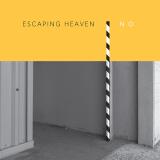
From his home city of Montréal, NO brings us synth infused with lyricism mapped over the dark undercurrent of an intensively driving beat. From vocals suffused with a compelling nihilistic charge, NO draws the listener into narratives with a somber core. This is synth unprocessed and raw edged, with an immediacy that goes straight to the heart of the matter. This album is a collaborative release with Kernkrach Records and TONN Recordings.
Colorize presents Echoes, the highly anticipated debut album from Massachusetts songwriter, producer and musician Jack Willard, a richly melodic body of work.
Jack Willard blends organic songwriting with modern electronic production, cinematic storytelling and immersive sound design, an emotionally driven style that has earned support from Above & Beyond, Tritonal, Yotto, Nora En Pure and Bob Moses since debut single Celsius, alongside airplay on SiriusXM Chill and BBC Radio 1 and millions of streams worldwide. The Massachusetts native made his Colorize debut in 2023 with Big Sky, an instrumental favourite still in regular SiriusXM Chill rotation, before expanding his sound on the Patterns EP with his first larger scale vocal collaborations, including fan favourites Everything All At Once and Wanna Know. Following performances across both U.S. coasts, Echoes arrives as Willard’s most ambitious project to date.
Norman Gervais and Charles Bals return after last year’s Transcoastal compilation with their first project for the Italian label Periodica Records and its newly founded imprint, Periodica International.
The concept behind SiRENE 89 is quite particular and took six years to develop. It is presented as the live recording of one long evening, with different bands taking the stage one after another on the terrace of a Mediterranean holiday resort in 1989, inspired by the places Charles and Norm remember from their summer holidays around that time.
The songs were recorded between 1982 and 1993 and gathered from small-time artists, beach-club vagabonds, local micro-labels, library records and privately released tapes. The music moves lightly between mystical ballads, digital samba and loose, sunburnt dance songs, carried by drum machines, not-quite-tuned guitars and college-band voices.
The audience on the terrace remains quietly present throughout, joining the tracks into one continuous, partly improvised set. By the end, it feels less like a compilation and more like a place where you have spent the night, proving that charm can carry further than perfection.
Familiar. Usually reserved for things we think we know. A face, a place, a feeling, a record perhaps. Until, of course, they aren’t quite the same anymore. Or maybe you aren’t.
Jennifer’s debut album lives somewhere around there.
It’s a record about time, which is already a fairly ambitious subject considering nobody seems to have figured that one out yet. More specifically, it’s about what
time does to a person. The old versions, the new versions, and all the ones in between that you only notice when something suddenly brings them back. Someone you
haven’t seen in years. A room you used to know. A certain way the light falls. That sort of thing.
There’s a bit of a doppelgänger situation going on, too. Finding something completely new and somehow recognising it. Meeting yourself again without immediately realising who you’re talking to.
Which can be nice. Or strange. Usually both. The songs on Familiar sit comfortably with that contradiction. Looking backwards without wanting to go back. Missing things without necessarily wanting them
returned. Realising that people who once occupied most of your waking hours can become people whose address you don’t know. Meanwhile, some tiny, seemingly irrelevant detail from fifteen years ago remains perfectly intact.
Memory has its own filing system. Not a particularly sensible one.
Jennifer wrote a series of poems alongside the album. In them, familiarity appears in melting snow, rough coastlines, a kitchen already warm in the morning, somebody’s hands fitting into yours. Elsewhere she wonders about someone she
once knew everything about and now knows nothing about. They could live around the corner. They could live on another continent. They could, technically, be dead. Probably not. But that’s time for you.
Maybe Familiar is less about remembering who you were than realising you never entirely stopped being them. Things get added. Things disappear. Things come back looking slightly different.
And somehow, you recognise them.
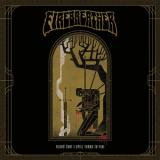
"Firebreather formed in Gothenburg in 2016, rooted in crushing, sludge-doused doom from the very beginning. Never wavering from that commitment across all three of their incendiary full-length releases, the trio has pursued weight with purpose, not as spectacle, nor as an exercise in excess, but as the only language broad enough to hold the emotional reach and sonic heft of their sound. The music arrives in a way that writes itself with no distance between the words and the sound; they rise from the same cursed ground, and that honesty has become the band's defining force. Firebreather is a band that never postures or asks to be admired for their heaviness- and to see them live is to experience exactly why. Their weight takes on another life entirely. The band's towering tone and consuming grit don't fill a room so much as alter it. Volume presses against the body before the first lyric lands and riffs arrive like shifting earth. The drums don't drive the songs forward; they anchor them while the line between sound and physical force begins to disappear. Years spent crossing Europe and North America have only sharpened that purpose, and a decade on with a fourth album on the way via the notorious Heavy Psych Sounds Records, Firebreather remains exactly where it belongs. Head down. Volume up."
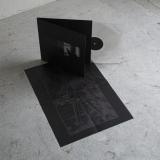
Gold Nugget Vinyl, limited to 400 copies. "Firebreather formed in Gothenburg in 2016, rooted in crushing, sludge-doused doom from the very beginning. Never wavering from that commitment across all three of their incendiary full-length releases, the trio has pursued weight with purpose, not as spectacle, nor as an exercise in excess, but as the only language broad enough to hold the emotional reach and sonic heft of their sound. The music arrives in a way that writes itself with no distance between the words and the sound; they rise from the same cursed ground, and that honesty has become the band's defining force. Firebreather is a band that never postures or asks to be admired for their heaviness- and to see them live is to experience exactly why. Their weight takes on another life entirely. The band's towering tone and consuming grit don't fill a room so much as alter it. Volume presses against the body before the first lyric lands and riffs arrive like shifting earth. The drums don't drive the songs forward; they anchor them while the line between sound and physical force begins to disappear. Years spent crossing Europe and North America have only sharpened that purpose, and a decade on with a fourth album on the way via the notorious Heavy Psych Sounds Records, Firebreather remains exactly where it belongs. Head down. Volume up."
Tenuous Links welcomes Torino’s very own VIOLA to the label with his new ‘Wrinkles’ EP. As the label owner of Reflue Records, VIOLA first caught my attention with his debut full-length release, a body of work that showcased a deep, rugged sound and a clear technical prowess shaped by his surroundings rugged coastlines and industrial landscapes of Torino in northern Italy. After speaking with Cristiano for over a year, it felt like a natural progression to bring his music to Tenuous Links. “The music I write almost always functions as a visceral soundtrack to whatever environment surrounds and infects me while I'm creating. Deeply rooted in the architectural contrasts of the places I’ve inhabited.”
‘Wrinkles’ is VIOLA’s second full-length body of work, yet the years of graft and dedication behind it are immediately apparent. Across three original tracks and a remix from London’s Jay Duncan, the EP delivers pure grit and crunch, inhabiting large, cavernous atmospheres grounded by pummelling bass, dynamic drums and intricate rhythmic detail.
The title track ‘Wrinkles’ is an ode to club spaces and the scene that revolves around them. Its broken rhythm channels the dancefloors of Cristiano’s formative years, spent partying in abandoned bunkers and warehouses in and around Torino. VIOLA explains: “Crafting such a raw, gritty bassline felt like an absolute necessity during the writing process, retracing memories of long nights spent dancing in silence.” The track’s cavernous atmosphere mirrors those pitch-black, unlit spaces, drawing us deeper and deeper into the abyss, with only brief glimmers of light offering reprieve from its relentless, all-enveloping bassline.
‘Mon Tom’ draws heavily from VIOLA’s hometown and his complicated relationship with Torino ,a city where tranquillity and beauty sit alongside heavy industry. The calm of the coastline is violently interrupted by vast steelworks and plumes of black smoke, leaving an imposing industrial mark on both the landscape and its people. The track reflects these contrasts. Metallic yet fluid, it moves at a faster pace, built around a driving 4/4 rhythm designed to suspend the listener while skittering percussion creates an increasingly uneasy sense of movement. It’s a meeting point between the beauty and brutality of the environment that inspired it.
‘P Maggiore’ was written between 2019 and 2020 while VIOLA was living in Rome’s chaotic Porta Maggiore district. Surrounded day and night by the grinding noise of trains, screeching tram brakes and beaten metal, he translated those raw auditory memories directly into high-pressure sound design. Yet, in contrast to the intensity of his surroundings, VIOLA deliberately pulls back the tempo.
Rounding off the EP is a skeletal remix of ‘Wrinkles’ from London’s Jay Duncan. She strips the original back into a techy, rolling cut, retaining its atmosphere and darkness while introducing a lighter touch of minimal-esque sound design. The result is a subtly transformed take on the title track that provides a fitting conclusion to the EP.
‘Wrinkles’ EP is a record shaped by place, by architecture, industry, memory and the physical spaces that leave their mark on us. From Torino’s industrial coastline to the chaos of Rome and the darkness of abandoned club spaces, VIOLA turns his surroundings into sound. Coming to vinyl and digital October 16th of October.
Yesca is back on Shall Not Fade with ‘Paint on Walls’ 12” EP.
2024’s Yesca EP on SNF - “Mood Loops” - set a high bar, so when we say this record is something special you should take note. Of course if you already know Yesca’s music or have had the pleasure of a Yesca DJ set then you will have already this queued up.
Sweet Spot: Ben Sims, Deetron, Oliver Ho, Vince Watson, Grain (Artwork’s Techno alias). Planet-E, Primate Recordings, Paul Mac & Stimulus Recordings found the sweet spot.
According to the OED the first use of the phrase “Sweet Spot” was in 1976 in reference to tennis rackets and golf swings. It’s where everything hits just right. And that’s what this EP does, hits just right. What strikes me is how descriptive the phrase ‘Sweet Spot’ is. Given enough swings and some luck we all know what it feels like to hit the sweet spot in some regard. Finding the sweet spot regularly though takes time and skill. But being able to hit the sweet spot by design every time, well that’s something different. That’s what makes the greats great.
For us at SNF there’s a consensus that in the lineage of electronic music there have been many moments where artists & labels converged on a sweet spot. One such sweet spot for us is in Techno
around 2003 when at the tail end of Hardgroove tempos began to slow and a groovier more refined tech house infused goodness appeared in the racks from a group of killer techno labels & artists (some mentioned above) that moment before the fuller emergence of the 2nd wave of Tech House in the mid 00’s.
That sound, while often emulated, never quite hit the same for us at least – until Yesca came along. His music has everything that we love about that sweet spot. Raw driving groove, rolling basslines and hip shaking percussion. What’s different on ‘Paint on Walls’ is that Yesca stepped on - he had already found the sweet spot on 2024’s Mood Loop EP - now his sound (or swing) is natural. Repeatable, refined and seemingly effortless. To revisit the tennis and golf analogy, this is the start of a Grand Slam run from an artist ready to etch their name in dance music history. Tiger..... Serena......Yesca.
Run the Tracks:
‘How I Do It (They Wonder)’ - A masterclass in less is more, and a serious DJ tool. Full of groove - slow it down and it will light the touchpaper in a house set - speed it up and you’ve got techno weaponry. Forget gatekeeping, this will make you feel like you just found a 2004 techno white label from the likes of Grain or Ben Sims.
‘I Desire’ - House music that I reckon Deetron would be proud of... Blissed out machine funk, whispered vocals, slick jazzy chords and dubbed out techno stabs are all grounded by Yesca’s impeccable, loopy drum programming. The best tunes always end too soon.
‘Domination’ - The ever rising bass, err, dominates this track and this track will dominate on many a dancefloor, but Yesca's knack for dubbed out swinging synth lines has to get a shout out here too. He turns what would be melodic elements into what feels like part of the percussion. Double Threat. Hands Up and Heads Down business.
‘Paint on Walls’ - It would be a tough call to say Yesca’s saved the best til last with the EP’s eponymous track given what’s come before, but Paint On Walls works all the highlights from the rest of the EP into a latin techno/house infused anthem. Skittering percussion, a hint of Detroit goodness and a deep deep rolling bassline and THAT vocal. In every way hopeful yet resistant, and that is what techno is all about.
To kick off our 5th year party celebrations the label begins its new set of releases starting with the joined forces of Regal86 and IMOGEN. The artists contribute two tracks each to the four track vinyl alongside remixes of each other's work, meeting at sonic crossroads.
The EP journeys through rave nostalgia filled with warmth and hope for the future, recollecting some favourite memories of the dance floor.
The A side is fast, driving with a sense of longing for the Halcyon Days and the offline times of partying when things felt easier. The release opens with ‘One Night In 1992’, IMOGEN’s nostalgic ode to an earlier rave era, built around a vocal recollection of her mother’s experiences on the dancefloor in the 90’s. Raw, hazy and deeply personal, it sets the tone for a record rooted in memory while remaining firmly in the present. Regal86 follows with ‘Rush’, bringing a different energy to the record. Driven by rolling rhythms, playful movement and a strong sense of groove.
The B side takes a more optimistic turn looking into the future with dubby aquatic pads and euphoric breakdowns, carrying a feeling of forward motion. There is a lightness to the tracks, a sense of joy running beneath NC Station and keeping the momentum locked whilst turning inwards on the final track, IMOGEN’s ‘Midnight At Bret’ rounds out a release that moves naturally between nostalgia, propulsion and the shared language of the dance floor.
As the next release launches, IMOGEN takes wigs on tour for a five year special run of shows starting on release at Tresor for a two club take over following with further cities: London, Milan, Dublin and more.
‘A Great Day in Newcastle’ is musical documentation of the North East working class experience.
Through a storytelling approach with the aid of new member, genius poet, Cooper Robson, the record details dark topics like substance abuse, crime and toxic masculinity through this Geordie Jazz Noir soundscape, whilst still feeling light hearted and playful, fully embodying the classic Northern optimism.
With the introduction of Cooper’s poetry combined with Stan’s developing composition skills, King’s genius orchestration and groove composition and Ferg’s classic melodic sound, the record shows the growth of the bands sound wholeheartedly, returning to their roots of rock, supported by producer and friend Geordie Greep.
Alongside longstanding members Sandro Shar (keys) and George Johnson (tenor sax), the band reaches new highs of intensity throughout the 45 minute epic.'
Orphx makes a striking comeback with a six-track EP on KR3, celebrating Rich & Christie's three-decade career in the industrial music scene.
Theikos EP - spans multiple eras and moods, merging raw, ancient production methods with modern interpretations. The result is a sonic landscape that bridges pulsing club rhythms with the intense energy of extreme electronics and death industrial. The title track, "Theikos," began in 1998 and was only finalized in 2024, years of evolution shaping it into a truly formidable piece.
This 12" release stands out as a deep and fully realized body of work, filled with personal insight and resonant echoes of a primordial world.
The standard edition comes in a sleek single-pocket gatefold sleeve, featuring a 1997 photograph taken in Toronto by Michael Nine, capturing the duo in their early years and visually anchoring the album to the roots of their sound. Limited and special editions include an exclusive booklet with archival photos of Orphx and a poster, along with a promotional videos featuring remastered and reimagined archival footage created especially for this release.
Love or its absence dominates the intimate songs on the new album from ARBORIST – the musical outlet of Mark McCambridge. Looking For Love, Arborist’s fourth album of exquisitely inventive Americana, places us firmly in his hometown of Belfast, allowing it to act as a microcosm of the wider-world, with all its foibles and charms. We find fictional protagonists scouring the dark corners of the city, wiling-away afternoons in strip clubs, wandering the streets in all weather and reflecting on the harsh reality of modern society, all in search of an elusive love – emphasising our need for it now more than ever.
Looking for Love is ARBORIST’s first album to be self-produced by McCambridge, largely from his home studio in Belfast – and at times it feels like we are in the room with him. It’s a different kind of record for him as previously he has always sought collaboration; whether it be with Kim Deal who chose to sing intertwined harmony on his debut single “Twisted Arrow”, or recording in The Curfew Tower owned by The KLF’s Bill Drummond who described Mark’s songwriting as being “riven with more loss than any record since Leonard Cohen quit this world”, and who Matthew E White and his Spacebomb band collaborated with to such astonishing effect on the previous Arborist LP, 2023’s An Endless Sequence of Dead Zeros, winner of the prestigious Northern Ireland Music Prize. This time, with no outside producer steering the way, McCambridge found that the quiet hours were where he felt most at ease, despite periods of trial and error, and, by his own admission, moments of feeling genuinely lost in it all.
Despite playing many of the parts himself, McCambridge still called upon old friends from the community around him; Spacebomb’s resident bassist Cameron Ralston (Bonnie Light Horseman, Hiss Golden Messenger) again features throughout the record, alongside Eamon Ferris (The Waterboys) on drums, with the great and the good from Belfast’s vibrant music scene. Grainne Meyer plays concert harp and Aga Olek plays violin for the quasi-title track “Looking 4 Love” – an off-kilter love-letter to Belfast. Meilana Gillard provides a sleazy saxophone on “Bye Bye Johnny Cash” – a seedy tale of a man obsessively visiting a dancer in a club, and The Larne Community Youth Choir provide backing vocals for “Go Kill The Fatted Calf” – a song Mark wrote about his son growing up, a take on the parable of the prodigal son, with Jonny Ashe’s blistering guitar solo adding an album highlight. The Errigal Ensemble String Quartet and Aisling Agnew’s breathtaking flute solo feature on “What Is It You’re Asking” – a song about love, or its absence, both personally and universally in these times.
McCambridge was recently honoured with a “Fellowship” by the Seamus Heaney Centre at Queen's University Belfast where he collaborated with such illustrious names from the literary world as Nick Laird, Caoilinn Hughes and Conor McPherson. Through the University he was given access to the music department's Steinways and pipe organs, and decided to try one out for the album’s centrepiece “I’ve Been A Flaneur”. As Mark explains, "The drone on the pipe organ — and the sound of it starting and stopping — was so visceral that I decided to try a half-written song against it right there and then, and this came out in one take… The song was a breakthrough artistically - I don't think I'll ever record in the same way again after this."
The album was engineered by longtime collaborator Ben McAuley (Van Morrison) and mixed by Jimmy Robertson (Anna Calvi, Beth Gibbons, Fat Dog). The results are staggering, devastating and uplifting in equal measure, calling to mind albums such as Songs Ohia’s Magnolia Electric Co., The Divine Comedy’s Regeneration, The Blue Nile’s Hats and Wilco’s Ode to Joy, as well as early-70s records from John Cale, John Lennon and Bill Fay.
Belfast native Mark McCambridge played his first show as Arborist supporting James Yorkston. A solo tour followed, and impressive performances led to notable support slots alongside Low, Cat Power, Echo & The Bunnymen and Guy Garvey. Arborist's debut single, the Americana-tinged "Twisted Arrow," caught the attention of the critics with an astonishing duet with Kim Deal of The Breeders. The debut album Home Burial (2016) and its follow-up, A Northern View, both received glowing praise, from The Guardian ("instant classic" ----) to MOJO ("devastatingly bleak… upliftingly beautiful" ----) to Uncut (8/10), with BBC 6 Music play from Cerys Matthews, Cillian Murphy, Lauren Laverne, Radcliffe and Maconie and Gideon Coe — and Steve Lamacq calling single "Taxi" "one of those records that makes you immediately stop what you're doing." He went on to even greater success with the 2023 Northern Irish Music Prize winning third LP, An Endless Sequence of Dead Zeroes, which was recorded at SpaceBomb Studios in Virginia with musician and producer Matthew E White. For his fourth LP, Looking For Love, he has signed with Fika Recordings and with a tour approaching in November, 2026 looks set to be a seminal year for the Irish artist.
Teen of Denial: Joe’s Story is a freshly reimagined take on Car Seat Headrest’s beloved breakout, Teens of Denial, now celebrating its 10th anniversary.
On the original album, Toledo often used the name “Joe” as a pseudonym – a sly homage to Daniel Johnston. Revisiting Teens in the run-up to its 10th birthday, he felt called to give Joe a unique backstory and began tweaking the album to tell that tale. The group returned to the studio with Teens producer Steve Fisk to update accordingly – tweaking lyrics, revising arrangements, and recording new songs in the “Denial-style,” including ‘Optimistic Son” and the anthemic ‘Joe Drives Again’. The result retains Teens’ dark edge and youthful cynicism, but allows a bit of hard-won compassion into the mix.
From Will Toledo:
Sometime last year, it was suggested to me that we do something for the ten-year anniversary of ‘Teens of Denial,’ so I started looking back on the album to see what we might do. In spite of some of its songs being a regular part of my life for the past decade, it wasn’t a record I’d thought much about as a whole since it came out. Most of the songs I’d come up with over a two-year period at the end of my college days, when I was struggling a lot with cynicism and misplaced aggression. But by the time the songs were done, I was living in Washington, Car Seat Headrest was a full band with a record label, and in spite of the turmoil of the writing process, the final album was pretty enjoyable for everyone to work on.
This time, looking back at the songs, I started to feel like there was a story being told through the album, though I’d never imagined it as being a narrative work. On ‘Hi, How Are You?’ Daniel Johnston had used the name “Joe” in the titles of a few tracks –“No More Pushing Joe Around,” “Keep Punching Joe” – as a sort of joke, a stand-in for himself. I borrowed the idea, and the name, for titling songs on ‘Denial.’ This time, I started thinking - who is Joe? And how do the songs, in the way they’re sequenced on the album, reflect what he’s going through? As I started asking this question, a story emerged with startling wholeness and clarity, like finding the foundations of an ancient city while digging in my backyard. As I kept digging, certain songs from the original album fell by the wayside, as they seemed misplaced in this new context; others asked for new lyrics, to fully give birth to the story contained in the music.
The resulting work feels more like the album ‘Teens of Denial’ was meant to be. When you’re writing from a dark space, it’s hard to have perspective on where you’re at. This time, I could pull from memories of that darkness, and use the distance and additional perspective of ten years of life to shed a fuller light on the experience. Joe is a character going through some of what I experienced, and some of his own problems. Telling his story, and not just my own impressions of life at the end of the teen years, brought a new level of compassion and wholeness to the album. It gave us the opportunity to write new material in “Denial style”, embracing a snappy and simple(ish) rock aesthetic, and in an additional blessing, we were able to team up once with Steve Fisk, a joy and inspiration to get back into the studio with after ten years. We mixed the material at his house in Tacoma, and were constantly amazed at the lack of divide between past and present, as we’d punch in vocal overdubs ten years later into the same gear, hearing my voice now running alongside a 2015 Will. For someone coming across this album or this band for the first time, this is how they’d hear the record, not as a relic of the past but as a new piece. It was immensely rewarding to experience that on our side.
For anyone familiar with ‘Teens,’ comparisons with the original will be inevitable, but I do hope that as much as possible, people can come to this album on its own terms, approaching it as a teen, hearing the music and story for the first time. I believe music is an ongoing story, and albums don’t always do justice to its dynamic, ongoing nature. What gives it life is the new ears that hear it, and the new hearts that engage with it. I’m so grateful that this is a work that people have kept coming to, and I hope that this presentation does them honor with a fresh offering to the conversation. We’ve known that “it doesn’t have to be like this”; now we can wonder - “what it if were like this?”
On Dummy’s new album, do you love the color of the sky?, the Los Angeles-based 5-piece deliver a breathtaking piece of work that introduces new textures and rhythms to their already varied and refined catalog. For the band’s third album, and first for new label home Polyvinyl, the group split time between self-recording at their home studio as well as Studio 22, linking up with frequent collaborator and engineer Joo-Joo Ashworth (Corridor, Automatic, Spiral XP). The band focused on intentionality and experimentation, exploring downtempo dance beats and electronic music while pushing the guitar as far as they could, using new self-sampling and processing techniques. Percussionist Alex Ewell’s overall sound design and production skills can be heard across the album, with layered drum sounds and rhythmic tremolo techniques shining throughout. Tracks like “Full Spectrum Dominance” and “Alluvial Fan” showcase the band’s tasteful pop sensibilities, while closing track “Heaven’s What You Make Of
It” features perhaps the strongest vocal delivery yet from vocalist/keyboardist
Emma Maatman. Additionally, the dynamic exchange between guitarists Joe Trainor and Nathan O’Dell is absolutely gorgeous, adding a new layer of immersion and directness that is unlike anything the band has done before. The result is Dummy’s most ethereal and sincere record to date, with more feminine and delicate undertones that sit beautifully alongside the gritty and noisy textures the band has become known for. Dummy has been praised in numerous outlets such as Paste, Stereogum, Aquarium Drunkard and Pitchfork, who described their second album, Free Energy, as “the
sound of a band turning all its potential energy into music that’s dazzlingly kinetic and powerful." The band has toured the US, UK, and EU extensively, with festival appearances at Austin Psych Fest, Treefort Music Festival, and others. In addition to larger outlets and festivals, the band’s strong ties to community and DIY ethos are ever-present, oftentimes preferring to play and connect with different local artists on tour, uplifting those around them while shining a light on the history of independent music.
On Dummy’s new album, do you love the color of the sky?, the Los Angeles-based 5-piece deliver a breathtaking piece of work that introduces new textures and rhythms to their already varied and refined catalog. For the band’s third album, and first for new label home Polyvinyl, the group split time between self-recording at their home studio as well as Studio 22, linking up with frequent collaborator and engineer Joo-Joo Ashworth (Corridor, Automatic, Spiral XP). The band focused on intentionality and experimentation, exploring downtempo dance beats and electronic music while pushing the guitar as far as they could, using new self-sampling and processing techniques. Percussionist Alex Ewell’s overall sound design and production skills can be heard across the album, with layered drum sounds and rhythmic tremolo techniques shining throughout. Tracks like “Full Spectrum Dominance” and “Alluvial Fan” showcase the band’s tasteful pop sensibilities, while closing track “Heaven’s What You Make Of
It” features perhaps the strongest vocal delivery yet from vocalist/keyboardist
Emma Maatman. Additionally, the dynamic exchange between guitarists Joe Trainor and Nathan O’Dell is absolutely gorgeous, adding a new layer of immersion and directness that is unlike anything the band has done before. The result is Dummy’s most ethereal and sincere record to date, with more feminine and delicate undertones that sit beautifully alongside the gritty and noisy textures the band has become known for. Dummy has been praised in numerous outlets such as Paste, Stereogum, Aquarium Drunkard and Pitchfork, who described their second album, Free Energy, as “the
sound of a band turning all its potential energy into music that’s dazzlingly kinetic and powerful." The band has toured the US, UK, and EU extensively, with festival appearances at Austin Psych Fest, Treefort Music Festival, and others. In addition to larger outlets and festivals, the band’s strong ties to community and DIY ethos are ever-present, oftentimes preferring to play and connect with different local artists on tour, uplifting those around them while shining a light on the history of independent music.
Marcus Gad, one of France's top reggae artists, hailing from the Pacific island of New Caledonia, returns with a powerful new album, FOR ALL Produced with his longtime collaborator Tamal, along with instrumental backing from his band Tribe, the record brings 12 new songs that continue Gad's thoughtful and catchy approach to modern reggae. Lush production, killer musicanship, along with modern vibes and riddims all make the album one of his best yet. Lyrically, Gad tackles many of the topics that have concerned him for years - liberty, equality, fighting against injustice and the problems of the world today.
Introducing to EarToGround Records one of the leading lights in abstract techno, as we showcase work from the brilliant Argentinian producer Translate. Translate comes with a very well-defined discipline when it comes to techno; it demands your patience and full attention at all times.
Terrestrial Funk welcomes Parisian producer Raymond D. Barre with a fun exploration into FM Synthesis. Bouncing in that sweet sweet midtempo zone all six tracks squelch to your heart’s delight. Simply put, “light-hearted and good vibes electro acid tracks”, as Monsieur D. Barre described them when he demoed the tracks to Terrestrial Funk two years ago. But they’re much more. Perfect programming brings that slow swing, wonky warped vocals on songs like ‘Broken Nose’, and the bells that chime in the releases final song ‘Mes Bêtes’ leave you in a paradox of fulfillment and desire. That’s the best part, you can flip the record back and listen to the release right over. DJs and home listeners alike are in for a treat with this one. Heck, get yourself two copies and mix every track back to back in the club. We guarantee it’ll go off.
Over the last decade and a half, Rotation Sound System’s annual gathering in the Staffordshire countryside has become one of underground dance music culture’s true success stories – an intimate gathering of like-minded friends and partygoers, powered by a custom-built six-way sound system, with music provided by a carefully curated line-up of dusty-fingered diggers, selectors and hand-picked live performers.
At the heart of the collective’s unique and much-loved approach lies a dedication to finding and sharing lesser-known gems and audio obscurities – fantastic records whose charm and quality has long been overlooked.
Last year, the core members of the crew – founders Dean Meredith and Ben Shenton (renowned for their productions as Mind Fair), and Wrekin’ Havoc trio Rob J, Stuart Robinson and Rich Hall – offered a snapshot of their unique musical approach via debut compilation Everything You Are About To Hear Is True, Volume 1, in the process introducing a global audience to some of the countless unknown mid-tempo classics nestled in their collections.
Fresh from another sold out edition of their acclaimed micro-festival, they’re back with volume two, another must-have collection of slept-on classics, loved-up shufflers and wide-eyed Balearic beats, all of which have played a part in Rotation’s story over the last 13 years.
Appearing on gatefold double vinyl with extensive liner notes telling the stories behind the tracks, Everything You’re About To Hear Is True, Volume 2 is full to bursting with music that sounds mind-blowing on the crew’s high-end sound system.
For proof, check the analogue-rich intergalactic shuffle of Paul Atreides’ 2015 jam ‘Arrakis Walk’, the relaxed boogie-soul of Rocky Winters’ Chaz Jankel produced ‘Vicious Circle’, the easy-listening-jazz-rock bliss of Vincent Maclin’s ‘Should’ve Took a Chance’, the 80s soul squelch of ‘Ecstasy (Centurion Mix)’ by Endgames and the immersive British dub drift of Sigma’s ‘Remember (Dub Style)’.
Everywhere you look, you’ll find eye-opening and ear-pleasing delights. There’s Pinky’s lightly acid-flecked, breakbeat-fuelled, acid house-era street soul classic ‘I Wanna Be The One (Instrumental Groove)’, the 1992 new age downtempo seduction of Linda Myers (‘Shine On Me’), the Clavinet-and-synth sporting jazz-rock/space-rock fusion of Wolfhound (1984 gem ‘Another Moon Song’), the Gallic colour of Buzy’s ‘Keep Cool (Version Maxi)’ and the guitar solo-laden electrofunk explorations of mid-80s UK act Lifesighs (‘Get Serious’, here presented in its extended instrumental form).
Two of the most prolific remixers in the world of Disco,Dave 'Love' Lee and John Moraleshave teamed up for one of their biggest projects to date - 'Mixed To The Maxxx'. After gaining access from the legendary original artists, the pair take the multi-track tapes of many classic Disco, Funk & Soul tracks and re-work them...to the Maxxx!
Where Remixed With Love stands as Dave Lee's own gold-standard body of work, Mixed To The Maxxx sets that legacy alongside Morales' own decades-deep M+M body of work: Lee brings his musically dense, groove-first touch to the likes of Harold Melvin, Syreeta, Lenny Williams and The Brand New Heavies, while Morales applies his extended, dancefloor-built M+M treatment and crushes the likes of Barry White, The Temptations and Loleatta Holloway, plus Dennis Coffey's breakbeat classic "Scorpio" for the DJs and collectors alike. Both work from original tapes, surfacing parts barely audible or entirely unheard in the source mixes, and both know when to let a classic breathe rather than bury it under modern production. It's a pairing a long time in the making. Lee and Morales first talked about working together around a decade ago, and getting Mixed To The Maxxx off the ground took five years of patient work: tracking down usable stems, securing approvals, and navigating a licensing landscape where much of the best material is now tied up with major labels increasingly cautious about clearing remixes. What's landed here is the product of that graft as much as the pair's shared ear for a great record, the sound of two people who know exactly what they're looking for and are willing to put in the time to find it.
A double 12" sampler in summer 2025 previewed the record's range. A bass-driven overhaul ofThe Brothers Johnson's "The Real Thing" and an extended mix of Philly legends Bell & James' "Livin' It Up (Friday Night)" showcased Lee's side, while an anthemic take on Inner Life's "Ain't No Mountain High Enough" and a tempo-lifted Light Of The World"London Town" flew the flag for Morales. Both drew strong early support ahead of the full LP.
Another big release on SOUNDS. in the rebound!
This time it's "Northern Lights" by Gene Farris from 1997, incl. DJ ESP Edit!
Re-mastered from original DAT
Follow up to Goodge's 2023 album Echoes Of Yesterday. Previous releases found on Hip Dozer and Cascade Records. Tracks found on the popular Spotify Mellow Beats playlist. 11th in 'Jet Set' Cold Busted series. Designed and manufactured similar to the vintage 60's style rice paper sleeves. In his latest EP, Sunday Soul, Goodge takes listeners on a four-track journey through the heart of funk, masterfully blending elements of R&B, jazz, and chilled lo-fi. Released as part of Cold Busted's Jet Set series, this four-song offering follows Goodge's 2023 album Echoes Of Yesterday and showcases his dedication to crafting timeless music. "Lights Out" kicks off the EP with heavy funk and stirring breakbeats, accompanied by a scratchy guitar that summons the revolutionary spirit of the '70s. Horns serve as a call to action, while a rollicking bass line and chunky electric piano might inspire listeners to go out and fight crime. "Promised Land" follows, featuring a formidable funk bass guitar and lead guitar chords that rhythmically play off the delightfully busy drums, creating an atmosphere reminiscent of the city's bustle. The title track, "Sunday Soul," is a rowdy affair with a speech-over-beats leading to crispy snare rolls and chiming electric piano. Shaker magic, staccato horn bleats, and spiral flute bits combine to create a swirling vintage-hued photograph of sound. The EP concludes with "Within Myself," a spacier sonic experience that could serve as the soundtrack for chasing someone across rooftops. It's funk spelled with a capital K. Sunday Soul is a must-listen for fans of of the heavier side of funk, solidifying Goodge's position as a master of his craft, creating a nostalgic yet fresh soundscape that keeps listeners grooving back for more.
New York's contemporary deep house guardian Fred P has a smoky, spiritual sound that is always inescapably immersive and evocative. For this new EP on Base, he kicks off with something brighter and more extroverted: 'Pardon Me' has long been a staple of his sets and balances his signature musicality with a more playful sax lead and bold rhythm that will get floors bumping. 'Freedom Fam' has one of his classic spoken word monologues drifting next to starry cosmic keys like a voice from the heavens. 'In The Light (Still Wanting)' rewires soulful house in his own vision - deep, insular, brilliantly humid. 'Factory Sound (Edit 1)' is as peak as Fred gets - a driving, musical house rhythm that twists and turns freely as sustained chords layer in some of that trademark emotional pull. Superb.
180g Heavy double vinyl LP with liner notes by Tyran Grillo. Limited Japanese Obi for the first pressing. Original artwork by Russell Mills and photography by Jean-Baptiste Mondino.
The third Time Capsule is a body of dub reinterpretations by celebrated producer Bill Laswell of Ethiopian singer Gigi. Curated by Tokyo record collector, music researcher and seasoned reissue supervisor Ken Hidaka, it is the first time Illuminated Audio is pressed to vinyl after its CD release in 2003.
Ejigayehu Shibabaw was born in 1974 in Chagni, northwestern Ethiopia and by pursuing a career as a singer, went against her father’s strict, traditional gender roles. As Gigi, she embraced the same musical freedom she had strived for in her personal life, incorporating the Ethiopian church, funk, hip-hop, West and South African music into her work. She first settled in Nairobi, then Addis Ababa, where she quickly established herself as one of the city’s leading singers. A move to San Francisco in 1998 led to a long and fruitful creative partnership with bassist and producer Bill Laswell.
Around the same time, Chris Blackwell had stepped away from Island Records to start the art house film company and label Palm Pictures. He took an interest in Gigi and together with Laswell, pulled together an all-star cast of musicians for her self-titled US debut album, including Herbie Hancock, Pharoah Sanders and Wayne Shorter. It won international critical acclaim, not just for its musicianship but for making Gigi a “defining voice for the Ethiopian expatriate community”, as journalist Tyran Grillo praises in his Time Capsule liner notes. From the nation-defining 1896 victory over Italian invaders to the quiet revolutionaries who wear simple shemma garments, Grillo believes the themes in Gigi make it “a shower of sunlight on her homeland for those ignorant of its struggles.”
After its success, Blackwell encouraged them to go back into the studio to rethink the album and Illuminated Audio was born. “Anyone can make a voice sound worldly”, Grillo remarks, “but rare are those who can make one sound inner-worldly.” Gigi was clear with Laswell to give her vocals a minor role “because it’s already been done.” Instead her Amharic verse is fleeting, exhaling through the textures like ghostly fragments; soaring yet muted. Yet the album is still titled under her name, an assertion by Laswell of her central role in the album’s creation. Not only was it a fully endorsed project by Gigi, but she would be present throughout its development, giving feedback on half-finished ideas as Laswell played them back in the studio. “It works perfectly”, she reflected after the album’s release. “We wanted to capture the whole spirit of each track, and Bill’s remixes create a different music language that really puts you in a pleasant place”.
This new vocabulary takes its lead from a technical approach that Laswell had been perfecting during a furtive creative period at the turn of the millennium. Much like his ambient interpretations of Miles Davis (Panthalassa, 1998), Bob Marley (Dreams of Freedom, 1997), and Carlos Santana (Divine Light, 2001), Laswell approached Illuminated Audio by returning to the original multitrack masters. Gigi wasn’t just reworked, but recomposed into an expansive lattice of instruments, submerged in a watery ambience of dub and trance undercurrents.
Sonically, this new language that Gigi refers to, is manifested by the original album’s more understated parts being pushed to the fore. Explaining his contrasting methods, Laswell saw Gigi as being “put together in a way that fits”. Contrastingly, in Illuminated Audio, “a lot of things that I featured in the remix weren’t as audible in the original.” Instrumentation laying near-dormant, deep in the mix, are brought to the fore: the acid rock guitar and Wayne Shorter’s saxophone on ‘Tew Ante Sew’, Graham Haynes’ flugelhorn on ‘Nafekeñ’, Laswell’s bass on ‘Kahn’, the melodica in Mengedegna or the floating synths and talking drums in ‘Gud Fella’.
Brought to his attention by mentor DJ Nori, Hidaka describes Illuminated Audio as a “masterful sonic exploration into ethereal ambience and dub” and made sure this reissue also contained a full remaster to give its “deep musicality” much better dynamics and density in the overall sound. Hidaka admits that Laswell's music “is sometimes so out-there, it is often misunderstood” and, indeed, to dub album non-believers this might seem like a prolific producer imposing himself on another artist’s work; eternally developing rearrangements that never quite get to its destination. But that’s missing its true power and triumph. This is more than the reissue of a remix, but “a wholly unique musical entity”, as Hidaka describes. Illuminated Audio refers to the illuminated manuscripts that comprise the major part of Ethiopian art and its new compositions stand in proud solitude as a rare body of reworks that both informs and enhances their originals.
Djrum's first release since 2019, the Meaning’s Edge EP is an introduction to a whole new world. For the artist also known as Felix Manuel, it was created in the final stretches of six rather traumatic years work. Having carefully honed his techniques and aesthetics, and learned some hard-won emotional lessons over this time, finally he began to work in a quicker, lighter fashion – and to cleanse his palate a little by bringing in a fresh ingredient: his own flute playing. For listeners, though, it will serve as an appetiser, a way into the delights and complexities of this new phase of his creativity.
It’s a serious work in its own right, mind. The use of flutes – including Bansuri, Shakuhatchi, Western Classical, and synthesised all blending and blurring into one another – gives it a coherence and a sense of airiness that unites the five tracks over half an hour, however divergent their beats get. And as in all his music, Felix’s whole life is in here. Ethnomusicology studies, untold hours of DJing everywhere from the gnarliest squat raves to the most rarefied deep house clubs, explorations of his own neurological and emotional makeup, and the technical finesse of someone who is never not creating music or art, all roll into an experience that’s dazzling, delightful and keeps on giving.
Just the opening track ‘Codex’ alone touches on OG dubstep, Aphex Twin-like braindance, post-classical exploration, movie themes and more. The gentle tones and melodies that rise up out of it perfectly conjure Felix’s running theme of a protective bubble that provides a sense of safety and tranquillity even as the beats and acid gurgles and spurts all around it conjure up the slings and arrows of life’s difficulties.
The tone set, the EP moves through ultra-rarefied glass-like percussion in an almost ambient setting, hints of grime’s counterintuitive patterns, and even more hectic patterns influenced by Tanzania’s hyperspeed singeli style of dance music – but always with that perfect balance of chaos and control, unpredictability and protection. It rewards playing and replaying endlessly, it’s a profound and often joyous experience… and it’s only just the beginning. This is the return of a master craftsperson more focused than ever on his vision and vocation and ready to blow your mind all over again.
Mastered and cut on 140g black vinyl by legendary mastering engineer Matt Colton at Metropolis Studios, London. Pressed at optimal media, Germany.
Manchester-based producer Lily Mumby, the creative force behind Lapalace, has chosen Lavender as her botanical muse for this sixth instalment. Like the aromatic herb that grows from tiny seeds to fragrant purple stalks, her compositions unfold with a similar patience and elegance. Her synthesisers breathe with a natural rhythm, creating textures that emerge and recede like morning dew on lavender buds waiting to bloom.
The standout track ‘new age night’ – a stunning love child of William Basinski's decaying tape loops and Aphex Twin's intricate programming—carries subtle lavender-inspired tones, balancing the plant's calming essence with hypnotic rhythms. Just as lavender requires thoughtful tending before rewarding the gardener with its distinctive aroma, Lapalace's landscapes reveal deeper complexities with each listen.
Much like gardening itself, Mumby demonstrates an innate understanding of when to intervene and when to allow natural development. This approach echoes throughout her career, from her debut EP "Ephemera" which caught the attention of Insult to Injury Records' Timothy Clerkin, through to her contributions to Chez De Milo's "So It Goes" Remix EP and Manchester label Skiptrace's various artists compilation.
Her work across BBC Introducing and fossil.radio reflects this same philosophy – creating environments where sound, space, and organic movement find their natural harmony. But this composition really feels that Mumby has come of age. "Music To Watch Seeds Grow By Vol. 6" represents the continued cultivation of Lapalace's distinctive sound and demonstrates the maturity of an artist way beyond her years. This music stands as a lighthouse through a thick fog of nostalgia, much like lavender standing tall amidst an English cottage garden.
Early DJ support including - Auntie Flo, Ruf Dug, Courtesy, Vladimir Ivkovic.
Rob Smith, RSD is not only a successful dubstep producer and pioneer of the Bristol sound, but also a very popular deejay travelling the world sharing his music. Coming from a reggae background and well-versed in sound system culture, Rob kept some of his best productions for his exclusive use when deejaying, the only way you would hear these gems was being played in one of Rob's sets. Fortunately, we've managed to persuade Rob to let Reggae Archive Records share these dubplate specials with a wider audience on a limited-edition vinyl LP. Compiled and sequenced in conjunction with Rob, the LP features nine tracks newly edited and mastered by Rob to enhance the bass playback on vinyl - it's cut heavy!
The tracks were recorded between 2006 and 2011, a time when one strand of dubstep heavilyembraced reggae and dub. Rob calls these tracks reggae infused dubstep and that's what they are, but Reggae Archive Records is a reggae label and this selection of dubstep tracks will most certainly appeal just as much to reggae and dub fans. Fusing dubstep beats, reggae samples, and seriously heavy basslines, this is a joyous celebration of musical cross fertilisation that has been tried and tested in clubs worldwide. In keeping with the dubplate origins of the tracks, we have designed the labels to replicate an old school acetate, while the sleeve pays tribute to seventies pre-releases albums with a replica stamp giving just the artist and title on a plain white sleeve with aged effect.
In 1991 Coil released the third of their early classic full-length albums “Love’s Secret Domain”, seemingly casting aside the gloom and funeral beauty of its predecessors in favour of a painstakingly multi-layered hallucinogenic electronic beast, which unlike some of their fellow ex-industrial contemporaries’ releases of the time wasn’t an attempt at easy accessibility or (the-gods-forbid) danceability, but a vibrating psychedelic masterpiece unrivalled in their discography and still a landmark album. artwork by Steven Stapleton released in co-production with Infinite Fog Prod.
Fast-rising pianist and producer Yoni Mayraz presents his debut LP ‘Dybbuk Tse!’ revealing the story of a malicious possession that is taking over one’s body and soul.
Dybbuk, known from Jewish folklore, is a malevolent wandering spirit that enters and possesses the body of a living person. It’s a cursed soul of a dead one that wanders tirelessly for sins committed during their life. The most vulnerable victims are the young and the sinful. Possession can be taken literally or as an analogy to the burden that young people carry generations back, which they have no influence on, and which they have to accept. Dybbuk can only be removed by exorcism. The titular ‘Dybbuk Tse!’ is a command to remove the spirit from the possessed body. The album is a story about possession but also about exorcism through music.
Recorded live with his band over the course of a spring week last year, ‘Dybbuk Tse!’ is indeed experimenting with the ‘darker side of things’, but yet with a somewhat lighthearted approach which is so typical of Yoni’s work. He easily combines jazz with the sound of 90’s New York hip hop and raw old school breakbeat. The album interweaves unique Middle Eastern melodies, sophisticated structures and sounds, and beautifully crafted solos played by some of the promising talents on the scene.
London based Israeli born pianist and producer Yoni Mayraz has set foot in the instrumental music scene with his EP ‘Rough Cuts’ released in 2020. Since then, Yoni and his band have been playing major venues and festivals around the world including the legendary Ronnie Scott’s and The Jazz Cafe, to name a few, bringing raw energy to stage with live versions of the studio materials, and stretching the melodies and structures into a Dancefloor-focused take on jazz.
Crying Outcast returns with its third release, landing close to home with legendary dub innovator The Rootsman. Bradford’s own and a true pioneering force in experimental dub since the 90s, The Rootsman’s influence runs quietly but deeply through the underground. Roots Return gathers three essential works from his catalogue, including collaborations with Celtarabia and Russ (The Disciples) as Pachakuti, alongside a light-headed reinterpretation from label head Miles J Paralysis. Spiritual and subtly psychedelic, yet deeply rooted in dub tradition throughout, drawing on influences from Pakistani devotional hymns and Celtic folk traditions. An essential modern day EP, displaying a meeting point between the heritage and the future sound of dub music.
Swedish visionary Boko Yout is releasing their long-awaited debut album GUSTO, out via Hoopdiggas Recordings.
GUSTO is Boko Yout’s debut album – a kaleidoscopic journey through memory, trauma, humour and healing. Framed as a fictional therapy programme led by the eccentric Dr. Gusto, each track represents a confrontation with a different shadow of the self: unspoken fears, inherited burdens, or unresolved inner conflicts. But GUSTO is not just about darkness – it’s also about hope, longing and the light that makes those shadows visible in the first place.
Boko Yout weaves together raw emotion, spiritual symbolism and bold experimentation. Referencing vodun philosophy, Jungian archetypes and post-genre production, they draws inspiration from artists like Yves Tumor, Odd Future and LCD Soundsystem. The result is a debut that feels more like a sonic manifesto – driven by love, intention and a deep commitment to artistic freedom.
You wake up abruptly on cold floorboards, your body aching as if from a great fall. White light floods your vision. Where are you? Last thing you can remember you were hurtling through the Genesis Domain at breakneck speed, but this is definitely somewhere different. As your eyes come into focus you see the hall is grand, intimidatingly opulent. A full house of seated onlookers peers at you expectantly. You’re on a stage, you realize. Flames creep up the walls, engulfing the room and lighting the faces in the audience; the heat is oppressive, but nobody seems to notice. A voice booms out.
“And now, ladies and gentlemen, the moment you’ve all been waiting for! Presenting: a performer of great renown all across the land, yours for one night only… introducing—”
Tiny bells jangle around your head as you shift your weight, obscuring whatever name the announcer just called out. You try to sit up. The jester’s hat tumbles off with a clatter. Not this again, you groan. Your head spins with vertigo. You grimace, trying to remember something. You had just gleaned an urgent and existential truth in the Genesis Domain, but it’s slipping away now… what was it?
Off to your left, a whip cracks. The impresario glares at you from the wings, fist clenched around a diamond-encrusted whip, mouthing at you to get up.
You try to run, but the weight of an incorporeal authority bears down upon you. The impresario cracks his whip again, an impish smirk forming on his lips.
With resignation, you begin to work the room. What else can you do? Tendrils of giggling and gossip creep through your periphery. The heat is suffocating and the smoke stings your eyes, but the show goes on. Remembering your bag of tricks as if from a dream, you raise your hands in the air, invoking the universal call to audience participation. The crowd goes wild. You feel the rush of a familiar thrill. Being the Fool comes naturally to you, you realize, as the palace burns around you.
A highlight from Sleaford Mods' acclaimed The Demise Of Planet X album, Elitest G.O.A.T. had already brought together the duo's minimalist electronics and Aldous Harding's light-as-a-cloud guest vocals, but why not throw another visionary artist into the mix? Bolstered with vicious beats and squelchy synths, The Prodigy have upped the elite levels with their Acid Thunder Mix, seamlessly fusing their pioneering spirit with Sleaford Mods' innovative energy. The G.O.A.T. just got greater..
Often credited as the father of multi-media theatre, Alwin Nikolais (1910-1993) took complete creative control over his productions - including cutting-edge approaches to lighting and costume that transformed human bodies into shifting sculptural shapes, while also composing wildly innovative electro-acoustic and synth-based audio as accompaniment.
After initially experimenting with musique concrète and tape manipulation (as demonstrated on the 1959 LP Choreosonic Music of the New Dance Theatre of Alwin Nikolais) Nikolais became the first owner of Robert Moog's synthesizer at the Audio Engineering Society convention in New York in late 1964. Relying heavily on the Moog and later the Synclavier synth/sampler, these 21 tracks document Nikolais' highly-prescient compositions across the mid 1960s through to the late 1980s - existing not only as extensions of his other-worldly choreographic productions, but standalone pieces of foundational mid-century American electronic and experimental music.
"Born in Southington, Connecticut in 1910, Nikolais’s early years and early career were in acting, music and puppetry. It was not until the late 1930s that he began his work as dancer/choreographer in Hartford, Connecticut, where he was commissioned by the Avery Memorial Theatre, a part of the Wadsworth Atheneum, to create an evening-length work to the music of Ernst Krenek. Previously his work and study as a pianist-organist found him accompanying silent films. This sort of accompaniment required from the musician not only a playing skill but also a versatility in improvisation, matching movement to sound, and evoking mood to situation.
Nik was drawn initially to dance by his involvement with the percussion scores used by the illustrious early twentieth century German dancer Mary Wigman. In trying to learn more about percussion, he was lured into dance class and thus his career began. His development of music and dance occurred simultaneously. His introduction to the twelve-tone technique opened his mind to the expanding areas of atonal music, and his dealing with music as sound per se. In 1948, after being appointed director of the Henry Street Playhouse in New York, Nikolais formed the Playhouse Dance Company, later known as the Nikolais Dance Theater, and began his aesthetic orientation toward dance as a study of motion. By the 1950s, he had ceased creating literal dances and began his explorations and eventual milieu as an abstractionist.
Sound became an important part of his abstract theatre. For his first dances, which involved his new thinking of dance as both a visual and kinetic art, he used live percussion scores in which he directed his dancers to play instruments of all nature. There was a combination of children’s toy instruments as well as harsh and resonant automobile brake drums, and other pitched auto parts which he also used to accompany classes. Once he installed his own tape recording machines, he quickly used the limited range these instruments provided in a new way, slowing and increasing speed and reversing sound. He also made the sounds adhere to the choreographic structure (not the other way around), thereby giving the dance its independence from the musical phrasing. But the real need remained: the search for new sound. Nik made a sound library, recording noises and percussion and vocal sounds, which the French aptly called musique concrète. Needless to say, he became a master at splicing bits and pieces.
From 1956 to 1962 Nikolais composed eleven major scores for his theatre pieces using such techniques. In 1963, James Seawright, who at the time was assisting Nik in his productions and also working at the Columbia-Princeton Center for Electronic Music, recorded a sound bank for the production Imago (1963). With this material, Nikolais created his first synthesizer score. Imago won the Paris Grand Prix in 1968 and launched the Nikolais Dance Theatre towards its national and primarily international acclaim.
During the same period, Seawright came to Nik and told him of a young man who had invented and constructed a simplified synthesizer and insisted that Nik visit the electronic fair currently being held in New York. Nik did so and met Robert Moog. He was completely taken by the new machine and after making some suggestions to Moog, (which Moog made), Nik bought the inventor’s first machine with the aid of a Guggenheim Fellowship. Moog himself was astonished by what his machine could produce for Nik. This machine was later acquired by the Museum of Musical Instruments at the University of Michigan at Ann Arbor as the first Moog synthesizer. The Synclavier was Nik’s next source of sound and since the mid-1970s remained the major instrument in the Nikolais soundroom.
Alwin Nikolais has been honored and awarded throughout the world. He has received the French Legion of Honor, the Kennedy Center Honors, National Medal of the Arts, two Guggenheim Fellowships, as well as Mellon, Ford, and Rockefeller grants. He has been a recipient of NEA grants since 1966, been awarded five honorary doctorates, all for his remarkable achievements in Dance Theater. His genius has influenced several generations of artists."
—Murray Louis
Ismael Pinkler lives in Buenos Aires. Belly Dance Services head Nick Hanzo in Vienna. Turns out the exact midpoint between the two is somewhere in open ocean. So they abandoned the plan to meet on Earth at all, and met on planet 126 in outer space.
It turned out to be a strange, hospitable little world — spinning at its own pulse, 126 beats per minute, changing landscape every few kilometers, as if it couldn't decide what kind of planet it wanted to be either. Ismael and Nick wandered it together, letting each new terrain talk them into a different song, until ten tracks had quietly assembled themselves. What they brought back drifts somewhere between shoegaze, techno, ambient, trippy tribal house and pop — grounded and gravitational, emotional and mental, to put it in terms Earthlings might understand.
Now, speaking seriously: Ismael and Nick built Planet 126 by passing sounds and ideas back and forth across the ocean, night after night, for eight months. The entire process — composition, vocal recording, production and mixing — took just eight months, a dream scenario for any electronic musician. The collaboration stayed positive, proactive and fresh throughout, letting the project move forward effortlessly. All tracks were written and produced by both musicians together; Nick wrote the lyrics and recorded the vocals, Ismael handled the mix. No samples, no references — just two people building a world from scratch.
Planet 126 also marks a milestone for Belly Dance Services: the label's 30th release, and likely its last. BDS began with BDS001, a vinyl EP by label founders Hanzo & Yaman, and has been solely helmed by Nick Hanzo for the past five years. Now it comes full circle — laid to rest with a big bang: a double vinyl gatefold album co-produced by Ismael Pinkler and label head Nick Hanzo.
Following on from his electric appearance on Diamonds in the Night, Tallac returns with a four‑tracker of low‑orbit elation. Tessitura blends floor‑facing energy with sleek space synths, elegant undercurrents washed in bold bars to produce a one‑of‑a‑kind sound. Drums hit hard on “Carbon Copy,” driving percussion providing the launchpad for synthlines to swoop and soar. Tempos are taken down a notch for the analogue embrace of “Kiss Me Quick.” Notes bend and flow in this smoky dreamscape, samples pulling the listener ever deeper. The rumbling kicks and hissing hi‑hats of “Pythia” are punctured by a throbbing beat; gliding above the rolling snares and luxurious breaks is a melody that thrums with palpable intensity and unbridled joy, a track made to ignite audiences. Never adhering to genre tags or style pigeonholes, Tessitura closes with “Cybersyn.” Touches of cosmic melt into late‑night glow‑stick energy, dawn’s light piercing the warehouse windows while the speakers continue to bounce blissfully.
Step into the backroom of the Bordello, the lights dim and the soundtrack adopts a different tone. L.F.T. leans against the wall. Nestled under his arm, Sonic Boom: four tracks of acid-inflected electro disruption. Love, Fist, Tears is no stranger to the more gnarled side of the machines, and that unadulterated rawness is evident from the needle drop of “Locked in My Head.” From its bent and buckled intro, the track launches a beat that punches before drawing the listener in for more. Vocoder lyrics are mangled with distortion, static soaked chords blighted by corrosive chemicals and industrial decay as the knives are drawn from the outset (and this is only the beginning). Blistered and cracked beats are doused in a pestilent haze for “Las Plagas” and a message of intent is firmly stated: there will be no let up on Sonic Boom, no reprieve. “Ningen” opens the flip. Grisly, petrol smeared beats splutter below a juddering synthline that coils and twists with serpentine menace. A probing tom is lanced before being set alight in the finale. Sinister and unsettling, “Schmutzig Personality” is as physically powerful as it is psychologically gripping. Barrages of drums rain down, barbed snares and sharpened claps, as an assault of acid is further weaponised by machined vocals. L.F.T. doing what he does with an EP that will leave bodies and speakers broken.
Nicolas Balmer reveals the heavy silence of his soul.
Facing his own mirror.
The soundscape unfolds.
Fire sets the tone.
Kindling of the abyss, driven to go on and on.
Passion in his language contains suffering.
A silver lining, found in delicately layered noise.
A myriad of intertwined sounds paint the melodies of a life.
Holding the memories of those who danced with his shadows and light.
Nicolas releases his album “Leben” on Zürich based Subject To Restrictions Discs. While moving between New Wave, Kraut and Electronics, his intuition for ambient oozes from each composition, fast-paced or slow. As Nicolas Balmer lays bare his most intimate sources of inspiration with Leben. He holds nothing back.
The album is shaped by a sense of optimistic melancholy: restless and contradictory, yet full of hope. The music is not about arriving, but about the journey: loss and finding oneself; despair, love, guilt and forgiveness. This is an album that does not seek to explain life, but rather embraces it in all its contradictions.
Nicolas Balmer is a Zurich-based multi-instrumentalist, producer and synthesizer enthusiast who has been exploring contemporary music for over fifteen years. Working across music, theatre and interdisciplinary projects, he moves between genres and forms. His work includes the electronic project Nico Sun, the experimental duo Gūsū with Xueyan Chen, the collaborative project Konstant with Angelo Repetto and Kenel/Sonne. He also composes and produces music for theatre and performance, as well as working in mixing and production. Across his projects, Balmer is driven by raw textures, emotional authenticity and a search for an independent musical language.
2026 Repress
30 years of Fuse means 30 years of road paving.
An ode to the past and a hint to the future, Fuse shares this milestone with its original guests from 1994 all the way to its fresh party goers of the past years as a promise to keep its dance floor focused on quality music and timeless moments.
In over a quarter century, the Brussels club has stood the test of time by rooting itself in ageless music and employing pioneering artists - large or small, international or local - to command the decks of Belgium's longest running dance floor. A celebration of this legacy and the renewed imprint is in order, coming in the form of a 30 track compilation of techno's best and brightest from around the world. One track for one year, this collection of recordings highlights the status quo of enduring club music, beginning with a nod to the past: a re-release of Jeff Mills iconic 'Step to Enchantment' from 1993. This glance to the past quickly shoots us forward into the current state of techno with legendary artists like Planetary Assault Systems, DVS1, Steffi, Rodhad, Donato Dozzy, DJ Nobu and many others who headlined the club in recent years. Cementing itself as a respected escapist institution, Fuse also calls on its growing local scene to prove why Brussels continues to remain a reference in the scene even outside of its own borders.
On My Way is a forthcoming photo memoir that follows Larry Heard to over 30 countries across 40 years, performing in Fingers Inc, The It, Mr. Fingers, and Larry Heard Live. Published independently by Alleviated Records, this 380 page book draws from Mr. Heard's extensive archive of thousands of photographs, event flyers, and historical documents, many of which have never been seen before. On My Way contains excerpts from over 8 hours of interviews, but the journey is primarily visual: the photographs taken by Mr. Heard and his collaborators serve as a personal and artistic odyssey, documenting almost every single one of the over 350 gigs Mr. Heard has performed in his career. On My Way also presents a history of technology in the arts. We see music equipment evolve, become sleeker, sexier, the studios housing the gear more grandiose. Personal cameras transition from 35mm to digital, first declining in quality as the world embraced the freedom of lightweight yet low resolution lenses, eventually arriving at the contemporary DSLR. The designs of rave flyers begin with photocopied images and hand drawn text, evolving with the genre through the 90s and 00s to take on a futuristic, utopian quality. We watch trends in fashion and art become referential as the 21st century embraces nostalgia. Institutions rise up to support this scene, most notably Red Bull Music Academy, a significant patron of electronic music in the 2010s that sought to connect new musicians to their roots by hosting visionary global festivals and panel discussions. Along this journey we see familiar faces: singers, DJs, club kids, and music industry professionals, as well as the enigmatic gaze of the man whose work has inspired millions.
Deep, deep stuff on the debut album from K Wata. Long and dubwise, dark and detailed. With bass that fills and warms a space.
All noir. Cast shadows against the wall. Weight being shifted and distributed with singularly delicate poise, like a knife being balanced on the end of a finger.
There’s a silvery, loose flow state to this record that maybe reveals the way some tracks were first written to be deployed live at Sustain Release 2025. Then taken back to the lab and tightened up further into the album’s final form, with beautiful mixing work between Kenzo and Chris Botta.
With that in mind, Give U Space unfolds slowly and fluidly, giving the listener the chance to access and open up to the deepness of the sound, being led down a path. It rolls and builds momentum and groove, and ratchets tensions up toward peaks of energy "Whisper Dub" and "There Will Be Love".
The tunes feel architectural. Rooms to be in and settle into. Simultaneously stripped back and then etched with neat little details and characterful or atmospheric sound choices. The silhouette of slo mo Memphis and Houston trap is a leading influence, especially with the drums. Mixing with bits of click’n’cut sampling and psychoacoustic tricks, the penumbra of dub techno and drowsier dubstep, and SG’s soft vocals rising in the ether.
The presence and inspiration of the sound system is obvious in all of Kenzo’s work, the music can rattle when spun up louder or blended into the club. But K Wata’s uniqueness and signature comes from an often equally inward facing quality, touched by distance and longing and a sort of chiaroscuro incandescent light set up.
Written and produced by K Wata.
Mixed by K Wata and Christopher Botta at Fer Sound Studio.
12th Isle return to familiar downtempo, club-adjacent ambient and analogue house stylings with eight tracks from Japan’s sprawling metropolis. After a series of split releases and dancefloor focused EPs over the last decade, Tokyo based producer Igaxx lands on the label with their debut full length album to close out the year.
Influenced by leftfield electronic music from the 1990s such as releases on Elektrolux and Rising High, Igaxx (Shota Ikawa) works with multi-tracked hardware synthesizers manufactured throughout the 1990s and 2000s, embracing subtle variations and unexpected moments that emerge through performance. Allowing chance and unpredictability to become an integral part of the music, Ikawa’s process and sound design also speaks to the lighter side of vintage UK labels such as Irdial and Radioactive Lamb or the psychedelia-infused touch of the West Coast scene in the states. New Lights exists somewhere between the dancefloor and music for focused listening, carrying a sense of weightlessness and a quiet sense of humour, balancing immersive sonic environments and moments of sly unexpected detail and improvisation.
“To date, I have released several EPs on my own label in Japan as well as on labels across Europe. I am truly happy to finally present my work in the form of a full-length album. It has allowed me to express and unify a broader musical world than was possible within the format of an EP, and that, to me, is one of the album’s greatest meanings.”
Der dämonisch großartige Soundtrack zum erfolgreichen Action-Roguelite-X-Base-Management-Game CULT OF THE LAMB von River Boy (Narayana Johnson). 42 speziell für Vinyl gemasterte Tracks erscheinen auf 180g rot-schwarzem Splatter-Doppelvinyl im Deluxe-Gatefold, verziert mit Kunstwerken des Illustrators Carles Dalmau.
In 2000, after almost two decades of hibernation under the ambient waves and dub currents of the Sargasso Sea, LSD revived the seminal ‘Auntie Aubrey's' series, an Orb Remix Project. Released as a 2 x CD compilation, Part 3 is a veritable smorgasbord of classic, new and unreleased labour-of love remixes that span three decades yet still transcend space and time.
Many influential artists have been involved with The Orb since the beginning, and the project keeps evolving and adapting. Dr. Alex Paterson, the gravitation centre of the Orb is known for his playfully subversive remixes and true to form this album highlights the diversity of his musical mind.
We see the good doctor remix the melancholy and evocative “The Last Lighthouse Keeper” from The Transit Kings, an early British electronic music group that included Jimmy Cauty of The KLF, one of the original members of The Orb. The remix of ‘Davy Jones’ Locker’ from System 7 takes you surfing on a sun-dappled sea of ambient dance nostalgia, while Killing Jokes’ ‘European Super State’ remix (in which LSD label founder Martin ‘Youth’ Glover plays bass guitar) sounds like the soundtrack for an imaginary spy thriller with the powerful lyrics and hypnotizing voice of Jaz Summers.
Legendary producer Youth teams up with Lx yet again on a psychedelic rocker with spellcasting vocals by Lara Smiles, and this is just the beginning! Boasting an all-star lineup, the compilation includes many of our scenes most esteemed electronic music producers such as Coldcut, David Harrow, Sendelica and Gaudi as well as the ambient blissed out vibes from the enigmatic DF Tram, Duende India Collective and The Gyuto Monks of Tibet, this collection offers up such the variety to appease even the most dedicated Orbsessives and music connoisseurs
Expanding on his signature cinematic canvas, the EP solidifies the immersive, spiritual space Common Saints occupies in the contemporary landscape, a distinct sound with trademark intricate studio arrangements.
Following the structural foundation laid by the project's breakout singles "Night Light" and the title track "Illusions", the full EP stands as a striking philosophical assessment of the modern human condition. Age Of Illusions serves as an artistic reflection of cultural anxieties surrounding hyper-technological advancement, guiding the listener through a deliberate sonic architecture of self- discovery, spiritual rebirth, and final enlightenment.
For the second installment of its renewed imprint, Fuse's own in-house resident and one of Belgium's proudest exports Phara takes the reins for a deep dive into thick percussion and vibrant club landscapes. 'The Wall' puts current dance music under a microscope with a brush of truly vintage spontaneity, merging techno's confrontational nature with house's harmonic genuineness. This duality is reflected through Phara's own relationship with his home base Fuse and the complementary contrast between its two rooms.
The EP's title track serves as a hypnotic introduction for the A1, imposing a bass-heavy rhythm and a persistently oscillating synthline. A dense production full of energy, 'The Wall' inspires intrigue throughout its duration, revealing its true intentions through a capable sound system. Sharing the first side of the press is 'Blaes 208', a name that Fuse club goers will likely recognise, that guides the listener from effect into embrace. With lush keys echoing past a comforting drum sequence fit for a close-eyed dancefloor experience, Phara's impactful tendencies meet his affinity for the melodic through a blissful six minutes of crowd to selector connection. Switching sides, a return to a cold cold aesthetic is quickly apparent through 'Hush Now 206'. A pummeling, saturated bass competes with a kick of equal effect, rolling through a storm of metallic stabs. Mastering the message of urgency, Phara presents a lightshow of resonating percussive work, defining his space just to cut right through it. To close out with a lasting impression, the producer mutes the acoustics of his work through razor-sharp sound design dotting along playful snares, a duality reminiscent of the dynamism of Detroit electro. 'Motion Steps', referring to the stairs that ascend from Fuse's main room to its more left-field counterpart, captures the atmosphere of the almost shimmering music that can be expected to be played there; a place where Phara and many others have been known to explore the extremities of their music. He swiftly throws in melodic elements to recontextualize an otherwise pressing composition, and after three chapters of considerable weight, he concludes his record with infectious groove that flaunts technical ability.
Hysterical Love Project return with February’s Album, ten warm compresses steeped in the hum and hiss of late season humidity. Downcast guitars are aerated by sanguine refrains and flitting e-waste, languidly driven by a persistent low-end throb. Contentment pulsates with delerium; sweetness ripens into pressure.
You ask me, what’s the point of doubt? What’s the price of peace of mind? I open the windows to let the insects in and the light out.
FFO: Chris & Cosey, Labradford, City Centre Offices, YL Hooi
Written and recorded by Brooklyn Mellar and Ike Zwanikken
Physical Distrubution by Rubadub
Australia's Dancing in Space crew have thus far kept their vinyl releases to a minimum, reappearing every so often with a fresh batch of their own excellent disco edits. Here they try something different, delivering a typically assured two tracker from one of the most talented and productive scalpel fiends in the business, Chicago scene stalwart Rahaan. A-side 'Allright' is a typical Rahaan rub, with the talented re-editor skilfully rearranging and lightly dubbing out what sounds like a turn-of-the-80s fusion of classic disco, synth-splattered boogie and soaring jazz-funk. On 'My Strategy', he successfully breathes new life into an old Philadelphia International favourite, opting for a largely instrumental extension that subtly pitches the track up, tempo wise, for greater dancefloor pleasure.
Hector Ram and Ricky Ramirez are starting to celebrate ten years of Short Attention Records and it's US house stalwart DJ Aakmael they've enlisted to pop the champagne cork and cut the cake. He's one of those artists who turns out plenty of music, much of it sounding within the same consistent deep house framework. But there's always a little something to his tunes that keeps you coming back for more - a perfectly chosen sample, a nagging bassline, a sense of melancholy that you cannot escape. All of that is true on his latest. 'Things Always Happen' has keys that convey beautiful pain, then 'If You Believe' is a deep house haze with smudgy samples and blues-y ache. 'Free' is more light with trilling jazz-funk keys and earthy guitar frets sprinkled into the mix. 'Stopmotion' shuts down with a signature Aakmael bump. Just timeless stuff.
Dublin deep house fixture Glenn Davis returns with four tracks steeped in the smoked-out warmth of classic Chicago and New York house music, though there's enough personality here to stop things drifting into pure revivalism. 'The Journey' opens through supple drum movement and glowing Rhodes figures that unfurl lazily across the groove, as little chord flourishes flicker at the edges like light catching dust through half-drawn curtains. 'Love Is' softens the mood further through hazy vocal vapour and richly upholstered keys that melt gently into the rhythm. On the flip, 'Free Your Mind' introduces firmer rhythmic pressure without disturbing the record's low-lit sensuality. 'Da Jazz' closes things beautifully through brushed percussion and featherlight piano motifs with a rolling swing that feels most elegant in its looseness. Very classy deep house, this.
Ibiza-based Jazz N Palms is back with more musical dispatches from the calmer side of the island that follow on from his Ses Rodes album in 2022. That record was focused on a double album assembled, as if over a Cartesian grid of space-time. While one record was about space/the environment, the other was following the times of the day. This 7" expands that with more music inspired by magical island spaces.
These tracks were recorded in Magrana Studio in Ibiza with three new musicians and, after the post-production, the mixing was made with the help of Ben Westbeech and his beautiful Unfairchild II, an amazing Californian reproduction of the holy grail of tube compressor that has been present in Abbey Road studios since the 60s.
Opener 'El Valle' ('the valley') captures the different shades of light that pass over Ibiza, from early spring light to the arrival of looming clouds and the first thunders of a summer storm. It is the organ which serves as the main character to convey those sensations and the passing from light to dark as a live, loose and dusty groove bounces below. On the flip side, 'La Costa' simulates cruising on the open sea, riding choppy swells as waves lap at the boat and you gaze at the passing landscapes. Only drums and bass have been used to convey the feeling, and the result is a wonderfully uneven, ever-evolving and funky groove full of life.
A 90's deep house classic returns, originally released on the legendary Placktown Sounds. A must-have reissue for DJs, collectors, and deep house devotees. Lights out, volume up!
“Slide in the party like three monkeys wearing a trench,” GDP says in the opening seconds of Cross Off Matthew, his first solo album in over a decade. The line is indicative of the New Jersey emcee/ producer’s relationship with music, one that’s ebbed and flowed throughout his career and eclectic discography. Entirely self-produced, Cross Off Matthew feels like a reintroduction as well as an expansion of what makes the cult rapper so beloved. GDP came up in the respective punk, hardcore, and skateboarding scenes of New Jersey, roots that inspired his DIY approach to making hip-hop. He applied a decidedly punk ethos to his brand of neo- boom bap on early releases like 2009’s Realistic Expectations and 2011’s Useless Eaters, albums that celebrated his youthful indiscretions but also signaled an old soul lying beneath the surface.
He opted to release them on punk/indie labels (including Run For Cover and Ride The Fury Records) instead of more traditional hip-hop outlets, and along with an ambitious touring schedule, he carved out a dedicated fanbase throughout the early 2010’s. Cross Off Matthew is a slow-cooked labor of love, born out of taking enough time away from something to understand the journey with greater perspective and appreciation.“I’m older, arguably wiser, but that creative fire stayed with me,” he says. “I wanted to make something that felt nuanced, something that I could feel proud of.” Throughout the album, the production toggles between foreboding and facetious just as deftly as his bars. Tracks like “Island In The Sky” and “Location Therapy” make rap confetti out of caustic guitars and glaring distortion, while “Seroquel” and “Rock For Light,” (the latter a nod to NJ rap royalty, The Outsidaz) embrace GDP’s signature blend of East Coast hip-hop and punk sensibilities, with lyrics that highlight the sharp wit and heady philosophizing that he made his name on. GDP examines vices, interpersonal relationships, the collective dread of late-stage capitalism as well as the pitfalls and rewards of trying to lead a creative life throughout it all. The wiseman that peaked out from beneath the shield of debauchery on his early releases has now come to the forefront, as GDP’s trademark humor and commentary feel refined by years of life lived experience
Layne & Chang might not be household names to everyone, but in the underground they’re long-established fixtures. Chang—who’s released music under a string of aliases over the years—was tipped by Urb magazine as one to watch back in the mid-’90s and has been embedded in dancefloor culture ever since. Alongside him, Layne Fox (formerly San Francisco, now back in Florida) brings deep disco credentials, having helmed the cult-loved Disco Dimensions label and recording as 40 Thieves—best known for the underground anthem Don’t Turn It Off. In short, the boogie lineage on this record runs deep.
And that’s before you even get to Dan Tyler. As one half of the Idjut Boys and co-founder of Noid Recordings, Tyler helped lay the groundwork for London’s edit culture long before it became a global phenomenon. His involvement here only strengthens the package.
“Shake Your Body” opens the release with a locked-in, funk-driven groove—swirling melodic lines, subtly acidic textures, warm vocoder touches, and tight, punchy drums all dialed for peak-time movement. On the A2, “In The Desert” shifts the mood into something more transportive: a hazy, late-night burner equally suited to open-air parties, after-hours sessions, or home listening with the lights low.
Flip to the B-side and Dan Tyler delivers two cosmic reworks that push things further out. Psychedelic, elastic, and built for serious systems, both cuts hit that sweet spot between heady and physical—already circulating among a handful of tastemaker DJs and primed for heavy rotation as festival season ramps up.
A strong, floor-ready release that sits comfortably in the Whiskey Disco catalogue—rooted in disco, but reaching well beyond it.
KKYV10 is a four-track EP by Bulgarian producer Loopdeville, currently based in Spain. The release explores a flexible space between minimal, breakbeat and house, shaped by groove-led structures, textured sampling and a slightly twisted, off-centre energy. Built to move through different moments — daytime light, peak pressure, late fade. The EP opens with "The Bizz", a track built around jazzy elements, vocal cuts and a jackin low-end. Its warm, rolling groove sets a natural tone for the record, balancing playfulness with reflections. "Shmuck Norris" follows with a heavier, more direct approach. Driven by raw drums and a rolling bassline, the track leans into a big-beat aesthetic while maintaining a stripped structure. On "Rashford", the EP shifts into a breakbeat framework. The track carries a deeper, more introspective mood, with subtle background movement adding acid tension beneath it’s surface. The closing track, "Septimo", draws from UK-influenced minimal with garage elements. Focused on sub frequencies it is designed for systems that favour depth and clarity in low parts. Together, the four tracks form a cohesive yet varied release, reflecting Loopdeville’s recognisable sense of tension and detail while staying totally aligned with Kooky’s sonic direction.
,Lick the Spoon, Let it Soften" ist das zweite Album von Lamplight, dem Projekt des in Virginia ansässigen Songwriters Ian Hatcher-Williams und seiner Band aus bewährten Mitstreitern, darunter Mitglieder von Lightning Bug und hemlock. Das selbstbetitelte Debütalbum aus dem Jahr 2024 wurde von KEXP, Stereogum, WBUR, Brooklyn Vegan und The FADER gelobt, landete auf Playlists von Apple Music, KEXP und der Numero Group und führte zu gemeinsamen Auftritten mit Jake Xerxes Fussell, Advance Base, John Andrews und Mutual Benefit. Während das Debüt über mehrere Jahre hinweg Gestalt annahm, entstand dieses Album recht schnell. Die meisten Songs entstanden im August im Rahmen einer ,Ein-Song-pro-Tag"-Schreibübung, teilweise inspiriert von Kahlil Gibrans ,Der Prophet". Das Album wurde dann komplett in Eigenregie in einer Hütte am See in Vermont produziert und aufgenommen, mit einer weiteren Session in der Stadt im selben Winter. Das Ergebnis ist zugleich gemeinschaftlich und privat: ein Album über Trauer und ein verändertes Verständnis von Liebe in all ihren Formen, das sich durch straffere Arrangements und prägnanteres Songwriting auszeichnet als sein Vorgänger. Es ist außerdem unverhohlen appalachisch geprägt. Das ist kein Alt-Country, aber selbst seine vielschichtigsten Momente tragen einen natürlichen Twang in sich.
Do you know what time it is? It’s Prime Time, the new EP on Punctuality from mischievous French duo Pureblast . Marking the label’s twelfth release, the record serves as a bold statement of intent from the Parisian pair and demonstrates why they’re quickly earning a reputation as one of France’s most exciting live acts.
Across the EP’s five tracks, Pureblast weave together a broad spectrum of influences while remaining deeply rooted in the duo’s singular vision. Every cut is fat, pumping, gritty and playful, ready to turn heads and hips on the dancefloor.
Side-stepping easy genre classifications, Prime Time is modern rolling prog at its most energetic. Tightly wound low-end, pummelling drums and restless basslines drive each track forward with purpose, while sa+ga’s vocals are manipulated and distorted to humanoid perfection. The result is something distinctly personal beneath the machine funk: robotic yet seductive, gritty yet playful.
Deep listeners will spot nods to tranced up breakbeats, Ray of Light-era big beat, Detroit electro and contemporary UK techno with psy-fluenced synth swirls and texture. Far from pastiche, these influences are absorbed into the Pureblast machine and transformed into something entirely their own.
Gritty, pumping, sexy and playful. It’s Pureblast, it’s Prime Time.
credits
The third and final full-length, double album from the Elephant 6 Recording Co. co-founders. Their first record in 27 years from the Athens, GA band. A legend is a heavy thing to carry. It has been 27 years since the last album by The Olivia Tremor Control. In that time, they have influenced countless bands, been the subject of documentaries and biographies, and now, finally, improbably, there is a third Olivia Tremor Control album. In the 1990s, The Olivia Tremor Control released two albums of experimental and psychedelic pop genius, Music from the Unrealized Script: Dusk at Cubist Castle (1996), and Black Foliage: Animation Music Vol. 1 (1999). As founding members of the Elephant 6 collective, they redefined the US underground scene, injecting bright paisley colors and sonic adventure into a scene weighed down by grim irony and a fear of pretension. Work began on the album as far back as 2005 but progress was slowed by other projects, other responsibilities, but in 2010, the band of Hart, Doss, John Fernandes, Pete Erchick, Eric Harris, and Derek Almstead began to record. By 2011 The Olivia Tremor Control had reemerged as a fully active band and added AJ Griffin to the lineup as well as touring members Scott Spillane and Robbie Cucchario. The band was now recording constantly and were fast on their way to completing the album. Then in the summer of 2012, Bill Doss suddenly, tragically passed away. With everyone still in shock and grieving, work on The Same Place came to a halt. Every attempt to resume the project stalled until 2023, when, after watching the Elephant 6 Documentary, Athens producer/musician Jason NeSmith came on board to help. In 2024, with the album nearly finished, Will Hart unexpectedly passed away. Drawing on Will's extensive collections of notes, The Same Place was finally completed by the surviving band members, the broader Elephant 6 community, and producers Derek Almstead, Jason NeSmith, and Ron Kwasman. The Same Place does everything The Olivia Tremor Control ever did well. It also does it better, and goes further, than anyone could have imagined was possible.
Like Roses aus Berkeley, Kalifornien, sind eine echte Macht. Offenherzige Texte über Liebeskummer, Verlust und Selbstreflexion treffen auf energiegeladene Hooks und rauen, melodischen Gesang, der geradezu dazu einlädt, lauthals mitzuschreien - eine Kombination, die der Band eine treue Fangemeinde sowie Nordamerika-Tourneen an der Seite von Acts wie Pierce the Veil, Neck Deep und Mayday Parade eingebracht hat. Seit 2018 ist die Band am Start, hat ein paar Singles und EPs veröffentlicht und präsentiert nun ihr erstes richtiges Album. "Gänzlich unprätentiös beschreiben Like Roses ihren Sound wie folgt: "Leute mit Instrumenten, die davon schreien, wie traurig sie sind - und zwar über den Lärm, den sie mit besagten Instrumenten machen." So weit, so emo. Aber eben mit Pop-Punk-Drive und einem Fünkchen Mathrock." - Visions 2023 "Emo is alive and well in the Bay Area band Like Roses, whose song "Wrist" captures the nostalgic sound of early-2000s melodic pop-punk through the lens of queer yearning" - "Wrist" (Like Roses), New York Times - Song of the Week Für Fans von Joyce Manor, Modern Baseball, Tiny Moving Parts
With Phosphène Island, Pairi Daeza explores a territory at the crossroads of fourth world, jazz fusion, experimental electronics and new age.
Acoustic and electronic instruments merge into a fluid, shifting music, where an apparent lightness finds its way into carefully crafted compositions.
The melodies seem to emerge from an imaginary folklore, born of an inner world, utopian and lush: Phosphène Island.
It brings to mind the borderless landscapes of Jon Hassell, the synthetic elegance of Wally Badarou, or the opening credits of a yet-unmade season of The White Lotus.
Put your hands together and please welcome Linda Lo to Shall Not Fade's Time is Now imprint. The LA producer/DJ's new 12" EP "Masa" drops 23rd Oct 2026 and f**k is it sick.
Linda Lo fuses* mambo, samba, and salsa with UK garage, dubstep, and club rhythms to make guaranteed rewind material that is gonna light up the dance…
* imma talk about this fuses sh*t in a minute.. First we need to get a bit philosophical. Cos rewinds and fusions aside, this EP is alive. It's part of something bigger and cyclical, without a start or an end. It is music. It was part of someone else's music before and it will be part of other people's music in the future. Right now though, it's Linda Lo's music.
Too esoteric? Let me elaborate and, let's talk about fusion. There is the fusion that is – steal a bit of genre X and culture Y, chuck it on the grid and strut about professing fusion – and then there's actual fusion: Music that is something "new" and real and genuine. Music that you end up describing excitedly as a "fusion of" things (even if it inevitably ends up doing it a disservice). Music that is simultaneously one thing and not that thing, and also something else and not that something else too. Music that is just "music" to the creator but is also part of the progression and evolution of music for others. Mala wasn't making "dubstep". Skream & Benga ended up not making Garage. Like many before and after they were making their music and Linda Lo is making her music so let's hear from her about it. Big up Linda. This is real.
Notes from Linda:
-----------------
“Like Croydon by way of Havana”
“Masa, or corn-based dough used to make tortillas and tamales, is a traditional staple food for many in Mexico and throughout LatAm. In the Maya worldview, people's flesh is made out of masa. In order to make masa, corn must be dried, nixtamalized, ground, and mixed (often by hand) to create the right textured dough. I find much of my music work is a collision and a mixing of many elements, all worked into one product. In this way, I've worked these songs, transforming raw rhythms and sub bass into hand-mixed tunes. ‘Masa - EP' presents four delicious heaters. The title track explodes with a fiery double-time dubstep groove. Mambo horn stabs bite through a bass inferno. ‘Cenote' looks down upon a subterranean pool of sound—still on the surface but impossibly deep. ‘Minifalda', pure flirt and gyration, calls in cuica and other voices from a samba bateria. Finally, claves stitch across ‘Mestiza', a fusion of blooming lush orchestration and jagged 2step rhythm.
Around 1960, my grandparents were regular dancers at the Palladium in Los Angeles: young, Mexican, and falling in love to dance music, specifically big band mambo. My mom, consequently, is a fantastic dancer, and her mambo collection along with my dad's exotica records formed the base of my own vinyl collection. When I first discovered garage and dubstep, there was something indescribably familiar to me, something mambo-like about the syncopated offbeat hits and drama. Later, as I began stitching together mambo claves and 2step drums, I assumed I was trying out something totally new. The farther I go, the more I see that I was wrong.
Dubstep, garage and jungle share a parental lineage back to dub reggae, originating from Jamaica. Mambo hails from Cuba, and sister genres of salsa to NYC & PR, and bachata and meringue to the Dominican Republic. Yet, these musical genres of the Caribbean have not developed in isolation. Reggae, mambo, dancehall, salsa, even son jarocho from Veracrúz, Mexico (where my family is from), all developed together, influencing each other fundamentally. Ultimately, all musics of the Caribbean have come from West African polyrhythmic musical heritages. Garage, mambo, dubstep, and salsa are points in time along one musical continuum.
I feel very honored to be a selector working in Los Angeles (and elsewhere!). I hope I can share some music for the next generation of young people to fall in love to. "
-----------------
I'm moved by what Linda writes here. #1 Doing what you love, and finding you are part of something bigger. Creating for yourself freely and hoping to inspire others with healthy amounts of care, humility, freedom, self awareness and enjoyment. (It is inspiring and I'm honoured we are now a part of sharing Linda's music). #2 There's something wonderful about finding connection and a sense of place. A place physical, spiritual and in time. Music can help us all find connection and be part of a place. Wheel it up wherever you are.
The Liber series was always about the dancefloor. Dark rooms, loud systems, repetition, pressure and the point where the machinery takes over. Liber Eleven continues that idea. The tracks have been remastered and are now available again on CD, vinyl and download.
This is The Black Dog in full techno mode. Hypnotic, physical and built for big systems, with enough strange corners to keep things interesting when the lights go down.
The Liber series started with Liber Kult, Liber Temple and Liber Nox, followed by Liber Dogma and Liber Chaos. Eleven picks up that thread and carries it forward.
No nostalgia trip. No archive dusting for the sake of it. Just The Black Dog making techno...
Strawberry Guy’s new album ‘Give Me A Dream’ unfolds as a tender, fragile and intimate record. The 14 track album arrives as the ultimate hopecore long player, in a time when we need it most. It's a guiding light, healing for the mind, exploring the tight-rope balance that is making it through life intact. Strawberry Guy evolves from the dreamy indie-pop home recordings to a perfectly formed crystalline vision, utilizing an immersive studio approach. Shifting from sparse & fluid piano parts to rich, engulfing layered strings, infectious melodies and an exquisite rumination on manhood from fraught emotional states. Give Me A Dream is a big step up, brimming with ideas, glistening production, and a tender heart.
The title of the fourth full‑length by A SECRET REVEALED already serves as a dark omen: "The Ruin I Summoned Forth" sounds powerful, oppressive, and inescapable. And that very weight permeates all eight songs of the album. The band from Würzburg crafts a sonic landscape defined by immense emotional force, urgent intensity, and a density that feels almost impossible to contain. Their wall of sound is never an end in itself, but the foundation of an existential expression that hits immediately and resonates long after. Stylistically, the quintet moves within the tension field of post‑metal - a sound that doesn’t deny its core roots, yet highlights more clearly than ever their affinity for black metal, melodic death metal, and modern, forward‑driving heaviness. Time and again, fragile, searching passages open up, giving the massive sound room to breathe, occasionally interwoven with subtle, almost folkloric accents. Fittingly, the opener 'Disheartened' sets an early exclamation mark: with Nikita Kamprad of Der Weg einer Freiheit as guest vocalist, the track gains additional depth and sharpness. "The Ruin I Summoned Forth" marks the band’s third release on LIFEFORCE RECORDS, following "Sacrifices" (2019) and "When The Day Yearns For Light" (2021). Their debut "The Bleakness" was released in 2015 via Bastardized Records. Across all four records, a clear narrative thread emerges: A SECRET REVEALED consistently strive to craft strong thematic arcs and a massive, uncompromising sound that grips listeners from the very beginning and leaves a lasting impact. Once again, the band presents a cohesive work in which individual elements rise into an overwhelming whole, until, in the end, the inevitable unfolds: "The Ruin I Summoned Forth".
Fukuoka, early '80s. In the backstreets of Hakata, between neon lights and moonlight, three figures shaped darkness and grey shades from the Far East. The "Moonlight" EP and all the Neo Museum rarities finally collected in one vinyl release: the most ritualistic and lunar side of Japanese new wave shines again.
Time to turn on and turn it up, theres a brand new Carlton Melton in the offing… its been a good couple of years since the West Coast space/sike travellers have dropped new music.
‘Phantomize beyond the window, into the portal, the panes of eternal returns, wooden spirals, roots into the realms of everything and nothing, the reason beings’
With Anthony Taibi fully ensconsed in the metaphorical Melton Dome, this four piece is ready to soar, go deeper and wider into the sike psyche than on previous recordings, now fully recording live with drums, bass, guitars and keys...recorded at 3D Light in Freshwater, CA by Anthony Tiabi in 2025, and mastered by the inimitable John Mcbain in 2026.
We have a single LP of 40+ minutes spanning 4 tracks, that have textures, and waves and patterns to lull you into some fever dream of motorik psych! Touchstones like Träd, Gräs Och Stenar / Kandodo / Guru Guru / Eno & Fripp / Birds of Maya / Parson Sound come into view.
There are moments of gentle ambience bordered by speaker shredding guitar soloing, whole passages of Krautrock inspired jams that have form and focus.. you blink and your live flashes before you, the record ends, you want more..
There are moments of gentle ambience bordered by speaker shredding guitar soloing, whole passages of Krautrock inspired jams that have form and focus.. you blink and your live flashes before you, the record ends, you want more.. Carlton Melton masterfully blend hypnotic, long-form psychedelic jams with drone and Krautrock influences.
Band:
Rich Millman
Andy Duvall
Clint Golden
Anthony Taibi
Announced to celebrate summers solstice.. released on the Autumn equinox.. with a full UK tour to boot..
For over 25 years, David Madson (aka Odd Nosdam) has been stationed away from the light of the mainstream, diligently working the nightshift. Every so often, we awake to find another of his bleary and beautiful missives slung into the waking world – albums whose assemblages of sampled grooves, atmospheres and voices are unified by a hallucinatory sense of melody, like disparate visions strung together through ribbons of sleep-talk. From his earliest days as a member of the seminal group cLOUDDEAD, through his remixes for artists such as Boards of Canada and Black Moth Super Rainbow, Nosdam has been reporting back from his rounds upon the perimeters of culture and consciousness, forging a musical language all of his own.
On Patrol is the second Odd Nosdam LP to be released on The Notwist’s imprint Alien Transistor – following on from the 2019 album Mirrors – and continues a collaborative history that begun with a 2008 remix of The Notwist song, “Sleep”. It’s a love letter to the vinyl format, produced with the aim of optimizing for a single LP. This objective permeated every aspect of the album’s production, from the duration of each side through to the vinyl mastering (Jessica Thompson) and lacquer-cutting (Dubplates & Mastering, Berlin). As we've come to expect, the album is built almost entirely from found sounds, many of which were taken from obscure and second-hand vinyl gathered during Nosdam’s ceaseless crate-digging escapades. Other sources include field recordings made in 2022 at the Catalonia summer home of artist Salvador Dalí, which are baked into the swirling sci-fi glide of “Here to Know (Adéu Mix)”, and a sumptuous clunking bass line courtesy of Organi’s Mike Walti, which runs like an infinite highway through the fuzzy, sunbaked sprawl of “Deepsimple”.
Odd Nosdam’s work has always swept the entire atmospheric spectrum, from rhythmic vigour to levitational beauty. On Patrol is perhaps his finest assimilation of these extremes. “Sgt. Pepsi” is the perfect case in point: a formidable slow groove capsizes into vinyl crackle after a mere minute, before the song resurrects itself through sweeping strings and vocal harmonies, sliding against each other like the overlain romantic denouements to a dozen Hollywood films from the 1940s. Elsewhere, “Get You In (Belong Mix)” drapes shoegaze guitar over a trundling funk backbeat, straddling the physical world and the outer realms, while hushed voices point toward the song's implied themes of cultural cliques, critical consensus and the plight of the eternal outsider: “Sure, I can get you in... these people are my friends, I’m one of them - I belong.”
This is music that both endures and disappears. Odd Nosdam has always wielded a strange relationship with time, scrambling association with any specific era, weaving together numerous tempos simultaneously. There is no master clock. Each track could happily hold up as an infinite loop, yet Nosdam clearly favours the potency of the gone-too-soon, applying the fadeout just as hypnosis starts to crest. Indeed, the songs are both the product of meticulous long-term construction and spontaneity. While the foundations of On Patrol have come together over several years, the recording process involved channeling vibes through a vintage Roland Space Echo and bouncing song fragments back and forth from hard disk to cassette 8-track, gifting a phased permanence to creative decisions made on the fly – a hat-tip to the production processes of Nosdam's longtime hero, Lee ‘Scratch’ Perry. Like a recurring dream, On Patrol appeals to both the plains of momentary ephemera and the long-established backchannels of the unconscious, equal parts revelation and deja vu.
Third time’s a charm, or possibly an anomaly. Johannes Volk returns to Running Back for another five exercises in perception, memory and dance-floor physics.
Following Extra Dimensions and Lightweave, this third instalment finds Volk continuing his particular way of making machine music feel strangely human and vice versa.
Shining Force starts somewhere above ground. Gliding across an unfamiliar planetary surface, optical illusions and physical anomalies slowly interfere with the senses. Unknown landscapes,
peculiar vegetation, nature behaving unnaturally: techno as field research. Switching From Bicycle to Spaceship does exactly what it says on the tin, more or less: trading pedal power for propulsion as a deceptively simple groove gathers speed, sheds gravity and quietly leaves the atmosphere behind.
Hidden In Dark belongs to a more immediate kind of archaeology: fog, strobes, bodies and those inexplicably intense emotions that only seem to exist on a dance floor at the right (or wrong) hour.
Back Alley Dancers turns the telescope around and looks backwards. Vocal fragments, pitched, delayed, reversed and removed from their original meaning trigger half-memories of youth, and of
encountering music and culture before you quite understood what any of it meant. Familiar feelings in unfamiliar shapes.
Finally, Drumatury dispenses with introspection and gets down to elementary forces. Morphing bass drums meet a Chicago jacking snare-roll massacre. Drama becomes drumaturgy. Or the other way around.
Five tracks, several states of consciousness, one Johannes Volk. No protective equipment supplied.
The songs of Jules de Corte are condensed, folky gems with an almost effortless charm. Poised between the intimate and the universal, between lightness and darkness, they touch on religion, love, loss, and the small dramas of everyday life. Yet they resist easy translation. Packed with wordplay, de Corte’s signature alliterations, humor, and local cultural references, the songs inevitably lose something in another language. Still, when a Belgian quartet of improvisers takes them on, joined by American songwriter Bonnie ‘Prince’ Billy, the songs are reborn rather than merely transposed: literal fidelity gives way to interpretation, and what is lost in words is often gained in spirit.
Even without tracing every change, their overall effect is fascinating. Songs are slowed down, often doubled in length, and filled with unexpected musical intrusions. They gain fuller arrangements and are placed in an entirely new context. Replacing de Corte’s piano with guitar can create a radically different vibe, as in “Mariska.” An added solo can heighten the contrast between childlike perspective and the almost matter- of-fact brutality of “Little Anita.” In “The Stranger,” another use of contrast unsettles the everyday harmony, transforming it with a subtle, disorienting twist.
Ultimately, these performances show that interpretation is not successful simply because it is literal. With the groundwork laid by Linus, Bonnie ‘Prince’ Billy further liberated the songs from their original versions. Lyrics and melodies become malleable, shaped by his recognizable cadences, timbre, and personal quirks. Like his collaborators, he allows himself the freedom to bend the material to his own approach. There is no radical break between this performance and his other records. Listeners familiar with the originals may be puzzled at first; for those new to de Corte, it is a wholly different experience.
Does it really matter that the original “Little Jesus, Mighty God” is a 100-second nugget combining playful naivete with biblical fervor? In the hands of these five explorers, the song becomes an intriguing contemplation, with subtle musical shades and a recitation in which every syllable carries a maturity that offers a new perspective. Then there is “The Outsider,” which feels as genuine as any original American folk song. The musicians’ process is more than reinterpretation—it is reimagination, bringing new musical compatibility and emotional depth. Whether that depth was there from the start, waiting to be uncovered, or created in the process is beside the point. What matters is that Linus and Bonnie ‘Prince’ Billy have made the essence of these songs their own, paying homage yet dancing to their own tune.
Linus is the Belgian duo of guitarist and banjo player Ruben Machtelinckx and reedist and synthesiser player Thomas Jillings. Across five previous albums — Onland (2014), Linus + Skarbø / Leroux (2015), Felt Like Old language at the crossroads of folk, jazz, minimalism, chamber music and free improvisation. Their music is adventurous, shaped by a particular sensitivity to texture, timbre and the subtle interaction between musicians.
What began as a duo gradually grew into a flexible musical world, bringing Linus together with musicians such as Nils Økland, Ingar Zach, Niels Van Heertum, Øyvind Skarbø and Frederik Leroux. Yet each new constellation has remained recognisably Linus: music in which carefully considered forms leave space for intuition, interaction and the unexpected.
For their sixth album, Linus takes a new step by moving into the world of song and text. Inspired by a shared love for the late Dutch songwriter Jules De Corte, the album is a reimagining of De Corte’s unique repertoire. More than simply interpreting De Corte’s songs, they absorb and reshape them, bringing them into dialogue with their own musical language. In keeping with this open approach, they are joined by celebrated vocalist Bonnie “Prince” Billy. With albums such as 1999’s I See a Darkness appearing on several greatest album lists, Bonnie “Prince” Billy is a cult figure in the alternative folk scene, and his highly intuitive way of singing seamlessly matches the subtle interplay Linus has developed over more than a decade.
Slammer Weapons EP es la tercera referencia en 12” que firma el artista Colombiano de electrónica oscura, Filmmaker.
Slammer Weapons EP is the third 12” release from Colombian dark electronic artist Filmmaker.
Side A kicks off with “Swordmaster,” a combative track with a syncopated rhythm and a powerful punch. It’s followed by “Power Overturn,” an exercise in oppressive tension and binary rhythm driven by dense synth lines. The EP closes with “Leveling,” a downtempo track featuring acid arpeggios that evolves from an initial lightness into a dense and sophisticated soundscape.
Side B opens with the relentless energy and unrelenting break of “Restoration Quest.” Next, “Knighthood” showcases a rich texture where the percussion blends with highly intense melodic sequences. The EP closes with Dob41’s reinterpretation of “Swordmaster,” who, after an expansive introduction, transforms the original track into an extremely powerful track.
The impeccable mixing and mastering are handled by Dan Böhler, and all the visual imagery surrounding the record is the work of Lucas Salinas.
Mining the rich seam between transcendental escapism and crushing physical pressure, Sciama delivers his first album for Samurai Music. Exploring an energetic pitch between half-time and full-tilt 170, the London-based producer sculpts brooding soundscapes of sheer peaks and deep pits, driven by unrelenting but light-footed forward motion and an imposing strain of sound design. As Sciama, Michael Watters has been marking out his exacting sound since 2019 with an assured run of albums on ASC's Auxiliary label. His second EP for Samurai — the Wave Interaction 12" released earlier this year — pointed to his current area of focus inspired by the teachings of electronic music pioneer Daphne Oram. Contemplating the relationship between precise electronic frequencies and human perception, Celetal Form now delivers the full findings of his exploration. Oram coined the term 'celetal' in her 1972 book An Individual Note of Music, Sound and Electronics, trying to sum up a connection between the celestial and electrical. It's this spiritual dimension contained within sound waves Watters is concerned with, and the shape of the music on Celetal Form follows suit. In an opening statement of abyssal ambience, 'Overload Into Silence' establishes an atmosphere that endures throughout the album. Caught between steely textures, vaporous reverb tails and subtle harmonic interactions, the glacial shift of the many layers under Watters' control reveals an intense amount of detail at play even before drums and bass come into play. From there on in, the intensity ramps up from one heavyweight stepper to the next. There is agile, brittle top-end percussion at work on the likes of 'Induced Resonance' and 'Consuming Pulse', perhaps the most closely connected to D&B, while 'Rational Echoes' and 'Scanning Waveband' deal in urgency and techno-coded tension. A half-time roll guides the huge kick drum undulations of 'No Panacea', and 'Celetal Emergence' opens up into more spacious surroundings to let the subtle microtonal inflections of the synth tones set a curious mood. The two 'Intermodulation' tracks bring Watters' exacting approach into sharp focus, pushing the drums back and foregrounding alien frequencies that coalesce into unfamiliar yet strangely uplifting forms. Throughout Celetal Form this uncanny sensation charges the music with a power that reaches beyond its immediate, surface level impact. This intentional reflection on Oram's visionary thinking charges the current sound of Sciama with energetic intrigue that stands apart and invites a mindful, maybe even spiritual, engagement.
YARN welcomes René Audiard for its tenth release with "Makes Me Feel", a four-track EP from one of underground electronic music’s most singular voices.
Across years of dub techno, minimal and leftfield electronic experimentation, René has developed an approach to stripped-down music that feels anything but limited. Where minimalism can often become an exercise in taking things away, his work finds possibility in what remains. "Makes Me Feel" is a particularly fitting example: immersive, at times strange, but always full of feeling.
‘Lovin’ opens the EP in familiar Audiard territory: murky low-end, locomotive groove, reduced rhythmic compositions and an understated framework swimming in a pool of detail. 'Possession' lets in more light. Vocal echoes, persistent rhythms and occasional string phrases give it a cinematic quality, while a groove that seems to circle endlessly takes on an almost shamanistic pull. The EP’s 11-minute behemoth, 'Flesh', fills most of the release’s B-side while making a convincing case for patience and sophistication. There are echoes of minimal’s golden age here, but Audiard never mistakes repetition for standing still. Tiny rhythmic fragments sit alongside expansive orchestral gestures, with samples working at every scale of the arrangement. Warmth and cinematic drama run through the track, but it's the playful programming underneath that keeps it moving. 'Night' closes the record on a different note, recalling Audiard’s work with Ali Çakır in Düve. Percussive samples, accordion and Middle Eastern guitar phrases bring a more acoustic character to his reduced 808-infused broken beats, making for a playful, occasionally melancholic ending with a distinctly microtonal feel.
What makes René Audiard’s music so rewarding is how readily you recognize his hand in it. There is a particular grain to the sounds, a way of placing details within a groove, and a willingness to follow an idea wherever it leads. Across “Makes Me Feel”, those instincts give four quite different tracks a shared identity. Even when working within familiar forms, Audiard makes them sound entirely his own. It’s the holy grail of music production: a personal sound signature. And a thoughtful addition to YARN’s growing repertoire of reduced, sophisticated dancefloor music.






![Maher Shalal Hash Baz - Faux Départ [LP]](https://www.deejay.de/images/l/6/9/1252969.jpg)