The acclaimed compilation series returns with volume 4! Fourteen tracks showcasing the most exciting emerging voices in Belgian jazz, ready to claim a permanent spot on your turntable.
The latest instalment in the celebrated compilation series once again shines a spotlight on the most adventurous and forward-thinking artists emerging from Belgium's jazz scene. Curated by Belgian tastemaker, DJ and broadcaster Lefto Early Bird, the collection continues a tradition of uncovering hidden gems and introducing them to a wider audience of dedicated diggers.
Over the years, the Jazz Cats series has become a trusted barometer of Belgium's ever-evolving jazz landscape. Long before many artists gained international recognition, they first appeared on these compilations, making the series both a discovery platform and a snapshot of one of Europe's most exciting musical ecosystems.
Jazz Cats Volume 4 captures a scene bursting with creativity, diversity and ambition. Across fourteen carefully selected tracks, the compilation explores the many directions contemporary Belgian jazz is taking today. Jazz, hip-hop, electronic music, afrobeat, spiritual jazz and experimental sounds coexist effortlessly throughout the collection.
The opening stretch of the compilation, led by Brussels-based Irreversible Entanglements band member Aquiles Navarro, Ola Tunji and HelenaCasella, offers an early glimpse into a scene that rarely stands still. Their music moves freely between traditions and contemporary influences, reflecting less concern with preserving genres than expanding them. Artists such as Lupo Spaccaro and Kunde, joined here by the raw soul voice of Fred Gata, draw inspiration from hip-hop and contemporary beat culture, yet neither approaches these influences in a conventional way. Instead, they reveal how naturally these sounds have become part of the vocabulary of a new generation of jazz musicians.
Experimentation emerges as another defining thread. KVR and BREAD FOR PIGEONS embrace unpredictability through unexpected textures, shifting atmospheres and confident compositional choices, creating music that constantly challenges expectations. Elsewhere, artists like Gaiko and VLIEGWERK favor immersive soundscapes that reward repeated listening. Whether there's a connection between musical adventurousness and a preference for capital letters remains a question for future research.
At the heart of the compilation lies a strong sense of movement and groove. Ragini Trio and Foutloos approach that rhythm from different angles, yet both build their music around powerful, pulsating foundations. Their tracks need close attention, revealing layers of detail and low-end richness that practically demand to be experienced on a proper sound system.
By the time it reaches its closing chapter, Lucid Lucia, SLAGADER and Kuna Maze bring the focus back to forward motion. Jazz and funk-infused grooves provide a fitting finale, reminding us that however far these artists push the jazz genre, they never lose sight of its ability to connect, uplift and move people.
The result is a body of work that feels remarkably cohesive despite its diversity: a portrait of a scene that continues to evolve through curiosity, collaborationand constant reinvention.
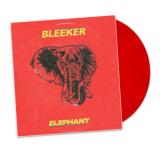
ELEPHANT is an album that doesn’t ask for space, it takes it.
Built on weight, grit, and undeniable presence, ELEPHANT moves like its namesake: loud, heavy, and impossible to ignore. There’s a swagger to it, a confidence that leans into chaos, desire, and the pull of living all the way, even when it leaves a mark.
But like an elephant, it’s not all brute force. Beneath the heavy stomp is something more human. There are moments of vulnerability, cracks where emotion slips through, where longing, doubt, and reflection take over. The album balances power with sensitivity, and strength with softness. A notion that even the biggest presence can feel deeply.
Like the massive creature pushing through brush and unbroken paths, ELEPHANT is about confronting what’s right in front of you; the noise, the weight, the truth, and choosing to move through it anyway.
The late Matt Watts was an American songwriter/storyteller and performer from Montana residing in Antwerp and Brussels, Belgium. He ws the son of a catholic priest and mother with Cherokee roots in the Carolinas.
He first began using the electric organ to write songs and also recording them on cassettes when he was 11 years old. When he was 13 his mother bought him an electric guitar from a pawn shop in South Carolina. Using a karaoke machine as an amplifier, he began writing and performing and recorded his first album at age 15 in a small studio in Great Falls, Montana.In addition to writing and performing his own music, he began performing and touring with various local Punk & Noise bands.
In 2007 when he was 19, he moved to Antwerp, Belgium. Since his arrival he has worked and performed with Zita Swoon Group, become a member of Rudy Trouvé's I H8 Camera, translated Simon Allemeersch and Rudy Trouvé’s critically acclaimed piece SCREEN into English, formed The Calicos (now Humo’s Rock Rally winners under Quinten Vermaelen) as a one time backing band, worked with many artists and songwriters (including Emillina Torini & The Colorist, The Love Substitutes, ..) and toured and released various widely acclaimed solo albums and a duo album with Nicolas Rombouts on Starman Records.
Highlights for sure were “How Different It Was When You Were There” (2017 - **** De Standaard), produced by Nicolas Rombouts (ex-Dez Mona) and featured guest performances by Nathalie Delcroix and Bjorn Eriksson (Eriksson Delcroix) and Stef Kamil Carlens. Its excellent successor “Queens” (produced by Stef Kamil Carlens and Nicolas Rombouts) featured a.o. the late Sandy Dillon and Jim White.
Sadly Matt Watts passed away too soon in June 2024. “Restless Kind” is the final album readied shortly before his death in a production by Bai Kamara Jr. Another astonishing collection of intimate Americana songs with lyrics as fascinating miniature novels.
Rasco are Eden Atiya on guitar and vocals, Gaya Wajsman on bass and vocals, and Itay Hamudi on drums. Named after Charlie Megira’s “At the Rasco”, the trio draw on the melodic language of sixties surf, garage rock and pop, alongside the heavier textures of shoegaze and psychedelia. Influenced by artists including The Cramps, The Beach Boys, Elvis Presley and April March, their music is defined by electric guitar lines, close vocal harmonies and direct, melodic songwriting. The contrast between urban life and the natural world remains central to their work, reflected in songs that move between raw rhythmic energy and more intimate, atmospheric arrangements. Following their debut album Dmaot, Rasco’s forthcoming second album develops this sound through a broader dynamic range, more spacious production and a more focused approach to songwriting, while retaining the warmth and immediacy at the core of the band.
Ghetto House music is one of Chicago’s most unapologetic cultural exports. Born from the city’s underground party scenes in the late ’80s and ’90s, it carried a different kind of energy than traditional house music. While Chicago house was known globally for soulful grooves and club elegance, Ghetto House came from the basements, the neighborhood parties, the dance circles, and the DJs who pushed the tempo and the attitude. The sound was simple but powerful—heavy drums, bold chants, and rhythms designed to move bodies instantly. It wasn’t about perfection; it was about impact. The music reflected the creativity and resilience of young people across Chicago who turned turntables, drum machines, and neighborhood culture into a movement. With “Ghetto House Music 3,” DJ Slugo continues that legacy, reminding listeners that this sound isn’t just history—it’s still alive, evolving, and moving the culture forward. credits released April 24, 2026 license all rights reserved
out of Stock
Last delivered 43 days ago available to reorder, subject to availability
Mikkel Rev returns to A Strangely Isolated Place with Evocation, his third full-length album shaped deep within the forests of Norway.
Since Mikkel’s debut, The Art of Levitation first arrived on ASIP in 2023, Mikkel has been quietly building his own corner of the label’s catalog. Last year's Journey Beyond expanded that vision further, revealing an artist increasingly comfortable balancing the emotional pull of early trance with a more reflective, ambient-leaning approach. While his work elsewhere naturally gravitates towards the dance floor through his own collective, Ute Recordings and other club-focused outlets, his ASIP releases have always evolved differently. Beginning with a larger body of material that’s gradually shaped together, each album seeks to find a narrative without a dancefloor in place; one that moves naturally between momentum and stillness, carrying something of the spirit found in those early-'90s records that drifted effortlessly between peak-time energy and the quiet hours in room two.
Long-form compositions like "Step Inside" and "MRI" favor gradual development over immediate impact, while "Dream Sand" introduces shimmering rhythms that subtly shift the album's momentum and pace. The piano-led "The Infinite" offers a definitive nod to the enduring emotional pull of classic trance before "Sanitorium" closes the record with one of Mikkel's most restrained and affecting pieces to date.
Evocation continues Mikkel Rev's remarkable run on ASIP, extending a catalog where echoes of trance's formative years find new expression through the communal energy and natural surroundings of the Nordic forest gatherings that have become an integral part of his world.
Ventral Is Golden returns on artwork duties, with Lupo handling the mastering and cut. Released on August 28th as a gatefold double LP on dusty purple smoke and digital.
out of Stock
Last delivered 43 days ago available to reorder, subject to availability
Multi-award-winning singer and songwriter Jorja Smith announces her new album, What Are The Odds featuring sole production from P2J and collaborations with Afrobeat star Wizkid and Grime icon Devlin.
With her third album What Are The Odds, Jorja continues to build on her legacy with a euphoric offering rooted firmly in dance music. Confidently channelling UKG, Grime, 2Step, Funky House, Soulful House and Afro House, this thrilling, pulsating record rarely dips below 140 BPM.
This is music to make you move says Jorja. I want people to hear it on the dancefloor, where the sun is shining, in the car and in their headphones on the night bus home. This is a record for driving and vibing.
For our 14th release on OCD we welcome Italy’s veteran producer Niki IL B, an artist whose career in electronic music spans decades. Active since the mid-90s, he established himself as an important figure in the early-2000s progressive house scene. Since then, he has crafted a very personal sound that is refined and distinctive, shaped by a long and diverse journey across genres and driven by a deep-rooted dedication to the craft, emerging from a generation that lived electronic music as a true way of life.
This EP is a showcase of Niki’s ability to confidently move through different moods and to draw inspiration from various genres.
out of Stock
Last delivered 44 days ago available to reorder, subject to availability
“Ruins are the style of our future cities, future cities are themselves ruins.” - Izosaki Arata
A note from Lawrence English: Nostalgia is not an ideology, though in this moment, we could be mistaken for thinking it might be just that. Over the past years, the idea of nostalgia has been filtered through various political and technological lenses and has become a tool used for forgetting, rather than remembering. Instead of embracing histories’ complexities and inconsistencies, this version of nostalgia seeks only singular recollection. This contemporary phenomenon of nostalgia has become a methodology at best, and a weapon at worst, used to erode the past and project forward a collapsed and unimaginably sanitised version of things, places, and ways of being from former times. It’s this projection that sees it playing a mounting role in a social pathology associated with reducing the imagined possibilities of future.
The Rest Is My Ghost is a record that interrogates the manifestations of this reductive futuring and celebrates those that have tried (and failed), and those who continue to push back against decayed and revisionist positions. It’s a record that considers the weaponisation of nostalgia for the purposes of cloaking possible futures.
In recent times, I’ve proposed a term for this weaponised use of nostalgia, something I have called Acid Nostalgia. I offer it as a shorthand to describe the de-contouring of the future through a corrosive fixation on a flatten rendering of the preceding times. It is, in part, a certain type of lazy cultural scripting where tropes of the past are presented in the absolute, as empty pictorials; photocopies without any original from which to draw actual meaning, or useful detail.
Acid Nostalgia describes an increasingly common political projection of nostalgia that exists without any subjective connection to the memory surrounding and contained within it. Like acid poured onto a surface, this use of nostalgia seeks to erodes and smooth out the complexity and texture of lived connection and longing, which has until recently guided contemplations of nostalgia. Acid Nostalgia instead erases the texture of histories and de-contours the past, and in doing so dematerialises the horizon of possibility, which by its very nature marks the beginning point for any (and all) imaginable futures. Acid Nostalgia is a dreamless screen, where uncertainty, restlessness and aspiration are subjected to corrosion, breaking down and neutralising the wellspring of futures which are birthed from within the ambiguously charged, complex and at times chaotic atmospheres of the present.
The Rest Is My Ghost is not however some universal reading of these things and happenings. Rather it draws its breath from a very personal pathway carved through my own fraught experiences of nostalgia and framed through a disparate collage of chance encounters, situations, places and provocations. It takes oblique notes from civic and architectural references such as Japan’s Metabolist movement, Hong Kong’s ‘one line sky’ and Los Angeles’s vanished Sodium Vapour lights. It interpolates texts – factual and fictional – by authors such as Franco Berardi, Kate Crawford, JG Ballard, Katsuhiro Otomo, Mark Fisher and Alexei Yurchak who have each so wonderfully sought to rupture the familiarity of now, and push us towards other ways of imaging ourselves, our surroundings and our very ways of being in this world.
I also owe a debt of thanks to Adam Curtis in helping launch what has become this edition. It was his provocation, in a conversation we shared about an overwhelming and profound sense of uncertainty around being able to predict the immediate future and how to respond to that, which sparked the earliest inklings of this edition.
The Rest Is My Ghost is ultimately a record about the promise of constructions and connections to come, material, social and political. It's a record that accepts the fragility of failure as a source of ultimate potential, and a position from which the deepest freedom of imagination might be sought and summoned forth to conjure even the most unimaginable, (but) possible futures.
out of Stock
Last delivered 45 days ago available to reorder, subject to availability
No Drama, the imprint founded and curated by Roy Rosenfeld, continues to expand its artistic vision with a sixth release valuing originality over convention. The label has steadily established a platform for forward-thinking electronic music, inviting artists to challenge familiar structures while remaining grounded in musical substance.
The latest release features two tracks by internationally recognized producer Yuvée, known for seamlessly blending live instrumentation with deep house, melodic elements, and organic percussion. While Yuvée appears solo on one track, the other is a collaboration with Omer Inbar, who performs under the name Oi.
The opening track, Lava Core, presents the sound that has earned Yuvée international recognition. Tribal influences unfold through carefully crafted percussion, while evolving textures occupy every part of the stereo field. Every section advances the narrative, allowing the arrangement to grow naturally while maintaining dancefloor impact from beginning to end.
The second piece, Blue, brings Yuvée together with Oi, an internationally acclaimed DJ, producer, and sound engineer whose work bridges psychedelic vibes and groove-driven electronic music. The collaboration introduces greater club energy. Tonal and atonal elements interact with shifting harmonies and evolving instrumental phrasing, creating constant movement without losing coherence.
Rather than relying on formulas, the duo demonstrates the value of artistic perspective in an era increasingly shaped by technological automation. The result is music that balances intellect with feeling, offering a listening experience that remains equally compelling on a festival sound system, in a club, or through focused listening at home.
With its sixth release, No Drama reinforces its commitment to artists who expand the language of contemporary electronic music through craftsmanship, authenticity, and creative ambition.
For this second EP, Void Control continues to explore the relationship between rhythm, space, and low-frequency energy. Each track is built around movement and atmosphere, combining organic percussion, spacious dub textures, and weighty sub frequencies.
Drawing influence from reggae sound system culture, tribal rhythms, dub techno, and contemporary bass music, the release exists at the intersection of multiple underground traditions. Rather than treating these influences as separate genres, Void Control allows them to interact naturally, creating a cross-pollination of sounds that feels both familiar and forward-thinking.
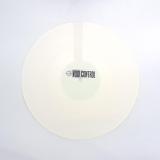
150 White coloured vinyl, hand stamped and stickered with inlay.
out of Stock
Last delivered 45 days ago available to reorder, subject to availability
Orson Bramley aka Transparent Sound needs no introduction as he delivers the instant classic slab of Machine Funk. A foundation machine fueled by infinite creativity. “Manufacture Shit” is a timeless classic for the imminent paradigm shift of what has been called “reality”.
Prepare to recalibrate your senses. Now move your body.
out of Stock
Last delivered 8 days ago available to reorder, subject to availability
Others take years to reveal why they belong together.
PLNK008 is the first solo release by Natural Goofy on Planka Records. Following a series of appearances across various labels and collaborations, this record offers a deeper look into the sound he has been quietly shaping over the years.
A collection of recordings gathered over time, connected less by genre than by a shared sense of mood and movement.
Rather than chasing functionality, the record follows instinct. Loops are allowed to breathe. Details appear slowly. Tension builds almost unnoticed. Elements drift in and out of focus. The intention was never to arrive somewhere quickly, but to stay inside a feeling for as long as it remains interesting.
The release also includes a special reinterpretation of one of the EP's tracks by dear friend and talented Italian producer Shkedul.
The original version of the track will be available exclusively as a digital bonus on Planka's Bandcamp.
These tracks were not designed to demand attention. They reward it.
For those willing to spend time with them.
Limited edition. Vinyl only.
out of Stock
Last delivered 2 days ago available to reorder, subject to availability
Glasgow’s Hot Towel are a DJ & production duo, community dance party organiser and now record label reimagining the balearic spirit far from its original context and sunnier climes.
This debut EP contains 4 dance floor focused tracks tested and developed on the Hot Towel dance floor and beyond. Produced over the last 4 years in grey and rainy Glasgow these 4 tracks reinterpret the joy of warmth, connection and world building in dance music.
Warm in Your Office is a feet on the floor, head in the clouds, bouncing 90’s piano house inspired track with warm driving bass, punchy gated snare, percussion samples and a surprising nostalgic drop for fans of late 90’s and early 00’s Serie A.
The lo-fi beatbox rhythm of Low Pressure in Paradise features a melodic, rumbling bassline, vintage synth string stabs and a warm melancholic synth pad swell reminiscent of the day after the night before, or the thunderous ambience of an oncoming storm and the reflection that brings. Think warm orange and magenta sunset overcast with heavy mauve clouds and possibly a hangover from one too many negronis.
A sunbaked synth flute melody shimmers like heat haze in the latin / balearic inspired beach bar romp Last Minute Staycation. Cowbell and syncopated piano move the hips, while romantic synth strings pine for that magical other world away from the mundane. A shift in tone midway evokes the peril of a balearic dream turned nightmare, capped off with timbale and a shredding electric guitar solo serving Lambada meets Zappa.
Endless Cosmic Procession is a downtempo balearic builder that chugs along with minimal effort. Tuned percussion drives the groove, with bass and synth punctuations that reverberate into space and swirl with delay. A rising arpeggiator gently brings melody to complete the harmonic space of the track that rounds off the EP with a contemplative dance floor moment.
out of Stock
Last delivered 8 days ago available to reorder, subject to availability
AOP 11 Welcomes the Italian GNMR to the family for another psychedelic offering with the 'I Love You EP'
A1 opening with the title track I Love You with a no nonsense tribalism, taking us stumbling through a muddy Peruvian forest trip - after loosing & finding our minds
A2 follows with the deep and introspectif Sunrise Reprise. Slower broken drums guide, accompanied by moody groans and a nagging synth that weaves through the vines and trees.
B1 Bunda returns to the tribalism for a gated giddy dance ritual - clatterings drums, stuttered chants and rhythmic movements.
B2 rounds off the EP with Constantinople From The Mindset. Cleverly programmed loose percussion and trippy chants, a chundering bass and a solid kick, the track progresses craftily and confidently, gradually arriving at a euphoric and climatic.
out of Stock
Last delivered 26 days ago available to reorder, subject to availability
BUCHLA MEETS ORCHESTRA IN QUADRAPHONIC SPACE ON CIANI/ORKEST
Suzanne Ciani, Metropole Orkest and Simon Dobson release historic immersive performance in multiple immersive formats including quad vinyl.
Silverlake, CA \\ June 4, 2026 – Electronic music pioneer and five-time Grammy nominee Suzanne Ciani joins the internationally acclaimed Metropole Orkest, conducted by Simon Dobson, for the release of CIANI/ORKEST, a landmark live album composed entirely of new work, created specifically for this unprecedented collaboration.
Recorded at Amsterdam Dance Event (ADE) before a rapt audience, CIANI/ORKEST is not a retrospective. It is a bold, immersive meeting of the Buchla electronic instrument and 50-piece orchestral sound. The result is a sweeping sonic landscape, at once intimate and monumental.
Under the direction of the Metropole Orkest, renowned for its genre-defying collaborations with artists from jazz to contemporary classical - strings shimmer, brass swells and woodwinds echo the organic, fluid qualities that have always defined Ciani’s sound. “This project feels like a homecoming,” says Ciani. “The Buchla was always orchestral to me, an instrument capable of infinite color. Hearing those colors unfold through the Metropole Orkest has been profoundly moving.”
At the heart of CIANI/ORKEST lies Ciani’s lifelong commitment to quadraphonic sound. From her early Buchla performances in the late 1960s to her 2018 release LIVE Quadraphonic, Ciani has treated space as a primary compositional parameter. Working alongside immersive producer KamranV, Ciani continues to explore immersive sound as both artistic and human gesture. Kamran’s decades of work in spatial formats, converge here in service of a singular goal: to let sound behave as it does in the physical world. “For both of us, quad is musical,” Kamran notes. “The way Suzanne works, quadraphonic is nested in — not the technology per se — but the intent you bring to the work.”
The recording stands as a meditation on legacy, evolution, and the enduring dialogue between technology and human expression. The live album captures the electricity of performance, the immediacy of touch plates under Ciani’s hands, the collective of musicians responding in real time, and the audience’s shared immersion in quadraphonic-inspired space.
CIANI/ORKEST is released by Atmospheric/AKP Recordings/CyKiK in multiple double-disc quadraphonic 12” Record packages designed by grammy-nominated designer Rebeka Arce. Each pressing is made regionally to minimize carbon emissions and also contributes to nature via Brian Eno's EarthPercent, the music industry's climate and nature foundation.
The release is encoded using the dublab Quadraphonic Universally Accessible Resource Kit (QUARK). QUARK enables binaural listening via standard 2-channel playback or 4-speaker playback via Involve Audio hardware decoders, vintage Regular Matrix quadraphonic receivers, Dolby Pro-Logic II/Dolby Surround Upmixer (DSU) receivers, or any multi-channel audio interface equipped computer. This album is immersive via all formats: digital download, streaming (Qobuz, Spotify, SoundCloud, Bandcamp), radio broadcast, vinyl and high-resolution Dolby Atmos (Apple Music, Tidal, Amazon HD, IIA), Sony 360RA (Nugs, Amazon HD) and Eclipsa Audio (YouTube).
About Suzanne Ciani
Suzanne Ciani is a composer, pianist, sound designer, and electronic music pioneer whose work spans experimental, new age, classical, and cinematic sound. A five-time Grammy nominee and recipient of the Moog Innovation Award, she continues to perform internationally, captivating audiences with immersive modular synthesis performances.
About Metropole Orkest
Based in the Netherlands, the Metropole Orkest is one of the world’s leading genre-crossing orchestras, known for collaborations with artists including Brian Eno, Herbie Hancock, Snarky Puppy, Jacob Collier, and within contemporary classical and electronic spheres.
Manonmars’ 3rd album sees him at his most amorphous and psychedelic, at points sharper and laser focused, and at others more blurred and impressionistic than his previous records. Many of the core players remain the same, all of the production is once again handled by O$VMV$M (the duo of Neek and Amos Childs of Jabu) while Paulina Korobkiewicz (also of Young Echo) makes a return handling both the album’s cover artwork and contributing a series of diaristic field recordings and voice notes.
‘The project references movies, cartoons, fictional characters and video games, among other things. The album title is open to interpretation but all of these elements are forms of visual entertainment which have their own unique ability to transcend things like language barriers and cultural divides. The visual element is key because those details bridge the gap on a communicative level.’ - Manonmars
The album blends abstract, blurred braggadocio with more immediate personal details such as on ‘Volcanic Shield’ a posse cut of sorts featuring Bristol improv luminary Dali de Saint Paul and Franco Franco (½ of cyborg rap duo Kinlaw & Franco Franco) - where Mars recalls;
‘Memories of brighter days, happy meal hit the spot
Mum was spinning vinyl playing Super Ape or Pressure Drop
I would spend the weekend with the Turkish mandem on the block
single parent household, mum was studying or on the job
money came and went always was an on and off
made it back from school time to see what’s on the box’
The beat fades away to leave one of Korobkiewicz’s recordings of Mars’ mum talking about her life in London in the 80s, spending her money on reggae records as an ambient chord fades in like an echo of a jungle intro – stretching out as a link between generations of UK music.
The production by and large is brighter and more kinetic than earlier Manonmars records – with O$VMV$M drawing on everything from modern underground rap and drill through to jazz and acid ambient passages.
London is also a central character here, bustling and constantly shifting, either when bleeding in through field recordings, or as an ever-present backdrop in the lyrics;
‘I’m a fusion of Tippa Irie and Topper Harley
Hit the target like the black Atari
I dropped a tab now shit’s A Scanner Darkly
Got the munchies, Imma yam a sarnie
Pour the Wray and Ting like man at Carni
Exit Peckham Rye and turn left, walk past Hannah Barry
Get your (w)raps up like its January’
‘I've always considered London my home, despite spending some time in the South West of England too. My mum had been living in London for 25 years (...) That was a pretty big deal in some ways because it removed us from multicultural society during the period which overlapped with my teenage years. (...) I never got used to how quiet it was in the countryside (...) Bristol was the closest city to where we lived and it was through travelling there and making connections that I became involved in making music and playing gigs.’ - Manonmars
Mars’ practice as a painter (under his given name Jack Martyn Richardson) and photographer also loom heavy over the album, he cites Paul Verhoeven, Abdul Mati Klariwein and H.R Giger as influences – as well as Miles Davis, Drakeo the Ruler and DJ Rashad.
As with much of Richardson’s work the raps at times feel blurred to a point of almost inscrutability, creating a distance between the audience and himself. A process that ties into his visual work and the way he experiences the world as mainly abstract colour without his glasses. He explores this further in an ongoing visual collaboration with Korobkiewicz, ‘Fun and Games’ which serves as a visual archive of one of London's largest and oldest travelling fairgrounds.
‘I was diagnosed with very severe short-sightedness at the age of seven. I remember my early formative years as visually blurred. Some of my photography reflects this experience of partial vision and uncertainty, referencing memory and perception rather than fixed representation.’
Manonmars’ first public outing as a rapper was at a Young Echo radio event, broadcast shambolically from a practice room just off Jamaica street, Bristol in 2011, as much as things have moved on both stylistically and in terms of focus - strong links back to the city remain a key foundation throughout the collaborations and guest appearances.
‘I have no problem with being an outsider looking in. One of the things I enjoy about London is the anonymity (...) it's easy to be a stranger here when so much is happening. I feel like thats more valuable than people may realise.’
'Channel Zero is a new release produced by the London-based Brazilian artist Protocol. It is made up of 4 unprocessed live jam recordings of heavy, stripped-down techno. Composed over a period of 2 years, the artist focuses on experimenting on the far edges of techno, inspired by early avant-garde music, drone, and Musique Concrete. It comes in a hand-numbered limited edition of 180g black labels, in a 3mm inside-out cover with a black inner-sleeve.
'The work is a confirmation that techno still thinks forwardly, but pays homage to its mostly overlooked origins. The titles come from one of the early Cybernetic Culture Research Unit essays, also named Channel Zero.
'Lost Signal (Noise) opens up the EP with reverberated static noise, followed up by a deep bass with more layers of percussion and atmospheric noise patterns, slowly evolving into unexpected rhythms. The second track, Blind Belief, is composed of a deconstructed kick sequence, with machinic-like sound structures in the background and a hi-hat that morphs with various envelopes, together with a nostalgic 909 rim-shot. Turning to the B side, Electromagnetic Shadow is an atmospheric four-to-the-floor techno track, where deep kick drums and polyrhythmic noise soundscapes move into industrial noise pattern. Closing Protocol's debut EP, Black Snow Cult brings together the EP's sound palette into aggressive patterns of Birmingham-esque industrial percussions, where synthetic sounds are put together in primitive sounding sequences together with high pitched frequencies.'
This Mirror Weighs a Ton, Interpol’s first album in four years and debut for Partisan Records, finds the band turning inward while continuing to move forward. Across the record, reflection, distortion and perception become a lens through which familiar shapes are refracted into something slightly alien, as if seen through a different kind of light.
Produced with Grammy- and Oscar-winning Andrew Wyatt (ROSALÍA, Charli xcx) and mixed by Dave Fridmann, the album introduces vibrant new textures into Interpol’s world. Synthesizers, strings, acoustic guitars and percussion are integrated into the fabric of the songs, expanding the palette while revealing colors already latent within it. Nothing feels imposed. Instead, the additions deepen the band’s language of restraint, atmosphere and tension. At its center remains the creative relationship between Paul Banks, Daniel Kessler and Sam Fogarino, a partnership now approaching three decades and defined by intuitive alignment and momentum that continues to generate new possibilities. The result is an album that feels expansive, uncanny and alive with forward motion, not a reinvention but an evolution that allows Interpol to continue transforming without losing their identity.
“This Mirror Weighs A Ton” / “See Out Loud” is a study in duality, with Interpol moving fluidly between familiarity and departure. The title track unfolds from a skeletal progression into something vast and textural, built from warped bass, a wordless female voice and a sense of motion that feels tidal, bending the band’s familiar language into somewhere more expansive and unfamiliar. By contrast, “See Out Loud” carries the DNA of Interpol’s earliest work, sharp, propulsive and direct, while complicating it through layered vocals, shifting perspectives and a rare lead vocal turn from Kessler. Both tracks reflect the interplay between structure and spontaneity that defines This Mirror Weighs a Ton, expanding Interpol’s world through fresh textures while keeping the instinctive chemistry between Banks, Kessler and Fogarino at the center.
The double single is accompanied by two visualizers directed by Nick Steinhardt.
Als wir zuletzt von Marci (alias Marta Cikojevic von der Soft-Rock-Band TOPS aus Montreal) hörten, tanzte sie auf ihrem 2022 erschienenen Album ,Marci" den Schmerz weg. Vier Jahre später kehrt Cikojevic mit ,Mask Lady and Late Night Girl" zurück - einem Album voller Hymnen für Partygirls für die Zeit, wenn die Party vorbei ist, vorgetragen mit Liebe und Mitgefühl für die guten Zeiten und die schönen Erinnerungen. Erneut in Zusammenarbeit mit ihrem TOPS-Bandkollegen David Carriere entstanden, enthält ,Mask Lady" Elemente, die sowohl von den chaotischen Pop-Girls der Y2K-Ära wie Uffie und Kesha als auch von Cikojevics Liebe zu Powerballaden-Sängern der 80er wie White Snake und Def Leppard inspiriert sind, zusammen mit den Vintage-Synthesizern, die ,Marci" eine warm-futuristische Ästhetik verliehen. Glam-Metal-Einflüsse treten bei ,Chaotic Princess" in den Vordergrund, geschrieben und produziert mit Mike Silver (CFCF), einem über-die-Spitzen-gehenden, gitarrenlastigen Knaller über eine verrückte Nacht, in der Cikojevic einen Polizisten anfleht, sie nicht ins Gefängnis zu bringen - Eddie Van Halen auf dem Beifahrersitz, Britney am Steuer.
This Mirror Weighs a Ton, Interpol’s first album in four years and debut for Partisan Records, finds the band turning inward while continuing to move forward. Across the record, reflection, distortion and perception become a lens through which familiar shapes are refracted into something slightly alien, as if seen through a different kind of light.
Produced with Grammy- and Oscar-winning Andrew Wyatt (ROSALÍA, Charli xcx) and mixed by Dave Fridmann, the album introduces vibrant new textures into Interpol’s world. Synthesizers, strings, acoustic guitars and percussion are integrated into the fabric of the songs, expanding the palette while revealing colors already latent within it. Nothing feels imposed. Instead, the additions deepen the band’s language of restraint, atmosphere and tension. At its center remains the creative relationship between Paul Banks, Daniel Kessler and Sam Fogarino, a partnership now approaching three decades and defined by intuitive alignment and momentum that continues to generate new possibilities. The result is an album that feels expansive, uncanny and alive with forward motion, not a reinvention but an evolution that allows Interpol to continue transforming without losing their identity.
“This Mirror Weighs A Ton” / “See Out Loud” is a study in duality, with Interpol moving fluidly between familiarity and departure. The title track unfolds from a skeletal progression into something vast and textural, built from warped bass, a wordless female voice and a sense of motion that feels tidal, bending the band’s familiar language into somewhere more expansive and unfamiliar. By contrast, “See Out Loud” carries the DNA of Interpol’s earliest work, sharp, propulsive and direct, while complicating it through layered vocals, shifting perspectives and a rare lead vocal turn from Kessler. Both tracks reflect the interplay between structure and spontaneity that defines This Mirror Weighs a Ton, expanding Interpol’s world through fresh textures while keeping the instinctive chemistry between Banks, Kessler and Fogarino at the center.
The double single is accompanied by two visualizers directed by Nick Steinhardt.
Salt N Pepper Vinyl. New pressing of Mom Jeans. 2018 album, Puppy Love. The Berkeley, CA quartet is lauded for stream-of-consciousness lyrics and energetic performances that prompt audiences to shred their worries and simply bounce along. By trading the sappy for heartfelt and the melodramic for truthful, Mom Jeans have created a brand of emo that's self-aware but not self-indulgent. 2018's Puppy Love follows up 2016's Best Buds and oers up more of that sweet noise that fans of bands like Modern Baseball and The Front Bottoms, will love. Recorded by Ryan Ellery. Mastered by James Trevascus.
Broshuda returns on the newly born label Ballads Infinite with another array of absurdist vignettes, lowercase hi-tech ambience and textural degradations of radio transmissions from the bicameral mind. Weaving multiple sonic timelines into silky yet slippery articulations, he sculpts each sound with deliberate care making it breathe, slither and shimmer. Spells conjures a subterranean force through its vanishing presence, with the restraint in the sonic palette feeling utterly refreshing, as watering, drop by drop, a ghostly flower in the dromoscopic netscape of overreaching stimuli.
Deliriously patching fragments of unnoticed memories, gliding freely— slightly inebriated—through the ocean of sound: what does it take to capture the transitory entities inhabiting the latent space of this hyperconnected manifold? An assemblage of mechanical debris reduced to their bare-bone essentials; the Tao of discharge brings life to corrupted data, unpacked through textural ruminations.
Broshuda doesn’t just cast the spell, he patiently coils it around you, dissolving each and every thought in the hiss, manipulating subtle energies by making them move beyond and outward. What’s the sound of matter silently falling apart? The serpent sheds its subtle yet solid armor, revealing the space between each spire blooming with gentle eruptions of broken melodies. Where do we land now? What are we turning into? An ontological enigma still awaits to be solved.
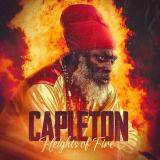
Heights Of Fire” by Capleton is being released as an LP via Diggers Factory and presents a brand-new album produced by Evidence Music. The release once again puts Capleton’s distinctive voice front and centre, while also speaking to collectors who value a high-quality pressing.
Musically, “Heights Of Fire” blends classic reggae foundations with modern production elements; weighty bass foundations, precise drums, and organic arrangements carry the messages. Guest appearances by Damian Marley and Stephen Marley, along with collaborations with Derrick Sound, Little Lion Sound, Eesah, Mista Savona, Mixing Finga, and L’Entourloop, provide sonic variety and international influences. Lyrically, the tracks revolve around spirituality, resistance, and personal reflection, which Capleton delivers with emphatic rhetoric.
Key characteristics of the LP include its distinct production signature and the collaboration with established reggae heavyweights, which give the album both depth and a contemporary freshness. The arrangements move between dense roots passages and airy choruses, making the record resonate with both traditional listeners and a younger audience. The release on Diggers Factory also underscores the clear collector focus of the physical rollout.
Salt N Pepper Vinyl. New pressing of Mom Jeans. 2018 album, Puppy Love. The Berkeley, CA quartet is lauded for stream-of-consciousness lyrics and energetic performances that prompt audiences to shred their worries and simply bounce along. By trading the sappy for heartfelt and the melodramic for truthful, Mom Jeans have created a brand of emo that's self-aware but not self-indulgent. 2018's Puppy Love follows up 2016's Best Buds and oers up more of that sweet noise that fans of bands like Modern Baseball and The Front Bottoms, will love. Recorded by Ryan Ellery. Mastered by James Trevascus.
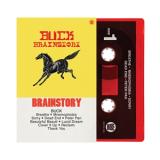
What is Buck? Buck is a state of mind, a way of life, a demeanor that gets you through the good times and the bad. If you ask Brainstory, It is also the energy that permeates their debut album. Kevin, Tony, and Eric are a trio of brothers bounded by blood, fate, and a small town with nothing to do. Their story begins in the long lost lands of the San Bernardino Valley, in the twilight zone known as Rialto, California: An arid wasteland of boredom and empty lots. Through punk rock and skateboarding they found temporary liberation from the local monotony. However, it wouldn't be long before a hunger for more led them to explore musical realms beyond that of the hardcore punk they admired. After stints at music school and steady disappointment trying to navigate their local jazz scene they moved to Los Angeles and Brainstory was born. Through a introduction from Chicano Batman's bassist, Brainstory caught the ears of Big Crown head honchos Danny Akalepse and Leon Michels. Shortly thereafter they were on their way to Queens, to record at The Legendary Diamond Mine with Michels at the helm. An instant chemistry yielded 10 songs in 10 days and now Brainstory has gifted the world with one hell of an introduction to all things Buck. Highlights include the sublime slow burner, "Dead End" which was the A-side to their first 45 on Big Crown that sold out in a matter of days. With Kevin's sublime falsetto floating atop Tony and Eric's unflappable and unmistakable backbeat, this tune has become a favorite with the ballad heads, the low-riders, and the slowie collectors. "Breathe" showcases another side of their sound taking a page out of the Shuggie Otis playbook and flipping the script with some stoned out west coast swag. Kev and Tony's father, Big Tone, an accomplished performer himself, steps in on "Peter Pan" to sing lead vocals over a chorus of friends and family. Bassist extraordinaire, Tony, takes over lead vocal duties on "Sorry", a smoked out, G Funk groove that is just waiting to be sampled. These guys have come a long way from their self released EPs and opening tours with Chicano Batman. Their musical growth is undeniable, and taking their California sunshine vibes and mixing them with Michels' NYC aesthetic has proven to be an amazing combination. It's a debut record that pulls influences from so many genres seamlessly it's hard to nail down. Call it Funk, call it Rock, call it Soul, but over here at Big Crown HQ, we've decided to call it BUCK.
Big Crown Records is proud to present the debut full length offering from Les Imprimés, Rêverie. The stirring and ethereal sounds of Les Imprimés have been making fans of anyone who hears them since their first 7" single hit the speakers. Morten Martens is the man behind the band. Born, raised, and working in Kristiansand, Norway, he keeps a low prole while making his heart felt, highly infectious, and unique music. This album is a long time coming for Martens and it is sure to make him a name to be reckoned with. The first thing you notice listening to Les Imprimés is the high level of musician-ship. Martens plays nearly every instrument on the recordings and handles the production and arranging. He has been making records for decades, winning a Spellemann Award (aka, the Norwegian Grammy) in 2006 for producing a HipHop album as well as getting nominations across three other genres. While awards and accolades speak to the level of his talent, this new album really shows who he is an artist on his own terms. Moving away from being a hired gun on the touring scene naturally led him to start doing more studio work. Slowly collecting gear and getting more experi-ence behind the boards he built his own studio on the island of Odderoya and was making a living playing with and recording other people's music. As the story goes, after those sessions would end he would work on his own project into the wee hours of the night. From these late night sessions, Les Imprimés was born and Rêverie began to take shape. However, "it wasn't until COVID, when things locked down, that I was really able to nd the time to focus on Les Imprimés" Morten says about creating and leading his own solo project. "It was a scary time. But I knew I had to do something with it." He took the sum of his inuences, combined them with his own vibe and got busy writing the music, playing the instruments, and singing the songs. "It's soul music, but I don't exactly have the soul voice," Morten explains humbly. "But I do it my own way, in a way that's mine. "It is his sound, his fingerprint, his sensibility, that makes his music hard to put in a box. The album showcases both Martens' range and his ability to make a cohesive album. The lead single "Falling Away" starts with a raw drum break and turns into a lushly arranged tune that paints the picture of love when it slips away. On "Still Here" he professes his resilience through life's twists and turns over a thundering track that puts a new spin on the B side ballad genre. Songs like "You" and "Our Love" mix tones from 60s and 70s Soul with arrangement nods to Doo Wop records while Martens' lyrics and delivery leave you singing the melodies long after they finish. "Love & Flowers" finds Martens in a moment of clarity with a song that ts the niche sub genre of happy break up tunes, the four on the floor track will move the dancefloor or while the message will resonate with anyone who put too much effort into the wrong situation in their lives. However, it is songs like "Muse" and "Chess" that really encapsulate the uniqueness of Les Imprimés as they push the boundaries of genre, one a profession of love for music and the other a cover of an electronic record respectively. Martens' lyrics, emotion, and delivery truly make the whole thing come together and stand out from any of his peers. There's an infectiousness and a pop sensibility in the writing that is done with the utmost class and taste giving Les Imprimés the rare quality of immediate attraction that only deepens the more you listen.
Son Volt’s latest album, Sound Signal Serenades, will be released as a Record Store Day exclusive. Featuring twelve originals, Son Volt return to the elemental strengths that have long defined their sound—restless guitars, melodic clarity, and songs rooted in the lived experience of American landscapes. Anchored by Jay Farrar’s steady, unvarnished voice, the record balances reflection and resolve, drawing lines between personal memory and the wider currents of history, change, and endurance. The songs move fluidly between stripped-down intimacy and full-band drive, blending folk-rock, country, and electric grit with the confidence of a band that knows exactly who they are. There’s a sense of forward motion throughout the album—never nostalgic for its own sake, but deeply aware of where it’s been. Lyrically, Farrar explores themes of connection, resilience, and place, finding meaning in both the ordinary and the unsettled. This album stands as another chapter in Son Volt’s enduring catalog: honest, grounded, and quietly powerful, reaffirming their role as one of America’s most consistent and thoughtful rock bands.
South Coast artist Howman lands back on DNO Records for his second outing, ‘Trap Eastwood’. First introducing his heavyweight fusion of rock, hip-hop, dubstep and electronica via his outstanding 2023 debut, ‘Moon Operator’, the multi-instrumentalist and producer returns with a refined palette. Still bearing the first class musicality, rich layering and imaginative sonics that we’ve come to expect, the new EP is more stylistically focused than its predecessor. This time, Howman homes in on a spot somewhere in the 140/dubstep/trap sphere, decorating it with digital fizz, alien bleeps, snarling bass, and the signature gruff twang of guitar that makes his music feel deeply personal and eternally human.
The title track is perhaps the most prominent example of the latter, where Howman’s Western-esque riff conjures up the tension before a duel at high noon, while the bend and wobble of each string shapes the movement of the track like the curves of a rattlesnake.
But it’s a constant from the start, like on opener ‘Strip Search’, with its cinematic guitar intro, and combination of repetitive keys, earnest strings and bear-hug bass that nods to classic hip-hop.
Or closer ‘Fatigue’, where the layers of stuttering plucks, emotive melody and scratchy slide noises form a downtrodden soundscape plagued by police sirens and punctured by “Champion Sound” snippets.
On ‘Navigator’, Howman’s approach is more subtle: fluttering strums and a simple bassline creating a brooding, enigmatic vibe in stark contrast to the urgent, alarm-like stabs which first grip the attention.
Throughout there is an overriding sense of the unknown. ‘No Spring’ weaves drawn-out flute notes, tinkling percussion, super-massive 808 lows and spurts of breakbeat into a twisting, winding thing that wants to lure and enchant. While ‘Frosty’ is as ice cold as its name suggests, murderous bass meeting a spidery piano melody in dread-inducing matrimony — along with snatched words from some familiar faces outside a Berlin edition of THE MINE.
Produced between 2022 and 2025 across various locations, influenced by Howman having to move into more solo live performance (as opposed to his previous band setups), and miraculously surviving a catastrophic data loss incident, the EP is a snapshot of disruption focused into creative cohesion. We’ve been told, however, that it’s not a new direction or a sign of things to come, which only serves to make his next release that much more enticing, that much more of a mystery.
Rhythms of postmodern realism at the very bottom of the DNO.
Buckshot returns with The Package, his latest solo album and his first to be entirely self-produced. The Brooklyn legend handles every beat himself this time, with features from General Steele of Smif-N-Wessun bringing the Boot Camp Clik brotherhood full circle.
Co-founder of Duck Down Music with Drew "Dru-Ha" Friedman, Buckshot has spent over three decades building one of hip-hop's most respected independent labels while staying prolific on the mic: a solo studio album, three with producer 9th Wonder, one with KRS-One, four with Black Moon, and four with the Boot Camp Clik. He's the voice behind "Straight from Crooklyn, better known as Brooklyn," a line that still echoes through the culture, prominently featured on two Crooklyn Dodgers tracks.
Formed in 1981 by two Rockford, Illinois, and two Brookfield, Wisconsin, natives in the midpoint of Milwaukee, Die Kreuzen (pronounced dee kroyt-zen) chose their name specifically to avoid stereotyping because “no one knows what it means. 'Die Kreuzen' roughly translates out of German meaning 'to intersect' or 'to hybridize,' which is exactly what they did on their five LP's for Touch and Go. Their self titled debut is considered one of the most seminal hardcore records of the early 80’s. As far as October File is concerned, remember that flannel shirt movement in the 90's? This is what those guys were listening to.
Formed in 1981 by two Rockford, Illinois, and two Brookfield, Wisconsin, natives in the midpoint of Milwaukee, Die Kreuzen (pronounced dee kroyt-zen) chose their name specifically to avoid stereotyping because “no one knows what it means. 'Die Kreuzen' roughly translates out of German meaning 'to intersect' or 'to hybridize,' which is exactly what they did on their five LP's for Touch and Go. Their self titled debut is considered one of the most seminal hardcore records of the early 80’s. As far as their second album October File is concerned, remember that flannel shirt movement in the 90's? This is what those guys were listening to.
Louisiana Red's "Anti-Nuclear Blues" is considered a classic among acoustic blues albums and comes out on CD (w/bonus tracks) and LP in random coloured vinyl , limited to 500 copies worldwide - for fans of Buddy Guy, Junior Wells, Sonny Terry, Lightnin' Hopkins Louisiana Red was born in Alabama in March 1932 and died in Hanover almost exactly 80 years later. The early life of Iverson Minter, also known as Louisiana Red, was marked by suffering.
His mother died of pneumonia a week after he was born. When he was five years old, his father was executed by the Ku Klux Klan. After that, he lived in orphanages until he was able to spend the rest of his childhood with his grandmother. As a teenager, he was sentenced to hard labor for burglary and subsequently sent by Uncle Sam to the Korean War. Iverson had wanted to become a blues musician ever since he had met Muddy Waters. In the late 1950s, he played in John Lee Hooker's band. In the mid-1970s, he moved to Europe, where he gained recognition among a wider audience through appearances at the WDR Rockpalast and the Montreux Jazz Festival. In the 1980s, Fritz Rau signed Louisiana Red for his successful festival series, the "American Folk Blues Festival." In 1983, he released his acclaimed album "Anti- Nuclear Blues," whose content and message are more relevant today than ever. The original vinyl edition has since become a sought-after rarity. Now, the album is being released for the first time on CD, featuring six bonus tracks from the 1981 "American Folk Blues Festival," as well as a reissue on vinyl with a fresh sound.
Callisto celebrates 20 years of Noir with a vinyl reissue out in September Finnish post-metal outift Callisto are celebrating the critically acclaimed 2006 album Noir with its 20th anniversary vinyl reissue released by Svart Records in September. Founded in Kokkola in 2001, but already established in Turku early on, Callisto has been laying low in recent years. However, the band's versatile and nuanced metal achieved international popularity in the early 2000s. Their second full-length album, Noir, released in 2006, is a significant cornerstone of Callisto's career. – Noir is the album we have probably received the most feedback about over the years, the band admits. – People make and send covers of Noir songs to us and the album is usually the first thing that comes up in conversation when you come across people who have some experience, memory or opinion about Callisto's active years. Noir's production and recording process was also difficult in its own way, so it's already a reason to celebrate that it ultimately became an album that strongly defined the band's early years, the band continues. Noir has the menace and progressive edge of doom metal; the album is lively, looks forward darkly, moves from whispers to screams and ends with massive, powerful energy.
celebrating the critically acclaimed 2006 album Noir with its 20th anniversary vinyl reissue released by Svart Records in September. Founded in Kokkola in 2001, but already established in Turku early on, Callisto has been laying low in recent years. However, the band's versatile and nuanced metal achieved international popularity in the early 2000s. Their second full-length album, Noir, released in 2006, is a significant cornerstone of Callisto's career. – Noir is the album we have probably received the most feedback about over the years, the band admits. – People make and send covers of Noir songs to us and the album is usually the first thing that comes up in conversation when you come across people who have some experience, memory or opinion about Callisto's active years. Noir's production and recording process was also difficult in its own way, so it's already a reason to celebrate that it ultimately became an album that strongly defined the band's early years, the band continues. Noir has the menace and progressive edge of doom metal; the album is lively, looks forward darkly, moves from whispers to screams and ends with massive, powerful energy.
John Tchicai (1936 – 2012) was one of the most important free improvising saxophonists of the 20th Century: an artist of rare vision and aptitude whose lines soared and stood out even in the most hallowed company, and whose body of work as a leader / composer is among the most singular and distinct within the entire canon of that music. But Tchicai’s importance doesn’t end there. Born in Copenhagen, Denmark, to a Danish mother and a Congolese father, his life and career represent a crucial bridge between the European and American traditions of free jazz. Initially trained on violin as a child, Tchicai shifted his focus to the clarinet and alto saxophone during his mid-teens, and began touring Europe as a professional musician by his early 20s, which landed him at a socialist youth festival in Helsinki, Finland, where he met the trumpeter Bill Dixon and saxophonist Archie Shepp. Impressed by what they heard, Dixon and Shepp encouraged the young saxophonist to move to New York, and in so doing changed the history of jazz forever.
Tchicai’s arrival in New York marks the rare occurrence of a European player joining the intimate circle that was first wave of American free jazz. Following his landing in the city in November of 1962, in addition to regularly sitting in with Don Cherry’s group, Tchicai began playing with Bill Dixon's band alongside Archie Shepp and Roswell Rudd, forming the nucleus of the foundation of the New York Contemporary Five - one of the most important groups of the era - which counted Tchicai, Shepp, Cherry, Don Moore, and J. C. Moses as its members. From the ashes of this group, Tchicai would go on to found the legendary ensemble, New York Art Quartet, with Roswell Rudd, Milford Graves, and Lewis Worrell, as well as working within Albert Ayler's band, recording “New York Eye and Ear Control”, Shepp’s band, recording “Four for Trane”, the ensemble that recorded John Coltrane's “Ascension”, and the Jazz Composer's “Orchestra”.
By the time he decided to return to Denmark in 1966, had Tchicai chosen to record little else, his legacy within the history of music would have been ensured. Incredibly ambitious, his arrival home marked the beginning of an incredible period of activity which saw him radically expanding his creative explorations, which by the end of the decade would include becoming a founding member of Amsterdam's Instant Composers Pool and helping to record John Lennon and Yoko Ono's “Unfinished Music No.2: Life with the Lions”. This, however, was proceeded the formation of a new orchestra, Cadentia Nova Danica, led by Tchicai, dedicated to radical cross-disciplinary exploration. Remaining together between 1966 and 1971, the group and its shifting membership regularly fell into collaboration with artists and composers, notably Musica Elettronica Viva, who existed beyond the realms of jazz, as well as participating within multi-media events that incorporated the visual realms.
Cadentia Nova Danica’s only two LPs - “Cadentia Nova Danica” (Polydor, 1968), and “Afrodisiaca” (MPS, 1969) - are effectively Tchicai recorded efforts as a leader, and are legendary. There’s little mystery, once heard, why the later landed on Thurston Moore’s iconic “Top Ten from the Free Jazz Underground”, published by Grand Royal in 1996. Sadly, despite playing extensively during their five year run, with exception of a CD documenting a performance at Jazzhus Montmartre, in 1966, until now there has been no other publicly available recordings that allow us to capture a glimpse of this astounding band at work. Alga Marghen / Formalibera’s vinyl pressing of a never before released body of recordings, made in Copenhagen between 1969 and 1970, changes that in the most exciting of ways.
Comprising three pieces - “Mc Gub Gub, (I–VIII)”; “Ode to Skt. John”; and “Pladepip” - the material on this stunning LP comes from two specific events. The first, which encompasses the first side, “Mc Gub Gub, (I–VIII)” was recorded by Cadentia Nova Danica - in this instance, Tchicai, Sune Weimar, Theo Rahbek, Christian Kyhl, Niels Holt, Jørgen Thorup, Michael Schou, Morgens Bollerup, Allan Gregersen, Ole Matthiessen, Pierre Dørge, Willy Jaegert, Anthony Barnett, and Jon Finsen - on May 29th, 1969, at the ABC-Theatre in Copenhagen. Penned by Tchicai, the piece is a sprawling, evolutionary composition at the outer reaches of free jazz, rooted in large blocks of colliding tonality and rhythm - a sound only accessible to larger ensembles - that push territories explored by Charles Mingus to previously unimagined heights, threaded by moments of hard blown fire. Writhing like a stormy sea - skronking and devilish - “Mc Gub Gub, (I–VIII)” is a work of profound complexity that singlehandedly illuminates not only Tchicai’s singular vision as a composer, but also the power and uniqueness of Cadentia Nova Danica during the band’s most vital period.
The two pieces - “Ode to Skt. John” and “Pladepip” - taking up the flip side, were recorded on February 21st, 1970, at the Danish Broadcasting Corporation’s Radio House, and are the outcome of Cadentia Nova Danica’s extended residency there between 1969 and 1970. In many ways, these two recordings offer some of the best insights into the broad collaborative approaches that defined the band, in this case encountering them working with Danish experimental composer, Svend Erik Werner, who was among the earliest in his country to embrace stylistic pluralism and the use historical forms within a modern context. “Ode to Skt. John” - based on aspects of Gregorian music - was penned by Werner, incorporating heady improvisation by the members of Cadentia Nova Danica, this time made up by Tchicai, Sune Weimar, Hugh Steinmetz, Theo Rahbek, Christian Kyhl, Michael Schou, Morgens Bollerup, Ole Kühl, Torben Enghoff, Mauritz Tchikai, Kjeld Ipsen, Willy Jaegert, Ole Matthiessen, Ole Thilo, Pierre Dørge, Steffen Andersen, Jon Finse, and Clause Bøje. The piece is a fascinating binary of the composed and improvised, utilising the band’s large scale to introduce a remarkable sound within its slow progressions and furious, driving free moments, in this incredible meeting of worlds.
The album’s final piece, “Pladepip”, is arguably its most historically significant: an entirely singular piece, unlike anything in Tchicai’s recorded canon as his foray into musique concréte. Drawing upon two recordings of full-band improvisations by Cadentia Nova Danica, for its creation Tchicai also gouged the surfaces of 78rpm records in his collection to skip and create repeated phrases and patterns, creating a stunning sound collage of hard angles and abrupt phrase, that creates a striking counterpoint to the band’s flowing improvisations that bookend those passages. The result is an engrossing listen and easily one of the most unique and culturally important gestures in the entire history of musique concréte.
Truly incredible, Alga Marghen / Formalibera’s vinyl pressing of this never before released body of recordings, made by John Tchicai’s Cadentia Nova Danica, in Copenhagen between 1969 and 1970, offers an unprecedented window into one of the most important groups working in Europe during that period, significantly expanding their rare and slim discography to date. Accompanied by extensive exploratory liner notes by veteran jazz writer, Ed Hazell, this is easily one of the most historically important archival releases of the year and is impossible to recommend enough. Absolutely essential on every count.
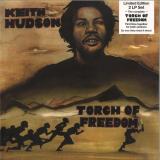
Limited edition 2LP set - for the first time together the complete Torch Of Freedom sessions. The acclaimed follow up to the classic 'Pick A Dub' and 'Flesh Of My Skin' albums. Original raw Mamba label Jamaica mix plus Keith's UK re-mix and re-sequence. Includes bonus dub 'Crying' previously only available on rare import 7" single.
Features the classic 'Turn The Heater On' as covered by New Order. Extensive sleeve notes by Keith Hudson biographer Vincent Ellis.
out of Stock
Last delivered 52 days ago available to reorder, subject to availability
The pioneers of acid jazz strike back! Galliano, the first artist ever released on Acid Jazz Records and one of the true originators of the genre, return with
their first new album in just two years—following their remarkable comeback after a 27-year hiatus.
After returning to the scene with Halfway Somewhere, their first album in approximately 27 years, Galliano waste no time in delivering their latest statement,
Acid Jazz Revenge. The album expands upon the previously sold-out Bandcamp LP Unreliable Memories of Contested Conversations, adding three brand-new
tracks and returning in a completely refreshed edition.
The title says it all: Acid Jazz Revenge is a bold declaration from one of the genre's original innovators. Packed with the sophisticated grooves, soulful rhythms,
jazz-inflected arrangements, and unmistakable attitude that defined acid jazz in the first place, the album proves that Galliano remain firmly at the forefront of
the movement they helped create.
The album also features a newly recorded version of "Jus Reach" originally released as a 12-inch single on Talkin' Loud in the 1990s. Reimagined with a
contemporary sense of style and groove, the track perfectly demonstrates Galliano's ability to revisit their own history while keeping their sound fresh and relevant.
The Japanese edition includes three previously unreleased tracks exclusively, making it an especially attractive edition for collectors and longtime fans.
MOTORSLICE is the original soundtrack to the viral hit indie video game of the same name, composed and produced by Pizza Hotline. Built around high-speed movement, razor-sharp parkour, and a blue haired girl slicing machines in half with a bad ass chain saw, the album pushes Pizza Hotline’s video game-inspired sound into a harder, faster, and more cinematic space.
Blending jungle, drum and bass, sci-fi ambient pads, and Y2K game soundtrack nostalgia, MOTORSLICE captures the feeling of launching yourself across gaps, slicing through enemies, and chasing perfect momentum over huge post apocalyptic vistas. The soundtrack draws inspiration from games like Mirror’s Edge, Prince of Persia, and Shadow of the Colossus while maintaining a glossy electronic character that defined that era.
To celebrate the release, MOTORSLICE is being pressed as a full length vinyl LP featuring the complete soundtrack on striking orange vinyl, chosen to match the main character’s iconic outfit. It turns the soundtrack into a proper physical artefact from the game's palpable world, tying the music directly to the visual identity of the game.
Where albums like Level Select and Dream Select explored imaginary game worlds, MOTORSLICE is the sound of a real one: a breakout indie game that has already made a huge impact online through viral gameplay clips and a growing community of players. The result is a soundtrack that feels both nostalgic and immediate, built for speed, precision, and impact while still carrying the melodic, emotional, and playful qualities that define Pizza Hotline’s music.