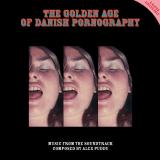
Alex Puddu's groundbreaking album, the soundtrack of The Golden Age of Danish Pornography from 2011, finally will be released as a new reissue on the artist's own label Al Dente in his entire
original track list and with a brand new cover. The music on this record is inspired by and composed by Alex Puddu for "The Golden Age of Danish Pornography" - a collection of vintage hardcore short films from the early seventies,1971-74 directed by Danish porn pioneer Freddy Weiss - available on DVD from Pink Flamingo Entertainment.
quête:dan nurse
12th Isle founding member Stewart Brown and London-based percussionist Pike present six tracks born out of preparations for live shows at Cafe Oto and The Three Wheel Drive festival, the culmination of collaborating on ‘No Direction’ from the first Material Things album (with DJ support from Donato Dozzy, Orpheu The Wizard, Not Waving, I-Sha, Donna Leake, Optimo and Huntley & Palmers).
Inspired by various traditions of experimentalism, the pair touch upon reference points such as Eliane Radigue and Nurse With Wound’s “Soliloquy for Lilith” (on “Coastal Town”), as well as the wider canon of motorik, dub and drone practitioners over the past 60 years. Concerned with the interplay between early exports of free jazz and more modern electronics, Rain & Cymbals builds on the project's first outing with a more refined approach to production and a clearer modus operandi, combining ambient pads with additional synth work by Dan Macintyre, multifaceted percussion work and heads-down, emotive minimalism.
The Nursery Records is the label and sound garten of producer/botanist DJ Houseplants. A home for gardeners, conservationists, dancers and music lovers alike, The Nursery Records sound envelops it’s listeners in lush yet familiar bioacoustics encouraging people to photosynthesize together like plants reaching for the sun – opening and thriving from the positivity of the music.
The first release on the label is none other than DJ Houseplant & Harriet Brown’s fan-favorite, Couldn’t Catch My Breath. An electro and heavily bass-entrenched tune, it is a sublime take on an RnB cult classic that will have you confident and feeling yourself. A fan once profoundly wrote, “it’s the most perfect blend of bliss, emotion, nostalgia, comfort, sensuality, melancholy, vulnerability, energy, build, atmosphere and euphoria all wrapped up in 4 minutes.” Like a healthy and flowering plant, DJ Houseplants hopes this tune will help ground you and develop new roots for the sunny days ahead
- A1: All Rights Resevered
- A2: God Factory
- A3: Hawaii / Torso / 97 Cigarettes
- A4: Acid Fur
- A5: Dance
- A6: New York Is A Lonely Town
- A7: (This Track Doesn't Exist)
- B1: Much About Bones
- B2: Scat
- B3: Pander To The Natives
- B4: For Garry 5
- B5: The Monkey Is Safe
- B6: 1-2-3 A Baby Buggy
- C1: Walking Best Friend
- C2: Untitled 1
- C3: Untitled 2
- C4: Now This Is God's Son 1
- C5: Acid Fur (Demo)
- C6: Now This Is God's Son 2
- C7: Hello Donald, Merry Christmas
- C8: Pinstripe Bus
- D1: The Man Of My Dreams
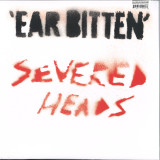
Dark Entries picks up Severed Heads yet again for Ear Bitten, a double LP reissue of some of the band’s earliest material. As originary Aussie industrial legends - although founder Tom Ellard would balk at being branded as such - Severed Heads shaped the continental subcultural sound with their kitchen electronics, chaotic tape loops, and quietly infectious nursery-rhyme-esque melodies. In 1979 Ellard, Richard Fielding, and Andrew Wright abandoned the moniker Mr. and Mrs. No Smoking Sign and adopted the edgier name Severed Heads “to pretend to be an industrial band such as Surgical Penis Klinik & Throbbing Gristle.” Noise-rockers Rhythmx Chymx had placed an advertisement in a local shop looking for a band to share the costs of pressing an LP. The Heads set about recording a Dadaist racket on a pair of open reel dictaphones and a cassette deck using a TRS-80 computer, Kawai Synthesizer 100F and Korg Mini Pops drum machine. Ear Bitten was released in 1980; original copies now fetch obscene sums, in part due to most of Severed Heads’ copies perishing in a fire at Richard’s home. The band’s next endeavor was a cassette titled Side 2, a collection of free-form experiments fashioned as Ear Bitten’s second side. For this reissue, Dark Entries has collected both Ear Bitten and Side 2 on the first disc, presenting the album in its full form. Disc two includes the original first version of Ear Bitten, which was only unreleased because it was recorded in a format not suitable for pressing. The album comes in a gatefold sleeve designed by Eloise Leigh and includes photos, liner notes, and reproductions of the original Xerox inserts from the 1980 issue. Ear Bitten delivers 22 tracks of pain you can dance to!
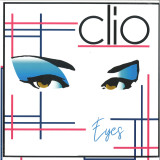
The decade of the 80s is revived through recordings like "Eyes" that allow you to travel through the music and trigger those old emotions of innocence, joy and adventure. It's possible you don't understand a word of what they're singing in the chorus, but the song is very catchy! Maybe not even Maria Chiara Perugini knows what she sings about, but she makes you hang on to every word of her like a nursery rhyme of synths, beach and bubblegum. "Eyes" is so amazing, so mesmerizing and more and more people are discovering this italo-disco masterpiece that usually satisfies and makes fun of you at the same time. If you try playing it at 75% speed gives a hypnotic vapor wave vibe! And even more, the song would have fit well in the dance club scenes from Scarface. Beyond the words - difficult to find a text that makes sense, sometimes out of context, unundestandable even for a French listener - the piece is so surprisingly likeable for the unique tone of Clio's voice, a strange cross between teenager and adult, and the part where she spoke another language, with some really cool synthesizers, are people's favorite parts. 0:31 "Je suis bien heureuse" , 0:47 "La nuit a ses merveilles", 0:57 "Il y a de quoi y perdre la tete, pour toi, sha, pour toi", 1:36 "Je n'ai plus de bulles", 1:52 "Je vous prie applaudissement". "Eyes" by Clio contains all the emotions that a dance-pop song should contain plus the essential element of mystery, a kind of magic that takes place between the chorus and the bass line, a shot in the dark drizzly night of the Italo-Disco. made by Roberto Ferrante, a guarantee for the perfect productions of the 80s, when he was only 20 years old.
Reissue of this cult 1972 album which featured on the infamous Nurse With Wound List.
During the long, dark hangover of the Summer of Love, the classically-trained Essex prodigy approached CBS Records with demo recordings. A forward-thinking A&R executive must have seen a potential revenue stream in Don Bradshaw-Leather's avant-classical noise. The artist was given an advance to record an album. He used the funds to create a large studio in Sussex with many instruments including an actual church organ. Here, on his own, without the use of any electronic sequencing, he recorded "Distance Between Us" using simply multitrack tape, layering each part of the composition. Upon hearing the product of their financial investment - four side-long tracks of blurry organ drones, frantic piano tinkling, and ritualistic percussion - CBS got cold feet.
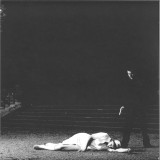
The album was self-released on Bradshaw-Leather's own Distance imprint; a vanity label established for the sole purpose of releasing the album. The sleeve art is full of mysteries, from the misspelling of "Bradshaw" ("Bradsham"), to the coal-blackened visage of the bohemian madman on the cover (DBL himself?), to the rear photo collage depicting the same madman accosting a nude woman. The music isn't any less mysterious; shapeless symphonies of smeared-out Mellotron, tribal drums, and wordless vocals. Don Bradshaw-Leather passed away in the 90's.
Presented in a matt-laminate gatefold digisleeve.
- A1: In The Night Garden (Opening Theme)
- A2: Oh No! It's The Ninky Nonk!
- A3: Hello Igglepiggle!
- A4: Igglepiggle Goes For A Walk
- A5: Hello Upsy Daisy!
- A6: Upsy Daisy Kisses Everything In The Garden
- A7: Tittifers (Verse 1)
- A8: It's The Tombliboos' House!
- A9: Tombliboo Bricks
- A10: Tittifers (Verse 2)
- A11: Hello Makka Pakka!
- A12: Catch Makka Pakka's Og-Pog!
- A13: Tittifers (Verse 3)
- B1: Hello Pontipines!
- B2: The Pontipines Go For A Walk
- B3: The Pinky Ponk
- B4: Where Is The Pinky Ponk Going?
- B5: The Haahoos
- B6: Everybody Loves Jumping!
- B7: Tittifers (Verse 4)
- B8: Time For Tombliboos To Clean Their Teeth
- B9: The Night Garden Dance
- B10: The Tittifers Bedtime Song
- B11: Time To Go To Sleep
- B12: In The Night Garden (Closing Theme)
IN THE NIGHT GARDEN is one of the most captivating and heart-warming TV series of the last 20 years.
The make-believe world of IN THE NIGHT GARDEN’s loveable and caring characters, conjures a magical picturebook fantasy-land that exists between waking and sleeping in a child’s imagination.
The calming and soothing nature of the music and nursery rhymes, carry the viewer through this happy world.
This 12” Vinyl LP Picture Disc brings the characters to life!
- A1: Parade Ground - The Lights Gone
- A2: Diseno Corbusier - La Esperanza Esta En Antena
- A3: Lena Platonos - Mia Gata Sas Perimenei Ste Gonia
- A4: Victrola - Luca (Instrumental)
- A5: Borghesia - Magla
- B1: Tom Ellard - Ga Duum Blitzfonika
- B2: X-Ray Pop - Corto Maltese
- B3: Second Decay - Lubeckerstrasse
- B4: From Nursery To Misery - Contentment
- B5: Cyrnai - Digital Grit Box (Demo)
Celebrating a Decade of Dark Entries with a compilation titled ‘Tens Across The Board’. We revisit our roster and chose 10 songs from 10 bands from 10 different countries spanning the years 1981-1993. The songs flow in chronological order and have never appeared on vinyl, with 7 of the songs previously unreleased.
The compilation begins in 1981 with Parade Ground from Belgium, the duo of brothers Pierre and Jean-Marc Pauly with help from Patrick Codenys and Jean-Luc of Front 242. “The Light’s Gone” was one of their earliest experiments and employs a stark minimalism with modular synthesizers, guitar reverb and tape delay. Next we venture to Granada, Spain in 1982 to meet the trio of Diseño Corbusier. Influenced by Cabaret Voltaire and Dadaism, “La Esperanza está en Antenas” was the band’s take on melancholic pop fueled by a robotic DR-55 bass-line. Sailing the Mediterranean Sea to Athens to meet Greek electronic goddess Lena Platonos who shares a demo from 1983. “Μια Γάτα Σασ Περιμένει Στη Γωνία” translates to “A Cat Is Waiting On The Corner” and is possibly the witchiest sounds we’ve shared yet, ending with a blood curdling scream. Frozen in 1983 we cross Ionian Sea to Messina, Italy and visit Victrola, the duo of Antonino “Eze” Cuscinà and Carlo Smeriglio. They’ve unearthed a melodic instrumental version of “Luca” fueled by a Korg Polysix and TB-303. Traveling across the Adriatic to Slovenia circa 1984, where Borghesia are working on their album ‘Ljubav Je Hladnija Od Smrti’. “Magla” translates to “Fog” fitting for the thick, somber electronics of Aldo Ivancic providing a dense atmosphere for the baritone vocals of Dario Seraval.
On Side B we go down under to Sydney and excavate a hidden Tom Ellard song recorded in 1984 under the alias Lord Metal, an anagram of his name for copyright reasons. “Ga Duum Blitzfonika” is a slow-motion, unadulterated dance groove originally released on the cassette compilation "Independent World”. Skipping ahead to 1986 in Tours, France we salute X-Ray Pop the minimum new wave duo of Didier "Doc" Pilot and Zouka Dzaza. They contribute the hypnotically fragile “Corto Maltese” that originally appeared on the cassette compilation ‘Plop’. Crossing the German boarder we arrive in Dortmund at the apartment of Andreas Sippel of Second Decay who recorded the instrumental demo “Lübeckerstrasse” in 1988 with partner Christian Purwien. Utilizing an TR-808, SH-101 and Arp Odyssey this cold slice of futurism was named after the street Andreas lived on. Traveling westward to England, specifically Basildon, Essex to the teenage bedroom of From Nursery To Misery, the trio of identical twin sister vocalists Gina and Tina Fear and keyboard player Lee Stevens. “Contentment” is an introspective, ethereal pop song with child-like vocals that originally appeared on the Belgian tape compilation ‘Heartbeat Vol.4’ in 1989. Finally, we return home to San Francisco and close out the compilation with Cyrnai the moniker of multi-instrumentalist Carolyn Fok. “Digital Grit Box (Demo)” was an outtake from the ‘Transfiguration’ album sessions recorded in 1993, utilizing dark dance drum beats made with MIDI sequencer programs Studio Vision and Sample Cell.
All songs have been remastered by George Horn at Fantasy Studios. The vinyl is housed in a custom designed jacket by Eloise Leigh featuring our label’s colors black-white-red with connect-the-dots pattern linking the 10 songs via maps/timeline/location, all relating to the reissue process, plus source images from San Francisco, our hometown. For this landmark release we've also printed a 2-sided fold-out wall poster that includes every artist we've released in our first 10 years 2009-2019 in black, red and silver metallic ink, plus an 8x11 insert with lyrics, notes and photos.
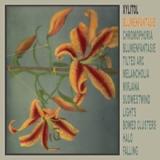
Xylitol, aka producer and DJ Catherine Backhouse, shifts up the refinement and musical breadth for her second album Blumenfantasie, the follow-up to her Planet Mu debut Anemones.
With Blumenfantasie, Xylitol wanted “to make space and for the music to float and propel at once”, finding routes through the pointillistic figures, cascading synths and the meditative stillness of kosmische musik and bolder breakbeat programming. She reaches this delicate balance through careful subtraction, hoping “to convey a sense of intimacy and sadness but without sentimentality” which she manages with a feel and sound that's raw and intuitive.
Blumenfantasie rolls through detailed jungle workouts that flutter and bleep, through beatless ambience, taking a rare dip below 160 bpm for the elegiac Mirjana, the album’s most explicit nod to Krautrock with a drum break chopped up from Amon Duul II’s anthemic ‘Archangel’s Thunderbird’, through to Halo, a bare bones grime rhythm that calls to mind the missing link between industrial pioneers Nurse With Wound and Wiley's Eskibeat.
Catherine cast her net to draw in experimental audiovisual duo Sculpture and Reading based post-rock band The Leaf Library as collaborators, pulling the former’s whirling eddies of musique concrète into a slice of sublime aquatic jungle, and the latter’s radiophonic folksong into a dark and disorientating breakbeat workout equally indebted to Source Direct as to Broadcast.
Blumenfantasie moves with a confident, self-effacing fluidity which has been informed by DJ Bunnyhausen’s more regular DJ gigs. She speculates ‘if this album feels more cohesive than its predecessor it's likely because I've been DJing a lot more, with Worthing Techno Militia, with central and eastern european electronica collective Slav to the Rhythm, as well as being part of Italo Disco crew Flex. Moving between these zones seemed to open up hidden pathways between the disparate musical trajectories they represent.'
While Anemones contrasted the rough and the delicate, its successor is an album built for the head, hips and heart, with painterly sounds and a sense of intimacy that encourages deep listening while keeping its eyes on the strobelight and its feet on the dancefloor.
Wrapped Up In Time is the fourth vinyl release by Night Foundation; the solo project of Intermedia artist and Noir Age label owner Richard Vergez. An existential suite of sounds comprised of analogue synth and drum machine, guitar, clarinet, tape loops and other assorted space racket.
The LP offers solo, instrumental passages punctuated by duets with Noir Age alumni: Underground vocal legend Little Annie reputable for her past collaborations with Coil, Nurse With Wound, Swans and countless others, lends her lived-in pipes for Blue Garage; along with Belgrade-based sound artist Zhe Pechorin for Night Blooming Jasmine; a tribute to our passed brother David Lynch.
Both rhythmic and expansive, Hinterland searching; Wrapped Up In Time is a processing of grief, memory, and the current state of our revolving loop of life. Recorded in South Florida, 2024-2025.
Mastered by Giuseppe Ielasi of Senufo Editions.
For fans of: Coil, King Tubby, Dead Can Dance, Scorn, Sabres of Paradise, and Vicious Pink
Limited edition of 100 on black vinyl with full color matte jackets
- A1: Sankaibushi (Sankai-Bushi)
- A2: Yakko-San (Lord)
- A3: Mamurogawa Ondo (Mamurogawa Ondo)
- A4: It Seems To Be My Cousin
- A5: Konpira Fune-Fune
- A6: Otemoya-San (Otemoya-San)
- A7: Joban Tanko-Bushi (Tokiwa Tanko-Bushi)
- A8: Tanko-Bushi (Tankou-Bushi)
- B1: Yagi-Bushi (Yagi-Bushi)
- B2: Okosa-Bushi (Okosa-Bushi)
- B3: Soma Bon-Uta (Sōma Bon Festival Song)
- B4: Yasugi-Bushi (Yasugi-Bushi)
- B5: Hanagasa Dance (Hanagasa Dance)
- B6: Kusatsu-Bushi (Kusatsu-Bushi)
- B7: Shikararete (Being Scolded)
- B8: Densho-Bushi (Dekansho-Bushi)
The origin of Chiemi Eri, who continues to enjoy great popularity across generations and borders.
Seven analog records focusing on "jazz" are released simultaneously!
Chiemi Eri sings traditional Japanese folk songs and nursery rhymes, arranged in jazz or Latin style. The lineup is also impressive.
Leviathan Whispers is an album of longings, laments, deliriums and drones, savage and sublime. Within are breaths, hums and bone songs for shadows and fl ames to dance to. Tim Hill is an inspirational fi gure within the UK arts, jazz, noise and improv world. A shapeshifting maverick exploring Britain's diverse musical traditions, from rough music to industrial folk, free jazz to dub, post-punk to avant-rock, incorporating ambient electronics, hymns and noise. Having worked with pioneering arts company Welfare State International, Tim’s performed inside Stonehenge, on the back of trucks at Notting Hill Carnival, leading giants through the streets of London, Dublin and Galway, at Olympic Torch events, celebratory feasts and leading humanist funerals. Tim is also festival director for The Sound of the Streets, a charity promoting outdoor music and musical director of the Wye Valley River Festival where he helps street bands across the country including The Big Noise in Taunton and Horns of Plenty in Oxford.
Leviathan Whispers is a spectral, contemplative selection of Tim's recorded work, including material created for art installations, outdoor projects, solo performances and personal meditations. Inspired by landscape and the eternal pull of Blake's Albion, baritone, alto and soprano saxophones are mixed with tape loops, old synths, recycled live recordings, woodwinds and reeds. Other sounds are processed by Colin Potter (Nurse With Wound) and drone artist Jonathan Coleclough. The album artwork and accompanying videos feature sound sculptures by Michael Fairfax (Royal Society of Sculptors) alongside unsettling visuals by fi lm-maker and junk-alchemist David Young. "an amazing player - there's a weight to his music with a wonderfully dark edge" Corey Mwamba / BBC Radio 3 Fans of Colin Stetson, John Surman, Anna Von Hausswolff , William Basinski and La Monte Young will fi nd much to savour on this new 12" LP. LAUNCH PARTY: we're holding a special launch event with a live performance and talk by Tim Hill on Saturday, 15th November inside a beautiful Victorian chapel beneath Royal Berks Hospital, Reading.
- The Kkk Took My Baby Away
- Man-Trap
- Signals Of Love
- The Double Axe
- Modern Terms Of Abuse
- Ecoming Unbecoming Me
- Paint It, Black
- Walking On My Grave
- Jim Bowie
- Sex And Flies
- He's Gonna Kill That Girl
- Fire In The Mountains
- I Can't Find Pleasure
- The Money Will Roll Right In
Wenn Sie das ungute Gefühl hatten, dass 2025 irgendwie das Jahr von Thee Headcoatees werden würde, dann klatschen Sie sich selbst herzlich ab - denn überraschenderweise ist es tatsächlich so! Wir können indirekt den Tod unseres lieben verstorbenen Great Ribbon, Mr. Don Craine, dafür verantwortlich machen, dass Thee Headcoats 2022 ein Comeback feierten. Ursprünglich hatten sie geplant nur eine Tribute-EP als Thee Headcoats Sect aufzunehmen - zusammen mit Dons Downliner Sect-Kollegen Keith Grant Evans - aber dann stellten sie fest, dass sie noch ein paar Stunden Zeit im Studio hatten, und dachten sich, dass sie genauso gut auch ein neues Headcoats-Album aufnehmen könnten. Und warum auch nicht? Das Ergebnis war, ohne viel Aufhebens, das Album "Irregularis (The Great Hiatus)", das 2023 bei Damaged Goods erschien. Ende 2024, noch bevor man ein Deerstalker-Band entwirren konnte, waren die Jungs schon wieder am Werk, und eine weitere neue Headcoats-LP war ,im Kasten", deren Veröffentlichung ursprünglich für Anfang dieses Jahres geplant war. ABER dann kam irgendwo jemand auf die Idee: ,Warum sollten nur die Jungs den ganzen Spaß haben? Wie wäre es, wenn wir auch den Sisters of Suave, Thee Headcoatees, eine Chance geben?" Mit allen ihnen zur Verfügung stehender männlichen List und Tücke schalteten Thee Headcoats und Damaged Goods ihre Charmeoffensive ein. Mit purer Entschlossenheit und Hartnäckigkeit wurden Ludella Black, Kyra LaRubia, Bongo Debbie und Holly Golightly nacheinander aus ihren Verstecken gezerrt, wo sie sich lautstark wehrten (was sie am besten können), um die 14 Killer-Songs aufzunehmen, die auf ihrem neuesten Album mit dem raffinierten Titel ,Man-Trap" zu finden sind. Das war keine Kleinigkeit! Anfang 2025 wurde also eine Aufnahmesession in den renommierten Ranscombe Studios in Rochester gebucht, Gin und Snacks wurden vorbereitet, und im Handumdrehen waren die Backing Tracks im Kasten - Thee Headcoats wieder zurück als die beste Backing-Band und Thee Headcoatees zurück am Gesang. Billy Childish übernahm die Produktion. Unbeeindruckt von einigen geografischen Hindernissen auf dem Weg dorthin war Ende Mai das Ergebnis ein glänzendes neues Headcoatees-Album! UND WAS FÜR EIN ALBUM! Es ist mindestens genauso gut wie alle ihre Alben aus den Neunzigern und vielleicht sogar noch besser... (,Ja-a-a-a!", flüstert der Geist von Don Craine.) Diese Mischung aus großartigen Coverversionen und einigen fantastischen neuen Songs ergeben eine verdammt gute LP. Betreten Sie "Man-Trap" auf eigene Gefahr - Sie wissen, dass Sie es wollen! Und falls Sie sich fragen, wie die Mädchen ihre Zeit seit der Veröffentlichung von ,Here Comes Cessation" im Jahr 1999, also vor nur 26 Jahren (!), verbracht haben, lesen Sie weiter... LUDELLA BLACK hat drei Soloalben sowie Veröffentlichungen mit The Masonics vorzuweisen und gerade erst mit The 5,6,7,8's aufgenommen. Nebenbei sang sie auch mit The Shall-I-Say Quois, zusammen mit ihrer Freundin Kyra. KYRA LaRUBIA war Anfang der 2000er Jahre kurzzeitig bei The A-Lines neben Bongo Debbie & Nurse Julie (von Stuck-Ups / Buffets / CTMF) und arbeitete an einer Neuauflage ihres Albums ,Here I Am, I Always Am". Die Musik trat dann in den Hintergrund, während Kyra sich auf ihre Promotion in Sport- und Bewegungswissenschaften konzentrierte. Seit 2005 ist sie Dozentin an der University of Kent. BONGO DEBBIE hat weiterhin in einigen Bands getrommelt. Sie ist Mitglied von Ye Nuns (The Monks Tribute Band), The A-Lines, Dutronc und hat kürzlich unter anderem für die Sting-Rays ausgeholfen. HOLLY GOLIGHTLY hat seit 1999 neun Soloalben veröffentlicht, sechs davon mit Lawyer Dave in The Brokeoffs, sang ein Duett mit Jack White auf dem Album ,Elephant" von The White Stripes und tourte um die Welt.
- I'm Alive
- Hold On Tight
- Daddy Was A Gambler
- M.i.a
- Pull Start My Heart
- Blowin' Smoke
- Lift As You Climb
- Naked On A Beach
- Black Boots, Black Leather Jacket
- On Fire In The Hot Tub
- Trouble Again
- Get Wrecked
- Pretty Hands
- Smoke Em If You Got Em
Full throttle from Vancouver, BC to wherever the open road takes them The Vicious Cycles are BACK with their new LP Get Wrecked on Pirates Press Records! Before you even get the shrink wrap off the gatefold jacket, you can guess what kind of party you're in for. "Our pal Shakey Deal is the cover model," says Cycles head honcho Billy Bones. "A tuff looking scrub on a minibike says a lot about who we are." And who is that exactly? "We play garage/punk rock and roll songs about motorcycles. We like to have a good time." The promise of debauchery carries over into song titles like "Naked On a Beach," and "On Fire in the Hot Tub." As rip-roaring, danceable party music goes, it's second to none, and rest assured there's plenty of bike enthusiast inside baseball, but the lyrics often go deeper than a superficial glance might indicate. For example, the lead single, "Hold On Tight," is about, as Billy puts it, "the physical feeling of riding with your favorite person on the back of your motorcycle - easily one of the best feelings a human can have." So, a classic biker anthem? "But also," he's quick to add, "a metaphor for life and relationships. We're gonna make it." Waxing philosophical with motorcycles as allegory over chrome-plated punk rock 'n roll? That's The Vicious Cycles' songwriting in a nutshell. Another album highlight, "Daddy Was a Gambler" references Billy's father - an ex-preacher who regularly hauled his kids to Circus Circus in his '57 Chevy - and his mother, a nurse and, as Billy puts it, "as close to an actual saint as anyone in the world. The song is an appreciation for the two of them, and how their differences made me who I am." "Naked On A Beach" sounds like a party, but Billy explains it's "a critique of capitalism and the tiny lives we're expected - and sometimes content - to live." Even the title track, "Get Wrecked," is more than just a statement of defiance; it's a message to Billy's son about dealing with the conformist naysayers of the world. Longtime fans & newcomers alike will be stoked for the straightaways, but stick around for the twists and turns, just like any good ride. The band brings in pals on strings & saxophone for a 60s Wall of Sound-inspired production on "Black Boots, Black Leather Jacket," and try their hands at their first murder ballad on "Pretty Hands." There's an instrumental tune ("Blowing Smoke") and hell, there's even a deep cut cover of "Trouble Again" - originally performed by Stewart Copeland of The Police - which only the biggest nerds of a certain age will recall as the theme song to the 80s Star Wars animated series Droids! In the end, no matter the detours, the band - along with Jesse Gander (Territories, Comeback Kid), & Mariessa McLeod at Rain City Recorders - kept their eyes on the prize: sing-along choruses, handclaps, and short songs that get the job done and don't overstay their welcome. "I didn't want us to write a record that you could dance to." quips Billy. "I wanted us to write a record that you couldn't not dance to."
- Wild Waters
- All Good Things Will Come To Pass
- Down On The Freeway
- Sleep Through The Long Night
- Come On
- Tell Me How To Be Here
- New Ages
- All Is Never Lost
- There From Here
Lael Neale's minimalist drone pop draws inspiration from the Transcendentalists, the alienation of modern life, and a rich array of musical influences-ranging from Dionne Warwick and John Lennon to primitive American gospel and Spacemen 3. Her expansive new record, Altogether Stranger, due May 2, was written and recorded in the early morning quiet of Los Angeles. Clocking in at just 32 minutes, the 9-song LP covers an unexpected breadth of musical and lyrical terrain-from garage rock nursery rhymes and creation myths to Motorik dance dirges and solitary Omnichord meditations. A brilliant lyricist, Neale has a unique ability to uncover the extraordinary within the mundane, tackling themes of polarity that recur throughout her work-country vs. city, humanity vs. technology, isolation vs. society. This album is her third collaboration with producer Guy Blakeslee who helps expand the tonal palette while staying true to Neale's commitment to the raw immediacy and hand-made intimacy of home recording. Altogether Stranger - a stunning album filled with dreamlike reverie, Neale's crystalline voice, and echoes of the Velvet Underground - was conceived after four years of oscillating between rural solitude and urban chaos. It finds Neale perched at the piano in a hilltop bungalow, looking down on a rare curve of Sunset Blvd. Here, in this daily ritual of writing, singing, and painting-what David Lynch referred to as "the Art Life"-she creates the space for her most adventurous work to date. Born and raised in Virginia's idyllic countryside, Neale brought the high-lonesome sound of her home state with her when she moved to California to pursue music. After years of writing songs on guitar and playing small venues in Los Angeles, she discovered the Omnichord in 2019, which sparked a new creative direction. This led to her 2021 Sub Pop debut album, Acquainted With Night. That album's 2023 follow-up, Star Eaters Delight, deepened the collaboration with Blakeslee, infusing minimalist soundscapes with a heightened electric energy. The album found a devoted audience, and Neale's subsequent tour included sold-out shows in Los Angeles, New York City, London, and Paris, multiple trips across Europe, and a West Coast run supporting kindred spirit Weyes Blood. This marked yet another return to Los Angeles. Indeed, Los Angeles is not just the backdrop of Altogether Stranger but a lead character. The album's accompanying film - created with Neale's faithful Sony Handycam - builds on her ongoing series of videos, telling the story of Neale as an alien in a suit of mirrors stranded on Earth. Wandering through modern-day LA, she finds both absurdity and beauty in our fragile, untenable way of life. Over the long year it took to write Altogether Stranger, Neale vacillated between childlike optimism and existential melancholy. While she may not have been able to reconcile these opposing states, Altogether Stranger represents an ambitious breakthrough for this singular, self-sufficient artist.
- A1: Montego Bay - Everything (Paradise Mix) 04 59
- A2: Atelier - Got To Live Together (Club Mix) 06 06
- A3: Golem - Music Sensations 04 56
- B1: The True Underground Sound Of Rome Feat. Stefano Di Carlo - Gladiators 05 26
- B2: Eagle Parade - I Believe 04 26
- C1: Dj Le Roi - Bocachica (Detroit Version) 05 28
- C2: Green Baize - Synthetic Rhythm 01 41
- C3: M.c.j. Feat. Sima - Sexitivity (Deep Mix) 05 30
- D1: Kwanzaa Posse Feat. Funk Master Sweat - Wicked Funk (Afro Ambient Mix) 06 31
- D2: Progetto Tribale - The Bird Of Paradise 06 29
- D3: Mbg - The Quite 06 59
Vol 1[28,99 €]
Googling “paradise house”, the first results to pop up are an endless list of European b&b’s with whitewashed lime façades, all of them promising “…an unmatched travel experience a few steps from the sea”. Next, a little further down, are the institutional websites of a few select semi-luxury retirement homes (no photos shown, but lots of stock images of smiling nurses with reassuring looks). To find the “paradise house” we’re after, we have to scroll even further down. Much further down.
It feels like yesterday, and at the same time it seems like a million years ago. The Eighties had just ended, and it was still unclear what to expect from the Nineties. Mobile phones that were not the size of a briefcase and did not cost as much as a car? A frightening economic crisis? The guitar-rock revival?! Certainly, the best place to observe that moment of transition was the dancefloor. Truly epochal transformations were happening there. From America, within a short distance one from the other, two revolutionary new musical styles had arrived: the first one sounded a bit like an “on a budget” version of the best Seventies disco-music – Philly sound made with a set of piano-bar keyboards! – the other was even more sparse, futuristic and extraterrestrial. It was a music with a quite distinct “physical” component, which at the same time, to be fully grasped, seemed to call for the knotty theories of certain French post-modern philosophers: Gilles Deleuze, Félix Guattari, Paul Virilio... Both those genres – we would learn shortly after – were born in the black communities of Chicago and Detroit, although listening to those vinyl 12” (often wrapped in generic white covers, and with little indication in the label) you could not easily guess whether behind them there was a black boy from somewhere in the Usa, or a girl from Berlin, or a pale kid from a Cornish coastal town.
Quickly, similar sounds began to show up from all corners of Europe. A thousand variations of the same intuition: leaner, less lean, happier, slightly less intoxicated, more broken, slower, faster, much faster... Boom! From the dancefloors – the London ones at least, whose chronicles we eagerly read every month in the pages of The Face and i-D – came tales of a new generation of clubbers who had completely stopped “dressing up” to go dancing; of hot tempered hooligans bursting into tears and hugging everyone under the strobe lights as the notes of Strings of Life rose up through the fumes of dry ice (certain “smiling” pills were also involved, sure). At this point, however, we must move on to Switzerland.
In Switzerland, in the quiet and diligent town of Lugano, between the 1980s and 1990s there was a club called “Morandi”. Its hot night was on Wednesdays, when the audience also came from Milan, Como, Varese and Zurich. Legend goes that, one night, none less than Prince and Sheila E were spotted hiding among the sofas, on a day-off of the Italian dates of the Nude Tour… The Wednesday resident and superstar was an Italian dj with an exotic name: Don Carlos. The soundtrack he devised was a mixture of Chicago, Detroit, the most progressive R&B and certain forgotten classics of old disco music: practically, what the Paradise Garage in New York might have sounded like had it not closed in 1987. In between, Don Carlos also managed to squeeze in some tracks he had worked on in his studio on Lago Maggiore. One in particular: a track that was rather slow compared to the BPM in fashion at the time, but which was a perfect bridge between house and R&B. The title was Alone: Don Carlos would explain years later that it had to be intended both in the English meaning of “by itself” and like the Italian word meaning “halo”. That wasn’t the only double entendre about the song, anyway. Its own very deep nature was, indeed, double. On the one hand, Alone was built around an angelic keyboard pattern and a romantic piano riff that took you straight to heaven; on the other, it showcased enough electronic squelches (plus a sax part that sounded like it had been dissolved by acid rain) to pigeonhole the tune into the “junk modernity” section, aka the hallmark of all the most innovative sounds of the time: music that sounded like it was hand-crafted from the scraps of glittering overground pop.
No one knows who was the first to call it “paradise house”, nor when it happened. Alternative definitions on the same topic one happened to hear included “ambient house”, “dream house”, “Mediterranean progressive”… but of course none were as good (and alluring) as “paradise house”. What is certain is that such inclination for sounds that were in equal measure angelic and neurotic, romantic and unaffective, quickly became the trademark of the second generation of Italian house. Music that seemed shyly equidistant from all the rhythmic and electronic revolutions that had happened up to that moment (“Music perfectly adept at going nowhere slowly” as noted by English journalist Craig McLean in a legendary field report for Blah Blah Blah magazine). Music that to a inattentive ear might have sounded as anonymous as a snapshot of a random group of passers-by at 10AM in the centre of any major city, but perfectly described the (slow) awakening in the real world after the universal love binge of the so-called Second Summer of Love.
For a brief but unforgettable season, in Italy “paradise house” was the official soundtrack of interminable weekends spent inside the car, darting from one club to another, cutting the peninsula from North to centre, from East to West coast in pursuit of the latest after-hours disco, trading kilometres per hour with beats per minute: practically, a new New Year’s Eve every Friday and Saturday night. This too was no small transformation, as well as a shock for an adult Italy that was encountering for the first time – thanks to its sons and daughters – the wild side of industrial modernity. The clubbers of the so-called “fuoriorario” scene were the balls gone mad in the pinball machine most feared by newspapers, magazines and TV pundits. What they did each and every weekend, apart from going crazy to the sound of the current white labels, was linking distant geographical points and non-places (thank you Marc Augé!) – old dance halls, farmhouses and business centres – transformed for one night into house music heaven. As Marco D’Eramo wrote in his 1995 essay on Chicago, Il maiale e il grattacielo: “Four-wheeled capitalism distorts our age-old image of the city, it allows the suburbs to be connected to each other, whereas before they were connected only by the centre (…) It makes possible a metropolitan area without a metropolis, without a city centre, without downtown. The periphery is no longer a periphery of any centre, but is self-centred”.
“Paradise house” perfectly understood all of this and turned it into a sort of cyber-blues that didn’t even need words, and unexpectedly brought back a drop of melancholic (post?)-humanity within a world that by then – as we would wholly realise in the decades to come – was fully inhuman and heartless. A world where we were all alone, and surrounded by a sinister yellowish halo, like a neon at the end of its life cycle. But, for one night at least, happy."
- A1: Sweet Spirit
- A2: Petal
- A3: New Style
- A4: Little Entertainer
- A5: Anemone
- A6: Dancing Anima
- A7: Hora Thello
- A8: Tanana
- A9: Acrobat Of Architect
- A10: Inner Garden
- A11: Flower Myth
- A12: Waggle Dance
- A13: Waggle Dance Reprise
- A14: Hora Auxo
- B1: Water Memory
- B2: Rainy Steps
- B3: Marginalia Song
- B4: Hora Carpo
- B5: Katabasis
- B6: Trans Train
- B7: Of Angels
- B8: Future Nursery
Pink blossom Vinyl[39,08 €]
Mirai is a 2018 Japanese animated adventure fantasy comedy film written and directed by Mamoru Hosoda and produced by Studio Chizu (known for Belle, Wolf Children and The Boy and the Beast). The film stars the voices of Moka Kamishiraishi, Haru Kuroki and Gen Hoshino a.o. It was met with critical acclaim and became nominated for an Academy Award in 2019 for Best Animated Feature Film. Additionally, the movie received an Annie Award in the same year. Mirai follows the story of a four-year-old boy named Kun whose world is turned upside down when he meets his new baby sister. After venturing into a magical garden, Kun encounters strange guests from the past and future, including his sister Mirai, as a teenager. Together, Kun and teenage Mirai go on a journey through time and space, uncovering their family's incredible story. The soundtrack for the film was written by Masakatsu Takagi, who had previously scored Hosoda's Wolf Children and The Boy and the Beast. His work for Studio Chizu has been praised for its magical and whimsical atmosphere. For Mirai specifically, this dreamy aesthetic was mixed with a contemporary sound and made to be simple in tone and be reflective of family. Mirai is available as a limited edition of 500 numbered copies on turquoise coloured vinyl and includes a 4-page booklet.
A lost paradise, a lost innocence, and a lost culture; these are the dominant themes presented in Nicolas Roeg's 1971 masterpiece Walkabout, a survival story of two children lost in the scorched Australian wilderness. Together with other seminal Australian surrealistic outback films, (e.g. Wake In Fright) Walkabout was a film that reshaped the Australian film industry and defined the country's New Wave. On the cusp of the film's 45t h anniversary it is pertinent to observe that for decades the film's original soundtrack has also been considered lost. Composed and conducted by the acclaimed British film composer John Barry, the score is a hallucinogenic mix of exotic romanticism, children's nursery rhyme and potent psychedelic experimentation. For decades, the consensus among soundtrack circles was that the master tapes were officially missing with little chance that the music would ever see a legitimate release, but The Roundtable is pleased to announce that this is no longer the case. The complete soundtrack to one of cinema history's most visually spellbinding films has now finally been re-discovered, sourced from the original stereo master tapes and prepared to the guidelines of the original ill-fated 1970s LP release.
The premiere soundtrack release to Nicolas Roeg's 1971 New Wave Masterpiece.
Lost hallucinogenic orchestral score from acclaimed film composer John Barry.
12-track LP re-mastered from the original stereo master tapes.
180g vinyl and deluxe packaging including archival film stills and original press material.
6 Panel digipack CD.
- A1: Progetto Tribale - The Sweep
- A2: Onirico - Echo Giomini
- A3: Open Spaces - Artist In Wonderland
- B1: Alex Neri – The Wizard (Hot Funky Version)
- B2: M C.j. Feat. Sima - To Yourself Be Free - Instrumental Mix Energy Prod
- B3: Mato Grosso - Titanic Expande
- C1: Dreamatic - I Can Feel It (Part 1)
- C2: Carol Bailey - Understand Me Free Your Mind (Dream Piano Remix)
- C3: The True Underground Sound Of Rome - Secret Doctrine
- D1: Don Carlos - Boy
- D2: Lazy Bird – Jazzy Doll (Odyssey Dub)
Vol 2[28,99 €]
Volume 1 of this expertly curated project of 90s Italian House - put together by Don Carlos.
If Paradise was half as nice… by Fabio De Luca.
Googling “paradise house”, the first results to pop up are an endless list of European b&b’s with whitewashed lime façades, all of them promising “…an unmatched travel experience a few steps from the sea”. Next, a little further down, are the institutional websites of a few select semi-luxury retirement homes (no photos shown, but lots of stock images of smiling nurses with reassuring looks). To find the “paradise house” we’re after, we have to scroll even further down. Much further down.
It feels like yesterday, and at the same time it seems like a million years ago. The Eighties had just ended, and it was still unclear what to expect from the Nineties. Mobile phones that were not the size of a briefcase and did not cost as much as a car? A frightening economic crisis? The guitar-rock revival?! Certainly, the best place to observe that moment of transition was the dancefloor. Truly epochal transformations were happening there. From America, within a short distance one from the other, two revolutionary new musical styles had arrived: the first one sounded a bit like an “on a budget” version of the best Seventies disco-music – Philly sound made with a set of piano-bar keyboards! – the other was even more sparse, futuristic and extraterrestrial. It was a music with a quite distinct “physical” component, which at the same time, to be fully grasped, seemed to call for the knotty theories of certain French post-modern philosophers: Gilles Deleuze, Félix Guattari, Paul Virilio... Both those genres – we would learn shortly after – were born in the black communities of Chicago and Detroit, although listening to those vinyl 12” (often wrapped in generic white covers, and with little indication in the label) you could not easily guess whether behind them there was a black boy from somewhere in the Usa, or a girl from Berlin, or a pale kid from a Cornish coastal town.
Quickly, similar sounds began to show up from all corners of Europe. A thousand variations of the same intuition: leaner, less lean, happier, slightly less intoxicated, more broken, slower, faster, much faster... Boom! From the dancefloors – the London ones at least, whose chronicles we eagerly read every month in the pages of The Face and i-D – came tales of a new generation of clubbers who had completely stopped “dressing up” to go dancing; of hot tempered hooligans bursting into tears and hugging everyone under the strobe lights as the notes of Strings of Life rose up through the fumes of dry ice (certain “smiling” pills were also involved, sure). At this point, however, we must move on to Switzerland.
In Switzerland, in the quiet and diligent town of Lugano, between the 1980s and 1990s there was a club called “Morandi”. Its hot night was on Wednesdays, when the audience also came from Milan, Como, Varese and Zurich. Legend goes that, one night, none less than Prince and Sheila E were spotted hiding among the sofas, on a day-off of the Italian dates of the Nude Tour… The Wednesday resident and superstar was an Italian dj with an exotic name: Don Carlos. The soundtrack he devised was a mixture of Chicago, Detroit, the most progressive R&B and certain forgotten classics of old disco music: practically, what the Paradise Garage in New York might have sounded like had it not closed in 1987. In between, Don Carlos also managed to squeeze in some tracks he had worked on in his studio on Lago Maggiore. One in particular: a track that was rather slow compared to the BPM in fashion at the time, but which was a perfect bridge between house and R&B. The title was Alone: Don Carlos would explain years later that it had to be intended both in the English meaning of “by itself” and like the Italian word meaning “halo”. That wasn’t the only double entendre about the song, anyway. Its own very deep nature was, indeed, double. On the one hand, Alone was built around an angelic keyboard pattern and a romantic piano riff that took you straight to heaven; on the other, it showcased enough electronic squelches (plus a sax part that sounded like it had been dissolved by acid rain) to pigeonhole the tune into the “junk modernity” section, aka the hallmark of all the most innovative sounds of the time: music that sounded like it was hand-crafted from the scraps of glittering overground pop.
No one knows who was the first to call it “paradise house”, nor when it happened. Alternative definitions on the same topic one happened to hear included “ambient house”, “dream house”, “Mediterranean progressive”… but of course none were as good (and alluring) as “paradise house”. What is certain is that such inclination for sounds that were in equal measure angelic and neurotic, romantic and unaffective, quickly became the trademark of the second generation of Italian house. Music that seemed shyly equidistant from all the rhythmic and electronic revolutions that had happened up to that moment (“Music perfectly adept at going nowhere slowly” as noted by English journalist Craig McLean in a legendary field report for Blah Blah Blah magazine). Music that to a inattentive ear might have sounded as anonymous as a snapshot of a random group of passers-by at 10AM in the centre of any major city, but perfectly described the (slow) awakening in the real world after the universal love binge of the so-called Second Summer of Love.
For a brief but unforgettable season, in Italy “paradise house” was the official soundtrack of interminable weekends spent inside the car, darting from one club to another, cutting the peninsula from North to centre, from East to West coast in pursuit of the latest after-hours disco, trading kilometres per hour with beats per minute: practically, a new New Year’s Eve every Friday and Saturday night. This too was no small transformation, as well as a shock for an adult Italy that was encountering for the first time – thanks to its sons and daughters – the wild side of industrial modernity. The clubbers of the so-called “fuoriorario” scene were the balls gone mad in the pinball machine most feared by newspapers, magazines and TV pundits. What they did each and every weekend, apart from going crazy to the sound of the current white labels, was linking distant geographical points and non-places (thank you Marc Augé!) – old dance halls, farmhouses and business centres – transformed for one night into house music heaven. As Marco D’Eramo wrote in his 1995 essay on Chicago, Il maiale e il grattacielo: “Four-wheeled capitalism distorts our age-old image of the city, it allows the suburbs to be connected to each other, whereas before they were connected only by the centre (…) It makes possible a metropolitan area without a metropolis, without a city centre, without downtown. The periphery is no longer a periphery of any centre, but is self-centred”.
“Paradise house” perfectly understood all of this and turned it into a sort of cyber-blues that didn’t even need words, and unexpectedly brought back a drop of melancholic (post?)-humanity within a world that by then – as we would wholly realise in the decades to come – was fully inhuman and heartless. A world where we were all alone, and surrounded by a sinister yellowish halo, like a neon at the end of its life cycle. But, for one night at least, happy.