Swing From The Sean DeLear is the new four song 12-inch by Kid Congo & The Pink Monkey Birds on In The Red Records. It celebrates a dreamlike bridge between life and memory. Recorded and mixed with Jim Waters (Jon Spencer Blues Explosion, Sonic Youth, etc.) at Waterworks Recording in Tucson AZ, the track “Sean DeLear” is a tribute to the late, magical, and ubiquitous Los Angeles underground institution named Sean DeLear. This rocking song uses the metaphor of those passed on as swinging from a chandelier, a festive image everyone hopes is true! Side two of this 12-inch is a fourteen-minute psych, Chicano-groove titled “He Walked In.” The text is based on a visceral fever dream Kid had about his friend and Gun Club bandmate Jeffrey Lee Pierce, who passed away in 1996. Leading the listener back to the theme of feelings sustained between life and memory, the song dreams on as the band spreads their monkey bird wings, featuring Mark Cis-neros on flute, and guest tambourine-queen Cesar Padilla—lost in music but found in sound. In such uncertain times, one thing is most certain—Kid Congo & The Pink Monkey Birds will always bring the party...and the other world
Поиск:de tu
Все
Emmylou Harris made her Nonesuch Records debut with the release of her album Red Dirt Girl 20 years ago, in September 2000. To mark its twentieth anniversary, Nonesuch releases the album – which won the Grammy Award for Best Contemporary Folk Album – on limited-edition, translucent red vinyl.
Harris – whom the Los Angeles Times dubbed ‘the most captivating female artist ever in country music’ – wrote all but one of the twelve tracks on Red Dirt Girl, marking only the second time in her career that she had been so involved in the composition of an album. ‘In songs about lonely journeys and lost companions,’ said the New York Times, ‘Ms. Harris has found herself.’
Red Dirt Girl was produced by Malcolm Burn, who had worked with Harris engineering and mixing her previous solo studio recording, 1995's Wrecking Ball, and features Burn on piano, guitar, and bass; Buddy Miller on lead guitar; Daryl Johnson on bass and drums; and Ethan Johns on drums, guitar, and other miscellaneous instruments. Dave Matthews sings a duet with Harris on the album, and Bruce Springsteen, Patti Scialfa, and Patty Griffin also contribute vocals.
Commenting on her new label and record back in 2000, Harris said: "I take pride in my new association with Nonesuch, a label for whom I have great admiration. Red Dirt Girl is a very meaningful record for me. I’ve only written this much for an album once before – The Ballad of Sally Rose – and I’m very pleased as well with what we have accomplished in the studio."
Nonesuch Records President David Bither said at the time: "We have had the privilege over many years to work with some of the most creative and influential artists and producers in music. This launches a new area of musical exploration for Nonesuch, and we are thrilled that Emmylou is the artist to open this door for us. It is an honor to work with an artist who has such a formidable body of work behind her, but who is now creating possibly the best music of her career."
Harris has since released three additional solo studio albums on Nonesuch, Stumble into Grace (2003), All I Intended to Be (2008), Hard Bargain (2011); reissues of Wrecking Ball (2014) and her 1992 album with the Nash Ramblers, At the Ryman (2017); two duo albums with Rodney Crowell, the Grammy-winning Old Yellow Moon (2013) and The Traveling Kind (2015); two releases in 2006 with Marc Knopfler, All the Roadrunning and Real Live Roadrunning; and vinyl box sets of her early albums, in 2017 and 2019.
Born in Newtownards, County Down, Northern Ireland, singer/songwriter/guitarist Ricky Warwick was cut from the cloth of a mill workers’ jacket. Raised on a diet of Patsy Cline, Johnny Cash, Thin Lizzy, Stiff Little Fingers, Motown and everything in between. Saving his money from a newspaper round and a little help from his father, Ricky got his first electric guitar at age 13. “That cheap electric guitar changed my life....it saved me, it was more than just notes on a fretboard, it was the deepest breath of life I ever experienced.“ explains Warwick.
At age 14 Ricky and his family relocated to Strathaven, Scotland. It was here that Warwick fully immersed himself in the sonic seas of Rock n Roll. Writing and practicing every free moment he wasn’t working on his father’s farm, Ricky got a call to join acclaimed U.K. Punk/Folk band New Model Army as rhythm guitarist on their 1987 ‘Ghost Of Cain‘ World Tour. Following New Model Army, Ricky went on to form The Almighty in Glasgow who enjoyed ten top forty singles and four top twenty albums in the U.K. during the late 80’s/early 90’s, touring worldwide with such iconic bands as The Ramones, Motorhead, Megadeth and Iron Maiden.
In 2002, after relocating back to Ireland, Ricky recorded his first solo album ‘Tattoos & Alibis‘ in Joe Elliott of Def Leppard’s studio in Dublin with Joe also handling production duties. It marked a shift in direction “I realized that I didn’t need to yell over a wall of sound to make my point...less is more, stripped back instrumentation could achieve the same goal just as effectively. I learned so much making that record, primarily about myself”. Warwick would go on to release two more solo albums between 2002 -2010 and tour globally opening for the likes of Def Leppard, Cheap Trick, Bryan Adams and Lynyrd Skynyrd.
In January 2010 Ricky received a call from his old friend Scott Gorham who was spearheading a reformation of Ireland’s favourite sons Thin Lizzy and wanted Ricky to front the new line up. ”I was shocked, terrified, excited and extremely humbled when I got that call. Phil Lynott was my hero and Thin Lizzy were the soundtrack of my life. I realized that I could never hope or even dare to try and stand in Phil’s shoes. All I could do was try and stand beside them and sing his songs with as much heart, soul and passion possible. In late 2012, with a necessity to write and perform new material, out of respect for the Thin Lizzy name, Black Star Riders were born. Warwick is the frontman and main songwriter for the band and 2013 saw the release of Black Star Riders acclaimed debut album
‘All Hell Breaks Loose‘.
Black Star Riders have now released four critically-acclaimed and commercially successful albums, the most recent being 2019’s ‘Another State Of Grace‘. They have achieved two U.K. top 15 albums and one U.K. top 10 album as well as mainstream radio play which includes claiming two “singles of the week” on BBC Radio 2.
Following 2016’s lauded ‘When Patsy Cline Was Crazy... And Guy Mitchell Sang The Blues’, Warwick is getting ready to unleash his 5th solo album in 2021. Titled ‘When Life Was Hard And Fast‘, it was recorded in Los Angeles and produced by Keith Nelson (ex-Buckcherry), who also co-wrote the majority of the songs on the record with Warwick. “Keith Nelson and I share a passion for good, honest, rock ‘n’ soul. Making the album with Keith who shares a similar outlook and work ethic as myself was a no brainer ....also the fact that he has a killer collection of vintage guitars contributed greatly”
“I wanted to create an album that had the simplistic melodies of Tom Petty and the Heartbreakers charged with the electric hedonistic fury of Johnny Thunders And The Heartbreakers. Recording the album as live as possible with a full band was requisite to achieving the desired effect”. Xavier Muriel (Ex-Buckcherry) on drums and Robert Crane (Black Star Riders) on bass completed the core band and turned in stellar performances, giving the songs a real lease of life.
Also, once again, Warwick tapped some of his closest friends for guest appearances on the record, including Andy Taylor (Duran Duran & Power Station) Luke Morley (Thunder), Joe Elliott (Def Leppard), Dizzy Reed (Guns n Roses). Ricky also duets with his daughter Pepper on the song ‘Time Don’t Seem To Matter‘. “I can’t wait for people to hear this album and to hit the road touring it whether it’s with my band The Fighting Hearts or just myself and my acoustic - it will be amazing. I’m grateful that after 30 years of making records my appetite for writing and playing is the same as it was that day all those years ago when I got my first electric guitar”
For those intrigued by the album cover, it depicts a crash scene from the famous Ards TT Motor Car Race in County Down Northern Ireland. The race ran from 1928 until 1936 was watched by over 250,000 spectators annually. The embankment in the photograph that the spectators are on is actually a field belonging to Ricky’s Great Grandfather’s Farm, which he grew up on for the first fourteen years of his life.
Debut from Norwegian artist Ole Kirkeng on Die With Your Boots On Records. Kirkeng has been living in New York for five years, but had to go home when the pandemic broke. He's been touring with Courtney Marie Andrews, Darling West and Molly Tuttle. He lived in Brooklyn where he wrote songs, worked in a studio and hung out with friends like Big Thief and Liz Cooper and the Stampede.
Distressed of sound and disturbed of subject matter, “Down-Faced Doll” sees the classic indie outfit connect with their dark-sides to deliver a cacophonous alt/folk stomp unlike anything they’ve released before. Based on a chilling true story told through the eyes of a discarded toy, its lyrics like clues, begin to lay evidence to a scene enough to turn anyone’s blood blue.
As vocalist Ian H. says:
“By far the most disturbing song I’ve ever written. Some songs seem to have a strange compelling energy which no one can rightly claim authorship to. They ‘write themselves’ but of course a great deal of working and shaping occurs too… A true story - well the first two verses are. The last two verses are my attempt to imagine “how did it ever get to this”…”
Customised with discomposing Eastern-inspired guitar riffs and clamouring percussive rhythms, “Down-Faced Doll” instils an unshakable feeling of paranoia, pursuit and unsease to match its haunting storyline. “Ewan and Stephen immediately tuned into its unsettling vibrations to create sounds and dark corners as you are unwillingly dragged through the scenario.” Ian adds.
Created & produced by Bradford (Ian Hodgson, Ewan Butler & Stephen Street), “Down-Faced Doll” was mixed by Stephen Street (Blur/New Order/ Kaiser Chiefs) and mastered by John Davies. It is taken from what will be Bradford’s first new studio album in over three decades: ‘Bright Hours’ - set for release early-on in 2021.
Bradford are a revered indie band formed in Blackburn in 1988. Championed by Morrissey, the band earned a cult status with their acclaimed debut album 'Shouting Quietly' in 1990, a record as-produced at the time by Stephen Street. Touring with the likes of Joe Strummer, The Sugarcubes, Morrissey and more, the band burned brightly and brilliantly. Fading away against the neon glow of the Madchester era, the band split in 1991.
Fast forward to 2018 and a re-mastered 30 song collection entitled ‘Thirty Years Of Shouting Quietly’ was released on Turntable Friend Records. The album was re-appraised as a 'lost English classic'. This rekindling of belief slowly re-ignited the magic and chemistry that always existed between the band now Ian H and Ewan Butler and Stephen Street. So much so, that Stephen decided to join forces with them and become a fully fledged member of the band.
With a new look line-up on illuminating form, as a trio Bradford have lovingly crafted a jewel of a new album: ‘Bright Hours’ to be released early in 2021.
Directly following “Like Water”, their latest single “Down-Faced Doll” is a definitive signal that ‘Bright Hours’ will be every bit worth the long wait...
Repress in Pink Marbled Vinyl
'Fleischberg' is the 2nd vinyl iteration of Berlin's body focused Fleisch collective, following hot on the heels of last year's highly acclaimed release by Schwefelgelb. This 12' starts with a relentless six and a half minute assault by Australian native and Berlin based Halv Drøm, a fitting vinyl debut for the talented producer. DSX follows up with a finely tuned EBM track tactfully layered with obscure vocal samples and paired with piercing, frenetic drum programming.
The B side starts with a slightly different approach, recalling a more classic techno and electro tone without losing sight of the release's progressive focus; Privacy's catchy 'Work' recalls late 80s Chicago masterpieces without becoming overly nostalgic. Sekunde rounds out the compilation fully with a plodding and minimal piece that would be best appreciated while being blasted driving 300 km/h down a moonlit back road somewhere in the Black Forest.
Hunt & Gather’s debut vinyl release comes by way of Pezzner’s cryptic moniker “The Native Language”. Written as a quasi-homeless man living off the rich in the San Juan Islands who writes music once per year to suffice his own delusions.
Walking the streets in these damp, anxious days that all run together lately, I was approached by a man who would blend right into the neighborhood, layered in flannel and sweatshirts for sleeping.
Rough, but for his shoes. (Never cheap out on anything that separates you from the ground.) “Pezzner,” he called out, from a safe distance. “What did the mangrove say to the marauding hordes.” My soul left my body for a moment and my voice responded on its own. “Petrichor.”
He caught my eye, nodded, left a padded envelope on the ground and vanished. The envelope had passed through many hands, slipped into the bed of a ferry-bound truck, passed from one fellow traveler to another, stashed under the counters of anarchist bookstores, left tucked between books at Little Free Libraries. The greenish stains suggested that at one point it had been swum across a lake. Another DAT, contents encoded here unabridged, and a letter from someone who called himself The Sentinel.
The Vessel lived out his days on Shaw Island, under a canopy of trees that gets smaller and smaller every season. His condition the same, any electricity lit his brain on fire, could only bring himself to compose one day a year, only at night, out of sight. Until he met The Angel, an eccentric with means, who built for him a device.
A Faraday Cage to block all electromagnetic emissions. Burlap walls, for atmosphere. A system of pulleys and levers, wood and rope, all running into a box that sat outside. An entirely mechanical control surface. No electrons in here. The Vessel lit fires, watched the shadows dance, closed his eyes and disappeared into the motion for hours at a time. The Sentinel came every morning to change the tapes. The Angel watched and pondered, his plans unknown.
The box sat sealed, bare except for another set of ideograms, scratched in day by day over time. Inside, the usual bedroom-producer shit. Outside, the ideograms told a story, passed from the Vessel to the Sentinel and drawn by the Angel, of a man who became another creature. Alert to the lowest frequencies, feeling music deep in the soil below their feet. Music that brings messages, from distant friends, warning of new creatures and the danger they brought. Skin alive to the world, so sensitive it can detect the landing of a single fly. A mind capable of keeping a map of the world inside. A mind that can look in a mirror and see a soul it knows well. A mind that can grieve.
After processing its contents, I filled the envelope with granola bars and walked it down to the market. The clerk gave me a knowing look as I placed it on the counter behind a stack of pork rinds from the previous century. As I walked out, a young man carrying a plastic bag and wearing impeccable shoes walked in.
DJ GIRL’s latest EP on Planet Euphorique “Slsk Trax” shows us how it’s done with four head-turning techno-transanthems, bass bins bursting at the seams with fast & furious innovative aural onslaught. The Chicago based producer offering no zoom, main room, (more than) four to the floor visceral punishment of the highest pleasures.
Immediate assault in the form of A1; “And the Crowd Howls” unstoppable rapid, rhythmic voltage racing through your veins, pulsating like the most dramatic, dark dancefloors should. Sliced with electro injections interrupting the hypnotizing drumwork, snapping you in and out of altered states, invoking vivid imagery of flickering smoke and sweat. Following the intoxicating opener, “The Runaround'' beams up to otherworldly tech-territory, a deliciously syncopated bass line rumbling below disciplined running snares, DJ GIRL eradicating expectations, her addictive percussive spontaneity and mutation of conventional structure nothing short of exhilarating.
A 7 minute “Tunnel Vision” initiation on the B side starts with swirled panned percussion, a gritty foundation paving the way for scorched screeches and additional demented drums demanding your undivided attention. Rising and dropping, a fluidity and expertise in tension with subtlety amongst the filth. Closing up shop and slamming the door is the B2 “Untitled”, a fierce electro encore. Minimalistic instrumentation turns into an encompassing sphere of sonic evolution through processing and modulation. Metallic delays flair and decay over squelched tones and boot stomping kicks and claps.
PE014 comes dripping in saturation, DJ GIRL’s Detroit roots are infused into the indisputable groove seeping through the record, elevated by her subliminal, sapphic style, a personal touch that unleashes the freakiest of dancers.
- A1: Phantoms Of Dreamland (Lh Mix)
- A2: Men In Green (Neue Grafik Rework)
- A3: End Of An Era (Felicia Atkinson Fennel And Moon Mix)
- B1: Our Man In (D.k. Remix)
- B2: Rainwater Fjit (Jimmy Edgar Remix)
- B3: Phil 5 (Lucrecia Dalt Remix)
- B4: Ball Of Fire (Object Blue Version)
- C1: Maid Of The Mist (Nick Höppner Remix)
- C2: Spookie Boogie (Luca Durán Remix)
- D1: El Teb (Mehmet Aslan Remix)
- D2: Are You Psychic (Parco Palaz Remix Pt I)
- D3: Are You Psychic (Parco Palaz Remix Pt Ii)
- D4: Maid Of The Mist (Oso Leone Rework)
Born in Croydon, UK in 1960 and working in Switzerland for decades, Michal Turtle has led a storied career as a composer, arranger, technician and producer, consistently aligned with some
of the most exciting bands and projects within the realms of pop and experimental music. A figure as masterful in the realm of expansive ambient recordings as advertising jingles, it’s only in recent
years that Michal’s solo productions have gained acclaim and a cult following that continues to grow ever wider.
Turtle made a long-awaited return earlier in 2020 with the extended ‘On a Canvas Lived a Baby’, a one-sided twelve of new material released on Planisphere Editorial. Now, the Basel based label
invites a diverse and international cross-section of electronic musicians to reinterpret the artist’s back-catalogue, each delivering a thoughtful remix driven by the same sense of curiosity,
exploration and genre-blurring that Turtle himself helped pioneer. Each track on the remixes collection was originally recorded between 1980 and 1985, in between Turtle’s regular tours with established bands. Opening the collection, Laurel Halo adopts her LH alias for a textural and tripping revisit to ‘Phantoms of Dreamland’, transporting the haunting original to a hyper-detailed alternate dimension. Zoning back in, Neue Grafik finds typically eclectic form with ‘Men in Green’, turning the dials and blending ideas as if tuning between the emerging musical scenes that defined Turtle’s early-eighties life in Camden, London. In stark contrast, avant-garde polymath Felicia
Atkinson designs a ‘Fennel and Moon’ version, weaving between earthy field recordings and an aching piano line, conjuring an almost ritualistic atmosphere, far from the city. Radical musical turns continue to define the collection as son of Detroit, Jimmy Edgar takes
‘Rainwater Fijit’ down a dark, damp tunnel, expanding on the pitter patter of Turtle’s more outlandish studio experiments, blending vocal experiments with fresh funk. Colombian experimentalist Lucrecia Dalt pulls further bizarre shapes from a patchwork of samples, a heaving,
gasping industrial shuffle, before French producer D.K. returns a stronger rhythm, both building on Turtle’s lovingly naive tributes to the legacy of sample culture and his trusty ARP2600.
Ostgut Ton mainstay and Panorama Bar resident Nick Höppner proceeds to sensitively rewire ‘Maid Of The Mist’ into a blossoming, introspective celebration of melody and ambience, an
almost weightless experience that lends itself well as a breather before Luca Duran’s analogue, acid-tinged take on Spookie Boogie takes Turtle’s esoteric touches back into the direction of the
funk and italo records at the heart of his initial inspiration.
The Remixes final chapter continues to expand in distinct and wide-reaching sonic directions. London’s Object Blue seems to slow time itself across her sublime interpretation of ‘Ball Of Fire’.
Initially Turtle’s tribute to Howard Hawks 1941 film classic and the legacy of old Hollywood, worlds further collide into rolling, weightless bliss.
Fellow Swiss citizen Mehmet Aslan stirs an enchanting, percussive mystery that unfolds with great
pleasure on El Teb, while Parco Palaz conjures not one but two radically different remixes of ‘Are
You Psychic?’, demonstrating both their imaginative nous, as well as the depth of Turtle’s legacy.
Finally, an irresistible vocal contribution from Oso Leone adds even further colour and joy to ‘Maid
of The Mist’, sending off this ambitious collection on a transformative, dream-pop high.
With further details set to be revealed, there is an ongoing development focused around the
accompanying art and visuals. The Peruvian born and now Amsterdam based graphic designer
Jonathan Castro leads the art direction, along with visual artist Chris Harnan. Both artists look to
explore the intersection between sound, imagery and its reorientation, exhibited through the
musical contributors and visual translation.
“I am happy and honoured to have been the spark for this remarkable compilation.
The magnificent work done by this collection of very special people speaks for itself, so listen and
be transported. It has been half a lifetime since my original tracks were written, and I am gratified
to know that they are somehow still relevant enough to be reworked and reinvented.”
Steven Rutter aka B12 is one of techno’s most influential artists, famed for many releases on the iconic Warp Records including "Electro-Soma" that defined what is now the deep techno genre.
B12 was originally a duo before Steven Rutter took over the alias as a solo artist, but after a string of new releases on labels like Soma and Delsin, he decided to start producing under his own name.
Deciding it was time to look to the future with a new lease on life, Steven Rutter kept his sound the same, but shed the skin of B12 to mark a new point in his musical career.
Battling with personal demons, the B12 sound had become dark and introverted, and the Steven Rutter style keeps that same moody atmosphere, while adding upbeat rhythms and more jovial chord progressions without losing focus of the core sound that’s made his music so influential.
In addition to a numerous EP, “Riddle Me Sane” is the third album Steven Rutter has done under his own name, and it's in the timeless B12 style that's adored by his fans in all four corners of the world.
Cosmic melodies and sci-fi influenced textures with dystopian sound design, the thought provoking album paints pictures of alien landscapes, while its down tempo grooves also have the key elements needed for the dance floor.
Comfortingly familiar for those who love the classic B12 style, it also marks a distinct turning point in the sound that Steven Rutter has been looking to focus on.
Tracks like “Techno Prisoner” perfectly embody the style this release is aimed to purvey, but this masterpiece has been expertly programmed to play as a continuous piece of music rather than a selection of solo cuts.
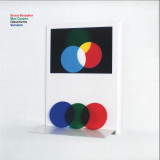
Laurel Halo, Donato Dozzy and Teheran sound artist Tegh give us their "Glassforms Versions"alongside a new edit by Max Cooper. The works of Philip Glass are reflected and refracted in a myriad of ways by some of the most renowned electronic artists alive, making for a blissful, multi-dimensional listening experience.
Textextext - (add your write up)
With "Glassforms", Max Cooper and Bruce Brubaker set out on an intimate, nuanced exploration of the works of Philip Glass. The resulting recordings, developed in a fluctuating exchange between the American pianist and the Irish scientist-artist, are an astounding testament to the innovation that artistic collaboration can achieve and what depths are yet to discover in Philip Glass' compositions. The two artists did not just rework, but fundamentally rewired the original songs using algorithmic software to process and augment the musical data it received from Brubaker's piano live on stage.
When approaching his remix, Donato Dozzy also tapped into that inspiration to create something new rather than just reworking it, which is one of the core motives that emanates from "Glassforms". The Italian producer and label owner is known for his drive to explore: he develops installations for public spaces and museums, uses obscure musical instruments and collaborates with classical singers or visual artists. "I chose "Two Pages" for it's hypnotic feel in the notes repetition", he says, "but I did not want to merely sample the piano, but instead ask someone I trust and admire to carve it from scratch and even go further." So he followed the lead of Brubaker and Cooper and teamed up with the renowned Italian percussionist and jazz musician Daniele Di Gregorio to completely rewire "Two Pages" into a gorgeous piece of endlessly modulating ambient electronica.
Laurel Halo, the second remixer on "Glassforms Versions", does not need a long introduction either: the American musician is at the forefront of electronic music in 2020, a bright star today after releasing her debut "Quarantine" on Hyperdub in 2012. Her remix of "Opening" brings to mind the string section of an orchestra tuning their violins before the performance - forever. They glide in and out of tune, sometimes individually, then together, then are accompanied by keys that are most likely a ghostly representation of Brubaker's piano, sampled and pitched down, but sound almost jazzy in the context of Halo's remix. It's a blissful listening experience, calling to mind her recent collaboration with cellist Oliver Coates on "Raw Silk Uncut Wood" and showing a deep understanding of Philip Glass' work.
Sound artist Tegh is the third on the remix bill - the electronic musician from Teheran delivers his take on "ƒTwo Pages", once again showcasing how versatile, how inherently complex the works of Philip Glass are. They can be interpreted in a myriad of ways - Tegh's version is a bounding, brooding piece filled with raw energy that feels like it is performed live, just for you, every single time you listen. His version is, at first, much more focused on the underlying moods, electronic undercurrents of the original than Dozzy's version, and yet, when the piano finally does break through, it becomes clear that we are listening to Philip Glass, reflected manifold: through the piano of Bruce Brubaker, the synths of Max Cooper, and then again through the mind of the artist Tegh.
Concluding the new "Glassforms Versions" is a previously unheard edit of "Two Pages". It's difficult to edit a piece of minimalistic beauty without losing it's essence, but Max Cooper - after many efforts and close conversations with Bruce Brubaker - managed to bring these shorter edit into a satisfying, conclusive form.
Superb EP offering very very well done tunes in quiet a large range of style : Banger Hardcore meltdown Rock/Techno to Electro Techno banger like Narcosamples :)
A2 is the most impressive tune for me here... A BANGER of Drum Metal !! Outta Your Mind !!
Sound playing 45 RPM like crazy.
- A1: Rainy Night In Tallinn
- A2: Windmills
- A3: Meeting Neil
- B1: Priya
- B2: Betrayal
- B3: Freeport
- B4: 747
- C1: From Mumbai To Amalfi
- C2: Foils
- C3: Sator
- C4: Trucks In Place
- D1: Red Room Blue Room
- D2: Inversion
- D3: Retrieving The Case
- D4: The Algorithm
- E1: Posterity
- E2: The Protagonist
- F1: The Plan
- F2: Fast Cars (Bonus Track)
- F3: Turnstile (Bonus Track)
Tenet is the new sci-fi action spectacle from acclaimed filmmaker Christopher Nolan, starring John David Washington, Robert Pattinson, Elizabeth Debicki, Dimple Kapadia, Michael Caine, and Kenneth Branagh.
The Tenet (Original Motion Picture Soundtrack) features music from Academy- and Grammy Award-winning composer Ludwig Göransson (Black Panther, The Mandalorian), & features the new, original song “The Plan” by multi-platinum, Grammy-nominated recording artist Travis Scott, and produced by Göransson, Wondagurl and Scott.
The 3LP soundtrack features the 2 bonus tracks (which appeared on the 2CD), plus liner notes from both Christopher Nolan and Ludwig Göransson.
Most listeners only became aware of Billy Preston as a solo artist after he signed to Apple Records in the late 1960s. But he'd been recording for a long time prior to that, dating back to when he was a teenager. This instrumental album for Sam Cooke's SAR label (issued on its sister Derby imprint) was cut in March 1963, when Preston was still going to high school in Los Angeles. The very fact that it's wholly instrumental indicates that it's pretty early in Preston's evolution, and though he does play some piano, it's really on the more uptempo, organ-dominated tunes where he hits the best groove. In truth, these aren't any great shakes even when it comes to soul organ instrumentals, but they have a nice swinging bounce that places them a cut above period background music, though they fall a good ways short of being spellbinding. The slower numbers (including covers of hits by Sam Cooke and Ray Charles) verge on easy listening; in contrast, the more urgent cuts are cookin', with bop, jazz, and gospel influences spicing up the soul/R&B recipe. (allmusic)
- 1: Tenha Pena De Mim
- 2: Boato
- 4: Fala Baixinho
- 5: Marambaia
- 6: O Samba Está Com Tudo
- 7: Cadeira Vazia
- 8: Perdão
- 9: Beija-Me
- 10: O Bilhete
- 11: O Samba Brasiliero
- 12: As Polegadas Da Mulata
- 13: Eu Quero É Sorongar
One of the most shocking but ultimately uplifting stories of Brazilian music: Soares grew up in extreme poverty in a favela, at 13 was forced to marry a man who raped her, gave birth to three stillborn children - but still fought her way to the top of the industry, married Garrincha, lost him to booze & loose women, in addition to their son and her mother in car accidents. And is still going strong! This is probably her best album and indeed is absolutely lovely, grooves like nothing else. She sings with passion & fire in her lungs like the fabulously versatile singing magician she is. Her husky voice became her trademark. After finishing A Bossa Negra - her second album - Elza went to Chile to represent Brazil in the 1962 Football World Cup, where she met with Louis Armstrong personally.
Watching Abul Mogard’s Live performance in Atonal Festival 2017 and his releases on Not Waving’s Ecstatic record label were somewhat of a milestone in Malka Tuti’s sonic aesthetics. His ability to touch us with those pulsating sonic textures com-ing out of his modular machine inspired us in MTHQ for years to come. We were more then happy that Mogard chose to contact Tapan about their album and eventually deciding to remix not one but two track from the Belgrade duo… It was like a circle coming to a close.
On the A-side Mogard take the original 17 minute sax infused piece that is EUROPA and drenches it with drones and low freq pulses and atmosphere, creating a some sort of a post apoca-lyptic intense atmospheric soundtrack. The effect of drowning the horns from the original track in a sea of drones and pads, contributes to the over all impression of listening to a distant memory of music… fitting for days like these....
On the B-side Mogard takes it to the next level, capturing a line from Tapan's original collaboration with Jerusalem In My Heart's Radwan Ghazi Moumneh, and passing it through his modular system, amalgamating an epic piece of tension build ups and repetitive movements...
The original artwork was made by artist Marja de Sanctis and adapted, as always, to the sleeve by Morey Talmor.
In the summer of 1978, an ambitious twelve-day experimental jazz project was undertaken at the ancient amphitheatre, Tasso della Quercia, on the slopes of Rome’s Gianicolo hill.
The idea was to assemble the leading players from Italy’s avante-garde jazz scene, revolving around members of Grande Elenco Musicisti (or GEM), such as saxophonists Tommaso Vittorini, Eugenio Colombo and Maurizio Giammarco, trumpeter Alberto Corvini and trombonist/composer Danilo Terenzi, together with visiting American players such as saxophonists Steve Lacy, Steve Potts and Evan Parker, trombonist Roswell Rudd, pianist Frederick Rzewski and drummer Noel McGhee, among others.
Different group configurations were enacted each day and the final gala concert formed the basis of this super rare and highly playful double album, which captures the delightfully messy proceedings. In keeping with the openness of the Roman jazz scene of the day, the project sought to push the boundaries, aiming to break big-band traditions whilst still emphasizing the collective nature of the experience.
Enrico Rava’s opening “Tromblues” emphasizes the disparate approaches of these trans-Atlantic teams and Terenzi’s “Dialogando” uses dual trombones to heighten musical discord; in mutated big-band mode, Giammarco’s thrillingly complex “Vortex Waltz” and Vittorini’s “La Legge E Uguale Per Tutti” both speak to the limitless
potential that the project was aiming for.
Though any and all vocals on De Sidera are wordless, language is central to the album. ‘I try to make my vocalisms sound like words,’ she explains, ‘but it is a kind of invented language.
Somehow the form, the signifier, is enough to express meaning, sense, emotion.’ Burelli notes that this concept has resonance with her practice in Greek and Turkish music, in which wordless vocals and instrumental improvisations are common.
This is front and center on a song like the title track ‘De Sidera,’ where Burelli’s rising and falling vocals dance atop an undulating, contemplative bassline - close your eyes, and the clear tides of the Mediterranean lap at the sand - her wordless intonations guiding you to a tranquil state.
Burelli surrenders to the natural world and the ineffability of words - on De Sidera she shares the gem of universality she discovered while doing so.
"Awaken the Legacy" is the first EP to be released in early September 2020 on the Berlin Techno Label INHERIT. The four-track release spotlights two original tracks from the founders of INHERIT Daniel Heinrich & Disguised as well as two remixes by MORBECK & YA.
The original tracks "Awaken the Legacy" & "Power" perfectly demonstrate why Daniel Heinrich & Disguised decided to take their collaboration to the next level and to found INHERIT at the beginning of 2020. The sound of both original tracks is straightforward and shakes your body to a melodic mix of trance tunes combined with hard drum sessions.
MORBECK from Berlin, founder of "Code is Law" & "Low Life Club" brings with his first and unique driving remix a death melody interpretation of "Power" to the EP. The re-mix stands out with a playful and forward-driving rhythm and can be called the most danceable track on the EP.
YA from Paris, founder of Mainmise Records and Pulse perfectly completes the first release with his remix of "Awaken the Legacy'. His typical YA sound, as well as the mix of trance & hard techno elements, energizes you and lifts off the track to a different level. No time to rest, this remix should be part of every driving DJ set.
Leeds-based art-rock trio Mush release their feverish second
album, ‘Lines Redacted’, via Memphis Industries. The new
release, which finds the group recruiting Lee Smith (The Cribs,
Pulled Apart By Horses) on mixing duties, arrives just under a
year after their debut, ‘3D Routine’, capping off what has been
an obviously tumultuous but remarkably prolific year for the
band. With any prospect of live shows decimated, the group,
led by songwriter Dan Hyndman, have found the time to
release two EPs (‘Great Artisanal Formats’ and ‘Yellow Sticker
Hour’) and now a duo of full-length albums.
Tipped previously by the likes of 6 Music, Loud & Quiet, Uncut,
Q, Stereogum, DIY, The Line of Best Fit, Dork and more, Mush,
comprised of Hyndman (guitar/vox), Nick Grant (bass/vox) and
Phil Porter (drums), present their own sonic idiosyncrasy. It’s a
sound that blurs the lines of abstract surrealism, existentialism
and social commentary; utilising guitars as tools in 2020 to
stave off malaise whilst simultaneously commenting on the
nation’s ability to fall into such dire straits. It’s a sensory
overload of wiry tones that zig-zag between punk, prog and
sardonic-funk with a relentless ability to reflect society’s faults
and apathy in a unique and acerbic manner.
Whereas the band’s debut was very much a product of its time,
something part-inspired by the political atmosphere of mid-
2019 and a genuine moment of optimism when the prospect of
a socialist government in the UK was on the cards, this new
record uses tongue-in-cheek cynicism as a coping mechanism
for the environment that we now find ourselves in. From one
song to the next, ‘Lines Redacted’ introduces a string of
different narrators with each providing a different reflection on
the Armageddon scenario that we are slowly entering, whether
that’s bemoaning it or gleefully willing it along. ‘3D Routine’
presented a bed of scathing political jibes latching onto themes
and decisions of the time. ‘Lines Redacted’ mutates these ideas
into something slightly more sinister whilst maintaining all of
Hyndman’s razor-sharp wit that permeates the album.
An obscure and deep acoustic jazz-funk LP from 1974, remastered and repressed in an edition of only 300 copies !
“Profile” is the first and only Ken Rhodes LP as a leader. This intimate and rare recording captures an explosive concoction between blues, jazz and a touch of funky swing. Though an acoustic performance, this LP offers overwhelming grooves, breaks as well as introspective moments .
The upbeat and funky titile track “The Profile” forshadows the raw grooves of the session.The composition is driven by Rhode’s very soulful and bluesy improvasitions in a colorful dialogue with Joachim Knauer’s percussive and obsessive bassline which embraces the funky rhymthms of George Greene. However, this raw “in-your-face” formula is beautifully constrated in “Nothing New” and the piano solo “Robyn’s Lullaby” where the trio slows down to play deep, dreamy and hazy tunes.
Biography
Ken Rhodes was born August 14, 1945 in Memphis, USA and grew up in a family of excellent musicians. He attended the American Convervatorium of Music in Chicago, studied classical music and received Bachelors and Masters Degree. At the age of 16 he toured with his own jazzband throughout the eastern states. During this time he wrote classical compositions for symphony orchestras and organ-music. Gerry Mulligan called him for an extended tour. Studying at the University of Cincinnatti he received the Down-Beat Prize in 1970 as “Best Arranger”. In August 1970 he came to Germany and worked four years as writer, arranger and conductor at the theatres in Augsburg and Nürnberg. Besides that he played with wellknown european musicians at the famous “Domicle” club in Munich, he founded his own group and performed in Germany and Austria. Since July 1975 he works as a professional jazzmusician travelling Europe.
After two tracks were successfully taken for a limited Maxi single, the whole album is now available on Double LP - Nicely remastered.
Patience, Violet ,and Pinky recorded their first Album in 1992. Knowing each other from the music scene, the back up singers turned friends teamed up with Emmanuel Diale and signed with Mob Music to embark on their music career as their own act. The first two albums were straight African Disco, A leftover sound of the 80's that some had still hoped to capitalize on. By the time they released their third album Why O Nketsa so Baby, loosely translated to "Why are you doing this to me Baby", Kwaito was still called either Disco or International House, and it was new sound that was taking over. The third album was influenced by the Shangaan sound made largely popular by artists like Penny Penny and Peta Teanet. Looking back now, at the time Mob Music was really leading the pack with this new sound. Being one of the last labels to have official releases with artwork and a group of young talented producers given full creative freedom they pushed the sound in a way only few other labels of that time can be given the same credit.
For their fourth and final album on Mob Music they worked with legendary producer/songwriter Malcom "X" Makume. With three years of songwriting experience and stellar talent behind the desk the result was the LP Malende. Eight tracks that would combine the early kwaito sound with the more uptempo International House topped off with productions heavily inspired by what had been slowly making its way from Chicago over the last 10 years. At the time they had some success and to this day are well known amongst the real heads.
The girls would go on to record one final album once their contract with Mob was up and then after a 5 album catalog would hang up their matching outfits for work a in a newly free South Africa. They remain friends to this day.
Da ist sie endlich, die Todesliste von Audio88 & Yassin!
Seit Halleluja sind wieder vier Jahre ins Land gezogen (oder waren es fünf?) und die beiden Hassprediger stehen vor einer Welt, die sich partout nicht an die darauf formulierten Regeln für ein friedvolles Miteinander halten mag. Im Gegenteil: Menschen gehen auf die Straße, um gegen die Rücksichtnahme aufeinander zu demonstrieren, weshalb nun auf die geduldige Missionierung der konsequente Kreuzzug folgt. Wer nicht hören will, muss fühlen.
Während der langen Wartezeit wurden keine Däumchen gedreht, sondern kompromisslos an der eigenen Vision gefeilt. Unterstützt wurden sie dabei von Produzentenlegende Philipp Schwär und Genre-Größen wie Bazzazian, Farhot, Suff Daddy, Torky Tork, Ghanaian Stallion, Dienst&Schulter und den Drunken Masters. Diesmal gibt’s auf die Fresse!
Audio88 & Yassin sind immer noch dein schlechtes Gewissen, stehen bald auch vor deiner Tür und möchten wissen, auf welcher Seite der Rolltreppe du die letzten Jahre standest. Es wird abgerechnet, Team Normal ist endlich zurück!
Das Album “Todesliste” erscheint am 12.02.2021 über Normale Musik / Groove Attack.
Presenting the long sought after, groundbreaking and classic 1990 UK long-player finally remastered and reissued for 2018. London's Warriors Dance label was a unique operation and a pioneering London label during the late 80's acid house phenomena. Home to an assortment of DJs, MCs and soundmen, they went on to make their own original and indelible mark on the rave scene from the infamous 'Addis Ababa' studio on Harrow Road on the North-West side of the city.
A former reggae and soul studio that was instrumental to the output of influential artists like Soul II Soul and more, a steady diet of reggae, bass, hip-hop, house and techno kept their edgy, and die hard UK sound and style right at the cutting edge of the dance music underground across the globe with the top DJs and producers of the day celebrating the label.
The studio, helmed by label owner Tony 'Addis', acted as an incubator for artists whose names would go down in the history books - No Smoke, Bang The Party, The Addis Posse, Melancholy Man, Hollywood Beyond, The Housemaids and more all featured heavily on the label and contributed to its legendary output. The attitude and approach to the music was utterly and unapologetically a London thing, with heavy African and Caribbean influences also drawing on the sounds emanating from Chicago, Detroit and further afield.
Years later, and with the advent of the internet, Discogs, Youtube and any other digital platform you'd care to mention, Warriors Dance continues to be discovered and rediscovered again by curious diggers and music heads with a thirst for heavyweight tracks to play in their DJ sets. This saw the WD mythology rise again, making their records much sought after by fans from all over the world.
When 'International Smoke Signal' landed in 1990 there was nothing else quite like it in the musical landscape, the perfect sonic example of the Warriors Dance ethos and style incorporating all of the influences and grooves that made the label's output so unique, a sound heavily inspired by the preceding period in London and the UK where hip-hop, soul, reggae, rare groove and acid house were played side by side in the warehouses and empty spaces of former industrial areas. Throughout the late 1980's these often drab and dangerous places were transformed by local DJ crews like Soul II Soul and Shake 'N' Fingerpop with more to offer those looking for an open-minded party scene new places to explore, in turn switching people on to broader styles of music.
It's all in here, the heavy breakbeat driven B-boy house flavour of the album version of the classic 'Koro Koro', the Manu Dibango featuring tribal acid groove of 'International Smoke Signal' to the percussive and ultra-deep stylings of 'Oh Yes (Freedom)' the LP encapsulate a time and place yet continue to capture the imagination today.
Timeless music. There's no doubt the No Smoke project is a direct influence on the deeper, tribal house sounds around today and pioneered the afro house sound alongside 'Yeke Yeke', 'Motherland' etc as the acid house phenomenon swept the world. 'Koro Koro' is the omnipresent anthem which was broken at London clubs like Confusion by Bang The Party's Kid Batchelor and RIP which went on to blow up in New York, and was then signed by Profile Records. Hugely sampled and still played to this day.
'International Smoke Signal' fuses the otherworldly science of dub and reggae with Bronx breakbeats, synth laden ambient house excursions and the heartbeat of mother Africa with the technoid thrum of the motor city effortlessly, all while maintaining its London roots and swagger. A true dance music masterpiece. This is the first time the LP has been remastered and reissued, spread across 2 heavy slabs of high quality vinyl for maximum sonic impact. Made in conjunction with the Warriors Dance family and Tony Addis.
Special thanks to Nicky Trax & Tony Addis. - Remastered by Optimum Mastering, Bristol UK. Proudly distributed by Above Board distribution. 2018.
When Claud Mintz's mother finally heard the 13 songs on her kid's magnetic first album, Super Monster, she asked a concerned question: Just how many people had her 21-year-old dated? From beginning to end, these sparkling pop tunes capture the assorted stages of a relationship's delight and dejection_the giddy sensation of a first kiss during the beaming "Overnight," the heartsick longing of a pending rejection during the yearning "Jordan," the reluctant call for a requisite breakup during the smoldering "Ana." Claud, though, replied that these songs detailed the phases of only two or three relationships, simply written during them or at various points after they were over. The debut release on Phoebe Bridgers' Saddest Factory Records, Super Monster is a vertiginous but joyous coming-of-age reckoning with such young love. Claud sees relationships as games of endless wonder, intrigue, and second-guesses, a roller-coaster thrilling you even when it's terrifying. If "Gold" turns the tension and indecision of a bad match into an undeniable bit of lithe disco, "That's Mr. Bitch To You" uses a spurt of righteous indignation to fuse a little soul and emo into one breathless hook. Super Monster is like a compulsive compilation that Claud culled from a lifetime of musical enthusiasms_the arcing alt-rock of '90s airwaves, the rapturous pop of '00s chart-toppers, the diligent genre-hopping of modern online life. Claud emerges as the chameleonic mastermind of this mélange, channeling all of love's emotions into songs so sharp they make even the hardest times feel fun. Perhaps you are in the throes of one of these romantic moments yourself right now, resentful of a frustrating paramour like Claud during "Pepsi" or indulging in lust like "In or In Between." Or maybe these songs recall those wild days and tough situations. Incisive, instant, and addictive Super Monster works on either level_to remind us of love's wild ups and downs or to help us deal with them in real time. In that way, Mom, these songs are about dating, well, everyone.
The band that became Nightshift formed in 2019 in the ecosystem of Glasgow's current indie scene. The city's fertile & creative group of musicians have been committed to pushing the boundaries of and blurring the lines between DIY, punk, experimentalism and indie pop for decades now; a home to bands like Shopping, Vital Idles, Current Affairs, Still House Plants, and Happy Meals as well as forebears like Orange Juice, Teenage Fanclub and Yummy Fur. Nightshift slot right in with all mentioned, featuring members from current indie stalwarts Spinning Coin, 2 Ply and Robert Sotelo. Initially formed by guitarist David Campbell and bassist Andrew Doig as a "No Wave/No New York/ early Sonic Youth/This Heat-esque" group, the addition of Eothen Stern (keyboards/vocals) and Chris White (drums) instantaneously transformed their approach (guitarist/vocalist/clarinetist Georgia Harris joined as the band was writing "Zöe"). The band self-released a full-length tape on CUSP Recordings in early 2020, laying the foundation of their sound; hypnotic, melodic, understated indie post-punk with hooks that stick around long after you've heard them. "Zöe" is the band's newest effort, and first for Trouble In Mind. Unlike the band's previous album, the songs on "Zöe" weren't conceived live in the band's practice space, but rather pieced together and recorded remotely during quarantine lockdown, with each member composing or improvising their parts in homes/home studios, layering ideas over loops someone made and passing it on. The isolation actually allowed for an openness and creativity to flow and many of the songs took on radically different forms from when they were originally envisioned. Vocalist & primary lyricist Eothen Stern says "The process of writing these songs separately during lockdown was a kind of exquisite corpse - I liked this gesticulation of reaching out to one another and responding. Building up the next layer and passing it on." Stern says "poetic restraints" to writing & Eno's Oblique Strategies concepts were on their mind when composing the words to the songs on "Zöe" and lists the influence of author Rosi Bradiotti's book "The Posthuman". "Zöe" means "live drive", derived from the word conatus. Bradiotti defines conatus as "an effort or striving, endeavour, impulse, inclination, tendency, undertaking, serving is an innate inclination of a thing to continue to exist and enhance itself." and Stern views it as "...a kind of feminist re-claiming of communal public, anti- privatisation, looking to strive for social and environmental justice. Zöe kind of became a character of striving for me when writing.". "Zöe" kicks off with "Piece Together", a hypnotic song anchored by the band's chanted vocals and serpentine guitar licks. "Spraypaint the Bridge" showcases Harris' clarinet in an unexpected & delightful melodic shift during the song's anti-chorus. Elsewhere tunes like the swooning "Infinity Winner" and "Outta Space"s minimalist, slinky rhythm swirl in a late-night vibe, while "Make Kin" ruminates on "Looking to kinship as a way of engaging with entangled environmental and reproductive issues... how a band is a bond" and lurches forward with kinetic guitar strangling and staccato rhythmic percussion from White and Doig. "Power Cut" is the album's centerpiece, kicking off side two and lures the listener into its world over it's 7-minute runtime. Lulling them into involuntary movement with its waves of melodic harmonies, synth drones and metronomic pulse, until they all come crashing down in the song's dissonant midsection. The band acknowledges the whiffs of nostalgia prevalent in "Zöe"s songs (the title track in particular), and the nature of writing and recording the album is soaked in the self-work, reflection and reevaluations involved not only personally but creatively in each member's lives. Consequently, the album becomes a collection of sketches of hope, growth, awareness of the power of the world and the power of self, kith, kinship, friendship, resistance, and possibility.
Half of Manie Sans Délire, June, turns up on Artificial Dance with his anticipated new mini-album, ‘Horizons’ - following on from his studio companion Trenton Chase’s ‘Planar Array’ released earlier in 2020. True to the signature synth-splattered sound of his and his duo, June’s newest wave-imbued manifesto has us swimming amidst an organized chaos of roughly extruded keyboard wizardry, punk-minded drum programming and a retro-futuristic headspace.
Scanning out the gap between Italo, new wave, EBM and new beat, ‘Horizons’ shifts seamlessly from forward-moving, arpeggio-laden circuitry (‘JW’, ‘Infinity Room') to hi-intensity body music (’New Horizons’), through ambientoid spaced-out sonic explorations (‘Uncharted Territories’) and quirky downtempo chuggers (‘Reverie’, ‘Psychic Process’). A kaleidoscope of rhythmic tricks and shape-shifting mirages, June’s scope-expanding six-track voyage vows to play mind games with its listener till all lights have gone off.
LP Ltd edition PINK Vinyl (300 copies) + BONUS Fire Records Compilation CD. A Powys trio whose free-spirited invention and exuberant intensity flows through experimental pop: hypnotic, exhilarating and defiantly unique. The Welsh band Islet return with the release of their long-awaited new album, and now available on Ltd edition Pink Vinyl. Eyelet was recorded at home tucked away in the hills of rural Mid Wales. It took form the months following the birth of band members Emma and Mark Daman Thomas' second child and the death of fellow band member Alex Williams' mother. Alex came to live with Emma and Mark, and the band enlisted Rob Jones (Pictish Trail, Charles Watson) to produce. 'Caterpillar' described by Emma as "a song for my unborn child". It's followed by syncopated lullaby 'Good Grief' with its haunting keyboard hook and icy percussion thawed by Emma's yearning vocals about the quiet strength of generations of women. With nods towards Arthur Russell and Jenny Hval, 'Geese' is a mini symphony of driven electronica inspired by Welsh cultural theorist Raymond Williams' novel People Of The Black Mountains. Young Fathers inflected rhythm can be heard on 'Radel 10' that accompanies the multi-tracked variations of Emma and defiant lyrics that were inspired in part by The Good Immigrant - the landmark anthology of essays on race and immigration by BAME writers. "One of the best albums to come out of the UK in years" Louder Than War // "Unhinged, euphoric, wonderful." Pitchfork // "They create an ideology that fuels creativity" The Quietus // "They invigorate life on the margins with this whirlwind of psychedelic pop" The Guardian // "Full of reflective, explorative psych wonderment" ???? The Line Of Best Fit // Short listed for Welsh Music Prize 2020 // ????? The Vinyl District // ????? Buzz // ????? God Is In The TV // ???? AllMusic // Track
During an unprecedented yet poignant global situation, Bobhowla’s debut album EVERYTHING’S WRONG, BUT
IT’S ALRIGHT serves to soundtrack our daily challenges we all face since the start of the pandemic.
Recorded and produced by Rod Jones at Post Electric Studio, this 11-track strong collection of songs bring
together a wider scope of influences than usually found in any particular group’s output. Years of solo acoustic
performances around the north west have honed an acoustic base into more gritted tones, alongside folk,
electronica and dream-pop influences.
The single Million $ Man is as direct as a song can be, with crunchy guitars harking back to simpler times of loud
choruses and powerful anthems. Their debut album is the culmination of recording sessions with Rod Jones
(Idlewild) at Post Electric Studio. Working together to form 11 tracks, an accumulation of songwriting ideas
spanning years. Million § Man is the album’s example of taking a staple live favourite and letting the studio process
completely re-map the track’s direction. The once folky-skiffle ditty is now a hard-hitting, anthemic call to arms,
complete with a crafty hook and chorus to match.
Behind the music, hides deeper meaning. In what singer Howard Doupé believes to be first - a track dealing with
the emotional complexities of a life, delicately touched with health-laden ‘survivor’s guilt.’ Like so many songs
before, Million $ Man is an upbeat indie-pop tune that masks a sobering and very rarely explored subject matter.
It’s an honest and frank perception that attempts to deal with issues that will resonate with a particular section of
our community. In a daringly brave move, Doupé expresses a personal narrative with the track, firmly cementing
the album’s themes in real life matters.
There is a blink-and-you’ll-miss-it anecdote tucked into one of
the many fine documentaries about seminal 20th Century artist
Jean-Michel Basquiat regarding the habits of his studio practice.
As we watch inspiring footage of Basquiat darting from one
piece to the next with rapid-fire brush strokes, a friend or
gallerist in a voice over says that it was not unusual for
Basquiat to be working on several paintings in the same
moment as several radio stations and televisions played in the
background. Not much more time is spent on the anecdote but
it feels like a skeleton key into Basquiat’s endlessly alluring,
neoexpressionist work.
And while Bryan Devendorf’s solo curio ‘Royal Green’ doesn’t
possess the only-in-New York vibe of Basquiat’s work, there is
something shared in its many-channels-open style of creation.
Satellite signals, strange voices from lost television
documentaries and radio operas are all woven into its fabric -
like it’s using these endless tides of media and information to
unlock the subconscious. Even its covers - Bob Dylan,
Fleetwood Mac, The National (with a nice big wink), The
Beatles - are like stunning, albeit satanic takes on hymns, or
like American standards almost dragged into the underworld.
Like the best of Spacemen 3, Sparklehorse or massively
underrated San Fran band Skygreen Leopards - the music
makes you queasy in one movement and lulls you into
blissmode in the next. It’s the very edge of outsider pop
songwriting.
For all the amphitheaters and festival fields Devendorf has
played to over his career, ‘Royal Green’ almost feels like an unlearning and a newfound love of homemade/found/fractured
sounds - and how, if collaged just so, detritus can become
stunningly gorgeous and surreal. And not without hooks. Look
no further than ‘Frosty’, which could be Little Billy Corgan’s
decayed demo tape from just before the Smashing Pumpkins
appeared on the scene. And the unspooling, slightly unglued
dream-pop of ‘Breaking the River’ is as rapturous as it is
sinister. And that’s probably where Devendorf wants it.
Dominique Fils-Aim is a JUNO Award winning singer-songwriter from
Montreal who draws inspiration from soul icons of the 40’s and 60’s such as Billie Holiday, Etta James, and Nina Simone.
While her musical roots are grounded in early soul and jazz, her voice transcends contemporary urban soundscapes. Her sophomore record Stay Tuned!
won the 2020 JUNO Award for “Vocal Jazz Album of the Year” as well as the Felix prize for “Best Jazz Album” at the ADISQ Gala.
Her 3rd album THREE LITTLE WORDS is a startlingly self-reflective look at affecting societal change while reminding the listener that it is equality and love which feeds the soul and inspires us to do better. Fils-Aim has a disarmingly literal interpretation of soul music as music that comes from the soul, and the album pays homage to a plethora of musical genres that fed and nurtured her love of lyric-driven jazz and soul music.
Love and loving oneself is the common link throughout, and Fils-Aim is certain that love is the key that will provide us with a path to equality. We need to, and deserve to, fight for the right to love both ourselves and each other.
Calypso Drip FM is a journey of styles & influences that formed the varied musical landscape of its creator. Only known by the moniker of Gryff, the author wanted a project that reminded listeners of radio stations of decades past. Particularly the type you would have on GTA: Vice City.
Gryff is a 90s kid, but the track list of his debut album plays like a greatest hits of a much mature songwriter and producer.
Almost exclusively written by himself, requesting the help from Andrew Threlfo in production for 'Do You Feel Like This?', and with NY songstress Primo The Alien as guest and co-writer for Reverse, his undeniable talent is showing in spades.
This incredible debut album is going to make waves in the scene and turn the young musician into a big player.
There is a blink-and-you'll-miss-it anecdote tucked into one of the many fine documentaries about seminal 20th Century artist Jean-Michel Basquiat regarding the habits of his studio practice. As we watch inspiring footage of Basquiat darting from one piece to the next with rapid-fire brush strokes, a friend or gallerist in a voice over says that it was not unusual for Basquiat to be working on several paintings in the same moment as several radio stations and televisions played in the background. Not much more time is spent on the anecdote, but it feels like a skeleton key into Basquiat's endlessly alluring, neoexpressionist work. And while Bryan Devendorf's solo curio `Royal Green' doesn't possess the only-in-New York vibe of Basquiat's work, there is something shared in its many-channels-open style of creation. Satellite signals, strange voices from lost television documentaries and radio operas are all woven into its fabric _ like it's using these endless tides of media and information to unlock the subconscious. Even its covers _ Bob Dylan, Fleetwood Mac, The National (with a nice big wink), The Beatles _ are like stunning, albeit satanic takes on hymns, or like American standards almost dragged into the underworld. Like the best of Spacemen 3, Sparklehorse or massively underrated San Fran band Skygreen Leopards _ the music makes you queasy in one movement and lulls you into blissmode in the next. It's the very edge of outsider pop songwriting. For all the amphitheaters and festival fields Devendorf has played to over his career, `Royal Green' almost feels like an un-learning and a newfound love of homemade/found/fractured sounds _ and how, if collaged just so, detritus can become stunningly gorgeous and surreal. And not without hooks. Look no further than "Frosty" which could be Little Billy Corgan's decayed demo tape from just before the Smashing Pumpkins appeared on the scene. And the unspooling, slightly unglued dream-pop of "Breaking the River" is as rapturous as it is sinister. And that's probably where Devendorf wants it.
In the 2000’s Chee Shimizu helmed an untouchable Tokyo DJ collective called Discossession alongside Dr Nishimura (House music buyer for Cisco Records at the time). Balancing out this unit were a young Scotsman-abroad named Jonny Nash (who’d later form Sombrero Galaxy ESP001 and Gaussian Curve as well as the Melody As Truth imprint), and the late guitar virtuoso and tattoo artist Zecky. Formidable DJs and multi-talents on the Tokyo scene, Discossession released two EPs on Kenji Takimi’s Crue-L imprint and various mixes individually on lovefingers, all holding well-deserved eternal cult status. Chee’s Denshi Meisou 2006 and Follow My Dream 2007 for Lovefingers as well as his legendary “listening sessions” at HiFi lounge SHeLTeR in the Tokyo suburb of Hachioji, laid foundation for what would become known to his followers as “Organic Music” or “Obscure Sound”, the former extending as the name of his record shop and the latter as the title of his 2013 book.
Obscure Sound chronicled his tastes in detail and has since become a sort of diggers bible for peers and younger generations. At the ESP Institute’s inception in 2009, Shimizu contributed two tracks to Lovefingers’ Concentration Vol 1 compilation as apéritifs to a later release. “Later” eventually became “forever” and the mythical piano track (appearing only as a demo on Golden Age and Dekmantel 061) is still, to this day, not ready for formal release. Skip a dozen years, musical interests and major life changes, and Chee has now unveiled something quite special in accordance with his Obscure Sound—rather than making new out of old rope, he presents a collaboration with Tokyo guitarist miku-mari a.k.a. Takahiro Matsumura. The artists frequently collaborate at the experimental audio/visual event, Sacrifice, held irregularly at Tokyo’s ForestLimit, and in 2018 when Chee was invited to DJ at Japan’s only Ambient festival Camp Off-Tone, he and miku-mari endeavored to expand these works into a 2-hour improvised performance. Chee collaged various percussion samples and personal field recordings utilizing four CDJs, supplementing with live windchimes and Andean chajchas, while miku-mari coupled a guitar-controlled synthesizer, Sound Tube software (developed by Japanese Ambient composer Hiroshi Yoshimura) and more live elements such as Tibetan bells and pyramid crystals. Rehearsals for this performance were held prior to the festival at ForestLimit, recorded as multi-tracks and edited into these two cerebral Reconstructions.
Mercurial bassist and bandleader Charles Mingus was signed to Columbia Records for the briefest of time during 1959. His Columbia recordings, however, remain some of the most inspired, mood-jumping jazz in history. The flowing sadness of "Goodbye Porkpie Hat" rings like a funeral chorus that pitches headlong into a celebration of Lester Young's life and improvising flexibility, rather than his death. And there's the funky furnace blast of "Boogie Stop Shuffle" , which reaches its glory with Booker Ervin's Texas tenor sax, wrapped tight in bluesy tone. With the index of emotions captured, these songs nail why Mingus is possibly the most relevant jazzer for the '90s generation. He swings and shouts and hollers and somersaults. His tunes either induce foot-stomping with their intensity or reach for poignant yearning with their lyrical tapestry of orchestral colors. --Andrew Bartlett
Self-styled ‘house husband, record producer’, DMX Krew, continues his effortless stretch of releases that date back to the early 90s, with a new album for Hypercolour.
His deft melodies and mechanical, electro-tinged beats have made for some classic albums in his repertoire, from his incredible run of albums for Rephlex Records, up to 2020’s ’Ghost Bubbles’ long player for Terrestrial Funk. And so ‘Loose Gears’ marks DMX Krew’s fourth album for British stalwarts, Hypercolour, and fans will not be disappointed.
Armed with an arsenal of hardware, and a head full of futuristic visions, ‘Loose Gears’ collects eleven tracks of the customary quality we have come to expect from DMX Krew.
From the funk laden ‘Solar Transit’ to bleepy chugger ‘Dejected Ambient Twerp’, the vibrant synths and spongy rhythms of ‘Torpedo Tube’ to the beatless wiggle of ‘Xpansion 2’, there’s much in store to be savoured on ‘Loose Gears’, as DMX Krew serves up another fine selection of electronic goodies.
- A1: In Your Rosary 1
- A2: In Your Rosary 2
- B1: You Cannot See Me From Where I Look At Myself 1
- B2: You Cannot See Me From Where I Look At Myself 2
- B3: You Cannot See Me From Where I Look At Myself 3
- B4: You Cannot See Me From Where I Look At Myself 4
- C1: Horses The Color Of Rust 1
- C2: Horses The Color Of Rust 2
- C3: Horses The Color Of Rust 3
- D1: Horses The Color Of Rust 4
- D2: Kept In The Night By The Light Of The Moon
NOTON signs Italian-born, Bern-based sound-artist and producer Saele Valese.
In ‘IVIC’, his debut LP, Saele Valese, distills hauntological noise, droning tonal experiments and minimalist rhythms into a series of electro-acoustic-wave ventures written over five years in Berlin, Saas-Fee and Thun.
Drawing influences from the psychoacoustic properties of the live album format, IVIC’s 11 tracks were mixed and recorded live on DAT cassettes and through DAW experimentation, without the possibility to revise the final recordings. Valese adopted this approach to conceptually propose reconciliations between the irreversibility of the
past, and acceptance of its residuals in the present. The track titles themselves follow this pathos, citing the works of the American photographer Francesca Woodman and the poet Sylvia Plath. The inclusion of passages incorporating live sonics and throes of industrialismnso,ton.info contributes to the images of gravity, intimacy and spatiality that the music presented here invokes.
In keeping with this imagery, the music possesses a dilated, shuffling rhythmic base, much like the firm traversal of a tanker against a storm of jangling components, and still moments of gloomy sonics
alternating with more ravenous upheavals of power electronics.
If the track divisions do not pass by unheeded, they are consistently assembled to sonically accompaign the emotional charges and momentum of an imaginary cinematic experience; the beats caves in
for instants of relief, only to recoil in a cognated tempo but rearranged structurally. In another gesture of cogitated stride, the portentous waves of the record progressively rage into a turmoil in its third quarter during 'Horse The Color Of Rust'. The album reaches its closure fluctuating through microtonal oscillations to slowly eclipse into silence.
´In Your Rosary ì and Yì ou Cannot See Me From Where I Look At Myself ì were previously released on vinyl via Saele Valese’s own imprint, JSMË.
The track ‘You Cannot See Me From Where I Look At Myself’ 4 - is dedicated to the memory of Marco Bacher.
Artwork designed by Carsten Nicolai. Mastering by Matt Colton (Metropolis Studios, London).
The album was intended as an experiment using musical styles Brubeck discovered abroad while on a United States Department of State sponsored tour of Eurasia, such as when he observed in Turkey a group of street musicians performing a traditional Turkish folk song that was played in 9/8 time, a rare meter for Western music. Columbia president Goddard Lieberson took a chance to underwrite and release Time Out. It received negative reviews by critics upon its release, but despite this, it became one of the best-known and biggest-selling jazz albums, charting highly on the popular albums chart when 50,000 units sold for a jazz album was impressive. It consequently produced a Top 40 hit single in "Take Five", composed by Paul Desmond, and the one track not written by Dave Brubeck. The cover art is just as important as the LP itself featuring specific artwork created by S. Neil Fujita best known for his covers for CBS Records, which introduced abstract art to jazz LP packaging.
MSG is a legendary name. After two phenomenal records under the guise of Michael Schenker Fest, a true guitar hero is returning to his roots. By forming Michael Schenker Group (MSG) back in 1979, Michael Schenker laid the foundations for one of hard rock’s most glorious solo careers of all times. And while nobody expected anything less from a former guitarist for Scorpions and UFO, it’s close to impossible mentioning everything Michael has built over the past 50 years, or the countless people he influenced or played with. This, truly, is the stuff that hard rocking myths are made of.
“I never looked back,” is how Michael dryly sums up an extraordinary career. Due to this mindset, he only realised much later what a huge impact his playing had made on the world of metal and hard rock. Very few guitarists can be cited as a primary influence for the likes of James Hetfield, Kirk Hammett, Dave Mustaine, Dimebag Darrell, Slash or Kerry King. However, to understand Michael Schenker means to understand one primary thing: he’s not here to be worshipped or adored, he’s not here to get rich, he’s here to play. And at 65, he’s doing it with the same swagger, verve and dizzying artistry as always. “I’m still 16 in my head,” he laughs.
Right in time for his 40th anniversary as a solo artist and his 50th birthday as a musician, he resurrects the immortal Michael Schenker Group. “Immortal” is also the name of his new album, recorded by likely the strongest line-up in his long history. Its a lightning bolt of an album that sounds fresh, bloodthirsty and agile. “Immortal” showcases the gargantuan vocal talents of Chilean hard rock prodigy Ronnie Romero (Rainbow), backed by singers Ralf Scheepers (Primal Fear), Joe Lynn Turner (ex-Deep Purple) as well as Schenker’s brother in arms, Michael Voss (Mad Max) who again produced the record alongside Michael Schenker – flawlessly, punchy and at full steam as if their very lives depended on it.
Next to Michael Schenker caressing his iconic black and white Dean Flying V, we hear bass player Barry Sparks (Dokken), keyboard player Steve Mann as well as the three drummers Bodo Schopf, Simon Phillips (ex-Toto) and Brian Tichy (ex-Whitesnake) pumping gallons of fresh blood through the tracks. And that’s not all, keyboard wizard extraordinaire Derek Sherinian (Dream Theater, Black Country Communion) gives the listener a baptism of fire in the blistering, heavy hitting opener “Drilled to Kill”, powered by Ralf Scheepers’ unbelievable vocal tornado.
Michael Schenker doesn’t live to play, he plays to live, and there’s no better way of summing up his relationship to his music than this – now for half a century and counting. The most emblematic representation of this relationship is the monumental closing track “In Search Of The Peace Of Mind”, a new recording of the very first song he ever wrote. “I composed this track in my mother’s kitchen back when I was 15,” he looks back half a century and smiles broadly: “The solo is just so perfect, I wouldn’t change a single note even today. This is the most important song of the last 50 years for me. It’s what started it all.”
When it finally got released in 1972 on the Scorpions’ debut “Lonesome Crow” Schenker had already moved on to UFO. What followed were several decades of pure hard rock ecstasy on and off stage, featuring a rotating cast of stellar players, always pressing the pedal to the metal. Now, in 2020, he reaps what he sowed. Alongside many of his peers, friends and contemporaries, he is celebrating 50 years of hard rock – fittingly with an album that is something like a zeitgeisty reminiscence of everything he’s ever done. The massive midtempo smasher “Don’t Die On Me Now” sees Joe Lynn Turner going all in, Ronnie Romero works his magic in “Knight Of The Dead” while Michael Voss cuts a grand figure before the microphone as well as behind the mixing desk on the furious second single “After The Rain”.
Towering above them all, Michael Schenker and his guitar prove they’re truly and utterly invincible. The celebrated icon pulls out all the stops – including his legendary “howler”, the fabled magnet he’s used on his fingerboard for a while now. And here’s yet another thing that’s just so archetypically Schenker, when bringing up his fiery and dedicated performance on “Immortal” he nonchalantly shrugs it off: “I simply played from the heart, as always.” This, dear Michael, is the understatement of the year – all the more so for a record that is already one of the top contenders for hard rock/metal album of the year.
MSG is a legendary name. After two phenomenal records under the guise of Michael Schenker Fest, a true guitar hero is returning to his roots. By forming Michael Schenker Group (MSG) back in 1979, Michael Schenker laid the foundations for one of hard rock’s most glorious solo careers of all times. And while nobody expected anything less from a former guitarist for Scorpions and UFO, it’s close to impossible mentioning everything Michael has built over the past 50 years, or the countless people he influenced or played with. This, truly, is the stuff that hard rocking myths are made of.
“I never looked back,” is how Michael dryly sums up an extraordinary career. Due to this mindset, he only realised much later what a huge impact his playing had made on the world of metal and hard rock. Very few guitarists can be cited as a primary influence for the likes of James Hetfield, Kirk Hammett, Dave Mustaine, Dimebag Darrell, Slash or Kerry King. However, to understand Michael Schenker means to understand one primary thing: he’s not here to be worshipped or adored, he’s not here to get rich, he’s here to play. And at 65, he’s doing it with the same swagger, verve and dizzying artistry as always. “I’m still 16 in my head,” he laughs.
Right in time for his 40th anniversary as a solo artist and his 50th birthday as a musician, he resurrects the immortal Michael Schenker Group. “Immortal” is also the name of his new album, recorded by likely the strongest line-up in his long history. Its a lightning bolt of an album that sounds fresh, bloodthirsty and agile. “Immortal” showcases the gargantuan vocal talents of Chilean hard rock prodigy Ronnie Romero (Rainbow), backed by singers Ralf Scheepers (Primal Fear), Joe Lynn Turner (ex-Deep Purple) as well as Schenker’s brother in arms, Michael Voss (Mad Max) who again produced the record alongside Michael Schenker – flawlessly, punchy and at full steam as if their very lives depended on it.
Next to Michael Schenker caressing his iconic black and white Dean Flying V, we hear bass player Barry Sparks (Dokken), keyboard player Steve Mann as well as the three drummers Bodo Schopf, Simon Phillips (ex-Toto) and Brian Tichy (ex-Whitesnake) pumping gallons of fresh blood through the tracks. And that’s not all, keyboard wizard extraordinaire Derek Sherinian (Dream Theater, Black Country Communion) gives the listener a baptism of fire in the blistering, heavy hitting opener “Drilled to Kill”, powered by Ralf Scheepers’ unbelievable vocal tornado.
Michael Schenker doesn’t live to play, he plays to live, and there’s no better way of summing up his relationship to his music than this – now for half a century and counting. The most emblematic representation of this relationship is the monumental closing track “In Search Of The Peace Of Mind”, a new recording of the very first song he ever wrote. “I composed this track in my mother’s kitchen back when I was 15,” he looks back half a century and smiles broadly: “The solo is just so perfect, I wouldn’t change a single note even today. This is the most important song of the last 50 years for me. It’s what started it all.”
When it finally got released in 1972 on the Scorpions’ debut “Lonesome Crow” Schenker had already moved on to UFO. What followed were several decades of pure hard rock ecstasy on and off stage, featuring a rotating cast of stellar players, always pressing the pedal to the metal. Now, in 2020, he reaps what he sowed. Alongside many of his peers, friends and contemporaries, he is celebrating 50 years of hard rock – fittingly with an album that is something like a zeitgeisty reminiscence of everything he’s ever done. The massive midtempo smasher “Don’t Die On Me Now” sees Joe Lynn Turner going all in, Ronnie Romero works his magic in “Knight Of The Dead” while Michael Voss cuts a grand figure before the microphone as well as behind the mixing desk on the furious second single “After The Rain”.
Towering above them all, Michael Schenker and his guitar prove they’re truly and utterly invincible. The celebrated icon pulls out all the stops – including his legendary “howler”, the fabled magnet he’s used on his fingerboard for a while now. And here’s yet another thing that’s just so archetypically Schenker, when bringing up his fiery and dedicated performance on “Immortal” he nonchalantly shrugs it off: “I simply played from the heart, as always.” This, dear Michael, is the understatement of the year – all the more so for a record that is already one of the top contenders for hard rock/metal album of the year.
MSG is a legendary name. After two phenomenal records under the guise of Michael Schenker Fest, a true guitar hero is returning to his roots. By forming Michael Schenker Group (MSG) back in 1979, Michael Schenker laid the foundations for one of hard rock’s most glorious solo careers of all times. And while nobody expected anything less from a former guitarist for Scorpions and UFO, it’s close to impossible mentioning everything Michael has built over the past 50 years, or the countless people he influenced or played with. This, truly, is the stuff that hard rocking myths are made of.
“I never looked back,” is how Michael dryly sums up an extraordinary career. Due to this mindset, he only realised much later what a huge impact his playing had made on the world of metal and hard rock. Very few guitarists can be cited as a primary influence for the likes of James Hetfield, Kirk Hammett, Dave Mustaine, Dimebag Darrell, Slash or Kerry King. However, to understand Michael Schenker means to understand one primary thing: he’s not here to be worshipped or adored, he’s not here to get rich, he’s here to play. And at 65, he’s doing it with the same swagger, verve and dizzying artistry as always. “I’m still 16 in my head,” he laughs.
Right in time for his 40th anniversary as a solo artist and his 50th birthday as a musician, he resurrects the immortal Michael Schenker Group. “Immortal” is also the name of his new album, recorded by likely the strongest line-up in his long history. Its a lightning bolt of an album that sounds fresh, bloodthirsty and agile. “Immortal” showcases the gargantuan vocal talents of Chilean hard rock prodigy Ronnie Romero (Rainbow), backed by singers Ralf Scheepers (Primal Fear), Joe Lynn Turner (ex-Deep Purple) as well as Schenker’s brother in arms, Michael Voss (Mad Max) who again produced the record alongside Michael Schenker – flawlessly, punchy and at full steam as if their very lives depended on it.
Next to Michael Schenker caressing his iconic black and white Dean Flying V, we hear bass player Barry Sparks (Dokken), keyboard player Steve Mann as well as the three drummers Bodo Schopf, Simon Phillips (ex-Toto) and Brian Tichy (ex-Whitesnake) pumping gallons of fresh blood through the tracks. And that’s not all, keyboard wizard extraordinaire Derek Sherinian (Dream Theater, Black Country Communion) gives the listener a baptism of fire in the blistering, heavy hitting opener “Drilled to Kill”, powered by Ralf Scheepers’ unbelievable vocal tornado.
Michael Schenker doesn’t live to play, he plays to live, and there’s no better way of summing up his relationship to his music than this – now for half a century and counting. The most emblematic representation of this relationship is the monumental closing track “In Search Of The Peace Of Mind”, a new recording of the very first song he ever wrote. “I composed this track in my mother’s kitchen back when I was 15,” he looks back half a century and smiles broadly: “The solo is just so perfect, I wouldn’t change a single note even today. This is the most important song of the last 50 years for me. It’s what started it all.”
When it finally got released in 1972 on the Scorpions’ debut “Lonesome Crow” Schenker had already moved on to UFO. What followed were several decades of pure hard rock ecstasy on and off stage, featuring a rotating cast of stellar players, always pressing the pedal to the metal. Now, in 2020, he reaps what he sowed. Alongside many of his peers, friends and contemporaries, he is celebrating 50 years of hard rock – fittingly with an album that is something like a zeitgeisty reminiscence of everything he’s ever done. The massive midtempo smasher “Don’t Die On Me Now” sees Joe Lynn Turner going all in, Ronnie Romero works his magic in “Knight Of The Dead” while Michael Voss cuts a grand figure before the microphone as well as behind the mixing desk on the furious second single “After The Rain”.
Towering above them all, Michael Schenker and his guitar prove they’re truly and utterly invincible. The celebrated icon pulls out all the stops – including his legendary “howler”, the fabled magnet he’s used on his fingerboard for a while now. And here’s yet another thing that’s just so archetypically Schenker, when bringing up his fiery and dedicated performance on “Immortal” he nonchalantly shrugs it off: “I simply played from the heart, as always.” This, dear Michael, is the understatement of the year – all the more so for a record that is already one of the top contenders for hard rock/metal album of the year.
DeWolff return with their new album, Wolffpack, released on 5th February 2021 via Mascot Records.
DeWolff, the kaleidoscopic warriors were not long into their 2019 Tascam Tapes European Tour when the Covid19 pandemic broke and they, like so many others, had to turn back and head home. They started working on the new album Wolffpack.
The album kicks off with the first song they finished, the soulful psychedelic funk of "Yes You Do," featuring Ian Peres and longtime friend of the band, Judy Blank. "We wrote it in a Zoom meeting!" Pablo says. "Treasure City Moonchild," struts in with a funky swagger and Piso's trademark swirling Hammond, with Dawn Brothers' Levis Vis providing some Bass juice. "Do Me," includes Theo Lawrence on vocals and is through the eyes of an anti-hero who realizes he isn't worthy of the woman of his dreams, and dates back to 2019 and the Next of Kin live show. "I consider this the best song I ever wrote, so I couldn't stand the idea that it was only used for those Next of Kin shows and then never again! That's why I brought it to DeWolff, but it needed some rearranging," he says. Another song from the Next of Kin sessions was "Sweet Loretta" and features Dawn Brothers' Stefan Wolfs and Darilyn's Diwa Meijman. "Loretta is the protagonist's childhood sweetheart. She has a rich dad, but he's really conservative, and so she can only inherit his money if she marries a man. But she's lesbian. So, the protagonist, who's also out for this old guy's money, suggests they play pretend and marry so they can split the money."
They sweep through disco on "Half Your Love," swamp rock on "Bona Fide" and take on sci-fi and the Old Testament on "RU My Savior." Their tour buddies The Grand East show up on "Roll Up the Rise." Written in the first days of quarantine, it's about the end of the quarantine - told from a future perspective. "Lady J," came after Pablo watched the documentary "13th." "I was quite shaken up by it," he admits. "The lyrics are based on the idea that Lady Justice seems to have a scale that doesn't measure the "weight" of your crime but the tone of your skin. She is supposed to be blindfolded, but the people who act in "her" name aren't blind at all: they discriminate between white and black."
The album ends with the forlorn "Hope Train." Based on the Pulitzer prize-winning novel by Colson Whitehead about two slaves in the US during the 19th century, who make a bid for freedom from their Georgia plantation. "I found it really hard to envision the world in which it takes place," he says. The band used a 1970s Fisher-Price Toy cassette recorder in the intro, "We wanted to see if we could somehow approach the sound of those very early country blues recordings, like the ones by Blind Willie Johnson.”
- A1: Alexander’s Ragtime Band
- A2: Permanently Lonely
- A3: What’ll I Do
- A4: Summer Of Roses / December Day
- A5: Nuages
- B1: Mona Lisa
- B2: I Don’t Know Where I Am Today
- B3: Amnesia
- B4: Who’ll Buy My Memories
- B5: The Anniversary Song
- C1: Laws Of Nature
- C2: Walkin’
- C3: Always
- C4: I Let My Mind Wander
- D1: Is The Better Part Over
- D2: My Own Peculiar Way
- D3: Sad Songs And Waltzes
- D4: Ou-Es Tu, Mon Amour / I Never Ca Red For You
Talk about a talented family: Willie Nelson and his Sister Bobbie Nelson each achieved massive success in country music. Even in their late 80’s, the Nelsons continue to make music and their influence can be heard through many artists in the genre. December Day, Willie’s Stash Vol. 1 is a collaboration album between the two, and upon release in
2014 it was met with positive reviews from music critics. The album spawned three singles: “Who’ll Buy My Memories”, “Laws of Nature” and “Summer of Roses / December Day”. The liner notes were written by Willie’s frequent collaborator Mickey Raphael. This record comes as a limited edition on snowy white vinyl.
Reymour packed their bags in the pre-Alps of Switzerland and left to start a new life in Bruxelles. This debut album finds originates in this transition, again in a bilingual environment, by now a Knekelhuis theme. Leviosa documents the emergence of a kind of dance built from chansons, synthpop and cute minimal wave. Luc Bersier’s wide musical spectrum reaches great heights while staying small. He creates the musical bedrock on which Reymour’s cabinet of musical curiosities rests, allowing us to drift away on the unctuous fumes of Lou’s vocals. On these tracks she covers a wide array of feelings, of doubt, sexual orientation, play and melancholia. And it all comes together in the reflection of life. Close friend and family guy Low Bat contributes vocals and gameplay on 2 of the album’s tracks.
Conjuring up lush minimal soundscapes intertwined with noise elements and hard as nails riff rock, reminiscent of some kind of weird mixture between a Mondriaan and Pollock painting, H A S T is mind-blowing, ear-blowing and heart-blowing, exploring extreme dynamics, pure simplicity and everything in between.
H A S T, founded by alto saxophone player Rob Banken, is an instrumental band rooted in jazz, heavy rock and improvisation. Their signature sound can best be described as not shying away from exploratory intellect while still maintaining passages of stunning simplicity, rock riffs and free improvisation.
Ubi Sunt (Where are... they?), is part of the Latin question "Ubi sunt qui ante nos fuerunt?". (Where are those who were before us?'). This kind of questioning evolved into a stylistic figure in medieval poetry, which was mainly used in the then popular elegies (a reference to 'Elegy', the debut album of H A S T).
Originally an expression of a sense of nostalgia, it became more and more a reflection on transience and mortality. The music on 'Ubi Sunt' was written and recorded in the middle of a the coronacrisis. Ubi Sunt: "Que sont mes amis devenus. Que j'avais de si pres tenus. Et tant ames? ..." (Rutebeuf).
Recorded, produced & mixed by Koen Gisen (Nordmann, De Beren Gieren, Flying Horseman, Dans Dans, SCHNTZL, ...) at Studio La Patrie, Ghent, BE.
Mastered by Karel De Backer.
Much has changed in the musical life of renowned composer and director John Carpenter since 2016's Lost Themes II. Following the release of that album, he went on his first-ever concert tour, performing material from the Lost Themes albums, as well as music from his classic film scores. He re-recorded many of those classic movie themes for 2017's Anthology album, working alongside son Cody Carpenter and godson Daniel Davies. The following year, he was asked to executive produce and compose the music for the new Halloween movie directed by David Gordon Green, which promptly became the highest-grossing installment in the series. Now, he returns with his first album of non-soundtrack music in nearly five years, Lost Themes III: Alive After Death. Underpinning Carpenter's renaissance as a musician has been his collaboration with Cody Carpenter and Daniel Davies. They've composed and performed as a trio throughout this entire run, on studio albums, on soundtracks, and onstage. Here, the trio reaches a new level of creative mind meld. Richly rendered worlds are built in the interplay between Davies's guitar and the dueling synthesizers played by the Carpenters. "We begin with a theme, a bass line, a pad, something that sounds good and will lead us to the next layer," John says of the trio's process. "We then just keep adding on from there. We understand each other's strengths and weaknesses, how to communicate without words, and the process is easier now than it was in the beginning. We've matured." Whereas the original Lost Themes album came as a pleasant surprise after years of relative silence from Carpenter, the third installment sees him in the midst of a resurgent moment as a cultural force. The 2018 Halloween score gave his music its biggest audience in decades, and the world he releases his new album into is one that has, at long last, given him the credit he deserves as a founding father of modern electronic music.
Harry Bertoia's Glowing Sounds LP contains three versions of the same composition, each transferred at different tape speeds in accordance with the artist's instructions. This is the third LP to be released from Bertoia's extensive tape archive and it's the first, of many, to be released using instructions left behind by the artist himself.
Bertoia wrote the concept for this Glowing Sounds LP on a note in 1975 and slipped it into the master tape case where it sat unread for 45 years. The idea was simple, transfer the original recording at its original speed and two slower speeds. Bertoia noticed that the results, however, were profound.
Recorded on January 20, 1975 using two large gongs, Glowing Sounds is one of the most powerfully minimal recordings yet discovered in Bertoia's collection. The artist's note left with the tape indicated that it was recorded at a speed of 15 IPS (inches per second) but slowing it down to speeds of 7.5 IPS and 3.25 IPS were quite effective for enhanced playback. Side A features the original 15 IPS recording and the 50% slower 7.5 IPS recording. Side B features a 20 minute, ultra-slow version at 3.25 IPS.
Long, deep drones and powerful overtones define the sound of this recording. Comparison of the three speeds provides a revealing magnification of Bertoia's gongs, overtones and the artist's inventive approach to performance, composition and recording.
Bio:
Harry Bertoia first gained some artistic visibility in the early 1940s, then came into prominence with his sculptural, ergonomic chairs, produced by Knoll Furniture beginning in 1952, which quickly became classics of modernist furniture. Inspired by the resonant sounds emanating from metals as he worked them and encouraged by his brother Oreste, whose passion was music, Harry restored a fieldstone "Pennsylvania Dutch" barn as the home for this experiment in sounding sculptures which he had begun in the late 1950s. Bertoia was an obsessive composer and relentless experimenter, often working late into the night and accumulating hundreds of tapes of his best performances; Oreste, too, would explore and record the sculptures' sounds during his annual visits to his brother's home in rural Pennsylvania.
Harry Bertoia's recently dismantled Sonambient barn collection was an attentive listener's paradise full of warm, expressive instruments that were gorgeous visually and audibly. Nothing could prepare you, even on return visits, for the overwhelming experience of entering the spacious wood and plaster interior where gongs, some of them giant, hung among the ranks of standing sculptures of various metals. Over nearly twenty years of adding, culling and rearranging, Bertoia carefully selected nearly 100 harmonious pieces ranging in height from under a foot to more than fifteen feet. He considered this barn a full experience, sights and sounds comprising not a collection of works, but one piece unto itself. It was here, deep in the woods, that his Sonambient recording work took place.
Learning by experimentation was common for Bertoia and he mastered the art of tape recording, turning the Sonambient barn into a sound studio with four overhead microphones hanging from the rafters in a square formation. He would experiment with overdubbing by performing along to previous recordings, sometimes backwards, constantly improving his methods while also honing his performance skills. Bertoia was a careful editor of his own work and only chosen recordings remained, each with a date and carefully considered observations written on a note included with each tape. Through these pieces of paper a the artist's logic can be uncovered, a careful approach to composition, ideas, feelings and forms. The story of Sonambient barn collection will slowly be told through the release of recordings from the archive as well as installations and performances built from Bertoia's own recordings, lectures and a book.
The five members of Sun June spent their early years spread out across the United States, from the boonies of the Hudson Valley to the sprawling outskirts of LA. Having spent their college years within the gloomy, cold winters of the North East, Laura Colwell and Stephen Salisbury found themselves in the vibrant melting-pot of inspiration that is Austin, Texas. Meeting each other while working on Terrence Malick's 'Song to Song', the pair were immediately taken by the city's bustling small clubs and honky-tonk scene, and the fact that there was always an instrument within reach, always someone to play alongside. Coming alive in this newly discovered landscape, Colwell and Salisbury formed Sun June alongside Michael Bain on lead guitar, Sarah Schultz on drums, and Justin Harris on bass and recorded their debut album live to tape, releasing it via the city's esteemed Keeled Scales label in 2018. The band coined the term 'regret pop' to describe the music they made on the 'Years' LP. Though somewhat tongue in cheek, it made perfect sense ~ the gentle sway of their country leaning pop songs seeped in melancholy, as if each subtle turn of phrase was always grasping for something just out of reach. Sun June returns with Somewhere, a brand new album, out February 2021. It's a record that feels distinctly more present than its predecessor. In the time since, Colwell and Salisbury have become a couple, and it's had a profound effect on their work; if Years was about how loss evolves, Somewhere is about how love evolves. "We explore a lot of the same themes across it," Colwell says, "but I think there's a lot more love here." Somewhere is Sun June at their most decadent, a richly diverse album which sees them exploring bright new corners with full hearts and wide eyes. Embracing a more pop-oriented sound the album consists of eleven beautiful new songs and is deliberately more collaborative and fully arranged: Laura played guitar for the first time; band members swapped instruments, and producer Danny Reisch helped flesh out layers of synth and percussion that provides a sweeping undercurrent to the whole thing. Throughout Somewhere you can hear Sun June blossom into a living-and-breathing five-piece, the album formed from an exploratory track building process which results in a more formidable version of the band we once knew. 'Real Thing' is most indicative of this, a fully collaborative effort which encompasses all of the nuances that come to define the album. "Are you the real thing?" Laura Colwell questions in the song's repeated refrain. "Honey I'm the real thing," she answers back. They've called this one their 'prom' record; a sincere, alive-in-the-moment snapshot of the heady rush of love. "The prom idea started as a mood for us to arrange and shape the music to, which we hadn't done before," the band explains. " Prom isn't all rosy and perfect. The songs show you the crying in the bathroom,, the fear of dancing, the joy of a kiss - all the highs and all the lows." It's in both those highs and lows where Somewhere comes alive. Laura Colwell's voice is mesmerising throughout, and while the record is a document of falling in love, there's still room for her to wilt and linger, the vibrancy of the production creating beautiful contrasts for her voice to pull us through. Opening track 'Bad With Time' sets this tone from the outset, both dark and mysterious, sad and sultry as it fascinatingly unrolls. "I didn't mean what I said," Colwell sings. "But I wanted you to think I did." Somewhere showcases a gentle but eminently pronounced maturation of Sun June's sound, a second record full of quiet revelation, eleven songs that bristle with love and longing. It finds a band at the height of their collective potency, a marked stride forward from the band that created that debut record, but also one that once again is able to transport the listener into a fascinating new landscape, one that lies somewhere between the town and the city, between the head and the heart; neither here nor there, but certainly somewhere.
Following the release of her album ‘Warnings’ in May 2020 via Bella Union, I Break Horses announces details of a remix 12” featuring The
Field and Mythologen.
"Over the years, I have had the absolute pleasure of meeting countless wonderful people in every corner of this beautiful planet, and a lot of times these music enthusiasts have expressed a very similar-sounding story. That our presence – whether it be via a studio recording or our ferocious show – is capable of transporting them to a better place and washing away all earthly worries. Doesn't this sound amazing – especially during these challenging times?"
This gentle voice belongs to the vocalist-guitarist Jonne Järvelä, who happens to be the creative force behind the unique Finnish ensemble KORPIKLAANI. Having experienced multiple triumphant years within the inner circle of folk-influenced heavy metal, Jonne now acknowledges his position as one of the most recognisable artists ever coming from the land of a hundred thousand lakes.
KORPIKLAANI – preceded by Jonne's own project SHAMAANI DUO (1993-1997) and the band SHAMAN (1997-2003) – was founded somewhere deep in the primeval northern forests in 2003. Ten celebrated studio albums, numerous world tours and hundreds of millions of digital streams alongside multiple other releases, have established KORPIKLAANI’s status as one of the leaders of innovative heavy music. For their diehard legion of fans, they are known as Folk Metal Superstars.
"I have always been fascinated by ancient Lappish/Samish culture and the infectious melodies of aged folk songs. However, that's only one side of the coin as I have loved rip-roaring metal since I was a frantic kid looking for some rebellious sounds. My butt was kicked by the likes of MOTÖRHEAD, IRON MAIDEN and JUDAS PRIEST", says Jonne.
"Since the early 2000s, KORPIKLAANI has combined these elements as we have tirelessly attempted to pump new life into the ancient tales of joy and heartbreak, and added the enormous energy of current heavy metal into that folk metal melting pot.We have always been on a mission to create something new and unprecedented."
Here and now, KORPIKLAANI’s fearless journey continues on – and this time, the journey is powered by rather serious subject matter. Their eleventh full-length studio record "Jylhä" (which has no direct translation but can be described as majestic, or wild and rugged in a beautiful way) brings all the well-known and essential ingredients to the table: heavy-duty guitar riffing, rhythmic folk melodies and more.
What about the tales of the wilderness then? The fascinating and miscellaneous tales have always been a crucial part of KORPIKLAANI’s journey within the realms of unspoiled Finnish nature, ancient Scandinavian myths, shamanistic voyages and beyond. "Did I already mention that "Jylhä" offers some new angles?", the singer/guitarist laughs. "Well, lyrically, there are definitely some previously unknown passages – such as fables connected to the infamous Lake Bodom murders in Southern Finland in early 1960s."
KORPIKLAANI’s long-time lyricist Tuomas Keskimäki – the renowned Finnish poet and author, comments: "When I am coming up with narratives, interesting wordplays and other ideas for KORPIKLAANI, I often feel like I am diving into some absorbing fantasy world. I would describe this state of mind as some kind of a deep trance", says Keskimäki.
"As a whole textual piece, "Jylhä" is rather widespread. For example, there are stories about the fragility of life, revealed by using nature metaphors. ‘Miero’ is one of these tales: after all, it's a fact that the lifetime of a human being is just one blink of an eye compared to the eternal aeons of the cosmos."
"On the darker side, there are several murder songs - I wasn't really planning these rather untraditional lyrics, they just happened... One of these is ‘Kiuru’, and that story is inspired by a famous Finnish double homicide case, which took place in the small village of Tulilahti in 1959. In these lyrics, the character called Kiuru – Skylark in English – acts as eyewitness and a prophet, but at the same time, this creature also functions as an allegory of many things... All in all, I am really happy with the lyrics and all these new themes!"
When asked about his current sentiment regarding the new KORPIKLAANI opus "Jylhä", the commander of the forest clan sighs and smiles. "Using "Jylhä" as our solid steppingstone, we are able to reach completely new heights. For me, it's crystal clear that KORPIKLANI has never been better."
It is a fitting album for our dark times, summed up well by the song ‘Huolettomat’ (The Careless). It talks about living in the present moment, alongside a story of joy and celebration. Today is today, tomorrow is uncertain.
Recorded in Chicago, Manhattan and Toronto, After Dark by Forest
Management is a collection of re-contextualized turntable audio sourced from an old vinyl copy of Claude Debussy’s La Mer.
The album shows composer John Daniel continuing to explore the territory he gestured at in 2018’s 21st Century Man, and is his biggest statement yet, clocking in at over an hour. Endlessly remixed in a software environment, the music of La Mer is transformed into new color. After Dark was inspired by events twenty years ago near the time Daniel first encountered Debussy
Quattrovalvole is the future/past/disco/drive project designed by Joone and Miss Zagato. Four on the floor Italo-disco, glossy 80s new wave pick us up in this afterdark lifestyle EP. The title track ‘Into the Night’ is a curb crawler’s seduction. Dedicated to the leather hand-notated black book, our dial up lover calls with arpeggiators demanding, then teasing like feathers over the phone. Big chords push us to drive fast, ready for what we long for.
B-side ‘Too Many Lights’ squeezes us, just what we need when broken glass is swept up from the disco floor. Tame drums and retro claps dictate, as the chords are stargazing with Miss Zagato’s vocals. They preside over the party, with potions of bliss and intoxication, we are invited intimately into this dream life.
Joone’s ‘Into The Night’ remix takes us into the future, driving at the wheel of an alcantara suede upgraded Ferrari 308 Vetroresina. The layers of well-informed 80s synth wave sends us into another dimension.
These are three high class disco tunes with real song craft at their heart.
You could think of the collection of tracks here as a library record of sorts, and each track inhabits its own universe. Tropical fits various moods and situations, and it could soundtrack any number of activities at home or on a dancefloor - whether real, imaginary, or hallucinated. Strangely enough, it sounds like it could have been constructed from obscure Italian library breaks, when instead every instrument has been played and panned, several times over, across magnetic tape.
The genesis of many of these tracks began when CV Vision moved to Berlin in 2014. His flat had a small chamber where he could fit a drum set, so he treated the walls with foam, and in true DIY style, dived headfirst into recording these tracks. It was the natural next step on an audio adventure that first began when CV Vision picked up the guitar in his teens, and a couple years later started recording with friends in his home town of Bayreuth. Fast forward ten years and here is his debut - a culmination of practising chops and learning instruments, mastering recording techniques and fine-tuning the CV Vision sound.
It’s a sound that condenses elements of acid rock, psych soul, library funk and new wave oddities into a movie soundtrack for your mind. It’s a journey from ‘60s west coast LSD-drenched excursions to ‘80s synth and post-punk mutations. Tropical is a plunge into another time, another music you can simply swim around in and explore.
Side A opens up with Tropical Tune In, which rides in on a clave and a warm wind, blowing a distinctly herbal aroma and recalling exotica dons like Les Baxter and Martin Denny. Following on with the aural equivalent of a sea breeze through your mind, Spaziergang am Meer blows away the cobwebs and conjures some nice library moments like Stringtronics or F eelings . Next, Ba_c_k(Lava) bounces out of a cold wave post-punk melting pot and crashes through the speakers like a blazed Zebedee, with some sweet eastern synths for added flavour, before the rolling bass licks of Der Böse Schamane take us into another dimension, landing somewhere between a psych rock freak out and a Black Ark dub session. Mr Maze channels the arpeggiators of synth outsiders like Mort Garson and Bruce Haack, creating a glorious interlock of robotic electronics and freakbeat vocals. The side comes to a close with the guitars of Der Strand (außer Rand und Band) letting loose like syrupy springs, and setting a languid mood like the bedroom scene in Bedazzled (1967 version). Side B kicks off with Parallel Universum, which comes through like a woozy krautrock workout, all ducking synths with big chord shifts to create an epic deranged beehive of a soundtrack. Im Land der Ameisen evokes the spirit if not the sound of White Rabbit, when logic and proportion have fallen sloppy dead, before waking up and wandering through the side alleys of Marrakech with the West Coast Pop Art Ensemble and the Electric Prunes, as Ritual (No. 4) blares out the speakers of passing tuk tuks. Ein Wasserfall plumbs the deep synth depths, like Raymond Scott in scuba gear, modular rack strapped to his back delivering oxygen as he swims between connector cables and seaweed forests through a watery underworld. Banana King sounds like a lost soundtrack to Donkey Kong or Mario Cart, if the cart radio was tuned into a synth
documentary hosted by James Pants, while Das Kloster am Berg takes the baton from Brenda Ray and her Naffi cohorts, all dubbed-out niceness and post punk swagger. The LP closes out with Tropical Drop Out, a dreamscape rather than a wake up call, coaxing you deeper into the trek across the desert of your mind.
And that’s Tropical in its essence: capsules from another time, snapshots of another sound, messages from another mind - all in the service of inducing the visions in your head.
written by Max Cole
Signed to Parisian label N F rmat! (home to Oumou Sangar , Blick Bassy & M lissa Laveaux), Soweto-based 4 piece band Urban Village present their debut album, ‘Udondolo’.
Marrying the day-to-day experiences of black South Africans with ebullient elements from traditional Zulu music, Urban Village is the alias of four experimental musicians all born & raised in the township of Soweto at the tail end of apartheid.
Urban Village release music under a name which specifically references the blend of cultures, music & rites which were assimilated into the now 1 million strong population of Soweto, when black South Africans from multiple provinces were brought to the area during the establishment of apartheid, under strict segregation from Johannesburg’s white suburbs.
Born for the most part in the last years of apartheid, whilst growing up the band plunged happily into house and dance music that turned the page of a heavy past. Guitarist Lerato came across older Zulu musicians and their style of maskandi playing. Lerato has since mixed styles from homelands and rural areas, sharpened in club jam sessions (where he went on to meet Tubatsi and form Urban Village) during which spoken word, hip-hop and jazz rub shoulders freely.
‘Udondolo’ - partially recorded at legendary Downtown Studios in the heart of Johannesburg and at Figure of 8 studios in the leafy suburbs of Randburg, - is a journey through all the colours of Soweto. This is where it draws its consistency, strength & identity. That of Soweto itself - a dormitory town designed to
monitor those who were sent there, it has become a laboratory of music where the hopes of an entire people resonate, even today.
In 2019, the power-acoustic musician Francisco Meirino presented A New Instability a commission for the venerable Ina-GRM in paris. Of course, this institution is the pre-eminent center for the research and study of electro-acoustic music dating back to founding of Groupe de Recherches Musicales in 1958 by Pierre Schaeffer. To this day, Ina-GRM continues to be at the vangarde of the electro-acoustic composition, and it is quite an accomplishment and very appropriate for Meirino to receive such a commission.
This recording for A New Instability condenses the 32-channel original piece down to a still very active stereo version. here, Meirino continues to amplify and refine his compositions that walk a fine tightrope between raw expressivity of brutalist noise and conceptual rigor of more academic pursuits. Such a work ranks him in with the likes of Zbigniew Karkowski, Dave Phillips, Puce Mary, and Illusion Of Safety.
Field recordings from a kendo dojo in his hometown of Lausanne, Switzerland cast a pugilistic, combative arch to these recordings which snap, burst, explode, and erupt with utterances of men and women engaged in hand-to-hand combat. Searing frequencies build, swarm, and amass out of these episodes rise to psychologically tense crescendo that rupture at their heights, quickly turning attention towards a violence that originates from within. It is as if the objective observations of those martial arts recordings are sublimated within a subjective experience of psychic unease, disquiet, and imbalance.
A New Instability is another magnificent chapter in the ongoing body of work for this accomplished composer of electro-acoustic noise.
After much anticipation, UK-talent Ben Westbeech returns under his Breach moniker next February. Serving up the long-awaited Sun Salutations on André Hommen’s These Eyes imprint, the EP marks his first release under the alias since 2018, and features Dekmantel mainstay Cinnaman on the second track. The ethereal sound of Sun Salutations sets the feel of the release, as progressive synths reside atop a distinctive kick-hat backbone. We’re soon graced with an enchanting mid-track breakdown, paving the way for a tribal-leaning bassline and dreamy, flute-like chords. New Horizons feat. Cinnaman brings things to a gentle close, as warm keys converge on reverberating vocals to form a soothing, slow-building cut that’s perfect for sunrise, sunset or anywhere in between. Ben Westbeech AKA Breach is no stranger to the scene. Cutting his teeth on Gilles Peterson’s Brownswood Recordings, it was in 2013 that Claude Von Stroke picked up Breach’s Jack EP for a release on his iconic Dirtybird imprint, the likes of which charted at number nine in the Official UK Top 40 Chart. Since then, the UK-talent has refocused his attention on the underground, launching his Naked Naked label as well as producing standout productions for the likes of Crosstown Rebels, Ninja Tune, Aus music and many more besides. André Hommen's These Eyes has cemented its standing as one of Germany’s leading labels, with the likes of Tlak (Denis Horvat), Marc Romboy and Jonathan Kaspar finding a home on the imprint in recent times. Refusing to be pigeon-holed by genre or style, Breach’s debut highlights the eclectic sound through which the label has become best known, a testament to the vision of label-founder Andr é Hommen.
From Tromso to Oyafestivalen, to Roskilde Festival, moving to Oslo and now with new label Fysisk Format onboard, Heave Blood & Die is ready to follow up their 2018 effort "Vol. II", with "Post People". A mournful panoramic rock piece that brings to mind the inward explosions of The Cure, Smashing Pumpkins and Killing Joke. Given life through the mix by Graham Walsh (Holy Fuck, METZ, Viet Cong) and master by Paul Gold (Angel Olsen, Preoccupations, Beach House). Post People started as a concept we talked about together as a group, the more we discussed the topic, the more it turned out to it could possibly be so many different things: A fictional universe deprived of an established society, a post-apocalyptic universe of sorts, which the concept Post People very much is. It would be humankind as a whole transcending modern society, leaving capitalism behind, laying waste to non-justified authority, achieving the climate neutral goal, equality for all and ending the war on drugs. Post People is very much an activist piece of art, a critical view on how things are, and always has been, put into rhythm and sounds sequenced in an order that makes melodies that some find pleasant.
ROLE MODEL - a.k.a. Tucker Pillsbury - finds a perfect hybrid of observant hip-hop, clever pop, and cinematic alternative inside of his own personality flaws, cracks, and imperfections. With nearly 70 million total streams by 2020 and acclaim from i-D, HIGHSNOBIETY, Complex, and more, this approach consistently endears him to fans and tastemakers alike. Maine-born, LA-based musician, songwriter and vocalist ROLE MODEL releases his new EP ‘our little angel’. The project is the follow-up to last year's ‘oh, how perfect’ EP, which Ones To Watch noted "sets a new precedent for bedroom pop," and includes the previously released singles ‘going out’, ‘blind’ and for the people in the back’, This release is a 6 track white coloured vinyl 12" EP. "ROLE MODEL is moving into fresh, uncharted spaces" - CLASH "It's this genuine expression of emotion which makes ROLE MODEL's music connect" - Coup De Main "Pillsbury is the wholesome boyfriend that you deserve"- Highsnobiety "ROLE MODEL is evolving into a new kind of pop star" - Pigeons & Planes
First drop of 2021 from AE Productions is from New York legend Emskee. From solo releases to group projects with The Good People alongside Saint, plus a slew of guest features far and wide his catalogue is staggering! Emskee previously appeared on guest spots with AE Productions for the Cut Beetlez ‘What Beetlez?’ album in 2020 and Oxygen’s ‘Age Appropriate’ album from 2019 but AE and Emskee go way back to 2012 thanks to an introduction via mutual friends Diggers With Gratitude at their Marisco event.
Both tracks here are produced by AE boss Mr Fantastic but for this one turntable duties were shared between Emskee who is one of those rare creatures – a highly skilled MC and DJ, and supplied the timeless scratched in vocal chorus feel from a legendary old school gem for 'Wall To Wall', and Mr Fantastic who supplies the question and answer style cuts for ‘Supernatural Force’ utilizing a couple of Emskee's prior releases as the source.
This is a heavyweight release - 12" black vinyl complete with Main Version, Instrumental and Radio Edit of both tracks - just how Hip Hop singles should be. We all love 45's but a big 12" with space for longer tracks and extra versions is historically where it's at for DJ's and with precious few released now it is a shame so we aim to remedy that here with at least one more new 12” release.
The full sleeve artwork adds to the class of this release with a huge nod back to the style of Blue Note Records’ heyday of the 50’s and 60’s thanks to Nick at Fine Print who has perfectly recreated the feel of those classic sleeve designs.
Limited edition 12” LP - 180 gram silver marble vinyl. In response to a
world struggling with disruption and discord, Tony Tixier has instinctively turned towards his music as a way to re-establish the sundered
connections of everyday existence.
‘I Am Human’, a series of remotely records duets - available only on limitededition vinyl - was created when he returned from a sell-out US tour to find himself locked down in his Paris apartment.
An escape route appeared out of a happy combination of chances: a loan of a new piano from Yamaha and an encounter with a neighbour, David Freiss, who turned out to be an expert sound engineer. Tixier conceived a plan to spontaneously record a series of pieces, all in one take, and then send them out across the world to a chosen band of his closest musical accomplices - Scott Tixier, Hermon Mehari, Ben Leifer, Logan Richardson and Adrien Soleiman - musicians with whom he felt so closely in tune that the enforced separation of time and space could be overcome - and invited them to overdub a response to create a series of virtual duet recordings “Each track is dedicated to a friend, someone I feel close to - I sent them the track in the morning, and by the afternoon I had the track back with their parts.”
Each side of the vinyl release is opened with a performance of an original solo piece by Tixier, both recorded back to back. ‘Leaking Life’ is a meditation on the passing of time and a call to action to make the most of every day. ‘Humain’ is an expression of his own identity “A presentation of myself - I don’t see myself as mixed race - I am 100% black, 100% white, 100% human.”
Tixier has travelled the world with the likes of Christian Scott and Keyon Harrold and performed for audiences across four continents, but this is his most personal, direct work to date. Reaching out across the world, sustained by a network of friends, he has delivered a statement for our times that transcends the limitations of remote recording with the sheer force of its emotional connection. Personnel: Tony Tixier (piano), Scott Tixier (violin), Hermon Mehari
(trumpet), Ben Leifer (double bass), Logan Richardson (alto saxophone), Adrien
Soleiman (tenor saxophone)
Close is the debut album from American Dreams Records founder & ONO member Jordan Reyes.
The album is comprised of six songs composed on modular synthesizer working in a rhythmic ambient, electronic realm - songs like ‘Quicksand’ are glacial and melodic while others like ‘Lost Machine’ skew to the kinetic.
On this album, Reyes mused on idea of sobriety, endurance, and being in a state of trance - wading deep in the patch cords of the eurorack synthesizer allowed him to reach a state of non-attachment, similar to running or biking a long distance. This kind of tunnel vision allowed him to perceive himself fading from the day-to-day and exist wholly inside the machine, becoming a more cybernetic organism.
In a world governed by stereotypes, Lachinos break down the boundaries between people and gender. It is impossible to clearly distinguish the origin, roots and cultures that are specific to each of its members. An association that turns out to be as unexpected as it is effective on their first EP America Lachina, out on Goutte d’Or, a sub-label of french team Cracki Records.
America Lachina is also and above all an ode to Latin American music. One travels to the rhythms of merengue, cha cha cha, cumbia or even Brazilian surf, always with a musical commitment to rock accents.
- A1: Idrissa Soumaoro Et L´eclipse De L´ija - Nissodia
- A2: Rail Band - Mouodilo
- A3: Ambassadeurs Du Motel De Bamako - M’bouram-Mousso
- B1: Super Tentemba Jazz - Mangan
- B2: Sory Bamba - Yayoroba
- B3: Super Djata Band - Worodara
- C1: Zani Diabate Et Le Super Djata Band - Fadingna Kouma
- C2: Salif Keita, Ambassadeurs International - Mandjou
- C3: Alou Fane & Daouda Sangare - Komagni Bela
- D1: Super Djata Band De Bamako - Mali Ni Woula
- D2: Idrissa Soumaoro Et L´eclipse De L´ija - Fama Allah
Malian music is arguably deeper, more sophisticated and lyrical than any other form of African music. Those of us deeply entranced by Malian culture, and, in particular, the immense hypnotic beauty of Malian music, have put together a selection of songs from across the country.
Compiled by Vik Sohonie & Dave 'Mr Bongo’ Buttle, the story of this release began in 2015 when Dave happened upon the Soul Bonanza blog. A treasure chest of rare finds from around the world! One mix in particular stood out and totally enthralled Dave - le monde à change: a tribute to mali 1970 - 1991. He already knew of Malian legends such as the Rail Band, Salif Keita, & Les Ambassadeurs du Motel de Bamako, but this mix was something else! Deep & culled from the collections of some of the heaviest African music collectors in the world; legends like Vik Sohonie, Hidehito Morimoto, Philippe Noel, Gregoire Villanova, and Rickard Masip. Dave immediately contacted Vik and a journey of discovery tracking down the rights-holders began. He also turned to the font of Malian music knowledge; Florent Mazzoleni. Florent has written the definitive book about Malian music – 'Musiques modernes et traditionnelles du Mali’. He proposed some incredible tracks to include and provided the back bone of the sleeve notes and photos that are used in the album. No Malian album would be complete without a striking front cover photo, and ours is sourced from the late great Malian photographer Malick Sidibé.
On this album you will find well-known artists sitting next to rarer discoveries. The Rail Band, who are one of the best known of all the big bands in Mali, gave us the stars Mory Kanté and Salif Keita. Les Amabassedeurs du Motel de Bamako were another big act that had Idrissa Soumaoro, Kanté Manfila, and for a while Salif Keita in their ranks. Sometimes Salif would play in both bands in one night, quite a feat considering the bands were fierce rivals. As an albino Salif has had to face considerable prejudice from society, focusing on his musical career to help overcome this.
A major discovery on the album has been Idrissa Soumaoro et L'Eclipse de L’Ija. L'Eclipse de l'Institut des Jeunes Aveugles was a Blind teenagers institute and their record was produced by the German association that took care of blind Malian teenagers in Bamako. It was never properly released commercially and was the first recordings by the legends of Malian music Idrissa Soumaoro, Amadou Bagayoko and Mariam Doumbia. Amadou & Mariam later got married and became household stars, including making an album with Manu Chao.
This album is a concerted global effort to showcase the most vital cornerstone of Malian culture in an attempt to preserve its reputation in the face of its current, grim reality. We hope our highlights of Mali's rich history of musical innovation will serve as a starting point for reclaiming an image tainted by unnecessary conflict. May peace and music return to Mali soon.
Parisian label Chuwanaga proudly presents the first opus of its new 12inch series, starting with the brand new EP of Koji Ono: Ricochet / Maloja Pass. Recorded during a short week-end in Paris, it is the result of a true collaboration by a team of musicians who wanted to bring a modern twist to a classic and timeless sound, staying true to the original late seventies/early eigthies dance music spirit and the passion of Chuwanaga for the original Britfunk.
On bass, you’ll hear Lester Batchelor aka LB from Atmosfear, the legendary British JazzFunk band best known for their En Transe LP and the classic track « Dancing In Outerspace». Killing it on the drums, Roy Mistry is their 2020 official drummer. Recording together in Studio Delta, with Koji playing almost all the other instruments, from keys to guitars to percussions, they all had a blast collaborating on these two new tracks. Add a blazing Rhodes solo by Jean-Michel Bernard on « Maloja Pass », some precious magic from producers Seiji Ono & Saint-James, a great dose of savoir-faire by sound engineer David Cukier aka Greita (Disques Flegon)… And you end up with two killer tunes ready to blast their way through your speakers.
On both tracks, you’ll immediately recognize Koji Ono’s touch – as found on his previous Incognito EP : simple but uplifting melodies on synthetizers, sparkling guitars and a certain playfulness in the arrangements. On side A, « Ricochet » sounds like an irresistible mid-tempo boogie banger. On B side, the uptempo « Maloja Pass » is faster paced and bursts with energy, giving the listener an irresistible urge to travel endlessly through the night.
- A1: Bad Bitch From Tokyo (Intro)
- A2: Aim For The Moon Feat Quavo
- A3: For The Night Feat Lil Baby & Dababy
- A4: 44 Bulldog
- B1: Gangstas
- B2: Yea Yea
- B3: Creature Feat Swae Lee
- B4: Snitching Feat Quavo & Future
- B5: Make It Rain Feat Rowdy Rebel
- C1: The Woo Feat 50 Cent & Roddy Ricch
- C2: West Coast Shit Feat Tyga & Quavo
- C3: Enjoy Yourself Feat Karol G
- C4: Mood Swings Feat Lil Tjay
- C5: Something Special
- D1: What You Know Bout Love
- D2: Diana Feat King Combs
- D3: Got It On Me
- D4: Tunnel Vision (Outro)
- D5: Dior
Am 15.01.2021 erscheint das posthume Debütalbum „Shoot For The Stars, Aim For The Moon“ des New Yorker Rappers Pop Smoke erstmals auf Vinyl. Das Album debütierte auf #1 der US Albumcharts und schaffte es auch in Deutschland auf #9 der Charts. Über 20 Wochen nach Release befindet sich das Album immernoch in den Top 5 der US-Albumcharts. Unter anderem sind 50 Cent, DaBaby, Lil Baby, Roddy Ricch, Future, Quavo und Swae Lee auf dem Album vertreten
On their Night Dreamer debut, Sarathy Korwar and his allstar “UPAJ Collective” gain brand new ground in their mission to rebalance spiritual jazz with authentic Indian classical music. “UPAJ” means “to improvise” inHindi, and recording direct-to-disc at Artone Studios with almost no preconceived directions, they truly capture the “spirit of spontaneous improvisation”, as Sarathy puts it, like never before.
Sarathy Korwar 2020
"Recording in one take, direct-to-disc is a unique scenario to be in. I feel very blessed to be presented this opportunity. I decided very early on that in order to make the best use of this scenario, the music had to be completely improvised and spontaneous. That is the only true way to record within the limitations of one take. No regrets, no mistakes, no fear and no judgement. These were the ideals. In a way, this was about creating a utopian vision of a world I would like to live in. A microcosm of the ideals that I would like to live by, in the recording studio. The vision of going into the studio with this in mind, was more important than the resulting music we created. Process over product.
Before the session we did some collective breathing exercises that I have learnt from my mother (who is a pranayama practitioner/teacher) and Wim Hof. I believe this helps centre the focus of the group and balances the mind, making it most receptive to new sounds and inspiration.
The song So said Said is a tribute to Edward Said. Intimate Enemy, a tip of the hat to the book of the same name by Ashis Nandy (Intimate Enemy: Loss and recovery of self under colonialism). A cover of Flight IC408 by State Of Bengal is on Side B, as I am a massive fan of the band. Elephant Hangover is the imagery that the tune conjures for me personally on listening to it. A beautiful remix by the brilliant Osunlade of So said Said is on side D.
Thank you to the gifted musicians - Al, Tamar, Achuthan and Giuliano for trusting and letting go. I am lucky to spend time with you."
- A1: Number Nine - Dead Bodies Ecstasy (Edit)
- A2: Number Nine - Zim Boom
- A3: Orbit 48 - Rave On!
- B1: Number Nine - Dodecadarian
- B2: Jean Bruce - Build The Future (French Theory Reshape)
- B3: Men At Werk - A Spanner In The Werk
- C1: French Theory - 2006=1988
- C2: French Theory - 2006=1989
- D1: French Theory - Kids In Belgium
- D2: French Theory - (Lost On The Way To) Destelbergen
- D3: French Theory - Acid Reprise (Edit)
At last, a vinyl re-press of the hard-to-find Classic New Beat tracks from N9 !
For years, the vinyl 12 inches from the French Techno-house & New Beat label N9 were nearly impossible to find, and devoted Oldschool Fans kept asking for represses.
Thanks to a joint venture with fellow Belgian label Fenix Fire Records, the wait is over!
Here’s a deluxe 2x12' compilation, on 180g marbled red vinyl in a beautiful gatefold package.
With 11 tracks spanning from the origins in 1990 to the rebirth since 2005, N9's most wanted releases are here, remastered by French sonic wizard André Dalcan, ready to get turntables at the right 33+8 mood, and get the white glove raised again!
South London-based band Soothsayers are set to release their ninth studio album 'We Are Many'. Held together by heavy basslines, solid grooves, and socially and politically charged lyrics; the album takes the listener into different sonic spaces with elements of dub, Afrobeat, improvisational jazz and electronica.
The initial steps in recording 'We Are Many' came in January 2019 when the band's founders - saxophonist Idris Rahman and trumpeter Robin Hopcraft - set out on a journey to Brazil. With executive production in the Sao Paulo studio by renowned music journalist and author David Katz, they hooked up with bass player and producer Victor Rice who they'd met sharing the bill at Freedom Sounds festival in Cologne, Germany a year earlier. Victor organised a session in Studio Traquitana, home of acclaimed Brazilian band Bixiga 70, and invited a selection of local musicians. Percussionist and singer Ligia Kamara contributed lyrics and melodies written in the studio, and drummer Bruno Buarque, guitarist Joao Erbetta and bassist Victor provided some solid, personality-driven input. Fresh and vital, what came out was a fascinating blend of Soothsayers' dub and Afrobeat mixed with distinctly Brazilian inflections.
After arriving back in the UK, Idris and Robin set about creating the remainder of the album in a different, yet complimentary way, and called on the services of Wu-Lu and Kwake at their The Room studio in South London. Things started to take shape very quickly, Wu-Lu and Kwake combining Soothsayers' music with electronic elements, while also referencing elements of the current UK jazz scene.
When lockdown hit in March 2020, there was still a lot of work to do in order to complete a full album and Robin and Idris set about working on tracks with their musicians remotely. Having time to consider the album as a whole, they found strong connections between the music recorded in Brazil and the tracks recorded in London and they set about fusing and combining these elements further into a satisfying whole.
UK based Sengalese singer Modou Toure was enlisted to guest on one track while percussionists Satin Singh and Maurizio Ravalico were engaged to help affirm a sound-world where Brazilian flavours, such as the low-end Surdo drum, were combined with sounds more readily associated with reggae and Afrobeat.
Soothsayers' three part vocal harmony is a defining factor in this album. With strong references to the vocal styles of reggae legends such as The Gladiators, Mighty Diamonds, Heptones, and Abyssinnians; it has benefited from the long-standing friendship between Robin, Idris and Julia Biel. Lyrics, melodies and harmonies were presented, discussed, explored and recorded at Idris' and Julia's home studio in Streatham in a relaxed and positive way, with concepts from social and political commentary turned into powerful songs.
Themes cover political observations of Trump and beyond alongside Brazil's president Bolsanaro (Rat Race), speaking out against increasing levels of violence from the Brazilian government towards its native and indigenous people (Love And Unity) and keeping hopeful despite the impending horrors of a no-deal Brexit (We Won't Lose Hope).
Elsewhere they discuss striving to create space for meditation and reflection against the background noise of 24/7 news and social media (Move In Silence), the daily grind (No Sacrifice) and workers' rights (Slave), while highlighting those that fall through the cracks in society and end up without a permanent address, what led to this and how close we all are from this happening (One Step Away).
'We Are Many' represents a positive and uplifting statement in the face of challenging times - the overriding force, power and positivity of the music to continue forward, pushing the boundaries of musical concepts into the future.
"Whilst heavy questions of life and death and the future of our species surround us all, music is a guide that can help us perceive the challenges in a different way - a guide that can help us towards a deep inner peace. If we listen, music can help light the way. We hope you will listen, and we hope you will experience the joy, meditative power and beauty in the connection of different musical cultures that was experienced in the creation of this album."
Two years after the release of 'Kreise' Selm have once again peered out from the torture racked enclave they call a studio. Originally conceived as two separate EP's and later stacked into an all-consuming album over 44 minutes 'TiiiER / Post-Adrenaline' pushes Selm's agenda of black dwarf techno and physically exhausting industrial churning to new levels. The opening salvo of tracks that form the 'TiiiER' disc (tracks 1-5) posit a techno minimalism coated in the incredible, almost edible crust of controlled distortion and flaking edges garnered through masterful gain staging. Opener 'Sin' accrues greater density with each iteration and pass. 'Kreise' is classic DBX style beep ran into manic filters and weight gain classes.'Moger' is a truly sinister and clinical piece of industrial sound design raising blood pressure with its stainless steel poise. 'Laus' is a real percy, syncopated just the right side of falling over and baked into the toughest compression throbs. It closes the first 'disc' and perhaps what could be considered the more straight forward tracks of the album. 'Post-Adrenaline' the second disc of the set is where Selm's love of intensely textural sound design work can be best felt. 'Nineteen Voices' opens with its disembodied conversations utterly smothered by the roiling mass of bass synth which surrounds on all sides. 'Irr' terrifies the young with it's truly OTT undulance of seismic tone, as reverential to death industrial as it is to guitar music, the riff laid bare. 'Brett' is a damp, warm environment of intelligent growth. Fermenting itself again in a stew of gnashing bass heaviness now crowned with glowing bowed metal and tuned feedback. 'Sommeil' closes the second disc with not a single positive note played, it's a dreary escalation of all the albums previous incarnations, flickering noise shaped rhythm, serpentine bass formations and no rush to please or to entertain. At just under 6 minutes, it and the album are over. Selm do not hold up on this follow up to Kreise. While the albums share ideas they are refined to a point of punishment here. 'TiiiER / Post-Adrenaline' is hyper-modern music that sounds like it's made from air, stone and rust.
Krijn Moons aka Alchi emerges as a new voice in instrumental electronic music with his debut 'Full of It' released with Mylja.
Inspired by artists such as Nicolás Jaar, Boards of Canada, Sigur Rós and James Holden, Alchi produces and performs music that is rooted in experiment rather than a single genre, flowing between and weaving through alternative dance, instrumental electronic postrock and neoclassical influences. Playing with imperfections and disarray, Alchi’s work honours emotional ambiguity, cultivating a sound that can be equally euphoric as it can be melancholic, a feeling that words cannot - and do not have to - articulate.
This is also the approach to composition and production for ‘Full of It’, Alchi explains. “More than the sum of its parts, the sound of a song creates a space that it starts to exist in, an intangible context shaped by the details that come from zoomed-in sound design and
production or even working with old or broken instruments. At a certain point, in this space that feels somewhat unknown and familiar at the same time, everything comes to life.”
Within this ambiguity, Alchi finds a place to liberate himself from instrumental boundaries, creating landscapes that value coincidence, playful sound choices and a little bit of chaos.
'Full of It' portrays an uncommon kind of music that, in its abstraction, layers and linear structures, will balance both the familiar and the surreal.
"Don't Turn Me From Your Door" - John Lee Hooker (g, voc), Earl Hooker, Eddie Kirkland (g), a.o
John Lee Hooker is not only a mystery but also an interesting man to study. Some, like the author Jacques Demêtre called the musician from Mississippi »the most raw and African of all blues players from a musical point of view«, while the critic Net Hentoff was awestruck by Hooker’s unfiltered power of expression that could scare the pants off a listener taken unawares. The numbers on this LP bear witness to the fact that Hooker’s musical language could stir one’s emotions deeply, even without the meaty 'boom boom'. Each title is like a raw diamond, which is intentionally uncut and is to be perceived with directness. With a stutter and a slur in his speech, the singer declaims his song over a twangy guitar, which is driven along by the rhythmic meter. A final farewell is taken sluggishly and sullenly in the forthright text of "You Lost A Good Man", and even a song without words ("Misbelieving Baby") ponders a question in a purely instrumental monologue. Apart from a dash of boogie ("Pouring Down Rain") Hooker avoids all manner of sweet sounds and harmonies. He remains austerely raw, mercilessly honest, occasionally unforgiving and denies all thoughts of any kind regarding going 'back to the roots'. This sound IS the root of it all.
This Speakers Corner LP was remastered using pure analogue components only, from the master tapes through to the cutting head. More information under pure-analogue.
All royalties and mechanical rights have been paid.
Recording: 1953 in Cincinnati (OH) and July 1961 in Miami (FL)
Production: Henry Stone
Deep Hard Techno, Acid and psychedelic.
A side brings 2 mental tribe bangers, minimal and kind of classic in the style... Acid shouting under pressure !
The flip opens with a massive crossover Hardcore/tribe and Trance tune from Paradox, quiet an unusual sound !
Folowwed by another tune in the same vein from Pablo SHK.
10th Anniversary reissue of Cloud Nothings acclaimed and beloved debut album.
Clear w/ Opaque Light Blue Marble LP - Uncoated Jacket with Spot UV Gloss on Cover Photo, w/ download card.
It’s been 10 years since the release of Turning On, Cloud Nothings’ debut album. Singer-songwriter Dylan Baldi was just 18 years old when he began recording the album, creating each track in his parents’ basement in Cleveland, Ohio. Over one winter, Baldi produced an album of taut, lo-fi guitar-pop songs, playing each instrument himself. His music gained traction in the increasingly popular music blog circuit, allowing Baldi to book his first shows in new places, like New York City. He gathered a band together to play live, and Cloud Nothings were on their way.
The band has accomplished a great deal since Turning On, signing to Carpark Records, releasing seven albums, and headlining numerous international tours. Yet, their debut isn’t dusted over in the band’s history. Turning On still remains the stripped-back core of Cloud Nothings style: raw and grungy, filled with catchy earworms that are surprisingly pop. The album carries all the stored potential of someone ready to venture off into the world, a feeling that bursts with energy even 10 years later.
All the tracks on Turning On are eruptive and restless, its lo-fi quality embodying the desperate need to record an idea by any means necessary. Songs like “Hey Cool Kid” encapsulate Baldi’s talent for churning, hook-filled guitar. The vocals on songs like “Can’t Stay Awake” are distorted, with scattered lyrics that echo the angst of a teenage diary. As a whole, the album delivers dissonance and edge, without sacrificing the authentic romanticism of someone who is on the verge of something big and doesn’t know it yet.
• 180 GRAM AUDIOPHILE VINYL
• DELUXE HEAVYWEIGHT JACKET WITH LEATHER
LOOK LAMINATE
• CRITICALLY ACCLAIMED 1991 SOPHOMORE ALBUM
BY JAY FARRAR, JEFF TWEEDY AND MIKE HEIDORN
• INCLUDING “STILL BE AROUND”, “GUN” AND
“LOOKING FOR A WAY OUT”
• 30TH ANNIVERSARY EDITION OF 1500 INDIVIDUALLY
NUMBERED COPIES ON CRYSTAL CLEAR VINYL
Still Feel Gone (1991) is the second album by American alternative country pioneers Uncle Tupelo. While its predecessor No Depression was filled with uptempo tracks, their follow-up effort showcases a band taking a closer look at the middle ground by acoustic guitars. “Still be Around” and “Looking For A Way Out” are great examples of tracks with high-strung acoustic guitars. On this album, Uncle Tupelo sounds even more powerful than before. And the broader picture of the abilities of Farrar, Tweedy, and Heidom confirms a strong combination. This reissue gives the album the special treatment it deserves. Still Feel Gone is now available as limited edition (only 1500 copies) on crystal clear vinyl. Each album in individually numbered and housed in a deluxe heavyweight jacket with special leather-look laminate finish.
OPAQUE GARAY VINYL
SUMAC (Aaron Turner on guitar and vocals, Nick Yacyshyn on drums, and Brian Cook on bass) invests in the recursive exercises of chaos and control, which manifest on the band's second album What One Becomes. The trio's debut The Deal (2015) revealed a new side of Turner's combustible songwriting and guitar work, further expanding on his efforts in Isis and Old Man Gloom. On the new album (recorded by the prolific engineer Kurt Ballou of Converge, who has also recorded High on Fire and Torche), the trio has elevated the songs' complexities with a greater entanglement of velocity, density, form, and function. The results are a testament to the tour-honed collective intuition and technical skills of drummer Yacyshyn (Baptists), bassist Cook (Russian Circles, These Arms Are Snakes, Botch) and Turner. The music of What One Becomes requires that each player be attuned to the dynamics and the tension within the multilateral structures.
“The Vale” is in immersive electronic album of dark soundtrack work. It’s the first of several Everyday Dust releases scheduled for Castles in Space in 2021.
Everyday Dust is RJ McConnell. Based in Scotland, RJ ditched piano lessons when he realised I had no interest in being an instrumentalist. Instead he wanted to create his own musical works from the ground up. He goes on, “I was much happier working my way through music theory books on my own and applying my learning to my own music. We had a little home studio when I was a child. My Dad was also a musician and was involved in local amateur theatre where he prepared and operated all the sound cues on reel to reel tape. So from an early age I was messing around with tape machines, making tape loops and recording music. For years I tried to make the most interesting tones I could from a Yamaha home keyboard by passing it through my Dad’s guitar pedals, or recording to tape and playing it back at different speeds etc. My first proper synth was the Roland SH101.” He went on to study music and sound for theatre and worked for many years as a theatre composer before branching into larger events and eventually film and documentary work.
The Vale story starts in 2018. RJ again, “I was brought in as composer for an independent horror short that was being filmed in Istanbul. The film was a vampire movie, very atmospheric and beautifully shot. I was aware of being a Scottish composer on a Turkish film and therefore didn’t want to attempt in any way to make anything that sounded traditionally Turkish. I wanted to represent the idea of these ancient beings who had existed in one of the oldest cities in the world for centuries. I wondered how I could imply this “ancient” world with the instruments I had to hand. I recorded various old metal whistles, which were slowed right down to become eerie arcane horn blasts that sounded like they had come from another time. I also recorded lots of melodica, which was again slowed down to sound like wheezing old harmonium drones. I spent another day recording inside an old piano, plucking individual strings and also hammering them percussively with wooden beaters. Using synthesizers and effects as the “glue” to bring these sounds together I started to work on the cues for the film. I had scored most of the film by the time I heard it was being cancelled. The concept and story had been taken over by a streaming site who wanted to make it into a series - with a drastically different tone and style.
“Later that same year I had worked on a project that incorporated the folklore of a celtic water sprite who kept the waterfalls and streams running smoothly so they could turn the mills of the local village. In return the villagers would bring the water sprite bannocks (Scottish flatbreads) each day. I started to daydream about a darker, Lovecraftian twist on this story. Some Ancient One dwelling in the forests and controlling the water - the very life essence of the village - in return for offerings of the soul. The concept was filed away in the back of my mind for some months.
“The following year I was on a flight to visit my friend in Bodrum. He had been the producer and editor on the original disbanded Vampire film, and I found myself thinking about the project again. I wondered if the sound cue files were still on my laptop, which they were. It had been a year since I’d even heard them. Hearing the eldritch folk-tinged sounds of the whistles and plucked strings my mind instantly returned to the idea of the Lovecraftian folk horror story. I started jotting down notes and musical ideas and by the time I landed in Bodrum I already had the album title - The Vale. Having the album concept and prototype ideas to work with was a huge head start in making the album. Although all of the original cues were so dramatically developed and transformed that they really just served as the initial clay on the wheel.
“I used a Doepfer A100 modular synth to create the animalistic yelps, conches and horns that were improvised over the original cues as a response to the arcane “folk” world of the acoustic instruments. This half-acoustic half-modular landscape was the sonic scene-setter I needed to move onto the composition and musical journey of the album. I composed and developed most of the musical parts on an Oberheim Matrix 6 synthesizer. However all the percussion, rhythmic sequences and ornamental synth sounds were created from improvised modular sessions multitrack recorded. A lot of editing later, the soundtrack to the movie in my mind was finally there.
CLEAR VINYL W. PINK STREAKS
2xLP pressed on virgin vinyl, packaged in a wide spine jacket printed on uncoated stock with custom high gloss slipcase and free download card. Love is what makes us human. It guides our decisions, shapes our worldview, and defines our experiences. Its absence equates to tragedy while its presence gives our lives meaning. "Love has been well worn theme throughout a lot of rock music, but most commonly in terms of love-lost, overly romanticized versions of new love, or as a veil for sexual conquest," says SUMAC guitarist and vocalist Aaron Turner (Old Man Gloom, Mamiffer, ISIS). "It is rarely addressed in its more spiritual and vulnerable aspects." Those less-traversed territories of humankind's connective bond became the central theme SUMAC's third full-length album, Love In Shadow, though their explorations of that motif are a far cry from traditional manifestations of love in the realm of art. Across four protracted songs, Turner and his cohorts-Nick Yacyshyn (Baptists, Erosion) on drums and Brian Cook (Russian Circles) on bass-interlace and mangle sounds from their instruments in a sonic homage to both the innate warmth of human magnetism and the cold realities of corrupted love-jealousy, obsession, perversion, addiction.
Der Hamburger Musiker und DJ RVDS schließt sich mit dem meditativen, ohrenschmeichelnden Klangkunstwerk "Moods and Dances 2021", einem musikalischen Geschenk aus einer Zeit, in der die Zukunft Vergangenheit sein wird, dem Label Bureau B an. Inspiriert von der sphärischen Exotik und den fantasievollen Elektroniksounds der Library Music, beschwört Richard von der Schulenburg Palmen, Pyramiden, Promenaden und Portale herauf, die vom Zentrum eines Holodecks aus beobachtet werden. Die Stücke nehmen uns mit auf eine Reise durch den wilden Geräte-Dschungel in Richards Privatstudio und lassen sich als Hommage an die Klang-Schattierungen in seiner Sammlung verstehen. Ob mit geschmolzener 303 auf dem Gipfel des Mount Acid, ob improvisierter Jazz auf den Fendertasten oder live mit Bühnen-Pathos, Richards Musik ist in jedem Fall eine eindringliche, allumfassende Erfahrung. Gut möglich jedoch, dass diese Erfahrung noch nie unmittelbarer war als auf seinem neuesten Werk.
Fellow Rotterdammer Hebbe finally makes his Next Level debut. And what a debut it is ladies and gentlemen. Two of his most sought-after tunes on one smoking looking little marbled 10 inch. Featuring the soundsystem skank tank that is "Quiche" and "Looters" Hebbe's 125 bpm adventure that had us nodding the moment we heard it. What a tune.
South London-based band Soothsayers are set to release their ninth studio album 'We Are Many'. Held together by heavy basslines, solid grooves, and socially and politically charged lyrics; the album takes the listener into different sonic spaces with elements of dub, Afrobeat, improvisational jazz and electronica.
The initial steps in recording 'We Are Many' came in January 2019 when the band's founders - saxophonist Idris Rahman and trumpeter Robin Hopcraft - set out on a journey to Brazil. With executive production in the Sao Paulo studio by renowned music journalist and author David Katz, they hooked up with bass player and producer Victor Rice who they'd met sharing the bill at Freedom Sounds festival in Cologne, Germany a year earlier. Victor organised a session in Studio Traquitana, home of acclaimed Brazilian band Bixiga 70, and invited a selection of local musicians. Percussionist and singer Ligia Kamara contributed lyrics and melodies written in the studio, and drummer Bruno Buarque, guitarist Joao Erbetta and bassist Victor provided some solid, personality-driven input. Fresh and vital, what came out was a fascinating blend of Soothsayers' dub and Afrobeat mixed with distinctly Brazilian inflections.
After arriving back in the UK, Idris and Robin set about creating the remainder of the album in a different, yet complimentary way, and called on the services of Wu-Lu and Kwake at their The Room studio in South London. Things started to take shape very quickly, Wu-Lu and Kwake combining Soothsayers' music with electronic elements, while also referencing elements of the current UK jazz scene.
When lockdown hit in March 2020, there was still a lot of work to do in order to complete a full album and Robin and Idris set about working on tracks with their musicians remotely. Having time to consider the album as a whole, they found strong connections between the music recorded in Brazil and the tracks recorded in London and they set about fusing and combining these elements further into a satisfying whole.
UK based Sengalese singer Modou Toure was enlisted to guest on one track while percussionists Satin Singh and Maurizio Ravalico were engaged to help affirm a sound-world where Brazilian flavours, such as the low-end Surdo drum, were combined with sounds more readily associated with reggae and Afrobeat.
Soothsayers' three part vocal harmony is a defining factor in this album. With strong references to the vocal styles of reggae legends such as The Gladiators, Mighty Diamonds, Heptones, and Abyssinnians; it has benefited from the long-standing friendship between Robin, Idris and Julia Biel. Lyrics, melodies and harmonies were presented, discussed, explored and recorded at Idris' and Julia's home studio in Streatham in a relaxed and positive way, with concepts from social and political commentary turned into powerful songs.
Themes cover political observations of Trump and beyond alongside Brazil's president Bolsanaro (Rat Race), speaking out against increasing levels of violence from the Brazilian government towards its native and indigenous people (Love And Unity) and keeping hopeful despite the impending horrors of a no-deal Brexit (We Won't Lose Hope).
Elsewhere they discuss striving to create space for meditation and reflection against the background noise of 24/7 news and social media (Move In Silence), the daily grind (No Sacrifice) and workers' rights (Slave), while highlighting those that fall through the cracks in society and end up without a permanent address, what led to this and how close we all are from this happening (One Step Away).
'We Are Many' represents a positive and uplifting statement in the face of challenging times - the overriding force, power and positivity of the music to continue forward, pushing the boundaries of musical concepts into the future.
"Whilst heavy questions of life and death and the future of our species surround us all, music is a guide that can help us perceive the challenges in a different way - a guide that can help us towards a deep inner peace. If we listen, music can help light the way. We hope you will listen, and we hope you will experience the joy, meditative power and beauty in the connection of different musical cultures that was experienced in the creation of this album."
- Idris Rahman and Robin Hopcraft
- A1: Top Of The Pops
- A2: Time Will Tell
- A3: Punk A Go Go
- A4: Disco Zombies
- A5: Tv Screen Existence
- B1: Drums Over London
- B2: Heartbeats Love
- B3: Here Come The Buts
- B4: Mary Millington
- B5: Where Have You Been Lately, Tony Hateley?
- C1: The Year Of The Sex Olympics
- C2: Target Practice
- C3: New Scars
- C4: Greenland
- C5: Paint It Red
- D1: Night Of The Big Heat
- D2: Lho
- D3: Paint It Red #2
- D4: Lenin’s Tomb 5 Hit
It was 1977, there may well have been “knives in West 11”, but at a student’s hall of residence in Leicester, a packed room of cross legged intellectuals were about to witness the debut of The Disco Zombies; Andy Ross on vocals and guitar, Geoff Dodimead on bass, Johnny ‘Guitar’ Hawkins on guitar and Andy Fullerton on drums. They were loud, fast and they had some witty one-liners.
The four-piece became five with the addition of Dave Henderson from The Blazers, a chirpy power pop punk quintet, who were part of a burgeoning scene in the city that included The Foamettes, Dead Fly Syndrome, Wendy Tunes, The RTRs, Robin Banks And The Payrolls and many more. Wine bars, canteens and bowling alleys in pubs were the home of this phenomenon until Subway Sect and The Lou’s arrived for The Great Unknown Tour. They needed a local band for support and the Disco Zombies obliged.
Record Shop owner - and now Mayor Of Mablethorpe - Carl Tebbutt was keen to ride the punk rollercoaster and decided to launch Uptwon Records with a Disco Zombies EP. Recorded in Chester in one four hour session, it included The Blazers’ ‘Top Of The Pops’ and Andy’s ‘Time Will Tell’, ‘Punk A Go Go’ and ‘Disco Zombies’.
Carl had done a deal with a one-stop music production company who went bust almost immediately and the record was shelved. Unperturbed the band pressed on and recorded a session at the local radio station, ‘TV Screen Existence’ being the only track that survived. A tour of Leicester – five pubs in five days – was the end of that era and the band without Johnny ‘Guitar’ who had another year to do at Uni, relocated to London taking with them The Foamettes’ guitarist Steve Gerrard who wisely returned to Leicester and become part of The Bomb Party. Steve was replaced by Mark Sutherland in what was to become the recognised line up of The Disco Zombies for several years, playing lots of London gigs from The Hope And Anchor to The Moonlight Club, North London Poly to the Scala.
By 1978, there was an eruption of small DIY indie labels and Andy Ross launched South Circular Records to release the band’s debut single, ‘Drums Over London’ - an ironic stab at people’s hostility to the arrival of other cultures, a piss-take of Spear And Jackson-wielding Tory attitudes. John Peel played it regularly until Rock Against Racism complained even though Peel explained that it was actually supporting their views. Ho hum. South Circular wasn’t to last but Dave Henderson launched Dining Out. Dave and Andy journeyed to Ipswich to record the debut EP from the Peel-approved Adicts, the plan being to follow it with a Disco Zombies’ single and regain momentum. ‘Here Comes The Buts’ was the second Dining Out release, featuring the breakthrough Dr Boss drum machine; it was greeted with great enthusiasm in some quarters, although strangely it was likened to The Cramps meets Neil Young in NME.
Dining Out was always just one step ahead of going out of business and even though the follow up had been recorded - ‘The Year Of The Sex Olympics’, backed with ‘Target Practice’ and ‘New Scars’ – it never saw the light of day as the money finally ran out.
Somehow, Dining Out had a second lease of life and Andy wanted to record a new track for a new release amid 45s from The Sinatras, New Age and Spit Like Paint. By now, the Zombies had been through their dark post punk phase and ‘Where Have You Been Lately Tony Hateley’ was a clever upbeat anthem which told the tale of the nomadic footballer. The test pressing gained many Peel minutes but by the time it was ready to release, the band had finally split up. It eventually saw the light of day on the Cordelia label’s ‘Obscure Independent Classics’ album. Very fitting.
So, it was 1980: Mark Sutherland opened a studio in Bow, Dod got a day job, Andy Fullerton already had one. Andy and Dave went a bit experimental in Club Tango; Andy eventually discovering Blur for Food which he started with The Teardrop Explodes’ David Balfe, while Dave flirted with Worldbackwards.
In 2011, the drum machine line up descended on Mark’s studio, rehearsing for a show at the Bull And Gate. They recorded two of their lengthier tracks – ‘Night Of The Big Heat’ and ‘LHO’ powered by a waning Dr Rhythm – these were pressed as an extremely limited edition ten-inch. A few years later Andy Fullerton returned to the fold recording three more originals ‘Hit’, ‘Lenin’s Tomb’ and ‘Paint It Red’ for an even more limited edition ten-inch in 2018 and a show in October that year at The Dublin Castle.
Since then, meandering lunchtime discussions in restaurants that were popular in the ‘70s (Joe Allen, Café De Pacifico, etc) have led to arguments about the lost tracks – ‘Man From UNCLE’, ‘I Need You Like I Need VD’, ‘Throwaway Line’, ‘I Thought You Were Only Joking’, ‘London Nights’, ‘Cosmetics For China’, ‘When Doo Wop Hit Hampstead’. It’s only a matter of time. Until then.....
Gerd Janson, Lexx, Bell Towers, Belia Winnewisser, DJ Kaos and Never4ever remixed Ethimm’s By Night EP.
We all know Nights are nicer when you are with your friends, so Ethimm asked some of his old friends and favorite acts to remix his recent EP ‘By Night’. Quite a few hopped on the bandwagon: Germany’s most prolific remixer and DJs DJ Gerd Janson turned Ethimm’s ‘Lies’ into a relentlessly deep and driving house cut with drums reminiscent of New Order. Balearic boss Lexx stripped the track down to its bare vocal and rebuilt it with a 90ies New York vibe. Bell Towers added his prototypical leftfield approach to ‘Don’t Go Away’, while Berlin’s legendary DJ Kaos remade it into a classic acid stomper. The remix EP is completed by newcomer Never4Ever’s breakbeat treatment of the same track and swiss experimental queen Belia Winnewisser’s treatment of ‘Island Jam’.
2015. Two boys with guitars on their chests, stretching songwriting muscles and finding, to their delight, new possibilities at every run up the neck. This means trading vocal parts mid-song, then trading back again, modulating madly through rhythm changes, looking for a note in the harmony they’d never played or sung before. All in the service of locating the feelgood pop alchemy in a song in which no parts are repeated. Laying it all down with a sweet solid state vibe.
“Whatever happened to ‘She’s a Beam’!?!” has been a question/passive-aggressive demand from Ty and Cory aficionados over the past few years. This is what happened. It went to Heaven and lived a beautiful life there. This is the sound of it. Guitars and harmonies. Helium-coated keyboards. A celestial, Steve Millerish synth transformation. Positivity. Lightness. Rock. Epic. Energetic. Happy, headbanging days.
‘Milk Bird Flyer’ is a perfect other ‘A’ to pair with ‘She’s a Beam’, hovering on a fade-in fanfare of gleaming guitar godness before shifting into a countryish tripper with cheerful Psilo-sci-fi-bin lyrics to bend and stretch the ecstatic shuffle of the beat. As with ‘She’s a Beam’, Ty and Cory are floating so tight in the harmony that we’re like “Who’s who?”
The pure sounds of yesterday are bright like a moment in time just waiting for its chance to exist, a nugget of potency landing right between the eyes in any era. Turn it up and smile, smile, smile.
City Slang is thrilled to announce the debut album of London based singer-songwriter Anna B Savage! Her 2015 EP was deeply intriguing and quickly drew the attention of Father John Misty and later Jenny Hval, both of whom brought Savage out on European tours.
Cobalt Chapel release ‘Orange Synthetic’, the follow-up to their much lauded self-titled debut album and its companion piece ‘Variants’. ‘Orange Synthetic’ is an exploration of the epic county they call home, Yorkshire. Written during this tumultuous turn of the decade, it is inspired by the humanity, anecdotes and folklore of the region, and the surrounding landscape.
The album delves into stories which exist at the edge of history and myth: the drowning of a village under Lake Semerwater, the mystery of the lost geodesic domes of RAF Fylingdales, the fate of John Hotham of Hull, beheaded for treason during the English Civil War, a psychedelic folk song about an infamous Cragg Vale farmer killed in a fight over a flock of sheep, the cry of Skylarks over Erringden Moor.
The album’s name stems from a line in the title track, telling the story of the fateful Yorkshire Folk, Blues & Jazz Festival in Krumlin, fifty years ago. Hit by a violent storm, it resulted in the devastation of the site, near-deaths from exposure and the promoter being found wandering the moors, days later.
Cobalt Chapel’s atmospheric style remains distinctively their own, through Cecilia Fage’s crisp English vocals and choral arrangements, and Jarrod Gosling’s use of organs such as the Vox Continental, Philicorda, and the USSR-era Elektronika Organ. These are the foundations of their rich, experimental yet melodic sound, and this album sees them expand on it with the addition of mandolin, guitars, and drawing on Cecilia’s classical background, with clarinets and recorders.
- Episode One
- Episode Two
- Episode Three
- Episode Four
- Episode Five
- Episode Six
‘‘I am not as other detectives!’
Presently in triple gatefold vinyl for the very first time, Dirk Gently – The Long Dark Tea-Time of the Soul sees Harry Enfield return as the singular detective in this full-cast BBC radio dramatisation of the novel by Douglas Adams. First broadcast on Radio 4 in 2008, these fantastically entertaining comedy sci-fi dramas are adapted and directed by Dirk Maggs, acclaimed for his dramatisations of The Hitchhiker’s Guide to the Galaxy, Good Omens, Neverwhere and many others.
When Dirk Gently’s long-suffering secretary, Janice, resigns to work in an airport, it’s the beginning of a very strange adventure for both of them. The detective takes to reading palms whilst dressed as an old gypsy woman, but meanwhile the ancient Norse God Odin has fallen into the hands of an unscrupulous advertising executive (and her husband). Bring on Odin’s son, Thor, a godlike curse that turns Janice into a vending machine, and countless other interconnected things…
Starring Harry Enfield as Dirk Gently and Olivia Colman as Janice, with Billy Boyd as Richard MacDuff, Laurel Lefkow as Kate Schechter, Stephen Moore as Odin, John Fortune as Dr Standish, Philip Jackson as the Vagrant, Jan Ravens as Cynthia Draycott and Peter Davison as Simon Draycott, with a guest cast including Rupert Degas, Morwenna Banks, Sally Grace, Jon Glover, Michael Fenton Stevens and Susan Sheridan, and music by Philip Pope. Adapted by Dirk Maggs and John Langdon from the novel of the same name by Douglas Adams. Directed by Dirk Maggs.
Three 140g coloured vinyl discs – in Holistic Red, Yellow and Blue - are presented in an illustratedc triple gatefold sleeve, with an exclusive sleeve note by Dirk Maggs.
When jazz bass virtuoso Paul Chambers recorded Bass On Top, his third and final album as a leader for Blue Note, he was only 22 years old but already well established as one of the top bassists in jazz. This brilliantly seductive album features stalwarts Hank Jones on piano, Kenny Burrell on guitar, and Art Taylor on drums. Highlights include the chamber-jazz interpretation of Jerome Kern’s “Yesterdays” and a lightly swinging version of “Dear Old Stockholm,” a tune often associated with Miles Davis who was Chambers’ employer at the time.
St Leonard’s premier manipulator of drones, loops and echoes delivers his most buzzed out, kosmische and beat driven work to date in a deluxe white vinyl album release for Castles in Space.
Here, Kieran explains the genesis and production of his masterwork:
“Eternal Return was unusual for me in that I actually set out to make an album, rather than find myself with a set of tunes that evolved into a project.
The “Eternal Return” is a concept I have been inspired by before. However it clicked with me in a more profound way recently. Far from seeing the prospect of living life over, unknowingly, on an endless loop as depressing, I suddenly felt amazing comfort in the theory. The Stoic emperor Marcus Aurelius said, “Waste no more time arguing about what a good man should be. Be one.” Far from being trapped in the loop I am elated to feel that it's simply about living the best life you can. One that you wouldn't fear having to live again.
To place the album in context against this newly realised perception, I think of the Side One as the battle to get to that realisation and enlightenment and Side Two represents the acceptance and the decision on how to proceed. The turning point is from thinking about the things I love most and what I would want to experience over and over again. I hope it is an uplifting listening experience. As it happens, the album originally had a darker ending. I think I actually learned a bit about my point of view during the process. There are drums, which wouldn’t often feature in my music (there are in fact more drums on this LP than in my combined output over the last 8 years) and the pieces are noticeably shorter, more focussed and concise than my usual longer form work.
Musically this album is probably the least clearly influenced by anything I regularly listened to. The main outcome was wanting to challenge myself and to add whatever the pieces needed and go with that. I think I was also probably pushed on by the wealth of amazing music being made by my peers across Bandcamp and social media. 2020 was an incredible year in this particular sphere of electronic music. The album was made as I started to transition from a semi-modular to a modular synth set up. I think that this was a key driving force, since a lot of the time I didn’t know exactly what I was doing. It is nice to be surprised by what you’re creating.
Finally, whilst this is in no way a “lockdown album”, the period of time in which much of it was recorded definitely had a bearing on how it sounds. For one thing I spent a lot more time around my studio space when working from home. In keeping with the album's theme, the lockdown also helped consolidate my feelings on what is important in life and what isn’t. One piece was in fact sketched out as a first draft while I sat on mute during a Zoom meeting.
• 180 GRAM AUDIOPHILE VINYL
• DELUXE HEAVYWEIGHT JACKET WITH LEATHER LOOK LAMINATE
• THE 1990 DEBUT-ALBUM BY JAY FARRAR, JEFF TWEEDY AND MIKE HEIDORN
• CONSIDERED AS ONE OF THE MOST IMPORTANT AND INFLUENTIAL “ALTERNATIVE COUNTRY” ALBUMS OF ALL TIME
• LIMITED EDITION OF 1500 INDIVIDUALLY NUMBERED COPIES ON CRYSTAL CLEAR VINYL
No Depression is cited as one of the most important albums in the alternative country genre. Due to the impact of the album on alternative country, the term ‘No Depression’ is sometimes used as a synonym for the genre - especially after a country music magazine named itself after the album. The album helped kick start a revolution which reverberated throughout the American underground. In 1999, Spin Magazine listed the album as one of the Top 90 Albums of the 90s. Its punk attitude, combined with Jay Farrar and Jeff Tweedy’s lyrical depictions of rural, blue-collar life paint grim portraits of Midwestern existence, left a long-lasting legacy. No Depression is now available as limited edition (only 1500 copies) on crystal clear vinyl. Each album is individually numbered and housed in a deluxe heavyweight jacket with special leather-look laminate finish.
- 1: Fender Iv - Everybody Up
- 2: The Sonics - Marlene
- 3: James Mask - Hootchie Coochie Gal
- 4: John Worthan - The Cats Were Jumpin
- 5: Vince Maloy - Hubba Hubba Ding Ding
- 6: Don Wade - Gone, Gone, Gone
- 7: Billy Wayne - I Love My Baby
- 8: Wally Willette And His Globe Rockers - Pink Elephantssi
- 1: Darrell Rhodes And The Falcons - Four O'clock Baby
- 2: Arlie Miller And The Bullets - Lou Ann
- 3: Cruisers - Betty Ann
- 4: Joe D. Johnson - Rattlesnake Daddy
- 5: Bobby Mcdowell - Lonely
- 6: Jerry Arnold And The Rhythm Captains - Can't Do Without
- 7: Gene Terry - The Woman I Love
- 8: Glen Glenn - Blue Jeans And A Boys' Shirtside C
- 1: Red Moore - Crawdad Song
- 2: Maylon Humphries And His Tri-Seniors - Worried 'Bout Yo
- 3: Van Brothers - Servant Of Love
- 4: Sonny Fisher - Sneaky Pete
- 5: Benny Cliff Trio - Shake Um Up Rock
- 6: Gene Norman - Snaggle Tooth Ann
- 7: Tommy Nelson - Hobo Bop
- 8: Lloyd Mccollough - Gonna Love My Babyside D
- 1: Don Ellis And Royal Dukes - Blue Fire
- 2: Sonny Wallace - Black Cadillac
- 3: Floyd Mack - I Like To Go
- 4: Rod Morris - Alabama Jailhouse
- 5: Carl Trantham And The Rhythm Allstars - Where There's A
- 6: Jim Oertling - Back Forty
- 7: Hodges Brothers - I'm Gonna Rock Some Too
- 8: Lonesome Drifter - Eager Boy
Nach Crazy Rhythms Of Mata Hari, Shake Your Bones, dem Cool Cat Club und Born To Hula! Folgt nun der 5. Teil der DJ-Set Serie auf Stag-O-Lee. Wie auch bei den Vorgängern handelt es sich hier um einen auf 80 Minuten eingedampftes DJ-Set von einem verdienten Recken der Zunft - Keb Darge. Gaz Mayall folgt direkt mit Volume 6. Linernotes: Rockabilly didn't cross my world until the early nineteen eighties at a Dirtbox weekender in Bournemouth, until then I was a pure northern soul boy. I didn't really get stuck into collecting the stuff until a decade later, but when I did what a wonderful world of tunes opened up to me, and I went wild on it. I was very lucky to be doing a record stall in Camden market at the time just across from Boz Boorer and Neil Scott's stall. They along with other serious collectors Dave Vickers, Barney Koumis, Cosmic Keith, Jim Fox, Dave Crozier, and many others taught me all I needed to know. I only ever made one great rockabilly discovery which none of them knew, "Little Bit Lonesome" by Charles Ross, but I was happy enough buying all their recommendations as they were all new and exciting for me. I have done several rockabilly comps before, but sadly the Philippines typhoon in 2013 destroyed my village and forced me to sell the bulk of my collection. Here are some of my favourites that I never got round to putting out before that happened. Two of the aforementioned collectors are no longer with us. I therefore dedicate this comp to Dave Vickers and Cosmic Keith who both had a huge influence on my life and my musical taste.
An exploratory record that dances across time and genre, guided by fidgety miniatures and jazz inflected collage. Throughout, the band pool together their instrumental chops, moving from fluid and serpentine R&B to meditative, minimalistic piano, evoking a contrast of virtuosity and self-surrender.
While constructed from the inspiration of soul, funk and film music, BÉE mediate those influences having first digested them through the productions of Madlib & the RZA.
A sticker on the sleeve tells us Self Help “combines jazz-funk and mysticism,” a signpost to where its musical and spiritual concerns align. The jazz-funk component translates to arresting hooks in sideways song forms: echoes of Gainsbourg spooled through Azymuth-style Brazilian jazz and punctuated by the whip and snap of Steely Dan. “The Sound Where My Head Was,” the instrumental centrepiece, exemplifies present-wave jazz but also ancient sounds, giving off the mothballed air of a Hiroshi Yoshimura record in a library-music archive.
Self Help’s mysticism emerges in broad and specific ways, denoting not only a search beyond cliché and intellect but also an inquiry into the beat, the spirit, the one will. This isn’t new territory for them: Turnbull—the artist formerly known as Slim Twig, who writes and performs with U.S. Girls and various other Toronto concerns—named the group’s Nature, Man & Woman EP after the Alan Watts book. Building these songs from his drafts over three weekends at Toronto’s Palace Sound studio, the ensemble was free to tap out of the city and into some other place, taking up residence in a collective mind maze. The album produces, in equal measure, familiar surprises and the surprisingly familiar. Intoxicated jazz riffs swerve left at phantom intersections. Rhythms cut loose and tie you in knots. But wired in to each song is a sense of gentle accumulation, making every featherlight flourish weigh a ton. U.S. Girls’ Meg Remy brings serenity to “Sing a Silent Gospel,” and wears its antic melodies lightly. The soul shimmer of “Unity (It’s Up to You)” lets the players pool their R&B chops into something fluid and serpentine while, on guest vocals, the musical performance artist James Baley issues urgent declaratives: “Water must pool, as a rule, before tasted/Or else the water is wasted.” The words throughout the record complement the ensemble music while riffing on the precarious nature of unity itself. Then, closer “Extinct Commune” finds Turnbull deserted at the piano, playing phrases of meditative minimalism taking after the composer Joanna Brouk.
For all the record’s reach, it is these contrasting quiet moments that bring Self Help’s communal spirit into focus. A note on personnel: Badge Époque Ensemble now has a seventh member in Karen Ng, the saxophonist and sometime collaborator of Do Make Say Think, Feist, and others. In BÉE, Ng joins Chris Bezant and Giosuè Rosati, her bandmates in the Andy Shauf live band, as well as U.S. Girls co-conspirators Turnbull and Ed Squires, and other Torontonian cross-pollinators listed below. Guest vocalists across Self Help include Meg Remy, who sings with Dorothea Paas on the opener, James Baley, and Toronto singer-songwriter Jennifer Castle on the remarkable “Just Space for Light.” Words by: Jazz Monroe
- A1: Livin‘
- A2: Trick Questions (Feat. Anti Lilly)
- A3: Mom & Dad
- A4: Keep It Stepping (Feat. Turt)
- A5: Raymond‘s Book
- A6: Laid Back (Feat. Isatta Sheriff)
- A7: Brujos (Interlude)
- A8: Last Train Home
- B1: Spinning
- B2: Lies (Feat. Karhys)
- B3: Jellyfish
- B4: Snakes
- B5: Fuel (Feat. Turt)
- B6: Oro (Feat. Funk Shui Project)
- B7: F10
- B8: Noia (Feat. Twit One)
oralle startet ins neue Jahr mit dem Release seines zweiten Albums „Fonografie“.
2020 gleichte einer Achterbahn für den italienischen Beatmaker Koralle. Seine Heimat Bologna wurde schwer COVID-19 getroffen. Währenddessen war Koralle jedoch produktiver denn je und veröffentlichte bereits acht Singles von „Fonografie“, darunter Kollabos mit Kölner Beatschmied Twit One, Londoner MC & Aktivistin Isatta Sheriff, Houston Rapper Anti Lilly und Turt von den Summers Sons. Die Singles waren ein großer Erfolg und konnten bis dato insgesamt über 2,5 Millionen Streams generieren.
„Fonografie“ besteht aus 16 Tracks mit weiteren Features und wird als digitales Album und auf Vinyl erhältlich sein.
Skylax Armagnac's darling who released his first EP just a year ago, which had an international resonance with rave reviews from Resident Advisor, Bicep, Chaos in the CBD, Peach or even soul clap. Rightly some saw it as a resurgence, a modernized version of 90s New York house, silky and elegant in the Bobby Konders, Mr Fingers way. For this new EP, with fantastic remixes of the brilliant Simoncino, our French prodigy is inspired by the beginnings of trance on the title song (and title of the ep by the way) "The world as we know it (masterclass mix)", UK dub and rave influences, as on some Nu Groove releases (notably the first joey beltram) - the lead vocal sample comes from a speech in which Noam Chomsky describes the United States as a violent country and hard. According to the author "If this piece says something, I believe it is that the music and the party should not serve to forget the problems of the world, but rather to find the strength, the resources, the inspiration to solve them." On "Oh La Musique" Armagnac used the sound of his neighbors as a voice sample ! Indeed, during this incredibly complicated period that we are living in, confinement due to the devastating effects of covid 19, one of his neighbors played music really loudly and for 20 minutes ignored the other neighbors who were screaming "oh oh, the music" through the window. "Turning this moment of irritation into a sample to the glory of the music strikes me as pretty funny." Still according to the author. On B1, it’s a house masterclass lesson by the phenomenal & ultra prolific Simoncino, but do i need to remind you how much italians are masters in their way of paying homage to all the best house music that has ever been created & produced ? Good taste is often on their side ! The red zone club is a tense and incredibly effective mix that can be enjoyed either on a house or techno dancefloor, it is clearly a banger. B2 saw the italian master offers us a beautiful ambient mix. And to conclude "On My Own" is according to Armagnac "a title that speaks of the trust that one can place in one's fellow human beings and of emancipation." A superb EP that adds to the long list of must-haves from Skylax Records.
"The process of morphogenesis is an evaluation of the shape of an organism together with the differentiation of its parts.“
The T-shirts are based on the 2020 Innervisions artwork objects.
An ongoing exchange between our collaborator duo and procedural models based on mathematic formulas.
Stay tuned and enjoy the shirts.
Innervisions
Name
Object 2 - IV P(t)= 2^t/T*P0
Size & Fit
o regular fit, slightly long in length
o fits true to size
o mid to heavy weight cotton
Details
o 100% Cotton
o made in Portugal
o certified fair trade
o Crew Neck
o Pre-Washed
Print
o high quality 6 color screen print made in Berlin
Care
o Machine Wash
To step out from trival sounds.
Jo IND strikes here again !
A side brinsg a quiet sweet tune, strings is the thema... With a veryu nice Josh Winks acid style for the start, meeting the cello effect... Sweet musical crazyness... with tonality variations and harmony richness... Acid as a musical instrument.
take your time and enter the universe of these 2 superb tunes : we splitted the listening of B side in two so you can hear this superb intro... Defenitly feeling the space in full with a 1m30 intro... before kicking in a mystical way...
The label visual of B side is an fatastic vision of someone falling ? flying ? in front of a soundwall ???
totally in the state of mind of this crazey tune...
Orange Vinyl
LUKE VIBERT's first WAGON CHRIST release in nearly a decade released on PEOPLE OF RHYTHM RECORDS on yellow colored double vinyl and CD. Cover art by illustrator CELYN BRAZIER (who has illustrated previous WAGON CHRIST releases on NINJA TUNE and ASTRALWERKS). LUKE VIBERT has been key in pioneering and developing the “trip-hop” or “downtempo” genre of electronic music over his long, storied career. Creating, sampling and using various instrumental hip hop and funk riffs, found electronic sounds, rare breakbeats, outlandish spoken word samples, and carefully mined sound bites, along with LUKE’s signature sample pack of sounds. All mixed up and bound together with those thick WAGON CHRIST grooves.
Oldschool Tribecore re-press ! Praised Tunes !
Lyon-based freakers Chico Magnetic Band began as Chico & the Slow Death, its front man a
wild Tunisian-born singer otherwise known as Mahmoud Ayari, with drummer Patrick Garel,
bassist Alain Mazet and guitarist Bernard Lloret, later replaced by Bernard Monneri.
Conjuring a dark, excessive sound with unfettered guitar, pummelling drum rolls and Ayari
growling and grumbling over the top, this sole LP is culled from different permutating
sessions, with plenty of audio freakery and extreme effects from Jean-Pierre Massiera;
Hendrix cover “Cross Town Traffic” is rendered with love, despite Ayari’s hefty accent.
Rachel Baiman’s ‘Thanksgiving’ EP is a collection of music to inspire an introspective holiday spirit. The songs center around themes of Indigenous Rights, home and homelessness, and love in hard times.
Baiman called upon her superb live touring band (Cy Winstanley, Shelby Means) in addition to special collaborators including flatpicking guitar master Molly Tuttle, who features prominently on a spirited John Hartford cover, “Madison Tennessee” to bring these
thoughtful songs to life. ‘Thanksgiving’ allows Baiman space to stretch out stylistically and marks an intriguing followup to her celebrated full-length debut ‘Shame’.
Baiman moves with ease from bluegrass, to folk, to old-time and country sensibilities over the course of these four tracks. Her adept lyricism is again on full display, as she sheds new light on the complex, bittersweet feelings of both hardship and hope that often intertwine around the holiday season.
'the commentary of the worst reality show you can imagine...Britain'
Following the recent self-titled mini album, Dead Sheeran returns with his full debut album 'A National Disgace'. Once again Dead looks at the way the country continues to spiral downwards into oblivion in his usual satirical and tourette-like way. Pianos and strings play over harsh basslines and hip hop beats, and punk rock fuses with video game soundtracks, while the lyrics paint a dark picture of the situation we find ourselves in. The album was started in the last throes of Lockdown 1, with songs such 'Can Things Get Any Worse?' 'The Problem With This Country' and the government's failed attempts at getting UK furloughed workers to get out and harvest fruit in 'Pick For Britain' narrating the crazy days of Summer 2020. As lockdown eased, and society started to erupt, tunes such as 'Kicking Off In The Streets, and 'Keep Your Distance' started to come into play. Self awareness, social media abuse, litter louts and right wing mates all come under fire over the duration of this 11 track album, with the moods changing as regular as the F-bomb gets dropped. Essential listening for these strange times.
Dead Sheeran aka Paul Catten writes, produces, mixes and plays all instruments on this. From programming beats, fiddling with synths to recording himself playing Pac-man, Dead pushes further musically than the previous release. The influences of the Sleafords, The Fall, The Streets and the many punk outfits that influence him still rumble in the distance, but make no mistake, this is a Dead Sheeran record. He has carved out his own sound and vibe on 'A National Disgrace', and as Dead will tell you, this is only the beginning…
NEP was a loose multimedia collective formed in 1982 Zagreb, ex-Yugoslavia. The founder Dejan Krsic collaborated with various artists in a quest of re-thinking the stale concepts of art history, position of the author and the barriers between pop and elitist high culture. Heavily influenced by Walter Benjamin and Andy Warhol in theory and Brian Eno and Kraftwerk in music, Krsic created NEP as an umbrella term (meaning Nova Evropa or New Europe) of diverse rule-breaking activities, covering graphic design, music, photography, video, news-media and theoretical work. Musically NEP focused on experiments in ambient and tape-music, self-released and hard to find compilation tapes like "The Cassette Played Poptones" (1988). Deeply immersed in pop-culture, politics and art theory Krsic's search for perfect pop music with cutting critical edge peaked in 1989, the year 'Decadance' track was conceived in studio. Fox & His Friends published the single in 2017 with Snuffo Remix on B-side. It received rave reviews in music press like MixMag and DJ Mag and it is still played on dance-floors around the world. But the story around the NEP is musically (as well as artistically) much wider: for the first time Fox & His Friends team compiles best cuts from unreleased and rare NEP tapes, covering the period from 1985 to 1989 on POP NOT POP abum. Dejan Krsic is now famous graphic designer and art historian in Croatia. Other collaborators include Laibach and Borghesia photographer Jane Stravs, artist and TV director Gordana Brzovic, Jovan Culibrk, now Bishop at The Serbian Orthodox Church and Anja Rupel, singer of cult Yugoslavian synth-pop group Videosex as well as the other members of Videosex, Iztok Turk and Janez Krizaj who produced some of the tracks. Other collaborators were talented producers Robert Logozar and Davor Daga Devcic, singers Linda Cooper, Natalija, Alexx Kovacs... The list of collaborations is long. Some of the memorable moments on POP NOT POP album are early demo version of Decadance 'How Do I Dance To This Music?' with blue movies samples and drum machine experiments like early Cabaret Voltaire, then Krsic's reinterpretation of legendary Kraftwerk's Trans Europe Express anthem as 'Transcendance', or 'Radical Chic', where Dejan himself and Anja Rupel from Videosex make lovely couple of dandy-esque fashionistas, singing chart-friendly radio synthpop tune that contrasts the A-side (The 'NOT POP' side) - full of experiments, dark wave and industrial nods to Test Department and Cabs. B-side is 'THE POP' side that will surprise most of the NEP followers from their early experimental cassette days. Sunny, danceable, joyfull pop that reveals the many faces of NEP. As Kraftwerk today is more of a concept than a band, NEP does the same by re-writing its products (musical, graphical, theoretical, activist) and constantly puts them in permanent state of change or re-mix. In the future, only NEP logo will be enough to consider something an art piece, and NEP will be everybody who wants to, as their Art Manifest claims. Until that day comes, 'POP NOT POP' is a document of how the vivid and creative were art-scenes in socialist Yugoslavia. Some of the graphic work, cut-ups from theory and Manifesto are also included on this LP, designed by Dejan Krsic aka NEP himself. This release is made from the original master tapes and published for the first time on vinyl.
“The earth shall rise again...”
AMOR/LEMUR finds the Glasgow quartet AMOR in partnership with Norwegian improvising ensemble LEMUR to hopeful and ecstatic effect. Conceived before the onset of Covid 19 but finished during spring lockdown, their eponymous EP is the most loose, alive and elevated recording in AMOR’s catalog. AMOR/LEMUR takes the template of throbbing avant disco expanded upon on previous recordings for Night School and lifts it into new
territories, with new tonalities and unexpected turns on the journey. More than anything, the expanded, near- cinematic expression of human connectivity feels like a lightning new energy to grasp in the dark.
Following a revelatory concert in Glasgow in January 2020 wherein the two sets of musicians met and performed together for the first time, a recording session was arranged the following day, resulting in the most elevated permutation of AMOR’s art to date. Each track was built upon a rhythmic bedrock of percussion and drums performed by Paul Thomson and samples/synthesizer by Luke Fowler. Thomson used bamboo Javanese gamelan (most notably on For You) and scrap metal, as well as traditional percussion and drums while Fowler incorporated processed ambient field recordings recorded in enclosed acoustic spaces around Glasgow. Singer/pianist Richard Youngs contributes some of the most bright and mindful work of his career. Acoustic bass player Michael Francis Duch, whose lush playing as ever provides the elastic spine to each song, scored the string parts for LEMUR on piano at home in Norway. The addition of swelling strings and drones fills out the AMOR sound significantly, lending a sonorous tone to 8 minute, epic closer For You or an ascending melodic introduction to Stars Burst that feels like a new morning dawning on a world saved from certain death. With the circumstances of lockdown forcing the musicians to work differently, a thread of optimism and utopia grounded in the moment weaves through these tracks. Unravel reveals a spine tingling vocal from Youngs. It’s a song about the simultaneously grounding and ecstatic effect of love, feeling connected to others. It’s a simple message, “I’m finding myself in your smile, always unravels me” speaks of ego death, the dissipation of the material into a nirvana of pure energy, the power of surrender. This isn’t a quasi-religious message, this is the power of each other, a love song to connection in a temporary age of isolation. Stars Burst is a play on the inner and outer cosmos, with narrator Youngs exploring wonder to a pounding galloping rhythm and snake-charming synth. It’s an open dance, with the group locked in together for the wild ride. Fear is the centerpiece of the record, starting with drones and scraped overtones before swirling synth notes filter upwards to meet reverberating minor chords. Over 8 minutes of tight but loose playing, Youngs is the shaman instructing us to use Fear as a celebration of the moment, embrace it and jump into the unknown. The only way to overcome your fear is to feel it, use it as an energy. The use of the studio as an instrument throughout side 2 is particularly important, with the dubbing and mixing prowess of engineer Paul Savage (who mixed unattended due to lockdown restrictions) and tape manipulations performed by Jason Lescallet coming into play. For You closes out with a largely instrumental, evolving composition that uses many of the abstract and novel aspects of this permutation to aid the trance. It’s massive, an unfurling creature with unexpected tonalities and serious heft.
This reissue of pianist Dave Brubeck’s classic 1959 album ‘Time Out’
features the classic quartet of Brubeck with Paul Desmond on alto sax, Eugene Wright on bass and drummer Joe Morello.
The bonus album is ‘Countdown - Time In Outer Space’ recorded in 1961 by the same line-up. The 20-page booklet contains complete information with specially prepared liner notes by Penguin Guide to Jazz’s writer Brian Morton and by France’s prestigious Jazz Magazine. “Time Out by the Dave Brubeck Quartet has never lost its power of fascination. On these unforgettable tunes, Dave Brubeck and his alter ego Paul Desmond seem to be painting a canvas. Every note is like a touch of colour, expertly distilled, subtly hypnotic, ideally thought. “ Jazz Magazine
The Nest is a 2020 thriller film written, directed, and produced by Sean Durkin. It tells the story of a family plunged into uncertainty upon relocation from America to England, as the tense isolation of their new home affects them differently. Its soundtrack was arranged by Richard Reed Parry, a Canadian multi-instrumentalist, composer, producer, best known as a core member of the Grammy Award-winning indie rock band Arcade Fire, where he plays a wide variety of instruments. The Nest is available as a limited edition of
500 individually numbered copies on crystal clear vinyl. The package includes an insert with pictures from the movie.
On Palberta5000, Ani Ivry-Block, Lily Konigsberg, and Nina Ryser max out traditional pop forms_blowing the genre out into lush, kinetic extensions_to create their own hardcore style of popular music. Together these 16 adventurous, hyper-melodic tracks represent the band's most accessible album by far_one that is bursting at the seams with vocal hooks and exuberant playing. Palberta5000 was recorded with Matt Lambozza (PALM, Shimmer), whose Peekskill, New York, studio is located in the original home and family lamp-store of Paul Reuben (Pee Wee Herman). Lambozza's recording and mix capture the band's rollicking instrumentation and vocal precision with greater clarity than anyone has before. Tracks like the emotionally chaotic "Before I Got Here," which charges hard before turning on a dime into a hypnotic krout-surf outro, convey the panicked feeling of falling in love, while Palberta's ear for pop music makes itself apprent on heart-melting harmonies like those fround on "Corner Store." Adding variation to Palberta5000's well thought-out song cycle are lavish downtempo jams ilke the slow waltz that is "The Way That You Do," and the enchanting "Red Antz." Taken together, these songs create a full album experience, and one that is sure to excite the band's devoted following while welcoming new fans along for the ride.
LTD. TRANSPARENT RED VINYL
On Palberta5000, Ani Ivry-Block, Lily Konigsberg, and Nina Ryser max out traditional pop forms_blowing the genre out into lush, kinetic extensions_to create their own hardcore style of popular music. Together these 16 adventurous, hyper-melodic tracks represent the band's most accessible album by far_one that is bursting at the seams with vocal hooks and exuberant playing. Palberta5000 was recorded with Matt Lambozza (PALM, Shimmer), whose Peekskill, New York, studio is located in the original home and family lamp-store of Paul Reuben (Pee Wee Herman). Lambozza's recording and mix capture the band's rollicking instrumentation and vocal precision with greater clarity than anyone has before. Tracks like the emotionally chaotic "Before I Got Here," which charges hard before turning on a dime into a hypnotic krout-surf outro, convey the panicked feeling of falling in love, while Palberta's ear for pop music makes itself apprent on heart-melting harmonies like those fround on "Corner Store." Adding variation to Palberta5000's well thought-out song cycle are lavish downtempo jams ilke the slow waltz that is "The Way That You Do," and the enchanting "Red Antz." Taken together, these songs create a full album experience, and one that is sure to excite the band's devoted following while welcoming new fans along for the ride.
Linus Hillborg’s solo debut Magelungsverket lures listeners through despaired soundscapes of justly tuned electroacoustic orchestral arrangements seeped in rich harmonic synthesis.
Magelungsverket is a rendering of materials from Hillborg’s own computer game hacking project, Orphan Works, where an obsolete game engine was modified to create an interactive installation in which participants drive through the purple midnight streets of a decrepit and abandoned Stockholm. The game's generative soundtrack interacts with the player’s haphazard navigation of a ceaseless digital void of factories, housing projects, run down bars, ditches and lakes. Displaced, uncanny narratives and depictions of both real and semi-fictional locations in Stockholm that could have existed - but do not - procures distinct sequences of sound constructed with the Buchla 200 system, programmed synthesis, bowed cymbals, metal clarinet and tape machines.
The rendered pieces on Magelungsverket have been adapted from Orphan Works’ interactive and generative material into separate, fixed compositions, bound by duration, each one named after a location in this fictional, virtual Stockholm. For instance, Vårbergsobservatoriet (The Vårberg Observatory), draws its name from an artificial mountain that exists in the outskirts of Stockholm, amidst the sprawl of residential areas far beyond the sparkling city center. It was built from garbage scraps left behind after the underground metro system was constructed in the 1970s. In this fictional version, a public observatory was wishfully imagined to have been built on top of it. However fictitious Hillborg has imagined these locations, it is a bittersweet reflection and fragmented mental image of a Stockholm that never existed. Magelungsverket will be released on the 4th of December in a limited run of 200 black vinyls and across digital platforms.
Linus Hillborg (b. 1989, Stockholm) is a composer, musician and sound artist based in Stockholm, operating in numerous fields, ranging from experimental musics and audio-visual installations to post-punk and noise formations.
“Instead of landscape sketches I wanted to go into more personal areas of my reality,” says Jim Ghedi of his third album In The Furrows Of Common Place. “To hold up certain aspects of society that were laying bare in front of me.”
Whilst Ghedi’s previous idiosyncratic take on folk has often been instrumental, exploring the natural world and his relationship to it through his music as seen on 2018's A Hymn For Ancient Land. His new album In The Furrow Of Common Place is a deeper plunge inside himself to offer up more of his voice to accompany his profoundly unique and moving compositions. “There were things I was seeing around me and being affected by in my daily life,” he says. “Socially and politically I saw defiance but also hopelessness. I wanted to be honest with the frustration and turmoil I was experiencing.”
The decision to include more of Ghedi’s vocals was a conscious one and driven by a need to say something. However, this isn’t a brash raging political polemic. As is now customary with Ghedi’s work, it is rich in nuance, history, poetry and allegory. Musically, the album is equally locked into this ongoing sense of evolution. Ghedi’s intricate yet deft guitar playing still twists and flows its way through the core, weaving in and out of gliding double bass, sweeping violin, gentle percussion and vocals that shift from tender solos to overlapping harmonies.
As with much of Ghedi’s work, there’s a rich connection between the past and the current. Musically, he continues to sit in a singular position of sounding distinctly contemporary yet also with a touch of traditional flair. This expands itself into the lyrical terrain here too. “I've been exploring contemporary issues and in that process discovering sources that correlate with similar issues in the past,” he says. “Which proves that these issues throughout history - environmental destruction, working class poverty etc - are ongoing.”
For all the socio-political and historical backdrop to the record it is not one that feels overwhelmed by it. Much like Ghedi’s work when it was largely instrumental - and some of it still is here - it flows and unfurls thoughtfully, with space still being utilised masterfully, creating room to pause and reflect. It’s another inimitable record from an artist that truly sounds like nobody else right now.
Under the impression of the racially motivated murders on 19 February 2020 in Hanau, her hometown, the visual artist and musician Michaela Meise recorded the piece "Cemalim" by the Turk Erkin Koray in German translation. The production of the song was supported by the Städtische Galerie Nordhorn and the NS-Dokumentationszentrum München, both of which have included the work in their exhibition programmes this year.
Erkin Koray is a representative of the psychedelic Anadolu-Rock and published "Cemalim" as an arrangement in 1973. The original composer, Rafik Başaran, came from the Cappadocian town of Ürgüp, which is also mentioned in the song. "Cemalim" means, translated into German, "My darling Cemal", and is a lament for the dead. Meise wrote the German text based on the translation by Fatih Alasalvaroglu, who also comes from Hanau.
Besides the mourning of nine young people, solidarity with the relatives and friends of the murder victims is urgently needed. They have organised themselves in the "Initiative 19 February Hanau" - on their website you can find information about what support they would like to receive.
Most of the concert programme of the last two years included anti-fascist songs and was a reaction to the increasing right-wing populism. Folk songs, hits and chansons of the 1960s, published in July 2018 on the album "Ich bin Griechin" (Martin Hossbach), dealt with the experience of the Second World War, told of the longing to leave home or the experiences of a seasonal worker. The songs were composed by the anti-fascist Mikis Theodorakis, the musician Barbara, who survived the Shoah with her family in the underground, and George Moustaki and Alexandra, who crossed both national borders.
Unter dem Eindruck der rassistisch motivierten Morde am 19. Februar 2020 in Hanau, ihrer Heimatstadt, hat die bildende Künstlerin und Musikerin Michaela Meise das Stück »Cemalim« des Türken Erkin Koray in deutscher Übersetzung eingespielt. Die Produktion des Liedes wurde von der Städtischen Galerie Nordhorn und dem NS-Dokumentationszentrum München unterstützt, die beide das Werk in ihre diesjährigen Ausstellungsprogramme aufgenommen haben.
Erkin Koray ist ein Vertreter des psychedelischen Anadolu-Rock und veröffentlichte »Cemalim« im Jahr 1973 als Bearbeitung. Der ursprüngliche Komponist, Rafik Başaran, stammte aus der kappadokischen Stadt Ürgüp, von der auch im Lied die Rede ist. »Cemalim« bedeutet, ins Deutsche übersetzt, »Mein Liebling Cemal«, und ist eine Totenklage. Meise schrieb den deutschen Text auf Grundlage der Übersetzung von Fatih Alasalvaroglu, der ebenfalls aus Hanau kommt.
Neben der Trauer um neun junge Menschen ist Solidarität mit den Angehörigen und Freunden der Mordopfer dringend notwendig. Sie haben sich in der »Initiative 19. Februar Hanau« organisiert – auf ihrer Website finden sich Informationen, welche Unterstützung sie sich wünschen.
Meises Konzertprogramm der letzten zwei Jahre umfasste anti-faschistische Lieder und reagierte somit auf den zunehmenden Rechtspopulismus. Volkslieder, Schlager und Chansons der 1960er Jahre, erschienen im Juli 2018 auf dem Album »Ich bin Griechin« (Martin Hossbach), verarbeiteten die Erfahrung des Zweiten Weltkrieges, erzählten von der Sehnsucht, die Heimat zu verlassen oder den Erfahrungen eines Saisonarbeiters. Die Lieder stammten vom Antifaschisten Mikis Theodorakis, der Musikerin Barbara, welche die Shoah mit ihrer Familie im Untergrund überlebte, sowie von George Moustaki und Alexandra, die beide nationale Grenzen überschritten.
Downloads
A folk/bluegrass troubadour from Vermont who delves into shape-note traditions and Appalachian ballads and makes it all beguilingly his own. His guitar lines have the fancy fingerwork of a crack banjo player and his banjo lines have the tugging suspensions of a jazzer.’ – Guardian
‘Amidon is a rare Americana artist whose … signature banjo-strewn style … and disparate mix of influences play into a sound that is at once archaically rootsy and savvily refined.’ – Wall Street Journal
Sam Amidon considers his new self-titled album the fullest realization to date of his artistic vision. It comprises his radical reworkings of nine mostly traditional folk songs, performed with his band of longtime friends and collaborators. Amidon produced the record, applying the sonic universe of his 2017 The Following Mountain to these beloved tunes, many of which he first learned as a child. ‘Pretty Polly,’ for example, was one of the first traditional tunes he learned to play, and ‘Time Has Made A Change’ is a song that his parents – singers who were on the 1977 Nonesuch recording Rivers of Delight with the Word of Mouth Chorus – sang around the house when he was young. Amidon will perform two concerts at Kings Place in London on October 3. A limited number of tickets will be available in the venue, as well as tickets to stream the event from home. Further details are available here.
Amidon and his frequent band of multi-instrumentalist Shahzad Ismaily and drummer Chris Vatalaro were joined in the studio by Belgian guitarist Bert Cools (who played on his last EP), as well as Amidon’s wife, Beth Orton, who adds vocals on three songs. Acoustic bassist Ruth Goller and saxophonist and labelmate Sam Gendel also play on the album, which was mixed by Leo Abrahams. Sam Amidon was mostly recorded live in the studio. Amidon arranged the songs, which are traditional tunes, with the exception of Taj Mahal’s ‘Light Rain Blues’, Harkins Frye’s ‘Time Has Made A Change’, and ‘Hallelujah’, which is an 1835 William Walker shape-note tune using earlier words by Charles Wesley, found in the Sacred Harp collection of early American folk-hymns.
Sam Amidon is Amidon’s fifth recording on Nonesuch and follows the 2019 EP Fatal Flower Garden (A Tribute to Harry Smith). Additional recordings include his 2017 album The Following Mountain and Kronos Quartet’s Folk Songs the same year, on which he was a featured singer along with Rhiannon Giddens, Natalie Merchant, and Olivia Chaney; Lily-O in 2014; and his label debut, Bright Sunny South, in 2013.
THERION have always been a band that have challenged themselves to explore new paths, while remaining true to their musical core values. For their 17th studio album, mastermind Christofer Johnsson and his collaborator Thomas Vikström have created something that has been previously unthinkable to the guitarist and the singer. "We have done the only thing that was left of all the different angles to explore", explains Christofer. "We have decided to give the people what they kept asking for. 'Leviathan' is the first album that we have deliberately packed with THERION hit songs."
True to the Swede's words, the album opens with the catchy and swift tune 'The Leaf Of The Oak Of Far' featuring female and male antiphonal singing as well as a choir that seems to have evolved straight out of THERION's breakthrough full-length "Theli" (1996). This is immediately followed by the obvious highlight 'Tuonela', in which Christofer cleverly underscores this hit-track's Finnish vibe by employing NIGHTWISH’s "metal voice" Marko Hietala. Next up in this parade of future fan-favourites is the title track 'Leviathan' that offers classic THERION material with operatic female vocals and a massive choir.
Christofer Johnsson's passion for classic voices, choirs, and orchestral elements as well as his penchant for epic melodies in combination with rock and metal shines clearly through the following sing-along ballad 'Die Wellen Der Zeit', which indicates another nod to German romantic composer Richard Wagner. "Ever since 'Theli', Wagner has been and will always be at the core of THERION", emphasises Christofer. "When we started to combine metal and opera, it was something new and original. Today, symphonic metal has long been a firmly established genre."
When THERION came into being in 1988 by changing name from the already existing band BLITZKRIEG, which was founded a year earlier, Christofer had rather taken inspiration from SLAYER's "Reign In Blood" among other classic metal albums. At the beginning, the Swedes were firmly rooted in death metal, a genre which they helped to define, as witnessed by their debut album "Of Darkness...." (1991). Yet even back then, there were hints of "something else" lurking beneath the rough surface.
The use of female vocals is another core ingredient of THERION today, which developed gradually. CELTIC FROST had basically introduced the female element to extreme metal on "To Mega Therion" in 1985. THERION began with both a female and male vocalist emulating a church like choir already in their sophomore full-length 'Beyond Sanctorum' (1992). With Symphony "Masses: Ho Drakon Ho Megas" (1993) and "Lepaca Kliffoth" (1995), Christofer continued to developed his trademark sound by gradually drifting towards cleaner vocals and more keyboards. With "Theli", the Swedes had firmly established a reputation of pushing the boundaries of metal in the 90s – among such acts as their compatriots TIAMAT, THE GATHERING, and MOONSPELL that were often referred to as "gothic metal" at the time.
THERION continued to break new ground leaving inspiration for others to follow in their wake: On "A'arab Zaraq - Lucid Dreaming" (1997), Christofer further explored the use of Near Eastern music in metal which he had already begun in 1992, while "Secret Of The Runes" (2001) dared to have Swedish lyrics in some songs. While critics were left confused and fans challenged, THERION were often ahead of their times and vindicated in hindsight. Even the band's 25th anniversary excursion "Les Fleurs Du Mal" has by now overcome the initial shock the album caused and is only beaten in terms of streaming by the classic "Vovin" (1998).
When Christofer faced the question of where to go next after the dramatic "Beloved Antichrist" (2018) had finally fulfilled his musical mission, his answer is "Leviathan" named after a giant sea monster from Judeo-Christian myth that has roots in Babylonic lore: THERION have created a giant hit album – and for the first time in the history of the Swedes, their fans are not asked to explore something new, but simply to lean back and enjoy the best from their band!
Tim Gick's already-warped patchwork editing of the entire Crazy Doberman output thus far turns increasingly glitched out across the splattered quiltwork of a nine track LP on Aguirre. Any coherent sense of time departs early on the A-side; kicked off with the familiar sound of the Dobes' synth throb and Love-cry woodwinds on top of completely fried electric guitar squiggling, all suspended in spiritual foam; then battered to bits on the greasy flat top of the record's b-side.
Ringing modular synth sirens evoke alarmingly huge Southern watersnakes swimming on top of Oconee river. Total trip zone across two sides: brownouts in the sequence of events, dubby fadeouts, and bright jump cuts in space. Teases of cartoon barrlehouse tickling on the keys of a farmhouse piano and tape melt psychedelia. The recording session in Athens, Georgia was a total "CHUGFEST" recalls Frank Hurricane, the Appalachian juggalo folkie king, who joined the session with the Lafayette, Indiana crew. The presence of Hurricane's own "Life is Spiritual" mirth bulworks the record with a muddy, barefoot hippy hopefullness, steadying the log flume through the notcturnal psychic murk toward the holy morning dew. (J. Russ)
Terry Gross is an engrossing trio composed of guitarist Phil Manley (Trans Am), bassist Donny Newenhouse, and drummer Phil Becker. The trio are also connected as owners and engineers at Bay Area recording spot El Studio, where they began improvising together as a way to test the boundaries and gear of the studio. Their loose, organic chemistry burgeoned into a deep camaraderie and a sound both expansive and exacting. The three experienced musicians crafted their first fulllength album through the pure joy of playing together with no expectations. With the tapes rolling on their rehearsals, the band captures the exuberance of live performance and elevates those recordings through a deft use of the studio as their collective instrument. On their debut LP Soft Opening, Terry Gross channels their cosmic powers and considerable chops into a gleefully mesmerizing odyssey fit for an arena. Soft Opening took shape over the course of 2016-2019, with Terry Gross writing and refining their songs. "Space Voyage Mission" and "Worm Gear" parallel one another as sinuous jams that pulse with adamantine fervor. Each mountainous epic churns spellbinding repetition and simplicity into dizzying gallops that take hairpin turns into sinewy riffing and elysian vocal melodies. Phil Manley's guitar takes on a constellation of tones across "Space Voyage Mission" with drifting delays soaring over the Newenhouse and Becker's driving rhythm section which all succumb to frothing overdrives that spin the song into entirely new pastures. The hypnotic throb of "Worm Gear" grows all the more enchanting as Newenhouse and Becker add subtle shifts to the single-chord barrage. "Specificity (Or What Have You)" contrasts these two in its more traditionally pop-oriented structure while retaining its predecessors wide-eyed energy and delves further into the album's lightheartedyet-earnest take on sci-fi tropes from space and time travel to the singularity. As Terry Gross, Phil Manley, Donny Newenhouse, and Phil Becker are sonic scientists traversing the borderlands of rock. Soft Opening captures the simple joy of a no-holds-barred trio in stunning detail, transporting the listener into the splendor and freedom of rock.
In celebration of its 5th anniversary Sony Music is proud to release the debut album from acclaimed country hit makers on vinyl for the first time. The album contains the #1 hit singles ‘Break Up With Him’ and ‘Song For Another Time.’ Old Dominion has emerged as one of the hottest breaking bands out of Nashville, fusing clever lyrics and an infectious sound. Their lyrical wit and hook heavy songwriting has certainly proved a winning method: since breaking onto the music scene in 2014, the band has notched eight US #1 singles, surpassed one billion on-demand streams, earned several Platinum and Gold single certifications and headlined arenas and amphitheatres around the globe. An x11 trk, standard Black LP Vinyl. Specialist promo & marketing activity.
The latest signing to Parisian label No Format! (home to Oumou Sangaré, Blick Bassy and Mélissa Laveaux), Soweto-based 4 piece band Urban Village will release their debut album "Udondolo". Marrying the day-to-day experiences of black South Africans with ebullient elements from traditional Zulu music, Urban Village is the alias of four experimental musicians all born & raised in the township of Soweto at the tail end of apartheid; Urban Village release music under a name which specifically references the blend of cultures, music & rites which were assimilated into the now 1 million strong population of Soweto, when black South Africans from multiple provinces were brought to the area during the establishment of apartheid, under strict segregation from Johannesburg's white suburbs. Born for the most part in the last years of apartheid, whilst growing up the band plunged happily into house and dance music that turned the page of a heavy past. Guitarist Lerato came across older Zulu musicians and their style of maskandi playing. Lerato has since mixed styles from homelands and rural areas, sharpened in club jam sessions (where he went on to meet Tubatsi and form Urban Village) during which spoken word, hip-hop and jazz rub shoulders freely. "Udondolo" - partially recorded at legendary Downtown Studios in the heart of Johannesburg and at Figure of 8 studios in the leafy suburbs of Randburg - is a journey through all the colours of Soweto. This is where it draws its consistency, strength & identity. That of Soweto itself - a dormitory town designed to monitor those who were sent there, it has become a laboratory of music where the hopes of an entire people resonate, even today.
Recorded and produced sometime, somewhere between the back streets of Hackney, Margate and Sydney, this release brings together 4 deep and diverse tracks from UK producer Mike Misiu (previously seen on Razor n Tape and Pleasure Unit among others). It also marks the maiden musical voyage of his new label Heads High.
Opening track 'Darkness Falls' floats a dramatic filtered string section over a driving dub-disco-house beat, spacey synth plucks and euphoric swells.
Track 2 'Cascade' builds on a tumbling synth bass and moody chord stabs with jazzy rhodes, strings and filtered vocals to create an infectious shuffling deep House groove.
On the B side 'For Your Love' is a bubbling psychedelic cauldron of hypnotic synths, piano lines and soulful vocal echoes which come together as a driving electro-discoid-funk jam.
Closing out the E.P. is 'Bala' is an uplifting percussive number with a vibe that transports you to an Afro-cosmic dancefloor beyond the stars.
When Ajax Tow travels in his Pop Western landscapes, you can be sure there’s always a perfect 70’s road trip soundtrack. Italians cowboys meeting the legendary Miriam Makeba in Rennes suburbs... For his 3rd album The Soul Vegetable Orchestra, Ajax Tow is bringing us on a ten tracks sonic adventure, where many inspirations and references collide. The succession of tracks inspires many feels and moods from sipping a good old bourbon, dance in the kitchen, or gallops though the plains of Napoli.
We can found the influence of Danger Mouse paying hommage to the late Ennio Morricone (Roma, 2011), a cinematic side of Shawn Lee and Misha Panfilov, from music library à la Jean-Claude Vannier to the Band Voilaa, a little glimpse of pimped Ninja tune, a Reworked organic Mo’Wax vibe, all mixed up and spiced up with a Tricky style.
This album is also the result of a collaboration with Dan Voisin (Modul-Club, Eighty…) at the production and drums with Rennes city scene musicians who gives a hand on this album: Romain Baousson (Coupe Colonel, Bikini Machine…) on drums, Sax Machine and Racecar (Saxtoys Records) on horns and vocals, Dj Marrrtin (Funky Bijou, Lord Paramour) on beatmaking, Medline (My Bags) on Flûte.
As a special guest, the late and legendary Miriam Makeba appears on “Magic Miriam”. “Feel it” is definitely setting a west coast on the LP with a Jurassic 5 inspiration, accompanied by a spicy rhythm, MC Racecar (Sax Machine) flows and lyrics brings even more energy to the track. On “Movie” and “Silence”. Ajax Tow give us a nice taste of his favorite psychedelic blends, romantic and intimate at the same time, where we found back Fuzz guitar with 60’s Eric Clapton style (Cream era) and Pink Floyd synths Flavors. The cinematic style and first notes of “So What” reminds Air first EP and the beautiful bass of “Melody Nelson”. For the dessert, “Smallville” is a kind of wedding cake with 70’s loops sprinkling that brings us to Phillipe Sarde’s La Grande Bouffe soundtrack, but with a more contemporary feeling.
NEW REPRESS IN HARD CARDBOARD SLEEVE + OBI + INSERT WITH LINER NOTES
+ RESEALABLE OUTER SLEEVE.
Christopher were an underground acid rock trio featuring future Josefus drummer Doug Tull. They evolved from United Gas, a psychedelic band from Houston who rubbed shoulders with legends like The 13th Floor Elevators and Moving Sidewalks . After relocating to Los Angeles - where they changed his name to Christopher - they played at numerous biker parties and recorded their sole album in 1970 for the Metromedia label. It’s an amazing example of West Coast psychedelia / acid-rock featuring strong fuzz-wah guitar, great compositions and superb musicianship. It was housed in a terrific cover depicting the band at the same hippie crash-pad where some scenes from the “The Trip” movie were filmed.
One of the holy grails of American psychedelic-rock and the rarest album originally released by the collectable Metromedia label.
Remastered sound, original artwork, insert with liner notes.
Note: This is the only legitimate, fully-authorized vinyl reissue of Christopher in the current market. Beware of inferior, low-quality bootlegs.
Growing up in deindustrialized Providence, Rhode Island of the 1970s and 1980s provided NYC-based composer and interdisciplinary artist Gavilán Rayna Russom access to derelict subterranean spaces including the mile-long East Side Rail Tunnel. The tunnel's reverberant darkness would produce distinctive sensory effects and host Russom's formative experiences of interpersonal connectedness, liminality, transgender identity, anti-capitalist desire and state repression.
Secret Passage – an absorbing, memoiristic work by Russom, whose synthesis-based practice fuses information and expression into organic wholes – draws on memories of "unsupervised autonomous zones where I tasted the possibilities of a world without surveillance," as she writes in the liner notes. Inspired by "this beautifully neglected place," the music resounds with ghostlike echoes and raw pulsations.
Russom utilizes synthesizers, field recordings and voice to illustrate hallucinatory revelations of the city's lightless undercarriage. Each track of Secret Passage, originally released as a limited cassette on Voluminous Arts, is dedicated to a friend – entwining personal liberation with collective discovery. The East Side Rail Tunnel has been inaccessible since the 1990s, the result of urban development and gentrification.
Red Marbled Vinyl
WEBUILDMACHINES presents “Machines of Deliverance”, a limited edition various artist LP celebrating 50 releases of evolutionary, multi-layered, experimental electronic music and contemporary techno. Offering an expansive stylistic palette from around the world, the artists presented embrace the ethos of the label’s past, present, and future with eight tracks of cinematic, industrial-themed, techno. Suited for the dance floor and repeated listening, with meticulously crafted sound design and precision programming throughout, this release is a unique and inspired addition to the WEBUILDMACHINES catalog. A Side: Headless Horseman (Berlin, DE) – Shift in Time Tunnel (Minneapolis, US) – Everything is Changing Opus Daemonii (Chicago, US) – Quantum Rift Axkan (Los Angeles, US) – Empty B Side: SKD (Riga, LV) – Hellbound in Paradise Sramaana (Lyon, FR) – Sicmundus C-KAY (Tokyo, JP) – Time to Crumble Soseol (Seoul, KR) – Volnost (DIGI ONLY) Faceless (Shanghai, CN) – Four Over Three Linbo (Shanghai, CN) – Falsity Became Our Sport Mastered by Gio at Artefacts Mastering / Berlin Artwork by R. Miller
fter a small digital break, here is new record from the Comic Sans' vaults. First world appearance for Low Khey with 10 tracks exploring the 90-100 bpm side of experimental bass music. Call it mutant dancehall, deconstructed dub or industrial riddims, it's difficult to describe precisely in which genre the release falls.
Let's just imagine that Vybz Cartels' beats met Adrian Sherwood's punk dub sound design and that the whole thing was supervised by the evil twin of DJ Python. The big space left to the drums and the precise use of robotic sound-effects give a hyper-mechanical aspect to the riddim tracks which are aired by several interludes made of weird FX making it sound like futuristic commercials for spaceships or intergalactic bitcoin exchange.
The whole project has hidden references to artificial intelligence and problems that human are facing regarding the technology. The world in wich Low Khey lives is dominated by machines, and mankind is having a rough time to say the least! But there is hope for our Homo Sapien friend... If only he kept in mind this simple advice : Never. Trust. A. Cyborg.
Quideau and Yellow Yawn are the pseudonyms used by Tingis for experimental and minimal proto-industrial projects, operating in Carrara (Tuscany) during the 80’s. Analog gear and tapes were largely used. Veleno Viola is proud to release for the first time on vinyl this obscure and forgotten material. Limitied to 100 copies – Yellow Vinyl
Legendary Turkish psych innovators Moğollar grace the Artone Studios in Haarlem for a masterclass in the original Anadolu psych roots, cutting a compendium of their rawest hits and most-wanted psychedelic rock classics – including the J.Dilla-sampled ‘Haliç’te Güneşin Batışı’ – for the latest edition of Night Dreamer’s essential Direct-to-Disc series.
In the beginning, there was Moğollar.
Formed at the end of 1967 with five young musicians, Moğollar were the original Anadolu psych originators. They were the first Turkish pop band who tried to blend the microtonal folklore and traditional instruments of rural Anatolia with Western pop and rock; they were the first Turkish psychedelic band to achieve overseas recognition, winning the prestigious French Grand Prix Du Disque in 1971 after a period in Paris; and they coined the very phrase ‘Anadolu Pop’ with their first album release. They were radical, innovative, and hugely popular, and when the great artists of the Turkish rock revolution appeared on the scene, Moğollar were already there – stars including Barış Manço, Selda, Cem Karaca and Ersen all recorded with them or briefly joined the line-up. Moğollar were and are the undisputed pioneers of the style.
More than fifty years after first forming, Moğollar materialised in the Artone Studios to give a masterclass in fuzzed-out folklore and Turkish psychedelic roots for Night Dreamer’s Direct-to-Disc series – a fitting follow-up to Night Dreamer’s BaBa ZuLa set, coming straight from the group who laid the foundations of the genre.
In 1971, having already released numerous singles, they secured an album deal with French label Guild International du Disques. Travelling to Paris that year, they recorded their first major statement, Danses Et Rythmes de la Turquie d’Hier à Aujourd’hui, a set later released in Turkey as Anadolu Pop. The album won a prestigious French award – the Grand Prix du Disque from the L’Académie Charles Cros, an honour that had been won in the past by Jimi Hendrix, Pink Floyd and Soft Machine. Moğollar, and Anadolu psychedelic pop, had arrived on the international scene.
In 1976, after many more releases and line-up changes, and pressured by an increasingly difficult political situation in Turkey, the group dissolved for seventeen years, and various members dispersing to exile in Paris and Berlin. However, after a petition from their fanbase asked them to reform, they agreed to play a comeback concert in 1993. It was a huge success, and reunited, they went on to record some of their greatest work. Led today by original member Cahit Berkay alongside original bass player Taner Öngür, and joined by Cem Karaca’s son Emrah, Moğollar continue to push their uniquely original brand of fuzz-scorched folk-rock and crackling Anadolu psychedelia forward into a new millennium.
For this Night Dreamer session, Moğollar spent two days in the Artone studios, recording sides A and B on the first day, and C and D on day two. With BaBa ZuLa’s Murat Ertel adding contemporary sonic punch behind the boards, the band revisited their most renowned hits to lay down energised new versions, and dusted off some of the most sought-after cuts from their enormous catalogue. The result is a showcase set by a band that are one of true pioneers in global psychedelic rock, and a masterclass in the true roots of the Anadolu psych sound: fuzzed-out, committed, and straight from the source.
Highlights of the set include:
-‘Haliç’te Güneşin Batışı’, an Anadolu psych classic which was first issued as the b-side to the ‘Ternek’ single in 1970, before being recorded again for the Danses Et Rythmes de la Turquie d’Hier à Aujourd’hui LP in 1971. A tense slab of roughneck psychedelia, the final breakdown of the original recording was sampled by none other than J. Dilla for the ‘Intro’ cut on Welcome To Detroit.
-‘Gel Gel’, a 1974 song with head-nodding tempo change, originally featuring Cem Karaca. It is here voiced by his son Emrah Karaca, now a permanent member of Moğollar.
-‘Çığrık’, a 1972 cut which originally appeared on one of Moğollar’s most coveted singles, is a funky psych-rock workout with an unforgettably riff, a ringing guitar motif, and twist of Led Zeppelin.
-‘Düm Tek’, the title track of the bands second full LP (Düm Tek, 1975), a raw psych screamer, laced with hardcore davul drum patterns.
-‘Bi’Sey Yapmali’, first recorded for the 1996 Dört Renk album, became the anthem of huge street protests that took place in Turkey that year after an investigation uncovered a huge network of state, police and mafia corruption.
-‘Dinleyiverin Gari’, a hit from the 1994 come-back album Moğollar 94, addresses a notorious corruption scandal of the era.
- A1: Samba Negra - Eberebijara
- A2: King Somalie - Monkey 'S Dance
- A3: El Grupo Folclórico - Tamba
- A4: Los Viajeros Siderales - El Campanero
- A5: Rio Latino - Ayu
- B1: Aníbal Velásquez - La Mazamorra Del Diablo
- B2: La Francachela - Mosquita Muerta
- B3: El Grupo Folclórico - Juipiti
- B4: King Somalie - Le Mongui
- C1: El Grupo Folclórico - El Tornillito
- C2: Samba Negra - Long Life Africa
- C3: La Banda Africana - Te Clavo La... Mano
- C4: Myrian Makenwa - El Platano
- D1: El Grupo Folclórico - Tucutru
- D2: Grupo Bola Roja - Caracol
- D3: El Grupo D'abelard - Otro Perro Con Ese Hueso
- D4: Conjunto Barbacoa - Wabali
La Locura de Machuca is the story of one man’s bizarre odyssey into Colombia’s coastal music underground, and the wild, hypnotic sounds he helped bring up to the surface.
One night in 1975, a successful tax lawyer named Rafael Machuca had his mind blown in Barranquilla’s ‘Plaza de los Musicos’. Overnight he went from a high ranking position in the Columbian revenue authority to visionary production guru of the newly formed record label that bore his name, Discos Machuca, and for the next six years he devoted his life to releasing some of the strangest, most experimental Afro Psychedelia Cumbias ever produced. La Locura de Machuca is the story of one man’s bizarre odyssey into Colombia’s coastal music underground, and the wild, hypnotic sounds he helped bring up to the surface.
The Colombian music industry was thriving in the mid-seventies, but while homegrown bolero and vallenato tunes were doing well on the charts, it was imported African records that were setting crowds on fire at the picos – the sound-systems that fuelled neighbourhood parties – and wherever those records were played there were always a handful of groups who were inspired to plug traditional Cumbia directly into the electric currents coming from across the Atlantic.
It was these obscure bands, who fused Colombian and African rhythms with the swirling organs and psychedelic guitars of underground rock, that fired Machuca’s imagination. While the label made its money releasing popular hits by legends such as Alejandro Durán and Aníbal Velásquez, that money was poured back into a unique run of experimental releases by fringe artists such as La Banda Africana, King Somalie, Conjunto Barbacoa, and Abelardo Carbono, one of the godfathers of Champeta Criolla.
When Machuca couldn’t find groups to realise his particular vision, he simply created them himself. Drawing on a fearsome roster of musicians associated with the label, he assembled bands that lasted only as long as it took to record an album ,and unleashed the results – complete with arrestingly unusual album covers – under a series of different names such as Samba Negra or El Grupo Folclórico. This unorthodox approach led his longtime recording engineer, Eduardo Dávila, to describes Machuca’s productions as the “B-Movies of Colombian music.”
The story of Doctor Machuca and his eccentric exploits tells of one of Colombia’s most atypical and peculiar record companies; a defining pillar of Afro-Caribbean psychedelia. His productions have come to represent the roots of Champeta and set the pedigree standards for Afro and Costeño avant-garde. The seventeen tracks on La Locura de Machuca, harvested from the darkest, strangest corners of the Discos Machuca catalogue, sound like little else recorded before or since.
Following the stellar trip through Woo’s Arcturian Corridor , Quindi Records continues to explore intimate, inviting sounds with an experimental bent by facilitating the return of overlooked Italian duo Cabaret du Ciel.
Initially formed in 1986, Cabaret du Ciel’s debut album Skies In The Mirror was a low-key and extremely rare cassette release of spellbinding electro-acoustic ambient music created by Gian Luigi Morosin and Andrea Desiderà. A reissue on Hybride Sentimento in 2018 brought renewed attention to the startling music contained within this unique project.
The Breath Of Infinity is an album comprised of new works recorded over the past year, either as new pieces or reworked from old ideas with the assistance of Giorgio Ricci. Morosin and Desiderà’s natural instincts as multi-instrumentalists shine through across the record as they did on Skies in the Mirror , although these tracks were in fact composed as raw live takes using electronic workstations (with a little additional fretless bass provided by a close friend Giampaolo Diacci on “Different Suns” and “Climatic Variations”).
There is a crisp, digital timbre to the worlds Cabaret du Ciel shape out on The Breath Of Infinity – utopian pastureswith an air of optimism similarly expressed in the first waves of ambient electronica. Folk traditions exert a guiding influence on the sparkling, ethereal melodies and full-frequency harmonisation, but this is music enamoured with timeless plateaus rather than hackneyed interpretations of the past, present or future.
It’s also an album of variety. “Different Suns” tumbles with a pastoral, elemental earthiness thanks to the interwoven rhythmic murmuring of percussion and live bass, while “Lakota” pivots in sharply rendered bio-mechanical formations.
There’s a widescreen bombast to “Theatre Azure” which calls to mind mid-90s US electronica, while “Meredith” reclines in a blissful bath of plush 80s FM synthesis. “Sunset Parade March” has a distinct sense of propulsion thanks to its overdriven, broken techno rhythm and “Highlands” skips with an infectious energy despite not using any formal
kind of percussion, but even in these more kinetic moments a preference for mellow musicality maintains the dreamlike mood.
Consider The Breath of Infinity like an archipelago, where each track functions as its own distinct island of ideas while being intrinsically interconnected to the others. In a similar fashion to acts such as Ultramarine (who appeared as remixers on Quindi 001), Cabaret du Ciel emphasise the musicality in their electronic music, shaping out an
evocative, imaginative environment to idly glide through or attentively explore.
"When Candy Opera first appeared on the kaleidoscopic early 1980s Liverpool music scene, by rights they should have changed the world" ~ Louder Than War
"Very welcome news as a highly underrated band who is now back with a force. While their previous output is stellar, this new single is even more commanding of attention. This is absolutely stunning, the band reaching higher than ever before" ~ Big Takeover Magazine
Sometimes it takes a while to realise what you’ve got. So it goes with pop craftsmen Candy Opera, who emerged during Liverpool’s 1980s golden age and whose new LP 'The Patron Saint of Heartache' is their first collection of new material in nearly three decades.
Ahead of that, they present 'These Days Are Ours', a rally cry of hope for the current times and the first single from this long-play, which is due for release in mid-November via European / UK label A Turntable Friend Records. The video was created / produced by James
Davies and Paul Malone.
Mixed by Grammy award-winning producer Guy Massey and featuring back vocals by Paul Simpson of The Wild Swans, the track was recorded at Elevator Studios in Liverpool.
With all the hallmarks of an enduring pop anthem, this impeccably produced, adrenalin-fuelled song captures the essence of Candy Opera’s infectious energy and celebrates life with a genuine wonder-lust, whilst delivering the excitement of their live performances.
Following the overdue release of two archival sets - '45 Revolutions Per
Minute' and 'Rarities' (released in 2018 by Firestation Records., quickly selling out of their first runs) - their new album 'The Patron Saint of Heartache' picks up where the band left off, with 14 fresh songs ready for discovery of a sound as timeless as any Candy Opera output.
Candy Opera were formed in Liverpool in 1982 and went through various incarnations before calling it a day in 1992. By 1985, the band had played alongside the likes of The Pogues, The Go-Betweens and The Redskins, as well as appearing on Granada TV.
The band's current line-up is drawn from all eras of the band’s existence and features Brian Chin Smithers (guitar, vocals), Alan Currie (drums), Frank Mahon (bass), Paul Malone (vocals, guitar), Ken Moss (guitar) and Gary O'Donnell (keyboards, vocals, percussion).
This new LP also features a swathe of friends and contemporaries, including Paul Simpson (The Wild Swans) and Phil Jones (Afraid of Mice). The result is an exquisite piece of pop craftsmanship that brings their songs into the light. This is a labour of love born of experience, but retaining the sense of wonder that brought the band together in the first place.
It seems that every major jazz artist has a one-off sort of record in their discography, be it with strings, voices, spoken word or - as in this case - a foray into the funkier side of jazz. Charlie Rouse (going here as Charles Rouse) gets his chance on Two Is One, a funky soul jazz excursion on Strata-East, the artist-run label where creativity and pushing boundaries was at the forefront. Playing mostly with a group of session musicians, Rouse put together an album that may stray a bit from his hard bop roots, but is nonetheless an enjoyable and at times inventive record. The style of music played here - sophisticated soul jazz with some post bop and spiritual jazz thrown in for good measure - is very much a product of it's time. 1974 saw a whole slew of artists stretching the boundaries of what jazz music could be, combining elements from the past two decades into electric jazz adventures. The piano-less group that Rouse put together is a funky one, with lots of rhythmic playing behind either the searching solos of Rouse on the tenor or some inventive electric guitar work from either George Davis or Paul Metzke who appear together on all but a couple of tracks. Cal Scott gets plenty of time to shine throughout on what sounds like an electrified cello, an unusual instrument for modern jazz to be sure, but one that manages to fit in just fine here.
The first side of the album is all slow burning soul jazz, highlighted by the opening track "Bitchin'" where Rouse shows off that he is more than capable of setting down soulful lines over a funky backbeat. The second side is where the group gets a whole lot more inventive, particularly on the title track where they mix some post bop madness with the soul jazz sound. "Two Is One" features different tempos throughout: in the "first section" the bass plays in 9/8 time, the drums in 6/8 time and the cello and tenor are in 3/4 time. For the "second section" the rhythm section switches to 7/8 time while cello and tenor move to 4/4 time. Stanley Clarke is on bass here and his deep and twisty electric bass line is placed prominently up front.
"Two Is One" is certainly the highlight of the album from a pure jazz standpoint, and it lives up to it's title, which according to Gene Lewis' liner notes is taken from a Thelonious Monk phrase meaning two people so in tune with one another that they become one. The album finishes off with "In His Presence Searching," a spiritually informed jazz number that is reminiscent of the work being done during this period by the likes of Pharoah Sanders and Gary Bartz, (while not being quite as out there as their best work). The tune is all rhythmic glory, with Rouse and Scott playing introspective and penetrating solos throughout. It's a nice album closer, and a good reminder that while Two Is One may be best known for it's funkier excursions, Rouse had a few tricks up his sleeve and the album, when taken as a whole, is a complete statement from a legendary jazz musician.
Crazy tooth brush washin for the first track... acid suspense...
The second side opens with a martial acid mental tune, hidden an obsessing melody...
The EP finishes with Beatsch and a flangy tribe tune, very in the mood of some early Network23 productions. Sweet !
"From Nishinari Osaka Japan Weird Wild Obscure Spooky exotica burlesque toy junk Muzak Trash One Man Band music made with broken cassette desks and fucked up record players feat members of (Acid Mother Temple)" - VRR 20202 Vinyl LP, starker Karton, bedruckte Innenhülle, Download inklusive. Willkommen in der wilden obskuren und seltsamen Welt von DEGURUTIENI und seiner ONE MAN BAND. teuflisch exotischer Striptease Kinder Spielzeug Krach mit ausgedientes Tonbandgerät und zerbrochenen Plattenspielern mit Mitgliedern von ua Acid Mother Temple in einigen Songs. Dies hier ist eine Zusammenstellung mit älteren Songs (selbst Veröffentlichungen und auf kleinst Labels) und viele neue Songs die noch nie vorher veröffentlicht wurden. Ich dachte, es ist an der Zeit, dass die Welt etwas über DEGURUTIENI erfährt (ich hatte Wochen, bis ich seinen Namen richtig buchstabieren konnte, hahaha ) Er tourt ständig durch die ganze Welt (pre Covid-19) und tritt in regulären Konzertsälen sowie in Theatern, Kunstgalerien oder sogar auf der Straße auf. wenn man ihn zum ersten mal sieht ist es eine Lebens Erfahrung die man nicht wider vergisst und es bleibt ein großes Lächeln im Gesicht und ein verzerrtes Fragezeichen in deinem Gehirn. Alco Degurutieni wurde Ende der 60er Jahre im Nishinari Ghetto von Osaka geboren (Alco Degurutieni: Diese Zeit in den 1970er Jahren war eine harte Zeit für alle, einmal im Monat Unruhen auf den Straßen. Rot Licht viertel Prostitution und die Yakuza-Mafia waren uns vertraut. Diese Erinnerungen an ein jugendliches Chaos sind seitdem ein Katalysator für mein Peter-Pan-Syndrom.) Degurutieni schafft Harmonie durch Gegenüberstellung, indem er ihnen Melodie aus Chaos und Dekadenz aus Abfall extrahiert. Mit 13 Jahren bekam er seine erste Boombox und wurde der beste Kunde in seinem örtlichen Leih-Platten und Trödler laden. Er arbeitete sich durch alle Genres von den Beach Boys bis zum Black Sabbath. Ab 16 Jahren begann er, seine eigenen Songs mit den einzigen Dingen zu kreieren, zu denen er Zugang hatte; Müll, umgebaute Kinderspielzeuge und ein ausgedientes Tonbandgerät. All dies spielt noch heute eine wichtige Rolle in seiner Musik. Auf diesem Album findest du ,Acme in the afternoon, ein komplett Hit, Tom Waits Blues Jazz Burlesque, dann mit ,Blur Blur Blur, hörst du ihn super minimalistisch und verloren im All Blues, oder den unglaublichen ,Midnight Express' mit einem orientalischen Trash-Flair der dich in einen neuen Blade Runner film katapultiert, und Zigeuner Fanafare und Rock'n'roll in ,13th Floor City ' zusammen mit: Orchester du Belgistan (aus Belgien) oder mein favorit ,Dreaming party' das wie ein psychedelischer horror film Soundtrack daher kommt LINE UP Alco Degurutieni (mostly all instuments) aditional Musissians on the Album Jyonson Tsu (ACID MOTHERS TEMPLE) Machiko Kuniki (Sujiko Sumoguri) Akiyoshi Kajitani (MOHIKAN FAMILIES) Atsushi Sekitani Watanbe (BRO TÜRK,PATO LOL MAN) Naoya Takami (Ichibanboshi Crue) Kwandae Park (UMA UMA UMA) Akira Ohno Tadahiro Ishihara Keigo Matsunaga (Rock'n'TASUKE'Roll & THE CAPTAIN SWING,MOHIKAN FAMILY'S) Tom Manoury (Orchestre du Belgistan) Mbengue Ndiaga Jordi Grognard (YOKAI) Akiko Igaki (TAYUTAU,COLLOID) Kiri Mochida Takeo Touyama (PATO LOL MAN) Shuichi Hirose (HUMNED) Takeo Touyama (PATO LOL MAN)
Southern Lord announce Crush The Machine, the debut EP from West Coast hardcore punk collective D.E.A (Dead End America), formed by the late, great Steve "Thee Slayer Hippy" Hanford of Poison Idea, with current and former members of Queens Of The Stone Age, Eyehategod, The Accüsed A.D, World Of Lies, Ape Machine, and more.
Captured before Hanford’s passing earlier this year, D.E.A's debut shall be released on 7" and digital EP on 30th October (Non-Returnable) Recording details, liner notes from Mark Lanegan and more info below.
Crush The Machine sees the primary writers, drummer/vocalist Steve Hanford and guitarist Tony Avila (World of Lies, Why Won't You Die, Aborted Cop, Here's Your Warning) joined by lead guitarist Ian Watts (Ape Machine, Minmae) and bassist/vocalist Nick "Rex Everything" Oliveri (Mondo Generator, The Dwarves, ex-Kyuss, ex-Queens Of The Stone Age), with additional lyrics and vocals from Mike IX Williams (Eyehategod, Corrections House, Outlaw Order) and Blaine Cook (The Accüsed A.D, The Fartz, Toe Tag).
"A perfectly appropriate title for this 7 inch EP of jack-hammering, oldschool style hardcore tunes released by Southern Lord, written and played by a rogues gallery of real deal music lifers as a condemnation of the criminal Trump administration and republican party, in the same spirit of those by-gone days when Ronald Reagan or George Bush was the crooked, self-serving president of the crumbling United States empire. Never before has there been a more obvious target, as Donald Trump and his mafia family cabinet rape the country while Rome burns. D.E.A. is Tony Avila, Ian Watts, Nick Oliveri, Mike IX, Blaine Cook and the legendary and beloved, late producer and drummer of Poison Idea, Steve "Thee Slayer Hippy" Hanford. Dying shortly before the completion of this record, it stands as a final testament to his genius, one last hot-wired blast of his epic musical brilliance."
Mark Lanegan
Los Angeles
August, 2020
On her third album Welsh Music Prize winner Georgia Ruth returns to her roots. Having moved back to her native Aberystwyth ‘Mai’ was recorded in the town’s Grade-II listed Joseph Parry Hall over the course of one week in Spring 2019. Named after the renowned composer and professor, the room was used as a venue for chamber concerts throughout the twentieth century and offered musicians a view of the sun setting over the castle as they worked.
But despite this setting Mai (meaning May) is an intimate collection of songs written from within the depths of a house during stolen moments. At its heart sits a beautiful and simple setting of Eifion Wyn’s poem – ‘Gwn ei ddyfod, fis y Mel’ (I know it’s coming, month-of-honey).
Mai is a meditation on finding hope and renewal in the seasons, in a world where the certainty of Spring feels increasingly fragile.
The album was produced with Iwan Morgan (Meilyr Jones, Cate Le Bon, Richard James) who also engineered mixed and mastered. Additional parts were recorded at his studio in Liverpool. With improvised strings, pedal steel and saxophone sitting alongside harp, the album presents a sound which is both lush and sparse in turn.
Collabs between Dominik Marz and Yannick Labbé have been dropping regularly since months now. The guys’ associative approach to techno is a quirky mix of grit and grace that aims for greatness. Their new release on Feines Tier is no exception: the three tracks are an invitation to lose oneself in textures, sounds, melodies – all wrapped up in loop-based arrangements. As a bonus, DC Salas delivers a remix that injects a proper dose of techno and turns the track „meaning“ into a peaktime rocker that, well, how should we put it… bangs. A lot. Try it out on your COVID home-dancefloor!
As Midnight Sister, multi-disciplinary LA artists Juliana Giraffe and Ari Balouzian make motion pictures. Yes, sometimes with moving images _ but most often only with the music they create together. Balouzian's serpentine, string compositions are movie scenes that allow Giraffe, a brilliant character actor, to cloak herself in a new roles and voices. A bit of Jon Brion's score work; some old Hollywood strings; a solid dose of glam and outsider disco from 70s independent cinema. Any perceived artifice is always matched by an indelible human fingerprint, something perfectly off. Giraffe and Balouzian's respective work in fashion, visual art, video and film scoring _ along with the gang of virtuosos with which they surround themselves _ all wonderfully coalesce as Midnight Sister. And if 2017's `Saturn Over Sunset' was their collection of short films about outcast life in The San Fernando Valley, then their new album `Paining the Roses' is the inventive, meta motion picture that cements them as auteurs. `Painting the Roses' is in many ways a fairy tale -- not so much the sweet-and-happyending kind as something richer, packed with imagination and rooted in the complex human messiness beneath a story's artifice. Frontwoman Giraffe describes it as "this tightrope of being real yet synthetic, organic yet staged, light yet dark, logical yet irrational, beautiful yet dilapidated. Joyful nonsense." Here, disguises like masks and paint are not meant to hide but to liberate, to "set a part of us free", and Midnight Sister often embody this themselves, appearing highly stylized, curious, warm and inviting but a little askew. `Painting the Roses' is a story told through the looking glass, one where we examine ourselves in a funhouse mirror but find clarity in its twists. Giraffe traveled to visit family in Argentina during the making of the album and reconnected greatly with that part of her family history, art and culture. Balouzian created the core album opener "Doctor Says" during a session in the desert outside of LA. The guitar, which reminded Giraffe of South America, has a slow, sweltering surf-tango to it, like Dick Dale doing Carlos Gardel. And even though the song was inspired by Giraffe's reconnection with Argentina, the song is about the fading of some close friendships during the making of the album. "Man, you have changed," Giraffe sings, unclear if tis directed to a friend or to herself. Later on the album, "Wednesday Baby" _ named after Giraffe's rescue dog _ is patient, subtly baroque pop. It follows Giraffe through one of those gloomy days spent in tunnelvision doldrums from which only a sunbathing turtle or your canine companion can pull you out. By the time collaborator Max Whipple's saw comes beaming down from heaven in the song's 3rd part, we're hypnotized by the song's charming ennui. The song lands someplace both familiar and aloof, a little slice of timelessness taken straight from The Cake of Perfect Songcraft.
Re-mastering by: Ray Staff at Air Mastering, Lyndhurst Hall, London
An amazing session of spiritual soul jazz – and one of the rarest albums on Strata East! Shamek Farrah's soulful alto is matched with the free spiritual piano of Sonelius Smith, for a totally memorable session that virtually defines the essence of the Strata East sound! The music is free, but not too free; lyrical, but never indulgent; and always turning over with a fresh sense of imagination, and a soaring groove that's very much in the classic Strata East mode!
In 1978 Pharoah Sanders went into the studio with pianist, Ed Kelly, who was an important figure in the local San Francisco and Oakland jazz scene. The two of them recorded six tracks which ranged from covers of standards, through soul jazz through to two real gems. The album was originally released as Ed Kelly and Friend due to Pharoah being contracted to Arista Records at the time. Indeed, as you can see, the cover shows Kelly playing next to Pharoah’s hat, shoes and Selmer tenor saxophone.
Rainbow Song, a Kelly composition, opens matters in a manner far removed from Pharoah’s work on his Impulse albums (although there had been a dramatic change of course when he signed with Arista and recorded). This is firmly in Grover Washington Junior territory with a liberal sprinkling of oh so tasteful strings. The Master’s sound is full and mighty as ever.
With the radio track out of the way it is business as hoped for and Newborn is a Sanders composition that burns with intensity. The power of his solo is as good as anything he has produced and he runs over the full span of the tenor’s range and onwards into territory lesser known or explored by 99% of sax players.
Sam Cooke’s You Send Me is treated with reverence and respect, with Pharoah delivering a sensitive and heartfelt rendition and ending with some extraordinary phonics, which we will meet again on later albums. Kelly’s accompaniment complements Sander’s playing before he receives his own space for a shimmering yet restrained solo which discloses what this non-pianist assumes to be an agile right hand.
Answer Me My Love is an early 50’s ballad with a fascinating back story. On its initial release in post-war Britain, covers of this fine melody stirred sufficient controversy for the song to be banned by the BBC. What led to it being barred from broadcast on the Light Programme and treated like Anarchy For The UK, Wet Dream and Give Ireland Back To The Irish? I can reveal that the reason for this draconian action was that the original version was entitled ‘Answer Me, My Lord’. In the olden days, it seems that a direct appeal to God was considered to be blasphemous- especially if set in a secular or selfish. Further research indicates that Nat King Cole made the most celebrated recording and that Bob Dylan used to sing it live in the 1990’s, presumably during his overtly Christian phase. Anyway, it is a grand tune.
Pharoah went on to record at least three studio versions of his great anthem You’ve Got To Have Freedom but the one here is the earliest incarnation that I am aware of. It is also the most restrained treatment of the theme, although Pharoah’s solo shows his ability to play with fire and power over the entire range of the horn. There’s plenty of space for Kelly’s piano too and he provides an elegant setting for Sanders’ exploratory work.
In 1990 Neil Hannon started recording and releasing under the name The Divine Comedy. Thirty years and twelve great albums later, Hannon is rightly adjudged one of the finest singer songwriters of his generation. To celebrate, Divine Comedy Records are updating and reissuing the band’s catalogue.
‘Foreverland’ - a record about “meeting your soulmate and living happily ever after... and then what comes after happily ever after” - was first released in 2016. Mojo described it as “Funny, learned and
poignant by turns,” while Uncut said it was “sumptuous, orchestral pop laced with lyrical absurdity.”
The album includes singles ‘Catherine The Great’ ‘How Can You Leave Me On My Own’ and ‘To The Rescue’.
The updated LP edition consists of the original album, packaged with a digital download code for the album plus bonus tracks of demos and alternate versions lovingly curated by Neil Hannon, much of which have never been heard before.
The LP is pressed on heavyweight black vinyl in a gatefold sleeve accompanied with photos, credits and extensive liner notes written by Neil, covering the context and inspiration behind the album and
its songs.
Kurt Vile’s ‘Speed, Sound, Lonely KV (ep)’ was recorded and mixed in sporadic sessions that spanned four years at The Butcher Shoppe studio in Nashville, TN. It includes five songs - covers of John Prine and “Cowboy” Jack Clement as well as two originals - and was recorded alongside a cast of local heavies like Bobby Wood, Dave Roe and Kenny Malone, with Dan Auerbach (The Black Keys) and Matt Sweeney (Chavez, Superwolf) tossed into the mix as well.
Most importantly, it features what KV has called “Probably the single most special musical moment in my life” - a duet with the late John Prine on the songwriter’s well-loved tune, ‘How Lucky’. “The truth is John was my hero for a long time when he came into The Butcher Shoppe to recut one of his deepest classics with me. And, man, I was floating and flying and I couldn’t hear anything he told me while he was there till after he was gone for the night,” notes Vile in a personal statement that accompanies the record. “A couple nights later we were playing ‘How Lucky’ together again; this time onstage at the Grand Ole Opry on New Year's Eve at the turn of 2020. Nothing like seeing John and his band of musical brothers and family and friends playing into the new decade in front of an adoring audience on that stage in Nashville, TN... and, yup, that’s just how lucky we all got that night."
- 1: Dungeon Dance
- 2: Poison Moon
- 3: I Fire Myself
- 4: The Bell
- 5: Painted Horses
- 6: The Hour Glass
- 7: 13 Bees
- 8: The Golden Fruit
- 9: Whisper From The Tree
- 10: 1542
- 11: Valley Of One Thousand Perfumes
- 12: Tiger Rising
- 13: An-Deluzion
- 14: The Fox And Hound
- 15: Rider On The Stormy Sea
- 16: Return To Pirates (Kingston St Session)
- 17: Poison Moon (Kingston St Session)
- 18: Killed By The Telephone (Kingston St Session)
- 19: Valley Of One Thousand Perfumes (Orchestral Version)
Remastered by Bob Weston, ‘Mountains’ comes back to us as a gold foil-embossed gatefold double LP and includes the previously unreleased original takes of ‘Return to Pirates’, ‘Poison Moon’ and ‘Killed by the Telephone’, which were delivered along with the original master tapes 20 years ago but were omitted from the final album.
The record is completed by a newly recorded orchestral version of ‘Valley of One Thousand Perfumes’ produced by composer Joe Wong (Russian Doll, Midnight Gospel) and mixed by Dave Fridmann.
At the turn of the Century, Timony (Ex Hex, Wild Flag, Hammered Hulls) was already a celebrated presence in American underground music - a fixture of D.C. and Boston rock ’n’ roll via her work in Autoclave and Helium respectively. By 1998, though, Helium was drawing to a close and Timony was feeling uncertain about the future. “I had never been good at the rock ‘n’ roll business, and making a living from being in a band just didn't seem like it was in the realm of possibility for me,” she writes. “I just knew I wanted to make another record because that was the part of being in a band that I liked the most.”
ACCEPT ARE BACK! The German kingpins of heavy metal will release their new, eagerly-awaited studio album via Nu- clear Blast on January 15th 2021. The ingenious title of the masterpiece is “Too Mean To Die”.
Speaking of heavy metal kingpins, when ACCEPT first launched at the end of the 70s, the metal genre didn’t even exist - at first the band could only be labelled with the (quality) seal “crazy loud and crazy wild”. Today we know that this was (and is) metal par excellence. And we also know that ACCEPT opened the door to thrash metal, inspiring giants such as Metallica. Guitarist Kirk Hammett recently stated in the German magazine “Gitarre & Bass”: “Wolf Hoffmann has a huge influence on me.“
ACCEPT, who once had their origins in the city of Solingen, a city of sound, have been a worldwide music phenomenon for more than 40 years. They still impress with razor-sharp guitar licks and a steel-hard sound. The band created all-time metal classics like “Balls To The Wall”, “Metal Heart” and many more.
Countless world tours and headline slots at the biggest, cutting-edge festivals cemented the band’s reputation as one of the best, hottest and loudest live acts ever. In addition, the band has sold millions of records, has achieved gold status in the USA, top 10 chart positions worldwide and a number 1 album (Germany, Finland) for “Blind Rage” (2014).
Now with “Too Mean To Die” their 16th studio album is in the starting blocks - it is the fifth album that US vocalist and front man Mark Tornillo has put his incomparable vocal stamp on.Recorded in the world music capital of Nashville (USA), ACCEPT’s music was once again produced by British master producer Andy Sneap, who is responsible for the mix. Sneap, who works for Judas Priest and Megadeth among others, has also been responsible for all ACCEPT productions since 2010.
Special circumstances often lead to very special albums. This is certainly true for “Too Mean To Die”, which of course alludes to the Corona period, although in a different way than one might assume. Hoffmann says: “Its to be expected that many musicians will address the Corona situation in their songs. There will certainly be slogans for cohesion, through which positive vibes should be spread, which is also good. But we have decided to not let ourselves be influenced by it. The fans will get a hard, direct and uncompromising metal album, but of course accompanied with a wink: We are too mean to die! Weeds do not go away! ACCEPT do not let themselves get down!”
Wolf isn’t wrong - the title track is a classic Accept cracker: dynamic and unwavering, turned up to eleven!
Zombie Apocalypse’, also relentless and hard, strikes the same note in the band’s signature style.
The first single - which will be released on October 2nd 2020 together with a remarkable video - is different. Titled ‘The Undertaker’, its a terrific midtempo number with great vocals and a built-in character that chugs along – certain to deliver some mermorable live moments! According to Wolf Hoffmann its one of the most catchy, pleasing pieces of the album.
New to the band, and thus to be heard for the first time on an ACCEPT album, is Philip Shouse (Gene Simmons Band, among others). The US guitarist fights hot duels with Hoffmann, while Uwe Lulis makes the guitar trio perfect and pro- vides the right rhythm. “Phil was part of our orchestra project and was also completely convincing live. We recognised his great talent immediately and simply didn’t let him go,” explains Hoffmann.
Just how varied the ACCEPT guitar trio performs on the new album is proven by one of the secret highlights: ‘The Best Is Yet To Come’ – a beguiling ballad in which Mark Tornillo is at his best. The metal world knows that Mark can scream like no other, but here it shows once again that the frontman can also sing magnificently. “Mark sang this, for us rather unusual song stunningly well. The fantastic thing about Mark is that he not only masters the typical metal screams, but can also sing melodically and beautifully. He proves this impressively in this song”, chief guitarist Hoffmann raves.
In addition, ACCEPT have strengthened their team even further with newcomers Martin Motnik (bass) and Philip Shouse (guitar), thus forming an unbeatable team together with “Drum God” Christopher Williams and “Rhythm Mas- ter” Uwe Lulis.
There’s no doubt that with “Too Mean To Die” Accept are once again playing at the top of the Champions League of the genre. Wolf Hoffmann & Co. present the (music) world eleven masterpieces at the beginning of 2021 - eleven songs for eternity!
After the tremendous success of the first two boxsets of Nuyorican goodies, Rocafort Records heads to Peru for our next instalment of Salsa & Boogaloo treats!
We have compiled six of the finest songs from Alfredito Linares' first two albums, both recorded for Manuel Guerrero's label 'MAG'. 'El Pito Y Otros Exitos' was released in 1968, followed by 'Yo Traigo Boogaloo' in 1969. Both albums are highly sought after and prized by collectors, DJs and music lovers. Not only do they showcase Linares' talents as a pianist, composer, and arranger, but they perfectly capture the infectious rhythms of the era 'con tremendo swing'.
Including liner notes by DJ Timber.
- Little Favours
- If Only
- White Bird
- Funnyman
- Hold On
- Hopeless
- I Don't Want You Now
- Side B
- Saving My Face
- Beauty Of Uncertainty
- Someday Soon
- Paper Aeroplane
- Journey
- Mothgirl
- Bad Day
- La Vie En Rose
- I Want You Back (Live From Outsider Festival 2007)
- Walk Like An Egyptian (Live From Liverpool Academy 2007)
- Turn Into You (Acoustic)
- White Bird (Acoustic)
- Hopeless (Acoustic)
- If Only (Acoustic)
- Hold On (Acoustic)
- Someday Soon (Acoustic)
- Saving My Face (Acoustic)
- Ain't Nobody (Acoustic)
- Hold On / Walk Like An Egyptian (Live In Curitiba 2019)
- Hold On (The Freelance Hellraiser
- Saving My Face (Tunnelz Remix)
- If Only (Subsonar Remix)
- Little Favours (Myriot
'An expanded edition of KT’s second studio album ‘Drastic Fantastic’, to be released on 2LP + 10″ coloured LP set, 3CD and digitally. Bonus content includes acoustic versions, live tracks, remixes and b-sides such as Journey which has never been delivered to streaming or released physically in the UK. The bonus 10″ will consist of 4 brand new, unreleased remixes of the album’s singles Hold On, Saving My Face, If Only and Little Favours.
[xb] Hold On (The Freelance Hellraiser [Holed Up] Remix)
[xe] Little Favours (MyRiot [Big Flavours] Remix)
Prove You Wrong is the third studio album by Prong, released in 1991. The album turned heads worldwide with its more melodic approach to Prong’s formula of hardhitting industrial Hardcore Thrash Metal.
The album yielded two singles: “Unconditional” and “Pointless”. Surprising song on Prove You Wrong is the Stranglers’ cover Get A Grip (On Yourself) which is sung by new bassist Troy Gregory.
Available as a limited 30th anniversary edition of 666 individually numbered copies on silver & black marbled vinyl. The package includes an insert with lyrics.
"When Candy Opera first appeared on the kaleidoscopic early 1980s Liverpool music scene, by rights they should have changed the world" ~ Louder Than War
"Very welcome news as a highly underrated band who is now back with a force. While their previous output is stellar, this new single is even more commanding of attention. This is absolutely stunning, the band reaching higher than ever before" ~ Big Takeover Magazine
Sometimes it takes a while to realise what you’ve got. So it goes with pop craftsmen Candy Opera, who emerged during Liverpool’s 1980s golden age and whose new LP 'The Patron Saint of Heartache' is their first collection of new material in nearly three decades.
Ahead of that, they present 'These Days Are Ours', a rally cry of hope for the current times and the first single from this long-play, which is due for release in mid-November via European / UK label A Turntable Friend Records. The video was created / produced by James
Davies and Paul Malone.
Mixed by Grammy award-winning producer Guy Massey and featuring back vocals by Paul Simpson of The Wild Swans, the track was recorded at Elevator Studios in Liverpool.
With all the hallmarks of an enduring pop anthem, this impeccably produced, adrenalin-fuelled song captures the essence of Candy Opera’s infectious energy and celebrates life with a genuine wonder-lust, whilst delivering the excitement of their live performances.
Following the overdue release of two archival sets - '45 Revolutions Per
Minute' and 'Rarities' (released in 2018 by Firestation Records., quickly selling out of their first runs) - their new album 'The Patron Saint of Heartache' picks up where the band left off, with 14 fresh songs ready for discovery of a sound as timeless as any Candy Opera output.
Candy Opera were formed in Liverpool in 1982 and went through various incarnations before calling it a day in 1992. By 1985, the band had played alongside the likes of The Pogues, The Go-Betweens and The Redskins, as well as appearing on Granada TV.
The band's current line-up is drawn from all eras of the band’s existence and features Brian Chin Smithers (guitar, vocals), Alan Currie (drums), Frank Mahon (bass), Paul Malone (vocals, guitar), Ken Moss (guitar) and Gary O'Donnell (keyboards, vocals, percussion).
This new LP also features a swathe of friends and contemporaries, including Paul Simpson (The Wild Swans) and Phil Jones (Afraid of Mice). The result is an exquisite piece of pop craftsmanship that brings their songs into the light. This is a labour of love born of experience, but retaining the sense of wonder that brought the band together in the first place.
- A1: Aqua Bassino - A Mellow Key
- A2: Elegia - Way Form One So Hard *
- A3: Thomas Ferriere - If You Can’t *
- B1: A Reminiscent Drive - Fly Over Bombay *
- B2: Juantrip’ - Switch Out The Sun
- B3: Jori Hulkkonen - Lo-Fiction (Alternative Version)
- B4: Aqua Bassino - Rue De Paris
- C1: Rodriguez Jr - Siempré Siempré *
- C2: Frederic Galliano - Bko-Dkr *
- C3: Scan X - Turmoil
- C4: Maxence Cyrin - Acid Eiffel *
- D1: Gong Gong – Atone *
- D2: Laurent Garnier - Greed (Avril Remix)
- D3: A Reminiscent Drive - Two Sides To Every Story
To finish to celebrate the 25th anniversary of the legendary label F Communication:
For the first time available on vinyl a compilation of the famous Megasoft Office series. Included many unreleased tracks.
The Megasoft Office series started 10 years ago. Since this time, visions and emotions inspired by music became a more popular feeling. Most of the tracks on this album are unreleased music which has been specially created by F Com artists to feed your creativity.
More releases from these artists are available all year long through albums or singles on the label.
(*) first time on vinyl
-LTD. COL. EDITION-
We are always sitting on a handful of unreleased songs that didn't make their way to albums. Listening back to these gems we decided to launch a new series entitled Big Crown Vaults and the first volume features the music of Lee Fields & the Expressions. These tunes were cut during the Special Night & It Rains Love sessions. Listening to these tracks you can imagine how difficult some of these decisions were in the first place to leave them off the albums. An absolute standout is "Regenerate," a song that finds Lee in the country soul realm, a style that Mr Fields, a North Carolina native, flourishes in. A drum break starts the song and then drops into a chorus where El Michels, Paul & Big Bill Schalda belt out the earworm chorus. Lee sings an encouraging tune about finding your way out of a low point in a relationship while The Expressions lay down an airtight groove. "Thinking About You" takes it back to the dance floors with what will surely be a hit at Soul parties around the globe. An uptempo drum break opens the song and Lee launches into a tale about the unbreakable bond with his significant other and how they keep each strong through moments of hardship and pain. People who have seen Lee perform live in the last decade might have been lucky enough to hear his rendition of Little Carl Carlton's "Two Timer". For those of you who haven't heard it, Big Crown Vaults has got you covered. A faithful version of the song showcases Lee's gorgeous voice and the Expres- sion's unwavering groove. Another treat on here is the fuzzed out funk banger "Do You Know" where Fields uses his platform to address some of our societal woes in a "Make The World" style. A deeper from the vaults number is "Out To Get You", an instrumental that Lee never laid down vocals to. Even as just a rhythm track it stands as a testament to The Expressions musical prowess, the band that created 5 studio albums with Lee Fields which will go down in history as stone classics.
When Lindstrom and Prins Thomas get together, expect the unexpected. The Norwegian production duo's third album III is also their first outing together in eleven years, since II from 2009 and as ever, Lindstrom and Prins Thomas have crafted their own unique sonic world between the two of them. This is expansive, luscious electronic music rich with texture and intricacy, patiently revealing every eccentricity while constantly pulling the listener in. Getting lost never sounded so good. Since the release of II, Lindstrom and Prins Thomas have remained more than busy with their respective solo careers, but work on III was taking place behind the scenes the whole time - slow and steady by sending files back and forth. "There's a different process with every album," Thomas explains. "With the first two albums, we had a door between separate rooms in the studio, so I could open my door and play him something. We also toured together a lot after the first album, and after that experience we realized that we work better together at a distance. We're doing our best work by not worrying too much about what the other one of us is doing." Eventually, the bulk of III came together over the last year, as Lindstrom and Prins Thomas teamed up to craft a lush and lovely work that recalls the hazy atmospherics of Air, the loose-fit jazz of Lonnie Liston Smith, and the genreresistant electronic music that both artists have made their name on over the course of their impressive careers. "Our partnership is very democratic "we never turn down each other's ideas. And if it goes wrong, we blame it on the other guy," Thomas says with a laugh. "The tracks that Lindstrom sent me this time were almost like standard house tracks. I already had an idea of what I wanted to do, so I forced those tracks into new shoes and dresses." Above all else, III is a testament to the adventurousness of Lindstrom and Prins Thomas when it comes to soundcraft. Both artists have established separate careers on bodies of work that feature infinite twists and turns, thrilling their audiences with the suggestion of where they've been and where they're about to go. Together, they've crafted what might be their most beguiling and inviting work yet, a jeweled box of electronic music ornately crafted but never losing the sense of playfulness that so many have come to love from them.
Growing Bin say sayonara to summer with these bittersweet Balearic gems from Japan’s Nuback. Emotional pop and daydream dub to make you feel younger than yesterday. While the Discogs hipsters hastily hunt down the last, lost street soul OGs, Growing Bin choose instead to indulge in a little Nuback swing. Enlisting the talents of Tokyo’s Dai Nakamura, Hamburg’s home for sensitive sounds provide a much needed vinyl release for the misty-eyed ‘When The Party Is Over’ and ‘Heartbeat Summer’. Largely operating through his own Too Young Records, Nuback trades in textured soul, sympathetic synthesis and forlorn funk - a master at making you move while breaking your heart. Back in 2013, he waved ‘Goodbye To Summer, Again’, giving a digital release to these two tracks, which lurked a little low for the radar until Dai and Basso met somewhere beyond the algorithm, soon bringing this release to bloom. Opening with a fanfare of featherlight pads and full bodied bass, ‘When The Party Is Over’ is pure sonic seduction, holding both Balearic boogie and City Pop in a tender embrace. Delicate guitar and sparkling sequences tug the heartstrings with nostalgic beauty, and Dai’s smooth vocals are made to make you swoon. Emotional pop at its finest folks. On the B-side, ‘Heartbeat Summer’ drops the tempo and soaks up the sun, losing its cares in a haze of loved up dub. As soulful keys sink into spring reverb and steam kettle synths ride a rolling bassline, this downbeat delight lays back in the long grass, making shapes from the clouds and sipping a cool koshu. For summer lovers everywhere; A facemask ruins a first kiss, so start your romance right with Nuback.
After a brief period of studio lock-down at the start of 2019, Brame & Hamo are back and present their fifth EP ‘Pressure’ on their eponymous imprint, due out on the 24th of June.
Having recently appeared in the Mixmag Lab, and put out a highly-curated mix via Ninja Tune’s Solid Steel Radio late last year, the duo from Sligo have an ever-increasing tour schedule, which is taking their vibrant brand of music to dancefloors worldwide. They recently completed a sell out four-show tour in Australia, and have trips to the USA, Canada and Asia booked for later in 2019.
This EP is a contagiously energetic three tracker. Starting off with ‘Pressure’, an infectious drum pattern morphs into a driving and spacey dance floor weapon. ‘Transit’ is an intricate commute of driving synths, whilst ‘Dial Up’ is the guy’s take on breakbeat rave, taking inspiration from Josh Wink and Chemical Brothers.
“The start of 2019 has been a few months locked away in the studio juggling demos for various labels and making sure everything is just the way we wanted it. We have been putting ourselves under a lot of (self-inflicted) pressure to continue to deliver music of the standard of previous releases, and finally we got there. Each of the tunes took only a few hours and were all done in one take, using all the hardware in our studio during some intense jam sessions’.
This album could easily have turned top-heavy. After all, here’s a record which, in just under 40 minutes, covers anything from Arabic scales to Japanese sounds, from free jazz references to concepts by Finnish pianist Kari Ikonen’s favourite painter Vasiliy Kandinsky.
To realise his vision, Ikonen even personally developed a device allowing him to play micro-intervals on his piano. And yet, things turned out differently: If anything, the results sound dream-like and mesmerising rather than stodgy and severe.
The album’s genesis may serve to explain this paradox. In August of 2019, Ikonen suddenly found himself with a month of free time. Without thinking twice and as if in a premonition of the Covid-lock-down, he recorded ‘Impressions, Improvisations and Compositions’ at his own home. His only companion was his beloved Steinway, captured by a personal selection of high-end microphones. Just a few days after the final session, the pieces landed on the desk of ECM- and Blue-Note-engineer Johannes Lundberg who mixed the album at his Gothenburg Epideminstudios. Clearly then, the music is spontaneous. But it’s also refined and deep. The influence of Kandinsky inspired
Ikonen to write some of his most complex and monumental pieces.
DJ HELLFISH NULTIMATE ALBUM !!!
A Very 70's Rap/funk ressourced, with massive High Raw Kicks and bloody Cuts.
As usually the PUNK style stand before all, with unexpected ruptures and changes. All tune starts with some Skip Proof high time before running hordes of beats over the dancefloor...
A year of creation !
! 3xLP !