Healing Patterns is the debut full-length release on Appendix.files from Clima, following 2025's Transient State EP. Written between 2025 and 2026 during a period of chronic illness, the seven-track LP translates physical restriction into deep, spacious electronic compositions. Using palatial pads, slow-decaying echoes, and bodily low-end, Clima reminisces over residual club ambience and shared listening experiences with friends.
The record moves from the gradual, dub-heavy pressure of "Weight" through ASMR-like vocal glitter and tight rhythmic clusters, before dissolving into the quiet introspection of the title track's theme. Healing Patterns is a patient study in focus, repetition, and the spaces left behind.
Artist Info: Clima is an experimental electronic music project exploring spatial sound, texture, rhythm and the emotional residue of club culture. Their work moves between ambient environments, dub-weighted rhythm and abstract electronic composition, with a focus on deep listening and subtle shifts in perception.
Since its original release, Aging has taken on an interesting wider significance. OCA’s music came to the attention of Kelela, who featured the duo in her Aquaphoria mix before later working with Yo van Lenz and Florian T M Zeisig in their Berlin studio. Those sessions would go on to play an important role in shaping the sound of her acclaimed 2023 album Raven, on which both artists are credited.
2019 Press Release:
Berlin based duo OCA present Aging, their sophomore album and first for Métron Records. Following up last year's Preset Music (recently featured in Kelela's Aquaphoria mix) Aging is an album that focuses on memory, experience and the passing of time.
A collaboration between producers Yo van Lenz and Florian T M Zeisig, OCA formed after the pair met and became friends while studying in Berlin. Originally from small towns in Bavaria, the duo now live and work in the German capital.
Through a series of 10 vignettes, Aging transports the listener on a trip across a series of life events that retain a special personal importance to both of the artists. These emotional touchstones range from the profound to the prosaic - the discovery of something new, the relief from annoyance or the familiarity found in an old companion - and have been fully explored with playful sonic introspection.
Whilst the concept retains a certain ambiguity, it is the sound palette, created solely on an Alesis QS6 synthesiser - that brings these experiences to life. OCA blend and weave classic dance music motifs with shimmering synths, Japanese wet ambient, and even anthemic 80s rock to create a soundscape rich with texture and sensation.
The bass notes and tentative lead of ‘Baby’s First Blade of Grass’ reference the memory of first consciously or subconsciously experiencing something new, whilst the decaying ripples of ‘Stretching in Water’ paired with sounds of flowing streams conjure up images of tranquil pools. Their most developed work to date, Aging showcases OCA as rising stars of progressive pop and modern ambient.
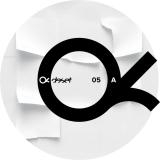
Concrete Noir, the project of composer, sound designer, and educator Piero Fragola, returns with Blades of Grass, a new EP released on Italian label Deset, following the acclaimed Romance Ruins.
The record develops Concrete Noir’s atmospheric and cinematic approach to electronic music, combining dense textures, sustained rhythmic tension, and immersive sound design. Side A features “Density,” “Pure,” and “Sleepless Eyes,” while Side B presents two reinterpretations: Legowelt’s electro-driven remix of “Rain On Me,” which emphasizes its synthetic and nocturnal qualities, and Caruan’s dance-floor reworking of “Sleepless Eyes,” preserving its atmospheric character.
Conceptually, Blades of Grass shifts from the themes of transformation and decay explored on Romance Ruins toward resilience—the ability to bend under pressure without losing identity or coherence. The EP reflects Fragola’s broader artistic language, shaped by more than two decades of experience in electronic music, audiovisual arts, sound research, and modular synthesis, including his work as a designer for Tiptop Audio and previous releases on international labels.
"Cinematic Visionaries Calibro 35 and Noir Master James Ellroy Pay Homage to L.A. with a Pure Crime-Funk Original Soundtrack. Out October 9" There are collaborations that feel inevitable like they were waiting to happen in some shadowed corner of culture. The union between Italian cinematic funk visionaries Calibro 35 and internationally acclaimed master of noir fiction and New York Times bestselling author James Ellroy is undoubtedly one of them. When Calibro 35 were invited to compose the original soundtrack for Francesco Zippel's documentary Ellroy vs L.A., they didn't simply write music for film. They stepped directly into Ellroy's universe the most dangerous corners of American crime fiction and discovered, to no one's surprise, that its darkness felt strangely familiar. The result is Ellroy vs L.A., the band's new album out October 9 on Record Kicks. Twelve brand new tracks of cinematic crime funk, psychedelia, and hypnotic groove that don't accompany Ellroy's world so much as inhabit it. The soundtrack's move through Ellroy's fictional and real-world mythologies with deliberate precision. Stylistically, the album finds Calibro 35 in their most natural yet most cinematic state: crime funk, psychedelia, and hypnotic groove pushed into darker, more narrative-driven territory by the weight of Ellroy's world. From the gloomy, suspense-laden groove of the opener Black Dahlia to the evocative closing piece Moonlight Sonative, the album unfolds as a complete cinematic arc, showcasing Calibro 35 at their very best. L.A. Confidential delivers a super-suspenseful, thrilling tension that feels like a chase through neon-lit streets, while Riots erupts into explosive cinematic funk, capturing chaos and urban unrest in full force. LSD on Sunset Boulevard drifts into a hazy, instrumental soul journey psychedelic, warm, and disorienting, like a late-night hallucination of the city itself. The Big Nowhere (Part I & II) expands the narrative into a slow-burning, atmospheric descent, unfolding like a two-act crime saga. Welcome to the Land of Vacation and Probation hits with kick-ass, uptempo crime-funk madness, urgent and relentless in its propulsion, while White Jazz is a mood of suspended, noir-infused jazz tension cool, shadowy, and unresolved. Together, the tracks map Los Angeles as a fractured yet hypnotic landscape suspended between glamour and violence, beauty and decay, myth and reality Born in Milan in 2007 with the mission of excavating the golden age of Italian film music Morricone, Piccioni, Trovajoli, Calibro 35 have spent nearly two decades transforming that initial obsession into a singular artistic language. Their work bridges vintage Italian soundtracks with contemporary jazz and cinematic funk, earning them a global following rare for an Italian instrumental act. Their music has been sampled by Dr. Dre (Compton, "One Shot One Kill" feat. Snoop Dogg), Jay-Z ("Picasso Baby"), and Damon Albarn's The Child of Lov. Rolling Stone described them as "the most fascinating, retro-maniac and genuine thing that has happened to Italy in the past few years," while Far Out Magazine called them "one of the most skilful and innovative instrumental outfits on the planet right now." The band (Enrico Gabrielli, Massimo Martellotta, Fabio Rondanini, and Tommaso Colliva) continue to evolve without losing their core identity. In 2025 they released the critically acclaimed Exploration, further expanding their sonic universe, and were invited to perform at the closing ceremony of the Winter Olympic Games at the Arena di Verona, confirming their growing international stature. With Ellroy vs L.A., Calibro 35 don't just compose a soundtrack they translate a mythology into rhythm, tension, and groove. Between fiction and reality, they find a city that never truly sleeps, only pulses in darkness. Press play, and Los Angeles begins to unfold in sound.
Futurismo proudly present a vital compilation born in the shadows of American punk; AMERICAN GRAVE Gothic Punk / Deathrock USA: 1978-1988, the third volume in their Altered Vision anthology series.
Drawing from darkest depths of the American spirit, American Grave is testament to a subculture spawned from late night savagery, graveyard hangouts and suburban isolation. Deathrock, post-punk, goth, whatever term you prefer, this compilation showcases the sounds and aesthetics of a tarnished golden era, an underground movement that took the DIY concepts of punk and the velocity of a burgeoning hardcore scene and immersed it in echoes, distortion, tribal rhythms and macabre vocals, thematically preying upon cult horror flicks, surrealism, and the manipulation of religious iconography. Whilst the UK had a counterpart scene many would hail as Goth, this was different, this was a truly American incarnation, a new breed of youth haunted by the ghosts of old blues, garage and glam, bleak theatrical imagery dressed up to evoke a response, smeared eyeliner, leather, bones…black. This was a backlash against a culture in decay, bucking against a puritanical oppression brought on by the archaic social standards set by their parents. It was aggression manifested as gloom, it was a ceremony, the celebration of death.
American Grave has been co-curated by Wesley Eisold (Cold Cave/American Nightmare/Heartworm Press) in collaboration with Futurismo head honcho Del Jae, to bring you a haunting tracklist ranging from the all important integral mainstays of the genre to those rarer and more elusive artists, including many recordings that have never been reissued before on any format. Featuring the music of Christian Death, T.S.O.L., The Cramps, Of A Mesh, The Gun Club, Twisted Roots, Kommunity FK, The Brainz, Theatre Of Ice, Burning Image, Fur Bible, PSI Com, Shadow Of Fear, Super Heroines, 45 Grave and more.
The music on this compilation is reinstated further from a visual perspective by an array of incredible images by famed punk photographer Edward Colver, and lovingly designed to the level you would expect from a Futurismo release.
2xLP on limited edition ‘Splintered Tomb’ coloured vinyl. It is housed in a gloss laminated outer sleeve with colour inner sleeves and contains a large fold-out poster with unseen photos by the great Edward Colver, words by Lisa Fancher and liner notes by Wesley Eisold of Cold Cave/American Nightmare.
The first Af Ursin album in a decade, this release features extraordinary Belgian vocalist and performer Bénédicte Davin. »Ad Fontes« is a personal response to the fractured reality of our time. Created in the wake of visible social decay, manipulation, and institutional control, the album serves as a sonic mirror to an era defined by corruption and systemic failure. Instead of preaching political manifestos or claiming to have answers, this work is an intimate personal statement – a silent call to embrace spiritual values as the vital, untainted source of human nature.
New full-length from MINIATURa, following Geometria Prohibida (Keroxen, 2020). Espectral was recorded inside the iconic Keroxen oil tank in Tenerife — a brutalist chamber whose metallic resonance seeps into every track.
Motorik tension, post-punk restraint, shoegaze and darkwave undertow surface and dissolve throughout, but this is no genre exercise. The album feels lived-in and physical: drums hanging in open air, guitars stretching into steel-lined decay, moments of synthetic clarity torn open by abrasion. Propulsion and erosion move side by side.
There’s a rawness here that isn’t aesthetic — it’s architectural. The tank becomes a silent collaborator, shaping space as much as sound.
Lyrically, Espectral unfolds through elliptical micro-poetry, tracing life, love, death and social fracture in fragments rather than declarations. Nothing is fixed; everything hovers.
One of the strongest independent statements to emerge from the Canary Islands in recent years, Espectral finds MINIATURa operating on its own frequency — austere, immersive, and built to linger.
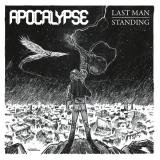
Die Londoner Band Apocalypse sollte kaum einer Einführung bedürfen. Sie erlangten unter Fans der New Wave Of British Heavy Metal durch ihre Single »Storm Child« von 1982 Ruhm, der drei Jahre später das vielbeachtete Album »The Prophet« folgen sollte, obwohl die Band zu diesem Zeitpunkt bereits eine Namensänderung durchlaufen hatte und nun als Omega bekannt war.
Spulen wir über vierzig Jahre vor. Apocalypse sind mit einem neuen Album zurück, »Last Man Standing«. Das aktuelle Werk knüpft nahtlos an »Abandon Hope an«, das 2010 von High Roller Records veröffentlicht wurde. Mittlerweile hat Gitarrist und Sänger Steve Grainger, der nach dem Tod sowohl seines Bruders Marc (ehemaliger Schlagzeuger der Band) und des Bassisten Dave Robertson tatsächlich als „letzter Mann übriggeblieben ist“, die Gruppe in Apocalypse NWOBHM umbenannt.
»Last Man Standing« kombiniert neues Material, das Steve geschrieben hat, mit älteren Songs, die in ihrer ursprünglichen Form aus der Vorgängerband Phaze stammen (die er und sein Bruder betrieben). Die Atmosphäre und der Drive von Apocalypse sind geblieben. Mit Beiträgen von Marc und Dave sowie textlichen Anspielungen auf einige frühere Stücke der Band ist »Last Man Standing« der neueste Teil der Apocalypse-Saga und in dieser Form definitiv eine würdige Ergänzung des Bandkatalogs.
HRR 1084LP, Einband aus schwerem Karton (425 gsm), 4-seitiges Booklet. Erste Auflage limitiert auf 500 Stück.
'Quiet Pieces' initiates Abul Mogard’s personal imprint Soft Echoes with a definitive self-portrait of calm, contemplative, and discreet inner landscapes made audible. It is the first solo album on vinyl in four years. RIYL Alessandro Cortini, William Basinski, The Caretaker.
While sifting through archived material left idle from earlier projects, a chance encounter with a late uncle’s trove of beloved 78rpm classical and opera records prompted the reworking and completion of what would eventually become the album. Spinning dusty records at 33 and 45rpm, Abul Mogard recombined their enduring spectres with unfinished sketches from his archive. The resulting soundscape blurs distinctions between his memories and those of another, exquisitely short-circuiting the senses with its waking, dream-like lucidity.
This was a process I hadn’t explored in my earlier works. I began sampling brief moments from these records, altering them with studio effects and playing them at slower speeds. In many cases, I wasn’t entirely sure how the original music sounded. These fragments, once further processed, became a source of inspiration for my new compositions. Over time, I realised that the old pieces from the archive and the new material derived from the samples naturally complemented each other.”
The resulting pieces hover over a threshold, a liminal space that harmonises the old and older material. Voluminous waves of quiet and loud undulate between consonance and dissonance, conjuring imagery of a decaying grandeur that humanity’s decadence has surrendered to the elements. Abul Mogard’s seemingly abandoned yet vast landscapes are nevertheless intimate with timbral frissons of red-lined distortion. Elusive, yet as tangible as sea spray or smog, they affect the olfactory senses with a rarified, synesthetic quality that modestly engages one’s emotional register – a hypnotic, distinguishing feature long hailed as one of the hallmarks of his work. A fidelity to memory and dream recall is sensitively probed in the journey from the stately symphonic stasis of 'Following a dream' to the almost industrial, untethered brutality evoked by a looming silhouette that’s never fully visible in 'Constantly slipping away', culminating in the foreboding coda of 'Like a bird'. Those pieces appear to shield the album’s sentimental core, where the tempestuous play of light and shadow of 'In a studded procession' escalates to breathtaking, panoramic climax, while 'Through whispers' evokes an out-of-body-like experience encountered with visceral poignancy.
Looking back, Mogard notes an unexpected influence: “I realise being inspired by Phill Niblock, whose work I had barely known at the time but explored after his passing in 2024. His album 'Boston Tenor Index' changed the way I approached dissonance. It encouraged me to push my sound further, to the edge of a space where I began to feel uncomfortable.”
The album artwork, created by longtime collaborator Marja de Sanctis, features a photograph taken at the Temple of Jupiter Anxur, an archaeological site overlooking the Mediterranean Sea. Captured with an iPhone, the image traces the residual presence of construction techniques and architectural forms of the Romans, where material history is transcribed through contemporary tools. The convergence of ancient and modern technology aims to reverberate the site’s lasting spiritual presence – an echo persisting in what is now perceived as a quiet, emptied space. The spiral gestures towards infinity and light. Past and present dissolve into one another, reflecting 'Quiet Pieces' meditation on sound, memory, and time.
RIYL Alessandro Cortini, William Basinski, The Caretaker
out of Stock
Last delivered 9 months ago available to reorder, subject to availability
Following one of 2025’s standout EPs, the CEO of the National Centre for Mark Fell Studies fires from the hip in brilliant, club-troubling motion. In step with 30 years of prism-pushing work — and particularly the »Nite Closures« EP, which signalled a concerted return to the dancefloor — Fell pulls aspects of hypermodern dance and electronic music from Chicago, Tanzania, and Japan into his own peculiar agenda.
The hugely distinctive results pull the body into thrillingly unusual, typically ascetic arrangements, activating every pointillist drum hit with attack and decay in a soberly ludic play of rhythmelodic tension and release, executed to delirious ends; 40 minutes of computer music.
As an artist who witnessed first-hand the explosion of electronic music in early ’80s Sheffield, and its interplay with house and rave as it refracted into wild new styles during the ’90s, Mark Fell is uniquely positioned to pursue his passion for the dynamics of electronic dance music to the nth degree. »Servitude In Context« continues to develop ideas around music for movement in the mid-2020s, placing decades of keen observation — from the macro and historical to the niche and hypermodern — at the service of flexing bodies in new directions.
Long-held notions of multistability manifest in what feels like two machines playing chess on the dancefloor, attempting to adapt to each other’s playing styles and patterns in real time, anticipating and zigzagging around the next move. The result is a plethora of options for limber dancers and those who only bust a move inside their heads.
The slow-fast play of accelerating and decelerating strikes, alongside monotonic chatter in »Actuations #1 (Extended)«, acclimatises the body to a uniquely sensual physics. This develops into the rudely screwed, asymmetric angularity of »Time-Slur« and the shatterproof elasticity of »Taut Manifold«, which feels like an LLM trained on Autechre.
»Low Energy Mantra« offers the EP’s closest resemblance to melodic structure, like gamelan and footwork refracted through lab-grown diamonds. Then »Anode« flashes its teeth with a rudeness recalling the latter stages of Fell’s Pat Thomas jams, before »3 Lost Contours (Pts 1–5)« tilts into 12 minutes of proper quicksilver madness, balancing the sexiness of his Sensate Focus work with an updated, clean-hoofed step and parry.
Since the release of DAMAGED in 2024, Michael Fiedler aka GHOST DUBS has been surfing intensifying waves of adulation, earning praise from such diverse underground legends as Justin Broadrick (Godflesh/Jesu), Regis, Stefan Betke (Pole) and Steve Von Till (Neurosis). With second album Oblique, his mastery of sculpting sound waves results in a spellbinding set of alien soundscapes: larger in scale, richer in tone and considerably more cinematic than its predecessor. Lower, deeper and moodier, its cloudy abstractions, shadowy pulsations and submerged rhythms find Fiedler reaching further into his own sonic void, crafting blurred melodies and addictive narco loops into something simultaneously heavyweight and hypnotic. Album opener "Low Times" sets the atmospheric pressure to maximum, resembling a dream date between prime dirt-house era Andy Stott and Berlin dub-tech pioneers Basic Channel. From there, Oblique descends into a series of enchanting mood scenes: the furtive, balletic gyrations of "After All", the haunting ambience and buried heartbeat throb of "Soft Collapse", and the noirish atmospherics of "Blackout Dust", which worms its way into the mind like some forgotten David Lynch scene. The spirit of reggae is more distanced here than on DAMAGED, but the ghost of Jamaican dub still permeates these foggy soundscapes, particularly on "Bombed Suburbs", where Augustus Pablo-style melodicism is chopped, screwed and slowed into a magnetic lock groove. Superficially minimal but maximal in its minute detail, Oblique is a record of contorted reflections, mesmeric echoes and tantalising audio mirages. By the vaporous mist of closing track "Almost a Structure", obvious rhythm has been craftily filtered away, leaving a blurred and blunted residue full of mystery and implied narrative. Dense in the best possible sense and crushing when played loud yet equally potent played quiet, Oblique imagines dub techno burning its own rigid rulebook: sensual, funky and concussive rather than dry or alienating. "Second album from electronic producer Michael Fiedler's GHOST DUBS project. "Follows up from the highly-acclaimed 'Implosion' album with The Bug from 2025. "Debut album 'Damaged' sold out its three initial pressings and has just been repressed "Michael Fiedler recently scored 'Sound of Falling' which won a Cannes award in 2025 and made the shortlist for an Oscar, too.
out of Stock
Last delivered 15 days ago available to reorder, subject to availability
Issued on Crystal Clear vinyl is Max Richter’s emotive and minimal score to Damon Lindelof’s TV series about a post-apocalyptic global event where 2%
of the world’s population disappears without explanation. Richter’s approach explores the feelings of the protagonist’s family, the Garveys, through intimate,
small scale music. He tackles this psychological landscape by bringing a ritual quality to the score, while themes of departure and loss are represented by
a sense of sonic decay, relying on the instrumentation of a few sustained tones on pianos, harps and celesta.
Max Richter is a classically trained composer that defies boundaries. Trained at the Royal Academy of Music and finishing his studies under the tutelage
of avant-garde composer Luciano Berio in Florence, Richter’s career has followed many paths. His musical output ranges from ballets
(Wayne MacGregor’s Infra), reinventions of classical works (Vivaldi’s Four Seasons), collaborations with The Future Sound Of London, Roni Size and
Vashti Bunyan to writing scores for film and TV (Waltz With Bashir, Lost and Found, Last Days on Mars) and solo work.
There is a pivotal scene in “August in the Water” (dir. Sōgo Ishii, 1995) where the surface of a pool turns into a stone wall. The water that gave the protagonist's life its meaning becomes a threat. As you fall through this stone wall, you appear in a set of underwater coral-reef corridors, and one of the most beautiful musical themes begins to play: Aquatic Ambience, composed by David Wise for Donkey Kong Country (1994). It's a theme that represents the weightless vibe of your new deep-sea life, where you go about your mundane errands, collecting bananas while driving on a swordfish, or, as HerzMayhem put it: "Poor monkey... always swimming, never going anywhere..."
Synthetic Water Music is the second of three compilations, following Synthetic Bird Music and timed to mappa's 10th anniversary. As with the birds, it gathers friends of the label, artists who have released with mappa or played our shows. Most of the music is new, made to measure for this compilation, much of it from Central and Eastern European hands. Birds and water mix well, so please feel invited to play them together, creating your own environments.
Where the birds were in one flock, water is dispersed across four chapters. You live your life as a droppity drop: vapour in the heavens, condensing in clouds, falling into a swamp, trickling into the deepest sea.
Tlālōcān (Cassette 1, Side A)
A place of eternal spring, of aquatic energy that nourishes everything and allows all things to bloom. Bubbly and splishy-sploshy, it is full of dripping sounds and moist caverns (“Emerald Pool” by Pauline Anna Strom), a landscape filled with living fountains (“Oh, to be a Fountain” by Eva Sajanová) and winding streams that flow through the area, forming part of its organic architecture. It is also a paradise reserved for those whose deaths were water-related, where the aquatic and terrestrial beings live in symbiosis and perspectives shift rapidly, from observing a single droplet (Shakali, Lau Nau) to dew (Feronia Wennborg & Lucy Duncombe) and on to flowing currents (Visible Cloaks) that gradually transform into river music (Ursula K. Le Guin & Todd Barton).
Nephelora (Cassette 1, Side B)
A celestial anti-gravity sound world made of evaporation, steam and the formation of clouds, as if looking at “The Sky At The Bottom of the Well” (by Natalia Beylis) or at “The Cloud That Never Rains” (by Henrique Vaz).
If a cloud never rains,
it is not a cloud at all, but a veil that parches the earth with its gaze.
It generates only its own shadow —
a looming mass of suspended longing,
a sky that hoards but never yields,
a reservoir that swallows every river and returns nothing but echoes.
The water in this world is often invisible but sometimes all the more present, as Bint Mbareh describes it: “Recently been obsessed with invisible waters because I come from a place where you have to imagine the water is there even though you cannot see a river, a sea, usually no rain, so water is in the air, the voice and the imaginal realm, drought is imagined to be negotiable.”
Žaboglach Zha-bo-glahch (Cassette 2, Side A)
A fusion of Scottish lochs and Slovak ponds: a misty, foul-smelling, swampy realm, the kind of place that swallowed Artax from The NeverEnding Story. Stagnant waters full of decay become a blooming habitat for sirens (“thereby losing the weightless delight of being swept along with it” by Adam Badí Donoval) and beings straddling the line between fauna and flora, inventing their own communication systems (“Water-lily phase” by Action Pyramid).
R'lyeh (Cassette 2, Side B)
A brooding sunken city at the bottom of the ocean. It’s a journey to get there. Let this chapter guide you, from the shore down to the depths, to the gates of an unexplored world that is inherently dark, unfathomable, and beyond the limits of human perception: starting with seasickness ("Seasick" by Nikolaienko), passing through a classic Poe-esque maelstrom ("Flurry at the Whirl-pull" by Atte Elias Kantonen), a gateway into the darkness and emptiness of the ocean floor, and finally traversing the city itself (“last waves of 2025” by Jules Reidy).
But what is pulling you to a place like this that only a few explore and even fewer leave? Maybe “the darkness that water can contain, the expanse of things we don't know and that can trigger fear instincts even as we try to rationalise them and think we are in control of the rest of nature” (“supercritical fluids” by Diane Barbé).
Dive in and surface wherever you like. Always swimming, never going anywhere. Just don’t forget to take water breaks.
P.S. Birds, then water, can you guess what comes next? Synthetic Soil Music, an elegy for insects and worms? Synthetic Glaciers, or maybe Pollinators? Which sounds would you miss the most if they disappeared? Or what if the third one never comes at all, and somebody, or something, makes Synthetic mappa Music instead. Don't you worry, with the right training data, it can all be replicated, better than the real thing.
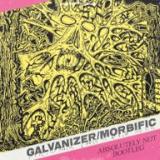
The Galvanizer/Morbific Split, once trapped in cassette‑only form, erupts again in a remastered version with a blast of rancid Finnish death metal for the first time on CD!
Two of the filthiest underground abominations collide in a whirlwind of chainsaw riffs and grave‑stench vocals and if you missed it the first time on cassette, this is your chance to seize a slab of pure decay before it sinks back into the crypt!
After having paid all their dues in the underground with tapes and eps like we were used back in the 90s, Galvanizer have quickly become one of the most promising underground acts around, their old school approach perfectly combines with their youthful energy and their sound will perfectly please both fans of old school finnish death metal and more modern death-grind approaches.
After "Sanguine Vigil" and "Prying Sight Of Imperception" the band is now ready to embark on a European tour with Malformed and finally launch the third, long awaited, third full length album!
---
Morbific is a death‑metal trio from Kitee, Finland, formed in 2020 by brothers Onni and Olli together with Jusa. They play a rotted, old‑school style steeped in horror, filth and Finnish morbidity, drawing on the spirit of early Autopsy and Undergang. Their debut demo and first album "Ominous Seep of Putridity" quickly pushed them to the forefront of Finland’s new wave of grave‑soaked death metal, followed by "Squirm Beyond the Mortal Realm" and several splits that cemented their reputation for raw, putrid heaviness.
For fans of Xysma, Autopsy, Machetazo, Undergang.
The darkest, filthiest alleys of old Philadelphia, DEVIL MASTER arise once more to corrupt the children of light. Between tours and festival appearances, the masters of devilry wrote their third full-length, Bloody Dreams. Punkier, with a psychedelic lean, yet festooned with a feral black metal aura, the album gleams from the abyss. Engineered by Davis M. Shubs and Grammy-nominated engineer Eric Bogacz, Bloody Dreams dances darkly. Tracks “You Worms' Vain Delusions” to “Death Anthem,” “Sex with Succubus,” and the decaying bonnet of “Farewell Waltz to Unfortune's Palace” lead the charge, while guests include Mirai Kawashima (Sigh), former drummer Chris Ulsh (Power Trip), and Ur Èmdr Œrvn (Arkha Sva) enhance DEVIL MASTER's supernatural power. There is no shadow without light...Bloody Dreams invites you into and out of the abyss. Short: The darkest, filthiest alleys of old Philadelphia, DEVIL MASTER arise once more to corrupt the children of light with their new album, Bloody Dreams. FFO: Venom, GISM, Celtic Frost, Midnight, Discharge, Christian Death
In a world increasingly shaped by disposable content, Chat Pile answer with something defiantly real and organic, a mentality that permeates Who Loves The Sun, their third full-length record. Since the band’s formation just over six years ago, the Oklahoma City-based quartet Chat Pile has grown from a scrappy passion project into one of the defining heavy acts to emerge from the 2020s underground. Ray B. (vocals), L. Manhole (guitar), Stin (bass), and Cap’n Ron (drums) create a crushing, crass, and cathartic take on noise rock that captures a raw, undeniably human essence in an age marked by technological overreach and the cold state of society. Nothing about Who Loves The Sun feels synthetic.
Whereas their debut album God’s Country depicted a particularly American flavor of dread, and the follow up Cool World showed a cruel planet defined by global systemic violence, Who Loves The Sun peels the skin back on how collective indifference defines this new century. Spanning imagery of coastlines devouring cities, dead-end jobs, and submission to data-driven inauthenticity, the album dissects the apathy-bloated state of 21st-century existence as a slow-motion apocalypse. As with much of Chat Pile’s work, Oklahoma City itself looms over the album like a character, its sprawling isolation, economic contradictions, and underlying sense of decay embedded in the fabric of the record. The perfect allegory for the thematic essence of Who Loves The Sun is the photo embossed on the record’s cover, where Devon Tower, a glassy, largely vacant monolith, looms high above the Oklahoma City skyline while a burnt-out home or storefront envelops the foreground. The album remains lyrically and sonically confrontational, but Chat Pile approached the songwriting with hooks in mind, drawing on melodic tones of pre-2000s indie rock, alt-rock, and new wave. From the blood-soaked vocal passages of “Christabel ’26” to the eerie trip-hop pulse of “Same Rules,” Who Loves The Sun is deeply human despite its allusions to a dying, divided .
In a world increasingly shaped by disposable content, Chat Pile answer with something defiantly real and organic, a mentality that permeates Who Loves The Sun, their third full-length record. Since the band’s formation just over six years ago, the Oklahoma City-based quartet Chat Pile has grown from a scrappy passion project into one of the defining heavy acts to emerge from the 2020s underground. Ray B. (vocals), L. Manhole (guitar), Stin (bass), and Cap’n Ron (drums) create a crushing, crass, and cathartic take on noise rock that captures a raw, undeniably human essence in an age marked by technological overreach and the cold state of society. Nothing about Who Loves The Sun feels synthetic.
Whereas their debut album God’s Country depicted a particularly American flavor of dread, and the follow up Cool World showed a cruel planet defined by global systemic violence, Who Loves The Sun peels the skin back on how collective indifference defines this new century. Spanning imagery of coastlines devouring cities, dead-end jobs, and submission to data-driven inauthenticity, the album dissects the apathy-bloated state of 21st-century existence as a slow-motion apocalypse. As with much of Chat Pile’s work, Oklahoma City itself looms over the album like a character, its sprawling isolation, economic contradictions, and underlying sense of decay embedded in the fabric of the record. The perfect allegory for the thematic essence of Who Loves The Sun is the photo embossed on the record’s cover, where Devon Tower, a glassy, largely vacant monolith, looms high above the Oklahoma City skyline while a burnt-out home or storefront envelops the foreground. The album remains lyrically and sonically confrontational, but Chat Pile approached the songwriting with hooks in mind, drawing on melodic tones of pre-2000s indie rock, alt-rock, and new wave. From the blood-soaked vocal passages of “Christabel ’26” to the eerie trip-hop pulse of “Same Rules,” Who Loves The Sun is deeply human despite its allusions to a dying, divided .
In a world increasingly shaped by disposable content, Chat Pile answer with something defiantly real and organic, a mentality that permeates Who Loves The Sun, their third full-length record. Since the band’s formation just over six years ago, the Oklahoma City-based quartet Chat Pile has grown from a scrappy passion project into one of the defining heavy acts to emerge from the 2020s underground. Ray B. (vocals), L. Manhole (guitar), Stin (bass), and Cap’n Ron (drums) create a crushing, crass, and cathartic take on noise rock that captures a raw, undeniably human essence in an age marked by technological overreach and the cold state of society. Nothing about Who Loves The Sun feels synthetic.
Whereas their debut album God’s Country depicted a particularly American flavor of dread, and the follow up Cool World showed a cruel planet defined by global systemic violence, Who Loves The Sun peels the skin back on how collective indifference defines this new century. Spanning imagery of coastlines devouring cities, dead-end jobs, and submission to data-driven inauthenticity, the album dissects the apathy-bloated state of 21st-century existence as a slow-motion apocalypse. As with much of Chat Pile’s work, Oklahoma City itself looms over the album like a character, its sprawling isolation, economic contradictions, and underlying sense of decay embedded in the fabric of the record. The perfect allegory for the thematic essence of Who Loves The Sun is the photo embossed on the record’s cover, where Devon Tower, a glassy, largely vacant monolith, looms high above the Oklahoma City skyline while a burnt-out home or storefront envelops the foreground. The album remains lyrically and sonically confrontational, but Chat Pile approached the songwriting with hooks in mind, drawing on melodic tones of pre-2000s indie rock, alt-rock, and new wave. From the blood-soaked vocal passages of “Christabel ’26” to the eerie trip-hop pulse of “Same Rules,” Who Loves The Sun is deeply human despite its allusions to a dying, divided .
In a world increasingly shaped by disposable content, Chat Pile answer with something defiantly real and organic, a mentality that permeates Who Loves The Sun, their third full-length record. Since the band’s formation just over six years ago, the Oklahoma City-based quartet Chat Pile has grown from a scrappy passion project into one of the defining heavy acts to emerge from the 2020s underground. Ray B. (vocals), L. Manhole (guitar), Stin (bass), and Cap’n Ron (drums) create a crushing, crass, and cathartic take on noise rock that captures a raw, undeniably human essence in an age marked by technological overreach and the cold state of society. Nothing about Who Loves The Sun feels synthetic.
Whereas their debut album God’s Country depicted a particularly American flavor of dread, and the follow up Cool World showed a cruel planet defined by global systemic violence, Who Loves The Sun peels the skin back on how collective indifference defines this new century. Spanning imagery of coastlines devouring cities, dead-end jobs, and submission to data-driven inauthenticity, the album dissects the apathy-bloated state of 21st-century existence as a slow-motion apocalypse. As with much of Chat Pile’s work, Oklahoma City itself looms over the album like a character, its sprawling isolation, economic contradictions, and underlying sense of decay embedded in the fabric of the record. The perfect allegory for the thematic essence of Who Loves The Sun is the photo embossed on the record’s cover, where Devon Tower, a glassy, largely vacant monolith, looms high above the Oklahoma City skyline while a burnt-out home or storefront envelops the foreground. The album remains lyrically and sonically confrontational, but Chat Pile approached the songwriting with hooks in mind, drawing on melodic tones of pre-2000s indie rock, alt-rock, and new wave. From the blood-soaked vocal passages of “Christabel ’26” to the eerie trip-hop pulse of “Same Rules,” Who Loves The Sun is deeply human despite its allusions to a dying, divided .
“Ruins are the style of our future cities, future cities are themselves ruins.” - Izosaki Arata
A note from Lawrence English: Nostalgia is not an ideology, though in this moment, we could be mistaken for thinking it might be just that. Over the past years, the idea of nostalgia has been filtered through various political and technological lenses and has become a tool used for forgetting, rather than remembering. Instead of embracing histories’ complexities and inconsistencies, this version of nostalgia seeks only singular recollection. This contemporary phenomenon of nostalgia has become a methodology at best, and a weapon at worst, used to erode the past and project forward a collapsed and unimaginably sanitised version of things, places, and ways of being from former times. It’s this projection that sees it playing a mounting role in a social pathology associated with reducing the imagined possibilities of future.
The Rest Is My Ghost is a record that interrogates the manifestations of this reductive futuring and celebrates those that have tried (and failed), and those who continue to push back against decayed and revisionist positions. It’s a record that considers the weaponisation of nostalgia for the purposes of cloaking possible futures.
In recent times, I’ve proposed a term for this weaponised use of nostalgia, something I have called Acid Nostalgia. I offer it as a shorthand to describe the de-contouring of the future through a corrosive fixation on a flatten rendering of the preceding times. It is, in part, a certain type of lazy cultural scripting where tropes of the past are presented in the absolute, as empty pictorials; photocopies without any original from which to draw actual meaning, or useful detail.
Acid Nostalgia describes an increasingly common political projection of nostalgia that exists without any subjective connection to the memory surrounding and contained within it. Like acid poured onto a surface, this use of nostalgia seeks to erodes and smooth out the complexity and texture of lived connection and longing, which has until recently guided contemplations of nostalgia. Acid Nostalgia instead erases the texture of histories and de-contours the past, and in doing so dematerialises the horizon of possibility, which by its very nature marks the beginning point for any (and all) imaginable futures. Acid Nostalgia is a dreamless screen, where uncertainty, restlessness and aspiration are subjected to corrosion, breaking down and neutralising the wellspring of futures which are birthed from within the ambiguously charged, complex and at times chaotic atmospheres of the present.
The Rest Is My Ghost is not however some universal reading of these things and happenings. Rather it draws its breath from a very personal pathway carved through my own fraught experiences of nostalgia and framed through a disparate collage of chance encounters, situations, places and provocations. It takes oblique notes from civic and architectural references such as Japan’s Metabolist movement, Hong Kong’s ‘one line sky’ and Los Angeles’s vanished Sodium Vapour lights. It interpolates texts – factual and fictional – by authors such as Franco Berardi, Kate Crawford, JG Ballard, Katsuhiro Otomo, Mark Fisher and Alexei Yurchak who have each so wonderfully sought to rupture the familiarity of now, and push us towards other ways of imaging ourselves, our surroundings and our very ways of being in this world.
I also owe a debt of thanks to Adam Curtis in helping launch what has become this edition. It was his provocation, in a conversation we shared about an overwhelming and profound sense of uncertainty around being able to predict the immediate future and how to respond to that, which sparked the earliest inklings of this edition.
The Rest Is My Ghost is ultimately a record about the promise of constructions and connections to come, material, social and political. It's a record that accepts the fragility of failure as a source of ultimate potential, and a position from which the deepest freedom of imagination might be sought and summoned forth to conjure even the most unimaginable, (but) possible futures.
out of Stock
Last delivered 44 days ago available to reorder, subject to availability
American experimental composer Stephen O’Malley releases Avaeken, two sides of immense, immersive, self-annihilating music via Dais Records.
The record preserves site-specific work: O’Malley installed Avaeken as part of Wish You Were Here, the exhibition by renowned American artist Banks Violette, underscoring the tension between presence and absence, life and loss.
O’Malley and Violette have developed a distinct language of sound, space, and sculpture over the past two decades, reverberating through the walls of world-class institutions from The Guggenheim and Centre Pompidou to prominent galleries such as Maureen Paley in London, Gladstone Gallery in NYC, and Antwerp’s TICK TACK, the brutalist space where Wish You Were Here unfolded in early 2026.
Emerging now as an LP, Avaeken presents power and phenomena: low-frequency vibrations, deep oscillations, and phase cancellations that translate as innately effective in any environment. Violette’s visual expression — the impossibility of locating yourself within the loss of a friend and the broader decay of culture — now fills the LP sleeve and feels inextricable from O’Malley’s sound, both still without resolution.
“Natural harmonic tone coloured by the valves of the amplification is the one desired characteristic,” reads the initial notes.
“At first I asked, why would I write for another guitar player?” he says. “I realized how amazing it is to be a listener on the other side of the music; together we were able to try all these precisions with intonation, harmonics, specific microtonal ideas.”
The quartet performed Avaeken several times before O’Malley joined them for a recording session at Muziekcentrum De Bijloke, a 13th-century former hospital with modern acoustics in Ghent.
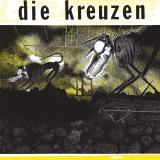
Formed in 1981 by two Rockford, Illinois, and two Brookfield, Wisconsin, natives in the midpoint of Milwaukee, Die Kreuzen (pronounced dee kroyt-zen) chose their name specifically to avoid stereotyping because “no one knows what it means. 'Die Kreuzen' roughly translates out of German meaning 'to intersect' or 'to hybridize,' which is exactly what they did on their five LP's for Touch and Go. Their self titled debut is considered one of the most seminal hardcore records of the early 80’s. As far as their second album October File is concerned, remember that flannel shirt movement in the 90's? This is what those guys were listening to.
Roy Montgomery, a key figure in the experimental underground rock scene, lives in Christchurch, New Zealand, just a short drive from the sea. Avant-garde vocalist and songwriter Martha Skye Murphy is based in London. Though geographically worlds apart, the pair inhabit an intimate and almost tactile shared sonic world. Their collaboration feels transformative, like the gradual shifting spell from night to day.
What draws them together is the emotional force of each other’s music. Montgomery’s cyclical, decaying compositions are shaped through intricate guitar and piano work, blending post-rock, folk, and drone. Murphy, meanwhile, possesses a rare gift for transformation, from the intimate cracked whispers of 'At Dawn' to the hypnotic drift of 'The Play of Dark and Light'. On the latter, she evokes old maritime folk tales of fishermen lured into the darkness by the sea’s siren call. The song both seduces and warns, finding something magical and frightening in the temptation of drowning. Though her vocals often resemble fragments of words, consonants, or vowels, they frequently function as pure sound, drawing on glossolalia and prioritising feeling over any ‘learnt’ language.
Emotion and intuition are the driving forces behind Nebular, an album that oscillates between the intimate with the unknown. This spirit is reflected in its artwork. Murphy shared a painting by Irish artist Simon English depicting a solitary house bathed in dusky blue light, and the pair quickly settled on it as the cover image. Both were captivated by its atmosphere. Montgomery related it to the isolated, seemingly uninhabited houses he encounters while travelling through rural New Zealand—places that inspire a desire to knock on the door and discover what lies beyond. “Terra incognita springs to mind. A search into the unknown,” Murphy agrees.
The nocturnal and remote nature of the artwork mirrors the process of making Nebular. With Montgomery in New Zealand and Murphy in London, the album was created entirely through remote correspondence, with stems exchanged via email. Their messages were often written and read at different times of day, and, because of the time difference and the demands of daily life, replies usually were sent late at night and the music too often composed at nocturnal hours. Their exchanges took on the quality of pen pals sending letters across great distances. This suspended sense of time is echoed in Nebular’s sound, with its feeling of temporal drift and timelessness.
On Nebular, Montgomery and Murphy have harnessed raw emotion and launched it into a time capsule bound for the stars. It allows you to drift, to be present, and to feel; creating something timeless.
One of the early breed of US death metal acts, Autopsy formed in 1987 in San Francisco. Drummer/vocalist Chris Reifert had gained initial recognition with Floridian genre pioneers Death & his participation on the classic debut, ‘Scream Bloody Gore’ before this new morbid creation was birthed. Autopsy released 4 albums on Peaceville Records in the early part of their career - beginning with the legendary debut, ‘Severed Survival’, in 1989 - before disbanding in 1995, with members going on to become the stalwarts of sickodelia in Abscess.
Autopsy triumphantly & officially returned from the grave after a 15 year hiatus with the 2010 EP, ‘The Tomb Within’. This was followed by the release of the band’s fifth studio album, ‘Macabre Eternal’ in 2011, as the group celebrated a new era of popularity & creativity. This reverence continues to this day as Autopsy itself nears its 40th anniversary, & still features the longstanding core trio of Chris Reifert, Eric Cutler, & Danny Coralles.
‘Mental Funeral’ was Autopsy’s second studio album, originally released back in 1991, & is rightly hailed as one of the greatest death metal albums of all time with its unhinged & uncompromising collection of odes to brutality & depravity, wrapped up in its highly distinctive raw, organic production.
‘Mental Funeral’ was recorded at Different Fur Studios in late 1990, with engineering work conducted by Ron Rigler. The iconic artwork appeared courtesy of Kev Walker, who had already provided the (at the time) controversial cover for Autopsy’s debut, ‘Severed Survival’.
This special 35th anniversary pressing of ‘Mental Funeral’ is presented on a limited red/green ink spot vinyl, featuring newly remastered audio courtesy of current Autopsy bassist Greg Wilkinson at his Earhammer Studios.
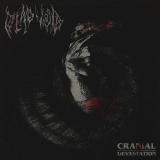
Spectral death metal conjurations will grasp you with their doom-tinged tendrils from the onset of this record. The gritty, booming riffs open a chasm of darkness for the punishing drums to cast skulls into. Met by otherworldly vocals, this is certain to grip any fan of sepulchral music with its enchanting and intense abyssal atmosphere. Do not be fooled by the slower lumbering moments into thinking this will be an easy listen. Stampeding ferocity and wild madness soon erupt from the charnel openings to give a burst of frantic psychopathy to the experience. Churning doomed violence and convulsive bestial onslaughts entwine around each other to project forth arcane death metal violence with huge dynamics and an utterly savage feeling to every second. With a natural, organic production to convey the filthy nature of the music perfectly; this is not a record that will hold your hand rather drop you into a void of souls with malicious intentions.
From the devastating drum work and monstrous riffing to the wickedly contorting bass lines; each instrument complements the others in this storm of triumphant vitriol while the commanding vocals spew malice to superb effect. The low end murmurings and rusted blades of the leads are an idyllic balance of inhospitable sounds that will surely satisfy any real underground lunatic seeking dark music. These five pieces clock in at 35 minutes and the sheer intensity is upheld for every second. Crypt-lurking doomed despair and utter ferocity become companions while the groove of the more mid tempo sections tie everything together. There is certainly nothing missing for an impactful and memorable experience. Allowing itself to decay and reform throughout; you will see, hear, feel, smell and maybe even taste the stages of cranial decay and the anguish of the brain matter breaking down into nothingness. This is a record which doesn’t follow predictable patterns nor rules but wildly possesses you with the malignant spirits from death metal’s darkest corners…
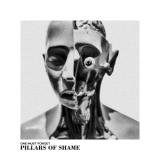
ONE MUST FORGET, the post-industrial polish/french alignment of MK (michał kiełbasa of whalesong, lugola, and harmony of struggle) and enigmatic female vocalist EA, emerges as a singular force of cold minimalism and unfiltered emotional intensity. rooted in classic industrial aesthetics yet fiercely contemporary, the project rejects digital sterility in favor of raw hardware and tactile analog decay. their debut album, PILLARS OF SHAME, manifests as a terrifyingly elegant monument to human fractures, functioning as a severe, ritualistic purification for the disillusioned through what is defined as angstpop.
the sonic architecture of the record balances suffocating minimalism with mechanical violence, where hypnotic, industrial pulses hit with the weight of heavy machinery. shards of piercing feedback and raw white noise tear through the compositions, yet beneath this abrasive exterior lies a seductive, deeply unsettling undercurrent of melancholic melodies. EA’s volatile vocal presence collides with MK’s suffocating grim architecture to create a psychological landscape of collapse and introspection.
With bloated souls and skeletal bodies the three mad kings of the end times walk among us, with empty eyes and insatiable hunger. Innocence thieves, blood collectors, bastard children of archaic dynasties built upon the broken bones of the weak. Their consorts are the rotten and the dead, their champions soulless, empty vessels gasping for validation as they bathe in the nectar of inflicted pain. They lead us not into temptation, but into degradation and the all-consuming fire. Born in the heat and shadows of the Australian underground, in Brisbane in 2014, Graveir have carved out a stronghold for themselves in their homeland's black metal scene. Bleak, violent and uncompromising, their music possesses a powerful individuality that sees them following their own path, lone wolves in a world of people searching frantically for a voice to tell them how to think and what to believe. After their powerful 2016 debut, Iconostasis and its critically acclaimed successor, King Of The Silent World, hailed as 'captivatingly hypnotic' by Metal Bite, Graveir are poised to unleash their third set of black prophecies - The Festering Triad. The Festering Triad begins with the sinister 'Lords Of Misrule', rising from the silence with guitars like an insect swarm before a lugubrious, dolorous shift into life and movement. The song holds you on the edge of oblivion, a constant aura of threat radiating from its broken beauty. There's a powerful underlying melody too, but it's corrupted and riddled with disease. And while this unsettling and disorientating introduction to The Festering Triad is still crawling through your veins, 'A Futile Exhortation' bursts into flame - as implacable and unstoppable as the passage of time, formed from the seething darkness on the edge of chaos and touched by something ancient and primal. You are now in the heart of darkness, jagged riffs circling like atavistic, feral presences, hammering blast beats disrupting natural rhythms. Nothing is as it should be. Nothing stays within the expected boundaries. This is a malicious attack on the laws that govern reality. 'A Thief In The Heart Of Man' flies at you in a howl of rage and bloodlust; you can feel its desperate need to tear you apart and the inherent danger is exhilarating. Title track, 'The Festering Triad' arrives swathed in an aura of decaying majesty, a triumvirate of wickedness wreathed in flame, marching onwards, entwined in black briars of unease - on into twisted soundscapes of fear and dizzying anxiety, through boiling malignancy and relentless intensity to the finale of 'The Rite Of Degradation', where portentous grandeur and bestial hunger combine in bewildering, schizophrenic fury. This album is fuelled by a determination to leave you broken, beaten and humbled - and it succeeds, absolutely.
In spring 2025, Abul Mogard and Rafael Anton Irisarri created the source material for their second album, Where Light Pauses in the Silence of the Sun, during a three-day residency at Morphine Raum in Berlin. Functioning as both recording studio and performance venue, the space has no stage, with the audience gathered around the performers. Working within an open framework, the duo reshaped the music each evening while recording the performances live to multitrack. Rotary speakers, modular synthesizers and bowed guitar formed the core of their sonic language, captured through a 1970s mixing console and microphones placed around the room.
Back in Mogard’s studio in Rome, the material was further crafted as motifs were stretched, fragments isolated, and tempos dissolved. Irisarri recorded additional guitar textures and treatments in New York, while passages recorded by Martina Bertoni and Andrea Burelli in Berlin reinforced the harmonic centres and brought breath, refinement and a new sensibility to their compositions. The process continued as Mogard’s layering and subtraction reassembled everyone’s parts into the final arrangement.
The album opens with “In the Eastern Wild,” building from a sparse outline into a monumental formation of low-frequency weight, its internal motion shaped by the rotating Leslie speaker. “Over the Domes” widens into a broader acoustic field, where sustained modular tones meet waves of softly plucked guitar. The music then turns inward with “A Blue Descent,” centred on Bertoni’s cello, whose growling timbre introduces a melancholic depth.
At the album’s centre, “In a Quiet Radiance” unfolds around a slow guitar ostinato, its luminous stillness opening into a more expansive and reflective state. Across its ten-minute span, Burelli’s violin lines and Bertoni’s lower cello phrases gradually surface, weaving through the harmonic field. Mogard brings Burelli’s processed voice to the fore, its emotive, operatic presence becoming one of the record’s pivotal moments. “Of Blessed Ages” suspends the sonic flow, shifting between parallel major and minor chords as lingering, slowly decaying melodies shape the music’s internal drift. The closing “Among Shadows” settles into a darker resonance as layered textures recede.
Mogard and Irisarri’s shared language balances restraint and maximalism. UK magazine Crack describes the music as “a tidal wave held in suspension,” while Dutch newspaper de Volkskrant writes, “What a colossal sound, and how this music strikes at the emotions.” Reflecting on the residency sessions, Irisarri recalls: “At moments I genuinely couldn’t tell if a sound was coming from me or from Abul. It stopped feeling like two people making decisions and began to feel like we were inside a system moving on its own."
Marja de Sanctis’ cover artwork revisits the vessel sculpture from the duo’s first album, Impossibly Distant, Impossibly Close. There it appeared as raw, unfired clay. Here it has been fired in the kiln and finished with a glaze. Light gathers on its polished surface and spills into the surrounding space. As she explains, “I wanted to convey the idea of continuity within the duo, and the vessel became a kind of container for that idea. However, their music felt different this time, and with the collaboration of Martina and Andrea, I felt it should have a sleeker, softer, more glamorous look, very distant from the first raw appearance.” The transformation of the vessel from raw clay to fired form suggests a passage from immediacy toward permanence, mirroring the music’s gradual expansion.
out of Stock
Last delivered 3 months ago available to reorder, subject to availability
In spring 2025, Abul Mogard and Rafael Anton Irisarri created the source material for their second album, Where Light Pauses in the Silence of the Sun, during a three-day residency at Morphine Raum in Berlin. Functioning as both recording studio and performance venue, the space has no stage, with the audience gathered around the performers. Working within an open framework, the duo reshaped the music each evening while recording the performances live to multitrack. Rotary speakers, modular synthesizers and bowed guitar formed the core of their sonic language, captured through a 1970s mixing console and microphones placed around the room.
Back in Mogard’s studio in Rome, the material was further crafted as motifs were stretched, fragments isolated, and tempos dissolved. Irisarri recorded additional guitar textures and treatments in New York, while passages recorded by Martina Bertoni and Andrea Burelli in Berlin reinforced the harmonic centres and brought breath, refinement and a new sensibility to their compositions. The process continued as Mogard’s layering and subtraction reassembled everyone’s parts into the final arrangement.
The album opens with “In the Eastern Wild,” building from a sparse outline into a monumental formation of low-frequency weight, its internal motion shaped by the rotating Leslie speaker. “Over the Domes” widens into a broader acoustic field, where sustained modular tones meet waves of softly plucked guitar. The music then turns inward with “A Blue Descent,” centred on Bertoni’s cello, whose growling timbre introduces a melancholic depth.
At the album’s centre, “In a Quiet Radiance” unfolds around a slow guitar ostinato, its luminous stillness opening into a more expansive and reflective state. Across its ten-minute span, Burelli’s violin lines and Bertoni’s lower cello phrases gradually surface, weaving through the harmonic field. Mogard brings Burelli’s processed voice to the fore, its emotive, operatic presence becoming one of the record’s pivotal moments. “Of Blessed Ages” suspends the sonic flow, shifting between parallel major and minor chords as lingering, slowly decaying melodies shape the music’s internal drift. The closing “Among Shadows” settles into a darker resonance as layered textures recede.
Mogard and Irisarri’s shared language balances restraint and maximalism. UK magazine Crack describes the music as “a tidal wave held in suspension,” while Dutch newspaper de Volkskrant writes, “What a colossal sound, and how this music strikes at the emotions.” Reflecting on the residency sessions, Irisarri recalls: “At moments I genuinely couldn’t tell if a sound was coming from me or from Abul. It stopped feeling like two people making decisions and began to feel like we were inside a system moving on its own."
Marja de Sanctis’ cover artwork revisits the vessel sculpture from the duo’s first album, Impossibly Distant, Impossibly Close. There it appeared as raw, unfired clay. Here it has been fired in the kiln and finished with a glaze. Light gathers on its polished surface and spills into the surrounding space. As she explains, “I wanted to convey the idea of continuity within the duo, and the vessel became a kind of container for that idea. However, their music felt different this time, and with the collaboration of Martina and Andrea, I felt it should have a sleeker, softer, more glamorous look, very distant from the first raw appearance.” The transformation of the vessel from raw clay to fired form suggests a passage from immediacy toward permanence, mirroring the music’s gradual expansion.
out of Stock
Last delivered 3 months ago available to reorder, subject to availability
In spring 2025, Abul Mogard and Rafael Anton Irisarri created the source material for their second album, Where Light Pauses in the Silence of the Sun, during a three-day residency at Morphine Raum in Berlin. Functioning as both recording studio and performance venue, the space has no stage, with the audience gathered around the performers. Working within an open framework, the duo reshaped the music each evening while recording the performances live to multitrack. Rotary speakers, modular synthesizers and bowed guitar formed the core of their sonic language, captured through a 1970s mixing console and microphones placed around the room.
Back in Mogard’s studio in Rome, the material was further crafted as motifs were stretched, fragments isolated, and tempos dissolved. Irisarri recorded additional guitar textures and treatments in New York, while passages recorded by Martina Bertoni and Andrea Burelli in Berlin reinforced the harmonic centres and brought breath, refinement and a new sensibility to their compositions. The process continued as Mogard’s layering and subtraction reassembled everyone’s parts into the final arrangement.
The album opens with “In the Eastern Wild,” building from a sparse outline into a monumental formation of low-frequency weight, its internal motion shaped by the rotating Leslie speaker. “Over the Domes” widens into a broader acoustic field, where sustained modular tones meet waves of softly plucked guitar. The music then turns inward with “A Blue Descent,” centred on Bertoni’s cello, whose growling timbre introduces a melancholic depth.
At the album’s centre, “In a Quiet Radiance” unfolds around a slow guitar ostinato, its luminous stillness opening into a more expansive and reflective state. Across its ten-minute span, Burelli’s violin lines and Bertoni’s lower cello phrases gradually surface, weaving through the harmonic field. Mogard brings Burelli’s processed voice to the fore, its emotive, operatic presence becoming one of the record’s pivotal moments. “Of Blessed Ages” suspends the sonic flow, shifting between parallel major and minor chords as lingering, slowly decaying melodies shape the music’s internal drift. The closing “Among Shadows” settles into a darker resonance as layered textures recede.
Mogard and Irisarri’s shared language balances restraint and maximalism. UK magazine Crack describes the music as “a tidal wave held in suspension,” while Dutch newspaper de Volkskrant writes, “What a colossal sound, and how this music strikes at the emotions.” Reflecting on the residency sessions, Irisarri recalls: “At moments I genuinely couldn’t tell if a sound was coming from me or from Abul. It stopped feeling like two people making decisions and began to feel like we were inside a system moving on its own."
Marja de Sanctis’ cover artwork revisits the vessel sculpture from the duo’s first album, Impossibly Distant, Impossibly Close. There it appeared as raw, unfired clay. Here it has been fired in the kiln and finished with a glaze. Light gathers on its polished surface and spills into the surrounding space. As she explains, “I wanted to convey the idea of continuity within the duo, and the vessel became a kind of container for that idea. However, their music felt different this time, and with the collaboration of Martina and Andrea, I felt it should have a sleeker, softer, more glamorous look, very distant from the first raw appearance.” The transformation of the vessel from raw clay to fired form suggests a passage from immediacy toward permanence, mirroring the music’s gradual expansion.
out of Stock
Last delivered 3 months ago available to reorder, subject to availability
A catalyst for all sorts of noise-making endeavors, Bob Bellerue embraces chaos as a positive force. As a musician, he harnesses the violent timbres and textures from feedback clashing against piano wires, amplifiers, metal, zithers, electronics etc. He's also been central in harnessing community through his long standing Ende Tymes festival in New York, providing an intersectional platform for all voices to utter their noise. To a polite society, things such as chaos, noise, and anarchy threaten the normative structures that can assert control and maintain power over others. Bellerue qualifies his practice as a form of sonic animism, in which engages with that which is unheard in materials, equipment, and their relationships, developing a process of amplified discovery. The unhinged, the unquantifiable, and the unknowable are all possible outcomes in Bellerue's expansive works.
Chaos Is A Law is a macrotonal album, whose expressive de-centralization originates from rasping noise, intense textural accretions, brutalist drone, and inharmonic ambience. For all of the sustained harmonics and dissonant frequencies, the album is in constant motion, with Bellerue pushing dynamics that build, rupture, collapse and reform with an almost organic morphology. At times, it boils with a feral intensity. At others, its muscularity collapses into peculiar almost half-melodic figures, mutated within all the distortion. One could look to the free noise practitioners from New Zealand (e.g. A Handful Of Dust, Birchville Cat Motel, Surface of the Earth) or to the alchemical dronescaping of Stephen O'Malley and Organum. Yet, Bellerue's work maintains a bespoke tactility that is uniquely his.
In Bellerue's words, "The universe is a feedback loop. Creating and destroying. Growing and decaying. Loving and dying. Expanding and contracting. The big bang is the end result of everything merging together in the biggest black hole ever and then erupting into being over and over again. Praise chaos!"
Between her elaborately conceptual Drag City singer-songwriter albums and celebrated soundtracks for Ryusuke Hamaguchi, in recent years Eiko Ishibashi has quietly self-released a significant body of solo and collaborative work on her Bandcamp page. At times resembling her solo live performances in their organic interweaving of instrumental, electronic, and concrete sounds, each of these less feted online releases offers a snapshot of the experiments always underway at Atelier Eiko. Some Fine Legacy is pleased to announce a vinyl edition of one of the most intriguing of these works, Gasping_Sighing_Sobbing, made in collaboration with Hiroshi Minami and first released in 2021.
Active since the 1980s, Hiroshi Minami is a key figure in the Tokyo jazz scene, as well as a respected memoirist. Devoted to the great standards, which he explores with an Evans-ish delicacy of touch and Impressionist harmonic extensions, he is equally at home working up variations on tunes by Ryuichi Sakomoto and The Beatles or experimenting with ambient electronics. A single note from his piano is the first thing we hear on Gasping_Sighing_Sobbing, the space left by its decay unexpectedly filled by a synth arpeggio that quickly fades away as the piano returns with a balladic chord sequence.
Like her frequent collaborator Jim O’Rourke, Ishibashi possesses the virtue of patience, recognising the beauty of lingering at length in a single musical environment. Throughout its 40-minute duration, Gasping_Sighing_Sobbing remains lost in this maze of obstructed and fragmented piano balladry. The musical surface is in one respect placid, but close listening reveals dynamics and processes that are deeply strange: the resonance of a chord dying away is frozen, expanding to become a cloud that suddenly makes way for the piano’s return; or the piano is looped into a ticking glitch or a time-stretched shudder, momentarily sinking under lapping waves, distant bells, and snatches of conversation. Ishibashi’s subtle vocals and synths colour the piano passages like views through distorted glass. The metaphor of cinéma pour l’oreille is perhaps overused in discussions of the musique concrète tradition, but here the visual associations are almost unavoidable: especially when Daisuke Ijichi joins on upright bass, it’s hard to shake the cinematic image of a smoky jazz bar—shown in a sequence, perhaps, that cuts repeatedly to the musicians’ and audience’s thoughts and dreams. Like much of Ishibashi’s work, this collaboration with Hiroshi Minami is inconspicuously radical, shaped at the deepest level by electro-acoustic procedures even as it luxuriates in melancholic beauty.
Archival release from Lagoss, the collaborative project between Discrepant founder Gonçalo F. Cardoso (Gonzo, Visions Congo, Papillon, Prophetas) and Tenerife-based electronic producers Tupperwear (Mladen Kurajica and Dani Tupper).
Tenerife Ghost Healing Mix ’78 draws on material originally recorded in 2020, these recordings capture an early phase of Lagoss’ sound: a humid, proto-cyber tropical zone where synthetic textures, degraded rhythms and softened melodic fragments drift into each other. Rather than foregrounding narrative or structure, the material leans into ambient saturation — layers accumulating slowly, colours bleeding, signals slightly overdriven and left unresolved.
Sonically, the mix occupies a proto-cyber tropical zone—humid, blurred, and gently unstable. Layers of noise, softened rhythms, and synthetic textures accumulate into a form of ambient saturation, where density replaces direction and repetition becomes restorative rather than functional. The approach remains rough, unhinged and no-frills: raw signal paths, little correction, and a willingness to let things run slightly out of control.
Assembled from outtakes, alternate versions and early sketches, the tape favours atmosphere over structure, presenting the material in a slower, more inward-facing state than earlier Lagoss releases. It functions less as a remix than as a refracted memory of the original sessions, viewed through time, heat, signal decay—and left deliberately unfinished.
Somewhere between krautrock, noise rock, decaying psychedelia, and pagan proto-punk, Dééfait makes music like one performs a ritual: in trance, on repeat, and without a safety net. From the chaotic arteries of Mexico City to the basement venues of the Paris suburbs, Dééfait sculpts noise rock in apnea. Their self-titled debut EP is a noise rite: a wall of guitars, incantatory percussion, and possessed voices. With Dééfait, sound twists, repeats, stretches, until exhaustion and ecstasy. Formed in 2023, Dééfait brings together the Valero brothers (Lucas on guitar / Pablo, ex-Pays P, on drums), Enir Da (bass - Temir Alcy, Dali Muru & the Polyphonic Swarm), Grégoire Couvert (guitar), and Riki Lara, a Mexican-born vocalist and performer whose lyrics _ chanted, whispered, shouted _ alternate in three languages: English, Spanish, and French. Active on the Paris underground scene since 2024 (La Mécanique Ondulatoire, Le Cirque Électrique, Nouveaux Sauvages_), Dééfait imposes a ritual tension, physical, almost hallucinatory. No choruses to hum along to, no comforting melodies _ just a dense sonic flow that seeps and vibrates. This debut EP, set for release in December 2025 on Ici, d'ailleurs (Zëro, Matt Elliott, Bruit Noir_), lines up six long tracks resembling pagan litanies. Six extended pieces forming a possessed monologue, as if a camera had been slipped inside a burning body. Everything pants. Everything overflows. From We Love Each Other So Much That We Won't Belong To Any Species Anymore, love exceeds expected forms and becomes an organic pact, a ritual of species departure: "Cut me like you want, in bloom your fire," "We scratch consanguinity / We don't belong to any species anymore." It quickly suggests a call to ecstasy, to trance. The EP as a whole navigates unstable zones where desire, sacrifice, and alienation entwine like serpents on acid. Molokh 8 chants an offering to a carnivorous deity, between severed tongue and chemical body. In Bondbondbond, voices entangle, seek each other in a delirious, sensual chiaroscuro where pleasure derails into compulsion. It's a dogma-free ceremony, a game of inverted masks. Alether _ a live-explosive track and perhaps the most powerful of this first project _ shatters frameworks: convulsive dancing, possessed rhythms drowned by waves of guitar. Finally, Ferreri, cook for us closes the EP as a dark farce: a deviant homage to Italian filmmaker Marco Ferreri, the track chews and regurgitates words as if digesting an overfed world. Recorded in the chaos of DIY and mixed as a raw work, the record captures Dééfait's electric discharge in its purest state. The sound is dirty, visceral, possessed. Think Terminal Cheesecake, Boredoms, Nick Cave-era Birthday Party on acid, but also CAN impaled on an autopsy table, or a Giallo under a strobe light_ Yet it emerges as a singular work.
This new album compiles several songs made in the years following Black To Comm's classic "Alphabet 1968" album. Originally released on the seminal Type label in 2009 (and to be reissued on Cellule 75 this year) "Alphabet 1968" combined the sound of vintage shellac and vinyl loops with broken electronics and field recordings, the press release mentioning disparate influences "ranging from Moondog to Basic Channel by way of Bernard Herrmann". In a beautiful one-page review in The Wire magazine (later reprinted in his book Ghosts Of My Life) Mark Fisher compared Richter's music to JF Sebastian’s miniature automata in Blade Runner ("with their bizarre mixture of the clockwork and the computerised, the antique and the ultramodern, the playful and the sinister"), ETA Hoffmann's inventor-magicians and Auguste Villiers de l'Isle-Adam's 1886 tale of Thomas Edison's (fictitious) construction of an artificial human.
Now titled "Coh Bâle" (inspired by a strange dream) these recordings were supposed to become a follow-up to said album but for reasons unknown it never materialized and the album seemed forever lost. At the time Richter started to dive deeper into several strains of (so-called) world music aka the folk music of Southeast Asia and Eastern Europe as well as liturgical and medieval music, the Kraut-Electronica of Harmonia and several certain Mediterranean experimentalists from the 1980's who started to merge their mostly electronic and field recording based compositions with traditional musics from all over the world by way of new sampling technology.
Many of the songs for the album were recorded while travelling and at various residencies around Europe: a detuned piano in a Thessaloniki basement (Richter played at a children's birthday party there), vintage synthesizers in the GRM studios in Paris, decaying acoustic instruments found in an old Black Forest mansion, childrens' voices at a workshop in Karlsruhe's ZKM Institute; then mixed on headphones in the ICE trains running between these places and his hometown Hamburg.
"Coh Bâle" is taking inspirations from old Nonesuch Explorer and Ocora LP's, Crammed Records, 80s Mediterranean Ambient (Nuno Canavarro, Roberto Musci) combined with the DIY spirit of Deux Filles and Flaming Tunes and the playfulness of Asa Chang & Junray. The songs are both mysterious and transparent, intricate and frugal, vibrant and patient. One of the album's unexpected climaxes is a gorgeous (artificial) berimbau version of the Welsh traditional "Iechyd o Gylch".
No two songs feature the same instrumentation and many acoustic sources (pianos, flutes, wood percussion, viola, tablas, autoharp) were disassembled and later coalesced into new configurations or used as virtual instruments; later combined with samples, field recordings, electronics and (on a few tracks) autotuned vocals reminding of recent works by the likes of Claire Rousay or More Eaze.
We had to wait for a worldwide pandemic for Richter to dig deep into the vaults and finally bring these recordings to light. This is the 2nd release from his archives after the "Diode, Triode" LP which presented Musique Concrète/Acousmatic recordings made at INA/GRM and ZKM. Another massive Double-CD (MM∞XX Vol. 1 & 2) was released last year featuring collaborations with 33 artists such as Andrew Pekler, Richard Youngs, Eric Chenaux, Maja Ratkje, Radwan Ghazi Moumneh of Jerusalem In my Heart, GRM boss François Bonnet (Kassel Jaeger), Felix Kubin, Timo van Luijk (In Camera, Af Ursin), Luke Fowler and many others, showing Richter's versatility and his willingness to reinvent himself for every new release.
Marc Richter is widely known under his Black To Comm moniker, having released (at least) 12 albums under this alias in the last 20 years. He is currently signed to the Thrill Jockey label. Richter composes soundtracks for film and has worked with visual artists such as Mike Kelley and Ho Tzu Nyen. He also records as Jemh Circs and Mouchoir Étanche for his own Cellule 75 label (named in tribute to the late Luc Ferrari).
out of Stock
Last delivered 4 months ago available to reorder, subject to availability
Border One pushes his sound to new extremities with this latest EP on Token 'Spectral Tension'. Known for his driving, melodically abstract productions under eye twitching pressure, the Belgian artist takes his celestial signature and puts it to the test. These four tracks embody his sound: dancefloor experiments from a modular laboratory.
Exceptional in his sound, Border One adds 'Spectral Tension' as his seventh release to the Token catalog.
out of Stock
Last delivered 15 days ago available to reorder, subject to availability
The early 80’s in Aylesbury, Buckinghamshire, was hardly the place where music dreams came true. It had an amazing venue called Friars which was on the touring circuit, but very few local bands. There was the VICE CREEMS fronted by Kris Needs and there was the notorious yet terrible SORE WILLIES. EFFIGY came from the ashes of the SORE WILLIES and formed in 1983. EFFIGY came fully formed and instantly became popular in the local area, where they put on a weekly night at the Uptown Coffee Bar. The band hardly left Aylesbury though, and when they did it was to play in nearby High Wycombe and Bicester. They played bigger gigs with everyone from ALIEN SEX FIEND, BILLY BRAGG, UK DECAY, THE SCARS and SPIZZ. The band recorded one 5 track demo in October 1983 and it is simply unbelievable that it has never been re-released, but then again the bands legacy seems to have banished without a trace, with literally no mentions anywhere. Making their demo one of the hardest ones from 1983 to track down, or even hear, since it is not even uploaded on YouTube.
EFFIGY’s sound is so instant. It’s driving, tight female fronted post punk with hooks, style, and had it been released at the time would have made them a household name. Think a straight ahead version of SIOUXSIE AND THE BANSHEES, early X-MAL DEUTSCHLAND, THE A-HEADS or the SKELETAL FAMILY but with a more pop edge. The songs lyrically were around the obsession with paganism and old black and white horror films, the name EFFIGY was taken from a book Roger was trying to write about witchcraft and the Pendle witch trials called Effigy of Isobel, which was never completed (due to his very low attention span) but a song on this recording did emerge.
The release comes with a lyric sheet, a new interview with the band and as much archive as we could dig out, which in this case wasn’t much.
A transcendental journey through the shadows of consciousness - remastered and expanded for the deepest listening experience yet With Metamorphyses , Swedish dark ambient pioneer Peter Andersson (RAISON D'ETRE) invites us into a labyrinth of sound and soul, where drone, ritualism, and neoclassical minimalism converge into something vast, immersive, and transformative. Originally released in the mid-2000s, this defining work now returns in a gloriously expanded edition - and for the first time ever, pressed onto double vinyl.
This 2025 edition, meticulously remastered to K14- level standards by Andersson himself, features not only the core studio album (Disc I, recorded winter 2005-2006), but also two full discs of evocative live performances from across Europe, including Gent, Sofia, Salzburg, Alkmaar, Budapest, and a stunning set recorded in the Sophienkirche of Wuppertal during the Phobos II Dark Ambient Festival (2010) - a performance that plays like a liturgy for forgotten gods. The sound is monumental yet subtle: subterranean drones coil beneath spectral chants, decaying harmonics ripple through ancient cathedrals of reverb, and slowshifting textures create a space where the listener floats between the sacred and the surreal. There are echoes here of Lustmord's somber gravity, Thomas Koner 's icy isolationism, and the ritualistic depth of Inade or Desiderii Marginis, but it's RAISON D'ETRE's singular spiritual voice that rises from the abyss. The artwork by Kati Astraeir perfectly captures the album's meditative darkness - fluid forms, organic decay, and transcendent abstraction - while the layout, also designed by Andersson, reinforces the ritualistic purity of the listening experience.
A transcendental journey through the shadows of consciousness - remastered and expanded for the deepest listening experience yet With Metamorphyses , Swedish dark ambient pioneer Peter Andersson (RAISON D'ETRE) invites us into a labyrinth of sound and soul, where drone, ritualism, and neoclassical minimalism converge into something vast, immersive, and transformative. Originally released in the mid-2000s, this defining work now returns in a gloriously expanded edition - and for the first time ever, pressed onto double vinyl.
This 2025 edition, meticulously remastered to K14- level standards by Andersson himself, features not only the core studio album (Disc I, recorded winter 2005-2006), but also two full discs of evocative live performances from across Europe, including Gent, Sofia, Salzburg, Alkmaar, Budapest, and a stunning set recorded in the Sophienkirche of Wuppertal during the Phobos II Dark Ambient Festival (2010) - a performance that plays like a liturgy for forgotten gods. The sound is monumental yet subtle: subterranean drones coil beneath spectral chants, decaying harmonics ripple through ancient cathedrals of reverb, and slowshifting textures create a space where the listener floats between the sacred and the surreal. There are echoes here of Lustmord's somber gravity, Thomas Koner 's icy isolationism, and the ritualistic depth of Inade or Desiderii Marginis, but it's RAISON D'ETRE's singular spiritual voice that rises from the abyss. The artwork by Kati Astraeir perfectly captures the album's meditative darkness - fluid forms, organic decay, and transcendent abstraction - while the layout, also designed by Andersson, reinforces the ritualistic purity of the listening experience.