Lone Ark and The 18th Parallel join forces again! Five years after the critically acclaimed debut ‘Showcase Vol. 1’ (2021), the two spearheads of the European roots reggae scene return with the second volume of this showcase series. Recorded on 2” tape between Geneva, Switzerland and Cueto, Spain, this new project is another masterpiece of production. It dives deep into the roots sound and playing of the 70s and 80s Jamaican reggae with heavyweight drums and bass, razor-sharp rhythm section, and sophisticated horns, flute, synth and vocals arrangements. Roberto Sánchez, the voice behind Lone Ark, sings about themes more relevant than ever such as activism through music (Ammunition), the absurdity of ongoing wars in the world justified by religious beliefs (Man Kill Man), anti-capitalism (Money) and the appreciation of life’s blessings (Morning Blessing). The six songs of this ‘Showcase Vol. 2’ are followed by their dub counterparts expertly mixed by Roberto Sánchez himself. In the age of AI, this album takes the opposite direction. It is all about the human touch and the analogue warmth. No trick here, this is 100% real organic roots music!
Jason Dungan (aka Blue Lake) and Johan Carøe find beauty in the rhythms
and repetitions of domestic life for collaborative album, 'Routine' - out September 25
Copenhagen-based multi-instrumentalists Jason Dungan and Johan Carøe didn't set out to make an album. Instead, as the title 'Routine' suggests, they found their way there through a process of habitual making and listening, developing an intuitive musical language to reflect the dreamlike meanderings and creative play of life's quiet moments. 'Routine' blends pop orientated sounds, Avant-garde minimalism, folk and new age with the emotive depth of film-score.
Their meeting was not entirely coincidental. Previously in bands such as Squares and Triangles, Jason Dungan has since recorded multiple albums under the moniker Blue Lake, including the lauded 'Sun Arcs', pursuing his passion for self-built percussion and multi-string instruments. Johan Carøe meanwhile is a composer whose film soundtrack work has seen him collaborate with Angelo Badalamenti, Arp, and Sofie Birch, at whose Andersabo residency (curated by Dungan) the pair first met, resulting in the highly praised album 'Repair Techniques' written by Birch and Carøe.
'Routine' emerged organically over many years against the backdrop of great personal change. As Carøe said goodbye to his father and welcomed his first child, the pair sent each other fragments of melodies and patterns, working up responses when time allowed to assemble a sonic palette that combined acoustic instrumentation of zither, clarinet, cello, saxophone (among others) with the textures of tape, drum machine and Yamaha DX7 synth. Inspired by the vulnerability and DIY ethos of Arthur Russell's home recordings, the vision of labels like Disques de Crepescule, and the art pop, experimentation inherent to late '70s and early '80s recordings from NYC and Japan alike, Dungan and Carøe conjured new forms for their folk, leftfield pop and avant garde influences from the low-lit living rooms of Copenhagen and rural Sweden. "I'm very interested in the ways in which music and art emerge from our wider experiences as people, workers, parents and in the daydreaming activity of making music," Dungan explains of a process which allowed the duo's individual styles to drift apart and merge together seamlessly. "I think the process was definitely capturing moments in time, but over a long time," Carøe adds. "It was a bit like improvisation, but with time stretched."
The music floats with grace and humility, remaining sophisticated yet acutely introverted.
Whether on 'Clouds', where soft layers of zither and clarinet are moved along by a featherlight bass riff and the hypnotic clip-clop of the primitive groovebox, or the gentle grandeur of cello rising and falling through 'Routine 1', the album reveals itself over 10 instrumental tracks, evoking the ineffable calm that descends when the light changes and the world turns inwards. The act of time passing became a key creative ingredient to the evolution of the album, enriched with the exciting challenge to transform their passing rounds of home recordings via a slow release musical dialogue. Jason found creative moments in the twilight hours to lay down zither, melodica, acoustic guitar to name but few, while Johan utilising "line-in and headphones" would manipulate, stretch and pitch Jason's melodic pathways during newly born naptimes.
Carøe rhythmically plucks and slides the stringed cello instrument, leaving palpable foundations on 'Hymn' and 'Chords', in a treated, stylistic approach akin to Mabe Fratti, while 'Silence' draws to a close with a gospel touch. Dungan's harp-motion zither flourishes reveal more classical connotations on 'Reunion' with inspiration of Bedroom Community's Nico Muhly as organs rise with Moogs, culminating with a climatic choral outro from friend, mezzo-soprano Anna Caroline Olesen.
'Routine' then is their first collaboration, an album of deep and sincere reflection with inviting overtones that gesture with unrushed authenticity. A document of a new-found friendship that opens a window into the most personal of spaces, where the daily practices of music and life exist side-by-side to wondrous effect.
“Tough love is a sonic dark romantic experience. Each song represents a different form of “Tough love”. A dark romance in Hollywood. Growing up in LA at the age of 17, now being 23 I’ve experienced a lot and learned so much about my self and love itself. All of these songs are written either about my own experiences, lessons and who I am today or inspired by a fantasy I’ve created in my mind and heart. These love songs tell the truth of what I desire and crave deeply, a love that is exciting and passionate and impossible to find in Hollywood, writing these songs are the closest I’ll ever get to living it. Words are spells. Songs are spells. I love writing about love because though it’s fleeting in those moments while I’m creating the record, its true. I live in it, feel it on my skin, close my eyes, taste it and make it real. Whether it’s something I want, something I had, something I’m missing, it is mine all the same. Tough love is about the darkest and toughest parts of love, songs for those themselves who are tough to love, and songs for love that’s tough to find.
Sonically I was inspired by, Massive attack, Portishead, Fleetwood Mac, Eagles, Alice in chains, nostalgic music from the 70s through the 90s and add my own dark twists. ” - Nessa Barrett
A long-lost Japanese acid folk gem, Niningashi’s 1974 private press debut Heavy Way shimmers with originality, deft song writing and a dream-like groove.
Although he was training as a pharmacist, Kazuhisa Okubo was much more interested in prescribing musical medicine.
A coming-of-age album, Heavy Way captured a turning point in Okubo’s life, and Japanese society more widely as a nostalgia for the pastoral calm of the traditional life, met the cosmopolitan thrill of coffee, sex and cigarettes in the big city.
Intoxicated by Tokyo, driven by a passion for music and surrounded by a thriving acid folk scene, the young student filtered his experiences through a psychedelic cocktail of soulful influences from the US and Japan.
Niningashi was his first band, and Heavy Way was their only album. It was honest and raw, deep and strangely funky, in an off-beat kind of way. Across nine tracks, Okubo and the 6-piece band put their own spin on the new folk sound of Japan, combining witty lyrics with electric guitar-driven solos and crisp, understated grooves.
Melancholy and profound, opening track ‘Ameagari’ feels like a synthesis of Harvest-era Neil Young and Haruomi Hosono’s Happy End. Then there’s the whimsical washboard country sound of ‘Semai Boku No Heyade’; the moody, low-lit charm of ‘Restaurant’; and ‘Hitoribotchi’, a sensitive portrayal of childhood, steeped in memories of rainfall that will resonate with fans of Woo and Mac Demarco.
While Okubo would go on to taste success with psychedelic folk bands Neko and Kaze, the latter of which scored three #1 albums, little is known about his mysterious debut with Niningashi.
Self-released by Okubo in 1974, and featuring album artwork by his brother, it has slowly generated a cult following online, intrigued by its soft and enchanting sound. So few records were ultimately pressed that those remaining have fetched up to £1,500 online.
Featured on Time Capsule’s era-spanning collection Nippon Acid Folk, Niningashi’s Heavy Way is a deep-cut grail of a vibrant time in Japan’s musical history, where even the pharmacists were making jams.
out of Stock
Last delivered 19 months ago available to reorder, subject to availability
There was an immediate buzz surrounding This Is What I Know About Being Gigantic, the 2001 debut EP by Seattle indie phenomenon Minus the Bear. It wasn’t the kind of viral interest that translated into a string of sold-out tour dates, but it meant that the tuned-in crowd eagerly anticipated their next move. To help stir up the excitement for their first proper full-length, the band followed up Gigantic with a promo CD featuring two tracks from their upcoming album, a short instrumental interlude, an exclusive new song, and a demo version of another album track. Packaged in a cardboard slipcase, it was the kind of cheaply manufactured promotional item that could be handed out for free at shows or thrown in as a bonus in online orders—a relic of the final years of the CD age before the advent of the iPod and mp3. The sampler CD was christened Bands Like It When You Yell “YAR!” At Them in a nod to the upcoming album Highly Refined Pirates.
While these kinds of promotional items typically had an ephemeral existence, filed away in some neglected binder of CDs or tossed out during one of the many apartment-to-apartment moves of the band’s principal demographic of urban twentysomethings, Bands Like It When You Yell “YAR!” At Them had a curiously persistent presence. Perhaps it was because it was packaged more like a proper EP than a sampler. It certainly helped that it was a free release, meaning anyone who came to a show likely walked away from the evening with the cardboard slipcase tucked in their jacket pocket. It’s also noteworthy that the EP showcased three songs from the back half of Highly Refined Pirates rather than the album’s live staples and fan favorites from side A. Whatever the combination of factors at play, “YAR!” took on a life of its own and was ultimately re-packaged in a jewel case and sold as a proper EP in 2004 in the wake of Highly Refined Pirates’ success. And now in 2026, it’s getting its first proper release on vinyl.
Opening with the driving beat, chirping guitars, and funky low-end of “Spritz!!! Spritz!!!,” Bands Like It When You Yell “YAR!” At Them quickly cements Minus the Bear’s foundation of sophisticated revelry, a spirit further emphasized in the Highly Refined Pirates title choice. Part of the Bear’s lore involves them playing their first show three days after 9/11, and just as New York City’s indie rock scene took a sharp turn towards nightclub debauchery and a rejection of ‘90s rock’s dour fatalism in the wake of the World Trade Center tragedy, so did the Bear turn away from the Seattle’s scene’s penchant for gloom and angst towards a cerebral after-hours pop sound. The inclusion of “Women We Haven’t Met Yet” helped elevate what could have otherwise been seen as an album deep cut into a lead track. The fact that these first two songs essentially served as preview singles over future Pirates hits like “Monkey!!!Knife!!!Fight!!!” and “Absinthe Party At The Fly Honey Warehouse” speaks to the high quality of every song the band cranked out in their early years. The EP’s exclusive track “Drop It Like It’s Hot” presaged Snoop Dogg’s mega-hit single of the same name by two years, but whereas Snoop leaned into restrained minimalism, the Bear unleashes some of their fiercest work here, building off of interwoven riffs and electronic layers to a climax of stabbing guitars and hollered vocals. Much like Nirvana’s Hormoaning EP, Minus the Bear’s Bands Like It When You Yell “YAR!” At Them was initially more of a marketing gimmick than a proper release, but given the popularity of the pivotal studio albums that stemmed from the same recording sessions, these extended plays serve as compelling companion pieces that have earned a special spot in their respective fanbases’ hearts. Suicide Squeeze is proud to offer Bands Like It When You Yell “YAR!” At Them on vinyl on September 18, 2026, nearly 25 years after the band’s first show.
Remastered for vinyl by Bernie Grundman with lacquers cut at 45rpm, this limited edition pressing of 1000 copies on Puget Sound-colored vinyl helps document and preserve the exciting early years of one of American indie rock’s most beloved acts.
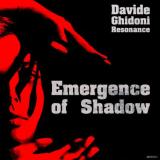
"Emergence of Shadow" (Mint Condition Records / Self Distribuzione)—the new album by Davide
Ghidoni, produced by Gianluca Pighi—is arriving: its digital release is set for Friday, September 11,
while the vinyl will be available starting Friday, September 18.
A trumpeter with a career marked by international collaborations, Ghidoni here signs his most
personal project to date. It is a predominantly instrumental record in which the trumpet becomes a
voice, a narrative, and an emotion. The only vocal track is "Come On Closer," performed by Heidi
Vogel (The Cinematic Orchestra), creating a moment of suspension and intensity within the project.
Davide Ghidoni’s passion for music and the trumpet was born in his childhood around the age of ten,
fueled also by Western films and Ennio Morricone’s soundtracks: those melodies, where the trumpet
played a central role in the duels of The Good, the Bad and the Ugly, deeply shaped the artist's
imagination and sound.
Ghidoni has always maintained an open and curious approach, letting himself be inspired by different
genres, artists, and musical cultures. His projects naturally coexist with influences ranging from rock
to soul, jazz to blues, and other languages that have left a mark on his path. Rather than identifying
with a single genre, he prefers to view music as a guiding thread capable of uniting different styles
through emotion, sensitivity, and respect for artistic identity.
"Emergence of Shadow" represents a new chapter in his journey. After numerous collaborations with
various artists, the musician felt the urge to undertake a completely his own project, giving shape to
ideas he had nurtured for a long time.
The record is inspired by the 1970s soul, rock, and blues sounds, but the goal is not to faithfully
reproduce or imitate those genres: the atmospheres, themes, and arrangements recall that sonic
world, yet are reinterpreted through a personal and original sensibility. The trumpet remains the
primary narrative element, supported by meticulous arrangements and a solid rhythm section that
enhance its character and expressive intensity.
Alongside the sounds that distinguish his path, the album also explores deeper emotional
dimensions. Some tracks are fluid and atmospheric, born from the desire to recount vibrations
without rigid schemes, letting melodies and dynamics guide the listener on an inner journey. The aim
is to offer an engaging listening experience in which music communicates directly, beyond words.
The album encapsulates everything Davide Ghidoni wanted to express and fully represents his
artistic identity: a timeless instrument to communicate emotions and engage in dialogue with different
musical traditions, always keeping the pursuit of musical quality and sharing with the public at its
core.
For any collaborative project to succeed, the artists involved need a creative unifier – a meeting point, if you will, of their disparate interests and experiences. In the case of Mondo Love & Betrayal, the joint project of Nottingham musical mainstays Neil ‘Nail’ Tolliday and Henry Claude Scott, there were two creative unifiers: a mutual love of classic 1980s synth-pop, as well as shared admiration for each other’s work.
Even so, such shared interests and respect for prior mutual endeavours is no guarantee of success. Yet as their eponymous debut album emphatically proves, the duo’s disparate experiences, characteristics and musical strengths have not only dovetailed beautifully, but also resulted in serious sonic gold. Put simply, Mondo Love & Betrayal is a stunning debut album rich in emotive songs, colourful melodies, atmospheric chord progressions and infectious grooves. Throw in the sun-splashed warmth and saucer-eyed, loved-up tactility of late 80s dance beats, and you have a breakthrough album whose timelessness is evident from start to finish.
The project’s roots lie in Tolliday’s desire to work with Scott, a virtuoso guitarist, talented producer and secret songwriter best-known for his work alongside Huw Costin as Torn Sail, and John ‘Ming’ Thompson as Brown Fang – both projects known for prioritising organic instrumentation and sunset-ready soundscapes over dancefloor-rooted beats.
Tolliday, of course, is one of British electronic music’s true polymaths – a long-serving house producer best-known for his long-running Bent project alongside fellow Nottingham resident Simon Mills. He initially approached Scott with the idea of providing vocals on a house track he was working on, but quickly suggested something else: an exploration of a classic synth-pop sound inspired by his love of Pet Shop Boys, New Order, Depeche Mode and the producers who worked with them – the likes of Martin Hannett, Arthur Baker, Stephen Hague and John Robie.
Scott accepted the invitation, seeing it as an opportunity to explore a different side of his musical personality. Their first recording session resulted in the ear-catching and memorable brilliance of ‘Correspondence’ – a tongue-in-cheek breakup song inspired by the death of landlines and the rise of mobile communications – and soon they were working on their debut album.
The resultant 10-track set is simply sublime, with Scott’s expressive delivery of his own lyrics on life, love, heartache and rejection working in perfect union with Tolliday’s kaleidoscopic and pleasingly authentic backing tracks – gorgeous and beautifully rendered instrumentals rich in memorable melodies, bittersweet chords, and subtle nods to ‘80s and early ‘90s dance-pop culture, from Shep Pettibone style remixes and Bernard Sumner guitar licks, to Beloved-esque piano parts and Chris Lowe chord progressions. Some listeners may also draw favourable comparisons with 21st century synth-pop practitioners, particularly Parcels, Private Agenda and the deeply emotive songs showcased by Junior Boys.
For proof, wrap your ears around such album highlights as opener ‘Boo Boo’, where Scott warns that “love and betrayal will haunt you” atop sparkling synths and Vince Clarke style grooves, the Behaviour-era PSB melancholy of recent single ‘Your Latest’, the mid-tempo dreaminess of ‘Beyond The Rainy City’, the early Depeche Mode chug of ‘Whatever Happened To Me’ and the tactile warmth of ‘Across The Plane’.
We could go on. In truth, the whole album is – in Scott’s words – “magical musical alchemy”. Wherever they choose to go next, Mondo Love & Betrayal is a seriously good sonic statement of intent.
out of Stock
Last delivered 33 days ago available to reorder, subject to availability
Tapper Zuki's debut album 'Man Ah Warrior' was originally released in 1973.It's classic Dee Jay style has been copied by many but bettered by few. An album that more than most shows that raw talent with little resources can still be a great, great thing.
Tapper Zukie (b.1956,David Sinclair , Kingston, Jamaica) was raised in the rough and tough West Kingston area of Jamaica between the districts of Trench Town and Greenwich Farm.
Living pretty much on the streets from an early age the youth including the young Tapper had no choice but to fall into the hands of the political parties that controlled the various ghetto areas of the town.
Fear of landing in even more trouble, a plan was devised by Tapper's Mother ,Brother ,Reggae producer 'Blackbeard' and family friend Bunny 'Striker' Lee .The plan was to send the wayward Tapper to England to cool his ways.
A UK tour with the number 1 Reggae Dee Jay U-Roy was already arranged on his arrival, Bunny Lee got the young Tapper to toast over a Slim Smith rhythm, the London crowd loved it
He also caught the eye of producer Larry Lawrence who took Tapper on and cut his first single 'Jump and Twist'
Nine further tracks were recorded for producer Clement Bushey that would result in this album 'man ah Warrior.
We hope this introduction to Tapper Zukie's music inspires you to look further into his catalogue of great music.
An artist ahead of his time, whose music has influenced many........
as Patti Smith stated 'Music of the Most High'............
2026 Repress
12" - Fully Authorised Reissue on Original Release Label!
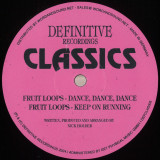
Canadian deep house don Nick Holder's Fruit Loops EP is next to get the remaster and reissue treatment from Definitive Recordings. This label, now overseen by Get Physical Music, first released the EP back in 1995 when Toronto-based Holder had already become one of house music's most tasteful operators. He went on to release over 125 EPs and singles under countless aliases, in various groups, and on his labels DNH Records and Treehouse Records, as well as !K7 Records and NRK. His style spans house, disco loops and minimal Chicago grooves and is always high on immersive atmosphere. Opener 'Dance Dance Dance' brings together all those aspects of the Holder sound with its funky guitar riffs looping beneath raw drums and disco basslines. Classic Chic samples burst out of the mix to bring an air of celebration and party, and it makes for an irresistibly feel-good sound. 'Keep on Running' is a steamy and sweaty house jam with loopy drums and bass and more smartly chosen samples, this time from Roy Ayers, that bring the funk and never let up. It has long been a go-to anthem for house DJs, and the realness and rawness of the emotions in Holder's work also shine through with the filtered synths and jazzy keys of 'The Message of Love', which is complete with bumpy and irresistible drums. Last of all is the unfettered party spirit and diva vocals of the brilliantly lo-fi funk-house pumper that is 'Clap Ya Hands'. This EP hasn't aged one bit and remains a definitive piece of early Deep House history.
out of Stock
Last delivered 38 days ago available to reorder, subject to availability
It is virtually impossible to describe with mere words how emotionally powerful this work of art is. Just listen. Listen, listen, listen...
A blissed-out 80-minute epic, Hatchback's Phaser For The Ocean, Chorus For The Moon is his magnum opus, a sprawling masterwork that encompasses ambient, new age and environmental music to wondrous effect. Moving, hypnotic and deeply meditative, it's FFO Mike Brooks, Deuter, Klaus Weiss, Innovative Communication, Harmonia, Cluster, Ashra's New Age of Earth, Stomu Yamashta, Haruka Nakamura, Yoshimura, Hosono, the works.
A record truly deserving of the deluxe Be With treatment, the vinyl was specially cut at Abbey Road Studios whilst the original stunning artwork has been pleasingly expanded. Now, an eye-catching holographic-foil layer moon is set against the original tones, wrapped up in a sumptuous double-gatefold jacket.
Soaked in Californian consciousness and limited to a run of just 500 copies for the world, this release is a treasured balm like no other for these troubled times.
Hatchback is the atmospheric, melodious ambient alias of California-based artist Samuel Milton Grawe. Sam creates music that sings of the Cosmos, full of deep resonant tones, glistening arpeggios, lush pads and harmonic motifs.
"When I first was getting into the creative side of music making in my teens, I was heavily influenced by concept albums like Quadrophenia and The Lamb Lies Down on Broadway, as well as epic pieces that took up an entire side of a record: Pink Floyd’s Echoes, Yes’ Close To The Edge, Klaus Schulze’s Nowhere Now Here, Miles Davis' Shhh/Peaceful and He Loved Him Madly. In the extreme, these ideas coalesced in double albums where each side of each record is occupied by a single title - Yes’ Tales From Topographic Oceans and Tangerine Dream’s Zeit being primary examples. When I returned to making music after moving back to Northern California in 2020, the first piece I recorded landed around the 20-minute mark, and the idea of creating three other long pieces to realize a full album felt like a natural - if indulgent - goal. From there, each new piece followed sequentially. Four songs. My fourth album." - Sam Grawe
Phaser For The Ocean Chorus For The Moon is a pure expression, informed by a lifetime of deep listening unbound by algorithms or AI. These are songs for the sunrise and the sunset - and every colour in between.
out of Stock
Last delivered 16 days ago available to reorder, subject to availability
Richard Laviolette (1982–2023) released his second record "a little less like a rock, a little more like home" on CD in 2006 on Burnt Oak Records, an artist-run co-operative and independent record label co-founded by Brad MacInerny, Ryan Newell and jiaqing wilson-yang, active between 2005 and 2007. Burnt Oak was based out of a rented house at 127 Grange Street in Guelph, Ontario, where the collective lived, rehearsed, hung out, and hosted all ages shows, also recording each others’ music, packing and mailing CD orders, and silk-screening and sewing the covers for the albums they released.
Combining folk, rock, and country influences, a little less like a rock, a little more like home is a beloved lo-fi classic of brilliant songwriting and powerful vocals, animated by Richard’s deeply held anti-capitalist, anti-colonial, DIY, and community-based ethos. It includes some of Richard’s most timeless songs and performances, including the unclassifiable magic of Qq, the shockingly intimate and utterly cosmic Ants vs. Universe, and the beautifully fingerpicked folk-song Oncoming Trains.
You’ve Changed Records is proud to present this first ever vinyl pressing of "a little less like a rock, a little more like home" . This Limited Edition LP features audio newly mastered for vinyl by Kevin Parks, recreated artwork by artist sophia bartholomew, and includes a full lyric insert
In a world increasingly shaped by disposable content, Chat Pile answer with something defiantly real and organic, a mentality that permeates Who Loves The Sun, their third full-length record. Since the band’s formation just over six years ago, the Oklahoma City-based quartet Chat Pile has grown from a scrappy passion project into one of the defining heavy acts to emerge from the 2020s underground. Ray B. (vocals), L. Manhole (guitar), Stin (bass), and Cap’n Ron (drums) create a crushing, crass, and cathartic take on noise rock that captures a raw, undeniably human essence in an age marked by technological overreach and the cold state of society. Nothing about Who Loves The Sun feels synthetic.
Whereas their debut album God’s Country depicted a particularly American flavor of dread, and the follow up Cool World showed a cruel planet defined by global systemic violence, Who Loves The Sun peels the skin back on how collective indifference defines this new century. Spanning imagery of coastlines devouring cities, dead-end jobs, and submission to data-driven inauthenticity, the album dissects the apathy-bloated state of 21st-century existence as a slow-motion apocalypse. As with much of Chat Pile’s work, Oklahoma City itself looms over the album like a character, its sprawling isolation, economic contradictions, and underlying sense of decay embedded in the fabric of the record. The perfect allegory for the thematic essence of Who Loves The Sun is the photo embossed on the record’s cover, where Devon Tower, a glassy, largely vacant monolith, looms high above the Oklahoma City skyline while a burnt-out home or storefront envelops the foreground. The album remains lyrically and sonically confrontational, but Chat Pile approached the songwriting with hooks in mind, drawing on melodic tones of pre-2000s indie rock, alt-rock, and new wave. From the blood-soaked vocal passages of “Christabel ’26” to the eerie trip-hop pulse of “Same Rules,” Who Loves The Sun is deeply human despite its allusions to a dying, divided .
In a world increasingly shaped by disposable content, Chat Pile answer with something defiantly real and organic, a mentality that permeates Who Loves The Sun, their third full-length record. Since the band’s formation just over six years ago, the Oklahoma City-based quartet Chat Pile has grown from a scrappy passion project into one of the defining heavy acts to emerge from the 2020s underground. Ray B. (vocals), L. Manhole (guitar), Stin (bass), and Cap’n Ron (drums) create a crushing, crass, and cathartic take on noise rock that captures a raw, undeniably human essence in an age marked by technological overreach and the cold state of society. Nothing about Who Loves The Sun feels synthetic.
Whereas their debut album God’s Country depicted a particularly American flavor of dread, and the follow up Cool World showed a cruel planet defined by global systemic violence, Who Loves The Sun peels the skin back on how collective indifference defines this new century. Spanning imagery of coastlines devouring cities, dead-end jobs, and submission to data-driven inauthenticity, the album dissects the apathy-bloated state of 21st-century existence as a slow-motion apocalypse. As with much of Chat Pile’s work, Oklahoma City itself looms over the album like a character, its sprawling isolation, economic contradictions, and underlying sense of decay embedded in the fabric of the record. The perfect allegory for the thematic essence of Who Loves The Sun is the photo embossed on the record’s cover, where Devon Tower, a glassy, largely vacant monolith, looms high above the Oklahoma City skyline while a burnt-out home or storefront envelops the foreground. The album remains lyrically and sonically confrontational, but Chat Pile approached the songwriting with hooks in mind, drawing on melodic tones of pre-2000s indie rock, alt-rock, and new wave. From the blood-soaked vocal passages of “Christabel ’26” to the eerie trip-hop pulse of “Same Rules,” Who Loves The Sun is deeply human despite its allusions to a dying, divided .
In a world increasingly shaped by disposable content, Chat Pile answer with something defiantly real and organic, a mentality that permeates Who Loves The Sun, their third full-length record. Since the band’s formation just over six years ago, the Oklahoma City-based quartet Chat Pile has grown from a scrappy passion project into one of the defining heavy acts to emerge from the 2020s underground. Ray B. (vocals), L. Manhole (guitar), Stin (bass), and Cap’n Ron (drums) create a crushing, crass, and cathartic take on noise rock that captures a raw, undeniably human essence in an age marked by technological overreach and the cold state of society. Nothing about Who Loves The Sun feels synthetic.
Whereas their debut album God’s Country depicted a particularly American flavor of dread, and the follow up Cool World showed a cruel planet defined by global systemic violence, Who Loves The Sun peels the skin back on how collective indifference defines this new century. Spanning imagery of coastlines devouring cities, dead-end jobs, and submission to data-driven inauthenticity, the album dissects the apathy-bloated state of 21st-century existence as a slow-motion apocalypse. As with much of Chat Pile’s work, Oklahoma City itself looms over the album like a character, its sprawling isolation, economic contradictions, and underlying sense of decay embedded in the fabric of the record. The perfect allegory for the thematic essence of Who Loves The Sun is the photo embossed on the record’s cover, where Devon Tower, a glassy, largely vacant monolith, looms high above the Oklahoma City skyline while a burnt-out home or storefront envelops the foreground. The album remains lyrically and sonically confrontational, but Chat Pile approached the songwriting with hooks in mind, drawing on melodic tones of pre-2000s indie rock, alt-rock, and new wave. From the blood-soaked vocal passages of “Christabel ’26” to the eerie trip-hop pulse of “Same Rules,” Who Loves The Sun is deeply human despite its allusions to a dying, divided .
In a world increasingly shaped by disposable content, Chat Pile answer with something defiantly real and organic, a mentality that permeates Who Loves The Sun, their third full-length record. Since the band’s formation just over six years ago, the Oklahoma City-based quartet Chat Pile has grown from a scrappy passion project into one of the defining heavy acts to emerge from the 2020s underground. Ray B. (vocals), L. Manhole (guitar), Stin (bass), and Cap’n Ron (drums) create a crushing, crass, and cathartic take on noise rock that captures a raw, undeniably human essence in an age marked by technological overreach and the cold state of society. Nothing about Who Loves The Sun feels synthetic.
Whereas their debut album God’s Country depicted a particularly American flavor of dread, and the follow up Cool World showed a cruel planet defined by global systemic violence, Who Loves The Sun peels the skin back on how collective indifference defines this new century. Spanning imagery of coastlines devouring cities, dead-end jobs, and submission to data-driven inauthenticity, the album dissects the apathy-bloated state of 21st-century existence as a slow-motion apocalypse. As with much of Chat Pile’s work, Oklahoma City itself looms over the album like a character, its sprawling isolation, economic contradictions, and underlying sense of decay embedded in the fabric of the record. The perfect allegory for the thematic essence of Who Loves The Sun is the photo embossed on the record’s cover, where Devon Tower, a glassy, largely vacant monolith, looms high above the Oklahoma City skyline while a burnt-out home or storefront envelops the foreground. The album remains lyrically and sonically confrontational, but Chat Pile approached the songwriting with hooks in mind, drawing on melodic tones of pre-2000s indie rock, alt-rock, and new wave. From the blood-soaked vocal passages of “Christabel ’26” to the eerie trip-hop pulse of “Same Rules,” Who Loves The Sun is deeply human despite its allusions to a dying, divided .
Czarface opens another portal. On Czarface Meets Frankie Pulitzer, the boundary between comic book canon and hip-hop reality dissolves. Frankie Pulitzer, also known in certain dimensions as FacePuller, is no ordinary collaborator, character, or catalyst. He is a hybrid entity: part human, part alien force, fully embedded in the expanding Czarface universe.
Following landmark team-ups with MF DOOM and Ghostface Killah, Czarface continues its “Meets” saga with a full-scale crossover event that pushes deeper into story and sound. Frankie’s presence is both lyrical and mythological, bringing a chaotic, shape-shifting energy that challenges and complements Czarface’s razor-sharp precision. Dusty drums, cinematic soundscapes, and razor-edged bars bring the classic Czarface sound, yet mutated.
The universe widens with appearances from Busta Rhymes, Method Man, and El-P (of Run the Jewels), each adding their own gravitational pull to the project, thus grounding it in hip-hop legacy while amplifying its larger-than-life scope.
out of Stock
Last delivered 37 days ago available to reorder, subject to availability
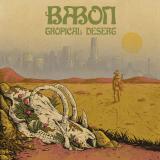
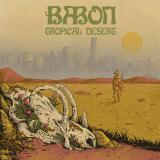
BABON is a psychedelic instrumental band from Indonesia, formed in 2023 by Wahyudi T. Raupp, Rayi Raditia, and guitarist Rori Jiwa Putra. Their music blends traditional Indonesian genres such as Keroncong and Dangdut with global influences like Middle Eastern grooves, Latin rhythms, Spaghetti Western motifs, and Afro-funk, creating a sound they call "Tropical Desert" music. Their debut album, Tropical Desert, follows the 2024 release of the singles "Desert Rose" and "TNT" on London-based label Batov Records. Beyond their genre-bending sound, BABON is deeply rooted in environmental advocacy, using instrumental music and visual storytelling to address ecological issues. They are currently producing a live session featuring four tracks from the album, set against cinematic footage highlighting Indonesia's natural landscapes and environmental challenges.
BABON's distinctive sound has earned them strong international recognition, with radio play from major stations including BBC Radio 3 and Soho Radio (UK), RBB Radioeins and Byte FM (Germany), CBC Radio One (Canada), Triple R and 2SER (Australia), and WYEP and KALX (USA). Their 7-inch vinyl release was nearly sold out, further signaling their growing global appeal. The album's cover and packaging were created by Indonesian retro surrealist Christian Candra, contributing to the band's cohesive artistic vision. BABON is represented worldwide by PR and radio agency Only Good Stuff, helping to amplify their message and music to audiences across the globe.
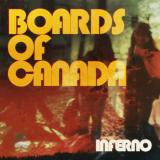
After thirteen years of silence from the compound, during which anticipation has grown day by day, Boards of Canada finally return. Inferno retains their signature melodies and atmospheres, drawing on the esoteric influences explored in Societas X Tape (their 2019 NTS mix for Warp Records’ 30th anniversary) and the darker ambience introduced on Tomorrow’s Harvest, further deepened by an expanded role for speech soundbites.
Spanning seventy minutes, the new album is available on special edition limited red translucent 2LP vinyl in triple gatefold sleeve with a 16-page booklet, black 2LP vinyl and CD with 20-page booklet.
out of Stock
Last delivered 6 days ago available to reorder, subject to availability
Great Television unfolds as a loose, emotionally driven narrative about navigating love, identity, and self-destruction against a backdrop of memory, movement, and Southern imagery. It begins with “Sunset Promenade,” where a deep, possibly lifelong bond offers comfort amid internal turmoil, establishing a desire for connection strong enough to withstand a restless mind. This sense of identity expands in “Girls of Atomic City,” where independence and womanhood are celebrated, though tinged with performance and uncertainty.
As the story progresses, songs like “Okeechobee Mud” introduce instability and intensity, portraying relationships that are passionate but corrosive, where love becomes inseparable from pain. “Thiokol Tripwire” honors the lives lost in the 1971 Thiokol Chemical Explosion and those affected in the south Georgia community of Woodbine. “Razorwire Wall” reinforces this devotion to chaotic love, suggesting loyalty even in destructive circumstances. A turning point arrives with “The Easy Kind,” where Cook reflects on attempts at self-repair, acknowledging her contradictions and rejecting simplicity in favor of a more fractured self-understanding. This awareness deepens in “Caldonia and The Love Convoy” and “In Your Veins,” where freedom blurs into recklessness and love takes on addictive qualities, revealing her complicity in cycles of harm. “19th Nervous Breakdown” provides crucial context, tracing her instability back to a turbulent upbringing marked by neglect and emotional disorder. “Feverfew,” leaves the narrative unresolved, as she recognizes her repeated attraction to destructive paths yet continues to follow them. In contrast, the closing track “Lightly” offers a rare glimpse of pure, protective sisterly love. Altogether, the album portrays a cyclical journey of longing, damage, and partial self-awareness, where clarity emerges but transformation remains uncertain.
The Goblin Walk is an invitation to trace the footsteps of the eponymous creature through five swampy, dubby, liquid techno interpretations from four different artists. Label head Caldera opens with the gently underlapping space chug of 'Today', followed by Traevor's 'Reef' which turns marimba into a dubbed-out bass meditation. Caldera then features again under his Loop LF alias with 'Tiz', which pairs spectral sonic sketches with whimsical melodies that drift and float as if in a gravity-free zone. Streetfaxx then unearths a long-lost 2013 Cologne track, its patient rhythmic progression untouched by the passing years, before ambient textures take centre stage in Nightwaif's 'Xmas1 (vocal dub)' as tape experiments float over deep sub-bass, caught somewhere between 1980s new age and modern ambient minimalism. A compelling, exploratory world of sound.
out of Stock
Last delivered 62 days ago available to reorder, subject to availability
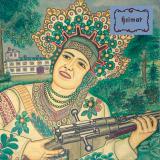
Those albums that never age, that never cease to surprise with their innovative freshness-listen after listen-defying the years that go by. Released in 2016, Heimat's debut album is one of those records you love knowing is there on the shelf or on the turntable, like a reassuring talisman. To mark it's 10th anniversary, and such an awaited repress, we decided to honor this landmark album as it deserves: with a powerful remaster by Tioma Tchoulanov (UVB76, NzeNze) featuring enhanced dynamics, and an ultra-limited edition on blue splatter vinyl.
What a beautiful object this is, celebrating-alongside Armelle and Olivier Demeaux-ten years spent exploring the outer limits of music, in France and abroad, from SMAC venues to squats and other joyful initiatives. Their deeply sincere music loses none of it's naive tension; the emphasis is there, yet it remains restrained, contained, almost nervous, without any show of. Here, then, is something to make this fantastic album, a subtle milestone in a teeming musical landscape. A fine achievement indeed!
BABON is a psychedelic instrumental band from Indonesia, formed in 2023 by Wahyudi T. Raupp, Rayi Raditia, and guitarist Rori Jiwa Putra. Their music blends traditional Indonesian genres such as Keroncong and Dangdut with global influences like Middle Eastern grooves, Latin rhythms, Spaghetti Western motifs, and Afro-funk, creating a sound they call "Tropical Desert" music. Their debut album, Tropical Desert, follows the 2024 release of the singles "Desert Rose" and "TNT" on London-based label Batov Records. Beyond their genre-bending sound, BABON is deeply rooted in environmental advocacy, using instrumental music and visual storytelling to address ecological issues. They are currently producing a live session featuring four tracks from the album, set against cinematic footage highlighting Indonesia's natural landscapes and environmental challenges.
BABON's distinctive sound has earned them strong international recognition, with radio play from major stations including BBC Radio 3 and Soho Radio (UK), RBB Radioeins and Byte FM (Germany), CBC Radio One (Canada), Triple R and 2SER (Australia), and WYEP and KALX (USA). Their 7-inch vinyl release was nearly sold out, further signaling their growing global appeal. The album's cover and packaging were created by Indonesian retro surrealist Christian Candra, contributing to the band's cohesive artistic vision. BABON is represented worldwide by PR and radio agency Only Good Stuff, helping to amplify their message and music to audiences across the globe.
FLO are leading the modern revival of the British girl group — and doing so at a scale not seen in over two decades. With over half a billion global streams, the trio have delivered the highest-selling tour by a British girl group in more than 20 years, becoming the first since the Spice Girls to reach that milestone. They are also the first British girl group to receive a Grammy nomination in two decades, alongside three MOBO nominations in 2026, cementing their status as both a commercial and cultural force. Rather than simply revisiting the past, FLO are reshaping the possibilities for what a contemporary girl group can be.
Comprised of Renée Downer, Stella Quaresma and Jorja Douglas, FLO’s story is one of intention, craft and deep-rooted connection. The trio had long been aware of one another through theatre school circles, social media and shared creative worlds before coming together as a group in 2019. That early familiarity quickly grew into a sisterhood, shaped behind the scenes through years of studio work, vocal development and trust. Raised by strong single mothers and immersed in performance from a young age, each member brings resilience, emotional intelligence and discipline into the group — qualities that underpin both their sound and their dynamic.
Individually, FLO’s balance comes from contrast. Renée is the group’s compass: composed, business-minded and creatively precise, grounding the trio with clarity and vision. Stella is the spark and the glue — sociable, emotionally intuitive and collaborative — shaped by a childhood between England and Mozambique where music was communal, expressive and felt. Jorja is the fire: outspoken, instinctive and vocally commanding, with a natural ear for harmony and arrangement. Their roles shift and evolve, but together they form a unit built on mutual respect, honesty and shared authorship.
That chemistry is central to FLO’s music. Drawing from classic R&B and soul while pushing it forward through modern production, their sound centres vocal harmony, emotional nuance and storytelling that reflects the realities of young womanhood. FLO reject the idea that strength requires emotional distance; instead, they explore power through vulnerability, confidence and control. From independence and self-worth to intimacy and desire, their writing is direct and unapologetically theirs. As Jorja puts it, FLO are “the brains, the heart and the soul” behind everything they do.
The success of their debut album marked a defining moment — not only for FLO, but for British pop more broadly. It confirmed the appetite for harmony-led, female-fronted groups operating with creative agency, and propelled FLO onto global stages, from sold-out headline tours to major festivals and international television. Along the way they have earned respect from R&B legends and peers alike, performing during Grammy Week for icons including Mariah Carey, Brandy and Chaka Khan, and showcasing their vocal chemistry on NPR’s Tiny Desk — a moment that further underlined the trio’s technical precision and emotional depth.
With their next chapter, Therapy At The Club, FLO expand this emotional honesty into a fully realised creative universe. The concept reimagines the club not just as a place of nightlife, but as a site of release, confession and self-possession — encompassing the moments before, during and after the night out. From mirror affirmations and pre-game chaos, to late-night Uber conversations, dance-floor catharsis and the clarity of the morning after, Therapy At The Club captures how women process desire, heartbreak, confidence and healing in real time, together. It is both fantasy and reality: cinematic, fashion-led and emotionally raw, grounded in sisterhood as a form of survival.
Sonically, the new music leans into dark, euphoric R&B and pop with sharper edges, built on vocal mastery and diaristic storytelling. Lead single “Leak It” sets the tone for the era — playful, charged and unapologetically self-aware — exploring what happens when desire spills over, secrets surface and control is reclaimed. Across the new songs, FLO move fluidly between intimacy and euphoria, turning the club into a space where vulnerability is power and feeling everything is the point.
As a trio built on discipline, joy and deep creative trust, FLO represent a new model for the British girl group: one rooted in authorship, harmony and cultural impact. Balancing softness with strength and ambition with authenticity, they are shaping the future of R&B and pop on their own terms. FLO are not looking backwards — they are setting the standard for what comes next.
Multi-dimensional Expressionist, Maia aka Sonjia Hubert Harper is an internationally renowned vocalist, multi-instrumentalist, songwriter and composer who is proficient on several musical instruments that include flute, piccolo, harp and vibraphone. As a music educator Maia specializes in vocal training for adults with developmental disabilities (Autism, Down Syndrome, etc) and school-aged children. Over the years Maia has gained notoriety as a longtime member of the Association for the Advancement of Creative Musicians (AACM of Chicago) and Pan Afrikan Peoples Arkestra (Horace Tapscott, Los Angeles).
Early Days (2016-2019) is a new collection of previously unreleased songs from Mauri Tapia a.k.a Los Retros. From a young age, Tapia has been a prolific songwriter, spending his teenage years writing and recording song after song. Influenced by soft rock and left-field South American pop, Early Days (2016-2019) captures the sound of this formative era Streaming everywhere today, Early Days consisting of 15 tracks, recorded from Mauri's parents' living room using nothing more than an old four-track recorder, that only existed in low quality online, now mastered, sequenced, and physically released for the first time. It was during these sessions that Los Retros created the song "Someone to Spend Time With", now certified Gold. Early Days comes with a companion visual for "Without You", edited by close friend and collaborator Ross Harris from found footage of early Los Retros tour stops. Check out Los Retros proper debut "Odisea" released simultaneously too. FFO soul, bedroom pop, indie, modern jazz, downtempo, soft rock, Mac DeMarco, Thee Sacred Souls, Skinshape, Men I Trust, Too Slow To Disco
out of Stock
Last delivered 3 months ago available to reorder, subject to availability
Odisea is the new album, actually the real debut from Los Retros, out in April on Stones Throw. It draws inspiration from 1980s Japanese City Pop, and marks a new creative chapter from Mauri Tapia shaped by growth, reflection, and renewed purpose. It's been a journey since Tapia first captured hearts with the lo-fi magic of "Someone To Spend Time With", recorded at the age of 17 on a humble four-track in his parents' living room. Now 25, the Oxnard native has stepped into an entirely new season of life - he married his high school sweetheart, became a father to two daughters, and embraced spiritual faith. Earlier this year, he revisited his start with Early Days (2016-2019), a compilation of unreleased music from Mauri's teen years. "Jazz fusion has become my favorite genre and greatest inspiration of all time," Mauri says. "I made this album for the version of me that first fell in love with music. It's my full-circle moment - a sonic hat tip to my beginnings - as well as a nod to the forefathers of jazz fusion and city pop for leaving us with great music." Through it all, he's kept the same DIY spirit, writing and recording every note himself, only now in a home studio of his own. On Odisea, Tapia blends neon-lit City Pop with the melodic sensibility of Latin American soft rock. Mauri's deep love for 70s and 80s jazz fusion records anchors the album, yet Tapia filters those influences through a modern lens. Odisea features two Japanese vocalists, - Hikari and HITOMITOI. Also check out Los Retros new compilation "Early Days" released simultaneously. RIYL soul, bedroom pop, indie, modern jazz, downtempo, soft rock, Mac DeMarco, Thee Sacred Souls, Skinshape, Men I Trust
out of Stock
Last delivered 3 months ago available to reorder, subject to availability
T. VINCENT: LIVE IN LONDON! (Total Pleasure/Virgin Music Group) offers up the opportunity to relive or experience for the first time that enthralling evening, a historic occasion that found Annie Clark, Buckley and the orchestra reimagining 19 classics, staples and rarely played deep cuts spanning the St. Vincent catalog from 2007’s solo debut Marry Me up to 2024’s multiple-GRAMMY-winning All Born Screaming.
Album Background
A complete live recording of St. Vincent's triumphant BBC Prom performance at The Royal Albert Hall with The Jules Buckley Orchestra. Featuring reimagined works from across her entire career, this is a chance for fans to experience an evening that Rolling Stone UK called "A glorious re-imagination," what The Times Of London classified as "Here's how to do a classical crossover," and about which Far Out Magazine UK said "There are certain gigs that are always destined to be great -- like St. Vincent, at the Royal Albert Hall, with an orchestra."
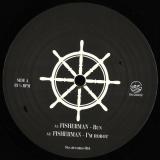
Passionate about electronic music from a very young age, Francesco Scarci, aka Deejay Fisherman, is an underground DJ and producer who loves vinyle.
In 2022 he opened his own label Sea Records and released his first Ep. "Dancing with shark". After various experiences as a guest in the dancefloors of Italy and Europe, he became resident in the well - known Italian underground Sound Department.
Today it boasts FIVE EP:
Sea 001; Dancing with shark;
Sea 002; The sound of Sirens;
Sea 003; Jolly roger groove.
Sea 004 ''Revolution'' and several collaborations with international labels, the latest with “Label 2222” with the track “Extasiado” and wit h Sound Department ascolti with the EP ''walking'' and the single bomb track ‘Baby’.
out of Stock
Last delivered 3 months ago available to reorder, subject to availability
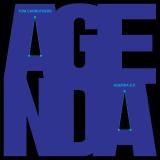
With Agenda EP, Tom Carruthers closes a landmark trilogy on Skylax Records, following Neutralise EP and Deepline. Three records. Fifteen tracks. One coherent vision of machine-driven house music stripped to its raw, functional core. This final chapter dives deeper into direct, club-focused energy, where groove, repetition and tension do the talking. Agenda is less reflective, more physical — built for movement, sweat, and long transitions in dark rooms. Opening track “Chrome” sets the tone: sharp drum programming, metallic pressure, and looping synth phrases that lock the body into motion. “Agenda (Raw Mix)” follows with a tougher, stripped-down approach — no excess, just pure rhythmic insistence rooted in early Chicago jack and warehouse discipline. “Beat Down” pushes further into machine funk territory, where relentless patterns and rugged textures meet in hypnotic repetition. On the flip, “Fade Away” brings a deeper, moodier tension — a late-night track where subtle emotion seeps through minimal structures. Closing cut “What You Want” is classic Carruthers: jacking drums, understated melody, and a groove that feels timeless rather than retro. As with the previous releases, the visual identity is handled by H5, whose modernist, reduced artwork mirrors the sonic philosophy: clarity, impact, and purpose. Agenda EP completes the Skylax trilogy as a statement of intent — not revivalism, not nostalgia, but dance music reduced to its essential elements.
R&B outsider Zsela joins forces with inc. no world's Daniel Aged and film composer Taul Katz on '4 Dreams', a billowing ambient-neoclassical hallucination that'll tickle fans of Mary Lattimore, Malibu, Nala Sinephro, Gigi Masin. If you only know Zsela thanks to her dramatic 2024 debut album 'Big For You', the mostly beatless, fully reflective '4 Dreams' might come as a surprise. But look a little further back in her catalogue and things will fall into place; remember 'Angels Pharmacy' and Remembrance' from Actress's 'Karma & Desire'? That was Zsela on vocals, so she's got priors. '4 Dreams' started life as the soundtrack to 'Seven Heavenly Senses', an art exhibition from last year at Paris's Hôtel de la Marine, but has since taken on a life of its own. Zsela's breaths are stretched and sculpted into warm, washing biomechanical pads on the opening dream, left to weather tinny arpeggiated FM synths and muggy bass drones. So far, so predictable. But Zsela muddles proceedings with her confident delivery, layering her voice into jazzy, R&B inflected key changes that keep you guessing. Imagine an astral plane answer to Dawn Richard's ambient-inflected pop and you'll have some idea of where this is headed.
Then 'Dream 2' takes an unexpected diversion, the vocals replaced by swirling harp flourishes and the kind of floating synth stabs that draw a core logic from classic Ambient - Harold Budd, Laraaji et al - then adding extra colors just where necessary. And on 'Dream 3', faint, almost folk-y strings enter the frame, calling out from beyond the horizon, almost blotted out by a synth part that's in the thrall of Gigi Masin's legendary 'Clouds' - the track that ended up being repurposed by Björk on 'It's In Our Hands'. Zsela, Katz and Aged keep that momentum for the final track, too, letting cinematic strings echo around subtle synths and vanishing rhythms, hitting those hypnagogic, tranquil notes that so much contemporary ambient music seems to avoid. 'Cause at its heart, '4 Dreams' is deeper than that, a record that's entrenched in jazz, soul and classical minimalism rather than throwaway numbing music, of the contemporary variety.
His fresh, delicate playing has captivated countless listeners, and his debut album Scenery has come to be highly acclaimed around the world. Fukui, who began playing the piano at the age of 22, recorded this album when he was just 28. The earnest passion of his youth resonates throughout the music, gently stirring the emotions of those who listen. The spacious, confident swing of “It Could Happen To You”, the refreshing joy radiating from “Early Summer”, the late autumn coolness imbued in the title track “Scenery” each embodies the uniquely expansive yet nuanced “Hokkaido sensibility” that flowed naturally from Fukui’s artistry.
Within this album, the beautiful landscapes that Ryo Fukui crafted his Scenery continue to breathe eternally.
text by Yusuke Ogawa (UNIVERSOUNDS / DEEP JAZZ REALITY)
“Dub Walks In” is a five-track 12-inch vinyl release by Tokyo-based dub producer Hummingbird, created in collaboration with vocalist and melodica player ANNA OZAWA.
The record blends deep dub textures with organic vocals and melodica, exploring a spacious sound rooted in sound system culture.
ANNA OZAWA was a member of The Slits during the Ari Up–led reunion period and is also known for her work with Japanese dub band Dry & Heavy.
out of Stock
Last delivered 3 months ago available to reorder, subject to availability
Grammy award-winning titan of dance music Purple Disco Machine joins the illustrious list of Defected House Masters with a celebratory compilation. The German producer, DJ and global household name Tino Pointek, AKA Purple Disco Machine, is the blueprint for what makes a successful dance music artist in the modern age; respected on the underground scene while achieving major crossover success with remixes for the likes of Sir Elton John, Dua Lipa and Mark Ronson. The crate digging kingpin of house and disco first landed on Defected over a decade ago, and has since delivered remixes of iconic tracks like Fatboy Slim’s ‘Praise You’ and the London label’s top tracks including Shakedown’s ‘At Night’ and ‘Coma Cat’ by Tensnake – as well as striking originals like ‘Beat Fantasy’. From edits of the classics to remixes of the modern, as well as uplifting originals, Purple Disco Machine has birthed a distinct sound that is instantly recognisable, one that is not afraid to reference or not reference and is always bursting with joy. Across Defected presents House Masters: Purple Disco Machine, the full breadth of the iconic German selector’s sound is felt from the 2019 smash hit ‘Dished (Male Stripper)’ to deep cuts like his re-work of Fallout’s ‘The Morning After’ as well as remixes of legendary tracks like ‘Lola’s Theme’ by The Shapeshifters and Spiller’s ‘Groovejet’ featuring Sophie Ellis-Bextor. Defected presents House Masters: Purple Disco Machine is here to showcase the sound of a bona fide electronic maverick in full.
out of Stock
Last delivered 5 days ago available to reorder, subject to availability
Near the end of fifth grade, Eli Edwards’ mom gave him $20 and told him to go find a friend. His team had won its soccer game that day, so they were out celebrating at a local pizza parlor with games. But, more importantly, there had been one other Black kid that day on the pitch in Spanaway, WA, a Tacoma suburb and military-base town at the rainy northwest corner of the United States. That kid just happened to be Xayvien Young. An instant deep connection was formed between Edwards and Young—Eli and Xay, as they prefer to be called were inseparable— and now twelve years later they are the electrifying, boundary-skipping duo Casi.
Along the way, Eli had relocated to Los Angeles with the indie rock band Enumclaw he had helped found, but he found himself flying home maybe a little too much. He was ostensibly visiting his girlfriend, but he spent most of his time with Xay. They cut tracks in every bit of free time they found until they had an epiphany: Maybe this music they’d made together for a dozen years was actually something special. Casi’s 10-track, self-titled debut out on Carpark Records is the electrifying proof they needed.
On the record, they enthusiastically explore every musical interest they have ever had—explosive hip-hop and unbridled hardcore, high-gloss nü metal and a little bit of emo—as a pair. These songs don’t ignore genre lines; they delight in destroying them, in finding ways to slam hip-hop and hardcore, emo and nü metal together until it seems illogical that they were ever apart. Take “Jumper,” where heavy metal guitars and face-kicking drums stir the moshpit for rabid verses about crushing ICE and the lessons you learn riding the poverty line. And take closer “Bridges,” where the melodic imprint of Deftones meets the relentless confessions of Death Grips. Here are the hard, funny, and loud stories of two 23-year-olds, screaming about the world over a breathless composite of all the music they’ve ever loved.
When Eli was in Los Angeles, Xay missed his friend. But in his absence, he also felt the spark of inspiration. Music was something that had just been their childhood hobby, but now Eli was in a rock band that had press accolades and tours. He got serious about the craft. Eli would write about the dislocation and isolation he felt in California, while Xay would document the hardships of being a young Black man with a complicated family while working menial jobs in Spanaway.
This isn’t a coming-of-age album for Casi; it is, instead, a raw and riveting snapshot of that process, painful as it can be. “Eleven87” is a breakup song, a soul beat springing beneath arching emo vocals. And “Intrusive Thoughts” treats that topic like a punching bag, Eli and Xav fighting against the mental habits that keep them down. These 10 songs instantly close that gap.
Freddie McGregor was born in Clarendon, Jamaica on June 27, 1956. At age seven, he started singing backup for a local ska harmony duo called The Clarendonians and did his first recordings aged 10 years with the name "Little Freddie" or "Young Freddie", and as a duo with Ernest Wilson aka "Freddie & Fitsy".
During the 1970s, McGregor was closely associated with the legendary Studio One label. He sang lead for groups like Generation Gap and Soul Syndicate, and also recorded off and on as a solo act during the '70s. In 1975, McGregor converted to Rastafarianism.
His debut album Mr. McGregor was released in 1979. The album opens with "We Got Love" featuring a Tower of Power influenced horn section underneath McGregor's tale of love conquering all. The classic "Rastaman Camp" combines muted horn and an earthy, Nyahbinghi-like chorus for one of producer Niney's deeper constructions, but the lightweight fare is equally welcome as the easy strolling and not too sugary version of "Brandy" displays.
Mr. McGregor is available as a limited numbered edition of 750 copies on orange vinyl.
Over a decade has past since this was released, and it has truly aged like fine wine. This release features 2 timeless cuts from the mind and soul of cv313 mixed and recorded near the heart of Detroit. This was beautifully remastered by dub innovator and pioneer, Stefan Betke POLE @ scape mastering in Berlin, DE. The recordings were pulled from the session masters conducted by Bazza @ Alchemy Mastering in London to ensure a perfectly balanced mix and preserving the soul and spirit of the original tape masters. This EP features two equally seductive cuts opening with "Fading Lights" which finds its pulse in the rhythmic elements while floating in a world of vaporous mist and resynthesized stardust. On the B side "Magenta" fills the space with ghostly apparitions and a rather hypnotic hook; pushing the boundaries of the spiritual principles found in the power of repetition. Close your eyes and drift into 14 minutes of endless flotation as modulating low frequencies massage your brain and mind, dive deep into a fathomless analogue world!
Few producers age into deep house with this level of ease. From Switzerland, Shaka's latest EP feels authentic and lived-in rather than retro while drawing on 90s jazz-inflected house without leaning on pastiche. The opener main vocal mix drifts in on flutes, soft keys and Eve's voice, setting a loose, late-night mood that favours feel over flash. The instrumental flute version pares things back, letting swing and detail breathe. Flip it and 'As If Eternity Belonged To Us', featuring Cate Acupar, locks into a warmer, early-2000s pulse, while 'Life Is Brighter With You' cools the room with sax, piano and patient restraint. Dancefloor-ready but also nice and reflective.
out of Stock
Last delivered 3 months ago available to reorder, subject to availability
Following the underground cult success of Mystical Funk, Gerardo Frisina returns to the 7” format with a new double-sider aimed at dancefloors, collectors, and selectors with a taste for cinematic funk. A record that feels as though it emerged from a lost Afro-funk session, where cosmic funk and Afro-Latin grooves are filtered through a distinctly modern electronic sensibility.
On the A-side, “Duala”, inspired by the African city of Douala, pays tribute to Afro-funk in its most visionary era, evoking the unmistakable sound made famous by the great Manu Dibango. The track opens into a dense and hypnotic electronic funk journey: pulsating basslines, fluid guitars, psychedelic synthesizers, and a rhythmic tension that recalls the golden age of Afro-funk. A nocturnal voyage through rare groove and cinematic atmospheres, with the groove constantly remaining at the heart of the composition.
On the B-side, “Lindeza” is a tribute to the beauty and richness of Brazilian musical culture. A track that shifts perspective while keeping the temperature high: elegant, percussion-driven electronics with a Latin spirit, flowing at around 110 BPM. Warm and magnetic, the piece carries all the hallmarks of Gerardo Frisina’s sound, where futuristic jazz, tropical funk, batucada, and club culture meet in a refined production designed equally for deep listening and the dancefloor.
out of Stock
Last delivered 4 months ago available to reorder, subject to availability
The second in a series of releases from Digi Dub’s archives, this 10” serves, as the title suggests, as a tribute to the late, great Julian Fairshare.
On the A-side, Julian vocalises, in his unique style, his crazy finger flicking lyrics over a slinky Digidub riddim that was always a favourite on his sound system. Repent, the (only) slightly more traditional flipside, finds him commenting on the politricks and lies of those in charge, asking them to change their ways, with backing vocals by Helen Macdonald.
A true rasta with firm principles and a heart of gold, Julian was brought up by his Windrush generation parents in a Brixton house that hosted blues parties, and as a result became deeply involved in sound system culture from an early age. For years he ran the Fairshare Unity Sound, working with people from all cultures and walks of life, always maintaining an inclusive attitude while also favouring the more experimental side of dub. In later years he used the name ‘Unruly Julian’, which suited him somehow.
He toured widely around Europe and was one of the first to take a roots and culture sound system to the USSR. Nearer to home he played regularly on the London underground scene, which is where Lee Digidub and Julian first met, leading to a steady supply of dubplates for his sound. On a memorable visit to the studio, Julian announced that he wanted to voice a dub that Lee was working on, which led to them releasing I Scream and No Way on David Records.
“Sadly missed, it’s such a shame that the great man isn’t here to enjoy this release in person, but it’s wonderful that people get a chance to listen to Julian Fairshare: a unique vocalist, soundman and mentor to so many” Lee Digidub Berwick





















![Cv313 - fading lights [remastered]](https://www.deejay.de/images/l/1/6/163616.jpg)


