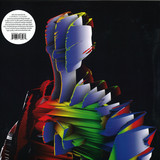
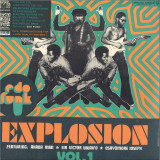
Joseph Carvell returns to Karaoke Kalk with his sophomore album under the Pink Shabab moniker. »Never Stopped Loving You« was for the most part written between Spring and late Summer 2020 in his Camberwell home and like his 2019 debut »Ema by the Sea« recorded in the South of France together with Emmanuel Mario, better known as Astrobal. It’s a record informed by feelings of nostalgia, love, longing, romance and loss and, much like his previous album, displays Carvell's knack for making introversion sound extroverted. As a bassist, his approach to songwriting is both rhythmic and melodic, making the resulting music just as visceral as it is emotive. Much like the record’s title can be understood as both a lament or an expression of joyful dedication, the music on »Never Stopped Loving You« is profoundly ambiguous.
»I was lucky with the timing for this record,« says Carvell and at first that may sound counterintuitive: managing to play only one show in Zurich in early 2020, he had to cancel his planned European tour and go back to the United Kingdom, which soon went into lockdown. He made the best out of the situation, recording electric and upright bass for Nick Krgovich, Daniel O’Sullivan and Zooey’s new records while also working on tracks and demos by himself. »The world seemed to have stopped and I had more time to think about the past and find the best grooves, the suitable keyboard touches and the right words,« says Carvell. Everything came together slowly before he boarded a train to France with his keyboard: »The pace of life completely dropped and between takes Ema and I were going swimming and taking walks,« he says of the sessions.
»Never Stopped Loving You« is notably more electronic than its predecessor, but also full of the small melodic and harmonic details that made »Ema by the Sea« such an outstanding record. »I was listening to more 1990s dance and house music and 1980s pop and also a healthy amount of ambient music,« explains Carvell. These influences are clearly audible on songs like the Chicago House-esque beats of »Show Your Love« or »Why Did I Leave You that Morning«, the skittish rhythms on »Let Go« and the near-Balearic »San Junipero«. Especially the latter makes it clear that Carvell spent much time devoting himself to movies and TV shows, but also incorporated more piano sounds in his songs—he learnt the instrument by playing along to classic Beatles and Beach Boys songs.
Despite being more upbeat on a rhythmic level than before, Carvell’s use of texture and his peculiar voice add another note to the music. Even an anthemic song like »Run Away«, his first composition to follow a classic verse/chorus structure, is profoundly ambivalent, both overjoyed and deeply melancholic. By the same token however, even a torch song like »You Stepped Out of My Life« is enormously consoling. This, after all, has always been Carvell’s strength: creating music that will cheer you up when you’re down while also injecting a sense of futility into every moment of euphoria. It never shone more brightly than on »Never Stopped Loving You.«
Buscar:deep sound express
“For me music is not a calculation, when I play I follow my intuition.
The creative impulse always comes from within me. Me and my
piano, they’re at the centre of my musical world.” - Joel Lyssarides
For Joel Lyssarides, jazz is above all a language, a tool for
uniquely personal expression. He composed the pieces for ‘Stay
Now’ in a remote house in the forest, a good half-hour outside
Stockholm. And by preference at night, in silence, darkness and
deep concentration.
The atmosphere of this place is audibly reflected in the music,
which is strongly influenced by space, sound and mood -
reinforced by the highly concentrated, differentiated, subtle
interplay of pianist Lyssarides with bassist Niklas Fernqvist and
drummer Rasmus Blixt.
What these three young musicians have in common is their
capacity for great sensitivity and expressiveness. Their music is
based on a vocabulary that draws equally from European classical
music, jazz from both sides of the Atlantic and great songwriting,
with all its depth and accessibility.
And yet this has nothing to do with crossover. Everything flows
and swings, nothing seems deliberate or contrived, one can hear a
natural understanding for the infinite possibilities of every note.
This trio has the self-confidence to put the entirety of their efforts
into enhancing the expressiveness of the music. And it is in the
most intimate, quiet, focused and concentrated moments that the
most spectacular things happen.
The album title ‘Stay Now’, therefore, is above all an
acknowledgement of quite how precious the here and now is.
These are the moments when we start to understand the true
value of present and past encounters. As we listen, we can let the
moment linger… and allow ourselves to sink blissfully and
unforgettably into it.
Martina Topley Bird’s new studio album ‘Forever I Wait’, features collaborations and arrangements from Robert Del Naja of Massive Attack, Euan Dickenson, Rich Morel, Christoffer Berg, Benjamin Boeldt and Tiadiad.
'Forever I Wait' is Topley-Bird’s fourth long awaited studio album and her very first self-produced and curated piece of work to date. The album, set for a digital release on September 10th, with a vinyl LP available to pre-order now, captures an extensive journey confronting, exploring, analysing and reflecting on the devastating fragilities of life as it ultimately seeks to make peace with what life is.
A sentient and sensual presence framed Tricky’s trip-hop pioneering white label debut release, Aftermath. Hauntingly unique and immediately recognisable, that voice became the defining timbre of a new music movement. Behind this voice was mysteriously soft-spoken, London-born Martina Topley-Bird, whose exquisite voice came to inspire and infuse other pioneering artists across all genres.
“It’s a trip through different emotional states and frequencies, mostly dark, from insecurity and desire, all the way through to serenity and acceptance with themes that resonate from my young teens all the way through till today. Things that I’ve seen and things I’ve felt and worked through, although sometimes I sense them trying to return”
“Forever I Wait”, as the title alludes, was written and re-written over a long period of time.
“I had to change my way of relating to music and the music industry in order to make the record I wanted to make.…and that took time. And I took the time I needed. I started in London, moved and lived in America for the first time in my life, then briefly moved back to London and finished the record in Spain.”
“After trying to work on a new record for a couple of years, I came to a realisation that in order to move forward I had to separate the concept and vision I had for this record from me as a person. I had to shift my perspective. That was a big personal win and the beginning of “Forever I Wait.”
'Forever I Wait' leans on a multitude of tense sounds, dubby atmospherics and natural instrumentation to demand the listeners attention leading to over two decades of observations, experiences and musical sacrifices. It is a bi-product of the new perspective featuring carefully selected and tailored supporting arrangements from a handful of collaborators including Robert del Naja (Massive Attack), Rich Morel (Deep Dish), Christoffer Berg (Fever Ray) and Benjamin Boeldt (Adventure).
A truthful expression of desire and heartache “Forever I Wait “Is Topley Bird’s most precise and accurate album to date.
After more than a year of strengthening our bodies through workout, our poetic endeavors via the discovery of our inner worlds, and also the life of plants and mushrooms, insects, arachnids, birds and wild mammals, after a year and a half that saw us in lockdown, shattered around the planet, after one a and a half year in which we deepened our production skills and also the meaningfulness of our work, Cómeme returns to a new planet with new music.
The beginning is this unique collaboration between Medellín based musician and DJ Julianna, and Matias Aguayo aka “The Don” himself.
In this deep therapeutical exploration of rhythm and sound, these artists established a magical dialogue on distance, leading up to this EP called “Que si el mundo”, roughly translated: “What if the world”.
Between soulful industrial expressions, emotional breakdowns but also discoveries free of any grids and algorithms, Julianna and Aguayo have created a beautiful piece of work, intense as the movements that we had to experience mentally and economically. “Que si el mundo” is state of the art electronic music of today, a work that is both introspective but also extremely open to the outside world and the universe. Compositions reminiscent of Coil, Angelo Badalamenti, Closer Musik, Steve Pointdexter or Mark Broom, shaped this EP that can be considered a short album in its conceptual layout and narrative. Let’s dive into it...
A1. Hiedra
One of the more danceable tunes, ideal for both a sensual warmup or the very late night to the rising sun sensitivity, is polyrhythmical melancholy and hypnotic inevitability, slow dance, deep trance.
A2. Primer Paso
A fat, slick and modern synth sequence, accompanied by heavy drumming and celestial drops that seem to fall onto the body of the listener or dancer, this post EBM stomper is a manifestation of elegant minimalism and reason. As if Liaisons Dangereuses reincarnated in a cloudy forest, to then pause towards the end of the track, with sentimental and gloomy synth chords that open the view towards the horizon.
B1. Que Si El Mundo
The title track keeps up the more melodic approach - somewhere between ambient, avant- garde and late night jazz. Morphing melodies that are both disturbing and soothing at a time encounter smooth free jazz drumming with drums that seem to have travelled from the sixties to today’s world.
B2. Bajo Tierra
This track continues the deep drumming experience that this record means, between laid back rides and intense taikoesque drumming. Distorted dark pads and subterranean choirs build up to a heavy sadness and intensity. Again, a therapeutical track to send those demons fly.
B3. Micelio
A more hopeful conclusion of the EP is “Micelio”. Open chords, soothing and melancholic, spread over profound drum grooves of champed and house. Nothing seems as it was before. A new life has begun.
Written and recorded over the past year, Penny and Sparrow’s remarkable new album, Olly Olly, is a work of liberation and revelation, a full-throated embrace of the self from a band that’s committed to leaving no stone unturned in their tireless quest for actualization. The songs here are fearless and introspective, embracing growth and change as they reckon with desire, intimacy, doubt, and regret, and the arrangements are similarly bold and thoughtful, augmenting the duo’s rich, hypnotic brand of chamber folk with electronic flourishes and R&B grooves. The duo — Andy Baxter and Kyle Jahnke — produced Olly Olly themselves, working on their own without an outside collaborator for the first time, and the result is the purest, most authentic act of artistic self-expression the pair have ever achieved. “Andy and I talk about the process of making this record like a sort of musical Rumspringa,” Jahnke says. “It was an opportunity to truly become ourselves, to evolve outside of the roles we’d been put in — or put ourselves in — because of the way we’d grown up.” Texas natives Baxter and Jahnke first crossed paths at UT Austin, where they developed a fast friendship and a deeply symbiotic musical connection. Jahnke was a gifted guitarist with an ear for melody, Baxter, an erudite lyricist with a mesmerizing voice and crystalline falsetto, and the duo quickly found that their vocals blended together as if they’d been singing in harmony their whole lives. Beginning with 2013’s ‘Tenboom,’ the staunchly DIY pair released a series of critically lauded records that garnered comparisons to the hushed intimacy of Iron & Wine and the adventurous beauty of Bon Iver, building up a devoted fanbase along the way through relentless touring and word-of-mouth buzz. NPR praised the band’s songwriting as a “delicate dance between heartache and resolve,” while Rolling Stone hailed their catalog as “folk music for Sunday mornings, quiet evenings, and all the fragile moments in between.” The duo’s most recent album, 2019’s Finch, marked a turning point in their career, pushing their sound to experimental new heights as it wrestled with notions of masculinity and religion and transformation in deeper, more personal ways than ever before. The record debuted at #2 on the Billboard Heatseekers Chart and was met with a rapturous response from critics and audiences alike, racking up more than 40 million streams on Spotify and earning the band their biggest headline tour to date.
Martina Topley Bird’s new studio album ‘Forever I Wait’, features collaborations and arrangements from Robert Del Naja of Massive Attack, Euan Dickenson, Rich Morel, Christoffer Berg, Benjamin Boeldt and Tiadiad.
'Forever I Wait' is Topley-Bird’s fourth long awaited studio album and her very first self-produced and curated piece of work to date. The album, set for a digital release on September 10th, with a vinyl LP available to pre-order now, captures an extensive journey confronting, exploring, analysing and reflecting on the devastating fragilities of life as it ultimately seeks to make peace with what life is.
A sentient and sensual presence framed Tricky’s trip-hop pioneering white label debut release, Aftermath. Hauntingly unique and immediately recognisable, that voice became the defining timbre of a new music movement. Behind this voice was mysteriously soft-spoken, London-born Martina Topley-Bird, whose exquisite voice came to inspire and infuse other pioneering artists across all genres.
“It’s a trip through different emotional states and frequencies, mostly dark, from insecurity and desire, all the way through to serenity and acceptance with themes that resonate from my young teens all the way through till today. Things that I’ve seen and things I’ve felt and worked through, although sometimes I sense them trying to return”
“Forever I Wait”, as the title alludes, was written and re-written over a long period of time.
“I had to change my way of relating to music and the music industry in order to make the record I wanted to make.…and that took time. And I took the time I needed. I started in London, moved and lived in America for the first time in my life, then briefly moved back to London and finished the record in Spain.”
“After trying to work on a new record for a couple of years, I came to a realisation that in order to move forward I had to separate the concept and vision I had for this record from me as a person. I had to shift my perspective. That was a big personal win and the beginning of “Forever I Wait.”
'Forever I Wait' leans on a multitude of tense sounds, dubby atmospherics and natural instrumentation to demand the listeners attention leading to over two decades of observations, experiences and musical sacrifices. It is a bi-product of the new perspective featuring carefully selected and tailored supporting arrangements from a handful of collaborators including Robert del Naja (Massive Attack), Rich Morel (Deep Dish), Christoffer Berg (Fever Ray) and Benjamin Boeldt (Adventure).
A truthful expression of desire and heartache “Forever I Wait “Is Topley Bird’s most precise and accurate album to date.
Ever-evolving Australian outfit The Possé debut on cult deep house label Pulp with Moods & Vibrations. Their fresh new four-tracker includes a remix from Space Ghost.
Andrew Elston and Ross Ferraro are the core members of The Possé, but the group often expands or contracts with various other musicians. Since 2017 they have released on the likes of Plastic World, Ken Oath Records and Kolour LTD, and bring plenty of Southern Hemisphere heat to all their productions.
'Parting' opens up with plenty of soulful Detroit house flavours. The dusty drums get you in the groove while subtle acid and silky pads bring a feel-good, sun-kissed vibe. Remixer Space Ghost is Sudi Wachspress, a real album specialist who has released on Tartelet and Apron Records. He has a uniquely lo-fi house sound that draws on funk
and soul. This remix is a late-night jam with gorgeous trumpet motifs and scuffed-up drum patterns all finished off with warming sunset chords.
Then comes 'In Focus', a brilliantly loose and jazzed-up jam. The skipping drums are run through with playful keys and humid chords that cannot fail to bring the party. 'Prime Mover' is a little more direct and dynamic but no less heartfelt, with more expressive melodies and infectious drums. A liquid Mix of 'Prime Mover' layers in fatter bass and more crisp percussion to take you to another level. Moods & Vibrations is an EP of rich, musical house grooves that are overflowing with soul.
- A1: Sagittarius A (Right Ascension) 05 15
- A2: Pleasure Discipline 05 57
- A3: Ertrinken 05 38
- B1: Growth Cycle (Featuring Robert Owens) 05 52
- B2: Zahlensender 08 04
- B3: The Approach 03 27
- C1: Nylon Mood 06 26
- C2: Alphabet City 05 43
- C3: Don't Ask, Don't Tell 06 10
- D1: No Entiendes 06 56
- D2: Kurzstrecke 06 43
- D3: Golden Dawn (Featuring Stefanie Parnow) 07 14
- E1: Interdimensional Interferenc 05 58
- E2: Distant Paradise 08 05
- F1: Be (Featuring Robert Owens) 04 50
- F2: Vampir 06 29
- G1: Downtown | 161 11 38
H- side is etched
The American cable-television industry exploded in the 1980s, pushing broadcasts of diverse programming and emissions of low-laying cultures into homes. Community stations piggybacked on the digital developments of the time, extending their existence through telephony and broadcast a iliates. For those growing up in this time, in locations such as New York City, the localized communications beamed into their homes exposed them to an impressionable array of disparate sounds and visions.
Move into the 1990s and New York was filled to the brim of emergent cultures drawing from this ebullition of communication. From Rammellzee’s shapeshifting to the late Judy Russell and Frank and Karen Mendez’s Nu Groove imprint fusing reggae, poetry and house, nascent ideas emanated from the city walls, from within stores such as Sonic Groove store and on VHS releases such as Stakker’s The Evil Acid Baron Show, a legendary technicolor psychedelic trip along the wildest frontiers of acid house. As scenes expanded and identities developed, such individuals weather the events of the visceral now, expressing themselves right into an unpredictable future.
Function’s long career has seen him uncover a vast range of sonic identities, a mainstay through house, techno and industrial with collaborations with the likes of Regis, Damon Wild alongside his highly influential Infrastructure imprint. With influences deeply tied to pop art, rave and gay scenes, and early memories of block-parties emitting Kraftwerk and Strafe, he found himself seeking out the undercover illegal nights of the 90s on a quest of sexual unearthing, mixing the ever-yearning escapology mission of disco with the influential DJ sets of Jeff Mills.
For his new album Existenz, he marks a clear step away from the corporeal techno of his recent releases. Pivoting around themes of religion, sexuality, trauma and healing, it is a work expansive and celebratory, a clear liberation from a deeply internalized past. Formed from a collection of recordings made in a period from late 2016 to mid 2019, Existenz takes the form of a creative outburst in reaction to a number of traumas - recent, childhood and throughout Function’s life. Life partner Stefanie Parnow assisted the production process in its entirety, providing inspiration, spiritual healing and featuring vocal contributions.
Cosmic synths soar and swoop in ‘Pleasure Discipline’ through towering stacks of rhythm that stutter and creak to a halt before rebooting, a firm robotic response to human intervention. ‘Zahlensender’ reflects a spatial tetris of urban life, as digitalization set within an XYZ matrix confronts the sprawling city. Constant arpeggiated meditations echo synaptic transmissions, e ecting a dissolution of boundaries. ’The Approach’ recalls the unification of the self, a state of delirium non-subjective and smooth, as all connections and functions give way to simple intensities of feeling, crossing the threshold into spirituality. ’Golden Dawn’, featuring Stefanie Parnow, marks a further elevation of dubbed-out euphoria, as once more positive rays emerge. His ode to the effortless short-trip urban navigation 'Kurzstrecke' finds Function in motion, upfront and bold, snapshots of conversation and flickers of light. 'Ertrinken' finds metallic bass jabs swamping snipped synthetic voices, with hidden stores of emotion set as a nod to the history of vocoders as a tool for encrypted military communication. House icon Robert Owens features on 'Growth Cycle' and 'Be', entrenching a celebratory atmosphere over Function's clubwise leanings. Closing track 'Downtown 161' reflects the unmistakeable filtered and squashed interjections of television, and sampled dance vocals - a sound for the curious, dreamers and dancers.
With Existenz, Function reveals an essential body of work, spread over 4LP - thought experiments on the role of identity and spirituality after a lifetime of upheaval and trauma. Leading up until the release date, Function will undertake an album promo tour with select dates - A/V shows at Berlin Atonal and Rural festival in Japan, and three dates as part of his Bassiani residency.
- A1: Wildcat
- A2: Elevator Shaft
- A3: Salal Harvest Chant
- A4: Broken (Everything Is Broken) (Everything Is Broken)
- A5: My Nest
- A6: I'm Crowded
- A7: Blue Ears
- A8: Baked Potato
- A9: Lucifer Peacock Raven
- B1: Oyster Mushrooms
- B10: Chase The Badger
- B11: Polecat That
- B2: Tukwila Joe
- B3: That Big Thing
- B4: Orange Peel
- B5: High Falutin' Blue Rasputin
- B6: Silver Moon Duck
- B7: Bobcat & Turkey
- B8: Ocean Trip (Ocean Shores) (Ocean Shores)
- B9: Railroad Maypole
Originally released on cassette in 1993 and now for the first time on vinyl, this is an incredible document from a teenage Arrington de Dionyso. All the seeds of his 30+ career are engrained on these fully formed Tascam recordings. "Bobcatflamethroat" was originally released as "Pine Cone Alley Cassette #9" in August of 1993. The songs were recorded on a Tascam Porta-One 4 Track cassette studio inside a secret area in the basement of the College Activities Building at the Evergreen State College, known as "Happyland". This album has never before seen a digital release of any kind, however there is one song "Everything is Broken" which later became part of the original "canon" of Old Time Relijun after that band was formed in 1995. That song was re-recorded on the first Old Time Relijun album "Songbook Vol. I" released in 1997. I still dig most of the tunes on this one- these were all written and recorded while preparing to welcome a new young life into the world (my daughter Lucinda, born August 22, 1993). So while not specifically "Children's Music" per se, the tunes are wild, hopeful, optimistic yawps of playful abandon for all ages. There are a number of "inside jokes" that only would have made sense to the very tight knit inner circle hat I considered my "core" group of friends at that point in my life. I also think there are more than a few "hits" on here. I was 18 years old! Anyone who has followed the last thirty years of my musical career should find something of interest and delight on this album. For some reason I chose to record most of the guitar and bass parts "direct" without an amplifier- I'm not sure why I did that but it's a unique sound in retrospect. There's a decent dose of throatsinging and other odd vocal techniques, proving that I dove deep into this territory of vocal exploration at a very young age. Also plenty of mouth harps, flutes, kazoos, and clarinet, although this was just BEFORE I bought my first bass clarinet. The song "Kite Dragon Hypnosis" showcases the very first time I EVER recorded anything with a saxophone! The lyrics are reflective of my interests in the theories of "Ethnopoetics" as put forth by Jerome Rothenberg in many of his books such as "Shaking the Pumpkin" and "Technicians of the Sacred", as pathways to understanding the universality of myth and shamanism as connective threads through human poetic expression. And yes, if you know something about the Evergreen State College, I did indeed receive 16 credits for working on this album.
Renowned Finnish jazz innovator and band leader Iro Haarla takes a detour towards progressive rock Iro Haarla Electric Ensemble to release their debut album in October Known for her large number of works in the field of acoustic free jazz, Iro Haarla is a notable Finnish pianist, composer, arranger and band leader. Now, having inked a deal with Finnish cult label Svart Records, Haarla takes an eye-opening sidestep towards progressive rock. Her new band consisting of renowned Finnish musicians, Iro Haarla Electric Ensemble weaves a vastly colourful world of sound around Haarla’s peculiar melodies, and welcomes us to new sonic territory: a vibrant world where black music influenced rhythms, acoustic instruments, analog synthesizers and spacelike, valiant electric guitars converge. In her long career as one of the most distinctive creative powers in modern scandinavian jazz, Haarla’s history includes both the works with her past life partner Edward Vesala (d. 1999) and an extensive repertoire of her own innovative solo works, recorded for the renowned ECM Records. For What Will We Leave Behind - Images from Planet Earth Haarla has put together a band whose musical expression is strong and profound. The rhythm of the music lies in the dynamic hands of bass player Ulf Krokfors and drummer Aniida Vesala, and together with Sami Sippola’s (Hot Heroes) responsive tenor saxophone and Finnish rock legend Jukka Orma’s (Sielun Veljet) imaginative ability to dive into new dimensions with his electric guitar, What Will We Leave Behind grows into an unforgettable experience for both prog rock and jazz enthusiasts. Out on the 29th of October 2021, the Iro Haarla Electric Ensemble debut is a homage to nature - our common planet and home. Inspired by nature, the album is also a cry for help in the age of natural disasters and depletion of natural resources around us. “I admire nature’s grand beauty, which arises from extreme phenomena and the battle for survival. The thread of life is unbroken”, Haarla says. Each album track portrays a place on Earth: between the humane opening track The Song We Loaned From Our Children and the hopeful closing track What Will We Leave Behind? vibrates a variety of soundscapes from lakesides, oceans, glaciers and rainforests, all the way to the winds and rumbles of mountains and man-made cities. Adding even more depth to the musical themes and landscapes, the album’s cover art was picked up from environmental art pioneer Teuri Haarla’s photo collection.
Since its creation in 2007, Hifiklub has led more than 150 collaborations which have allowed the Toulon trio to open its music to multiple artistic experiences revealing a constant desire for research and novelty. From unprecedented encounters to unique projects, Hifiklub has developed over the years a now substantial discography whose musical proposals range from pop to jazz through the most experimental sounds and even traditional music. One path, however, remained unexplored: contemporary music."Last Party On Earth" is organized around the association of three energies: contemporary composer Jean-Michel Bossini, singer Duke Garwood and the instrumental ensemble Hifiklub.
Surrounded by mysticism and darkness, the creation has cinematographic dimensions. It positions the listener in a depth and disposition of soul where the voice - and the poetry - of Duke Garwood is carried by Hifiklub and Jean-Michel Bossini around cold and tormented atmospheres. The album seduces by the detail of its sounds, its apparent tranquility and its intimate atmospheres thwarted by harsh flashes.
Mixed by Alain Johannes (Queens of the Stone Age, Them Crooked Vultures, Eleven), the album sees the exceptional participation of the string trio Anpapié (Alice Piérot, Fanny Paccoud and Elena Andreyev) who magnificently perform the score by Jean-Michel Bossini.
All songs performed by Hifiklub, Duke Garwood and trio Anpapié (conducted by Jean-Michel Bossini)
Pascal Abbatucci Julien – drums, percussion
Eléna Andreyev – cello
Jean-Loup Faurat – guitar
Duke Garwood - vocals, guitar
Régis Laugier – bass
Nico Morcillo – guitar
Alice Piérot – violin
Fanny Paccoud – alto
Collaboration is an essential ingredient to this open trio’s creative approach, forming a recurring theme in Hifiklub’s extensive discography and filmography. Based in Toulon, the hyperactive experimental rock band offer a diverse ever-evolving catalogue that now boasts over 150 artist collaborations since they started in 2006. Over the years they have formed as many fruitful artistic friendships allowing them to explore the endless possibilities of expression combining sound, image and text.
Some of the artists that feature in Hifiklub’s kaleidoscopic discography: Lee Ranaldo (Sonic Youth), Alain Johannes (Queens of the Stone Age, Them Crooked Vultures, Eleven), Roddy Bottum (Faith no More, Imperial Teen), Matt Cameron (Pearl Jam, Soundgarden), The Legendary Tigerman, Jad Fair (Half Japanese), Iggor Cavalera (Sepultura, MixHell), Jean-Marc Montera, R. Stevie Moore, Mike Watt (Minutemen, The Stooges), Fatso Jetson, Nels Cline (Wilco), Scanner, Mike Cooper, Eugene Chadbourne…
strumentalist Teddy Lasry's story is noteworthy not just in regards to the music he released, but in the ways approached the craft of composing and experimenting with sounds and sonics.
Always intrigued with the capabilities of instruments, their groove and their feel, it was very much his family’s influence that helped to fuel these life long affections. As a performer in a parisien cabaret, Teddy’s father Jacques would mingle with giants like Serge
Gainsbourg and Charlie Chaplin (impressed by his ability to improvise, Chaplin wanted him to become his accompanist, but the pianist politely refused). Jacques and his wife (Teddy’s mother Yvonne), would later become members of the innovative experimental group Les Structures Sonores, and surround their children’s lives with sounds. Electronic music was still in its infancy and Les Structures Sonores, with their resonators that produced long, mysterious tones, were deemed ‘cosmic’. It was the era of the launching of the first Russian Sputnik and every time a radio or television station wanted music for their science fiction programs, they turned to one of their compositions. Showing a natural ability with multi instrumentalism, Teddy was rewarded with a spot in the band, allowing him to really explore unconventional methods of composition.
Following a brief stint with Ariane Mnouchkine's avant-garde Théâtre du Soleil after graduating school, Teddy joined the pioneering prog band Magma, with whom he would record three groundbreaking records during the early 1970s (According to former member
Laurent Thibault, their album Mëkanïk Dëstruktïẁ Kömmandöh and its sound were strong influences on David Bowie during the recording
of Low and Iggy Pop’s The Idiot at Hérouville). Despite the successes with these projects, Teddy was constantly searching for new ways
of expressing himself through music, leading him into the beginnings of a solo career that would last the better part of three decades.
Teddy’s transition into his solo career came with contrasting fortunes, in that he was now becoming a music to image composer but with the unfortunate realisation that his eyesight was gradually worsening (due to being diagnosed with retinitis pigmentosa at an early age). Nonetheless, his solo career would begin in 1975, and for the rest of the decade his sound would become increasingly mired in electrified Funk-Fusion and its endless sonic possibilities. The resulting music would serve to highlight Teddy’s love affair with the possibilities found within tireless instrumentation, with the flute and particularly synthesisers becoming a mini-obession of his (he once spent a 7,000 Francs loan, which was meant to be spent on fixing his roof, on synths).
To this day Teddy continues to record and experiment with music, a passion which in many ways has never left his sid, even at the age of 75. His career was one that was fuelled by innate curiosity and an intrinsic desire to discover new methods of expressionism, be it through the realms of Jazz-Funk, ambient electronics, Swing music or indeed through the medium of instrumentation itself. On this compilation, we look to encapsulate the essence of his innovative sound, and from start to finish a sense of his ingenious approach to composing structure and mood is made abundantly clear. The funk-jazz fusion style that embodied the majority of his 70s work is on full display here, with the vibrant flute driven "Los Angeles", the Miles Davis inspired "Blue Theme", the progressive and driving
"Chamonix", and the deeply intricate "Krazy Kat", along with one of his finest 80s slow jams, "Funky Ghost". Two cuts off the ‘Back To
Amazonia’ album are also featured (Teddy’s last album including his Prophet T8, Yamaha DX7 and Oberheim drum machines). "Raising
Sun in Bali" and the title piece both emphasise an ever present passion for synthesisers. "Birds of Space", a standout track off the e=mc2 album, closes the comp, and is a fitting way to end this journey.
Pulled together in close collaboration with Teddy and his family, this collection of songs looks to introduce new listeners to his work and we are proud to present this limited and carefully remastered compilation on vinyl, including extensive liner notes.
After his first LP Stranger Já Catem Traboi, Tchiss decided to further experiment with reggae and funaná, inspired by the local rhythms of the island of Santiago. Gathering some of the best Cape Verdean musicians of the time, in 1984, together with Zé António on guitar, Bebethe on bass and Alírio on drums, he recorded his second LP Já Bô Corre D’Mim. An album that sings of a young man far from home, his unrequited love and saudade, the struggles of street life in a foreign land and a world of inequality. Recorded in just 3 days at the Pomodoro Studio in Sutri, the album fully expresses the deep and layered sound of Tchiss’ music, where upbeat tempo, powerful vocals and electrifying guitar solos tangle together in a dynamic mix of traditional melodies and cosmic reggae.
- A1: Slowly Sinking In (2021 Remaster) 06 48
- A2: Awake On The Fifth Floor (2021 Remaster) 07 12
- A3: In Spite Of Everything (2021 Remaster) 08 35
- B1: Your New God (2021 Remaster) 07 08
- B2: Daydream Belief (2021 Remaster) 06 35
- B3: That Empty Feeling (2021 Remaster) 03 16
- C1: And I Got Left Behind (2021 Remaster) 07 55
- C2: Nothing, Still Nothing (2021 Remaster) 09 28
- D1: Dry Retch (2021 Remaster) 10 45
- D2: Always A Part (2021 Remaster) 08 11
For its 20th anniversary, Keplar presents an absolute milestone in the history of IDM and ambient music for the first time in its definite form: »Together Is the New Alone« by Donnacha Costello was originally released on Mille Plateaux in 2001 as the second LP under the Irish producer’s given name and firmly established him as one of the leading artists in the field of forward-thinking electronic music after he had primarily made a name for himself with house and techno releases under the Jayrod moniker. This vinyl reissue with an entirely new artwork comprises all ten tracks originally only included on the CD version in their edited and final form in which they were last presented on the digital re-release under the name »Together,« remastered by Stephan Mathieu and self-published by Costello, in 2015.
Truly prescient artists rarely opt for introspective sounds, however that was the case when Costello set out to produce »Together Is the New Alone« during nightly session in his hometown Dublin between April and July in 2001, and it also explains the album’s enduring appeal and unwavering radiance twenty years on. While many of his contemporaries dedicated themselves to explore the musical zeitgeist and notions of the future in conceptual terms, Costello made them emotionally tangible, allowing his audience to feel their underlying ambiguity rather than just reflect on it. »Together Is the New Alone« is an album that wordlessly speaks of the paradoxical sense of social alienation and isolation expressed by its title and thus seems even more topical today than it did at the time of its release.
Working with elements from techno culture, glitch aesthetics, intricate IDM rhythms and lush ambient textures, Costello never once throughout the album adheres to tried and tested formulas and conventions, but holistically moulds complex compositions out of distinct and discrete parts. The result is a record that is at once easily accessible and deeply affecting, but also infinitely rich and stunningly sophisticated in musical terms. A personal record expressing a universal sentiment—a truly timeless statement that will reverberate for decades to come.
(Kristoffer Cornils)
GENRE: Modern Classical, Experimental, Ambient Metal. RIYL: György Ligeti, Sarah Davachi, Stars Of The Lid. 180g LP pressed at Optimal, 350gsm jacket, inner & DL card. Jessica Moss Also Known For Her Tenure In Thee Silver Mt. Zion (2002-2015), Black Ox Orkestar (2002-2007), Recordings By Vic Chesnutt, Carla Bozulich, Arcade Fire, Basia Bulat, Roy Montgomery, Sarah Davachi, Big Brave & More. A phosphene is “the phenomenon of seeing light without light entering the eye.” The title of the heart-rending and resolute new album by composer/violinist Jessica Moss could not be better chosen. Moss is by now a seasoned practitioner of immersive isolation music; across three previously acclaimed solo records of minimal and maximal post-classicism, her acoustic, amplified, and electronically-shifted violin is the raw material for deeply expressive, palpably haunted, wholly committed compositions. But Phosphenes inscribes fleeting halos of refracted ghostly light out of a prevailing darkness with especially plangent determination and intensity. This is the most overtly searching, mournful and inexorable music Moss has made to date. The pieces on Phosphenes exquisitely navigate consonance and dissonance, building patiently from single notes to multiple voicings, harmonic stacks and clusters. These compositions channel themselves like slow-moving water in a dark cave, finding small eddies and catching glints of luminescence from within. Signal processing is kept to a minimum in the three-movement “Contemplation” suite on Side One, where Moss deploys amplification chiefly in the service of activating overtones and pitch-shifts, thickening and widening the sonics, carving out her unique timbral space. Based on a four-note sequence that sets whole tones against one another, “Contemplation” is a bona fide requiem that finds Moss at her most instrumentally naturalistic, measured, and modern. Side Two unfolds in a more foreboding vein: “Let Down” is marked by cavernous octave-dropped arco and pizzicato, providing a gothically-inflected substratum upon which hauntingly wordless vocal invocations and cumulative gyres of violin melody unfurl. “Distortion Harbour” grinds with noisier grit and a more harrowing complexion, highlighting Moss’s ambient-metal sensibility and her distinctive palette of industrial-inflected power electronics a reminder of why she’s also been a go-to player on albums by the likes of Big Brave, Oiseaux-Tempête and Zu in recent years. These two songs also feature upright bass from old friend and former bandmate Thierry Amar (Godspeed You! Black Emperor, Thee Silver Mt. Zion, Black Ox Orkestar). Album closer “Memorizing & Forgetting” is inarguably the most tender and beautiful song in Jessica’s oeuvre: a keening lullabye of sorts, on which she plays piano, violin and guitar, joined by her partner Julius Levy in a lustrous ambient vocal duet. Everyone has been trying to find a way through and out of pandemic, lockdown, social isolation and often darkened hope and for many musicians, the absence of touring, of live performance, live sound, live audiences, and a living. For Moss, it’s also been “like when you press your fists hard against your eyes and eventually there is fireworks.” The light gets in where it can, even or maybe especially as imaginative sensory simulacra (if/when we shut down our screens and are left to our own devices). Phosphenes is a stoic, acutely sensitive, superlative musical statement from Moss
- A1: Offering - Valgeir Sigurdsson
- A2: Witness (Selfless Rework) - Colin Self
- A3: Constructs Of Still - Kmru
- A4: Tendril (Midnight Peach Rework) - Hudson Mohawke
- B1: Returnless - Kara-Lis Coverdale
- B2: Tendril (Germinative Rework) - Caterina Barbieri
- B3: Fountain (Ars Amatoria) - Vessel
- C1: Sugarcube Revelations - Eris Drew
- C2: Everything Is Beautiful & Alive - Eris Drew
- C3: Cradle (Patience Rework) - Ben Frost
- C4: Kaca Bulan Baru - Gabber Modus Operandi
- D1: Gossip (Catalyst Rework) - Heaven In Stereo
- D2: New Moon (Distant Shores Rework) - Nailah Hunter
- D3: New Moon (In Pisces Rework) - Tygapaw
LIMITED ICE BLUE VINYL
On Delta, a dozen artists across four continents freely interpret Fountain across a double LP, again featuring Donna Huanca’s surreal artwork, and the unearthly graphic manipulations of Nufolklore Studios. Remaining faithful to Fountain’s presentation, Lyra’s curation reflects her commitment to stylistic diversity, with the old guard and the next wave alongside each other. Where some artists chose to rework existing works, others composed new material from fragments found across the record. The results showcase the very themes of wordless identity conflict and technological concerns that Lyra and her foremothers have projected.
the limitless highs of Sigur Ros and the steady pulse of The Knife. KMRU cloaks Lyra in a hazy film, soundtracking the depths of space embedded within the ghosts of jungle past. Gabber Modus Operandi expose the realities of artificial nature in a multicoloured rave dystopia. Eris Drew’s double opus takes the tenets of her philosophies into both ambient and peaktime expressions of the trip, the things that lead to the decision before, and the portals that can open up after.
Ben Frost dissolves Cradle’s deep and tremulous hymn in analogue warble, distressed tape spooling out of control and breaking up over the heavens, while remaining oddly serene. Heaven In Stereo conjures up post-rock with trap drums out of Gossip, buried in bass weight and dub space. Nailah Hunter and Tygapaw transform New Moon into an earthbound ode to nature and a pounding trance state induction, while Caterina Barbieri and Hudson Mohawke extract and amplify Tendril’s mind and soul. Vessel takes what feels like the entire album and builds it up to a frantic climax before subsuming into Enoesque pastoralia.
Alongside Delta, Lyra has collaborated with Spitfire Audio to develop Siren Songs, a free plug-in for their LABS series made from playable samples from Fountain, able to work across DAWs in multiple formats. By removing barriers to access, the listener can craft their own responses to the album’s themes, or use its language to express their innermost feelings in their own works.
Life and society emerge where water tessellates over land and provides fertile soil. The chances of evolution that made them interact as they did could have had meaningful environmental consequences had things developed differently. For Lyra Pramuk, that fertile geology provides the ground for her albums. Fountain was that burst of water and swell of energy that propelled her to critical acclaim. Delta is a new take on a traditional remix album, centred on transgenerational dialogue and global storytelling, and will be released again via Iceland’s Bedroom Community label. Projecting Fountain through prisms, wordless songs fractalize into lush creations that blossom with new life.
The ability to have such sheer diversity of material in one place is thanks to the global increase in accessible technologies, fueling an explosion of creativity and genre exploration that was thought of as unthinkable in our lifetimes. Like its namesake, Delta is a point where creative flows meet and triangulate, where global and personal folk histories are presented in novel ways, where transcultural collaboration is celebrated, where many worlds emerge from the depths below.
RIYL: The Knife, Spacetime Continuum, Lorenzo Senni, the soundtrack to Planete Sauvage, 3:45 AM by the front left speaker, 7:45 AM as light pours in and everything winds down.
ALTER- : A REACTION TO THE ALTERMODERNISM IN SOUND ART
For the Automatisme - Alter- album. I am inspired by how the art historian Nicolas Bourriaud defines the Altermodernism. Bourriaud understands the term "Alter" as a way to mean "other". The altermodernism would be another modernity that is different from the avant-garde modernism and post-modernism. More precisely, this is a new paradigm from the XXIe century with alternative ways to motivate artists to be more radical in art by traveling in the physical and digital world, by cutting the frontiers and by creating other time lines. I apply the "alter" subject to time and to landscape and those, to the rhythmic and the ambient glitch music.
1- THE ALBUM HAS A RHYTHMIC SIDE AND A LANDSCAPE SIDE.
1- a : The rhythmic tracks are named Alter-Rate. That means that I offer other types of rhythms by calculating beats with time rate experimentations. The form of the rhytmic tracks, expresses a course, a wandering, which, in the altermodern life, is not just in a standard 4/4 , or just grid based or non-grid based, but it's in a complex hybrid of all of those.
1- b : The ambient tracks are named Alter-Scape. That means that I offer another type of landScapes by a paused temporality and not by a random time or by the time of the nature. Alter-Scape tracks mimic the saturated globalized soundscapes of the XXIe century.
2- THE GLOBALISED AND SATURATED TIME
For Bourriaud, the artists respond to a new globalised perception. They traverse a cultural landscape saturated with signs and create new pathways between multiple formats of expressions and communications1. The Alter- album tracks have saturated rhythms Rates and static ambient soundScapes. The specific context within which we live is the age of globalisation2. In this album, it means that globalised or always evolving rhythm Rates are in constant movements and are also different every time an Alter-Rate track is exported or performed. On the other hand, a globalised landScape is an ambient track with a motionless temporality. In the era of the altermodern, displacement has become a method of depiction3. The movement of the sound in the Alter- album is two sound spaces. The first is the rhythms that make time movement become apparent and the second is an ambient paused or static time that makes possible to feel and to analyze the movement effect of our surroundings.
3- THE CONSTANT TENSION STATE OF ART
For Gilles Deleuze, art is in a constant state of tension, in as much as it oscillates between the poles of chaos and order4. The Alter- album is a tension between chaos and order in rhythmic beat tracks and ambient soundscapes tracks. It is a deterritorialization of the rhythms and the ambiences of today's natural and digital landscapes and it brings them into the computer glitch music format.
By pushing new softwares to their limits, I push at the extreme the software capacity to calculate and to generate sounds. The Alter-Rate tracks are experimentations with time rates and rhythms with the use of probability and artificial intelligence based sequencers. The partition signal starts from a master sequencer that gets into all instruments on a track. Each instrument receives this signal and modulates it with other sequencers that are each programmed differently for every instrument. Finally, all the instruments signals return to a master output that contains a stutter effect. This master channel is sequencing all other channels into one single rhythm. In short, a single rate merges and expands into a vast archipelago of rates and the transformed signal becomes a new single rate. The Alter-Scape tracks are experimentations with midi triggers that give the sensation of a timelessness. Multiple reverb effects are also routed into each other to create soundscapes of continuity. About the type of sounds created in this album, I do experimentations with deep frequency modulation synthesises (FM) on all Alter-Rate and Alter-Scape tracks.
I put a few layers in the tracks to be able to focus on the time space and perception. The tracks are generative and every parameter uses probabilities to be programmed. This is something that was not possible some years ago. The computers are enough powerful to generate that now. I export many times the tracks and i push the computers to their limits by making hard for them to calculate and to generate the tracks with a deep, a pointillist and an extreme software programming. These techniques do different versions every time that I export or perform a track and in my opinion, that opens a fresh and innovative way to do new experimental club music and ambient music. The computer has its own limits too.
Reviews in The Wire, Gonzo, A Closer Listen, Datacide, African Paper, Silent and Sound, and more
Lennert Jacobs' music is an echo of his imagination, inevitably reflecting and reinforcing a natural philosophy of enlightenment. L. Jacobs employs modern and classical instruments to enhance and distill a spirit of humanity through his aesthetic currency of sound.
Surveying his debut album ‘Enthusiasm’ and its instinctive impulses delivers a sublime sonic experience. Specifics of musical styles fade obliquely in service of resonance on a deeper level—sound speaking on a universal language with innately humorous wonkiness whirling you into a state of pure delight.
Kaleidoscopic keyboards shape a celebration of freedom and spontaneity. With warped beats, the songs clatter in crafted structures to create obscure alternative atmospheres. ‘Enthusiasm’ is a sonic lens that lands right from the first moment you hear it, a showcase of musical talent and intuitive expression.
Lennert Jacobs does an excellent job of investing and producing mainly instrumental compositions which manage to touch on a wide variety of emotions over the course of their unfolding. The works on ‘Enthusiasm’ are synthetic creatures, living and growing autonomously. The duality of the composer is on full holistic display: the lighter side—relaxing, ethereal, and dreamy, and the darker—disturbing and uncanny. This is a sonic transportation and cerebral massage. Stick a needle in it to activate.
Recorded in Havana’s famed Egrem Studios, the group displays a cohesion forged by an intense performing and touring cycle. The musical conversation that began in the Areito studios three years earlier blossomed into an easy, intimate dialogue between good friends - allowing full, fearless musical expression and risk-taking outside of their comfort zones.
Building upon Perez Prado’s dissonant, near avant-garde vision of the mambo, and highlighting the Lucumí subtext of Cuban rhythms and styles, the band continues to explore, develop and expand the island’s rich rhythmic palette and repertoire - pushing the conventions of what is considered “mambo” - and drawing deeply from folkloric and religious traditions seldom heard in popular music. 16 Rayos is here to shine its musical rays on us, warm our hearts, and irresistibly move our bodies.
When Orquesta Akokán burst onto the global music scene a mere three years ago, their no-holds-barred 21st century take on the venerable Cuban mambo lit up stages around the world with a fierce and unremitting joy. Singer José "Pepito" Gómez, Chulo Records producer and multi instrumentalist Jacob Plasse, and arranger Michael Eckroth joined forces with a carefully curated selection of Havana’s most extraordinary musicians as Orquesta Akokán, polishing Cuban mambo’s golden sound to a luminous, contemporary sheen. Along the way Orquesta Akokán imbued these legendary Cuban grooves with a renewed vitality and powerful sense of akokán ---the Yoruba word used by Cubans to mean “from the heart” or “soul.”
On the Cuban side of the equation the Orquesta boasts some of the island’s greatest instrumentalists culled from members of near-mythical groups such as Los Van Van, NG La Banda, and Irakere (notably César Lopez, Orquesta Akokan’s point man in Havana). The ensemble for 16 Rayos shines a light on Cuba’s musical families and multigenerational legacy with the participation of two fabled Vizcainos on percussion - Roberto "Tato" Vizcaino Jr. and his father Roberto Vizcaino Guillot, a member of Chucho Valdes’ seminal 90’s quartet. Another family duo added their masterful legacy to the recording, with trumpeter Reinaldo “Molote” Melián bringing in his son, Reinaldo Melián Zamora, to play trumpet on several tunes alongside lead trumpet Harold Madrigal Frías. The winds and brass are rounded out with a rich saxophone section made up of young lion Jamil Shery and Germán Velazco (musical director for Pablo Milanés)on tenor, with Evaristo Denis on baritone and César López on alto, along with Yoandy Argudin and Heikel Fabián Trimiño on trombone. Coros were sung by Eddie Venegas and Luis Soto. Significantly, Orquesta Akokán added strings to the ensemble for the first time, with the participation of violinists Amelia Febles Díaz, Jenny Peña and Anabel Estévez Acosta, whose virtuosity stems from the classical training for which Cuban musicians are so renowned. The power and grace of Pedro "Tata" Francisco Almeida Barriel’s vocals lead the way on “4 de Octubre” and “Llegue con mi Rumba,” evincing why he is considered one of the Cuban rumba’s premier exponents. Another highly recognized singer, legendary guarachera Xiomara Valdés - who’s shared the stage with legends such as Beny Moré and Omara Portuondo and received the Ministry of Culture’s Distinción por la Cultura Nacional de Cuba as a significant contributor to Cuba’s musical legacy - is the featured guest on the title track.
Storage units hold possessions on pause from the outside world, objects capable of reconnecting us to a time or place. Hana Vu (born in 2000s California) grew up with her family making regular use of public storage spaces in Los Angeles, moving every few years, leaving a mix of the sacred and the mundane to sit inside concrete and steel. The 20-year-old musician sees the art of making and releasing songs in a similar sense: “these public expressions of thoughts, feelings, baggage, experiences that accumulate every year and fill little units such as ‘albums.’” She lived next to one of these buildings when she started writing her full-length Ghostly International debut, Public Storage, and its towering presence lends a metaphor to a record that sounds far bigger than the bedroom it came from.
Vu’s relationship with music began when she picked up a guitar her dad had lying around and taught herself to play. She’d wake up every day and listen to LA’s ALT 98.7, home to ‘90s and ‘00s alternative rock; later in high school, she found the local DIY scene. She remembers, “A lot of my peer musicians were surf rock/punk type bands and so I tried to fit into that when I was gigging around. But what I was listening to at that time St. Vincent, Sufjan Stevens was very different from what I performed.” Ultimately she’d do her own thing, keeping a journal of bedroom pop ex-periments on Bandcamp, including a low-key Willow Smith collaboration and covers of The Cure and Phil Collins. She caught the ear of Gorilla vs. Bear, who released Vu’s self-produced debut EP in 2018 on their Luminelle Recordings imprint, followed by a double EP the next year.
Public Storage builds on the sound of Vu’s early work underscoring her strengths as a songwriter with a deeper sense of luster, sophistication, and urgency. She calls it “very invasive and intense sounding music,” refreshingly out of step with contemporary trends; this is music to engage with rather than lean back to. For the first time, she welcomes a co-producer, Jackson Phillips (Day Wave), who helps Vu create a vast, grainy, multifaceted world to stretch into vocally, her distinct contralto drifting freely between evocative low-lit ruminations and soulful, skyward bursts.
Storage units hold possessions on pause from the outside world, objects capable of reconnecting us to a time or place. Hana Vu (born in 2000s California) grew up with her family making regular use of public storage spaces in Los Angeles, moving every few years, leaving a mix of the sacred and the mundane to sit inside concrete and steel. The 20-year-old musician sees the art of making and releasing songs in a similar sense: “these public expressions of thoughts, feelings, baggage, experiences that accumulate every year and fill little units such as ‘albums.’” She lived next to one of these buildings when she started writing her full-length Ghostly International debut, Public Storage, and its towering presence lends a metaphor to a record that sounds far bigger than the bedroom it came from.
Vu’s relationship with music began when she picked up a guitar her dad had lying around and taught herself to play. She’d wake up every day and listen to LA’s ALT 98.7, home to ‘90s and ‘00s alternative rock; later in high school, she found the local DIY scene. She remembers, “A lot of my peer musicians were surf rock/punk type bands and so I tried to fit into that when I was gigging around. But what I was listening to at that time St. Vincent, Sufjan Stevens was very different from what I performed.” Ultimately she’d do her own thing, keeping a journal of bedroom pop ex-periments on Bandcamp, including a low-key Willow Smith collaboration and covers of The Cure and Phil Collins. She caught the ear of Gorilla vs. Bear, who released Vu’s self-produced debut EP in 2018 on their Luminelle Recordings imprint, followed by a double EP the next year.
Public Storage builds on the sound of Vu’s early work underscoring her strengths as a songwriter with a deeper sense of luster, sophistication, and urgency. She calls it “very invasive and intense sounding music,” refreshingly out of step with contemporary trends; this is music to engage with rather than lean back to. For the first time, she welcomes a co-producer, Jackson Phillips (Day Wave), who helps Vu create a vast, grainy, multifaceted world to stretch into vocally, her distinct contralto drifting freely between evocative low-lit ruminations and soulful, skyward bursts.
After the huge northern hemisphere summer of 2019, filled with amazing events and awesome music, Avalon releases his long awaited second album 'RISE' to great critical acclaim.
Every track a story, every track a magical moment lifting dancefloors to new realms of psychedelia!
Set almost ten years apart from his classic debut album 'Distant Futures', Avalon has since climbed to dizzying heights to become one of the leading and most in-demand artists of the global Psychedelic Trance scene. Chart topping number ones have lined-up one after another between massive collaborations, two remix albums, three collaboration albums (as Killerwatts with Tristan and Future Frequency with Sonic Species) and a gigging schedule that has placed him at every major festival and music loving country possible.
'RISE' shares with us many solo productions, filled with the classic Avalon trademark elements that first garnered him so much success. Twisting and mixing-up his quintessential sounds with the newest and biggest production techniques, plus four amazing collaborations with friends and Psychedelic alumni; Tristan, Dickster, Ajja and Mad Maxx, ensured this album has become a force to be reckoned with!
'RISE' expresses an artist at full potential, utilising all he has learned from a deep dive into psychedelic music and taking things to the next level.
Get ready to Rise!!
We are very proud to now be able to offer this amazing album as a Special Limited Edition double Vinyl.
- Living Proof
- Harmonia’s Dream
- Change
- I Don’t Wanna Wait
- Victim
- I Don’t Live Here Anymore
- Old Skin
- Wasted
- Rings Around My Father’s Eyes
- Occasional Rain
The War On Drugs first studio album in four years, ‘I Don’t Live Here Anymore’. Over the last 15 years, The War on Drugs have steadily emerged as one of this century’s great rock and roll synthesists, removing the gaps between the underground and the mainstream, between the obtuse and the anthemic, making records that wrestle a fractured past into a unified and engrossing present. The War On Drugs have never done that as well as they do with their fifth studio album, ‘I Don’t Live Here Anymore’, an uncommon rock album about one of our most common but daunting processes—resilience in the face of despair.
Just a month after The War On Drugs’ ‘A Deeper Understanding’ received the 2018 Grammy for Best Rock Album, the core of Granduciel, bassist Dave Hartley, and multi-instrumentalist Anthony LaMarca retreated to upstate New York to jam and cut new demos, working outside of the predetermined roles each member plays in the live setting. These sessions proved highly productive, turning out early versions of some of the most immediate songs on ‘I Don’t Live Here Anymore’. It was the start of a dozen-plus session odyssey that spanned three years and seven studios, including some of rock’s greatest sonic workshops like Electric Lady in New York and Los Angeles’ Sound City. Band leader Adam Granduciel and trusted co-producer/engineer Shawn Everett spent untold hours peeling back every piece of these songs and rebuilding them.
One of the most memorable sessions occurred in May 2019 at Electro-Vox, in which the band’s entire line-up — rounded out by keyboardist Robbie Bennett, drummer Charlie Hall, and saxophonist Jon Natchez — convened to record the affecting album opener “Living Proof.” Typically, Granduciel assembles The War On Drugs records from reams of overdubs, like a kind of rock ‘n’ roll jigsaw puzzle. But for “Living Proof,” the track came together in real time, as the musicians drew on their chemistry as a live unit to summon some extemporaneous magic. The immediacy of the performance was appropriate for one of the most personal songs Granduciel has ever written.
The War On Drugs’ particular combination of intricacy and imagination animates the 10 songs of ‘I Don’t Live Here Anymore’, buttressing the feelings of Granduciel’s personal odyssey. It’s an expression of rock ’n’ roll’s power to translate our own experience into songs we can share and words that direct our gaze toward the possibility of what is to come.
- A1: Deep In The Forest, A Sacred Pool
- A2: As I Fear The Ground Opening
- A3: Unturned
- B1: One Hundred Ideas
- B2: My Own Moon
- B3: The New Face Of England
- C1: Nothing Is Enough
- C2: The Myth Of Visibility
- C3: Void Hopping
- D1: Prisoner Of The Sun
- D2: Summer Of '18 Ft. Guy Liner (Album Version)
- D3: Let These Waves Wash Upon You
Following the release of Twisted Heads comes Slacker’s most complete work to date. The artist's debut LP - What Would I Do With Saturn - arrives on Lobster Theremin on Friday 2nd July and demonstrates Slacker’s killer ear for capturing the cross-sections that exist within UK sound; floating between the artist's drum & bass upbringing and introspective, world-building electronica.
“The main idea was to think 'what would an outside observer to our planet think when looking down at this moment in time, what does the moon think when looking down on us?'” he says. “It was a way of me both building another world whilst also expressing the strife of the world that we were living in. I was lucky enough to be quite secluded in the first lockdown around a lot of nature, but then feeling the isolation ten-fold as I was so far away from civilisation. I think that the album has this schism represented in it with the more classically "nice" tracks standing next to the more aggressive and expressive tracks; it is both an escape and capturing of the world we live in.”
Designed to have inward-gazing and aggressive tracks side by side - to represent the day to day mood swings that only extensive isolation can bring - the record is a tripped-out voyage through rich, flora-drenched ecosystems and Halo ring worlds. A cathartic release to heavy isolation, the album opens with ‘deep in the forest, a sacred pool’ - angelic tones and tranquil chords symbolising a melting in the ocean, the contemplative silence that comes when one puts their head beneath water, shutting out the outside world.
‘As I Fear The Ground Opening’ represents the anxious rush when the bubbles start to rush and your time of total freedom reaches its inevitable end; it’s frantic drum patterns scoring an intense scene, trancey atmospherics enticing you to keep turning the corner. ‘Unturned’ continues down the cinematic route, before the B-side introduces Slacker’s breaks heritage: ‘One Hundred Ideas’ sounding reminiscent of the fire wave of experimental, stripped-back percussion currently championed by the likes of Al Wooton and his TRULE label; green fields, optimism and wicked breaks.
‘My Own Moon’ channels open-the-clubs energy with a percussive melter, before completing the B-side with a call to arms on ‘The New Face of England’; it’s trap-techno energy encapsulating the anger and frustration felt in the face of rising English nationalism.
Staying true to the testament of his most complete work to date, Slacker relentlessly switches up his sonic palette in pursuit of differing - yet uniquely connected - experiences, entering future-electro territory on the C-side; ‘Nothing Is Enough’ giving off Tron Legacy largeness - temporarily paused by the emo-ambience of ‘the myth of visibility’ - before ‘Void Hopping’ crashes back down to earth with that rough-edged, raw aesthetic that has become so synonymous with the Slacker name.
The climatic D-side provides the most mixed bag yet; ‘Prisoner Of War’ opening an unmarked door as we venture further into the UK’s underground; the smells and sights of a packed-out jungle rave being expressed through ripples, blares and vaporous breaks, while the nostalgia inspired ‘Summer Of ‘18’ - featuring Guy Liner - offers a synthy, nu-disco vibe that manages to incorporate the emotional aesthetic that has been built throughout the album.
‘let these waves wash upon’ you draw the curtains as we take a deep breath to venture back into a scary world that lies beyond the door. A world of dreams, fears, love and sadness. Optimism, hopelessness, anxiety and inspiration. The world is opening up, and Slacker’s rise is imminent.
In creating Our Beautiful Baby World (May 2021), the pacing of Izzy True’s
songwriting process has slowed down since their prior Don Giovanni
releases -- Sadbad (2018) and Nope (2016).
Arranging with Curtis and Sam, Reidy says they’ve grown as musicians together, and their songs were given space to grow, too. OBBW exhibits eleven rock
songs of melded collaboration, expressing the deepness of acceptance. These
are the band’s most dynamic compositions to date. The result is, Reidy hopes,
to ‘sound like a bad drawing of a rock record.’
The inspiration for the soft-hard dynamics of OBBW may have come from Reidy
listening to Thin Lizzy, along with the bleeding of the band members’ strengths
and histories: Curtis as a courageous experimental musician in the DIY circuit,
Sam’s expertise as a hardcore drummer, one Halloween cover-set of System
of A Down in a Chicago basement from another world, and Reidy’s childhood
growing up listening to old love songs and country music.
OBBW was recorded in Rock Island, IL at Rozz-Tox, a well-loved bar and music
venue in the humble Midwest. Recorded and mixed by Ian Harris on reel-toreel, Izzy True’s tunes returned to tape after Sadbad, which was digitally produced.
The record utilizes the talents of Chicago music friends Jess Shoman (Tenci)
on backup vocals and Andrew Clinkman (Spirits Having Fun) on lead guitar on
‘Four Good Ponies’. OBBW was recorded in the months before the pandemic,
January and February 2020, which can feel obvious (‘I don’t wanna hang out
for a thousand years’) and subtle. The authentic limitations of reel-to-reel tape
recordings give this project the aura of a time when live music was possible.
We're heading deep into the bowels of the cosmic basements with our latest vinyl release which is headed up by those 2 lovely souls from Leeds, PBR Streetgang.
From rocking it all over the globe to releasing a plethora of absolute yesmate bangers & a long player too, we're pretty thrilled that they have joined our family of music makers with their double A side E.P. 'Transpennine Express'.
GCP gets the party started and instantly takes you to 4am at Barbarellas Discotheque with stacks of throbbing-ness & pumping, laser reaching vibes whilst the boys take you down a wormhole of electronic music pleasure.
Condor jumps ships from Barbarellas & hot foots it over to Berlin to sweat it out in basement with only a smoke machine for company and tons of ravers. Pulsating synth surfs across a chubby bass with some slick as heck cosmic stabs making this a multitude of all that is good in proper dance music.
If the originals are on the dance floor then we made sure to go full on weirded-out on the remixes and crikey they don't disappoint!
ELLES totally flips the script on GCP and turns in a hazy, broken beat style electro groover with a full vocal giving it the sound of a lost track by A Certain Ratio.
Psychederek takes the 'make sure to go really wonky!' advice we gave when sending the parts to Condor and matches ELLES with his full on acid tinged psych wig-out rework. The beat sure is broken, the bass guitar punches, the old school piano thumps and the whole thing sounds like an amazing Andrew Weatherall remix from the mid 90's you never knew existed.
Something for everyone.from clubs to shebeens to after parties & beyond...
Through his dedication to the Los Angeles grassroots projects that gave so much stability and focus to many younger musicians, artists and the community, Horace Tapscott became a neighbourhood hero at a time when the world wanted his presence. He stayed in Los Angeles and focused instead on building a community, rarely giving interviews and instead focusing on passing on the message from his mentors. He shaped a unique sound with his arkestra and community minded musicians. It was a close-knit family that emanated a sound that was deep and unique, flowing with a creative spirit that definitely comes through on this album.
In 1961 he founded the Pan-African Peoples Arkestra, which aimed to preserve, develop and publicise African-American music through the ever-growing family that emanated within many of the deprived areas of Los Angeles. Through his subsequent collaboration with Bruce Albach, a producer and founder of Nimbus West Records, they sought to document the importance of this music alongside many artists who were energetically linked to the ethos and understanding which came from the collective dialogue.
Here the composer leads four extensive arrangements through his 16 piece orchestra, featuring many of the Nimbus West artists including Adele Sebastian, Jesse Sharps and Linda Hill. The music weaves the sound of afro-futuristic music through changing tempos and a relentless dynamic expressive sound that is complex and beguiling with a deep spiritual sound throughout all four tracks.
The ceremonial ‘Peyete Song no. III’ is a great swirling evocative piece from the large collective, with amazing solos from especially Horace Tapscott who seems to find a sound from the piano that is from another dimension. The arrangement airs an important message of a people and their rituals.
Horace Tapscott gives Cal Massey’s composition ‘Nakatini Suite’ a splendid futuristic big band interpretation. The composition had been earlier illuminated by both Lee Morgan on his ‘Lee-Way’ album and John Coltrane on his ‘Believer’ album titled ‘Nakatini Serenade’. Through the more expansive soundscape, the interpretation allows for some great interplay between saxophonist Jesse Sharps and drummer Everett Brown Jr. with the whole orchestra led by Horace Tapscott capturing the essence of Cal Massey’s message.
Vocalist Adele Sebastian opens up the free probing arrangement ‘Quagmire Manor at 5am’ composition with a similar delivery as with her ‘Day Dream’ from the classic ‘Desert Fairy Princess’ album before the music takes off onto the mothership adding a sense of what time and space within the manner was about amongst many great musicians and artists. Their journey and moments encapsulated within the music.
There are certain albums you hear something new every time you revisit the music and this is one of those albums. An important part of Afro-American history; the politics and art which surrounded the album. If you get a chance check out the film ‘Horace Tapscott, Musical Griot’, by filmmaker Barbara McCullough, or buy the book ‘Songs Of The Unsung’: The Musical & Social Journey of Horace Tapscott’. Mark Jones/UK Vibe
Summer was conceived as an entry point for Sonae to access and wrestle with difficult themes, to engage with them authentically, artfully, personally. It was also the starting point for a collaborative audio-visual project with video artist Jennifer Trees (the confronting multimedia installation that premiers in September 2021 at Stadtgarten, Cologne).
Summer articulates these ideas using the unique musical and sonic language that Sonae has been developing across previous releases. The expressive textures and tender melodics of 2015’s Far Away is Right Around the Corner; the atmospheric noise and brute unease of 2018’s I Started Wearing Black; the vicious edges of her 2019 remix-tape Music For People Who Shave Their Heads. Summer is haunted by blistered cellos and spectral string drones, the elegant and emotive movement around diatonic harmonies that echo the classicism and bucolic themes of Vivaldi’s The Four Seasons (1775). Like Vivaldi, Sonae’s work is programmatic, presenting a progressive, intensifying narrative and suggesting aural phenomena of the natural world - buzzing insects, breaking rocks, waves crashing, dust and heat rising - and characterising the seasonal spirit as capricious, volatile and punishing. In these ways, Summer is related to pastoral traditions of European classicism, evoking the aura of doomed and dust-blown gothic grandiosity. It also has feet firmly planted within the lean, sound worlds of underground techno - pulsating four-on-the-floor beats with deep, vibrational sine-wave sub kicks; elegantly bleak, distorted atmospherics that straddle the uncanny space between corrosion and euphoria. The result is a visceral and poetic listening experience. Original, highly affecting, fully engaging body, mind and soul. (…)
Sonae’s music evokes imagination, provokes emotion, and disrupts and defies expectations. She explores the edges and intensities of experience, creating audible and embodied sensations that suggest the physical, atmospheric, and psychological effects of global warming on a living organism. We feel the fatigue, the slowness, sweatiness, dizziness, the sensations of uncomfortable warmth and burning; the atmospheres are hazy, dark and heavy, articulations are brutish and tactile, crunchy and sharp; there is restlessness and resignation, desolation and awe.
Summer is not a warning. It is not an explanation or an argument. It offers no answers. Summer simply holds up a mirror and asks us to experience and behold both the beauty and the brutality of our present reality. It is a work of protest, grief and hope, and it functions as a space for the listener to reckon with these truths and sensations for themselves. (Leah Kardos, London, June 2021)
Sonae (Sonia Güttler) is a German electronic producer and DJ, based in Cologne. Her acclaimed debut album was released in 2015 with Monika Enterprise (Berlin) followed on the same label with her second album in 2018 : ‘’I Started Wearing Black’’. Her Third album ‘’Music For People Who Shave Their Heads’’ has been released in 2019 with bit-phalanx (London).
Sonae plays live solo and with the label collective Monika Werkstatt at places like Institut Für Zukunft (Leipzig), Meakusma Festival (Eupen), Ausland (Berlin), Pop Kultur Festival (Berlin), Fusion Festival (Germany), Uh-Fest (Budapest), Cafe Oto (London), 23rpm Festival (London) The Cube (Bristol) and more on the same bill with Squarepusher, Plaid, Darkstar, Kyoka, Frank Bretschneider, Tim Exile.
2021 sees the release of the long-awaited third album from Pola & Bryson - ‘Beneath the Surface’. Since their debut release in 2015, Pola & Bryson have transitioned from the exciting ones to watch to the unquestionable leaders of new school liquid drum and bass, grabbing the attention of the scene's greats in the process.
“Masterful production and musicality throughout, I love that the album has been made just as much for the home listener as for the clubs. For me, these guys are leading the new wave of liquid drum & bass.” Sub Focus
As digital streaming services continue to dominate as the primary source of music consumption, the wildly contested ‘death of the album’ debate continues to burn throughout the industry. To counteract the current trend of single tracks and playlist placements, Pola & Bryson wanted to experiment with a concept album.
“We envisioned a landscape to act as inspiration to us whilst writing this album. The landscape is made up of 4 distinct sections, each representing a different emotional state. The first being Shinrinyoku (a Japanese term for forest bathing), represented by a dense, peaceful forest environment. Mangata (loosely translates to moon river) takes you to the edges of a cold, misty lake which eventually leads you to Toska, representing a dark and endless cave. All transpiring with Yuugen, a vast and epic mountain range. The album, paired with bespoke animated visuals, paints the perfect reflection of the journey.” - Pola & Bryson
‘Beneath the Surface’ features collaborations with the drum and bass scene's hottest vocal talents, with each being selected to effortlessly meld with the respective soundscapes. After previously working with both Lauren Archer and Ruth Royall with beguiling success, Pola & Bryson knew that they wanted to send some ideas to both artists. This resulted in the creation of two beautifully blissful tracks ‘Under’ and ‘Friend’, which became the first two singles to be released from the album. While Solah and Kojo were specifically picked with their tracks in mind, Manchester favourite Strategy’s appearance on the release was an altogether more organic stroke of serendipity. The duo were unsure whether 'Anaesthetist' was going to make the cut as an instrumental, and were floating the idea of working with a vocalist when Strategy messaged them seemingly out of the blue. They knew in an instant that his sound was the perfect fit for the track.
Over the last five years, Pola & Bryson have steadily ascended from promising newcomers to well-respected leaders of the next liquid generation. The London based pair’s production credentials are now so well-respected that they have recently been commissioned for huge remix projects for Sub Focus x Wilkinson and Camo & Krooked and released a collaborative EP with Brazil’s legendary DJ Marky. Since their debut album ‘This Time Last Year’ on Soulvent Records and then 2018’s award-nominated Shogun Audio LP “Lost in Thought'', punters and peers have been on tenterhooks, anticipating what the duo would bring to the plate next. Effortlessly living up to its hype, anyone who journeys through the ever-changing soundscapes of ‘Beneath the Surface’ will be immersed into a new world of sonic expression.
Ben Bertrand weaves transverse waves into otherworldly compositions. He embodies the singular motion of these melodic and harmonic forms in order to draft new sonic possibilities freed from the laws of the physical plane. Pulsating at the kernel of Ben Bertrand’s musical universe are vivid dreams generating the fabric of these tapestries. Dokkaebi is deeply familiar yet refreshingly unknown, like a comforting whisper from your subconscious. It gently drifts into perception, glistening like the sun sparkling off a glacier gliding along the edge of your vision.
Deep listening to these tonal sculptures is enriching. By opening oneself to their deliberate unfolding, you will discover new principles for sound organization far afield from common modes of operation. The gradual, rhythmic progression of his compositions are ever-shifting grains, which upon thoughtful contemplation, reveal astonishing worlds. Bertrand’s music is constructed from blueprints drafted with honest intentions aspiring to bring humans closer to a sense of wonder.
Ben Bertrand welcomes each listener to discover his music anew from their own perspectives. It is infinitely in time with your time. These are the ripples in the wake of successive revolutions of universal evolution. Dokkaebi is an example of musical expressions adapting to the contours of the human psyche through gentle reflection of multiplicity. They are sounds reshaping themselves to suit the contours of each individual’s subconscious—sonic entities projected simultaneously as molecular and holistic.
Dokkaebi is an oceanic expression softly set in motion by honest aims that echo and grow. Ben Bertrand beckons you to listen up and look in. There is great reward in this generous flow.
Ben Bertrand was accompanied by Christina Vantzou, Geoffrey Burton, Indré Jurgeleviciuté, Echo Collective: Margaret Hermant & Neil Leiter, Otto Lindholm.
Ancient Africa represents Nat Birchall’s official follow-up to last year’s universally acclaimed Mysticism of Sound.
Nat once again plays all the instruments here, tenor and soprano saxophone, bass clarinet, bass, drums and percussion. But this time around the Korg synth is replaced by piano as
Nat wanted to utilise a more “classic” Jazz sound to express his musical visions. He has also arranged the songs for multiple horns, with melodies and harmonies played by up to five different instruments to achieve a fuller and often glorious sound.
An exception to this is Mirror Mind, a ‘duet’ featuring tenor saxophone and piano, hence the title.
With most of his compositions Nat tends to come up with titles depending on the thoughts or images the music manifests within him as he listens back to the recording.
The title track conjures up images of an African sunrise, the horns perhaps invoking the sun as it begins to illuminate the land which was the origin of the human story on Earth.
“Africa is the root of everything, and is the source of civilization, art, music, you name it.”
Paladins is so titled for the African heroes of the past and the present, in all walks of life, social, political, the arts etc.
“Anyone who fights against oppression, whether it be through activism or art, not only in Africa but throughout the whole diaspora, is a Paladin in my book.”
Song for John Blanke is named for the African trumpeter who played in the court of Henry VIII. The horn line sounding
a little like a fanfare, but in a lower register than the Tudor trumpets might have played for the court of the king!
Malidoma is named in honour of the African writer Malidoma Patrice Some. His excellent book ‘Of Water and The Spirit’ is a deeply
moving and illuminating narrative of his life’s journey. From his abduction by Jesuit priests at an early age from his village in Burkina Faso to
his being reunited with his people and subsequent assignment to spread his people’s ancient knowledge to the Western world.
The final song, Ancestral Dance, is a musical reminder to both celebrate life as and when the occasion demands, but also to not forget where we came from, as individuals and as a species.
Andy Compton is undisputedly one of the hardest working producers in dance music. With over 40 albums and 150 EPs released either solo or as part of deep house legends The Rurals, the Bristol-based producer just can't stop creating profoundly funky and vibey music that works on loose-limbed dancefloors, beach bars and shag carpets alike.
He has appeared regularly on quality labels as diverse as Lumberjacks In Hell, Hed Kandi, LARGE and naturally, his own vital imprint Peng.
Andy's latest long player for Tangential Music is a collaboration with LA artists Irantzu Pujadas and Brad Kent under the name Blue Dream.
Aptly titled: 'A Trip To LA' the album is a deliciously louche and laidback twelve tracker of pure LA heat. The project began as many great ones do, without a plan. Visiting Brad's studio to check out his huge vintage analogue synth collection in search of new sounds for The Rurals, they got to thinking...and jamming. With Brad on the dusty old drum machines, Irantzu on the microphone and Andy in synthesiser heaven, Blue Dream was born.
Their first and equally good album 'California Dreaming' was released on Peng in early 2019 and now we are here with a second round of perfectly realised dream-like grooves. Think of the sun-facing vibes of Shuggie Otis, Eddie Chacon, Bobby Caldwell or Roy Ayers at his most relaxed and add a passionate knowledge and experienced grasp of electronic forms. They make this seem easy goddammit.
'I Wanted To See You' sounds like Khruangbin with a 303, 'You Want Me Back' with its mid-tempo shuffling groove, saucy squidge bass line and seductive soul house vocal is pure daytime at Houghton Festival happiness, like Crazy P in the hot tub.
At no point are we required to sweat. Lie down if you must, stand up and sway if you're ready. This could be lovers music or just for you alone. Irantzu's vocals throughout are whispers and purrs, evocations of humid love drenched in reverb and easy living. Sunset music.
The singles 'I Wanna Go Home' and 'Sandwich Dub' don't deviate far from the endless feeling of hazy cinematic sunshine, one a sultry plea for intimacy, the other a heavily dubbed-out slice of musique française amour.
'Trip To LA' with a vocal more than suggestive of the Balearic classic 'Sueno Latino', spare guitar chords and a prodding repetitive bass line creates a feeling of slinky bliss.
Every track is full of sensual melodies and the space required to be truly funky. Press play and invite a bit of California magic in...
Audiophile 180glp pressing includes eight 12"x12" art print reproductions of analog film stills by renowned experimental filmmaker Daïchi Saïto. The first purely solo record by Jason Sharp - where every sound is created by his saxophone, breath, heartbeat & modular synthesis rig. Sharp's customized electroacoustic biofeedback system utilizes a heart monitor to turn his pulse into signal & tempo responsively synthesized in real time during peformance & recording. Produced by Radwan Ghazi Moumneh (MATANA ROBERTS, SUUNS, BIG | BRAVE, ERIC CHENAUX, JERUSALEM IN MY HEART). For Fans of Fennesz, Christina Vantzou, Tim Hecker, Klaus Schulze, Ben Frost, Gas, Windy & Carl, Colin Stetson. Montréal saxophonist and electroacoustic composer Jason Sharp presents his third album on Constellation. The Turning Centre Of A Still World is Sharp's first purely solo record and his most lucid, poignant, integral work to date. Following two acclaimed albums composed around particular collaborators and guest players, Sharp conceived his third as an interplay strictly bounded by his own body, his acoustic instrument, and his evolving bespoke electronic system. The Turning Centre... is a singular sonic exploration of human machine calibration, interaction, expression and biofeedback. Using saxophones, foot-controlled bass pedals, and his own pulse - patched through a heart monitor routed to variegated signal paths that trigger modular synthesizers and samplers - Sharp paints with organic waves of glistening synthesis, pink noise and digitalia. Melodic strokes and harmonic shapes ripple and crest across ever-shifting seas, through an inclement cycle from dawn to dusk. The album's six main movements navigate a world where placid surfaces are always roiled and disquieted by a deeper inexorable gyre: the gravitational pull and tidal perpetuity of our bodies made of water, buffeted by terrestrial atmospheric pressures, wrung out by emotions, coursing with blood, sustained by breath, inescapably yearning for and returning to ground again and again. Sharp's heartbeat literally courses through these compositions - while only occasionally surfacing as a clearly audible pulse or rhythm, it physically feeds into a spectrum of generative synthetic processes that help constitute and conduct the music.
New York City 4-piece deliver a modern blues rock masterclass on their feisty debut album.
“A timeless classic rock sound that revels in lean riffs and raw emotion.” – Afropunk
In an age where artistic merit is awarded to those who shout the loudest, Dakota Jones pride themselves on an unwavering ability to leave a lasting impression. Spearheaded by Tristan Carter-Jones fierce and unashamedly uncensored songwriting, the band’s fast-growing reputation as formidable live act has stamped Dakota Jones with the hell-hath-no-fury power of Chaka Khan, the wild spontaneity of Janis Joplin, and the honey-dripping sensuality of Marvin Gaye. Their debut album’s message of proud black heritage and triumphant queerness manifests itself in Carter-Jones’ ability to challenge norms of adulthood and femininity as she takes a deep dive into some of life’s most visceral emotions.
Tristan Carter-Jones: “I’m a black, queer woman expressing myself through love and music. Some folks still find that to be a transgressive act in and of itself. I work to fight that idea. I write a lot about my
Continued over…
sexuality and the ways in which I express it. Songs about sex and love bounce back and forth between songs about heartache, hangovers and self-medication, and the pleasure and pain of truly finding yourself. I don’t think we get to hear these things from a woman’s mouth as often as we should.”
Serving as an instant tone setter, the album opens with the line "Stretch marks from growing pains" with Carter-Jones lamenting the woes of adjusting to adulthood on lead single ‘Did It To Myself’ - her husky and commanding vocal instantly asserting its place in the spotlight. The atmosphere soon turns steamy on the flirtatious title track ‘Blacklight,’ whilst fantasising over a modern-day Bonnie & Clyde love affair the funk-laden ‘We Playin Bad Games’ packs a punch with its tale of free spirits entwined in a haze of late-night revelry.
Elsewhere, stories of caustic heartache twist the knife into wounded blues guitar riffs on ‘Like That’ and ‘Black Magic (That Power)’, in which Carter-Jones’s stoical voice never once faulters as she mourns the memories of a previous flame. Personal prayer ‘Lord Please’ recites empowered words of reassurance, and solidarity in the face of injustice erupts into a rallying cry for change on the classic sounding ‘Noise’ – written as a reaction to the 2016 US election. “I woke up after the election feeling pure panic and fear in my body,” remembers Tristan. “I wanted people in a place of privilege to stand up for what I was feeling, stand up for injustice, stand up for all of the things we need to change as a country. I wanted their rage, and I wanted their noise.”
Finally, the band’s tender tropes of togetherness eventually boil into gritty, guitar-slung balladry on hidden bonus track, ‘California,’ where, knees buckling under the weight of past trials and tribulations, Carter-Jones sets out on one final journey of self-discovery, hastily pulling out from reality and leaving only a dust cloud in her wake.
Production comes courtesy of the Grammy-winning John Wooler, ex Virgin Records A+R and founder of the Blues label Pointblank who has worked with everyone from John Lee Hooker and John Hammond to Isaac Hayes and Van Morrison. The album also features a wealth of hugely talented and accomplished musicians, including backing vocalist Kudisan Kai, former backing vocalist for the likes of Elton John, Chaka Khan, Anita Baker, Natalie Cole, Beck, Sting, Mary J. Blige and Jill Scott. Also present; Grammy winning keyboardist Jon Gilutin, who has spent years working with some of the industry’s most respected and iconic artists including Linda Ronstadt, James Taylor, Lady Gaga, Willie Nelson, Aretha Franklin, Diana Ross, Jackson Browne, Celine Dion, Bonnie Rait and Carole King. You’ll also hear the talents of acclaimed guitarist Michael Toles. Most well-known for being a part of the Stax Records group The Bar Kays, and for his contributions on famous records by Issac Hayes, Al Green, BB King, Johnny Taylor, Rufus Thomas, Albert King to name just a few.
Dakota Jones are a rising funk, soul and blues rock band from Brooklyn, New York City. Comprising of Tristan Carter-Jones (vocals), Scott Kramp (bass) Steve Ross (drums), and acclaimed musician Randy Jacobs (guitar) - former member of Was(Not Was) who has recorded for Seal, Bonnie Raitt, Tears for Fears, Elton John and many others. Though Carter-Jones and Ross first met in 1999 whilst at primary school, the band formed years later following a series of home jam sessions in 2016. The band’s collective alias originates from Carter-Jones’s middle name, ‘Dakota’. Dakota Jones have since released a string of acclaimed singles and EPs as well as received international attention for their track, ‘Have Mercy’ after it featured on Netflix’s 2019 film, Always Be My Maybe starring Ali Wong and Randall Park – and now after years of hard work and determination, the band are finally set to reveal their long awaited debut album. “We’d been regularly releasing EPs, waiting for our chance to come, and wondering what that would look like,” says Carter-Jones. “We didn’t realise until we started making this record that we needed to stop waiting for some break to come along, and just do it ourselves, independently.”
“Black Light really dives into a place of funk soul and everything that comes with it. There’s joy and dancing, sleek guitar licks and funky bass slaps. There’s pain and longing, and there’s the feeling of relief when you come out of that place and find your joy and purpose again. Black Light is my story.”
Shadow Kingdom Records is proud to present Hour of 13’s long-awaited
fourth album, ‘Black Magick Rites’, on CD and vinyl LP.
‘Black Magick Rites’ is the sweet sound of salvation...through damnation.
Hour of 13’s first full-length offering in over eight years, ‘Black Magick Rites’
was available digitally on the first of November 2020 for only 24 hours. Just as
uniquely, ‘Black Magick Rites’ also marks the first Hour of 13 album where he
handles not only all instruments, but also all vocals.
Indeed, Davis’ vocals evoke an ancient nostalgia, of doom metal before it was
“”doom metal”” - of the days when bands like Black Sabbath, Pagan Altar, and
Witchfinder General simply followed their respective muses wherever it took
them. And for Davis, ‘Black Magick Rites’ sees him taking his Hour of 13 muse
toward a rougher, more rock ‘n’ roll expression and yet tinged with an emotive
melancholy that resonates deeply within the soul.
No, no flavor-of-the-week “”occult rock”” cliches here, for Davis still prizes
blue-collared authenticity in his doom, but he likewise never lets it hamper his
immediately recognizable songwriting, which here ever so subtly inches closer
to classic deathrock territory (think the likes of early Christan Death and Voodoo Church).
Naturally, with a title like ‘Black Magick Rites’, an indulgence in occultism is expected, and you can literally feel the fingers of the black beyond reaching out
to you across every electric minute of this 44-minute monolith.
Words can't fully express how honored we are to launch our label with this timeless masterpiece of a tune. And honestly, words will never do this monumental piece justice. Just focus, and the music will effortlessly take you further, and further, and further, into the beyond within. Deep and serious, yet light and uplifting, and so, so powerful. Truly devotional music.
On the B-side we find Deepbass taking the essence of the original into his signature trance-techno hybrid, suitable at any sequence of a DJ-set. We have already seen the track work wonders on dance floors up north.
Toffes Varld ends the journey perfectly with his unique eco-friendly style. The sound of an early, misty morning deep into the Varmland forests. where innocence and play still rule the environment. Wynja energy at its purest.
Concentric Records presents Radiant, the third compilation of its introductory release trilogy. Featuring music by ASWA, HOLOVR, Max Loderbauer, Petre Inspirescu, Supply, The Waves, William Selman, the album evokes luminous, iridescent and ethereal sonic spaces - a journey that overcomes struggles, spinning upward towards the light.
The album opens with calm, bright and assertive tonalities, evoking mental spaces prone to exploration and wondering. Molecular textures and real-world sounds bring us closer to an intimate and physical sphere, a voice. Ultimately everything dissolves into a synthetic domain of acid-like washes, in a cinematic sense of departure.
MAX LODERBAUER has been an active engineer, producer, and musician across four decades. He first came to notice in the late ‘80s as a member of Fischerman’s Friend. Known then as Daimler Max, Loderbauer’s associates included Stephan Fischer and Tom Thiel, as well as producer Thomas Fehlmann. Once the group went dormant, Loderbauer and Thiel established Sun Electric; one of the leading sources of entrancing downtempo and ambient techno through the ‘90s. During the 2000s and 2010s, Loderbauer collaborated in numerous settings, including NSI with Tobias Freund, Chica & the Folder with Paula Schopf, and Moritz von Oswald Trio with Vladislav Delay and Moritz von Oswald. Loderbauer was partly responsible for some of the most progressive and experimental electronic music released during these years. In 2011, he and contemporary Ricardo Villalobos assembled Re: ECM, a project that involved radical transformations of ECM label recordings by the likes of Bennie Maupin, Christian Wallumrød, John Abercrombie, and Arvo Pärt. More recently he consolidated the collaboration with Ricardo Villalobos via the Vilod project, and with Samuel Rohrer and Claudio Puntin as Ambiq - both described as ‘a fertile patch of inspiration, shaking up the principles of minimal techno with the loose, expressive qualities of jazz’. The album opening track - ‘Harmonic’ - feels like a glowing dream. Composed of stunning electronics in a polychromatic, blinding and shimmering light; harmonious interwoven melodies calmly wind down invoking a serene mental state and grounding peace.
WILLIAM SELMAN was the very first artist ever approached by Concentric Records prior to the label’s birth, back in 2018, following his defining release ‘Musica Enterrada’. A musician and multimedia artist currently based in Portland, Oregon, his work employs analogue and digital synthesis techniques, live percussion and instrumentation, and his own rich field recordings to create compositions and sound art focused on the ideas of place and environment. Selman's recent works have been released on Mysteries of the Deep and Hausu Mountain.
PETRE INSPIRESCU is an extremely versatile composer. As co-founder of the legendary RPR Soundsystem together with Rhadoo and Raresh, he mostly produced club-ready, heavily textured takes on tech-house and minimal techno. In 2015 he released his first album on Mule Musiq, considered a significant departure from his previous work, scoring piano, strings and woodwind instruments for the first time, resulting in a set that sat somewhere between ambient and neo-classical. Since then, he continued to explore further sonic territories, adding in vintage synthesizers and occasional nods to dub techno, resulting in melodious sequences of musical movements that relate to the work of classical composers, American minimalists and ambient legends. ‘The Garden’ is a dreamy, intimate and nature inspired composition, recorded in his home studio in Ibiza sometime in the Summer.
DJ and producer SUPPLY (youngest so far on the label) was born and raised in Gießen, within sight of the skyscrapers of Frankfurt am Main, and has been living in Berlin since 2017. Musically socialised through hip hop, he found his connection to electronic music produced in Chicago and Detroit in the 90s by moving to FFM in 2013. For almost 6 years he has hosted his own events in his hometown. His productions connect the dots between hip hop, retro futuristic movie soundtracks and techno, he recently released on YAY Recordings. ‘Inhale / Exhale’ was created during a time of stress and mental tension, partly self-inflicted, partly result of my surroundings, as it turned out in retrospect. The track tries to capture a moment of taking a deep breath by releasing that tension for a moment. I came up with the first sketch one night around 4am, the final arrangement found its way onto a C60 Chromoxid Cassette - inhale - exhale.’ - Supply
THE WAVES is a post-punk and synthwave-inspired project led by Maayan Nidam, that places her vocals at its front and centre. As a musician obsessed with sound and the technology behind its creation, her workflow places a strong focus on the studio environment. Triggering chain reactions between guitar pedals, drum machines, modular synths and acoustic instruments, generating sounds in unpredictable ways. Drum machines keep a steady groove as to give support to an array of guitars and synthesisers, all topped with The Waves own, mostly unmasked, lyrics and voice. ‘Hold On’ was written by Maayan during the 2020 pandemic as she dived deeply in studio work in Berlin. Her lyrics are featured as part of the art print insert, and have became a central statement to the LP and its narrative - the power to hold on and break through.
Jimmy Billingham's HOLOVR project has racked up various releases on some of the most forward-thinking electronic music labels over the past few years, including Firecracker Recordings, Likemind, Further Records, Opal Tapes and his own Indole Records. Though best known for melodic, drifting acid techno and electronica, he's equally at home crafting textured ambient soundscapes. HOLOVR's deeply emotional synth passages and pads will take you on a journey into the outer. 'Melancholy of Time came out of a period exploring ways of producing and recording outside of the grid-based structures that I was previously working with. I wanted to strip it back to what I often find to be the emotional core of a piece of electronic music - ebbing and flowing synth pads - but to push and pull it a bit to create a slight disjointedness, unpredictability and shop-worn texture, as if it's coming apart and fraying, yet retaining a sonic clarity. I recorded it live using looped and layered synth phrases, underpinned by a layer of hiss and pin-prick textures. I find reflections on time and its passing to be a recurrent feature of my work, both in a more straightforward way of harking back to music of a certain period or pieces of equipment but also in a more abstract sense of creating a feeling where time doesn't matter - a deep feeling of now; that escape that you find in music and other ecstatic experiences. Though of course we’re always in - and running out of - time, and hence the melancholy.’ - Jimmy Billingham
Hailing from the German underground scene, ASWA aka Attila Fidan has an intricate, hypnotic style of electro, techno and ambient. Coming from visual arts and not primarily a trained musician, Attila produces under various and multiple monikers: ‘I never really start out knowing which moniker the track will be made under’. Since 2017 he runs a boutique Berlin label named ‘Tape Archive’. ‘Dust Palace’ is a synthetic piece that resonates with a cinematic vastness, closing the LP in an uplifting tone that evokes new departures and new beginnings.
160 gram black vinyl LP, with glossy color jacket, and 8 page full sized color booklet with lyrics, rare photos, and notes by Hamisi Delgado, Werner Graebner, and Salim Zahoro.
Formed in the mid-1950s, Kiko Kids Jazz created a stunningly unique sound amidst an explosion of Tanzanian guitar bands in the years leading up to the country’s independence. Defined by Salim Zahoro’s warm voice and the heavy tremolo of his electric mandolin, Kiko Kids Jazz incorporated their love of early acoustic Cuban Son, rhythms from their home town of Tabora, the exciting and competitive scene of acoustic/electric dance bands in Dar Es Salaam and Nairobi, the poetic strains of Taarab and Arabic music, and the tranquility of coastal Tanzania.
The results are both comforting and intriguing: expressive, strung out melodies on Salim’s mandolin and subtly com-plex percussion lock into deep grooves of thumping acoustic bass, jerky rhythm guitars, and Cuban-style trumpet breaks. The kind of sounds that can be approached from several rhythmic angles, until it all gels in the mind and soul.
Despite being one of the most beloved and innovative bands of their time, this is the first Kiko Kids Jazz LP ever re-leased, consisting of our favorite songs from 1962 and 1965, all beautifully remastered from original tapes and press-ings. We were fortunate to work with bandleader Salim Zahoro before his passing at age 85, shortly before the completion of this record.
Recommended for fans of Cuban Marimba Band, the Zanzibara and Ethiopiques series, Lipa Kodi Ya City Council, Original Music, etc.
Produced in collaboration with Salim Zahoro (1936-2021), Werner Graebner (Jahazi Media) and Hamisi Delgado. Licensed from Mzuri Records.
Clear Vinyl
Post-punk/new wave hero Ann Margaret Hogan’s second album of solo piano and field recordings for Downwards is a box of subtle wonders, mastered by Veronica Vasicka and highly recommended if yr into Satie, Virginia Astley, Sarah Davachi.
A weight of history flows through Hogan’s keys with a stark intimacy, beautifully illuminated by naturally effortless, quietly grand songwriting. It’s a direct continuation of the landscaped themes
and atavism of 2020’s ‘Honeysuckle Burials’ and the ‘Reversing Into Tomorrow’ collaboration with Karl O’Connor, vividly capturing the slow passage of time in a way that has quite literally compelled
us to stop the relentless mind-grind for its 40 minute duration on more than one occasion.
After previous fixations on the iron age forts and burial mounds of the Clywdian Range in North Wales, Hogan transmutes the scenery of her more immediate locale, Oxton on The Wirral - from the cadence of its red sandstone landmark Thor’s Rock, to memories of its boating lake, for example - into a quiet yet ravishing suite inflected with traces of wildlife and industry recorded on long walks, all subsumed within a deep blue estuarial atmosphere silted by the strange reality of life in
the current era, echoing the surreal, sunny period when the album was conceived.
A generation on from her pivotal work with spar Marc Almond and likes of Deux Filles and Nick Cave, and forty generations since The Wirral hosted, as she says “a Norse parliament at Thingwall”,
Hogan weaves time and place into a reflective, funereal sort of parlour music, turning daily ambulations amid the gorse and under luminous skies into gorgeous, life affirming and intimate self expressions.
The eight pieces are mostly improvised and flow with a free, fleeting concision from the palpable warmth of ‘Forgotten Prelude’ and bluesy ache of ‘Fragile Elements’ to more funereal modes in ’Mesto’ and ‘Funeral Cargo’ suggestive of a Viking burial soundtrack. At its core, ‘Wolfswalzer’, a dedication to her one time collaborator and erstwhile Kraftwerk member Wolfgang Flür - is described by Hogan as “a simple waltz of coffee, food, friends and music”, and ‘Impromptu’ is the
album’s slowest, soaked in the feeling of atmospheric immanence that defines the album’s timeless appeal. It’s an unspeakably moving album, words really do it no justice.
A beautiful, deep and personal techno document by Mr. G who is talking the international language of musical expression (spoken and understood by everyone). Expressing his feelings and emotions via his sonic frequency philosophy on probably his most versatile release to date, a 12 track album on Childhood records This is the first time we hear Mr. G diving deep into the soundscapes and deeper dancefloor cuts on this album recorded during the global pandemic.
It's marking a change in his musical vocabulary without losing his rough and raw energetic expressions. It's telling a story of forgotten places and dreams of the future. Dreams that pay tribute to the past, critical of the present, and still give hope for what's to come. Always rough and raw, the outstanding sonic frequency design on THE FORCED FORCE IS NOT THE TRUE FORCE will let you dive deeply into a more articulate and sophisticated musical language of Mr. G, while the man still keeps what we all love him for: his genuine distinct rhythms and seductive grooves that he has been sharing with the world for so many years!. --- The album is pressed DJ friendly on 3 x 180g 12'' vinyl and includes a download code. ---
Available on CD and 180gram heavyweight gatefold LP.
Noura Mint Seymali hails from a Moorish musical dynasty in Mauritania, born into a prominent family of griot and choosing from an early age to embrace the artform that is its lifeblood. Yet traditional pedigree has proven but a stepping-stone for the work Noura and her band have embarked upon in recent years, simultaneously popularizing and reimagining Moorish music on the global stage, taking her family's legacy to new heights as arguably Mauritania's most widely exported musical act of all time.
Arbina is Noura Mint Seymali's second international release. Delving deeper into the wellspring of Moorish roots, as is after all the tried and true way of the griot, the album strengthens her core sound, applying a cohesive aesthetic approach to the reinterpretation of Moorish tradition in contemporary context. The band is heard here in full relief, soaring vocals and guitar at the forefront, the mesmerizing sparkle of the ardine, elemental bass lines and propulsive rhythms swirling together to conjure a 360 degree vibe. Arbina refines a sound that the band has gradually intensified over years of touring, aiming to posit a new genre from Mauritania, distinct unto itself, music of the "Azawan."
Supported by guitarist, husband and fellow griot, Jeiche Ould Chighaly, Seymali's tempestuous voice is answered with electrified counterpoint, his quarter-tone rich guitar phraseology flashing out lightning bolt ideas. Heir to the same music culture as Noura, Jeiche intimates the tidinit's (Moorish lute) leading role under the wedding khaima with the gusto of a rock guitar hero. Bassist Ousmane Touré, who has innovated a singular style of Moorish low-end groove over the course of many years, can be heard on this album with greater force and vigor than ever before. Drummer/producer Matthew Tinari drives the ensemble forward with the agility and precision need to make the beats cut.
Many of the songs on Arbina call out to the divine, asking for grace and protection. "Arbina" is a name for God. The album carries a message about reaching beyond oneself to an infinite spiritual source, while learning to take the finite human actions to necessary to affect reality on earth. The concept of sëbeu, or that which a human can do to take positive action on their destiny, is animated throughout.
Lyrically, the Moorish griot tradition is complex and associative. Poetry is held in a continuum between author and audience in which a singer may draw on disparate sources, selecting individual lines here or there for musicality to form a lyrical patchwork expressing larger ideas via association. A griot may relate her own thoughts and poetry, sing poetry written for and about her by a third party, and transmit lines from one party addressing another in the course of a single song. With this ever-fluid narrative voice, stories are told.
Composer, multi-instrumentalist, poet, griot, improviser and community
leader William Parker presents a pair of brand new trio albums which further expound on his limitless vision.
One of the iconic and enduring music leaders to emerge in the world over the
last half century, William Parker continues to raise the bar higher.
‘Mayan Space Station’ is his first electric guitar trio album, and features Parker
on bass, alongside Ava Mendoza (electric guitar), and Gerald Cleaver (drums).
Cosmic multi-hued blues, perfect for space and time travel. The unparalleled
rhythmic firmament created by Parker & Cleaver is matched by Mendoza in full
flight. All of the promise imagined by a trio recording of these musicians with
compositions by Parker is delivered to the fullest.
Mendoza’s prodigious talents have illuminated many projects and recordings
as both leader and collaborator over the past decade. As is certainly clear here,
she is committed to bringing expressivity, energy and a wide sonic range to the
music. Gerald Cleaver is an exceptionally gifted poet of drum sound who can
play in the deepest of pockets and manifest all manner of sound to perfectly fit
contours within the most open of forms.
Cleaver & Parker have worked closely on numerous projects, notably within the
nonpareil full-improvising trio, Farmers By Nature, together with Craig Taborn.
William Parker is in vibrant grandmaster blossom here on double bass - in both
pizzicato & bow-as-prism modes.
William Parker: bass, compositions,
Ava Mendoza: electric guitar,
Gerald Cleaver: drums
Binding a deep social and political conscious with rigorous musical experimentation, the Brussels based, Italian pianist, performer, composer, Giovanni Di Domenico, delivers Downtown Ethnic Music, the 4th instalment of Die Schachtel’s Decay Music series, focused on inspired contemporary experimental efforts in the ambient, ethereal, and emotively abstract music.
Over the last decade or so, Giovanni Di Domenico has carved a deep path through a diverse number of discrete fields within experimental music, working in various ensembles - Abschattungen, AufHeben, Bonjintan, Cement Shoes, Delivery Health, Going, etc. - as well as producing a discography of critically heralded solo efforts, and intimate collaborations with Jim O'Rourke, Tatsuhisa Yamamoto, Akira Sakata, Arve Henriksen, Tatsuhisa Yamamoto, Alexandra Grimal, Nate Wooley, Chris Corsano, and others.
Downtown Ethnic Music encounters Di Domenico reimagining the future of urban music, pluming the mysterious and emotive depths of self, to arrive at vision of sonorous utopia, radically divergent from those of the past. Hybridizing numerous forms of musical practice, while making a conceptual nod to Jon Hassell’s notion of the "fourth world”, as well as the cross-temporal transnationalism of Roberto Musci, Aktuala, Futuro Antico, and the Third Ear Band, Di Domenico’s vision of democracy - rendered through the creative metaphors of sound - is a true to life, bristling conflict, as open-ended as it is ordered, and as dramatic and tense as it is beautiful, playful, and refined.
A colorful tapestry of ideas, experiences, histories, and reference points, woven from a pallet of electronics, synthesis, and various acoustic sources - the intervening rhythms of drummer João Lobo, vocals by Pak Yan Lau and Patshiva CIE women choir, the horns of Ananta Roosens and Jordi Grognard etc. - across the length of Downtown Ethnic Music, the boundaries between idiom, expressive concept, collective, and individual blur, giving way to a visionary, forward-thinking rendering of electroacoustic music, that subtly reminds us of the social and political potential of art.
Seamlessly incorporating bubbling electronic abstraction, sprawling ambience and long tones, throbbing kosmische, acoustic free improvisation, and the human voice, Giovanni Di Domenico’s Downtown Ethnic Music represents a high-water mark in an already astounding career. Issued by Die Schachtel in a one-time edition of 250 copies, pressed to 180g marble vinyl and housed in a pro-printed inner sleeve and jacket, contained in a silk-screen PVC sleeve.
- A1: Leroy Sibbles - Express Yourself
- A2: Norma Fraser - Respect
- A3: Leroy Sibbles - Groove Me
- A4: Sound Dimension - Time Is Tight
- A5: The Heptones - Message From A Black Man
- B1: Otis Gayle - I'll Be Around
- B2: Jerry Jones - Still Water
- B3: Sound Dimension - Soulful Strut
- B4: Richard Ace - Can't Get Enough
- B5: The Chosen Few - Don't Break Your Promise
- C1: Eternals - Queen Of The Minstrels
- C2: Norma Fraser - The First Cut Is The Deepest
- C3: Ken Parker - How Strong
- C4: Ken Boothe - Set Me Free
- D1: Senior Soul - Is It Because I'm Black
- D2: Jackie Mittoo - Deeper & Deeper
- D3: Alton Ellis - I Don't Want To Be Right
- D4: Willie Williams - No One Can Stop Us
Soul Jazz Records are releasing this 20th anniversary edition of their classic Studio One Soul on unique Record Store Day EXCLUSIVE coloured vinyl + download code. This new edition is a one-off special pressing exclusively for Record Store Day 2021.
Owned and founded by Clement "Coxsone" Dodd, Studio One's output serves as a comprehensive guide to the history of Reggae music.
Studio One Soul tracks the link between American Funk and Soul and Jamaican Reggae at the legendary Studio One Records.
Curtis Mayfield, Aretha Franklin, Otis Redding, The Temptations, King Floyd, Booker T and The MGs - all these artists had a huge influence on Jamaican artists and this album contains versions of songs by all of them. Featuring classic and rare Reggae Funk and Soul cuts from the Reggae giants alongside rarer cuts, Studio One Soul spans over 20 years of classic Reggae from the Rocksteady Funk through to the deep Roots music.
- A1: Africa Is My Root - Osayomore Joseph And The Creative Seven
- A2: Ta Gha Hunsimwen - Akaba Man The Nigie Rokets
- A3: Popular Side - Akaba Man And The African Pride
- B1: Iranm Iran - Victor Uwaifo And His Titibitis
- B2: Sakpaide No 2 - Victor Uwaifo And His Titibitis
- B3: Ta Ghi Rare - Akaba Man The Nigie Rokets
- C1: My Name Is Money - Osayomore Joseph
- C2: Ogbov Omwan - Akaba Man The Nigie Rokets
- C3: Aibalegbe - Victor Uwaifo And His Titibitis
- D1: Who Know Man - Osayomore Joseph And The Ulele Power Sound
- D2: Obviemama - Victor Uwaifo And His Titibitis
- D3: Ororo No De Fade - Osayomore Joseph And The Ulele Power Sound
Analog Africa Presents Edo Funk Explosion Vol. 1, available on
2xLP/Gatefold LP with 20-page booklet / CD with 36-page booklet. It was
in Benin City, in the heart of Nigeria, that a new hybrid of intoxicating
highlife music known as Edo Funk was born.
It first emerged in the late 1970s when a group of musicians began to experiment with different ways of integrating elements from their native Edo culture
and fusing them with new sound effects coming from West Africa s night-clubs.
Unlike the rather polished 1980 s Nigerian disco productions coming out of the
international metropolis of Lagos Edo Funk was raw and reduced to its bare
minimum.
Someone was needed to channel this energy into a distinctive sound and Sir
Victor Uwaifo appeared like a mad professor with his Joromi studio. Uwaifo
took the skeletal structure of Edo music and relentless began fusing them with
synthesizers, electric guitars and 80 s effect racks which resulted in some of the
most outstanding Edo recordings ever made. An explosive spiced up brew with
an odd psychedelic note known as Edo Funk.
That’s the sound you’ll be discovering in the first volume of the Edo Funk Explosion series which focusses on the genre’s greatest originators; Osayomore
Joseph, Akaba Man, and Sir Victor Uwaifo: Osayomore Joseph was one of the
first musicians to bring the sound of the flute into the horn-dominated world
of highlife, and his skills as a performer made him a fixture on the Lagos scene.
When he returned to settle in Benin City in the mid 1970s - at the invitation of
the royal family - he devoted himself to the modernisation and electrification
of Edo music, using funk and Afro-beat as the building blocks for songs that
weren’t afraid to call out government corruption or confront the dark legacy of
Nigeria’s colonial past.
Akaba Man was the philosopher king of Edo funk. Less overtly political than Osayomore Joseph and less psychedelic than Victor Uwaifo, he found the perfect
medium for his message in the trance-like grooves of Edo funk. With pulsating
rhythms awash in cosmic synth-fields and lyrics that express a deep personal
vision, he found great success at the dawn of the 1980s as one of Benin City’s
most persuasive ambassadors of funky highlife.
Victor Uwaifo was already a star in Nigeria when he built the legendary Joromi
studios in his hometown of Benin City in 1978. Using his unique guitar style as
the mediating force between West-African highlife and the traditional rhythms
and melodies of Edo music, he had scored several hits in the early seventies,
but once he had his own sixteen-track facility he was able to pursue his obsession with the synesthetic possibilities of pure sound, adding squelchy synths,
swirling organs and studio effects to hypnotic basslines and raw grooves. Between his own records and his production for other musicians, he quickly established himself as the godfather of Edo funk.
What unites these diverse musicians is their ability to strip funk down to its
primal essence and use it as the foundation for their own excursions inward to
the heart of Edo culture and outward to the furthest limits of sonic alchemy.
The twelve tracks on Edo Funk Explosion Volume 1 pulse with raw inspiration,
mixing highlife horns, driving rhythms, day-glo keyboards and tripped-out guitars into a funk experience unlike any other.
Ex-Voto is the first page in a new story, where French techno artist Nao Nhil looks inwards to find pools of sonic hypnosis. Taking inspiration from both techno and ambient music, Nao Nhil explores the outer reaches of contemporary, dancefloor expression, striking a delicate balance between body and mind. Contrasts between percussive roughness and slick execution, or between brooding darkness and beams of radiance, colour the sound and hold your gaze. The pristine techno construction of "Ex-Voto" tunnels deep into Nao Nhil's core, unearthing the roots from which the laser-cut drone of "Primal Atom" and the stepping kaleidoscope of "Psylle" were born.
“French blues-rock singer Veronique Gayot is a one-of-a-kind and bundle of
energy rarely found.
Her distinctive voice is recognizable among thousands. She has the expressiveness of a wildcat. She is strong and uncompromising, yet vulnerable. She sings
as if a single life is not enough. Her deep, smoky voice easily joins the great
voices of the Blues.
Animal contains 10 original compositions inspired by traditional blues. Mixed
with modern urban sounds, the album offers a wide range of different moods.”
Re-mastering by: Ray Staff at Air Mastering, Lyndhurst Hall, London
Morgan was one of the most active artists in the Los Angeles underground jazz scene, and a member of the late great Horace Tapscott‘s artist collective Union of God’s Musicians and Artists Ascension (UGMAA). He performed alongside Tapscott, and other Nimbus recording artists like Jesse Sharps, who he introduced to Tapscott. He also performed with Arthur Blythe, Gary Bartz, Azar Lawrence, as well as soul icons Willie Hutch (notably on the Foxy Brown soundtrack) and Rufus & Chaka Khan. Most recently he contributed to Carlos Niño’s 2016 album Flutes, Echoes, It’s All Happening!, and was a part of Niño and vocalist Dwight Trible’s soul-jazz group Build An Ark (which also featured Tribe’s Phil Ranelin).
Journey Into Nigritia was Morgan’s debut as a leader, and the first of three recordings he released for Nimbus West. The album has a strong post-Coltrane spiritual feel, with some modal-based melodies, and some fiery solos from saxophonist Dadisi Komolafe. The record also features a solid rhythm section featuring bassist Jeff Littleton and drummer Fritz Wise.
Review by T J Gorton
At the dawn of the Reagan years, LA jazz pianist Nate Morgan recorded his first album for Nimbus West. Journey Into Nigritia portrays an artist marked by the icons of his day, and striving for reinvention. Although he came from a solid jazz background, coming up through the Pan Afrikan People's Arkestra, Morgan found more exciting work with pop bands in the seventies, including glory years with Rufus w/Chaka Khan. On Journey into Nigritia, Morgan re-embraces jazz. Included in the band are Jeff Littleton on bass, Fritz Wise on drums, and Dadisi Komolafe on alto sax.
The collection opens with the Trane-ish Mrafu. Komolafe blasts off in short order, and while the modal chording recalls Tyner, Morgan shows flashes of the nimble loquacious gift that define him. While Alice Coltrane incense perfumes "Morning Prayer, Morgan's devotional sincerity and personnel expression triumph.
Suitably complex with yearning minors, Mother features the trio performing a memorable composition. Littleton's deep-note sustain contrasts Wise's shimmering cymbals, while Morgan tells heart-wrenching truth. With a somewhat solemn theme, He Left Us a Song regularly bursts through into straight-ahead fast break sprints up and down the court. The unexpected "Study in C.T. offers an homage to Cecil Taylor and Morgan's musical roots with free improvisations on a dense and spiky theme. The exhilarating result has Morgan exploring his own way, with a winking slinging of jagged bass chords halfway through.
While a quarter century's experience has nurtured Morgan's prodigious gifts beyond this ambitious debut, Journey Into Nigritia offers enjoyable insights into his artistic evolution, while adding another precious title to the discography of one of the most woefully under-recorded greats of our time.
Perila (Aleksandra Zakharenko) left her native Russia six years ago, landing in Berlin. Finding her place almost immediately - first at Berlin Community Radio and through that amongst a group of like-minded creative individuals (including her current flatmates Special Guest DJ and exael) - she started a regular practice of working on an expressionistic "sonic diary" of field recordings and electronic sound research for her own pleasure. When the opportunity arose to create her own podcast series, WET (or Weird Erotic Tension) was born. Upon hearing her evocative and atmospheric music layered with friends Nat Marcus and Inger Wold Lund's erotic spoken word poetry, Sferic Records asked to release it, and Perila - a project name originally used for her BCR show - truly came to be. Aleksandra, who was raised in St. Petersburg, has been involved in music since childhood thanks to her melomaniac father. She's been both drummer and singer in local bands in Russia, and is also the co-founder of radio.syg.ma - one of the first online stations in Russian focusing on experimental sounds - but Perila is something else entirely. You could loosely describe it as ambient, but her soundworld is so specific and transportative, filled with detail and movement, it's more akin to hauntological musique concrète, touched by song. Her fascination with voice and language - she studied English literature at university - is still evident, although that's now her voice, her texts, her crooning you can hear on the Everything Is Already There cassette (Boomkat Editions, 2020), her processed breaths on the Meta Door L cassette (Paralaxe Editions, 2020). The Wire Magazine got it right when they said about Irer Dent that, "Sensuality is presented as a secret pass to a higher consciousness." For her debut album, How Much Time it is Between You and Me?, released via Smalltown Supersound on June 11th, Aleksandra takes inspiration from the concept of time, which she felt keenly during the pandemic. Recorded primarily in September 2020 in a rural village in France - her only travel during the first year of the pandemic period - surrounded by mountains but otherwise alone with no internet, her perception of time there differed immensely. She describes the trip as, "an immersive experience into self," viewed through a "silence prism" where everyday sounds usually ignored felt amplified. While her work has always dealt in intimacy - be it the private thrills of WET or the audible closeness of our surroundings - the organic response and consistent feedback she gets for Perila made Aleksandra recognize a longing, a need for it in today's world. Intent on creating work based in honesty and tenderness, Perila's practice also explores how we feel music and emotion throughout the body and how sound can help to release it. How does the sound enter a body and travel through it? Where does movement start? How do you reach and unblock emotional clusters with the help of sound and deep listening of the body responses? Aleksandra likes to describe her music and performances as trips - thick narratives drifting along sound to get closer to self. Let Perila guide you through this journey.
London-based musician Harriet Zoe Pittard aka Zoee has been described as an artist who writes 'personal pop for people who don't fit in' (Huck Magazine). Previously, Zoee has released singles through Ryan Hemworth's 'Secret Songs' imprint and Vegyn's label Plz Make It Ruins, as well as guesting as a vocalist on tracks with Hot Chip's Joe Goddard and with hyper-pop collective PC Music.Over the past two years Zoee has taken some time to nurture her voice and her sound. Her debut album 'Flaw Flower' is due on June 25th. 'Flaw Flower' is an honest and vulnerable glimpse into Zoee's interior world, a world she creates through marrying her real-life phone notes with imagery taken from modern works of literature such as "The Flowering Corpse" by Djuna Barnes, Sylvia Plath's "A Winter Ship" and Maggie Nelson's "Bluets". Through these 11 new songs, Zoee delves deep into her own emotional life, combining aspects of the everyday with the surreal in order to uncover the beauty found in being flawed. The record nods to the avant pop of the 80s, an era that Zoee has always been drawn to thanks to the expressive and trailblazing music of women including Anne Clark, Joan Armatrading, Cyndi Lauper, Rose McDowall and Anna Domino. The album is characterised by a mix of hi-fi and lo-fi instrumentation. 'The Loft' features a free jazz solo from acclaimed experimental saxophonist Ben Vince alongside stock GarageBand synths. 'Host' combines home demo backing vocals with an elaborate baby grand piano solo. Zoee sources foley sounds from YouTube and pulls from her own domestic field recordings, such as a microwave buzzing in 'Microwave' and a shower running in 'Evening Primrose', often using these sounds as the starting point for the songs. Maintaining intimate bedroom elements whilst developing a more expansive band sound, felt integral to the project, since that's where Zoee's writing process often starts, sat on her bed with her laptop and midi keyboard. Writing for the album began in October 2018 when Zoee started working closely again with friend and long-term musical collaborator Rowan Martin. As the material for the record began to take shape the writing and recording process also evolved with the addition of bassist Kyrone Oak and keys player Laura Norman, as well as contributions from Ben Vince and London pop artist Saint Torrente. "I feel like the songs on this album took me deeper into myself, the sad song that I thought was about a boy is still about that but it's also about loss, about self-determination, about not losing hope, about memory, about domesticity, about detachment, about my dad, about my mum, about change, about feeling incredibly alone, about growing up."
Repress
Punctual like a Swiss watch, Driftmachine presents a new album that once again astounds and delights. We know their trademark: solid mechanical percussions, forceful bass and melodies systematically built around circular patterns. "Spume & Recollection" is the sixth Umor Rex album by the Berlin duo, and what better way to celebrate the label's 15th anniversary than with a new record from the masters of labyrinthine cables and patches. Regarding "Nocturnes" (UR 2014), their debut album, we described their sound as precise and symmetrical, identical concrete blocks mounted and articulated in a random order. Their already obsessive style continued to evolve with their third record, "Colliding Contours" (UR 2016), now pushing further into abstract dub, ultra-tense grooves, and even more kinetic loops, moving further away from conventional musical structures. Between these two albums they released the remarkable "Eis Heauton" (UR 2015), a kind of hypnotic experiment informed by shadowy atmospheres, chance, and an intuitive dialogue with their musical machines, a unique situation in which they acted as bemused observers in hunt for epiphanies, resulting in an exquisite amalgamation of lucid dream-logic and mechanical precision. A one-of-a-kind soundtrack for minute and wordless scenes unfolding in pitch-black back alleys and hidden, alchemical basements. A similar map was explored with "Shunter" (UR 2018), a superb secret meeting between avant-garde phantasmagoria and concrete experimentation. "Radiations" (UR 2017) offered B-sides and bonus tracks, in addition to collaborations with Shackleton and The Sight Below, a kind of preamble that united Driftmachine’s different expressions and leanings.
When Andreas Gerth and Florian Zimmer come up with new material, one listens with high expectation. Looking back on their discography, one could safely anticipate a high quality album densely layered with their familiar leitmotifs. And yet, "Spume & Recollection" takes us by surprise and finds a new way to transfix. Fresh methods and ideas are introduced to their dynamics and formula. Yes, of course, you can still expect a healthy dose of kosmische, which is one of the dominant features in Driftmachine’s DNA; but this is now entwined with novel materials, semi-material patterns of alien code stretching over exhilaratingly tense and detailed grooves, clouds of gas shifting on top of deep dub architecture and blocking out the sun for prismatic effect. Even more of a surprise is the immediate, streamlined nature of these tracks, making "Spume & Recollection" their most accessible record and, perhaps, the most addictive (and this without sacrificing the essential mystery and strangeness at the core of Driftmachine’s sound).
We have previously described their work as post-industrial-dub; right now, we might just call it hypno-music for man and machine to dance and dream together. "Spume & Recollection" takes this concept as far as it can go without breaking, and finds some strange new feelings, and weirdly danceable grooves, to shed some light on this dark and dazzling ride.
All songs written & produced by Andreas Gerth & Florian Zimmer in Berlin Mastered by John Tejada Artwork & Photos by Daniel Castrejón
Raised in Corsica, Stephanie made a name for herself as a dj in Paris but more recently focused on producing her own sound. The roots of her musical style are deeply entrenched in Pop, House and Ambient music, all genres that to her reflect our human desire to express our feelings. Her heartfelt debut, AUTEL, released on new label Lake Of Confidence, is an invitation to be fully present in the moment and listen to ourselves with awareness. The track "Disarm" is an uplifting tonic for the soul and could not have come at a more fitting time, encouraging the letting go of fear. Stephanie's grounded voice and the tender tones of the music take us on a liberating journey and reminds us of what is important in life - to move beyond ourselves and embrace joy. The captivating "Unchain" and the Superpitcher remix of the track, are both powerful guides for deep contemplation. Each beat is a metaphor of the breath of life, space and the impressive vastness of this extraordinary mystery we live in.
Deep spiritual jazz recorded in Germany, performed by Jamaican born saxophone player Fitz Gore and his international group The Talismen, featuring a.o. bassist Gérard Ebbo from Morocco and drummer Philippe Zobda-Quitman from Martinique. This is the first reissue of their second album, released in 1976 by the small private label GorBra from Bonn, including "Delilah" and "Requiem For Julian Cannonball Adderley". The rare LP comes in a newly mastered version with original cover design and sleeve notes. Fitz Gore's music is full of tremendous tension and movement between deep seriousness, inwardness and humility; it affects your life, it liberates and heals.
Original sleeve notes from 1976:
"Soundmagnificat" is the successor to "Soundnitia" (GorBra Records F 665 532), the first release from the Talismen, an international group with Jamaican Tenor saxophonist Fitz Gore (born1935) as founder, spiritual and musical leader, main soloist. "Soundnitia" contained concert performances of June, 1975, including compositions by John Coltrane, Horace Silver and one by Gérard "Prof. Dr. Splüm" Ebbo, bassist of the Talismen.
This second offering from the Talismen is more varied. It has four tracks recorded at four different occasions. It presents Fitz Gore as a singer, a composer, as well as, a tenor saxophonist. The opener, Requiem for Julian "Cannonball" Adderley, is a moving tribute to a great American artist, the late alto saxophonist "Cannonball" Adderley. On this track, Hungarian drummer Janos Sudy is heard with the Talismen, for the first time. The playing by the quartet on this slow lament very adequately illustrates the mood of the composition
For the next piece, a concert performance, Gore selected a gem from the American Negro Song Tradition and he displays a mighty, masculine and soulful voice in Steal Away. An example of a modern artist using an old traditional to express his own inner feelings. Delilah is taken from another concert performance, the same concert as the music on "Soundnitia". It has extensive playing by Gore, a bass solo by Gérard Ebbo, leading into some exciting conga playing by Lamont Hampton.
The final track, A Sinner Kissed An Angel, was recorded by another tenor player, Wardell Gray, in 1950, but this version is all Gore's. After the piano introduction, Gore delivers the melody with authority and with an expressive use especially of the high register of his instrument. In his improvisation, Gore's playing becomes more dissonant. Some of his playing here causes me to think of the way the late Albert Ayler sounded on his first recordings done in Sweden, in the beginning of the 60s. No drums here, but nice accompaniment and solo work of Jochen Paul on vibes.
I met Fitz Gore in Copenhagen in the fall of 1975. We were both listening to the trumpet playing of Harry "Sweets" Edison at the now defunct Café Montmartre. Prior to that time, I did not know Gore and his music, but listening to his playing on this album and the earlier one, has once more widened my musical horizon. His music has struck some chords within me. "Music is communication", John Coltrane once said. I feel sure that as you listen to the music of Fitz Gore and his Talismen, you will get the message.
In these notes, I have mentioned a couple of jazz artists and another one ought to be named primarily, because he has meant a lot to Gore: Sonny Rollins. The two met in Paris in 1966. Gore says of Rollins: "He openend my eyes ...big man … phenomenon … my man". As Sonny Rollins's artistry, the music of Fitz Gore holds many aspects, some being aggressive and even hysterical, others being those of beauty and peace. As life itself … (Roland Baggenaes, June 1976)
The music of Fitz Gore, rooted in the blues, is full of tremendous tension and movement between deep seriousness, inwardness, humility and humor, hardness and tenderness; it affects your life, it liberates and heals - a hopeful, a truly groundbreaking, a timeless, a new music - Newsic!
(Gisela Braasch, 1976)
In memory of Fitz Gore.
Mastered 2020 by Roskow Kretschmann at Audiomoto,
kindly supported by Tom Sky. Vinyl cut at SST.
Producer for reissue: Ekkehart Fleischhammer,
reproduction of original cover design by Gisela Gore:
Patrick Haase aka rab.bit.
Be With is delighted to present Jorge López Ruiz’s El Grito (Suite Para Orquesta De Jazz), eternal Argentinian magic released on CBS in 1967 that must be one of the most sought-after South American jazz LPs.
Living in Buenos Aires in the 60s, driven by creative impulse and rage Jorge López Ruiz used music as his platform to protest the Argentine military dictatorship: “I could never stand dictatorships, to be told how you have to think, what you have to do. Nor did I endure discrimination”.
A young López Ruiz had appeared on a television panel alongside writer, politician and philosopher Arturo Jauretche, criticising the Onganía dictatorship. Jauretche told López Ruiz “Now say it with music”. This was the deep inhale that lead to El Grito, literally “The Scream”. As López Ruiz later explained “Jauretche urged me that my protests should not remain in words and acquire the consistency of a work… but it was not so much what he told me but how he told me, what prompted me to make the work take shape, first in a live concert and then in a recording”.
As the police and military began resorting to kidnapping, torture and summary executions to quiet dissent, with depressing inevitability the artist community and their work were a particular target of the increasingly brutal regime. El Grito was banned not long after it was released and the majority of original copies were unceremoniously destroyed.
The work of a genius artist living under an opressive dictatorship, erased by the government of the time, this is buried treasure in every sense and it’s been a rare record for over 50 years. But it isn’t just being hard to find that has pushed up the prices of those few original copies that survived, this is a foundational record in the development of jazz in South America.
El Grito (Suite Para Orquesta De Jazz) is a showcase for Jorge López Ruiz’s skills as a composer and arranger as he leads a virtuoso orchestra of the likes of Mario Cosentino (alto sax), Baby López Furst (piano), Pichi Mazzei (drums), Gustavo Bergalli (trumpet), Oscar López Ruiz (guitar), Arturo Schneider (flute) and Jorge López Ruiz himself plays double bass on the fourth and fifth movements.
As the album’s sub-title explains, The album is a Jazz orchestra concept suite. Five movements, to be heard as a whole, that end where they begin.
“When I wrote it there was no history of a cyclical work in jazz. But I didn't notice that, I needed to express something and I did it. At that time they told me I was crazy, that such a thing was very difficult to do. But hey, I like challenges”.
Yet this is not challenging jazz. There are certainly avant garde, free jazz flourishes, but the hard bop characteristics make this a very accessible album: easy to listen to without being easy listening. López Ruiz’s love of film brings a definite cinematic feel.
The title movement opens the album in bombastic style. “El Grito” grabs you by the lapels and refuses to let go. Raw then controlled, it’s by turns stabbing then soothing, with rage weaved in and out of the elegant styles. “M.A.B. = Amor” is our favourite here. With a tense introduction and a patient build, a gentle sax sweeps in to lift everything up to meet the serene piano and soft drums. Elegantly paced, it moves back and forth between deep contemplation and a more urgent call and response between strings and horns. A near-eight-minute, slow motion marvel.
The second side eases in with the beautifully-titled “Hasta El Cielo, Sin Nubes, Con Todas Las Estrellas” (“Up To The Sky, No Clouds, With All The Stars”) a relatively brief mid-tempo piece featuring López Ruiz’s insistent bass notes high in the mix, and again blending the sublime with the emotive with its wild horns and tight rhythm section.
It’s followed by “Tendré El Mundo” (“I Will Have The World”) which also leads with hypnotic bass, but this time swifter, driven by crashing drums, rapid horn conversations and effortlessly cool piano flourishes. Rounding out the suite, “De Nuevo El Grito” (something like “The Next Scream” or “The Scream Renewed”) is a stylish closer. Whilst López Ruiz’s bass shifts the track along, the horns and piano are more restrained, yet no less stunning.
This Be With edition of El Grito sounds sensational, if we do say so ourselves. Working with audio from the original analogue tapes, the vinyl mastering chops of Simon Francis are on full show here in what he considers to be some of his best ever work for Be With. Pete Norman’s cutting skills have made sure nothing is lost. The tortured artwork has been restored here at Be With HQ as the finishing touch to helping this revered work find a rightful place in every protest art collection.
Backed by members of the David Nance Group, Rosali (Long Hots, Wandering Shade, Monocot) wades through the emotional mire with infectious, earworm melodies led by her luminous voice. With their rich, raw instrumentation, these rock ballads sound like the resilience discovered in facing one’s darkest moments, the assurance of the calm and clarity that comes after the storm. As she sings on the second track, “Bones,” “Through the darkness of the field / I walk through without yielding / To the rest of the feelings / I’m carrying.” With her confident song craft, Rosali illustrates the ability to push through, moving toward something greater without being destroyed by the weight of trauma.
Engineered by James Shroeder and featuring Kevin Donahue (Simon Joyner), James Shroeder (Simon Joyner, DNG, Connor Oberst), David Nance, Noah Sterba, Colin Duckworth, and Daniel Knapp, the album was recorded in ten days and the raw immediacy of the music is palpable across these ten tracks. Added adornment was contributed by Philadelphia's Robbie Bennett (War on Drugs) on organ and keys, and Matt Barrick (The Walkmen, Jonathan Fire Eater, Muzz) makes a percussion cameo on “Whisper,”which was tracked at Philly’s Silent Partner Studio, where No Medium was mixed by Quentin Stoltzfus (Mazarin, Light Heat). The open creative collaboration elevated the songs, resulting in the exciting, vibrant sound of the album.
Rosali wrote the bulk of these songs in January of 2019 while on a self-imposed two week residency in the hills of South Carolina. Alone in an old farmhouse, she experienced supernatural events and faced her own demons in the deepest darkness. Perhaps as a result, there is a boldness that permeates the album, a daring vulnerability in both the lyrical themes and their musical accompaniment. Rosali says, “I approach guitar playing the same intuitive way I sing, which is profoundly spiritual for me. Where words fail, the guitar becomes the conduit for raw feelings, providing a direct connection to them. I’m constantly working on being fearless in my work, which means showing the rough side, the mistakes along with the triumphs.”
While writing No Medium, Rosali was inspired by harmonographs—swinging pendulums that create beautiful illustrations of the mathematics of music—considering how the mind, too, creates images through song. She imagined herself as the swinging pendulum—“a body suspended from a fixed point” (Encyclopedia Britannica), governed by the forces surrounding her. She thought about the pendulum’s relationship to time, movement, and even its use in divination practices. The album’s title, lifted from Charlotte Brontë’s, Jane Eyre, resonated with this vision: “I know no medium: I never in my life have known any medium in my dealings with positive, hard characters, antagonistic to my own, between absolute submission and determined revolt. I have always faithfully observed the one, up to the very moment of bursting, sometimes with volcanic vehemence, into the other.” With the multiple meanings of “medium”—as middle ground, a term for psychics, and as the material of artistic expression—No Medium felt like the appropriate name, describing how the self is shaped by the patterns of life .
The influences for the sound of No Medium reflect this pairing of assured vulnerability, in the stylistic coherence of Bob Dylan’s Desire, the tender delivery in Iain Matthews’ Journey From Gospel Oak, the strut and swagger of Bowie’s Hunky Dory, the ambition and beauty of Gene Clark’s No Other, and the playful catharsis of Harry Nilsson’s Nilsson Schmilsson. The Richard and Linda Thompson-esque album opener “Mouth,” places Rosali within both a physical and emotional space. “East of the river I was travelling on / watch me lie, undone / rest me in a forest, overgrown / until I am free of all that I’ve known,” she sings. There is movement, both within a cityscape, and in her outlook on love. Speaking of her thought process when writing the song, she says, “I imagine confidently walking away from the past, toward a new approach to love and intimacy to achieve a closer relationship with myself.”
In “Pour Over Ice,” Rosali explores her relationship with alcohol and her former reliance upon it as a social lubricant to quell her social anxiety, an energizer to keep moving, a means to cope and self-medicate, and most addictively, to lure out her wild side as a free flowing, good time girl. While drinking helped her through some shitty times, it eventually got the upper hand and became an insatiable hole within. She says, “The ‘you’ in the song is really me, talking to that component of myself struggling with drinking and self-sabotage, caught up in the cycle, and all the bad choices I made.” She sings, “Maybe I didn’t care enough / or can’t remember / chasing small pleasures / making fire from embers.” Rosali wanted her lead guitar on this track to simultaneously sound like a slow motion car crash propelling her through the day, and the sound of a gnawing hunger for something more.
Rosali’s alliance with the Omaha musicians that orbit David Nance Group (including Nance himself) came about while on a Long Hots / DNG tour in the summer of 2019. Great friendships formed and one night after playing in Detroit, Dave suggested they be her backing band. The pairing was effortless and natural, and in November of the same year, they were recording No Medium in a basement in Omaha.
On July 4th Kase Avila is set to raise the bar even higher with his latest effort ‘Minerva’ via Low Key Source. The Filipino-Australian producer is set to delve deeper into his artistry and penchant for the experimental with 14 new tracks.
When Covid-19 turned the world upside down, Kase sent himself into self-isolation. Confined to the studio, the Sydney beatmaker faced this tumultuous time with his love for producing music. Kase explored his love of 90’s boom bap, neo-soul, and the Soulquarians, while playing with the crisp sounds of electronic music to strengthen his perseverance and resolve. Taking its name from the Roman goddess of music, poetry, medicine and wisdom, ‘Minerva’ is a celebration of the resilience found in creativity when faced with uncertainty. The record envisions a sonic landscape that is as intimate as it is expansive. Lush chords pervade Kase’s signature hard hitting drum lines and smooth melodies like an evergreen being traced with graceful footsteps. The result is a sound that is regal in its confidence and joyous in it’s expressiveness. The lead single ‘Magic Birds’ strikes a harmonious balance between the sample-driven beats that have made Kase a fan favourite amongst the lo-fi hip-hop community, and ethereal synth flourishes that give the track a seamless fluidity.
Kase has long been a cornerstone of the Sydney music scene; his brand of ebullient and soulful beats have been filling dancefloors and bedrooms of hip-hop heads for the better part of a decade. In 2019 he released his first ever LP ‘Soul Calibre’, a project that also marked his debut on renowned label Low Key Source. ‘Minerva’ signifies Kase’s continuing ambition to preserve the purism of hip-hop while simultaneously pushing its boundaries with one kick, snare, and key at a time.
Luca Yupanqui was not yet born when she recorded her debut album. The music on the aptly titled Sounds of the Unborn is the expression of life in its cosmic state _ pre-mind, pre-speculation, pre-influence, and pre-human. It is the first album created by a person while they were still inside the womb, the expression of a soul that hasn't yet seen the light of day nor taken a single breath of air. It is a message that comes from a different realm, a sublayer of our existence. Sounds of the Unborn was made with biosonic MIDI technology, which translated Luca's in utero movements into sound. With the help of her parents, Psychic Ills bassist Elizabeth Hart and Lee Scratch Perry collaborator Iván Diaz Mathé, Luca's prenatal essence was captured in audio. They designed a ritual, a kind of joint meditation for the three of them, with the MIDI devices hooked to Elizabeth's stomach, transcribing its vibrations into Iván's synthesizers. They let the free-form meditations flow without much interference, just falling deeper into trance and feeling the unity. After five hour-long sessions, the shape of an album began to emerge. Elizabeth and Iván then edited and mixed the results of the sessions, respecting the sounds as they were produced, trying to intervene as little as possible, allowing Luca's message to exist in its raw form. This cosmic soul summoning created new sounds, striking into uncharted territory for Elizabeth and Iván as musicians. A new language was being created, a new form of communication. It was a music without intellect or intentionality behind it, with no preconception or attempt to create any specific sound or melody. Every note on Sounds of the Unborn occurred naturally. It is human nature to wonder what life is like inside another human being's consciousness. How does it feel? What does it sound like? All these questions became stronger and more important to Elizabeth and Iván while they were waiting for Luca to come into the world. At a certain point the questions turned into, What would she say if she could speak? How would she react to the outer world? And ultimately, What kind of music would she play if she was able to? This album is an attempt to answer those questions. RIYL: Brian Eno, Mort Garson, Kaitlyn Aurelia-Smith
From Tumaco, in the deep pacific coast of Colombia, Plu con Pla carries forward essential styles such as Bunde and Currulao, which were created by the African diaspora in response to the realities of life in this coastal jungle territory. The musical language of the South Pacific region is traditionally interpreted with a marimba handmade from the wood of the Chontaduro palm tree and resonating tubes of Guadua (similar to bamboo), a large, two-sided bass drum called the bombo, two slender, high-pitched drums called cununos, and cylindrical shaker called a guasá, along with powerful call and response vocals. Plu con Pla brings a mastery of this language and repertoire together with an urgency of exploration and growth, incorporating hard-hitting urban styles such as Hip Hop and Reggae into their expression, and bringing Bass, Drum Set, Keys, and more into the mix. True to their roots, collective process and social justice consciousness is central to both their music and their actions, with lyrics that address hard themes such as racism and civil war, and a continuing commitment to teaching, leading workshops and accompanying the peace process in Colombia.
Luca Yupanqui was not yet born when she recorded her debut album. The music on the aptly titled Sounds of the Unborn is the expression of life in its cosmic state _ pre-mind, pre-speculation, pre-influence, and pre-human. It is the first album created by a person while they were still inside the womb, the expression of a soul that hasn't yet seen the light of day nor taken a single breath of air. It is a message that comes from a different realm, a sublayer of our existence. Sounds of the Unborn was made with biosonic MIDI technology, which translated Luca's in utero movements into sound. With the help of her parents, Psychic Ills bassist Elizabeth Hart and Lee Scratch Perry collaborator Iván Diaz Mathé, Luca's prenatal essence was captured in audio. They designed a ritual, a kind of joint meditation for the three of them, with the MIDI devices hooked to Elizabeth's stomach, transcribing its vibrations into Iván's synthesizers. They let the free-form meditations flow without much interference, just falling deeper into trance and feeling the unity. After five hour-long sessions, the shape of an album began to emerge. Elizabeth and Iván then edited and mixed the results of the sessions, respecting the sounds as they were produced, trying to intervene as little as possible, allowing Luca's message to exist in its raw form. This cosmic soul summoning created new sounds, striking into uncharted territory for Elizabeth and Iván as musicians. A new language was being created, a new form of communication. It was a music without intellect or intentionality behind it, with no preconception or attempt to create any specific sound or melody. Every note on Sounds of the Unborn occurred naturally. It is human nature to wonder what life is like inside another human being's consciousness. How does it feel? What does it sound like? All these questions became stronger and more important to Elizabeth and Iván while they were waiting for Luca to come into the world. At a certain point the questions turned into, What would she say if she could speak? How would she react to the outer world? And ultimately, What kind of music would she play if she was able to? This album is an attempt to answer those questions. RIYL: Brian Eno, Mort Garson, Kaitlyn Aurelia-Smith
* The Menahan Street Band includes members of The Roots, Budos Band, Lee Fields and The Expressions and The Dap-Kings...an all star Brooklyn line up!
* First album in 9 years.
*LPs are In gatefold sleeve and contain download code.
* MSB tracks have been the foundation for some of modern hip-hop's most successful beats; their music has been sampled by the likes of Eminem, Jay-Z, Kendrick Lamar, Travis Scott, 50 Cent, Curren$y, to name a few.
Menahan Street Band, a veritable supergroup of some of today's most prolific songwriters, arrangers, and producers return with this beat-forward, cinematic masterpiece.
Their unique brand of instrumental soul has not only been the foundation for some of modern hip-hop's most successful beats, it has also become the perennial soundtrack and veritable vibe-generator for countless parties, art shows, and restaurants throughout NYC and abroad.
While this album carries the aesthetic torch that MSB has skillfully woven into the tapestry of their DNA, it also delves deeper into the experimental, exotic sounds that fill many of the coveted Sound Library and Soundtrack LPs of the late sixties and early seventies - an amalgamation of moog synths, electric pianos, drum machines, and a bevy of analog instrumentation, that ebb and flow in lush swells of Morriconian grandeur.
Mats Gustafsson - Flute, baritone sax, live electronics, Johan Berthling - Electric bass, Andreas Werliin - Drums with Goran Kajfes - Quartertone trumpet, Mats Aleklint - Trombone, sousaphone, horn arrangements. Fire! tracking new paths and reaching new levels of excellence, still honoring their 12 year old vow of presenting a fresh approach to improvised music. Their debut album, You Liked Me Five Minutes Ago, was released in 2009 to wide international acclaim. "The basic strategy of pairing the expressive energy of free jazz with a sturdy sense of groove has yielded something potent and self-contained" (New York Times). Between this and Defeat there's been five albums, including collaborations with Jim O'Rourke (Unreleased?, 2011) and Oren Ambarchi (In The Mouth A Hand, 2012). No two Fire! records sound the same, but with Defeat they have taken their biggest leap so far, with Gustafsson giving the flute a prominent place in the sound image, a surprising and most successful move, his both expressive and ornamental approach given ample room to breathe, especially on the two long tracks bookending the album. In places more subdued than on previous efforts, but with the distinctive bass figures and hypnotic mood fully intact. There are some lively stretches with guests Goran Kajfes and Mats Aleklint, bringing to mind their big band offshoot Fire! Orchestra, albeit on a smaller scale. For over 20 years we have made a habit of releasing music that is beyond easy classification, in later years typified by Hedvig Mollestad, Elephant9 and Krokofant, but cemented by Fire! and their exploratory curiosity and deep love of music in general. We, and many others, have tried to compare the trio to other groups, but listening to Defeat we realize how futile this is. Given the above there's no doubt there are many influences at play, but the resulting brew is in a class by itself.
The self-titled, full-length debut from Bones Owens is a selection of songs both gloriously gritty and undeniably euphoric. In a bold departure from the moody Americana of his acclaimed EPs Hurt No One and Make Me No King, the Missouri-bred musician’s first release with Thirty Tigers delivers a powerful sound deeply inspired by ’60s garage-rock, Hill Country blues, and the swampy roots-rock of bands like Creedence Clearwater Revival (“the first record I remember stealing from my dad when I was ten and just starting to play guitar,” according to Owens). A potent showcase for his formidable guitar work—a talent he’s displayed in performing with artists as eclectic as Yelawolf and Mikky Ekko— Bones Owens arrives as a full-tilt expression of Owens’ wildest impulses, all swinging rhythms, and swaggering riffs. Featuring heavily playlisted hits like “White Lines” and “Keep It Close,” Bones Owens came to life at The Smoakstack in Owens’ adopted hometown of Nashville. With production from studio owner Paul Moak—a five-time Grammy Award nominee who’s also worked with Joy Williams, Marc Broussard, and The Blind Boys of Alabama. “This album really came from opening for some good people over the last few years, from feeding off that energy from the crowd and wanting to write more songs that would feel exciting to play live,” says Owens, who’s recently toured with Reignwolf and Whiskey Myers. “It felt like the right approach to keep the production simple and record everything to tape - I think it creates a good type of nervousness that brings out the best in everyone. Nobody wants to be the one to mess up the take. Besides, all my favorite records were made that way. You can’t fake that sound.”
Whitesnake celebrates the blues sound that helped inspire its multi-platinum career on a new collection that features remixed and remastered versions of the group’s best blues-rock songs. The Blues Album is the third and final release in the band’s Red, White and Blues Trilogy, a series of compilations organised by musical themes that began earlier in 2020 with Love Songs (red) and The Rock Album (white). The new compilation delivers a potent mix of hits and deep tracks that originally appeared between 1984 and 2011 on six Whitesnake studio albums and Coverdale’s solo album, Into the Light.
Whitesnake’s singer-songwriter David Coverdale says, the music reflects how blues artists like Muddy Waters, Howlin’ Wolf, and the three Kings (Albert, B.B. and Freddie) continue to inspire him. In the album’s liner notes, he writes: “It’s hard to find the words to show how profoundly they connected with my soul. But ‘blues’ to me is a beautiful word that describes emotional expression… feelings, be it feelings of sadness, loneliness, emptiness… but, also those that express great joy, celebration and dance, sexiness and love!!!”
The Blues Album showcases two of the band’s biggest songs: “Slow An’ Easy,” a big hit in 1984 from Whitesnake’s massive album Slide It In, and the smash “Give Me All Your Love” from the band’s 1987 self-titled globally successful album. Other choice tracks from Whitesnake are also featured: “Looking For Love” and “Crying In The Rain,” and “Steal Your Heart Away.” The collection also includes “If You Want Me,” a studio recording released in 2006 as a bonus track on the live album, Live…in the Shadows of the Blues. Coverdale also taps his 2000 solo album, Into the Light, for “The River Song.”
Children Of Tomorrow will celebrate soon its 10 years anniversary. The label was created by Emmanuel Ternois back in the day and being joined by Arnaud Le Texier in 2011. Since then they focused on Techno producing amazing artists, to name few: Terrence Dixon, Zadig, Tensal, Antigone, Oscar Mulero, Jonas Kopp, Samuli Kemppi etc... Children Of Tomorrow is now presenting the first album from Arnaud Le Texier. After almost 30 years Dj-ing around the world and almost 20 years producing. Signing many releases over the years and always busy delivering dance floor releases, it's been a long wait to finally get an album from ArnaudOn his first album we can feel that he wanted to tell a story and to express something deeper with his production experience. There is a different variety of Techno that stretches from ambient / broken beat / hypnotic / raw Techno along with subtles grooves, wondrous atmospheres & sonic textures. On A side the album opens with Dusk, an ambient atmospheric mid-tempo track with sonic sounds that is a perfect intro.Pattern 2 starts with drones and blip sounds and a broken beat groove follows with a pad that sounds like a voice coming from the space. The track ends with some modular click sounds that make the whole track clever. Followed by the album title Granular Therapy, a deep techno track with modular bass line and melancholic pad. A perfect track to play in after or to warm up a party.The B Side is more dedicated to the dance floor with Black Nympheas that is a proper dark modern techno with a grinding bass line and magic drones. A simple beat makes the track evolve in a nice way. Blade Pass frequency is 4/4 effective Techno with a 909 kick, a syncope acid bass line and a pad that sends you to another dimension. It is a powerful track but with a sense of deepness and sensibility that Arnaud can achieve sometimes. This side closes with Binary Sun Dawn which is an ambient track with melody that has a jazz feeling mixed with dark atmospheres, sonic drones and water drops. The C side opens with Mono Driver, a minimal track with a little synth that stays until the end repetitively until it makes you travel and lose your mind. Deep and dance floor at the same time.
Then Snapper is a more percussive track with some shinning bells and a grinding modular bass line.
The last track Virgo Consortium is a cosmic broken beat with dark atmospheric drone, simple bass and phasing efx. The D Side starts with Midi overdub which is a beauty. A mix between ambient and broken beat. The pad has the deepness that transports you somewhere else with an angel choir on top. The beat is spacial and groovy at the same time with smart high hats. This reminds Arnaud's past ambient production but with a modern approach. Surely a special track of the album.
Hideous Engine is more dance floor with metallic bass line and 4'4 beat going towards a sonic pad that closes the track.The last track Dawn is ambient with drones and blip sounds and an acid bass line modulate. A perfect end of the album.This album is an accomplished journey that makes you dance and travel from dusk till dawn. Arnaud Le Texier shows a coherent vision and illustrates his vast diversity in the techno world. Hopefully we won't have to wait 20 years to get another one.
During an unprecedented yet poignant global situation, Bobhowla’s debut album EVERYTHING’S WRONG, BUT
IT’S ALRIGHT serves to soundtrack our daily challenges we all face since the start of the pandemic.
Recorded and produced by Rod Jones at Post Electric Studio, this 11-track strong collection of songs bring
together a wider scope of influences than usually found in any particular group’s output. Years of solo acoustic
performances around the north west have honed an acoustic base into more gritted tones, alongside folk,
electronica and dream-pop influences.
The single Million $ Man is as direct as a song can be, with crunchy guitars harking back to simpler times of loud
choruses and powerful anthems. Their debut album is the culmination of recording sessions with Rod Jones
(Idlewild) at Post Electric Studio. Working together to form 11 tracks, an accumulation of songwriting ideas
spanning years. Million § Man is the album’s example of taking a staple live favourite and letting the studio process
completely re-map the track’s direction. The once folky-skiffle ditty is now a hard-hitting, anthemic call to arms,
complete with a crafty hook and chorus to match.
Behind the music, hides deeper meaning. In what singer Howard Doupé believes to be first - a track dealing with
the emotional complexities of a life, delicately touched with health-laden ‘survivor’s guilt.’ Like so many songs
before, Million $ Man is an upbeat indie-pop tune that masks a sobering and very rarely explored subject matter.
It’s an honest and frank perception that attempts to deal with issues that will resonate with a particular section of
our community. In a daringly brave move, Doupé expresses a personal narrative with the track, firmly cementing
the album’s themes in real life matters.
Harry Bertoia's Glowing Sounds LP contains three versions of the same composition, each transferred at different tape speeds in accordance with the artist's instructions. This is the third LP to be released from Bertoia's extensive tape archive and it's the first, of many, to be released using instructions left behind by the artist himself.
Bertoia wrote the concept for this Glowing Sounds LP on a note in 1975 and slipped it into the master tape case where it sat unread for 45 years. The idea was simple, transfer the original recording at its original speed and two slower speeds. Bertoia noticed that the results, however, were profound.
Recorded on January 20, 1975 using two large gongs, Glowing Sounds is one of the most powerfully minimal recordings yet discovered in Bertoia's collection. The artist's note left with the tape indicated that it was recorded at a speed of 15 IPS (inches per second) but slowing it down to speeds of 7.5 IPS and 3.25 IPS were quite effective for enhanced playback. Side A features the original 15 IPS recording and the 50% slower 7.5 IPS recording. Side B features a 20 minute, ultra-slow version at 3.25 IPS.
Long, deep drones and powerful overtones define the sound of this recording. Comparison of the three speeds provides a revealing magnification of Bertoia's gongs, overtones and the artist's inventive approach to performance, composition and recording.
Bio:
Harry Bertoia first gained some artistic visibility in the early 1940s, then came into prominence with his sculptural, ergonomic chairs, produced by Knoll Furniture beginning in 1952, which quickly became classics of modernist furniture. Inspired by the resonant sounds emanating from metals as he worked them and encouraged by his brother Oreste, whose passion was music, Harry restored a fieldstone "Pennsylvania Dutch" barn as the home for this experiment in sounding sculptures which he had begun in the late 1950s. Bertoia was an obsessive composer and relentless experimenter, often working late into the night and accumulating hundreds of tapes of his best performances; Oreste, too, would explore and record the sculptures' sounds during his annual visits to his brother's home in rural Pennsylvania.
Harry Bertoia's recently dismantled Sonambient barn collection was an attentive listener's paradise full of warm, expressive instruments that were gorgeous visually and audibly. Nothing could prepare you, even on return visits, for the overwhelming experience of entering the spacious wood and plaster interior where gongs, some of them giant, hung among the ranks of standing sculptures of various metals. Over nearly twenty years of adding, culling and rearranging, Bertoia carefully selected nearly 100 harmonious pieces ranging in height from under a foot to more than fifteen feet. He considered this barn a full experience, sights and sounds comprising not a collection of works, but one piece unto itself. It was here, deep in the woods, that his Sonambient recording work took place.
Learning by experimentation was common for Bertoia and he mastered the art of tape recording, turning the Sonambient barn into a sound studio with four overhead microphones hanging from the rafters in a square formation. He would experiment with overdubbing by performing along to previous recordings, sometimes backwards, constantly improving his methods while also honing his performance skills. Bertoia was a careful editor of his own work and only chosen recordings remained, each with a date and carefully considered observations written on a note included with each tape. Through these pieces of paper a the artist's logic can be uncovered, a careful approach to composition, ideas, feelings and forms. The story of Sonambient barn collection will slowly be told through the release of recordings from the archive as well as installations and performances built from Bertoia's own recordings, lectures and a book.
"Over the years, I have had the absolute pleasure of meeting countless wonderful people in every corner of this beautiful planet, and a lot of times these music enthusiasts have expressed a very similar-sounding story. That our presence – whether it be via a studio recording or our ferocious show – is capable of transporting them to a better place and washing away all earthly worries. Doesn't this sound amazing – especially during these challenging times?"
This gentle voice belongs to the vocalist-guitarist Jonne Järvelä, who happens to be the creative force behind the unique Finnish ensemble KORPIKLAANI. Having experienced multiple triumphant years within the inner circle of folk-influenced heavy metal, Jonne now acknowledges his position as one of the most recognisable artists ever coming from the land of a hundred thousand lakes.
KORPIKLAANI – preceded by Jonne's own project SHAMAANI DUO (1993-1997) and the band SHAMAN (1997-2003) – was founded somewhere deep in the primeval northern forests in 2003. Ten celebrated studio albums, numerous world tours and hundreds of millions of digital streams alongside multiple other releases, have established KORPIKLAANI’s status as one of the leaders of innovative heavy music. For their diehard legion of fans, they are known as Folk Metal Superstars.
"I have always been fascinated by ancient Lappish/Samish culture and the infectious melodies of aged folk songs. However, that's only one side of the coin as I have loved rip-roaring metal since I was a frantic kid looking for some rebellious sounds. My butt was kicked by the likes of MOTÖRHEAD, IRON MAIDEN and JUDAS PRIEST", says Jonne.
"Since the early 2000s, KORPIKLAANI has combined these elements as we have tirelessly attempted to pump new life into the ancient tales of joy and heartbreak, and added the enormous energy of current heavy metal into that folk metal melting pot.We have always been on a mission to create something new and unprecedented."
Here and now, KORPIKLAANI’s fearless journey continues on – and this time, the journey is powered by rather serious subject matter. Their eleventh full-length studio record "Jylhä" (which has no direct translation but can be described as majestic, or wild and rugged in a beautiful way) brings all the well-known and essential ingredients to the table: heavy-duty guitar riffing, rhythmic folk melodies and more.
What about the tales of the wilderness then? The fascinating and miscellaneous tales have always been a crucial part of KORPIKLAANI’s journey within the realms of unspoiled Finnish nature, ancient Scandinavian myths, shamanistic voyages and beyond. "Did I already mention that "Jylhä" offers some new angles?", the singer/guitarist laughs. "Well, lyrically, there are definitely some previously unknown passages – such as fables connected to the infamous Lake Bodom murders in Southern Finland in early 1960s."
KORPIKLAANI’s long-time lyricist Tuomas Keskimäki – the renowned Finnish poet and author, comments: "When I am coming up with narratives, interesting wordplays and other ideas for KORPIKLAANI, I often feel like I am diving into some absorbing fantasy world. I would describe this state of mind as some kind of a deep trance", says Keskimäki.
"As a whole textual piece, "Jylhä" is rather widespread. For example, there are stories about the fragility of life, revealed by using nature metaphors. ‘Miero’ is one of these tales: after all, it's a fact that the lifetime of a human being is just one blink of an eye compared to the eternal aeons of the cosmos."
"On the darker side, there are several murder songs - I wasn't really planning these rather untraditional lyrics, they just happened... One of these is ‘Kiuru’, and that story is inspired by a famous Finnish double homicide case, which took place in the small village of Tulilahti in 1959. In these lyrics, the character called Kiuru – Skylark in English – acts as eyewitness and a prophet, but at the same time, this creature also functions as an allegory of many things... All in all, I am really happy with the lyrics and all these new themes!"
When asked about his current sentiment regarding the new KORPIKLAANI opus "Jylhä", the commander of the forest clan sighs and smiles. "Using "Jylhä" as our solid steppingstone, we are able to reach completely new heights. For me, it's crystal clear that KORPIKLANI has never been better."
It is a fitting album for our dark times, summed up well by the song ‘Huolettomat’ (The Careless). It talks about living in the present moment, alongside a story of joy and celebration. Today is today, tomorrow is uncertain.
Ubuntu Music is excited to announce the signing of Skeltr for the worldwide release of their album, ‘Dorje’. Skeltr began as a late night, post-gig session between Sam Healey (keys) and Craig Hanson (drums) in the dusty old cotton mills of Manchester. Forging a shared connection inspired by Post-bop and Modern groove, the pair developed a tightly knit, highly musical duo. Their first UK gig in 2017 at the Manchester Jazz Festival saw the duo sell all of their physical records of their debut release in one day. Within a few months of this auspicious start, the lads found themselves supporting L.A sensation KNOWER on UK tour, appearing on JazzFM, Worldwide FM, listed as ‘ones to watch’ in Jazzwise Magazine as well as performing across European jazz festivals, including Reykjavik Jazz Festival, InJazz, Rotterdam and the famous Osloscene Club in Norway. A tragic accident saw hard times fall upon the Duo as Sam suffered a serious hand injury. However, after operations and months of rehabilitation, Sam was able to return to his saxophone and continue playing music again. Having had chance to compose during rehab, the Duo immediately hit the studio and recorded their second album, named after Sam’s new-born son, Dorje. A nucleus of Saxophone and Drums set to scapes of synths, vocals and guest features, Skeltr's second album, 'Dorje', combines heartfelt statements of sensitive, illuminating, incensed improvisation which stem from ardent and fluent melodies. Craig ondrums is as much an expressive protagonist of the music as he is a foundation with deep roots, leading to intricate interplay between the Duo. Themes include understanding the nature of happiness, self-examination and acceptance in aquest to achieve a positive mental state. Ultimately, ‘Dorje’ seeks to provide the listener with a space in which to explore their own relativities with guidance, inspiration and accompaniment. Sam describes the project, saying, “What a wonderful experience it has been to create this album. We look forward to spreading the music far and wide with positive intentions. The sounds are crafted with a passionate energy in our hearts and I hope otherswill be able to feel and hear that.” Concerning Skeltr’s new relationship with Ubuntu Music, Healey continues, “It has been a three-year journey to bring this album to fruition and we’re so happy to have met Martin (Hummel) and Ubuntu Music as the album was coming to completion. This auspicious timing makes the new relationship all the more rewarding. The Ubuntu Music team’s knowledge, experience and phenomenal work ethic are vastly inspiring and will help Skeltr to reach a much wider audience across the world. We look forward to a close relationship with theLabel as we strive to bring great musical offerings to many people.” Martin Hummel, Director of Ubuntu Music, said, “These guys have breath-taking talent. I first came in touch with Sam on New Year’s Day (probably not the best day to do so) and told him what I thought of their music. It’s deep. It’s spiritual. And it shakes your senses, inside out and to your very core. Sam is meticulous in everything he does, and you can hear this in the recording. If you want to feed your soul with the best musical vibes, check this out.”
"Don't Turn Me From Your Door" - John Lee Hooker (g, voc), Earl Hooker, Eddie Kirkland (g), a.o
John Lee Hooker is not only a mystery but also an interesting man to study. Some, like the author Jacques Demêtre called the musician from Mississippi »the most raw and African of all blues players from a musical point of view«, while the critic Net Hentoff was awestruck by Hooker’s unfiltered power of expression that could scare the pants off a listener taken unawares. The numbers on this LP bear witness to the fact that Hooker’s musical language could stir one’s emotions deeply, even without the meaty 'boom boom'. Each title is like a raw diamond, which is intentionally uncut and is to be perceived with directness. With a stutter and a slur in his speech, the singer declaims his song over a twangy guitar, which is driven along by the rhythmic meter. A final farewell is taken sluggishly and sullenly in the forthright text of "You Lost A Good Man", and even a song without words ("Misbelieving Baby") ponders a question in a purely instrumental monologue. Apart from a dash of boogie ("Pouring Down Rain") Hooker avoids all manner of sweet sounds and harmonies. He remains austerely raw, mercilessly honest, occasionally unforgiving and denies all thoughts of any kind regarding going 'back to the roots'. This sound IS the root of it all.
This Speakers Corner LP was remastered using pure analogue components only, from the master tapes through to the cutting head. More information under pure-analogue.
All royalties and mechanical rights have been paid.
Recording: 1953 in Cincinnati (OH) and July 1961 in Miami (FL)
Production: Henry Stone
First Word Records are extremely proud to welcome aboard Allysha Joy and her first EP
for the label, 'Light It Again'.
Well versed in poetry and performance, Allysha Joy's potent lyricism, unique musicianship and killer vocals have garnered legions of attentive fans the world over. She's an integral member of the Melbourne soul jazz scene, known as part of the acclaimed 30/70 Collective and for her own equally revered solo work.
'Light It Again' is a 4-part expedition across a variety of grooves and deep lyricism that marks a defiant statement of intimacy and hope. Produced and engineered by twice Grammy nominated artist Clever Austin, the EP features accompaniment from an all-star set of Melbourne artists; Horatio Luna, Ziggy Zeitgeist, Danika Smith and Josh Kelly. This EP marks a new sound for the young artist, transmitting her honest and raw expression through the signature crunch and sonic landscape of Clever Austin.
Allysha is already well established across Europe, performing on the live circuit alongside the likes of Sampa the Great, Matthew Halsall, Ezra Collective, Bradley Zero and Children of Zeus, as well as currently hosting two regular radio shows, on Worldwide FM and Reform Radio in Manchester respectively.
Her 2018 debut album 'Acadie : Raw' on Gondwana Records won 'Best Soul Album' at the Music Victoria Awards, was nominated for a Worldwide Award, and featured in many an end-of-year list, including Bandcamp's Top Soul Albums, whilst she's also featured on releases on UK labels such as Rhythm Section, Total Refreshment Centre and now an EP for First Word, 'Light It Again'.
The EP touches on love, shame, mental health, grief & spirituality. 'Watercolours' sets off on a mid-tempo neo-soul jazz tip. Allysha says "I wrote this in the hope that maybe we could all feel the beauty that is present in the every day - in nature, in art, in each one of us mirroring each other so intrinsically. Then maybe we'd all start to live out a message of love."
'Better' follows on an uptempo vibe influenced musically by The Senegambian Jazz Band, who Allysha would watch regularly at Bar Oussou in Melbourne. Lyrically the song explores the external and internal struggles that occur trying to create a more inclusive and compassionate world. "It's about catching myself pointing the finger outwards to challenge social / political systems and certain individuals, then coming to the realisation that I must turn that finger back on myself to ask, "how can I do better, how can I know better?"
Lead track 'Light It Again' begins with Allysha's keys gliding a steppa-like rhythm - head-snap snares and punchy bass accompany ethereal harmonies and delicate vibes on an ever-evolving groove before switching entirely mid-track. This time the subject matter is mental health and "the cycle of addiction and pain, the coping mechanisms that hold us back from reaching our true potential".
The EP closes out with the beautiful 'Mardi'; deep Rhodes, sax and synths build ahead of deliciously slushy percussion and jilted drums. Named for her grandmother, 'Mardi' is a tribute to the spiritual connection they shared before her passing. Allysha writes, "it's about the connective forces of the matriarchal lineage and the drive to step into my own sense of self, in all the beauty and pain which that entails".
Allysha's lyrics weave together a heartfelt mix of love, power, desire, wonder, anger, faith and hope for change. An artist that presents a palette of intricate grace and optimism, whilst unafraid of adding uncomfortable truths. Allysha is an incredibly powerful live performer; her husky vocals sonically synced with her formidable Fender Rhodes playing, whilst her influences are a solid base of jazz, hip hop and R&B; all glazed with the unique special sauce the Melbourne soul scene has become known for globally. A gloriously meditative, raw soul, we are delighted to be able to share her music with you.
'Light It Again' is released on vinyl & digital worldwide, November 20th 2020.
Azumah was the coming together of a group of talented young dancer-musicians from Soweto (South Africa) with musician and instrument-maker Smiles Mandla Makama of eSwatini (formerly Swaziland). Long Time Ago is the surprising and enticing, resultant album from 1985, recorded in the house of theatre stalwarts Des and Dawn Lindberg in Johannesburg.
Produced by David Marks (3rd Ear Music, Hidden Years Music Archive Project), Des Lindberg and Smiles Makama, this album takes us back to a priceless musical moment in the dark and wild eighties of apartheid South Africa. Smiles Makama is a gifted and visionary music-maker. He was born in South Africa but grew up in eSwatini, the small kingdom enveloped by South Africa and Mozambique on each side. He tells the story of the process leading to the recording of this remarkable album: “I was invited from Swaziland by a Soweto-based group, Azumah. … One of the members knew that there was a wizard in the mountains in Swaziland, building instruments. As I was in the mountains in my hut and then I saw people arrive. They found me. It all started there.”
Instead of simplistic images of a generic ‘Africanness’ or ‘South Africanness’ and pictures of constructed and exotic ethnic identity, a contemporary, fresh listen to this album encourages an appreciation of the composition and musical skill at play in this music. Few people speak about the individual innovation and experimentation involved in the creation of this music (or the music of Amampondo for instance). “Woza Moya” sticks out as a dark and melancholy creation, different tonally to what has come before, evoking the work of Naná Vasconelos or Don Cherry. One thing that remains the same decades later is that encouraging deeper listening to the sounds of the mbira, the nyunga-nyunga, the uhadi or makhoyane bows is still challenging. Discouraging the superficial, short-lived acknowledgement of this ‘unchanging’, ‘African cultural expression’ is the everlasting hurdle. This is made so much easier by albums like Long Time Ago: when artists create music to be loved and entangled with, to be challenged by, derived from the musical roots and structures of these instruments and then expanded upon with creative freedom, risk, humour and funk.
Azumah did this in 1985 and we have this album again today, newly released, to remind us of that moment and the moments since when musicians have urned inward and done similar. As Smiles has it: “Indigenous music doesn’t fade out. It’s just waiting to be discovered, all the time.”
2X12" repressed !
Welcome to - Industrie & Zärtlichkeit , the raw, quirky yet emotional debut album from Moon! Although the Berlin-based duo is revered for dancefloor bangers such as - Ze power', Johannes Albert and Johannes Paluka (better known as Iron Curtis) have put much effort into making this album a true listening experience without sacrificing their roots in House Music. - Industrie & Zärtlichkeit (which translates into - Industry & Tenderness ) effortlessly achieves what is claimed in its title, namely a fusion of seemingly disparate elements: the rough and the smooth, dirty beats and soothing harmonies, bizarre sounds and comforting chords. The title track is a fine example of this perfectly-dosed blend with its detuned strings that glide over a crisp electro beat and an infectious melody which would make Kraftwerk proud. Cafe Del Landwehrkanal' is a lighthearted and kinky gem while - Light Of Virtue combines warm synth pads (Detroit is not far) with dusty drums and an acid bassline. MFB Nights' and Machine Rhythm Tomorrow' are also illustrations of the duo's undeniable savoir-faire, with the former celebrating garage classics thanks to its cheeky vocal sample and gorgeous rhodes chords while the latter plays out as a dedication to the early 90's, a time when people didn't care about genres and just dived in the novelty of electronic dance music.
But as we all know, there is a dark and secret side of the Moon, an aspect which is best expressed via the freaky organ chords of - Proto and its detuned melody. Not to mention the excellent ambient pieces - Fjordig or - The Bitter End which showcase the duo's ability to venture into uncharted territory.
All in all, Industrie & Zärtlichkeit feels like drinking fresh orange juice gently sparkled with chilli... and it concludes flawlessly with two reworks that prolong the album's laidback yet assured vibe. First off is Black Spuma (Lauer of Tuff City Kids fame and Italian disco legend Fabrizio Mammarella) who rework the title track into a hands-in-the-air boogie monster that will definitely be a festival staple this summer. Finally, Lerosa emphasizes the deeper shade of the album's spectrum with an impressive new wave rework of - Appeal .
WRWTFWW Records is profoundly enchanted to announce the full official reissue of Somei Satoh’s magnificent Avatamsaka Sutra inspired Mandala Trilogy with one additional never-released piece, sourced from original masters and available on double vinyl in heavy 350gsm sleeve with liner notes by passionate Japanese music connoisseur/collector/critic/dj Masaaki Hara.
Deep deep deep into the abyss…
The Mandala Trilogy blends Somei Satoh’s own slowed down Buddhist chant vocalization and early electronics to create a radiant and meditative atmosphere conveying serenity and timelessness. It includes three pieces recorded separately. "Mandala" was recorded at the NHK Studio of Electronic Music in 1982 and was included on the album Mandala/ Sumeru, released on Kojima Recordings’ ALM. "Mantra" was a NHK commissioned work, recorded at the same studio in 1986. "Tantra" was recorded at Victoria University of Wellington’s Lilburn Studios for electronic music and recording in 1990.
Included as a bonus is the 20-minute "Mai", a composition commissioned by harpist Ayako Shinoza-ki and recorded at the Kioi Hall in Tokyo on November 11th 2004. The piece was conducted by Tetsuji Honna and performed by the Kioi Sinfonietta Tokyo. Satoh says: "The harp is one of my favorite instruments. Also, by combining my affectionate percussion instrument, the chromatic gong and steel drum, with the harp’s most beautiful tone, I attempted to bring out a mystical sound." Alt-hough it is not an electronic music piece, the stunning composition elegantly complements the deep mystical world that Satoh expresses in his Mandala Trilogy.
Mandala Trilogy + 1 is reissued in conjunction with Somei Satoh’s Emerald Tablet / Echoes LP, also available on WRWTFWW Records.
On his first EP, Forgiveness, the artist Max von Sternberg delivers four new tracks on the Munich label Musica Autonomica. With its strong basslines and expressive hi-hats, the eponymous piece, Forgiveness, is clearly made for the dance floor. It comes in two versions – one with lyrics and one as a dub version. Falling Star, the first track of the vinyl's B-side feels likely energetic. New Day, on the contrary, gets the more quiet tones, occasionally leaves a melancholic impression and is by that also made for contexts beyond the club.
Stars are created by gravitational collapse of large molecular clumps. Once formed, they stay in the universe for millions of years – and outlive all human life. The artistic creation of Max von Sternberg also is about outliving. With his driving and melodic sound he creates unheard soundscapes. Complemented by well placed lyric pieces, he underlines the the continuous change of our world and shows that nothing is forever. With his first EP, Forgiveness, on Musica Autonomica, he delivers four deep house pieces that cover the entire bandwidth – from bassy dance floor bangers to more quiet, melancholic sounds.
NAPPYNAPPA and Pat Cain’s Model Home project realigns with Dolo Percussion for SE, their second album on Future Times. A deviation from their self-released run of numerically-titled LPs, SE builds on the impact of REV b/w Flesh - released earlier in 2020 on the label - and shows the Future Times formation of Model Home in full Special Edition mode.
If you’ve been sleeping on Model Home, Nappa and Pat have become a prolific and potent unit of “liberated sound, vision and performance” emblematic of DC’s thriving musical underground community. Self-releasing nearly 20 albums in two years, Pat Cain and Nappa have perfected a sound; a raw expression that is wholly their own. A perfect musical balance attained through intense experimentations in sonic and lyrical imperfection.
Nappa’s blurry-eyed spoken word raps should be recognised alongside the powerful polemics of Moor Mother or the explosive experimentation of Pink Siifu, or fellow DC legend Sir E.U. Nappa is an artist deeply entrenched in the expression of rap but one that recognises there are so many sonic ways in which to frame his state of mind. Which is why the frazzled sound design of Pat Cain has made Model Home such a perfect backdrop for Nappa to express himself. Rap existing in unison with raw electronixxx, dancehall, noise, industrial and whatever else they throw in the mix.
Add the crisply-programmed drums and chaotic FX of Dolo Percussion into the Model Home mix and SE zones into a murky yet richly detailed space that leaves you going “WTF?” multiple times and hammering the repeat button again and again.
Spread over nine tracks, the Model Home trio approach the game from various angles; swerving from the dizzying Bounce triplets and smudged Nappa vox on “Omnipresent Love” to the spacious lyrical interplay n’ woozy moog of “Bag” via the warped Pan Sonic curdle of “Are You Shur?” and the hyper-kynetic rhythmic aerobics of “Topic.”
SE showcases Model Home at their most expressive; plunging deeper into their own weird universe. “Like the seed in the soil,” as Nappa raps on album closer “Cold Gettin’ Dogg.
- A1: Sookie - Love Beat
- A2: Give It Up
- A3: Disco Madonna
- A4: Lovers Concerto (Vocal)
- A5: Don't Fight The Feeling
- B1: Play Me Desires/I Wanna Love/You Are Loving Me/Burning (Parts 1-4)
- B2: Midnight
- C1: The Mystery With Me
- C2: Don't Think About It
- C3: Choco Date
- C4: Tonight
- D1: Love Somebody (Part 1)
- D2: Your Love (With Venise)
- D3: Let's Keep It Together
Cameroonian Joe Bisso's earliest musical influences didn't come primarily from his homeland, but more from the neighbouring Congo, where the kind of early 60's Congolese Rumba played by the likes of Franco / TP Ok Jazz, and Tabu Ley Rochereau was establishing itself as a musical force in the region.
Alongside this exuberant, swinging, jazz influenced sound, the growing impact of the all conquering US soul titans became inescapable, and sprinkled with a bit of Johnny Halliday & Co's smooth chanson over the top, we get a snapshot of where Jo Bisso and friends post school musical experimentation was headed in the late 60's.
As that decade drew to a close, the single minded Bisso headed off to France to begin his quest for the future, and by 1972 could afford the journey to the US that he'd long dreamed of.
Enrollment at the Berkeley School of Music in Boston soon lead to a new band coming together, and by 1974 the all conquering, multi faceted approach that marks Bisso's musical career, meant he'd written, produced and sung on his debut single for the mighty Decca Records. 'Flying To The Land Of Soul' drew heavily from James Brown's propulsive dancefloor funk, whilst wearing it's African colours loud and proud via 'African Express' chants, and drums front and centre.
At the same time, Bisso and friends had started to immerse themselves in the fast emerging disco sound pulsing outwards from Downtown NYC into the Boston nightclubs, and by the time his debut album 'Dance To It' was released on France's influential Le Disques Esperance in 1976, it was the driving, 4/4 floor power of disco that was to define Bisso's sound on that, and the following two albums.
Whilst Bisso's immersion in Disco was based around it's energy and musicality (rather than any associated hedonism), 'African Disco Experimentals (1974 to 1978)' paints a picture of an artist dedicated to the underground club side of the scene, rather than focused exclusively on the fast emerging pop potential of the sound at the time.
The album's tone is set by 3.20 mins of building, tribal percussion and rolling rhythms of the opener 'Love Beat', a 'strictly dancefloor' approach mirrored in the near 11 mins of 'Love Somebody', building from soulful keys to deep bass funk, extended percussion breaks, joyous squelchy Moog licks, breathy vocals and more (interesting footnote : Bisso is credited as Producer / Writer / Arranger, but 'Recorded by' is attributed to Joe Chiccarelli, better known in recent years for his work with The White Stripes, Shins, and Broken Social Scene.)
Still clocking in at a healthy 6 mins plus, "The Mystery With Me" (1978) makes a nod towards more radio friendly waters with it's hooky, floaty choruses and tight structures (a then 22 year old Arthur Baker is credited as sole writer on Discogs - Bisso himself doesn't seemed convinced by this idea, but that's another story...)
'Let's Keep it Together' (1977) loops the song title over a slower groove, with free form electric guitar licks adding new textures, whilst 'Disco Madonna' (1976) showcases Bisso at his most playful, combining spoken word Hispanic vocals, rattling percussion and more of the always welcome Moog, switching up keys at the end for an unselfconsciously camp finale.
And if anything sums up the ambition of Bisso's work in the field at the time, 'Play Me' (1978) can lay claim to being the magnum opus. It's presented here as a continuous 16 minute extravaganza (as opposed to the 4 parts it came in originally) : lush strings, hypnotic vocal sections, irresistible basslines, crisp drums, the odd Barry White style interjection, disco moans, the occasional nod to a chorus vocal. None of it seeming in much of a hurry to go anywhere in particular, choosing instead to joyfully revel in the expansiveness of the form.
- A1: Xtra Brux - Hot Shot
- A2: Cengiz - Reminiscing
- A3: Entek - Yeye
- B1: Reginald Omas Mamode Iv - 400 Years
- B2: Wonky Logic - Boss Slug
- B3: Trev - Of The Sorcerer
- B4: Turbojazz - Rewind
- C1: Namebrandsound - Home Demo (Feat Aleisha Lee)
- C2: Szajna - Wriggle Shuffle
- C3: Evm128 - Bun Dat
- D1: Lcsm - Virtual Signal
- D2: Sivey - Secret Circuit
- D3: Coach Leo - Give It Up (Groove Chronicles Remix)
CoOp Presents an all-new double-album compilation entitled 'Plug One'. It features a plethora of global talent from in & around the world of bruk and beyond - some already well-established in the field, some very much on the come-up and some brand new artists - this compilation is an acknowledgment of a continually evolving sound from the label formed by IG Culture & Alex Phountzi a few years ago. 'Plug One' affirms this electric movement, with a deeply fluid current running throughout, with tracks ranging from the cosmic psych jazz of LCSM, to the classic UKG tweaks of Groove Chronicles, to the thought-provoking vibes of Reginald Omas Mamaode IV, to a veritable who's who of 2020 bruk talent including Xtra Brux, Sivey, EVM128, Cengiz, Wonky Logic & many more.
From its beginnings as a classic club night and label in the early 2000's, CoOp always carried an undefinable and potent creative energy. A sense of freedom and uninhibited exploration was positioned at the core of CoOp's sprawling community and consciousness, communicated via movement and sound. From this seed and throughout the years that followed, this same energy permeated the worldwide underground music ecosystem. As CoOp's legacy continued to influence new generations of music makers far and wide. The syncopated rhythms, soulful keys and infectious grooves synonymous with the broken beat sound, now known simply as Bruk, became entwined with new concepts and progressions, leading to new movements carrying on the essence of the bruk energy.
IG Culture and Alex Phountzi took the helm of their CoOp Presents label in 2018, with the vision of championing these new waves of emerging artists, continuing the all-important exchange of energy at the heart of the original CoOp movement, but also giving room for the music to be pushed into new and uncharted territories. With burgeoning producers from around the globe being drawn to the explorative and expressive nature of the project, an incubator was created, providing a space and platform for these ideals to take on new shapes and sounds. Just as every generation must rewrite its own history books, CoOp Presents was born from a combination of influences, ideas and personalities, and in turn is now encouraging the next generation to do some re-writing of its own.
'Plug One' will be released on vinyl & digital on CoOp Presents in November 2020.
Mow Records proudly presents L’enfants De Kita, the third album from a series of five, all produced by label owner Mowgan. Each album features vocalists and performers with African heritage, channeling Mowgan’s passion for the continent’s diverse sounds into vibrant, highly emotive productions. On L’enfants De Kita he teams up with Fanta Sayon Sissoko, a female performer from West African nation Mali. Based in Toulouse, where the album was recorded, Fanta’s musical roots go deep - her father played guitar and ngoni for Baaba Maal and her grandmother is Kandia Kouyaté, one of Mali’s best-known griot singers.
Mowgan always dreamed of working with a female singer from Mali, enchanted by their vocal style. After moving back to France a few years ago he bumped into Eric Diaouré, an old friend who he worked with in his teens. Eric is also a musician and just so happens to be from Mali. Mowgan revealed his ambitions to Eric and a meeting with Fanta was arranged - within a few days they were in the studio together.
Like the other albums in this series, L’enfants De Kita is a fusion of Mowgan’s love for African music and his penchant for electronic sounds. Fanta’s raw, affecting vocals are complemented by Mowgan’s considered production throughout with additional instrumentation from a range of performers, including a group of schoolchildren on ‘Tubani’. Featured artists include Solo Sanou (whose album ‘Soya’ was the second release on Mow Records) playing percussion, Mamadou ‘Madou’ Dembele, a multi-instrumentalist who plays ngoni, Yohan Hernandez on guitar and bass plus Madani Touré aka Chanana (a famous Malian rapper from the nineties) contributing to lead vocals on the album’s title track, with Tim Xavier handling mastering.
Mowgan’s approach to creating albums is to get a vibe going with the singer, produce a batch of songs and then select the best seven for each LP. It’s a pressure-free attitude that has led to some truly heartfelt productions, which encapsulate the purity of the creative process when it’s liberated from rigid constraints. You can hear this freedom of expression throughout L’enfants De Kita, Fanta in her element as she sings with passion and grace across all seven tracks.
The album begins with the title song ‘L’enfants De Kita’, which pays homage to Fanta’s hometown, Kita, in Mali. It is the centre of griotism, the local style of passing on knowledge from one generation to the next via spoken-word storytelling. Chanana joins Fanta on this one, which is the most ‘western’ sounding cut on the LP, Mowgan’s deft touch taking us to the dance floor, while Chanana adds extra depth with his rapid-fire vocal refrain. The glorious ‘Tubani’ tells the story of Djene Tubani, a girl who thought she was a bird. She disobeys her parents and neglects her friends, but eventually learns the error of her ways. Fanta’s vocals are amplified by the voices of a group of schoolchildren, including her own daughter.
‘Mobaya’ is a reminder that we can possess wisdom and deep knowing, but we can also enjoy ourselves; dance, sing and party. This is a club-focused production with 4x4 beats and a traditional house feel, which provide a wonderful accompaniment to Fanta’s uplifting vocals. Next up is ‘Dakan’, a cut which is all about destiny: Everyone has been put on Earth for a reason and by working together we can all achieve our destiny. Layers of percussion skip over the warm low end, with a lively trumpet appearing in the second half.
‘Dounouya’ explores the notion that we live in a world where everyone faces negative criticism. Fanta encourages us to take responsibility and move forward no matter what others think of us with this inspiring guitar-led cut. ‘Djonya’ highlights the fact that slavery still exists in today’s world - modern slavery, hidden from public view but still very much alive. “Our Africa is going to be okay if we all hold hands, if we are all together, all united,” she says. Finally,‘Badeya’, a great outtro which focuses on unity. We are all one family on this planet and this song speaks of people coming together but also respecting ourselves above everything else. The pace is slow and the instrumentation perfectly balanced to allow Fanta’s vocals to flourish.
- A1: Crystal Drift (03:56)
- A2: Rainbow Ripples (04:08)
- A3: And Breathe (02:10)
- A4: Lost Oceans (01:34)
- A5: New Infinity (05:03)
- A6: White Mirror (02:54)
- B1: Peace Bells (02:40)
- B2: Revolving Evolving (03:34)
- B3: Mountain Dreaming (02:03)
- B4: Forest Motion (03:16)
- B5: Sleep Golden (03:16)
- B6: The Long Path (03:29)
Ocean Moon is a solo project from Jon Tye of Seahawks. A long time explorer of the sounds of spaciousness, having released the ambient classic LP iO in 1994 as MLO, Crystal Harmonics is a document of Jon’s latest discoveries. An ambient/new age/modern classical library suite for KPM, this is inter-dimensional music for mind, body and spirit.
Island Visions, the recent collection of music from Seahawks for KPM, touched on the deeper, more spatial side of music and led to Jon exploring this territory in greater depth, again for KPM, under his Ocean Moon alter ego. This time he brought along some of today’s most visionary musicians: Jon Brooks (The Advisory Circle / Ghostbox) for his intuitive melodic mastery, Seaming To (Graham Massey’s Toolshed) for her extraordinary vocal talents, Steve Moore (Zombi) for his sophisticated and inventive rhythmic sensibility and Richard Norris (The Grid) for his sensitive and deeply resonant ambience. The initial recordings were made at The Centre Of Sound in Cornwall, with the collaborators various contributions coming from London, Derbyshire and the US.
The supremely serene electronic flute and bells of “Crystal Drift” ease us into our journey and we take our next steps with “Rainbow Ripples” as it gently folds space with arpeggiated synth swells and delicate machine beats. Light vocal tones, bells and breath FX on “And Breathe” keep us going, accompanied by synth drones and billows of electric piano.
We travel through the synth-space-surf haze of “Lost Oceans”, with soft bass and warm ambience, to reach the “New Infinity” of revolving melody, spacious pads and light electronic beats. The celestial tone floats of “White Mirror” close out the first side.
Temple bells ring out to running water flowing together with deep resonant vocal tones as the second side opens with “Peace Bells”. “Revolving and Evolving” follows, a tranquil electronic meadow of lush pastoral synth tones where we rest for a while for “Mountain Dreaming”, a light rhythmic dance of zither and birdsong.
The undulating “Forest Motion” ripples with synth arpeggios, dreamy Solina strings and percussive modular electronics before allowing the crackling ambience and Cantonese whispers of “Sleep Golden” to wash over us. Finally we find ourselves on “The Long Path”, its warm temple ambience of drones and chants guiding us home.
Crystal Harmonics is inspired by four particular albums from KPM’s catalogue. There’s The Electronic Light Orchestra by Adrian Wagner from 1975 and then Temple Of The Stars, Breath Of Life and finally Keith Mansfield’s Circles, these last three coming from KPM’s mid-1980s run of modern classical/New Age gems. For Jon, “making library music can be very liberating. I really enjoyed the additional focus it brought to the music working on different facets of composition with each collaborator”.
But Crystal Harmonics is no mere exercise in vulger pastiche. As the past, present and future sound of paradise, this fresh exploration of mid-90s ambient and original New Age sounds exists outside of our linear experience of time.
The cover started as a collage Jon made a couple of years ago, a different expression of the same impulses that guided the music. As a nod to the records that provided seeds of inspiration, the collage was framed by KPM’s house style of the 1980s for the finished sleeve by Richard Robinson.
Mastered for vinyl by Be With’s sonic shaman Simon Francis, cut by the legendary Pete Norman and pressed in the Netherlands by Record Industry, Ocean Moon’s Crystal Harmonics is the tranquil balm for these turbulent times.
After releases on Distinkkt, Blue Park, Woob.le Recordings
and a stream of free downloads and self releases Ali
Whitticase joins Motoring with an ear catching approach to
stripped back house music. The Birmingham based artist
has carved a distinctive sound pairing in§uences from
Europe’s minimalist expressions along with bold basslines
heard shaking Midlands dance §oors. Detective Sandy kicks
off the EP with crisp percussion, and a signature Whitticase
low end. Elements trail off into endless directions, subtly
teasing a hypnotic listen with a multitude of quirky sounds
held together by a seriously grooving bassline. Birmingham’s
Jordan Masters joins that side with a stripped back remix of
the title track, nimble hi-hats, shimmering percussive work
and §avours of minimal garage can be heard throughout, a
bouncing bassline delivers a rapid groove for a great balance
between ear engrosser and dance §oor mover. Jos of
EYA/Lonewolf records delivers his twist on Detective Sandy
for B1, a 90s inspired synth reigns through the entire
composition, sultry vocals, a darker rolling bassline and
sharp percussive elements all build into a suspenseful break,
where the listener is dropped back into the hypnotic twists
and commanding low end. (Premiered on Halycon Wax
08/10/2020) Saucy Thoughts rounds this EP off a Warm
and familiar atmosphere is paired with sublime skipping hi
hats which draw the ear. While Saucy Thoughts is more
chilled affair it still hits in all the right places, another bold
bassline builds throughout the track with deep accents
providing a bouncing groove before the track splits boldly
back into the §oating atmosphere. (Premiered on Rayzeh
02/10/2020)
Slick jungle, low-slung broken beat and even a deep house banger, 'Interlocked' assembles 8 tracks of some of the purest old-school vibes by a veteran of the scene under a brand new alias for a frustrated and precarious (post)-lockdown summer. Tapping the drama and energy of the largely pre-generic party days of '91-94 - a halcyon time of transition in which Drumskull himself, as a life-long skater otherwise stoked on the the raw energy of 80s skate video soundtracks - to Black Flag, JFA, Minor Threat, Stupids et al, to Primus, Gang Starr and Meat Beat Manifesto, made the passage into syncopated machine funk, to sub bass, time-stretched breaks and automated beat production.
Physically drumming in a couple of skate punk bands in the early 90s, exposure to hardcore and early jungle tapes in '93 by DJ Dimension and DJ Rob (Leeds Orbit, UK), amongst countless others, inspired an archetypal move to sell his drum kit so as to land a set of Technics 1210s. Spinning techno and jungle on the local free party scene and clubs as part of a DJ collective from '94-96, crafting early tunes on Amiga ProTracker software, and shortly after running club nights in mid-90s London with Mo' Wax and Ninja Tune artists, Drumskull expresses the eclecticism of the era across 8 big tracks of previously unreleased material. Evoking all the energy and excitement of being involved in those early years of dance culture, 'Interlocked' powerfully yet playfully connects then to now, reveling in a sense of timelessness, mutation and hybridity.
Album photography by Amir Zaki from his book with legendary Skateboarder Tony Hawk and author Peter Zellner 'California Concrete: A Landscape of Skateparks (2019). Graffiti lettering by original UK stylemaster and beatmaker REQ TDK.
Reissue of this long lost funky Afrobeat/Reggae classic from 1978
For fans of Fela Kuti, Peter Tosh, Bob Marley, Segun Bucknor
The year is 1978 and one hot thing from the musical underground is Reggae music from Jamaica, the USA or the UK, where most of the acts had musicians of Caribbean descent. Reggae had the groove, the rebel spirit, and the relaxed attitude all in one, to enchant a big part of the world’s inhabitants. And while at least Jamaica as a relatively poor and so-called "Third World“ country proved to spawn Reggae acts of the highest quality, literally nobody dared to look further and dig deeper into the underground except of a few maniacs who were not satisfied with spinning Marley over and over again. And maybe they stumbled over the 1970s Afro Beat sound from countries like Zambia or Nigeria and then got interested. What did they find in the simmering metropolises of this still mysterious continent? Somewhere in Nigeria, they would have certainly caught a glimpse of mind-blowing performances of The Sea Lions, a six-piece group mixing the then hip Reggae and Afro Beat styles to generate fresh and furious music with a hypnotizing atmosphere.
Polyrhythmic beat patterns build the foundation, the utterly fruitful soil for the heartwarming melodies wailed out by the guitars and the commanding vocals with their conjuring charm. Great organ work builds the link between the groove section and the melody instruments. You can imagine what a pleasant experience this band might have been live back in 1978 when their sole album "Free The People“ got released. And this album, of which copies in only good conditions already fetch prices of $450, while nice clean pieces might go up to $1200, lives up to the expectations one might have from watching a live show by the Sea Lions. The sound is vivid, transparent, powerful, and clean enough to make the music a real pleasure listening to, but earthy enough to present nothing but the band going wild here. The songs all have a similar pace, not too fast, but swinging and pulsating to spread their energy to and among the listeners. The melodies are simple but come from the depth of the heart. This feels typical for African 70s music and despite being kind of reduced, these melodies keep haunting you still even hours after the record been taken off the turntable and put back into its sleeve. They bring images of an ever pulsating city by night, warm climate, palm trees, people at the bar, a witches cauldron of sounds, smells, voice, and pictures. And you feel the magic floating through the air while this groove will not let you go so easily.
You can either dance your soul out to this ultimate reissue or you can sit down, listen and let the music tell you a story of the dark corners of the big city, the narrow alleys that lead you into a boiling labyrinth of mystical dreams. And in songs like "You Can Make It If You Try“ you will find the whole magic of the African world, a world so fascinating for us Europeans but still so unapproachable in some ways and dangerous for the weak. Do not try to resist, this is your pleasure. Grab a copy and the Sea Lions will carry you off to their place. I haven’t heard such a killer Afro Beat and Reggae album with songs this exciting and wild in a long time. If you equally love Peter Tosh, Bob Marley, Segun Bucknor, and Fela Kuti, look no further. Here is the spiritual essence of all these great artists merged into one giant act.
West coast composer, artist, and producer Kaitlyn Aurelia Smith has chartered a pioneering career with multiple critically-acclaimed albums since 2015. Following the release of The Kid in 2017, Smith focused her energy in several directions. She founded Touchtheplants, a multidisciplinary creative environment for projects including the first volumes in her instrumental Electronic Series and pocket-sized poetry books on the practice of listening within. She's continued to explore the endless possibilities of electronic instruments as well as the shapes, movements, and expressions found in the physical body's relationship to sound and color. It is this life-guiding interest that forms the foundational frequencies of her most recent full-length, The Mosaic of Transformation, a bright, sensorial glide through unbound wave phenomena and the radiant power discovered within oneself. "I guess in one sentence, this album is my expression of love and appreciation for electricity," says Smith. While writing and recording, she embraced a daily practice of physical movement, passing electricity through her body and into motion, in ways reflecting her audio practice, which sends currents through modular synthesizers and into the air through speakers. Not a dancer by any traditional definition, she taught herself improvisatory movement realizing flexibility, strength, and unexpectedly, a "visual language" stemming from the human body and comprised of vibrational shapes. Understood as cymatics, as Smith says, "as a reference for how frequencies can be visualized," much like a mosaic. Smith describes her first encounters with this mosaic; "the inspiration came to me in a sudden bubble of joy. It was accompanied by a multitude of shapes that were moving seamlessly from one into the other...My movement practice has been a constant transformation piece by piece. I made this album in the same way. Every day I would transform what I did yesterday...into something else. This album has gone through about 12 different versions of itself." As it has arrived, in a completed state, The Mosaic of Transformation is a holistic manifestation of embodied motions. Smith's signature textural curiosity that fans have grown to adore pivots naturally into a proprioceptive study of melody and timbre. Airy organ and voice interweave with burbling Buchla-spawned harmonic bubbles. "The Steady Heart" quivers to life, peppering blasts of wooden organ between winding vocal affirmations. As with a body, moving one portion requires a balance and counterbalance; here, subtle tonal twitchy signals fire in conjunction with coiling arias to create a mesmeric core. When the beat arrives at the midway mark, a swooping and jittery waltz, a sense of stasis in motion, a flow state, is sonically achieved. As soon as it syncs, it disappears back into the swirling ebbs of electric force. Other tracks stray into more ruminative physical realms. "Carrying Gravity" is built around string-like pads that expand and contract like a solar plexus, becoming taught and then loose. If the record could be summarized in a single movement, it is the 10-minute closing suite, a rapturous collage called "Expanding Electricity." Symphonic phrases establish the piece before washes of glittering electric peals and synthesized vibraphone helix into focus. Soon, Smith's voice grounds it all with an intuitive vocal hook, harmonized and augmented by concentric spirals of harp-and-horn-like sounds. Smith's music doesn't capture a specific emotion as much as it captures the joys of possessing a body, and the ability to, with devotion and a steady open heart, maneuver that vessel in space by way of electricity to euphoric degrees.
It's been three years since the last vinyl by Ntogn was unveiled and now we're glad to share with you the result of his venture through the recent winter.
'Smedjan' is inspired by the dwarven craftsmanship of Norse mythology. It is made completely with organic sounds gathered from, and recorded in, the forests of Bålsta which is rich with northern heritage. Everything you hear is either processed textures of birch wood blocks, layers of a custom made Ukrainian artisan mouth harp or the artist's own voice.
There is no synthesis in this record. The kick drums are made by hitting these pieces of wood against each other with contact microphones. Bass layers are extracted from bark scraping against bark. Hi hats are crafted by recorded fire of the same wood logs burning and ambiance is built from the forests where the trees grew and from the woodshed where the artist chopped the wood during winter to keep his cabin warm. The rhythms and sounds in this shed is what inspired the making of this record.
By shaping these sounds of wood and metal Ntogn strives to create a sonic experience that connects the listener to the old Norse stories of the dwarven craftsmanship of Svartalfheim. It is they who made the famous trinkets and weapons that empower the gods of Asgård through stories of trickery and despair which has later inspired tales and literature for over a thousand years.
The record has been distilled from material that was meant to become a two-hour live set specifically made for Mo:dem festival which was unfortunately cancelled due to the corona pandemic. It was also the foundation of the artist's thesis at the university of sound design where he made a study of the effects of organic sound on an electronic expression such as techno music.
It will be released digitally and as a 200 copy limited edition black vinyl adorned with an artwork drawn by the artist's partner Gabriella Holmström using the ashes of the same birch wood blocks that was used to make the sonic content.
The record has received early support from Francois X, Takaaki Itoh, Abstract Division, BLNDR and Rambadu to name a few.
*:・゚✧*:・゚✧
Ntogn en'togg-n is a conceptual electro-acoustic project developed by Hypnus Records' founder and sound design graduate Michel Iseneld (b. 1988, Sweden). It aims to breath life into a fascination for magic with the use of contemporary and classic sound design techniques. This has resulted in what Resident Advisor's William Lynch describes as 'fierce, artistic techno that sounds like little else out there' and a discography ranging from earth-shattering techno to dark, throbbing ambient excursions.
After spending nearly three years in isolation, deeply lost in literature on history, philosophy, occultism and epic fairy-tales; Michel developed an inner world which eventually found an outlet through the means of music in 2013. By the use of field recordings and various samplings of his voice and surroundings, something peculiar sprouted as his inner images started to manifest and mature into an organic sound inspired by the emerging hypnotic deep techno scene.
Today, all music is released on his own imprint Tome in order to preserve the projects' artistic freedom and originality. After two years of sound design studies at the university and a new-found passion for modular synthesis; there's plenty of music in store aimed to satiate the curious minds.
2024 Repress
KMRU is the moniker of Joseph Kamaru, a sound artist, and producer based in Nairobi. One of the leading exponents of the burgeoning experimental music scene in Nairobi and beyond he was listed by Resident Advisor as one of '15 East African Artists You Need To Hear' in 2018 and is a regular performer at the fabled Nyegenyege Festival having also presented live performances at CTM festival and Gamma Festival. Peel is KMRU's first release for Editions Mego. exquisite mix of field recordings and electronics unravelling at a repetitive and leisurely pace to expose a rich tapestry of sound that has been revered for it's ability to cross bordear with the sheer undertow of emotional content. The subtle calming atmosphere within Peel belies the compositional prowess as layers of delicate sounds wrap around each other creating a hybrid new form ambient musics both captivating through it's textural depth and kaleidoscopic patterns. The track titles lend themselves to the themes and mood set within: Why are you here, Well, Solace, Klang, Insubstantial and the title track. This is a deep heartfelt journey with a new strong voice being expressed through the means of organically presented electronic ambient sounds, one which reveals further layers on repeat listens.
This is the 4th ep that continues a volume of a 5 ep project. Its own kind of album type edition so to speak. Destination celebrates the drum and bass genre with its own style reminiscent of Aphex Twin and Squarepusher. type programming. It fuse’s eclectic beats with a more common flow of bass licks that cruise throughout the track. With a more psychedelic presence this track offers a complexity of rich sounds that will encapsulate any avid lover of electronic music from the headphones to the dance floor. Bouncy and fun yet with deep exploration of ‘Abstract sounds’ bringing a serious edge, Destination is equipped for any explorer seeking any type of Destination. Then comes Arrival. Not an ordinary piece of music, with the artist expressing themselves from past musical influences, to curve their own piece of storytelling art, through audio sonic means. An inner world reflective explanation can be as follows - An epic piece revealing the adventures of seeking depth, from ones dense conscious reality, tribal like mannerisms, traveling to a higher frequency of light and wonder, breaking through to the heart centre of ones own unique truth. By doing so, welding together the whole aspects of being, Arriving at ones own true balance of self. Reuniting with the dense tribal like self yet with a complete transformative understanding of life and self in relation to life as a whole. Ones outer world of reflective explanation can be this - starting from earth, leaving the tribal terrains of earth based reality, exploring out into the cosmic wilderness, looking back from a distance, witnessing Earths magnificence and enigmatic beauty. Continuing to swim out to the depths of the galaxy to ‘Arrive” at an unexpected splendour unknown to the human consciousness ,to a cosmic giant….. giant what? This remains to be unseen! It’s left to the imaginators discretion of wonder within the experience of the audio sonic delights presented in,….. ‘Arrival’.
Presenting Shirley Scott’s deeply personal album, ‘One for Me’ - a defiant tribute to the music she always desired to create but was shrouded by the demands of her vibrant career. Thoughtful curation of the band, tracks, and completely self-funded, this project set off on an innovative trajectory supported by Harold Vick on tenor saxophone and Billy Higgins on drums. Originally released on the revolutionary artist-owned label, Strata-East Records, in January 1975, this unique project will be available to enjoy again on Arc Records from 15th May 2020.
The impetus for this record was a real desire for Shirley to express herself more freely and create something for herself, taking back the power she’d seemingly relinquished throughout her career. Maxine Gordon, Scott’s close friend, and executive producer on the original record, expresses thatthey often had intimate discussions about how Scott was being told what to play, what to wear, how to look and how to speak in public for many years. Having had enough of these restrictions, she created this record to please no one but herself.
As Scott expresses on the back of the original LP sleeve:
“All of the music recorded in this album is both personal and very purposeful to me, because it is the first step toward honesty about what and how I want to play. I’ve done a lot of other albums, a lot of different ways for a lot ofdifferent people and now, with the help of the Creator, in whom all things are possible, I have done one for me too.”
Having self-raised funds to make the record, with complete control over the masters, and with her dream band together, Scott recorded at Blue Rock Studio in November 1974. Harold Vick, often referred to as one of the “unsung tenor saxophonists” of his time, was cherry picked to bring Scott’s vision to life. Throughout his career, he released records on Blue Note, RCA as well as performing and recording with a string of legendary artists such as Ray Charles, and Aretha Franklin. Completing the dream trio was highly sought out drummer Billy Higgins, who is the most recorded drummer in the history of Blue Note Records, having played on 45 Blue Note albums. The key to their success was that Higgins tuned his drums to fit with the organ’s bass sound which, of course, Scott played with her feet.
Scott was also known as “Little Miss Half-Steps,” a name given to her by tenor saxophonist George Coleman, (who wrote a composition by that name in her honor) - she regularly played with both George & Harold. Coleman is known to have admired Scott’s half-steps (when you play two adjacent keys on the organ or piano) and their close bond and mutual respect is solidified on this record through a track titled ‘Big George’ - specifically written for Coleman.
“Queen of the Organ”, Shirley Scott was born in Philadelphia in 1934 and lived there most of her life until her early death in March 2002 at the age of 67. Having mastered the piano at an early age, Scott switched from piano to organ at the tender age of 21. Scott had a legendary recording career as a leaderwith 45 albums mainly released on Impulse and Prestige and is often remembered for her work with Eddie “Lockjaw” Davis and Stanley Turrentine.Boasting a thriving career as a musician and composer, Scott progressed to a professor at Cheyney University in her later years. She was a treasured mother and grandmother, and a cherished friend of music scholar, Maxine Gordon, who’s honour it is to collaborate with Arc Records on shining a new bright light on this monumental body of work.
- A1: Calling The Shots
- A2: Zulu Walk (Feat Afrika Bambaataa & Charlie Funk & King Kamonzi)
- A3: The Sun Shines Tonight (Feat Su Kramer)
- A4: Struggle And Triumph
- A5: Transcendental Express
- A6: French Vanilla Skies
- B1: Physique (Feat Caroline Lacaze)
- B2: Battle (Feat Afrika Bambaataa, Charlie Funk & King Kamonzi)
- B3: Peace Street
- B4: A Brighter Darkness
- B5: Paranormals Theme
- B6: The Next Message
The classic album of Germany's funk champions reissued on surf blue colour vinyl.
Original press release note from 2011:
After almost twenty 45's under various pseudonyms, their thrilling and hugely successful debut album with London-based singer Gizelle Smith and a tour with concerts throughout Europe, Germany's most prolific deep funk formation is ready to step further into the spotlight with their second longplayer.
The aptly titled THE FUTURE IS HERE sees the group explore new territories with features by hiphop legends Afrika Bambaataa and Charlie Funk, French singer Caroline Lacaze and German rare groove queen Su Kramer, while manifesting their unique raw funk sound and refining their unmistakable instrumental style that has long gained international reputation.
Producer legend Kenny Dope (Masters at Work, Bucketheads) picked up the Mighty Mocambos's re-interpretation of the Furious Five classic "The Message" (released under a pseudonym on an obscure phantasy label without proper distribution), remixed it and re-released it on his own imprint Kay Dee Records. This album includes the original version of the "Next Message" – a message that apparently got heard and answered.
Afrika Bambaataa (the Godfather of Hip-Hop) and Charlie Funk (aka Afrika Islam, Grammy- and Oscar-decorated producer of Ice-T and original member of the Zulu Nation) loved the Mocambo vibe and joined the group on stage and in the studio to record "Zulu Walk" and "Battle", two stunning tracks of organic Funk that take Hip-Hop "back to the roots where we started out" (as featured MC King Kamonzi rightfully says) and along the way, leads funk into the future.
Keeping up with the universal spirit and ignoring boundaries of language in favour of the global groove, the Mocambos recorded "Physique", a rousing dancefloor smash sung in French by Caroline Lacaze. "The Sun Shines Tonight" is a cheerful party-in-the-studio session with original German funk and disco queen Su Kramer (who played with Donna Summer in the original cast of "Hair" during the late 1960s) that documents the pure joy of playing and spontaneity of a Mocambo live situation.
The 12 titles on this album showcase the group's collective determination, unified versatility and creative wit. From the drum-heavy, afro-tinged "Calling The Shots", the anthemic "Struggle & Triumph", the romantic melancholy of "French Vanilla Skies", the somber and frantic "Transcendental Express", to songs with an almost cinematic quality like the moody "A Brighter Darkness" and the horroresque "Paranormals Theme", the album offers a broad spectrum of colours, all held together by the unity of a band that has been playing together for years - recorded live in a few takes with simple analog equipment to capture the energy, chemistry and blind faith between dedicated musicians.
The result, mixed and mastered by chief engineer Def Stef with a decidedly modern punch, is a far cry from nowadays vintage soul band replicas. It is a universal and timeless statement: with the knowledge of the past and present, right now, we look into the future - THE FUTURE IS HERE.
Amsterdam might be susceptible to grey skies and rain as any other, but cup your ear to the music flowing out of the Dutch capital, and another story emerges. The Mauskovic Dance Band are a prime example of an act who have been dialing up the sunshine over the river Amstel in recent years.On Shadance Hall, their first release of 2020, they concoct a tantalising brew of no-wave, psych rock, cumbia, power dub and numerous other colourful shades of global grooves.
No stranger to Dekmantel as one of half of electro-grouping Bruxas, Nicola Mauskovic leads his percussive troupe through a heavy, trippy, disco fiesta with this, their first debut on Dekmantel Records.
The Mauskovic Dance Band’s epic sonic journey on Shadance Hall began deep in the Welsh valleys. Partnering dusty drum machines alongside phat layers of congas, assorted bric-a-brac of percussive tools, and distortion-soaked guitars, Mauskovic’s ensemble suspend the tempo and turn up the grooves. on this soundsystem-inspired, post-punk odyssey. The resulting soundsystem-inspired concoctions are a mixture of 130bpmbeats (‘Ventura Phase’), Jah Wobble-influenced bass rhythms (‘Squeeze Dogs’) and Carnival-ready soca-jams (‘Theorie Amerikaan’).
Taken back to Amsterdam’s famed Electric Monkey Studio (a favourite for Ghanian great Ebo Taylor and Dutch youngbloods Jungle By Night alike, Mauskovic teamed up with engineer Kasper Frenkel to mix down the record. Here the two acted as Mad Professors, experimenting with the recordings and making multiple versions of each track by creating tape loops, bouncing the audio back and forth and layering the resulting recordings in waves of reverb and echo. In classic dub style, the band ended up with dub edits, rich in space echo, reverb, crush, and dub-goodness, completing the second half of Shadance Hall like a funky palindrome. It rounds off an expressive EP steeped in musical history, bursting with inventiveness, projected at the listener as a maze of influences to get lost within.
Bastard Jazz is proud to present the sophmore solo album by one of the gems of the New Zealand underground soul scene, Isaac Aesili. Woven through electronic soul, with threads of jazz, funk, R&B and house music, Isaac's 'Hidden Truths' is the stylistic unification of all his previous projects (Karl Marx, Funkommunity, Sorceress) into a dazzling and diverse body of work. Three years in the making, its depth is clear from the first listen, and is peppered with some of New Zealand's finest soul and jazz musical talent, including two stunning female feature vocalists from New Zealand; Ladi6 and Rachel Fraser.
The album opens with an ominous instrumental 'Mirror' setting a dark a tone for the album the start, shimmering with shades of Dilla swing snapping over metallic chords and a graceful trumpet solo that enters midway through. Wild feat. Ladi6' is a heavy downbeat future soul joint with stratospheric synths layered over driving beats that build alongside the elegant vocal weavings of New Zealand's first lady of soul, Ladi6, while 'Player' sees Isaac's unique vocals tell a tale of dangerous seduction within a synth funk-driven dancehall cum house music that feels like the Gap Band on a tropical vacation. 'Jungles' is a deep, native and ocean-like soundscape that begins with syncopated synths and beats that collide dramatically into a frantic, sweeping synth outro, followed up by'Realms' , an intricately crafted song that has sonic elements from techno-house that are other-worldly accompanied by live drums that flip after the breakdown into a swinging conclusion of the album's first half.
'Run Every Way' is an epic percussion-driven electronic blues that begins with a vocal chorus from Isaac that could just as easily be interpreted lyrically as a warning about climate change as it could an expression of the inner-self, while "Refugee" is also a heavily percussion orientated joint that fuses romantic classical strings with otherworldly synth stabs and Isaac's haunting vocals moving climactically into a tender coda conclusion. "Rain Gods" feat. Rachel Fraser is a heavenly pathway into Rachel's luxurious vocals with clever lyrics merging the soaring synths and looped bassline into a short yet memorable chorus'and 'Steps' is classic Isaac Aesili production including deep Rhodes chord changes, a knocking beat with layers of percussion, synths and horns providing a warm emotive accompaniment to Isaac's vocals. 'Last Minute' is a simple yet sophisticated jewel of space and time that concludes the vocal tracks of the album in a proper soulful style, and 'Maureen' rounds out the album as an expressive instrumental outrolude that features Isaac's trumpet.
Isaac Aesili is an Internationally acclaimed solo artist and the producer and creative force behind Funkommunity, Sorceress and Karlmarx. Isaac's original productions have been supported internationally by DJs such as Gilles Peterson (BBC Radio 6 Music), Benji B (BBC 1), and Lefto (Belgium, Worldwide FM). His trumpet playing features on many collaborations including 'Layer' by Julien Dyne (Wonderful Noise/BBE) and 'Midnight in Peckham' by Chaos in the CBD (Rhythm Section). A world-renowned musician on both trumpet and percussion, Isaac is a member of the Lord Echo band. His music fuses Soul, Funk, Jazz, Afro and Latin styles with R&B, Hip Hop and Electronic music. Isaac's much anticipated sophomore solo album "Hidden Truths" is out on Bastard Jazz (NYC) in 2020.
Noraj Cue returns home to Happy Camper Records to introduce his latest musical adventure ‘Inner Glitch’, a fantastic full length album series. It comes as an emblematic sampler on vinyl followed by a trilogy of digital releases.
This Dutch artist likes organic sounds filled with real world dust and compelling grooves. He explores every corner of the house realm and always makes musical stories that keep you locked. Constantly tinkering with drum and synth, Noraj Cue has applied his unique talent for experimentation to one studio and one album.
And in a career that spans 15 years, his creative touch has impacted the EP's of Tale and Tone, Katermukke and Connaisseur Recordings.
Noraj Cue offers up a musical thesis with Inner Glitch. He explores what he posits is the three aspects that comprise the being of human beings. He suggests that in life we are either presenting our outer self (polished, camouflaged, rehearsed), our inner self (vulnerable, protective, emotional) or our core self (connected to life itself and fundamental to the fulfillment of our self-expression).
His music explores the amorphous space of each self and the indistinct places they meet. "Your feelings and perceptions, is that you? Or are these them?” The exploration of which has taken this courageous artist on a musical epic. And now, simply by closing your eyes after hitting play, so can you. Things kick off with the lush deep house synth-scapes of 'This Won't Last' and take in wonky melodic grooves.
Soma welcome the debut album from the ever-growing roster of youthful talent as Lewis Fautzi drops The Gare Album, named in homage to The Gare Club, Porto, where Lewis made his discovery of Techno. A bold 4 track single debut gave rise to the album process midway through 2013 and under the careful supervision of Soma, Lewis has provided a definitive peak in his sound cultivated on the back of years of studio work. A collection of deep, dark and twisted techno awaits.
A definite maturity in production shines through on this fantastic LP from Fautzi as he creates a cold and calculating output, clearly focused on the future. The Gare Album has allowed Fautzi to express himself fully through electronic music, a task that he has taken to whole-heartedly.
The Gare Album will be released on limited double LP.
The long standing and hugely respected label and events company Astropolis welcome Blutch for a new single that comes ahead of his debut album on this same label later in 2020, and includes a remix from Michael Mayer.
Blutch has had numerous releases on the likes Nowadays, Dance Around 88 and Délicieuse Musique, has collaborated with heavyweights like Terrence Parker and Red Rack’em and has received support from NTS and Radio 1. He is a respected talent in France and deals in classy electronica that blurs the lines between dream states and reality, and the forthcoming album will be presented as a gripping audiovisual tale with the help of video maker Romain Navier.
First up here is expressive techno masterpiece ‘Beau Rivage’ which soars on supple synth lines and elastic drum programming. It’s elegant stuff awash with melodic beauty and emotion. Single, ‘Compétition’ which gets an early release on December 18th is another excellently mature and musical track with symphonic synths reaching to the heavens and colourful arps lighting up the uplifting grooves. ‘2014’ is driven by vast, pounding and cavernous drums, with distant vocal harmonies bring an angelic feel to the celestial synths and chords. The final vinyl-only original is the brilliant ‘La Cité Des Etoiles’, which is layered up with pixelated leads, soft chords and found sound percussion samples that fire your every synapse.
Remixing is Kompakt label boss and one of the most revered names in electronic music, Michael Mayer. He flips ‘La Cité Des Etoiles’ into deeply rooted techno that is riddled with claps and synth lines that bright real light. Buy the digital version and we’ll also get the added bonus of ‘Vorlen’, which again brims with fantastic synths, chords and sorting grooves.
This is a fantastic package that more that whets the appetite for the forthcoming album.
For Patrick Flegel, Cindy Lee is more than just a recording music project. It is the culmination of a lifelong exploration of art, the electric guitar, queer identity and gender expression. "Singers like Patsy Cline and The Supremes carried me through the hardest times of my life," explains Flegel, "and also provided the soundtrack to the best times."
Following the dissolution of Canadian experimental indie band Women, Flegel would delve deeper into songwriting that bends further toward high atmospherics and bracing melodies – a unique space where splendor naturally collides with experimentation. Delivering moments of sheer beauty through somber reflections on longing and loneliness, Cindy Lee is something to hold onto in a world of disorder.
What's Tonight To Eternity, Cindy Lee's fifth long-form offering, showcases the project's most entrancing strengths: ethereal snowdrift pop and sly nods toward classic girl-group motifs. Recorded at Flegel's Realistik Studios in Toronto and featuring younger brother Andrew Flegel on drums, the album travels hand in hand with a spectral guide.
Flegel found inspiration for Cindy Lee in the form of Karen Carpenter, drawing on the singer / drummer's early recordings as well as her look and style. "I found a deep interest and comfort in Karen's story, which is a cautionary tale about the monstrosity of show business, stardom at a young age and being a misfit looking for connection. The darkness and victimizing tabloid sensationalism she suffered is easily tempered and overwhelmed by her earnest output, her artistry, her tireless work ethic. Something utterly unique and magical takes shape in the negative space, out of exclusion. What I relate to in her has to do with what is hidden, what is unknown."
What's Tonight To Eternity remains a mix of pop culture indoctrination, pain and suffering, hopes and dreams, fierce confrontations and wide-open confessional blurs. Closing with the song "Heavy Metal" (dedicated to the memory of former Women bandmate Chris Reimer) and adorned by Andrea Lukic's Journal of Smack artwork, the album continues the bold and rewarding path on which Cindy Lee has embarked.
- non-gatefold sleeve without 7"
Rush Hour announces their second artist compilation Patchwork, curated by one of the label’s most loved family members, Sassy J. The Swiss DJ is the very embodiment of passion and long-standing dedication to the craft of the DJing, but also to the community surrounding the music that she lives and breathes. For the past fourteen years Sassy J has run the Patchwork night in her native Bern and in London, with guests ranging from Theo Parrish and Little Dragon to Floating Points and MF Doom invited to share their respective musical visions. Her collaborative approach stands out in a DJ world that is too often weighted in favour of promoting the individual. This compilation grows out that unique sensitivity, foregrounding a theory of curation that centres on long-term bonds, articulated through Sassy J’s personal relationships with the contributing artists.
Patchwork speaks to the grass roots values that Sassy J espouses, showcasing music by many of the artists that have joined her throughout the years in clubs, on the radio, and at home. It is an expression of Sassy J’s individual musical path that casts its gaze firmly in the future: Patchwork is made up almost entirely of new and unreleased songs that are exclusive to this collection. Patchwork captures a sound that has continued to evolve in its restless search for new musical directions. Across thirteen tracks we find forward thinking electronic music rubbing elbows with cosmic jazz and deep percussion workouts from Brazil and beyond.
There are irresistible calls to the dancefloor: 2000 Black’s UK boogie and the syncopated rhythms of WaH-chU-kU nod to the West London sound, whilst the early rave of Nu Era and Aardvarck’s sub-rattling techno channel the grittier edges of the club experience. We find machine music imbued with humanity in Larry Heard’s deep house classic “Survivor” and in Ron Trent’s WARM project, whose gentle breeze points to a different side of the legendary producer. Patchwork also opens a more immersive listening space in which the radical indie soul of Georgia Anne Muldrow, the ambient spiritual jazz of bandleader Carlos Niño & Friends, and the lament for the Amazon rainforest by Azymuth’s drummer Ivan Conti can channel the overall spirit of group interplay and solidarity. Patchwork also includes Sassy J’s collaboration with veteran producer Alex Attias, marking her own place in a universe that is held together by her singular thread.
"This is the compilation of the year!" - DJ Spinna
Derek Neal is a Turin based producer born in Vermont (USA). He started his DJ'in career as an undergraduate student at his college radio station and since then he's been cultivating his interest in house and techno music. Fostered by his brother's own producer career, who goes by the name of Motions and is 1/3 of the Montreal collective 00:AM, Derek pushed further his own interest in production to the point of proposing a set of tracks to Funnuvojere Records. Probably struck by the simplicity and effectiveness of Derek's sound, the Berlin label agreed on releasing Reason Machine, Derek's debut EP.? A comforting sound distinguishes this record, it is gentle and deep at the same time. If A1 - Sky City feels like diving in calm water, A2 - Jet Fuel could soundtrack a romantic date. On the flip B1 - October has a cinematic personality, envisioning a urban landscape, while B2 - Stereosense expresses a special dynamicity of sound.? Don't get tricked by my rather emotional introduction though, Neal knows about beats and you'll hear. From breakbeat to funk, Chicago house to dub this EP is all-round a delightful expression of contemporary club music.
Elkka - the London based DJ, producer and founder of record label and DIY art collective femme culture - has announced her latest EP ‘Every Body Is Welcome’ on her imprint, following a very strong year constallated of live perfromances and DJ sets throughout Europe, and a growing radio presence in London and beyond.
‘Every Body Is Welcome’ will be released on 22nd of November. Smudging the boundaries between eras and styles, Elkka’s free-wheeling dance tracks float between club beats, earthy sounds, full of warmth, soft edges and lovely instrumentation which all lead to a completely captivating and blissful listen. The infectious new five-track EP looks set to further solidify her status as one of the artists changing the shape of dance music in 2019.
The EP kicks off with an acid-sounding dance thumper that elegantly moves along the piano melody, for a beautiful house start to the whole project. In typical Elkka style, the EP moves from the atmospheric, sun-soaked rhythms of ‘Compromise for What’ and ‘LVURSLF’ Interlude, to the more club-oriented, 4am nightscapes of ‘Avant Garde’ - ending with ‘Breathe’, the perfect union to these two different sides of her artistry in one elegant, thumping, soulful track.
‘Every Body Is Welcome’ was informed by Elkka’s own deeper understanding of who she is as an artist and what the dance floor means to her, claiming that “Arriving in London in my early 20s I was a completely different person in every possible way and discovering club culture, the rave scene and queer spaces allowed me to explore myself fully as a woman and as queer person. For me, the dance floor has been a place where I have felt the most liberated, the most myself, unified with friends and strangers by the music and moment we are sharing. This EP is a celebration of those moments, of the dance floor, of dance music that has inspired me creatively and personally. Every Body Is Welcome symbolises what I hope the dance floor to be - a music utopia or haven, somewhere for everyone to feel safe to express themselves, to find themselves, to be whoever they want to be and feel part of a community of acceptance and tolerance. Idealistic? Yes but I think art should be a space to express idealism and where we hope to be.”
Her previous EP ‘Full Circle’, released via femme culture, received acclaim and support from Annie Mac, Pete Tong, Tom Ravenscroft and Elkka was also named as one of the artists to watch in 2019 by Mixmag. In addition, Elkka has garnered playlist and radio plays from acclaimed producers Four Tet, Floating Point’s and George Fitzgerald.
Elkka founded the femme culture label and collective in 2016 in response to the lack of support for womxn DJs, producer and artists, later teaming up with fellow DJ and creative Ludo who she now co-runs the platform with. Since then, the progressively minded collective have been swiftly gaining recognition with their boundary-free ethos that champions women, women-identifying, artists and the LGBTQ+ community whilst pushing forward-thinking music through their carefully, curated club nights and events.
Earlier this year they released their second label compilation ‘HeForShe x femme culture.’ Compiled in aid of the UN Women, the compilation featured fresh new sounds from the likes of Lone, Elkka herself, Martin Bootyspoon, India Jordan, Ouri, Nightwave and more - and earlier this summer they hosted their annual alternative Pride after-party ‘PROUD’, in which all the proceeds went to The Albert Kennedy Trust (a charity for homeless LGBTQ youthsworthy causes).
Yuzo Iwata has made one prior appearance to date on Pluie/Noire in 2018. This EP for Malin Genie's label finds him exploring further deep cover plains of expression through the medium of experimental house and techno, leading in with the rippling textures and haunting piano refrain of "Spoit."
The delicate gamelan chimes of "Mount Castle" that follow collide with rugged drum machine beats and artful sonic interference, while "Tiger" fuses jagged off-centre beats with gnarled acid lines and fluttering melodies lingering in the middle distance.
- Touch - seals the deal on this highly distinctive EP with a writing, organic mass of sound design strapped to a forthright four to the floor stomp.
"Kiska" is the lead single off Kedr's sophomore release, Your Need. The album is a celebration of life and rebirth. It's about a fighter's spirit, and if you will, a little audacity and courage. DJ'ing and early forms of dance music inspired a furious burst of creative energy after months of melancholy, sadness and reflection to record the album in only a matter of weeks. After her breakout album, Ariadna, which put her on the forefront of Russia's burgeoning electronic scene, Kedr felt lost with her identity and was searching for the direction of her next chapter. For a while she felt trapped by her own image and needed quite some time to resolve this internal dissonance - to grow, to evolve. DJ'ing was the main catalyst to pull her out of this rut. The art form shifted her inspiration to mainly old school styles of dance music: ghetto, house, breakbeat and UK garage. For the prior year and a half she was listening to ambient, kraut-rock and more experimental genres - one can hear the brighter, more energetic influence of early electronic music in the songs on Your Need. One day she was talking with her friend Flaty (Zhenya), a very talented artist from St. Petersburg who's signed to the GOST ZVUK label, and they decided to do a single together. He came to visit her in Moscow, but they ended up spending 10 whole days writing music together, from dawn to dusk. They vibed off each other's musical ideas perfectly and understood each other even without speaking. Zhenyais a beatmaster and pays attention to even the smallest details of a track. He brought incredible richness to the composition and Kedr considers him her teacher in this area. Kedr was in charge of the melodies and vibe of the tracks, and the vocal elements. Your Need is like a chapter of life. It's a story that illustrates different scenarios and moods that our mythical hero experiences, living in an urban jungle. From lost love to a bad trip on the dance floor, from euphoria to deep introspection. Our hero sometimes feels bold, lost or devastated, but also tender and full, like all of us at some point in life. The ending is joyful and bright. The last song gives hope and faith that a new day will come and wash away the old. You can feel like new every day. Your Need reflects an array of genres and a mix of cultures - a harmonious combination of differences. Everything Kedr loves about ghetto music, in the traditions of house, dub, breakbeat, 90s electronic music and modern sounds - she's embraced and expressed it all throughout. Your Need is Kedr's ode to music from different eras and changing periods.
Funky soul-jazz organist Caesar Frazier crafted superior Hammond funk. 75, his second LP, is a rare gem. It’s comfortably his greatest artistic statement.
The follow-up to Hail Ceasar!, it’s a taut, grooving set that expands his sound and, put simply, it’s got better songs. The key elements of his debut album are all there – production from maestro Bob Porter, accompaniment from hip players (Bernard “Pretty” Purdie, Cornell Dupree, John Tropea) and arrangement from Horace Ott - but the overall sound is elevated. The tightly jamming, expressive jazz-funk makes for a richer, fuller, more satisfying experience.
75 is a mixture of hard-driving originals, deeply beautiful slower numbers to vary the tempo and a couple of classy covers. The crazy bombastic “Mighty Mouse” - a riot of horns, organ and in the pocket drums - became an acid jazz classic at Dingwalls and it’s easy to see (hear?) how. A blissed out, lushly instrumental take on Seals and Crofts’s “Summer Breeze” follows, perfect for those sunshine sets.
Side A closes with the heavenly “Sweet Children”. A loping, funky jazz masterpiece famously sampled by Kanye West for Common’s “Real People” from Be. It opens beautifully, with soaring sax and a funky horn section combining with weightless keyboard tones atop snapping drums. Unsurprisingly, the excellence endures right through to the end.
The B side opens with perhaps the album’s most famous track. "Funk It Down” contains the familiar “I can feel the funk” vocal refrain throughout. But it’s the gorgeous, insouciant bridge that you should all know and love, having been used as the hook for Gang Starr’s “Ex-Girl To Next Girl”. A great cover of Stevie Wonder's “Living for the City” comes next, with an unforgettable bass-line which anchors the entire heavy rhythm section workout. Dizzying organ, triumphant horns and sun-dappled guitar grooves combine to create “Walking On The Side”, rounding out a pretty smoking set.
This is one of those rare 70s funk-soul-jazz LPs on which a bad track cannot be found. It’s all essential. So of course finding original copies on vinyl at affordable prices has been tough for years.
Mastered brilliantly by Simon Francis, cut by Pete Norman and with painstakingly reproduced artwork by the Be With team, this fresh Be With reissue ensures this legendary LP now sounds, looks and feels as sensational as it should.
- A1: Coyu Feat Lazarusman – You Don’t Know (Intro)
- A2: Coyu Feat Mike Leary – We All Try
- A3: Coyu – Out Of The Pain
- B1: Coyu Feat The Black 80S – The Three Chimney
- B2: Coyu Feat Thomas Gandey – 1+1 (Album Mix)
- B3: Coyu – Insania
- C1: Coyu & Moby – I May Be Dead, But One Day The World Will Be Beautiful Ag Ain
- C2: Coyu – Waking Up From Anxious Dreams (Metamorphosis)
- C3: Coyu – Dia Uno (The Beginning Of A New Era
- D1: Coyu - Volare
- D2: Coyu – Happiness? Go Ahead
- D3: Coyu – La Coherencia De No Ser Coherente
- E1: Coyu Feat The Horrorist – My First Pill
- E2: Coyu Feat Gabriella Vergilov – Unite
- F1: Coyu – Fear Is Gonna Be A Player In Your Life
- F2: Coyu – Wanna Do Right, Wanna Do Wrong
Influential Spanish artist Coyu is stepping out on his own Suara label with a long overdue debut album entitled ‘You Don’t Know’ that is going to shatter all conceptions about him. Due for release this September 23rd, the 16 track affair showcases his broad range and takes in collaborators like Moby, Lazarusman, The Horrorist, Thomas Gandey and many more.
Coyu quickly rose through the ranks to become one of the most prominent names in underground dance music. The Spanish man famous for his love of cats has established his Suara label as a go-to outlet for the most essential house and tech tracks, as well as releasing his own expressive grooves on Cocoon Recordings, Diynamic, Bedrock Records, Turbo Recordings and MORE. Now he really stretches his legs across a fantastic full length album that goes way beyond the dance floor and shows many new sides to his sound. The artist has been working on it since 2012 and aims to show people that whatever they think about him is wrong.
Says the artist himself, “the album is named ‘You Don't Know’ because many people have a preconceived idea of who I am. Until now, maybe I wasn't smart enough to show them my roots, what I love and what I can offer to the music. I'm not just a DJ or a producer who can play or make grooves – I love many different genres and many different kinds of music. With this album I want to change that preconception.”
The album kicks off with a dramatic spoken word from legendary vocalist Lazarusman before exploring low slung and sleazy grooves on ‘The Three Chimney’, floaty light melodic and dreamy house on ‘Out of The Pain’ and more club focussed but just as dreamy fair on ‘We All Try’ with Mike Leary.
Proving he can do everything from poolside gems to peak time techno, ‘Fear Is Gunna Be A Player In Your Life’ is one to get you in a trance with its sonar like synths and rolling deep space drums. Thomas Gandey aka Cagedbaby then steps up to guest on ‘1+1’ which is a hands in the air piano anthem to pump the party, and ‘Wanna Do Right, Wanna Do Wrong’ is a techno cut with brilliantly energetic drum programming and a big, perfectly placed vocal sample.
Switching up the vibe is ‘I May Be Dead, But One Day The World Will Be Beautiful Again’ with none other than dance legend Moby. It is a heavenly track with break beats, angelic melodies and a celestial feel that leaves you refreshed. The second half touches on raved-up drum & bass, gurgling minimal techno and harder techno with mind melting acid synths. The Horrorist contributes to the banging ‘My First Pill’, while the techno journey continues with ‘Unite’ featuring Gabriella Vergilov before the album finishes on the fluttering ambient track ‘Insania’, with mad church bells and manic percussion all bringing things to a close in style.
This is a broad, adventurous album that covers plenty of music ground and takes you on a true electronic trip from one of dance music’s most accomplished names.
Klein's offbeat singular vision continues to defy classification. Her acclaimed, self-released records – Lagata, Only and CC – along with Tommy for Hyperdub and her theatre musical Care, have allowed glimpses into Klein's uniquely spirally perspective on vocal abstraction, disarming experimentalism and pop culture wonderment. Yet these chapters have also served as masks to conceal the artist's own personal crises of self-belief, misrepresentation and belonging.
An 18-month writing process led to her new album Lifetime. It's an unexpectedly literal body of work which Klein compares to "giving someone your diary." Lifetime embraces the inevitable cycles of existence, phasing through moments of brutality, vulnerability, estrangement and unexpected fortitude. Lifetime embraces the inevitable cycles of existence, phasing through moments of brutality, vulnerability, estrangement and unexpected fortitude. Every sound in Lifetime is intentional, every influence—from 'King of Gospel Music' composer James Cleveland, to early 18th century tonalities in the b side, the work of 'race film' pioneer Spencer Williams, the residue of the religious experience is deeply personal. The 12 songs of the album are pieced together like a puzzle; seamless transitions connect each of its compositions in a reverse chronology, while every chord from every song is echoed someplace else.
What's been hinted at in Klein's live performances is now realised in full for Lifetime. Less vocal work allows her to be even more expressive, and in eschewing a tendency towards brief, truncated sketches, each song serves as its own long conversational piece, committed to realities of a lived experience. The artist who once grappled with self-doubt has set about breaking the cycle of insecurity for others like her, while mindfully chipping away at the conventions of classical music.
Like its artwork, Lifetime addresses intersecting life cycles: the inner and outer selves, hypermodernity versus history, living nightmares and dream states, while seeking the light and darkness in both. Part 1 opens with unmistakable Klein flourishes on the title track. Gusty pads, anxious, frayed-edge static arcs, and craters of deep negative space, all of which melt down to the clean slate of "Claim It," which is a tribute to embracing one's own blessings. "Listen And See As They Take" and "Silent" form their own microcosm, as the sound of crackling kindling burns backwards into imposing structures of distorted strings and disembodied marching drums, before returning to heat and ash again. "For What Worth", in collaboration with sound artist and saxophonist Matana Roberts, explores the kinship between two artists whose shared exploration of lineage leads them both toward uncharacteristically sweet clarity.
Part 2 is further steeped in black expressive styles of the past. "Enough is enough" links the Lifetime narrative to the broader diasporic black experience, inhabiting every chamber of a harmonica with ghostly notes of the present and past, as fragmented gospel chords reflect spiritual bonds between self and the divine. "We Are Almost There" begins the journey with nothing but the looped structures of multitude of voices. The drums and dischord of "Never Will I Disobey" wordlessly create the conditions for "Honour," a near 10-minute composition where crossed boundaries and crossed wires are exposed in real time, and sharp expressions of hurtfulness, accountability and corrupted expectations are rendered beautiful in representational form, via sustained synth tones which hum, jab and flit in natural disharmony. The interlude "Camelot Is Coming" draws on the choir tradition to prelude the spoken word recounts the cycles of trauma and death that form "99." Lifetime closes with the dystopian swirl of "Protect My Blood" a composition which details an excruciating rift, before blooming into serenity as it draws to a close.
Klein's Lifetime is laid bare, from the end to the beginning, and cycled over again. From her place within her family, to their place within her, to viewing the fragility of culture through the lens of memory. It's a lifetime, an embodiment of young livelihood, and an end as much it is a beginning.
Orange Vinyl
With "Steamy!" Jukka Eskola Soul Trio reaches its second album on Timmion and delivers another sure-shot for the soul jazz thirsty masses. As with his first self titled debut, this troupe of premium Finnish jazzers turns all the relevant corner stones of soulful and progressive jazz, never running too far up the deep end, but always harnessed with expressive sensitivity and professional cool. It's like the 1960's and 1970's global jazz movement got condensed into a radiant ball of hipness, heady and completely unpretentious.
In addition to the two single releases "Tiny B" and "Stick Of A Branch" Soul Trio dip their groove jazz chops into numbers such as "Five On Three", the shuffling "Jongo Street" and the fatback funky "Steamy". There's also a strong strain of Brazil on several tracks from bossa nova to richly percussive rhythms. On the over 7 minute long "Smash" they mellow out into a beautiful mood that sounds like John Patton swinging with a bunch of European cats. There's even a few studio tricks that we'll leave for the listener to discover.
Calling the Soul Trio a group of virtuosic players is an understatement as all of them have been working at it on a professional level since the 1990's. Trumpetist Eskola and drummer Teppo Mäkynen were both a part of the Helsinki nu jazz movement of the time, which later evolved into the now iconic Five Corners Quintet, while organist Mikko Helevä has hammered his Hammond in underground Finnish jazz funk groups for as long as his two band mates. Together they cook up a stew, which is like a bowl of perfect bouillabaisse, rich with flavour and with nice bits to chew on.
Pregnant Void returns with another of their deeply involving and thought-provoking albums, this time from Berlin based sound designer and live-performer Francesco Devincenti.
Devincenti has been making music all of his life and quickly established himself back home in Northern Italy. To further his talents he headed to Berlin to study at the S.A.E. Institute and soon went on to a job at Analogcut mastering studio. As such he is a sound design wizard with an exceptional ear for detail and someone who can get real meaning and soul of out the machines he often solders together himself. He is part of a couple of live hardware duos - MORK and TDV - and always fuses ambient, techno, distorted grooves, jungle beats and dub moods into his immersive recordings.
This new album draws on ten years of life experiences and uses music as a way of telling his own autobiographical story. "With the album I try to explain what I have inside in a way I cannot using only simple verbal communication: those moments of Brutal Reality where you lose something very important and cannot fully express yourself." Though always obsessed with finding his own musical voice, Devincenti is also inspired by studio masters like King Tubby, Adrian Sherwood and Mark Ernestus. His experimental music follows no existing path and is made on modular systems that result in unpredictable and unconventional ambience and rhythms. A number of collaborations add more flavours to this most rich and rewarding album, including friend Hi.Mo, label boss Simone Gatto and vocalist Alice Lobo.
Brutal Reality is filled with truly freeform electronic music - sounds without borders, but with very real narrative and an absorbing sense of emotion that makes it a moving listen in more ways than one.
Especial is delighted to welcome Alphonse back to the label for a third EP to again show his deep knowledge of the past to make a future. After the debut dub-breaks-poem of Same For Me and success of his warrior afro-dance Smokey 12", Alphonse made new friends with acclaimed releases for Klasse Wrecks, Hypercolour and Black Orpheus, before here returning like a chosen one with four sun kissed blessings.
Before the fields of Letchlade, hills of Castlemorton or beaches of Skegness had witnessed Alphonse exploring the sounds of many a free party sunrise, summers were misspent travelling the "disco" buses of Europe, tripping the light fantastic from Spook to Amnesia, Disco Piu to Euritimia.
The music, shared experiences and inclusion all led to an acute understanding apparent in his production skills. Ambient dreamscapes, warm bass lines, 808 breaks, 909 kick, piano, flute and horn melodies atop all lift to the heavens. In Moan Up and White Pepper Alphonse takes, reshapes, rebuilds and rewrites to create anew, expanding minds and hearts like never before.
Long stories, short stores, a nod and wink, at its heart Stolen Sunrise is an EP of wonderful expression, a producer peaking, providing a soundtrack to share for those that look to the future horizons with love.
The original freaks SES are back for another mind melting EP called “Saboteur”.
Completely tuned for a sweaty underground club system, the kicks in ‘Sounds Like’ hit deeper then your typical sound-boy bass lines of 2019.
Europa is on some dystopian Kraftwerk transeuropean express tip with all the attitude you’d hope to squeeze into four and a half minutes.
Hijacker kicks off the B side with continuing paranoid themes of the SES back catalog.
Flesh Tone simply jacks you in half and makes you throw shapes like it’s 1989. Only in Hi Def.
- all tracks blend with each other flawlessly, so buy two copies why don’t you.
Raised in the multicultural and mind-broadening London borough of Enfield, Loraine James grew up hearing everything from steel pan music to Metallica, from jazz and electronica to drill and grime, and the results of this exposure can be heard on ‘For You And I’. In part the album explores the complexities of being in a queer relationship in London - “I’m in love and wanted to share that in some way … to make songs that reflect layers of my relationship.” – and as a whole ‘For You and I’ is rhythmically free flowing and sprawling, with melodies that evolve into rippling keys, feeling like a live jam session with a jazz mentality, contrasting the delicate and abrasive. Opener ‘Glitch Bitch’ is a warm ear-worm, brandishing swirling textures with undulating keys and compressed percussion, with an introspective theme revisited soon after on third track ‘So Scared’, whose glitched percussion and syncopated dub bassline build to a frantic meltdown melody. On ‘London Ting // Dark As Fuck’, inspired by Dizzee Rascals's ‘Boy In Da Corner', James explores the darker side of her production with her frequent collaborator Le3 BLACK laying verses over the skeletal track. ‘Hand Drops’ is an instrumental, about public displays of affection in a queer relationship. ‘Sensual’ reflects on intimacy with vocals by UK singer Theo, who's lyrics capture love and gentleness over a soft, minimal production of ethereal keys and scattered glitches. The albums’ title track is also the most colourful, it’s ecstatic and effusive chaos driven by fervent synths expressing elation and the joyful side of her relationship, while ‘My Future’ is a more reflective moment, where warping synths wash in and out with compressed kicks, as the artist considers the dangers that may come with her relationship : “I wanna tie the knot / But the rope is dangerous”. ‘For You And I’ is a deeply intimate and personal offering, expressing happiness, anxiety, joy, sensuality and fear through a vivid sound palette and an experimental sense of rhythm.
In celebration of 5 thrilling and inspiring years of work, we've gathered well-known artists, Goldmin regulars and emerging talents for a new compilation of Various Artists 12s". It was really important for us that the compilation express the elusive nature of the Goldmin sound. Over the past 5 years, we've had the chance to meet most of these artists in person, and follow their very own creative paths, as well as share thoughts and ideas. They've all had their own part to play in crafting the sound of the label. What it comes down to is a genre defining selection devoid of any specific standard or norm. The compilation reflects the unique sound which has grown throughout our whole catalogue, since the label's birth 5years ago. That's why, picking this selection of tracks, that we feel illustrate Goldmin Music's essential freedom was one of toughest things we've ever done. It was also important to pick only the most original and iconic tracks from each artist. In the end each track had to be their most Goldmin one and they've all been tried in all types of situations, in club at 1 and 5 AM, on the highway at night or even staring at the ceiling during a sleepless insomnia session, and they all fullfilled their duty!"
- A1: A Strong Move For Truth (Feat Nadine Charles)
- A2: Good Morning (Feat Samii)
- A3: Remini Dream (Feat Ivana Santilli)
- A4: I Don't Wanna Know (Feat Obenewa)
- B1: Unknown Faults
- B2: Life Can Be Unreal (Feat Sarina Leah)
- B3: Too Much (Feat Sharlene Hector)
- B4: You Are Virgo
- C1: Come Of Age
- C2: Just Leave It (Feat Lady Alma)
- C3: Ogawa Okasan Said Just Play
- D1: A Where Pringle Deh
- D2: My Standards Are (Not) Too High
After a steady stream of releases from the 2000 Black label which serve as a first course, Dego returns with his third album ; A full length LP of his contemporary adventures in modern sound. This album combines Dego's consistent forward looking musical explorations with a host of instrumental and vocal collaborators introducing us to new talents and reminding us of those we may have heard before. Dego continues to find new perspectives within the musical landscape.
Collaborating with singers and songwriters all expressing a distinct sense of where, collectively, we are now. There can be no doubt that this is a time of questions in every way, changes in the world and industry that will affect us all. How and what role music plays in this journey is explored as with any artist in a personal and pensive way from a tear to a smile. There is no preaching here, only statements and explorations. Individuality and sonic diversity combine and reflect the many inspirations and evolutions of style. Cooking up a strong and distinct genre-defying mix of soul, two step, funk, jazz, boogie and R&B, all dance music's that focus on heritage and natural rhythms.
Listening to the music is a relief and delight for lovers of groove and song-craft. It's a 21st century statement accessible and raw, whilst highly advanced in sound design and production. Holistic in breadth and deep in vision, it provides a way into this music for many, and challenges the cultural conversation about jazz without compromising or pandering. Music that utilizes a raw and sincere true openness narrative.
- A1: Rainbow Deux (6 57)
- A2: Let Love In (6 14)
- A3: Sigh (4 08)
- B1: The Darkest Night (7 32)
- B2: Surrender Now (6 08)
- B3: Summer Is Her Name (4 37)
- C1: Are You Ready (3 18)
- C2: Streets (Keep Me Runnin’) (7 00)
- C3: Samba Dreams (3 20)
- D1: Let’s Go Deep (5 27)
- D2: We Should Be Laughin’ (3 45)
- D3: Wishful Thinking (4 00)
TThe melodically adventurous soul of Leon Ware continues its expression in his final opus Rainbow Deux, released on double vinyl on September 13th. The album features new songs recorded and performed by Leon before his health turned, leading to his transition on February 23rd 2017. Co-produced by Taylor Graves, it has stellar musical contributions from the likes of Kamasi Washington, Thundercat, Ronald Bruner Jr, Rob Bacon and Wayne Linsey.
Taylor Graves came into Leon’s musical family in 2002 when he, his brother Cameron and the Bruner brothers Ronald Jr and Stephen (Thundercat) were playing along with their schoolmate Kamasi at an L.A. jazz club. Taylor, Cameron, Ronald and Stephen became Leon’s band for his debut shows in Japan in 2002 and Taylor continued to work with Leon as his mentor and collaborator over the next 15 years.
“Leon was ALWAYS writing something or developing his musical palette” his wife Carol Ware tells us, so it’s impossible to pinpoint any single moment of Rainbow Deux’s genesis. Six of the songs go back to 2012/2013 and were released in 2014 as part of Sigh, a Japan-only CD collection heavy with Rob Bacon’s tasteful licks and Wayne Linsey’s piano vibes. The rest of the material comes from Leon’s sessions with Taylor.
Describing Leon’s and his process, here’s Taylor: “We’d start by having some great homemade food! Then a glass of wine ‘to slow down time’. After we’d have our fill and smoked our joints we’d go into his studio room to listen and create.”
The album was finished-up around August of 2016 in a back-and-forth between Leon and his go-to mastering engineer Toni Economides in the UK.
Leon worked on Rainbow Deux with life’s greatest challenge looming over him, yet it is one of his most focused and cohesive solo offerings since the 1980s. The entire record is a vibe: mellow, deep and smooth as silk. The lyrical themes are eternal, and the music is elegant, soulful and sensual.
The album opens with the hypnotic throb of “For The Rainbow”, coming on like a percussive, slow-mo house shuffle. Gilles Peterson is a fan. The exotic “Let Love In” follows, with its gradual-build Island Funk, intricate guitar picks and sassy female vocals. It explodes when it hits its stride. “Sigh” is the stylish slow jam close-out to side A. Serene guitars and polished drums create neck snapping funk, with a swaggering finger-snap strut.
Side B opens with the easy-burning broken-beaty “The Darkest Night”, the centrepiece of the album. Kamasi Washington’s lurking sax, restrained and beautiful, unfurls into the dank, sticky atmosphere of Thundercat’s signature creeping bass laid over his brother’s in-the-pocket drums. Leon’s vocals are perfect, a masterclass in seductive sax-soul.
“Surrender Now” conjures waves of vocals to swell and wash over the glossy piano, subtly bumping hip-hop drums and bubbling synth-bass stabs. It’s got the trademark Leon layers. “Summer Is Her Name” has Kamasi’s effortless, melancholic sunshine sax give way to rising tempos and propulsive rhythms.
“Are You Ready” is a total highlight (and we’ve been playing it out for ages). It’s a nimble groove of piano and synth rolling around Theo Croker’s sensual trumpet playing. Digi-soul at its finest. With lush G-Funk sensibilities “Streets (Keep Me Runnin’)” sounds like a lost Dam-Funk produced gem. All tough kicks and snares and street sounds. Leon’s hood pass will be forever intact.
“Samba Dreams” is the first of two tracks that bring a little Rio magic to Rainbow Deux. Leon created a whole body of work in partnership with Brazilian legend Marcos Valle that includes “Rockin’ You Eternally” - a hit for Leon - and “Estrelar” – a hit for Marcos. Leon channels his obvious love of Brazilian music here through more of Croker’s sumptuous trumpet, played over loose percussion. “Let’s Go Deep” is next up. A dreamy between-the-sheets quiet storm anthem and a real showcase for Leon’s vocals.
The dripping, honeyed harp-funk of “We Should Be Laughin’” marks the star turn of the brilliant Kimbra. Leon first met her on-stage to do an impromptu duet of “Inside My Love” during an open-air celebration of Minnie Riperton in July of 2014. Kimbra was working with Taylor on her music and he brought her to Leon’s house to do some writing. This was the result.
Warm synths radiate shuffling samba soul on “Wishful Thinking” as those Brazilian rhythms return to bring Rainbow Deux to a close.
During an apartment move Leon and Carol rediscovered some watercolours Leon had done years ago. One of these paintings had been dubbed “Deux Hearts” and Leon decided it should be on the cover of Rainbow Deux, getting as far as approving a draft concept for the artwork.
Carol has overseen developing that draft into the final gatefold sleeve. It brings together quotes, photographs and tributes in what is a reflection on the music, relationships and philosophy of the sensual minister.
Gerry “the gov” Brown, Leon’s long-time sound engineer, was by his side throughout the project, recording and mixing. The album was mastered by Toni Economides and Simon Francis’ additional sensitive work makes sure this double LP sounds like it should on vinyl.
Be With’s first ever release was Leon’s eponymous LP. Re-issuing that album planted the seed of a relationship that has grown to grant us the privilege of presenting his crowning achievement. We know that Leon’s fans all over the Earth will love Rainbow Deux. But we also hope that this album, the final entry in a phenomenal body of work, will reach new fans and find fresh conduits for the spirit of this oft-unsung hero of Soul.
Leon always said “they will get it when I'm gone.”
He also said that “the spirit never dies”…
Moon Boots a.k.a Pete Dougherty returns with his second studio album ‘Bimini Road’ on September 6 via Anjunadeep. An ambitious and evocative follow-up to his acclaimed debut First Landing, Bimini Road combines delectable club-ready grooves with soulful songcraft into a seamlessly organic whole. Inspired by notions of mysterious lost civilizations, ancient magic utopias and the sci-fi landscapes of the mind, ‘Bimini Road’ is a joyously celebratory listen that builds off the ‘deep textures and funky melodies’ (Mixmag) of his album 'First Landing', a disco house masterpiece supported by KCRW, Annie Mac and others. Featuring familiar faces KONA, Black Gatsby and Nic Hanson among the featured vocal talent, ‘Bimini Road’ also includes new collaborators like rising US talent Niia, Kaleena Zanders and notable British sing-songwriter Little Boots. OutJuly 9, ‘Tied Up’ is the first single off the album, a sexy slice of deep house pop sure to ignite dancefloors and bedrooms alike. Moon Bootsembarks on his Live Bimini Road Tour this Fall, with dates across North America and Europe. Born in Brooklyn, Moon Boots’ musical obsession started not long after he could walk. His early love of piano lead to a passion for keyboards and synthesizers. Teenage nights lost in the work of Daft Punk, ATribe Called Quest and Herbie Hancock followed. Inspired by legends like Frankie Knuckles and Derrick Carter, he moved to the house music epicenter of Chicago, where he tirelessly passed out demos to local DJs and scoured the web for like-minded people with whom he could share and expand on his sound. Heplayed in a synth-pop trio whose demo caught the attention of Lupe Fiasco, and after a stint touring alongside the hip-hop icon, Dougherty went back to DJing with a renewed focus. The stars aligned when he had a chance encounter withPerseus, founder of an adventurous label, French Express. A fellow junkie and fan of French House and R&B-infused dance music, Perseus became a friend and mentor, the Splinter to Boots' Donatello. The label eventually disbanded but Boots has stayed true to his mission of making dance tracks that can’t be confined to one style. Pete blends the music he loves --jazz, house, funk and soul -- into songs that last longer than their runtime. Songs not just for DJs, but for everyone.
Since completing his two-decade-long hip-hop trilogy as Dabrye in 2018, Ann Arbor-based artist and Bopside label head Tadd Mullinix has engaged his arsenal of aliases with renewed heat. First came the debut of X-Altera, a new project flexing a wildstyle hybrid of drum & bass and deep techno. Now, he returns to James T. Cotton, a moniker which dates back as far as Dabrye and helped define Spectral Sound, the dance imprint of Ghostly International. While historically tagged as Mullinix’s acid house alias, JTC has always expressed with a more pliable sense of genre, freely fusing an eclectic blend of classic electronic sounds; helpings of Chicago acid, Belgian New Beat, and the leftfield techno stylings popularized both in Berlin and Detroit. With Indigo, Flesh and Fire, Mullinix moves closer to the latter city, adopting a bright, optimistic tone informed by minimalism and futurism.
"I have been more withdrawn and introspective on a personal level, in a positive sense, and I think that fact has made my creativity reach toward feelings about peace, positivity, fantasy, wonder, and openness,” says Mullinix.
The EP is packed, but still playfully ambiguous; a club-ready set built to max out mixing boards with spacious and nuanced melodies and motorized percussion. Five tracks, each with roughly five-minute run-times, offering all but a few breaths in a quest for highly operative dancefloor hypnosis. The record wastes little time locking in; on the first track, “Innerloire Rendezvous,” a dense square kick plows through a brisk four-on-the-floor routine phasing over harmonious synth stacks of rubbery fifths and sevenths. The title track splatters a lenticular static spray between thumping kick, billowy melodic swells, and staticky clicks, snaps, and claps.
Mullinix’s distilled musical vocabulary, developed by his many years in the game, gives the set a misty-eyed quality without compromising its contemporary merit. This is music, inspired by history but fiercely forward-thinking, that feels both subterranean and airborne; in the grind on the ground and soaring above in an iridescent super-charged fog.
key selling points: - Debut release on Spectral Sound - Past releases on Firm Tracks, Nite Owl Diner, Sweat Equity, FCR, Clave - Limited to 300 copies worldwide.
We adore Big Star and Alex Chilton more than words can express. Being able to present two of Alex’s staggeringly beautiful demos on vinyl for the first time (on a cute picture sleeve 7", no less) is an absolute honour for us at Be With.
“It Isn’t Always That Easy” and “If You Would Marry Me” both sound like templates for some of Alex’s best-known Big Star numbers. These demos come from the transitional recording sessions he made with Terry Manning at the Ardent studio in 1969, but were missing from the vinyl version of the wonderful Free Again compilation that was released in 2012.
Caught between the end of the Box Tops and the birth of Big Star Alex’s song-craft was already remarkable - as these demos prove - and this release represents a fascinating, exploratory period in the career of one of pop’s most enigmatic talents.
“It Isn’t Always That Easy” is the real knockout. A tender, acoustic ballad that, stylistically, could have appeared Big Star’s “#1 Record”. Yes, it really is that good. A deeply affecting, ruminative lament that explores the ravages of Alex’s short career to date, it is also one of the sweetest and most delicate melodies he ever wrote. A song this stunning shouldn’t just be kept for the Big Star completists.
Over on the flip, “If You Would Marry Me” finds Alex in earnestly romantic mode. It’s just him and a piano, albeit one that is played in a poppy, uplifting fashion to complement the optimistic mood: “I could make you feel so glad inside and so alive” he confidently declares. It’s quite the gem. It really should be mandatory for this to be played at every wedding.
Unfortunately there seem to be no photographs of Alex from around the time he was making these recordings. But luckily we were put in touch with Pat Rainer who was photographing the Memphis music scene that Alex was still part of a few years later.
Happy to be described as “a friend with a camera who was hanging around”, Pat’s candid pictures of Alex included one of him asleep on the floor of the Ardent studio. Even though the photograph was taken 9 years after the demos were recorded, we think this intimate portrait makes a fitting cover for these equally intimate songs.
- 1: Umbral
- 2: Lumina
- 3: Io
- 4: Emesis
- 5: Puerta De Sal
- 6: Tejidos
- 7: Ultimo Aliento
- 8: Uno
- 9: Religar
- 10: Lucero
- 11: Astro
Mateo Kingman conceives of his second album Astro as a cure for the healthy. It’s a journey across the constellation of the snake, a journey at once earthly and cosmic. The poetic text expressed with a multiplicity of vocal timbres drives the musical journey, starting with the decision to face up to our demons, passing through a deep sense of vertigo and sacred healings, to return us to ourselves, reconciled and grateful.
Musically, Astro expresses an intense investigation, tying together different threads: contemporary urban song (trap, hip hop, and elements of electronic music), traditional Latin American melodies influenced by shamanic icaro chants, and the emphasis on synthesizers, resulting in a new, hypnotic kind of sound.
In a world in which we increasingly need more stimuli and approval from the outside, Astro invites us to take a look inside and explore all the aspects of the self, from the darkest to the lightest. On this record, Mateo Kingman shows a strong point of view as the author, although he moves away from the sounds and themes with which he made his name, daring to mix current trends, urban rhythms and vocal experiments, forming a constellation through which we can all travel, showing a clear personal and musical evolution.
Exciting new electronic project E&D burst onto the scene in stunning style with the exhilarating ‘Not Enough’ and ‘Runaway’, released on FCR on 14th June and backed by remixes from acclaimed electronic producers Mall Grab and Ali Berger.
London based E&D have unleashed two scintillating vocal cuts which have UK clubbing culture at their very core, featuring classic Garage influences. The theme of heartbreak runs throughout both ‘Not Enough’ and ‘Runaway’ with an emphasis on harmony and melody which will be integral to the identity of the E&D project.
The deep and atmospheric ‘Not Enough’ presents a beautiful yet powerful female vocal whose tone and expression perfectly emphasises the message of lost love. E&D perfect balance this with contrasting shimmering and stabbing beats to produce a track that already has the hallmarks of a classic.
‘Runaway’ is an up-tempo, vintage-sounding UK Garage themed cut with poignant undertones, as the gorgeous female vocal again mourns a relationship which has moved on.
For the remixes, E&D have called upon two of electronic music’s most respected producers – Mall Grab and Ali Berger. Both offer a completely fresh perspective to the originals. With his remix of ‘Not Enough’ celebrated Australian Producer Mall Grab takes the original into deeper, tougher territory, stripping back and lowering the vocal and adding intense, almost tribal, percussion alongside vintage acid house beats.
FCR favourite Ali Berger also takes his working of ‘Runaway’ deep into the underground, emphasising the bass, cleverly layering the vocal and building to a peak-time floor-filler.
Velvet May returns on “ Tears On Waves” with the 4-
tracker EP “Unknown Bodies”.
This time he is joined by the live duo Years of Denial
and the northern-irish artist Autumns who delivered
their own interpretation and vision of the tracks in the B
side.
"Unknown Bodies" tell us a story, a contorted story of
lust and infernal gazes, yet divine that spread infamy
and glory, grief and bliss. A story of lost inhibitions and
sensations. A story of burning breasts. Now is the time
when each flower fades away like incense and sounds
and scents turn in the evening air.
“Bodies entwined
Hearts resounding
The shivers of sweat
Coming and going”
The artist wants to show something. A natural desire
which finds its fulfillment in the body, but that instantaneously dies at the end of the sensations.
Sensations too much strong to last so much time. That’s
exactly why he doesn’t never renounce to let go his
inhibitions completely, having fear to be burnt, devoured
and thrown in the deep end.
On the B side, the original tracks find a completely
different vision, but especially a new light, leading the
listener to a different path of the same perverse and
twisted nature.
Years of Denial is the alter-face of French musician/DJ/
producer Jerome Tcherneyan and Czech performance
artist/DJ Barkosina Hanusova. With the use of hardware
combined with vocals and a plethora of dub devices,
YOD are re-visiting the dark corner of Post Punk,
Industrial music movement and rave culture. Its remix
fully distorts the mood, introducing a new color and
identity, juxtaposing acid sounds and sharp groove
elements. The vocal has a new touch, and processed in
another way, drags everything to it creating a vortex.
Autumns is the solo project of Christian Donaghey, from
Derry, Northern Ireland, an outlet for electronic post-
punk with a lethal pulse. He delivered a train-shaped
remix, making the bass line a key element for the whole
track and finding the perfect “carpet” where to express in
a powerful and straight groove, based on his beloved
Roland 707.
Label copy-credits
Written, produced and performed by Andrea Davide
This summer, Samuel van Dijk (also known as Mohlao and VC-118A) takes up his Multicast Dynamics alias for his fifth album on Denovali. Once again this storytelling artist sets out to remove you from reality and sink you deep into his Lost World. You arrive long after humans have left, but why? That is for you to find out. Multicast Dynamics albums are always absorbing and journeying affairs that are as immersive as a film or evocative as an audio book. Since 2015, long players like Aquatic System, Outer Envelopes and Continental Ruins have explored forgotten utopias and unexplored oceanic abysses with a documentary maker’s attention to detail and narrative, and Lost World continues in this fine tradition. This is a mysterious album that wants you to engage not only with the music, but with what it means. Where it takes you. What happened before it started and what will happen long after it ends. How did you get here? Where will you go? Listening to it is like tuning into a world that already exists, somewhere, like some distant sci-fi reality turned underwater ruin that has a million stories to tell if only you can find them. It’s an isolated world that is somehow alive with microbial life, crumbling architecture and radioactive energy that leaves you with a thousand questions as you descend ever deeper in search of some form of truth. Track titles are subtle signposts along the way, while the music is like sonic poetry: expressive and beautiful, yet open to wide interpretation and always rather mysterious. It is music that fits perfectly with our visual world in the way the artist places sounds in specific places in the sonic field. You are the central character as the action moves, pans and unfolds around you in a 360 degree spatial field rather than on a linear plane. Lost World, then, is a voyage to a distant reality that awaits your own endless exploration.
Following up on the release of his first album in eight years, Agoria has collaborated with enigmatic French musician Jacques on new EP ‘Visit’, out 14th June.
The two-track offering pairs electronic elements with organic, real-world sounds to masterful effect. Title track ‘Visit’ is the best example of this, with a wonky beat trudging through a plethora of immersive sounds. Meanwhile ‘Jardin’, with a grooving bassline, has a greater dancefloor focus.
“The first time I met Jacques, we were sitting at the same table but we didn’t exchange any words,” Agoria explains. The second time, a year later, we started speaking. A lot. During hours. About Vipassana, a technique of meditation that you practice in silence. The third time, I thought I should share his words and breaths, delivering the untold. So I offered him to record a Sapiens Talk. The fourth time, we both agreed it was finally time to record music together.”
Jacques is a musician who pushes back the border between music, sound and noise, using music as a medium of expression on his quest of transversality. Invited to several TEDx conferences to talk about his obsession with the idea of infinity, he has also revealed his new theory called “Vortex”, which he created with Alexandre Gain in 2015.
His first album in eight years, Agoria described Drift as “sitting on your sofa between your guilty pleasure and your tasteful opinion”. The deeply melodic 10-track LP came off the back of a much-lauded Essential Mix for Pete Tong’s BBC Radio 1 show, which was later nominated for Essential Mix Of The Year.
The new release comes amidst Agoria’s first ever Ibiza residency, which kicked off on 31st May at the Blue Marlin. Named after the new album and featuring everyone from DJ Harvey and Gerd Janson to Groove Armada and Idris Elba, the unique day-to-night parties will take place every Friday until 27th September. He will also take his all new live show on tour this summer, with dates including Barcelona’s Primavera Sound, Belgium’s Pukkelpop and Lowlands Festival in Amsterdam.
Dapayk & VARS show their full potential on their first album released on Ritter Butzke Studio.
For over two decades now „Dapayk“ is on of the driving forces of the international Techno- and Electronic scene. With projects like „Dapayk Solo“, „Dapyk&Padberg“ and cooperations with many well-known artists around the world the Berlin based producer always searches for new ways to express his creativity. Now in 2019 he is turning over a new leaf with „Dapayk & VARS“ where he creates a mixture of Deep House, Indie and Minimal Electro combined with the extravagant voice of VARS.
VARS as a young and aspiring artist who already had a lot of experience in Indie- Rock and other genres as a singer joins the group with his youth and uncompromising passion to take new paths regardless of what old habits dictate.
Together they create a distinctive sound that is bridging the gap between old and modern fashion, neglecting but still accepting genres and fuse what is different. Their album shows those concordances and discrepancies in a refreshing and thrilling way.
Rotciv is the Brasilian born, Berlin based man behind Mister Mistery records. This prolific producer has been out there for quite a long time and you might remember "The Rimshooters", the long lasting collaboration with Massimiliano Pagliara himself. Now it is time for Rotciv to offer a piece of his synthesisers' craftsmanship to Funnuvojoere Records. This five tracker EP expresses Rotciv's skills with harmony and music progression. A1 AWAKENING starts off with a piano house arpeggio and slowly evolves into a trance acid-tinged explosive motive. Organic feeling drums develop giving it a disco touch that will put a smile on the crowded dance floor. A2 GOOD SPELL combines a pure cosmic style with a New Beat-like dissonance and uplifting vocals. B1 KNOW THE UNKNOWN keeps the experimentation levels high with distortions and an 8bit dialogue that drifts into a progressive-kind of sound. Deeper than the rest B2 puts on stage a dark landscape that reminds of a black and white vampire movie. B3 INTERMISSION follows up and gives the final ambient touch to this delightful EP.
Cosmic Bridge’s club focused ‘Earthbase Series’ continues with ‘Nocturnal’ the new release from Russian producer A.Fruit.
Four tracks that fuse Footwork, Drum’n’Bass, Techno and bold sound design into the 160 BPM framework. A er a heavy hitting set of releases via Russian imprint Hyperboloid, Irish modern trendsetters Rua Sound, and the ever vigilant Med School, so please welcome A.Fruit to the Cosmic Bridge roster.
Label boss Om Unit says: “Anna has a rare ear in this 160bpm world; one foot firmly in the techier sound-design lane, and one in the world of fun dance floor sounds. Well mixed, and not too serious! It’s great to have her on board and we look forward to sharing a stage soon!”
Kicking things off is ‘Make Them Shake’, a hypnotic and contorted expression of footwork with bubbling bass and drum FX - only for the boldest of dancers. ‘Polykarp’ comes complete with rugged old school hardcore chops twisted into a technoid stepper. ‘Deep Insight’, is reminiscent of early Moving Shadow Jungle; hypnotic & minimalist with tight drums, glitches and jazzy late night moments. Closing track ’Before You Go’ is a breaks filled, garage-footwork workout; cheeky vocal cuts and rolling syncopated rhythms for your waistline!
Cyberspeak multidipliscinary collective keep on programming. The second output from the label goes deep inside the restless character of Katatonic Silentio, a sound artist driven by cyberfeminism and queer culture who perfectly express the collective accellerationism. Emotional Gun is an half-stepping beats masterpiece, seven tracks crossing mystic territories full of pulsating soundscapes, apocalyptic and cinematic atmospheres with a painstaking attention to details.
Mixed at Zona9Studio
Mastered by TapewaveMastering
Berlin based trio Keller Crackers collective likes to shape haunting esoteric sounds, in which self-built instruments dance with ritualistic synthesised rhythms, field recordings, psychoacoustic drones and poetical spoken silhouettes.
After a self-released MC and a mesmerising tune called “Anem” out in February 2019 on the custom-made Kashual Plastik 007 double-vinyl compilation, now they give birth to their own debut record “KC”, a four track EP resulting from various improvisational studio sessions, a bag full of spontaneous visionary DIY sound fashion that melts meandering serialism, foggy ‘Chris & Cosey’-ness, exoticism and freely expressed emotions. Some pieces are given time to evolve, being dragged through long arrangements and slow transitions, while others are playful and short. To close up the magic circle, the release includes a tripping Tolouse Low Trax signature remix.
The opening tune “Specialised” swings on a trance-like hypnotic bass line, while a self-made kalimba played through a tape delay and overtones from a DIY circuit bended device inject dynamics and colour to the composition. Out of the sonic depth, the spoken words of Sylvana Wickman emerge enchanting and unreal, naming a series of technical terms, assembling a deep notion on the specialised society we live in.
“Cow Tongue” follows, a fleeting composition of crackling electronic clicks jumping off a micro-modular device. They got overdubbed again by Sylvana’s voice, delightfully reciting phrases from a recipe of regional delicacies.
The A side of KC`s first strike finishes with a spaced-out synth bass and the lo-fi beats of a Yamaha RX15 drum machine. They are the gripping foundation of “Aithouses Anamonis“, which means “Waiting Rooms”. It describes the scene of a man sitting in a waiting room observing the consumerist behaviour by the folks around him.
The B-side opens with a Tolouse Low Trax remix of “Specialised”, elevating the original with the bass line of “Aithouses Anamonis“, while melting the all into a dark nebulous Tolouse Low Trax signature stripped down funk for endless nights in neon lights.
For their final track “Colours”, Keller Crackers invited a steady free member of their live shows to record with them: free jazz musician Robert Würz. He tuned his flute enthralling over a suspenseful bass line formed in a whirlwind of synth-sounds. The whole frenzy gets divine through sliding chords that rise from a self-built guitar.
A musical bouquet for open spirits, that value charming minimal wave zones, undefinable post-industrial psychedelics and hallucinogenic poetry reflections on the current state of our mechanical times.
Under the alias Ciel, Xi'an-born/Toronto-based producer, pianist, DJ, and Discwoman affiliate Cindy Li embodies the social conscience of progressive electronic music. She is at once a local and global artist, having flourished at the fringe of cutting-edge club culture since 2015, firmly rooted in her adopted city while reaching increasingly outward, her sets echoing from Berlin’s Berghain to Chicago’s Smartbar to Lisbon’s Lux Fragil. Back in Toronto, she co-runs the label Parallel Minds and event initiative Work In Progress, an extension of her radio show in both name and M.O. to improve female representation in the scene. She’s helped write safe space policies, hosted DJ workshops, and applied activist pressure on promoters through varying methods with a single-minded resolve. Those efforts have evoked responses, which Li has spent time reckoning with over the past two years. Now, manifesting as a self-guided reaction to her experiences as an artist and activist is Ciel’s Spectral Sound debut, Why Me?, a deeply personal and physical work.
Ciel’s stylistic pocket as a producer remains that of “soft-touch slammers,” but fans will note the material on Why Me? hits harder. “I wanted to write something that was heavy,” she says of the title track, the result of processing the noise leveled at her specifically after she amassed a database of female and nonbinary talents to highlight the lack of bookings amongst a subset of clubs in the community. “I was dealing with a lot... anger, despair, paranoia, feeling unjustly targeted.” She channeled these antiphons into her art. The cut’s namesake is sourced from the foregrounded sample, a snippet of dialogue from an old film about a man who believes he’s been abducted by aliens. Pulsing metallic drum patterns steer through the hypnotic passage; permeating beneath the beats are lush pads, washing the rattled urgency with unease.
Hardware-built tracks “Go Fish” and “Uri’s Song” came together over studio time with friend and occasional collaborator Colin Sims aka Wiretapping. Ciel brought her sampler to the sessions, with Sims contributing additional drums, which she’d arrange further at home, adding synth parts and basslines and effects, distilling it all down to its most potent core. The latter track — an effervescent minimal techno exercise both tender and tough — expresses Li’s reflections on today’s cyclical conditions for activism, dissension, and, ultimately, optimism. “These are harsher sounds but they also have elements that are really beautiful about them. I wanted to communicate that nothing is permanent, that there’s always hope for understanding and resolution.”
With 10 albums already to her name, Muriel Grossmann is well-placed to create more sonic waves in 2019. Taken from her mesmerising spiritual jazz LP 'Golden Rule', we have deep jazz, modal jazz, esoteric jazz, spiritual jazz; refined, intensified and concentrated into 2 whirlwind sides.
"Arresting, deeply moving spiritual jazz... it's deep"
"Muriel Grossmann... embraces the groundbreaking, exploratory jazz of Sun Ra and John Coltrane, gives a very respectful nod to fellow contemporaries Nat Birchall and Shabaka Hutchings, and immerses itself in a swirl of transcendental expression" - UK Vibe
" Recommended, particularly for listeners who are ready explore sounds beyond straight ahead jazz or those comfortable with more esoteric jazz sounds." - The Vinyl Press
2023 Repress
A heaven-made match is now complete with Gerry Read's debut EP for Pampa Records. The British producer's distinctively twisted, lo-fi sound, combined with Pampa's deep-vein instinct for quality quirks, ushers in a new phase for two of house music's most celebrated names. The opening bars of 'It'll All Be Over' are immediately evocative, hinting at the patchwork style to come. Twangy banjo strings and a foot-stomp beat seem to herald a folksy arrangement, but that isn't to be. Soft floaty pads rise up to form an unlikely partnership, softening sharp edges and adding sophisticated melodic expression. Once a compressed vocal sample is introduced, the entire structure reveals itself and begins to spin and loop in the style of iconic French house productions. Propelled further along by the endearing drama of flooded bass drum kicks, falsetto voices and xylophone pings, 'It'll All Be Over' is immediately memorable and expertly architectured. Read's second cut, 'Satyricon,' is woven in the spirit of micro-house. Sharp waveform cuts, timely pauses, loops of noodling keys and hints of percussion shakers combine for a low-slung psychedelic effect. With the sunniness of a vintage folk-pop sample and sultry snatches of Spanish dialogue added atop a deep mid-tempo shuffle, Read secures his place alongside the Bradocks and Leclairs who came before him. On the flipside, Pampa's figurehead takes an expert turn at the controls of 'It'll All Be Over (DJ Koze remix).' The original's jagged edges are buffed out, and shined up into a gleaming disco house anthem. With its artfully timed strumming breakdowns and cowbell accents, it is an appetising teaser of the forthcoming summer.
"kiska" Is The Lead Single Off Kedr's Sophomore Release, Your Need. The Album Is A Celebration Of Life And Rebirth. It's About A Fighter's Spirit, And If You Will, A Little Audacity And Courage. Dj'ing And Early Forms Of Dance Music Inspired A Furious Burst Of Creative Energy After Months Of Melancholy, Sadness And Reflection To Record The Album In Only A Matter Of Weeks. After Her Breakout Album, Ariadna, Which Put Her On The Forefront Of Russia's Burgeoning Electronic Scene, Kedr Felt Lost With Her Identity And Was Searching For The Direction Of Her Next Chapter. For A While She Felt Trapped By Her Own Image And Needed Quite Some Time To Resolve This Internal Dissonance - To Grow, To Evolve. Dj'ing Was The Main Catalyst To Pull Her Out Of This Rut. The Art Form Shifted Her Inspiration To Mainly Old School Styles Of Dance Music: Ghetto, House, Breakbeat And Uk Garage. For The Prior Year And A Half She Was Listening To Ambient, Kraut-rock And More Experimental Genres - One Can Hear The Brighter, More Energetic Influence Of Early Electronic Music In The Songs On Your Need. One Day She Was Talking With Her Friend Flaty (zhenya), A Very Talented Artist From St. Petersburg Who's Signed To The Gost Zvuk Label, And They Decided To Do A Single Together. He Came To Visit Her In Moscow, But They Ended Up Spending 10 Whole Days Writing Music Together, From Dawn To Dusk. They Vibed Off Each Other's Musical Ideas Perfectly And Understood Each Other Even Without Speaking. Zhenyais A Beatmaster And Pays Attention To Even The Smallest Details Of A Track. He Brought Incredible Richness To The Composition And Kedr Considers Him Her Teacher In This Area. Kedr Was In Charge Of The Melodies And Vibe Of The Tracks, And The Vocal Elements. Your Need Is Like A Chapter Of Life. It's A Story That Illustrates Different Scenarios And Moods That Our Mythical Hero Experiences, Living In An Urban Jungle. From Lost Love To A Bad Trip On The Dance Floor, From Euphoria To Deep Introspection. Our Hero Sometimes Feels Bold, Lost Or Devastated, But Also Tender And Full, Like All Of Us At Some Point In Life. The Ending Is Joyful And Bright. The Last Song Gives Hope And Faith That A New Day Will Come And Wash Away The Old. You Can Feel Like New Every Day. Your Need Reflects An Array Of Genres And A Mix Of Cultures - A Harmonious Combination Of Differences. Everything Kedr Loves About Ghetto Music, In The Traditions Of House, Dub, Breakbeat, 90s Electronic Music And Modern Sounds - She's Embraced And Expressed It All Throughout. Your Need Is Kedr's Ode To Music From Different Eras And Changing Periods.
A very rare remix package of STL's original material from Sebastian Mullaert on very limited edition 12" vinyl.
When I get a request to do a remix, I take that as an invitation… an invitation to express.
The sounds from the original composition become doors / gates… stepping stones for me to travel into this very moment and investigate how it is always changing (that changing being me).
I start working with the sounds… looping, playing, shaping… like a ceramist working with the clay, a painter working with the brush and paint, or the baker working with the dough. This process becomes a mantra; a meditation, and my studio becomes filled with sounds and rhythms… echoes from the original song, filtered by this very moment, temporary passing through "someone" being called Sebastian Mullaert or Wa Wu We.
Expression taking place and there are "NO MORE WORDS". Music becomes being, just Being.
STL is one of my absolute favorite artists, this specific invitation felt very special to me and the journey around the creation of the remix has been very deep.
Now I invite You to take part of it, let your consciousness express this very moment through the experience of the music. Again, being is just Being.
Much love
Sebastian Mullaert & Wa Wu We & …
As a musical act, Xeno & Oaklander (Sean McBride and Liz Wendelbo) conflate a rich love of analog synths, melody, and mythology with eloquent nuance and a nod to the heritage they draw from. While that construct is the duo's immediate kiss and crush, there's a deeper importance to their collaboration which began in 2004. As evidenced in their debut Vigils (2004), McBride and Wendelbo's artistic dynamic is more than just a mutual love for electronics but a contrast between architectural precision and painterly expression. From the film scores to the traditional albums they've recorded in their Brooklyn studio, they've both spurred and fostered the global synth wave revival through a commitment to analog-only production and performance as well as a strident respect for the medium.
On their latest album Hypnos and first for the Dais imprint, the duo leveraged the talents of visual artist and live sound engineer Egan Frantz to mix the album. It's a touch that adds both punch and balance, allowing their inherent conceptual voices to converge into a collage with defined edges and warm, synapses of frequency and beat.
'Musically, Hypnos is a return to polyphony after several years of using strictly monophonic synthesizers,' McBride says about the album's ethos. 'This has brought dense harmonies and a more complex counterpoint to the composition. Staying with the same equipment and processes without the inveterate compulsion to update and refashion allows for a clearly perceivable genealogy with our previous work.'
'I felt the desire to tell mythical stories, I also wanted my voice to sit strongly in the mix,' Wendelbo explains. 'I channeled the spirits of 60s French Pop chanteuse Françoise Hardy and 80s New Wave New York icon Tina Weymouth.' Her intentions are best evidenced on the tracks 'Angelique,'and 'Insomnia,' the former a spry track sung in French, against a springy rhythm. Laden with expanding and contrasting frequency and a penchant for strategic rhythm, Hypnos juxtaposes dance with distance, creating an immersive oeuvre that exudes contrast and control.
d
Although Itta (Vocals, Harmonium) and Marqido (Analog Synthesizers) have been regular fixtures in Seoul's experimental music community for years, the vinyl release of Spiritual reflects the growing international recognition of their singular sound, described by The Wire as 'meditative synthesized vistas.' Spiritual certainly embodies the meditative element of their music, layering hypnotic modular synth with Indian harmonium drone and Itta's transcendental vocals. This is more than functional music for the metaphysically curious, however. Perhaps more than any of their previous releases, Spiritual offers an open accessibility, owing at least partly to the channeling of krautrock-influenced rhythms. Tracks like 'Luft' and 'Morgen Tempel' wouldn't sound out of place in any DJ set with kraut or psychedelic leanings, while 'Barabonda' and 'Dodeuri' dig deep into a more meditative place, serving as perfect expressions of the album's title and intent. Fans of Neu!, Kraftwerk, Laraaji or Klaus Schulze might find themselves in a comfortable yet unexplored place.
Spiritual was originally released in 2017 as a limited-edition cassette of 250 copies, produced in collaboration with Seendosi, an arts enterprise in Seoul Euljiro district, the city's heart of printing, packaging and electronics manufacturing. The cassette sold out within a year of its production, prompting Extra Noir, who had previously released Tengger's 'Breathe In, Breathe Out' on their Extra Noir Vol. 1 compilation, to propose reissuing Spiritual on vinyl. Working with Seendosi once again, the result is a beautifully produced piece of work. Closely attentive to the band's vision, the gatefold sleeve features rich landscape motifs that evoke Tengger's commitment to earthly travel and the less accessible places beyond. Pressed onto clear vinyl, the design of Spiritual has been carefully constructed to reflect the entirely unique music within: heavy ephemerality, dense transcendence and grounded wanderlust.
- A1: Void
- A2: Pulse
- B1: The Waves
Limited Edition heavyweight 180g Vinyl EP - PURSUIT by KWALIA, available now! Following the success of his 'Wallflower' and 'Cloak' LP's, breakthrough artist Jordan Rakei has teamed up with classical composer Richard Melkonian for something entirely new, releasing their debut EP 'PURSUIT' under the name 'KWALIA'. Joining the dots between their respective musical sensibilities, a hybrid sound incorporating free moving jazz rhythms, Rakei's soulful vocals and Melkonian's Armenian harmonies came to fruition. A deep, melodic and emotive journey, the EP features string quartet, woodwind live band and heavy synths throughout. 'PURSUIT' is an authentic blend of two entirely different musical worlds that complement one another in an entirely new way. Rakei's expressionist lyrics unashamedly explore questions about faith, God, identity and power structures. Several of these themes came about through discussions between Rakei and Melkonian and the musical structures of each track follow this free-form enquiry; ideas are allowed to flow, unexpected tangents form and no predetermined song-form is ever adhered to. Running at 22 minutes in length, the EP is comprised of three long compositions.
"On Pursuit, they continue the fruitful partnership with three-long compositions that meld meandering jazz rhythms with Rakei's achingly beautiful vocal work". - XLR8R
"'The Waves' is a superb fusion of their disparate influences, the mellifluous arrangement in a perpetual state of flux, grinding dissonance leading to soothing ambience.
Jordan Rakei's vocal continually strains against the rules, displaying the same daring that flooded through Tim Buckley's late 60s work." - CLASH
Written and produced by Jordan Rakei and Richard Melkonian
Recorded, mixed and mastered by Rick David at Pink Bird Recording Co.
The record you are holding in your hands is a previously unheard masterpiece of Israeli multimedia artist Ami Shavit. As a professor of both philosophy and art and established kinetic artist in the 1970s Shavit was fascinated with new and interactive technologies. While mostly focusing on visual art and mixed-media installations, a trip to New York in 1972 introduced him to synthesizers and triggered his curiosity to do some explorations into the world of music or "sound" as he preferred to call it.
Ami's research was focused on the concept of meditative music that would help people to relax and create a cosy mood associated to the alpha brain waves and biofeedback. Before starting his artistic career, like all Israeli citizens, he had to serve in the army to his personal regret. Shavit had an operational position, which meant a high probability to get involved in a so called 'hot situation'. When in 1973 the Yom Kippur war broke out, Ami was enlisted again and got the unfortunate opportunity to encounter, in Hanoch Levin's words 'the dead'. Being an operation officer he was in charge of evacuating Israeli wounded officers from battlefields to hospitals. Some 6000 injured men passed through us during that war, he recalled one year later in a newspaper interview.
'I witnessed some sights that I can hardly forget. On the one hand I felt that as an artist I had to express the war events, on the other hand I felt that this is an almost impossible mission. Only Goya and Picasso, in his Guernica, addressed this topic successfully.'
Yom Kippur is the final and seminal of Shavit's sound experiments ever recorded and now finally available to the world. We believe that this is an extraordinary strong piece in which the hectic moods and terrific experiences of war are deeply transmitted to the listener. May all soldiers, who are often forced to go through traumatic experiences beyond their own will, find ways to artistically digest and process the unwanted memories.
Ami Shavit was born in 1934 in Tel Aviv-Jaffa. Known as visual artist, his work involves in creating virtual environments with optic and kinetic art, including structures worked by electricity, moving tubular configurations illuminated by colored lights. He published In Alpha Mood in 1977 on Amis records, his own record company, at 500 copies, republished by Finders Keepers Records in 2015 and Neural Oscillations And Alpha Rhythms in 2018. Yom Kippur is his ultime recordings.
If you read the name Shankar you may right away think of Ravi Shankar, the grand master of contemporary Indian folk music who was very popular in the 60s due to his connection with the music industry in the United States despite staying away from the pure pop music by maintaining his classic sitar and tabla style ragas to express himself musically. Ananda Shankar used to be his nephew who also made a journey to the USA to gather inspirations from rock artists like Jimi Hendrix among others. His first album from 1970, a conglomerate of classic Indian folk tunes and instrumental versions of the hottest rock songs of the day clothed in a veil of sitar melodies and backed up with tabla drum grooves, was an attempt to combine the spiritual approach of his cultural origins with the light minded blissful attitude of western psychedelic pop music. It worked well in the sense that it is still, nearly fifty years later on, a groovy little album that leaves nobody sitting around at any random hippie party. He took a five year break from recording to create what should become his second album and this is what I am about to present to you now. The cover-tunes were replaced by all original compositions with a lush instrumentation that features the typical sitar, tabla and bowed string instruments such as sarong and sera arrangements mixed with sounds that have a definite western origin such as rock guitars, Hammond organ and moog synthesizers plus full drum kits that take care to enhance the actual groove. Psychedelic rock, raga, fusion-jazz and funk flow into each other quite naturally giving birth to something fresh and exciting I would label as Bengali pop'. The borders between eastern and western music get abrogated here. If it was not for a few deeply mythical chants on a bed of drones here and there you could not even tell this was a record by an Indian artist. This album is quite accessible most of the time and comes with a certain slickness that makes it easy for the listener to understand and appreciate what is going on. Still there is the other side of the coin, the depth pop music often lacks. So in the end this might have been too far out for the average western mainstream fanatic back in 1975 when disco began to rule but it is an awesome sound trip for fans of psychedelic dance music like INCREDIBLE BONGO BAND and all eastern influenced popular rock.
German electronic originator Gudrun Gut's latest solo collection distills a lifetime of persuasions and obsessions into a compelling 14-track statement: "Moment." Stark, somber, sultry, and clever, the sides slide between ballad and lament, synth-pop and spoken word, anthemic and abstract.
Gut's background as a key figure in Berlin's first-wave industrial uprising still casts an aura in the music's mechanized rhythms and frozen emotional palette but decades of improvisation and collaboration have deepened her sense of composition and melody beyond any easy genre categorization.
If anything "Moment" finds Gut's muse at its most enigmatic, threading shades of motorik hypnosis, technoid laboratory, coldwave pop, glitchy gauze, and even a gender-bent Bowie cover ('Boys Keep Swinging') into its eclectic web. It also showcases the depth and detail of her voice, reserved but suggestive, intoning blunt truths and opaque poetry in both German and English.
This is music of history and heartache, modernity and desire, alienation and expression, by a singular creative committed to the complexities of sound. - Britt Brown
Gudrun Gut's story spans many years, scenes, and sounds, from the 'ingenious dilettantes' subculture of early 1980's Berlin as part of Mania D, Einstürzende Neubauten, and Malaria! to her twilit industrial pop trio Matador into an expansive solo catalog of later work scoring films, videos, and radio plays. Her talents extend beyond musician, however, to include founding record labels (the influential imprints Moabit Musik and Monika Enterprise), club nights (progressive electronic pop collective Oceanclub), and experimental feminist collaborations (Monika Werkstatt).
Gut also works extensively in the technical sector of the recording industry, as a producer. Recent projects have included collaborations with Antye Greie (AGF) and Hans-Joachim Irmler of Faust, participating on the advisory committee for Musicboard Berlin, and performing at The Royal Albert Hall with Âme as part of an Innervisions label night.
Recorded already in 1983/84, these soulful songs still show a relation to 1970s soul pop with lush
arrangements that work with real instruments and have a vibrant atmosphere. An all in all memorable songwriting
and the incredible vocals of Mavis Staples from The Staple Singers make the album stand the test of time, even 35
years after the initial recording sessions and 25 years past its first CD/MC release. Licensed by legendary BRIAN
HOLLAND and for the first time on vinyl now by EVERLAND!
Mavis Staples has come to fame and fortune as member of the family vocal group THE STAPLES
SINGERS from the late 50s onward to the mid 80s and she has released a fair amount of solo albums as well,
many of them in recent years. - Love gone bad' is a solo effort from 1993, originally titled - Mavis Staples' and only
released on CD and cassette back in the days. So EVERLAND have now done the right thing and put out the first
ever vinyl of this gem. And a real gem can be found here. Soul music in a down tempo with a slick production and
lush arrangements that still have this vivid expression making it real music by real musicians. The songs contained
on this album all date back to the early 80s, from a session not released until 1993. The melodies and the way the
compositions flow go back to a mid to late 70s soul pop style that incorporates elements of funk and dance music
but in a moderate pace. You can easily float upon the dancefloor and drift away in silky dreams. Some tunes have
a synthesized beat with a typical 80s sound, but these are compositions that stand the test of time and 25 years
after their initial release and 35 years after these recording sessions they shine on as diamonds of black soul pop
and R'n'B music (not to be confused with Rhythm & Blues). Mavis sings like a grand lady of soul with a timeless
quality that makes her stand out from the crowd of similar crooners. Even in the most gentle moments here the
tunes have an irresistible groove that moves the listener. But you can also sit and listen and explore piece by piece
digging deeper into the arrangements to unearth great bass and guitar lines. You will sing these vocal melodies
over and over again in the days to come until you throw this onto your turntable once again. I wonder why this did
not see a regular release back in the 80s as it would have led Mavis Staples to the top positions of the charts, Pop,
Black Music and Billboard. She was meant to make an impact and although she was already in her mid 40s when
she recorded this collection of soul nuggets, she brought a lightfooted youthful spirit in, which gives so much life to
her songs. A must have for all aficionados of female fronted soul pop.
In the sweltering North-Eastern Brazilian state of Pernambuco lies the coastal city of Recife, where Amaro Freitas is pioneering the new sound of Brazilian jazz. For the prodigious young pianist, the spirit of his hometown runs deep. From the Afro-Brazilian maracatu born on the sugar plantations of slavery, to the high intensity carnival rhythms of frevo and baião, Amaro's heavily percussive approach to jazz is as indebted to these Pernambuco traditions as it is to Coltrane, Parker and Monk.
As with many of the greats before him, Amaro began playing piano in church aged 12, under the instruction of his father, leader of the church band. As his natural talents became obvious, the young prodigy quickly outgrew his father's instruction. He won a place at the prestigious Conservatório Pernambucano de Música but had to drop out as his family could not spare the money for the bus fare. Undeterred, Amaro gigged in bands at weddings and worked in a call centre to fund his tuition. The transformative moment came at age 15 when Amaro stumbled across a DVD of Chick Corea concert, 'he completely blew my mind, I'd never seen anything like it but I knew that's what I wanted to do with a piano'.
Despite not actually owning a piano, Amaro devoted himself to studying day and night - he would practice on imaginary keys in his bedroom, until eventually striking a deal with a local restaurant to practice before opening hours. By the age of 22 Amaro was one of the most sought-after musicians in Recife and resident pianist at the legendary jazz bar Mingus. It was during this time he met and begun collaborating with bassist Jean Elton and the pair went in search of a drummer. 'We kept hearing about this crazy kid who was playing in 7/8 or 6/4, we knew we had to meet him'. Hugo Medeiros joined, and the Amaro Freitas Trio was born.
'I want to show the simplicity of music, to break the stigma that the piano is for a particular social class. Yes, it's a difficult instrument, which many people do not have access to, but with it you can express everything.'
Following his critically acclaimed debut album Sangue Negro (black blood), the title of his sophomore release Rasif is a colloquial spelling of Amaro's home town. A love letter to his native northeast, Amaro explores its traditional rhythms through the jazz idiom, employing complex mathematical patterns reminiscent of some of the most challenging works by fellow Brazilian masters Hermeto Pascoal, Egberto Gismonti and Moacir Santos.
Preferring to see the piano as a though it were a drum with 88 unique tones, Amaro's intelligence and emotion intertwine on every track, from album opener 'Dona Eni': a scorching reconstruction of the baião rhythmic structure, played in seven measures instead of two, to the serene homage to the coastal reef and its ecosystems on the title track 'Rasif'. 'Aurora' is a suite of three parts, representing the sun's journey from the light and soft of the rise, to the aggressive dissonance at its midday zenith and descending chromatic cadences as the sun sets.
Due for an Autumn release on Far Out Recordings, Rasif sees Amaro Freitas take a deserved step onto the world stage. Having already made a name for himself in Brazil, Amaro and his phenomenal band will embark on their first European tour later this year.
Amaro Freitas - Piano
Hugo Medeiros - Drums & Percussion
Jean Elton - Double Bass
Henrique Albino - Baritone Sax, Flutes & Clarinet
All compositions by Amaro Freitas
Produced by Amaro Freitas
Recorded by Bruno Giorgi @ Carranca Studio, Recife, Brazil
Mixed and mastered by Bruno Giorgi @ Quarto Studio, Rio de Janeiro, Brazil
Executive producer and management: Laercio Costa
- Upward Bound' is a long lost, incredibly rare and very expensive classic disco era album! It combines soul, funk with and slick pop appeal into a great cocktail of grooves and melodies! This will drive you to the dancefloor and make you sing along at the same time! The lush arrangements, tight grooves and powerful soul vocals with catchy harmonies make this album an instant evergreen. I'm least surprised that the arrangements should pose a challenge to every rhythm section and that the catchy melodies instantly stick to the listener. The flashing horn arrangements are amazing! The funky bass grooves and guitar riffs weave a cocoon of sound around your soul. The sound is certainly clean but also vivid and the music feels grounded despite it's larger than life expression. The swirling backing vocals in combination with the lead singer are the icing on the cake that already consists of catchy and outstanding songs. This is more funk and soul than simple disco music. There is depth in the arrangements with awesome details as you delve deeper into each single track. You can of course groove along and just enjoy the songs as they are, but be sure to at least be on the lookout for the beautiful ornaments in each song. This music will surely move you, it makes it impossible sit still . In this album you'll find a wide range of funky music, from Slow groovers to fast paced tunes, you will get them all. Some with a deep atmosphere, some energetic, all of them memorable with arrangements that keep your attention going even with the 50th spin on your turntable. To my opinion this album is an unmissable gem of the disco era at it's peak! The original album retails at $ 400 going up, rarely a decent copy could surfaces on the market once a year. So here's a chance for you to grab an affordable copy of this well-deserved and long overdue reissue on vinyl and be enchanted!
Batida is to release his new album "Dois" via Soundway Records.
Strands of Afro-House, Kuduro, Benga, Semba, samples from old Angolan movies and Afrobeat tracks, African MCs and musicians from all over the world are all deftly mixed together by Pedro Coquenão.
Inspired by the multicultural hotbed of his home city of Lisbon and trips to Nairobi and Luanda, 'Dois' was predominately produced in his own garage-studio over a two-year period.
In 2012 Batida's explosive self-titled debut came out on Soundway Records. Mixing the syncopated rhythms of Kuduro with elements of 1970s Semba and Congolese-influenced guitar licks, Pedro Coquenão won fans for an album that "demanded movement" (The Line of Best Fit) and "gave a view of the old and new, the West and Africa." (The Guardian)
Much of the remix and sampling spirit from the first record remains but 'Dois' also features live instrumentation along with a host of different guests.
English, Portuguese, Quimbundo and Zulu languages all feature on 'Luxo' with Spoek Mathambo (South Africa) & his crew contributing the lyrics together with Angolan MC Sacerdote and a guitar riff by Duncan Lloyd (Maximo Park). On 'Céu' Coquenão pushes things in a deeper direction, dis-assembling and reforming elements of the Francois & The Atlas Mountains studio sessions of the track 'Les Plus Beaux' .
His widely acclaimed live show, featuring dancers, MC's, visuals and live electronics has seen him perform at Africa Express and on the Ten Cities project, live on the Boiler Room and all across Europe at some of the biggest festivals.
Children Of Tomorrow will celebrate soon its 10 years anniversary. The label was created by Emmanuel Ternois back in the day and being joined by Arnaud Le Texier in 2011. Since then they focused on Techno producing amazing artists, to name few: Terrence Dixon, Zadig, Tensal, Antigone, Oscar Mulero, Jonas Kopp, Samuli Kemppi etc... Children Of Tomorrow is now presenting the first album from Arnaud Le Texier. After almost 30 years Dj-ing around the world and almost 20 years producing. Signing many releases over the years and always busy delivering dance floor releases, it's been a long wait to finally get an album from ArnaudOn his first album we can feel that he wanted to tell a story and to express something deeper with his production experience. There is a different variety of Techno that stretches from ambient / broken beat / hypnotic / raw Techno along with subtles grooves, wondrous atmospheres & sonic textures. On A side the album opens with Dusk, an ambient atmospheric mid-tempo track with sonic sounds that is a perfect intro.Pattern 2 starts with drones and blip sounds and a broken beat groove follows with a pad that sounds like a voice coming from the space. The track ends with some modular click sounds that make the whole track clever. Followed by the album title Granular Therapy, a deep techno track with modular bass line and melancholic pad. A perfect track to play in after or to warm up a party.The B Side is more dedicated to the dance floor with Black Nympheas that is a proper dark modern techno with a grinding bass line and magic drones. A simple beat makes the track evolve in a nice way. Blade Pass frequency is 4/4 effective Techno with a 909 kick, a syncope acid bass line and a pad that sends you to another dimension. It is a powerful track but with a sense of deepness and sensibility that Arnaud can achieve sometimes. This side closes with Binary Sun Dawn which is an ambient track with melody that has a jazz feeling mixed with dark atmospheres, sonic drones and water drops. The C side opens with Mono Driver, a minimal track with a little synth that stays until the end repetitively until it makes you travel and lose your mind. Deep and dance floor at the same time.
Then Snapper is a more percussive track with some shinning bells and a grinding modular bass line.
The last track Virgo Consortium is a cosmic broken beat with dark atmospheric drone, simple bass and phasing efx. The D Side starts with Midi overdub which is a beauty. A mix between ambient and broken beat. The pad has the deepness that transports you somewhere else with an angel choir on top. The beat is spacial and groovy at the same time with smart high hats. This reminds Arnaud's past ambient production but with a modern approach. Surely a special track of the album.
Hideous Engine is more dance floor with metallic bass line and 4'4 beat going towards a sonic pad that closes the track.The last track Dawn is ambient with drones and blip sounds and an acid bass line modulate. A perfect end of the album.This album is an accomplished journey that makes you dance and travel from dusk till dawn. Arnaud Le Texier shows a coherent vision and illustrates his vast diversity in the techno world. Hopefully we won't have to wait 20 years to get another one.
Meet Me On The Corner is taken from the band's sophomore album, Orange Whip, which itself was BBC 6Music's Album of The Day on its release. It follows previous singles Whatever You Do and Sinner, which garnered support from Craig Charles, Tom Ravenscroft and Huey Morgan. The song showcases Honeyfeet at their funkiest and chunkiest. A pounding beat beefed up by bass, guitar and brass propels forward while Rioghnach Connolly sings lyrics that could be straight out of the playground, but suggest something deeper, possibly mystical even, in its demands for a dalliance on the street.
Remixes on this more foot friendly single come courtesy of homegrown legends of funky house music, Crazy P who come through with both a vocal and dub version. Honeyfeet's latest opus is turned into a straight up soulful disco monster by the boys from Nottingham, with Rioghnach's rasping vocals playfully meandering over Hot Toddy and Ron Basejam's crisp beats and trademark live bass. Elsewhere, much hyped Russian production don, I Gemin, delivers his take - still aimed at the dance floor of course, but a slightly deeper house affair based around jazzy keys and chopped up vocals that take the song into more sonorous territories.
As a bonus, the 12" package also features the acclaimed remix of previous single, Sinner, courtesy of erstwhile Polish Innocent Sorceror, Envee - his shuffling, moody take only previously being available on vinyl via a super limited (and now impossible to find) 7-inch release late last year. For the last couple of years Honeyfeet (whose name comes from a line in the Blues Brothers film) have been a conduit for the ideas and expressions of an exotic mixture of Manchester based musicians. This genre-defying band incorporate styles including jazz, folk and hip hop into their music.
The band are fronted by Rioghnach Connolly - also known for her work with Real World artists Afro Celt Sound System and The Breath - "A remarkable singer and flutist who...can ease from Irish traditional influences to soul" (The Guardian). The line-up is completed by Rik Warren (vocals/harmonica), Gus Fairbairn (tenor sax), Biff Roxby (trombone/vocals), Ellis Davies (guitar), Lorien Edwards (bass guitar), John Ellis (keyboards) and David Schlechtriemen (drums).
Since their self-released debut album, 2013's It's a Good Job I Love You, keyboardist John Ellis jumped on board as full-time member, bringing his unique musical presence. This enabled the development of a more texturally adventurous style, as witnessed with the dual atonal solo between himself and guitarist Ellis Davies on Sinner. Similarly, for their current LP, Orange Whip, engineer, bassist and spiritual guide Lorien Edwards makes his Honeyfeet recording debut, so completing the 'kitchen' of this very special band.
- The album, Orange Whip, is out now.
Echocord's Colour sub-label returns early June with a four- track EP from Eindhoven's Albert Van Abbe in the shape of 'Klangbilder'. Dutch Techno artist Albert Van Abbe has nearly two decades of experience under his belt in various forms of musical and visual expression, releasing on his own Vanabbe imprint, Figure Jams, Semantica and No Comment, as well as playing live and DJing at hot spots across the globe such as Berghain, Tresor, DGTL and Awakenings festival. 'Klangbilder 1' leads with a robust rhythmic drive, employing bumpy toms, shuffled hats and lumpy kicks at its core as vacillating synths, tension building drones and menacing pizzicato strings develop throughout. 'Klangbilder 2' takes things deeper next, retaining the dusty drums sound of the previous cut whilst stirring in airy ethereal pads and choppy, resonant stab sequences. 'Klangbilder 3' kicks off the B-Side with modulating synth whirrs, emotive organ tones and a muted drum tones throughout before 'Klangbilder 4' closes the package, taking things beatless and cinematic via emotive synth leads, droning subs and expansive echoes.
- A1: Moment Of Collapse (Feat. Heidi Vogel)
- A2: Palmares Fantasy (Feat. Hermeto Pascoal)
- A3: Waltz For Hermeto (Feat. Hermeto Pascoal)
- A4: The Blonde
- B1: Montreux (Feat. Hermeto Pascoal)
- B2: Said (Feat. Hermeto Pascoal)
- B3: Tudo Que Voce Podia Ser (Feat. Sabrina Malheiros)
- B4: The Conversation (Feat. Hermeto Pascoal)
For his third album for Far Out Recordings, London based multi-instrumentalist and one of Europe's finest saxophonists Sean Khan ventures to Rio de Janeiro to collaborate with iconic Brazilian polymath Hermeto Pascoal. Taking its title from the escaped slave settlement 'Palmares' in the Northeast of Brazil during the 1600s, Palmares Fantasy is Khan's utopian jazz message for the world, and features Azymuth drummer Ivan 'Mamao' Conti, bassist Paulo Russo, guitarist Jim Mullen, and guest vocals from Brazilian chanteuse Sabrina Malheiros, and Cinematic Orchestra frontwoman Heidi Vogel.
Like Hermeto Pascoal, Sean Khan is a self-taught musician. Never able to afford his original dream of studying at Berklee, and having been turned away from Guildhall School of Music for being 'too raw', he became disillusioned with what he saw as the exclusivity, elitism and dangerous institutionalisation of the jazz world. Yet Sean's love for music and the drive to create never faltered.
Hermeto Pascoal, the man Miles Davis once dubbed the most impressive musician in the world', is a similarly independent artist. A true maverick whose ingenuity and freedom from conventional restraints is so great that he has essentially conceived his own musical language, made him the dream collaboration for Sean.
Aspiring to inclusivity and equality also informs the message in Khan's music. Inspired by the 17th Century settlement of Palmares in Brazil's Alagoas region, which was free from the Portuguese crown's murderous exploitation of South America for a century, Khan notes his fascination with the fact that while majoritively made up of escaped African slaves, many deserter conquistadors also joined the settlement.
Hearing the deep-grooving title track with this history in mind, the listener is transported to a futuristic musical eden, with Mamao's insatiable 10/8 rhythm back-boning Hermeto's wild improvised vocals, rhodes and whistles, while Sean's harmonically brilliant sax and flute add more layers of moody, characterful expression. 'Moment of Collapse' is Sean's poetic study on the uncertainties of modern day western civilisation, delicately presented by the gorgeous vocals of Heidi Vogel and drenched in lugubrious strings and Alice Coltrane-esque harp. The two covers on the album are of Hermeto's own 'Montreux' (on which Hermeto plays solos on a teapot and a pint of water), and an uplifting soulful jazz-funk take on Milton Nascimento & Lo Borges MPB classic 'Tudo Que Voce Podia Ser' featuring the vocals of pioneering nu-bossa voice Sabrina Malheiros.
The recording sessions for the album were part of an intensive and hugely productive eight-week excursion to South America for Far Out boss Joe Davis in the summer of 2016, which also saw the sessions for Azymuth's Fênix and a forthcoming album from Uruguayan fusion legend Hugo Fattoruso.
Fantastic' Gilles Peterson
Loving this!' Opolopo
Thank you!' Sassy J
Proper! Great track.' Colin Dale
this is great!' Yannick Elverfeld (RBMA / Needs Records)
I've enjoyed Sean Khan's earlier releases, but this really seems like he's grown into his fairly considerable talent.' Mark Sampson (Songlines)
His last album was his best so far, but I think this one may be even better.' Laurence Pragnell (Soul Brother Records)
dope!!!' Kyri (R2 Records)
this is great - really cool vibe!' Sam Redmore
wonderful track - can't wait to hear the lp.' Simon Harrison (Basic Soul Radio)
This is very tasty indeed.' Gavin Boyd (Soul Has No Tempo)
Stunning!!!' Mark Milz (Further In Fusion)
Oi Oi' Samuel Lloyd (Balamii Radio)
PRESS / ONLINE
VINYL FACTORY (UK) News (Anton Spice) 09/03/18 online
SOUNDS & COLOURS (UK) News (Gabriel Gahan) 09/03/18 online
THE WIRE (UK) Review confirmed (Joseph Stanard) print
EVENING STANDARD (UK) Review confirmed (Jane Cornwell) print + online
ECHOES MAGAZINE (UK) Review confirmed (Laurence Pragnell) print
LIBERATION (FR) Feature confirmed (Jacques Denis) print + online
MUSIC IS MY SANCTUARY (CA) Premiere confirmed (Mike Jones) online
JAZZ MAGAZINE (FR) Review confirmed (Frederic Goaty) print
SHINDIG! (UK) Review confirmed (Grahame Bent) print
MUSICA MACONDO (UK) Premiere confirmed (Tim Garcia) online
RAWCKUS MAGAZINE (USA) News (Randy Radic) online
KIND OF JAZZ (UK) Review confirmed (Fernando Rose) online
TONART MAGAZINE (DE) Review confirmed (Michael Moehring) print
WORLD MUSIC NETWORK (USA) Review confirmed (Raul Da Gama) online
BADD PRESS BLOG (USA) Review confirmed (Kevin Press) online
ORKESTER JOURNALEN (DK) Review confirmed (Patrik Sandberg) print
LIVE
WORLDWIDE FM (UK) Sean Khan live session confirmed (Gilles Peterson)
RADIO
BBC RADIO 6 (UK) Gilles Peterson - Palmares Fantasy (24/02/18) link
OTHER
BRITISH AIRWAYS On board BA flights (June 2018)
Apollo proudly presents the return of SW, joined by partner SVN for a sublime 6 track EP. SW's lush sound design and hypnotic arrangements of 2017's 'The Album' had hearts and minds swooning following it's license from SUED to Apollo.
It's balmy glory won over Pitchfork ('deeply expressive debut album' 8/10), Rolling Stone (best electronic albums 2017) and XLR8R (Best releases 2017) amongst many others.
One year later, SW and SVN have gone into the studio, together; 'to make some original music specifically for Apollo. The results are the 6 tracks on this EP,' they share in a typically taciturn statement.Taking inspiration from the iconic house and techno of the mid / late 90s - SW and SVN combine dreamy melodies and mesmeric grooves with unfussy, focussed minimalism, their beguiling, modern take on classic sounds and rhythms remains thrillingly unique and elusive. While SW and SVN are more comfortable out of the limelight, this 6 track EP for Apollo once again proves that they are rightly worthy of the hype that swirls around them.
From his Saint Denis apartment, and with the help of his machines, Labelle has laid the foundations of an electronic maloya, modern and deeply rooted in its home territory: La Réunion. On 'univers-île' his latest album released in September 2017, the sound of the Creole Reunionese language played a key role. On 'Post-Maloya", Labelle release a fascinating EP of introspective trance music. Post-Maloya EP is characterized by vivid dream-like journey through which traces a path of exploration. Here you will find the maloya stamp, which is Reunionese traditional music, both in the rhythms and the instruments used, like the valiha. This traditional tubular harp from Madagascar is played by Vola on the track 'Jaojoby'. Vola was taught by Rajery himself, who is widely considered as master of this instrument. This track is an homage to Jaojoby, king of Salegy, a popular musician in Madagascar. The hypnotic sounds evoke distant dimensions and resonate like shamanic incantations whose aim is to gently lead us towards the trance. As the title suggests - 'Post-maloya' is the exploration of new musical processes mixed with the use of traditional maloya instrumentation. This is an appropriate name for this new opus, which is more electronic and percussive; carving an experimental path between electronic and traditional music. In parallel with the creation this EP, the Regional Conservatory of Réunion Island has given free reign to Labelle to create a series of live performances which he played all around the island last month, including an original creation linked to his expression of 'Post-maloya' supported by an ensemble of eleven musicians from Réunion Island's regional orchestra.
A thrilling 9-song set, Murmurations is as perfectly pitched for headphones as it is for clubs, named after giant cloud formations of starlings and themed around the stunning emergent behaviors that appear within them. To mirror these movements in the sonic landscape and visuals of Murmurations, SMD's James Ford and Jas Shaw collaborated with the celebrated Hackney-based vocal collective The Deep Throat Choir, as well as creative directors Kazim Rashid of ENDLESSLOVESHOW (Aphex Twin, Flying Lotus, Hudson Mohawk) and Carri Munden.
Finding time in between Ford's work as a producer and Jas' club gigging last year, the duo arranged a session in Shaw's countryside studio. Via an introduction from a friend of Ford's wife, The Deep Throat Choir's director Luisa Gerstein and SMD began swapping some production and melodic ideas. They decided to bring the whole East London-based choir into the studio to experiment, and the results were intense. Jas says, 'Listening to them moving their voices around a tone, altering the timbre, making chords, was like working with an incredible new synthesiser.' Rashid and Munden explore related ideas centered on kinetic energy and communal movement throughout the visuals of Murmurations. Rashid says of the collaboration, 'We were both having discussions around the purity of collective human experience and how transcendental this can be. Techno and the dance-floor is one of the last true expressions of this euphoria.'
From the beat-less introduction 'Boids' onwards you can hear uncanny patterns and sounds rising up from the sea of voices -- not traditional chords or harmonies, but complex interference patterns that play tricks on the mind and merge perfectly with SMD's distinctive synth tonalities and instinctive dancefloor nous. At times you might hear hints of Bulgarian choral music, or Cocteau Twins, or avant-garde composers like Iannis Xenakis or Pauline Oliveiros - but really, thanks to the creative freedom of SMD's working methods, it is a sound completely of its own, something all too rare in an age of retro and reference.
Ford and Shaw still have the same love of pure sound, human harmonies and electronic possibilities that they did when they first met at university, and it's clear that their career path has allowed them to nurture this love and express it as vividly as ever before.
Ryuji Takeuchi provides Instruments Of Discipline with an EP of noisy, hypnotic tracks, ranging from giddy, stomping, left-field techno to melancholic ambience; the EP's title 'One's Sentiment' provides a thoughtful angle to this at times cacophonous collection, for while they are bristling with noise there is something contemplative about the pieces, expressed in a way that suggests more than one thought trying to take life at the same moment, Ryuji finds space for conflicting voices both spatially and in terms of mood, the first three tracks, 'Ambivalence', 'Sadness' & 'Sorrow' crawl with competing elements, synth lines drool over and meld with throbbing kick patterns, anxiety & excitement are tightly wound in focus as tracks build and develop, leaving the listener to navigate these abstract planes, intoxicated; while the final track 'Regret' is a compelling piece of noisy, ambient minimalism that allows for an austere pause after the eruption of the initial works. It becomes evident that Ryuji's journey as a producer, through periods of hard-techno, deep-minimalism and the more abrasive ventures on HueHelix, has created a powerful and nuanced voice that is fully on display in 'One's Sentiment'.
Ryuji Takeuchi - Artist Bio
Ryuji Takeuchi (Local Sound Network / LSN, HueHelix) was born in Osaka, in the late 90s, he moved to the United States where he discovered Techno, House and Electro Music, influencing his desire to produce & DJ. His first wave of releases on LK Records, Arms, Mastertraxx, FK Records, SWR, Innervate, I.CNTRL, Impact Mechanics, Silent Steps, GSR & Brood Audio to name a few, were straight-up, hard techno,
In 2011, Ryuji started his own imprint, 'Local Sound Network / LSN', a platform for a new generation of both Japanese & global electronic music & later on, in collaboration with Tomohiko Sagae, Go Hiyama & Kazuya Kawakami, the label, 'HueHelix / HHX', developing further the voice of Japanese techno & experimental electronics, with a focus on distorted, industrial sounds.
In 2012, Ryuji launched the 'Local Sound Network Digital Solutions / LSNDS' series born from a desire to both discover and introduce a wider range of electronic music to the world.
Ryuji Takeuchi provides us with an EP of noisy, hypnotic tracks, ranging from giddy, stomping, left-field techno to melancholic ambience; the EP's title 'One's Sentiment' provides a thoughtful angle to this at times cacophonous collection, for while they are bristling with noise there is something contemplative about the pieces, expressed in a way that suggests more than one thought trying to take life at the same moment, Ryuji seems to find space for conflicting voices both spatially and in terms of mood, the first three tracks, 'Ambivalence', 'Sadness' & 'Sorrow' seem to crawl with competing elements, synth lines drool over and meld with throbbing kick patterns, anxiety & excitement are tightly wound in focus as tracks build and develop, leaving the listener to navigate these abstract planes, intoxicated; while the final track 'Regret' is a compelling piece of noisy, ambient minimalism that allows for a pause after the . It is testament to Ryuji's journey as a producer through periods of hard-techno, electronic minimalism
Fresh on Francis Harris' Kingdoms imprint comes Adamo Golán's seven track LP, 'Exile And The New'. Golán is the alter ego of British-German artist Laurens A. Schmidt, who has been pursuing a more club-focused techno project, while developing an ever deeper fascination with experimental music, ambient and film scores. Drawing influence from his adopted homes Berlin and currently London, the 26-year-old has been uncompromisingly trying to develop his own musical voice.
'Exile And The New' expresses this ongoing pursuit and, being the first full-length and first ever release by Adamo Golán, marks the start of his most personal project to-date. Stretching over seven tracks, it touches upon a diverse set of sceneries, moods, and emotions whilst a distinctive sound design gives the work a subtle framework and guiding thread.
'Fis' starts the proceedings, introducing drones and field recordings and enveloping the listener in Golán's distinct sound world. 'Just Friends' merges distant snapshots of disembodied vocals with granular sound design and a sense of both space and creeping claustrophobia simultaneously. It's an approach the young producer has mastered - 'Replica' maintains an ambience of the deeply personal and a wider, hazy focus, realised via exquisite melodic fragments against a backdrop of pads and chiming electronics. Title track 'Exile And The New' unfolds around another cinematic world scored via a single stringed instrument, static interference and oceans of space. 'Lie to Me' brings a piano refrain to the fore, wrapped in luscious ambience and more fragments of a conversation heard through the rain. 'Then Rely On Me' slowly develops out of a haunting atmosphere and finds an uneasy but strangely beautiful flow, before 'The Hungry Years' closes out the album as it started - floating in space.
The 26-year-old artist sees the album as a journey that should captivate but never impose itself on the listener. It´s a gracious and neighborly invitation to dive in, get lost and explore its facets and peculiarities
Vibraphone Records continues to deepen its contemporary repertoire by inviting Andrew Soul into the fold with a vocal contribution from house music legend Robert Owens. "Slipping Into Darkness" is a beautifully rendered deep house gem with expressive piano work, rubbery bass synth tones, but in some ways the minimalism of Vincent Floyd's remix gives Owens' vocals a chance to take centre stage. "As You Are" is a crooked, broken beat exploration on the fringes of deep house, and Owens' voice sounds resplendent in the more experimental surroundings before Nick Anthony Simoncino comes on board with a 90s flavoured, darkside remix of the highest order.
On 30thMarch, Wah Wah 45s will release ORANGE WHIP, the new album by their latest signing, Honeyfeet. The outfit, who have received praise from the likes of The Guardian, have also set festivals alight up and down the country with their unique melange of sounds.
For the last couple of years the Honeyfeet (who name from a line in the Blues Brothers film) have been a conduit for the ideas and expressions of an exotic mixture of Manchester based musicians. This genre-defying band incorporate styles including jazz, folk and hip hop into their music. Someone once called it Folk-Hop and Barrelhouse-pop, and that's just vague enough to make sense.
The band are fronted by Ríoghnach Connolly - also known for her work with Real World artists Afro Celt Sound System and The Breath - "a remarkable singer and flautist who...can ease from Irish traditional influences to soul" (The Guardian). The line up is completed by Rik Warren (vocals/harmonica), Gus Fairbairn (tenor sax), Biff Roxby (trombone/vocals), Ellis Davies (guitar), Lorien Edwards (bass guitar), John Ellis (keyboards) and David Schlechtriemen (drums).
ORANGE WHIP finds the band at their most incredibly diverse. Opening with recent single Sinner (received radio play from the likes of 6 Music and BBC Manchester), which showcases Ríoghnach's extraordinary agile and emotive voice, the album moves with dizzying swagger on songs covering a wide range of subjects. Quickball tells the story of being so infatuated with someone you want to eat them, while Whatever You Do addresses the fear-mongering of the press over folk-hop and oom-pah, and Demons deals with love and redemption on a blast of harmonica-driven country, sung by Rik Warren.
Rik also takes lead vocal on a re-working of Robert Johnson's Love in Vain, a song showing Honeyfeet's more reflective side, his Skip James-esque drawl bringing an eerie quality to the lyrics about a doomed relationship. The band reshape the progression too, swinging the tune slowly and creating a little underground blues club in the midst of the recording.
Elsewhere the band go all New Orleanian on Colonel Hathi's Trunk Juice, a sinister tale inspired by trombonist Biff Roxby's horn riff recalling one of the elephants of The Jungle Book. Further showcasing their virtuosity, on one of the album's best moments - especially the nuanced vocal performance by Ríoghnach, who was raised on Irish folk - on Hunt and Gather the band do their own take on prog-folk, with a flute and cello melody running alongside a brass counterpoint.
Ríoghnach turns in another incredible vocal on the album's final track - future single Meet Me On The Corner. With a pounding beat, it is one of the album's main highlights. Guitar and brass propels Ríoghnach to sing lyrics that could be straight out of the playground, but suggest something deeper, possibly mystical even, in it's demands for a dalliance on the street. It closes the album on a high note, for a band who have that rare ability to distil all their disparate influences, while always sounding like their unique selves.
ORANGE WHIP heralds the sound of a remarkable band going overground.
This is the first album of Borusiade, in which she takes her music to a new level, finding her very own expression, that is making us first shiver then sweat, then chill and finally melt.
Cómeme starts 2018 by proving again to be a safe haven and a sanctuary for sensitive plants and unique characters devoted to music - just like Miruna Boruzescu aka Borusiade - from Bucharest - who conquered the radio stations of our parallel worlds and utopian desire. 'Dream catcher' was the name of the show, and 'Jeopardy', a nocturnal EP, her first release on vinyl.
Now, after adventurous travels through night clubs, theatres, windy cities, snowy fields and merciless deserts her desires and imagination have manifested themselves in her very first album, carrying the intriguing title: 'A Body'
The record sleeve features the back of her head, making us wonder what she sees, on the other side. Her visions unfold through 8 pieces of music that follow a dreamlike narrative of associations and transformations. Somber synthetic atmospheres, sparse and spatial rhythmical arrangements, strangely seductive melodies and lysergic ally pulsating bass lines lead us away from a dystopian present towards a sensorial experience we long to repeat as soon as it's over.
'A Body' is a deeply poetic work in which again and again you will hear Borusiade's voice, sometimes dissolving and recreating meanings in mantra-like repetitions, sometimes layering itself to pagan choirs of smooth ecstasy. Then again you will also hear that voice close to you, singing, sharing an experience or a thought. It is always soft, effortless and unpretentious, but always strong, clear and precise, like the voice that speaks to you in an altered state of consciousness. It seems to come from the same person that is holding your hand, when everything else seems to fade into uncertainty while wandering through strange times and places...
Starting with the song CLUSTER the effect is kicking in, we sink into the universe of the album through this throbbing ambience that seems populated by a reverberated ant colony that broke into a synthesizer. The introduction of this album is a complex emotional soundscape that is followed by a song: BREATHE, which sounds like a classic you never heard. With its catchy melancholia, it creates a déjà vu like strange familiarity of the unknown - a memory from the future. And though our minds were just twisting and turning in an overflow of information, we suddenly leave our bodies and observe ourselves breathe.
Other tracks, like DORMANT are more focused on the narration of the body and its state. Words, describing it in many ways, softly and incessantly repeated, are mixed deeply into the soundscapes of a track that features a bass drum so soft it could be a heartbeat. Foggy moments like these dissolve in a track like AN ACUARIAN FEELING, which is queer synthesizer love, shifting in shape and momentum, a ray of light that pushes itself through the nightly atmosphere that was preceding these moments, a similar landscape in different times - a choir enters, cheerful drums, climbing and descending melodies and rhythms of hope. Just like the utopian vision in the title track A BODY, that stands at the end of this journey, which in itself just opens another new horizon.
Long-term Soma collaborator Tony Scott drops his debut album with the label under his Edit Select alias, the perfectly crafted experience, 'Cyclical Undulations'. Having released with Soma under his Percy X moniker for years and having countless hits under his belt, Scott reinvented himself as Edit Select. Known for his dark, expressive and expansive music, Edit Select has become once of the most well respected and renowned artists in the genre. With this latest full length, he continues to explore the furthest reaches of the Deep Techno spectrum.
The Cyclical Undulations journey begins with Insta Grain, a mesmeric odyssey of ebbing pads and sparse percussive elements that seem to drift of into the expanse. A perfect opener before the first foray into more 4x4 territory begins with Above Ground a pulsating affair before Two Step Phase, a more stripped back affair, reminiscent of earlier Percy X works in it's 90s heyday. Undulation, more propulsive in it's approach, melds warping synth hooks alongside spectral tones. Horizon#1 follows in a similar vein yet drift into slightly more hypnotic territory as recurrent tones lead the track. Scott flourishes with yet more machine-throb crafting Close Up & In The Beginning She Was, both stacked with subtle nuances of his stylised percussion lost across dream like states. The later half of the album has a distinct minimalistic approach yet seem to provide maximal output with every beat. Horizon#2 is dark and ominous yet still characterised by a tough percussive element. Contact, produced in collaboration with Claudio PRC, delves into more submerged sounds with heavy sub bass and echoed drums, finishing of with Towards The E; a shuffling broken beat affair with after hours vibes and an endearing ethereal quality.
Cyclical Undulations demonstrates a mature sense of production from Edit Select. An assured collection of material, each track providing a striking insight into a true artistic mind.
Otakhee is a unique and creative musician from South Korea with his own broad musical spectrum. Recognized first with his psychedelic-avantgarde jazz album (Smoked Jazz) released in 2012, he surprised the scene again in 2015 with an abstract hip-hop album, (Psychedelic Weather).
His unique soundscape with elements of minimalism and industrial music along with the veteran emcee M.E.D. created the album's own esthetics, nowhere else to be found.
After the release of (Psychedelic Weather), he expressed his interest in dance music, especially in deep house and techno.
Matthias Mayer: Superschön!
Tensnake: great atmosphere on the album
Lehar: I really like it very nice work !!
Andre Lodemann: das album gefällt mir sehr gut
Andre Hommen: Finde das Album ziemlich bemerkenswert!
&me: great one
Alex Niggemann: Great piece of work!
Vince Watson: Sound lush!
Luca Bacchetti: Deepness!! Excellent work from Patrick!
Philip Sherburne: Sounds nice and moody.
The Drifter: Congrats on the album Patrick! Thx for this
Matthias Kaden: Super Genius Album from Patlac!!will listen it a lot ...TOP!
Kiki: The intro and "Marcy" suck me straight into the vibe. Let´s see how "Marcy" and "Blinded" sound at the IPSE warehouse on NYE sunrise time...
Chris Fortier: great album, have been playing.
Pablo Bolivar: This is absolutely fantastic!
Sandrino: knowing Patrick and his music for so many years now and this musical package sounds to me that Paddy finally found himself and even better expressed what he found. Happy and proud of my Hamburg friend. Congrats and thanks for the music!
Yokoo: Super nice, well done buddy!
Andre Hommen: Finde das Album ziemlich bemerkenswert
Matthias Mayer: Superschön!
BOg: Sublime album from Patlac. Such great music, rich textures and deep sounds. So many options. My full support !!
Adana Twins: Congrats Paddy Boy! Is geil Diggi :)
Tim Green: great sounding stuff here!! :)
Rancido: nice album!
Visible Cloaks' Lex proposes a utopian dream language and its accompanying sound, a limitless, delicate space developed by fluid musical techniques and subconscious voices. The six pieces comprising Lex simulate a more peaceful future, their mysteries telling a new tale in an unknown but imaginable melodic language. Visible Cloaks are the Portland-based musicians Spencer Doran and Ryan Carlile. Utilizing software-based composition rooted in randomization, MIDI-translation and chance operations, the duo has established an improbable humanist mode of music from esoteric processes. Following their self-titled debut album, Visible Cloaks offered Reassemblage, an album simultaneously honoring the post-Yellow Magic Orchestra school of avant musical adventure and diverging from it. Veering from the paths cleared by Japanese and Italian electronic pop and ambient artists of the mid-80s / early-90s, Reassemblage established Visible Cloaks' own camp in a forest of deep sound canopied by trees grown from synthetic seeds.The sound represented on Lex is webbed with sculptural arrangements and interpolated by the sounds of alien speech. These strange and serene utterances were created by Doran feeding a chain of multiple dialects and accents through a language translation software to create an auditory poetry of an evolved place and time.
Lex features both the final version of this process and earlier, simplified experiments with it ( Keys'). The idea - building on 'fourth world' or 'global village' type concepts - was to create a projected language that was a fusion of many,' Doran explains. The result was a very disorienting form of non-language that amplifies the lapses in meaning that occur with the inaccuracy of auto-translation software.'
Permutate Lex, a companion short film to Lex made by Visible Cloaks in collaboration with artist Brenna Murphy (who also created the artwork for Reassemblage and several virtualist videos for the album), is an integral counterpart, both visualizing an aesthetic alive with human form and guiding the sonic experience of the first five pieces: Wheel,' Frame,' Transient,' Keys,' and title track Lex.' World,' the longest piece presented on Lex, is redrawn from a generative composition originally produced for an installation Doran made with Murphy.
The original work incorporates LFOs and randomized MIDI-information, and was intended to variate indefinitely. In this 'fixed' version, World' provides a more conclusive view into the impossible musical environments Visible Cloaks make real. Longer than any track on
Reassemblage, World' expresses the deepening, patient intimations suggested by Lex.
Doran says the Lex attempts to communicate the essence of a world distant enough that it can't be captured or comprehended from the present, appearing only surreal and inscrutable.' The statement reveals a broader musical philosophy fueling this new moment, an awakened voice woven through complex melodic shapes and phrases establishes communication between listeners and the unknown, here presented by Visible Cloaks as sounds coloring the very edge of the envisionable.
- A1: The Blues Had A Baby And They Named It Rock 'N' Roll
- A2: Deep Down In Florida
- A3: Hideaway
- A4: You've Got To Love Her With A Feeling
- B1: Sweet Home Chicago
- B2: Rocket 88
- B3: Help Me
- B4: How Long
- C1: Instrumental
- C2: Mama Talk To Your Daughter
- D1: Mannish Boy Encores
- D2: Wbcn Dj Talks And Interviews Pinetop Perkins
- D3: You Don't Have To Go
- D4: Got My Mojo Working
- D5: Wbcn Dj Interview W/ Muddy, Cotton, Winter
At a point in time when Johnny Winter had only recently recovered from past addictions and blues giant Muddy Waters had faced a decline in his career with illness and the collapse of Chess records in 1975, it was Steve Paul of Blue Sky records who would appear as saviour to both musicians. The results of his investment soon paid off and Winter's childhood dream to play alongside his hero Muddy waters was soon realised. Waters' comeback album was a return to his original Chicago sound. Its raw, expressive feel harked back to his Chess Records days, and the outstanding musicianship and intimate exuberance exceeded all expectations, earning Waters a Grammy in the process.
The Hard Again tour combined the respected powerhouse of Waters, Winter and Cotton with musicians from the Hard Again sessions. Hard Again cast a further four albums with Blue Sky before Waters would leave in 1983. Although this particular collaboration was short-lived, it has provided blues fans a rare opportunity to indulge in the work of two hugely important musical figures whose respect for each other is evidently unflinching.
'Less thought, more direction and purpose, less catering, more expression...'
This was Savile's mantra as he sculpted his 'Compersion' EP for Mike Simonetti's 2MR and it's a mantra we should all subscribe to. It's come about through his introspective analysis during the creation of his most succinct and starkest exploration date.
''Compersion' is a record about wrestling my own beliefs, both personal and political. It's about experiencing the anxiety and absurdity of loving a partner and ultimately myself. The sounds, tempos and arrangements found here are the result of further experiments with editing tracks to their absolute minimum. I tried to work these songs like I am working on me. Less thought, more direction and purpose, less catering, more expression.'
And more detail; throughout every stripped back heavily-edited sensation the conceptual EP provides, the meaning and message is palpable. Each track title inspired by Jenny Holzer and Helmut Lang's revolutionary provocative, sexualisation of the art space in Florence Biennale, 1996, there's a tangible physicality felt throughout...
The heavy breathing rhythmic elements of the electroid 'Talk Smile Bite' and its bedrock bedspring funk; the playful switch between breezy broken beats and driving techno coupled with minimal sample craft and literal message of an instantly recognisable vocal on 'Watch Scan Wait'; the much heavier, intense techno pressure of 'Tease Breathe Smell' where the heart is on the sleeve and it's palpitating wildly with direction, purpose and true expression.
A smart concept from a Smart resident, Savile has achieved something special here; a provocative model a deep self-construction and, above all, three damn fine pieces of techno.
We started with the principle - the cosmic idea that we were taught by our father from a very young age - that the stars and planets make a sound, that deep in outer space there is audible harmony.'With its cathedral-like, richly resonant acoustics, the new HBE album is a brilliant expression of this interplanetary principle. The album is by turns urgent and contemplative, funky and reflective, varied in its textures, but entirely of one piece. Underpinned by concepts of our earth's place in the cosmos, held in place by meditation, swirling with notions of history, science, theology, ancestry, there is a rich conceptual brew here. But always, what talks loudest is the music. The album rings with what back in the 1950s the jazz critic Whitney Balliet called the sound of surprise'. At a time when the phrase Spiritual Jazz threatens in some quarters to become a tired cliche, this is a record that makes you believe again in the genre's validity.
Talking to Cid, one of the Ensemble's two trombonists, one phrase recurs: back to the beginning'. We wanted to go back to the beginning, when we were kids, real young, and our father would wake us up at 5 AM to practice for two hours before breakfast.' One outcome - initially unplanned but subsequently embraced - is that unlike their two previous albums on Honest Jon's, this is an album without a drummer. When we started, as Wolf Pack, just brothers on the street with our horns, there wasn't a kit in sight.' Book Of Sound retains plenty of rhythmic heft, but the absence of a drummer opens up space for a notably varied instrumental palette. Acoustic guitar, piccolo, synthesiser, alto sax - none of them typical HBE Instruments - all have their place on the album. Most striking perhaps are the vocal lines that thread through the album and give it a palpable warmth. In Wolf Pack, we rapped and played, this time we took it a step further.'
Sessions were recorded in Brooklyn and Chicago, and brilliantly mixed at Abel Garibaldi's studio in the Loop ( Abel was like a musician on this record'), and it's the Hypnotic's hometown that permeates. For Cid this is a deeply Chicago record: it's got the vibe of the lake, the vibe of the prairies opening up to the west'. It also has the vibe of those Sun Ra Arkestra albums recorded in Chicago in the 1950s, and - of course - the Phil Cohran albums from the 1960s.
It's Phil Cohran (the father of all seven members of the Ensemble and their first teacher, and not just in music) who is the album's guiding spirit. For Cid it's a major regret that, in the months before their father's death early in 2017, Phil was not well enough to play on the album. He loved the whole idea, and we had the perfect place for his zither'. But Book Of Sound is a magnificent testament to their Cohran legacy. You know, it's tough trying to satisfy everybody with our music. It's hard enough satisfying ourselves, let alone the jazz scene, the hip hop guys, what have you. With this album we just dropped all that as a consideration, and tuned into deeper principles.'
Reeko debuts on Avian.
In recent years, the Spanish producer's name has become synonymous with exquisitely produced, hyper-functional Techno variants. Releases via Pole Group and Planet Rhythm as well as the artist's own Mental Disorder outlet have seen Juan Rico develop a distinctive sound that places elements of Noise & Ambient within a contemporary Techno framework - harnessing a dense, abrasive energy without compromising groove. Layers of ethereal pads, filtered noise and feedback FX are compounded into a tight, mono space, pushing back on powerful, propulsive low end - making for a decidedly heady listening experience.
On La Mala Educación, Reeko continues in this vein - though the work leans more towards the noisier, more industrial end of previous output. Across six tracks, the Spanish producer showcases a bipartite approach to form, as punishing dance-floor cuts Desfile Funebre de Rosas and Habitación 877 coalesce with more experimental, atmospheric recordings. Engendrado features a single warping sequence, pitching and bending over the course of it's four minute run time, while opener Carne y Demonio begins life as a shimmering, wide angle Ambient piece - before sinking deep into high-energy abstraction with a single feedback-heavy polyrhythm driving the work along it's course.
The finish on the material is harsh, and sounds meld together with considerable drama - but Reeko's real skill lies in the binding elements, the steely drones and machine hiss that hold the music together with considerable poise. Whilst La Mala Educación explores disparate expressions within the genre - the same mediative pulse runs throughout the EP, and this sense of cohesion combined with the admirable technical skill on display paints a picture of a producer in full control of his art.
Slow cooked meat, smooth cigarettes, hot baths, and fine wine." Jesse Bru knows best. A stunner of an EP written during the early days of his arrival in Berlin from Vancouver, Jesse debuts on Rhombus with two tracks of beautiful house music on wax
Feedback:
Luna City Express (Moon Harbour) - "nice ep!! like both tracks & will play" thanks;-) (norman)."
Black Loops (Toy Tonics) "yeah my man goes deeepppp."
Quarion (Tamed, Retreat) - "Great production!"
Desert Sound Colony (DSC) - "Liking Trixx!"
Shir Khan (Exploited) - "very deep and moody. like space jazz."
Mat.Joe (Mother) - "Dope!!!"
Digital FM - "Nice, EP! TNX DFM."
Laurent, Different (Radio F) - "2 nice tracks / The second is my Fav..SUPPORT!"
Kiss FM (Ukraine) - "Downloading for KISS FM, thanks!"
DANILO D'ANDREA - IFYOUWANT's Radio Show IT - "thanx."
Riyaz , DIVERSIONS (Radio CA) - "like the melodic rhythms and nuanced flows!"
Lars, Deeper Shades Of House (Radio USA) - "love "Space Jazz" atmosphere."
Ibiza Global Radio (Jose Maria Ramon) - "nice, will try it."
Silencio celebrates the first year of the label with a double-pack vinyl aptly titled Uno.
Comprising of new and established artists, the tracks on Uno collectively summarize the the feel of this label's year, while giving us a hint of what to expect in the year to come.
Click Box & Stefan Dichev kick off the release with 'Memories'. Presenting a collaborative production that will prove over and over again why sound is one of the strongest senses tied to memory. Engineered with emotionally responsive rhythms that roll into a rocksteady baseline, this track evokes feelings with finesse. "Memories" also features funky squiggle sounds and trailing even-tempered tones to punctuate its procession. This is one you'll want to relive every time the opportunity arises.
New comer Wave Particle Singularity has done it again. 'Virtue' is a tremendous track that will quickly establish itself as one of your new favorite things. The drum sequence, accented by beguiling background sounds and curious vocals, gallops throughout this selection with all its feet off the ground together in each smooth stride. Plus, it also comes fully equipped with a pleasingly unpredictable pace in the form of some moody, well-orchestrated changes that result in a perfectly adjusted attitude. Never a dull moment on the dance floor.
Guaranteed.
Kepler.'s latest offering 'Tool A' possess all the qualities one would normally associate with a fine wine because the taste left on the palate after its consumption is both complex and satisfying. During its ascent, effects that compress a thousand echoes into a single sample ride alongside an active baseline that ripples accordingly. Subtle, flavorful snippets bleep and bloop in complete balance, giving this cut a coordinated, contemplative vibe that brings everything into focus.
With his first track on Silencio, Yuuki Hori's 'Scene 5' is truly a unique item. This electromechanicaly exotic sounding export from Japan makes an impression with layers that are neatly stacked and minimal to the max. Its main feature, a sample that seemingly mimics the mating call of a male bullfrog, rhythmically ribbits in harmony with the beat, bellowing over the entirety of this track. All the various elements of this composition come together in a natural way that feels symbiotic and sounds superb.
Another Silencio first, Jorge Ciccioli's 'TD8' has a deliberate intention to create momentum, with a deep, penetrating baseline that rises to the occasion by descending the darkest depths of its own digital horizon. In the midst of the mix the listener is greeted with a clever chorus that effectively sounds like air vibrating, or in layman's terms "blowing", within an empty glass bottle. As it goes through the motions, observe how every note is noticeably nuanced in an effort to reflect the subtle changes that take place.
Closing out the release and year for Silencio, is Laughing Man with 'Reach Out'. Hard, heavyand heavenly are all terms that could be used to express the sentiment of this selection.
Notice how right from the get go this production profoundly pounds out its agenda with a solid, speedy beat that relentlessly rocks throughout the recording. Accompanied by aseries of wavy, spirited vocal layers, ringing bells and an inspired intersection of cymbals,this track is one hell of a ride that will enable you to make contact with the other side.