Search:deep voice

Styles
All
Sessa - Grandeza LP

Sessa

Grandeza LP

12inchMEX3651
MEXICAN SUMMER
28.06.2024

Grandeza, the debut album by Sao Paulo’s Sessa, points to new, subtle directions for modern Brazilian music – a deep, minimalist, almost insinuated use of the rich textures that define the songwriting history of Brazil, one which Sessa now joins among its most promising new voices. His songs are sung in Portuguese, with visceral, sensual lyrics in the vein of Caetano Veloso, and the melodic flourishes of Tom Jobim and Arthur Verocai.

However, the music gets a deliberate minimalist treatment rarely found in contemporary Brazilian music, more reminiscent of the bareness of Leonard Cohen, with touches of tropicalia, psychedelia, and the mystic jazz of Moondog and Pharoah Sanders. Recorded in various locations between São Paulo and New York City.

pre-order now28.06.2024

expected to be published on 28.06.2024

26,68
Clarence Reid - Miss Hot Stuff / Mr. Hot Stuff

Catch this blistering funk rarity from 1971 - Do not sleep!

Clarence Reid should need no intro, but for the uninitiated he's one of the voices and creative forces behind numerous Miami funk and soul sides from the 1960s onwards. Known for his deep, soulful, rough and ready style and bugged out take on things (see Blowfly for example.... but be careful!) Reid recorded 100s of sides during his illustrious career. This particular record, originally released in 1971 on Henry Stones mighty Alston Records serves us up some red hot raucous funk. One side for the ladies, one side for the dudes! This one has long been a favourite of serious diggers and DJs hunting for breakbeats, and one spin of this 45 will tell you why, this one has it all.

Unmissable, rare as hen's teeth and now freshly restored and repressed for your 7" box! Clarence Reid's "Miss Hot Stuff / Mr. Hot Stuff", available again in repress form for the first time in over a decade. Fully licensed and agreed by Henry Stone Music / TK Disco and boasting some fresh new artwork for 2024.

out of Stock

Order now and we will order the item for you at our supplier.

12,82

Last In: 21 months ago
A.R. Kane - Up home!

A.r. Kane

Up home!

12inchRGIRL134
ROCKET GIRL
24.06.2024

*REMASTERED ROUGH TRADE 4 TRACK E.P LIMITED TO JUST 500 COPIES*

Everything on “Up Home!” is bigger, richer; the guitars are huge, as though they’re being played through the clouds, massive gusts of blue-green noise that move across the stereo spectrum like weather systems. “Baby Milk Snatcher” is built around face-flattening dub bass, with glinting piano and shards of guitar ricocheting through the song. “W.O.G.S.” is delirious to the point of expiration; “One Way Mirror” is their attempt at weird, lopsided ‘anti-funk’, the song’s melody crushed by avalanches of six-string interference. And the closing “Up” is AR Kane’s masterpiece, a disembodied thud pulsing at its heart as a six-note guitar melody spirals ever onward, Ayuli’s voice lost in its own reverie, hymning escapism via references to Jamaican political activist Marcus Garvey’s ‘black star line’.
• Jon Dale, lead review in Uncut Magazine
who grew up together in Stratford, East London. From the off the pair were outsiders in the culturally mixed (cockney/Irish/West Indian/Asian) milieu of the East End, with Alex and Rudy’s folks first generation immigrants from Nigeria and Malawi, respectively. The two of them quickly developed and fostered an innate and near-telepathic mutual understanding forged in musical, literary and
artistic exploration. Like a lot of second-generation immigrants, they were ferocious autodidacts in all kinds of areas, especially around music and literature. Diving deep into the music of afro-futurist luminaries such as Sun Ra, Miles Davis, Lee Perry and Hendrix, as well as devouring the explorations of lysergic noise and feedback from contemporaries like Sonic Youth and Butthole Surfers, they also thoroughly immersed themselves in the alternate literary realities of sci-fi and ancient history (the fascination with the arcane that gave the band their name), all to feed their voracious cultural thirsts and intellectual curiosity.

It was seeing the Cocteau Twins performing on Channel 4 show the Tube that spurred A.R. Kane into being - “They had no drummer. They used tapes and technology and Liz Fraser looked completely otherworldly with those big eyes. And the noise coming out of Robin’s guitar! That was the ‘Fuck! We could do that!
The duo debuted with the astonishing ‘When You’re Sad’ single for One Little Indian in
1986. Immediately dubbed a ‘black Jesus & Mary Chain’ by a press unsure of WHERE to put a black band clearly immersed in feedback and noise, what was immediately apparent for listeners was just how much more was going on here – a tapping of dub’s stealth and guile, a resonant umbilicus back to fusion and jazz, the music less a conjuration of past highs than a re-summoning of lost spirits.

The run of singles and EPs that followed picked up increasingly rapt reviews in the press, but it was the ‘Up Home EP’ released in 1988 on their new home, Rough Trade that really suggested something immense was about to break. SimonReynolds noted the EP was: Their most concentrated slab of iridescent awesomeness and a true pinnacle of an era that abounded with astounding
landmarks of guitar-reinvention, A.R. Kane at their most elixir-like.

If anything, the remastered ‘Up Home’ is even more dazzling, even more startling than it was when it first emerged, and listening now you again wonder not just about how many bands christened ‘shoegaze’ tried to emulate it, but how all of them fell so far short of its lambent, pellucid wonder. This
remains intrinsically experimental music but with none of the frowning orthodoxy those words imply. A.R. Kane, thanks to that second generation auto-didacticism were always supremely aware about the interstices of music and magic, but at the same time gloriously free in the way they explored that connection within their own sound, fascinated always with the creation of ‘perfect mistakes’ and the possibilities inherent in informed play.

out of Stock

Order now and we will order the item for you at our supplier.

14,24

Last In: 21 months ago
Orlando Voorn - No Cellphones EP

The Dutch-American legend Orlando Voorn is back on the block with a very, very yummy 4-tracker that is masterfully channeling his deep love for Detroit techno and Chicago house. “No Cellphones” recalls Green Velvet’s classic Relief Records sound, applying a sinister bouncer voice that commands everybody to put their f***ing cellphones away. It’s quite a tantalising idea to drop this tune at an Afterlife party. “Raise The Bar” is a primo minimal heater for prime time usage, classic Voorn intensity through and through. The flipside harbors two gorgeous, summerly house tracks with plenty of soul for those sun flooded festival floors. Orlando Voorn reigns supreme.

Die niederländisch-amerikanische Legende Orlando Voorn ist zurück mit einem wirklich sehr schmackhaften 4-Tracker, der seine tiefe Liebe für Detroit Techno und Chicago House meisterhaft kanalisiert. „No Cellphones“ erinnert an den klassischen Relief Records-Sound von Green Velvet, mit einer düsteren Türsteher-Stimme, die allen befiehlt, ihre f***ing Handys wegzulegen. Es ist eine ziemlich verlockende Idee, dieses Stück auf einer Afterlife-Party zu spielen. „Raise The Bar“ ist ein erstklassiger Minimalheizer für die Primetime, klassische Voorn-Intensität durch und durch. Die Flipside beherbergt zwei grandiose, sommerliche House-Tracks mit viel Soul für die sonnenüberfluteten Festival-Floors. Orlando Voorn liefert.

out of Stock

Order now and we will order the item for you at our supplier.

10,88

Last In: 4 months ago
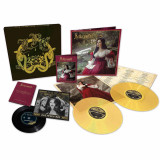
LOUISE PATRICIA CRANE - NETHERWORLD LP 2x12"

"The Red Room Crystal-Ruby Splatter Vinyl". Netherworld marks a considerable step onwards from the territory that Louise Patricia Crane explored on her debut long player Deep Blue, crafting audial landscapes that go further into both inner and outer space; hallucinatory and surrealistic yet also grittier and more direct. For all that this stemmed in part from early Genesis and The Beatles, Netherworld also sits in alignment with the luxurious but oddly intimate realm of modern classics, by the likes of Tears For Fears, Tori Amos and Joni Mitchell, with passionate intensity set in a bold, cinematic vista. In realising these romantic and expansive visions, Crane not only wrote or co-wrote the entire album, but arranged, co-produced and played a wide variety of instruments on it. Yet as a supporting cast, she has surrounded herself with a formidable selection of mercurial contributors. Once again, Jakko M. Jakszyk (King Crimson) brings his fiery and mellifluous solo guitar work, as well as contributing backing vocals, keyboards and co-production. Elsewhere, the flute soliloquies of Tiny Bard are the work of Jethro Tull's Ian Andersonwhile saxophone duties are handled by Mel Collins, whose work with King Crimson marks only one chapter in an incredibly storied life in music. Providing violin and viola across the stylistic expanse of the album, Shir-Ran Yinon (New Model Army / Eluveitie) returns as a collaborator. The rhythm section for the lion's share of the record consists of the dream team of Tony Levin (King Crimson / Peter Gabriel) and Gary Husband (John McLaughlin / Billy Cobham / Allan Holdsworth) with Nick Beggs stepping in on bass for Dance With The Devil and upright bass on Long Kiss Goodnight. Crucially however, even amidst this kind of company, Louise's voice and vision is never remotely overshadowed-with the talents on offer only serving to make the backdrop to her songs still more vivid, sharp and intense. In as much as Netherworld is a work that exists on a lineage of progressive music and the visionary artists who've expanded their boundaries of exploration to form sound-worlds as big as their imagination, it's also a work of magical realism in the tradition of Pan's Labyrinth, The Company Of Wolves or the work of Gabriel Garcia Marquez and Haruki Murakami-in which the supernatural and otherworldly, lead to a shortcut to the essence of being human. In this World, Louise Patricia Crane is our Storyteller.

pre-order now21.06.2024

expected to be published on 21.06.2024

42,65
LOUISE PATRICIA CRANE - NETHERWORLD (BOXSET) 5x12"

Netherworld Double Gatefold Vinyl in 'Celestial Dust' transparent gold CD / DVD - 5.1 Surround mixed by Jakko M. Jakszyk: 'Storybook' Edition 'Ladies' Double A-Side 7" Single - Ladies Of The Road / Dirty (Black Vinyl) Netherworld A6 illustrated 'Little Stories' book All housed in a Black Textured Box with Gold Hot Foil Embossing Netherworld marks a considerable step onwards from the territory that Louise Patricia Crane explored on her debut long player Deep Blue, crafting audial landscapes that go further into both inner and outer space; hallucinatory and surrealistic yet also grittier and more direct. For all that this stemmed in part from early Genesis and The Beatles, Netherworld also sits in alignment with the luxurious but oddly intimate realm of modern classics, by the likes of Tears For Fears, Tori Amos and Joni Mitchell, with passionate intensity set in a bold, cinematic vista. In realising these romantic and expansive visions, Crane not only wrote or co-wrote the entire album, but arranged, co-produced and played a wide variety of instruments on it. Yet as a supporting cast, she has surrounded herself with a formidable selection of mercurial contributors. Once again, Jakko M. Jakszyk (King Crimson) brings his fiery and mellifluous solo guitar work, as well as contributing backing vocals, keyboards and co-production. Elsewhere, the flute soliloquies of Tiny Bard are the work of Jethro Tull's Ian Andersonwhile saxophone duties are handled by Mel Collins, whose work with King Crimson marks only one chapter in an incredibly storied life in music. Providing violin and viola across the stylistic expanse of the album, Shir-Ran Yinon (New Model Army / Eluveitie) returns as a collaborator. The rhythm section for the lion's share of the record consists of the dream team of Tony Levin (King Crimson / Peter Gabriel) and Gary Husband (John McLaughlin / Billy Cobham / Allan Holdsworth) with Nick Beggs stepping in on bass for Dance With The Devil and upright bass on Long Kiss Goodnight. Crucially however, even amidst this kind of company, Louise's voice and vision is never remotely overshadowed_with the talents on offer only serving to make the backdrop to her songs still more vivid, sharp and intense.

pre-order now21.06.2024

expected to be published on 21.06.2024

136,35
Various - 60s Soul Classics 2x12"
  • 1: Aretha Franklin - Respect
  • 2: Stevie Wonder - For Once In My Life
  • 3: Marvin Gaye - I Heard It Through The Grapevine
  • 4: The Supremes - Baby Love
  • 5: The Drifters - Save The Last Dance For Me
  • 6: Booker T. & The Mgs - Green Onions
  • 7: Arthur Conley - Sweet Soul Music
  • 8: Wilson Pickett - In The Midnight Hour
  • 9: Sam & Dave - Soul Man
  • 10: Carla Thomas - B-A-B-Y
  • 1: Dionne Warwick - Walk On By
  • 2: Ben E. King - Stand By Me
  • 3: Percy Sledge - When A Man Loves A Woman
  • 4: Otis Redding - (Sittin On The) Dock Of The Bay
  • 5: Jimmy Ruffin - What Becomes Of The Brokenhearted
  • 6: The Temptations - My Girl
  • 7: Mary Wells - My Guy
  • 8: Robert Knight – Everlasting Love
  • 9: Smokey Robinson & The Miracles - The Tracks Of My Tears
  • 10: Erma Franklin - Piece Of My Heart
  • 1: Ike & Tina Turner - River Deep Mountain High
  • 2: Dusty Springfield - Son Of A Preacher Man
  • 3: Marlena Shaw - California Soul
  • 4: Nina Simone - To Love Somebody
  • 7: Marvin Gaye & Kim Weston - It Takes Two
  • 8: The Crystals - Da Doo Ron Ron
  • 9: The Ronettes - Be My Baby
  • 10: The Chiffons - He's So Fine
  • 1: The Supremes - Where Did Our Love Go
  • 2: Martha Reeves & The Vandellas - Dancing In The Street
  • 3: Four Tops - I Can't Help Myself (Sugar Pie Honey Bunch)
  • 4: Bob & Earl - Harlem Shuffle
  • 5: Reparata & The Delrons - Captain Of Your Ship
  • 6: The Toys - A Lovers Concerto
  • 7: Aretha Franklin - I Say A Little Prayer
  • 8: Dionne Warwick - Don't Make Me Over
  • 9: Stevie Wonder - My Cherie Amour
  • 10: Otis Redding - Try A Little Tenderness
  • 5: James Brown - It's A Man's Man's Man's World
  • 6: Sly & The Family Stone - Dance To The Music

Continuing from the release of Northern Soul Classics, this excellent value 2LP compilation brings together 40 essential tracks from a generation of artists inspired by gospel and rhythm and blues. Immerse yourself in the sweet soulful voices of Aretha Franklin, Marvin Gaye, Stevie Wonder, Nina Simone, The Supremes, Ike and Tina Turner and many more!

pre-order now21.06.2024

expected to be published on 21.06.2024

30,88
Phillip Parfitt - Dark Light LP

Having been based in Sussex, Philip moved to an old mill in France and never stopped writing. In 2014 he released his organic and honest solo debut album "I'm Not The Man I Used To Be". This was followed up by the critically acclaimed Mental Home Recordings is upon us. And now Philip Parfitt is set to release Dark light via Chicago/London/Paris based label Tip Top Recordings.

A significant milestone in his long accomplished career, Dark Light features 10 beautifully crafted pieces, including deep cuts 'I know I shouldn't but voices' and 'Dark light' the title track, give ample evidence of Philip's prowess as a wordsmith and musician, but also arranger and producer. Think Nick Drake and Captain Beefheart accidentally bumping into each other at a private viewing of Bright Sta
in Heaven, you won't be too far out of the crease. Philip is accompanied by a merry band of friends and luminaries including Alex Creepy Mojo, Amelie Fish, Lucie Robet (who also wrote title track Dark Light with Philip), Gilda Scouarnec, Rog Mogale (who also mastered the album), and Mark Refoy.

Dark Light is released on digital, CD, limited edition vinyl LP with 200 copies in black and 200 copies in dark purple to match the darkly beautiful artwork by Fernando Ruibal. Sleeve notes come from Matthew Spector within the included booklet with art from Joane Charlotte Senechal, photography by Sarah Baba, and design by Anna Mort.

pre-order now14.06.2024

expected to be published on 14.06.2024

25,17
Sugaray Rayford - Human Decency LP

Sugaray Rayford is a man with a message and a larger than life personality and voice to deliver it

Working with producer, songwriter Eric Corne for the past 3 albums, the soul-blues powerhouse has crafted an incendiary sound and narrative, combining classic soul melodies and funky R & B grooves with raw blues power.

The pair's first collaboration, 'Somebody Save Me', earned Rayford a 2020 Grammy nomination. Later that year he took home Blues Music Awards for 'Soul Blues Male Artist' and 'B.B. King Entertainer of the Year.' Rayford's follow up In Too Deep won a plethora of awards including the Blues Music Award for 'Soul Blues Album of the Year'.

His new release is entitled 'Human Decency'. The title track is a simple reminder that our similarities are stronger than our differences and in the end, there is no black or white or left or right, there are only hearts and minds.

About the leadoff single, "Run For Cover" a song that takes no prisoners, Q Magazine declares, "The bluesey soul of Rayford comes on full steam with this powerhouse single."

"We're calling people on their bullshit but we're having fun with them. That's my way. I'm gonna tell it to you straight but with love in my heart. I always bring some suga with the salt!" says Sugaray, bellowing with laughter.

An all-star cast lent their talents to the album, including guitarist Rick Holmstrom and singer Saundra Williams who are both from Mavis Staples's band, along with bassist Taras Prodaniuk (Lucinda Williams, Merle Haggard).

pre-order now14.06.2024

expected to be published on 14.06.2024

25,17
Desert Wave - Deafening Silence LP

The Italian trio Desert Wave was formed in 2016, when Drugo (drums) and Logan (bass) were already playing in a doom metal band and then decided to break away and form their own with a more psychedelic/stoner-style. Guitarist Burton joined them a month later, and their musical influences were quite similar: Black Sabbath, Pink Floyd, Led Zeppelin, 70's hard rock, Seattle grunge, up to the granite desert sound of Kyuss.

With "Deafening Silence" they created a more psychedelic and epic, mostly instrumental, sound than their 2017 debut “Lost In Dunes”, much more like the long jam sessions they play in the rehearsal room. The songs were born during the pandemic that deeply marked the band. Like everyone else, they spent several weeks at home, while the empty streets generated a ghostly and disturbing silence. The lyrics are a bit dark and gloomy and on "Endless Night", Logan's voice carries that ghostly presence that loomed over us all. Drugo designed the artwork, as a tribute to the Blade Runner movies. In both films, as in the songs on the album, there was the same feeling of foreboding that hovered in a dystopian future, in which not all the answers are clear and many questions are still unanswered. Burton's powerful guitar riffs echo in this unreal silence, sometimes increasing the sense of restlessness, other times instead, in the more psychedelic parts, they create a crescendo of impotence and inevitability that totally invades you and from which you cannot escape. Purple edition.

pre-order now14.06.2024

expected to be published on 14.06.2024

28,99
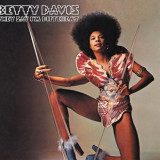
Betty Davis - They Say I Am Different

One can hardly imagine the genre-busting, culture-crossing musical magic of Outkast, Prince, Erykah Badu, Rick James, The Roots, or even the early Red Hot Chili Peppers without the influence of R&B pioneer Betty Davis. Her style of raw and revelatory punk-funk defies any notions that women can’t be visionaries in the worlds of rock and pop. In recent years, rappers from Ice Cube to Talib Kweli to Ludacris have rhymed over her intensely strong but sensual music.


There is one testimonial about Betty Davis that is universal: she was a woman ahead of her time. In our contemporary moment, this may not be as self-evident as it was thirty years ago – we live in an age that’s been profoundly changed by flamboyant flaunting of female sexuality: from Parlet to Madonna, Lil Kim to Kelis. Yet, back in 1973 when Betty Davis first showed up in her silver go-go boots, dazzling smile and towering Afro, who could you possibly have compared her to? Marva Whitney had the voice but not the independence. Labelle wouldn’t get sexy with their “Lady Marmalade” for another year while Millie Jackson wasn’t Feelin’ Bitchy until 1977. Even Tina Turner, the most obvious predecessor to Betty’s fierce style wasn’t completely out of Ike’s shadow until later in the decade.


Ms. Davis’s unique story, still sadly mostly unknown, is unlike any other in popular music. Betty wrote the song “Uptown” for the Chambers Brothers before marrying Miles Davis in the late ’60s, influencing him with psychedelic rock, and introducing him to Jimi Hendrix — personally inspiring the classic album Bitches Brew.


But her songwriting ability was way ahead of its time as well. Betty not only wrote every song she ever recorded and produced every album after her first, but the young woman penned the tunes that got The Commodores signed to Motown. The Detroit label soon came calling, pitching a Motown songwriting deal, which Betty turned down. Motown wanted to own everything. Heading to the UK, Marc Bolan of T. Rex urged the creative dynamo to start writing for herself. A common thread throughout Betty’s career would be her unbending Do-It-Yourself ethic, which made her quickly turn down anyone who didn’t fit with the vision. She would eventually say no to Eric Clapton as her album producer, seeing him as too banal.


Her 1974 sophomore album They Say I’m Different features a worthy-of-framing futuristic cover challenging David Bowie’s science fiction funk with real rocking soul-fire, kicked off with the savagely sexual “Shoo-B-Doop and Cop Him” (later sampled by Ice Cube). Her follow up is full of classic cuts like “Don’t Call Her No Tramp” and the hilarious, hard, deep funk of “He Was A Big Freak.”

pre-order now14.06.2024

expected to be published on 14.06.2024

36,93
CASEY MQ - Later that day, the day before, or the day before that LP

"Remembering is not the opposite of forgetting," Casey MQ sings at the start of Later that day, the day before, or the day before that, his new LP and Ghostly International debut. It's a phrase fittingly misremembered from something the LA-based, Canadian-born composer came upon as he spiraled into unconscious and subconscious-led writing sessions at the piano. Casey's known for his 2020 breakthrough release babycasey, which gave voice to songs seen through the lens of childhood, various film score work and collaborations with artists such as Oklou (who returns here), Eartheater, and Vagabon. His gifts as a producer and songwriter are rooted in textural world-building and the excavation of personal truth. With Later that day... he questions what is true entirely, understanding our mind's tendency to bend and project onto pictures of the past. Across vivid, baroque pop balladry, Casey MQ reorients his recording project and point of view under the notion that memories are malleable. All the joy, pain, love, and loss housed within remembrance is open to interpretation and deconstruction, which he does deftly, with curiosity and complete artistic freedom. "It's a memory album," Casey puts it simply, winding up for the deeper unpacking, "and it might be a breakup album, too_there are more questions than answers." Engaging his dreams and sitting with sheet music at his newly acquired piano, he looked to new and old inspirations including the works of Claude Debussy, Joni Mitchell, and Joe Hisaishi's beloved Studio Ghibli film scores. "Since I was young, I always wanted to write a piano album." babycasey's studied electronic sound isn't wholly abandoned on Later that day... instead, it comes through like an atmosphere, giving Casey's more spacious, minimal arrangements a distinct luster and sheen. The textures and tones shift from song to song as if mirroring the way our minds constantly recontextualize, remember, and forget. Cathartic opener "Grey Gardens" _ its title derived from a dream abstractly related to the Toronto restaurant, but not the 1975 film, which he cites as another coincidental false memory _ presents the record's plaintive, haunted feeling. "Even if not reading into lyrics, sonically I wanted it to feel like you're being pulled into a universe. Not fantasy or otherworldly per se, something more tangible, of the body and mind," Casey says. "Hearing it back, I realized this track was the key to unlocking it." His tender falsetto hovers above ambient washes and echoed keys, each word falling carefully in the crevices. "Asleep At The Wheel" unfolds on arpeggiated synth before a burst of symphonic color; the synth returns inverted to harmonize with the outro, "I love a car crash, I love a story, I love a memory, I swear it's real..." Casey leans into digital imagination on the warm, introspective "Me I Think I Found It." Subdued, stuttered percussion underscores the singer as he cycles through pixelated imagery _ screenshots, smiles, streetlights _ searching for higher meaning through love. Built on ascendent chord distortions, "Dying Til I'm Born" gives the record one of its boldest pulses of emotion. The back half stretches out; "Is This Only Water" is sparse and foggy, "Baby Voice" is intimate and desperate for something to remain. "Words For Love" grooves on guitar, and "Tennisman9" aches in heartbreak. French musician Marylou Mayniel, aka Oklou, appears as the collection's only guest for the closing duet, "The Make Believe," a bright and buoyant send-off that gives Later that day... both a sense of resolve and cyclical-motion. "We are young, under the sun," they sing together, a parting image brimming with lightness.

pre-order now07.06.2024

expected to be published on 07.06.2024

27,52
CASEY MQ - Later that day, the day before, or the day before that LP

"Remembering is not the opposite of forgetting," Casey MQ sings at the start of Later that day, the day before, or the day before that, his new LP and Ghostly International debut. It's a phrase fittingly misremembered from something the LA-based, Canadian-born composer came upon as he spiraled into unconscious and subconscious-led writing sessions at the piano. Casey's known for his 2020 breakthrough release babycasey, which gave voice to songs seen through the lens of childhood, various film score work and collaborations with artists such as Oklou (who returns here), Eartheater, and Vagabon. His gifts as a producer and songwriter are rooted in textural world-building and the excavation of personal truth. With Later that day... he questions what is true entirely, understanding our mind's tendency to bend and project onto pictures of the past. Across vivid, baroque pop balladry, Casey MQ reorients his recording project and point of view under the notion that memories are malleable. All the joy, pain, love, and loss housed within remembrance is open to interpretation and deconstruction, which he does deftly, with curiosity and complete artistic freedom. "It's a memory album," Casey puts it simply, winding up for the deeper unpacking, "and it might be a breakup album, too_there are more questions than answers." Engaging his dreams and sitting with sheet music at his newly acquired piano, he looked to new and old inspirations including the works of Claude Debussy, Joni Mitchell, and Joe Hisaishi's beloved Studio Ghibli film scores. "Since I was young, I always wanted to write a piano album." babycasey's studied electronic sound isn't wholly abandoned on Later that day... instead, it comes through like an atmosphere, giving Casey's more spacious, minimal arrangements a distinct luster and sheen. The textures and tones shift from song to song as if mirroring the way our minds constantly recontextualize, remember, and forget. Cathartic opener "Grey Gardens" _ its title derived from a dream abstractly related to the Toronto restaurant, but not the 1975 film, which he cites as another coincidental false memory _ presents the record's plaintive, haunted feeling. "Even if not reading into lyrics, sonically I wanted it to feel like you're being pulled into a universe. Not fantasy or otherworldly per se, something more tangible, of the body and mind," Casey says. "Hearing it back, I realized this track was the key to unlocking it." His tender falsetto hovers above ambient washes and echoed keys, each word falling carefully in the crevices. "Asleep At The Wheel" unfolds on arpeggiated synth before a burst of symphonic color; the synth returns inverted to harmonize with the outro, "I love a car crash, I love a story, I love a memory, I swear it's real..." Casey leans into digital imagination on the warm, introspective "Me I Think I Found It." Subdued, stuttered percussion underscores the singer as he cycles through pixelated imagery _ screenshots, smiles, streetlights _ searching for higher meaning through love. Built on ascendent chord distortions, "Dying Til I'm Born" gives the record one of its boldest pulses of emotion. The back half stretches out; "Is This Only Water" is sparse and foggy, "Baby Voice" is intimate and desperate for something to remain. "Words For Love" grooves on guitar, and "Tennisman9" aches in heartbreak. French musician Marylou Mayniel, aka Oklou, appears as the collection's only guest for the closing duet, "The Make Believe," a bright and buoyant send-off that gives Later that day... both a sense of resolve and cyclical-motion. "We are young, under the sun," they sing together, a parting image brimming with lightness.

pre-order now07.06.2024

expected to be published on 07.06.2024

27,31
Keith Hudson - Playing It Cool & Playing It Right LP

Keith Hudson was a one-of-a-kind musical innovator with an impeccable track record from the start: his first studio recording involved former Skatalites, and his earliest releases provided solid-gold hits for Ken Boothe (“Old Fashioned Way”, 1967), John Holt, Delroy Wilson, U-Roy and the others.

With Pick A Dub Hudson produced one of the best dub albums ever, and with The Black Breast Has Produced Her Best, Flesh Of My Skin, Blood Of My Blood he released the first concept album in reggae history, bringing his all-around talents to full fruition as early as 1974. Thematically dedicated entirely to Black history, the latter of these two albums is a masterpiece that captivates with an atmosphere that is as dark as it is deeply spiritual, charged by Hudson's eccentric vocals. Like Lloyd Bullwackie Barnes, his splitting from tradition was dynamic and all his own.

As his career moved on, Hudson found himself working outside of Jamaica, more frequently in London and New York studios and for transatlantic audiences, his dark experimentalism becoming increasingly better suited to the LP than the cardinal 7” reggae format.

Playing It Cool & Playing It Right was released in 1981 on the Joint International label, in NYC, with Lloyd Bullwackie Barnes as the executive producer. The Love Joys and Wayne Jarrett, stalwarts of Barnes' record label, Wackies, would also inimitably feature Hudson at the microphone. Like Bullwackie, Hudson was a devotee of Coxsone Dodd’s Studio One and Playing It Cool & Playing It Right follows Dodd’s then strategy of overdubbing his signature rhythms. The Studio One sides were aimed at the dancefloor and Hudson’s reworkings of tracks like “Melody Maker” are more psychological. Here, deep Barrett Brothers rhythms are made deeper with reverb, filters and distortion; everything pitched down and overlaid with new recordings of guitar, percussion, keyboard, and voice, often heavily treated.

Playing It Cool & Playing It Right continues Hudson’s psycho-acoustic journey into the abysses of existence, and overwhelms with the beauty of artistic self-empowerment. "Too much formula," sings Hudson, whose voice is occasionally reminiscent of Sly Stone or even Tom Waits. "Darkest night," answers an echoing background choir elsewhere. Even more fascinating is Hudson's production, which reflects Black history in even the smallest sound detail, the flashing whip of the slave driver still echoes in the sound of the snare drum. Rarely has a roots sound been made so electrifying, so expansive in all directions, so crystal clear, so bass-warm and echophonic as on these 30 minutes of music.

Playing It Cool & Playing It Right is legendary, strange, utterly compelling music that has possibly never been more topical than it is today.

out of Stock

Order now and we will order the item for you at our supplier.

28,53

Last In: 17 months ago
Ekin Fil - Sleepwalkers

The drone-pop consternations of Ekin Fil emerge through vaporous tone and forlorn, distant song, as if plucked from a dream. These exist on their own accord, moving with their own internal logic of an emotion heaviness that belies any the passing observation of this as mere shoegazing ambience. Her songs, her compositions find themselves adjacent the fragmented etherealization of Elisabeth Fraser's voice from a forgotten scene of a particular David Lynch film, as a ASMR trigger for Proustian recollection. Something profound. Something hidden. Something desolately sad.

The Helen Scarsdale Agency has had the pleasure of witnessing Ekin's continued development, maturation, and growth as a composer, having released now seven of her magnificent, under-the-radar gems. Her slow burning, dejected ballads continue to draw from the deep well of sorrow, with varying frequencies and intensities of bitter light poking through. Loves lost. A world broken. All is not hopeless, but there is a considerable amount of shit to wade through.

Sleepwalkers embraces a familiar set of metaphors in her work, that of narcolepsy and the unsettled state of existence between sleep and being awake. But she stretches herself with a set of compositions that run parallel to the work of Tim Hecker as in the gravitation soft-noise of "Stone Cold" or to a slow motion serialism that punctuates the ambient crawl of her ambitious "Gone Gone." Recommended for fans of Grouper, Rafael Anton Irisarri, A.C. Marias, and Carla dal Forno.

pre-order now07.06.2024

expected to be published on 07.06.2024

22,65
Ana Frango Elétrico - Me Chama De Gato Que Eu Sou Sua LP

With two critically acclaimed albums and a swathe of award-winning production turns under their belt, Ana Frango Elétrico present their most confident and accomplished work to date: Me Chama De Gato Que Eu Sou Sua / Call Me They That I’m Yours. Gesturing to a tradition of Brazilian boogie music, but bouncing with modern pop ebullience, the album sees the Rio artist evolve from a captivating upstart into a surefooted scene leader in full stride.

At just 25, the prolific artist and producer has already garnered worldwide admirers. Ana’s sophomore Little Electric Chicken Heart was nominated at the 2020 Latin Grammys. Since then, standalone singles have received the WME ‘Best Music Producer’ Award, recognising Ana’s deep passion for music production – a passion which has led to collaborations with nascent Brazilian stars Dora Morelenbaum, Illy and Sophia Chablau. Most recently, Ana was hailed for their co-production of Bala Desejo’s 2022 Latin Grammy-winning album Sim Sim Sim.

The new album finds Ana at their most assured and full voiced. Album opener “Electric Fish”, with funky bass and shimmering backing vocals, sets a buoyant tone. “Boy of Stranger Things” is its bombastic counterpart. It’s the grooviest Ana has ever sounded. And the most brazen. Lyrically, where Ana was once oblique on personal matters, they are now forthright – lucidly exploring their gender identity, citing accessible cultural references, and often singing in English.

“I started this album in 2021 with the intention of showing, in means of sound, understandings and feelings about queer love, subjectively exposing myself,” the non-binary artist states – before qualifying that though “feeling was its driving force, the album is really about musical production.”

“There’s so many references to different decades,” Ana explains. “Seventies drums with eighties processing … Going back, getting beyond … Testing the limits of organic sounds”. Characteristically playful, on Me Chama, Ana takes vivid and rewarding detours through funk-inflected R&B (“Dela”) and art pop (“Dr. Sabe Tudo”). “Nuvem Vermelha” is a cinematic chanson with lush strings that recalls Arthur Verocai. Then, “Coisa Maluca” loafs with the indie insouciance of Canadian slacker Mac Demarco. Later, “Let's Go Before Again”, is a full-on drum machine workout evocative of Stereolab.

out of Stock

Order now and we will order the item for you at our supplier.

25,42

Last In: 20 months ago
ANGELICA GARCIA - CHA CHA PALACE LP

Two years in the making, 25-year-old Angelica Garcia's album Cha Cha Palace is the result of an artist's need to SAY SOMETHING. The second song on the record, "Jícama" might only be a minute and 25 seconds in its entirety, but the message spans generations and is one that resonates deeply for Garcia with her Mexican and Salvadoran roots. Singing/shouting, "I see you, but you don't see me Jímaca, Jímaca, Guava Tree_I've been trying to tell ya, but you just don't see, like you I was born in this country," Garcia tells the reality for millions of Americans unapologetically and with passion.That feeling of being between places is something Garcia knows well having been raised between multigenerational, multicultural, homes with step-parents and half-siblings. Additionally, she made the journey from the West Coast to the East Coast and back again multiple times before finally settling down in Richmond, Virginia.She fondly recalls Mexican ranchera music always playing throughout her childhood. Ranchera was ingrained within the maternal side of her family with her Mother, Grandmother, Uncle & Aunt constantly singing the traditional music throughout the home of her Grandparents.Like Mitski, Lorde, Billie Eilish, and Rosalía, Garcia isn't afraid to tear pages out of her diary and express emotions that might be difficult and oftentimes daunting to share given today's social and political environment. Like her peers, she joins a new chapter of musicians who are connecting with their audiences on a level that lives outside the reaches of technology, trends, and social media, the daily experience of feeling torn between saying something and doing something, for being a voice and speaking with your voice, of being Latina while being American. And it's humanity and honesty that audiences are looking for and will find in spades throughout each note of Cha Cha Palace.

pre-order now31.05.2024

expected to be published on 31.05.2024

20,59
Phillip Parfitt - Dark Light LP

Having been based in Sussex, Philip moved to an old mill in France and never stopped writing. In 2014 he released his organic and honest solo debut album "I'm Not The Man I Used To Be". This was followed up by the critically acclaimed Mental Home Recordings is upon us. And now Philip Parfitt is set to release Dark light via Chicago/London/Paris based label Tip Top Recordings.

A significant milestone in his long accomplished career, Dark Light features 10 beautifully crafted pieces, including deep cuts 'I know I shouldn't but voices' and 'Dark light' the title track, give ample evidence of Philip's prowess as a wordsmith and musician, but also arranger and producer. Think Nick Drake and Captain Beefheart accidentally bumping into each other at a private viewing of Bright Sta
in Heaven, you won't be too far out of the crease. Philip is accompanied by a merry band of friends and luminaries including Alex Creepy Mojo, Amelie Fish, Lucie Robet (who also wrote title track Dark Light with Philip), Gilda Scouarnec, Rog Mogale (who also mastered the album), and Mark Refoy.

Dark Light is released on digital, CD, limited edition vinyl LP with 200 copies in black and 200 copies in dark purple to match the darkly beautiful artwork by Fernando Ruibal. Sleeve notes come from Matthew Spector within the included booklet with art from Joane Charlotte Senechal, photography by Sarah Baba, and design by Anna Mort.

pre-order now31.05.2024

expected to be published on 31.05.2024

26,85
Simon and Garfunkel - Bridge Over Troubled Water

SIMON AND GARFUNKEL’S SWAN SONG: BRIDGE OVER TROUBLED WATER FEATURES METICULOUS PRODUCTION, GORGEOUS SONGWRITING, AND HEALING SPIRIT
Sourced from the Original Master Tapes and Limited to 4,000 Numbered Copies: Mobile Fidelity’s 180s SuperVinyl 33RPM LP Plays with Staggering Detail, Clarity, and Definition
1/4" / 15 IPS analogue master to DSD 256 to analogue console to lathe


Unifying, soothing, comforting: Simon and Garfunkel's Bridge over Troubled Water quickly became the album of an era upon release in 1970, the benchmark set serving as a beacon of hope and hymn of reassurance during a time marked by polarizing changes, social unrest, uncertain politics, and the dawn of a new era. These uplifting reasons — to say nothing about the gorgeous songwriting, meticulous production, and watershed performances — attest to why it is more relevant than ever in our current climate. Music, Bridge over Troubled Water simultaneously suggests and proves, heals all wounds and lifts all boats.

The seminal effort Rolling Stone named the 51st Greatest Album of All Time reaches illustrious sonic and emotional heights on Mobile Fidelity’s 180g SuperVinyl 33RPM LP. Pressed on MoFi SuperVinyl and strictly limited to 4,000 numbered copies, this ultra-hi-fi collector's edition brings you closer to music that picks up where the duo's Bookends leaves off. You'll enjoy deep-black backgrounds and pointillist details. Seemingly every note, breath, and movement is reproduced with exquisite accuracy, clarity, and balance. Each rotation benefits from SuperVinyl’s ultra-low noise floor and superb groove definition.

The best-selling record in the U.S. for several years running and winner of six Grammy Awards — including nods for Record of the Year, Album of the Year, Song of the Year, and Best Engineered Recording — Bridge over Troubled Water endures as a staple of accessible sophistication, angelic elegance, effortless singing, unhinged ambition, and therapeutic spirit. While it would turn out to be the final studio set for a duo surrounded by creative and personal disagreement, Simon and Garfunkel's collaborative ethos and soaring harmonies — combined with reflective narratives centred on the American experience, friendship, romance, and farewells — combine to turn the 11-track work into a paean to resolution, reconciliation, calm, and balance.

Home to the legendary title track graced by Garfunkel's pacifying solo lead vocals as well as the equally famous folk ballad "The Boxer," Peruvian-based "El Condor Pasa," upbeat "Cecilia," and rock ’n’ rolling "Baby Driver,” Bridge over Troubled Water remains as renowned for its musical diversity as its lyrical poignancy. Moving beyond the templates they'd perfected on four prior albums, Simon and Garfunkel embrace a then-unimaginable swath of styles. Rock, pop, gospel, country, R&B, South American, and jazz strains course throughout the songs, each sparked with bold experiments yet grounded in a well-orchestrated melange of melody, rhythm, and classicism that makes everything personal, familiar, and warm.

Not for nothing is Bridge over Troubled Water one of the finest-sounding albums ever made. Featuring instrumentation helmed by members of Los Angeles' fabled Wrecking Crew as well as multiple choral and string sections, songs took hundreds of hours to complete and involved pioneering recording techniques. Evoking both Phil Spector's live"Wall of Sound" approach as well as inventive effects, Bridge over Troubled Water is a triumph of texture, atmosphere, and architecture. Our audiophile edition brings the record's unique traits to the fore.

Whether the reverberation generated by Garfunkel's cassette recorder on "Cecilia," echoing drums captured in a corridor heard throughout "The Boxer," automobile noises peppering "Baby Driver," layer upon layer of voices dotting "The Only Boy Living in New York," or echo-chamber percussion on the title track, details comes through with stunning accuracy, clarity, and dimensionality. In every regard, Bridge over Troubled Water exudes genius.

pre-order now31.05.2024

expected to be published on 31.05.2024

47,86
Johnny Cash - At Folsom Prison LP 2x12"

THE 1968 ALBUM ON WHICH JOHNNY CASH BECAME A LEGEND: AT FOLSOM PRISON AMONG THE MOST IMPORTANT AND POTENT STATEMENTS OF THE 20TH CENTURY


Johnny Cash already knew his way around Folsom Prison when he and his band stepped inside the institution’s forbidding walls on the morning of January 13, 1968 to record At Folsom Prison. He’d played there two years prior. But this time was different.

Cash took the stage that day for two shows amid a darkening sociopolitical atmosphere and a raging war in Vietnam, as well as the knowledge his career and health hung on by a thread. The Arkansas native shared many of the long odds and abject failures of the inmates for which he performed. The songs he chose, and the conviction with which he delivered them, say as much. The point at which Cash transformed from a country star into a legendary artist, and a bold statement about the American prison state and its commitment to rehabilitation, the triple-platinum At Folsom Prison remains one the most important, potent, and fabled records of the 20th century.

You can hear it echo off the walls of the room; pulse through the itchiness of the Tennessee Three’s acoustic-based boom-chick rhythms; crackle in the announcements conveyed over the intercom; ring in the comedy of the off-cuff remarks and pair of novelty tunes; sense it in palpable energy that wells up within Cash and his audience. And you can experience it like never before via Cash’s knockout singing. The bedrock foundation of all his music, the singer’s baritone resonates with profound degrees of depth, pliability, and passion that underscore how much this appearance meant to him — and the extent he was living the narratives.

Indeed, every song on At Folsom Prison serves a purpose and speaks to the conditions — mental, emotional, physical, geographical, legal, social — the inmates confronted on a daily basis. Beginning with the explicit messages of the opening “Folsom Prison Blues,” Cash makes it clear he understands and shares many of their plights. Not for nothing did the myth of Cash having done hard time persist for decades once this record hit the streets. That’s how real it is, and how dedicated Cash remains to conveying every note with the same truth he invests in the impromptu comments he makes between and amid songs.

Listen to the sorrow, regret, pity, and loneliness of Merle Travis’ “Dark as the Dungeon,” Cash pulling syllables til they threaten to break and inhabiting the mood of bleak phrases such as “pleasures are few” and “the sun never shines.” Witness the isolation, dejection, and sadness punctuating the walking-blues “I Still Miss Someone,” matched in gravity by a solemn reading of “The Long Black Veil” — a traditional dirge that involves murder, cheating, and deception. Cash cuts even deeper on a heartbreaking solo rendition of “Send a Picture of Mother” and plainspoken version of Harlan Howard’s “The Wall,” detailing a suicide disguised as jailbreak through cliched-jaw deliveries that softly curse the impossible situation.

In chronicling temptations, mistakes, mortality, punishment, and life “inside” — for better or worse, the stories of the disenfranchised, forgotten, written-off, and unrepentant — At Folsom Prison also has a blast playing the outlaw role. Cash captures wild-eyed craziness and out-of-control mayhem on a revved-up take of “Cocaine Blues,” taking extra satisfaction in its dastardly tales by way of voice that shifts into character for the sheriff and judge. The gallows humor and racing drama of “25 Minutes to Go”; quicksilver accents and resigned acceptance of “I Got Stripes”; train-whistle blare and twangy locomotion of “Folsom Prison Blues” — all fight the law only to see the law win.

Cash remains deeply committed at every moment, and inseparably connected with the tortured souls removed from the goings-on of the outside world. No wonder all but two songs here stem from the day’s first performance that saw Cash, Luther Perkins, Marshall Grant, and company give everything. As does the Man in Black’s soon-to-be-wife, June Carter. The couple’s fiery duet on “Jackson” scorches; their combination of surrender and fortitude “Give My Love to Rose” puts us in the dying protagonist’s shoes.

And with the closing “Greystone Chapel,” famously penned by convict Glen Sherley, who watched it all happen under the watchful eye of guards, Cash separates the corporeal from the spiritual, relaying lessons about salvation and survival. Heady themes to which he’d return for the remainder of his illustrious career.

pre-order now31.05.2024

expected to be published on 31.05.2024

83,99
Items per Page:
N/ABPM
Vinyl