Nachdem sich The BossHoss kürzlich in ganz neuer Stärke zurückgemeldet haben, stehen die Berliner Country Rock-Outlaws nun wieder voll unter Strom! Gemeinsam hat das Septett seine Stahlrösser aufgetankt, um es nun als „Electric Horsemen“ auf seinem 10. Studioalbum so richtig krachen zu lassen!
Gute fünf Jahre mussten ihre Fans nach dem letzten Longplayer, der 2018 releasten Top 1-Scheibe „Black Is Beautiful“ auf ein neues Album warten – jetzt endlich hat das Warten ein Ende! Auf „Electric Horsemen“ bleiben The BossHoss sich und ihrem typischen High-Voltage-Sound treu, haben aber auch einige ganz neue Stilelemente mit dabei, die man definitiv nicht von der Formation um Alec „Boss Burns“ Völkel und Sascha „Hoss Power“ Vollmer erwartet hätte. Auf dem zwölf Tracks starken Longplayer stellt die Formation nun einen energiegeladenen Hybrid-Style irgendwo zwischen funkelndem Las Vegas-Glam, tanzbarem Studio 54-Groove und geerdetem Country Rock vor.
Natürlich haben die elektrischen Reiter auf ihrem neuen Album wieder jede Menge kompromissloser LiveBanger für die kommende Sommer-Tour im Gepäck. So wie den funkensprühenden Glamrock-Bootyshaker „Dance The Boogie“, das treibende Hillbilly-Metal-Brett „Nice But No“, den packenden Feelgood-Ohrwurm „Ride With Us“ oder die kraftvolle Country-Hymne „Best Friends Forever“.
Cerca:def friends
Ontario four piece Tokyo Police Club burst on to the scene as teenage sensations with 2007"s A Lesson in Crime EP, an opening salvo that delighted discriminating young music fans around the world and saw them win plaudits from NME, Pitchfork and more. The EP was followed up in 2008 with Peter Katis on the desk for their debut album Elephant Shell which spawned the hits Your English is Good and Tesselate. Elephant Shell is the sound of these four young friends coming of age and into their own. The album catapulted the band into the popular consciousness, landing the band on the stages of the world"s biggest festivals, a spot in MTV"s video rotation, appearances on the Late Show with David Letterman, and even a cameo on Desperate Housewives. Beyond that, Elephant Shell has stood up as one of the defining albums of this particular era in indie rock. Hard to believe it"s 15 years hence. Elephant Shell is ripe for a reissue and this 2023 edition comes on tricolour-incolour-vinyl.
Ebalunga!!! is thrilled to announce the first official reissue of the self-released, self-produced, and self-titled 1985 LP Scott Seskind. The album is a lo-fi singer-songwriter jewel. Don’t miss it.
“Authentic and personal, at times it reminds this writer of luminaries such as Jackson C. Frank, PF Sloan, Skip Spence, and Phil Orchs while never feeling derivative.
The songs are melodic and haunting, fueled by existential woes, political angst, and good ol’ fashioned love. Scott’s rich voice has an unpretentious gravitas, his simple-yet-effective guitar playing ranging from delicate fingerpicking to angry bashing.
Created at home on a Tascam 4-Track Portastudio, the recording features few frills and is all the better for it. Unlike most mid-80s records it sounds like it could have come from any time since the late ’60s onwards. As a testament to its greatness, and despite the late recording date, it even gets a nod on Patrick Lundborg’s “Acid Archives” compilation website, Lysergiawhere it’s described thus: “Late phase downer-loner folk and singer-songwriter trip, mostly acoustic, some tracks with a small band.” – Andrew Ure for Ugly
Things.Read a long story about the album in the upcoming Shindig! issue: Story about Scott Seskind in Shiding Mag.
The reissue is available on vinyl with a lyric insert.
Mastering (as always) by Jessica Thompson.
Feedbacks and reviews:
“Almost totally inheralded singer-songwriter Scott Seskind gets the reissue treatment, and I couldn’t be happier. About a year ago I pulled Seskind’s sole vinyl release out of the used bin of a Boulder record store, and with its almost Wallace Berman-esque cover art, could immediately suspect it was something special. The first listen didn’t dispel that notion one bit; here was an impressively captivating and moving collection of four-tracked bedroom folk of the highest order, with an out-of-time vibe that didn’t really snyc with its 1984 recording date. Definitely on the loner-ish end of the folk spectrum, with some aspects of the album harkening back to Skip Spence’s iconic Oar, while other moments revealed the urgency of the ’80s lo-fi revolution. But most importantly, the songs were just really, really great and managed to remain haunting long past their leaving.
Here, I thought, is an album that needs to be heard by more people, NOW. I asked around amongst some record collecting friends and discovered it was pretty highly rated by a small circle of people in the know, and that it had even managed to garner a mention in the Acid Archives despite its late recording date, and most excitingly that there was talk that the digital reissue label Yoga had managed to track Seskind down and secure the rights to his LP. (…) So here we have it, the best songs from Seskind’s eponymous LP. (…) I really hope this release continues to garner the listeners that it deserves.” – Michael Klausman
“The one that struck us the most this year was the almost totally unheralded work of singer-songwriter Scott Seskind, who recorded an impressively captivating and moving collection of four-tracked bedroom folk of the highest order, with an out-of-time vibe that doesn’t really sync with its original 1984 release date. Definitely on the loner-ish end of the folk spectrum, with songs that are really, really great and which manage to remain haunting long past their leaving. Truly an album that deserves to be heard by more people immediately. ” – Other Music
ULTRADISC ONE-STEP BOX SET OF BRUCE SPRINGSTEEN'S 1973 DEBUT PLAYS WITH AUDIOPHILE SOUND: LIMITED TO 7,500 NUMBERED COPIES.
1/4" / 15 IPS analogue master to DSD 256 to analogue console to lathe
Teeming with identifiable characters, youthful romanticism, vivid narratives, and sophisticated arrangements, Greetings from Asbury Park, N.J. is a personal postcard from the heart, soul, and mind of a rock ’n’ roll lifer bent on discovering his world and what lays beyond it. The 1973 album establishes many of the signature themes and sounds Bruce Springsteen would embrace throughout his unparalleled career. No wonder a majority of the songs — “Blinded by the Light,” “Lost in the Flood,” “Spirit in the Night” included — remain staples of the New Jersey native’s fabled concerts.
Sourced from the original analog master tapes, pressed at RTI on MoFi SuperVinyl, and strictly limited to 7,500 numbered copies, Mobile Fidelity's UltraDisc One-Step 180g 33RPM LP set is the definitive-sounding version of Springsteen’s daring debut. Afforded the benefits of SuperVinyl’s nearly non-existent noise floor, Greetings from Asbury Park, N.J. plays with a clarity, directness, and emotionalism that practically whisks you into the New York office in which Springsteen — accompanied by then-manager Mike Appel — played a few originals for legendary Columbia Records executive John Hammond and earned a record deal.
That solo-centric aspect of Greetings from Asbury Park, N.J. — credited only to Springsteen and featuring only a handful of accompanying musicians — helps make it unique in his catalogue. So do the acoustic-based frameworks, revealed on this pressing with newly exposed detail, nuance, and immediacy. The music emerges with an openness that gives flight to the Boss’ storytelling. His words flow with unbridled, stream-of-conscious pacing and vibrant imagery; they pay homage to and update a tradition established by Bob Dylan, Woody Guthrie, and Jack Kerouac. Equally important, Springsteen’s still-underrated vocal performances can now be appreciated in full-range fidelity. Earnest, transparent, and sincere, his singing comes across with an urgency that distinguishes him from the era’s singer-songwriter mold and a raw energy that underlines his unflinching belief in rock ’n’ roll.
Recorded in just three weeks, Greetings from Asbury Park, N.J. also stands out by way of its insightful artwork. Designed by Grammy winner John Berg, the inviting cover is appointed with images of the local landmarks, beachfronts, and geography that provide the backdrops for some of the songs. Those graphics are complemented by the beautiful packaging of Mobile Fidelity’s UD1S edition. Tucked in a sleek slipcase, the LP is housed in a special foil-stamped jacket with faithful-to-the-original graphics. In every way, this reissue is made for listeners who prize sound quality and who want to engage themselves in everything involved with this invigorating album.
An aspirational declaration by a then-23-year-old musician who was already a seasoned veteran of the Jersey Shore bar-band scene, Greetings from Asbury Park, N.J. can in many ways be seen as a semi-fictional autobiography released more than four decades before Springsteen penned his official tome. Elaborate, descriptive, and absorbing, Springsteen’s lyrics spark with the enthusiasm and exuberance of a wide-eyed adventurer ready for possibility, excitement, and fun — but who is also mindful of loss, pain, and disappointment. Words often tumble and collide like dice spilling from a jar; shaken and fully intact, they pour forth with purpose and without self-conscious concern.
One of two songs composed after label president Clive Davis cited the need for a radio-friendly single, the opening “Blinded by the Light” provides an unforgettable introduction. It flares with a blend of confidence, fun, and poetry that helps define Greetings from Asbury Park, N.J. Crackling with wiry guitars, funky chords, Clarence Clemons’ cool-toned saxophone, and action-packed lyrics, the shuffle simultaneously expands and contracts — and establishes Springsteen as a master of rhyme, alliteration, and breathless expression. The thread continues on “Growin’ Up.” Steered by ascending piano lines, soulful grooves, and frisky rhythms, the coming-of-age confessional is at once rebellious and controlled, fearless and vulnerable, honest and boastful. It is a tale to which multiple generations still relate.
Such universality has always been a Springsteen trademark. It surfaces throughout Greetings from Asbury Park, N.J., as does another Boss hallmark: the importance of friendship and tight bonds. These concepts relate to the fact many of the songs — see the feverish “Does This Bus Stop at 82nd Street?,” strutting “It’s So Hard to Be a Saint in the City,” and tender “For You,” the latter complete with brilliant Hammond organ shading — are directly tied to the friends, acquaintances, places, and happenings he knew. “Lost in the Flood,” whose cinematic drama and epic scope hint at the directions Springsteen would pursue on his next LP, extends that familiarity while addressing the kind of socially conscious issues with which he’s forever been associated.
Balancing the label’s vision of him as a folk-based singer-songwriter and his own desire to play rock ‘n’ roll with a full band, Springsteen never again made a record like Greetings from Asbury Park, N.J. One of the most captivating debuts in history, it heralds the start of a legacy whose import Springsteen seemingly foretells on “Blinded by the Light”: “He’s gonna make it tonight.” And how.
Bristol-based producer and DJ 'Drone' present his album on 1985 Music. This 13-track long play, like his previous releases, continues to push the boundaries of underground dance and grime while retaining a sub-heavy, 808-laden coherence within his productions and selections, as anyone who has caught one of his sets can attest to.Since his first release on the imprint in 2020, Drone and his productions have grown from strength to strength. His debut EP ‘Evil Sky’ in 2021 received critical acclaim and support from all the leading figures in underground dance. His production work blurs the boundaries of trap, grime, and dubstep while enjoying support from the likes of Mala, V.I.V.E.K, and Kahn, it seems Drone’s inimitable sounds are becoming favoured by both scene stalwarts and club-goers: an admiration which looks set to grow as he continues to produce thoughtful and original music that promises a reaction in the club. ‘All I Know’ feat. Nottingham’s rising star Snowy kicks off the campaign and is a track that dominated the 2022 festival season. Calling on fellow production friends, this album also sees collaborations with label head honcho Alix Perez, Notion, Hyroglifics, and Deft. Kicking off 2023, Drone undertakes his first North American tour with a month of back-to-back performances and showcases of his new music ahead of release. He returns to the UK with a very special album launch party in his hometown Bristol before taking the party to the capital in early March.
Swing Family's Music Force is dramatic mid-80s synth-funk. From the maverick mind of Sauveur Mallia, it's a thrilling and uniquely brilliant album from start to finish. It's undoubtedly known and revered for its unbelievable standout track, "Mission Africa". Those that know, know. And if you don't know, get to know. It's the reason this record has been hugely sought-after for the best part of two decades. Originally released on Tele Music in France in 1985 but now tear-inducingly rare, this is the definition of "a welcome reissue."
Swing Family is basically a supergroup of French Funk royalty. Led by French disco lord and Arpadys maestro Sauveur Mallia, they were augmented by trombonist Alex Perdigon from legendary French funk rock collective Godchild, trumpeter Kako Bessot from funky fusion group Synthesis and saxophonist Pierre Holassian, a member of Giant, Janko Nilovic's French jazz orchestra. So, about as heavyweight as it gets for funky French goodness. Mallia handles, of course, bass duties throughout, as well as utilising his arsenal of synths including his E-mu, Yamaha Dx7, Roland MSQ 700, Mini Moog and Oberheimm.
The maximalist disco fusion of "Exorcistor" is perhaps a bit too 80s French cheese for most tastes, so either linger on its singular style or head straight to the soundtracky typo-funk of "Greewich Boulevard". A deep, swaggering powerhouse, it comes on like mid-80s Chic jamming on the set of Beverly Hills Cop with Kashif. Yes, *that* good. It's followed by the vital "Music Force", a synthy, sleazy instrumental full of sax and flute and those 80s drum fills. Just the right side of acceptable.
OR! You can even choose to forget all the rest and just stick "Mission Africa" straight on. A rumbling, strutting, afro-cosmic low-profile banger. The slick drums hit hard, the synth strings warm things up, overlapping horns add swagger whilst electric guitar flourishes and a chanted refrain sit in the mix quite perfectly. A track that's almost impossible to describe and do justice to. You just need to hear it. Preferably as you saunter into your favourite after-hours club, after spotting all your friends at once, as you cut a swathe to the bubbling dance floor. A track quite like no other, it makes you sit up within its first bars and, to us at least, sound like something you'd have heard on a Print Thomas mix from the mid 00s. Basically, it's cosmo-galactic.
The B Side opens with "Musical Stars", an oh-so-80s funk-lite track which, at times, sounds like something Daft Punk may have left on the cutting room floor during their Discovery sessions. Another unimpeachable favourite of ours is the druggy brilliance of "Gentleman & Musician". You can almost hear the white powder through the speakers, as soaring, acidy synths, slick, heavy beats and the irresistible interplay of the primo horn players create a real sleazy wonder. "Film Action" follows, a galloping horn-heavy synth romp with moments of extreme bass breakdown brilliance before the drama-synths of "Episode Double" take things up another notch as it oscillates between gorgeous funky horns and urgent bleepy magic. Super tense, super funky and super stylish. Just ace. The elctro-tinged horn workout "Fatal Lady" closes things out majestically.
The audio for Music Force has been remastered by Be With regular Simon Francis, ensuring the punch of Sauveur's bass and those sick drums come through to the fullest. Pete Norman’s expert skills has made sure nothing is lost in the cut whilst the original and iconic sleeve - complete with perky Liberty Belle - has been restored here at Be With HQ as the finishing touch to this long overdue re-issue.
- A1: India
- A2: Child Of Nature
- A3: Anna Was Mine (Demo Version)
- A4: Nature Boy (Mantovani Orchestra)
- A5: Land Of Love (Come My Love And Live With Me)
- A6: Hey Jacque (Hey Jacque)
- A7: Palm Springs (The Ray Anthony Orchestra)
- A8: Umgowah
- B1: Wild Boy ( With Mort Wise & The Wisemen And Rocky Holman)
- B2: Surfer John (Nature Boy & Friends)
- B3: Eden’s Island (Arthur Lyman)
- B4: Monterey (With John Harris And Paul Horn)
- B5: Overcomers Of The World (With John Harris)
- B6: The Clam Man
- B7: Nature Boy (The Talbot Brothers)
Colour Vinyl[31,89 €]
“Wild Boy …” is a reissue of the well-known 2016 release curated by Brian Chidester, renowned researcher and biographer of Eden Ahbez. Especially for this album, Brian wrote an interesting text about Abi’s life, which definitely became the decoration of the release.
With the new 2020 re-release, we went a little further and kept what is commonly referred to as studio cuts. It’s a few more minutes in the studio with ahbez himself, full of emotion and life. In addition, to the delight of fans, the edition includes an additional composition Nature Boy (Mantovani Orchestra).
Especially, it is worth noting the outstanding mastering prepared from practically decomposed tapes by the Grammy-nominated Jessica Thompson, which guarantees the deepest and warmth possible sound. Jessica a huge ahbez fan and we’re highly appreciated for what she has done to save his music for the future.
Eden Ahbez is definitely at the origin of psychedelic music and this release can be taken as further proof. Over the past twenty years, the iconic figure of the world’s first hippie Eden ahbez has become famous primarily for his 1948 song “Nature Boy”, praising universal love, and his amazingly solo album from the 1960s called “Eden’s Island” – one from the first concept albums in the history of music and probably the first psychedelic music album. “Wild Boy: The Lost Songs Of Eden Ahbez” deepens understanding of the origins of the psychedelic movement in the 1950s.
The disc contains a musical selection of works by Eden ahbez himself, written by him in the period after Nature Boy. The inclusion of songs such as “Palm Springs” – Ray Anthony Orchestra and “Hey Jacques” by Erta Kitt gives the listener the chance to discover for the first time the little-known recordings of world-famous artists composed by Eden ahbez. Through “Wild Boy” and “Surfer John” you can hear the author’s handling of absurd rock and exotic experimentation, as well as sweet psychedelic pop like Monterey (with Paul Horn on flute). Overall, Wild Boy: The Lost Songs Of Eden Ahbez offers an overview of the lost works of 1949-1971 with seven unpublished recordings and eight rare singles.
If in 2020 you are missing the hallucinogenic content in Eden Ahbez, it amazingly makes up for that deficiency with simple chords, expansive arrangements, and lyrics about travel, relaxation, free love, and spirituality. Thus creating the standard of psychedelic music. Eden Ahbez’s songs weren’t only fantasy and his personal philosophy was the real thing that he lived.
reviews:
“This carefully and extensively researched compilation culls covers by top notch mainstream artists juxtaposed with unreleased Eden recordings. What might sound like a mixed bag is actually more like a chronological, musical non-fiction novel about Eden Ahbez. While Eden was writing hundreds of songs and performing live and making recordings in various styles, his songs were also being picked up by popular artists like Nat King Cole and Eartha Kitt who recorded with a more polished mainstream style. There are also some early rock n roll style recordings here. Eden’s professionally recordings often end up as Novelty Pop records such as “Child of Nature” and “The Clam Man” but if you read between the lines and listen to the lyrics it is pretty eye-opening that he is singing about Eastern-religion-style and pre-hippie philosophies about being at one with the planet Earth.
All of this is explained in the lengthy liner notes inside the lp along with a few choice photos that establish Eden as a founding father of Southern California mystic/psychedelic music.” – Tiki_News
“Eden Ahbez’s life philosophy was summed up in the lyrics of his most famous song, “Nature Boy,” a 1948 hit for Nat King Cole: the song describes a “strange enchanted boy” who wanders the world in search of truth. “The greatest thing you’ll ever learn,” he concludes, “is to love and be loved in return.” Ahbez was a pre-cursor of California’s beatniks and hippies, and an exalted icon of ex-otica via his rare 1960 album Eden’s Island. Beyond “Nature Boy” and Eden’s Island, though, there were nu-merous lesser-known Ahbez record-ings. Ahbez biographer Brian Chidester has been doing an exemplary job of archiving and documenting that catalog of work. The Exotic World of Eden Ahbez (reviewed in UT#38) appeared a few years ago, gathering together 14 Ahbez-related rarities” – Ugly Things
Dear Friends, it's 2023 and the future of Leftfield Bass, Trap, and Hybrid Grime is here... RATIONAL SOUL's debut EP, "SELF TITLED", is going to define a new era on the dance floor, reimagining 140 beats that typically are stereotyped into narrow catagories. "SELF TITLED" will become the worldwide definition of a style never heard before, sought after and inevitably copycatted by those inspired.
With no surprise, 2023 is set off to a paramount start for the German SATURATE! label, with an EP that “is the future of Leftfield Bass, Trap, and Hybrid Grime” and “it’s going to define a new era on the dance floor, reimagining 140 beats that typically are stereotyped into narrow categories.” The mastermind behind such a project, called SELF TITLED, is RATIONAL SOUL a Virginia-based, veteran electronic music producer. The EP is coming out in full on January 13, digitally and on vinyl, and it features six originals and four remixes. What sounds like a disorienting emptiness at the beginning, makes perfect sense when read as part of the overall narrative of the composition. “One moment you’re living happy-go-lucky, almost like it’s the script of a Disney movie, the next moment you’re questioning why you exist- how is it you’ve become a slave to the 9 to 5? Phone by your side as digital anti-anxiety medication, entertaining yourself with something nostalgic to remind yourself of better times…war against yourself, to reset your identity.” The fight against this subconscious condition was RATIONAL SOUL’s starting point while writing SELF TITLED. The artist’s attempt to light a lighter to ignite a spark in our consciousness and thus reveal the void in which we are immersed. “Wake up” he seems to want to tell us. Don’t be a pawn, be a player of your life. Let’s riot against this status quo and, quoting RATIONAL SOUL himself, “Let’s be gangsta and fuck shit up because we are mad at why our world is falling apart: twerk on a cop car with a fine cigar in your mouth type beat.” He then concludes by spilling one, big truth, “what better genre of music could describe these feelings than bass music?” How could we not agree?
The incongruous, yet glorious, creative partnership between Nancy Sinatra and Lee Hazlewood was well underway when the two singular artists reunited to record 1972’s Nancy & Lee Again, a follow-up to their bestselling duet debut, Nancy & Lee. Nancy, the eldest daughter of Frank Sinatra, had been working with the Oklahoma-born songwriter since 1965, when she topped the pop charts with “These Boots Are Made For Walkin’.” Over the next five years, the two artists forged a prolific relationship in the studio, with Hazlewood writing and producing many of Nancy’s solo hits. Soon, the duo found success with a series of duets, including “Sand,” “Summer Wine,” and “Some Velvet Morning” – all of which appeared on their highly-influential 1968 debut.
Not long after the critical acclaim and chart success of Nancy & Lee died down, however, Hazlewood unexpectedly relocated to Sweden, leaving his musical partner in the proverbial dust. America, meanwhile, was in the midst of a cultural shift, as the Vietnam War waged on. By the turn of the decade, the musical landscape had changed significantly. “Trivial music and not profound music became unimportant,” recalls Nancy, speaking to Hunter Lea. “It was a tough time.” And yet, despite the circumstances, the stars somehow aligned for the duo to record some of their most magnificent music together.
Returning to Los Angeles for the project, Hazlewood – who reprised his role as producer – chose to take a new direction with the duo’s sophomore album. Nancy recalls, “It was more dramatic; it was more fun to do, more challenging to do…. It was more grandiose.” For the lush, orchestral arrangements, they collaborated with Larry Muhoberac (an original member of Elvis Presley’s TCB band, whose early ‘70s credits also included Barbra Streisand, Neil Diamond, and Lalo Schifrin) and Clark Gassman, who had worked on Hazlewood’s 1970 LP, Cowboy in Sweden. Backing vocals from brothers John and Tom Bahler, who remain two of the most recorded singers in history, added additional texture to several songs.
The big sound that Nancy describes above is exemplified in the album’s cinematic opener, “Arkansas Coal (Suite).” Clocking in at nearly six minutes long, the dynamic overture tells the tale of an ill-fated coal miner (sung by Hazlewood), while Nancy adjusts her vocals to sing as both the miner’s daughter and his wife. Hazlewood’s knack for vivid, nuanced storytelling shines throughout Nancy & Lee Again, particularly in “Paris Summer,” which details the conflict that a married woman faces, as she engages in a passionate affair. Another highlight is the country-inspired hit, “Did You Ever,” which was released as the album’s lead single. After it landed at No.2 on the U.K. pop charts, the song served as an alternate title track in several countries, including LP pressings in the U.K., Germany, and Canada.
One of the most emotionally-charged moments on Nancy & Lee Again is a cover of Dolly Parton’s “Down From Dover.” The heartbreaking tune tells the tale of a pregnant teenager, who has been abandoned by her lover and her family and ultimately gives birth to a stillborn baby. While Parton’s 1970 version was sung from the teenager’s point of view, Hazlewood and Sinatra transformed the country song into a duet. Hazlewood, who offers the man’s side of the story, sings in a notably deeper octave than his signature baritone.
Another poignant selection is “Congratulations,” which describes a soldier coming home from Vietnam. “His face has grown old and his eyes have grown cold/And they tell you of where he has been/Congratulations, you sure made a man out of him,” Hazlewood sings, pointedly. Nancy, who performs as the vet’s wife, argues that the song had a deeper meaning for her duet partner. “Lee started out a hawk, he was an army guy, so he was all for the war in the beginning. We didn’t talk about it, but at some point, he changed radically. ‘Congratulations’ was almost like an apology from him. I don’t want to put words in his mouth, but it was as though he was saying ‘I’m really sorry.’”
The song “Friendship Train” could also be interpreted as an apology of sorts – this time to Nancy. “You’ve been hurt and I’ve been hurt/Now we’re living pain,” the tune opens. When Hazlewood moved to Sweden without telling his longtime musical partner, Sinatra was understandably upset. “I felt pretty betrayed. I mean, who does that? Who just up and disappears like that? I’ll never understand it,” she reveals. But the uplifting duet – a slice of ‘70s pop perfection – offers reaffirming words of love between friends. “Lee felt things very deeply and tended to express his feelings in song instead of in real life,” explains Nancy.
The 10-track album closes with the stripped-down “Got It Together.” Backed by an acoustic guitar, the song is equal parts playful and candid, as the duo has an impromptu, spoken-word conversation about their lives. “I wish that we’d quit getting so old,” laments Nancy, who later shares her wish to have children (she would do so in the next few years). Hazlewood, meanwhile, attempts to remedy his past wrongdoings – this time asking his partner, “Can I go back to Sweden?” With that, Nancy gives her blessing.
This definitive reissue of Nancy & Lee Again also includes two bonus tracks. Both are stylistic departures for the duo – but fit right in with the psychedelic pop of the era. The first one, “Think I’m Coming Down,” is a harmony-filled reflection on a toxic relationship. “I think that was one of [Lee’s] drug things. I don’t mean that he used drugs; I mean that he was trying to be part of that culture. Trying to be hip,” explains Nancy, who delivers an emotive vocal performance on the solo track. Also included is “Machine Gun Kelly,” penned by a staple of the 70s singer-songwriter movement, Danny Kortchmar (James Taylor, Carole King, Linda Ronstadt). Recorded several months after the release of the album, the song found Nancy reuniting with Billy Strange, who arranged many of her solo albums, as well as Nancy & Lee. Sinatra and Hazlewood first performed “Machine Gun Kelly” during their residency at Las Vegas’ Riviera Hotel in February 1972 (later released as a concert documentary on Swedish television). While the recording has long remained a career favorite of Nancy’s, it would be decades before it was officially released.
Nancy & Lee Again remains a creative high point in the careers of Sinatra and Hazlewood and, upon its release, garnered rave reviews from Billboard, Record World, and Cash Box, among others. Yet, Nancy & Lee Again never received the spotlight it so utterly deserved. “We didn’t have label support at all in those days,” recalls Nancy. “Without the strength of a label, records die. We were old. We were old-fashioned. We were just not what was happening. It’s a very ageist kind of business.” Nevertheless, she adds, “I think it’s a very good album. I think it’s timeless.” Now, after years of being a sought-after rarity, this gem in the Sinatra-Hazlewood canon can finally get its due.
Five decades later, Nancy’s legacy only continues to grow, as new generations discover her impressive catalog (which boasts nearly 20 studio albums – her duets with Hazlewood among them – and dozens of charting singles, including the theme song to the 1967 James Bond film, You Only Live Twice). In 2020, Sinatra was recognized by her peers when “These Boots Are Made For Walkin’” was inducted into the GRAMMY® Hall of Fame. That same year, Sinatra partnered with Light in the Attic for Nancy Sinatra: Start Walkin’ 1965-1976, a definitive survey of her most prolific period. LITA has also reissued Sinatra’s classic debut, Boots, and her iconic, 1968 album with Lee Hazlewood, Nancy & Lee. The label looks forward to celebrating Nancy over the coming years with a variety of special releases, exclusive merchandise, and more.
The incongruous, yet glorious, creative partnership between Nancy Sinatra and Lee Hazlewood was well underway when the two singular artists reunited to record 1972’s Nancy & Lee Again, a follow-up to their bestselling duet debut, Nancy & Lee. Nancy, the eldest daughter of Frank Sinatra, had been working with the Oklahoma-born songwriter since 1965, when she topped the pop charts with “These Boots Are Made For Walkin’.” Over the next five years, the two artists forged a prolific relationship in the studio, with Hazlewood writing and producing many of Nancy’s solo hits. Soon, the duo found success with a series of duets, including “Sand,” “Summer Wine,” and “Some Velvet Morning” – all of which appeared on their highly-influential 1968 debut.
Not long after the critical acclaim and chart success of Nancy & Lee died down, however, Hazlewood unexpectedly relocated to Sweden, leaving his musical partner in the proverbial dust. America, meanwhile, was in the midst of a cultural shift, as the Vietnam War waged on. By the turn of the decade, the musical landscape had changed significantly. “Trivial music and not profound music became unimportant,” recalls Nancy, speaking to Hunter Lea. “It was a tough time.” And yet, despite the circumstances, the stars somehow aligned for the duo to record some of their most magnificent music together.
Returning to Los Angeles for the project, Hazlewood – who reprised his role as producer – chose to take a new direction with the duo’s sophomore album. Nancy recalls, “It was more dramatic; it was more fun to do, more challenging to do…. It was more grandiose.” For the lush, orchestral arrangements, they collaborated with Larry Muhoberac (an original member of Elvis Presley’s TCB band, whose early ‘70s credits also included Barbra Streisand, Neil Diamond, and Lalo Schifrin) and Clark Gassman, who had worked on Hazlewood’s 1970 LP, Cowboy in Sweden. Backing vocals from brothers John and Tom Bahler, who remain two of the most recorded singers in history, added additional texture to several songs.
The big sound that Nancy describes above is exemplified in the album’s cinematic opener, “Arkansas Coal (Suite).” Clocking in at nearly six minutes long, the dynamic overture tells the tale of an ill-fated coal miner (sung by Hazlewood), while Nancy adjusts her vocals to sing as both the miner’s daughter and his wife. Hazlewood’s knack for vivid, nuanced storytelling shines throughout Nancy & Lee Again, particularly in “Paris Summer,” which details the conflict that a married woman faces, as she engages in a passionate affair. Another highlight is the country-inspired hit, “Did You Ever,” which was released as the album’s lead single. After it landed at No.2 on the U.K. pop charts, the song served as an alternate title track in several countries, including LP pressings in the U.K., Germany, and Canada.
One of the most emotionally-charged moments on Nancy & Lee Again is a cover of Dolly Parton’s “Down From Dover.” The heartbreaking tune tells the tale of a pregnant teenager, who has been abandoned by her lover and her family and ultimately gives birth to a stillborn baby. While Parton’s 1970 version was sung from the teenager’s point of view, Hazlewood and Sinatra transformed the country song into a duet. Hazlewood, who offers the man’s side of the story, sings in a notably deeper octave than his signature baritone.
Another poignant selection is “Congratulations,” which describes a soldier coming home from Vietnam. “His face has grown old and his eyes have grown cold/And they tell you of where he has been/Congratulations, you sure made a man out of him,” Hazlewood sings, pointedly. Nancy, who performs as the vet’s wife, argues that the song had a deeper meaning for her duet partner. “Lee started out a hawk, he was an army guy, so he was all for the war in the beginning. We didn’t talk about it, but at some point, he changed radically. ‘Congratulations’ was almost like an apology from him. I don’t want to put words in his mouth, but it was as though he was saying ‘I’m really sorry.’”
The song “Friendship Train” could also be interpreted as an apology of sorts – this time to Nancy. “You’ve been hurt and I’ve been hurt/Now we’re living pain,” the tune opens. When Hazlewood moved to Sweden without telling his longtime musical partner, Sinatra was understandably upset. “I felt pretty betrayed. I mean, who does that? Who just up and disappears like that? I’ll never understand it,” she reveals. But the uplifting duet – a slice of ‘70s pop perfection – offers reaffirming words of love between friends. “Lee felt things very deeply and tended to express his feelings in song instead of in real life,” explains Nancy.
The 10-track album closes with the stripped-down “Got It Together.” Backed by an acoustic guitar, the song is equal parts playful and candid, as the duo has an impromptu, spoken-word conversation about their lives. “I wish that we’d quit getting so old,” laments Nancy, who later shares her wish to have children (she would do so in the next few years). Hazlewood, meanwhile, attempts to remedy his past wrongdoings – this time asking his partner, “Can I go back to Sweden?” With that, Nancy gives her blessing.
This definitive reissue of Nancy & Lee Again also includes two bonus tracks. Both are stylistic departures for the duo – but fit right in with the psychedelic pop of the era. The first one, “Think I’m Coming Down,” is a harmony-filled reflection on a toxic relationship. “I think that was one of Lee’s drug things. I don’t mean that he used drugs; I mean that he was trying to be part of that culture. Trying to be hip,” explains Nancy, who delivers an emotive vocal performance on the solo track. Also included is “Machine Gun Kelly,” penned by a staple of the 70s singer-songwriter movement, Danny Kortchmar (James Taylor, Carole King, Linda Ronstadt). Recorded several months after the release of the album, the song found Nancy reuniting with Billy Strange, who arranged many of her solo albums, as well as Nancy & Lee. Sinatra and Hazlewood first performed “Machine Gun Kelly” during their residency at Las Vegas’ Riviera Hotel in February 1972 (later released as a concert documentary on Swedish television). While the recording has long remained a career favorite of Nancy’s, it would be decades before it was officially released.
Nancy & Lee Again remains a creative high point in the careers of Sinatra and Hazlewood and, upon its release, garnered rave reviews from Billboard, Record World, and Cash Box, among others. Yet, Nancy & Lee Again never received the spotlight it so utterly deserved. “We didn’t have label support at all in those days,” recalls Nancy. “Without the strength of a label, records die. We were old. We were old-fashioned. We were just not what was happening. It’s a very ageist kind of business.” Nevertheless, she adds, “I think it’s a very good album. I think it’s timeless.” Now, after years of being a sought-after rarity, this gem in the Sinatra-Hazlewood canon can finally get its due.
Five decades later, Nancy’s legacy only continues to grow, as new generations discover her impressive catalog (which boasts nearly 20 studio albums – her duets with Hazlewood among them – and dozens of charting singles, including the theme song to the 1967 James Bond film, You Only Live Twice). In 2020, Sinatra was recognized by her peers when “These Boots Are Made For Walkin’” was inducted into the GRAMMY® Hall of Fame. That same year, Sinatra partnered with Light in the Attic for Nancy Sinatra: Start Walkin’ 1965-1976, a definitive survey of her most prolific period. LITA has also reissued Sinatra’s classic debut, Boots, and her iconic, 1968 album with Lee Hazlewood, Nancy & Lee. The label looks forward to celebrating Nancy over the coming years with a variety of special releases, exclusive merchandise, and more.
Following the tumultuous riots of the late 60's, youths in Washington, DC were looking for two things: positivity and an outlet to relieve tension. MUGO, aka "Music, Unity, Guidance, & Organization", offered just that. Formed by 8 high school friends during the summer of 71', this high-octane machine was driven by Manager and retired Marine Sgt. Reuben McNair Sr. His son, Reuben McNair Jr., was a leader within the group, and consequently wrote the B-side of their only public release. This cut, entitled "Space Travel", boasts a driving rhythm section as well as synthesizer overdubs likely to captivate even musically ambitious extraterrestrials. The flip, "Organize", became the group's unofficial theme song; submitting to the public a deft vocal response to rampant inner city blues.
Hayley released her highly anticipated sophomore album ‘PANORAMA’, on 29th July 2022 on CD, & vinyl 3rd March 2023. Co-written by Hayley and produced by Kiyoko, Danja (Beyoncé, Britney Spears) and Pat Morrissey & Kill Dave, the transformative 12-track collection featured previously released singles, “For The Girls,” “Deep In The Woods,” “Chance,” and “Found My Friends”
“I went through a period of time after my last album where I'd lost my confidence and my self-worth. Thankfully I was surrounded by friends and family who kept me grounded, always supporting me in my lowest moments and reminding me who I was along the way. ‘Panorama’ was the last song I wrote for this album, in a moment of clarity to enjoy the present and not let my trauma define me. One of my favourite lyrics from this song is ‘I’m done confusing all these ashes with my worth,’ which is a metaphor for when we measure our own value only by our struggles and hardships, but in reality, our worth is unwavering. We just need to give ourselves the space to appreciate the highs and the lows of this beautiful journey.” – HAYLEY KIYOKO
In 2018, Hayley was at a high point. Following the success of her gold-certified anthem “Girls Like Girls,” Hayley’s landmark debut album, EXPECTATIONS, reacted with tastemakers and a legion of fans. Hayley resonated with a newfound community who brought her total streams to just shy of 1 billion as she sold out tours on multiple continents, lit up the stage at Coachella, and picked up “Push Artist of the Year” at the MTV VMAs.
Since her 2015 debut, Hayley has amassed over 606 million+ career WW audio streams, 507 million+ YouTube lifetime video views, and over 6 million followers across socials, notably 1.9m on Instagram and 1.7m on TikTok alone.
Kate NV's WOW offers listeners a prismatic shift in perspective and scale, a parallel dimension in which the mundane becomes funny, unfamiliar, and altogether sensational. Turning the contents of her 2020 album Room for the Moon upside down and spilling them across a floor checkered with intrigue and surprise, Kate places sound, object, and ritual under the microscope to magnify the delight hidden in plain sight of everyday life. WOW is Kate Shilonosova's fourth full-length release as Kate NV in six years, and third for RVNG Intl. Her prolific musical output aligns with a highly attuned aesthetic and a deep commitment to visual world building. WOW is one of many of these worlds in which music is fully saturated with color, deeply tactile and textural. Shiny, sproingy, plastic. Where Room for the Moon embraced structure (abstractly speaking) and veered pop, WOW happily abandons conventional song shapes, parsing the experience of musical time into ecstatic fragments. It's difficult to imagine a more fitting album title: pure exclamation, an organic pitch of delight leaving the mouth, with no clear etymological links. On Room for the Moon, Shilonosova's voice was layered and lyrical, with sweeping and urgent melodies. WOW finds her as a peripheral purveyor of high jinks, peeking out from the corners, commenting on her surroundings in non-verbal, and arguably non-human, utterances. Instead of employing lyricism, Shilonosova steps outside of language, and rewards us with a gum ball machine of textures: soda fizz and wind-up teeth and scraps of bubble wrap become comically huge, as if heard from an insect's perspective. Words are tasty plosives, onomatopoeias, percussive chirps and one-liners, and singing serves as another form of what Shilonosova refers to as "funny tiny sounds." WOW skews and skitters, trips over its own feet and laughs about it, plays out of tune on purpose, tilts and leans like a top-heavy flower. Shilonosova is a longtime user of Found Sound Nation's Broken Orchestra sample pack, a sound catalog of over one thousand dilapidated instruments sourced from Philadelphia public schools. These perfectly imperfect instruments are tightly spliced into WOW's patchwork of synthesizer and reworked snippets of Shilonosova's friends playing clarinet, flute, and marimba. It's central to the record's internal logic: a disregard for what is, and isn't, broken, what is, and isn't, a sentence or a song. A commingling of subject and object, with a firmly new wave sensibility. Shilonosova has long had an unusual relationship with inanimate objects (citing her bicycle as her best friend), as if the joys they evoke for her are personality traits of the objects themselves. On WOW, she evinces a kind of inverted anthropomorphism: she shrinks her voice and becomes an object among multitudes, toylike in size and perspective, cohabitating with sedentary, indifferent roommates. This pursuit of childlike perspectives is a thread that runs through much of her catalog, and places her work on a plane with that of her personal hero Nobukazu Takemura, who for decades has treated his music as a portal to childlike curiosity, both in subject matter and tone. With an invitation to pursue this curiosity, WOW further confirms Kate NV's deeply inventive, fluid and technically dizzying artistry. By refusing constraints and rules, Shilonosova embodies a profound freedom, allowing objects, sounds, and processes to unfold organically; or, as she puts it, a commitment to "accepting randomness." She succeeds terrifically at a breed of auditory defamiliarization that is all her own, and the rewards for listeners are many: through her lens, the small becomes monstrous, the abstract becomes sensorial, and the old becomes new. Kate NV's WOW will be released on February 10, 2023 on vinyl and digital formats. On behalf of Kate NV and RVNG, a portion of the proceeds from this release will benefit War Child, an organization that supports children and their families impacted by conflict, and working to build sustainable peace for generations to come.
Yellow Vinyl
Kate NV's WOW offers listeners a prismatic shift in perspective and scale, a parallel dimension in which the mundane becomes funny, unfamiliar, and altogether sensational. Turning the contents of her 2020 album Room for the Moon upside down and spilling them across a floor checkered with intrigue and surprise, Kate places sound, object, and ritual under the microscope to magnify the delight hidden in plain sight of everyday life. WOW is Kate Shilonosova's fourth full-length release as Kate NV in six years, and third for RVNG Intl. Her prolific musical output aligns with a highly attuned aesthetic and a deep commitment to visual world building. WOW is one of many of these worlds in which music is fully saturated with color, deeply tactile and textural. Shiny, sproingy, plastic. Where Room for the Moon embraced structure (abstractly speaking) and veered pop, WOW happily abandons conventional song shapes, parsing the experience of musical time into ecstatic fragments. It's difficult to imagine a more fitting album title: pure exclamation, an organic pitch of delight leaving the mouth, with no clear etymological links. On Room for the Moon, Shilonosova's voice was layered and lyrical, with sweeping and urgent melodies. WOW finds her as a peripheral purveyor of high jinks, peeking out from the corners, commenting on her surroundings in non-verbal, and arguably non-human, utterances. Instead of employing lyricism, Shilonosova steps outside of language, and rewards us with a gum ball machine of textures: soda fizz and wind-up teeth and scraps of bubble wrap become comically huge, as if heard from an insect's perspective. Words are tasty plosives, onomatopoeias, percussive chirps and one-liners, and singing serves as another form of what Shilonosova refers to as "funny tiny sounds." WOW skews and skitters, trips over its own feet and laughs about it, plays out of tune on purpose, tilts and leans like a top-heavy flower. Shilonosova is a longtime user of Found Sound Nation's Broken Orchestra sample pack, a sound catalog of over one thousand dilapidated instruments sourced from Philadelphia public schools. These perfectly imperfect instruments are tightly spliced into WOW's patchwork of synthesizer and reworked snippets of Shilonosova's friends playing clarinet, flute, and marimba. It's central to the record's internal logic: a disregard for what is, and isn't, broken, what is, and isn't, a sentence or a song. A commingling of subject and object, with a firmly new wave sensibility. Shilonosova has long had an unusual relationship with inanimate objects (citing her bicycle as her best friend), as if the joys they evoke for her are personality traits of the objects themselves. On WOW, she evinces a kind of inverted anthropomorphism: she shrinks her voice and becomes an object among multitudes, toylike in size and perspective, cohabitating with sedentary, indifferent roommates. This pursuit of childlike perspectives is a thread that runs through much of her catalog, and places her work on a plane with that of her personal hero Nobukazu Takemura, who for decades has treated his music as a portal to childlike curiosity, both in subject matter and tone. With an invitation to pursue this curiosity, WOW further confirms Kate NV's deeply inventive, fluid and technically dizzying artistry. By refusing constraints and rules, Shilonosova embodies a profound freedom, allowing objects, sounds, and processes to unfold organically; or, as she puts it, a commitment to "accepting randomness." She succeeds terrifically at a breed of auditory defamiliarization that is all her own, and the rewards for listeners are many: through her lens, the small becomes monstrous, the abstract becomes sensorial, and the old becomes new. Kate NV's WOW will be released on February 10, 2023 on vinyl and digital formats. On behalf of Kate NV and RVNG, a portion of the proceeds from this release will benefit War Child, an organization that supports children and their families impacted by conflict, and working to build sustainable peace for generations to come.
Gotts Street Park are a proud bunch of throwbacks. The Leeds-based trio - Josh Crocker (bass, production), Tom Henry (keys) and Joe Harris (guitar) - met through various music studies and friendship networks. Individually their tastes are diverse: from North Indian classical to experimental jazz, soul to alternative hip hop but their vision is united: “The idea of doing things live in one room has always been important,” remarks Josh. “That’s how they used to do it. Our identity evolved from that.”
The inception of the collective goes back to around 2012. There have been minor line up tweaks - they currently record with a rotating list of drummers - but the philosophy has stayed the same: an ongoing pursuit to capture the raw, unparalleled vibe that comes from recording music together, usually as one take, sometimes to analogue tape.
That approach is a deliberate call back to the methods made famous by legendary studios like Sun and Stax in Memphis, or FAME and Muscle Shoals in Alabama and their in-house bands. That’s why for years, GSP set up their own studio in a shared house in a tough (but, crucially, affordable) corner of west Leeds, Armley. Gotts Park (historically the home of industrialist Benjamin Gott) was close by - the group’s name was a nod to their local geography but also the fact it sounded like an area plucked straight out of some of their favourite East Coast hip hop releases.
Their work was quickly noticed, and it was from that base where they began working with an eye catching list of collaborators: Rejjie Snow, Kali Uchis, Cosima, Yellow Days, Chester Watson, Greentea Peng and Benny Mails. Tom also played keys in Mabel’s band. Early on, while performing as a band for hire for those artists, they were simultaneously honing their own sound; a deliberately retro “heavy, saturated” atmosphere that married the languid vibe of traditional soul with the pin sharp clarity of contemporary hip hop. Old leanings, sure, but upcycled with their own modern twist. “We’re constantly trying to build a catalogue,” says Tom. “Writing new stuff and sending it out to people.” That’s why after the release of their debut EP, ‘Volume One’, in 2017 the invitations kept coming; most notably from Brits Rising Star award winner Celeste, with whom they recorded two tracks on her debut EP ‘Lately’.
‘Volume Two’ once again features an impressive raft of vocalists - all female - from established names to fresh talent. This time, musically, the overall tone is lighter; less gritty, more optimistic. “It’s definitely not as gloomy,” says Josh. “Still though, there is this kind of dark, mysterious thing that we do a lot that works,” he continues. “Like the song we’ve done with Grand Pax, for example - it’s got that kind of witchy darkness to it. I think if you do a really straight male soul voice, it can be a bit cheesy and sound like you’ve heard it a million times before.”
Their collaborations might be some of the freshest of 2020 but make no mistake: Gotts Street Park are out there looking to create something timeless.
- A1: Logic System - Unit
- A2: Kraftwerk - Computerwelt (2009 Remastered
- B1: Whodini - Magic's Wand
- B2: Rocker's Revenger - Walking On Sunshine (Feat Donnie Calvin
- C1: Klein & Mbo - Dirty Talk (European Connection
- D1: Liaisons Dangereuses - Los Niños Del Parque
- D2: Yello - Bostich
- E1: The The - Giant
- F1: The Residents - Kaw-Liga
- G1: Clan Of Xymox - Stranger
- G2: A Split - Second - Flesh
- H1: Severed Heads - Dead Eyes Opened
- H2: The Weathermen - Poison!
- I1: New Order - Blue Monday
- J1: Anne Clark - Our Darkness
- J2: 16 Bit - Where Are You?
- K1: Phuture - We Are Phuture
- K2: Model 500 - No Ufo's (Vocal
- L1: Frankie Knuckles Feat Jamie Principle - Your Love
- L2: Quest - Mind Games (Street Mix
- M1: Jasper Van't Hof - Pili Pili
- N1: Guem Et Zaka Percussion - Le Serpent
- N2: Hugh Masekela - Don't Go Lose It Baby
- O1: Sly & Robbie - Make 'Em Move
- Q1: The Ecstasy Club - Jesus Loves The Acid
- R1: Foremost Poets - Reason To Be Dismal?
- S1: Lhasa - The Attic
- S2: A Guy Called Gerald - Voodoo Ray
- T1: M/A/R/R/S - Pump Up The Volume - Usa 12" Mix
- T2: Bobby Konders - Nervous Acid
- U1: Meat Beat Manifesto - Helter Skelter
- V1: Raze - Break 4 Love
- W1: Sueño Latino With Manuel Goettsching Performing E2-E4 - Sueño Latino (Paradise Version
- X1: Off - Electrica Salsa
- O2: Brian Eno - David Byrne - Help Me Somebody
- P1: Primal Scream - Loaded (Andy Weatherall Mix
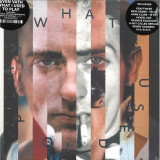
For this uniquely personal retrospective spread over twelve vinyl discs, Sven Väth takes us back to the early days of his DJ career. On What I Used To Play we meet great pioneers of electronic music, gifted percussionists, obscure wave bands, and innovative producers of a bygone 'new electronic' era. Rough beats and irresistible grooves from the identification stage of house, techno, and acid remind us not just how far electronic music has evolved over the past four decades, but how great it was to dance to EBM, techno, and house for the very first time.
If there is one protagonist of the electronic music scene who has remained curious, innovative and at the very cutting edge of music for over four decades, it's Sven Väth. His multi-layered artist albums and Sound of the Season mix compilations have been defining the genre for over two decades, and even today, he is constantly on the lookout for the next top tune to add to the highlights of his next set. At least, that's the case when he's not producing them himself as an artist or remixer. "Actually, it's always been part of my DNA to think ahead," and nothing had been further from his mind than looking back at his past, but when in spring of 2020 the international DJ circuit had to be scaled down to virtually zero, the 'restless traveler' suddenly had time. Time to stop and reflect on "how it actually was back then, at the very beginning of my career..."
"It was a great trip and with every track, beautiful memories came flooding back".
In the London apartment, he had just moved into, Sven has set up a "little music room", where he cocooned himself for several days, "to look way back for the first time and review my musical journey through the eighties, so to speak."
The interim result was six thematically oriented playlists with a grand total of 120 tracks from 'early 80s' to 'Balearic late 80s', together with excursions into afrobeat, European new wave, and EBM sounds and a few epochal techno/house tracks from the USA in between. From these 'Best of Sven Väth's favorites', the project What I Used To Play crystallized. Sven remembers how the Cocoon team reacted to his proposal: "They found the idea of making a compilation out of it MEGA from the beginning and everyone said 'Sven, go for it', but then, of course, the work really started, namely, to clear the rights and to get clean sounding masters of the up to 40-year-old tracks. There was also disappointment, of course. We couldn't clear certain titles because the rights holders in the USA had fallen out with each other or simply disappeared from the scene. In short, it wasn't easy, but now I can safely say we got the most important tracks."
Finally, after two years of research, curation, design, and administrative fine-tuning, the "little retrospective" from 1981 to 1990 is available. The exquisitely packaged, and three-kilo heavy box set is not only physically impressive, WIUTP is also the definitive record of Sven Väth's musical development. On each of the twenty-four sides of vinyl, you can trace track by track, what influenced him during which phase, and how he took off as a DJ from his parents' Queen's Pub straight into the spotlight at Dorian Gray. There and at Vogue (later OMEN), Sven became the style-defining player in the DJ booth that he still is today.
1981 - 1990: Future Sounds of Now
In the early eighties, the crowd in clubs like Vogue and Dorian Gray danced to what nowadays we call 'dance classics' - mainly disco, funk, soul, and chart pop. It was up to a new generation of DJs, including Sven Väth, the youngest protagonist in the Rhine-Main area at the time, to create their own club-ready music mix. Good new tracks and potential floor-fillers were rarities that had to be sought out and found, in order to prove oneself worthy.
Without MP3s, internet streaming, or other digital download possibilities, music didn't just gravitate to the DJ, instead, it had to be tracked down. In well-stocked record stores in Frankfurt and Wiesbaden or even in Amsterdam, London, or New York, Sven and friends sourced the material for countless magical nights. On WIUTP we can follow Sven's very personal journey through this wild, innovative era in which synth-pop, funk, hip-hop, and disco were successively replaced as 'club music' by house, techno, acid, and breakbeat. By the end of the decade, it was clear to see that these once exotic 'fringe' phenomena would soon become 'mass' phenomena.
Early 80s
Dirty Talk by the Italian-American duo Klein & M.B.O. represents the most innovative phase of the Italo-disco genre in the early eighties like no other track. Mario Boncaldo (I) and Tony Carrasco relied entirely on the original synthetic drum and percussion sounds of the Roland TR-808, coupled with the raunchy vocals of Rossana Casale and guitar accents of Davide Piatto. Of course, other tracks from this period were also influential in style, most notably Unit by Logic System, which worked as the perfect soundtrack to the laser lighting system at the legendary Dorian Gray club. With stomping beats and robotic rap interludes, Bostich by Yello also belongs on Sven's eternal playlist - after all, it caught the attention of Afrikaa Bambaataa, who invited the Swiss duo to perform at the Roxy in New York in 1983.
EBM Wave - Mid 80s
From today's point of view, the almost ten-minute-long, downtempo track Giant by Matt Johnson's band project The The, would probably not be considered an obvious club classic. However, a closer (re)listen reveals the rhythmic intricacies of the percussion overdubs by JG Thirlwell (aka Foetus) on Johnson's composition, and it becomes clear why this exceptional piece of music is one of Sven's absolute favorites. Other classics from this phase include Kaw-Liga by the mysterious The Residents, the hypnotic-synthetic Our Darkness by Anne Clark (and David Harrow), and last but not least, the somber, monotonous anthem Where Are You? by 16Bit, one of Sven Väth's projects together with Michael Münzing, Luca Anzilotti from 1986.
US House - Late 80s
You certainly can't talk about Chicago house without mentioning Frankie Knuckles. The resident DJ at the Warehouse not only gave the name to an entire genre, but also produced epochal floor fillers on the Trax label like the timeless Your Love, sung (and moaned) by Jamie Principle. Acid house protagonists Phuture also hail from Chicago, and on We Are Phuture (also released on Trax) we hear the chirping acid sounds of the legendary Roland TB-303 in full effect. Another featured classic is No UFO's by Detroit's Model 500 aka Juan Atkins, who is rightly considered the 'Godfather of Techno' even if the genre-defining track from 1985 still breathes with the spirit of hip-hop and electro from the first breakdance era.
Afrobeat
Le Serpent, by Algerian-born Abdelmadjid Guemguem, is a track that sounds completely different from everything else on WIUTP. Made in 1978, it's a monumental, rousing groove created without bass or synths, just with five congas! Even though Guem sadly passed away in 2021, his immortal, acoustic beats are understood all over the world and will continue to enrich many thousands of DJ sets for years to come. Another classic that not only Sven appreciates beyond measure is Hugh Masekela's Don't Go Lose it, Baby. In addition to being one of the most important jazz pioneers, the trumpeter and freedom fighter from Johannesburg was very experimental, integrating electronic sounds into his music in later years, in a similar vein to Miles Davis and Herbie Hancock. Dutch jazz pianist Jasper van't Hof's afrobeat project Pili Pili has also aged well. The trance-like, almost sixteen-minute-long track of the same name, manages to fill a whole side on the seventh of twelve vinyl discs in the WIUTP box.
UK-US-Euro - Late 80s
Time for a change of scene, in the truest sense of the word, and from a musical perspective, this section is like landing on another planet. First up is Andrew Weatherall's classic remix of Primal Scream's Loaded, featuring the iconic Peter Fonda sample (lifted from the 1966 biker film Wild Angels) that came to personify the mood triggered by the British Second Summer of Love in the late eighties: "We wanna be free to do what we wanna do, and we wanna get loaded...". This period also saw the emergence of M/A/R/R/S whose only single, 1987's Pump Up The Volume, became a club classic with support from DJ legend CJ Mackintosh. In this most eclectic of sections, we also encounter New York house and reggae producer Bobby Konders and his seminal Nervous Acid.
Balearic - Late 80s
Those who know him, know that Sven had already lost his heart to the 'magic island' of Ibiza as a teenager, so with that in mind, the WIUTP project couldn't end without a Balearic chapter. Inspired by Manuel Göttsching's E2-E4, the immortal, eponymously titled Sueño Latino belongs in there without question. Equally popular on the island was, and still is Break 4 Love by Raze, which thinking about it, would also fit perfectly into the house chapter. Last, but not least, there's an overdue reunion with Sven Väth himself, in his role as frontman of the successful Frankfurt trio OFF. Together with Michael Münzing and Luca Anzilotti (later of Snap!) this 'Organization For Fun' created the off-the-wall club hit Electric Salsa in 1986 which incidentally turned into an international chart smash, putting Sven in the enviable position of having to decide between pop stardom and a DJ career. Well, we all know how that decision turned out and the rest, as they say, is history. A not insignificant part of his story is What I Used To Play. Enjoy!
Mogwai return with their 9th studio album which was recorded with renowned producer Dave Fridmann (Mercury Rev, The Flaming Lip's, Mogwai's Come On Die Young and ROCK ACTION) at his Tarbox Road Studios in New York State.
Every Country's Sun named after a friends lack of knowledge in how the universe works, takes two decades of Mogwai's signature, contrasting sounds and distills it, beautifully, into 56 concise minutes of gracious elegance, hymnal trance-rock, and transcendental euphoria. It will definitely appeal to fans of the band and will gain many new ones along the way.
NO(w) Beauty is a jazz quartet in its most traditional form.
In the perfect continuity of the history of this music, these four young musicians have gathered in Paris, where Hermon Mehari, trumpeter of American origin, has settled, like many of his peers before him. There, in the detours of the jazz clubs, a dialogue was created, then a friendship, thanks to the common language of music. Their personalities and influences mingle and define their sound. Jazz standards, blues, French and European classical music, soul, hip-hop, but also modern jazz and the avant-garde. A traditional quartet, but one that wants to be in tune with the times, and that looks ahead.
The three Frenchmen, in addition to having studied jazz, are largely rooted in French popular and learned music and their influences range from improvised music to Olivier Messiaen via Claude Nougaro... Enzo Carniel and Damien Varaillon both studied at the CNSM in Paris, renowned for its excellence and its very "European" aesthetic. Stéphane Adsuar studied at the Berklee School of Music in Boston, the leading school in the United States. Hermon Mehari, originally from Kansas City, Missouri, brings his unique heritage to the table, while innovating in the tradition of the great American trumpeters.
Together they create a space where all these influences intermingle, without nationality, without borders.
Teno Afrika's 2020 debut Amapiano Selections drew an international wave of support sparked by the producer's deftly minimal take on the emergent style. Amapiano combines the South African predilection for deep house alongside a melange of endemic influences like kwaito, jazz and gqom. The 20-year-old's new crop of songs Where You Are expands on his rhythmic subtlety hooded in warm bass adorned by amapiano's telltale shakers, hi-hats and mid-tempo shuffle. Lutendo Raduvha hails from Pretoria, South Africa, where he produces music incessantly and DJ's parties around Gauteng province. He hangs with a crowd of musical friends, many of whom join him on Where You Are. For his second album Teno Afrika brings more vocalists into the sonic picture, unlocking an emotive and timbral escalation to his rapidly mushrooming catalog of work. Singers Leyla and KayCee feature on the title track and "Fall In Love," respectively. Regular cohort Diego Don joins for two driving, pad-propelled works of significant vibrancy, "SK Love" and "AK Love." The album's dramatic closer "Duma ICU" features another returning collaborator, Stylo MusiQ, who helps bring an icy, almost cinematic conclusion to a slice of the sound Teno Afrika is pushing at the moment. There's a palpable feeling of not knowing where the young producer might go next.
Teno Afrika's 2020 debut "Amapiano Selections" drew an international wave of support sparked by the producer's deftly minimal take on the emergent style. Amapiano combines the South African predilection for deep house alongside a melange of endemic influences like kwaito, jazz and gqom. The 20-year-old's new crop of songs "Where You Are" expands on his rhythmic subtlety hooded in warm bass adorned by amapiano's telltale shakers, hi-hats and mid-tempo shuffle. Lutendo Raduvha hails from Pretoria, South Africa, where he produces music incessantly and DJ's parties around Gauteng province. He hangs with a crowd of musical friends, many of whom join him on "Where You Are." For his second album Teno Afrika brings more vocalists into the sonic picture, unlocking an emotive and timbral escalation to his rapidly mushrooming catalog of work. Singers Leyla and Kaycee feature on the title track and "Fall In Love," respectively. Regular cohort Diego Don joins for two driving, pad-propelled works of significant vibrancy, "SK Love" and "AK Love." The album's dramatic closer "Duma ICU" features another returning collaborator, Stylo Musiq, who helps bring an icy, almost cinematic conclusion to a slice of the sound Teno Afrika is pushing at the moment. There's a palpable feeling of not knowing where the young producer might go next. Also Available From Teno Afrika: Amapiano Selections LP/CD. Track listing: 1 Teno Afrika ft Leyla “Where You Are” 2. Teno Afrika & Diego Don “SK Love” 3. Teno Afrika “Bells” 4. Teno Afrika ft KayCee “Fall in Love” 5. Teno Afrika “Gomora Groove” 6. Teno Afrika “Halaal Flavour” 7. Teno Afrika & Diego Don “AK Love” 8. Teno Afrika ft Stylo MusiQ “Duma ICU”
Friendsome Records and Tatie Dee are delighted to present to you her debut EP Purple Wave. After a few singles released on various french and international labels and compilations, that launched a very promising career, the young prodigy has produced this beautiful 5 tracker to take you on an Acid trip full of jumpy melodies, heavy beats and banging drops ! Oscillating between “classic” House and contemporary Acid touches , you will first be taken on a journey of grooves fully produced by Tatie Dee (A1 to A3). Each in their own styles won’t definitely get a crowd in stagnation ! The B side has much more heaviness to it, starting with a remix by the one and only UK legend Mr G, where he took Take Me Up in a mix which only he has the secret for. Followed by the last (but not least!) track of the record, OMZ, which we could describe as the “dirty side” of Tatie Dee. Enjoy your trip !
MILK GREY VINYL
100% GALCHER was by all accounts a game-changer when it landed in 2013 as an hour of original music from a relatively unknown producer ushered in by the beloved mix series Blowing Up The Workshop. Galcher Lustwerk's signature sound _ a smoky stream-of-consciousness baritone shadow-boxing with beats, informed by funk, rap, rhythm, and blues _ felt like an epiphany, impossibly hypnotic and complete. Resident Advisor writes, "100% GALCHER laid out a louche, lysergic and resolutely black take on deep house." Pitchfork remembers the music's immediate impact: "It's the sort of gem you felt inclined to pass around" _ and by year-end list time, word-of-mouth intensified. It was Resident Advisor and Juno's mix of the year, and earned a top-ten placement in FACT Magazine's albums list, as well as Philip Sherburne's personal rundown for Spin." Since then, select songs from 100% GALCHER have seen small-run pressings, while the album has lived primarily on SoundCloud and YouTube as a low-key cult legend. The gateway into Lustwerk's now well-established catalog, known for its reliability as a late-night listen and its prophetic vision for the near future of underground dance music. RA would later name it a mix of the decade, citing its influence and imagination: "Original in every sense _ unknown, unheard and unbelievably good." In late 2022, marking ten years since he first recorded the material, Lustwerk returns to Ghostly International to release 100% GALCHER as a remastered limited-edition double LP. Lustwerk is a product of the Midwest. Growing up in Cleveland, he'd tape over his parents' cassettes and spend hours at his family computer recording loops and designing artwork for the jewel cases of burned CDs. In high school, he turned to Ableton Live and absorbed every electronic music magazine he could find at the local Borders Books store. As a college student at RISD, he played in noise bands, plugged into Providence's DIY scene via Myspace, and started DJing weeknights at bars downtown. There he connected with Young Male and DJ Richard, who would go on to found White Material Records and offer their third release to Galcher Lustwerk, an alias realized via CAPTCHA test, a perfect artifact of its internet age. By 2012, Lustwerk had drifted to New York City and settled into a graphic design job, quickly growing disenfranchised by office culture. "Some days I felt like a token, other days I felt invisible." At night, he and his friends were carving out their own space, throwing parties in small basements, office buildings, and off-beat karaoke bars in Manhattan, influenced by series such as Mr. Sunday in Gowanus and The Bunker at Public Assembly. The lifestyle started to bleed into Lustwerk's musical vision. He remembers the night it clicked in Providence, partying and listening to tunes with Morgan Louis and Alvin Aronson. He went back to New York and pieced together his bedroom setup: a Dave Smith Tempest drum machine, a Waldorf Blofeld synthesizer, and a TEAC cassette recorder. Early snippets went straight to SoundCloud, where Lustwerk tested the crowd. Comments and messages offered instant feedback. One DM proved to be the greenlight: from Matthew Kent, an invitation to his burgeoning mix series Blowing Up The Workshop. 100% GALCHER traveled fast and far. A phenomenon he could only enjoy for a short period before discovering that nearly all the masters of the tracks got wiped by water damage to his computer. "The only copies were now on the 192kbs mp3 mix I sent Matt." Until now, after Lustwerk revived the lost tracks and handed them to Josh Bonati for remastering. "The original mix was never mastered so I hope older fans can find something new here." Hearing the enhanced set for the first time delineated by tracklist reveals this was a proper album all along. Sly synth interludes (all titled "Stem") clear the air for raspy house anthems like "Fifty" and "Parlay," the set's original breakout. Themes present across Lustwerk's catalog first materialize in this iconic run _ the link between the meditative state of Midwest driving and the solitary comedowns of nightlife. Lust- werk, the narrator, is an elusive character, a secret agent of the club, embodied by the hooks: "One minute I'm on / next minute I'm gone," he reminds us on cult-favor- ite "Put On." These narcotic, one-line refrains stick with you; look no further than the original YouTube upload of "Kaint" to know that fans can't let these phrases go. While recorded alone, 100% GALCHER was a collective moment. A decade later, Lustwerk sees the legacy as shared: "Making music can be an alienating experience, especially for DJs who travel a lot, it's all super isolating. It's easy to express lone- liness in the music itself, but when it comes down to getting things done, putting music out, you def should go on that journey w other people, friends, or maybe just a group of people online, build things with your friends then they can build to help you."
If you've been in the club scene for many years like David Dorad, you will one day face the big, essential, serious questions that each of us will ask ourselves sooner or later:
Are marmots pack animals?
Can marmots sign language?
Do marmots plan their lives according to European or Chinese zodiac signs?
Do marmots need a special passport, after all they don't have a thumb to turn the pages?
What happens when a marmot eats Coke and Mentos at the same time?
And with all those questions whistling, hissing and muttering in his head, David grabbed piano, baton and BioBassline to crochet his new EP.
This is called "Marble" and offers 6 different approaches to solve these big questions.
As a source of ideas, he has competent partners at his side in Roman Flügel, Mira, Christopher Schwarzwälder, Canson and Sascha Cawa.
A1 -
Murmeli - original
The marmot tribe awakens. Get up to brush your teeth. Gets your toes tapping. Makes you snap your fingers. Dare to roll your hips. Later rhythmically to turn. To look elegant at the same time. Eyes closed - eyes open.
Murmeli, the regular leader, sits at the piano.
Everyone is dancing, toothpaste in the corners of their mouths and a smile that takes the toothpaste by the hand.
A normal morning in marmot houses.
B1 -
Murmeli - Mira & Christoph Schwarzwald RMX
Mira and Christoph Schwarzwalder take over from Murmeli. They vary, combine and subtract. The first marmots raise their thumbless fists in the air - showing their passports, ready to take off.
B2 -
Murmeli - Canson RMX
Canson also sits next to Murmeli. Caress the theme, tickle the groove.
Murmeli has the best ideas early on: "Boy, let's try Mentos with Cola, we'll definitely take off."
Canon is in!
C1 -
Murmelot - Original
The sun goes down in Murmelhausen too. Then Murmelot is ready. Gives his advanced Pilates class, which the whole tribe takes. The village wants to remain mobile.
Murmelot's motto is "Why not stretch while walking?"
And so shall it be. He sets the rhythm on his wooden Fairtrade 303 and our furry friends shave shaky and obscene messages down each other's backs while impatiently hopping for the drop.
D1 -
Murmelot - Roman Flügel Remix
Roman Flügel and Murmelot are old buddies. Struck while carving the 303.
Roman happily takes over the Pilates class, the dancing crowd. Enchanted until the razor's batteries are empty and only dancing remains, only dancing is important.
D2 -
Murmelot - Sascha Cawa RMX
Sascha Cawa takes his trunk by the hand, wants to motivate her again shortly before the second sunset of the day. Whispers little obscene Pilates positions in their ears. That motivates. Murmelot switched from piano to percussion.
The marmots' sweat feeds the golden orchids in the clearing for the next six months.
Over the last two years, the Innate and We’re Going Deep labels – run by friends Owain K and Placid respectively – have become must-check imprints for those seeking brand-new, timeless-sounding electro, deep house, acid and techno. Now the pair are joining forces on a new collaborative venture that looks to the past for inspiration: InnDeep.
Focused on unearthing and showcasing slept-on gems from across the deep spectrum, the reissue-focused label will have an emphasis on UK producers and imprints whose work in the ‘90s and 2000s has arguably been criminally overlooked.
To kick things off, they’re taking a deep dive into the back catalogue of Headspace Recordings and Emoticon co-founder Tom Churchill, a Welsh producer whose trademark take on deep house achieved cult status in the late 1990s and early 2000s.
The Personal Interpretation EP was first released on Headspace way back in 1997, and dates back to a time when Tom was the very definition of a bedroom producer. He created the EP’s three tracks while still a teenager and mixed them down using the same pair of headphones he used for DJing.
Now painstakingly remastered, the EP sounds every bit as immersive and intergalactic as it did at the tail end of the last millennium. On the EP-opening title track, Churchill builds a sturdy, chunky groove out of clicking, hissing and metallic percussive elements and a wonderfully deep, tactile bassline, over which gorgeous chords, melodic motifs and eyes-closed vocal snippets stretch out as if reclining in the afternoon sun.
Churchill opts for a deeper, Detroit-influenced sound on ‘First Principles’, with undulating electronics and a raw analogue bassline working in unison with ghostly chords and deep space melodies, while ‘Crossed Wires’ is a tispy, off-kilter epic – all breathless drum machine rhythms, pots-and-pans percussion, woozy chords and weighty sub-bass. It provides a fittingly energetic, out-there end to a long-overlooked EP that remains as fresh now as it did back in 1997.
The liminal space between storytelling and dreaming is full of noise. Like whispers, flickering lines of static travel to the rhythm of tension, moving through moments of stillness and chaos. The sharp details of the hyper-personal become shared memories.
Dreams can be stories, their fabric transient and their logic malleable - like folk songs carrying ancient knowledge or clairvoyant wisdom.
White Dove Dream tells a story that only sound can. One that defies language and closed narrative; a story that is both a personal rumination and collective conversation.
There are layers of healing synthesis and dream logic improvisation; captured recordings coalesce somewhere beneath the scramble like deja vu. Like a diary entry, or a manifesto - noise is folk music and Icebear is noisy.
Icebear is Eilis Mahon, a sound artist from Kildare, Ireland.
White Dove Dream is her debut release on Weeding - an independent label and collective of friends based primarily in Dublin, Ireland, who love to make and share noise.
Recent play of “Funny Games / Garfield” on Pure Soil - NTS.
solid white vinyl
After 11 long years Pohjola reignites it's furnace to bring a new release by a (let's pretend he's) young Serbian producer Lag. Finding a common language in pursuing the unsaid parts of techno, labelboss Rivet aka Grovskopa and Lag turned their long, meme-and-trolling-fueled friendship into a gorgeous-looking record (art by Trudy Creen, additional design work by Dejan Ilic). The music it bears is as offset as it is functional: offering a palette of both straight and broken beats driven by vocal snippets, genre-defying arrangements and, most importantly, scream-inducing club moments. Trust us, we tried them in the wild.
- A1: It's Your Thing
- A2: Work To Do
- A3: That Lady (Part 1 & 2)
- A4: Summer Breeze (Part 1 & 2)
- B1: Harvest For The World
- B2: Live It Up (Part 1 & 2)
- B3: Hello It's Me
- B4: Groove With You
- C1: Fight The Power (Part 1 & 2)
- C2: Hope You Feel Better Love (Part 1 & 2)
- C3: For The Love Of You (Part 1 & 2)
- C4: The Highways Of My Life
- D1: Footsteps In The Dark (Part 1 & 2)
- D2: It's A Disco Night (Rock Don't Stop) (Rock Don't Stop)
- D3: Say You Will (Part 1 & 2)
- D4: Between The Sheets
The Isley Brothers “Knowledge is power. I’m a witness to that. Our parents wanted us to have a complete musical education. They exposed us to everything, classical to country, standards, show tunes.” Ronald Isley, Mojo Magazine, 2000 The Isley Brothers have delighted audiences since the 1950’s and are celebrating their eighth decade in show business. Morphing from their roots in gospel and doo-wop through funk, rock and then, finally, into slow-jam R&B, the Isley Brothers remain one of the most fascinating groups of all time.
This album contains some of the most life-affirming music ever recorded: Ronald Isley’s keening yelp offering strength and sensitivity as it is supported by brothers Rudolph and O’Kelly. Our collection picks up their story in 1969. By this time, they had been recording for 12 years for many legendary labels, from RCA, to Atlantic, to Motown.
The brothers decided to go it alone on their own label, T-Neck. The repurposed Isleys broke onto the scene with the US R&B No.1/Hot 100 No. 2, ‘It’s Your Thing’. The album of the same name was a Top 30 smash and the group’s decision was vindicated. ‘It’s Your Thing’ marked a meeting point of influences: Sly Stone, James Brown, gospel and one-time group member Jimi Hendrix, laying the template for the Isleys’ next decade, from the gritty rock covers of Givin’ It Back to the era-defining ‘3 + 3’ (with the formal addition of the two younger Isleys, Ernie and Marvin, plus brother-in-law Chris Jasper).
After the 1972 release of ‘Brother, Brother, Brother’ (featuring the classic ‘Work To Do’) T-Neck moved to CBS leading to their first Platinum-selling album (1973’s ‘3+3’). Produced with Malcolm Cecil and Robert Margouleff, ‘3+3’ was practically prescribed to every soul boy in the UK (witness Wham’s cover of ‘If You Were There’). For the Isleys to take their old R&B hit, ‘Who’s That Lady’ and turn it into hard-rocking psychedelic soul was a blazing statement of their
intent. Their version of Seals and Croft’s pretty ‘Summer Breeze’ became one of their biggest hits, with Ronald and Ernie stamping their authority on the ballad. A period of phenomenal success followed. For every standout ballad (‘For The Love Of You’, or ‘The Highways Of My Life’), there was strident, take-no-prisoners political funk - as typified by ‘Fight The Power’, a US R&B No. 1 in 1975.
It was written by Ernie on the same day as another of their greatest moments, ‘Harvest For The World’.
This collection is a beautiful overview to the group, a most fabulous re-introduction to old friends. This era is affectionately known by the Isleys as the ‘gold and platinum years’ - one listen and you will understand why.
Ingredient is the elegant collaboration of Toronto poets, composers, producers and dear friends Ian Daniel Kehoe and Luka Kuplowsky. Their self-titled release is an enigmatic electronic avant-pop record attuned to the micro and macro perspectives of the natural world. Ingredient is an album whose lyrics are more poem than lyric, and whose songs exist in a merger of house music, philosophically-minded lyricism and contemporary R&B. One might recall electronic and art-pop luminaries such as Yukihiro Takahashi, The Blue Nile, and Arthur Russell, or connect it to contemporaries like Nite Jewel, Westerman and Blood Orange. A distinct world of dance, of questions, of secrecy and ultimate softness.
Eight years of friendship forges strange telepathy.
In the summer of 2020, Ian Daniel Kehoe was entrenched in a new feeling of heaviness; psychosomatic symptoms had started to proliferate; stress made new pores across the body, bending sensitivity into pain. His days were met with confusion, detachment, sleeplessness and pain without causation. Disfigured, he felt that what had been central and centering was blown out to the periphery of things. In a moment of self-preservation he reached out to his dear friend Luka Kuplowsky to make an album together. For Kehoe, it was an instinctual grasp for the anchoring truthfulness of deep friendship and the potential for a dedicated creative collaboration. Kuplowsky’s presence was light, supportful and curious, eager to explore musically the sounds they were mutually drawn to: house music, ambient pop, dub. The duality between Kuplowsky and Kehoe – between the Aflight and the Unmoored – is a portrait of a friendship whose exchanges came easy and produced an outpouring of song. Creation and therapy crisscross. In email correspondence that catalogs their process of collaboration, affection abounds: “feels bare without the Luka Licks”, or “Love you so much”, or “Kinda just overwhelmed with deadliness coming in at all angles.” When their voices first come in together on “Wolf,” that harmony arrives in a dramatic avant-pop sound that is bold and wondrous.
Kuplowsky and Kehoe both arrive at Ingredient as established artists whose works are committed to language’s propensity to provoke and mystify. Kuplowsky’s 2020 album Stardust is an idiosyncratic and otherworldly blend of pop and jazz romanticism grounded by Cohen-esque vocals and a stirring philosophical curiosity. Kehoe’s entrance into the new decade has hatched four records of pop experimentation, most recently 2022’s Yes Very So, a euphoric and bold album of poetic synth-pop and meditative ambient instrumentals. Kuplowsky and Kehoe’s union as Ingredient is a beautiful and unusual chemistry that integrates their distinct approaches while bringing forth a newness: a sound that alternates between cinematic technicolor and dubbed out fogginess; a lyricism that exchanges their lucid and clear poetics for a playful and obtuse verse. The album intuitively taps into the opposing emotional states of Kuplowsky and Kehoe during the conception of the record, contrasting the buoyancy of trumpeting keyboards (“Resurface”), angelic synthesized voices (“Come”), and rolling bass (“Photo”) with the record’s underlying darkness of whirring buzzsaw textures (“Transmission”), whooping sirens (“Wolf”) and murky ambience (“Illumination”). Lyrically, this duality arises in the record’s flux between openness (“Variation”, “Raindrop”) and existential dread (“Wolf”). “Illumination” most clearly crystalizes this opposition, reconciling the verses’ neurotic yearning for enlightenment with the chorus’ liberating doctrine of negation: “no more devotion… no more delusion”. Amidst the gradations of light and dark, Kuplowsky and Kehoe trade indelible, lush melodies as though their voices are made of a substance that melts easily one into the other. The harmony of poetry, sound, and texture cuts through your brain fog like a wet diamond.
Ingredient’s self-titled record was assembled by Kuplowsky and Kehoe over the course of six months in a home studio they frequented daily. Amidst synthesizers and drum machines they composed, re-composed, and workshopped a wide array of music, ultimately focusing on a set of eight songs that lived in a shared musical and philosophical world. Recording days often ended in basketball games at a local court or a rooftop commune over a pot of tulsi tea and a crossword puzzle. Kuplowsky brought in the Blue Cliff Record – the classic anthology of Chan Buddhism – whose inscrutable and sublime insights remained constant throughout the recording process as an activator of reorientation and reflection. While Kehoe was frequently rendered physically immobile by bouts of anxiety, a patience and mutual caring governed the pace of their creation; rest, stretching and meditation became equally important as the act of arrangement. Invited into their intimate circle of composition was Thom Gill, whose heavenly voice uplifts “Variation” and “Raindrop,” and Karen Ng, whose alto sax simmers and dances around the funky strut of “Raindrop.”
The lyrics on Ingredient reflect the persistence of change, the infinite variability of nature where randomness and divergence are no accidents. In Daoism, duality, in the form of Yin and Yang, is not contradictory as it is in Western idealist philosophy, but rather composes the eternal and lived paradox of our changeless-changing universe: changeless because all is change, and changing because the dynamism of the Dao makes each moment transformational. Kuplowsky and Kehoe refract this way of seeing the world, as in Variation: “Variation in the natural world / there it is.” Ingredient is an experience of the manifold ways of saying there it is of the transformational world, and there it is, unfolding. Elsewhere, change and ephemerality is addressed through the record’s preoccupation with non-human perspectives, reorienting the listener to the wolf, the mouse, the emerald frog, the centipede, the bird, the fly in the lamp. The album cover visualizes this fascination with the striking image of a reddish-orange frog atop a defamiliarized landscape of dark green leaves. Mirroring the exploratory process of the record’s collaboration, the frog also signals the amphibian’s natural inclination to leap into boundless potential. Kuplowsky and Kehoe’s lyrics manifest philosopher and ecologist Timothy Morton’s concept of “the mesh,” drawing attention to the “vast, entangled web” of interconnectedness that connects all life forms and interweaving the songwriters’ shared wonder into the Animal’s unknowability. As Luka narrates in the breakdown of the dance-floor ready “Photo,” “the closer we observe things, the further they retreat into abstraction.” In Ingredient’s ecosystem, perception is a reversible fractal where the world’s minutest details mirror the shape of the cosmos.
According to the Dao, the path to healing starts by reorienting perception away from the self and toward the self’s subsumption in Totality. For Kehoe, collaborating with Kuplowsky became the reorientation necessary for the self-preservation he was seeking, opening up a shared creative practice to navigate and soften the complexity of his psychological shattering. The album begins with Kuplowsky intoning “colossal faith” which bounces around the stereo field in a cloud of echo, and it is the enormity of “faith” that centers both Kuplowsky and Kehoe’s collaboration and their inquisitiveness in the vast mysteries of our very being. Truth in Ingredient is not an essential nugget, but a bending of the light – it is the equivocal entanglement of how we are in nature as nature, but with a plea or prayer under our breath that marks our felt distance from what we are a part of: “carry me towards the mountains of my birth / returning to the nest / the silence of the earth.”
- A1: Ataxia - Detroit Gospel
- A2: Ataxia & Andres - Pine Island
- A3: Ataxia - Language
- B1: Ataxia & Dj Minx – Maxia
- B2: Ataxia - Spit In Your Percolator
- B3: Ataxia - 98 Degrees
- C1: Ataxia - Number Streets
- C2: Ataxia - The Formulator
- C3: Ataxia - The Pusher
- D1: Ataxia & Mister Joshooa - Feels Like
- D2: Ataxia – Wm
- D3: Ataxia - Dance The Bridge
Having torn up raves for well over a decade, the Detroit duo Rickers and Ted Krisko AKA Ataxia present their debut longplayer ‘Out Of Step’. Featuring guest spots from close peers DJ Minx, Andrés and Mr Joshooa, they twist house, techno, electro, breakbeat and rave into revitalized new shapes; embellished with a touch of soul, funk and hip hop. With backgrounds in hardcore and punk, Ataxia’s debut is suffused with that energy, attitude, and approach; this is raw, lean and unashamedly no-nonsense dance floor tackle that goes straight for the jugular. Heavily analogue, the album experiments with tape saturation, which harks back to the duo’s formative years in bands, recording demos to cassettes. These straight-up, in-the-red tracks give preference to overdriven drum machines, rather than generic polished sheen, but conversely, it’s all deceptively well-crafted too; ‘Out Of Step’ is a standout record that’s big in character, bringing to mind the renegade spirit of Underground Resistance, and the bombastic brilliance of The Prodigy and Chemical Brothers.
Defiantly optimistic despite the state of the world, a “life is good” vocal sample meets minor chords sliding over 808 hats on the exemplary house/techno pumper ‘Detroit Gospel’, before a lighter moment on the album, but no less impactful with its hefty low-end thump, is ‘Pine Island’ featuring Motor City hero Andrés. Together they cook up a Motown-inspired house cut awash with horn swells and backup singers, bouncing to wide swung funk bass, in classic 313 style. ‘Language’ turns the club on its head – busting out one of the most distinct basslines in recent times, and bristling with buzzy, undulating chords, whilst ‘Maxia’ features influential Detroit royalty DJ Minx. Inspired by her classic ‘A Walk In The Park’, with a fat distorted kick and stealthy bass groove, this is low-slung, stripped-back, heads-down coolness. The high-tech funk of ‘Spit In Your Percolator’, is laser-guided in its efficiency, with a strobe-like, increasingly intensifying energy, peppered with clever, tripped up vocal chops. With the next cut, conveyor belt noises and fast churning low-end gives way to a dubbed-out breakdown, on the deep breakbeat roller ‘98 Degrees’. Charged with a blistering, rave intensity, ‘Number Streets’, is a futuristic distorted techno workout that booms through the subs, whilst ‘The Formulator’ mixes filtered snippets, abstract synth noises and melodic bleeps with a bassline echoing Paperclip People’s ‘The Floor’. Closer to the UK definition of hardcore, combining 4/4 and breakbeat, ‘The Pusher’ evokes the spirit of late 80s orbital raves, adding a natty keys solo, and deadly bass used sparingly, for even deadlier effect. ‘Feels Like’ sees Rickers and Ted team up their studiomate and fellow TV Lounge resident and club booker, Mister Joshooa. Inspired by Photek but also almost UKG in style, this breakbeat session is stamped with MJ’s signature chopped vocals and intricate rhythmic interplay. The bubbling, wobbly loose swing of ‘WM’ is constructed around a classic chopped-up MTV cribs sample, with a filtered vocal creating a far out psychedelic effect – all of which is propelled apace by a huge bruising LFO. The LP concludes in fine style with ‘Dance The Bridge’, where bouncy beats and wigged-out keys meet bright, gently uplifting synth chords that bring a clear-skied mood; ending the record as it began, on an optimistic note.
‘Out Of Step’ marks another chapter in the ongoing relationship between Life and Death co-founder DJ Tennis and Ataxia. Their connection goes back to the earliest days of the label, where they played gigs together on some of Tennis’ initial visits to Detroit. It’s a friendship that’s blossomed organically over the last decade through their shared love of punk and hardcore, and led to the fruition of one of Ataxia’s most compelling projects to date. Labels to release Ataxia’s output include legendary Detroit techno imprints Planet E and KMS, plus the seminal American house label Nervous Records. Their catalogue also includes music for Visionquest, Leftroom, 20/20 Vision and Seth Troxler’s Play It Say It.
ROOMER is the name of the latest Berlin music sensation. Call it slowcore, shoegaze, dream pop, noise- or indie rock. Whatever way you like! The band's influences are definitely an eclectic lot. Just like with all good bands. But their sound is now! ROOMER are consisting of well-known Berlin scene musicians* who only now start to appear as ROOMER: Ronja Schößler, Ludwig Wandinger, Luca Pusch and Arne Braun. The birth of the band, however, goes back to a session at Kunsthalle Below about a year ago "We recorded a few songs on our own with some equipment that was lying around there and then recorded a few overdubs at home in Berlin," says Ronja Schößler laconically about the founding myth of ROOMER. On this EP they sound like a band that has been playing together for many years and knows exactly where they want to go with their music. ROOMER proves once again that a circle of friends making music is b asically unbeatable as a band formation.
Dear Friends,
Do you know that tipping point, when an average gathering at a bar turns into a dancing party? A few seconds ago, you´ve been mixed up in boring small talk, then you suddenly get distracted by unobtrusive but cheerful sounds that unwittingly make your head bob, let you turn around and at least let you unintentionally find yourself in a bunch of smiling and dancing people…. so, music can save the night- Freudenthalers “Bar Rescue EP” definitely does. It appears nonchalant and unexcited, but always with a compelling spell.
With a touch of swing, a wobbling bass line and all the jazzy elements and cheering voices “The Swingers” gives that perfect vibe to really get a party going. “Worthy” is nearly cracking that harmony with raw, almost careless cut Afro Latin jazz samples, deep chords and spherical particles embedded, but a funky bass always keeps the easy vibe. “Lingerie” opens the flip-side with a tight beat, perfectly complemented with a noisy piano lick, strings, horns and some hip hop cuts. “Overseas Phone Number” then rounds out the release by featuring a swinging rhythm, lovely string pads, pleasant saxophone parts and paying tribute to a French rap classic. Altogether, you will answer it with a smile, for sure. With this in your bag, you´ll be prepared for toughest rescues!
P.S.: Physical release comes with handcrafted, screen printed artwork by fabulous graphic artist Zatina Kessl.
Reggie B returns with his much awaited NBN release "Tinky's Jam.” This is his first full length album since “Soulofunkaquarian” released with INnatesounds. The album was most definitely worth the wait. It takes the listener through a personal and musical journey inspired by the birth of his son, who he affectionately calls “Tinky,” and the connection they share. Tinky was a major part of this album, oftentimes found in the studio during the conceptions of many of the songs. This album is unlike any other record released by the Kansas born producer, multi instrumentalist, singer and arranger. After the birth of his son, he was inspired and encouraged to get back into the musical game by the head of NBN, Onra. "Tinky's Jam" is something of a family affair with friends and old collaborators playing their part.
Born into a musical family to parents who were two sides of the same coin, a father who was one of the most renowned drummers in Topeka, Kansas funk and jazz fusion scenes and a mother who was one of the most prominent gospel singers in the city. The apple didn't fall far from the tree and Reggie has spent his life performing and playing with a healthy slew of releases.
This album is the result of countless days in the studio which yielded scores of a dozen slabs of head nodding funk.
Mostly instrumental and showcasing Reggie's many styles from the heavy bounce of "Futuristic Slow", to the George Clinton nod on "P For Life", and the crafted soul of "Gone Fishing" with Dominique Sanders to the cool street jazz feel of "Realize" with Donald Hates's sax adding flare as well as the beat of "Nose Dive" providing the nod factor for the heads.
Closing out the LP ``Tinky's Dance" - a raw soulful jam that lies somewhere between Prince and Larry Heard - for Reggie "the whole project felt like a gift to me and my baby boy Tinky! I wanted to let him know he’s always in my heart and soul and I love my Tinky man infinitely! It’s a children's album for the elevated child like Tinky!”
If you ever wondered what ambient music of the 21st century could sound like, then you should explore the musical spheres of "ifsonever". This colorful debut-album draws a blueprint of an urban ambient club record of a parallel universe. A collage of beautifully improvised pieces, strictly recorded in "one takes". A gripping fusion that brings together the warm analog textures of classic vintage synthesizers and electronic urban ambiences.
Trying to appreciate the recent times of silence and deceleration, Daniel Helmer aka ifsonever has quickly developed a tonal language as a solo artist. With a non-compromising approach he would visit his studio, a cozy garden shed, to record one new track a day in strictly analog fashion as "one takes". His aim for this project was to capture the innocence and instinctive creative energy of the present moment. These 9 timeless pieces invite the listener to explore hypnotic and meditative atmospheres such as on the opener "transpose" or on "jonesy dreams of birds", as well as gloomy and almost mystical sounding tracks such as "total global" or "an unexpected error has occurred". ifsonever is a wonderful amalgamation of organic, laid-back sounds and electronic, club oriented elements.
Recorded at a time when social contact was forbidden and culture was at a standstill, many professional musicians felt challenged not to feel useless when performances and sessions in public were cancelled, while the need for expression, participation and communication persisted. What happens when you've read all your books, when you're tired of looking at screens, and when you're digitally saturated? Then the unbearable lightness of being will begin. Daniel Helmer decided to let his creativity flow into a picture depicting that moment in time. He gave himself the opportunity to reflect this period through the creation of music. Not always an easy thing to do when the only social interactions would be cats passing by or the sound of children playing nearby. However that can be exactly the perfect tranquil surrounding to ground oneself in the here and now and draw inspiration from the inside. This self titled album reflects a peaceful journey from start to finish.
Two old friends have been invited to contribute overdubs in hindsight. MillianX is a film composer and noise artist, a colleague from the viennese filmacademy. Both worked together on the film score for the science fiction movie "Rubikon" while the album was in its final stages. So a collaboration was an obvious choice. The creamy arpeggiated synthline created for "jonesy dreams of birds"' was extended by Millianx with some field recordings and a big cloudy synthwave that dips into a vast sea of noise.
Guido Spannocchi is a london based jazz musician. Both knew each other for several years but never had the chance to work together. When Daniel Helmer wrote "an unknown error has occured" he imagined a saxophone layer to accompany the existing synthline. But when the two musicians finally got together to record in the legendary jazz club "Porgy & Bess", Guido just let his creativity flow and jammed freely to the track with a totally unique jazz vibe.
Between film, music & sound Daniel Helmer is continuously searching for a spot to call his own. Expanding boundaries, pursuing the unheard and breaking genre definitions are byproducts of his curiosity and his drive to avoid repetition. Daniel Helmer resides in Vienna where he studied at the local film academy. He became one of the founding members of the techno-punk band "Gudrun von Laxenburg" with album releases on the legendary Skint label, collaborated with Sam Irl on "International Major Label" as the production duo "Mantra Mantra" and released an album as "Yogtze" on Gerd Janson's imprint "Running Back Incantations", together with Feater. At the moment he is focusing on his work as a film composer and is currently working on two feature films in Austria.
"ifsonever" offers a timeless ambience to help you slow down, reflect and enjoy the beauty of nothingness. It might help us to learn and accept a state of being unutilized without feeling futile and benefit from this rare silence.
The cover artwork is a collaboration between Jazz & Milk graphic designer Tim Schmitt and photographer Frank Hulsbömer. A scan of the artist's head, hand and foot was 3D printed, photographed and transformed into an otherworldly scenery that visualizes the musical atmosphere.
12 track vinyl LP and 18 track CD including bonus single and demo recordings. The Daggermen all went to Rede Secondary School in Medway, Kent. It was a school for those that failed their 11 plus, or who passed it but decided to go there anyway (as Jon pretends). Being in some of the same classes we became friends and found we liked the same music; The Who, The Small Faces, The Kinks, The Beatles and The Jimi Hendrix Experience. We started going to Carnaby Street, wearing Beatle boots and generally being a bit Moddy. Dave’s older brother, James Taylor, played organ in The Prisoners and we’d listen to cassette tapes of them along with other local band, The Milkshakes as we bounced on the trampoline during P.E. After watching both bands play live in local venues such as the M.I.C. club in Chatham we formed The Daggermen, working out who was going to play which instrument as we stood next to the now demolished school sports hall. No one can quite remember who thought of the name, The Daggermen (it was me) or how comes Jon was playing bass on a guitar in the band at the very start and then Terry took over when we started gigging (it was because he had a real bass guitar and a car). But the next thing was that we were supporting The Prisoners both in Medway and places such as the 100 Club in Oxford Street. Then, one sunny day at around the age of 17, I bumped into Billy Childish walking across a field. I formally introduced myself and told him that he should definitely come and see our band that night because we were “fucking brilliant”. He did turn up and bought us a tray of whiskies whilst we were on stage, a sure sign that he had liked it. This led to him and Russ Wilkins, bass player in The Milkshakes alongside Billy, asking us if we wanted to record an E.P. for Russ’s label, Empire Records. This was our first ever recording called Introducing The Daggermen which was made in a brick arch under Rochester bridge that we rented for £2 a week to rehearse in and lovingly referred to as ‘The Hole’. We got ourselves a “manager” (our mate, Vic Templar) and started playing up and down England, drinking as much as possible in the van on the way to each gig, often paralytic by the time we went on stage. Our musical style was a sort of mixture of punk and mod and we played covers such as ‘Heatwave’ (The Who’s version) and ‘Get Ready’ by the Temptations, along with Dave and Terry’s originals. Then came a change of line up when Jon resumed his position as bass player and Terry left for America. We started wearing military jackets thanks to Jimi Hendrix and made our first long player, Dagger In My Mind (I got the title off an episode of Star Trek, although I remembered it wrong and it should have been ‘Dagger Of The Mind’). The album was produced by James Taylor and Allan Crockford of The Prisoners at Woolly Studios on the Isle of Sheppey in 1986. This line-up played together for a couple of years up and down the country (also with a few gigs in France) before we called it a day and sailed off into the future in bands such as The James Taylor Quartet, The Kravin’ “A”s, The Solarflares and Billy Childish and The Buff Medways. As energetic youths we had a lot of fun and I am very proud to have been part of The Daggermen. We hope you enjoy these recordings, now all gathered together for the first time. Sincerely yours, Wolf Howard, Cafe Mozart, Chatham CD TRACKLISTING 1 – It’s You I See 2 – What Do I Do For You 3 – There’s No Escaping 4 – I’ve Been Hurt 5 – I Have Lost Heart 6 – You Were Meant To Be 7 – Every Moment 8 – Dagger In My Mind 9 – That Girl 10 – D’you Think Of Me 11 – I Feel The Regret 12 – I’ve Been Searching 13 – Now It’s You I Need 14 – Ivor 15 – One More Letter 16 – I Wish You Were Mine 17 – Bundle 18 – No Reason LP TRACKLISTING 1 – It’s You I See 2 – What Do I Do For You 3 – There’s No Escaping 4 – I’ve Been Hurt 5 – I Have Lost Heart 6 – You Were Meant To Be 7 – Every Moment 8 – Dagger In My Mind 9 – That Girl 10 – D’you Think Of Me 11 – I Feel The Regret 12 – I’ve Been Searching
In the summer of 2000, school friends Mark Lawton, Jon Pearce and Jamie Lenman won a battle-of-the-bands competition and used the prize money to record the five tracks that would become their first professional release, entitled Pilot. Then called Angel, before the EP was released on local label Badmusic they changed their name to Reuben and were over the moon when the record received notices in Kerrang and even a spin from Steve Lamacq on Radio One. “We were just a school band, but we definitely had grand plans,” says Lenman, now a successful solo artist in his own right. “We changed our name because we knew we’d have to do it at some point, and we didn’t want the EP to get forgotten.” Despite selling out several modest runs on CD, Pilot was never issued on vinyl, and so to celebrate the 21st anniversary of its release, the five original tracks have been re-mastered and pressed onto wax. But more than this – after a chance discovery of five extra tracks on a DAT tape in a loft, Pilot has been bumped up to album status with the inclusion of a second side. “I always thought we’d only recorded those five tracks before Mark left – I’d completely forgotten about the recordings from the end of the same year,” says Lenman. “They were just demos of new material, they were never meant to be packaged together with the tracks from Pilot – in fact, you can already hear how the sound was starting to change in just six months. But they do make a nice set, and I guess if that original line up of the band had made a full album before Racecar, this is maybe what it might have sounded like.” The album inlay itself boasts a hoard of unseen photos from both recording sessions, unearthed after two decades, as well as the original EP inlay and the unused cover art credited to Angel instead of Reuben – hence Pilot Angel.
Canary Yellow vinyl[29,71 €]
Freedy Johnston is one of those rare singer-songwriters who counts
critics among his biggest fans — and whose heroes consider him a peer.
Not bad for a self-proclaimed "geek in glasses who never left his room."
Johnston's 9th album, 'Back on the Road to You' is a record steeped in
wit, humor, pathos, love, and friendship drenched with memorable,
infectious melodies
Johnston recorded the album in Los Angeles with producer Eric Corne after
setting up house in nearby Joshua Tree. The new surroundings seem to have
imbued the album's mood and instrumentation with echoes of The Byrds,
Jackson Browne, Joni Mitchell, and Neil Young. Joining Johnston in the studio
were Aimee Mann, Susanna Hoffs of The Bangles, and longtime collaborator,
Susan Cowsill, along with an all-star roots music band, including Doug Pettibone
(Lucinda Williams), Dusty Wakeman (Jim Lauderdale), Dave Raven (Shelby Lynn)
and Sasha Smith (Priscilla Ahn).In 1994 Rolling Stone named Johnston the
'Songwriter of the Year', describing him as "A master storyteller, (who) sketches
out full- blown tragedies in a few taut poetic lines." Adding, "He joins that elite
cadre of songwriters—Bob Dylan, Neil Young, Elvis Costello—whose brilliant pop
compositions turn magical with the addition of a defiantly idiosyncratic singing
voice."
'Back on the Road to You' is a return to grace for this gifted songwriter. It
embodies the sound of an American original reminding us that he is still
considered one of the best songwriters of his generation.
Black Vinyl[26,01 €]
Freedy Johnston is one of those rare singer-songwriters who counts
critics among his biggest fans — and whose heroes consider him a peer.
Not bad for a self-proclaimed "geek in glasses who never left his room."
Johnston's 9th album, 'Back on the Road to You' is a record steeped in
wit, humor, pathos, love, and friendship drenched with memorable,
infectious melodies
Johnston recorded the album in Los Angeles with producer Eric Corne after
setting up house in nearby Joshua Tree. The new surroundings seem to have
imbued the album's mood and instrumentation with echoes of The Byrds,
Jackson Browne, Joni Mitchell, and Neil Young. Joining Johnston in the studio
were Aimee Mann, Susanna Hoffs of The Bangles, and longtime collaborator,
Susan Cowsill, along with an all-star roots music band, including Doug Pettibone
(Lucinda Williams), Dusty Wakeman (Jim Lauderdale), Dave Raven (Shelby Lynn)
and Sasha Smith (Priscilla Ahn).In 1994 Rolling Stone named Johnston the
'Songwriter of the Year', describing him as "A master storyteller, (who) sketches
out full- blown tragedies in a few taut poetic lines." Adding, "He joins that elite
cadre of songwriters—Bob Dylan, Neil Young, Elvis Costello—whose brilliant pop
compositions turn magical with the addition of a defiantly idiosyncratic singing
voice."
'Back on the Road to You' is a return to grace for this gifted songwriter. It
embodies the sound of an American original reminding us that he is still
considered one of the best songwriters of his generation.
In the kitchen of the Byron Bay home of Winston McCall stands a
refrigerator, adorned on one side by a quote from Tom Waits: "I want
beautiful melodies telling me terrible things."This, the PARKWAY DRIVE
vocalist says, is a pretty good summation of himself
It holds true, too, as one of the guiding principles behind Darker Still, the seventh
full- length album to be born of this picturesque and serene corner of northeastern NSW, Australia, and the defining musical statement to date from one of
modern metal's most revered bands.Darker Still, McCall says, is the vision he and
his bandmates – guitarists Jeff Ling and Luke Kilpatrick, bassist Jia O'Connor
and drummer Ben Gordon – have held in their mind's eye since a misfit group of
friends first convened in their parents' basements and backyards in 2003. The
journey to reach this moment has seen Parkway evolve from metal underdogs to
festival- headlining behemoth, off the back of close to 20 gruelling years, six
critically and commercially acclaimed studio albums (all of which achieving Gold
status in their home nation), three documentaries, one live album, and many,
many thousands of shows.
While Darker Still remains irrefutably PARKWAY DRIVE, it finds the band sonically
standing shoulder to shoulder with rock and metal's greats – Metallica, Pantera,
Machine Head, Guns N' Roses – as much as it does their metalcore
contemporaries. "I wanted a classic guitar tone for this record," explains Ling, who
credits much of his inspiration to the connection his riffs have with a crowd in a
live setting.
Emerging from the darkness of the past few years, this is the true face of
PARKWAY DRIVE: redefined and resolute, focused in mind and defiant in spirit.
B. Bravo (aka Adam Mori) returns to Bastard Jazz with the long-awaited follow-up to his 2017 debut LP, "Paradise," with a fresh full-length offering: "Vizionz." Replete with his signature future funk vibes, infectiously soulful grooves, and talkbox excursions, "Vizionz" sees the multifaceted artist take the classic West Coast into outer space. If B. Bravo's last album sought to get lost in paradise - enjoying the moment here and now - "Vizionz" looks forward, feet placed firmly in an established LA vibe, while the matured eyes of a veteran producer gaze keenly to the future.
"Vizionz" arrives following a slew of diverse singles, which highlight B. Bravo's stunning versatility as a songwriter, producer, and collaborator. Last year's "Lifted (What U Waiting 4)" came first, at the end of May, 2020, pairing g-funk talk-box verses and synth lines with rich vocal harmonies and a dance-floor-ready beat. Frequent collaborator Reva DeVito (Miami Horror, Kaytranada) makes a standout vocal appearance on "Fly Bye," the second single. Here, Adam surrounds Reva's vocals with ambient pads, a Dilla-inspired beat, and an irresistible bassline, while Reva's dreamily sings about getting away from it all. The final single, "Believe," sees Chuck Inglish (of the famed duo The Cool Kids) rhyme in his distinctive baritone over a bass-heavy instrumental meant to rattle some car stereos.
The singles offer a view into the rest of the album: Solo B. Bravo joints include "Moon Bounce," a talk-box boogie jam begging for late-night drives with the top down; the largely-instrumental synth improvisation, "Midnight Rider;" the upbeat "Penelope," which showcases Adam's vocal and harmonic prowess; a bumping g-funk interlude, with "Flip Out;" as well as the laid back album opener, "Da Essence."
Further vocal assists come by way of Sally Green on the flirty "10/10," and Rojai on the slow jam ""No Regrets" . Both singers have worked on B. Bravo projects in the past, with Rojai additionally joining forces with Adam to form the duo Kool Customer, whose self-titled debut album was released on Bastard Jazz in 2018. Two more hip-hop-leaning tracks are aided by Def Sound ("Back Times Two") and Nico Fasho ("Ms. Stardust"); leaning heavy into outerspace G-Funk Hip-Hop vibes.
Taken as a whole, "Vizionz" is a much needed boost of serotonin: Uncompromisingly positive, sometimes nostalgic, sometimes aspirational, but always funky. The range of styles is a testament to Adam's indelible production chops, songwriting skill, and ability to collaborate. While it has been a long 5 years since "Paradise," "Vizionz" proves more than worth the wait.
Born and raised in California, with roots in Japan, B. Bravo's signature style of Cosmic Funk and late night synth grooves have made him a favorite among DJ's, dancers, and music lovers worldwide. A tasteful producer, sought after remixer, party rocking DJ, master of the talkbox, band leader, and alumnus of the Red Bull Music Academy, Mr. Bravo is an accomplished performer both at home and abroad.
Heavily inspired by the synthesizer-enhanced R&B grooves of the late '70s and early '80s, B. Bravo debuted in 2009 with the seven-track "Analog Starship" EP. A deeper impression was made the following year with a shorter extended play, "Computa Love," the title track of which was supported by BBC DJ Benji B months prior to release. Additional strides were made with a batch of singles and EPs that followed throughout the next few years, as Bravo toured and performed at numerous festivals around the world.
His relationship with the Brooklyn tastemaker label, Bastard Jazz Recordings, began in 2016 with the 7" single "I'm For Real / Stay The Night' (which notably featured a Mr. Carmack remix of the latter). Bravo's debut solo LP quickly followed with 2017's critically acclaimed "Paradise" - which shone a light on vocalists and frequent collaborators Reva DeVito, Trailer Limon, Kissey, and Lauren Faith - with a remix album appearing six months later.
Additional solo releases have found a home on Gilles Peterson's Brownswood Recordings and Frite Nite, while production credits have appeared on releases from the legendary Blue Note Records, HW&W, All City, Friends of Friends, and Tokyo Dawn. B. Bravo has worked on projects with the likes of Salva, Mr. Carmack, Teeko, DJ Lean Rock, Reva DeVito, Lauren Faith, and Kate Stewart.
Having toured throughout the US, Latin America, Europe and Asia, he's shared the stage with performers like Erykah Badu, Flying Lotus, DāM-FunK, Hudson Mohawke, at a world-spanning range of festivals such as Detroit Electronic Music Fest, HARD LA, Northern Nights, Laneway Singapore, Sonar in Barcelona, Snowglobe, SXSW, Basscoast, Do-Over, Low End Theory, Boiler Room, and Soulection.
B. Bravo's "Vizionz" LP is out on Brooklyn's Bastard Jazz Recordings Spring, 2022.
2022 Repress
LP+MP3 - Carefully ReEdited, 100% Original
Lady of Mine is the 1989 debut LP by self-made Italian-American Joe Tossini. An astoundingly honest, passionate record of cosmopolitan lounge music, he willed this charming suburban oddity into existence without any formal musical training.
Special remarks : LP with digital download card
Lady of Mine is the 1989 debut LP by self-made Italian-American Joe Tossini. An astoundingly honest, passionate record of cosmopolitan lounge music, he willed this charming suburban oddity into existence without any formal musical training.
Sicilian by birth, Tossini drifted around the world between Italy, Germany and Canada, before finally settling in New Jersey. After the passing of his mother and the breakdown of a second marriage, an anxious and depressed Tossini took to songwriting as a form of therapy, crafting disarmingly candid lyrics from his extraordinary life and loves. Whatever industry savvy or musical virtuosity he lacked was made up for by unflinching resourcefulness and infectious charisma. Befriending bandleader Peppino Lattanzi at local club The Rickshaw Inn, he was encouraged to animate his singular songs with an ambitious cast of 9 players and 5 backing vocalists, sincerely credited as his Friends.
The Atlantic City basement sessions are a low budget, high romance testament to Tossini's character and the power of positive thinking. From the defiant, Casiotone samba of If I Should Fall In Love, to Wild Dream's dizzying escapism and the native tongue croons of Sulla Luna and Sincerita, Lady Of Mine hums with the inimitable magic of a true original. Piercing the heart with an effectively sparse combination of humming keys, CompuRhythm drums, horn flourishes and backing divas, ample room was left for Tossini to frankly deliver his much-needed life lessons.
Underperforming commercially at the hands of short lived label IEA Records, Lady Of Mine has since earned a place in the outsider music canon. Recently peaking interest as a cornerstone of the Sky Girl compilation, the private press trades for inordinate sums, typically with no financial benefit to its creator. Lady Of Mine is now finally reissued on the artist's own terms via Joe Tossini Music, in partnership with Efficient Space, restored from original master tapes with unseen photos, extensive liner notes and Tossini's trademark wisdom.
Devoutly independent, Tossini has previously self-released the 2015 instrumental album When You Love Someone as well as two books - a new fiction novel The Devil In White and his autobiography The Account of My Life.
White Vinyl
To celebrate the 30 year anniversary of Shakespears Sister’s seminal album ‘Hormonally Yours’,London Records have announced special edition releases across multiple formats.
A double platinum and top 3 UK album ‘Hormonally Yours’ secured Siobhan Fahey and Marcella Detroit a place in British pop history, spawning the single Stay - which spent a staggering eight consecutive weeks at the top of the UK charts - and winning the duo an Ivor Novello Award for Outstanding Contemporary Song Collection.
‘Hormonally Yours’ also features singles ‘Goodbye Cruel World’ and ‘I Don’t Care’, tackles friendships gone wrong on ‘My Sixteenth Apology’, powerful, dangerous attraction on ‘Emotional Thing’ and documents a friend’s coming out on ‘Are We In Love Yet?’ Fan favourite ‘The Trouble With Andre’, the full-throttle glam-blues of ‘Cat Woman and glorious finale ‘Hello (Turn Your Radio On) is the album’s glorious finale: an exhalation; a glorious, earth-shuddering moment that recalls the epic melancholy of David Bowie’s ‘Five Years’ and The Beatles’ ‘A Day In The Life’.
Shakespears Sisters second LP, Hormonally Yours, provided the perfect encapsulation of Shakespears Sister’s musical ying and yang; a deftly delivered balance of pop melody with a spikey alternative darkness
Quality over quantity. That’s what characterises Shamek Farrah and Norman Person’s recorded output. They may have a small discography between them but it’s a stable of recordings that centrally locate them in the development of the black jazz of America. BBE Music is delighted to present a new edition of a rare, relatively unknown, and unheard gem. Recorded between 1988 and 1991 across a series of concerts, ‘Live’ was released in 1991 and was only available for sale at their gigs. Issued on audio cassette on Farrah’s private Heritage Industries label, ‘Live’ is a raw, uncompromising selection of deep, conscious jazz featuring three original compositions and two covers: ‘Aisha’, written by Person, was inspired by Person’s daughter and is a majestic joyous groove that extends out into a percussive jam; ‘Negative Forces’ is a fiercely paced hard bopper worthy of the Jazz Messengers. Written by Person, he tells how “it had to be like a torpedo, man. It had to come out strong and fight against those negative forces”. The one Farrah/Person co-write on the album is ‘Timeless Beings’, a short freeform improvisation that creates a distinct moment of space and light in an otherwise intensely focussed, yet highly accessible album. The two covers on the album reflect the instruments of the co-leaders: sax and trumpet. ‘Footprints’, the classic written by the Newark Flash himself, Wayne Shorter, and first heard on ‘Miles Smiles’ in 1967 is delivered deftly by Farrah and co. Here, the band pays a respectful yet adventurous rendition, with some superbly colourful piano from Sonelius Smith. The second cover is a tribute to the great trumpeter Clifford Brown, who died in a car accident in 1956, aged just 25. ‘I Remember Clifford’ written by Benny Golson, is handled with suitably delicate reverence. “I still listen to Clifford Brown today,” says Person. “He’s still my teacher.” On ‘Live’, saxophonist Farrah and trumpeter Person - friends for decades - capture an energy and vibration that is infused with the spirit of their youth – whether drawing on the hard bop of the late 50s and early 60s or the Afrocentric spiritual jazz of the early 70s, of which Farrah is intimately linked via his albums on Strata East, ‘Live’ is a document of two masters at work. ‘Live’ has flown under the radar to many a fan of prime black conscious and spiritual jazz but now BBE brings back this astonishing set by two giant talents accompanied by a group of musicians who shine with brilliance and verve. Available for the first time on CD, digital, and double vinyl set cut at 45rpm by the Grammy-nominated The Carvery mastering studio, ‘Live’ also comes with an extended interview with Shamek Farrah and Norman Person by Tony Higgins.
* = Vinyl only track
Washington DC resident Bartees Leon Cox Jr. aka Bartees
Strange, announces his new album and 4AD debut, ‘Farm To
Table’, which also includes recent single ‘Heavy Heart’. Where
his 2020 debut record, ‘Live Forever’, introduced the
experiences and places that shaped Bartees (Flagey Brussels,
Mustang Oklahoma), ‘Farm To Table’ zeros in on the people -
specifically his family - and those closest to him on his journey
so far.
With his career firmly on the ascent, ‘Farm To Table’ examines
Bartees’ constantly shapeshifting relationship with life post-‘Live
Forever’. It also speaks to a deeper lore that says, don’t forget
where you came from, and this album is why. Always
remembering where he came from, across 10 songs Bartees is
celebrating the past, moving towards the future, and fully
appreciating the present.
An unapologetic and braggadocious indie-trap banger, new
single ‘Cosigns’ celebrates Bartees’ peers, collaborators and
friends; name-checking the likes of Bon Iver, Phoebe Bridgers,
Courtney Barnett and Lucy Dacus, through a genre-defying
outpouring somewhere between swaggering hip-hop and
euphoric alt rock. The song ends on a poem he wrote in his
early 20s, “I don’t know how to be full, it’s the hardest to know, I
keep consuming I can’t give it up, It’s never enough.” ‘Cosigns’
is also a moment for Bartees to acknowledge himself, giving
himself credence and unashamedly basking in that glow. Its
accompanying official video was directed by Pooneh Ghana.
Born in Ipswich, England, to a military father and opera-singer
mother, Bartees had a peripatetic early childhood before
eventually settling in Mustang, Oklahoma. Later, Bartees cut his
teeth playing in hardcore bands in Washington DC and Brooklyn
whilst working in the Barack Obama administration and
(eventually) the environmental movement. Since charting a path
as a solo artist, Bartees Strange has released two records in
quick succession: an EP reimagining songs by The National
(‘Say Goodbye To Pretty Boy’, 2020) and his debut album
proper, ‘Live Forever’.
Black & White Splatter Vinyl
To celebrate the 30 year anniversary of Shakespears Sister’s seminal album ‘Hormonally Yours’,London Records have announced special edition releases across multiple formats.
A double platinum and top 3 UK album ‘Hormonally Yours’ secured Siobhan Fahey and Marcella Detroit a place in British pop history, spawning the single Stay - which spent a staggering eight consecutive weeks at the top of the UK charts - and winning the duo an Ivor Novello Award for Outstanding Contemporary Song Collection.
‘Hormonally Yours’ also features singles ‘Goodbye Cruel World’ and ‘I Don’t Care’, tackles friendships gone wrong on ‘My Sixteenth Apology’, powerful, dangerous attraction on ‘Emotional Thing’ and documents a friend’s coming out on ‘Are We In Love Yet?’ Fan favourite ‘The Trouble With Andre’, the full-throttle glam-blues of ‘Cat Woman and glorious finale ‘Hello (Turn Your Radio On) is the album’s glorious finale: an exhalation; a glorious, earth-shuddering moment that recalls the epic melancholy of David Bowie’s ‘Five Years’ and The Beatles’ ‘A Day In The Life’.
Shakespears Sisters second LP, Hormonally Yours, provided the perfect encapsulation of Shakespears Sister’s musical ying and yang; a deftly delivered balance of pop melody with a spikey alternative darkness
- A1: Another Sketch
- A2: Be Cool (Feat Little Dragon)
- A3: Vera (Judah Speaks) (Judah Speaks)
- A4: Leave It (Feat Charlotte Day Wilson)
- A5: September
- A6: To The Floor (Feat Badbadnotgood)
- B1: Backwards (Feat Sampha)
- B2: What If? (Feat Skiifall)
- B3: Colours
- B4: About Us (Feat Elmiene)
- B5: Still (Feat Sampha & Ghetts)
- B6: Ends Now (Feat Serpentwithfeet)
One of the UK’s most consistently inventive production minds of recent times, Lil Silva has perhaps one of the most varied resumes in the world. Causing a seismic effect on the world of club music with smashes such as ‘Seasons’ and releases with the likes of Night Slugs, production credits for a diverse range of artists such as Adele, BANKS, Mark Ronson and serpentwithfeet, and a collaborative project with George FitzGerald as OTHERLiiNE even before factoring stellar solo releases under the Lil Silva moniker using his own vocal, he has continuously combined a broad range of influences to create a transformative, varied discography. After the release of ‘Backwards’ last month alongside Sampha, today Lil Silva announces his long awaited debut album, Yesterday Is Heavy.
Over 10 years in the making, ‘Yesterday Is Heavy’ is a cumulative product of an already remarkable career filled with highlights. An album about stepping out: outside of a comfort zone, and, for Lil Silva, outside of himself. It’s a debut album of heft and heart, but most of all hope – and trusting the process. Buoyed on by the encouragement of long-time collaborators like Jamie Woon and Sampha early in his career (they both implored him to commit his own voice to record), and bolstered by incomparable session experience working with Mark Ronson, Adele and more, the Lil Silva story that started aged 10 in Bedford is beginning full circle. Created primarily in the town he grew up in (and continues to live now), the pervading solace of home courses through the project, while providing the thrilling moments of sleight of hand that Silva has always been capable of.
As he so often does, Lil Silva shares the spotlight with an astonishing international cast of guests. He fuses well-versed modern legends in the shape of Sampha, Ghetts, and Little Dragon with rising stars serpentwithfeet, Charlotte Day Wilson and Skiifall to thrilling effect, the whole time never allowing his deftly dynamic yet considered touch to be outshone throughout. The album has also been created with musical direction from Louis Vuitton musical director and BBC Radio 1 tastemaker Benji B, as well as creative direction from award winning visual artist BAFIC. It’s with the opening track ‘Another Sketch’ however, where his singular talent introduces itself.
With a visual directed by UKMVA Award winner Fenn O’Meally, ‘Another Sketch’ is a prime example of the vast array of talents that Lil Silva possesses. A video that transcends generations of Black Britons (featuring Lil Silva’s own family as well as Sampha), ‘Another Sketch’ focuses on the subject of time. Looking at generations of black britons as monuments, the visual centres on the idea that despite time being able to wear down your appearance, what’s inside of you can never depreciate. The main centrepiece of this is heritage, with archive and newly recorded footage showing Silva’s family and friends enjoying the same activities they did generations ago, spliced with footage and voice notes from one of the lands of his dual heritage, Jamaica. The track itself focuses on a central theme of actions, their consequences and changing our inevitable future, with Lil Silva’s stunning falsetto shining alongside background vocals from serpentwithfeet and an instrumental that initially opens minimalistically before gradually unfurling to unveil elements of his electronic beginnings; a thumping hip hop infused beat and swelling melodic embellishments.
With ‘Yesterday Is Heavy’, Lil Silva reaps the rewards of over a decade of influence to create the debut album he’s always imagined. Simultaneously riding the line between pertinent storytelling and virtuosic production, ‘Yesterday Is Heavy’ charts the story of one of UK music’s unsung heroes taking his time to build something that is truly timeless. Yesterday Is Heavy, but tomorrow is forever.
In 2020 Starry Skies released their third album "Do It With Love", 36
minutes filled with great storytelling and harmonies that are all centered
around the very thing that defines our core as humans - love - But not
only in a romantic way, the songs celebrate friendship and everything we
love as human beings
"Do it with Love" is the perfect title, because you can hear the love and joy that the
band poured into creating this album in every note played and sung. Now you
might argue that the album filled with too much love to bear, to which I would
reply with "there can never be too much love". So put on your headphones, close
your eyes and let this uplifting piece of music make your day a little brighter. -
Purple Vinyl
Concentric Records present this special edition EP by the Berlin-based duo YHDESSA - composed of Dutch-Italian composer and poly- instrumentalist Grand River and Sardinian electronic music experimentalist Enrica Falqui.
Entitled Along The Simple Line, the 5-track EP is a unique sonic journey that merges in pure form the distinct worlds of the two composers, exposing a warm and delicate essence. Perfectly punctuated, and in a pace of its own, the album gently and precisely unfolds through touching musical spaces, dramatic textures, entrancing rhythms and unexpected vocal lines, revealing a wonderful depth. The result is so perfectly uniting as if woven by the same two hands.
Yhdessa is a collaborative project made up of Grand River and Enrica Falqui which was conceptualised in 2017 while the duo shared a music studio and were living as a couple in Berlin. Their first piece, released in 2018 on the label One Instrument Records, was named after the Vermona E-Piano and is composed entirely using the analogue synthesizer that was built in 1978. Following this came their lingering soundscape Waldorf Micro Q featured on the record “One Instrument Volume 01” as well as an impelling remix of Dunes by Jiska Huizing and Rudi Valdersnes.
Aimée Portioli is a Berlin-based Dutch-Italian composer and sound designer who records and performs as Grand River. The name Grand River evokes nature, scale, and movement, all key forces in Portioli’s work. Her first release as Grand River was the resolute 2017 Crescente EP, which includes Flies, a composition named by XLR8R as one of the best tracks of that year. She followed this with her melodious debut album Pineapple (Spazio Disponibile, 2018), which garnered praise from The Quietus, amongst others. The moving and dynamic subsequent album, Blink A Few Times To Clear Your Eyes (Editions Mego, 2020) was lauded by Resident Advisor and The Verge, and was elected among the best albums of 2020 by Inverted Audio. Separately, Grand River’s work has appeared on compilations by Ghostly International, Tresor, Longform Editions and has composed an official remix for Tangerine Dream.
Enrica Falqui is a Sardinian music producer and DJ currently based in Berlin. With artistic versatility as one of her defining traits: she comfortably traverses between the dimensions of electronic music. For over a decade she has dedicated herself to the study of sound and the relentless excavation of lesser-known music, which has earned her bookings all over the world and commissions for her productions from some of the most respected labels including Marignal Returns which released Plexus, a mini-album of cool, divergent compositions. Enrica is also part of the coveted duo, ERIS, whose debut and sophomore EPs, Moments and Champions League, found their home on the illustrious Cabaret Recordings. The releases entwine the forceful with the ethereal and create an original, future-facing and club-orientated sound. Moloko, a drum-focussed track laced with weaving synths, was considered by Resident Advisor as one of the best tracks of 2019.
Aimée and Enrica’s musical union through Yhdessa, is one of colour and warmth. It expresses an experimental electro-ambient side of the two composers, to form a style that is meditative, other-worldly and at times introspective. Although, the two are now, no longer romantically engaged, they maintain a passionate friendship to match this profound musical partnership.
Popa Chubby stands before a sold-out crowd in Paris at l'Olympia - The
theatre where Hendrix, Miles, The Beatles and so many greatsplayed - He
tells the audience : "Je T'aime Mes Amis" !"I love you my friends" and in
that moment it's like the pandemicnever happened.Popa has not stopped
working
He followed the 2020 release celebrating his 30thanniversary ("It's A Mighty Hard
Road") with an introspective outing reflecting his timeat home : "Tinfoil Hat". The
year that has followed has lead to more upbeat themes andtimes. This is strongly
reflected on his latest recording, "Emotional Gangster", out worldwide on
Dixiefrog records on March 2022.And indeed the emotions run high on this
recording. 11 tracks featuring The Chubbfatha on many instruments and doing all
the mixing and recording duties. "Thisrecord definitely reflects happier times and
good solid dose of classic blues !" Says Popafrom his studio full of guitars in the
Hudson Valley. "I specifically included covered like"Hoochie Coochie Man" and
"Dust My Broom" to show respect for the Fathers. WillieDixon has always been my
idol you know".But the real gems here come in Popa's original compositions.
"Equal Opportunity"is a light-hearted sing along that celebrates the feminine at a
time when it is seriouslyneeded. And songs like "Fly Away" and both French and
English versions of "Why YouWanna Make War?" are big standouts !There is more
than an ample amount of pure guitar bliss on this record and slideguitar on tracks
like "Tonight I'm Gonna Be The Man" add flavor to a savory mix ! For an added
bonus Harmonica Wizard Jason Ricci joins Popa on the Blues Rockanthem "New
Way Of Walking" and the swing shuffle "Best For Last".Popa has been given many
accolades in a 30 years career. He shuns recognitionand has little use for awards
as he says it just gets in the way of the music. This has notstopped his last 3
outings from reaching the Billboard Blues Charts. He has also beengiven the
prestigious Red Rooster Award by Willie Dixon's family and been nominatedfor a
Grammy and a W.C. Handy Award.With "Emotional Gansgster Popa puts his heart
on the line and makes a play tosteal yours !
"Matasuna Records" returns to Mexico for a third time to dig for rare treasures. They got their hands on a special gem - two obscure Latin/Jazzfunk tunes by a band called "Colorado" from "Mexico City". The songs were released in 1976 on the Mexican label Peerless and the super rare original 7inch is virtually unavailable. Fortunately, the release is finally available for the first time as an official reissue in a remastered edition. An unjustly under-the-radar Latin jazzfunk highlight!
The song "Colorado", named after the band, opens the "A-side" of the single. The hypnotic fender rhodes puts the listener in the right mood right from the start, before the drums and percussion set the rhythm. The horns also add depth and melodiousness before the song takes a turn and reveals its funky side with guitars, synths and bass. A nice guitar solo also reveals the affinity for rock music without losing sight of the vibe of the song or tipping it a different direction. Definitely a fabulous song that comes up with a lot of ideas and inspirations, offering an unexpected richness in the under 3-minute running time.
The "B-side" also continues musically energetic in the same way with "Para Ti". Here, too, you can feel and hear the playfulness and experimentation of these extraordinary musicians. Atmospherically dense passages alternate with quieter phases and solo parts, before the tension rises again and literally explodes. As in the song "Colorado", rhodes, brass, guitars & bass offer a great and varied interplay. The secret highlight, however, might be the drum and percussion parts in the middle of the track, which will surely enchant not only the B-Boys and B-Girls.
Artist info:
The internet, a source of almost endless knowledge, offers no information about the band Colorado. All the more fortunate that one of the band's founding members, "Emilio Espinosa Becerra", provides detailed info for the reissue.
In 1968 the three brothers "Luis", "Francisco" and "Emilio Espinosa Becerra" from Mexico City started to rehearse together to play wellknown rock & pop songs at friends or family parties. At first, they played on Japanese guitars and a Teisco bass borrowed from a school friend. They saved up money to then buy guitar & bass amps and a microphone, which they always had to rent until then. However, the budget was only enough for Mexican replicas of the legendary Fender Bassman and the Fender Super Reverb. Original equipment was simply unaffordable.
Shortly thereafter, more members joined the band. Three musicians from the school band "Tepeyac": "Marco Nieto Bermudez" (trumpet), "Raymundo Mier Garza" (tenor saxophone) and "Alfonso Romero" (trombone). Another classmate named "Carlos Mauricio Fernández Ordóñez", who studied piano, also joined the group. His father had a chemical factory in the United States and helped bring equipment (amplifiers and a Farfisa Fast 5 organ) - hidden in the back of a truck - to Mexico. In the time that followed, more instruments were acquired, including bass and guitars (from Gibson, Rickenbacher and Fender) and microphones (from Shure) for vocals and horns.
With a larger band and new equipment, they played many parties in their district of "Lindavista" in "Mexico City" and neighboring areas from 1970 to 1973, as well as gigs at various festivals and school events. The group's band name at the time was "Sound Core Brass". However, more and more often people with turntables and speakers showed up at parties, which were also able to heat up. The so-called "Sonideros", a sound system culture that was emerging in the 1960s, charged less than a multi-piece live band, so the band's performances declined.
During those years, three other "Espinosa Becerra" family members joined the band: "Jorge Rafael" (trombone), "Sergio Alejandro" (tenor saxophone) and "Felipe de Jesus" (drums and percussion).
A brother of the musicians, "Carlos Espinosa Becerra", studied electrical engineering at the University. Together with another fellow student, he designed and built a 10-channel console with a variety of functions and features that far surpassed the devices available at the time. They also went to the US again to buy JBL speakers & tweeters to build their own sound system. On another trip to Los Angeles, they bought Phase Linear amplifiers, which offered enormous power by the standards of the time and had an extremely low distortion factor. With this equipment they could turn up the volume really loud and noise-free.
This was also the time when they stopped playing music from English bands & youth groups and changed their repertoire completely. They played mambos, chachachas, pasodobles and tangos on special occasions in big ballrooms and halls. Also, every now and then they hired a string quartet of well-known Mexican violinists to provide the musical entertainment at dinner events.
During those years, classmate "Pablo Rached Diaz" joined the band, playing tenor saxophone. Pablo was very active and organized many parties. He was also the one who helped the band to record on the Mexican label "Peerless". So in 1975 they were asked by Peerles Records to record their own songs. They had recorded a total of 12 songs - six of these songs were released on three vinyl singles (45rpm). Most of the songs were composed by "Gustavo Ruiz de Chavez Sr.". The band was asked to adopt a more commercial name, and so they had chosen the band name "Colorado". In the course of the releases, the band made some promotional tours and appeared in shows on "Televisa", the most important television station in Mexico in those years.
Later, several members of "Colorado" graduated and began to pursue regular professions. They didn't stop playing at events, but priority was given to more formal duties and the band was no longer as active as it had been in its heyday.
About 8 years ago, the band got back together to play again. The next generation of musicians also joined the band: two sons, a nephew and a brother-in-law of the original band members. Currently, they are back playing at friends' parties and family gatherings in Mexico City.
Rock Eupora, the moniker for Mississippi-bred, Nashville-based artist Clayton Waller, has always been a heart-on-your-sleeve musical endeavor. From his earliest recordings, Waller has never been afraid to ask the big, searching questions of life. Catchy, hooky pop sensibilities have similarly been a consistent through-line in Rock Eupora's catalogue. Featuring singable, fuzzed-out guitar hooks and stuck-in-your-head-all-afternoon choruses, the discography of Rock Eupora–including three full-length albums, two EPs, and a smattering of singles to date–brings to mind Blue Album-era Weezer or the high-energy, hard-charging, harmony-laden early Beatles singles. These defining features are still present in Pick At The Scab, Rock Eupora's latest full-length album, and yet, something feels different. "I wanted to let the songs breathe a bit," Waller says of his mindset while writing the material that would become the songs for Pick At The Scab. "I gravitate towards writing up-beat, high energy songs, but this time around, I decided to lean back a little and let the songs speak for themselves."
- 1: All Or Nothing At All
- 2: Peel Me A Grape
- 3: I Don't Know Enough About You
- 4: I Miss You So
- 5: They Can't Take That Away From Me
- 6: Lost Mind
- 7: I Don't Stand A Ghost Of A Chance With You
- 8: You're Getting To Be A Habit With Me
- 9: Gentle Rain
- 10: How Deep Is The Ocean (How High Is The Sky)
- 11: My Love Is
- 12: Garden In The Rain
- 13: That Old Feeling
Grammy nominated, Love Scenes features Diana's mastery of the romantic ballad in an intimate piano trio setting with Russell Malone on guitar and Christian McBride on bass.
"When my producer, Tommy LiPuma, and I were deciding on the songs for my newest album, it never occurred to me that the songs we ultimately chose would be all about love. I selected songs that I personally liked, and that had a special meaning for me. However, as is often the case during the creative process, a connection among the songs just seemed to organically appear. The songs are indeed about romance. But to me there is a broader and more personal attachment to each of the songs than the standard definition of romantic love might imply. I think that these songs represent the strength of love, including the love of family and friends. But rather than describing my own thoughts about each song, it is my hope that all of you who listen to the music and read the lyrics will discover and imagine your own personal "love scenes" among the mountains, oceans, rain and gardens of these songs." - Diana Krall
- A1: Quad
- A2: Don't Know Yet
- A3: Chipped
- A4: Slow Down
- A5: U33
- B1: Television
- B2: Woke Up
- B3: Widowmaker
- B4: Taken Too Much
- B5: Coogan's Bluff
- C1: Chipped (Peel Session, Maida Vale 10/11/95)
- C2: Widowmaker (Peel Session, Maida Vale 10/11/95)
- C3: Theme (Peel Session, Maida Vale 10/11/95)
- C4: Woke Up (Peel Session, Maida Vale 10/11/95)
- C5: Spliff Riff (Peel Session, Maida Vale 10/11/95)#
- D1: Quad (Live Bbc Radio 1 Rock Show, Glasgow 31/03/96)
- D2: U33 (Live Mark Radcliffe Bbc Radio 1, Manchester 02/05/96)
- D3: Television (Live Mark Radcliffe Bbc Radio 1, Manchester 02/05/96)
- D4: Jellystoned Park ( B-Side Of Television 7")
BLACK VINYL REPRESS
ITS 25 YEARS Since the first Heads album was released.. .so.. for 2021..Rooster has decided to get the album back in print on vinyl.. but changing the artwork. With some silver foiling and bordering, the single sleeve has been boosted to a sweet gatefold, Rooster also got the Radio 1 sessions from the time remastered, and re-cut along with the huge b-side to their Television 7” “Jellystoned Park”.
So there you have it, a double vinyl silver jubilee reissue of a fantastic debut album!
From the original reissue sales notes:
“The Heads had self-released a couple of 7"', and then Cargo Uk's inhouse label Headhunter UK got to release a further 7", and then the Debut album in 1996. Amidst a world suffocating in Britpop smarm, the Heads cut a timely swathe with their unkempt rock psychedelique. The album contained 10 tracks of guitar driven, amp destroying rock, with cues taken straight from the US underground, Stooges, MC5, Mudhoney, Pussy Galore, early Monster Magnet too but with a disitinctly British stamp, some of the drone and fuzz from Loop / Spacemen 3, some of the attitude of the Fall, Pink Fairies and Walking Seeds and overlaid with the spaced rock of early Hawkwind. It was obvious that the four members of the Heads were music obsessives. The debut album was recorded at Foel studios (owned by Dave Anderson from Hawkwind) and engineered by Corin Dingley, it was mastered by John Dent at LOUD.”
We’ve asked for some new appraisal of the Heads for the Silver Jubilee edition from good friends....
Stewart Lee February 2021
“The Halley's Comet victory orbits of historic heavy artefacts from Detroit, like The Stooges or The MC5, leave grateful onlookers aghast. But, hidden away in Bristol, The Heads are still with us now, our homegrown acid-garage godfathers, an ongoing thirty-two year old concern with a back catalogue arguably more consistent than the super-dense psyche-rock groups that inspired them. The Heads arrived fully formed and have spent three decades becoming more like themselves, a musical black hole that sucks in all surrounding matter. I love The Heads “
Phil Alexander February 2021
“The Heads make music for freaks in the know. If you were there in 1996, you’ll know just what that means…
Back then, they were gloriously out of step with the pop-cheese of the time and geezerly lumpiness of Britpop. Theirs was an altogether different take on music – a take inspired by the glorious burn-out of the ‘60s, the sonic overdrive of the ‘70s and the axis of joy created by the combination of excess volume and repetition.
We could name-check some inspirations and kindred spirits: The Stooges, Hawkwind, Floyd, Loop, Sabbath, Amon Düül II, Spacemen 3, Walking Seeds, Mudhoney, Monster Magnet among them... But in all honesty, The Heads have always existed in a world of their own, surfacing as and when the mood takes them, before returning to their subterranean rehearsal room to jam their way through yet more mind-altering riffs and mood-altering rhythms.
Relaxing With The Heads is their first defining statement. It is also possibly their most straight-forward release, the sound of a band attempting to find structure in their playing rather than abandoning themselves to their wildest impulses. That would come later…
And yet, 25 years on, this album blasts forth like few records from that time, its slacker charm welded to super-fuzzed riffs that propel its 10 tracks ever onwards. Righteous is probably the only word for it…”
Retro house sounds from Italy on this release... tunes that still go down well with some of the big name festival dj's during their summer tour! A track that remained unpublished for 33 years until Devil Dee decided to make it public and bring his own voice to the spotlight joined by jazz-blues singer Joan Faulkner, (former supporting voice of Boney M and Milli Vanilli, also known by her stage name 'Dee-Vah'). Devil Dee is Davide Mancori - a cinematograph with a flattering career as a club-dj from 80s-90s onwards - who lovingly produced this release which differs from most of the releases on Best Record by its housey vibe. 'And The Beat Goes On', was written in Germany in 1989 by Leonie Gane and Ryan Paris. Laying the crucial foundations for an evolutionary step of the italian disco music. A step forward for the 'Italo' movement which at the end of the 80s was been considered obsolete and defunct. In fact, the track is also referring to the latest Italo-Disco which entirely covered the scene of the 1980s with furious activity, If the meeting between Devil Dee and the famous interpreter of 'Dolce Vita' - Mister Ryan Paris - creates the alchemy, the explosive mix is completed with the precious work of Marco Magrini. The arrangement by Pierluigi Cerin and the executive work of Claudio Casalini close the magic circle. Five friends and a great singer from Indiana to fill the dance floors all over Europe, while the images of the provocative and surreal video-clip capture the audience by splitting in two. There are those who do not want to see certain issues publicized and those who appreciate their cheekiness, such as Best Record which by publishing the vinyl printed at 180 grams celebrates the 40 years of activity.
Fresh and zesty with subtle tropical flavours, this is a delightfully listenable debut from Matthieu Beck on Growing Bin. Inspired by the lilting rhythms, jazzy instrumentation and slow listening gems found on his Love In The Afternoon radio show, the Frenchman has crafted a gorgeous collection of laid back sophisti-pop, perfect for long summer days or seasonally affected escapism.
Any suggestion of sorrow in the album title is actually a mislead - this may be a solo LP, but Matthieu's surrounded himself with the musical friends he's made over the years, serving as composer and bandleader to a willing troop of collaborators. Longtime friend and former Metronomy bassist Gabriel Stebbing, Source Ensemble drummer Emmanuel Mario, and of course Laetitia Sadier herself, stepped in to lend their services and bring Matthieu's music to life, before Jérôme Caron (Blackjoy) expertly mixed it all down.
Though the tracklist may read like a travelogue, these nine tracks all began at home with Matthieu sat behind a Fender Rhodes with a drum machine by his side. Soon live bass, saxophone and flute strolled into his unhurried arrangements, retaining the simplicity of his demos while expanding the emotion. Weighty synth drones and bubbling bass balance the airy elements of tracks like "California" or the dream-pop romance of "Rooftop Rome", while the mellow "Malika" and joyful "Retour De Plage" showcase the Frenchman's relationship with jazz. Elsewhere there's hints of digi-dub ("Island" and "Suede"), coastal boogie ("Tokyo Montana"), stripped back city pop ("California") and downtown nostalgia ("Dora"), before Beck arrives at the poetic, progressive but peaceful finale "Piano Fin", which recalls Air at their prettiest, without stepping outside Matthieu's well defined sound.
Rose City Band is celebrated guitarist Ripley Johnson. A prolific songwriter, Johnson started Rose City Band to have an outlet to explore songwriting styles apart from Wooden Shjips and Moon Duo, where he is often not the lead songwriter. Rose City Band allowed him to follow his musical muses as they greet him and not be bound by the schedule of bandmates and demands of a touring group. Stepping out from behind the psychedelic haze that envelops his other output, Rose City Band"s lean yet richly textured arrangements lay bare the beauty of his songcraft. On Earth Trip, Johnson reveals more of himself than ever before, coloring the project"s country-rock twang with a melancholic, wistful undertone. It charts a journey of personal growth and introspection with surprising honesty, from pining for summers spent with friends to meditations on space, stillness and the splendor of the natural world. It continues Rose City Band"s celebration of summer warmth and the great outdoors, seen from a new vantage point, and with newfound appreciation for the freedom and joy that nature provides. Earth Trip was written during a period of sudden shocks and drastic lifestyle changes for Johnson. Forced to cancel extensive touring plans for 2020, the guitarist found himself home for an extended period for the first time in years. No longer in constant motion, he was able to experience and enjoy the simple pleasures of home life, of being in one place: hikes in nature, bathing outside, and waking with the dawn. Forming new connections to his surroundings, from tending to a garden to sleeping out under the stars, Johnson found hope and healing in a more mindful relationship with the natural world. Themes of recalibration and finding personal space are equally mirrored in Earth Trip"s lean production. Recorded at his home studio in Portland and mixed by Cooper Crain (Bitchin" Bajas, Cave), Johnson makes deft use of space while experimenting with new sonics. Shimmering pedal steel, woozy harmonica melodies, and stately piano enhance the album"s introspective tone without ever clouding arrangements. Psychedelic elements that nod to Johnson"s other projects and influences still appear throughout, but hover at the edge of perception, a subtle halo adding colour and texture to Johnson"s songwriting rather than taking centrer-stage. He elaborates: "I told Cooper I was trying to capture that feeling when you take psychedelics and they just start coming on - maybe objects start buzzing in the edges of your vision, you start seeing slight trails, maybe the characteristics of sound change subtly. But you"re not fully tripping yet. He got the idea right away and his mix really captures that feeling." Johnson"s lithe guitar playing throughout treads a fine line between country and cosmic, taut melodies spiralling out into long reverb trails or free-form solos buoyed by a breeze, radiating summer warmth. Through its daring honesty and masteful arrangements, Earth Trip cements Johnson"s place as a singular songwriter of inimitable skill. It"s message of mindfulness and our interconnectedness to the environment expands on a long country and blues music tradition that draws a symbiotic relationship between storyteller and the land, capturing the beauty of the natural world while also emphasising our responsibility in preserving it for future generations
Art Moore make vivid, heartbreaking short stories. Each song on the newly formed band's self-titled debut album is its own individual universe of bittersweet feeling: a brief snapshot of a moment in time that captures the fragility and occasional impossibility of human connection. These songs are deft character studies, zeroing in on shy beginners, jilted friends and friendly exes, chronicling minute moments-road trips, casual dates, games of truth or dare-with rich detail and subtle wit. Featuring the inimitable songwriting of beloved Oakland luminary Taylor Vick of Boy Scouts set in sharp relief against lush production from Ezra Furman collaborators Sam Durkes and Trevor Brooks, it's a quietly wondrous record - a set of songs that sketch out the struggle and beauty of coping with everyday life. These are songs about tiny, unspoken feelings rendered on a grand scale, moments that often get brushed aside given the weight that they should be. Across these ten stories, Vick, Brooks and Durkes are unsparing in their focus but remarkably generous in their artistry - three pairs of steady, even hands crafting one fine, precious object.
If you live anywhere outside of Richmond Virginia you may have never heard of Sharpp. The group formed in the early 80s consisting of high school friends led by keyboard player Josh Fertel. They played cover songs mainly, performing around the fan, and at high school dances. With some gig money they managed to record two original titles at the defunct Harbor Sounds Studios. That would be their sole output, released locally on a 7” single, handed out to band members, friends and fam.
Legendary American musician Brian Jackson announces his first solo album in over 20 years,
‘This Is Brian Jackson’, produced by Phenomenal Handclap Band founder Daniel Collás and
released on BBE Music.
Brian Jackson earned mythic status among music fans thanks to his pioneering work with Gil
Scott-Heron in the 70’s, where his flute and electric piano performances on ‘Pieces of a Man’
and ‘Winter In America’ virtually defined the sound of an era. From the 80s onwards he went
on to record with Kool & The Gang, Will Downing (whose debut album he produced), Roy
Ayers and Gwen Guthrie among many others, and while many veteran musicians tend to
stick with the sounds they know best at some point in their careers, Jackson remains an
unusually adventurous, vital and broad-minded artist to this day.
When the Phenomenal Handclap Band’s Daniel Collás first met Brian Jackson at a
performance in New York, right off the bat he said “I think I could produce you”. “I wasn’t
sure why he thought that,” says Jackson “but I considered it a challenge to find out. Turns
out that he was right.”
Early on in their friendship, Brian mentioned that he’d embarked on a solo project right
around the time he recorded ‘Bridges’ with Gil Scott-Heron in 1976. There were even some
unfinished demos, but the album had never materialised. Daniel leapt on the idea, asking
“what would a Brian Jackson album sound like if the 21st century Brian were to complete
that 1976 album today?” Completed in a series of twice weekly sessions over 11 months in
Daniel’s Williamsburg studio, ‘This Is Brian Jackson’ provides the answer.
“We sketched out musical ideas, drank way too much coffee, consumed way too many
tacos and sampled perhaps a few too many exotic whiskeys while talking about things that
were important to both of us personally. The lyrics for the songs are a result of those
conversations” says Jackson.
Contributors to the album range from Jackson’s guitarist, bassist and longtime friend Binky
Brice (Billy Ocean, Evelyn Champagne King, Roy Ayers), Collás’s occasional writing partner
Morgan Phalen, Latin Grammy-winning flautist Domenica Fossati, drummers Moussa Fadera
and Caito Sanchez, and Phenomenal Handclap Bandmates Juliet Swango and Monika
Heidemann.
And the music? Vintage, soul-stirring Brian Jackson, with the great man’s warm vocals,
distinctive flute and lyrical keys taking centre stage. The songwriting feels timeless, the
arrangement effortless, the production human and analogue. From golden-era soul-funk
opener ‘All Talk’, through soaring Afrobeat-inspired dreamscape ‘Mami Wata’ to compact
groover ‘Little Orphan Boy’ which closes the album, ‘This Is Brian Jackson’ is simply some of
the veteran artist’s best work yet, subtly and lovingly framed by Daniel Collás.
- A1: The First Time
- A2: You Didn’t Love Me Then
- A3: The Boy Who Loves Brighter
- A4: In Gunnersbury Park
- A5: The Sun Shines In Gerrards Cross
- A6: House Of Sarah
- A7: The Queen Of Mousehole
- B1: Huevos Mexicana
- B2: On The Road To Beaconsfield
- B3: Sugar, Hitomi
- B4: My Favourite Girl
- B5: Hello Hannah Hello
- B6: Autobiography
14 track vinyl version of the 2012 CD compilation. Pressed on pale blue vinyl, with printed lyric inner sleeve. First time on vinyl. Includes poster and postcard.
A swish compilation LP featuring fourteen of the most memorable songs in the career of the top notch indie band THE HIT PARADE.
Entitled ‘PICK OF THE POPS (VOL1)’ the LP collects together the most poignant moments in the career of THE HIT PARADE, and includes their thoughtful recording for Sarah Records “In Gunnersbury Park”, their tubthumping single for Minty Fresh USA “Hitomi” as well as other cuts, both cheerful and desolate in style, that feature CATH CARROLL (Factory Records), AMELIA FLETCHER (Heavenly and Talulah Gosh) and HARVEY WILLIAMS (Another Sunny Day and The Field Mice).
THE HIT PARADE was formed by JULIAN HENRY with his school friends MATT MOFFATT and RAYMOND WATTS in 1984 when they released their first single ‘Forever’ on JSH RECORDS. Since then they’ve clung to the sensibilities of pure pop and have become a curiosity item with their retro attitudes and songs about dead writers, disused swimming pools and failed love affairs.
Their early vinyl singles were lauded by John Peel, the NME and Melody Maker, the now defunct weekly paper that published JULIAN HENRY’S writing. In the 1990s the band toured alongside Edwyn Collins, The Milkshakes and Sarah Records notables, and signed to Japanese and US labels, releasing a sequence of albums that have since become collectible.
About Last Night… is Mabel’s second debut studio album by English singer and songwriter Mabel, released on 15th July 2022 by Polydor Records. Mabel worked with artists such as 24kGoldn, Lil Tecca, Jax Jones, Galantis, Joel Corry on this album. A candid, positive and important voice in contemporary pop, the Brit Award winner’s new music emerged not just in the wake of a startling few years in the public eye, but through the life-changing lens of the pandemic. Right at the beginning of lockdown, Mabel and her dogs moved back in with her parents, she threw herself into dance classes, and channelled everything she missed (close friends, the big night out, young love, feeling unafraid) into this brand-new musical chapter. As she continued work on the record in the UK, US and between various lockdowns, Mabel first teased what she had been working on with first single ‘Let Them Know’ – an unapologetic anthem about dressing up with nowhere to go, and projecting confidence for anyone who needs it. Recent single ‘Good Luck’ distilled influences of house, heartbreak and female solidarity into perfectly realised pop – and the empowering song you need, when getting ready to go to the party of ‘Overthinking’. Pulling all these strings and tying them together is Mabel herself, with much more on the project to be revealed soon.
- 1: Connais Tu L'animal Qui Inventa Le Calcul Integral?
- 2: Evariste Aux Fans
- 3: Les Pommes De Lune
- 4: La Chasse Au Boson Intermédiaire
- 5: Dans La Lune
- 6: La Faute À Nanterre
- 7: Ma Mie
- 8: Wo I Nee
- 9: Si J'ai Les Cheveux Longs C'est Pour Pas M'enrhumer, Atchoum!
- 10: La Révolution
- 11: Je Ne Pense Qu'a Ça
- 12: Je Chante Pour Vous Faire Marcher
- 13: Je Ne Suis Pas Simple
- 14: Si Les Étoiles Pouvaient Parler
Évariste is one of the rare specimens of artist-cum-scientists. Among his kind stand others like Pierre Schaeffer, a Polytechnique graduate (an engineer but also the father of musique concrète) and the eccentric Boby Lapointe (graduate of the École centrale and inventor of the Bibi-binaire system, patented in 1968). Évariste's songwriting, joyful and full of energy (albeit extremely critical), shrouds an original tragedy: born in 1943 among résistants, Joël Sternheimer (aka Évariste) grew up without a father, lost to Auschwitz. Although he makes little reference to Jewish culture in his music, his origins leave their mark: in 1974, he sings a Hebrew song on television. In 1966, the young Joël sports Princeton's colourful paraphernalia - that's because he's freshly returning from the US, where he was sent to pursue his research on "particle mass and the interpretation of observed regularities, such as the effects of a wave" (will understand who may). When he gets there the country's in the midst of the Vietnam War. With McNamara keen to find an alternative to the nuclear weapon and calling upon the country's biggest brains to undertake the task, there's a "fund shift" within the university - a diplomatic way to give notice to whoever may not be disposed to follow the government's scheme. Joël, who's under the supervision of a rebellious physician, is dismissed. He regardless keeps following the prestigious seminaries of the Institute for Advanced Study, chaired by Oppenheimer, inventor of the atomic bomb. Likely inspired by the hippie movement and music, Joël buys a guitar and starts playing in Washington Square - after all, Bob Dylan himself started there. He blithely skips Oppenheimer and receives a warm (though surprised) welcome from a crowd thoroughly unfamiliar with French. When the ageing physicist questions him about his decreasing attendance, Joël explains how drawn he is to music, and how he thinks it could help him in self-financing his research. Évariste recalls seeing the sickened man, his face torn by remorse, lighten up to his words and say: "What's keeping you - go for it! If I was still young that's exactly what I'd do." The student takes these words as a testimony from his professor - and it's enough to convince him . And so he takes the leap during the Christmas vacations he spends in Paris. A journalist friend he often sees around the Sorbonne introduces him to the artistic director of Disques AZ. The latter passes the tapes on to the label's boss, Lucien Morisse, also program manager on Europe N°1. Morisse is blown away - and signs him onto the label right away. Michel Colombier, arranger for Serge Gainsbourg and co-author of "Psyché Rock", with Pierre Henry, contributes some of his original ideas to the 7 inch "E=mc2": Évariste's preoccupation with the percussion sound on the track "Le calcul intégral" is that it goes "poom poom" and not "tock tock" - Colombier is aware of the issue and records Évariste's guitar like a percussion in an isolated booth. The organist Eddy Louis, who is to participate, in 1969, to the success of Claude Nougaro's "Paris mai", also appears on the record. It's 1966 and the Antoine phenomenon (signed on Vogue) storms through France. The two singers share similarities: Antoine is an engineer of the École centrale, gifted with a great originality in his song-writing. A godsend for the two labels who turn this resemblance into a commercial strategy, setting them out as rivals. To this day though, Évariste still denies what was little more than slushy tabloïd gossip. Success comes around swiftly and in 1967 Évariste launches into a second 7 inch, "Wo I nee", again arranged by Michel Colombier. Quantum mechanics fans finally get their anthem with "La Chasse Au Boson Intermédiaire" (or the "Intermediary Boson Pursuit"). To sum up what's a boson, say he's a close pal of the meson, photon and other gluons. A few months later, it's May 68 and everything's turned upside down. Évariste writes a series of songs inspired by the events, which he immediately submits to Lucien Morisse. When the man behind "Salut les copains", once married to Dalida, hears the song "La révolution" - a father and son dialogue - he can't take any more: AZ simply cannot release this. But there and then Lucien Morisse makes a gesture which will remain engraved in French music's history: sorry to be unable to officially stand by the singer, he encourages him to self-produce the record, but with his tacit support. He calls the pressing factory and asks they apply the same rate for Évariste as they would for AZ. The singer and his musicians use the same studio as for the previous record, all of them playing for free awaiting a return on investment. Évariste keeps singing at the Sorbonne with "Jussieu's gang" and "the young Renaud" he nicknames "le p'tit gavroche" (or "street urchin"). Renaud volunteers to type the lyrics of the song "La révolution" so that the chorus can be sung and recorded. A boy in the group is related to Wolinski and introduces them. The two get along so well that Wolinski ends up drawing the cover for the record "La révolution", for free. The self-released 7 inch "La révolution / La faute à Nanterre" is sold under the table and door-to-door for half the price of a standard record, on and around the boulevard Saint-Michel; and it runs out fast. In the end, there will be 6 releases of the record, and 25000 copies sold. When the theatre director Claude Confortès decides to adapt Wolinski's drawing series titled "Je ne veux pas mourir idiot" ("I don't want to die a fool"), he asks Évariste to write the original soundtrack. His friend, now cartoonist for Hara-Kiri Hebdo, often promotes him in accordance with a principle dear to him by virtue of which he gives a special place to his friends. Dominique Grange (writer of the song "Nous sommes les nouveaux partisans") soon joins the team. After 150 performances, Évariste leaves his place to Dominique Maurin (brother of Patrick Dewaere). Évariste composes the songs for Claude Confortès' next play, "Je ne pense qu'à ça" ("That's all I think about"), co-wrote with Wolinski in 1969. The comedians of the play record the songs on a 7 inch, with a cover signed, again, by Wolinski. In 1971, French television produces the documentary "Évariste et les 7 dimensions", but doesn't air it. Indeed, the scientific sub-comity of the programming comity (sic) censors the show. The given justification is that "Évariste dangerously mixed science with science-fiction, numerology and other non-scientific disciplines". The underlying motive might have been a will to censor the singer-mathematician's political discourse. In the documentary and among other things, Évariste discusses hierarchy, alienation and revolution. Half a century later the documentary remains invisible, though some excerpts resurfaced in 1992 in the cult show "L'oeil du cyclone", on Canal +. Though flourishing, Évariste's career is nearing its end. 1970 is the beginning of a decade in the course of which he is to make a decisive discovery in the musical and scientific domains. Following this breakthrough, he moves away from self-produced music and gaucho magazines to focus on science. He keeps Oppenheimer's encouraging words in mind, now freely pursuing his research thanks to the sales of his records. Joël realises that when decoding protein sequences, one finds musical sequences recognisable to humans. He names them "proteodies". If, when listening to a proteody, one responds by being so sensitive as to finding it beautiful, then it reveals a deficiency of the related protein - and this peculiar music may be the cure. We could trace back the music history in light of proteins lacking in a given artist, or within a public's majority. You always thought these hysterical groupies who'd throw their underwear with passion and faint in the pit had miraculously appeared because they had never heard anything as wonderful as the Beatles? Make no mistake! For Évariste, it all boils down to an intro's protein content. Indeed, the beginning of their first hit "Love Me Do" corresponds to dopamine, the neurotransmitter linked to compulsive buying. An intro like this could only unleash the fervour of groupies, victims of fashion and biology. Évariste's success is such that the income from his sales gives him the autonomy to which he had aspired when confiding to Oppenheimer. It made it possible for him to pursue his research without any institutional constraints. He now devotes himself to his proteodies, sat in the offices of the European University for Research, just around the corner from the Sorbonne he knew so well. Évariste is no more. Joël regained control of this strange and comical beast.
- 1: Dark Day Road
- 2: I Need Help Feat. Sick Jacken
- 3: Waging War Feat. Rite Hook
- 4: Murdered Tonight
- 5: Stay True
- 6: Blind Feat. Q-Unique & Sadie Vada
- 7: Crispy Innovators Feat.vinnie Paz
- 8: Archie Bunker Feat. Nems
- 9: High Times Feat. Sick Jacken
- 10: America Feat.apathy
- 11: Now Or Never Feat. Skam2? & Rite Hook
- 12: To Thine Own Self Be True Feat. Rite Hook
Repressed
It's been four-years since La Coka Nostra released their sophomore album, Masters Of The Dark Arts, (the groups first project without Everlast was also their most critically acclaimed project - featured collaborations with Vinnie Paz, Sean Price & production from DJ Premier and Statik Selektah) and the music industry has changed considerably in that time. However, a few things still remain constant; La Coka Nostra will always be as their aptly-titled 2009 debut verified, A Brand You Can Trust, and the group will continue to dazzle their rapid fan-base with sold out shows around the globe with their rau-cous live performances. Always known for tackling controversial topic matter, the group’s new album, To Thine Own Self Be True, finds them once again in torchbearing mode, addressing subjects that most artists shy away from.“This album was created during a time of unique and individual transformation for each member of the group” ILL Bill stated. “Speaking for myself, it’s been a heavy last couple of years.It’s definitely the most personal record we’ve made under the La Coka banner and while we’re still making music that’s hard as fuck, there’s a maturity to this latest batch of songs that makes it different from a lot of the older stuff. I notice the biggest reactions come from the songs our listeners can personally relate to and we needed to make a record like this right now, not only for the fans, but for ourselves. I got alot off my chest on this one. Making music can be extremely therapeutic and making To Thine Own Self Be True was a rebirth and a re-ignition for me.” Slaine had a similar take on the projects thera-peutic manifestation “You don’t put as many years in the game as we have without having ups and downs. We all have gone through struggle and adversity—personally and professionally”Slaine la-mented. “This album was recorded as I walked out of a very dark time toward a place of truth and understanding. Music has been how I feed my family, my plane ticket around the world and a place I’ve built real friendships; but at the very core it’s a tool I use to get through life.This album is a moment in time. It is visceral and real.” While DJ Lethal continues to oversee the production end ofToThine Own Self Be True, the group also enlisted Statik Selektah, Marco Polo, Salam Wreck (D-12, Obie Trice, Proof, B-Real, Tha Dogg Pound) & ChumZilla (from the Demigodz) and get vocal contributions from extended family members such as Vinnie Paz, Apathy, Q-Unique, Sick Jacken, SKAM2? & Rite Hook.
Following the precursor singles of 2021, Formality Jerne-Site’s unveiling is finally cast upon her already-growing fanbase. Trained classically as a composer and completing a masters at the Royal Danish Academy of Fine Arts, Jura introduces a highly-anticipated playground of carefully sculpted characters, plots and lessons - sometimes charming, sometimes nefarious, always absolute and sincere. A fictional land opens its doors and roof to us. A trio of trans kids run amok in rural suburbia. Various sorcerers of the wild future enter the scene on some songs; on others, the mind is cast to sun-drenched drives and journeys of yesteryear. At the heart is a pop sensibility: yearning, reflections, vanity, guesswork, hope. Jura is adamant about practice and precision. Dead seriously she offers, about making music: ‘Nothing should be half-hearted or an accident.’ There’s a maturity and elegance to her compositions, arrangements that - although at first sound seem abstract - lean away from experimental, somehow. She sing-speaks in English, and somehow not typically theatrically for such a play of a record. The theatrics are all real. It’s a fantasy land for sure, but it's based on hard facts. Like academia subdivided into poetry. It’s that weird-ass specificity she mentioned. Opener ‘Someone’s Lifework’ introduces less a choir of voices, than a choir of personalities. The art of storytelling is at the center of the musical expression. A protagonist relinquishes control of chaos that’s bigger than them on a perilous journey on some vessel: they comfort their co-passengers. There’s a sense that the hero - or anti-hero - might be more canny and cunning than the sweetness they first sell to fellow players. 'Is this our getaway chance?’ sings fellow Copenhagener Ydegirl amongst swelling synths and reverb that become so definitely Jerne-Site as the quest continues. The search? For intimacy, perhaps. ‘Same late Age (dIcK bIfFeReNcE)’ imbibes at once, some further disorientation, perhaps a little hallucinatory feeling which may come over the listener. Through a synthesizing of political themes that work across time ‘Same Late Age (dIcK bIfFeReNcE)’ bears reminiscences of the musical expressions of anti-capitalism in the 1980es, although in a new body and context. “I have a feeling that music reconjures societal morals and ideas from the time in which it was written when we press play or hear a live performance. From the moment at a concert when the symphonic orchestra starts tuning in, the time traveling begins. So I imagined how it would be to be trans sitting there playing the first violin, having the job of producing that first tone that all the other musicians around me tune in ona, ” Jura explains. The listener yearns for more; and subsequent tracks deliver. On ‘How Intimate It Gets,’ Jura meditates on the futility of closeness, begging the audience to enter the blood and guts of their own entanglements, the blueprints of focusing entering. Jura sings richly about fingers being lines, pointing or bending, and we’re reminded of their own wicked ways we can’t control. A history of singing in choirs informs the harmony of myriad inner voices heard across the album. At once prophetic and enigmatic, some of the songs rearrange historical events out of pop musical language. The enormously entertaining ‘Pinot-Botticelli Toast to European Users’ conjures scenes of Cold-War world leaders stuck on a cruise in the Transatlantic vacuum, and the protagonist watches a devastating heartbreaker careen on into the picture, led by his own hips on ‘The Lasceaux Associate’. Finally, on title track ‘Formality Jerne-Site’, American English rises to the occasion like a verdict around the narrative of three trans teenagers in rural Colorado: language turns into something sensual and haptic, playing with the snare and sizzle of syllables. The words twist and bend, while the music follows its own synaesthetic logic: “around us pop culture made a vow to a normative desire, drawing in like water color percussion”. Anyines is a site of play and documentation, with a canon so far quite nice. Their future is one that envisions supporting the galaxies their dear friends embody, be it music, performance, video games or beyond. Highlights from their discerning back catalogue include myriad formats: live and digital, plus releases binded to physical artefacts that enhance the live experience such as sculptures and scents. Their history also includes disappearing time-sensitive shadow-tracked material and cross-disciplinary opportunities that reflect deep professionalism and a totally non-schooled semblance of sound and drama. Recent releases include a dance-theatre soundtrack, a traditional shiny pop record, and the acclaimed ML Buch sophomore, Skinned.
A lot has been said and repeated about the interiority of this club music - how the joyful tremor of the "Raingurl" refrain holds hands with such soft and doubtful verses. How special it is that house music so of New York can contain storytelling cultivated so far away. That repetition is born of people all over the world going out, and staying in, with this music as a compass; songs that define so many late night hangs for crews of friends, singalongs in DJ booths, contemplative 5am walks home from the club. What can get lost in that repetition, in the shifting canonization of these recordings as symbols of any one scene or moment, is what was behind the pair of round glasses reflecting so tirelessly outwards. Yaeji, an exceptional friend only at the very beginning of finding her path as a cross-disciplinary artist and collaborator. Yaeji wrote this music while going out nearly every night of the week to DJ and support her own NYC community of friends at their turns behind the decks. These tracks originated from explorations in dancefloor anonymity, growing from seeds planted by sharing her first musical experiments online.
Minru is the project of Caroline Blomqvist, a Swedish musician based in Berlin. Woven from light and shadow, the interplay of her folk and indie-rock blend appears from a personal space of finding life after death. On her debut LP »Liminality« she paints melody in soft tones, whispering secrets to navigate feelings of loss.
Built around winding layers of acoustic guitar, piano, and strings, Minru is a surprisingly uplifting and stirring testament to Blomqvist’s own suffering from the passing of someone close to her. Returning to Berlin from Sweden feelings of grief, confusion, and pain travelled with her, and these emotions prompted the journey both of and within the album, heard as a dreamlike actualisation of wandering lost between them. "I read that Carl Jung used the word "»Liminality«” to describe the psychological process of transitioning. I instantly felt seen; it reflected my own experience and the feelings I carried whilst making the album – a sense of the old certainties being gone, but the new not being quite there yet,” she says.
Defined as "the threshold separating one space from another" »Liminality« moves between feeling the ground beneath your feet fall away, fighting through the darkness and the doubt, and the emerging shades of hope and light as you painstakingly make peace with mortality and find yourself as a person again. "I am happy to have encapsulated this moment of time in sound," Blomqvist says, "it will always be there as a memory."
Flourishing from a preferred position of solitude, »Liminality« sees Blomqvist’s vision radiate with intensity from her home-based studio in Neukölln - a small, 2-room apartment with squeaky old wooden floors. Capturing the intimacy of the space, she recorded vocals and synth on gear partly borrowed from friends (to swiftly reunite it with its owners), and the songs flow with a stream of consciousness as feelings become entwined with melody. Time-restraint drew the process to a natural close, preventing Blomqvist from losing herself to experimentation. “Maybe I would have been stuck in »Liminality«, trying out sounds forever,” she suggests of the way ‘Into the well’s instrumental swims into a warm stream of synth pads. "It’s the cosiest moment on the album,” she says, “Cosy is a feeling I always strive for in life."
Finished and self-produced at a Berlin-Lichtenberg recording studio alongside musical friends (Povel Widestrand, Tobias Blessing, Sunniva Lilian Shaw Of-Tordarroch, Marlene Becher and Liv Solveig Wagner), the result is beautifully detailed and rich like the folk of her Swedish roots. First picking up a guitar as a kid and becoming obsessed with it, she would skip school to spend extra hours mastering the instrument, grappling to perfect the ‘Stairway to Heaven’ intro. “As a child I was fascinated by my dad’s acoustic guitars around the house and would hit the strings to make them sound,” she recalls. After attending music high school in Gothenburg and playing in bands during her teens, Blomqvist later moved to Germany. As well as enjoying walks at Tempelhofer Feld and coffee at Leuchtstoff café, she performed with Tuvaband, Adna, and Tara Nome Doyle and played in Berlin venues Loophole and Schokoladen, where music became her world. With the passing of time she felt a growing urge to find an outlet for her own songs; Minru was the answer along with her first »Yearnings« EP.
Now writing whenever she returns to Sweden, within the calm and stillness of her family’s mountainside cabin, her skilfully constructed arrangements summon the comforting atmosphere of home. “I hope listeners will feel inspired to slow down a bit, create, draw, cook something. Just be in the moment that is now.” »Liminality« is the kind of record that rewards attention. Give this album your time, it will give you its soul.
- A1: Maria Maria
- A2: Cozinha
- A3: Pilar (Do Pila) (Do Pila)
- A4: Trabalhos (Essa Voz) (Essa Voz)
- B1: Lilia
- B2: A Chamada
- B3: Era Rei E Sou Escravo
- B4: Os Escravos De Jo
- B5: Tema Dos Deuses
- C1: Santos Catholicos X Candomble
- C2: Pai Grande
- C3: Seducao
- D1: Francisco
- D2: Maria Solidaria
- D3: De Repente Maria Sumiu
- D4: Eu Sou Uma Preta Velha Aqui Sentada No Sol
- D5: Boca A Boca
- D6: Maria Maria
Repress incoming...
Far Out Recordings proudly presents Milton Nascimento's Maria Maria. Recorded in 1974 and unreleased until almost thirty years later, the album was written as the soundtrack to a ballet which dealt with the legacy of slavery in Brazil. Raw, atmospheric and emotionally charged, Maria Maria reveals one of Brazil's greatest ever songwriters at his creative peak. Featuring an all-star cast of fellow Brazilian legends including Nana Vasconcelos, Joao Donato, Paulinho Jobim, and members of Som Imaginario, Maria Maria holds what Milton considers to be the definitive versions of some of his classic songs, including 'Os Escravos De Jó' and 'Maria Maria'.
Originally released in 2003 as a double CD package, with Milton Nascimento's 1984 follow up ballet soundtrack Ultimo Trem, Maria Maria will be available on vinyl for the very first time from December 2019, with Ultimo Trem set for vinyl release early 2020.
Milton Nascimento possesses one of the most immediately recognizable voices in Brazilian music: high and sweet and as breathtakingly sublime as that of any soul singer. It was this voice that the legendary Brazilian singer Elis Regina fell in love with back in 1964, having heard Milton perform his song 'Canção do Sal (Sultry Song)' at a private party in Sao Paulo. Ellis went on to record the song in 1967 -giving Milton his first hit in Brazil and beginning a career that has spanned over 50 years.
Born in Rio on the 26th October 1942, Milton moved with his adoptive parents at the age of 18 months to Tres Pontas, a rural town in the state of Minas Gerais, 500 miles north of Rio. He began his musical career as a young teenager, singing in a crooner style he learnt from listening to Brazilian singers and US groups such as The Platters on the radio. Hungry for more opportunities to perform, Milton moved to Belo Horizonte, the capital of Minas Gerais, at the age of twenty. By the beginning of the 60s Milton had made a name for himself both as an accomplished singer and guitarist.
Milton became part of a local network of musicians, film makers, dancers, theatre directors and writers that included the journalist and song writer Fernando Brant as well as lyricist Marcio Borges and his younger brother Lo Borges. Together these four wrote and produced what would become Milton's milestone album, 'Clube da Esquina (Club on the Corner)'. The originality of 'Club da Esquina' shaped the local scene, and it reflects the essence of 'the Nascimento Sound'. Milton's religious upbringing as an Afro-Brazilian Catholic saw him exposed to church choral music from an early age. His love of this genre of music is apparent in both his celestial falsetto and vocal choral arrangements. This collection also displays his early fascination with evocative, non-verbal, scat-style singing, spare, harmonic guitar work and local folk music, jazz and rock.
In 1976, Milton and Fernando Brant teamed up with a new contemporary dance company called Grupo Corpo, whose Argentinian choreographer Oscar Araiz, would become a collaborator with the two musicians. Together, they conceived a show based on the composite life story of the daughter of a black slave called Maria. Nascimento wrote music to Brant's lyrics and "Maria Maria" was premiered in the main theatre of the Belo Horizonte Palacio das Artes that year. "Fernando wrote the lyrics for the ballet, but there were originally no lyrics for the theme song, "Maria Maria'". Milton and Fernando worked on the lyrics together, basing them on folk stories about black women of the countryside. Adds Milton "These memories are mostly things that we witnessed – Fernando and I – rather than what we experienced ourselves.
Milton's music is impressionistic, emotional and romantic. Relying on songs without lyrics as well as evocative vocalizing and choruses, Milton experimented heavily with Afro-Brazilian percussion and taped jungle sounds. His composing method for these recordings was highly unconventional: "I wrote the music for 'Maria Maria' in a tiny Rio apartment with friends and their kids running around and having fun! I love to be in noisy places, surrounded by people", he says.
The music on 'Maria Maria' was performed by an impressive group of young musicians who are today household names in Brazilian music, including Naná Vasconcelos (percussion and effects), Toninho Horta (guitars) and Paulo Moura (sax). Several vocalist including Naná Caymmi, Fafá de Belém, Beto Guedes, and Milton himself, had hits in years to come with reworkings of these songs.
Milton says his compositions follow his visions "like a movie", and he believes that reflects his long love affair with cinema. "I only began composing because of enjoying the movies so much," he says. "I wrote my first song "Peace for the Coming Love" after seeing 'Jules et Jim' (the cult 60s French film directed by François Truffaut), with my friend Marcio Borges. We went early in the morning and watched it four or five times in a row, then went to Márcio's home and wrote the song."
The songs also include solo spoken passages set to music, clearly influenced by this style of French art cinema. On the title track, Maria's story is narrated and translated to music through the use of African Percussion, drums and metal signifying the field slave tools of the day. 'Trabalhos (Works)' runs to work rhythms and whipcracks: no words, just pain. 'Lília' documents the beating of the slave woman. After 'A Chamada (The call)' and the triumphant 'Era Rei e Sou Escravo (I was a king now I am a slave' things begin to turn and Milton employs tropical jungle cries to symbolize freedom. 'Santos Catholicos x Candomble (Catholic Saints vs Candomble)' represents the battle between African and European religions through the music of both sides. Milton's heavenly falsetto pours into 'Francisco' and 'Pai Grande (Great Father)' and the outstanding 'Eu Sou Uma Preta Velha Aqui Sentada no Sol (I'm an old black lady, sitting under the sun)' conjures images of an old woman sitting deep in the forest, her memories painted in drums, piano and voices.
A lot has been said and repeated about the interiority of this club music - how the joyful tremor of the "Raingurl" refrain holds hands with such soft and doubtful verses. How special it is that house music so of New York can contain storytelling cultivated so far away. That repetition is born of people all over the world going out, and staying in, with this music as a compass; songs that define so many late night hangs for crews of friends, singalongs in DJ booths, contemplative 5am walks home from the club. What can get lost in that repetition, in the shifting canonization of these recordings as symbols of any one scene or moment, is what was behind the pair of round glasses reflecting so tirelessly outwards. Yaeji, an exceptional friend only at the very beginning of finding her path as a cross-disciplinary artist and collaborator. Yaeji wrote this music while going out nearly every night of the week to DJ and support her own NYC community of friends at their turns behind the decks. These tracks originated from explorations in dancefloor anonymity, growing from seeds planted by sharing her first musical experiments online.
- A1: Linda Smith - I So Liked Spring
- A2: Karen Marks - Cold Café
- A3: Bruce Langhorne - Leaving Del Norte
- A4: The Seraphims - Conciousness Of Happening
- B1: Garry Davenport - Sarra
- B2: Some Of My Best Friends Are Canadians - Feeling Sheepish
- B3: The Rising Storm - Frozen Laughter
- C1: Warfield Spillers - Daddy's Little Girl
- C2: Joyce Heath - I Wouldn't Dream Of It
- C3: Joe Tossini And Friends - Wild Dream
- C4: Scott Seskind - I Remember
- D1: Angel - Driving (Down)
- D2: Nini Raviolette And Hugo Weris - Slow
- D3: Nora Guthrie - Home Before Dark
- D4: Once - Joanna
Sky Girl is a mysteriously unshakeable companion, a deeply melancholic and sentimental journey through folk-pop, new wave and art music micro presses that span 1961-1991. A seemingly disparate suite of selections of forgotten fables by more or less neverknowns, Sky Girl forms a beautifully coherent and utterly sublime whole deftly compiled by French collectors DJ Sundae and Julien Dechery. From Scott Seskind's adolescent musical road movie to Karen Marks' icy Oz-wave, the charming DIY storytelling of Italian-American go-getter Joe Tossini and the ethereal slow dance themes of Parisian artists Nini Raviolette and Hugo Weris, Sky Girl resonates on a wide spectrum historically, geographically and stylistically. It unites in a singular, longing, almost intangible ambience.
One of the most legendary LPs from Uruguay remains a hidden treasure in the rest of the world. It is the first LP by singer Diane Denoir. Diane was a regular in the “Conciertos Beat” (“Beat Concerts”) of Montevideo's 1960s scene where she performed with Eduardo Mateo on guitar (leader of El Kinto, one of the most influential bands in "candombe beat", and the ones who coined the term), Roberto Galletti on drums and Antonio Lagarde on double bass. Diane was also Mateo's muse throughout the early years of his career, he wrote several songs for her, among them “Esa tirsteza,” “Y hoy te vi,” and the classic “Mejor me voy.” Eduardo Mateo would become one of the biggest names of all times in Uruguay's musical scene. Diane, instead, found herself outside the country when the military coup installed a non constitutional government in Urugay in 1973 and was wisely advised by friends not to go back home to avoid trouble with the new dictatorial regime. A brave defendant of Human Rights, she had been very active against torture, thus becoming a target for the dictatorial regime military intelligence. She exiled in Argentina and Venezuela, and she later settled in Europe and didn't perform in public or record again until recent years when she returned to her home country.
On her eponymous 1972 debut album, Diane fused all her influences in one solid sound through songs created by Uruguayan songwriters (Eduardo Mateo, Urbano Moraes –bassplayer for El Kinto,– Daniel Amaro, Giuso Bellanca), plus Argentinian lyricist Edgardo Lisi. She had released a couple of 7" between 1966 and 1970, but it is her debut album –which would be her only one until her 2008 comeback– that made her legend grow among future generations of music lovers.
It's hard to name artists in the same dimension as Diane Denoir for reference, but be sure that you will love this LP if you like the candombe beat scene of El Kinto, Tótem or the Fattorusso brothers (Hugo and Osvaldo) in their post Los Shakers works, but also the bossa nova sound and even artists of their own like Vainica Doble.
Very limited edition, only 500 copies made. Remastered sound. Comes in upgraded artwork, gimmick cover with printed inner sleeve.
- 1: The Rain Drops
- 2: Another Time
- 3: Melted Car (Feat. Karina Gill)
- 4: Deep In Squalor (Feat. Griffin Jones)
- 5: Hey There Flower
- 6: Cliché (Feat. Kati Mashikian)
- 7: Say It Now (By Françoise Hardy)
- 8: Uneasy
- 9: Ode To Little Bird (Feat. Alexis Harper)
- 10: September Skies (Feat. Karina Gill)
- 11: The Portal
- 12: The Word
- 13: Unled Lives (Feat. Hannah Lew)
- 14: Saint Matthew
Solo bedroom-pop project of Michael Ramos (Flowertown, April Magazine, Hectorine). Mostly recorded between last Christmas and New Year's during a window of isolation at home, “Hey There Flower” preserves Tony Jay’s prowess at making beautifully eerie lo-fi pop; like a hazy memory where your favorite Sixties girl-group melody is perpetually slowed down. Without a band to practice with, Tony Jay recorded the music alone, but recruited a slew of friends to remotely record backing vocals: Karina Gill (Cindy), Griffin Jones (Galore), Kati Mashikian (Mister Baby), Alexis Harper (Al Harper), & Hannah Lew (Cold Beat). "Hey There Flower", the most recent release from the prolific and mysterious Tony Jay delivers real melodies -- both lacey with vocal harmonies and dusty with layered guitars -- as fans have come to expect. This release also carries forward and elaborates on Tony Jay's tradition of songs that express a kind of naked honesty about things we all know -- love and loneliness and all that -- while communicating at the same time a wry edge of skepticism, so that the songs are like coins spinning on edge before landing heads, tails, or lost under the couch. Tony Jay brings us into a nostalgia where we recognize moods from music of the past -- Marc Boland definitely comes to mind, as well as Velvet Underground of the Nico era, and Tony Jay even covers Francoise Hardy on this collection -- but the songs create a three dimensional space with what feels like a thousand layers so that instead of being thrown back in time, it's like stepping into a little world with its own laws of nature, of which the listener gets just a few hints. - Karina Gill, Cindy/Flowertown. “Hey There Flower” is introduced by thudding snare beats eliciting reverb-stained tattered noisy guitar scrapes, to weave abrasive shimmery emotive vibrations, imbued with shattered nostalgic dreams, lit by brittle yet dazzling forsaken keyboard flows, over submerged and distorted male vocal’s whispery deluge of obsessive longing, lonely melancholy, and dark desire to exude a hazy gritty concoction of awkward sadness and brooding unrest.” White Light // White Heat // “What Tony sketches are concise commentaries on love, loneliness and a few things in between. His mode of expression is sparse, intense, and captivating. The arrangements are invariably lo-fi and slow tempo, blanketed with a fuzzy hiss. And it only took one listen to decide that it is a very special album. It has a '60s feel, albeit washed in an eerie slowcore machine. An ace example is "September Skies", which could be the 1965 'last dance' at the prom for the introverted students.” - When You Motor Away
Ty Segall meets a new non-rock challenge head-on; soundtrack music for
Matt Yoka’s compelling documentary film ‘Whirlybird’. A variety of synth
sounds, electric keyboards, drums, percussion and saxophone (and yeah, a
few guitars) form a shifting impressionist counterpart, instrumental music that
dialogues with and serves to frame the film’s compulsive themes and
images.
Released to great acclaim in Summer 2021, ‘Whirlybird’ tells the story of
Zoey Tur and Marika Gerrard, former partners and founders of the Los
Angeles News Service, and deftly tracks their extraordinary and oftenreckless pursuit of breaking news throughout the 80s and 90s - a time in
which they pioneered the use of a helicopter to report on Los Angeles at its
most chaotic, capturing historical moments like the 1992 riots and the OJ
Simpson slow speed pursuit.
Through striking interviews and one-of-a-kind archival footage, Yoka’s
documentary expertly tells the story of Zoey and Marika’s unravelling
marriage as they singlehandedly changed broadcast news forever. These
two arcs intertwine to create an electric view of the encroaching intensities of
that era, when the 24-hour news cycle first rose to dominate our national
consciousness.
Ty Segall has previously scored scenes and interstitial bits for film and video
things here and there - but this is his first full-on feature film score, a work
done in collaboration with the director, whose friendship and creative
partnership with Ty has grown over a decade-plus of music videos and other
projects. Working off notes and feels from Matt and responding to the images
and story on screen, Ty crafted some of his most creative arrangements to
date, using synth, drum machine, Wurlitzer keyboard, guitars, drums and
percussion (plus saxes played by Mikal Cronin, who also cowrote the title
track with Ty) to articulate a multitude of tones running through the film.
For a shape-shifter like Ty, this apex of tone colour is no mean feat, an
achievement further highlighted by the full set of pieces. Rather than simply
throw a bunch of songs-with-singing at the project, Ty’s score perfectly
epitomizes the film’s ethos, providing an instrumental counterpart that
dialogues with and helps frame the film’s provocative themes and images.
As both Matt and Ty are natives to the Southern Californian milieu,
particularly the era ‘Whirlybird’ depicts, their collaboration involved a journey
through their past. In realizing the music, they revisited their own Los
Angeles awakenings, adding another personal layer to the deeply felt
meditations and elegies sighted by the remarkable ‘Whirlybird’ - now an
equally thrilling counterpart to be experienced through the original
soundtrack.
Friends Of Hell draws from the most seminal of doom sources, saluting the great works of Pentagram, Candlemass, Saint Vitus and Cathedral along the way. But something nastier and grubbier lurks within the Friends Of Hell sound: a viscous, blackened streak that owes its leathery scars to Venom, Bathory and Hellhammer. The resultant hybrid makes perfect, horrifying sense, as songs like rampaging opener Out With The Wolves and the harrowing crawl of Gateless Gate conjure devilry, disgust and riff-driven destruction in equal measure. Heavy as hell but defiantly gritty and underground in spirit, Friends Of Hell avows that the old school is the only school. Not just one of the finest and fiercest doom metal records in recent memory, but also a subtly subversive twist on that arcane formula, Friends Of Hell once again confirms the timeless nature and the unerring, infernal power of The Riff.
- A1: Alcohall (Remixed By John Mcentire)
- A2: Your New Rod (Remixed By Rick Brown
- A3: Cobwebbed (Remixed By Casey Rice)
- A4: The Match Incident (Remixed By Steve Albini)
- B1: Tin Cans (The Puerto Rican Mix) (Remixed By Brad Wood)
- B2: Not Quite East Of The Ryan (Remixed By Bundy K. Brown
- B3: Initial Gesture Protraction (Remixed By Jim O'rourke)
- B5: Cornpone Brunch (Remixed By Mike Watt)
Yellow Vinyl[27,10 €]
Tortoise has spent nearly 30 years making music that defies description. While the Chicago-based instrumental quintet has nodded to dub, rock, jazz, electronica and minimalism throughout its revered and influential discography, the resulting sounds have always been distinctly, even stubbornly, their own. One of the throughlines that create that distinctive sound is what might be called a pervasive element of group play, or ensemble-mindedness, as opposed to emphasis on a virtuoso soloist or frontman. Rhythms, Resolutions and Clusters follows in this line as Tortoise turned their iconic early songs over to their friends to play with. The remixes by other legends including Bundy K. Brown, Steve Albini, Jim O'Rourke, Brad Wood (Liz Phair), Casey Rice, Mike Watt (Minute Men), and Rick Brown (75 Dollar Bill) create a sense of community, and unlimited creativity. It's been out of print since 1995. Tortoise...have spent the past 25 years and seven albums fusing dub, jazz, prog, and indie into an instantly recognizable and much-loved trademark sound. - Pitchfork As with the best of Tortoise, these tracks can be enjoyed on many levels, but when listened to carefully, they reveal seemingly infinite sonic treasures. - Pitchfork
- A1: Alcohall (Remixed By John Mcentire)
- A2: Your New Rod (Remixed By Rick Brown
- A3: Cobwebbed (Remixed By Casey Rice)
- A4: The Match Incident (Remixed By Steve Albini)
- B1: Tin Cans (The Puerto Rican Mix) (Remixed By Brad Wood)
- B2: Not Quite East Of The Ryan (Remixed By Bundy K. Brown
- B3: Initial Gesture Protraction (Remixed By Jim O'rourke)
- B5: Cornpone Brunch (Remixed By Mike Watt)
Black Vinyl[25,84 €]
Tortoise has spent nearly 30 years making music that defies description. While the Chicago-based instrumental quintet has nodded to dub, rock, jazz, electronica and minimalism throughout its revered and influential discography, the resulting sounds have always been distinctly, even stubbornly, their own. One of the throughlines that create that distinctive sound is what might be called a pervasive element of group play, or ensemble-mindedness, as opposed to emphasis on a virtuoso soloist or frontman. Rhythms, Resolutions and Clusters follows in this line as Tortoise turned their iconic early songs over to their friends to play with. The remixes by other legends including Bundy K. Brown, Steve Albini, Jim O'Rourke, Brad Wood (Liz Phair), Casey Rice, Mike Watt (Minute Men), and Rick Brown (75 Dollar Bill) create a sense of community, and unlimited creativity. It's been out of print since 1995. Tortoise...have spent the past 25 years and seven albums fusing dub, jazz, prog, and indie into an instantly recognizable and much-loved trademark sound. - Pitchfork As with the best of Tortoise, these tracks can be enjoyed on many levels, but when listened to carefully, they reveal seemingly infinite sonic treasures. - Pitchfork
Anthony Johnson's 'Gunshot' is one of the all dancehall-era defining records. The driving original rhythm, expertly constructed by ace deejay-turned-producer Jah Thomas with the Roots Radics at Channel One, formed a suitable platform for the strident wails of Anthony Johnson, a rising ghetto star that became one of the hottest vocalists on the evolving dancehall scene of western Kingston.
Reissued for the first time after its original release on the Midnight Rock label in 1982, with remastered audio and extensive liner notes by David Katz.
ENVY OF NONE IS THE NEW BAND & DEBUT ALBUM FROM ALEX
LIFESON (RUSH), ANDY CURRAN (CONEY HATCH), ALFIO ANNIBALINI &
SINGER MAIAH WYNNE
The ambient, cinematic darkness that the collective creates evokes a
powerful atmosphere that will excite superfans & new audiences alike
Lifeson & Curran's long-time friendship was the catalyst for the band's inception -
but Envy Of None is not defined by its members resumes - they aren't Rush or
Coney Hatch & far more than the sum of its collective parts.
Above the beautiful cacophony of guitars, synths, bass & drums sits the fragile
melodies of 24- year old vocalist Maiah Wynne - the newest name in Envy Of
None's impressive personnel. Hearing Mariah's voice intertwined with the music
will bring back memories of when you heard Shirley Manson of Garbage or Amy
Lee of Evanescence for the first time. Wynne brings charm & beauty to these
recordings in spades - with floating hooks & emotive lyrics transcending the
oftentimes textural aesthetic.
The Storm Thorgerson- esque visuals that grace the cover may remind fans of
Lifeson's earlier work - Andy Curran explains: "the Hypnosis style artwork of
albums like Pink Floyd & Led Zeppelin & others were so eye catching, surreal &
attention grabbing & we wanted to scratch that itch. We were instantly drawn to
Lebanese photographer Eli Rezkallah at Plastik's photography & design work. We
fell in love with a bunch of his work - we had a hard time choosing something
because he had so many great images". However, the 70s prog/ Rush
comparisons may end with the artwork - the music that this ensemble creates
treads new ground with each track throughout their 42- minute debut, from
industrial/electronic influences to post-progressive soundscapes. Envy Of None
create a sound that will haunt, comfort & ignite.
"If you can picture maybe Massive Attack with a little bit of some electronic stuff
with Nine Inch Nails influences, with this beautiful, fragile, sweet voice & some
very, very dark heavy sounds" - Andy Curran (Envy Of None)
- A1: Blood Of The Sun (Feat Zakk Wylde)
- A2: Nantucket Sleighride (To Owen Coffin) (To Owen Coffin)
- A3: Theme For An Imaginary Western (Feat Dee Snider, Eddie Ojeda, Rudy Sarzo, Mike Portnoy)
- A4: For Yasgur's Farm (Feat Joe Lynn Turner)
- A5: Why Dontcha (Feat Steve Morse)
- A6: Sittin' On A Rainbow (Feat Elliot Easton)
- B1: Never In My Life (Feat Dee Snider)
- B2: The Doctor (Feat Robby Krieger)
- B3: Silver Page (Feat Charlie Starr)
- B4: Money (Whatcha Gonna Do)/By The River (Whatcha Gonna Do)
- B5: Long Red (Feat Yngwie Malmsteen)
- B6: Mississippi Queen (Feat Slash)
'Legacy: A Tribute to Leslie West' will be released on CD, Silver vinyl and digitally.When Leslie West passed away in December of 2020, he left behind a towering legacy of epic recordings that few rock guitarists can match
But there was more to West than great songs (although, to be sure, he created a ton of them); there was his brilliant, idiosyncratic sound, a gargantuan earthmover that razed arenas and stadiums across the globe. More than just paralyzing tone, though, he also had a touch nobody could beat. Stinging, swooning and sensual melodies leapt from his fingertips – with a deft flick of his wrist, he sounded like a Delta bluesman had picked up a violin. These elements and more helped to make West one of the most significant, influential and
irreplaceable guitarists of the rock era.Originally, the album was intended to be a retrospective celebration of West's music on which the guitarist himself would perform some of his best-loved cuts with notable guests, along with a collection of new tracks. Two weeks before recording was set to commence, however, the guitarist passed away. While grieving the loss of her husband, Jenni was comforted by the constant stream of phone calls from famous musicians who
expressed their condolences, and without fail, each one said the same thing: "If you do any kind of tribute to Leslie, please let me know."An astonishing array of West's admirers – who also happened to be friends and peers – came together to celebrate the trailblazing musician on the aptly titled 'Legacy: A Tribute to Leslie
West'. Executive produced by Jenni West, Bob Ringe and John Lappen, the album features dizzying, heartfelt performances by Slash, Zakk Wylde, Dee Snider, Bachman & Bachman, Martin Barre, Joe Lynn Turner, Charlie Starr, Elliot Easton, Robbie Krieger, Mike Portnoy, Eddie Ojeda, George Lynch, Marty Friedman, Steve Morse and Yngwie Malmsteen, among others. Each track on its own is a corker,
but taken together the 12 cuts on 'Legacy: A Tribute to Leslie West' are a stunning and heartfelt testament to the true impact the guitarist had on musicians of all stripes, and as such, it's essential listening for both longtime fans and newbies.
Print coverage in Guitar Techniques, Rock Candy, Record Collector
Abrakadabra The success and acclaim of You Can’t Kill My Rock N’ Roll inspired the band significantly and writing for the next record enthusiastically started whilst out on tour. Connecting with so many fans, old and new has helped to influence the shape and sound of the new record, with Adde commenting that the new album “feels like the record we should have released after the Black album”. Abracadabra will be released worldwide on March 25 - 2022, containing 10 hard hitting songs exploding with riffs, attitude, intensity and that magical feeling you get when work is over and the weekend is here. This is an album for the fans and best shared with great friends, cold beers and very loud speakers!! Recorded in 2020 and early 2021 at both Österlyckan and Bombastik in Musikens Hus - Gothenburg, the decision was made early on to once again work with Johan Reiven, who was responsible for production duties on the bands ‘Black Album’. Adde states “Working with Johan was like stepping back in time, there’s a shared intensity and commitment to excel that collectively drives us and ultimately brings out the best in us all… I am 100% happy with the result”. This shared intensity can be heard on every one of the tracks from the defiantly rebellious “Dream in Red” through to the bar soaked philosophy of “One For All” and the thundering powerhouse that is “Catch Me If You Can”. Abracadabra is uncomplicated, Rock N’ Roll escapism and entertainment at its best… sprinkled with a little bit of magick for good measure --
Mattiel, the Atlanta based group made up of Mattiel Brown and Jonah Swilley, announce
the release of their third album, ‘Georgia Gothic’, on Heavenly Recordings. ‘Georgia
Gothic’, a magic third in Mattiel’s run of full-length albums, was shaped in the quiet
seclusion of a woodland cabin in the north of the Atlanta duo’s mother-state; “Some
faraway place that just Jonah and I could go where there would be no distractions,
nothing else going on, and we could turn everything off and only focus on writing songs,”
reflects Brown.
Where 2017’s self-titled debut and its 2019 follow-up Satis Factory were written with what
Swilley refers to as a “hands-off” approach - he arranging the music and Brown the lyrics
and vocals, the two working largely separately - the making of ‘Georgia Gothic’ was, for
the first time, a truly collaborative undertaking. “This was the first time we made a point to
just be together and work out ideas in the same room. That was the initial intention... it
was about learning what each other wanted to accomplish on a sonic level, and then just
trying different things out,” Swilley continues. “Everything happened backwards. Normally,
you’d have friends that make a band... with us, we started making music from the jump,
and then became homies.”
Cultivated by time spent together on the road touring the first two albums, it is this
newfound sense of intimacy between Mattiel’s members that enabled the writing of
‘Georgia Gothic’ not as two separate musicians, but rather as one creative entity. The
album remained within the four walls of Brown and Swilley’s private world for much of its
evolution - with recording taking place in a simple studio set up by the pair in the
borrowed room of a dialysis centre, Swilley in the producer’s seat - until, nearing
completion, it was transferred into the trusted hands of the Grammy award-winning John
Congleton (whose extensive list of credits includes artists as diverse as Angel Olsen, Earl
Sweatshirt, Erykah Badu and Sleater Kinney) for mixing.
Not only does the affinity between its creators translate into an electric synergy between
‘Georgia Gothic’s words and music - the brine-shock of Brown’s taut lyricism cut against
the bourbon-smoothness of Swilley’s instrumentation - but here too are the palpable
spoils of experimentation, each party trustful enough of the other to trial and error their
practices into new geometries. Swilley puts this wide palate, in part, down to the place
they call home. “I definitely feel like being from Georgia allows us to have a certain way of
approaching music.” Brown chimes in: “We haven’t really highlighted where we’re from in
the past two records, even though those were also written in Georgia. There’s so much
great art and great music that’s come from Georgia, from all different types of genres and
all over the state - but take R.E.M. and OutKast: there’s this weirdness that I can’t really
put my finger on.” Swilley concurs: “It’s the same with the B-52s, the Black Lips... it
doesn’t feel like L.A., it doesn’t feel like New York, it feels like another planet. We’re not
really in a ‘scene’ here in the same way. You have to make your own sound, create your
own identity.”
And it is precisely the forging of Mattiel’s distinct musical identity that ‘Georgia Gothic’
signals; its members guiding each other ever-homewards not just in a geographical or
sonic sense, but spiritually, too.
Initial LP pressing on Red Hot coloured 140g vinyl with digital download code. (Once this
format has sold out, a black 140g vinyl edition with digital download - HVNLP202 - will be
made available.)
Drunk Uncle hail from Austin, TX, but their namesakes are probably drawn from someone you know. Think about your last family gettogether- Uncle Bill is halfway through a six-pack when the alien conspiracy theories start pouring out of his mouth. He starts chaotic and loud, then gets quiet and sad as he keeps drinking. His mood will swing wildly in-between emotions. His speech is raw and his vulnerability is beautiful. Bottle that energy up into music form and you have Drunk Uncle. Drunk Uncle's debut album "Look Up" draws on catharsis. Picture yourself in a grimy basement surrounded by your best friends, watching a band as music washes over you and you feel like everything is in the right place. You smile as frantic guitars fill the room and gruff vocals push out every emotion you could possibly feel. Drums and bass slow down and speed back up as the music moves from anger to regret to hope. You feel it all- every note, every hit, every strain. It feels good to feel. You open your eyes and you are in your room alone. You flip the record back over and you are back in the basement. All is right.
Introducing Skygirl, with their 4-track debut release.
Skygirl is Eva and Hanna. The two got together by chance, but definitely not by accident. After they were introduced at a festival through mutual friends and danced the night away, it became clear that both have musical ambitions and their artistic vision aligns. The band was formed before the hangover was gone, and songs were written before the weekend ended.
The kind of “after-party-Monday-mood” also functions as an entry to the band’s lyrical and musical cosmos. Rest assured, this is not your mundane headache, but rather a working class meets art school kind of philosophical approach. Sparse instrumentation meets two voices. Life-affirming, yet informed by a somber future.
Reference points may be groups like Young Marble Giants or Shakespears Sister. Brittle but strong voices, molded by urban decay.
Old school friends and long-time collaborators, Mark Rowland and Paul Webber formed The Volunteered at the tail end of 2019 when they started working on new songs channeling old indie rock heroes such as Built to Spill, Guided By Voices, Neutral Milk Hotel, and Belle and Sebastian. They put out the ‘We Fall Apart’ EP in 2020 as a modest self-release and now, what started as a way to keep busy during lockdown has been expanded into a full-length vinyl and digital album, out on Scratchy Records next February. “We had the vague notion of recording an album at some point in 2020” says Mark “and we definitely intended to play more shows. We were talking to people about joining the band. It was supposed to be a big year for us.” Then the pandemic happened. Mark got COVID and was sick for more than a month, leaving him with breathing issues and a fear that he may not sing again. Stuck indoors with all plans put on ice, Mark and Paul went through their demo recordings to see what they had to work with. They took elements of those recordings, added to them, and started working on some new songs. The process was challenging as Mark was still building up his vocal strength, but they muddled through, working on each song remotely. Along the way, they recruited some friends to guest on the record, including future Volunteered member Elizabeth Sadzik, Detroit-based singer-songwriter Cody Ketchum, René Methner of German indie rock band Para Lia, solo artist Ritch Spence and Simon Bromide. It was Simon, Scratchy Records founder, who persuaded the band to make the new material into a full album having fallen head over heels for the song he guests on, Going to Amsterdam, which is released as a single on January 14th 2022. “I thought Going to Amsterdam would make a great single on Scratchy” he says. "But the more songs I heard, the more I liked, and after talking to Mark it was clear that we could make it into a full album” Mark and Paul recorded three additional songs for the album in 2021. At the same time, the full Volunteered line-up was completed with Sadzik on piano, her husband Jake on bass and Paul Douglas on drums. The sound too was broadening, with more piano being incorporated into its newest songs. The final version of We Fall Apart was completed in Autumn 2021. It’s a varied listen, from the pounding, tuneful fuzz of lead single Going to Amsterdam to the atmospheric heart-string puller The Lights. Everywhere you look there are hooks waiting to pull you in and some great pop songwriting recalling everyone from Buddy Holly and Weezer to The Triffids and Pearl Jam. For fans of: Sparklehorse, Built To Spill, Guided by Voices, Big Star, REM and Neil Young.
Durutti Column are still one of the most sought after band of the English post-punk. Since their first album 'The Return Of Durutti Column' (released on Factory in 1980), the guitarist, pianist and composer Vini Reilly has published a series of remarkable albums that filled the gap between new wave and ambient music. Reilly and Bruce Mitchell (who’s been working with such major artists like Simply Red and Rod Stewart) represented the future of the Manchester scene moving forward from the forerunners (Joy Division, A Certain Ratio, etc.) to the new musical heroes (Happy Monday, Stone Roses and the likes).
MATERIALI SONORI invited The Durutti Colurnnat for the first edition of the Greetings Festival in San Giovanni Valdarno in 1985, and build since then a steady relationship with the band. It was precisely Vini Reilly that started the record series 'Greetings' (dedicating to the Belpaese tracks like 'Florence Sunset", "San Giovanni Dawn", 'For Friends In Italy"). Subsequently MATERIALI SONORI dedicated the first cover of the magazine Sonora to Reilly and Mitchell (including a previously unreleased track on the magazine's compact disc)
'Dry' is conceived as a new journey among Vini inventions, through rarefied moods and subterranean streams of sound. The fifteen songs (lasting fifty-five minutes) have been recorded in Manchester in 1990, Vini sits in on guitar and piano, while Mitchell is on electronic and acoustic percussion, other instruments such as the clarinet (played by Zinnia Mitchell-Williams, Bruce's daughter), harmonica, viola and keyboards are also featured on the session. Here, once again, Durutti Column 's music could be defined as half-way between melancholy rock and 'progressive' New Age.
First Word Records is very pleased to welcome back Quiet Dawn with a brand new EP entitled 'Movements'.
Parisian multi-instrumentalist Will Galland has been with First Word since late 2014, providing several releases for us over the years, from his acclaimed debut album 'The First Day' to his last EP release, the organic opus 'Human Being - The Short Story Of The Reed'. Collaborations have included Makaya McCraven, Oddisee, Miles Bonny and First Word crew such as Eric Lau, Bastien Keb and Sarah Williams White, who he teamed up with on his classic remix of the track 'Hum' and most recently on the track 'One By One' which appeared on the compilation EP 'A Family Affair' at the start of 2021.
For his latest project, 'Movements' sits firmly in the realms of broken beat, after being heavily inspired at First Word's infamous 14th birthday party at Total Refreshment Centre, where he played alongside label-mates such as Kaidi Tatham and Children of Zeus. This delectable six-track EP encompasses a series of deeply percussive grooves and squelchy synths. This is a predominantly instrumental affair, though does feature the supremely soulful vocals of Oliver Night on the track 'Change Must Come', following on from Oliver's work with the CoOp Presents crew amongst others.
Quiet Dawn says "after the birth of my son, I took the time to get back to making new music.
And when I started to work on new tracks, I wanted to compose something without concept, unlike my previous records, just because time is precious and I wanted to find pleasure again when I composeand not be fixed to a concept, or a story.
These new tracks are instinctive; made with my main instruments, rhodes & piano, synths, percussions, vocals, bass and guitars. They are naturally oriented towards my big musical crush, BRUK, along with different rhythms, vibes and grooves. For me, it's definitely a record for the dancers. For this reason, the new EP is called 'Movements'. Aside from the dancer's element, the title relates to everything that is happening in the world at the moment, working on this record over the pandemic. Affecting people in all countries, friendship, mutual aid, solidarity and movements in many instances are very important to me, my family and my musical family, First Word.'
The influences on this particular EP come largely from the West London music scene; DKD, Bugz, Neon Phusion, 2000Black, Domu, IG Culture, Jazztronik, MdCL, the First Word fam and many many more artists. There are also heavy vibes inspired by 70's jazz, funk, disco, latin & african music."
'Movements' by Quiet Dawn is released on First Word Records on vinyl & digital in late 2021.
In an age of never-ending genre caveats, there’s something refreshing in a band simply referring to themselves as a rock band, plain and simple. Lonely Pirate Committee define themselves in such a way, and while their music encompasses a number of different strands and influences, they like the openness of that descriptor, the space it leaves for exploration and experimentation.
Moving through various iterations over the years, Lonely Pirate Committee remains in 2021 as the musical project of childhood friends Pearce Gronek and Fletcher Barton. Together, the pair has guided the band’s studio work, before bringing varying members to flesh out LPC’s high-volume and high-intensity live performances that juxtapose the more mellow and laid-back sound that mostly defines their recordings to date, save for the band’s occasional moments of skewed eccentricity.
Formed in Cleveland, the pair work both together and apart, splitting the band’s songwriting down the middle, working on their ideas at home before bringing them together under one defined vision. In early 2020 LPC released their second album, Everyday Ordinary, and it showcased a more refined version of the band than what had come before, the pair’s songwriting drifting into creative and hazy new textures across the album’s ten songs.
In early 2022, Lonely Pirate Committee release their first new work since those album sessions in the form of a brand new 7” single for Saddle Creek’s Document series. Formed of two new tracks, both recorded in late 2020, the release is led by “He Was in the Father”, a song which should be seen as a caricature of Middle-American suburbia; a white picket fence daydream through a shadowy lens. The track began simply as a sonic experiment but soon evolved into the full song we hear today – albeit one shaped by AI. “The track is partially written using AI music generation technology, in direct collaboration with the human composer,” the band explain.
In the years between 2018’s BAMBI and LP3, Minneapolis’ Hippo Campus -- made up of vocalist/guitarists Jake Luppen and Nathan Stocker, drummer Whistler Allen, bassist Zach Sutton, and trumpeter DeCarlo Jackson -- has grown up and into itself. Although the five-piece has been friends since middle school and put out a number of studio releases since its inception, it’s the new record, LP3, that’s the most honest portrait of who Hippo Campus is. It’s also a study in the nuances of growing up -- coming to terms with mortality, the confusing journey of sexuality, bottoming out, seeing decisions from the night before in the harsh morning light; finding your identity as a person and as an artist -- how that can be a collision of elation and shame, painful and joyful all at once. LP3 marks a sort of ego death -- and ultimately feeling okay with that. So much of LP3 was written in the chasm between grappling with the value of your own art and the larger, chaotic context of the world. It traverses the end of relationships, of careers, and the chance of meeting yourself as a brand new person. If you take the signifier of “musician” away, what does it mean? And how do you expand your identity outside of work? Here, it’s something the band works through. And, in the end, it happens with the same ride-or-die crew at your back to hold you down -- or up -- the entire time. Over the last few years, the Hippo universe has expanded outward. Luppen and Stocker both put out solo records as Lupin and Brotherkenzie respectively, and the two also teamed up with Caleb Hinz to put out the debut Baby Boys record while DeCarlo Jackson founded, and collaborated with multiple bands around the Twin Cities, including DNM, Arlo, and FPA. Navigating solo projects and new dynamics and the spotlight alone is humbling, bringing up new insecurities and defense mechanisms. It was challenging in its own way to branch outside of Hippo -- and it made the eventual return to the project feel like coming home. “With LP3, Hippo felt like a very safe space to express those things because you have your best friends around you, rallying behind you,” Luppen says. “And each person could chime in with their own experience. I felt like it was a very safe space to be earnest.” Here, Hippo Campus killed what they knew and started again.
New York trio Sunflower Bean announce their second record Twentytwo in Blue. The album will be released on March 23rd when all members of the band - Julia Cumming, Jacob Faber and Nick Kivlen - will be 22 years old. The album comes almost two years and two months after the release of their critically acclaimed 2016 debut album Human Ceremony.
Co-produced by Unknown Mortal Orchestra's Jacob Portrait (who also mixed the record) and HC-producer Matt Molnar of Friends, Twentytwo in Blue shows Sunflower Bean stay true to their guitar band core and classic rock-inspired roots, while exploring new sonic textures with more direct and progressive themes. Unlike their debut, which was essentially a compilation of songs Sunflower Bean wrote while still in their teens, Twentytwo in Blue was made in the year between December 2016 and December 2017 and showcases how far the band has come since playing together in their high school days.
To celebrate the album announce, Sunflower Bean share a new single and follow up to I Was A Fool' entitled Crisis Fest.' 2017—we know/ Reality's one big sick show/ Every day's a crisis fest,' vocalist and bassist Cumming sings. This last year was extremely alarming, traumatic, and politically volatile,' explains the band about the track. While writing this album, we often reflected back on the people we met while on tour. We felt a strong kinship with the audiences that came to see us all over the country, and we wanted to write a song for them - something to capture the anxieties of an uncertain future. 'Crisis Fest' is less about politics and more about the power of us, the young people in this country.'
Sunflower Bean find a sublime maturity and progression to their sound and songwriting on Twentytwo in Blue. If there was a ragged beauty in the gauzy, groovy wall of sound of Human Ceremony, there's a new directness to these songs, a product of the band's growth and the insanity of the times we're in. Sunflower Bean have gained a newly confident voice that they bring to the second album, one that doesn't shy away from addressing the other events of those two years—political changes and cultural shifts that have left America and the world stupefied. This has been such an unbelievable time,' says Kivlen. I can't imagine any artist of our ilk making a record and not have it be seen through the lens of the political climate of 2016 and 2017. So I think there's a few songs on the record that are definitely heavily influenced by this sort of—whatever you want to say what the Trump administration has been.' A shit show,' offers a helpful Faber.
Ultimately, this record is much more than a political statement or piece of commentary on today's political climate. I think one word that always comes to mind when I think about this record is lovable,' says Cumming. We want the songs to be something that someone can get attached to, and have be a part of them. Because that's what I look for in songs myself, and that's the kind of experience we want to give to others.'
It’s been ten years since Sadie Dupuis recorded the first Speedy Ortiz songs, a solo experiment that quickly became her full-time band. Since then, Speedy has produced an expansive and critically revered discography, toured worldwide, and inspired next generations of bands with inventive songwriting and advocacy to better the music industry. But in 2011, the younger Dupuis was struggling through concurrent traumas: heartbreak from first love, leaving her hometown of New York for Massachusetts, and the grief of losing several young friends. Speedy’s first songs glowed within the contrast of noisiness and intimacy, raw sonic elements that came with closely processing vulnerabilities and Dupuis’ insistence on performing and recording each instrument alone. As the new project fielded show offers from favorite show spaces like Death By Audio and Shea Stadium, these early tracks became the springboard for the playfully melodic and cleverly distorted style for which Speedy Ortiz as a full band is celebrated. Now, ten years later, Speedy’s first self-released collections will be widely available for the first time and reissued as a double LP The Death of Speedy Ortiz & Cop Kicker…Forever, alongside previously unreleased tracks, reflective liner notes penned by Dupuis, and unearthed photos and journal scans from that era.
The tracks on The Death of Speedy Ortiz & Cop Kicker…Forever were written after student-created prompts while Dupuis was teaching a songwriting class at the same summer camp where she’d first learned guitar. "Hexxy Sadie” was written in an hour, like the rest of the songs, and on Dupuis’ twenty-third birthday; using explosive riffs and distorted harmonies, she explores her uncertain yearning as a twinless twin. "Frankenweenie" came from the prompt “dog,” and over brooding piano, spry tambourine, and eruptive snare, Dupuis sings from the perspective of a dead childhood pet about forgiveness. “Cutco,” which navigates tricky chord changes with deft guitar passages and ironic deadpan, grins at the bitterness of friendships gone awry. These early songs highlighted Dupuis’ remarkable talent at dissecting specific emotions and moments, analyzing the many ways the pieces fit together, and scrutinizing the places where they don’t.
During the recording process, Dupuis was inspired by the impulsive DIY methods of artists like Elliott Smith and Sparklehorse; a mixing note from September 2011 read, “It's important for the 'concept' of this 'album' that I don't redo anything.” The Death of Speedy Ortiz & Cop Kicker…Forever still holds onto the magic immediacy of lo-fi recordings, but this reissue is helped by the technical know-how gained through Dupuis’ solo production work as Sad13 (Lizzo, Backxwash). Remixing in 2021, Dupuis cleaned up edits on her triple-tracked drums, made space for instrumental flourishes performed on eclectic instruments like cello, banjo and timpani, and rewired digital sounds to warm up the layers of intersecting guitars. Co-mixer Justin Pizzoferrato (Dinosaur Jr., Sebadoh), who worked with Speedy on Sports EP, Major Arcana, and Real Hair, further clarified the mix with analog compressors, and mastering engineer Emily Lazar (Liz Phair, HAIM) added a glossy sheen to the stratified bombast.
As Dupuis’ cult-beloved early material finally re-enters the world in a substantive way, The Death of Speedy Ortiz & Cop Kicker…Forever is a seamless fit to the Speedy Ortiz discography that succeeded it, and evidence that Speedy’s biting lyrics, intricate compositions, and daring performances have been inherent to the project since its outset.
For a number of years now, A Guy Called Gerald has largely made music only for himself. But this special EP is borne from Gerald’s unique and long-lasting friendship with Analog Room founders Mehdi Ansari, Siamak Amidi and Salar Ansari. They first met in 2013 when Siamak booked Gerald to play his Analog Room party in Dubai – a leading underground light in the UAE’s then emergent scene. Away from the glossy VIP hotels and expensive bottle service parties
typically associated with Dubai, Analog Room only deals with quality bookings of the caliber of Move D, Roman Flügel, Moritz Von Oswald and the likes. Gerald immediately fell in love with the party. Its strict music-first, no-nonsense policy appealed to him and he’s returned many times over the years.
By then, of course, A Guy Called Gerald’s musical legacy was already assured. The Manchester icon is best known for his 1988 hit single Voodoo Ray – the touchstone of his hometown’s dawning acid house scene. As well as being an early member of 808 State, Gerald embraced breakbeat and jungle, ran his own Juice Box Records label and worked with the likes of Columbia, Perlon, K7! and many other vital labels. His skills on everything from synths to keys, samplers to
drum machines stood him apart then – and still do today.
“This release is based on a real friendship,” Gerald explains. “I feel part of the Analog Room family. Back in the early days, that’s how it was. These days, it’s like, ‘Oh, you’re famous, let’s do something.’ I’m not interested in that. I’m not interested in being a celebrity or living that life. I’m the same as I was 30 years ago, all I care about is the music. With Mehdi, we have spent hours jamming in private in Dubai, we have partied together. We’ve vibed together for so long and he’s shown me new parts of the world I should be making and playing music in, away from the trendy scenes in other places. So this is an exclusive just for him.
I’m not looking at doing anything else with anyone, and the music is just about celebrating individuality rather than trying to fit in anywhere.”
When Iranian-born Mehdi decided to start Moozikeh Analog Room – which translates from Farsi as “the music of the Analog Room” – Gerald was one of the first artists he asked to release on the label. It might have taken some time for Britain’s Dirty Little Secret to materialize, but boy it’s been worth the wait.
Says Mehdi, “The magic comes through proper relationships and friendships.
That’s why Analog Room worked. It was a great room, an amazing sound system, with amazing artists doing their thing. Bookings were so on-point because we had agents around the world, on the dancefloors, spying up artists who were killing it,
and Gerald was one of them. He was a perfect fit from the first gig and our friendship grew from there. He’s always been very kind to me. We have this common language of music without any bullshit, and that is where this EP comes from.”
The EP is a mixture of different things. Some of it is unreleased material from the vaults revisited, some of it is brand new. It opens up with the devastating Old Skool – a writhing, physical track with naughty bass. The drums hark back to Gerald’s early days of making jungle but reimagined through a modern perspective. As the synths spray about the mix and the percussion bounces atop the jostling drums, muttered vocals draw you in deeper. Sugoi is an experimental
track that fuses ambient synth design with the spacious and eerie atmospheres of jungle. Nimble drums get you on your toes as the spangled synths twist and turn in all directions. It is a thrillingly original, impossible to define track.
Flash Fight is built on a captivating rhythm that sits in the area where house, techno and jungle intersect. It is warm and cavernous, physical yet elegant as it bounces on rubbery kicks and lithe synths roam in and out of earshot. Perfect for those sweaty, cozy back rooms, it’s another masterclass from Gerald. Closing out the EP is False Religion, a deep-rooted house track with elastic drums and
haunting, wispy pads. As a subtle acid bassline rises and falls way down below,
Gerald’s own mystic whispers leave listeners hypnotized.
Following on from Analog Room co-founder Salar Ansari’s debut release on the label, this EP is a statement of intent. More releases will follow from some of Analog Room’s most frequent international guests, but only when the time is right. Moozikeh Analog Room is a label of love, one that is focused on putting out the best possible music at all times rather than chasing hype.
A timely reminder of why A Guy Called Gerald is one of the world’s most enduring electronic artists.
Massachusetts hardcore band Defeater have announced their new self-titled album. Defeater will be released May 10 on Epitaph. This is Defeater's fifth full-length release and their first in 4 years. The first new single, "Mothers' Sons" features blistering guitars that take the song into something chaotic and beautiful. Defeater was produced with Will Yip (Quicksand, La Dispute, Blacklisted, Ms. Lauryn Hill) whose enthusiasm and talent pushed the songs to their fullest potential. Defeater showcases the band at their most devastating and sonically arresting to date. It is as pummeling as it is atmospheric. Yet it's been a long journey to where the band is now. Years of touring took their toll on the friends that make up the current lineup of Derek Archambault (vocals), Jake Woodruff (guitar), Adam Crowe (guitar), Mike Poulin (bass) and Joe Longobardi (drums). Health, substance abuse issues, and ejecting a longtime member had made a touring hiatus necessary. After a few months at home, working and decompressing, the fire to write a new record caught everyone in a major way. The result of time off and the band's renewed energy, Defeater has created their most organic batch of songs yet. And in Defeater fashion, the instrumentation is complimented by a narrative approach. Archambault explores his own "Glass family" (an homage to the J.D. Salinger characters) from new perspectives.
Few artists are storytellers as deft and disarmingly observational as Andy Shauf. The Toronto-based, Saskatchewan-raised musician's songs unfold like short fiction: they're densely layered with colorful characters and a rich emotional depth. Like he's done throughout his career, Shauf wrote, performed, arranged, and produced every song on his new album Wilds at his studio space in the west end of Toronto. Over the course of a year-and-a-half, Shauf had written more than 50 songs, and pared down this massive body of work, into a single album's worth of material, which became 2020's highly acclaimed The Neon Skyline album. These songs focused on a theme by intertwining the individual characters stories of a group of friends who gathered for one night at the same local bar. Wilds includes songs from those same writing sessions, that did not fit into the Skyline storyline and had their own singular iden?tity apart from that album, though he does revisit with his old friends Judy and Jeremy in this outing.
- A1: Halo Maud - Des Bras (Andy Votel Remix)
- A2: Boy Azooga - Face Behind Her Cigarette (Mikey Young Remix)
- A3: Doves - Jetstream (Lindstrom Remix)
- B1: The Orielles - It Makes You Forget (Itgehane) (Itgehane)
- B2: Katy J Pearson - Take Back The Radio (Flying Mojito Bros Mojito Refrito Dub)
- B3: Confidence Man - First Class Bitch (Raf Rundell Party Nails Remix)
- C1: Audiobooks - Friends In The Bubble Bath (Gabe Gurnsey Gamma Ray Remix)
- C2: Gwenno - Chwlydro (R Seilog Remix)
- C3: Working Men's Club - Valleys (Graham Massey Acid Mix)
- D1: Saint Etienne - Filthy (Monkey Mafia Mix)
- D2: Night Beats - Sunday Morning (Jono Ma Remix)
- D3: M Craft - Chemical Trails (Beyond The Wizards Sleeve Re-Animation)
It’s incredibly easy to get a remix wrong — as the back catalogues of far too many major labels, whose slapdash commissioning of the latest hot remixer half-guarantees an unsympathetic mangling of the song, can attest. At their best, remixes can make you look at an artist as though positioned from a different angle or using a different camera; sometimes hearing a song in a different context gives it a completely new meaning. “So you take a piece of a vocal…blah” says master remixer David Morales. “That’s a remix? That represents the artist? That doesn’t represent the artist, it represents you.” In the hands of the insensitive a remix is like chucking a song into the washing machine for a 100 extra spins.
In the hands of a master, things are a little more complex. Heavenly was all but founded on the art of the remix; our departed friend Andrew Weatherall remixed the first ever release, and the label has built up an immense catalogue in the intervening years that demonstrates all that is good about the art form.
Assembled on this compilation are twelve sterling examples of the remix, from Hanspeter Lindstrøm’s reading of Doves’ ‘Jetstream’, which turns their glistening pop into Lieutenant Pigeon meets Italo-disco (in a good way), to Andy Votel’s gentle folk-funk version of Halo Maud’s délicieuse ‘Des Bras’. We delve deep into the vaults for Saint Etienne’s ‘Filthy’, Monkey Mafia turning it into a rump-shaking groove perfectly suited to Q-Tee’s rap, while more recently, Flying Mojito Bros, purveyors of Tex-Mex house groove, reimagine Katy J. Pearson as a lonesome Lone Star lover.
Though not purposely themed, beyond being judiciously chosen as the catalogue’s finest gems, there’s a tiny hint of psychedelia about this set that is hard to ignore. Firstly, there are the acid contributions from Gabe Gurnsey, who knows his way around a coruscating bassline, and from Graham Massey, whose impeccable credentials in 808 State are brought to bear on ‘Valleys’, by young turks Working Men’s Club (acid house being modern psychedelia, whether the rock press approves or not).
Jono Ma, meanwhile, flips Night Beats’ amazing ‘Sunday Mourning’ into ‘Warm Leatherette’ on benzos, creating a disorienting glimpse of a dystopian Sunday that most definitely doesn’t include a genteel read of the papers and a nice cup of tea. On the other side of the miasma is Beyond The Wizard’s Sleeve’s redemptive re-interpretation of M. Craft’s ‘Chemical Trails’, which, alongside Boy Azooga’s ‘Face Behind Her Cigarette’ (Mikey Young remix), Gwenno’s ‘Chwlydro’ (R. Seiliog remix) and and Katy J. Pearson’s ‘Take Back The Radio’ (Flying Mojito Bros Refrito Dub), is issued on vinyl for the very first time.
This dozen tracks — each one curated, remixed and delivered with love (and a teensy bit of impertinence) — is just a glimpse into the catalogue of one the UK’s finest indie labels.
In the alternative reality in which I’d prefer to exist, this what Top of the Pops might sound like; or, at the very least, the jukebox in the Korova Milk Bar. Pop disruption at its best.
Seminal early 80's HI-NRG / Synth disco emanating from the gay clubs, bath houses and discotheques of San Francisco. A truly original and groundbreaking sound and style helmed by studio genius Patrick Cowley. Heavily informed by sonically charged science fiction fantasy and the darkest corners of nightlife, 'Mind Warp' is a cornerstone of electronic music that still astonishes today. Originally released on Cowley's own Megatone imprint in 1982 the album marks a definitive change in direction of post-disco dance music, undoubtedly inspired by European artists such as Kraftwerk, Moroder, Yello and more. A huge influence on what was to come through in later years via house and techno music, 'Mind Warp' is a bonafide classic and every single self respecting music lover or DJs home should have a copy!
Celebrate 40 years of the label with this unmissable reissue package beautifully presented on wondrous coloured vinyl by your friends over at Unidisc.
Bria is an intimate and incisive labour of love from multi-instrumentalists Bria Salmena
and Duncan Hay Jennings. Catapulted by a deep sense of dread and confusion in the
depths of 2020, Salmena decided to forgo writing her own music. “I wanted to listen for
what might reflect my life back to me,” she says, “six tracks that could be my mirror.” The
result is a pointillistic knockout of a release that weaves a landscape both luscious and a
little rogue; showing us exactly what good songs can do.
Bria’s internal turbulence seemed to mirror last year’s external instability. When Jennings
and back-up singer Jaime McCuaig moved to The Outside Inn, a hobby farm in Hockley
Hills, Ontario, Bria soon joined. The farm’s living-room-turned-studio proved an ideal
setting for the long-time friends to compile a record of handpicked country covers. They
went searching for songs that could speak to our everyday loneliness, outside and in.
‘Cuntry Covers’ houses it all: well-worn favourites and lesser-known gems.
The record opens with ‘Green Rocky Road’, as performed by Greenwich Village legend
Karen Dalton. Jennings’ twangy guitar carries Bria’s original inflection and richly textured
vocals, complete with dreamy overlay. ‘Dreaming My Dreams With You’, a rendition of the
Waylon Jennings hit, is followed by John Cale’s ‘Buffalo Ballet’, a lyrical journey through
Abilene, Texas, the endpoint of the Chisholm Trail.
Engineered and mixed by Duncan Hay Jennings, each song brings desire and sexuality
front and centre, with all the swagger you’d expect – and more. Bria hopes the record will
be understood as a small contribution to the subversion of a genre with deep patriarchal
roots. Mistress Mary’s ‘I Don’t Wanna Love Ya Now’, from the 1969 album ‘Housewife’,
served as the original inspiration. “It was the first song Duncan and I worked on,” Bria
notes. “It definitely set the tone for the other tracks we picked.”
Bria’s voice - described as wavering between “sultry and howitzer” - shines on ‘Fruits Of
My Labour’, written and performed by country great, Lucinda Williams. The Walker
Brothers’ ‘The Sun Ain’t Gonna Shine Anymore’ is a harmonic (and hypnotic) standout. A
musical explorer who moves fluidly between styles, Bria doesn’t consider herself a
country artist: “I feel as though I’m a visitor here, paying respect to a style that has
informed a part of my musical identity. Country music, as much as any other art form,
should be an arena for representation, expression and provocation. I have a ton of
reverence for artists who came before me and challenged the primarily whiteheterosexual status quo.”
Salmena and Jennings have toured for years as members of Toronto four-piece FRIGS,
whose 2018 debut ‘Basic Behaviour’ was long-listed for the Polaris Music Prize. Making a
mark in diverse genres from country to punk, both play as permanent members of Orville
Peck’s band.
‘Cuntry Covers’ was recorded on the territories of the Anishnaabe, the Haudenosaunee,
the Wendat and the Mississaugas of the Credit. The release also features contributions
from FRIGS drummer Kris Bowering and vocals by Ali Jennings.
LP pressed on opaque breeze blue vinyl.
Bria is an intimate and incisive labour of love from multi-instrumentalists Bria Salmena
and Duncan Hay Jennings. Catapulted by a deep sense of dread and confusion in the
depths of 2020, Salmena decided to forgo writing her own music. “I wanted to listen for
what might reflect my life back to me,” she says, “six tracks that could be my mirror.” The
result is a pointillistic knockout of a release that weaves a landscape both luscious and a
little rogue; showing us exactly what good songs can do.
Bria’s internal turbulence seemed to mirror last year’s external instability. When Jennings
and back-up singer Jaime McCuaig moved to The Outside Inn, a hobby farm in Hockley
Hills, Ontario, Bria soon joined. The farm’s living-room-turned-studio proved an ideal
setting for the long-time friends to compile a record of handpicked country covers. They
went searching for songs that could speak to our everyday loneliness, outside and in.
‘Cuntry Covers’ houses it all: well-worn favourites and lesser-known gems.
The record opens with ‘Green Rocky Road’, as performed by Greenwich Village legend
Karen Dalton. Jennings’ twangy guitar carries Bria’s original inflection and richly textured
vocals, complete with dreamy overlay. ‘Dreaming My Dreams With You’, a rendition of the
Waylon Jennings hit, is followed by John Cale’s ‘Buffalo Ballet’, a lyrical journey through
Abilene, Texas, the endpoint of the Chisholm Trail.
Engineered and mixed by Duncan Hay Jennings, each song brings desire and sexuality
front and centre, with all the swagger you’d expect – and more. Bria hopes the record will
be understood as a small contribution to the subversion of a genre with deep patriarchal
roots. Mistress Mary’s ‘I Don’t Wanna Love Ya Now’, from the 1969 album ‘Housewife’,
served as the original inspiration. “It was the first song Duncan and I worked on,” Bria
notes. “It definitely set the tone for the other tracks we picked.”
Bria’s voice - described as wavering between “sultry and howitzer” - shines on ‘Fruits Of
My Labour’, written and performed by country great, Lucinda Williams. The Walker
Brothers’ ‘The Sun Ain’t Gonna Shine Anymore’ is a harmonic (and hypnotic) standout. A
musical explorer who moves fluidly between styles, Bria doesn’t consider herself a
country artist: “I feel as though I’m a visitor here, paying respect to a style that has
informed a part of my musical identity. Country music, as much as any other art form,
should be an arena for representation, expression and provocation. I have a ton of
reverence for artists who came before me and challenged the primarily whiteheterosexual status quo.”
Salmena and Jennings have toured for years as members of Toronto four-piece FRIGS,
whose 2018 debut ‘Basic Behaviour’ was long-listed for the Polaris Music Prize. Making a
mark in diverse genres from country to punk, both play as permanent members of Orville
Peck’s band.
‘Cuntry Covers’ was recorded on the territories of the Anishnaabe, the Haudenosaunee,
the Wendat and the Mississaugas of the Credit. The release also features contributions
from FRIGS drummer Kris Bowering and vocals by Ali Jennings.
LP pressed on opaque breeze blue vinyl.
- A1: Simon & Garfunkel - Bridge Over Troubled Water
- A2: Bread - Make It With You
- A3: Elvis Presley - Suspicious Minds
- A4: Deep Purple - Black Night
- A5: Free - All Right Now
- A6: Smokey Robinson & The Miracles - The Tears Of A Clown
- A7: The Jackson 5 - I Want You Back
- A8: Stevie Wonder - Signed, Sealed, Delivered (I'm Yours)
- B1: Elton John - Your Song
- B2: Rod Stewart - Maggie May
- B3: Slade - Coz I Luv You
- B4: The Who - Baba O'riley
- B5: Ike & Tina Turner - Proud Mary
- B6: Marvin Gaye - What's Going On
- B7: Diana Ross - I'm Still Waiting
- C1: Don Mclean - American Pie - Pt. 1
- C2: Sly & The Family Stone - Family Affair
- C3: Bill Withers - Lean On Me
- C4: Harry Nilsson - Without You
- C5: Roxy Music - Virginia Plain
- C6: T. Rex - Metal Guru
- C7: Mott The Hoople - All The Young Dudes
- C8: Lou Reed - Perfect Day
- D1: Roberta Flack - Killing Me Softly With His Song
- D4: Sweet - Ballroom Blitz
- D5: Wizzard - See My Baby Jive
- D6: Billy Joel - Piano Man
- D7: Bob Dylan - Knockin' On Heaven's Door
- E1: Queen - Killer Queen
- E2: Paul Mccartney, Wings - Band On The Run
- E3: Mike Oldfield - Tubular Bells
- E4: Suzi Quatro - Devil Gate Drive
- E5: Mud - Tiger Feet
- E6: Sparks - This Town Ain't Big Enough For Both Of Us
- E7: Barry White - You're The First, The Last, My Everything
- E8: The Three Degrees - When Will I See You Again
- F1: John Lennon - Imagine
- F2: 10Cc - I'm Not In Love
- F3: Barry Manilow - Mandy
- F4: Bay City Rollers - Bye Bye Baby
- F5: David Essex - Hold Me Close
- F6: Steve Harley & Cockney Rebel - Make Me Smile (Come Up And See Me)
- F7: The Stylistics - Can't Give You Anything (But My Love)
- F8: Minnie Riperton - Lovin' You
- G1: Abba - Dancing Queen
- G2: Frankie Valli & The Four Seasons - December, 1963 (Oh, What A Night)
- G3: Chicago - If You Leave Me Now
- G4: Joan Armatrading - Love And Affection
- G5: Electric Light Orchestra - Livin' Thing
- G6: Thin Lizzy - The Boys Are Back In Town
- D2: Harold Melvin & The Blue Notes - If You Don't Know Me By Now
- G7: John Miles - Music
- H1: Fleetwood Mac - Don’t Stop
- H2: Meat Loaf - Bat Out Of Hell
- H3: Status Quo - Rockin' All Over The World
- H4: Donna Summer - I Feel Love
- H5: Baccara - Yes Sir, I Can Boogie
- H6: David Soul - Don’t Give Up On Us
- H7: Commodores - Easy
- J1: Kate Bush - Wuthering Heights
- J2: Althea & Donna - Uptown Top Ranking
- J3: Chic - Le Freak
- J4: Boney M. - Rivers Of Babylon
- J5: The Jam - Down In The Tube Station At Midnight
- J6: The Boomtown Rats - Rat Trap
- J7: Siouxsie And The Banshees - Hong Kong Garden
- K1: The Clash - London Calling
- K2: The Police - Message In A Bottle
- K3: Pretenders - Kid
- K4: Blondie - Heart Of Glass
- K5: Earth, Wind & Fire With The Emotions - Boogie Wonderland
- K6: Tubeway Army - Are 'Friends' Electric?
- K7: The Buggles - Video Killed The Radio Star
- D3: Kiki Dee - Amoureuse
Coloured Vinyl[126,01 €]
NOW Music is delighted to introduce our new sub-brand ‘NOW Presents…’. This new series starts with ‘NOW Presents… The 1970s’, the first-ever NOW vinyl boxset featuring 5 LPs uniquely designed to reflect the era.
The boxset is a musical time capsule of the decade that saw so many different genres find chart success. Across its 74 tracks over 10 sides of vinyl, the massive hits sit alongside enduring classics from each year. The set not only includes 5 beautifully designed front covers on the individual albums (that slot into a rigid slip case), but also features track by track annotations with chart positions and facts about the artists and songs.
Each year, 1970-1979 is presented as 1 side of each LP… Kicking off with the iconic ‘Bridge Over Troubled Water’ by Simon & Garfunkel from the biggest selling album of the year, and of the decade. 1970 also includes Motown classics from Stevie Wonder, Smokey Robinson & The Miracles, and the debut hit ‘I Want You Back’ from the Jackson 5.
1971 includes the seminal ‘What’s Going On’ from Marvin Gaye, alongside Elton John’s breakthrough – the timeless ‘Your Song’, Rod Stewart’s breakthrough ‘Maggie May’, and The Who’s defining rock anthem ‘Baba O’Riley’.
The charts in 1972 began to reflect the popularity of ‘Glam Rock’ – and ‘Virginia Plain’ by Roxy Music, and ‘Metal Guru’ by T. Rex are included, as is the David Bowie-produced ‘Perfect Day’ from Lou Reed.
‘Killing Me Softly With His Song’ – one of the most beautiful songs, and vocals ever from Roberta Flack opens 1973’s side – and is joined by, amongst others, Billy Joel’s signature song ‘Piano Man’ and Bob Dylan’s ‘Knockin’ On Heaven’s Door’.
1974 celebrates Queen having their first Top 5 single with ‘Killer Queen’, and title tracks from two of the decades’ biggest selling albums: Paul McCartney & Wings with ‘Band On The Run’, and ‘Tubular Bells’ from Mike Oldfield.
John Lennon released ‘Imagine’ in 1971 – but it became a UK hit in 1975, and so, starts this side… and finds space for some of the year’s perfect pop from Steve Harley & Cockney Rebel, David Essex, 10cc, and the biggest hit ‘Bye Bye Baby’ from Bay City Rollers, at the peak of their popularity.
ABBA enjoyed 7 UK Number 1’s in the 1970s, and their biggest was the enduringly popular ‘Dancing Queen’ which leads into 1976. Electric Light Orchestra had a huge hit with ‘Livin’ Thing’, as did Thin Lizzy with ‘The Boys Are Back In Town’ – plus Joan Armatrading emerged with ‘Love And Affection’.
1977 saw Fleetwood Mac release their mega-selling album ‘Rumours’, and from it ‘Don’t Stop’ is here, as is Donna Summer’s ‘I Feel Love’ – one of the most influential dance tracks of all time – and one of 1977’s favourite TV stars, David Soul, enjoyed a #1 single with ‘Don’t Give Up On Us’.
With ‘Wuthering Heights’, Kate Bush not only had 4 weeks at number 1 in 1978, but became the first female artist to achieve this with a self-written song. The Jam, The Boomtown Rats and Siouxsie And The Banshees all found consistent success as Punk & New Wave established new chart stars.
1979 concludes the set and opens with the iconic ‘London Calling’ from The Clash, and includes two of the biggest bands of the era, The Police and Blondie. A couple of years later the first video played on MTV would be ‘Video Killed The Radio Star’ from The Buggles – and it’s fitting that this is the final track on the collection, a #1 in late 1979 – it signposted the synth-pop wave that would define the early 80s…. (but that’s a different box set).
Time fortifies the bonds between us. Since emerging in 2018, Light The Torch have grown stronger in lockstep together as a band and as friends. Through this growth, the Los Angeles, CA trio—Howard Jones vocals, Francesco Artusato [guitar], and Ryan Wombacher [bass]—only enhanced every aspect of their signature sound. Upheld by head-spinning seven-string virtuosity, yet also anchored to skyscraping melodies, the group crafted twelve no-nonsense and no-holds-barred metallic anthems on their 2021 second full-length album, You Will Be The Death of Me [Nuclear Blast].
“The past few years have helped me to become much more personal in my writing,” explains Howard. “Even though I’m kind of a loner, this band became real family. My experiences with Ryan and Fran inside and outside of the band truly bonded us. I think it shows in this album, it truly represents who we are as a group.”
“Every second on this record was thought-out,” adds Fran. “Howard’s performance gives me chills, because it feels so alive. There’s so much emotion in it. I know the guy very well at this point, and our friendship is a big part of Light The Torch.”That friendship cemented over the course of the past three years. The group shot out of the gate as a contender on their full-length debut, Revival. It bowed at #4 on the Billboard US Independent Albums Chart and at #10 on the Hard Rock Albums Chart in addition to receiving acclaim from Revolver, Outburn, and many more. “Calm Before the Storm” racked up a staggering 14.5 million Spotify streams, while “The Safety of Disbelief” remains one of SiriusXM Octane’s all-time most requested songs. They also crisscrossed North America and Europe on tour with the likes of Trivium, Avatar, In Flames, Ice Nine Kills, Killswitch Engage and August Burns Red to name a few.
In late 2019, an idea for the title track “Death of Me” kickstarted the creative process. The guys returned to Sparrow Sound in Glendale, CA to once again work with the production team of Josh Gilbert and Joseph McQueen [Bullet for My Valentine, As I Lay Dying, Suicide Silence].This time around, they also welcomed Whitechapel’s Alex Rudinger on drums. “He’s incredible,” says Fran. “He was exactly what we needed.”Now, they kick down the door for You Will Be The Death of Me with the single “Wilting In The Light.” Howard’s instantly recognizable vocals soar over a sweeping riff and rolling beat before culminating on a massive luminous hook, “Over and over again we struggle. We’re wilting in the light, and we stumble in the dark.”“It has a different vibe and a very interesting riff,” observes Howard. “I love it when listeners can take what they want from a song. This was a special one for us.”
“More Than Dreaming” opens up the record with gut-punching guitar and another knockout hook. Elsewhere, airy keys wrap around chugging distortion on the title track “Death Of Me.” Regarding the latter, the frontman goes on, “Most people have some source of grief in their lives. It’s relatable, and it was appropriate for the song.”After the melodic melancholia of “Come Back To The Quicksand,” Light The Torch recharge the 1987 Terence Trent D’Arby classic “Sign Your Name” as the record’s climax. Shimmering keys bleed into an overpowering verse before it snaps into the immortal chorus beefed up with thick distortion. “Howard stayed at my house with me and my wife for the entire recording of the album,” recalls Fran. “I like to cook, and one night during the first week of pre-production I made everyone dinner. A compilation with ‘Sign Your Name’ started playing, and I thought, ‘I can do a version that would sound awesome!’ Howard knew and loved the song too. For as crazy as it sounded, it worked so well.”
In the end, the bond between Light The Torch burns brighter than ever in the music as they deliver a definitive statement with You Will Be The Death Of Me.
“We wanted to make a fully listenable and fun album that doesn’t let up,” Howard leaves off. “At the same time, we’re showing some heart, passion, and connection. It’s what we’ve always intended to do with this band.”
- A1: Isabelle Mayereau - Jeux De Regards
- A2: Nemo - Jungle Jim
- A3: Erik Tagg - Got To Be Lovin' You
- B1: Achim Kück & Friends - Wind
- B2: The Mike Nock Underground - Wax Planet
- B3: Horace Silver & The L.a. Modern String Orchestra - Scott Joplin
- C1: Carmen Lundy - Have A Little Faith
- C2: Embryo - Knast-Funk
- C3: Siegfried Kessler & Serge Bringolf - Sigi Dance
- D1: Gustav Brom Orchestra - Calling Up The Rain
- D2: Frederic Rabold Crew - Ride On
- D3: Stan Kenton & His Orchestra - Samba Dehaps
- D4: Larry Rose Band - The Sand
DJ Cam & sommelier Frédéric Beneix present Wine4Melomanes, an eclectic and unique
compilation album concept, matching fine wines with rare pieces of music produced in the
same year.
Connecting the complexity, sensuality, liveliness of a drink with the harmony, arrangements,
voice, orchestration, rhythm and melody of a song, Wine4Melomanes tours France,
Germany, Holland, the USA and even Slovakia in search of only the finest musical flavours.
Ranging from jazz, to pop-rock, to blue-eyed soul from the early 70s right through to 2016,
Wine4Melomanes is defined by its sense of musical opulence, with warm rich tones and
understated quality evident throughout. DJ Cam is known for his pioneering abstract hip-hop musical
compositions, his virtuoso use of technology and his fascination for acoustic jazz gaining him
international acclaim.
Both noted for strikingly forward-thinking bodies of solo work dating back to the 1990s, the duo of Andrew Pekler & Giuseppe Ielasi - collaborators for the better part of a decade - reemerge with 'Palimpsests’, their first outing with Shelter Press. Built from deconstructed layers of texture, tone, and arrhythmic percussiveness, the album’s 2 sides distill 6 years of work into 9 splintered, airy reimaginings of minimalism - each surprising, creatively rigorous, and startlingly beautiful - that rest at the outer reaches of contemporary electroacoustic practice and musique concrète.
Based in Berlin and Milan respectively, Andrew Pekler and Giuseppe Ielasi have individually carved singular paths across numerous disciplines within experimental music for more than 20 years, each deploying sampling, synthesis, and acoustic sources to weave their own, distinct worlds of sonorous abstraction. Brought together by years of friendship and a shared devotion to layered texture and complex, fractured structure, the pair first joined their creative energies in 2013, a collaboration that culminated as the LP, ‘Holiday For Sampler’, issued by Planam.
'Palimpsests’, the duo’s second outing, draws its material from a series of improvisations made by the Pekler and Ielasi in Milan during 2015. Over the ensuing six years, those recordings would undergo various transformations - cut, reworked, sampled, and added to by each artist, working at geographic distance between Berlin, Kyoto and Monza - before culminating, like the album’s title suggests, as a unique manifestation of musical palimpsest; “an object reused and altered, while still bearing visible traces of its earlier form”.
With each of the album’s compositions nodding toward a city with which Pekler and Ielasi hold biographical connections, 'Palimpsests’ constructs sound as poetic metaphor; a series of ghosts - traces of memory, image, and action - cut and reassembled, in cycling permutations, before been set into action at a glacial pace with layered, transparent forms.
Defined by remarkable restraint and pointillistic precision, across the album’s two sides Pekler and Ielasi weave the fractured remnants of their sessions - reduced to glitches and warbling fragments of texture and tonality - into pulsing expanses of spatial ambiance that defy imagism, blur the boundaries between the synthetic and organic - reducing their sources to a series of unknowns - recast the boundaries of electroacoustic practice on markedly singular terms.
Shelter Press is thrilled to present 'Palimpsests’, another brilliant outing from the duo of Andrew Pekler and Giuseppe Ielasi. Issued in a limited edition of 500 copies on black vinyl, with artworks on printed inner and outer sleeves by Traianos Pakioufakis.
Third album from Pablo Infernal. Altin Asllani, Fabio Schoeni, Flavio Scano and Jan Jossi – four friends from Zurich with Swiss, Albanian, Brazilian and Italian roots, who have been sharing an ardent passion for music for more than a decade. With their third album 'Mount Angeles' they are now setting out to conquer all Rock enthusiasts beyond their country’s borders.
Their mutual love and enthusiasm for the rock music of the 70’s speaks to style-defining bands such as Deep Purple, Frank Zappa and all the progressive rock pioneers. For years, the band’s first choice for retreating and letting the artistic urge flow freely has been a 19th century house in the middle of the Swiss Alps, called Gasthaus Gruenenwald. The former train station and inn situated in Engelberg (which means nothing else than “angel mountain” in German, hence the album name), has become an essential part of the group’s songwriting process.
Mixed by none other than five-time Grammy Award winner Chris Lord-Alge from Los Angeles (Aerosmith, Muse, Foo Fighters, Green Day and many more) and finalized by Bill Skibbe at Jack White’s Third Man Mastering Studio in Detroit, 'Mount Angeles' presents the preliminary zenith of Pablo Infernal’s work.
Nantais by adoption, the Australian Will Guthrie is a discreet star of the international scene of free, experimental and improvised music; over the past fteen years, he has developed an open and personal approach to drums and percussion, skillfully blurring the lines between his brilliant jazz upbringing, his passion for traditional musics, and his inexhaustible interest in experimental and noise creation, with a pronounced taste for a physical and raw approach to sound. With thousands of performances and some fty albums to his credit, the Australian regularly dispenses his vibratory art solo or alongside the best of improvisation; From Oren Ambarchi to Roscoe Mitchell via Jérôme Noetinger, Anthony Pateras, David Maranha, Ava Mendoza, Jean-Luc Guionnet, Keith Rowe or even Mark Fell. In recent months Guthrie has performed with Tunisian singer Ghassen Chiba, toured as part of “All Around”, a performance with Danish dancer choreographer Mette Ingvarsten and founded the Ensemble Nist-Nah, a gamelan orchestra, in the company of eight other percussionists, out of which Black Truf e published an album, with a second on the way. He also found the time to put in shape a second volume of “People Pleaser”, a discographic act between an autographical assessment, the parenthesis and the musical UFO. A singular exercise in Guthrie's discography, “People Pleaser”, a series initiated in 2017, sees the Australian partially put down his drumsticks and wear a producer cap for a result offering a resolutely singular perspective of / on his work with a very personal dimension. On the rst volume, with a cover signed Stephen O'Malley sets the tone by diverting the chamaré Warhol infulenced visual of the album “Unit Structures” by Cecil Taylor. The portrait of the free jazz pianist has been replaced by passport photos of Guthrie. The result is a diversion into a fairly “Pop” aesthetic whose musical content works in a fairly similar way. Four years later, the cover art's undertones are slightly darker and Guthrie hasn't aged a bit on his new passport photo. The twelve tracks of this second “People Pleaser” combine and arrange eld recordings, heady loops, twists, musical quotes stuck on bedside records, recorded moments captured during travels, ghosty voices from low- lands, a police interview tape and imagined exotic sounds ... Guthrie could walk us for hours on his hard drive like looking at a photo album but he chose to build pieces based on this very personal sound material, much like a mixtape, with special care given to how sounds articulate, overlap and collide. He thus invites his heroes and his friends to join him in skilfully chiseled and nely edited imaginary jams. The rst to take pleasure in this “People Pleaser” is undoubtedly its author as some of his nds are enjoyably playful; we are there embarked in an addictive sound patchwork at high speed where a Balinese Squarepusher is propelled via a defective cathode ray tube in a temple where the happy marriage of the saxophone and the gong is celebrated before this too short respite is interrupted by a sustained hip hop rhythm. The multiplicity and variety of sources give the whole a very pop format and the way in which Guthrie combines sounds, textures, rhythms and vocal elements quickly takes on a narrative dimension and poses this exercise between hip hop and a very personal plunderphonic, evoking as much J Dilla or RZA as the irreverent inventiveness of People Like Us or Wobbly. Will Guthrie has never been in as good company as on a solo album, he also lists on the cover the list of friends, heroes, members of his family and countries who inspired him and to whom he pays homage / collage on this new disc; An aesthetic exercise apart in his discography, both in nitely personal and self-centered and resolutely turned towards what animates him, the aptly named “People Pleaser” reveals the music DNA of the Australian and can be listened to on repeat.
- 1: Favorite Flavor
- 2: Sunshine
- 3: Much Better
- 4: Dance With The Devil (Feat Kt Tunstall)
- 5: Love Yourself
- 6: 85 Trips
- 7: Start Again (Feat Frank Turner)
- 8: Times Are Changing
- 9: Hotel Deville
- 10: Love Bites
- 11: Bad Things (Feat Sleeper)
- 12: Overthink Everything
- 13: Something To Leave The House For
- 14: See You Later
Keeping the faith and facing the future, Times Are Changing puts a full stop on pandemic talk for unstoppable indie-pop four-piece Lottery Winners, as the four-piece release the fizzing anthem into a newly optimistic world. The first single from their newly
announced, upcoming, second studio album, Something To Leave The House For, the band has penned the soundtrack to hugging old friends, the rebirth of live music and those summer festivals just around the around the corner.
For front man and songwriter, Thom Rylance, working through the darkness of Covid meant surviving Covid, tying the threads of an unravelling mental state into a new body of work now emerging as bright, arms-aloft bursts of positivity. His famed ‘note to self’, the emotive An Open Letter To Creatives and the band’s sensational, viral collaboration with Nickelback with the Rock Star Sea Shanty were just two moments of levity in a time dominated by the dark clouds forming overhead. Now he and the band are moving on and moving up.
“If something so bleak and harrowing can hit us all, totally out of the blue, and change our lives, then by definition that must mean that something beautiful can too.” says bassist and vocalist, Katie Lloyd (bass and vocals) as Lottery Winners start the next leg of their adventure with Times Are Changing, reflective, ready to party and no less ambitious than before.
Their mammoth, 14-track new album, Something To Leave The House For, follows their 2020, self-titled UK Album Chart Top 30 debut with a Fri 24 September 2021 release via Modern Sky UK, promises to document the tumultuous times and the path back from despair. In true Lottery Winners style, every truth and life lesson is dressed in glass-half-full, wildly optimistic, radio-friendly pop, hip-swinging beats and bittersweet tenderness.
Emerging from the Toronto warehouse scene, Tush is a rising electronic music act powered by Kamilah Apong and Jamie Kidd. Taking inspiration from electro funk, early disco, post-punk and '90s house; their debut album 'Fantast' embodies the rawness, vulnerability, and intimacy of the dancefloor.
'Fantast' kicks off with the slow burning 'Wavy Baby', an invitation to get close, get intimate and submit to the groove: "Vulnerability is the key to us getting to that next step of intimacy". Up next is lead single 'Chrysalis', a high octane ride through a technicolour fantasy world of heady synths and driving rhythms that propel Kamilah's voice into an erotic stratosphere.
'Don't Be Afraid' is about having the courage to love defiantly, urgently, and with intention. Driven by Jamie's infectious bass lines and FX blasts, it smoothly transforms into an uplifting gospel-infused track.
Two high points of the album, 'Jessica F***' and 'Marathons', highlight Tush doing what they do best. These tracks are the sound of the warehouse scene that birthed the project in the first place and the late night jam sessions that were full of possibility pre-pandemic. Here, Tush really stretch their improvisational muscles - the interplay of raw soulful vocals, hypnotic basslines, synth pads, and heavy disco rhythms is at the core of what makes them so invigorating.
'Fantast' closes with the uplifting sunrise energy of 'My Joy', the light at the end of the tunnel. "This song is enchanted by the backing vocals of my friends and chosen family, who are my cornerstones to working through the wonderful mess that I am". Kamilah adds "The track gives me this feeling that - no matter how hard the world tries to beat it out of me - I can and I have had to work hard to cultivate my own happiness in my own sacred spaces - one of those being Tush. Ultimately, this is all I really need".
Limited Coke Bottle Green vinyl, 250 copies only for the UK. Any future pressing will be on black vinyl. Massage feature Alex Naidus from Pains At Being Pure At Heart. Recorded by Lewis Pesacov (Fool’s Gold, Foreign Born, Peel’d). Massage was supposed to be low-stakes, no big deal "anti-ambition," as Andrew Romano, guitarist and vocalist, put it. The L.A.based jangle-pop group's first album, 2018's Oh Boy, was a sweet and simple weekend warrior's affair, or more specifically, an every-other-Monday one, as the band members gathered to bash out songs that offered messy but heartfelt tribute to their chosen heroes: The Feelies, the Go-Betweens, Twerps, Flying Nun. For Romano, not taking things too seriously is a dead-serious affair: “Nothing kills the kind of music we want to make faster than the sense that a band is trying too hard,” he says. The kind of music Massage makes sunny, bittersweet, tender is less a proper genre than a minor zip code nested within guitar pop. Take a little "There She Goes" by the La's, some "If You Need Someone" by the Field Mice; the honey-drizzled guitars from The Cure's "Friday I'm In Love," a Jesus & Mary Chain backbeat, and you're almost all the way there. Indie pop, jangle pop, power pop whatever you call it, pushing too hard scares the spirit right out of this sweet, diffident music, and Massage have a touch so light the songs seem to form spontaneously, like wry smiles. Still, on their sophomore effort, Still Life, they manage to take a quantum leap forward in songwriting, production, and depth, all somehow without seeming to try. These 12 deft songs are full of late-summer sunlight and deep shadows, pained grins and shared jokes, shy declarations of love and quietly nursed heartbreak. Still Life resurrects a brief, romantic moment in the late-'80s, right after post-punk and immediately before alt-rock, when it seemed like any scrappy indie band might stumble across a hit. When Andrew Romano and Alex Naidus first met in 2007, Naidus had just joined a band with his friends Kip Berman and Peggy Wang that was about to stumble into many of them. When Naidus finally left Pains for L.A. in 2013, two hit albums and a few world tours later, he started playing with Romano to recapture the no-stakes, suburban-garage joy of making music for its own sake. It was "friendship incarnate," Naidus remembers. The other members came from within the friend circle Gabrielle Ferrer (keyboard/vocals) is Romano's sister-in-law, Michael Felix (drums) is one of Naidus’ best friends, and David Rager (bass) is a childhood friend of Felix’s. When Felix moved to Mexico City in early 2020, Naidus’ wife, Natalie de Almeida, stepped in. The result is the finest batch of songs they've ever produced. From Naidus' velvet-lined JAMC tribute "Half A Feeling" to Ferrer's Let It Be-era Replacements-tinged lament "The Double" to Romano's "In Gray & Blue," these are gold-standard indie-pop gems from emerging masters of the form. Still Life glows with the sincerity and unfakeable warmth of the era they so lovingly channel. Like the best Gin Blossoms chorus you still remember, the songs on Still Life stir big, pure emotions, but beneath them, uneasy truths about adulthood linger, just below the surface. Maybe the exact mix of ringing guitars and two-part harmonies can chase those feelings away, or redeem them, for at least a minute or three. Massage won't stop trying.
Clear Vinyl
Post-punk/new wave hero Ann Margaret Hogan’s second album of solo piano and field recordings for Downwards is a box of subtle wonders, mastered by Veronica Vasicka and highly recommended if yr into Satie, Virginia Astley, Sarah Davachi.
A weight of history flows through Hogan’s keys with a stark intimacy, beautifully illuminated by naturally effortless, quietly grand songwriting. It’s a direct continuation of the landscaped themes
and atavism of 2020’s ‘Honeysuckle Burials’ and the ‘Reversing Into Tomorrow’ collaboration with Karl O’Connor, vividly capturing the slow passage of time in a way that has quite literally compelled
us to stop the relentless mind-grind for its 40 minute duration on more than one occasion.
After previous fixations on the iron age forts and burial mounds of the Clywdian Range in North Wales, Hogan transmutes the scenery of her more immediate locale, Oxton on The Wirral - from the cadence of its red sandstone landmark Thor’s Rock, to memories of its boating lake, for example - into a quiet yet ravishing suite inflected with traces of wildlife and industry recorded on long walks, all subsumed within a deep blue estuarial atmosphere silted by the strange reality of life in
the current era, echoing the surreal, sunny period when the album was conceived.
A generation on from her pivotal work with spar Marc Almond and likes of Deux Filles and Nick Cave, and forty generations since The Wirral hosted, as she says “a Norse parliament at Thingwall”,
Hogan weaves time and place into a reflective, funereal sort of parlour music, turning daily ambulations amid the gorse and under luminous skies into gorgeous, life affirming and intimate self expressions.
The eight pieces are mostly improvised and flow with a free, fleeting concision from the palpable warmth of ‘Forgotten Prelude’ and bluesy ache of ‘Fragile Elements’ to more funereal modes in ’Mesto’ and ‘Funeral Cargo’ suggestive of a Viking burial soundtrack. At its core, ‘Wolfswalzer’, a dedication to her one time collaborator and erstwhile Kraftwerk member Wolfgang Flür - is described by Hogan as “a simple waltz of coffee, food, friends and music”, and ‘Impromptu’ is the
album’s slowest, soaked in the feeling of atmospheric immanence that defines the album’s timeless appeal. It’s an unspeakably moving album, words really do it no justice.
"The definition of a hidden gem" - John Peel / "The world seems finally to be catching up to Leslie Winer, whose startling intelligence and singular vision shine through her copious recording life." - Max Richter / "She might just be the coolest woman on the planet!" - Boy George "When I Hit You - You'll Feel It" is a 16-track anthology that celebrates the extraordinary work of musician, poet, and author, Leslie Winer. The collection spans Winer's three-decade-long musical career: from her groundbreaking solo work in the early '90s to her latest inspired projects. Featuring musical contributions from Jon Hassell, Helen Terry, Jah Wobble, Renegade Soundwave's Karl Bonnie, and others, the collection also spotlights Winer's diverse collaborations, unearths previously-unreleased recordings and was newly remastered by the GRAMMYr-nominated engineer John Baldwin. The album includes a new interview with Winer, captured by the compilation's co-producer, acclaimed author and critic Wyndham Wallace. Rounding out the package is an insightful essay by the award-winning writer and scholar Louis Chude-Sokei and an original cover collage by the renowned British photographer and artist, Linder, featuring photography by Mondino, and design by designer Christopher Shannon. Musician, poet, iconoclast, model, artist, enigma. Leslie Winer is many things. She grew up in Boston with a voracious appetite for music and the written word and embraced the city's lively jazz and folk scene in the '70s. Moving to New York for art school, she formed an unlikely friendship with writer and artist William S. Burroughs and lived on-and-off with Jean-Michel Basquiat. In London, where Winer began her musical ventures in earnest, she was a regular at Leigh Bowery's underground club Taboo, where she met many of her collaborators, including filmmaker John Maybury, Kevin Mooney (of Adam and the Ants), and Boy George. Winer's striking looks also attracted fashion designers and photographers. Throughout the early '80s, she was an in-demand model-appearing in campaigns for Valentino, Christian Dior, and Yohji Yamamoto, and serving as a muse for a young Jean-Paul Gaultier, who later dubbed Winer "the first androgynous model." She posed for Helmut Newton, Irving Penn, and Pierre et Gilles, and graced the covers of The Face, French and Italian editions of Vogue, and Mademoiselle. But music was Winer's true passion and, at the turn of the '90s, she would unknowingly help invent the massively popular genre known today as trip-hop. On her debut, Witch, Winer masterfully blended the uninhibited sampling of early hip-hop with dancehall basslines and programmed beats, while weaving mesmerizing - and coolly-detached - spoken-word vocals into her ambient tracks. It was unorthodox in the most delicious ways. While Witch was finished in 1990, it wouldn't be released for three years, due to the whims of Winer's label. By the time the album saw the light of day (released under the pseudonym "c"), trip-hop was gaining mainstream traction via acts like Portishead, Massive Attack, and Madonna. Although Winer eventually gained wider acknowledgment (prompting the NME to give her the dubious distinction of "The Grandmother of Trip-Hop"), Witch initially went sorely unnoticed. Winer continued to record, undeterred by the elusive nature of mainstream success in the modern music business. Her network of inspired collaborators continued to grow and expand, yet her influence remained largely a secret except to those in the know, such as Grace Jones and Sinead O'Connor, who would cover her songs. In the modern era, one is hard-pressed to find an artist who continues to push the creative envelope as much as Winer does. And yet, three decades after her revolutionary debut, her work remains just as startling and fresh.
- A1: A Planet
- A2: Going In
- A3: Engineers
- A4: Life
- A5: Weyland
- A6: Discovery
- B1: Not Human
- B2: Too Close
- B3: Try Harder
- B4: David
- B5: Hammerpede
- B6: We Were Right
- C1: Earth
- C2: Infected
- C3: Hyper Sleep
- C4: Small Beginnings
- C5: Hello Mommy
- C6: Friend From The Past (Contains “Theme From Alien”)
- C7: Dazed
- D1: Space Jockey
- D2: Collision 3
- D3: Debris
- D4: Planting The Seed
- D5: Invitation
- D6: Birth
Café Society opened the 69th annual Cannes Film Festival to rave reviews. Woody Allen became the first and only director to have three opening night films selected for the Cannes Film Festival.
It’s New York in the 1930s. As he has more and more trouble putting up with his bickering parents, his gangster brother and the family jewelry store, Bobby Dorfman feels like he needs a change of scenery. He decides to go and try his luck in Hollywood where his high-powered agent uncle Phil hires him as an errand boy.
In Hollywood he soon falls in love, but unfortunately the girl has a boyfriend. Bobby settles for friendship - up until the day the girl knocks at his door, telling him her boyfriend just broke up with her. All of a sudden Bobby’s life takes a new turn, and a very romantic one at that. The soundtrack features a great collection of the music from the 1930’s. The music is featured prominently in the movie and has been chosen by Woody Allen himself and features newly recorded jazz standards by Grammy Award winners Vince Giordano & The Nighthawks and classic recordings from Ben Selvin, Benny Goodman and Count Basie.
Woody Allen says about the soundtrack: “The soundtrack consists of music from the 1930s since that’s when the picture takes place. Most of the material is Rodgers and Hart who is very dominant in those year and Lorenz Heart have that bitter sweet romantic quality that defines the spirit of the movie itself.”
This is a limited edition of 500 individually numbered copies on blue coloured vinyl. A 4-page booklet with pictures from the film and credits is included.
The International Feel label is back from an extended meditation. Well-rested and with a cornucopia of new ideas and records, IFeel is happy to announce the debut album from Charlie Charlie as the starting shot. „Little Things“ is the brainchild of Gabriella Borbély alias Bella Boo and Jens Resch better known as Chords. Born on a beach in Southern California instead of their hometown Stockholm, it is exactly what you would hope for such a record to be: pop music that is informed by hippie or counter culture and by a Balearic ethos (hence the International Feel address) that is free of blinkered definitions. In equal parts, the duo’s ten songs take the listener through honey dripping r&b, while respelling that certain Californian recording studio sound aesthetic, revisit vintage yacht rock and pop tropes as well as they are reflecting dance music influences in a broken, yet gold framed mirror. Most of all, it’s like a day dream that you don’t want to end. To quote our Italian friends from Edizioni Mondo: good listening experience!
Band info:
Charlie is Gabriella Borbély – also known as Stockholm's deep house virtuoso Bella Boo. Charlie is Jens Resch – also known as prodigious producer/musician Chords. The two Charlies met on a beach in Southern California and immediately decided to write a song together.
That first track was built on the sampled sounds of a rusty drainpipe. Charlie fired up a dusty ARP Odyssey and played a woozy solo over the drainpipe beats, then the other Charlie did the same, using that same legendary 70's analogue synth. When they realized the two separately recorded solos played together in perfect harmony, they knew they had to keep heading down their newly found, shared musical path.
Charlie & Charlie have since continued making music together, describing their common process as liberating, free-flowing, genre-less. "Little Things", their debut album, is made up of tracks recorded in Los Angeles and Stockholm, using that very same ARP as well as pianos, electric guitars and machines like the Prophet 6, the Juno-106 and the Syncussion SY-1. Vocal contributions come from the Charlies themselves as well as friends like Mapei and Julimar Santos.
Café Society opened the 69th annual Cannes Film Festival to rave reviews. Woody Allen became the first and only director to have three opening night films selected for the Cannes Film Festival.
It’s New York in the 1930s. As he has more and more trouble putting up with his bickering parents, his gangster brother and the family jewelry store, Bobby Dorfman feels like he needs a change of scenery. He decides to go and try his luck in Hollywood where his high-powered agent uncle Phil hires him as an errand boy.
In Hollywood he soon falls in love, but unfortunately the girl has a boyfriend. Bobby settles for friendship - up until the day the girl knocks at his door, telling him her boyfriend just broke up with her. All of a sudden Bobby’s life takes a new turn, and a very romantic one at that. The soundtrack features a great collection of the music from the 1930’s. The music is featured prominently in the movie and has been chosen by Woody Allen himself and features newly recorded jazz standards by Grammy Award winners Vince Giordano & The Nighthawks and classic recordings from Ben Selvin, Benny Goodman and Count Basie.
Woody Allen says about the soundtrack: “The soundtrack consists of music from the 1930s since that’s when the picture takes place. Most of the material is Rodgers and Hart who is very dominant in those year and Lorenz Heart have that bitter sweet romantic quality that defines the spirit of the movie itself.”
This is a limited edition of 500 individually numbered copies on blue coloured vinyl. A 4-page booklet with pictures from the film and credits is included.
Cromby debuts on Phantasy alongside vocalist Tee Amara with a luminous new single, ‘Qué Sientes’. An emergent anthem overflowing with the energy that has come to define the Belfast producer’s ascent as one of the most versatile talents in club culture, ‘Qué Sientes’ is contemporary electro brimming with character, skilfully remixed by Ecuadorian underground favourite, Nicola Cruz.
Raw in dancefloor intent, ‘Qué Sientes’ erupts with no hesitation atop Dance Mania-indebted drums, blending Tee Amara’s Spanish-language vocal performance with a seductive acid squelch. Written and recorded in Berlin during lockdown, ‘Qué Sientes’ is the meeting of two friends and lifelong dancefloor enthusiasts from across the world, fluid rave sensuality rendered ideal for Cromby’s already legendary closing sets at Panorama Bar, or any other high-voltage dancefloor.
Complementing the Latin flavour of Cromby’s original production, French-Ecuadorian cult favourite Nicola Cruz applies his precision percussion and further cosmological atmospheres to ‘Qué Sientes’. Adeeply trippy take, Cruz’s result is late-night house psychedelia rendered both mechanical and mystical.
Before there was Rimarimba, Suffolk-born, Felixstowe-based musician and home recording enthusiast Robert Cox assembled a cast of friends, some musicians and some not so much, for an experiment in group exploration and ecstatic expression under the name The Same. Sonically and gravitationally defined by Cox’s collaboration with guitarist Andy Thomas (a partnership which formed in 1976 to record as General Motors), Sync or Swim, The Same’s one and only album, also featured keyboards by Florence Atkinson and Paul Ridout, and vocals by Robert’s sister Rebecca.
Originally released in small cassette and vinyl quantities on Unlikely Records, Cox’s imprint and a meeting point for many other musicians found at the fringe, the back cover of the original album jacket is as much a map of the personnel, place, and process
fundamental to Sync or Swim as it is a table of contents for DIY music-making at the beginning of the 80s: “Recorded in peaceful Wiltshire between September 18th and October 6th 1981 (using a miscellany of home made devices) onto a Teac A-3300SX via a Teac A-3440. No noise reduction systems were used.”
The additional equipment listed – a combination of consumer technology and DIY innovation – speaks to an unpretentious, improvisational ethos that pilots Sync or Swim, and Cox’s career as a whole. Rimarimba, whose near complete discography Freedom To Spend made available again in 2019, showcased Cox’s simultaneously hermetic and prolific creative process, while The Same celebrates making sound for sound’s sake and the serendipity surrounding those moments.
Wiltshire, home to the Stonehenge stone circles and a county of empty plains in the southwest of England, is worlds away from the commerce and industry of Glenn Branca’s New York City or Neu’s Düsseldorf. While The Same may feel in some ways like a British blend of these minimalist and motorik machinations, Cox and Thomas were curiously fascinated with The Grateful Dead and Frank Zappa’s brand of psychedelic music.
Cox’s own definition of British psychedelia is “folk music meeting technology and going bonkers.” It’s by this definition that Sync or Swim takes unexpected forms, from tape-speed tomfoolery, concrète sound collage and analog delayed marimbas, to the colorful spectrum of interwoven guitar play between Cox and Thomas reminiscent of Ghanaian Highlife but more accurately indebted to Jerry Garcia.
Before there was Rimarimba, Suffolk-born, Felixstowe-based musician and home recording enthusiast Robert Cox assembled a cast of friends, some musicians and some not so much, for an experiment in group exploration and ecstatic expression under the name The Same. Sonically and gravitationally defined by Cox's collaboration with guitarist Andy Thomas (a partnership which formed in 1976 to record as General Motors), Sync or Swim, The Same's one and only album, also featured keyboards by Florence Atkinson and Paul Ridout, and vocals by Robert's sister Rebecca. Originally released in small cassette and vinyl quantities on Unlikely Records, Cox's imprint and a meeting point for many other musicians found at the fringe, the back cover of the original album jacket is as much a map of the personnel, place, and process fundamental to Sync or Swim as it is a table of contents for DIY music-making at the beginning of the 80s: "Recorded in peaceful Wiltshire between September 18th and October 6th 1981 (using a miscellany of home made devices) onto a Teac A-3300SX via a Teac A-3440. No noise reduction systems were used." Cox's own definition of British psychedelia is "folk music meeting technology and going bonkers." It's by this definition that Sync or Swim takes unexpected forms, from tape-speed tomfoolery, concrète sound collage and analog delayed marimbas, to the colorful spectrum of interwoven guitar play between Cox and Thomas reminiscent of Ghanaian Highlife but more accurately indebted to Jerry Garcia. On the album's culminating final track, "E Scapes," all of these elements are brought together in twenty-minute journey through layers of chiming guitar loops and spritely solos, keyed percussion, and tape experiments, all played as though the sun were rising over the standing stones of Salisbury Plain. Cox would later go to similarly greath lengths with certain solo sound endeavors, but the confluence of musicians on "E Scapes" pushes the piece to exceptional, unforgettable heights. Transferred and remastered from the original tapes, The Same's Sync or Swim arrives on LP July 16th, 2021 on Freedom To Spend, just in time for the album's 40th anniversary.
Not Waving renders his pop soul on a definitive album opus ‘How To Leave Your Body’, starcrossed with guest appearances by Jim O’Rourke, Jonnine Standish, Marie Davidson, Spivak and Mark
Lanegan
An escapist parable for the times, Alessio Natalizia marks a career high with his most sensitive production and songwriting illuminated by a coterie of notable collaborators. Its 11 songs deal with the necessity of friendship, the fragility of loss and spiritual transcendence via a spectrum of strategies that ultimately arrive at a mutual conclusion: love is the message. It packs sample amounts of nostalgia into a fantasy sequence of elegiac pop, skewed rave and midnight lullabies that fine-tune over 20 years of devotion to his craft, perfectly matching experimental restlessness with enduring pop appeal.
Perhaps unavoidably, circumstances had a hand in the creation of ‘How To Leave Your Body’, forcing Natalizia to work with collaborators remotely. Yet the strength of his bonds bleeds through in the album’s handful of poignant vocal pieces, none more so than the hushed intimacy of Marie Davidson on the bewitching downbeat trance hymn ‘Hold On’, but also in the bruised blush of ‘My Sway’ featuring Jonnine’s spine-tracing lilt over hovering organ and dembow bumps, while the hook-up with Mark Lanegan once again yields bittersweet fruit on ‘Last Time Leaving Home Part 2’, with gravelly blues vox diffused into detuned, miasmic cello that really tugs.
Effortless and made for rinsing, the whole album is testament to the humility and pathos of Natalizia’s oeuvre, which has gotten better with age. It plays out like a lovingly crafted mixtape, decanting all original material with a classic cadence and fleeting play of styles, from aerial jazz notes in ‘You Are Always Younger Than The Future’, to the gnawing club grind of ‘Define Normal’, a noisily gurning ‘Self-Portrait’, and the lushly resolved admittance of ‘My Best Is Good Enough.’
Comparisons don’t really work with this one, it’s just Not Waving.
Born and bred New Yorker Jean Pierre is stepping out with his own brand new label, Pakate. The vinyl-only outlet kicks off with a fantastic first EP from FLETCH featuring remixes from Pierre himself and Franco Cinelli.
This exciting new label will be an outlet for Jean and other friends to serve up mature and minimal sounds focused around unique designs and powerful grooves. Dealing in heady underground sounds that also work on larger dance floors, the label comes after Pierre has spent 15 years entrenched in the electronic scene. This is his way to carefully curate his own music exactly how he wants to, with three releases already lined up for 2021.
The first one is from FLETCH, a red hot UK talent who has released on the likes of Kaluki and Whippin’ Records. His opening tune 'Actin Up' is a slick and slippery minimal groove with real depth and freaky sound designs that make it pop. 'Want Me' then hits harder, with loopy house drums and squelchy synths all bubbling away beneath soulful female vocal sounds and cosmic synths.
The first fine remix is from France Cinelli who takes 'Actin Up' super deep, with punching kicks and rolling bass that gets you in a state of hypnosis., Closing out the package is a Jean Pierre remix of 'Want Me' that shows off his ability to lay down stripped back but compelling house grooves with deft sound design and a freaky atmosphere.
This is a standout first EP that perfectly sets the scene for what is sure to become a vital new label from this American mainstay.
By 1991, the world’s most celebrated trumpeter could look back on five decades of musical evolution – his own, and that of the world around him. Miles Davis had found ways of marrying jazz with classical ideas, then later R&B, rock and funk, producing hybrid offspring that shaped the course of popular music and had come to define his legend. In 1985, he’d left Columbia after thirty years to sign to Warner Bros. Records, a label riding high with best-selling artists like Madonna, Van Halen and Prince, with whom he had a mutual admiration and friendship.
Miles Davis’s lifelong love for France is well-documented, and in July 1991, he became a Knight of their Legion of Honour. Davis received the award from French culture minister Jack Lang, who described him as: "The Picasso of jazz." A few days before, he played this electrifying set at the Vienne Jazz Festival with the Miles Davis Group. He passed away two months later in September 1991.
Miles Davis’ performance at Jazz a Vienne on July 1, 1991 became one of his final live performances before he passed away on September 28, 1991, and this previously unreleased set includes two songs written by Prince, “Penetration” and “Jailbait”. The package features liner notes from music historian, journalist, and producer Ashley Kahn, with art designed by Bruno Tilley.
Over the past decade, Egyptian-born, Barcelona-based DJ and techno producer Raxon, known to friends and family as Ahmed Raxon, has popped out a steady stream of twelve-inch singles, precision-tooled, for labels like Cocoon, Drumcode, Diynamic, Truesoul, and Ellum Audio. An alumni of Kompakt’s Speicher series – check the insistent, vibrating pulses of “The Ancient” and “Dark Light” on 2019’s Speicher 107 – with Sound Of Mind, Raxon has produced a long-awaited debut album that’s ready and aching both for the dancefloor and the boudoir, traversing the heat of the club and the warmth of the home.
“The idea of an album has always floated around in my head for the past few years,” Raxon confirms, “but it was never the right moment in my mind.” Instead, he’s been insistently pursuing his vision of deep, elegant techno, taking him from early DJ gigs in Dubai, including the legendary audio tonic night, then relocating to Europe on the recommendation of Herman Cattaneo, all the while allowing his experiences to inform and transmute his producer’s thumbprint. He’s an architect by training (though he gave architecture up for electronic music), which might explain why Raxon productions are so sturdy and well-designed; but remember also that architecture is a field filled with brave experimentation, something Raxon definitely draws on throughout Sound Of Mind.
Like many albums from the past twelve months, Raxon’s debut developed partly thanks to the unique social situation the planet has found itself caught within. “In the beginning of 2020 I started working on a few tracks with the album in mind,” he recalls, “with no idea of what’s to come in the next few months. As catastrophic as the situation was/is, I found myself in the studio; in a way the lockdown gave me that creative freedom in the studio, to try to tell my story through sound.” And indeed, there is something in the way of ‘life writing’ about Sound Of Mind, particularly in the way Raxon’s productions pay subtle homage, perhaps, to his formative listening experiences in the late nineties.
It’s no retro trip, but there’s plenty of variety here, and a few moments that’ll tickle the collective memory – see the prowling pulsations of the opening “Majestic”, the alien breakbeat action of “Vice” and “Journey Mode”, where the interstellar tones feel like Foul Play or Steve Gurley, the leaking gas and woozy keys that make “Droid Solo” so subtly destabilising, or the strobelight drones that sputter and flare throughout “El Multiverse”, where dappled organ tones fight it out with interdimensional transmissions, all sucked into the vortex of a late-night techno mantra. Beautifully sculpted, Sound Of Mind feels consummate, an elegant set that pulls Raxon’s vision into its sharpest focus. Alive with possibilities, it’s a fever dream of creativity.
In den letzten zehn Jahren hat der in Ägypten geborene und in Barcelona lebende DJ und Techno-Produzent Raxon, der Freunden und Familie auch als Ahmed Raxon bekannt ist, eine ganze Reihe von 12inch-Singles auf Labels wie Cocoon, Drumcode, Diynamic, Truesoul und Ellum Audio veröffentlicht. Wir kennen Raxon außerdem durch seinen Beitrag zur Kompakt Extra/Speicher-Reihe – man höre sich nur mal "The Ancient" und "Dark Light" auf dem 2019 erschienenen Speicher 107 an. Nun hat Raxon mit “Sound Of Mind“ sein lang erwartetes Debütalbum produziert, das sowohl für den Dancefloor als auch für die eigenen vier Wände geeignet ist und dabei sowohl die Hitze des Clubs als auch die Wärme des eigenen Zuhauses durchmisst.
"Die Idee eines Albums schwebte in den letzten Jahren immer in meinem Kopf herum", bestätigt Raxon, "aber es gab nie den richtige Moment." Stattdessen verfolgte er leidenschaftlich seine Vision von tiefem, elegantem Techno, die ihn von frühen DJ-Gigs in Dubai, einschließlich der legendären Audio-Tonic-Nacht, dann auf Empfehlung von Hernan Cattaneo nach Europa führte. Im Laufe dieser Zeit sammelte er unzählige Erfahrungen, die es ihm erlaubten, seinen Stil als Produzent mehr und mehr zu transformieren. Raxon ist gelernter Architekt (obwohl er die Architektur für die elektronische Musik aufgegeben hat), was vielleicht erklärt, warum seine Produktionen so robust und gut durchdacht sind; aber man sollte auch nicht vergessen, dass Architektur bestenfalls immer ein Feld mutiger Experimente ist, etwas, worauf Raxon in “Sound Of Mind“ definitiv zurückgreift.
Wie viele andere Alben der letzten zwölf Monate auch wurde Raxon’s Debüt von der einzigartigen gesellschaftlichen Situation, in der sich der Planet momentan befindet, beeinflusst. "Anfang 2020 habe ich angefangen, an ein paar Tracks für das Album zu arbeiten", erinnert er sich, "ohne zu wissen, was in den nächsten Monaten auf uns zukommen würde. So katastrophal die Situation auch war/ist, ich fand mich im Studio wieder; in gewisser Weise gab mir der Lockdown auch eine kreative Freiheit im Studio, um zu versuchen, eine Geschichte durch meinen Sound zu erzählen." Und in der Tat gibt es auf “Sound Of Mind“ so etwas wie eine "Lebensgeschichte", besonders in der Art und Weise, wie Raxon’s Produktionen eine subtile Hommage an seine prägenden musikalischen Erfahrungen in den späten Neunzigern darstellen.
Es ist fürwahr kein Retro-Trip, aber es gibt hier viel Abwechslung und ein paar Momente, die das kollektive Gedächtnis kitzeln werden - zum Beispiel der sich langsam heran pirschende Pulsschlag im Eröffnungstrack "Majestic", oder die außerirdischen Breakbeats von "Vice" und "Journey Mode", in denen sich die interstellaren Sounds ein wenig wie Foul Play oder Steve Gurley anfühlen. Dann das ausströmende Gas und die wummernden Tasten, die "Droid Solo" subtil destabilisieren, oder die Strobo-Drones, die in "El Multiverse" herum sprudeln und flackern, wo einzelne Töne einer Orgel mit interdimensionalen Transmittern um die Wette strahlen und schließlich in den Strudel eines nächtlichen Techno-Mantras gesogen werden. “Sound Of Mind“ fühlt sich formvollendet an, wie ein elegantes Set, das Raxon’s Vision verstärkt in den Fokus rückt. Ein Fiebertraum voller Kreativität und Möglichkeiten.
Imperium Droop brings two mavericks of sweeping exploration together into new avenues of musical expression. Kid Millions and Jan St. Werner explore a liminal space between improvisation and composition, a fluid yet defined sound-space, founded on the unique chemistry of their friendship and pushing into the future. Kid Millions stands as one of the most sought after drummers and improvisers in NYC, known for his work as the drummer for Oneida, his expansive solo work as Man Forever, as well as collaborations and performances with the likes of Laurie Anderson, Philip Glass, Royal Trux, Boredoms, White Hills, and Spiritualized. Regardless of who he's working with Kid Millions radically redefines the drums as an instrument. Jan St. Werner has consistently remained at the vanguard of electronic music. In his work as one half of the visionary duo Mouse On Mars, as well as his acclaimed solo work both as a composer and sound artist, and in collaborations with The Fall's Mark E Smith, Oval's Markus Popp, Stereolab, and The National St. Werner constantly pushes the limits of recorded sound. Together, Millions and Werner have crafted a monument of unpredictable beauty built on breathless forays into the unknown. Werner's application of a seemingly infinite arsenal of textures unleashes colorful swaths of energy. Mats Gustaffson joins Werner on the maximalist "Color Bagpipes," unleashing torrents of swiveling melody and breathy clicks over the exponential thunder of Millions' drum kit. Pieces like "Dark Tetrad" and "Astral Stare" demonstrate the duo's mastery of space and surprise. Dark flutters flow in slow pulses across "Apotropaic" where erratic swirls of sound twist and mutate on "Sorrows and Compensations," unified as a single force by the overwhelming diversity of sounds. Millions' drums effortlessly rides each wave of Werner's prismatic deluges and channels their energy into dynamic movements. Through his singular prowess, Millions' tireless rhythms and subtle gestures mirror Werner's boundless textural palette and drive each piece towards transcendence. On Imperium Droop, Kid Millions and Jan St. Werner have combined their powers into an incomparable work of gripping and intrepid sonic fluctuations.
Transmeridian is the first album from Departure Lounge (ex-Bella Union) in 19 years. It features all four original members plus a guest appearance from legendary REM guitarist, Peter Buck, one of many long-standing admirers of a band that embodied a lost age of reflective, experimental pop music coming to the fore at the turn of the Millennium alongside The Beta Band, Tunng, Boards Of Canada and Gorky’s Zygotic Mynci.
The surprise new album, named after the defunct ‘golden age of aviation’ cargo airline for which singer/guitarist Tim Keegan’s dad was chief pilot, is released on Violette Records (formed by Michael Head (Shack, The Pale Fountains) and Matt Lockett ) on digital and vinyl formats on Fri 26 March 2021.
Originally scooped up by Simon Raymonde’s Bella Union label (labelmates with John Grant’s Czars) following the self-funded release of their debut album Out Of Here (1999), Departure Lounge’s sophomore outing, Too Late To Die Young (2002) was equally acclaimed and was honoured as the first ever Album Of The Week on the emergent BBC 6 Music. The band toured extensively in the UK, Europe and the US, including outings with The Go-Betweens, Morcheeba, Paul Heaton and Robyn Hitchcock, peers whose stylistic contrasts reflect the eclectic nature of Departure Lounge themselves.
Calling a halt in late 2002, citing family and geographical reasons (drummer Lindsay lives in Nashville, where their second album Jetlag Dreams (2001) was recorded), the four members remained firm friends and occasional collaborators, before reuniting in late 2019 for shows at The Green Door Store, Brighton and The Lexington, London, ostensibly to support the digital reissues of their first three cult-classic albums. With no plans other than to make some new music, the next day they set off for Middle Farm Studios, Devon.
Tim Keegan (vocals/guitar), Chris Anderson (lead guitars/keyboards/bass), Lindsay Jamieson(drums/keyboards) and Jake Kyle (bass/guitar/drums) channelled their evident joy at being back together into a complete 13-track album, largely conceived and recorded in just one 24-hour session in the company of studio owner and co-producer, Peter Miles. Ranging from soulful Americana to piano and mellotron-fuelled melancholia via pastoral musings on the nature of post-youth and eerie Spaghetti Western-tinged instrumentals, the next leg on the Departure Lounge journey is a multi-mood expression of pure artistic freedom.
The ‘leak’ of instrumental track Al Aire Libre (remixed by Parisian groovemeister Kid Loco) in October 2020 gave little away as to what fans could expect from a new Departure Lounge record, the track going gracefully everywhere and nowhere on a whistled Latino breeze. First single proper, Mercury In Retrograde, covered in the twinkling lights of a music box Casio CZ101 melody, turned the clock back - this was an old live favourite that never got past the studio door. Unfinished business brought to a happy conclusion, the single returned Keegan’s honest and distinctive lyrical voice back to British music at just the time listeners needed it.
It was an emotional thread, rather than one musical style, which gave the first three Departure Lounge albums their coherence. The songs told the story of the band. Transmeridian has the same sense of deeply connected musical energy. The purring, campfire acoustica of Timber and So Long bear no obvious resemblance to the ethereal, end-of-the-evening, piano-led interlude Paging Marco Polo, whilst the quasi-glam stomp of Mr Friendly would normally have no business sharing space with the strange, spacey Gurnard Pines (named after an abandoned holiday camp on the Isle Of Wight). Yet the journey’s ebb and flow, accelerations and pauses make for compelling, grown-up listening. Australia, showcasing the chiming Rickenbacker 12-string of Athens, GA’s finest guitar slinger, leaves no doubt that Departure Lounge’s pop sensibilities also remain solidly intact.
These four friends from different musical backgrounds came together originally with the stated aim of ‘creating music to soothe the troubled soul’. Citing their love of (and placing on record their debt to) influences including Robert Wyatt, Nick Drake, Talk Talk, Lou Reed, Arvo Pärt and Cocteau Twins, the band’s diversity of taste is reflected in the music they create.
Transmeridian is only the second full-length LP released by Violette Records, formed by Michael Head (Shack, The Pale Fountains) and Matt Lockett as a platform for Head’s work and developing into a respected independent label as well as multi-disciplinary event organiser, drawing in outsiders working in music, literature, art and design. The label continues to host live events whenever possible and recently initiated an ELP (halfway between and EP and an LP) vinyl series, putting out acclaimed releases by The Pistachio Kid and Studio Electrophonique.
Indie Retail Exclusive Water Spirits color vinyl LP More Energy Fields, Current is a definitive new peak in the recorded continuum of prolific producer/percussionist Carlos Niño. Featuring contributions from more than a dozen exciting voices in the creative music constellation of Los Angeles (of which Niño's has been a central force for over 2 decades), including Sam Gendel, Nate Mercereau, Jamael Dean, and Jamire Williams, the album collects 10 pristine gems of collaborative communication helmed by the Southern Californian sage, elegantly presented in his unique "Spiritual, Improvisational, Space Collage" style. The album is ripe with "ambient" passages that function like open portals between moments of consonance and clarity, and epic post-hip hop opuses like the heavy/heady "Thanking the Earth." But even in the occasional absence of drums, there is a powerful pulse implicit in the program's frequency of consciousness. It's a testament to Niño's foundations as a DJ. His distinct ability to craft a kinetic, cinematic sonic experience from dozens of independent, often rhythmically-ambiguous improvisational memories is more fluently displayed on More Energy Fields, Current than anything we've heard from him to date. It resonates, lucidly, with the way Niño's mentor Iasos - who is known to the world as an original founder of New Age music - has described his work: "Real Time Interactive Imagination, Flow Texturization." On More Energy Fields, Current, Niño immerses us in the watery depths of his world, spiriting us like a submarine through exotic nether-leagues of untouched sound. And when we arrive at the final, bookending piece "Please, Wake Up." (an extended version of the opening theme, featuring saxophonist Shabaka Hutchings), it's like a return, safely to shore.
The Scientists’ powerful brand of deranged swamp-rock returns with
a vengeance as In the Red Records unleashes Negativity, an allnew
magnum opus featuring the first new full length album by the
Australian band’s penultimate line-up in thirty-five years.
The bruising eleven-track collection features a Scientists
configuration much beloved by connoisseurs of the band’s work:
singer-guitarist Kim Salmon, lead guitarist Tony Thewlis, and bassist
Boris Sujdovic, all veterans of the group’s defining 1981-85 outfit,
and drummer Leanne Cowie, who replaced drummer Brett Rixon on
the storming 1986 release Weird Love.
A solid crop of fresh originals is highlighted by the opening
statement of purpose “Outside”; the offbeat, yowling waltz “Naysayer”;
the hilarious, self-mocking “Suave,” which Salmon says was inspired
by the work of his countrymen the Moodists; and the utterly surprising
“Moth-Eaten Velvet,” a Velvet Underground homage in ballad form
that features a three-piece string section. Instrumental guests on the
album include producer Mumford, who contributes trombone on
“Make It Go Away,” and Salmon’s daughter Emma, who essays piano
and background vocals.
Negativity is the third Scientists release and the first fulllength
album for In the Red. The current quartet cut the single
“Braindead”/“SurvivalsKills” in 2018 and the five-song 2019 EP
9H2O SiO2, the title of which translates (in a hat tip to the lyrics of
the group’s classic “Swampland”) as Nine Parts Water, One Part Sand.
Those recordings were issued in conjunction with the group’s first two
U.S. tours during that period.
Raw, freewheeling, and spattered with the high-voltage sound, the
Scientists have drawn from such influences as the Stooges, Suicide,
the Gun Club, and the Cramps, Negativity is jubilant, unpredictable
listening.
I tend to exist in the darker parts of the psyche, Jim Ward admits. “That’s where I’ve always been.” And yet what makes the musician so unique and downright compelling is how exactly at the moment when the world joins him in the darkness — take, for example, the ultra-challenging year that was 2020— it’s then Ward is able to claw his way back into the light. “All I was doing was basically meditating with a guitar,” Ward says of how every night during the pandemic,armed with a guitar as well as a bit of time and purpose, this prolific musician was able to churn out several riotous riffs that ultimately transformed into one of his most personal and profound albums to date. “I’ve always used music as an outlet for anxiety and frustration,” notes Ward, who has played in a slew of monumental bands, from the iconic post-hardcore band At The Drive-In to Sparta, aswell his alt-country project, Sleepercar. In fact, it’s this healing power of music, Ward offers, that led him to Daggers, the lauded musician’s new solo record set for release in 2021 via Dine Alone. “When my world has upheaval, it becomes about doing the work in front of me,” he adds. “And this record was pure joy: talking to my friends on the phone, swapping ideas with them, going into my head for a while, coming out with something.” So while Daggers is officially credited as a solo work, and Ward never entered the room with any of his collaborators due to the COVID-19 pandemic, he’s effusive in his praise for them: notably the twin team of Incubus bassist Ben Kenney and Thursday drummer Tucker Rule, both of whom took Ward’s guitar riffs and helped propel them into fully fleshed-out songs. For Fans of: Sparta, At The Drive-In, The Mars Volta, Thursday, Incubus, Frank Eiro, Bear vs Shark, Glassjaw, ...Trail of Dead, Deftones, Jimmy Eat World, Taking Back Sunday, Queens of the Stone Age, Thrice, The Smashing Pumpkins Key marketing highlights: - Jim Ward is the lead singer and guitarist of Sparta and co-founder of post-hardcore band At The Drive-In. - Ward has toured with the likes of My Chemical Romance, Deftones, mewithoutyou and many more - Ward has received acclaim from Pitchfork, Consequence of Sound, Brooklyn Vegan, Alternative Press, Guitar World, Billboard and more. - Ward has performed on the late night TV programs of Conan and David Letterman. - Ben Kinney From Incubus playing bass on record and Tucker Rule from Thursday playing drums on record
- Now
- Unbelievable
- You're So Beautiful
- Everyday
- Long Long Way To Go
- Four Letter Word
- Torn To Shreds
- Love Don't Lie
- Gravity
- Cry
- Girl Like You
- Let Me Be The One
- Scar
- 20: Th Century Boy
- Rock On
- Hanging On The Telephone
- Waterloo Sunset
- Hell Raiser
- 1053: 8 Overture
- Street Life
- Drive-In Saturday
- Little Bit Of Love
- The Golden Age Of Rock 'N' Roll
- No Matter What
- Stay With Me
- Go
- Nine Lives
- C'mon C'mon
- Love
- Tomorrow
- Cruise Control
- Hallucinate
- Only The Good Die Young
- Bad Actress
- Come Undone
- Gotta Let It Go
- Now (Radio Edit) (B-Side - Now)
- Long Long Way To Go (Radio Edit) (B-Side - Long Way To Go)
- Kiss The Day (X – Japanese Bonus Track)
- 10: X Bigger Than Love (B-Side - Long Way To Go)
- Love Don't Lie (Demo) (B-Side – Now)
- Let Me Be The One (Demo) (B-Side - Now)#
- Gimme A Job (B-Side - Long Way To Go)
- Now (Acoustic Version) (B-Side - Long Way To Go)
- Long Long Way To Go (Stripped Version) (X Bonus Track)
- Nine Lives (Joe Only Version) (Sparkle Lounge Japan Bonus)
- Perfect Girl (Demo)
- Love (Piano Version) (Sparkle Lounge Japan Bonus)
- Only After Dark (B-Side - Let’s Get Rocked)
- You Can’t Always Get What You Want (B-Side Have You Ever Needed Someone So Bad)
- He's Gonna Step On You Again
- Little Wing (B-Side Have You Ever Needed Someone So Bad)
- Ziggy Stardust (B-Side Slang)
- Under My Wheels (B-Side Goodbye)
- Who Do You Love? (B-Side Goodbye)
- Rebel Rebel (B-Side Now)
- Led Boots (B-Side All I Want)
- Cause We Ended As Lovers (B-Side All I Want)
- Search And Destroy (Yeah! 2)
- How Does It Feel (Yeah! (Itunes Exclusive)
- Roxanne (Phil's Demo)
- Dear Friends (Yeah! 2)
- Winter Song (Yeah! 2)
- American Girl (Yeah! 2)
- Heartbeat (Yeah! 2)
- Space Oddity (Yeah! 2)
- When I'm Dead And Gone (Yeah! 2)
- Stay With Me (B-Side Now)
- Elected (B-Side Heaven Is)
- Action (Yeah!)
- No Matter What (Yeah! 2)
- Rock On (Yeah!)#
- Travellin' Band (Radio Edit) (Pyromania Bonus Disc)
- Now I'm Here (A Tribute To Freddie Mercury)
- 20: Th Century Boy (Vh1 Rock Honours)
- All The Young Dudes (Once Bitten Twice Shy)
- Don't Believe A Word
It’s not easy to summarize any band whose career has stretched over two decades. In the case of Growing, though, it’s all in the name: since 2001, the core duo of Kevin Doria and Joe DeNardo have been making vibrating, explorative experimental music that is in a forever state of evolution. In that time, they have amassed a hard-to-define and influential body of work, and Diptych sees the band operating at the height of their “big amp ambient” powers.
Diptych is a masterclass in slowly undulating ambient drift, and quite possibly the definitive headphone album of the year. Guitars that sound like organs pointed at the heavens are cut with subtly damaged electronic moves, the end result being a record that is at once ecstatic, transportive and gritty.
Ambient and new age music have become part of the larger indie vocabulary. Things were different over twenty years ago in the Olympia, Washington punk community where Doria and DeNardo got their start. Both veterans of aggressive music by the time the band began, Growing emerged like a rainbow at the other end of the heavy music tunnel: loud as ever, but with a sonic and aesthetic position that ran counter to punk rock norms.
Created over the past year and a half, Diptych extrapolates on Growing’s formative drone-based work, showing a unit in full control of a language that they have built and reconfigured over time. The music here continues to be an intuitive outgrowth of a friendship that started in late-90s Olympia and still bears fruit today—even as each member lives in a different city.
Wipers were a punk rock group formed in Portland, Oregon in 1977 formed by guitarist/songwriter Greg Sage. The group’s tight song structure and use of heavy distortion were hailed as very influential by many critics and musicians alike.
Land of the Lost is the band’s fourth studio album. It was very well received, with Maximum Rocknroll praising the title track for being “heavier and riffier” than the band had ever sounded before. Spin Alternative Record Guide called the album “the most definitive Wipers record for sound and songwriting”.
Land of the Lost remains a highly sought-after album, but now there’s a chance to get a hold of it again. It’s a limited edition of 1000 numbered copies on yellow coloured vinyl.
- 1: Shelter Song
- 2: High & Hurt
- 3: Love Kills Slowly
- 4: Vendetta
- 5: Drink Rain
- 6: Gold City
- 7: Dear Saint Cecilia
- 8: The Wider Powder Blue
- 9: The Holding Hand
A decade on from their first record, Iceage continue to harness their lives together through music. This journey, in music and life, has never progressed in a linear fashion. Seek Shelter — Iceage’s fifth LP and first for Mexican Summer — is proof that their lives are still happening through their music, and that they remain determined to harness it. Enrolling Sonic Boom (Pete Kember of Spacemen 3) to produce, Seek Shelter sees Iceage’s propulsive momentum pushing them in new, expansive, ecstatic directions. The sound of an emotional core unwound, Seek Shelter radiates warmth and a profound desire for salvation in a world that’s spinning further and further out of control. In an extraordinary and unexpected run following the release of their debut LP, Iceage went from the fertile hyperlocal Copenhagen scene to stages all over the world. Their recordings reflect their journey: 2012’s You’re Nothing was hard, fast and raw, a bold doubling-down on the aggression of youth in the first record as well as the weight of expectation. Plowing Into the Field of Love (2014) and Beyondless (2018) saw a softening of the band’s hardest edges and the arrival of a certain world-weary vaudeville in the Iceage sound. The band’s past two records — all filtered twangy guitar riffs, sparse piano arrangements, and slinky, slow-moving rhythms — ventured into an intoxicated but knowing swirl, surveying the party at the end of the night. They’d seen it all, at least once, and their music rode the crest of that chaos. Seek Shelter, the band’s first record made with an outside producer, is the place they have been called to next. The LP was recorded at Namouche, a dilapidated wood-paneled Lisbon radio studio of 1960s vintage where the band set up for 12 days. It is the longest time they have spent recording a record. Steady rain dripped through the ceiling; they had to arrange their equipment around puddles and slowly-filling buckets covered in cloth so that the sound of droplets wouldn’t reach the mics. Sonic Boom arranged garden lamps from a nearby party store for mood lighting in the high-ceiling space. A choir, the Lisboa Gospel Collective, joined the band for two tracks on the final day in the studio providing a new scale to Rønnenfelt’s incantations. Singer and primary songwriter Elias Rønnenfelt casts their new producer as a sparring partner, another wayward mind to bounce ideas off of. “We wanted a partner that had some noise that we didn’t have, more a wizard than a producer. “When we started, I think we were just lashing out, completely blindfolded with no idea as to why and how we were doing anything. For Seek Shelter, we had a definite vision of how we wanted the album to be carved out, yet still the end result came as a surprise in terms of where we sonically were able to push our boundaries.” He’s speaking of the new record and also of their entire existence as a band, a travelogue that has catapulted these four friends far past the horizons of punk. “Some of that we wanted to remain intact. We try to keep the mystery. If there's no sense of mystery in it for us, then it's not fun.” Seek Shelter is a record that now exists at a moment of a collective unknown, when every beating heart wonders what will happens next.
- Rumble, Young Man, Rumble! - Terence Blanchard
- Sam Cooke Comes To Stage / Copacabana Introduction - One Night In Miami Band
- Tammy - Leslie Odom Jr
- Howl For Me Daddy - Terence Blanchard, Keb’ Mo’ And Tarriona ‘Tank’ Ball
- Do Us All Proud - Terence Blanchard
- I Believe To My Soul - One Night In Miami Band
- Salah Time - Terence Blanchard
- I'm King Of The World! - Terence Blanchard
- Put Me Down Easy - Hampton House - Leslie Odom Jr
- Put Me Down Easy - L.c. Cooke
- Greazee - Billy Preston
- Ain't Yo Stuff Safe Here - Terence Blanchard
- Malcolm Looks Out The Window - Terence Blanchard
- You Send Me - Leslie Odom Jr
- (I Love You) For Sentimental Reasons - Leslie Odom Jr
- Brother, What Is Going On? - Terence Blanchard
- I Wanna Damn Party - Terence Blanchard
- Lonely Teardrops - Jeremy Pope
- Chain Gang - Leslie Odom Jr
- Good Times - Leslie Odom Jr
- A Change Is Gonna Come - Leslie Odom Jr
- Speak Now - Leslie Odom Jr
One Night in Miami is a 2020 American drama film directed by Regina King (in her feature directorial debut), from a screenplay by Kemp Powers, based on his stage play of the same name.
It had its world premiere at the Venice Film Festival on September 7, 2020 and was the first film directed by an African-American woman to be selected in the festival’s history. It received overwhelmingly positive reviews, with critics praising King’s direction, the performances and the writing.
It is scheduled to be released in a limited release on December 25, 2020, followed by digital streaming on Prime Video on January 15, 2021
On one incredible night in 1964, four icons of sports, music, and pop culture gather to celebrate one of the biggest upsets in boxing history. When underdog Cassius Clay, soon to be called Muhammed Ali, (Eli Goree), defeats heavy weight champion Sonny Liston at the Miami Convention Hall, Clay memorialized the event with three of his friends: Malcolm X (Kingsley Ben-Adir), Sam Cooke (Leslie Odom Jr.) and Jim Brown (Aldis Hodge).
Based on the award winning play of the same name, One Night In Miami is a fictional account of the actual night that these formidable figures spent together in the hotel. It looks at the struggles these men faced and the vital role they each played in the civil rights movement and cultural upheaval of the 1960s.
More than 40 years later, their conversations on racial injustice, religion, and personal responsibility still resonate.
Hailing from London, UK, PUPIL SLICER are preparing to release their debut album, Mirrors, via Prosthetic Records. Combining all the sharp edges of angular mathcore with the bonecrushing intensity of grindcore, PUPIL SLICER are guaranteed to leave their mark on 2021. Mirrors captures the frenetic energy that propels PUPIL SLICER forward, making their snarling blend of mathcore, grindcore, death metal and more a truly essential listen. For all the disjointed chaos and jagged edges present on Mirrors - and there are many - PUPIL SLICER has created an enticing, cohesive collection of songs that represent a marked period of time in the lives of its creators. Complemented further by the distinctive collage cover art by Nick Povey, this debut album is equal parts grit and sass.
- A1: Intro
- A2: Come Back To Me (Feat Junie & Rick Ross)
- A3: Wake Up Love (Feat Iman)
- A4: Lowkey (Feat Erykah Badu)
- A5: Let's Build (Feat Quavo)
- A6: 1800-One-Night
- B1: Mornin' (Feat Kehlani)
- B2: Boomin' (Feat Missy Elliott & Future)
- B3: 69
- B4: Killah (Feat Davido)
- B5: Bad
- B6: Wrong Bitch
- C1: Shoot It Up (Feat Big Sean)
- C2: Bare Wit Me
- C3: Lose Each Other
- C4: Concrete
- C5: Still
- C6: Ever Ever
- D1: Try Again
- D2: Friends
- D3: How You Want It? (Feat King Combs)
- D4: Made It
- D5: We Got Love (Feat Ms Lauryn Hill)
Being a jack of trades has enabled Teyana Taylor to become a master of all. From her smoky melodic vocals to her dynamic dance moves, the R&B superstar entertainer dips ’n dives between her talents as singer, songwriter, producer, director, dancer/choreographer, actor, fitness guru, model, and mother. When it comes to describing herself, the Harlem native can only think of one word: Everything. In 2014, Teyana’s love for the arts and R&B earned her the title of the first woman signed to Kanye West’s G.O.O.D. Music imprint.
THE ALBUM, released June 19 2020, was tapped by Pitchfork as one of the “most anticipated albums of the summer.” In addition to "Wake Up Love," Teyana’s masterpiece included her new graduation anthem "Made It," pegged by NPR as a “a triumphant, isolation-proof anthem for the Class of 2020.” In August, it was announced that "Made It" was picked by President Barack Obama as one of the tracks on his 2020 Summer Playlist.
Debuted at #1 on the Billboard R&B Charts, the album has spawned a number of standout creative moments, from her self directed video for “Lose Each Other” featuring Elton John. Following the release of her album, Taylor was awarded Video Director of the Year at the 2020 BET Awards.
- A1: The Lady Is A Tramp - Vince Giordano & The Nighthawks
- A2: Jeepers Creepers - Vince Giordano & The Nighthawks
- A3: Mountain Greenery - Kat Edmonson, Vince Giordano & The Nighthawks
- A4: Have You Met Miss Jones - Vince Giordano & The Nighthawks
- A5: I Didn’t Know What Time It Was - Benny Goodman & His Orchestra
- A6: Taxi War Dance - Count Basie & His Orchestra
- A7: Zing Went The Strings Of My Heart - Vince Giordano & The Nighthawks
- A8: Manhattan - Vince Giordano & The Nighthawks
- B1: My Romance - Vince Giordano & The Nighthawks
- B2: Pick Yourself Up - Vince Giordano & The Nighthawks
- B3: I Only Have Eyes For You - Ben Selvin
- B4: Bthe Peanut Vendor - Yerason
- B5: There’s A Small Hotel - Vince Giordano & The Nighthawks
- B6: Out Of Nowhere - Conal Fowkes, Brian Nalepka, John Gill
- B7: This Can’t Be Love - Conal Fowkes
Café Society opened the 69th annual Cannes Film Festival to rave reviews. Woody Allen became the first and only director to have three opening night films selected for the Cannes Film Festival.
It’s New York in the 1930s. As he has more and more trouble putting up with his bickering parents, his gangster brother and the family jewelry store, Bobby Dorfman feels like he needs a change of scenery. He decides to go and try his luck in Hollywood where his high-powered agent uncle Phil hires him as an errand boy.
In Hollywood he soon falls in love, but unfortunately the girl has a boyfriend. Bobby settles for friendship – up until the day the girl knocks at his door, telling him her boyfriend just broke up with her. All of a sudden Bobby’s life takes a new turn, and a very romantic one at that.
The soundtrack features a great collection of the music from the 1930’s. The music is featured prominently in the movie and has been chosen by Woody Allen himself and features newly recorded jazz standards by Grammy Award winners Vince Giordano & The Nighthawks and classic recordings from Ben Selvin, Benny Goodman and Count Basie.
RELEASE: 9-4-2021
Woody Allen says about the soundtrack: “The soundtrack consists of music from the
1930s since that’s when the picture takes place. Most of the material is Richard Rodgers and [Lorenz] Heart, who was very dominant in those years and Lorenz Heart has that bitter sweet romantic quality that defines the spirit of the movie itself.”
This limited edition contains of 500 individually numbered copies on solid gold coloured vinyl. It includes a 4-page booklet with pictures from the film and credits.
The American guitarist Wes Montgomery was one of the greats of jazz.
For all friends of this style-defining musician and beyond, Jazzline presents the NDR Hamburg Studio Recordings for the first time and thus
never before published.
In addition to Wes Montgomery, the musicians Johnny Griffin, Ronnie Scott,
Ronnie Ross, Martial Solal, Hans Koller, Michel Gaudry and Ronnie Stephenson
took part in this session. A fascinating line-up! There is also a 34 minute Blu-ray
of the band’s rehearsals as a bonus, which includes five of the tracks.
In the spring of 1965 this outstanding guitarist had only three more years
to live, as in 1968 Wes Montgomery passed away after suffering a heart attack. The European concerts, particularly the happy hours spent at the NDRJazzworkshop on April 30, 1965 in Hamburg, were probably among the best
memories Wes Montgomery had of himself and of the great art he mastered
so well. Simply a must have album!
- 1: The Ballad Of Crowfoot
- 1: 2 Peruvian Dream (Part )
- 1: 3 Charlie
- 1: 4 Broker
- 1: 5I Pity The Country
- 1: 6C Razy Horse
- 1: 7L Ouis Riel
- 1: 8 S Hool Days
- 1: 9 Te Carver
- 1: 0O Canada!
- 1: Down By The Stream (Starlight Maiden)
- 1: 2 Rattling Along The Freight Train (To The Spirit Land)
- 1: 3 Pontiac
- 1: 4 The Pacific
- 1: 5 Nova Scotia
- 1: 6 The Dreamer
- 1: 7 Sonnet 33 And 55 / Friendship Dance
- 1: 8 Wounded Lake
- 1: 9 Métis Red River Song
- 1: 20 Son Of The Sun
- 1: 2 The Lovenant Chain
- 1: 22 Bear And Fish
- The definitive overview of one of Canada's unsung musical heroes - Rare/previously unreleased recordings, photos, and interviews - Lyrics, discography, and filmography - Audio re-mastered by John Baldwin Mastering - Artwork by Christi Belcourt and Alanna Edwards - Liner notes by Kevin Howes (Voluntary In Nature) - Contributions from the Dunn family, Bob Robb, and Alanis Obomsawin (OC) // How did you first experience the poetry, music, and film of Willie Dunn? In a Montreal coffeehouse during the mid-1960s? On a CBC Indian Magazine broadcast with host Johnny Yesno? At a Toronto record store or Native Friendship Centre at the turn of the 1970s? Waiting outside of the Mohawk Nation Longhouse? Maybe in your parent's record collection on the Rez? A White Roots of Peace gathering? Pow wow? The Mariposa Folk Festival? Or was it that Save James Bay Benefit back in '73? On a good friend's stereo? Sitting around a crackling campfire? How about an old NFB film reel or VHS tape in high school? Or while attending Manitou College? A German concert hall in the 1980s? Maybe a direct action protest on the colonial streets of Canada? Busking in Ottawa during the 1990s? College radio? At Willie's celebration of life service in 2013 alongside Alanis Obomsawin and Willy Mitchell? LITA's Grammy-nominated Native North America (Vol. 1) compilation or the very anthology you hold in your hands? There should be no judgment for coming to things when you do. All that's important is remaining open to life-changing messages such as these_ Willie Dunn shared truth through song and celluloid. His original composition, "I Pity the Country," is an unparalleled statement on the greed and hate created by humankind, recorded in 1971 and still unfortunately needed today. "It's like the reason you're supposed to make music," said Kurt Vile about the song to MOJO Magazine in 2015. With "Charlie," Willie was the first to deliver the devastating story of Chanie Wenjack and the Canadian residential school system to the music community, nearly 50 years before the much-celebrated Secret Path, yet ignored outside of Indian Country and the folk festival circuit. Dunn's film technique, featured in 1968's The Ballad of Crowfoot (NFB), predates the "Ken Burns effect" to great effect. Are you catching the drift? Willie Dunn was not only a trailblazing leader in his time, but well ahead of the curve, simply without the PR push and big money backing of major label players. "He was our Leonard Cohen," said singer-songwriter Eric Landry about his musical hero. The only difference is that Willie refused to play the Hollywood showbiz game. In talent, he is Cohen, Dylan, and Cash rolled into one and along with Buffy Sainte-Marie, Floyd Red Crow Westerman, and A. Paul Ortega, brought a new set of perspectives and realities to the folk music tradition. Willie spoke directly to his people and Mother Earth through his creations, not only from experience but by examining his roots and connecting with the world in which he lived. We are humbled to help honor Willie Dunn. May he never be forgotten_ PEACE
When the pandemic hit the US, Chastity Belt’s Annie Truscott descended into a state of mourning. Her plan had been to join her partner, Jay Som’s Melina Duterte, as violinist on tour, a privilege rarely afforded since both maintain busy road schedules and for Truscott the prospect of spending most of the year in a van wasn’t met with exhaustion so much as exhilaration. At long last, she’d be making a living playing music, no side hustle needed. The cancellation of the tour represented a sidelined dream.
Routine was born of this disappointment. Like the phoenix rising from the ashes, Truscott and Duterte’s collaborative project offers a glimpse of the creative possibilities that can emerge from a state of defeat. Written and recorded over the course of a month in Joshua Tree, Routine’s lush debut EP ‘And Other Things’ finds the couple trying on new roles. Truscott, who plays bass in Chastity Belt, wrote the bulk of the material and sings on the EP, while Duterte, normally a band leader, used the project as an pportunity to, in her words, “Take the backseat,” as accompanist, producer, and engineer.
Duterte describes the making of the EP as “seamless.” In the mornings, Truscott sat outside of the cabin in the not-yet-blazing sun and worked out chord progressions on guitar while Duterte slept in. Staring out at the horizon, Truscott could see a smattering of houses and the sharp outline of a mountain range but overall the property felt remote, far removed from home in Los Angeles. On long walks Truscott admired the recently bloomed spring flowers and pondered the legacy of friendships and experiences that made her. “I spend a lot of my time thinking about the people who’ve impacted my life,” she says. “‘Routine’ gave me an opportunity to explore those relationships through music.”
- A1: Idc
- A2: Idc Commentary
- A3: New Way
- A4: New Way Commentary
- A5: I Drive Me Mad
- A6: I Drive Me Mad Commentary
- A7: Bummer
- A8: Bummer Commentary
- B1: Museum
- B2: Museum Commentary
- B3: Luv Is Stooopid
- B4: Luv Is Stooopid Commentary
- B5: Tastefully Depressed
- B6: Tastefully Depressed Commentary
- B7: I Drive Me Mad
- B8: F***, I Luv My Friends
"The debut EP from renforshort, teenage angst is available exclusively on pink swirled clear vinyl. A candid stream of consciousness, it captures the messiness of growing up in today’s day and age. This EP deftly blends ‘90s alt-rock grunge with modern pop motifs. 2020, Interscope.
[o] b7 | i drive me mad [Mike Shinoda Mix]
Operation Ivy's contribution to the history of US punk rock has never been in doubt. Not only did they invent and define the entire ska-punk subgenre, but they also featured Tim Armstrong and Matt Freeman, i.e. half of the members of one of the most successful punk bands ever: Rancid. This 14 track scorcher collects a killer set from KSPC radio in Pomona, CA, March 1988. 'Junkies Running Dry', 'The Crowd'', and more of their uncountable hits played live and raw! Skank to the beat!
Born in Newtownards, County Down, Northern Ireland, singer/songwriter/guitarist Ricky Warwick was cut from the cloth of a mill workers’ jacket. Raised on a diet of Patsy Cline, Johnny Cash, Thin Lizzy, Stiff Little Fingers, Motown and everything in between. Saving his money from a newspaper round and a little help from his father, Ricky got his first electric guitar at age 13. “That cheap electric guitar changed my life....it saved me, it was more than just notes on a fretboard, it was the deepest breath of life I ever experienced.“ explains Warwick.
At age 14 Ricky and his family relocated to Strathaven, Scotland. It was here that Warwick fully immersed himself in the sonic seas of Rock n Roll. Writing and practicing every free moment he wasn’t working on his father’s farm, Ricky got a call to join acclaimed U.K. Punk/Folk band New Model Army as rhythm guitarist on their 1987 ‘Ghost Of Cain‘ World Tour. Following New Model Army, Ricky went on to form The Almighty in Glasgow who enjoyed ten top forty singles and four top twenty albums in the U.K. during the late 80’s/early 90’s, touring worldwide with such iconic bands as The Ramones, Motorhead, Megadeth and Iron Maiden.
In 2002, after relocating back to Ireland, Ricky recorded his first solo album ‘Tattoos & Alibis‘ in Joe Elliott of Def Leppard’s studio in Dublin with Joe also handling production duties. It marked a shift in direction “I realized that I didn’t need to yell over a wall of sound to make my point...less is more, stripped back instrumentation could achieve the same goal just as effectively. I learned so much making that record, primarily about myself”. Warwick would go on to release two more solo albums between 2002 -2010 and tour globally opening for the likes of Def Leppard, Cheap Trick, Bryan Adams and Lynyrd Skynyrd.
In January 2010 Ricky received a call from his old friend Scott Gorham who was spearheading a reformation of Ireland’s favourite sons Thin Lizzy and wanted Ricky to front the new line up. ”I was shocked, terrified, excited and extremely humbled when I got that call. Phil Lynott was my hero and Thin Lizzy were the soundtrack of my life. I realized that I could never hope or even dare to try and stand in Phil’s shoes. All I could do was try and stand beside them and sing his songs with as much heart, soul and passion possible. In late 2012, with a necessity to write and perform new material, out of respect for the Thin Lizzy name, Black Star Riders were born. Warwick is the frontman and main songwriter for the band and 2013 saw the release of Black Star Riders acclaimed debut album
‘All Hell Breaks Loose‘.
Black Star Riders have now released four critically-acclaimed and commercially successful albums, the most recent being 2019’s ‘Another State Of Grace‘. They have achieved two U.K. top 15 albums and one U.K. top 10 album as well as mainstream radio play which includes claiming two “singles of the week” on BBC Radio 2.
Following 2016’s lauded ‘When Patsy Cline Was Crazy... And Guy Mitchell Sang The Blues’, Warwick is getting ready to unleash his 5th solo album in 2021. Titled ‘When Life Was Hard And Fast‘, it was recorded in Los Angeles and produced by Keith Nelson (ex-Buckcherry), who also co-wrote the majority of the songs on the record with Warwick. “Keith Nelson and I share a passion for good, honest, rock ‘n’ soul. Making the album with Keith who shares a similar outlook and work ethic as myself was a no brainer ....also the fact that he has a killer collection of vintage guitars contributed greatly”
“I wanted to create an album that had the simplistic melodies of Tom Petty and the Heartbreakers charged with the electric hedonistic fury of Johnny Thunders And The Heartbreakers. Recording the album as live as possible with a full band was requisite to achieving the desired effect”. Xavier Muriel (Ex-Buckcherry) on drums and Robert Crane (Black Star Riders) on bass completed the core band and turned in stellar performances, giving the songs a real lease of life.
Also, once again, Warwick tapped some of his closest friends for guest appearances on the record, including Andy Taylor (Duran Duran & Power Station) Luke Morley (Thunder), Joe Elliott (Def Leppard), Dizzy Reed (Guns n Roses). Ricky also duets with his daughter Pepper on the song ‘Time Don’t Seem To Matter‘. “I can’t wait for people to hear this album and to hit the road touring it whether it’s with my band The Fighting Hearts or just myself and my acoustic - it will be amazing. I’m grateful that after 30 years of making records my appetite for writing and playing is the same as it was that day all those years ago when I got my first electric guitar”
For those intrigued by the album cover, it depicts a crash scene from the famous Ards TT Motor Car Race in County Down Northern Ireland. The race ran from 1928 until 1936 was watched by over 250,000 spectators annually. The embankment in the photograph that the spectators are on is actually a field belonging to Ricky’s Great Grandfather’s Farm, which he grew up on for the first fourteen years of his life.
Luigi Madonna returns for his first Drumcode EP in five years, teaming up with fellow Neapolitan and label favourite Robert Capuano.
We got our last taste of the creative synergy that marks Luigi Madonna and Robert Capuano’s friendship when the pair dropped ‘Limitless’ in 2017, a brilliant addition to A-Sides Vol.6. Prior to that Luigi hadn’t dropped a cut on DC since 2015’s hook-driven ‘Magic Land’, while Capuano stands as one of the label’s most infallible contributors, last year’s ‘The Walker’ EP was typically impressive.
Crafted between two studios in a pre-COVID-19 world, the three-track conceptual EP opens with ‘Mad World’, as masterfully layered industrial hits and rides depict it’s narrative, while a pulsating melodic lead ensures heavy impact. ‘System Alert’ is inspired by the destructive effects of climate change and the track’s composition mirrors this malaise, as a pitch-bending synth elicits rhythmic chaos alongside Luigi and Robert’s deft drum work. ‘Headquarter’ is steeped in drama and cinematic charm, backed by a distorted vocal sample, stormy oscillating synths and a sharp percussive backdrop.
The band that became Nightshift formed in 2019 in the ecosystem of Glasgow's current indie scene. The city's fertile & creative group of musicians have been committed to pushing the boundaries of and blurring the lines between DIY, punk, experimentalism and indie pop for decades now; a home to bands like Shopping, Vital Idles, Current Affairs, Still House Plants, and Happy Meals as well as forebears like Orange Juice, Teenage Fanclub and Yummy Fur. Nightshift slot right in with all mentioned, featuring members from current indie stalwarts Spinning Coin, 2 Ply and Robert Sotelo. Initially formed by guitarist David Campbell and bassist Andrew Doig as a "No Wave/No New York/ early Sonic Youth/This Heat-esque" group, the addition of Eothen Stern (keyboards/vocals) and Chris White (drums) instantaneously transformed their approach (guitarist/vocalist/clarinetist Georgia Harris joined as the band was writing "Zöe"). The band self-released a full-length tape on CUSP Recordings in early 2020, laying the foundation of their sound; hypnotic, melodic, understated indie post-punk with hooks that stick around long after you've heard them. "Zöe" is the band's newest effort, and first for Trouble In Mind. Unlike the band's previous album, the songs on "Zöe" weren't conceived live in the band's practice space, but rather pieced together and recorded remotely during quarantine lockdown, with each member composing or improvising their parts in homes/home studios, layering ideas over loops someone made and passing it on. The isolation actually allowed for an openness and creativity to flow and many of the songs took on radically different forms from when they were originally envisioned. Vocalist & primary lyricist Eothen Stern says "The process of writing these songs separately during lockdown was a kind of exquisite corpse - I liked this gesticulation of reaching out to one another and responding. Building up the next layer and passing it on." Stern says "poetic restraints" to writing & Eno's Oblique Strategies concepts were on their mind when composing the words to the songs on "Zöe" and lists the influence of author Rosi Bradiotti's book "The Posthuman". "Zöe" means "live drive", derived from the word conatus. Bradiotti defines conatus as "an effort or striving, endeavour, impulse, inclination, tendency, undertaking, serving is an innate inclination of a thing to continue to exist and enhance itself." and Stern views it as "...a kind of feminist re-claiming of communal public, anti- privatisation, looking to strive for social and environmental justice. Zöe kind of became a character of striving for me when writing.". "Zöe" kicks off with "Piece Together", a hypnotic song anchored by the band's chanted vocals and serpentine guitar licks. "Spraypaint the Bridge" showcases Harris' clarinet in an unexpected & delightful melodic shift during the song's anti-chorus. Elsewhere tunes like the swooning "Infinity Winner" and "Outta Space"s minimalist, slinky rhythm swirl in a late-night vibe, while "Make Kin" ruminates on "Looking to kinship as a way of engaging with entangled environmental and reproductive issues... how a band is a bond" and lurches forward with kinetic guitar strangling and staccato rhythmic percussion from White and Doig. "Power Cut" is the album's centerpiece, kicking off side two and lures the listener into its world over it's 7-minute runtime. Lulling them into involuntary movement with its waves of melodic harmonies, synth drones and metronomic pulse, until they all come crashing down in the song's dissonant midsection. The band acknowledges the whiffs of nostalgia prevalent in "Zöe"s songs (the title track in particular), and the nature of writing and recording the album is soaked in the self-work, reflection and reevaluations involved not only personally but creatively in each member's lives. Consequently, the album becomes a collection of sketches of hope, growth, awareness of the power of the world and the power of self, kith, kinship, friendship, resistance, and possibility.
South London-based band Soothsayers are set to release their ninth studio album 'We Are Many'. Held together by heavy basslines, solid grooves, and socially and politically charged lyrics; the album takes the listener into different sonic spaces with elements of dub, Afrobeat, improvisational jazz and electronica.
The initial steps in recording 'We Are Many' came in January 2019 when the band's founders - saxophonist Idris Rahman and trumpeter Robin Hopcraft - set out on a journey to Brazil. With executive production in the Sao Paulo studio by renowned music journalist and author David Katz, they hooked up with bass player and producer Victor Rice who they'd met sharing the bill at Freedom Sounds festival in Cologne, Germany a year earlier. Victor organised a session in Studio Traquitana, home of acclaimed Brazilian band Bixiga 70, and invited a selection of local musicians. Percussionist and singer Ligia Kamara contributed lyrics and melodies written in the studio, and drummer Bruno Buarque, guitarist Joao Erbetta and bassist Victor provided some solid, personality-driven input. Fresh and vital, what came out was a fascinating blend of Soothsayers' dub and Afrobeat mixed with distinctly Brazilian inflections.
After arriving back in the UK, Idris and Robin set about creating the remainder of the album in a different, yet complimentary way, and called on the services of Wu-Lu and Kwake at their The Room studio in South London. Things started to take shape very quickly, Wu-Lu and Kwake combining Soothsayers' music with electronic elements, while also referencing elements of the current UK jazz scene.
When lockdown hit in March 2020, there was still a lot of work to do in order to complete a full album and Robin and Idris set about working on tracks with their musicians remotely. Having time to consider the album as a whole, they found strong connections between the music recorded in Brazil and the tracks recorded in London and they set about fusing and combining these elements further into a satisfying whole.
UK based Sengalese singer Modou Toure was enlisted to guest on one track while percussionists Satin Singh and Maurizio Ravalico were engaged to help affirm a sound-world where Brazilian flavours, such as the low-end Surdo drum, were combined with sounds more readily associated with reggae and Afrobeat.
Soothsayers' three part vocal harmony is a defining factor in this album. With strong references to the vocal styles of reggae legends such as The Gladiators, Mighty Diamonds, Heptones, and Abyssinnians; it has benefited from the long-standing friendship between Robin, Idris and Julia Biel. Lyrics, melodies and harmonies were presented, discussed, explored and recorded at Idris' and Julia's home studio in Streatham in a relaxed and positive way, with concepts from social and political commentary turned into powerful songs.
Themes cover political observations of Trump and beyond alongside Brazil's president Bolsanaro (Rat Race), speaking out against increasing levels of violence from the Brazilian government towards its native and indigenous people (Love And Unity) and keeping hopeful despite the impending horrors of a no-deal Brexit (We Won't Lose Hope).
Elsewhere they discuss striving to create space for meditation and reflection against the background noise of 24/7 news and social media (Move In Silence), the daily grind (No Sacrifice) and workers' rights (Slave), while highlighting those that fall through the cracks in society and end up without a permanent address, what led to this and how close we all are from this happening (One Step Away).
'We Are Many' represents a positive and uplifting statement in the face of challenging times - the overriding force, power and positivity of the music to continue forward, pushing the boundaries of musical concepts into the future.
"Whilst heavy questions of life and death and the future of our species surround us all, music is a guide that can help us perceive the challenges in a different way - a guide that can help us towards a deep inner peace. If we listen, music can help light the way. We hope you will listen, and we hope you will experience the joy, meditative power and beauty in the connection of different musical cultures that was experienced in the creation of this album."
South London-based band Soothsayers are set to release their ninth studio album 'We Are Many'. Held together by heavy basslines, solid grooves, and socially and politically charged lyrics; the album takes the listener into different sonic spaces with elements of dub, Afrobeat, improvisational jazz and electronica.
The initial steps in recording 'We Are Many' came in January 2019 when the band's founders - saxophonist Idris Rahman and trumpeter Robin Hopcraft - set out on a journey to Brazil. With executive production in the Sao Paulo studio by renowned music journalist and author David Katz, they hooked up with bass player and producer Victor Rice who they'd met sharing the bill at Freedom Sounds festival in Cologne, Germany a year earlier. Victor organised a session in Studio Traquitana, home of acclaimed Brazilian band Bixiga 70, and invited a selection of local musicians. Percussionist and singer Ligia Kamara contributed lyrics and melodies written in the studio, and drummer Bruno Buarque, guitarist Joao Erbetta and bassist Victor provided some solid, personality-driven input. Fresh and vital, what came out was a fascinating blend of Soothsayers' dub and Afrobeat mixed with distinctly Brazilian inflections.
After arriving back in the UK, Idris and Robin set about creating the remainder of the album in a different, yet complimentary way, and called on the services of Wu-Lu and Kwake at their The Room studio in South London. Things started to take shape very quickly, Wu-Lu and Kwake combining Soothsayers' music with electronic elements, while also referencing elements of the current UK jazz scene.
When lockdown hit in March 2020, there was still a lot of work to do in order to complete a full album and Robin and Idris set about working on tracks with their musicians remotely. Having time to consider the album as a whole, they found strong connections between the music recorded in Brazil and the tracks recorded in London and they set about fusing and combining these elements further into a satisfying whole.
UK based Sengalese singer Modou Toure was enlisted to guest on one track while percussionists Satin Singh and Maurizio Ravalico were engaged to help affirm a sound-world where Brazilian flavours, such as the low-end Surdo drum, were combined with sounds more readily associated with reggae and Afrobeat.
Soothsayers' three part vocal harmony is a defining factor in this album. With strong references to the vocal styles of reggae legends such as The Gladiators, Mighty Diamonds, Heptones, and Abyssinnians; it has benefited from the long-standing friendship between Robin, Idris and Julia Biel. Lyrics, melodies and harmonies were presented, discussed, explored and recorded at Idris' and Julia's home studio in Streatham in a relaxed and positive way, with concepts from social and political commentary turned into powerful songs.
Themes cover political observations of Trump and beyond alongside Brazil's president Bolsanaro (Rat Race), speaking out against increasing levels of violence from the Brazilian government towards its native and indigenous people (Love And Unity) and keeping hopeful despite the impending horrors of a no-deal Brexit (We Won't Lose Hope).
Elsewhere they discuss striving to create space for meditation and reflection against the background noise of 24/7 news and social media (Move In Silence), the daily grind (No Sacrifice) and workers' rights (Slave), while highlighting those that fall through the cracks in society and end up without a permanent address, what led to this and how close we all are from this happening (One Step Away).
'We Are Many' represents a positive and uplifting statement in the face of challenging times - the overriding force, power and positivity of the music to continue forward, pushing the boundaries of musical concepts into the future.
"Whilst heavy questions of life and death and the future of our species surround us all, music is a guide that can help us perceive the challenges in a different way - a guide that can help us towards a deep inner peace. If we listen, music can help light the way. We hope you will listen, and we hope you will experience the joy, meditative power and beauty in the connection of different musical cultures that was experienced in the creation of this album."
- Idris Rahman and Robin Hopcraft
“Me and My Friends” play truly genre-defying music which is soulful,
poignant and gloriously danceable.
The UK-based quintet create a timeless sound with a global outlook, subtly referencing everything from vintage Ghanaian highlife to classic Jamaican roots, via influences from Brazil and beyond. Performed with an infectious energy, the result is instantly recognisable and totally irresistible.
Their joyful sound has garnered radio play on BBC Radio 2, 4 and 6, as well as plaudits from the likes of Quantic and Steve Lamacq.
Joshua Abrams’ first album Natural Information from 2010, superb avant-jazz, newly remastered at Dubplates & Mastering.
In his book Powershift, published in 1990, writer and businessman Alvin Toffler predicted that the century ahead would be defined by speed and that time itself is destined to become our most valuable commodity. When Joshua Abrams recorded Natural Information, originally released by Eremite in 2010, he was reacting against such commodification of time and the diminishing attention span that accompanies it by offering music with an irresistible groove, rooted in the sinuous rhythms of the human body and the full play of our senses.
At the heart of this music is the sound of the guimbri, a North African three-stringed bass lute, which Abrams started to play following a visit to Morocco during the late 90s. Traditionally the instrument has a key role in mystical healing ceremonies. Abrams, already a well-established figure in Chicago’s vibrant musical communities, had no desire to repackage tradition. He recognized however that the involving, springy and percussive sound of the guimbri was just the right voice to communicate vital data, to relay the natural information we all need in order to get back in touch with the pulsating continuities of a world we all share.
With Natural Information Abrams entered a new phase of his musical life, extending an invitation to the trance, where time intersects with timelessness. He carried with him a wealth of playing and listening experience. As a bass player he had worked with a host of notable musicians including guitarist Jeff Parker and percussionist Hamid Drake, and had been a member of back porch minimalism outfit Town And Country and the improvising trio Sticks And Stones.
The guimbri is a shaping presence on this remarkable recording, but Abrams also plays bass, bells, kora, sampler and synthesizer. Sympathetic friends including guitarist Emmett Kelly, vibraphonist Jason Adasiewicz and drummers Frank Rosaly and Nori Tanaka join him for the project. They set out not to contrive some neat hybrid but to enable coordinated energies and enriching influences to pulse and flow through living, breathing music. Ten years further into a century seemingly dedicated, as Toffler foresaw, to the survival of the fastest, the deep involving groove of Natural Information seems still more relevant, more illuminating, more vital.
Joshua Abrams: guimbri, mpc, percussion, harmonium, bass, bells, dulcimer, donso ngoni, ms20
Jason Adasiewicz: vibraphone
Emmett Kelly: guitar
Frank Rosaly & Noritaka Tanaka: drums
- A1: If I Could See Heaven Without Dying Feat Scott Burton
- A2: Ce-Les-Tial
- A3: Sunwalkers Part Two And Three Feat Bill Summers
- A4: Just A Little While Longer
- A5: African Bahia Sol Feat Dr Who Dat?
- B1: Viberian Waves 1 & 2 Feat Capitol Peoples
- B2: Broken Arted
- B3: Banana Peel (Cáscara De Plátano) Featuring Masauko Chipembere
- B4: Trop-Pics
- B5: Let The Cuica Play Feat Café And Micröclimate
In 2018 Far Out Recordings signed a record deal with Brooklyn born, nomadic producer Jneiro Jarel. Having just put the finishing touches to the recordings, Jarel suffered an ischemic stroke while living and working in Costa Rica and his wife Indigo was forced to set up a crowd fund to cover special medical transport back to the states to receive treatment. The release was put on hold, but thanks to the generosity of friends and fans around the world, Jarel was able to get the care he needed and is now on the long road to recovery. We’re overjoyed to finally announce that Jneiro Jarel’s After A Thousand Years is now set for an October 2020 release.
Throughout a career that has spanned over twenty years and seen collaborations with MF DOOM, Thom Yorke, Damon Albarn, BadBadNotGood, Portishead’s Beth Gibbons, Kimbra and Khujo Goodie (Dungeon Family), Jneiro Jarel’s consistently distinctive, forward thinking productions, as well as his love for the music of Brazil, made his partnership with Far Out a perfect fit.
Recorded between New York, New Orleans, Miami and Costa Rica, After A Thousand Years features legendary multi-instrumentalist Bill Summers, famed for his work with Herbie Hancock, Quincy Jones and Eddie Henderson. The album also features Malawian-American guitarist Masauko Chipembere who has worked with the likes of RZA from Wu-Tang Clan and Ladybug Mecca from Digable Planets.
For Jarel, After A Thousand Years is “a culmination of the longstanding musical contributions of the African diaspora.” Permeating the Brazilian music and Latin jazz Jarel has loved and drawn inspiration from, as well as the stateside jazz, soul and funk Jarel grew up around, the influence of Africa and its musical history, on both North and South America, is key to the album’s sound.
On lead single “Banana Peel”, Jarel’s outernational perspective makes for a track that is almost impossible to place geographically: you can hear the swing of Jarel’s native New Orleans jazz, the vibrance of Costa Rican rainforests as well as the influence of Jarel’s vast collection of Brazilian records. “Viberian Waves 1&2” is equally nonconformist, morphing from funky baroque-flavoured instrumental hip hop into a bossa inspired, percussive jam.
Taking its inspiration from the biblical prophecies found in the books of Isaiah, Daniel, and Revelation, foretelling the fully realized, physical and spiritual restoration of the earth and mankind after the thousand year reign of the Messianic Kingdom, After A Thousand Years contemplates and celebrates a world where everlasting love, peace, and harmony abound under a sovereign, divine rulership.
After A Thousand Years will be released on Vinyl LP and CD on the 30th October 2020 via Far Out Recordings.
FEEDBACK
“great release. Really like this!” Antal (Rush Hour)
“Banana Peel is exactly what we need now. Visionary Jneiro Jerel at his finest channelling healing sounds and rhythms from Mother Earth. A much-anticipated lens through Jneiro’s third eye. Thank you!” King Britt
“Sounding real good!” Errol Anderson (Touching Bass)
“I love it!!!!!!!” Raffaele Costantino (RAI RADIO 2)
“Sounds great. Congratulations. Will play it on my radio shows.” Batida
“Will pitch album to my editors” Dean Van Nguyen
“Please send me the full album once it's finished.” Francisco Noronha (Publico PT)
“Beautiful man. So happy that he's ok” King Hippo (WLPN-LP / Worldwide FM)
“cracking tune. already lined up to add to playlist. might go into radio show too.. love it” Oli Brunetti (Collectivo Futuro / Olindo Records)
“Amazing! Ive not heard anything from JJ for a long time but a welcome return, this is a cracking track. Looking forward to hearing more new material.” Mickey Jukes (1BTN FM)
“Very vibrant, fresh release! It gets better every time I am listening to it.” Shantisan (Superfly FM Vienna)
“This is a pretty special track , unique sound but very accessible , like it a lot and will play in my show Look forward to hearing the LP” Andy Wilson (Ibiza Sonica Radio)
“So good to hear Jneiro again, loving this cut. Thanks!” Chris Knight (Astrojazz)
“sublime !!!! will definitely play !!!” Mark Milz (Radio Corax)
“I-Robots approved!” Thanks for sharing...” I-Robots
January 12th, 2020, a Sunday night in Toronto - Matthew Tavares and Leland Whitty (of BADBADNOTGOOD fame) are reunited at Burdock for a live improvised Jazz session. The pair are joined on stage by bassist Julian Anderson-Bowes and drummer Matt Chalmers as part of Burdock’s Piano Fest, an annual event at the city's brewery and music hall.
Two days later an email from Matthew hits Mr Bongo's inbox... "I think it turned out amazing, brought some really nice recording gear and it sounds almost like a studio record, thought I'd share. Moments definitely get to the jazzier side but there is some spiritual moments that are so far out". The Bongo office were all blown away by this free-flowing session, one which sounded like a well-rehearsed set at the end of a long tour, rather than a one-take improvised assembly. The chemistry between the musicians is magical. The tight friendship and musical connection between Tavares and Whitty are self-evident, however, Chalmers and Anderson-Bowes have a great contribution to make too. They act as the solid foundation that leaves Tavares and Whitty free to roam and explore moments of darkness and light, intensity and beauty. From the first time of hearing this intimate session, we knew this had to be shared.
The same quartet feature on Matthew Tavares & Leland Whitty's 2020 album 'Visions'. The plan to promote 'Visions' was to tour, with each night comprising a uniquely improvised set. Sadly due to world events, this couldn't happen, but for now 'January 12th' is a snapshot of the wizardry that would have been from four amazing musicians at the top of their game.
- A1: Sookie - Love Beat
- A2: Give It Up
- A3: Disco Madonna
- A4: Lovers Concerto (Vocal)
- A5: Don't Fight The Feeling
- B1: Play Me Desires/I Wanna Love/You Are Loving Me/Burning (Parts 1-4)
- B2: Midnight
- C1: The Mystery With Me
- C2: Don't Think About It
- C3: Choco Date
- C4: Tonight
- D1: Love Somebody (Part 1)
- D2: Your Love (With Venise)
- D3: Let's Keep It Together
Cameroonian Joe Bisso's earliest musical influences didn't come primarily from his homeland, but more from the neighbouring Congo, where the kind of early 60's Congolese Rumba played by the likes of Franco / TP Ok Jazz, and Tabu Ley Rochereau was establishing itself as a musical force in the region.
Alongside this exuberant, swinging, jazz influenced sound, the growing impact of the all conquering US soul titans became inescapable, and sprinkled with a bit of Johnny Halliday & Co's smooth chanson over the top, we get a snapshot of where Jo Bisso and friends post school musical experimentation was headed in the late 60's.
As that decade drew to a close, the single minded Bisso headed off to France to begin his quest for the future, and by 1972 could afford the journey to the US that he'd long dreamed of.
Enrollment at the Berkeley School of Music in Boston soon lead to a new band coming together, and by 1974 the all conquering, multi faceted approach that marks Bisso's musical career, meant he'd written, produced and sung on his debut single for the mighty Decca Records. 'Flying To The Land Of Soul' drew heavily from James Brown's propulsive dancefloor funk, whilst wearing it's African colours loud and proud via 'African Express' chants, and drums front and centre.
At the same time, Bisso and friends had started to immerse themselves in the fast emerging disco sound pulsing outwards from Downtown NYC into the Boston nightclubs, and by the time his debut album 'Dance To It' was released on France's influential Le Disques Esperance in 1976, it was the driving, 4/4 floor power of disco that was to define Bisso's sound on that, and the following two albums.
Whilst Bisso's immersion in Disco was based around it's energy and musicality (rather than any associated hedonism), 'African Disco Experimentals (1974 to 1978)' paints a picture of an artist dedicated to the underground club side of the scene, rather than focused exclusively on the fast emerging pop potential of the sound at the time.
The album's tone is set by 3.20 mins of building, tribal percussion and rolling rhythms of the opener 'Love Beat', a 'strictly dancefloor' approach mirrored in the near 11 mins of 'Love Somebody', building from soulful keys to deep bass funk, extended percussion breaks, joyous squelchy Moog licks, breathy vocals and more (interesting footnote : Bisso is credited as Producer / Writer / Arranger, but 'Recorded by' is attributed to Joe Chiccarelli, better known in recent years for his work with The White Stripes, Shins, and Broken Social Scene.)
Still clocking in at a healthy 6 mins plus, "The Mystery With Me" (1978) makes a nod towards more radio friendly waters with it's hooky, floaty choruses and tight structures (a then 22 year old Arthur Baker is credited as sole writer on Discogs - Bisso himself doesn't seemed convinced by this idea, but that's another story...)
'Let's Keep it Together' (1977) loops the song title over a slower groove, with free form electric guitar licks adding new textures, whilst 'Disco Madonna' (1976) showcases Bisso at his most playful, combining spoken word Hispanic vocals, rattling percussion and more of the always welcome Moog, switching up keys at the end for an unselfconsciously camp finale.
And if anything sums up the ambition of Bisso's work in the field at the time, 'Play Me' (1978) can lay claim to being the magnum opus. It's presented here as a continuous 16 minute extravaganza (as opposed to the 4 parts it came in originally) : lush strings, hypnotic vocal sections, irresistible basslines, crisp drums, the odd Barry White style interjection, disco moans, the occasional nod to a chorus vocal. None of it seeming in much of a hurry to go anywhere in particular, choosing instead to joyfully revel in the expansiveness of the form.
Mow Records proudly presents L’enfants De Kita, the third album from a series of five, all produced by label owner Mowgan. Each album features vocalists and performers with African heritage, channeling Mowgan’s passion for the continent’s diverse sounds into vibrant, highly emotive productions. On L’enfants De Kita he teams up with Fanta Sayon Sissoko, a female performer from West African nation Mali. Based in Toulouse, where the album was recorded, Fanta’s musical roots go deep - her father played guitar and ngoni for Baaba Maal and her grandmother is Kandia Kouyaté, one of Mali’s best-known griot singers.
Mowgan always dreamed of working with a female singer from Mali, enchanted by their vocal style. After moving back to France a few years ago he bumped into Eric Diaouré, an old friend who he worked with in his teens. Eric is also a musician and just so happens to be from Mali. Mowgan revealed his ambitions to Eric and a meeting with Fanta was arranged - within a few days they were in the studio together.
Like the other albums in this series, L’enfants De Kita is a fusion of Mowgan’s love for African music and his penchant for electronic sounds. Fanta’s raw, affecting vocals are complemented by Mowgan’s considered production throughout with additional instrumentation from a range of performers, including a group of schoolchildren on ‘Tubani’. Featured artists include Solo Sanou (whose album ‘Soya’ was the second release on Mow Records) playing percussion, Mamadou ‘Madou’ Dembele, a multi-instrumentalist who plays ngoni, Yohan Hernandez on guitar and bass plus Madani Touré aka Chanana (a famous Malian rapper from the nineties) contributing to lead vocals on the album’s title track, with Tim Xavier handling mastering.
Mowgan’s approach to creating albums is to get a vibe going with the singer, produce a batch of songs and then select the best seven for each LP. It’s a pressure-free attitude that has led to some truly heartfelt productions, which encapsulate the purity of the creative process when it’s liberated from rigid constraints. You can hear this freedom of expression throughout L’enfants De Kita, Fanta in her element as she sings with passion and grace across all seven tracks.
The album begins with the title song ‘L’enfants De Kita’, which pays homage to Fanta’s hometown, Kita, in Mali. It is the centre of griotism, the local style of passing on knowledge from one generation to the next via spoken-word storytelling. Chanana joins Fanta on this one, which is the most ‘western’ sounding cut on the LP, Mowgan’s deft touch taking us to the dance floor, while Chanana adds extra depth with his rapid-fire vocal refrain. The glorious ‘Tubani’ tells the story of Djene Tubani, a girl who thought she was a bird. She disobeys her parents and neglects her friends, but eventually learns the error of her ways. Fanta’s vocals are amplified by the voices of a group of schoolchildren, including her own daughter.
‘Mobaya’ is a reminder that we can possess wisdom and deep knowing, but we can also enjoy ourselves; dance, sing and party. This is a club-focused production with 4x4 beats and a traditional house feel, which provide a wonderful accompaniment to Fanta’s uplifting vocals. Next up is ‘Dakan’, a cut which is all about destiny: Everyone has been put on Earth for a reason and by working together we can all achieve our destiny. Layers of percussion skip over the warm low end, with a lively trumpet appearing in the second half.
‘Dounouya’ explores the notion that we live in a world where everyone faces negative criticism. Fanta encourages us to take responsibility and move forward no matter what others think of us with this inspiring guitar-led cut. ‘Djonya’ highlights the fact that slavery still exists in today’s world - modern slavery, hidden from public view but still very much alive. “Our Africa is going to be okay if we all hold hands, if we are all together, all united,” she says. Finally,‘Badeya’, a great outtro which focuses on unity. We are all one family on this planet and this song speaks of people coming together but also respecting ourselves above everything else. The pace is slow and the instrumentation perfectly balanced to allow Fanta’s vocals to flourish.
Today internationally renowned composer, multi-instrumentalist, producer, and visual artist Tim Koh announces the release of his debut solo album ‘In Your Dreams’, set for release on 18 September via Tim Burgess’ O Genesis Recordings. The announce follows the release of recent single ‘Fall Into Your Dream’ in May.
In Your Dreams is Tim’s most straightforward and accessible release to date, and an exciting addition to his body of solo work, which hitherto can broadly be described as experimental noise. The poignant song collection tackles core themes of life’s calamities, broken love, and transitory relationships, yet counterbalances its essential melancholy with a whimsical, upbeat, and playful spirit throughout. While not strictly autobiographical, the songs draw from Tim’s recent personal experiences during his two-year isolation from friends and family, and create a compelling narrative of alienation, loss, and love.
Tim wrote In Your Dreams in Amsterdam, L.A., and London in-between his time touring with Ariel Pink, and subsequently recorded the songs at home in Amsterdam while recovering from a near-fatal 2018 accident. The recurring hospitalizations that Tim has endured in recent years subtly find their way into the album through phone recordings from Tim’s actual hospital stints, underscoring the album’s themes on this highly personal work. In Your Dreams deftly juxtaposes lush, densely layered sounds with stark simplicity through a series of quick turnarounds, creating the captivating feeling of tension and release that characterizes this remarkable song collection.
Guest musicians on In Your Dreams include Chris Cohen on guitar, and drum help from Jay Watson (Tame Impala, Gum) and Josh da Costa (CMON). Adding to the family feel of the album, longtime Ariel Pink and Tim Koh collaborator Jorge Elbrecht performed mixing duties along with mastering by Heba Kadry.
We met Franck Vigroux for the first time years ago at Berlin's Berghain during a soundcheck. At that time he performed with Mika Vainio, with whom Vigroux often worked together.
The first track on »Ballades sur lac gelé« dates back to that time. It was created under the impression of this collaboration and friendship with Mika Vainio. This album is dedicated to him.
Vainio's oeuvre is also significant in connection with the history of raster, so it was only logical and our wish to release this album by Franck Vigroux.
With the beginning of the corona pandemic, Franck Vigroux took up this early material again, he continued to formulate it and completed the present album »Ballades sur lac gelé«. The title already defines the theme of the ballad, a "song/poem with very minimal structures" (quote Vigroux).
"Ballade" is also a play on words with the French word "balade", in this sense a ramble, a ramble over a frozen lake. The reduced, cool structures reflect this. But at the same time, under the surface, the (often distorted) sound carpets steadily increase to immense power. Like ice that grows and tectonic forces that have to erupt, glacier-like.
Vigroux is very skilled at creating music in this minimalist setting. The intertwining of very few musical elements creates a kind of soundtrack that is multi-layered and at the same time universally intelligible.
»Ballades sur lac gelé« will be released on June 26th, 2020 as a digital pre-release exclusively on our sites. The physical formats, i.e. CD and vinyl, can be pre-ordered. The official worldwide release date will be announced at a later point in time.
- A1: Runaway
- A2: Never Really Get There (Feat Jesse Mac Cormack)
- A3: Friends In Secret
- B1: From Me (Feat Bernache)
- B2: Stranger
- B3: Signal (Feat Daniel Belanger)
- B4: Naissance
- C1: Faces (Feat Jesse Mac Cormack)
- C2: Rainfall (Feat Robert Robert)
- C3: Proud
- C4: Love Spirit (Feat Sophia Bel)
- D1: Initial (Bonus Track)
- D2: Hidden Places (Bonus Track)
“His music defies predictable electronic pigeonholing” – VICE French-Canadian producer and live act Christophe Dubé, aka CRi, is a dance music star in the making. Following in the footsteps of fellow Montréalers Jacques Greene and Kaytranada, CRi has risen through the city’s bubbling scene in recent years and now reveals his debut album ‘Juvenile’. A self-taught college dropout, CRi caught the attention of tastemaker press with early single ‘Rush’ and his 'Someone Else' EP. 'Rush', accompanied by an award-nominated music video, and 'Someone Else' picked up a nomination for Electronic Release of The Year at the 2018 Juno Awards (Canada’s equivalent to The Grammy’s). “I’m just a pizza delivery guy that said fuck it…” CRi’s sound blurs light, dream-like melodies with textured production - capturing the energy of the dancefloor, and the nostalgia of the morning after. Christophe draws inspiration from his musical heroes Moby, St Germain and Daniel Bélanger (who appears on the album), along with more contemporary influences ranging from Caribou and Dark Sky to Jacques Greene and Actress.
- A1: Kink - Machine Funk
- A2: Session Victim & Iron Curtis - Abalone (Gerd Janson Edit)
- B1: Genius Of Time - Network Labyrinth
- B2: Katerina - Sincerely, G
- B3: Robert Dietz - Isn’t It Nice
- C1: Roman Flügel - Feel The Heat (String Mix)
- C2: Dinky - This Ain’t No
- C3: Bella Boo - L A. Magic
- D1: Tiger & Woods - Lonely Toad
- D2: Todd Osborn - Friendly
When Bandcamp announced that they will be holding a special fundraiser on June 19th „that is specifically focused on racial justice, equality, and that they will donate their „share of revenues that day to the NAACP Legal Defence Fund“, we thought to put out a special sampler that contributes to that cause. All profits of the sales of „Music for the NAACP“ will go exactly there. Due to the lack of time, it might seemed knocked together, but old and new friends, from near and far alike did their best, to set it up. So, special thanks to everyone involved: especially to Lopazz at Mixmastering, Heidelberg, Rand Muzik Leipzig and the SST cutting house in Frankfurt, who did their part to also make this available on a 2x12“ compilation (same destination for its profits). Thank you for listening, helping and donating.
Sincerely,
Gerd Janson
You cannot say Nu Groove without saying Burrell. The seminal New York House label that existed from 1988 until 1992 was at the helm of a sound that was as much traditional as it was transitional. Since the closure of the Paradise Garage in 1987 and before the „NYC House sound“ was well-defined and fenced, Nu Groove was a kaleidoscope and an amalgamation of everything that informed it until then: uptempo r&b, reggae, dub, disco, freestyle, techno, jazz, and the sound that was embossed by Larry Heard in Chicago that was so well picked up in the Big Apple, you name it. Ronald and Rheji Burrell provided its basis, first floor and roof. But that story has already been told by our dear friends from Rush Hour, including its most important chapters. But we are going to tell a new one.
Rheji Burrell presents N.Y. House’N Authority & The Utopia Project. Twelve tracks split over two EPs on Running Back. Named „Out of Body Experience“ and „The ’V’EP“, it features all new music that feels like modern garments cut out of a classic cloth. Almost as if the Nu Groove would have never stopped. And that it is - at the risk of self-praise - all that old or new fans and also we could hope for. Two EPs full of deep-that-doesn’t rhyme-with-sleep house music, has simple, yet clever arrangements, features jazzy sounds, but snappy drums, merry melodies and glossy grooves. An overall joy to listen or dance to. The difference in both EPs is for the Burrell-die-hards and Nu-Groove-scientists to decide.
Recorded mostly as a live-jam, august 2019, Il Sogno di Carmen is the result of a solitary producer meeting a nomad musician, Viscardi & Alano Santo. A brand new friendship. From there, the duo leads us to a spontaneous and fragile vacation story that yet manages to frame, with a sometimes mischievous accuracy, the current Genevan musical spirit : experimental, sincere, hybrid and hot. “I have no idea where this will lead us. But I have a definite feeling it will be a place both
wonderful and strange. Deep into summer, most definitely. The season of torrid bodies, of slowed down movements ; where melancholy creeps in the form of light and inconstant paragraphs, italian-style. Dragged around in hedonistic reunions, spiritual vagrancies and the soothing coolness of the Rhone river, Carmen is smooth and frivolous. She loosens up. Nothing is important. It can wait. Him too, you mainly. Geneva in the tropics, Bongo Joe on
the terrace, stolen emerald glances & air-conditioned airports. That's it. A wonderful and insignifiant story”.
You cannot say Nu Groove without saying Burrell. The seminal New York House label that existed from 1988 until 1992 was at the helm of a sound that was as much traditional as it was transitional. Since the closure of the Paradise Garage in 1987 and before the „NYC House sound“ was well-defined and fenced, Nu Groove was a kaleidoscope and an amalgamation of everything that informed it until then: uptempo r&b, reggae, dub, disco, freestyle, techno, jazz, and the sound that was embossed by Larry Heard in Chicago that was so well picked up in the Big Apple, you name it. Ronald and Rheji Burrell provided its basis, first floor and roof. But that story has already been told by our dear friends from Rush Hour, including its most important chapters. But we are going to tell a new one.
Rheji Burrell presents N.Y. House’N Authority & The Utopia Project. Twelve tracks split over two EPs on Running Back. Named „Out of Body Experience“ and „The ’V’EP“, it features all new music that feels like modern garments cut out of a classic cloth. Almost as if the Nu Groove would have never stopped. And that it is - at the risk of self-praise - all that old or new fans and also we could hope for. Two EPs full of deep-that-doesn’t rhyme-with-sleep house music, has simple, yet clever arrangements, features jazzy sounds, but snappy drums, merry melodies and glossy grooves. An overall joy to listen or dance to. The difference in both EPs is for the Burrell-die-hards and Nu-Groove-scientists to decide.
Telfort’s seductive sound returns with three new cruise missiles from the faultless producer. Deep house done with a dazzling expanse, his imaginative and charismatic influence on the genre have previously piqued the attention of the more creative DJs and diggers who’ve dug the producer’s umami-esque palette: intangibly savoury, hard to define but unequivocally tasty.
On his fourth release via the sporadic yet impactful TLFT imprint, the producer retains his playful touch as he delivers three bright, optimistic dancefloor vistas that shimmer and shine like sunbeams off a dappled ocean. “As Though It Were” immediately injects energy and light into our minds and bodies with its candescent bass riff and catchy three note melodies. Synth-strings are arranged with perfection, hinting at a brave New World full of compassion, love and unity; while its driving and buoyant beats urge us into a hips’ n ’shoulders workout comparable to a high-octane gym session.
“It’s A Phase” is as finely crafted a piece of Telfortian house as one can hope for. With a direct and rugged B-line, peppered with light perx and decorated beautifully by one of Telfort’s trademark, textural synth patches. It’s further garnished by a dreamy, weaving lead solo that should draw heartfelt feelings of desire and nostalgia out of all who experience it.
“MSR Dub” completes the session and deep bass plumes and breathy flute melodies give us Big feelings as we floor the speedboat’s accelerator and splash across the rollers and swells at max speed. Achieving a tranquil and calming terminal velocity, time appears to stand still as gorgeous scenery rushes past our eyes. It’s a picturesque and evocative end to the trip which should etch itself into one’s memory hole, full of jubilant and joyous sentiments and overwhelming positivity throughout.
Evoking ambrosial notes and feels throughout, reminiscent of spending life affirming time with top friends in exotic locations and holiday house music splashing in corals. You only live once; ensure it’s spent enjoying tunes like these loaded with carefree abandon. Telfort’s In A Good Place right now…
Fast-rising Lisbon-based DJ/producer PEDRO has shared details of his long-awaited debut album, ‘Da Linha’, which releases on March 20 via Enchufada. First teased with the release of bubbling lead single ‘Calores’ in January, ‘Da Linha’ crowns a defining breakthrough three years for PEDRO that has seen him establish himself as one of Portugal’s most vibrant and exciting new-school producers. His debut EP, ‘EP ‘Damaia’ (2017) – named after the suburb of Lisbon he was born in – immediately signposted a bright, borderless club sound rooted in experimentation, which has since been best emphasised by 2019 releases including the Buraka Som Sistema-sampling ‘Rapazes’ and a breathless collaboration with Nigerian MC, Magugu (‘Too Much’), both of which feature on the LP tracklist.
First inspired by his older brother, who would introduce PEDRO to the latest electronic music coming out of Portugal, he still references DJ Rolando’s ‘Knights Of Jaguar’ as a memorable early touch point – a record he still credits with influencing the melodies he writes to this day. Living and growing up in Damaia, PEDRO also went to school with friends of Angolan, Cape Verdean, Brazilian and Mozambican descent, exposing him to a whole patchwork of new sounds and genres like kuduro and kizomba from a very young age. With such a rich and diverse musical upbringing, it is perhaps no wonder that ‘Da Linha’ is bursting with energy and colour across all 10 tracks, melding together the hyper-specific sounds, instruments and voices that have sound-tracked PEDRO’s life so far. From the marching, militant rhythm of ‘Stuck On You’ ft. standout Ghanaian MC, Bryte, to the silky, bubblegum vocals and gloopy, earworm melodies of closing track ‘Para Ti’ featuring Xcelencia, you’d be hard pushed to find a debut record that captures a city so viscerally.
WRWTFWW Records is too happy to announce the much anticipated official reissue of Japanese duo Inoyamaland’s quintessential ambient/environmental/electronic album Danzindan-Pojidon, produced by Haruomi Hosono and originally released in 1983 on his Yen Records label. Available outside of Japan for the first time, the new age classic comes as a limited LP with liner notes by band member Makoto Inoue.
With Danzindan-Pojidon, Yasushi Yamashita and Makoto Inoue created what they describe as "a special place where the kingdom of summer vacation never ended". Playful and magical, it’s a sonic landscape defined by tinkling synths, floating minimalist melodies, pastoral excursions, and mythical overtones. The 10-track adventure takes the listener on a joyful audio exploration of unknown but friendly territories, like childhood memories of an imaginary island where everything is vibrantly alive and peaceful.
The original recording sessions for the album took place in an apartment filled with Inoyamaland’s "favorite things and friends" and the wonders that came out of them were handed to master Harry Hosono who added his undeniable genius touch. And thus Danzindan-Pojidon was born, an absolute must-have, sitting in the pantheon of all-time 80s Japanese ambient greats alongside Midori Takada’s Through The Looking Glass, Hiroshi Yoshimura’s Green, and Satoshi Ashikawa’s Still Way - and holding that mysterious power of "music that makes life a little easier and happier".
Exhilarating, previously unreleased recordings by Derek Bailey and his guests at Company Week in 1983: Jamie Muir, Evan Parker, Hugh Davies, Joëlle Léandre, John Corbett, Peter Brötzmann, Vinko Globokar, Ernst Reijseger and J.D. Parran.
What’s remarkable throughout this album is the respect and affection the musicians show for each other, exemplifying the dictionary definition of ‘company’ as ‘the fact or condition of being with another or others, especially in a way that provides friendship and enjoyment.’
It starts with Landslide, a brilliant, spiky, spluttering, twanging reunion of Music Improvisation Company members Evan Parker (tenor sax), Hugh Davies (electronics) and Jamie Muir (percussion). Next up, Seconde Choix, with Joëlle Léandre’s close-miked prepared bass and Bailey’s acoustic guitar seemingly heading in different directions before coming together miraculously in just four minutes.
The opening of First Choice, a duet between Bailey and Muir, is a revelation for those who moan that the guitarist plays too many notes. His patient and truly exquisite exploration of harmonics is beautifully counterpointed by Muir’s metallic percussion.
On Pile Ou Face (Heads Or Tails) Davies concentrates on his high register oscillators, carefully shadowed by Parker’s soprano until Léandre’s deft, springy pizzicato lures them into the playground. JD In Paradise is a surprisingly delicate wind quartet, with John Corbett’s trumpet, fragile and Don Cherry-like, punctuating the sinuous interplay between Peter Brötzmann and J.D. Parran (on sopranos, flutes and clarinet), while trombonist Vinko Globokar growls approvingly in the background.
Igor Stravinsky’s definition of music as the ‘jeu de notes’ comes to mind listening to Bailey’s duet with cellist Ernst Reijseger (executing fiendish double-stopped harmonics with staggering ease). Technical virtuosity has never sounded so effortless – it is, as its title Een Plezierig Stukje simply states, a fun piece.
On the closing La Horda, Bailey and Reijseger team up with the horns for what on paper looks like it could be rough and rowdy sextet but which turns out once more to be a thoughtful, spacious exchange of ideas, shapes and colours.