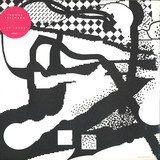
Electro Transmissions 003, nothing to say about this assassin called Electro Nation that you don't already know. This EP contains four tracks produced during the lockdown, each track is full of analog synths, drum machines and vocoder. Very limited units, this time on splatter colored vinyl, packed in a really nice way as we have come to know by the Fundamental crew!
Cerca:demis
Black Ark In Dub is another piece of Lee ‘Scratch’ Perry’s limitless musical puzzle.
Featuring a bedrock of deep and heavy rhythms recorded at the Black Ark just before its demise, Black Ark In Dub features bass heavy spooky dub deconstructions of ‘Jah Love Is Sweeter’, ‘Ethiopia’, ‘Lion A De Winner’, ‘Open The Gate’, ‘Guideline,’ and ‘Mr Money Man’, along with an embellished dub version of Ras Keatus I ‘Dreadlocks I’ and the much sought after ‘Guidance’ a longime Jah Shaka killer exclusive to this set.
Originally released in 1981 the hard to find Black Ark In Dub remains a frozen sonic timepiece, captured at the beginning of the end of one era and poised at the start of another.
- A1: Carole Cole - Ethiopia
- A2: The Silvertones - Give Praises
- A3: The Inamans - How Deep Is Your Love
- A4: Lasksley Castell - Jah Love Is Sweeter
- B1: Bunny Rugs - Let Love Touch Us Now
- B2: Bunny Rugs - I Am... I Said
- B3: The Originals - Got To Be Irie
- B4: The Upsetters - Double Wine
- B5: Junior Byles - Mumbling & Grumbling
Black Ark Vol. 2 is another piece of Lee ‘Scratch’ Perry’s limitless musical puzzle. It’s a bedrock of deep and heavy rhythms recorded around Jamaica =just before the demise of Perry’s famed Black Ark Studio. Black Ark Vol. 2 is the follow up album to the acclaimed Black Ark In Dub that unsurprisingly for an Upsetter release, took a different path. More vocal oriented, the album features extended dubwise cuts of (former wife and co-producer) Carol Cole’s ‘Ethiopia’, The Originals ‘Got To Be Irie’, Junior Byles ‘Mumbling & Grumbling and The Inamans remake of the Bee Gees hit ‘How Deep Is your Love’, along with an alternate take of the Silvertones roots classic ‘Give Thanks’ with flute overdub and a couple of solid covers from Third World lead vocalist Bunny Rugs. Originally released in 1981 the hard to find Black Ark Vol. 2 remains a frozen sonic timepiece, captured at the beginning of the end of one era and poised at the start of another.
Tilman Robinson’s third album, CULTURECIDE, is an investigation of the anthropocene; a seven part lamentation for our chaotic world.
Tilman Robinson is an Australian composer and sound designer creating electro-acoustic music across a range of genres including classical minimalism, improvised, experimental, electronic and ambient. Tilman’s diverse output focuses on the psychological impact of dense sound employing acousmatic and psychoacoustic principles. His third album CULTURECIDE will be released on Iceland’s Bedroom Community label in April 2020.
CULTURECIDE: “...processes that have usually been purposely introduced that result in the decline or demise of a culture, without necessarily resulting in the physical destruction of its bearers.” D Stein
CULTURECIDE is a rich sonic collage, harvesting sounds from a range sources including field recordings, medical machines that monitor the human body, traditional instruments and synthesisers, often melted electronically. The result is an unsettling paradox with sounds constantly on the edge of recognition. Each piece references a specific socio- political issue ranging from colonialism to neo-liberalism to climate change and the impending singularity of humans and machines. Far from an answer to these questions, CULTURECIDE invites us to meditate on their place in our life and approach personal understanding.
Recorded and produced almost completely in Australia, a land at the forefront of the devastation of climate change, CULTURECIDE was an attempt at catharsis for its author frequently appalled at his country’s incredible apathy and inaction. Mixed by Bedroom Community regular Daniel Rejmer and mastered by Lawrence English, works from the ambitious and unsettling record saw Tilman nominated for the 2019 Melbourne Prize for Music.
The Prisoners are one of the most influential bands of the 1980s, an astounding live act whose records were the opposite of what pop radio demanded in that era. Raw where they were smooth and full of character where those records needed to be blandly conformist. They hardly sold a record and yet they can count the likes of Noel Gallagher and political journalist John Harris as their fans. Steve Lamacq devoted a whole chapter of his book to his love of them whilst Tim Burgess of The Charlatans once said that at that time he only checked for The Prisoners and New Order. At least two UK hits used their arrangement on Joe South’s ‘Hush’ as their basis. ‘In From The Cold’ was the final shot at success by The Prisoners the only problem was they didn’t want it. Signed by Eddie Piller to his Stiff-backed subsidiary Countdown they were put in the studio with Troy Tate (Teardrop Explodes / The Smiths) and made this astounding album which they then disowned. By 1986 they were an incredible live band and had released three albums of their distinctive 60s influenced garage rock. A four-piece featuring Johnny Symons on drums, future Acid Jazz hitmaker James Taylor on organ, Allan Crockford on bass and backing vocals and the compellingly soulful Graham Day on vocals. Graham also wrote fantastic songs. Ten years later and they would have been lauded as heroes in Brit Pop land but the mid-80s had no place in the mainstream for a band with their influences. ‘In From The Cold’ is full of amazing songs from the hard edges of ‘All You Gotta Do Is Say’, ‘Ain’t No Telling’ and ‘The More That I Teach You’, to the mournful ‘Wish The Rain’ and ‘Be On Your Way’. It is no surprise that Mojo journalist Lois Wilson described this as her favourite album by the band. This reissue on coloured vinyl is the first time the album has been issued in its original form since 1986 when, due to Stiff’s imminent demise, it was deleted very quickly.
Untameable Anatolian feline fuzzy folk funk finally uncaged. A spontaneous Turkish-Norwegian-Dutch expedition, where seafaring jazz cats entangled with fugitive roadies and Tee-Set mods, makes the story of Durul Gence’s highly anticipated/ill-fated Asia Minor Mission group the stuff of lost-rock legend and remains one of Turkish music’s great “what ifs?” The black cat is finally out of the bag...
Having forged a celebrity status as one of Turkey’s premier percussionists and bandleaders, Durul Gence assembled the underground fusion group known as Asia Minor Mission (AMM) in early 1972 (with Irfan Sumer, Oguz Durukan and Ugur Dikmen) while trying to escape the constant daze of paparazzi camera flashes that followed him across Turkey. During a far-fetched post-gig brainstorm the group pondered relocating to Norway (based on fact that none of them had ever visited the country) when a local seaman who claimed to have recording studio connections in Oslo overheard them. Enlisting the roadie services of a streetwise Istanbul taxi driver friend on the run from the police AMM took the plunge, accepting the sailor’s offer of passage on his next sailing.
In these new idyllic surroundings, the same region that played host to fellow Turkish percussionist Okay Temiz, Durul found the peace he desired discovering a muse in Norway’s welcoming creative climate. Much like Barıs Manço and Mogollar in France, Cem Karaca and Gökçen Kaynatan in Germany, Gence’s relationship with Norway rekindled a passion for composition in ways he couldn’t have imagined in his homeland, opening doors thought previously unreachable. As a potential prodigal son for Anadolu pop Durul joined a wider pop-cultural diaspora alongside electronic pioneer Ilhan Mimaroglu, Tülay German (aka Tuly Sand) Kardasllar’s “Alex” Wiska (collaborator with Krautrockers Can) and Maffy Falay from the band Sevda.
Despite a blooming fan base and original repertoire the Nordic dream was not to be and after two years without a studio session, AMM called it quits during a tour of Holland after which Durukan and Dikmen went home to join Cem Karaca’s band Dervisan - Dikmen’s keyboards feature on Finders Keepers releases by Turkish singer Selda (FKR011). Retreating to the city of Delft to ponder his next move, Durul met Peter Tetteroo, former vocalist from successful Dutch psych-pop combo Tee-Set, who also found himself in a lonely boat after the demise of his long-running group. As an AMM fan, Tetteroo suggested they record two Gence penned AMM demos for Dutch Philips signed exotic songbird Sasi Naz at Peter’s home studio. A session was hastily arranged and a talented, yet unconfirmed, guitarist was enlisted. Durul maintains it was the work of Ferry Lever from Tee-Set/After Tea, something Ferry has denied, and with Tetteroo having died in 2002 the question remains. Upon entering the humble studio Durul stumbled upon a skeletal drum kit. Lacking hi-hat, toms or even a snare he cobbled together a bongo and a tambourine and set to work. Together, under the watchful eye of Tetteroo, the pair jammed stripped back versions of the AMM live staples Black Cat and Boo Song, with an added freak factor otherwise missing from their jazzier approach. Laid down in just 30 minutes, with Gence’s accomplished guide vocals and fuzzy overdubs, the rudimentary but professional recordings never made it to Philips execs and the tapes returned to Turkey under Durul’s arm as one of only two documented AMM recordings (the other being a live performance in Oslo’s Hennie-Onstad Art Centre in May 1973).
Unintended for commercial release, curiouser and curiouser, Finders Keepers proudly present these previously unheard tracks sourced directly from original tapes, which stand as a testament to the inimitable talent of Gence and the only studio document of the mythical AMM Turk jazz funk troubadours, representing a pop-psych Hollandaise holiday postcard which has taken five decades to be delivered. 45 revolutions later... The cat’s got the cream.
Friendship (JAP) return with their merciless new album, Undercurrent, set for vinyl release through Southern Lord on June 21st .
Friendship's vile, antagonistic, blackened, sludge-tone hardcore remains focused on delivering maximum auditory torture. Considered alongside other luminaries such as Full Of Hell, Nails, and Infest, and underpinned with the oppressive tonal amplification of Sleep, Coffins, and Iron Monkey. The band is widely considered visionary in the field of heavy modern music.
Their second LP, Undercurrent showcases Friendship's hybrid of ultra-heavy doom, sludge and power violence. With a refined technical and precise approach, and a brighter and sharper tone than the preceding Hatred LP.
Chicago-based Matt Warren has been a DJ for forty years and has been a producer since 1984, when he released his debut single Rock The Nation. This inspired Matt to cofound Sunset Records in 1985, which released several house classics. However, in 1987, Matt resigned from Sunset Records and founded AKA Dance Music.
The first single that AKA Dance Music released was Bang The Box, which sold over 50,000 copies in America and nowadays, is regarded as the first hard house track. Bang The Box was the first of seven singles that AKA Dance Music released between 1987 and 1988. By then, Matt's second label was part the history of house music.
After the demise of AKA Dance Music, Matt Warren continued to travel the world DJ in some of the top clubs. Meanwhile, Matt continued to produce new music, remix tracks by some of the biggest names in music.
By the nineties, Matt was also writing, arranging, mixing, and producing a wide variety of artists and bands. He sometimes was asked to play on a number of albums. However, he still loved house music, and worked on several releases.
As the new millennia dawned, Matt continued to work in a variety of roles in the ever-changing music industry, and occasionally released some new music. Over the next few years, Matt has been working as a producer, engineer and remixer, which meant he had to put his own career on hold, until he began working with a familiar face.
In 2016, Matt was reunited with house diva Pepper Gomez, who was now running her own label Wake Up! Music. By then, Pepper Gomez had dawned the MyMy Lady G moniker and embarked upon a career as producer. She had travelled to Chicago, to record Elena Andujar's genre-meting album Flamenco In Time at Matt's Sound Studio Recording. Matt took charge of engineering, programming, mixing and production on Flamenco In Time while MyMy Lady G added backing vocals and assumed the role of executive producer on this groundbreaking project. After the completion of Flamenco In Time, MyMy Lady G asked Matt Warren if he would like to record an album
It didn't take long for Matt to answer in the affirmative, and in early 2018, he hit the comeback trail. He was accompanied by a group of talented musicians and vocalists including gospel singer and soulful diva Jan McGhee, Elena Andujar and legendary house diva Pepper Gomez who plays a starring role on the album. That album was recorded over the course of several months, and eventually became Music Is My Life which marks the comeback of Mark Warren.
Matt Warren has been away to long, now one of the pioneers of Chicago House makes a welcome return with a groundbreaking new album. This is Music Is My Life, the first ever Nu House album, which is guaranteed to transform Matt Warren's career and become part of dance music history.
Following Gruth 's Limited Edition Cassette Release Laments I N Late July, Befallen Is A Sister Piece To His Debut Vinyl Ep Futile Demise , Released Earlier This Year On Tormenta Electrica . Taking His Dark And Experimental Signature Sound A Step Further, Befallen Mixes The Artist's More Recent Material, Written In Brazil, With A Selection Of Older Works Executed In Berlin.
The Opening Track 'disdained Doctrine' Showcases New Production Methods That Fit Within The Techno Bpm-range And Introduces Processed Black Metal Vocals, As Well As A Return To The Artist's Original Instrument: The Electric Guitar. 'jurupari Despumation' Explores The Outskirts Of Halftime 160 Bpm Post-jungle, Blending Industrial Textures With Evil Reese Synths. The Closing Track Of A-side, 'hoarfrost', A Collaboration With Mord Records' Kamikaze Space Programme , Depicts A Frozen Landscape, With No Beats Or Traditional Sequencing Required. The B-side Of The Record Includes Works Completed With Gruth's Native-finnish Peers: 'exhumed Black' Is An Industrial Techno Journey With Helsinki Techno/ambient Artist Ikola , While 'befallen' Is A Haunting And Emotional Violin-piece Composed With The Mysterious Violinist And Sound Designer Kujo .
Thomas Fehlmann steps away as co-member of The Orb following two acclaimed full lengths on Kompakt (COW - 2016, Moonbuilding 2703 AD - 2015) and embarks back on his solo career with a career defining album 'Los Lagos' - from Detroit to Schaffel techno he conducts a broad spectrum of electronic music into a seamless flow.
Thomas Fehlmann has been active since the late 1970's from Palais Schaumburg, the Tresor defnining trio 3MB (with Moritz von Oswald and Juan Atkins), Ocean Club (together with Gudrun Gut) and of course The Orb.
Artwork direction and design by DESIGNERS REPUBLIC.
'Los Lagos' is Thomas Fehlmann's seventh solo full-length, his 4th for Kompakt following his Berlin inspired 2010 full length 'Gute Luft'. in the musician's own words it's about "checking the juice".
Establishing a picture of his current artistic condition, as suggested by the title - los lagos / die lage / the situation (literally translating to 'the lakes' but taking the meaning of 'wassup' in the context of a relaxed discussion between friends), the album refers to Fehlmann's "musical motivation, dreams and wishes" through the language of music exclusively: a way to "allow myself to techno" he says, "to techno as a means to deconstruct and rebuild again. Set up an area of tension, loose it in the flow of the grooves. Magnifying some detail out of proportion, regroup around that and slowly knit a texture. Expand."
"It was time to take a bend and head where the sun rises or sets, wherever my heart drives me." This is pretty much the kind of decision Thomas Fehlmann has made. 61 and shining, longstanding member of The Orb, multi-talented composer and boundless experimentalist, had to make in the twilight of his collaboration with Alex Paterson, eager to taste the flavours of the unknown on his own again. "It was the moment when felxibility would have become compromise'. Far from being the demise of their joint dream, this was bound to split it in two distinct, parallel fantasies - rich of their own singularity.
As goes with that essential love of his for the free-flowing nature of electronic music, a fascination born out of its "lack of borders", capable of "inventing, changing the emphasis, experimenting with an unpredictable outcome", 'Los Lagos' "freely connects disparate extremes. Art, disco, minimalism, schmalz, jazz and funk". As he likes to say, Fehlmann's head functions as a sampler, capturing elements and re-assembling them under his own embracing perspective ; not afraid to leap from a deep, dubbed-out hypnotism ('Window', 'Morrislouis', 'Freiluft') to the playfulness of '90s-style bleepy schaffel ('Tempelhof' featuring Max Loderbauer), through out-there, muscle-flexing dancefloor cuts ('Triggerism') onto the calmness of ambient ('Geworden').
In need to keep his inner balance in check, Fehlmann committed himself to "switch off the control" and follow his intuition, which isn't so much of an easy process as he also wanted to incorporate the side disturbances experienced: "it's a complex process of search and destroy to bring out a new beauty trying to expand my vocabulary". With 'Los Lagos', Fehlmann looked at finding "the structure that's surprising, disturbing and rewarding". The artwork for the record, courtesy of contemporary artist and friend Albert Oehlen whom he shares lots of artistic ambitions with, echoes the producer's "funky use of shape and space, sludge and clarity" like a second skin. A search for light and harmony that Fehlmann sums up eloquently: "Does your inner musical voice respond", that is the question. Then "doors open up in unexpected corners, rays of light appear; you follow through and you're in - in your oasis."
Sandra Wright was an incredibly powerful Soul singer from Memphis (later Nashville). 'Wounded Woman' is one of the greatest Deep Southern Soul albums of all time and defined by it's title track re-issued on 7' here for the first time. The flip side 'Midnight Affair' has been an in demand modern soul dancer for many years and it receives it's first UK release here. Both songs were recorded at Broadway Studios Muscle Shoals in 1974 produced by David Johnson, in the same studio that Swamp Dogg used for his seminal albums by Doris Duke and Sandra Phillips. Timing for the release coincided with the demise of it's label Truth/Stax Records and so missed its opportunity for the commercial greatness it deserved. Original copies of 'Wounded Woman', the 7' on Truth Records have sold for over £300. Soul Brother also have the full album available on LP and CD.
Very nice compilation on this artists work - on the ever excellent Born Bad imprint!
.
For many decades until quite recently, little was known about music from Burkina Faso (which was formerly known as the Upper Volta). It is still one of the lesser known forms of popular music from West Africa. A few years before the country changed its name to Burkina Faso, thanks to Thomas Sankara's dream of a new society, Voltaic music emerged as some kind of true cultural revolution in the wake of the country's independence in 1960. Remote, poor and isolated, Upper Volta musicians coveted the orchestras and artists from abroad while creating a music of their own, based on rich cultural traditions
Popular music that sprung up from Burkina Faso owed much to the music from neighboring countries like Mali, Ghana, Ivory Coast or Benin, and to the longing for cultural authenticity' conveyed through Guinean music. In capital city Ouagadougou, as well as in Bobo-Dioulasso (Burkina's cultural capital until the 1980s), the first two decades of independence saw the upcoming of such orchestras and artists as Amadou Balaké, Georges Ouedraogo, Volta Jazz, l'Harmonie Voltaïque, Les Imbattables Léopards, Abdoulaye Cissé, Tidiane Coulibaly or Pierre Sandwidi.
Nicknamed the troubadour from the bush', Pierre Sandwidi stands as one of the finest Voltaic artists from the 1970s. He belonged to an unsung elite of Francophone artists such as Francis Bebey, G.G. Vickey, Amédée Pierre, André-Marie Tala, Pierre Tchana or Mamo Lagbema. His entire released output consists of less than ten 7 inches, two LPs and a bunch of cassettes. A man from the provinces, he always favored social engagement and carefully crafted lyrics over instant fame. His words and music challenged General Lamizana's dreary presidency, which ruled the country from 1966 to 1980.
Coletivo Vandalismo kick-start a new 12" series for the Contort Yourself label. Hailing from the city of Porto the duo also DJ under the name GAM and released their debut LP on Lake Haze's Eye For An Eye label. Their music has an immediacy that seems to stem from a background in live performance as opposed to polished studio sessions - an improvisational punk aesthetic that manages to carry this EP so strongly. Wild, crashing fx and unrecognisable vocal distortions layer atop wonky 90bpm drum machine grooves and the pair even show off what may be their turntablism skills on 'Zombie Zombie'. There's a nod to early concrete on the closing track 'Black Sun's Demise' with whirring, mechanical noise motifs suddenly jolting us into punishing gabber-at-33-minus-8 territory. The DIY spirit is alive and well here and the feeling that things could fall apart at any minute just adds to the tension.
Futile Demise EP is an emotional and disconcerting journey through the mind of Finnish artist Juha Puupera¨. Drawing on influences from Norwegian black metal, UK sound system culture and Italian horror cinema of the 1970s, Gruth mixes dark and aggressive tones in his sonic palette. His production methods are often experimental and the style rarely fits into one box as it spans forward-thinking techno, black ambient and doom industrial.
With his EP, Gruth shapes Montevideo-based Tormenta Electrica label's first release. Of the four tracks featured, two are collaborations with the Finnish techno and ambient artist Ikola, known for his Etherwerks label, while the mysterious Helsinki-based violinist and sound designer KuJo contributes to the other two.
'Y.O.U' is an emotive album of tripped out ambient hip hop instrumentals by FROM, written and recorded in the mid 90s under Trevor Jackson's infamous production persona The Underdog. Originally planned as a vocally-led, song-based project that should've surfaced between his production for The Brotherhood's legendary British hip hop album 'Elementalz' in 1996 and his acclaimed debut PLAYGROUP release in 2001, for multiple reasons it hasn't seen the light of day, until now.
Only Available as a ultra limited edition Vinyl and CD release, the LP consists of 11 tracks. Dream-like synth lines, ambient melodies, blissful guitars, raw beats and soft, fractured vocals draw you into a hallucinatory 12bit world. Drawing on Jackson's progressive and jazz rock influences as well as psychedelia and early electronics, the album closes with 'Belladonna'- a piano-sampled homage to the east coast golden age hip hop pioneers. NB: The CD features a longer version of 'Veratrum' not available on the vinyl version. All created on an Akai S950 mono sampler (limited to only 20 seconds sampling time), an Akai MG1212 12 channel mixer (which recorded on Betamax style tapes) and primitive outboard gear, Jackson honed his skills from his bedroom, where he produced the majority of his output at the time. With a huge collection of obscure vinyl, he dug deep into uncharted territories for samples and sound clips
- using material no one knew about (or would think about touching) in the mid 90s. The Underdog's initial releases were on Jackson's own Bite It! recordings label, which was started in 1991. A unique platform for UK hip hop with a visual aesthetic and ethos more akin to ECM and Factory
than other rap labels, its mission was to push artists beyond musical and cultural limitations prevalent at the time.
Home to artists like The Brotherhood, Scientists of Sound, Little Pauly Ryan and Lewis Parker (who later signed to Massive Attack's Melancholic label), Bite It! became a great success;
finally British rap had artists and releases that looked and sounded as good as their revered American counterparts. In 1993 Richard Russell (who had just started running XL recordings) asked Trevor to remix House of Pain, resulting in a top ten record, which helped launch Jackson's musical career via further remixes Massive Attack, Run DMC, U2, The Cure and countless others. Off the back of his remix success, The Brotherhood signed a deal in 1994 with Virgin Records. Their 'ELEMENTALZ' album was produced by Jackson and is still lauded by many as one of the finest British hip hop albums of all time.
Jackson continued to remix and produce as The Underdog until managerial issues forced him out of the project he'd been instrumental in instigating.
Soon after his close friend and manager tragically passed away - which when combined with the UK hip hop scene becoming increasingly volatile and the moral demise of rap culture in general - convinced Trevor to hang up his hip hop hat for good.
After leaving The Brotherhood he started Output Recordings. Internationally and sonically diverse, it gave Jackson a free reign to do as he pleased, with genre twisting releases from the likes of Fridge, Four Tet, Sonovac, Colder, his own PLAYGROUP project, The Rapture and LCD Soundsystem. With a non-compromising attitude, strong DIY aesthetic and consistently groundbreaking releases across its ten year life between 1996 and 2006, it became one of the most important and respected independent labels in the world.
- A1: Cool Out
- A2: All Because Of You
- A3: Don't It Make You Feel Good
- A4: Love The Feeling
- A5: Positive Forces
- B1: Lucky Fellow
- B2: Never Know What You Can Do (Give It A Try)
- B3: Love Oh Love
- B4: Ella Weez
- B5: Could This Be Love
- C1: So In Love You
- C2: I Think I'm Falling In Love
- C3: Closer To The Source
- C4: Give This Love A Try
- C5: Right Or Wrong
- D1: Now That I Found You
- D2: Get To This (You'll Get To Me)
- D3: Lover's Holiday
- D4: Time Brings On A Change
Acid Jazz are pleased to announce details of the definitive Leroy Hutson compilation - Anthology : 1972-1984 on 20th October. Erstwhile Impression, Leroy Hutson's catalogue has become increasingly coveted over the years and this compilation collects his Curtom recordings together with two newly discovered tracks including Positive Forces which is available as an instant grat track when pre-ordering the album.
Native of Newark New Jersey, Leroy Hutson grew up In a part of the world that spawned many of Soul's all-time groups, amongst them, The Parliaments and the Manhattens. Smitten by the music he was to join a local quartet, The Nu-Tones and despite never recording the youthful Hutson experienced the thrill of being a singer. On splitting up, Hutson found himself studying in Washington DC and once more in the company of supremely talented artists including Carla Thomas and future collaborator Don Hathaway. Various recordings came and went with little chart success before, along with Hathaway he became central to a group of singer, songwriters and players under the tutelage of Curtis Mayfield at his Curtom label a relationship that initiated Hathaway's chart topping career when the pair co wrote the all-time classic and million seller The Ghetto.
Early 1971 saw Hutson replace Mayfield in the Impressions as he left to concentrate on his solo career, the transition was seamless and although relatively brief saw the band in the pop and R&B charts. His debut on the Billboard chart as a solo artist arrived with Love Oh Love, the first of a dozen Curtom singles he recorded during an exciting and turbulent decade for black American music.
The seven albums Hutson released on Curtom between 1973 and 1979 are a legacy that remain highly respected, almost revered amongst soul cognoscenti, an untold influence on an entire generation of musicians throughout the eighties. The demise of Curtom in the early eighties saw Hutson relocate to Elektra, where in 1982 he released Paradise - highly acclaimed and much loved for a time it looked like that release may spell the end but some twenty-seven years later, the newly monikered 'Lee' Huston unveiled Soothe You Groove You.
Keyboardist Eddie Russ hailed from Pittsburg and played with many of the greats including Sarah Vaughn, Benny Golson, Stan Getz and Dizzy Gillespie. Eddie is somewhat of an enigma, but he has always been held in high regard in the UK, and he finally was able to perform here in London at the Jazz café in the early 90's a few years before his untimely demise.
His debut album 'Fresh Out' was recorded for the Jazz Masters label and includes the jazz dance classic 'The Lope Song', he also contributed heavily to Sonny Stitt's 'Tornado' album on that label. His band The Mixed Bag also made an album for the Detroit Tribe label. In 1976 he signed to John Richbourg's Sound Stage 7 label and made two great jazz funk albums which were released on the Nashville's Monument label and like his debut were produced by Bob Crawford.
From this first album 'See The Light' the title track is a great take on the Earth Wind And Fire song, 'Poko Nose' is a great funky groove oriented track, but it is the magical 'Zaius' that has become an all time jazz funk classic, a track that has maintained its popularity over the past 40 years.
The Monument albums include some great musicians including Marcus Belgrave and Larry Nozero, and on the Take A Look At Yourself' album Motown's Eddie Willis, a very young Kenny Garrett and the funk group Quazar.
Juicy Lucy formed after the demise of The Misunderstood. Steel guitarist Glenn Ross Campbell, and Blackburn saxophonist Chris Mercer recruited guitarist Neil Hubbard, bassist Keith Ellis, and drummer Pete Dobson to complete the band. Their eponymous debut album was originally released in 1969, and is a heavy form of blues-rock, often played at break-neck speed. The album’s cover features Burlesque dancer named Zelda Plum.
The band immediately notched a UK Top 20 hit with a cover version of Bo Diddley’s “Who Do You Love?”.
Juicy Luicy is available as a limited edition of 750 individually numbered copies on translucent yellow coloured vinyl, housed in a gatefold sleeve.
De-Bons-en-Pierre is a project from Beau Wanzer & Maoupa Mazzocchetti. Beau Wanzer spends the majority of his days sifting through paraffin embedded animal tissues and reading old issues of Fangoria, occasionally breaking his monotonous routine to record in various fits and bursts. As well as solo material, he is also in numerous projects including Streetwalker, Mutant Beat Dance, Civil Duty, and Corporate Park. He's released on many labels including; Diagonal, L.I.E.S, Cititrax, Nation, Rush Hour, and Light Sounds Dark. Maoupa Mazzocchetti is the pseudonym of Florent Mazzocchetti, a French producer based in Brussels. Florent is strictly devoted to a DIY mentality around music production and his sound revives the electro-industrial aesthetic of the late 70s and early 80s. He's released notable productions on labels such as Unknown Precept, PRR! PRR!, Knekelhuis and Mannequin Records.
While Beau was visiting Brussels he stopped by Maoupa's house to jam for a bit. All songs were recorded on April 4, 2016 between 11:00am and 11:00pm, as single live takes.'Crepes' is a 6-track EP, titled so because they ate crepes the majority of the session. Beau says, "There was a bit of a language barrier. We'd mostly just laugh and nod when something sounded cool to us." The equipment set up included a Roland TR-808, TR-606, SH-101, CR-78, CR-8000, two Syncussions and effects. Over 23 minutes of garbles, sludgy synths and leviathan rhythms. Surfing the slippery slope between industrial and electro, but never quite falling in, just a dip of your pinky toe to to test the temperature.
All songs are mastered by George Horn at Fantasy Studios in Berkeley. Housed in a sewage green/blue jacket featuring a crepe-masked duo reminiscent of pulpy VHS covers. Designed by Eloise Leigh and Florent Mazzocchetti. Each copy includes a 2-sided postcard with a photo taken during the recording session.
This is the story of C POWERS. To understand OYSTERS, you must understand the man behind it all...
THE UNITED STATES TERRITORY OF GUAM, ca. 1989
Abandoned at the island nation's only beachfront techno club as an infant, young Christoph (C POWERS) was adopted by the club's owner, Geraldo Powers. During Geraldo's time as a naval officer, he traveled the world throughout rave's formative years, secretly going to the underground parties when arriving to European ports after having originally fallen in love with early house music as a teenager in his native Chicago via roller-rink parties and the legendary Music Box headed by Ron Hardy. Rear Admiral Geraldo, outed as a gay homosexual during the discriminatory days of Ronald Reagan's U.S. military, was forced to retire, but spared a dishonorable discharge thanks to his roster of medals earning during his exemplary leadership for the invasion of Grenada in 1983.
Throughout his three year stay at the local naval base, the now 30-something Gerry Powers had been struck by the natural beauty and unsettling mysticism of Guam and its peoples and made the choice to permanently set up shop on the island after his unexpected retirement. Taking his partner and newly-crowned Supreme Butch Queen of the New York vogue circuit--Amadeus Lector--with him and financed with $6669.69 in prize money, the new era of DAS POUNDHAUS LTD. was to begin.
In 1990, Gerry founded the notorious Guamanian club DAS POUNDHAUS (the name of which was strongly influenced by a two-week long ecstasy and Polish speed-fueled bender during 1989's inaugural Love Parade in West Berlin). Located inside a decrepit lighthouse originally built during Spain's reign over the island, the club played host to a steady stream of closeted, Pacific-touring U.S. military personnel and later, the party-craving barons of the dot com bubble. Outed in private usenet circles for its off-the-charts hedonism, the club's infamous parties would inevitably lead to its perilous demise, and the eventual deportation of Gerry Powers and his family to the mainland.
But there was one thing that could never be taken away from them...
...synesthesia...
You see, young Christoph was diagnosed with the "disorder" as a pre-teen after having been exposed to nearly a decade of DAS POUNDHAUS first-hand and at such a young age. The youngster was like a fish in water during his childhood in Guam, but when the family was deported in 1999, he began to show signs of anxiety and depression. His ability to hear colors and see sounds had simply turned into a stream of incomprehensible, uncontrolled static. He was now a pariah among his peers. Shunned and admonished. Assigned to sit by himself during school lunch. One of "those" kids.
By this time, his two dads' relationship was on the rocks and would quickly unravel. Amadeus, frustrated with Gerry's incessant ramblings about bunkering in Montana because of the Clinton-Illuminati conspiracy to enslave the middle-class, decided to leave Gerry in an attempt to become a backup dancer for Madonna during her "Drowned World Tour" in 2001 (which would have provided a significant sum of financial security to the family, considering their life savings had been destroyed thanks to the toppling of the NASDAQ from its peak of 5048 in March of 2000--and thanks to those dot com baron stock tips, the Powers were all-in). However, Amadeus' unflinchingly "authentic" vogue style was considered obsolete, and he would go to die in a Reno Motel 6, a victim of drug abuse and that kind of thing apparently.
>>>>Fast-forward to the year2012ish>>>>