LIMITED ITALIAN IMPORT. 500 ONLY.
Introducing "BLACK WAVES", a cinematic soul journey rooted in social justice, love, and introspection.
From the vibrant streets of Rome, Luca Sapio crafts an evocative musical landscape that echoes the soulful activism of Marvin Gaye’s "What’s Going On", Curtis Mayfield’s "There’s No Place Like America Today", and Eugene Mac Daniels’ "Headless Heroes of the Apocalypse".
Infused with the timeless sounds of Italian vintage soundtracks—Piero Piccioni, Ennio Morricone, and their cinematic grandeur—this album is a powerful blend of social awareness and heartfelt emotion.
Among the guests legitimising the sound of the album are the legendary Dennis Coffey (Original Motown Funk Brother) Rob Harris (Jamiroquai) and the veteran Boston rapper Ed O.G. along with the same strings used by Ennio Morricone.
Record mastered by grammy winner Mike Bozzi
Hailing from Roma, Italy, Luca Sapio is a celebrated singer-songwriter and record producer, known for his soulful contributions to the music industry.
With a career spanning over a decade, in 2012, Luca released his debut solo album, "Who Knows", which achieved notable success on the German and French charts and was recognized as the best independent record by SIAE, Italy's copyright collecting agency.
In 2014, he solidified his partnership with producer Thomas Brenneck and released his sophomore album, "Everyday Is Gonna Be The Day” once more backed with members of the Dap-Kings and the Budos Band.
Поиск:dennis m
Все
Jackie Mittoo’s ‘Reggae Magic’ is a new collection from the great Jackie Mittoo. The album features a mixture of classic tunes and rarities from the period 1967-74, when Mittoo was at the height of his musical powers. Mittoo’s solo career began after the end of The Skatalites in 1965. He began pushing new musical boundaries, creating a uniquely identifiable organ-led funky reggae sound that owed as much to Booker T and The MGs, Jimmy Smith, Stax and Motown as to the post-ska and emergent rocksteady island rhythms of Kingston, Jamaica. His solo work at the legendary Studio One spanned seven albums and hundreds of singles.
Aside from producer and founder Clement ‘Sir Coxsone’ Dodd, it’s hard to think of anyone more central to the sound and success of Studio One than Mittoo; keyboard player extraordinaire, songwriter, arranger, musician, truly the Keyboard King at Studio One. Jackie Mittoo had been the youngest founding member of The Skatalites (at age 16), probably the most important group in Jamaican music. After they split, he became leader of the three pivotal groups at Studio One – The Soul Brothers, The Soul Vendors and Sound Dimension. He also became musical director for Studio One, helping create countless hits for singers Ken Boothe, Bob Andy, The Wailers, John Holt, Delroy Wilson and more – unforgettable tunes like Alton Ellis’ ‘I’m Still in Love with You’, Marcia Griffiths’ ‘Feel Like Jumping’, The Heptones’ ‘Baby Why’ and others. Between 1965 and 1968, many of the tunes created at Studio One can be attributed to Mittoo – timeless instrumental tracks, recorded either under his own name or those of The Soul Brothers, Soul Vendors and Sound Dimension, that have become the basis for literally 1000s and 1000s of Jamaican songs over many decades, giving the music an unsurpassed longevity.
The endurance of his music was as a direct result of significant developments in Jamaican music in the 1970s, namely the creation of three important new styles: Dub, Deejay and Dancehall. In the early 1970s Mittoo’s instrumental tracks were used as the musical source for a series of classic Studio One dub albums. At the same time Deejays at Studio One, including Dillinger, Prince Jazzbo and Dennis Alcapone, began toasting over these same popular rhythms to create their own new songs. In the mid-70s, a new generation of Studio One singers and deejays, including Sugar Minott, Freddie McGregor, Johnny Osbourne, Michigan & Smiley and others, began once again creating new melodies over these original instrumentals, signalling the birth of a new Jamaican style that became known as ‘dancehall’.
As dancehall swept across the island, rival producers copied these now classic rhythms. These original Jackie Mittoo-driven tunes spread like a virus throughout Jamaican music; be they the instrumental cuts to tunes such as Alton Ellis’ ‘Mad Mad’ , ‘I’m Just A Guy’, Larry Marshall’s ‘Mean Girl’, Slim Smith’s ‘Rougher Yet’, and instrumentals such as Mittoo’s classic ‘Hot Milk’ or ‘One Step Beyond’, The Sound Dimension’s ‘Real Rock’, ‘Heavy Rock’, ‘Full Up’, ‘Drum Song’, ‘Rockfort Rock’ … and the list goes on. These tracks became a constant soundtrack to the island, emitting from the ever-present sound of speaker boxes strung up around dancehalls. This recycling travelled even farther afield; The Sound Dimension’s instrumental ‘Real Rock’, updated by Willie Williams on his classic ‘Armageddon Time’ was in turn covered by The Clash. Lily Allen sampled Mittoo’s debut solo single ‘Free Soul’ for number one hit ‘Smile’; Dawn Penn’s ‘You Don’t Love Me (No, No, No)’, accompanied by The Soul Vendors, was revived by Penn and producers Steely & Cleevie in 1994, since covered by Rihanna, Ghostface Killah, Stephen Marley, Damian Marley and Beyonce. And so it goes; an endless time-leaping, continent-hopping diasporic musical map of the world with all roads essentially leading back to one man – Jackie Mittoo.
Collecting Orders For 2025 Repress
Nick Curly celebrates the 50th release on his imprint with label partner Marc Scholl. Together, they present Nick Curly’s Altrip EP, featuring a guest remix by Manda Moor.
The EP commences with the title track 'Altrip,' where robust sub-bass melds seamlessly with vigorous drum programming. Following suit, 'It's You And Me' maintains the same potent energy, featuring cascading note arpeggios and intricate percussive elements that traverse the mix. Manda Moor's 'Burning Remix' of 'Altrip' injects her high-octane sonic signature into the original, employing rave-inspired stabs, panning drums, and sliced vocal samples.
As the year '23 enters its final quarter, Cécille Records is set to reinvigorate its event series in collaboration with Peoples Agency. Two official dates stand as markers of this revival. Alongside Nick Curly, an array of artists including Sidney Charles, Manda Moor, Fabe, Leon, De La Swing, Dennis Quin, Timmy P, Reboot and more are poised to join the festivities. The launch will take place under Cécille tent owned by Groove Fest London, while another event is scheduled at ADE in partnership with promoter Hush, hosted at Amsterdam's Melkweg Club.
- 1: Blackmail David Ruffin
- 2: Crime In The Street David Ruffin
- 3: Look Out Your Window Frank Wilson
- 4: Just To Keep You Satisfied The Originals
- 5: I Pray You Still Love Me Jimmy Ruffin
- 6: I Hate Myself For Loving You The
- 7: If I Can´t Love You Then I Can´t Love Me Eddie
- 8: When The Lights Come Down On Love Dennis
- 9: You Are The Way You Are Leon Ware
- 10: Don´t You Wanna Come Leon Ware
Satisfaction comes in many forms. When the magical word Motown is uttered, most people are hard-wired to The Four Tops, the Temptations and The Supremes. But to reduce Motown to the effervescent sixties is only part of the label’s remarkable legacy.
By the 1970s, a different sound was gathering. America was on the verge of a nervous breakdown. The Vietnam War had been a disaster, urban street crime was epidemic and the nation’s college campuses were alive with political resistance. The joyful hope that had inspired “Baby Love” now felt anachronistic and out of time.
The music industry was changing too. The vinyl pop single on 45rpm which had been the staple of Motown’s success was being challenged by concept albums. This was the era of Edwin Starr’s anti-war album War and Peace (1970), The Temptations mind-bending Psychedelic Shack (1970) and Marvin Gaye’s state-of-the-nation classic What’s Going On (1971).
By the early 1970s Motown had a stable of male vocalists that was arguably the best in the world, among them former lead singers from The Temptations - David Ruffin, Dennis Edwards and Eddie Kendricks. Alongside them singer-producers like Leon Ware and Frank Wilson were asserting their presence.
David Ruffin’s “Crime in the Street” captured the epidemic of violence in Detroit allowing his exquisite voice to quietly rage against gun crime. Recorded a few years before his underground classic “Rode by the Place”, both sound more modern today than when they were recorded.
If there is a common thread here, it’s the mid-tempo shifting soul soon to be christened as “quiet storm” including groups on the margins of Motown such as The Originals and The Fantastic Four led by the impassioned “Sweet” James Epps.
Just to keep you satisfied, immerse yourself in the overlooked creativity of Detroit’s male voices in the early 1970s.
DJ Support: Groove Armada, Gorgon City, Claptone, Nicole Moudaber, Dennis Cruz, Carl Cox, Steve Aoki, Tiesto, Steve Angello, Oliver Heldens, Bob Sinclar, Diplo, Sofi Tukker, Dombresky, Carlita, A-trak, ALOK, Danny Howard, Kaskade, Hot Since 82.
Toolroom’s next Sampler sees 4 big releases from Tony Romera, Crusy, Low Steppa, James Hurr, CASSIMM, Darius Syrossian and Kathy Brown.
Recorded and mixed at Duke Reid's storied Treasure Isle studio by Duke's nephew, young engineer Errol Brown, Dub Expression collects dubbed up treatments of seminal rockers rhythms crafted for Marcia Griffiths, John Holt, Dennis Brown and more.
Propelled by the drums of Lowell "Sly" Dunbar, the appropriately named Revolutionaries (with their tough and radical sound) were the ideal group to reflect a turbulent period in Jamaican politics. While the band's personnel remained fluid – depending on which players were available and frequently overlapping with other seminal sessions bands such as Joe Gibbs' The Professionals and Bunny "Striker" Lee's The Aggrovators – The Revolutionaries were most known as Channel One's house band in the mid to late '70s.
The decision to top-bill The Revolutionaries, rather than feature an individual artist as was customary at the time, was made by Kingston's most celebrated female producer, Sonia Pottinger who shrewdly determined that The Revolutionaries' name alone would be a can't miss selling point. One only needs to spend a minute with Dub Expression to hear why.
Originally released in 1978 on Pottinger's High Note label, Dub Expression represents the essence of dub in its purest form. An absolute classic. Liner notes by JR Gonne.
King Street Sounds are back again with their fourth installment in the King Street Sounds Sampler Series. This release unearths four classics from house music heroes such as DJ Romain, Mike Delgado, Dennis Ferrer, 95 North, Sabrynaah Pope and Louie Vega.
The EP kicks off with DJ Romain’s “All Day, All Night”. Originally released on “Nite Grooves” in 1996, a perfect example of New York house with a memorable vocal sure to keep you hooked hopefully all day and all night.
Next up is Mike Delgado with “Get Ready”. This track is a certified dancefloor filler, with those fast hitting highs and catchy keys. It is definitely a secret weapon that any DJ should use in case of an emergency.
Flipping over to the B side, Dennis Ferrer is returning once again in this series with “Dem People Go (DF's Kicked Out Mix)” Featuring Bola Belo. This Tribal House classic emulates being in the sun for the listeners, effortlessly bringing that block-party vibe.
Rounding off the EP is 95 North featuring Sabrynaah Pope with “Hold On” (Louie’s MAW Club). An already great track by its lonesome, but with house music icon Louie Vega’s magical touch it makes it a must have for any DJ who wants to get the dancefloor bumping.
King Street sounds have done it again! All killer and no filler.
- A1: The Watson Brothers Band - Justwhistle
- A2: Jim Huxley - Tessa On A Magazine
- A3: Rick Penta - My Story Changes
- A4: Mak - That's Life
- A5: Palm Pizazz! - Silent Letter
- A6: Twice As Nice - Thoughts Of You
- B1: Barracuda - Baby I Love You
- B2: Elderberry Jak - Forrest On The Mountain
- B3: Dennis - Walk With Me
- B4: Jim Ware - Green Eyed Gypsy
- B5: John Lyle - Oh My Wind
- C1: Peter Kraemer - Let The Light Slip
- C2: Brian Freel - Nightrider
- C3: Michael Moore - Holland
- C4: Clete Stallbaumer - John’s Song
- C5: Ronnie White - The Jump
- D1: David Owens - Take Off Your Armour
- D2: The Squad - D L.m.h.i.m.a
- D3: Christoph Spendel Group - Forever
- D4: Awakening - Gotta Do Somethin / Might As Well Cultivate
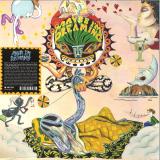
‘Maybe I’m Dreaming’ is the latest collection selected by Mikey Young (Total Control, EddyCurrent Suppression Ring) and Keith Abrahamsson (Founder and Head of A&R at AnthologyRecordings), the mangled minds behind the beloved ‘Follow the Sun’, ‘Sad About the Times’,and ‘…Still Sad’ compilations. The twenty tracks of ‘Maybe I’m Dreaming’ make a conscious(and unconscious) detour from its predecessors, sourced entirely from private press releases,spanning new decades and production modes within homespun folk, soft rock and otherwise70s and 80s FM radio adjacent music. The magic of ‘Maybe I’m Dreaming’ is the untold story of the artists behind these songs; thosewho missed the big time, but whose song craft and unrequited care hit the right notes, bothhigh and low.
Where ‘Follow the Sun’ and ‘Sad About the Times’ introduced us to the fame chasing, ambitioncrashing crooners who missed their shot in the mainstream, ‘Maybe I’m Dreaming’ delvesdeeper into the isolated wilds - a private world where production quirks, late-night tape hiss andone-man studio dreams were not necessarily a choice but the hand that was dealt.
With the parameters set to ‘private press only’, Young and Abrahamsson follow a circuitous trailof invention and emotion, documenting a spirit that’s more homespun, sometimes lonelier andoften a little weirder. The guitars still strum, but the keyboards’ hum is more prevalent andprecious; wistful harmonies brush up against lo-fi drum machines; a bittersweet fog lingeringover even the brightest melodies.
As with their previous collaborations, Young and Abrahamsson weren’t interested inconstructing a museum or drafting a historical survey. ‘Maybe I’m Dreaming’ is a sentimentalmixtape, assembled late at night when the mind wanders and old memories blur with imaginedfutures, those within reach and those far too mysterious to ever encounter. Songs wereunearthed in personal collections, deep YouTube burrows, dilapidated web archives and thedim corners of Discogs, with many selections tied not only to intuition but to personalconnection. Some tracks arrived via friends - Kelley Stoltz, a frequent guide for Young, tipped him off toboth Peter Kraemer’s lost gem ‘Let the Light Slip’ and Awakening’s revelatory closer - addingan unseen but deeply felt thread of camaraderie to the compilation.
The journey takes in a wide, strange sweep: The Watson Brothers Band’s ‘Just Whistle’ opensthe collection with a sigh and a shrug, a song that feels like it’s been waiting for decades to beheard again. Jim Huxley’s ‘Tessa on a Magazine’, rediscovered after a long and winding searchby Young, shimmers with a distinctly Australian melancholia. The heartbreak of Rick Penta’s‘My Story Changes’ and Twice As Nice’s delicate ‘Thoughts of You’ float easily alongside themore buoyant, radio-dream sheen of Barracuda’s ‘Baby I Love You’ and MAK’s sunshinedappled ‘That’s Life’.
Widening the aperture to the late 1970s and early 1980s allows for a deeper exploration intoevolving production techniques and musical technologies. The Squad’s ‘D.L.M.H.I.M.A.’ andChristoph Spendel Group’s ‘Forever’ crackle with the kind of bedroom synth warmth that couldonly come from the analogue age, while the soulful, yearning undercurrent of Awakening’s‘Gotta Do Somethin / Might As Well Cultivate’ caps the collection with a call for action - ormaybe just acceptance - in an accidental Brian Eno ‘Here Come the Warm Jets’ parroting.
While ‘Maybe I’m Dreaming’ moves away from the ‘sad man with guitar’ archetype that hoveredover its predecessors, it remains tethered to a familiar emotional gravity - a balance of longingand lightness that defines this corner of the musical universe. Each track shuffles gentlybetween resignation and hope, sadness and serenity, as if the artists themselves were chasinga dream just beyond reach, recording not for fame but for the simple act of getting it, thatprimal, creative itch, out into the world.
Available on CD and 2LP, featuring the third eye-opening artwork of Dang Wayne Olsen. Thedouble LP set arrives in an outrageous double-wide spine jacket with printed inners and adream journal entry by Pacific Northwest artifactual authority Josh Lewellen.
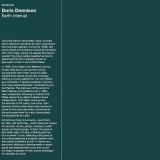
The discovery of Doris Dennison's score represents a genuine musicological breakthrough—what once would have been "a tree falling in the woods" thirty years ago now holds the potential to render "a thunderous clap in our minds." While researching Anna Halprin's lesser-known collaborators, scholar Tom Welsh uncovered the archives of AA Leath, one of Halprin's principal dancers. Buried within these materials was Dennison's handwritten score for Earth Interval, dated May 1956. Born in Saskatchewan, Canada, in 1908, and raised near Seattle, Dennison (1908-2009) encountered John Cage while teaching Dalcroze eurythmics at the Cornish College of the Arts. She joined Cage's earliest percussion quartet—alongside Margaret Jansen, the composer and his wife Xenia—in the group widely regarded as having performed the first complete concert of percussion music in the United States. This historic December 1938 concert was followed by tours and the landmark May 1941 performance at the California Club, comprising Cage and Lou Harrison's Double Music, the premiere of Cage's Third Construction, and Harrison's 13th Simfony.
As Bradford Bailey observes in his extensive liner notes, Earth Interval demonstrates "an extraordinary balance of elements that imbues the piece with a sense of clarity, directness, and constraint that is both distinct and ahead of its time." The work's most remarkable innovation lies in its approach to extended techniques, particularly Dennison's notation for the central movement: "In 2nd movement, 1st player lowers + raises a gong into a tub of water while beating." This technique, absorbed from Cage's experimental vocabulary, generates what Bailey describes as "fields of acoustic abstraction that bend and warp time through sustained resonances, beat, and space." The temporal sophistication of these manipulations anticipated Karlheinz Stockhausen's Mikrophonie I (1964) and Annea Lockwood's water-based sound investigations by over a decade. After joining Mills College as dance accompanist, Dennison maintained crucial connections to the Bay Area's experimental scene, collaborating with figures like Merce Cunningham and programming Cage's music throughout the 1950s.
Comprising three movements—Land Form, Air Tide, and Earth Play—Earth Interval is scored for recorder, drums, gongs, maracas, muted gongs, and bowl gongs. In total, the piece is just under eight minutes: "a fleeting glimmer of moment in time, a life spent at the cutting edge, and a singular creative vision that packs a powerful punch." When viewed in historical context, placed in contrast to roughly contemporaneous avant-garde percussion works by Cage, Harrison, Louis Thomas Hardin (Moondog), and Harry Partch, or important precursors like Edgard Varèse's Ionisation (1931) and Henry Cowell's Ostinato Pianissimo (1934), it's clear that Dennison was following her own path. Earth Interval is not derivative. It is a precursor to what was yet to come, alluding to developments of avant-garde and experimental music that wouldn't begin to appear on the cultural landscape until the 1970s and '80s, with the emergence of Post-Minimalism and more idiosyncratic artists and ensembles like Midori Takada, Ros Bandt, Peter Giger, Frank Perry, Christopher Tree, Michael Ranta, Gamelan Son of Lion, and Niagara.
This recording by Chicago's Third Coast Percussion, captured in March 2022, represents the first complete documentation of this pioneering work. The ensemble's interpretation reveals the piece's remarkable contemporaneity while maintaining its historical specificity. Where Cage, Harrison, and Partch employed "self-consciously off-kilter polyrhythms," Dennison's rhythmic sensibility anticipates minimalist developments by nearly a decade, yet integrates "forceful rests, as well as sharp shifts in sonic character, tempo, and meter, that break the momentum and breathe a sense of life into the piece's structure." This positions her work closer to Post-Minimalism decades before its emergence. The architectural approach demonstrates Dennison's understanding that "the composer almost entirely disappears" in favor of phenomenological listening experience, creating what might be called an egoless music that places its realities and meaning entirely in the ear of the beholder. The present recording, realized by Chicago's distinguished Third Coast Percussion ensemble, represents a significant achievement in experimental music scholarship and performance practice. As specialists in the Cage tradition and contemporary percussion repertoire, Third Coast Percussion approached Earth Interval with the historical sensitivity and technical precision required to illuminate Dennison's subtle compositional innovations. The March 2022 recording sessions, engineered by Colin Campbell, capture both the work's intimate chamber music qualities and its bold exploration of extended techniques. The ensemble's interpretation reveals the piece's remarkable contemporaneity—its ability to speak directly to current musical concerns while maintaining its historical specificity.
This recording serves multiple scholarly functions: it provides the first complete documentation of Dennison's compositional voice, offers insight into the broader network of experimental music practitioners surrounding Cage and Harrison, and demonstrates the sophisticated level of compositional thinking that was occurring within the Bay Area's dance-music collaborations of the 1950s. The work's emphasis on phenomenological listening—what might be called an "egoless" approach to musical experience—places it within a lineage of American experimental music that prioritizes perceptual process over compositional personality. The work's original obscurity—limited to AA Leath's performances at venues like the 1957 Pacific Coast Arts Festival at Reed College—paradoxically allowed it to remain "entirely on its own terms," free from the constraints of historical categorization. Drawing on Jacques Derrida's Archive Fever, the argument emerges that "the archive can acknowledge, celebrate, and resurrect" overlooked voices, transforming our understanding of experimental music history. The present Blume edition, featuring Third Coast Percussion's authoritative interpretation, includes a lavishly illustrated 16-page booklet designed by Bruno Stucchi / dinamomilano, containing complete scholarly apparatus, historical photographs, and detailed production notes. This recording enables "cross-temporal intersectionality," allowing Dennison to "belong to a newly formed and more dynamic understanding of the present and past," demonstrating how forgotten voices can reshape entire historical narratives when given proper scholarly attention and performance advocacy.
- The Watson Brothers Band - Just Whistle
- Jim Huxley - Tessa On A Magazine
- Rick Penta - My Story Changes
- Mak - That's Life
- Palm Pizazz! - Silent Letter
- Twice As Nice - Thoughts Of You
- Barracuda - Baby I Love You
- Elderberry Jak - Forrest On The Mountain
- Dennis - Walk With Me
- Jim Ware - Green Eyed Gypsy
- John Lyle - Oh My Wind
- Peter Kraemer - Let The Light Slip
- Brian Freel - Nightrider
- Michael Moore - Holland
- Clete Stallbaumer - John's Song
- Ronnie White - The Jump
- David Owens - Take Off Your Armour
- The Squad - D.l.m.h.i.m.a
- Christoph Spendel Group - Forever
- Awakening - Gotta Do Somethin / Might As Well Cultivate
'Maybe I'm Dreaming' ist die neueste Sammlung von Mikey Young (Total Control, Eddy Current Suppression Ring) und Keith Abrahamsson (Gründer und Leiter A&R bei Anthology Recordings) - den Köpfen hinter den beliebten Kompilationen 'Follow the Sun', 'Sad About the Times' und '...Still Sad'. Die zwanzig Tracks von 'Maybe I'm Dreaming' weichen von ihren Vorgängern ab. Sie stammen vollständig aus privaten Pressungen und umspannen neue Jahrzehnte und Produktionsmodi innerhalb der Genres Homepunk-Folk, Softrock und sonstiger FM-Radio-Musik der 70er und 80er Jahre. Die Magie von 'Maybe I'm Dreaming' liegt in den unerzählten Geschichten der Künstler:innen, die hinter diesen Liedern stehen - diejenigen, die den großen Durchbruch verpasst haben, deren Songhandwerk und unerwiderte Sorgfalt aber die richtigen Töne treffen.
'Maybe I'm Dreaming' taucht tief in die isolierte Wildnis ein - eine private Welt, in der Produktionsmacken, nächtliches Bandrauschen und Ein-Mann-Studio-Träume keine Wahl waren, sondern das ausgeteilte Blatt.
Die Songs wurden in persönlichen Sammlungen, in den Tiefen von YouTube, in verfallenen Webarchiven und in den düsteren Ecken von Discogs ausgegraben. Die Auswahl vieler Stücke basiert dabei nicht nur auf Intuition, sondern auch auf persönlichen Verbindungen. Einige Tracks wurden über Freunde entdeckt und fügen der Zusammenstellung einen unsichtbaren, aber tief empfundenen Faden der Kameradschaft hinzu.
Zwar entfernt sich 'Maybe I'm Dreaming' vom Archetyp des „traurigen Mannes mit Gitarre“, der über den Vorgängern schwebte, aber die vertraute emotionale Schwere bleibt erhalten - eine Balance aus Sehnsucht und Leichtigkeit, die diese Ecke des musikalischen Universums definiert. Jeder Track schwankt sanft zwischen Resignation und Hoffnung, Traurigkeit und Gelassenheit, als würden die Künstler selbst einem unerreichbaren Traum hinterherjagen und die Aufnahmen nicht wegen des Ruhmes, sondern aus dem einfachen Bedürfnis heraus machen, diesen ursprünglichen, kreativen Drang in die Welt hinauszutragen.
'Maybe I'm Dreaming' ist eine Einladung, noch ein wenig länger mit halb geschlossenen Augen im Grenzbereich zwischen Erinnerung und Vorstellung zu schweben. Vielleicht träumst du. Vielleicht bist du wach. Vielleicht spielt es keine Rolle.
- 2LP: (Das Doppel-LP-Set mit dem Artwork von Dang Wayne Olsen wird in einer breiten Kartontasche mit bedruckten Innenhüllen geliefert. Zudem enthält es einen Traumtagebucheintrag von Josh Lewellen, dem Experten für Artefakte aus dem pazifischen Nordwesten.)
Zum ersten Mal seit über 50 Jahren hat sich die Originalbesetzung der Alice Cooper Band wiedervereint – und präsentiert mit "The Revenge of Alice Cooper" ein brandneues Studioalbum. Für die Aufnahmen fanden sich Alice, Neal, Michael und Dennis gemeinsam mit Produzent Bob Ezrin in einem klassischen Old-School-Studio in Connecticut ein. Das Werk wird bereits jetzt als würdiger Nachfolger legendärer Alben wie "School’s Out", "Billion Dollar Babies", "Love It to Death" und "Killer" gehandelt. "The Revenge of Alice Cooper" ist eine Hommage an den Vintage-Horror und den Shock Rock der 70er Jahre. Es fängt genau jene rohe Energie, den rebellischen Geist und den unverwechselbaren Sound ein, mit dem die Originalbesetzung einst Musikgeschichte schrieb. Ein besonders emotionaler Moment des Albums ist der posthume Auftritt von Glen Buxton, dem ursprünglichen Gitarristen der Band, der 1997 verstarb. Auf dem Song "What Happened To You" ist ein bislang unveröffentlichter Gitarrenpart von ihm zu hören – eine berührende Verbindung von Vergangenheit und Gegenwart. Das Album ist eine Hommage an Freundschaft, Nostalgie und den zeitlosen Sound, der die Alice Cooper Band zu RockIkonen machte. Die Fans dürfen sich auf ein kraftvolles, emotionales Hörerlebnis freuen. Vom giftigen Biss von "Black Mamba" über die rebellische Energie von "Wild Ones" bis hin zu den sanft-geisterhaften Klängen von "See You on the Other Side", jeder Song klingt wie ein moderner Rock’n’Roll-Klassiker.
- Tiger Rider
- Flatfoot Willie
- All Dried Up
- Hungry Man
- Dolphins Hotel
- This Love That We Outwore
- Political Disaster
- Changing Times
- Ego In A Bag
- Time Will Show The Wiser
Formed in 2012 by long-time musical companions Oyvind Holm and Hogne Galaen,
the band quickly grew into the six- piece musical force they are today. Their unique
sound fuses cosmic Americana and rich vocal harmonies with catchy melodies, highspirited improvisation, and contagious musical energy that will leave you craving
more.
The six members come from diverse musical backgrounds but are united by their
shared love of psychedelia and cosmic Americana. They draw particular inspiration
from the California sound of the late '60s, with bands like The Byrds, Crosby, Stills,
Nash & Young, and the Grateful Dead as key infuences.
Between 2012 and 2019, the band recorded and released fve critically acclaimed
albums, two of which were recorded in the California desert at the legendary Rancho
De La Luna, nestled among the Joshua trees. Like many other artists, the pandemic
shook their foundations, forcing the band into an involuntary hiatus. In the aftermath
of lockdowns and other imposed restrictions, the backlash from other projects kept
them from picking up where they had left off.
However, the fall of 2024 brought new opportunities. An unexpected email from Mike
Scott of The Waterboys reignited their spirit and motivation. While on tour in Norway,
Scott discovered one of their albums and was so taken by their sound that he invited
them to contribute vocal harmonies to 'The Tourist,' a track off The Waterboys' new
album Life, Death & Dennis Hopper.
Soon after, an even greater opportunity arose--an invitation to join The Waterboys on
tour in the UK and Scandinavia. To accompany the upcoming tour, we've put together
a beginner's guide to Sugarfoot.
The compilation album Cosmic Norse Americana features nine highlights from
Sugarfoot's career so far, along with a newly recorded cover of Emitt Rhodes' 1967
track "Time Will Show The Wiser."
Sugarfoot:
Hogne Galaen - guitars, vocals
Even Granas - drums
Thomas Henriksen - keyboards
Oyvind Holm - guitars, vocals
Bent Saether - bass
Roar Oien - pedal steel
THOUGHTS AND WORDS
The Sugarfoot story begins back in 2011. But before there was Sugarfoot, there were
the Dipsomaniacs, Kulta Beats, Motorpsycho, Too Far Gone, and Deleted Waveform
Gatherings--bands that, in one way or another, featured future members of what would
eventually become Sugarfoot. Six musicians from diverse musical backgrounds,
united by a shared love of psychedelia and cosmic Americana. Drawing deep
inspiration from the California sound of the late '60s, their musical compass points
toward The Byrds, Crosby, Stills, Nash & Young, and the Grateful Dead.
I say eventually, because Sugarfoot didn't start as a band--it began as a duo. Hogne
Galaen and Oyvind Holm had previously played together in Deleted Waveform
Gatherings. But when their drummer moved out of town, the group was put on ice. Not
ones to sit still, the two of them launched a side project to keep the creative wheels
turning.
Throughout the winter of 2011, they holed up in their rehearsal space, writing and
recording rough sketches of what would soon grow into a full album. And that's when
things got interesting. They drew up a wish list--a dream lineup of musicians they'd
love to bring into the fold.
Among the names on that list were Even Granas, Thomas Henriksen, Bent Saether,
and Roar Oien, all soon to be permanent Sugarfooters. Each was invited to contribute
to the project, adding their parts to the pre-recorded tracks--without knowing what the
others were doing. Like assembling a giant musical puzzle, Galaen and Holm later
pieced the album together from these blindfolded contributions. The result was This
Love That We Outwore, released in the fall of 2012.
From there, things escalated quickly. By the following year, Sugarfoot had become a
proper band. Big Sky Country-- written and recorded collectively-- landed in 2014,
solidifying the group's evolving sound, including favourites such as Dolphins Hotel and
Ego In A Bag. When it came time to record a third album, the band felt the itch for
something new. They wanted a change of scenery--somewhere that could spark fresh
inspiration and leave its own sonic fngerprint on the production. So they asked
themselves: where could they go that carried the spirit, the legacy, the stardust of their
musical heroes?
That search led them to the California desert, to the legendary Rancho De La Luna,
nestled among the Joshua trees. Their next two albums, Different Stars (2016) and
The Santa Ana (2017), were both recorded at the Rancho. In fact, The Santa Ana was
both recorded and mixed during a two- week stay in 2015, making it a true time
capsule in the band's discography.
- A1: My Life Started Today
- A2: Rosebud
- A3: All That We Ever Have
- A4: Sound And The Fury
- A5: The Only Ones
- B1: Funny The Things
- B2: Sincerely
- B3: Shadow Dancer
- B4: To Be Loved
- B5: Dancing Shadow
Demon Music Group are delighted to confirm the signing of ‘Night Mirror’ – the fourth solo album from electronic music legend, Claudia Brücken. • Written and recorded in London between 2023-2025 with longtime collaborator John Williams, ‘Night Mirror’ is a stunning collection of 10 brand new songs, suffused with optimism, loosely bound by themes of reflection and rebirth. •
Having first come to notice as the lead singer of Düsseldorf electronic music pioneers Propaganda, one of the first signings to the celebrated ZTT Records (Frankie Goes To Hollywood, Art Of Noise, 808 State), Claudia’s striking image and distinctive vocals made her one the most influential and inspiring female musicians of her generation. Propaganda enjoyed chart success with hit singles like ‘Dr Mabuse’ and ‘Duel’ and their 1985 album ‘A Secret Wish’ is frequently cited as one of the landmark electronic pop albums of all time. • In subsequent years, along with collaborations with the likes of Wolfgang Flür (Kraftwerk), Martin Gore (Depeche Mode), ACT, Andrew Poppy, Andy Bell (Erasure), and Peter Hook (New Order). Claudia was most recently in the limelight fronting the reimagined xPropaganda whose 2022 album ‘The Heart Is Strange’ garnered ecstatic reviews and reached No. 11 in the UK album chart. •
On ‘Night Mirror’ Claudia is reunited with musical partner John Williams, whose work as a producer, writer, engineer, and record label head has seen him work with such luminaries as The Housemartins, Alison Moyet, Blancmange, Simple Minds and The Proclaimers. Contributing to the album are an accomplished series of musicians, whose credits include The Lighthouse Family, Cathy Dennis, Orlando Weeks (The Maccabees), and Kaiser Chiefs. • This LP release is presented on Dark Cherry vinyl. • This is a priority release for Demon, and we will be supporting with full retail, press, radio and online campaigns.
- A1: Booking Up Baby
- B1: Giving Up
The Topics waren eine Soul-Vocal-Band aus New York, die vor allem in den 1960/1970ern aktiv war und zunächst als The Uniteds startete. Im Laufe der Jahre kamen und gingen verschiedene Mitglieder. Ihre Singles, angefangen bei der Debüt-7" "The Girl In My Dreams" (1962) erschienen bei kleinen Labels, mit Ausnahme der beiden Songs auf vorliegender Expansion-Reissue, die 1973 direkt hintereinander bei Mercury Records erschienen. "Booking Up Baby" wurde von Dennis Williams (The O'Jays, Teddy Pendergrass, Jean Carn) co-produziert, der auch den Van McCoy-Song "Giving Up" arrangierte. Beide Soultracks sind anspruchsvoll und begehrt, eine Originalpressung kostet auf Discogs bis zu 850 Pfund.
- A1: The Honey Drippers– Impeach The President
- A2: Eddie Bo– If It's Good To You (It's Good For You)
- A3: The Gaturs– Gatur Bait
- A4: Johnson* & The Lucky Hearts– Get It
- A5: Sonny Jones– Sissy Walk
- B1: Mary Jane Hooper– Don't Change Nothing
- B2: Herbie Thompson– Keep On Stepping
- B3: The Black Nasty*– Party On 4Th Street
- B4: Lynn Day– Bit Off More (Than I Can Chew)
- B5: Ike Turner & The Kings Of Rhythm*– Funky Mule
- C1: Billy The Baron & His Smokin Challengers*– Communications Is Where It's At
- C2: City Council Ltd.– When You Git Through Wit It Put It Back
- C3: Bobo Mr. Soul– H.l.i.c
- C4: The Chosen Few (8)– We Are The Chosen Few
- C5: Georgianna Mccoy & The Classetts– I've Got To Space
- D1: Johnny Mae Matthews*– My Momma Didn't Lie
- D2: Glenda Dove– It's Gotta Be Something Else
- D3: City Council Ltd.– You Got It All, Ain't No More
- D4: Dennis Lee & Notables– Funky Penguin
- D5: James Black– There's A Storm In The Gulf
- A1: The Cimarons– We Are Not The Same
- A2: Tenor Saw & Buju Banton– Ring The Alarm Quick
- A3: The Gatherers– Words Of My Mouth
- B1: Barrington Levy– Under Mi Sensi
- B2: Dennis Alcapone– Cassius Clay
- B3: The Maytals– 54-46 Was My Number
- B4: General Degree– Pot Cover
- C1: U-Roy– Stick Together
- C2: Honey Boy Martin– Dreader Than Dread
- C3: Jackie Mittoo– The Sniper
- C4: Don Carlos (2)– Lazer Beam
- D1: Lynn Taitt & The Jets– Soul Food
- D2: Granville Williams Orchestra– Hi-Life
- D3: Augustus Pablo– Cassava Piece ('79 Style)
- D4: The Versatiles– Children Get Ready
- A1: Ike Turner– Hey Miss Tina
- A2: Ike Turner– Stringin' Along
- A3: Dennis Binder– I Miss You So
- A4: Dennis Binder– Nobody Wants Me
- A5: Lover Boy (2)– The Way You Treat Me
- A6: Dennis Binder– Early Times
- B1: Ike Turner– Bayou Rock
- B2: Ike Turner– The Wild One
- B3: Dennis Binder– You Got Me Way Down Here
- B4: Ike Turner– All The Blues All The Time
- Paranoia
- Sad Born Loser
- What Of I
- She's Easy
- Sailing
- Providence Bummer
- Evil Woman
- Hunter's Moon
Yesterday's Children emerged from the vibrant mid-60s Connecticut music scene, evolving from a garage-based instrumental outfit into one of the era's most compelling proto-heavy rock acts. As they evolved, they embraced the psychedelic and hard rock influences of the late 60s, crafting a heavier, more dynamic style. Under the determined management of brothers Dennis (vocals) & Richard (guitar) Croce's father, Dominic, the band gained regional popularity. Their 1970 self-titled album, recorded in New York with producer Warren Schatz, showcased a mix of ferocious originals like "Hunter's Moon" and "Sad Born Loser" alongside inspired covers. Though the album failed to achieve commercial success at the time, it has since been rediscovered as a cult favorite, celebrated for its raw energy and ahead-of-its-time heaviness. Known for their immersive live shows-complete with custom-built light and sound systems-the band toured the East Coast in vintage hearses, leaving a lasting impression on audiences. Despite their eventual breakup in 1972, Yesterday's Children's legacy endures, with their sole LP standing as a landmark in the transition from garage rock to the heavier sounds of the 70s. A true hidden gem, their music continues to resonate with fans of psychedelic, hard rock, and proto-metal.