VOICE sind zurück und werden das Herz eines jeden Metalfans mit ihrem neuen Album "Holy Or Damned", das mit eingängigen Hooklines und einer beeindruckenden Produktion besticht, schneller schlagen lassen.
Nach ihrem erfolgreichen 2017er Comeback-Album "The Storm", besinnen sie sich nun zurück auf ihre Wurzeln und präsentieren mit "Holy Or Damned" ein abwechslungsreiches, neues Album, auf dem jeder Song nahtlos in den nächsten Song übergeht, ohne dass der Spannungsbogen unterbrochen wird.
Dieses Album gehört zweifelsohne in die Musiksammlung aller Metalfans, die eingängige Hooklines, ein wohldurchdachtes musikalisches Konzept und eine beeindruckende Produktion zu schätzen wissen.
In den Texten geht es um das Auf und Ab im Leben. Es geht darum, geliebt und gehasst zu werden und die Texte zeigen, dass sich der Blick auf die Welt binnen Sekunden ändern kann.
Mit "Holy Or Damned" fängt die Band die Essenz von über 30 Jahren musikalischer Kreativität ein.
Besonders hervorzuheben sind die Gastmusiker, die VOICE auf diesem Album begrüßen dürfen: Gitarrist Ragnar Zolberg (Sign, ex-Pain Of Salvation) bereichert den Song "Dream On" mit seinem Solo. Ebenso beeindruckend ist der Beitrag am Bass von Hans-Jürgen "Jäcki" Reznicek (Silly) beim Song "Tears In The Dust".
To celebrate 10 years of one of London’s most loved underground club nights, Tangent, Mr Bongo are thrilled to launch this new compilation series. Crafted by its two residents, John Gómez and Nick the Record, it aims to transmit a taste of Tangent’s spirit. A party rooted in inclusivity and open-mindedness, whose name captures the spontaneous switches in musical direction that are a defining element of their nights. For the compilation, the pair have cherry-picked a selection of their prized, rare and dancefloor-ready tracks from around the globe, that have soundtracked the past decade of parties.
Friends for close to 20 years, music lovers, record obsessives and internationally renowned DJs in their own right, John and Nick have two lifetimes worth of musical knowledge to draw from. John a long-standing NTS Radio resident and compiler for Music From Memory. Nick one of the UK’s go-to record dealers, resident DJ since the ‘90s at one of Japan’s pioneering parties, Life Force, and co-captain / co-edit-expert of Record Mission with Dan Tyler (Idjut Boys).
In 2014, the pair decided to bring some of Life Force’s grassroots principles to the UK, whilst channelling underground clubbing institution Plastic People’s meticulous attitude to sound. Tangent grew from being a small gathering of friends, to an established fixture in London’s nightlife, whilst always maintaining a strict no guest DJ policy. “As London’s clubs have become increasingly reliant on international guests, we wanted to emphasize the importance of a club night growing through its residents”, John and Nick reflect. With 10 years of the duo at the helm, an intimate connection between DJ and dancefloor has been built, allowing for freedom of expression on both sides of the decks.
Tangent reaches around the globe and across different eras to make connections that stimulate emotional reverberations in the unfamiliar. Where the blissfully Balearic ‘Laberinto’ by Miguel Perikás, goes hand-in-hand with the Cameroonian hip-house of King B.’s ‘Love is Crazy’. The thundering ‘Amek Amek’ by L'Innovateur Djoe Ahmed et le Zoukabyle, rubs shoulders with the soulful Caribbean-influenced touch of Champagn’s ‘Bel Ti Négress’. And Pellegrin El Kady’s afro-cosmic ‘Seiva de Carnaval’, crosses paths with Kajou’s Kompa disco anthem ‘Tet Chajé’.
Tangent’s longevity is in part down to it having always embraced contemporary sounds. The sub-rattling bass of Srirajah Sound System’s stunning Molam dub stepper ‘Si Phan Don Lovers Rock’ and the slow, woozy mantra of leftfield dancehall explorer Androo’s ‘Lyriso’, are two shining examples.
This compilation represents an ongoing dialogue between past and present, transporting listeners to the heart of a pure musical experience, where open minds and open hearts are eager to follow the tangent.
out of Stock
Last delivered 2 years ago available to reorder, subject to availability
Caracoles katapultiert den einzigartigen Mambo-Sound des (für den GRAMMY-Award nominierten) Orquesta Akokán ins 21. Jahrhundert und verleiht ihm den für die Gruppe typischen Sinn für Akokán - ein kubanisches Yoruba-Wort, das 'von Herzen' bedeutet.
Wieder mit von der Partie sind der Produzent und Multiinstrumentalist Jacob Plasse und der virtuose Pianist, Komponist und Arrangeur Michael Eckroth. Auf diesem, ihrem dritten Album, vereinen sie ihre Talente mit dem kubanischen Texter, Sänger und Komponisten Kiko Ruiz, der mit Pancho Amats berühmten Estrellas del Buena Vista Social Club auf Tournee war und Aufnahmen gemacht hat, aber auch als Sänger, Komponist und Arrangeur mit dem Orquesta Maria Alejandra y Cubanía eine langjährige Erfahrung hat. Und obwohl Caracoles aus der heutigen Zeit stammt, reichen die Klänge weit in die Vergangenheit zurück und stellen eine glorreiche Rückkehr zu den ikonischen Grooves einer Ära dar, die von Benny Moré, Perez Prado und Machito in New Yorker Bands und Kubas Orquestas Gigantes in der Mitte des zwanzigsten Jahrhunderts geprägt wurde. Mambo ist sowohl ein Lied als auch ein Gebet, in dem die guten Geister angefleht werden, die Reise weg von der Dunkelheit zu führen. Zwei der Lieder des Albums - darunter die Titelmelodie - sind in diesem kongolesischen Dialekt gehalten, der für Uneingeweihte undurchdringlich sein soll. Die wilden, sprudelnden Grooves von Caracoles, so Ruiz, können „...die Seele zum Schwingen bringen, und das ist genau das, was die Welt im Moment braucht“.
out of Stock
Last delivered 2 years ago available to reorder, subject to availability
Caracoles katapultiert den einzigartigen Mambo-Sound des (für den GRAMMY-Award nominierten) Orquesta Akokán ins 21. Jahrhundert und verleiht ihm den für die Gruppe typischen Sinn für Akokán - ein kubanisches Yoruba-Wort, das 'von Herzen' bedeutet.
Wieder mit von der Partie sind der Produzent und Multiinstrumentalist Jacob Plasse und der virtuose Pianist, Komponist und Arrangeur Michael Eckroth. Auf diesem, ihrem dritten Album, vereinen sie ihre Talente mit dem kubanischen Texter, Sänger und Komponisten Kiko Ruiz, der mit Pancho Amats berühmten Estrellas del Buena Vista Social Club auf Tournee war und Aufnahmen gemacht hat, aber auch als Sänger, Komponist und Arrangeur mit dem Orquesta Maria Alejandra y Cubanía eine langjährige Erfahrung hat. Und obwohl Caracoles aus der heutigen Zeit stammt, reichen die Klänge weit in die Vergangenheit zurück und stellen eine glorreiche Rückkehr zu den ikonischen Grooves einer Ära dar, die von Benny Moré, Perez Prado und Machito in New Yorker Bands und Kubas Orquestas Gigantes in der Mitte des zwanzigsten Jahrhunderts geprägt wurde. Mambo ist sowohl ein Lied als auch ein Gebet, in dem die guten Geister angefleht werden, die Reise weg von der Dunkelheit zu führen. Zwei der Lieder des Albums - darunter die Titelmelodie - sind in diesem kongolesischen Dialekt gehalten, der für Uneingeweihte undurchdringlich sein soll. Die wilden, sprudelnden Grooves von Caracoles, so Ruiz, können „...die Seele zum Schwingen bringen, und das ist genau das, was die Welt im Moment braucht“.
out of Stock
Last delivered 2 years ago available to reorder, subject to availability
“MARK” is the new solo record from acclaimed drummer and composer Mark Guiliana: an auditory manifestation of one of theworld’s most creative and innovative musical minds. Ever since the first day he picked up a pair of drum sticks, Mark Guiliana has been instinctively exploring and absorbing themusic and rhythms that have been ever-present in his life. Fast forward to the present day and he has earned a formidable reputation as a world-class drummer, composer and thinker at the forefront of contemporary jazz and beyond. Guiliana’sartistry defies convention, weaving together a musical output beyond jazz with the ultimate goal of creating compelling musical narratives.
His songs serve as a conduit for his relentless quest for creativity, striving to share his sonic visions withthe world in their most unadulterated form. Guiliana’s new album “MARK”, represents an introspective voyage into his creative depths. On the record, Mark performs soloon a wide array of devices; you can hear his quintessential grooves intermixed with intriguing percussive soundscapes,sublime tapestries of synthesisers and fragments of spoken word. “MARK” is an album that peels back the layers of Guiliana’sexperiences, reflections, and the wisdom gleaned from a life immersed in music. It transcends genres and defiescategorisation, floating in the boundless space of pure expression.
Through music and through life, Mark looks into the mirrorand asks eternal questions of identity and growth: who am I, where am I going and what do I stand for? This album invites listeners to share in Mark’s personal dialogue, offering a sanctuary where they can begin to untangle and examine themselves track by track. “MARK” is an exploration of new and uplifting musical territory, unrestricted by norms andfree from preconceived ideas or satisfying (but ultimately unfulfilling) genre expectations. It embodies the impact of Guiliana’sjourney, marking his evolution as an artist. This record echoes the spirit of freedom, the courage of inquiry, and the beauty of unfettered expression.
"For A Fleeting Moment" is the result of the dialogue between the Swiss photographer Simone Kappeler and the Japanese musician Tomotsugu Nakamura initiated by IIKKI, between March 2023 and May 2024.
Tomotsugu Nakamura is a musician and graphic designer residing in Tokyo, Japan. His primary artistic practice is to compose music with some fragments of minimal acoustic and electronic tones and some field recordings. In Concert, he he has played with various genre of musicians and his works have been released by Kaico, Audiobulb Records, and more recently by the French label LAAPS.
Born in 1952 in Frauenfeld (Switzerland) where she lives and works, Simone Kappeler started taking pictures at the age of 11. After studying German literature and art history, she studied photography at the Zurich University of the Arts. During a three-month trip to the United States in 1981, she took her first pictures using cheap cameras, especially the Diana camera.
Hasselblad, Leica, Diana, Brownie, Polaroid, disposable camera, expired or infrared films, since 1970, Simone Kappeler has explored all types of photographic techniques. Her work, experimental and poetic, reveals to us the curiously foreign world that surrounds us.
Since 1982, ongoing projects in southern France and the Grisons.1982/83, studio in New York, conceptual photography and Super 8 films. 1983/84, theater photographer, Schauspielhaus Zürich. 2009, six-week photographic study of Japan, 2015 studio in New York. Her work was the subject of a first monograph: "Seile. Fluss. Nacht. Fotografien 1964–2011", edited by Hatje Cantz and is regularly exhibited in Galleries and Museum in Europe and United States.
For A Fleeting Moment is her first book gathered exclusively a part of her wide polaroid works from 2011 to 2023.
Fine Art Book, Ltd. to 700 copies:
Hardcover book printed on Glossy Modern Paper 170g/m2 // 104 pages, 19cm x 22.5cm, 66 photos // Front cover points and back cover logo embossed // Selective UV varnish // Hand-numbered.
"For A Fleeting Moment" is the result of the dialogue between the Swiss photographer Simone Kappeler and the Japanese musician Tomotsugu Nakamura initiated by IIKKI, between March 2023 and May 2024.
Tomotsugu Nakamura is a musician and graphic designer residing in Tokyo, Japan. His primary artistic practice is to compose music with some fragments of minimal acoustic and electronic tones and some field recordings. In Concert, he he has played with various genre of musicians and his works have been released by Kaico, Audiobulb Records, and more recently by the French label LAAPS.
Born in 1952 in Frauenfeld (Switzerland) where she lives and works, Simone Kappeler started taking pictures at the age of 11. After studying German literature and art history, she studied photography at the Zurich University of the Arts. During a three-month trip to the United States in 1981, she took her first pictures using cheap cameras, especially the Diana camera.
Hasselblad, Leica, Diana, Brownie, Polaroid, disposable camera, expired or infrared films, since 1970, Simone Kappeler has explored all types of photographic techniques. Her work, experimental and poetic, reveals to us the curiously foreign world that surrounds us.
Since 1982, ongoing projects in southern France and the Grisons.1982/83, studio in New York, conceptual photography and Super 8 films. 1983/84, theater photographer, Schauspielhaus Zürich. 2009, six-week photographic study of Japan, 2015 studio in New York. Her work was the subject of a first monograph: "Seile. Fluss. Nacht. Fotografien 1964–2011", edited by Hatje Cantz and is regularly exhibited in Galleries and Museum in Europe and United States.
For A Fleeting Moment is her first book gathered exclusively a part of her wide polaroid works from 2011 to 2023.
Fine Art Book, Ltd. to 700 copies:
Hardcover book printed on Glossy Modern Paper 170g/m2 // 104 pages, 19cm x 22.5cm, 66 photos // Front cover points and back cover logo embossed // Selective UV varnish // Hand-numbered.
"Té De Flores Silvestres" is the result of the dialogue between the Belgium photographer Michael Roemers and the Argentinian musician Federico Durand initiated by IIKKI, between February 2023 and May 2024.
Federico Durand’s music is a weave of sound searching introspection and delight through simple melodies, made in the heart of Argentina. Federico likes music, gardens, John Keats’ poetry, collecting stamps and Earl Grey tea. Since 2010 he has been released on some labels such as 12k, Home Normal, IIKKI, Spekk, White Paddy Mountain, LAAPS and more.
Michael Roemers, a child of the borders, was born in 1987 in the Belgian village of Plombières, studying sound at the Institute of Broadcasting Arts in 2008. He discovered the power of the image, and became passionate about photography. He began his photographic career following Belgian underground music bands as they toured Europe, capturing crazy moments on stage and backstage. Then, he decided to devote himself to a personal project, to capture his native Wallonie region, highlighting the richness and a part of these Belgian traditions region while exploring the themes of identity, memory and membership.
Since 2021, Michael Roemers has added a new string to his bow by running the Vice Versa podcast with his partner Sébastien Van Malleghem. This podcast explores the themes of photography, art and culture by giving voice to renowned guests in these fields. Té De Flores Silvestres is his first book.
Fine Art Book, Ltd. to 400 copies:
Hardcover book printed on Glossy Modern Paper 170g/m2 // 80 pages, 19cm x 22.5cm, 50 photos // Front cover points and back cover logo embossed // Selective UV varnish // Hand-numbered.
Mario Rusca is most probably the biggest living Italian jazzman. His major influences are Duke Ellingtons composing abilities and Hampton Hawes' brilliant sound. He immersed himself in the harmonic inventions of the incredible pianists of the 60s and 70s: from Bud Powell to Bobby Timmons, Wynton Kelly and Bill Evans. Mario Rusca has been the house pianist of Capolinea, the most important Italian jazz club of the 70s and 80s. He went on to perform in important national and international settings-representing Italy in the "Piano Solo'' category of the "International Festival of Varsavia" and participating with his quintet at the "International Festival of Montreal". He has collaborated with a multitude of prestigious names: Chet Baker, Tony Scott, Curtis Fuller, Gerry Mulligan, Lou Donaldson, Art Farmer, Bob Berg, Lee Konitz, Dusko Gojkovic, Al Gray, Kay Winding, as well as Stefano Bagnoli, Enrico Rava, Tullio De Piscopo, Kenny Clarke, Stan Getz, Jimmy Owens, Toots Thielemans, Gianni Basso, Pepper Adams, Steve Lacy, Steve Grossman, Franco Ambrosetti, Woody Shaw, and Eddie "Lockjaw" Davis. With Gerry Mulligan, in particular, he toured in 1976 and with Lee Konitz, he recorded Wheres The Blues? at the end of the 90s. In this regard, Suspension in 1975 with Tullio De Piscopo and Recreations in 1976 with the phenomenal Larry Nocella playing saxophone are still very beautiful and modern recordings. As Mario says, "In jazz, you choose the companions that you can dialogue the most with.there needs to be an interplay, there needs a...a way of feeling, which is why you choose musicians because they feel like you, or, if nothing else, they follow you". The chemistry between the three of them is perfectly aligned, synergistic. Tonys drums and Riccardos bass create a soft and essential rhythmic tapestry that never hinder the creative prowess of the band leader. Here Mario Rusca is interpreting the most dynamic jazz standards. Blues for Gwen by McCoy Tyner, Blues Walk by Lou Donaldson, Blue Minor by Sonny Clark, Turnaround by Ornette Coleman, Bass Blues by John Coltrane or even Super Jet by Tadd Dameron. You cant help but imagine yourself on top of a convertible, smiling and carefree, while they travel through the soloist progressions of Turnaround and Super Jet. We need to underline the four originals included in this recording: Blue Dream (for Allerim), Tempo Blues, Double Horn e Monochrome Blues, extremely suggestive compositions, rich of intuitions and which well exhibit Mario Rusca composition skills and his ability to play the blues. MONOCHROME BLUES is a winning trio album which will deeply please the most demanding jazz hears. The musicians Mario Rusca (piano) Riccardo Fioravanti (bass) Tony Arco (drums)
Efficient Space welcomes Th Blisks to the fold with their mutant strain of melodica dub, torched hip hop breaks, post-punk and procession song.
Th Blisks' members have many notches on their collective belt. Amelia Besseny and Altered States Tapes’ founder Cooper Bowman are prolific in their ritualistic ambient-pop duo Troth, while Yuta Matsumura holds a formidable Sydney punk band pedigree on top of his Low Company-backed solo work. A reward for those who took the time to dig it out, Th Blisks’ 2022 debut How So? was a DIY creation that fully embraced its outsider roots, revelling in opportunities for connection through pop flourishes. Feeling like it might have been a one-off, we proclaim their return with Elixa.
With an unseen clarity of vision, Elixa conjures its meticulously fleshed out world. Those familiar pieces are all there - the mystery, the patience, a cheeky pop hook - however this time there's an intentionality to it all. A blurred dialogue stretching across Australia, it was largely recorded remotely with tracks bouncing between Bowman and Besseny in Muloobinba (Newcastle) and Nipaluna (Hobart), and Matsumura stationed in Warumpi (Papunya). Every element is carefully considered, stemming from their individual time spent as lifers in the local DIY scenes. Through these tracks you can feel that history; echoes of Castings and Vincent Over The Sink in ‘Do You Bless It?’, Bowman's distinctive submerged tape loops gurgling away under boom bap and *that* Sydney guitar tone in ‘Esk’.
Elixa attempts to bottle some pinged-eye wonder at the magic surrounding, whether in the city or the bush. Informed by the old but drug into The New, it is a begrudgingly current Australien record that respectively nods at the UK’s sound history.
out of Stock
Last delivered 9 months ago available to reorder, subject to availability
"Trauma and the shock effect of it - the leftover residue of harsh reality so impactful that it shapes the way you imagine, envision and calculate your position in regard to everything and everyone around you.
A new type of psychological radius evolves. Boundaries are reinforced. Relationships are recessed. A damaged brief system float aimlessly. Vulnerable to and for anything reminiscent of a worthy cause. The truth about facts became satirical monologue, dead end expressions that have no critical arrangement. We all know someone that either has been or will be"
- Jeff Mills
The Eyewitness reveals a habitual pattern in the way it symbolizes a mirror reflection of mankind in our most vulnerable moments. It is the forthcoming album of Jeff Mills and it is composed from the perspective of an unknowingly complicit bystander and it is at the very least, psychologically pathological in nature. What this release is essentially proposing is an admission to the diagnosis that no one is immune to shock and trauma. Not the accuser or the accused. And this abnormality s culturally and generally transmittable - handed down and passed over to one another disguised as righteous theatre.
As an artist, what Mills is notoriously known for is the perspectives and paths he chooses to approach hefty, complex, and sometimes, awkward subjects. The best way to recognize the narratives of his mostrecent album works such as "The Clairvoyant", an eerie transcending album that plays through like a Seance for creating a bridge to reach another dimension or "Mind Power Mind Control", a cautionary warning about the consequences of supporting deceit, mind control and mass mental persuasion is to start by first taking a moment to look at yourself in a mirror. He's suggesting sound as a reflection and what we might be able to see in ourselves. Proposing that we might be the problem and a solution. In the same vicinity of his recent solo albums, the direction, scope or target of The Eyewitness is first about us, then about it.
More than the few previous albums he's released lately, this one has a unique relationship in terms of imagery and visual treatments that represent the concept. The front cover shows Mills, neatly dressed in a black suit that appears to be caught in the act of doing something methodically as he cohorts to supportwith a bright white type of surgical light towards the viewer. Stark and in the act of.......something offensive - it could be some type of hypnotic machine at work. Other photos show him in darkened spaces. Remote and deep in thought.
Other clues are the titles of the tracks such as "Sacred Iridescent Mirror (The Pledge)": this refers to the act of installing value and credit to something ambiguous and "Menticide" which means the systematic effort to undermine and destroy a person's values and beliefs. In the opening track, "in A Traumatized World" we hear the narration spoken by Mills. In a language he specifically created for this album. It's a dialect that is designed to be undistinguishable, but spoken with a compassion that it could be sympathized with. In the latter part of the track, it reaches a climatic point. Meaning, "it" has happened. And the album is the evidence.
On extra note:
In this day and age,it's comforting to see a musician like Jeff Mills administer music conceptually without any conditions attached. The artistry and craft of using sound and rhythm to bring forth a concern, a warning or the result of a diagnosis to the listener.
out of Stock
Last delivered 5 months ago available to reorder, subject to availability
Island Boogie arrives four years after Meecham’s previous full-length, Music Not Safari, and sees the veteran producer deliver his most ‘personal’ set yet – a collection of kaleidoscopic, cosmic-leaning, dub disco-influenced neo-boogie excursions inspired by his love of the custom-built soundsystem at Rotation Garden Party, an annual micro-festival founded by a group of friends including his former Chicken Lips production partner Dean Meredith. It's fitting, then, that the EP begins with a superb interpretation of ‘'Dévoilez-Vous’ by T-Kutt, AKA Meredith and long-term studio partner Ben Shenton. The pair’s ‘AM FM Club Mix’ sits somewhere between classic Prelude-style electrofunk, NYC proto-house and early British interpretations of American house music. Séverine Mouletin’s chopped-up improvised vocals weave in and out of sun-bright keyboard riffs, colourful synthesiser motifs, heady synth-strings, D-Train style synth-bass and delay-laden machine drums. It’s a superb re-imagination of one of the album’s most stellar moments.
The EP’s other headline-grabbing remix comes courtesy of Leng co-founder Paul Murphy AKA Mudd. He reworks title track ‘Island Boogie’, teasing out the spacey synths and languid jazz-funk grooves of Meecham’s original mix and dialling them up to the max. The resultant revision sparkles with crunchy clavinet licks, mazy synth and electric piano solos, and spacey chords rising above a mid-tempo dancefloor groove. To complete a strong package, Meecham adds two dubs in his distinctively stripped-back, tape echo-heavy style. He first takes on EP title track ‘Dévoilez-Vous’, wrapping vintage drum machine hits in oodles of space echo and dub delay while devoting more time and space to the killer bassline, Rupert Brown’s infectious hand percussion, and Mouletin’s vocalisations.
To round off the EP, he dubs out album epic ‘La Cassette’, another collaboration with Mouletin that also features additional percussion by Brown. Like the original synth-powered dancefloor dubs of the early-to-mid-80s that have long been an inspiration, Meecham’s ‘La Cassette’ dub features key musical elements – many drenched in trippy effects – popping in and out of the mix, while his sturdy drums and memorable bassline spar with Brown’s percussion below.
out of Stock
Last delivered 8 months ago available to reorder, subject to availability
An exercise in control of auditory limitations and possibilities, GAEL redefines techno production with their comprehension of cold atmospherics and meticulous world building. Exemplified in their first solo EP ‘Frozen White Horse’ released on BITE Records, fervent, hurtling drums are underpinned by hopeful euphorics and circulating, breathy cybernetics. A culmination of sophisticated sonic dialects reared from the intersections of soundscaping and electronic music, the berlin-based DJ/Producer from Dagestan (by-way-of Kyiv and Odesa) commits their practice to the inclusivity of borderless, capricious and emotive dance- floor synergy. This energy was previously captured on BITE last year with their appearances on the Shedding Skin VA and The Soft Moon’s Exister Remixed. GAEL’s harmonic and organic approach to techno production echoes the heartbeat of dancefloor resistance,captivating audiences across venues from Berlin’s Berghain to Kyiv’s ∄ as a resident at the queer event series XITb. Delivering thunderous feeling through experimental sounds and masterful pacing, the 4-track-EP blurs the margins of moody techno exploration with remarkable attitude and a foreboding sense of uphill struggle. For the opening title track, a procession of stacked chords,synths and snares are met with a cyclone of galloping percussion building to maximum intensity until dispersing into echoey chimes. As the listener is able to catch their breath, the second track ‘prpttcxsstnc’ reignites - this time with trepidatious yet ethereal vibration, as the track continues to inject GAEL’s post-punk style of galvanised energy, rich layered drums maintain the undercurrent of resolute chaos into the following track ‘there is nothing left’. Sombre track titles are off-set by triumphant vigour for the third instalment, pushing through gale force drums and the clanging zaps and bleeps of electronic debris. Concluding with the final cacophony of collaged beats and drums, bellowing siren-like cold wails meld with GAEL’s calamity crescendo of crashing cymbals, the procession of rapturous drums slipping into a distant echo of warped hollow gleams.
out of Stock
Last delivered 20 months ago available to reorder, subject to availability
engorn - This new label invites you on a trip through ambient, house, and techno with an unmistakable vibe. It proudly presents the first catalogue number as a various artist compilation with two as yet unknown artists: gustav krach and taschendrachen.
The A-side of the record, curated by taschendrachen, is a true feast for the dancefloor. Two warm house tracks, accompanied by catchy vocals, create a good vibe on the floor.
If we turn the record over, we find ourselves in a completely different world. The B-side, presented by gustav krach, creates an atmospheric soundscape away from the tumult. Four ambient tracks with breakbeats create a dreamy, calm, and beautiful mood.
out of Stock
Last delivered 5 months ago available to reorder, subject to availability
Placid aka Paul Wise is chief in command at ‘We’re Going Deep’ – an expanding online community and record label, born from lifelong affair with the many shades of electronic rhythm and obsession for collecting records since 1988. He’s spent the last 3 decades moving heads and feet at venues, parties and fields across the UK and beyond.
On a mission to share and release new music via his label, you’ll find only the best in Acid, Electro, IDM, Techno and Deep House for the dance floor, front room or your headphones making the cut. For the 10th and final edition of his much prized various artist series, he unearths more machine fuelled magic: offering another set of equally excellent music from stellar talent.
Starting the dance, Dutch maestro Boris Bunnik dons his Versalife mantle to opens with ‘Skirmish 101’. Setting the machines to cycle, Bunnik fires a hefty slab of bass to bring down the walls whilst pristine robot like rhythms set your body in motion, all enveloped with sparse synthesis and shimmering effects. Crashing the joint with ‘Acid Baby’ - The Acid Pimp drops a no holds barred, riotous 303 workout that’s nothing short of a tour de force in exorcising the power of Roland’s most celebrated silver box. Putting pedal to the metal with drums and reverb, a smiley face or grimace is guaranteed!
Longtime collaborators Jamie Anderson & Owain K reset the dial on the flip with ‘Basement Dub’, a house paced workout that glides at a steady pace. Evoking the spirit of Mood II Swing whilst immersed in the depths of an underwater realm. Ending on the upbeat note of Konerytmi’s ‘Aamunkoitto’, the Finnish producer reflects a breezy disposition with a joyful melody, step-to electro beat and rolling acid bassline – all perfectly balanced to keep your calm and head out in the right direction, a great way to sign off on this highly collectable series.
out of Stock
Last delivered 5 months ago available to reorder, subject to availability
Music From Memory is pleased to announce the upcoming release of ‘Salt And Sugar Look The Same’, a collaborative album from Tim Koh and Sun An.
Tim Koh is an American multi-instrumentalist and visual artist born and raised in Los Angeles. He has been touring, releasing music and showing art works internationally for nearly two decades. Sun An is a Southern California-based graphic designer, art director, and sound designer who has self-released music since 2012.
‘Salt And Sugar Look The Same’ plays somewhat like a dreamlike collage; across 18 short compositions, finger-picked guitars melt with electronics and warped samples to create a form of American Primitivism bent and refracted through Tim and Sun’s unique lens.
Their collaborative journey unfolded gradually, exchanging snippets via email over the span of a year or so, Sun in LA and Tim in Berlin. Amidst personal struggles and uncertainties, the act of recording and composing became a refuge, a safe space where they could navigate life's complexities together. Though they didn't converse much, mostly just sending music, their musical dialogue spoke volumes, shaping a narrative that evolved naturally over time. As they shared their musical ideas, they discovered a profound sense of connection and understanding with one another. The music became a conduit for healing, bridging the gaps between them and offering comfort in times of need.
Their musical influences and backgrounds anchored them. From reminiscing about past scenes to exploring cultural intricacies of being Korean American in Los Angeles, infused with a natural sense of shared identity, their collaboration reflected a mergence of old and new memories into a hallucinatory, dream-like experience. Across the 18 compositions that make up the album, incense emerges as a poignant motif, symbolizing the passage of time. Each incense stick becomes a vessel carrying the essence of moments gone by, while the holder becomes the custodian of these ephemeral memories.
‘Salt And Sugar Look The Same’ invites the listener on a boundary-transcending journey of introspection, joy, and pain, creating an experience that lingers long after the last note fades.
Sleeve art by Brian DeGraw, design by David McFarline.
out of Stock
Last delivered 2 years ago available to reorder, subject to availability
Released in 1999 on Taylor Deupree’s 12k label, »optimal.lp« was the debut album by Dan Abrams under his Shuttle358 moniker. For its 25th anniversary, Keplar presents it on vinyl for the first time with three previously unreleased tracks—the digital version also includes a alternative version of »Tank«—as well as a new artwork recreated by Daniel Castrejón and a remaster by Andreas LUPO Lubich based on the original pre-masters that were been restored and cleaned up for the reissue project by Abrams. »optimal.lp« was inspired by the rich tradition of ambient music and the rhythmic complexity of 1990s electronica while also sharing many traits with the then-emerging clicks’n’cuts movement, making it a true sui generis piece of work—both informed by tradition and visionary, idiosyncratic and seminal for many artists after him.
Abrams developed an interest in ambient music when he was still a child, scouring through cassette tapes of environmental sounds, new age music, and world percussion. Discovering Brian Eno’s »Thursday Afternoon« as a young teenager marked a turning point for him. »It gave me the idea that ambient music could be an intentional creative act, that tone itself is a legitimate form of expression,« he says today. During the 1990s, he increasingly immersed himself in the electronica scene and the output of labels such as Instinct, where Deupree worked as an Art Director and released his first records as Human Mesh Dance. Abrams found a home on 12k after sending Deupree a demo tape that would later evolve into »optimal.lp,« released as the label’s fifth catalogue number.
Abrams was still in college when he started experimenting with a sound module, his laptop and a mixer as well as a MIDI card and a small controller. »Each note was composed in MIDI and played back when I was ready to record,« he explains his working process at the time. »The tracks could be replayed, but the sound interactions with glitches and noise would be a little different each time. I decided to base the concept of the album on these interactions.« Each piece started with a single sound or tone that, as Abrams puts it, already contained the entire composition: »I let these interactions guide me, and tried to complement them as I added sounds. It’s a conversation of sorts with the medium.«
While refining this technique that he would go on to use on every album until 2004’s »Chessa,« reissued by Keplar in 2021, he also used the first-ever Native Instrument product, the Generator soft synth, to write the record’s title track—possibly making it the first album on which it was being used. »optimal.lp« is marked by this curious interplay of cutting-edge technology, the limitations with which every college student with a small budget is faced, and boundless creativity. »I’ve talked with other artists about how we feel about our early work,« Abrams says today. »We all agreed that there were elements that remain a part of us in a timeless way, despite our techniques—or lack thereof—at the time. ›optimal.lp‹ has a lot of things that will always be with me, that are me. I think I left some clues in there for my future self.«
This sense of timelessness remains tangible after a quarter of a century after the album’s original CD release and is even being expanded upon by the vinyl reissue, which is complemented by three pieces that were made while Abrams was working on the album. The digital release even features an entirely new take on the original album’s final piece, »Tank.« While Abrams let one of the masters go through his customised reverb unit when preparing the reissue, he started recording the results of this accidental dialogue between past and present. It’s a fitting tribute to an album whose delicate circular rhythms, rich textures, and ethereal melodies are precisely so exhilarating because their interplay seems to suspend the passing of time altogether.
out of Stock
Last delivered 10 months ago available to reorder, subject to availability
Four years after releasing their debut record, Indus are back in 2024 with Negra, their second album. This record explores the essence of the night through dance, seduction and mystery, while paying homage to Colombian amphibious cultures and the land as that place that has seen us moving and that we always return to. With these ten songs Barranquilla producer Oscar Alford, along with Andres Mercado and a select group of collaborators, builds a bridge between the sounds and histories of the Pacific and the Caribbean, bringing together territories like a river running through them and connecting them. Oscar says that on this record "there's this confluence of various cultural universes, on the one hand there's the traditional music of the coast and river areas, there are various maestros who collaborated on the record and they brought that, also there's electronica which is a universal language, and even hip hop and more urban genres like dembow." The record kicks off with "Deja," a ritual of initiation, a galactic, synthetic entrance into a place of plenty, a journey to the ethereal and the night. It's followed, like light and guide, by the song "Alfa Indi," with Gamero singer Nelda Piña, a release of electronic sounds evoking creation in all its senses. The night is an excuse for and a generator of desire, seduction and flirting in "Candela tu Trá," in collaboration with Tomás Llerena, grandson of the legendary Petrona Martínez. The earth is evident in tracks like "Canción del muerto," homage to the marimba maestro Gualajo, with his brother Pacho Torres and Bogotá rapper N. Hardem, a song that could be a farewell ritual and tribute to the land as the place to which we always return, one that holds the history of those who walked that land and left their mark on it. We hear this in "Corre Cimarrón" with Ka Oddun, portraying the journeys of fleeing enslaved ancestors as they tried to survive until they reached the palenque, a place of freedom. Negra explores the mysticism of the night and the cosmos within the Colombian musical tradition. A dialog between root rhythms, voices and synths with bases oscillating between techno-champeta, afro-tech and future-dembow. With this record Indus comes across as one of the most versatile acts on the Latin American scene, especially in the way they reinterpret ancestral music and resignify its sound.
Danny Lee Blackwell"s Night Beats released their self-titled debut album back in 2011 and 2024 sees a long-overdue vinyl reissue hit the racks courtesy of UK label Fuzz Club. An acid-drenched modern garage-rock classic in the Texan thirteenth-floor tradition, the band"s R&B-inspired Western Psychedelic sound on this 12-track set is a reckoning, a shoot-out at dawn, the ear-splitting peel-out that leaves nothing but a cloud of red dust in its wake. Following early releases in the shape of the "H-Bomb" 45 and a split 10" with UFO Club (a collaborative project between Blackwell and The Black Angels" Christian Bland), the "Night Beats" LP was the first full-length introduction to the band and propelled them to the forefront of burgeoning contemporary psych scene in a blaze of scuzzy rock"n"roll release. Heavy touring immediately ensued and hasn"t let up in the years that followed, and the definitive Night Beats hit "Puppet On A String" has since clocked up millions of streams and become the soundtrack to an underground, fuzz-worshipping generation.
"Ring ring! AGITPROP HOTLINE!!, this is Goblin Daycare speaking from Istanbul, Turkey. How may we radicalize you?
Up-and-coming egg punk rascals Goblin Daycare’s long-awaited second release is here and it’s ready to overload your brain with its lo-fi alien soundwaves. Self-recorded and produced by Mama Goblin, AGITPROP HOTLINE!! is the perfect follow-up to their critically acclaimed debut Q: EP? A: EP!!.
But this time around, everything is turned up to 11 and somehow, even more over the top.
Supercharged guitars, over programmed drum machines, earworm synth melodies, growly basslines, shrieking vocals, stupid-yet-fun samples… Made up of 10 short-but-not-so-sweet bursts of unadulterated lunacy, this album clocks in at a whopping 15 minutes. Like all good things, it ends in the blink of an eye. So don't blink. Instead, dial in and let AGITPROP HOTLINE!! mesmerize you.
Black Truffle is thrilled to present the first vinyl reissue of David Rosenboom’s unique Future Travel, originally released on the short-lived Detroit label Street Records in 1981 and here presented in an expanded edition with an additional LP of wild, previously unheard live and studio material from the same period.
Future Travel emerged from the confluence of two important streams in Rosenboom’s work at this time. First, his exploration of ‘propositional music’, defined as ‘complete cognitive models of music’ that start from the radical question, ‘What is music?’ In this case, the music belongs to the universe of Rosenboom’s In the Beginning (1978-1981), in which proportional relationships determine the material available to the composer in all musical parameters (harmonic relationships, melodic shapes, rhythmic subdivisions, dynamics, and so on). Second, the work documents a key moment in Rosenboom’s long collaboration with synthesizer pioneer Don Buchla. Having played a role in developing concepts for some of the modules of the Buchla 300 Series Electric Music Box (an innovative analogue modular system controlled by micro-processors), Rosenboom went on to write the software for Buchla’s hybrid analogue-digital keyboard synthesiser, the Touché, the instrument heard most prominently here.
In a way that no purely analogue synthesizer could, the 300 Series and Touché allowed Rosenboom to work with the In the Beginning algorithms in real time, the synthesizers becoming ‘intelligent instruments’ that actively collaborate with the performer. Developing the open structures of the electronic pieces from In the Beginning, Future Travel explored the possibilities of simply ‘playing the system’, recording live at Francis Ford Coppola’s Zoetrope studio in San Francisco. Working from loose sketches, Rosenboom added acoustic instruments to the electronic sounds and, on some pieces, the processed voice of Jacqueline Humbert. Like Rosenboom’s collaboration with Humbert on the abstracted synth-chanson of Daytime Viewing, this music set out deliberately to challenge the ‘stratified and illusorily coagulated identities in the musical culture of the time,’ refusing distinctions between ‘serious’ and popular music. But where Daytime Viewing achieves this in part through genre references, Future Travel is bracingly sui generis, existing in a unique universe where radical formalisation à la Xenakis spontaneously gives rise to expressive jazz harmonies and old-timey folk melodies.
The crystalline quality of many of the Touché sounds gives Future Travel a sparkling, immediately enticing surface, its layers of shifting ostinato patterns pulsating outside conventional meter, rippling like waves on the surface of water. On opener ‘Station Oaxaca’, ping-ponging synth arpeggios and hand percussion accompany a sentimental violin melody, abruptly overtaken by layered keyboard runs, before the entry of tinkling marimba-like sounds reframe the scene as sci-fi Martin Denny exotica. ‘Time Arroyo’ begins as an austere study in staccato synth sounds in multiple overlapping tempi, reminiscent of Ligeti’s famous ‘clock’ rhythmic effects. Before long, it opens up into a melodic passage with the gentle heroism of classic Roedelius, which proves to be only a brief interlude before the layers of rhythmically distinct synthesiser patterns begin to build and accelerate into an increasingly dense cacophony. The wildest twists and turns are saved for the epic closer ‘Nova Wind’, where the arrangement focuses on Rosenboom’s virtuoso piano playing, perfectly embodying the project’s radical disregard of stylistic orthodoxies as he moves from hyperactive pointillistic flurries to a kind of space-age gospel.
At several points throughout the record, the distinctive voice of Jacqueline Humbert is heard reading passages from the text component of In the Beginning, a dialogue between The Double (an embodiment of humanity’s timeless desire to replicate itself in spiritual and technological copies) and two Spirit Characters. Fittingly, as all are conceived as embodiments of a future form of techno-human collective consciousness, distinctions between the three characters are not immediately evident in Humbert’s delivery, just as the music blurs the boundaries between intelligent computing and human spontaneity. Adorned with a striking retro-futurist cover (and here accompanied by extensive new liner notes and archival images), Future Travel is a time capsule of radical imaginings at the birth of our digital age, reminding us of utopian possibilities of which our own present seems so often to fall short.
out of Stock
Last delivered 2 years ago available to reorder, subject to availability
Introducing "Shadow," our new project compilation from TNR Media. Featuring a selection of deep atmospheric tracks, each maestro brings their unique style to the table: Alexander Kowolski, Rodent, Insen and Sinistermind, Pulso and Translate.
Dive into the shadows and explore the ethereal times with this mesmerizing collection.
out of Stock
Last delivered 16 months ago available to reorder, subject to availability
Finally, it‘s happening: the „other“ Gerd appears on Running Back. Not counting in his remix for Losoul‘s Open Door and not to be confused with the label owner Gerd Janson. Based in the Netherlands and strongly associated with the Clone complex, Gerd has been releasing countless tracks and records since the dawn of the nineties. A true child of the „techno“ Zeitgeist back then, he is keeper of a dozen monikers, project names and joint ventures that tend to connect the dots between house and techno, functionality and avantgarde electronics. Gerd‘s frame of mind is second to none, when it comes to sound research, inspiration and imagination.
For Running Back he decided to put his own spin on some of the label’s signature dishes.
The opener Dance of Enjoyment is exactly that. Based on a cleared sample from Shakira by Quinton Madlala and imported by early South African kwaito and house, it is exactly that. Life-affirming dance-floor fun or pogo time for piano people.
Let the Music Take Control dials the peak time slightly back to being a party starter with its retrofuturistic speak and spell command and some evergreen breakbeats. An additional DJ tool allows to spread the gospel elsewhere, too.
Speaking of which, the flipside deals with that in the realm of an Italian influenced theme park. Sitting neatly between the disco and the house appendix of “italo“, Change Of Heart and Digital Illusion are sugar frosted and masterful produced versions of a style that might never go out of fashion. Earnest characters might be happy with the included bonus beats on their own. All’s well that ends well: Gerd and Running Back are here to save a party near you!
out of Stock
Last delivered 16 months ago available to reorder, subject to availability
Berlin underground authority Stefan Braatz returns to Nu Groove with a four-track EP showcasing his timeless sound – Outlaw. An established club DJ and producer who has donned many hats in his 30-year career, Stefan Braatz is known for his expansive knowledge that defies genre convention, with his previous Nu Groove collaboration ‘Everyman Jack’ featuring Chicago legends Virgo Four combining his respect for the old school with new school techniques. Opening the EP is the eponymous track ‘Outlaw’, featuring vocals from Chicago house pioneer Harry Dennis – a contemporary of Ron Hardy, the late Frankie Knuckles and a member of Jungle Wonz alongside Marshall Jefferson. As Braatz’s relentless synth energy powers through, Dennis’s unmistakeable free flow guides the composition with ease. What follows are three solo tracks that summarise the Berlin expert’s opposition to the genre restraints; ‘Conversation’ opens a dialogue between synth strings and piano that loops in ecstasy, while ‘Dingy Thoughts’ and ‘One More Dream’ are darker club cuts that bubble with intensity in the lower registers.
out of Stock
Last delivered 8 months ago available to reorder, subject to availability
Der Titel von PERCHTAs zweitem Album "D'Muata" heißt aus dem österreichischen Dialekt von Frontfrau Frau Percht ins Deutsche übertragen "Die Mutter". Der Name ist Programm, denn die Sängerin und ihre Band haben im Kontext ihres folkloristisch geprägten Black Metal ein feministisches Manifest geschaffen. Das Feminine in all seinen Facetten fristet in diesem Genre meist ein Nischendasein - und das, obwohl es ein untrennbarer Bestandteil sowohl des Menschen als auch der natürlichen Welt auf diesem Planeten ist. PERCHTA haben sich 2017 im Jahr ihrer Gründung in Tirol, Österreich nach einer von der älteren Forschung rekonstruierten heidnischen Göttin benannt. Von Anfang an beabsichtigte Frau Percht mit ihrer Musik regionale Traditionen zu bewahren und zu verjüngen. Drei Jahre später erschien das Debütalbum "Ufång" (2020), mit dem sich PERCHTA schnell einen Ruf als höchst individualistische und einzigartige Band erwarben. Dazu gehört, dass die Texte von "Ufång" in der Tiroler Mundart intoniert werden. Dies geschieht mit einem extremen, durch Mark und Bein gehenden Gesang, der in einen Sturm aus Gitarren-Tremolos und ritualistisch interpretierter Folklore eingebettet ist. Nach der globalen Zwangspause machten PERCHTA auch durch ihre faszinierenden Live-Auftritte auf sich aufmerksam. Durch die Konzerte trat der Charakter als Band stärker hervor. Jetzt kehren die schwarze Hexe der Tiroler Berge und ihre Gesellen mit einem magischen neuen Album zurück, das PERCHTA auch zurück auf die Bühne bringen wird!
In March 2023, @ turned heads with their debut album Mind Palace Music that utilized an array of acoustic instrumentation and densely layered harmonies, like the great outsider folk records of the 60s and 70s and placed it in a modern setting. If Mind Palace Music was @ playing on story mode, their new EP Are You There God? It’s Me, @ is the darker, stranger side quest.
Mind Palace Music was written in very specific circumstances. The band was formed while they were confined to their homes during quarantine — Victoria Rose in Philadelphia and Stone Filipczak in Baltimore — exchanging musical sketches over iMessage and email. Even though the world has opened back up and they’ve been able to play together live, this EP was again created remotely while in their respective cities. What did change, however, was the production.
Are You There God? It’s Me, @ is @’s foray into electronic music — consisting primarily of software instrumentation (with the occasional flute, guitar or bass part sprinkled in). The band’s experience producing in this style was minimal, but they found the new process to be a rewarding exercise allowing them to explore new textures and structures made possible by computer music. Where their previous acoustic recordings had a looser and more human feel, these new songs allowed them to experiment with autotune and quantized beats. Rose was able to resurrect her passion for classical choir by singing and recording a capella vocal arrangements to be incorporated into Filipczak’s instrumentals.
Across five songs, @ call upon a higher power, as the title suggests, in search of fulfillment. While they try to remain hopeful, daily suffering casts doubt on whether that high power even exists. On “Soul Hole,” overtop an autotuned vocal loop and hyper-pop-esque production, Rose repeats “I’m going to the soul hole and I’m never coming back,” hoping to leave behind the material world and the desires that comes with it. “Webcrawler,” named after the pioneering search engine, might be considered Are You There God?’s epic. @ sees their search for meaning in life akin to how search engines pull together data from all over the internet to find answers. The music itself is even reminiscent of dial-up internet connection, with droning keys and machine-like drum programming until overheating and erupting into chaos, in the form of heavy-metal shredding, only to cool down again back on a loading screen.
While the band confesses the departure from their usual sound may only be temporary, it’s an exciting listen full of twists and turns that surprised even themselves. “We’re both really dramatic in our musical sensibilities and don’t shy away from ridiculous choices,” Rose recalls, “which can really be exaggerated when working mostly with electronic sounds.” Full of soul searching and sonic experimentation, Are You There God? It’s Me, @ is an encapsulating spiritual saga for the digital age.
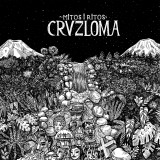
Mitos & Ritos, the debut EP by the Ecuadorian group Cruzloma, consolidates in its six songs a spirit of promoting traditional rhythms in contemporary styles, a process of reinvention and self-discovery in homage to the indigenous peoples of the Ecuadorian jungle and the riches of ceremonial music all in a mix featuring electronica, global bass and dembow. The hostile times humanity is going through have awoken a need to get back to our roots, reclaim ancestral knowledge, and question where the excessive exploitation of natural resources has led us. We have heeded that urgent call to care for everything that seems unlimited but which is increasingly scarce. And so we have looked to the past to understand our relationship with what surrounds us and establish a dialogue between the past, the present and the uncertain idea of the future. Applied to music, this has aroused the interest of artists and producers who use the rich folklore and traditions of Latin America to replicate that dialogue between what was and what will be. With this in mind, Mitos & Ritos ("Myths and Rites"), the debut EP by the Ecuadorian group Cruzloma, consolidates in its six songs a spirit of promoting traditional rhythms in contemporary styles, a process of reinvention and self-discovery in homage to the indigenous peoples of the Ecuadorian jungle and the riches of ceremonial music, based around the bambuco style from Esmeraldas on the northern coast, and the bomba del chota and the san juanito from Imbabura province. On this EP there are also sacred prayers of the Shuar nation, called Ujaj and Anets, including ceremonies like the taking of ayahuasca and of the tzan tza, all in a mix featuring electronica, global bass and dembow. It is a journey into mysticism, the jungle and the dancefloor, reflecting a search for musical identity that is at once contemporary and futurist.
Vertigo is a 1958 American film noir psychological thriller film directed and produced by Alfred Hitchcock. Vertigo received mixed reviews upon initial release, but is now often cited as a classic Hitchcock film and one of the defining works of his career. On this LP you will find the music of the original soundtrack along with some bonus tracks culled from other Alfred Hitchcock films and even from the television series.
out of Stock
Last delivered 2 years ago available to reorder, subject to availability
Storytelling was released on 3rd June 2002 as the soundtrack to the Todd Solondz movie of the same name.It was recorded and produced in 2001 at the famous The Magic Shop Recording Studio in New York which closed in 2016. Some tracks were also recorded at Water Music Recording Studios in Hoboken, New Jersey and CaVa Studios, Glasgow.
The explorer Walter Maioli makes his most amazing adventure, the journey to the center of the Earth. Retracing the exploits of the Platonic demiurge, he identifies in the cave the deepest meaning of myth. Primordial sounds, not shadows, are at the center of this magical path straddling geology and Paleolithic polyphony. The recordings between 1985 and 2002 capture the sonic imperceptibility of the great subterranean womb, investigate the secret dialogue between the trickling of pond waters and the faint percussive reverberation of stalactites and stalagtites. Rocky sediments are played as tubular organs, glockenspiels, xylophones or stone marimbas. Crystalline timbral variations and subtle microtonal passages recall the chimes of Tibetan gongs and bells, of the scales of Java and Bali. Amidst muffled pauses and silences, trills and rings, echoes and tremolos, hisses and pops of vibration, Maioli builds his most imaginative niche of sound, a magnetic and telluric chant that is pure symphony and archetypal synaesthesia. Co-produced with Holidays Records.
ora’s most innovative modern exponent bathes in communion with a re-imagined classical guitar, unveiling a new and previously unsuspected musical universe. In a meeting between instruments, not traditions, these maestros emerge from quite different and distant musical worlds. Ballaké Sissoko’s kora tradition and lineage traverse the once powerful West African empire known as Kaabu. South African Derek Gripper’s roots are in European classical guitar but infused with a unique jeli music mastery that takes guitar’s modern history in a captivating new direction.
But we are not hearing these traditions in dialogue: these masters meet on the sonic groundings of the kora, instrument of the griots, resonant vessel of the sacred and profane, sound carrier of history and wisdom. Through two decades of commitment and study, it is to this terrain that Gripper brings his guitar to meet its multi-stringed cousin.
The two men do not share a spoken language, but if it is true that music speaks universally, then they were already involved in profound dialogue long before they met for the series of London concerts which yielded this recording session – a session which matches deep communion with sparkling improvisation, which pushes a living tradition into brand new sonic spaces, and opens a live and direct channel of communication between kora and guitar. In the complex web of theme and variations spun by Sissoko’s twenty-two strings and Gripper’s six, a new African string theory is elaborated.
“Musically we tested each other,” says Sissoko, explaining that the most magical aspect of their encounters are spontaneity. “We have the mastery of our instruments, the technique and a good ear. Derek is very curious, that’s very important.”
“He’s just such a good listener,” says Gripper about Sissoko. “It’s not what he plays, it’s how he plays it. He’s an amazing interpreter, the prime master of timbre.”
Recording by Taylor Pollock at Platoon Studios, London.
Mixed, edited and produced by Derek Gripper.
Mastered by Murray Anderson at Milestone Studios, Cape Town.
Produced for vinyl by Chris Albertyn and Matt Temple at Matsuli Music.
Mastered for vinyl and lacquers cut by Frank Merritt at The Carvery, London.
Vinyl pressed at Pallas GmbH, Germany.
Sleeve notes by Francis Gooding, French translation by Paulo Goncalves.
Cover design by Toby Attwell at Twoshoes, Cape Town.
out of Stock
Last delivered 2 years ago available to reorder, subject to availability
Suffering can be a borderline experience, opening doors to the divine. Canadian black-metal-outfit GIVRE has dedicated its fourth album to this concept, well known throughout Christian history: On "Le Cloitre" (engl. "The Cloister") the band continues its exploration of the atoning side of pain and the austere aspects of faith through music that goes all the way from elegiac elegance to disturbing outbursts. Even the band deals with Christianity, through a historic lense, they should not be understood as religious band in any way!
The group was founded back in 2010 in Rouyn-Noranda by David Caron-Proulx (Composition, guitars, keys), Jean-Lou David (research, vocals), and Mathieu Garon (bass) when they were just 16 years old. They self-produced a demo album, then moved away from their hometowns. David is now a composer for film and mixed media and Jean-Lou is a writer and historian. In October 2020, ten years after their first collaborative endeavors, they reunited and recorded two more albums: "Le Pressoir mystique" and "Destin Messianique".
The creation of "Le Cloitre" was a lengthy process. While most recordings were made right after "Destin Messianique" in 2021, extensive work was done over an extended period of time to add layers and perfect the album's concept. Each of the six songs corresponds to a holy woman from Christian history. The lyrics are taken directly from their writings or hagiography (an idealized biography), delving into their connection to the divine through suffering. The words are sometimes rearranged, but they are all direct citations without anything new added to them, from the symbolic poetry of Hildegard Von Bingen (1098-1179) to the disturbing and factual depictions of Marthe Robin (1902-1981).
The compositions vary to reflect these different perspectives: sometimes dark and eerie, other times blissful or sorrowful. Therefore, a crucial addition to the album's atmosphere was the inclusion of female vocal performances. Additionally, samples from the French film "Le dialogue des Carmelites" from 1959 are incorporated. Excerpts of a piece by Hildegard von Bingen are used in the song dedicated to her. The album was recorded in the band members'home studios. Mixing and mastering were done by long-time-collaborator Gael Poisson-Lemay (Gris, Sombre Forets, Miserere Luminis), who also contributed guitars to the song about Marthe Robin. Vinyl mastering was done by Greg Chandler (Esoteric) at Priory Recording Studios.
Rob Zombie and Waxwork Records have partnered to release an exclusive, curated line of classic Horror movie soundtracks. “Rob Zombie Presents” features several never-before-released film soundtracks that were personally selected by the singer, songwriter, and filmmaker. “I have always been a huge fan of movie soundtracks. So I jumped at the opportunity to work with Waxwork on this project.” Says Zombie, “I can’t wait to release these albums. So many of these films are greatly under appreciated and, they all contain such great music. So, to be able to release these deluxe packages is a dream come true.“ - Rob Zombie In collaboration with Rob Zombie, Waxwork Records is thrilled to release Rob Zombie Presents HOUSE ON HAUNTED HILL Original Motion Picture Soundtrack by Von Dexter. Starring Vincent Price, HOUSE ON HAUNTED HILL is a 1959 American Horror film produced and directed by William Castle. Vincent Price plays an eccentric millionaire, Frederick Loren, who, along with his wife Annabelle, has invited five people to a house for a ""haunted house"" party. Whoever stays in the house for one night will earn $10,000. As the night progresses, the guests are trapped within the house with an assortment of terrors. The film uses many props used in carnival haunted houses to generate fear and terror. The film is also known for its promotional gimmick, Emergo, which included a ""flying skeleton"" that would appear over the audience as they enjoyed the film in a movie theater. Waxwork worked with the rights holders of the original film elements which have been restored, allowing for the best source material of this never-before-released soundtrack album. In addition to the original music by composer Von Dexter, this release features segments of the film's dialogue and sound effects appealingly included and sourced from the restored original soundtrack. Included in this very special release is the first part of an exclusive two-part interview conducted by Rob Zombie with Vincent Price's daughter, Victoria Price. Part two will be included with Waxwork's upcoming release of Rob Zombie Presents The Last Man On Earth! Von Dexter (1912-1996) was an American composer born in Aurora, Illinois. He later moved to Chicago where his professional music career began playing in bars and nightclubs. After gaining a music degree at USC, he moved to California where he became the West Coast MD for NBC. In addition to House On Haunted Hill, Dexter composed the scores for other William Castle films including 13 Ghosts and The Tingler."
Coby Sey steps out with his remarkable debut album 'Conduit'. "'Conduit' is a statement of intent, reaffirming my dedication to transcend the tangible through music – it’s my way to continue and contribute to the musical lineage laid by those before me, locally and worldwide." - Coby Sey
out of Stock
Last delivered 2 years ago available to reorder, subject to availability
Composed by Jim O’Rourke and pieced together by Jim together with longtime collaborator and trumpeter Eivind Lønning at Jim and Eiko Ishibashi’s home in the Japanese mountains, this engrossing new album blows brass wails and tense fanfares across O'Rourke's manipulated Kyma tapestries for a deep, captivating trip into the aether.
Eivind Lønning has been sharing ideas with O'Rourke for several years: the duo collaborated on music for the Whitney's 'Calder: Hypermobility' exhibition, and Lønning played trumpet on O'Rourke's brilliant 2020 album 'Shutting Down Here'. For this new work, Lønning headed to O'Rourke and EIko Ishibashi's home studio in the Japanese mountains, where he teased unfamiliar, alien textures from his trumpet to open the labyrinthine three-part composition. O'Rourke took the material and subsequently funnelled it through his Kyma system, transforming it into a swirl of sound that hums alongside Lønning's original takes. The album was composed, mixed and mastered by O'Rourke, with everything's based on Lønning's virtuosic performance.
The album begins by cautiously introducing us to its sonic palette: wavering, bird-like horn wails that O'Rourke contorts around quiet synth oscillations and computerised swarms. Lønning's spittle-drenched blasts are given the spotlight, but O'Rourke's manipulations - often gentle and illusory, and sometimes utterly lacerating - lift the sounds into completely new territory. When Lønning begins to turn rhythmic cycles using the trumpet keys, popping with his mouth to compliment its leathery timbre, O'Rourke replies with dense, hallucinatory drones, juxtaposing unstable electronics with Lønning's breathy, sustained notes. All these sounds coalesce into a dizzy vortex, but O'Rourke is careful not to overwhelm the senses, dropping to near silence as the first act transitions into the second. O'Rourke pelts Lønning's vertiginous wails, steadily mutating them into Xenakis-like stabs until they sound like cybernetic strings and icy tones that extract the tension from Lønning's brassy harmonics.
The third act is more screwed, with O'Rourke allowing Lønning's improvisations wail into cathedral-strength reverb, accompanying the sound with glassy penetrations and throbbing subs. Here, Lønning sounds as if he's heralding the arrival of a celestial being, piercing the atmosphere with bright, sustained tones and muted, jazzy flourishes. O'Rourke hangs back, carefully spinning the notes into naturalistic fibres and orchestral drapery, before he allows the electronics to subside completely and the trumpet to echo into the imposing negative space.
'Most, but Potentially All' is a dumbfounding piece that shifts the dial on contemporary experimental music; dizzyingly complex but never showy, it's the kind of record you can spin repeatedly and hear something different each time. As an exploration of the trumpet, it's a unique expression, and as a progression of electro-acoustic compositional techniques, it draws a deep trench in the sand, setting a new standard.
Church Andrews and Matt Davies weave intricate patterns from Fibonacci sequences on new mini-album, Yucca.
Producer and composer Church Andrews (aka Kirk Barley) and drummer Matt Davies return to explore the outer limits of rhythm on a six-track suite that is at once angular and fluid, natural and systematic. Drawn to the restrictions of working solely with one synth and live drums, the pair found creativity in limitation, developing a compositional dialogue between the sonic timbres of Kirk’s productions and Matt’s percussive practice.
Evoking the primitive yet complex form of the plant from which it takes its name, Yucca features tracks that are built around rhythmic ratios of the Fibonacci sequence. Mirroring spiral patterns exhibited in nature, each track evolves like a cellular structure of its own, from the livewire syntax of ‘Chirp’ and the deconstructed ebb and flow of ‘Ferns’, to the mini-album’s title track, where crisp grooves flit between modulated electronics like fireflies.
“I’ve always been inspired by music that is complex without sounding complex,” Matt explains. He maintains a sense of bounce amid the intricate phrasing and cites drummers Roy Haynes and his grandson Marcus Gilmore as inspirations, alongside sabar drummers from Senegal and Mridangam drumming of South India.
With a shared background in hip-hop and the swung beats of J Dilla and Flying Lotus, Kirk Barley and Matt Davies were also inspired by the minimalism of Terry Riley and the sparse palette of dub techno.
Written and recorded in Lewisham in the spring and summer of 2023, Yucca follows the release of Axis in 2022, with the duo having also performed at festivals such as Rewire and Waking Life, and recorded live sessions for FACT magazine and Worldwide FM.
The third release on Yorkshire-based Odda Recordings, following Kirk Barley’s Marionette and Flaer’s Preludes, Yucca confirms the label’s reputation for championing music on the unstable ground between the organic and the synthetic.
Jules Archive is a project founded by Marco Marzuoli and Marco Mazzei in 2016.
By employing various technologies, instruments, and approaches, the duo strives to craft a mysterious and fantastical persona named Jules. Through this persona, they aim to immerse listeners in a dreamlike atmosphere, transcending reality and dwelling in imaginary spatiotemporal dimensions.
Platonic Tales is the second chapter of Jules' journeys, more anthropocentric than the first album Adventures & Explorations (Volume 1), but equally exotic and dreamlike. The musical intention of this record was to rework a set of five (plus one) melodic tape loops, already structured in "song form”, through detailed arrangements. The treatment followed an experimental-pop-oriented production approach.
Recorded entirely at home by the artists, the music on the album features analog cassettes containing loops dating back to around 2016. The remaining arrangements were composed during the 2020 pandemic lockdown.
Several international guests collaborated on the album:
Lino Capra Vaccina, the legendary Italian percussionist/minimalist composer, and Jefre Cantu Ledesma engaged in a musical dialogue on An Ontological Novel.
Andrew Weathers contributed his voice to the tracks A Superior Truth and Exodus.
Christina Vantouz participated in Exodus and concluded the album with a string composition arranged and conducted by Minna Choi, performed by Magik*Magik Orchestra.
Recorded between Città Sant' Angelo (Pescara - Italy, 2016-2020), Francavilla (Chieti - Italy, 2020), and Firenze (2019-2020).
Crucial reissue of the cult Electric Capablanca LP, on SWIMS.
"A mechanical ghost in the corner of our room, The Electric Capablanca spins spectres, shades and sonics while nobody looks.
Lifestyle product for a Dolce Vita dreamer, the device – abandoned by one careless owner – now dreams up probable chaos."
Released September 2019, enjoy these new hallucinations from no known author; a machined mega-puzzle of miscalculated patterns, automatic failures and lost coffee house betas.
Turn the dials to creak splinters of 70s Italian midi classical (Venosta, Musci), imagined mitteleuropa ambient (Froese, Popol Vuh) and spiritual mathematics from the old new world (Spiegel, Hassell, Riley).
Bruno Berle, the young songwriter and poet originally hailing from Maceió, the capital of Brazil’s Alagoas state, crafts songs that are simple, direct, and full of tender nuance. With his first album No Reino Dos Afetos (which translates to "In the Realm of Affections” and was released in 2022), Berle firmly established himself as a unique and important voice in the burgeoning scene of new Brazilian artists making a global impact, including peers like Ana Frango Elétrico, Tim Bernardes, Bala Desejo, Sessa and more. Now back with his second album, No Reino Dos Afetos 2, he stretches that further.
Bruno Berle’s music lives between two worlds – a traditional Brazilian folk talent steeped in history, and a contemporary, dreamy electronic pop; the result is songwriting that’s genre-bending, intentional, iconoclastic and consuming, spacious and sinewy and singular, a striking reflection of its composer while leaving space for the listener to settle in. The album follows Bruno’s relocation to São Paulo, and the songs are a reflection of his past and present. A rebuke of former categorizations of his work in Brazilian music scenes, and an idea of where his music can move, unfettered.
Berle’s music is purposeful in being a true portrait of himself, and a reflection of the music, art, and fashion scenes he personally moves through. Berle aims to provide an entrypoint for Black queer joy in his music, in his storytelling, in his presence and vision as a creative. For him, it feels subversive to be playing MPB laced with dubstep and lo-fi, a sort of intentional sacrilege, capturing a dialogue of modernity in traditional music.
Berle wrote most of the arrangements and co-produced his new album, Reino Dos Afetos 2 with longtime friend and musical partner Batata Boy, who is also from Maceió; the album was recorded in Rio de Janeiro, Maceió, and São Paulo, his new home, and picks up the conversation begun in 2022 on Berle’s debut album No Reino dos Afetos. Both records are the result of a nonlinear but coherent seven-year music creation process culminating in these albums, holding hands across space and time.
“Tirolirole,” the first single from the record, was released at the end of 2023; sun-soaked rhythms and soft voice coat the song, the lilting refrain of “Tirolirole” throughout – hushed, gentle, but somehow almost tactile, a golden-hour moment unlocked in the mind. “Tirolirole” is a triumphant future classic about the temporality of a blossoming love, with Bruno’s stunning vocal soaring over melodies which ebb and flow like the waters on the Atlantic shore. Of the track, Berle explains: “Despite ‘Tirolirole’ being an expression that evokes my childhood, just like the light words about nature, the harmony, and the poetry are epic, carrying a great hope for love.”
In fact, the guiding theme of No Reino dos Afetos 2 is a relationship, unfolding in the arc of a weekend. It traverses the innocence of an early young love, how that can be formative, can stretch on to take new shapes, or shape you. The album happens at the genesis of meeting someone and falling for them, before the relationship is thrown into overdrive – set in a big city, against a backdrop of major life changes, rising energy, the sound of São Paulo.
Something transcendental emerges in “Dizer Adeus,” with an arrangement that echoes a gospel atmosphere (evangelical and Catholic environments were pivotal to Berle’s upbringing). On “É Só Você Chegar,” piano and flute gracefully intertwine, a dance, while “Quando Penso” skews sparser, the voice-and-guitar minimalism somehow cultivating an entirely different shape – somehow both cozy and melancholy, with the background sound of a rainy day. Coupled with the lo-fi aspects that shape much of the album’s personality in the vocals and the production, No Reino Dos Afetos 2 is meticulously elaborated by Berle’s sonic alchemy, like on the mid-album instrumental “Sonho,” which feels like floating. “It’s the apex. It’s when lovers are sleeping together,” Berle explains of the feeling he wanted to encapsulate in the song.
On “Love Comes Back” Berle interprets Arthur Russell, the late Iowa musician who only reached greater visibility after he died in 1992. “His way of making music is similar to mine,” Berle explains. “He sings in a more fragile way, has more of an experimental way of recording, letting ‘chance’ appear in the final work.”
Even so, Berle doesn’t want his music to be buried in sentimentality – and the purposefulness of his craft serves as a sort of north star. The production, the arrangements, his restraint and intentionality in crafting his songs feel just as vital as their emotional cores. His songwriting is amorphous, fluid, an encompassing genre-bending movement in-and-of-itself, quietly daring. The songs are often in conversation with other works – drinking in fountains as diverse as the filmmaking of Ingmar Bergman, the poetry of Walt Whitman, the rhythm of Djavan, and the painting of Maxwell Alexandre. Musically he weaves together a rich tapestry of Brazilian folk, UK 2-step garage/dub, trip hop and sun soaked west coast songwriters; something akin to the worlds of Milton Nascimento, Arthur Russell, James Blake, Feist, and Sade colliding into one. But even then No Reino Dos Afetos 2 floats separately, a romanticism driven by a simplicity and intimacy, an open-ended possibility, Berle’s singularity as an artist at the helm of the ship.
Following acclaimed singles from Powell, Blood Music, Shit & Shine and Prostitutes, the next release from Diagonal is a landmark. It marks both the London label's first full-length album release, and the return of abrasive and furiously funky hip-hop deconstructionists Death Comet Crew, one of the most quietly influential underground acts to emerge from the creative melting pot of 1980s New York.
Ghost Among The Crew documents the group's return to studio operations for the first time since the 80s, as well as their first ever full-length studio album. It's a remarkable trip: a consolidation of their early feral disassemblies of hip-hop and electro, but also broader in scope, chewing up and spitting out fragments of soul, jazz fusion, punk and industrial music.
Death Comet Crew were founded in New York City in 1983 by Stuart Argabright, a founder member of post-punk/industrial mavericks Ike Yard and the mind behind Dominatrix and later Black Rain. Their sound, then as now, was a singular proposition: urban in mood, exploratory, often compellingly danceable, yet confrontational. It emerged from the interweaving talents of the group's varied members: guitarist Michael Diekmann (of Ike Yard), bassist Shinichi Shimokawa (later of Black Rain) and Nick Taylor aka DJ High Priest, frequently joined by the late, great hip hop artist and graffiti writer Rammellzee. Having recorded two studio EPs - 1985's At The Marble Bar (featuring Rammellzee) and its follow-up Mystic Eyes - the group disbanded barely a year after forming. They left behind a reputation for their incendiary live performances, several recordings from which were gathered on crucial 2004 compilation This Is Riphop.
The musical climate that first birthed Death Comet Crew was one of fertile cross-pollination of styles. In the late 1970s and early 1980s, the seeds of modern day urban musics - hip hop, punk and post-punk, no wave - were taking root in the streets of recession-struck New York City. Argabright recalls dancing at the downtown Mudd Club around 1980 to a bold mixture of styles, with DJs cutting from synth-pop and post-punk to funk, soul and early hip-hop: Bowie and James Brown next to Run DMC, Ultravox and Gary Numan. Indeed, the names of his New York contemporaries operating around the same time - the likes of Liquid Liquid, Run DMC, Afrika Bambaataa, Arthur Russell, ESG, Swans, Sonic Youth, Bill Laswell and more - have since been inscribed in modern music history.
With previous projects Dominatrix and Ike Yard having recently become inactive, in 1984 Argabright formed Death Comet Crew as a means of exploring new sonic avenues. He'd been experimenting with tape, recording and procesing the sounds of his surrounding environment and dialogue from films and TV. Joined by Shimokawa, Diekmann and Taylor, and using drum machines, turntables, spidery guitar and bass, the group assembled a scrambled collage of rhythms and sampled voices. Their live performances were, in Argabright's words, "aurally violent, sharp-edged, downright lacerating", hacking gleefully away at hip hop and electro's rhythmic frameworks. Rammellzee joined the group to vocal 1985 debut EP At The Marble Bar; his MC turn on highlight 'Exterior Street' is all the more remarkable for having been entirely freestyled in the studio. When Death Comet Crew reformed in 2003 for a string of live shows, he continued as an active member of the group, touring and working with them during the recording of Ghost Among The Crew, until he sadly passed away in 2010.
After reforming, Death Comet Crew began writing and recording new material. Now, following on from their just-released Galacticoast 12" through Citinite, Ghost Among The Crew - its title a homage to Rammellzee - hones the group's abrasive early experimentations while tripping into bold and astrally minded new territory. Alongside the core quartet of Argabright, Diekmann, Shimokawa and Taylor are new voices, including Rapscallion (a friend of Rammellzee's), Jessica 6/Hercules & Love Affair singer Nomi Ruiz, and Carolyn 'Honeychild' Coleman. Its eight tracks are steeped in the impulsive spirit of electric Miles and the deep space romances of Sun Ra, and possessed of an enigmatic yet undeniable pop edge. But equally they're pricked with urban paranoia and dread, traits that have long been hallmarks of Argabright's musical projects.
'Me Czar Of The Magyars' opens the album in a twist of tension like the turning of a ratchet. Its taut electroid shudder is paired with machine gunned cymbal hits and a voice telling of "wormwood and opium dens" - the sound of being teleported from everyday city streets into the astral plane, where every sensory input is heightened and the promise of danger or pleasure lurks unseen around every corner. Later, Coleman's lyrics pay tribute to Rammellzee on the sci-fi funk of 'Deep Space Woman'. 'Let The Clubs Ring' melts lounge bar organs and frazzled guitar into freakishly unstable shapes, while 'Drag Racing' matches its title, rocketing along frantically atop clattering drums. 'Moons On Titan's Seas' is halfway interlude pause for rest, like an exotic cocktail in a bar orbiting some as-yet-undiscovered new world. These varied strands are somehow all summarised in album closer 'Ignition Spark', which sets Ruiz's vocals alongside Taylor's and Argabright's. The zone the trio inhabit in this final track exists in perpetual push-pull between contemplation, memory, intrigue and violence, a decisive opening of a new chapter in Death Comet Crew's history.
As with all Diagonal releases, the initial vinyl pressing will be packaged in unique, specially designed artwork.
out of Stock
Last delivered 2 years ago available to reorder, subject to availability