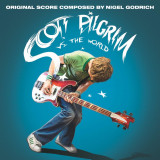
Is Joe's 2nd album on Sable Noir recordings. It's a recollection of tunes put on a side throughout the years in the idea to make an album, and englobing all the different aspects possible of some of the music the producer has been up to.
Flow LP takes its influences from triphop to dub techno, ambient music to jungle, soulful drum and bass of course, but also cinematic ambient scores to darkest and percussive 170 joints.
The point here was to be able to tell a story bringing all those different styles all together, and also to deliver an album. Not only for dj's, but also for a full listening purpose. That's why we also released this album, in vinyl, digital, but also in a good old fashioned CD version too.
We hope this cosmic journey through all those styles makes you feel something special. Wherever you listen to it.
Sable noir recordings, but also everything behind this LP is a friend and family co working team, and it is a real pleasure to finally be able to bring this to you now!
Buscar:dif
With Bending the Golden Hour, the third album from Memphis, Tennessee’s Aquarian Blood, husband and wife team J.B. Horrell (Ex-Cult) and Laurel Horrell (formerly of the Nots) continue the gorgeously stripped-down and atmospheric direction set on their critically acclaimed previous effort A Love That Leads to War.
While Aquarian Blood has roots as a chaotic punk rock six-piece, the band shifted gears after two raucous cassette-only releases on ZAP Cassettes, a pair of seven-inches, and 2017’s Last Nite in Paradise, released on Goner Records. After drummer Bill Curry broke his arm, the Horrells redefined
Aquarian Blood, reemerging in early 2018 as the more intimate, mostly acoustic balladeers behind the staccato, fever dream sound of A Love That Leads to War. Like its immediate predecessor, Bending the Golden Hour was recorded at the Horrell's Midtown Memphis home. The band turned over 43 tracks to Goner co-owner Zac Ives, who handpicked 17 songs for the album.
The final result is shimmering and hopeful; as beautiful and sparse as a Rockwell Kent snowscape. Bending the Golden Hour begins ominously with “Channeling,” which sounds like an outtake from Paul Giovanni’s soundtrack to 1973’s pagan nightmare The Wicker Man. Then the band upshifts for “Time in the Rain,” a sweet duet set to a rigid snare beat. From there, Aquarian Blood zigs to country and zags to psychedelic folk, brooding on one song and soothing listeners with the next. And while the music, feel, and experience is different, Aquarian Blood naturally brings to mind some legendary musical partnerships: Richard and Linda Thompson, Lee Hazlewood and Nancy Sinatra, Johnny and June Carter Cash, Gram Parsons and Emmylou Harris; not to mention similarly-bent-but-beautiful luminaries like Roy Harper, Pentangle circa 1967 -1973, and Jackson C. Frank.
There’s a big middle ground, like folk-psych, or weirder country music,” he says, reeling off names like Skip Spence and Syd Barrett as stepping stones between the genres of punk and folk.
Inspirations for Bending the Golden Hour come from myriad sources that document the milestones and minutiae in a family’s full life. Some lyrics name a time or a place; others reflect the fleeting moments that elapse unnoticed. “Come Home,” which is sung by J.B. and his daughter Ava, was written the day Ava got her driver’s license. “Ava took the car out by herself afterwards, and I wrote the song immediately—she sang her part when she got home that evening,” J.B. recalls. Whether or not the listener knows the backstory, the song rings sentimental, with subtle, supportive instrumentation that underscores guitar and vocals. The bewitching “Rope and Hair,” on the other hand, is less sketched out, with lyrics that are simply a recitation of the talismen found on a silver sabertooth charm that J.B. purchased for Laurel at a Latin strip mall in southeast Memphis. That’s all to be said. “Sometimes when you know too much about what the song is about, it takes away the magic,” says J.B. “Alabama Daughter,” says Laurel, is about a place where a childhood friend lived called Castleberry Holler. “It was really rural, just a lot of shacks without electricity—the kind of place you didn’t go to unless you were invited,” she says. “Probable Gods” is a hazy reflection on the struggle of such a strange year. “It’s been very cathartic to put all of this into words and not have it live
Ulna’s OEA is a “bar-rock getting sober record.“ The first full length solo record of Ulna, aka Adam Schubert of Cafe Racer, OEA is an ode to reinvention. Along with the release comes a rebranding--formerly Ruins, Schubert’s new pseudonym ULNA is a reference to a pivotal moment in his childhood. At the age of 14, Schubert shattered the bone on the inside of his forearm in a skating accident, and took up the guitar. “That’s what made me serious about playing music,” says Schubert.
This name change also accompanied Schubert’s shift towards sobriety--OEA was created right as Schubert reconfigured his life without drugs or alcohol. With the exception of the final track, “Dead Friends,” the whole album was written while in a recovery program. “You have to reinvent your whole personality, you have to be a different person,” says Schubert.”Who am I if I’m not the crazy drunk dude who’s doing drugs in the bathroom?”
OEA is an intensely personal record, in subject matter but also quite literally--Schubert plays every instrument, though the record feels far from a home-demo, recorded and mastered by Robby Hanes at Strange Magic Recording in Chicago’s Logan Square. Schubert’s songs are ambling and full of picked guitar and retro harmonies, a stylistic sensibility he attributes to a love for the Beatles and “acoustic rock with a weird punk edge,” a-la Big Thief and Kurt Vile. Though instrumentally sunny, his vocals hint at something else - there’s an underlying ache. OEA is an easy listen, but with a depth of emotion that demands listeners’ attention.
OEA explores the range of emotions experienced in the transition to sobriety, from fear to backslide to self doubt. At first listen, “Turn The Record On” feels almost like a love song, with a chorus of “turn the record on/ you’re my favorite song,” but in actuality the song is the story of an empty encounter rather than romance. “It’s kind of about this sad hookup with someone else who is equal in your addiction, you’re just using each other because you don’t want to be alone in your using,” says Schubert. “We both have this problem and we can have fun in it together because we both understand. They know the score.”
While “Turn The Record On” speaks to a moment of shared addiction, other tracks examine what comes after sobriety. “And I took the pill like I should / and I stayed clean just like I said I would,” begins “Last Song,” which Schubert cites as one of the hardest tracks to write. “I got sober and I take medication and - I’m doing all this stuff now but nothing’s changed,” says Schubert. “ I think that’s pretty common in people who get sober. I did all this stuff and now what?”
The penultimate track on the album, “Last Song” fades into a noisy interlude that gives listeners the feeling of motion, like entering a tunnel and emerging into a quieter, lo-fi recording, the closing track “Dead Friends.” The only non-studio track, “Dead Friends” was recorded in Schubert’s home, and carries with it a warm intimacy. “I wanted it to sound like you’re outside somewhere, you're walking, and you step inside somewhere that feels safe,” says Schubert.
This closing track embodies the mood of OEA- warm but with a melancholy edge, like coming in from the cold but still feeling a lingering chill. It’s an album that feels comfortable and cohesive--though individual tracks stand alone, OEA works best when listened through start to finish. It’s a record to put on while cooking dinner and let sink in.
Lotus Wash drops his debut album on LBD Sounds, bringing a whole load of fresh material which came out from his experience as a session musician, and performing his experimental live sets around the Czech Republic. He connects the dots between classically trained musician and modular synth-head, working in Prague's DIY shop and creative community Noise Kitchen. The album spans across 6 original tracks of pure analogue bliss and live ideas, alongside three remixes from his closest allies, local producers Oliver Torr, Vision of 1994, and Hrtl.
The Field Theory was created during a period of deep fascination with quantum physics, with the tracks being conceptually and aesthetically inspired by some of its phenomena. Acoustically, it's mostly a slow and dark affair, with Lotus Wash only letting the light in very briefly when the sun is young (Magnetic Moment), keeping the shutter firmly closed for the rest of the record. His music does not rely on banging beats to drive it, instead letting intense grooves do the job from deep underground, just like on earth-shattering album opener Vacuum Fluctuation. He masters his craft of building atmosphere, a skill learnt during multiple collaborations with various Czech theatres. Of course, he lets the steam out occasionally, and always with devastating effect (Higgs Field, Casimir Force), but mostly choses to keep it capped, humming and hissing. When the sky clears, he opts for a minimalistic and hypnotic approach, only to disturb this peace with a killer bassline in one of the album's highlights – Spooky Action in A Distance – later re-imagined and re-electrified by Oliver Torr. Standard Model is anything but your standard techno, while Hrtl's remix of Magic Moment flirts with techno too, but on a dubbier and brighter side. Bringing the album to a close is Vision of 1994's downtempo take on the same track, finally letting you breathe out.
Electroacoustic music composed in 1991 by Michèle Bokanowski for Patrick Bokanowski short film "La Plage" (4parts)
Limited edition of 300 copies. Unconventional 4 different cover artwork (75 copies each) on embossed cardboard (2 colours version : Lavanda and Tabacco), one credit sheet inside. All on high quality recycled paper.
Invisibilia - the new Canti Magnetici serie curated by Andrea Penso - is proud to introduce for the first time on vinyl a composition of Michèle Bokanowski, one of the most poetic composers in the avantgarde european music scene.
Remained unpublished until today, this composition is made as soundtrack for the short film "La Plage" (1992) created by the experimental filmmaker Patrick Bokanowski (husband of Michèle Bokanowski).
"La Plage" is probably the less "concrete" composition made by Michèle Bokanowski. It is pure liquid abstraction in sounds. It is one of those rare compositions really out of time and space. As expressed by Pip Chodorov, editor of 4 DVDs that contain all the films directed by Patrick Bokanowski, we can feel the works created by Michèle Bokanowski and Patrick Bokanowski are a sort of "spiritual search for the overrunning of perception, and thereby oneself. Searches into abstraction in the real, mysterious blanks that recover the daily".
Tibor Szemző is not only a skillful and experienced Hungarian musician but also a media artist with a vast imagination. His last LP, ARBO X – Csoma Grooves, refers to his full-length film A Guest of Life released in 2006, for which he not only directed but also composed all the music. The film is inspired by the life of Alexander Csoma de Körös, a remarkable polyglot from the 19th century who set out from his native Transylvania to central Asia on foot to look for the roots of the Hungarian language. He reached Tibet, dedicated the rest of his life to study of Tibetan manuscripts and finally became the founder of tibetology. After 14 years Tibor Szemző decided to explore the theme further and composed the cinematic performance, Silverbird and the Cyclist, where he as narrator presented the story of Csoma from a different perspective.
ARBO X is the music from this performance and it is based on the soundtrack of the original movie but the material has been restructured and enhanced by new layers. There are fourteen relatively short tracks on the album and each of them has a very specific character, sometimes mysterious as the titles of the tracks themselves. Their arrangement is ingeniously composed. Szemző’s typical bass flute and voice with percussion accompaniment on the first track Axis is a very impressive introduction to the whole album. The following tracks build up a series of colorful sound parables, which are in no way descriptive. Every element, whether it’s a double bass, viola, soprano voice, vocal trio or electronics, fits perfectly within the overall sound fabric with effective timing. Listening to ARBO X one unwittingly concentrates on interweaving details without loosing the sense of the whole. It’s certainly a great benefit, as in previous recordings, that most of the musicians participating in the recording of ARBO X are very familiar with Szemző’s music and his collaboration with some of them goes back to Group 180, a new music ensemble he founded in 1978 and soon earned international acclaim. This most recent album belongs among a long line of recordings that Tibor Szemző has released during his musical career and displays great compositional complexity and a keen sense of a perfectly balanced sound spectrum.
Alexandr Krestovský
LP edition of the sold out CD/Pamphlet from 2016. The score by Schmid, reading by Landry, and edited/produced by McCann. Includes a big poster of The St. Francis List.
Emily Martin and Derek Baron on St. Francis (Feb. 2021):
What does it mean to pray? To address someone, to plead for something, to welcome humiliation and failure: Please, let me forget about the China Chalet parties, please let there be no countries and no war, please let me love you. Is prayer iteration, or just repetition: My god, my god, my god, my god… To know spleen you just have to be down to be humiliated. But do we know for sure that we are miserable? How do we know?
This is how it has to go. We listened to this for the first time together in May 2017, while driving from Chicago to New York along the I-80 in Pennsylvania, stopping at the rest area that I later mistook for the famous picture of American “culture.” We stayed at a hotel and may have ordered a pizza. Content first, then, content again. Went inside and drank wine in relative silence, burping. Recognizing the sacredness in the plot of Friends. A choral melisma representative of holy Joy.
The dreams of moving through a convoluted space of passages, staircases, open courtyards, rooms just glimpsed past a door. It doesn’t seem possible that you can get from one place to the next but according to the logic of the dream you do. I think this has to do with how each little unit of ‘content’ happens at a different distance from your ear. The holiness of the periphery. That you can catch a shard of history if you only find the right distance to stand from the painting.
But prayer is also like the magic language we were talking about — faith that words do something more than just mean — they have the capacity to effect change in the world, and not just in the like, “words change ppl’s minds” kind of way, but in that the words themselves actually have agency. Form: sing-along.
May 28 will see prolific Japanese vibraphonist, multi-percussionist and composer Masayoshi Fujita mark a new sonic direction with his forthcoming album Bird Ambience on Erased Tapes.
Bird Ambience brings several fresh changes for the artist. Until now, Fujita would separate his acoustic solo recordings from the electronic dub under his El Fog alias and experimental improvisations with contemporaries such as Jan Jelinek, Bird Ambience sees him unite all of these different sides to his work for the first time, into one singular vision. He also makes a lateral leap from his signature instrument the vibraphone, on which he created his acclaimed triptych Stories (2012), Apologues (2015) and Book of Life (2018), to the marimba, which takes centre stage on his new album alongside drums, percussion, synths, effectors and tape recorder.
“The way of playing the marimba is similar to the vibraphone, so it was kind of a natural development for me and easier to start with, yet it sounds very different”, explains Masayoshi. “The marimba bars are made with wood and it has a wider range than the vibraphone, which gives me a bigger sound palette with more possibilities. I play the instrument with bows and mallets, and sometimes manipulate it with effects.”
Bird Ambience also marks his liberation from fastidious preparation for past solo releases to new endeavours in improvisation. “I prioritised trying to capture the wonder which happens during those occasional magic improv moments. Sometimes the mic-ing and placement of instruments was pretty rough; things weren’t perfect and everything was done quickly, but it turned out as the final recording. Overall when I
couldn’t decide between two takes, I told myself to go with the first”, Masayoshi recalls.
Arranged with a perfect Kanso-like balance, the unhurried pace of Bird Ambience allows each sound and phrase enough time to be mindfully absorbed and savoured. This subtle but affective work carries ethereal remnants of Midori Takada’s minimalism, the static atmospheres of Mika Vainio, To Rococo Rot’s organics and the bucolic electronics of Minotaur Shock. Fujita vaporises contemporary and classical, ambient and dismantled dub, controlled noise and fragments of jazz into an atmospheric, static mist, which he skilfully coerces into new forms.
After 13 years in Berlin, Masayoshi recently relocated to a new home and studio in the rural Japanese mountain village of Kami-cho, Hyogo, following his life-long dream of creating music in nature. Even though the album was entirely recorded in Germany before he left, it has this palpable sense of reverie found in the natural world. From there we can only imagine the kind of impact his new life in rural West Japan will have on future works.
The rich sounds of Maloya and Séga music, originating from the Réunion island (as well as Mauritius and Seychelles for Séga), have recently been brought to the ears of the Northern hemisphere's music lovers. Hailing from the French Alps, where Réunion-natives and young "metropolitan" French youngsters have been sharing parties, food and music for years, Les Pythons De La Fournaise are a flavoursome electric "Séga" band and they have already put out a couple of albums over the last decade.
This time, they are interpreting Séga and Maloya songs under the form of a - nearly – all-acoustic orchestra : "L'Orchestre Du Piton" !
This Long-Player has got a particular sound and character, starting with a powerful four-woman choir (often sung in unison, in accordance with the Maloya tradition). The "lead" is a different singer on almost every song, which brings a variety of tone and vocal texture to the album.
Instead of keys, organ or synth, Les Pythons went for accordion ; they also brought into the studio an array of percussion, ranging from classic bongos and bells to typical instruments of the Indian Ocean : theKayamb, the Pikeur, the Sati and most notably the Roulèr– the king of them all, majestic barrel-shelled bass drum.
On songs like "Anon Manz Demiel" (Let's go and eat honey), two crazy electric guitars with intertwined riffs add a fresh element to the sound – somewhat echoeing with Esquivel's exotica and Congolese rumba at the same time !
And the most unusual fact on this record : there is no bass guitar. Perhaps the band had a statement to make; in our modern music culture where bass plays a central role, they prove that one can move to other sounds – and appreciate the more organic deepness of percussion.
Whether or not you look into the meaning of the songs (mostly from the Réunion repertoire with a couple of Mauritian exceptions and one original "Pythons" composition), you will feel the mood of the Creole lyrics – a deep love story in "Maloya Tantine", an hymn to slowness and indolence in "Tou Dou", a clumsy chat-up scene in "Malbaraise"...
And overall, a joyful, fresh and sparkly energy emanates from this "Orchestre" sound, from this exceptionally talented crew. Oté !
Following on from Vince Watson’s sell-out 2020 release, that saw tracks lifted from his 9th studio album ‘Via’ taken to a whole new level with remixes by the mighty Joe Clausell, Steve Bug & Langenberg, Osunlade and Manoo, he unleashes two fresh, new, feel-good cuts on Everysoul Audio!
Defining them as House or Techno would be a mistake, as Vince effortlessly bridges the gap between both worlds in a way that he does so very well. ‘Make A Wish’ was born out of the same studio session as his ‘Teardrops’ track for Sacred Rhythm, taking the initial sketch into a different direction with powerful drums, big basslines and silky synth stabs, adding to the orchestral strings that build. ‘Forever’ was originally a studio jam that made it into his live shows pre-covid, but this gave him the chance to finish it the way he always wanted. It’s an upbeat, jazzy cut with funky 909 drums and acid bassline.
"Milano Odia: La polizia non può sparare", a 1974 movie directed by Umberto Lenzi, is the quintessence of the Italian police films. Not only, it's even more violent and extreme than usual, with one of the best interpretations ever by the Cuban actor Tomas Milian.
The soundtrack for the film is commissioned to Ennio Morricone, who at the time was already a full-time score composer, and had already worked in the same field. The Maestro wrote the entire OST starting from a single, obsessive theme, arranged in many different ways for each different scene or atmosphere.
The whole soundtrack had never been released until 2007, and this is the first whole edition on vinyl ever. It comes in a gatefold package, with a 30x30cm inlay poster.
Produced by Shane Fontayne and originally released in 2016 and is now available via Proper on Vinyl and CD, this is Nash’s first solo record of new music since 2002s Songs For Survivors.
The first single This Path Tonight is one of reflection and transition of a singersongwriter whose career (The Hollies, Crosby Stills & Nash, Crosby Stills Nash & Young) has spanned more than five decades and counting.
Graham Nash is a two-time Rock and Roll Hall of Fame and Songwriter Hall of Fame Inductee, GRAMMY Award winner, and Officer of the Order of the British Empire (O.B.E.)
”What a pleasure it was recording this album,” says Nash. ”Shane and I had written 20 songs in a month and recorded them in eight days. The music has a different feel to my earlier albums although I hear echoes of each one. This journey of mine was one of self-discovery, of intense creation, of absolute passion.”
The trio of fiddle player Erlend Apneseth with guitarist Stephan Meidell and drummer Oyvind Hegg-Lunde follows up their Nordic Prize-nominated album of 2019, ‘Salika, Molika’, with a remarkable suite of tunes inspired by the rhythms and physicality of the human body in motion.
Originally commissioned by FRIKAR Dance Company to accompany the performance of a new work, ‘Skaut’, dealing with the covering of the body in different cultures, the music of ‘Lokk’ takes the trio further than ever before into completely fresh areas of electro-acoustic improvisation.
The sounds of their original instruments are integrated with electronic beats and treated textures to form a kind of enhanced digital-folk style whose influences stretch from traditional south Asian ragas to contemporary dance culture from around the globe.
The result is intense, and intensely rhythmic, music where the normally separate realms of the cerebral and the corporeal can appear to fuse into one irresistible groove.
As the trio rocks on - in a dream of perfect interplay between instruments and players, soloists and ensemble - deep, trembling sub-bass intersects with ethereal ambient soundscapes. Elsewhere, the twittering of birdsong - from both real bird-calls and the uncanny imitation of them by Apneseth’s Hardanger fiddle - meets archival recordings of Norwegian herdswomen.
“Our musical idea for this project was to unite different extremes, connections that felt “forbidden” in one form or another”, says Stephan Meidell. “For example, by using the sampled recording of traditional herd-calling, blended together with aesthetics from more contemporary music styles. This exploration has led us further into a rhythmic and danceable landscape than in previous releases. We also wanted to use this opportunity to deliberately make more dance-related music. As regards the original commission, were pretty free to do what we wanted, but there was one specific dance in mind, ‘Valdresspringar’, for which Erlend wrote the melody. It’s a traditional, asymmetrical dance and has a very particular form. The melody is on the track called ‘Springar’, which we then messed around with.”
This “messing around with” element is key to the sound of ‘Lokk’, whose playful experimentation over the nine separate tracks creates a beguiling, constantly surprising sense of adventure and intrigue that both draws the listener in, and then keeps them on their toes as to where the next stage of the journey will take them. It also becomes inescapably obvious that this is a group of three equals.
The contributions of Stephan Meidell and Oyvind Hegg-Lunde, as musicians, co-composers and producers, appear every bit as important as that of Erlend Apneseth, who performs superbly throughout. “Even though the trio carries Erlend’s name, it’s a band in every sense of the word”, says Stephan Meidell. “We make the music together, where everyone brings their ideas and we build on each other’s input and output. This is not our “coming out” as a band, but the group is sometimes interpreted as having a hierarchical structure, as a soloist and accompaniment.”
As is evident from the trio’s live performances, where each member seamlessly integrates the acoustic and the electronic elements in their respective sounds through constant monitoring and tweaking, Apneseth, Meidell and Hegg-Lunde are also pioneers,
creating real-time effects that in the past were only available through post-production or the intervention of a sympathetic engineer and a truck-load of kit. ‘Lokk’ translates this fleet-footed improvisational approach, and the players’ lightning-speed reaction times, back into the environment of the recording studio, where the music composed for the original FRIKAR dance piece was further embellished and adapted. Played live, it will continue to change again, as improvised music always does.
After decades on the road and the never-ending hustle of life as an artist, Lou Barlow has tapped into a new confidence in the chaos. In 2021, the concept of balance feels particularly intimidating. Now more than ever, it's clear life isn't just leveling out a pair of responsibilities. Instead, we're chasing after a flock of different ideals with a butterfly net. On Barlow's new solo album, Reason to Live, he has come to an understanding of that swirl rather than trying to contain it. As a long-time indie legend, Barlow has found a life akin to a middle-class musician. In recent years, he's moved from Los Angeles back to Massachusetts, where he lives with his wife and three kids. And yet rather than settle into a comfortable malaise or yearn for the open road, Barlow's strengthened urgency finds a way to merge the two instincts. Reason to Live is shambolic and grand yet intimate and doting, warmly acoustic and crackling with grit. "I had been struggling for a way to connect both my home life and my recorded life, but this record is the first time I've integrated that," Barlow says. By folding the many facets of his life into one package, Reason to Live radiates with a renewed balance and calm. That comfort in complexity shines through even in the recording process, with select songs having origins in decades past and others written in the early stages of 2020. The multitude of whirring messages of Reason to Live are united by Barlow's roiling multilayered arrangements and the understanding that change is inevitable - and that it can bring you a new reason to live in the darkest times. "This album is me really opening up, and the album follows that through its many different themes," he says. "Some of my other work could be almost claustrophobic in its insistence on being all tied together but there's space for people to live inside these songs." After albums with Sebadoh, Dinosaur Jr., Folk Implosion, and under his own name, listeners may have felt they knew the construction of a Barlow song, even that they knew Barlow himself. "People have this vision of me as this heartbroken, depressed guy, but this record feels so true to who I am, to this rich life I now have full of people I love," he says. "The songs culminated over the last five years to show that music has returned to its central comforting role in my life. Now I'm home."
Folk-minimalists announce vinyl issue for breakthrough album, Animalia.
"The semi-classical drums/sax/piano trio Mammal Hands mutate into a high-volume rave act" The Guardian
Captivating, ethereal and majestic, Mammal Hands (saxophonist Jordan Smart, pianist Nick Smart and drummer and percussionist Jesse Barrett) has carved out a refreshingly original sound from adisparatearray of influences: drawing on spiritual jazz, north Indian, folk and classical music to create something inimitably their own.
Hailing from Norwich, one of Britain's most isolated and most easterly cities, they have forged their own path away from the musical mainstream and their unique sound grew out of long improvised rehearsals. All three members contribute equally to the writing process: one that favours the creation of a powerful group dynamic over individual solos. Their recordsare entrancing and beautiful affairs,while their hypnotic live shows have seen them hailed as one of the most exciting bands in Europe as they push their unique line-up to the outer limits of its possibilities.
Over the course of three albums, Animalia, Floa and Shadow Work they have built a committed following and established themselves as one of the finest live bands in Europe. But while Floa and Shadow Work were both issued on vinyl this is the first time that Animalia has been committed to wax.
Produced by Matthew Halsall and recorded at 80 Hertz Studio, in Manchester, and engineered by George Atkins, Animalia features the band breakthrough hits Mansions of Million Years, a slow building tune that takes it's name from Egyptian mythology and draws the listener into the band's distinctive sound world. And the gorgeous hooky Kandaiki which makes stunning use of looped melodies in different time signatures, creating a wonderful interplay between the parts.
Other highlights include Snow Bough a short, melancholic, but moving, ambient composition, the Irish folk music inspired Spinning the Wheel, which also features drum beats inspired by chopped up electronic drum patterns and hip hop instrumentals. The jaunty Bustle and delightful Inuit Party and Street Sweeper. Finally the album closes with Tiny Crumb, which explores melodic ideas inspired by Alice Coltrane and Joe Henderson and builds in intensity from a quiet start to a powerful collective improvisation and heavily features Jesse's Tabla.
Batov's Middle Eastern Grooves series has a new, funky, double-sided 7" addition titled ‘Big Baglama’ by Satellites: a fun release that gives vintage Turkish beats a new spin.
‘Big Baglama’ is a beautiful instrumental piece that captures the sound of an acoustic diwan saz - known as a baglama - integrating it in a series of riffs connected by a funky groove. The baglama gives off a fresh and lively feeling, despite the vintage flavour provided via the spacey synth and rippling drums. This track channels the energy and style of old school fuzzy vibe of Arif Sag’s saz recording of the ’70s but makes it new and entertaining to the ear, pulling the listener in for a fun ride.
The B-side ‘Deli Deli’ opens with a groovy bass riff and ululating synth, followed by a nifty melodic lead on the baglama and then Yuli’s enchanting vocals. The song is a new interpretation of an old piece by beloved 70’s Turkish folk singer Sakir Öner. This new version differs from the original in the more bright and poppy feel, conveyed by the 6/8 rhythm, and the addition of a whole new section by the band.
Satellites are another exciting act from the celebrated Tel Aviv music scene, and here at Batov Records we love them! Formed earlier this year, the group comprises talented vocalist Yuli Shafriri on the synth; Itamar Klüger on the baglama & bouzouki; Ariel Harrosh on the bass and Azriel ‘Raz’ Man on the drums. The band plays anything from Anatolian rock to vintage psych and spacey grooves. Satellites describe their sound as retro-fresh psych à la Turk, a musical "laboratory" lost somewhere between the mysterious alleys of 70’s Istanbul and the scorching sun and crystal blue sea of Jaffa-Tel Aviv, 2020.
The idea for the album came in summer 2020. At first I only played around on my piano for myself. More and more ideas came up and I started to take recordings. After producing electronic music for more than 20 years and publishing it under different names, the corona pandemic slowed life down. No more gigs, clubs closed, festivals
canceled. For me the chance to try new things and find a new way to make music.
Without the club context, I was free in my mind. Making music right out of myself was a liberating feeling. I could do what had been dormant in me for a long time. There were attempts now and then, but in the end I couldn't get rid of the feeling of always
doing techno. Nice too, but not everything for me.
Many inspirations of my music come from artists such as Nils Frahm, Ólafur Arnalds, Yann Tiersen, Martin Kohlstedt, Poppy Ackroyd and many others, as well as nature, forest and city noises. And often from the instruments themselves.
I switched my setup in the studio from the electronic to a minimalist instrument setup, just piano, double bass and a Moog synthesizer. I also like the background noise that comes from an instrument, like the hammers and dampers on the piano, the fingerboard and bow noises of the double bass. So I tried a lot of recording
techniques and microphones until I found the sound I was looking for.
After a few recordings, a number of pieces came together that went well together. I decided to finish it as an album. Some of them are one-takes with the associated imperfections, others are recorded and arranged layer by layer in the studio. I also used field recordings. A warm summer rain was the starting point for "Rain".
The album will be released in May 2021 as a limited vinyl edition and digitally on my newly founded label "Feldeffekt".
81355 (pronounced `bless') is a meeting of the minds between three pillars of the Indianapolis music scene; Sirius Blvck, Oreo Jones, and Sedcairn Archives. While the three have worked together in the past, this is their first start-to-finish collaboration, and the result is the stunning and distinctive debut Time I'll Be of Use. Simultaneously mystical and stark, somber and danceable, the project grapples with hard-wired truths and imagines alternate realities with better futures. These lucid wanderings amongst the street fires sound like a cross between the ghost of progressive electronic music of the 70s with its innovative eccentricities, and acrobatic wordplay delivered with sharp resolve. While surrealist in its metaphors and abstraction, it doesn't betray a present awareness. Reflecting on Black struggle in the pandemicridden and democracy faltering landscape of 2020, each member arrived from a synchronistic space, and the recording process ended up being largely intuitive. On "Capstone," the opening track on the album, Sirius Blvck offers a look from inside his space, "This is what we've come to. Generational curses I still can't undo. Just taught my lil girl to tie her shoes now she running to. Holy smokes lungs made of leather like it's comfortable. Climbing up this infinite ladder to get a better view." These three musical vagabonds have met up to find even themselves surprised with the results. Drawing inspiration from the likes of biting poetic commentary of the late Naptown residents, Etheridge Knight and Kurt Vonnegut, OJ summons a golden-era flow and paints a picture of the group's influences, surroundings, and trajectory in one fell swoop in "Thumbs Up." "Alright, in my feelings tonight, Honda Civic overturned as it burns through the night. Bone Thugs in these streets no Surender in sight. I'm writing poems from a jail cell, Etheridge Knight. I throw a fit when I flip it, it's all vintage. A pearl white Bronco like OJ you done did it. The sunshine shatters the rock painted so vivid. Two-hundred fifty pounds of gifted we so lifted_ wassup?" Sirius, with poetry present even in his speaking voice, adds, "It's a way to carve our story in the sky before we're gone. This is us choosing to believe that this time, things will be different. It is an affirmation to the universe. This time I'll see the whole blessing. This time I'll be of use."
Music in Exile announce their forthcoming remix EP, featuring reworkings of Music Yared by Melbourne cult hero, Mikey Young (Total Control, Eddy Current Suppression Ring, The Green Child). SINDAYO - MIKEY YOUNG REMIXES features remixes of an original track from Music Yared’s self titled debut EP, released last year through Music in Exile. In addition to today’s announcement, we’re delighted to also share the first single, Sindayo (Mikey Young’s Masinko Remix - Radio Edit), out March 26 via Music in Exile.
Mikey Young’s legacy is well known throughout the Australian music scene, most notably as part of garage punk band Eddy Current Suppression Ring, and synth-driven outfit, Total Control. However, the talents of Young extend well beyond the performance setting to the world of engineering and mastering with his name appearing in the liner notes of an incredible number of releases, becoming something of a trademark of quality. In this release, Young showcases his skill and nuance, creating a remix where tradition and sonic exploration co-exist.
Anbessa Gebrehiwot and Haftu Reda are masterful players of krar and masinko, traditional string instruments from Eritrea and Ethiopia. Now based in Melbourne, Australia, the pair collaborate with multi-instrumentalist Dale Gorfinkel to create an innovative ensemble sound that celebrates their East African culture. The band's seemingly endless repertoire ranges from modern takes on folk songs to new, original compositions with Anbessa’s strong vocal presence a perfect match to Haftu’s sweet lyrical modesty.
Music Yared’s compositions are inspired by traditional Etheopian and Eritrean folk songs and they sing about love, distance, separation and culture. Their songs also feature virtuosic mastery of traditional instruments - the krar, (a 5 string lyre style instrument), and the masinko (a single string violin-like instrument that is played using a bow.) Although inspired by tradition, Music Yared’s compositions embrace the notion that music is always developing and changing with the times. Taking influence from traditional folk songs, Music Yared finds newness and originality through their personal approach to their lyrics, their treatment of rhythm, and the creation of new beats. This change and openness to new sounds is also apparent in their instrumentation, as they pair their traditional instruments with drums, as well as samples of bass lines and percussion.
Given their openness to new musical approaches and experimentation, it only seems fitting for the songs of Music Yared to be remixed, allowing further exploration of their inherent musical attitudes towards change and development. The first single from the EP, Sindayo (Mikey Young’s Masinko Remix - Radio Edit) traverses new sonic territory, pairing the traditional character of Music Yared with contrasting ideas from different sonic landscapes. Beginning with a musical acknowledgement to the original song, Young’s remix then changes direction into a new sonic world; synth pads and melodies swell and intertwine, samples interject, whilst grooving electronic beats underpin a new approach to texture and song structure.
Recorded by Dale Gorfinkel in Thornbury. Mixed and mastered by John Lee at Phaedra Studios.
Remixed & additional production by Mikey Young in Rye.
When most musicians reach a career milestone they take it on tour. Texas, whose debut album turned 30 last year, had bigger ambitions. Rather than simply perform their old songs, the Scots set out to meet their old selves – the wide-eyed kids who made Southside, their two million-selling, Top 3 debut, and the band who bounced back eight years later with the six times platinum White On Blonde.
The vaults at Universal were raided for recording sessions for both albums, stored on tape and DAT and never digitised. Top of Texas’ list was their first, failed attempt at I Don’t Want A Lover, scuppered by Chic bassist Bernard Edwards.
“Just after we signed, we were in the studio with Bernard and Chic’s drummer Tony Thompson,” recalls guitarist Johnny McElhone. “Bernard got coked up and ended up running away to Mexico before Sharleen even started her vocals. But that’s a whole other story.”
Late in 2018, the aborted version was found, alongside several songs recorded during different sessions which didn’t make their debut. The biggest revelation, however, was a 15-strong batch of tracks from the White On Blonde sessions which both Johnny and Sharleen Spiteri had forgotten existed.
“When we made that album, no one in Britain gave a shit about Texas,” says Sharleen. “We were still doing really well in Europe, but here we couldn’t get arrested.
“No one at our label was asking to hear any music or pushing us, so we just kept writing and recording and trying out new stuff until we felt the record was ready. Hence we ended up with a lot more material than usual.”
So good were the songs that Texas initially planned to release them as a ‘lost’ album, possibly to be called Blonde On White. But working with their old recordings inspired them to start writing new songs.
“Tweaking the old stuff was so much fun,” says Sharleen. “It felt like us, now, collaborating with ourselves of 25 years ago. It was amazing to go back there – my voice was so young! – and to hear how much energy and passion we had. We were fighting for our careers at the time, trying to prove that Texas were still relevant.
“Our excitement at finding this treasure trove of songs collided with our excitement from back then and, unplanned, new songs started coming. You could say we were inspired by ourselves, if that didn’t make us sound insanely big-headed.”
Hi, Texas’ tenth album, is the result of that bonkers journey back but has its eyes firmly fixed on the future. The title track and sensational first single aptly fuses the two. A brand new collaboration with Wu Tang Clan, it finds a soulful Sharleen nestled next to boisterous raps from RZA and Ghostface Killah over a cinematic backdrop of lush beats and acoustic guitar.
It's been a while now since dance music stopped suddenly and also it's been a while since the Exium duo released stuff here at home.
Hector and Valentin have been busy in their studios during these uncertain days, extracting the best out of their minds and tools to create this four tracker. If you are familiar with the Exium sound over the years, you can feel here a sort of comeback to their primitive roots. The sound is harsher, more violent, the components are a chosen few but well standing in the mix, the rhythms are broken and twisted. Nothing easy for the ear. If you push the boundaries like they do, there's still hope in techno as a constantly new and risky journey. Totally the opposite of cloning what is done.
"Ascendo" relies on a broken kick surrounded by industrial noises and distorted textures. Merciless
"Atheris" uses again nonlinear drums as the basement, spicing the recipe with overdriven pads and abstract sonic elements.
"Cyclotron" is the only 4/4 cut here. A random square wave distorted synth line is the leitmotiv, joined by different layers of sonic components creating an aggressive sci-fi joint.
"Low Pressure Discharge" closes the release returning to abstract breaks as foundation, with metallic industrial hits on top.
- A1: Sarah Vaughan - Summertime
- A2: Billie Holiday - God Bless The Child
- A3: Betty Carter - I Could Write A Book
- A4: Julie London - Cry Me A River
- A5: Chris Connor - Lullaby Of Birdland
- A6: Peggy Lee - Black Coffee
- A7: Lena Horne - Stormy Weather
- A8: Nancy Wilson - I Wish You Love
- B1: Anita O 'Day - Sing, Sing, Sing
- B2: Shirley Bassey - I've Got You Under My Skin
- B3: Dinah Washington - What A Difference A Day Makes
- B4: Etta James - At Last
- B5: Ella Fitzgerald - My Funny Valentine
- B6: Della Reese - Whatever Lola Wants
- B7: Rosemary Clooney & Perez Prado - Sway (Quien Sera) (Quien Sera)
- C1: Doris Day - Keep Smilin', Keep Laughin', Be Happy
- C2: Nina Simone - My Baby Just Cares For Me
- C3: Carmen Mcrae & The Dave Brubeck Quartet - Take Five
- C4: Aretha Franklin - Try A Little Tenderness
- C5: Shirley Horn - And I Love Him
- C6: Diana Krall - Straighten Up & Gly Right
- C7: Cassandra Wilson - Fragile
- D1: Terez Montcalm - Sweet Dreams
- D2: Melody Gardot - Baby I'm A Fool
- D5: Madeleine Peyroux - He's Got Me Goin
- D3: Youn Sun Nah - My Favorite Things
- D4: Stacey Kent - Quiet Nights Of Quiet Stars (Live)
Geschmackvolles Doppelalbum mit herausragenden Sängerinnen. Wenn es allein um die Vokalkunst geht, dann ist die Jazz-Welt fest in weiblicher Hand. Man denke nur an Billie Holiday, Ella Fitzgerald oder Nina Simone. Aber auch Sängerinnen jüngerer Tage, zum Beispiel Sarah Vaughan oder Diana Krall, beeindrucken nicht minder mit ihren verzaubernden Stimmen. Grund genug für das französische Label Wagram, die renommiertesten Sängerinnen der letzten Jahrzehnte mit auf einem Doppelalbum zu vereinen.
Repress on purple vinyl!
Batov's Middle Eastern Grooves series has a new, funky, double-sided 7" addition titled ‘Big Baglama’ by Satellites: a fun release that gives vintage Turkish beats a new spin.
‘Big Baglama’ is a beautiful instrumental piece that captures the sound of an acoustic diwan saz - known as a baglama - integrating it in a series of riffs connected by a funky groove. The baglama gives off a fresh and lively feeling, despite the vintage flavour provided via the spacey synth and rippling drums. This track channels the energy and style of old school fuzzy vibe of Arif Sag’s saz recording of the ’70s but makes it new and entertaining to the ear, pulling the listener in for a fun ride.
The B-side ‘Deli Deli’ opens with a groovy bass riff and ululating synth, followed by a nifty melodic lead on the baglama and then Yuli’s enchanting vocals. The song is a new interpretation of an old piece by beloved 70’s Turkish folk singer Sakir Öner. This new version differs from the original in the more bright and poppy feel, conveyed by the 6/8 rhythm, and the addition of a whole new section by the band.
Satellites are another exciting act from the celebrated Tel Aviv music scene, and here at Batov Records we love them! Formed earlier this year, the group comprises talented vocalist Yuli Shafriri on the synth; Itamar Klüger on the baglama & bouzouki; Ariel Harrosh on the bass and Azriel ‘Raz’ Man on the drums. The band plays anything from Anatolian rock to vintage psych and spacey grooves. Satellites describe their sound as retro-fresh psych à la Turk, a musical "laboratory" lost somewhere between the mysterious alleys of 70’s Istanbul and the scorching sun and crystal blue sea of Jaffa-Tel Aviv, 2020.
Kscope Re-Issue Of The Classic ‘Radiation’ Featuring 2013 Mixes, 2 x LP 140Gram Vinyl in a Gatefold sleeve. The CD edition will include both the original 1998 version and the 2013 mixes, whilst the LP edition will host the 2013 mixes with an etched D-side
Marillion formed in 1979 and have since sold over 15 million albums worldwide. Rightly regarded as legends of progressive rock, the band have continued to evolve and have been keen to embrace the possibilities of the internet, using innovative ways to interact with listeners resulting in an incredibly loyal legion of fans around the world.
‘Radiation’ was the band’s tenth studio album and debuted in the top 40 in the UK when it was originally released in 1998. The album saw the band abandon the acoustic approach of ‘This Strange Engine’ and instead revisit a heavier sound previously found on ‘Afraid Of Sunlight’. This change in sound as well as the experimentation with different instrument tones and vocal effects and samples led to a more pop sound than that previously heard from the group.
The album was subsequently remixed and remastered by Michael Hunter in 2013. Kscope are now pleased to present a reissue of this highly regarded album on LP.
- 01: There&Apos;S No One Who&Apos;S Got Your Back
- 02: Dancing Takes Away My Anger. That&Apos;S Why I Do It
- 03: We Were Just Being Twats. That&Apos;S All Me And Sam Ever Do
- 04: Something Needs To Go In About Our Kids
- 05: They Told Me I&Apos;D Be In Prison When I Was 16
- 06: I&Apos;D Like To Go To Space Because I&Apos;M Really Curious
- 07: In This Little Container Is A Roll Of Film From The Camera
- 08: The Sky Going Into Three Different Colours
- 09: If You&Apos;Ve Got Money, You&Apos;Ll Make It
INTERMISSION MUSIC is the soundtrack to An Intermission, an artists film by Edwin Mingard made in collaboration with a group of young people experiencing homelessness in Stoke-on-Trent, England. Like the film, the soundtrack was made collaboratively by the group, working with Edwin and composer Tom Haines.
ALL PROFITS from the soundtrack go to a dedicated fund to support the young people as they take their next steps in life. All partners have worked for free or at cost to make sure this is as much of the cover price as possible.
The film won Jury Special Mention at IDFA, the world's most prestigious documentary festival; was selected for New Contemporaries, and longlisted for the Aesthetica Art Prize. In 2021 it is screening at the London Short Film Festival; Future Now Symposium; and is being exhibited at South London Gallery from May 2021.The soundtrack is being showcased on all these platforms.
The Guardian are releasing the film in 2021. Their documentaries consistently receive tens of thousands of views, and the release of INTERMISSION MUSIC will be highlighted here also.
If you collect vintage 70's soul-jazz vinyl, there is a good chance that you already own a record that features the amazing vocal talents of Dee Dee Bridgewater. Whether it be Roy Ayers, Norman Connors, Billy Parker or Carlos Garnett - Dee Dee is the glue that fuses these artists together. Although best known for her jazz work, Dee Dee has had a wonderfully rich and varied career encompassing soul, musicals, gospel, and underground disco from the 70's to the present day. She is still active as a vocalist, composer, and producer and remains one of our favourite vocalists at Mr Bongo HQ. We take things back to the early years of Dee Dee's career with her debut album 'Afro Blue'. Recorded in Tokyo in 1974, the album was released exclusively in Japan via two different Japanese labels (Trio Records in 1974 and All Art in 1985 respectively). Each release had unique cover art and we have opted to present the album in its original 1974 form.
'Afro Blue' features an exquisite collaboration of American and Japanese musicians, such as Cecil & Ron Bridgewater, Motohiko Hino and producer Takao Ishizuka. The result is a sublime deep soul-jazz masterpiece with timeless versions of 'People Make The World Go Round', 'Love From The Sun', and 'Afro Blue'. It is arguably one of the finest albums in its genre. This record has long been a sought-after item for DJs and collectors alike, so we are delighted to finally make this wonderful music from an understated great available to all.
In 1970 Barney Wilen assembled a team of filmmakers, technicians and musicians to travel to Africa for the purpose of recordi ng the music of the native pygmy tribes. Upon returning to Paris two years later, he created Moshi, a dark, eccentric effort fusing avantjazz sensibilities with African rhythms, ambient sound effects and melodies rootedin American blues traditions. Cut withFrench and African players including guitarist Pierre Chaze, pianist Michel Graillier and percussionist Didier Leon , this is music with few precedents or followers, spanning from extraterrestrial dissonance to earthbound, streetlegal funk. Wilen pays little heed to conventional structure, assembling tracks like "Afrika Freak Out" and "Zombizar" from spare parts of inde terminate origins. (Jason Ankeny, AMG)
Revelatory reissue of Barney Wilen’s ambitious jazz-fusion journey, Moshi (1972), presenting the legendary French jazzman and Miles Davis-sideman’s wildly ambitious effort fusing recordings of Pygmy tribes with African rhythms and stellar avantjazz leanings, sounding little like anything before or since its release. (boomkat)
Super rare and long out of print, the ground-breaking 1972 album from saxophonist Barney Wilen receives a reissue treatment of the highest order. Complete with a 20-page booklet and a never before seen DVD chronicling Wilen’s trip to Africa, this one is sure to be a delight for fans old and new. The deepest spiritual jazz grooves meet field recordings from the Upper Volta and b eyond, whilst psych rock influences collide with hypnotic and shamanistic percussion work. Truly one of the most out -there jazz records we’ve stocked for a long time! (bleep)
Originally issued by the seminal imprint Saravah in 1972, and among the most uncategorizable and sought after artefacts of the French avant-garde, Barney Wilen’s Moshi is nothing short of a masterpiece - long holding a coveted spot in the hearts of adventurous listeners and record collectors alike. A wild unkept cultural collage. A series of sonic experiments. A spiritual, psychedelic pilgrimage into the unknown - darting from one continent to the next, each of its tangents building toward a more optimist world view through ordered sound. Its scope remains as difficult to understand today as it was when it was released. Now brought back into the light by Souffle Continu, this is a moment to be celebrated far and wide. (Soundohm)
Deluxe reissue with additional artwork & remastered audio. 20-page booklet including rare pictures, sheet music & original liner notes. Bonus DVD with exclusive artwork of Caroline de Bendern’s movie « à l’intention de Mlle Issoufou à Bilma » documenting this incredible african journey.
Debut solo album by the Red River Dialect songwriter. Recorded at the Hotel2Tango, Montreal, by Howard Bilerman. Featuring Thor Harris (Swans, Thor & Friends, Shearwater) on drums and Thierry Amar (GYBE!, ASMZ) on bass, with guest appearances from Tom Relleen (RIP) (Tomaga, Melos Kalpa), Catrin Vincent (Another Sky) and Coral Rose (The Silver Field, Red River Dialect).
David has written five critically acclaimed collections of songs under the Red River Dialect name. The last two albums (released by Paradise of Bachelors) achieved a glowing Pitchfork review and a Folk Album of the Month award from the Guardian. Selected press below.
“Folk Album of the Month. Alert, anti-colonialist folk. Songwriter David Morris brings alternate seduction and disquiet on this worldly album steeped in the British landscape... a wide-eyed, curious creature, willingly alert to the world.” – 4/5 The Guardian
“Animated with a new intensity, the Cornwall band’s fifth album may be its most ingenious and immersive mix of folk and rock yet. It’s also Morris’ most compelling set of songs. He invests small sensations with outsize power, finding joy in sensory pleasures as well as in the mystical inquests that music allows. Even as the record is steeped in the long history of British folk music, that balance of the tactile and the spiritual anchors these songs in the present moment.” – Pitchfork
“The most underrated folk-rock band in Britain. The idea of them as a Cornish-born, Buddhist-inclined Waterboys is more potent than ever. Their fifth album of elementally-battered, rueful and rousing folk-rock ... is as stirringly anthemic as they've managed thus far.” – MOJO
“A beguilingly atmospheric record… imagine Steve Gunn transplanted to Kernow.” – Clash
“Gorgeous and moving, anchored by the heft of the physical but reaching for more. The epic spareness, the way it manages to be both still and an enveloping swirl, reminds me most of Talk Talk. There’s a prayerful intensity to the quiet bits, a listening, wondering awe, that makes the rock payoffs more powerful. The album works as a restless, searching, gorgeous whole. Morris and his band have never been better.” – Dusted
“It’s not often that a band comes along and over the course of nine songs both plays to the tradition and stands it on its ear. RRD has taken the challenge of playing with reckless abandon to heart, generating an album that stands on the shoulder of giants showing no fear.” Folk Radio
Monastic Love Songs continues the tradition that David has established over the course of five albums with Red River Dialect: using a song cycle to articulate a relationship with inner and outer landscapes, inspired by the Taoist approach of observing the movement of the heavens in order to understand the cosmos within, and vice versa. The joyful closing track Inner Smile was initially written as a poem of thanks to his Tai Chi teacher Hollis and takes its name from a Taoist practice.
The songs were written during the final weeks of a nine-month retreat at Gampo Abbey, a Buddhist monastery in Nova Scotia where David took ordination as Buddhist monk. The album title is sincere, with a little tongue-in-cheek. The songs mostly explore human relationships within the community, with outliers: Gone Beyond shimmers with cosmic devotion, in Rhododendron a reverie grows from the shadow of a flower. Steadfast concerns the love to be found beyond the urge to like and be liked, when you can’t avoid that difficult person. Leonard Cohen, on his six years living in a monastery:
“You know, there’s a Zen saying: ‘Like pebbles in a bag, the monks polish one another.’
David considers this album to be a follow up to 2015’s Tender Gold and Gentle Blue. The cover of that lp featured an image of him on top of Skellig Michael, in the years before the island was made famous as the home of the Jedi. He considers the visit to that abandoned Celtic monastic site to be one of the influences that stirred up his motivation. Skeleton Key speaks of what was given up to go, and what he was giving up to leave, referencing the Tibetan concept of the ‘bardo of becoming’.
The album came about through a series of fortunate encounters. David’s friend Tom Relleen visited him at the Abbey in May 2019, mentioning a postponed plan to visit the Hotel2Tango. A spark was sown: this studio had long figured in David’s imagination. Many of the releases on Constellation Records, which he had become a die-hard fan of in his teens, were recorded there. Tom contributed some Buchla synthesizer to the opener New Safe, which concerns healing in emptiness and light.
In May David was given permission by the senior monastics to acquire a guitar, which was swiftly baptised as “Malibu Barbie”. Having let the identity of being a songwriter loosen up, not playing an instrument in six months, he was unsure what would happen. In the single hour he was permitted to practice each day, songs began to cascade. The first, Purple Gold, concerns a reacquaintance with first love. David wrote to the Hotel2Tango asking if they had any days available in mid-July?
Engineer and studio co-owner Howard Bilerman replied that they did, and a date was set. Did Howard know any local drummers or bass players who might do a session? He did, too many to choose from, what kind of style? David decided to ask for his ideal: did Thierry from Godspeed ever do sessions? Howard sent him the demos. Thierry was up for it. On the day he went deep into the cover of traditional song Rosemary Lane, his double bass singing on this and on Circus Wagon.
David asked if there were any local drummers he would recommend? Thierry said “many, what style?” David tried his luck again, “two of my favourite drummers are Thor Harris and Jim White.” Thierry said let’s invite them. Thor, having met David a decade earlier, flew from Austin to Montreal for that July day in the studio. Nine months of watching thoughts come and go in meditation helped David recognise this as an opportunity to practice enjoying the day without expectations.
He is, however, grateful that this album came out the way it did, channelling some of what it was like to live those nine months in a monastery overlooking the Gulf of St Lawrence, frozen and flowing.
Mixed by Jimmy Robertson at SNAFU, London, mastered by DenisBlackham.
Split #1 marks the debut of a new vinyl series, to be hosted on the Various Artists catalogue of Pi Electronics. The split series will be bringing two artists on the same vinyl, with this very first release presenting music by Greek producers Fragedis and Nemmett.
Coming from different backgrounds of electronic music, prolific figure of the Cretan islands' dance scene, Fragedis and one of the Athenean founding members of the "π" crew, Nemmett, contribute their sharpest weapons to this release.
On the A-side, Fragedis delivers a techno/breaks cut of dystopian melodies and vocal samples with his opening track "Flantza". His second track, "Klirish" blends industrial leaning percussions with Detroit techno flavored synths.
On the flip side, Nemmett returns with his trademark industrial / breaks sound, in a hypnotic, rap vocal atmosphere with the track "Altars". His broken beat influences go more noise with his second track "Teeth", which concludes the B-side of the vinyl.
Exclusive: The "excerpt" version of "Teeth" is available only on the Pi electronics Bandcamp page.
ARTS presents an inner section of the catalog that represents a combination of different sides of records that had a great success and impact in the scene. You will finally have chance to obtain physical versions of some of the great records that previous was in single format in our catalog all in one place.
It took German metalcore vets, CALIBAN recording a cover of Rammstein’s “Sonne” to realize that their native tongue was a seamless fit with their time tempered collision of punishing riffs and Andreas Dörner’s urgent vocals. With fans hungry for the Essen-borne quintet to record an album exclusively in German, the band simply said: “Why not?” and “Zeitgeister” was born. 11 genre-defining LPs deep into their career, the band’s vision for the album came naturally – a career retrospective and deep-dive into CALIBAN favorites that haven’t had a live airing in some time. “It wasn’t an easy decision, but once we allowed us to make them as different from the originals as we felt it was needed it came fairly naturally”, explains guitarist and main songwriter Marc Görtz. Of course, some updating was necessary when it came to translating the songs to German. “It turned out to be surprisingly tricky,” says Dörner. “While I feel more at home with my native German it made it a lot more complicated, as I had more options to phrase something.” Formed in 1997, CALIBAN’s legacy has been a tireless one, touring the globe and sharing stages with the likes of Slayer, Kreator, Killswitch Engage and many more, “Zeitgeister” was a welcome homecoming. With the help of long-running producer Benjamin Richter (Moonspell, Emil Bulls and more) CALIBAN hand-picked seven tracks to bring new life to: “Trauma“ (feat. Matthi from Nasty, “Arena Of Concealment”), “Herz” (“I Will Never Let You Down”), “Ausbruch nach Innen“ (“Tyranny Of Small Misery”), “Feuer, zieh mit mir“ (“Between The Worlds”), “Nichts ist für immer“ (“All I Gave”), “Intoleranz“ (“Intolerance”). “Mein Inferno” (“My Little Secret”). “Zeitgeister” also boasts a new track, “nICHts”. “It’s a song about feeling disoriented and hopeless, about depression and feeling powerless. Feelings that many of us can probably relate to during these days”, says Dörner.
** 12” LP edition of 300 copies with cover artwork and booklet featuring illustrations by Ettore Tripodi ** In September 2019 Alessandro Bosetti was invited by fellow composer and curator Riccardo La Foresta to create a new work for a newly created ensemble as part of a residency program hosted by Centro Musica in Modena, Italy. The very first encounter took place on Skype – kind of a prediction of the forthcoming physically distanced pandemic times. The first, straight-to-the-point question Bosetti posed to each musician was to tell him the history of their life. The materials collected in the interviews subsequently underwent a process of anonymization, selection and cut-up in order to create the imaginary autobiography of Didone, a genderless character on whom Bosetti composed a combinatory poem in 84 aphorisms, six of which have been translated into music. The ensemble consists of extremely different musical profiles: the contemporary soprano Giulia Zaniboni, minimalist banjo and acoustic guitar player Glauco Salvo, and four musicians with a jazz background such as guitarist Luca Perciballi, drummers Andrea Grillini and Simone Sferruzza, and saxophonist Dan Kinzelman (also part of Hobby Horse trio and long-time collaborator of Enrico Rava). Some of the stylistic features of Bosetti’s project Trophies (along with Kenta Nagai and Tony Buck) can be detected here and there. Persistent repetitions, mesmerizing sonic masses and extended, oblique melodic lines are here led by the clear and precise voice of soprano Giulia Zaniboni.
The voice is at the heart of this work: the textual fragments of the autobiographies are filtered through Zaniboni’s contemporary vocality, while informing the instrumental writing as well. Themes and textures unveil traces of words or sentences; fragments of biographies are embedded in the intricate instrumental dialogue between the two drummers. A final layer was added by Ettore Tripodi, a unique and out-of-time visual artist who imagined Didone in a series of illustrations accompanying the poem. "Didone" is a work about the reconfiguration and recombination of identities, where every specific sense of belonging melts into an indistinct swarming of possibilities.
Alessandro Bosetti is a Marseille-based composer and sound artist with a particular interest in the musicality of language and in the voice, conceived as an autonomous object and an instrument of expression. His works enact a dialogue between language, voice and sound within complex tonal and formal constructions, often crossed by oblique irony. He builds surprising devices, often linked to the radio medium and to a tireless reflection on the relationships between music and language, questioning aesthetic categories and listening postures.
His work has been shown in reference venues such as the GRM / Présences Electronique festival in Paris, Roulette and The Stone in New York, Café OTO in London, the Liquid Architecture Festival in Melbourne and Sydney, the Serralves Museum in Porto and the San Francisco Electronic Music Festival. His music is released by labels such as Errant Bodies Press, Holidays Records, Rossbin, Sedimental, Unsounds, Monotype, Weird Ear Records.
Wipers were a punk rock group formed in Portland, Oregon in 1977 formed by guitarist/songwriter Greg Sage. The group’s tight song structure and use of heavy distortion were hailed as very influential by many critics and musicians alike.
Land of the Lost is the band’s fourth studio album. It was very well received, with Maximum Rocknroll praising the title track for being “heavier and riffier” than the band had ever sounded before. Spin Alternative Record Guide called the album “the most definitive Wipers record for sound and songwriting”.
Land of the Lost remains a highly sought-after album, but now there’s a chance to get a hold of it again. It’s a limited edition of 1000 numbered copies on yellow coloured vinyl.
Fiddlehead wasn’t supposed to make a second record. But, if we’re being totally honest, they weren’t supposed to make their first record either. Formed in what singer Pat Flynn describes as “a deeply, deeply, laughably depressing part of my life,” Fiddlehead was born with modest intentions. Flynn and his then-roommate, guitarist Alex Dow, decided to work on some songs, and with Basement having just broken up, guitarist Alex Henery entered the fold. Drummer Shawn Costa and bassist Adam Gonsalves—who has since been replaced by Casey Nealon—linked up with them and, all together, they wrote what would become the Out Of The Bloom EP. Those five songs established what Fiddlehead would be, a band that merged elements of post-hardcore, post-punk, and classic ‘80s emo into something that felt distinctly theirs.
Between The Richness effectively picks up where Springtime & Blind left off, as Flynn dives headfirst into that same subject. But astute listeners will notice a major difference this time: Flynn is singing about himself. “These massive things happened in my life between the first record and this record. It just so happened that I ended up getting married, I had a child, and it was around the 10-year anniversary of my father’s passing. So what if I want to write another record about how I feel about the loss of my father? Will people be like, ‘Pick another topic, dude.’ So, the opening track is called ‘Grief Motif’ because it’s the idea that this is an eternal struggle that will never go away. Take it or leave it, but it will be part of this dude as long as he’s got a pen in the hand.”
Between The Richness explodes with an energy that usurps that of Springtime & Blind. The guitar riffs of Dow and Henery are their most anthemic and combustive yet, making songs like “The Years,” “Get My Mind Right,” and “Down University” not just serve as the backbone for Flynn’s personal ruminations, but empathetic, emotional musical stabs that hit the listener just as hard. Meanwhile, Costa and Nealon give the songs a propulsive heft, allowing a track like “Million Times” to dart into unexpected territories without ever feeling alien
Fiddlehead wasn’t supposed to make a second record. But, if we’re being totally honest, they weren’t supposed to make their first record either. Formed in what singer Pat Flynn describes as “a deeply, deeply, laughably depressing part of my life,” Fiddlehead was born with modest intentions. Flynn and his then-roommate, guitarist Alex Dow, decided to work on some songs, and with Basement having just broken up, guitarist Alex Henery entered the fold. Drummer Shawn Costa and bassist Adam Gonsalves—who has since been replaced by Casey Nealon—linked up with them and, all together, they wrote what would become the Out Of The Bloom EP. Those five songs established what Fiddlehead would be, a band that merged elements of post-hardcore, post-punk, and classic ‘80s emo into something that felt distinctly theirs.
Between The Richness effectively picks up where Springtime & Blind left off, as Flynn dives headfirst into that same subject. But astute listeners will notice a major difference this time: Flynn is singing about himself. “These massive things happened in my life between the first record and this record. It just so happened that I ended up getting married, I had a child, and it was around the 10-year anniversary of my father’s passing. So what if I want to write another record about how I feel about the loss of my father? Will people be like, ‘Pick another topic, dude.’ So, the opening track is called ‘Grief Motif’ because it’s the idea that this is an eternal struggle that will never go away. Take it or leave it, but it will be part of this dude as long as he’s got a pen in the hand.”
Between The Richness explodes with an energy that usurps that of Springtime & Blind. The guitar riffs of Dow and Henery are their most anthemic and combustive yet, making songs like “The Years,” “Get My Mind Right,” and “Down University” not just serve as the backbone for Flynn’s personal ruminations, but empathetic, emotional musical stabs that hit the listener just as hard. Meanwhile, Costa and Nealon give the songs a propulsive heft, allowing a track like “Million Times” to dart into unexpected territories without ever feeling alien
Australian artist Indigo Sparke has signed to Sacred Bones and announced a new release date for her debut album, echo, now due May 21st. To celebrate, she has shared a video for the album's latest single "Everything Everything."
Of the song, Sparke says "I wrote this song not long after coming back from a magical castle in Italy where a group of us had been making music and soaking in the golden honey days. I met a beautiful human Shahzad Ismaily who had discovered I also write poetry. One night around midnight he called across the castle and asked me to come over and speak some of my poetry over an instrumental track he had recorded. The only thing he asked me to do was to sing a line or so if I felt it. That song was dog bark echo. He invited me back to NYC and I was living in his empty spare room in Brooklyn briefly. I borrowed this little parlour guitar of his and completely fell in love. I just sat in that room for hours and days playing around and just laying next to the guitar looking at the ceiling thinking about life and death and the poetry of it all. How life and death will hold us up to light. How grief ripens inside us
all and we all decay and everything changes and flies away. I remember feeling this liberating sense of freedom and melancholic nostalgia. It was so hot and the wind almost blew through from a different dimension or plane. I guess the song came through from that place too. It just came out. I can almost still feel that time on my skin, or in my breath."
Indigo Sparke brings her deeply personal lived experiences to her music, highlighting the spaces between the polarity of softness and grit. Pulling from her experiences of addiction, of healing, of queerness, of heartbreak, of joy, of connection, of the softness and of the grit alchemizing it all into tenderness through her music, she conjures up a myriad of feelings that is undeniably potent.
echo was co-produced by Sparke, Big Thief's Adrianne Lenker and Andrew Sarlo.
Australian artist Indigo Sparke has signed to Sacred Bones and announced a new release date for her debut album, echo, now due May 21st. To celebrate, she has shared a video for the album's latest single "Everything Everything."
Of the song, Sparke says "I wrote this song not long after coming back from a magical castle in Italy where a group of us had been making music and soaking in the golden honey days. I met a beautiful human Shahzad Ismaily who had discovered I also write poetry. One night around midnight he called across the castle and asked me to come over and speak some of my poetry over an instrumental track he had recorded. The only thing he asked me to do was to sing a line or so if I felt it. That song was dog bark echo. He invited me back to NYC and I was living in his empty spare room in Brooklyn briefly. I borrowed this little parlour guitar of his and completely fell in love. I just sat in that room for hours and days playing around and just laying next to the guitar looking at the ceiling thinking about life and death and the poetry of it all. How life and death will hold us up to light. How grief ripens inside us
all and we all decay and everything changes and flies away. I remember feeling this liberating sense of freedom and melancholic nostalgia. It was so hot and the wind almost blew through from a different dimension or plane. I guess the song came through from that place too. It just came out. I can almost still feel that time on my skin, or in my breath."
Indigo Sparke brings her deeply personal lived experiences to her music, highlighting the spaces between the polarity of softness and grit. Pulling from her experiences of addiction, of healing, of queerness, of heartbreak, of joy, of connection, of the softness and of the grit alchemizing it all into tenderness through her music, she conjures up a myriad of feelings that is undeniably potent.
echo was co-produced by Sparke, Big Thief's Adrianne Lenker and Andrew Sarlo.
The Brighton/Bristol duo have a palpable appreciation and knowledge of the music of yesteryear, which manifests itself with poise throughout the band’s output. The Velvet Underground, Motown, Dr.Dre and the Japanese folk band Happy End have all contributed inspiration to a debut record that is unlike any other.
Rachid recognises the strengths that he & his counterpart bring to the outfit:
“we have quite different approaches to songwriting and recording, hence the notable schism between Jules’ powerfully catchy pop sensibilities and my more off-kilter, melancholic compositions.
All in all, we are very proud of what has emerged from our time of creative reclusion and are inexplicably excited for the world to hear it as well as what lies next.”
Spang Sisters LP will be released via the band’s own label, Bathtime Sounds. Named after the regular DJ night that the band would organise in both Bristol and London, and subsequently the radio shows that the duo would go on to host in both cities (on Bristol’s 10twenty, and Balamii Radio in the capital). Recent guests of which include Country Teasers frontman and Rashid’s musical hero, The Rebel.
Bathtime Sounds pays homage to classic, vinyl-driven sounds that loosely pertain to the world of Americana. Many artists have graced the Bathtime decks since the event’s inauguration.
Hella Love, the Hardly Art debut from Marinero, is an album about closing a chapter. It’s Jess Sylvester’s grand farewell, and love letter to his hometown and the place he grew up, The San Francisco Bay Area, before relocating to Los Angeles after finishing his debut release. Using the moniker Marinero (which means “sailor” in Spanish), Jess Sylvester was drawn to this name as a means to honor his parent’s stories -- his father, a sailor, and mother, a Mexican-American who grew up in San Francisco. This record blends many worlds from beginning to end, and as you go deeper it hits harder. It’s his goodbye to The Bay. Pulling sonic influences from classic Latin American groups and international composers from the 60’s & 70’s: Los Terricolas, Ennio Morricone, Esquivel, Carole King and, Serge Gainsbourg Hella Love finds Sylvester fusing classical arrangements with a variety of different genres, evoking a sonic nostalgia blended with other contemporary artists like Chicano Batman, Connan Mockasin, and Chris Cohen. The album was written, played, and produced by Jess Sylvester with help from Bay Area engineer Jason Kick (Mild High Club’s Skiptracing) at Tunnel Vision and Santo Recording in Oakland, California. On the standout single “Nuestra Victoria,” Sylvester shares “It’s my way of talking about gentrification in SF, or specifically the Mission where my mom and family grew up. The song is about a bakery, or panaderia called La Victoria, and was a place where my mother and tias went growing up, a place I also went to that is no longer there.” It was one of the oldest Mexican-American businesses in SF and I wanted to honor it”. “Through the Fog” highlights Sylvester’s exploration of his influences from the Tropicalia movement, weaving bossa rhythms with lush percussion and orchestration. Using SF’s infamous fog as a metaphor for “tough times”, Sylvester expands that it is a dedication to his friends and family who have helped him get through substance abuse issues, heartbreak, and other painful experiences. “There are a few easter eggs in the lyrics for Bay Area folks or people who have followed my music in the past but it’s mostly about getting through something difficult with the love and support from the homies and fam.” The album’s title track, “Hella Love,” summarizes both of his parent’s stories of how they ended up in the bay. The first verse is about his father’s voyage out west as a sailor during the late ’60s while the second verse follows his mother’s experience moving to The Mission District when she was a young girl.
It’s difficult to classify or generalize about Marinero’s music or identity. To him, it’s important to let his music do the talking. “I’m Chicanx, a bay native, biracial, and I’ve luckily gotten to travel and spend time in Mexico and I feel like my personality and specific musical tastes come through on this album. More than these generalizations we often make, I’m just a human who can both fear and love, and I’m just hoping to connect with others to share optimism and experience joy and laughter, even if for a moment.” Lean your ear to the ground because Jess Sylvester has been many things and will continue to share his journey. It is clear this gifted creator has more to say.
-Luz Elena Mendoza
In 1970 Barney Wilen assembled a team of filmmakers, technicians and musicians to travel to Africa for the purpose of recordi ng the music of the native pygmy tribes. Upon returning to Paris two years later, he created Moshi, a dark, eccentric effort fusing avantjazz sensibilities with African rhythms, ambient sound effects and melodies rootedin American blues traditions. Cut withFrench and African players including guitarist Pierre Chaze, pianist Michel Graillier and percussionist Didier Leon , this is music with few precedents or followers, spanning from extraterrestrial dissonance to earthbound, streetlegal funk. Wilen pays little heed to conventional structure, assembling tracks like "Afrika Freak Out" and "Zombizar" from spare parts of inde terminate origins. (Jason Ankeny, AMG)
Revelatory reissue of Barney Wilen’s ambitious jazz-fusion journey, Moshi (1972), presenting the legendary French jazzman and Miles Davis-sideman’s wildly ambitious effort fusing recordings of Pygmy tribes with African rhythms and stellar avantjazz leanings, sounding little like anything before or since its release. (boomkat)
Super rare and long out of print, the ground-breaking 1972 album from saxophonist Barney Wilen receives a reissue treatment of the highest order. Complete with a 20-page booklet and a never before seen DVD chronicling Wilen’s trip to Africa, this one is sure to be a delight for fans old and new. The deepest spiritual jazz grooves meet field recordings from the Upper Volta and b eyond, whilst psych rock influences collide with hypnotic and shamanistic percussion work. Truly one of the most out -there jazz records we’ve stocked for a long time! (bleep)
Originally issued by the seminal imprint Saravah in 1972, and among the most uncategorizable and sought after artefacts of the French avant-garde, Barney Wilen’s Moshi is nothing short of a masterpiece - long holding a coveted spot in the hearts of adventurous listeners and record collectors alike. A wild unkept cultural collage. A series of sonic experiments. A spiritual, psychedelic pilgrimage into the unknown - darting from one continent to the next, each of its tangents building toward a more optimist world view through ordered sound. Its scope remains as difficult to understand today as it was when it was released. Now brought back into the light by Souffle Continu, this is a moment to be celebrated far and wide. (Soundohm)
Deluxe reissue with additional artwork & remastered audio. 20-page booklet including rare pictures, sheet music & original liner notes. Bonus DVD with exclusive artwork of Caroline de Bendern’s movie « à l’intention de Mlle Issoufou à Bilma » documenting this incredible african journey.
Deep spiritual jazz recorded in Germany, performed by Jamaican born saxophone player Fitz Gore and his international group The Talismen, featuring a.o. bassist Gérard Ebbo from Morocco and drummer Philippe Zobda-Quitman from Martinique. This is the first reissue of their second album, released in 1976 by the small private label GorBra from Bonn, including "Delilah" and "Requiem For Julian Cannonball Adderley". The rare LP comes in a newly mastered version with original cover design and sleeve notes. Fitz Gore's music is full of tremendous tension and movement between deep seriousness, inwardness and humility; it affects your life, it liberates and heals.
Original sleeve notes from 1976:
"Soundmagnificat" is the successor to "Soundnitia" (GorBra Records F 665 532), the first release from the Talismen, an international group with Jamaican Tenor saxophonist Fitz Gore (born1935) as founder, spiritual and musical leader, main soloist. "Soundnitia" contained concert performances of June, 1975, including compositions by John Coltrane, Horace Silver and one by Gérard "Prof. Dr. Splüm" Ebbo, bassist of the Talismen.
This second offering from the Talismen is more varied. It has four tracks recorded at four different occasions. It presents Fitz Gore as a singer, a composer, as well as, a tenor saxophonist. The opener, Requiem for Julian "Cannonball" Adderley, is a moving tribute to a great American artist, the late alto saxophonist "Cannonball" Adderley. On this track, Hungarian drummer Janos Sudy is heard with the Talismen, for the first time. The playing by the quartet on this slow lament very adequately illustrates the mood of the composition
For the next piece, a concert performance, Gore selected a gem from the American Negro Song Tradition and he displays a mighty, masculine and soulful voice in Steal Away. An example of a modern artist using an old traditional to express his own inner feelings. Delilah is taken from another concert performance, the same concert as the music on "Soundnitia". It has extensive playing by Gore, a bass solo by Gérard Ebbo, leading into some exciting conga playing by Lamont Hampton.
The final track, A Sinner Kissed An Angel, was recorded by another tenor player, Wardell Gray, in 1950, but this version is all Gore's. After the piano introduction, Gore delivers the melody with authority and with an expressive use especially of the high register of his instrument. In his improvisation, Gore's playing becomes more dissonant. Some of his playing here causes me to think of the way the late Albert Ayler sounded on his first recordings done in Sweden, in the beginning of the 60s. No drums here, but nice accompaniment and solo work of Jochen Paul on vibes.
I met Fitz Gore in Copenhagen in the fall of 1975. We were both listening to the trumpet playing of Harry "Sweets" Edison at the now defunct Café Montmartre. Prior to that time, I did not know Gore and his music, but listening to his playing on this album and the earlier one, has once more widened my musical horizon. His music has struck some chords within me. "Music is communication", John Coltrane once said. I feel sure that as you listen to the music of Fitz Gore and his Talismen, you will get the message.
In these notes, I have mentioned a couple of jazz artists and another one ought to be named primarily, because he has meant a lot to Gore: Sonny Rollins. The two met in Paris in 1966. Gore says of Rollins: "He openend my eyes ...big man … phenomenon … my man". As Sonny Rollins's artistry, the music of Fitz Gore holds many aspects, some being aggressive and even hysterical, others being those of beauty and peace. As life itself … (Roland Baggenaes, June 1976)
The music of Fitz Gore, rooted in the blues, is full of tremendous tension and movement between deep seriousness, inwardness, humility and humor, hardness and tenderness; it affects your life, it liberates and heals - a hopeful, a truly groundbreaking, a timeless, a new music - Newsic!
(Gisela Braasch, 1976)
In memory of Fitz Gore.
Mastered 2020 by Roskow Kretschmann at Audiomoto,
kindly supported by Tom Sky. Vinyl cut at SST.
Producer for reissue: Ekkehart Fleischhammer,
reproduction of original cover design by Gisela Gore:
Patrick Haase aka rab.bit.
Nick Lapien and Robin Koek's latest collaborative album, Days Bygone, helps launch Delsin's Interstellar Series as they continue to explore beyond the dancefloor trappings of conventional techno to create a body of work steeped in mystery. Although not totally devoid of percussion, Artefakt shift their focus away from dominant drums and lean on the keys and pads to map out the landscape each track traverses. Sometimes furtive and suggestive, elsewhere pearlescent and diffused across great expanses, it's these striking, sublime formations which define the atmosphere Lapien and Koek have created - a textured, dynamic exercise in techno as internalized listening music.
After he became one of the most respected name in the global Balearic scene skipping rocks across water and moving through an amazing and different philosophy. A Vision of Panorama's latest release is an extremely well-designed album which is morphing his synth-o-logy on even more subtly and glistering shapes. With previous 12'' releases on Mellophonia, Cala Tarida Musica and Omena gave us the first sings ''Tiger'' was a matter of time. Boogie-crafted sound with squelching percussions and a touch of 'jazz in the house' which representing the charismatic sound of Larry Heard is managing not only to satisfy his already fans but to be discovered by tones of new ones who their musical references are not only the European 'state of Balearic music' but the breezy US sound too
Be With is delighted to present Jorge López Ruiz’s El Grito (Suite Para Orquesta De Jazz), eternal Argentinian magic released on CBS in 1967 that must be one of the most sought-after South American jazz LPs.
Living in Buenos Aires in the 60s, driven by creative impulse and rage Jorge López Ruiz used music as his platform to protest the Argentine military dictatorship: “I could never stand dictatorships, to be told how you have to think, what you have to do. Nor did I endure discrimination”.
A young López Ruiz had appeared on a television panel alongside writer, politician and philosopher Arturo Jauretche, criticising the Onganía dictatorship. Jauretche told López Ruiz “Now say it with music”. This was the deep inhale that lead to El Grito, literally “The Scream”. As López Ruiz later explained “Jauretche urged me that my protests should not remain in words and acquire the consistency of a work… but it was not so much what he told me but how he told me, what prompted me to make the work take shape, first in a live concert and then in a recording”.
As the police and military began resorting to kidnapping, torture and summary executions to quiet dissent, with depressing inevitability the artist community and their work were a particular target of the increasingly brutal regime. El Grito was banned not long after it was released and the majority of original copies were unceremoniously destroyed.
The work of a genius artist living under an opressive dictatorship, erased by the government of the time, this is buried treasure in every sense and it’s been a rare record for over 50 years. But it isn’t just being hard to find that has pushed up the prices of those few original copies that survived, this is a foundational record in the development of jazz in South America.
El Grito (Suite Para Orquesta De Jazz) is a showcase for Jorge López Ruiz’s skills as a composer and arranger as he leads a virtuoso orchestra of the likes of Mario Cosentino (alto sax), Baby López Furst (piano), Pichi Mazzei (drums), Gustavo Bergalli (trumpet), Oscar López Ruiz (guitar), Arturo Schneider (flute) and Jorge López Ruiz himself plays double bass on the fourth and fifth movements.
As the album’s sub-title explains, The album is a Jazz orchestra concept suite. Five movements, to be heard as a whole, that end where they begin.
“When I wrote it there was no history of a cyclical work in jazz. But I didn't notice that, I needed to express something and I did it. At that time they told me I was crazy, that such a thing was very difficult to do. But hey, I like challenges”.
Yet this is not challenging jazz. There are certainly avant garde, free jazz flourishes, but the hard bop characteristics make this a very accessible album: easy to listen to without being easy listening. López Ruiz’s love of film brings a definite cinematic feel.
The title movement opens the album in bombastic style. “El Grito” grabs you by the lapels and refuses to let go. Raw then controlled, it’s by turns stabbing then soothing, with rage weaved in and out of the elegant styles. “M.A.B. = Amor” is our favourite here. With a tense introduction and a patient build, a gentle sax sweeps in to lift everything up to meet the serene piano and soft drums. Elegantly paced, it moves back and forth between deep contemplation and a more urgent call and response between strings and horns. A near-eight-minute, slow motion marvel.
The second side eases in with the beautifully-titled “Hasta El Cielo, Sin Nubes, Con Todas Las Estrellas” (“Up To The Sky, No Clouds, With All The Stars”) a relatively brief mid-tempo piece featuring López Ruiz’s insistent bass notes high in the mix, and again blending the sublime with the emotive with its wild horns and tight rhythm section.
It’s followed by “Tendré El Mundo” (“I Will Have The World”) which also leads with hypnotic bass, but this time swifter, driven by crashing drums, rapid horn conversations and effortlessly cool piano flourishes. Rounding out the suite, “De Nuevo El Grito” (something like “The Next Scream” or “The Scream Renewed”) is a stylish closer. Whilst López Ruiz’s bass shifts the track along, the horns and piano are more restrained, yet no less stunning.
This Be With edition of El Grito sounds sensational, if we do say so ourselves. Working with audio from the original analogue tapes, the vinyl mastering chops of Simon Francis are on full show here in what he considers to be some of his best ever work for Be With. Pete Norman’s cutting skills have made sure nothing is lost. The tortured artwork has been restored here at Be With HQ as the finishing touch to helping this revered work find a rightful place in every protest art collection.
Lux' is what we use to measure the intensity of light as we perceive it, when it's hitting or passing through a surface.
The first track, that gives the EP its name, embodies exactly that - the fluctuating, ever-changing nature of light; from fragile and fleeting to overwhelming and powerful. 'Lux' kicks off with warm synths creeping in, like rays of sunlight breaking through the clouds. Dreamy crescendos take you for a ride and build up until they melt into a comforting blanket of piano chords, accompanied by a propelling hi-hat pattern that will make you want to move. The track is hopeful, the start of a journey, with compelling break downs, industrial rhythm elements and powerful build-ups such as the one to the final section, dominated entirely by its fusion between techno-beat and dance-feel.
Next up is 'Odyssee'. An unapologetic track that picks up the pace. Kicking off boldly with harmonic tension and enticing drum sounds, it's hard not to surrender to the rich and fast-moving soundscape. Proud drums meet steel sounds and tentative piano figures, all glued together by the driving beat, determined to get to the next stop of this lifelong voyage. Striking accents, in the form of short-lived breaths or staccato bass lines take you through a labyrinth of growing gritty synths. A track that easily leads you through space and time and makes it feel like the most natural thing in the world. We're greeted with standalone bright and sparkly synth movements as 'Phoenix' rises and wraps us in warmth. Gently, like raindrops, a rhythmic pattern starts dripping in. Definition, like in many of his other works, blends rhythmical sounds that couldn't be more different into one, making them sound like they were never meant to exist unless next to each other. The track is a symbiosis of modern and classical sounds, lets us bathe in analogue warmth but always rolls along with digital precision.
'Phoenix' starts softly and ends in roaring flames: in a repetitively enchanting party, fabricated out of dark, pumping beats and gritty synths. 'Raven', the final of the four tracks and the lead single (released alongside the Jonas Ratshman remix just 1 week ago), intrigues with chants and empowerment just as much as with its determination and fragility. Falling from the highest heights, Raven lets you rediscover who you are when you hit the ground. Carried by a throbbing four-on-the-floor kick drum and covered in a synth-haze that is hard to resist, you'll float along, fall and rise with the everlasting wave-like movement of human existence.
Introducing Cutcross, created to champion the melting pot of bass-centric sounds teetering around 140 bpm. Heading up the concept is Sicaria Sound, a DJ duo who since their inception set out to explore and expand on the possibilities of these sounds whilst spotlighting underground artists. Cutcross is therefore their next step in supporting the forward-thinking music that they've drawn for when curating sets.
"CXT003: With The Pulse" is the second themed compilation from the label, this time with distinctly percussive driven sounds formulating each track. Originally curated with dancefloors in mind, the current global standstill means for most of us these tunes are to be enjoyed from local settings - and that's not to their detriment. Each track offers something different sonically to get you moving, regardless of where you are right now.
color/ltd
Columbia, South Carolina’s Chaz Bundick (aka Toro y Moi) rose to the fore of the music blogosphere in summer 2009 when he and a few peers made their hazy bedroom recordings the most talked-about sound of the season. Critics across the board took notice of the range of his compositions, and his debut album, Causers of This, showcased his ability to make elements of Brian Wilson’s pop, 80s R&B, and Stone’s Throw hip hop coalesce into a distinct sound that’s as suitable for a dancefloor as it is a pair of headphones.
When Chaz first signed to Carpark Records, the plan was to release two records in 2010 — one electronic and one with live instrumentation — and although it didn’t quite fit into the same calendar year as his debut, Underneath the Pine is that latter offering. This release sees him following the same creative urges to completely different ends. Having spent the year listening to film composers like Ennio Morricone and François de Roubaix, Bundick returned to his home in Columbia, the birthplace of many Toro tracks of yore, to bring his new ideas to fruition. The result of these sessions is an album evocative of R. Stevie Moore’s homespun ruminations, David Axelrod’s sonic scope, Steve Reich-ian piano phrasing, and the pervasive funk of his first record. Underneath the Pine announces a new phase for an artist whose talent defies classification.
Riley Downing (The Deslondes) sat down one day and decided he wanted to record a song or two for a simple 45. The Deslondes had been on a hiatus for a while and Downing had the creative itch to put something down on record. He had been in contact with his bandmate John James Tourville and they decided to work on a split 7” with a friend.
The recording session felt like a breath of fresh air and the communion of talented musicians produced more songs than expected. Downing left the session energized and continued to record and trade demos with Tourville. Downing and Tourville decided that there were enough ideas to make an album. There were not going to be any rules and nothing would be discarded. All notes and lyrics would be considered. ‘Start It Over’ is the result of that creative effort. An album where each song was crafted with a different idea in mind. Some of the songs are more nostalgic than others and some were just written for good oldfashioned fun. There is a romantic quality in each song. One song might help someone get through a hard time while one song might contribute to a good time. One song might bring up memories of a better time or just get you far enough down the road to start over.
LP pressed on Sea Glass & Turquoise coloured vinyl
On 16th April 2021, three years to the day since producer Tim Larcombe and I began work in the studio, my debut album will be
released independently on our label EKT Records.
spell_hope is about finding the hope, the way forward, the light in dark places, the order in chaos, the things that are most
important. It is about creative freedom. Not compromising on integrity and originality, and resisting the shortcuts, the temptation of
an easier road. It is about reaching that end goal, that unstoppable ambition. The power we all have within us to change things, to
make things happen. To keep running even after our legs tell us to “stop!”.
The track list adventures from realms of the organic to the electronic, modern to classic, the understated to the overtly dynamic.
Brimming with an inadvertent frankness which I realised more fully after the event of recording (much of the time when I write I let
my subconscious do the talking), these songs comprise a journal, in words and melodies, of my life up to this point…
“Towers” was written at the piano back in 2013, in the moment I resolved to leave my university course behind in favour of the path
that has led me to writing this now - a song I have since been determined would end up on my first record. “Stronger Heart” at the
first sense of heart-break. “Plans” at my first sense of true partnership. “Stones”. “Big Bad Thoughts”, “Small Things” and “Spell
Hope” reactions at various points to the difficulties and destitution of my chosen career piling on top of other issues (- we all have
‘em right?), over time challenging my determination and mental stability.
Jess Cornelius first began writing the songs that would comprise Distance after moving from Melbourne, Australia to Los Angeles. At the time, she was excited to start fresh after several years as the primary songwriter in the band Teeth and Tonuge. But the distance she addresses over the album is hardly a geographical one. Instrad, Distance finds a deft songwriter analyzing the space between society’s expectations for her and her own dreams, the illusion of the love and reality of disappointment, and a past she is ready to let go of and a future she could have hardly imagined.
Distance documents a songwriter in the pursuit of living life on her own terms. As Cornelius puts it, “A lot of the rEcord was about me deciding to continue this nomadic lifestyle of being a musician. People would ask ne if I was going to have a family and lot of the songs are about me being ok with no pursuing that path. It was about coming to terms with the choice I had made.. And then two years later, I’m knocked up and married! I couldn’t have imagined that”
Cornelius gave a first taste of Distance with “No Difference,” released last year, which was featured by NPR’s All Songs Considered as well as Paste Magazine, Brooklyn Vegan, Hype Machine and Uproxx, who called it “a striking stateside introduction.”
On new single “Kitchen Floor,” Cornelius maps the space between the bedroom and the front door over a Roy Orbison tinged rave-up, lamenting the coming pain: “This is gonna be a hard one.” Its accompanying video, the first in a series in which she plays a familiar female character trope, was filmed by Cornelius and her partner on an iPhone at 5am in Los Angeles so they wouldn’t encounter any people. “I have a weird fascination with Hollywood Blvd — it’s such a grotesque place most of the time,” says Cornelius. “But I knew we’d have the chance to experience it deserted and empty, and it was like a different place. I’d been watching a lot of ‘last human on earth’ apocalypse-type films. Mostly, the concept behind the clip was to have this character just owning it. There are so many things pregnant women are not ‘supposed' be doing, like having casual sex with strangers. There’s a loneliness, too, that I wanted to get across in the clip, but ultimately she’s in a state of friendliness with herself and the world.”
Red Smoke Vinyl[26,85 €]
John Carpenter, the Legendary Director and Composer behind Halloween, Escape From New York, They Live, Assault on Precinct 13 and many more announces his debut solo album ‘Lost Themes’ out February 3rd on Sacred Bones Records. In anticipation of his debut release, Carpenter shares a new track “Vortex,” a custom-designed video for “Vortex” set to clips from different Carpenter films and the full album artwork and track list.
John Carpenter has been responsible for much of the horror genre’s most striking soundtrack work in the fifteen movies he’s both directed and scored. The themes that drive them can be stripped to a few coldly repeating notes, take on the electrifying thunder of a rock concert, or submerge themselves into exotic, unholy miasmas. It’s work that instantly floods his fans’ musical memory with imagery of a menacing shape stalking a babysitter, a relentless wall of ghost-filled fog, lightning-fisted kung fufighters, or a mirror holding the gateway to hell. Lost Themes asks Carpenter’s acolytes to visualize their own nightmares.
“Lost Themes was all about having fun,” Carpenter says. “It can be both great and bad to score over images, which is what I’m used to. Here there were no pressures. No actors asking me what they’re supposed to do. No crew waiting. No cutting room to go to. No
release pending. It’s just fun. And I couldn’t have a better set-up at my house, where I depended on (collaborators) Cody (Carpenter, of the band Ludrium) and Daniel (Davies, who scored I, Frankenstein) to bring me ideas as we began improvising. The plan was to make my music more complete and fuller, because we had unlimited tracks. I wasn’t dealing with just analogue anymore. It’s a brand new world. And there was nothing in any of our heads when we started other than to make it moody.”
After a year of sadness comes an album fit to resist it. Detritus, the third solo LP by violinist/composer Sarah Neufeld, confronts anguish with beauty, turmoil with grace, gliding through the present like a dancer mid-motion, reaching through space 'til she's caught. Detritus originated with a collaboration: in 2015, Neufeld was invited to appear on stage with the legendary dancer/choreographer Peggy Baker. Baker had prepared a solo piece based on work from Neufeld's second album, The Ridge, to which Neufeld added an original lyrical prelude. The live result was an incendiary duet, almost a sort of face-off, which left each artist unsated. They agreed to reunite for a more extended collaboration - a full-length show with Baker's company, where Neufeld would write to (and perform music alongside) Baker's choreography. It was a fertile partnership, uniting the two women's intense, curious, ferocious sensibilities across an age difference of 29 years. Baker had conceived the show around the title of Neufeld's prelude, "Who We Are In The Dark," exploring themes of loss, betrayal and the emptiness of space; Neufeld was herself in crisis mode, reacting to a specific, earthbound kind of grief (including the end of a relationship). Making work together, they drew on these raw feelings - insistent, urgent darkness but also something that was, for Neufeld at least, much more unexpected: a romantic, tender-hearted love, inspired by the movements of the dancers before her. The work premiered in February 2019. Even before Neufeld and Peggy Baker Dance Projects set off on tour, she had the intuition that this music might take another form: as a distilled set of songs, refined and developed beyond the versions performed on stage. Starting that summer, she began arranging this lush and soloistic material - work that eventually became Detritus - and performed some of these experiments at her own solo gigs. Neufeld worked throughout the process with her Arcade Fire bandmate Jeremy Gara, whose drums, synths and ambient electronics co-anchored the Peggy Baker shows and helped shape the reimagined album versions. She would go on to add foot-pedal bass synth, wordless vocals and swells of French horn courtesy of Bell Orchestre compatriot Pietro, bringing in woodwind wizard Stuart Bogie as a one-man flute ensemble, layering clusters of chords atop Neufeld's luminous compositions.
Debut vinyl release from Spinning Wheel Records. Luxury g rap music. High quality lacquer cut premium 45. Anti themes throughout playfully mused through different women - heavy drums - analogue, sample led sound. All written and produced by Mosik Rhymes. MPC2000xl. Mixed and mastered by Morriachi & Mr Slipz. Graphic design by Mosik Rhymes. Cover model Lauren Leola.
“Some of the most extraordinary songs I’ve heard in years.” Brian Eno
Les Disques du Crepuscule presents The Salt Garden (Landscaped), an album of extended pieces by acclaimed quiet music ensemble Fovea Hex, featuring longform remixes by British songwriter and producer Steven Wilson and Serbian soundscape artist Abul Mogard, as well as a previously unreleased mix by Peter Chilvers.
Formed in 2005 by Irish musician Clodagh Simonds, Fovea Hex have since released 3 albums (Neither Speak Nor Remain Silent, Here Is Where We Used to Sing and The Salt Garden), drawing favourable comparisons with Nico, This Mortal Coil, Ligeti and even Schubert.
The Salt Garden (Landscaped) is pressed on crystal clear vinyl, and comes packaged with a CD version featuring 4 tracks in total. The outer sleeve is printed in white reverse board and features an image taken by Crepuscule designer Joel Van Audenhaege during a recent trip to Greenland. The inner bag offers detailed liner notes as well as an interview with Clodagh.
As well as Steven Wilson and Abul Mogard, other high-profile admirers include film director David Lynch, who invited the group to play at his Cartier Foundation exhibition in Paris in 2007, and Brian Eno, who has described Clodagh’s work as “some of the most extraordinary songs I’ve heard in years.”
The Salt Garden (Landscaped) gathers together 3 long ambient remixes of tracks from the Salt Garden EP trilogy, originally released between 2016 and 2019. The core album is pressed on crystal clear vinyl and showcases ‘Solace’ and ‘Is Lanza Light & Given’, both re-worked by musical polymath Steven Wilson. “I’ve long been a fan of Fovea Hex,” explains Steven, “which for me is some of the most sublimely beautiful music ever recorded. It’s a mix of electronic and acoustic sounds played on instruments ranging from state-of-the-art to ancient and arcane.”
As well as the two tracks reworked by Steven, the bonus CD enclosed with the vinyl album also finds room for ‘We Dream All the Dark Away’, the widely-acclaimed re-interpretation by Abul Mogard of ‘All Those Signs’ from the Salt Garden II EP. By turns haunting and sinister, but always beautiful, the piece features vocals by both Clodagh and Brian Eno, as well as cello by Kate Ellis, and modular synth and effects by mysterious soundscaper Mogard.
An additional special bonus track on the CD is an unreleased remix of lesser -known 2015 digital single ‘By the Glacial Lake’ made by musician Peter Chilvers, best known for his collaborations with Brian Eno, Karl Hyde, Chris Martin and Tim Bowness.
“I feel truly honoured!” says Clodagh Simons, who began her career in cult folk-psyche band Mellow Candle, and since then has guested on albums by Mike Oldfield, Thin Lizzy, Russell Mills, Matmos, Current 93 and Steven Wilson. “It’s been fascinating to witness how these pieces have been so imaginatively and skilfully revisioned in the hands of Steven, Abul and Peter. Each piece has emerged into a completely fresh new light, with a different vibrancy, yet remains grounded in what was there before.”
Olafur Arnalds' highly anticipated second full-length album '...and they have escaped the weight of darkness', continues his mission to lure an indie-generation of pop and rock fans into an emotive world of beguiling electronic chamber music and delicate classical arrangements. The sense of an organic crossover recording is reinforced by the involvement of co-producer Bar?i J?hannsson of eccentric pop/rock/electronica-formation Bang Gang. Bar?i has successfully coloured the brittle minimalism of previous releases through the addition of an array of new instruments.
Those expecting a mere continuation of the minimal melancholia of his previous albums are therefore in for a surprise, as the record may be the most uplifting and richly orchestrated work of his career: "The album has a very clear theme", Arnalds relates, "which is that there is always light after darkness. To me, it has a more positive note than my previous works." When ?lafur saw how the opening scene of a Hungarian indie film metaphorically described a solar eclipse, he instantly connected it to the concept, naming the album after a key line of the film's introductory monologue. Staying true to this positive note, '...and they have escaped the weight of darkness' will herald another intense year for ?lafur Arnalds, with the album being accompanied by a world tour, starting in China in March 2010.
Born in the suburban Icelandic town of Mosfellsb?r, a few kilometres outside of Reykjav?k, the 23-year old composer has always enjoyed pushing boundaries with both his studio work and his live-shows. His new opus is set to again challenge his fan base, which is still growing rapidly. Over the past eighteen months Arnalds has advanced from a former support-act for Sigur R?s to an internationally respected artists in his own right. He was privileged to be invited to write the 'Dyad 1909' score for award-winning choreographer Wayne McGregor, aired on BBC Four and on ITV1's South Bank Show. 'Found Songs', a collection of pieces each written, recorded and released in a single day via the Erased Tapes label website, as well as the video for 'Lj?si?' have since managed to generate half a million downloads and video views.
In many ways, the new record is clearly inspired and informed by these events. Several of the pieces were, in fact, written on and off throughout his tour and benefit directly from the intensity of the live situation and the emotional roller-coaster-ride of life on the road: "The first half of 'Gleypa okkur' was written in a sound check in Munich, for example", Arnalds relates, "while the second part was scored in Braunschweig, Germany." On the other hand it is the result of meticulous studio work, of refining compositions in close co operation with compatriot Bar?i Johannsson, known for his eccentric personality and unique electro-acoustic sound: "I definitely wanted to do something a bit different this time, something more. Working with a producer was a part of that." The enthusiasm translates to arrangements displaying a new sense of sonic diversity.
?lafur Arnalds has created an even more open and spacious sound and taken his distinct style to a new level. Compared to his previous works, '...and they have escaped the weight of darkness' makes use of diverse instrumentation ? drums, guitars, voice, Rhodes, a selection of subtle synthesisers, alongside Arnalds' trademark piano as well as Tony Levin on bass. Traditional terminologies become void on his latest offering, which blends contrasting elements into an original, entirely organic new language and a sensitive ballet of the mind.
Arnalds fusion of 21st century electronics and classical vocabulary thereby continues to decisively unwrap the sealed-off world of classical music.
Venezuelan Electronic Music Pioneer Vinicio Adames Synth-Pop Masterpiece from 1985.
With 23 years of age Vinicio Adames self-produced and self-financed his 1st Album
"Al comienzo del camino".
Released in its time in Venezuela only, the album has been unavailable for decades.
A complete restoration of the masters for this release, makes this album available now for the first time in fine audio quality.
This classic recording for the genre, with its complete analog production including the usage of samples, the unique overall sound with its "international " influences, and the modern expression within the songs, has passed the test of time and still delivers its emotional capacity today.
Vinicio Adames continues to produce music until today. The Re-edition of "Al comienzo del camino" and the 1st official release of the 7' inch Single "Amazonia" will be followed by a collection of works from the 1990's and contemporary new production by Adames.
TrueClass Records is set up to release music by artist whom we respect as true artists.
We hope you enjoy this album.
Ambivalence has the tendency to dance to its very own beat because of its implied ambiguity. It’s the antithesis to any kind of middle of the road business. And it’s something that rings particularly true for Joram Feitsma’s sophomore album “Flux“.
Giving home to fifteen songs that were composed between 2017 and very late 2020, “Flux“ is the result of multiple years of experimenting with different styles, different tones, different feelings, exposing an emotional spectrum you thought you’ve lost in the fire for good. It’s sensual. it’s sensitive. It’s even a bit otherworldly. It’s a testament to the idea that we’re all capable of immense love regardless of its possible disillusionment and consequential losses.
Hand numbered/limited to 200 copies.
- A1: Bemidji, Mn (Fargo Series Main Theme)
- A10: Murderous Tundra
- A11: Dullard
- A12: Fish Head
- A13: Lester Running
- A2: The Long Road Home (Paint Cans) (Paint Cans)
- A3: Molly Looks For Lester
- A4: Murder
- A5: The Deer
- A6: The North
- A7: Malvo's Theme
- A8: Wrench & Numbers
- A9: Stavros' Prayer
- B1: Bad Idea
- B10: Malvo (Eyes Wide) (Eyes Wide)
- B11: Gus & Molly
- B12: Malvo's Briefcase
- B13: Thin Ice
- B14: Bemidji, Mn (Reprise)
- B15: Highway Snow (Fargo Series End Credits)
- B2: Homecoming
- B3: Lester As Malvo
- B4: Gus (Part 2)
- B5: Malvo Reinvents
- B8: Trading Places
- B9: Malvo Retreats
- B6: The Parable (Gus' Theme) (Gus' Theme)
- B7: Poor Demitri
“This is a true story”
Fargo is a fantastic dark comedy-crime drama television series created and written by Noah Hawley and inspired by Joel & Ethan Coen’s 1996 movie of the same name. Both Coen brothers serve as executive producers on the series. The show stars Martin Freeman (The Hobbit trilogy), Billy Bob Thornton, Bob Odenkirk (Breaking Bad, Better Call Saul) and more.
The soundtrack features selections from the show’s original music composed by Jeff Russo (Power, Necessary Roughness, About Cherry). Its score is well done, with different motifs or instruments assigned to different characters. For Lester Nygaard (Martin Freeman’s character) it’s that nearly-whimsical main theme. For the drifter Lorne Malvo (Thornton’s character) it’s sleigh bell chimes that represent his animalistic nature coming out.
This is a limited edition contains of 666 individually numbered copies on transparent green vinyl. The package includes an insert with pictures of the characters.
Color Vinyl[17,61 €]
Formed in 1977 by Tomata du Plenty (vocals), Tommy Gear (synthesizers, vocals), David Brown (electric piano) and KK Barrett (drums), the Screamers were deeply linked to Los Angeles' first wave punk scene, yet their music and high-energy performances stood apart – defying classification and evoking intense audience reactions.
"These songs were recorded a few months after the Los Angeles punk scene began. These five statements of intent transcend Punk and project forward into the future: to the analog synth wave of the late '70s and beyond, to the present day, four decades later, when they finally receive an official release. Sourced from the original reel-to-reels, they are a revelation compared to the countless copies that have been circulating by multiple generations of tape-traders. Here, for the first time, is the Screamers' initial and legendary manifesto.
The Screamers concept was simple, yet audacious: take the spirit and the look of Punk – the pseudo-psychotic aggression, the spiky hair, vacant stares and barely concealed sadomasochism – and match it to a different configuration than the typical '60s rock template. As launched, the Screamers featured two keyboard players (Tommy Gear and David Brown), a drummer (KK Barrett) and an intensely charismatic singer (Tomata du Plenty). The idea was to be confrontational – to evoke (as Tomata described in an early interview) a state of anxiety.
Forty years later, this release builds on the groundswell of interest in the Screamers that has been occurring in the early 21st century. There are web sites with detailed histories of the group and several bootlegs of demos and live material from 1977-79. The video of '122 Hours of Fear' – perhaps their peak moment, recorded at Target Video in August 1978 – has now passed over 650,000 views online. This is the Screamers' time, and the time is now."
– Jon Savage (excerpt from the liner notes)
- A1: Lolo Intro (Feat Xzibit & Tray-Dee)
- A2: The Watcher
- A3: Fuck You (Feat Devin Aka The Dude & Snoop Dogg)
- A4: Still Dre (Feat Snoop Dogg)
- A5: Big Ego's (Feat Hittman)
- B1: Xxplosive (Feat Hittman, Kurupt, Nate Dogg & Six-Two)
- B2: What's The Difference (Feat Eminem & Xzibit)
- B3: Bar One (Feat Traci Nelson, Ms. Roq & Eddie Griffin)
- B4: Light Speed (Feat Hittman)
- B5: Forgot About Dre (Feat Snoop Dogg)
- B6: The Next Episode (Feat Snoop Dogg)
- C1: Let's Get High (Feat Hittman, Kurupt & Ms Roq)
- C2: Bitch Niggaz (Feat Snoop Dogg, Hittman & Six-Two)
- C3: The Car Bomb (Feat Mel-Man & Charis Henry)
- C4: Murder Ink (Feat Hittman & Ms Roq)
- C5: Ed-Ucation (Feat Eddie Griffin)
- C6: Some La Niggaz (Feat Defari, Xzibit, Knoc-Turn'al, Time Bomb, King T, Mc Ren & Koka)
- C7: Pause 4 Porno (Feat Jake Steed)
- D1: Housewife (Feat Kurupt & Hittman)
- D2: Ackrite (Feat Hittman)
- D3: Bang Bang (Feat Knoc-Turn'al & Hittman)
- D4: The Message (Feat Mary J Blige & Rell)
Straight Outta Caledonia is the first commercially available “Greatest Hits” of the outsider songwriter Jackie Leven, an artist
who has largely remained in obscurity in his native Scotland despite being one of the greatest wordsmiths – and singers – it ever
produced. A well-travelled musician who began making psychedelic, progressive music in the late 60s before emerging as an
epic storyteller full of pathos, humour and humanity in the 90s, Leven lived and wrote like many of the fragile, gregarious
characters of his songs; large, full of life and empathy. Leven passed away in 2011 after recording 30+ albums under different
guises or with his briefly successful New Wave band Doll by Doll. Straight Outta Caledonia is a compilation collated by Night
School Records on its Archival label School Daze that seeks to introduce Leven’s music to new generations.
In an age of isolation, alienation and loss of visceral experience, Jackie Leven’s music can be massive and welcoming. It feels
connected to some universal humanity and vibrates with vitality. His songs are often full of tragedy and comedy simultaneously,
cutting straight to the heart, often plugging directly into the nervous system of the listener. His lyrics are rich, dense with imagery
that can veer from apocalyptic to the comically banal in a sentence, with a songwriting panache that can be heavy handed to
almost bursting point before skewering the song with a clownish, warm punchline. His productions ranged from Bob Dylan’s
Rolling Thunder Revue style rock band orchestrations with strings and organ as on the epic Ancient Misty Morning or they could
be pared down to the purest form of folk song as on Poortoun: Leven on stage alone with an acoustic guitar, albeit played with a
mastery of the instrument that he often only hinted at. Musically his sound can bend traditional structures or stay completely
confined within them yet still forever push towards an ecstatic release, as on the cinematic Snow In Central Park.
The most exciting, jaw-droppingly effective tool at Leven’s disposal was his voice. A multi-octave instrument that, though
damaged during a savage assault in Fife, he used with flair; he had both a brazen disregard for the rules and a deep humility, all
of which is evidenced with every phrasing. A baritone that could flit up through the register – always touched by his gentle
Kirkcaldy accent – it’s the prime delivery method for his songs. Leven’s voice enabled him to inhabit the characters in his songs to
an uncanny degree, a skill that in turn enables the listener to empathise with them and, subsequently, the singer. It’s most evident
in stand out song The Sexual Loneliness Of Jesus Christ, a breathtaking re-telling of the life of its protagonist, not as a pure,
sinless messiah but as a sexually frustrated, solitary man condemned to an existential loneliness no one else will ever feel. In
many ways the track is the archetypal Jackie Leven song. Produced by Pere Ubu’s David Thomas, what strikes the ear first –
after the samples of unemployed workers in Glasgow following the closing of the Clyde shipyards – is the audacious, rhythmic
tremolo effect Leven employs through the verses before the production opens up to allow Leven’s vocal to lift into a soar, a
freeing glide powered both by the force of the singer’s chutzpah and the inherent, doomed destiny of the protagonist. With any
other singer such subject matter could come across as gauche or worse, pretentiously sonorous, but Jackie Leven’s genius was
such that he could be this cinematic and brazen while touching something elemental and true in the beholder. It’s a skill evident in
every song on Straight Outta Caledonia, the trademark of a songwriter who revelled and excelled in intensity with a lightness of
touch.
In his lifetime, Jackie Leven toured, wrote and recorded at a ferocious rate. He recorded under aliases to avoid record contract
restrictions, played house shows in Europe after or instead of official concerts, events which were often spoken word story telling
masterclasses as well as performances of his often bewilderingly dense songbook. His music has traditionally been catalogued
as “folk” music and has been largely banished to a small, dedicated group of international fans and apostles both private and well
known, like author Ian Rankin or Glenn Matlock. Since his passing in 2011 however, there has been a growing recognition
amongst a newer generation, with artists like James Yorkston or Molly Nilsson publicly stating the influence of the unsung
troubadour on their own craft. Jackie Leven’s fairytales for hard men are often forensic deconstructions of masculinity, sad and
ecstatic, light and shadow, always endlessly rich, a resource as bountiful as Leven himself’s human spirit undoubtedly was.
- 01: Transcievers
- 02: A Mould Beyond Perception
- 03: False Fusion
- 04: The Bird Of Paradise
- 05: Everything Is Bleeding
- 06: Self-Mutilation
- 07: Phantasies From The Schema
- 08: Scope
- 09: Hallucinatory Violence
- 10: Grotesque. Empty. Spaces
- 11: Open As A Glade Unfolding
- 12: Emersion
- 13: Intramuscular Administration
- 14: Locked Within Herself
Dalhous end the 5-year silence with the long awaited follow up to 2016's House Number 44, presenting the second volume of The Composite Moods Collection. "Point Blank Range" reinterprets the established narrative with an inverse look at the proceedings. Taking the “point of view of the disease", the perspective is now turned inside out, revealing an alternate account from the eyes of the photographed subject of House Number 44. If Vol.1 was a documented presentation of another person's condition, Vol.2 takes the listener behind the facade.
From the outset, the album offers a narratively uncooperative stance, weaving together layers of anxiety and painful specificity that often overtly manifests the psychotic protagonist's stormy interior state. A clearly subjective assault, which is made evident right from opening track 'Transceivers' through to the imploding nature of 'Intramuscular Administration’, to the vulnerable, psychedelic mania of 'Open As A Glade Unfolding'. Continuing to work within the framework of a soundtrack-like structure, Dalhous ramps things up to provide the aural equivalent of sound and picture, manifesting an almost quasi-visual experience.
The entire record can be listened to as a continuous piece, each track seamlessly linked together as though part of an interconnecting nervous system. Where House Number 44 offered airy, widescreen soundscapes of detached detail, Point Blank Range presents an altogether different form. Creating airtight vacuums of agitated twitching feeling, tracks are pulled to the forefront of the stereo field, continually mutating their densely painted neurochemical hallucinations with a breadth of sound previously unheard on previous releases.
Listeners will be able to decipher nods to long standing soundtrack influences from composers such as Fabio Frizzi, with his use of strikingly bold and haunting melodies, to Tangerine Dream’s distinctively foggy atmospheres of The Keep. There are moments that evoke the nihilistic drones of Brian Gascoigne’s soundtrack to Phase IV, and the more horrific passages of metal clanging ambience from the likes of Chu Ishikawa with his scores for Shinya Tsukamoto.
After their former record label Blackest Ever Black disbanded, Dalhous found themselves out on a limb. It took 5 years to find a new home with Denovali. Given the unusually extended period between records, Dalhous had the time to dive deeper into the material, rendering a level of experimentation previously unavailable to them. Over 4 hours of material was created, a total of 1TB of data. Countless revisions to the track listing ensued with some of the unused material being reutilised in the making of the final chapter in the trilogy to form a direct companion piece.
- Lark
- All Mirrors
- Too Easy
- New Love Cassette
- Spring
- What It Is
- Impasse
- Tonight
- Summer
- Endgame
- Chance
- Whole New Mess
- Too Easy (Bigger Than Us)
- (New Love) Cassette
- (We Are All Mirrors)
- (Summer Song)
- Waving, Smiling
- Tonight (Without You)
- Lark Song
- Impasse (Workin’ For The Name)
- Chance (Forever Love)
- What It Is (What It Is)
- All Mirrors (Johnny Jewel Remix)
- New Love Cassette (Mark Ronson Remix)
- Smaller
- It’s Every Season (Whole New Mess)
- Alive And Dying (Waving, Smiling)
- More Than This
4LP box set including Angel Olsen’s latest two albums, ‘All
Mirrors’ and ‘Whole New Mess’, as well as an LP of bonus
audio. Also includes 40-page book including photo shoot
outtakes, pictures from the recording of these albums,
handwritten lyrics and items of meaning to Angel.
Originally conceived as a double album, ‘All Mirrors’ and
‘Whole New Mess’ were distinct parts of a larger whole, twin
stars that each expressed something bigger and bolder than
Angel Olsen had ever made. Released in 2019, ‘All Mirrors’
is massive in scope and sound, tracing Olsen’s ascent into
the unknown, to a place of true self-acceptance, no matter
how dark, or difficult, or seemingly lonely. ‘All Mirrors’ is
colossal, moving, dramatic in an Old Hollywood manner.
Recorded before ‘All Mirrors’ but released after, ‘Whole New
Mess’ is the bones and beginnings of the songs that would
rewrite Olsen’s story. This is Angel Olsen in her classic style:
stark solo performances, echoes and open spaces, her voice
both whispered and enormous. ‘All Mirrors’ and ‘Whole New
Mess’ presented the two glorious extremes of an artist who,
in these songs, became new by embracing herself entirely.
Now, with ‘Song of the Lark… And Other Far Memories’,
these twin stars become a constellation with the full extent of
the songs’ iterations: all the alternate takes, B-sides, remixes
and re-imaginings are here, together. Alongside, a 40-page
book collection tells a similar story, not just through outtakes
and unseen photos but through the smaller, evocative
details: handwritten lyrics, a favourite necklace, a beaded
chandelier. As if it could be more plainly stated (there’s
nothing more), Angel adds one cover here: a loving,
assertive rendition of Roxy Music’s ‘More Than This’.
It is a definitive collection, not just of these songs but of their
revelations and their writer, from their simplest origins to their
mightiest realizations.
The Süddeutsche Zeitung hailed Johanna Summer’s performance
at the Young Munich Jazz Prize in 2018 as “a small sensation.”
The pianist, born in Plauen in Saxony in 1995, had encompassed
the whole gamut, from jazz freedom to classical rigour. The critic
from this respected newspaper marvelled at her “amazing gift to
make well-known melodies sound so convincingly her own, they
develop a real sense of creative urgency.” Summer’s winning of
the prize itself became almost incidental; far more significant was
the fact that this competition heralded the arrival of one of the
most interesting new pianists in European jazz.
For her debut album, Summer has chosen to make compositions
by Robert Schumann the point of departure for her journeys into
pianistic fantasy. Schumann’s cycles of piano pieces
‘Kinderszenen’ (scenes from childhood) and ‘Album für die
Jugend’ (album for the young) had been familiar to her since
childhood, not just as player and listener but also - because
Schumann was from nearby Zwickau - as works by someone from
her region of Germany. From an early age she was enchanted by
both the melodic and the pictorial aspects of these short pieces.
And yet, to make her own adaptations of seven of the pieces was
a far from a simple task: “I worked for a long time on re-casting
them, trying out all of the pieces in all keys and in a lot of different
time signatures, creating several miniature interpretations and
finally arrived at this selection, which I shaped into a cohesive
sequence with a single arc.”
The depth of her involvement with the original Schumann pieces
comes across strongly on the album. As does her impressive and
complex personality as a jazz musician with a very wide range of
expression: romantic passages and an instinct for melody but also
powerful grooves and exciting innovations. And all imbued with a
sense of how to tell stories through music, a mature and clear
vision of dramaturgy, dynamics, tension and atmosphere. A
sentence written by Schumann seems to predict exactly the kind
of new life that Johanna Summer has breathed into these pieces:
“How infinite is the realm of forms, with everything that can be
used and worked on for centuries to come.”
Beggars Arkive announce vinyl reissues for all five Peter
Murphy solo releases on Beggars Banquet, plus the release of
a brand-new rarities album titled ‘The Last And Only Star’. Each
album is pressed on coloured vinyl. The albums will be released
in three batches of two.
Peter’s third solo album saw him break wide open with his
biggest hit, ‘Cuts You Up’, which is often included in lists of the
greatest alternative singles. Propelling him into mainstream
stardom, ‘Deep’ also had two additional fantastic charting
singles - ‘The Line Between the Devil’s Teeth (And That Which
Cannot Be Repeat)’, ‘Cuts You Up’ and ‘A Strange Kind Of
Love’. Again produced by Simon Rogers, the critically
acclaimed album is still a fan favourite. Pressed on clear vinyl.
The fourth Peter Murphy album, ‘Holy Smoke’, contained the
single ‘The Sweetest Drop’, which made it onto the modern rock
charts. It was an elegant follow up to ‘Deep’ with crisp
production by Mike Thorne. As written in the original press
release for the album, “You can’t pin down ‘Holy Smoke’, it curls
and eddies in white and blue swirls, drawing a series of patterns
on the brain, but just when an image begins to come into focus,
the music mutates into something hypnotically new.” Pressed
on smoky vinyl.
Peter Murphy’s solo career began in 1986 with the release of
‘Should The World Fail To Fall Apart’ and continues to this day.
In addition to his work as the frontman of the legendary and
ground breaking Bauhaus, he has released ten solo albums, in
addition to several live releases. Over the last few years, he
staged several multi-night residencies where he performed a
different album each night. He also recently reunited with his
Bauhaus bandmates for shows.
Beggars Arkive announce vinyl reissues for all five Peter
Murphy solo releases on Beggars Banquet, plus the release of
a brand-new rarities album titled ‘The Last And Only Star’. Each
album is pressed on coloured vinyl. The albums will be released
in three batches of two.
Peter’s third solo album saw him break wide open with his
biggest hit, ‘Cuts You Up’, which is often included in lists of the
greatest alternative singles. Propelling him into mainstream
stardom, ‘Deep’ also had two additional fantastic charting
singles - ‘The Line Between the Devil’s Teeth (And That Which
Cannot Be Repeat)’, ‘Cuts You Up’ and ‘A Strange Kind Of
Love’. Again produced by Simon Rogers, the critically
acclaimed album is still a fan favourite. Pressed on clear vinyl.
The fourth Peter Murphy album, ‘Holy Smoke’, contained the
single ‘The Sweetest Drop’, which made it onto the modern rock
charts. It was an elegant follow up to ‘Deep’ with crisp
production by Mike Thorne. As written in the original press
release for the album, “You can’t pin down ‘Holy Smoke’, it curls
and eddies in white and blue swirls, drawing a series of patterns
on the brain, but just when an image begins to come into focus,
the music mutates into something hypnotically new.” Pressed
on smoky vinyl.
Peter Murphy’s solo career began in 1986 with the release of
‘Should The World Fail To Fall Apart’ and continues to this day.
In addition to his work as the frontman of the legendary and
ground breaking Bauhaus, he has released ten solo albums, in
addition to several live releases. Over the last few years, he
staged several multi-night residencies where he performed a
different album each night. He also recently reunited with his
Bauhaus bandmates for shows.
- A1: T'aimer Follement
- A2: Laisse Les Filles
- A3: J'suis Mordu
- A4: Souvenirs Souvenirs
- A5: Je Veux Me Promener
- A6: Tu Parles Trop
- A7: Une Boom Chez John
- B1: Oui Mon Cher
- B2: 24000 Baisers
- B3: Sentimental
- B4: Tutti Frutti
- B5: Nous, Quand On S'embrasse
- B6: Tu Peux La Prendre
- B7: Viens Danser Le Twist - Let's Twist Again
- C1: Retiens La Nuit
- C2: Sam Di Soir
- C3: Ya Ya Twist
- C4: Ja, Der Elefant
- C5: Be-Bop A Lula
- C6: Maybeleene
- C7: Hound Dog
- D1: Madison Twist
- D2: Hey! Baby
- D3: Pas Cette Chanson
- D4: Hey Little Girl
- D5: L'idole Des Jeunes
- D6: C'est Le Mashed Potatoes
- D7: Comme L'été Dernier
- D8: La Bagarre
Jean Philippe Smet went to a different type school: while education came second, he spent most of his time in music halls. He began studio recording at 17 and was still there almost 60 years later, at 74. You can fool people for a long time and an audience for a brief moment, but no one could have fooled such a diverse fanbase for 57 years. There are only few examples, in France or anywhere else, of such longevity in the music industry.
Not only did Johnny Hallyday attract a horde of admirers around him, but he also never stopped growing his fans who stayed with him for 57 years. Staying at the top for five decades is only possible for an artist who combines sincerity with talent.
It is that combination of gifts and personality, along with the exceptional composers and writers surrounding him, that can explain why three years after his death, people are still looking for the slightest opportunity to get together and celebrate their idol.
There’sone word that unites everyone who loves Johnny Hallyday with the ones who don't; and this word is 'Respect'. This record is available in crystal clear with a printed inner sleeve!”
Electronic producer Intriguant with his 3rd album Spirits on vinyl as a limited release under record label from Singapore, TAV Records.
When it comes to the relationship between electronic music and its interaction with Singapore, we always find the theme of longing connectivity through its panorama even within the many concrete walls and high-rises we have grown accustomed to living in. With Spirits, Intriguant takes the role of an observer and explores the landscapes of many different cultures and sounds that have taken habitat past and present. Driven by hauntingly futuristic break-beats of the 90s, shaped 808s, imagined club sounds of dancing folks, bass-heavy textures reminiscent of Burial, Spirits is both for the late- night vanguards and personal home listening rooms. Intriguant's third album encompasses his experiences as an artist most vividly, highlighting his ability to use the flexibility of electronic music to link floating ideas to the physical world.
The Analog Vault is honoured to be working with Intriguant for our third release as TAV Records.
Red Vinyl
The unmissable, head-twisting debut LP by Cairo’s 1127 returns on red vinyl pressing for those who missed its shockwaves for the first time back in summer 2019, Huge recommendation if you’re into Autechre, Arca, Croww w, Rabit...
Getting right under the skin with its hugely variegated palette of brutalist, rhythmic power electronics and evocative location recordings, ‘Tqaseem Mqamat El Haram 2016-2019’ resembles something like a soundtrack to a Neil Blomkamp flick set it Cario, Egypt, 2050 where stifling heat and pollution means everyone wears
breathing apparatus and hover cars sputter about its dusty sprawl. It’s surely one of the most shocking and transfixing sides from North Africa this side of the debut LPs by 1127’s peers, Myslma and Zuli, and should be prized by anyone with an ear for futurist rhythms and microtonal synths of a modern, Afro-futurist order.
Comprising collaged chunks from 1127’s archive arranged in a seamless, diffracted flow that recalls Autechre as well as the mutant adjuncts in Arca’s &&&& or Croww’s ‘Prosthetics MechaMix’, the results feel as though scraped from the insides of 1127’s skull, capturing and rendering the sounds of Cairo street raves ricocheting
with spasms of gristly noise, strafing into pockets of cutthroat flashcore and dropping out into smoky,
intimate scenes of Arabic dialogue, all threaded together with a distinctive taste for metallic microtonal synthlines and coruscating noise.
This 4th full-length album by the legendary Congolese collective marks a new milestone in their already rich history, as the band have incorporated their own approach to electronic music into their new compositions. The album was produced by guitarist Mopero Mupemba, who also wrote about half of the songs. Mopero also took care of the often intricate programming, which is perfectly adapted to Kasai Allstars' peculiar rhythmic patterns drawn from traditional trance and ritual music. The album features Kasai Allstars mainstays such as vocalist Muambuyi (whose voice and personality inspired the making of multi-awarded feature film Félicité), vocalist and electric likembe player Kabongo, powerful singer Mi Amor, and instrumentalists Tandjolo and Bayila. Wonderful young vocalist Bijou makes a notable first appearance on several tracks. As is well-known by now, Kasai Allstars was born from the reunion of five bands, all from the Kasai region, but originating from five different ethnic groups whose diverse musical traditions were thought to be incompatible until these musicians decided to pool their resources and work together, an inspiring example of collaboration transcending ethnic and language barriers. Ever since the debut release in 2008, Kasai Allstars' music struck the imagination of music lovers and artists worldwide. They're particularly admired by avant-indie rock, electronic & hip hop musicians and media, who consider it as a kind of "primal rock", an accidental blend of trance and avant-garde. They're admired by artists such as Saul Williams, Questlove and Björk, have engaged in live collaborations with Deerhoof, Juana Molina and Konono Nd1, and have had their tracks remixed by the likes of Animal Collective, Deerhoof, Aksak Maboul, Jolie Holland, Shackleton and more.
The Slovakian-Norwegian orchestra Angrusori releases its debut-album “Live at Tou” on Hudson Records in May 2021.
This album combines, and at times fuses two distinctive spheres of musical culture: on the one hand, an ancient migratory song tradition, and on the other, contemporary, experimental improvisation. Since 2016, a group of musicians from the Norway based Kitchen Orchestra and the Slovak Roma community have collaborated on the project Phuterdo re (open ear), now renamed as the band Angrusori (ring).
New connections have been developed between contemporary improvised
music from Norway and traditional Slovak Roma music, beautifully re-composed and hybridized by Nils Henrik Asheim and Iva Bittov - helped along by
contributing musicians and hours of collaborative work.
For a number of years, researcher Jana Beli ov has worked with the Roma
population in Slovakia, collecting and documenting songs rarely heard outside
the Slovakian countryside. This album offers a collection of these songs in a
remoulded and repackaged format, inviting both old and new listeners of Roma
music, and appealing to diverse audiences within and outside the Slovakian
vernacular.
These are songs from an otherwise secluded society, songs usually shared in
people’s homes and kitchens. They are songs telling stories of a different European reality, encompassing experiences of social segregation, abject poverty
and ill health, or love, jealousy and loss - stories of specific and universal human
tragedies, which nevertheless bear within them enduring qualities of resilience
and togetherness.
It is music that seeks to give renewed hope for our shared and interdependent
humanity, through its ability to cross borders.
Darkhan Music is proud to present Vector Seven’s latest darksynth album
“Electric Blood”! “Electric Blood” is a homage to horror movies from the
70’s, 80’s and 90’s.
Musically this electronic gem is a fine blend of different genres such as Synthwave, Rock, Metal, French House and 80’s movie soundtracks. Now, for the first
time ever on vinyl & CD.
- A1: Daughters Of Darkness (Opening)
- A2: Amour Sur Les Rails / Love On The Rails
- A3: Les Lèvres Rouges / Red Lips
- A4: Arrivée Au Manoir / Arrival At The Manor
- A5: La Comtesse Bathory (Halo) / Countess Bathory (Halo)
- A6: Ballade À Bruges / Ballad In Bruges
- A7: La Comtesse Et L’inspecteur / The Countess And The Inspector
- A8: Le Récit Des Tortures Et Des Vampires / Tale Of Torture And Vampires
- A9: Valérie, Ilona Et Stefaan
- A10: Les Dunes D’ostende, Flagellation / The Dunes Of Ostend, Flagellation
- B1: Le Baiser De La Comtesse / The Countess’s Kiss
- B2: La Morsure De La Comtesse / The Countess’s Bite
- B3: L’orgue Et Le Piano Fantômes / The Phantom Organ And Piano
- B4: Poursuite Sur Les Dunes D’ostende / Pursuit On The Dunes Of Ostend
- B5: Accident Et Cymbalum / Accident And Cymbalum
- B6: Daughters Of Darkness (Ending) Bonus (Not Used In Movie)
- B7: La Fanfare De Bruges / The Bruges Band
- B8: Dracula 68 Woodstock (Des Poissons Et Des Hommes / Of Fish And Men)
- B1: Les Lèvres Rouges
- B1: Les Dunes D’ostende, Flagellation
Daughters of Darkness is a 1971 English-language Belgian horror film. Directed by Harry Kümel this cult erotic vampire film stars Delphine Seyrig, Danielle Ouimet, John Karlen, and Andrea Rau. The film was well received, and a retrospective poll by Time Out in the early 2010s placed the film at number 90 in their top 100 horror films.
Its score was created by multiple award winning composer François de Roubaix. It has long been a much sought after title, with De Roubaix’ son Benjamin commenting that the “composer achieves a perfect balance and the result is a bleak and eerie soundtrack that stands on a par with the music of Ennio Morricone in A Lizard in a Woman’s Skin or - in a different style - that of Isaac Hayes for Shaft”. Parts of score would eventually be sampled by several hip- hop artists, including American rapper Lil Wayne on his song “President Carter”.
Black Vinyl[16,77 €]
Color Vinyl
Formed in 1977 by Tomata du Plenty (vocals), Tommy Gear (synthesizers, vocals), David Brown (electric piano) and KK Barrett (drums), the Screamers were deeply linked to Los Angeles' first wave punk scene, yet their music and high-energy performances stood apart – defying classification and evoking intense audience reactions.
"These songs were recorded a few months after the Los Angeles punk scene began. These five statements of intent transcend Punk and project forward into the future: to the analog synth wave of the late '70s and beyond, to the present day, four decades later, when they finally receive an official release. Sourced from the original reel-to-reels, they are a revelation compared to the countless copies that have been circulating by multiple generations of tape-traders. Here, for the first time, is the Screamers' initial and legendary manifesto.
The Screamers concept was simple, yet audacious: take the spirit and the look of Punk – the pseudo-psychotic aggression, the spiky hair, vacant stares and barely concealed sadomasochism – and match it to a different configuration than the typical '60s rock template. As launched, the Screamers featured two keyboard players (Tommy Gear and David Brown), a drummer (KK Barrett) and an intensely charismatic singer (Tomata du Plenty). The idea was to be confrontational – to evoke (as Tomata described in an early interview) a state of anxiety.
Forty years later, this release builds on the groundswell of interest in the Screamers that has been occurring in the early 21st century. There are web sites with detailed histories of the group and several bootlegs of demos and live material from 1977-79. The video of '122 Hours of Fear' – perhaps their peak moment, recorded at Target Video in August 1978 – has now passed over 650,000 views online. This is the Screamers' time, and the time is now."
– Jon Savage (excerpt from the liner notes)
Fifth UK album by the Hollies and their second released in 1966. Retitled Stop! Stop! Stop! for the US and Canadian markets and issued with a different, full-color cover image of the group in the US. This reissue grasps the original feeling of the first album entirely composed of original material, with more adventurous arrangements and more personal, folk-rock-influenced compositions.
** 140gr Vinyl // limited edition // introduction text written by the artist on the back cover// die-cut hole in the rear // printed in cmyk **
"Ayni is the immersive debut ep of Sara Berts, producer and composer based in Turin, who self-described the record as a gift from the plants and for the plants.
The field recordings flowing through the whole record come from the Peruvian Amazon forest, where she spent 3 months in 2019 while seeking personal healing.
All the other sounds come from the Buchla Easel and were recorded in Italy during the suspended time of the 2020 strict lockdown.
Two different times and spaces linked together through isolation and uncertain feelings for the future.
However, Ayni doesn't contain any element of darkness but is inspired by a sense of redemption and healing arising from these events.
A tense but positive attitude flows through all the tracks of the ep, giving back a feeling of harmony and peace.
A thoroughly immersive record that deserves a deep listening to explore and appreciate all the different shades of sound and emotion it contains."
Dynamite Cuts are proud to have the opportunity of presenting this amazing Dj dance floor diamond, by the legendary funk n soul band S.O.U.L. “Burning Spear” is an upbeat Drum and Bass groove with a super funky flute and all time classic sample. Sampled by hip greats like Pete rock & C.L Smooth & Organized Konfusion to name a few, a pure rare-groove club anthem, I remember those nights, funky-ing down to this awesome rhythm.
Dynamite Cuts’ issue of this monster, is a double-sider of the ultimate versions of “Burning Spear”. The A side cut is taken from the superb “What it is?” LP. On the B-side is the rare and more collectable version; slightly different, more percussive recording which was released on 7” in 1971 on the Musicor record label, but sadly on the hissing, breakable styrene, and not on the lovely VINYL. You’d be lucky to find a copy that doesn’t hiss, pop and crackle. But with thanks to; Mr Simon Watson, who had a mint stock copy almost un-played; and to the A-Lister Dynamite Cuts’ mastering magicians - Andy Pearce (de-noises) and Stuart Hawkes (remastering to get that full-on funk effect). Now what are the chances of that!!!
The name S.O.U.L means Sounds Of Unity and Love, consists of four men from Cleveland, Ohio USA, the band was formed around 1970.
Lee Lovett, a Libra - Lead singer, Bass and Baritone;
Gus Hawkins, a Scorpio - Vocals, Saxophone, Flute
Paul Stubblefield, an Aquarius - Vocals, Drums
Walter Winston, a Pisces - Guitar.
Magical is a fusion of a dozen genres, where every song opens up like a Russian doll, splitting into real songs within the song.
Hundreds of details are part of the different sonic worlds in which each song progresses.
Magical is no doubt hard to decipher for very good musicians, but it's easy to dance to for very normal people.
Since the orchestral introduction of the first song your senses will be automatically taken on a journey between irony and sadness, emotional intensity and vibing, extreme nerding and introspection. Magical is a dream that, through sound illusion, makes you meditate on the meaning of life, death and love, three fundamental topics in the album lyrics.
The album is a leap into a future where no tradition is missing.
Just a perfect way to discover the surprising world of Ze in the Clouds.
Ze in the Clouds is a cutting edge multi-instrumentalist and producer.
He created his own compositional style as the result of his jazz origins and his continuous studying and evolution. He shares his thousand faces without any stylistic boundaries with people and musicians who have the same vision.
Born in the Po Valley of Northern-Italy at the end of the last millennium, from a very young age Ze attracted the attention of promoters and artistic directors of the new avant-garde scene linked to jazz and electronic music. JazzMi and Jazz:Re:Found, the two most influential Italian festivals to focus on this kind of artistic proposal, immediately understood the potential of his amazing talent, showcasing him in their lineup. Jazz:Re:Found, captivated by his unique and inimitable style, decided also to reward his genius by inaugurating the catalog of the new record label project "Time is The Enemy" with his debut album.
Obviously to attempt a cover of classic only works if you go down a different route with the track, the idea came from talking good lovers covers with friends, much to my surprise there was no 'Date With The Rain' cover which felt like it would have been perfect (someone please correct me and send me a copy if there is one). I had been chatting to lovers legend Peter Hunnigale often during the making of 'For The Love Of You' compilation and asked him if he would be up for doing a vocal on a cover, and he said yes, so we got to work, hope you like the result.
"Matasuna" brings together two important pioneers of funk on its latest release: "The Meters" from "New Orleans"and "The Watts 103rd Street Rhythm Band" from "Los Angeles". The song "Giggin' Down 103rd" by "The Watts 103rd Street Rhythm Band" was first released as a single in 1968 (as Misspress) and is now available again for the first time. The song "Sing A Simple Song" by "The Meters" even premieres as a 45! Both tracks have been remastered to offer the best possible sound.
The A-side opens with "Sing A Simple Song" by "The Meters", a cover version of a song by "Sly & Family Stone" written by "Sly Stone". In direct comparison, "The Meters" cover sounds much more energetic and powerful. The ingredients are simple but effective: heavy drum breaks, funky guitar riffs, deepe bassline and a lively organ. A killer instrumental joint that exudes roughness & funkyness from the first second to the last!
On the flipside "The Watts 103rd Street Rhythm Band" follows up in similar fashion with the song "Giggin' Down 103rd". Instead of an organ like "The Meters", the band offers a super thight horn section backed by killer drums, guitars & bass. A special spicy recipe that thematically fits perfectly for this Funk45!
"The Watts 103rd Street Rhythm Band" was formed by "Charles Wright". Charles, a musician & composer born in 1940 in "Clarksdale, Mississippi", moved to "Los Angeles" in the 1950s. There he played as a singer & guitarist in various doo-wop groups. Beginning in 1962, he formed his own band, "Charles Wright & The Wright Sounds", which was joined in the following years by other musicians who would become known in the future band. The name "The Watts 103rd Street Band" was established in 1967. That same year they signed a record deal with "Warner Bros. Records" and released their first album. More LPs were released in the following years.
The band played mainly cover versions of popular R&B hits in the early years, but began to create their own songs and form their own sound in the late 1960s, which would have a strong influence on other musicians at the time.
Starting in 1969, the first members left the band to work on other projects. Charles also left the band in 1972 to further his solo career and release various albums.
In 1965, the group "The Meters"was founded by "Art Neville"with three other musicians in the musical epicenter of "New Orleans". They quickly made a name for themselves in the local scene. The musician "Allen Toussaint", who was to become one of the most influential record producers of the 1960s, discovered the band and signed them to his label "Sansu Enterprises". They first played as a backing band at live and studio performances of artists of the New Orleans scene, before getting their own record deal with "Josie Records". On this label they released three albums, before releasing more in the following years on "Reprise Records" and "Warner Bros. Records". The band officially disbanded in 1977 and reunited a few years later in 1989.
Since then they have been on stage in different formations as "The Meters", "The Funky Meters" or "The Meter Man".
Their innovative musical style, which was influenced by traditional New Orleans second line music, West African rhythms, Soul and rReggae, set a standard that would influence many musicians. Also, their music had a significant impact on the Hip Hop community, which sampled their songs hundreds of times.
Production of the album “Klezmer Explosion” by Moritz Wei Klezmer Trios & Friends on CD & vinyl. In terms of content, the album opens up its own compositions, traditional pieces & songs and compositions from the
international Yiddish Music and Klezmer scene.
If the first pieces are still in the trio formation, different guest musicians gradually join the line-up and form an 8-person ensemble in the finale. MWKT has been walking the tightrope between tradition and innovation from the very beginning. “Klezmer Explosion” is another attempt to draw an arc from the past into the future.
On the one hand you will find traditional pieces and songs from the repertoire of great revivalists of the past century G. Feidman, the Klezmatics and Ch. Alberstein. In return, new (klezmer) compositions by M. Wei , I. Trenev, N. Waltersdorfer and H. Eisel stand for a contemporary approach to the world genre
“Klezmer”
Depth Over Distance is back for its 5th release with local Odette showcasing her talent. Three cuts threading the line between vibe and dancefloor, with a bouncing Rowlanz remix to complete the Falsa Magra EP. Important: all records are uniquely different visual versions with a mix of colored, marbled and transparent vinyl, making each record 100% one of a kind.
La Fricativa Sonora is the new instrumental project with Jamaican roots formed by members of The Shake It Up’s, The Golden Singles, Begoña Bang-Matu, Mamvt, Ki Sap, Dirty Soul Riders … In November 2020 they release their first LP entitled «Yawina Bobongo». A first album as a presentation letter formed by 10 instrumental themes, where we will find different styles like reggae, ska, dub… with which we will travel to the Jamaica of the 60s and dance like crazy while enjoying the improvisations of Valencian musicians dedicated to the Jamaican-Valencian scene
Great Jamaican sound record that you have to have in your discography.
Limited edition of 250 copies
Over the past several years, the recorded output of Carl Stone has been turned on its head. In previous decades, Stone perennially toured new work but kept a harboring gulf of time between the live performances and their recorded release. This not only reflected the careful consideration of the pieces and technical innovations that went into the music but also the largely academic-minded audience that was themselves invested in the history and context of the work. The time span of Stone's recorded output in both sheer musical duration and year range was generously expansive. Following multiple historical overviews of Stone's work on Unseen Worlds and a re-connection with a wider audience, the time between Stone's new work in concert and on record has grown shorter and shorter until there is now almost no distance at all. Stone's work has often at its core explored new potential within popular cultural musics, simultaneously unspooling and satisfying a pop craving. On Stol en Car, the forms of Carl Stone's pieces have also become more compact, making for a progressive new stage in Stone's career where he is not only creating out of pop forms but challenging them. Stolen Car is the gleeful, heart racing sound of hijack, hotwire, and escape. Stone carries the easy smirk and confidence of a car thief just out of the can, a magician in a new town setting up a game of balls and cups. With each track he reaches under the steering wheel and yanks a fistful of wires. Boom, the engine roars to life, the car speeds off into the sunset, the cups are tipped over, the balls, like the car, are gone. "These tracks were all made in late 2019 and 2020, much of when I was in pandemic isolation about 5000 miles from my home base of Tokyo. All are made using my favorite programming language MAX. However distinct these two groupings might be they share some common and long-held musical concerns. I seek to explore the inner workings of the music we listen to using techniques of magnification, dissection, granulation,, anagramization, and others. I like to hijack the surface values of commercial music and re-purpose them offer a newer, different meaning, via irony and subversion." - Carl Stone, Los Angeles, September 2020
After years of wondering, the man behind the mystical and enchanting demos that reached the Rama Lama HQ some time ago was tracked down to Malmö, Sweden with good help from documentary filmer Djoana Djones. On April 23rd, Rama Lama will release his debut album which arrives alongside the trailer for the documentary that follows the search for Jo Yonderly.
‘Greatest Hits 1.0’ is the first collection of songs from an artist that isn’t afraid of experimenting with different styles, this resulting in an eclectic mix that straddles the line of control and chaos. The sound is something you’d imagine to be a classic, but hard to define from what decade, or could it even be from the future? The record will be out on both standard black vinyl and turquoise vinyl limited to just 100 copies.
After years of wondering, the man behind the mystical and enchanting demos that reached the Rama Lama HQ some time ago was tracked down to Malmö, Sweden with good help from documentary filmer Djoana Djones. On April 23rd, Rama Lama will release his debut album which arrives alongside the trailer for the documentary that follows the search for Jo Yonderly.
‘Greatest Hits 1.0’ is the first collection of songs from an artist that isn’t afraid of experimenting with different styles, this resulting in an eclectic mix that straddles the line of control and chaos. The sound is something you’d imagine to be a classic, but hard to define from what decade, or could it even be from the future? The record will be out on both standard black vinyl and turquoise vinyl limited to just 100 copies.
Toronto’s infamous psychedelic multimedia collective, Intersystems, make a surprise return with a new full-length LP, #IV. Coming via Waveshaper Media, #IV is Intersystems’ first new material since 1968! Intersystems’ pioneering avant/electronic music sounded positively alien in the 1960s, and more than 50 years later, this latest body of work sounds just as otherworldly.
When they arrived on the scene in the late 1960s, Intersystems stood out from their peers. Comprised of architect Dik Zander, light sculptor Michael Hayden, poet Blake Parker, and musician John Mills-Cockell (of Syrinx, Kensington Market and more), the group mounted groundbreaking pan-sensory events and released a trilogy of defiantly disorienting records.
Where more conventional purveyors of sonic psychedelia were content with fuzztone guitar and orientalist tropes, Intersystems managed to approximate the full psychedelic experience in all its euphoric wonder and terror. Initially wrangling homespun gadgetry, feverishly spliced-together tapes, and mutant beat poetry, Intersystems were also among the very first to deploy a Moog Synthesizer; their Moog modular system was the first to be imported into Canada. Intersystems’ three vinyl LP recordings, meanwhile, justifiably became coveted collector's items given their scarce quantity and singular unsettling vision.
The reissue of Intersystems’ full discography in 2015 prompted acclaim from a number of major outlets. Among them, PopMatters hailed the set as "one of those great lost recordings (three of 'em actually) that comes from the lysergic era..." Mills-Cockell’s work in Syrinx has also been reissued to great acclaim in recent years.
Fifty-plus years after their 1968 album Free Psychedelic Poster Inside, Hayden and Mills-Cockell decided to revive the long-dormant project with a series of sessions at Hamilton's storied Grant Avenue Studio. The resultant music remains remarkably congruent with the project's original vision while clearly emerging from the present moment. With original poet/lyricist Blake Parker now deceased, Hayden and Mills-Cockell made the counterintuitive (yet strangely apt) decision to render Parker's words electronically. As the computer-synthesized voice alternates between an eerily life-like delivery and slurred cybernetic faltering, it brings a new dystopian tint to the group's anxious surrealism. Taking cues from its predecessor, Free Psychedelic Poster Inside, a modular Moog Synthesizer system is the primary instrument, yet here it offers a dynamic blend of different sonorities: barbed wire basslines, Subotnickesque chirping, gestural plumes of colour and percussive filigree.
While the group cut their teeth in the 1960s, make no mistake these new Intersystems recordings aren't a “comeback" or an attempt to rehash the "good old days". What one hears instead is the sound of Mills-Cockell and Hayden re-energizing the project, bringing with them the myriad experience they’ve accumulated in the intervening 50 years. These aural concoctions—no less perplexing than their 1960s predecessors—build upon the Intersystems foundation but very decidedly reside in the present moment, reminding listeners of just how forward-looking this group was in the first place.
Music For Dreams proudly presents a limited Edition 7” from LIPS LIPS LIPS A 2 track release of tracks from his forthcoming album ‘Life Is Pretty Surreal’ (Co-Produced by Peaking Lights’ Aaron Coyles)
Behind LIPS LIPS LIPS is Danish musician, electronic producer and songwriter Søren Løkke Juul (previously Indians and Søren Juul, both on 4AD).
The A Side, In All Eternity, was written in 2015 on piano. It’s a love songthat seems arrested in a state of estranged wonder or bittersweet bliss. Piano stabs rise in a towering, stadium-leaning riff while the metronomic beat float beneath and strings swirl in supporting arcs.
Side B ‘Lifetime Girl’ is a more electronic indie dream pop love song reminiscent of early Air meets Beck in a Nordic forest.
With the debut album, LIPS LIPS LIPS launches an ambitious project of lush and melodic electronic structures layered around hypnotic vocals. The music is yearning and melancholic yet warm and hopeful. Rarefied yet expansive. Cerebral yet wired with pop charm.
Anessential difference from Juul’s previous work here has been the sense of easeand spontaneity with which the creative processes have flowed. According to Juul, this new sort of feet-on-the-ground freedom has helped develop a more physical side to his music.
While he hasn’t totally jettisoned the ethereal or spiritual qualities of earlier days, LIPS LIPS LIPS represents a much more pronounced rhythmic vision, materialized at the hands of Aaron Coyes (Peaking Lights), whose well- accomplished dub-engineering is layered deep into the texture of the album.
All recording on the album was carried out during a week-long refuge in co-producer Frederik Nordsø’s cabin in Sweden. The team included Juul, Nordsø, Coyes and label head and co-producer Kenneth Bager.
We are excited to finally show the world Reflections. These songs were recorded in different places over an extended period of time. They are a collection of new ideas, experimentation, and an opportunity to lay down anything we’ve ever wanted in our music, but have been hesitant of trying in the past. Special thanks to Pure Noise Records, and everyone who made this possible. We will now be going into the studio for our second album,” drummer, Brian Lada, shares on the forthcoming EP.
The 'Abroad EP' catalogues a period of time spent travelling Japan in the spring of 2019. Throughout the course of the month-long trip, Rudy carried around a portable recorder, capturing various sounds that caught his ear. That collection of found sounds would eventually become the foundation for the EP, each track utilizing a handful of different recordings ranging from bird calls in Tokyo's Yoyogi Park, to windchimes in the coastal town of Kawazu. The EP took a full year of patient, daily work to complete, during which time Rudy invited a diverse group of collaborators in to help finish the songs. Throughout the recording process, harp, saxophone, and violin parts were added to create a unique blend of organic and electronic sounds.
POSY is the recording name of Rudy Klobas, Portland-based producer and multi-instrumentalist with a unique sound that intersects jazz, R&B, and electronic music. Originally trained on classical guitar, POSY gradually taught himself piano, bass, and drums and began writing and recording his first songs on a four-track cassette recorder. POSY's music is lush and densely layered, but maintains an element of simplicity that ultimately leaves one feeling relaxed, nostalgic, and hopeful all at the same time.
Some fresh material from Olivier Romero is always welcome here . Two new tracks with his special vibe between minimal and house’s micro voices .This time , the collaboration for the remix is coming from Paul Walter with 2 different versions.Sure that every one will find a preference in these 4 differents tracks that made an eclectic release!.
If you don’t know already, Last Nubian is a South London producer that has been making waves with his signature style of deep house for the last few years. This 808 driven project showcases a slightly darker side to his talents, whilst nodding to inspirations from the London Jazz scene and his explorations into analogue backed production methods.
This fast-paced four track EP hints at a different direction for Flat White Records, and this could well mean there’s more to come from Last Nubian in the future.
"Flowers Bloom, Butterflies Come" is the result of a dialog between the stunning Japanese photographer and artist Miho Kajioka and the wonderful UK musicians and composers Ian Hawgood and Craig Tattersall (The Humble Bee), initiated by IIKKI, between August 2019 and January 2021.
Born in the United Kingdom, Ian Hawgood spent most of his adult life living in Japan, Italy and Poland. Currently he calls Peacehaven (on the south coast, near Brighton) his home. Since 2009, he’s well-known with his work as the curator of the Home Normal label. He makes music using an array of reel-to-reel and tape machines in his studio by the sea, where he also master works for many labels and artists alike. You could often catch him on the coast with his faithful Nagra recorder, hydrophone and field microphones. These days his focus of music is on decayed ambient works using old synths and reels mostly, alongside his childhood piano. (site)
Craig Tattersall is a former member of The Remote Viewer and Famous Boyfriend bandmate Andrew Johnson. Tattersall's music can be found these days more often under his alias The Humble Bee; as a founder member of The Boats; and in his collaborative works with the likes of Bill Seaman in The Seaman And The Tattered Sail. He has run the wonderful label Cotton Goods from 2008 to 2015 and since 2009 he has recorded 12 albums on his moniker The Humble Bee.
Miho Kajioka (b. 1973, Japan, lives in Kyoto) is an artist and a photographer since 2011. Kajioka’s work has been exhibited in Spain, Italy, France, the Netherlands, the USA, Germany, Belgium, Portugal and the United Kingdom. Kajioka’s latest book ‘so it goes’ won Prix Nadar in October 2019. "Kajioka's artistic practice is in principal snapshot based; she carries her camera everywhere and intuitively takes photos of whatever she finds interesting. These collected images serve as the basic material for her work in the darkroom where she creates her poetic and suggestive image-objects through elaborate, alternative printing methods. Kajioka regards herself more as a painter/drawer than as a photographer. She feels that photographic techniques help her to create works that fully express her artistic vision. Her images evoke a sense of mystery in her constant search for beauty. The focused, creative and respectful way in which she uses the medium of photography to creating her works seems to fit in the tradition of Japanese art that is characterized by the specifically Japanese sense of beauty, wabi sabi. (…) According to her, photography captures moments and freezes them; printing impressions is like playing with the sense of time and getting lost in its timeline." (Ibasho Gallery)
Inspired from Romanian cultural heritage, be it film, dance or musical instruments, Folclor Abstract is a glance back to the roots in search of a meaningful future.
The first track is inspired from the soundtrack composed by Cornelia Tăutu for the Romanian historical adventure film “Buzduganul cu trei peceți” (1977). The film presents a politicized version of the events that led in 1600 to the unification of the three Romanian countries, in the aftermath of a victorious battle against the Ottoman invasion (Călugăreni, 1595). Dance your way through as the story unfolds.
Dans cu balans is the result of a personal fascination for the cimbalom, an instrument of high versatility, frequently used in the Romanian fiddle music. In contrast to orchestral performances, which adhere to the composer’s notes to reproduce a work faithfully, fiddling is also open to improvisation and tends to produce rhythms that focus on dancing, with associated quick note changes.
Searching for inspiration within Romanian folklore, I found Ivan Braga who was on his own pursuit of cultural heritage, experimenting with a variety of traditional instruments and rhythms from different regions of the country. Doba lu’ Braga is Ivan’s modern take on Romanian drum patterns performed on a traditional Moldavian drum (dobă) with an uplifting twist and arrangement for the dancefloor experience.
Reverie is an expression of the creator’s state of mind. Lost in thought, stolen by imagination, haunted by memories, liberated by dreams
On February 27, 2018, Chris Forsyth & The Solar Motel Band (comprised, in this iteration, of long-time SMB bassist Peter Kerlin and Kerlin’s Sunwatchers battery mate Jason Robira on drums) were close to wrapping up an 18-date tour of the EU and UK with a two-set, one hour and 45 minute show at Cafe OTO, London’s premier venue for adventurous music. Highlights of that show are included in this live release, RARE DREAMS: SOLAR LIVE 2.27.18, recorded before a packed house seated mere feet from the band’s amplifiers. These recordings reveal a band that is clearly in high spirits and high gear, operating with an expansive, improvisatory fleetness that allows them to stretch the material to almost ludicrous extremes and then let it to snap back to some semblance of form while somehow seemingly never wasting a note, a beat, a gesture. The four tracks included here comprise material culled from (at the time) the two most recent Solar Motel Band records DREAMING IN THE NON-DREAM (No Quarter, 2017) and THE RARITY OF EXPERIENCE (No Quarter, 2016) plus covers of two Neil Young songs - the autobiographical plaint “Don’t Be Denied,” lyrically relocated by Forsyth from Young's Canada and Hollywood to the more personally relevant geography of New Jersey and Philadelphia, and encore “Barstool Blues” (they’d run out of material to play, so another Neil Young tune it was). While the covers establish Forsyth’s basis, serving as an homage to Young and the quest for self-realization, the long tracks’ jams showcase the trance-inducing power of the Solar Motel Band as a performing entity. Kerlin’s gymnastically propulsive bass playing locks in with Robira’s relentless thud, each serving as counterpoint to some of the most blistering guitar work of Forsyth’s career. The telepathically dynamic interplay of the trio explodes with whiplash intensity across the 15-plus minute takes of “Dreaming In The Non-Dream” and “The First 10 Minutes of Cocksucker Blues,” each song’s structure serving as a framework for extended lava flows of energy. At one point late in the “Dreaming” jam, Forsyth unplugs the jack from his guitar, dragging it across the strings and lashing the body of his single-pickup “parts" Esquire, producing a desiccated barrage of percussive static. This is music beyond the notes; it is an expression of pure electric ecstasy, a simultaneous negation and celebration of rock music’s (indeed all musics’) essential energy. In contrast to the expansive but meticulously detailed guitar arrangements of his recordings, here Forsyth’s unhinged live guitar sound positively roars with a barely restrained vocal intensity, from liquid melodic lines to gnarled blasts of free jazz scree, to pulsating lead/rhythm vamping. I’ve had the pleasure of witnessing this band up close for a number of years now and I can authoritatively attest that while every show is different, when the SMB is running down a steep hill at full speed (as on these takes), they become a single leaderless vibrating sonic tornado, possibly beyond the control and logic of the players themselves, picking up listeners along the way and taking them along for the ride straight into a solar furnace of sound. - Jerome Onfront, Philadelphia
Vomito Negro is the mythical EBM-industrial act formed in Belgium in 1983. The band has a vast discography that started with a self-titled EP in 1985 and continued with diverse releases on renowned labels like KK Records, Antler-Subway and more recently on Out of Line and Scanner.
Vomito Negro’s musical approach, essentially based on the European “Industrialist” tradition, takes a different angle on every record with synthesized psychodramas that range from danceable to contemplative, from instrumental and ambient to voice-ridden and brutal.
The new album “Entitled” was created with unreleased tracks from the early 80’s. All songs were re-arranged and re-recorded by Gin Devo at his own studio, “The Lab”, with the use of original vintage hardware synthesizers, sequencers and drum machines.
- 01: Rassegnazione Del Terzo Mondo
- 02: Ribellione Del Terzo Mondo
- 03: Rassegnazione Del Terzo Mondo (Altra Versione)
- 04: La Guerra E_Vicina
- 05: Odio Di Classe
- 06: Villaggio Indigeno
- 07: Linguaggi Del Terzo Mondo
- 08: Linguaggi Del Terzo Mondo (Altra Versione)
- 09: Carestia
- 10: Sfruttamento Industriale
- 11: Tensione Fra I Popoli
- 12: Schiavitu Millenaria
The world of Italian Library music surprises us again with an extremely evocative record. Released with the name of Maria Teresa Luciani but really produced and composed by her brother Maestro Antonino Riccardo, Situazioni del Terzo Mondo ranks among the most important abstract soundscape records. Spontaneous tribalisms tainted with concrete sounds support the looming psychedelic vein, with different solutions from track to track. Recorded in 1972 it is reissued in a limited edition by Cinedelic Records.
After NEF's album in 2019, Ici Bientôt is happy to present today the reissue of Comme Au Moulin by Nyssa Musique.
Paris 1985... ‘Extra-European’ Traditions meet Jazz and Minimal Music. An unusual array of instruments turn music into a dialogue. For a unique record ... vivid, full of texture, somewhere between Midori Takada, Don Cherry and Jon Hassell.
Beginning of the eighties, 5 musicians rehearse in a contemporary dance class hall, upstairs from the ‘’New Morning", renowned Music venue in Paris. Nyssa Musique is born. Passionate for a long time about traditional music, like those of the Middle East, India and East Asia, but also about African traditions, they throw a bridge between Jazz and ‘Extra-European’ traditions, resulting in what would be called "Spiritual Jazz" today, a little bit in the style of Don Cherry's Organic Music or Pharoah Sanders. With the notable difference, however, that their creations are strongly infused by contemporary classical and repetitive music, notably Steve Reich's work with whom they share a great interest for the traditional cultures of Southeast Asia, particularly Indonesia and its gamelans.
In the original group we have Armand Amar, Ballet Music composer and John Boswell. Both specialists of traditional hand percussion which they had been studying for a long time in India and the Middle East, they are also very fond of synthesizers. Three other talented musicians quickly join them: Jean-François Roger, percussionist, marimba and vibraphone specialist, Henri Tournier, multi-flutist and Renaud Garcia-Fons, double bass player, who has a passion for the Middle East and has developed a virtuosic play of the bow, reminding that of Cecil Mc Bee.
Each of them enriches the ensemble with their personality, originality and musical generosity. The rehearsal hall is rapidly invaded by the phenomenal instrumentarium put together by Armand Amar. A great opportunity for the musicians, for the dancers, to have access to an endless choice of instruments, offering infinite possibilities for mixing different colors and timbres. Their sense for being a group and their great capacity for improvising culminates, in 1986, in the composition of their first and only album Comme au Moulin (« As by the windmill"), testimony of years of creating without hidden agenda.
Authentic, free and vibrant, still today, this album has no real equivalent. Even though it recalls the Fourth World current by its combination of traditional instruments with a subtle use of synthesizers, Comme au moulin gives more space to improvisation. It may also recall those of Midori Takada, less the New Age esthetics. An album that should delight as well lovers of "Love Supreme" by John Coltrane, of "Vernal Equinox" by Jon Hassell, as those of Moondog, an artist who, like them, invented a music based on the use of untypical percussions, at the confluence of 'Extra-European' traditions, Jazz and Classical, all together complex and hypnotic.
Freddy Cole's 'The Cole Nobody Knows' is available as digipack-CD & limited vinyl-LP / Holy Grail soul jazz album by Freddy Cole, singer, pianist, Nat 'King' Cole's youngest brother and uncle of Natalie. Privately pressed LP recorded 1976 in Atlanta, including famous version of 'Brother Where Are You' and nine more excellent rare groove tracks, most of them suitable for the jazz dance scene. Outstanding quartet takes throughout with stunning jazz ballad performances of 'Live For Life' and 'Miss Otis Regrets', jazz dance pearls 'Wild Is Love', 'Moving On - Place In The Sun' plus rough blues tracks like 'A Man Shouldn't Be Lonely' and 'Waiter Ask The Man To Play The Blues'. First 1:1 reissue of an extremely rare and highly sought after vinyl LP on the small imprint 'First Shot' from Georgia, remastered and with original first press cover art. Sonorama is proud to release a legendary and sought after soul jazz LP that will send shivers down your spine. 77-year-old singer & pianist Freddy Cole, youngest brother of Nat 'King' Cole and uncle of Natalie Cole, is a truly unique interpreter with an impressive career from 1952 until 2010. This very rare and privately pressed LP was recorded back in 1976 and finally gets its first remastered 1:1 reissue with original cover artwork (First Shot label), including such greats as 'Wild Is Love', 'Brother Where Are You' and 'Live For Life'. The original press album is highly sought after all over the world and fetches ridiculous prices at auctions. Even another LP release of the same set of recordings with different cover art, pressed 1977 on the Audiophile label, is nearly impossible to find today. 'Freddy Cole has had a great career, wether or not you've ever heard of him' (Pittsburgh Post-Gazette 2006) and he is still going strong: His quartet is currently touring the U.S., Switzerland, Germany or Lebanon and will come back to Europe for more shows in May 2010. Check 'freddycole' to find out about the man who 'just might be the most attractively understated jazz singer currently at work' (The Chicago Sunday Times 2000).
HIGHLIGHTS 180g vinyl reissue of the mega rare Mexican-only Luiz Eça album from 1970 in facsimile artwork and remastered sound. The Brazilian pianist and founder member of Tamba Trio is accompanied here by a large group of top-notch Brazilian musicians including Joyce, Nana Vasdoncelos, Wilson Simonal and Claudio Roditi delivering an outstanding mix of energetic arrangements and delicate vocal harmonies. A samba jazz masterpiece. Exclusive RSD 2020 release. DESCRIPTION Tamba Trio (Helcio Milito, Bebeto Castilho and Luiz Eça) released their first LP in 1962 and quickly became one of the most popular bossa jazz combos out of Brazil. By the mid 60s the band would expand becoming Tamba 4 and Luiz Eça would record his first albums as a leader. Trained as a classical pianist, Eça's style was a mix of jazz and pop then blended into bossa resulting in a fresh and unique sound that evolved over the years towards an even more eclectic blend. "La Nueva Onda del Brasil" was recorded in 1970 by Luiz Eça accompanied here by " La Familia Sagrada", a large group of top-notch Brazilian musicians including Joyce, Nana Vasdoncelos, Zeca do Trombone, Mauricio Maestro, Claudio Roditi_ even Wilson Simonal joins the group on Jorge Ben's 'Pais Tropical'. The album was released years later on the tiny Mexican label RVV, run by Rogelio Villareal, also home to the very rare LPs by Primo Quinteto or Rozana in a similar vein. Villareal was the owner of the Camino Real hotels group and the RVV records were exclusively available for sale at the hotels premises, as souvenirs for visitors. The band spent some periods of time touring Mexico, performing at different Camino Real locations. The album distribution was very limited and never got a local release in their native Brazil (or anywhere else) making this LP a very sought-after record that has reached cult status among Brazilian music collectors Worldwide. "La Nueva Onda del Brasil" includes both standards and originals, all performed in a very free style, an outstanding mix of energetic arrangements and delicate vocal harmonies, a sort of very late and evolved bossa mixed with jazz, emphasizing the rhythmic elements with an afrosamba twist. A samba jazz masterpiece.
- A1: The Killers - Mr Brightside
- A2: Franz Ferdinand - Take Me Out
- A3: The Fratellis - Chelsea Dagger
- A4: The Bravery - An Honest Mistake
- A5: Mgmt - Kids
- A6: Yeah Yeah Yeahs - Maps
- A7: The Libertines - You're My Waterloo
- B1: Kasabian - Club Foot
- B2: The Dandy Warhols - Bohemian Like You
- B3: The Vines - Get Free
- B4: The Hives - Walk Idiot Walk
- B5: Black Rebel Motorcycle Club - Whatever Happened To My Rock 'N' Roll (Punk Song) (Punk Song)
- B6: The Rapture - House Of Jealous Lovers
- B7: Razorlight - Rock 'N' Roll Lies
Exclusively on vinyl - 14 defining tracks from the most glamorous indie rock & roll legends.
Kicking off with The Killers ‘Mr Brightside’ and Franz Ferdinand’s ’Take Me Out’ - both huge anthems from the post-punk revival of the early 2000’s - a genre that took inspiration from the distorted rock scene of the late ’60s alongside the guitar & synth driven new wave of the early ’80s and produced some of the most creative and bruised tracks of the past twenty years. Some acts found mainstream appeal and delivered huge radio and chart friendly pop - The Bravery, Razorlight and Kasabian (represented here with ‘Club Foot’ which sounds as fresh today as it did when it was released).
The scene gave rise to bands whose growing fanbases could easily identify with them, not only for the music, but also the look and attitude. From New York, Yeah Yeah Yeahs and The Rapture are included here and from the West Coast, Dandy Warhols hit big with ‘Bohemian Like You’ and Black Rebel Motorcycle Club who scored a Top 5 album with their debut release. With particular emphasis on captivating live shows and an alignment to grittier rock aesthetics, The Vines, The Hives, The Libertines and The Fratellis all represented different elements of Indie Glam, while MGMT delivered one of the greatest debut albums of the period by melding Indie Pop with synth-driven psychedelia which included the incredible cut ‘Kids’, also featured here.
14 Essential Tracks on one vinyl album - ‘Glamorous Indie Rock And Roll’
Excellent EP, with 4 tunes into 4 different styles... Including 2 Harfloor tunes, a Techno-tribe 156 BPM track and... A good Spoacecore tune from Got X, bringing out a rare fishkopf kind of kick (not as core).
Live At Robert Johnson welcomes Amsterdam-based DJ and Producer Alain van der Born aka Perdu to the Club, who already made his marks with Releases on DGTL Records, Heist, and Let’s Play House amongst others. His contribution is a Four Track EP called Soaring Flights, including a Digital only Bonus Track. On this EP, Perdu champions a full-on 1980s sound, which hits more than one Chord in Live At Robert Johnson’s very own set of Styles.
Dystopia (co-produced by Tjade) is a High Energy Track, in which a raw and stoic Bass Riff slowly working its way into a Break. It’s the first Break in which the Atmosphere heats up significantly and subsequently sustains for the remainder of this quite enjoyable, and not quite dystopian rush on the Dance Floor. Retrograde immediately kicks off with a South American infused Rhythm Loop, joined by a deep and analogue Bass Serpentine, with bubbly Acid sprinkled along the way. Rise Of F5 brings back those 1980s signature pumping Kick and gated reverb Snare Drums, employing melodic and slightly haunting elements, which eventually dissolve in Euphoria and a Melody to hum along with (or shout, if you prefer). Somehow It’s Different Now concludes in a slightly different and quite mellow vein, that lets you leave this EP on the easy side. Available Digital Only is the Bells Mix Version of Perdu and Tjade’s Dystopia, for those inclined to a more melodramatic Dystopia with added playfulness thanks to—you guessed it—Bells (no whistles, we promise) …
Columbia, South Carolina’s Chaz Bundick (aka Toro y Moi) rose to the fore of the music blogosphere in sum- mer 2009 when he and a few peers made their hazy bedroom recordings the most talked-about sound of the season. Critics across the board took notice of the range of his compositions, and his debut album, Causers of This, showcased his ability to make elements of Brian Wilson’s pop, 80s R&B, and Stone’s Throw hip hop coalesce into a distinct sound that’s as suitable for a dancefloor as it is a pair of headphones.
When Chaz first signed to Carpark Records, the plan was to release two records in 2010 — one electronic and one with live instrumentation — and although it didn’t quite fit into the same calendar year as his debut, Underneath the Pine is that latter offering. This release sees him following the same creative urges to com- pletely different ends. Having spent the year listening to film composers like Ennio Morricone and François de Roubaix, Bundick returned to his home in Columbia, the birthplace of many Toro tracks of yore, to bring his new ideas to fruition. The result of these sessions is an album evocative of R. Stevie Moore’s homespun rumi- nations, David Axelrod’s sonic scope, Steve Reich-ian piano phrasing, and the pervasive funk of his first record. Underneath the Pine announces a new phase for an art- ist whose talent defies classification.
Zaumne's new album titled Élévation is a multifaceted yet subtle work, an abstract collage that is equally entrancing and immersive. Quoting passages from Baudelaire’s “Flowers of Evil”, the Polish musician promises to elevate the soul and consciousness “Beyond the sun / Beyond the ether”. Yet simultaneously, the artist wants us to stay where we are and focus on the immediate surroundings in search of our personal attachment to the world.
Initially recorded for the WET (Weird Erotic Tension) online community the four pieces are an exploration of erotic aspects of the environment and uncanny intimacy with other beings and objects that dwell in our nearest proximity. Just like on previous releases for labels like Czaszka Rec. or Perfect Aesthetics, on Élévation Zaumne maintains his interest in emotional aspects of sound and internet culture – he builds his compositions from fragments of ASMR-whispered poetry, samples of natural phenomena and field recordings from his family home and its environ.
What starts as an escapist exercise driven by uneasiness and ennui becomes an individual healing process, in which the subject rediscovers the strangely intimate relationship with the world and opens up to almost magical methods of communicating with other beings. ASMR samples and sounds of the artist touching, playing with and exciting different objects are an experiment in establishing contact with the non-human realm and a method of attuning the body and the mind to the reality in which everything is interconnected.
Zaumne tests Einstein’s “spooky action at a distance” through radical, sensual intimacy with what’s near, finding a glimpse of the absolute in his own room, again quoting Baudelaire: “To a child who is fond of maps and engravings / The universe is the size of his immense hunger”.
Zaumne is the moniker of Polish musician Mateusz Olszewski. In the past few years, he has released music on labels like Magia, Perfect Aesthetics, BAS or Czaszka Rec. Élévation, released by Mondoj and initially commissioned by WET, is his first vinyl release. Blending elements of genres like ambient, dub, minimalism and tape music with ASMR samples, field recordings and spoken word, he creates work with deep emotional focus and impact.
Following the hard-hitting return single ‘Anxious’ and a slew of mysterious ‘West Gazette’ posters appearing around the UK hinting at the announcement (including Birmingham, Manchester, Glasgow, Bristol and London), West London’s AJ Tracey assumes the character of a rising young basketball player appearing in a livestreamed press conference to reveal his next move: a lucrative deal with major
franchise Revenge Athletic ahead of a crucial playoff game. The broadcast ends with the true reveal: AJ’s highly anticipated sophomore album ‘FLU GAME’ will finally arrive.
Always pushing boundaries with his creative output, AJ’s campaign draws influence from the story of Michael Jordan and his Chicago Bulls team in the late 90s, with ‘FLU GAME’ referencing one of MJ’s most memorable championship games where he overcame a nasty bout of food poisoning (brought on by a dodgy takeaway pizza) and took the Bulls to the championship. Revenge Athletic are a franchise on the brink of a massive championship win and AJ is their new star. All we know for now is that AJ is about to take us into this new world, as he dons the number 10 jersey and states he’s “ready to get going and do what I’ve always done.”
‘FLU GAME’ sees AJ showcasing twelve brand new tracks, with tantalising features including Kehlani, T-Pain, SahBabii, NAV and Millie Go Lightly. On the production
front, AJ calls on regular collaborators Nyge, The Elements, Kazza, AoD and Remedee.
The project also features the UK Top Five singles ‘Bringing It Back’ with Digga D, ‘West Ten’' with Mabel and the Platinum smash ‘Dinner Guest’ featuring MoStack. AJ Tracey is a man on an unstoppable, independently built trajectory. 2020 was his
biggest year to date, with (certified Gold) single ‘West Ten’ alongside Mabel landing in the wake of chart-scaling ‘Dinner Guest’ featuring MoStack (Platinum), Number 1 charity single ‘Times Like These’ (alongside Dua Lipa, Rag & Bone Man and The Foo Fighters) and the Platinum-certified TikTok sensation ‘Rain’ with Aitch, which went on
to become the most watched UK YouTube video of 2020. AJ finished the year with a stand-out feature on Headie One’s enormous anthem ‘Ain’t It Different’ alongside Stormzy, a Platinum certified track that peaked at Number 2 in the UK Singles Chart.
In 2019, AJ released his debut self-titled album which, after landing at Number 3 in the UK Official Charts, has gone on to clock over 350 million streams globally and is certified Gold. His Conducta-produced breakout hit ‘Ladbroke Grove’ was officially the
top selling independent single of 2019, spending an astounding 14 weeks in the UK Top 10, and is now certified Double Platinum (over 1.2 million sales). It was nominated for a BRIT, was named Best British Song at the NME Awards and is now the biggest-selling UK Garage record of all time - an incredible feat. AJ rounded off a
huge 2019 with two sold-out headline shows at London’s 10,000 capacity Alexandra Palace.
A music and cultural icon, and boasting over 1 billion global streams independently, AJ’s formidable talent and unmatched creative vision is set to see him scale even higher heights in the coming months.
a Anxious [prod Remedee]
[b] Kukoč (ft. NAV) [prod Pxcoyo + Yung Swisher]
[c] Bringing It Back (with Digga D) [prod. The Elements + AoD)
[d] Cheerleaders [prod Kazza & Swidom]
[e] Draft Pick [prod 5ive Beatz] Eurostep [prod AJ Tracey]
[f] Cherry Blossom [prod Nyge & AoD]
[g] Glockie [prod The Elements & AoD]
[h] Little More Love [prod YOZ BEATZ, RyFy & Mark Raggio]
[i] Top Dog [prod Nyge & AoD]
[j] Summertime Shootout (ft. T-Pain) [prod Nyge & AoD]
[k] Perfect Storm [prod YOZ BEATZ & JBJ]
[l] Coupé (ft. Kehlani) [prod The Elements]
[m] Numba 9 (ft. SahBabii & Millie Go Lightly) [prod The Elements]
[n] Dinner Guest (ft. MoStack) [prod The Elements & AJ Tracey]
[o] West Ten (with Mabel) [prod FRED & Take a Daytrip]
[a] Anxious [prod Remedee]
[b] Kukoč (ft. NAV) [prod Pxcoyo + Yung Swisher]
[c] Bringing It Back (with Digga D) [prod. The Elements + AoD)
[d] Cheerleaders [prod Kazza & Swidom]
[e] Draft Pick [prod 5ive Beatz] Eurostep [prod AJ Tracey]
[f] Cherry Blossom [prod Nyge & AoD]
[g] Glockie [prod The Elements & AoD]
[h] Little More Love [prod YOZ BEATZ, RyFy & Mark Raggio]
[i] Top Dog [prod Nyge & AoD]
[j] Summertime Shootout (ft. T-Pain) [prod Nyge & AoD]
[k] Perfect Storm [prod YOZ BEATZ & JBJ]
[l] Coupé (ft. Kehlani) [prod The Elements]
[m] Numba 9 (ft. SahBabii & Millie Go Lightly) [prod The Elements]
[n] Dinner Guest (ft. MoStack) [prod The Elements & AJ Tracey]
[o] West Ten (with Mabel) [prod FRED & Take a Daytrip]
Having become one of the premier German death metal bands - and rapidly rising the ranks of the genre as a whole - Endseeker storm back into the fray with Mount Carcass. Building on the groundwork laid down on 2017’s Flesh Hammer Prophecy and having the difficult task of besting 2019’s stunning The Harvest they have returned with a streamlined, powerful collection that further raises the bar. To keep the genre sounding fresh in 2021 Endseeker focused on the production, having just a touch of the old school vibe to remain rooted, and they did not limit themselves too hard to the Swedish death metal style of songwriting they previously embraced, but also let other influences into their songs. “You can hear all kinds of stuff that is inspired by bands like Morbid Angel, Bolt Thrower, Slayer, Dissection, Gorefest, etc. We listen to so many different bands and somehow a bit from all of this keeps adding to our music.”
Fado is the popular folk music of the cities of Portugal and is an
expression of "saudade". "Saudade" is a difficult word to translate for it means many things, sadness, longing for someone or something, the past or even the future; nostalgia, yearning, wistfulness all of which is expressed not only in words and music, but is the very vocal qualities of the singer. Amalia Rodrigues and fado have come to mean the same thing. Amalia is the goddess of fado, and although there are many fado singers in Lisbon, Amalia reigns supreme. Even without understanding Portuguese one can feel "saudade" when listening to her thrilling voice.
Master craftsman James Welburn’s new LP, Sleeper in the Void, marks the 50th Miasmah release.The six years after his monumental debut have bred six tracks Welburn brings to fruition with the help of past co-conspirators from the Norwegian underground scene - Tomas Järmyr (Motorpsycho, Zu, Barchan), Hilde Marie Holsen (Hubro Records), and vocal artist Juliana Venter (W/V, Phil Winter).
On Sleeper in the Void, Welburn expands the domain of his sound, unveiling surprises until the very end of the album’s 36 minute playtime. While the character of the record is unmistakably his own, the tracks veer into many different territories, including a banging foray to the dancefloor.
The LP begins slowly with Raze, where Järmyr’s ritualistic cymbals introduce layers of Welburn’s signature sculpted bass drones and noise, building into a heart-wrenching epic of a track. This is perhaps the closest we ever get to Hold - Welburn’s previous LP. Falling from Time immediately surprises with it’s subdued mechanical techno beat, stark and cold as a glacier. Welburn’s texture-work is the star of the show, creating curious nooks and crannies of drone adorned with eerie melodies straight out of oblivion. This sense of wonder shines through to the album’s title track as well, where Welburn and Järmyr build another patient, echoing, and deeply cinematic piece, the drum patterns slowly shifting around a metallic hum that evokes the vision of church bells, ringing out under tonnes of seawater.
Sleeper in the Void feels like a story in two parts, rising lethargically, but with gargantuan power. The second begins with the momentous In and out of Blue, where Juliana Venter’s disembodied, spectral dirge takes center stage among the furious drums and bassy riffs, reaching a full crescendo with seconds to go. Parallel marks a release - Hilde Marie Holsen’s nostalgic soundscapes, pristine as glass, meeting the distant thunder of Welburn’s strings on the horizon. And finally, Fast Moon ends the record in a most surprising way - a tribal industrialized banger, complete with vile distorted beats and every other spice in demand on a blackened dancefloor.
Welburn’s Sleeper in the Void is a generous shapeshifter. Every inch of its soundwave breathes emotion and imagery - an invitation to take a dive and linger.
- A1: Sacha Hladiy & Paul Behnam – Abyss
- A2: Romain Azzaro – Chloe's Dream Machine I
- A3: Romain Azzaro – Chloe's Dream Machine Ii
- A4: Romain Azzaro – Chloe's Dream Machine Iii
- A5: Paul Behnam – Strat My Love
- A6: Sacha Hladiy – Solstice D´hivert
- B1: Nicolai Johansen & Ruth Mogrovejo – Catharsis
- B2: Sacha Hladiy – Grasshopper
- B3: Paul Behnam , Joao Comazzi, Sacha Hladiy – From Carnival To Quarantine
- B4: Ruth Mogrovejo – The Black Curtain
- B5: Paul Behnam & Sacha Hladiy – Tente Natalie
After a long hiatus, Romain Azzaro is reactivating his Rouge Mécanique Musique imprint with an exciting collaborative project, exploring new musical territories.
As the world started to flip on its head early in 2020, a quintet of musicians formed in Berlin : Paul Behnam (guitar), Sacha Hladiy (grand piano), Nicolai Johannsen (vibrating metal plates), Ruth Mogrovejo (viola), and Azzaro himself (zither) recorded their first album over 3 months in Azzaro’s living room, studio and basement. In Hladiy’s words, “a magical musical circus”. The collision of these different personalities and sensibilities makes Colours Of Now a singular, spontaneous and inimitable object, exploring neoclassical, ambient and experimental music.
“Romain had a wide open vision for a brand new project, connecting musicians from different horizons,” says Paul Benham, “a lot of different processes and beautiful vibrations were shared at this moment in his place.”
Nicolai Johannsen adds: “Colours Of Now is a portrait of a time which was and wasn’t; an alternation between existence and its opposite. The album is a collective formation, realized through different energies drawn to the same centre.”
“This album has become a compilation of people,situations and emotions to me,” explains Ruth Mogrojevo. “2020, the year in which we all met, has been an orderly metamorphosis from which we cannot exclude our professional activities. We all met playing music and deep down we knew that the whole project could be something great and actually meaningful.”
« Colours of Now » is a quintet that formed in early 2020 during quarantine in Berlin. The self-titled album, produced and mixed by Romain Azzaro, explores the different shades of sound in a time where uncertainty leads to the present moment.
Making Covid-19-references when writing about popular culture can feel tiresome, living in the midst of it but let “Taken From A Fixed Point” by In Fields console you in this age of pandemic. This album pierces through you like sunbeams through the blinders of your quarantine-ridden apartments’ windows.
This isn’t In Fields first appearance on the label. In 2019 the artist released a collaboration with Golden bug and the exiting dynamics of that album resounds in this one. Though a little easier on the disco influences and a turn towards ambient, In Fields’ music is still “tension and release” dance music produced to perfection. In Fields characteristic sound contain contrasting elements where soft airy synth pads meet more frightening sounds dug up from somewhere deep and dark like in “Ghostnights”.
The tracks are dynamic where growing crescendos fast and suddenly fades out and you realize your mind have been focusing on a completely different part of the sound. Underneath those surprising elements sits a skeleton of well-sounding bones keeping the songs together tight and steady.
“Taken From A Fixed Point” is dance music for a dance floor in your head and triggers the muscle memory in quarantinenauts tired of hard lock-down. Though produced in a dark place, this album gives a somewhat positive vision of the future and life on the other side.
Following the Four Tet, Batu, Damian Lazarus, remixes of electronic hero Krust’s critically acclaimed album ‘The Edge Of Everything’, the A-list versions keep flowing with Calibre, LCY and Flynn each re-working a different track from the LP on Krust - TEOE Remixes #2.
Fellow D&B don Calibre turns ‘It’s A Lot’ into a warm, glowing two-step roller with serrated analogue bass and a subtly masterful musicality befitting of his classical training.
Rising new school queen LCY is clearly a kindred spirit, rivalling Krust with her future-facing breakbeat science that’s equally as compelling and inventive as the original, but also totally unique.
Rounding off the remixes with a rugged halftime head-nodder and bringing things full circle is Krust’s brother Flynn; a fellow member of 1989 ‘Wishing On A Star’ hitmakers Fresh 4 alongside Krust – and also a jungle legend in his own right – as half of veteran duo Flynn & Flora.
With such inspiring source material, it’s unsurprising that all of the remixers have brought their best game to this impeccable collection.
- 1: Pm Production - Ocoasttemple
- 2: Aidons Antoine - Toupie
- 3: Fyoelk - Baiae
- 4: Different Fountains - Untitled Monday
- 5: Nobuo _ Actapulgite - S Wauters
- 6: Vdr - Treurspel
- 7: Liquid Puma - Decepticon
- 8: Bear Bones, Lay Low - Das Ist Kein Tier
- 9: Rick Shiver - Louizilla
- 10: The Revolving Eyes - Hostile But Friendly Power
- 11: Antoine 80 - Trancepause
- 12: Reymour - Cent Abus
- A1: Biphonic - Difficult People
- A2: Chuck Daniels - Feel You (Feat Shaun J Wright)
- B1: Majorettes - Never Sleep
- B2: Francois Dillinger - Lost Loops
- C1: Dj Holographic - Faith In My Cup (Feat Apropos - Detroit Love Mix)
- C2: Juliet Mendoza - That Thing (Feat Jesse Smith)
- D1: Shaun Alan - There We Go Again (Feat Javonntte)
- D2: Shiro Schwarz - Feel Your Body Move
Carl Craig has announced Detroit native and hotlytipped selector DJ Holographic is next in-line for his prestigious 'Detroit Love' mix compilation series dropping on Planet E Communications. Following in the footsteps of predecessors like Stacey Pullen and Wajeed, being invited to mix vol.05 of the series is testament to DJ Holographic being one of Detroit's most anticipated breakthrough DJ's. Born and raised in the Motor City's deep musical legacy, Ariel Corley aka DJ Holographic is an ambassador for Detroit through and through. Having cut her teeth as a DJ in the local scene over the past decade DJ Holographic is admired for her versatility, eclecticism, and impeccable taste. Ariel has firmly established herself as a staple of Detroit's modern underground scene, a core member of the city's LGBQT+ community and a devoted activist for local humanitarian causes - love for Detroit underpins every element of Ariel Corley's life. Released 16th April via Planet E and K7!, Detroit Love Vol. 05 is packed to the brim with exclusive tracks handpicked by DJ Holographic who takes the listener through a vibrant and flawlessly-mixed showcase of breakthrough artists, ones to watch, and longestablished artists Ariel has a personal affiliation to. The mix was curated by DJ Holographic at the artist creative hub below Submerge Records in Detroit - home to labels such as Underground Resistance, Transmat, Red Planet, and Distorted Soul.
- A1: Nina Simone - My Baby Just Cares For Me
- A2: Aretha Franklin - God Bless The Child
- A3: Billie Holiday - I'm A Fool To Want You
- A4: Dinah Washington - What A Difference A Day Makes
- A5: Ella Fitzgerald & Louis Armstrong - Dream A Little Dream Of Me
- A6: Frank Sinatra - The Lady Is A Tramp
- A7: Sarah Vaughan - Lulllaby Of Birdland
- B1: The Dave Brubeck Quartet & Carmen Mcrae - Take Five
- B2: Chet Baker - I Fall In Love Too Easily
- B3: Dean Martin - Sway (Quien Sera) (Quien Sera)
- B4: Duke Ellington & John Coltrane - In A Sentimental Mood
- B5: Miles Davis - Summertime
- B6: Nat King Cole - Unforgettable
- B7: Quincy Jones & His Orchestra - Soul Bossa Nova
Afrikan Sciences carry the torch and grant the sight. This is his second offering for the ESP Institute. On the A side, 'The New Dun Language' shows us the meaning of loose. Literally everything about this masterpiece takes its time and operates in its own space, rhythms work together but stand apart, timbres inherently laidback are made aggressively present, like the diffused attack of a shaker that’s shook with such purpose it’s no longer granular but razor sharp. The soundstage drops all around you like percussion shrapnel, splitting your attention every which way, while the string lines remind you that no matter how deep inside your head you’ve gone, there is always a nearby exit to the comforts of familiarity.
Flip the record over, however, and the track 'In His Convenient Way' will even further discombobulate your sense of self. Do you have dreams you’re on a merry-go-round and with each revolution you try to hop off, but you can’t? Each time you cycle around, the tension grows and grows? Well, this is like that, menacing but not dark, a demented odyssey through an impossibly thick swamp where you swear the trees are whispering to you but can’t quite understand their language, yet still you manage to communicate. As the time passes, and you near end of the track, the impenetrable veil slowly lifts and you realize you’ve been in control all along. These two songs will two songs will help to contemplate, heal and transcend.
PRIMAL FEAR's ferocious new record “Metal Commando” has been an undisputed highlight of 2020. The German power metal band's 13th full length detonated in the midst of a raging pandemic, leaving no stone unturned in its path. The whole world got stuck in, achieving the 6 piece some of their highest chart positions in their 20+ year career, which included; a top ten in Switzerland (6), Germany (7), Japan (7), Finland (9) and Sweden (9) next to multiple high entries in countries such as Austria, Spain, France and the USA.
PRIMAL FEAR are Germany’s metal band of the hour, again. Right now however, they want to show us something new, a different side to them - after releasing a string of heavy and hard-hitting singles from “Metal Commando”, mastermind Mat Sinner and vocal force Ralf Scheepers have something extraordinary up their sleeves; a 5-track single, built around an exclusive new rendition of their achingly beautiful ballad ‘I Will Be Gone’, re-recorded with none other than Finnish metal diva extraordinaire, Tarja Turunen.
“There were three famous vocalists on our final wish list,” Mat Sinner comments. “That it was Tarja who got involved in this song is a matter of pure joy for all of us. Working together on the song and video was totally relaxed and professional – a great experience also because Tarja’s and Ralf’s voices go together incredibly well. Now, we can expand the ‘Metal Commando’ saga with a unique chapter. We’re all really proud of this single.”
The Finnish icon can only agree: “I was very happy to receive the invitation to take part in PRIMAL FEAR’s beautiful song ‘I Will Be Gone’. We started our careers nearly at the same time many years ago, and finally got a chance to work together. I love the song and personally it helped me to stay connected and rock again, even if at the studio this time. I really hope that people will like this collaboration and that it will bring them joy especially during these difficult times we are living through at the moment.”
The song, fragile and touching, gets an altogether new and deeply melancholic vibe with Tarja’s unbelievably emotional performance, showcasing a different facet of PRIMAL FEAR. Yet, it’s not the only gift they deliver on this 5-track sensation - just take ‘Vote Of No Confidence’ for example, an all-new, previously unreleased beast of a song. Clocking in at over six minutes, this storming, furious anthem gives a brilliant glimpse of things to come. Previously only available as bonus tracks on the limited “Metal Commando” digipack, three more tracks complete this release; enchanting guitar instrumental ‘Rising Fear’, massive mid-tempo smasher ‘Leave Me Alone’, and heavy metal monument ‘Second To None’, making ‘I Will Be Gone’ so much more than just another off shoot of a successful album.
“Metal Commando” is so much more than just another album by a veteran band. The songs are too strong, the hooks too merciless, the refrains too huge, and their trademark phalanx of three guitars too indomitable for any meek kind of listener response. “We’re simply an awesome team,” Sinner laughs. The “we” he’s talking about are of course himself on bass guitar and vocals, fierce vocalist Ralf Scheepers, guitarists Tom Naumann, Alex Beyrodt and Magnus Karlsson as well as that brand-new whirlwind of a drummer, Michael Ehré.
After six albums “abroad”, “Metal Commando” saw the band return to their first home Nuclear Blast. Where some bands would give in under such pressure, changing labels for PRIMAL FEAR has unleashed a huge amount of sublime heavy metal energy. Heck, we bet this seismic shock was visible on the Richter scale! “We wrote and wrote and realised quite early on that we had a lot of good ideas going”. Good ideas? The songs are bangers as only PRIMAL FEAR anthems can be – a sound that’s long become a trademark just got new, shiny alloys.
New track ‘I Will Be Gone’ showcases PRIMAL FEAR’s mellow, bittersweet side – available on multi coloured vinyl, shaped vinyl, CD digipack or digitally. Let’s all take a deep breath now; soon enough it’ll get loud again on stages around the globe.
PRIMAL FEAR's ferocious new record “Metal Commando” has been an undisputed highlight of 2020. The German power metal band's 13th full length detonated in the midst of a raging pandemic, leaving no stone unturned in its path. The whole world got stuck in, achieving the 6 piece some of their highest chart positions in their 20+ year career, which included; a top ten in Switzerland (6), Germany (7), Japan (7), Finland (9) and Sweden (9) next to multiple high entries in countries such as Austria, Spain, France and the USA.
PRIMAL FEAR are Germany’s metal band of the hour, again. Right now however, they want to show us something new, a different side to them - after releasing a string of heavy and hard-hitting singles from “Metal Commando”, mastermind Mat Sinner and vocal force Ralf Scheepers have something extraordinary up their sleeves; a 5-track single, built around an exclusive new rendition of their achingly beautiful ballad ‘I Will Be Gone’, re-recorded with none other than Finnish metal diva extraordinaire, Tarja Turunen.
“There were three famous vocalists on our final wish list,” Mat Sinner comments. “That it was Tarja who got involved in this song is a matter of pure joy for all of us. Working together on the song and video was totally relaxed and professional – a great experience also because Tarja’s and Ralf’s voices go together incredibly well. Now, we can expand the ‘Metal Commando’ saga with a unique chapter. We’re all really proud of this single.”
The Finnish icon can only agree: “I was very happy to receive the invitation to take part in PRIMAL FEAR’s beautiful song ‘I Will Be Gone’. We started our careers nearly at the same time many years ago, and finally got a chance to work together. I love the song and personally it helped me to stay connected and rock again, even if at the studio this time. I really hope that people will like this collaboration and that it will bring them joy especially during these difficult times we are living through at the moment.”
The song, fragile and touching, gets an altogether new and deeply melancholic vibe with Tarja’s unbelievably emotional performance, showcasing a different facet of PRIMAL FEAR. Yet, it’s not the only gift they deliver on this 5-track sensation - just take ‘Vote Of No Confidence’ for example, an all-new, previously unreleased beast of a song. Clocking in at over six minutes, this storming, furious anthem gives a brilliant glimpse of things to come. Previously only available as bonus tracks on the limited “Metal Commando” digipack, three more tracks complete this release; enchanting guitar instrumental ‘Rising Fear’, massive mid-tempo smasher ‘Leave Me Alone’, and heavy metal monument ‘Second To None’, making ‘I Will Be Gone’ so much more than just another off shoot of a successful album.
“Metal Commando” is so much more than just another album by a veteran band. The songs are too strong, the hooks too merciless, the refrains too huge, and their trademark phalanx of three guitars too indomitable for any meek kind of listener response. “We’re simply an awesome team,” Sinner laughs. The “we” he’s talking about are of course himself on bass guitar and vocals, fierce vocalist Ralf Scheepers, guitarists Tom Naumann, Alex Beyrodt and Magnus Karlsson as well as that brand-new whirlwind of a drummer, Michael Ehré.
After six albums “abroad”, “Metal Commando” saw the band return to their first home Nuclear Blast. Where some bands would give in under such pressure, changing labels for PRIMAL FEAR has unleashed a huge amount of sublime heavy metal energy. Heck, we bet this seismic shock was visible on the Richter scale! “We wrote and wrote and realised quite early on that we had a lot of good ideas going”. Good ideas? The songs are bangers as only PRIMAL FEAR anthems can be – a sound that’s long become a trademark just got new, shiny alloys.
New track ‘I Will Be Gone’ showcases PRIMAL FEAR’s mellow, bittersweet side – available on multi coloured vinyl, shaped vinyl, CD digipack or digitally. Let’s all take a deep breath now; soon enough it’ll get loud again on stages around the globe.
After the conclusion of the successful “Vampirate” trilogy (2015’s Courting the Widow, 2017’s The Bride Said No, and 2019’s The Regal Bastard), vocalist Nad Sylvan was considering a different approach for his next project. The new album, “Spiritus Mundi”, centers around the poems coming from Nobel Prize winning William Butler Yeats (1865-1939), who Sylvan calls ‘one of the finest poets to come out of Ireland.’ Not having to write the lyrics himself this time gave Nad the opportunity to solely focus on the music. And being off the road due to the pandemic allowed for more time to mix and perfect every aspect. The result is a collection that Sylvan calls his best work. The album marks a shift musically from Sylvan’s previous outing focusing more on the lyrics and vocals in tandem with gorgeous orchestration and timely melodies. Sylvan has always managed to cull together a notable cast of guest musicians for his album and this album follows suit. Tony Levin contributes his unique skills on bass to 4 tracks, while Jonas Reingold is also present on bass for one track. For drums, Sylvan targeted The Flower Kings drummer Mirkko DeMaio. And of course, Steve Hackett makes an appearance on one track titled “To a Child Dancing in the Wind.” Nad himself concludes: “I'm so excited about this release. Anyone whio has heard it just loves it. They think that this is my best album and I tend to agree. It’s a bit different than what I’ve done before and that’s a good thing.”
Across The Globe is the new series of releases from Low Key Source which sees established producers team up with vocalists and MC’s from Australia, New Zealand and beyond.
Volume 1 showcases the beats of Detroit’s Apollo Brown known for his production through Mello Music Group which has seen him work with the likes of Oddisee, Guilty Simpson, Skyzoo, Ras Kass, OC, Sean Price, Boog Brown, Big Pooh and most recently Planet Asia on their new album “Anchoives”.
“Reminiscing” sees the UK’s Jehst team up with Children Of Zeus vocalist Tyler Daley and has them reflecting about back in the day and giving a special mention to the passing of UK Producer Mark B. It’s special boom-bap throwback sound with sweeping strings captures perfectly the message of what life was once like being free from responsibilities.
The English city of Nottingham is represented on the posse cut “Time’s Different” showcasing the lyrical skills of up and comers Juga-Naut and Vandal Savage alongside veteran Cappo. It’s hard hitting snare snaps into a crispy beat which instantly takes you into headnod mode.
Apollo Brown never fails to execute his signature robust Hip Hop production as heard on "World Revolves" where Dialectrix spits fire with a rhythmical flow that resembles the way a sparrow would slice across the air - in short bursts left and right, up and down with ease. Rounding out the EP is Brisbane’s Lazy Grey with “First Come First Served”. Another sharp serving of distinct Apollo Brown production paired with Grey's own verbal dexterity.
With the renowned illustrator and designer Dan Lish holding down the artwork for each volume in this series, “Across The Globe” is a limited edition release every good music lover needs in their collection.
Jeremy Earl (Woods) and Glenn Donaldson (Skygreen
Leopards, The Reds, Pinks & Purples) met sometime in
the mid-oughts and bonded over a love of tambourines and
DIY sounds. They shared many stages since, and their first
serious collaboration was on the 2011 Woods album Sun &
Shade. Around 2018, Earl was restless in upstate NY and
accepted an invite to record in Donaldson’s studio in an
undisclosed rural coastal town in Northern California. In a
week they emerged with nearly an album’s worth of hazy
folk-rock and psych-pop with touches of more outré lofi
noise. Jeff Moller (The Papercuts) added bass, and they
put the finishing touches on during quarantine. Heaven And
Holy ebbs and flows like coastal fog between songs and
dreamy instrumentals, splitting the difference between The
Clean’s Unknown Country and The Byrds Fifth Dimension.
Bill MacKay and Nathan Bowles’ debut is well titled: keys are what they play
and keys unlock things too. Their trad bonafides are balanced with
inquisitive playing that adds surprise as a formal songwriting and arranging
tool. Spirited 21st Century folk music made of equal parts bluegrass,
classical, country, gospel and improv.
‘Keys’ is, on first blush, a collection of guitar and banjo duets - but from the
opening moment, it is clear that Bill and Nathan’s agreed-upon duo is a
living organism, growing as it goes. Behind the stately figures of ‘Idumea’, a
19th Century southern hymnal played out on their stringed instruments, a
low organ drone hums persistently, signalling that this music, while coming
from traditional places, is asking more of itself, seeking sparks of inspiration
to light the path forward.
Bill and Nathan met a few years back, if time has any meaning. It didn’t
seem to at the time - after the first night they hung out, it seemed as if
they’d known each other for a while already. A year later, in 2018, they
were booked as a duo at Cropped Out. Preparing for the show involved a
correspondence exchanging lots of provisional ideas, thoughts and music
back and forth from Chicago to Durham NC, then dashing through the ideas
again on the festival grounds an hour before the show. From this seemingly
hectic preparation, their playing that night was remarkably serene, a
spiritual treatise clothed in the casual and natural manner of the proverbial
porch, or in this case, riverside-jam, as the stage literally straddled the edge
of the Ohio River. It was a stellar, simpatico first moment that asked for
more moments like it.
After several more sets the following year, they felt ready to roll tape (as the
saying goes) and chose to do so in Chicago, with Nick Broste at The Shape
Shoppe. Again, an easy rapport prevailed, allowing them to work through
their collected ideas quickly and freely, with the moments of spontaneous
decision that can come only with comfort and trust in each other’s presence.
Throughout ‘Keys’, Bill and Nathan propel their power-folk engine with intent
and feeling, joy and solemnity, as images of wariness, wonder, anger,
deliberation, forgiveness, trust and devotion rise up from the music and roll
it forward into the unknown, a place we can sense both players are happy
to go.
Eight of the ten songs featured are originals, with the other two coming
from different centuries to this one. The diversity of song is matched by the
instrumentation: in addition to Bill’s guitar and Nathan’s banjo, they add
voice, piano, percussion, pump organ, requinto and electric organ to the
richness and rusticity, the traditionalism and open space of the
compositions.
Planetself&Daniel Crawfordfeat.Blurum13/Edsevenfeat.Colonel Red
The Chosen / Freaky (Meet Me Halfway)
Planetself return with ‘The Chosen’, an exciting new collaboration with LA-based producer extraordinaire Daniel Crawford (known for his creative mixtapes and live work with artists such as Raphael Saadiq and Mary J Blige). The track also features the vocal talents of legendary US underground wordsmith Blurum13.
Planetself producer Inkswel became aware of Daniel Crawford’s work through his latest album ‘Revolution’ on Wicked Wax and his well-renowned ‘Flip Wilson’ mixtape series. He then asked Crawford to remix a track from the Planetself back catalogue, but this turned into a complete flip and rework manifested as a new song we are now proud to unleash on the world.
‘The Chosen’ is all about the newest generation of kids coming up who have been chosen by the universe to be a part of this crazy time on our planet. Our people’s evolution to bring about change and revolution in a time that we need it like we’ve never needed it before! They hold within them the love and light and strength needed to turn this world around. It’s up to all of us. If you are here now this includes you. We are all The Chosen.”
Sit back and absorb the soul-drenched, feel good vibes of ‘The Chosen’. Let the sound move you to make a positive change in the world today.
EDSEVEN
Sydney DJ/Producer Edseven has built a rock solid reputation over the last 15 years, sharing the stage DJing with the likes of Gilles Peterson, Peanut Butter Wolf, Norman Jay, IG Culture and many more across Australia, Berlin, Detroit and Amsterdam.
Always eclectic, his selections joining the dots between styles and eras with skill and respect – never losing focus on the dancers.
His latest release ‘Freaky (Meet me halfway)’ is no different. A djembe led future soul burner blessed by the legendary London vocalist Colonel Red’s scorching voice with Canadian duo Potatohead People flipping it into a dripping 80’s Boogie track.
The distances and limitations resulting from the lockdown become the starting point for Sara to communicate a message to everyone through the groove and the lyrics of her first track “The Heart Knows”, played by C. Robert Walker. Inspired by the Underground sound and with Soul, Deep and Afro influences, "The Heart Knows" is a project conceived to offer different atmospheres in a single release, from the Soulful House of the "Vocal Mix", to the more "Deep" one of the rinidadian Deep remix. , then passing through a more “Shelter” mood in the remix of Neapolitan Soul & Luciano Gioia.
There’s something new under the sun. If you look at it closely,
something new is only (and always) created at crossroads –
when different and signi¦cant traditions are connected and
combined. On their own, these traditions have often existed
for a while. However, in this new form they have never
appeared together. The latest manifestation of something
new can now be found on the album “No Future Dubs”, the
interpretations of “No Future Days” – the most recent album
by German band Messer – by Finnish producer and old
friend of the group Kimmo Saastamoinen aka Toto Belmont.
The intentional traditions that merge on this grand and
digni¦ed album are post-punk, dub and techno. A new
chapter in the culturally constant narrative of dub is written
here. Through their past and parallel activities in hardcore
and post-punk bands, Messer drummer Philipp Wulf met and
befriended Kimmo, originally a drummer too. In their
continuous dialogue discussing their musical journey, Philipp
and Kimmo over the years more and more immersed
themselves in the aesthetic possibilities of dub and reggae.
Indeed, lots of musicians do not listen to the type of music at
home that they write and play in their respective projects
(Take me as an example: House is the music that I produce
and put on as a DJ. On my own, I listen to various stuff,
music by Monk and Messer for example). The same applies
to the protagonists involved here. By discussing dub und
through Toto Belmont’s steadily increasing producingexpertise, the idea of creating dub versions of selected
Messer tracks was born. The Messer album “No Future
Days”, released in 2020, proved to contain the perfect raw
material as the songs on this album are already produced in
a much more transparent way than on previous LPs – and
are hence more suitable for dub. Still, it’s a giant leap from
the originals to the dubs. These add a third dimension to the
described character of the post-punk/dub amalgam: techno.
The result is a sound that hasn’t existed before, especially
not with German lyrics (which scarcely, however, carry
meaning or messages here. Hendrik Otremba’s voice is used
more like an instrument, as if he was the ghostly ¦gure which
he often sings about and which now §oats and screams
through the sound space). The history of mutual contact and
in§uence of (post-)punk and dub (reggae), which Messer
have kept on writing, is glorious and reaches back far in
musical history. Still, it has always been a rather marginal
chapter not only in punk but also in dub history. But already
in the beginnings of punk (the British version, less the
American one), the presence and in§uence of reggae was
obvious in many places as both are united in their resolute
attitude as rebel music. This is how the two genres
recognized each other – especially the punks regarded
reggae as rebellious. As is known, already Johnny Rotten
mainly listened to dub in private. By using the name John
Lydon, he then – together with bass player Jah Wobble –
established the group PiL as one of the most exemplary
bands at the crossroads of dub and punk. The Slits, Pop
Group, Killing Joke, The Ruts and last but not least The Clash
along with the Mick Jones offshoot Big Audio Dynamite –
the thriving British music scene in the early 80s was full of
dub-in§uenced acts. The echoes meandered everywhere. In
the USA, it took longer until the in§uence of dub became
noticeable and it has never been as distinctive as in the UK.
The history of US hardcore, however, cannot be told without
bands like Bad Brains from Washington D.C. who on their
albums occasionally inserted conscious reggae and dub
tracks between breakneck hardcore tracks. Another
important group is Blind Idiot God who similarly included
dub tracks on their LPs – the contrast between densely
droning rock tunes and widely breathing dub versions can be
experienced very vividly here. In the 90s, dub’s in§uence on
post-punk decreased while turning up even more distinctively
somewhere else: Techno was in many respects susceptible
to dub, to say nothing of the music from the so-called British
hardcore continuum (jungle, drum & bass etc.), which directlydeveloped from dub and reggae. But also “pure” techno –
meaning techno without breakbeats – discovered its a¨nity
for the possibilities of dub at an early stage, in England for
instance in projects like Left¦eld or The Orb. In addition, the
project Rhythm & Sound was established in Berlin with close
ties to the Hardwax record store. With regard to this project,
you can’t really say where dub ends and where techno begins
(or vice versa) because of the interconnection of the two
genres here – everything is based on the steppers pulse
which links the two styles like a common DNA. With dub
techno a new genre was created. Until the present day, there
are producers who don’t produce anything else and DJs who
don’t put on any other music. The Messer dubs are
characterized by a grand majestic manner and force that
presumably someone like Mad Professor is able to produce
and that is also inherent in many Scandinavian productions
of the last 15 years; a crystal-clear aesthetic which locates
itself far away from Kingston or Brixton, but features a pulse
referring clearly to Berlin and Helsinki. The songs appear in a
completely new and deconstructed form, the instruments are
exclusively used as particles and raw material, not as riffs;
merely glaring guitar textures ¦ll the wide dub space. There
are many new elements that were added by Toto Belmont,
especially synthesizer sounds and drums. The ¦nal result
creates an enormous aesthetic power and dignity, and an
atmosphere you don’t want to leave anymore. “No Future” is
a well-chosen title as a reference to the protagonists’ punk
association; as a main thrust of the album, however, a
comma between these two words is imaginable as well.
Alkisah REMIXED is the album curated by Les Ateliers Claus and Kiosk radio (both based in Brussels) and is created with the stems of the Alkisah album by Indonesian duo Senyawa. Alkisah is co-released by a multitude of independent record labels from all over the globe each and to extend this collaboration we decided to involve our musical family.
Six artists were invited to tell ‘Alkisah’ stories into different possibilities and produce unique speculative works. This remix LP brings a variety of musical genres and shines a different and surprising light on Senyawa’s compositional works. Going from a musique-concrète approach, towards dub and dance floor bangers highlighting the timelessness of Senyawa their music.
Remixes are delivered by Sugai Ken (jap), Celine Gillain (b), Sagat (b), Tolouse Low Trax (ger), Dntel (usa), Front de Cadeaux (it/b)
In the mid 1960s Eddie Buster got involved in recordings for the local Chicago-based M&M label which was run by saxophonist Tommy "Madman" Jones. M&M released dozens of 45rpm singles, one of those being "Churn The Butter" b/w "Kitchen Cookin'" by the Eddie Buster Band with vocalist Jr. Robinson. It is quite difficult to find the original 45rpm single in clean condition so this fantastic sounding reissue is certainly worth it to purchase.
Composed by Auvinen
Mastered by Denis Blackham at Skye Mastering, June 2020
Cut by Andreas Kauffelt at Schnitstelle, Berlin, June 2020
Johannes Auvinen has been a one man acid king for over a decade producing a wealth of acid and acid house under the moniker Tin Man. For this new release on Editions Mego he navigates an entirely different zone. Drawing on the history of electronic musik Akkosaari is a transcendental journey far from the sensual frenzy of sweaty acid drenched dancefloors we are accustomed to with his work. Akkosaari lies in the middle of the kosmic komische of Ash Ra Temple's Jenseits, the weightless transcendentalism of Eliane Radigue's Trilogie De Morts and the more glacial output of the Sähkö catalogue. The pace is gentle as the listener is drawn further into a world unlike the one we inhabit, these machines are more second life than one's emulating real life. The fantastic potential for audio induced visions are at play in this adventure in music as mind travel. On Kyläläiset Tanssii a measured pulse acts as a means of navigation before Susi spirals out clouds of sound. By the time we get to Kelluminen we are deeply within an unfamiliar state prior to landing in the heavenly plateau of Akkosaari. Throughout Akkosaari we are bathed in enrapturing and enveloping mists of psychedelic haze which take the listener on a vivid mental journey. This is intoxicating head music unfolding like an astral ascension and like any trip warrants repeat visitation.
Pedro Zopelar (@pzopelar)is a musician, producer and DJ based in São Paulo, Brazil. Known for his many different projects like the duo “My Girlfriend” with Benjamin Sallum, the electronic performative act “Teto Preto” and his effervescent party “ODD” - Zopelar presents “Universo” on Apron Records! a collection of 9 tracks that represents the actual direction of his solo work
Nicky Night Time and Ali Love have collaborated for a hypnotising new single ‘Ubiquity feat. Breakbot’. Filled with classic disco flair, funk riffs, and infectious vocals the track instantly encapsulates a dreamy dance-floor moment and comes complete with remixes from The Magician, Eric Duncan and Lubelski who all add their signature spark.
With each artist living in a different country, ‘Ubiquity’ has already made its way around the globe, Ali Love explains how the track came together, “‘Ubiquity’ started its life in Australia with Nicky Night Time as a drum and guitar track. Then made its way to London where I added electric bass and vocals very early in the morning. I recall there were about 8 Japanese girls in my flat for some reason, so you could say that really added to the song’s vibe. You can feel there’s a party happening. The tune then travelled to LA where, by chance, Nicky drafted in Breakbot, who wrote the amazing string and horn parts, and sent the song into the stratosphere. The stars have aligned and the vibe is ubiquitous." Nicky Night Time adds “It was a love project really and I think we felt it was a cool thing just to put out into the world between the 3 of us amigos.”
For the remixes, globally renowned producer The Magician adds his signature touch highlighting the original’s funk elements and punchy drums while maintaining the driving bassline from the original. Merging disco with French touch, The Magician accentuates the cut-off and phaser effects for a playful and energetic remix. Next up, Eric Duncan hits with a synth heavy cosmic remix as Lubelski closes out proceedings going for a stripped down, late night shuffler.
The Copenhagen-based, Scottish-born composer Clarissa Connelly’s music is evocative of the whimsical and almost child-like, tainted by an undercurrent of dark sensuality, disquietude and existential dread. Characterized by complex arrangements, big compounded chords, as well as a broad array of instruments, effects and sounds, her songs orient the listener towards utopian beauty that lie somewhere between the baroque and the primordial. With an experimental approach to vocal techniques, her voice can manifest benevolent fay-like creatures as easily as banshees and maleficent spirits singing melodies that retain the accessibility typically associated with pop-music. The compositions are lyrically and aesthetically grounded in Celtic folklore and Scandinavian vitalism. The threshold between the mundane and the fantastical are accentuated in her work, in such a way that the pursuit for – and the ability to recognize – real beauty in the world become anchored in the realm of work, everyday anxiety, motivation, human brilliance and failure.
With forthcoming album The Voyager, Connelly sets out to not only to study the relationship between nature and music, but also its relationship with time. She says: “I’ve always been especially excited about times in the north before Christianity came, and how the Pagan culture and Christianity became intertwined in people through rituals and formations in the landscape - burial mounds, passage graves, dolmens, etc.” She continues: “In some way, it’s very difficult to translate nature into an understandable movement of change. Looking at a mountain I often view a still picture of time – a moment right now – but sometimes, I can look at the mountain and see millions of years of change and movement. I believe that this point of view can be assisted by art and music. In a landscape ornamented with ruined Viking fortresses or ancient burial mounds, I find that I, for whatever reason, seem to be able to perceive time and comprehend history (the history of nature and culture) as a series of changes in a more salient way.”It is here that The Voyager derives so much of its power. It roots itself in history, mythology, capable of intertwining and unravelling both past and present. Songs such as Holler and The Hills Are Crying – opening and closing tracks on the album, respectively – conjure images of these ancient Danish sites, offering something more than just a fluid, long-forgotten way, and instead a tangible reverie that can educate, engage and thrill in equal measure. Connelly explains: “I have the idea, that the mystical and fantastical nature of these olden barrows and ruins can kindle a more dynamic and historically informed perspective. I think that an understanding of time as a movement is articulated when looking at the landscape in this way and can maybe bring us out of our little bell jar, and into a greater experience of life as a whole.”
The Voyager is released in conjunction with an app Vandringen (released 27 september 2020), conceived and created by Clarissa Connelly - along with the contributions of 21 other Danish musicians, painters, sculptures, performers - which highlights special ancient Danish locations, not viewable on Google Maps. These locations are presented with local knowledge and a number of them are interpreted for the modern day by the creatives involved. Connelly concludes: “I am very eager to write music that sounds like something that is happening now but has also happened a very long time ago. I have always found it fascinating to view history through changes in the landscapes around us, and therefore I started created this app and wrote this album.”
The three players in Chicago’s Moontype orbited each other for years before they came in phase. Bodies of Water, their debut album for local label Born Yesterday, documents travel, insecurity, friendship, and the titular element—all of which are representative of the band members’ strong connection to place and to one another. “Being rooted in the landscape became important to me while studying geology, which completely changed how I think about the world,” offers songwriter, vocalist and bassist Margaret McCarthy of the album’s central themes. The arrangements themselves feel like open-hearted negotiations; sparse fingerpicking gives way to saturated tube-screaming as naturally as the changing of tides. Over twelve tracks, Moontype revels in the woozy concoction of its many influences, but always lands on punchy hooks, shifting between arrangements both spacious and mystifying without abandoning their conversational warmth.
Conservatory students at Oberlin College’s prestigious music program, each member focused on exploring different sounds. Guitarist Ben Cruz, who came up on classic rock shredding and migrated into jazz performance, admired the indie pop of Fountains of Wayne, the groundbreaking composition work of pianist Vijay Iyer, and the genre-morphing folk of heavy hitters like Neil Young and Joni Mitchell. He played in several projects alongside Emerson Hunton, who’d drummed from age six and entrenched himself in the Twin Cities improvised music scene before even heading to college. Margaret—who grew up outside of Boston playing piano, singing in choirs and writing on guitar—spent her time creating knotty, riot grrrl-and-hyperpop inspired songs for bass and voice, as well as noise soundtracks for art installations. Inspired by artists like Adrianne Lenker and Gillian Welch, she recorded the EP bass tunes at home in an apartment over the town’s optician, releasing it upon graduation. A week later she migrated even farther west to Chicago, where Ben and Emerson had already enmeshed themselves in several projects, from avant garde ensembles to a country group.
Ben was instantly impressed by Margaret’s songs, at once “challenging and unlike anything I had played before.” The duo decided to try performing together, but knew this special music would be even better fortified with drums. Emerson was the obvious choice—as Ben puts it, “He’s our great friend and also the best drummer we know. Who else do you call?” Moontype-as-trio gigged around town, eventually embarking on a first fall tour in Emerson’s Prius. On that trip, they felt the music morph into something living, and the care and trust between them intensified. They decided to put together songs for a record, recorded at the end of 2019 with Jamdek Recording Studio’s Doug Malone, a dependable collaborator whose patient process perfectly captured the magic of their newfound familiarity. While Margaret’s skeletal demos still informed the bulk of Moontype’s full-band debut (some of which are re-recordings of bass tunes cuts), the resulting arrangements are songs reborn and strengthened by the three musicians’ absorption of one another’s ideas.
On Bodies of Water, Margaret’s soothing, unadorned alto is often peppered by the gliding, eerie harmonies of her bandmates. “We love the act of singing together,” explains Ben, who describes it as “connecting and grounding and wholesome.” The push-pull search for common ground characterizes the instrumentals as well. Round basslines occupy higher octaves, trading space with guitars chugging in lower registers, and all the while drums break apart and glue back together in idiosyncratic grooves that never lose the pocket. Of the complicated rhythms that sometimes result: “Any mathy moments are based on how the lyrics fall naturally, which feels like it frees us up from having to stay in one time signature,” says Emerson. “Rhythmic elements never feel like they’re being added in, more like they’re already there and we just float on through.”
Touring’s restlessness informed these songs, but so did the DIY scene that welcomed Moontype to Chicago—including, according to Margaret, the “wild harmonies” of Ohmme, the “deadpan explanatory rock” of Ratboys, and the “luxe math rock pattern music” of The Knees. Working at beloved venue Sleeping Village inspired Margaret’s observational vignettes; “We are sitting at the desk and you are mixing all the bands,” she reports in the middle of the dextrous folk hammer-ons of “3 Weeks,” gently admitting, “I am trying to have fun and I am trying to get paid” in a world of bikes, trucks, and velvet. “About You,” a robust power-popper written about a post-gig romp around Richmond with artist Bebé Machete, opens with a Phair-ian quip: “Looking at you with my fuck me eyes / Do you wanna get inside of mine?” Meanwhile, the spectre of lost camaraderie looms over “Ferry,” an atmospheric and anthemic standout that questions, “If I’m not your best friend / then who am I to anyone?” Alongside water, this preoccupation with friendship is a focal concern lyrically, but the palpable love between Moontype’s players is essential in communicating that desire for connection, and all three members are dedicated to exploring sound and meaning organically and together. Care and generosity are at the core of Moontype, and Bodies of Water is a clever album full of insightful music, as cosily enveloping as it is incisively honest.
Zwerm is a Belgian-Dutch electric guitar quartet (with a backyard rehearsal shed located in Antwerp) that operates along the borders between styles and traverses traditions that are typically not convergent. Zwerm rhymes Larry Polansky with Nadah El Shazly and are galvanized by the likes of guitars pioneers like The Velvet Underground and Sonic Youth, the microtonal DYI-er Harry Partch, Middle Eastern sonorities and the prog-madness of Kind Gizzard & the Lizard Wizard. ‘Musical adventure’ is not just a hollow cliché for this quartet, but a genuine commitment. Zwerm calls itself a ‘guitar quartet’, but that can be interpreted broadly as well as with a pinch of salt: “If we want to do something on instruments we don’t really master, we’ll just figure out a way to make it work.”
Toon Callier, Johannes Westendorp, Kobe van Cauwenberghe and Bruno Nelissen all met in 2007 while working on a project with Glenn Branca. A new guitar quartet was born and it became clear rather quickly that staying in the strictly contemporary compositions lane was not for this quartet-with-five-to-six-members (an organizational chart is available upon request).
An appetite for new and lasting collaborations has been a constant theme throughout their artistic parcours. The group has shared stages with theatrical producers like Walpurgis and Post uit Hessdalen, dancers such as Ecce and with the musicians Fred Frith, Stephen O’Malley, Shiva Feshareki, Rudy Trouvé, Mauro Pawlowski, Larry Polansky, Eric Thielemans, Yannis Kyriakides, François Sarhan, Serge Verstockt and Stefan Prins. These projects have not always translated into records, but they have been decisive in creating a unique musical approach. In 2015, when Zwerm was asked by De Handelsbeurs to collaborate with Fred Frith, they proceeded to pen a few new musical sketches over which Firth sublimely improvised. In 2018 ‘Badminton in Tehran’ was released, their first record that was made up completely of only the group’s compositions.
“a basket full of buttons here
and if you push the wrong one: fear
and if you push the right one: love
or maybe none of the above”
The route that Zwerm has taken is often defined by the question “What if... ?” - like a dart thrown at a musical map, not quite blindly, but naive enough to lead to unexpected endings.
“What if we play Renaissance pieces written by John Dowland, but instead of playing lutes we play these tunes with a Telecaster – and then jam it through effect pedals and an amplifier?”
“What if we connect one hundred guitar pedals and just leave our guitars at home?”
“What if we record a record with ten different one-page-pieces that we found on the Internet?”
In 2020 our metaphorical dart landed on “What if we tried microtonality?”.
‘Microtonality’ sounds a bit creepy, but actually there is nothing to be afraid of: there are no out-of- tune notes, just alternate notes. On the continents where Western musical theory is less stringently applied, microtonality is the rule, and has become the subject of many deep and thoughtfully written theories. However for Zwerm, this phenomenon occurs in many, often surprisingly lighthearted forms. A dilapidated piano that has settled into a beautiful microtonal tuning of its own accord, enthusiastic choral singing, a guitar whose three strings are tuned a quarter-tone higher, a saz (Turkishquarter-tone lute), a maddening guitar pedal, ...
"the dreams they were convicted for telling only lies reality came after for claiming to be wise what you don’t see is what you get just never light a spark I’m a crow in the dark”
“And… what if we work with a drummer?” Enter Karen Willems - dummer, extraordinaire, and ardent player in groups, projects and collaborations galore. One chance meeting and the deal was done. It was obvious before the start that Willems was the versatile and creative percussionist-in-a-toy-store necessary for this project. And in the studio, to our delight, she demonstrated an easy dexterity when switching quickly from one idea to the next.
At the reins behind the scenes was producer Rudy Trouvé, who – during previous sessions for ‘Badminton in Terhran’, when the classically trained guitarists went completely off the rails, staring deeply and forlornly into their scores, looking for answers – was able to pinpoint the problem and get the wagons rolling in the right direction again. Completing the team were Mark Dedecker (recording)and Joris Calluwaerts (mixing).
The results are in and it’s called ‘ Great Expectations’ – a title that, in several ways, fits perfectly with these strange times.‘Great Expectations’ goes wide! Zwerm is at its best when it can run along the borders between style and across traditions that otherwise would not necessarily intersect. The most straightforward rockers have a proggy tinge while the dreamy psychedelic songs lean more toward Richard Youngs. And if a nice melody dared come to close to becoming a ‘Kit-Katjingle’, then barbs-a-la-Pere-Ubu were trailed, tracked, found and promptly embedded. ‘Heavy Machinery’ sits neatly somewhere between Captain Beefheart and Richard Wagner, and ‘On My Way To Aguno’, set to an Iranian folk song chord progression, grew into a hyper-personal lullaby. Zwerm used the saz (Turkish lute) and the sinter (Moroccan gnawa bass instrument) without falling into pastiche psychedelia, but you can still sense the orient.
Luca Yupanqui was not yet born when she recorded her debut album. The music on the aptly titled Sounds of the Unborn is the expression of life in its cosmic state _ pre-mind, pre-speculation, pre-influence, and pre-human. It is the first album created by a person while they were still inside the womb, the expression of a soul that hasn't yet seen the light of day nor taken a single breath of air. It is a message that comes from a different realm, a sublayer of our existence. Sounds of the Unborn was made with biosonic MIDI technology, which translated Luca's in utero movements into sound. With the help of her parents, Psychic Ills bassist Elizabeth Hart and Lee Scratch Perry collaborator Iván Diaz Mathé, Luca's prenatal essence was captured in audio. They designed a ritual, a kind of joint meditation for the three of them, with the MIDI devices hooked to Elizabeth's stomach, transcribing its vibrations into Iván's synthesizers. They let the free-form meditations flow without much interference, just falling deeper into trance and feeling the unity. After five hour-long sessions, the shape of an album began to emerge. Elizabeth and Iván then edited and mixed the results of the sessions, respecting the sounds as they were produced, trying to intervene as little as possible, allowing Luca's message to exist in its raw form. This cosmic soul summoning created new sounds, striking into uncharted territory for Elizabeth and Iván as musicians. A new language was being created, a new form of communication. It was a music without intellect or intentionality behind it, with no preconception or attempt to create any specific sound or melody. Every note on Sounds of the Unborn occurred naturally. It is human nature to wonder what life is like inside another human being's consciousness. How does it feel? What does it sound like? All these questions became stronger and more important to Elizabeth and Iván while they were waiting for Luca to come into the world. At a certain point the questions turned into, What would she say if she could speak? How would she react to the outer world? And ultimately, What kind of music would she play if she was able to? This album is an attempt to answer those questions. RIYL: Brian Eno, Mort Garson, Kaitlyn Aurelia-Smith
The Brussels based trio Don Kapot released their first EP on Mr. Nakayasi Records in 2018. They recently teamed up with the Belgian jazz / not jazz label W.E.R.F. records, with whom they released a limited edition cassette "Don Kaset" in October 2020. On March 26th they proudly present the release of a new full album: Hooligan. The album contains seven collectively written songs and takes the listener on an adventurous instrumental journey full of steaming grooves, unbridled joy in the game and humour. The album can be heard as a completely unhinged and idiosyncratic mix of punk, jazz, afrobeat and all this with a hint of spirituality.
After playing and touring together in Oghene Kologbo's band for a while, drummer Jacob Warmenbol and bassist Giotis Damianidis decided to join forces with baritone saxophonist Viktor Perdieus and Don Kapot was born in 2016. From joint improvisations, own compositions quickly emerged which blended the different musical backgrounds of each band member. It soon became clear that this musical cocktail would effortlessly break through all genre walls and that Don Kapot has as much in common with experimental rock bands like Deerhoof or King Gizzard & The Lizard Wizard as with adventurous jazz trios like those of Ornette Coleman. Influences from afrobeat, punk and krautrock are some of the main ingredients of this adventurous trio.
Infernal Love is the third studio album by Irish alternative metal band Therapy?. It was released in 1995, just one year after its successful predecessor Troublegum. Infernal Love proved to be a success as well: even though its sound marked a dramatic shift from previous releases, the album was lauded by critics. Kerrang! magazine gave it
5 out of 5 stars, as did Q Magazine. The album features the international hit single “Diane”, a cover of the American punk band Hüsker Dü, which is noted for being laden with ambient strings. “Misery”, “Stories”, “Loose” and “Bad Mother” were also released as singles in different markets.
Live is a double live album released by Dutch rock band Golden Earring in 1977. With its long, spun out versions of classic Golden Earring songs (lasting between 5 and 12 minutes each), this record is vastly different than other live registrations by the band. It’s also one of only three albums where guitarist Eelco Gelling was a band member, adding a new dimension to the band’s sound with his incredible solos. Furthermore, this album emphasises Golden Earring’s strong rhythm section on swinging songs like “Mad Love’s Comin’” and “Radar Love”.
The album is available as a limited edition of 1500 individually numbered copies on white vinyl.
Following an acclaimed EP from Brussels duo The Untouchables, DNO Records stays in Belgium for the next instalment of its global bass odyssey, but offers up a wholly different kind of trip originating from Charleroi.
Leading the way are Clearlight & Owl. The pair typically operate together as Glÿph — producing glitchy, modern techstep — but the use of their independent aliases is an early indicator to expect the minimalist experimentalism found in their solo work.
Fresh off of their 2020 offering Adult Themes, El Michels Affair is back with a new full-length release. Titled Yeti Season, this newest album has everything we've come to expect from EMA's patented cinematic style of instrumental soul music. Where Adult Themes inspired a soundtrack to an imaginary film, Yeti Season brings us to a different place in time_with new inspirations. Taken with Turkish-styled funk and an almost Mumbai-esque take on soul, El Michels Affair offers us a different kind of drama and imagination with Yeti Season. If you've been following along, this shouldn't be viewed as too far a departure for El Michels Affair. The first single off of Yeti Season showed their hand back in 2018. A double-sided banger, that release brought the musical textures to the fore that dominate this record. The first song, titled "Unathi," is fully realized with the beautifully haunting-yet-hopeful vocals of Piya Malik, formally of 79.5_another Big Crown artist. Singing in Hindi, Piya's ethereal voice is telling us to work and strive together toward progress. Even if you don't understand her language, you can still hear the urgency of purpose, creating a lasting vibe that sits on top of it all. Leon Michels explains that Piya had a vital influence on this record: "When Piya started singing in Hindi, she had a different voice, a different tone. I knew we had to do something together." And so Piya appears on three other songs on Yeti Season: "Zaharila," "Murkit Gem," and "Dhuaan." Each providing particular signatures to the album. "Zaharila" is a building and changing love song punctuated by blaring trumpets, driving drums, and Piya's pleading lyrics. While the more upbeat "Murkit Gem" opens with a fuzzed out, Wu-Tang-esque baseline that buoys Piya's stylings. The psychedelic guitar and Piya's changing tones and textures singing about an all-consuming love are what pushed "Dhuaan" on to the second single from Yeti Season. There is also a vocal appearance from Shannon Wise of The Shacks, yet another Big Crown artist. Her song called "Sha Na Na," lies more in the familiar EMA vein: melodic, hypnotic, soulfully visual. But between Shannon's airy singing, the jumpy baseline, moody vibes, the active drum lines, it sounds like a pensive walk home after a strangely dramatic night. So what is Yeti Season? It could be more of a feeling than an actual place or time of year. It's a heavy album_as evidenced by the signature musicianship and dramatic vocal expressions. But it's also a hopeful record, with phrasings, textures, and chord changes that hint at something better_or fuller_coming our way. You hear it in songs like "Ala Vida," with its stabby, pulsing chords laying a bedrock for EMA's bright, atmospheric horn lines. Or even in "Fazed Out," which leaves you with a feeling of determination, a striving for resolution even though the driving, march-like song structure should accompany some conquering army. This persistence has to come from the fact that Leon Michels and company finished this record during the lockdown. It was a tough and troublesome time. But look at what has come of it: Yeti Season_a record of high and heavy drama, but also one of hope and promise. It may take a year like 2020 behind us to find hope in a winter big footed creature like a Yeti, but that's where we are.
4 tunes of pure NOISEBUILDER newskool sound !
Electro master since the beginning Noisebuilder, is not just Σam... Is not just Junky Robot... He is an artist diggin' damn detailed frequencies. Alsways hidding the melodies in the SUB-bass.
First side brings quiet hi-tempo electro-techno rave tunes. Very musical and dancefloor in the same time. A pretty rare fact.
The flip offers a different view with a downtempo (well a normal tempo actually...) super progressive classic techno tune, peacefull at trance frontier as well as electric and acid-core... Finally the ep finish your brain with a vocoder electro bumper ! MASSIVE !
Cut At The Exchange Mastering with luv !
This highly collectible LP from 1974 is a nonstop salsa dura party album from start to finish, comparable with any of New York's finest like Ray Barretto and Willie Colón from the same era, but with its own unique sound and joyful vibe. Includes the anthems 'Mi Nuevo Ritmo' and 'Alma y Sentimiento/ Soul and Feeling' recorded at different sessions in Colombia and Peru. Presented in its original artwork and pressed on 180g vinyl. The highly collectible LP Alfredo Linares Y Su Salsa Star "Mi Nuevo Ritmo" (1974) is a nonstop salsa dura party album from start to finish, comparable with any of New York's finest like Ray Barretto and Willie Colón from the same era, but with its own unique swinging sound and bright, crisp, joyful vibe. There are plenty of straight up Cuban-roots based salsa tunes, plus some Latin jazz and Latin soul and a bolero. Trumpets, hand claps, loud cowbell, and vigorous vocals all make for a great listen and an even better dance experience. As the track 'La Música Brava' proclaims, "Yo no quiero que pare la música brava!" (I don't want the badass music to stop!). The record is actually a patchwork of different recording sessions made in Peru and Colombia, featuring differing studio sound and musician lineups. Linares had just returned to his adopted home of Medellín from a period spent in Peru and was looking for a record deal. He had brought master tapes with four songs recorded in Lima and was shopping them around in the hopes of securing an album contract. Linares also cut some Colombian sessions which feature Roy "Tayrona" Betancourt as well as Henry Castro and Enrique Fabián. Unfortunately, neither Discos Fuentes nor Sonolux or Codiscos were interested. At that time, vinyl for making records was scarce and over-priced due to the petroleum crisis and hence the labels were reluctant to try out a new artist. "There was nothing to be done. The only company that had vinyl stock was INS. So I did the business with them even though they didn't have a known name in Colombia. The strength of that album made them rather famous." The song 'Mambo Rock' (with 'Estricto Guaguancó' on the B side) came out on a 45rpm record in 1974, and, as Linares recounts it, "two months later the sale was at a very high level. So, partly out of gratitude, I started producing for them. It is from there that my other records and the AfroINS albums came." Unfortunately the master tapes to the LP were lost or destroyed, as with all INS releases, so the best possible vinyl sources and audio restoration has been used for this deluxe reissue.
Sam Gendel’s new album, DRM, is the follow-up to his Nonesuch debut, Satin Doll, released earlier this year. DRM features Gendel’s solo musical experiments with vintage instruments such as a forty-year-old Electro Harmonix DRM32 drum machine, antique synthesizers, and a sixty-year-old nylon-string guitar — accompanied by his voice. While Satin Doll was a futuristic homage to classic jazz, DRM includes just one cover song: Lil Nas X’s ‘Old Town Road’, which Gendel interprets as an instrumental, playing the melody on an old German analogue synthesizer. The album’s accompanying short films were directed by Marcella Cytrynowicz and filmed at various locations around Gendel’s home state of California during COVID lockdown.
“I’m imagining people listening to DRM and thinking, ‘What the hell is this?’, like they’d just encountered some sailing ship in the sky,” Gendel says of the new work. “I imagine it as if someone many years into the future listened to the popular music of today and then tried to recreate it, without any of the tools or the understanding. Stylistically, it’s not too far from so much contemporary pop-rap music that you hear on the radio. A lot of those electronic backgrounds and instrumentals you hear today are tending towards something really out-there and experimental. It’s rhythmic and pointillistic, collaging different, seemingly unfitting elements together in cool ways. The visuals aren’t necessarily dictated by the music, but they both share the same slightly surreal feel, like I’m a video game character, inhabiting all these different backgrounds,” says Gendel.
Gendel is best known as a world-class saxophonist — it’s the instrument with which he’s led most of his bands, as well as the instrument on which he’s guested with the likes of Vampire Weekend, Ry Cooder, Moses Sumney, Sam Amidon, and Louis Cole’s Knower — but DRM is saxophone-free. “There was no active effort on my part not to include it; it just wasn’t part of the equation when I started recording it,” he says. “I just found a formula, working around this DRM32 drum machine, and rolled with it. I don’t consider myself just a saxophonist, I’m just someone who works in music.”
DRM was recorded in one sixteen-hour session, and then manipulated by Gendel with electronic percussionist Philippe Melanson. It was mixed by Blake Mills, and mastered by Grammy-nominated engineer Mike Bozzi. Gendel’s previous discography includes 2018’s Music for Saxofone & Bass Guitar with bassist Sam Wilkes, 4444, and Satin Doll, which the Los Angeles Times called “a woozy, blissfully twisted album.” He also performs on two other Nonesuch releases this month: Joachim Cooder’s Over That Road I’m Bound and Sam Amidon’s new self-titled album.
After closing the first part of Fundamental Records' experiment called Music for The Other People Place, the second part begins. Music for The Other People Place. Experiment 2. A special and highly limited electro / electronics project (tributed to James Stinson), produced by different artists that will remain anonymous, if they choose to...
Luca Yupanqui was not yet born when she recorded her debut album. The music on the aptly titled Sounds of the Unborn is the expression of life in its cosmic state _ pre-mind, pre-speculation, pre-influence, and pre-human. It is the first album created by a person while they were still inside the womb, the expression of a soul that hasn't yet seen the light of day nor taken a single breath of air. It is a message that comes from a different realm, a sublayer of our existence. Sounds of the Unborn was made with biosonic MIDI technology, which translated Luca's in utero movements into sound. With the help of her parents, Psychic Ills bassist Elizabeth Hart and Lee Scratch Perry collaborator Iván Diaz Mathé, Luca's prenatal essence was captured in audio. They designed a ritual, a kind of joint meditation for the three of them, with the MIDI devices hooked to Elizabeth's stomach, transcribing its vibrations into Iván's synthesizers. They let the free-form meditations flow without much interference, just falling deeper into trance and feeling the unity. After five hour-long sessions, the shape of an album began to emerge. Elizabeth and Iván then edited and mixed the results of the sessions, respecting the sounds as they were produced, trying to intervene as little as possible, allowing Luca's message to exist in its raw form. This cosmic soul summoning created new sounds, striking into uncharted territory for Elizabeth and Iván as musicians. A new language was being created, a new form of communication. It was a music without intellect or intentionality behind it, with no preconception or attempt to create any specific sound or melody. Every note on Sounds of the Unborn occurred naturally. It is human nature to wonder what life is like inside another human being's consciousness. How does it feel? What does it sound like? All these questions became stronger and more important to Elizabeth and Iván while they were waiting for Luca to come into the world. At a certain point the questions turned into, What would she say if she could speak? How would she react to the outer world? And ultimately, What kind of music would she play if she was able to? This album is an attempt to answer those questions. RIYL: Brian Eno, Mort Garson, Kaitlyn Aurelia-Smith
Slowly but surely, the Dom Trojga saga continues, and there could hardly be a more fitting way to start off its next chapter than with jamaszka FT's untitled extended play offering. Conceived and executed entirely during lockdown rule, the record is a pointed expression of the angst and confusion that we all fell prey to - aimed at a dancefloor that was not to be, yet delivered with a gripping honesty that in itself offers consolation. Difficult to pinpoint stylistically, the music shifts from dense to sparse, with hazy un-rave anthems, hints of fourth-world minimalism and hazy, dreamscape echoes - all in keeping with the protean genius of jamaszka FT himself, who remains one of the most spontaneous, and idiosyncratic, if somewhat cryptic, artists that populate our scene. In keeping with this very aura, we had Miko?aj Moskal take care of the cover art - a distinctive stylist if there ever was one, his work constitutes a language of its own, traceable across his incredible output. Play this record to your friends and family and keep hope alive.
HIGHLIGHTS "A Buenaventura" is surely one of Julian y su Combo's best albums, a sought-after collector's record that is also popular with tropical DJs. We have added two bonus tracks from 1976, 'Salsa y bembé' and 'Colorin colorao' that were originally a 45 single, resulting a winning combination of familiar and obscure tunes of rich sonic variety. Presented in its original artwork and pressed on 180g vinyl. Recommended by DJ Bongohead of Peace & Rhythm DESCRIPTION During a 20-year period Julián Y Su Combo released 8 LPs on almost as many different companies and "A Buenaventura" was their only record with Medellín-based label Indústria Fonográfica Metrópoli (later reissued by INS on their Fabuloso imprint as "Descarga Salsa Y Boogaloo"). Julián Angulo described the combo's sound as afroantillano, combining Cuban, New Y ork Latin, and Puerto Rican elements with Colombia's own tropical costeño traditions. The group's swinging, jazzy arrangements were distinguished by Angulo's prominent rhythm guitar, a hot rhythm section, and the potent brass lineup of two saxophones and a trumpet (much like Cortijo Y Su Combo) but with the occasional addition of a clarinet or flute (for extra Cuban flavor). Singer José Arboleda lends an earthy, joyful Afro-Colombian sound to the vocals and the entire unit is held together by a combination of his fantastic voice and super-tight, swinging ensemble playing with the occasional expert instrumental solo at just the right interval. "A Buenaventura" is a sought-after collector's record that is popular with DJs not only for the power ('salsa brava' all the way) and diversity of its sound (with hot dance genres that range from guaracha, son montuno and guaguancó to boogaloo and descarga, as well as cumbia and currulao) but also for how well it was arranged, engineered and recorded, making it both a pleasurable listening experience and a dance floor killer. Though the credits do not list a year, most likely it was released in the late 1960s or early 1970s and then pick up again with INS in 1975. In addition to several tasty originals by Julián and other Colombian composers, there are also covers of Cuban classics as well as the funky boogaloo anthem 'Palo de mango' by New York's Eddie Palmieri (with lyrics by the Puerto Rican sonero Cheo Feliciano).
- 1: Erizonte - Obertura
- 1: 2Mecanica Popular And Erizonte - Dos Veces En La Vida
- 1: 3La Fura Dels Baus And Erizonte - ¡Mierda De Guerra!
- 1: 4Macromassa With Erizonte - Tonsura
- 1: 5Pelayo Arrizabalaga, Eli Gras And Erizonte - Miedo A La Verdad
- 1: 6Erizonte - Tres Piezas Para Teclados
- 1: 7Erizonte - (Des) Educación
- 1: 8Esplendor Geométrico & Erizonte - Clerecía
- 1: 9Mar Otra Vez - Calma
- 1: 0Erizonte - Difracción
- 1: Erizonte With Jesus Alonso - En El País Del Silencio
- 1: 2Scud Hero With Erizonte - Hipnosis Colectiva
- 1: 3Corcobado And Erizonte - Sol Sotnemurtsni Es Nacot
- 1: 4Erizonte - Coda
HIGHLIGHTS New pieces by Spanish pioneers from the 80's and before in Experimental rock, Electronica, Industrial, Avant-Garde, etc. Inspired by the mysterious and disturbing anti-Franco illustrator OPS, nowadays well known as El Roto. Second part of the Erizonte trilogy on drawing as a transmitter of progressive ideas, first part being Suite Los Caprichos by Francisco de Goya. Available only in vinyl gatefold edition. TRACKLIST: SIDE A A1. ERIZONTE - Obertura A2. MECANICA POPULAR and Erizonte - Dos veces en la vida A3. LA FURA DELS BAUS and Erizonte - ¡Mierda de guerra! A4. MACROMASSA with Erizonte - Tonsura A5. PELAYO ARRIZABALAGA, ELI GRAS & ERIZONTE-Miedo a la verdad A6. ERIZONTE - Tres piezas para teclados SIDE B B1. ERIZONTE - (Des) educación B2. ESPLENDOR GEOMÉTRICO & Erizonte - Clerecía B3. MAR OTRA VEZ - Calma B4. ERIZONTE - Difracción B5. ERIZONTE with JESUS ALONSO - En el país del silencio B6. SCUD HERO with Erizonte - Hipnosis colectiva B7. CORCOBADO and Erizonte - Sol sotnemurtsni es nacot B8. ERIZONTE - Coda More Details: In this collective creation directed by Erizonte well-known artists sharing ethics and aesthetics come together over the mysterious and disturbing drawings that appeared in some newspapers, books and magazines in the mid 1960's to mid 1980's, such as Hermano Lobo, Triunfo or Cuadernos para el Diálogo, signed OPS - later better known by the heteronym of El Roto. Musicians or sound artists, representatives of avant-garde music that emerged in the Spain of OPS, have composed a piece for this album on a given, recurring theme: repression, censorship, informative manipulation, induced or obligatory oblivion, the vices of clericalism, the horrors of war, imperialism, bad education or the lack thereof and gender violence. These are themes that coincide with those already undertaken by Goya in etchings, and of whom we can consider Andrés Rábago, the painter behind these two pseudonyms, as the legitimate heir, at least in this field. He himself has chosen the drawings that illustrate each of the covers corresponding to the individual editions of each piece as they appeared. The covers are all gathered here, along with a new cover. This album is part II of Erizonte's trilogy inspired by drawings in the media c. After the first part, the "Suite Los Caprichos de Goya", where 19th century ideals of the Enlightenment can be seen through the etchings of Francisco de Goya, while this second album corresponds to the OPS cartoons, anti-Francoism and its environment, as it was when they appeared in newspapers and magazines, the media of the 20th century. The artist and the graphic medium for the third and last part, corresponding to this 21st century, is yet to be discovered ...
A plethora of different dancefloor flavours from Frankfurt's Chris Geschwidner, across four tracks, that take in the warmth and soul of house and the cold steel beauty of techno and bound them up into something fresh and altogether new. 'Corroded' has the colliding drum machines and handclaps of vintage techno or even electro, but welded to a skippy, playful beat that is a definite mood lifter, while dreamy synths seductively cut a swathe around the metronomic hypnotism. 'Pass Over' is smoother, sleeker and combines a bleep techno approach to the soundscape with a bed of comforting Detroit-style synths and strings. 'Viktrak' has more classic Motor City influences but a more classic garage-slanted beat regime - imagine Derrick May's 'Nude Photo' overhauled by Roy Davis Jr. 'The Free' ends the set off with simple but effective electro funk flourishes and a sense of sunny optimism, bringing this lively, accessible but deep affair to a close.
- We Are Sex Bob-Omb – Sex Bob-Omb
- Scott Pilgrim – Plumtree
- I Heard Ramona Sing – Frank Black
- By Your Side – Beachwood Sparks
- O Katrina! – The Black Lips
- I’m So Sad, So Very, Very Sad – Crash And The Boys
- We Hate You Please Die – Crash And The Boys
- Garbage Truck – Sex Bob-Omb
- Teenage Dream – T. Rex
- Sleazy Bed Track – The Bluetones
- It’s Getting Boring By The Sea – Blood Red Shoes
- Black Sheep – Metric
- Anthems For A Seventeen Year Old Girl – Broken Social Scene
- Under My Thumb – The Rolling Stones
- Ramona (Acoustic Version) – Beck
- Ramona – Beck
- Summbertime – Sex Bob-Omb
- Threshold (8 Bit) – Brian Lebarton
- Soundtrack: Disc Two: Side 4 (Bonus Tracks)
- Black Sheep (Brie Larson Vocal Version) – Metric
- No Fun – Sex Bob-Omb
- Garbage Truck – Beck
- Threshold – Beck
- Indefatigable – Sex Bob-Omb
- Ramona (Acoustic Demo Idea 2) – Beck
- Ramona (Acoustic Demo Idea 3) – Beck
- Ramona (Mellotron Version) – Beck
- Summertime – Beck
- Enter Goddess – Nigel Godrich
- Universal Theme
- Hillcrest Park
- Fight!
- Slick (Patel’s Song) – Dan The Automator
- Love Me Some Walking
- Talk To The Fist
- Rumble
- Feel The Wrath
- The Grind
- Hello Envy
- Mystery Attacker
- Second Cup
- The Vegan
- Bass Battle – Nigel Godrich/Jason Falkner/Justin Meldal-Johnsen
- Sorry I Guess
- Roxy
- The Ninth Circle
- Katanayagi Twins Vs Sex Bob-Omb – Beck & Cornelius
- This Fight Is Over
- Giedon Calling
- Level 7
- Go! – Plumtree
- Welcome To Chaos Theatre
- We Are Sex Bob-Omb (Fast) – Beck/Nigel Godrich
- Fast Entrance Into Hell
- Chau Down
- Game Over
- So Alone
- Round 2
- Death To All Hipsters – Nigel Godrich & Beck
- A Different Guy
- Boss Battle
- Blowing Up Right Now
- Aftermath
- Bye And Stuff
- Love – Osymyso
- Ramona – Osymyso
- Prepare – Osymyso
- Ninja Ninja Revolution – Dan The Automator
- Ramona (Acoustic Demo Idea 1) – Beck
This year marks the tenth anniversary of the theatrical release of Universal Pictures’ Scott Pilgrim vs. the World. The film adaptation by director Edgar Wright (Hot Fuzz, Baby Driver) of Bryan Lee O’Malley’s graphic novel series stars Michael Cera, Mary Elizabeth Winstead and Kieran Culkin and has since become a cult classic due in no small part to the use of music in its storytelling. The soundtrack album and score were originally released in 2010 by ABKCO Records.
Each side of each LP is graced with an image of one of the “Seven Evil Exes” characters from the film, with an image of Scott Pilgrim with Ramona Flowers on the eighth side. This marks the first time ever that Godrich’s score will get a vinyl release, which will also be available separately on a blue vinyl 2-LP set, also on March 26. On the same day, the original single LP version of the soundtrack will be reissued as the Ramona Flowers Edition on blue, green and magenta vinyl, representing the colors of the character’s hair throughout the film.
Now ABKCO, with Edgar Wright and Nigel Godrich’s oversight, has curated an expanded, four LP picture disc Seven Evil Exes Edition offering of the soundtrack/score, including more performances by Sex Bob-Omb and demos from Beck, as well as fan favourite “Black Sheep” by Metric and sung by actress Brie Larson.
Since its release, Scott Pilgrim vs. the World (Original Motion Picture Soundtrack) has received many accolades. UK’s The Independent ranked it at number 4 out of “the 40 greatest film soundtracks of all time,” declaring that Wright “found a way to seamlessly integrate his soundtrack into Scott Pilgrim vs. the World’s narrative.” It was also included on Alternative Press’ list of “16 Fantastic Movie Soundtracks You Need To Hear.” “We Are Sex Bob-Omb” won the 2010 Houston Film Critics Society Award for Best Original Song.
Scott Pilgrim Vs. The World (Seven Evil Exes Limited Edition)
• 4x LP picture discs
• Limited Edition Set
• Exclusive bonus tracks not included on original soundtrack by Sex Bob-omb, Beck, plus highly sought- after Brie Larson w/ Metric
• Social support from Edgar Wright + Beck
Bonus ephemera:
• Full colour film poster
• Exclusive Colouring Page by Bryan O’Malley
• Printed note from Edgar Wright, Director
- Universal Theme
- Hillcrest Park
- Fight!
- Slick (Patel’s Song) – Dan The Automator
- Love Me Some Walking
- Talk To The Fist
- Rumble
- Feel The Wrath
- The Grind
- Hello Envy
- Mystery Attacker
- Second Cup
- The Vegan
- Bass Battle – Nigel Godrich/Jason Falkner/Justin Meldal-Johnsen
- Sorry I Guess
- Roxy
- The Ninth Circle
- Katanayagi Twins Vs Sex Bob-Omb – Beck & Cornelius
- This Fight Is Over
- Giedon Calling
- Level 7
- Welcome To Chaos Theatre
- We Are Sex Bob-Omb (Fast) – Beck/Nigel Godrich
- Fast Entrance Into Hell
- Chau Down
- Game Over
- So Alone
- Round 2
- Death To All Hipsters – Nigel Godrich & Beck
- A Different Guy
- Boss Battle
- Blowing Up Right Now
- Aftermath
- Bye And Stuff
- Love – Osymyso
- Ramona – Osymyso
- Prepare – Osymyso
- Ninja Ninja Revolution – Dan The Automator
This year marks the tenth anniversary of the theatrical release of Universal Pictures’ Scott Pilgrim vs. the World. The film adaptation by director Edgar Wright (Hot Fuzz, Baby Driver) of Bryan Lee O’Malley’s graphic novel series stars Michael Cera, Mary Elizabeth Winstead and Kieran Culkin and has since become a cult classic due in no small part to the use of music in its storytelling. The soundtrack album and score were originally released in 2010 by ABKCO Records.
Each side of each LP is graced with an image of one of the “Seven Evil Exes” characters from the film, with an image of Scott Pilgrim with Ramona Flowers on the eighth side. This marks the first time ever that Godrich’s score will get a vinyl release, which will also be available separately on a blue vinyl 2-LP set, also on March 26. On the same day, the original single LP version of the soundtrack will be reissued as the Ramona Flowers Edition on blue, green and magenta vinyl, representing the colors of the character’s hair throughout the film.
Now ABKCO, with Edgar Wright and Nigel Godrich’s oversight, has curated an expanded, four LP picture disc Seven Evil Exes Edition offering of the soundtrack/score, including more performances by Sex Bob-Omb and demos from Beck, as well as fan favourite “Black Sheep” by Metric and sung by actress Brie Larson.
Since its release, Scott Pilgrim vs. the World (Original Motion Picture Soundtrack) has received many accolades. UK’s The Independent ranked it at number 4 out of “the 40 greatest film soundtracks of all time,” declaring that Wright “found a way to seamlessly integrate his soundtrack into Scott Pilgrim vs. the World’s narrative.” It was also included on Alternative Press’ list of “16 Fantastic Movie Soundtracks You Need To Hear.” “We Are Sex Bob-Omb” won the 2010 Houston Film Critics Society Award for Best Original Song.
Scott Pilgrim Vs. The World (Original Score Composed By Nigel Godrich)
• 2xLP
• First time released on vinyl
• Blue colour vinyl
• Social Support from Edgar Wright (Director) & Beck
Hannah Peel’s latest work "Fir Wave" contains re-interpretations of the original music of the 1972 KPM series featuring Delia Derbyshire and the Radiophonic Workshop.
The new album, a sonic shimmer of textures and pulses that switches between raw atmospheric edges and environments, arrives with a fascinating history. As Peel explains, “The specialist library label KPM, gave me permission to reinterpret the original music of the celebrated 1972 KPM 1000 series: Electrosonic, the music of Delia Derbyshire and the Radiophonic Workshop.” This process of re-generation and finding fresh inspiration in pioneering, experimental electronics from the early 1970s is at the core of the album. Peel has made connections and new patterns that mirror the Earth’s ecological cycles through music. Peel explains, “I’m drawn to the patterns around us and the cycles in life that will keep on evolving and transforming forever. Fir Wave is defined by its continuous environmental changes and there are so many connections to those patterns echoed in electronic music - it’s always an organic discovery of old and new.” As Delia Derbyshire revealed in 2000 to BBC sound engineer, journalist and academic Jo Hutton: “I like new things that don’t seem new . . . as though they’ve always been there.” Known more recently for curating and presenting on BBC Radio 3’s Night Tracks, the Northern Irish Emmy-nominated composer and producer’s work is ambitious and forward-looking, adapting and re-inventing new genres and hybrid musical forms.
Recent albums include the solo electronic and pop work of Awake But Always Dreaming, which became an ode to her grandmother’s mind as she lived with dementia; the electronic ruralism of Chalk Hill Blue, an album recorded with the poet Will Burns; and the space and the unparalleled vastness of Mary Casio: Journey to Cassiopeia, scored for synthesisers and a 30 piece colliery brass band. In 2019 she composed and recorded the soundtrack for Game of Thrones: The Last Watch which earned her an Emmy nomination for ‘Outstanding Music Composition For A Documentary Series Or Special (Original Dramatic Score)’.
Christof Kurzmann: lloopp, vocals
Sofia Jernberg: vocals
Martin Brandlmayr: drums
Joe Williamson: double bass
Disquiet is a special quartet that came together on the stage of the Konfrontationen festival in 2018. Initially formed and lead by Austrian electronic musician Christof Kurzmann, the project is reflecting the difficult political situation of the refugee movements to Europe – and how politicians deal with it in a selfish and unhumanitarian way. Christof Kurzmann, Sofia Jernberg, Martin Brandlmayr (Radian) and Joe Williamson reinterpret and process in quiet waves of emotions and thoughtful lyrics - concentrated music between serenity and sheer beauty, esp when Kurzmann and Jernberg sing a duet with Joe McPhees lyrics.
Extended linernotes by Guy Peters
Special situations call for special measures: Under the flag of this motto, LAMB OF GOD delivered two of the most impressive livestreams of 2020 last autumn. On Friday, September 18th, 2020, the groove giants from Virginia presented their new self-titled album in full length to their dedicated fans worldwide – directly and live from their own studio in Richmond, the creative home of LAMB OF GOD. With a stunning live performance in an unusually intimate setting, the Americans managed to ban the demons of the current situation and transfer the gripping energy of their live concerts to a digital space. This concert was now immortalized as a live release: "Lamb Of God - Live In Richmond, VA" captures one of the most important metal bands of the 21st century with all their fighting spirit and enthusiasm. This release is more than a live album: It is an important testimonial of the willpower of LAMB OF GOD facing the most difficult odds that Blythe and Co ever were confronted with.
- I Remember Clifford (Benny Golson)
- Pandemic Of Ignorance
- (David Helbock)
- Prelude In E-Minor, Op
- 28: No. 4 (Frédéric Chopin)
- Truth (David Helbock)
- Hymn For Sophie Scholl (David Helbock)
- Time After Time (Cyndi Lauper & Rob Hyman)
- Solidarity Rock (David Helbock)
- I Feel Free (Jack Bruce)
- On The Shore (Arne Jansen)
- Korona Solitude #1 (Sebastian Studnitzky)
- Angel Eyes (Matt Dennis)
- Surrounded By The Night (Peter Madsen)
“It was my wish to cool things down a bit,” says David Helbock. The
Austrian-born pianist has formed a new trio with guitarist Arne
Jansen and trumpeter Sebastian Studnitzky and it is clear when he
talks about it how far he has already moved on since his previous
group: “In the Random Control Trio we had a lot of instruments on
the stage, there was a lot of changing from one instrument to
another… and a lot of notes.” And the new group? “It is more about
emotions. And emotions are the most important thing in music.”
There are other differences too. Whereas Helbock’s previous groups
have consisted of musicians from his native Austria, he has now lived
in Berlin for five years, and ‘The New Cool’ presents his first group
formed with players who have also adopted Berlin as their home city.
With Arne Jansen, originally from Kiel, what appeals to Helbock is
that “he is such an unselfish player, very centred and very calm - and
subtle too. With him it’s all about the music.” Studnitzky is originally
from the Black Forest and Helbock liked “his style of playing with that
very airy sound” and the fact the range of timbres and moods he
creates with just one effects device. And how does it work in the
trio? “All three of us are melody players, but we are all capable of
holding back and giving space to the others.”
It would be wrong, however, to see the elegiac feel of much of this
album as a response to the pandemic. Helbock and producer Siggi
Loch were having “a productive and fruitful discussion” about these
ideas a full year before the recording sessions took place at the Emil
Berliner studios in August 2020. Loch has a fascination for the way
cool jazz “turned the wheel around” to connect with a wide audience
and references and connections with the cool jazz movement are
scattered throughout this album. It is also the very first time that
Helbock has included a tune by his teacher for over a decade,
American pianist Peter Madsen, who toured extensively with Stan
Getz and also taught Maria Schneider.
Helbock has been inspired by the innovations and concepts of Lennie
Tristano and his sense of affinity with the Chicago-born genius runs
deep. Tristano once decreed that “the jazz musician’s function is to
feel.” Helbock, Jansen and Studnitzky have taken that maxim to their
hearts.
LP pressed on 180g vinyl with digital download included.
The Peacers are back with their third album. The time has
been kind. Three years since they went about their
sophomore release, ‘Introducing the Crimsmen’. That
second Peacers record was made by the second Peacers
line up, after two thirds of the first gang made for the door
after the first album. In came Bo Moore, Shayde Sartin
and Mike Shoun but, after they’d finished making
‘Introducing the Crimsmen’, singer Mike Donovan moved
out of his old San Francisco digs to the east coast and
made two solo albums.
The Peacers were consistently great no matter who they
were, delivering Mike D’s irrepressible subterranean pop in
a full colour spectrum of moods from purple to blue-black
to sometimes white. ‘Blexxed Rec’ is a different time in the
band’s life - a second album from the same line up, plus
with a country in between them. Also Bo, who had one
song on the last one, brought three in for this one and
Shayde’s got the closing number. Suddenly, three singersongwriters under The Peacers’ flag.
The Peacers send out a mad variety of the thrills and chills
of modern rock, whether glam-tinged (‘The Thunder Is an
Electrical Love God’), psyched-out (‘Colors for You’,
‘Dandelion’), folky (‘Irish Suit’), riding the knife blade of
post-garage fusion (‘Blackberry Est’, ‘Ms. Ela Stanyon’s
School of Acting’) or pumping the winning strains of their
own pure pop sound (‘Ghost of a Motherfucker,’ ‘Bic Sitar,’
‘Make It Right’) and melting it all together.
Recorded in SF and Hudson NY with The Peacers’
production ear for small and curious detail in full spectrum,
‘Blexxed Rec’ is a blessed event for all you rock and roll
people.