BASSIST/COMPOSER PETROS KLAMPANIS LOOKS TO PAST AND FUTURE AS HE TRANSFORMS TRADITIONAL GREEK MUSIC WITH TORA COLLECTIVE
Unique instrumentation bridges Greek folkloric and modern jazz worlds, with Klampanis (bass, artistic direction), Areti Ketime (vocals), Thomas Konstantinou (oud, laouto), Giorgos Kotsinis (clarinet), Kristjan Randalu (piano), Ziv Ravitz (drums, electronics, co-production) and more.
Following up his acclaimed recent outings Rooftop Stories and Irrationalities, bassist and composer Petros Klampanis creates one of his most inventive musical settings to date with Tora Collective, his sixth album as a leader. For Klampanis, who grew up in Athens, Greece
surrounded by the confluence of Mediterranean and Balkan folk cultures, making music has always meant navigating cultural crossroads. With Tora Collective (“Tora”=“Now”) he puts traditional Greek music at the centre, even as he presents it from a bold new angle.
In addition to the two new originals “Disoriented” and “South By Southeast,” Klampanis and his compact hybrid jazz/Greek folk ensemble interpret popular Greek songs such as “Xehorismata,” “Sybethera,” “Hariklaki” and “Menexedes ke Zoumboulia.” These songs, Klampanis asserts, are “not just part of Greek cultural heritage or a fragment of the past, but also as part of the future: they live into the present, breathe into the ‘here and now,’ while constantly evolving in a dynamic state and in dialogue with contemporary music.”
“For me it’s a personal thing,” he says. “I want to reflect on what Greek music and culture offer the world. How can music from the Aegean to Epirus and from the Ionian Islands to Crete, meet and speak to the hearts and minds of musicians and audiences from different parts of the world, different traditions and backgrounds?”
To that end, Tora Collective draws on regional characteristics, as Klampanis explains: “Every region has a strong identity. In Epirus the clarinet is more prominent and the music has this slow, groovy, meditative vibe. The islands are lighter sounding, Macedonia is groovier, faster tempos and energetic dances. Music from Asia Minor or Istanbul is more sophisticated. Greeks often refer to Istanbul as ‘Poli,’ from Constantinopoli, so the songs from there are called ‘Politika.’”
There is magic in the clear and consistent voice of Areti Ketime throughout Tora Collective, as can also be said for the supremely voice-like articulation of Giorgos Kotsinis on clarinet. Ziv Ravitz, on drums and electronics, also plays a pivotal role as coproducer: “He added so much in the orchestration,” says Klampanis. “His knowledge of electronics, all these non-acoustic sounds and keyboards, treatments of the acoustic instruments, it’s all because of Ziv. He brought a new perspective on the whole thing.”
The string element in Tora Collective is also strong: in addition to Klampanis’ bass there is Thomas Konstantinou on oud and the traditional Greek laouto, as well as Kristjan Randalu (the pianist in Klampanis’ Irrationalities trio) providing an anchor and bringing Klampanis’ inventive arrangements into harmonic focus. Additional guests appear: Alexandros Arkadopoulos on clarinet for “Disoriented,” Laura Robles on percussion for “South by Southeast” and trumpeters Sebastian Studnitzky and Andreas Polyzogopoulos on “Milo Mou ke Mandarini” and “Hariklaki,” respectively. (“Milo Mou” is slated as a post-release bonus track.)
Using traditional Greek music to discover a common new voice, the project aims to build dialogue, spark creativity, cultivate respect for the past, pave a path forward, discover a new musical storytelling powerful enough to reach and touch audiences in many countries. This is an experiment that bridges worlds: the east and the west, the traditional and the modern, the nostalgic and the forward-looking, using the power of music and improvisation.
Buscar:differ ent
Red Vinyl
Initial LP copies pressed on opaque red vinyl! As its name suggested, the intimate and sultry Cuntry Covers Vol. 1 was always going to have a follow-up. Led by the brooding vocals of Bria Salmena, Cuntry Covers Vol. 2 is every bit as potent as its predecessor whose noir-inflected alternative country-rock stood in sharp contrast to the singer's commanding delivery as leader of post-punk revivalists FRIGS. Debuting the project in 2021, the languid, reverb-drenched Cuntry Covers Vol. 1 saw her artfully collaborating with multi-instrumentalist Duncan Hay Jennings and reimagining a carefully picked collection of Americana anthems. Vol. 2 pushes the envelope further and harder. Encompassing feverish takes on tracks by Gillian Welch, Paula Cole, Mary Margaret O'Hara, Robert Lester Folsom, Glenn Campbell - by way of Nick Cave - and the late, great Loretta Lynn, Bria's deliciously dark approach shimmers through these six startling songs. Created during a break from Salmena and Jennings' work in Orville Peck's world-conquering backing band, Vol. 2 was recorded directly after Peck's second album and Bria's US tour supporting Wolf Alice. Embracing contrast, the sunny circumstances in which Vol. 1 was made were flipped on their head. Instead of a bucolic barn in the Canadian countryside, they recorded the new tracks in chilly Toronto, huddled together in their tiny makeshift home studio, with Jennings at the controls. They enlisted the help of local Toronto musicians Lucas Savatti (FRIGS), Simone Baril (US Girls, The Highest Order, Darlene Shrugg, Partner), Andrew Manktelow, and frequent collaborator Jaime Rae McCuaig. While Vol. 1 was Bria's attempt at subverting country music's conservative roots and primarily white and heterosexual agenda, here the emphasis was on experimentation. While Vol. 2 might be less personal, it's just as idiosyncratic, with half of the reversions staying true to the originals and others taken to a different universe entirely. Building on the tried-and-true/bold-and-new duality of Cuntry Covers' first offering, Vol. 2 delivers a deeper dive into the duo's brilliant alchemy of traditional and contemporary reinterpretations. The added experimental flourishes, from dizzying electronica and pulsing bass to sax-driven soul, take Bria's new EP into previously uncharted territory, signalling a thrilling new step in Bria's adventurous evolution.
Souk is delighted to present the sophomore album from a true fixture in Cairo seething electronic scene who should, by now at least, remain anonymously famous behind the 3Phaz moniker. Both as a way to make focus on the music itself regardless of identity and to sever ties with past projects, 3Phaz acts like an entity in itself, a most suitable conjuration of sounds past and future gravitating on their own dimension. Though connections are inevitable and welcoming with home turf artists such as ZULI or Rozzma, the Souk catalogue or percussion obsessed travelers like DJ Plead or errorsmith, 3Phaz's dalliance with the traditional sounds of Shaabi and Mahraganat and possible intersections with Grime, Techno and Bass-heavy subcultures feel very much their own.
Stripping away some of the dankest & darkest layers that made his debut album - Three Phase - such a dystopic proposition, Ends Meet envisions a different kind of future, that while not necessarily utopian, feels less tense and more celebratory in the capture and release mastery of its syncopations. Through seven percussion workouts summoned from hard hitting kicks, flinty hand drums, darting rhythmic excursions and traditional flute-like synth melodies, 3Phaz creates a set of raw and ever-intriguing dj tools for adventurous dancefloors that escape the mere functionality associated with the term to bristle with a life of their own.
The first LP by Bloedneus & de Snuitkever, MILLI MILLE. Finally on wax, it’s Lukas De Clerck’s musical vehicle for his explorations with the aulos, that ancient reed instrument that mainly satyrs and archeological enthusiasts found beguiling. Equipped with his handmade pipes and the artful sense of devotion of a true modern-day aulete, De Clerck has dug deep into the technical and cultural peculiarities of this long-silenced instrument, paying it the kind of attention and mindfulness that Marsyas the satyr so lacked when he challenged Apollo and his lyre to that ill-fated musical match. But beyond merely resuscitating an ancient cult, De Clerck as Bloedneus gives the aulos a different kind of renaissance where its penetrating qualities are expanded and expounded to effects worth every nosebleed, paving new grounds in these practices of old.
MILLI MILLE hints at mysteries universal to humans of yore, present and morrow, like a Joseph Campbellesque recounting of transcendental journeys through drones and extra reverb. Elegiac modes encounter pastoral vibes that are punctuated by sly baroque flourishes, all pointing to the timelessness of the aulos’s sound - one can easily imagine its power of enlightenment through many ages. Yet in MILLI MILLE, an insistence on the fickleness of the instrument surfaces through disorienting, perception-shifting blasts and a compulsion to push the aulos to its fullest and most destabilizing potential. This is the flavor that Bloedneus & de Snuitkever imbues into that dormant canon, one that permeates the atmosphere long after the last note puts an abrupt end to these vibrations. The satyr’s song rings on, leaving the air abuzz with a timeless pulse that holds the promise of sounds still to be unearthed.
Pink Vinyl
Canadian producer Dylan Khotin-Foote has kept his Khotin alias going for the better part of a decade; the impressionistic electronic project shifts with the movements in his life. Sometimes it leads, like when the club-friendly grooves of 2014's Hello World immersed him in the heart of Vancouver's underground dance scene, and sometimes it follows, like 2018's Beautiful You, a downtempo salve for DJ fatigue His melodic sensibility and playful ear for atmosphere remain the rippling core of the project's fingerprint; whether beat-driven or ambient, a foggy smear or a dusted and pristine print, a Khotin track has a distinct and instantly recognizable swirl. During and after the 2020 release of Finds You Well, his second LP on Ghostly International, Khotin-Foote settled back into a slower vibe in his hometown of Ed- monton. Even before the pandemic, his pivots to softer production, and away from DJing, left him with fewer opportunities in Vancouver and club bookings overall, and as a self-identifying introvert, he was fine with that. But the change of pace did open space for Khotin-Foote to grapple with concepts of adulthood and career. At his lowest, he almost walked off this musical path altogether; instead, he doubled down on the craft _ the tone, pacing, and dynamism of new material _ arriving at a definitive full-length. With Release Spirit, Khotin releases himself from the pressure of expectation, fusing and refining everything we know about his music. The warmth and familiarity of Khotin's dreamy, dulcet style meet new ideas and frameworks, a natural progression, a modest revelation; Khotin confirms it is okay to move slowly and he's never sounded better doing it. The album title borrows from the "release spirit" mechanic in the video game World of Warcraft. When players die, they are prompted to release their spirit and return as ghosts to find their corpses and come back to life. Khotin sees it as a worthy metaphor for the impending change his return home presented and the resulting process of purging artistic expectations to find his creative self again. On this go- around, he is freer, more playful, and more intentional within his palette of warped synth, breakbeats, and piano sounds _ including the classic Casio SK-1 presets he's used since the start _ mingling with wistful samples, field recordings, and other abstract snippets. For the first time, he enlisted Nik Kozub to do the mix and assist with sequencing. Khotin-Foote has long worked with the Edmonton-based musician and engineer in the mastering phase, as well as their days co-running the label Normals Welcome, and this time was able to involve his ears earlier given their newfound proximity. "I think it's my best sounding record to date." We begin on "HV Road" or Happy Valley Road, where Khotin-Foote spent time during a family vacation in British Columbia's Okanagan Lake. His plans to record crickets at night are quickly foiled by his younger siblings; the cute exchange orients the listener to a core memory of sorts, setting the tone of universally understood warmth and wonder that has defined some of Khotin's most transportive tracks. Hazy percussion takes hold, and we are swept further into the wisp of "Lovely," a grooving, melodic standout built on the interplay between the beat and human voice-like hums. Khotin knows this zone well; equally suited for a reverie or a club warm-up. The bubbling atmosphere and absurdity of "3 pz" offer a cosmic/comic interlude and also speak to reflections on his family's move to Canada two generations ago, and the audio tutorials they used to learn English. "I can only imagine my grandpar- ents repeating some of the bizarre phrases." "Fountain, Growth" finds Khotin in collaboration with Montreal's Tess Roby (Dawn to Dawn) for the project's first-ever vocal track. Roby's soft cadence echoes atop spiraling air pockets of rhythmic production, lending a breezy, almost shoegaze pop feel. Throughout the single and the album, wind gusts between the compositional layers, akin to the roaming spirits of its namesake, curving around the birdsong of "Life Mask" and seamlessly reaching "Unlimited <3." The latter bumps in slow motion; disembodied whirrs from his Casio collide with 808 drums and sub-bass for a vibe that teeters on trap and instrumental hip-hop. Release Spirit rests in a dream sequence. Oscillating synth lines dance around the heartbeat of "Techno Creep," a hyperactive REM state before the digitized ambient sprawl of "My Same Size." In the final pass, Khotin imagines transcontinental travel from the glow of his screen. He recorded "Sound Gathering Trip" to soundtrack a genre of YouTube videos he's taken to that follows train routes through Europe and Japan. The scene is serene and moving; piano keys warble as static-filled sound design shimmers off the rails, from cityscapes to the countryside, an introspective ride through a world beyond his bedroom. It doubles as an apt parting image for Khotin's project as a whole: dreaming big but happiest when riffing on the details, shaping environments from the inside out. Over the last decade, he has stretched from his core in Edmonton, leaving a trace in Vancouver and beyond; but when all signs point home, he loops back to see it all from a different vantage, revitalized, refined, and free.
Canadian producer Dylan Khotin-Foote has kept his Khotin alias going for the better part of a decade; the impressionistic electronic project shifts with the movements in his life. Sometimes it leads, like when the club-friendly grooves of 2014's Hello World immersed him in the heart of Vancouver's underground dance scene, and sometimes it follows, like 2018's Beautiful You, a downtempo salve for DJ fatigue. His melodic sensibility and playful ear for atmosphere remain the rippling core of the project's fingerprint; whether beat-driven or ambient, a foggy smear or a dusted and pristine print, a Khotin track has a distinct and instantly recognizable swirl. During and after the 2020 release of Finds You Well, his second LP on Ghostly International, Khotin-Foote settled back into a slower vibe in his hometown of Ed- monton. Even before the pandemic, his pivots to softer production, and away from DJing, left him with fewer opportunities in Vancouver and club bookings overall, and as a self-identifying introvert, he was fine with that. But the change of pace did open space for Khotin-Foote to grapple with concepts of adulthood and career. At his lowest, he almost walked off this musical path altogether; instead, he doubled down on the craft _ the tone, pacing, and dynamism of new material _ arriving at a definitive full-length. With Release Spirit, Khotin releases himself from the pressure of expectation, fusing and refining everything we know about his music. The warmth and familiarity of Khotin's dreamy, dulcet style meet new ideas and frameworks, a natural progression, a modest revelation; Khotin confirms it is okay to move slowly and he's never sounded better doing it. The album title borrows from the "release spirit" mechanic in the video game World of Warcraft. When players die, they are prompted to release their spirit and return as ghosts to find their corpses and come back to life. Khotin sees it as a worthy metaphor for the impending change his return home presented and the resulting process of purging artistic expectations to find his creative self again. On this go- around, he is freer, more playful, and more intentional within his palette of warped synth, breakbeats, and piano sounds _ including the classic Casio SK-1 presets he's used since the start _ mingling with wistful samples, field recordings, and other abstract snippets. For the first time, he enlisted Nik Kozub to do the mix and assist with sequencing. Khotin-Foote has long worked with the Edmonton-based musician and engineer in the mastering phase, as well as their days co-running the label Normals Welcome, and this time was able to involve his ears earlier given their newfound proximity. "I think it's my best sounding record to date." We begin on "HV Road" or Happy Valley Road, where Khotin-Foote spent time during a family vacation in British Columbia's Okanagan Lake. His plans to record crickets at night are quickly foiled by his younger siblings; the cute exchange orients the listener to a core memory of sorts, setting the tone of universally understood warmth and wonder that has defined some of Khotin's most transportive tracks. Hazy percussion takes hold, and we are swept further into the wisp of "Lovely," a grooving, melodic standout built on the interplay between the beat and human voice-like hums. Khotin knows this zone well; equally suited for a reverie or a club warm-up. The bubbling atmosphere and absurdity of "3 pz" offer a cosmic/comic interlude and also speak to reflections on his family's move to Canada two generations ago, and the audio tutorials they used to learn English. "I can only imagine my grandpar- ents repeating some of the bizarre phrases." "Fountain, Growth" finds Khotin in collaboration with Montreal's Tess Roby (Dawn to Dawn) for the project's first-ever vocal track. Roby's soft cadence echoes atop spiraling air pockets of rhythmic production, lending a breezy, almost shoegaze pop feel. Throughout the single and the album, wind gusts between the compositional layers, akin to the roaming spirits of its namesake, curving around the birdsong of "Life Mask" and seamlessly reaching "Unlimited <3." The latter bumps in slow motion; disembodied whirrs from his Casio collide with 808 drums and sub-bass for a vibe that teeters on trap and instrumental hip-hop. Release Spirit rests in a dream sequence. Oscillating synth lines dance around the heartbeat of "Techno Creep," a hyperactive REM state before the digitized ambient sprawl of "My Same Size." In the final pass, Khotin imagines transcontinental travel from the glow of his screen. He recorded "Sound Gathering Trip" to soundtrack a genre of YouTube videos he's taken to that follows train routes through Europe and Japan. The scene is serene and moving; piano keys warble as static-filled sound design shimmers off the rails, from cityscapes to the countryside, an introspective ride through a world beyond his bedroom. It doubles as an apt parting image for Khotin's project as a whole: dreaming big but happiest when riffing on the details, shaping environments from the inside out. Over the last decade, he has stretched from his core in Edmonton, leaving a trace in Vancouver and beyond; but when all signs point home, he loops back to see it all from a different vantage, revitalized, refined, and free.
- A1: Dresses Too Short
- A2: I Can Take Care Of Business
- A3: Different Strokes
- A4: Soul Drippin
- A5: Fox Hunting On The Weekend
- A6: Ode To Soul Man
- B1: Come On Sock It To Me
- B2: I'll Take Those Skinny Legs
- B3: Try Me #2
- B4: Same Kind Of Thing
- B5: I've Got The Real Thing
- B6: Sorry 'Bout Dat!
Released in the summer of 1969, Syl Johnson's first full length outing compiles the fruits of his late '60s Twinight sides. Included are the seminal, and often sampled, hits "Come On Sock It To Me" and "Different Strokes." Issued on 150-gram vinyl and housed in a tip-on jacket, Dresses Too Short is the perfect entry point for any exploration of this soul titan's most fruitful years.
- A1: Logic System - Unit
- A2: Kraftwerk - Computerwelt (2009 Remastered
- B1: Whodini - Magic's Wand
- B2: Rocker's Revenger - Walking On Sunshine (Feat Donnie Calvin
- C1: Klein & Mbo - Dirty Talk (European Connection
- D1: Liaisons Dangereuses - Los Niños Del Parque
- D2: Yello - Bostich
- E1: The The - Giant
- F1: The Residents - Kaw-Liga
- G1: Clan Of Xymox - Stranger
- G2: A Split - Second - Flesh
- H1: Severed Heads - Dead Eyes Opened
- H2: The Weathermen - Poison!
- I1: New Order - Blue Monday
- J1: Anne Clark - Our Darkness
- J2: 16 Bit - Where Are You?
- K1: Phuture - We Are Phuture
- K2: Model 500 - No Ufo's (Vocal
- L1: Frankie Knuckles Feat Jamie Principle - Your Love
- L2: Quest - Mind Games (Street Mix
- M1: Jasper Van't Hof - Pili Pili
- N1: Guem Et Zaka Percussion - Le Serpent
- N2: Hugh Masekela - Don't Go Lose It Baby
- O1: Sly & Robbie - Make 'Em Move
- Q1: The Ecstasy Club - Jesus Loves The Acid
- R1: Foremost Poets - Reason To Be Dismal?
- S1: Lhasa - The Attic
- S2: A Guy Called Gerald - Voodoo Ray
- T1: M/A/R/R/S - Pump Up The Volume - Usa 12" Mix
- T2: Bobby Konders - Nervous Acid
- U1: Meat Beat Manifesto - Helter Skelter
- V1: Raze - Break 4 Love
- W1: Sueño Latino With Manuel Goettsching Performing E2-E4 - Sueño Latino (Paradise Version
- X1: Off - Electrica Salsa
- O2: Brian Eno - David Byrne - Help Me Somebody
- P1: Primal Scream - Loaded (Andy Weatherall Mix
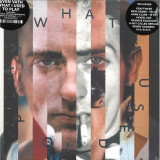
For this uniquely personal retrospective spread over twelve vinyl discs, Sven Väth takes us back to the early days of his DJ career. On What I Used To Play we meet great pioneers of electronic music, gifted percussionists, obscure wave bands, and innovative producers of a bygone 'new electronic' era. Rough beats and irresistible grooves from the identification stage of house, techno, and acid remind us not just how far electronic music has evolved over the past four decades, but how great it was to dance to EBM, techno, and house for the very first time.
If there is one protagonist of the electronic music scene who has remained curious, innovative and at the very cutting edge of music for over four decades, it's Sven Väth. His multi-layered artist albums and Sound of the Season mix compilations have been defining the genre for over two decades, and even today, he is constantly on the lookout for the next top tune to add to the highlights of his next set. At least, that's the case when he's not producing them himself as an artist or remixer. "Actually, it's always been part of my DNA to think ahead," and nothing had been further from his mind than looking back at his past, but when in spring of 2020 the international DJ circuit had to be scaled down to virtually zero, the 'restless traveler' suddenly had time. Time to stop and reflect on "how it actually was back then, at the very beginning of my career..."
"It was a great trip and with every track, beautiful memories came flooding back".
In the London apartment, he had just moved into, Sven has set up a "little music room", where he cocooned himself for several days, "to look way back for the first time and review my musical journey through the eighties, so to speak."
The interim result was six thematically oriented playlists with a grand total of 120 tracks from 'early 80s' to 'Balearic late 80s', together with excursions into afrobeat, European new wave, and EBM sounds and a few epochal techno/house tracks from the USA in between. From these 'Best of Sven Väth's favorites', the project What I Used To Play crystallized. Sven remembers how the Cocoon team reacted to his proposal: "They found the idea of making a compilation out of it MEGA from the beginning and everyone said 'Sven, go for it', but then, of course, the work really started, namely, to clear the rights and to get clean sounding masters of the up to 40-year-old tracks. There was also disappointment, of course. We couldn't clear certain titles because the rights holders in the USA had fallen out with each other or simply disappeared from the scene. In short, it wasn't easy, but now I can safely say we got the most important tracks."
Finally, after two years of research, curation, design, and administrative fine-tuning, the "little retrospective" from 1981 to 1990 is available. The exquisitely packaged, and three-kilo heavy box set is not only physically impressive, WIUTP is also the definitive record of Sven Väth's musical development. On each of the twenty-four sides of vinyl, you can trace track by track, what influenced him during which phase, and how he took off as a DJ from his parents' Queen's Pub straight into the spotlight at Dorian Gray. There and at Vogue (later OMEN), Sven became the style-defining player in the DJ booth that he still is today.
1981 - 1990: Future Sounds of Now
In the early eighties, the crowd in clubs like Vogue and Dorian Gray danced to what nowadays we call 'dance classics' - mainly disco, funk, soul, and chart pop. It was up to a new generation of DJs, including Sven Väth, the youngest protagonist in the Rhine-Main area at the time, to create their own club-ready music mix. Good new tracks and potential floor-fillers were rarities that had to be sought out and found, in order to prove oneself worthy.
Without MP3s, internet streaming, or other digital download possibilities, music didn't just gravitate to the DJ, instead, it had to be tracked down. In well-stocked record stores in Frankfurt and Wiesbaden or even in Amsterdam, London, or New York, Sven and friends sourced the material for countless magical nights. On WIUTP we can follow Sven's very personal journey through this wild, innovative era in which synth-pop, funk, hip-hop, and disco were successively replaced as 'club music' by house, techno, acid, and breakbeat. By the end of the decade, it was clear to see that these once exotic 'fringe' phenomena would soon become 'mass' phenomena.
Early 80s
Dirty Talk by the Italian-American duo Klein & M.B.O. represents the most innovative phase of the Italo-disco genre in the early eighties like no other track. Mario Boncaldo (I) and Tony Carrasco relied entirely on the original synthetic drum and percussion sounds of the Roland TR-808, coupled with the raunchy vocals of Rossana Casale and guitar accents of Davide Piatto. Of course, other tracks from this period were also influential in style, most notably Unit by Logic System, which worked as the perfect soundtrack to the laser lighting system at the legendary Dorian Gray club. With stomping beats and robotic rap interludes, Bostich by Yello also belongs on Sven's eternal playlist - after all, it caught the attention of Afrikaa Bambaataa, who invited the Swiss duo to perform at the Roxy in New York in 1983.
EBM Wave - Mid 80s
From today's point of view, the almost ten-minute-long, downtempo track Giant by Matt Johnson's band project The The, would probably not be considered an obvious club classic. However, a closer (re)listen reveals the rhythmic intricacies of the percussion overdubs by JG Thirlwell (aka Foetus) on Johnson's composition, and it becomes clear why this exceptional piece of music is one of Sven's absolute favorites. Other classics from this phase include Kaw-Liga by the mysterious The Residents, the hypnotic-synthetic Our Darkness by Anne Clark (and David Harrow), and last but not least, the somber, monotonous anthem Where Are You? by 16Bit, one of Sven Väth's projects together with Michael Münzing, Luca Anzilotti from 1986.
US House - Late 80s
You certainly can't talk about Chicago house without mentioning Frankie Knuckles. The resident DJ at the Warehouse not only gave the name to an entire genre, but also produced epochal floor fillers on the Trax label like the timeless Your Love, sung (and moaned) by Jamie Principle. Acid house protagonists Phuture also hail from Chicago, and on We Are Phuture (also released on Trax) we hear the chirping acid sounds of the legendary Roland TB-303 in full effect. Another featured classic is No UFO's by Detroit's Model 500 aka Juan Atkins, who is rightly considered the 'Godfather of Techno' even if the genre-defining track from 1985 still breathes with the spirit of hip-hop and electro from the first breakdance era.
Afrobeat
Le Serpent, by Algerian-born Abdelmadjid Guemguem, is a track that sounds completely different from everything else on WIUTP. Made in 1978, it's a monumental, rousing groove created without bass or synths, just with five congas! Even though Guem sadly passed away in 2021, his immortal, acoustic beats are understood all over the world and will continue to enrich many thousands of DJ sets for years to come. Another classic that not only Sven appreciates beyond measure is Hugh Masekela's Don't Go Lose it, Baby. In addition to being one of the most important jazz pioneers, the trumpeter and freedom fighter from Johannesburg was very experimental, integrating electronic sounds into his music in later years, in a similar vein to Miles Davis and Herbie Hancock. Dutch jazz pianist Jasper van't Hof's afrobeat project Pili Pili has also aged well. The trance-like, almost sixteen-minute-long track of the same name, manages to fill a whole side on the seventh of twelve vinyl discs in the WIUTP box.
UK-US-Euro - Late 80s
Time for a change of scene, in the truest sense of the word, and from a musical perspective, this section is like landing on another planet. First up is Andrew Weatherall's classic remix of Primal Scream's Loaded, featuring the iconic Peter Fonda sample (lifted from the 1966 biker film Wild Angels) that came to personify the mood triggered by the British Second Summer of Love in the late eighties: "We wanna be free to do what we wanna do, and we wanna get loaded...". This period also saw the emergence of M/A/R/R/S whose only single, 1987's Pump Up The Volume, became a club classic with support from DJ legend CJ Mackintosh. In this most eclectic of sections, we also encounter New York house and reggae producer Bobby Konders and his seminal Nervous Acid.
Balearic - Late 80s
Those who know him, know that Sven had already lost his heart to the 'magic island' of Ibiza as a teenager, so with that in mind, the WIUTP project couldn't end without a Balearic chapter. Inspired by Manuel Göttsching's E2-E4, the immortal, eponymously titled Sueño Latino belongs in there without question. Equally popular on the island was, and still is Break 4 Love by Raze, which thinking about it, would also fit perfectly into the house chapter. Last, but not least, there's an overdue reunion with Sven Väth himself, in his role as frontman of the successful Frankfurt trio OFF. Together with Michael Münzing and Luca Anzilotti (later of Snap!) this 'Organization For Fun' created the off-the-wall club hit Electric Salsa in 1986 which incidentally turned into an international chart smash, putting Sven in the enviable position of having to decide between pop stardom and a DJ career. Well, we all know how that decision turned out and the rest, as they say, is history. A not insignificant part of his story is What I Used To Play. Enjoy!
Crystal Clear With Green Mix Colored Vinyl. June McDoom's eponymous debut EP is a collection of songs that collage virtually everything important to her. Growing up in South Florida in a Jamaican household, McDoom was raised around reggae music, which echoed throughout every room of her childhood home. Later, she discovered and nourished her own deep love for folk music and songwriting of the 1960's and 70's. While studying in NYC for a degree in Jazz Performance, her musical palette expanded to include the more intricate influences of jazz and early soul. Realizing that her favorite vintage folk music lacked artists with similar identities as her own, it became increasingly important for McDoom to carve a unique musical space - to push folk music towards a new and different audience. Following the release of her debut single, "The City" - mixed by Gabe Wax (Soccer Mommy, Spoon) - June McDoom was eager to take the reins on the production of her debut EP. Recorded and mixed entirely from home with collaborator Evan Wright, McDoom found herself enthralled with the analog recording process, which began a textural exploration that defines this record. Experimenting with a mixture of vintage analog and modern digital recording, McDoom learned profound new ways to marry the seemingly contrasting genres and style that had individually shaped her. June McDoom's debut EP is steeped in self-discovery, and self-acceptance. Its magic lies in its ability to weave the influences of such seemingly disparate icons as Joan Baez, The Delfonics and Alton Ellis into a new, seamlessly crafted tapestry.
Time to Play Records strikes back with a new 4 tracks ep, late night club-ready, with heavy bass-kicks tracks straight to your chest.
Filippo Tazzer, label manager and executive producer, continues in his search, musical sensitivity and evident production skills. After having entrusted the baptism of the label to Reekee and Colosimo, the moment is propitious to introduce another Italian Producer:
Phonorem, fresh with a new album called “Algorythm”.
Phonorem production skills in those 4 tracks embrace different styles forged by his 90’s hip-hop and drum and bass roots, by mixing synthetizers and drum machines with samples.
SEAMLESS, the track that gives the EP its title, is a deep-house track with double bass – bassline and atmospheric scenarios by manipulating old Italian movie soundtracks samples.
PREE, is a downbeat track which made homage to DJ Premier beats, with some melodies created with a Chinese hammered dulcimer.
FLIP DOWN gives a high contrast experience: fusing a raw drum machine rhytm with dreamy pads and a mysterious vocal.
LOW FAT is a heavy bass kick track with some sythetizers-melodies with a story to tell. With a happy end :)
Following up on reissues of the 2000 compilation »Multila« and 2001’s »Anima,« Sasu Ripatti has thoroughly revisited the classic »Whistleblower« for its first ever vinyl issue on the German Keplar label. Ripatti created entirely new mixes of previously unheard-of alternative versions of the tracks that first appeared on CD through his own Huume imprint in early 2007. He thus shines a new, different light on a record that was as much an expression of reaching a turning point in his life as it also showcased a new, more direct and perhaps more abrasive side of his Vladislav Delay project. »Whistleblower« was marked by the insertion of more noise and disruptive elements into Ripatti’s slowly moving take on intricate electronic music that heavily leaned on dub techniques. Fittingly for an album written at the threshold between one life and the other, »Whisteblower« seems at once melancholic and forward-looking in both tone and style.
»Whisteblower« was the follow-up record to 2005’s »The Four Quarters« and produced in the German capital. »I had quite a hard time in Berlin towards the end and I'm sure the track titles and the music reflect some of that uneasiness,« Ripatti says 15 years later. Changes in his personal life had a profound impact on him when making the record. The fifth track, »Lumi,« was dedicated to his daughter who was born shortly after the album was finished. »I had to reconsider what my life had been,« he recalls this watershed moment in his biography. Having already previously embraced a sober lifestyle—hinted at with the last piece’s title, »Recovery IDea«—Ripatti started questioning his life choices more thoroughly. This is also expressed in »He Lived Deeply,« a track inspired by Miles Davis’s love for Duke Ellington whose title can be read as an implicit question that Ripatti nowadays paraphrases thusly: »Had I been living fully, or fully not living?«
The seven tracks also marked a musical turning point in Ripatti’s work as a producer, not only because it was the last one for which he primarily used analogue and vintage equipment. They are also more straightforward on a music level, more demanding and at times more concerned with subtle rhythms than with the thick textures that were so integral to his earlier work. »Whisteblower« represented the first step in a process of focusing less on sonic abstraction and more on direct (self-)expression. While Ripatti admits that he found working on the album difficult back then, he also points out that he was surprised to hear how »gentle and peaceful« it sounded when he started revisiting the original files he used as a basis for these newly mixed versions. »It probably proves how much more comfortable I had become with sound.«
Zwischen 1988 und 2010 komponierte Steve Reich drei Streichquartette – Different Trains, Triple Quartet
und WTC 9/11. Die Deutsche Grammophon legt diese Werktrilogie nun erstmals auf einem Album vor,
in endgültigen Neuaufnahmen des Mivos Quartetts. Vom Chicago Reader als „eines der kühnsten und
wildesten New-Music-Ensembles Amerikas“ gefeiert, entwickelten die Mivos-Spieler ihre Interpretationen
der drei Quartette – inspiriert von der Musik der Sprache, den Echos von Bartók und den Ereignissen
eines von Terror geprägten Tages - in enger Zusammenarbeit mit dem Komponisten Steve Reich. Reich
selbst unterstützte das Projekt von Anfang bis Ende, beantwortete die Fragen der Gruppe zu musikalischen
Nuancen, beriet zum Stil und lobte das fertige Album, das jetzt sowohl digital als auch auf CD und Vinyl
erhältlich ist.
MEMORIAM needs no introduction ‐ they are living legends of Old School Death Metal. Not only because the former fields of activity of the Brits belonged and still belong to the pioneers of UK Death Metal, but because they managed to follow their master plan more than precisely. MEMORIAM has built up their own loyal fan base over the past
seven years and developed its own musical identity. It would certainly have been easy for them to just follow the old paths, but the true art of the band is that they never deny their origins, but gradually incorporate something new ‐ with every album a few new nuances and facets are added.
The sheer speed of their creative output shows how consistently MEMORIAM follow this path: Following the initial success of the HELLFIRE DEMOS trilogy, MEMORIAM signed with Nuclear Blast in 2016. The band went on to release FOR THE FALLEN (2017), THE SILENT VIGIL (2018) and REQUIEM FOR MANKIND (2019) ensuring within a very short time that MEMORIAM were firmly established among loyal Death Metal fans. This wassupported by dozens of concerts, which have taken the band from selected club shows to major festival appearances (e.g. Hellfest, Wacken, Summer Breeze, Graspop). Following the success of this initial trilogy, MEMORIAM switched to the young label Reaper Entertainment. The album TO THE END, the first of a new trilogy, was released in 2021. The second album of the trilogy, RISE TO POWER, will be released in early 2023.
RISE TO POWER will not only once again offer an atmospherically dense Dan Seagrave cover, the war theme stylized on it also runs through Karl Willetts’ lyrics: With 'Never Forget, Never Again (6 Million Dead)' about the Holocaust and the, unfortunately, more than current 'Total War' about the war in Ukraine, Karl is more political than ever. "I am
writing 'our burden and shame' instead of 'their' as I believe it is our collective responsibility to ensure that something like the Holocaust never happens again. I feel that it is my responsibility as a frontman and lyricist to write about the things that I feel are important," explains Karl. MEMORIAM transforms aggression and grief into
uncompromising Death Metal energy. Also musically the mentioned above development process continues.
While the opener still serves the essential Death Metal groove, MEMORIAM becomes more variable with each additional song and keeps adding new dynamics into their Old School Death Metal sound ‐ from brutal grooves ('Annihilation's Dawn') via doomy‐melodic parts like in 'I Am The Enemy' up to aggressive Nordic riffing like in 'Total War'. RISE TO POWER is an extremely varied album, as Karl confirms: "That's Scott's style, he comes from a different generation than Frank, Spike and me. He brings in influences from bands I haven't even heard of. It gives us the balance between old and new, and it works pretty well for us.” (Thomas Strater)
EMA’s Woozy label returns with Sha Ru’s Match My Sway EP; a powerful club record that sits proudly in the canon of modern protest music. Dubstep-influenced electronics meet spoken word on the continued struggle of oppressed nations’ fight for liberation. Comes with a slamming Walton remix, with all artist profits going towards the Kyiv Angels and Repair Together charities in Ukraine.
Sha Ru are a New York-via-Berlin based duo renowned for their deft mix of spoken word and club electronics, gaining notoriety thanks to their exhilarating productions and renowned live, hybrid and DJ sets. Having spent most of their time based between two different countries, the covid pandemic unexpectedly united the band in Belarus and subsequently Ukraine for an extended period of time. They quickly found themselves immersed in each country’s respective electronic music scene, building strong relationships within each community. It quickly became apparent that both countries were actively fighting for their future freedom, and the duo felt compelled by the unity they experienced in this to respond with music. This resulted in Match My Sway, a record chronicling resistance both lyrically and sonically that found a suitable home on EMA’s impressively futurist-leaning Woozy imprint.
The EP opens with Temporary Iteration, a fierce steppers track with plummeting subs that chronicles a moment of transition into clarity by focusing on the ‘now’; staying true to your belief by moving directly towards your goal together. Not Fluctuating ups the sonic ante with hefty kicks, drill snares and potent throbbing bass, while the vocals describe the feeling of ultimate resistance in the name of seeking the truth.
Side B enters with Synced Energies, acting as the EP’s thrilling climax. Percolating synths pogo around a 2-step beat providing chest-gripping catharsis. Lyrics repeat a mantra of unity, refuting divisions. Tectonic and Ilian Tape affiliate Walton sees us out with the intense stuttering rave mechanics of his Not Fluctuating remix, a modern techno monster that deserves to be enjoyed on a 10ft tall rig; a complimentary take on a powerful original.
Kode9's most ambitious work yet as a multi-disciplinary artist, `Escapology' is the soundtrack album to the sonic fiction `Astro-Darien', itself soon to be released on Hyperdub sub-label Flatlines. Already available as a special edition CD and digital album, we now offer a 1000 piece limited pressing on lucent orange vinyl, in spot-gloss sleeve with additional artwork by Optigram. `Escapology' reconfigures `Astro-Darien's tense, off-world atmospheres into slices of high definition, asymmetric club rhythms, woven through thrilling sound design and vertiginous sonics. "A record brimming with ideas and novel sounds, departing from genre exercises to offer something genuinely different." - Album of the Month -DJ Mag "Kode9's most dextrous and intuitive club music yet, full of mind-bending rhythmic nuggets. He's still the brilliant master behind the scenes, quietly one-upping everyone else." - Resident Advisor "The 15 tracks become proper dancefloor scorchers _ `Escapology' builds a futuristic jumble of aesthetics and sound design." - The Wire
Portuguese multi-instrumentalist, DJ and producer Pedro
Ricardo releases his debut album, Soprem Bons Ventos, on
Soundway Records.
Currently based in Berlin, Pedro Ricardo has been releasing
music for the past eight years under different aliases via labels
such as Wolf Music and his own imprint Hear, Sense and Feel.
An eclectic DJ and selector, he hosts a radio show on South
London’s radio Balamii, guested on Mafalda’s NTS show and
can be found playing in clubs across all Europe.
Stylistically, Ricardo became entranced with jazz from an early
age, while also becoming enamoured with folk music – rooted
in his Portugal childhood, now encompassing sounds from
Cape Verde, Brazil, and Spain along the way. He intertwines
these instrumental influences with field recordings, and
electronics, on Soprem Bons Ventos.
“The album translates to ‘Good Winds Blow’, shares Ricardo.
“This idea of good winds blowing is intertwined with the
feeling of missing something, and sadness. On a positive note,
there is still an overarching sense that happiness also lies
ahead. Soprem Bons Ventos represents an ode to the past, to
those who came before me, connecting with my present and
imagining the future."
- A1: Kristi Brud - Variations Of La Folia - The Abduction Of Europa
- A2: Joel Ivar - Svalov 9 Juli
- A3: Inre Kretsen Grupp - Interlud
- A4: Fai Ling - Ikaros Svett Short Version
- A5: Borringe Kloster - Hommage A Eva Ramel
- B1: Philipp Otterbach - The Lost Track
- B2: Moonilena - Onio
- B3: Digge Shim - A Friend In Deed
- B4: Spivak - Oauver
- B5: Moisture - Blue Tea
Enter The Decagon assembles friends of the label - near and far - for further excursions into the abyss of industrial, folk, jazz and ambient music.
From Copenhagen hails Kristi Brud (Bride of Christ) extending us with a shimmering violin contemplation initially made for the short art film piece "The Abduction of Europa", absorbing a modal ambiance of harmonics rooted in central European renaissance. Recorded in Svalöv in rural Skåne comes a hillbilly folk jazz piece constructed by Joel and Ivar on equal parts violin, flute, upright bass and percussion, recorded somewhere in the misty era of of 2012-2015. Then, an interlude follows, reconstructed from the very early live sets of the label's own Inre Kretsen Grupp, laden with tuned metallic percussions and synthesized bow sounds. Following up, the idiosyncratic local talent Fai Ling offers a piece of Basinski/Hassel-esque horn repetitions in full deterioration. Concluding the A-side of the compilation is the band that never was - the only released material of Prins Emanuel and Golden Ivy's Börringe Kloster project - encapsulating their minimal maximal approach of low quality sound samples turned in to a wall of sound of rhythm of sorts.
The B-side picks up on different musings in the form of ambient cadence and carefully sculpted soundscapes signed Phillipp Otterbach, who gives us an unraveling journey into kalimba-hampered harmonies carried through a bed of industrial, synthesized sounds. Moonilena follows up with an eerie yet beautiful minimal composition of radio disturbances and repetitive, ear catching melodies.
Breaking the barrier of stillness, local producer and Catholic chant music fiend Digge Shim performs a rhytmical, tongue-in-cheek number that pulls widely from both the hymnal traditions of medieval Europe as well as the zonked out ambient trance sounds you'd meet in a mid nineties Goa chill-out room.
Near the tip of the decagon, we find the Cypriot producer, singer and lyricist Spivak presenting us with a feeling of the-familiar-but-never-heard in the form of an ambient pop breakbeat number with carefully crafted choirs oscillating on top - hauntingly beautiful and equally danceable.
Ending in the best of styles, well-mannered umarel and purveyor of drum-smitten metallic sounds shows us what Moisture is really about - the mental image of finding your true self dancing in purgatory in a never-released Kenneth Anger film set, encumbered with red lights and occult paraphernalia.
Eva Louise Goodman’s Nighttime project locates itself on a musical tree planted on the British Isles, perched atop the branch of folk leaning into sixties rock. Her upstate New York environs don’t stray far from that image. With tempered percussion, floating mellotron, and singing that evokes Bleecker & MacDougal on a fervent Saturday afternoon, her new album Keeper Is The Heart reaches deep into the essence of musicians such as Vashti Bunyan, Sibylle Baier and Pentangle, breaking down the decades into a sound thoroughly and bizarrely modern.
Through her years performing with Mutual Benefit, Goodman fell in love with life on the road and the collaborative energy of a band. In this third Nighttime album, she channels these experiences into her own music. The creative journey from writing to recording to mixing drove her deeper into a sense of self while expanding her sound. In the process, she put aside lo-fi origins and challenged herself to achieve the same intimacy with a bigger production.
Like most paths of self-discovery, the journey started with displacement. In October 2019, Goodman set out to record the album on her own, while cat-sitting at a friend’s empty Brooklyn apartment. Rather than recording, she was drawn to the overgrown garden, where she spent her days listening to music and reading old journals. Charlie Megira, The Incredible String Band and Roy Montgomery invoked the spirit of the album, as she realized that a new, more collaborative approach would be necessary to bring the songs to life.
In March 2021, after a pandemic year immersed in sound experimentation and writing, she entered the upstate New York studio of recording engineer Rick Spataro (Florist). Together, Spataro and Goodman dove into creating the album, recording one song a day, letting the spark and excitement of spontaneity be their guide. “I've always been fascinated with ‘automatic’ arts,” Goodman says, “where things are created intuitively and without premeditation, from the subconscious.” In this light, they worked with abandon–pushing through the heaviness of songs written years earlier with the same energy as songs which were not yet fully developed. Taking chances, improvising, they sought to strip away pretense, and elude perfectionism at all cost.
Among their experiments, the duo manipulated tape speeds–slowing or speeding up different instrument tracks, imbuing passages with altered perspectives. Improvisation was the key in track five, ‘The Way,’ a song about “the magical act of carving out a path through life, amidst all possibility.” After a long day of recording, the song was feeling heavy and uninspired. As night fell, Spataro picked up the Stratocaster and, in one take, laid down a rolling, roiling guitar line that defined the track.
This spirit of surrender weaves through the album. “Break free from time, and sink in the pool of the mind,” begins ‘Garden of Delight’, an energetic highlight, propelled by 60’s-era organ and Jefferson Airplane-esque vocals. The song was accidentally deleted after the first day of recording. By luck or fate, the one surviving file captured the song’s loose and free-wheeling essence. Inspired, Goodman encouraged her circle of collaborators to work similarly: “I gave everyone trust and total freedom to contribute as they felt called to, encouraging an intuitive approach of simply improvising, playing through the song a few times and then sending over the results.” Synth, cello, violin, saxophone and flute all appear, but often in unconventional ways.
Keeper Is the Heart reflects Goodman’s process towards greater creative freedom. The first words she sings: “Lift the veil of all of this hate/To see the fear at its base.” Her last lines: “We’ll follow the fates across the great expanse of time/To the source of the light within our mind.” In between is a work of art awash in personal awakenings that revel in the freedom of intuition, the lifting of veils, and the beauty of transformation. As Goodman states, “What is it you find when you look inward to see beyond, past your fears, to your heart's true desires?”
Thee Headcoats and CTMF go head-to-head! Two Billy Childish bands battle it out with versions of the same song! Thee Headcoats version is taken from their forthcoming new studio album "Irregularis: The Great Hiatus". The CTMF version is exclusive to this release. Q: Two versions of the same song by different bands. Has each band heard the other version? If so, did they pass judgement? A: No, neither group heard the other version. I had forgotten how the CTMF version went - even though it was only a few weeks past. As with all the LPs there's no rehearsal. I play the track - we do a run through and then press record. I don't remember how either version goes now. Q: There's a famous saying - "Talent borrows; genius steals". Are you a borrower? A stealer? Or something else entirely? A: As I've said before, I follow strict music industry guidelines and only plagiarise 50 percent of my material. Kurt Cobain put it better - he said people thought he was original because he didn't let on what he was ripping off. Though we know he got the riff to his most famous song from The Daggermen, a local group Wolf (our drummer) played in. Q: What was it like recording with Bruce and Johnny after such a long time? A: We met up in the studio in the morning, had a cuppa, a chat, plugged in and recorded the LP (in two days.) It was the first time we'd all been together in about 30 years, and it felt like yesterday - just laughing and joking about how rubbish we were and generally having fun. It was like no time had passed at all. Q: Love the sleeve picture for this 7"! A lot of people miss the humour in your work, does that frustrate you? A: I'm not frustrated but surprised that the British seem to have lost their sense of humour somewhat - they've been pretty po-faced since 1978, I think. I was brought up on Pete and Dud when I was a kid. Interestingly a lot of comedians seem to like what we do. Stewart Lee has always been a fan and he said there are others of his ilk. If something can't be mocked or laughed at, I'm not that interested in it.
- A1: Louise Freeman - Mirage
- A2: Mark - Dreamland
- B1: Loukas Thanos - Jazzburger
- B2: Galvanica - Nightlights In Japan
- B3: Santoro - Lover Message
- C1: Jet Set - Love Break
- C2: Silvia Dheve - Night Ranger
- C3: Isamar & Compañia - No Estas
- D1: Robert Sandrini - Occhi Su Di Me
- D2: Tom Hooker - Talk With Your Body (Instrumental)
- D3: I M S. - An English '93
* 2022 Repress ** Profondo Nero compiled by Cinema Royale
Profondo Nero narrates a storyline that goes beyond the borders of Italy’s musical legacy. Cutting across the face of Italo disco’s leftfield musicians between the early and late ‘80s, Profondo Nero champions a multi-faceted sound that nods to the blueprint of Italo disco but tries to dig deeper. The music is unmistakably Italo disco but moves away from the familiar classic sound. Amsterdam based collector Cinema Royale stitches together eleven tracks from 1983 – 1989, celebrating a sound he fittingly describes as ‘leftfield Italo’.
The compilation connects the dots between soulful disco (Louise Freeman – Mirage), synth-pop (Mark – Dreamland), electro-rap (Loukas Thanos – Jazzburger), breaks (Santoro – Lover Message), 80s dub disco (Jet Set – Love Break), Balearic (Isamar & Compañia - No Estas), boogie (Tom Hooker – Talk With Your Body) and proto-house (International Music System - An English ’93).
Profondo Nero’s title salutes the legendary oeuvre of Italian horror director Dario Argento. His Profondo Rosso (1975) is a classic example of exquisite cinematic storytelling, boasting courageous colors, expressionist camera angles and an unforgettable Goblin score forming the ingredients for an intriguing piece of art. Profondo Rosso’s music, created the spark for a new Dekmantel Records endeavor led by Amsterdam based experimental film score connoisseur, record collector and DJ Cinema Royale.
For those in the know of underground Amsterdam music culture, Arne Visser aka Cinema Royale is among the city’s longest standing record collectors. Born to an Italian mother and Dutch father, Arne was brought up on a diet of Italo disco in the 80s. Cinema Royale explains: ‘For Profondo Nero I took a plunge into the lesser known fringes of Italo disco. From there I tried to connect, among others, San Francisco boogie, Balearic, Japanese late era Italo-electro and synth-pop funk. I hope you can hear what I had in mind: an infectious showcase of my take on traditional Italo disco that will hopefully get a lot of listeners itching for a spin. It’s fair to say that lately this particular sound has seen a reappraisal and renewed interest.
As a party-starting collection for entry-level connoisseurs or suave but lazy types, I hope Profondo Nero can be an education. I’m not claiming I’m the first DJ or collector to do so, but I did try do present something special by digging deep.’ It wasn’t my goal to unearth the most obscure tracks, instead I wanted to compose a compilation that takes you on a journey.
‘In my opinion the best DJs create something extraordinary out of illogical selections by combining music against all odds and showing different kind of moods along the way. There’s a certain amount of arrogance involved: you take the music out of its original context. But by doing so in a very conscious way, you might be able to enhance the power of the individual records. Hopefully each song on Profondo Nero provides an intimate and memorable experience.’