In the summer of 1981, The Fall embarked on their second American tour, criss-crossing the States over a two-month period. Featuring the dual guitar of Marc Riley and Craig Scanlon and rhythm section of Stephen Hanley and Karl Burns, A Part Of America Therein, 1981 would document this fabled journey with crucial performances that show the band evolve from noisemaking lout cultists into true post-punk legends.
"From the riot-torn streets of Manchester, England to the scenic sewers of Chicago ..." as the album opens unforgettably with a nameless promoter introducing The Fall, who proceed to tear into a hypnotic take on "The N.W.R.A." stretched into a near stare-down that is wholly different than the studio version on Grotesque. The LP highlights Mark E. Smith's incomparable bite, heard most notably on the adlibbed vitriol of "Totally Wired," where not even the costumed punks were safe from a proper dressing down.
A Part Of America Therein, 1981 proves once again that The Fall's constant rally against complacency was a top-down directive and intrinsic to their wonderful and frightening sound.
'Welcome To The End Of The World' delivers The Dead Milkmen's
trademark twisted humour along with some underlying dark elements
that will creep in to your consciousness if you pay close enough attention
The six tracks run the gamut of weird and wild, from the heavy, Ramonesinfluenced lead single 'Only The Dead Get Off At Kymlinge', a ghost story about the haunted trains terrorising passengers on the Stockholm Metro to 'Battery Powered Rat', a jangly instrumental about two popes, a chess game, and a rat at the Vatican. ("Battery Powered Rat is one of the weirdest things we've ever done", says drummer Dean Clean.)
Musically, the band draws on industrial influences, with a strong beat- driven aesthetic. "It's a pretty good representation of the different styles of things that we do", Dean Clean explains. "It's got some sort of heavy stuff and some groovy, almost dance-oriented stuff, which is fun to say".
Oonops's first encounter with Japanese producer Shin-Ski dates back six years when he asked him for an exclusive guest mix for his show on Brooklyn Radio. He became aware of him years ago through his group ShinSight Trio with Insight and DJ Ryow a.k.a. Smooth Current. After one more mix and two collaborations on his Resense-series plus "Oonops Drops - Vol.1" compilation via Agogo Records they started working together on a whole album of instrumentals.
For this 45 Oonops had the chance to dig through an amount of unreleased tracks and selected some of the essential essences with different influences from Jazz, Soul, Funk and much more.
out of Stock
Last delivered 3 years ago available to reorder, subject to availability
'Dwell Time' focuses on the moments in between. Expanding on Satie's Furniture Music, which explores the role of music as a backdrop, Dwell Time explores the moments in between active and passive listening. A sound that maintains a unique balance of properties can start as an active relationship that slowly dissolves into the background and accompanies a listener over its course. The Dwell Time signal remains completely analog, utilizing homemade tape samples and hardware synthesizers to encourage the listener to move between the different states of listening. Produced by Rafael Anton Irisarri and Mastered by Taylor Deupree.
out of Stock
Last delivered 4 years ago available to reorder, subject to availability
Rearviewmirror (Greatest Hits 1991–2003) is a two-part compilation album by American rock band Pearl Jam, originally released on November 16, 2004 through Epic Records.
The album's two discs are both devoted to different sides of the band's catalogue: the first disc, or "Up Side", contains heavier rock songs while the second disc or "Down Side" consists of slower songs and ballads. Both discs are in chronological order, with the exception of the last song on the "Down Side", regular show closer "Yellow Ledbetter".
out of Stock
Last delivered 4 years ago available to reorder, subject to availability
Rearviewmirror (Greatest Hits 1991–2003) is a two-part compilation album by American rock band Pearl Jam, originally released on November 16, 2004 through Epic Records.
The album's two discs are both devoted to different sides of the band's catalogue: the first disc, or "Up Side", contains heavier rock songs while the second disc or "Down Side" consists of slower songs and ballads. Both discs are in chronological order, with the exception of the last song on the "Down Side", regular show closer "Yellow Ledbetter".
out of Stock
Last delivered 4 years ago available to reorder, subject to availability
"Deficiency" is the first solo release of Gyeongsu. This record is a collection of 10 songs recorded in the past three years, ideas and sketches initially conceived separately and evoking different moods at the time of birth.
Supported by NTS's Ony, Maria Sommerville, Okonkole Y Trompa ...
To the empty-stadium rock opener "after diner not yet" to the buzzing closing "a post", through the fading down cello on "gratitude" to the burgeoning arpeggios of "1,2,3", the record is continuously fournishing elements of guitar in different states of work, juxtaposed on additional drums, bass lines, nebulous voices and samples sometimes reminiscent of a psychedelic state or confused dream with many elements hard to reassemble.
All songs have been mixed by Yohann Henry at Plush Space Studio, Paris. Mastered by Lorenzo Targhetta.
Mattiel, the Atlanta based group made up of Mattiel Brown and Jonah Swilley, announce
the release of their third album, ‘Georgia Gothic’, on Heavenly Recordings. ‘Georgia
Gothic’, a magic third in Mattiel’s run of full-length albums, was shaped in the quiet
seclusion of a woodland cabin in the north of the Atlanta duo’s mother-state; “Some
faraway place that just Jonah and I could go where there would be no distractions,
nothing else going on, and we could turn everything off and only focus on writing songs,”
reflects Brown.
Where 2017’s self-titled debut and its 2019 follow-up Satis Factory were written with what
Swilley refers to as a “hands-off” approach - he arranging the music and Brown the lyrics
and vocals, the two working largely separately - the making of ‘Georgia Gothic’ was, for
the first time, a truly collaborative undertaking. “This was the first time we made a point to
just be together and work out ideas in the same room. That was the initial intention... it
was about learning what each other wanted to accomplish on a sonic level, and then just
trying different things out,” Swilley continues. “Everything happened backwards. Normally,
you’d have friends that make a band... with us, we started making music from the jump,
and then became homies.”
Cultivated by time spent together on the road touring the first two albums, it is this
newfound sense of intimacy between Mattiel’s members that enabled the writing of
‘Georgia Gothic’ not as two separate musicians, but rather as one creative entity. The
album remained within the four walls of Brown and Swilley’s private world for much of its
evolution - with recording taking place in a simple studio set up by the pair in the
borrowed room of a dialysis centre, Swilley in the producer’s seat - until, nearing
completion, it was transferred into the trusted hands of the Grammy award-winning John
Congleton (whose extensive list of credits includes artists as diverse as Angel Olsen, Earl
Sweatshirt, Erykah Badu and Sleater Kinney) for mixing.
Not only does the affinity between its creators translate into an electric synergy between
‘Georgia Gothic’s words and music - the brine-shock of Brown’s taut lyricism cut against
the bourbon-smoothness of Swilley’s instrumentation - but here too are the palpable
spoils of experimentation, each party trustful enough of the other to trial and error their
practices into new geometries. Swilley puts this wide palate, in part, down to the place
they call home. “I definitely feel like being from Georgia allows us to have a certain way of
approaching music.” Brown chimes in: “We haven’t really highlighted where we’re from in
the past two records, even though those were also written in Georgia. There’s so much
great art and great music that’s come from Georgia, from all different types of genres and
all over the state - but take R.E.M. and OutKast: there’s this weirdness that I can’t really
put my finger on.” Swilley concurs: “It’s the same with the B-52s, the Black Lips... it
doesn’t feel like L.A., it doesn’t feel like New York, it feels like another planet. We’re not
really in a ‘scene’ here in the same way. You have to make your own sound, create your
own identity.”
And it is precisely the forging of Mattiel’s distinct musical identity that ‘Georgia Gothic’
signals; its members guiding each other ever-homewards not just in a geographical or
sonic sense, but spiritually, too.
Initial LP pressing on Red Hot coloured 140g vinyl with digital download code. (Once this
format has sold out, a black 140g vinyl edition with digital download - HVNLP202 - will be
made available.)
On the tribute album Songs for Tres, Psychic Ills band members come together to commemorate the late Tres Warren who passed away just as the world turned upside down in March of 2020. Isolated, feeling helpless and lost by the death of her musical soul mate and collaborator of 18 years, bassist Elizabeth Hart found making music to be her only outlet in a time where people were unable to be physically together to mourn. So, she reached out to Adam Amram, Jon Catfish DeLorme and Brent Cordero, the main players in the Ills line up since the release of their last full length album Inner Journey Out (2016), to ask if they would embark on this cathartic journey with her. This was a different kind of production endeavor for Hart driven solely by “the aching need and urgency” to do something to honor her friend.
Hart, Amram, DeLorme and Cordero reunited for the first time five months after losing Warren at Amram’s loft – the same spot where they’d rehearsed countless times before – although this time with a different objective. In an effort to share, support and create, the old friends joined in the painful and healing experience of making this tribute album to cope with their loss. The band members wrote, arranged, and rehearsed for months and the result of their work culminated in a weekend of recording in the southern Catskill mountains at the end of 2020. This isolated and intimate environment was a perfectly serene and fitting location to finalize their story.
Throughout the album, Hart, Amram and DeLorme take turns as the vocal lead on each of the songs while Cordero showcases his finger-picking guitar skills in addition to his piano and organ playing, which he is known for. Along with the core band members, a number of other musicians played on the album, many of whom had collaborated on prior Psychic Ills releases and wanted to be a part of this last collaboration in memory of Warren. Keeping the project in the Ills family, Hart produced the album alongside Iván Diaz Mathé, the long-time Psychic Ills sound engineer.
The album consists of five original tracks and four cover songs. Initially, learning the covers was just a method for the musicians to “break the ice” and play together again for the first time without their band leader. However, those tracks became just as important to include as the originals because of their essential role in the process of coming together to make the album. The cover songs were chosen because of their unique connections to the band’s memories of Warren. Dennis Wilson’s "Rainbows" and Fleetwood Mac’s "Station Man" come from two of Warren’s favorite albums, Pacific Ocean Blue and Kiln House. The band also recorded Blaze Foley’s "Clay Pigeons" and Powell St. John’s "Right Track Now." The idea for the latter was suggested by Amram. Warren once sent him a clip of Roky Erikson singing a moving rendition of that song in the film Demon Angel and it had stuck with him ever since.
Hart wrote "I’ll Walk With You" on the day of Warrens’ passing, at the time not knowing what it meant. When she got the call with the heartbreaking news, it became clear to her what the song was about. Relying on a gently lilting string arrangement to set the tone, this duet features Mazzy Star vocalist Hope Sandoval alongside Hart. Sandoval previously collaborated with Psychic Ills accompanying Warren on "I Don’t Mind" (2016). The ideas for "Home" and "Walk Around," two other songs on the album by Hart, started simply with an acoustic guitar and lyrics, a hopeful exercise to connect with her lost friend. Brent Cordero’s instrumental "Whole Lotta Piece of Mind" is nothing short of a transcendental experience. By running his pedal steel through a Leslie speaker, Jon Catfish DeLorme crafts the unique tone showcased on Wonderful Feeling, a moving example of studio experimentation combined with old school techniques. DeLorme describes it as “an attempt to highlight the musical experience I shared with Tres both sonically and thematically. What resulted is the unguarded exaltation I feel lucky to have shared with my fellow bandmates.” Adam Amram’s “Into the Sea” was composed spontaneously the week Warren passed. The melodic tune has a hopeful lightness and Amram describes it simply as “a song to my brother”. Their connection shines through.
In fact, the entire album is one that radiates the layers of friendship, love and music that will forever exist between this family of musicians. As the band themselves state: “This album was made out of love and a commitment to honor our dear friend and bandmate.” A portion of the proceeds from the album will be donated to RAICES, a charity who aids children who have been displaced at the Texas/Mexico border.
For over fifteen years, New England’s When The Deadbolt
Breaks have lurked in the dark corners of underground
metal. With a doom style both psychedelic and unsettling,
their music has been tagged as many different things; heavy,
daunting, overwhelming and unnerving, while the band
shows singer / guitarist Aaron Lewis’s gritty vision of life on
the subcultural fringes of New England society.
Following five highly acclaimed studio records, a split and a
remix album to date, When The Deadbolt Breaks release
their brand new album, ‘As Hope Valley Burns’.
The band have carved a niche for themselves within the
interplay of extreme genres. Having played the SXSW, New
England Stoner & Doom Fest to name just a few, they are as
well no less at home in doom and grind than they are in
pummelling sludge or ambient soundscaping, casting forth
triumphant riffs or proffering murder-dirge nods at a volume
level that can only be considered violent.
When The Deadbolt Breaks have always struck a balance
between the ugly and beauty; long and heavy compositions
wade through detuned, discordant and murky sludge metal
before shifting into melodic ambient space rock territories,
and back again.
“This album is a unique one for When The Deadbolt Breaks.
We have pushed our boundaries sonically,” band
mastermind Lewis reveals. “The heavy is heavier, and the
mellow, spacial parts are even more so. Akin to our first few
records, we have returned to more aggressive drumming,
and psychedelic spaces, yet this record has a certain depth
and maturity to it that was missing in the past.”
For fans of Eyehategod, Soilent Green, Nine Inch Nails,
Crowbar, Acid Bath, Stabbing Westward, Skeletonwitch.
LP pressed on grey vinyl.
Steve Vai has continually challenged notions of traditional guitar playing
and composition – and on more than one occasion even reimagined the
very instrument itself."I don't sit around and say, 'Okay, what can I do now
that pushes the boundaries?," Vai explains about his approach to the
guitar
"What I do say to myself is, 'Okay, Vai – what are you going to do now that's going
to interest you, that's going to fascinate you, and that's different than anything
you've done before?"The answer to that question comes in the form of Vai's
newest and 10th solo album, 'Inviolate', a nine-song opus that does indeed push
the boundaries of instrumental guitar music – this time out, Vai quite literally
invented not just a new guitar, but also a new guitar-playing technique. The Hydra,
the elaborate three- necked steampunk- inspired guitar that Steve holds on the
album cover, is actually played on the song 'Teeth of the Hydra'. On the other hand
(no pun intended), Steve recorded and played the song 'Knappsack' with just his
left hand, after his right arm was in a sling following shoulder surgery.
At the same time, 'Inviolate' presents his most focused, streamlined and perhaps
invigorating music in years. The album features a host of esteemed musicians,
including Billy Sheehan, Vinnie Colaiuta and Terry Bozzio.
Classic Rock - Album Review Classic Rock - Soundtrack To My Life feature
Fireworks – 2-page interview Fireworks - Album Review The Guitar Mag - 8-10
page Interview Guitar Techniques - Album Review GT332 9th Feb Guitar
Techniques - Q&A 9th Feb GT332. Guitar Interactive - Front cover & substantial
feature Guitarist - Front cover/Guest Editor/8-10 page feature Guitarist - Album
Review HRH - Album Review HRH - interview Powerplay - Interview Prog - My Prog
Hero feature on John Petrucci Rock Candy - 8-Page Interview Feb/Mar iss Total
Guitar - Interview
LIMITED 300 ONLY TRANSPARENT GREEN VINYL LP. HOUSED IN A REVERSE BOARD
PRINTED SLEEVE WITH POLYLINED INNER BAG AND DOWNLOAD CODE.NON-RETURNABLE.
The wonderfully named Kevin, are a three-piece band formed in Osaka, Japan in 2017. The line up at the time of recording/releasing this debut album ‘Aftermath’ consists of Hayato Izawa (vocal), Yutaro Umemoto (guitar) and Yuichi Umemoto (drums).
The band has been influenced by psychedelic rock, krautrock, folk music and free jazz. But Kevin are less full on psych-rock than some of their Japanese contemporaries (and new label mates) like Acid Mothers Temple, Mainliner, & Hibushibire.
The strong krautrock influence is more prominent in their unique sound. Taking influence from the likes of Can and This Heat
Their sound was initially based on noise music. Nowadays, they are minimizing their equipment and developing their own music with a groovy, delicate and devastating band sound.
In 2019, the band successfully performed their first show abroad, in Taiwan, and with the worldwide release of ‘Aftermath’ now via Riot Season records they intend to travel and play far and wide (when rules allow)
2001’s »Anima« was the third album released by Sasu Ripatti under his Vladislav Delay moniker and marked a turning point in the stylistic development of the prolific producer. Clocking in at roughly 62 minutes, the single piece draws on dub aesthetics while working with Musique concrète-like methods through the liberal use of samples to create a dreamlike logic. Muffled voices, lush chords, subtle rhythms and indefinable sound events are not so much integrated into a composition with a predetermined outcome but rather engage with each other freely in a constant sonic flow, forming constellations in one moment before moving on to connect with other elements in the next one. »Anima« marked the first time Ripatti was using a DAW in his working process, creating a piece constantly in motion that subtly evolves over time. This vinyl reissue on the German Keplar label follows up on the 20th anniversary edition of 2000’s »Multila« and will be complemented by a ten-minute long version of the original piece, previously only available on the CD version released by the artist on his own Huume label in 2008.
After the release of his »Ele« and »Entain« albums in 1999 and 2000, respectively, Ripatti took the 1998 independent movie »Hurlyburly« as a conceptual starting point to experiment with different gear and production methods. »Until then I had worked with an old MSQ-700 MIDI sequencer and an Ensonic EPS16 sampler/sequencer that had one or two MB of sampling memory and mixed the music live on a Mackie, which was very limiting arrangement-wise,« says Ripatti. Loading a slightly shortened version of the film into his DAW however allowed him to play along to it with the DrumKAT MIDI controller, triggering and playing all the sounds that can be heard on »Anima« while also contributing synths, bass and other sounds during repeated playthroughs before mixing a total of six stereo tracks together. »This way, after I had edited out most of the few parts that had music in them, I was in the movie; almost like an extra character playing music,« explains Ripatti. »This was certainly the most organic way in which I have ever made music, and I have never again approached another record like this.«
While »Anima« sounded like an unusual Vladislav Delay record at the time of its release, it also prefigured many of the developments Ripatti would go through in the course of his long career. Combining visceral immediacy with a sense of abstraction, it is far more than a mere missing link in his discography but rather a conceptually and musically outstanding piece of work that remains as engaging as it was 21 years ago.
All tracks composed and recorded by Vladislav Delay.
Originally released on Mille Plateaux in 2001.
Remaster and cut by Kassian Troyer @ D&M.
Art direction and design by Marc Hohmann.
Text by Kristoffer Cornils.
out of Stock
Last delivered 3 years ago available to reorder, subject to availability
Octahedron Each of the Mars Volta albums that preceded Octahedron had pushed the envelope further, their music growing larger, more intense, more complex.
Each had delivered an implied, unspoken challenge to its makers within milliseconds of its final notes: “top this”. And with each subsequent album, Omar and Cedric had turned their creative dials up one more notch, a further step past “eleven”.
With the addition of new drummer Thomas Pridgen, and their ranks swollen by extra guitarists, more percussion and a sax-player, the intensity of The Mars Volta’s sound had increased. Octahedron, however, would follow The Bedlam In Goliath’s brilliant excesses with a sideways step few were expecting, even though the group had telegraphed their intentions to take this new direction for years.
“This one didn’t have multi-layered sub-texts or any sinister spirits,” says Omar, referencing predecessor Goliath’s traumatic birth. “Octahedron was like an expression of will into reality. Like, ‘This one will be easy, this one will be fun’. Everything had a different process.” “Octahedron was a rebellion,” adds Cedric. “Us saying, ‘This isn’t like anything we’ve done before. This is our “pop” album.’ We’d always promised we’d do a ‘pop’ album.’ This was it.”
A collection of Elvis Presley covers recorded by the duet David Fenech & Pierre Bastien. The idea of "Suspicious Moon" started at a party around the topic of blue color. David Fenech had chosen to play "Blue Moon" and Pierre Bastien asked to join in. It was a very enjoyable party and then they recorded the song and decided to plan an album exclusively based on covers of the King. Not that we were absolute fans of Elvis... but as a starting point to go somewhere else. And this is what we reached: in many aspects a premiere for the two musicians. Pierre focuses on (prepared) trumpet for the very first time, while David is heard extensively as a vocalist and is more than ever responsible for all arrangements and textures. Playing other people's material is also a premiere for both of them. 11 tracks around very well known standards. Like familiar places that are changed when seen in a different light. Please enjoy. "Our choice of the Elvis Presley song book for this record may seem strange to many. It seems strange to me as well. Not that I dislike the original music, but before our sessions it had never been a direct source of inspiration. Paradoxically, this distance gave me freedom and flowing ideas. I hear similar qualities in David's parts too. We hope that our relaxed attitude and its positive outcome will be reflected in this album" - Pierre Bastien "The strange thing about these recordings is that the creative process was so fluid and natural_ that it seems that through playing other people's music, we almost reveal something of ourselves. As if these tracks were our creation, as if they were our own children!" - David Fenech
La Grande Bleue - Musiques Imaginaires de la Méditerranée is a unique private press album recorded in the early 1980's in Montpellier, South of France, by a group of friends from different musical backgrounds.
Enjoy a percussive folk-jazz trip through this one-of-a-kind imaginary folklore, between the Mediterranean world (Greece, Maghreb, Balkans...), global influences (Africa, India, Middle East) and homemade instruments. Official remastered reissue.A1 - Kalamatianos
out of Stock
Last delivered 4 years ago available to reorder, subject to availability
From the shadows of Slovenia, Shadow Universe is an instrumental music project, creating breathtaking cinematic soundscapes from post-rock, neoclassical/ambient and post-metal elements. Their third album, Subtle Realms, Subtle Worlds is released on 11 March 2022 worldwide on Monotreme Records. Formed in 2017 by Peter Dimnik and Žan Šebrek, Shadow Universe merge contrasting textures of shimmering ambient soundscapes and heavy anxious darkness to portray the diversity of nature and life on earth and beyond. Subtle Realms, Subtle Worlds: Every person experiences the world differently, which puts us into our own unique bubbles, subtle worlds. Subtle Realms, Subtle Worlds finds the band turning their songs into living, breathing ecosystems, carefully dissecting every moment of peace and chaos alike. The album sees the building particles of the universe as separate worlds, with their own story, perception, rules and individual inner realm. Opening track Organism, which portrays the coherence of forming organisms; from a vast universe itself down to the tiniest building particles of it, sets the tone with its slow, tense build to crushing, exhilarating peaks. Don’t Look at It and You’ll See It evokes free-flowing spontaneity through beautiful cascading piano and emotive violin, towering guitars, and soaring synths. Masterfully harnessing both the quiet and the loud, Hymn for the Giants glorifies our almighty and precious trees, with moments of calm cut apart by vast swathes of brutal, yet considered, cacophony. Losing Home’s portentous, droning synths and trumpet ratchet up the suspense, while on Antares Goes Supernova the band carve out layer upon layer of affirming and effecting riffs, each one more powerful than the last. Season of Eternal Maze wraps up the album with a meditative piano and harmonium, wide guitar driven melodies and guides you to your inner maze.
Spaceship is Mark S. Williamson, a musician, sound artist and educator based in Todmorden, West Yorkshire. His work is often made in response to his environment, working on location, combining field recordings with electronic and acoustic instrumentation, usually recorded outside, amid the landscape and weather. Mark has recorded for wiaiwya, Apollolaan, the Dark Outside and his own Forged River Recordings. His work has been reviewed by The Wire, Electronic Sound, Shindig and The Quietus and he was recently one of the fourteen artists featured in Electronic Sound Magazine’s ‘field recording special’. His collaboration with Luke Turner on series of readings from Luke’s book ‘Out of the Woods’ has seen performances at Cecil Sharp House, Port Eliot Festival, The Trades Club in Hebden Bridge, Krankenhaus Festival and the Horse Hospital and he recently collaborated with the artist Michael Powell on his Calderfolk project. A direct sequel to 2019’s Outcrops (also on wiaiwya), Ravines moves its focus from the uplands above Todmorden to the narrow, steep sided ravines, known as cloughs, that contain the streams that flow down the valley sides to feed the River Calder. These valleys, formed over hundreds, if not thousands of years can be peaceful sanctuaries, their stepped pools and waterfalls a shelter from the windswept moors. In time of heavy rainfall though, they become the conduits for the rapidly descending overland flows which reach the Calder and, in extreme circumstances, cause the floods which remain a part of valley life. These cloughs also saw the beginnings of industry in the area. Colden Clough and Jumble Hole Clough contain the ruin of small water fed mills which would evolve into the much larger steam powered facilities in Todmorden and Hebden Bridge. Mostly recorded in the field using portable equipment, these pieces are intended to reflect all three of these aspects; the peace, the violence and the beginnings of humankind’s ultimate separation from the landscape brought on by the industrial revolution. The sleeve is by Maxim Peter Griffin, an artist, illustrator and writer based in Lincolnshire. A fine art graduate and former stonemason, over the past few years he has been building a body of work that echo his experiences on foot between the North Sea and the hills. "...a luminous soundtrack to the passage of geological time." Shindig // "Williamson is building desire tunnels, churning through the layers of rock and soil to find his conclusions." The Wire // "These rumbling synth drifts and ominous drones transport you to entirely different places-like being cast adrift in a cosmic void" Electronic Sound // "...the droning synthesizer waves conjure up something spectral and eerie, stretching out like the wide horizon..." The Quietus // "Beautiful." Hannah Peel
We all know that people in Switzerland are different, but these guys take it over the top! The brainchild of mastermind Andy Dormann, an established musician of the Swiss Rock Scene (KISSIN’ BLACK, CHARING CROSS) proves that fun and filthy loud music is alive and kicking on the streets of Switzerland. Get ready for a wild ride Sunset Strip-Style with a Happy Ending. D’OR Rock ’n’ Rolls like a relentless big screen cargo train. Amphetamine-primed guitar artistes with a growl like a peppery G’n’T. A galvanizing groove machine. Filterless cigarettes and a chronic scratchy throat is served up with a double espresso and a thundering sidecar. Melodic? Of course! Pretentious? Absolutely! Clichéd? Hey, D’OR glitters AND is gold! Tongue in cheek? Could be! VENI VIDI IGNIS is fresh and packed with energy. Think Terminator going back in time in a DeLorean to fetch the sexy 80s attitude to life and throw it in your 2020 face. D’OR possesses your neck muscles with an alchemy of hard rock and heavy rusty metal. If you like SKID ROW, W.A.S.P or ALICE COOPER with a bit more dirt, you better be prepared. The Goldfingers are ready. Now fasten your seatbelts!
Limited exclusive red vinyl.Tim Armstrong, guitarist and frontman of
Rancid, took a different path on his 2007 solo debut, with able backing
from L.A
Reggae revivalists The Aggrolites, Armstrong crafted a grooving, fun-filled modern reggae album, influenced by ska, rock steady, roots reggae, and dancehall and filtered through a modern pop- punk attitude.The sound of the record (nimble, jumped- up, and retro but fully modern) impresses instantly, but as the record goes on, Armstrong's voice emerges as the star. His raspy croon, staccato
toasting, and ragged shout fit the reggae sound surprisingly well.
Alexandre Bazin's second album for Cassauna is a compelling minimal/experimental/electronic album consisting of one piece separated into several movements for the purpose of stronger narrative and aesthetic coherence. The album explores the concept of percussion and resonance through the spectrum of electronic frequencies and densities with a plunge into the sound.
Percussion-Resonance makes use of a new alphabet, a simple vocabulary in order to create innovative and personal music, with a clear and emotional subject. Structured architectural sequences give way to the experimental. Different climaxes punctuate the work in order to keep grabbing the listener’s attention.The record title tackles the theme of musique concrète developed by French composer Pierre Schaeffer as well a nod to Bernard Parmegiani’s De Natura Sonorum
Alexandre Bazin is a member of the Groupe de Recherches Musicales better known as the GRM, for which he writes documentaries about music for Radio France.
He is passionate about experimental music and more specifically the electronic music created by Bernard Parmegiani, Iannis Xenakis, Pan Sonic, Fennesz, Alva Noto and Ryoji Ikeda. His music is distributed by Important Records / Cassauna, Umor Rex Records and played at the Moogfest festival in the USA.
Featuring: Deena Abdelwahed, Rabih Beaini, Fari Bradley, Dieb 13, DJ Sniff, Gavsborg (Equiknoxx), Electric Indigo, Donzilla Lion (Nyege Nyege), Marina Rosenfeld, Microhm, Muqata’a, Bob Ostertag, Rrose
Project presentation:
Sampler / Sampled is an album made of two interdependent parts rather than a double-album.
The first part of the project, Sampler, is a trumpet solo album that catalogues the unique sounds and extended techniques that Mazen Kerbaj developed for the instrument in the past 25 years; it consists of 318 pieces ranging from less than a second to forty seconds each, and presenting different sonic materials. This catalogue of sounds works on various levels: first and foremost, it is a trumpet solo that could be played in its original order, or in random mode to create different pieces of music. But it is also a collection of samples that could be used for various applications (ringtones, phone sound effects, cinema…) and, of course, to create new pieces of music based on sampling.
The second part of the project is the composition Sampled for a musician working with loops and/or samples. The composition has one instruction: create a piece of music using solely tracks from Sampler as your sound source (with the possibility to use all kind of effects or treatment). Each interpreter/musician becomes thus a co-composer who appropriates the piece and makes it their own. In this regard, the musicians that were commissioned to play Sampled were chosen from different geographical origins and musical genres to create highly different and personal pieces of music.
One important output of this project is putting in practice the overused idea of music as a universal language. This idea is very present in “free improvised music” where musicians from different origins can meet for the first time and make music together without the need to adapt to different musical traditions. But here, the collective part of creating music in real time is not involved. It is rather the contrary: it starts with one middle-eastern musician creating a new language/vocabulary for his western instrument, to be later used by other musicians from around the globe who will appropriate this vocabulary and use it with their own language/grammar.
The final output of this double faceted album that was recorded during the Covid lockdown proved to be a very efficient new way to collaborate from a distance in times of world isolation, and ultimately put in practice the universality of music by breaking the boundaries of genres that are the most difficult to break.
out of Stock
Last delivered 4 years ago available to reorder, subject to availability
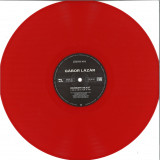
Gábor Lázár’s “Boundary Object” is a collection of eight real-time recorded, unedited tracks made in Budapest and Prague between 2020 and 2022 using a self-designed compositional interface. It's Gábor Lázár’s second album for Planet Mu following “Source” in 2020. The title comes from the idea of a Boundary object as a flexible concept of sociology and computation of how collaborations could happen between groups of people who have different kinds of backgrounds and different levels of knowledge. A Boundary object could be anything which translates between these groups to make a collaboration happen. Boundary objects are plastic, interpreted differently across communities but with enough common identity across social words and contexts to maintain integrity. This is a neat summary of how Gábor’s approach and working process led to his music on this album. Prismatic, flexible, and functioning on different levels of interpretation. On “Boundary Object”, the shiny surfaces and uniformity of “Source” have collapsed inward, leaving intact the recognisable pulse and frames of his music. While each individual track has a non-linear structure, the album as a whole has a strong narrative. Passages that start out Trance-like and familiar warp and weft into different shapes as if Gábor is examining the music like a 3d object, pulling at the edges, breaking and rebuilding what he examines, turning expectations inside-out. “Boundary Object” is intense, full-spectrum and a lot of fun.
out of Stock
Last delivered 4 years ago available to reorder, subject to availability
In 2011, Dallas based singer, songwriter DEREK DAMIAN recorded the anthemic WATCHA WANNA DO - IZIPHO aficionados will know that we released WATCHA WANNA DO in January 2019 and it sold out in 48 hours!, on the flip ‘The Baritone Of Love’ keeps the bar raised high with IN MY LIFE - from 2013, this mid tempo winner glides along with soulful ease.Don’t spend £100 on the only copy on Discogs, grab this new release with a different B Side!
out of Stock
Last delivered 4 years ago available to reorder, subject to availability
In 2002 well-known for his albums by the progressive rock project Ayreon, Star One “Space Metal” is an exciting project from one of rock's great visionaries, Arjen Lucassen. With its stellar musicianship, visionary production and a simple yet far-reaching concept, Star One “Space Metal” shines bright as a giant sun in the galaxy of rock. “Space Metal” isn't a continuous story or a rock opera like the Ayreon albums. Yet it is still very much a concept album and a journey through Arjen's mind and memory. He takes the listener on a trip where they relive those great science fiction space films that made such an impact on him. Without a doubt Arjen Lucassen set a trend with his Ayreon albums. Especially after the highly successful release of “Into the Electric Castle” many musicians and producers have followed in his footsteps and new rock operas with multiple singers are surfacing all over the world. To ensure to keep the involved voices diverse he used very different sounding singers appearing in the same songs -- different singers for different moods. Dan Swano (ex-Edge of Sanity, Nightingale) sings the low parts, Russell Allen (Symphony X and more) sings the powerful rough parts, Damian Wilson (ex-Threshold, Headspace) sings the high clear parts, and to top it off, Floor Jansen (Nightwish) sings the really high choruses. Robert Soeterboek (Ayreon) sang the backing vocals with his huge smoky voice. Of course Ed Warby played the powerful drums, and Erik Norlander once again added his huge analog synth leads. Arjen also managed to get Jens Johansson (Yngwie Malmsteen, Dio, Stratovarius) who played some incredibly fast synth leads as well. Arjen even succeeded in getting Hawkwind's Dave Brock to make a guest vocal appearance, something no one has ever managed to do before. “Space Metal (Re-issue 2022)” is available as: Ltd. 2CD Digipak, Gatefold 2LP+2CD & LP-Booklet and Digital album (2CD).
From the deep depths of Noord Brabant (NL), high school friends and long term collaborators Klont and Whistle aka Wessel and Luuk join forces once again. Growing up a mere few towns away from each other and even appearing in the same punk band albeit at different times, the meeting of minds occurred over their shared persuasion for absurdist humour and a fairly unconventional music taste.
They knew they had something special in their pursuit of gnarly breaks, textures and all things on the curveball spectrum, as Klont the ultra music nerd approached with a desire to sculpt sound whilst the breaks disrupter and club-goer-outer Whistle brought his all-around disruptive energy to the table. Separated by the pandemic they practiced their musical efforts away from each other with lots of late night video call jam sessions fiddling with ableton to produce a certified booty shaking masterpiece for ANUS Records.
out of Stock
Last delivered 4 years ago available to reorder, subject to availability
In the early 1970s the island of Jamaica, and in particular its reggae musicians, developed a love affair with small Japanese motor bikes. Honda bikes were eulogised in Big Youth’s ‘S90 Skank’ and Dillinger’s ‘CB200’, whilst their rival was lauded on Shorty The President’s ‘Yamaha Skank’, to name the most obvious examples. The plot of the film ‘Rockers’ revolved around how transformative a motorbike could be, providing a livelihood whilst projecting an image of success in the ghetto.
Vivian ‘Yabby You’ Jackson had been fiercely independent as a singer and producer, and the success of his early self-pressed productions, mostly on the Prophets or Vivian Jackson labels, had given him a sense of hard earned autonomy. A motorbike was one of the fruits of his labours, acquired as a way of zipping around the capital’s roads to deliver records and organise recording sessions. His wife Jean could often be see hanging on to the back. Twelve years after his death, she remembers various exploits on the pot-holed roads of Kingston.
Jean Vencella Williams: ‘His first motorbike was a Honda 50 and then a 100, a Yamaha. I remember the Yamaha, it was a dark blue colour, it must have been from the mid 70s til the early 80s. I used to ride around on the back and we ride all over, like we go to the country cos his mother lived in Clarendon. And he had a little carrier thing for boxes of records, so we go to Mandeville in Manchester, sometimes to Spanish Town fe sell records. Most of the time he sell them to the shops, like Randys, and the people them buy it from there. He had pressing plants like Byron Lee and later Tuff Gong, so when the records pressed we find out the time when we get back the records, which usually was at least a couple of days or about a week. And later when we living in Clarendon we come into Kingston to pick them up at the pressing plant. And when he book the studio he might book two or three days and we come in and usually stay til late.
‘He used to carry the records from the different pressing plants on the bike, but because of the rain and weather you know it not so good for the records, and also the sun beating down. Then Wayne Wade had an accident on the Yamaha, and he was hurt quite bad, and he had to go to the hospital for quite a while. Well Yabby didn’t ride it after that, cos it was getting dangerous with so many cars coming in. So he gave up the Yamaha and bought a Toyota Carina, and that car was very good to him. Then the Carina become a little shaky, so he got a Toyota Corolla which he drove until his death.’
This album presents a sample of the best of those ‘Dubs and Versions’ that Yabby was ferrying around town, whether rarities, B-sides or tracks culled from albums that showcase the breadth of Yabby’s productions between 1975 and 1982.
This release comes with sleevenotes original artwork.
I was after something tangible. Sounds you could roll around in your palm and consider different, complex, and flawed textures. Feel the weight, maybe even smell them.
This desire is probably a reaction to the dissociative nausea from the constant simulacra of these early 2020s. Like deliberately going barefoot to feel yourself grounded in a real place, as I read Andrea Needham did when facing charges for disarming a warplane.
Anyway, my methods to achieve these sound "objects" was to use a healthy amount of acoustic instrumentation with all its familiar sonic unevenness, to free sounds from rhythmic or thematic structure, and to give plenty of blank space around each note so the ear can reach in and pluck it out. A berry from a bush, an eyelash from a friend's cheek.
Really though, a lot of the time now I just want to listen to the birds. There are plenty on here. Mourning dove, titmouse, helicopter.
"Hunter on the Wing" is a reference to De'Andre Hunter, the Atlanta Hawks small forward.
KF, Dec. 2021
out of Stock
Last delivered 4 years ago available to reorder, subject to availability
Calibro 35, the legendary crime funk combo sampled by Dr.Dre and Jay-Z, announce the reissue of "Traitors", their iconic fourth album, on Crystal Red vinyl and digital deluxe edition with bonus tracks.
Record Kicks proudly presents the reissue of CALIBRO 35's fourth legendary long-time sold out album "Traditori Di Tutti" (Traitors) on March 04thon limited edition crystal red vinyl and digital "deluxe" edition with bonus tracks.The publication is part of "The Record Kicks Trilogy" that follows the reissue of the first three albums of the band, released in 2020. This time, Milan label Record Kicks will repress on wax of three different colours and on digital deluxe edition, the fourth, fifth and sixth legendary studio albums of the Italian cinematic-funk cult band. The digital deluxe edition of"Traditori Di Tutti" includes 2 bonus tracks: a crime funk cover of "Get Carter", originally released as a b-side of the "Butcher's Bride" 45 vinyl, and the unreleased funky stormer "Milan, Michigan".
"Traditori Di Tutti" is the fourth album by Milan's combo, inspired by noir masterpiece novel "Betrayers"published by the father of Italian noir, award-winning crime fiction author Giorgio Scerbanenco. The album contains only band's original recordings, from floor-shaking first single "Giulia Mon Amour" to groovy "The Butcher's Bride", from deep funky "Filthy Bastards" to the dancefloor jazz madness of "Mescalina 6". The five-piece pays homage to "I Maestri" such as Morricone, Micalizzi and Bacalov with 12 tracks full of funky beats, heavy guitars, groovy bass lines and fuzzy organs.
There's one thing that Italians do better than others: funky soundtracks. Quentin Tarantino knows best: soundtracks from Italian movies of the '60s and the '70s are the THING! "Calibro 35 does with music what Tarantino does with films". They borrow what they love and they make it their own. With Rolling Stone magazine words "Calibro 35 are the most fascinating, "retro-maniac" and genuine thing that happened to Italy".
Active since 2008, CALIBRO 35 enjoy a worldwide reputation as one of the coolest independent bands around. During their fourteen-year career, they were sampled by Dr. Dre on his Compton album, Jay-Z, The Child of lov & Damon Albarn; they shared stages worldwide with the likes of Roy Ayers, Muse, Sun Ra Arkestra, Sharon Jones, Thundercat and Headhunters and as unique musicians they collaborated with, amongst others, PJ Harvey, Mike Patton, John Parish and Stewart Copeland and Nic Cester (The Jet). Described by Rolling Stone magazine as "the most fascinating, retro-maniac and genuine thing that happened to Italy in the last years", Calibro 35 now count on a number of aficionados worldwide including VIP fans such as Dj Food (Ninja Tune), Mr Scruff and Huey Morgan (Fun Lovin' Criminals) among others.
out of Stock
Last delivered 4 years ago available to reorder, subject to availability
Today sees Belgian-Caribbean provocateur Charlotte Adigéry and her long-term musical partner, Bolis Pupul announce their debut album Topical Dancer, due for release on March 4 2022 via Soulwax’s iconic label DEEWEE.
Cultural appropriation. Misogyny and racism. Social media vanity. Post-colonialism and political correctness. These are not talking points that you’d ordinarily hear on the dancefloor but Charlotte Adigéry and Bolis Pupul are ripping up the rulebook with their debut album Topical Dancer. The Ghent-based duo, who broke out with their 2019 Zandoli EP, are rare storytellers in electronic music: they take the temperature of the time and funnel them into their playful synth concoctions – never didactic and always with a knowing wink.
Their debut studio record – which cements them as a duo under both their names for the first time and is co-written and co-produced by Soulwax – is both a triumph of kaleidoscopic electro-pop and “a snapshot of how we think about pop culture in the 2020s.” It captures Charlotte and Bolis’s essence as musical collaborators and the conversations they’ve had over the past two years on tour, as well as their perspectives as Belgians with an immigrant background, Charlotte with Guadeloupean and French-Martinique ancestry and Bolis being of Chinese descent.
Beyond the album’s thematic heft, Topical Dancer reflects Charlotte and Bolis’s idiosyncratic sound: it’s thoughtful but it bangs. Their take on familiar genres is always off-kilter; songs sound undone or a little wonky; but these are nocturnal heaters to make the club throb. “We like to fuck things up a bit,” laughs Bolis. “We cringe when we feel like we're making something that already exists, so we're always looking for things to combine to make it sound not like a pop song, not like an R&B song, not a techno song. We’re always putting different worlds together. Charlotte and I get bored when things get too predictable.”
Topical Dancer is fizzing with ideas – there’s certainly no filler among its 13 tracks. But above all, perhaps, it has a restlessness, a desire not to be boxed in and to escape others’ narrow perceptions of who they are. It’s summarised by the refrain of their new single, ‘Blenda’: “Don’t sound like what I look like / Don’t look like what I sound like.” “One thing that always comes up,” says Bolis, “is that people perceive me as the producer, and Charlotte as just a singer. Or that being a Black artist means you should be making ‘urban’ music. Those kinds of boxes don’t feel good to us.”
‘Blenda’ in particular references how “I am a product of colonialism,” says Charlotte, “and I feel guilty for taking up space in a white country.” The song was inspired in part by Reni Eddo-Lodge’s book Why I’m Not Longer Talking To White People About Race. “It talks about the colonial past and post-colonial present in the UK,” Charlotte continues, “but that isn’t merely a British or American problem, Belgium is part of that as well.” She says that her home country is likewise “oblivious to a big part of its history” which “results in general ignorance and a lack of understanding and empathy towards Belgian inhabitants of immigrant descent.”
On Topical Dancer, it’s less about finger pointing or being dogmatic about all the things they speak about. It’s about emancipation through humour. “I don’t want to feel this heaviness on me,” says Charlotte. “These aren’t my crosses to bear. Topical Dancer is my way of freeing myself of these issues. And of having fun.”
out of Stock
Last delivered 4 years ago available to reorder, subject to availability
Today sees Belgian-Caribbean provocateur Charlotte Adigéry and her long-term musical partner, Bolis Pupul announce their debut album Topical Dancer, due for release on March 4 2022 via Soulwax’s iconic label DEEWEE.
Cultural appropriation. Misogyny and racism. Social media vanity. Post-colonialism and political correctness. These are not talking points that you’d ordinarily hear on the dancefloor but Charlotte Adigéry and Bolis Pupul are ripping up the rulebook with their debut album Topical Dancer. The Ghent-based duo, who broke out with their 2019 Zandoli EP, are rare storytellers in electronic music: they take the temperature of the time and funnel them into their playful synth concoctions – never didactic and always with a knowing wink.
Their debut studio record – which cements them as a duo under both their names for the first time and is co-written and co-produced by Soulwax – is both a triumph of kaleidoscopic electro-pop and “a snapshot of how we think about pop culture in the 2020s.” It captures Charlotte and Bolis’s essence as musical collaborators and the conversations they’ve had over the past two years on tour, as well as their perspectives as Belgians with an immigrant background, Charlotte with Guadeloupean and French-Martinique ancestry and Bolis being of Chinese descent.
Beyond the album’s thematic heft, Topical Dancer reflects Charlotte and Bolis’s idiosyncratic sound: it’s thoughtful but it bangs. Their take on familiar genres is always off-kilter; songs sound undone or a little wonky; but these are nocturnal heaters to make the club throb. “We like to fuck things up a bit,” laughs Bolis. “We cringe when we feel like we're making something that already exists, so we're always looking for things to combine to make it sound not like a pop song, not like an R&B song, not a techno song. We’re always putting different worlds together. Charlotte and I get bored when things get too predictable.”
Topical Dancer is fizzing with ideas – there’s certainly no filler among its 13 tracks. But above all, perhaps, it has a restlessness, a desire not to be boxed in and to escape others’ narrow perceptions of who they are. It’s summarised by the refrain of their new single, ‘Blenda’: “Don’t sound like what I look like / Don’t look like what I sound like.” “One thing that always comes up,” says Bolis, “is that people perceive me as the producer, and Charlotte as just a singer. Or that being a Black artist means you should be making ‘urban’ music. Those kinds of boxes don’t feel good to us.”
‘Blenda’ in particular references how “I am a product of colonialism,” says Charlotte, “and I feel guilty for taking up space in a white country.” The song was inspired in part by Reni Eddo-Lodge’s book Why I’m Not Longer Talking To White People About Race. “It talks about the colonial past and post-colonial present in the UK,” Charlotte continues, “but that isn’t merely a British or American problem, Belgium is part of that as well.” She says that her home country is likewise “oblivious to a big part of its history” which “results in general ignorance and a lack of understanding and empathy towards Belgian inhabitants of immigrant descent.”
On Topical Dancer, it’s less about finger pointing or being dogmatic about all the things they speak about. It’s about emancipation through humour. “I don’t want to feel this heaviness on me,” says Charlotte. “These aren’t my crosses to bear. Topical Dancer is my way of freeing myself of these issues. And of having fun.”
out of Stock
Last delivered 4 years ago available to reorder, subject to availability
Diego el Cigala is, with any doubt, one of the greatest flamenco geniuses of our times. Not only because of his voice and charisma, but also for recording such vast and wide discography singing with majesty and no complex any style he could be challenged to perform. At Flamencoenvinilo we wanted to re-catch one of his early works back to his flamenco roots: "Entre Vareta y Canasta" (18 Chulos) was originally published in the year 2000 and, as many of his works, this album has proved the test of time and it has become a true classic. This will be the first time this album comes out on 12". Limited to 500 copies. Accompanied by Niño Josele (guitar) and a large group of percussionists, "Entre Vareta y Canasta" the second album by Diego El Cigala made him known among many people outside the traditional nucleus of flamenco for his simplicity, purity and mastery. The unique voice of this artist moves with naturalness and feeling in styles as different as martinete, bulería or fandangos.
What is the difference between here and there?
What are the differences between countries and races?
between men and women?
children and adults?
you and me?
We are supposed to be the same person, but we are all different.
We look different, we were born and raised in different environments.
Our personalities are also different.
These differences create interest and new discoveries,
but they also create discrimination and prejudice,
which leads to division.
In recent years, this situation seems to have become more pronounced.
"You and I are different.
But sometimes I might be the same as you."
In this uncertain world,
this is what I wanted to express in this music.
--K Nogami
Nonesuch Records releases Ghost Song, the label debut of singer/songwriter Cécile McLorin Salvant. Ghost Song features a diverse mix of seven originals and five interpretations on the themes of ghosts, nostalgia, and yearning. Salvant says, “It’s unlike anything I’ve done before – it’s getting closer to reflecting my personality as an eclectic curator. I’m embracing my weirdness!” Cécile McLorin Salvant plays at Cadogan Hall on November 16 as part of the EFG London Jazz Festival, four shows at SFJAZZ in February, and two nights featuring the music of Ghost Song at Jazz at Lincoln Center in May. Salvant says of the title track, out now, “What if the love has gone, the love has left you and you have the emotions around that, and you’re still going through them, still engaging with the ghost of that love?” She continues, “Some songs are so painful to come out but this one came out pretty quickly. I’ve had some loss the last couple of years: my grandmother, the drummer in my band Lawrence Leathers.”
Ghost Song opens and ends with a sean-nós (traditional Irish unaccompanied vocal style) performance by Salvant, recorded in a church. On track one, she transitions into Kate Bush’s 1978 classic ‘Wuthering Heights’. Salvant says of the song, “Wuthering Heights is a book that really struck me to my core as I was making this album, during the pandemic. And the best interpretation of the novel is Kate Bush’s song.” She continues, “It’s the most classic ghost story. I decided I wanted to do an album called Ghost Song, and I knew that one had to be on it. Then I had the idea to mix it in with the sean-nós ‘Cúirt Bhaile Nua’, which binds it to the traditional ‘Unquiet Grave’, the last track on the album. The ghost is not haunting me; now I am haunting the ghost. They parallel each other so well and they’re such different time periods. I wanted the album to be a circle, with the sean-nós reference at the beginning and at the end. So it is the first track but it’s also the last track and it’s also the middle track, which is how I listen to music, walking around my neighborhood, on a plane, travelling somewhere, putting stuff on repeat.” “All the songs on the album kind of mirror each other. I tried to create this strange symmetry. So as you go in from both ends, the songs are sort of matched together,” Salvant says. “‘I Lost my Mind’ is the center of the Russian doll. I wrote that in the middle of the pandemic. There were nights when I wanted to just scream. It was this deeper part of me saying, ‘It’s OK if this sounds completely crazy, OK to just go with the completely crazy thing and not worry if people think you have lost your mind for doing it.’
“The bands also mirror each other from top to bottom. In terms of the instrumentation, everything,” Salvant explains. “That’s why the songs are there in that relationship: they match each other, they’re like fraternal twins, or one is the evil twin of the other. I, as the living, am visited by the ghost, and then I go visit the ghost in turn. I am haunting the ghost and annoying the ghost, which is saying, ‘Get out of here and go live.’” Of the sonic variety on Ghost Song, Salvant says, “Texture is a big part of how I sing, having multiple textures in one song. It’s almost a compulsion. I can’t allow myself to stay in one texture. The instrumentation creates that but the recording process as well. It’s something I like, even when I’m eating. You want the creamy and chewy and crunchy at the same time. Warm and cold.”
Cécile McLorin Salvant, a 2020 MacArthur Fellow and three-time Grammy Award winner, is a singer and composer bringing historical perspective, a renewed sense of drama, and an enlightened musical understanding to both jazz standards and her own original compositions. Classically trained, steeped in jazz, blues, and folk, and drawing from musical theater and vaudeville, Salvant embraces a wide-ranging repertoire that broadens the possibilities for live performance. Salvant’s performances range from spare duets for voice and piano to instrumental trios to orchestral ensembles. Her unreleased work Ogresse is an ambitious long-form song cycle based on oral fairy tales from the nineteenth century that explores the nature of freedom and desire in a racialized, patriarchal world. Salvant studied at the Université Pierre Mendès-France. She has performed at national and international venues and festivals such as the Newport Jazz Festival, the Monterey Jazz Festival, the Village Vanguard, and the Kennedy Center. Salvant is also a visual artist.
“I like it when music builds itself up in an organic fashion,” says Duncan Marquiss. “When it just seems to emerge and almost writes itself.”
This natural, intuitive and free flowing approach is evident all across the debut solo album from the multi-disciplinary artist. From tender yet sweeping acoustic moments to experimental electronic guitar manipulations, the album feels like a ceaselessly sprawling exploration of texture and tone. Despite veering into what sounds like electronic ambient soundscapes, the entire album is rooted in the guitars. “I enjoy trying to stretch the guitar as an instrument,” says Marquiss. “That reflects my playing style, always trying to make the guitar sound different, or create non-guitar like sounds.”
Marrying earthy, textural acoustic instrumentals that feel rooted in open landscapes, with those that capture the pulse and hum of a populated metropolis (Marquiss resides in Glasgow). The album was recorded in Aberdeenshire in Marquiss’ parents' garage. “Apart from the wind and the swallows nesting in the eaves there’s not many distractions around,” he says. This is a solo record that goes right to the very essence of Marquiss as an artist. The expansive yet intimate sounds he’s created here stem from the same peaceful isolation of where it all began.
There’s a cosmic touch tracing back to 1970s Germany (Michael Rother solo, Cluster, Harmonia, Popul Vuh soundtracks) that infiltrates much of the album, alongside some of its more pastoral textures, with Marquiss citing a wide range of listening habits. These include Bruce Langhorne's The Hired Hand, Jim O Rouke's Bad Timing, Arthur Russell and Laurie Spiegel.
Despite containing no lyrics, the album feels rooted in narrative and development. As the album unfolds the acoustic guitar becomes more prominent over the electric, almost as if nature is slowly taking back and growing over abandoned human-made structures. A record that, despite being experimental in tone and essence, retains a very human and natural touch throughout.
In the small inland town of São Domingos on Cape Verde's Santiago Island, The Ano Nobo Quartet delivers a fresh take on Koladera, a guitar-driven, subtly rhythmic sound of a lighter spirit. Their sound tells a global story with Cape Verde at its center, a creole melting pot in the middle of the Atlantic attracting the best from four continents: hypnotic, haunting Koladera guitars inflected with twangs of Salsa Cubano, Spanish Flamenco, Brazilian Samba Canção, Jamaican Reggae, Argentine Tango, Mozambican Marrabenta, and finished with a dash of Black American Blues. It's all here. Absent percussion, the quartet's sound still drips with rhythm. Rich, raw acoustic music you can dance to.
This album was recorded in three locations on Santiago Island: at homes, by the sea, and on the volcanic hills of Cape Verde. Each location used a mobile recording studio equipped with different mics placed near and far to capture both the Spanish and Chinese-made guitars and the natural environment that shapes the saudade, a melancholic longing, of Koladera. Each space has its own atmosphere heard in the interludes.
A double LP pressed at 45 RPM for an even silkier listening experience and packaged in a luxurious matte-laminated gatefold with a high quality 12-page booklet along with a hardcover bookcase CD with a 24-page booklet.
out of Stock
Last delivered 4 years ago available to reorder, subject to availability
Munich quintet Fazer are set to release their third album ‘Plex’ on City Slang in 2022. Moving freely between composition and improvisation, the band’s spacious, organic sound pitches lyrical melodies from guitar and trumpet over double-drummer polyrhythmic grooves and dub-like basslines.
Coming from different musical backgrounds ranging from bebop to electronic, Fazer met while studying jazz at the Academy for Music and Theatre in Munich. The German city has a rich history of improvised music; home to labels ECM (Keith Jarrett, Chick Corea, the Art Ensemble of Chicago, Steve Reich) and Enja (Archie Shepp, Eric Dolphy, Freddie Hubbard, Elvin Jones) and Krautrock icons Embryo. Today much of the scene in Munich revolves around Radio 80000, an online community radio station located in the east of
the city. There, dedicated diggers like Karl Hector (Now-Again) or Marvin & Valentino of Public Possession are doing regular shows and it’s this diversity that drives the band’s DNA
Munich quintet Fazer are set to release their third album ‘Plex’ on City Slang in 2022. Moving freely between composition and improvisation, the band’s spacious, organic sound pitches lyrical melodies from guitar and trumpet over double-drummer polyrhythmic grooves and dub-like basslines.
Coming from different musical backgrounds ranging from bebop to electronic, Fazer met while studying jazz at the Academy for Music and Theatre in Munich. The German city has a rich history of improvised music; home to labels ECM (Keith Jarrett, Chick Corea, the Art Ensemble of Chicago, Steve Reich) and Enja (Archie Shepp, Eric Dolphy, Freddie Hubbard, Elvin Jones) and Krautrock icons Embryo. Today much of the scene in Munich revolves around Radio 80000, an online community radio station located in the east of
the city. There, dedicated diggers like Karl Hector (Now-Again) or Marvin & Valentino of Public Possession are doing regular shows and it’s this diversity that drives the band’s DNA