Soul Media, led by Jiro Inagaki, played a part in the development of jazz rock in Japan. This work, "Memory Lane" recorded in 1980, was the final work under the same name. Inagaki said about this work, "We tried to create this work while predicting the fate of fusion music" and it is true that the sound is completely different from ordinary fusion. The mellow and emotional "Memory Lane" the stormy and refreshing "I Will Give You Samba" and the groovy and edgy "Take My Hand". The sound that was created with his ally Norio Maeda, which looks , is of an extraordinary level of perfection in the songs, arrangements, and performances. It is a masterpiece that is still vivid and fresh when listened to today.
text by Yusuke Ogawa (UNIVERSOUNDS/DEEP JAZZ REALITY)
First time vinyl reissue, expanded and deluxe double gatefold 140g double vinyl, remastered audio with restored artwork and fresh liners written by Paul Hillery (Folk Funk & Trippy Troubadours)
Alan James Eastwood's glorious Seeds is a certified folk-funk lost-classic.
But who was Alan James Eastwood? He had never hit the big time and commercial success eluded him. By the mid-1970s, his musical career was pretty much over and he was almost unknown except among deep heads, amongst whom he would gain cult status.
Original copies of the 1971 vinyl release of Seeds exchange hands for high sums, if you can find one. This expanded 2LP contains an extra record, collecting 9 rare non-album singles and is presented in a gatefold sleeve complete with freshly commissioned liner notes courtesy of Paul Hillery (Folk Funk & Trippy Troubadours).
With the long overdue deluxe reissue of this prized artefact, we hope to finally shine a light on the unheralded genius of Alan James Eastwood. RIYL Nick Drake, Rodriguez, Richie Havens.
Alan James ‘Bugsy’ Eastwood was a renowned musician and singer who came to prominence in the late 1960s with The Exception, an unsung but excellent band from Birmingham. The Exception released many singles, the first featuring friend Robert Plant on tambourine, before an album, The Exceptional Exception. However, by this time, Bugsy was feeling constrained and restless; he left the band within weeks of the release.
Having vanished from the scene, he was honing a deeper, introspective edge to his songwriting. His demos found their way to the sound engineer and producer Mike Cooper at Pan Music Studios in Denmark Street. Loving what he heard, Eastwood soon entered a recording session with Cooper. The session was just Alan, his guitar and harmonica and - by all accounts - it was remarkable. With the songs, the voice and such an exceptional talent, it was hard to go wrong. Says Mike: "We had John Hawkins do the big string arrangements and Richard Hewson arranged the string quartet. We overdubbed the orchestrations on Alan's original session recordings, adding Chris Karan on tabla and various percussion. We considered re-recording the vocals but found that the magic on that original session was so exceptional overdubbing would not be as good as the atmospheric 'live' performance."
Mike and Alan viewed each track as a different entity, giving the album a diverse sonic palette. Assessing each song individually, they decided which would be suitable for each arranger. Top-flight session musicians were added to the roster to complete the sound, with Byron Lye Fook (father of musician Omar) on drums, bassist Mike Ward, Brian Pickles on marimba and jazz drummer Chris Karan on tabla and percussion. Recorded in a matter of days in Pan's small 8-track studio, they carefully added overdubs, rhythm sections and four string sessions arranged by Hawkins, with Hewson's arrangements recorded at Trident Studios.
Seeds was Alan James Eastwood's debut solo album – indeed, his only solo album - and was originally issued on President in 1971. It melded Eastwood’s impressive rock sensibilities with a folk thread to superb effect. His arresting voice - its deep, rough-hewn soulfulness - coupled with gorgeous string-drenched backing, make this a phenomenal listen. It really is a great 70s singer-songwriter record - with touches of acid-folk and folk-funk throughout.
It opens with "She's Getting Married In August", a mellow tune with Richard Hewson's strings arranged around Alan's straightforward guitar structure. Up next, the joyous, sun-dappled guitar and strings workout "Evenin' Rain" glides by before the fragile, accordion-enhanced "Les Papillons" breezes out of the speakers. The bluesy "Zeena" follows, featuring vocals and acoustic guitar and showcasing Eastwood's effortless harmonica. Starting out as a ballad, "Virgin Morn" builds with soaring strings and gospel-tinged backing vocals from Marilyn Powell and jazz singer Josephine Stahl. The A-side closes with the title track, "Seeds". With a chugging mid-tempo beat, soulful vocals and a beautiful Bacharach-esque string arrangement, it truly is stop-you-in-your-tracks spectacular.
Side B opens with "Crystal Blue", gilded by Lye Fook's marimba, lush gospel-esque backing vocals and handclaps. Eastwood's acoustic guitar begins "Lady Carole", which starts as a bluesy ballad and builds with more string arrangement, lifting the track to another height. A towering highlight of epic proportions, "Lotus Child" is a true masterpiece of arrangement. It opens with simple yet stunning do-do-dah vocal harmonies blended with John Hawkins's strings, bass lines and rhythmic beats, forming a vibe very much in conversation with the sounds coming from LA's Laurel Canyon. Next up, the heartwarming "Last Prayer", dedicated to Alan's first and last love, contains a melancholic vocal with a wistful string-drenched arrangement that would sit comfortably in a Federico Fellini score. Bringing the album to a close, "Hymn For Today" is a melodic raga with tabla, strings and a soft-psych feel. Eastwood's prophetic whisper - "I am real. At last, I am real" - profoundly hits home.
Kicking off the extra disc is the sparsely funky and country-tinged "Boston", released as the flip to the astonishing "Seeds". Next up are the two tracks that comprised Alan’s debut solo 7" single from 1968. The laconic, Bobby Charles-esque "Blackbird Charlie" evidences a real depth and charm in Eastwood's songwriting whilst the starkly brilliant flip, "My Sun", was a horizontal, atmospheric folk-tinged soundtracky precursor to his later work on Seeds.
In 1972, two further standalone singles followed. The first was the evergreen flute-driven folk-funk bomb, "Closer To The Truth", backed by the funky blues of "Strange News". The second, a deeply moving Havens-inspired "Moonchild" - rightly fawned over to this day - was flipped with "Red Shoe Truckin'", a groove-infused track. Eastwood also paired up with Marilyn Powell for a single produced by Powell's partner, Mike Cooper. Under the name Eastwood & Powell, they released their staggering rendition of "Beautiful", a rock-blues-pop song arranged by Ivor Raymonde and written by Carole King. Over on the flip, a funky Eastwood original "Opal Blue Sunday" lurked. This is not to be overlooked.
Over the years, Alan remained active on the music scene, but problems with alcohol and health complications from diabetes severely impacted his career. He spent his latter years living in London until his untimely death from heart failure on 25 October 2007, just one day before his 62nd birthday and without his music having received the real acclaim it so dearly deserved.
This deluxe reissue, spellbinding from beginning to end, should hopefully go some way to rectifying this tragic fact. Mastering for this special double vinyl edition was overseen by Be With regular Simon Francis and it was cut by the esteemed Cicely Balston at Abbey Road Studios to be pressed in the Netherlands by Record Industry. The original artwork has been lovingly brought back to life at Be With HQ, with the addition of passionately written liner notes specially for this landmark reissue by none other than Paul Hillery.
out of Stock
Last delivered 13 months ago available to reorder, subject to availability
Released exclusively in Germany in March 1966, "Black Monk Time" by The Monks has become a cult classic -praised as a groundbreaking forerunner to punk and krautrock. Though the album was overlooked at the time, its bold sound and sharp lyrics have earned it lasting influence and critical acclaim. The Monks were five American G.I.s stationed near Heidelberg, West Germany. Originally performing as a typical beat group under the name the 5 Torquays, they evolved into something far more radical. After discovering guitar feedback by accident and embracing a raw, percussive approach, they caught the attention of two German ad men-Walther Niemann and Karl Remy-who became their managers and helped reinvent their identity. Dressed in monks' robes with tonsured hair and noose neckties, the band developed a confrontational, rhythm heavy sound. Nowhere is this clearer than in the album's opening track, 'Monk Time,' which captures their entire aesthetic in under three minutes. A pounding, repetitive groove of bass and drums anchors the track, layered with distorted guitar bursts, percussive electric banjo, chaotic organ stabs, and unrestrained, shouted vocals. It's a declaration of intent-urgent, jarring, and unforgettable. Their sole studio album, produced by Jimmy Bowien and recorded in Cologne in late 1965, defied musical norms. From the explosive opener 'Monk Time' to the fierce 'Complication,' "Black Monk Time" rejected flower power for something more urgent-anger, humor, and innovation. At the time, Polydor Records deemed the music too radical for American audiences, delaying its U.S. release. Despite its initial commercial failure, the album is now seen as a pivotal moment in rock history-loud, strange, and unapologetically ahead of its time. The Monks' story is as unlikely as their sound: five ex-soldiers and two ad executives creating one of the most daring records of the '60s. The band never sparked the revolution they hinted at, but decades later, "Black Monk Time" still resonates. This is your chance to experience the album that dared to be different - don't miss it. Remastered sound from the tapes, pressed on 180g vinyl.
Get ready to step back into the golden era of rave with "Hardcore Will Never Die," a high-octane EP that pays homage to the raw energy and unrelenting spirit of old-school breakbeat. This release is a love letter to the 90s – a time when dusty warehouse floors trembled under pounding kicks, chopped-up amen breaks, and speaker-shattering basslines.
From the opening track, you're thrown headfirst into a sonic storm of gritty samples, rave stabs, and relentless momentum. Each tune is soaked in nostalgia yet finely tuned for today’s floors, bridging the gap between classic hardcore aesthetics and modern production weight.
This isn’t just a revival – it’s a reminder. The underground never died. The breakbeat never faded. Hardcore will never die.
Expect dancefloor damage. Expect hands in the air. Expect the return of the rave.
>>> comes in different marbled colored 12 “ Vinyl and ONLY on Vinyl <<<
out of Stock
Last delivered 26 days ago available to reorder, subject to availability
Since our first contact with NYC based producer Thavius Beck in 2018, he sent us over 100 unreleased tracks, or beats, as he calls them. 25 of them have been selected for releases on U-TRAX, good for over 2 hours of music, across this album and the Lovesick EP.
Growing up in LA, Thavius Beck entered the hip-hop scene as member of Global Phlowtations, and released several solo albums under the Adlib moniker. In later years, he released five albums under his own name on labels like Mush, Big Dada and Plug Research, and also produced albums for artists like Saul Williams and K‑the‑I???, and did some remixing for amongst others Nine Inch Nails.
Nowadays he combines making music with a career as a succesful certified Ableton and Bitwig trainer and as a music teacher at Berklee NYC.
The tracks vary in style a lot, but what they have in common is that they either are moody – in U-TRAX lingo: deep - or they are drum heavy. The common denominator would probably be 'experimental/instrumental hip-hop', reminiscent of producers like Flying Lotus. People have tried all sorts of comparisons to pinpoint Thavius' sound, ranging from 'between DJ Shadow and Orbital' and 'a mix of Massive Attack and The Orb'. None of these are spot on, yet quite a few of these tracks feel like a happy marriage between hip-hop beats and techno sounds.
Despite the fact that some tracks are 20 years old and have been made with widely different gear (one track was even made on a PlayStation 2), this selection sounds remarkably balanced, yet diverse.
From the irresistible single 'Lovesick/Still Sick' to the dark and massive 'Birdsong' (that echoes the sound of his popular song 'Atmos'), and from the head-nodding 'Work!' to the soothing 'Reunited With The All' - if this collection showcases anything, it's Thavius' brilliant production and composing skills, as well as his wizard-level sampling techniques. The result is a luscious electronic music album with a broad appeal.
Available on double 180 grams colored vinyl vinyl, comes in gatefold picture sleeve.
out of Stock
Last delivered 13 months ago available to reorder, subject to availability
Limited 180g black vinyl (500 copies worldwide)
“Marcel Wave combine sharp-eyed Northern lyricism with DIY guitar-janglers rooted in a retro C86 aesthetic. Epic finale ‘Linoleum Floor’...is a gloriously bleak rumination on the horrors of enforced late-night hedonism worthy of prime Pulp” UNCUT
Marcel Wave write eulogies for tragic actresses, ancient riverbeds and concrete obscenity. Their inaugural sonic instalment ‘Something Looming’ is part trades club symphony, part itchy serenade, and part wistful lament. As their heady concoction of ‘Meades meets Pat-E-Smith meets Kirklees Borough Council’ gets prepped to be formally baptised on a dank stage near you, Upset the Rhythm and Feel It Records have dutifully stepped in to deliver its songbook to the masses on both sides of the pond.
Formed when Lindsay Corstorphine and Christopher Murphy of Sauna Youth and brethren Oliver and Patrick Fisher of Cold Pumas were summoned by northern ink-slinger Maike Hale-Jones, Marcel Wave’s debut offering is a walk through a smoke-filled pub with yellowing wallpaper and all eyes on you. It’s a chronicle of the death of the docklands, the decline of industry, of the high street, of civic pride, of civilisations, of hopes and dreams. As Hale-Jones delivers the bad news in her low, West Yorkshire brogue, Corstorphine adds the bells and whistles via the frantic pulsations of a wheezing Hohner organ in tandem with Fisher O’s rasping guitar. MW are completed by the throbbing basslines of Murphy and Fisher P’s fervent rhythms.
The title itself sets the tone for the listener. There’s a sense of foreboding in Hale-Jones’ lyrics which sit at the quintet’s core—elegiac, sardonic and piquant in equal measure. A mixture of narrative epilogues and inward paeans, her words weave tales across a broad thematic church. Crooked tales of urban renewal and the voices left behind are probed in ‘Barrow Boys’ and ‘Stop/Continue’ and are at the fore in ‘Where There’s Muck There’s Brass’ with its refrain lamenting ‘Concrete and slate shine in the rain, cities destroyed, nothing to gain’. In these lyrics, tower blocks loom over terraced houses with the same shadows that the Hollywood sign casts over Peg Entwistle before she takes her tragic leap. ‘Peg’ and ‘Elsie’ are both meditations on two different actresses with different fates crushed by the cut-throat trappings of showbusiness: ‘The mad hopes break, fragile as glass. She traded it all, for the cutting room floor.’ A snaking, existential dread also runs through the album, stated more obliquely in the otherwise poppier interludes of the title track ‘Something Looming’ and album opener ‘Bent Out of Shape’, and present too on the comparatively ramshackle ‘Discount Centre’, where Hale-Jones reports ‘On a mini bus on the outskirts of Enfield, I’m losing all of my spark’. On the album closing weeper ‘Linoleum Floor’, it is laid barer still—a keyboard-led reflection on the deflating nights out of our early-twenties.
Marcel Wave invites the listener to dance to society’s decline, and then to later weep into its lukewarm pint.
out of Stock
Last delivered 13 months ago available to reorder, subject to availability
In 2047, amidst the deafening yet oh-so-familiar soundscape of the Movement Festival in Detroit, we met again: I, pdqb, and Scape One, known as two of the most respected electronic music composers worldwide. The air pulsed not only with the latest beats but also with a barely perceptible energy only the two of us knew. We hadn't simply flown in; we'd arrived with our fantastic "Diskmind" time-travel machine, an incredible invention, capable of effortlessly catapulting us through the centuries.
"It's unbelievable, isn't it?" I shouted over the bass, eyebrows raised. "A machine that lets us travel through all of history, and there isn't a single song that honors it! Not one!"
Scape One nodded vigorously, his gaze sweeping over the stage lights. "That's absurd! How can such a revolutionary invention remain unsung? It's almost an insult to music history itself."
We looked at each other, a silent understanding in our gazes. The mission was clear: The "Diskmind" needed its anthems. And who, if not us, who used and loved it, should create them?
And so, we decided to become the musical chroniclers of the "Diskmind," ready to tell the story of our time machine across four different eras...
For Synaptic Cliffs, it's an extraordinary honor to present these three Scape One variations of the original song 'Diskmind' (first released on The Electrifying Dojo, 2025). Each masterpiece was recorded in different future decades of the 21st century (of ourse with the help of the Diskmind time travel machine) and reflects the corresponding trend in electronic music. A1: A timeless, pristine Electro composition from the year 2035. A2: An IDM marvel from late summer 2075, recorded in the Zero gravity of Space Station 775. B: An Experimental Electronica symphony recorded at pdqb's Studio 577 on Mars Outpost 47A. Only musical equipment that doesn't currently exist was used for this release
out of Stock
Last delivered 6 months ago available to reorder, subject to availability
Ash Ra Tempel is the eponymous debut studio album by the Krautrock band Ash Ra Tempel. It features guitarist Manuel Göttsching with drummer Klaus Schulze and bassist Hartmut Enke.
Engineered by Conny Plank it was recorded in March 1971 and released in June 1971 on Ohr Records.
This 50Th Anniversary Album will be Released in Memoriam of all the Musical Contributors to this Release and on Manuel Göttsching´s MG.ART label. It´s the fourth and headlining edition in this series and was finalised, carefully overseen by Manuel Göttsching himself in the late Autumn of 2022.
Much has been written about the record and band.
Having finished a first musical chapter with their Steeple Chase Bluesband and still at very young age of only 17 and 18 years old Manuel Göttsching and Hartmut Enke met Klaus Schulze. Together they started to write and and compose what, to many, became one the holy grails of Psychedelic Rock and early Electronic Music -
the German variant which was later also named "Krautrock":
Ash Ra Tempel´s self-titled first album "Ash Ra Tempel".
"The trio of Klaus Schulze, Manuel Göttsching and Hartmut Enke decided to abandon conventional composition and song writing, in favour of free-form improvising and developing a new musical language. As such, they became notorious for jams that could exceed 30 minutes." Says Discogs. "Some of these recordings can be found on Manuel Göttsching´s "The Private Tapes" releases", which will be re-released on MG.ART as well, following this edition.
"Krautrocksampler" author Julian Cope mentioned it to be "… one of the greatest rock 'n' roll LPs ever made." (Julian Cope Presents Head Heritage | Unsung | Reviews | Ash Ra Tempel - Ash Ra Tempel". 15 March 2000.)
AllMusic called the album "both astonishingly prescient and just flat out good, a logical extension of the space-jam-freakout ethos into rarified realms."
Here we would like the Band to be heard, for what can easily be said as the first time in 50+ years, with the exception of some early Journalists for whom the young Manuel Göttsching wrote a statement of intent (the original text can be found inside this edition) as following:
"Our musical concept is based on a combination of blues rock and delicate collages of electronic sound. These two elements should remain inseparable. And in their complex unity, the different musical philosophies of each musician find a common sweet spot. Our music is a permanently impulsive experience left to develop as it will, starting from a common fixed point of departure. This is where the difficulty of the music begins: No standardized formulation of our music can and should be possible. Only the constant reaction within the band can determine the musical result. And this requires constant listening with full concentration on the part of the creators. The idea of a particular musician will be - if flexible enough - absorbed by the others, transposed to their own instrument, and reflected back into the music as an individual contribution. This reciprocity within the band is then transferred over to the audience. And this process means that their reaction is not only a contribution to the end result; it actually makes them jointly responsible for the creation of the final musical product.
…
On our album, the track "Amboss" represents the first layer. Conventional instruments communicate familiar music which is in part expanded through electronic means. In the second track of the album - "Traummaschine" - the actual basic sound approach is dissolved into an electronic Nirvana which no longer allows the concrete identification of actual instruments. Innocent, virgin listening, free from any and every association, can finally begin - and the music can be absorbed and processed free from the limitations of categorization. That is the purpose of our music: To convey freedom without any predetermined criteria or traditions.
Thank you for your attention."
(Taken from the original A-R-T Bio 1970)
Hartmut Enke, Manuel Göttsching and Klaus Schulze aka. Ash Ra Tempel travelled to Hamburg in March 1971 to record their debut, with assistance of another Icon, legendary engineer Conny Plank.
The rest is history.
out of Stock
Last delivered 13 months ago available to reorder, subject to availability
Ash Ra Tempel is the eponymous debut studio album by the Krautrock band Ash Ra Tempel. It features guitarist Manuel Göttsching with drummer Klaus Schulze and bassist Hartmut Enke.
Engineered by Conny Plank it was recorded in March 1971 and released in June 1971 on Ohr Records.
This 50Th Anniversary Album will be Released in Memoriam of all the Musical Contributors to this Release and on Manuel Göttsching´s MG.ART label. It´s the fourth and headlining edition in this series and was finalised, carefully overseen by Manuel Göttsching himself in the late Autumn of 2022.
Much has been written about the record and band.
Having finished a first musical chapter with their Steeple Chase Bluesband and still at very young age of only 17 and 18 years old Manuel Göttsching and Hartmut Enke met Klaus Schulze. Together they started to write and and compose what, to many, became one the holy grails of Psychedelic Rock and early Electronic Music -
the German variant which was later also named "Krautrock":
Ash Ra Tempel´s self-titled first album "Ash Ra Tempel".
"The trio of Klaus Schulze, Manuel Göttsching and Hartmut Enke decided to abandon conventional composition and song writing, in favour of free-form improvising and developing a new musical language. As such, they became notorious for jams that could exceed 30 minutes." Says Discogs. "Some of these recordings can be found on Manuel Göttsching´s "The Private Tapes" releases", which will be re-released on MG.ART as well, following this edition.
"Krautrocksampler" author Julian Cope mentioned it to be "… one of the greatest rock 'n' roll LPs ever made." (Julian Cope Presents Head Heritage | Unsung | Reviews | Ash Ra Tempel - Ash Ra Tempel". 15 March 2000.)
AllMusic called the album "both astonishingly prescient and just flat out good, a logical extension of the space-jam-freakout ethos into rarified realms."
Here we would like the Band to be heard, for what can easily be said as the first time in 50+ years, with the exception of some early Journalists for whom the young Manuel Göttsching wrote a statement of intent (the original text can be found inside this edition) as following:
"Our musical concept is based on a combination of blues rock and delicate collages of electronic sound. These two elements should remain inseparable. And in their complex unity, the different musical philosophies of each musician find a common sweet spot. Our music is a permanently impulsive experience left to develop as it will, starting from a common fixed point of departure. This is where the difficulty of the music begins: No standardized formulation of our music can and should be possible. Only the constant reaction within the band can determine the musical result. And this requires constant listening with full concentration on the part of the creators. The idea of a particular musician will be - if flexible enough - absorbed by the others, transposed to their own instrument, and reflected back into the music as an individual contribution. This reciprocity within the band is then transferred over to the audience. And this process means that their reaction is not only a contribution to the end result; it actually makes them jointly responsible for the creation of the final musical product.
…
On our album, the track "Amboss" represents the first layer. Conventional instruments communicate familiar music which is in part expanded through electronic means. In the second track of the album - "Traummaschine" - the actual basic sound approach is dissolved into an electronic Nirvana which no longer allows the concrete identification of actual instruments. Innocent, virgin listening, free from any and every association, can finally begin - and the music can be absorbed and processed free from the limitations of categorization. That is the purpose of our music: To convey freedom without any predetermined criteria or traditions.
Thank you for your attention."
(Taken from the original A-R-T Bio 1970)
Hartmut Enke, Manuel Göttsching and Klaus Schulze aka. Ash Ra Tempel travelled to Hamburg in March 1971 to record their debut, with assistance of another Icon, legendary engineer Conny Plank.
The rest is history.
out of Stock
Last delivered 13 months ago available to reorder, subject to availability
"Astral Americana hymns hovering somewhere between the dirt and the stars" Pitchfork
"Mood music for moments of solitude, best experienced without distraction" The Times
"Overwhelmingly effective and ravishingly beautiful" The Wire
American Dust is an ode to the beauty of the American Southwest, where vast desert landscapes hold stories both stark and tender. Eve Adams’ characteristic folk noir weaves a vivid tapestry of love, sacrifice and quiet revelation, conjuring images of dust storms, stray dogs and far off trains.
The high desert of California is a vast and confounding place. Equally inspiring as it is punishing, it’s a landscape that carries magic in its deep dark nights, holding stories both tender and stark in the coarse layer of dust that settles upon everything. It’s long been a source of inspiration for musicians, writers, and painters, each of them adding to the same current, carried forward over time, through hope and hardship and the passing years.
Somewhere out there in that broad and boundless landscape, Eve Adams has been living her own desert life, quietly writing the follow-up to 2021’s Metal Bird LP. Where that album sang of liminal space, the dream-like turbulence of Hollywood’s golden age, American Dust is far more rooted in traditional storytelling; a eulogy for the American Dream channeled through that sweeping part of the country that holds such power and mystery. Slipping into different and varied costumes throughout its ten songs, it finds Eve not just observing the people around her but stepping into their shoes and peeling back the layers of their quiet lives.
Adams writes from within. A few years ago she moved out there, to “the middle of nowhere”, finding a slowness that didn’t exist in the city, and she knows only too well about the mystical nature of the land and those who live within it. Weaving together themes of grit and romance, American Dust holds its focus on the bittersweet poetry of lives lived in solitude, most notably the women who sustain life at the center of it all. “There’s something very radical about domestic life,” Adams says of this thread. “So many women live their entire lives behind closed doors, completely in the shadows. Within those lives is such sacrifice, devotion, and love. I wanted to honor that: the poetry in the mundane, the longing in the repetition. The way love survives boredom and dust and time.”
Eve is joined on American Dust by Canadian musician Bryce Cloghesy, aka Military Genius of Crack Cloud, who plays throughout and also helped produce the album. Musically bold and vivid, it’s an ambitious and detailed stride forward from what’s come before, the scope of the LP’s narrative reflected in the radiant sweep of the playing. On top of gentle piano and guitar, gorgeous strings drift through the album, lending the songs a woozy sense of romanticism; a collaboration with Gamaliel Traynor (Cello) and Caroline’s Oliver Hamilton (Violin).
For all the drama that’s coiled around these songs, it’s the recurring notion of love and hope fighting against everything that holds true throughout American Dust. Musically it’s lush and vibrant, intimate and cinematic side by side, and always bursting with warmth. But it’s what it holds in its weary bones that elevates it to something truly special, something more than just a collection of songs penned in the heart of the desert. The characters it speaks of, and from, feel shadowed but wholly real, like they’re bursting to share their stories that have remained hidden for years and years and they allow Eve Adams to grow as a songwriter right in front of our eyes.
“The same swirling dust that clung to the covered wagons of my ancestors as they crossed the Great American Desert is the same dust my great-great-grandmother swept off her porch during the Dust Bowl of 1936 in Oklahoma, is the same dust that blows in through the cracks in my windows here in the desert, carrying stories from a time long gone,” Eve says, reflecting on the personal narrative that runs through her new album.
“It’s not just dust—it’s American Dust, the kind that settles into the bones of a family and never leaves. I think about that dust as a symbol of the passage of time. I hope this album will be part of that same current, carrying forward for the next generations of my family to find. I’ve been lucky enough to have journals and poetry from my ancestors that documents their lives during times of pure hope and pure hardship. I’d like to think of this album as a contribution to that family history.”
LP comes with 24 page 8.5x11 full color booklet. In the blurred and memorial hallways of bygone time, to remember is to wander between the rooms of our own experiences, to appear and disappear, like a play of overlapping shadows. In music set drifting through the architecture of his own memories, Moses Brown weaves a story that oscillates between the past and the present, like a mason turning over stones to reconstruct his childhood home in this beautiful and disquieting soundtrack to growing up. On Stone Upon Stone, Moses' first solo LP attributed to his given name after several releases under the brilliant and despondent "Peace de Resistance" moniker, he moves sidelong into the realm of soundtracks with this score to the construction of his childhood home in a story spanning 1993-2023. Laid out in lush and provocative minimalist instrumentals, the album unfolds a story about the planning, partial construction, and dissolution of a home in constant state of becoming through the lens of its only child, coming of age under flux. Influenced by the approach of friends and collaborators Straw Man Army's OST to Charles Darwin's Voyage of the Beagle, Stone Upon Stone was originally intended as a soundtrack to a novel of the same name by Wieslaw Mysliwski, an epic set in Poland about a family's construction of a mausoleum. Struck by the story's parallels with his own family's project, he got the idea to complete the work as a personal narrative. Created from layers of different mellotron voices then separated, re-amplified, and recorded as if they were a sitting chamber orchestra, the music eerily blurs the line between human and synthetic, giving way to something akin to a memory with it's blurriness of fact and fiction. In the same spirit of association, this record is certainly influenced by other minimalists working within the confines of "soundtrack", like Philip Glass' North Star and the film work of Michael Nyman. But Brown's soundtrack works within its own peculiar depth of field, living in the listener's imagination, thriving in its own sense of loneliness, aspiration, and confusion that only childhood can evoke. Listeners will feel the entropy of aging in Stone Upon Stone, like a memoir in cascading tones, that sets it apart from so much else in DIY music, and rewards with repeated listens. For Fans of Philip Glass, Kali Malone, Julius Eastman, Mica Levi, Roedelius.
A“This album is about what it means to be human, and its creation is my offering. I attempt to tell a tale of the human experience in the reflection of my own.”
‘In the Andean mythology, condors are believed to be immortal. It is said that once they feel old, without energy, and useless, they climb to the highest peak and let themselves fall to death.’
The Allegorist is a visionary, enigmatic, transmedia, and boundary-pushing artist known for crafting deep, immersive dark sonic tales. Embracing a wide array of influences, weaving together the mysteries, art and spirituality, the art project defies categorisation, resonating with those who seek the unconventional.
From Birth Until Death is an introspective and immersive concept album that reflects on the essence of the human experience. Crafted over six years by The Allegorist (aka Anna Jordan), the album traces the arc of life—from its fragile beginnings to its inevitable end—using sound art to explore existential and philosophical terrain. Inspired by the Andean mythology of the condor – a symbol of immortality – the album blends electronic soundscapes with raw field recordings, evoking a deep sense of connection between the natural world and human existence.
The album’s progression mirrors the stages of life, starting with the birth of new beginnings and culminating in death, with each track offering a unique reflection on the moments in between. From the dynamic energy of Momentum, to the ethereal, illusionary world of Fata Morgana, the tracks guide the listener through emotions, perceptions, and experiences that shape the human condition.
A distinctive feature of From Birth Until Death is its intricate production. The album incorporates field recordings from Grunewald Forest, a distant roar of a jet, barking dogs, blending the sounds of nature – footsteps in the snow, birdsong, ocean waves – with layered synthesisers and electronic beats. The bass and ambient textures are crafted using an array of analog hardware, while all vocals, both lead and backing, are performed and recorded by Jordan. Some of the vocal takes were intentionally left raw, capturing the spontaneous energy of early recordings, while others were re-recorded to balance the album’s organic yet polished feel. Each element is meticulously crafted, revealing its deeper meaning as the album unfolds like a multidimensional, living sculpture.
At its core, From Birth Until Death is a meditation on the full spectrum of life. The album’s title track, From Birth Until Death, encapsulates this journey, reflecting on the passage of time and the unique experience of being human. The final track, Death, offers a melancholic yet beautiful exploration of endings, not as finalities, but as moments in the grand cycle of life. With its combination of evocative sound design and deeply personal themes, From Birth Until Death invites listeners to contemplate their own lives, offering a moving experience of reflection, growth, and transformation.
About From Birth Until Death
Words By Robin Rimbaud (Scanner)
From Birth Until Death is a deeply personal and reflective album and beautifully crafted. A detailed listen reveals that Jordan was in search of a profoundly human and authentic expression. In an era when so much around us seems defined by speed, Anna Jordan, aka The Allegorist, stands apart – aware that skimming the surface of life is neither sufficient nor rewarding. She reminds us of the value of deep, authentic listening.
The track Andean Condor seductively draws us into a smoky, blurred rhythmic soundscape, capturing the essence of the darkest Berlin nightclub, while Birth pulses with an almost shamanic transformation of sound, moving from the organic to the musical. It features a recording of Jordan’s footsteps in the snow in Grunewald Forest, Germany.
At times, the music feels almost sculptural in shape and tone – lifting, pushing, lilting, opening, and closing – where each piece is given room to fully develop. Many of the works blend synthetic sound with the natural, incorporating the human voice alongside environmental recordings: the wild waves of the ocean, a jet flying overhead, and barking dogs.
With From Birth Until Death, Jordan, like an alchemical architect revealing in the process of getting lost and relinquishing control, leaves us with a taut, immersive soundtrack in which to lose ourselves.
About the album ‘From Birth Until Death’
words by The Allegorist
“The album From Birth Until Death did not come easily to me. I started working on it in 2019, and it underwent many alterations over the years. I produced multiple versions of the tracks each year, but the album name, the track titles, and the album cover art stayed the same for 6 years. Not everything I did fit into the album’s final form, but I hope the heavy selection just made it better. I played this piece live in my techno live set between 2019 and 2020, and in the years after, I performed different art, ambient, and vocal versions of it, most notably the one at the church St. Marienkirche in Berlin in 2022. It just wanted to live and didn’t want to be finished. As I aged, this album aged with me. And now I’m ready to let it go.”
out of Stock
Last delivered 13 months ago available to reorder, subject to availability
Reissue, 2LPs, black and purple colored. Limited to 500 copies. Fläsket Brinner means Burning Flesh and is a suitabel name for this group that started in 1970 playing music with influences from the time, like kind of jazzrock, psychedelia, folkmusic and long improvisations that often ended in extacy. Bo Hansson did not often play his music live, but he often joined Fläsket Brinner in concerts, sometimes he played the Hammond but also guitar or cow bell. This, their debut album, has been long awaited for different reasons but is now finally released including a lot of bonus material on a second LP. Side A and C plus "Bosses låt" on side B are recorded at The Concert Hall in Stockholm December 1st 1970 (on 2-channels) when Fläsket Brinner was warm up for Frank Zappa and Mothers of Inventiom. Bo Hansson was participating in that concert on Hammand Organ alternativ Cow Bell when Sten Bergman played the organ. B 6 is recorded at Liljevalchs Hall of Art during the 3rd Gärdetfest that was held indoors November 20th 1970 (on 8-channels) B 1, 2, 4, 5 are recorded in the newly started Studio Decibel January 17th and 18th 1971. Sides A, B and C are recorded and mixed by Anders Lind. D-side "Gulan" is recorded at Pistolteatern in Stockholm (on 2 channels) February 14th by Claes-Göran Flodén.
When we did the first ever vinyl reissue of this 1972 masterpiece back in 2012 it sold out so fast and so many lost the chance to grab a copy has translated into continuous messages asking us to do a repressing of this marvel - which we did and, again, it sold like hot bread. So here is a new edition of this UK jazz masterpiece, this time with a twist :
- Silk-screened cover art : we respect the original design, but have upgraded the printing from regular offset to silk screen to give it an artistic touch!
- In adition to the limited black vinyl edition (400 copies), we offer an ultra limited clear vinyl version (100 copies-only!)
One of the big names in UK Jazz, Neil Ardley was offered the leadership of the seminal New Jazz Orchestra in 1964. Under his direction the Orchestra moved though different styles and changes of personnel, bringing in musicians such as Mike Gibbs (trombone), Harry Beckett andHenry Lowther (trumpets) or even Jack Bruce (bass), some of them also contributed with the writing of some original compositions, making the NJO the root from which the UK's 70's jazz scene was to blossom.
By 1972 the NJO was already defunct, but his legacy remained in the works of its members. Ardley's 'A Symphony Of Amaranths' is a perfect example of what was boiling in the UK jazz scene. It was Ardleys tribute to his idols Duke Ellington and Gil Evans, and featured the skills of some great musicians of the scene including Don Rendell,Stan Tracey, Henry Lowther, Harry Beckett, Jeff Clyne & Jon Hiseman. Side B is inspired by the words of Edward Lear, W. B. Yeats, James Joyce and Lewis Carroll that are musicated by Ardley and feature, among other highlights, Ivor Cutler's narration of 'The Dong With A Luminous Nose' and Norma Winstone's vocals on 'Will You Walk A Little Faster'.
Musicians that participated in the recording session :
- Derek Watkins, Nigel Carter, Henry Lowther, Harold Beckett (trumpets)
- Derek Wadsworth, Ray Premru (trombones)
- Dick Hart (tuba)
- Barbara Thompson, Dave Gelly, Don Rendell, Dick Heckstall-Smith (woodwind, saxes)
- John Clementson (oboe)
- Bunny Gould (bassoon)
- Dave Gelly (glockenspiel)
- Neil Ardley (prepared piano)
- David Snell, Sidonie Goossens (harp)
- Stan Tracey (piano, celeste)
- Karl Jenkins (electric piano)
- Alan Branscombe (harpsichord)
- Frank Ricotti (vibraphone, percussion)
- Chris Laurence, Jeff Clyne (bass)
- Jon Hiseman (drums, percussion)
- Eric Gruenberg, Jack Rothstein, Kelly Isaacs (violin)
- Ken Essex (viola)
- Charles Tunnell, Francis Gabarro (cello)
- Ivor Cutler (narrator)
- Norma Winstone (vocal)
- Jack Rothstein, Neil Ardley (conductors)
out of Stock
Last delivered 13 months ago available to reorder, subject to availability
ULTRA LIMITED EDITION - Cassette/Tape - Consits of 4 DIFFERENT ARTWORKS (BUY, OBEY, WATCH TV, SLEEP) - NO REPRESS!
FULL soundtrack of John Carpenter's cult sci-fi/action/horror cult film They Live (1988) in never released on vinyl before expanded edition from legendary composer Alan Howarth.
Blues riffs surf on ambient synth, saxophone and harmonica mingle with sparse alien electronics and abstract soundscapes - Alan Howarth's score perfectly matches the eerie paranoid urban Western meets corporate sci fi vibe of John Carpenter's iconic movie.
This version, officially licensed from Alan Howarth, includes all 29 tracks from the soundtrack - the true complete music scores of They Live!
Points of interests
- For fans of soundtracks, horror, cult, sci fi, synth, Western, VHS, John Carpenter, bubble gum, conspiracies, cowboy boots, sunglasses, very rare editions of vinyl records.
- Full EXPANDED version of the They Live soundtrack on vinyl for the first time!
out of Stock
Last delivered 13 months ago available to reorder, subject to availability
When they performed a handful of concerts as a duo in the summer of 1998, Kristen Noguès and John Surman had already worked a lot on the interweaving of genres: Noguès had confronted traditional Breton music with contemporary music and Surman had changed his jazz into atmospheric numbers that would be amongst the finest recording on the ECM label. As a duo, the harpist and the saxophonist would go on to invent something different: free folk, traditional ambient, modal ‘fest- noz’ … it is difficult to label, because the duo Noguès / Surman is one of a kind.
Diriaou, means “Thursday” in Breton. It is also the title of the first piece that Kristen Noguès and John Surman played together in 1991. Noguès learned the Breton language as a child, at the same time as the Celtic harp, – taking lessons with Denise Mégevand, who would go on to teach others, notably Alan Stivell. At the beginning of the 1970s, Noguès discovered Breton singing (soniou and gwerziou) At the beginning of the 1970s, she discovered the Breton song tradition (soniou and gwerziou) and became involved in Névénoé, a cooperative of traditional expression founded by Gérard Delahaye and Patrick Ewen. She recorded a single with the two musicians in 1974, then her first album, two years later.
Everyone who has listened to Kristen Noguès debut Marc’h Gouez, is now aware of her mysterious plucked strings. Her art, leaving Brittany, would go on to take in all landscapes and folklores, in the same as that of John Surman, conceived a little further north including vernacular jazz, international fusion with Chris McGregor or Miroslav Vitouš, and exploring more personal territory. Remember the Cornish landscapes in one of the best albums on the ECM label : Road To Saint Ives.
Kristen Noguès and John Surman thus shared an ‘extra-Celtic’ inspiration infused with free improvisation. On this recording, made in 1998 by Tanguy Le Doré at the Dre Ar Wenojenn festival, the duo uses original compositions which refer back to traditional songs (Maro Pontkalek, Le Scorff). The musicians then create fantastic impressions: Baz Valan, on which Noguès and Surman have a heavenly exchange; Kernow, on which the shared theme slowing disappears into the mist; Maro Pontkalek and Diriaou which move from the storm to the calm. Elsewhere, there is singing, first with Surman (Kleier) and then moving on to Noguès (Kerzhadenn and her signature song Berceuse). On a canvas of traditional music, the two musicians weave countless memorable landscapes.
out of Stock
Last delivered 13 months ago available to reorder, subject to availability
Another record, another appearance from Kid Lib (& his many aliases) on Future Retro London... ????
As I said before on FR015, the Dub & Wheel stuff he makes is almost always making it into my selection for DJ sets, I honestly can't get enough of it. He had done this tune (originally titled Shaka Sound) in 2017 (I think?) but it was never fully finished on its own & I don't think there were any plans to finish it or release it. That didn't stop me from playing it in my sets of course haha
Eventually, I reached a point where I felt like I'd played it so much that I couldn't allow it to not come out, so I offered to finish the tune and then it could come out on Future Retro London & thankfully he allowed me to work on it and get it done.
In dub, they'll record many different versions/mixes of a tune with various differences in arrangement and sounds used & I felt it'd be cool to do that with this tune, with Mix One sounding more true to his original idea & Mix Two having a bit more variation in the bassline & drum patterns.
Anyway, big up to Kid Lib for letting me work on The Firmament & for letting me release it, hopefully there'll be more Dub & Wheel material from him in the future, I'm patiently waiting...
out of Stock
Last delivered 14 months ago available to reorder, subject to availability
"In 1995 In The Red released the Cheater Slicks fourth full length album, Don’t Like You. The band, based in Boston at the time, travelled to New York to record at Jerry Teel’s Funhouse studio with Jon Spencer acting as producer. The result was a completely over the top noisefest that remains one of my favorite ITR releases to this day. Admittedly, Jon’s production was heavy-handed and extreme but, I thought it suited the band and this material well. "Prior to the recording the band demoed their material at a couple of different eight track studios in Boston. The demos showed that the band had enough material for an album that would be (in my opinion) their strongest to date. When the album was released it was very well received but there was a small number of people close to the band and myself who were critical of Jon’s production and preferred the straight forward recording of the demos. "With vinyl for Don’t Like You being out of print for decades I figured the album’s 30th anniversary was a good time for a re-release and to finally release the demos as well. I think both stand the test of time." – Larry Hardy
DJ Support - Make A Dance, Chloe Calliet, LF System, Josh Baker, Holly Lester, Horse Meat Disco, Elliot Schooling, Blond:ish, and Jamie Jones to name a few are all on board.
The third vinyl only release from the mysterious Duzer project. Dropping two fresh cuts in two different spaces, that have seen strong support from some heavy hitting names across the scene.
American Football’s original triumph, on their 1999 self-titled debut, was to reunite two shy siblings: emo and post-rock. It was a pioneering album where lyrical clarity was obscured and complicated by the stealth musical textures surrounding it.
Like Slint’s Spiderland, or Codeine’s The White Birch, even Talk Talk’s Laughing Stock, American Football asked far more questions than it cared to answer. But there wasn’t a band around anymore to explain it, anyway. The three young men who made the album – Mike Kinsella, Steve Holmes, and Steve Lamos – split up pretty much on its release.
Fifteen years later, American Football reunited (now as a four-piece, with the addition of Nate Kinsella). They played far larger shows than in their original incarnation and recorded their long-anticipated second album, 2016’s American Football (LP2). The release was widely praised, but the band members still felt like their best work was yet to come.
‘I feel like the second album was us figuring it out,’ says Nate. ‘For me, it wasn’t quite done. I knew there was still more.’
Enter American Football (LP3). ‘We put a lot of time and a lot of energy into it,’ says Mike. ‘We were all thoughtful about what we wanted to put out there. Last time, it was figuring out how to use all of our different arms. This time, we were like – Ok we have these arms, let’s use them.’ The band used the same producer, Jason Cupp, and recorded the album at the same studio (Arc Studios in Omaha, Nebraska) as its predecessor – yet they approached it in a markedly different way. There was a determination to let the songs breathe, to trust in ideas finding their own pace. The final result is a definite, and deliberate, stretching of the band.
As a result, LP3 is less obviously tethered to the band’s past than the second album. An immediate contrast between LP3 and its two predecessors is its cover. The two previous albums featured the exterior and interior of a residence in the band’s original hometown of Urbana, Illinois (now attracting fans for pilgrimages and photo opportunities), by the photographer Chris Strong. But American Football knew that LP3 was an outside record. Instead of the familiar house, this time the cover photo (again by Strong) features open, rolling fields on Urbana’s borders. It is a sign of the album’s magnitude in sound, and of the band’s boldness in breaking away from home comforts.
American Football also joked that LP3’s genre was ‘post-house’, because of this very conscious visual break. But, in a strange way, there are links in LP3 with an actual post-house genre: shoegaze. The more exploratory members of the original British shoegaze scene were inspired by the dreamtime and circularity of house music (ambient house in particular), cherishing its sonic possibilities. That spirit drips into LP3, most obviously on ‘I Can’t Feel You’, a collaboration with Rachel Goswell of Slowdive.
The album also features Hayley Williams from Paramore on the album’s catchiest moment, ‘Uncomfortably Numb’, and Elizabeth Powell, of the Québécoise act Land Of Talk. Mike wrote lyrics in French especially for her.
LP3 is contemplative, rich, expressive, yet with a queasy undercurrent. It is heavy with expectancy, revealing its ideas slowly, eliciting the hidden stories people carry around with them. ‘I feel like my lyric writing has changed a lot over the years,’ says Mike. ‘The goal is to be conversational, maybe to state something giant and heavy, but in a very plain way. But, definitely in this record, I keep things a little more vague.’ As on the first album, the lyrics on LP3 may seem confessional and concentrated, but the more you scrutinize them, the further their meaning slinks away. Or, as Mike tellingly sings on ‘I Can’t Feel You”: I’m fluent in subtlety.
‘Somewhere along the way we moved from being a reunion band to just being a band,’ says Steve Holmes. American Football is now a bona fide ongoing focus, and they are making some of the best music of their lives. American Football (LP3) stands with two other rare reunion successes – Slowdive and My Bloody Valentine’s mbv – as a fine example of how a band refinding one another can augment, rather than taint, their legacy.
‘I think that there are those albums, or the music that you heard when you were younger, and they imprint on you,’ says Nate. ‘And no matter where you go, or what you do they’re always there.’ He is talking of Steve Reich – an early and ongoing influence on American Football – but he might as well be reflecting what is said of his own band, and the ardent following they inspire. American Football stands as an enduring symbol of elusive emotional landscapes, where introspection can be as dramatic as confrontation
Heat Rock has previously been home to plenty of superb King Most flips but here he returns to KM after the head-turning inaugural release, this second outing is another super fun blend of classic beats and vocals. Sunny R&B and neo soul vocals, natty guitar riffs that bring the funk and a fat, rolling dub sound on the flip, making for two fine collisions of different worlds.
out of Stock
Last delivered 9 months ago available to reorder, subject to availability
Musique de Niche Vol.1 barked for a Vol.2. The second opus of any relevant trilogy (did I just spoil a Vol.3?) undergoes always the hardest trial by fire: but the bois, Pierre Marty and Admo, once again delivered these flavors you didnt know your collection was missing.
Same city, different district and new inspirations: following the world premiere in Berlin of their Liveset, they hit the home studio, refining the last bits of this new EP and giving it a new twist while still echoing the first volume.
Tech-house yes, but is it really ?
Indecisiveness feels like we could've said maybe yes but no but...
Well: Alpyren did the quite impressive feat of pressing this feeling on a record - that's A1. The haunting voice sample is this sassy inner self trying to tell you whats up. At least, you're not alone: the quirky bleeps and the punchy bassline are there lending you a hand to make that surely bad decision.
By flipping the record or the usb, you get to the two tracks where they let their new inspirations hit the speakers.
B1 is out before GTA VI, but it could've been in the soundtrack if the game was actually happening between Los Santos and Marseille.G-funk with the Alpyren touch: for the floor, a tune that will make you sway. Broken beats, almost broken legs.
B2 is the freaky one of the bunch: starts with the gloomy sound signature of the duo, but we're back with more 80's inspirations.Darker synth pop with a twist: you end up following the kick with the head bobbing in sync, while all the FX sounds bring to the track this extra spice.
It's 5pm here at the Ordinateuf HQ and we've just finished listening to the latest masters of the new E.P by Alpyren 'Musique de Niche vol2'. Before we're back to more phone calls, we'd like to thank all the friends that bought the first volume: the support has been quite amazing so far.
Enjoy this new one - its got our paw of approval.
out of Stock
Last delivered 8 months ago available to reorder, subject to availability
Im Eröffnungstrack von Unlearning Vol. 2, seinem fünften Soloalbum, bricht Evidence zunächst mit Mustern. "Set the autopilot, cruising speed", sagt er - eine Zeile, die an seinen charakteristischen entspannten Flow erinnert. Aber anstatt zu cruisen, wählt der aus Venice stammende Musiker die Störung. "That's a setup for a punch to land with 'true indeed'," fährt er fort und gibt den Ton für ein Album vor, bei dem es weniger um Bequemlichkeit und mehr um Transformation geht. Der Titel des Tracks "Plans Change" könnte nicht passender gewählt sein. Seit seinem Auftauchen mit Dilated Peoples hat Evidence immer eine kühle, mühelose Kontrolle ausgestrahlt. Aber "Unlearning Vol. 2" lehnt wie sein Vorgänger aus dem Jahr 2021 jedes Abgleiten in den Status eines Vermächtnisses ab. Es ist nicht nur ein stilistischer Schwenk, sondern eine tiefere, introspektivere Reise, die in technischer Meisterschaft wurzelt, aber von Instinkt und Neugier angetrieben wird. Anstatt vergangene Erfolge zu recyceln, erkundet Evidence raueres, emotionales Terrain und kreiert einen Sound, der sowohl geerdet als auch experimentell ist. Die Produktion zieht Tracks wie Sebb Bashs erschütterndes "Seeing Double", C-Lances nostalgisches "Top Seeded" und Evidence' eigenes unheimliches "Greatest Motivation" in einen hypnotischen Bann. Dennoch bleibt seine Stimme der Anker, der den Dunst mit Präzision und Tiefe durchschneidet. Tracks wie "Nothing's Perfect" zeigen seine lyrische Beweglichkeit, während "Laughing Last" Stoizismus und Verletzlichkeit in Reflexionen über Familie und Verlust verbindet. Die Kollaborateure stammen aus verschiedenen Epochen - The Alchemist, DJ Babu, Blu, Domo Genesis, Larry June, Conductor Williams und viele mehr -, doch das Projekt wird von einem gemeinsamen Ethos getragen: sich neu zu erfinden, einen neuen Kontext zu schaffen und Schmerz durch Kreativität einem Zweck zuzuführen.
Monzanto Sound are a rising South East London-based music collective fusing together different styles from the African Diaspora with a hypnotic, psychedelic edge and a passion for the alchemical practice of sonic storytelling. Traversing through jazz-inflected funk, psychedelic trip-hop and cosmic neo-soul; they connect the dots using pulsating grooves, hypnotic polyrhythms and soaring vocals. The band consists of Mimi Koku on vocals, Mali Baden-Powell on keys, Wazoo Baden Powell on drums, Anthony Boatright on bass and Rachel Asafo-Agyei on guitar and supporting vocals.
Set for release in August, debut album 'The Channel' explores themes of love and conflict, justice and injustice, fantasy and mythology. Its title is a reference to many things: a journey, a portal or window to another place, a connection, a transformation. It also makes links, conceptually and sonically, between the organic and the technological, the material and immaterial.
Buh Records presents "El tiempo quiere cantar" ("Time Wants to Sing") the debut album by Pacha Wakay Munan, a duo formed by Peruvian musicians and researchers Dimitri Manga Chávez and Ricardo López Alcas. This album explores the sonic possibilities of pre-Hispanic instruments in a contemporary musical context. Through their performance, they explore their tonal possibilities, the interaction between their frequencies, and their ability to generate new dialogues. The work of Pacha Wakay Munan aligns with the tradition of sound explorers such as the Peruvians Arturo Ruiz del Pozo and Luis David Aguilar or the Colombians Yaki Kandru. The album's repertoire consists of pieces that explore diverse sonorities and musical concepts. "Pacha Wakay Munanqa" introduces the timbral variety of the instruments used. "El Taki Onkoy" draws inspiration from historical accounts and the meaning of its name ("Sick Song"), based on a Culina chant documented by Rodolfo Holzmann. It features vocals by the experienced singer Ximena Menéndez. "Mundo Posible" is a reinterpretation of an improvisation session with musicologist Chalena Vásquez Rodríguez, where the piano dialogues with ceramic antaras. Other pieces delve into the sonic construction of these instruments in relation to their cultural contexts. "Machu Tara" explores the concept of tara, a rough and vibrant sound quality found in certain Andean musical traditions. "Túpac Huaca" references the Huaca Aliaga in Lima, creating a sound palette where pututos, whistling vessels, and quenas converge. "Agua, Cuarzo y Viento" introduces quartz sikus and bowls tuned to different frequencies, evoking the interaction between natural elements and resonant vibrations. In the piece "Qinray Tema", Camilo Angeles plays the metal transverse flute, creating a contrast with the pre-Hispanic ceramic flutes and pelican bone flutes.
Clear Vinyl. While Jamie Saft has been a significant presence on previous RareNoise recordings by Slobber Pup, Plymouth and Metallic Taste of Blood, the renegade keyboardist and essential Downtown improviser steps into a dramatically different role on The New Standard. A collaborative trio outing featuring the dream rhythm tandem of drummer Bobby Previte and bassist Steve Swallow, both prolific composers and venerable bandleaders in their own right, it showcases Saft alternating between piano and organ and making thoughtful, melodic contributions throughout. The album is the result of a magical recording and direct mixing session in Saft's own Pottervilles Studios, masterfully setup and captured by 5 - Time Grammy winning engineer Joe Ferla, who is regarded as the fourth member of the band for this remarkably empathetic endeavour. Ferla recorded everything analog direct to two-track 1/2" tape through a Neve console. On ten original tracks, seven of which the keyboardist composed, Saft blends brilliantly with his esteemed elders on this remarkable RareNoise release.
Earl Jeffers is no stranger to crafting effective, big-hearted sounds. He's got plenty of them dropping in the early part of 2025 too, and all of them are slightly different but equally effective. This latest drop on the Melange Archives label was originally released back in 2013 and starts with 'Monster (feat Kofi Tarris)' which is raw-as-you-like house music at a slow and steady pace but with such energy in the chords and funky guitars that it will blow up any club. 'Thunder & Lightning (feat TOG)' lands a little more heavy. There is garage swing in the drums and plenty of expression in the vocal stabs. Two bombs, for sure.
out of Stock
Last delivered 9 months ago available to reorder, subject to availability
Interspecies is a label that does house and disco music a little differently, with influences from ambient and jazz adding plenty of cosmic edge. This latest drop is another odyssey to the stars from three different artists. Starblazerss' 'Race Babblin' brings Roy Ayres style vibes and dubs of melody to loose double bass and splashes of soulful colour. DJ Norizm's 'Wikendi' then plods along on a nice and weighty dub with meandering synth leads and curious and whimsical melodies taking your mind away. Hapa's 'Coming Down' then serves up a cosmic house trip with synths taking off like spacecraft, chugging beats and live jazz drums. Classy tackle.
out of Stock
Last delivered 13 months ago available to reorder, subject to availability
The Vestige is the first fruit of a new intergenerational collaboration between Giuseppe Ielasi, a quietly prolific key contributor to the European experimental music scene for over twenty years, and Jack Sheen, a young composer-conductor-sound artist from Manchester whose recent projects have seen him moving seamlessly from enigmatic chamber music composition and installations to conducting the London Symphony Orchestra. Their materials and working methods differ significantly, with Ielasi having focussed for many years on electro-acoustic techniques alongside his ongoing commitment to the guitar, and Sheen primarily composing for traditional instruments. More important, though, is what they share: a fascination with what Sheen calls “mysterious, liminal musical material,” using irregular repetition and cyclical forms to create structures at once alive with activity and almost static, as well as a rigorous exploration of spatial diffusion and the interaction of sound event and environment. Working individually with a library of acoustic instrument sounds from Sheen’s recent projects and Ielasi’s guitar, the pair eventually met for several days at Ielasi’s home studio in Monza, sculpting the fourteen pieces that make up The Vestige. Like Ielasi and Sheen’s solo works, the record shows an exquisite attention to details of sequencing and pacing, the sound palette and compositional approach consistent throughout while each piece asserts its own identity. The twenty-five seconds of the opening piece serve as an entrée into the record’s distinctive world of sound: repeated chirps fluctuate in volume as they move across the stereo spectrum, woven between strangled snatches of string glissando against a backdrop of percussive ticks, long tones, and white noise. Across the remaining thirteen pieces, Ielasi and Sheen sketch further dimensions of the ambiguous space, where distinctions between pitch and noise, repetition and irregularity, electronic and acoustic remain pointedly unclear. As the record’s title suggests, the origins of the sounds we hear have become remote: while at moments we get flashes of timbres and attacks that could come from wind instruments, bowed strings, or prepared guitar, these remain vestigial traces, glimpsed through a veil of shifting white noise textures. These textures are themselves difficult to trace, suggesting artefacts of the recording process, electronic synthesis, amplified room sound, rubbed instruments or objects. The Vestige shows an unusual degree of attention to frequency range as a compositional tool, something it shares with the hyper-subtle variations of Ielasi’s electroacoustic works and the deliberately ‘unbalanced’ midrange-heavy ensemble of Sheen’s Sub. Here, movement between episodes is as much about adding or removing a frequency band as it is about changes in density, harmonic content, or instrumental texture. Tracks are marked by the sudden appearance of subbass or exaggeration of high frequencies in otherwise similar material, contributing to our sense that these fourteen pieces are like different views on a scene that we can never quite see clearly. While calling up a range of past music, from the early works of Rolf Julius to Simha Arom’s recordings of layered polyrhythms embedded in the background sounds of central African villages to the temporal distortions and layered hiss of DJ Screw, the alluring and disconcerting world of The Vestige is entirely its own.
out of Stock
Last delivered 14 months ago available to reorder, subject to availability
The 'Canvas' EP. is the final piece in a trilogy of conceptually-linked EPs that the band have released post-COVID. This release sees the band steer in new directions towards a harder-edged, metal-influenced direction, and a lyrical fearlessness that has shaken up the scene, divided long-time fans and sparked urgent conversations while drawing in a new wave of listeners. The band are looking to widen their audience and traverse over to different 'alternative' scenes. The band's tracks have landed several editorial playlists, including: Today's Punk (Spotify), SkatePark Punks (Spotify), New in Rock (Apple Music) Track info: Growing up with rampant homophobia left Millennials with past behaviours to unpack and internalisations to unlearn. DARKO’s powerful single ‘Override!’ ponders what became of the kids who were bullied for being themselves. DARKO blend raw vulnerability with their trademark intensity. The result is a powerful, cathartic anthem that confronts past pain while fighting for a better future.
In C is a musical piece by the composer and performing musician Terry Riley. As one of the first minimalist compositions and a masterpiece of this genre it’s a response to the modern music that dominated the scene in 1968. The piece inspired a lot of famous composers, like Philip Glass and Steve Reich. In C consists of repeating cells and different rhythms, loosely based on the musical structures he had heard and loved in north African music. 53 short musical phrases
is where the compositions is made of. The thing that makes In C so enduring is that, once all concept is stripped away, it’s a seriously hypnotic piece of music. For listeners with a sympathy for minimalism it’s a wild and impressive work, full of energy.
In C is available as a limited edition of 750 individually numbered copies on gold coloured vinyl.
In C is a musical piece by the composer and performing musician Terry Riley. As one of the first minimalist compositions and a masterpiece of this genre it’s a response to the modern music that dominated the scene in 1968. The piece inspired a lot of famous composers, like Philip Glass and Steve Reich. In C consists of repeating cells and different rhythms, loosely based on the musical structures he had heard and loved in north African music. 53 short musical phrases is where the compositions is made of. The thing that makes In C so enduring is that, once all concept is stripped away, it's a seriously hypnotic piece of music. For listeners with a sympathy for minimalism it’s a wild and impressive work, full of energy. In C is available as a limited edition of 750 individually numbered copies on gold coloured vinyl.
New pressing for this album, in translucent highlighter yellow. Inspired by minimal pop and the pioneers of electronic music, LES MANIÈRES DE TABLE, Annie-Claude Deschênes’ first solo album, is as danceable and melodic as it is disquieting and dystopian, proposing to set the table differently by deconstructing the social codes of politeness imposed on us. Conceived during the lockdown to overcome the surrounding inactivity, the songs that make up LES MANIÈRES DE TABLE were not intended to be released. It was by familiarizing herself with new technologies (drum machines, sequencers) that the conceptual and aesthetic ideas that define the album began to develop organically. Through producing beats composed from samples of utensils, table etiquette became a source of inspiration, a form of conformity that she enjoyed deconstructing. At the same time, a fascination for surveillance cameras and other futuristic-looking, but already obsolete technologies became part of her visual universe. Her experiments gradually evolved into a full-fledged project reminiscent of the works of the pioneers of electronic music. The album is inspired by Steve Reich’s minimalism, Kraftwerk’s synthetic textures, Herbie Hancock’s stylistic diversity and experimental cinema’s non-traditional approach to narration.
1000hp zeigt Godsmack in ihrer reinsten Form. Das #1 Rock-Album wurde bei seiner Veröffentlichung
hoch gelobt und wurde schnell zum Fan-Favoriten. Mit den Singles „1000hp“, „Something Different“ &
„What’s Next“ ist dieses Set nun komplett remastered auf Vinyl erhältlich.
Visionary producer and one half of pioneering electronic duo The Chemical Brothers, Tom Rowlands returns to Phantasy with ‘We Are Nothing / All Night’, the first solo dancefloor material since his last appearance on Erol Alkan’s storied London label in 2013 with ‘Through Me / Nothing But Pleasure’.
Once again, Rowlands delivers a double A-side single in order to commit two progressive new productions to wax. Heavily road-tested across the world in Chemical Brothers DJ sets, the sprawling arrangement of ‘We Are Nothing’ trips through a decades-long obsession and subversion of house music and psychedelia alike. Imaginatively sampling Canadian outsider artist Bill Bissett, Rowlands uses the poet’s existential phrasing as the foundation for a rising slalom of acid catharsis, peppered with snatches of soul, analogue freakouts, and all-encompassing groove.
‘All Night’, meanwhile, finds a different, perhaps unexpected rhythm. Here, Rowlands’ unmatched studio instincts deviate in a different direction entirely, employing a searing tempo to embrace the analogue experimentation at the heart of his work, as well as an appreciation for electronic music’s willingness to barrel ever-forward; the result is a worthy head spinner from both label and artist alike.
Tom Rowlands will play a rare solo DJ set at Glastonbury's Stonebridge Bar on Friday 27th June, as part of Bugged Out's 30th Anniversary celebrations.
out of Stock
Last delivered 13 months ago available to reorder, subject to availability
Hot off their two smashes for Marvel’s blockbuster lm Venom: Let There Be Carnage, CZARFACE is back, triumphantly swinging into your universe with their all new CZARMAGEDDON! Expect many twists and turns as Wu-Tang’s Inspectah Deck and Esoteric go to war with an all-new, all-different soundscape from Czarface producers the Czar Keys. Alt-rap icon Kool Keith shatters the lyrical glass and the enigmatic Frankie Pulitzer, who rst appeared on the Venom soundtrack on Czarface’s Today’s Special, is back with guns blazing. Fans will crash the gates for this all new chapter of the Czarface saga.
Includes:
-Collector's Lunchbox with embossed Czarface art on front and back
-Series 2 Trading Cards only available with the Lunchbox
-Cassette of CZARMAGEDDON! only available in the Lunchbox
out of Stock
Last delivered 13 months ago available to reorder, subject to availability
Hamburg-born composer, pianist and producer Niklas Paschburg announces his latest project, 'Mexican Alps' EP due for release on July 11th. 'La Hormiga' is a rhythmic exploration of life in motion. Pulsing beats and textured synths create forward momentum, echoing the journey through the winding paths of Oaxaca's mountainous surroundings, where tradition and nature intertwine. 'Mexican Alps' combines inspirations gathered from the picturesque mountains of southern Mexico and the majestic peaks of the Swiss Alps. The EP is a mesmerizing journey through those landscapes; drawing inspiration from nature's grandeur and the vibrancy of Día de los Muertos, Niklas blends electronic textures, atmospheric samples, and innovative instrumentation to create a soundscape that is both grounding and transcendent. Without relying on his signature piano, this EP explores new creative territories, evoking deep emotional resonance and moments of introspection. -- If his first album, 'Oceanic '(2018), was conceived as an ode to the Baltic Sea, for his next release, 'Svalbard' (2020), produced with Andy Barlow of Lamb, the Hamburg-born musician, now a Berliner by adoption, sought refuge on an island in the Arctic Ocean, surrounded by snow, ice, darkness and breathtaking landscapes. This time, however, the setting is completely different. "It all started with an invitation to play at a festival in Oaxaca," Niklas says. "Since I had never been to Latin America, I began considering how to take advantage of the opportunity to stay for a while and write something there. I started looking for houses, but I quickly realized it was almost impossible to find one with a piano—it's not a common instrument in Mexican culture. I thought, why not try immersing myself in a writing process that doesn't involve one? I was so excited about the idea that I jumped in." 'Mexican Alps' is the result of a challenge in which Paschburg harnessed his collection of synths and effects to create an ambient-electronic record. On the one hand, an evolution of the work primarily carried out in 'Svalbard' and 'Panta Rhei'; on the other hand, an episode in its own right, distinct from its predecessors due to the absence of the piano and the greater role played by improvisation, by coincidence, it became his first work created without his signature instrument. "Not having the opportunity to write chords, harmonies, and everything else on the piano, I improvised more, focusing on the sound. This was the approach I used to record demos in Mexico, which I then brought with me to Switzerland, where I carried on working on the EP. In addition to my usual setup (the OB-6 by Dave Smith and Tom Oberheim and the OP-1 by Teenage Engineering, plus my ever-beloved Hohner accordion, inherited from my grandfather), I was also guided by the purchase of a new Moog Matriarch with a unique delay. All this helped me build the sound I had in mind: a spacious, abstract, 3D sound that is definitely immersive." He expands. It is an emotional landscape that translates into music. In some of the tracks, Paschburg has also included field recordings collected during the Día de los Muertos, a deeply felt Mexican holiday: "A great celebration, a colorful parade of skeletons, skulls, flowers, and decorated altars, so engaging and intoxicating that I felt compelled to use its sounds in my music." It was precisely from this blend of influences that the fourth track, "Oaxaca de Juárez", emerged—a single characterized by a catchy funk procession and enhanced by the guitar work of Tal Arditi, a rising European jazz artist and singer-songwriter based between Basel and Berlin. 'Mexican Alps' is his new calling card, featuring an enveloping sound crafted by Paschburg in collaboration with Gijs van Klooster, who mixed the EP in a studio specifically designed for Atmos music. Mastering was handled by Bo Kondren at Calyx Studio in Berlin.
out of Stock
Last delivered 14 months ago available to reorder, subject to availability
We are very happy to present you a special release from gutinstinct! After his contribution ‚Eternal Jungle’ on the 10 year anniversary compilation ‚Down The Danube River’, he returns to Fortunea Records with the Back To The Roots EP. A collection of tracks suitable for different moments in a clubbing environment.
The record opens with his melodious and emotional expression of ‚Art‘. This energetic track forces us to sink into venturesome sound waves driven by a dark but at the same time warm pad. A beautiful catchy synthesizer hook line is the icing on the cake on top of it.
Similar tonal but not as uplifting as the opener is the title-track of this EP. A simple, grooving, relentless and continuously deep journey that exemplifies gutinstinct’s profound innate understanding of rhythmic grooves and complexity in simplicity.
Sensuous chills and thrills continue with ‚Pueblo’ on the B-side. A constantly rolling and evolving piece of synth laden ecstasy with richness and colour, driven by the sort of thick analogue basslines and distinctive melodies that have come to define his catalogue.
Lastly, the record closes out with a remix of the title-track by the analogue gear enthusiast Jakobin. In this version he takes the beautiful arpeggio synth sounds and amalgamates them into a framework of lo-fi house aesthetics. You can just imagine this track slicing through an unbent sunset dance floor or morning afterhour ceremonies.
The Back To The Roots EP will be available on august 1st, 2025 digital and on limited vinyl.
out of Stock
Last delivered 12 months ago available to reorder, subject to availability
The original 12" versions officially reissued for the first time, licensed directly from Greg Henderson, remastered and cut at 45 rpm. A standout choice on any playlist, Master Force’s 1979 release ‘Hey Girl’ c/w ‘Don’t Fight The Feeling’ has become a staple classic across generations tuned into the soul-funk-disco sounds of late 70’s New York and all its makings. Originally released on both 12” and 7”, both singles had different mixes and are equally sought-after.
out of Stock
Last delivered 8 months ago available to reorder, subject to availability

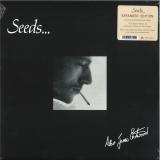


![Dub & Wheel [Kid Lib] & Tim Reaper - FR034](https://www.deejay.de/images/l/6/8/1157368.jpg)