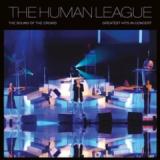
The Human League is renowned for their contribution to the synth-pop genre. Originating from the experimental electronic music scene, they achieved notable success as a pop band during the 1980s. The band's lineup has undergone changes throughout the years, but Philip Oakey, Joanne Catherall, and Susan Ann Sulley have remained core members.
This limited edition BLUE vinyl release captures their performance at The Dome in Brighton on December 19, 2003. It includes their iconic hits such as "Don't You Want Me," "Human," "Mirror Man," and "Fascination." The album showcases their talent for crafting catchy melodies, employing innovative synthesizer techniques, and featuring distinct vocals.
With their memorable songs and unique musical style, The Human League truly made their mark on the Synth-pop genre.
Mehr als zwanzig Jahre nachdem Nouvelle Vague mit ihrem inzwischen kultigen Debütalbum den Post-Punk neu erfunden haben, schlagen sie mit A Date with Depeche Mode ein mutiges neues Kapitel auf – einer abendfüllenden Neuinterpretation eines der einflussreichsten und beliebtesten Songkataloge der modernen Musik.
Nur wenige Bands haben die Popkultur so geprägt wie Depeche Mode. Nur wenige Künstler beherrschen die Kunst der musikalischen Neuinterpretation so meisterhaft wie Nouvelle Vague. Diese beiden Welten zusammenzubringen wirkt zugleich völlig unerwartet und doch unvermeidlich.
Aufgenommen zwischen Rio de Janeiro und Paris, verwandelt das Album dreizehn Depeche-Mode-Klassiker in intime, filmische und tief emotionale Songs. Was einst von Maschinen und elektronischen Klängen geprägt war, wird hier warm, organisch und zeitlos – und legt das Songwriting offen, das den Kern dieser ikonischen Kompositionen bildet.
Gesungen von einer außergewöhnlichen internationalen Besetzung von Gastvokalistinnen und -vokalisten – darunter Skye Edwards (Morcheeba), Beth Hirsch, Flavia Coelho, Mélanie Pain, Phoebe Killdeer, Fredrika Stahl und weitere – bietet jeder Titel eine einzigartige Begegnung zwischen einer Stimme und einem Song und bleibt dabei dem charakteristischen Stil von Nouvelle Vague treu
New York-based Japanese jazz and electronic music polymath Takuya Nakamura presents his debut album Shape The Future - almost 35 years into his storied musical journey.
An expansive double album, the album’s first LP documents a spellbinding live performance by Nakamura recorded at fabric. A hybrid set combining DJing, live electronics, vocals, and trumpet, the set also features studio versions of special collaborations with Shigeto, Currency Audio and Tim Reaper. The second LP complements the first by assembling studio recordings of select album tracks. Altogether the two volumes make for a definitive display of Nakamura’s exceptional musicianship across jazz, DnB, jungle, broken beat, deep techno and more.
Across his career, Nakamura has played Brazilian music, merengue, salsa and straight-ahead jazz. He’s opened for Sun Ra Arkestra, performed with David Byrne, Laurie Anderson, Lee “Scratch” Perry, Wu-Tang Clan, and Arto Lindsay, appeared on sessions with Terry Riley, ASAP Rocky, Goldie, and TV On The Radio, and remixed the likes of Quincy Jones, Sun Ra, Billie Holiday, and The Streets. He’s also played under director and playwright Robert Wilson.
Although the musical past and present of the Tokyo-born, New York-based DJ and trumpet player is undoubtedly eclectic, Nakamura is abidingly steeped in the sounds of jazz and jungle. This’ll be obvious to casual observers who may have seen any viral videos of him. But there’s more to this. The depth of Nakamura’s engagement with these kinds of music, the way they’ve made him into the person he is, the decades-long path they’ve taken him on; to now arrive at the summit of a solo album is all truly remarkable. Shape The Future resonates with every chapter in this story.
In high school, Nakamura’s friends started listening to jazz and jazz fusion, which piqued his interest, especially when they started going to clubs to see it live, where they managed to see US legends like Sonny Rollins play. Eventually he began to play jazz every day and his musical skill emerged early. He soon became obsessed with getting closer to the source of this music, which led to his studies at the New England Conservatory of Music in Boston with George Russell, an influential figure who had taught Miles Davis and John Coltrane. Nakamura drank it in: not only the technical aspects but the sense of a direct connection to “a music culture where Russell and his friends changed harmony forever. I wanted to know how that was possible!”.
This was a radical experience in itself, but then another revolution happened for Nakamura. He was playing in a venue called The Western Front, near Boston and discovered that the elderly owner had his own soundsystem and was playing what was then - in 1992 - only just becoming known as jungle. This was as freeing a musical revelation as his proximity to the giants of jazz was, and in that instant the two things fused. He understood that using technology to fill a dancehall with sound and a jazz musician’s reflexes are all working to the same ends: “You’re always making decisions,” he says, “but it doesn’t have to be really difficult. It’s the truth of the frequencies, and how they’re affecting people’s minds.”
From that moment on, his life path was set. Moving to New York City, he sought out jungle and its offshoot sounds wherever he could find them, gigging and collaborating relentlessly, and gradually developing his own live and hybrid live/DJ shows. Through regular appearances at New York fixtures Zebulon and CBGBs, and continual shows elsewhere in the city, Nakamura developed his live performance and DJing and it was in these environments that he gradually weaved together his twin loves without compromising either, building an international reputation in the process.
It’s only fitting then that his first album, almost 35 years after he first found his musical direction, should be a live one: a window into this never-ending process. Even here, he had to be persuaded that he should make a record. A member of the fabric team got turned on to his music after their daughter saw him play. Of course, as a jungle lover, Nakamura knew fabric – which has a special place in the history of jungle and drum’n’bass – and “had wanted to play there since I was very young.” You can hear the club in the record: this isn’t just a live show, in keeping with his jungle roots, it’s Nakamura duetting with the soundsystem, and you can feel how the emotions in the room would have ebbed and flowed.
This dynamic translates to a transfixing record. Setting the tone with lushly textured ambient and reverberant jazz, Nakamura segues into cinematic breakbeat and stellar fusion, infusing it all with intoxicating low end and hypnotic rhythms. The LP’s midway point locks into mesmeric percussion heightened by resonant echoes of piano and trumpet. There’s an endless pull to this music. Nakamura adjusts the levels for maximum impact throughout, and the overall effect begins to evoke some harmonious hybrid between a jazz ensemble, a classic Metalheadz 12” and a Theo Parrish DJ set. His electric form continues through surreal jazz, intricate electronics and rolling sub-bass velocity, right up to the subtly devastating final cover of Peter Gabriel and Kate Bush’s ‘Don’t Give Up’, with Nakamura’s fragile vocal sitting in the heart of a huge sound.
From Tokyo jazz nights to formative studies and encounters in Boston to his artistic development in New York, Nakamura reaches another milestone with his monumental debut album. It’s a release that happened just the way a Takuya Nakamura record should. In the same way his instincts led him to musical revelations, taking his own sweet time has led him to make one of the most extraordinary debut albums imaginable, all executed in his own singular style. In Nakamura’s world, the universe finds a way.
Vokabularium returns with leksikon vol. 2, the second instalment of the label’s evolving VA series - a carefully curated body of work that reflects the deeper philosophy behind the Copenhagen-based imprint: emotionally driven electronic music built for introspection as much as the dancefloor.
Following the success of the first leksikon compilation, this new chapter expands the label’s sonic identity further, bringing together a diverse collection of artists whose productions move fluidly between melodic techno, leftfield electronica, deep house and experimental club music. Across the compilation, there’s a consistent thread of tension, atmosphere and storytelling - records designed less around fleeting trends and more around lasting emotional resonance.
Founded by Denis Horvat, Vokabularium has steadily established itself as a platform for detailed, synth-led electronic music rooted in analogue textures and cinematic depth. The label has become an extension of Horvat’s own musical language - one shaped by releases on respected imprints including Innervisions, Afterlife and Diynamic, alongside his increasingly distinctive output on Vokabularium itself.
You are Spring!" beginnt mit einer gewundenen Klangwand, A-cappella-Stimmen, die sich in üppiger Harmonie überlagern und den halb-titelsgebenden Frühling besingen. Sofort entführt uns Tasha aus dem tristen, grauen Winter in eine Welt voller Bilder und Empfindungen von neuem Leben. Stell dir vor: ein Feuerwerk aus glockenförmigen Blüten; Rosa, Citrin und Buttergelb; der Himmel klar, eine Lunge voll Blau; Wärme, überall, die die über den Winter geheilte Haut küsst und sich nach Berührung sehnt; Leichtigkeit nach dem Leiden; ein tiefer Atemzug nach dem Ersticken. "Don't die now / There's life to be found now,", beginnt sie. In Texten, die von Gwendolyn Brooks' Gedicht "To The Young Who Want To Die" inspiriert sind, formuliert Tasha die These dieses Albums mit exquisiter Präzision. Es gibt Jahreszeiten der Härte, Jahreszeiten der Schwierigkeit, ja. Aber hier, in diesem Album, meditieren wir über den Frühling über eine Zeit des Feierns, die umso süßer ist, weil wir wissen, was man ertragen muss, um dorthin zu gelangen. "Alive now / It's spring now / Alive now / You're spring now" schließt sie, getragen von den samtigen Stimmen von Jamila Woods und Taja Cheek von L'Rain, die auf diesem Track zu hören sind, und lädt uns in die paradiesische Schatzkiste ein, die sie hier geschaffen hat. Für Tasha ist der Frühling ein Ort, an dem wir ankommen, aber auch ein Zustand, in dem wir uns befinden, eine Art, wie wir geworden sind. Wenn sie darüber spricht, was das Album ihrer Hoffnung nach vermitteln soll, erläutert sie die Bedeutung von "You Are Spring!" weiter und sagt: Es ist eine Art zu sagen, dass du das bist, worauf sich andere Menschen freuen; du bist das, worauf wir warten; du bist das Schöne." Wenn es im vorherigen Album um Sehnsucht ging, darum, sich nach einer Fülle zu strecken, von der du weißt, dass sie kommt, dann ist "You are Spring!" eine Gelegenheit, innezuhalten und alles in dich aufzunehmen, sobald du in deine Fülle eingetreten bist. Das heißt, You Are Spring!" ist in seiner Aufmerksamkeit für die Glückseligkeit so eindringlich wie sein Ausrufezeichen, aber es hat auch einen klaren Blick auf die Welt um sich herum. Die zweite Hälfte des Albums bewegt sich auf diesem schmalen Grat zwischen Wonne und Untergang. Sieh dir zum Beispiel "Actor" an und seine Auseinandersetzung mit den Gesten, die wir in einer Liebe machen, die hohl geworden ist, gefolgt von Special" und seinem aufwendig arrangierten Klangteppich, komplett mit Tashas Klarinetten-Debüt. Im letzten Titel, Quick!", steigt Tashas Stimme in einer fast Stephen-Sondheim-artigen Tonfolge empor und drängt uns singend: "Quick! See how this beauty rushes by?" Es gibt Dissonanzen im Klimpern der Akkorde, das Keuchen ihrer Finger, die über den Gitarrenhals gleiten, eine raue, fast wie von einer Kassette klingende Qualität der Produktion, wieder von Gregory Uhlmann. Aber wir werden noch nicht aus dem Garten vertrieben; der Song klingt langsam aus, zurück in den Glockenblumenhain von Tashas sanftester Stimmlage. "You Are Spring!" fordert uns heraus, uns an unserer Gegenwart zu erfreuen, uns selbst als die lang ersehnte Jahreszeit des neuen Lebens und Wachstums zu sehen. Und wenn der Winter wiederkommt, wie er es immer tun muss, die Trauer sich einschleicht, Herzschmerz vor der Tür steht, gibt Tasha uns etwas, an dem wir uns festhalten können. Die Gewissheit, dass der Frühling wiederkommen wird, selbst dann. Dass die Schönheit und Fülle, die uns jetzt umgibt, uns wieder umgeben wird, noch einmal.
Los Angeles-based producer, composer and multi-instrumentalist Dexter Story returns with his sixth album, T'som (pronounced sawm), a deeply personal work inspired by the spiritual practice of fasting. Meaning "fasting" in the Afro-Semitic languages Tigrinya and Amharic, as well as in Arabic, Tsom represents a time of prayer, reflection and discipline across northeast Africa. Guided by this tradition, Story draws on the musical heritage of the Horn of Africa and musical traditions of the Middle East to create a spiritual jazz album that reflects on devotion, transformation and the power of letting go. Working with frequent collaborators Carlos Nino, Sudan Archives, Kamasi Washington, Jimetta Rose and Kibrom Birhane, the album touches on themes of reflection, inner poise and a quest for deeper connections, bound by explorations of traditional rhythms from the Horn of Africa. Named after jazz saxophone legend Dexter Gordon, Los Angeles-based multi-instrumentalist, composer, arranger, music director and producer Dexter Story is one of the key figures in the city's vibrant creative music scene. Renowned for his genre-defying approach, he has collaborated with an extraordinary range of artists, including Carlos Nino, Madlib, Kamasi Washington, Build An Ark and Gaslamp Killer. His acclaimed solo albums Wondem and Bahir, released by Soundway, established him as a distinctive voice at the intersection of jazz, African music and contemporary production. Most recently, Story produced Mulatu Astatke's acclaimed studio album Mulatu Plays Mulatu, further cementing his reputation as one of today's most sought-after creative producers and musical collaborators.
Los Angeles-based producer, composer and multi-instrumentalist Dexter Story returns with his sixth album, T'som (pronounced sawm), a deeply personal work inspired by the spiritual practice of fasting. Meaning "fasting" in the Afro-Semitic languages Tigrinya and Amharic, as well as in Arabic, Tsom represents a time of prayer, reflection and discipline across northeast Africa. Guided by this tradition, Story draws on the musical heritage of the Horn of Africa and musical traditions of the Middle East to create a spiritual jazz album that reflects on devotion, transformation and the power of letting go.
Working with frequent collaborators Carlos Niño, Sudan Archives, Kamasi Washington, Jimetta Rose and Kibrom Birhane, the album touches on themes of reflection, inner poise and a quest for deeper connections, bound by explorations of traditional rhythms from the Horn of Africa.
Named after jazz saxophone legend Dexter Gordon, Los Angeles-based multi-instrumentalist, composer, arranger, music director and producer Dexter Story is one of the key figures in the city's vibrant creative music scene. Renowned for his genre-defying approach, he has collaborated with an extraordinary range of artists, including Carlos Niño, Madlib, Kamasi Washington, Build An Ark and Gaslamp Killer. His acclaimed solo albums Wondem and Bahir, released by Soundway, established him as a distinctive voice at the intersection of jazz, African music and contemporary production. Most recently, Story produced Mulatu Astatke's acclaimed studio album Mulatu Plays Mulatu, further cementing his reputation as one of today's most sought-after creative producers and musical collaborators
CCCC is the collaborative album by Italian singer-songwriter Chiara Civello and producer Clap! Clap!, released via Civello's newly founded Quarter Moon Records. Across ten tracks, the record brings Civello's songwriting and distinctive voice into dialogue with Clap! Clap!'s production, moving between electronic music, jazz, art-pop, broken beat. Sung across English, Italian/Sicilian dialect and Portuguese, the album also features percussionist Mauro Refosco and keyboardist Dario Bassolino.
CCCC is the collaborative album by Italian singer-songwriter Chiara Civello and producer Clap! Clap!, released via Civello's newly founded Quarter Moon Records. Across ten tracks, the record brings Civello's songwriting and distinctive voice into dialogue with Clap! Clap!'s production, moving between electronic music, jazz, art-pop, broken beat. Sung across English, Italian/Sicilian dialect and Portuguese, the album also features percussionist Mauro Refosco and keyboardist Dario Bassolino.
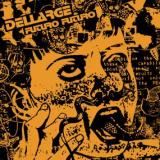
Hailing from Mexico City, Dellarge delivers L.I.E.S. a double lp jam packed with New Beat industrialized electro-wave on "Futuro, Futuro". These tracks go back to the days of the Belgium classics crossing over to the coast of Valenica crashing head on with the funkiness of something similar to Delgado's Delkom project. Don't worry, there is no trance cheeze within, head right to Mambo Especial for some latin New Beat piano anthem driven dance floor chug. Estado Alterado jumps into the 727 funk with some 101 acid leads and sleaze vocals, again making for a perfect floor filler. The album opener "Alien Body Music" is just that; a complete vocoder driven, slow beat acidic club burner. Dellarge hits all the angles perfect over these 15 tracks. Do not miss!
Continuing his compelling exploration of dubwise pressure at 170, the relentlessly prolific Brendon Moeller returns to Samurai Music with six stunning demonstrations of purposeful minimalism and spatial intrigue. Arriving in tandem with a second EP of introspective meditations on Samurai sub label SAIBAI, Codebreaker finds Moeller's peerless run of shadowy broken dub techno yielding startling new forms as the upstate New York artist continues to mine a rich seam of inspiration.
There's a pronounced economy of sound exacted on Codebreaker that binds the tracks together aesthetically, taken to the furthest reaches of subtlety on 'Dorian Grey Frequencies' as filigree slithers of percussion skitter across a brooding surface of sub bass with little in the way of distraction. This approach allows the microscopic detail of Moeller's engineering to shine through, as every inflection and murmur crackles with lithe movement to give each track its captivating energy.
Fractured beatdowns creep into earshot on 'Static Possession', edging towards Gescom-informed B-boy structures head-spinning in cryo-stasis surrounded by the hum of machines from a distant future and punctuated with occasional bullet points of delay soaked acid. Even when the bass starts to snarl and the hi-hats start ticking faster on 'Interzone Pulse', they're managed with brutal precision and a narrative flow of anti-build-ups that maintains a nail-biting tension throughout.
The decision to lean into a stripped-back sound on Codebreaker shows the faith Moeller places in his particular interpretation of bassweight 170, as his jaw-dropping sound design speaks volumes with the most modest of lexicons in a dialect never heard before.
SELN Recordings is proud to present Sillons, the debut release from French musician Pierre François.
Straight from Nantes with love and sadness; Sillons is the soundtrack to being shut inside and sheltered from all the dread beyond your bedroom door. What may at first appear as a collection of abstract loops unravels into something much greater throughout its entirety.
Underneath a thick atmosphere of tape hiss and crackle, minimal synth explorations emerge and float away while the occasional guitar-esq riff ebbs in and out of the foreground like waves at the shore. Percussive refrains come through with perfect timing, their occasional rudimentary timbre all in the spirit of ‘do it yourself magique’.
Picture the following: it’s been decades and you’ve forgotten how to communicate with the world outside, all you have left are message-songs which leave behind a story of what it was like to be separated from everything you’d ever known during an existential sabbatical. This is very near to the audio experience that Sillons gives and thus makes it so real. On this merit alone François deserves his flowers.
Even the shortest of songs manage to conjure up visceral imagery. For example ‘Abouile’, with an impressive runtime of 51 seconds, dives straight into the eeriest corners of a Cold-War era ‘Numbers Broadcast’ being sent out from malfunctioning military personnel venturing off into the depths of their consciousness.
All in all there is something distinctly ambitious and positive within Francois’ work. It takes you to a place where little else matters except the mood and feeling the music provides, a hopeful and emotive landscape.
Tooflie's anonymous archivists return for another trip through the past, this time leaving geography behind for the unruly musical landscape of the 1980s. Four edits bring together the creme de la creme of Polish rock, Danish new wave, Soviet avant-garde and Georgian synth-pop, giving each source a fresh dancefloor angle while keeping what made the original so distinctive. A Balearic rework, an Hi-NRG treatment and two more leftfield interventions turn these unlikely archival finds into records that work just as well at home as they do on a larger system. The original records behind these edits are notoriously hard to find, making Tooflie 008 a rather useful detour for diggers and collectors, as well as anyone with a soft spot for overlooked musical oddities.
Following her foundational role in the early years of The Fall, and then the searing post punk of The Blue Orchids, as well as several tours serving as a backing group for Velvet Underground chanteuse Nico, Una Baines found herself starting 1985 without a band. Drafting together members of the all-female Beyond The Glass, and compatriots associated with her past projects, she entered the studio with a clutch of songs and a willingness to experiment. Separating the sides into “waxing”, for the more traditional songs, and “waning”, where the structures become looser and varied, the resulting album was the sole release on her Taboo Records and seemed quickly lost to time, but feels shockingly current in both feminist content, and freak folk execution.
It is a collection of influences that would emerge decades later in the wyrd folk movement, and Furia is not out of place at an intersection of Devendra Banhart and Meg Baird, but there was absolutely nothing like it in 1986. Upon release, Mark E. Smith famously likened it to Third Ear Band, having to dip back to 1970 for a touchstone. Songs like “Bridget of Ireland” could be traditional ballads from decades past, while “No Romance” is a lo-fi new wave hit waiting to happen. “Sheila/Beats My Heart” fashions The Velvet Underground as a feminist protest band, and “Ritual” plays out like all of the Motown girl groups banding together to tell the world that they don’t need a boyfriend to solve all of their problems. It all draws on sources that are so familiar, yet turns them upside down in a celebratory fashion. Is it freak folk? Pagan punk? Pastoral drone? It is all of that and so much more. It is the sound of a woman, and an artist, truly finding her voice, and it is both magical and compelling.
“Remarkably prescient and weirdly beautiful record. A creative, challenging and memorable companion, with a distinct voice and identity of its own: in turn playful, political and experimental. It's highly recommended.” – The Quietus
$uicideboy$’ Stop Staring at the Shadows continues to stand out as a defining project in the duo’s catalog, showcasing the dark, atmospheric production and raw, introspective lyricism that have helped establish them as one of the most influential acts in the underground rap space.
The project further cemented their ability to connect with a highly dedicated global fanbase while pushing their sound deeper into the mainstream.
The release has become a fan favourite, with tracks such as ...And to Those I Love, Thanks for Sticking Around continuing to generate strong streaming activity, social engagement, and renewed discovery years after its original release. Its heavy production, emotionally charged themes, and distinctive $uicideboy$ aesthetic have given the project lasting catalog value and a strong connection with their core audience.
Originally released in 2006, Radiohead tribute album Exit Music: Songs with Radio Heads returns to its original home at BBE Music, two decades on from its debut. Featuring eclectic cover versions of Radiohead’s songs by Mark Ronson, Bilal, Sia, Meshell Ndegeocello, Questlove Sa-Ra, The Cinematic Orchestra, Osunlade and Matthew Herbert to name but a few, the album gave BBE Music its first Top 40 single in the UK with Mark Ronson’s cover of “Just”, and has gone on to become an enduring classic, paving the way for many similar projects in the years since (like BBE's David Bowie tribute Modern Love and Naive Melodies, a tribute to the Talking Heads). Twenty years later, with several of its contributors now major names in their own right, its reputation as a genre-bending classic has only grown. People get confused about cover versions. They are a labour of love, not some sort of disrespectful treatment of the classics. Everyone involved in the "Exit Music" project loves the music of Radiohead; "Songs with Radio Heads" doesn't attempt to replace the originals as "definitive versions." Instead, like the Futureheads cover of Kate Bush or the Slits cover of Marvin Gaye, this is an exercise in translating well-loved tracks into a different genre. "Exit Music" also taps into the dance-floor potential of Radiohead, long recognised by DJs and producers ranging from Burial and Flying Lotus to Kendrick Lamar. The band themselves are devotees of both hip hop and dance music, commissioning remixes from respected figures such as Modeselektor, Madlib, DJ Shadow and Four Tet. Now a bona fide cult favourite, this 20th-anniversary reissue collects together the finest hip hop and dance cover versions of Radiohead songs. Ranging from gentle acoustic treatments to raw funky versions, BBE have taken the songs of Radiohead into realms even he couldn't imagine…
For two decades, The Oscillation has occupied its own space within the psychedelic underground, continually reshaping a sound built as much from texture, repetition and atmosphere as it is from conventional songcraft. On 'Interference', released October 30th 2026 via Fuzz Club, Demian Castellanos pushes that approach further than ever, creating what he describes as "a painting of sound rather than music”. It’s an album where noise and melody constantly collide, dissolve and reform into something strangely beautiful: “I wanted it to be accessible but also quite extreme, a sort of beautiful noise. I did my best to push out the parameters whilst trying not to allow it to disintegrate into something with no meaning or focus.” Chasing an elusive balance between accessibility and abstraction, the result is a record that feels simultaneously immediate and disorientating: dense layers of drones, feedback and motorik rhythms give way to unexpected moments of warmth, colour and even uplifting euphoria. Across its runtime, chaos never overwhelms; instead it becomes another instrument, carefully sculpted into hypnotic, immersive compositions. Much of the album emerged through instinct rather than intention. Fragments originally conceived as intros, outros or abandoned ideas gradually eclipsed the songs they belonged to, with tracks revealing themselves organically through a process Castellanos likens to "playing Chinese whispers with musical instruments." Elsewhere, two long-forgotten compositions – ‘Stasis’ and ‘When You Close Your Eyes’ – finally found their place after lying unfinished for almost twenty years. Recorded and mixed by Castellanos at his home studio in the Czech Republic, ‘Interference’ also benefits from a key collaboration with Lorena Quintanilla of Mexican band Lorelle Meets The Obsolete, who provides a transformative presence. Her haunting vocal on ‘La Alusion’ (which she also wrote the lyrics and melody for) became the breakthrough moment that crystallised the album, turning an instrumental sketch into a dreamlike centrepiece and helping shape the final sequence. She also lends her voice to ‘Isolation Freeway’, adding another layer of mystery to an album that continually blurs the line between structure and dissolution. Perhaps most remarkably, ‘Interference’ was created during a period in which Castellanos had largely stopped listening to music altogether: “My hi-fi broke a couple of years ago so I kind of wanted to see what would happen if I didn’t listen to too much music.” Instead of consciously absorbing outside influences, he trusted instinct, memory and experimentation to guide the process. The result is one of The Oscillation's most adventurous and emotionally resonant records to date: a vivid collision of hypnotic repetition, spectral beauty and controlled sonic disruption that confirms Castellanos remains one of modern psychedelia's most singular voices.
“The alarm had been sounding for so long that nobody remembered what it had been warning about. The protocol had become routine; every signal acknowledged, every command obeyed. Dreams were archived, memories rewritten, emotions reduced to corrupted fragments of data. The city continued to function with mechanical precision, while the last traces of humanity slowly dissolved into the noise.”
With Oblivion Protocol, The Relic continues his ongoing ARK series, once again excavating hidden layers of industrial hardcore’s past while transforming them into something unmistakably his own. Across six meticulously crafted tracks, echoes of classic hardcore attitude, doom-like heaviness and early industrial brutality surface before being reshaped into a bleak, contemporary vision. Nostalgia is never the destination; it provides fragments for reconstruction. The release constantly shifts in weight and momentum. Crushing mid-tempo passages give way to relentless bursts of energy, while distorted textures, commanding vocal samples and melodic fragments create an atmosphere that is as oppressive as it is immersive.
The archaeology continues, but the discoveries become increasingly unsettling: What once promised the future now echoes through abandoned systems, corrupted memories and hostile sonic environments.
'Hive Mind are excited to have worked with Rio de Janeiro based label QTV, to bring you this retrospective from the cosmic joker of contemporary Brazilian music, Negro Leo.
'The music on this retrospective, which draws together songs from his 14 albums, EPs and singles released since 2012, ranges widely and wildly across genres and styles, from the urgent and angular no-wave inspired punk-funk of Niños Heroes or Ilhas de Calor, through the psychedelic hoedown of Noite Invertida or the beautiful and delicate Esferas and on to the maximalist hyperpop of more recent works like RELA or Desejo de Lacrar. Negro Leo consistently confounds, confuses, disturbs and provokes.
'His music is explicitly and fiercely Brazilian and draws on the history of black Brazilian music for inspiration - Gilberto Gil and Tropicalism, Itamar Assumpção and the Vanguard Paulista, Funk Carioca, the Boi's rhythm from the northern carnivals, the samba of the streets and the country - it's all thrown into the mix, along with free-jazz, noise and various chunks of non-Brazilian pop. Leo's music and songs serve as an essential documentation of the country's rapidly shifting social fabric in the digital age, a time in which the country and its people feel lost in a "jungle of pixels".
'Some of these surreal songs can feel overwhelming at times, like a wall of noise full of unfamiliar sounds and rhythms, but there's an unapologetic punk spirit behind it all, alongside a genius composer. It's worth pushing through the that sense of overwhelm to the place where the beauty and complexity of the composition and songwriting shines.'
Finnish-American guitarist Raoul Björkenheim and Norwegian drummer Paal Nilssen-Love join forces on their new album PING, released by We Jazz Records on 30th October on LP, CD and digital formats. Recorded in Helsinki, the album finds the seasoned duo firing on all cylinders and delivering a remarkable set of contemporary free music.
PING brings together nine excursions beyond “guitar + drums” and way beyond “free jazz”. That being said, those are still good touching points for the music that is wild, imaginative, raw, yet also at times delicate and introspective. Friends and collaborators for decades in groups such as the lauded Scorch Trio, Raoul and Paal have the history and the trust to create memorable and original improvised music that stuns and moves the curious listener.
Raoul Björkenheim (b. 1956) is a Finnish-American guitarist and composer who has been creating original music for the past four decades living in New York City and Helsinki, where he is presently based. Describing his on-going work as investigative guitarism, he is best known for an expressionistic and lyrical guitar style. Björkenheim’s eclectic discography numbers 50+ albums, ranging from ambient soundscapes to visceral free jazz, from duo to big band. His large-scale works for symphony orchestra have yet to be recorded, and he has also composed scores for over ten films and dance productions. Björkenheim has collaborated musically with Bill Laswell, Toshinori Kondo, William Parker, Mats Gustafsson, Hamid Drake, Ingebrigt Håker Flaten, Gerald Cleaver, Henry Kaiser, Lukas Ligeti, Morgan Ågren, Paul Schütze, Edward Vesala and Juhani Aaltonen, for the labels ECM, Rune Grammofon, Cuneiform, Tum Records and Long Song records. Björkenheim has been awarded various prizes including the Emma prize for best jazz recording of the year, and been nominated three times for the Nordic Music Award.
Paal Nilssen-Love (b. 1974) is a Norwegian drummer, composer, bandleader, and producer known for his central role in Scandinavian free jazz and improvised music. Since the mid- 1990s, he has appeared on more than 280 albums, including 70 released through his label, PNL Records. He has performed with influential groups including Atomic, The Thing, Peter Brötzmann’s Chicago Tentet, Scorch Trio, and Frode Gjerstad Trio, and collaborates regularly with artists such as, Ken Vandermark, Akira Sakata, Otomo Yoshihide, David Murray, Arto Lindsay and more. Paal Nilssen-Love’s fascination with traditional and experimental music has taken him around the world. Since his first visit to Ethiopia in 2009, he has built strong connections with musicians and artists in Addis Ababa, leading to collaborations, performances, teaching, and artist exchanges with Norway. Since his first trip to Brazil in 2013, he has returned regularly, developing collaborations with artists and musicians across the country. His musical explorations have also brought him to Tsugaru and Aomori in northern Japan, where he has developed an interest in the region’s traditional music. Nilssen-Love is also an active organizer and educator. He started both Oslo’s all-Ears festival, the Blow Out festival and FRAM Kunstfest, and has led workshops internationally and in Norway.
Repress of since last 2025 sold out box set. Ltd edition Gold vinyl, 4 X 140g LP Box set, 24pp booklet, DL card. or Ltd edition 4xCD Bookback. Trees classic albums, beautifully packaged as a four-disc anniversary edition includes 12" book with liner notes from founder member David Costa and comedian Stewart Lee - Features two new discs of alternate mixes, early demos, BBC session tracks and 2018 live recordings in London - Includes lost demos of 'Polly On The Shore' and 'Streets Of Derry' It's now over fifty years since Trees' formation and, although 'Acid Folk' has now become a sub-category in the lexicon of record dealers and music critics, and although founder member David Costa feels the original noughties reissue helped consolidate a gathering wave of curiosity, they themselves remain in the shadows. Earth's new Trees collection brings together both albums adding shiny alternate mixes of key tracks along with a selection of radio sessions and demos, all sounding brighter and cleaner than ever before. Trees first album, 'The Garden of Jane Delawney' (1970) snuggles nicely into contemporary nu-folkies' idea of the genre, and shares some of the pastoral-whimsy that characterised The Incredible String Band or Donovan, offset by some stunning interpretations of traditional material and Bias' own songs, which were somehow part of the tradition Trees had adopted. Readings of 'Lady Margaret', 'Glasgerion' and the old standard 'She Moved Thro' The Fair', and the extended fade of the group's own 'Road', presage the explosive instrumental duelling that would come to characterise the follow up album, 'On The Shore'. There's a definite shift between the records, the second being darker and more ambivalent. Here Trees don't tell you what to think. You're left to formulate your own response to this odd, opaque music. The 'Streets of Derry' session version leans into the brain vibrating drone-groove they somehow found at the traditional tune's centre. 'Polly On The Shore', another traditional tune, is one of the definitive moments of English folk rock. This special expansive collector's edition celebrates the bands 50th anniversary. "A beautiful hybrid, Trees found a unique space between intimate folk and freewheeling psychedelia. Musically ambitious yet brilliantly balanced, they have left an enduring legacy for those lucky enough to be in on the secret" - Edd Gibson, Friendly Fires
EPILOGUE is the culmination of more than four decades of music-making by Japanese composer, producer and multi-instrumentalist Ken-ichiro Isoda, an album in which environmental sound, electronics, contemporary classical composition and memory converge into a deeply personal late-career statement. Isoda moved through video-game music, film composition, classical production, Okinawan music, television and collaborative projects, continually developing an approach in which acoustic instrumentation, field recordings and electronics could coexist naturally.
His collaborative album Interwoven with aus, released through WRWTFWW, further demonstrated the openness of a musical philosophy Isoda describes as being rooted in fluctuation, imperfection and organic movement.
EPILOGUE brings those threads together while refusing to function simply as a retrospective. The album consists largely of older compositions that Isoda has returned to, reconstructed and reinterpreted from the perspective of the present.
Opening track “TANEKOMA” refers to the Izu Robin, a rare bird native to Hachijō-jima, the volcanic island where Isoda lives. Its song, recorded by Isoda in the mountains, becomes part of the composition itself. Placed at the beginning of the album, “TANEKOMA” becomes both document and prayer.
Elsewhere, “Circulation 2” develops from a work created around the relationship between forest, sea and the movement of water. Flutist Dogen Kinowaki replaces Isoda’s original piano melody with a performance that gives the piece a distinctly Japanese sense of place. Kinowaki also appears on a newly reimagined version of “Beach of the Pliocene”, one of Isoda’s most recognised compositions.“STEPS”, first composed for film in 2008, looks back toward the electronica of that period. For this definitive version, Tsutomu Sonoda of maya ongaku provides vocals, bringing new emotional and lyrical depth to a piece Isoda had wanted to properly complete for more than a decade.
The title track from Isoda’s 1991 New Age album “Yume no Sazanami” is similarly reconsidered. Originally recorded with a small chamber orchestra, the new arrangement replaces elements of the harp and cello with layers of nylon-string guitar performed by Tatsuro Murakami. Perhaps the album’s clearest meeting point between past and present is “WATERWAYS.”The mysterious European ambient artist Aiko Takahashi, transforming an abandoned demo into what is simultaneously the oldest and newest work on the album.
“A Flowering Tree,” written for film in 2013, is reconstructed around multi-tracked flute performances by Dogen Kinowaki. Isoda carries that association into his own arrangement, allowing the piece to function as another quiet meditation on memory, loss and hope.
The album closes with “EPILOGUE” —less a grand conclusion than a moment of acceptance. Isoda chose it as the album’s title piece to hold what he describes as the complex emotions that accompany the twilight of a life spent making music. EPILOGUE is not simply a look back. It is the sound of older music continuing to move, change and breathe in the present: a lifetime of ideas distilled into Isoda’s own form of pure music, shaped by memory, collaboration, nature and the world immediately outside his home on Hachijō-jima.
Prolific British multi-instrumentalist William Dorey makes music emphasising traditional means of recording under the Skinshape moniker, referencing influences ranging from Ennio Morricone to The Beatles, and a variety of genres including but not limited to retro funk, soul, reggae, psychedelic rock, African music and folk. Far from carrying an anything goes attitude, Dorey's is an evocative melting pot moulded in an orderly fashion, creating output that keeps categorisation open-ended. Whilst tackling a busy tour schedule over the past 18 months, Skinshape has continued to find time to make music in his studio based in North London. The latest endeavour is titled Chapman's Pool - named after a bay on the Jurassic coast in Dorset, located walking distance from where Dorey grew up. Chapman's Pool carries a sense that Skinshape is reconnecting with the sound which formed his musical identity, drawing inspiration from spaghetti westerns, trip-hop, `60s+'70s Ethiopian Jazz, '80s South African bubble gum and so on, all while the multiple years of recording, songwriting and production experience are clearly audible.
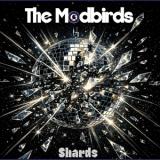
"Baby put that cheecky dress on_get your feet on the ground, shake your hips to the sound! We're dancing to the music!"_of THE MODBIRDS! Ladies & Gentleman, die Tanzfläche ist freigegeben! Spotlights an, Boxen auf Anschlag aufgedreht bis die rotierende Discokugel in 1000 Scherben zersplittert - hier kommt "Shards", der erste Longplayer der Modbirds. Einen berauschenderen Cocktail mit allerfeinsten musikalischen Zutaten wirst Du an keiner Theke finden! Der abwechslungsreiche Mix aus Ska, Soul, Reggae, Rocksteady, einer kleinen Prise Punk bis hin zu Swing und klassischen Big Band Elementen macht süchtig und vereint alles was Birdies, Rudeboys und sonstige Nachtschwärmer lieben werden. Nach ihrer Mini-LP "Spin it to win it" hat die 7-köpfige Big Band mit u.a. ehemaligen Mitglieder von The Porters und Los Placebos im Music Area Studio bei ihrem ehemaligen Bandkollegen Beagle 12 neue Songs aufgenommen und all ihre musikalischen Einflüsse und Vorlieben darin einfließen lassen. Ob Jamaica-Roots, Ausflüge in verschiedenen Waves of Ska-Äras, den typischen UK-2 Tone Sound nach Art von Madness bis Buster Shuffle oder eine einfach nur Spaß machende Reminiszenz an all die deutschen Ska-Bands von El Bosso bis Frau Doktor (mit dem einzig deutschsprachigen Song "Jogger"): Mit jeder Note und Takt merkt man diesem Album an: Die Modbirds leben und lieben diese Subkultur seit Jahrzehnten und kreieren daraus ihren eigenen Sound! Die 180g Vinyl-Edition kommt im Gatefold in klassisch schwarz oder silber mit mehrfarbigem Splatter. Limitiert auf insgesamt nur 300 Exemplare!
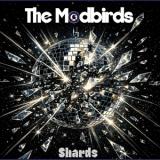
"Baby put that cheecky dress on_get your feet on the ground, shake your hips to the sound! We're dancing to the music!"_of THE MODBIRDS! Ladies & Gentleman, die Tanzfläche ist freigegeben! Spotlights an, Boxen auf Anschlag aufgedreht bis die rotierende Discokugel in 1000 Scherben zersplittert - hier kommt "Shards", der erste Longplayer der Modbirds. Einen berauschenderen Cocktail mit allerfeinsten musikalischen Zutaten wirst Du an keiner Theke finden! Der abwechslungsreiche Mix aus Ska, Soul, Reggae, Rocksteady, einer kleinen Prise Punk bis hin zu Swing und klassischen Big Band Elementen macht süchtig und vereint alles was Birdies, Rudeboys und sonstige Nachtschwärmer lieben werden. Nach ihrer Mini-LP "Spin it to win it" hat die 7-köpfige Big Band mit u.a. ehemaligen Mitglieder von The Porters und Los Placebos im Music Area Studio bei ihrem ehemaligen Bandkollegen Beagle 12 neue Songs aufgenommen und all ihre musikalischen Einflüsse und Vorlieben darin einfließen lassen. Ob Jamaica-Roots, Ausflüge in verschiedenen Waves of Ska-Äras, den typischen UK-2 Tone Sound nach Art von Madness bis Buster Shuffle oder eine einfach nur Spaß machende Reminiszenz an all die deutschen Ska-Bands von El Bosso bis Frau Doktor (mit dem einzig deutschsprachigen Song "Jogger"): Mit jeder Note und Takt merkt man diesem Album an: Die Modbirds leben und lieben diese Subkultur seit Jahrzehnten und kreieren daraus ihren eigenen Sound! Die 180g Vinyl-Edition kommt im Gatefold in klassisch schwarz oder silber mit mehrfarbigem Splatter. Limitiert auf insgesamt nur 300 Exemplare!
Timeless – yet always fresh: Regardless of the whims of the pop business, Planet Yello has been making its rounds for almost fifty years, repeatedly whisking us away to a world where past and future greet each other and James Bond joins forces with the Man in the Moon, Dionysus and Philip K. Dick.
"To the future, through the past"—with their fifteenth studio album, "Time Lab," Dieter Meier and Boris Blank put this maxim into practice more vividly than ever. Blank meticulously crafts his imaginary soundtracks from fresh samples and found objects from his own archive, which has accumulated a vast collection of sonic fragments, riffs, and motifs over nearly fifty years of creative work. Meier immerses himself in these parallel soundscapes, discovering within them his romantic tales of robbers, mysterious night creatures, and Dadaist wordplay. Essentially, every Yello track is both ancient and brand new at the same time. This principle is perfectly illustrated by the first single, "Around the Sun." It's based on a dormant Meier recording that was cut at the last minute from the selection for "Claro Que Si" (1981). Blank gave Meier's sonorous voice a fresh sonic makeover – the result is an elegant and flexible, thoroughly Yello-esque combination of past and present, romantic wanderlust and driving percussion. "Break Out" also plays with stylistic elements that can be traced back to Yello's earliest days: a dangerously prowling bass riff, fiery percussion, and storyteller Meier in hypnotic top form.
Time begins where it ends, or vice versa. Or, as Boris Blank says: "Yello's music doesn't really know time."
ARE YOU HOUSE Records presents: Are You House Sampler 2
Following the success of the first edition, ARE YOU HOUSE Records returns with the second instalment of the Are You House Sample series — bringing together three distinctive cuts rooted in groove, rhythm and the spirit of house music.
Opening the release, June Jazzin delivers “Iksasa”, a 9-minute broken-beat journey that takes you deep into its rhythm and groove. With its extended arrangement and hypnotic flow, the track gives you the time and space to settle into the groove and let the music take you on a journey.
Track 2, June Jazzin returns with “Driver Step On It”, a driving house cut built to push the energy forward, lock into the groove and keep the dancefloor moving.
Closing the release, SculpturedMusic delivers “Sing My Blues Dub”, a 6-minute deep, rolling and groovy house journey layered with hypnotic rhythms and soulful energy.
Three tracks. Two artists. Different grooves, different moods, one unmistakable house spirit.
" Ascending Signs Records proudly presents its third release, featuring a very special guest: Stephan Laubner, aka STL.
One of the most distinctive voices of the past two decades, STL continues his quest for sound with a new chapter, "Sign of Life".
The EP delivers four bulletproof tunes, once again showcasing STL's unmistakable style, pushing the boundaries of abstract/experimental house, dub, techno and downtempo with a raw, personal and intense sound."
The sound is crazy loud and the music is mental, banging.
Very into Peur Bleue's vibe if you listen to the harder among them.
Pablo, from Unhinged Records has been playing and producing music for the past 15 years, and just started to released his music the past years to the people...
Some of these tunes are early ones from Pablo, and some others are the latest ones. A way to discover an evolution, and a constance : his style !
A superb discovery to me... The kind of Tek I love to mix !!! and listen !
Enjoy !
Music : Pablo
Mastering : Stefan ZMK
Cut : Simon Davey
Visual : Toolsy
Pressing : Record Industry
Produced in 2026
Après le Gobble SP 04, nous sommes fiers de vous présenter le Gobble SP 05 !
Pour ce nouvel opus, nous avons une nouvelle fois sélectionné des morceaux inédits de Tieum, produits à l’origine dans les années 90/2000. Des tracks choisies avec soin pour composer un EP à son image, rempli de cette énergie et de cette identité qui ont marqué toute une génération.
Un grand merci à Tieum pour sa confiance et pour nous permettre de ressortir de ses archives ces morceaux qui nous ont bercés tout au long de notre jeunesse !
Un véritable voyage dans le temps pour tous les amoureux du hardcore gabber oldschool.
Après le Gobble SP 04, nous sommes fiers de vous présenter le Gobble SP 05 !
Pour ce nouvel opus, nous avons une nouvelle fois sélectionné des morceaux inédits de Tieum, produits à l’origine dans les années 90/2000. Des tracks choisies avec soin pour composer un EP à son image, rempli de cette énergie et de cette identité qui ont marqué toute une génération.
Un grand merci à Tieum pour sa confiance et pour nous permettre de ressortir de ses archives ces morceaux qui nous ont bercés tout au long de notre jeunesse !
Un véritable voyage dans le temps pour tous les amoureux du hardcore gabber oldschool.
Phren, the first collaborative work by Marta Salogni and Stefano Pilia, emerges as a layered and articulated sound-hymn-dialogue between Stefano’s abstract guitar work and Marta’s manipulation of tape machines. Conceived alongside the imagined space created by Sarah Mazzetti for the Opale series, a project by Maple Death Records and Canicola edizioni, the album becomes a form-shifting composition where memory itself is continuously transformed through resonance, repetition and reconfiguration.
Here, sound is not preserved as an object of the past, but treated as a living material: something capable of carrying traces, absorbing new meanings and generating unfamiliar voices.
The album develops from a simple yet constantly shifting principle: a sound is set in motion and then passed through a series of interconnected systems where it is delayed, altered and returned in another form. Stefano Pilia’s guitar travels through a complex chain of modular processes, composed of different stages of preamplification and filtering, before entering a tape echo system that introduces further layers of repetition, resonance and spatial displacement. These signals are then absorbed into Marta Salogni’s Revox tape machines, where additional lines of delay, modulation and environmental transformation reshape the material once again.
The resulting music is not a dialogue between two instruments, but a shared system — a living architecture in which a single signal moves simultaneously through parallel and serial pathways, gathering traces of each passage. Sound becomes a material in constant motion: a gesture becomes an echo, the echo becomes a new gesture, and the distinction between origin and reflection gradually begins to dissolve.
Five Special were a five-man harmony vocal group from Detroit whose members included Mike Pattillo, Steve Harris, Zeke Stanley, Greg Finlay and Bryan Banks (the younger brother of Dramatics’ main man Ron Banks). The aim of these five young men was to create a group with the potential of anyone of its members to be able to step up to sing lead on any given song, something which they went on to achieve to great aplomb.
Ron Banks was very instrumental in the founding of Five Special introducing them to his long-time friend Charles “Chuck” Underwood, a one-time former road manager of the Dramatics and by then the owner of the independent T.E.A.I Record Corporation label (T.E.A.I being an abbreviation for “Tellin’ Everybody About It”). Five Special’s first release for T.E.A.I was the 1976 joyously uplifting dancer “The More I Get To Know You” a Jimmy Roach and Marcella Henderson composition featuring Bryan on lead, released as a part I and part II deemed to be a more disc-jockey friendly practice at the time. The record was popular with radio stations throughout the Detroit metropolis leading Chuck to precure a deal with Polygram which resulted in the song gaining release on their nationally distributed Mercury label. A second Five Special Mercury release followed in 1977, the Jimmy Roach penned mellifluous “(Let’s Stop Making) Small Talk” backed with the Ron Banks/Paul Clark penned psychedelic soul styled “Oh, Oh (Look What We’ve Done)” with Greg Finley and Zeke Stanley exchanging tenor and baritone parts throughout.
Through our ongoing working relationship with T.E.A.I Soul Junction have gained access to some previously unissued master tapes on Five Special which were recorded for an intended album project that was never finished. From these tapes we took “The More I Get To Know You” in its 5:50 minutes entirety (not split into parts 1 & 2) backed with the previously unissued mid-tempo delight “You Got To Be The One That I Love” with interchanging leads from Bryan and Steve coupled with the released psychedelic soul “Oh, Oh (Look What We’ve Done)” with interchanging leads between Greg and Zeke, catalogue number SJ565, currently a very popular release amongst Collectors and DJ’s alike. For our second and follow up Five Special 45 release, we have chosen to lead with the gorgeous, previously unissued “Two OF A Kind” penned by Ron Banks with lead vocals being provided by Steve Harris. The B-side of this release opens with another unissued psychedelic song, the Ron Banks/Chuck Underwood composed “Stone Chain Reaction” featuring punchy interchanging lead vocals from Greg Finley and Zeke Stanley, this is coupled together with the released mid 1970’s sweet soul masterpiece from the pen of Jimmy Roach “(Let’s Stop Making) Small Talk” making this yet another quality three track release from Soul Junction.
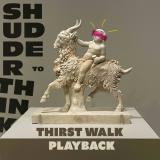
Released in 2025, the “Thirst Walk” 7” features the first new music released by post-hardcore art rock pioneers Shudder to Think since the late ‘90s.
This pressing of the 7" is on opaque pink vinyl and is available to stores for the first time. NON-RETURNABLE
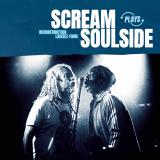
Scream and Soulside first played together at the Cubby Bear in Chicago in July 1988. After a few more shows together that year, they didn’t share a stage again until July 2022, at the Inne Brzmienia festival in Lublin, Poland. There in Poland the two bands met minds, and a match was struck. Soulside and Scream soon released new albums on Dischord Records, then toured together in the US and Europe in 2023 and 2024.
This 7" is a gathering of forces and musical admiration to spread a message of love and a lifelong commitment to the struggle for true American justice. “Laissez-Faire” was written by Scream and first appeared on Still Screaming (Dischord, 1983). This version is performed by Soulside and was recorded and mixed in June 2025. “Reconstruction” was written by Soulside and first appeared on A Brief Moment in the Sun (Dischord, 2022). This version is performed by Scream and was recorded in September 2024.
33rpm Lacquer-cuts: Kevin Gray
200g Double Ultimate Record®
Limited Edition: 4000 copies
Box and Tip-on Gatefold printed in Italy
Pressed by Simon Garcia, Marciac, France
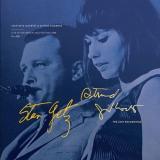
When the concert started that 4 November 1966 at the famous Berliner Jazztage, four musicians took the stage. Close-knit to the point of telepathy, they were about to give one of their last concerts. The mythical partnership of Stan Getz on saxophone and Gary Burton on the vibraphone was coming to an end, but were they even aware that this was one of their last acts? Accompanying them was an exceptional rhythm section with Chuck Israels on bass and the great Roy Haynes on drums.
With the first notes of “On Green Dolphin Street” the audience was won over by the rapport of empathy within the quartet. The programme was beautifully compiled to alternate flamboyant standards conducive to the most exuberant solos (“The Blues Walk”), heady ballads where Getz demonstrated his splendid sound and lyrical singing (“The Shadow of Your Smile” and “Once Upon a Summertime”), and compositions by Gary Burton where the vibraphonist displayed his subtle harmonic universe (“The Singing Song” and “Edelweiss”).
Suddenly, a high-spirited version of “O Grande Amor”, the standard by Antônio Carlos Jobim and Vinícius de Moraes, sounded out to prefigure the distinctly bossa nova vibe of the second part of the concert: Astrud Gilberto was to take the stage. With the opening bars of “Samba de Uma Nota Só” the flavours of Brazil were palpable. Gilberto’s voice, fragile yet mischievous against the background of the iridescent vibraphone and wrapped within the airy countermelody of the saxophone, recreated all the freshness and innocence of the legendary recording of 1964. As if they were performing together for the first time, Gilberto and Getz played a subtle game of seduction to create music that was sensual, light and melancholic.
The colourful sequence of bossa nova standards – “Você e Eu” by Gilberto Gil, “Corcovado” and “The Girl from Ipanema” by Jobim – intermingled with numbers that were jazzier in both form and spirit – “Jive Hoot” by Bob Brookmeyer, “The Shadow of Your Smile” and “It Might as Well Be Spring” – was simply irresistible.
With the final notes of “Jive Hoot”, Stan Getz smiled and bid farewell to the audience with a simple “Auf Wiedersehen”. The recording of this dream-like performance lay untouched for nearly sixty years, until we unearthed the original tapes in the archives of Berlin Radio. This album is the very first edition of a memorable live concert, entirely restored using Phoenix Mastering®.
Part of the Acoustic Sounds 40 Series
Releasing 40 titles to celebrate the 40th anniversary of Acoustic Sounds!
2x Grammy-winning album mastered from the original master tape
180-gram 45 RPM double LP pressed at Quality Record Pressings
Housed in a Stoughton Printing tip-on gatefold jacket
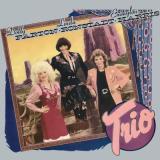
A landmark collaboration and one of the most celebrated albums in country music history, Trio brings together three transcendent voices — Dolly Parton, Emmylou Harris, and Linda Ronstadt — in a recording that's as emotionally rich as it is impeccably produced.
Originally released in 1987, Trio was both a critical and commercial triumph, selling more than 4 million copies worldwide, topping the Billboard U.S. Country Albums chart for five consecutive weeks, and earning the Grammy Award for Best Country Performance by a Duo or Group with Vocal. It was also nominated for Album of the Year. The album yielded four major country hits, highlighted by the haunting, harmony-driven remake of Phil Spector's classic "To Know Him Is to Love Him."
Produced by legendary engineer George Massenburg, Trio is a masterclass in clarity, balance, and vocal blend. Every track showcases the trio's distinct personalities while achieving a near-perfect harmonic unity-three iconic artists elevating one another through tasteful arrangements, pristine acoustics, and song-first performances.
Now, this classic shines brighter than ever. Mastered at 45 RPM and pressed on flat, ultra-quiet vinyl by Quality Record Pressings, this edition reveals rewarding insights for audiophiles, including greater nuance, texture and emotional depth with every listen.
Chopping Mountain, das neue Album von Ibibio Sound Machine, ist die bislang deutlichste Umsetzung der langjährigen Mission des Londoner Kollektivs, Liebe, Einheit und Widerstand durch Musik zu fördern. Es ist das sechste Album der Band in voller Länge und das erste, bei dem Max Grunhard seit ,Doko Mien" aus dem Jahr 2019 als Produzent mitwirkt. Nach ihrem von Hot Chip produzierten Durchbruch ,Electricity" (2022) und dem düstereren, clubbigen Einschlag des von Ross Orton produzierten ,Pull the Rope" (2024) fühlt sich ,Chopping Mountain" an, als stamme es direkt aus den Herzen und Erfahrungen der von Eno Williams und Grunhard angeführten Band. Williams ist wie immer eine Sirene - eine Frontfrau, wie sie nur einmal in einer Generation vorkommt, deren Ruf, sowohl auf die Tanzfläche als auch nach einer besseren Zukunft, unmöglich zu widerstehen ist. Wie sie das macht, ist ein Rätsel. Nimm zum Beispiel einen Song wie ,Return to Sender". Inspiriert von einem Autounfall, bei dem sie spürte, wie ihr das Lenkrad buchstäblich aus den Händen sprang - was sie mit ,einem spirituellen Angriff durch unsichtbare Kräfte" verglich -, ist der Track ein kraftvoller, kathartischer Rager, ein Ganzkörper-Workout und eine lautstarke Ablehnung des Bösen in mehreren Sprachen, Englisch und ihrer Muttersprache Ibibio. Sie ist natürlich kaum allein am Fuße des ,Chopping Mountain". Ibibio Sound Machine - Grunhard (Saxophon, Keyboards), Alfred Bannerman (Gitarre), PK Ambrose (Bass, Keyboards), Joseph Amoako (Schlagzeug), Afla Sackey (Percussion), Scott Baylis (Trompete, Keyboards) und Tony Hayden (Posaune, Synth) - sind übernatürlich eingespielt und schöpfen aus ihren Wurzeln und Inspirationen in Highlife, Disco, Afrobeat, Funk, Post-Punk und Electropop, um um ihre Stimme herum gewaltige Klangkathedralen zu errichten. Vor dem Hintergrund einer entmutigenden Welt bleiben Ibibio Sound Machine hoffnungsvoll, auf der Suche nach Bewusstsein und Verbundenheit. Sie setzen den Weg fort, den sie erstmals auf ,Pull the Rope" eingeschlagen haben: Viele Songs auf ,Chopping Mountain" entstanden aus Jam-Sessions, bei denen sie sich auf einen Groove, ein Instrument oder einen Text konzentrierten. Auf ,Concept of Love" formen sie einen Afro-Disco-Song, auf ,Love" vertiefen sie das Konzept und liefern ein ätherisches Stück Highlife. Bei ,Give Me Peace" ist sogar Dele Sosimi von Fela Kutis Egypt 80 zu hören. Diese berauschende Mischung aus unterschiedlichen Stilen und Herkunftsorten verschmilzt über das gesamte ,Chopping Mountain", wobei die Songs darin vereint sind, dass sie die schärfsten Werkzeuge sind, die Ibibio Sound Machine im gegenwärtigen Moment einsetzen können. Sie stellen den Kampf um Freiheit als einen gemeinschaftlichen dar. Der Weg zur Befreiung ist lang und beschwerlich, aber er ist nicht ohne Freude - hier ist ein Album, das vor ihr nur so strotzt.





![Unknown Artist - Tooflie Edits 008 [Hand Stamped,Colored Vinyl]](https://www.deejay.de/images/l/9/5/1270195.jpg)