Search:diss

Styles
All
FEAR FACTORY - Aggression Continuum LP 2x12"
  • A1: Recode
  • A2: Disruptor
  • A3: Aggression Continuum
  • B1: Purity
  • B2: Fuel Injected Suicide Machine
  • B3: Collapse
  • C1: Manufactured Hope
  • C2: Cognitive Dissonance
  • D1: Monolith
  • D2: End Of Line
pre-order now02.05.2025

expected to be published on 02.05.2025

31,05 €
Model/Actriz - Pirouette (LP)

Model/Actriz

Pirouette (LP)

12inch39158901
Dirty Hit
02.05.2025

Nach ihrem von der Kritik gefeierten Debütalbum 'Dogsbody' (Pitchfork Best New Music, Rolling Stone Future 25, NME The Cover) präsentiert sich das Model/Actriz-Quartett aus Brooklyn auf seinem zweiten Album 'Pirouette' sexy und divenhaft. 'Pirouette' ist inspiriert von Lady Gaga und Grace Jones bis hin zu klassischem Ballett und dissonanter Dance-Musik. Wie eine gut geölte Maschine gibt sich die Punk-Aggression von Model/Actriz dem Queer-Pop hin und findet dabei verblüffende neue Wege, frei zu sein.

pre-order now02.05.2025

expected to be published on 02.05.2025

23,95 €
ZOE HESELTON & SISTER OUTSIDER - ANOTHER KIND OF SUICIDE
  • SALT WALTER RITUAL
  • DAY BY DAY
  • WHAT I AM DOING HERE
  • ANOTHER KIND OF SUICIDE
  • MAYBE IT IS 3 AM
  • A GAME OF CHESS
  • IT'S ONLY RAIN
  • BREATH BY BREATH
  • CHANGES

Zoe Heselton is a British-born poet and musician based in Strasbourg, France. Alone with her Telecaster guitar, she channels her multiple and influences into flamenco-folk-blues fingerpicking techniques, carrying her voice into the strings as she spits out rhymes about change and desire. For this first album, she gathered her beloved and talented friendships around her to sing from places of tenderness and anger, balancing melodies with the band's arrangements and dissonance. Since her songs are stories, spells, poems and prayers, there additional personalities give a crafted power to regenerate from the limbs, surrounded by caretaking souls and generous love-spreading hearts. These musical gems are sea-shanties for sadness, litanies for survival, spoken word bangers for dancing our way through the darkness.

pre-order now02.05.2025

expected to be published on 02.05.2025

22,06 €
Dissecting Tablet - Ultra Point Of Intersection Exist

Originally released in the late '80s, this album stands as a defining statement of the Japanese noise and industrial scene—an unrelenting fusion of power electronics, mechanized chaos, and avant-garde intensity.
The brainchild of Ichiro Tsuji, Dissecting Table’s sonic assault exists in the same lineage as the dystopian brutality of Whitehouse, the mechanical terror of SPK, and the raw sonic deconstruction of early Einstürzende Neubauten. At the crossroads of noise, industrial, and extreme experimental music, Ultra Point Of Intersection Exist embodies the radical spirit of the era, pushing boundaries alongside contemporaries like Controlled Bleeding and Ramleh.
This long-awaited reissue restores a crucial chapter in noise history—available now for the first time as an official release on limited edition vinyl and digital formats.

pre-order now30.04.2025

expected to be published on 30.04.2025

28,36 €
MOAB - LAWS OV NATURE (TAPE)

Moab

LAWS OV NATURE (TAPE)

CassetteKH055
KNEKELHUIS
30.04.2025

Cassette Release

Montreal, Quebec. A vast, adorned studio—an after-midnight sanctuary for the MOAB collective. Outside, winter carves its presence, the snow piling high against the factory’s walls. Inside, time dissolves into a sprawling, 24-hour reverie—music unfolding in an endless current, every moment captured, distilled, refined.

MOAB is a Montreal-based collective that embraces improvisation as its guiding force. Long, unbroken sessions where intuition eclipses thought, and where the body moves before the mind.
This is their first offering, released on Knekelhuis. A document of instinct, frozen in time yet endlessly shifting.

pre-order now30.04.2025

expected to be published on 30.04.2025

10,50 €
Miles Davis - Bitches Brew LP 2x12"
  • Pharaoh's Dance
  • Bitches Brew
  • Spanish Key
  • John McLaughlin
  • Miles Runs the Voodoo Down
  • Sanctuary

Listen to This.” As the original working title for Bitches Brew, the instruction and invitation remains to this day as the best way to approach a record that shattered conventions, altered music history, and, 55 years later, still sounds far ahead of its time. The template for jazz fusion, Bitches Brew is rightly ranked by virtually every significant outlet among the 100 greatest albums ever made. Sewn together with vibrant colors, voodoo textures, and ethereal moods, the 1970 landmark emerges with supreme detail and nonpareil feeling on Mobile Fidelity’s UltraDisc One-Step 180g 33RPM 2LP vinyl set.

Sourced from the original master tapes, strictly limited to 5,000 numbered copies, and pressed at Fidelity Record Pressing in California, this definitive-sounding 55th anniversary reissue enhances every element of a double album that established new possibilities for studio recording techniques. You’ll hear wide and deep soundstages, separation between instruments, and an extremely broad dynamic range. If ever a jazz album can be said to have gone to outer space and back, this is it.

Sourced from the original master tapes, strictly limited to 5,000 numbered copies, and pressed at Fidelity Record Pressing in California, this definitive-sounding 55th anniversary reissue enhances every element of a double album that established new possibilities for studio recording techniques. You’ll hear wide and deep soundstages, separation between instruments, and an extremely broad dynamic range. If ever a jazz album can be said to have gone to outer space and back, this is it.

Davis conceived Bitches Brew by having the musicians stand in a semi-circle. There, he pointed at them with vague directions for tempo, solos, and cues. The collective improvisation and interplay spawned a galaxy of melodies and grooves that were later spliced together by producer Ted Macero. Benefitting from the ultra-low noise floor and superb groove definition of this pressing, these distinct creations take shape with utmost realism. Compositions stretch across jet-black backgrounds and paint canvases laden with millions of colors and shades. Juxtaposed percussion, loose jams, and melodic segues explode with impressionistic verve.

Bitches Brew also boasts visionary artwork. By design, the lavish packaging and gorgeous presentation of the UD1S Bitches Brew set call attention to such matters. Housed in a deluxe slipcase, it features special foil-stamped jackets and faithful-to-the-original graphics that illuminate the splendor of the recording. It is made for discerning listeners who desire to fully immerse themselves in everything surrounding the album, from the images to the tones. And this is one effort where every last detail matters.

Gathering a Hall of Fame-worthy lineup of musicians and tweaking it according to his desires, Davis follows through on his idea to “put together the greatest rock and roll band you ever heard.” Central to his proposition is the presence of two (and sometimes three) drummers and two bassists, a tactical move that makes rhythms a central focus. Akin to the futuristic album cover art, the drum-driven suites head toward distant universes and uncharted territories. At once hypnotizing and grooving, they chart maverick adventures via quixotic rock, funk, and R&B elements.

A without-a-net experiment involving interchangeable double-quintet lineups, Bitches Brew explores the previously unimaginable with electrified instruments — Fender Rhodes piano, processed trumpet, dissonant guitars, and bass among them — and an emphasis on feeling over composition. Mesmerizing and soothing, jarring and smooth, overt and subtle: The music seemingly covers an entire map of emotions and sensations, and like no record before, ties together the groundbreaking creativity of the multiple disciplines that were changing popular culture at the end of the 1960s and dawn of a new decade.

Conceptually, Davis described Bitches Brew as “a novel without words” and “an incredible journey of pain, joy, sorrow, hate, passion, and love.” The vast psychedelic expanses of warped echoes, liquid reverb, and tape loops confirm such ambitious contrasts of light and dark, fear and hope. Yet the most absolute characteristic of the watershed effort lies in how it resists definitive interpretation and encourages free thought — the very principles Davis used to conceive Bitches Brew.

More About Mobile Fidelity UltraDisc One-Step and Why It Is Superior
Mobile Fidelity Sound Lab’s UltraDisc One-Step (UD1S) technique bypasses generational losses inherent to the traditional three-step plating process by removing two steps: the production of father and mother plates, which are created to yield numerous stampers from each lacquer that is cut. For UD1S plating, stampers (also called “converts”) are made directly from the lacquers. Since each lacquer yields only one stamper, multiple lacquers need to be cut. Mobile Fidelity's UD1S process produces a final LP with the lowest-possible noise floor. The removal of two steps of the plating process also reveals musical details and dynamics that would otherwise be lost due to the standard multi-step process. With UD1S, every aspect of vinyl production is optimized to produce the best-sounding vinyl album available today.

pre-order now30.04.2025

expected to be published on 30.04.2025

193,24 €
Jan Jelinek - faitiche edition no.2 (TAPE)

Jan Jelinek

faitiche edition no.2 (TAPE)

CassetteFAIT-EDITION-02
Faitiche
29.04.2025

Jan Jelinek plays The Carpenters, concert by Jan Jelinek for four loudspeakers, 20th July 2022 at Uferstudio 1, Berlin.

For this live performance, Jelinek used a sample from the song “’ * ***” by The Carpenters. Towards the end of the 1st half, the original source sample emerges from the dense arrangement of processed loops and reveals its identity, a moment that recalls awakening from deep hypnosis. The 2nd half of the performance zooms in further on the source material, leading to a complete dissolution of any referentiality.

faitiche edition is a series of concerts on tape cassette. The recordings are NOT available digitally. Buyers/owners of the tape can send a photo of their cassette by email to info@faitiche.de (Subject: “das digitale Konzert”) to receive a Bandcamp download code free of charge.

The concert was part of “TetraTon - A concert evening in quadraphonic”. The same evening, there was also a concert by Liz Allbee & Sabine Ercklentz entitled “Close-Up”. The event received support from the Initiative Neue Musik Berlin.

sound recording: Jan Jelinek
drawings: Vincent Klingelhöfer
photo: Udo Siegfriedt
layout: Tim Tetzner

out of Stock

Order now and we will order the item for you at our supplier.

Last In: 17 months ago
14,50 €
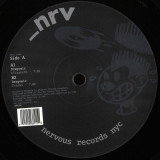
Dragomir - NRV006

Dragomir

NRV006

12inchNRV006
Nervous Records
29.04.2025

Following his appearance on _NRV001, Dragomir returns with his solo debut for the label—a deep and driving four-tracker, backed by two standout remixes from Lizz. ‘Elisabeth’ sets the tone with a tense, stripped groove that slowly uncoils across the A1, while ‘Freaks’ rides a more playful, shifty rhythm laced with micro stabs and broken vocal hints. On the flip, Lizz reshapes ‘Elisabeth’ into two distinct versions—first with the ‘Straight Remix,’ a sharp and focused reinterpretation made for the peak hours, then closing out with the ‘Disconnected Remix,’ which takes a moodier, more deconstructed approach.

out of Stock

Order now and we will order the item for you at our supplier.

Last In: 5 months ago
14,08 €
Sunflower Bean - Mortal Primetime (LP)
  • LP 1: Champagne Taste
  • Nothing Romantic
  • Waiting For The Rain
  • Look What You've Done To Me
  • I Knew Love
  • Take Out Your Insides
  • There's A Part I Can't Get Back
  • Please Rewind
  • Shooting Star
  • Sunshine
  • LP2: No Bills In Heaven
  • Raggedy Anne
  • Lady Daydream
  • Crashing Highs
  • Watch You Walk Away
also available

Ltd. Deluxe LP 2x12"Red Vinyl[35,25 €]


Die beliebte New Yorker Rockband Sunflower Bean meldet sich neu belebt mit ihrem vierten Album zurück. In Eigenregie produziert, von Caesar Edmunds (The Killers, Wet Leg) gemischt und von Sarah Tudzin (Illuminati Hotties, Boygenius) engineert, liess sich die Band von Alternative Rock, verträumter Psychedelia und Arena-Ehrgeiz inspirieren, um mit "Mortal Primetime" das härteste und verletzlichste Album ihrer Karriere zu liefern. Die Songs sind ungeschminkt und offen, Dissonanz und Unsicherheit werden akzeptiert. Sunflower Beans breite Palette von Einflüssen würden die meisten Bands nicht wagen, in einem Satz zusammenzufassen, und diese Kühnheit hat sie undefinierbar gemacht. Der Power-Pop-Opener "Champagne Taste" kanalisiert Iggy Pops "The Idiot"-Phase, "Look What You've Done To Me" beschwört den beunruhigenden Wahnsinn und die Launenhaftigkeit von Kate Bush, und die hochfliegenden Powercords auf "Nothing Romantic" erinnern an Arena-taugliche 70/80er Hits von Heart, Pat Benatar und Joan Jett. "Manchmal denke ich, diese Platte ist wie eine Mischung aus Belle And Sebastian und Alice In Chains", sagt Frontfrau Julia Cumming.

pre-order now25.04.2025

expected to be published on 25.04.2025

30,67 €
CHRIS ABRAHAMS & OREN AMBARCHI & ROBBIE AVENAIM - PLACELESSNESS
  • PLACELESSNESS I
  • PLACELESSNESS II

Following nearly 20 years of working together as a trio, and numerous cross-collaborations in different configuration between them, Ideologic Organ presents Placelessness, the debut full-length by Chris Abrahams, Oren Ambarchi, and Robbie Avenaim, comprising two long-form works at juncture of ambient music, minimalism, rigorous experimentalism and improvisation, and machine music. Having carved distinct pathways across a diverse number of musical idioms for decades, Chris Abrahams, Oren Ambarchi, and Robbie Avenaim are each, respectively, among the most noteworthy and groundbreaking figures to have emerged from Australia's thriving experimental music scene. Ambarchi and Avenaim first encountered Abrahams when seeing the Necks - the project that has served as the primary vehicle for his singular approach to the piano since its founding in 1987 - together during the late 1980s, not long after having met in Sydney's underground music community. The pair's collaborations date back more than 35 years, criss-crossing Ambarchi's pioneering solo and ensemble work for guitar and Avenaim's visionary efforts for SARPS (Semi Automated Robotic Percussion System), robotic and kinetic extensions to his drum kit. In 2004, fate brought the three together in a trio performance at the What Is Music? Festival, the annual touring showcase of experimental music founded and run by Ambarchi and Avenaim between 1994-2012. For the nearly two decades since, Abrahams, Ambarchi, and Avenaim have intermittently reformed in exclusively live contexts, in Australia and abroad, cultivating and refining the fertile ground first tilled in that early meeting. Placelessness is the first album to present this remarkable trio's efforts in recorded form. Placelessness is the joining of three highly individualised streams, working in perfect harmony; the point at which friendship, mutual respect, and decades of creative exploration produce a singular spectrum of sound. Featuring Abrahams on piano, Ambarchi on guitar, and Avenaim on drums, the album's two sides draw on each artist's enduring dedication to long-form composition. Its two pieces, Placelessness I and Placelessness II, initially began as a single, 40 minute work, before being divided and reworked into distinct, complimentary gestures for the corresponding sides of the LP. Beginning with restrained clusters of reverberant piano tones, Placelessness I progresses at an almost glacial pace, with Abrahams' interventions increasing met by sparse responses, darting within vast ambiences, on guitar and percussion by Ambarchi and Avenaim. Remarkably conversational within its convergences of tonal, rhythmic, and textural abstraction, over the work's duration a progressive sense of tension unfurls and contracts, refusing release, as each of the ensemble's members contribute to an increasingly tangled sense of density at its resolve.While an entirely autonomous work, Placelessness II rapidly realises a distillation of the energy hinted at across the length of its predecessor. Following a luring passage of harmonious calm, Abrahams' launches into shimmering lines of repeating arpeggios, complimented at each escalation of tempo by Avenaim's machine gun fire percussion work and Ambarchi's masterful delivery of tonality and texture, as the trio collectively generate dense sheets of pointillistic ambience within which individual identity is almost lost, before slowly unspooling into unexpected abstractions and dissonances that deftly intervene with the work's inner logic and calm. What could easily be termed a maximalist take on Minimalism, Placelessness is a masterstroke of contemporary, real time composition, that blurs the boundaries between ambient music, experimentalism, free improvisation, and machine music. Drawing on Chris Abrahams, Oren Ambarchi, and Robbie Avenaim's decades of respective solo and collaborative practice, and the culmination of nearly twenty years of working together as a trio, it's two durational pieces - Placelessness I and Placelessness II - take form with a startling sense of effortlessness and grace, neither shying away from explicit beauty or rigorously tension within their forms

pre-order now25.04.2025

expected to be published on 25.04.2025

26,01 €
Ibex Band - Stereo Instrumental Music LP 2x12"

The Ibex Band, with Giovanni Rico and Selam Woldemariam at the creative helm, provided the musical backbone for legends like Aster Aweke, Girma Beyene, Tilahun Gessesse, Mulatu Astatke, and Mahmoud Ahmed, including the iconic album Ere Mela Mela, shaping modern Ethiopian music as we know it today. This 1976 album (Ge’ez Year 1968) played a pivotal role in that legacy and has now resurfaced to set the record straight.

There’s a tendency to talk about the seventies as a golden age of Ethiopian music. There are good reasons for that, and just as good reasons against it. However, the notion of a golden past privileges the role of Western explorers and suggests that the pinnacle of Ethiopia’s musical culture is something only a foreigner can appreciate and unearth. It downplays the complexities of Ethiopia’s culture and history, creating an artificial divide between then and now. And it underestimates the constantly evolving sound that has followed.

The legendary musical outfit The Ibex Band, later metamorphosed into The Roha Band, has played a central role in defining the sound of many of the greatest stars on the music scene of Ethiopia from the mid-seventies onwards–but their golden output has never really waned. The story of the origins of the band that provided the musical backbone for greats such as Aster Aweke, Girma Beyene, Tilahun Gessesse, backing the solo career of group member Mahmoud Ahmed as well as backing Mulatu Astatke and many others has yet to be properly told.

Two misconceptions plague the image of Ethiopian music, one is that the music is pure because it is, by some notion, unexploited, the other is that it is all traditional. To begin with, a combination of political changes between the late sixties and the mid-nineties created an environment where only the most dedicated and skilled musicians struggled on and pursued a musical career against fierce odds. The whole Ibex Band, with Giovanni Rico and Selam “Selamino” Seyoum Woldermarian at the creative helm, are arguably the origo of the vibrant scene in the mid-seventies, and the said pair are foremost responsible for not only navigating the band through troubled times, but also modernizing the 6/8 chickchicka rhythm to a contemporary form. Giovanni laid the rhythmic foundation with heavy looped basslines that reinvented traditional melodies as dance music, and with Selamino’s innovative guitar work they influenced scores of musicians from Abegaz Kibrework Shiota to Henock Temesgen. Even Giovanni’s Fender bass and Selamino’s Gibson guitar inspired younger musicians in their choice of instruments. Not only in choice of instruments but also in sound–even as the digital revolution hit Ethiopian music, a lot of popular music still took its cue from the masters from Ibex and Roha.

Ibex emerged out of the ashes of the sixties group the Soul Echos band, adding Giovanni and Selamino to their ranks and taking their cues from a slew of influences, such as Motown and The Beatles, fused with traditional music. A tighter-knit unit than most bands at the time – Ibex has remained six to seven members throughout their whole career, compared to many bands that were as large as fifteen or sixteen men strong when Ibex set out. Their playing has been viciously focused, economical yet heavy. Just a year before the recording sessions of the album in your hands, Giovanni and Selamino made a contribution to the popular musical lexicon of Ethiopia that was simply defining the popular sound: their arrangement and recording of bandmate Mahmoud Ahmed’s solo effort and real commercial breakthrough tune and eponymous album, Ere Mela Mela, from 1975.

Selamino has never limited himself to being an adroit lead guitarist, but has always been a scholar of history, and as such he has probably contributed as much to modern Ethiopian music with his guitar playing and compositions as with a deepened understanding of modern or contemporary – Zemenawi – Ethiopian music. Selamino’s contributions serve as a metaphor for those of the whole band, at one and the same time creating and defining a new, danceable and updated sound anchored in Giovanni’s bass, whilst also elevating the broader scene through their support for others on the scene and on top of that, increasing the understanding of the music.

There is an understandable desire to romanticize the musical heyday Ibex and Roha were at the forefront of, because so much of the output is sorrowfully hard to come by. Ibex creativity was nothing short of ridiculously fierce compared to many of their Western contemporaries. Based on their sheer recorded output alone they could have usurped the title “hardest working in show business” from James Brown, recording more than 250 albums or 2500 songs in the seventies and eighties. Some only surface as cassettes today, others were never given full LP release, and some are simply impossible to find today. In the light of that, it’s nothing short of a miracle that the recording Stereo Instrumental Music from 1976 (Ge’ez Year 1968) has resurfaced. Unearthed in perfect condition on a chrome cassette, this is musical history comes alive–to set the future straight. Stereo Instrumental Music was recorded in collaboration with Karl-Gustav Lundgren, a Swedish national working for the Radio Voice of the Gospel. It took two sessions at the Ras Hotel ballroom in Addis Ababa. The Ibex Band was the first band in Ethiopia to employ a four-track recorder for their recording (the first available in the country, lent by Karl-Gustav). Later the same week, Giovanni and Selamino realized that, lengthwise, the recorded material fell short of what they wished for, so they recorded four more tracks in one more session on a single-track recorder. The Ras Hotel and Ghion Hotel, where the Ibex Band held musical residencies were to Ethiopia in general and Addis Ababa in particular what Motown was to the USA and Detroit a few years earlier – a hotbed of musical creativity and showmanship.

The most astonishing thing about Ethiopian music of the last half century is how tradition and modernity are intertwined. Because of this feature, it’s kind of hard to tell when there ever was or when we are in a “golden age”. So much of music from the past has been criminally neglected, but because of the hardships in the past, it would be an oversimplification to say that said past was a golden age. Probably, the golden age is what we are approaching, because for the first time both the past and future are accessible, and the monumental contributions from before can lay a firm foundation for a thriving music scene today. The Ibex Band stands firmly in the past, present and the future. That, if anything, is golden.

The detailed history of Stereo Instrumental Music is in many ways unique. To begin with, it couldn’t have been recorded earlier (there were no four-track recorders available) and it really couldn’t have been recorded afterwards either, at least not in the years directly following, because of the toll the musical scene took from the unfavorable political climate that followed when the nascent Derg regime and rival groups tried to assert themselves, the musical equipment lent from The Voice of Gospel Radio simply disappeared from Ethiopia when the radio station folded in 1977. Karl-Gustav Lundgren,
the Swedish foreign national who assisted during the recording, worked with the Ethiopian Evangelical Church Mekane Yesus at the time, recalls how they only had about fifteen minutes to get the microphones in place for the recording as to not alert neither the management at Ras Hotel nor the authorities and most importantly, to complete the recording before the curfew came into effect at midnight. In leaping to the opportunity to use previously unavailable equipment to push their sound forward and improvising to meet the logistical challenges, the Ibex Band displayed the very avant-gardism and adaptability that explains their longevity as a band through the years. The recording of Stereo Instrumental Music is from a given time in history, but it sounds as beyond time.
Much of the energy that burst out of the scene that Stereo Instrumental Music came out of dissipated or got sidetracked during the societal changes Ethiopia went through in the 1970s and 80s. Whilst leaders might have professed to be revolutionary, the work ethic of the Ibex Band can truly be described as that. They never called it quits, but adapted, toured extensively abroad in Africa, Europe, and the Middle East, and found ways to work even in the face of the curfew that curtailed a lot of musical life. They even played major arenas in the nineteen eighties, despite said curfew and restrictions. The whole extent of their legacy has never been told, but their music speaks louder than words, so therefore… tune in to the Ibex Band’s Stereo Instrumental Music.

out of Stock

Order now and we will order the item for you at our supplier.

Last In: 15 months ago
24,33 €
Versalife - The Parallax Effect PT.2

The signal mutates. Following the first installment, Parallax Effect PT.2 finds Versalife shifting gears, distilling his unmistakable rhythmic instincts into something even more elastic and unpredictable. Smeared low-end and restless sequences coil around a framework of percussive movement, flickering between restraint and momentum. There's an underlying tension--one moment held in suspense, the next unfolding into fluid motion. The machine logic remains intact, but with an organic pulse running through it, shaping each track in real time. A fitting counterweight to PT.1, this second chapter bends the perspective once more, closing the series with a sense of motion still lingering in the air.

out of Stock

Order now and we will order the item for you at our supplier.

Last In: 7 months ago
14,71 €
Floid & W92 - Dookuzot

Floid&W92

Dookuzot

12inchOW10
Omen Wapta
22.04.2025

How can the unfamiliar feel so close? Dookuzot, the debut EP of Floid and W92 (aka Woody92), invites listeners to venture into the echochambers of the psyche on their Omen Wapta imprint. Like a salvaged coat of arms, this 8-track release weaves the cryptic motifs of the bloodbrothers into its sonic fabric, blending unease with ease through stealthy rhythms and dissonant harmonies. Neither tempo nor zeitgeist grounds the EP; instead, it conjures a citadel of sound--an intricate fortification of motion and stillness. Cryptic, unnerving, and undeniably strange, Dokuuzot doesn't ask you to move--it compels you. With this debut, Floid and W92 draw you into their world, setting the stage for a vision that is both forward-thinking and enthralling.

out of Stock

Order now and we will order the item for you at our supplier.

Last In: 9 days ago
16,39 €
Disentomb - Nothing Above
  • 1: No God Unconquered
  • 2: Drear Prophecies
  • 3: Nothing Above
  • 4: Man is a Failed Creature

As they celebrate the 10 year anniversary of debut album 'MISERY', DISENTOMB have smashed through Australian tours with Sanguissugabog in March, Europe in August with STILLBIRTH as well as annihilating the European Festival circuit, before finally unleashing new EP 'NOTHING ABOVE', in OCTOBER 2024 with a run of headline shows across Australia, as well as a headlining appearance at Souther Death Festival. The release of NOTHING ABOVE coincides with Disentomb marking 10 years since the release of their 2014 sophomore album Misery which has become a classic in the genre of Brutal Death Metal. Fresh from laying waste to some of the biggest summer festivals in Europe, Disentomb will be bringing out slam pioneers Internal Bleeding for three exclusive shows in October in Melbourne, Sydney and Brisbane, which will see the band performing Misery in full for the first time. Grab tickets to DISENTOMB, INTERNAL BLEEDING (US), HONEST CROOKS and DELIQUESCE The NOTHING ABOVE EP marks the first Disentomb release following their third album The Decaying Light and delving further into the sound of dissonant and bleakened Brutal Death with the writing from the band's bassist Adrian Cappelletti. NOTHING ABOVE is four tracks of the band experimenting with their sound while maintaining the guttural brutality that originally made Disentomb's mark when they exploded onto the worldwide scene in 2008. Vocalist Jord said the EP was an opportunity for fans to hear a more experimental side of Disentomb. "While we're hard at work writing Album IV, we wanted to put out some songs in between albums that show a more evolved sound that we have developed over the years. With the writing done by our bassist Adrian, you can hear the mix of brutality while also some more experimental elements."

pre-order now18.04.2025

expected to be published on 18.04.2025

22,27 €
QUICKLY, QUICKLY - I HEARD THAT NOISE
  • I HEARD THAT NOISE
  • ENYTHING
  • TAKE IT FROM ME
  • THIS HOUSE
  • THIS ROOM
  • BEGINNING BAND DAY ONE
  • I PUNCHED THROUGH THE WALL
  • HERO
  • RAVEN
  • DRAWN AWAY
  • YOU ARE

Mint Green Vinyl. Graham Jonson is drawn to the comforts of melody and noise. How the two conspire in tension, tonally and atonally, stirring up memory and mood. This quality animates the technicolor world of quickly, quickly, the psych-pop project that emanates from Kenton Sound, his basement studio in Portland, Oregon. "Everywhere your eye lands, there's another curio to marvel over," noted Pitchfork's Philip Sherburne when he visited Jonson's recording space for a Rising feature just after the release of his "strikingly original" 2021 debut LP, The Long and Short of It. Since then, Jonson formed a live band, released his Easy Listening EP in 2023, and navigated the up-and-downs of a young musician, the sustainability of tours and relationships. While shaped by personal bouts and fallouts, his highly-anticipated full-length follow-up finds Jonson making music that's universal, open-ended, and rewarding, like great songwriters can do. He set out to make a folk album but couldn't help coloring it in with noise; a confluence of lush instrumentation and unexpected sounds. Ambitious yet intimate, hi-fi yet homespun, the idiosyncratic songs on I Heard That Noise curve around the contours of everyday life with warmth, wit, and dissonance.

pre-order now18.04.2025

expected to be published on 18.04.2025

23,49 €
TUNDE ADEBIMPE - THEE BLACK BOLTZ LP 2x12"
  • THEE BLACK BOLTZ
  • MAGNETIC
  • ATE THE MOON
  • PINSTACK
  • DROP
  • ILY
  • THE MOST
  • GOD KNOWS
  • BLUE
  • SOMEBODY NEW
  • STREETLIGHT NUEVO

In den letzten 24 Jahren war Tunde Adebimpe vor allem als Mitbegründer, Co-Sänger und Hauptkomponist von TV On The Radio bekannt. Die mehrheitlich schwarze Art-Rock-Band überstand zwei Jahrzehnte des unbeständigen kulturellen Wandels und wurde zu einer der beliebtesten, beständigsten und einflussreichsten Gruppen der New Yorker Rockszene der frühen 2000er Jahre. Obwohl Tundes poetisches Songwriting und seine überragende Stimme im Mittelpunkt von TV On The Radio stehen, wird die Band immer eine Zusammenarbeit zwischen einer Gruppe von Musikern sein. Tundes persönliche Geschichte verläuft parallel dazu, er ist eine Art kreativer Polymath. Er ist Musiker, aber auch Illustrator und Maler. Er ist ein ehemaliger Animator und Stop-Motion-Filmemacher (Celebrity Deathmatch). Er ist ein Fernseh- und Filmschauspieler, mit Rollen in Jump Tomorrow (2001), Rachel Getting Married (2008), Spider-Man: Homecoming (2017), Twisters (2024) und Star Wars: Skeleton Crew (2024). Und jetzt ist er auch ein Solokünstler, mit seinem allerersten Soloalbum, "Thee Black Boltz". Das Album wurde von Tunde Abebimpe & Wilder Zoby produziert, mit Zoby als ausführender Produzent, mit zusätzlicher Produktion und Beiträgen von Jaleel Bunton & Jahphet Landis (von TV On The Radio) und anderen. Tunde hatte die Idee zu diesem Album im Jahr 2019, als TV On The Radio eine Pause einlegten. Zwei Jahre später, als sich die Welt von der Covid-Pandemie erholte, begann er ein Notizbuch mit Worten, Illustrationen und Ideen zu erstellen, das er als "Mixtape der Emotionen, die die Musik hervorrufen könnte. Eine Art Gefühlskarte" bezeichnet. Auf diese Weise beginnt Tunde die meisten seiner Projekte, und 2021 begann er, diese Ideen mit Hilfe des Multiinstrumentalisten Wilder Zoby (Run The Jewels), mit dem er sich in Los Angeles ein Studio teilt, in Musik umzusetzen. "Thee Black Boltz" ist kein TV On The Radio-Album. Aber die Aufregung, etwas alleine zu machen, entfachte in Tunde einen ähnlichen Funken wie in den frühen TV On The Radio-Tagen. Der Songwriting-Prozess ist derselbe, aber ohne seine TVOTR-Bandkollegen hatte Tunde "nicht dieses Gerüst, an dem er sich festhalten konnte. Das war sowohl beängstigend als auch aufregend". Das Herzstück des Albums ist sein Titel, eine Anspielung auf Tundes Neigung, über den Zustand des Menschen zu schreiben und zu singen, in all seinen Formen, unter all seinen großen und kleinen Stressfaktoren. Es ist seine Antwort auf das makroökonomische Unbehagen einer Welt nach der Pandemie, die sich auf einen gewalttätigen Autoritarismus zubewegt, und auf die persönliche Trauer, die durch den Verlust der letzten Jahre entstanden ist, insbesondere durch den plötzlichen Tod seiner jüngeren Schwester während der Aufnahmen zu diesem Album. "Thee Black Boltz" ist Tunde's verzweifeltes Festhalten an kleinen Momenten der Freude inmitten der Dissonanz und Traurigkeit, auf jede erdenkliche Weise. "Es war meine Art, mir einen Felsen oder eine Plattform inmitten dieses verdammten Ozeans zu bauen." Tunde schreibt in sein Notizbuch: "Die Funken der Inspiration/Motivation/Hoffnung, die inmitten von (und manchmal als Ergebnis von) tiefem Kummer, Depression oder Verzweiflung aufblitzen. Wie Elektronen, die sich in Gewitterwolken ansammeln und zusammenstoßen, bis sie einen Blitz abfeuern und einen Ausweg erhellen, wenn auch nur für eine Sekunde." Er fügt hinzu: "Außerdem ist es ein guter Name für eine coole Metal-Band, und ich denke, dass die meisten Leute mich als eine sehr coole Metal-Band bezeichnen würden."

pre-order now18.04.2025

expected to be published on 18.04.2025

26,68 €
Ursula - Sereghy Cordial (TAPE)

Ursula

Sereghy Cordial (TAPE)

CassetteMONDOJ28CS
MONDOJ
18.04.2025

On ‘Cordial’, Ursula Sereghy traces the sensation of home; not as a place, but as something fleeting and deeply felt. Comfort appears in glimpses, nestled between moments of dissonance and unraveling structure. There is joy, but it carries the weight of absence, the quiet grief of realizing what was missing all along. A laughter that is both liberating and bittersweet.

Sereghy’s music moves with no fixed center, shedding hierarchies and opening itself to the unknown. Sounds unravel and reform: fragments of voices, reshaped textures, the shimmer of manipulated recordings all bending into semi-familiar contours. In this space, harmony is not a destination but an unfolding process, a web of shifting connections rather than rigid form.

Deeply drawn to natural processes, Sereghy’s music resonates with an elemental force: chemical reactions, unseen currents, the quiet logic of interconnection. Sound becomes a space where trust takes shape, where loss is acknowledged but never final, and where the act of feeling remains, above all, an act of survival. It is music in constant negotiation with itself - dismantling, reshaping, and reaching towards something vast, untethered and luminous.

pre-order now18.04.2025

expected to be published on 18.04.2025

13,03 €
TENNOTA & ROSA ANSCHÜTZ - TORNAMENTED WALLS

Tornamented Walls is the first result of a collaboration that began in 2022. The album is a freeze-frame of emergence: personal preparations prior and minor aside, the album was live and improvised. Rosa Anschütz sings, speaks, plays harmonium, and utilizes a looper as an instrument in itself. Her symbolic prose is at the heart of the music, emotionally direct yet haunted by a translucent potential of meaning. In lockstep with the voice, Tennota dissolve the dense rhythmic complexity of their recent work into a creeping mantra, the material interrogated until the patina of the sound is the music itself.

Tornamented Walls floats on top of a wave of slow-motion techno influences, a deepened ambient and experimental perspective, and a feel of subtle and subdued lyricism not strictly limited to its vocal parts. It is a record of darkly ambient and abstracted techno pop, listening music to be played loud. More disenchanted than dark, it is confrontational through its fearless incorporation of a widely varying set of different states of mind.

Tennota are Tom Wheatley & Grundik Kasyansky. Since 2019, they have been reimagining the relationship between physical and digital worlds through music, using gut strings, sine waves, tree sap, and feedback, and flexing them over contemporary technologies into an elemental suspension. Not futuristic, but rather an alternative present.

Rosa Anschütz is an artist and musician whose sound-based practice is framed by sculpture, installation, and scenography. Her meditative and sometimes haunting compositions combine the dark ambiance of post-punk and cold wave with ethereal polyphony, synth-driven melodies, and spoken word.

Теnnota & Rosa Anschütz will be touring in April, stopping over in Eupen on April 18th for a concert night at the Galerie vorn und oben. Further on the bill that night will be Tristwch Y Fenywod.

pre-order now18.04.2025

expected to be published on 18.04.2025

21,81 €
Various - orn in the City of Tanta: Lower Egyptian Urban Folklore and Bedouin Shaabi from Libya's Bourini Reco
  • A1: Basis Rahouma - بسيس رحومة,- Yana Alla Nafsa Masouda يانا اللي نفسي مسدوده (Blocked from What I Want)
  • A2: Sheikh Amin Abde -l Qader الشيخ أمين عبد القادر, Mould fi Madina Tanta مولد في مدينة طنطا (Born in the City of Tanta)
  • A3: Samah سماح, - Shawish Aldawriat شاويش الدورية, (Patrol Sargeant)
  • A4: Mahmoud al-Sandidi محمود الصنديدي, - Ana Mish Hafwatak (Part 2) انا مش حفوتك, (I Don’t Miss Your Love)
  • B1: Abu Bakr Abdel Aziz (aka Abu Abab) أبو بكر عبد العزيز,- Al Bint al Libya أل بينت أل ليبيا (The Girl from Libya)
  • B2: Sheikh Amin Abdel Qader الشيخ أمين عبد القادر, - Mawal Al Layl Kolo Makasib موال الليل كله مكاسب (Mawaal: The Spoils of an All-Nighter)
  • B3: Abu Saber أبو صابر, - Ya Allah Ank Zinat يا الله انك زينة (Oh, God, You Are Beautiful)
  • B4: Reem Kamal ريم كمال, - Baed Al Yas Yjini بعد اليأس يجيني (After Hopelessness, He Comes to Me)

“Egypt’s “official” popular music throughout much of the 20th Century was a complex form of art song steeped in tradition, well-loved by the middle and upper classes, and even accommodating to certain non-Arabic influences. It was highly structured by professional musicians working an established industry centered in the capitol, Cairo. However, far from the bustling cosmopolitan center of Cairo, north and northwest, in towns like Tanta and Alexandria and extending across the Saharan Desert to the Libyan border, dozens of fully marginalized artists were developing a raw, hybrid shaabi/al-musiqa al-shabiya style of music, supported by smaller upstart, independent labels, including the short-lived but deeply resonant Bourini Records. Launched in the late 1960s in Benghazi, Libya, Astuanat al-Bourini اسطوانات البوريني (Bourini Records) published some 40 to 50 titles from 1968 to 1975. Bourini released 7-inch 45 RPM singles by 15 artists, all but one of them Egyptian, igniting brief careers for Alexandrian singer Sheikh Amin Abdel Qader and the blind Bedouin legend Abu Bakr Abdel Aziz (aka Abu Abab). The tracks compiled here comprise a full range of styles covered by the label, while highlighting some of its most gobsmacking moments, from Basis Rahouma’s beastly transformation into a growling and barking man-lion by the end of “Yana Alla Nafsa Masouda,” to Reem Kamal’s hopeful-if-bitter handclapping party pivot “Baed Al Yas Yjini,” which descends into an almost Velvet Underground outro-groove of nihilistic dissonance. All the tracks on this compilation were laid down in stark divergence from the mainstream Egyptian popular music topography of heightened emotions buoyed by lush arrangements. The contrast is most evident in Mahmoud al-Sandidi’s “Ana Mish Hafwatak,” wherein his voice weaves heavily but deftly through a constant accordion drone, and Abu Abab’s “Al Bint al Libya,” a sparse, slow-burning lament with minimal percussion, violin, and Abab’s nephew Hamed Abdel Muna'im Mursi on lyre. Whereas the Egyptian mainstream was aspirational, attempting to reflect Egyptian culture at its most refined, the performances captured by Bourini were manifestations of everyday life lived by the mostly otherwise ignored masses. More than half century old, this music has lost none of its urgency, presence, or relevance. We hear these artists as if they’d just joined us in our living room, and not on a stage decades ago surrounded by tens of thousands of long-forgotten acolytes.

pre-order now18.04.2025

expected to be published on 18.04.2025

28,36 €
Ben Shirken - H.D. Reliquary LP

H.D. Reliquary is the first eponymous release from Ben Shirken a.k.a. Ex Wiish, and finds him returning home to his own label, 29 Speedway. The songs sparked during sessions with close collaborators - across 11 pieces, artists such as Pavel Milyakov, MIZU, Dorothy Carlos, Kevin Eichenberger and Muein breathe personality into the record. H.D.R. coaxes beauty from a serrated, raw, yet subdued palette drawn from improvised recordings of trumpet, violin, upright bass, cello, and modular synthesis.

The title references the hard drive as a sacred container for relics, contemplating how digitally archived fragments of one’s existence can burn eternally after death. Archives, and in this case recordings, splinter and warp. Some distort what they contain. Some vanish, and others are eternally preserved, immune to deletion. Your information on these digital drives becomes archival shrapnel, the music that survives the remnants of collaboration. Pieces of recordings were fed into a series of proprietary neural networks, generating MIDI information and audio that reacted to on-the-fly soloing, imaginary sessions between players and algorithms invented posthumously (in post).

Shirken will release H.D. Reliquary alongside a sound installation on April 11. Where his prior work was geared towards dissociation, H.D. Reliquary invites us to contemplate how our tools for understanding and containing the world fundamentally alter our relationship with it. He has performed in spaces such as The New Museum, Pioneer Works, Public Records and Nowadays in New York City; Dripping Music And Arts Festival in New Jersey; La Station in Paris; and Cafe Oto in London.

out of Stock

Order now and we will order the item for you at our supplier.

Last In: 17 months ago
26,26 €
Ten Years Lost - Natural Sciences X Embryo : Flesh Renewed BOXSET
 
28

Boxset w/ 12" + 7" + Tape + Magazine, Posters

Embryo Issue 5 - Interviews and Mix series Exome
Quiet Husband
Jim KirkwoodSvartvit
Trenchfoot
Necropolis Festival White Centipede Noise Cryptworm Hyperdonitia
Crawl of Time
Night Terror Records Disengagement
Snet
Ineffable Slime
Marie Queau
Personal Hell

Natural Sciences Recs started in 2015 before mutating into the Embryo magazine series. Flesh Renewed marks ten years of the label with the fifth issue of Embryo. A light into the gutter of the fringe underground, through new tracks from the labels catalogue, 100 pages of interviews by labels and artists kicking against the grain and ties forged from the 80’s tape network. We invite you to witness the next stage of the evolution.


e A1. Osiris - Starlight Scorpio 1989 - 7"
f B1. SEEMEN - Floating Gently 1989 - 7"

out of Stock

Order now and we will order the item for you at our supplier.

Last In: 17 months ago
29,62 €
Definition - Lion, The Lion (2*12")

Lion, The Lion is Definition's summary of a phase of life. It roars with an unmistakable sense of strength, woven into every resonating beat and drifting melody.
Through shimmering synth textures, driving basslines, and subtle vocal traces, it carries you across a spectrum of emotional states—from feverish, pulsing energy to meditative introspection. Each track feels like a small yet significant battle won, a testament to resilience in the face of challenges. Percussion elements build tension, then dissolve into moments of calm, highlighting the dynamic interplay of fragility and power. Beneath its surface lies a constant wave of determination, anchoring the album’s softer elements in a foundation of raw strength.
Twisting tempos and sudden shifts in atmosphere propel you forward, ensuring that no section remains complacent or still. There is both grit and grace here, fused together in a complete experience that summons courage from the very first note. As the journey unfolds, a quiet resolve emerges, a promise of hope amid challenging times. Ultimately, the record stands as a moving ode to perseverance, asserting that true might resides not in grand gestures, but in the steady, unwavering pulse that keeps us going.

out of Stock

Order now and we will order the item for you at our supplier.

Last In: 17 months ago
27,31 €
Billy Woods & Kenny Segal - Hiding Places LP

LP 1 is Original Reissue, LP 2 is the Instrumentals. This album, originally released in 2019, was highly lauded with esteemed praise, topping many Album Of The Year lists inlcuding NPR, Pitchfork, Rolling Stone, Time Magazine. This vinyl has been out of print and in high demand, repress is restricted to limited quantities and will be out of print again in under a year. Now includes a 2nd LP featuring the never before available Hiding Places instrumentals from Kenny Segal. Fully produced by Kenny Segal, (Project Blowed, Kenstrumentals beat tape Series, Happy Little Trees). LP has unique gatefold artwork by Myra Musgrove and features custom “oakwood” coloured vinyls. Hiding Places is a collaborative album from Brooklyn-based rapper billy woods and Los Angeles beat scene veteran Kenny Segal. As a label, we at Backwoodz take a lot of pride in our physical products; in creating original artwork that will stand the test of time, and in issuing limited-pressings that stay limited. We had always resisted repressing a piece of vinyl and even when the demand for Hiding Places built to a fever pitch during 2019, we stuck to our guns. Still, by the end of the year, as the AOTY nominations kept rolling in, we knew that we needed to do something. But we also were determined not to sacrifice the uniqueness of that first pressing. So we decided to commission all-new artwork, and press up the instrumentals as well and put it all together as a GATEFOLD 2XLP. So, on top of the best album of 2019, you get Kenny’s incredible instrumentals, available on wax for the first time! On its face, it seemed an unlikely pairing; woods who moonlights as ½ of dissonant rap duo Armand Hammer is a chaotic force, the warped relic of an NY indie-rap wave that never happened. Meanwhile, Segal has been in L.A. for twenty years; from paying dues with Project Blowed to pushing the culture forward with Busdriver and Milo. All the while, his soulful, dreamlike production precariously tethered to earth by the right drums or rumbling bass. But look closer and it makes more sense. After all, Segal lent his production to a couple of songs on Paraffin, Armand Hammer’s critically-acclaimed opus, and the two artists have more than a few shared collaborators: Open Mike Eagle, ELUCID, and Hemlock Ernst amongst them. Hiding Places finds both artists deep in the labyrinth. Segal’s lush soundscapes have a new edge, woods’ writing is, paradoxically, at its most direct. Hiding Places is a child’s game: funny and cruel, as brutal as a fairy tale. The album features familiar names from both artists’ well of collaborators with ELUCID, Self-Jupiter, Blockhead and MOTHERMARY making contributions.

out of Stock

Order now and we will order the item for you at our supplier.

Last In: 17 months ago
36,93 €
Briain - Cognitive Dissonance (TAPE)

The latest drop on Art-E-Fax welcomes back deep cover braindance tinkerer Briain with a tape of warm and gritty electronica done the right way.

We last coaxed Barry O’Brien away from his day job as sound tech at beloved Berlin haunts Ohm and Tresor for a 12” back in 2019, and now he’s graced us with 11 slices of tweaked and freaked machine funk that should appeal to anyone who savours the maverick electro crossover between Rephlex and Drexciya.

The synth lines crunch and squirm and the beats stutter and rasp as Briain rolls out one wonkily perfect jam after another. In the intricate detail and movement that drives each track forwards you can sense the insular focus that comes with the best shut-in electronica. ‘Fist Fight Or Hug’ toys with sliced up breaks while ‘The Precipitous Descent Of Dignity’ deals in dystopian electro of the highest calibre. ‘Beal Bocht’; puts the drums to one side for a gloriously dislocated trip through FM synthesis and broken delay feedback and ‘Cognitive Dissonance’ revels in twitchy micro perc and delicate keys.

It’s a full-bodied album to sink your teeth into, and while it proudly carries the torch from certain legendary electronica forebears, it’s also delivered with all the charm and personality required to make for a future classic in the braindance canon.

pre-order now11.04.2025

expected to be published on 11.04.2025

15,08 €
Malphas - Extinct

Malphas

Extinct

12inchSSR218LP
Soulseller Records
11.04.2025
  • Psychomachia
  • Eradicate.Manifest.Defne
  • Trenches
  • Majestic Moon
  • Consumed
  • Gamygyn
  • Butcher's Broom
  • Armada Christi
  • Astral Dissonance
also available

Rusty Red Vinyl[33,40 €]


Rising Swiss black metal malfeitors Malphas have been working their way through the underground for several years now and with their 4th full length studio album 'Extinct' they are raising the stakes even further

What you get is 9 tracks of astral black metal dissonance fred upon humanity as a cosmic storm!

pre-order now11.04.2025

expected to be published on 11.04.2025

33,40 €
Malphas - Extinct

Malphas

Extinct

12inchSSR218LPC
Soulseller Records
11.04.2025

Rising Swiss black metal malfeitors Malphas have been working their way through the underground for several years now and with their 4th full length studio album 'Extinct' they are raising the stakes even further

What you get is 9 tracks of astral black metal dissonance fred upon humanity as a cosmic storm!

pre-order now11.04.2025

expected to be published on 11.04.2025

33,40 €
Outback - Strangers/Reggie's Thang

An exclusive 7" re-release of this psychedelic funk ballad from Tulsa's "Outback" Band. As featured on Now-Again's 'More Loving On The Flipside' compilation, "Strangers (In Our Homeland)" epitomises the expression of social & political change during an era of psychedlia infused music. In partnership with the two surviving members of Outback, both Symphonical & Now-Again are proud to showcase the voice of independent artists.

----------

The origin of "Outback" dates back to the late 50s, a five-piece blues outfit named "Little Lo and the Rest of Us" included music educator & bass guitarist Edward "Cha-Cha" Cherry, saxophonists Eugene "Buggy" Roach & James "Flab" Farley whom, alongside drummer Roscoe J. Dabney III "Roach", Ronnie Wilson on trumpet, guitarists Roy "Rochester" Walker & Michael Collins, would form The Magnificent Seven, the house band for Tulsa's 'Rose Room'.


Alumni of Booker T. Washington High School, The Magnificent Seven influenced & set the standard for the Tulsa sound, as demonstrated through their only single, recorded in 1966, the two part 'Pluck-A-Pluck'. 'The Sevenettes', the groups' female vocal trio, included the rotation of Lena Luckey Wilson, Gwendolyn French, Rose Brewer Lewis, Jeanetta Williams & Maxayn. The Magnificent Seven, led by "Cha-Cha", toured nationally throughout the 60s with their infectious, raw R&B sound, and were the platform for many of Tulsa's talent including Ronnie & Charlie Wilson who would later create the GAP Band.


Roscoe J. Dabney III, the first Black Panther to establish the Tulsa chapter in 1969 known as the NCCF (National Committee to Combat Fascism), proposed the name change to "Outback" in the early 70s. Their sound & formation was changing from R&B to Psychedelic, from the grit to the phase, epitomised by their unique line-up of having two bassists playing simultaneously, both Reggie Cherry & "Chilly" Willie Lewis, the musical foundation to their only recorded single, "Strangers (In Our Homeland)" & "Reggie's Thang".


Song writer & band affiliate, Maurice Pope, produced the lyrics to "Strangers (In Our Homeland)" and handed over the musical attributes to Willie Lewis & Outback to convey his message, as sung by Lena Luckey Wilson. Dabney recalls the song is based on religious scriptures, whilst highlighting the parallel of Black slavery in the U.S.


"Reggie's Thang", written by Dabney's cousin, bassist Reggie Cherry, provides a psychedelic instrumental, a sound which Lena recalls is what set apart Outback from other Tulsa groups. As well as playing clubs, the seated shows provided an environment for the group to showcase their musicianship to those who wanted to be immersed & listen.


Their single, released on Empathy, was recorded in 1972, and are the only known recordings by Outback. Recorded live onto 8-track at a studio located at on East Pine St in the heart of Tulsa's Black community, an independent & unknown studio located on a strip mall.


The Outback members who recorded are:


Lena Luckey Wilson - Vocals

Roscoe J. Dabney III "Roach" - Drums

"Chilly" Willie Lewis - Bass

Reggie Cherry - Bass

Edward "Cha-Cha" Cherry - Keys

Joyce Daws - Trumpet

Roy Walker "Rochester" - Guitar

Robert Luckey "Uncle Bobby"- Percussion

Fredy Berry "Freddy" - Tenor Sax


Band leader & group manager: Edward "Cha-Cha" Cherry

Booking Agent: Ernie Fields Sr.

In 1973 whilst performing in Ft. Worth, TX, Buck Ram approached Willie Lewis backstage and invited him to join The Platters, Lewis accepted. Supposedly, a recording deal was offered to Outback in exchange, which never happened.


The group continued in various formations after Lewis left, however as an integral member, the feeling never equalled their original form and soon after dissolved.


Leon Russell approached Lena Lucky Wilson in 1974 to go on tour with the GAP Band as their backing singer, upon returning Tulsa Lena moved to Los Angeles to pursue her musical career with Leon & Mary Russell amongst various others.


Dabney continued music and became a TV producer & director in 1976.


The only surviving members of Outback today are Lena Luckey Wilson & Roscoe J. Dabney III.

pre-order now11.04.2025

expected to be published on 11.04.2025

14,71 €
Putrid Offal - Obliterated Life
  • The sweet fragrance
  • Boning hall
  • Life consumed
  • Meat Stall
  • Entrails emancipation
  • Privilege of pain
  • Darkness awaits
  • Sanguis in oris
  • Mass murder
  • Agony prevails
  • Messy fesh
  • Ribcage blues
  • The black veil

Extirpated from the crepitating bowels of the surging Death / Grind scene of the early nineties and became cult with their frst platter of splatter released in 1991 by Wimp Records (LP) & Adipocere Records (CD), PUTRID OFFAL slowly dissolved in formaldehyde by the middle of the decade ..

But that is not dead what sleeps and the thing got alive again 25 years after its inception offering a brand new vision of its art with the release of the proper PUTRID OFFAL debut, Mature Necropsy in 2015 soon followed by countless Europe tours and festivals appearances like their 2017 gig at world famous HELLFEST captured alive for a DVD release as a bonus of second full-length, Sicknesses Obsessions in 2020 again followed by a slaughter campaign on all of Europe soiled grounds.

Now that their historical label KAOTOXIN / XENOKORP is left for dead, PUTRID OFFAL come back deadlier than ever and hungry for touring and gigging like a zombie for fesh ready to turn the crowd to pieces with their most brutal, to the point and mature album to date, Obliterated Life.

pre-order now11.04.2025

expected to be published on 11.04.2025

19,96 €
Kettel - Dubio LP

Kettel

Dubio LP

12inchAQA01LP
Aquatic Ape
07.04.2025

Finally, it's here: the new Kettel! And we certainly know we're on the Kettel estate: the delicate melodies, complex orchestrations, and the crisp sound design offer familiar musicality. The new Kettel hasn't skimped on ideas and details, and each track opens a courtyard that rewards surrender and attention--we want to linger there. One thing is clear from Dubio: if you thought you'd heard all of Kettel by now, you're mistaken. In the new Kettel, doubt (dubio in Latin) and dissonance have also become part of the beauty--and in doing so, it breathes more character and liveliness than ever.

out of Stock

Order now and we will order the item for you at our supplier.

Last In: 12 months ago
24,79 €
Jarrell (Amedeo Tommasi) - Industria 2000

Long coveted by diggers, connoisseurs and beat makers, here we have the first-ever reissue of Amedeo Tommasi's "Industria 2000", released in 1974 via RCA's "Original Cast" series under his Jarrell alias. These 12 sonic experiments - totally devoted to synthesizers - offer tense tonalities, dissonant ambiences, complex textures, white noise rides and muted rhythms that can easily be seen as cornerstones of what would become later known as Industrial Music, also anticipating the sonic landscapes found in some of the early Warp Records releases.
Comprising 12 tracks entirely devoted to synthesizers, Industria 2000 explores a range of stark, tense tonalities and dissonant atmospheres. The album’s complex textures, white noise swells, and muted rhythms can be seen as precursors to industrial music, anticipating the aggressive, abrasive soundscapes that would later come to define the genre. It is clear that Tommasi's work was not only ahead of its time, but was also laying the foundations for the sound realms explored in the early days by major electronic record labels of the 1990s and future electronic pioneers.

pre-order now04.04.2025

expected to be published on 04.04.2025

21,64 €
Intercommunal Free Dance Music Orchestra - Après la Marée Noire

If the jazz of François Tusques is “free”, his spirit is even more so: having recorded Free Jazz with other like-minded Frenchmen (Michel Portal, François Jeanneau, Bernard Vitet, Beb Guérin and Charles Saudrais), the pianist had covered a lot of ground, with Barney Wilen (Le Nouveau Jazz) or even solo (Piano Dazibao and Dazibao N°2), so as not to repeat himself…

In 1971 he founded the Inter Communal Free Dance Music Orchestra which, as the notes the this album stated, “is an interpretation of a music which synthesizes the different communities living and working in France.” In 1976, on the first album (L’Inter Communal) we can already hear Tusques playing without borders in the company of Carlos Andreu (vocals), Michel Marre (trumpet and saxophone), Jo Maka (saxophone) and Ramadolf (trombone). It is a meeting between jazz and music from Catalonia, Occitanie and Africa. So far so good, but what about Brittany, that, Tusques knows “by heart”? Having lived for a long time in Nantes, he would expand his ‘brittanitude’ on the canal linking the city to Brest by playing with, for example the Diaouled-Ar-Menez. With these “devils from the mountain” who, under the baton of Yann Goasdoué, worked throughout the 1970s on the renewal of music from Brittany, Tusques met, notably, Tanguy Ledoré and invited him one day, with trois bombards and some bagpipes (Jean-Louis Le Vallegant, Gaby Kerdoncuff and Philippe Lestrat), to join the ranks of the Intercommunal. And so they set of towards a new music from Brittany, as the title states; Vers une Musique bretonne nouvelle!

With percussion from Samuel Ateba and Kilikus, the association launches the ‘bombardier’: the repetitions and dissonance of the different members all serve a common cause however: the dance, which is always the reason for the party. This sets a whole universe spinning, which can bring to mind Chris McGregor’s Brotherhood of Breath (“La rencontre”) when not taking on board waltz, swing, blues and gavotta or even revealing mysteries like those of Gurdjieff (“Les racines de la montagne” or “Le cheval” sung by Andreu). Only one thing to say to this Brotherhood Of Breizh: Mersi!

pre-order now04.04.2025

expected to be published on 04.04.2025

24,79 €
Dool - The Shape Of Fluidity  LP

2025 Repress in Arctic Pearl Vinyl
Alles fließt, nichts bleibt wie es ist. Diese philosophische Erkenntnis gilt auch für das dritte Studioalbum der aufstrebenden niederländischen Rockband DOOL. Der treffende Titel "The Shape of Fluidity" zielt keineswegs nur auf die musikalische Innovation. Sondern das Album dreht sich um Themen wie persönlicher Wandel, physische Veränderung, psychologische Weiterentwicklung und die sich erneuernde Welt um uns herum. DOOL und insbesondere Sänger/in und Gitarrist/in Raven van Dorst stellen Fragen: Wie wirkt sich der Wandel auf uns aus? Wie bleiben wir uns selbst in einer Welt treu, die so unglaublich herausfordernd und aggressiv gegenüber dem Individuum ist? Wir müssen so fließend wie Wasser sein, um in diesem Ozean von Möglichkeiten und Ungewissheiten erfolgreich zu navigieren - und Frieden mit Chaos und Unbeständigkeit zu schließen. Musikalisch setzen DOOL den auf den beiden vorangegangenen Studioalben eingeschlagenen Weg fort, der emotionale Rockmusik mit Elementen aus dem Metal kombiniert. Dabei demonstrieren die Niederländer eine auffällige Reife und Kontrolle im Songwriting, die aus Jahren der Erfahrung gewachsen sind. "The Shape of Fluidity" zeigt eine eklektische, aber nahtlose Verschmelzung von Progressive und Post-Rock sowie Doom und Heavy Metal, die mit einer stets präsenten Eingängigkeit und hintergründigen Dynamik kombiniert sind. Es ist offenkundig, dass sich das Album thematisch mit dem Konzept der Identität vor dem Hintergrund einer sich ständig verändernden Welt befasst. Die Texte des Albums sind eng mit der Biografie von Leadsänger/in Raven verknüpft. Von Geburt an intersexuell, entschieden die Ärzte chirurgisch, dass der Säugling als Mädchen durchs Leben gehen solle. Dies führte zu einer Existenz auf der Suche nach der eigenen Seele, dem Kampf gegen Tabus und die Überschreitung von Grenzen, bis Raven vor kurzem beschloss, das zurückzufordern, was andere versuchten hatten, ihnen wegzunehmen - und ihre hermaphroditische Natur zu akzeptieren. Der Bandname DOOL leitet sich vom niederländischen Wort für "Wandern" ab. Bereits das im Jahr 2017 erschienene Debütalbum "Here Now, There Then" landete einen sofortigen Volltreffer. Der frisch-wilde Rock- und Metalsound aus den Niederlanden wurde von den renommierten deutschen Magazinen Metal Hammer und Rock Hard zum "Album des Monats" gekürt. Auch Vice (US), Aardschok (NL) und De Volkskrant (NL) überschütteten die junge Band mit Lob. Mit ihrem zweiten Album "Summerland", das 2020 erschien, übertrafen DOOL die ohnehin schon hochgesteckten Erwartungen. Es gab weitere "Album des Monats"-Auszeichnungen in den deutschen Magazinen Rock Hard (10/10) und Sonic Seducer sowie eine #2 Soundcheck-Position in Metal Hammer (DE) und Metal.de, und eine weitere #1 im polnischen Metal Hammer - mit einem Berg herausragender Kritiken auf beiden Seiten des Atlantiks. Mit "The Shape of Fluidity" bieten DOOL sehr viel mehr als nur verdammt coole Musik. Die zusätzlichen Dimensionen von Tiefe und Bedeutung sind Teil ihres einzigartigen Reizes und kommen auf dem neuen Album deutlich zum Vorschein. Mögen sich alle, die wandern, unter der fluiden Flagge von DOOL versammeln!

pre-order now04.04.2025

expected to be published on 04.04.2025

31,89 €
Liz Stringer - Second High

Liz Stringer has been a steadfast and captivating feature of the Australian musical landscape over a six album career. Venerated by her musical peers and devoted fanbase alike, Stringer's world-class vocals, multi-instrumental prowess, notoriously powerful live performances and story-rich, genre-defying songs place her among the most important songwriters of her era. Mirroring the scope and complexity of Stringer's sensibilities and accomplishment as an artist, The Second High draws from Stringer's wider influences of jazz, funk and soul, and takes her ability to dissect the minutiae of the human condition through song - and connect with her audience - to a new level. The album is redolent with motifs of self-actualisation, lessons learned, sharp and ever-relevant commentary on social issues, and a strong and consistent focus on justice and equality. Fuelled by keys-driven grooves ranging from poignant grand piano lamentations (When You Met Me), the Rhodes-led jazz odyssey of On the Level, hip-hop flavoured keys brightening the bottom-heavy and deeply funky The Second High, to virtuosic keys that dance between strings and soaring multi-layered vocals in To Survive, Stringer's seventh studio album is a fresh and engaging ride to a destination yet uncharted, even by Stringer's standards - thrilling, stark and transformative. If 2021's First Time Really Feeling was an excavation, The Second High is an exorcism.

pre-order now04.04.2025

expected to be published on 04.04.2025

25,17 €
Mark Holub / Johanna Pärli / Sofía Salvo - NERR - Filling Open Spaces

This is a recorded document performed by Mark Holub, Johanna Pärli and Sofía Salvo.

As a trio, they had not met until sound-checking for their gig at Berlin’s Cashmere Radio on September 1, 2023 — a fact that may be concealed by their immediate understanding as a musical entity but is obvious by their artistic freedom and curiosity towards each hoc encounters, flexible and steadfast in its performance, and that culminated in an experience that shook the floor of the radio station’s headquarters.

The day after, Sofía, Johanna and Mark gathered in Adam Asnan’s studio and deepened their quest for a communal language. They ignored any musical fetters or conventions, enjoyed the possibilities of a wider time frame without a live audience — and exceeded all hopes of what three personalities can achieve when they are given the space and time to experiment, detached from any restrictions.

Mark Holub is a drummer of outstanding versatility and responsiveness, full of ideas and quick on his feet. Through his playing as well as his experience as a band-leader and composer he is able to steer this coequal group towards thundering crescendo, but sits equally comfortable in the centre of complex and fine rhythm probing in response to impulses thrown in by his companions.

Johanna Pärli makes use of her double bass’s entire body, extracting an armada of multi- layered sounds with an immensely high sonic spectrum that is also reflected in the diversity of her musical projects. She is both patient and wildly adventurous in her performance, and in this trio her contribution wanders from considerate bow work to brisk fingerpicking, gnarly string strikes and pedal use to startling effects.

Sofía Salvo unleashes the full unbounded potential of her voice by taking advantage of her baritone saxophone’s broad range of possibilities. She is one of Berlin’s most singular musicians and her widely proven capabilities cover gentle additions to support and underline pulsive interplay just as masterfully as rapid licks and roaring bursts of noise, spurring the collective to unpredictable intensity.

If music of this particular kind often gives the impression of a constant search, this international trio certainly managed to find common ground and capture a special moment in time for listeners to (re-)discover. Contrary to what frequent misconception sometimes suggests, it’s also tremendous fun.

NERR — Filling Open Spaces was instantly composed and performed live in studio by Mark Holub on drums, Johanna Pärli on double bass and Sofía Salvo on baritone saxophone, recorded in Berlin on September 2, 2023 and mixed by Adam Asnan. Mastered and cut by Rashad Becker, vinyl pressed at Pallas. Artwork and design by Stefan Lingg, produced by Christoph Berg and Stefan Lingg.

pre-order now04.04.2025

expected to be published on 04.04.2025

25,42 €
FAUST - SO FAR LP

Faust

SO FAR LP

12inchMR468
MUNSTER
02.04.2025

Fausts Herangehensweise an Rockmusik (im weitesten Sinne) beinhaltet Elemente der elektronischen Musik und der Improvisation, Drones und Dissonanz und so wurden sie zu einer der wichtigsten Gruppen der Kosmische Musik bzw. des Krautrocks. Ihr Debütalbum war innovativ und wurde von der Kritik gelobt, verkaufte sich aber nicht sehr gut. Nach den schlechten Verkaufszahlen des Debüts präsentiert das nachfolgewerk "So Far" (1972) die kommerziellere und zugänglichere Seite von Faust, ohne ihren fortschrittlichen und experimentellen Charakter aufzugeben. Es ist ein perfektes Album, um die Diskografie der Band zu erkunden, denn es enthält einen ihrer bekanntesten Songs, It's a Rainy Day, Sunshine Girl,, und gilt als ein beeindruckendes Werk, das mit dem ersten Album von Neu! oder Cans Tago Mago" gleichzusetzen ist. Vor anderen Künstlern wie Throbbing Gristle und Nurse with Wound waren Faust, die 1971 in Hamburg/Deutschland gegründet wurden, Pioniere bei der Schaffung industrieller und futuristischer Atmosphären unter Verwendung bearbeiteter Rhythmen, wie in dem Stück Mamie is Blue". Seit geraumer Zeit nicht mehr auf Vinyl erhältlich, gibt es hier eine lang erwartete Wiederveröffentlichung dieses essentiellen Krautrock-Meisterwerks. Ein unverzichtbares Album des Kanon des Krautrocks. Zuletzt offiziell vor 15 Jahre auf Vinyl erhältlich, nun remastered von den Originalbändern. 180g Vinyl. Inklusive Booklet.

out of Stock

Order now and we will order the item for you at our supplier.

Last In: 18 months ago
28,53 €
Various - ECHOES OF ITALY – THE BIRDS OF PARADISE – EARLY 90S HOUSE VIBES VOL.2 (2x12")

Googling “paradise house”, the first results to pop up are an endless list of European b&b’s with whitewashed lime façades, all of them promising “…an unmatched travel experience a few steps from the sea”. Next, a little further down, are the institutional websites of a few select semi-luxury retirement homes (no photos shown, but lots of stock images of smiling nurses with reassuring looks). To find the “paradise house” we’re after, we have to scroll even further down. Much further down.

It feels like yesterday, and at the same time it seems like a million years ago. The Eighties had just ended, and it was still unclear what to expect from the Nineties. Mobile phones that were not the size of a briefcase and did not cost as much as a car? A frightening economic crisis? The guitar-rock revival?! Certainly, the best place to observe that moment of transition was the dancefloor. Truly epochal transformations were happening there. From America, within a short distance one from the other, two revolutionary new musical styles had arrived: the first one sounded a bit like an “on a budget” version of the best Seventies disco-music – Philly sound made with a set of piano-bar keyboards! – the other was even more sparse, futuristic and extraterrestrial. It was a music with a quite distinct “physical” component, which at the same time, to be fully grasped, seemed to call for the knotty theories of certain French post-modern philosophers: Gilles Deleuze, Félix Guattari, Paul Virilio... Both those genres – we would learn shortly after – were born in the black communities of Chicago and Detroit, although listening to those vinyl 12” (often wrapped in generic white covers, and with little indication in the label) you could not easily guess whether behind them there was a black boy from somewhere in the Usa, or a girl from Berlin, or a pale kid from a Cornish coastal town.

Quickly, similar sounds began to show up from all corners of Europe. A thousand variations of the same intuition: leaner, less lean, happier, slightly less intoxicated, more broken, slower, faster, much faster... Boom! From the dancefloors – the London ones at least, whose chronicles we eagerly read every month in the pages of The Face and i-D – came tales of a new generation of clubbers who had completely stopped “dressing up” to go dancing; of hot tempered hooligans bursting into tears and hugging everyone under the strobe lights as the notes of Strings of Life rose up through the fumes of dry ice (certain “smiling” pills were also involved, sure). At this point, however, we must move on to Switzerland.

In Switzerland, in the quiet and diligent town of Lugano, between the 1980s and 1990s there was a club called “Morandi”. Its hot night was on Wednesdays, when the audience also came from Milan, Como, Varese and Zurich. Legend goes that, one night, none less than Prince and Sheila E were spotted hiding among the sofas, on a day-off of the Italian dates of the Nude Tour… The Wednesday resident and superstar was an Italian dj with an exotic name: Don Carlos. The soundtrack he devised was a mixture of Chicago, Detroit, the most progressive R&B and certain forgotten classics of old disco music: practically, what the Paradise Garage in New York might have sounded like had it not closed in 1987. In between, Don Carlos also managed to squeeze in some tracks he had worked on in his studio on Lago Maggiore. One in particular: a track that was rather slow compared to the BPM in fashion at the time, but which was a perfect bridge between house and R&B. The title was Alone: Don Carlos would explain years later that it had to be intended both in the English meaning of “by itself” and like the Italian word meaning “halo”. That wasn’t the only double entendre about the song, anyway. Its own very deep nature was, indeed, double. On the one hand, Alone was built around an angelic keyboard pattern and a romantic piano riff that took you straight to heaven; on the other, it showcased enough electronic squelches (plus a sax part that sounded like it had been dissolved by acid rain) to pigeonhole the tune into the “junk modernity” section, aka the hallmark of all the most innovative sounds of the time: music that sounded like it was hand-crafted from the scraps of glittering overground pop.

No one knows who was the first to call it “paradise house”, nor when it happened. Alternative definitions on the same topic one happened to hear included “ambient house”, “dream house”, “Mediterranean progressive”… but of course none were as good (and alluring) as “paradise house”. What is certain is that such inclination for sounds that were in equal measure angelic and neurotic, romantic and unaffective, quickly became the trademark of the second generation of Italian house. Music that seemed shyly equidistant from all the rhythmic and electronic revolutions that had happened up to that moment (“Music perfectly adept at going nowhere slowly” as noted by English journalist Craig McLean in a legendary field report for Blah Blah Blah magazine). Music that to a inattentive ear might have sounded as anonymous as a snapshot of a random group of passers-by at 10AM in the centre of any major city, but perfectly described the (slow) awakening in the real world after the universal love binge of the so-called Second Summer of Love.

For a brief but unforgettable season, in Italy “paradise house” was the official soundtrack of interminable weekends spent inside the car, darting from one club to another, cutting the peninsula from North to centre, from East to West coast in pursuit of the latest after-hours disco, trading kilometres per hour with beats per minute: practically, a new New Year’s Eve every Friday and Saturday night. This too was no small transformation, as well as a shock for an adult Italy that was encountering for the first time – thanks to its sons and daughters – the wild side of industrial modernity. The clubbers of the so-called “fuoriorario” scene were the balls gone mad in the pinball machine most feared by newspapers, magazines and TV pundits. What they did each and every weekend, apart from going crazy to the sound of the current white labels, was linking distant geographical points and non-places (thank you Marc Augé!) – old dance halls, farmhouses and business centres – transformed for one night into house music heaven. As Marco D’Eramo wrote in his 1995 essay on Chicago, Il maiale e il grattacielo: “Four-wheeled capitalism distorts our age-old image of the city, it allows the suburbs to be connected to each other, whereas before they were connected only by the centre (…) It makes possible a metropolitan area without a metropolis, without a city centre, without downtown. The periphery is no longer a periphery of any centre, but is self-centred”.

“Paradise house” perfectly understood all of this and turned it into a sort of cyber-blues that didn’t even need words, and unexpectedly brought back a drop of melancholic (post?)-humanity within a world that by then – as we would wholly realise in the decades to come – was fully inhuman and heartless. A world where we were all alone, and surrounded by a sinister yellowish halo, like a neon at the end of its life cycle. But, for one night at least, happy."

out of Stock

Order now and we will order the item for you at our supplier.

Last In: 3 months ago
28,99 €
Items per Page:

Language