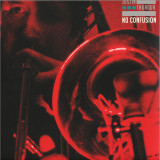
- A1: Moods - Love Is Real
- A2: Emancipator - Black Lake
- A3: Dj Cam Quartet - Cantaloop Island
- A4: Waldeck - Jerry Weintraub
- A5: 7Apes - Sunset Blvd
- A6: Guts - Ain't Perfect (Feat Beat Assailant & Mary May)
- B1: Gotan Project - Last Tango In Paris
- B2: Dlj - Grounds
- B3: Mr Scruff - Bernard's Shuffle
- B4: Kazam - Waterlily
- B5: Quantic - Latitude (Feat Western Transient)
- B6: Philippe Cohen Solal - Mind Food Variation (Feat Chassol)
Buscar:dj philip
First ever reissue of one of the most sought after titles in the catalogue of Peruvian's label MAG, in high demand not only among Latin music collectors but also among those interested in the most exotic and experimental psychedelic sounds around. - It includes 'Astronautas a Mercurio', a cosmic descarga full of electronic effects, filtered voices and fierce guitars with wah wah and raw distortion, as well as guarachas, cumbias and descargas. - Details: Hugo Macedo was a member of the first sonora in Peru, directed by his brother: the Sonora de Lucho Macedo. His brothers were the singers of the band while he performed as a timbalero. After nine years he founded the Sonora Casino of Hugo Macedo in 1964, later incorporating his wife, Lucía "Pochita" Rivera as a vocalist. "Trompeteros" was released on the Peruvian record label MAG in 1972. Previously, the Sonora Casino had already recorded several albums for Philips since the mid-60s. At the time their repertoire was fed by rhythms such as cha cha cha, bolero, guaracha... Their MAG period would start in 1970 with the album "Pochita y la Sonora Casino de Hugo Macedo" in which Hugo Macedo's wife was granted with an important visual presence on the front cover, with a similar follow-up on "Trompeteros", creating some confusion since vocalist Pachito Nalmy was the actual main singer on the record. The vocalist, who hails from Callao, demonstrates here a great vocal versatility as captured on songs like 'Guajira del amor', with a heavy rhythm that will surely delight boogaloo lovers, or the bolero number 'Pasa, pasa', being both songs own compositions of the multitalented Nalmy. Guarachas, descargas and cumbias complete the offering of this fantastic album, one of the strongest tropical LPs in the MAG catalogue. But the real banger here is the almost magical 'Astronauts to Mercury', a cosmic descarga full of electronic effects, filtered voices and fierce guitars with wah wah and raw distortion, closer to the sound of any psychedelic recording than the classic tropical sound of La Sonora Casino, and right next to those elements, an impressive brass section that boosts the intensity of the song to the highest levels. It is not surprising that "Trompeteros" has become in recent years a highly sought-after album not only by Latin music collectors but also by those after the most exotic and experimental psychedelic sounds around... Pablo Iglesias aka DJ Bongohead
- A1: Bakeina's Dream (Feat Bocar Sana Coulibaly)
- A2: Golden Cage
- A3: Quicksand Blues
- A4: Mad Girl Lament (Feat Mariam Kone & Samba Toure)
- A5: Ghost Sands
- B1: Are U Satisfied (Feat Samba Toure)
- B2: The First Sone (Feat Anansy Cisse & Bocar Sana Coulibnaly)
- B3: Minamba (Feat Mariam Kone)
- B4: Heaven Sands (Feat Hugo Race)
- B5: Bankoni (Feat Djime Sissoko)
Based in Bamako for sixteen years, Philippe Sanmiguel has been the producer of albums by the famous Malian bluesman Samba Touré since his international debut. Over the years, Philippe has expanded his work with other artists such as the legendary Tuareg band Tartit, Anansy Cissé, Mariam Koné or Djimé Sissoko among others.
While working on the albums of these artists, he often had the inspiration to add influences from his original rock culture but in small measures. That's how Black Mango was born, to gather his favorite musical collaborators around his own compositions and expand the vision. It started with an EP released on Glitterbeat Records in 2014 from which the idea for a full-length album was born.
Black Mango's Quicksand album was recorded in Bamako over a period of several years, in various recording sessions, giving each musician free range to play on a rhythmic and melodic basis prepared in advance. The alchemy was immediate in all cases, often from the first takes.
Philippe originally met producer and musician Hugo Race with Chris Eckman during their stay in Bamako for the recording sessions of Dirtmusic's Troubles & Lion City albums. Hugo loved the raw feeling of the tracks and offered to remix the album in his Melbourne studio, bringing his own unique touch.
The fruit is ripe!
Recorded at Akan Studio & Funhouse Studio in Bamako, Mali by Konan Kouassi & Philippe Sanmiguel
Produced, mixed and mastered by Hugo Race at Helixed Studio
A few words about the main " stars " :
- Samba Touré is Samba Touré.
- Anansy Cissé is a young songhoy artist for whom Sanmiguel has produced two albums, including the recent and acclaimed "Anoura".
- Mariam Koné is one of the most beautiful voices of Mali, who has a self-produced album and teaches music at the conservatory of Bamako.
- Singer Bocar Sana Coulibaly & Ali Traoré are singer and guitarist from Niafunké, nephews of the great Ali Farka Touré and have a band called Espoirs de Niafunké
Honey for Petzi sind zurück! Heute feiern wir, (etwas) mehr als ein Jahrzehnt nach dem letzten Album (General Thoughts and Tastes, 2011), eine neue Veröffentlichung des Trios aus der Westschweiz
'Observations + Descriptions' durch Two Gentlemen! Auf dem neuen Album finden sich zwölf Tracks voller offener, agiler und sich entwickelnder Emotionen - wie mit einem scharfen und subtilen Messer geschnitten.
Das Trio, bestehend aus Sami Benhadj Djilali (Gitarre und Gesang), Philippe Oberson (Bass und Gesang) und Christian Pahud (Schlagzeug und Gesang), entstand Ende des 20. Jahrhunderts in Lausanne. Als damals die Post-Rock-Szene aufblühte krönten Honey For Petzi diesen Prozess mit ihren packenden Rhytmen, schwachen Beats, Fallen und Synkopen. Diese Ästhetik hat im Laufe der Jahre über die herausragenden Alben der Band - insbesondere Heal All Monsters (produziert von Steve Albini) und Nicholson (2003), beide auf Two Gentlemen - mehrere Mutationen erfahren.
Ende 2021 veröffentlichten Honey for Petzi mit 'Écoute' ein neues Stück: Die ungeraden Taktarten, die das bisherige Schaffen des Trios kennzeichneten, sind zwar vorhanden, werden aber durch eine einen befreienden Impuls ergänzt, den man so noch nicht gehört hatte. Grammatikalisch gesehen könnte 'Écoute' in zwei Kategorien eingeordnet werden: als Substantiv (die Handlung des Zuhörens), aber vielleicht auch als Imperativ. Dies impliziert: alles ist möglich.
Und in der Tat: Dieser Track ist sowohl ein Vorspann als auch eine Einladung, das gesamte Album 'Observations + Descriptions' zu entdecken, das heute veröffentlicht wird. Die Band erklärt gemeinsam die Entstehung des Al bums wie folgt: 'Es war Ende 2018, als wir auf die Idee kamen, wieder zusammen zu spielen. Nach ein paar gemeinsamen Tagen wurde 'Observations + Descriptions' 2019 und 2020 geschrieben. Anfang 2021 reichten wir die neuen Songs bei unserem Label ein, welches begeistert und interessiert war, das Album zu veröffentlichen.'
Verständlich! Diese Platte enthält ein ganzes Arsenal an Waffen. Treibende Steigerungen: Apnée (welcher Ende 2021 auch als Single veröffentlicht wurde), Island oder Géométrie zeichnen sich durch eine polyrhythmische Raserei aus, die den Weg für verrückte Tänze ebnet. Echorec geht sogar noch einen Schritt weiter: ein wuchtiger Bass, eine vielschichtige Gitarre: ein reines Meisterwerk an Energie und Seltsamkeit - wie Kawasaki und sein parodistischer und trockener Humor, inspiriert
von dem Paar Bardot/Gainsbourg.
Lasst es uns noch einmal von der Band selbst hören: 'Wir haben da weitergemacht, wo wir mit 'General Thoughts and Tastes' aufgehört haben. Es war ein Album, das bereits mehr ‘Pop’-Formate enthielt, als wir zuvor gemacht hatten.' Die ätherische Subtilität anderer Tracks auf 'Observations + Descriptions' (wie Infini oder Dog even) mit ihren herzzerreissenden Akkorden zeugt von einer Wende, die zudem mit einer grösseren Risikobereitschaft einhergeht: 'Neu an diesem Album ist
die (signifikante) Präsenz von Titeln, die auf Französisch gesungen werden. Dies ist ein fruchtbarer Schritt, der uns direkt in die Poesie von Benhadj Djilali, Oberson und Pahud führt: etwas, das gleichzeitig eine Form der Detailgenauigkeit, des halbautomatischen Schreibens und der Melancholie, manchmal sogar der elegischen Ekstase ist.'
'Observations + Descriptions', und das ist seine tour de force, schafft es, diese Wege, von denen man annehmen könnte, dass sie parallel verlaufen oder sich gar kreuzen, zu einer mehr als kohärenten Einheit zu verbinden. Vielleicht ist es ganz einfach eine Definition von Identität: die Aufrechterhaltung eines starken Herzens unter der Vielfalt seiner Bewegungen.
A holy grail of French classic new wave! Thierry Müller, who initiated the French RUTH project, is not at his first try when the album POLAROID/ROMAN/PHOTO including the eponymous title track is released in 1985, but already a known name in underground experimental/electronic music with ARCANE, ILITCH (albums "Periodmindtrouble", "10 Suicides") as well as the more punky RUTH M.ELLIYERI (cult track "Mescalito"). Together with Philippe Doray, quite a big name of French experimental music at the times, Müller started RUTH. As early as 1982, a first instrumental version of the track Polaroïd/Roman/Photo is out under the name of the project RUTH. "I wanted to write a piece to make the girls dance and make fun of the boys. I plugged a small handmade clock on my Farfisa organ as a sequencer. I had a small Roland synth-guitar, I put the organ in it and that's how it started." Next came Frédérique Lapierre, who contributed original vocals on the track in 1984 as well as wrote lyrics and sung two more album tracks. Thierry asks some friends to write texts for the album and then recording tracks with Phillipe as well as Frédérique. But when the sessions are over, both musicians are not too happy with the results of the Polaroïd/Roman/Photo version: according to them, it lacks "flamboyance". They decide then to record a new female voice with a professional singer (Frédérique Cambon), sound engineer Patrick Chevalot offers to mix the track "so that it blows out". The whole album was finally released in 1985 with Paris Album, a small independant label, barely selling 50 copies in 1985, despite its eponymous title as a potential success. A first limited CD version was issued in 2001 via Fractal, but In 2004, DJs Marc Colin and Ivan Smagghe discover the track Polaroïd/Roman/Photo and decide to exhume it from oblvion. They released it on a compilation called So Young but so cold (Tigersushi) and then with Born Bad records on the BIPPP compilation in 2008. Thanks to them, the track (remixed and released via Aufnahme & Wiedergabe) and the album (reissued in 2008 (CD) via Infrastition and 2010 (LP) via Angular) started a new life, now back in print via BORN BAD RECORDS! + 12 pages booklet (Iiner notes UK + french) + Download code RIYL: Cold, Minimal & New Wave, Dark Dance, Elektro
Intimate, sensual: such is the music of Malik, shaped as desired over the albums: Un (2017), Tempéraments (2019), which earned him the nomination “Revelation album of the year” at the Victoires de Music 2020… And, today, Troy. Which opens a new chapter, that of an organic bias whose idea germinated after his last tour. Major fashions, solar and organic: TROIE imposes itself in warmth and sensuality.
Malik Djoudi has always been fond of duets or collaborations - with Juliette Armanet, Cécile de France or even Etienne Daho, support from the start - does not deprive himself of it here. Thus, we savor the tempo shared with the young rapper Lala & ce, “Point sensible” and the synthetic poetry explored with Philippe Katerine, “Eric”. Third collaboration, and not the least: "A few words", sung with Isabelle Adjani, the immense actress in a state close to Ohio, that of the navy sweater made in Gainsbourg.
DNA Records is proud to present a Cambodian reggae 7” release to showcase some of the talent from this wonderful country and the power that Jamaican music has around the globe.
DUB ADDICTION - Founded in the tropical heat of Cambodia's capital Phnom Penh in 2011 by Sebastien Adnot and Jan Mueller (AKA Professor Kinski), Dub Addiction features a combination of
Cambodian, French, German and Nigerian members. They quickly captured the hearts of local Cambodians and Western expats in a beat.
Cambodian national and vocalist, toaster DJ Khla, is a political activist and is now living in exile in Europe after having fled his country because of military pressure on him and his family. He was able
to escape Cambodia while on tour with Dub Addiction in Denmark.
Their fusion of reggae combined with traditional Cambodian instruments like tro (violin), chapey (traditional Cambodian string instrument) and Roneat (xylophone), along with the toasting of
Cambodian vocalists DJ Khla (Nhem Palla), MC Curly (Kosal Dang) and a variety of traditional female vocalists and international MCs creates a very unique blend.
After all, though South-East Asia and The Caribbean might be far apart on the map, they both get light from one sun.
VIBRATONE - Also a multinational reggae band with members from Cambodia, France, The Philippines, and Brazil, Vibratone formed in Phnom Penh in 2013 with one aim: No cover songs, strictly original creations. With insightful lyrics, they embracing true roots to new roots reggae…with a touch of blues and soul thrown inna di mix! Text edited by Brian Offenther.
Buried amongst the gems on the second Claremont Editions compilation was ‘Oui Non’, a collaborative cut that marked the first label appearance of Jpye (real name Jean-Philippe Altier), a French multi-instrumentalist, DJ and producer best known for his work as part of Twonk alongside Leonidas and percussionist/vocalist/guitarist Renato Tonini.
Here Jpye and Tonini join forces once more for their first single on Claremont 56 – a sensual and seductive slab of slow-motion, sun-soaked synth-pop that features more than a few subtle nods to classic Italian Balearic disco cuts such as Radio Band’s ‘Radio Rap’ and Tullio de Piscopo’s ‘Stop Bajon (Primavera)’.
Built around squelchy synth bass and a shuffling drum machine rhythm, ‘Cosa Ti Va’ is marked out by glistening, jazz-fired guitar solos, vibrant synthesizer squiggles, rich electric piano chords and echoing, dubbed-out electronics. It’s a pin-sharp but effortlessly laidback number that’s as tactile and loved-up as it as lazy and horizontal.
‘Cosa Ti Va’ is presented in two complimentary versions. On the A-side of the vinyl version you’ll find the full vocal, which boasts Tonini rapping in his native tongue in the manner of Italo-disco’s most eccentric and atmospheric vocalists. With his deep, rich tone and fluid flow, it’s hard not to fall in love with Tonini’s previously unheard rapping. Rounding off the single is the pair’s vocal-free instrumental take, in which Jpye’s stunning guitar motifs and tactile, soft-touch production can be savoured in full.
- A1: The Jitterbug Waltz
- A2: Stompin' At The Savoy
- A3: Round Midnight
- A4: Django
- A5: Night In Tunisia
- B1: In A Mist
- B2: Blues And Sentimental
- B3: Don’tget Around Much Anymore
- B4: Wild Man Blues
- B5: Nuages
- B6: Rosetta
- C1: Autumn Leaves
- C2: A Paris
- C3: What Is This Thing Called Love
- C4: Love For Sale
- C5: Night And Day
- C6: I've Got You Under My Skin
- C7: Siboney
- D1: Sous Les Ponts De Paris
- D2: Paris In The Spring
- D3: April In Paris
- D4: Sous Le Ciel De Paris
- D5: Paris Canaille
- D6: Moulin Rouge
- D7: La Vie En Rose
Michel Legrand was one-of the most gifted musicians of his generation. Born in a musical family, he studied at the Conservatoire in Paris where his precocious talents revealed themselves. Everyone noticed his entry into the jazz world in 1954 with an album of French popular songs for which he wrote jazzy arrangements. That first album’s success gave Legrand the right to make an album of his own with Columbia (Philips making a deal with Columbia US). This new album, entitled 'Legrand Jazz', was a sequel featuring legrandissime arrangements of American jazz standards. You could already, and even with tunes heard a thousand times, hear that distinctive Legrand style and the phrases, themes and leitmotifs that later appeared in 'Umbrellas of Cherbourg' or 'The Young Girls of Rochefort'. These album’s four sides feature all the ingredients composing Michel Legrand style that still “fills the world with envy.”
"...a swirl of the bedrock elements that make up modern music, his LP lifts from Soul, Funk and Hip-Hop to create this ode to Detroit House."
A NATION OF MILLIONS
EARLY SUPPORT FROM ALEXANDER NUT ("Tight beats from Snips as always. Dexters Pain is my fave here. Big ups"), KARIZMA ("Proud to hear a friend grow musically, great work on the album my friend...Full Support. K'), RED RACK'EM, SK VIBEMAKER
SNIPS delivers the first vinyl release on Houseology. The Barbershop LP is a tongue in cheek play on the production techniques Todd Worsnip aka Snips normally uses when making his Hip-Hop work. This 8 track LP is meeting of the two worlds of House and Hip-Hop tapping into Snips' raw ability to find the best cuts and chops needed for any genre.
DJ Snips began his career at legendary London record store Deal Real', where he ran the open mic night alongside British host and comedian Doc Brown, Snips' years at Deal Real saw him DJ'ing alongside performances from several US heavy hitters including Kanye West, Mos Def and the Black Eyed Peas.
Snips' knack for manoeuvring through a wide range of Hip Hop oeuvres has seen him play around the world, Specifically in NYC where he has been a guest at legendary parties including Everyday People, Bible Study, Mobile Mondays and Ginny's Supper Club. As well as being a regular in NY, Snips has also headlined events in The Philippines, Australia, Germany, Hong Kong, The Netherlands, Qatar, France, Norway and Spain. When Snips isn't touring or on the Club circuit, he's known for churning out beats for some of the most talented MCs on both sides of the Atlantic. His production work includes tracks for several major US recording artists including M1 (Dead Prez), Capadonna (Wu Tang), Sean Price.
Work on the Houseology record label allows Snips the opportunity to articulate himself even more so within his skilled production, by drawing a definitive line between the House/Hip-Hop relationship which has existed for years.
“This is the time. And this is the record of the time.”
Laurie Anderson’s 1982 debut album, Big Science, will return to vinyl for the first time in 30 years with a new red vinyl edition on Nonesuch Records. The release includes the re-mastered original album first released on CD for the 25thanniversary in 2007.
In the early 1980s, Laurie Anderson was already respected as a conceptual artist and composer, adept at employing gear both high-tech and homemade in her often violin-based pieces, and she was a familiar figure in the cross-pollinating, Lower Manhattan music-visual art-performance circles from which Philip Glass and David Byrne also emerged. While working on her now-legendary seven-hour performance art/theater piece United States, Part I–IV, she cut the spare ‘O Superman (For Massenet)’, an electronic-age update of 19th century French operatic composer Jules Massenet’s aria ‘O Souverain’, for the tiny New York City indie label 110 Records. In the UK, DJ John Peel picked up a copy of this very limited-edition 33⅓ RPM 7” and spun the eight-minute-plus track on BBC Radio 1. The exposure resulted in an unlikely #2 hit, lots of attention in the press, and a worldwide deal with Warner Bros. Records.
’Cause when love is gone, there's always justice.
And when justice is gone, there's always force.
And when force is gone, there's always Mom. Hi Mom!
At the time of its original release, the NME wrote of Big Science, ‘There’s a dream-like, subconscious quality about her songs which helps them work at deeper, secret levels of the psyche.’ With instrumentation ranging from tape loops to found sounds to bag pipes, Big Science anticipated the tech-savvy beats, anything-goes instrumentation and sample-based nature of much contemporary electronic and dance music. On the album’s 25th anniversary, Uncut noted, ‘The broader themes of alienation and disconnection still resonate, while Anderson’s use of loops and traditional/synthesized instrumentation is prescient.’
“In the ’70s I travelled a lot,” Anderson recounts. “I worked on a tobacco farm in Kentucky, hitchhiked to the North Pole, lived in a yurt in Chiapas, and worked on a media commune. I had my own romantic vision of the road. My plan was to make a portrait of the country. Big Science, the first part of the puzzle, eventually became part two of United States I–IV (Transportation, Politics, Money, Love). My goal was to be not just the narrator but also the outsider, the stranger. Although I wasfascinated by the United States, this portrait was also about how the country looked from a distance. I was performing a lot in Europe, where American culture was simultaneously booed and cheered. But the portrait was also a picture of a culture inventing a digital world and learning to live in it. Big Science was about technology, size, industrialization,shifting attitudes toward authority, and individuality. It was sometimes alarmist, picturing the country as a burning building, a plane crash. Alongside the techno was the apocalyptic. The absurd. The everyday. It was also a series of short stories about odd characters – hatcheck clerks and pilots, preachers, drifters and strangers. There was something about Massenet’s aria ‘O Souverain’ – which inspired ‘O Superman’ – that almost stopped my heart. The pauses, the melody. “O souverain, ô juge, ô père” (O Lord, o judge, o father). A prayer about empire, ambition, and loss.”
Laurie Anderson is one of America's most renowned – and daring – creative pioneers. Her work, which encompasses music, visual art, poetry, film, and photography, has challenged and delighted audiences around the world for over 40 years. Anderson released her first album with Nonesuch Records in 2001, the critically lauded Life on a String. Her subsequent releases on the label include Live in New York (2002), Homeland (2010), the soundtrack to Anderson’s acclaimed film Heart of a Dog (2015), and her Grammy-winning collaboration with Kronos Quartet, Landfall (2018). Additionally, Anderson’s virtual-reality film La Camera Insabbiata, with Hsin-Chien Huang, won the 2017 Venice Film Festival Award for Best VR Experience, and, in 2018, Skira Rizzoli published her book All the Things I Lost in the Flood: Essays on Pictures, Language and Code, the most comprehensive collection of her artwork to date.
There’s something new under the sun. If you look at it closely,
something new is only (and always) created at crossroads –
when different and signi¦cant traditions are connected and
combined. On their own, these traditions have often existed
for a while. However, in this new form they have never
appeared together. The latest manifestation of something
new can now be found on the album “No Future Dubs”, the
interpretations of “No Future Days” – the most recent album
by German band Messer – by Finnish producer and old
friend of the group Kimmo Saastamoinen aka Toto Belmont.
The intentional traditions that merge on this grand and
digni¦ed album are post-punk, dub and techno. A new
chapter in the culturally constant narrative of dub is written
here. Through their past and parallel activities in hardcore
and post-punk bands, Messer drummer Philipp Wulf met and
befriended Kimmo, originally a drummer too. In their
continuous dialogue discussing their musical journey, Philipp
and Kimmo over the years more and more immersed
themselves in the aesthetic possibilities of dub and reggae.
Indeed, lots of musicians do not listen to the type of music at
home that they write and play in their respective projects
(Take me as an example: House is the music that I produce
and put on as a DJ. On my own, I listen to various stuff,
music by Monk and Messer for example). The same applies
to the protagonists involved here. By discussing dub und
through Toto Belmont’s steadily increasing producingexpertise, the idea of creating dub versions of selected
Messer tracks was born. The Messer album “No Future
Days”, released in 2020, proved to contain the perfect raw
material as the songs on this album are already produced in
a much more transparent way than on previous LPs – and
are hence more suitable for dub. Still, it’s a giant leap from
the originals to the dubs. These add a third dimension to the
described character of the post-punk/dub amalgam: techno.
The result is a sound that hasn’t existed before, especially
not with German lyrics (which scarcely, however, carry
meaning or messages here. Hendrik Otremba’s voice is used
more like an instrument, as if he was the ghostly ¦gure which
he often sings about and which now §oats and screams
through the sound space). The history of mutual contact and
in§uence of (post-)punk and dub (reggae), which Messer
have kept on writing, is glorious and reaches back far in
musical history. Still, it has always been a rather marginal
chapter not only in punk but also in dub history. But already
in the beginnings of punk (the British version, less the
American one), the presence and in§uence of reggae was
obvious in many places as both are united in their resolute
attitude as rebel music. This is how the two genres
recognized each other – especially the punks regarded
reggae as rebellious. As is known, already Johnny Rotten
mainly listened to dub in private. By using the name John
Lydon, he then – together with bass player Jah Wobble –
established the group PiL as one of the most exemplary
bands at the crossroads of dub and punk. The Slits, Pop
Group, Killing Joke, The Ruts and last but not least The Clash
along with the Mick Jones offshoot Big Audio Dynamite –
the thriving British music scene in the early 80s was full of
dub-in§uenced acts. The echoes meandered everywhere. In
the USA, it took longer until the in§uence of dub became
noticeable and it has never been as distinctive as in the UK.
The history of US hardcore, however, cannot be told without
bands like Bad Brains from Washington D.C. who on their
albums occasionally inserted conscious reggae and dub
tracks between breakneck hardcore tracks. Another
important group is Blind Idiot God who similarly included
dub tracks on their LPs – the contrast between densely
droning rock tunes and widely breathing dub versions can be
experienced very vividly here. In the 90s, dub’s in§uence on
post-punk decreased while turning up even more distinctively
somewhere else: Techno was in many respects susceptible
to dub, to say nothing of the music from the so-called British
hardcore continuum (jungle, drum & bass etc.), which directlydeveloped from dub and reggae. But also “pure” techno –
meaning techno without breakbeats – discovered its a¨nity
for the possibilities of dub at an early stage, in England for
instance in projects like Left¦eld or The Orb. In addition, the
project Rhythm & Sound was established in Berlin with close
ties to the Hardwax record store. With regard to this project,
you can’t really say where dub ends and where techno begins
(or vice versa) because of the interconnection of the two
genres here – everything is based on the steppers pulse
which links the two styles like a common DNA. With dub
techno a new genre was created. Until the present day, there
are producers who don’t produce anything else and DJs who
don’t put on any other music. The Messer dubs are
characterized by a grand majestic manner and force that
presumably someone like Mad Professor is able to produce
and that is also inherent in many Scandinavian productions
of the last 15 years; a crystal-clear aesthetic which locates
itself far away from Kingston or Brixton, but features a pulse
referring clearly to Berlin and Helsinki. The songs appear in a
completely new and deconstructed form, the instruments are
exclusively used as particles and raw material, not as riffs;
merely glaring guitar textures ¦ll the wide dub space. There
are many new elements that were added by Toto Belmont,
especially synthesizer sounds and drums. The ¦nal result
creates an enormous aesthetic power and dignity, and an
atmosphere you don’t want to leave anymore. “No Future” is
a well-chosen title as a reference to the protagonists’ punk
association; as a main thrust of the album, however, a
comma between these two words is imaginable as well.
COLOURED VINYL[21,64 €]
One of the most highly regarded modern Brazilian jazz trios, Caixa Cubo announce ‘Angela’, their latest album and first to be licensed for European release by Heavenly Recordings.
‘Angela’, their Seventh since forming in 2007, was named as one of 6 Music’s Recommends Albums Of 2020 (Presenter Picks), chosen by DJ Huey Morgan. The single ‘Palavras’ is currently on the 6 Music playlist. Heavenly Recordings picked up on the record when DJ Giles Peterson played ‘Palavras’ on his show.
Recorded in December 2018, the album features the singer Zé Leônidas on ‘Palavras’ and includes arrangements of songs like ‘Baião Malandro’ by Egberto Gismonti and ‘Dark Prince’ by Geri Allen, in addition to the group’s original compositions.
Made up of Henrique Gomide (keys), João Fideles (drums) and Noa Stroeter (bass), the trio have split their time between Brazil and Europe in recent years, having been awarded scholarships to study at the Royal Conservatory of The Hague, Netherlands.
They have performed at many respected European venues and festivals including Jazz à Vienne Festival (France), Anton Philip Hall (The Hague), A-Trane (Berlin), Riverboat Festival (Denmark) and others in Paris, Brussels, London, Birmingham, Lisbon and Rotterdam. They also performed in Maputo, Mozambique, as well as renowned venues in Brazil, mainly in Sao Paulo (Auditório Ibirapuera and SESC Consolação, Museu da Casa Brasileira).
BLACK VINYL[21,64 €]
One of the most highly regarded modern Brazilian jazz trios, Caixa Cubo announce ‘Angela’, their latest album and first to be licensed for European release by Heavenly Recordings.
‘Angela’, their Seventh since forming in 2007, was named as one of 6 Music’s Recommends Albums Of 2020 (Presenter Picks), chosen by DJ Huey Morgan. The single ‘Palavras’ is currently on the 6 Music playlist. Heavenly Recordings picked up on the record when DJ Giles Peterson played ‘Palavras’ on his show.
Recorded in December 2018, the album features the singer Zé Leônidas on ‘Palavras’ and includes arrangements of songs like ‘Baião Malandro’ by Egberto Gismonti and ‘Dark Prince’ by Geri Allen, in addition to the group’s original compositions.
Made up of Henrique Gomide (keys), João Fideles (drums) and Noa Stroeter (bass), the trio have split their time between Brazil and Europe in recent years, having been awarded scholarships to study at the Royal Conservatory of The Hague, Netherlands.
They have performed at many respected European venues and festivals including Jazz à Vienne Festival (France), Anton Philip Hall (The Hague), A-Trane (Berlin), Riverboat Festival (Denmark) and others in Paris, Brussels, London, Birmingham, Lisbon and Rotterdam. They also performed in Maputo, Mozambique, as well as renowned venues in Brazil, mainly in Sao Paulo (Auditório Ibirapuera and SESC Consolação, Museu da Casa Brasileira).
Justin Thurgur has been at the heart of the UK's World Music scene for over twenty years, primarily through his collaborations with the Afrobeat maestro Dele Sosimi (former keyboardist for both Fela and Femi Kuti) and with the pianist Kishon Khan. Most recently in Khan's projects Lokkhi Terra and the Afrobeat/Cuban crossover, Cubafrobeat.
Thurgur has worked with Cuban giants Giraldo Piloto, Changuito and Julito Padron, with the Nigerian drum legend Tony Allen and with Damon Albarn's Africa Express project; which included Cheick Tidiane-Seck and Fatoumata Diawara. He's also worked with the likes of Bukky Leo, Francis Fuster, Pandit Dinesh, Baby Akhtar, Inemo, Tony Kofi, Kodjovi Kush, The Soothsayers, The Levellers and The Selecter.
He is perhaps most known as the trombonist from the multi-award winning 'folk' group Bellowhead. Their split in 2016 led to him forming his own band and releasing his debut album as a bandleader, 'No Confusion'.
The album features original compositions written by Thurgur in collaboration with double bassist Max De Wardener, piano/rhodes/Hammond organ player Kishon Khan and guitarist Phil Dawson, with band members including the likes of Graeme Flowers on trumpet, James Allsopp on bass clarinet and Oreste Noda on congas.
Thurgur promoted 'No Confusion' throughout 2016 and 2017, culminating in an enthusiastically received performance at Love Supreme Jazz Festival in 2017. Jazz FM, in particular Chris Philips, gave extensive airplay to the album as well as streaming a live performance from the Jazz FM studios and doing an interview. They subsequently playlisted two of Thurgur's single releases. Lopa Kothari played a track on BBC Radio 3's show 'The World On 3'. The band did a live interview and performance on DJ Ritu's 'A World In London' show on Resonance FM. Beyond this Thurgur has been developing relationships with various other digital radio stations, including Gordon Wedderburn, John Waugh and a number of Global music stations based in Europe.
- A1: Idrissa Soumaoro Et L´eclipse De L´ija - Nissodia
- A2: Rail Band - Mouodilo
- A3: Ambassadeurs Du Motel De Bamako - M’bouram-Mousso
- B1: Super Tentemba Jazz - Mangan
- B2: Sory Bamba - Yayoroba
- B3: Super Djata Band - Worodara
- C1: Zani Diabate Et Le Super Djata Band - Fadingna Kouma
- C2: Salif Keita, Ambassadeurs International - Mandjou
- C3: Alou Fane & Daouda Sangare - Komagni Bela
- D1: Super Djata Band De Bamako - Mali Ni Woula
- D2: Idrissa Soumaoro Et L´eclipse De L´ija - Fama Allah
Malian music is arguably deeper, more sophisticated and lyrical than any other form of African music. Those of us deeply entranced by Malian culture, and, in particular, the immense hypnotic beauty of Malian music, have put together a selection of songs from across the country.
Compiled by Vik Sohonie & Dave 'Mr Bongo’ Buttle, the story of this release began in 2015 when Dave happened upon the Soul Bonanza blog. A treasure chest of rare finds from around the world! One mix in particular stood out and totally enthralled Dave - le monde à change: a tribute to mali 1970 - 1991. He already knew of Malian legends such as the Rail Band, Salif Keita, & Les Ambassadeurs du Motel de Bamako, but this mix was something else! Deep & culled from the collections of some of the heaviest African music collectors in the world; legends like Vik Sohonie, Hidehito Morimoto, Philippe Noel, Gregoire Villanova, and Rickard Masip. Dave immediately contacted Vik and a journey of discovery tracking down the rights-holders began. He also turned to the font of Malian music knowledge; Florent Mazzoleni. Florent has written the definitive book about Malian music – 'Musiques modernes et traditionnelles du Mali’. He proposed some incredible tracks to include and provided the back bone of the sleeve notes and photos that are used in the album. No Malian album would be complete without a striking front cover photo, and ours is sourced from the late great Malian photographer Malick Sidibé.
On this album you will find well-known artists sitting next to rarer discoveries. The Rail Band, who are one of the best known of all the big bands in Mali, gave us the stars Mory Kanté and Salif Keita. Les Amabassedeurs du Motel de Bamako were another big act that had Idrissa Soumaoro, Kanté Manfila, and for a while Salif Keita in their ranks. Sometimes Salif would play in both bands in one night, quite a feat considering the bands were fierce rivals. As an albino Salif has had to face considerable prejudice from society, focusing on his musical career to help overcome this.
A major discovery on the album has been Idrissa Soumaoro et L'Eclipse de L’Ija. L'Eclipse de l'Institut des Jeunes Aveugles was a Blind teenagers institute and their record was produced by the German association that took care of blind Malian teenagers in Bamako. It was never properly released commercially and was the first recordings by the legends of Malian music Idrissa Soumaoro, Amadou Bagayoko and Mariam Doumbia. Amadou & Mariam later got married and became household stars, including making an album with Manu Chao.
This album is a concerted global effort to showcase the most vital cornerstone of Malian culture in an attempt to preserve its reputation in the face of its current, grim reality. We hope our highlights of Mali's rich history of musical innovation will serve as a starting point for reclaiming an image tainted by unnecessary conflict. May peace and music return to Mali soon.
- 1: Fender Iv - Everybody Up
- 2: The Sonics - Marlene
- 3: James Mask - Hootchie Coochie Gal
- 4: John Worthan - The Cats Were Jumpin
- 5: Vince Maloy - Hubba Hubba Ding Ding
- 6: Don Wade - Gone, Gone, Gone
- 7: Billy Wayne - I Love My Baby
- 8: Wally Willette And His Globe Rockers - Pink Elephantssi
- 1: Darrell Rhodes And The Falcons - Four O'clock Baby
- 2: Arlie Miller And The Bullets - Lou Ann
- 3: Cruisers - Betty Ann
- 4: Joe D. Johnson - Rattlesnake Daddy
- 5: Bobby Mcdowell - Lonely
- 6: Jerry Arnold And The Rhythm Captains - Can't Do Without
- 7: Gene Terry - The Woman I Love
- 8: Glen Glenn - Blue Jeans And A Boys' Shirtside C
- 1: Red Moore - Crawdad Song
- 2: Maylon Humphries And His Tri-Seniors - Worried 'Bout Yo
- 3: Van Brothers - Servant Of Love
- 4: Sonny Fisher - Sneaky Pete
- 5: Benny Cliff Trio - Shake Um Up Rock
- 6: Gene Norman - Snaggle Tooth Ann
- 7: Tommy Nelson - Hobo Bop
- 8: Lloyd Mccollough - Gonna Love My Babyside D
- 1: Don Ellis And Royal Dukes - Blue Fire
- 2: Sonny Wallace - Black Cadillac
- 3: Floyd Mack - I Like To Go
- 4: Rod Morris - Alabama Jailhouse
- 5: Carl Trantham And The Rhythm Allstars - Where There's A
- 6: Jim Oertling - Back Forty
- 7: Hodges Brothers - I'm Gonna Rock Some Too
- 8: Lonesome Drifter - Eager Boy
Nach Crazy Rhythms Of Mata Hari, Shake Your Bones, dem Cool Cat Club und Born To Hula! Folgt nun der 5. Teil der DJ-Set Serie auf Stag-O-Lee. Wie auch bei den Vorgängern handelt es sich hier um einen auf 80 Minuten eingedampftes DJ-Set von einem verdienten Recken der Zunft - Keb Darge. Gaz Mayall folgt direkt mit Volume 6. Linernotes: Rockabilly didn't cross my world until the early nineteen eighties at a Dirtbox weekender in Bournemouth, until then I was a pure northern soul boy. I didn't really get stuck into collecting the stuff until a decade later, but when I did what a wonderful world of tunes opened up to me, and I went wild on it. I was very lucky to be doing a record stall in Camden market at the time just across from Boz Boorer and Neil Scott's stall. They along with other serious collectors Dave Vickers, Barney Koumis, Cosmic Keith, Jim Fox, Dave Crozier, and many others taught me all I needed to know. I only ever made one great rockabilly discovery which none of them knew, "Little Bit Lonesome" by Charles Ross, but I was happy enough buying all their recommendations as they were all new and exciting for me. I have done several rockabilly comps before, but sadly the Philippines typhoon in 2013 destroyed my village and forced me to sell the bulk of my collection. Here are some of my favourites that I never got round to putting out before that happened. Two of the aforementioned collectors are no longer with us. I therefore dedicate this comp to Dave Vickers and Cosmic Keith who both had a huge influence on my life and my musical taste.
Philipp Gorbachev presents his latest 5-track EP "Nichego Ne Ponyal" on System 108. Philipp Gorbachev is amongst Moscow's most renowned dance music artists. The musician, DJ, and live performer is also known as the resident of MUTABOR, a member of ARMA17 and the System 108 community. His previous releases on Comeme, Trip, ARMA, and his own PG TUNE label contribute to a big variety of music genres: full live bands, church bell music, and techno. The new EP, which translates to 'I understood nothing' is an ode to isolation, where one's personal state of solitude simultaneously clashed with a global pandemic lockdown. The record was produced in the process of a fleeting stream of thought, and rather than relying on the use of automatization and the digital, it consists of recorded instruments. Drum machines, live drums, drum pads, keyboards, accompanied by bewildering vocals - all create an enticing audio tale that embodies the ethereal state of today's existence. Whilst being confined in the new secluded and virtual reality of the world, the artwork was devised via Facetime by photographer Nick Gavrilov, and just like the EP, it depicts the act of creation as such; Gorbachev's kitchen transformed into a temporary art studio where the interchange of imagination roamed free. The 'Nichego Ne Ponyal' EP is a result of Philipp Gorbachev's collaboration with System 108 and is the 3rd vinyl release of the creative platform, which is recognized for delivering outstanding events in Moscow's electronic music scene.
Philipp Otterbach’s psychedelic music never been a sunshine pleasure pill. But yet, the souls of his notes are deeply gentle. With “Everything Else Matters” the Berlin based DJ and producer now introduces his debut album, that follows a long introduction. Already since a while he devotes himself with endurance to music. He was an early resident at Düsseldorf’s shrine for outernational grooves Salon Des Amateurs. Since 2014 he releases music under his given name or as Grand Optimist on labels like Grokenberger Records, Knekelhuis or Themes For Great Cities and leaves marks as a remixer for artists like DJ Normal 4, Brainwaltzera, Wolf Müller and Niklas Wandt on labels like Growing Bin Records or Second Circle. His long DJ nights and already released music prefigures the spirits, that he now bunched on his first album. It’s a record, that does not want to pursue a straight categorization. It rather aims to spellbound with an atmosphere, that is made for moments in the absence of hysteria. Tribalistic, trip-hopping rhythms, menacing sounds, cold cool vocal passages, drone chants, morbid goth-ambient spheres, Indie rock indications: its many facets meld into some kind of black highway sound for thoughtful night prowlers in a dissociative state of mind. In context all particles achieve delicate sculptural effects that operate like the surprising architecture of a dream. A forward- thinking dream, that bundles something otherworldly, something unspeakable, that lives hauntingly between the sounds, rhythms and suggested melodies.
Jamie Clarke is a producer, musician and DJ. His label Either// hosts his recent work. Its first release, ‘Mirror Talk’, features remixes by Pablo Mateo, Casanova, and Philippa with early support from Tensnake, Ame, Piem, Joyce Muniz, Alinka, DJ T, Acid Pauli, Gene Farris bc, Severino… You can find earlier work appearing on diverse labels of favoured artists. “The Gene Krupa of electronic music” an admirer commented of his style: rolling, syncopated, digressive but ultimately melodic. Now, late 80s, a dark Detroit basement, eyes shut, the pound and sweep of that sound - you’re there.
Residencies at home in Dublin include The Pod, Hospital and his own UP!, the renowned rooftop party. He regularly guests across the continent and has projects in development in the US. In recent years the Reykjavik music scene has been a second home where Kaffebarrinn is a favourite haunt.
An exchange between several voices of African artists (the Congolese Flamme on guitar, the late Cameroonian Hilaire Penda on bass, the Beninese Angélique Kidjo on vocals, and the dj singer producer
from South Africa Mo Laudi on the mike) gathered for the dance and celebration of this World Heritage work. The most popular anthem of classical music revisited in Afro Pop mode for crowds around the world. About this project, the producer Philippe Cohen Solal (ex-Gotan Project) tells: « When Mo Laudi, a Paris-based South African DJ, joined me in the studio, he delivered a great rap full of positive energy and geopolitical rhymes, from Patrice Lumumba to Biko and from Congo to São Paolo. Then Queen Angelique Kidjo, like a divine diva, fervently sang her hymn "Lonlon" in the Mina language, where the Afro literally meets the Bolero. We will not forget the fine team that allowed me to concoct this sacred cocktail: Flamme Kapaya,
outstanding Congolese guitarist, the Parisian DJ-beatmaker Lazy Flow and the late Hilaire Penda, Cameroonian bass player who unfortunately left us since. Benin, South Africa, Congo and Cameroon meet in Paname, the capital of World Sound, but the musical adventure did not stop there. The remixes take us straight to London with Poté, to Berlin with Daniel Haaksman and to Johannesburg with the super-group Batuk formed by the godfather of the African electro Spoek Mathambo, the kwaito maestro Aero Manyelo and the Mozambican singer Manteiga. At a time when travel is prohibited or
not recommended, let us be glad that music does not need certificates or passports and knows no borders ».
So much legendary hip-hop begins with a misunderstanding. You might not realise it on first or even hundredth listen, but ‘Insane in the Brain’ is a diss track. What has become one of the hip-hop’s most iconic party anthems, and one of Cypress Hill’s biggest hits, started out with them taking offence at Chubb Rock.
He’d flipped some of their lyrics on his own ‘Yabba Dabba Doo’ song in 1992 and the group didn’t like it. While B-Real’s lyrical attack on Chubb is subtle and almost subliminal, Sen Dog spends most of his verse making fat jokes at Chubb’s expense.
It’s a little known beef, hidden beneath the vast success of this single in 1993, with it reaching number one in the US rap charts and proving a pop hit worldwide too. At this stage, the group’s producer DJ Muggs had perfected an idiosyncratic sound all of his own, lending it to tracks for the likes of House of Pain and Funkdoobiest.
Here he melds samples from Sly and the Family Stone and The Youngbloods with a beat lifted from George Semper’s instrumental cover of ‘Get out my life, woman’. Those subtle songs are alchemised into a boot-stomping head-nodder that transcended hip-hop to become a festival favourite, a rise that ended in Ned Flanders delivering the line, “this may sound just a teensy bit insane in the old membrane, Homer,” in The Simpsons.
The only official 7” of this was released in the Philippines, and fetches prices in the hundreds of pounds – this reissue puts a hip-hop classic in crate-friendly form.
BSP // Bispebjerg is a record label that presents music from Copenhagen based artists and affiliates. BSP is closely related to the Copenhagen Underground Posse, music and party collective that where active on the Copenhagen scene for the past 8 years.
Behind the label are Philip Jun Kamata, has been making music for nearly two decades, where he, among other things released the underground bass sex anthem "you dont know what love is" on Hyperdub. J Kamata is debuting on this V/A two new alter egoes; the 313 high tech funk inspired Jun Anthony, as well as his raw electro moniker Sequential Hill.
The other half of the label, Daniel Savi has been active in the club scene for a good while, primarily releasing on house labels such as Underground Quality and Tartelet Records. For this release he hits you hard with his bass alias Savi DJ.
With BSP we attempt to build a universe with Jungle, Electro, House, Booty Tech and their derivative genres. The first release is a V/A consisting of 3 different artists as well as remix from local hero Kasper Marott (Kulor, Axces).
Release comes in white discobags w. blue sticker on front and double sided foto insert.
Track descriptions
A1. Jun Anthony - 313 Garage. 06.38
Jun Anthony presents his groovy take on a garage track under a heavy 313- high tech funk influence.
A2. Jun Anthony - 313 Garage (Kasper Marott Remix) 05.53
The second cut holds a dubby, deep and groovy remix from Copenhagen rising star Kasper Marott.
B1. Sequential Hill - Jakd Oscillateurs - 05.29
Jun's alter ego Sequential Hill presents a punk approach to electro - Raw, but with a tiny soft spot for lofty strings and emotional pads.
B2. Savi DJ-Djungle (Slow edit) 06.08.
Savi DJ presents savvy bass grooves on this revivalist jungle cut, in a slowed down version for your mixing pleasure.
"On this seven track album we hear MinaeMinae (alias Bastian Epple) playfully scurry through his dense soundscapes on a tightrope. The sounds lying somewhere on the crossroads of psychedelic trance, exotica, ambient and melodic dance music – veering further off orbit with nontypical rhythms and dystopian percussive patterns.
MinaeMinae understands musical material similar to documentary footage which he would cut up, repitch, and rearrange freely. Most of his tracks are a mix of analog, synthetic sounds and recordings of ethnic percussion and guitar. Recently Bastian began experimenting with modular synthesis and self made tape echoes - seeking a more reduced and minimal composition style compared to his earlier quite whimsical tunes.
Growing up in a small village in southern Germany, Bastian was never interested in kitschy folk sounds that everyone would mindlessly clap and sing along to, rather he took solace in the time he would spend delving into patterns and repetitions that pleased him. His guitar strumming and what sounded to his mother like a young Philip Glass on a cheap Casio keyboard encouraged little Epple to continue on this self-taught path of developing his musical language. He then started to experiment with a tape recorder and layering sounds with non-musical samples, which his former village friends found too weird – then to eventually working with a small freeware DAW. Bastian went on to study Media Art at the Center for Art and Media (ZKM) in Karlsruhe – initially enrolled in music but the frustration and doubt of not being able to produce the music he wanted led him into film and documentary media. During his studies, Bastian was living with Florian Meyers (Don’t DJ) for several years where they would philosophize life and music into the wee hours – he encouraged Bastian to start sharing what he’s been quietly working on all these years and slowly emerge from this anonymity which eventually led to his first release on Human Pitch last fall.
Disproportionate forms, color changes, backdrops weaved into the foreground, all lay the dense earth for Gestrüpp through Benjamin Kilchhofer’s artwork."
Belgian artist Philippe Petit joins Radio Slave’s imprint with four analogue techno cuts on his Rekids debut. The Chamonix based DJ and producer Philippe Petit is widely respected amongst the techno community for his plethora of rumbling releases such as ‘Venus’ on EarToGround and ‘Scrape’ on his own imprint Decision Making Theory as well as releasing on Involve and Figure SPC to name a few. With a wealth of experience playing at the likes of Tresor, Suicide Circus, La Graviere, Batofar, Weetamix, Corsica Studios, and Berghain, the sophisticated production he showcases was a natural fit for the Rekids’ Special Projects series. ‘Anger’ rolls in with force and bumping sub frequencies, rattling percussion and jarring keys, then ‘Crystal Clear’ keeps things murky with evolving pads, fleeting highs and rolling low-end. On the flip, ‘When We Meet’ jumps in with climbing stabs, tight hi-hats and galloping kicks, when finally, ‘La Floria’ cuts through with chopped highs, washing chords, snappy cymbals and dreamy harp-esque patterns.
An entire decade has passed since the release of Nosaj Thing's critically acclaimed masterpiece of an album, Drift. In listening to how effortlessly this album has held up over the past 10 years, it is evident that Jason Chung is nothing shy of an exceptionally talented
record producer, composer, and DJ.
Coming from the Low End Theory beat scene in Los Angeles, one of the most influential hubs of experimental music, Jason has worked alongside some of the most prominent figures in the industry.
Having produced and made remixes for the likes of Kendrick Lamar, Chance the Rapper, Philip Glass, and Flying Lotus, it is clear that his production skills are unparalleled and stretch across countless facets of the music sphere- ranging from ambient, to hip hop, to club music.
Philippe Cam is the Thomas Pynchon of the electronic music world. Little is known about him and only a couple of pictures have been put online since he emerged on this planet to write his first and only album18 years ago. We know he worked as a sailor and that’s it. If you dig deeper you might find out that he worked as a DJ in the beginning of the 90ies in Brussels and began to study electronic music there and also began to write music for theaters and ballets.
The American distributor Forced Exposure once wrote that about him: „Philipe Cam is a star in his own field. He is among the few people who have succeeded to write hypnotic dance music without a conventional beat still conveying a thrilling, dramatic feel. Cam has developed an accurate, intense and complex formula of modulation-techno. Starting with music similar to Pan Sonic in 1996, his music turned towards a more elegant form of minimal music. Abstract soundtracks lead to an organic form of music, which was equally influenced by modern techno as Wolfgang Voigt's Studio 1/Gas or Basic Channel/Maurizio. Cam's music corresponds heavily to the Cologne scene, where his music is appreciated and played throughout the clubs by the likes of Michael Mayer, Tobias Thomas and various other DJs as well as experimental djs from the A-musik corner.“
So what’s new with his music? Basically the art of filtering is still his passion. Maybe he can be less associated with techno and the themes of his new tracks emerge in a more distinctive pattern? Well that’s hard to say, we would comment the energy of his early techno days in Brussels have returned here in a fierce way with some oft he tracks. The rhythmic movements are classy and stick with you. Whereas other tracks look for a distinctive relaxation of some kind.
We are releasing the album as a double clear vinyl with cover art by Yvette Klein who also designed the cover for his Philippe Cam’s album 18 years ago. Graphics for "Rotterdam" come from Cologne designer Daniela Thiel. We also would like to thank the cultural department of Cologne for supporting us to finance the album and to see the artistic value in this piece of minimalism.
The album kicks off with the mellow and soothing "Cocoa Beach". A Gentle beat that moves like bodies swaying in the hot summer sun. The clock moves a step forward and then a step backward as evolution takes a rest.
"Manga" feels like an acceleration to the moon, the contemplative moments come in spurts and hide in the intervals of the chords which are on the loose. Philippe Cam is the most energetic person in the world when it comes to core activity, this is head banging stuff for the ambient lounge.
"Short Summer" is a heavy and violent recognition. As intensive as it is it knows when to stop and disappear. In the ear and brain of the listeners it leaves an indisputable echo which lingers on for minutes. We suggest not to make a pause but jump directly into "Vermillions Sands".
What can be said about into "Vermillions Sands"? Be prepared some Terry Riley might lure around the corner to offer you some oranges on a silver plate, but don’t eat them. This is luring and beautiful at the same time. Maybe the best ambient track ever written and yet who can ever venture to say that without making a fool of himself. "Vermillions Sands" comes in waves and they could be longer we think.
"Rotterdam" the home of Philippe Cam for a long time but not anymore. He moved away. So that changes the perspective. But when was the track written? "Rotterdam" seems mechanical and rusty and spooky and divided. This arrangement is very different to all the other tracks so far and is almost dub in style but way more fractured. A steady stop and go emerges. But the longer it runs the better it gets. At minute 6 the brain resets itself and tries to grasp what has happened so far, reconstruction as a result of its own phantasmic imagination and hardly true at all, wonderful. Applause included!
Here comes "Bis", a short episode of a track and before we can comment on it, it is already over.
"The Game" is a mule of a track. It has a quiet stubborn sequence that bites and kicks you in the back without any change in near sight. We can hear a voice whispering, which sounds like a miniature vocoder featuring the voice of a child calling out - never stopping. This is treadmill to some extend but starts to breathe towards the middle of the track and slowly changes perspective. In fact there are some changes taking place here which go beyond a sound design that works heavily on the stereo image. Stick with it and the experience will be a great one.
"Ultimate Fly For Halloway" somehow orchestrates how you might feel after you climbed a 8000 meter high mountain and reached the top. A rejoicing off a special kind. Lava for the ears. No cheerleader murder plot sorry.
"Last Track" is a perfect example of a true minimalistic pice of music that manages to make contact with other genres and does this with elegance, determination and a lot of soul.
key selling points: The key selling point is the fact that Philippe Cam once was referred to as one of the main protagonists of the minimal music scene along with Wolfgang Voigt's Studio 1/Gas and Basic Channel/Maurizio. A true artist with a vision which is very rare.
Philippe Cam has picked up the sound he was famous for but has developed it further without selling out to any genre and expectation that rules our daily business.
Exactly this is the strength of the album to create a vivid world of impressions by using instruments in a whole different way than all software developers would suggest.
"Rotterdam" is a piece of art that can set off a firework when you listen to it and it owes nothing to anyone.
sychosis-inducing’ club tracks from Moscow. Ushi333 shares Green EP on PG TUNE, label by Philipp Gorbachev. The 4 track vinyl version of the EP is balanced with both functions: a fresh idea for DJ peak time moments and laid back Detroit influenced soundscapes. The digital version of the EP has three more tripped-out tracks: Space Mania, Tribal 1and Ophiuchus. Ushi333 is a Moscow based low-profile producer and this material was recorded live with hardware machines in the years 2018 – 2019.
Cosmo Vitelli hasn’t slept since 1973. Instead, he’s replaced slumber with the tireless exploration of electronic music, sharing his finds as an accomplished DJ and label manager as well as an esteemed producer, with heaps of records, remixes and edits under his belt. With his upcoming two-part LP on Malka Tuti, Cosmo brings forward his more diverse and somehow mature musical side, combining elements of post-punk, krautrock, electronica and pop on this first of 2 four-track records. The songs on the LP transcend style and genre. They manage to hold and playfully sustain an idea that echoes throughout them all - a musical “saying” as well as a personal life experience, and they reflect Cosmo’s prolific studio work of the past 2 years since he moved to Berlin. On the opening song A Brand New City he collaborates with longtime friend Julienne Dessagne (aka Fantastic Twins). Dessagne's vocals cut through the quirky and addictive percussion groove and synth sequence, leading to a a strong emotional melancholic melodic catharsis. On the following two songs Groupe Surdose & Die Alraune we find Cosmo collaborating with Sebastian Lee Philipp (of Die Wilde Jagd fame) to show his more post-rock/krautrock side. Groupe Surdose is an instant classic slow burning dance floor Krautrock tune while in Die Alruane we find poetic German lyrics sung by Lee-Philipp on top of organic grooves, guitars and an epic Saxophone line that together create a distinctive highlight for the record. The closing track Kuldip is the curve ball of them all, sealing the first part of his album with a Mediterranean mid tempo dance tune for the selectors and the middle-eastern inspired electro aficionados.
Visions Recordings is back with the second volume of their compilation 'The chromatic Universe' presented by Alex and Stephane Attias. This second opus is full of exclusives tracks mixing styles and genres with a colourful palette of grooves from Paris to New York, from Detroit to London, from Italy to Switzerland and beyond. This compilation is international as you can see and Visions is very happy to release 3 vinyl singles as the compilation to have a collection and a better sound quality rather than squeezing all the tracks on an album. We will also have the digital release and an exclusive very limited CD.
Those three Ep are holding 4 tracks of pure gems. This SECOND part is again pure bliss and fire from the likes of Alex Attias with dope vocal delivery by the unique Georgia Ann Muldrow, a killer acid boogie dancefloor tune by the one and only New York City Star Dj Spinna, the soulful boogie groove of Stephane Attias team up with London vocalist Xantoné Blacq plus a dope house broken tune by our brother Philippe Quenum the nicest man on planet earth. There aren't words to describe perfectly those jams but you know those producers deliver always the goods.
- A1: Hanna Schörken - U
- A2: Lucky Charmz & Devotion - Ich Hasse Das Leben
- A3: Untitled
- A4: Aztlan Fm - Ixtac Octli
- A5: Marvin Horsch - Destroy_Active
- A6: Assam Jr. - Der Letzte Mann Im Internet
- A7: Paul Trachtenberg - Hamlet
- A8: Tulips - Rhythmus For Fantasy
- A9: Becks Karamell - Das Nachthorn
- B1: Viba - Miniatur
- B2: Der Kleine Herr Jakob - Dans Le Foret
- B3: Jiyun Park - Whale
- B4: Antonia Alessia Virginia Beeskow - Saxoglass
- B5: Huyghend - Love Theme
- B6: Philipp Lack - Butter Drops
After seven years of label making, Dorfjungs says goodbye with a final collection. GroupWorks mixes improvised vocal jazz and tropical ambient with sweet pop music, bad-tampered hip-hop and pitched down techno tracks. Thanks to all friends, fans and collaborators. Adieu
The Brothers Jonathan And Ferdinand Bockelmann Aka Glaskin ... The kellerkinder' Who Are Taking Care Of The schall Im Schilf' & back To The Woods Festival' Form Together The Duo Glaskin. In Recent Months, A Lot Has Happened To Them, They Have E.g. With Esacpe Velocity Released Her Debut Ep And Another 2 More On Hotflush. tymewriter' Is Carried By A Broken Beat Over Which Gloomy Surfaces Overlap. Just Fat !!
Simon D And Pluto Produce Together As Preset. With club Sub' They Deliver A Dirty Techno-breakbeat Board That Does Not Look The Same. Techno Smasher !!
Blitz Resident & Lighthouse Festival Booker Leo Küchler Aka vince' Made His Vinyl Debut With namechanger'. He Does Justice To His Style As A Dj With This Housig-playful Number In Each Case.
Phillip Von Bergmann Is Rote Sonne Resident And Firmly In The Circle Of Friends Of Ilian Tape, Maurice Paloni Runs The Label Alden. The Result Of Their Collaboration Is A Breaker Club Track, Perfect For Building Tension.
Wild Style Lion feat. Kim Gordon how the fuck did that happen
Or better ask: how did this young band end up on a record box-set called Psych Box with Hawkwind, MC5, Nico and Kim Fowley out on Cleopatra Records
And if that was not enough they toured Europe with Dinosaur Jr. in Beyoncé's custom made night-liner for a whole freakin' month.
So you would think these guys sit back and get their hard-disks sucked but instead they keep partying and drop ecstasy at Berghain where Khan used to host a monthly party called Smegma with DJ Nd Baumecker presenting bands like The Gossip, GusGus, Opal Bastards or even Lady Gaga.
Wild Style Lion is Philipp Virus and Khan Of Finland a hard working producer-duo from Berlin. Tallmen 785 responsible for the B-side remix who already reworked for the likes of Little Dragon or his good fella Scuba.
Wild Style Lion currently working on a transgender Hip Hop project with mc BIG T shooting to drop a 12' in fall 2018 and a new full length album in spring 2019.
Anything else I forget to mention
Yours sincerely,
Khan (Of Finland)
It's remix time! We open our vaults to let our favourite producers from 'round the globe play around with our releases. This is the first of 3 remix EPs, with fantastic reworks by the hanseatic hedonism force of RSS DISCO, the Australian psychedelic vibes of DREEMS, the Austrian psychedelic vibes of TIGHT PANTS and the Mexican dreams of SAINTE VIE.Tune in, drop out!
PG TUNE presents CENTRIFUGE ONE - the first label compilation in a series of thematic installments. In the focus this time are Moscow raised producers and live performers, sharing a fresh vision of the globally evolving dancefloor universe.
NEW DANCE SOUND OF MOSCOW features music by Philipp Gorbachev, Obgon, Interchain, DEKA, Dubrovsky and ushi333. Artwork by Artem Stefanov (STFNV).
key selling points:
- D-scription is Philipp Gorbachev's first solo work since 'Unlock The Box' LP (PG TUNE, 2016)
- 2 x 12'' coloured vinyl sleeve includes insert with very special pictures of Moscow
- CENTRIFUGE started with a Moscow rave party in 2016
- All music was recorded live for dancing in new Moscow clubs (ARMA17, Rabitza), streets and DIY garages
- Features artwork by Artem Stefanov, fundamental mural artist, known for his contributions at major music and art festivals (OUTLINE, 4GB, GEM)
- DEKA is a new Moscow supergroup and will release an album in 2018
- Very early DJ support from Barnt, Ivan Smagghe, Anastasia Kristensen, Inga Mauer...
It's already been 5 years since the last Zombie Zombie album 'Rituels d'un Nouveau Monde', after which the group explored other territories by signing 2 film scores, namely 'Loubia Hamra' by Narimane Mari and 'Irréprochable' by Sébastien Marnier, as well as creating the music accompanying a contemporary circus show called 'Slow Futur' created by Martin Palisse and Elsa Guérin. Wouldn't these beautiful parentheses make you want to return to the sources After 10 years at Versatile Records, 2017 also marks the decade anniversary of the release of their first album 'A Land for Renegades' in 2007, at the time considered to be one of the 10 best albums of the year according to Rough Trade.
'Livity' - Zombie Zombie's latest opus seems to plunge us deep into science fiction, with a cover designed by the mythic cartoonist Philippe Druillet, who is also the founder of the cult Métal Hurlant comic series. The title of the album is somewhat misleading, as one could mistakenly think of a certain dub record made at
the famous Island Records Compass Point studio in the Bahamas. For the uninitiated 'Livity' or 'Life force' is actually a Rastafarian spiritual concept based on the idea that an energy exists within, and flows through, all people and all living things. The record was recorded last winter in Paris, in a very short time frame. 7 tracks played live in 7 days, by Etienne Jaumet (synthesizers / rhythm box / metallophone / sax), Cosmic Neman (drums / vocals / sound effects), and Dr. Schonberg (percussion / electronics / trumpet), recorded at the Red Bull Studios by Thibaut Javoy and Jerome Caron, 2 very competent engineers. To keep it in the family, the album was then mixed by another member of the Versatile stable, the mysterious and legendary DJ/producer I:Cube, done in the label's Victor Studio.
On this album the principles that are dear to the group rest being respected, still as far away as always from the standards of 'radio play', A living kind of music, composed of long instrumental moments recorded with analog synthesizers and drum machines, accompanied by drums and percussion. But I:Cube's touch may bring the unique energy that one may find at Zombie Zombie's concerts; on certain cuts like title track 'Livity' that the group recorded in Laos, a wild combination of 808 kick drums and bewitching jungle sounds that sound quite unlike anything else out there, and especially on 'Hippocampe', which gives the impression of hearing an old school hip hop rhythm with the power of a metal band who have replaced their guitars with an army of synthesizers: we recommend you listen to this particular track in a convertible while speeding down the highway.
As with all of Zombie Zombie's music the cinematic component is still strong, on titles like 'Ils existent..' 'Acera' which was originally composed for ciné-concerts accompanying the films of Jean Painlevé et Maurice Pialat. The energy of the beginning is still very present, as is - of course - the kraut inspiration. But it's also an album that takes new directions and sonic risks, like on 'Looose', which brings to mind the Art Ensemble of Chicago, or the groove of James Chance in New York in the early 1980's, featuring the free sax solos of Etienne Jaumet and Dr. Schonberg on the trumpet. The group also offers some slower and calmer titles, like 'Heavy Meditation' as well as exploring more experimental tracks in the line of French 70's groups such as Lard Free or Richard Pinhas, for example on the bonus track 'Black Moon'.
Please - Take your time, and enjoy listening!
SPECIAL LIMITED EDITION X 300 WITH BONUS 7 :
Limited special edition with the 7" containing the track "Lune noire", in 2 parts - one per side.
It's already been 5 years since the last Zombie Zombie album 'Rituels d'un Nouveau Monde', after which the group explored other territories by signing 2 film scores, namely 'Loubia Hamra' by Narimane Mari and 'Irréprochable' by Sébastien Marnier, as well as creating the music accompanying a contemporary circus show called 'Slow Futur' created by Martin Palisse and Elsa Guérin. Wouldn't these beautiful parentheses make you want to return to the sources After 10 years at Versatile Records, 2017 also marks the decade anniversary of the release of their first album 'A Land for Renegades' in 2007, at the time considered to be one of the 10 best albums of the year according to Rough Trade.
'Livity' - Zombie Zombie's latest opus seems to plunge us deep into science fiction, with a cover designed by the mythic cartoonist Philippe Druillet, who is also the founder of the cult Métal Hurlant comic series. The title of the album is somewhat misleading, as one could mistakenly think of a certain dub record made at
the famous Island Records Compass Point studio in the Bahamas. For the uninitiated 'Livity' or 'Life force' is actually a Rastafarian spiritual concept based on the idea that an energy exists within, and flows through, all people and all living things. The record was recorded last winter in Paris, in a very short time frame. 7 tracks played live in 7 days, by Etienne Jaumet (synthesizers / rhythm box / metallophone / sax), Cosmic Neman (drums / vocals / sound effects), and Dr. Schonberg (percussion / electronics / trumpet), recorded at the Red Bull Studios by Thibaut Javoy and Jerome Caron, 2 very competent engineers. To keep it in the family, the album was then mixed by another member of the Versatile stable, the mysterious and legendary DJ/producer I:Cube, done in the label's Victor Studio.
On this album the principles that are dear to the group rest being respected, still as far away as always from the standards of 'radio play', A living kind of music, composed of long instrumental moments recorded with analog synthesizers and drum machines, accompanied by drums and percussion. But I:Cube's touch may bring the unique energy that one may find at Zombie Zombie's concerts; on certain cuts like title track 'Livity' that the group recorded in Laos, a wild combination of 808 kick drums and bewitching jungle sounds that sound quite unlike anything else out there, and especially on 'Hippocampe', which gives the impression of hearing an old school hip hop rhythm with the power of a metal band who have replaced their guitars with an army of synthesizers: we recommend you listen to this particular track in a convertible while speeding down the highway.
As with all of Zombie Zombie's music the cinematic component is still strong, on titles like 'Ils existent..' 'Acera' which was originally composed for ciné-concerts accompanying the films of Jean Painlevé et Maurice Pialat. The energy of the beginning is still very present, as is - of course - the kraut inspiration. But it's also an album that takes new directions and sonic risks, like on 'Looose', which brings to mind the Art Ensemble of Chicago, or the groove of James Chance in New York in the early 1980's, featuring the free sax solos of Etienne Jaumet and Dr. Schonberg on the trumpet. The group also offers some slower and calmer titles, like 'Heavy Meditation' as well as exploring more experimental tracks in the line of French 70's groups such as Lard Free or Richard Pinhas, for example on the bonus track 'Black Moon'.
Please - Take your time, and enjoy listening!
RAWAX welcomes Patrick Raddatz, Robin Scholz and Philipp Boß R&S-B&S collective to the Family! Robin Scholz already showed us his talent with the debut ep called "retrospective ep" on the RAWAX 10 inch series (10.5) also on RAWAX004LTD together with Einzelkind as Rhythm Factory and last but not least with label boss Robert Drewek as RDRS on HOUSEWAX (H1004). Philip Boß is the label owner of high rising "Einfach Hören" label which entered the record stores some weeks ago. Patrick Raddatz is one of the old school dj's from Frankfurt. Active since 2 decades known from the famous X-Fade nights on Radio X and of course of his "Everglade reshape" on Weave Records which was 2005 a very big club hit all over the world.
This new production is a fantastic demonstration of advanced space electro & ambient - worth to check!