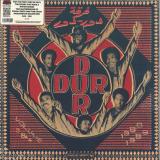
1982 4-Piece Demo' is the first official, fully-licensed and unreleased material to be released under the name Strawberry Switchblade in 30 years. Since disbanding amid major record label acrimony and personal differences in 1986, the already-cult band have since grown in stature and legend. Trailblazers in many ways, the band's mythology justifiably centers around the charismatic duo of Jill Bryson and Rose McDowall, but that isn't a complete picture. Bryson and McDowall's growing friendship, having met some years earlier on the punk scene, became a creative partnership: Bryson's art school background and McDowall's history in avant-punk group The Poets meant Strawberry Switchblade was a band pitted against many established norms. The band's very first incarnation, an all-female 4 piece, recorded one demo at Glasgow's Hellfire Club and played a handful of gigs. Friends Janice Goodlett and Carole McGowan completed the line up on bass and drums respectively. Strawberry Switchblade would eventually pair down to a duo and go on to chart success but it's in these raw, passionate recordings that the songwriting and vocal elements were being hammered out and explored in real time.
Spanish Song' is a previously unreleased song. With Rose McDowall's instantly recognizable lead vocal dovetailing with Bryson's harmonies and lead guitar, it's the first glimpse at an alternative history of Strawberry Switchblade. This incarnation could easily have been featured on a Nuggets compilation or a precursor to the indie-pop revolution that would take over British bedrooms a couple of years later. "Trees & Flowers" is instantly recognizable, a bona fide classic that would earn the band its first record deal. Here it's given a more forceful rhythm section: Goodlett and McGowan's playing is in fact accomplished and doesn't hint at the bands' youth. "Go Away" would also surface later on the band's debut LP but here it is a moody-garage stomper with a psychedelic, haunting refrain. These 3 songs point to a tantalizing future of the band that was never realized.
Remastered and restored by Sean Pennycook from the original cassette, with artwork based on a single photographic contact sheet (the only visual evidence of the band in this form) and with a booklet of photographs and new text. Pa
out of Stock
Last delivered 17 days ago available to reorder, subject to availability
The practice of dub techno and its tendrils is a fundamental for me, both aesthetically and from an engineering perspective.
I start every recording session with a dub inspired jam, the first piece I ever recorded in 1996 was an effort to recreate Phylyps Trak with only a Korg X3 and an Ibanez PUE5 (borrowed from Gary Howell). It was an awesome introduction to jamming, and the footing stones of noise, delay and saturation were explored with my foot hard on the enthusiasm pedal.
These practice jams are in some sense cathartic, the first step taken again & again, which helps me move forwards each session and additionally helps to 'warm the circuits' both of myself and the machines.
After realising the genius of Basic Channel is akin to the genius of peasant food, using every ingredient with nothing left to waste, (up to and including the oft maligned working noise of the machines themselves), this was a watershed moment for my own subjective progression. No longer tied to just emulation of something inspiring, but taking these learned tools into other areas of music helped to break free from a strong current of influence and also to progress into other areas with the new toolbox.
Dub:
The importance of the dub pioneers should never be understated, in modern music and my own practice. Yet with my initial inspiration being two german dudes issuing extreme techno variants with obscured label designs, who then signposted their listeners to their own inspirations (via their Wackies re-issues or nodded to on their Rhythm & Sound/Burial Mix sub-labels), meant that I started late and travelled backwards.
Learning to notice the live mixing of Mikey Dread or Lee Perry when the faders are bleeding through even when turned down, (echoed in BC's Quadrant Dub), or the brash send effects literally thrown into the mix also taught me that 'rough' mixing can inject a recording with life, uniqueness and the most right wrongness. Looking back Basic Channels very few elements helped me realise that the rules to be understood, are also the best ones to be broken.
Push the mixer into the red.
Amp that noise up from the tape delay cos it sounds sick.
Pseudo side-chain effects cos the kicks are way too loud and the mixer can't sum it nicely.
Spam the send knob into the delay units now, now and now.
Carelessness.
Noise:
Once I wrapped my head around the intrinsic 'noise' element that set those records apart, this became a torchlight into the alt noise movements which I was tentatively exploring at the time, and also is evidently a connection or thread into them.
Whether the Industrial/Post Punk UK scene (This Heat, TG, A Tent, F.E.) or the prolific output of the US Noise scene (Wolf Eyes, Live & Shave in LA, and subsequently following the lineage all the way back to Chrome's Alien Soundtracks), I had finally discovered a connection from techno to this 'free for all' corner of music.
This input from the Noise arena of sound is, in my experience, an all important step for a sonic artist, taking it's roots and extending out from Stockhausen/Pierre Henry and utilised/warped/mangled by thousands of adventurous pioneers ever since, I now see the line separating the high brow and the low brow is actually an artery carrying information from the head to the heart.
Vault is a selection of these jams that precede each of my solo recording sessions, for 30 years I've recorded hundreds of these 'workouts'. They are never intended as serious statements, just moments of naive enjoyment, yet most importantly they are time & space captured as practice.
The objective is always a warm up exercise, but sometimes those exercises turn a different corner, with a certain focus or direction dependent on what random samples are left in my machines from the previous session, instead of conscious choices, these unconscious elements can facilitate those 'positive mistakes' that make a piece of sound retain a different feel or colour and thus become special, or at least special to the creator.
I am quite conscious that the 'record everything' aspect of my ethos has been invaluable in cataloguing and saving these jams, while the attitude of carelessness during this process (after all, it's only a warm up jam) invites more enjoyment than seriousness ever could. Even if you don't feel the piece at the time, record it, because some years later it may well fit, or become relevant in a way you never intended.
-Miles
out of Stock
Last delivered 18 days ago available to reorder, subject to availability
Breakbeat Paradise Recordings welcomes back Umbo for another heavyweight installment of the Toxic Funk series. One of the original pioneers of the Nu Funk movement, Umbo once again delivers two dancefloor-ready cuts packed with soulful samples, infectious breaks and unmistakable funky vibes.
Having released music on respected labels such as Good Groove Records and Timewarp, Umbo has built a reputation for crafting timeless party weapons that blend classic funk with modern breakbeat production. His previous appearances on Breakbeat Paradise have become fan favorites, and Toxic Funk Vol. 24 raises the bar once again.
Leading the release is Got Soul, a groove-laden funk workout driven by punchy drums, irresistible basslines and uplifting soul energy that's destined to ignite dancefloors. On the flip side, Save It delivers another dose of vintage funk attitude, combining tight breaks, funky rhythms and cleverly chopped vocals into an irresistible DJ weapon.
Whether you're spinning funk, breaks, nu disco or party edits, these two cuts are built to keep the energy high. Toxic Funk Vol. 24 is another essential addition to the Breakbeat Paradise catalogue and proof that Umbo continues to be one of the scene's most consistent producers.
out of Stock
Last delivered 11 days ago available to reorder, subject to availability
Als Dublins Gurriers 2024 ihr Debütalbum Come And See veröffentlichten, bewiesen sie eindrucksvoll, dass sie eine der drängendsten und unüberhörbaren neuen Stimmen der boomenden irischen Punk-Szene sind. Seitdem haben sie sich mit knochenerschütternden, moshpit-tauglichen Live-Shows einen stetig wachsenden Ruf erarbeitet. Come And See stellte dabei auch ihre lyrische Stärke und ihren neugierigen, gesellschaftskritischen Blick in den Vordergrund – mit Songs über digitale Verlorenheit und die ganz realen Schrecken der modernen Welt.
Das grandiose zweite Album des Quintetts heißt Nobody's Coming To Save You – könnte aber ebenso gut den Untertitel „härter, besser, schneller, stärker" tragen. Es wird am 25. September auf Play It Again Sam veröffentlicht.
Aufgenommen in Donegals Attica Studios und den Holy Mountain Studios in London, produziert von Mark Bowen (Idles) und Loren Humphrey (Geese, Cameron Winter), engineered von Chris Fullard (Idles, Sunn O)))) und gemixt vom weltbekannten John Congleton (St. Vincent, Modest Mouse, Swans) – allein das Team, das sich für LP2 zusammengefunden hat, spricht Bände. Gurriers nehmen alles, was sie von Anfang an großartig gemacht hat – die musikalische Chemie, den klugen, analytischen Blick auf die Welt – und schrauben es konsequent auf das nächste Level.
Von der vibrierenden Spannung der ersten Takte des Titeltracks, die sich in einem kakophonischen, kathartischen Finale entlädt, bis zum Ende: Nobody's Coming To Save You überführt den Geist des schwitzenden Kellerclubs in Stadiondimensionen. Das Album ist nicht nur laut – es ist dynamisch. „Shades" schickt industrielle, kantige Gitarrensplitter in einen brachial-rohen Hardcore-Chorus; „Drones" ist ein druckvolles, langsames Aufbäumen mit einem Drop, der jeden Moshpit zum Kollabieren bringt. „Pins" zeigt eine lässigere, melodischere Seite – irgendwo zwischen Grunge und Trip-Hop –, während „Party Lines" pure, unersättliche Dance-Punk-Ekstase ist. Wer sich fragt, ob die Band ihr Ziel erreicht hat, das Album „wie eine Ohrfeige" wirken zu lassen: Ja, die sitzt.
Mit Nobody's Coming To Save You haben Gurriers ihre Ambitionen in neue Höhen getrieben – und liefern dabei auf ganzer Linie.
Als Dublins Gurriers 2024 ihr Debütalbum Come And See veröffentlichten, bewiesen sie eindrucksvoll, dass sie eine der drängendsten und unüberhörbaren neuen Stimmen der boomenden irischen Punk-Szene sind. Seitdem haben sie sich mit knochenerschütternden, moshpit-tauglichen Live-Shows einen stetig wachsenden Ruf erarbeitet. Come And See stellte dabei auch ihre lyrische Stärke und ihren neugierigen, gesellschaftskritischen Blick in den Vordergrund – mit Songs über digitale Verlorenheit und die ganz realen Schrecken der modernen Welt.
Das grandiose zweite Album des Quintetts heißt Nobody's Coming To Save You – könnte aber ebenso gut den Untertitel „härter, besser, schneller, stärker" tragen. Es wird am 25. September auf Play It Again Sam veröffentlicht.
Aufgenommen in Donegals Attica Studios und den Holy Mountain Studios in London, produziert von Mark Bowen (Idles) und Loren Humphrey (Geese, Cameron Winter), engineered von Chris Fullard (Idles, Sunn O)))) und gemixt vom weltbekannten John Congleton (St. Vincent, Modest Mouse, Swans) – allein das Team, das sich für LP2 zusammengefunden hat, spricht Bände. Gurriers nehmen alles, was sie von Anfang an großartig gemacht hat – die musikalische Chemie, den klugen, analytischen Blick auf die Welt – und schrauben es konsequent auf das nächste Level.
Von der vibrierenden Spannung der ersten Takte des Titeltracks, die sich in einem kakophonischen, kathartischen Finale entlädt, bis zum Ende: Nobody's Coming To Save You überführt den Geist des schwitzenden Kellerclubs in Stadiondimensionen. Das Album ist nicht nur laut – es ist dynamisch. „Shades" schickt industrielle, kantige Gitarrensplitter in einen brachial-rohen Hardcore-Chorus; „Drones" ist ein druckvolles, langsames Aufbäumen mit einem Drop, der jeden Moshpit zum Kollabieren bringt. „Pins" zeigt eine lässigere, melodischere Seite – irgendwo zwischen Grunge und Trip-Hop –, während „Party Lines" pure, unersättliche Dance-Punk-Ekstase ist. Wer sich fragt, ob die Band ihr Ziel erreicht hat, das Album „wie eine Ohrfeige" wirken zu lassen: Ja, die sitzt.
Mit Nobody's Coming To Save You haben Gurriers ihre Ambitionen in neue Höhen getrieben – und liefern dabei auf ganzer Linie.
This year, Prohibition reissues their landmark 1996 album Towncrier on vinyl. A cult classic that once took them across Europe and onto the iconic French TV show Nulle Part Ailleurs, the record remains a defining moment in their career. To mark the occasion, the Paris-based quartet returns once again for a series of live performances at the end of 2026. "Prohibition is undoubtedly one of the most important rock bands France has ever produced." - MOWNO Formed in 1989, Prohibition emerged from the underground veins of the French post-punk scene-a time when the movement survived through a handful of fanzines, crumbling venues, and a sparse network of independent record stores. Their sound was raw, urban, and tightly wound, still reverberating with echoes of hardcore and skate culture. A jagged, abrasive form of rock, driven by atonal guitars, surgically precise bass lines, off-kilter rhythms, and biting vocals. What set Prohibition apart was its singular instrumentation: a saxophone unleashed and the hypnotic drone of a sitar cutting through the noise. Their reputation quickly spread across Europe and the United States, leading to relentless touring and shared stages with the likes of Blonde Redhead, Fugazi, David Grubbs, Condense, and Chokebore. The band came to a close in 1999, following the release of their fifth and final album, the enduring 14 Ups & Downs. In 2015, Prohibition reunited for a special tour marking the 20th anniversary of Prohibited Records, including a standout performance at the Teriaki Festival, later captured by Mowno. Celebrating 30 years in 2025, the band released a reimagined version of Cobweb-day, titled Cobweb-day (Revisited), and returned to the stage for a series of powerful, memorable shows. Now, in 2026, Prohibition reissues their landmark 1996 album Towncrier on vinyl. A cult classic that once took them across Europe and onto the iconic French TV show Nulle Part Ailleurs, the record remains a defining moment in their career. To mark the occasion, the Paris-based quartet returns once again for a series of live performances at the end of 2026. For fans of: The Ex, Fugazi, The Jesus Lizard
Life Creates Itself is the new album by Bill Baird, releasing September 25th, 2026 on Royal Oakie Records. After years of restless wandering that took him from the Bay Area to India to Abbey Road and back again, Baird has returned home to San Antonio, Texas. Inspired by Lone Star legends Doug Sahm and Roky Erickson, the album inhabits a world where outsider country, avant-garde pop, and psychedelic folk dissolve into one.
Produced by longtime collaborator Jasper Leach (Tony Molina, Color Green) and mastered by indie-rock legend KRAMER (Galaxie 500, Daniel Johnston, Will Oldham), Life Creates Itself was recorded at Sear Sound in New York City in a single remarkable day — fitting for an album as indebted to Arthur Russell and Captain Beefheart as it is to Sir Douglas Quintet and Townes Van Zandt. The sessions brought together a constellation of collaborators around Baird and Leach, including Pedrum Siadatian (Allah-Las, PAINT), Phil Carluzzo, Austin Day, Oliver O'Haver, Jordan Johns, Michael Vattuone, Clara Kennedy, and Carluzzo’s dog Ernie.
Lead single "Yanaguana" — the original Payaya name for San Antonio, meaning either "land of many waters" or simply "where I am right now" — serves as a thesis statement for the album, a restless soul reckoning with what it means to finally come home. Meanwhile, "Karma Loan" is a fuzzy, sprawling psych track that spilled out of Baird during a deep immersion in Bach that features cello by Clara Kennedy and closes with a sound collage of spiritual gurus hawking easy paths to enlightenment. Then there's "Horse Moon" — built around pedal steel that shimmers like rays of moonlight, drifting through vignettes from a late night walk across New York City, with Pedrum Siadatian's lead guitar lending the whole thing an unhurried, dreaming quality. The night they tracked it, Baird climbed to the roof of Sear Sound and watched a full moon wash the city in a warm glow.
Baird has never sounded more at home, and Life Creates Itself may be his most cohesive record yet – a songwriter record through and through that stands apart from the rest of his discography. Royal Oakie Records is proud to release Life Creates Itself on September 25th, 2026, available on vinyl LP, CD, and digital download/streaming worldwide.
The Yummy Fur’s first album of new material in over 25 years is seductive and ambiguous; a fast-paced flip through scenes from art, myth, life and fantasy; a witty whole made from glittering scraps. The band’s original incarnation – fronted by singer, songwriter and guitarist John McKeown from 1992 to 1999 – morphed from making quick-hit cartoon-art songs to Eno and Cale-influenced creepers, populated by characters from McKeown’s life in Glasgow and the films, books and poetry that he lived a parallel life through. Everybody Talks About The Weather delights in using every past iteration of the band as potent collage material: a melee of sounds and ideas existing at once, revealing themselves then dipping back into hiding.
Recorded by the original core trio of McKeown, Brian MacDougall (guitar) and Paul Thomson (drums), Everybody Talks About The Weather comes 17 years after the band reformed for sporadic live shows, and seven years after the release of their sorta-greatest hits compilation Piggy Wings (Rock Action). Ten tracks long with nothing to spare, it is as condensed and vital as their best songs, with a new clarity of sound that allows their ambiguities to come into the light.
The album begins with “Cogs”, a taunting inquisition from within. As McKeown stages a fight between his id and ego, the tension heats up between conversational guitar lines and minimalist repetition; threatening sing-song melody and real, palpable menace. The band members are forced in tandem only to break apart, sustaining a genuine sense of just-hidden danger throughout the whole record – except, arguably, “Headphones”, a looser moment which sees McKeown make an existential something out of nothing while waiting for someone in the car (“I should have brought a book.../My ears are bleeding from the compression on your album”)
The songs are riots of reference: “Unity Over Europe” is a slyly complex two act play about the Mitford sisters – Diana, Unity, and Nancy, in a wink to the YF canon – smashing tragic biographical detail together with allusions to Thomas Pynchon and Francis Bacon. Pynchon is also lifted to serve “Blue Sunshine”, a collision of school shooters, serial killers and fictional fuck-ups (“Fast forward to Compton/Fast forward to Pynchon/Fast forward to Columbine'”) whose buzzy guitar lines are taunting and confrontational like a smarmy teenager. The innocuous title of “My Lasagne” belies a song that exists in several time periods at once: a visit to see Guernica, 50 people with their backs to the portrait of Dora Maar; the time that Picasso painted from; the Reina Sofia and the dirty streets of the Malasaña; myth-making musicians and the myths they’re riffing off overlapping and leering at each other.
All this could be laboured in lesser hands, but cultural verbosity is second nature to The Yummy Fur, who transform all this source material into songs that are weird, sexy, funny and absurd. Meaning is not happily understood or flattened. Susan Sontag's essay Against Interpretation accompanied McKeown as he wrote this album, and she’s paraphrased in “Semolina Ballerina”, the album’s justification of artistic ambiguity. Thomson’s motorik beat leads a gathering of back-and-forth instrumental phrases – including a wiry contribution on saxophone – embodying the futility of trying to parse something definitive from repeated action. “Listen to the very first thing that’s in your head,” Sontag-via-McKeown commands directly, then slinks sideways: “Interpretation is a conversation in an unmade bed”
The album features two more focused portraits, or at least The Yummy Fur’s version of such a thing. “Wanda” merges the life of filmmaker Barbara Loden and the title character of her semi-autobiographical 1970 feature film, with Loden’s then-husband Elia Kazan joining the fray of no-good men in her film. It’s a mix of adaptation and avant-criticism, with McKeown’s wordplay and mannered pronunciation mirroring the way that non-fiction and fiction twist around each other in the song. The title track is a series of vignettes and impressions from the lives of the band’s ‘90s inner circle, positing painter Mac McNaughton as a kind of Falstaffian ringleader. As with Piggy Wings and the recent single “New T-Shirt”, McNaughton painted the cover of Everybody Talks About The Weather – like the album’s music, the image of a coy girl in a white dress is an uncanny amalgamation of styles, suggestions and references just out of reach, as though seen in an art museum in a dream.
The album ends with two reads of the same frustration. “King of Nothing” is the closest The Yummy Fur will ever get to sludge-rock: the band melts together into a dusty, dreary haze as McKeown drowns in a drudgery of personal struggle (“Two jumpers on in Babylon/And only cats to talk to”) and the rhythmic toppling of heroes (Rowlands, Duvall, Munro). The majority of visible dirt is cleaned off for “Say Hello”, an uncharacteristic depiction of throwing the windows open after a dark night of the soul. Here, the situation is still cold and hard (“When the sun burns gold, but the heat never reaches your fingertips”) but it feels surmountable. Everybody Talks About The Weather is an unpredictable album from an unpredictable group, but ending on a moment of almost uncomplicated light is maybe its biggest surprise. - Claire Biddles (2026)
The Yummy Fur’s first album of new material in over 25 years is seductive and ambiguous; a fast-paced flip through scenes from art, myth, life and fantasy; a witty whole made from glittering scraps. The band’s original incarnation – fronted by singer, songwriter and guitarist John McKeown from 1992 to 1999 – morphed from making quick-hit cartoon-art songs to Eno and Cale-influenced creepers, populated by characters from McKeown’s life in Glasgow and the films, books and poetry that he lived a parallel life through. Everybody Talks About The Weather delights in using every past iteration of the band as potent collage material: a melee of sounds and ideas existing at once, revealing themselves then dipping back into hiding.
Recorded by the original core trio of McKeown, Brian MacDougall (guitar) and Paul Thomson (drums), Everybody Talks About The Weather comes 17 years after the band reformed for sporadic live shows, and seven years after the release of their sorta-greatest hits compilation Piggy Wings (Rock Action). Ten tracks long with nothing to spare, it is as condensed and vital as their best songs, with a new clarity of sound that allows their ambiguities to come into the light.
The album begins with “Cogs”, a taunting inquisition from within. As McKeown stages a fight between his id and ego, the tension heats up between conversational guitar lines and minimalist repetition; threatening sing-song melody and real, palpable menace. The band members are forced in tandem only to break apart, sustaining a genuine sense of just-hidden danger throughout the whole record – except, arguably, “Headphones”, a looser moment which sees McKeown make an existential something out of nothing while waiting for someone in the car (“I should have brought a book.../My ears are bleeding from the compression on your album”)
The songs are riots of reference: “Unity Over Europe” is a slyly complex two act play about the Mitford sisters – Diana, Unity, and Nancy, in a wink to the YF canon – smashing tragic biographical detail together with allusions to Thomas Pynchon and Francis Bacon. Pynchon is also lifted to serve “Blue Sunshine”, a collision of school shooters, serial killers and fictional fuck-ups (“Fast forward to Compton/Fast forward to Pynchon/Fast forward to Columbine'”) whose buzzy guitar lines are taunting and confrontational like a smarmy teenager. The innocuous title of “My Lasagne” belies a song that exists in several time periods at once: a visit to see Guernica, 50 people with their backs to the portrait of Dora Maar; the time that Picasso painted from; the Reina Sofia and the dirty streets of the Malasaña; myth-making musicians and the myths they’re riffing off overlapping and leering at each other.
All this could be laboured in lesser hands, but cultural verbosity is second nature to The Yummy Fur, who transform all this source material into songs that are weird, sexy, funny and absurd. Meaning is not happily understood or flattened. Susan Sontag's essay Against Interpretation accompanied McKeown as he wrote this album, and she’s paraphrased in “Semolina Ballerina”, the album’s justification of artistic ambiguity. Thomson’s motorik beat leads a gathering of back-and-forth instrumental phrases – including a wiry contribution on saxophone – embodying the futility of trying to parse something definitive from repeated action. “Listen to the very first thing that’s in your head,” Sontag-via-McKeown commands directly, then slinks sideways: “Interpretation is a conversation in an unmade bed”
The album features two more focused portraits, or at least The Yummy Fur’s version of such a thing. “Wanda” merges the life of filmmaker Barbara Loden and the title character of her semi-autobiographical 1970 feature film, with Loden’s then-husband Elia Kazan joining the fray of no-good men in her film. It’s a mix of adaptation and avant-criticism, with McKeown’s wordplay and mannered pronunciation mirroring the way that non-fiction and fiction twist around each other in the song. The title track is a series of vignettes and impressions from the lives of the band’s ‘90s inner circle, positing painter Mac McNaughton as a kind of Falstaffian ringleader. As with Piggy Wings and the recent single “New T-Shirt”, McNaughton painted the cover of Everybody Talks About The Weather – like the album’s music, the image of a coy girl in a white dress is an uncanny amalgamation of styles, suggestions and references just out of reach, as though seen in an art museum in a dream.
The album ends with two reads of the same frustration. “King of Nothing” is the closest The Yummy Fur will ever get to sludge-rock: the band melts together into a dusty, dreary haze as McKeown drowns in a drudgery of personal struggle (“Two jumpers on in Babylon/And only cats to talk to”) and the rhythmic toppling of heroes (Rowlands, Duvall, Munro). The majority of visible dirt is cleaned off for “Say Hello”, an uncharacteristic depiction of throwing the windows open after a dark night of the soul. Here, the situation is still cold and hard (“When the sun burns gold, but the heat never reaches your fingertips”) but it feels surmountable. Everybody Talks About The Weather is an unpredictable album from an unpredictable group, but ending on a moment of almost uncomplicated light is maybe its biggest surprise. - Claire Biddles (2026)
First up in the series - Heavy Salsa and Latin Soul from Puerto Rico-born pianist Eddie Lebron and Orquesta Suave, the album that kickstarted Ghetto Records. Ghetto Records was Joe Bataan’s way to get over on “The Man” and out of the ‘hood, a bold move by an artist looking for independence and creative control in an industry that had exploited his talents and treated him like chattel. As Bataan puts it today, “Ghetto Records was part of my journey, a stepping stone to everything else that I’ve done. I learned enough that it enabled me to get out of the box with my thinking, it showed me how to deal with adversity.” Like many dreams and schemes born of the street, this one was audacious, perhaps even reckless to a fault. Hatched from desperation yet full of hope Ghetto Records came crashing down shortly after its inception. The seven albums in its discography languished out of print - until now. These are the definitive reissues of these albums, licensed from Joe Bataan, with his oversight and input into a 16 page oversize book by Pablo Yglesias that details Bataan’s larger-than-imagination life and his little Latin label that could.
Das fünfte Soloalbum von Jim James, dem Frontmann von My Morning Jacket, beschäftigt sich mit den psychischen Folgen des digitalen Zeitalters. Nachdem er ein umfangreiches Archiv mit Musikstücken entdeckt hatte, die er Anfang der 2010er Jahre für zwei große Film-Soundtrack-Projekte komponiert hatte, erlebte James einen plötzlichen Inspirationsschub und verwandelte diese Fragmente in ein fesselndes Werk voller gefühlvoller Psychedelia. „Wowed Out“, sein erstes neues Soloalbum seit acht Jahren, ist ein visionäres neues Werk von einem der experimentierfreudigsten Künstler der Rockmusik des 21. Jahrhunderts.
After a seven-year hiatus following the devastating loss of their beloved bandmate, LINKIN PARK’S remaining members struggle to find their way forward. Their shared history and enduring friendship, combined with the fresh perspective of two new band members spark a renewed creative energy that leads them on a transformative journey of artistic reinvention.
Following the band from intimate 2022 studio sessions through their explosive November 15, 2024 FROM ZERO album release and concert in São Paulo, the film UNSHATTER weaves together rare vault footage, electrifying performances from sold-out shows, and candid interviews with band members and fans—capturing the raw, honest story of what it means to start over.
This accompanying Film Soundtrack (Live in São Paulo) features transcendent performances of songs spanning their entire career, including exclusive recordings not experienced in the film.
The mastering was done from the master tapes from the studio recording of the album. The cover is a reproduction of the original. The LP includes a printed sleeve. The cover includes a Glossy finish in order to respect the original edition as much as possible.
Released in 1981, "Sibou Odja" is Orchestra Baobab's second studio album produced at the Golden Baobab in Dakar by the young producer Ibrahima Sylla. After their masterpiece "Mouhamadou Bamba" recorded the same year, "Sibou Odja" would once again mark the history of Senegalese music by propelling the group's success into a new musical decade. Under the direction of the hard-hitting saxophonist Issa Sissokho and the irremovable guitarist Barthélémy Attiso, it is notably the young singer future icon of Senegalese salsa Médoune Diallo who will deliver one of his masterpieces with the irresistible "Autorail", song locomotive which celebrates the opening of the railway line connecting Dakar to Niamey. The Baobab symbolizing both rooting in traditional Senegalese values and the tree's ability to reach new heights, the group's sound is a perfect syncretism of Senegalese and Afro-Cuban imaginaries in which the montunos of electric guitars and the Vocal improvisations in the Wolof language subtly blend with the rhythms of Cuban sound and other boleros.
Jason Dungan (aka Blue Lake) and Johan Carøe find beauty in the rhythms
and repetitions of domestic life for collaborative album, 'Routine' - out September 25
Copenhagen-based multi-instrumentalists Jason Dungan and Johan Carøe didn't set out to make an album. Instead, as the title 'Routine' suggests, they found their way there through a process of habitual making and listening, developing an intuitive musical language to reflect the dreamlike meanderings and creative play of life's quiet moments. 'Routine' blends pop orientated sounds, Avant-garde minimalism, folk and new age with the emotive depth of film-score.
Their meeting was not entirely coincidental. Previously in bands such as Squares and Triangles, Jason Dungan has since recorded multiple albums under the moniker Blue Lake, including the lauded 'Sun Arcs', pursuing his passion for self-built percussion and multi-string instruments. Johan Carøe meanwhile is a composer whose film soundtrack work has seen him collaborate with Angelo Badalamenti, Arp, and Sofie Birch, at whose Andersabo residency (curated by Dungan) the pair first met, resulting in the highly praised album 'Repair Techniques' written by Birch and Carøe.
'Routine' emerged organically over many years against the backdrop of great personal change. As Carøe said goodbye to his father and welcomed his first child, the pair sent each other fragments of melodies and patterns, working up responses when time allowed to assemble a sonic palette that combined acoustic instrumentation of zither, clarinet, cello, saxophone (among others) with the textures of tape, drum machine and Yamaha DX7 synth. Inspired by the vulnerability and DIY ethos of Arthur Russell's home recordings, the vision of labels like Disques de Crepescule, and the art pop, experimentation inherent to late '70s and early '80s recordings from NYC and Japan alike, Dungan and Carøe conjured new forms for their folk, leftfield pop and avant garde influences from the low-lit living rooms of Copenhagen and rural Sweden. "I'm very interested in the ways in which music and art emerge from our wider experiences as people, workers, parents and in the daydreaming activity of making music," Dungan explains of a process which allowed the duo's individual styles to drift apart and merge together seamlessly. "I think the process was definitely capturing moments in time, but over a long time," Carøe adds. "It was a bit like improvisation, but with time stretched."
The music floats with grace and humility, remaining sophisticated yet acutely introverted.
Whether on 'Clouds', where soft layers of zither and clarinet are moved along by a featherlight bass riff and the hypnotic clip-clop of the primitive groovebox, or the gentle grandeur of cello rising and falling through 'Routine 1', the album reveals itself over 10 instrumental tracks, evoking the ineffable calm that descends when the light changes and the world turns inwards. The act of time passing became a key creative ingredient to the evolution of the album, enriched with the exciting challenge to transform their passing rounds of home recordings via a slow release musical dialogue. Jason found creative moments in the twilight hours to lay down zither, melodica, acoustic guitar to name but few, while Johan utilising "line-in and headphones" would manipulate, stretch and pitch Jason's melodic pathways during newly born naptimes.
Carøe rhythmically plucks and slides the stringed cello instrument, leaving palpable foundations on 'Hymn' and 'Chords', in a treated, stylistic approach akin to Mabe Fratti, while 'Silence' draws to a close with a gospel touch. Dungan's harp-motion zither flourishes reveal more classical connotations on 'Reunion' with inspiration of Bedroom Community's Nico Muhly as organs rise with Moogs, culminating with a climatic choral outro from friend, mezzo-soprano Anna Caroline Olesen.
'Routine' then is their first collaboration, an album of deep and sincere reflection with inviting overtones that gesture with unrushed authenticity. A document of a new-found friendship that opens a window into the most personal of spaces, where the daily practices of music and life exist side-by-side to wondrous effect.
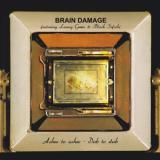
By 2004, dub had a history stretching back more than thirty years. This remarkable longevity can easily be explained by the evolving nature of this musical genre, which is constantly changing both artistically and technically, from Kingston to London, New York, and more recently Berlin, Paris, Lyon and Saint-Étienne. For example, it is worth noting that for some years now, in France and elsewhere, a good number of artists have been thinking in terms of dub from the outset, breaking free from the original Jamaican model, which involved drawing inspiration almost systematically from an existing vocal track. Thirty years on, with the release of their second album, Brain Damage aim to reconnect with this tradition. Recent collaborations with the two vocalists, Learoy Green and Black Sifichi, have indeed provided the ideal source material for the creation of five tracks, each rendered in their respective dub versions, thus forming an album with a symmetrical, even geometric character - from its very structure right down to its title: 'Ashes to ashes / Dub to dub'. At the heart of the project lies the astute choice of two guests, each operating in diametrically opposed spheres yet brought together for the occasion, thereby emphasising a certain 'unity of the circle': 'the unity of the circle'. Born of a genuine artistic vision, this geometric, symmetrical aesthetic-omnipresent in every detail of the album, both auditory and visual-complements Brain Damage's 'square' and robotic side, with its three-dimensional evocations. Always working in close collaboration with the very latest digital technologies. This brings to mind 'the balance of the cube'. Finally, the title itself, 'Ashes to ashes / Dub to dub', should be understood as a reference to the transience of all things in this world, against a backdrop of widespread, globalised, international, national and local crises_
Gi Gi describes his process as “dubwise sampledelia.” It begins with fragments and ends somewhere else entirely, destabilizing its source material until it stops pointing backward. A borrowed sound, looped and bent, eventually forgets where it came from; it stops referencing anything but itself.
This liquid sensibility shaped his earlier work, music that hovered between drift and propulsion, suggesting the dance floor without fully stepping onto it. Presence was implied, edges stayed soft. The center was always there, but diffused like mist on a screen.
With In Lieu, that center comes into focus. Half written in Texas, half in Australia, the shift isn’t simply geographic, but internal. The record moves with a coiled, anticipatory energy; the drums arrive with more force and the bass organizes the room instead of melting into it. It's dense with the feeling of more bodies in the frame. Textures still smear and refract, but they move around a clearer axis.
Where past records circled their core, these inhabit it, pulling closer to the body. “Some Of” and “Arque” lean into low-end pressure without abandoning his instinct for drift. "Pink Dirt" circles around mechanical drums and dizzying vocal chops, head-down and visceral. Elsewhere, voices gain newfound contour, materializing in “Downswept” with intimate musings and nearly forming a lead vocal on the title track before dissolving again.
In Lieu moves with a newfound confidence, compressing inward, sounding closer to the source of its own pulse.
out of Stock
Last delivered 18 days ago available to reorder, subject to availability
ONE STEP CLOSER TO FULFILLING THE GLOBAL DREAMLAND CONTINUUM. THE RESULTS WILL KEEP YOU MOVING… ALL NIGHT. THE CIA ATTEMPTED TO CONFISCATE OUR TECH BUT HOUSE NATION INTERCEPTED THE CASE. THEY CAN’T STOP US FROM GROOVING. 4TH DIMENSION SONIC ENGINEERING PREVAILS AGAIN.
Label head GD returns to global swing with new EP, "Come Closer."
Following "Gary's Dreamland," his last outing on the label, Garrett continues to refine a sound that's distinctly his own. With "Come Closer," he delivers another confident, fully realized EP. Featuring a collaboration with Shanny Wise of Fcukers, marking a first-time collaboration between the two.
Garrett doesn't cut corners, and it shows. Every track here reflects the same attention to detail that's defined his output for years, pushing his catalog forward while staying true to the underground sensibility he's known for.
out of Stock
Last delivered 2 days ago available to reorder, subject to availability
In the ever-evolving landscape of the underground music scene, few bands have made an impact quite like Selofan, an immensely talented duo of Joanna Pavlidou and Dimitris Pavlidis, has carved a niche for themselves within the international pantheon of darkwave, post-punk, and '80s synthpop, blending these influences to create a sound uniquely their own. Their journey, marked by a commitment to artistic integrity and evolution, has taken them from the cozy confines of local venues to the grand stages of international festivals, earning them a dedicated following and critical acclaim along the way. Their sixth album, Partners in Hell, released in October 2020, navigated the band through unprecedented times, testing their adaptability and resilience. Despite the hurdles to performing live and the global pandemic's challenges, Selofan emerged stronger, embarking on international tours with a newfound appreciation and connection with their global audience, during this period of introspection and isolation, Joanna Pavlidou embarked on a new venture, GIOVANNA, released under Selofan’s house label, Fabrika Records. GIOVANNA, which places Pavlidou at the helm of vocal and lyrical composition, represents a full on foray into synth-pop. showcasing a different facet of her artistic identity, with lyrics entirely in Greek. In 2023, Selofan hit the circuit hard, lighting up revered festivals with their presence. They stood shoulder to shoulder with heavy hitters like Molchat Doma and Lebanon Hanover at Grey Scale and performed with with the likes of The Sisters of Mercy, VNV Nation, and She Past Away at the Death Disco fest in their hometown of Athens. With each album they have released Selofan made significant strides in their evolution, deepening their engagement with their art. And their forthcoming seventh full length studio release, Animal Mentality, is poised to be their most compelling work yet. Animal Mentality unfolds as a labyrinthine journey through the elemental aspects of human emotion and experience, set against the backdrop of Selofan's signature darkwave sound. Each track on the album delves into different facets of the human condition, from the depths of desire to the pangs of isolation, encapsulating the duo's profound understanding of the intricate spectrum of human emotion and subjective experiences. The album kicks off with "Sticky Fingers," a track that melds cinematic scope with a haunting storyline, reminiscent of Jean-Michel Jarre's icy synths and a lyrical nod to Joy Division. This opening salvo revisits the tragic allure of classic car accident songs, weaving a tale of joy turned to sorrow amidst the snowy Alps. "Love's Secret Game" delves into the depths of forbidden desire, with vocals that echo the melancholy timbre of Xmal Deutschland, Lebanon Hanover, and Nico. It's a tale of passion and ephemeral connection, promising an enduring presence despite the inevitable fracture of time and distance. In "Lucille," sung by Dimitris Pavlidis, the plot is ensnared in the machinations of a tempestuous affair, with gothic undertones evoking the dramatic soundscapes of Ultravox and Clan of Xymox. The lyrics are steeped in danger and desire - a dance with the shadows. "Sacrifice Me" plunges into the abyss of despair, driven by a Bauhaus-esque bassline. It's a plea for release from the chains of alienation, a yearning for a final gesture of solace in the face of overwhelming darkness. "Bluebirds" offers a poignant reflection on solitude, with the fleeting imagery of bluebirds symbolizing the elusive quest for happiness. The song serves as a meditation on the internal struggle to maintain hope in a world shaded by sorrow. The narrative shifts with "Glassplitter," where German lyrics paint a portrait of deceptive allure and toxic entanglement. We are confronted with irresistible danger, masked by a veneer of beauty. "Ignoranz" continues the exploration in German, pondering the universality of misunderstanding. It's a reflection on the subjective nature of truth and the shared human experience of ignorance. "Behind My Eyelids" closes the odyssey, a contemplation on melancholy and metamorphosis. The phoenix rises from the ashes of betrayal to the brighter realm of renewal - a beautiful homage to the resilience of the human spirit amidst the often harrowing cycles of life. More than just an album, Animal Mentality is a milestone in Selofan's career, marking a decade of musical innovation and growth. It's a testament to their enduring spirit and a bold step into new realms of artistic expression. As Selofan continues to evolve, they remain at the forefront of their genre, pushing boundaries and exploring the depths of the human psyche through their haunting melodies and poignant lyrics.
»Cosmogonical Ears« is Amosphère's first album for Hallow Ground. Following her contribution to the Swiss label’s »Epiphanies« compilation and her 2021 full-length debut »More Die of Heartbreak« on 33-33, it features three expansive pieces. The Paris-based composer and multidisciplinary artist delves deeper into themes of time, space, cosmology, human perception, and psycho-physical effects, crafting profound sonic meditations. Drawing on a minimalist approach while blending electronic and acoustic elements, Amosphère’s long-form compositions are living, breathing entities whose sonic richness and evocative power unfold gradually over time, putting »Cosmogonical Ears« in direct kinship with previous Hallow Ground releases by artists such as Kali Malone and FUJI|||||||||||TA.
The album opens with its longest piece, »Land of eternal delight,« composed for the Buddha10 exhibition at the Museo d'Arte Orientale in Turin. Written during three years of isolation—a period in which Amosphère explored meditation practices and diverse belief systems—it merges mythology with personal transcendental experiences, reflecting on a challenging time for humanity. »By blending Buddhist philosophy and sculpture with my own meditation practices, I sought to explore a way for people to transcend the boundaries of space and time—not as a believer, but as an observer,« she explains. Featuring handmade ceramic instruments and recorded by Thomas Lefevre, the piece combines Amosphère’s electronic organ with Marc Lochner’s flute contributions, creating a sound that is simultaneously minimalist and expansive.
The concept of teleportation and how it challenges traditional notions of time and space serves as the foundation for the second piece. »Recent advances in quantum physics suggest that teleportation might be possible through quantum entanglement,« Amosphère notes. »What if science fiction is becoming reality—or has already existed in ancient times?« Drawing inspiration from theories proposed by physicists such as Roger Penrose, Amosphère again worked together with flutist Lochner, this time using her VCS 3 synthesizer. »Teleportation« weaves single notes into intricate, non-linear patterns that defy conventional logic, creating a complex auditory tapestry. The last piece »Black hole in, white hole out« was recorded on Corsica and features Miao Zhao’s bass clarinet drones alongside Amosphère’s church organ. It imagines the possible sound of crossing a black hole while also suggesting the study of its theoretical exit and its potential applications for large-scale time and space travel.
The questions posed by »Cosmogonical Ears« do not yield straightforward answers. Instead, Amosphère’s restrained yet intricately layered compositions require full immersion and concentration from the listener. As expressed by the album’s title—which envisions the birth of a new universe through listening—»Cosmogonical Ears« offers an experimental approach to auditory perception as a tool for seeking truth, freedom, and harmony between the outer world and the inner self.
Riva Starr teams up with Australian duo Close Counters for a sun-soaked debut on Heist.
What do you get when you put an Italian house legend in the studio with 2 of the most talented artists from Melbourne? Have a listen to the newest release on Heist and you’ll find out. On their ‘Push your luck’ EP, Riva Starr, Close Counters and UK soul singer Andre Espeut bring a heavy dose of jazz & soul and most of all, upbeat dancefloor energy. Whether it’s the deep soulful vibe of the title track or the house meets jazz-funk energy of ‘Gearbox’, this EP brings together everything we love about house music.
‘Push your luck’ comes right in the middle of Close Counters’ world tour, just after Riva Starr’s album ‘Keep me on the dancefloor’ and is the follow up to their recent collab ‘Jinga’ on Riva Starr’s own Snatch Records. We all know Riva Starr from his 2013 Fatboy Slim collab ‘Eat sleep rave repeat’, his work with Groove Armada, and more recently his collab with Prunk on his PIV records debut album. Close Counters have already worked with Heist mainstays Fouk and had their breakthrough moment with their 2023 album ‘Soulacousta II’, which got wide support ranging from Gilles Peterson to Jyoto and Folamour.
Their ‘Push your luck’ EP kicks off with the title track featuring the silky vocals of Andre Espeut. When we first heard this song, we immediately got transported to the soulful sound of the mid 2000s led by Recloose’s unique track ‘Dust’ with Fat Freddy’s Drop singer Joe Dukie. It’s moody, stripped back, and bouncy at the same time. The lush chords, disco bassline, and vocal harmonies all make for a track that goes beyond genres and trends. This is a future classic.
‘Gearbox’ is a disco-tinged piano jam full of live elements, rolling congas and disco bleeps, where the musicality of the Close Counters boys comes in at full speed. This song takes its inspiration from the Brazilian jazz-funk of legends Marcos Valle and Azymuth, with a clear sense of modern-day dancefloors and a love for electronic noise. Also; 10/10 for creatively naming the track after the glitchy electronic sound that freaks & funks throughout the track.
On the flip, ‘Dizzy’ sees the trio go more into disco-house territory, again teaming up with Andre Espeut for a track that blends catchy vocal loops with a tight groove and lush chords. The EP finishes with a club dub of ‘Push your luck’ for those in favor of more groove and less vocals.
We’ve had Riva Starr and the Close Counters boys on our radar for a while, and they landed on Heist with the perfect combination of musicality and dancefloor power. We hope you like this release as much as we do!
As always, play it loud and share the music.
Lars & Maarten
out of Stock
Last delivered 17 days ago available to reorder, subject to availability
I’dgained some notoriety as a music producer and DJ but I hit a horrible case of writers block around 2018.
The problem I was finding was that I was trying to shoe horn every smart arsed clever dick musical reference I had into the music I was making, but the function of dance music is to make people dance, not to show people who broad your musical references are, so I was making pretty shitty music that landed in the middle and didn’t achieve either aim.
To tackle this I ended up committing to just trying to make the most expressive and wanky experimental stuff I could. I was immersed in club culture at the time so the whole enterprise started as a joke, hence the name “Bed Wetter”. However when I fully submitted to just naked exploration the really unexpected thing that happened was that I found myself unavoidably having to deal with a lot of my own bullshit. That bullshit turned into the “Billy Mill is Dead” album, which was essentially the sound of me excavating my own life and looking at how I felt about where I was from, where I was headed, my family, my history, my region and all of the things i have conflicting feelings about.
It was partially catharsis and also a bit of deprogramming around being able to call myself an artist after being raised to believe that wasn’t an option for me.
I self released Billy Mill is Dead in the months before the pandemic and it found it’s fair share of love in the places I hoped would connect with it, and just the right amount of being ignored by people who I’m pleased didn’t feel it. This all lead to me being emboldened enough to apply for an artist in residence position at a big regional opera house months later in the middle of lockdown.
My feeling was that if my DJ career was potentially over for the remainder of my lifetime then there was no harm in exploring this alternative method of expression to see where it could take me.
I submitted a ridiculously ambitious plan for what I would like to do as a project, and to my absolute shock I was selected for the position.
I was 40 years old and from a scarcity background so I had a potentially unique response to that kind of validation for the first time and what followed next was a process of me just coming back with bigger and more ridiculous ideas just to find out at whatstage they’d tell me to stop.
The thing is, nobody did. I got as far as suggesting writing a full symphony to be performed by an orchestra before my own nerve gave out and I decided that was probably as far as I should push things.
The problem with people giving you permission to do things is that you then need to go out and figure out how to do those things.
The biggest issue for me, beyond raising the money to pay for everything, was how does a person actually write a symphony?
I was introduced to Fiona Brice, a multi instrumentalist and orchestral arranger. She’s also a recording artist who releases on Bella Union. On top of that she’s a violinist who used to be part of the band Placebo and who used to appear regularly playing for other bands on things like Top of the Pops.
Not only was Fiona uniquely placed to not look down on the strange provenance of someone from an Acid House background wanting to write a symphony, but more to the point we really hit it off from day one.
Fiona coached me in the essentials of writing for an Orchestra, and then I went off and wrote the 8 movements.
I’d love to say I laboured for years over this bit, but it took about 2 weeks in total. I’d also love to say what I wrote was a complete symphony, but the version of this which is solely me feels like looking at something without your glasses on. The shape,feel and borders were all there, but the definition was absent. Fiona taught me the broad language of a symphony, but without her it would have lacked all intonation, nuance and detail. Where I had shaped ideas with a hammer, she brought out my meaning with precision using a scalpel.
I think the prodigiously quick turnaround for the music is as much proof of how conceptually and musically aligned Fiona and I are. I know we’re both incredibly proud of what we’ve created.
It took nearly 2 more years to stage the debut performance in what was potentially the most traumatic period of my life which saw me embroiled in an international crisis with my own family and the death of my father, all with the backdrop of COVID.
The work itself is inspired by the working class experience, but it’s also a comment on how we get to decide what we are and how we’re defined, and we get to choose what we do to prove these things.
The original recording was contractually impossible to ever share again, so we re-recorded it in a working men’s club with jobbing (albeit world class) players. In many ways it’s a record that feels like it shouldn’t exist, which is why we’re all so happy that it does.
Whirr and Luster have been orbiting each other for years, bound by a shared language of glide guitar, buried vocals, and volume as emotion. A through line that’s only deepened by Nick Bassett’s hand in producing and mixing the majority of Luster’s previously recorded output. The Whirr & Luster Split pairs one of American shoegaze's most storied bands with one of its most vital new voices across four new songs. Out on 12" EP, CD EP, and digital via Freewhirl Records. Splits are sacred territory for Whirr. More than a decade after the band helped define the modern heavy-shoegaze landscape, the Bay Area five-piece returns with its first new material in years. “Spiral Again” opens the record in classic Whirr fashion: an avalanche of guitar wrapped around a lyric about losing yourself in someone else’s gravity — spiraling, intertwining, coming down together. “Wish I Could Give You The World” follows, one of the most openly romantic songs the band has ever recorded, all wildfire imagery and dizzy devotion, desire rendered at full volume. Produced by Whirr and Zac Montez, both tracks find the band in signature form: enormous yet tender. On the flip side, Los Angeles' Luster continue their run as the standouts of the new shoegaze generation. Formed with the intent of pushing the genre forward rather than reenacting it, Luster fold electronic pulse and '90s texture into walls of glider guitar, and the two contributions here find the band in peak form. "Against the World" is a love song as a locked door — it's you and me, us against the world — claustrophobic and comforting in the same breath. "Forever" closes the record in a haze of doomed-romance repetition, a mantra of do you feel it now dissolving into the knowledge that nothing lasts. Also produced with Zac Montez, the songs make the case plainly: Luster aren't students of the form. They're peers. Taken together, the four songs read like a conversation. About distance, obsession, and the ache of never being able to give someone enough — carried across two coasts and two generations of a genre that refuses to fade. Loud, longing, and gone too soon: the Whirr & Luster Split, out September 18th. Whirr and Luster celebrate the release and cement the collaboration with two shows — the only U.S. Whirr performances of 2026, with no shows planned beyond them. Each night features a unique set built from rarities and live debuts, alongside exclusive vinyl variants and merchandise available only in that room, on that night: 9/18 — Los Angeles, CA @ The Wiltern 9/20 — New York, NY @ Brooklyn Paramount Two nights, two coasts, and no telling if there’s a next time — for the songs, the pairing, or the band itself.
Pioneering Ghanaian musician King Ayisobareturns September 4, 2026 with his forthcoming seventh album Pure Confusion, recorded and produced by On-U-Sound’s Adrian Sherwood.
Ayisoba is one of Ghana’s most distinctive musical voices. The world’s foremost player of the kologo - a homemade two-string lute fashioned from a calabash and covered in goatskin - he delivers fiercely political and socially observant songs using three different voices, including the voice of his grandfather that possessed him as a child. Sherwood meanwhile is the pioneering British producer and founder of On-U Sound whose hugely influential career has connected dub, post-punk, industrial, hip hop and experimental music through collaborations with artists including Lee “Scratch” Perry, Mark Stewart, Horace Andy, Sinéad O’Connor, Nine Inch Nails and Depeche Mode.
Ayisoba and Sherwood first collaborated during a BBC Radio 3 Late Junction session at Maida Vale in 2017, organised by Ayisoba’s long-time collaborator Arnold de Boer/Zea of The Ex. The pair immediately connected, and during the pandemic, when Adrian’s long-time African Head Charge collaborator Bonjo Iyabinghi Noah was in Ghana looking for musicians to collaborate with Sherwood suggested Ayisoba, who eventually featured on two tracks on African Head Charge’s 2023 album A Trip To Bolgatanga (Bolgantanga is the region Ayisoba is from). Ayisoba then returned to the UK in late 2024 and travelled to Sherwood’s Ramsgate studio where the pair laid down the songs that would become Pure Confusion: “All the songs were already in my head,” says Ayisoba. “This album is all recorded live, over one afternoon. Adrian only plays live, and I like that. And he works hard - he doesn’t sleep. I woke up in the night and he was still working.”
“In my role producing it, I just let it roll to make a good vibe,” says Sherwood. “We recorded it completely live, did some programming and processing on some tracks, using dub techniques live on the mixing desk and adding some slick touches. We wanted the colours on the album to swing off what Ayisoba was doing, so we invited some friends to participate. Doug Wimbish (Sugar Hill Gang) arrived from America and lent his services playing bass on a couple of tracks; the wonderful Ivan Hussey (Celloman) played bass, keyboards and cello - cello is not really featured on African recordings so we thought it would be really cool to try it. I'd been working with Alex White (Fat White Family/Primal Scream) on my album (The Collapse of Everything) and so he added sax to a few tracks and I brought Alan Glenn down especially - Alan was in Little Axe but also Nine Below Zero and played in the Yardbirds – to add some mouth organ; Mark Bandola added a bit of flavour with his Juno, Ayisoba’s long-time Ghanian collaborator Ayuune Sule added some percussion and vocals and Matt Smith did some programming.”
“King Ayisoba is quite amazing, so unique,” Sherwood continues. “He’s got his own handmade instrument and three different voices - when you’re listening you think it’s three different people. He’s a breath of fresh air, full of love for the music which he wants to share with everybody. Some tracks we kept very straight and others we experimented with - adding dubby psychedelic little touches to trip you out a bit. The added production we did at On-U has given it a shine while still keeping it vibrant, live and spontaneous. I’m really proud of this record”.
On Pure Confusion, Ayisoba documents the anxieties, contradictions and changing social realities of contemporary Ghana. “Land is a problem for everyone,” says Ayisoba of the opening track “Property”. “If you don’t build on your land they will take it away. Plenty corruption in Ghana, plenty confusion. They sell the land to two, three, four people and then everybody fights.”
Elsewhere Ayisoba explores illness, spirituality and social stigma on “Bemba”, warning against hiding sickness out of shame or fear of “bad juju”: “People hide their sickness and the sickness kills them.” “Tewigiloge” reflects on cultural difference and open-mindedness encountered through world travel: “We will tour the whole world and we will see many things we may not like or understand… your eyes will see, but don’t talk - you have to be open-minded.”
Spirituality runs deeply throughout the album. Ayisoba’s grandfather was a respected spiritual healer whose presence the musician says still guides him today. “The grandparents’ spirits are the ones you can contact,” he explains of the spiritual chant “Nkaase”. “This song talks about the forefathers.” The closing track “Leeda-Mampanga (It’s Not My Strength)” acts as a statement of humility and gratitude: “You have to be humble, even if you have talent. God gives you the power.”
For more than two decades, King Ayisoba has been one of Africa’s most distinctive musical innovators, transforming northern Ghanaian kologo traditions into a bold contemporary sound rooted in hypnotic rhythms, social commentary and spiritual intensity. Since the breakthrough success of 2006’s Modern Ghanaians, Ayisoba has built an international following through acclaimed albums, relentless touring and collaborations with artists including Lee “Scratch” Perry, Orlando Julius and African Head Charge. Performances at Roskilde, WOMAD, Le Guess Who? and the Barbican have further cemented his reputation as a singular live performer and cultural force.
The record is largely sung in Scots language, one of Scotland’s three official languages along with Gaelic and English. “Scots gives me a way of expressing myself which is connected directly with the landscapes I love. It brings the songs alive and it is a fascinating language. The name of the record is in Scots - Forefowk means the people who came before, or ancestors. When we say ‘mind me,’ we can mean a few things- remind, remember, watch over or care for me. The record explores how tradition needs to be constantly reconnected with, built upon, looked after, and shared.”
Quinie sings with a style inspired by Scottish Traveller singers. “I began singing unaccompanied Scots Song in 2015 after hearing Scots Traveller singer Sheila Stewart on the radio. Initially I felt like I shouldn't sing these songs because I'm not a Traveller, and I saw people around me doing that in a way that made me uncomfortable. But on the other hand this music made sense to me and I felt driven to learn. Over the years I have met Traveller friends who taught me that settled people sharing these songs could contribute to raising awareness. Scottish Travellers are marginalised and discriminated against in modern Scotland, despite being custodians of so many of our important traditions. So I started to perform them and tell this story. From there I built on my repertoire and started writing my own songs”.
To develop this record, Quinie travelled across Argyll with her horse. They went on a pilgrimage of sorts through the ancient landscapes of the West of Scotland to explore the interconnected relationships between people, ancestors, animals, and place. The album’s vinyl release is accompanied by a book and film, documenting this unusual research process.
Forefowk, Mind Me was recorded in August 2024 at The Big Shed in Highland Perthshire with support from Creative Scotland. Quinie is accompanied by an ensemble of musicians: Ailbhe Nic Oireachtaigh (viola), Oliver Pitt (duduk, bouzouki, percussion), Harry Górski-Brown (small pipes, violin), and Stevie Jones (double bass, recording, and mixing). Each of these artists brings their own distinctive voice, bridging contemporary experimental practice with worlds of traditional and early music.
Die unvergesslichen Klassiker der legendären Marlene Dietrich auf einer hochwertigen Vinyl-LP vereint.
Diese Sammlung präsentiert die größten Erfolge einer der bedeutendsten deutschen Künstlerinnen des 20. Jahrhunderts und lässt ihre unverwechselbare Stimme in bester Klangqualität neu aufleben.
Mit dabei sind zeitlose Klassiker wie:
Lili Marleen
Sag mir, wo die Blumen sind
sowie viele weitere unvergessene Aufnahmen.
Ob als Sammlerstück oder zum Genießen auf dem Plattenspieler – diese Vinyl-Ausgabe ist eine Hommage an eine außergewöhnliche Künstlerin und ein Muss für Liebhaber klassischer Chansons und deutscher Musikgeschichte.
Two years after his breakthrough debut Drifter established him as one of the most authentic new voices in modern blues, Jovin Webb returns with Son of a Sinner, a raw and powerful follow-up on Blind Pig Records. Produced once again by multi-Grammy winner Tom Hambridge and recorded in Nashville, the 11-track collection finds the Baton Rouge native digging deeper into his Southern roots, where swampy blues, gospel fire, and gritty Southern rock collide. Across songs of temptation, consequence, and hard-won redemption, Webb confronts his past, owns his vices, and reaches for salvation even when he knows he might fall short—capturing the tension between Saturday night and Sunday morning. Son of a Sinner is Jovin Webb at his most revealing: blues music that doesn’t just tell the stories, but lives them.
It is a real testament to the enduring quality of the early tech house blueprint laid down by Eddie Richards that whether he drops reissues of his early classics or more recent sounds, they always sell out. This EP arrived last summer and soon flew off the shelves os it is back once again on purple vinyl this time and sounding as fearsome as ever. 'Destiny' is roomy, with swung drums bringing a pendulous groove as twanging modulations and freaky vocals linger in the spaces. 'The Soul' is quicker and fleshes out with broad synth stokes and a bubbly low end. It's pure dancing tackle with a moody soul.
“I like to work with a variety of instruments and set ups,” says Mark Van Hoen, sometimes known as Locust or Autocreation but here working under his own name on the excellent Plan For A Miracle, his first physical release of solo music since 2018’s Invisible Threads. ”Sometimes it’s literally in my studio, with all the hardware electronics available. Sometimes the laptop, using software instruments. Some of the tracks on this record were recorded in the desert (Joshua Tree) using a 4-track tape machine and small modular synthesiser set up. Each track was recorded in different location using different instruments, which accounts for the distinction between each piece. It’s also about my own reaction to my environment, and what’s going on in my life at the time.”
The Croydon-born Van Hoen started musical life in the early 1990s, signing for R&S records in 1993 but developing his own, myriad and distinctive style across a range of releases on Touch, Editions Mego and other labels, using a battery of instruments, including analogue synthesizers and taking a number of different approaches to recording, rather than ploughing a single sonic furrow. He has worked on a number of collaborations, including with Nick Holton and Neil Halstead of Slowdive, under the moniker of Black Hearted Brother - their Stars Are Our Home was released in 2013. “I have known Neil Halstead since 1992,” says Van Hoen. “He shared a house with me for a couple of years, and the music I was making and listening to along with clubs I was attending had an influence particularly on Pygmalion, the final Slowdive album on Creation.”
Each track on Plan For A Miracle does indeed sound like a world unto itself, a mini-environment, a weather condition, an ecosystem created for the moment. It’s a collection of tracks recorded over the past few years, released on Bandcamp - despite his apparent absence, Van Hoen works constantly. Opener “Climates”, in its exquisite limpidity, feels like a homage to Brian Eno, one of his most formative influences in his teen years, commencing with Music For Films, which he bought in 1979. “This Is For Them”, feels like a ghostlike throwback to early drum & bass or electronica, reminiscent of his own, earliest outings. “There have been a number of requests from labels to make some more music like my very early releases on R&S,” says Van Hoen. “This is part of ‘letting go’ and realising that there’s nothing less creative about going back to those styles again.”
“Pencil Of Spheres” is something else again, a magnificent, imaginary glass structure, shimmering, refracting, without visible means of suspension, a thing of impossible beauty. “Electric Lights” evokes an abandoned fairground, its lights still pulsating, its music lingering. “The Underpass”, meanwhile, insofar as it reminds of anything at all, is faintly reminiscent of Cluster or Neu’s! West German ambience, the urban mundane rendered magical, the sodium lights, the whitewashed walls. The reverberant, faintly oriental chimes of “Insight” transport us yet again, burgeoning and intensifying.
The landscapes, the skyscapes rendered on Plan For A Miracle feel unpopulated as a rule - but when he does introduce vocal elements, Van Hoen has a history of doing so to spectacular effect - think of “Real Love” from 1998’s Playing With Time, the seductive intonation of its title recurring throughout like a series of massive holograms, echoing, stuttering, breaking up, surging. Here, there are just the faintest of vocals, barely distinct, disquieting. “There’s been a bit of a game changer in recent times,” explains Van Hoen. “AI software that enables you to extract vocals and instrument parts from virtually any recording. That means sampling individual parts from existing sources is no longer limited to the original mix exposing certain parts soloed. The vocal parts I use are from multiple sources and often pitch shifted altered rhythmically and melodically.“ There’s further vocal chatter on “I Really Do”, proceeding at a faster pace as if giving chase, or being pursued - distant, enigmatic. “The Music”, meanwhile, its beat tolling, lost in its own fog of static, features a curious intonation, like the ghost of a lost Walker Brother.
Sadly, the album’s title is in reference to a personal tragedy on Van Hoen’s part - the loss of his wife. Titles such as “I Won’t Give Up”, which faintly reminds of another Eno masterpiece, Another Green World, in its nautical hurly-bury, or the pastoral strains of “Mrs Who”, heavily clouded with sadness, seem to allude to this. “In fact the record was recorded entirely before she passed away,” says Van Hoen, “most of it before she even became very ill. The title was given to the album when it started to look like she wasn’t going to make it beyond a few months. It was something Osho said - “plan for a miracle” - so it was a statement of hope. Unfortunately it was not to be.” Although the album is non-thematic, non-specific in its atmospheres, sound paintings, elegant structures it most certainly stands as a magnificent monument to Osho’s memory.
-David Stubbs.
out of Stock
Last delivered 33 days ago available to reorder, subject to availability
Samosa Records brings the heat just in time for the summer months with Volume 3 of the electrifying ‘Earth, Wind & Funk’ series – landing a slick four tracker that will relieve you of your socks and undergarments…
Kicking Vol.3 off is Roberto Telll with ‘It’s Magic’ – an unstoppable, bass driven leviathan of a track with perfectly balanced vocals and groovy, punchy beats. ‘It’s Magic’ straddles that sweet spot of disco flavour expertly infused with a peppery funk spice. Mesmerising.
Track 2 sees the welcome return of label favourites and fellow Italian groove machine Dirtyelements with ‘Get On Down’ (De Gama Re-Groove). The mid-tempo calypso rhythm on this slice of leg-wobbling perfection is outrageously infectious. Dirtyelements has yet another solid, stomping disco builder bursting out of the lab with a mission to cause mayhem.
On Side B, Marco Corona swoops in with his 126bpm sonic torpedo ‘Eat Me!’ From the start, ‘Eat Me!’ drums its way into your subconscious with a powerful bass drum and tribal tinted percussion. Before you know it, you’re over the border into house territory – expertly picked vocal loops and builds make this one insanely irresistible.
Closing out the EP with ‘Hey Jee’ is Italian producer extraordinaire Frank Virgilio. Step into Mr Virgilio’s taxi whilst he whisks you through downtown Manhattan en route to the best night out in town. Soaring strings, slick bass work and nimble beats are the dress code – but, don’t worry, Frank always gets you in.
Raising the Samosa bar yet again, ‘Earth, Wind & Funk Vol. 3’ is a cool antidote for those hot summer nights under the stars – best served with your favourite cocktail.
out of Stock
Last delivered 11 days ago available to reorder, subject to availability
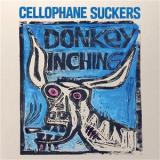
Donkey Inching', the Cellophane Suckers' ninth studio album, is set for release in September 2026. Unwavering and stubborn as a donkey, the Cellophane Suckers follow their very own path at their very own pace. The band, decried as "lead-swallowing" high-speed rock 'n' rollers, stoically let chords linger and celebrate feedback, reducing rather than harmonising, then picking up the speed when you least expect it and slowing down shortly afterwards to roll on in a Dadaist fashion the drums become a machine, the guitars increasingly embodying yin and yang. With "Execution Day", they pay tribute to Spencer P Jones, whom one might well cite as a musical influence, and Neil Young is also honoured, whose Wall of Sound goes down well with the Suckers. The fact that a text by Charles Bukowski is also "set to music" may be down to their love for red wine "Donkey Inching"... creeps stoically and stubbornly, like a donkey, into your ears. In July 2026, the Cellophane Suckers will once again be touring Brittany, and in September they'll be hosting a release party at the Sonic Ballroom in Cologne. Further concert weekends are planned for autumn/winter 2026...
Time Heals Everything is the fifth studio album from Blu and Exile, a duo that first connected in 2007 and has spent nearly two decades refining a chemistry that continues to evolve. The ten-track LP follows 2024’s Love (the) Ominous World and leans deeper into their core strengths: soul-forward production, incisive writing, and left-field choices that feel instinctive rather than experimental.
The album opens with “Soul Unusual,” a mission statement that builds on the lineage of “Soul Provider” and “Soul Amazing,” reframed through Blu’s present-day perspective. “The word special comes to mind,” Blu explains. “This is my perspective of those songs now.” Exile adds that the record went through multiple iterations before landing in its final form. “Once I changed the beat, it really came together for me, and his words hit differently,” he says, setting the tone for a project rooted in refinement and intention.
“Crumbs” pairs Blu with Rome Streetz and ICECOLDBISHOP on a golden era-inspired backdrop, taking aim at the ‘crumbs’ people are expected to accept from corrupt systems of power. The track underscores one of the album’s central themes: clarity through experience, and the perspective that comes with time.
Time Heals Everything finds Blu and Exile honoring their foundation while continuing to push forward, proving once again that soul and risk-taking can coexist without compromise. “We took a different approach with the direction while still staying true to the culture our music has built with our fan base,” Blu says. In 2026, that culture remains alive, evolving, and resonant as ever.
Unless you’ve been living under a rock you will have bound to have heard Prospa and Cloonee’s 2026 Summer anthem Free Your Mind which reimagines the iconic vocal from this legendary Fibre Foundation track. Featuring Sybil’s vocals originally heard on Oh, How I Love You, produced by Victor Simonelli, Prospa & Cloonee’s track introduces the beloved hook to a new generation of House music fans.
Now for the first time since it’s initial release in 1995 Free Your Mind by Fibre Foundation, one of the many aliases of New York house mainstay Victor Simonelli, is available again on the original label, Victor’s own Big Big Trax.
Driven by uplifting piano riffs, soulful vocal touches and groove-led rhythms, the track captures the essence of classic US garage house, delivering a feel-good energy that continues to resonate on modern dancefloors.
Featuring a selection of mixes including UK Mix, NJ Mix, Instrumental and Bonus Dub, the release offers strong versatility for DJs across house and garage sets, from peak-time moments to deeper transitions.
Rooted in the New York house tradition, Simonelli’s productions sit comfortably alongside artists such as Masters At Work, Todd Terry and Kenny Dope, making this a natural fit for stores supporting classic US house and garage.
Back on fresh 12" vinyl, this iconic release maintains strong appeal for both collectors and DJs looking for reliable, time-tested dancefloor material.
9 years from its original release, Basic by Ruby My Dear (Julien Chastagnol) is finally available again on cream and black splatter vinyl. Remaining to this day some of Julien's most direct material, tracks from the EP went on to see DJ support from the likes of Aphex Twin cementing them as peak acid-rave classics.
"Julien Chastagnol returns to Love Love on tip top form with a 12” containing some of his most acute acid material to date - a concise collection of 4 tracks that convey Ruby My Dear’s most high-octane dimension. Each track displays a complex manipulation of its fundamental elements utilising sharp shocks, whirlwind processing and the occasional moment of respite; all racing along at a breakneck pace. A glorious full frequency assault"
out of Stock
Last delivered 32 days ago available to reorder, subject to availability
First track will direclty show-up a geography. The Obscur 07 first track : a killer ! Bloody Acid Anonymous brain-digger... It never let you down... Keeping on... Acid Fantasy !
A2 is a Deviant Behavious 01 repress. Skanking Hardtek :)
B1 is a self-remix of the Mackitek HS 07, getting it even more ACID !
And B2 is again a remix from Mackitek HS 07. Going to a more slamming tom/snare breaky way.
All repressed tunes are remixes or somehow remastered...
Surprises !
out of Stock
Last delivered 40 days ago available to reorder, subject to availability
Superb liquid jungle, with some great ambiances, sometime at the limit to be trance (but not acid). A real solid groove comes with hypnotism, and melodies spreads peacefull sensations... This record is unique. And Junglelivity brings again something that does not exists... An easylistening oldschool liquid jungle... Superb !
out of Stock
Last delivered 40 days ago available to reorder, subject to availability
Analog Africa follows up its Dur-Dur Band Volume 1 & 2 reissue with the next two volumes and they again capture the Mogadishu group at their creative peak. Formed by drummer Adan Handal and Isse Dahir Qassim after their military band days, Dur-Dur became a house band at the legendary Jubba Hotel where they fused Somali melodies with funk, disco, reggae and soul into colourful new fusions. This music was recorded amid personal tragedy, including Qassim's death and key members' departures, and pushed further into electronic percussion. It's a unique window into Mogadishu's golden era, presented as ever in excellent style with photos and liner notes.
out of Stock
Last delivered 40 days ago available to reorder, subject to availability
Doomcrusher fuse stomping industrial riffs, uncompromising gutturals and uplifting hooks - modern core with electronic depth and metal roots.
In the crucible of the apocalypticatmosphere that envelops our world, Doomerusher was forged. Born out of the deepest desire to be the harbinger of change, the band emerged with a resolute mission: to defy the impending doom that looms on the horizon. Founded by Andy Posdziech (Any Given Day), Jean Bormann (Rage), Marv Kinkel & Rob Lee, Doomcrusher's sound is a powerful fusion of stomping and heavy mid-tempo industrial riffs, seamlessly intertwined with uncompromising gutturals that resolve into unfolding and uplifting hooks. The band's sound is further enriched by sophisticated electronic elements, adding depth and complexity to their musical tapestry. The ambition is clear - to redefine modern core music while staying true to the roots of the metal genre. Their music is not merely an auditory experience; it's a journey through the realms of sound, a deliberate exploration of the boundaries of heavy music. Doomcrusher stands as a defiant force against the inevitable, a rebellion that crushes the darkness of doom with an unwavering belief in the transformative power of music. DOOMCRUSHER BIO SHORT: Forged in the apocalyptic atmosphere, Doomcrusher blends stomping industrial riffs with guttural vocals and uplifting hooks. Their music, a deliberate exploration of heavy soundscapes enriched by electronic elements, redefines modern core while honoring metal roots- a defiant force against impending doom
Over the course of more than four decades, Andrew Chalk has created one of ambient and experimental music's most distinctive, influential, and enduring bodies of work. Though his recordings have taken many forms—from the raw, post-Industrial sounds of Ferial Confine in the 1980s to the fragile guitar meditations, blurred keyboard studies, and richly textured collages that populate the Faraway Press catalogue—they remain united by a singular sensibility: an uncommon attentiveness to atmosphere, nostalgia, and the power of restraint.
Mystical Obscurant offers a rare opportunity to encounter the expansive character of that oeuvre in miniature. Rather than documenting a single period or methodology, it functions almost like a survey of Chalk's musical language—a collection of new music that illuminates the breadth of his practice while distilling the singular vision that unites it.
“The Sea of Sorrow” and “Peacemaker” feel cut from the same cloth as the sacred guitar minimalism of The River That Flows Into the Sands, while “Against the Tide” would sit naturally alongside the smudged and distant keys of Blue Eyes of the March. Other pieces draw upon environmental sound and loop-based constructions, hallmarks of Chalk's more recent, vignette-like compositions. Though these recordings emerge from different moments in his long creative journey, each inhabits a recognizable world: one where melodies drift in diffuse, unhurried forms and sound gathers with painterly grace.
What is most striking when these pieces are heard together is not their difference but their coherence. Across changing instruments, collaborators, and approaches, Chalk has consistently pursued a subjunctive music of suggestion rather than declaration, creating spaces where memory and imagination are allowed to unfold at their own pace.
After making waves in the underground with their first release, psychedelic techno explorations from Winkles, A Sky Full Of Numbers head to the shoreline with a five tracker of misty electronica from Japan’s The Rituals, the new collaboration between Tasoko and DOLTZ. Across acclaimed releases on Explore, Bitta, and Delsin, the duo have separately explored deep techno, ambient, acid house and IDM, showcasing innovative sound design and spacious, understated grooves. For AFSON, the duo apply their unique point of view at a lower tempo, pulling away from the peak time to deliver a shadowy journey through dewy electronics.
Opening transmission 503M feels like tuning into a damaged frequency somewhere beyond the cloud line. Misty lead synths slither through blown circuitry while buzzing sequences and short-circuiting percussion crackle against purring bass pressure below.
There’s an eerie electricity in the atmosphere, as if the track’s been exposed to too much heat and left glowing softly in the dark. From the opening bars, The Rituals instantly establish their ability to make techno feel both mechanical and hallucinatory.
Ugan sees the duo descend deeper into the haze. Reverb-drenched synth motifs hover like distant lights through thick fog while a propulsive dub bassline locks into loose electro-funk rhythms beneath. There are echoes of hauntological electronics and early IDM experiments here, but The Rituals avoid nostalgia entirely, steering the track instead towards something crepuscular and alive.
Stepping out of the shadows, Broken Frog Lamp pushes forward on a rolling rhythmic framework as melodies slowly force their way through layers of sea mist and static interference. Atmospheric without losing momentum, the track balances submerged emotional weight with hypnotic forward motion.
The mood softens but never dissipates on Salty Air, a damp and dewy excursion into dubbed-out psychedelia. Rainfall ambience, skittering stone percussion and swelling pads fold around sliding sub bass and filtered stabs, while jazzy cymbals and syncopated hats gently pull the track forward, as the condensation clings to the hardware.
Closing cut “Night, Castle, Reflection” drifts into darker territories, where redlining drums and pulsing low-end pressure throb beneath thick layers of saturated texture. Woozy synth work smears against tightly controlled rhythms, creating an immersive and slightly uneasy atmosphere that closes the EP at its most introspective point.
Taken as a whole, the EP transports you into the midnight hour, when the comforting embrace of stillness can easily nudge you towards hallucination, dissolving the boundaries between dream state and dancefloor hypnosis.
out of Stock
Last delivered 43 days ago available to reorder, subject to availability
ELEPHANT is an album that doesn’t ask for space, it takes it.
Built on weight, grit, and undeniable presence, ELEPHANT moves like its namesake: loud, heavy, and impossible to ignore. There’s a swagger to it, a confidence that leans into chaos, desire, and the pull of living all the way, even when it leaves a mark.
But like an elephant, it’s not all brute force. Beneath the heavy stomp is something more human. There are moments of vulnerability, cracks where emotion slips through, where longing, doubt, and reflection take over. The album balances power with sensitivity, and strength with softness. A notion that even the biggest presence can feel deeply.
Like the massive creature pushing through brush and unbroken paths, ELEPHANT is about confronting what’s right in front of you; the noise, the weight, the truth, and choosing to move through it anyway.