If there is one thing we at Real Gone have learned during our rollicking ride of reissuing The Donnas’ catalog, it’s that they never did anything halfway. And we’ve tried to do the same in bringing their music back to their devout fanbase. Now, by popular demand, and after years of pursuing the rights, we are thrilled to announce that we are releasing their last studio album, Bitchin’, in an expanded, newly annotated, and newly remastered edition! This 2007 release was put out by The Donnas’ own Purple Feather label, and marks a return to the girls’ glam metal and punk roots after the classic rock leanings of Gold Medal…they’ve escaped the major label machine, and are ready to have a good time! Singalong songs like “What Do I Have to Do” and “Don’t Wait Up for Me” have definitely entered The Donnas’ canon, and tunes like “Save Me” confirm that this band’s ability to set a hook in a chorus remains unabated. For this first-ever reissue, we’ve rounded up an entire side of bonus tracks, including the two songs (“Randi” and a cover of “Safety Dance”) that were only available on the vinyl release, a track (“New Kid in School”) that was previously available only as a download, two outtakes (“We Own the Night” and “She’s Out of Control”) that showed up on the Greatest Hits Vol. 16 comp, and a track that only came out in Japan (“Can’t Keep It a Secret”). The whole thing’s been remastered for vinyl by Mike Milchner at Sonic Vision, and our gatefold-plus-insert once again includes fresh commentary by Brett Anderson aka Donna A. Bitchin’ comes in a double scoop of strawberry with black swirl vinyl…we’re here for the party!
Heavyweight psychedelic improvisers EarthBall are back with their third and most monstrous record to date: ‘Outside Over There’, released on Upset The Rhythm (Nov 7th). Born from the haunted basements of Nanaimo, Canada, the quintet thrives on spontaneity, shaping improvisation into jagged hallucinations and ecstatic eruptions.
Recorded live-off-the-floor in 2024 in Jeremy, Izzy, and Kellen’s basement, and mixed by drummer John Brennan, ‘Outside Over There’ is an album that feels both summoned and inevitable. Each track lands with uncanny purpose, as if uncovered rather than written.
The opener, 100%, features a cameo from comedian and English icon Stewart Lee, who lent his blessing for the band to use a fragment of his stand-up. The album was mastered by John Dieterich (Deerhoof), with liner text contributed by longtime comrade John Olson (Wolf Eyes). Olson describes the album in his unmistakable style:
“This eight-track odyssey unfolds like a dreamscape, where whispered incantations brush against the shadowy fringes of the cosmos, and wild, Cézanne-inspired rock anthems erupt like geysers of color in the midst of a western warm and wet rain storm… culminating in the sprawling eleven minute masterpiece, ‘And The Music Shall Untune The Sky,’ aptly dubbed the Earth Crusher. A creation so utterly deconstructed and intertwined with the pulse of nature itself that if AI was called upon to conceive ‘Outside Over There’ anew, it would just spit back, “F.U. in Tree Font”. An enchanting invitation for even the flat-earthers to join the circle, if only just a little.”
EarthBall’s trajectory has been relentless. Their 2024 album ‘It’s Yours’ was praised by The Quietus as “fully aggressive and fully life-affirming,” and by The Wire as "a boisterous mind-melting album”. The band’s live double set LP ‘Actual Earth Music Vol. 1 & 2’ (2025) captured blistering performances: a performance opening for Wolf Eyes at the Fox Cabaret, and a Café OTO improvised throw-down featuring Chris Corsano and Steve Beresford. These releases on their own confirm them as one of Canada’s most vital experimental exports, not to mention the impressive self-released discography on their Bandcamp. The band’s reach has stretched far beyond their west coast roots with a UK tour May 2024, plus this past June, EarthBall closed Montreal’s Suoni Per Il Popolo Festival alongside Pulitzer Prize-winning composer Raven Chacon. This November they will perform at Le Guess Who? Festival in Utrecht, with a European tour to follow (tour dates below). Outside of EarthBall, each member carries their own torch. Jeremy Van Wyck, founding member of the legendary Shearing Pinx, has toured extensively, released over 100 records, and has been a vital force in the Vancouver and West Coast underground for the past 25 years. He and Isabel Ford (Izzy) play together not only in EarthBall, but also in Psychedelic Dirt, Shearing Pinx, Behaviours, and Crotch.
John Brennan collaborates widely, including recently with Endlings (Raven Chacon and John Dieterich), Evichen (Victoria Shen), Francesco Fonassi, Plan Your Future (with Greg Saunier of Deerhoof), Brennan/Corsano duo and Physics with John Dieterich. Kellen Maclaughlin performs with KVMP and Ora Corgan, while saxophonist Liam Murphy is a west coast staple, playing with the best across Vancouver Island and the mainland. On three of the tracks of ‘Outside Over There’, the band is joined by their comrade Justin Patterson, who also plays with Brennan in the duo Modale. This cross-pollination fuels EarthBall’s sound - a collective improvisation, psychically overdriven, and grinding into bloom.
Outside Over There’ is more than an album though, it is a ritual, a gathering of sound at the forest’s edge; where feedback, saxophone screams, and ecstatic vocals dissolve the boundary between chaos and clarity. EarthBall invite you into their circle, to share in the joyful terror of spontaneous creation. ‘Outside Over There’ will be released on November 7th through Upset The Rhythm digitally and as a limited blue-in-black vinyl LP.
The Dears have made some of the most beautiful music of the past quarter century, but also some of the most defiant, with an attitude and emphasis that seems to blend the operatic with a punk sensibility. On their new album, "Life Is Beautiful! Life Is Beautiful! Life Is Beautiful!", The Dears are again at the top of their form, coming back with passionate, compassionate, urgent music that uplifts, explores dark corners, and ultimately shines out in a way that's absolutely gorgeous, with an edge.
""Life Is Beautiful! Life Is Beautiful! Life is Beautiful!" feels like a new masterpiece and provides further evidence that The Dears are a vital part of the musical landscape, and also just completely doing their own thing, as ever." "If I love The Dears, if you love The Dears, it's because that orchestral, symphonic feel, those gorgeous melodies, are grounded in a gritty, gonna-die-on-this hill mentality and a heady intellectualism." "... my heart skipped a beat from the opening chords of "Gotta Get My Head Right"—a masterpiece of rising tension and killer melodies, layered and precise and yet roving and wild, with changes in the music and the progressions that alter your brain while listening. What follows is an album that's as various and yet as unified as that first track. Few bands can achieve this kind of complexity while also making it seem timeless and so very perfect." "There's no one like The Dears and there never will be, and I really appreciate that so very much." - excerpts from the album bio, written by New York Times bestselling author Jeff VanderMeer
The Dears' 9th studio album, "Life Is Beautiful! Life Is Beautiful! Life Is Beautiful", pressed on gold vinyl in a limited edition of 1000, will release worldwide 11/7 via Next Door Records.
Hüsker Dü. Live. 1985. Das transzendente Punk-Trio aus Minneapolis in seinem explosivsten Jahr, live aufgenommen auf der Bühne im First Avenue, in der vielleicht am besten klingenden Aufnahme der gefeierten SST-Ära der Band. Diese 4xLP/2xCD-Edition enthält Beau Sorensons Restaurierung der 21 Songs des gesamten Sets vom 30. Januar 1985, dazu 20 zusätzliche Live-Tracks aus dem weiteren Tourneeverlauf des Jahres und ein Deluxe-Booklet mit detaillierten Informationen zu den zwölf geschichtsträchtigen Monaten von Hüsker Dü. Wie klingt eine Legende, in dem Moment, wenn sie geschrieben wird? Betrachtet man das Jahr 1985 durch die dynamische Linse der Independent/DIY-Musik, so gab es Mitte des Jahrzehnts für Hüsker Dü einen kraftvollen und unbestreitbaren Sprint von der rauen Punk-Institution bei SST zur künstlerischen Empathie bei Warner Bros. Die New York Times bezeichnete die Band als "die beste, die aus der Hardcore-Szene hervorgegangen ist". Im Einklang mit diesem Lob zeigte Hüsker Dü ein kreatives Tempo, das in keiner anderen Musikära zuvor oder seitdem jemals erreicht wurde. Nachdem sie im Juli des Vorjahres mit dem Doppelalbum "Zen Arcade" die aufkeimende Alternative-Rock-Bewegung sprengte, veröffentlichte die Band nur sechs Monate später, am 14. Januar 1985, das epochale "New Day Rising" und hörte nie auf, dem Sonnenaufgang über dem Hidden Beach nachzujagen, der das Cover des Albums zierte. Am 30. Januar 1985 erreichte Minneapolis am Abend zum Zeitpunkt des Konzerts -11 °C, was einem gnadenlosen Temperatursturz von 19 Grad gegenüber dem Tageshöchstwert von 8 °C bedeutete. Die 1500 Besucher im First Avenue brauchten jedoch kein T-Shirt, geschweige denn eine Daunenjacke: Von den ersten blendenden Momenten von "New Day Rising" an war klar, dass Bob Mould, Grant Hart und Greg Norton fest entschlossen waren, jedes Molekül im Raum in Brand zu setzen. Ihre Setlist bot eine nächtliche Kaskade von Feuerbällen aus den Alben "Everything Falls Apart", "Metal Circus", "Zen Arcade" und "New Day Rising" sowie fünf neue Songs, die später auf "Flip Your Wig" wieder auftauchen sollten. Außerdem würdigten sie ihre rockigen Vorfahren: mit einer rasanten Version von "Eight Miles High" von The Byrds, einer turbulenten Interpretation von "Helter Skelter" von den Beatles mit Dave Pirner von Soul Asylum, einem Pop-Punk-Remake von "Ticket To Ride" ebenfalls von den Beatles und ihrem charakteristischen Cover von Sonny Curtis' Mary-Tyler-Moore-Titelsong "Love Is All Around" zum Abschluss. Die First-Avenue-Bänder von 1985 zeigen Hüsker Dü in Höchstform mit bereits beliebten Songs, ein paar Jahre bevor sie ihren Status als Blaupause für den kommenden Alternative-Rock-Boom endgültig gefestigt hatten. Dieses Box-Set feiert diese Aufnahmen, die vielleicht die besten Hüsker-Dü-Aufnahmen sind, die während der legendenhaften SST-Jahre der Band produziert wurden. "Wenn ich an diese Zeit zurückdenke", kommentiert Greg Norton, "waren das drei Jungs, die das taten, was sie liebten, Spaß hatten und im Grunde anderen Menschen zeigten, dass man sich selbst treu bleiben kann, seiner Musik treu bleiben kann und sich nicht der Mode oder den Erwartungen beugen muss, um etwas wirklich Großartiges zu schaffen."
Unfassbar! Cosmic Psychos kehren mit erstaunlichem Geständnis zurück: "I Really Like Beer"! Über 40 Jahre albern-schlauer Punkrock werden mit einem brandneuen "Konzeptalbum" über Bier fortgeführt, obwohl jedes frühere Album der Jungs auch irgendwie ein Konzeptalbum darüber war. Die Bierväter des australischen Punks klingen wie die Ramones mit Crocodile Hunter als Frontmann und schreiben Songs in einem unverkennbaren Down-Under-Stil über's Saufen, Raufen, Roadkill und die beste Zeit des Lebens. Die knallharte Herangehensweise der Jungs an den Punk hat sich als nachhaltig erwiesen und viele andere beeinflusst, von L7 und The Meanies bis hin zu The Chats und Amyl & The Sniffers. Das lärmende Punk-Trio wurde ursprünglich um 1985 von Bill Walsh, Peter Jones und Ross Knight in Melbourne gegründet. Robbie Watts ersetzte Jones 1990/91 an der Gitarre, und nach einer zwischenzeitlichen Pause gingen die Psychos 2005 zurück ins Studio, um ein neues Album aufzunehmen, wobei der neue Schlagzeuger Dean Muller (ex-Voodoo Lust) Bill Walsh ersetzte. Nach dem Schock über den tragischen Verlust von Robbie Watts im Jahr 2006 stand die Option im Raum, "Cosmic Psychos" zu begraben. Aber Knight war überwältigt von der Trauer und der Unterstützung der Fans, sodass er mit voller Unterstützung von Robbies Kindern beschloss, dass doch noch mehr Bier getrunken werden muss. John McKeering (von The Onyas) war bereits seit geraumer Zeit mit der Band befreundet und wurde Ende 2006 ausgewählt, von diesem Zeitpunkt an mit Knight & Muller Gitarre zu spielen. Mit einer legendären Debüt-EP, fast einem Dutzend Studioalben, einer Handvoll Live-Alben und einer von Fans finanzierten Dokumentation mit einer ziemlich prominenten Besetzung aus der Alternativ-Szene, liefern the blokes you can trust, wieder 12 neue Tracks mit geradlinigem, bierdurchnässtem Punkrock für Fans von Celibate Rifles, Radio Birdman, den frühen Saints, den Ramones aus ihrer mittleren Schaffensphase, Hard-Ons, C.O.F.F.I.N. und Stiff Richards. Das neue Album ist Classic Psychos, australischer Punkrock, so roh, laut und herrlich dumm wie eh und je - mit gelegentlichen Lebensweisheiten, die unter einem Haufen Riffs versteckt sind. Als CD (mit Bierschutzhülle aka Jewelcase) oder auf klassisch schwarzem Vinyl oder in farbigen LP-Versionen.
Unfassbar! Cosmic Psychos kehren mit erstaunlichem Geständnis zurück: "I Really Like Beer"! Über 40 Jahre albern-schlauer Punkrock werden mit einem brandneuen "Konzeptalbum" über Bier fortgeführt, obwohl jedes frühere Album der Jungs auch irgendwie ein Konzeptalbum darüber war. Die Bierväter des australischen Punks klingen wie die Ramones mit Crocodile Hunter als Frontmann und schreiben Songs in einem unverkennbaren Down-Under-Stil über's Saufen, Raufen, Roadkill und die beste Zeit des Lebens. Die knallharte Herangehensweise der Jungs an den Punk hat sich als nachhaltig erwiesen und viele andere beeinflusst, von L7 und The Meanies bis hin zu The Chats und Amyl & The Sniffers. Das lärmende Punk-Trio wurde ursprünglich um 1985 von Bill Walsh, Peter Jones und Ross Knight in Melbourne gegründet. Robbie Watts ersetzte Jones 1990/91 an der Gitarre, und nach einer zwischenzeitlichen Pause gingen die Psychos 2005 zurück ins Studio, um ein neues Album aufzunehmen, wobei der neue Schlagzeuger Dean Muller (ex-Voodoo Lust) Bill Walsh ersetzte. Nach dem Schock über den tragischen Verlust von Robbie Watts im Jahr 2006 stand die Option im Raum, "Cosmic Psychos" zu begraben. Aber Knight war überwältigt von der Trauer und der Unterstützung der Fans, sodass er mit voller Unterstützung von Robbies Kindern beschloss, dass doch noch mehr Bier getrunken werden muss. John McKeering (von The Onyas) war bereits seit geraumer Zeit mit der Band befreundet und wurde Ende 2006 ausgewählt, von diesem Zeitpunkt an mit Knight & Muller Gitarre zu spielen. Mit einer legendären Debüt-EP, fast einem Dutzend Studioalben, einer Handvoll Live-Alben und einer von Fans finanzierten Dokumentation mit einer ziemlich prominenten Besetzung aus der Alternativ-Szene, liefern the blokes you can trust, wieder 12 neue Tracks mit geradlinigem, bierdurchnässtem Punkrock für Fans von Celibate Rifles, Radio Birdman, den frühen Saints, den Ramones aus ihrer mittleren Schaffensphase, Hard-Ons, C.O.F.F.I.N. und Stiff Richards. Das neue Album ist Classic Psychos, australischer Punkrock, so roh, laut und herrlich dumm wie eh und je - mit gelegentlichen Lebensweisheiten, die unter einem Haufen Riffs versteckt sind. Als CD (mit Bierschutzhülle aka Jewelcase) oder auf klassisch schwarzem Vinyl oder in farbigen LP-Versionen.
Unfassbar! Cosmic Psychos kehren mit erstaunlichem Geständnis zurück: "I Really Like Beer"! Über 40 Jahre albern-schlauer Punkrock werden mit einem brandneuen "Konzeptalbum" über Bier fortgeführt, obwohl jedes frühere Album der Jungs auch irgendwie ein Konzeptalbum darüber war. Die Bierväter des australischen Punks klingen wie die Ramones mit Crocodile Hunter als Frontmann und schreiben Songs in einem unverkennbaren Down-Under-Stil über's Saufen, Raufen, Roadkill und die beste Zeit des Lebens. Die knallharte Herangehensweise der Jungs an den Punk hat sich als nachhaltig erwiesen und viele andere beeinflusst, von L7 und The Meanies bis hin zu The Chats und Amyl & The Sniffers. Das lärmende Punk-Trio wurde ursprünglich um 1985 von Bill Walsh, Peter Jones und Ross Knight in Melbourne gegründet. Robbie Watts ersetzte Jones 1990/91 an der Gitarre, und nach einer zwischenzeitlichen Pause gingen die Psychos 2005 zurück ins Studio, um ein neues Album aufzunehmen, wobei der neue Schlagzeuger Dean Muller (ex-Voodoo Lust) Bill Walsh ersetzte. Nach dem Schock über den tragischen Verlust von Robbie Watts im Jahr 2006 stand die Option im Raum, "Cosmic Psychos" zu begraben. Aber Knight war überwältigt von der Trauer und der Unterstützung der Fans, sodass er mit voller Unterstützung von Robbies Kindern beschloss, dass doch noch mehr Bier getrunken werden muss. John McKeering (von The Onyas) war bereits seit geraumer Zeit mit der Band befreundet und wurde Ende 2006 ausgewählt, von diesem Zeitpunkt an mit Knight & Muller Gitarre zu spielen. Mit einer legendären Debüt-EP, fast einem Dutzend Studioalben, einer Handvoll Live-Alben und einer von Fans finanzierten Dokumentation mit einer ziemlich prominenten Besetzung aus der Alternativ-Szene, liefern the blokes you can trust, wieder 12 neue Tracks mit geradlinigem, bierdurchnässtem Punkrock für Fans von Celibate Rifles, Radio Birdman, den frühen Saints, den Ramones aus ihrer mittleren Schaffensphase, Hard-Ons, C.O.F.F.I.N. und Stiff Richards. Das neue Album ist Classic Psychos, australischer Punkrock, so roh, laut und herrlich dumm wie eh und je - mit gelegentlichen Lebensweisheiten, die unter einem Haufen Riffs versteckt sind. Als CD (mit Bierschutzhülle aka Jewelcase) oder auf klassisch schwarzem Vinyl oder in farbigen LP-Versionen.
Unfassbar! Cosmic Psychos kehren mit erstaunlichem Geständnis zurück: "I Really Like Beer"! Über 40 Jahre albern-schlauer Punkrock werden mit einem brandneuen "Konzeptalbum" über Bier fortgeführt, obwohl jedes frühere Album der Jungs auch irgendwie ein Konzeptalbum darüber war. Die Bierväter des australischen Punks klingen wie die Ramones mit Crocodile Hunter als Frontmann und schreiben Songs in einem unverkennbaren Down-Under-Stil über's Saufen, Raufen, Roadkill und die beste Zeit des Lebens. Die knallharte Herangehensweise der Jungs an den Punk hat sich als nachhaltig erwiesen und viele andere beeinflusst, von L7 und The Meanies bis hin zu The Chats und Amyl & The Sniffers. Das lärmende Punk-Trio wurde ursprünglich um 1985 von Bill Walsh, Peter Jones und Ross Knight in Melbourne gegründet. Robbie Watts ersetzte Jones 1990/91 an der Gitarre, und nach einer zwischenzeitlichen Pause gingen die Psychos 2005 zurück ins Studio, um ein neues Album aufzunehmen, wobei der neue Schlagzeuger Dean Muller (ex-Voodoo Lust) Bill Walsh ersetzte. Nach dem Schock über den tragischen Verlust von Robbie Watts im Jahr 2006 stand die Option im Raum, "Cosmic Psychos" zu begraben. Aber Knight war überwältigt von der Trauer und der Unterstützung der Fans, sodass er mit voller Unterstützung von Robbies Kindern beschloss, dass doch noch mehr Bier getrunken werden muss. John McKeering (von The Onyas) war bereits seit geraumer Zeit mit der Band befreundet und wurde Ende 2006 ausgewählt, von diesem Zeitpunkt an mit Knight & Muller Gitarre zu spielen. Mit einer legendären Debüt-EP, fast einem Dutzend Studioalben, einer Handvoll Live-Alben und einer von Fans finanzierten Dokumentation mit einer ziemlich prominenten Besetzung aus der Alternativ-Szene, liefern the blokes you can trust, wieder 12 neue Tracks mit geradlinigem, bierdurchnässtem Punkrock für Fans von Celibate Rifles, Radio Birdman, den frühen Saints, den Ramones aus ihrer mittleren Schaffensphase, Hard-Ons, C.O.F.F.I.N. und Stiff Richards. Das neue Album ist Classic Psychos, australischer Punkrock, so roh, laut und herrlich dumm wie eh und je - mit gelegentlichen Lebensweisheiten, die unter einem Haufen Riffs versteckt sind. Als CD (mit Bierschutzhülle aka Jewelcase) oder auf klassisch schwarzem Vinyl oder in farbigen LP-Versionen.
When CRIMEAPPLE and Big Ghost Ltd first linked up on their "Aguardiente" collaboration in 2016, the two came to shake the game up. The iconic Antioqueño bottle left a mark in underground hip-hop that still stands strong to this day, and to follow up they cooked up the deadliest material to do that once again with "Bazuko".
Named after the deadliest and most addictive street drug in Colombia, basuco, the album embodies the raw, uncut and unfiltered essence of their artistic process, much like the gritty remnants of cocaine paste.
CRIMEAPPLE's razor-sharp lyricism cuts through Big Ghost Ltd's masterful, hard-hitting beats, creating a visceral, addictive and immersive soundscape. With "Bazuko," the two aren't just following up on "Aguar-diente"; they're raising the stakes, delivering a project that is as potent and unforgettable as its namesake.
When CRIMEAPPLE and Big Ghost Ltd first linked up on their "Aguardiente" collaboration in 2016, the two came to shake the game up. The iconic Antioqueño bottle left a mark in underground hip-hop that still stands strong to this day, and to follow up they cooked up the deadliest material to do that once again with "Bazuko".
Named after the deadliest and most addictive street drug in Colombia, basuco, the album embodies the raw, uncut and unfiltered essence of their artistic process, much like the gritty remnants of cocaine paste.
CRIMEAPPLE's razor-sharp lyricism cuts through Big Ghost Ltd's masterful, hard-hitting beats, creating a visceral, addictive and immersive soundscape. With "Bazuko," the two aren't just following up on "Aguar-diente"; they're raising the stakes, delivering a project that is as potent and unforgettable as its namesake.
The Sludge Of The Land is the new album by digital folklore and post-exoticism Italian duo Babau. Their first full length since 2023’s Flatland Explorations Vol. 2, with The Sludge Of The Land Babau lands on Impatience with their signature audio-prestidigitation at it’s most disorientingly pungent and zonked, a uniquely contemporary approach described as the sound of a continent moving; animals, plants and minerals included.
As part of a residency at Casa degli Artisti, Milan, in 2022, Babau turned their atelier into a recording studio and performing venue thanks to Francesco Piro, who produced the entirety of the album. There, the duo improvised with different acoustic and digital instruments for several hours a day. Returning after ten years to a sound more akin to a band or small orchestra, Babau re-explores tropes and themes of exotica and jazz from their unique and off-kilter perspective of terminally-online diggers-dwellers of the internet flatland.
An homage to digital content consumption and dopamine-infused sensory overloads, The Sludge Of The Land imagines itself as an abstract sonic wunderkammer of online detritus. By diving into the world of ‘sludge content’: audiovisual chaos produced by mixing different content using split screens or dizzying patchworks of videos, Babau celebrates the formless, viscous goo, spam, chum and slop of out-of-context moving image, fast paced digital videos and lo-fi mp4 artifacts. By endlessly spiraling into the non-spaces of The Net, Babau explore the uncharted parageographies of lavacasts, mysterious Chinese anthropozoomorphic legendary beings, vampiric doomscrolling glides and doppelganger, ctrl+c & ctrl+v spiritualism. These ghosts of pointless microevents and traveling-without-moving bedroom boredom are stuffed by Babau with the epic tone and compositional approach of exotica and world music 2.0 reveries, resulting in an absurd, playful narrative of the dangers and allures of the web.
Bringing together the sound of Richard Hayman and Black Dice, Korla Pandit and Sun Araw, Tony Scott and Carl Stone, once again the duo crafts a compelling audio-textual hallucination of transglobal chimera. A multi-fi, extremely layered treasure of fifth world music.
RIYL - Sun Araw, the strangest corners of the internet, Senyawa, digital wind instruments, Nuke Watch, Black Dice, exotica, hallucinating.
Babau is the pantropical project of Artetetra founders Matteo Pennesi and Luigi Monteanni, where their fascination with exotica, world music 2.0, and field recordings merges with the compositional and improvisational techniques of computer music.
Their latest work, All the Gurls were at the Women’s Archo Ashinto, was recently released by Bamboo Shows, while the previous Stock Fantasy Zone and Flatland Explorations Vol.2, were released by Discrepant. They were selected as SHAPE+ artists in 2023, and the duo has performed at various festivals in Italy and beyond, including Fusion, Club to Club, Terraforma, Nextones, Outernational Days, Camp Cosmic, and Saturnalia. For years, they have been striving to synthesize what has been described as the sound of a continent in motion—people, animals, plants, and minerals included.
The Sludge Of The Land was produced and mixed by Francesco Piro at Casa degli Artisti, Milan, and co-produced by Babau
Drums by Giovanni Todisco, bass by Francesco Piro and piano on A4 by Vittorio Cosmo.
Master by Nick Foglia.
Art by Luca Schenardi.
The word "amateur" originates from the Latin word "amator," meaning "lover" or "admirer". This Latin term is derived from "amare," which means "to love". The French adopted "amateur" from Latin, and the English then borrowed it from French, initially retaining the sense of someone who loves or is devoted to something. Over time, the English usage of "amateur" also developed a meaning related to a lack of professional skill or experience. How did a word derived from love become a slur? Is love really so defenseless? They say love conquers all, but in reality isn’t love quite ridiculous? It has no intention, no motive, no agenda. How could it possibly prevail? It can’t be bought or sold, or so they say.Its mere existence can't be proven or even measured. What an impossible thing. Trying and failing, time and time again, no wonder cynicism always seems to win. I see “amateurism” as a delighted, even foolish, protest. Protest against everything. Of what’s expected of someone, or expected of someone to desire or strive for. To be elite, to be expert, to be professional, to be a master, to excel and succeed. Where’s the joy in that? I just want to have fun. I want to want. I want to love. And keep doing it, forever. I want to have fun, even when it’s tiring and sometimes even heaven is boring as hell. I want to be bad. I want to do my own thing. “I vant to be alone”. I want to be someone so dedicated to their passion that it starts to seem like there’s something wrong with them. All the way. We can take it all the way, and never get it back. ” - Molly Nilsson Amateur is the 12th studio album by Molly Nilsson. Deep in the teeth of a career that threatens to tip into something resembling a “legacy,” Molly Nilsson celebrates with an album recorded instinctively, quickly and bursting with so many moments of emotional brilliance and clarity it may be her greatest yet. Hers has been a career spent reaching out, perennially powerful in her earnestness, a warrior ridiculously defenceless and armed with a glittering sincerity. Shearing herself of the machinations of the music industry, recording at home, writing direct to the heart. Amateur is a jubilee for losers. A treatise in 13 songs, Amateur states clearly that we should live our life with eternal curiosity, offers us an open hand of comradeship out of the rat race. The songs on the album are both some of the most personal of Nilsson’s career and the most anthemic. First single How Much Is The World asks us to re-evaluate value in the face of a Neo-liberal system squeezing the life out of our loves. Pulsing opener Die Cry Lie satirises the commercialisation of emotion in the form of a shout-along diss-track. With a pounding rhythm track held down by gorgeous chord changes, heartbreaker Valhalla carries the torch for the main themes of the album: never growing up, making mistakes with kindness, moving on. When the drums crash in on the line “It’s going to get better now, you’ll see, going to be much better off without me” there is a world of feeling swirling about in the vocal delivery. One reading of the track might be that it’s a break up song but the subtext is classic Molly Nilsson: by living truthfully, making mistakes, we’re active agents against the myriad oppressions of the world. All The Way takes the theme for a run into the eternal sunset. It’s a manifesto for living fully. “Take it all the way, and never get it back” - it’s the process that’s the important point. The journey not the destination. Big Life, follows on like a part 2: An ode not only to Molly Nilsson’s career of endless gigs, endless connections with people, it’s a massive ode for following your dreams, doing it yourself. Closer The Bitter End is a powerful anthem for friendship, another definition of love infused in Nilsson’s work, A beautifully poignant ode to comradeship til the end, it seems to be the songwriter approaching aging, approaching life’s inevitability with the same vigour and earnestness, the same love of life she enjoyed at the onset of her career. There are moments on Amateur shrouded in reverb, slightly out of focus, forcing the listener to step deeper into the Mollyverse.. Nilsson’s open-armed beseeching to the world permeates every beat, every chord. These are songs exploding with life: the chunky, aggressive bassline on the punker Get A Life can’t hide its massive, catchy chorus. The sweeping Swedish Nightmare might be a tongue-in-cheek self-reference, but at its heart it’s a song about the duality of living life large, what is a dream, what is a nightmare? Molly Nilsson says you can’t have one without the other, and why would you want to? Here’s to making mistakes.
out of Stock
Last delivered 11 months ago available to reorder, subject to availability
funcionário delights in the freedom of creating freeform music for the first time in his career. On “horizonte”, he loosens the reins, his sound follows a wavy, organic structure rather than a rigid, formal one. If it feels freer and more colourful, that’s because it truly is.
Eight years ago, when we first encountered his work, he was composing soundtracks for imaginary video games and crafting sonic landscapes that felt like destinations for sci-fi anime characters. With “Cavalcante” (2022), he broke away from that past. It marked a turning point, he was ready to explore a “fourth world” in both sound and concept. The feedback was overwhelming.
Three years later, “horizonte” marks another evolution. He sends us music regularly, but this album stood out immediately. It felt right: more synth-driven, more open to improvisation. As he put it: “It’s like using oil pastels for the first time and discovering new possibilities. In a way, I’ve found new ways of creating using the same colours.”
Listening to horizonte is like waking up from a dream. Again and again. The opening track, “nascer”, suggests a new dawn, but it’s in “pássaros” that the vision fully takes flight: less processed, more raw, yet still detailed and expansive.
Finding new ways with the same colours has been his quiet mission all along. What’s new here aren't the tools, but the feeling. The movement. The invitation to travel with him. You can hear - and feel - his sense of wonder. Every sound radiates joy. Every moment sparks a new thought. The music moves quickly, but breathes slowly.
Tracks like “renascer” and “o caminho do regresso” echo the spirit of late-70s/early-80s Vangelis, in deep reverence. And just as you approach the end, “fantasma” arrives - a stunning closer, reminiscent of Eno’s “An Ending”. By then, it’s clear: the “fourth world” is behind him. funcionário has moved on. To where? We’re about to discover.
out of Stock
Last delivered 9 months ago available to reorder, subject to availability
Recital releases The Holy Restaurant, the new full-length album by Derek Baron, and their first solo LP since Curtain (Recital, 2020).
The album is built from years of miniature transcriptions of improvisations, functioning in many ways as a sister to Curtain. Half-thoughts and mistakes are revisited, gilded, and illuminated. The floorboards of the album are laid with piano, organ, string pads, while serrated accruements (distortions, flourishes, and recording interferences) step and drop overhead. The resulting conflux, as Baron notes in the accompanying booklet “becomes the point and the problem to explore.”
The second track “Oven Girls” opens with us galloping on a horse in some video-game meadow on a bed of MIDI strings. Abruptly, a helicopter soars over us and we transition to a latticed guitar and woodwind exploration. The album rolls on in this fashion, juxtaposing musical half-sentences within a museum of sounds rag-picked from history and daily life. Emotional interviews with Midwestern friars who build and sell caskets are set against gothic piano and guitar duets. On “Music in the Casket,” A disorienting and hilariously epic guitar solo erupts. The penultimate titular piece, “The Holy Restaurant,” sets a text written by Baron’s grandfather. A small chorus voices his words, echoing the humanistic storytelling of “Blue” Gene Tyranny’s A Letter From Home. Under sunlit piano progressions, a fleet of smokey trumpets emerges.
Running throughout the album is a series of “traces”: short melodic phrases painted over again and again with different real and MIDI instrumentation. The “luxurious asceticism of doubling” as Baron puts it. They explain, “Part of the allure for me is that the ‘original’ material is itself kind of thin, sketchy, meaningless, maybe calling attention to itself only by way of a felicitous mistake. Hearing, transcribing, and learning what was basically only ever played first on accident becomes the guiding concern.”
The album’s shifting, variegated forms and voices pass quickly; the record feels both comforting and elusive, suitable for any hour of the day.
The Holy Restaurant features guest players Ed Atkins, Lucy Liyou, Quentin Moore, Emily Martin, Dominic Frigo, Jacob Wick, and several of Baron’s family members. It is released in a limited edition vinyl pressing of 200 copies, accompanied by a booklet of effusive program notes by the composer, alongside an assemblage of photographs, scores, and artwork.
out of Stock
Last delivered 10 months ago available to reorder, subject to availability
In May, fans were treated to the first new music from Trentemøller since 2022. A new single, "A Different Light," showcased a stunning blend of prismatic space rock and folk. For anyone wondering if it foreshadowed the release of a full-length, Dreamweaver will drop in September, on Friday the 13th.
Featuring 10 tracks that traverse Trentemøller's many musical strengths, Dreamweaver also represents an obvious artistic leap, treading new ground while retaining the overall plot. Tracks featuring vocals come courtesy of of Iceland's Disa, who has been in Trentemøller's fold since the Memoria tour.
Dreamweaver's nylon string-led opening track, and first single from the album, "A Different Light," contains many of Trentemøller's trademarks: exploring dichotomies, musical shadowplay, Nordic frigidity, and warm waves. It opens the door for the steady, hypnotic "Nightfall," with its tetherless vocal, wistful guitars, and early morning desert chill. The third track in the opening trifecta, "Dreamweavers" finds its footing with a percussive soft trot, which starts after what feels like a shortwave radio scan in search of the right chords, eventually dialing in a weightless voice. Ostensibly keeping a ruminative pace with the previous two tracks, the song and, by extension, album soon opens up as the rest of the elements drop into place with a grand, luxurious burst.
Dreamweaver is about to enter its next phase. With the hatch blown off of the portal, the noisy "I Give My Tears," driven by its glissed and fuzzy bass line, pours into the void. It's followed by its sibling, the most chaotic track on Dreamweaver, "Behind My Eyes." Arriving as a piece of noise rock pandemonium, "Behind My Eyes," can't be contained in its plush vault. A whip-crack snare and convulsing guitars smash against each other in the song's verse chamber. The tension builds, as the particles collide, pushing past the point of critical mass, kicking off the chain reaction which is the chorus. At times it harkens back to the proto-gaze tracks that gave birth to dream pop, at others it newly defines what that is. There's no time to contemplate it, though, as the song disintegrates in a microphonic feedback instant.
A respite follows with the somnambulistic pair of "Hollow" and "Empty Beaches." Then, a moment of intensity returns as the soaring textures and tribal drum bursts of "In A Storm" take control, before being taken out with the ambient slo-core of "Winter's Ghost" and "Closure." This diptych wraps up an album which certainly feels on-script for Trentemøller, but is also much more psychedelic than previous offerings.
Dreamweaver will be released on Trentemøller's own In My Room label. It is an exceedingly immersive experience, bound to release any dormant hallucinations you may be harboring.
out of Stock
Last delivered 11 months ago available to reorder, subject to availability
Nils Frahm has unexpectedly confirmed details of a new collection of solo piano music, his first album since 2022’s three-hour Music For Animals. Day will be released by LEITER on March 1st, 2024, and it will be available on limited edition vinyl as well as via all digital platforms. Recorded in the summer of 2022 in complete solitude and away from his studio at Berlin’s famed Funkhaus complex, it is preceded by a single, ‘Butter Notes’, out on January 19. Day may come as a surprise to those who, over the last decade, have watched Frahm shift slowly away from the piano compositions with which he first made his name in favour of a nonetheless still-distinctive approach that’s considerably more instrumentally complex and intricately arranged. In addition, in 2021, having spent the early part of the pandemic arranging his archives, he released the 80 minute, 23-track Old Friends New Friends, a compilation of previously unreleased piano music intended to enable him to ”start over” with a clean slate. Judging from the extended, ambient nature of Music For Animals, it proved a successful gambit, but Frahm has never been able to resist returning to his first love, and those who enjoyed earlier acclaimed albums like The Bells, Felt and Screws will once again revel in Day’s familiar, personal style. Day, which contains six tracks, three over the six-minute mark, is the first in a pair of albums Frahm has lined up for 2024. In keeping with their nature, however, he won’t be making a song and dance about the release. Instead, he’ll resume his ongoing world tour, which has already included fifteen sold-out dates at Berlin’s Funkhaus as well as a show at Athen’s Acropolis. It will continue with shows all over the world, among them several sold-out dates at London’s Barbican in July 2024, where he previously curated a weekend of music, film and art, Possibly Colliding, in 2016. The album is best enjoyed in the manner in which it was recorded, in the intimacy of a peaceful, cosy room. There are muffled pedal creaks on the cyclical, quietly jazzy ‘You Name It’ and, during the palliative ripples of ‘Butter Notes’’ arpeggios, the sound of dogs barking in the streets outside. The compassionate, hesitant ‘Tuesdays’ and emotionally ambiguous ‘Towards Zero’ linger with the poignant persistence of Harold Budd’s earliest work, while ‘Hands On’ is a sometimes brighter, airier tune that sets its own, deliberate pace, and, as he has on occasions before, ‘Changes’ sees Frahm employing elements of his instrument’s construction in a ‘prepared piano’ fashion. Characterised by its confidential mood, Day confirms that, while Frahm is arguably now best known for elaborate, celebratory concerts calling upon an arsenal of pianos, organs, keyboards, synths, even a glass harmonica, he’s still a prolific master of affecting simplicity, tenderness and romance.
out of Stock
Last delivered 11 months ago available to reorder, subject to availability
Downwards present Alexander Tucker in metamorphosis from psych folk to techgnostic bard, aided by notable guests – Justin K Broadrick, Regis, Phew, Karl D’Silva, JJOWDY, and Elvin Brandhi – in a quest for disordered convention and new thrills. One up to Tucker’s outings for Alter and The Tapeworm, and spiritual successor to his »Nonexistant« trio on Downwards, »Clear Vortex Chamber« is an enigmatic take on the brownfield edgelands where the eldritch intersects electronic heck. Decades of work spread between hardcore punk, psych rock, folk, and drone — including work with Stephen O’Malley (Ginnungap) and Neil Campbell (Astral Social Club, ESP Kinetic) — feed forward into this album’s unsteady machine rhythms and cranky junkyard atonalities, where Tucker panel-beats aspects of his previous sound with a newfound industrial thrust and cyber-punky lust that suits him dead well.
A crafty example of how to mutate without losing sight of yourself, the album’s eight parts feel like a cyborg patching itself into modernity. On opener »Udug« Tucker’s signature falsetto peals from a A Scanner Darkly-style scramble suit of stereo-strobing electronics, setting a melodramatic, neo-gothic tension that riddles the album thru the knotted, fractured industrial dancehall bullishness of »Mallets« with Yeah You’s feral gob Elvin Brandhi, via a pair of standout »Fedbck« parts with Tucker’s personal idol, Justin K Broadrick (Godflesh, Jesu, and the rest), featuring the Brum deity’s claw-handed riffs and howl on the first, and smeared with Karl D’Silva’s brass in its noctilucent second part.
Regis also proves a staunch foil for the album’s most robust, club-ready cut »Zona«, hammered out from buzzing metallic drums and monotone bass drones, and pitting his severed vox against Tucker’s own androgynous harmonies to recall aspects of The Ephemeron Loop via British Murder Boys, whilst scene legend, Can and Ryuichi Sakamoto spar Phew (aka Aunt Sally) ideally tempers the flow in a relatively soothing »Sansu«, sharing more cyber-romantic, recombinant sentiments with the channelling of Robert Wyatt gone Funk Bruxaria on »Folded«.
out of Stock
Last delivered 9 months ago available to reorder, subject to availability
Anushka Chkheidze + Robert Lippok’s »Uncontrollable Thoughts« on Morr Music is the duo’s debut joint release. The Netherlands-based Georgian composer and the German sound artist from Berlin first met in 2019 in the context of a workshop programme that took place in Tbilisi, and later worked with Eto Gelashvili, Hayk Karoyi, and Lillevan on the massive »Glacier Music II« music and book project, released in 2021. This led them to engage in a less conceptually driven form of musicking and real-time composition that corresponds with their respective environments. They draw on traditions such as minimal music or late 1990s and early 2000s electronica to integrate subtle beats with elegiac organ drones, playful melodies with lush textures. The first document of an ever-shifting intergenerational dialogue, »Uncontrollable Thoughts« is a product of mutual listening outside time.
Though Chkheidze and Lippok had access to professional studios, they chose to rent a simple rehearsal space, equipped with only the bare essentials—bass and guitar amps as well as a small PA—to maintain immediacy in their working process. The music they made together corresponded to and drew on the respective possibilities and shortcomings of this studio, much like their collaboration in general is characterised by the care with which they approach each other's talents and ideas. While both had loosely defined roles—Chkheidze was responsible for the free-flowing beat programming and the evocative distortion came courtesy of Lippok, for example—they individually contributed in different ways to their joint process, which is as free of hierarchies as it is limitless. Hence, the duo’s focus on spontaneity and out-of-the-moment emergence makes them organically move beyond tried and tested conventions, resulting in music that seems to suspend time altogether.
When the first chimes on »Bird Song« announce a piece that sets rattling kickdrums against a backdrop of layered drones and rhizomatically entangled melodic elements, it becomes clear why »Uncontrollable Thoughts« carries this title: The album follows the constant detours of the subconscious of its makers, letting them explore moments of ecstasy such as on »Rainbow,« melancholy with »Field,« and the interplay of suspense and release through the ten-minute-long title track. But the different pieces also tie into one aother in various ways. The dirge-like organ drones on which »Rainbow Road« ends reappear in the beginning of »Uncontrollable Thoughts,« much like Chkheidze’s gentle yet emphatic piano chords on »Field« seem to provide the starting point from which the artist develops the striking motifs of the final piece »Opening«, whose title itself suggests that the record as a whole can and should be enjoyed as a loop. All this creates a unique, idiosyncratic temporal logic.
While there is much that sets Chkheidze and Lippok apart as solo artists, the major shared leitmotif in their respective bodies of work is the sonic engagement with space. »Uncontrollable Thoughts« is hence best understood as an extension of this practice; as an album that maps the geographies of their minds in motion, tracing musical movements as they melt into each other.
out of Stock
Last delivered 6 months ago available to reorder, subject to availability
C"mon Tigre announces their new instrumental project,Instrumental Ensemble - Soundtrack for Imaginary Movie Vol 1. This album oï¬Çers an alternate view of cinematic music: a soundtrack composed for a fictional film using a challenging and inventive method.This project investigates an alternative approach in which music shapes and guides visual storytelling. It"s the first in a series of albums dedicated to as-yet-unmade films, enabling listeners to explore music as a key component in cinematic narrative. The original story that inspired this music was created in partnership with a large language model, which was taught and instructed in substance and style to best fit the project"s artistic concept. C"mon Tigre works with AI to achieve collaborative harmony while contemplating on the unavoidable future ahead. Each track on the album depicts a scene, delivering stories about humans jugglingpersonal issues and contacts with advanced technology. The end result is a story told by sound and text, designed to immerse listeners in a multisensory universe
out of Stock
Last delivered 11 months ago available to reorder, subject to availability
An electrified meeting of minds, Candy Girl is a lost 1975 session by jazz pianist Mal Waldron, recorded in Paris with core members of the mighty Lafayette Afro Rock Band, the American funk unit who had made France their home and whose deep grooves would later be mined by generations of hip-hop producers.
By 1975, Waldron was a decade into his self-imposed exile from the United States—a transformed musician who had reassembled his sound in Europe and Japan after a devastating breakdown in the early '60s. His post-1969 output had stripped jazz down to its core elements: modal intensity, locked grooves, and hypnotic repetition. Candy Girl doesn’t interrupt this trajectory—it extends it, wrapping Waldron’s minimalist mantras around the funked-up chassis of the Lafayette rhythm section.
Originally released in microscopic quantities on the Calumet label and long shrouded in obscurity, Candy Girl was recorded spontaneously in the studio of French producer Pierre Jaubert, whose Paris HQ had become the workshop for both avant-garde jazz (Archie Shepp, Art Ensemble of Chicago, Steve Lacy) and psychedelic funk (Lafayette Afro Rock Band AKA Ice). This session finds Waldron jamming freely with bassist Lafayette Hudson, drummer Donny Donable, and keyboardist Frank Abel on clavinet, Moog and more—laying down raw, unfiltered instrumental funk with an experimental edge.
Highlights include the low-slung vamp of “Home Again”, the crisp, break-laden groove of “Red Match Box”, and the mesmeric swirl of the title track “Candy Girl” —a minor-key electric piano waltz with hints of cosmic soul. There's even a deep cut for the crate diggers: the somber yet meditative “Dedication to Brahms”, where Waldron deconstructs the Romantic composer’s third symphony into a sparse jazz reverie.
Unlike his polished sessions for Japanese labels or the avant-garde swing of his earlier Prestige work, Candy Girl feels more spontaneous, even accidental — and that’s part of its power. It’s a document of Waldron as bandleader, collaborator, and explorer, captured in the midst of a vibrant, cross-cultural scene in mid-70s Paris. Never officially issued with a cover and barely released at all, Candy Girl is a rare convergence of two underground traditions: Waldron’s Euro-exile electric jazz and the raw, sampled-future funk of the Lafayette Afro Rock Band. Now finally resurfaced, it deserves its rightful place in both stories.
out of Stock
Last delivered 11 months ago available to reorder, subject to availability
Nach der Neuauflage von The Belair Lip Bombs' (dem ersten australischen Signing des Labels) Debütalbum ,Lush Life" im Jahr 2023 durch Third Man Records - das breite Anerkennung fand, darunter eine ?-Bewertung im NME, eine 7,8-Bewertung von Laura Snapes in Pitchfork, einen Artikel in der Rubrik ,Ones To Watch" im Guardian und eine Auszeichnung als ,Best Rock or Punk Work" bei den Victoria Music Awards erhielt, bereitet sich die vierköpfige Band aus Melbourne auf die Veröffentlichung ihres mit Spannung erwarteten zweiten Albums ,Again" am 31. Oktober vor. Unter der Leitung von Maisie Everett (Gitarre, Keyboard, Gesang) und ergänzt durch ein talentiertes Trio von Musikern bestehend aus Mike Bradvica (Gitarre), Jimmy Droughton (Bass) und Daniel Devvlin (Schlagzeug) wurde das Album mit Produzent Joe White von Rolling Blackout Coastal Fever aufgenommen. (,Again" festigt die Position von Lip Bombs (als feste Größe in der aktuellen Indie-Szene). ,Hey You", die erste Singleauskopplung aus dem Album, fängt das großformatige Songwriting und das angeborene Gespür der Band für mitreißende Melodien ein.
Nach der Neuauflage von The Belair Lip Bombs' (dem ersten australischen Signing des Labels) Debütalbum ,Lush Life" im Jahr 2023 durch Third Man Records - das breite Anerkennung fand, darunter eine ?-Bewertung im NME, eine 7,8-Bewertung von Laura Snapes in Pitchfork, einen Artikel in der Rubrik ,Ones To Watch" im Guardian und eine Auszeichnung als ,Best Rock or Punk Work" bei den Victoria Music Awards erhielt, bereitet sich die vierköpfige Band aus Melbourne auf die Veröffentlichung ihres mit Spannung erwarteten zweiten Albums ,Again" am 31. Oktober vor. Unter der Leitung von Maisie Everett (Gitarre, Keyboard, Gesang) und ergänzt durch ein talentiertes Trio von Musikern bestehend aus Mike Bradvica (Gitarre), Jimmy Droughton (Bass) und Daniel Devvlin (Schlagzeug) wurde das Album mit Produzent Joe White von Rolling Blackout Coastal Fever aufgenommen. (,Again" festigt die Position von Lip Bombs (als feste Größe in der aktuellen Indie-Szene). ,Hey You", die erste Singleauskopplung aus dem Album, fängt das großformatige Songwriting und das angeborene Gespür der Band für mitreißende Melodien ein.
The Dead 60s seminal self-titled album gets a timely Deluxe edition reissue on Vinyl for its 20th Anniversary, on Deltasonic Records
“Back in the day, punk and dub weren’t just sharing space—they were smashing into each other headfirst. Late '70s Britain was a pressure cooker, and for kids like me, growing up between Brixton’s bass bins and the chaos of King’s Road, that collision was everything. Jamaican sound system culture met punk’s raw spirit in a haze of smoke, sweat, and feedback. It wasn’t about genre—it was about energy. Identity. Defiance. so when The Dead 60s came along, post-Britpop and post-bullshit, it felt like someone had dusted off the blueprint and run it through a battered old tape echo. These weren’t just lads with good taste—they understood the assignment. They took the DNA of two rebel cultures and mutated it into something that could stand tall in the 21st century. Dub-soaked, punk-fuelled, dripping with that Liverpool attitude. I remember first hearing them and thinking—yeah, here we go again. Not in a retro way, but in a real way. Guitars that cut like sirens in the night. Basslines fat and warm, straight out the Channel One playbook. Lyrics that painted the grey corners of Britain like CCTV poetry. It was the sound of youth under pressure. The sound of not fitting in—and not wanting to.
Their debut album dropped in 2005, and it hit like a flare in the dark. “Riot Radio” was a pirate broadcast from the concrete frontlines. “Control This” swaggered with menace and reverb. It was like someone opened a time capsule from the punky-reggae party and rewired it for a new generation.
Now, with this 20th anniversary vinyl reissue—complete with the full dub companion produced by Central Nervous System—we get to hear the bones and blood of it all. The dub versions pull the tracks apart and let the ghosts speak. Reverb, delay, space—it’s not just production, it’s meditation. Revolution slowed down to a heartbeat. It’s music that makes you move and think. What they’ve done here is more than remix a record—they’ve revealed its soul. That’s what dub does when it’s done right. And The Dead 60s, they got that. They weren’t tourists in the culture—they were students of it, shaped by it, and ultimately, contributors to the legacy. Liverpool’s long had a love affair with Jamaican music—you can hear it in the streets if you’re really listening. The Dead 60s tapped into that lineage, but they brought their own thing to the table. Punk's fire. Dub’s depth. Ska’s bounce. All filtered through a Northern lens and blasted out like protest graffiti. This 20th anniversary reissue ain’t about nostalgia. It’s a reminder. A celebration. A call to arms. Music like this doesn’t belong in a museum—it belongs on a system, shaking walls and waking minds. Crate diggers, completists, young punks, old heads—this one's for all of you.
So put it on and turn it up. Let the punk edge sharpen your thoughts, and the dub shake your bones ‘cos this isn’t just a reissue - it’s resistance on wax.....”
After so long it becomes harder to say new things about older things you now just do. Some things you've become. Some things you simply (never simply) are. The thing becomes a slippery notion. The self slides along with it. After this long, the story is whatever are the songs. A Self-portrait at two decades. Here are 11 new ones, from the current constellation, and a future still to come. The cement is still wet on that one. From the forest near where I now live you can hear a chorus of different birds in voice at once, competing but each defined, in defence of a territory or to attract a mate. There's an app that tells you so. I wonder, too, what that app doesn't reveal, if their nature need not share those same purposes. This is simply (never simply) how it exists. If we can't speak to the mysteries of these strategies, they at least persist, regardless of who picks up the frequency. Singing to itself, and there will always be these kinds of songs. Indies only Blue Vinyl! 1.Ulrika Spacek - 'Interesting Corners' 2. Empty Country - 'D3SP4IR' 3. The Reds, Pinks & Purples - 'New Market Space (Down the Stairs Ver.) 4. Cindy - 'The Thousand First' 5. April Magazine - 'U Bop' 6. Index For Working Musik - 'Going to Heaven On the End of A String' 7. Midding - 'Do As You Would' 8. Luft - 'My Third Eye' 9. Hospital - '25 Jade Place' 10. William Doyle - 'The Sun Ain't Doing It For Me Lately' 11. Daily Toll - 'Begin Again'
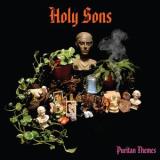
Holy Sons is the largely solo project of Emil Amos (Grails, Om, Lilacs & Champagne). Puritan Themes is his 17th album and his 4th for Thrill Jockey Records and a tentpole album in his wide-ranging output, including myriad private press LPs, collections of oddities, and conceptual series". Puritan Themes" relaxed vibes are influenced by the laid-back west coast rock sound of mid-period Fleetwood Mac, blended with a dose of psych distortion and imbued with the breeziness and ease of yacht rock. Puritan Themes is a record that knowingly, barely fits into the modern world. When mixing the record in Chicago, everyday Amos skated through Douglass Park listening to podcasts about the inner workings of The Band, listened to 70"s AM radio while washing dishes and went to sleep at night to early Bee Gees interviews. The earliest concept of the record was based around the track "Chain Gang" which was an imaginary take on if Cat Stevens had smoked a ton of salvia and taken a much darker route within that world of dense, story-telling/message-based songwriting. The track "Raw & Disfigured" borrows its name from the last Thrill Jockey Holy Sons record, in a referential move that"s stolen from the way Led Zeppelin separated the track "Houses of the Holy" from the record of the same name (once again harkening back to 70"s lore).
The most inspiring bands are the ones that can create a world around themselves that is about far more than just the music. The artwork, lyrics, sounds and ethos all merge together perfectly to create its own universe, a secret club. The Lovely Eggs are one such band. And against all the odds, 2025 sees them celebrate their 20th anniversary as a band! Stubbornly and heroically independent, The Lovely Eggs have forged their own path and have achieved mainstream success without ever compromising their DIY ethics. Released on their own label Egg Records, with eye watering artwork by Casey Raymond and hand packed in a black plastic bin bag on neon toxic slime green vinyl, this is yet another collectible release from a band who care as much about the art and ideas in their records as they do about the sound. "We had all these spare songs after we released our last album Eggsistentialism and we didn't really know what to do with them," explained Holly. "They just didn't seem to fit in with the vibe of Eggsistentialism but we'd recorded them and wanted to get them out there." "They're kind of a sketchbook of songs," added David. "They're not polished or laboured over but we thought it would be interesting to release them. It's why we called the record Bin Juice. These were songs we had thrown away. But hopefully people like going through bins collecting trash."
A samba funk essential. This debut album from Jorge Ben's iconic backing band blends Brazilian rhythms, soulful vocals, and American funk energy into one unforgettable groove. Includes the hit single 'Coqueiro Verde' along with standout tracks like 'Meu País,' 'Aleluia, Aleluia,' and 'O Canto da Ema.' A timeless gem for fans of Brazilian soul, vintage funk, or global grooves. Trio Mocotó is best known for being the powerhouse backing band behind Brazilian legend Jorge Ben during the height of his creative explosion in the early 1970s. But their contribution to music goes far beyond the supporting role-they were instrumental in shaping what would become known as samba funk, a vibrant fusion of traditional Brazilian rhythms with the groove and energy of American soul and funk music. Formed in Sao Paulo's iconic Jogral nightclub, Trio Mocotó-featuring Fritz Escovao, Joaozinho Parahyba, and Nereu Gargalo-began their musical journey as resident musicians, providing live accompaniment for a rotating cast of performers. It was here that Jorge Ben first encountered their raw talent and unmistakable chemistry, ultimately inviting them to join his band. The collaboration would go on to define an era. In 1971, Trio Mocotó stepped into the spotlight with their debut solo album, "Muita Zorra! (...Sao Coisas Que Glorificam a Sensibilidade Atual)." The record made an immediate impact, climbing the charts with the infectious single 'Coqueiro Verde' and marking the start of a prolific period in the group's career. "Muita Zorra!" is a dazzling blend of styles-mixing the baroque funk and melodic sophistication of artists like Marcos Valle with the soulful spirit of Jorge Ben. Layered with elements of American funk, the album delivers a dynamic, rhythm-driven sound that still feels fresh today. The trio's vocal harmonies are front and center, weaving through each track with warmth and richness, creating a captivating sonic tapestry that energizes every beat. This album isn't just a snapshot of a musical moment-it's a cornerstone of Brazilian soul. A must-listen for fans of global grooves, vintage funk, and timeless Brazilian music, "Muita Zorra!" is once again available and ready to take its well-deserved place in your collection. First time official reissue.
èMeL, the maestro of trance induced Tekno returns to Violent Cases delivering three long trips pumping like hell or high water.
Against The Grain riding the warp of space into the womb of night freedom at the speed of light from gravity’s planetary chain.
Symphony of Construction orchestrates a swarm of ant-like nanobots in space assembling the mothership of the raving tribe at warp pace.
Reverse termites moving in unison creaking and clanking away at the metal shell to escape this man made hell.
Darkness seduction is the siren’s hum pulling the mentalnaut to the fluffy bottom it feels good to let go, further than you can fathom, to the sound of a giant tardigrade nibbling at atoms.
This publication is illustrated by Darkam, designed by TDSiGNZ, and mastered by Stefan ZMK.
Each EP comes with 2 posters, a digital download code, and 2 artwork stickers.
fabric presents salute features music from pioneers and contemporaries alike, including Kerri Chandler, Bodhi, Dorian Concept, Junior Sanchez, Redhead and more, alongside two originals from salute. More than a collection of tracks, it’s a cultural statement: a journey through club culture, personal identity, and global roots. To celebrate the release, salute will headline fabric’s Room 2 on 10th October, joined by a handpicked lineup (TBA), bringing their vision full circle from mix to dancefloor.
Lead single ‘double luxury’ sets the tone for the project, capturing salute’s signature blend of soulful energy, deep groove, and euphoric release. Built on spacious low-end and an undercurrent of euphoria, warped vocals twist through sleek, propulsive drums to form a house cut that channels the emotional intensity and groove at the heart of their sound. Arriving off the back of a huge summer, with standout sets at Coachella, Glastonbury, a North American tour and All Points East, ‘double luxury’ provides a fitting entry into a milestone chapter for one of the most vital voices in club culture.
salute says:
“my contribution to the fabric presents compilation series is my way of contextualising the music i've been writing over the last couple of years. i wanted to include bits of all the things that make up the salute sonic palette: loopy, sample based house music, dense and soulful chords and beautiful synths, slick and groovy drum work. it's an exercise in beautiful house and techno music, or my definition of it anyway.”
Launched in 2019, fabric presents has become one of electronic music’s most respected mix platforms, with contributions from Andrew Weatherall, Laurent Garnier, The Martinez Brothers, SHERELLE, Bonobo, Overmono, Confidence Man, The Streets, and more. Rooted in the legacy of fabric’s monthly CD mixes, the series now embraces a wider range of releases across digital, CD, and vinyl, each paired with a performance at the iconic London venue. With fabric presents: salute, they take their place in this lineage, joining the dots between underground heritage and the future of club culture.
Vienna-born salute has become more than a producer: they are a cultural innovator representing a club scene that is diverse, queer, and community-driven. Since emerging as one of the UK’s most exciting electronic voices, they have built a reputation for balancing raw emotion with dancefloor ecstasy, weaving grime, UK garage, electro, French house, jazz, gospel, R&B and hip hop into a singular, unmistakable vision.
Their music channels as much emotional resonance as physical release, tracks that turn longing into euphoria, intimacy into collective celebration. This ability has not only won over audiences worldwide but also earned praise from heavyweights including Four Tet, DJ Seinfeld, Floating Points, Skrillex, Fred again.., Annie Mac and Benji B. Their now-legendary Melbourne Boiler Room set, one of the platform’s most-watched, further cemented salute’s reputation as a defining force in the global underground.
The release of their 2024 debut album True Magic on Ninja Tune solidified salute as one of dance music’s most vital voices, its success confirming what the underground had long known. With fabric presents, they mark another milestone, bringing their curatorial vision and boundary-pushing sound to one of electronic music’s most iconic platforms.
out of Stock
Last delivered 6 months ago available to reorder, subject to availability
Belgian pop superstar Max Colombie, aka Oscar and the Wolf, announces new
album ‘The Shimmr’, on PIAS Recordings.
Enter Colombie’s world and you’ll discover a uniquely dazzling and shimmering
fusion of contemporary R&B and a more European electro-pop sensibility, uniting
shivery melody, shifting beats and vocals steeped in drama, sensuality and yearning.
Colombie hears, “a twilight zone where it doesn’t sound dark nor happy. It’s like the
name Oscar and the Wolf; it’s a balance between light and dark, this perfect
combination between the sun and the moon. It’s beautiful and scary at the same
time.”
Oscar and the Wolf’s official debut, the 2012 EP ‘Summer Skin’, showed his gifts
arrived virtually fully formed, but he truly came of age in 2014 with his debut album
‘Entity’. Balanced between dancefloor anthems and slow jams, ‘Entity’ went 4 times
Platinum in his native Belgium and quickly jettisoned Colombie to superstar status.
He sold out arenas in Belgium and the Netherlands, taking the penultimate
headlining slot (behind Muse) at 2016’s Lowlands festival before headlining
Belgium’s Pukkelpop festival, sharing the bill with Rihanna and LCD Soundsystem.
Released in 2017, the second Oscar and the Wolf album, ‘Infinity’, went Platinum at
home, whilst amassing a huge Middle Eastern fanbase across Turkey (where his
2018 tour sold out in minutes), Egypt, Israel and Iran. On stage, Colombie cut a
commanding and lithe performer, often garbed in shimmering outfits that interacted
with the dynamic lighting.
The new Oscar and the Wolf album, ‘The Shimmer’, distils the essence of Colombie’s
sound and vision in its title and the image of Colombie on the album cover, bathed in
starry light. The album is a benchmark of his transformation on record; whereas
‘Entity’ was recorded in a barn, “very lo-fi with no access to gear,” he recalls.
‘The Shimmer’’s bold, rich and layered dynamics were captured at ICP Studios in
Brussels, home to, “one of the best live rooms in Europe, with all this vintage gear.”
More intimate moments were added at Colombie’s house outside the city, “those
magic takes we made just after we’d written something, which are so hard to capture
again.”
By ‘we’, Colombie includes producer Jeroen De Pessemier and multi-instrumentalist
Ozan Bozdag, who had both worked on ‘Infinity’ (and Bozdag on ‘Entity’ too). “It’s a
magical trio,” Colombie says. “Everyone is allowed to be themselves, and to explore
themselves. I’m really happy with ‘The Shimmer’ because I hear a more mature
version of myself. I always want things to grow, and I’m proud that I allowed myself to
not follow people’s expectations and reproduce what had been successful before.
There are no four-to-the-floor clubby pop songs this time.”
Instead, ‘The Shimmer’ more accurately reflects Colombie’s personality. “My
emotions run from super-happy to super-melancholic in a split second,” he says. “To
me, ‘The Shimmer’ feels like the soundtrack to a blockbuster, with many types of
tracks and themes. It’s always changing."
out of Stock
Last delivered 11 months ago available to reorder, subject to availability
Repress of ‘Glow On’, the 2021 Grammy nominated third studio album from Baltimore hardcore punk quintet Turnstile. Co-produced by the band themselves along with hip-hop producer Mike Elizondo, and featuring the guest vocals of Blood Orange.
Recorded with producer Mike Elizondo and co-produced by the band’s Brendan Yates, GLOW ON follows TURNSTILE’s 2018 breakthrough album TIME & SPACE, which saw the Baltimore band charting new ground for hardcore, expanding stylistic boundaries and celebrating new possibilities.
With GLOW ON that utopic vision is fully realized; 15 tracks devoid of borders, boundaries, or entry obstacles, only abundant imagination, heart, and grooves plucked from all corners of the musical spectrum. GLOW ON includes the singles “HOLIDAY,” “MYSTERY,” “NO SURPRISE,” and “T.L.C. (TURNSTILE LOVE CONNECTION) from TURNSTILE’s recent TURNSTILE LOVE CONNECTION EP. GLOW ON also includes guest features from Blood Orange on “ALIEN LOVE CALL,” “LONELY DEZIRES,” with additional vocal contributions on “ENDLESS.”
“TURNSTILE has the ability to lure even the most poptimistic listener with spectacular hooks,” affirmed NPR remarking on the band’s single “HOLIDAY,” while The FADER named the track one of the 20 Best Rock Songs Right Now. Stereogum declared, “If you’re gonna go big, you might as well go gigantic, and with ‘MYSTERY’ TURNSTILE sound like they’re about to be huge.”
Bringing superhuman energy to the stage, TURNSTILE are scheduled to perform a string of sold-out headline shows this summer in the US, followed by appearances at next year at Spain’s Primavera Sound on 6/5, France’s Hellfest on 6/23, and the UK’s Outbreak Festival on 6/24.
Always more appeal than demand, more liberation than limitation, TURNSTILE extended their hand in 2018 with TIME & SPACE. Recorded with producer Will Yip, TIME & SPACE marked Turnstile’s Roadrunner Records debut and saw the band exploding the most outsized tropes of hardcore with tremendous heart. The album earned “Best of 2018” honors from Kerrang!, The New Yorker, The New York Times, Rolling Stone, NPR, Billboard and more, with GQ naming TIME & SPACE one of “The Best Albums That Shaped the 2010s.”
Comprised of Brendan Yates (Vocals), Franz Lyons (Bass/Vocals), Brady Ebert (Guitars), Pat McCrory (Guitars), and Daniel Fang (Drums), TURNSTILE’s brand of youth-minded, youth-driven hardcore punk is intent on breaking down barriers, sonically and ideologically.
out of Stock
Last delivered 11 months ago available to reorder, subject to availability
Wally Badarou is a synth pioneer and musical polymath. But rarely does he sing over his sumptuous tracks. The 6 songs that comprise new record Simple Things finally realise Wally's vision for select backing tracks from his beloved Colors Of Silence.
The tracks were originally developed back in 2001 for the release of the original CD; here, Wally has “simply" added overdubs and vocals to their mastered mixes with some discerning edits. Simply put, Simple Things is another slice of simply stunning Wally Badarou genius.
Simple Things has been decades in the making. Indeed, Wally struggled not only with the idea of singing these wonderful songs himself but singing them in English and writing his own lyrics, while wrestling with the sensational backing tracks, which themselves seemed to have taken on a life of their own.
As Wally explained to us: "In addition to the instrumental artist I have been known as, so far, there has always been a singer who simply was not sure he was, up until now. Even though “Back To Scales Tonight”, my very first album, was, indeed, a song album."
Opener "It Couldn't Be You" embellishes the uptempo groove of soca-funk gem "The Lights Of Kinshasa". As Wally explained to us, it's about “a simple love story somewhere, one rainy night, under the lights of Kinshasa. A woman, a man, online dating, quite usual in our times. Then they meet, almost missing each other." The guide vocal Wally had laid for Colors Of Silence - with an organ sound - seemed striving for words in Linguala, a Congolese language he could not speak. Therefore the decision to do it himself was not an easy one, for it had to be in English to fit his singing. We think it turned out pretty good!
"You Can't Hide Always" vocalises Wally's deep concerns set to the propulsive "Smiles By The Millions": "Populism, ostracism, radicalism, ethics and values all turned upside down worldwide, are they all inevitably exacerbated by our social networks? It could all melt down one day, like a house of cards in the ocean of fake news and false prophecies”. Wally wanted to keep the track as bare as possible but, inevitably, the backing vocals and the synth-brass arrive ultimately to present a welcome 70s flavour, with no snare-drum added.
The bright and breezy "We'll Make It Again" adds vocals to "Where Were We", a tropical, reggae-tinged bounce through the islands. Here's Waly: "Where were we when we last said: "I love you"? Simple words to express something quite common, but never quite simple to deal with. A simple song about the resilience of the broken hearts.” The reggae came from it being conceived when Wally was scoring for “Third World Cop”, a 1999 Jamaican action movie.
"Walk Straight Ahead" provides Wally's gorgeous, contemplative and idiosyncratic vocals to the deep serenity of Colors Of Silence highlight, "Amber Whispers". It's a gliding, divine, mini melodic masterpiece. It'll make you swoon in its extreme beauty. As Wally describes, "it started as just whispers, sweet amber whispers. Then the colour turned darker, as darker skies seemed to fall upon us while the whole world keeps on walking ahead, straight ahead, regardless of the blatant warnings, feeling much too comfortable in conformity. Initially, the verses were to be spoken only. I realised they could be sung all the while, without overshadowing the ethereal atmosphere." Amen.
The serene, celestial "Painting My Life Blue" presents the vocal version of "Days To Wonder". Says Wally, "how does it feel when your second half is gone after decades of riding life together? Past the temporary loss of your bearings, you come to realise you've been blind to the essential, and suddenly you can see...For this most intimate song of mine, I had tried to come up with a melody on top of the existing backing track, long before realising the melody was in the keyboard part already. It just needed to be properly mixed with it."
The profoundly emotional "Just Two Lovers" works up the formerly-too-brief and glorious "Crystal Falls" into a much fuller masterpiece and features acoustic guitar sparkle before fully glistening with some gentle head-nod percussion. Waly explains further: "Dear little green men, please tell me, what is it about us that makes you want to come and visit us so often (contrary to Fermi's assertion)? And here is the reply I believe I heard them sing: "You've got the key you've been searching for: Love”. I reverted to the initial backing track I had made around 1985, which already bore the melody, and which I added acoustic guitars to, before singing it." An astounding closer.
A synth specialist, there can be few artists more under-appreciated given their vast influence than Wally Badarou. His solo work practically defined the sound of the Balearic DJs of the 1980s, and thus the more sophisticated sound of dance culture thereafter. He was one of the Compass Point All Stars (with Sly and Robbie, Barry Reynolds, Mikey Chung and Uziah "Sticky" Thompson), the in-house recording team of Compass Point Studios responsible for a series of albums in the 1980s recorded by Grace Jones, Tom Tom Club, Mick Jagger, Black Uhuru, Gwen Guthrie, Jimmy Cliff and Gregory Isaacs. Badarou's keyboard playing could also be heard on albums by Robert Palmer, Marianne Faithfull, Herbie Hancock, M (Pop Muzik), Talking Heads, Manu Dibango and Miriam Makeba. He also produced Fela Kuti. Phew!
When we asked Wally about the significance of this collection's title, he explained: "These are "Simple things” that everyday’s life seems to build upon. The simplest are the harder to describe, but when satisfactorily described i.e. with simple words, they are the more genuine and authentic to express and share. I’ve immersed myself in other classic song lyrics, something I hardly did before, just to appreciate the genius behind the simple words they were made of, and had a great time studying how powerful they were in expressing complex ideas such as love."
Recording was twofold: first, most of the backing tracks were recorded in 2001, in Wally's studio in Normandy, mostly using hardware synths and Yamaha digital consoles. Then, he fine-tuned the melodies and wrote the lyrics in late 2023, then added some overdubs and sang them all during summer 2024. States Wally, "Digital Performer was and remains the DAW I’ve been using throughout, ever since the 80s."
Wally's sophisticated synth textures and expressive keyboard runs are so full of character, so full of life, that this work of art transcends any easy genre categorisation. Meticulously remastered and cut by both Simon Francis and Cicely Balston respectively, it has been pressed to the highest possibly quality at Record Industry in Holland. Sometimes, the simple things are the most extraordinary.
out of Stock
Last delivered 10 months ago available to reorder, subject to availability
DJ Support: CamelPhat, Blond:ish, Eli & Fur, David Penn, Arielle Free, Bibi Seck Sam Divine
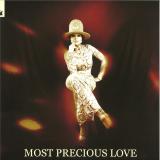
Armada Music and King Street Sounds team up again to celebrate the 20th anniversary of “Most Precious Love” by Blaze presents UDAUFL feat. Barbara Tucker. This release is a timeless classic captivating anyone who encounters it.
This 20th anniversary special includes the Bonafide classic remix by Dennis Ferrer, Michael Gray’s take and two brand new remixes for 2025 all presented in a beautifully designed record sleeve featuring the star herself on the cover.
Kicking things off on the A side is the “DF’s Future 3000 Mix” that has been championed time and time again by DJ’s from across the world. Next up is Michael Gray, a DJ and producer who needs little to no introduction his version breathes new life into the original by taking it down a couple notches and giving it more of a mellow feel. The first of the two brand new remixes is Nico de Andrea, an Afro-house maestro who sports his signature sound once again by bringing his rhythms and melancholic pop melodies presenting the classic in a whole new way. Rounding off is Sam Divine the first lady of Defected who has held residencies at clubs such as Pacha, Amnesia, Sankeys, Ushuaïa, Eden, among others. She sinks her teeth into this remix by building up the vocal into a drop which is sure to keep the dancefloor going for the late nights that need that boost of energy.
Whether this is the first time you’re hearing this anthem or the one hundredth, here’s your chance to own a slice of house music history.
out of Stock
Last delivered 5 days ago available to reorder, subject to availability
“Tubby did three original dub albums, ‘Dub From The Roots’. ‘The Roots of Dub’ and the third is ‘Brass Rockers’ with Tommy McCook ‘pon the flying cymbals. Where he mixed it with the horn going in and out in a dub way and one named ‘Shalom Dub’ you can call Tubby’s too because he mixed the versions as they were off forty fives’’
Bunny ‘Striker‘ Lee
King Tubby and Producer Bunny ‘Striker’ Lee are intertwined in the birth of Dub Music. After discovering a mistake that made a ‘serious joke’ ( more of which later...) they went on to release the first pressings of this new musical genre namely ‘Dub Music’. Tubby’s vast knowledge of electronics and Bunny’s vast catalogue of rhythms would lay the foundations of what today is taken as a standard... the Remix / Version cuts to an existing vocal tune.
Osbourne ‘King Tubby’ Ruddock was born in Kingston, Jamaica on 28th January 1941 and grew up in the High Holborn Street area of downtown Kingston. He studied electronics at Kingston’s National Technical College and also on two correspondence courses from the U.S.A... When he had qualified Tubby began repairing radios and other electrical appliances in a shack in the back yard of his mother’s home. His work in the early days included winding transformers and building amplifiers for Kingston’s Sound Systems. Tubby built his first Sound System in 1957 playing jazz and Rhythm & Blues at local weddings and birthday parties. His reputation as a man who knew and understood both electronics and music grew steadily and as the sixties drew to a close. Tubby purchased his own basic two track equipment. He installed this alongside his dub cutting machine, a home made mixing console and his impressive collection of Jazz albums in the back bedroom of his home at 18 Dromilly Avenue which he christened his music room.
Tubby and Striker were at Treasure Isle Studio’s one day while Ruddy from Spanish Town was working with the engineer Byron Smith....
“Tubby and myself was talking when Ruddy was cutting some dub but Smithy (engineer) made a mistake through we were talking and forgot to put in the voice. It was two track recording in those days. Ruddy said ‘No Man! Make it stay! and so they cut the rhythm. When I went over to Ruddy’s that Saturday night a dance was in progress and when they played the vocal to the tune... then he said we’re going to play ‘Part Two’. They never called it ‘Version’..and then he played the rhythm track. The song was a catchy song and everybody started to sing along and the deejay started to toast so everything went down well. On Monday morning I went up and I said ‘Tubbs the mistake we made was a serious joke.It mash up Spanish Town! The people went wild. So you have to start to do that now ‘cause when the man put on the ‘Part Two’ everyone start singing this song. It played about twenty times. I said you try Tubbs!’...Well the next Saturday night now when Tubby strung up down the farm U Roy said he’s going to play ‘Part Two’ but Tubby did it different now. He started with the voice then dropped it out and let the rhythm run and then he brought in the voice in the middle and from there Tubby started to get really popular.’’
Bunny ‘Striker’ Lee
Dynamic Sounds upgraded to sixteen track recording in 1972 and Tubby purchased, again with the help of a deal brokered by Bunny Lee. The old four track equipment and the MCI console from their Studio B. The four tracks now gave him far wider scope to work with and he began to create a new musical form where the bass and drum parts were brought up while the faders allowed Tubby to ease the vocal and rhythm in and out of the mix. It was only a matter of time before Tubby’s dub plate experiments began to make it on to vinyl and the first ever long playing King Tubby releases would feature a collection of his mixes to a selection of Strikers rhythms. So please sit back and enjoy this historic set of sounds. Lovingly restored and with a few extra gems added to the CD Editions. These releases were the first to carry the name of King Tubby and the first to credit the great musicians that contributed so much to the rhythms that made these albums possible.
out of Stock
Last delivered 11 months ago available to reorder, subject to availability
OOOOH! by Alex Bad Baby Lukashevsky with Cocoa Corner (2025)
Celebrated veteran of Toronto’s music scene, known for his boundary-pushing approach to folk and avant-garde music, twists rock music into strange and brilliant new shapes with the help of young jazz players, U.S. Girls, and his own immensely talented son.
OOOOH! is hard on the outside and soft on the inside. Made in the spirit of unity,
humanity, and poetry — disobediently renouncing the glory of personal triumph for the
generosity of an honest experiment. On the last track of the album you’ll hear “Or do you only ever never want to make a single enemy? / That’s not freedom or humility / It’s nothing, honestly.” Oooh, that's a bad baby!
A celebrated Toronto songwriter and performer, Alex Lukashevsky has always been disobedient. Which simply means, nothing is off the table when he’s looking for his
poetic voice; when trying to find the realest I of the teller. As he sings on the lead track “that musician that’s dead” The musician is radical/ it’s the world that’s demented/ listening with their eyes, the music looks dented/ they’re over-represented.
OOOOH! was recorded in January 2024 at Sound Department in Toronto, engineered by Patrick Lefler (ROY), mixed by Grammy-nominated producer Matt Smith. All the songs were tracked live off the floor in two days, with one extra day for recording vocals, to keep the recording fully alive and breathing. As leader of Deep Dark United, as a solo performer, and a sideman in Brodie Wests’ Eucalyptus and Luka Kuplowsky’s Ryokan Band, Alex has been an outsized influence on the Toronto music scene that spawned acts like Broken Social Scene and Owen Pallett. (Pallett, who has toured with Lukashevsky, went so far as to record an entire album’s worth of Alex’s songs, backed
by a full orchestra.)
Lukashevsky has approached each of his albums and projects as something completely new, using only the musical boundaries he creates with each song. Even when he
has recorded songs with nothing but his voice and his own acoustic guitar accompaniment, the results are never “stripped down” or “back to basics,”
Gong! How do you get to heaven / have fun! have fun!
It’s cool to approach music as a game of “spot the influence”; Burt Bacharach-meets-Black Flag; Lana Del Rey-meets-LCD Soundsystem etc. Glorified mash-ups are promising because of their conversational nature. But they can turn us into hyperboreans; blowing cold air beyond ourselves while doing what we can to remain warm. To devise a game or a narrative is to have a winner and a loser, but we all know that just as you win/ so you lose. And does anything really change? Alex Lukashevsky and Cocoa Corner are more at ease drawing blind contours or playing an old game like consequences. They let things add up without knowing particularly how. Cognition is recognition.
Lukashevsky, in addition to writing all the songs, plays guitar and sings on OOOOH!, doing both in ways that are soulful and spikey at the same time. Joining him on guitar and vocals is his oldest child, Charlie Lukashevsky, who, at 23, is already a talented performer and songwriter in his own right. Cocoa Corner also includes Aidan McConnell, an in-demand drummer and composer, Jack Johnston, a jazz bassist and Barry Harris acolyte, and percussionist Evan Cartwright (The Weather Station, U.S. Girls, Cola, Tasseomancy), who plays steel pan and marching drum.
Working with his son and with other younger musicians is central to the album’s
unpredictable aesthetic. It reinvigorated the sound in unexpected ways. Lukashevsky says, “I had to reconsider my own instincts. I had to deal with being 99 years old.”
In addition to these performers, the album includes a tasty contribution from Meg
Remy, the visionary musician and producer who is the leader of the critically acclaimed
project U.S. Girls. Remy duets with Lukashevsky on the imagistic and sprawling album
closer “things keep happening.”
About that album title: OOOOH! is taken straight from “that musician that’s dead” an
arch and unhinged comment on the exertion required to navigate a lifetime of music making.
Lukashevsky’s delivery of that one emotive word is a kind of cultural posture, but also a
hundred percent primitive expression. The impact is never less than visceral. His vocal
delivery ranges through rich baritone blues to keening falsettos to a kind of sprechstimme that periodically steps out from the music to grab the listener’s shirt. He
doesn’t sound too nice, but he is sincere. When life gives you lemons lament.
For OOOOH! his first official full-length album since 2012’s Too Late Blues, (a collection of knotty-yet-effervescent tunes built upon the enchantingly serpentine harmonies of Lukashevsky and his vocal collaborators, Felicity Williams (Bahamas, Bernice) and Daniela Gesundheit (Snowblink, HYDRA)), Alex has once again broken apart and rebuilt his own approach to music. Or rather (because that sounds too over-determined), he
has allowed his music to build itself into strange new shapes that only fleetingly and
coincidentally, but happily, resemble anything that might be called rock and roll. There is some editorializing within the song’s lyrics— Lukashevsky even cheekily contributes to the “spot the influence” game with the line “Muddy Waters, Rite of Spring!” a funny preemptive strike against anyone already reaching for some variation of avant-blues to describe what the song is up to here. In fact there are many names checked on this record (literally and in spirit); they are the lily pads that trace the path of this expression! Palestrina, Peter Pears and Benjamin Brittain, Andrés Segovia, Stravinsky, Lotte Lenya, Alice Coltrane, Skip James, Chuck Berry, D’Gary, Betty Carter, Mukhtiyar Ali, Chuck D, Yoko Ono, Hailu Mergia, David Bowie, Jane Siberry. rhythm is a skeleton mansion / haunted by melody / feckless prodigy / the world is under a spell / cast by some demon angel / Practice day and night / Try as hard as hell / no one can sing that well Musicians are often worried by the way in which they are prepared to fail rather
than how they would like to succeed; it’s such a deep concern that it tempers their creativity and shackles their process. Current cultural proclivities, tend to comfort a certain kind of artistic failure and abnegate another kind. How many testimonials, full of heartfelt care and investment, have you heard for Taylor Swift, and yet a craftsman like Chris Weisman is often dismissed easily as though he’s doing something anti-social. what’s throwing itself in my ears and my eyes / arrogant devil ad hominem christ.
The music you will hear on this recording veers off in multiple directions at once,
and features a rock and roll spirit with a divergent heart. This is no sclerotic clomp of the Average Rock Song, but in fact a flood of humanity in all its darkness and moodiness and unpredictability. If most performers make songs that are like sports cars or pickup trucks to drive around, Lukashevsky has built something more akin to a rowboat in a tree: it’s weird and beautiful.
Punk pioneer/Eater main-man, Andy Blade's 7th solo album and follow up to 2024's critically acclaimed & heavily rotated, Sparks bros endorsed "Being Alive Is Fun". It is imbued with the usual left-of-centre Blade-ism's & themes: star maps, UFO's & a slightly twisted nod to tragic 70's heroine Karen Carpenter. You get what you deserve with Blade, and with Tiny Specks you are rewarded with a rich code to decipher at your leisure. Most of all, however, it is all about the quality of his songwriting. Opening track 'Karen Is The Drummer' (featuring Blade's regular singing collaborator - PseudoPomp's Katerina Sharkova) seems unsettlingly self-explanatory, but all does not seem well in the Carpenter M.O.R world - 'It's just her & her brother & her folks indifference to that girl'. Occasional Dinosaur Jr vocalist Tiffany Anders gives 'I'm Not Myself' a poppy but eerie nuance. PollyPikPocketz's Myura Amara pops up on the short but very sweet 'About That'. Matilda Scotland, Quick Romance's uber-cool punky-chanteuse - adds her Gen Z aura to the summery 'I Like It When You're Happy'. Former Generation X guitarist Bob 'Derwood' Andrews, with whom Blade has worked with consistently of late, once again features heavily on 'Tiny Specks'_ Like with Katerina Sharkova's voice, Derwood guitar lines interweave with Blade's honeyed vocal as though they made for each other. 'This Place' is another key track, capturing the claustrophobic-genocidal mood of what has been taking place in Gaza/Palestine for over two years now, and counting. 'This is not so much a protest song as it is the noise in my head'. If John Lydon is the Widow Twanky of Punk, and Billy Idol, its Elvis, then Andy Blade must surely be the Sinatra of Punk.
Body Clinic joins us for our next 12” release with four tribal tech-house cuts, recalling the sound of early-2000s Pacha. With E-Talking on Papa Nugs’ label running the festival circuit this summer, he’s already become the talk of the scene—and this EP makes clear why.
Each track is driven by drums at the highest grade—rugged, weighty basslines locking in with sci-fi warped FX, keeping the floor in constant motion. Trippy vocal cuts thread through the grooves, getting deep into our heads and sending minds off into nearby dimensions. And that’s just the a-side.
Flip it over and Bongo Loco comes rolling in—a true cruiser. Built around a huge breakdown of layered bongos, it kicks back in with the kind of chest-rattling low end that have become Body Clinic’s signature. It’s the moment where hands shoot in the air, the rhythm carrying you further into the night. On b2, My Mate Dave shifts gears again—jumping off the old-school tech foundations and landing closer to the progressive sound we know BC for. It’s a peak-time anthem through and through.
Promo downloads have quickly come in from Chris Stussy, Josh Baker, Christopher Ledger, Roza Terenzi, and East End Dubs, marking it as one of the most anticipated releases of 2025.