
нет на складе
Закажите сейчас, и мы закажем товар для вас у нашего поставщика.
Последний логин: 6 г. назад
10,38 €
Закажите сейчас, и мы закажем товар для вас у нашего поставщика.

Factory Benelux and New Order present Of Factory New York, a unique benefit album released to assist Michael Shamberg, who ran the NYC office of Factory Records during the celebrated label's Eighties heyday.
Закажите сейчас, и мы закажем товар для вас у нашего поставщика.

A Certain Ratio Stammen Aus Manchester. Sie Wurden Von Dem New Order Manager Rob Gretton 1979 Entdeckt Und Bei Dem Legendären Label Factory Unter Vertrag Genommen. In Dem Spielfilm 24 Hour Party People Bringt Es Factory-label-manager Tony Wilson Auf Diesen Nenner: having All The Energy Of Joy Division But Better Clothes'. Jedenfalls Sollten A Certain Ratio Sollten Später Weitere Acts Wie Quando Quango Und Swing Out Sister Hervorgehen. Dennoch Existiert Die Band Bis Zum Heutigen Tag. Ihr Post-punk Sound Ist Weniger Puristisch Angelegt Als Der Ihrer Zeitgenossen, Öffneten Sich A Certain Ratio Doch Auch Genres Wie Dub, Disco, Funk Und Soul.
- change The Station Von 1997 Wurde Ursprünglich Auf Rob´s Records Veröffentlicht, Dem Label Des New Order Managers Rob Gretton. Soul-pop Trifft Auf Die Ambient-electronica Dieser Dekade.
Закажите сейчас, и мы закажем товар для вас у нашего поставщика.

Red Vinyl Edition[21,43 €]
This exclusive ‘dub plate’ features 4 brand new dubs mixed live by Dennis Bovell, presented in a discomix style.
Released on the occasion of the US theatrical premiere of Dread Beat an Blood, the original documentary on LKJ by Franco Rosso, director of Babylon.
он должен быть опубликован на 30.09.2026

Black Vinyl[19,54 €]
This exclusive ‘dub plate’ features 4 brand new dubs mixed live by Dennis Bovell, presented in a discomix style.
Released on the occasion of the US theatrical premiere of Dread Beat an Blood, the original documentary on LKJ by Franco Rosso, director of Babylon.
он должен быть опубликован на 30.09.2026
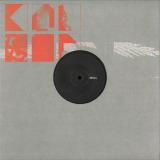
The unconscious element to the conscious process.
The practice of dub techno and its tendrils is a fundamental for me, both aesthetically and from an engineering perspective.
I start every recording session with a dub inspired jam, the first piece I ever recorded in 1996 was an effort to recreate Phylyps Trak with only a Korg X3 and an Ibanez PUE5 (borrowed from Gary Howell). It was an awesome introduction to jamming, and the footing stones of noise, delay and saturation were explored with my foot hard on the enthusiasm pedal.
These practice jams are in some sense cathartic, the first step taken again & again, which helps me move forwards each session and additionally helps to 'warm the circuits' both of myself and the machines.
After realising the genius of Basic Channel is akin to the genius of peasant food, using every ingredient with nothing left to waste, (up to and including the oft maligned working noise of the machines themselves), this was a watershed moment for my own subjective progression. No longer tied to just emulation of something inspiring, but taking these learned tools into other areas of music helped to break free from a strong current of influence and also to progress into other areas with the new toolbox.
Dub:
The importance of the dub pioneers should never be understated, in modern music and my own practice. Yet with my initial inspiration being two german dudes issuing extreme techno variants with obscured label designs, who then signposted their listeners to their own inspirations (via their Wackies re-issues or nodded to on their Rhythm & Sound/Burial Mix sub-labels), meant that I started late and travelled backwards.
Learning to notice the live mixing of Mikey Dread or Lee Perry when the faders are bleeding through even when turned down, (echoed in BC's Quadrant Dub), or the brash send effects literally thrown into the mix also taught me that 'rough' mixing can inject a recording with life, uniqueness and the most right wrongness. Looking back Basic Channels very few elements helped me realise that the rules to be understood, are also the best ones to be broken.
Push the mixer into the red.
Amp that noise up from the tape delay cos it sounds sick.
Pseudo side-chain effects cos the kicks are way too loud and the mixer can't sum it nicely.
Spam the send knob into the delay units now, now and now.
Carelessness.
Noise:
Once I wrapped my head around the intrinsic 'noise' element that set those records apart, this became a torchlight into the alt noise movements which I was tentatively exploring at the time, and also is evidently a connection or thread into them.
Whether the Industrial/Post Punk UK scene (This Heat, TG, A Tent, F.E.) or the prolific output of the US Noise scene (Wolf Eyes, Live & Shave in LA, and subsequently following the lineage all the way back to Chrome's Alien Soundtracks), I had finally discovered a connection from techno to this 'free for all' corner of music.
This input from the Noise arena of sound is, in my experience, an all important step for a sonic artist, taking it's roots and extending out from Stockhausen/Pierre Henry and utilised/warped/mangled by thousands of adventurous pioneers ever since, I now see the line separating the high brow and the low brow is actually an artery carrying information from the head to the heart.
Vault is a selection of these jams that precede each of my solo recording sessions, for 30 years I've recorded hundreds of these 'workouts'. They are never intended as serious statements, just moments of naive enjoyment, yet most importantly they are time & space captured as practice.
The objective is always a warm up exercise, but sometimes those exercises turn a different corner, with a certain focus or direction dependent on what random samples are left in my machines from the previous session, instead of conscious choices, these unconscious elements can facilitate those 'positive mistakes' that make a piece of sound retain a different feel or colour and thus become special, or at least special to the creator.
I am quite conscious that the 'record everything' aspect of my ethos has been invaluable in cataloguing and saving these jams, while the attitude of carelessness during this process (after all, it's only a warm up jam) invites more enjoyment than seriousness ever could. Even if you don't feel the piece at the time, record it, because some years later it may well fit, or become relevant in a way you never intended.
-Miles
он должен быть опубликован на 30.09.2026

Nacho Marco drops Colors in Dub Vol.1—deep house soaked in warm analog dub. From the hypnotic “Midnight Blue” and its Satoshi Tomiie remix to the raw pulse of “Bumblebee Yellow” and “Electric Green,” this wax rides late-night frequencies straight from Valencia to Paris.
DJ Feedbacks :
Francois Kevorkian (Wave) : Love the Satoshi mix
Eddie Fowlkes (Detroit Wax, Rekids, Classic Music Company) : thanks
Travis Kirschbaum (Warehouse Preservation Society) : Loving this. Especially Midnight Blue!
Sascha Dive : Midnight Blue for me!!
Brothers' Vibe (Luv4Wax) : Super ep, great works!!
Radio Slave (Rekids) : Another superb ep from Phonogramme and Satoshi's mix is great.
Giles Smith : "midnight blue" is nice
Alexkid (Rawax / FUSE / NG Trax) : Totally my vibe. <3
Aleqs Notal : Yes !!
Italojohnson (Italojohnson) : Track 1 for me!
Ben Sims : Now downloading... will check asap!
Okain (Talman / Infuse / Pleasure Zone) : Electric Green is dope!
Satoshi Tomiie (Abstract Architecture) : Receiving great feedback from the dance floor!
Steffi (Dolly) : lovely release!!
Laurent Garnier : Cool tracks
DJ Bone (FURTHER) : Electric Green and Satoshi Tomiie remix work for me.
Harri (Sub Club) : lovely stuff, will play and support
Rob Pearson (Evasive Records / Sine 102.6fm) : lovely - right up my street, cheers ;-)
Felix Dickinson (Futureboogie, Rush Hour, Cynic) : Solid E.P. current fave Electric Green
Jorkes (Freeride Millenium) : lovely, thanks so much. xo
Kassian (Phonica White / Heist Recordings) : wicked
Jaye Ward (Dalston Super Store / Netil Radio) : massive quality as ever!! super deep and pulsing gear, electric green is ace! thx
Tim Sweeney (Beats In Space) : Sounds great
Chloe Caillet (Smile Records) : love this!
Stevie Cox (Sub Club) : really lush, thank you !
Raresh (ar:pi:ar) : thanks
Ame (Innervisions) : thanks
Geir Aspenes (G-Ha (Sunkissed)) : Thank u
Saoirse (Body Movements) : Super nice dubby vibes
Amotik : Very nice :)
Kai Alce (Real Soon) : Satoshi remix is hot!
Domenic Cappello (Subclub) : nice dubby house
Cee ElAssaad (ENSOULED) : Just the way I like it! dubby and groovy.
Mike Shannon (Cynosure) : Excellent work here from Valencia's finest!
он должен быть опубликован на 30.09.2026
Nonna Fab returns with his fourth release on his own imprint Movement and Soul Records, with the first single on the label, 'Eternal Between'.
This is a 3-track soulful house EP with two versions from Nonna and a beautiful remix from Trinidadian Deep.
Eternal Between is an instrumental soulful house record with a true exploration of the deeper side of dancefloor and movement.
The Spiritual Rhythm mix does exactly what it says on the tin, with the focus on a deeper, introspective dance floor cut. Explorative piano jam, rolling bassline and deep Juno stabs.
The Deeper Dub does exactly what B-sides were made for, percussive rhythms, stripped back synths and a deeper dive into the track. A broken beat style bassline and huge pads. Suitable for peak-time or the breather.
And the first ever remix on a Movement and Soul Records, Nonna invites Trinidadian Deep to put his touch on the rhythm.
Spacious, expansive and percussive with some true signature-style elements to the remix...
Товар уже находится на пути к нам и, как ожидается, будет доставлен из 30.09.2026.
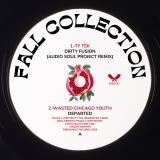
Fall Collection pulls from the vaults. Four tracks, some long out of print, one never
before pressed, all of them worth the dig.
The A-side opens with Ty Tek’s Dirty Fusion, originally released on Gourmet Recordings
in 2005 alongside the Audio Soul Project remix two years later. Both have been
fetching serious money on the secondary market for a reason. This is tech house from
when that phrase still meant something, the walloping cadence, the sci-fi pads, the
seismic synths rolling underneath. You hear it once and it stays with you.
Departed by Wasted Chicago Youth follows. Justin Aulis Long and Mazi Namvar
started from a remix brief and promptly ignored it, building something new from scratch
in a single session. Organs, wailing lead, disco break, 808 subs, a plastic bass line
threading through all of it. Somewhere between an angry Metro Area and a more
psychedelic Jitwam, but really it’s just WCY doing what they do.
Love Thy Enemy by Wasted Chicago Youth appeared on the Chase The Devil EP back
in 2009. The bubbles, shuffles, and wobbling chords hold up, and the vocal samples hit
differently now than they did then.
ASP’s Cloud Dub closes the record. It appeared on Dubs Vol. 2 as a digital release in
2022 and has never been on vinyl, and that’s where the subsonic acid bass line and
the layered string, piano, pad, and organ groove finally get room to breathe. Deep
house the way Chicago made it in the early nineties. Bare, musical, and raw.
Track A1 written by Ty Tek. Remixed by Audio Soul Project
Track A2 written by Justin Aulis Long and Maziar Namvar
Track B1 written by Justin Aulis Long and Mazi Namvar
Track B2 written by Audio Soul Project.
Copyright Control
Fresh Meat Records 2026
он должен быть опубликован на 30.09.2026
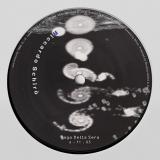
For ONO006 we welcome born ‘n’ based Palermo producer, DJ, record shop owner and label head Riccardo Schirò to the ever evolving ONO roster. The Sicilian madman plates a killer exxxtended single, Raga Della Sera, complete with a royal remix treatment from downright hero DJ Sotofett.
Riccardo’s Raga Della Sera is a ritualistic summoning of the 303s and 808s of the past, calling on the sounds of old to conjure up a thrilling 11-minute freakout. Signor Schirò combines an acid-inflected proto-trance and a certain Gregorian Giallo flavour to bring forth one truly unique piece of music. Bellissimo!
On the flip, DJ Sotofett reshapes Raga Della Sera with a signature 909 dub, tried and tested at his preferred romping grounds, Globus. The maestro contorts, unravels and reassembles the mystical original into a club demon – ferociously dance-direct and itching to possess heads around the world.
Riccardo has been producing and releasing music on his excellent Gravity Graffiti imprint since 2019, with more than 20 records under his belt he is a hard working and brilliant musician and label curator in our humble opinion. We are proud to be welcoming him to the family and have this brilliant record as a part of the ONO arsenal.
We are beyond excited to unleash this disc upon the world, with both versions coming to a dancefloor near you very, very soon! Let it rip and turn it up!
он должен быть опубликован на 30.09.2026
stray dogs is the second full-length album from the Finnish electronic duo Shepherd’s Call. Released on the BELOW0 label, the project blends moody, emotional ambient textures with experimental club beats and live cello arrangements. This physical edition is pressed on heavy 180g black vinyl and features exclusive vocal dub tracks on Side B with guest spots from 3NDLES5, Merely, and Glayden.
он должен быть опубликован на 30.09.2026
Introducing Relik.
A new sub-division from Earth Dog Records, reissuing overlooked gems from the North American underground
The ‘90s to early 2000s saw US dance music experience a uniquely innovative gold rush. Records from that period narrate a burgeoning rave-obsessed sub culture, experimenting with the psychedelic sounds of tech house and progressive, with further flirtations with trance, breaks and beyond.
Many of those era’s artefacts have been increasingly difficult to find, and even rarer to hear out in the contexts they were constructed for. Relik exists as a means to preserve the legacy of this formative era, honouring the artists and labels that helped shape an ethos and sound unique to North America, and pivotal to the Earth Dog vision, while exposing this music to a new generation of listeners.
Each reissue will be released with permission and in collaboration with the original artists.
R001: The Vortex Archives
Volume one shines a light on Gainesville’s legendary Vortex Records.
Founded in 1996 by Boyd Westerman and Kyle Hogan, lifelong underground innovators (with Boyd remaining the undisputed king of the Discogs comment section). Vortex was home to a catalog of sounds that helped define a unique tech house and progressive flavoured corner of the North American underground.
Vortex Archives compiles four of our favourite cuts from the label’s discography, that for our money showcases their unmistakable sound best; a seamless fusion of progressive house, tech house, trance and breaks.
Nearly three decades on, these tracks (and the label from where they came) are as timeless and prescient than ever. We’re honored to certify their legacy by bringing them back into circulation.
A huge thank you to Boyd for trusting us with this release and helping to bring a sample of the Vortex catalog back into the world.
Endless respect to all the OGs who archived their catalogues, continued to make incredible music and subsequently paved the way for future generations. We wouldn’t be here without you.
он должен быть опубликован на 30.09.2026
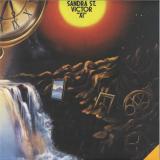
Powerhouse vocalist Sandra St. Victor returns with Eleven, her eleventh studio
album and first solo release in over a decade. From her years with The Family
Stand to collaborations with Roy Ayers, Curtis Mayfield, Chaka Khan, Prince and
Lalah Hathaway, Sandra has built a remarkable career that has consistently
blurred the lines between soul, funk, jazz and gospel.
Executive produced by Sandra St. Victor and Patrick Gibin for Mother Tongue,
Eleven brings together Sandra's longtime collaborators alongside the Mother
Tongue family, bridging her rich musical legacy with a fresh, forward-looking
sound rooted in soul, jazz, boogie and soulful dance music.
The album combines brand new compositions with inspired reinterpretations,
from Kaidi Tatham's stunning reimagining of Captain Sky's Moonchild and his
masterful reinvention of the Leon Ware/Syreeta underground gem Tiki Tiki
Donga, to a beautifully understated new version of Sandra's own Dizzy,
originally released on Gemini: Both Sides in 2001 featuring Questlove, Roy
Ayers and Donald Byrd, here reimagined by Mark de Clive-Lowe. Along the way,
the lo-fi soul of Black Ice, the timeless duet No More Water featuring Lalah
Hathaway, and the straight-up funk of Makes Me Wanna Fall In Love Again and
What Would Miles Do showcase an artist continuing to evolve while remaining
true to her artistic voice.
Rooted in experience yet driven by curiosity, Eleven bridges Sandra's
remarkable musical legacy with the creative vision of Mother Tongue, resulting
in an album that feels both timeless and unmistakably
Товар уже находится на пути к нам и, как ожидается, будет доставлен из 30.09.2026.

Some 15 years into the label's story, Japanese deep house minimalist Sasaki Hiroaki continues to offer up EPs rich in ultra-deep ambient chords, hushed and hypnotic beats, and the kind of beautiful musical touches that have always been a key part of Japanese deep house culture. Opener 'Geograph' sees him place echoing piano motifs and pulsing ambient electronics atop a sparse tech-house groove, while 'Projection' is a deliciously deep, dreamy and shuffling slab of ambient house excellence. Over on side B, 'Do It (repeat)' is a spaced-out chunk of minimalist dub techno goodness and title track 'The Last Bohemian' is a warming and meditative dancefloor drift.
Товар уже находится на пути к нам и, как ожидается, будет доставлен из 30.09.2026.
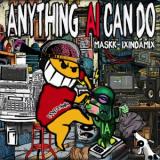
For Don’t Panik 8 the duo find themselves in-between rappers and unwilling to take up the mic themselves they turn to the internet for vocal inspiration, tackling subjects from Artificial intelligence, Bassline noises and Synthesiser Science all firmly embedded into their signature Pumping Funky sound.
он должен быть опубликован на 30.09.2026

2026 Repress
Symmetry is proud to announce the arrival of Solid State Vol. 1 - a special vinyl release from Break. Due to popular demand, we’ve compiled four standout tracks, including some fan favourites that until now were only available digitally.
The EP brings together a serious collection: Release Me, which hit number 1 on Beatport; Overstayed, Symmetry’s highest selling tune on Bandcamp; alongside two more heavyweight cuts, All You Gotta Do and Zodiac.
Pressed and presented in physical form, Solid State Vol. 1 is both a collector’s piece and a must-have for DJs - and this time it’s something you can hold in your hands.
он должен быть опубликован на 30.09.2026
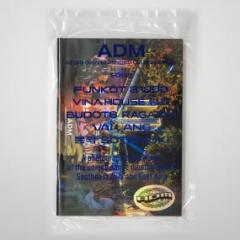
228 page photobook, printed on high quality Japanese paper.
Paperback
Size: 257 x 182 x 7mm
Enclosed in a printed clear plastic bag
Soi48 proudly presents this book, a photographic document of the unique dance music clubs
and culture of Southeast Asia and East Asia. The photos, from the years 2017 through 2025,
were taken in nightclubs, discos, festivals, raves, sound system parties, private parties and
migrant worker clubs — the places where Asia’s unique dance music genres are born and
thrive. ADM, with its exclusive on-the-spot snapshots, provides an extraordinary visual
archive of Asian contemporary dance music. Journeying through Thailand, Vietnam, Laos,
Malaysia, Indonesia, Philippines, Myanmar, Taiwan, Korea and Japan, Soi48 captures
glimpses of how people create their nights, visually comparing the differences between
countries in fashion, dance style, lighting, club interiors, flyers and more, showcasing the
distinctive entertainment culture that each country has created. The 167 photos also feature
the pioneering DJs and track makers who built unique music genres in each country, such
as Budots (Philippines), Vina House (Vietnam) and Saiyo (Thailand). Also of note: the book
provides a valuable record of nightlife during the COVID-19 pandemic; captures the energy
that migrant workers release in clubs on weekends; and in general showcases the ingenuity,
wit and passion of music lovers throughout the region.
Soi48:
A duo, comprising Tokyo natives Keiichi Utsuki and Shinsuke Takagi, that promotes the
magic of Asia and Asian music through DJ-ing, writing, design, and party activities. Their
interests range from traditional music to cutting-edge dance music, released on physical
media as well as on the internet. In addition to supervising the film Bangkok Nights (Kuzoku)
and the EM Records Thai music series, they introduce the joys of Asian music and travel
through talk events, TV, radio appearances, etc. Their books include TRIP TO ISAN: A
Traveling Thai Isan Music Disc Guide (DU BOOKS), OMK#001 (OMK), and ADM: Asia's own
unhinged club culture. As ever, they enthusiastically continue to research dance music and
sound system culture in Asian countries.
он должен быть опубликован на 30.09.2026
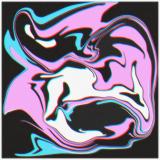
Hara Discs is proud to present the first EP from Sheffield-based DJ Harry Shackleton, co-owner of Grub Records and one half of DJ duo Wow & Flutter. This release draws influence from their longstanding residency at underground electro party Control., melding together sounds which have made this one of the North of England’s best kept secrets for the past 7 years. In an extremely long-winded and uncertain move, he has finally donned his rather fetching production hat and completely self generated the alias Hypno Disc with which he aims to unleash some music that is 100% OK.
The EP and alias are a homage to the late 90s and early 00s TV show Robot Wars. The title track combines the carnage of Craig Charles with something a bit UK and tribal. The remaining tracks bear the names of robots which took part in the wars. These are written from the perspective of the robots and as such are internal monologues of what each robot was thinking. The concept comes from an early fascination with this show and how it made the artist feel as someone growing up in the UK around 2000.
We hope you enjoy this release. Complaints will be tolerated.
CEASE!!!
он должен быть опубликован на 30.09.2026

Raw deep house pressure from Sascha Dive, four cuts blending soul, groove, and late-night mood, with Roland Clark blessing the mic. Limited green vinyl for those who still move to the real sound.
DJ Feedbacks :
Laurent Garnier : Cool tracks
Josh Wink (Ovum) : Liking 'Im Inspired' the best here.
C-Rock : Those Nights for me, nice NYC dub House touch!
Radio Slave (Rekids) : I've always been such a big fan of Sasha's productions and "There Is No Tomorrow" hits the spot.
Fleur Shore (Undergrowth / Cuttin' Headz) : im inspired, beautiful track
Reboot (Cecille / Cadenza) : schöne tracks ️
Satoshi Tomiie (Abstract Architecture) : Solid release!
Alinka (Twirl, Classic, Crosstown Rebels, Batty Bass) : Nice one
PBR Streetgang : Invocation and Im Inspired are great
D'Julz (Bass Culture) : those night is the one for me here
Damian Lazarus (Crosstown Rebels) : Thanks for sending. Xx
Ben Sims : Now downloading... will check asap!
Archie Hamilton (Microhertz / FUSE) : Nice thanks
Eddie Fowlkes (Detroit Wax, Rekids, Classic Music Company) : thanks
Tim Sweeney (Beats In Space) : Lovely
Doc Martin (Sublevel) : Sascha on a good one,with the voice of house music Roland Clark no less!!!
Terry Farley : THOSE NIGHTS WORKS FOR ME
Chloe Caillet (Smile Records) : love this!
Oliver $ (Classic Music Company / Play It Down) : Sooo gooood!
Ame (Innervisions) : thanks
Danny Tenaglia : Downloading for Danny Tenaglia, thanks!
Robert Owens (Trax / Musical Directions) : Cool tracks
Kai Alce (Real Soon) : Nice deep tracks from Sascha
Mark Farina : dig them.
Lea Lisa (Phonica Records / Folklor Club) : Really good definition of House
Alexkid (Rawax / FUSE / NG Trax) : Phonogramme (and Sascha Dive) on fire at the moment...
Harri (Sub Club) : lovely stuff, will play and support
он должен быть опубликован на 30.09.2026

Solid Groove hits naughty 40 and marks the occasion by serving up some 90s and 00s cuts from this and the Mysterious Dark label that have been hard to pin down ever since. 'Straight Ahead' is a loose-limbed and percussive tribal jumble, ''Dark 4' is fizzing, Basic Channel-style dub techno and 'Travel' is a grainy, textured deep techno cut that loops back and forth and causes your mind to wander amid the dewy pads. Previously CD-only track 'Dawn Over The Blue Planet' from Aubrey's Liquid Funk LP on Offshoot also makes its vinyl debut and is a brain-soothing deep house jam with stray melodic twinkles and an Omar-S style groove.
Товар уже находится на пути к нам и, как ожидается, будет доставлен из 30.09.2026.

The latest update to the Dream Software sonic catalogue is a glossy re-mastered version of the 2003 release ‘Fears’ from ‘Shuffle Progression’. A soundtrack for the space between reality and the higher spiritual planes. Grounding yet otherworldly, an organic groove doused in a warming sensuality and atmospheric liminality. This one is optimised for hazy spaces, morphing layers of floating essence, slowly obscuring all thats visible into blurry shapes of an abstract existence.
он должен быть опубликован на 30.09.2026

If you're looking for some hi-fidelity techno that is about atmosphere and sound design as much as muscular rhythmic power, this one is for you as Standards & Practices returns with more thoughtful tackle across three EPs. Electro, half-time, dub and breaks are all chucked into the mixer here with Karim Maas opening with the unsettling emptiness of 'Positive Beliefs.' Stave & Grebenstein's 'Live Room' is a collage of texture and static with only the merest suggestion of rhythmic form, and Sandwell District offer a supple and deep techno vision on 'Le Coq Sportif.' Negative Affect's 'Sleep Walker' has menacing swagger to shut down a proper decent selection.
Товар уже находится на пути к нам и, как ожидается, будет доставлен из 30.09.2026.

On edit imprint Disco Mind's tenth release, they hand over the reins to iconic Italian DJ, producer and remixer Beppe Loda, once resident DJ at influential rural club Typhoon during the 1980s - and it's that period that inspired the four scalpel jobs on show. 'Mr Rocket' is a chugging chunk of oddball early 80s headiness, while 'Tu Sei' sees Loda rework what sounds like a synth-laden fusion of space rock and intergalactic jazz-funk. On side B, he does a great job on spiralling, big hair-sporting disco-rock number 'Falling', before showcasing more spacey synths and chugging rock riffs on 'Marzio'.
он должен быть опубликован на 30.09.2026
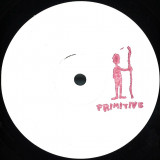
2026 Repress
25 years after this cult UK label first emerged, we're very happy to present some of their most sought after releases...
Primitive represented a stripped down and sonically heavyweight series of essential DJ tools, winning wide support from Techno an House DJ's alike & enduring - perhaps due to their raw, basic construction - way beyond their original inception.
This is the first compilation EP, featuring some favourites from the catalogue, remastered & repressed on limited, hand-stamped vinyl...
Despite serious demand, we will only be able to access limited quantities of these special 21st century repress editions, so buy or cry !
Товар уже находится на пути к нам и, как ожидается, будет доставлен из 30.09.2026.

Zwei wahre cineastische Juwelen auf einer 7"-Single. Eine Auskopplung aus der beliebten Vinyl-Compilation-Reihe "The Tape Masters", die laufend seltene Rare Groove-Schätze und unveröffentlichte Aufnahmen aus den Archiven des Filmkomponisten Peter Thomas zutage fördert. Exklusiv auf dieser Single – und überhaupt zum ersten Mal auf Vinyl erhältlich – ist die rare deutschsprachige Version des Tracks "Black Power", gesungen von einer gewissen Donna Gaines. Später natürlich weltberühmt geworden als Donna Summer, markiert dieser Song ihre allererste Aufnahme als Solokünstlerin im Alter von gerade einmal 20 Jahren. Zugleich war es ihr erster Auftritt vor der Kamera – prominent platziert im ZDF-Krimi-Dreiteiler "11 Uhr 20" (1969). Sowohl der Film als auch bisherige Sampler verwendeten die englischsprachige Version; der Mono-Mix der deutschen Fassung wurde erst vor Kurzem in Peter Thomas’ Bandarchiv wiederentdeckt. Ein weiteres vokales Highlight aus einer deutschen Krimi-Trilogie ist Senta Bergers frech-laszives "Vergiss mich, wenn du kannst" (aus dem ZDF-Krimi-Dreiteiler "Babeck", 1968). Das Lied basiert auf dem Titelthema der Serie und wird von der Sängerin in ihrer Rolle als geheimnisvolle, vamp-artige Barchefin interpretiert. Unter Liebhabern europäischer Filmmusik hat sich der Titel längst zum Kultstück entwickelt und wurde bereits mehrfach gecovert. Das Original feiert nun endlich hier seine Vinyl-Premiere. Achtung: Ein absoluter Doppelseiter!
a a1: Black Power (German version) feat. Donna Summer
a a1: Black Power (German version) feat. Donna Summer
a a1: Black Power (German version) feat. Donna Summer
[a] a1: Black Power (German version) [feat. Donna Summer]
[a] a1: Black Power (German version) [feat. Donna Summer]
[a] a1: Black Power (German version) [feat. Donna Summer]
[a] a1: Black Power (German version) [feat. Donna Summer]
он должен быть опубликован на 01.10.2026

Satoshi Tomiie Is Back on Phonogramme With "12b-Dub Pt. 2," the Second Volume of the Acclaimed Ep Series by Legendary Producer Satoshi Tomiie. This 4-Track Ep Continues to Explore Tomiie's Deep and Innovative Soundscapes, Making It an Essential Addition to Any Electronic Music Collection. Available on a Limited Edition Marbled 12'' Vinyl, "12b-Dub Pt. 2" Promises to Deliver a Unique Auditory Experience With Its Rich Textures and Masterful Production. Don't Miss Out on This Exclusive Release From Phonogramme, Showcasing Satoshi Tomiie's Enduring Influence in the World of Electronic Music....
Есть у нас в наличии и готов к отправке

First released in a long-out-of-print limited-edition 7" box set, this album, now released on LP and CD, brings together 10 amazing, unreleased Studio One tracks, only ever released as extremely limited-edition hand-etched one-sided dubplates (most of these sold out in less than 2 hours!). Studio One Dub Plate Special brings together all 8 of these exclusive dubplate unreleased cuts, plus two more also never before released alternate cuts. Featuring Alton Ellis, Cedric Brooks, Brentford Road All Stars, Jacob Miller and more! From Alton Ellis' righteous uplifting 'Black People' to Brentford All Stars’ hypnotic cover of War's classic 'The World Is A Ghetto', groovy instrumental cuts from Cedric Brooks and The Soul Brothers, deep cuts from Alton & Zoot, George Phillip and Jacob Miller's wicked alternate cut of Dennis Brown's classic 'Westbound Train', all make Studio One Dub Plate Special a truly unique Studio One release
он должен быть опубликован на 01.10.2026
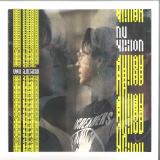
Nu Vision is the latest project of Duke Cooper, band leader and label boss of Nation, Kode and DirtyBlends. There are three humans who make up Nu Vision, and they all have their own stories and discographies, records released on labels you might know, gigs played in Chicago or Berlin or someone’s loft, lives lived, friends made, sleep lost - fighting for theirart, standing by truths, defending voices, honoring progenitors, whilst pushing a new paradigm. Time is both fleeting and heavy for us all, but it is not without receipts.
Nu Vision is a band in the classic do-you-believe-in-alchemy sense - equal parts rhythm, damage, and deep feeling. Drenched in nostalgia and futurism, The Seed is a singularity of sound + vision; as if heavily rotated by VJ Dave Kendall on MTV’s 120 Minutes but materialized via today’s technology.
The Seed 10 inch provides additional music inspired significant icons Section 25, Liaisons Dangeruses and Adrian Sherwood having paved the way with their prior successes..- this package of The Seed is no freshman effort; but rather, a masterclass in continuing sonic education, delivering a unified experience from beginning to end. A NU VISION.
The Seed 10 inch provides additional music inspired significant icon band: Section 25 from the period of 1981-1984 with a more electronic-dance direction, process which culminated in the album ' From the Hip ' and remix single "Looking From A Hilltop", both released in 1984 as "Insecure Man is about being true to manhood with Robert Lane leading the charge with his vocabulary message of the current state of society.
Insecure Dub focuses on the period of 1981-1984 with an alternative electronic-dance direction process as an inspired blueprint from Nu Vision inspired from Adrian Sherwood having paved the way with his individual success.
Inspired from electrifying songs produced by Chrislo Haas (DAF) and Beate Bartel (Mania D. / Matador) reinforced by Krishna Goineau’s French and Spanish Speech-Attack-Lyrics Liaisons Dangereuses created a unique style anything other than a Berlin or Düsseldorf ‘thing’ – that was propelled to an international underground phenomenon of fame.
Nu VIsion was inspired to create a blueprint from the period of their productions of 1981-1982 with an electronic-dance direction paying homage with passionate craftsmanship utilizing what equipment was possible in the studio at the time of this recording featuring new members; Zoe Murphy & Fletch The Stranger on vocals and James Chazz on Saxaphone with a Ring Modulator.
Товар уже находится на пути к нам и, как ожидается, будет доставлен из 01.10.2026.
After Caposile, at the peak of his growth, now consacrate as one of the most sought and removed clubs in the Italian and world undergoing circuit, is back to release high level music, returning to pressing on vinyl in its acclaimed label the second volume of “The Sound of Garden”.
Spring 2024 deserved a release made by an exceptional cast, it will be always divided in to parts, both 12”, and it will include an incredible team of artists led by the visionary and immortal master Alex Neri, the local phenomenon known for his productions in Slow Life and Altered Circuits: Paolo Mosca, our family members and residents Twineffect and Maggio, the duo Francesco Maddalena and Manuel De Lorenzi, Lee Burton, Jamahr, Franko Lopez and Matteo Point.
A perfect mix of artists who strongly believe in the club and in what we transmit as an experience to live, these tracks are explosiveness, elegance, magnetism, each with a different facet of house music: progressive, balearic, electro, acid, this double vinyl contains everything that the dancefloor requires and it is a transposition into music of the current vibe that can be felt at After Caposile’s garden.
The first volume begins with the mastery of the multifaceted and always prolific artist Alex Neri who never makes a mistake, and even after years continues to release masterpieces, like this one: "H-Arp Odyssey", which already from the title we can imagine as an instrument takes the lead in the construction of the piece, a rush of adrenaline that immediately makes it clear what awaits us.
“Unreleased”, the track by Francesco Maddalena and Manuel De Lorenzi, is a clear representation of their way of playing that characterizes them and brings them together, and that always makes us dance, a direct groove, old school, tech-house in its most pure.
If the first two tracks get straight to the point, in side B we start with a bang with Paolo Mosca and his "Landscape", where with a maniacal arrangement, worthy of his now established name as a producer, he teleports us into a progressive world of the 90s, in Balearic style where floating pads, organs, melodies and sequenced vocals are linked to the complex and rhythmic percussive groove and the more aggressive synths.
Thus the first chapter ends with "Visions Of Disco" by Twineffect, a track where a more direct house part elegantly contrasts, which presupposes the more dance part of the piece, to then take you and envelop you in a long drop made up of a main piano and vocals that are perfect for a truly exciting moment to experience on the track.
After Caposile thus confirms itself once again in constant evolution, with an output full of new talents and sacred monsters and a European tour that continues to expand their party concept in the most important clubbing realities and the biggest festivals.
Both the first and second volumes will be released this May, ready to bring us a breath of joy and madness this summer.
Есть у нас в наличии и готов к отправке

UK Garage has ridden a new wave of hype and exposure over the last few years. Artists like Sammy Virji and Interplanetary Criminal have crossed over to the mainstream, while dancefloors across the world have shaken to a switched-up version of the sound that defined the UK underground either side of the millenium.
Hidden beneath a pink balaclava, the mysterious DJ Jackum has lurked this rejuvenated scene while dropping some of the most defining bangers of the period. Often surfacing in the form of moody edits released on Soundcloud, Jackum productions inevitably demolish dancefloors whenever dropped, as they frequently are in the sets of Virji and the other big guns.
Landing on Hotflush, a storied label of UK underground music, ‘Context’ is his most substantial work to date. Six tracks covering the full spectrum of the Jackum sound, from 4/4 heaters to dubstep-adjacent eyes-down bass pressure.
And in the form of opening track ‘Floo’, Jackum spreads his wings into a place that transcends the narrow confines of genre definition. From the UKG building blocks of bass, drive, cut-up vocals, and melody, the track emerges as something both familiar and wholly unexpected - the mark of a producer at the peak of their powers.
‘Clip Empty’ is another highlight of this standout EP. Showing a flair for the cinematic, a breakdown of militaristic snares gives way to a trademark rolling bassline and earworm vocals.
Away from the 4/4 bangers, ‘Take Your Body Higher’ is a guaranteed half-step rewind, while ‘Step Up’ recalls memories of smokey Plastic People sessions of the mid-2000s.
Товар уже находится на пути к нам и, как ожидается, будет доставлен из 01.10.2026.
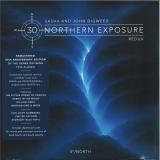
South, Limited Sky Blue Vinyl[34,41 €]
North, Black Vinyl[27,69 €]
South, Black Vinyl[27,69 €]
“Simply put, it’s unlikely we’ll encounter a mix that leaves a cultural footprint and defines the sound of a generation quite like Northern Exposure again. Both mixes are absolutely 100% astoundingly brilliant”
DJ Mag
“Their best-loved mix CD is a trippy traipse through the verdant world of progressive house, a genre with one foot in the rave and the other somewhere in the great beyond” Rolling Stone - The 30 Greatest EDM
Albums Of All Time
Originally released on 27th September 1996, ‘Northern Exposure’ is widely regarded as one of the greatest mix compilations ever made. Thirty years on, it sounds as vital as ever - a testament to the fearless vision that went into its creation.
At a time when DJ culture was still writing its own rules, Sasha and John Digweed pushed against the grain. Drawing on sounds discovered during early trips to America - from Rabbit in the Moon to Future Sound of London - they built something that prioritised atmosphere over dancefloor convention. DJ Mag panned it on release. History changed their tune.
Northern Exposure Redux marks the 30th anniversary with a definitive reissue of both original mixes. The CD version also includes a newly created ambient mix. Shaped by the spirit of Bill Laswell and Mad Professor, it explores the deeper, more hypnotic DNA that always ran beneath the surface. Northern Exposure Redux North includes classic tracks by Keiichi Suzuki, The Future Sound Of London, and Banco de Gaia. Northern Exposure Redux South includes classic tracks by Dope On Plastic, Pete Lazonby, and a newly recreated version of ‘Dark And Long (Dark Train)’ by none other than Darren Emerson himself. Both vinyl versions also include a download code for both the North And South mixes, as well as the individual tracks.
Canonical then. Essential now.
он должен быть опубликован на 01.10.2026
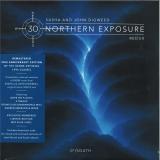
North, Limited Midnight Blue Vinyl[34,41 €]
North, Black Vinyl[27,69 €]
South, Black Vinyl[27,69 €]
“Simply put, it’s unlikely we’ll encounter a mix that leaves a cultural footprint and defines the sound of a generation quite like Northern Exposure again. Both mixes are absolutely 100% astoundingly brilliant”
DJ Mag
“Their best-loved mix CD is a trippy traipse through the verdant world of progressive house, a genre with one foot in the rave and the other somewhere in the great beyond” Rolling Stone - The 30 Greatest EDM
Albums Of All Time
Originally released on 27th September 1996, ‘Northern Exposure’ is widely regarded as one of the greatest mix compilations ever made. Thirty years on, it sounds as vital as ever - a testament to the fearless vision that went into its creation.
At a time when DJ culture was still writing its own rules, Sasha and John Digweed pushed against the grain. Drawing on sounds discovered during early trips to America - from Rabbit in the Moon to Future Sound of London - they built something that prioritised atmosphere over dancefloor convention. DJ Mag panned it on release. History changed their tune.
Northern Exposure Redux marks the 30th anniversary with a definitive reissue of both original mixes. The CD version also includes a newly created ambient mix. Shaped by the spirit of Bill Laswell and Mad Professor, it explores the deeper, more hypnotic DNA that always ran beneath the surface. Northern Exposure Redux North includes classic tracks by Keiichi Suzuki, The Future Sound Of London, and Banco de Gaia. Northern Exposure Redux South includes classic tracks by Dope On Plastic, Pete Lazonby, and a newly recreated version of ‘Dark And Long (Dark Train)’ by none other than Darren Emerson himself. Both vinyl versions also include a download code for both the North And South mixes, as well as the individual tracks.
Canonical then. Essential now.
он должен быть опубликован на 01.10.2026
Big welcome to Time is Now for J Wax for a bit of a statement EP and I am coming out swinging here cos this is a really good record. There’s good, and then there’s this, the kind of good that stays good.
You know that feeling when something’s just right. When flow state becomes clarity. Well listening to this EP from J Wax gives me that feeling. This is proper Goldilocks business. It’s equal parts Gun Fingers and Loved up hugs. Just right.
By now we all know that something very special happens when Speed Garage collides with 1st wave UK Hard House - but - what makes this just right is that J Wax didn’t stop there, just like the Dutch 2nd Wave of Hard House he’s slid onwards into euphoric trance and oh boy am I here for it. In 1997 we got Double99’s Rip Groove and Nalin & Kane’s Beach Ball and for me this EP has as much in common with perfectly formed ‘97 Trance as it does with Speed Garage. Who says you can’t have it all!
We’ve been following J Wax’s output for years. He has been grafting hard. And for me he’s already firmly a part of the long lineage of globally significant Scottish party starting producers and DJ’s. So when we signed this EP to Time is Now I was gassed. Four big tunes. Sick EP. For me it’s crystal. J Wax is now a producer operating in rarefied air.
Run the Tracks….
A1. The dubplate of ’Peaches’ has been causing mayhem for a minute. Gliding in smooth before that big diva vocal screams down the bassline.
A2. J Wax tags in Edinburgh local RUA.DJ. The pair double up on ‘Shift’ for a slice of Trance infused but no-nonsense Speedy G. Reece bass & gun shots + bouncy synthline & ethereal chords. Lose it and yourself.
B1. ‘Soul Movement’ is a big room weapon. Serious levels on this one that leave no doubt - this is a producer at the top of his game, writing high energy weapons to destroy the dance.
B2. ‘Smokin’ is peak time bizness. Harder darker house with a diiirty dirty south vocal chop. This one is heads down & lock in…
Goldilocks.
он должен быть опубликован на 01.10.2026

Quiet Village invites Eric Duncan AKA Dr Dunks for his latest EP ‘Plateau Alone’ featuring Zopelar. Dr Dunks is one half of DJ duo Rub-N-Tug.
New York music veteran Eric Duncan AKA Dr Dunks lands on Quiet Village with his latest release ‘Plateau Alone’ featuring Zopelar, dropping 18th September. Beginning his journey over three decades ago in New York's underground scene as one half of the duo ‘Rub-N-Tug’ alongside Thomas Bullock and one half of DFA’s ‘Still Going’, Duncan has built a reputation for his genre-defying music and sets, mixing disco, house, funk and electro. His production and remix catalogue over the years includes Grace Jones, Todd Terje, LCD Soundsystem, Groove Armada, and more. Producer and DJ ‘Zopelar’ hails from Brazil, taking inspiration from the Brazilian music scene and lacing it with jazz, soul, and house, with releases on Apron Records, Tartelet Records, Soul Clap Records, and Selva Discos
The ‘Plateau Alone’ EP comprises three funk-fuelled tracks. Syncopted electro synths fl ood opening track ‘Plateau Alone’ with an 80s-inspired groove, where bass melodies and textures create an otherworldly feel. Second track ‘Slow One Eleven’ slows the pace; percussion and strings featuring rock accents create a steady groove as Duncan adds his signature sonic sound. Low-down bass blends with dub-chords and alien textures in ‘88 Lights’, creating a warm and cosy closing to the EP.
он должен быть опубликован на 01.10.2026

FUNKSOULSEX is the debut album by London-based Liv East and the culmination of years spent refining a sound entirely her own. Blending R&B, funk, neo-soul and contemporary electronic influences, the album explores love, desire, intimacy, lust and connection in the modern age through smoky grooves, sensual vocals and vintage-inspired production. Featuring production from Brighton duo AMIcity and incorporating vintage equipment & textures, FUNKSOULSEX bridges timeless influences with a fresh, forward-thinking perspective, creating a sound that feels both nostalgic and unmistakably modern.
он должен быть опубликован на 01.10.2026

opo’s 666ridims (2020 - 2026), compiled by J.TRIPP, brings together tracks from his 666ridims netlabel, reflecting on the singular sound worlds of some of his solo work. Like a discovery made by neutrino sensors, opo’s tracks research the transformation of rhythm, swing, and structure, aiming for a new grid. Sketchy and raw, processing emotions and experiences, regaling stories, and asking questions, opo relates in trance verse. All tracks here breathe his focus on improvisation, experimentation, and collaboration. Some of the beats featured on 666ridims (2020 - 2026) are outlines for freestyles and songwriting ideas, a practice formed during a long-distance music conversation with illustrator, printmaker, painter, designer, and maker Billy Bigwood. Other tracks are more club-oriented, like speculative genres programmed in odd meters. Japanese Barcelona-based DJ Hanakito contributes to one track, using samples and chops sourced from her vinyl imports.
Through Afroelectronic experimentation and diasporic narratives, opo encodes his soul's past and future through his music. Encoded, activated, returned. Initiate only when you receive permission from all your mental fragments. Keep transmissions in mind and dislodge and follow the command cluster's trail. Strongly influenced by sci-fi, ancestral afro musics, jazz, performance art, and food, as musical lines and shards of meaning cascade, 666ridims (2020 - 2026) is a minimalist dive into strange meters, polyrhythm, and the transcendence of ideas. Fast, slow. Exhilarating. We don’t discover physical laws; we just collaborate on them.
он должен быть опубликован на 01.10.2026
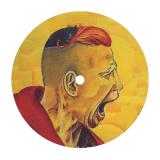
The third in a series of releases from the Digi Dub archives, Like it Here is a tribute to the poet laureate of Special Brew, the late Iffor Clarkson-Denbigh, who sadly departed us in 2021 to drink in the great park in the stars.
The infectious and futuristic late 90s vocal space dub of the A side finds Iffor waxing lyrically about both the nature of impermanence and the sentient ocean of Solaris over an irresistible bassline and low winding groove. The flip side features a suitably chugging version of the rail riding classic Loveborough Junction and a percussive early 90s acid dub of Heart like a Lion, the original of which dropped on the South East of the Thames collection. None of the tracks are traditional style dubs, but happily exist in the gaps between genres.
Iffor was a well-known multi-instrumentalist and vocalist on the South East London underground scene who lived life to the max without an off switch. He and label owner Lee Berwick truly had a laugh in the studio, producing Purple Boy (the classic ode to drinking in the park), the suitably named Clevor but Stupid album and many other uncategorisable musical wanderings.
“The hope is that Iffor, the dark son of Clenby, is cackling as he cracks another can while looking down on us from the great park in the stars.” Lee Digidub Berwick
он должен быть опубликован на 02.10.2026

The latest release from Rainbow Disco Club’s label imprint, Beyond Space And Time, is the debut compilation from The Melting Hours, a live project by Wata Igarashi and Kuniyuki. WataIgarashi continues to make his mark on the history of techno, whilst Kuniyuki has long been revered as one of Sapporo’s greatest treasures. The two artists, who have long held mutual respect for one another, met whilst performing at the Draaimolen Festival 2025, and this encounter gave rise to The Melting Hours.
‘Blue Sun’ is imbued with a freshness reminiscent of the ambient jazz masterpieces released by prestigious labels such as ECM and Windham Hill. ‘Liquid Dunes’ sees the organic tones of the flute and percussion melt into over ten minutes of abstract sound textures, whilst the breathtaking ‘Cloud Touch’ awakens amidst a swirling vortex of pulsating downbeats and arpeggios. It is said that ‘Blue Sun’ was created by reconstructing studio rehearsal recordings, whilst ‘Liquid Dunes’ and ‘Cloud Touch’ were crafted from live recordings at Draaimolen 2025. The essence of these works—and indeed of the project The Melting Hours itself—lies at the heart of their improvisational nature.
It brings to mind the Rainbow Disco Club event back in 2026, where they wove their sounds amidst fresh greenery and surrounded by listeners under a clear blue sky. It felt as though the pulsating energy was spreading across the dance floor, guided by a session from The Melting Hours that seemed almost like a living creature. The organic breath one senses in this work not only evokes precisely that scene but also allows us to feel the unique, ephemeral nature inherent in this project—and, consequently, the boundless possibilities that stem from it.
Rainbow Disco Club のレーベル・ライン'Beyond Space And Time'から放たれる最新作は、Wata IgarashiとKuniyukiによるライブ・プロジェクト、The Melting Hoursによる初の音源集だ。テクノ史に残る実績を現在進行形で刻み続けているWata Igarashi、長きに渡り札幌の至宝として尊敬を集めてきたKuniyuki。兼ねてよりリスペクトを送り合ってきた両名がDraaimolen Festival 2025への出演を契機に邂逅し、始動したプロジェクトがThe Melting Hoursである。
ECMやWindham Hillといった名門レーベルのアンビエント・ジャズ傑作群を彷彿とさせる瑞々しさを湛えた"Blue Sun"。10分以上に渡るアブストラクトなサウンド・テクスチャーの中にフルートや鳴り物のオーガニックな音色が溶ける"Liquid Dunes"と、そして鳴動するダウンビートとアルペジオの渦に覚醒する圧巻の"Cloud Touch"。"Blue Sun"はスタジオでのリハーサル音源を、"Liquid Dunes"と"Cloud Touch"はDraaimolen 2025のライヴ音源を、それぞれ再構築し楽曲化したものだという。これらの作品、ひいてはThe Melting Hoursというプロジェクト自体のエッセンスは、その即興性を核としている。
WataとKuniyukiがゼロから音を立ち上げ、お互いのエレクトロニクス/生楽器を操る技術、それぞれエレクトロニック・ミュージック以前にフリージャズやニューウェイヴ/インダストリアル等に傾倒した時期を含む、音楽家としての半生を持ち出し合う感覚。そこに、例えばDraaimolen出演時に降り出した雨や、リハーサル時にスタジオに迷い込んだ蜂のような、外的かつ偶発的な要因、感情やムードの起伏までもが絡み合う様相。互いの予想を越えるスリルの中で曲が形づくられるプロセスこそが、この作品とプロジェクトを特別なものとしているのだという。
快晴の元で新緑とリスナーに囲まれ音を紡いでいった、去る2026年のRainbow Disco Clubを思い出す。まるで、生き物のようなThe Melting Hoursによるセッションに導かれ、脈動するエネルギーがフロアに伝播していたようだった。この作品から感じられる有機的な息遣いは、まさにそんな情景を思い起こすものであると同時に...このプロジェクトが宿すその場/その時限りの唯一無二性と、それ故に広がっていく限りない可能性をも感じさせてくれる。
он должен быть опубликован на 02.10.2026
Duality makes his debut on Up Ya Archives with a single rooted in the foundations of 90s jungle but shaped distinctly by contemporary sound design, epitomising his unique take on modern junglism. Intricate breakbeats and classic jungle textures are anchored by weighty 808s that guide the flow of the track, while influences from footwork, hardcore and drum & bass sets the track firmly into the space of progressive junglism. When asked on the single, Duality said
“R U Mine is the lead single from my latest project, Brainstorm. It balances luscious pads and playful synth lines with relentless drum breaks and 808s. Topped with ethereal vocals, this is one to open a set with or close out the night”.
A rising star in Bristol’s underground dance scene, Duality is staking a claim within the new wave of jungle.
“‘Brainstorm’ is exactly what the name suggests. A glimpse into the ideas that occur in my brain as a producer. Each track is a different element of my jungle inspirations, from raregroove sample-based production to 4x4 rave stabs. Ready and waiting for the dancefloor!”
Aside from his own productions, he also runs Bristol-based record label and events crew Intaception, which has hosted parties across the UK with iconic figures including Source Direct, Tim Reaper, Double O, and many more. Moving fluidly across production, promotion and musical direction, Duality continues to push the sound and culture of contemporary junglism forward.
он должен быть опубликован на 02.10.2026
Scott Monteith makes his debut on Berlin's own Bright Sounds under his DEADBEAT alias, bringing three unreleased dub tracks steeped in the deep, cavernous low end he's known for. A pioneer of the Canadian dub techno scene, DEADBEAT has spent over two decades shaping the genre's darker, more spacious corners, and this EP marks a fitting first outing for the label. Pressed in a strictly limited deep blue vinyl edition, it's a must for collectors and dub heads alike.
он должен быть опубликован на 02.10.2026
