To those familiar with the output of Cologne-based imprint Firm from back in the early '00s, the name of Geiger, alias Nass, shall undoubtedly ring a bell. Herald of an hedonistic melange of funk- soaked electro pop and guitar-riddled synth music, sitting somewhere close to acts like Ween and Junior Boys, Alexander Geiger is about to break a eight-year hiatus with the drop of his debut album under the newly-founded moniker of Fahrland. A release that both encompasses a healthy dose of the discoid tropes from the Firm era but also aspires to split with a segment of it, geared towards exploring further undisclosed fringes of his shape-shifting sound universe, 'Mixtape Vol.1' is the fruit of a decisive move from the sleepless Berlin to the peaceful countryside landscapes of Fahrland - a lushly forested area near Potsdam which you'll have understood played an essential role in Geiger's longed-for return. Versatile and inclusive, the album sweeps a polyamorous gamut of styles and tempos like an answer to the virtual prisons that inhibit us on a daily basis, straying away from normative standards and classic full-length calibration as a result. Instead weaving a singular narrative course, clear from all type of shackles and chains, Geiger navigates on sight, reflecting on notions as wide and universal as freedom, friendship and love across a multiversal patchwork of sounds and feels. From the languid sexy vibe of 'Beggin', 'Plastic People' and 'Yesterday' - all three featuring the sensual whispers of multi-talented vocalist and artist MZ Sunday Luv, through the heavily vocodized, chip- implemented groove of I AM ROBOT - reminiscent of Telex and Space Art, balearic jazz & rap shine of 'Sky So High', smokey lounge ambience of 'L AND H' onto broader ambient-friendly spans such as 'Suspension', 'Windshield Gently Wipers' and the smooth, sun-basking closer 'Get Down', each track holds a fragile cocooned world at its heart.
Bei denjenigen, die mit dem Output vom Kölner Label Firm aus den frühen Nullerjahren vertraut sind, sollte der Name Geiger alias Nass zweifellos die Glocken klingeln lassen. Als der Herold einer hedonistischen Melange aus Funk durchdrungenem Elektro-Pop und Gitarren durchzogener Synthie-Musik irgendwo zwischen Ween und den Junior Boys, bricht Alexander Geiger seine achtjährige Schaffenspause mit der Veröffentlichung seines Debüt-Albums unter neuen Pseudonym: Fahrland.
Ein Release, das sowohl die diskoiden Tropen der Firm-Ära affirmiert, als auch danach strebt ein bestimmtes Segment davon zu spalten. Aufgenommen um ungeahnte Interferenzen seines gestaltverändernden Sounduniversums zu entdecken, ist 'Mixtape Vol.1' das Resultat eines bewussten Umzugs aus dem schlaflosen Berlin in die friedliche Landschaft von Fahrland - einem üppigen Waldgebiet in der Nähe von Potsdam, das eine entscheidende Rolle in Geigers ersehnter Rückkehr zur Musik gespielt hat.
Vielfältig und offen erforscht das Album polyamorös eine Skala von Stilen und Tempi als Antwort auf die virtuellen Ketten, die uns tagtäglich hemmen. Bewusst vergessen werden dabei normative Standards und klassische Langspieler-Kategorien. Geiger webt stattdessen ein einzigartiges Narrativ, frei von jeglichen Fesseln und Ketten und führt uns auf seinem multiversalen Flickenteppich aus Sounds und Gefühle mit Sichtkontakt an so allgemeingültige und universelle Begriffe wie Freiheit, Freundschaft und Liebe.
Vom nochalanten Vibe von 'Beggin', 'Plastic People' und'Yesterday' (alle drei mit der sinnlich wispernden und vielseitigen Sängerin MZ Sunday Luv), bis zu dem durch den Vocoder gejagten und computergenerierten Groove von I AM ROBOT; Reminiszenzen an Telex und Space Art, balearischen Jazz und Rap erklingen in 'Sky So High', rauchiges Loungeambiente auf 'L AND H' bis zu völliger Ambient-Anschlussfähigkeit in 'Suspension', 'Windshield Gently Wipers' und dem sanften, Sonne anbetenden Schlusslied 'Get Down' - jeder Track hält eine Welt für sich in seinem Herzen.
To those familiar with the output of Cologne-based imprint Firm from back in the early '00s, the name of Geiger, alias Nass, shall undoubtedly ring a bell. Herald of an hedonistic melange of funk- soaked electro pop and guitar-riddled synth music, sitting somewhere close to acts like Ween and Junior Boys, Alexander Geiger is about to break a eight-year hiatus with the drop of his debut album under the newly-founded moniker of Fahrland. A release that both encompasses a healthy dose of the discoid tropes from the Firm era but also aspires to split with a segment of it, geared towards exploring further undisclosed fringes of his shape-shifting sound universe, 'Mixtape Vol.1' is the fruit of a decisive move from the sleepless Berlin to the peaceful countryside landscapes of Fahrland - a lushly forested area near Potsdam which you'll have understood played an essential role in Geiger's longed-for return. Versatile and inclusive, the album sweeps a polyamorous gamut of styles and tempos like an answer to the virtual prisons that inhibit us on a daily basis, straying away from normative standards and classic full-length calibration as a result. Instead weaving a singular narrative course, clear from all type of shackles and chains, Geiger navigates on sight, reflecting on notions as wide and universal as freedom, friendship and love across a multiversal patchwork of sounds and feels. From the languid sexy vibe of 'Beggin', 'Plastic People' and 'Yesterday' - all three featuring the sensual whispers of multi-talented vocalist and artist MZ Sunday Luv, through the heavily vocodized, chip- implemented groove of I AM ROBOT - reminiscent of Telex and Space Art, balearic jazz & rap shine of 'Sky So High', smokey lounge ambience of 'L AND H' onto broader ambient-friendly spans such as 'Suspension', 'Windshield Gently Wipers' and the smooth, sun-basking closer 'Get Down', each track holds a fragile cocooned world at its heart.
Bei denjenigen, die mit dem Output vom Kölner Label Firm aus den frühen Nullerjahren vertraut sind, sollte der Name Geiger alias Nass zweifellos die Glocken klingeln lassen. Als der Herold einer hedonistischen Melange aus Funk durchdrungenem Elektro-Pop und Gitarren durchzogener Synthie-Musik irgendwo zwischen Ween und den Junior Boys, bricht Alexander Geiger seine achtjährige Schaffenspause mit der Veröffentlichung seines Debüt-Albums unter neuen Pseudonym: Fahrland.
Ein Release, das sowohl die diskoiden Tropen der Firm-Ära affirmiert, als auch danach strebt ein bestimmtes Segment davon zu spalten. Aufgenommen um ungeahnte Interferenzen seines gestaltverändernden Sounduniversums zu entdecken, ist 'Mixtape Vol.1' das Resultat eines bewussten Umzugs aus dem schlaflosen Berlin in die friedliche Landschaft von Fahrland - einem üppigen Waldgebiet in der Nähe von Potsdam, das eine entscheidende Rolle in Geigers ersehnter Rückkehr zur Musik gespielt hat.
Vielfältig und offen erforscht das Album polyamorös eine Skala von Stilen und Tempi als Antwort auf die virtuellen Ketten, die uns tagtäglich hemmen. Bewusst vergessen werden dabei normative Standards und klassische Langspieler-Kategorien. Geiger webt stattdessen ein einzigartiges Narrativ, frei von jeglichen Fesseln und Ketten und führt uns auf seinem multiversalen Flickenteppich aus Sounds und Gefühle mit Sichtkontakt an so allgemeingültige und universelle Begriffe wie Freiheit, Freundschaft und Liebe.
Vom nochalanten Vibe von 'Beggin', 'Plastic People' und'Yesterday' (alle drei mit der sinnlich wispernden und vielseitigen Sängerin MZ Sunday Luv), bis zu dem durch den Vocoder gejagten und computergenerierten Groove von I AM ROBOT; Reminiszenzen an Telex und Space Art, balearischen Jazz und Rap erklingen in 'Sky So High', rauchiges Loungeambiente auf 'L AND H' bis zu völliger Ambient-Anschlussfähigkeit in 'Suspension', 'Windshield Gently Wipers' und dem sanften, Sonne anbetenden Schlusslied 'Get Down' - jeder Track hält eine Welt für sich in seinem Herzen.
Dublin based musician Lerosa has built an impressive discography throughout the years. With his first efforts dating back to 2005 the producer who has a broad palette of sounds has already been around for over 10 years with releases for a vary of respected labels.
For the first release on SAFTX , Lerosa hands out a taster of the labels new series ambitions. Vivrant house music is most definitely the back bone of Playa De La Guancha as a whole. The opening is packed with a strapping rhythm section and a vocal cut that is reminiscent of the Trax Records classic House Nation . Julius Steinhoff (of Smallpeople fame) gives Soul Tracing a modern sounding treatment that completely shifts the feel of the original and turns it into an adventurous piece of contemporary electronics.
Lerosa opens up the B side with Bruised which is a work out of alternating basslines and brutal machine claps that give the piece a club oriented feel. Acidic sounds cut through the mix with determination and wobbly synth sounds serve as a pleasant sauce for this intergalactic sounding work. Marauder is a hefty bit at a slower tempo than it s predecessors. A loose rhythm section is causing for the listener the focus on the immense LFO threated sounds that float on to and the low down bassline that supports the overall atmosphere in a grounded manner. Playa De La Guancha will be available through all specialized retailers starting early April.
" After his initial release on World Unknown records way back in 2011 - a tunethat featured on Andrew Weatherall's Ministry Of Sound 'Masterpiece' 2012 compilation - Kalidasa has also released music via Magic Feet and Tusk Wax. This latest release sees him ploughing along a similar musical line. 'The Mirage' and 'Sun Aki' are both tracks for those who like to chug-along to the more refined, no frills tunes that do exactly what they say on the tin. Both are perfect spaced out and otherworldly grooves for strobe filled and lazer infused dark basements. Soft Rocks throw around some magical dust on the flip for their 'Sun goes up, Sun goes down' remix which sees them turn 'The Mirage' into a 9 minute time lapse venturing from an early morning ambient start through to a pulsating electronic drive through the stars. "
Having recently relocated to the remote redwood forests of Northern California in order to set up a satellite mixing studio for his old stomping ground, Glasgow's Green Door Studio, Sordid Sound System returns to Invisible Inc with 4 cuts of Psychedelic Dungeon Disco.
The EP opens with his most blissed out track to date 'Die Ewige Nacht', an eight and a half minute inverted sun ritual based around shimmering cascades of dubbed up electronic percussion and an overdriven tintinnabulated FM arp.
Hi-NRG meets 80s B-Boy electro on 'Crescent City' with a careering off-road excursion into tripped out mutant carnival cavalcade territory.
Dia De Muertos's offbeat eerie percussion and driving low frequencies are met with spectral buzzing melodic refrains from the furthermost reaches of a decaying Oaxacan cemetery.
The acid drenched ambient lullaby 'You & Me' brings proceedings to a fittingly fucked up close.
Sordid Sound System's last release on Invisible Inc, 2017's 'Fear Eats The Soul', received plays and praise from the likes of Manfredas, Trevor Jackson, Sascha Funke, Optimo's JD Twitch and Thomas Von Party.
Includes 12' Vinyl and Deluxe CD album, 30 page hard back book
Now that I've been to Nashville,' Kylie Minogue says with audible affection, I understand. It's like some sort of musical ley-line...'
Golden, Kylie's fourteenth studio album, is the result of an intensive working trip to the home of Country music, a city whose influence lingered on long after the pop legend and her team returned to London to finish the record: We definitely brought a bit of Nashville back with us,' she states. The album is a vibrant hybrid, blending Kylie's familiar pop-dance sound with an unmistakeable Tennessee twang. It was Jamie Nelson, Kylie's long-serving A&R man, who first came up with the concept of incorporating a Country element' into Kylie's tried-and-trusted style. That idea sat there for a little while, with Minogue and her team initially unsure about how to bring it to life. Then, when Grammy-winning songwriter Amy Wadge's publisher suggested Kylie should come over to collaborate in Nashville, a city Kylie had previously never visited, something clicked. You know when you're so excited about something,' she recalls, that you repeat it an octave higher and double the decibels I was like that. 'Nashville! Yes! Of course I would!'. I hoped it would help the album to reveal itself. I thought 'If I don't get it in Nashville, I'm not going to get it anywhere.''
Kylie's Nashville trip involved working alongside two key writers, both with homes in the city. One was British-born songwriter Steve McEwan (whose credits include huge Country hits for Keith Urban, Kenny Chesney and Carrie Underwood), and the other was the aforementioned Amy Wadge, another Brit (best known for her mega-selling work with Ed Sheeran). It was then a truly international project: Golden was mainly created with African-German producer Sky Adams and a list of contributors including Jesse Frasure, Eg White, Jon Green, Biff Stannard, Samuel Dixon, Danny Shah and Lindsay Rimes, and there's a duet with English singer Jack Savoretti.
However, the album's agenda-setting lead single Dancing was, significantly, first demoed with Nathan Chapman, the man who guided Taylor Swift's transition from Country starlet to Pop megastar. If anyone knows how to mix those two genres, Chapman does. Nathan was the only actual Nashvillean I worked with. He's got a huge studio in his house, which is probably due to his success with Taylor... there's plenty of platinum discs of her, and others on his walls.' There's something of the spirit of Peggy Lee's Is That All There Is, of Dylan Thomas' Do Not Go Gentle Into That Good Night, even of Liza Minnelli's Cabaret about Dancing, a song which not only opens the album but sets out its stall, providing a microcosm of what is to come. You've got the lyrical edge, that Country feel, mixed with some sampling of the voice and electronic elements, so it does what it says on the label. And I love that it's called 'Dancing', it's immediately accessible and seemingly so obvious, but there's depth within the song.'
The experience of simply being in Nashville was an overwhelming one, before Kylie had even arrived. Once I knew I was going to Nashville, people talked about the place with such enthusiasm. They said without doubt I would love it and, I would come back with songs. They were sending lists of restaurants, coffee shops and bars. It really was a beautiful and genuine response and it felt like I was about to have a life changing experience and in a way, I did.' The reality came as something of a surprise, when she found a far more modern metropolis than the vintage one she'd envisaged. I thought it would be like New Orleans: little houses and bars, with music spilling out onto the street. It reminded me more of Melbourne: apartment blocks going up everywhere! The main strip, Broadway, where the honky tonk bars are, that's where the street was filled with music and it was just amazing.' Mainly, Minogue remembers the heat and humidity. It was 100 degrees. It was like it was raining with no rain.' She also relished the chance to wander around unrecognised, visit a few venerable music bars and soak in the atmosphere. I didn't get to the Grand Ole Opry or the music museums but I managed to go to a couple of the institutions there like The Bluebird Cafe and The Listening Room, and just by being there, through some kind of osmosis, you get this rejuvenated respect for The Song, and the writing of The Song. There's no hoo-hah around it. There's a singer-songwriter there, talking about the song and singing the song, to an audience who are there to listen. Although, I have to confess I was guilty of starting to clap too soon during a long pause at the end of one of the songs. The guy made a bit of a joke out of it and got a laugh from it, but I thought 'Of all people in the audience, no...''
It's probably no coincidence, therefore, that every track on Golden is a Kylie co-write, making it arguably her most personal album to date. The end of 2016 was not a good time for me,' she says, referring to well-documented personal upheavals, so when I started working on the album in 2017, it was, in many ways, a great escape. Making this album was a kind of saviour. I'd been through some turmoil and was quite fragile when I started work on it, but being able to express myself in the studio made quick work of regaining my sense of self. Writing about various aspects of my life, the highs and lows, with a real sense of knowing and of truth. And irony. And joy!'
The songwriting process allowed Kylie to get a few things out of her system. Initially, she admits, it was cathartic, but it also wasn't very good. I think I was writing too literally. But I reached a point where I was writing about the bigger-picture, and that was a breakthrough. It made way for songs like Stop Me From Falling and One Last Kiss. It also meant I had enough distance to write an autobiographical song, like A Lifetime To Repair, with a certain amount of humour. The countdown in that song: 'Six-five-four-three, too many times...'. I don't know if that will be a single, but I can just imagine a girl with framed pictures of past boyfriends, and kind of going 'Oh god, when am I going to get this right'' When she listens back to Golden, Kylie can vividly hear the Nashville in it. It is, she'll agree, probably the first time that a Kylie album has sounded like the place it was made. You wouldn't normally relate my songs to the cities. Can't Get You Out Of My Head sounds more like Outer Space than London. But Shelby '68, for example, was written in London but it was done with Nashville in mind. It's about my Dad's car, and my brother recorded Dad driving it! I don't think I'd have written a number of the songs, including Shelby '68 and Radio On without having had that Nashville experience.'
The latter, she says, is about music being the one to save you.' Throwing herself into the making of the record, she says, crystallised that idea. If there's one love that will always be there for you, it's music. Well, it is for me, anyway.' That song, in particular, carries nostalgic echoes of the golden age of Country, as heard through Medium Wave transistors and tinny home stereos in the distant past. Like any child of the Seventies, Kylie had a basic grounding in Country music, mainly absorbed from older family members. My Step-Grandfather was born in Kentucky and though he lived most of his adult life in Australia, he never stopped listening to his beloved Country artists.' If there's any classic Country singer whose imprint can be heard on Golden, it's Dolly Parton.
Kylie saw Dolly live for the first time at the end of 2016, at the Hollywood Bowl. It was like seeing the light,' she beams. It was incredible. Everyone, whether they know it or not, is a Dolly Parton fan. When I was in Nashville, I did pick up a T-shirt that said 'What Would Dolly Do' Maybe that should be my mantra.' And, whether consciously or otherwise, there's a timbre and trill to Kylie's vocals on Radio On that is distinctly Parton-esque. My delivery is quite different on this album,' she says. A lot of things are 'sung' less. The first time I did that was with Where The Wild Roses Grow. On the day I met Nick Cave, when I recorded my vocals, he said 'Just sing it less. Talk it through, tell the story.' This album wasn't quite to that extreme, but a lot of the songs were done in fewer takes, to just capture the moment and keep imperfections that add to the song. I remember on my last album, a lot of producers were trying to take out literally every vibrato they heard. And that's not natural to my voice. I mean, I can make myself sound like a robot, but it's nice to sound like a human!' Working within the Country genre also gave Kylie permission to write in the Nashville vernacular. Because we were going there, I wasn't afraid to have lines like 'When he's fallen off the wagon we'd still dance to our favourite slow song', 'Ten sheets to the wind, I was all confused', 'I'll take the ride if it's your rodeo'. The challenge of bringing a Country element to the album made the process feel very fresh to me, kind of like starting over. I started to look at writing a different way, singing a different way.'
If ever Kylie lost confidence in the Country-Pop concept, and found herself pondering This is great, but back in the real world - my real world - how will this work', Jamie Nelson was there to badger her into sticking to the path. We found a way to make it a hybrid with what we'll call my 'usual' sound. It had to stay 'pop' enough to stay authentic to me, but country enough to be a new sound for this album. The closer we zoomed in, and the more we honed it, I knew Jamie was right. We sacrificed good songs that weren't right for this album, because we wanted it to be as cohesive as possible. The songs that were hitting the mark were these ones, so we decided to be strong, and that's how we wrapped up the album. What he said, that stuck with me, was that 'I'd hate to get to the end of this and really wish we'd gone for it.'' Having worked with Kylie for so long, Nelson was able to put this latest shift of direction into perspective. He said 'You've traditionally done it throughout your career. You had your PWL time, then you did a complete turn when you went to deConstruction, then another complete turn with Spinning Around, and R&B dance-pop, and then another turn with Can't Get You Out Of My Head, icy synth-pop, and this is another one.' He was right. It felt like the right time to have a change sonically. New label, new stories to tell, and a new decade almost upon me.'
Kylie Minogue will, it's scarcely believable, turn 50 this year. This looming milestone is partly behind the album's title, and title track. I had this line that I wanted to use: 'We're not young, we're not old, we're golden' because I'm asked so often about being my age in this industry. This year, I'll be 50. And I get it, I get the interest, but I don't know how to answer it. And that line, for my personal satisfaction, says it as succinctly as possible. We can't be anyone else, we can't be younger or older than we are, we can only be ourselves. We're golden. And the album title, Golden, reflects all of this. I liked the idea of everyone being golden, shining in their own way. The sun shines in daylight, the moon shines in darkness. Wherever we are in life, we are still golden.' One of the album's shiniest moments is Raining Glitter, an exuberant banger which ventures closest to Kylie's traditional dance-pop comfort zone. Eg White, who is one of the producers and writers and a great character, was talking about disco one day. I said 'I love disco, but you know the brief.' We needed to be going down the Country lane, so to speak. But we managed to bring them both together. When I wrote it, I was thinking about the Jacksons video for Can You Feel It where they're sprinkling glitter over everyone. And I think there's a Donna Summer record that's got that feel to it. I think that's my job: I basically leave a trail of glitter after every show I do anyway.'
Kylie is looking forward to the challenge of incorporating the Golden material into her live shows. Mixing these songs in with my existing catalogue is going to be fun. And it could be fun to do some of those songs with just a guitar. It'll make my acoustic set interesting...'Her incredibly loyal fans - to whom one Golden song, Sincerely Yours, is intended as a love letter' - will, she believes, have no problem with her latest stylistic shift. My audience have been with me on the journey, so I shouldn't be afraid that they won't come with me on this part. I've had fun with it, and I'm sure they will too.'
The time spent making Golden has, Kylie says, been a time of creative and personal renewal. I've met some amazing people, truly inspiring writers and musicians. My passion for music has never gone away, but it's got bigger and stronger.' And if there's an overriding theme to the record, it is one of acceptance. We're all human and it's OK to make mistakes, get it wrong, to want to run, to want to belong, to love, to dream. To be ourselves.'
I was able to both lose and find myself whilst making this album.'
The second of Alma Negra's 12 Rhythms Series is dedicated to the Maloya sound from La Réunion, a tiny island where a
melting pot of cultures is reflected strongly in its music. Maloya's roots go back to the time of slavery, its quick tempo and raw
energy making it not only a popular dance music but also a powerful protest through movement.
On their Maloya EP, the Basel collective pay tribute to the hypnotic rhythms that were feared both by the Catholic Church and the French government for the musical form's subversive part in the rebellion against colonialism.
The release revolves around two contrasting Alma Negra re-workings of Lindigo's Tany Be. The first takes a classic call &
response structure in 12/8 and 6/8 rhythms, adding a driving bass line and guitar licks. A solid 909-kick locks things in step,
along with a sax flourish and FM synths. Their re-imagining of African and Tamil influences for modern dancers is a triumphant
manifestation of the music's origins.
With the main reworking focusing on a rolling dance floor groove, the Dub Mix concentrates on trance-inducing aspect of
Maloya. Using a modular set up to pick apart layers of percussion, it is a dense and heady trip into the spirit world.
The B side focuses on Christine Salem, one of today's stars of the Maloya scene. Without wanting to squeeze the soul from her
deep tones, Kabaré is slowed down a notch, with drums added sparingly. This sensitive treatment gives the track just enough
weight and tension to punch in on todays dance floors without losing the intent of the original.
The source material for this EP has been road tested from the very beginning of Alma Negra's journey. The collective have gone
to great lengths to ensure the original creators are on board with their treatment of their music and are honoured to be given the
chance to distil their own ethos into a record that is bubbling with today's dance floor drive. Their reverent treatment aims to
preserve the power and beauty of the source material, to bring uncovered gems to a new audience.
DELUXE VINYL EDITION !!! By the start of the 1980s, following a string of multi-Platinum albums and electric live performances - due in no small part to the onstage chemistry between guitarist Eddie Van Halen and singer David Lee Roth - Van Halen were an unstoppable force. Their 1982 album Diver Down followed peaking at No. 3 on the Billboard chart and went four times Platinum in the U.S. alone. In support of the album, the group toured worldwide through 1982 and 1983. 1983 would also be the first and only time the group would travel to South America, and it is from this leg of the tour that the show featured on this release originates. Recorded at the first of three dates at Venezuela's 20,000-capacity Poliedro de Caracas, the performance was broadcast simultaneously over FM radio. On top form and playing a rich selection from their current and back catalogue - including '(Oh) Pretty Woman', 'Eruption' and 'Ain't Talkin' 'Bout Love' among numerous other Halen classics - this extraordinary show is now finally available for fans of this enduring collective to add to their collections.
Gabber Eleganza was born as a curated blog archive in 2011, an open research about rave subcultures mainly focused on the gabber and post-rave aestethic. The central ambition of the web archive was to become a source of research material on different topics: contemporary folklore, suburban euphoria and post-rave phenomena, revaluing a denigrated subculture through a new cultural lens.Over the years, the magnitude of the project has reached individuals far beyond the hardcore scene. Alberto Guerrini, the Italy and Berlin based founder, has since taken his project offline by producing zines, radio podcasts and garments. He currently tours as a DJ act or with a live performance dubbed The Hakke Show - an old-skool rave/hardcore DJ set with gabber dancers performing onstage: fast, air cutting moves, powerful thanks to their primitive intensity.In the past year Guerrini has brought the Hakke show to festivals: Club to Club (Turin), Resonate (Belgrade), performed as a DJ alongside Lorenzo Senni (Warp Records) and toured cities including Oval Space in London, Niebo in Warsaw, Janus/Berghain in Berlin, Ex Dogana in Rome, Empty Gallery in Hong Kong, etc. Guerrini has hosted radio shows on three London stations: RinseFM, NTS and Radar Radio.
Three clean-cut anthems for the studio debut of Gabber Eleganza, the anticipated new form for the archival and performative project created by Alberto Guerrini in 2011. Now updating the contemporary folklore with his analog grit. Try not to get your attention diverted once again. And keep calm under pressure.First volume of the Never Sleep series. Limited edition vinyl. Includes DL card.
A cool film needs a cool soundtrack, right And none come cooler than ATOMIC BLONDE. A double LP filled to the brim with needledrops of some of the '80s best known cuts, as well as some under the radar gems, and a smattering of brand new tracks recorded especially for the movie.
David Bowie, George Michael, The Clash, Nena, Siouxsie and the Banshees, and A Flock Of Seagulls of course need no introduction, and they all contribute absolutely killer songs here. Rubbing shoulders with these A-listers are lesser known acts such as Re-Flex, whose track 'The Politics of Dancing' was a minor hit in the UK and is a pure '80s synth-pop banger from start to finish. After The Fire went from playing uninspired prog rock to recording the should-have-been classic 'Der Kommissar,' full of funky guitar licks and a chorus so hook-laden it should be illegal. 'Voices Carry' by American new wave band 'Til Tuesday features Aimee Mann on vocals and is an all-timer everyone needs on vinyl.
Originally released on Prestige in 1957, this is the third LP from NYC street performer and avant garde/minimalist composer Moondog. Perhaps the least accessible of his early releases, this album is made up of percussive jams, usually on instruments of his own creation, street sounds, poetry, and Far East melodies, despite opening with a swinging number that is, oddly, the most bizarre thing on the album. Another classic from Moondog reissued with its original Andy Warhol artwork. Limited edition of 1,000 on purple and green starburst vinyl.
* Still Circles announce the release of their debut album, 27:36, available March 30th via Killtone Records.
* Currently at 7 in the chart on the Josh Hannen show Amazing Radio
* Session for Alan Raw BBC Introducing on Sat March 3rd 2018
* Comprised of Natalie Kolowiecki and Jack Donnison, the Bradford based duo bridge the worlds of trip-hop and ambient music: splicing slo-mo beats, grainy atmospherics, haunting melodies and soft-wax drones. Their first single, 'Only Noise' is testament to this - with its manipulated vocals, heavy bass line and lurching percussion, the track's stark surrealism evokes the thrum of their northern English town.
* Upon the surface, 27:36 has the indelible markings of the band's influences: Brian Eno, Poliça, Adrian Sherwood (to name a few) - but the duo never settle into pure pastiche. Instead, they contort the sounds of these artists into something all their own. 27:36 is an alien vision of what pop music could be.
In a scenario of overwhelming number of instruments, musicians often do not take the time to deepen and explore the creative possibilities of each gear they possess. One Instrument aims at counter-acting this tendency by challenging and limiting each artist in producing a composition by using only one instrument of their choice.
The LP opens with a composition by In Bloom, the new project of Martino Bertola, who drives us directly into a melodic ambience. To follow it is the dense, polyrhythmic experiment by Fabian Kempe's project 'Korridor'. Serena Butler's piece is built around spacey sounds and breezy rhythms.
Yhdessa, the newly born Dutch-Italian duo formed by Grand River (Aimee Portioli) and Enrica Falqui, leans towards ambient atmospherics and ominous sonorities with a refined Northern European touch. Yair Elazar Glotman ventures us across his contrabass player skills giving an acoustic touch to the record.
Swedish producer, Fjader (Ida Matsdotter), handles the flip with a moody techno cut filled with evasive analog acutes.
Claudio PRC delivers an electroacoustic soundscape created with a tiny, graceful drone machine.
The Dutch duo, Wanderwelle, closes the LP with a dreamy and delicate excursion evoking the mysterious sides of nature.
Solar Phenomena keeps up a busy schedule with the third EP of 2018. This one comes from cult UK artist Duckett who's past collaborations include Tom Demac, Grimes Adhesif and Leif. Recently he has served up solo EPs for labels like Galdoors, UntilMyHeartStops and Wisdom Teeth. Mixing up elements of IDM, techno and ambient, he is a sculptor of timeless tracks that come from another world.
'Could I Pulverise A Leg' opens up the EP with trippy synths falling down the face of the track, with minimal drums and corrugated bass racing below. It's the sound of space travel in turbulent times. 'Cycling Is Crushed Inside A Moment He Forgot' is more sparse, with watery keys and curious melodies drifting about above another barely there groove. It's heavenly, celestial stuff that places you in a microbial world of neon colours and beautifully alien sounds. 'Flex' is more for the club, with broken mechanical drums and fractured vocal sounds all grinding together to make for something truly new and original sounding. 'Risks' then rounds out the EP with edgy ambience and coarse hits, swirling pads and an ominous suspense that keeps you engaged throughout. It rounds out a hugely inventive EP.
* Brazilian producer L-Side releases his highly anticipated new album 'Carnal Mind' on the 6th April.
* Featuring American rapper Jeru The Damaja, British rapper DRS, dancehall/grime artist Lady Chann, and drum and bass vocalists MC Fats, MC Darrison and MC Conrad, the release is via the legendary drum and bass record label, V Recordings.
* Taking his influence from Hip Hop artists such as Jazz Liberatorz, The Pharcyde and Tribe Called Quest, L-Side is making his mark in the world of raw dancefloor focused drum and bass. Originally producing hip-hop beats before branching into Drum and Bass, he is known for his meticulous mix of upfront and aggressive sounds merged with funk and soul styles, forging a flawlessly fresh take on drum and bass.
* Leonardo de Jesus Silva, aka L-Side, began his career as a DJ and Producer in 2008 and the Sao Paulo born producer has gone on to cement himself as one of the most formidable producers to hail from the flourishing and highly respected Brazilian drum and bass scene, which is home to some of the most inventive and funkiest contributors to drum & bass this century.
* As a nation bursting at the seams with prolific and highly talented producers, L-Side has managed to emerge as one of the most exceptional and 'Carnal Mind' proves the point.
* 'Holding On' ft. Lady Chann, is a dark, brooding, half time number, full of menacing atmosphere - infusing elements of dancehall and grime, complemented perfectly by Lady Chann's ferocious, trademark vocal delivery while tracks like 'High Times' unleash unrelenting breakbeat right from the gate. Pulsating synths add momentum, channelling subterranean depths as MC Fats patois-tinged vocals ride overhead. The dark storm clouds clear briefly, allowing celestial pads to momentarily reset the atmosphere before hurling the listener straight back into the thick of it.
* Having released music on such labels as Philly Blunt, Chronic, Celsius and Soul Deep, his music has been supported by DJs from around the world, including DJ Marky, Bryan Gee, LTJ Bukem, Bailey and Doc Scott, while new single 'Holding On' received it's first official play from Mista Jam on BBC Radio 1Xtra.
* In addition to his solo recordings, L-Side has collaborated with fellow V producers, Subsid, Andrezz and Critycal Dub among others.
* The legendary drum and bass record label, V Recordings, was set up in 1993 by Jumpin' Jack Frost and Bryan Gee. Few record labels can claim to have changed the face of their respective scene. Celebrating their 25th anniversary in 2018, since its birth, the label has released over 100 cuts from the likes of Marky & XRS, Krust and Die, Adam F, Lemon D, Scorpio, Dillinja and Roni Size
'From a lost Australian electronic soul gem, to a cult classic: Shahara-Ja's 'I'm An Arabian Knight' has gained much momentum since it's 2017 reissue, so much so that the Egyptian Lover reached out to the label proclaiming he'd do a remix. The electro innovator who the original release appears to be highly inspired by seemed like a perfect fit for this sleazy late Night groover. The result is 3 fresh mixes using elements of the original session tapes and the perfect touch of the Egyptian Lover's signature 808'
There are some records that manage to sound both of a time and utterly timeless and Bon Voyage Organisation's Jungle Quelle Jungle (a nod to Supertramp's Crisis What Crisis) is one of those albums. Its silken-smooth production, irresistible grooves, funk-tinged guitars, lush soundscapes and general glowing presence could easily lead one to believe that have dug up a lost disco gem from the 1970s. However, behind the disco-pop gleam lies eerie dystopian sci-fi ruminations of a futuristic bent and tones that can often feel as French as they do Asian or African.
This sort of cross-continental exploration is an expansion on BVO's previous two EPs, the man behind the Organisation, Adrien Durand, says. 'I tried to continue the musical expedition between dystopian Science-Fiction Haunted Africa - plus Haitian Vaudou on 'Soleil Dieu' - and futuristic Asia. Addressing, in a double entendre manner, some of the political issues that I am sensitive to.' In fact the jungle in question in the album's title is a metaphorical one and one that creates a vast series of environments for Durand to explore such subjects as world trade, utopian ideals and themes of idols, as well as of time and communication. However, one will need to speak French to decipher such explorations, as well as shake off the natural impulse to move with every glorious beat on its 13 tracks, of which are moved along by Maud Nadal and Agathe Bonitzer's golden vocals.
Durand is a full-time producer based in Paris, working with the likes of Amadou & Mariam, so it makes sense that this record would absolutely sparkle in this department. Durand feeds off the variety of musicians coming and going during recording sessions as well as the rotating members and numbers of people involved with the band but fundamentally he writes all songs on piano first before bringing them to record live. 'We recorded a rhythm section of five - drums, percussion, guitar and myself on bass/synth bass and keyboards - at La Frette which is a studio located in a mansion outside of Paris and fitted with a beautiful 1973 NEVE desk. We only used analogue gear, by taste really, and found it a pretty reliable way of doing things. This simply consists of putting good players together in a room and waiting for the right take to happen.' Two four-day sessions and a 'cooling off' period (to let the recordings settle) soon followed before Durand picked the material back up to give it a final polish.
The resulting album is one loaded with intricacies and idiosyncrasies, something that Durand puts down to his own unique approach. 'I don't consider myself much of a songwriter but I love arranging rhythm sections and I'm pretty proud of the ones on this record.' This applies when it comes to working with such musicians as Inor Sotolongo Zapata, who with Durand used traditional Cuban percussive instruments and explored Haitian rhythms. When Durand expands on some of the ideas and influences that were funnelled into the record, you begin to get a sense of the vastness of the sounds that fill his world, from Trevor Horn's production work on ABC's Lexicon of Love, to the literary work of JG Ballard to the visual flair of the original Blade Runner and even the Tuareg sounds of Tinariwen, due to the fact that his studio neighbours their manager's and he would hear their rhythms bleeding through the walls. You therefore end up with an album that offers tracks such as 'GOMA' that fuses Chinese and African rhythms as well as 'SI D'Adventure' a piece of pop music that is dazzlingly hook-laden.
As a result of this cooking pot of sounds, influences, thoughts and creations, Durand has more of a gumbo approach to making this music than a set-out scientific formula. 'There is no definite recipe for me to like the production of a record,' he says. 'Of course it really sticks out that my work is really influenced by the 1978-1983 period, the golden age and last stand of analogue studios and session musicians.' Whilst Durand adores the traditional and conventional music, he really views this as something bigger and wider. 'I have a taste for the otherworldly vibe from records coming from less sought-after musical scenes, particularly Poland, Haiti, Ethiopia, Somalia, Congo and early Cantonese pop. Languages and the rapport of the people involved in the making of those records really inspires me. I particularly hate the use of the word 'World Music' as a potpourri for everything that doesn't sound quite western enough.'
Tim (aka Jean Marie Tiam)and the sadly departed Maurice Foty who died in 2011. The musical cousins hails from Bafoussam in Cameroon. Their signature vocal harmony sound may be the first thing you hear, however they also have produced a host of funkiest African funk around. They sing in their native language Ngomâlah, as well as Duala and English.
We start the album off slowly with the scene-setting and largely instrumental "Douala By Night". Tight guitar and choppy clavi drive this song along. The groove is so deep even Missy Elliot couldn't resist a cheeky sample. "Funky Bafoussam" carries on the theme and expands it to include a kick-ass horn section. "More And More" is next and here the vocals burst forth over this up tempo punchy pop-funk track. With "Love Is Light" the pair show their versatility with a smooth English-sung soul ballad.
The hopelessly upbeat "Aie" is next with its earworm keyboard riff, slice guitar and catchy falsetto vocal. "Not So Bad" brings on the boogie. "I Love Yaounde" is a smooth swinging boogie-ballad with a killer chorus hook. "Eda" is a hit from early in their career. We close of the comp with the disco funk of "Funky Boogie Love" and synth grooves of "Eya Mba".
The songs on the comp represent only a 2 year period but some of the finest from the duo. These days Tim keeps the Tim and Foty flame alive. He currently lives between France and Cameroon. A musical flame that most definitely is burning bright.
It was chance that brought about the release of One/Three, Dabrye's debut album. Early demos were tucked on the B side of a cassette Tadd Mullinix passed to Sam Valenti in 2000 while working at the Dubplate Pressure record shop in Ann Arbor. Mullinix had spent the late '90s producing jungle, techno, house, hip-hop and more using the All Sound Tracker software as a primary instrument. Each style pulled from a similar sound palette as Mullinix used limitations to define the contours of di-erent musical personalities. Dabrye was his hip-hop wildstyle, a captivating collage of sparse instrumentals inspired by the laid back vibes of midwestern hip-hop and east coast boom bap, the futuristic funk of Umma-era Jay Dee, and the calculated subtlety of Detroit dance music. Released in 2001 as the first in an intended trilogy, One/Three announced Dabrye's arrival with an unavoidable contribution to Detroit hip-hop. Ghostly International is reissuing the album in 2017 for the first time, including a long overdue vinyl edition.
On its release One/Three was the rare album that appealed to both fans of Slum Village's smooth yet rugged hip-hop and enthusiasts of the distinct American IDM released by labels like Schematic. Over the following decade, the inadvertent demo submission turned into a body of work that placed Dabrye alongside innovators such as Prefuse 73 amid the cannon of a new generation of producers. Today, One/Three remains a concise and intriguing study in instrumental hip-hop that helps join the dots between J Dilla and Flying Lotus.
One/Three is a record that says much with little. There are no obvious hip-hop tropes. Instead Mullinix captures the ingenious minimalism of '90s hip-hop instrumentals to build tracks both supple and hard, joyous and melancholy, full of sharply angled rhythms and warm rubbery basslines: 'The Lish' throws a sickly sweet saxophone against digitally fragmented melodies, 'How Many Times (with this)' draws you in with an irresistible, clipped guitar groove, the rhythmic stutter of 'Smoking The Edge' makes your head spin with pleasure. Playing with his inspirations, Mullinix injects omitted downbeats for imagined rhymes and repurposes the intricacy of ragga jungle for breakdowns.
But what really defines One/Three is the rhythmic sensibility and metric modulation of Detroit's school of hip-hop production, which Mullinix was a fervent student of. The beats feel like they're constantly escaping a rigid tempo grid even though they are, in fact, pretty tight. A lot of it is nuance,' Mullinix explains. I've been known to say that I'm not impressed by spectacle. I think that nuance is what really captivates people.'
If you like your beats with a dash of class, do not miss this. An essential purchase of the highest order.' -BBC
- First time all tracks from the original 2001 release appear on vinyl.
- Remastered by Daddy Kev
- Standard weight black vinyl is inserted in to 3.5mm matte finish vinyl jacket.
- Download card includes free download of the Payback EP
- Astonishing solo debut by acclaimed cellist and composer Lucy - A daring, non-conformist and deviant approach to composition and instrumentation - One side of filigree, multi-layered autobiographical collage-work, the other of raw and phased cello glissandi - RIYL: Mark Leckey, Alvin Lucier, Beatrice Dillon, Nate Young, Valerio Tricoli, Popol Vuh
Lucy Railton is a prolific performer who has appeared on countless recordings and collaborations with many important figures in contemporary music over the last few years. Paradise 94 is, remarkably, her solo debut - featuring archival, location and studio recordings which serve as a time capsule of all the myriad disciplines and influences that have brought her to this point in time. It both plays up to and shatters expectations of her music, which harnesses a duality of energies - acoustic/electronic, real/imagined, iconic/iconoclastic, pissed-off/romantic; out of place and androgynous - resulting in a visceral emotional insight and rare narrative grasp. Variegated, asymmetric, and located somewhere between her usual fields of exploration, Paradise 94 gives free reign to aspects of her creativity that have previously been subsumed into collaborative processes and interpretations of other composers' work. Here, she's free to probe, sculpt and layer her sounds through a much broader range of techniques and strategies, placing particular focus on non-linear structural arrangements and exploring the way her cello becomes perceptibly synthetic through collaging, rather than FX. At every turn Paradise 94 is bewilderingly unique. The A-side unfolds an oneiric, inception-like sequence traversing temporalities, timbres and tones from what sounds like a spectral ensemble playing on a traffic island in Pinnevik, to bursts of rabbit-in-headlights trance arps emerging from meticulously dissected musique concre`te in The Critical Rush, and a collision of masked vocals, string eruptions and a deeply moving, light-headed Bach rendition in For J.R. On the other hand, Fortified Up on side B tests out a far rawer approach, sampling herself playing the same glissandi over and again, which she layers into a sort of perpetual, sickly motion, the Shepard Tone riffing on the listener's psychoacoustic perceptions before calving off into a cathartic dissonant folk coda in its final throes. In the most classic sense, you can only properly begin to f*ck with something from the inside once you truly know it. Railton's dedicated years of service have more than equipped her with the nous and skill to do just that, gifting us with what will no doubt be looked back on as a raw, exposed and important solo debut in years to come.
This follow-up to 2014's post-rock paragon SUNLESS has an added immediacy due to the soaring nature of guitarist Michael Marshall's step toward the mic. Yes... There are vocals! Post-rock for the most part, has mainly utilized vocals as a texture or afterthought. Yet, To Destroy A City have adeptly included vocals into their cinematic tapestries with ease, and in the process added another layer of melody, modesty, and a surprising sense of hope to their already affecting guitar-driven compositions.
There is an air of instant grati- fication with Go Mirage. It seems to push you forward to the next horizon, much as its title might suggest. Idealists might bark that To Destroy A City can't continue to fly the post-rock flag with such a vocalic album.
The enlightened will find that the addition of vocals places the band as contemporaries to artists such as Caspian, Mogwai, and Album Leaf which have effectively used vocals as key components in their music.
Label stalwart HumaNature's track Eleventh Hour gets a remix treatment by Zero T. We have an altogether different beast. Stripped back to that infectious groove which he is renowned for, Zero T delivers a funk laden remix. Eyes down business.
On the flip we have Polish wonderboy SATL on the remix duties! He gives his own unique spin to the track Untold Stories by HumaNature & Critical Event.
I cannot think of a better way to kick off our vinyl catalogue
"The enigmatic DOKTA returns with 'London Nights' the third single taken from his forthcoming album -'Metronomic'.
DOKTA has already received support from Seth Troxler, Laurent Garnier, AME, Maya Jane Coles, Archie Hamilton, Mano Le Tough & Damian Lazarus. London Nights is the sound of DOKTA at his best - real musicians and live parts are intricately woven together in ever evolving arrangement. The piece starts with a moment of orchestral bliss before heading directly into a low slung rumble of bass frequencies and tight drum programming, complimented with trippy vocals. London Nights sees remixes from Constant Sounds founder and One Records regular Burnski taking it straight to sunrise at Panorama Bar, providing his trademark groove and euphoric pads. Complimented by a stripped down slice of dub techno contributed by Ralph Lawson, similar to his recent Lost in Time dub production with heavy bottom end sub and heavily worked poly rhythms, as well as Alden Records' Jason Heath, completing the package with a beautifully orchestrated string version.London Nights is out on 26th February and the album 'Metronomic' is out 26th March.
The third release of WPTMWL collective will focus on the two young resident djs: Luminer. Deep influences, dubby house and Detroit are the essential ingredients of the EP, along with two amazing remixes.. The Icelandic techno legend Thor - widely-known for projects such as Sanasol, for its historic Thule label and for its recent reissues released by Sushitech. And then Hiver, resident djs of Dude Club in Milan and leaders within the famous Curle Records, coming full circle with their remix with break and acid influences. Don't miss it.
Gqom Oh! records presents "The Originators", a five track EP respresenting the past, the present and the future of Gqom - the thunderous club sound from Durban, South Africa. The Gqom Oh! label was set up by Rome-based DJ and musician Nan Kolè to highlight the music and artists of Durban, the often overlooked cradle of the new South African sound. The label's 2016 compilation - 'Gqom Oh! The Sound of Durban Vol.1' - broke the sound out of South Africa, Pitchfork calling it The largest and most thoughtful survey of the genre available to western audiences to date'. Recently joining Kolè is Sboniso Brandon Luthuli aka Citizen Boy on the ground as local A&R. The EP's A-Side is dedicated to two of the genre's most prominent producers. DJ Lag is a frontrunner in pushing Gqom worldwide. Making music from a young age and building up a solid reputation in South Africa, he's known as the "King of Gqom". Griffit Vigo, a real innovator in the Gqom genre, grew up in the same area as DJ Lag and has attained a legendary status amongst his peers. "When I was in Durban the first time I noticed that Griffit Vigo was a kind of legendary figure, he'd been inspiring all the Gqom Durban artists for a long time. Nobody knew where he was but everybody was playing him and sometimes using his beats to make new songs. The main track 'Ree's Vibe' was the peak moment of DJ Lag's sets all over the world. If Lag is the Gqom King then Griffit Vigo is the Gqom Legend."- Nan Kolè. Sbucardo is one of the most respected DJs around the streets and the townships of Durban. Featuring Abnormal on 'Iphoyisa', whose lyrics in Zulu translate to We at the club, Mr police man don't disturb us", the track represents the South African scene and Gqom culture in Durban very well. Naked Boyz (officially the first in Durban to explore new territories in broken beat in 2011) 'Story Teller' is characteristic of the Sgubhu style, a blend of Gqom with more conventional house sounds, the new genre taking over Durban and finding its way onto mainstream radio. Scene kingpins Rude Boyz round off the release's line up of Gqom originators with 'Umshunto'.
The X Vinyl Series continues with label head Florian Meindl at the helm with the upcoming release Metaphysics. Synonymous with deep, dark techno, Florian does not disappoint with this 4 track EP, enlisting in demand producer and Rabe label boss Denise Rabe on remixing duties. Playing live with his Modular Synth set up, Florian began working on the concept for what would become these three original tracks while playing shows over the last month. The live jam character can clearly be felt in the first two tracks Metaphysics and Holomorphic Function. Florian's original Bell's Theorem has a deep melodic structure. With Denise Rabes interpretation, the track is contorted through some serious distortion pedals and broken beat to match her dark take on the synth line. The outcome is an impressive piece for one of those never ending nights in concrete walled rooms with oversized loudspeakers.
"The more I hear this the more I'm loving it. As a starter while we wait for the main course which will be the album this is just perfect."Craig Charles on S.T.A.Y. (feat Eric Boss)
"It's fabulous and it sees the return of one of my favourite UK vocalists - the pocket rocket that is Gizelle Smith" - Craig Charles on S.T.A.Y. (feat Eric Boss)
"such a powerful singer...a real british soul talent" - Eddie Piller (Acid Jazz)
Radio support:
BBC 6 Music: Craig Charles - 'STAY' (25.11.17) (2.12.17) (9.12.17), 'Sacred of Something' (13.01.17)
KCRW (USA): Garth Trinidad - STAY. Jazz FM (UK): John Osborne - Sweet Memories'
3Fach (playlisted), Delite (playlisted), Mi Soul , NTS, Solar, 1BTN, Radio Krimi, Ibiza Sonica, Radio Pepper, Republic 100.3, Kane FM, WUTK 90.3, Juice brighton (playlisted) , Colourful Radio, Crackers Fresh, Radio Cardiff, Starpoint Radio,
DJ: Felix Da Housecat, Benoit C, Yamwho,Doc Scott, Basement Freaks, Dom Servini, Mat The Alien, All Good Funk Alliance, Marc Hype
Dutch artist Mokona returns to Templar Sound for his third release on the label with 'Love in Restricted Areas', described as being set in a private laboratory complex deep inside a forest, recorded during the summer after long nights of medical research.
* 'Love in Restricted Areas' continues the lush and serene soundscapes explored on 2015's 'Breathless' EP, while mixing more club friendly tracks like 'Perfumed Steel' and 'A.N.G.E.L. Guard System' with the meditative as found in 'Heart Sync' and 'Natalie's Aquarium Lab'. With a strong cinematic feel permeating throughout, and having taken his name from a character of the manga xxxHOLiC, which explores Japanese mythology and culture, it makes perfect sense that a track like 'Cupid's Bow' feels like it could have been lifted from a Studio Ghibli soundtrack.
* Though hard to pin down to a single genre, Mokona has produced a beautifully layered record that is just as fitting for head phone listening as the chill out room.
Label head Enzo Siragusa teams with Ibiza resident Nima Gorji for the slick 'Foreal EP'; the original mix (VINYL ONLY) rolls deep, building nicely with a warming pad whilst subtle tripped out sounds flicker throughout the mix. Djebali offers up more of a bassline friendly mix on the flip whilst Fuse mainstay Seb Zito dusts it down with a phatt kick drum and ups the PHUNK on his version.
out of Stock
Last delivered 10 months ago available to reorder, subject to availability
Techno Album of the month March 2018 in Mixmag UK!
Central to the Israeli club scene, Deep'a & Biri have long been defying expectations even within a community they helped construct. Serving as resident DJs, activists and bookers for Tel Aviv's legendary Barzilay Club, the pair helped build a transcendent club scene. Hugely influential artists such as Robert Hood, Derrick May, Rødhad, Ben Klock and Moritz Von Oswald passed through the club, enjoying legendary crowds and what they could surely sense was a genuine air of anarchy, rebellion and unadulterated rave pleasure.
As the duo held down dozens of parties with dozens of DJs, there was no 'eureka' moment for their emerging sound; just a steady stream of brilliant, inspiring electronic music, much of which left an indelible imprint on the pair. Now based in Berlin, for Deep'a & Biri, things are much the same, even if the landscape and the city is different. Always rooted in the fertile ground between machines and emotion, on their second full-length LP, 'Dominance', the duo demonstrate their unique grasp of the sensitive, unfolding relationship between man and machine. Steadfast in their insistence never to remain in one lane in terms of their sound, 'Dominance' flawlessly segues between forcefulness and weightlessness. From beginning to end, this is not a record afraid to show its teeth with an uncompromising, instantly recognisable techno palette that kicks the foundations of any sound system with menace, anger and determination, particularly on tracks such as the dense 'Voltage' and pulsing throughout the more industrial flourishes of 'Ecole De Nancy' and 'Seeking Solace'.
Beyond these grittier, although never mindless, moments of authority, a sense of escapism and curiosity imbues the album. 'Alpha Cephei' offers the first hint of Deep'a & Biri's more wistful concepts, producing a smoke trail of twinkling electronics out of a smudged but distinctive bassline. That understated sense of emotional catharsis carries throughout, to be found between the complex-yet-familiar bells that drive 'Flow Diverter's' rhythm to a Detroit-indebted landscape that will surely instantly elasticate any keen dancers, while 'False Memories' offers big-room techno fulfillment with none of the character or sincerity removed for cheap thrills. Saving the most remarkable moments for last, the pair sign off 'Dominance' with the poignant and purifying 'Astral Trails', fusing an ethereal, ambient landscape with the more pronounced rhythms of their hardware.
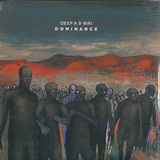
The album's distinctive artwork comes from the studio of Jewish orthodox artist Avraham Guy Barchil, who forged a powerful connection with Deep'a, both was immediately drawn to 'weird atmosphere, amazing technique and emotions involved with his work'. Perhaps one of the most interesting painters from Israel, Avraham is known for his unique perspective, taking his inspiration from the Zohar - the foundational work in the literature of Jewish mystical thought known as Kabbalah. The ambiguous figures represent mystical aspects of the Torah (the five books of Moses), as well as material on mysticism and mythical cosmogony.
Ensuring their natural, conscious touch always remains at the forefront of this unapologetically machine-driven music, Deep'a & Biri have produced an album in the lineage of their heroes and greatest influences. Cerebral yet satisfying, deep yet always engaging, 'Dominance' both reasserts and evolves Deep'a & Biri's forward facing and singular sound.
Tadd Mullinix first made a name for himself as Dabrye in the early 2000s with a pair of instrumental albums combining the rhythmic finesse of Detroit hip-hop with the ingenuity of electronic music. But instrumental beats were only a temporary goal, a way for Mullinix to catch the ears of MCs. On Two/Three, his second Dabrye album for Ghostly International, Mullinix brought together a formidable crew of local and national talent to make the statement he'd always intended. Released in 2006, Two/Three o-ered a fevered vision of rap's future that remains just as intoxicating a decade on. Ahead of the long-await-ed conclusion of Dabrye's hip-hop trilogy in 2018, Ghostly is reissuing Two/Three.
Dabrye's move towards rap began in 2004 with the album's first single, 'Game Over' featuring Jay Dee and Phat Kat. An early inspiration of Dabrye's, Jay Dee invited Mullinix to his crib in 2002 for a listening session during which he picked the 'Game Over' beat to rap on. Crucially everyone involved was in accord that despite perceptions of their respective work this would be a hardcore rap song. Together with Kat, Jay delivered a one-two lyrical punch on 'Game Over' that no one saw coming. Detroit made the world go round and everyone's head spun. 'Game Over' set the tone for the album and, over the next few years, became a Detroit anthem — shortly after Jay's passing in 2006 the audience at Movement Festival sung his verse.
Moody, propulsive, and above all ambitious, Two/Three emerges from a sonic stew of Detroit and UK dance music, Jamaican sound clashes, and hip-hop sampledelia. The guests, a who's who of the mid-'00s underground rap scene, engage in a raucous rhyming session that pays as much attention to the realities of the streets as it does world events. MF Doom, Wildchild, Vast Aire, Beans, and AG represent for the various coasts while local talents — Waajeed, Ta-Raach, Invincible, Finale, Kadence, Guilty Simpson, Big Tone, Phat Kat, and Jay Dee — bring Two/Three alive with an infectious energy. In between bursts of raw rap and hard beats, Dabrye showcases detailed instrumentals that evoke bleak industrial futures, underwater meditations, and smoky late night sessions. With Two/Three Dabrye placed himself at the forefront of hip-hop's new wave, throwing a Molotov cocktail into the rap world as uncompromising as the head-twisting cover art from WK Interact. The independent press praised Mullinix's audacity. Over the following years the impact of Two/Threewas felt in slow increments as Dabrye's music became central to the sonic makeup of a new generation of producers. As this beat scene grew and moved away from rap, it showed Mullinix the influence of his work and the value of his vision for Dabrye as his own brand of Detroit hip-hop.
Darren Cunningham's eagerly~awaited new album is an adventurous, ultramodern, thoroughly British affair, rummaging about in the inner lives of house and techno, and brilliantly elaborating the accomplishments of his debut, Hazyville.
Determinedly off~the~map and resistant to pigeonholing, Cunningham is an enigmatic and playful figure, citing Francis Bacon and Monet as inspirations longside Theo Parrish, Anthony 'Shake' Shakir, Daft Punk, 'binary codes and numeral systems', and The Avengers. He's a hard man to pin down - somehow a key player in the post~dubstep diaspora and yet not there at all - but everything comes across in his shape~shifting, richly textured music.
The South Londoner's acclaimed debut lived up to its name: a series of dreamlike sketches and ideas. For Splazsh the fog has lifted, the sounds are less submerged than before, but still sticky and close - a signature combination of exuberance and introversion, luminescence and puzzlement. Unconstrained by the formal cliches of the dance music he loves, Actress' melodies and arrangements are enthralled by their own genies. Worlds of disturbance and melancholy revolve giddyingly inside the insidious funk of tracks like Get Ohn and Lost. A range of musical influences is redrawn, from speed garage (Always Human) to grime (Wrong Potion), with none crowned king. There is a reflectiveness - the ambient drift of Futureproofing, the radiophonic judder of
Supreme Cunnilingus - in amongst the industrial, synth~wave flavours of Casanova, and the stirring, stately Maze.
Actress has quickly and justly become one of the most respected names in the UK's new dance music underground. His own label, Werk Discs, has proven itself one of the most formidable and taste~making UK independents of recent times, bringing the world extraordinary albums from Zomby, Lukid, Lone and Actress himself. In love with the mysteries of groove and repetition, Splazsh is both a culmination and a new beginning for Actress, a substantial and eccentric work from a brave and coolly individual artist.
With international press interest gathering - photo features in Dazed And Confused, and Fader in the US, and a session with Wolfgang Tillmans for the cover of the German magazine Groove - the stage is set for Actress.
'Rockin live ruff and tuff', this is the untrammelled counterpart to Dadawah, six years later in 1980, fresh from the Black Ark: free, rawly spiritual trance-music, a full-force nyabinghi freak-out.
The drummers are headlong and rollicking, thunderous and explosive. Even more so than Dadawah, the mix is ecstatically echoey, giddily dubwise without let-up. Ras Michael himself sings from the mountain-top, like he just don't care — at the top of his lungs, in voices, screeching like a bird — with the delirious abandonment otherwise owned in reggae by Lee Perry.
Amongst the uncredited performances swirled into proceedings, there are squiggles of flute straight from the Upsetters song-book, the minor-key organ stabs and abstraction of electric space-jazz, and sax-playing more attuned to the Headhunters than the Blazing Horns. (I Ya I in particular is a stunning fifteen minutes.)
This is the real thing, music without affectation. Pure reggae. Sun Ra fans should love it, anyone with ears to hear.
Prepared and manufactured at Abbey Road, D&M and Pallas, beautifully presented in rigid, old-school, tip-on sleeves, with matt-coated fronts and untreated-paper backs, 180g vinyl.
'These sounds are sounds of inspiration and love and culture to the universal benefit of mankind... So therefore meditate and stop hate.'
Very hotly recommended.
After the first vinyl release (Analog Dub Sessions) Dub Communication is back on 7". This time Frenk is using his Korg MS20 to lay down an analog 'Militant Dub' bass foundation. Creating subs, stabs and catchy melody lines. A live played Melodica, dipped in spring verbs, adding a human touch to the mix. Futhermore we got atmospheric chords and heavy drums rhythms, as we know, Frenk likes to produce. For the B side, there's a heavy remix from Belgium dub producer Digid. His signature bass growl takes over, filtering and phasing through the audio spectrum. He adds more weight to the drums and new melodies on top. From the half time to the steppers rhythm as Frenk took it the other way around.
Alien Ensemble's trombone man Mathias Goetz caused quite a splash when he released his eponymous debut LP under his Le Millipede moniker back in 2015: The multi-instrumentalist's initial offering was clearly something else, impossible to grasp, a musical vessel beyond genre, beyond style or era, seemingly beyond space and time even, a vessel that carried an almost cosmic kind of song-craft - music with no fixed stamp of origin, though it did somehow feel like an Alien Transistor release. Followed by remix album Mirror Mirror, which comprised reworks by 1115, Protein, LeRoy, Olaf Opal, and Saroos, to name a few, it's now time for album #2: The Sun Has No Money.Let's face it: There's nothing as majestic as the sun. At least not in our world. If it runs out of juice one day, it's game over: The End. Light's out. For everyone. At that point, it wouldn't even matter if you're rich or poor. We're all equal under the sun. Same level. And yeah, this might not be major news, but then again... we're talking about the sun. The sun! Guess it's about time to acknowledge its power and superiority, right In fact, you can feel it on your bicycle: pedaling at night, when it's on duty in other hemispheres, and you're working hard at the dynamo, sweating, you can actually feel how powerful it is. In the end you get off the bike all recharged, a tune on your lips - and somehow feeling like a miniature version of the sun yourself. And whenever you feel like that, that's exactly the right moment to grab a melodica and get to work.Following an initial warm-up round sans electricity, this new album soon begins to glow: Mathias Goetz aka Le Millipede doesn't need pedals, he boosts circulation by single-handedly* playing tons and tons of different instruments - it actually feels like thousands, easily. And thus begins a show that has countless levels to it: There are various sonic illusions... and yet Le Millipede doesn't hide anything: He's also willing to show the inner workings, the actual recording process and everything else. In short: he goes meta. Makes songs about making songs. That's right: why not use all these beautiful means to address the issue of money It's not the sun that casts shadows, all it does is recharge, fuel: growth & thriving, that's the sun's area of responsibility. And yet there came a man whose plan was simple: steal the fruit from your garden, only to sell it right back to you, for money. We can hear the sea gulls crying in the distance, as somebody is throwing breadcrumbs up into the wind that carries their voices...It's not the sun that casts shadows - all it does is radiate light. And yet there came a time when someone blocked those rays of light. Now if you're some kind of Diogenes, you'll simply say, Move at least a little out of the sun.' But if you're a teacher, you'll maybe light up your pipe and use that to lighten up. What matters is that the percussion parts, in this case, resemble some serious musique concréte. The sun doesn't know shadows - all it knows, is itself. And yet somebody entered the picture and built an entire city. A city full of streets, so that houses can cast shadows into these avenues. Plus, there's music in the streets, music originally written inside the walls of said houses.One of those streets is known as the Tin Pan Alley: a place that got its name from a music writer who compared the sound of so many pianos to the banging of tin pans. That sound: that's one side of the road that is this album. Some of these melodies appear to be shadows of earlier tunes, dating back to, say, 1898 or even before that, melodies that were first registered in the Tin Pan Alley publishers' offices back in 1912 or 1917. We actually get to see this Alley at that point in time. We see the ropes, the workings. How things come together, the actual act of creation. Suddenly, we can hear the shadows!
Okay, so one side of this street is America. The US of A. The opposite side: Russia. And smack dab in the middle: Europe. A pothole in the center. All the back-and-forth that occurs between these two poles ultimately depends on the movement of the sun. Night and day, taking turns, commuting in and out of sight. We get to meet Prokofiew's and Scriabin's ghost, among other spirits, reframed and published by Le Millipede's own imaginary label imprint on the historic Tin Pan Alley. Indeed there are moments on this album when Le Millipede seems to be playing Scriabin's clavier a` lumie`res (tastiera per luce), when his performance seems to be based on synesthesia, a wild cross-pollination of colors and sounds. In case you didn't know this: In the States, Prokofiew goes by the name Brian Wilson, and Scriabin's also known as Sun Ra - yet another guy who's usually broke, but gets to spend a lot of time out in the sun. Together, these assorted protagonists ask the people of the Antilles for Mutabor dance-tokens and send postcards to Moondog in Germany, right back into the darkness. On the postcards you can see people dancing the Biguine...Firing foreign fossil fuels from all pipes (Brennelementsteuer!), Le Millipede controls the very center of this hustle and bustle: going as far as to employ some southern Chopped & Screwed styles, he's 100% current and zeitgeisty! Houston, we've got a problem: there's some kind of myriapod, centi- or millipede on the loose! Well, give me another sip of lean, sizzurp, dirty Sprite, and on goes the journey in the Pullman coach. Let's follow the sun! Keep on moving, keep things motorik! Here comes the Trans-Eureka-Express. Cherish the backpacking days! A piercing rhapsody of sound (bohrende Rhapsodie), we'll remember them fondly! And thus things move on, the sun, the days, the earth: rise, set, action, round and round... onwards eternally. The sun: the biggest loop known to mankind. As if it was some kind of sonic Rube Goldberg contraption, time seems to be stretching out while listening to that hmmm. After all: time is a lot (a lot!) more than just money. And yeah, the sun is the real big shot on (or rather: above) Planet Earth. Le Millipede's live line-up also includes Markus & Micha Acher (The Notwist etc.), Nico Sierig (Joasihno), and Manuela Rzytki (G. Rag & die Landlergschwister, Kamerakino etc.).
*sole exception: Evi Keglmaier (Zwirbeldirn, Hochzeitskapelle) plays the viola. Words/sun worship: Pico Be
* From the pumping heart of The Magnetic System comes the 'dirtiest' Da-Da-dancefloor anti-jams with this lost 1979 blueprint of Italian conceptual cosmic disco played by the cream of the Goblin studio band. Ultra-rare and unscrubbed,Finders Keepers finally snip the trip from the cash machine to the trash machine.
* Carving its own grubby niche as an early prototype of cosmic disco cum Italo space funk whilst simultaneously harbouring Dada hat stand satire with a junkshop glam aesthetic, this ecological illogical poplitical crab cabaret clearly broke the mould before way before the jelly had set.
* Fans of 'other' obtuse outernational agit-camp might find a fantasy fusion between France's JP Massiera and Sweden's enviroMENTAL marvel Kaptain Zoom while trying to unravel the Madfilth tangle - but rest assured there were method men behind this madness and a portal to Italian funk royalty still festers
at the bottom of the psych rap scrapheap.
* Originally drip-fed out of Cesare Andrea Bixio's Cinevox stable as one of a tight grip of non-soundtrack LPs, made to test the label's commercial potential, Madfilth would follow the band Goblin (and their non-cinematic Roller) as well as the hens' teeth eponymous long player by the group The Motowns in what was perhaps the last-ditch attempt at custom built popsploitation - combining the skills of overqualified composers with undercooked conceptual mind belches. Naturally, after almost 40 years in the barrel, this micro-brewed oddity finally quenches the acquired taste of a new breed of shambolic psychotropic guzzlers proving that 1979 was obviously good year for fool's gold. The Madfilth medicine has finally come to cure your psychic ills so open wide and don't bite the spoon.
* It is beneath the flamboyant rhythm rants and vari-speed osric slop of alt-comedic sarcy-satirist Alberto Macaro (a genetic beneficiary of a vaudevillian comic bloodline) that we find The Magnetic System maestros Franco Bixio and Vince Tempera as the sonic driving force behind this unmarked treasure trove of
B-musical diamanté discoids. It will also come as little surprise that
Cinevox/Dario Argento favourites Goblin were not too distant from the whiff of this curate's egg with the men who many consider to be the group's greatest assets - bass player Fabio Pignatelli alongside sports rock drummer Agostino Marangolo. It was this unison that remained consistent throughout Goblin's career, weathering the temporary departure of Claudio Simonetti and
maintaining the stylistic heartbeat of the group. Madfilth's inclusion of Goblin synth Maverick Maurizio Guarini and the band's mid-period guitarist Carlo Penessi (founder of the band Etna) pinpoints the jobbing Goblin session group during the time they recorded the soundtracks for the films 'Buio Amiga' and 'Squadra Antigagsters'. This lesser-celebrated late 70s era also witnessed the mutating Goblin rhythm section providing discoid backbeats for records such as Giorgio Farina's 'Discocross' album, Simonetti's own Capricorn alter-ego and the homoerotic nightclub spin-off Easy Going - all of which, alongside Madfilth,
provide a strong mutual stylistic support system for their claim to cosmic disco's deep red bloodline.
The Grateful Dead forged its legend on the road, traveling countless miles between 1965 and 1995 to perform a world record 2,318 shows for millions of devoted fans. The band's refusal to ever play a song the same way twice has endeared generations of fans, many of whom prefer certain live versions of songs over their studio counterparts, and garnered the popular phrase among Dead Heads: There is nothing like a Grateful Dead concert.'
The live albums the band released during its 30-year career are the primary source for the collection, including tracks like Bertha' from Grateful Dead (Skull & Roses) (1971), Fire On The Mountain' from Dead Set (1981), and The Music Never Stopped' from One From the Vault (1991). A testament to its ongoing popularity, the revered double-album Europe '72 (1972), is represented by no less than five tracks, including Sugar Magnolia,' Jack Straw' and a searing rendition of Morning Dew.'
Other performances on the set were selected from the growing number of live releases that have emerged since the death of founding member Jerry Garcia in 1995. Some of those recordings include Touch Of Grey' from Truckin' Up To Buffalo (2005), a 1990 version of Eyes Of The World' with saxophonist Branford Marsalis featured on Wake Up To Find Out (2014), and Estimated Prophet,' which debuted earlier this year as part of Cornell 5/8/77, a recording of the Grateful Dead's mythic show at Cornell University in 1977, thought by many to be the band's greatest live performance.
Made for die-hard Dead Heads and new fans alike, The Best Of The Grateful Dead Live Vol. 1 1969-1977 will be available as a on 180-gram vinyl as a 2-LP set, covering the first half of the album, on March 23rd. The music will be available through digital and streaming services as well.
more talking all that jazz, more high aiming music by fumio itabashi: mule musiq is ready to release another record by the legendary japanese jazz pianist, born in ashikaga, tochigi in the year 1949.
this time his first solo record ever: the heavy jazzing 'nature', which has never been reissued on vinyl since its birth in 1979. it has been recorded at nippon columbia 1st studio, tokyo from march 13 to 15 in the year of its release.
it features itabashi making feverish love with the piano and sharing the studio with the great bass players hideaki mochizuki and koichi yamazaki, drummers kenichi kameyama and ryojiro furusawa, soprano saxophonist yoshio otomo and vibraphone wizard hiroshi hatsuyama.
they all joined him to perform his very own songs, composed by itabashi himself and produced by ryonosuke honmura, who also produced japanese jazz heroes like saxophonist keizo inoue during his career.
but enough background information. what counts is sound. it is fresh, propulsive, twitchy and melodi-ous from the first to the last tone. sometimes the instrumentalists play a classic solo in an overall deep modal jazz atmosphere that seems to be made for cats that love the good old stars and inventors - from john coltrane to mile davis, from thelonious monk to art blakey.
'nature' also shows how deep itabashi studied the history of the genre, while keeping his very own vision of jazz alive. the man that made his professional debut as a member of the sadao watanabe quintet in 1971 and that also was a member of the elvin jones jazz machine world tour from 1985 to 1987, plays the piano in all tempos: nervous high-flying quick, deeply blue blues style slow.
besides the traditional jazz flavours, you get a feeling of mind-expanding spiritual jazz, that grand mas-ters like pharaoh sanders or gary bartz turned into a sacred music genre. a master-class record in ravishing big city jazz music, adventurous, sometimes meditative, sometimes faster than the speed of light, always grooving with a bright, pure-toned sensibility and deeply soulful melodic imaginations.
it extends the jazz history with a fine balance between tradition and innovation. and it stays infectious all the time while sounding surprisingly fresh due to a lot of thrilling musical spontaneity that touches profoundly even though all notes have been written down by fumio itabashi before he and his combat-ants entered the studio.
and maybe that's the mystery of these timeless five at times epic recordings: all notes been written on paper but each musician had the freedom to dance with them in his very own unique way. so, turn the volume loud and get ready to be steamrolled by fumio itabashi's 'nature', an inebriant album that is talking all that jazz deeply!
New York City has had a long history of dance music fused with confrontational performance. Whether it came from within the late 70's No Wave canon projected through venues like the Mudd Club or the downtown avant-garde galleries such as The Kitchen, the feeling that influences and infects Brooklyn-based duo Wetware's overall being as a cohesive and confrontational unit is as much enigmatic as it is familiar. Formed in 2015, Wetware eased into its performative role with their live shows around their home base of Brooklyn, NY.
Vocalist Roxy Farman, who's familiar voice was last seen on Drew McDowall's 'Unnatural Channel' album, stole audience's attention from the moment they started, using her body in tandem with her voice as a weaponised vehicle for the band's anxiety filled performance. Matthew Morandi cut his teeth in the electronic music world through his solo tech-industrial project Jahiliyya Fields and partner to Inhalants, the techno collaboration of Morandi and Max Ravitz (Patricia). The synergy that developed between Farman and Morandi has been explosive. Wetware's live antics and behaviour has caused alarm and envy amongst their local audiences, causing Wetware the group to 'not be missed' on any particular bill that they are allowed to take part in.
Wetware stepped out from their live persona and self-recorded a selection of songs that viewers had grown accustomed to and were debuted on the flawlessly curated Primitive Languages imprint. Shortly following their recorded premier was an EP collection of demo recordings on the much praised Bank NYC label. Once the band reconciled with documenting their work, they set out, with the help of engineer Kris Lapke (Alberich / Hospital Productions) to formalise their most recent output in the context of their first full length album entitled 'Automatic Drawing'.
Given Wetware's penchant for endurance, as displayed by their 3 hour long production at Koenig & Clinton Gallery in the Summer of 2017, one would expect the usual restlessness on Wetware's debut full length. All of the apprehension and unease in Wetware seems to have been channeled into a string of cohesive electronic statements found on songs 'Frequent Dreamlands' and 'Ode to Joe'. Industrial dance rhythms bounce around Farman's poetic stance on 'Where Ever You Were', causing flashbacks of an early 80's dystopia that jumps around a confusing, uncomfortable backdrop. Inter-spliced with modular electronic instrumentals like the album's opener 'Pantomime', Wetware's devastating portrait is that of a society in peril.
Since composer Sean McBride unveiled his first utterance as Martial Canterel almost 2 decades ago, he has produced a body of work both substantial and alluring within the field of live analogue electronic music. Effortlessly fusing a variety of styles and influences, Martial Canterel is one of the premiere outfits utilizing analogue electronics and modular synthesizers. In particular FM synthesis is employed to produce clustered polyphonies and organic atmospheres - a staple of his signature style.Three years have passed since Martial Canterel's last full length album Gyors, Lassù was released on Dais Records. During this down time, McBride found himself in a state of flux, ebbing back and forth between material displacement and musical aestheticism. His expert pedigree in electronic sound and arrangement bridges the gap created by an undecidability between life at home and abroad - his new album, Lost At Sea, is an attempt for the artist to locate common ground, mutating fable with reality, exteriority and interiority.
The album's introductory track, Giving Up, has all of the hallmarks that Martial Canterel has utilized in the past...melodic chorus, upbeat rhythm and classic sequential dynamism. Where the song diverges is in its core theme of nature: nature's return to a period of restoration after the failures and recklessness of humankind. Although this first glance refamiliarizes one with the tight, upbeat appeal typically found within the genre, Lost at Sea quickly takes a more serious and sobering tone.The slower pace of songs like Scampia and Puszta yearn for McBride's complex love affair with far flung destinations. Re-evaluating the political strife and social unrest in these historical locations, McBride delves deeper into political and geological reference points creating symbolic representations using mechanized percussion, white noise and various sine waves.The conceptual nature of Lost at Sea reaches even deeper depths within the waveforms of Astralize, a track based upon academic Donna Haraway's pre-civilized theories of human neglect after the 'azstralization'.