Siffleur’s tune-whistlers have cooked two energetic mashups brimming with fun and good vibes. Side A will transport you to a vibrant, pulsating paradise with its Psychedelic-Latin rhythms and infectiously iconic vocals. Side B will have you grooving to its irresistible soul-infused beats, swinging hips and snapping fingers like Marvin Gaye and Diana Ross. You’ll find yourself dancing even if you don’t want to!
Suche:don carlos
DJ Support: Dam Swindle, Jimpster, Fouk,Franck Roger, Miguel Migs, Fred Everything, Tedd Patterson, Saison, Brian Tappert, Don Carlos, Sebb Junior, Ralph Session, Marcel Vogel, Marc Cotterell
Embark on a journey through the pulsating heart of Berlin's house music scene with Luca Olivotto. Italian-born and Berlin-based, Olivotto's beats resonate with the energy of the city's underground, blending seamlessly with his Mediterranean roots. As a DJ, Olivotto commands dance floors with finesse, effortlessly blending deep and house music. As a producer, he crafts sonic landscapes that evoke emotion and ignite the imagination. This album encapsulates the essence of Olivotto's musical universe: a fusion of cultures, a celebration of diversity, and a testament to the universal language of music. Experience the rhythm of Luca Olivotto, bridging continents with his electrifying sound.
DJ Support: Kerri Chandler, Jimpster, Dave Lee, Kevin Yost, Brian Tappert, Don Carlos, Seamus Haji, Marcel Vogel, David Harness, Marc Cotterell, Dirtytwo, Demarkus Lewis
Get yourself geared up for summer season with some fierce dancefloor prime time certified with the Groove Culture Deep Stamp. DEEP INTO HOUSE vol.2 includes some fresh House/Deephouse actions from Milton Jackson, Sebb Junior, Luca Olivotto and Folkness. Energy, Groove, moods and vibes. An essential package for diggers.
- A1: The Afro-American Conundrum (Where Does That Leave Us?)
- A2: Ha Ya! (Eternal Life) (Feat. Natalie Greffel)
- A3: I Don’t Remember The Last Time I Saw Stars
- A4: Dream Boy
- A5: Tonight (Feat. Kamaal)
- B1: Every Party Must Come To An End (Feat. Kamaal)
- B2: Running Out Of Time
- C1: There’s Space For Us All
- C2: Carlos Sanchez Interlude
- C3: Water (Feat. New Past)
- C4: Hello? (Feat. Aden)
- D1: Circles I (Prelude)
- D2: Circles Ii (Feat. Toribio)
Remixes[32,73 €]
Sugar Honey Iced Tea! is the highly anticipated debut album from musclecars, set for a May 2024 release on BBE Music. Having already established their presence in the club scene, from the joyous atmosphere of their Coloring Lessons parties to their residency at Nowadays in NYC, and with genre-bending performances worldwide, musclecars are eager to unveil this new world they've intentionally crafted. This forthcoming album comprises 13 tracks that sonically come together to offer a profound lens into the Afro-American experience. Themes range from joy, to loss, intimacy, helplessness, perseverance, and all the facets that lie in between. From the very first tune, musclecars set the tone with an exploration of afro-dystopia, carrying listeners through the entire album whilst creating imaginary futures born out of self-preservation and self-discovery. Through their practice of sonic storytelling, native New Yorkers Brandon Weems and Craig Handfield use this album to speak to the nuances of their daily lives and their environment. Join them on this musical journey as they delve into a collection that captures the essence of the black experience with authenticity, emotion, and rhythm. This album stands as one of their favorite bodies of work in recent memory, and they're so excited to share it with you.
It was in the year 1981 when Belgian electronic musician Michel Huygen and his Spanish colleague Carlos Guirao, both better known as Neuronium, met with Evngelos Odyss as Papathanassou, better known as Vangelis, to record a joint session in London.
Michel Huygen remembers: "The music we played together starting from my score, was flowing, flowing so fast and smoothly between the 3 of us, that I can now, many years after, say: We recorded all the music's parts in one single "shot", since the result was absolutely what we all wanted and Vangelis told us: "Don't touch what we have recorded, it is lovely " and so we did."Now, after some rather unofficial releases, the opus "In London" is finally released for the first time in its entire length, titled "In London - The Platinum Edition", fondly reworked, remastered and sonic refined to perfection exactly 45 years after Neuronium released their first album on the famous Harvest label.
Michel Huygen had intended to celebrate this anniversary with Vangelis in Paris. But fate had other intentions, on May 17, 2022, Vangelis died as a result of a Covid-19 disease.
Huygen: "I feel honored to have been able to meet him, to play music with him and to have him as a funny friend too. And mainly to have been able to meet a huge musician, a classical composer for the forthcoming generations, without doubt. R.I.P, dear Vangelis."
- A1: Don Carlos - Alone (Paradise )
- A2: Tameka Starr - Going In Circles (Dj Art Version)
- A3: Be Noir - Give Me Your Love ( Philadelphia Mix)
- B1: Key Tronics Ensemble - Calypso Of House (Paradise)
- B2: Soft House Company - What You Need
- B3: Aritmya - Parabolic ( Ipnotic Version)
- C1: Double Dee Feat Dany - Found Love (Full Version)
- C2: Omniverse - Antares
- C3: Bossa Nostra Feat Bruna Loppez - Chico Depserado (Atjazz Mix)
- D1: Jestofunk - Say It Again
- D2: Kipper - Livinʼ The Nitelife (Classic Style)
- D3: Riviera Traxx - Parfume 1
In the world of Dance, the 90s were characterized by the worldwide explosiion of House Music. Among the protagonists many were artists and producers of Italian origin and this sub-genre was called Italo House. This double vinyl collection contains 12 classic songs
from that magical period, all in the original 'full version', by:
Don Carlos, Soft House Company, Double Dee, Tameka Starr, Key Tronics Ensemble, Omniverse, Jestofunk, Riviera Traxx, Kipper, Aritmya, Be Noir e Bossa Nostra.
- Joao Gilberto - Bim Bom
- Elizete Cardoso - Outra Vez
- Luiz Bonfa - Copacabana
- Antônio Carlos Jobim & Roberto Paiva - Eu E O Meu Amor
- Joao Donato - Tim-Dom-Dom
- Carlos Lyra - Você E Eu (You And Me)
- Baden Powell - Improviso Em Bossa Nova
- Salinas - Tenha Fé, Pois Amanha Um Lindo Dia Vai Nascer
- Stan Getz & Charlie Byrd - Desafinado
- Sérgio Mendes - Oba-La-La
- Pery Ribeiro - Garota De Ipanema
- Orlandivo - Onde Anda O Meu Amor
- Shorty Rogers & His Giants - Chega De Saudade (No More
- Sylvia Telles - Corcovado
- Grant Green - Brazil
- Maysa - Agua De Beber
- Quincy Jones & His Orchestra - Soul Bossa Nova
- Trio Mocoto - Nao Adianta
- David K (Feat. Rolando Faria) - Mas Que Nada (David K R
- Tom & Joy - Para Bailar
- Seu Jorge - Carolina
- Salome De Bahia - Outro Lugar (Edit)
- Carlinhos Brown - Brasil Brasil (Ole Ole)
- Caetano Veloso - Hino Da Bahia
- Suba (Feat. Cibelle) - Felicidade
- Marcelinho Da Lua (Feat. Seu Jorge) - Cotidiano (Buzzin
- Bebel Gilberto - August Day Song
- Negrocan - Cada Vez (Grant Nelson Vocal Mix Edit)
Mit Brazil Greatest Hits veröffentlicht Wagram eine musikalische Reise durch die farbenfrohe Welt Brasiliens - von zeitlosen Bossa-Nova-Klassikern bis zu modernen Latin-Grooves. Auf zwei sorgfältig zusammengestellten Vinyl-LPs versammeln sich legendäre Aufnahmen und internationale Club-Favorites, die den Spirit von Rio, die Leichtigkeit des Samba und den warmen Sound des Tropenlands einfangen. Die erste LP präsentiert ikonische Stimmen und Instrumentalstücke der goldenen Bossa-Nova-Ära - voller Eleganz, Rhythmus und Melodie. Auf LP 2 geht es moderner und tanzbarer weiter: brasilianische Funk-Einflüsse, Remix-Perlen und energiegeladene Tracks zeigen, wie lebendig und vielfältig die Musikszene Brasiliens bis heute ist.
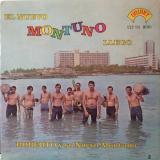
- A1: El Nuevo Montuno Llego
- A2: Llamé A Chango
- A3: Monina Y Ramon 4:00
- A4: Balanceate 6:50
- B1: Triste Arrabal
- B2: Me Queda Un Guaguanco
- B3: Dichoso 3:30
- B4: Oye Tu Son Borinquen
Roberto y su Nuevo Montuno recorded their first album, “El Nuevo Montuno Llegó” (1970), when Roberto Berríos was just 22 years old. This was also the debut release on Haddock’s own Uniart label. Berríos remembers that they did the recording in two sessions, splitting it up into four tracks per visit. The engineer was the famed Pedro “Pedrito” Henríquez, who recorded El Gran Combo, Roberto Roena and many others. The band had a mix of tasty, powerful originals, from Tony Cintrón’s title track that announced the band had arrived, ‘El Nuevo Montuno Llegó,’ to Quique Dávila’s mournful ‘Triste Arrabal.’ Then there was the hit Santería themed tune, ‘Llamé a Changó,’ which was a song that Quique Dávila brought to the band, but had been originally composed by Carlos Pinto, though Quique was given the credit. Dávila also composed ‘Me Queda Un Guaguancó,’ which is Roberto’s favorite song on the record (as well as a fan favorite), with Papo sounding like his friend Héctor Lavoe, and Quique Dávila’s proud manifesto declaring that Puerto Rico now had its own son montuno, ‘Oye Tu Son, Borinquen,’ featuring the pianist’s tasty but brief solo. The cover versions came from the group’s earliest period when most of their repertoire consisted of renditions of beloved but lesser known tunes, and include Louie Ramírez’s ‘Balancéate’ (a favorite of Roberto’s from Ray Barretto’s songbook), Bobby Valentín’s ‘Monina y Ramón’ (recorded during his stint with Willie Rosario), and a bolero indelibly sung by Cheo Feliciano when he was with the Joe Cuba Sextet, ‘Dichoso,’ written by Joe Cuba’s talented pianist, Nick Jiménez. Some of the arranging was done by Cintrón and some by Dávila, though Quique had some help from his old friend from El Combo Moderno, Freddie Miranda, who at that time was with Roberto Roena’s Apollo Sound. Roberto says that the arrangements of the cover tunes were made specifically to be different and more contemporary sounding than the originals. “El Nuevo Montuno Llegó” has become a legendary salsa dura classic from Puerto Rico and we are thrilled to present this first legitimately licensed and remastered vinyl reissue. It includes detailed liner notes that reveal the untold story of the band and their debut album, and rare photos.
- A1: Robert Pico - Le Chien Fidèle
- A2: Annie Girardot - La Femme Faux Cils
- A3: Spauv Georges - Je Suis L'état
- A4: Zoé - Zoé
- A5: Jacques Da Sylva - Fou
- A6: Valentin - Je Suis Un Vagabond
- A7: Jacques Malia - Histoire De Gitan
- A8: Bernard Jamet - Raison Legale
- B1: Jean-Pierre Lebort - Barbara Au Chapeau Rose
- B2: Les Concentrés - Fils De Dégénérés
- B3: Les Missiles - Publicité
- B4: Hegessipe - Le Credi D'hegessipe
- B5: Marechalement Votre - Ethero Disco
- B6: Mamlouk - Decollez Les
- B7: Mozaique - L'amour Nu
- B8: Jean-Marc Garrigues - Je Dis Non
- B9: Penuel - Astronef 328
The journey through French-speaking pop archives continues with this fifth volume, packed with fuzz, gimmicks, and dissent. Far from the charts, the selected tracks display a great creative freedom, often backed by corrosive humor. Welcome to the surprising, kaleidoscopic, and colorful world of the late sixties and early seventies, Wizzz!
Born in Montauban, Robert Pico stumbled into music by chance when he met René Vaneste, then artistic director at Pathé-Marconi. René brought him to Paris to record his first 45 RPM EP in 1964. A year later, Pierre Perret introduced him to Vogue, where he recorded his second album with Claude Nougaro’s orchestra. Sylvie Vartan then introduced him to RCA, where he recorded four singles, including the astonishing "Chien Fidèle," a track backed by a hair-rising fuzz guitar. Alongside his solo career, he also composed for other artists like Alain Delon (the song was recorded but remains unreleased), Magali Noël, Bourvil, and Georges Guétary. In the Paris of the sixties, he mingled with Mireille Darc, Elsa Martinelli, Marie Laforêt, France Gall, Françoise Hardy, Petula Clark, Régine, Dani, Serge Gainsbourg, Joe Dassin, Franck Fernandel, Charles Level, and Roland Vincent. Despite his efforts and winning a Grand Prix Sacem for his final record, Robert Pico didn’t achieve the expected success in show business and decided to leave Paris and return to the Southwest, where he devoted himself to writing. He is the author of 23 books (including Delon et Compagnie, Jean-Marc Savary Editions 2025, a memoir about his youth and his many encounters). Today, he is relieved to never have become a celebrity and devotes himself to his work with passion.
In 1969, the Franco-Italian movie Erotissimo was released, directed by Gérard Pirès (who later directed Taxi in 1998, written and produced by Luc Besson). This pop comedy features Annie Girardot, Jean Yanne, Francis Blanche, Serge Gainsbourg, Nicole Croisille, Jacques Martin, and Patrick Topaloff. The soundtrack was written by Michel Polnareff and William Sheller, with lyrics by Jean-Lou Dabadie. "La Femme Faux-cils," performed by Annie Girardot. It recounts the feelings of a rich CEO's wife who seeks to develop her sex appeal under the influence of advertisement and magazines. Groovy, sparkling and light, this track, with ITS lush arrangements humorously critiques consumer society and feminine beauty standards.
“Je suis l’Etat” (1967) is the flagship track of the first EP by singer-songwriter Spauv Georges, aka Georges Larriaga, better known as Jim Larriaga (1941-2022). Born into a family of bakers, the young man was initially planning to become a hairdresser when he discovered English-speaking music through Elvis Presley and the Beatles. After this revelation, he decided he would become a songwriter and gave himself five years to succeed. He recorded his first two EP’s independently for RCA under the pseudonym Spauv Georges; meaning “that poor George”, a nickname given to him by the mother of her friend Jean-Pierre Prévotat (future drummer of the Players, Triangle, or Johnny Hallyday). Portraying a depressed and eccentric young man, Spauv Georges created corrosive and amusing songs that didn’t reach a wide audience, despite a TV appearance with Jean-Christophe Averty.
Supported by his loyal friend and fellow songwriter Jean-Max Rivière, Georges Larriaga met the future singer Carlos in the early '70s, then Sylvie Vartan’s assistant. He wrote songs for Carlos, including the popular "La vie est belle," "Y’a des indiens partout," and "La cantine", which went onto become a huge hit in 1972. He also composed for Claude François (“Anne-Marie”, 1971), Charlotte Julian (“Fleur de province”, 1972), helped launch child singer Roméo (who sold 4 million records), and later wrote the hit "Pas besoin d’éducation sexuelle" (1975) for the young Julie Bataille. In 1971, Jim recorded an album for Disc'Az: “L’univers étrange et fou de Jim Larriaga”, which featured pop gems like “La maison de mon père”.
The story of the song "Zoé" began when Pierre Dorsay, artistic director at Vogue Records, asked Swiss singer and musician Pierre Alain to write a song for a new female singer. The inspiration came when he realized that Zoé (the artist's name) was also the name of France's first atomic battery, created in 1948, which consisted of uranium oxide immersed in heavy water! The lyrics reflect a bubbling energy that must be handled with caution, while the instrumentation echoes this atomic theme, notably with the use of a theremin.
Zoé’s career lasted only as long as a single 45 RPM, but it seems Christine Fontane was the vocalist behind this pseudonym, who is known for several EPs, a good "popcorn" album in 1964, and a handful of children’s singles in the '70s. Regardless, the photograph on the cover is of a different girl entirely.
Later, Pierre Alain continued his career, writing songs for himself, Marie Laforêt, Danièle Licari, Alice Dona, Arlette Zola (3rd place in Eurovision 1982), and achieving multiple gold and platinum records in Canada. Also an inventor with several patents, president of the Romande Academy, and head of the French Alliance in Geneva, he now composes atonal music, books, and poetry. Moreover, he is also the host of "Les Mardis de Pierre Alain" at "Le P'tit Music'Hohl" in Geneva.
Filled with oriental choruses and fuzz guitar, "Fou" is from Jacques Da Sylva's only EP released by Vogue in 1967. Despite the quality of this recording, all traces of this singer disappear after this first effort.
Valentin is a baroque pop singer born in Belgium. He is the songwriter and composer of most of the tracks on his three singles released in the late 60s in Canada. A legend says that he reincarnated himself as Jacky Valentin during the 1970s for a rock'n'roll revival career in Belgium, but his older brother sadly debunked this story. Valentin's first two singles were arranged by Claude Rogen, a Parisian session pianist who had come to Canada to promote the song “Mister A Gogo”, a cover of David Bowie’s “Laughing Gnome”, adapted by singer Delphine, his wife at the time. Far from his usual network, Claude Rogen arranged music for Polydor, including the arrangements for “Je suis un vagabond” in 1969, a jerk tune with string arrangements and a furious optimism.
Jacques Malia wrote, composed, and recorded his only 45 EP for Festival in 1966. “Histoire de gitan” is an incredible beat track with bohemian scat that tells the story of a gypsy musician who came to Paris to make it in the Music-Hall, to no avail. The hero of the song and its author probably shared a similar fate, as Jacques Malia faded into anonymity after this remarkable attempt.
Bernard Jamet recorded two EPs for Barclay in the late sixties and co-wrote several songs with Christine Pilzer, Pascal Danel, and prolific songwriters Michel Delancray and Mya Simile. The track “Raison Légale” (1968), his masterpiece, immerses the listener in a courtroom right when a murderer is being judged, with jerk rhythm and free arrangements. A unique, paranoid, judicial, and psychedelic oddity.
Jean-Pierre Lebrot-Millers started his career in show business in 1967 as a singer and songwriter for the Philips label. After three singles, he wrote several songs of a new kind with his friend Pierre Halioche, in the midst of the sexual liberation movement and the democratization of drugs. With provocative lyrics, “Les filles du hasard” and “Barbara au Chapeau Rose” were released on a Philips singles in 1968. The character of Barbara was inspired by a queen of Parisian nightlife during the psychedelic years: model Charlotte Martin, who dated Eric Clapton from 1965 to 1968, then Jimmy Page from 1970 to 1983. Jean-Claude Petit’s arrangements, with a table-filled intro, soul brass, and Hendrixian guitar, emphasize the flamboyance of a hedonistic and sexy character, whose dog is named Junkie because “Junkie est un nom exquis”! The track was recorded live in three takes with a full orchestra.
Upon its release, the record was censored by Europe 1 and RTL due to its references to drug use. Jean-Pierre Lebrot was then banned from the airwaves and later dismissed by his record label. He changed his artist name to Jean-Pierre Millers, while his companion Pierre Halioche became D. Dolby for a new dreamy composition, “Chilla”, which Jean-Pierre produced himself with arrangements by Jean Musy. Once again, the song was immediately censored everywhere. After this setback, he decided to stop singing and started taking on odd jobs to support his Swedish wife and their son until the day he met Jean-Pierre Martin, then production manager at Decca, who had worked with Manu Dibango. Martin offered Jean-Pierre Lebrot-Millers, then employed at Rank Xerox, the position of artistic director at Decca. He accepted and became, a year later, promotion director (radio, press, TV). He worked on Julio Iglesias’s first album for Decca, which became a massive hit and allowed him to meet Claude Carrère. The latter asked him to write new songs and find their performers, much like a “talent scout.” It’s through him that Jean-Pierre discovered Julie Pietri and Corinne Hermès. He composed “Ma Pompadour” for Ringo, Sheila’s husband, and took the microphone again for the syncope hit “Rendez-Vous” in 1982.
That same year, Jean-Pierre Lebrot-Millers tried to release a track for which he had heavily gone into debt: “Si la vie est un cadeau”. Having recorded it in London, he presented it to numerous professionals, all of whom refused to get involved. The same thing happened with Antenne 2 and the Sacem when he proposed the song as France’s entry for Eurovision. He then met Haïm Saban, who was producing cartoon soundtracks and had just launched the Goldorak theme song. Saban, having listened to the song, declared it had the potential to become a hit. He sent Jean-Pierre and Corinne Hermès to meet the CEO of the Luxembourg radio and television network. The latter received them, asked to hear a verse and chorus a cappella in his office, and immediately hired them to represent Luxembourg at Eurovision 1983. They reworked the arrangements and recorded a new version with Haïm Saban as co-producer. The song ended up winning Eurovision 1983, a great comeback for our hero. He continued producing and hung out with the band Nacash in Belgium when a couple came to introduce their daughter for an impromptu audition in a hotel room. The girl sang “Les démons de minuit” while dancing to a radio cassette. Impressed, he had her take singing lessons for a year and composed a song for her (for which he had the melody and title, but no lyrics). This required him to go on the hunt for a lyricist, who ended up being Guy Carlier. They recorded the song, which was initially a ballad, at Bernard Estardy’s CBE studio, and gave the singer a new name: Melody. They showed the song around their industry network without success. Later, Estardy called Jean-Pierre to suggest changing the rhythm and making it pop-rock. Orlando, Dalida’s brother, liked the result and decided to co-produce the track. “Y’a pas que les grands qui rêvent » became a classic hit. The song has since been covered by Juliette Armanet (as a ballad, like the original) and Valentina.
Born into an aristocratic Breton family, Hervé Mettais-Cartier worked as a DJ at Queen Kiss, a nightclub in Poitiers, where he formed the band Les Concentrés with Michel (an actor) and Christian (a radio technician). Together, they created a repertoire of whimsical songs (“Ma bique est morte”, “J’suis un salaud”, “Fils de dégénéré”...) that they performed on stage dressed in white (in homage to “concentrated milk”). They performed at Bliboquet and Olympia in 1968 for the 10th edition of the “Relais de la chanson Française” organized by L’Humanité-Dimanche and Nous les Garçons et les Filles, sponsored by Pepsi Cola. Winners in the author-composer category, alongside Danish singer Dorte, their visibility allowed them to record a 45, and appear on television in Jean-Christophe Averty’s show. The A-side of the disc features Bruno le ravageur, a casatchok dedicated to Bruno Caquatrix, the director of Olympia, nicknamed in the song “Coq Atroce” or “croque-actrices”. The B-side is dedicated to “Fils de dégénéré”, a quirky tribute to Hervé's aristocratic roots, mixing absurdity with sophisticated vocal harmonies.
After Les Concentrés, Hervé Mettais-Cartier formed the duo La Paire et sa Bêtise with his friend Olivier Robert. They performed in Parisian cabarets and toured with Pierre Vassiliu. In the late 1970s, Hervé began a solo career. He recorded two albums for the Motors label in 1978 and 1979, which did not achieve their anticipated success due to lack of promotion. In 1980, he met Bernadette, with whom he started a family and created a “Chansons à voir” (songs to see) show that he performed until his death at the end of 2024.
Publicité comes from the final EP by the Missiles (Ducretet Thomson, 1966), a disc that also includes “La (nouvelle) guerre de cent ans”, featured on Volume 4 of our Wizzz! series. Please refer to the booklet for the story of the band.
“He’s 1.82 meters tall, 28 years old, weighs 135 kg, is black and Belgian”: this is the description of singer Hegesippe on the back of his sole single (Decca, 1967). He appears on the album cover wearing a Greek toga, like a hippie gag – we are at the end of the year 1967. In “Le crédo d’Hegesippe”, this former bodyguard of Antoine and the Charlots plays the delightful card of the thick brute converted to Flower-Power and non-violence, with arrangements by Jean-Daniel Mercier, aka Paul Mille.
“Ethéro-disco” was released on a promotional record for clients of the Maréchal company (Liège, Belgium) for the New Year 1979. Over a funky rhythm, celebrity impersonations (Brigitte Bardot, Jacques Dutronc, Fernandel…) deliver an enigmatic text about pharmaceutical products like ether, bismuth, and aspartate. The track was composed by Dan Sarravah (responsible for Joanna's “Hold-up inusité” featured on Wizzz! Volume 3) and Tony Talado, who was also a singer (one 45 in 1967), songwriter (with over a dozen credits between 1964 and 1985 in various styles from surf music to disco), author (Devenez Végétarien, Dricot Editions, 1985), ad designer, and psychologist.
Décollez-les is on the A-side of Mamlouk's only single, a pseudonym for Marsel Hurten, who is known for his work on several EPs in the late sixties, as well as composing music for Hervé Vilard’s “Capri, c’est fini”, Claude Channes' “La Haine”, Annie Philippe’s “On m’a toujours dit”, and Nancy Holloway’s “Panne de Cœur”.
This strange song, with Afrobeat horns and absurd dialogues between a chef and his kitchen staff, is the result of a collaboration between Marsel Hurten and one of his neighbors, a photographer from Pavillon-sous-Bois (93), where the musician settled after returning from the Algerian War. A music video was shot to promote the record.
Marsel Hurten was born in Tourcoing (59) into a musical family. At a young age, he joined the brass band founded by his grandfather, playing the piston before studying trumpet at the conservatory, as well as teaching himself how to play the guitar. As an orchestra musician, he toured in France, Belgium, Germany, and England. He released a series of solo 45’s between 1965 and 1968 for the DMF and Az labels before stopping recording to focus on working for other artists (Gilles Olivier, Noëlle Cordier…).
“L’amour nu” (Vogue, 1971) is the work of the short-lived Belgian band Mozaïque. The track, written by singer Jacques Albin, closely resembles another of his compositions, “Carré Blanc”, which he recorded in 1969 for Disc’AZ.
Represented by the Lumi Son micro-label based in Marignane (Côte d'Azur), Jean-Marc Garrigues released two 45 RPMs in the late sixties, defending the French jerk sound. The song “Je dis Non” is a short, joyful ode to youth, pop music, and rebellion.
Songwriter and performer Jacques Penuel released three singles. The first one, “Astronef 328” (Fontana, 1969), features a dizzying series of chords punctuated by sound effects, a sci-fi story, and arrangements by Jean-Claude Vannier.
We would like to sincerely thank Pierre Alain, Moon Blaha, Marsel Hurten, Bastien Larriaga, Jean-Pierre Lebrot-Millers, Bernadette Mettais-Cartier, Robert Pico, Olivier Robert, Claude Rogen, Micky Segura.
- (Don't Dream Its Over)
- Imaginary Lines
- Rain And Sirens
- Ocean East, Ocean West
- Hairspring
- Minus Power
- (Deluge In A Paper Cup)
GREEN VINYL[24,33 €]
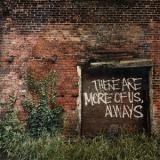
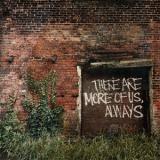
Jagged City unveils their debut instrumental EP, `There Are More of Us, Always`, a bold collection that moves between spacious, melodic guitar passages and raucous, swelling climbs. With heartfelt, melodious songwriting, a diverse range of eclectic touches buried within, and eruptions of dense, layered sound, this record delivers wonderfully balanced compositions through raw and personal production. The project began as a cross-continental art experiment between Jake Woodruff (Defeater) and Carlos Torres (former touring member of Explosions In The Sky). What started as a simple exchange of ideas quickly found real shape through collaborative composition and thoughtful arrangement. Early sessions with David Haik helped refine the songs' structures and drum frameworks, setting the groundwork for what would become Jagged City's striking debut. "We wrote with pure instinct, just tried to add something new to a genre that we love. As we traded ideas, we took some left turns and incorporated elements that may be unexpected." (Woodruff) The result feels immediate, deviously rough at the edges, and charged with a punk-minded intensity that keeps the momentum taut and the sound intimate. RIYL Mogwai, Do Make Say Think, Godspeed, Mono, Defeater, Explosions In The Sky
- A1: We Have Fi Live - Sugar Minott
- A2: Fence Too Tall - Al Campbell
- A3: Fight War Again Winston Hussey - Winston Hussey
- A4: Here I Come Again - Don Carlos
- A5: Never Give Up The Fight - Anthony Johnson
- B1: Chanting - Junior Reid
- B2: Yes I'm Ready - Freddie Mcgregor
- B3: It Have Fi Bun - Josey Wales
- B4: Satellite Dish - The Mighty
- B5: You Been Talking - Michael Prophet
- C1: Teach Me Culture - Barrington Levy
- C2: Super Power - Junior Murvin
- C3: Back Back - Wailing Souls
- C4: More Than A Million - Leroy Smart
- C5: Comes And Goes - Junior Brammer
- D1: Let Him Go - Dennis Brown
- D2: Give The Youth A Try - Little John
- D3: Don't Worry - Wayne Wade
- D4: Tribal Inna Yard - Freddie Mckay
- D5: Oh Rastaman - Cornell Campbell
pictured cover sealed in shrink wrap (first time ever on Samosa)
Samosa Records comes back with a real summer bang in the form of the ‘Afro-Ritmo EP’ – a four-track journey into afro soaked vibes courtesy of Anura & Sr. Lobezno and featuring label boss De Gama!
First up on side A is the EP’s title track, the mesmerising ‘Afro Ritmo’. Anura & Sr. Lobezno announce their arrival on Samosa Records with this spicy West African rhythm bomb. Kakaki trumpet fanfares meld with intricate synth stabs and ethereal Oja flute, whilst the solid tribal beats and rolling bass dictate the dance moves. And dance you must…
Track 2 is the deliciously glitchy, conga bonanza ‘Sungu Sa’. Make no mistake, ‘Sunga Sa’ is out to get you from the very first beat – tempting you to go behind the curtain as the haunting guitar lures you ever closer to its secret door. Dark, uplifting and ritualistic, the chant of ‘Sunga Sa’ will live in your head rent free well after the sun has gone down. Don’t say you weren’t warned.
Over on Side B De Gama takes the title track ‘Afro-Ritmo’ and applies his unique sonic rubs, balms and enhancers to create a pulsating after hours jam full to the brim with Afrotropic sparkle and magic dust. Like an unstoppable chugging train steaming through a savanna, De Gama is the conductor supreme as the raspy synth, bluesy guitar riff and uplifting brass fanfares entwine around that pounding beat.
Finally, Track 4 gives us the seriously powerful Javier Morrilas remix of ‘Afro-Ritmo’. The original is stripped right down and given the Big Beat treatment for this insanely good take – a peak time switcheroo of a track that keeps you guessing as to where it’s taking you. As the flutey breakdowns and broken beat madness get you, you will fall in love with this one instantly.
The ‘Afro Ritmo’ EP is a powerful, masterful four tracker from Anura & Sr. Lobezno which is well at home in the Samosa Records cooking pot. Spread the word, buy the vinyl. You won’t be disappointed.
• Reviewed with love by The Black Light Disco
Written, Produced, Arranged and Mixed by Anura & Sr. Lobezno.
Keyboards & Percussions: Anura.
Trumpet: Jimmy Garcia
Sax & Flute: Carlos Ligero
Trombone: Prudencio Valdivieso
*Remix and Additional Productions by Stefano Gamma aka De Gama for De Gama Rec - Rome.
Jazz Guitar & Acoustic Bass by Pietro Nicosia.
** Remix and Additional Productions by Javier Morillas.
All tracks mastered by Francesco Pierguidi at L’n’P Studio – Rome.
Artwork and computer graphics by Nerina Fernandez.
SMS038
- Prudência
- Praga
"Prudência / Praga", or "Prudence / Plague", is a double single with these two songs that I composed and which were originally recorded by two of my heroes: Maria Bethânia and Alaíde Costa. Curiously, they are two sambas: although I come from the rock and roll scene in Sao Paulo, I wound up writing a samba as if it were the 50s. At the time of my first heartbreak, at the age of 17, I had the record Jamelao canta Lupicínio with the Orquestra Tabajara on my iPod, and I identified with those dramatic sorrows, almost a hundred years old. In a way, I felt that Lupicínio Rodrigues was bloody and direct, like Tarantino, and Nelson Cavaquinho, heavy metal like Black Sabbath. So, I feel it's a compact 45 of sambas but it's also very Rock n Roll to me. Raw and coming from hell. "Prudência" is that internal battle between the passionate side and the controlling side in the head of the former romantic bohemian. I wrote it for Bethânia to record on her album Noturno. Her version turned into a moving bolero. When I saw her singing it live and the audience singing along with her, I couldn't believe it. I cried, hidden in the audience. She said that when she showed the record to her brother, Caetano Veloso, he thought that "Prudência" was some old classic that she had dug up to bring back to light. Nothing could be a greater compliment than this mistake on Caetano's part. "Praga" also has to do with MPB heroes of mine that I never imagined I'd see up close or have any relationship with or any connection with. I was asked to write these lyrics in partnership with the main man Erasmo Carlos for Alaíde Costa's album! Surreal. Like many people, I got acquainted with Alaíde listening to "Clube da Esquina," her singing with Milton Nascimento. And the idea was to do a poisonous cabaret song samba. The curse of a woman who has dumped a drunk. I love it when Alaíde sings "BIBIDA" in her recording of the song_a total legend. I wanted to produce a kind of horror samba recording, because if it wasn't rock and roll, it wouldn't be much fun for me. I went over to Bielzinho's, and we recorded this chorus that explodes with the percussion and the choir of my friends Tulipa, Maria Beraldo, and Luiza Lian. This take of "Prudência" came from the unpretentiousness of recording two live sessions of the song with Fred Joseph with the cameras of the 70s' program "Ensaio" (MPB Especial) by the great Fernando Faro. The video take ended up being so unexpected and raw that it unseated the studio version, and that's what you hear on the single. The idea behind the video is a sort of this temporal mindfuck; like found lost tapes of the MPB Especial from the early the 70s. Same microphones, same cameras, that zoom_time travel. Between Mil Coisas Invisíveis, the end of the cycle with O Terno, and starting the new album process, I decided to take advantage of the respite to release this rock and roll 45 of sambas, without thinking too much or over-producing the thing. "Prudence? Don't talk to me about prudence!" ;) Tim Bernardes, 2025
When João released “Quem é Quem” in 1973, he had already been in the music industry for over 20 years, gaining national and international recognition. Nevertheless, the album marked the beginning of a new phase in his career: the surprising multi-instrumentalist included lyrics in his songs for the first time. It is one of his most important albums, which now returns to shelves on 180-gram vinyl as part of the “Classics on Vinyl” collection from Polysom.
The album was produced by Milton Miranda and Marcos Valle, with arrangements by João Donato, Maestro Gaya, Lan Guest, Laércio de Freitas, and Dory Caymmi. It features 12 tracks, the vast majority of which are authored by him, with collaborators such as Geraldo Carneiro, Lysias Ênio, Paulo Cesar Pinheiro, Caetano Veloso, and João Carlos Pádua. The only exception is the song “Cala Boca Menino” by Dorival Caymmi.
- A1: The Cimarons– We Are Not The Same
- A2: Tenor Saw & Buju Banton– Ring The Alarm Quick
- A3: The Gatherers– Words Of My Mouth
- B1: Barrington Levy– Under Mi Sensi
- B2: Dennis Alcapone– Cassius Clay
- B3: The Maytals– 54-46 Was My Number
- B4: General Degree– Pot Cover
- C1: U-Roy– Stick Together
- C2: Honey Boy Martin– Dreader Than Dread
- C3: Jackie Mittoo– The Sniper
- C4: Don Carlos (2)– Lazer Beam
- D1: Lynn Taitt & The Jets– Soul Food
- D2: Granville Williams Orchestra– Hi-Life
- D3: Augustus Pablo– Cassava Piece ('79 Style)
- D4: The Versatiles– Children Get Ready
- A1: How Do You Do (3 44)
- A2: Illegal (Feat Carlos Santana) (3 53)
- A3: Hips Don't Lie (Feat Wyclef Jean) (3 39)
- A4: Animal City (3 17)
- B1: Don't Bother (4 20)
- B2: The Day & The Time (Feat Gustavo Cerati) (4 23)
- B3: Dreams For Plans (4 00)
- B4: Hey You (4 11)
- C1: Your Embrace (3 34)
- C2: Costume Makes The Clown (3 14)
- C3: Something (4 22)
- C4: Timor (3 35)
- D1: La Tortura (Feat Alejandro Sanz - Alternate Version) (3 36)
- D2: Hips Don't Lie (Feat Wyclef Jean - En Espanol) (3 34)
- D3: Don't Bother (Jrsnchz Radio Mix) (4 20)
- D4: Illegal (Ali Dee Radio Remix) (3 44)
- A1: Let The Guitar Play (Radio Version) Feat. Darryl "Dmc" Mcdaniels
- A2: Stranger In Moscow (Sentient Version)
- A3: Whatever Happens (Sentient Version) With Michael Jackson
- A4: Please Don't Take Your Love (Sentient Version) With Smokey Robinson *Previously Unreleased
- B1: Get On (Sentient Version) With Miles Davis & Paolo Rustichelli
- B2: Vers Le Soleil (Sentient Version) With Paolo Rustichelli
- B3: Coherence Feat.. Cindy Blackman Santana) *Previously Unreleased
- B4: Blues For Salvador
Carlos Santana ist der große musikalische Kollaborateur, der seinen einzigartigen Gitarrenstil und seine weitreichende musikalische Vision mit einer großen Vielfalt von Künstlern verbindet, um etwas Neues, Einzigartiges und Transzendentes zu schaffen. Santanas Vision für Sentient war es, seine jüngsten Kollaborationen aus einer neuen Perspektive zu betrachten und sie zu einer klanglichen Pilgerreise durch Jazz, Hip-Hop, Soul, Rock und lateinamerikanische Rhythmen zu verweben. Er hat die Songs nicht nur so arrangiert, dass sie seiner Vision entsprechen, sondern viele von ihnen auch neu interpretiert und einige Aspekte der Tracks verbessert, um ein kohärentes Hörerlebnis zu schaffen. Die Songs auf Sentient reichen von aktuellen Hits und Kollaborationen mit Superstars bis hin zu seltenen, unveröffentlichten und übersehenen Tracks, die Carlos in einem neuen Kontext präsentieren wollte. Das Ergebnis ist eine spirituelle Reise durch die unendlichen Möglichkeiten der Musik, geführt von Santanas kompromissloser Muse.
Nara Leão is known as "the muse of bossa nova”. Already as a teenager in the late 1950s, she became friends with several singers and composers who took part in Bossa Nova's musical revolution, including João Gilberto, Vinicius de Moraes, and Antônio Carlos Jobim. By 1963, after singing as an amateur for a few years, she became a professional and toured with Sérgio Mendes. In 1968 she appeared on the album “Tropicália: ou Panis et Circenses” together with artists including Gilberto Gil, Caetano Veloso, Os Mutantes and Gal Costa, performing "Lindonéia”, which appears as first track in this album, published in the same year.
There are very special records that achieve mythical status amongst collectors and vinyl diggers. THE SHARPEES GO ON AND LAUGH is top of that tree.
Welcome to the strange world of Nothern Soul…
The story began some years ago when legendary UK record dealer John Anderson discovered an acetate in Chicago with the record title GO ON AND LAUGH scrawled on it but no artist name.
He sold it to cutting edge Northern Soul DJ John Vincent who credited the track to THE JUST BROTHERS when playing out.
The acetate, by now popular amongst the Rare Soul cognoscenti, was traded back to John Anderson who passed it on to Mark Dobson, aka Butch. His DJ sets around the World made it an in-demand dance floor filler and a subject for many years of much conjecture as to the ID of the mystery artist who had recorded this masterpiece which was not just a one-off uber rarity but also the epitome of Nu-Northern Soul cool.
Fast forward to 2016 when USA record label Secret Stash gained access to 200 plus master tapes recorded in the 1960’s by the Windy City’s ONE-DER-FUL set up.
They were forwarded to UK Soul entrepreneur Mark Bicknell who to his amazement found GO ON AND LAUGH in the haul. And finally the whodunit mystery was over with the artist identified as THE SHARPEES, who far from being obscure unknowns aee fondly well known in Soul circles for their much loved DO THE 45 and TIRED OF BEING LONELY singles. Secret Stash promptly issued GO ON AND LAUGH in America but demand far outstripped simply and it quickly sold out with copies now fetching northwards of £150.
ANORAX - living up to its #eatsleepcollect mantra - have snapped up the rights and are delighted to issue it as a 500 run limited edition 7”.
GO ON AND LAUGH is coupled with the timeless classic TIRED OF BEING LONELY. It follows the release by ANORAX of gems from DRIZABONE, JAY. J Feat. BIG BROOKLYN RED and DON CARLOS
- A1: 3 Horas Da Manha (Ivan Lins, Waldemar Correia)
- A2: Samba Do Aviao (Antonio Carlos Jobim)
- A3: Tema Medieval (Agustin Pereyra Lucena)
- A4: Despues De Las Seis (Agustin Pereyra Lucena, Guillermo Reuter)
- A5: Tema Barroco (Guillermo Reuter)
- A6: La Rana (João Donato)
- B1: Pra Que Chorar (Baden Powell)
- B2: Encuentro De Sombras (Agustin Pereyra Lucena)
Far Out Recordings proudly presents Argentinian guitarist Agustín Pereyra Lucena’s 1980 album La Rana. Recorded in Oslo, La Rana features Agustín’s stunning takes on compositions by Ivan Lins, Antonio Carlos Jobim and Agustín’s friend and musical hero Baden Powell. In addition to these, and a number of Agustín’s own compositions including the fifteen-minute masterpiece “Encuentro De Sombras”, the album’s title track is an idiosyncratic version of Joao Donato’s “A Rã” (Eng: The Frog/ Esp: La Rana) from his 1973 album Quem É Quem.
Forming the rest of the quartet are two fellow Argentinians who were also Agustin’s bandmates from the group Candeias: bassist and multi-instrumentalist Guillermo Reuter and flautist Ruben Izarrualde; with Norweigan drummer Finn Sletten on drums and percussion.
Throughout La Rana we hear not only Agustín’s fabled guitar playing, which ascended him to share stages with the likes of Vinicius de Moraes, Dorival Cayymi, Toquinho, Maria Bethania, Chico Buarque and Quarteto Em Cy, but also his talent as a vocalist. He also provided the heartening illustration for the cover art, which perfectly fits the cordial, inviting tone of the music. Inspired in equal measure by South American rhythms and Norweigan glaciers, mountains and waterfalls, La Rana is filled with the warmth, humility and sincerity of a man seizing a joyful moment in life through music.
- A1: Progetto Tribale - The Sweep
- A2: Onirico - Echo Giomini
- A3: Open Spaces - Artist In Wonderland
- B1: Alex Neri – The Wizard (Hot Funky Version)
- B2: M C.j. Feat. Sima - To Yourself Be Free - Instrumental Mix Energy Prod
- B3: Mato Grosso - Titanic Expande
- C1: Dreamatic - I Can Feel It (Part 1)
- C2: Carol Bailey - Understand Me Free Your Mind (Dream Piano Remix)
- C3: The True Underground Sound Of Rome - Secret Doctrine
- D1: Don Carlos - Boy
- D2: Lazy Bird – Jazzy Doll (Odyssey Dub)
Vol 2[28,99 €]
Volume 1 of this expertly curated project of 90s Italian House - put together by Don Carlos.
If Paradise was half as nice… by Fabio De Luca.
Googling “paradise house”, the first results to pop up are an endless list of European b&b’s with whitewashed lime façades, all of them promising “…an unmatched travel experience a few steps from the sea”. Next, a little further down, are the institutional websites of a few select semi-luxury retirement homes (no photos shown, but lots of stock images of smiling nurses with reassuring looks). To find the “paradise house” we’re after, we have to scroll even further down. Much further down.
It feels like yesterday, and at the same time it seems like a million years ago. The Eighties had just ended, and it was still unclear what to expect from the Nineties. Mobile phones that were not the size of a briefcase and did not cost as much as a car? A frightening economic crisis? The guitar-rock revival?! Certainly, the best place to observe that moment of transition was the dancefloor. Truly epochal transformations were happening there. From America, within a short distance one from the other, two revolutionary new musical styles had arrived: the first one sounded a bit like an “on a budget” version of the best Seventies disco-music – Philly sound made with a set of piano-bar keyboards! – the other was even more sparse, futuristic and extraterrestrial. It was a music with a quite distinct “physical” component, which at the same time, to be fully grasped, seemed to call for the knotty theories of certain French post-modern philosophers: Gilles Deleuze, Félix Guattari, Paul Virilio... Both those genres – we would learn shortly after – were born in the black communities of Chicago and Detroit, although listening to those vinyl 12” (often wrapped in generic white covers, and with little indication in the label) you could not easily guess whether behind them there was a black boy from somewhere in the Usa, or a girl from Berlin, or a pale kid from a Cornish coastal town.
Quickly, similar sounds began to show up from all corners of Europe. A thousand variations of the same intuition: leaner, less lean, happier, slightly less intoxicated, more broken, slower, faster, much faster... Boom! From the dancefloors – the London ones at least, whose chronicles we eagerly read every month in the pages of The Face and i-D – came tales of a new generation of clubbers who had completely stopped “dressing up” to go dancing; of hot tempered hooligans bursting into tears and hugging everyone under the strobe lights as the notes of Strings of Life rose up through the fumes of dry ice (certain “smiling” pills were also involved, sure). At this point, however, we must move on to Switzerland.
In Switzerland, in the quiet and diligent town of Lugano, between the 1980s and 1990s there was a club called “Morandi”. Its hot night was on Wednesdays, when the audience also came from Milan, Como, Varese and Zurich. Legend goes that, one night, none less than Prince and Sheila E were spotted hiding among the sofas, on a day-off of the Italian dates of the Nude Tour… The Wednesday resident and superstar was an Italian dj with an exotic name: Don Carlos. The soundtrack he devised was a mixture of Chicago, Detroit, the most progressive R&B and certain forgotten classics of old disco music: practically, what the Paradise Garage in New York might have sounded like had it not closed in 1987. In between, Don Carlos also managed to squeeze in some tracks he had worked on in his studio on Lago Maggiore. One in particular: a track that was rather slow compared to the BPM in fashion at the time, but which was a perfect bridge between house and R&B. The title was Alone: Don Carlos would explain years later that it had to be intended both in the English meaning of “by itself” and like the Italian word meaning “halo”. That wasn’t the only double entendre about the song, anyway. Its own very deep nature was, indeed, double. On the one hand, Alone was built around an angelic keyboard pattern and a romantic piano riff that took you straight to heaven; on the other, it showcased enough electronic squelches (plus a sax part that sounded like it had been dissolved by acid rain) to pigeonhole the tune into the “junk modernity” section, aka the hallmark of all the most innovative sounds of the time: music that sounded like it was hand-crafted from the scraps of glittering overground pop.
No one knows who was the first to call it “paradise house”, nor when it happened. Alternative definitions on the same topic one happened to hear included “ambient house”, “dream house”, “Mediterranean progressive”… but of course none were as good (and alluring) as “paradise house”. What is certain is that such inclination for sounds that were in equal measure angelic and neurotic, romantic and unaffective, quickly became the trademark of the second generation of Italian house. Music that seemed shyly equidistant from all the rhythmic and electronic revolutions that had happened up to that moment (“Music perfectly adept at going nowhere slowly” as noted by English journalist Craig McLean in a legendary field report for Blah Blah Blah magazine). Music that to a inattentive ear might have sounded as anonymous as a snapshot of a random group of passers-by at 10AM in the centre of any major city, but perfectly described the (slow) awakening in the real world after the universal love binge of the so-called Second Summer of Love.
For a brief but unforgettable season, in Italy “paradise house” was the official soundtrack of interminable weekends spent inside the car, darting from one club to another, cutting the peninsula from North to centre, from East to West coast in pursuit of the latest after-hours disco, trading kilometres per hour with beats per minute: practically, a new New Year’s Eve every Friday and Saturday night. This too was no small transformation, as well as a shock for an adult Italy that was encountering for the first time – thanks to its sons and daughters – the wild side of industrial modernity. The clubbers of the so-called “fuoriorario” scene were the balls gone mad in the pinball machine most feared by newspapers, magazines and TV pundits. What they did each and every weekend, apart from going crazy to the sound of the current white labels, was linking distant geographical points and non-places (thank you Marc Augé!) – old dance halls, farmhouses and business centres – transformed for one night into house music heaven. As Marco D’Eramo wrote in his 1995 essay on Chicago, Il maiale e il grattacielo: “Four-wheeled capitalism distorts our age-old image of the city, it allows the suburbs to be connected to each other, whereas before they were connected only by the centre (…) It makes possible a metropolitan area without a metropolis, without a city centre, without downtown. The periphery is no longer a periphery of any centre, but is self-centred”.
“Paradise house” perfectly understood all of this and turned it into a sort of cyber-blues that didn’t even need words, and unexpectedly brought back a drop of melancholic (post?)-humanity within a world that by then – as we would wholly realise in the decades to come – was fully inhuman and heartless. A world where we were all alone, and surrounded by a sinister yellowish halo, like a neon at the end of its life cycle. But, for one night at least, happy.
Groovin Recordings move forward with the unreleased series focusing on rising Italian producers. It is now the moment for Peter LC, one of the most interesting young artists in the new italo-house scene.
Born with a distinctive passion for Disco and House music, Peter loves to experiment with all the shapes of house from Italo, Deep Tech, and Classic House genres, continually evolving his unique sound.
This new EP called "Il Letto. La Porta. La Musica." starts with a journey into early 90’s Italian Riviera, also featuring a remix by legendary Italian producer Don Carlos. On the flip we find "Losing my Feelings", which meets Deep house at its finest, echoing the timeless grooves of Chicago and Detroit, and "Love Calling", a classic piano house anthem, driven by soulful female vocals and pure 90’s vibes.
Das neue Album der kalifornischen Punks von Destroy Boys - inklusive der Tracks Shadow (I'm Breaking Down) & Plucked.
In Zusammenarbeit mit Carlos De La Garza entstanden (Bad Religion, Paramore, The Linda Lindas), umfasst das neue Album Funeral Soundtrack #4
alles von Garagenpunk bis hin zu 90er Jahre College-Indie-Rock. Auf dem neuen Album sind Missy Dabice von Mannequin Pussy und Kat Moss von
Scowl zu hören.
Das Trio, bestehend aus Sängerin Alexia Roditis, Gitarristin Violet Mayugba und Schlagzeuger Narsai Malik, tourte bereits mit Alkaline Trio & Taking
Back Sunday durch Großbritannien, trat beim Slam Dunk, Roskilde, SBAM! und Sziget auf, war mehrmals in den USA unterwegs und trat beim Riot
Fest, Dia De Los Deftones und Coachella auf. Außerdem supporteten sie Blink-182 + Turnstile & Pierce The Veil im Jahr 2023. Für 2024 sind Auftritte
beim Lollapalooza und eine Tour mit Cavetown und Mother Mother geplant.
- Baby B.a.b.y. (Carla Thomas)
- Erotica
- Alguien Para Amar Somebody To Love (Jefferson Airplane)
- Ah Ah Ah Ay
- Rollin' And Tumblin' (Muddy Waters)
- Uno De Estos Dias Some Of These Days (Brenda Lee)
- Carmesi Y Trebol Crimson And Clover (Tommy James & The Shondells)
- Eres Tu Baby It's You (The Beatles)
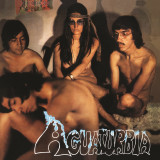
"Aguaturbia" (1970) is an essential album to understand the construction of what we know today as Chilean rock. This very influential album is raw and dynamic, featuring heavy rhythms, distortion, and exceptional phased female vocals reminiscent of Jefferson Airplane. It comprises original compositions and electrifying renditions of songs brought to fame by the likes of Tommy James & The Shondells, The Beatles and, of course, Jefferson Airplane elevating these classics to new heights of intensity and rhythmic allure. We are thrilled to make this outstanding LP available again after many years out of stock. Aguaturbia's debut album was originally released in 1970 and showcases one of South America's most significant psychedelic bands from the late 60s and early 70s. Their influence in their native Chile -and beyond- was groundbreaking. It was played live in 1969 on 3 tracks, and it became an icon of transgression due to its unbridled musical aesthetics and cover art that - for the time of its irruption - meant a clear defiance of the conservative logics lived in Chile, which saw in the nudity of the cover a challenge to morality and good manners. The album is raw and dynamic, featuring heavy rhythms, distortion, and exceptional phased female vocals reminiscent of Jefferson Airplane. Guitarist Carlos Corales shines and when he played solos at the gigs, the effect on the audience was silence and euphoria at the same time, they couldn't believe what they heard. Everything was done with a professional attitude. In fact, Carlos Corales (guitar) and Willy Cavada (drums) were both professional musicians who had made a previous career in rock and roll bands. The LP showcases breathtaking moments, like Willy Cavada's masterful drum solo in 'Ah Ah Ah Ay' captured flawlessly in a single take. Dive into the sensual psychedelic journey of 'Erotica,' where Denise's alluring vocals dance harmoniously with Carlos' electrifying guitar. Plus, don't miss their thrilling renditions of 'Somebody to Love' and 'Crimson and Clover'-each track elevating classics to new heights of intensity and rhythmic allure. This album is more than music; it's an invitation to experience sheer auditory bliss! "Aguaturbia" is an essential album to understand the construction of what we know today as Chilean rock.
DJ Support: Riva Starr, Mark Knight, David Morales, Brian Tappert, Jimpster, Kevin Yost, Michael Gray, Don Carlos, Crazibiza, Moodena, Dj Disciple, DJ Rae.
American producer Marc Cotterell is one of the contemporary underground house world's most standout talents. He has a great range of moods and grooves and his sound designs are second to none. This latest Album Sampler on Groove Culture is a four tacker with some serious heft. 'Feel The Groove' is a trip into the contamination of house: from Disco to Jackin to Soulful To Deep Sounds. This Album showcases the enduring talent and creativity of Marc Cotterell, offering fans a chance to dive deeper into his rich musical archive.
Here comes No Obligation, the second full-length release from THE LINDA LINDAS further advances their unironic, joyful, and exciting trajectory of mashing up L.A. punk with alt-rock, garage rock, power pop, new wave, rock en español. No Obligation was written and recorded by the band during spring breaks, winter breaks, and long weekends (Lucia and Eloise are still in high school, Mila just finished middle school, and Bela is patiently waiting for them to get done with it already) and was produced by Carlos de la Garza (Paramore, Best Coast, Bleached). Known for their incredible musicianship and live performances, the band who has shared stages with and opened for Paramore, Japanese Breakfast, Jawbreaker, and Yeah Yeah Yeahs, are about to embark on a massive two-month tour across America with Green Day. Look for headlining shows at small clubs in between-including a sold-out gig at the famously DIY Gilman Street in Berkeley. The new album, No Obligation, is out on October 11 . No Obligations. No expectations. No limits for THE LINDA LINDAS.
From the perspective of people who categorize music by genres and types, Evan Shornstein, better-known under his production moniker Photay, has created lots of different kinds of sounds over the past decade. There’s the Hudson Valley-raised, Los Angeles-based multi-instrumentalist composer’s quasi-IDM and electronic almost-pop tracks with the occasional vocal; the improvised organic and and experimental music sessions he participates in alongside new age giants, Laraaji and Carlos Niño; the diaspora electronic folk-jazz he makes with veteran musicians from all over the globe; and the disco and house adjacent records he tag-team DJs with Brooklyn producer Cesar Toribio and engineer Phil Moffa (who also masters all of Photay’s records — and those of dance-music dons around the world). But if you’ve listened closely to Shornstein’s prodigious output, you know that separating and classifying the work is actually contrary to the energy of Photay music. That what on-the-surface may lazily appear as differences, is actually brought together by a shared sonic warmth, a hardware pastoralism at play. Whatever category he engages, Photay makes outdoor music under the spell of the elements, for the purpose of different human movements — some physical, some spiritual, some emotional, some philosophica.
Île Flottante is Mr. Beatnick´s 5th album, following 2023’s Joy In Variation (including the notorious cover of Love on a Real Train) and his well-received off-beat collaboration with London-based avant-garde agitator Richard Greenan – Coasty – this is his first contribution to the International Feel trademark. Probably best known for some big deep house revivalist tunes circa 2013 on the now dormant Don’t Be Afraid record label, Beatnick now converts that aural quality and dimensionality into the Balearic system.
Île Flottante takes its name from the tastiest French pudding of Mr. Beatnick’s childhood holidays. The name, also a jeux de mots - floating island - hinting at the album’s inspirations and sense of identity, as a danceable soundtrack to a fictional island. Explored with high intensity and over a yearlong process, the sounds of the well-worn, but never failing Balearic universes were a mind expanding influence. Think of genre staples like Software, Manuel Goettsching, Mark Barrott, Len Leise, Don Carlos, Gaussian Curve, Joan Bibiloni or Yasuaki Shimuzu.
„I spent a year listening to a lot of synthesized island music, and marveling at the many twinkling wonders of the Balearic musical universe. Struck by a sense of belonging that had often eluded me on my musical journey thus far, as the weirdo at the back of the club who had orbited many scenes for 20 years, but never felt like I fitted in, I found music that made me feel like I had come home. The songs that came out of this process are presented in the order that they were written - an open book of ocean hymns, honest and spoken from the heart.“
Île Flottante tries its very hardest to avoid being any one thing in particular. At one point, it is a gentle beach walk accompanied by polyrhythmic drum plod and flourishes of Guzheng. At another, the infamous James Yancey septuplet swing is repurposed against a marimba melody that wouldn’t be out of place in one of Link’s forest adventures.
Elsewhere, there are the bellows of distant whales, touches of Italian dream house and a splash of vintage madchester, all working to create a space that feels both familiar and loaded with well worn tropes, but with its own quirky sense of personality, facets which are often attributed to Mr. Beatnick’s holistic b-boy approach. This is his understanding of a Balearic (b-boy) stance. Just with a float instead of a freeze.
- No Lick No Dub - Johnny Clarke
- Bosrock - Don Carlos
- Take 5 Dub - King Tubby
- Some Good Dub - Locksley Castell
- Mr Rich Dub - Leroy Smart
- Why Dub In Spring - Cornell Campbell
- Dub Slave - Tappa Zukie
- Start All Over Over Dub - Horace Andy
- Big Mouth Dub - Don Carlos
- Dub Turn Back - Aggrovators
- Upper 1St Street Dub - King Tubby
- Dubbing You - Ronnie Davis
Vol.3[8,78 €]
This is the second Jamaican Recordings sampler collecting together rare dubs from the label.
Dark Entries and Honey Soundsystem Records have teamed up once more to release the final volume of gay porn soundtracks by San Francisco-based musician and producer, Patrick Cowley. One of the most revolutionary and influential figures in the canon of disco, Cowley created his own brand of Hi-NRG dance music, The San Francisco Sound.' Born in Buffalo, NY on October 19, 1950, Patrick moved to San Francisco in 1971 to study at the City College of San Francisco. He founded the Electronic Music Lab at the school, where he would make experimental soundtracks by blending various types of music and adapting them to the synthesizer.
By the mid-70's, Patrick's synthesis techniques landed him a job composing and producing songs for disco superstar Sylvester, including hits like You Make Me Feel (Mighty Real)', Dance Disco Heat' and Stars.' This helped Patrick obtain more work as a remixer and producer. His 18-minute long remix of Donna Summer's I Feel Love' and his production work with edgy New Wave band Indoor Life were both of particular note. By 1981, Patrick had released a string of dance 12 singles, like Menergy' and Megatron Man'. He also had founded Megatone Records, the label upon which he released his debut album, Menergy'. Around this time Patrick was hospitalized and diagnosed with an unknown illness: that which would later be called AIDS. Throughout 1982, he recorded two more Hi-NRG hits, Do You Wanna Funk' for Sylvester, and Right On Target' for Paul Parker, as well as a second solo album Mind Warp'. On November 12, 1982, he passed away.
In 1979 Patrick was contacted by John Coletti, owner of famed gay porn company Fox Studio in Los Angeles. Patrick jumped on this offer and sent reels of his college compositions from the 70s to John in LA. Coletti then used a variable speed oscillator to adjust the pitch and speed of Patrick's songs in-sync with the film scenes. The result was the VHS collections Muscle Up' and School Daze' released in 1979 and 1980. Afternooners' is the third collection of Cowley's instrumental songs, recorded in May 1982. These recordings were culled from two 23-minute reels in the Fox Studio vaults. All songs were originally untitled, so we've used the titles from Fox Studio's 8mm film loops. This compilation also includes three bonus tracks found in the archives of fellow Megatone Records recording artist Paul Parker and the attic of teenage friend Lily Bartels. Influenced by Tomita, Wendy Carlos, and Giorgio Moroder, Patrick crafted a singular sound from his collection of synthesizers, percussion, modified guitars, and hand-built equipment. The listener enters a world of forbidden vices, evocative of Patrick's time spent in the bathhouses of San Francisco. The songs on Afternooners' reflect the advances of the equipment available at the onset of the 1980s. Cowley's unadulterated electronic forms are stripped down and dubbed up. Lush electronic percussion, soaring synthesizer riffs and low slung funk grooves comingle on these magnificent soundscapes.
Featuring 70 minutes of music never before released on vinyl. All songs have been remastered by George Horn at Fantasy Studios in Berkeley, CA. The vinyl is housed in a gatefold jacket designed by Berlin-based artist Gwenael Rattke, featuring black and white photos of Patrick in his studio that opens to a full color array of x-rated scenes from the Fox Studio vaults. Included is a fold-out poster featuring a handmade collage using photography and xeroxed graphics of classic gay porn imagery and an essay from Drew Daniel of Matmos. For Patrick's 67th birthday, Dark Entries and Honey Soundsystem Records present a glimpse into the futuristic world of a young genius. These recordings shed a new light on the experimental side of a disco legend who was taken too soon.
Repress!
Far Out Recordings Proudly Presents The 1975 Self-titled Debut Album From Brazilian Vocalist And Bossa Nova Luminary Emilio Santiago. Nicknamed 'the Nat King Cole Of Brazil', Santiago Was A Master Bossa Balladeer And A Top-class Crooner. But He Is Known Equally For His Brazilian Funk, Soul And Boogie Classics. One Of His Best Know Is Album Opener 'bananeira', A Party-starting Version Of The Song Originally Written By Joao Donato And Gilberto Gil. 'brother' Is A Smooth-grooving Killer With Great Horn Arrangements And A Huge Backing Choir, While 'la Mulata' Is A Soulful, Swinging Salsa Stepper.
Originally Released On The Cid Label, The Album Showcases The Full Range Of Emilio's Talents, While Paying Homage To Some Of Brazil's Greatest Composers, Including Jorge Ben, Marcos And Sergio Valle And Ivan Lins Among Others.
The Credits On The Album Are A 'who's Who' Of Brazil's Greats, With João Donato On Keys, Wilson Das Neves, Ivan 'mamão' Conti And Paulinho On Drums, Durval Ferreira, Carlos Roberto Rocha And Helio Delmiro On Guitar, Ariovaldo, Orlandivo, And Chacal On Percussion, Danilo Caymmi On Flute, A Brass Section Featuring Victor Assis Brasil, Edson Maciel And Jesse Sadoc, And Backing Vocals From Jaime And Nair, Lúcia Lins, Jurema And Marcio Lott.
Pirates Press Records is proud to present the new LP by 45 Adapters, entitled Unstoppable. The long-running New York City "Maximum Oi 'n B" combo are a band that lives by a few credos. "Dress Well, Drink Heavily." "Don't Trust Anyone Who Doesn't Dance." These values are on full display within the grooves of Unstoppable. Singer Pickabar & bassist Carlos are back with three new recruits to the band, and the group sounds revitalized, laying down the album in just two days at Noisy Little Critter studio with Mike Bardzik at the helm. Regarding the sentiments of the title track and lead single, Pickabar elaborates, "'Unstoppable' is about rock 'n roll and how much it shapes our lives. I've been hooked since I was a teenager and I still feel that same electric thrill listening to it, playing it, even talking about it_ There's something deeper that goes back to the root of what it means to be human. And I'm stoked to be even a tiny part of that." After fifteen years and numerous EPs, singles, splits, and collections, 45 Adapters are finally releasing their first proper LP. Longtime listeners and new fans alike are bound to agree that Unstoppable, at long last, is their definitive statement, and the record that fully captures their acclaimed live energy.
The Prodigy Carlos Nilmmns Is Back on Skylax With Once Again a Splendid 12 Inch! His Style Is a Mixture of Refinement and the Most Beautiful Things That House Music Has Ever Produced, Moodymann, Theo Parrish in the Lead but Not Only That, We Must Also Add the Masters Lalo Schifrin, Donald Byrd and Even Henry Mancini. This Ep Starts With a Bang With the Sublime "Nes", Three Letters Which Alone Sum Up the Small Miracle of Bringing Together Both the Ghosts of Detroit and the Most Beautiful Cinematic Music Directly Inherited From the Glorious 70s. "Believe" Plows the Same Furrow With a More Mental Universe and to Conclude "Parisian Nights" (Jazz Version) Which We Swear Would Not Have Been Missing on an Impulse Album. Side B Opens With "Celebration" Which Sounds More Club Tool for Once With Obviously This Je Ne Sais Quoi That Is Far Superior to All Current House Productions. and This Ends With the Club Version of "Parisian Nights", a Real Volute of Sound. His Style Reminds Us Very Strangely and Quite Paradoxically of the Illustrious Terre Thaemlitz Aka Dj Sprinkles. Music for the Soul and the Body....
This 7” single features two outstanding cumbias published on MAG in the 60s that have never been available on a 45 release before.
Dance floor oriented tropical music at its best!
MAG has been, since its foundation in 1953, a pivotal label in Peruvian music, allowing the development of the careers of both tropical artists and musicians of other genres such as rock, pop and jazz. At the head was Don Manuel Antonio Guerrero, its founder, and the name of the record company is nothing more than an acronym formed from its own name. (M.A.G.).
This 7” single features two outstanding cumbias published on MAG in the 60s that have never been available on a 45 release before.
Carlos Pickling was a legendary MAG artist who led the orchestra that accompanied Benny del Solar, Lita Branda and Melcochita in the tropicalized version of Spanish rumba, when the beats of Iberian rumba were still exotic in South America, and he also played countless cumbias, mambos and guarachas. The distinctive sound of his Hammond organ can be heard on this recording, ‘Cumbia Morena’, as it became his signature sound.
Los Demonios de Corocochay were one of the first Andean cumbia bands in Peru and sported an unique sound spiced up with the textures of a playful organ, as can be heard on this superb ‘Cumbia en Dominante’.
- Adouma
- Nothing At All (Ft. Musiq)
- The Game Of Love (Ft. Michelle Branch)
- You Are My Kind (Ft. Seal)
- Amore (Sexo) (Ft. Macy Gray)
- Foo Foo
- Victory Is Won
- America (Ft. P.o.d.)
- Sideways (Ft. Citizen Cope)
- Why Don T You & I (Ft. Chad Kroeger)
- Feels Like Fire (Ft. Dido)
- Let Me Love You Tonight
- Aye Aye Aye
- Hoy Es Adios (Ft. Alejandro Lerner)
- One Of These Days (Ft. Ozomatli)
- Novus (Ft. Placido Domingo)
"Carlos Santana’s nineteenth studio album Shaman was released in 2002 and debuted at #1 on the Billboard 200. Just like its predecessor Supernatural, Santana invited contemporary artists to collaborate with him across genres including neo-soul, pop, rock, metal, and opera. Artists such as Seal, P.O.D., Chad Kroeger, Dido, Michelle Branch, Macy Gray, Music, Citizen Cope, Alejandro Lerner, Plácido Domingos, and Ozomatli can be heard on the album. Four tracks were released as singles: “The Game Of Love”, “Nothing At All”, “Why Don’t You & I”, and “Feels Like Fire”. Shaman is being reissued for the first time since its original release. A limited edition is available of 2000 individually numbered copies on translucent purple coloured vinyl and includes an insert."
Shaman by Santana, released 3 May 2024, includes the following tracks: "The Game Of Love (ft. Michelle Branch)", "Amoré (Sexo) (ft. Macy Gray)", "Victory Is Won" and more.
This version of Shaman comes as a 2xLP. This release comes with (a) Insert(s).
The vinyl is pressed as a translucent, purple disc. Another vinyl is pressed as a translucent, purple disc.
Razor-sharp production of the highest order from two of the masters of the early 80™s Rio de Janeiro boogie sound, Robson Jorge and Lincoln Olivetti. Both were highly acclaimed music producers of the time, starting around the mid-70™s. Over the course of his career Olivetti worked with artists including Rita Lee, Erasmo Carlos, Don Beto, Marcos Valle, Tim Maia, Gilberto Gil, Gal Costa, Sandra Sa, Painel de Controle and many more. The album takes in mid-tempo, AOR, boogie and even latin all way through the tempo™s to ultra-quick Prince style disco-funk workouts. Includes several standout tracks ˜Aleluia™ and ™Ginga™ being our two favourites. Synths, horns, claps, drum machines, guitars, keys and vocal harmonies combine effortlessly.
About 20 years ago, Carlos Giffoni quickly made a name for himself both as a noise guitarist and a laptop noisician upon arriving in New York (via Florida and Venezuela). His expertly curated annual No Fun Festival, as well as his No Fun label, further solidified him as a key figure in the international noise scene. The festival's success proved the formula for experimental and improvised music fests could work with the noise underground as well, but it also capitalized on the faster rate of connections being made between geographically disparate artists as a result of the (still relatively nascent) internet. Back then Carlos would play his laptop like a pinball machine, in contrast to the static stage presence of most laptop performers, and his solo music, like many others' at that time, expressed a less dark and dour vision of the implications of harsh noise. By the close of the 2000s, he had stopped doing the festival, switched gears musically to playing the lighter No Fun Acid sets, and moved to LA. Now he has re-emerged in a big way with Dream Walker, his first full-length since 2018's Vain (and only his second since 2010). Inspired by the masterful performances and diffusions he heard at the February 2023 GRM electronic music festival in Paris, particularly sets by old friends Lasse Marhaug, Jim O'Rourke, and Eiko Ishibashi, he began conceptualizing new music of his own in response, turning to synthesizers and other hardware to produce a work more firmly in the tradition of European electronic music than anything else he's done. Intended as a late night listen that evokes the edge of consciousness, with Carlos getting as close as possible to a trance state during the actual recording and mixing, each of the eleven tracks transition into one another rather than being standalone discrete pieces, forming two side-long suites that proceed like stages of a dream. Unabashedly tonal and repetitive, the glistening opener "Now Dream," the droning "Sleep Walker," and the closing triptych of "Lost in Descanso," "Sunrise," and "The Hidden Path" occupy a power electronics-ambient nexus that feels spiritually close to the Mego label. Elsewhere, "Ticking Clock" is reminiscent of Stereolab's non-easy listening vintage electronic side, while the two-part arpeggiated "Euphoria" recalls early Oneohtrix Point Never (which Carlos released on No Fun). The contrast between "One Breath"'s crackling opening and its remarkably fluid and soaring sustained synthesized chords is a distillation of the album's lingering tension between electronics' ability to project mechanical rupture as well as the organic and the infinite _or "walking between dreams," as Carlos himself puts it. Produced by Lasse Marhaug (who also mastered Carlos' first solo album, Welcome Home, back in 2005), released by Stephen O'Malley (who I remember DJing at the No Fun fest), with cover art and photos by personal friends, Carlos considers the album a family affair. But Dream Walker most of all heralds a maturation of the artist, and stands as a record that exists out of pure desire, rather than obligation or force of habit; a statement of reconnecting with music not by merely revisiting it, but by building on what's come before, both in his own work and in the music he loves. -Alan Licht, New York, December 2023
Entering a decade of existence since the first release back in 2015, Imogen Recordings has a constant flow of hi-quality releases. Based on an inhouse sound and artists that perfectly fits to that sound, Imogen label gained small but finger picked releases catalog and artists repertoire. Among those few Label released music from Darshan Jesrani ( Metro Area, Startree ), Charles Webster - Presence, Don Carlos, Ian Pooley, Ilija Rudman, Kai Alce to name a few and most recently Antonio Zuza.
New Catalog Number 19, brings Antonio Zuza and a duo Project between Ilija and Antonio - Imogen Soundsystem on the table. It's a "never leave my bag" material.
Antonio's "Palmizana" or Imogen Soundsystem's " Paloma" are both strong munition for any dancefloor request by simply delivering that vibe that we all love.
Powered by pristine production as Imogen's standard signature Darshan Jesrani and Ilija Rudman brought 2 sublime remixes to wrap this beautiful 12" Vinyl.
If we are talking about modern house approach with all the respect to it roots, we are talking about this record. It is here to satisfy old diggers and new people on the scene.