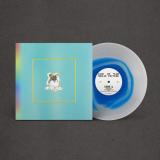
Quiet, from the Latin quies, evokes a state of being still. In its verb form, quiet means to clear so that something can gradually come into focus. Kind Stranger by Amedeo Cappelletti is where quiet materializes in a more transient, even foreign, way. Each track takes a step back from noise, borne out of a slow return to music, a different pace, and a familiar place left behind for years.
Kind Stranger, released on Aurora Edition on July 24th, is about the strangeness of a return. Cappelletti's melodic scores work their way between faint noise and disquiet, and sonically muse upon the familiar. That is, when given enough time and distance, the familiar can become unrecognizable, demanding stillness to resituate oneself within it.
The album began taking shape when Cappelletti performed at Aurora Edition at Silent Green, just after he had returned to music following a three-year hiatus. In one month, he wrote forty-five minutes of new material from scratch. Then Cappelletti left Berlin after eight years and returned to the Tuscan countryside where he had grown up, back into slowness.
The album develops as an atmosphere in the truest sense. Resampled voices, found sound, and years of sound design practice converge as compositions form by overlapping texture with spatial depth. Kind Stranger cultivates a quietude that envelops the listener.
Vocal recordings made with Matthew Walsh and Sarah McInerney, collaborators Cappelletti met by chance in a Berlin ice cream shop, appear throughout the album like a current, shaped during a residency at MONOM, Berlin's spatial sound institute. Thematically, the record moves through digital addiction, fragmented attention, and the grief of work done in the darkness.
Kind Stranger is an offering to whoever finds themselves here within the quiet, in this particular quality of sound between return and lingering.
Songs of Joy and Peace is a Christmas music album by cellist Yo-Yo Ma, originally released in 2008. The album features collaborations with many other artists, including vocalists Diana Krall & Alison Krauss, James Taylor, Dave Brubeck and Chris Botti.
This holiday disc doesn't exclusively stick to traditional Christmas songs, but covers a wide scope of material in a very ambitious manner. Ma opens with a lovely take of the traditional favorite “Dona Nobis Pacem (Give Us Peace)”, playing both the melody and counterpoint via overdubbing.
Jazz pianist/vocalist Diana Krall is superb in a swinging rendition of Jerome Kern's unjustly obscure "You Couldn't Be Cuter", adding bassist John Clayton. An arrangement of “Joy To The World” features pianist Dave Brubeck and cellist Matt Brubeck (his son). Chris Botti has never sounded better in the warm arrangement of “My Favorite Things”, playing both open and muted trumpet. James Taylor is featured on vocals on the Beatles cover “Here Comes The Sun”.
There's a tendency in metal to mistake aggression for honesty, volume for depth. To confuse the performance of darkness with its actual weight. Hidden Fires Burn Hottest, the new album from San Francisco-based post-black metal band Bosse-de-Nage, sidesteps this entirely. It’s the group’s most fully realized work yet, precisely because it refuses to be pinned down.
Bosse-de-Nage have been working with The Flenser for over fifteen years. They were one of the first bands the label ever partnered with and have the longest active relationship in the label's history. But unlike most bands who build momentum through constant touring and visibility, Bosse-de-Nage has largely existed apart from the music world's usual machinery. They've evolved on their own terms, in relative isolation, allowing the work to develop without outside pressure or influence. What began rooted in black metal anonymity has mutated into something that actively defies categorization. The aggression is still there, but it's no longer the point. Hidden Fires Burn Hottest finds the band treating emotions like physical objects, feelings with spatial properties. “No Such Place"" describes a space that can't exist but does anyway, somewhere between thought and location. ""Immortality Project"" examines infinite possibility not as promise but as problem, endless options collapsing under their own weight. These songs don't use metaphor to describe emotion. They make emotion into something you could theoretically touch.
Tracked by Jack Shirley (Deafheaven, Oathbreaker) at Atomic Garden East and mixed and mastered by Richard Chowenhill of Agriculture, Hidden Fires Burn Hottest was years in development, with some tracks beginning in 2018.
The long writing process offered time that most records don't get. Time to live with ideas, revise endlessly, to let structures settle. For the first time, lyricist Bryan Manning wrote everything in advance, creating a surplus to pull from rather than working under deadline pressure. The difference shows.
Coming off Further Still, an album built on constraint and economy, Bosse-de-Nage sought the opposite: sprawl, strangeness, fewer rules. Space for ideas to develop without rushing them. Dynamics that move through quiet as much as noise. Presence earned through atmosphere instead of volume. The record even includes ""Mementos,"" which might be considered the first love song the band has ever written.
Nothing here coheres into a theme. These are pieces pulled from low moments and private feelings made public through sound. The band has never been interested in positivity, in music that resolves cleanly or offers comfort. But bleakness doesn't mean humorlessness. There's something darkly funny running through much of it, even when it shouldn't be.
Hidden Fires Burn Hottest doesn't explain itself. It just insists: what you feel is as real as what you can see."
,Yaphet" ist das neue Album des Rappers Curly Castro - auch bekannt als eine Hälfte des dynamischen Duos Shrapknel - das am 18. September 2026 bei Backwoodz Studioz erscheint. Auf ,Yaphet" lässt sich Castro vom Blaxploitation-Filmgenre der 1970er Jahre inspirieren; die schwarzen Helden und Antihelden jener Zeit dient ihm als Sprungbrett für seine filmische Lyrik. Die Flows wechseln so mühelos wie Kamerawinkel, die Strophen sind gespickt mit Anspielungen und Zweideutigkeiten - eine Rap-Meisterklasse, die man endlos wiederholen kann. Aber ,Yaphet" ist auch Castros erstes Soloalbum seit ,Little Robert Hutton" aus dem Jahr 2021, und hinter dem Feuerwerk spiegelt dieses Album die Tiefe seiner Erfahrungen in den dazwischenliegenden Jahren wider. ,Ich hatte nicht vor, so ehrlich über mein Leben zu sein, aber genau das ist dabei herausgekommen, und das Album ist dadurch besser geworden", erklärt Castro, ,vom Tod meiner kleinen Tochter über den Tod meines Vaters bis hin zur Konfrontation mit meiner eigenen bevorstehenden Sterblichkeit - das sind meine verwundbarsten Klingen, die meine tiefsten Wunden aufreißen." Genau wie Castro marschiert auch diese Platte im Takt ihrer eigenen Trommel, und täuscht euch nicht: Es gibt jede Menge Trommeln, mit denen sich der erfahrene MC messen kann, wie nur er es kann. Komplett produziert vom Milwaukeeer Beatmaker Locust, ist ,Yaphet" ein schwungvolles, vielseitiges Hörerlebnis, das seinen Einflüssen zunickt, ohne jemals zurückzuschauen. Castro wird von einem Wirbelwind der Besten des Genres begleitet: billy woods, PremRock, Fatboi Sharif, Brian Ennals, SKECH185, Blueprint, AJ Suede, shemar, ALASKA, Sunmundi, blackchai und Margel the Sophant.
a 1.1BLACK DON'T CRACK [FT. FATBOI SHARIF, BLUEPRINT, BRIAN ENNALS, SKECH185, ...]
[d] 1.4ENEMY-MINDED [FT. MARGEL THE SOPHANT]
[f] 1.6RAILROAD SPIKES [FT. MARGEL THE SOPHANT]
[g] 1.7BLOOD IN THE GARDEN [FT. PREMROCK]
The seminal psych-rock classic The Evil One by Roky Erickson And The Aliens is reissued by Fire Records in a deluxe 15-track edition, restoring the original front cover from San Francisco’s 415 Records release for the first time since 1981. Presented across two LPs cut at 45 rpm for maximum sonic depth and clarity, the release brings together the complete recordings from the legendary 1978 and 1979 sessions. The package includes a collector’s booklet with liner notes by acclaimed Austin music journalist Joe Nick Patoski, who attended a recording session for The Evil One in 1979. Alongside rare photographs and archival images from the collection of Roky’s then manager, Craig Luckin.
Following his release from Rusk State Hospital in 1974, Erickson formed The Aliens and channelled his experiences and fascination with horror and science fiction into a singular new sound. Moving beyond the psychedelic garage blues of the 13th Floor Elevators, the band created harder, more ferocious rock built around jagged guitars, strange melodies and a propulsive rhythm section.
Produced by Creedence Clearwater Revival bassist Stu Cook, The Evil One includes some of Erickson’s most celebrated recordings, including ‘Two Headed Dog’, ‘I Walked With A Zombie’ and ‘It’s A Cold Night For Alligators’. Erickson’s unmistakable voice and surreal lyrics, populated by zombies, demons, vampires and atomic monsters, gave the album a character unlike anything else in rock. Both the LP and CD editions feature rare photographs and images from the archive of Erickson’s then manager and the sessions’ executive producer, Craig Luckin.
The Evil One has since become a landmark of cult rock, with its songs covered by generations of artists and its influence extending across punk, alternative and psychedelic music. As Craig Luckin recalls, “Roky considers The Evil One to be his favourite album that he ever recorded. He really loves that album.”
Austin music journalist Joe Nick Patoski, who attended one of the album’s 1979 sessions, contributes a new essay to the LP and CD packaging, exploring Erickson’s extraordinary career, enduring influence and place in Texas rock history.
More than a standalone reissue, this deluxe edition of The Evil One opens an exciting new series honouring Roky Erickson’s extraordinary body of work, with Gremlins Have Pictures and Don’t Slander Me to follow in 2027.
The seminal psych-rock classic The Evil One by Roky Erickson And The Aliens is reissued by Fire Records in a deluxe 15-track edition, restoring the original front cover from San Francisco’s 415 Records release for the first time since 1981. Presented across two LPs cut at 45 rpm for maximum sonic depth and clarity, the release brings together the complete recordings from the legendary 1978 and 1979 sessions. The package includes a collector’s booklet with liner notes by acclaimed Austin music journalist Joe Nick Patoski, who attended a recording session for The Evil One in 1979. Alongside rare photographs and archival images from the collection of Roky’s then manager, Craig Luckin.
Following his release from Rusk State Hospital in 1974, Erickson formed The Aliens and channelled his experiences and fascination with horror and science fiction into a singular new sound. Moving beyond the psychedelic garage blues of the 13th Floor Elevators, the band created harder, more ferocious rock built around jagged guitars, strange melodies and a propulsive rhythm section.
Produced by Creedence Clearwater Revival bassist Stu Cook, The Evil One includes some of Erickson’s most celebrated recordings, including ‘Two Headed Dog’, ‘I Walked With A Zombie’ and ‘It’s A Cold Night For Alligators’. Erickson’s unmistakable voice and surreal lyrics, populated by zombies, demons, vampires and atomic monsters, gave the album a character unlike anything else in rock. Both the LP and CD editions feature rare photographs and images from the archive of Erickson’s then manager and the sessions’ executive producer, Craig Luckin.
The Evil One has since become a landmark of cult rock, with its songs covered by generations of artists and its influence extending across punk, alternative and psychedelic music. As Craig Luckin recalls, “Roky considers The Evil One to be his favourite album that he ever recorded. He really loves that album.”
Austin music journalist Joe Nick Patoski, who attended one of the album’s 1979 sessions, contributes a new essay to the LP and CD packaging, exploring Erickson’s extraordinary career, enduring influence and place in Texas rock history.
More than a standalone reissue, this deluxe edition of The Evil One opens an exciting new series honouring Roky Erickson’s extraordinary body of work, with Gremlins Have Pictures and Don’t Slander Me to follow in 2027.
Priding themselves in having cultivated a community and culture at their club nights, they play some of the best music ever cut to wax. It might not be quite what you’d expect from a typical northern soul night, it isn’t stepping back into the past, it’s the music stepping forward into 21st century.
“We’re not interested in nostalgia – we love soul music because it’s brilliant. It probably still resonates with young people because it has a message of something bigger than what’s inside your own head – that what really matters resides in relationships with other people, not material things. We think that is beautiful” – DNSC.
“Deptford Northern Soul Club have emerged as the new faces of northern soul” – Yuck.
As featured in Alan Byron’s documentary Northern Soul: Still Burning (2026).
“By recontextualising northern soul in a modern context, they empower the genre to continuously evolve, imparting new meaning to younger, perhaps previously unaware audiences” – Pilot magazine
“For Men Only” was released in America in June 1980. Jackson was shown on the front and back cover being fawned over by three attractive black male models. Musically and lyrically it was a concept album, like her previous LPs “Caught Up” (1974), Still Caught Up” (1975) and “Get It Out’cha System” (1978). The main theme was the battle of the sexes in and out of the bedroom with some tracks, especially on side one – ‘This Is Where I Came in’, ‘This Is It’, ‘If That Don’t Turn You On’ and ‘I Wish That I Could Hurt That Way Again’ – segueing into the next through Jackson’s spoken word segments. The album sounded like it could form the basis of stage play and was laced with wit and humour with Jackson, at one point, taking aim at out of work men “watching soap operas all day” and neglecting their chores around the house and in the bedroom. Every song was a gem, with Jackson in the finest vocal form of her career.
This album has not been available on vinyl for decades and Ace Records are delighted to rewax it, not only for Millie Jackson fans but a new generation, who are discovering that class never goes out of fashion.
Hanne Lippard and Renato Grieco's Today's Special is a suite of language works synthesising melody and diction that integrates the literary and the audible in a repertoire of songs that bask in the melody of voice and the punctuations of structured composition. Working with methods of reduction rather than opulence in both tonal composition and rhetoric, each piece pegs the poetic to the musical with compositional schematics and methods. It is important to state that there is little to none improvisation here, instead, the duo set up matrices, rules and structural links that facilitated meaningful locus of exchange between their two practices. Lippard's texts are a collection of new and previously completed works. In these, as is typical for her work, she enjoys the easy pleasure of wordplay, iterative language, and decontextualised anecdote, as in opener Portrait of a Betrayal, a piece about the loss of a phone and the way it haunted the owner who dropped it, based on a lived experience. Grieco's instrumentation works with Lippard's language art as a form of acoustic typography. "I studied graphic design and I think about how you can express typography through voice," she says. "Renato's use of the viola da gamba becomes like an underline, or a font's brushstrokes, in ways that feel typographical." In this, the classically-trained composer Grieco often finds and echoes the pitch movements of Lippard's voice, intonation mirrored and revealed, linguistic meaning doubled and shadowed by plucked, strummed or bowed strings. His main instrument is the viola da gamba, the instrument considered closest to the human voice for its tonal range and ability to mimic inflections and timbre, and here he brings it even closer to the voice, building systems by which it moves with and around Lippard. He also plays piano and Wurlitzer, and joins her in speaking on Receiver and in conversation for final track The Black Rose. "Hanne's voice is an artist's voice, embodied as the artwork itself," he says. "But where my approach is from the perspective of a composer, hers is around rhetoric and language. We worked towards each other in this sense, Hanne finding a space to welcome my voice, and me designing an acoustic space to enhance her vocal persona." In some tracks the structural connections are obvious - the matched tumbling delivery and stepped pitches of voice and piano in Aficionado sounding like two tipsy friends descending a staircase. In others, like the triptych of tracks Three Rungs Ladder, structured with rules derived from nursery rhymes, or cumulative song (akin to the 12 Days of Christmas). For the Colour 1 and Colour 2 pieces, the duo worked from palettes of colours connected to clusters of harmonies, which underlined the power of the word and its articulation. The absurd Labradorable personifies a people pleaser, A Story About Being Blue is an imagined playful monologue from the Deep Blue supercomputer - requesting in sing-song stop motion to be called Debbie, and Larry - as Grieco echoes in factual reportage. Hurtbeat unpacks and recomposes a tweeted non-apology by a Russian art collector about owning a piece of racist art, Grieco shadowing Lippard's generating a third `drop-shadow' performer from the resonances between the duo, typographic re-articulation of the source material. The Receiver includes lines from Robert Ashley's Improvement (Don Leaves Linda), Ashley existing as a spiritual parent of sorts to the practices contained on Today's Special, and here interpolated as if he is being quoted and written through within the audible world of the piece in a palimpsest of borrowed sentences. Closing track The Black Rose contains its own self-aware comedy, a lightly distorted conversation sourced from a Reddit thread about whether black roses exist, recorded as if it were an internet radio or a low budget podcast, the casual exchange stilted in the delivery of platitudes as scripted speech. Today's Special was developed in person over the course of a series of small residencies - at Deutsche Akademie Rom Villa Massimo, Rome; Fondazione Morra, Napoli; Callie's, Berlin. In these limited periods that rarely stretched beyond a week, Lippard and Grieco developed strategies for the works, keeping tightly locked to musical concepts. This, for Grieco, is about maintaining a solid, meaningful connection within the compositions, and committing to everything having a purpose for existing within the work. Each element pulls its weight; has something to say, literally and metaphorically speaking. In the same way that Lippard's work leaves nowhere for her to hide, he wants the music to exist with its own naked purpose: "It's is about exposing nudity via reduced materials," says Grieco. "This is a form of courage we want to embrace. Once we take off everything, it needs to be extremely precise to maintain a connection with the audience. We have a lot of tools to hide behind now, to protect ourselves and our identities as artists, performers, and in life more generally. It's something I don't want to do. I want extreme reduction: no hiding."
It’s that time of year again! Are your copies of “Now! That’s What I Ca l Christmas” and “A Motown Christmas” finaly feeling worn out? Strut has the ideal antidote this year, as we dive into the world of festive records made by African artists spanning the late 1960s to the 1980s with our new Krismasi: Christmas Sounds From Africa compilation.
Taking in music from across the continent from Nigeria and Ghana to South Africa and Zimbabwe, Krismasi draws from a wide range of sounds from fun novelty records and spur-of-the-moment jams to spiritual and gospel favourites. Featured artists include Ghanian great Kwadwo Donkoh with a meditative highlife praise song from his much-loved Christmas Africana album. Elsewhere, pop star turned pastor, Jerry Boifraind, has some fun with a song celebrating seeing friends at Christmas and Nigerian pop favourite Martha Ulaeto features with the lilting lead track from her own Christmas Africana release. We pick out some choice Central and East African sounds with Kakai Kilonzo’s bri liant Kilimambogo Brothers Band and Congolese legend Baba Gaston’s Orchestra Baba National capturing the joy of the festive season. We stop off in Zim for a rare Dorothy Masuka acoustic piece and one of the country’s great musicians post-independence, Paul “Dr. Love” Matavire with ‘Christmas Yaswedera’ (‘Christmas Is Near’). Township jazz star Reggie Msomi appears with a joyous township instrumental and, fina ly, we couldn’t release a Christmas co lection without some carols. Here we include here a great version of ‘Mary’s Boy Child’ by UK-based Nigerian highlife musician Flash Dominci and a hi-octane funky medley of favourite festive hymns by Ghana’s Oscar Suley.
The compilation is the first in-depth co lection of rare African Christmas recordings, uncovering a rich and often overlooked chapter of the continent's musical history. Krismasi is available on Red & White Inkplosion Vinyl LP and CD. Vinyl restoration is by Colin Young at See Why Audio, mastering is by Frank Merritt at The Carvery, and the album features striking new artwork by Liam Large.
Release 2: French Dub (Sound Klash Mix) / Don't Turn (Sound Klash Horror Edit) Stompa Phunk resident Sound Klash delivers a double-header of raw, analogue, weight-engineered music for heads. This isn’t clean; it's when vintage hardware is pushed to its limits. Built on a foundation of second-hand samplers, overdriven preamps, and tape-spliced editing, these tracks are raw and physical.
The Philosophy: This release is a pure distillation of the ethos that has sustained Stompa Phunk’s dancefloors since 1996. It is uncompromising electronic music built for the heads; rooted in heavy sampledelia, jackin' bodies, Acid energy, and a classic disco-dub mentality.No compromises, no trends. Just Jackinacidiscotech!
Turn back the clock to an unforgettable era, with 32 huge hits from 1980–1984 brought together across 2LPs.
LP1 launches with Wham!’s feel-good ‘Wake Me Up Before You Go-Go’, before Duran Duran’s ‘Is There Something I Should Know?’ and Eurythmics’ ‘Sweet Dreams (Are Made of This)’ capture the contemporary sound of the new decade. The Human League’s ‘Don’t You Want Me’, Soft Cell’s ‘Tainted Love’ and Heaven 17’s ‘Temptation’ continue an outstanding run of synth-pop classics, with Blondie and Frankie Goes To Hollywood completing Side One. Culture Club open Side Two with ‘Do You Really Want To Hurt Me’, followed by colourful 80s favourites from Adam & The Ants, Altered Images and Kajagoogoo. Haircut 100’s ‘Love Plus One’ and ABC’s ‘The Look Of Love’ lead into Dollar and Bucks Fizz, rounding out a side packed with pure pop nostalgia.
LP2 starts in suitably anthemic style with Spandau Ballet’s ‘Gold’, alongside Elton John’s uplifting ‘I’m Still Standing’ and Billy Joel’s ‘It’s Still Rock and Roll to Me’. The Cars’ ‘Drive’ and Bonnie Tyler’s epic ‘Total Eclipse of the Heart’ bring some of the decade’s biggest power-pop moments, while Laura Branigan’s ‘Self Control’ and Matthew Wilder’s ‘Break My Stride’ pave the way for Dexys Midnight Runners’ ‘Come On Eileen’. Side Two brings another burst of ’80s energy with Ray Parker Jr.’s ‘Ghostbusters’, Chaka Khan’s ‘I Feel for You’ and Billy Ocean’s ‘Caribbean Queen’. Diana Ross’ ‘Upside Down’ is followed by favourites from The Police, Pretenders and The Jam, before Roxy Music’s ‘Jealous Guy’ provides an elegant finale to this celebration of 1980–1984.
Tronic return with part 5 of the More Than Machine series going back to our roots, Electro has always been our passion, and we’re here to give it the massive spotlight it deserves. Our new VA brings together iconic producers Christian Smith / Wehbba / Ian O'Donovan and next-gen visionaries Alexander Kowalski / PJay for a master class in modern electro. Every track is a certified weapon, hand-picked to send shockwaves through clubs from Berlin to Tokyo.
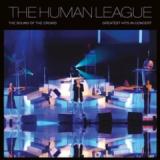
The Human League is renowned for their contribution to the synth-pop genre. Originating from the experimental electronic music scene, they achieved notable success as a pop band during the 1980s. The band's lineup has undergone changes throughout the years, but Philip Oakey, Joanne Catherall, and Susan Ann Sulley have remained core members.
This limited edition BLUE vinyl release captures their performance at The Dome in Brighton on December 19, 2003. It includes their iconic hits such as "Don't You Want Me," "Human," "Mirror Man," and "Fascination." The album showcases their talent for crafting catchy melodies, employing innovative synthesizer techniques, and featuring distinct vocals.
With their memorable songs and unique musical style, The Human League truly made their mark on the Synth-pop genre.
,Yaphet" ist das neue Album des Rappers Curly Castro - auch bekannt als eine Hälfte des dynamischen Duos Shrapknel - das am 18. September 2026 bei Backwoodz Studioz erscheint. Auf ,Yaphet" lässt sich Castro vom Blaxploitation-Filmgenre der 1970er Jahre inspirieren; die schwarzen Helden und Antihelden jener Zeit dient ihm als Sprungbrett für seine filmische Lyrik. Die Flows wechseln so mühelos wie Kamerawinkel, die Strophen sind gespickt mit Anspielungen und Zweideutigkeiten - eine Rap-Meisterklasse, die man endlos wiederholen kann. Aber ,Yaphet" ist auch Castros erstes Soloalbum seit ,Little Robert Hutton" aus dem Jahr 2021, und hinter dem Feuerwerk spiegelt dieses Album die Tiefe seiner Erfahrungen in den dazwischenliegenden Jahren wider. ,Ich hatte nicht vor, so ehrlich über mein Leben zu sein, aber genau das ist dabei herausgekommen, und das Album ist dadurch besser geworden", erklärt Castro, ,vom Tod meiner kleinen Tochter über den Tod meines Vaters bis hin zur Konfrontation mit meiner eigenen bevorstehenden Sterblichkeit - das sind meine verwundbarsten Klingen, die meine tiefsten Wunden aufreißen." Genau wie Castro marschiert auch diese Platte im Takt ihrer eigenen Trommel, und täuscht euch nicht: Es gibt jede Menge Trommeln, mit denen sich der erfahrene MC messen kann, wie nur er es kann. Komplett produziert vom Milwaukeeer Beatmaker Locust, ist ,Yaphet" ein schwungvolles, vielseitiges Hörerlebnis, das seinen Einflüssen zunickt, ohne jemals zurückzuschauen. Castro wird von einem Wirbelwind der Besten des Genres begleitet: billy woods, PremRock, Fatboi Sharif, Brian Ennals, SKECH185, Blueprint, AJ Suede, shemar, ALASKA, Sunmundi, blackchai und Margel the Sophant.
a 1.1BLACK DON'T CRACK [FT. FATBOI SHARIF, BLUEPRINT, BRIAN ENNALS, SKECH185, ...]
[d] 1.4ENEMY-MINDED [FT. MARGEL THE SOPHANT]
[f] 1.6RAILROAD SPIKES [FT. MARGEL THE SOPHANT]
[g] 1.7BLOOD IN THE GARDEN [FT. PREMROCK]
New York-based Japanese jazz and electronic music polymath Takuya Nakamura presents his debut album Shape The Future - almost 35 years into his storied musical journey.
An expansive double album, the album’s first LP documents a spellbinding live performance by Nakamura recorded at fabric. A hybrid set combining DJing, live electronics, vocals, and trumpet, the set also features studio versions of special collaborations with Shigeto, Currency Audio and Tim Reaper. The second LP complements the first by assembling studio recordings of select album tracks. Altogether the two volumes make for a definitive display of Nakamura’s exceptional musicianship across jazz, DnB, jungle, broken beat, deep techno and more.
Across his career, Nakamura has played Brazilian music, merengue, salsa and straight-ahead jazz. He’s opened for Sun Ra Arkestra, performed with David Byrne, Laurie Anderson, Lee “Scratch” Perry, Wu-Tang Clan, and Arto Lindsay, appeared on sessions with Terry Riley, ASAP Rocky, Goldie, and TV On The Radio, and remixed the likes of Quincy Jones, Sun Ra, Billie Holiday, and The Streets. He’s also played under director and playwright Robert Wilson.
Although the musical past and present of the Tokyo-born, New York-based DJ and trumpet player is undoubtedly eclectic, Nakamura is abidingly steeped in the sounds of jazz and jungle. This’ll be obvious to casual observers who may have seen any viral videos of him. But there’s more to this. The depth of Nakamura’s engagement with these kinds of music, the way they’ve made him into the person he is, the decades-long path they’ve taken him on; to now arrive at the summit of a solo album is all truly remarkable. Shape The Future resonates with every chapter in this story.
In high school, Nakamura’s friends started listening to jazz and jazz fusion, which piqued his interest, especially when they started going to clubs to see it live, where they managed to see US legends like Sonny Rollins play. Eventually he began to play jazz every day and his musical skill emerged early. He soon became obsessed with getting closer to the source of this music, which led to his studies at the New England Conservatory of Music in Boston with George Russell, an influential figure who had taught Miles Davis and John Coltrane. Nakamura drank it in: not only the technical aspects but the sense of a direct connection to “a music culture where Russell and his friends changed harmony forever. I wanted to know how that was possible!”.
This was a radical experience in itself, but then another revolution happened for Nakamura. He was playing in a venue called The Western Front, near Boston and discovered that the elderly owner had his own soundsystem and was playing what was then - in 1992 - only just becoming known as jungle. This was as freeing a musical revelation as his proximity to the giants of jazz was, and in that instant the two things fused. He understood that using technology to fill a dancehall with sound and a jazz musician’s reflexes are all working to the same ends: “You’re always making decisions,” he says, “but it doesn’t have to be really difficult. It’s the truth of the frequencies, and how they’re affecting people’s minds.”
From that moment on, his life path was set. Moving to New York City, he sought out jungle and its offshoot sounds wherever he could find them, gigging and collaborating relentlessly, and gradually developing his own live and hybrid live/DJ shows. Through regular appearances at New York fixtures Zebulon and CBGBs, and continual shows elsewhere in the city, Nakamura developed his live performance and DJing and it was in these environments that he gradually weaved together his twin loves without compromising either, building an international reputation in the process.
It’s only fitting then that his first album, almost 35 years after he first found his musical direction, should be a live one: a window into this never-ending process. Even here, he had to be persuaded that he should make a record. A member of the fabric team got turned on to his music after their daughter saw him play. Of course, as a jungle lover, Nakamura knew fabric – which has a special place in the history of jungle and drum’n’bass – and “had wanted to play there since I was very young.” You can hear the club in the record: this isn’t just a live show, in keeping with his jungle roots, it’s Nakamura duetting with the soundsystem, and you can feel how the emotions in the room would have ebbed and flowed.
This dynamic translates to a transfixing record. Setting the tone with lushly textured ambient and reverberant jazz, Nakamura segues into cinematic breakbeat and stellar fusion, infusing it all with intoxicating low end and hypnotic rhythms. The LP’s midway point locks into mesmeric percussion heightened by resonant echoes of piano and trumpet. There’s an endless pull to this music. Nakamura adjusts the levels for maximum impact throughout, and the overall effect begins to evoke some harmonious hybrid between a jazz ensemble, a classic Metalheadz 12” and a Theo Parrish DJ set. His electric form continues through surreal jazz, intricate electronics and rolling sub-bass velocity, right up to the subtly devastating final cover of Peter Gabriel and Kate Bush’s ‘Don’t Give Up’, with Nakamura’s fragile vocal sitting in the heart of a huge sound.
From Tokyo jazz nights to formative studies and encounters in Boston to his artistic development in New York, Nakamura reaches another milestone with his monumental debut album. It’s a release that happened just the way a Takuya Nakamura record should. In the same way his instincts led him to musical revelations, taking his own sweet time has led him to make one of the most extraordinary debut albums imaginable, all executed in his own singular style. In Nakamura’s world, the universe finds a way.
Five Special were a five-man harmony vocal group from Detroit whose members included Mike Pattillo, Steve Harris, Zeke Stanley, Greg Finlay and Bryan Banks (the younger brother of Dramatics’ main man Ron Banks). The aim of these five young men was to create a group with the potential of anyone of its members to be able to step up to sing lead on any given song, something which they went on to achieve to great aplomb.
Ron Banks was very instrumental in the founding of Five Special introducing them to his long-time friend Charles “Chuck” Underwood, a one-time former road manager of the Dramatics and by then the owner of the independent T.E.A.I Record Corporation label (T.E.A.I being an abbreviation for “Tellin’ Everybody About It”). Five Special’s first release for T.E.A.I was the 1976 joyously uplifting dancer “The More I Get To Know You” a Jimmy Roach and Marcella Henderson composition featuring Bryan on lead, released as a part I and part II deemed to be a more disc-jockey friendly practice at the time. The record was popular with radio stations throughout the Detroit metropolis leading Chuck to precure a deal with Polygram which resulted in the song gaining release on their nationally distributed Mercury label. A second Five Special Mercury release followed in 1977, the Jimmy Roach penned mellifluous “(Let’s Stop Making) Small Talk” backed with the Ron Banks/Paul Clark penned psychedelic soul styled “Oh, Oh (Look What We’ve Done)” with Greg Finley and Zeke Stanley exchanging tenor and baritone parts throughout.
Through our ongoing working relationship with T.E.A.I Soul Junction have gained access to some previously unissued master tapes on Five Special which were recorded for an intended album project that was never finished. From these tapes we took “The More I Get To Know You” in its 5:50 minutes entirety (not split into parts 1 & 2) backed with the previously unissued mid-tempo delight “You Got To Be The One That I Love” with interchanging leads from Bryan and Steve coupled with the released psychedelic soul “Oh, Oh (Look What We’ve Done)” with interchanging leads between Greg and Zeke, catalogue number SJ565, currently a very popular release amongst Collectors and DJ’s alike. For our second and follow up Five Special 45 release, we have chosen to lead with the gorgeous, previously unissued “Two OF A Kind” penned by Ron Banks with lead vocals being provided by Steve Harris. The B-side of this release opens with another unissued psychedelic song, the Ron Banks/Chuck Underwood composed “Stone Chain Reaction” featuring punchy interchanging lead vocals from Greg Finley and Zeke Stanley, this is coupled together with the released mid 1970’s sweet soul masterpiece from the pen of Jimmy Roach “(Let’s Stop Making) Small Talk” making this yet another quality three track release from Soul Junction.
After establishing the Serebii project with several albums’ worth of trancing neo-soul, much of it done in collaboration with fellow New Zealander Arjuna Oakes, Callum Mower had no lack of confidence in his musical abilities. But much of Mower’s focus in the past was on instruments and production—swirling, cinematic instrumentals under his own name or funky art-pop jams with others on vocals. On Dime, however, Mower knew he wanted to push forward with his own singing placed center stage.
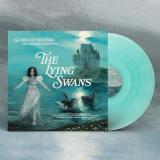
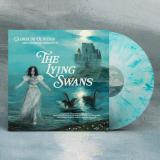
Das neue Album "The Lying Swans" der deutsch-brasilianischen Musikerin und bildenden Künstlerin Gloria de Oliveira entfaltet sich wie ein Werk des Magischen Realismus - bevölkert von Vögeln, Heiligen, Sirenen, blutigen Gesichtern, Geisterschiffen und gespenstischen Erscheinungen - und lädt die Hörer*innen in ihr bislang unmittelbarstes und komplexestes Werk ein. De Oliveiras drittes Album aber eigentliches Debut wirkt wie ein Werk der Gothic-Literatur, angestoßen durch das Bild einer Frau, die aus einem Spukhaus flieht; dieses zentrale Motiv prägte auch die visuelle Welt des Albums. Produziert von Randall Dunn (Anna von Hausswolff, Sunn O))), Marissa Nadler) und aufgenommen zwischen Island, New York und Berlin, ist das Ergebnis eine traumhafte Welt, in der Zauber und Gefahr nebeneinander existieren. Nach der EP-Compilation "Fascination" (2020, Reptile Music) sowie "Oceans of Time" (2022, Sacred Bones) - ihrer Zusammenarbeit mit David Lynchs langjährigem Sounddesigner Dean Hurley - führt "The Lying Swans" de Oliveira in neues Terrain. Sowohl thematisch als auch klanglich scheinen diese neun Songs aus den nebligen Gefilden von Hall und ätherischem Fuzz-Sound herauszutreten und eine erdige, greifbarere und damit verletzlichere Seite zu offenbaren. Dennoch bleibt ihre seraphische, sehnsuchtsvolle Stimme der Mittelpunkt, flankiert von einer beeindruckenden Riege an Musikern: Schlagzeuger Matt Chamberlain (David Bowie, Tori Amos, Pearl Jam), Gitarrist Lennard Zander, Cellistin Gyda Valtysdóttir (múm), Harfenistin Marilu Donovan (LEYA, Eartheater, Julie Byrne) und Keyboarder Ulfur Hansson wirken mit, während Ambient-Ikone Tor Lundvall eine seltene Spoken-Word-Darbietung beisteuert. Lina Andonovskas Querflöte spielt eine tragende Rolle und verleiht den Songs einen ebenso luftigen wie beunruhigenden Klang - inspiriert sowohl von de Oliveiras brasilianischen Wurzeln als auch von den Giallo-Soundtracks der 1970er und 1980er Jahre, jenen atmosphärischen italienischen Horror-Krimis, die stilisierte, drastische Gewalt und Voyeurismus mit prachtvoller Schönheit verbinden. Inspiriert von Lyrik, Literatur, Film und bildender Kunst ebenso wie von Musik, haben de Oliveira und Dunn ein Album geschaffen, das sich mühelos zwischen dem Spektralen und dem Pastoralen bewegt - ein Werk, in dem Anklänge an Fantasy- und Giallo-Soundtracks, alte Folk-Traditionen sowie die rhythmische Zartheit von Bossa Nova, MPB und Tropicália verschmelzen. Auch die Texte verweben Mythologie mit Anspielungen auf Miltons Paradise Lost*sowie die Lyrik von John Keats, Emily Brontë und Anne Sexton. Ein durchweg erhabenes Werk. Als CD (Digisleeve) mit Booklet oder auf LP (in klassisch Schwarz, Coke-Bottle-Green oder weiß-blau marmoriert) mit bedruckter Innenhülle & inside-out Sleeve.
Das neue Album "The Lying Swans" der deutsch-brasilianischen Musikerin und bildenden Künstlerin Gloria de Oliveira entfaltet sich wie ein Werk des Magischen Realismus - bevölkert von Vögeln, Heiligen, Sirenen, blutigen Gesichtern, Geisterschiffen und gespenstischen Erscheinungen - und lädt die Hörer*innen in ihr bislang unmittelbarstes und komplexestes Werk ein. De Oliveiras drittes Album aber eigentliches Debut wirkt wie ein Werk der Gothic-Literatur, angestoßen durch das Bild einer Frau, die aus einem Spukhaus flieht; dieses zentrale Motiv prägte auch die visuelle Welt des Albums. Produziert von Randall Dunn (Anna von Hausswolff, Sunn O))), Marissa Nadler) und aufgenommen zwischen Island, New York und Berlin, ist das Ergebnis eine traumhafte Welt, in der Zauber und Gefahr nebeneinander existieren. Nach der EP-Compilation "Fascination" (2020, Reptile Music) sowie "Oceans of Time" (2022, Sacred Bones) - ihrer Zusammenarbeit mit David Lynchs langjährigem Sounddesigner Dean Hurley - führt "The Lying Swans" de Oliveira in neues Terrain. Sowohl thematisch als auch klanglich scheinen diese neun Songs aus den nebligen Gefilden von Hall und ätherischem Fuzz-Sound herauszutreten und eine erdige, greifbarere und damit verletzlichere Seite zu offenbaren. Dennoch bleibt ihre seraphische, sehnsuchtsvolle Stimme der Mittelpunkt, flankiert von einer beeindruckenden Riege an Musikern: Schlagzeuger Matt Chamberlain (David Bowie, Tori Amos, Pearl Jam), Gitarrist Lennard Zander, Cellistin Gyda Valtysdóttir (múm), Harfenistin Marilu Donovan (LEYA, Eartheater, Julie Byrne) und Keyboarder Ulfur Hansson wirken mit, während Ambient-Ikone Tor Lundvall eine seltene Spoken-Word-Darbietung beisteuert. Lina Andonovskas Querflöte spielt eine tragende Rolle und verleiht den Songs einen ebenso luftigen wie beunruhigenden Klang - inspiriert sowohl von de Oliveiras brasilianischen Wurzeln als auch von den Giallo-Soundtracks der 1970er und 1980er Jahre, jenen atmosphärischen italienischen Horror-Krimis, die stilisierte, drastische Gewalt und Voyeurismus mit prachtvoller Schönheit verbinden. Inspiriert von Lyrik, Literatur, Film und bildender Kunst ebenso wie von Musik, haben de Oliveira und Dunn ein Album geschaffen, das sich mühelos zwischen dem Spektralen und dem Pastoralen bewegt - ein Werk, in dem Anklänge an Fantasy- und Giallo-Soundtracks, alte Folk-Traditionen sowie die rhythmische Zartheit von Bossa Nova, MPB und Tropicália verschmelzen. Auch die Texte verweben Mythologie mit Anspielungen auf Miltons Paradise Lost*sowie die Lyrik von John Keats, Emily Brontë und Anne Sexton. Ein durchweg erhabenes Werk. Als CD (Digisleeve) mit Booklet oder auf LP (in klassisch Schwarz, Coke-Bottle-Green oder weiß-blau marmoriert) mit bedruckter Innenhülle & inside-out Sleeve.
Das neue Album "The Lying Swans" der deutsch-brasilianischen Musikerin und bildenden Künstlerin Gloria de Oliveira entfaltet sich wie ein Werk des Magischen Realismus - bevölkert von Vögeln, Heiligen, Sirenen, blutigen Gesichtern, Geisterschiffen und gespenstischen Erscheinungen - und lädt die Hörer*innen in ihr bislang unmittelbarstes und komplexestes Werk ein. De Oliveiras drittes Album aber eigentliches Debut wirkt wie ein Werk der Gothic-Literatur, angestoßen durch das Bild einer Frau, die aus einem Spukhaus flieht; dieses zentrale Motiv prägte auch die visuelle Welt des Albums. Produziert von Randall Dunn (Anna von Hausswolff, Sunn O))), Marissa Nadler) und aufgenommen zwischen Island, New York und Berlin, ist das Ergebnis eine traumhafte Welt, in der Zauber und Gefahr nebeneinander existieren. Nach der EP-Compilation "Fascination" (2020, Reptile Music) sowie "Oceans of Time" (2022, Sacred Bones) - ihrer Zusammenarbeit mit David Lynchs langjährigem Sounddesigner Dean Hurley - führt "The Lying Swans" de Oliveira in neues Terrain. Sowohl thematisch als auch klanglich scheinen diese neun Songs aus den nebligen Gefilden von Hall und ätherischem Fuzz-Sound herauszutreten und eine erdige, greifbarere und damit verletzlichere Seite zu offenbaren. Dennoch bleibt ihre seraphische, sehnsuchtsvolle Stimme der Mittelpunkt, flankiert von einer beeindruckenden Riege an Musikern: Schlagzeuger Matt Chamberlain (David Bowie, Tori Amos, Pearl Jam), Gitarrist Lennard Zander, Cellistin Gyda Valtysdóttir (múm), Harfenistin Marilu Donovan (LEYA, Eartheater, Julie Byrne) und Keyboarder Ulfur Hansson wirken mit, während Ambient-Ikone Tor Lundvall eine seltene Spoken-Word-Darbietung beisteuert. Lina Andonovskas Querflöte spielt eine tragende Rolle und verleiht den Songs einen ebenso luftigen wie beunruhigenden Klang - inspiriert sowohl von de Oliveiras brasilianischen Wurzeln als auch von den Giallo-Soundtracks der 1970er und 1980er Jahre, jenen atmosphärischen italienischen Horror-Krimis, die stilisierte, drastische Gewalt und Voyeurismus mit prachtvoller Schönheit verbinden. Inspiriert von Lyrik, Literatur, Film und bildender Kunst ebenso wie von Musik, haben de Oliveira und Dunn ein Album geschaffen, das sich mühelos zwischen dem Spektralen und dem Pastoralen bewegt - ein Werk, in dem Anklänge an Fantasy- und Giallo-Soundtracks, alte Folk-Traditionen sowie die rhythmische Zartheit von Bossa Nova, MPB und Tropicália verschmelzen. Auch die Texte verweben Mythologie mit Anspielungen auf Miltons Paradise Lost*sowie die Lyrik von John Keats, Emily Brontë und Anne Sexton. Ein durchweg erhabenes Werk. Als CD (Digisleeve) mit Booklet oder auf LP (in klassisch Schwarz, Coke-Bottle-Green oder weiß-blau marmoriert) mit bedruckter Innenhülle & inside-out Sleeve.
God of War is Douglas Dulgarian (They Are Gutting A Body Of Water), Scott Turner (hooky) and Sam Silbert (hooky, circle of fire).
It's 2007. You’re watching your older cousin play SSX tricky. How is he such a monster at this game. Dude for real what the fuck. Such style, such finesse. I know he smokes weed. Should I tell Aunt Vicky? No no no- that would ruin this moment. He is racking up points that were formerly unheard of, and with such grace. There’s no expression on his face. And considering that he just sat open mouthed at the dinner table staring into nothing for forty minutes, this revelation is more than remarkable. It seems as if he has always existed in this moment. As if his very essence was plucked from the ether. And perhaps he has. He was made for this moment.
God of War is Douglas Dulgarian (They Are Gutting A Body Of Water), Scott Turner (hooky) and Sam Silbert (hooky, circle of fire).
It's 2007. You’re watching your older cousin play SSX tricky. How is he such a monster at this game. Dude for real what the fuck. Such style, such finesse. I know he smokes weed. Should I tell Aunt Vicky? No no no- that would ruin this moment. He is racking up points that were formerly unheard of, and with such grace. There’s no expression on his face. And considering that he just sat open mouthed at the dinner table staring into nothing for forty minutes, this revelation is more than remarkable. It seems as if he has always existed in this moment. As if his very essence was plucked from the ether. And perhaps he has. He was made for this moment.
A true Detroit techno classic, originally released on New Religion and now finally back on vinyl. We're proud to reissue this essential release on Metroplex, with the original tracks remastered for vinyl and a stunning remix by Kirk Degiorgio. A piece of Detroit techno history: back where it belongs. Don't sleep..
“Everybody wants the map, but the correct one is not coming. This is understood, somewhere below language, by everyone who wants a map anyway. Meanwhile the map dealers, those slick druids and wizards, goddamn sell-outs, will try to seduce you with one. Don't buy from them. Their maps only show burned black fields.
What passes instead between the ones still walking is smaller and does not require a subscription. A sign. Nailed to a fencepost, or to an unexpected streetlight surrounded by darkness. Left by someone who was thirsty on this road back when you were only a rumor. It says one thing: water, this way.
So leave signs. Just mark the water you found and move along. It is one of the oldest customs - strangers keeping each other alive and hydrated on a long road.”
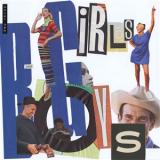
Seit der Gründung von 2nd Grade im Jahr 2018 hat der in Philadelphia ansässige Songwriter und Produzent Peter Gill (der auch Gitarrist der Alt-Country-Band Friendship ist) eine Reihe spektakulärer neuer Welten erschaffen ausgehend vom 20. Jahrhundert-Gitarrenpop, wobei er dessen typischen Klischees irgendwie meilenweit hinter sich lässt, indem er sie genau bis zu ihrem logischen Ende verfolgt. Girls and Boys" ist das neueste Album von 2nd Grade und das erste bei Lame-O Records eine Sammlung von zwanzig Songs, von denen keiner länger als drei Minuten dauert, vollgepackt mit unwiderstehlichen Gitarrenriffs, Power-Akkorden, rasanten Drumbeats und wirbelnden Melodien. Songs von schwindelerregender Komplexität, die man trotzdem nicht aufhören kann zu summen. Auf Girls and Boys" gelingt 2nd Grade immer wieder der wundersame Trick des perfekten Popsongs: Es so aussehen zu lassen, als wäre es ganz einfach.
More than five decades into one of Brazilian music's most remarkable careers, Joyce Moreno returns with a new collection of songs that reflect the warmth, lyrical sophistication and innovation that have made her one of Brazil's most defining musical voices.
Produced by Joyce Moreno alongside her husband and longtime collaborator Tutty Moreno, the album finds the Rio-born singer, guitarist and composer at her most reflective. Across nine beautifully crafted songs, Joyce pairs intricate guitar work, lyrical intimacy and effortless swing with the musical curiosity that has defined her work for more than half a century.
Invited into the studio by Roberto Menescal at just sixteen years old, Joyce emerged during a transformative period for Brazilian music, releasing her self-titled debut in 1968. She soon established herself as one of Brazil's pioneering female songwriters, writing unapologetically from a woman's perspective at a time when few women were afforded that voice. Her song “Me Disseram” sparked national debate, while later works including “Feminina” cemented her reputation as an artist unafraid to challenge convention.
While some of her politically charged songs were censored during Brazil's military dictatorship, Joyce continued to write with honesty and independence. After studying journalism in the late 1960s, her gift for observation and storytelling became an even more defining feature of her songwriting. Over the following decades she released a succession of acclaimed albums, including the now-classic Feminina and Água e Luz, earning widespread recognition both in Brazil and internationally. Antônio Carlos Jobim would later describe her as "one of the greatest singers", while generations of musicians have drawn inspiration from her fearless artistry and enduring originality.
That same artistic fearlessness remains at the heart of her latest work. The album brings together an exceptional ensemble of Brazilian musicians. Tutty Moreno's expressive drumming underpins Joyce's vocals and guitar throughout, while Jorge Helder's bass, Lula Galvão's guitar and Marcos Nimrichter's warm Fender Rhodes create a sound that is both intimate and expansive. Contributions also come from the legendary Toninho Horta, alongside José Arimatéa, Teco Cardoso, Nailor Proveta, Josué dos Santos and Raphael Sampaio, whose additions add colour and texture without overshadowing Joyce's understated brilliance.
Throughout the album, Joyce balances quiet reflection with effortless rhythmic vitality. “Chovendo na Horta” serves as both a heartfelt dedication and a celebration of Joyce's enduring musical connections, featuring the unmistakable guitar of Toninho Horta. Elsewhere, “Aldeia de Ogum” receives a fresh new arrangement by Nailor Proveta, revisiting one of Joyce's most beloved compositions. Originally released in 1980, the track has enjoyed a remarkable resurgence in recent years, embraced by a new generation of listeners and became an underground favourite among DJs including Floating Points, Four Tet and Danilo Plessow. Now a staple of Joyce's live performances, this reimagined version brings renewed energy to a song that continues to transcend generations.
At seventy-eight, Joyce Moreno continues to write with the same curiosity, generosity and quiet innovation that have defined her career from the very beginning. "For me, it's never too soon to try something new, either in music or in life," she reflects - a philosophy that gives both the album and its title their enduring sense of optimism. This latest album is neither a retrospective nor a reinvention, but the work of an artist who continues to refine her voice with remarkable grace, proving that her most compelling music remains firmly rooted in the present.
Following the album's release, Joyce Moreno will embark on a European tour this November, bringing her celebrated live show to audiences across the UK and Europe. A rare opportunity to experience one of Brazil's most influential and enduring artists in concert, the tour showcases a songwriter whose voice, virtuosity and musical vision remain as compelling today as ever.
Introducing the first in a series of reworks on GAMM from Macedonia's finest curator of urban music, DJ Goce...
Deeply rooted in hip-hop, Goce has a worldwide rep for exploring all things funky, soulful, and jazzy, releasing tracks on labels like Dusty Donuts and Baller Beats.
For his GAMM debut, he tackles a classic Beatnuts anthem, complete with a wild intro using the original sample source.
On the B, Goce keeps the momentum going with a rework of an Al Hirt rare groove classic, famously sampled by De La Soul and The Roots.
Keep an eye out - there is plenty more to come from DJ Goce on GAMM !
“Cue Blue”, the latest and fifth studio recording from Australian down under, gritty jazzfunk grooves ensemble Kerbside Collection sees a return to a more classic, stripped back, meat-and-potatoes, home-cooked, quartet formation sound of guitar, bass, drums and brass.
A sound formed on previous, recent recordings (incl. Golden Rules compilation tune “Fleet Streak” etc), seemingly harking back to the approach of the group’s first recordings (2013’s “Mind The Curb”, “Night in Tunisia” etc), whilst embodying inspirations from more ‘true school’, classic, bluesy New Orleans funk and soul groove flavours à la early Meters, Boogaloo Joe Jones, Melvin Sparks, Billy Butler etc. But it’s not all completely ‘retro’ and ‘looking back’, the album definitely taps into some of the current exponents and leaders of the contemporary deep funk sound – The Greyboy Allstars, Eddie Roberts, The New Mastersounds, The Mighty Mocambos, Breakestra and fellow Aussie funksters Cookin’ on 3 Burners, Lance Ferguson and The Bamboos etc.
The lead single and first tune “Shivers” gives us a clear, picture and definitive opening statement to the record with all the characteristics you’ve come to expect from the Kerbside gritty jazzfunk sound: silky guitar line phrasing, rubbery bass-lines, tight crusty drum breaks, and sweet brass arrangements. Then it’s straight into a frenetic, jangly, mod-funk workout complete with Northern Soul & Motown inflections in the surging B sections. “City Park Avenue” conjures up classic New Orleans funk flavours with its strutting brass, slinky guitar and swinging tambourine groove. There’s classic, b-boy funk territory covered in “Coffee Grinder” (a breakdance move) with its razor-sharp drum break groove and chunky riff complete with sizzling trombone solo. Before the pace of the record changes up with the finger-clicken’, hand-clappin’ boogaloo, reminiscent of early 60s Harlem x Puerto Rican Bronx sounds (à la Willie Bobo, Mongo Santamaria, Ray Barretto) loaded with a scintillating baritone sax solo from long standing part of the collection ‘Papa Joe’ Roberts.
“Sittin’ On The Porch” cools the temperature down even more, delving into slight Southern Louisiana Delta blues territory, while suggesting some of the hot and muggy atmosphere and imagery of their home town location in suburban Brisbane Australia, complete with kooky Casio percussion representing familiar yard sounds such as sprinklers (spinning lawn watering devices) and ‘mozzies’ (mosquitos), passing cars indicated by trombone, and guitarist TC Tyler, channelling some bluesy John Lee Hooker, R.L. Burnside guitar flavours - you can almost feel the humidity on your skin.
Then it’s time for a stroll down memory lane, with their version of a People Under The Stairs hip hop classic “San Francisco Knights”, bringing the tune full circle back into band mode, also with another tasty guitar solo. The album then enters its final stages with a mesmerising, soulful, jazz ballad “Shimmer”, complete with Elliott Parker’s sultry upright double bass, and trombone taking the melody for a gentle stroll down the street. The album finally closes and arrives at its title “Cue Blue”, a classic blue-eyed soul number (penned by bassist Parker), emitting the scent of true school, vintage R&B and soul (à la Donny Hathaway, Marvin Gaye).
An album of funky arrangements and refined compositions, mostly penned by recent new-ish member, guitarist Tyler (for fans of Tower of Power & John Scofield guitar playing) taking the ensemble through their paces with all the usual characteristics of the Kerbside sound, on top a groove that will take you round-the-block-and-back :P Gritty jazzfunk and rustic soul grooves with definite bluesy overtones, some classic 60s, 70s flourishes and down-home funk flavours.
Freerange is delighted to announce the 20th Anniversary Edition of Jimpster’s seminal Amour — remastered and available on vinyl for the first time.
Originally released in 2006, Amour arrived at a pivotal moment in Jimpster’s evolution, as Jamie Odell moved further into electronic and house territory while retaining the lush, downtempo, and eclectic character of his earlier work. Two decades on, Amour remains a beautifully understated record, full of warmth, musicality, and late-night appeal.
Das zweite Album von Sleepytime Gorilla Museum entstand zwischen 2002 und 2004 und spiegelt die politisch und gesellschaftlich aufgewühlte Zeit nach der Jahrtausendwende wider. Die Band verarbeitete diese Eindrücke in ihrem charakteristischen Mix aus Avant-Rock, experimenteller Komposition und theatralischer Intensität. Während der Entstehung stieß Schlagzeuger Matthias Bossi zur Band und prägte den Sound maßgeblich mit. Ein Höhepunkt des Albums ist der Song ,Phthisis", der in einem Studio in den Hollywood Hills aufgenommen wurde und zu den bekanntesten Stücken der Band zählt. Die nun erstmals in den USA auf Vinyl erhältliche Neuauflage wurde von Bassist und Produzent Dan Rathbun remastert und unterstreicht den Stellenwert des Albums als eines der zentralen Werke im Katalog von Sleepytime Gorilla Museum.
We are honoured and excited to share the fourth Dream Space EP with the world: Domenic Cappello - Celestial Wave.
For more than three decades, Domenic Cappello has been at the helm of Subculture - the innovative and vastly influential Saturday night at Glasgow’s Sub Club. A true master DJ with deep rooted influences from Detroit & Chicago, Dom has consistently pushed things forward over the years and remains at the cutting edge of modern dance music.
Throughout the 90’s and early 2000’s, he put out high-quality records under various monikers on labels such as Soma, 20:20 Vision & Seventh Sign. Fast forward to recent years and Domenic has been on nothing short of a hot streak - releasing music under his own name on Craigie Knowes, Clone Royal Oak and his outstanding ‘Basement Philosophy’ LP on Alien Communications.
He brings the heat once more for this record; blurring the lines of house, techno and electro to deliver four awe-inspiring cuts of electronic music.
‘The Secret Moon Party’ sets things off, nodding to a certain Highland gathering by some of Scotland’s finest purveyors of quality tunes. A warm, gritty bassline carries the track, evolving into a symphony of precise sound design that is in equal parts playful and euphoric.
Dom’s knowledge of the dancefloor shines through on ‘Acid & Love’. This early night floor filler is the alchemy of just about everything you want to hear when things are getting going. Pure warmth and bliss throughout, also holding its place played deep into the late hours.
‘We Loved Your Ears (in memory of Keith)’ is a heartfelt tribute to the one and only Keith McIvor aka JD Twitch of Optimo. Dom wrote this track as something he thought Keith would have loved, and for this one, we’ll let the music do the talking.
Keith was, and continues to be, an enormous inspiration for us and so many others. In his memory, all proceeds from the digital sales of ‘We Loved Your Ears’ and 25% of all vinyl sales will be donated to Beatson Cancer Charity and The Scottish Brain Tumour Research Centre of Excellence.
Closing the EP is title track ‘Celestial Wave’, which does exactly what it says on the tin. A beautiful piece of music and fitting soundtrack for star gazing, moon dancing and dreaming.
“Trust me, you will pogo, skank, sing and possibly dance like your f*cking Dad on spice.” Party Eternal is the fourth studio album by the Brighton-based punk/ska band The Bar Stool Preachers. The album represents a massive turning point for the seven-piece, both creatively and structurally. It’s blisteringly good. Combining the best of brit-pop, ska, rock and indie ‘Party Eternal’ is exactly the tonic for the times. In parts scathing, and in others total escapism, this rowdy septet have written the greatest party punk album you’ll hear all year. Renowned for their relentless touring schedule, The Bar Stool Preachers have played stages around the globe, from grassroots venues to major festivals like Rebellion and Punk Rock Bowling. Their heartfelt lyrics and magnetic stage presence have earned them a reputation as one of the most engaging live acts in the punk scene today. Whether delivering politically charged messages or uplifting party anthems, The Bar Stool Preachers continue to inspire and unite audiences, carrying the torch of punk’s rebellious spirit into the modern era. Featuring the single ‘Pick A Side’ (the profits of which were donated by the band to Medical Aid for Palestinians), ‘This is Goodbye’ featuring Aussie Celtic Punk masters The Rumjacks and ‘Sick World’ which stars a guest turn from the genre-shattering and quite legendary Fishbone.
Chúpame el Dedo are BACK! After years of terrorizing the avant-tropical underground with their manic, mock-satanic metal-cumbia madness, the legendary Bogotano duo of Eblis Álvarez and Pedro Ojeda have officially scrubbed the pentagrams off the drum kit. They aren’t worshipping the dark lord anymore; they’ ve found a much more chaotic deity. Please lower your expectations and raise your instruments: Chúpame el Dedo are now officially Geobah Witnesses.
Forget everything you thought you knew. This new record is a high-octane salsa-altín exorcism. It’s not your abuela’s dance music; it’s a fever dream—like Waka Waka played at double speed through a frying mixing desk that’s caught fire mid-verse.
The Chúpame delirium remains terminal. We’re talking classic, hard-swinging Caribbean breaks that trip over jagged psych-synth riffs, all tied to those signature “broken” vocals—jumping from gutter-low growls to manic, helium-choked chirps. It’s twitchy, heavy, and lyrically, the most blasphemous shit they’ve ever committed to tape. It’s a holy, nonsensical collision that’ll leave you wondering if you’ve been saved or just brainwashed.
Put down the pitchforks, pick up a maraca, and surrender to the frequency. Geobah is watching.
That is Die Angst's approach to Quinoa Cuts' 9th release.
The duo, composed of Sicilian brothers Francesco and Giuseppe Di Stefano, infused a sublime combination of energies into these 4 club cuts. Growly lowends, dynamic grooves and an undeniable touch of nostalgia make this versatile record a good all-rounder for our adventures during the small hours.
Peak time? Check. Steady rollers? Check. Moments of introspection? Sign me up.
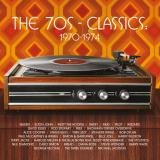
Celebrate the incredible music from the first half of the 70s with this brand-new 2LP collection packed with the era’s most iconic hits.
LP1 kicks off with Queen’s ‘Killer Queen’, followed by Elton John’s timeless ‘Goodbye Yellow Brick Road’ and Mott The Hoople’s anthemic ‘All The Young Dudes’. Glam-rock favourites from Sweet, Mud and Wizzard sit alongside Pilot’s feel-good ‘Magic’ and David Essex’s distinctive ‘Rock On’. Side Two turns up the guitars with Rod Stewart’s ‘You Wear It Well’, Free’s legendary ‘All Right Now’ and Bachman-Turner Overdrive’s ‘You Ain’t Seen Nothin’ Yet’. Alice Cooper’s rebellious ‘School’s Out’, Status Quo’s ‘Down Down’ and Thin Lizzy’s ‘Whisky In The Jar’ continue an incredible run of rock classics before Bob Dylan closes the LP with ‘Knockin’ On Heaven’s Door’.
LP2 opens with Paul McCartney & Wings’ epic ‘Band On The Run’, before Simon & Garfunkel’s ‘Bridge Over Troubled Water’ and Billy Joel’s ‘Piano Man’ showcase some of the decade’s finest songwriting. Harry Nilsson’s unforgettable ‘Without You’ and Terry Jacks’ ‘Seasons In The Sun’ lead into soulful classics from Harold Melvin & The Blue Notes and The Stylistics. Side Two opens with Neil Diamond’s enduring ‘Sweet Caroline’ and Carly Simon’s ‘You’re So Vain’, before Diana Ross’ ‘Ain’t No Mountain High Enough’ and Stevie Wonder’s ‘Signed, Sealed, Delivered I’m Yours’ launch an irresistible run of soul and dancefloor favourites. Barry White’s ‘You’re The First, The Last, My Everything’, George McCrae’s ‘Rock Your Baby’ and The Three Degrees’ ‘When Will I See You Again?’ lead into Michael Jackson’s beautiful ‘Ben’, bringing this celebration of 1970–1974 to a memorable close.