The word masterpiece gets bandied about a lot. Not least by us. But here is a release that truly befits such a lofty title.
In 1980, Randy Muller’s Skyy dropped the monumental “Here’s To You”, comfortably one of the greatest dance singles of all time. Released on Salsoul, “Here’s To You” is now exceptionally hard to find in its original form. On this special Be With double-header, we present the sought-after 12" mix and back it up with the strutting “You Got Me Up”, which has never been on a 12" before.
Naturally, both are cut loud and bumping for devastating dance floor power.
A sure-fire classic of the NYC club scene and a true block party rocker, “Here’s To You” beautifully combines sweeping synth-strings, loose cymbal hits and swaggering lyrics delivered with enviable style. But the real hero is *that* bassline. Oh, wait, no, actually, it’s *that* synth refrain halfway through. Harnessing the Oberheim Matrix 12 to emulate a horn section has provided goosebumps on discerning dance floors ever since.
As Muller expressed in his 2007 Red Bull Music Academy lecture, “It’s a very special record, it’s positive and has that spontaneous, life-giving spirit in the groove. Everything locks, just pure chemistry.”
Like we said, it’s a masterpiece.
If that wasn’t enough, over on the B-side is “You Got Me Up”, a real hidden gem from Skyy’s Skyway LP. Also released in 1980, the track is a wonderful showcase of the group’s airtight rhythm section and Muller’s uncanny ear for a groove and a melody.
quête:double ac
Clikno Is Proud To Present The Second Strike Of Dr.nojoke's Double Ep 'zero'.
'aplose' Is A Straight 10 Minute-stomper, Which Sounds Like A Wild Horde Of Percussionists Clanging And Banging Cans And Pots. The Truth Is The Doctor Just Threw Glass Marbles On A Wooden Floor. Fun-time! For The Hips He Adds A Low Rolling Bassline And For The Head Some Freaky, Randomly Pitching Chords And Off It Goes! Call It Afro-kraut-jazz-tech Or Just Clikno - Aplose Is A Counter-action To Electronic Music Production With Electronic Machines - Marbles Do It As Well!
'kumuestu' On The Flipside Is The Antagonal Piece On Zero.two - More Dark And Deep It Is Music For A Fictional Ritual. Carried By A Hypnotic Fluctuating Bass-figure And Drones The Tune Slowly Mutates Into A Shamanic Rhythm Monster Creating A Resonating Field For Transcendental Dancefloor Action - From Here To Eternity.
Zero.two Is Purely Audiophile Electricity To Twitch Your Body In All Directions. Do The Clikno!
Again Zero.two Is A Limited Vinyl-only Release Pressed On Transparent Vinyl Coming In A Transparent Sleeve - Transparent As Light, As Ideas, As Music And As The World Should Be - No Borders, But Freedom, Peace And Equality For Everyone!
Haven returns with their second EP with a split between Italian metalhead Ayarcana and resident Keepsakes. Ayarcana kicks off the A-side with 'Face Struck With An Axe', featuring chugging guitar-like synth work, tortured vocal wailings, and a monstrous kick, epitomising the Berlin-based producer's combination between techno and metal. The A2 then picks up the tempo with rhythms reminiscent of metallic double kick poundings, a cheeky acid line and a dissonant noisy melody coming in the latter half of the track in the Italian producer's 'Conflict'.
Auke Riemersma (aka Aux Tha Masterfader). Erio Simonini and Gilberto Caleffi (aka Disco Doubles). Together this partnership from The Netherlands and Italy form Light Cycles, a trio raised on sci-fi sound tracks and smouldering synth anthems. These influences are omnipresent in the group's debut 12': Flowing. Addictively catchy hooks and clean beats are central to the Light Cycles' sound with their dazzling melodies glimmering across the 12'. Elements of disco are folded into these spirited compositions as this forward-looking triumvirate marry past inspirations with a hope-filled future. Seamless radiance. Simply put, Flowing.
Mannequin's 100th - a comp looking forward featuring an international and serious cast... BIG TIP!
The modern synthwave scene would be significantly poorer without the keen ear and tireless efforts of the Mannequin label run by Alessandro Adriani. Geographically situated within the nerve centers of Rome and Berlin, yet with a musical spirit that easily transcends these boundary lines, Mannequin's back catalog has been an important component in the modular assemblage that makes up electronics-based independent music in the 21st century, and an important reference point for those who need to defend against the lazy accusations that this such is purely retro' in its form and content. Recent accolades and accomplishments - being named Resident Advisor's label of the month' for May of this year, starting the 'Death of the Machines' 12' series, and being given the 'green light' for bi-monthly parties at the Säule room in Berghain - have been earned through Mannequin's unflagging commitment to sonic diversity and Adriani's own realization that the anxious and sharp-edged sounds associated with, say, the Cold War of the 1980s can convey a completely different message today. Adriani says it best when claiming that there is no such thing as 'old' or 'new' music...only the music of now'. With this cogent statement of intent, Mannequin continues to go on exploratory missions to find the best and most relevant aspects of genres like acid, industrial, EBM, post-punk, coldwave and still more.
Which brings us to Mannequin's newest project and 100th release overall: the Waves of the Future double LP compilation, which itself is not a conventional retrospective collection. Case in point - none of the artists appearing on this collection have put out their own releases on Mannequin yet, despite acting as Mannequin's unofficial ambassadors (via DJ sets and other means). This makes the set even more compelling rather than less so, since it shows how Mannequin fits into a larger picture that includes other scene leaders and label owners including Beau Wanzer, Willie Burns (WT Records), Silent Servant (Jealous God) and Ron Morelli (L.I.E.S.). Of equal importance is how Waves of the Future projects a sense of aesthetic resilience and continuity, showcasing just how well the current artists allied with Mannequin employ and re-interpret the sonic lexicon that appears on that label's reissues of 'classic' acts such as Nocturnal Emissions, Bourbonese Qualk, Din A Testbild and Doris Norton.
However, none of this would matter as much if the music itself didn't have strong potential for lighting a blaze in the dark corners of the human imagination, and of course for forcing bodies into motion. Each track here pivots around a couple of key sound elements that seem to set the stage for the next track to come: see the sputtering / chopped ghost voices on Morelli's Charges Won't Stick,' which easily informs the slicing drone and authoritarian beat of Shawn O' Sullivan's Ill Fit,' which then lays down the emotional foundation for the sequencer-powered With You' from An-I & Adriani or the glassy landscape of Illum Sphere's Exhaustion'. Elsewhere, the wired mischief of Not Waving intersects easily with the spherical electro-funk and coded commands of Beau Wanzer. When all the disparate parts of Waves of the Future are soldered together, it perfectly illustrates Mannequin's non-linear philosophy and Adriani's suggestion that Mannequin listeners directly engage with the music rather than trying too hard to analyze or dissect it.
Finally, the long awaited third part of the EXTRAWELT trilogy on Cocoon Recordings is on the way, and with this advance 12 release of 'Fear Of An Extra Planet (Blackout)' and 'Hail The Whale' we are given an incredibly strong first impression of EXTRAWELT's third Album. "Fear Of An Extra Planet (Blackout)' in particular, has the potential to become a monumental club hit. The title track from the new EXTRAWELT album is, strictly speaking, more than just a maxi-version, it's almost a separate EXTRAWELT remix of the original, fully optimized for the clubs. Arne Schaffhausen and Wayan Raabe have let loose a real bass and drum monster on us. From the very first second, the doubled-up kick bursts from the bassbins to signal the journey into this new EXTRAWELT adventure is underway. The acid-heavy bassline completes the pressure-packed arrangement until the track suddenly stops dead. Sometimes it's just so simple and effective to completely hit the brakes before re-energizing and building up to full speed again. The 12 version of 'Fear Of An Extra Planet (Blackout) 'is a powerful techno bomb and for us - one of the highlights of the year! The exclusive, non-album cut 'Hail the Whale", starts off a little more subdued. However, the cool old-skool cowbell intro with light Chicago house touches soon develops an energy through a driving electro bassline that shakes us from the initial calm. Although 'Hail the Whale' doesn't appear on the album, it perfectly represents the science fiction sound aesthetics on EXTRAWELT's new LP. Sci-fi FX, distorted vocals and dramatic synth lines envelop us in an extremely intense soundtrack atmosphere. From warp speed space travel to misty wastelands on strange planets and breathtaking pursuit scenes, 'Hail the Whale' conjures up all manner of images as it hammers from the speakers. To be honest, the notion of 'grand cinema' has already been used too
Prime are delighted to announce the long-awaited OFFICIAL 12 inch re-release of probably the most revered Paradise Garage anthem of all time - M.F.S.B. feat The Three Degrees and the now legendary "Love Is The Message". Originally released in 1973, "Love Is The Message" has sustained dance-floors across the world ever since and here we present the full original 11.28 mix from Tom Moulton which is always a £25-30 record if you've ever been lucky enough to find a mint one and copies of the rarer U.S. 12" with the long mix are like gold! Worry no more as the quality on this 180 gram 12" is from the best master and 100% sanctioned by Sony Music. On the flip we are proud to re-release "T.S.O.P. (The Sound Of Philadelphia)" aka the official Soul Train theme, using Tom Moulton's full original 5.42 mix.
Another piece of significant dance-floor history.
As double-siders go, it really doesn't get any better than this. There is already high-demand from lots of DJs needing to replace their battered copies so accept no substitute. This is the real deal.
repressed !
Having recently joined forces with Dubfire to bring us the third instalment of their successful Elements Series, Ideal Audio boss Oliver Huntemann flies solo again on his latest double-header, Licht & Schatten. Whilst we are all aware of the Oliver's arena conquering techno credentials, his latest work finds the German producer taking his foot off gas, just a touch, and allowing the groove to dominate these tracks. The driving, pulsing and cascading bassline of Licht provides the backdrop to crisply synced, stiffly arranged hi hats and kicks, before dropping into a minimal but funky melody. On the flip, Schatten treads a similar path. The track is anchored by an industrial, mechanised kick and flash-like synth touches before swollen, acidic stabs set the pace on the drop. Both show a different but equally welcome face to Oliver's sound.
The first taste from Joseph Capriati's 'Self Portrait' has landed, as Drumcode drop a double shot from techno's heir apparent hugely anticipated second album. The tracks 'Fratello' and 'Awake', have been highlights of Capriati's sets in recent months, punctuating performances at landmark gigs such as his main room closing set at the internationally respected Time Warp Festival in Germany and maiden coast-to-coast tour of the US.
'Awake' was born out of Joseph's longstanding love affair with Holland's famous Awakenings parties and is a homage to the fanatical fans who turn out en masse at each event. Tense, atmospheric and relentless, 'Awake' captures the feeling of a momentary release of energy that is such a part of the high-octane Awakenings experience.
'Fratello' has achieved anthem status since it debuted in Capriati's sets last September, such is the reaction it has garnered from fans. A work of rare beauty, this is techno at its most emotive, as hypnotic melody is laced with intricate key patterns, while the Italian's trademark shaking percussion propel the track forward.u
With Dispersion, Loom & Thread return to the volatile architecture of the expanded piano trio - and quietly fracture it from within.
Daniel Klein (drums), Tobias Fröhlich (double bass) and Tom Schneider (keys, sampler) remain the sole agents on stage and in the final recording. The triangle holds. And yet, the field has expanded. For their second studio album, the trio fed their improvisations with the timbral signatures of guest saxophone and vibraphone players - not just as additional voices to be featured, but also as material to be absorbed, atomized and redistributed. The result is not augmentation but thorough refraction.
Where the debut album explored the recursive labyrinth of Schneider's live sampling of his own piano, Dispersion introduces an external grain into the feedback system. Breath and metal. Reed turbulence and struck resonance. The trio sampled extended improvisations by saxophone and vibes players: Victor Fox, Asger Nissen, Volker Heuken, and L&T's own Daniel Klein; dissected their attacks, overtones and decay curves, and integrated these fragments into the trio's internal circuitry. What emerges is a play of presences without bodies - instrumental ghosts circulating through the dense weave of rhythm and keys.
At first, one might hear the familiar relational tension: Klein's polyrhythmic elasticity interlocking with Fröhlich's tensile double bass figurations, Schneider poised at the hinge between tonal field and percussive impulse. But soon, the surface splinters - again. A vibraphone shimmer appears, yet no mallets are visible. A reed multiphonic surges through the texture, bending space between bass and drums. These events are neither quotations nor overlays; they are redistributed energies, dispersed across the trio's grammar. A digital multidimensional interplay ensues.
If the first album unfolded as a two-tiered game - live phrase and sampled reflection - Dispersion adds a further axis. The sampled materials from other improvisers are stripped of their erstwhile two-way interaction and reconstituted as malleable particles. Signifier detached from origin, resonance detached from gesture. The trio navigates a constantly shifting topology in which acoustic memory and electronic manipulation are indistinguishable.
Crucially, the album never abandons the physical urgency of three musicians reacting in real time. The additional timbral layers do not thicken the texture into opacity; rather, they introduce stark points and arrows of diffraction. Density opens into prismatic clarity. Lines splinter and regroup. What seems like a quartet or quintet collapses back into three bodies negotiating an expanded field.
Dispersion is not about addition but about distribution - of agency, of timbre, of temporal perspective. It is an album in which the trio setting becomes a site of multiplicity without surrendering its immediacy. A dissolution not only of the divide between present experience and memory, but between inside and outside, self and other.
Three musicians. Countless vectors. A music that fractures in order to cohere.
CREDITS:
Tom Schneider: piano & sampler
Tobi Fröhlich: double bass
Daniel Klein: drums & percussion
sample sources:
Victor Fox: tenor saxophone
Asger Nissen: alto saxophone
Volker Heuken: vibes
Daniel Klein: vibes
Recorded by Martin Dressler at Bauer Studios, Ludwigsburg.
Mixed & mastered by Martin Ruch.
Artwork by Viet Hoa Le.
- 1: Isla
- 2: Secuela. 03:13
- 3: Experiencia Av. 04:47
- 4: Auto Reverse. 0:6
- 5: Rotorama. 04:8
- 6: Por Un Perro. 04:57
- 7: Héroe Del Trabajo 2025. 05:00
- 8: Introspectivo 04:26
- 1: Control 04:59
- 2: Disco Rojo Fm. 04:34
- 3: Pak 2022. 04:59
- 4: Shinkansen. 0:59
- 5: Central 0:23
- 6: Raíl. 05:05
- 7: Trybuna V. 05:02
- 8: Renacer 05:52
El Pulso del Acero: Shinkansen is Esplendor Geométrico's electrifying new album, blending trance-inducing industrial rhythms with bold voice and noise collages. Featuring 16 tracks, it revisits the raw power of their 80s classics while exploring futuristic industrial sounds, with recordings from Tokyo (2025) and a rare previously limited tracks now on vinyl for the first time. After over 40 years of continuous innovation, the influential Spanish duo continues to shape industrial, techno, and experimental noise music worldwide. Available on double vinyl and CD digipack. The raw power of their early work is also present here in some brilliant reconstructions of 80s tracks turning out very different from the originals (Rotorama, Trybuna V, Shinkansen, Héroe del Trabajo 2025, or Introspectivo). Songs such as Auto Reverse will be especially appreciated by the most avid fans of EG's early sound. Other tunes of futuristic industrial music closer to their previous album, Strepitus Rhythmicus, are also included (Experiencia AV, Isla, Por un Perro_) Ten tracks were recorded in 2025 in Tokyo, where Arturo Lanz (founding member of E.G.) currently resides. The other six were released, only on CD,in an ultra-limited edition shared with the group De Fabriek in 2023, long sold out, now finally on vinyl for the first time. Born in 1980 as a trio, and currently a duo formed by Arturo Lanz (founding member) and Saverio Evangelista (member since 1991), Esplendor Geométrico is an influential and international electronic cult band and also a rare case in the Spanish music scene, as they have developed their own independent path aside from tags, fashion or trends, in spite of being often classified as industrial music. Their career for more than four decades hasn't had interruptions. They haven't stopped composing, releasing albums or playing live.Their influence has marked many later artists, usually classified in the so-called industrial music or rhythm & noise, as well as artists from current techno and certain types of experimental noise music.
Dompe Delivers Peak-Time House Energy on New Reload EP.
Definitive Recordings welcomes a brand-new three-track EP from Dompe, showcasing his unmistakable blend of classic house foundations, driving grooves, and modern club attitude.
Dompe aka Dominic Wagner is a DJ and producer driven by relentless passion and an instinctive feel for the dancefloor.
Known for pairing distinctive vocals with finely crafted basslines and arrangements, his sound is always moving forward while staying rooted in house tradition. Based in Berlin since 2011, Dompe founded Jackfruit Recordings in 2017 as his personal creative playground, releasing a steady stream of music that has earned both national and international attention. His doublevinyl album ‘Hippie Crack’ sold out quickly and charted strongly on Beatport, followed by ‘French Collection’. In 2025, Dompe made his debut on Definitive Recordings with a standout remix of the label classic ‘Let It Go’ by John Acquaviva, Olivier Giacomotto and Dan Diamond further cementing his connection to the imprint.
Now returning with a full EP, Dompe opens with ‘Reload’, a classic house groover built around a tight rhythm, a looping piano motif, and a chopped, repeated male spoken-word vocal that locks into the groove. It’s raw, hypnotic, and instantly effective on the floor. ‘Wave’ shifts into more percussive territory, drawing on classic tech house energy. Built almost entirely around drums, the track evolves through rolling percussion, catchy vocal snippets, and sharp house synth work before snapping back into a full percussive drive designed for late-night momentum. Closing the EP, ‘Sundown’ delivers a no-nonsense house stomper. Big 909 drums, a 90s-inspired piano theme, and a vocal sample declaring ‘ecstasy’ capture the peak-time feeling of a packed club
in full flow: direct, euphoric, and unapologetically house.
This striking and thought-provoking album, born from the encounter between a towering jazz personality and youthful sensibilities, captures the direction of Japanese jazz in the 1980s. It will be reissued as the fourth release in the "Spin This Now!" series.
Double Bass, Acoustic Piccolo Bass, Percussion: Isao Suzuki
Drums, Congas, Percussion: Keiyu Hirayama
Electric Guitar: Takayuki Kato
Piano, Electric Piano, Synthesizer: Masayoshi Yoneda
Trumpet, Flugelhorn: Shuji Miyake
- 01: Moth
- 02: Butterfly
- 03: Warpaint
- 04: Walking Backwards
- 05: Lost Map
- 06: Zero Gravity
- 07: Little Axe
- 08: Paper Ships
- 09: White Noise
- 10: Five Eight
Black Salt is the second album from Kiiōtō (Mercury Music Prize nominated singer/songwriter Lou Rhodes, former lead vocalist and co-founder of Lamb and award-winning songwriter and pianist Rohan Heath). Their debut album, As Dust We Rise, was released in 2024 to critical acclaim.
Stylistically Black Salt leans further into Jazz, broken beat and soul textures than the debut,with references as diverse as Carole King, Khruangbin and Alice Coltrane. The resulting album is impossible to define by genre, but is fused by the unique interplay of Heath's melodic sensibilities and Rhodes inimitable voice.
Written primarily in Kiiōtō's home studio in North London, Black Salt features guest appearances from a melting pot of musicians, notably guitarist Hawi Gondwe (Amy Winehouse), double-bassist Andy Hamill (4 Hero, Carleen Anderson), drummer Mykey Wilson (Corrine Bailey Rae), and even some impromptu guitar by the one and only David Arnold.
BLACK SALT is out April 2026.
- A1: Les Masques - Il Faut Tenir (1969)
- A2: Isabelle Aubret - Casa Forte (1971)
- A3: Christianne Legrand - Hlm Et Ciné Roman (1972)
- A4: Jean Constantin - Pas Tant D'chichi Ponpon (1972)
- A5: Billy Nencioli & Baden Powell - Si Rien Ne Va (1969)
- B1-: Marpessa Dawn - Le Petit Cuica (1963)
- B2: Jean-Pierre Sabar - Vai Vai (1974)
- B3: Sophia Loren - De Jour En Jour (1963)
- B4: Isabelle - Jusqu’à La Tombée Du Jour (1969)
- B5: Sylvia Fels - Corto Maltesse (1974)
- C1: Frank Gérard - Comme Une Samba (1972)
- C2: Ann Sorel - La Poupée Des Favellas (1971)
- C3: Charles Level - Un Enfant Café Au Lait (1971)
- C4: Andrea Parisy - Les Mains Qui Font Du Bien (1970)
- C5: Audrey Arno - Quand Jean-Paul Rentrera (1969)
- C6: Aldo Frank - T’as Vu Ce Printemps (1970)
- D1: Christianne Legrand - Cent Mille Poissons Dans Ton Filet (1972)
- D2: Clarinha - Lemenja (1970)
- D3: Hit Parade Des Enfants - Aquarela (1976)
- D4: Jean-Pierre Lang - Tendresse (1965)
- D5: Magalie Noël - Une Énorme Samba (1970)
- D6: Françoise Legrand - La Lune
Ever since the late 1950s bossa-nova revolution, Brazil’s influence on French music has been undeniable. Pierre Barouh, Georges Moustaki and a vast array of lesser known artists, all made the Musica Popular Brasileira (MPB) an axis of promotion at the service of a cool and metaphysical, modern and mixed Brazilian lifestyle. Some were seduced by the poetic languors of the bossa, some were looking for fun, and others just loved the American hybridization of jazz-bossa, jazz-samba.
What is bossa nova? One of its creators, Joao Gilberto said: "Its style, cadence, everything is samba. At the very start, we didn't call it bossa nova, we sang a little samba made up of a single note - Samba de uma nota so .... The discussion around the origins of bossa nova is therefore useless”. It is nevertheless useful to remember that these magnificent Brazilian songs, which the guitarist describes as samba, were shifted and balanced around improbable chords. "I like things that lean, the in-betweens that limp with grace," said Pierre Barrouh, quoting Jean Cocteau.
With emotion, arrangements for violin and supple guitar licks, bossa nova rapidly changed. A transformation that can be heard in the Tchic, tchic, French Bossa Nova 1963-1974 compilation, the result of a cultural reappropriation, which traveled through the United States and supplemented itself in France.
A musical revolution that has remained significant, bossa nova was born in Rio. From 1956 to 1961, Brazil lived through its golden years. In five years, the country had invented its modernist style. Elected president in 1956, Juscelino Kubitschek de Oliveira, an elegant man with a broad forehead, brandished a promising slogan: "Fifty years of progress in five years". He quickly got to work. Not worried about increasing debt, he launched the project for a new federal capital, Brasilia, designed by the communist architect Oscar Niemeyer. Volkswagen opened state-of-the-art factories and created the “fusquinha”, the Beetle. In Rio, the Vespa made its first appearance. The Arpoador Surf Club crew run into the “girl” from Ipanema, Helô Pinheiro - the tanned garota ("chick"), between a flower and mermaid, who at 17 walked by the Veloso bar, where the fiery author and composer, Tom Jobim and Vinicius de Moraes, were getting drunk on whiskey. From then on, bossa symbolized cool.
In 1958, Joao Gilberto recorded Chega de Saudade, which the directors of Philips denied, calling it "music for fagots". The marketing director, who believed in it, secretly pressed 3000 78-inch vinyls and distributed them at schools around Rio, creating a tidal wave.
American jazzmen then took over. In particular, trumpeter Dizzy Gillespie and guitarist Charlie Byrd. In November 1962, the Brazilian Ministry of Foreign Affairs funded a "Bossa-Nova" concert at Carnegie Hall in New York, inviting the genre’s pioneers. Unprepared, the show soon turned to disaster. But the troupe was invited to the White House by Jackie Kennedy. The first lady loved "the new beat" and in particular Maria Ninguem, a song by Carlos Lyra, later covered by Brigitte Bardot.
In Brazil, the 1964 military coup quickly ended this euphoria. The destructive atmosphere that ensued pushed many Brazilian musicians to leave, if not to exile. Thus, Tom Jobim, Sergio Mendes and Joao Gilberto arrived to the United States. In New York, Joao Gilberto met saxophonist Stan Getz. At the time, he was married to the Bahianese Astrud Weinert Gilberto, who had a German father. She had never sung before, but she knew how to speak English. Getz therefore asked her to replace her husband on The Girl From Ipanema. The Getz/Gilberto record with Tom Jobim on piano, was released in March 1964. Phil Ramone, the "pope of pop" was in charge of sound.
Bossa nova arrived in Paris through the classic “guitar-voice” channel (Pierre Barouh, Baden Powell, Moustaki…) But France loved jazz and Paris had already welcomed its American contributors. All these good people were to pass through Saint-Germain-des-Prés. The cabaret l'Escale became the Mecca of Latin American sound where one could find Pierre Barrouh and his friends, such as the Camara Trio, samba-jazz aces, whose only record was published by the Saravah label. With a band strangely called Les Masques (a band that included Nicole Croisille and Pierre Vassiliu, among others), the Camara Trio recorded an interesting Brazilian Sound, including the track Il faut tenir which is present on this tasty compilation of rarities.
Other enlightened musicians can also be found on the compilation, such as Jean-Pierre Sabar (songwriter for Hardy, Auffray, Leforestier ...) and the French pop rock organist Balthazar. In 1975, Sabar recorded Aurinkoinen Musiikkimatka on a Finnish label, which featured the crazy Vai, Vai, included on this record. We are now following the footsteps of Brazilian electronic musicians such as Sergio Mendes, Eumir Deodato or Marcos Valle who created funk and disco sounds on their keyboards and synthesizers. A style that influenced Véronique Sanson when she wrote Jusqu’à la Tombée de la nuit in 1969 for Isabelle de Funès, the niece of Louis and a great friend of Michel Berger - Sanson did end up singing this track on her 1992 Sans Regret record.
The pinnacle of exoticism and travel, Sylvia Fels’ Corto Maltese includes bongos, sea mist and ocean sounds. The title was taken from Jacky Chalard’s concept album written in 1974, Je suis vivant, mais j’ai peur (I am alive, but I am scared), based on Gilbert Deflez’s science fiction novel.
However, bossa nova extended the scope of popularity. "In the 1970s, I was a fan of Sergio Mendes, Getz / Gilberto. I fell in love with this music that I knew because I had been an orchestral singer, " explained Isabelle Aubret, who in 1971 delivered a composite record of covers by the very funky Jorge Ben, Orfeu Negro, Tom Jobim, Vinicius de Morais and Jean Ferrat. "I recorded this album for Meys Records in Paris, far from Brazil, with wonderful musicians, François Raubert, Roland Vincent, Alain Goraguer...". The latter wrote the arrangements for Casa Forte, a very percussive title borrowed from Edu Lobo, one of the initiators of the bossa who spent time in California. "Jazz and bossa came together and produced very rhythmic music. I love singing, it allows me to dream, to have fun, to feel a high on stage, and these songs brought me joy, made me swing, my singing felt like a dance.”
The world tours of French singers and their desire for the tropics, often brought them to Rio with its hills, forests, caipirinhas and tanned bodies. There are surprises though, like this Iemenja (Iemenja is the goddess of the sea in the Afro-Brazilian candomblé religion). Not unlike the composer and musician Jean-Pierre Lang, based in Sao Paulo, Claire Chevalier taught Brazil to Brazil. In 1970, the singer and painter published a 45-inch vinyl, Mon mari et mes amants (My husband and my lovers), under the improbable pseudonym of Clarinha (little Claire). She was then living in Rio, with her husband, Joël Leibovitz, who founded a band called Azimuth, and who owned a record label specialized in "sambas enredos" songs for samba school parades.
For its B side, she asked Pierre Perret to come up with lyrics for a song composed by Carlos Imperial: "Oh goddess of the sea, o goddess Iemenja, I bring a white rose to adorn your long hair ..." . "Perret came to see us, and we had fun, remembers Joël Leibovitz. We wrote Lemenja for fun, we recorded it at the Havaí studio, behind the Central do Brasil the central station. Erlon Chaves, the arranger who worked with Elis Regina, joined us" adding his share of Afro-Brazilian percussions and funky brass to the mix.
There is a common misunderstanding in Franco-Brazilian history: that bossa, admittedly hedonistic, is perceived as funny, even though the poets who wrote the texts are often philosophizing on the human condition. Its French interpreters pull it towards a carnival inspired universe, far removed from its fundamental essence. Thus, Jean Constantin covered the famous Samba da minha terra, an ode to the art of samba written by the classic Bahian composer Dorival Caymmi, renaming it with the enticing title of Pas tant de tchi tchi pompon: "On your pier there is no tchi tchi / when you arch your back, you know everything is alright ”(lyrics by Gérard Calvi). This expedited bossa aims for the absurd, but retains a certain elegance.
Indeed, Jean Constantin was not an idiot, the rather large man had a huge mustache and liked fantasy, (Les pantoufles à papa, Le pacha, inspired by cha-cha-cha-cha, salsa and jazz) but he was also the lyricist of Mon manège à moi interpreted by Edith Piaf, the composer of Mon Truc en plume by Zizi Jeanmaire and the soundtrack of François Truffaut’s 400 Blows. Le Poulpe, published in 1970, from which this bossa is extract, was arranged by Jean-Claude Vannier, an accomplice of Serge Gainsbourg’s Melody Nelson. In short: "There is enough of samba / By looking at the parasol / Because my poor cabeza / Is going to die in the sun".
Even the American actress Marpessa Down, who was at the heart of the bossa nova revolution with her role as Euridyce in Marcel Camus’ film Orfeu Negro, winner of the 1959 Cannes Palme d'or, fed the clichée with Je voudrais parler au petit cuica - "Tell me how you manage to always make people want to dance / It's true, I must admit that I cannot resist your magic" - in consequence, once can hear the cuica, a little drum inherited from the Bantu.
But bossa nova had many angles. Societal, of course, pushing actresses who were symbols of women's liberation like Brigitte Bardot, Jeanne Moreau, or Sophia Loren to engage in the exercise of accelerated bossa. In February of 1963, Sophia Loren made a record in French in Rome, Je ne t'aime plus, featuring the song De jour en jour, a bossa written by two Italians, Armando Trovajoli and Tino Fornai, which was released a little later by Barclay. Bossa accompanied the 1960s, a decade of moral liberation. Ann Sorel, who interpreted La Poupée des favellas, caused a sensation with L’amour à plusieurs, a provocative song written by Frédéric Bottom and Jean-Claude Vannier. As for the actress Andrea Parisy, she displayed her bourgeois cheekiness in Marcel Carné's Les Tricheurs before interpreting Les mains qui font du bien. And Magalie Noël, the friend of Boris Vian, who sung Johnny fais-moi mal, was hired to sing Une énorme Samba, composed by Alain Goraguer (arranger to Gainsbourg, Bobby Lapointe and Jean Ferrat) with lyrics by Frédéric Botton.
But in the end, of what wood is bossa nova made of? The answer is given by Christianne Legrand, daughter of Raymond the conductor, and sister to Michel the composer: "With me, with jà" - jà means "immediately" in Portuguese. In 1972, the singer, an expert in vocal jazz and a member of the Double Six, published Le Brésil de Christianne Legrand. Two songs included on the Tchic Tchic compilation that demonstrate how bossa, jazz, funk, rock, etc. work like a swiss army knife: the music is used to denounce broken systems, or miracles, HLM et ciné roman, Cent mille poissons dans ton filet, two songs from the O Cafona soundtrack, a successful telenovela broadcast, at the time in black and white, on TV Globo. The first was adapted in French by the fighter and friend of the Legrand tribe, Agnès Varda. The second is content with a play on words, jostling them into a summer fun.
Véronique Mortaigne
- 1: Synchronized Whalestuff
- 2: Prelude To Cycles - Particles
- 3: Cycle
- 4: Cycle
- 5: Cycle
- 6: Cycle
- 7: Cycle
- 8: Cycle
- 9: Spinning Downwards
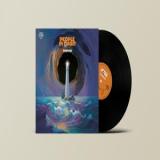
Leading outlet for forward-thinking Scandinavian jazz, April Records, proudly presents the new album from Malmö-based quintet People In Orbit. A followup to their critically acclaimed 2023 release Close/Away (Naxos Prophone), the group continues to explore Scandinavia"s jazz tradition through a contemporary lens, blending acoustic interplay with electronics and a focus on collective improvisation. Led by trumpeter and composer Adam Sass, People In Orbit were formed in late 2020 with the intention of reimagining the classic jazz quintet with a contemporary edge. The group prioritises space, interaction, and ensemble balance, allowing composed material and collective responsiveness to shape the music. Alongside Sass, the band features Edvin Ekman (tenor saxophone, effects), Niklas Bergström (piano, Moog, keyboards), Edvin Elmersson (double bass), and Frank William Reis (drums). Viewpoint is a concept-driven album centred on perspective; how different viewpoints influence the way events are interpreted, and how perspective can foster connection or distance. Much of the album is built around Cycles, a four-part suite composed from a graphic score, with each section representing a different human life and its relationship to the surrounding world. The album moves through shifting emotional and psychological states, from curiosity and tension to reflection and release. Perspective is explored not only through human experience, but also via non-human viewpoints - including music inspired by deep-ocean communication between whales and slow, drifting motion. Musically, Viewpoint continues People In Orbit"s blend of modern jazz-rock and electronics, while drawing influence from the Scandinavian jazz quintet tradition of the 1960s. The music balances structured composition with openness, allowing individual voices to exist within a clearly defined collective sound. With Viewpoint, People In Orbit presents a focused and cohesive statement - an album shaped by shared intent, conceptual clarity, and a continued commitment to collective expression.
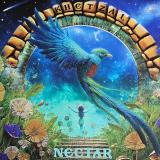
Five years after his previous album, Khetzal returns with Nectar, a brand-new digital double album accompanied by a limited physical vinyl EP. Matthieu Chamoux, a name that needs little introduction, is the creator of Corolle, still considered a milestone of 21st-century Goa-trance. With Nectar, he once again delivers his unmistakable signature: spiritual, Eastern-influenced, blissful Goa-trance. With Nectar, he dives back into his signature world of spiritual, Eastern-tinged, blissful Goa-trance. The first CD weaves a brand-new fairytale-like journey, with four standout tracks also pressed onto vinyl. Alongside these, you'll find a second bonus cd, set of unique live remixes, complete with violin, breathing fresh energy into classics like Ganesha Pramana and Listening Winds. Enjoy the journey
Artist and multi-instrumentalist Flaer embraces the search for quiet miracles on first full-length LP Translations.
In 2023, Realf Heygate - who makes music as Flaer - released his debut mini-album Preludes, composed on his mother’s piano and his childhood cello.Returning to ODDA for his debut full-length album, Heygate is now looking in another direction. A record that embraces transition and movement, Translations is in many ways more internal, less rooted to a single place and reflective of the process of laying new foundations in Cornwall.
Like Preludes, Translations is coloured with found sounds and field recordings, from the starlings which can be heard singing through the open window of his studio, to the brittle recordings of his mother, who was a linguist, learning Spanish on a set of language tapes. In both cases, Heygate embraced the translations and memories inherent to the sounds.
“When I digitised my mother’s tapes, they warped and stuttered in a very similar way to the starling’s song,” he explains. “They had this uncanny rhythm and pulse that I couldn’t quite decode, but was saying something." These decayed transmissions hint at loss, resisting clarity in favour of the ineffable.
Translations is also a record of ambiguities and in-betweens, suggested by the double meaning of the album’s opening track ‘Entre’. At once intricate and expansive, threaded with birdsong and acoustic guitar motifs, this and ‘Starling Descends’ (a reference to Vaughan Williams’ ‘The Lark Ascending’) act as a bridge away from the pastoral themes of Preludes towards a more assertive sound. At times intimate in its textured instrumentation and at others more overtly grand in orchestration, reflecting awider palette of influences.
“Flaer began in many ways when I picked up my mother’s instruments, seeking a form of reconnection. Where words evaded me, they became the tools through which I found a language for grief – and above all, for love.”
Recorded between 2023 and 2025 – what Heygate calls “A gradual process of sowing and harvesting ideas rather than a single intense creative period” - each track follows a rhythm similar to the small maquettes and sculptures he has been working on in his visual practice, whereby structures and melodies form intuitively in moments that are as rare as they are fleeting.
“It's that feeling of searching that I really enjoy,” Heygate continues. “I never know what the destination of the composition is going to be, and I never really find what it is."
Translations is released on limited edition off-white vinyl LP (500 copies worldwide) with one of five signed and numbered handmade risograph prints. It's also available as standard black vinyl LP and digitally.
- 1-: Fire Graphics
- 2: Secret Speech
- 3: Ex-Human Shield
- 4: History's Biggest T-Shirts
- 5: Not A Sound In Heaven
- 6: Company Town
- 7: You Can't Say Dallas Doesn't Love You
Bristol experimental band SUGAR HORSE are delighted to announce that their third album, Not A Sound In Heaven, will be released on 10th April 2026 via Fat Dracula Records.
To celebrate the news, the band are sharing the bruising lead single ‘Secret Speech’, available to stream on all good digital service providers from 12th February 2026.
Also announced today are a run of April 2026 UK album headline tour dates and an appearance at StrangeForms Festival 2026, with tickets on sale now (see below for full listings).
“We are fortunate enough to live in what is generally known as ‘The West’,” says front man Ash Tubb of the lyrical themes behind the new track. “I say fortunate with gritted teeth, because I know—as I’m sure the reader knows—that living in the West isn’t always rosy. The vast majority of people struggle everyday to feed, clothe and house themselves. Let alone receive adequate healthcare, schooling and workers’ rights.”
“We are, however, where all the world’s wealth is hoarded. We are at the centre of Empire. The people outside of this empire—those of the Global South—have had their resources extracted and their populations exploited by our own governments, with very little given back in return. This won’t go on forever. It will inevitably end, as all great empires do.”
“We in The West have a choice to make in the meantime; either help create a new, fairer world, or let the greed of our ruling classes become the undoing of all of us.”
The first glimpse of new material from the quartet, ‘Secret Speech’ starts as Not A Sound In Heaven means to go on—a politically-charged wrecking ball of a song that smashes its way through the often unbelievable chaos and brutality of the 21st century with vitriolic malice.
How do you capture the machinations of the geo-political industrial war machine—and all the horrors that go with it—in the studio, without seeming trite or crass? That’s the question that Sugar Horse have posed themselves on their forthcoming third album Not A Sound In Heaven, and they must surely be one of the only bands in existence capable of delivering on just that premise with both musical substance and cutting philosophical insight.
“Ever since I was born I can remember visions of war, famine, and death being beamed directly into my living room via the magic of television,” says Tubb of the record. “These visions were accompanied by newsreader narratives designed to either humanise or dehumanise the people involved. We humanise our government’s allies and dehumanise their enemies. This is taken as common sense, or even wisdom to some degree. People watch the news and accept it as fact, simple and true.”
“As a person gets older they move in one of three different directions with this acceptance of reality; They embrace what they’re being told, they fall into a kind of trust free nihilism or they learn that there are deeper narratives at play.”
“Not A Sound In Heaven is an aged acceptance of the latter. An acceptance of sitting at the centre of a global empire of both military and economic dimensions. An acceptance that the stories we’re told as a nation, or what’s generally in the zeitgeist, isn’t necessarily reality itself.”
“How does a person cope with the weight—and, frankly, the guilt—of a society that perpetuates such distinct inequalities? A society that thinks a bit of killing abroad is fine, as long as it improves the lives of people at home. You can see why so many choose to embrace it. Hell, nihilism seems pretty sensible. Once a person decides upon pursuing a degree of truth however, things get a bit depressing. Beyond depressing...maddening.”
“This album explores this kind of breezy, frivolous subject matter in a manner that will no doubt be uplifting to the listener and massively financially rewarding for the artist.”
The new album follows on from their standalone AA single ‘What’s Your ETA? Let’s Have A Tear Up’/‘Would You Like Me To Be The Cat?’ which was released late last year as a surprise double drop.
2026 Repress
Jing reveals her third 6dimensions release, here we get an insight into Jing probing and questioning the definitions of realities, transporting the listener through a series of thoughts, images, and sensations, often experienced when the mind surrenders to a dreamlike state.
Jing present’s 'Psychiatric Population’ a four track EP containing Jing's sound illusions, that challenge all forms of genre definitions, Jing further explicate's her work as a true creative .