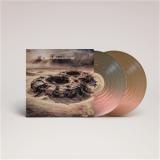
Madlib ist der Beat Konducta - oft kopiert, doch nie erreicht. Neuauflage der essenziellen Beat-Konducta-Reihe, hier die Volumes 1 und 2 als Siren Split Edition Beat Konducta Vol. 1-2: Movie Scenes & Movie Scenes, the Sequel waren die ersten offiziellen Veröffentlichungen in Madlibs Beat-Konducta-Reihe (Vol. 1 Ende 2005, Vol. 2 im Jahr 2006). Bei beiden handelt es sich um Instrumental-Hip-Hop-Produktionen von Madlib, die im Stil von TV- und Film-Library-Platten der 70er Jahre gehalten sind und zusammen eine Stunde voller instrumentaler Klanglandschaften bilden. Nachdem sie lange vergriffen waren, erscheinen diese beiden Volumes von Madlibs legendärer Instrumental-Reihe nun erstmals als farbige Doppel-LP auf Vinyl, welches zur Hälfte rot und zur Hälfte blau gefärbt ist (50/50 Split Vinyl), und verpackt in einem aufklappbaren Gatefold-Cover.
Tony Price returns with NAME?, a new LP on his Maximum Exposure label delivering 10 tracks of red-hot house music realness.
Following two releases in 2025, the brutalist cybernetic jazz reveries of Requiem for the Ontario Science Centre and the ferocious machine funk of Street Theatre, NAME? keeps its crosshairs aimed straight at the dancefloor.
NAME? showcases Tony’s undying affinity for the sound of New York City and New Jersey house: Tony Humphries’ cybernetic gospel dubs, the crude, Todd Terry-style 12-bit hip-hop explosives, the cracking garage swing of early Strictly Rhythm, Mood II Swing and Masters At Work, the psychotic bleep-funk bombast of the Bomb Squad, and the deep, ecstatic machine soul pioneered by the likes of Blaze and the Burrell Brothers.
Produced in his Greektown studio in Toronto using an array of drum machines and samplers, these recordings are pure Tony: rude, crude and elemental. House music stripped down to its core principles and defining primordial textures. No nonsense, no junk, no varnish, no nothing. Just the funk.
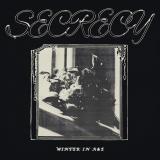
Where other bands seem to be hellbent on pushing an energy of exhilaration, London’s premiere grief peddler’s SECRECY seem to be more interested in reminding us all what deep shit we are in. Their debut recorded outing captures the morbid and grandiose power of their successful string of London shows, refining the message to a promising and bewildering first release. Taking compositional cues from THE EXECUTE, SOUTHERN DEATH CULT, and THE CHAMELEONS, the room filling instrumentals carry a bleak and punishing prophecy of moral turmoil and hysteria, opting to drive the notion of post punk off a cliff through force of will alone. The sound is crisp and wide without giving up the austerity necessary to carry the prophetic sense of dire urgency in the vocals, driving and marching drums and bass lines carrying almost danceable guitar parts to climax. Soaring guitars over driving drums push the corpus to blistering movement, restrained by lyrics about fucking and dying, an Eros/Thanatos act delivered with a refreshing lack of irony or sarcasm. Lyrical influences from RIMBAUD and BAUDELAIRE abound, veering from the brink of poetry back down to primitive taunts and cries.
La Dispute is an American post-hardcore band formed in Grand Rapids, Michigan in 2004. The band consists of vocalist Jordan Dreyer, guitarist Chad Sterenberg, drummer Brad Vander Lugt, bassist Adam Vass, and guitarist Corey Stroffolino. Known for their intense and emotionally charged sounds, La Dispute has released five studio albums to critical acclaim, including “Somewhere at the Bottom of the River Between Vega and Altair” (2008), “Wildlife” (2011), and “Panorama” (2019). Their music often explores themes of loss, grief, and human relationships through a series of interconnected stories. La Dispute has developed a devoted fanbase and is known for their powerful, unforgettable live performances.
With »The Future Is Futuristic«, the fifth album for Haleiwa (and third with Morr Music), Stockholm’s Mikko Singh draws from a deep well of nostalgic feeling, while making music that feels razor-sharp, on point, and full of hazy dream-pop pleasure. After 2019’s »Cloud Formations« and 2022’s »Hallway Waverider«, which imagined psychedelic post-shoegaze and mantric pop songs into being, »The Future Is Futuristic« feels like both consolidation and magnification; the noise-drenched songs feel thicker, heftier; the electronic interludes playful and kinetic; the rhythms boundless. It’s as though Singh has truly found his metier, his voice, a place from which he’s comfortable to indulge in the kind of home-recorded worldmaking that has always marked Haleiwa out as something special.
»The Future Is Futuristic« passes by in a rush of whiteout tones and scurrilous energy; the whole thing is over within half an hour, Singh ensuring his songs say exactly what they need to say – no more, no less – before bustling through into the next ecstatic pop moment, pushing the music further into the zone. While his music often has a similar, drenched quality to shoegaze, on »The Future Is Futuristic«, Singh seems to be settling in alongside other spirits – there are touches of the experimentation of both A.R. Kane and Flying Saucer Attack here; the more motoric tunes recall New Zealand’s Snapper; the glitchtronics have a City Centre Offices sensibility, while the sparkling folksiness of the melodies can recall Bristol bands like Light or AMP.
But it’s ultimately not about influence, beyond perhaps Haleiwa nestling alongside some like-minded souls in perceptive listeners’ minds. Instead, thrill to the rush of rhythms that float between jungle and punk on »Flourishing« and »96«, the latter a reference, from Singh, to moments of early revelation – »it’s about being thankful for having found punk rock and skateboarding at a young age, in 1996.« There’s also the hypnotic dream-rush of the opening »Smoke Will Rise«, the beautiful Cure-esque guitars swimming through »Sunset Street« and »Strange Notes«, the tumbling rhythms and heady, elated chord changes that grant lift-off to »Wave Chaos«… A real panoply of pleasures, in fact.
»The Future Is Futuristic« was recorded solely by Singh on four- and eight-track in his home studio, with a quick trip to Telefonstudion to record drums. Recording at home grants a certain intimacy to »The Future Is Futuristic«, even as the songs, at times, bliss their way off into the skies; there’s something both expansive and intimate about the music here, as though Singh is grappling immensities into intimacies. It also feels deeply personal for Singh, a summation of much of what he’s done over the years; as he says, simply and clearly, »The album is in my interpretation a mix between punk, electronic music, and dream pop.« The threads that connect these creative phenomena? Energy, texture, melody, tone, sensuality; pure pop pleasure.
EchoPlex Records returns with its second full vinyl release, bringing together label owners Inner Echo, French multi-instrumentalist Youthie and Los Angeles-based bass player Dubsworth.
“Ranger” is a steppers cut built around live bass from Dubsworth, rolling 4x4 drums and Youthie’s signature trumpet playing. Dubsworth is a seasoned bass player and a familiar name within the Bay Area dubstep scene, while Youthie brings her trumpet into the mix, adding live melodies to the production and giving the track another layer of instrumentation.
On the B side, “Ranger” gets the full live dub treatment, mixed straight from the analogue desk with delays, reverbs, filters and live effects. A raw dub cut in keeping with soundsystem culture, with the mix shaped in real time.
Pressed as a limited 7” run. The digital release is available exclusively through the EchoPlex Records Bandcamp, with additional dub mixes that aren't included on the vinyl. There will be no release on streaming services or other digital stores.
Metabolising 20-plus years gorging on the hardcore continuum, Luke J Murray returns to Sneaker Social Club with the first album under his Liquid DnB-Like Ambient Grime 2 alias. As the first self-titled EP in 2024 demonstrated, with this project Murray applies a hauntological supplement to his life-long diet of rave's codes and signals. These 11 tracks could be embraced as dank bangers in their own right, but the ghostly shroud that lingers is no accident. It's an evocative expression of the hinterland places that frame the pursuit of the dance as much as the energy spikes in front of the bass bins — a diaristic reflection on trudging puddle-peppered streets to find little black doors or staggering home, ears ringing, as dawn comes to chase down the street lights.
Haunted House, Garage & Grime walks the line between atmospheric scene building and straight-up beatdowns with a relaxed swagger. 'The Ginnel In SK4' paints a vivid picture of urban malaise with its bleak synth warps and punk-dub splashes, not a drum sequence in earshot. It's flanked by the Caustic Window-meets-Mark One 'The Flats On Belmont Way' on one side, and low-slung electro-creeper 'Hollywood Park' on the other. As the titles hint, this is music tangibly attached to very specific places locked in Murray's memory — unmistakably UK locations that reflect back the half-hollowed out echoes of late night soundtracks, glancing off red brick and pebble dash concrete at odd angles.
There is space on the album for full-chested amen tear-outs like 'Pete's Gone Mad With The Axe' , but for the most part the mood remains downcast and pensive. The sparse approach affords you space to tangibly hear the (not-so-silent) name-checked rain pattering in the background of 'The Crown Under The Viaduct, While Rainfalls Silently Into The River Mersey' , or imagine the crunch of litter and dead leaves underfoot that snakes its way through minimalist stepper 'Bowerfield Lane, After Dark'.
Murray's vision is sharply realised, and his stated inspirations slot logically into his shelves of ordered ideas drawn from disorderly memories. From Mark Leckey's O' Magic Power Of Bleakness to the Ghost Box records alumni, Hatcha's seminal Dubstep Allstars Vol. 1 and Laura Grace Ford's Savage Messiah book, Haunted House, Garage & Grime is the logical product of a deep thinker making tracks with decades of rave in his bones and the sense that it all means something, even if it's not always clear what.
Immerse yourself in the world of The Hunger Games: Sunrise on the Reaping with the soundtrack pressed on stunning “Pretty with a Purpose” coloured vinyl. Spanning two LPs, this edition showcases the music inspired by the film in an elevated format designed for both fans and vinyl enthusiasts. Featuring premium packaging and eye-catching artwork, this release brings the emotion, drama, and power of the story to your turntable.
DJ, model, artist and selector Yuka Mizuhara steps forward with her standout 12-inch release 'Moon Dust' on Rush Hour. For her debut release, she joins forces with producers Benedek and Mickey de Grand IV (Psychic Mirrors), delivering a vibrant boogie and city pop-influenced transmission that bridges contemporary rhythm with classic, sun-drenched grooves.
Having spent formative years immersed in the underground music scene in Tokyo, with extended stays in Los Angeles and London, Mizuhara channels a rich blend of influences into her work. Known widely for her encyclopedic all-vinyl DJ sets, her residency on NTS Radio (Wave Flower), and high-profile collaborations with legends like Haruomi Hosono, Yukihiro Takahashi and Towa Tei, her musical output reflects a deep appreciation for groove, melody, and rhythm, carrying the torch of foundational Japanese techno-pop, experimental, and dance music forward.
On Moon Dust, Benedek returns fully to his signature West Coast boogie roots, laying down rolling, intricate synth basslines and melty chord progressions that form the heavy-grooving backbone of the record. Around this foundation, Mickey de Grand IV and Yuka Mizuhara write and weave extraordinarily catchy, endearing vocal melodies and hook-laden arrangements. Across its three distinct mixes, the track radiates Yuka's cute spirit—evoking a bubbly, high-spirited aesthetic reminiscent of classic 80’s RAH Band productions while blending sophisticated electronic arrangement with warm, organic dance floor vitality.
Fully stepping into her own as a recording artist following recent debut performances at major festivals like RDC and Rally, Yuka Mizuhara invites listeners into a romantic, synth-laden world built on pure groove and creative freedom.
Few tracks carry the weight of techno history quite like Dave Clarke’s ‘Wisdom To The Wise’. Created in a damp basement flat in Brighton in the early ’90s, the track was produced on an Atari 1040 and micro-sampler, drenched in dubbed-out reverb and shaped by a young Clarke still honing the sound that would soon make his name.
‘Wisdom To The Wise’ became the centrepiece of Red 2, the second instalment of Clarke’s seminal three-release series. With Red 1 already making serious waves, it was Red 2 that sent interest in Clarke into overdrive. Within a year, the series had helped propel him from underground producer to global techno force, culminating in a major-label album deal and international recognition.
The track’s influence has endured ever since, earning celebrated reinterpretations from techno heavyweights including Robert Hood, Marcel Dettmann, Boys Noize and Steve Rachmad. Now, Spectrum adds another chapter to that lineage with a very special remix from label boss Joris Voorn.
Staying faithful to the spirit and unmistakable character of the original, Voorn brings his own weight to the classic, reinforcing its impact with a heavier kick and the subtle production touches that have become his signature. Originally created as a weapon for his own sets, the remix has been road-tested on dancefloors and is now ready to be unleashed beyond the booth.
For over three decades, Berlin-based DJ, producer, and curator Marcel Dettmann has remained a central force in electronic music, continuously pushing the boundaries of the craft. Deeply rooted in early influences ranging from post-punk and industrial to synth-pop, his dynamic DJ sets and expansive discography, including seminal releases on Ostgut Ton and Dekmantel, effortlessly weave together raw techno, Chicago house, electro, and avant-garde soundscapes.
Far beyond club booths and releases on his own imprints, MDR and Bad Manners, Dettmann’s multidisciplinary ethos has led him into artistic territories spanning gallery soundscapes, ballet compositions, and cinematic film scores. This relentless creative curiosity defines a career built at the intersection of dancefloor functionality, collaborative experimentation, and perpetual sonic evolution.
Dettmann introduced My Own Shadow last year, a project where music, visual art, and photography converged in two EPs, Approaching (2025) and Faultline (2026) prior to the release of the full album this coming Autumn. More than just a name, this project lets sound, image, and vision blend organically, reflecting his intuitive process of deconstruction, resonance, and emotional discovery.
Speaking about the project Marcel says “My Own Shadow wasn’t born from a big concept. I simply liked the idea of working under another name and started following it. Different things I was doing - music, photography, visual work - slowly began to connect.
It happened quite naturally. My Own Shadow is me - just seen from another perspective.” Neither an alter ego nor a departure, My Own Shadow: Album is an intimate reflection of the artist; a transient, ever-shifting form that dances with the light and subtly reshapes its contours to reveal new depths.
My Own Shadow: Album is built with textural minimalism through rhythm, tension and release, embarking on a path through the recollections and experience of the dancefloor. This space remains the ultimate proving ground where history, instinct, and transcendence collide, guiding Dettmann through his musical interests.
My Own Shadow - Album is driven by rhythm, texture, space and tension. Across tracks such as ‘Gravitational Scar’ and ‘Resolution Vector’, these elements are constantly reshaped, connecting Dettmann’s past with a sound that remains firmly in motion.
Dame-Music celebrates its 55th release with Second State Of Reality EP, a special reissue of two acclaimed Bloody Mary tracks, “Reality One (Acid Mix)” and “Reality Three (909 Mix)”, alongside a brand new remix by techno legend Chris Liebing, one of the genre’s most influential and enduring artists.
For the A-side, Bloody Mary invited Liebing to reinterpret “Reality One (Acid Mix)”. A long-time supporter of his work, she wanted to hear her track through his distinctive sonic approach. The result is a heavy, driving techno remix, pushing the original’s acid energy into darker and harder territory.
The B-side returns to Bloody Mary’s hardware roots, with crunchy TR-909 drums, crisp highs and mind-melting 303 sequences across two raw, hypnotic cuts.
A special reissue celebrating the 55th release on Dame-Music, bringing Bloody Mary’s acclaimed hardware productions back together with a fresh Chris Liebing interpretation.
This November, Brownswood Recordings will release Mek Do & Mend, the debut album from self-taught producer, multi-instrumentalist, composer and artist Wonky Logic. Although his name may not yet be familiar to everyone, Wonky Logic (AKA Dwayne Kilvington) has spent the past two decades quietly becoming one of the UK's most respected musical collaborators. His career has moved comfortably between London's jazz, electronic and contemporary music scenes, performing and recording with artists including Nala Sinephro, Yussef Dayes, Nightmares On Wax, Shabaka Hutchings and Emma-Jean Thackray. Alongside his work as a producer and composer, he's been musical director for projects with Eddie Chacon, John Carroll Kirby and I.G Culture's LCSM, scored the feature documentary Zandra With A Zed, contributed music to A24's The Smashing Machine, and continues to lead music workshops with young people, refugees and people experiencing incarceration.
Far more than a collection of compositions, Mek Do & Mend is a deeply personal reflection on the people, places and experiences that have shaped Kilvington throughout his life. It's the story of growing up on a Leeds council estate, where music became both a creative outlet and a way of understanding the world. Making music often meant working with whatever was available: a second-hand keyboard, a makeshift studio desk or ageing equipment that simply had to last a little longer. The title itself came from a conversation with his mother, capturing the resourcefulness that defined his upbringing and continued into the making of the album itself, which was written and produced to a tight deadline around touring, family life and Kilvington's work as a musician and educator.
Built from material spanning more than fifteen years, Mek Do & Mend brings together some of Wonky Logic's earliest compositions alongside brand new pieces written during the making of the record itself. Childhood ideas sit alongside music conceived only months before recording, creating an album that draws together a lifetime of writing rather than documenting a single moment. Running throughout are voice notes from family members, teachers, friends, mentors and collaborators—not simply as interludes, but as a reminder that no creative life is ever self-made. Rather than telling his own story outright, Kilvington invites listeners to discover him through the people who've shaped him: an aunt remembering him playing in church as a child, lifelong friends recalling early experiments making beats together, fellow musicians from different stages of his career and his mother describing him in her own words. Together they reveal the invisible network of relationships, philosophies, communities and experiences behind the music. "The album exists somewhere between being a biography and an autobiography," says Dwayne. "The biography is in the voice notes and how other people see me. The autobiography is in the music."
That same philosophy extends to the musicians who appear on the record. Every contributor has played a meaningful role in Wonky Logic's life beyond the studio. Long-time collaborator Luke Wynter, Steam Down drummer Benji Appiah, partner Vanessa Rani, Jonathan Enser, Joe Bristow, Brother Portrait and Nubiya Imani all feature not simply because of their musicianship, but because they form part of the album's story.
Across its fourteen tracks, Mek Do & Mend moves effortlessly between dynamic jazz arrangements, pulsating broken rhythms, delicate, twinkling piano passages, interstellar synth textures and elegant brass lines. Album opener and first single 'Strange Attractor' begins with a shimmering introduction before unfolding into an exhilarating surge of rhythm and momentum. Named after the mathematical concept of the same name, it serves as the conceptual point of origin for the album. Written when Kilvington was just seventeen, the composition reflects the idea that even the most unpredictable lives are guided by hidden patterns that often only become visible with time. Second single 'A Thousand Hands' features the unmistakable vocal tones of Brother Portrait, whose cerebral lyricism drifts over a low-slung, constantly shifting groove as woozy synth lines ebb and flow overhead. At its heart, the track celebrates the family, friends, mentors and collaborators whose often unseen influence shapes who we become, echoing the album's belief that every achievement is, in some way, a collective one. LP focus track 'BAME (Beyond All Marginalised Expectations)' is a lush, spiralling composition, brimming with both emotion and resolve. Reclaiming an acronym long imposed on racialised communities in the UK, the piece transforms it into a statement of possibility rather than limitation: a defiant rejection of stereotypes and a refusal to let identity be defined by other people's expectations.
The album itself only exists because other people believed in it. Isabel Gracefield made the RAK sessions possible, Rick David brought the record together with his characteristically thoughtful mix, and Gilles Peterson committed to releasing it on Brownswood before hearing any of the music. Away from the stage, Kilvington works with the charity Finding Rhythms, writing and producing original records with people experiencing incarceration, while also leading workshops with Arts Train and Dovetail Orchestra.
Recorded live in a single day in Studio One at RAK, Mek Do & Mend was mixed by Rick David through an analogue Cadac console before being mastered by Stuart Hawkes at Metropolis. The aim wasn't nostalgia or audiophile perfection, but to create a record people could return to throughout their lives, discovering something new with each listen.
As Dwayne puts it: "I don't want this body of work to be reduced to a jazz record. It's more like a novel about life told through music."
LIP020: Ferdinger – Easy Warmth & Quiet Menace Life In Patterns marks its 20th release, and its last of 2026, with an EP from label head Ferdinger himself. "Easy Warmth & Quiet Menace" sees him move into darker, more textured territory without losing his signature relentless drive. From the sombre melodies of "Tears Will Dry" and the distorted, haunting synths of "Back At It" to the analogue modular textures of "Front Toward Enemy" and the gritty dub stabs of "Ruminations", the EP covers a lot of ground across its moods. Closing track "Fresh Impetus" ends things on a different note, with a driving old-school electro groove. "Easy Warmth & Quiet Menace" is out on 13 November 2026 on vinyl and digital.
Following the critically acclaimed Fantômes… Futurs, praised by FIP, France Inter, Radio Nova, ARTE and International jazz press, double bassist and composer Kham Meslien returns with Vévés électriques, a deeply immersive second album where memory, landscape and improvisation merge into a singular sonic journey. Joined by Laurent Bardainne, Roger Raspail, Naïssam Jalal and David Neerman, Meslien expands the intimate language of his double bass with subtle loops and organic textures, weaving together echoes of Iceland, the Caribbean and imagined territories. Blending spiritual jazz, contemporary classical influences and ambient soundscapes, Vévés électriques is an invitation to drift beyond geography and into a profoundly personal exploration of emotion, identity and freedom.
Set upon an oil-smooth sea, an immense range of directions opens up before Kham Meslien for “Vévés Électriques”, his second album after “Fantômes… Futurs.”
With only his double bass and bow as vessel and sextant, a distant journey nevertheless begins to take shape. Vibrations and the striking of strings against wood quickly trace lines and winding paths across the surface of the water—so many routes to follow before leaving them behind, allowing the outward journey to become an inward voyage as well.
After an improvisation intended to shed light on the course ahead, isolated lands came into view: the shores of Iceland, the lands of the far north, places cut off from the rest of the world by vast expanses of water. Islands battered by a harsh climate that can only be endured by drawing warmth from deep within oneself.
Then the Caribbean arc appeared. The archipelago, a setting for joyful and unsettling experiences, takes Kham back to a childhood from which the passing years have carried him away. Rather than following the conventional channel of the music of these places, the West Indies emerge through memories whose colors are still vivid.
Through the morning mist, Roger Raspail’s percussion locks into the same frequencies of the groove. Double bass and struck skins then become companions on a road that intersects with Laurent Bardainne’s saxophone. Carrying a dreamlike message, David Neerman’s vibraphone also joins the narrative to write a few chapters of its own, while others are enchanted by the flute and voice of Naïssam Jalal, or struck by the metaphorical rhymes of rapper Rocé.
On the surface, through the themes along which the pieces navigate, landscapes slowly reveal themselves and change shape as the shore draws nearer or recedes. Straying from the marked course and allowing oneself to drift, breaking free from pure acoustic sound by adding loops first played live and then sampled, allows Kham to explore the depths. The depths of the ocean, as well as those of his soul. To enter a world of improvisation that reveals itself even as he explores it. Examined up close, feelings become shells to pick up and hold to one’s ear, so that they can be felt intensely until they take material form.
This sea, which had appeared peaceful, became the stage for a succession of stories and images, which then accumulated to give birth to a larger narrative.
Mercury Prize-shortlisted, MOBO Award-winning drummer, composer and producer Moses Boyd returns with his first album in six years. Since the release of his critically acclaimed album, Dark Matter, Boyd has continued to push at the boundaries of contemporary jazz. Songs For Sinners is a deeply personal body of work that explores the push and pull of faith as something profoundly human – a force capable of comforting, dividing, unsettling and restoring in equal measure. Across an ambitious, vocal-led collection that fuses gospel, jazz, soundsystem culture, Caribbean rhythms, 808s and soaring choir harmonies, Boyd expands the language of contemporary jazz into something entirely his own. It’s a record that draws from the church he grew up in, the London soundsystem culture that shaped him, and the freedom of improvisation, asking what sacred music can sound like when it’s no longer confined by convention.
Mercury Prize-shortlisted, MOBO Award-winning drummer, composer and producer Moses Boyd returns with his first album in six years. Since the release of his critically acclaimed album, Dark Matter, Boyd has continued to push at the boundaries of contemporary jazz. Songs For Sinners is a deeply personal body of work that explores the push and pull of faith as something profoundly human – a force capable of comforting, dividing, unsettling and restoring in equal measure. Across an ambitious, vocal-led collection that fuses gospel, jazz, soundsystem culture, Caribbean rhythms, 808s and soaring choir harmonies, Boyd expands the language of contemporary jazz into something entirely his own. It’s a record that draws from the church he grew up in, the London soundsystem culture that shaped him, and the freedom of improvisation, asking what sacred music can sound like when it’s no longer confined by convention.
Nearly a decade after their debut album featuring the underground hits 'Die Gestalten' and 'Kommando Limmerstrasse', Der Nachtportier return with their new record, 'Gespenst'. While the debut was firmly rooted in Minimal Wave, this new chapter marks a bold sonic evolution, infusing those foundations with experimental elements of Noise and Jazz. The album is a deeply personal journey back into the artist’s childhood fears, weaving in original tape recordings from his own youth. Drawing inspiration from eerie nursery rhymes and his time as a forensic psychologist, 'Gespenst' manifests as a haunting concept album.
Land of Talk is still here. That wasn’t always a guarantee. Over the multi-faceted twenty year history of their project, Lizzie Powell has drifted from and back to music, always interrogating their role as an artist. In the time since 2023’s Performances, they found themselves utterly worn down by the vicissitudes of the music industry and wracked with worry around their aging parents. Yet the music didn’t stop: Powell heard songs in traffic and in birds chirping, in their downstairs neighbor’s daily prayers and in the babble of children on the street. Melodies slowly cohered over time. “Life can become so unbearable, and music is where I go to metabolize it,” they explain. “I know the music was the only thing that was going to help me.” Soon Powell reemerged with the sixth Land of Talk album, LASTS.
LASTS is full of double meanings — both resilience and finality, acting as a noun and a verb. Though LASTS is haunted by crises including climate collapse, political upheaval, and genocide, the mangitude of global turmoil led Powell towards smaller, humane depictions of suffering and grief. As both their parents became ill, Powell reflected on the last time a person might walk, might talk to a loved one. Yet watching their parents near the other side of life’s arc also made Powell consider all they had survived across their own decades on this earth, their new songs channeling both gratitude and rage. LASTS became a phrase, honoring Land of Talk’s circuitous route and all Powell’s reckoned with through the years. “I think of this record as a love letter to life,” they say.
The end result is an album both lean and winding, allowing Powell’s words and melodies to take centerstage, uncrowded in visceral, shot-no-chaser arrangements. LASTS jumps right in with “Broken Tongue,” a wiry track built on thrumming electric guitar and ghostly synths as Powell rails against the lack of justice for victims of abuse. The trio’s interplay is readily evident in “Saffron” and “4:44,” two earworm songs that also allow themselves to unspool into extended instrumental codas. Early in the record, there are seething tracks like “Dogs” — “Just your basic instinct / Even dogs know better,” Powell growls in the chorus, before the song quiets into a plaintive plea of “Leave us alone now” — and later there are more vulnerable, wandering moments. In “Projections” and “Cedars,” Powell ventures deep into their head, inviting their co-conspirators and listeners alike to follow the songs wherever they meander.
Across To Remind Myself I Have Lived, aquatic sounds drift through hazy electronics and lush bedroom textures, before giving way to harsher, more industrial British landscapes. Voices appear and disappear. Loops seem to circle memories rather than rhythms. Guitar fragments become dream sequences. Domestic spaces open onto something colder and more distant.
The new album by London-based Michele Tellarini under the Catholic Block moniker gathers works made across five years, moving between composition, improvisation and a more instinctive form of sound collage. Known for his work with concrete punks Qlowski (Feel It Records/Maple Death) and goth-punks Secrecy (La Vida Es Un Mus), Tellarini approaches this material without the conventions of a traditional song cycle, allowing disparate pieces to find their own connections.
There is something strangely timeless in these works: a quality shared with music that seems to exist slightly outside its own moment, from the intimate, confidential organic realm of Mount Eerie to Bruce Gilbert's more abstract electronic and ambient experiments or the haunting digital world of Holly Herndon. To Remind Myself I Have Lived belongs to that same uncertain space, music that feels both deeply tied to the circumstances of its making and somehow detached from them, music for the lonely that shines with crepuscular clarity.
YES is a genre-blurring blend of punk, electronic and rap from South Africa, released on limited edition White Vinyl
South African alt-rap trio Internet Girl have officially announced their debut album, YES, arriving November 13 via PACK. Records. Alongside the announcement, the group has released their new single “DA BUSINESS” featuring Kenny Mason.
A high-energy party anthem, “DA BUSINESS” opens with distorted guitar before chopped vocals briefly pull things back, only for an abrupt beat drop and howling synth to send the track into overdrive. As another synth melody sweeps in, TK cuts through the chaos with an introspective opening verse before Kenny Mason crashes in with a gritty guest verse. Live drums, distorted guitars, and surging synths continue to build around them, turning their vocals into something closer to rage-filled battle chants than traditional rap verses.
Partially written on tour last year, “DA BUSINESS” is the oldest song on YES and one of the album’s few guitar-led tracks. Kenny connected with the trio over DMs months earlier before joining them on the track, bringing Atlanta and South Africa together for one of the album’s most charged moments. “DA BUSINESS” follows the trio’s recent single “ALL THE SAME,” a swagger-heavy track built around a hypnotic Spanish-language vocal sample and live drums before a heavily distorted bass synth takes over in its final stretch, drawing inspiration from South Africa’s booming taxi rave scene. Together, the two singles offer an early look at the range of YES, moving between the rock, rap, and electronic sounds Internet Girl have made entirely their own.
Written largely during a week-long trip to South Africa’s Karoo region at the beginning of 2026, YES captures Internet Girl at a turning point. What began as an ad-lib TK would throw into his verses gradually became the philosophy behind the record: saying yes to an idea and committing to it completely, even before there’s any proof it will work. Across the album, that once-delusional confidence begins to feel real as the trio reflect on coming of age, growing more comfortable with themselves, and becoming increasingly assured in the music they make.
The new release arrives on the heels of a big year for the South African trio, who have brought their high-energy live show to stages around the world, including Pitchfork Music Festival Paris and Boiler Room Soweto, while co-headlining Kiss Kiss Festival in South Africa alongside Basement Jaxx.
On Beginningless, Anna Butterss, John Raymond, and Ben Lumsdaine combine acoustic instruments and effects to create a nocturnal, neon landscape both grounded and otherworldly. Recorded live over two days in a Los Angeles studio, the album expands the trumpet-bass-drums format through shared intuition, fluid textures, and patient, elastic interplay. The music is entirely improvised, with little overdubbing or post-production: what you hear is essentially the sound of three musicians discovering the music together in the room, using pedals and processing as extensions of their instruments.
The 2013 action-adventure game The Last Of Us was originally published in 2013 by Sony Computer Entertainment and was developed by Naughty Dog. The game is played in a third-person perspective and the player controls Joel, a smuggler who is escorting the teenager Ellie across a post-apocalyptic America. The game received critical acclaim, with praise for its narrative, gameplay, visuals, sound design, characterization, depiction of female characters. The Last Of Us became one of the best-selling video games, selling over 1.3 million units in its first week. The game won multiple Game of the Year awards and has been cited as one of the greatest video games ever made.
The Last Of Us also received acclaim for its score, which was made by composer Gustavo Santaolalla. Santaolalla is also known for his work on Brokeback Mountain and Babel, for which he both won the Academy Award for Best Original Score. The Argentinian composer also created the music for the series Jane The Virgin and Netflix’ Making A Murderer. His soundtrack to The Last Of Us was his first in the video game industry. In 2020, he also returned to compose the music to the sequel, The Last Of Us Part II.
The soundtrack of The Last Of Us: Season 1 is available as a limited edition of 4000 individually numbered copies on yellow marble vinyl. This 2LP is packaged in a deluxe gatefold sleeve with linen laminate finish. It includes printed innersleeves and an 8-page booklet with liner notes by writer and creative director Neil Druckmann.
There's Something Going On is the second studio album by Babybird, originally released in 1998.
The album is almost unrelentingly dark and mysterious, in much the same manner as his earlier lo-fi productions. Indeed, two of the tracks here, "You Will Always Love Me" and "There's Something Going On," were recorded straight to four-track. Jones' voice echoes out of lyrical valleys. "Take Me Back" is a horrific tale of an obsessive relationship, with lyrics about eyeballs scratched with rusty nails and a creepy chant of "dead, dead, dead" ad infinitum. It's a conceit that starts with the very first track, "Bad Old Man," where Jones sings of wife-beaters and a drowning in a duck pond. Musically, the album is more of a lean toward the baroque than Ugly Beautiful. One might describe it as stark, disturbed chamber pop. Beautiful melodies appear quite majestically out of Jones' psychological studies. "It's Not Funny Anymore" is bittersweet and touching, with Jones reaching for the album's emotional core over weeping, organic keyboards.
"There's Something Going On" is the tender conclusion, suggesting that Jones knows there's a better way of life than obsession and self-torture. There's Something Going On is definitely Baby Bird's most subtle album, and it's a fascinating listen from start to finish.
There's Something Going On is available as a limited numbered edition of 750 copies on turquoise vinyl and contains an insert.
POD & Edward Richards return for the third and final of their series of hand stamped vinyl with a very unique outing. In contrast to the slower tempo of the the Polar Phase and Temporal Loop Trascendance EP’s, the pair up the ante with a blend of bass music meets dub techno. With the addition of drummer Miles Henry, the sound transcends basic genre descriptions into a liminal space between live music and the repetitive machine form of electronic music. Miles contributes both acoustic kit and electronic drums to the title cut and Nautilus, and in his own words he seeks to capture the impossibility of playing like a machine. On the flip side Quadratic Illumination progressively builds, with layers of hardware synths atop a foundation of deep sub-bass, broken beat drums, and hints of electro. And to cap of proceedings there is an incredible remix by Evigt Mörker that embodies a sense of serene bliss, and is a near perfect end to not only this record, but to the series as a whole.
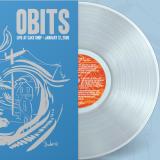
The Obits played their first show on January 12th, 2008 at the Cake Shop in NY, and wow, what a show! Captured live at the time and finally released on vinyl. Eleven songs, ranging from fan favorites like One Cross Apiece and Widow of My Dreams to unreleased tracks like You Took an Axe. Mastered for vinyl by JJ Golden, Cake Shop is a must for any Obits fan. Pressed on limited edition clear vinyl.
On his sweeping sophomore solo effort, James Felice squares up against cosmic indifference with expansive orchestral production and a depth of writing that makes even visceral Biblical imagery feel effortless. Recorded in Omaha with Nate Walcott (Bright Eyes) at the helm, Homeworld Blue pairs lush horns, intricate strings and pounding piano with Felice's authoritative, plainspoken voice — grand in scope, but never far from the small, everyday moments it's really about. Drawing on twenty years as keyboardist and accordionist of The Felice Brothers, and following his 2025 solo debut The Little Ones, Felice trades the intimacy of home recording for a maximalist, cinematic scope that sits comfortably alongside audacious songwriters like Joanna Newsom, Fiona Apple and Randy Newman — and closes, fittingly, back in the family kitchen.
On his sweeping sophomore solo effort, James Felice squares up against cosmic indifference with expansive orchestral production and a depth of writing that makes even visceral Biblical imagery feel effortless. Recorded in Omaha with Nate Walcott (Bright Eyes) at the helm, Homeworld Blue pairs lush horns, intricate strings and pounding piano with Felice's authoritative, plainspoken voice — grand in scope, but never far from the small, everyday moments it's really about. Drawing on twenty years as keyboardist and accordionist of The Felice Brothers, and following his 2025 solo debut The Little Ones, Felice trades the intimacy of home recording for a maximalist, cinematic scope that sits comfortably alongside audacious songwriters like Joanna Newsom, Fiona Apple and Randy Newman — and closes, fittingly, back in the family kitchen.
When Index moves, it’s in lockstep, as a single, indivisible unit. Alan Creedon and Alex Lichtenauer (both ex-Control Top) started the project in the summer of 2025, and it quickly became clear that its sound would be an outgrowth of their close friendship. Eschewing the densely orchestrated compositions of their previous band, Index would instead focus on sweaty, visceral physicality, with Creedon’s guitar intuitively latched to Lichtenauer’s drum kit, navigating corridors of tricky rhythm as one. Creedon and Lichtenauer recorded Vis Inertiae in NYC with acclaimed producer Arthur Rizk (Power Trip, Show Me The Body). Despite a litany of freak injuries that befell Lichtenauer before and during the band’s studio time, they say it was the best experience they ever had in a recording session, and Creedon concurs. Rizk was brought into the process early on, when the band played him some bare-bones demos that impressed him, and he was critical in helping ferry the songs to their final forms.
Praised by Rolling Stone, NME and the New York Times on release — the1996 debut from the members who went on to form bright eyes & cursive. Back on vinyl for its 30th anniversary!
Blanket Warm is a genuine buried-treasure reissue: a record contemporary critics compared to the Rolling Stones, Guided by Voices, and Tindersticks, and one a new generation of listeners has rediscovered as a missing link to Neutral Milk Hotel and Sufjan Stevens’ chamber-folk.
Lullaby for the Working Class formed in Lincoln, Nebraska in the winter of 1994, when multi-instrumentalist Mike Mogis and singer-guitarist Ted Stevens began writing together. Working from two home-recorded demos — and without having played a single live show — the band signed to New Jersey’s Bar/None Records in 1995. Blanket Warm was recorded and mixed by the Mogis brothers between December 1994 and April 1996 at their own Whoopass Recording Studio in Lincoln. Bar/None issued the album on CD in September 1996, while the vinyl LP went out through Lumberjack/Saddle Creek imprint in a pressing of just 1,000 copies — long out of print, and the edition this reissue restores to the format.
The result splits the difference between rustic and ornate: acoustic guitar, banjo, mandolin, and upright bass sit alongside a chamber ensemble of violin, cello, clarinet, trumpet, and trombone. Critics at the time reached for an unusually wide range of comparisons — the Rolling Stones, Guided by Voices, Tindersticks, Van Morrison — united mainly by the sense that nothing else sounded quite like it. Ted Stevens’ plainspoken, image-driven lyrics and unhurried delivery anchor songs that unfold with more patience and more instrumental color than the alt-country and lo-fi indie rock the band got lumped in with on release.
n resurrecting the band Krill—declared dead over 10 years ago—Jonah Furman considered the turritopsis nutricula: the “immortal jellyfish” that reverts to juvenile form instead of dying. “I was always afraid of coming home,” he says. “But home is inescapable.” Now living in the same Chicago suburb he grew up in, Furman ponders the passage of time on Secret Language, a nostalgic and cerebral exploration of family, fatherhood, and fated love.
From 2010 to 2015, Krill recorded three LPs and two EPs, growing into a cult project revered for its complex, rapturous compositions. Anxious, anthemic, mathy, propulsive, they were beloved by Frankie Cosmos, Girlpool, Horse Jumper of Love, and countless others. Personal lives took priority and brought the project to an official close, save for two reunion shows and a 2020 album under the name Knot, but that's retroactively a Krill album, “because it's easier that way.”
The project was revived “on a whim” as Furman puts it: “Theo from Ovlov asked if Krill wanted to open a Chicago show. Then I started writing new stuff.” He recruited Krill’s longtime drummer Ian Becker who, too, had just moved back to town. Both had known guitarist Andrew Clinkman (also of Spirits Having Fun and Moontype) during their collective years in Boston and growing up in Chicagoland, and soon he joined the fold. On Secret Language, the trio tap into their reclaimed city’s famed music community, drawing inspiration from current locals the same way Krill were inspired by their Boston contemporaries like Pile and Speedy Ortiz instead of Pixies or Mission of Burma.
On Secret Language, home can be anything: a place, a person, a feeling. But Krill is “very much” a Chicago band now; a new beginning where it all began.
Amazing! RCA returns with a special three-track release from Funk D’Void & Friends, bringing together three different sides of the house spectrum across one beautifully connected journey. From the warm, rolling groove of the opener through a deeper, more hypnotic middle cut and into the tougher, more driving territory of the closer, each track has its own character while working perfectly as part of the whole. Funk D’Void & Friends doing what they do best. Deep, soulful and groove-led house music with just the right amount of edge. Three tracks, one journey, no filler.
Four solid dub house and deep house cuts from Alessandro Crimi, pressed on blue green marbled vinyl. Get Up opens on a rolling groove, hats ticking against a bassline that breathes rather than pushes. Interstate tightens the low end into something more direct, built for the peak of a set. Look At The Stars slows the tempo down into dub house territory, chords smeared and delayed until they blur into the drums. Multiverse closes the record on a dubbier note again, echoes trailing off into silence between hits. Across the four tracks the mood stays controlled, functional, made for rooms where space and repetition do the work.
Doppel-LP, 180g Vinyl. Pearl Flip Horizon. Gatefold Sleeve. BLACK SPACE RIDERS' achtes Studioalbum präsentiert sich als ein scheinender, eklektischer Bastard, der vor Spielfreude, Ideenreichtum und Liebe zum Detail sprüht. Aus dem Besten vieler Genres und unterschiedlicher Jahrzehnte formt die Band eine ganz eigene Klangwelt: psychedelisch, schwer, tanzbar, manchmal zart, manchmal hart, aber stets zutiefst atmosphärisch und drängend, fließend und zugänglich. Konzeptionell fungiert das achte Album als die Kartografie eines schleichenden Zerfalls. Es liefert die Protokolle einer Relaisstation am äußersten Rand - sei es in einer fernen Galaxis oder in den digitalen und sozialen Netzwerken unseres Hier und Jetzt.
10th anniversary, limited Edition pressing of 1000 worldwide, expanded to 2xLP w/ nine demos & live tracks, sleeve jacket art updated with foil elements! Released in 2016, Trophy Eyes' sophomore album, Chemical Miracle, is celebrated as a modern masterpiece for its seamless blend of hardcore grit and pop-punk melody. The record marked a massive evolution for the Australian band, driven by frontman John Floreani's dynamic vocal shifts between raw, gravel -throated screams and soaring clean melodies. The instrumentation perfectly matches this energy, swinging effortlessly from manic, punk-rock aggression to softer, atmospheric alt-rock moments. The album's defining characteristic is its deeply confessional and gut-wrenching lyricism, which offered a mature contrast to a genre typically dominated by simpler themes of heartbreak. Floreani tackles the darkest corners of his life with unflinching honesty, exploring survivor's guilt, suicidal ideation, addiction, and profound loneliness. This emotional weight is best exemplified in the opening track, "Chlorine," which pairs bouncy, energetic instrumentation with the devastating true story of Floreani processing the suicide of the man who saved him from drowning as a child. Culturally, Chemical Miracle elevated the mid-2010s pop-punk scene by proving that catchy music could effectively tackle heavy, complex human experiences. By addressing severe mental health struggles frankly and without glorification, the album fostered a profound connection with fans and provided a vital, relatable outlet for listeners. Furthermore, its massive critical and commercial success helped propel the thriving Australian alternative music scene onto the global stage, cementing Trophy Eyes' legacy in the genre.
Pöbel & Gesocks haben 2010 ihr bislang letztes Studioalbum "Becks Pistols" genannt. Mit dem Titel schließt sich der Kreis der berühmt-berüchtigten "Oi-Punk-Pervers" Band aus dem Ruhrpott. Gegründet unter dem Namen Beck's Pistols von Sänger und Kultikone Willi Wucher, wurde ihr bekanntester Hit, Schlachtruf und erster Albumtitel "Pöbel & Gesocks" zwangsweise nach rechtlichen Schwierigkeiten mit einer Brauerei als neuer Bandname genommen und seit dem 1994er Debüt "Schönen Gruß" verwendet. 2010 erschien dann der nun wiederveröffentlichte Longplayer "Becks Pistols" und über die Jahre mauserte sich die Truppe zu einer der erfolgreichsten, deutschen Punkbands! Mittlerweile scheint auch die Brauerei mehr Spaß zu verstehen und hat den Titel bislang nicht beanstandet (finger crossed!) Klingt verrückt und chaotisch, passt aber perfekt wie der Kronkorken auf die Bierflasche, denn: Pöbel & Gesocks waren schon immer eine Band, die sich stets einen Dreck darum kümmerten, ob ihre deftig-asozialen Sauf- und Party-Songs in dieser biederen Gesellschaft irgendwo anecken! Das Album "Becks Pistols" war über 10 Jahre ausverkauft, erscheint limitiert als Reissue in schwarz sowie blaues mir mehrfarbigen Splatter 180g Vinyl!
Pöbel & Gesocks haben 2010 ihr bislang letztes Studioalbum "Becks Pistols" genannt. Mit dem Titel schließt sich der Kreis der berühmt-berüchtigten "Oi-Punk-Pervers" Band aus dem Ruhrpott. Gegründet unter dem Namen Beck's Pistols von Sänger und Kultikone Willi Wucher, wurde ihr bekanntester Hit, Schlachtruf und erster Albumtitel "Pöbel & Gesocks" zwangsweise nach rechtlichen Schwierigkeiten mit einer Brauerei als neuer Bandname genommen und seit dem 1994er Debüt "Schönen Gruß" verwendet. 2010 erschien dann der nun wiederveröffentlichte Longplayer "Becks Pistols" und über die Jahre mauserte sich die Truppe zu einer der erfolgreichsten, deutschen Punkbands! Mittlerweile scheint auch die Brauerei mehr Spaß zu verstehen und hat den Titel bislang nicht beanstandet (finger crossed!) Klingt verrückt und chaotisch, passt aber perfekt wie der Kronkorken auf die Bierflasche, denn: Pöbel & Gesocks waren schon immer eine Band, die sich stets einen Dreck darum kümmerten, ob ihre deftig-asozialen Sauf- und Party-Songs in dieser biederen Gesellschaft irgendwo anecken! Das Album "Becks Pistols" war über 10 Jahre ausverkauft, erscheint limitiert als Reissue in schwarz sowie blaues mir mehrfarbigen Splatter 180g Vinyl!
Tony Reed is undoubtedly one of those artists whom fans of “heavy music” have, at least unknowingly, encountered on stage or on their turntables at some point. Bands like Pentagram, Mos Generator, Hot Spring Water, and the so-called supergroup Big Scenic Nowhere are just a small part of his discography, which he continues to expand as a producer and mixer.
CONSTANCE TOMB was Tony Reed’s first band, which he founded at age 19 and which was heavily influenced by the gothic movement of the early ’80s. There are recordings online from when they made “boombox recordings” or, later, when he recorded everything “hi-fi” on his own in the garage with just a microphone, preserving it all for posterity on cassettes. You can also find several solo cover versions released under the band’s name. It was a labor of love that Tony Reed never let go of, but there was never a real band that toured or released an album—until now!
Now Tony has breathed new life into his childhood love, CONSTANCE TOMB, and fused his fondness for dark ’80s bands with his heavy metal past. Bands like Southern Cult, Bauhaus, The Cure, Bowie, as well as Black Sabbath and Thin Lizzy have shaped his musical tastes. Now, a mix of old and new songs is being infused with fresh energy, reviving a solo project that had taken on a slightly artificial feel.
With Bo McConaghie on bass and Christian Roney on drums, the band has already played its first concerts in the northwestern United States to find their sound as a group. Joint rehe
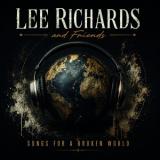
The upcoming debut solo album, Lee Richards And Friends, marks an ambitious milestone for American musician, songwriter, and producer Lee Richards. Best known as an original guitarist for Godsmack and a core songwriter for Dropbox and Another Animal, Richards wrote, performed, and produced the entire record himself.
Joining him on this project is a powerhouse lineup of seasoned rock veterans: late drummer Justin Pacy (Digital Summer), legendary guitarist Billy Loosigian (The Boom Boom Band, The Joneses), and bassist/vocalist Sean Corcoran (RA, Fight or Flight).
Combining decades of high-caliber hard rock heritage and exceptional craftsmanship, Lee Richards And Friends delivers a captivating fusion of hard-hitting riffs, rich melodies, and pristine production. Reflecting Richards' extensive musical journey—from touring with international legends to writing alongside rock icons—the album stands as a compelling testament to his enduring artistic vision.








![Ferdinger - Easy Warmth & Quiet Menace [Incl. DL Codes]](https://www.deejay.de/images/l/0/4/1268804.jpg)