This special 3LP clear vinyl collates the “Back To Black” era in a definitive package. Featuring the original studio album, 4x unreleased demos, rare B-sides and demos, alongside the notable live performance from Paradiso, Amsterdam (February 8th 2007) from the Back To Black tour, never released in full and on vinyl.
This edition features brand new alternative cover artwork, including Amy’s handwritten lyrics, and never-before-seen photos by original album photographers Mischa Richter and Alex Lake, plus brand new, exclusive liner notes from Mark Ronson and Salaam Remi.
2026 celebrates the 20th anniversary of the 5x Grammy award winning album “Back To Black”, universally regarded as one of the greatest, most important and influential albums in pop history.
Re-issue of Klakson 16! Dutch producer Frank de Groodt, well known for his projects like The Operator and Sonar Base, produces his 4th release under the name Fastgraph. He already made big impact on Adults Esatz Audio label and kicked ass with 2 releases on Klakson. Again he drops 4 deep and dark Drexciya style electro tracks!! The raw deal for what he is best known for.
Ralph Session is a direct connection to the old school and original house values and he brings all those to the fore here. 'Move Your Body' (feat Mr Flip - main mix) touches on hip-house energy with jacked drums and rapped vocals. 'You Never Know (Party Break)' is deeper, smoother and soulful for when you need a nice late-night pick-me-up and 'Feel That Spirit' plays around with jazzy, off-grid chords and expressive vocals that play with pitch. The highlight might be the effortlessly breezy closer 'Listen', which is a broken-beat and sun-bathed delight for summer sessions.
Despite the widespread popularity of reggae music in the UK, following its explosion onto the international music scene in the late 1960s, many of these in charge of Britain's mainstream media were reluctant to give the exciting new sound coverage, wither in print or over the airways.
In an attempt to counter this prejudice, Trojan Records took the bold step of embellishing recordings from Jamaica with sophisticated orchestration, with the resultant ‘commercial reggae’ sound immediately finding favour with the country’s reggae fans.
Consequently, the company not just maintained, but in fact extended the procedure, employing producers to record the country’s finest British-based reggae acts. The result was the release of an abundance of superbly crafted recordings, the production values of which rated with the best that British pop had to offer.
Strawberry Guy’s new album ‘Give Me A Dream’ unfolds as a tender, fragile and intimate record. The 14 track album arrives as the ultimate hopecore long player, in a time when we need it most. It's a guiding light, healing for the mind, exploring the tight-rope balance that is making it through life intact. Strawberry Guy evolves from the dreamy indie-pop home recordings to a perfectly formed crystalline vision, utilizing an immersive studio approach. Shifting from sparse & fluid piano parts to rich, engulfing layered strings, infectious melodies and an exquisite rumination on manhood from fraught emotional states. Give Me A Dream is a big step up, brimming with ideas, glistening production, and a tender heart.
Originally released in 2014, Tales from the Realm of the Queen of Pentacles is now being reissued on limited-edition gold vinyl.
The album tells a story of the intersection of the material world and the world of the spirit. Includes fan favorites "I Never Wear White" and "Crack in the Wall,” plus "Song of the Stoic" and “Don't Uncork What You Can’t Contain,” and "Horizon", written for Vaclav Havel.
Produced and arranged by Gerry Leonard, the album features an illustrious group of musicians including longtime Vega bass player Mike Visceglia and drummer Doug Yowell, bass player Gail Ann Dorsey and drummer Zachary Alford (David Bowie), bass player Tony Levin (Peter Gabriel), drummer Jay Bellerose (T-Bone Burnett), and Larry Campbell (Bob Dylan) who plays banjo, mandolin, and cymbal throughout the album. Additional contributions feature drummer Sterling Campbell (David Bowie, B52s) and Alison Balsom, the virtuoso principal trumpet for the London Chamber Orchestra. Catherine Russell, known for her work with David Bowie and Paul Simon, adds background vocals.
The strings were recorded in the Czech Republic with the Smichov Chamber Orchestra. The album was mixed by Grammy Award-winning engineer Kevin Killen.
Blume presents The Days Pass Quickly Immersed in the Shadow of Eternity, a new work by Lea Bertucci commissioned by the ZKM Center for Art and Media Karlsruhe and premiered in Karlsruhe in November 2025. Written for, and created in collaboration with, the flutist Norbert Rodenkirchen, it draws on his collection of Renaissance, Medieval, and Neolithic instruments, harnessing sounds that have been largely absent from the modern world. What does it mean to employ one of humanity's oldest known technologies, the flute, appearing in human hands tens of thousands of years before the advent of the wheel, within an experimental, electroacoustic composition that is inherently forward-thinking?
Since her emergence within New York City's Noise scene during the early 2010s, Bertucci has balanced a fierce dedication to the DIY ethos and immediacy of the underground with a refined sense of creative rigor and ambition, moving from brittle, challenging compositions for saxophone, electronics, and tape toward investigations of acoustic phenomena, site-specific resonance, and complex harmonic interplay. Following her return to the rural environments of Upstate New York where she was born and raised, her work has entered a more introspective phase, with an expanded instrumental, technical, and vocal palette that has found her increasingly composing for others, as on 2023's Of Shadow and Substance and on Fata Morgana, a work for organ released earlier this year.
The piece grew from a meeting with Rodenkirchen after a performance by the early music ensemble Sequentia, to which he belongs. Struck by his ability to conjure "spirits from deep within human memory, as a clarion call into the present", Bertucci began a series of conversations that led the pair into the studio at ZKM in the summer of 2024. Conceived for ZKM's 42.4 speaker system, grouped into 8 discrete outputs before being mixed down to stereo, the work aligns with the collaborative process she has honed alongside her solo efforts, in duos with Ben Vida, Lawrence English, and Olivia Block: a dialog with personal and responsive agency offered to both musicians.
It carries forward her inquiry into the fundamentally human aspects of listening ("I am looking for sounds that call from somewhere deep within the listener and that tap into archetypal human knowledge and feeling") and her investigation of psychoacoustic phenomena and otoacoustic emissions through a meticulous alignment of pitches and timbres. Where many of her most celebrated efforts played, and played with, the room, this one is rooted in an implied space: the flutes recall and blur the boundaries between the eras and environments in which those instruments were originally played, from acoustically engineered Renaissance and Medieval halls to the naturally reverberant caves of the Neolithic, and those of the present.
Bertucci is not the first to bring ancient sound sources into experimental music: Harry Partch's instruments drew on Greek, Chinese, and Japanese precursors, Alvin Curran regularly plays a conch shell, and Walter Maioli has spent decades working at the borders of experimental music and archaeology. Her piece occupies a more rarefied position through its hybridity, combining advanced technology with archaic sound sources while sidestepping the exoticism and romantic primitivism that can hobble such efforts. Compared with its closest cousin, Phill Niblock's Four Full Flutes, where the instruments are manipulated beyond clear recognition, here the flutes remain recognizable and embrace the layers of history they carry. The result is an electroacoustic work that largely forgoes the auditory signifiers of the idiom: it could easily pass for a live ensemble, and only attentive listening reveals that it could only have been made through advanced technology.
As Rodenkirchen's playing interweaves with Bertucci's computer-facilitated arrangements of flute samples, ranging from pulsing clusters to dense combinations of sustained tones, timbres, and distances, the piece draws connections with folk and spiritual traditions across human history: Medieval polyphonic ecclesiastical music, Sardinian canto a tenore, Pygmy vocal music, Buddhist chant. By conjoining one of our earliest known technologies with our most advanced, Bertucci proposes that our tools are not the message, but rather the unending continuum of humanity itself. Issued by Blume in a highly limited vinyl edition of 300 copies on transparent light blue vinyl, with newly commissioned liner notes by Bradford Bailey.
Dolly TS welcomes Juri Heidemann! The versatile german producer is known for his modern stripped hypnotic grooves and unique rhythm textures. His Echo Mute EP strikes hard with a set of deep captivating, pumping, melodic, razor sharp techno!
Dial Records boss makes a welcome return to Smallville in March of 2024 with a fresh four-tracker EP ‘Gravity Hill’. Peter Kersten, better known to most as Lawrence, has been at the forefront of underground house and techno for decades now. His Dial imprint, co-founded alongside Carsten Jost, has grown to become a north star for many seeking out raw, emotive and understated electronic music and Lawrence’s own productions follow a similar path, finding a home on many beloved labels beyond Dial such as Kompakt, Mule Musiq, Ghostly
International, Giegling, Pampa and of course Smallville, that he co-founded together with Stella Plazonja and Julius Steinhoff in 2005.
Title-track ‘Gravity Hill’ opens the project and perfectly sets the tone with Lawrence’s distinct atmospheric haze of keys, chords and pads billowing atop swaying bass tones and crisp drums. ‘Beaver’ follows next and edges into dubbed out realms with expansive stab delays, rounded subs, modulating percussive flutters and a robust rhythmic drive.
‘The Swamp’ then leads the B-side, diving into a deeper territory via airy Rhodes melodies and subtly unfurling pads, intertwined with organic percussion and a jazz tinged bass line. ‘Stargazer’ then concludes the package and shifts back to a more straight, dance floor- oriented feel via a twitchy acid bass, circling resonant synth licks, hypnotic textures and a swinging drum groove.
Smallville 62 artwork by Stefan Marx as always and it's the first 12“ Smallville cover in full colour ever after 61 black/white releases.
‘Unfindable Ring', out October 23 on Bayonet Records, is an adventurer’s epic. The arc of the journey, like any good Spirited Away or Neverending Story, lands its wide-traveled protagonist right back at home before bedtime. Grumpy, like many great hero tricksters before him, has always been a project of juxtaposition: upbeat radio-ready hits whose buoyant, goofy hooks belie the dark thoughts they describe. Much of this, Schmitt acknowledges, owes its due to the matter-of-fact morbidity of the trans experience in America. It’s from these experiences—personal, romantic, political, and existential—that the tale of ‘Unfindable Ring’ unfolds.
Ambition and play have always defined the Grumpy sound. Late last year, the Fader praised their “demented, hooky” EP, “Piebald,” whose innovative fuzz-pop confections earned them coverage in NPR and the New York Times. Stereogum heralded them as “wonderfully weird,” and Paste designated them “the best of what’s next.”” Through boisterous collaborations with the likes of Sidney Gish and Claire Rousay, they’ve effortlessly ingratiated themselves with the titans of DIY, and, more recently, Schmitt has become an unlikely favored collaborator of chart-topping country giant Zach Bryan, who named his new record––which prominently features Schmitt’s harmonies–– conspicuously, ‘With Heaven On Top.’
In Grumpy, Heaven Schmitt is joined by Anya Good, Ellie Long (Kid Lake), Austin Arnold, Diego Clare (D.A. Crimson), and Lane Rodgers, who each contribute to every step of the process—engineering and recording, mixing, drafting artwork, producing, and making music videos. A kind of interdisciplinary thieves’ guild, the project, while once Schmitt’s solo eponym, is a labor of communal love.
“We are living these happy lives, and there are people we come across who don’t know us at all who want us to die,” Schmitt, explains. Often the visibility of the joy itself is what prompts the vitriol––“I’m so happy I could die,” Schmitt belts over and over on the chorus (a familiar figure of speech, sure, but one which, upon any scrutiny, shows Schmitt’s hand in the macabre.) A middle finger to fate, Good started asking, “What are you going to do with your One Beautiful Life?” Grumpy is going to keep playing, touring, searching, finding.
Elastica’s iconic self-titled debut album is set to be reissued by Rough Trade Records on 2 October in a new edition boasting rarities and b-sides.
Striking their own, distinct path in March 1995, Elastica proved uniquely fresh-sounding as the London four-piece delivered on the reputation they had built up gigging around the capital beyond in the months ahead its release.
Home to the likes of Line Up, Waking Up and Connection, singles at once timeless yet in the moment, Elastica’s debut captured the fraying emotions, hazy experience and burning energy of life, love and after-hours adventure.
Absorbing atmospheres and attitudes of their post-punk and new wave forbears, Justine Frischmann (vocals, guitar), Annie Holland (bass), Donna Matthews (guitar, vocals) and Justin Welch (drums) poured their own identities into the album’s 15 tracks which balancing youthful swagger, with sage-like observation and a knowing cool that made Elastica and their debut effortlessly timeless.
No Home is the new album by Lane Hartley, releasing October 23rd 2026 on Royal Oakie Records. Produced in collaboration with David Hartley of The War On Drugs & Adam McDaniel (Animal Collective, Angel Olsen, Geologist), the album was recorded at Drop of Sun Studios in Asheville and features contributions from North Carolina’s tight knit music community–including Mary Lattimore, Seth Kaufman of Floating Action & Dream Sitch, David Hartley, Jack Victor Johnson, and more.
After recording his debut album Naming Horses, Lane left Los Angeles and returned home to the Carolinas, eventually landing in Asheville. It wasn’t too long until the songs started flowing and Lane found himself reaching out to Adam McDaniel at Drop of Sun Studios–a vaunted space that’s been at the heart of indie-rock the past few years, bringing to life recent albums from MJ Lenderman, Wednesday, Fust, and more. McDaniel introduced Lane to David Hartley, and what originally started with discussions to record one song quickly turned into a plan to track a whole album live with a six piece band. Once in the studio, co-producer McDaniel encouraged the group to lean on intuition–“All of the players on this record really brought it to life in such a cosmic way. They instilled so much childlike wonder and fun into the making of the album. It inspired me to keep going” says Lane.
Lyrically the album is a collection of vignettes about people who’ve become alienated from their deepest desires of connection, belonging, intimacy, and autonomy–inspired both by Lane’s own life and the lives of people he’s loved. The unique character of the album emerged when Lane made the decision to pair the dark lyrical content with bright & lush arrangements, inspired by Gene Clark’s No Other, Neil Young’s After the Gold Rush, and Amen Dunes’ Love. In Lane’s words, “The content of the songs got way darker, and my reaction was to make the songs catchier, and to lean harder into the music that influenced me. I wanted each song to feel like a room in a haunted house, with a beautiful garden growing outside”.
Album opener “I Am Not Ashamed” was inspired by the anti-memoir of actress Barbara Peyton, a 1950’s Hollywood starlet who met an untimely end; “It’s about knowing that whatever you’ve done to survive, you still deserve love” says Lane. “Mother” pairs lyrics about ancestral trauma with the sunshine-pop influence of Colin Blunstone, featuring backing vocals from Lane’s sister Barrett Hartley. “It's about coming to terms with the fact that the people meant to protect us are dealing with their own trauma…”
Meanwhile, “All Of This Is Yours” and “Tone Poem” form the spiritual center of the album, an attempt to transmute anger & pain to bittersweet acceptance in the wake of a breakup. “I feel like on the surface this is essentially a breakup album, a lot of these songs are about mourning the end of a relationship and reflecting on what went down. I was falling in love and getting my heart broken, then waking up and driving across the country and doing it all over again.” “Love Is Not A Song” was inspired by Margo Guryan’s Love Songs, pairing bright piano with playful lyrics about an old man who’s been beaten down by life but still believes his greatest love is yet to come. Last but not least, title track “No Home” sums up the album’s key theme of alienation, “It all goes back to this feeling of wanting to belong to someone or somewhere, wanting to belong in your own body.”
Layne & Chang might not be household names to everyone, but in the underground they’re long-established fixtures. Chang—who’s released music under a string of aliases over the years—was tipped by Urb magazine as one to watch back in the mid-’90s and has been embedded in dancefloor culture ever since. Alongside him, Layne Fox (formerly San Francisco, now back in Florida) brings deep disco credentials, having helmed the cult-loved Disco Dimensions label and recording as 40 Thieves—best known for the underground anthem Don’t Turn It Off. In short, the boogie lineage on this record runs deep.
And that’s before you even get to Dan Tyler. As one half of the Idjut Boys and co-founder of Noid Recordings, Tyler helped lay the groundwork for London’s edit culture long before it became a global phenomenon. His involvement here only strengthens the package.
“Shake Your Body” opens the release with a locked-in, funk-driven groove—swirling melodic lines, subtly acidic textures, warm vocoder touches, and tight, punchy drums all dialed for peak-time movement. On the A2, “In The Desert” shifts the mood into something more transportive: a hazy, late-night burner equally suited to open-air parties, after-hours sessions, or home listening with the lights low.
Flip to the B-side and Dan Tyler delivers two cosmic reworks that push things further out. Psychedelic, elastic, and built for serious systems, both cuts hit that sweet spot between heady and physical—already circulating among a handful of tastemaker DJs and primed for heavy rotation as festival season ramps up.
A strong, floor-ready release that sits comfortably in the Whiskey Disco catalogue—rooted in disco, but reaching well beyond it.
Following the Home Listening Acid and House Compilation releases, Mark Churcher aka A-Eno-
Acid returns with his debut LP.
A raw transmission from the underground — deep, hypnotic and unapologetically acid. Rooted in the late-1980s sound of warehouse parties, pirate radio and underground dancefloors, this is an album built for DJs, dancers and heads who know. 808s, squelching 303s and hypnotic grooves — pure acid house energy.
JUDDER announces the second installment of its vinyl series, bringing together a diverse selection of artists united by their passion for experimental bass music. This time, the record is fully focused on a raw, soundsystem-driven aesthetic. On Side A, French producer Amor Satyr—known for effortlessly navigating between dembow, breakbeat, and techno—ventures into dubstep territory for the first time. On 'Over', he translates his signature style onto the genre’s foundations while retaining the distinctive energy that defines his sound. The record continues with a collaborative effort from Thematic and Nattah. ‘Aurora Pulse' is a cold, restrained piece of leftfield bass at 130 BPM, where a sharp, syncopated subline forms the backbone of the groove, pulsing like the heartbeat of a northern metropolis. Opening Side B, Dawn RAzor and Mani Festo deliver 'Awared', a track where techno and breakbeat converge through layered sound design and spring-loaded drum fills. As it unfolds, the composition gradually draws the listener into a hypnotic journey, dissolving familiar genre boundaries along the way. The release closes with ‘Lockjaw'—a true soundsystem slow-burner from Kahter and Mercy System. Broken tribal rhythms and a constantly evolving arrangement keep the listener suspended in a state of mounting tension, one that intensifies with every new detail introduced. Tracklist: A1 Amor Satyr — Over A2 Thematic & Nattah — Aurora Pulse B1 Dawn RAzor & Mani Festo — Awared B2 Kahter & Mercy System — Lockjaw
Donato Basile AKA DJ Plant Texture always wants his music to tell a story, and with his debut EP on Tresor Records, entitled Life, he’s now trying to tell the biggest story there is. According to the artist, “Life is about the fear of growing up”; both the anxiety itself and acknowledging and moving past it.
This narrative seems to have struck a chord with those who have heard the track, “People want to reflect themselves in the music; something personal. Lots of people have been in touch after hearing it; I guess they feel something melancholic in it. Personally, I imagine the track is like the life of a person; going from being born through childhood and youth and onwards, so perhaps they hear this?”
Having used an MPC since the early 2000s, Basile feels an intuitive connection to the hardware he uses, and so the creative process is very spontaneous: “I know where everything is so the music is made immediately. I make everything in the first ten minutes; after that if it’s not right then I just abandon it and start something else.” This immediacy, and familiarity with his equipment is apparent on the A-side, where Basile’s previous life as a drummer comes to the fore and tracks like Cycles and Ripetivo display his native understanding of groove but also how to stir things up - the three A-side tracks find classic techno rhythms seemingly falling apart only to snap back into place even stronger. The B-side finds Donato exploring more of his melodic side with WTT and the aforementioned title track showing Plant Texture’s love of breakbeat and classic techno.
The three digital bonus tracks continue this exploration of melody and syncopated beats - The EXP Days echos the wistful feeling of Life, as Basile meditates on the times spent at EXP, his record shop in Bari, which functioned as a meeting place for electronic producers in the area.
With his last three records all landing within a calendar year (2024-25), enigmatic Swedish producer Civilistjävel! (aka Tomas Bodén) is on a hot streak of releases, his singular vision increasingly ambitious and expansive. There are few artists working at this level so consistently right now, reinventing, revising and continually developing their language. Following on from 2025’s radically re-worked ‘Versions’ (of Mayssa Jallad’s ‘Marjaa…’), Bodén returns to break further fresh ground with his new album, ‘Älvgång’. Featuring contributions from Soccer Committee, Carrier and guest (aka Jabu’s Jasmine Butt), ‘Älvgång’ foregrounds a more brittle and insistent rhythm-based sound, whilst comprising his most broad-ranging collection of material to date.
‘Älvgång’ grew out of a series of sketches made from late ‘24 and throughout the whole of ‘25 at Stockholm’s renowned EMS Studios, which gave Boden free rein to its extensive collection of vintage analogue equipment and rare modular synthesizers such as the Serge and Buchla systems. As a loose framework of tracks began to take shape, so did a reflection of sorts, on family and foundations, underpinned or influenced by sounds that drifted into Tomas consciousness around this time - ancient Swedish pastoral music, Georgian lithurgical chants, gongs, chimes. An idea settled into place, a dedication to his Grandfather, as the earlier release Fyra Platser (tr. ‘Four Places’) was to his Grandmother. Älvgång is grounded with the sense of time and place of an old family photograph, with the tracks over each side bearing one of two names that are more or less the same location - Strinne was the old name for a this loose collection of villages. These days it is more commonly known as Bjärtrå. Metaphorically speaking, the river runs through both.
Civilistjävel! conjures so many adjectives and descriptors, ‘glacial’ and ‘ambient’ frequently among them - but while not altogether untrue, such terms belie the tension and drama so often present in Tomas’ music. Listening to ‘Älvgång’ is not a passive experience. The eight tracks here feel like a patchwork of memories that bathe in the same ethereal, otherworldly glow of Tarkovsky’s polaroids’.
The machine pulses that dominate this landscape are reigned in and tempered by a human hand; lithe, untethered coils, breathing in and out. ‘Strinne Ett’ sets out with purpose, sensing awe and wonder through the murk, but as the final tone unfurls like a question mark, another chapter begins, unfolding/building like a Tarjei Vesaas novel. These lyrical, abstract miniatures combine to reveal a wider context, fragile humanity standing alone against nature.
Guest appearances on Civilistjävel! records have become a regular occurrence (including recent collaborations with Mayssa Jallad, Laila Sakini, Cucina Povera, Thomas Bush, Eldon + Withdrawn), but are used sparingly and with increasing precision. On ‘Strinne Tre’ Mariska Baars’ (Soccer Committee) voice feels like a balm, a clearing. But as her simple, three-word incantation drifts further into fog, the meaning changes, and her words seem to curdle. Carrier’s beats widen the parameters on ‘Strinne Fyra’, a skittering promise that builds tension then refuses to release it; all false starts, Photek gongs, and trinkling modulars. Jabu’s Jasmine Butt pulls all the threads together for the final track, Thomas Tallis’ ghost walking over offset machine impulses, that work against their own symmetry.
Side two begins inquisitively, scanning bleached, alien surroundings, its sparse pads recalling Aphex Twin’s ‘Selected Ambient works Vol 2’. 'Bjärtrå Två’ picks up the baton from ' Strinne Fyra’ with a ruptured Simmons SDS200 analogue drum synth set free from its shackles, the rhythm eventually slotting into the spaces that were hiding in plain sight. What follows seems like an epiphany; ‘Bjärtrå Tre’ is achingly beautiful, a euphoric, winding ascent that leads to devotional plainsong. ‘Bjärtrå Fyra‘s final unheralded shift feels both tragic and haunting.
It’s rare for a hardcore punk band to make four full-length albums, and rarer still for the fourth album to be the band’s masterpiece. Yet Paratiisi, the fourth album from Helsinki punks Kohti Tuhoa, stands as the undeniable coup de grâce of a catalog overflowing with classic hardcore punk. If you’re already a fan, it’ll comfort you to know Paratiisi leans heavily on the strengths Kohti Tuhoa has possessed since their earliest releases: a timeless sound that combines UK82 drive and hooks with dramatic metal flourishes; a captivating vocalist with the perfect balance of grit and clarity, who can both howl like a banshee and carry a tune; and a particularly Finnish way with a driving, medium-fast tempo. But for all the continuities with Kohti Tuhoa’s excellent previous records, Paratiisi almost feels like the work of a new band. The riffs and choruses that anchor the album are impossibly catchy; Paratiisi bulges with huge moments that practically force you to air guitar and sing along (even if you don’t speak a word of Finnish), the band’s peerless chops and the rich and clear recording driving these climaxes to dizzying highs. But while the hooks are memorable, there isn’t a moment on Paratiisi that feels dumbed-down or overly familiar.
In fact, the album feels notably ambitious, pulling influences from across punk’s historical and aesthetic breadth and digesting them seamlessly into Kohti Tuhoa’s distinctive sound. The lyrics (don’t worry: English translations are included!) meet the same high bar as the music. They’re direct, assertive, and punk, but they’re also subtle and insightful, whether they’re tackling huge issues like microplastics or sharing a very personal account of a sexual assault and its aftermath. And then there’s Paratiisi’s most unexpected moment, “Eliitin Psykopatia,” a free punk freakout in the tradition of “Why (Reprise)” and “L.A. Blues.” If Kohti Tuhoa’s brief foray into free jazz tries your patience, though, don’t worry, because after three minutes of building tension, they reward you with what is bound to be the best riff of 2026, a clash of chords potent enough to blow holes through walls the world over. Paratiisi is the sound of one hardcore punk’s most exciting bands at the height of their powers.
Do you know what time it is? It’s Prime Time, the new EP on Punctuality from mischievous French duo Pureblast . Marking the label’s twelfth release, the record serves as a bold statement of intent from the Parisian pair and demonstrates why they’re quickly earning a reputation as one of France’s most exciting live acts.
Across the EP’s five tracks, Pureblast weave together a broad spectrum of influences while remaining deeply rooted in the duo’s singular vision. Every cut is fat, pumping, gritty and playful, ready to turn heads and hips on the dancefloor.
Side-stepping easy genre classifications, Prime Time is modern rolling prog at its most energetic. Tightly wound low-end, pummelling drums and restless basslines drive each track forward with purpose, while sa+ga’s vocals are manipulated and distorted to humanoid perfection. The result is something distinctly personal beneath the machine funk: robotic yet seductive, gritty yet playful.
Deep listeners will spot nods to tranced up breakbeats, Ray of Light-era big beat, Detroit electro and contemporary UK techno with psy-fluenced synth swirls and texture. Far from pastiche, these influences are absorbed into the Pureblast machine and transformed into something entirely their own.
Gritty, pumping, sexy and playful. It’s Pureblast, it’s Prime Time.
credits
For more than two decades, Vidmantas ?epkauskas has occupied a singular position within European underground culture. As the driving force behind Opium Club and gallery 1986 in Vilnius, founder of Ant Bangos, Alfavilnius and OLE festivals, curator, label owner, promoter, DJ and artist, he has spent much of his life creating the conditions for other people's music to be heard.
It makes sense then that he has no shortage of friends and collaborators in play. Across ten tracks, V presents shades of Italo, krautrock, post-punk, minimal synth, industrial pop and neon-noir romanticism, arriving somewhere between the dancefloor and a dream-state. The cast of collaborators both contextualize and help sharpen the vision.
First and foremost, much of the album was crafted alongside Frankfurt's Philipp Lauer, whose friendship with V grew through marathon studio sessions. Curses lends his unmistakable blend of dark romance and theatrical energy to "Is This What You Want?", Australian cosmic journeyman Dreems joins for the kaleidoscopic "Blitz Disc," Domenique Dumont brings their unmistakable emotive touch to "Avventura," while Lithuanian artists Noyus and Ruta MUR, both distinctive voices from the country's queer scene, whose vocals add another dimension to the record's emotional palette. As V puts it, "These are the people I've been vibing with."
That he finally delivers a full-length LP with such elusive qualities is more than a clue to his character. The title itself, a nod to Magritte's famous paradox and his years living in Brussels, suggests that any attempt to define V through a single image is destined to fail. At once playful and philosophical, 12:55 (Ceci n'est pas une V) questions ideas of identity and artistic value while marking the closing chapter of the musical persona that followed ?epkauskas' earlier success as Vidis. Neither retrospective nor statement of intent, it feels like a connected set of reflections spanning a lifetime of influences.
Hector Gannet have always known that place and music are inseparable. For songwriter and guitarist Aaron Duff, North Shields high on England’s north east coast, shaped by fishing, shipbuilding, and the sea, is not just a backdrop but a source. Everything flows from it: the imagery, the politics, the particular stoicism of people who absorb more than their share and keep moving anyway.
‘The Great Shakedown’, their third album, is where that source runs deepest. Featuring bold brass arrangements alongside choir and church bells recorded live at the 17th-century Christ Church in North Shields, the album is Hector Gannet’s most ambitious and most searching work. The brass is a constant throughout: driving the Dexys-style urgency of the title track, lounging through the jazz-tinged Big White Telephone, surging euphorically through singles The Mother Tongue and Seven Signs.
The singles capture something essential about the album, euphoric on the surface, quietly devastating underneath. Beneath its propulsive brass lies an examination of stoicism as both armour and wound, of shared language used to avoid saying the very things that need to be said. It’s a quality that runs through the whole record, which looks at human history and art, the ordinary and the extraordinary, the actions of those in power and the communities who live with the consequences. It is both communal and euphoric - a powerful rallying cry for people at a time when we need it most.
The East Bay's mighty Charger has returned with five new songs on 12" vinyl... Last Call is on its way from Pirates Press Records just in time for your motorcycle trip to hell! Charger members hail from legendary punk bands such as UK Subs, Rancid, and Jello Biafra & The Guantanamo School of Medicine, just to name a few, but make no mistake, this band is its own entity with its own sound forged together! The band laid down these tracks in July 2025 at Studio 2200 in Sausalito, CA - formerly known as the Bay Area's legendary Record Plant - with Chris Dugan at the helm
Built with the immediacy that comes from limitation, iPhone Grime is almost exactly what it says on the tape case. Pulled directly from the portable communication device of Front Left Life's Louis Payne, iPhone Grime is the perfect distillation of raw ideas through a simple medium. When producers can drown in the infinite possibilities of the DAW vortex, a simple phone app can steer you swiftly to the sharpest results. Snippets of real world sound captured on the mic ground these quick-fire beats in a time and place, dynamic and street-level like grime and early dubstep was when it was being imagined on PlayStation games and filmed on ropey phone cameras.
Payne is undoubtedly bringing perspective to his sketches, having forged a connection with London's club scene through his part in the widely hailed Front Left Life parties in Catford, at Venue MOT and elsewhere. With a roll call of guests that cuts a sharp line through the best of bassweight club music right now, his taste and knowledge precedes his first steps into the production arena. Rather than puzzling out the path to a thousand likes for a hardware jam reel, he's opted for a direct line between his brain and the beat at the end of it.
You can hear the naivety behind vocal loops like the one nagging away on 'Follow That', calling to mind the first time you ever tried making a Fruity Loops beat. But these are no amateur throwaways — the technology has moved on and Payne's instincts guide him towards legit constructions that could easily do damage in the club. Sometimes they exist as no more than an eight bar loop, while others like 'Wind It Up (Dream Dealers Version)' or 'Extra Dimensional Being' stretch an idea out. Throughout it all, the looming throb of square wave bass glues the record together and anchors the grime dimension of Payne's job lot of phone jams.
Payne's work is all his own, and the snatches of real life around the beats anchor this music in his own London life. But, like previous shifts in technology and accessibility, iPhone Grime also raises an important prospect—that anyone with one of these apps, a Bluetooth speaker and an idea can bring music out of studios and into the world. History has already proven, when that happens the possibilities become thrillingly unpredictable.
Following the international praise for their 2024 debut album Where Did You Go?, Sandman Project return with Hearts Forever, the first album entirely composed, arranged and produced by guitarist, composer and bandleader Tal Sandman. Rooted in psychedelic groove, Middle Eastern musicality, funk, jazz and desert rock, it is a record driven above all by a wider spiritual belief in music as a force for connection.
If Where Did You Go? introduced Sandman Project as a borderless, brass-heavy outfit with a cinematic sound, Hearts Forever takes that vision somewhere more intimate and self-assured. Written following Tal's move from Jaffa to Leipzig, the album reflects a period of personal and creative transformation. Arriving in Germany without knowing whether she would find the right collaborators, she gradually assembled a new band through recommendations from fellow musicians, discovering a group capable of bringing her musical vision to life. For Tal, the music is not about drawing neat lines between styles or traditions. It is about taking inspiration from wherever it appears and reshaping it into something honest and alive. "If music touches my heart, it inspires me", she says. "So much music already exists, but what we are doing is creating something new out of inspiration. You take the ingredients and make a new thing".
This is the quiet force behind Hearts Forever. Almost entirely instrumental, the album deliberately leaves space for listeners to find their own stories within it. Without lyrics, the music is never confined to one language, nationality or identity.
Following support for Where Did You Go? from All About Jazz, DJ Magazine, Bayern Radio, Greedy For Best, Pipelines Magazine, Ban Ban Ton Ton and Laurent Garnier, Hearts Forever finds Sandman Project entering a new chapter: more confident, broader in vision and more deeply rooted in Tal Sandman's own creative voice. Rich, restless and full of feeling, Hearts Forever is music for uncertain times; a record about holding on to innocence, choosing compassion and believing, however quietly, that connection is still possible.
Long Distance Operators (LDO) is a collaboration between the Australian musician Hugo Race and the Belgian violinist Catherine Graindorge. Hugo Race, singer, songwriter, producer and author, has a long and wide-ranging history, from the trans-global Dirtmusic and his groups True Spirit and Fatalists to his origins in the 80's Melbourne post-punk scene with Nick Cave & the Bad Seeds and The Wreckery. Catherine Graindorge, violinist and composer, is known for her solo work and collaborations with International artists such as Iggy Pop, John Parish, Pascal Humbert (16 Horsepower), Simon Huw Jones (And Also The Trees). She also plays and composes for theater and cinema. The music of LDO is an intensely atmospheric dreamweave of violins, electronics and Hugo's darkly evocative voice. The duo explores metaphysical lyrics, experimental sounds and retro-baroque orchestrations in a romantic, song-based context.
Long Distance Operators (LDO) is a collaboration between the Australian musician Hugo Race and the Belgian violinist Catherine Graindorge. Hugo Race, singer, songwriter, producer and author, has a long and wide-ranging history, from the trans-global Dirtmusic and his groups True Spirit and Fatalists to his origins in the 80's Melbourne post-punk scene with Nick Cave & the Bad Seeds and The Wreckery. Catherine Graindorge, violinist and composer, is known for her solo work and collaborations with International artists such as Iggy Pop, John Parish, Pascal Humbert (16 Horsepower), Simon Huw Jones (And Also The Trees). She also plays and composes for theater and cinema. The music of LDO is an intensely atmospheric dreamweave of violins, electronics and Hugo's darkly evocative voice. The duo explores metaphysical lyrics, experimental sounds and retro-baroque orchestrations in a romantic, song-based context.
"From the Toolkit of Lovers" is the latest from Brian Leeds, known publicly under several monikers: Huerco S., Pendant, and Loidis - a play on his own surname. Recorded over the summer of 2025, Leeds expounds upon the sound of One Day in a 110-minute meditation on life, love and dub
At the foot of the mountain. Our gaze is inclined toward the summit.
Toward the ascent. The destination that awaits us.
From the valley, we look up at the summit: our destination. But also the path: the true destination.
We can already trace our route, and we are already imagining ourselves walking up there. Along the small ridge, just above the tree line. There, we take a short break and look for the exact spot in the valley where we were standing earlier. It is strange to grasp that we have actually climbed this mountain. To look down from up here at the place where we were just moments ago – the same place we looked up from, toward the place where we are standing now.
And now, knowing what it is like to be up here, we remember what we imagined it would be like back then. What we believed it would mean to stand here.
Along the way, our gaze wanders back and forth. Up toward the mountain, down into the valley, sometimes only at our shoes. We keep walking, one step after another. Our thoughts detached. Our body functioning purely mechanically.
Step left. Step right. Step left. Step right.
Our mind has completely detached itself, and our thoughts race at an immense speed. They summon the most different moments. Moments from our lives. Moments that shaped us, that made us who we are. Or are we perhaps simply trying to understand who we are and how we got here?
It is strange that reaching the summit and looking down could make us believe that we have finally reached, or are striving toward, some superior, triumphant position. When in fact, it is really only about looking at the path we inevitably have to take. Processing impressions from a certain distance. Reconsidering what we have experienced, without losing sight of what lies ahead.
Our gaze turns back toward the summit.
Is there a destination?
An ascent? A summit? A descent? The return?
Or is it only about the insights we encounter along the way?
Am Fuß des Berges. Unser Blick ist zum Gipfel geneigt.
Auf den Aufstieg. Das Ziel, das uns erwartet.
Vom Tal aus blicken wir auf den Gipfel: unser Ziel. Aber auch den Weg: das wahre Ziel. Unsere Route kann man jetzt schon abstecken, und wir stellen uns bereits vor, wie wir dort oben laufen. Über den kleinen Grat, leicht oberhalb der Baumgrenze. Dort machen wir eine kleine Pause und suchen genau die Stelle im Tal, an der wir vorhin noch standen. Es ist verrückt, zu begreifen, dass wir diesen Berg tatsächlich hinaufgestiegen sind. Von hier oben auf den Ort hinunterzusehen, an dem wir eben noch waren – an denselben Ort, zu dem wir hinaufgeblickt haben, als wir noch dort unten standen. Und jetzt, da wir wissen, wie es ist, hier oben zu sein, erinnern wir uns daran, was wir uns damals darunter vorgestellt haben. Was wir geglaubt haben, es würde bedeuten, hier zu stehen.
Unterwegs wandert unser Blick hin und her. Hinauf zum Berg, hinunter ins Tal, manchmal nur auf unsere Schuhe. Wir gehen weiter, einen Schritt nach dem anderen. Unsere Gedanken losgelöst. Unser Körper funktioniert rein mechanisch. Schritt links. Schritt rechts. Schritt links. Schritt rechts.
Unser Geist hat sich völlig losgelöst, und unsere Gedanken rasen mit einer ungeheuren Geschwindigkeit. Sie rufen die verschiedensten Momente herauf. Momente aus unserem Leben. Momente, die uns geprägt haben, aus denen wir geworden sind, wer wir sind. Oder versuchen wir vielleicht einfach nur zu verstehen, wer wir sind und wie wir hierhergekommen sind?
Es ist schon seltsam, dass das Erreichen des Gipfels und der Blick nach unten uns glauben lassen könnten, dass wir endlich eine überragende, triumphale Position erreicht haben oder anstreben würden. Dabei geht es doch eigentlich nur um den Blick auf den Weg, den wir zwangsläufig beschreiten müssen. Eindrücke mit etwas Abstand zu verarbeiten. Erlebtes noch einmal Revue passieren zu lassen, ohne den Blick nach vorne zu verlieren.
Unser Blick wendet sich wieder dem Gipfel zu. Gibt es ein Ziel? Einen Aufstieg? Einen Gipfel? Einen Abstieg? Die Rückkehr? Oder geht es nur um die Erkenntnisse, die uns unterwegs begegnen?
DJ Support: Mad Matts, Jimpster, Rainer Truby, Craig Smith, Giles Smith, Shane Johnson (Fish Go Deep), Lars Berhenroth, Leo Luscher, Ricky Chong, Rafa Santos, Buti Mabutana and many more
FORMA002 sees label co-founder Glenn Davis back with a deep original production that also does real damage on the dancefloor. Flip over for a true masterpiece remix from Trinidadian deep with his trademark Caribbean rhythms and deep sonics. When you know..
Glenn's deep driving baseline, jazzy chords and synth stabs elevate you to a hypnotic house nirvana. A love for deep atmospheric and melodic house music creates an instant classic from the Dublin producer.
Trinidadian Deep takes the original Davis production, adds his Caribbean magic with layers of live percussion, vocals, organs and sub bass that needs to be heard on a proper club system. Don't sleep on this one.
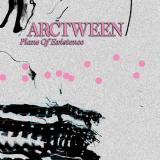
For some time I had hoped to release a full body of work from Tito. Ever since I heard him at Mr. Bean’s Music Club, and revisited records that started appearing around 2018, it felt clear that there was a
particular sensitivity behind the music — curious, rhythmic, spacious, unpredictable. Mostly in the sense that his references and musical background naturally pull from many places at once. When the idea of releasing Plane Of Existence on vinyl started becoming real, it immediately made sense for O Sótão Records.
Based in Porto, Tito Romão first built his path as a drummer, later expanding into composition andproduction through different instruments and collaborations. While drumsare his main instrument, he also studied cello and taught piano for a short period. Later he developed his Arctween project, DJing, and gradually shaping his own language under a new moniker. From Forbidden Cuts in 2018 to Dance Of The Spheres via Discotexas in 2020, his catalogue has slowly traced a path between groove-based experimentation and more immersive sound design.
The years that followed brought even more movement. Together with Gazpa, a longtime friend fromskateboarding days, he released Gaztween’s I through Jazzego Records in 2020, later followed by II in
2025. Around the same period he was also producing Ping Pong,eventually released in 2024 through
Jorge Caiado’s Mad Luv Records. For a couple of years he has held a Saturday residency at the iconic
Mr. Bean’s, still playing regularly with the house band and moving freely between instruments.A lot of that openness leaks into Plane Of Existence. Tito started producing the album during 2024, often late after work, without looking for a clear destination. By 2025 the concept slowly revealed itself. Therecord became an ode to Karlheinz Stockhausen, Manuel Göttsching, and to the modern ambient scene, while carrying traces of jazz, hip-hop and dub throughout its structure.
Division 81 Records is proud to present Step Like a Giant, a collection of songs from acclaimed Swedish vocalist and songwriter Cecilia Stalin, capturing a remarkable period of her artistic journey on the vibrant UK jazz scene of the early 2010s.
Best known worldwide as the unforgettable voice of Koop, Cecilia has long been celebrated for her ability to blend jazz, soul, and lyrical storytelling into performances of extraordinary warmth and depth.
Step Like a Giant shines a light on that creative era, revealing an artist whose songwriting is every bit as compelling as her unmistakable voice.
Inspired by the spiritual legacy and boundless imagination of John Coltrane, the album is both a tribute and a personal statement. Rich with soulful vocals, adventurous harmony, and emotionally resonant compositions, Cecilia honors Coltrane's fearless pursuit of expression while crafting music that is entirely her own.
These recordings capture the intimacy and creative energy of a thriving musical community, offering listeners a timeless collection that feels as relevant today as when it was first created.
Beautifully presented on vinyl by Division 81 Records, Step Like a Giant is an essential release for jazz collectors, longtime Koop fans, and listeners drawn to soulful, contemporary songwriting.
For the second installment of its renewed imprint, Fuse's own in-house resident and one of Belgium's proudest exports Phara takes the reins for a deep dive into thick percussion and vibrant club landscapes. 'The Wall' puts current dance music under a microscope with a brush of truly vintage spontaneity, merging techno's confrontational nature with house's harmonic genuineness. This duality is reflected through Phara's own relationship with his home base Fuse and the complementary contrast between its two rooms.
The EP's title track serves as a hypnotic introduction for the A1, imposing a bass-heavy rhythm and a persistently oscillating synthline. A dense production full of energy, 'The Wall' inspires intrigue throughout its duration, revealing its true intentions through a capable sound system. Sharing the first side of the press is 'Blaes 208', a name that Fuse club goers will likely recognise, that guides the listener from effect into embrace. With lush keys echoing past a comforting drum sequence fit for a close-eyed dancefloor experience, Phara's impactful tendencies meet his affinity for the melodic through a blissful six minutes of crowd to selector connection. Switching sides, a return to a cold cold aesthetic is quickly apparent through 'Hush Now 206'. A pummeling, saturated bass competes with a kick of equal effect, rolling through a storm of metallic stabs. Mastering the message of urgency, Phara presents a lightshow of resonating percussive work, defining his space just to cut right through it. To close out with a lasting impression, the producer mutes the acoustics of his work through razor-sharp sound design dotting along playful snares, a duality reminiscent of the dynamism of Detroit electro. 'Motion Steps', referring to the stairs that ascend from Fuse's main room to its more left-field counterpart, captures the atmosphere of the almost shimmering music that can be expected to be played there; a place where Phara and many others have been known to explore the extremities of their music. He swiftly throws in melodic elements to recontextualize an otherwise pressing composition, and after three chapters of considerable weight, he concludes his record with infectious groove that flaunts technical ability.
Part celebration, part reflection, THE TIME OF OUR LIVES arrives as both the final release of Lancey’s twenties and the closing chapter of a creative world he has spent the last decade constructing. The most expansive statement of his career to date, moving freely between trap, alternative R&B, dance music, Afro-influenced rhythms and more, Lancey explores triumphant highs and lows of stark vulnerability across the album, interrogating ideas of success, freedom, loneliness and what it truly means to have the time of your life. Lancey Foux stands at the forefront of UK rap’s evolution, blending elements of hip-hop, cloud rap, trap, Jersey club, drill, and more into a sound that’s uniquely his own. Since emerging from Newham, East London in 2015 with a clutch of freestyles and SoundCloud singles, Lancey has occupied a lane entirely of his own making. As he closes out his twenties, Lancey looks ahead to the next decade full of more unpredictable artistry as he continues to break the rules and change the game.
In 2000, after almost two decades of hibernation under the ambient waves and dub currents of the Sargasso Sea, LSD revived the seminal ‘Auntie Aubrey's' series, an Orb Remix Project. Released as a 2 x CD compilation, Part 3 is a veritable smorgasbord of classic, new and unreleased labour-of love remixes that span three decades yet still transcend space and time.
Many influential artists have been involved with The Orb since the beginning, and the project keeps evolving and adapting. Dr. Alex Paterson, the gravitation centre of the Orb is known for his playfully subversive remixes and true to form this album highlights the diversity of his musical mind.
We see the good doctor remix the melancholy and evocative “The Last Lighthouse Keeper” from The Transit Kings, an early British electronic music group that included Jimmy Cauty of The KLF, one of the original members of The Orb. The remix of ‘Davy Jones’ Locker’ from System 7 takes you surfing on a sun-dappled sea of ambient dance nostalgia, while Killing Jokes’ ‘European Super State’ remix (in which LSD label founder Martin ‘Youth’ Glover plays bass guitar) sounds like the soundtrack for an imaginary spy thriller with the powerful lyrics and hypnotizing voice of Jaz Summers.
Legendary producer Youth teams up with Lx yet again on a psychedelic rocker with spellcasting vocals by Lara Smiles, and this is just the beginning! Boasting an all-star lineup, the compilation includes many of our scenes most esteemed electronic music producers such as Coldcut, David Harrow, Sendelica and Gaudi as well as the ambient blissed out vibes from the enigmatic DF Tram, Duende India Collective and The Gyuto Monks of Tibet, this collection offers up such the variety to appease even the most dedicated Orbsessives and music connoisseurs
Released in 2000 on Tommy Boy, the album fi nds Capone and Noreaga leaning into their chemistry: Capone's colder, clipped delivery grounding Nore's wild-eyed charisma and off-kilter bounce. The record features heavyweight production and appearances from names like DJ Premier, The Alchemist, Havoc, L.E.S., Nas, Mobb Deep, Foxy Brown, and Carl Thomas, surrounding CNN with some of New York rap's most recognizable voices and architects. Highlights like "Bang Bang," "Invincible," "Queens Finest," and "Phonetime" keep the album rooted in hard drums, prison- call tension, borough pride, and that unmistakable CNN slang. Commercially, it made a solid showing, reaching No. 31 on the Billboard 200 and No. 8 on Top R&B/ Hip- Hop Albums, with "Phonetime" hitting No. 22 on Hot Rap Songs. The Reunion stands as a hard-nosed second chapter for CNN: a tough, guest-heavy, post- millennium Queens record that captures Capone and Noreaga reconnecting without sanding off the grime. This deluxe edition features the remastered original album with 3 bonus tracks.
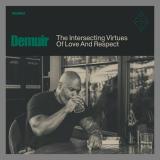
Canada's Demuir makes house music with the sort of feeling and character that defined the earliest days of the sound. Gospel, funk, jazz and much more all colour his grooves next to a superb array of samples, and all of that is on display across The Intersecting Virtues Of Love & Respect, a new album packed with jams. 'TIVLR - Moment Of Clarity has neat organ chords worked into a soulful, dusty groove; there is an infectious bubble to the drums and molten chords of 'Alone In Chicago' and 'Somethin 'Bout Respect' is smooth, free-flowing analogue house with jazzy fingers dancing across the keys. Elsewhere, 'Know They Value' is deeper and more heads down and 'Speak Power To Your (Black) Man' is a freewheeling and sunny sound anchored by more trademark Demuir drums.
Best known for his frankly insane 32-year Subculture residency at Glasgow's legendary Sub Club, Domenic Cappello also played a foundational role in 20/20 Vision's early days as part of Urb n Ri alongside founder Ralph Lawson and Carl Finlow. Space City revives that out-of-print cult classic with a fresh remastering of 'Dream of a Groove' and 'Aquans Realm'. Next to those, the team have unearthed two lost DAT cuts in 'Marvin' - a loosey-goosey and beautifully deft melodic dreamer - and 'Nice n Slow,' a more angular slow-motion workout. Classic US deep house tropes and jazzy invention characterise what a super tasteful EP is.
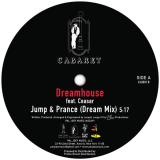
NYC dance music legend Joey Longo has been a part of the dance music soundscape for those in the know from way back when, his first records surfacing in 1989 under a variety of monikers and on a slew of labels out of NYC.
One of his lesser known aliases was Dreamhouse, which only produced two tracks Jump & Prance and I Can Feel It, both in 1990 and contained here on this official reissue. Special mention to the Dream Mix which has long been sort after by collectors and DJ's worldwide and repressed here for the first time since it's original release in 1990. Finally an opportunity to own a slice of Joey's signature raw New York sound.
You know the pattern: someone calls their album "Balearic," and you immediately expect chill-out terraces, pan-flute samples, and the umpteenth return of the Café del Mar sunset. Devi G. refuses this reflex almost maliciously. The title is a trick—an invitation to disappointment for those hoping for postcard exoticism. What is actually being negotiated here is erosion, but that of the body itself: the abrasion one inflicts upon oneself in the excess of the night, when partying turns into wear and tear, and a rush becomes a graze that only becomes visible in the morning. No backdrop, then, but a wound one has voluntarily acquired.
Instead of the usual Ibiza xylophones, Devi G. digs into the rift between idyll and wear. The result reads like a séance—less José Padilla, more as if Kevin Martin had re-recorded a Manuel Göttsching record on a dying four-track deck. The target area lies somewhere between the waterlogged ambient sketches of Huerco S. and the faded dub-afterglow of Actress, but Devi G. remains consistently on his own, grainier frequency.
Balearic Abrasions (title track) opens without haste, demanding almost without impatience: no motif, no rhythmic handhold, just a slowly tilting balance between warm texture and rough surface. The grain never feels forced—it is not a lo-fi costume, but an integral part of the statics themselves. Where other ambient producers strive for perfection, Devi G. consciously seeks the breaking point. Rhythm remains a tool, never an ambition. Those expecting quick resolution will be disappointed; those willing to listen will receive a depth effect that is rarely this vivid.
Exit Through Thee Gift Shop tips into harder territory: dub-techno reduction meets industrial edge, carried by a stoic kick drum that knows no mercy. Metallic textures slice through the sub-bass, while repetitive chords hypnotize like a defective loop. Central to this is a rare Terence McKenna recording, which functions less as spoken-word ornamentation and more as a disruptive spirit between memory and media archaeology. The title—Banksy reference included—turns this into a biting punchline: radical electronic abstraction positioned against the hyper-commercialized art world.
Morning Depth pushes the claustrophobia further, somewhere between post-industrial and deep-sea dub. The track refuses any peak-time logic, preferring to disintegrate into itself, subcutaneously, methodically. At the end, a casual, almost banal vocal sample (“i defiantly prefer chocolate”) breaks into the cool machinery—a small, profane fissure that makes the coldness of the rest of the piece all the more apparent.
Desiré Algorithmic is the album's most calculated moment: a stoic, repetitive bassline as a foundation, topped with fragile melody fragments that flash like glitches in faulty code. The title reads like a promise from nightlife—a figure that suggests much and delivers nothing, because behind the façade there is simply nothing, only simulation. The track carries exactly this principle: promise without substance, desire without body, just rendering. Only in the final third does a melancholic saxophone break into the sterile structure—organic, imperfect, and for that very reason more credible than everything before it. It is the moment in which the real briefly flashes through the surface of the dummy before it closes again.
All-inclusive Residue concludes the album as sedimentation rather than dramaturgy: dub-techno remnants, industrial patina, salty ambient surfaces that settle rather than compose. The refusal of consumption as a sonic principle—brittle, stubborn, with a gravity that lingers long after.
Verdict: Balearic Abrasions is not easy listening with a sea view, but an exercise in patience and friction. The restraint with which Devi G. avoids climaxes will frustrate some—for everyone else, that is exactly where the record's strength lies. No sunset. Rather, what remains on the rocks afterward.