Title track ‘Haunted City’ is five-and-a-half minutes of bumping techno cut through with plaintive pads. Metronomic drum patterns propel the EP from the get-go, fist-pumping forwards like marching music for our inevitable mech overlords.
‘Knopfmond’ is a brooding chugger. With its muted synth stabs and prominent kick, you can practically smell the smoke machine in the break.
‘Pinch Hitter’ ups the tempo further. Despite its propulsive intent, it shifts into something deeper and more introspective than typical peak-time territory; a tool for selectors willing and able to surf intensity and create intimate moments.
Closing track ‘Trix’ is an energetic cut from the off, utilizing a pendulous bassline that coaxes feet to the floor when unleashed at the right time.
Not much is known about the background of this cache of firepower, other than it originates in Canada. Use all weapons wisely to avoid any future arms embargoes.
TECH043 brings A.B.E.L. and Eluna Vex together through a shared sense of rhythm and purpose.
Both authors have already developed a clear and confident approach, even if wider recognition has yet to catch up. Their music is ready to reach beyond the circles that already know their work.
Across both sides of the record, firm drums, driving percussion and deep atmosphere keep the motion steady. Each track has its own shape and detail, while the shared weight and mood allow the four tracks to be heard as one complete work. DJs get four reliable cuts that can build tension, hold the groove or move a set forward without a break in tone.
The difference between the artists is clear, but never disruptive. Eluna Vex and A.B.E.L. bring separate ideas to the record, yet their tracks feel closely related in character, depth and attitude. This balance gives TECH043 range without losing focus: two artists and one consistent physical drive.
A1. “Unsafe Road” opens the record by setting its rules: full pressure, forward drive and several lines developing at once. It tests the listener’s attention, offering a choice between following the whole structure or focusing on one thread within it.
A2. “Getting Away” works like a spell that pulls the dancefloor together. It follows one clear narrative and a direct sequence of events, building towards a climax where every element lands as one shared impulse.
B1. “Test And Run” opens a more exploratory side of the record. It moves through changing forms and gradually reveals its language, without showing the full picture at once. Structurally complete on its own, the track invites the listener into less predictable territory.
B2. “Subconscious” is built on balance, giving equal weight to every part of the sound without allowing one element to take control. It makes no loud statement, but closes the record with a complete and carefully held form.
A time in passing, a time of note. A release created in a moment of profound fondness, within a studio front of memory. A detour delivered to and released on Entered Records via the Zodiacs way of life. Jesse You is here to create the doorway of sound via his 4 tracks of driving psycho players.
Opening the release with Violet Expander a track driven with keys of suspense and basslines for the feet. Rudolf C’s V.E mechanical overhaul remix then hits with the peak funk head melt.
On the Bs a deeper journey tact is delivered through Sorti. A similar drive and suspense yet with a delicate melodic role. Final track Planet Malfunction is exactly that, a wobbly circular loop double backing on itself for the collision of sound, ultimately that malfunction.
A release that takes you on the detour you didn’t know was coming.
Influential UK Jazz/Funk/Disco outfit THE COOL-NOTES' biggest hit 'Spend The Night', originally released in 1985, is back on Dafia Records with a set of brand new, never before released remixes by French Disco icon DIMITRI FROM PARIS.
The original, which reached #11 in the UK Top 40 in the Spring of 1985, is regarded as a mid-tempo UK classic by many since its first appearance. Known for his luxurious, groove-driven productions and remixes, Dimitri From Paris has reworked tracks for artists including Björk, Quincy Jones, Chic and New Order, while helping define the sound of modern disco and house music in a way only he can.
When he got the chance by Dafia label head Mannix to get his hands on the original multitrack tapes, he didn't hesitate to deliver two classic DFP revisions in the making. His Main version leaves all the essential elements of the timeless Original, highlights the parts that have deserved more exposure whilst adding crisp beats and nice effects to the game. The result is a greatly updated version that surely will have many fans within the Soul/Funk/Disco scene.
On his Dub Dimitri Form Paris delivers a spaced out stripped back version with great use of vocal snippets to great effect on any dancefloor.
CEPX003 continues the X-Series on CEP Records with a four track release by Elyas. As a long standing figure in the international techno scene, he has built a strong name through many years of dedication. Known for releases on labels such as Soma Records and Player, Elyas stands for raw and uncompromising techno with influences from ghetto and acid. Alongside vinyl and digital releases, he also runs two own labels and continues to shape the scene with a clear and functional sound. A1 'Cabale' and A2 'Bop Gun' move in a similar direction. Bouncy kicks meet acid lines and atmospheric pads that give both tracks a deep and driving feeling. Straight forward 4 to the floor techno for sweaty warehouse mornings. Small twists, rough transitions and unexpected moments keep the tracks moving from start to finish. On the B side, 'Gimme The Loot' and 'Ghetto Sneak Assault' bring a strong ghetto influence. Playful arrangements, raw vocals and sharp one shots create a loose but powerful groove. The tracks feel direct and slightly chaotic in the best way, while still keeping full control.
Tar Hallow label boss Thanos Hana brings his hardware-heavy industrial grit to the Dolly TS series with 'Sliced Glitter, No Shampoo'. This four-track EP strips techno to its rusted core, fusing obsessive machine-funk with the energy of the Rotterdam sound. Driven by hammering rhythms and metallic synthesis, these 4 tracks are a masterclass in raw techno-realness!
Turn back the clock to an unforgettable era, with 32 huge hits from 1980–1984 brought together across 2LPs.
LP1 launches with Wham!’s feel-good ‘Wake Me Up Before You Go-Go’, before Duran Duran’s ‘Is There Something I Should Know?’ and Eurythmics’ ‘Sweet Dreams (Are Made of This)’ capture the contemporary sound of the new decade. The Human League’s ‘Don’t You Want Me’, Soft Cell’s ‘Tainted Love’ and Heaven 17’s ‘Temptation’ continue an outstanding run of synth-pop classics, with Blondie and Frankie Goes To Hollywood completing Side One. Culture Club open Side Two with ‘Do You Really Want To Hurt Me’, followed by colourful 80s favourites from Adam & The Ants, Altered Images and Kajagoogoo. Haircut 100’s ‘Love Plus One’ and ABC’s ‘The Look Of Love’ lead into Dollar and Bucks Fizz, rounding out a side packed with pure pop nostalgia.
LP2 starts in suitably anthemic style with Spandau Ballet’s ‘Gold’, alongside Elton John’s uplifting ‘I’m Still Standing’ and Billy Joel’s ‘It’s Still Rock and Roll to Me’. The Cars’ ‘Drive’ and Bonnie Tyler’s epic ‘Total Eclipse of the Heart’ bring some of the decade’s biggest power-pop moments, while Laura Branigan’s ‘Self Control’ and Matthew Wilder’s ‘Break My Stride’ pave the way for Dexys Midnight Runners’ ‘Come On Eileen’. Side Two brings another burst of ’80s energy with Ray Parker Jr.’s ‘Ghostbusters’, Chaka Khan’s ‘I Feel for You’ and Billy Ocean’s ‘Caribbean Queen’. Diana Ross’ ‘Upside Down’ is followed by favourites from The Police, Pretenders and The Jam, before Roxy Music’s ‘Jealous Guy’ provides an elegant finale to this celebration of 1980–1984.
Five Special were a five-man harmony vocal group from Detroit whose members included Mike Pattillo, Steve Harris, Zeke Stanley, Greg Finlay and Bryan Banks (the younger brother of Dramatics’ main man Ron Banks). The aim of these five young men was to create a group with the potential of anyone of its members to be able to step up to sing lead on any given song, something which they went on to achieve to great aplomb.
Ron Banks was very instrumental in the founding of Five Special introducing them to his long-time friend Charles “Chuck” Underwood, a one-time former road manager of the Dramatics and by then the owner of the independent T.E.A.I Record Corporation label (T.E.A.I being an abbreviation for “Tellin’ Everybody About It”). Five Special’s first release for T.E.A.I was the 1976 joyously uplifting dancer “The More I Get To Know You” a Jimmy Roach and Marcella Henderson composition featuring Bryan on lead, released as a part I and part II deemed to be a more disc-jockey friendly practice at the time. The record was popular with radio stations throughout the Detroit metropolis leading Chuck to precure a deal with Polygram which resulted in the song gaining release on their nationally distributed Mercury label. A second Five Special Mercury release followed in 1977, the Jimmy Roach penned mellifluous “(Let’s Stop Making) Small Talk” backed with the Ron Banks/Paul Clark penned psychedelic soul styled “Oh, Oh (Look What We’ve Done)” with Greg Finley and Zeke Stanley exchanging tenor and baritone parts throughout.
Through our ongoing working relationship with T.E.A.I Soul Junction have gained access to some previously unissued master tapes on Five Special which were recorded for an intended album project that was never finished. From these tapes we took “The More I Get To Know You” in its 5:50 minutes entirety (not split into parts 1 & 2) backed with the previously unissued mid-tempo delight “You Got To Be The One That I Love” with interchanging leads from Bryan and Steve coupled with the released psychedelic soul “Oh, Oh (Look What We’ve Done)” with interchanging leads between Greg and Zeke, catalogue number SJ565, currently a very popular release amongst Collectors and DJ’s alike. For our second and follow up Five Special 45 release, we have chosen to lead with the gorgeous, previously unissued “Two OF A Kind” penned by Ron Banks with lead vocals being provided by Steve Harris. The B-side of this release opens with another unissued psychedelic song, the Ron Banks/Chuck Underwood composed “Stone Chain Reaction” featuring punchy interchanging lead vocals from Greg Finley and Zeke Stanley, this is coupled together with the released mid 1970’s sweet soul masterpiece from the pen of Jimmy Roach “(Let’s Stop Making) Small Talk” making this yet another quality three track release from Soul Junction.
La Dispute is an American post-hardcore band formed in Grand Rapids, Michigan in 2004. The band consists of vocalist Jordan Dreyer, guitarist Chad Sterenberg, drummer Brad Vander Lugt, bassist Adam Vass, and guitarist Corey Stroffolino. Known for their intense and emotionally charged sound La Dispute has released five studio albums to critical acclaim, including “Somewhere at the Bottom of the River Between Vega and Altair” (2008), “Wildlife” (2011), and “Panorama” (2019). Their music often explores themes of loss, grief, and human relationships through a series of interconnencted stories. La Dispute has developed a devoted fanbase and is known for the powerful, unforgettable live performances.
‘It opens with hypnotic, dubwise low-end pressure; then Guess What pushes into Bristol techno territory. Next up the syncopated bass mutations of You’d Never Know; before Swollows Sunshine drifts into electro, ambient melancholy.’
Finnish-American guitarist Raoul Björkenheim and Norwegian drummer Paal Nilssen-Love join forces on their new album PING, released by We Jazz Records on 30th October on LP, CD and digital formats. Recorded in Helsinki, the album finds the seasoned duo firing on all cylinders and delivering a remarkable set of contemporary free music.
PING brings together nine excursions beyond “guitar + drums” and way beyond “free jazz”. That being said, those are still good touching points for the music that is wild, imaginative, raw, yet also at times delicate and introspective. Friends and collaborators for decades in groups such as the lauded Scorch Trio, Raoul and Paal have the history and the trust to create memorable and original improvised music that stuns and moves the curious listener.
Raoul Björkenheim (b. 1956) is a Finnish-American guitarist and composer who has been creating original music for the past four decades living in New York City and Helsinki, where he is presently based. Describing his on-going work as investigative guitarism, he is best known for an expressionistic and lyrical guitar style. Björkenheim’s eclectic discography numbers 50+ albums, ranging from ambient soundscapes to visceral free jazz, from duo to big band. His large-scale works for symphony orchestra have yet to be recorded, and he has also composed scores for over ten films and dance productions. Björkenheim has collaborated musically with Bill Laswell, Toshinori Kondo, William Parker, Mats Gustafsson, Hamid Drake, Ingebrigt Håker Flaten, Gerald Cleaver, Henry Kaiser, Lukas Ligeti, Morgan Ågren, Paul Schütze, Edward Vesala and Juhani Aaltonen, for the labels ECM, Rune Grammofon, Cuneiform, Tum Records and Long Song records. Björkenheim has been awarded various prizes including the Emma prize for best jazz recording of the year, and been nominated three times for the Nordic Music Award.
Paal Nilssen-Love (b. 1974) is a Norwegian drummer, composer, bandleader, and producer known for his central role in Scandinavian free jazz and improvised music. Since the mid- 1990s, he has appeared on more than 280 albums, including 70 released through his label, PNL Records. He has performed with influential groups including Atomic, The Thing, Peter Brötzmann’s Chicago Tentet, Scorch Trio, and Frode Gjerstad Trio, and collaborates regularly with artists such as, Ken Vandermark, Akira Sakata, Otomo Yoshihide, David Murray, Arto Lindsay and more. Paal Nilssen-Love’s fascination with traditional and experimental music has taken him around the world. Since his first visit to Ethiopia in 2009, he has built strong connections with musicians and artists in Addis Ababa, leading to collaborations, performances, teaching, and artist exchanges with Norway. Since his first trip to Brazil in 2013, he has returned regularly, developing collaborations with artists and musicians across the country. His musical explorations have also brought him to Tsugaru and Aomori in northern Japan, where he has developed an interest in the region’s traditional music. Nilssen-Love is also an active organizer and educator. He started both Oslo’s all-Ears festival, the Blow Out festival and FRAM Kunstfest, and has led workshops internationally and in Norway.
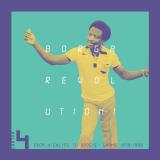
Kalita presents the fourth and final instalment of their groundbreaking ‘Borga Revolution!’ series, uncovering another selection of essential recordings from the rich and far-reaching world of Ghanaian highlife. Spanning deep, hypnotic highlife through to the vibrant electronic productions of 1980s Burger Highlife, Volume 4 captures a period of extraordinary musical change, as Ghanaian artists absorbed influences from funk, disco, boogie, and new synthesizer technology. With previous volumes championed by tastemakers including Gilles Peterson, Antal, Tom Ravenscroft, and Hunee, this final chapter turns its attention once again to the music of the Ghanaian diaspora.
Volume 4 brings together rare recordings from artists such as Rex Omar, Nat Fredua, and CST Amankwah, alongside the elusive, deeply hypnotic and beautiful sounds of the Abibifo Dance Band of Ghana (led by the legendary bassist Ralph Karikari) and Baffour Kyei. Unearthing recordings that have languished in obscurity for over forty years, the compilation moves between deep highlife, rhythmic dancefloor cuts, and pioneering digital productions, revealing yet more musical ingenuity of Ghanaian artists both home and abroad. The final instalment in the ‘Borga Revolution!’ series, it offers another vital collection of forgotten favourites and hidden treasures for DJs, collectors, and anyone drawn to the endlessly inventive sounds of Ghanaian music.
The 1970s and 80s saw Ghanaian musicians begin to incorporate Western sounds like funk and disco into their music, reflecting the changing global musical landscape. However, the country's political instability and economic hardships, marked by military regimes and curfews, forced many artists to leave Ghana in search of better opportunities abroad. In Europe and the U.S., these musicians fused their traditional highlife roots with emerging digital sounds, using cutting-edge technology like the DX7 synthesizer and drum machines to create the genre now known as Burger Highlife.
With ‘Borga Revolution!’ Kalita offers a vivid exposition of this musical transformation, using rare interviews, archival photos, and detailed liner notes to bring to life the pioneering spirit of both well-known icons and unsung innovators of Ghanaian Highlife, one of West Africa’s most exciting musical movements.
· The final installment in Kalita's 'Borga Revolution!' series, examining the development of Ghanaian dance music in the 1970/80s, and focussing on the phenomenon of Burger highlife (a blend of Ghanaian highlife with disco, boogie and synths).
· 2xLP in gatefold sleeve, with printed inner sleeves examining the stories of the artists featured on the volume.
· Includes 10 highly sought-after and under-the-radar recordings, including those by the phenomenal Rex Omar, Nat Fredua, CST Amankwah, Baffour Kyei, Chief Kofi Sammy, and the Abibifo Dance Band of Ghana.
Remastered using pure analogue components only, from the master tapes through to the cutting head.
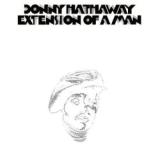
Ranging from urban soul, via orchestral weightiness right up to bluesy ballads and appealing easy listening, Extension Of A Man is certainly Donny Hathaway’s most ambitious album and the crowning conclusion of his phenomenal career. This is hardly a surprise since the album comes from one of the most versatile personalities in the field of soul. Both his debut album Everything Is Everything (ATCO SD 33-332) and the studio album Donny Hathaway (ATCO SD 33-360), which was recorded before the present LP, treated soul purely as a starting point to express Hathaway’s manifold ideas with regard to music and arrangement, and song and performance.
On Extension Of A Man, this ambition began and culminated in the opening piece, a six-minute orchestral composition entitled I Love The Lord; He Heard My Cry, Pts. 1-2. Hathaway himself arranged and orchestrated the work for 45 musicians and he conveys the elation and optimism of Gershwin’s Rhapsody In Blue in a religious context before it passes seamlessly to the transcendental Someday We’ll All Be Free, one of Hathaway’s most popular songs. The next two pieces, Flying Easy and Valdez In The Country, are also original compositions that were first recorded at the end of the Sixties as part of Chess’s studio groups.
The first is a sugary pop soul number that stands out due to its excellent performance, while the second is a gentle jazz-fusion jam in which Hathaway demonstrates his highly accomplished improvisation skills. Love, Love, Love and Come Little Children were chart singles whereby the first number is a poetic love song which is greatly influenced by Marvin Gaye’s What’s Going On. Donny Hathaway’s musical talent was boundless in every sense, and this album confirms without a doubt that he was way ahead of his time. It certainly makes one wonder what he would have achieved had not succumbed to a cruel fate.
MUSICIANS: Donny Hathaway (keyb, voc, b); Gene Orloff (concert master); Marvin Stamm (tp); David Newman (ts); Phil Upchurch, Cornell Dupree, David Spinozza, Joseph Bishop (g), Willie Weeks, Stanley Clarke (b); Fred White, Ray Lucas, Grady Tate (dr); Ralph MacDonald (perc).
Part of the Acoustic Sounds 40 Series
Releasing 40 titles to celebrate the 40th anniversary of Acoustic Sounds!
2x Grammy-winning album mastered from the original master tape
180-gram 45 RPM double LP pressed at Quality Record Pressings
Housed in a Stoughton Printing tip-on gatefold jacket
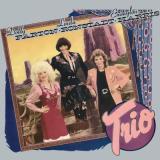
A landmark collaboration and one of the most celebrated albums in country music history, Trio brings together three transcendent voices — Dolly Parton, Emmylou Harris, and Linda Ronstadt — in a recording that's as emotionally rich as it is impeccably produced.
Originally released in 1987, Trio was both a critical and commercial triumph, selling more than 4 million copies worldwide, topping the Billboard U.S. Country Albums chart for five consecutive weeks, and earning the Grammy Award for Best Country Performance by a Duo or Group with Vocal. It was also nominated for Album of the Year. The album yielded four major country hits, highlighted by the haunting, harmony-driven remake of Phil Spector's classic "To Know Him Is to Love Him."
Produced by legendary engineer George Massenburg, Trio is a masterclass in clarity, balance, and vocal blend. Every track showcases the trio's distinct personalities while achieving a near-perfect harmonic unity-three iconic artists elevating one another through tasteful arrangements, pristine acoustics, and song-first performances.
Now, this classic shines brighter than ever. Mastered at 45 RPM and pressed on flat, ultra-quiet vinyl by Quality Record Pressings, this edition reveals rewarding insights for audiophiles, including greater nuance, texture and emotional depth with every listen.
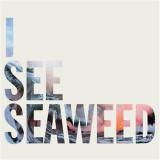
"I See Seaweed" It is one of the great works of art and one or the best album by The Drones. This record gathers all the complexity and greatness of the different sounds and faces of the band lead by Gareth Liddiard. Amazing lyrics fitting perfectly measured and networked melodies where each and every one of the five band members melt creating perfect melodies and sound. Intensity and sound explosions meet anxious quietness and tension. This is one of those records which grows with every listen and never get tired of playing. Don't miss it, this is a very good advice. Bang! is re-releasing this 2013 album by popular demand. A highly sought-after and valued album by its fans. You may know that half THE DRONES today are blowing a TROPICAL FUCK STORM!
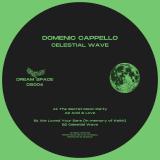
We are honoured and excited to share the fourth Dream Space EP with the world: Domenic Cappello - Celestial Wave.
For more than three decades, Domenic Cappello has been at the helm of Subculture - the innovative and vastly influential Saturday night at Glasgow’s Sub Club. A true master DJ with deep rooted influences from Detroit & Chicago, Dom has consistently pushed things forward over the years and remains at the cutting edge of modern dance music.
Throughout the 90’s and early 2000’s, he put out high-quality records under various monikers on labels such as Soma, 20:20 Vision & Seventh Sign. Fast forward to recent years and Domenic has been on nothing short of a hot streak - releasing music under his own name on Craigie Knowes, Clone Royal Oak and his outstanding ‘Basement Philosophy’ LP on Alien Communications.
He brings the heat once more for this record; blurring the lines of house, techno and electro to deliver four awe-inspiring cuts of electronic music.
‘The Secret Moon Party’ sets things off, nodding to a certain Highland gathering by some of Scotland’s finest purveyors of quality tunes. A warm, gritty bassline carries the track, evolving into a symphony of precise sound design that is in equal parts playful and euphoric.
Dom’s knowledge of the dancefloor shines through on ‘Acid & Love’. This early night floor filler is the alchemy of just about everything you want to hear when things are getting going. Pure warmth and bliss throughout, also holding its place played deep into the late hours.
‘We Loved Your Ears (in memory of Keith)’ is a heartfelt tribute to the one and only Keith McIvor aka JD Twitch of Optimo. Dom wrote this track as something he thought Keith would have loved, and for this one, we’ll let the music do the talking.
Keith was, and continues to be, an enormous inspiration for us and so many others. In his memory, all proceeds from the digital sales of ‘We Loved Your Ears’ and 25% of all vinyl sales will be donated to Beatson Cancer Charity and The Scottish Brain Tumour Research Centre of Excellence.
Closing the EP is title track ‘Celestial Wave’, which does exactly what it says on the tin. A beautiful piece of music and fitting soundtrack for star gazing, moon dancing and dreaming.
STRICTLY CONFIDENTIAL: WE WRITE TO YOU WITH ALARMING NEWS ABOUT THE EXTRA-TERRESTRIAL SPECIMEN DISCOVERED IN THE FORBIDDEN FOREST IN JULY 2017. THIS LIFEFORM, CODE-NAME “DARLING”, ESCAPED FROM THE TOP-SECRET SAFE TRIP ORGANISATION HOLDING FACILITY LATE LAST NIGHT.
ALL THAT WAS LEFT INSIDE THE SUBJECT’S ENCLOSURE WAS A PRESSED POLYVINYL DISC CONTAINING TWO PIECES OF ELECTRONIC MUSIC. THE FIRST, WHICH WE HAVE TITLED “WHEN SHE HATES ME”, SOUNDS LIKE A CALL TO A DISTANT MATE OR PARTNER, COMPOSED AT SUNRISE AND SHOT THROUGH WITH BLISSFUL POSITIVITY. THE OTHER, NOW KNOWN AS “ISLE OF RED”, COMBINES SURGING DRUMS WITH POIGNANT AND MELANCHOLIC SOUNDS THAT ARE CLEARLY UNEARTHLY IN ORIGIN.
Jack Hamill concludes his trilogy of space saga albums with The World Overhead landing on Tiraquon Recordings on October 30, 2026, with a special limited transparent blue edition issued exclusively via Bandcamp from October 16, 2026.
Introducing the science fiction realm of Mikrosector-50 and Mr. 8040 on breakthrough electro funk 12-inch, The Love Quadrant (2009), Hamill signed to R&S Records with the double 12-inch "prequel", The Pathway to Tiraquon6 (2011), setting the stage for debut-album proper Welcome to Mikrosector-50 (2013), where Prince-inspired funk and sleek '80s synth-pop soundtracked Mr. 8040's hazardous journey home via heartbreak and drugs. By Love Beyond the Intersect (2019), Hamill's vocoded opus turned introspective, pairing gentle krautrock influences with themes of love, redemption and self-discovery, mirroring Hamill's personal life, sobriety and creative renewal. Through lockdown Hamill retreated to the countryside around Belfast to reacquaint himself with his machines, experimenting with driving acid and trance, and playing guitar, culminating in a fuzzy shoegaze meets banging IDM sound. Relocating to Amsterdam in 2024 and setting up a new studio, Hamill wrote the third installment of Mr. 8040’s saga, bringing the storyline – and himself – back to earth.
Presenting under the new moniker, Jack Tiraquon, and releasing via his own label, Tiraquon Recordings, The World Overhead is the sound of Hamill removing the guise of Space Dimension Controller and concluding the space-themed concept to move forward as the cinematic hardware musician he's always been at the core.
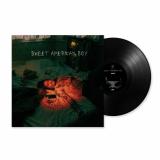
Written during and after a year touring the world, Sweet American Boy
expands the raw honesty that built honestav's audience while pushing his
sound into bigger, rock-driven territory - heard on Can't Let Go, Storm In
This House, and Crash First.
Across 16 tracks he wrestles with family history, addiction, grief, love, and
the complicated reality of chasing - and catching - the dreams he once
chased. It’s honestav at his most vulnerable, self-aware, and ambitious: an
evolution of his signature storyteling that feels larger, louder, and more
unfiltered than ever before.
• MGK co-sign Multiple dates on MGK's Lost Americana Tour; Crash
First (with mgk) on the LP
• Deeply engaged fanbase: 1.8M TikTok • 1.2M Spotify monthly
listeners
• A bigger, bolder chapter: Rock-driven evolution of his sound, with a
headline tour on the way
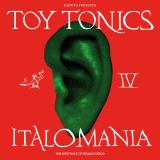
Toy Tonics Italomania Vol. 4 is a compilation dedicated to new ITALIAN DISCO. Not ITALO DISCO.
10 new tracks made by young producers from Italy, exclusively made for Toy Tonics. All songs with Italian vocals.
Made with a lot of love by
Cleeeo, Giorgio Lopez, Magnolia, Juan Soto & Sam Ruffillo, KOKO, Luca Averna, Ricardo Baez, Euro Nettuno, The Cube Guys and Paccone.
The Italomania compilation was initiated by Mathias ‚Kapote‘ Modica. Creative mind behind Toy Tonics and half italian producer himself.
The series is a manifesto to show the status of Italian disco of today.
Kapote invited the most relevant producers to show different new styles of modern Italian disco and house music.
With a wide range of influence: Live disco, indie dance, italo pop, and italo house.
Italian disco is not Italo disco. The last few years saw a big revival of the trashy pop music of the 1980s called Italo disco, mostly with English lyrics.
But this compilation is about something else. It is about this new Italian disco. Toy Tonics wants to show a new way to combine Italianity with dance culture.
The Italomania Vol. 4 Artists
Cleeeo - Come Tocchitu: A sexy and sophisticated disco house track by 22 year old newcomer DJ and producer Cleeeo. Driven by a warm, uplifting groove and strong dancefloor energy. The record is dedicated to Brazil. The vocals move between Italian and Portuguese. This creates a natural bridge between two cultures.
Giorgio Lopez - Italiani Brava Gente: Giorgio Lopez is an important player from the much talked about new music scene from Napoli.
For "Italiani Brava Gente," he teams up with Los Angeles artist Sueño. The track is a tongue-in-cheek take on the stereotypical Italian male. It pays homage to late Italodisco legend Pino D’Angiò. The story unfolds from the perspective of a foreign tourist navigating the contradictions of self-proclaimed Casanovas.
The Cube Guys - Saper Ringraziare: The legendary italo house duo shows their Italian vibes and musical taste with “Saper Ringraziare”. The track captures the warmth of summer and the infinity of urban nights. A combination of early Italo disco elements mixed with their typical groovy beats.
Magnolia - Vesuvio: Magnolia’s “Vesuvio” is a cover version of a song from the 1960s by artist E’ Zezi. While the original is more in a folk vibes, the new version is an irresistible piano house track with groovy, sun-soaked vibes. It is made for the dance floor. This track blends Mediterranean roots with the euphoric energy of modern house. Some might know the vocals already from another cover version by Nu Genea from the previous album.
Juan Soto & Sam Ruffillo - Italomexicano: What happens when a Toy Tonics artist hangs out in Mexico city and teams up with the local scene? The result is here. A blend a Toy Tonics sound and tons of vintage synthesizers and some additional production by Mexican producer talent Juan Soto.
You get "Italomexicano". A fuse of the mystique of Mexican mariachi with the magnetic pulse of Italo disco.
KOKO feat. Elena Moroder - I Can't Understand: This melancholic piano house track is a serious floorfiller! Goosebumps! Italian DJ and producer KOKO teams up with Elena Moroder on "I Can’t Understand". Elena delivers a captivating vocal performance. The track explores the misunderstandings of a relationship where emotions were never fully expressed. It blends an iconic piano melody with warm, uplifting grooves.
Luca Averna - Le Luci Della Pista: Luca Averna is a DJ, producer, and resident at the iconic Pikes Hotel in Ibiza. "Le Luci Della Pista" is an energetic track designed for peak-time Ibiza moments while keeping a strong groove and a playful spirit.
Ricardo Baez - È Venerdì: Ricardo Baez is an Italian-Venezuelan DJ and producer. He is known for his distinctive blend of house, dark electro, italo disco, and leftfield electronics. Well respected in Italy's contemporary electronic scene he has been releasing on labels such as Running Bag, Permanent Vacation, Bordello a Parigi, Correspondant, Mule music, Live at Robert Johnson.
Euro Nettuno - La Notte Chiama: These guys are hot! Part of the Polyamore Crew, one of the rising italian new disco collectives their sound mixes Italo house from the 1990ies, electro and Pop in a very cool new way.
Paccone - J'Adore Napoli: Vincenzo Paccone is a DJ, producer but also very renowned graphic designer. He is co-founder of NSS. A fashion agency that is by now one of the leading italian fashion crews. He has been also working as a designer for Circoloco Ibiza for many years and organizes some of the hottest parties in Napoli currently. He makes his official debut as a producer with “J’Adore Napoli”. It is a vibrant tribute to the house music culture born in Naples. The track draws inspiration from the late 1990s and early 2000s. And is part of a NSS campaign about the ’new coolness of the city of Napoli“.
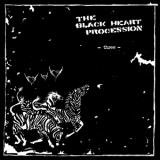
Die Band ,The Black Heart Procession" besteht aus den beiden Hauptsongwriter Tobias Nathaniel und Pall A. Jenkins, die beide zuvor bei ,Three Mile Pilot" mitwirkten. Manchmal treten sie als reines Duo auf, zu anderen Zeiten laden sie Freunde ein, mitzuspielen. Mario Rubalcaba (Clikitat Ikitowi), Jason Crane (Rocket from the Crypt) und Kazu Makino (Blonde Redhead) wirkten an der Entstehung von ,Three" mit. ,Three", das ursprünglich im Jahr 2000 erschien, ist das dritte Album der Black Heart Procession in voller Länge. Die Klänge der Instrumente verschmelzen miteinander und untermalen den Rhythmus von Palls ausdrucksstarkem Gesang. Jeder Song scheint sich unaufhörlich vorwärts und rückwärts zu bewegen und spielt dabei mit dem Kontrast zwischen hellen Klängen und dunklen, grüblerischen Themen. The Black Heart Procession brechen Herzen mit der Verschmelzung von Klängen aus Klavier, Säge, Pumporgel, Gitarre, Trompete und Gesang sowie dem einen oder anderen ungewöhnlichen Perkussionsinstrument. Die Klänge mögen bei einigen von Ihnen Schmerz oder Freude auslösen - oder beides -, da ihre Musik von Trauer und Herzschmerz durchdrungen ist, doch es liegt ein unterschwelliges Element der Befreiung darin.
WHIMM formed around the shadowy heart of the Toronto post-punk underground over a decade ago. The partnership between Mounir Al Shami and Andrew Matthews has emitted sporadic musical shards over time, while slowly evolving into something so much bigger than its beginnings. Ideas seep out of every corner of No Promotion, showcasing a burning desire to explore and challenge while delivering very direct sonic offerings. The result is an album that feels as if you took the entire Coil discography and smashed it into pieces, assembling these precious songs from the fragments. Or as if Vangelis beckoned Section 25 to the studio in hopes of recording the score to a seedy film. The resulting LP is in a state of flux – equal parts motion and decay.
Patrick Flegel, of Cindy Lee, welcomed Al Shami and Matthews into REALISTIK Studios in Montreal to engineer half of the tracks for the album, including lending guitar to the opening track "Five in Decline." That influence is evident early on, as the first three songs are taken from those sessions. "Five in Decline" throbs and barks before racing through the hallways closing in around it. "Another Labour" slows to a spidery waltz as anxious melodies call out to one another. "Returnal" pulses, floats through the night sky and haunts you forever. "Rye" carves a percussive pathway toward similar travellers like Terry Riley and Jon Hassell, before the lament of "A Death Remembered" forms the perfect midpoint for the record. A slow build countered by twitching drums and blanketed by organs recorded at Metropolitan United Church in Toronto, it feels like emotion right on the edge of resolve.
"Rhymes of December" screeches through on a solitary train under the towering cityscape as the flickering lights blur past, its doors opening to the candlelit altar of "After the Last Sky" (those beautiful organs again) with an operatic swirl. "K'20" throws you into a claustrophobic and chaotic cab ride (Who is talking? Are those sirens?) until you finally find the quiet of the early morning, waiting at the window for the sun to join you once again as the first notes of "No Promotion" are delicately plucked. The final song from the Flegel sessions, it is over eight minutes of contemplative beauty. A restless heart that is ready to rest. Closing with a final apparition in the key of The Caretaker, "After the Last Sky (Reprise)" is a return to melody when words lose all meaning.
Al Shami and Matthews weave their lyrics throughout, words describing a search for lucidity, and of reactions and reflections. Al Shami – speaking from the Palestinian diaspora – ruminates on displacement, both personal and collective. His journey from having "been without a land and I can still see clearly" in "Rhymes of December" to a more defiant "we will be back again, no matter how it ends or where we've been" in "Returnal" takes a very insular turn on No Promotion. That sense of alienation pulls at the very center of a relationship when land and circumstances separate: "And after our last breath, all that's left in me is our flesh and fears, your last words would swim for years, you'll never find a home in me." Hearts on the outskirts that know the direction.
Josh Ludlow - one half of MAKE A DANCE - one of London’s most beloved duos - steps out on his own for a rare solo outing on legendary London imprint Rhythm Section International.
A late contender for EP of the year - the record meanders menacingly across four tracks of mind-altering, dissociative Brain Music, precision engineered to transport a listener and hypnotise a crowd without losing any dancefloor impact.
Interestingly, Bradley Zero (RS label boss) and Mr. Ludlow have a connection dating back to the late 2000s, when they were both drummers in rock and roll bands...almost 20 years later - a shared love of experimental electronic music has brought them back together, resulting in this spellbinding EP.
Channelling a much darker, heads down, aggressive sound than the uplifting house M.A.D have become known for, the record begins with 'Brain Music’, which serves as a Detroit techno-inspired wormhole of a track, guiding us into a parallel, inner dimension.
Time Upside Down is next up and it becomes apparent we have entered another realm entirely. The introductory bars of the song feel like a long journey down a dark tunnel. The sound design and acoustic backdrop are so evocative you can almost see it. Obnoxious bass notes reverberate through the space created by the track, slowly giving way to flurries of high-pitched, resonant acid lines - the sum of which escape easy classification. It would be lazy to call it house music, misleading to call it techno - but it’s definitely not tech house. Elements of disco, electro, post-punk, balearic and Weatherall-esque chug are all in the mix but essentially, this is its own thing - this is Brain Music.
The record continues to the penultimate track “The Kettle”, which starts off in more familiar upbeat, bongo-house territory before the calm is betrayed by a hovering intensity which grows out of nowhere before making space for a humungous bass synth melody - so big in fact that it has never once failed to elicit club-wide bass-face; which for a mid-tempo track is no mean feat. We round things off with ‘Mean Mother’, the most playful of the bunch: a Chicago house-indebted workout reminiscent of Paranoid London at their most visceral. The track feels familiar and almost safe until the synth-work is cranked up to 11, creating a cacophonous SH-101 build-up into a disco-esque drop that would get even the most reluctant raver jumping up and down for more.
Besides all the theatrics and acoustic world building, the evocative sound design and the insatiable, no-nonsense grooves - the thing that makes these tracks stand out is the attention to detail. No two fills are alike, every embellishment is EQ’d and polished to perfection - yet no immediacy is lost. The tracks feel alive, intentional and constantly evolving. Hyperbole aside - we have a serious, generational talent on our hands whose mastery of the equipment, understanding of the dynamics of the dance and unabashed
playfulness is being harnessed into something that stands out head and shoulders above the crowd.
Craig Alexander drops back with the Soul Revival repress — a raw, deep house cut built for heads who know. Originally released on Transparent Records, now back on wax through Phonogramme.
Limited-run energy, timeless groove, straight-up dancefloor business.
Feedbacks:
Dave Huismans (ex_libris, In Transit) : Nice to get Soul Revival digitally, thanks!
Ben UFO (Hessle Audio / Rinse FM) : absolute classic
Laurent Garnier : SOUL REVIVAL is super cool track Will play
Mike Shannon (Cynosure) : Nice to have this one back! thx
Prosumer : this a journey into sound
Red Eye (Crash Planet Rec, R.E.A.D., Red/Shift, Lavish Habits, Multipass) : ahh i have this original vinyl. Glad to have a digi!!!
Dorian Paic (Raum Musik) : good re release too. Soul Revival is the one for me, in the past and now as well. ;) Thx for the promo !!
Hunee (Rush Hour) : lovely reissue
DJ Bone (FURTHER) : Lovin Feelin works for me, thanks
Chloe Caillet (Smile Records) : love these!
Franck Roger (Real Tone Records) : soul revivais is dope as always !!!
Terence :Terry: (La Vie En Ros / Freak N Chic) : what a good remember we use to played it a lot " Soul Revival" super track to surprise everyone Terence :Terry:
Tripmastaz (Plant 74) : tight cutz
Jorkes (Freeride Millenium) : soul revival is cute
Girls Of The Internet (Classic) : Classic!
Geir Aspenes (G-Ha (Sunkissed)) : Thanks
Terry Francis (Fabric) : nice
Sven Weisemann (Mojuba Records) : absolute classic!!!
Pacific Coliseum (Dublab, Teen Daze, Noire & Blanche) : DEEP!!! These are gorgeous, thank you so much for sending!
Pat Hyland (Northside Loft Society) : A welcome release from Craig. Three pure dancefloor heaters with Soul Revival topping!
Fred P : Dope...
Doc Martin (Sublevel) : Good Grooves!!!!
Mark Farina : good stuff. thanks!
Samuel Deep (SlapFunk Records) : yes
DJ Steaw (Rutilance / Steaward) : Nice ep thanks :-)
Lea Lisa (Phonica Records / Folklor Club) : Soul revival for me !
Brothers' Vibe (Luv4Wax) : Bangers!
Anthony Collins (Frank & Tony / Scissor & Thread) : great record
Carlos Valdes (Is Burning) : Loved it since the first time I've heard it! Happy to have the digital file!
Alveromancy is a method of divination performed by attending to and interpreting certain sounds, so that the loudness of sound is taken to indicate the severity of predicted event and from its proximity how soon the event will come to pass.
The label’s first divination session is made up of 4 selected cuts originally composed between 1994 and 1996 coming from Fred Exelby’s archives, bringing his All Broken solo project back to a renewed life more than 30 years after his last release.
Rooting its core into Canada’s 90s DIY electronic scene and drawing inspiration from themes such as anti-pop culture, shared knowledge, music programming and his formative frequentation of the seminal Rivoli in Toronto, this record might also be seen as a picture in time, a reflection of Fred’s world back then.
Hailing from Sweden, Obergman operates somewhere in the space between deep electronics, Detroit-influenced machine music, and late-night dancefloor hypnosis. Since the mid 90’s, his unique explorations in sound and groove have seen him release on such esteemed labels as Skam, Börft, Abstract Forms and most recently Craigie Knowes and Orson Records.
For his debut release on Cyphon Recordings, Obergman delivers four cuts of atmospheric, machine-driven music under the suitably cosmic title Periodic Motion.
„Nowawes2“ marks the second chapter for the label, staying true to its sound without repeating itself. Poul Verner delivers another limited hand-stamped two-tracker built around warm analog textures, organic grooves and understated depth. No unnecessary tricks, no oversized moments. Just two carefully crafted cuts that unfold in their own time. The A-side, „Choose Your Future“, settles into a deep 120 BPM groove, drifting through layers of dub delays, tape noise, subtle pads and restrained chords. Equal parts dub techno and deep house, it leaves plenty of space for atmosphere to do the talking. Flip it over and „Choose Life“ raises the tempo to 130 BPM without sacrificing its hypnotic flow. Stretching across 12 minutes, it builds patiently without ever rushing its destination. More drive, more momentum, yet the same sense of space. Dreamlike, immersive and made for those moments when the dancefloor locks into a rhythm of its own. „Nowawes2“ continues to explore the space between laid back house and organic techno with patience, restraint and an unmistakably analog character. Built for long blends, late hours and selectors who know that the most subtle records often leave the deepest impression.
MALEDICTUS is a Portuguese metal band formed in Lisbon. Bringing together experienced musicians with a shared vision, the band creates dark, powerful and atmospheric heavy music. With a foundation of aggressive riffs, haunting melodies and emotional vocals, the band blends modern heavy metal with darker, more melodic influences.
The group was formed by musicians seeking to explore a heavier and more expressive sound, combining technical musicianship with compelling songwriting and a cinematic atmosphere. Their music strikes a balance between intensity and melody, moving between crushing guitar passages, dynamic rhythms, and dramatic vocal performances. ""Our music reflects who we are and how we process life and our own emotions. Music is life manifested through an artist's soul. We all process life with a sense of dark melancholy”, comments guitarist Ben Stockwell. As history has taught us, Portuguese metal bands are known for their melancholic sound, which reflects their cultural identity.
Since their formation, MALEDICTUS has been focused on creating music that reflects the darker and more emotional aspects of the metal genre. Drawing inspiration from classic and contemporary metal acts, the band aims to create a sound that feels familiar yet distinct, appealing to fans of powerful, atmospheric metal.
Boasting a line-up of seasoned performers and a clear artistic vision, MALEDICTUS is developing new material and establishing its presence in the Portuguese metal scene and beyond. Their debut album, „Lazarvs“, is set to be released on Friday 13th of November. The album title draws heavily on the biblical story of Lazarus in the Gospel of John, in which Jesus performs the great miracle of raising his deceased friend Lazarus from the dead after he had been in the tomb for four days.
With Rez on vocals, the band has an exceptional singer with a distinctive, powerful voice. „He is undoubtedly one of the best out there having power, soul, range and timbre. Everything fits perfectly with our sound. We couldn't have asked for a better voice or frontman"", says the guitarist. Rez’s lyrics are another perfect addition to the band's dark, epic and partly progressive sound. The lyrical themes focus on life's darkest moments. „Death brings an opportunity for renewal, as do our most difficult struggles, which require part of us to die in order to be overcome.
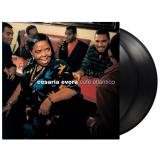
A native of the island nation of Cape Verde, Cesaria Evora was known as the country's foremost practitioner of the morna, a combination of West African percussion with Portuguese fados, Brazilian modinhas, and British sea shanties. After a short singing career in the 1970’s, she returned in the late ‘80s with a string of critically acclaimed and increasingly popular albums.
Her 1999 album Café Atlantico (a reference to her home where she frequently entertained guests) is a much-acclaimed masterpiece, finding Evora venturing into more Latin American musical landscapes, as opposed to Portuguese, which dominated her previous albums. Evora draws from traditional Cuban and Brazilian music to mesmerizing effect. The music is heart-breaking and nostalgic, warm and tragic all at once.
Café Atlantico is available on black vinyl and includes an insert with lyrics.
'Get Back' is a 8-track album and collection celebrating the last ten years of Italian DJ and producer Da Lukas, a respected name in the global nu-disco and house music scenes. Known for blending vintage disco nostalgia with modern electronic production, this collection brings together his strongest club anthems from the past decade. The album also introduces two brand-new tracks. The first new track is a powerful cover of the James Brown-penned Lyn Collins funk classic, "Take Me Just As I Am," featuring a brilliant vocal performance by Fatimah Provillon. The second new addition is the original title track, "Get Back," a driving nu-disco anthem featuring the legendary dance/pop singer Amanda Wilson. This album serves as both a perfect retrospective of his signature sound and an exciting look at his latest work.
A collaboration few would have predicted, and one that makes perfect sense once you hear it. Munich producer Skee Mask (Bryan Müller) has spent over a decade turning hazy, atmospheric techno, breakbeat, dub and jungle into some of electronic music's most acclaimed records, from 2018's Compro to 2024's Resort. North Americans, the ambient country-folk project of guitarist Patrick McDermott, brings a completely different palette of slow-unspooling drones.
Final Circle finds these two worlds colliding, pairing rhythmic electronic detail with the wide-open, meditative textures both artists are known for.
New York-based Japanese jazz and electronic music polymath Takuya Nakamura presents his debut album Shape The Future - almost 35 years into his storied musical journey.
An expansive double album, the album’s first LP documents a spellbinding live performance by Nakamura recorded at fabric. A hybrid set combining DJing, live electronics, vocals, and trumpet, the set also features studio versions of special collaborations with Shigeto, Currency Audio and Tim Reaper. The second LP complements the first by assembling studio recordings of select album tracks. Altogether the two volumes make for a definitive display of Nakamura’s exceptional musicianship across jazz, DnB, jungle, broken beat, deep techno and more.
Across his career, Nakamura has played Brazilian music, merengue, salsa and straight-ahead jazz. He’s opened for Sun Ra Arkestra, performed with David Byrne, Laurie Anderson, Lee “Scratch” Perry, Wu-Tang Clan, and Arto Lindsay, appeared on sessions with Terry Riley, ASAP Rocky, Goldie, and TV On The Radio, and remixed the likes of Quincy Jones, Sun Ra, Billie Holiday, and The Streets. He’s also played under director and playwright Robert Wilson.
Although the musical past and present of the Tokyo-born, New York-based DJ and trumpet player is undoubtedly eclectic, Nakamura is abidingly steeped in the sounds of jazz and jungle. This’ll be obvious to casual observers who may have seen any viral videos of him. But there’s more to this. The depth of Nakamura’s engagement with these kinds of music, the way they’ve made him into the person he is, the decades-long path they’ve taken him on; to now arrive at the summit of a solo album is all truly remarkable. Shape The Future resonates with every chapter in this story.
In high school, Nakamura’s friends started listening to jazz and jazz fusion, which piqued his interest, especially when they started going to clubs to see it live, where they managed to see US legends like Sonny Rollins play. Eventually he began to play jazz every day and his musical skill emerged early. He soon became obsessed with getting closer to the source of this music, which led to his studies at the New England Conservatory of Music in Boston with George Russell, an influential figure who had taught Miles Davis and John Coltrane. Nakamura drank it in: not only the technical aspects but the sense of a direct connection to “a music culture where Russell and his friends changed harmony forever. I wanted to know how that was possible!”.
This was a radical experience in itself, but then another revolution happened for Nakamura. He was playing in a venue called The Western Front, near Boston and discovered that the elderly owner had his own soundsystem and was playing what was then - in 1992 - only just becoming known as jungle. This was as freeing a musical revelation as his proximity to the giants of jazz was, and in that instant the two things fused. He understood that using technology to fill a dancehall with sound and a jazz musician’s reflexes are all working to the same ends: “You’re always making decisions,” he says, “but it doesn’t have to be really difficult. It’s the truth of the frequencies, and how they’re affecting people’s minds.”
From that moment on, his life path was set. Moving to New York City, he sought out jungle and its offshoot sounds wherever he could find them, gigging and collaborating relentlessly, and gradually developing his own live and hybrid live/DJ shows. Through regular appearances at New York fixtures Zebulon and CBGBs, and continual shows elsewhere in the city, Nakamura developed his live performance and DJing and it was in these environments that he gradually weaved together his twin loves without compromising either, building an international reputation in the process.
It’s only fitting then that his first album, almost 35 years after he first found his musical direction, should be a live one: a window into this never-ending process. Even here, he had to be persuaded that he should make a record. A member of the fabric team got turned on to his music after their daughter saw him play. Of course, as a jungle lover, Nakamura knew fabric – which has a special place in the history of jungle and drum’n’bass – and “had wanted to play there since I was very young.” You can hear the club in the record: this isn’t just a live show, in keeping with his jungle roots, it’s Nakamura duetting with the soundsystem, and you can feel how the emotions in the room would have ebbed and flowed.
This dynamic translates to a transfixing record. Setting the tone with lushly textured ambient and reverberant jazz, Nakamura segues into cinematic breakbeat and stellar fusion, infusing it all with intoxicating low end and hypnotic rhythms. The LP’s midway point locks into mesmeric percussion heightened by resonant echoes of piano and trumpet. There’s an endless pull to this music. Nakamura adjusts the levels for maximum impact throughout, and the overall effect begins to evoke some harmonious hybrid between a jazz ensemble, a classic Metalheadz 12” and a Theo Parrish DJ set. His electric form continues through surreal jazz, intricate electronics and rolling sub-bass velocity, right up to the subtly devastating final cover of Peter Gabriel and Kate Bush’s ‘Don’t Give Up’, with Nakamura’s fragile vocal sitting in the heart of a huge sound.
From Tokyo jazz nights to formative studies and encounters in Boston to his artistic development in New York, Nakamura reaches another milestone with his monumental debut album. It’s a release that happened just the way a Takuya Nakamura record should. In the same way his instincts led him to musical revelations, taking his own sweet time has led him to make one of the most extraordinary debut albums imaginable, all executed in his own singular style. In Nakamura’s world, the universe finds a way.
SELN Recordings is proud to present Sillons, the debut release from French musician Pierre François.
Straight from Nantes with love and sadness; Sillons is the soundtrack to being shut inside and sheltered from all the dread beyond your bedroom door. What may at first appear as a collection of abstract loops unravels into something much greater throughout its entirety.
Underneath a thick atmosphere of tape hiss and crackle, minimal synth explorations emerge and float away while the occasional guitar-esq riff ebbs in and out of the foreground like waves at the shore. Percussive refrains come through with perfect timing, their occasional rudimentary timbre all in the spirit of ‘do it yourself magique’.
Picture the following: it’s been decades and you’ve forgotten how to communicate with the world outside, all you have left are message-songs which leave behind a story of what it was like to be separated from everything you’d ever known during an existential sabbatical. This is very near to the audio experience that Sillons gives and thus makes it so real. On this merit alone François deserves his flowers.
Even the shortest of songs manage to conjure up visceral imagery. For example ‘Abouile’, with an impressive runtime of 51 seconds, dives straight into the eeriest corners of a Cold-War era ‘Numbers Broadcast’ being sent out from malfunctioning military personnel venturing off into the depths of their consciousness.
All in all there is something distinctly ambitious and positive within Francois’ work. It takes you to a place where little else matters except the mood and feeling the music provides, a hopeful and emotive landscape.
Anna Almani might be your new favourite producer. IFYKYK.. If you don't, then let's get to know..
Anna Almani is a Berlin based “Drag-DJ & Fun-House-Queen”. She is “Big Sister” at ‘Love Letter’ an imprint “for flinta & queer sonic goodness” and she is the alter ego of deep house producer and Poker Flat & Watergate artist ‘Iorie’.
Anna says “This EP is part of my queer expression. It’s all about the attitude to resist, it’s about being yourself unapologetically. It’s a big hug to the queer community and a love letter to resistance on the dancefloor. Be radical, have an attitude and lose yourself.”
When we picked the tracks for this EP we were completely spoiled for choice. There’s so much personality in Anna’s music that every track list made sense. And that’s because there’s a common thread that runs through all of Anna’s music - Balance. Ying & Yang. Dark & Bright, Passive & Assertive, Masculine & Feminine, Fun & Depth all in kept in amazing dynamic balance.
This is Share Now & Save for Later… Gratification immediate and delayed. .. . four tracks to take you through from open to close. From Berlin to NYC and round again
‘See Me Walk’ is gonna be the track that grabs the attention and connects with dancers everywhere. Fast, fun and full of attitude it’s a 909 workout with the energy and syncopation of Ballroom Vogue aaaaand a fabulous diva vocal to match. ’Tender T’ counters the audaciousness with some tenderness. Energetic yet embracing, this introspective proggy, dubby afterhours roller is a proper trip! Full of colour but hazy af.
On the flip ‘Gimme Some’ ramps up the tempo. Fast, urgent and cyclic grooving techno - with a strut - that’s both dubbed out and in your face. ‘Anladın mı’ is a collaboration between Anna and German/Turkish producer Zettka. Low slung house that both jacks and grooves. Rolling basses balanced with playful chords. “Anladın mı” it translates as “Do you understand? or “Got it?”. By now I think we do understand.. That certain je ne sais quoi… Anna Almani has definitely got it.
Originally released in 2000 on Smalltown Supersound, Kim Hiorthøy’s first record Hei captures an artist who had made very little music before – yet it seemingly was the starting point of a musical career that would stay away from easy categorisation. Now, Hei (2026 Remaster) returns on blickwinkel, released digitally and on vinyl on 30 October 2026, as part of an ongoing series revisiting and reissuing Hiorthøy’s work.
Made in Copenhagen with little equipment — an Akai MPC2000, a stereo microphone and a DAT machine — Hei was assembled from samples, sequences and rhythms, with no outboard mixing or processing. Without really knowing what he was doing, the music was created intuitively while drawing inspiration from instrumental hip-hop he was listening to, the techno and drum & bass he admired but did not yet know how to make, and a broader fascination with music that felt personal, homemade and slightly uncertain of its own identity. Hei sits somewhere between those impulses. It is beat-driven without belonging entirely to beat music, experimental without announcing itself as such, but unmistakably coming from a playful series of events and decisions.
In that regard, the title of the closing track might be a fitting description of the album itself and, in hindsight, also of how we can look at Hiorthøy’s subsequent work. Taken from a story by Tove Jansson, the title evokes a state of openness and curiosity, a state where thoughts and impressions are simply given the space to unfold:
“He didn't care to get up, all day he let new images and ideas come and go as they pleased, now and then slept a little and woke up again and had no idea who he was. It was a peaceful and very exciting day.”
There is something of Hei in that state of mind: a willingness to follow an idea without knowing exactly where it might lead, a willingness to follow guts and the heart rather than ratio. Perhaps that is also what makes Hei still feel relevant today. As Hiorthøy puts it when reflecting on the music he made then and the music he makes now: “If I compare the music on Hei to music I’m making now, the general sentiment or smell or air or tree or pull of what I’m looking for and listening after when I work is, I think, for better or worse, more or less the same.”
All music by Kim Hiortøy
Mastered by Stephan Mathieu
Portraits by Kim Hiorthøy
Design by Jelle Martens
Timeless – yet always fresh: Regardless of the whims of the pop business, Planet Yello has been making its rounds for almost fifty years, repeatedly whisking us away to a world where past and future greet each other and James Bond joins forces with the Man in the Moon, Dionysus and Philip K. Dick.
"To the future, through the past"—with their fifteenth studio album, "Time Lab," Dieter Meier and Boris Blank put this maxim into practice more vividly than ever. Blank meticulously crafts his imaginary soundtracks from fresh samples and found objects from his own archive, which has accumulated a vast collection of sonic fragments, riffs, and motifs over nearly fifty years of creative work. Meier immerses himself in these parallel soundscapes, discovering within them his romantic tales of robbers, mysterious night creatures, and Dadaist wordplay. Essentially, every Yello track is both ancient and brand new at the same time. This principle is perfectly illustrated by the first single, "Around the Sun." It's based on a dormant Meier recording that was cut at the last minute from the selection for "Claro Que Si" (1981). Blank gave Meier's sonorous voice a fresh sonic makeover – the result is an elegant and flexible, thoroughly Yello-esque combination of past and present, romantic wanderlust and driving percussion. "Break Out" also plays with stylistic elements that can be traced back to Yello's earliest days: a dangerously prowling bass riff, fiery percussion, and storyteller Meier in hypnotic top form.
Time begins where it ends, or vice versa. Or, as Boris Blank says: "Yello's music doesn't really know time."
Nu Vision is the latest project of Duke Cooper, band leader and label boss of Nation, Kode and DirtyBlends. There are three humans who make up Nu Vision, and they all have their own stories and discographies, records released on labels you might know, gigs played in Chicago or Berlin or someone’s loft, lives lived, friends made, sleep lost - fighting for theirart, standing by truths, defending voices, honoring progenitors, whilst pushing a new paradigm. Time is both fleeting and heavy for us all, but it is not without receipts.
Nu Vision is a band in the classic do-you-believe-in-alchemy sense - equal parts rhythm, damage, and deep feeling. Drenched in nostalgia and futurism, The Seed is a singularity of sound + vision; as if heavily rotated by VJ Dave Kendall on MTV’s 120 Minutes but materialized via today’s technology.
The Seed 10 inch provides additional music inspired significant icons Section 25, Liaisons Dangeruses and Adrian Sherwood having paved the way with their prior successes..- this package of The Seed is no freshman effort; but rather, a masterclass in continuing sonic education, delivering a unified experience from beginning to end. A NU VISION.
The Seed 10 inch provides additional music inspired significant icon band: Section 25 from the period of 1981-1984 with a more electronic-dance direction, process which culminated in the album ' From the Hip ' and remix single "Looking From A Hilltop", both released in 1984 as "Insecure Man is about being true to manhood with Robert Lane leading the charge with his vocabulary message of the current state of society.
Insecure Dub focuses on the period of 1981-1984 with an alternative electronic-dance direction process as an inspired blueprint from Nu Vision inspired from Adrian Sherwood having paved the way with his individual success.
Inspired from electrifying songs produced by Chrislo Haas (DAF) and Beate Bartel (Mania D. / Matador) reinforced by Krishna Goineau’s French and Spanish Speech-Attack-Lyrics Liaisons Dangereuses created a unique style anything other than a Berlin or Düsseldorf ‘thing’ – that was propelled to an international underground phenomenon of fame.
Nu VIsion was inspired to create a blueprint from the period of their productions of 1981-1982 with an electronic-dance direction paying homage with passionate craftsmanship utilizing what equipment was possible in the studio at the time of this recording featuring new members; Zoe Murphy & Fletch The Stranger on vocals and James Chazz on Saxaphone with a Ring Modulator.
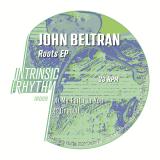
"John Beltran joins forces with Ireland’s Intrinsic Rhythm for a masterclass in emotional Detroit Techno with his "Roots EP" featuring a deep & soulful remix from Fireground.
Few names command the same reverence in electronic music as John Beltran. Since pioneering the more melodic, ambient-soaked textures of Detroit techno in the 1990s and 00s, the Michigan producer has spent over three decades crafting electronic music with an unmistakable human soul.
For his latest outing, Beltran links up with Irish imprint Intrinsic Rhythm for a physical and digital release after previously providing a remix for IR004 . The A1 "My Faith In You" is a perfect distillation of his signature sound: lush, cinematic chord progressions, propulsive rhythm arrangements, and that deep-running emotive warmth that makes his catalog timeless and this continues on the A2 with "Gratiot" a timeless piece of Deep Detroit Techno with a shuffling groove and precise tones and textures.
Sharpening the edge of the package is a stellar remix from dynamic Italian duo Fireground. Known for their driving, soulful and rich sound on labels like Tresor and Ilian Tape, Fireground adds a deeper more textured version of "Gratiot" and reconstructs it into a sun drenched musically rich remix. Together, the release forms a beautiful bridge between the two artists. "