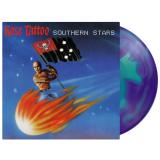
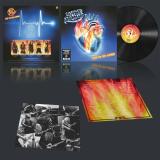
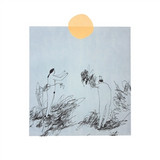
Southern Stars is the fourth studio album by Australian hard rock band Rose Tattoo. The album was recorded with Angry Anderson on lead vocals, Geordie Leach on bass guitar and new members Greg Jordan on slide and lead guitars, John Meyer on guitar and Scott Johnston on drums. It peaked at No. 30 on the Kent Music Report albums chart.
Southern Stars, with production by Vanda & Young (known for their work with fellow Australians AC/DC), had the band moving in a more AOR style, but retaining their hard rock, boogie blues style. Its lead single "I Wish" reached No. 32 on the Kent Music Report singles chart. It was followed by the singles, "Freedom's Flame" and "No Secrets". Rose Tattoo toured Australia in support of the album and it was well received, but by late 1985, Anderson put the band into a year-long hiatus due to his acting commitments. It was the last Rose Tattoo album, which was produced by Harry Vanda and George Young.
Southern Stars is available as a limited edition of 750 individually numbered copies on turquoise & blue swirl vinyl
Auf ,Reflections Vol. 3: Water Poems" bringen Félicia Atkinson und Christina Vantzou ihre Freundschaft und ihre atmosphärische Kunstfertigkeit in einem feierlichen Fokus zusammen. Gesprochene Worte und orchestrale Fantasie fließen wie Nebenflüsse in einen einheitlichen Strom und ergeben eine Sammlung traumhafter Lieder und Klanglandschaften, die im Meer, im Himmel und in den Steinen verankert sind. Mit elektroakustischen Instrumenten, Gesang und Umgebungsgeräuschen lädt Water Poems die Zuhörer in einen unbewussten Raum ein, irgendwo zwischen alltäglicher Intimität und dem Geheimnis des Ozeans, aus dem alles Leben entsteht. Atkinson und Vantzou haben sich 2009 kennengelernt und seitdem immer mal wieder zusammengearbeitet, aber ein Konzert 2019 in der Philharmonie in Paris hat dieses Projekt richtig in Gang gebracht. Da beide jetzt an der Küste leben (Félicia am Ärmelkanal, Christina am Mittelmeer), wurde das Meer natürlich zu ihrer Muse. ,Das Meer wurde nicht als monolithische Postkarte betrachtet", erklärt Atkinson, ,sondern eher als eine Person an sich; eine Energie, ein Geheimnis, ein komplexer Charakter, dem wir als Menschen, die am Meer leben, jeden Tag begegnen." Im Dialog mit dem Land und der Küste nahmen ihre Sprache und ihre Klänge einen sakramentalen Charakter an. ,Ein feierliches Gefühl, ein Gefühl des Dienens, zieht sich tief durch dieses Album", bemerkt Vantzou, ,ich habe das schon einmal gespürt, aber hier, in der Zusammenarbeit mit Félicia, ist es stärker." Stimme, Atem und wässrige Texturen prägen den Ton des maritimen Mysteriums von Water Poems. Neu in Vantzous Praxis und seit langem ein prägendes Merkmal von Atkinsons Werk, gewinnen ihre gesprochenen Worte hier an relationaler Intimität, indem sie sich gegenseitig und die Uferpromenade ansprechen. Die Texte wurden über zwei Jahre hinweg gemeinsam zusammengestellt. Mit radikaler Unschuld lenken sie das Bewusstsein auf die verborgene Auftriebskraft und die unbewussten Strömungen, die durch das Leben fließen: ,Wie kann ein Boot schwimmen? Wie kann ein Flugzeug fliegen? Wie kann ein Körper schwimmen? Wie kann ein Mensch träumen?" Was mit nah aufgenommenen Stimmen und Feldaufnahmen begann, wurde um Synthesizer, Gongs und Metallophone, Klavier, Vibraphon, Rhodes, Gitarren und Mellotron erweitert. Das Gezeitenklavier des Eröffnungstracks ,Film Still / The Sea" zieht uns in die unbewussten Gewässer des Albums. Enthalten sind Feldaufnahmen, die Vantzou in Delphi in der Nähe des legendären Orakels von Pythia aufgenommen hat - ihr griechisches Erbe verleiht diesem Ort der Vorfahren eine zusätzliche Dimension. Dieser Track und ,Water Poems" als Ganzes sind Ausdruck unseres geologischen Erbes und rufen zum Schutz der Küsten und zu einer Vertiefung unserer Beziehung zu unseren Küsten auf. Ein Teil der Einnahmen aus dem Album geht an Arion, ein gemeinnütziges Naturschutzprogramm für das griechische Mittelmeer. Der langjährige Freund und Mitstreiter John Also Bennett hat bei ,Scorpio Purple Skies", dem kosmischen Finale des Albums, mit E-Gitarre, Lap-Steel-Gitarre und Gesang mitgewirkt. Diese üppige Instrumentierung passt super zu den Science-Fiction-Visionen und der feierlichen Atmosphäre des Albums. Water Poems wurde in The Old Carpet Factory, einem Herrenhaus aus dem 18. Jahrhundert auf der griechischen Insel Hydra, in der Villa Medici aus dem 16. Jahrhundert in Rom und in Les Dunes, Atkinsons Heimstudio in der Normandie, aufgenommen. Mehr als das historische Prestige dieser Orte war es die spürbare Geschichte ihrer Landschaft, die die Musik geprägt hat. Atkinson sagt, dass sie sich zu ,Orten mit seltsamer Anziehungskraft" hingezogen fühlten. In der Villa Medici ,haben Steine und Mineralien das gesprochene Wort beeinflusst", bemerkt sie. ,Wir beide legen Wert auf Gefühl, Atmosphäre und Klang", fügt Vantzou hinzu, ,was er hervorruft und was er bewirkt. In unserem Fall konzentrieren wir uns auf die grundlegenden Elemente: Wasser, Luft, Fels, Kosmos - allesamt lebenswichtig.» Von der Insel Kreta aus arbeitete Vantzou den finalen Mix fertig und tauschte dabei Dateien mit Atkinson aus. Immer noch mit der Küste verbunden, verlief der Mixing-Prozess geduldig und wurde von wichtigen Pausen geprägt. Water Poems spiegelt wider, was die Meeresbiologin Rachel Carson uns in Erinnerung ruft: ,Am Rande des Meeres zu stehen bedeutet, Wissen über Dinge zu haben, die so nahezu ewig sind, wie es das irdische Leben nur sein kann." Es zelebriert rituell dieses ozeanische Gefühl als wichtige Quelle der Gelassenheit und Intelligenz. In einer Welt, die von hitzigen Meinungen und ökologischer Vernachlässigung geprägt ist, lenkt Water Poems unsere Aufmerksamkeit auf ,die Quellen der Quellen". Damit schafft es Raum, um uns wieder mit unseren elementaren, animalischen Instinkten zu verbinden und uns auf tiefere Strömungen einzustimmen. Water Poems von Félicia Atkinson und Christina Vantzou ist der dritte Band von Reflections, einer Reihe zeitgenössischer Kollaborationen von RVNG Intl..
Everything I Ever Saw finds THE MENZINGERS entering a new era in what"s already been a storied career. The Philadelphia punk legends" eighth album chronicles moments of significant change-the personal, the political, and the universal-while returning to the core creative principles that first put them on the map with listeners the world over. Twenty years in, the Menzingers have discovered that the wisdom gained with time"s passing is even stronger than the emotional armor they once wore in their youth, and Everything I Ever Saw captures the quartet embracing the here and now while strengthening the bonds that have held them together. THE MENZINGERS have always created as a four-headed unit, with all members (vocalist/ guitarist Greg Barnett, vocalist/guitarist Tom May, bassist Eric Keen, drummer Joe Godino) throwing in their respective talents as part of the craft-but for Everything I Ever Saw, the group worked in creative symbiosis more than ever before. "The way we made this record feels the most like how the band was in the very beginning: Me and Tom coming to the band with the most basic element of a song, and the four of us shaping that," Barnett says. Instrumental in building that excitement was locally centered and nationally renowned production legend Will Yip, who threw in with the Menzingers on 2017"s After the Party and their sonically expansive 2019 record Hello Exile. This time around, Yip once again became an unofficial Menzinger while the band crafted these 11 songs in their South Philly space. "Working with Will was like a homecoming," May beams while talking about Yip"s contributions. "We"ve grown up together over these years, and we"re still incredibly close friends. He"s the best at gassing you up and making sure everybody"s on the right page, but he"s also so good at pointing out stuff that might not fit the vision without being a fucking prick. He"s the hardest working person that we"ve come across in the music industry, and he"s incredibly inspiring."
Die erste offizielle Live-Veröffentlichung von Molchat Doma, aufgeführt und aufgenommen im legendären Hotel Panorama, jenem beeindruckenden architektonischen Denkmal, das auf dem Cover ihres Durchbruchsalbums ,Etazhi" zu sehen ist. Molchat Doma, die dafür gefeiert werden, eine unverwechselbare Darkwave-Ästhetik der Sowjetzeit zu verkörpern, erwecken ihren eindringlichen Sound mit drei bei den Fans beliebten Titeln zum Leben: ,Toska" und ,Sudno" aus dem viralen Phänomen ,Etazhi" sowie ,Chernye Cvety" aus ihrem von der Kritik gefeierten Album ,Belaya Polosa" aus dem Jahr 2024. Gelobt für ihre Fähigkeit, melancholische Synthesizerklänge mit mitreißenden Rhythmen zu verbinden, fängt diese Veröffentlichung die rohe Energie ihrer Live-Auftritte ein - und präsentiert Egors erschreckend emotionalen Gesang neben subtilen, live neu interpretierten Versionen ihrer charakteristischen Synthesizer- und Gitarrenarrangements.
Themes of birds and flying are woven throughout the album, which includes traditional songs such as "Peace Like a River" and "Little Bird, Little Bird," as well as favorites by Bob Marley, Lou Reed, Vashti Bunyan, and Woody Guthrie. Joined by her family, including her daughter Storey and husband and Ida bandmate Daniel Littleton, Mitchell crafts an inviting, homespun sound that draws young listeners in with its warmth and tenderness. To celebrate the landmark album's 20th anniversary in 2026, it has been reissued by Smithsonian Folkways on LP for the first time.
One of the finest singing brother duos of all time, The Everly Brothers ' close harmonies became one of the most identifiable sounds of the early rock & roll era of the late 1950s and early 1960s. Presented here are the very best of The Everly Brothers' pop charting-singles from the peak of their career. "There have been some wonderful harmony pairings in popular music: John Lennon and Paul McCartney, Michael Stipe and Mike Mills, Marvin Gaye and Tammy Terrell, everyone will pick their own; but there is something very special about family and especially sibling harmony. A modern group like The Proclaimers took their inspiration directly from the Everleys, who borrowed something in turn from The Louvin Brothers and other acts of the time. The voices were not just in tune but shared a very particular timbre. The brothers fell out in time, as brothers do, but when they sang - and there's no need to list the songs; they're stitched into the history of rock'n'roll - they didn't sound like two men, but like one." - Brian Morton "Phil and Don were the most beautiful sounding duo I ever heard. Both voices pristine and soulful." - Paul Simon
Sacred Leather is a traditional heavy metal band from the heart of Indianapolis, consisting of Dee Wrathchild (vocals), Lynn St. Michaels (lead guitar), Cvon Owens (rhythm guitar), Magnus Legrand (bass) and Don Diamond (drums). Following a privately manufactured live cassette, 2018’s debut album »Ultimate Force« and numerous (digital) singles, the new »Keep The Fire Burning« is the band’s most definite statement yet. Produced by the legendary Arthur Rizk (Eternal Champion, Power Trip), every track on the record is a call to arms. High-octane compositions such as “Spitfire At Night”, “Phantom Highways” or “Malevolent Eyes” show that Sacred Leather are true defenders of the faith. All songs breathe the raw power of classic 80s metal. Bassist Magnus Legrand comments: “Judas Priest has been a massive influence on us - not just aesthetically or stylistically, but in their ability to cover a wide range of sounds while always remaining unmistakably themselves. That balance is something we actively strive for: to explore every facet of heavy metal without ever losing our identity. The same can be said for KISS, Scorpions, and Queensrÿche - bands that can rock, rip, soar, go epic, or strip it down to something tender, all while keeping their signature intact. That versatility, anchored by a strong sense of self, is the standard we hold ourselves to.” According to Magnus Legrand, »Keep The Fire Burning« is a clear progression from the debut album »Ultimate Force«: “It’s sharper in its songwriting, stronger in its musicianship, and more focused in its execution. Where »Ultimate Force« laid the foundation, this record pushes further into those same territories with greater intent and refinement. It builds on what we established before, expanding the scope while tightening the strike. As a whole, »Keep The Fire Burning« is a relentless ride through the heart of traditional heavy metal - familiar in spirit, but undeniably Sacred Leather in execution.“
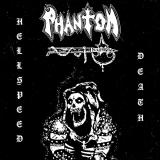
Mexico’s Phantom bring raw, unrelenting energy to speed and thrash metal, and their 2022 “Hellspeed Death” demo is now hitting a wider audience with a High Roller Records re-release, complete with two bonus tracks. “Hellspeed Death” remains a true demo in spirit: raw drums, gritty vocals and guitars that cut with sharp precision. The songs are steeped in old-school influences — early Slayer, Venom, Tank, Motörhead and Voivod — but still full of the band’s own ferocious personality. Tracks like ‘Payback,’ ‘Reaper’s Bane,’ and ‘Death Crusade’ race forward with galloping, punk-tinged thrash energy, while ‘Onslaught’ and ‘Speedhammer’ deliver blackened, high-velocity assaults that leave no room for compromise. Phantom write what matches the mood of the music: fast, loud, and aggressive themes like war, revenge, horror, and dark chaos, aiming to leave a mark and revitalize the underground. At this stage, the band had already experienced moments that hinted at bigger things to come. Thus, the new edition of “Hellspeed Death” showcases a fledgling band full of energy, attitude, and DIY ethos. Their mission has been clear from the outset: to push their music as far as it can go, play relentlessly, and prepare for a debut album (“Handed to Execution”, 2023) that eventually turned quite a few heads.
Featuring Sarathy Korwar, Dudú Kouate, Marysia Osu and more
French-born, London-based composer and musician Pascal Bideau aka Akusmi announces his second full-length Terra Incognita, an album of intrepid sonic exploration that delights in the sensation of being somewhere you've never been before. The listener is invited to experience seven faraway sonic imaginariums, as global and spiritual jazz are fused with modern electronics and life affirming minimalism into a hypnotic, polyrhythmic odyssey.
The album's rich multilayered sound world features contributions from tabla virtuoso Sarathy Korwar, Senegalese musician Dudú Kouate adds an array of percussions, ngoni and flutes and Levitation Orchesta's Marysia Osu brings harp and flutes. Following Akusmi's widely acclaimed debut album Fleeting Future (2022) which was supported by The Guardian, The Quietus, MOJO , Gilles Peterson, Mary Anne Hobbs etc, this time, the sound palette for Terra Incognita is more vibrant, earthy and abundant, drawing inspiration from the radiating optimism and high-energy sources heard in Afrobeat, Highlife and Electronic Afro-pop music, sounding looser, free and primarily interested in raw sensations
out of Stock
Last delivered 3 months ago available to reorder, subject to availability
Based out of Brighton, UK, Murmurations have been steadily carving their path as an essential label for distinctive dancefloor moods. The fourth record on the imprint is the launch of a new series titled 'Flock', focusing on bringing different artists together who share similar visions and tastes. Volume one features Evasive frontman Rob Pearson with Paul Donton and label founder Leo Christopher on the A-side. On the flip, you have rising Manchester talent Huw Shipps and Bubble resident The Adventures Of Dogman. This amalgamation of producers has materialised into a record that focuses on nostalgic tech house textures, infused with modern elements and deep, dub tones.
First up is Rob Pearson & Paul Donton's excursion, 'Ideas Abstract'. Slinky drums pave the way, as pensive vocals circulate around the distinct and perky drive of the track. The aptly named 'Underground' from Murmurations boss Leo Christopher teases a more mysterious energy, with pulsating bass in combination with tight drum arrangements. The emerging producer Huw Shipps kicks off the B-side with a playful outing; quirky elements splash in and out throughout the track. Finishing off the release is dancefloor heater 'Cruising Around On A Pair Of Naughty Pennies', chunky and driven as it moves, ready to do the damage, keeping the club locked in.
The Murmurations curation thus far has seen each release shine bright, with timeless music for the club, no-nonsense, heads-down action, and long may that continue.
Baby Ford perfected the minimal sound with his impeccable early run of releases. Now, one of them gets reissued many years on and it still sounds as strikingly new as ever, not least because it has been remastered by the legendary Dubplates & Mastering in Berlin. The sought-after EP from Peter Adshead emerged during his shift toward stripped-back techno and tech-house and captures a deeper, more hypnotic side of his craft. 'Serpentine Tale' coils through hissing rhythms and shadowy bass pressure, while 'Night D3 Died' pairs crunchy drums with mournful synth chords. Closing cut 'The Introducer' drifts into warm, spacious territory.
out of Stock
Last delivered 27 days ago available to reorder, subject to availability
SML is a Los Angeles based quintet featuring Anna Butterss, Jeremiah Chiu, Josh Johnson, Booker Stardrum, and Gregory Uhlmann. Spontaneous Music Live contains two side-length pieces of unedited improvisation, recorded live at Los Angeles venue Zebulon during SML"s December 2025 three-night residency, just weeks after the release of the band"s second album HOW YOU BEEN. It was recorded and mixed live to stereo tape by Bryce Gonzales (the same engineer/wizard known for his gorgeous live captures/mixes of Jeff Parker"s ETA IVtet). Between HOW YOU BEEN and their 2024 debut SMALL MEDIUM LARGE (both of which were heavily edited, shaped and post-produced) the band has developed a reputation for records that are heavily fused, polished, and punchy. The medium is on full post-modern display on those LPs, and the band"s post-production knife can be responsible for much of the perspective - the tastiest morsels collected, arranged, and rearranged just so. But the source material from both those albums were live recordings. Longform, unwieldy, ebbing and flowing. On top of that, every performance the band has ever done has been fully improvised in that spirit. So in the sphere of live performance the band"s esteem has grown down a different path - one of linear, hypnotic, expansion. It"s a perceived split persona shared by some of SML"s most inspiring conceptual bedfellows: compare the extended madness of Can"s Live in Paris 1973 to the relative tight form of Future Days from the same year; the speed-funk chaos of Miles Davis" Dark Magus to the heavily deconstructed On The Corner or Big Fun. Spontaneous Music Live removes the curatorial perspective and pulls the curtain back on that search-pluck-reconstruct editing process. What we"re left with is the psychedelic realism of the band in situ, in their home town, collectively improvising, fully in-the-moment, mining for that moment of discovery. We hear, in macro, each nugget of sound which could be the basis for a future SML album track, spattered amongst the collective chaos-and-control like stars in the night sky.
out of Stock
Last delivered 42 days ago available to reorder, subject to availability
Finnish jazz producer Valtteri Laurell reworks some of J Dilla’s most iconic beats into adventurous big band versions. With drummer/producer Teddy Rok (Teppo Mäkynen of Five Corners Quintet, Stance Bros. etc.), flutist extraordinaire Elena Pinderhughes and Laurell’s own 17-piece Ricky-Tick Big Band, he creates a big band album that you never thought you would hear. Using the sparse and visionary beats of J Dilla as a starting point, Laurell has composed and arranged material on top of the original versions, performed by Ricky-Tick Big Band. ”My original idea was to write very abstract big band moments, that would be like samples Dilla might have used in his work. During the process though, on some of the tracks I started to feel more of a Bob James or Henry Mancini vibe in the arrangements, so the end result is a hybrid of those worlds. Naturally, the spirit of Gil Evans and the later work of Duke Ellington is also floating in the air”. To create a strong connection with the original material, Laurell asked Dilla-aficionado and drummer/producer Teppo ”Teddy Rok” Mäkynen to work with him on the rhythmic side of the pieces. Teddy Rok also mixed the album. As a special guest star, flutist Elena Pinderhughes is featured on Won’t Do and Rico Suave Bossa Nova. Ricky-Tick Big Band, which Laurell founded in 2010 is also well on display here, with rising baritone sax star Linda Fredriksson featured on Beej-n-Dem and trumpetist Jukka Eskola featured on Y’All Ain’t Ready.
out of Stock
Last delivered 3 months ago available to reorder, subject to availability
Founded by Rene Wise, Moving Pressure is a record label aimed to explore the immersive dialogue between soundsystem music and the human body, celebrating the profound connection of sound and movement.
As the inaugural release, Moving Pressure 01 serves as a sonic diary showcasing Rene Wise's music storytelling. Each track on the EP contributes to a harmonious blend of innovation and restraint, inviting listeners to embark on a captivating journey through the artistry of sound and rhythm. Sometimes, it's the space between the notes that resonate the loudest.
Having built a reputation through an impressive run of standout releases on labels such as Life and Death, United Identities, HOME//GRXWN. and Berg Audio, coupled with an ever-growing presence behind the scenes, Dutch DJ/producer M-HIGH arrives on Up The Stuss for his label debut with ‘What’s Going On’ - a four-track collection that shifts shape as it moves.
A friendship dating back years, with Chris having been a key early supporter of M-HIGH’s productions, regularly digging through fresh sketches and unreleased ideas while both artists carved their own individual paths, that connection now comes full circle here with a heavily anticipated first outing on the label that has long felt inevitable - it was simply a case of when.
Never holding still in one form for too long, he plays with tension and release across the individual tracks, balancing airy, vocal-led moments with weightier, more grounded rhythms, allowing each idea room to unfold without losing momentum. There’s a constant sense of motion that runs through the record from the first minute to the last, yet it’s an EP that showcases distinct sides to his growing sound across each production. Melodic passages drift in and out of focus, giving way to tougher, more angular sections before circling back again.
Subtle nods to classic house touches, from organs to retro-leaning motifs, are reframed through a more off-center lens and direction, while flashes of electro influence and low-slung grooves keep things unpredictable for the later hours. It’s a record that feels built for both peak dancefloor use and also the in-between moments, when the energy shifts, the room resets, and the direction isn’t quite locked yet.
out of Stock
Last delivered 3 months ago available to reorder, subject to availability
Brannten Schnüre is an experimental dark folk group out of Würzburg, Germany. Christian Schoppik composed and played all the music, Katie Rich whispers, recites and sings. Together they make astoundingly beautiful folk with a rich instrumentation leaning towards the atonal spectrum. Instrumental wanderings stand alongside Nico-esque poetry tales. Christian plays the accordeon and in some songs guitar and flute. Inspired by hierophants like Nový Svet and David Jackman, solemn song fragments (a lot of old greek rembetiko-recordings) are modified and looped, with additional instruments and voices being integrated later on. Their music has been described as 'surreal folkcollage' and 'german hauntology'.
With the emergence of Schoppik's second project, a dada cabaret called Agnes Beil in 2010, Brannten Schnüre moved closer to the song structures of its frivolous sibling. The songs of Schoppik's latest creation Sommer im Pfirsichhain are further accompanied by a female singing voice, lending the pieces the voluptuous quality of a stickily tense midsummer. Sommer Im Pfirsichhain (Summer In The Peachgrove) is the second part of a quartet of releases. The first being Aprilnacht which got released on Sic Sic Tapes last year. Part three Geträumt hab' ich vom Martinszug and part four will follow later.
Reference points are bands like Winter Family and Twinsistermoon. Music etched on folkloric, ritual elements transferred into the 21th century. Also worth mentioning is the hand-drawn artwork which is made by artist Gwénola Carrère.
In spring 2025, Abul Mogard and Rafael Anton Irisarri created the source material for their second album, Where Light Pauses in the Silence of the Sun, during a three-day residency at Morphine Raum in Berlin. Functioning as both recording studio and performance venue, the space has no stage, with the audience gathered around the performers. Working within an open framework, the duo reshaped the music each evening while recording the performances live to multitrack. Rotary speakers, modular synthesizers and bowed guitar formed the core of their sonic language, captured through a 1970s mixing console and microphones placed around the room.
Back in Mogard’s studio in Rome, the material was further crafted as motifs were stretched, fragments isolated, and tempos dissolved. Irisarri recorded additional guitar textures and treatments in New York, while passages recorded by Martina Bertoni and Andrea Burelli in Berlin reinforced the harmonic centres and brought breath, refinement and a new sensibility to their compositions. The process continued as Mogard’s layering and subtraction reassembled everyone’s parts into the final arrangement.
The album opens with “In the Eastern Wild,” building from a sparse outline into a monumental formation of low-frequency weight, its internal motion shaped by the rotating Leslie speaker. “Over the Domes” widens into a broader acoustic field, where sustained modular tones meet waves of softly plucked guitar. The music then turns inward with “A Blue Descent,” centred on Bertoni’s cello, whose growling timbre introduces a melancholic depth.
At the album’s centre, “In a Quiet Radiance” unfolds around a slow guitar ostinato, its luminous stillness opening into a more expansive and reflective state. Across its ten-minute span, Burelli’s violin lines and Bertoni’s lower cello phrases gradually surface, weaving through the harmonic field. Mogard brings Burelli’s processed voice to the fore, its emotive, operatic presence becoming one of the record’s pivotal moments. “Of Blessed Ages” suspends the sonic flow, shifting between parallel major and minor chords as lingering, slowly decaying melodies shape the music’s internal drift. The closing “Among Shadows” settles into a darker resonance as layered textures recede.
Mogard and Irisarri’s shared language balances restraint and maximalism. UK magazine Crack describes the music as “a tidal wave held in suspension,” while Dutch newspaper de Volkskrant writes, “What a colossal sound, and how this music strikes at the emotions.” Reflecting on the residency sessions, Irisarri recalls: “At moments I genuinely couldn’t tell if a sound was coming from me or from Abul. It stopped feeling like two people making decisions and began to feel like we were inside a system moving on its own."
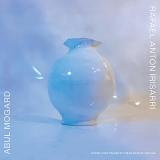
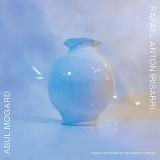
Marja de Sanctis’ cover artwork revisits the vessel sculpture from the duo’s first album, Impossibly Distant, Impossibly Close. There it appeared as raw, unfired clay. Here it has been fired in the kiln and finished with a glaze. Light gathers on its polished surface and spills into the surrounding space. As she explains, “I wanted to convey the idea of continuity within the duo, and the vessel became a kind of container for that idea. However, their music felt different this time, and with the collaboration of Martina and Andrea, I felt it should have a sleeker, softer, more glamorous look, very distant from the first raw appearance.” The transformation of the vessel from raw clay to fired form suggests a passage from immediacy toward permanence, mirroring the music’s gradual expansion.
out of Stock
Last delivered 3 months ago available to reorder, subject to availability
Charlie Conway and his PHAASER crew are putting the Nashville underground techno scene on the map. Funky, raw, driving techno. No bullshit, all groove.
The titular “Rudded” A1 cut has a bass line you never want to stop and a delightfully maddening synth crunch squealing to psychotic ecstasy…it’s not too far off from some of the rolling minimal tech DOO records from the past few years. A2 “Zinc” brings a stomping, mineral techno funk. Some of the sounds are reminiscent of Acid Planet / Bunker Records, hardware torqued up and overflowing. The B side consists of “Why Do You”, a 12 minute masterclass in speedy, funky, groovy minimal techno. Heads have been waiting for this one!!
out of Stock
Last delivered 3 months ago available to reorder, subject to availability
The Reflex has been back remixing on his multitracks again and if you have been out anywhere decent in recent times you might already have heard this one as it has been a favourite of those DJs in his inner circle. Finally, the unrelated rework of a legendary disco diva arrives on wax and dazzles from front to back. 'Lolita' has it all - the deft hi hats sliding above funky bass, a rhythm driven by busy piano chords and lung-busting vocal full of burning soul. 'Camels' rides funky, chunky drums and has more expressive tones this time in unison with an off-balance chord sequence and fluttering sax. Lovely stuff.
out of Stock
Last delivered 3 months ago available to reorder, subject to availability
Scritti Polittis modernes Meisterwerk Cupid & Psyche 85 erscheint in einer neuen, liebevoll kuratierten Edition - eine Hommage an ein Album, das bis heute nichts von seiner Strahlkraft verloren hat. Die Deluxe-Version vereint die begehrte erweiterte Fassung des Albums mit ausgewählten Raritäten aus dem Bandarchiv und bietet so einen neuen, vielschichtigen Zugang zu diesem Klassiker. Zum ersten Mal überhaupt wird die ursprünglich für das damals revolutionäre CD-Format konzipierte 13-Track-Version aus dem Jahr 1985 auch auf Vinyl veröffentlicht. Die klangliche Aufbereitung übernahm Chris Athens - bekannt für seine Arbeit mit Künstlern wie Drake und den Beastie Boys - unter der Leitung von Frontmann Green Gartside. Ergänzt wird die Veröffentlichung durch drei bislang unveröffentlichte Stücke: Perfect Way (Version), Lover To Fall (12" Dance Mix) und Perfect Way (Perfect Way Mix). Diese Tracks öffnen ein Fenster in die kreative Werkstatt der Band und zeigen, wie selbstverständlich Scritti Politti Einflüsse jenseits der Indie-Wurzeln integrierten. Auch inhaltlich wird die Edition vertieft: Green Gartside und David Gamson, maßgeblich an der Entstehung des Albums beteiligt, steuern persönliche Linernotes bei, die Einblicke in den künstlerischen Prozess geben. Cupid & Psyche 85 gilt als visionär und stilprägend - ein Album, das Pop neu dachte. Mit seiner Mischung aus eingängigen Melodien, anspruchsvollen Arrangements und innovativer Studiotechnik überschritt es die Grenzen der damaligen Produktionsmöglichkeiten. Gleichzeitig nahm es Entwicklungen vorweg, die heute das Fundament moderner Pop- und Hip-Hop-Produktionen bilden. Wo bereits das Debüt Songs To Remember erste Pop-Akzente setzte, entfaltete sich Cupid & Psyche 85 in voller Farbigkeit: ein kunstvoll komponiertes Klangbild, das emotionale Tiefe mit technischer Raffinesse verbindet - und damit bis heute als eines der großen Statements in der Popgeschichte gilt.
»The Hidden Hand« bietet die gleichen düsteren und atmosphärischen Klanglandschaften wie die früheren Veröffentlichungen der Band, vermittelt zugleich aber ein Gefühl von Auflösung. Während sich der musikalische Geschmack der Band weiterentwickelt, bleibt die Herausforderung, ihren Sound dort zu verankern, wo alles begann – und genau das gelingt ihnen.
If These Trees Could Talk erzeugen klangliche Wucht, indem sie drei Gitarren einsetzen, um unterschiedliche Bereiche des Frequenzspektrums abzudecken. Ähnlich wie in einem Orchester verankert der Bass die tiefen Lagen, die Rhythmusgitarren halten den Mittenbereich und die Leadgitarre übernimmt die Höhen – so bleiben alle drei Komponenten stets präsent, besonders beim Übergang von cleanen zu harten Klängen.
Langjährige Fans wie auch Neueinsteiger werden von der beeindruckenden ersten Single des Albums begeistert sein: »Blurry Creatures« – ein Track, der den rohen Sound von If These Trees Could Talk verkörpert, mit unerbittlichen Riffs, epischen Höhen und Tiefen, atmosphärisch synkopierten Delays und einem Schlachtruf, der die Sinne elektrisiert.
A catalyst for all sorts of noise-making endeavors, Bob Bellerue embraces chaos as a positive force. As a musician, he harnesses the violent timbres and textures from feedback clashing against piano wires, amplifiers, metal, zithers, electronics etc. He's also been central in harnessing community through his long standing Ende Tymes festival in New York, providing an intersectional platform for all voices to utter their noise. To a polite society, things such as chaos, noise, and anarchy threaten the normative structures that can assert control and maintain power over others. Bellerue qualifies his practice as a form of sonic animism, in which engages with that which is unheard in materials, equipment, and their relationships, developing a process of amplified discovery. The unhinged, the unquantifiable, and the unknowable are all possible outcomes in Bellerue's expansive works.
Chaos Is A Law is a macrotonal album, whose expressive de-centralization originates from rasping noise, intense textural accretions, brutalist drone, and inharmonic ambience. For all of the sustained harmonics and dissonant frequencies, the album is in constant motion, with Bellerue pushing dynamics that build, rupture, collapse and reform with an almost organic morphology. At times, it boils with a feral intensity. At others, its muscularity collapses into peculiar almost half-melodic figures, mutated within all the distortion. One could look to the free noise practitioners from New Zealand (e.g. A Handful Of Dust, Birchville Cat Motel, Surface of the Earth) or to the alchemical dronescaping of Stephen O'Malley and Organum. Yet, Bellerue's work maintains a bespoke tactility that is uniquely his.
In Bellerue's words, "The universe is a feedback loop. Creating and destroying. Growing and decaying. Loving and dying. Expanding and contracting. The big bang is the end result of everything merging together in the biggest black hole ever and then erupting into being over and over again. Praise chaos!"
British trio The Xcerts return in Summer 2026 with their sixth album, i think i want to go home now. Recorded at Beehive Studios, the record’s direction crystallized with the track "do it to myself," marking a return to the band writing together in one room. The album emerged from an "exceedingly hellish" period involving family loss and broken relationships, mirroring the trauma behind their 2009 debut. While the title began as a childhood joke about sleepovers, it evolved into a poignant exploration of "home" as both a refuge and a heavy heart, delivered with a defiant, invigorated energy.
African visions, Middle Eastern mirages, and cosmic pulsations: the map of Giuliano Sorgini’s sonic universe continues to expand, revealing new, uncharted territories.
Set for release on 10 July, the 7-inch Savana Selvaggia brings together two extraordinary, previously unreleased tracks, shedding light on one of the most visionary facets of Sorgini’s library music aesthetic. On Side A, “I misteri del mondo” (The Mysteries of the World) transports us to an imagined, ancestral Africa suspended between endless horizons, elegiac wilderness, and analogue electronics.
On Side B, “Arabian Safari” opens the door to a mystical, Arabic-tinged soundscape where African imagery blends with Middle Eastern influences and kosmische futurism. Driven by a potent mix of electronic drums, hypnotic sequencing, and fiercely inventive synths, it strikes a sonic kinship with the finest European Krautrock.
The dialogue between these two tracks perfectly highlights the composer's artisanal, experimental approach. Here, the Solina, Minimoog, modular circuits, pulsating synth lines, and suspended melodies intertwine to form a fascinating, enigmatic, and deeply personal sonic world—one built entirely by Sorgini in his Cat & Fox Studio in Rome, located a mere stone's throw from the RAI headquarters.
Two forgotten tracks. Two cinematic journeys whose original visuals have been lost to time. Two missing puzzle pieces in the ongoing recovery of the work of a composer who sounds more modern today than ever before. A magnificent sonic transmission from a bygone era that lands with the force of a contemporary revelation.
Nach der Veröffentlichung von „idea 1“, kündigt Kelela ihr neues, drittes Album an, das am 10. Juli bei Warp Records erscheint – und veröffentlicht die zweite Single „linknb“, produziert von Oscar Scheller.
Der Track entstand in einer Phase der Schreibblockade und begann als Mantra, das Kelela schrieb, um sich wieder an die Arbeit zu bringen. Angeführt von einem labyrinthischen Gitarrenriff über treibenden Metal-Drums ist „linknb“ ein Song über Selbstvertrauen, das man sich durch Schwierigkeiten erarbeitet hat, darüber, sich nicht klein machen zu lassen. „Es ist nicht schwer, mutig zu sein / Es ist leichter, zu viel preiszugeben / Ich weiß nur, dass ich den Weg geebnet habe, unterbezahlt.“
Das von Mischa Notcutt inszenierte Video versetzt Kelela in die Mitte einer urbanen Traumlandschaft. Als enger Freund und Kelelas ehemaliger Kreativdirektor war Notcutt die naheliegende Wahl. Das Video lässt Realismus und Abstraktion ineinanderfließen und verwandelt eine einsame Reise in eine Meditation über Selbstfindung und Erneuerung.
Mit „new avatar“ rückt alles, worauf Kelela hingearbeitet hat, in den Fokus. Sie begann ihre ersten Songs in der Indie-Szene von Washington, D.C. zu schreiben, bevor die Clubmusik und die elektronische Produktion, die ihre frühe Karriere prägten, die Oberhand gewannen. Mit „new avatar“ schließt sie den Kreis: R&B, unterlegt mit verzerrten Gitarrenklängen, trifft auf neue Schnittstellen in der Tanzmusik und gipfelt in einem Sound, der aus all den musikalischen Einflüssen schöpft, die sie je geprägt haben. Das Album enthält zudem Kollaborationen mit PinkPantheress, A. K. Paul und Fousheé.
„Dieses Album findet Trost in der Konfrontation“, sagt Kelela. „Ich möchte nicht, dass die Musik von dem ablenkt, was wirklich in der Welt vor sich geht; ich möchte, dass sie in dieser verrückten Zeit Sinn ergibt und den Menschen gleichzeitig hilft, mit der Schönheit und Freude in Kontakt zu kommen, die sie ebenfalls erleben.“
Das Album setzt sich mit einer Welt auseinander, die aus allen Nähten auseinanderfällt, und mit der Klarheit, die das Überleben erfordert.
„Die Leute sollten auch wissen, dass meine Freunde und ich ständig lachen und dass Humor kein Abwehrmechanismus ist; er ist Ausdruck dafür, wie scharfsinnig wir die Dinge einschätzen und wie klar wir die Welt sehen.“
Im Kern schildert „new avatar“ eine vielschichtige Erfahrung, und obwohl die Außenwelt präsent ist, schwächt sie Kelelas Entschlossenheit zu keinem Zeitpunkt.
About Kelela: Throughout her globally revered, boundary-pushing career, Kelela has established a lane of her own in R&B and electronic music. On her long-awaited third album, new avatar, the singer/songwriter (through the versatility of the guitar) challenges perceptions of these genres, while weaving together fragments of lived experiences to shape a world of connection and resilience during times of unrest.
The songs journey through Black femme rage, joy as resistance, Gotham City-esque dystopia, misogynoir, romantic tension, and more. It’s anchored by production that demands a broader rethink about alternative, rock and indie music.
Kelela’s defiant nature has propelled her so far already — from her hometown of Washington, D.C to world stages. In 2013, she released her debut mixtape, Cut 4 Me. She continued solidifying her revolutionary R&B sound with 2015’s Hallucinogen EP, with The New York Times naming its single, “Rewind,” one of the “25 Songs That Tell Us Where Music Is Going”. By 2017, she released her electric debut album Take Me Apart (which was followed by 2018’s TAKE ME A_PART, THE REMIXES), building upon her intimate storytelling.
After a nearly five-year hiatus, she returned in 2023 with her groundbreaking second album, Raven, and its critically-acclaimed counterpart, RAVE:N, The Remixes in 2024. Raven has been hailed as one of the ‘Best Albums of 2023’ by Pitchfork, Billboard, Vulture, Variety, and more, while the remixes solidified her as a leader in the dance music space.
In 2025, Kelela showcased yet another innovative side of her artistry with her live album In The Blue Light, which hit #5 on the Contemporary Jazz chart and #20 on the Jazz Albums chart. Now, with new avatar, Kelela displays the masterful intention she puts into forming new sonic cityscapes. But don’t confuse it with escapism: “I don't want the music to be a distraction from what's really going on in the world; I want it to help you get into it.”
out of Stock
Last delivered 59 days ago available to reorder, subject to availability
LP1 New album
LP2 Available on vinyl for the first time
LP3/4 Debut album on green vinyl
LP5 Second album on red vinyl
When I recorded the first 2 Trickfinger records, I had recently discovered that you could make electronic music in a room with a bunch of synced machines going at the same time, record it on a
CD burner and have a finished track. I've heard this process described as “overdubbing into the air”. It was as exciting to me as my first 4 track was when I was 14. I wasn't trying to be good, or
original. I was just excited that music could be made that way; it felt like I was a whole group of musicians playing together… or like I was jamming with ghosts of myself. This has actually been a
very common way of making electronic music since the 80s, particularly in the main pioneering genres like Chicago Acid and Detroit Techno, but anyways I didn't figure it out until 2006. In 2007,
I started doing it myself, which resulted in what was eventually released as Trickfinger, and Trickfinger II. I was just home from tour and was still in the middle of recording The Empyrean.
A couple of years later I started making music by overdubbing onto a computer, but using the same machines. I tried to make music that didn't sound like anything else. I saw a way of combining
Progressive Rock and Synth Pop which nobody had done. And I was combining my songwriting and guitar playing with these old machines in a way which I was sure was unique. I had reached a point
where it was more important to do something original than to do something good, whatever “good” means.
Some of this music did not get a proper release, and is compiled here as the vinyl record High Low. I don't think I have ever tried so hard at making music as I did during that period. This in contrast to
those two Trickfinger records, where I wasn't trying at all. There’s something to be said for both mental states. When you're in one, the other seems impossible. I was really pushing myself on High
Low. Looking back, it was as if I had an audience inside myself, driving me to go beyond my abilities, while at the same time I had a total disregard for any concept of an actual audience. It
was one of those periods in life where things come together in a certain way that feels natural at the time, but seems foreign in retrospect. It felt like I was going to die if I didn't do something musically
different.
The fourth record in this box is me breaking in a new mixing console, making live-to-stereo music. The record is called Rotation, and it is all new music. These tracks are more in the “not trying”
category, since we're on that subject. I had just come home from tour, and was just really glad to be in the studio with my machines. Acid Test thought it would be nice to do a box set commemorating the 10th anniversary of the release of Trickfinger, and so we put together this box set, with homemade cover art.
John Frusciante 2026
out of Stock
Last delivered 87 days ago available to reorder, subject to availability
Nach der Veröffentlichung von „idea 1“, kündigt Kelela ihr neues, drittes Album an, das am 10. Juli bei Warp Records erscheint – und veröffentlicht die zweite Single „linknb“, produziert von Oscar Scheller.
Der Track entstand in einer Phase der Schreibblockade und begann als Mantra, das Kelela schrieb, um sich wieder an die Arbeit zu bringen. Angeführt von einem labyrinthischen Gitarrenriff über treibenden Metal-Drums ist „linknb“ ein Song über Selbstvertrauen, das man sich durch Schwierigkeiten erarbeitet hat, darüber, sich nicht klein machen zu lassen. „Es ist nicht schwer, mutig zu sein / Es ist leichter, zu viel preiszugeben / Ich weiß nur, dass ich den Weg geebnet habe, unterbezahlt.“
Das von Mischa Notcutt inszenierte Video versetzt Kelela in die Mitte einer urbanen Traumlandschaft. Als enger Freund und Kelelas ehemaliger Kreativdirektor war Notcutt die naheliegende Wahl. Das Video lässt Realismus und Abstraktion ineinanderfließen und verwandelt eine einsame Reise in eine Meditation über Selbstfindung und Erneuerung.
Mit „new avatar“ rückt alles, worauf Kelela hingearbeitet hat, in den Fokus. Sie begann ihre ersten Songs in der Indie-Szene von Washington, D.C. zu schreiben, bevor die Clubmusik und die elektronische Produktion, die ihre frühe Karriere prägten, die Oberhand gewannen. Mit „new avatar“ schließt sie den Kreis: R&B, unterlegt mit verzerrten Gitarrenklängen, trifft auf neue Schnittstellen in der Tanzmusik und gipfelt in einem Sound, der aus all den musikalischen Einflüssen schöpft, die sie je geprägt haben. Das Album enthält zudem Kollaborationen mit PinkPantheress, A. K. Paul und Fousheé.
„Dieses Album findet Trost in der Konfrontation“, sagt Kelela. „Ich möchte nicht, dass die Musik von dem ablenkt, was wirklich in der Welt vor sich geht; ich möchte, dass sie in dieser verrückten Zeit Sinn ergibt und den Menschen gleichzeitig hilft, mit der Schönheit und Freude in Kontakt zu kommen, die sie ebenfalls erleben.“
Das Album setzt sich mit einer Welt auseinander, die aus allen Nähten auseinanderfällt, und mit der Klarheit, die das Überleben erfordert.
„Die Leute sollten auch wissen, dass meine Freunde und ich ständig lachen und dass Humor kein Abwehrmechanismus ist; er ist Ausdruck dafür, wie scharfsinnig wir die Dinge einschätzen und wie klar wir die Welt sehen.“
Im Kern schildert „new avatar“ eine vielschichtige Erfahrung, und obwohl die Außenwelt präsent ist, schwächt sie Kelelas Entschlossenheit zu keinem Zeitpunkt.
About Kelela: Throughout her globally revered, boundary-pushing career, Kelela has established a lane of her own in R&B and electronic music. On her long-awaited third album, new avatar, the singer/songwriter (through the versatility of the guitar) challenges perceptions of these genres, while weaving together fragments of lived experiences to shape a world of connection and resilience during times of unrest.
The songs journey through Black femme rage, joy as resistance, Gotham City-esque dystopia, misogynoir, romantic tension, and more. It’s anchored by production that demands a broader rethink about alternative, rock and indie music.
Kelela’s defiant nature has propelled her so far already — from her hometown of Washington, D.C to world stages. In 2013, she released her debut mixtape, Cut 4 Me. She continued solidifying her revolutionary R&B sound with 2015’s Hallucinogen EP, with The New York Times naming its single, “Rewind,” one of the “25 Songs That Tell Us Where Music Is Going”. By 2017, she released her electric debut album Take Me Apart (which was followed by 2018’s TAKE ME A_PART, THE REMIXES), building upon her intimate storytelling.
After a nearly five-year hiatus, she returned in 2023 with her groundbreaking second album, Raven, and its critically-acclaimed counterpart, RAVE:N, The Remixes in 2024. Raven has been hailed as one of the ‘Best Albums of 2023’ by Pitchfork, Billboard, Vulture, Variety, and more, while the remixes solidified her as a leader in the dance music space.
In 2025, Kelela showcased yet another innovative side of her artistry with her live album In The Blue Light, which hit #5 on the Contemporary Jazz chart and #20 on the Jazz Albums chart. Now, with new avatar, Kelela displays the masterful intention she puts into forming new sonic cityscapes. But don’t confuse it with escapism: “I don't want the music to be a distraction from what's really going on in the world; I want it to help you get into it.”
out of Stock
Last delivered 49 days ago available to reorder, subject to availability
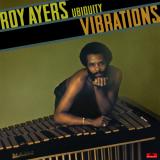
Step into the golden era of soul-jazz with the long-awaited vinyl reissue of “Vibrations” by Roy Ayers Ubiquity — a record that captures the unmistakable warmth, groove, and sophistication that defined Roy Ayers’ sound at its peak.
Originally released in 1976, “Vibrations” stands as a cornerstone in Ayers’ catalog, marking a moment where his signature blend of jazz, funk, and soul reached a refined, deeply cohesive form. Building on the foundations laid in earlier works, this album presents a tighter, more focused musical vision without sacrificing the lush textures and emotional depth that made his music resonate worldwide.
Roy Ayers was a pioneering vibraphonist, composer, and producer whose influence stretches far beyond jazz into R&B, neo-soul, and hip-hop. Often referred to as the “Godfather of Neo Soul,” Ayers crafted a sound that feels both timeless and forward-thinking, pairing silky vocals with hypnotic grooves and rich instrumental arrangements. His work throughout the 1970s helped shape the sonic DNA of modern Black music, and “Vibrations” is one of its purest expressions.
The album flows effortlessly between moods: from the jazz-inflected elegance of ‘Searching’ to the irresistible funk pulse of ‘The Memory,’ the dancefloor-ready ‘One Sweet Love to Remember,’ and the laid-back, atmospheric title track ‘Vibrations.’ Each track showcases a masterful balance between musicianship and groove, brought to life by a stellar ensemble of collaborators who elevate every moment.
Beyond its original impact, “Vibrations” has taken on a second life through hip-hop. Its grooves, breaks, and melodies have been extensively sampled by generations of producers and artists, becoming a foundational source for crate diggers and beatmakers alike. Tracks from the album have been reinterpreted and flipped by influential names such as A Tribe Called Quest, J Dilla, Dr. Dre, and Common, cementing its legacy as a vital bridge between 1970s soul-jazz and contemporary hip-hop culture.
After almost two decades out of print, we are pleased to present this much-needed vinyl reissue of an essential album in Roy Ayers’ career. Whether you’re discovering it for the first time or returning to a beloved classic, this album remains an essential piece of musical history. Pressed on 180g vinyl.
out of Stock
Last delivered 3 months ago available to reorder, subject to availability
Ever since the late 1950s bossa-nova revolution, Brazil’s influence on French music has been undeniable. Pierre Barouh, Georges Moustaki and a vast array of lesser known artists, all made the Musica Popular Brasileira (MPB) an axis of promotion at the service of a cool and metaphysical, modern and mixed Brazilian lifestyle. Some were seduced by the poetic languors of the bossa, some were looking for fun, and others just loved the American hybridization of jazz-bossa, jazz-samba.
What is bossa nova? One of its creators, Joao Gilberto said: "Its style, cadence, everything is samba. At the very start, we didn't call it bossa nova, we sang a little samba made up of a single note - Samba de uma nota so .... The discussion around the origins of bossa nova is therefore useless”. It is nevertheless useful to remember that these magnificent Brazilian songs, which the guitarist describes as samba, were shifted and balanced around improbable chords. "I like things that lean, the in-betweens that limp with grace," said Pierre Barrouh, quoting Jean Cocteau.
With emotion, arrangements for violin and supple guitar licks, bossa nova rapidly changed. A transformation that can be heard in the Tchic, tchic, French Bossa Nova 1963-1974 compilation, the result of a cultural reappropriation, which traveled through the United States and supplemented itself in France.
A musical revolution that has remained significant, bossa nova was born in Rio. From 1956 to 1961, Brazil lived through its golden years. In five years, the country had invented its modernist style. Elected president in 1956, Juscelino Kubitschek de Oliveira, an elegant man with a broad forehead, brandished a promising slogan: "Fifty years of progress in five years". He quickly got to work. Not worried about increasing debt, he launched the project for a new federal capital, Brasilia, designed by the communist architect Oscar Niemeyer. Volkswagen opened state-of-the-art factories and created the “fusquinha”, the Beetle. In Rio, the Vespa made its first appearance. The Arpoador Surf Club crew run into the “girl” from Ipanema, Helô Pinheiro - the tanned garota ("chick"), between a flower and mermaid, who at 17 walked by the Veloso bar, where the fiery author and composer, Tom Jobim and Vinicius de Moraes, were getting drunk on whiskey. From then on, bossa symbolized cool.
In 1958, Joao Gilberto recorded Chega de Saudade, which the directors of Philips denied, calling it "music for fagots". The marketing director, who believed in it, secretly pressed 3000 78-inch vinyls and distributed them at schools around Rio, creating a tidal wave.
American jazzmen then took over. In particular, trumpeter Dizzy Gillespie and guitarist Charlie Byrd. In November 1962, the Brazilian Ministry of Foreign Affairs funded a "Bossa-Nova" concert at Carnegie Hall in New York, inviting the genre’s pioneers. Unprepared, the show soon turned to disaster. But the troupe was invited to the White House by Jackie Kennedy. The first lady loved "the new beat" and in particular Maria Ninguem, a song by Carlos Lyra, later covered by Brigitte Bardot.
In Brazil, the 1964 military coup quickly ended this euphoria. The destructive atmosphere that ensued pushed many Brazilian musicians to leave, if not to exile. Thus, Tom Jobim, Sergio Mendes and Joao Gilberto arrived to the United States. In New York, Joao Gilberto met saxophonist Stan Getz. At the time, he was married to the Bahianese Astrud Weinert Gilberto, who had a German father. She had never sung before, but she knew how to speak English. Getz therefore asked her to replace her husband on The Girl From Ipanema. The Getz/Gilberto record with Tom Jobim on piano, was released in March 1964. Phil Ramone, the "pope of pop" was in charge of sound.
Bossa nova arrived in Paris through the classic “guitar-voice” channel (Pierre Barouh, Baden Powell, Moustaki…) But France loved jazz and Paris had already welcomed its American contributors. All these good people were to pass through Saint-Germain-des-Prés. The cabaret l'Escale became the Mecca of Latin American sound where one could find Pierre Barrouh and his friends, such as the Camara Trio, samba-jazz aces, whose only record was published by the Saravah label. With a band strangely called Les Masques (a band that included Nicole Croisille and Pierre Vassiliu, among others), the Camara Trio recorded an interesting Brazilian Sound, including the track Il faut tenir which is present on this tasty compilation of rarities.
Other enlightened musicians can also be found on the compilation, such as Jean-Pierre Sabar (songwriter for Hardy, Auffray, Leforestier ...) and the French pop rock organist Balthazar. In 1975, Sabar recorded Aurinkoinen Musiikkimatka on a Finnish label, which featured the crazy Vai, Vai, included on this record. We are now following the footsteps of Brazilian electronic musicians such as Sergio Mendes, Eumir Deodato or Marcos Valle who created funk and disco sounds on their keyboards and synthesizers. A style that influenced Véronique Sanson when she wrote Jusqu’à la Tombée de la nuit in 1969 for Isabelle de Funès, the niece of Louis and a great friend of Michel Berger - Sanson did end up singing this track on her 1992 Sans Regret record.
The pinnacle of exoticism and travel, Sylvia Fels’ Corto Maltese includes bongos, sea mist and ocean sounds. The title was taken from Jacky Chalard’s concept album written in 1974, Je suis vivant, mais j’ai peur (I am alive, but I am scared), based on Gilbert Deflez’s science fiction novel.
However, bossa nova extended the scope of popularity. "In the 1970s, I was a fan of Sergio Mendes, Getz / Gilberto. I fell in love with this music that I knew because I had been an orchestral singer, " explained Isabelle Aubret, who in 1971 delivered a composite record of covers by the very funky Jorge Ben, Orfeu Negro, Tom Jobim, Vinicius de Morais and Jean Ferrat. "I recorded this album for Meys Records in Paris, far from Brazil, with wonderful musicians, François Raubert, Roland Vincent, Alain Goraguer...". The latter wrote the arrangements for Casa Forte, a very percussive title borrowed from Edu Lobo, one of the initiators of the bossa who spent time in California. "Jazz and bossa came together and produced very rhythmic music. I love singing, it allows me to dream, to have fun, to feel a high on stage, and these songs brought me joy, made me swing, my singing felt like a dance.”
The world tours of French singers and their desire for the tropics, often brought them to Rio with its hills, forests, caipirinhas and tanned bodies. There are surprises though, like this Iemenja (Iemenja is the goddess of the sea in the Afro-Brazilian candomblé religion). Not unlike the composer and musician Jean-Pierre Lang, based in Sao Paulo, Claire Chevalier taught Brazil to Brazil. In 1970, the singer and painter published a 45-inch vinyl, Mon mari et mes amants (My husband and my lovers), under the improbable pseudonym of Clarinha (little Claire). She was then living in Rio, with her husband, Joël Leibovitz, who founded a band called Azimuth, and who owned a record label specialized in "sambas enredos" songs for samba school parades.
For its B side, she asked Pierre Perret to come up with lyrics for a song composed by Carlos Imperial: "Oh goddess of the sea, o goddess Iemenja, I bring a white rose to adorn your long hair ..." . "Perret came to see us, and we had fun, remembers Joël Leibovitz. We wrote Lemenja for fun, we recorded it at the Havaí studio, behind the Central do Brasil the central station. Erlon Chaves, the arranger who worked with Elis Regina, joined us" adding his share of Afro-Brazilian percussions and funky brass to the mix.
There is a common misunderstanding in Franco-Brazilian history: that bossa, admittedly hedonistic, is perceived as funny, even though the poets who wrote the texts are often philosophizing on the human condition. Its French interpreters pull it towards a carnival inspired universe, far removed from its fundamental essence. Thus, Jean Constantin covered the famous Samba da minha terra, an ode to the art of samba written by the classic Bahian composer Dorival Caymmi, renaming it with the enticing title of Pas tant de tchi tchi pompon: "On your pier there is no tchi tchi / when you arch your back, you know everything is alright ”(lyrics by Gérard Calvi). This expedited bossa aims for the absurd, but retains a certain elegance.
Indeed, Jean Constantin was not an idiot, the rather large man had a huge mustache and liked fantasy, (Les pantoufles à papa, Le pacha, inspired by cha-cha-cha-cha, salsa and jazz) but he was also the lyricist of Mon manège à moi interpreted by Edith Piaf, the composer of Mon Truc en plume by Zizi Jeanmaire and the soundtrack of François Truffaut’s 400 Blows. Le Poulpe, published in 1970, from which this bossa is extract, was arranged by Jean-Claude Vannier, an accomplice of Serge Gainsbourg’s Melody Nelson. In short: "There is enough of samba / By looking at the parasol / Because my poor cabeza / Is going to die in the sun".
Even the American actress Marpessa Down, who was at the heart of the bossa nova revolution with her role as Euridyce in Marcel Camus’ film Orfeu Negro, winner of the 1959 Cannes Palme d'or, fed the clichée with Je voudrais parler au petit cuica - "Tell me how you manage to always make people want to dance / It's true, I must admit that I cannot resist your magic" - in consequence, once can hear the cuica, a little drum inherited from the Bantu.
But bossa nova had many angles. Societal, of course, pushing actresses who were symbols of women's liberation like Brigitte Bardot, Jeanne Moreau, or Sophia Loren to engage in the exercise of accelerated bossa. In February of 1963, Sophia Loren made a record in French in Rome, Je ne t'aime plus, featuring the song De jour en jour, a bossa written by two Italians, Armando Trovajoli and Tino Fornai, which was released a little later by Barclay. Bossa accompanied the 1960s, a decade of moral liberation. Ann Sorel, who interpreted La Poupée des favellas, caused a sensation with L’amour à plusieurs, a provocative song written by Frédéric Bottom and Jean-Claude Vannier. As for the actress Andrea Parisy, she displayed her bourgeois cheekiness in Marcel Carné's Les Tricheurs before interpreting Les mains qui font du bien. And Magalie Noël, the friend of Boris Vian, who sung Johnny fais-moi mal, was hired to sing Une énorme Samba, composed by Alain Goraguer (arranger to Gainsbourg, Bobby Lapointe and Jean Ferrat) with lyrics by Frédéric Botton.
But in the end, of what wood is bossa nova made of? The answer is given by Christianne Legrand, daughter of Raymond the conductor, and sister to Michel the composer: "With me, with jà" - jà means "immediately" in Portuguese. In 1972, the singer, an expert in vocal jazz and a member of the Double Six, published Le Brésil de Christianne Legrand. Two songs included on the Tchic Tchic compilation that demonstrate how bossa, jazz, funk, rock, etc. work like a swiss army knife: the music is used to denounce broken systems, or miracles, HLM et ciné roman, Cent mille poissons dans ton filet, two songs from the O Cafona soundtrack, a successful telenovela broadcast, at the time in black and white, on TV Globo. The first was adapted in French by the fighter and friend of the Legrand tribe, Agnès Varda. The second is content with a play on words, jostling them into a summer fun.
Véronique Mortaigne
out of Stock
Last delivered 3 months ago available to reorder, subject to availability
Seit etwas mehr als einem Jahrzehnt hat sich EXEK ganz leise zu einer der faszinierendsten Bands der Welt entwickelt, die sich von Album zu Album verändert und weiterentwickelt und sich nach und nach geöffnet hat, ohne jemals diese seltsame, unergründliche und insgesamt essentielle Eigenschaft zu verlieren, die sie so großartig gemacht hat - so EXEK-mäßig. Nun bringt die Post-Punk-Band aus Melbourne - Sänger und Chefarchitekt Albert Wolski, Gitarrist Jai Morris-Smith, Schlagzeuger Chris Stephenson, Synthesizer-Spezialist Andrew Brocchi, Trompeterin und Sängerin Valya YL Hooi und Bassist Ben Hepworth - ihr siebtes Album und erstes für DFA raus: ,Prove The Mountains Move". Es ist, wie Wolski sagt, ,ein bisschen epischer" als alles, was er bisher aufgenommen hat, ein üppiges und unverhohlen melodisches Set surrealistischer Popmusik, das sich in Widersprüchen suhlt. ,Dieses Album ist in seiner Machart experimentell", sagt Wolski, ,aber es klingt nicht unbedingt experimentell." Dafür gibt es einen guten Grund. Die Arbeit begann an einem kalten Nachmittag im Juni 2023, als Wolski und Stephenson sich in den Pelican Refill Studios in Melbourne trafen, um die Drums aufzunehmen - das erste, was sie immer machen. Danach ging Wolski alleine nach Hause und fing an, die aufgenommenen Beats und Breaks durchzugehen, wobei er sich von den Drum-Sounds zu Melodien und Basslines leiten ließ, Loops und Layers erstellte und so die Grundlage für ,Prove The Mountains Move" schuf. ,Ich fühle mich wohl dabei, alleine wie ein verrückter Wissenschaftler herumzutüfteln", sagt er. ,Ich habe es auch genossen, ohne klare Absicht auf Aufnahme zu drücken. Meistens führte mich das in eine interessante Richtung, die mein Bewusstsein wahrscheinlich nicht gesucht hätte." Und doch gelangte Wolski irgendwie zu seinem direktesten Werk seit Beginn des Projekts, neu inspiriert von der Klarheit und Prägnanz des Mainstream-Pop, der starken und unbestreitbaren Anziehungskraft einer einfachen Gesangsmelodie. Nachdem die berühmt-berüchtigten strengen COVID-Lockdowns in Melbourne beendet waren, wollte er einfach draußen bleiben. ,Die Arbeit an neuer Musik trat gegenüber dem Feiern mit Freunden in den Hintergrund", sagt er. ,Und diese Partys waren voller großer Hits als Soundtrack - Sachen, die ich selbst nicht wirklich hörte, Sachen, denen ich seit meiner Jugend nicht mehr begegnet war. Aber in den frühen Morgenstunden des Sonntags klingt ,Alive" von Pearl Jam, als würde man mit Gott sprechen. Genauso wie ,All I Wanna Do" von Sheryl Crow und ,Feel" von Robbie Williams. Krautrock und Dub waren immer noch in meiner DNA, aber die Musik, die ich zu machen begann, war vielleicht etwas unbeschwerter und vielleicht auch etwas emotionaler." Das heißt nicht, dass man hier Spuren von Eddie Vedder in Wolskis Gesang erwarten sollte, aber die Einsätze fühlen sich auf ihre eigene Weise ähnlich an - so klingt es, wenn EXEK wirklich alles geben. Nimm zum Beispiel die schwebenden Synthesizer des Openers ,Sidestepping" oder die gewaltigen Gitarren von ,Arriverderci Back Pain", die pyrotechnischen Klavierklänge von ,Don't Answer (When They Call)" oder die Bowie-artige Melancholie von ,You Have Been Blessed". Die Arrangements wirken offener, der Sound fokussierter. Es fällt nicht schwer, Wolski zu glauben, wenn er sagt, dass er viel Zeit damit verbracht hat, seine Mixe von ,Prove The Mountains Move" mit einigen der wichtigsten Alben, die je aufgenommen wurden, darunter ,Abbey Road", zu vergleichen. Aber alles ist relativ. Und textlich bleibt Wolski weiterhin verschlüsselt. ,Jeder Song ist eine Vignette in einem abstrakten Milieu, sei es ein experimentelles Chiropraktik-Geschäft am Flughafen oder spärlich bekleidete Kreaturen aus Staub in einem Food Court. Egal wie verrückt das auch sein mag, es gibt Themen und Motive auf dem gesamten Album, sowohl textlich als auch musikalisch, die sich in verschiedenen Songs widerspiegeln und aufeinander Bezug nehmen." Diese Dissonanz zwischen direkt und indirekt, glatt und strukturiert, schattig und glühend, verrückt und ausdruckslos ist die treibende Kraft im Herzen dieser Songs, seiner bisher besten.
out of Stock
Last delivered 3 months ago available to reorder, subject to availability
“It felt like it had been such a long time since I'd released anything that felt aligned with that sound I was exploring back in the early days of the Kahn project, and whilst I naturally wanted to bring something contemporary to the table with this record it was nice to allow myself to fall back into that older version of my musical identity. My past life, if you like.” Kahn
out of Stock
Last delivered 27 days ago available to reorder, subject to availability
This release represents the musical union of two friends who, despite the distance, have always found in music the place where they stay close. This EP is the proof that when the connection is real, sound becomes common ground - a space to share moments, ideas, and energy beyond geography.
Both artists have been devoted to physical formats from the very beginning, especially vinyl. They have always been record collectors, and that passion shapes the intention behind this project: a work conceived with the depth, respect, and materiality that only vinyl can convey. This EP is more than music; it is a cultural object that preserves a way of understanding techno.
Creatively, Truncate and Pushmann set out to merge their sonic identities. The result is an EP charged with strength, built for the dancefloor, and defined by a clear aesthetic: raw energy, firm rhythm, and a contemporary reading of hardgroove and jackin. These are intense, direct tracks - the kind that emerge when two visions complement each other effortlessly.
In a scene often driven by speed and overstimulation, this release stands out for its authenticity. It is fast, funky techno, yes, but crafted with soul, intention, and emotional depth. It does not chase trends; it delivers groove, substance, and a recognisable sonic character from the first bar.
Inspired by rave culture and the pure roots of hardgroove, this EP offers a journey that blends functionality, sensitivity, and force. A project that reinforces LILA's philosophy: preserving the essence of techno and supporting those who create it with passion.
out of Stock
Last delivered 31 days ago available to reorder, subject to availability
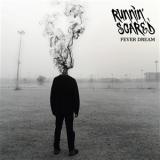
Bone colored vinyl. RUNNIN'SCARED is more than just a musical outlet-it's a way for two longtime friends to share their love for hardcore, stay creative, and keep doing what they've always loved: writing songs together. Though the name may be new, the faces are familiar. Ricky (drums) and Martin (taking care of everything else) first played together back in 1997 in the short-lived band Damage I.D.-and their paths have crossed ever since. Among others, they've been part of bands like Solid Ground, Animal Instinct, Cataract, Liferide, MINE, and Safe State
Now here is a special one. Soul legend Leon Ware makes a posthumous debut on Cataleya Music with For The Rainbow. This beautiful song is an album track from 2019’s Rainbow Deux, which was released two years after his passing. For The Rainbow has been remixed expertly by Coflo and Laroye. Coflo supplies three remixes! His ‘Original Retouch’ is closest to the midtempo original, enhancing the percussive elements slightly housewards and letting those piano keys work to their fullest. The Coflo Remix employs organ keys and has the vibe of classic NYC vocal House ala Blaze etc. His Backside mix is more subtle and spiritual. Laroye closes out the release with a smart broken beat revision, where bouncing drums dance between the positive vocals. A really classy package!
out of Stock
Last delivered 42 days ago available to reorder, subject to availability
For some time now, followers of Field Medic have been piecing together clues about Floral Prince. The name has been mentioned in late night Twitter hints, secret YouTube leaks, teaser riddles, Instagram live sets, and standalone single drops. This unconventional approach paints a bigger picture for the 11-track project as a whole, set for release October 2nd from Run For Cover Records. Part mixtape, part album, part collection, part musical patchwork quilt, Floral Prince is the latest offering from Field Medic, aka the preeminent Bay Area freak folk artist Kevin Patrick Sullivan. It’s a reflection of his unique approach to songwriting and a creative drive that can’t be contained to the traditional album format. Field Medic’s songwriting rarely slows down; even after the release of his 2019 full-length fade into the dawn and the busy touring schedule that followed, Sullivan still found himself flush with new songs and ideas. As he attempted to earmark certain songs for his next release Sullivan began to chafe at the pressures of a follow-up album. Longing for the spontaneity of Field Medic’s earlier work, Sullivan found inspiration in what he calls the “full-time freestyle” mindset where he writes and records songs on the fly with a four-track, usually with a self-imposed limit of three takes. “This style lends itself to more off-the-cuff lyrics and recordings that communicate their point much clearer to my ears,” he explains. “It’s also fun.”
The process proved surprisingly satisfying, often capturing the diary-like nature of Sullivan’s songwriting more accurately than some of the music he’d been poring over. “The songs born from this method aren’t always ‘hits,’ he says. “But they feel much more important to me…closer to how I really feel.” Some of these charming homespun missives made their way onto the internet, spurring fans to follow the breadcrumbs towards these first glimpses into Floral Prince and the ever-expanding Field Medic mythology. “I realized the songs I was saving for another album were much less focused and effective than some of the freestyles I had been creating and subsequently leaking,” Sullivan says. “I think that’s because I really enjoyed the process of writing and recording the freestyles, whereas the ‘hits’ I was attempting to make were being approached as more of a chore.” Floral Prince officially began to see the light of day through a series of stand-alone singles released throughout early 2020 in tandem with episodes of Sullivan’s homemade webseries, the field medic show. To invite fans further into Field Medic’s unique world of achingly beautiful melodies and conversational lyricism, songs like the atmospheric ballad “better way” and the Alex Menne (pickleboy/Great Grandpa) collaboration “talkin johnny & june (your arms around me)” were shared alongside the YouTube show’s accompanying live versions. Other tracks—like rousing opener “-h-o-u-s-e-k-e-y-z-” and the longing “i want you so bad it hurts”—were repurposed from the fade into the dawn sessions to finally find a home on Floral Prince. Elsewhere “it’s so lonely being sober” exemplifies the unvarnished appeal of the full-time freestyle attitude. The song’s direct lyrics and single-take phone recording preserve the deeply personal storytelling, relatable details, and palpable emotions that make Field Medic’s work so intimate and enthralling.
Although Floral Prince is culled from several years of Field Medic songs, its 11 tracks have a sense of cohesion that can be attributed to Sullivan’s singular vision and willingness to allow the listener into his life. “These songs were written through different seasons of my life but they all share a common theme of quiet, nagging, yet somehow defiant insecurity,” he explains. “To hear them all grouped together reminds me that I’ve always felt more or less the same way, and have had the same obsessive tendencies my whole life that have often led to self-destructive behavior. Maybe this is catharsis.” In the end Floral Prince is actually many things at once: a snapshot of an artist shaking off the perceived boundaries of his medium; a document of years of Sullivan’s life preserved in musical form; the closing of one songwriting chapter and the start of another. Or perhaps as Sullivan puts it, “All songs have their day…”
Under the moniker Trace Mountains, Dave Benton writes music that asks large questions in quietly profound ways. On the project’s earliest release, the 2014 compilation Buttery Sprouts & Other Songs, these thoughts appeared as lo-fi scraps of wit andtenderness. But by the time A Partner to Lean On, Trace Mountains’ debut full-length, arrived in 2018, Benton’s perceptive indie rock had matured into more existential meditations about identity, existence, and finding sense in an increasingly chaotic world.
In the two years since A Partner to Lean On, Benton’s life has undergone several large changes, namely the dissolution of LVL UP, the indie rock quartet he co-founded in college, and a move to Kingston, a small city in New York’s Hudson Valley. Composed during—but not directly inspired by—this transition, Trace Mountains’ second record, Lost in the Country, reflects Benton’s need toreconnect with his inner world.
Prompted by an urge to access a more authentic voice, Lost in the Country finds Benton digging deeper into candid songwriting. “I wanted to open myself up and write lyrics that are a little bit more direct,” he explains. “I write a lot of songs that are about myself and a lot of songs that aren’t, but on this record, the focus is turned inward either way.” The result is Trace Mountains’ strongest and most assured record yet, 10 songs driven by a desire for introspection and self-discovery. The backdrop for this insularity is an expanse of wide blue skies, seas of trees, and winding roads, ideal locales for thoughts to blossom into greater reflections of the outer world. The slow-burning “Absurdity,” which Benton modestly says is about “hiking and standing in the country,” uses the sublimity of the wilderness to comment on technology’s inescapable presence. Similarly, the driving opener “Rock & Roll” transforms the premise of a “simple song about being a rocker” into a stream-of-consciousness, apocalyptic poem about delusions, regrets, and getting lost in your own limited perspective. This self-examination culminates with the record’s ambitious and anthemic title track. Channeling the cosmic sprawl of the War on Drugs or Kurt Vile, Benton recalls a moment of deep loneliness and depression outside a concert venue in the Netherlands, and how an unexpected moment of compassion led to a moment of awakening.
Despite its frequently bucolic setting, Lost in the Country’s underlying current is an urgent commitment to Trace Mountains and “finding a creative process that requires me to be honest with myself.” “I know I sing to forget, I sing to hold my breath, to feel the thumping in my chest,” Benton sings on “Cooper’s Dream.”This line is “rooted in the importance of music in my life, it’s definitely a reflection on that and how I can keep it in my life, because if I’m not careful and I don’t nurture it, I could lose it.” The self-imposed pressure has been empowering for Benton. “I really like having full control in making a record, deciding what songs are going to be on it, as well as shaping the vibe or narrative of the whole thing,” he says. “It brings a peace of mind knowing that I am responsible for just my voice.”
As long as she can remember, Jane Remover has practiced her own autonomy as much as possible. The nineteen year old songwriter is an omnivorous listener that produces everything herself. She has been lauded by fans and writers alike, for accidentally creating entire genres in the wake of her prolific two-year run.
Her debut album Frailty was written amidst the purgatorial summer after a high school graduation, en route to turning eighteen that September. The lyrics are a wayward coming-of-age diary of an LGBT+ teenager, stuck in the suburbs of a confusing, socio-politically turbulent America.
Janeʼs words sting, but are shrouded in meticulous production; a sui generis vein of DIY rock. Simultaneously, itʼs steeped in the lo-bit, nostalgic synths that soundtrack a final glimpse of younger memories.
The LP was warmly received: Album of the Year List placements from Pitchfork and The Needle Drop, glowing reception from Paste, Insider and FADER, and a widespread resonance from a young audience who consider the album cathartic and relatable.
A decade of sweat, sound, and raw energy has led us to this: our 10 years anniversary various.
Six tracks, one vision, and zero boundaries.
From the deep textures of Dub and IDM to the groove of House, and the driving force of Techno, Break and Minimal, this record is a celebration of the eclectic sound we’ve been digging since day one.
Featuring the core family Antoine LV, Elhadji, Sebizarre, and NOCH, alongside special guests and long-time friends Camion Bazar and Wooka.
6 tracks. 10 years. One record.
out of Stock
Last delivered 39 days ago available to reorder, subject to availability