Breakbeat Paradise Recordings is back with another funky edition of their Toxic Funk series – this time welcoming back a true Nu Funk legend Umbo who has cocked up 2 massive funky soul nuggets. Umbo has been around since the early Nu Funk days with releases on labels like Good Groove Records & Timewarp under his belt as well as featuring on the Christmas Bootleg Bells Vol. 4 right here on BBP. The grooves and breaks are center stage on both cuts of this Toxic Funk Vol. 18 - with No Sugar taking on a classic soul jam while the Saoco Root goes all in on jazz meets the funky drummer and catchy Beastie rhymes. The timeless sounds of both these funky bangers are sure fit in nicely in any funky DJ crate. BBP is on point once again delivering you the funky beats and breaks on the planet.
out of Stock
Last delivered 11 months ago available to reorder, subject to availability
Khadim is a stunning reconfiguration of the Ndagga Rhythm Force sound. The instrumentation is radically pared down. The guitar is gone; the concatenation of sabars; the drum-kit. Each of the four tracks hones in on just one or two drummers; otherwise the sole recorded element is the singing; everything else is programmed. Synths are dialogically locked into the drumming. Tellingly, Ernestus has reached for his beloved Prophet-5, a signature go-to since Basic Channel days, thirty years ago. Texturally, the sound is more dubwise; prickling with effects. There is a new spaciousness, announced at the start by the ambient sounds of Dakar street-life. At the microphone, Mbene Diatta Seck revels in this new openness: mbalax diva, she feelingly turns each of the four songs into a discrete dramatic episode, using different sets of rhetorical techniques. The music throughout is taut, grooving, complex, like before; but more volatile, intuitive and reaching, with turbulent emotional and spiritual expressivity.
Not that Khadim represents any kind of break. Its transformativeness is rooted in the hundreds upon hundreds of hours the Rhythm Force has played together. Nearly a decade has passed since Yermande, the unit's previous album. Every year throughout that period — barring lockdowns — the group has toured extensively, in Europe, the US, and Japan. With improvisation at the core of its music-making, each performance has been evolutionary, as it turns out heading towards Khadim. “I didn’t want to simply continue with the same formula," says Ernestus. “I preferred to wait for a new approach. Playing live so many times, I wanted to capture some of the energy and freedom of those performances.” Though several members of the touring ensemble sit out this recording — sabar drummers, kit-drummer, synth-player — their presence abides in the structure and swing of the music here.
Lamp Fall is a homage to Cheikh Ibra Fall, founder of the Baye Fall spiritual community. The mosque in the city of Touba is known as Lamp Fall, because the main tower resembles a lantern. Soy duggu Touba, moom guey séen / When you enter Touba, he is the one who greets you. After a swift, incantatory start Mbene sings with reflective seriousness. Her voice swirls with reverb, over a tight, funky, propulsive interplay between synth and drums, threaded with one-two jabs of bass. Cheikh Ibra Fall mi may way, mo diayndiou ré, la mu jëndé ko taalibe... Cheikh Ibra Fall amo morome, aboridial / Cheikh Ibra Fall shows the way forward, he gives us strength, he gathers his disciples... Overflowing with grace, Cheikh Ibra Fall has no equal.
Interwoven with Wolof proverbs, Dieuw Bakhul is a recriminatory song about treachery, lies, and back-biting. Over moody, roiling synths and ominous, lean bass, Mbene throws out fluttering scraps of vocal, as if re-running old conversations in her head. The music shadows her despair to the verge of breakdown, at one moment seemingly so lost in thought and memories, that it threatens to disintegrate. Bayilene di wor seen xarit ak seen an da ndo... Dieuw bakhul, dieuw ñaw na / Stop judging your friends and companions... A lie is no good, a lie is ugly.
Khadim is a show-stopper; currently the centrepiece of Ndagga Rhythm Force live performances. The song is dedicated to Cheikh Ahmadou Bamba, aka Khadim, founder of the Mouride Sufi order. Serigne Bamba mi may wayeu / Serigne Bamba is the one who makes me sing. The verses name-check revered members of his family and brotherhood, like Sokhna Diarra, Mame Thierno, and Serigne Bara. Though Islam has been practised in Senegal for a millennium, it wasn’t until the start of the twentieth century that it began to thoroughly permeate ordinary Senegalese society, hand-in-hand with anti-colonialism. The verses here recall Bamba’s banishment by the French to Gabon, and later to Mauritania, in those foundational times. During exile, his captors once introduced a lion to his cell: gaïnde gua waf, dieba lu ci Cheikhoul Khadim / the lion doesn’t budge, it gives itself over to Cheikh Khadim. Deep, surging bass, steady kick-drum, and simple, reverbed chords on the off-beat lend the feel and impetus of steppers reggae. A reed plays snatches of a traditional Baye Fall melody; the dazzling polyrhythmic drumming is by Serigne Mamoune Seck. Mbene compellingly blends percussive vocalese, narrative suspense, exultant praise, introspection, and grievance.
Nimzat is a devotional tribute to Cheikh Sadbou, a contemporary of Bamba, buried in a mausoleum in Nizmat, in southern Mauritania. Way nala, kagne nala... souma danana fata dale / I call upon you and wonder about you... If I am overwhelmed, come to my aid. The town holds special significance for Khadr Sufism. An annual pilgrimage there is conducted to this day. The rhythm is buoyantly funky; the mood is sombre, reined-in, foreboding. Punctuated by peals of thunder, Mbene sings with restrained, intense reverence; huskily confidential, steadfast. Nanu dem ba Nimzat, dé ba sali khina / Let us go to Nimzat, to seal our devotion.
Mbene Diatta Seck: vocals.
Bada Seck: bougarabou, thiol, mbeung mbeung bal, tungune.
Serigne Mamoune Seck: bougarabou, khine, mbeung mbeung, tungune.
Text by Mark Ainley (Honest Jons).
Mastered by Rashad Becker.
Everything else by Mark Ernestus.
out of Stock
Last delivered 3 months ago available to reorder, subject to availability
Cyphon is excited to announce the release of an amazing new EP from Domenic Cappello. Titled Galactic Praise, this four-track masterpiece pays homage to the rich heritage of Detroit Techno while seamlessly incorporating Cappello's innovative sound design, displaying his golden ear for what makes a discerning dance floor tick.
A key figure in the electronic music scene through his long-standing residency at Glasgow's legendary Sub Club, Domenic captivates audiences globally with his unique blend of tough, pulsating beats, heartfelt melodies, and deeply immersive soundscapes. His position as booker and resident (alongside Harri) at Sub Club has allowed him to hone his craft and connect with some of the finest talents in House and Techno, influencing his distinctive style. With Galactic Praise, he takes listeners on an exhilarating journey through the heart of techno, inspired by the pioneering music that emerged from the golden era of Motor City sounds.
Dat Thing sets the tone. A driving house track that encapsulates the raw energy and spirit of Detroit, featuring hypnotic synth lines and robust bassline that give a hint of melancholy whilst maintaining a stripped back groove for maximum club impact.
Niamh’s Song is a deeper exploration of melody and rhythm, showcasing Cappello's masterful ability to weave complex harmonies into an intoxicating, otherworldly groove.
Flip over for Galactic Praise, a tribute to the roots of Techno, this track combines classic 909 and 303 elements with ethereal pads creating a heavier, timeless sound that will resonate with both longtime fans of the genre and newcomers alike.
Closing out this special EP we have Neon Skyline, a pumping yet reflective piece that captures the essence of late-night drives through urban landscapes blending chiming arpeggios, a driving synth bassline and tough beats making for an immersive experience.
As Domenic puts it: 'This EP is a tribute to the roots of techno that have inspired me since my formative years. My experiences at the Sub Club have been crucial in shaping my sound and approach to my own productions, inspiring me to create something that captures the energy and emotion of that packed dance floor and incredible sound system. I can’t wait to share it with everyone!'
out of Stock
Last delivered 16 months ago available to reorder, subject to availability
The analog version of the masterpiece EP "I'll", released in 2018 as a work that expresses the continuation of the world view of the debut album "Grace",
has been repressed on turquoise blue vinyl!
Haruka Nakamura herself is in charge of the lyrics, composition, and all the instrumental parts. Janis Crunch, who was in charge of vocals on "Grace",
is featured again. The dreamy number "I'll" evokes the beginning of spring and hope, which synchronizes with the fantastic world depicted by photographer
Shiori Iwakura, who collaborated with Haruka Nakamura on the jacket and music video, "Arne", a reconstructed version of the famous song "arne" from the
debut album "Grace", and "Lilium", a song that was used in the climax scene of the movie "Every Day", for which Haruka Nakamura was in charge of the
music, are newly recorded and included.
The B-side includes "Anne", which can be called a different version of "Arne", which was included in Schole's compilation "Joy" in 2013, and is exclusive to the LP.
It connects the worlds of "Grace" and "I'll". It also contains warm songs that bring to mind childhood scenes, such as the nostalgic "Abandoned School Organ" and
"Your Canon", which combine church organ, muted piano, and field recordings.
The artwork, like the 8cm CD, depicts beautiful natural scenery, and the jacket and insert feature a series of photos by the immensely popular photographer
Shiori Iwakura, creating a package that beautifully blends the sound world of "I'll" with the scenery. As with the analog version of "Grace", the mastering was
done by Gen Tanabe, a close friend of Haruka Nakamura's who works on the sound of his works. It is a deep sound production that will give new discoveries
to listeners who were captivated by the release of the 8cm CD.
First ever release of pioneering radiophonic / experimental / electronic / soundtrack composer you may never have heard of but really should have by now. 26 tracks in all.
As we began the mammoth task of whittling down material for this album Elizabeth recalled the time she met Delia Derbyshire. It was during a party for existing and former Radiophonic Workshop composers at BBC Maida Vale in the early 1980s. Delia introduced herself with typical energy and exuberance proclaiming "It's up to you now - I'm passing the baton. Show these men how we get things done". That must have been quite an honour and responsibility for a young, female composer establishing herself within the male-dominated environs at Delaware Road.
Looking back over a musical career spanning almost five decades, it's clear Elizabeth rose to the challenge and made her mark. She was consistently in demand with television and radio producers, composing for an array of ground-breaking, critically acclaimed and popular BBC projects. Whilst Delia's legacy has achieved mythical status with her position as an innovator and feminist icon secured, the majority of Elizabeth's recorded work remains unavailable so her contribution to the output of the Workshop and evolution of British electronic music is somewhat under-appreciated.
Perhaps this record will help start to remedy the situation. Included are early tape experiments, home demos and non-BBC commissions from the early 1970's to the late 2000s. Having listened to 260+ digital audio tapes from Elizabeth's personal archive we have barely scratched the surface but hope to provide an indication of the breadth of her compositional and sound design skills.
Classically trained in cello and piano, Elizabeth graduated from the University of East Anglia with a degree in Music in 1973. She was mentored by Tristram Cary who helped her to become UEA's first recipient of a Masters in Electronic Music and later awarded an Honorary Doctorate by Staffordshire University. Joining the BBC as a studio manager in 1975, Elizabeth transferred to the Radiophonic Workshop in 1978. One of her first tasks was to create special sound effects for Blake's 7 using tape loops, the EMS 100 and trusted VCS3.
Her celebrated score for The Living Planet in 1982 featured early use of the PPG synthesizer and earned an Emmy nomination. Over the following years studio technology evolved rapidly, but Elizabeth transitioned from analogue recording techniques to newer digital platforms with relative ease, using samplers, midi sequencing and computer controlled workstations.
With an incredible 1,400 commissions to her name, she created special sound for The Day Of The Triffids, Lord Of The Rings, countless radio dramas including Iris Murdoch's The Sea, The Sea, Harold Pinter's Moonlight, all of Howard Barker's plays, productions of King Lear, Wordsworth's Prelude and The Pallisers. The success of The Living Planet led to further work for the BBC Natural History Unit followed by numerous commissions for The Natural World. At one point in the late 1980's at least five of her signature tunes were being broadcast every week including Points Of View, Horizon, Doctors To Be and Everyman.
After the closure of the Workshop in 1996 Elizabeth became freelance, arranging Faure's Pavane for the BBC World Cup '98 coverage (reaching no. 9 in the UK singles chart). She wrote additional music for Monty Python's Holy Grail DVD, scored Michael Palin's Full Circle and Sahara TV series, The Lost Gardens Of Heligan and The Human Body with Robert Winston.
Retiring from the music industry in the late 2000's, Elizabeth recently returned to her East Anglian roots and now lives near the coast. She walks daily, listening to all kinds of music, new and old, on her beloved air-pods.
out of Stock
Last delivered 16 months ago available to reorder, subject to availability
The debut recording by The Ancients, the intergenerational coalition of Isaiah Collier, William Hooker, & William Parker formed by parker to play concerts in conjunction with the milford graves mind body deal exhibition at the institute of contemporary art los angeles & now a working group. across x2LPs of side-length long-form improvised sets recorded at 2220 arts & archives in LA & the chapel in San Francisco, The Ancients bring the free jazz trio languages first explored by the Cecil Taylor Unit & Ornette Coleman’s -Golden Circle- band (expanded upon in later eras by Sam Rivers' Trio & Parker’s collective trios with Charles Gayle/Graves & Peter Brötzmann/Hamid Drake) into their own unique & scintillating realms of expression.
As we tumble further into the throes of history’s tides, people of hope & creativity rely on the works of our great artists to lift our spirits & focus our resolve. -ascension- was recorded less than a year after the passage of the civil rights act & four months after the assassination of Malcolm X. -journey in satchidananda- was recorded the month reagan was re-elected governor of California. M’boom made its debut recording weeks after the watergate scandal broke & a couple months after the wounded knee occupation ended. The music of the ancients builds on these great musical legacies. it resounds with the pride of survival & the joys of making & sharing music. It delivers to us hope & balm. something real in you, real in history, & real in the music is shared, right on time.
When Eremite records commenced operations during the 1990s free jazz resurgence, heavyweight freedom-seeking tenor saxophonists such as Fred Anderson, Peter Brötzmann, Charles Gayle, Kidd Jordan, & David S. Ware were at the height of their powers. Isaiah Collier’s tenor playing in the ancients is bracing testimony that the wellspring lives on. to hear the young chicago firebrand blowing freely with veteran improvisers in an entirely open-form group music is a revelatory study of his vast talent, personal voice, & the intensity of his expression —as well as a bold complement to his composition-based albums as a bandleader (including -the almighty-, a new york times' best albums of 2024 selection).
I've admired drummer William hooker since first encountering his music in a hartford ct city park, early ‘90s (on a double bill with Jerry González & Fort Apache Band). From the man himself right off the bandstand i bought his even-then rare 1st recording, the 1976 self-released x2LP opus -is eternal life- (reissued 2019 by superior viaduct). An imposing force on his instrument & an intrepid DIY cat, Hooker’s been exuberantly swinging in&out of free time for 50+ years. informed by the innovations of Sunny Murray & Tony Williams yet entirely himself, there is no other term for it than “pure hooker.” at age 78, with the ancients & everywhere else, THE HOOK is in peak form.
With a discography approaching 600 entries & 50+ years working across the musical maps, including in the history-defining bands of Don Cherry, Cecil Taylor, Bill Dixon, Peter Brötzmann, in his own wondrous ensembles from small group to orchestra to opera, a bastion of compassionate leadership & a poetic champion of his musical community, in tireless service to what he rather egolessly refers to as “the tone world”, multi-instrumentalist, improviser & composer william parker is a living hero of the grassroots & the black mystery musics, not to mention one of the great bassists in the history of jazz. To quote George Clinton, conquering the stumbling blocks comes easier when the conqueror is in tune with the infinite.
Live to 2-track concert recordings by Bryce Gonzales, Highland Dynamics. Mastered by Joe Lizzi, Queens, NY.
out of Stock
Last delivered 8 months ago available to reorder, subject to availability
Movement and Soul Records is the highly-anticipated imprint, founded by Nonna Fab...
The label aims to capture deeper sounds and meditations in rhythm, spanning spiritual jazz, broken-beat and deeper house.
Nature is Enlightenment is the debut release on the label. With flute, keys, bass and drums from Nonna Fab and saxophonefrom Benjamin Ten-Bruggencate.
The B1, 'TROPIC' invites Kali, lyricist, poet and azz influenced vocalist from Sheffield, accompanied on piano/rhodes by Nonna Fab.
The broken-beat focussed B2,'FLOAT' featuring bassist Tom French and an opening poem, that touches on thecosmos, by Kali.
Multi-instrumentalist, producer, band leader, record collector and party'starter, Nonna Fab has launched the label as a platform to push the sound of his own music, working closely with a range of musicians from the North.
"It's come at the right time for me to allow a space to push a very new, organic sound working with a lot of the musicians I play with regularly, interweaving the sound with dance music."
Nonna Fab is behind audiophile party, Apricot Ballroom, which was named in the top 10 nights in the country in TimeOut Magazine as well as being acknowledged for being a pioneer of northern contemporary jazz by BBC for Footprints. As well as this, Nonna Fab is co-owner of Grub Records, which has been written about in DJMag, Mixmag and Resident Advisor.
"The label is a true hybrid of both live sound and electronic dance music and really allows focus on true communication and expression. I have always appreciated more free-form styles of dance music so it really is a space for me to explore the more expressive andspiritual side of my sound"
out of Stock
Last delivered 3 months ago available to reorder, subject to availability
Space-surf-psych-rock quartet Japanese Television’s album ‘Automata Exotica’ has been remixed by invited friends and peers; including Goat Fool from GOAT, Factory Floor’s Gabe Gurnsey, and Edgar Breau from cult band Simply Saucer. Informed by UFO encounters, ritualism, robots, Northern Soul, and nuclear weapons, ‘Automata Exotica’ was released in March 2024 and was described as “Heavy but also joyful” by The Quietus, “A fuzzy blast of space-surf energy”in Shindig and “A remarkable and unique proposition” by Louder Than War.
Rather than having been transformed out of all recognition, “reimagined” is a more apt term to describe this new version of ‘Automata Exotica’. With the album’s eight tracks presented via considered, alternative mixes with pertinent sonic application, it hangs together incredibly coherently - albeit as a wild and feverish psychedelic experience.
JTV toured with GOAT while writing ‘Automata Exotica’, with the fat fuzz tones and extended middle percussion section of ‘Typhoon Reggae Police’ heavily influenced by their time watching and learning from side stage. Starting life as an uneasy mixture of scratchy 60s garage rock and 70s Afghan psych folk, Goat Fool from GOAT ripped the song apart and stitched it back together. Recognisable but weird and uncanny, it’s a stripped down, oppressive, shimmering voodoo nightmare.
“We used to go and see Gabe’s weird, excellent band Factory Floor playing dark little club nights in Shoreditch years ago and marvel at the racket” says JTV. “Gabe’s been a long time collaborator of ours, in fact he’s the only person to not only do more than one remix for us, but has featured on every remix release we’ve done. Our most ecstatic, cathartic song, ‘Tabadaboum’ was the perfect match for Gabe - the motorik krautrock bassline fits right in with the pneumatic grind of his vintage drum machine loops and synth flurries”.
It's hard to measure the impact cult 1970s Canadian space rock proto punk psych band Simply Saucer had on the formation of Japanese Television. The band reached out to Edgar Breau - the band’s founding member and guitarist - who guitarist Tim says was “really generous with his time, and really kind to an overly keen and slightly awkward Simply Saucer mega fan. It's a real honor to have him playing guitar on one of our records”. His cosmic reimagining of ‘Golden Birds’ layers on the delay, reverb and screaming guitars, launching the track into outer space.
‘Automata Exotica (Remixed)' is set for release on 6th June 2025 on limited edition LP and digital formats. Japanese Television tour in Europe through March and April. The album is released by cult underground label Tip Top Recordings (Jim Wallis, Mandrake Handshake, Pearl & The Oysters), run by Ben Rimmer and David Warn.
Iori Wakasa, one of the leading lights of the Tokyo club scene is set to release his second 12” from his own label, “BOTANICA” which he established to express his own primal sensibilities.
The Concept of the Label:
Tokyo-based DJ/producer, Iori Wakasa launched BOTANICA to assert that his label’s activities in itself is art and a palette for his creative, self-expression. It is also based on 2 main concepts: To integrate the sensibilities of both "nature" and “artificial and human activities" and to “contribute music that presents a scenery from the listener's point of view”.
For Iori, his label is an interface of some sort and is also a symbol of his own personal musical expectations.
Iori produced these 2 new tracks during the recent pandemic when the world was under severe restrictions. While taking into account and focusing on both 'his current outlook' and returning to “the roots of his own production aesthetic', he strived to produce something that would substitute it and as a result, created these two new tracks and the artwork that are presented in the label's second release, 'The Party Is Here EP’.
In this EP, he also attempts to express the sentiment that 'the experience that music provides to people is invaluably infinite' and that 'if you truly want to go out and party, it will happen, then and there!’.
About the tracks:
For the track, ’Bedroom Disco’, Iori tries to express his memories of 'a virtual night of partying’ that he experienced during Covid and created this track while being ‘in a state of wanting to break free from oppression’ and reminiscing about a party in a bedroom at night.
He also wanted to express the idea that no matter what situation or environment you are in, you can go to anywhere you want if you really want to and with that sentiment, he wanted to express a scenerio that transcends it and at the same time, he also wanted to convey his feelings of nostalgia for the past, rebellion against the environment and his feelings of desire.
For this track, Iori did not use any sampled voices or field recordings and created it by layering pure sonic imagery repeatedly folded and desolved which triggered the creation of new developments while imagining the thought that “a party actually begins when you step out” and the swaying of emotions that take place from it.
’Tropica' is a track that Iori produced by heavily mixing a utopian feel that people have inside of them with his own sensuality and is designed to ‘guide you to a tropical seaside', regardless of what the listener may have experienced in the past.
Unlike 'Bedroom Disco', this track uses a variety of samples and envisages "many elements intertwining with each other, working together to create this sound structure”. And it also expresses that equal opportunity exists for anyone who wants to visit an imaginary tropical land as well as the hope that even a brief break of the mind can be created by yourself and those close to you, if one pursues it.
About the artwork:
The cover of this new EP, the concept text 'Is your window open?', and the label's logo was designed by illustrator, HILOSHI SHINOZAKI who also worked on the first release, BOTANICA EP. For over 10 years, he has been a regular visitor of Hawaii, where he tries to cultivate his "true way of life” in his art.
And, artwork for the cover and label design of the EP is complemented by the label design and art direction of the record by hiro, a graphic designer who has been his partner and best friend since the first Botanica EP.
hiro expresses Bedroom Disco track's shifting compositional changes and its complex series of sound waves by creating an intricately multi-layered design that is a perfect representation of the way he sees it.
Also initially inspired by the fluctuations of waves, islands, sun, rays, sky and time, the artwork of Tropica also found inspiration from a drawing that made by Iori’s daughter who drew a picture of a scenery when she listened to the track. So through this design, one of the label’s concept of “the label’s activities is in itself art” was realised via the surprising contribution coming from his own family.
out of Stock
Last delivered 16 months ago available to reorder, subject to availability
Glossy Mistakes Reissues Resonance 001, a Proto-House & Trance Milestone from Belgium from 1992
Glossy Mistakes is proud to announce the reissue of Resonance 001, the groundbreaking debut EP by Belgian producer Fabrice Lagrange, created in collaboration with Frank Beekman and originally released in 1992. Long overlooked, this forward-thinking record captures a pivotal moment in the early European evolution of house and trance-melding minimalism, emotion, and club-oriented experimentation into a sound that remains strikingly fresh over three decades later.
Resonance 001 stands among the earliest European records to explore the fertile intersection of hypnotic house rhythms and atmospheric trance. The A-side, featuring The Awakening Earth and Pure Self, channels a stripped-down yet euphoric energy-deeply inspired by the spirit of Detroit techno but undeniably forward-looking. As Frank Beekman recalls: "This record was recorded in a very simple studio, with minimal gear, inspired by the Detroit techno sound."
On the B-side, the EP ventures further into experimental territory. Paris By Night offers a dreamy, tech-tinged house excursion, leading into Redondanz, a meditative downtempo closer that perfectly encapsulates the release's subtle charm.
The enduring appeal of Resonance 001 lies in its restraint: crafted with minimal tools, it delivers maximum emotional depth. It seamlessly blends hazy trance atmospheres, early house grooves, and ambient-inflected textures, capturing the open-minded, exploratory ethos of early '90s electronic music.
Now remastered for vinyl by Wouter Brandenburg, Resonance 001 returns in pristine form-faithfully preserving its original character while bringing new clarity to its timeless sound.
out of Stock
Last delivered 4 months ago available to reorder, subject to availability
Chicago recording artist Reggie Soul (real name Reginald Stone) recording career consisted of three 45singles spread over 3 separate labels. Firstly, the funk outing “I Got Jody” backed with the soulful “I Feel So Bad” for the Red Balloon label. “I Feel So Bad” was a Lee Sain composition which Lee himself recorded under the title of “Baby Don’t Leave Me” for the Broach label. Reggie’s “I Got Jody” also came out a second time on Nation Time Records as the flipside to “Soul Walkin’” a cover version of the James Brown song but mis-credited as the performing artist Reggie Smith?
Reggie’s third release “My World of Ecstasy/Mighty Good Loving” was released on the Scott Brothers owned Capri Records label in 1968. The fledgling Capri Records Company having been set up in premises at 409, East 47TH Street in Chicago’s Southside, used the front of the building as a record store with the rehearsal studios situated at the rear, the final recording sessions took place initially at some of the smaller independent studios across the city before using the major Columbia and RCA Recording Studios as Capri Productions grew. Reggie co-wrote both sides of his Capri 45 with Charles and Walter Scott respectively. The arrangements were provided by John Jackson and Bill McFarland who alongside Claude Williams provided the horn section to many of the Scott’s future productions. The Scott Brothers were also the house band at one of the Southside’s most popular night clubs ‘The Bonanza Lounge on 7641, South Halsted. Besides performing, they used the club to scout for potential artists for their label and it is believed that’s where their business relationship with Reggie Soul initially began.
Surviving witness accounts always cite Reggie as a solo performer which begs the question who are the credited ‘The Soul Swingers’ on the Capri 45? Well, it transpires that this was a pseudonym used by the Scott Brothers present on the recording, Charles (Chuck) drums, Tommy (bass guitar) and Walter (Rhythm guitar).
At the beginning of Soul Junction’s working relationship with Scot-Tees a further Reggie Soul unissued session was mentioned and sure enough two tape boxes arrived one containing “My World Of Ecstasy/Mighty Good Loving”, great, but disappointingly the second named tape had been reused as a rehearsal tape of several recognizable riffs of later Scott-Tees productions, doh!
Then months later lady luck intervened, a box containing two unmarked acetates held together with a nut and bolt was found. After considerable investigation, it transpires that they are the missing Reggie Soul tracks which we now present to you. Both songs are A.C Carson compositions, The A-side “So Many Miles Away” is a wonderful crossover song that shares some lyrical similarities to fellow Capri stablemate Judson Moore’s released Chicago Music Bag 45 “Lisa” while the flipside of our release features Reggie’s interpretation of Judson’s “Groovy Thang”. So, at long last Soul Junction are able to present to the lost Reggie Soul sessions that several veteran soul scribes who known their onions have likened to another great Chicago recording artist, the mighty, Tyrone Davis.
Available 13 June 2025 on double translucent orange vinyl, Trios captures the magic of Buddy Rich's legendary three- man jam sessions-- performances that have never been officially released until now. Recorded live during international concerts in 1976 and 1977, Trios showcases Rich alongside extraordinary talents: bassists Jon Burr and Tom Warrington, and young piano prodigy Barry Kiener. These trio interludes--recorded by Rich's alto saxophonist Alan Gauvin--feature Rich playing with brushes in an intimate setting, spotlighting his dynamic range and nuance. "These trio sets were often played to give the brass section a break," says Gauvin. "But what Buddy did with those moments was extraordinary. It was a masterclass in restraint, creativity, and musical interplay." Among the album's ten tracks are beautifully reimagined standards such as "Just Friends," "Stella by Starlight," and "My Romance." Each performance highlights Rich's desire to step back and allow the piano and bass to shine--something unheard of for a drummer of his stature. The release also serves as a tribute to Barry Kiener, the immensely gifted pianist who tragically passed away at 30. "Barry had been like a son to him," remembers Buddy's daughter Cathy Rich, who serves as an Executive Producer. "This album is a rare glimpse into Barry's brilliance and the deep musical bond he shared with my father." Trios was recorded and produced by Alan Gauvin, mastered by Tom Swift, with cover art by Michael Patterson, the award-winning visual artist and USC professor known for his work on a-ha's iconic "Take on Me" video.
A young doctor on the verge of greatness finds his career and life shattered after choosing to treat two children rather than the town mayor. The deaths of one of the children are inexplicable. What if he had saved a monster?
Monster, the manga created by Naoki Urasawa, is an acclaimed psychological thriller that has been a huge critical and commercial success. The complex and gripping story, which follows the moral choices of a surgeon confronted with a serial killer he has saved, has attracted a wide international audience. Monster has won several awards and is regarded as one of Urasawa's major works, affirming her place as a master of suspense in the world of manga.
Kuniaki Haishima is a Japanese composer best known for creating the soundtrack to the anime Monster. In addition to his contribution to Monster, Haishima has also composed music for TV series (Terra Formars and S-CRY-ed) and films (Tokyo Tribe and Helter Skelter).
out of Stock
Last delivered 2 years ago available to reorder, subject to availability
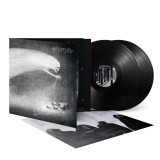
HEXVESSEL erkunden auf ihrem epischen siebten Album "Nocturne" liminale Räume, z.B. zwischen Licht und Dunkelheit sowie Natur und Einsamkeit. Die sich kontinuierlich wandelnde finnische Band besinnt sich wieder auf ihre Wurzeln im Folk und im psychedelischen Rock, indem sie akustische Zwischenspiele, kosmische Synthesizer und geisterhafte Pianoklänge kunstvoll mit den frostgesponnenen Fäden ihres Black Metal Geflechts verwebt. "Nocturne" klingt sowohl vertraut als auch unverhohlen progressiv, da HEXVESSEL ihre eigene Tradition mit einer frischen Neuerfindung ihres charakteristischen Sounds vermischen. Der Keim für dieses Meisterwerk wurde durch die Aufführung eines Auftragswerks beim Roadburn Festival 2024 gesetzt, das ursprünglich den Titel "Music for Gloaming: A Nocturne" trug. Mit diesem Album nimmt das Projekt eine ausgearbeitete physische Gestalt an. Dieses opus magnum verbindet den rauen Geist von Quorthons Black Metal mit dem komplexen Minimalismus zeitgenössischer Komponisten wie Philip Glass, György Ligeti und Avro Pärt. Den eklektischen Charakter von "Nocturne" unterstreichen ausgewählte Gastauftritte wie der ätherische Gesang von Saara Nevalainen oder die harschen Stimmen der Avantgarde Black Metal Vorreiter Yusaf Vicotnik Parvez (DHG/DØDHEIMSGARD) und ORANSSI PAZUZUs Juho Vanhanen. HEXVESSEL stammen zwar aus dem finnischen Tampere, die Band wurde aber vom englischen Sänger und Songwriter Kvohst alias Mat McNerney gegründet, nachdem er im Jahr 2009 in das nordische Land gezogen war. In vielerlei Hinsicht spiegeln HEXVESSEL die Natur ihres Gründers wider. Der Sänger und Songwriter war schon in vielen erfolgreichen Gruppen und Projekten aktiv, deren Spektrum von der britischen Black Metal Band CODE über einen Abstecher bei den norwegischen Legenden DHG bis hin zu den Rock-Shootingstars BEASTMILK reicht, die er später mit GRAVE PLEASURES fortsetzte. Mit "Nocturne" laden HEXVESSEL alle dunklen Seelen der Erde zu einem transzendentalen Nachtritual ein, das unter anderem die Klangvisionen von DARKTHRONE, TANGERINE DREAM und Philip Glass aus der toten Vergangenheit erweckt und mit neuem Leben erfüllt.
With their seventh full-length "Nocturne", HEXVESSEL explore the liminal spaces between light and darkness, nature and solitude on an epic album. The ever evolving and shifting Finnish band has reawakened their treasured roots in folk music and psychedelic rock as they artfully weave acoustic interludes, cosmic synths, and spectral piano into the frost-spun threads on their black metal loom. "Nocturne" sounds both familiar and fearlessly progressive as echoes of tradition entwine with a fresh reinvention of their characteristic sound. The seed of this masterpiece was sown by the performance of a commissioned work at Roadburn Festival 2024 that was originally entitled: "Music for Gloaming: A Nocturne". With this album, it arrives fully fleshed in recorded form. This opus magnum blends the raw spirit of Quorthon's black metal with the intricate minimalism of contemporary composers such as Philip Glass, György Ligeti, and Avro Pärt. Its eclectic nature is elevated and underlined by select guest performances, including the vocals of Saara Nevalainen, as well as the avant-garde black metal luminaries Yusaf Vicotnik Parvez (DHG/DØDHEIMSGARD), and ORANSSI PAZUZU's Juho Vanhanen. While HEXVESSEL are based in Tampere, Finland, they were founded by English singer & songwriter Kvohst aka Mat McNerney after he moved to the country in 2009. In many ways, HEXVESSEL reflect their founder. The vocalist and songwriter has instigated and been involved in various bands ranging from UK black metal act CODE, a stint in Norwegian legends DØDHEIMSGARD, and to rock shooting stars BEASTMILK – later 'continued' with GRAVE PLEASURES to name but a few of his success stories. With "Nocturne", HEXVESSEL invite all souls on earth to a transcendental night ritual that is imbued with DARKTHRONE, TANGERINE DREAM, Philip Glass, and sounds unearthed from the dead past, now instilled with new life.
PHASE SHIFTING INDEX is a time capsule record of Jeremy Shaw's vast original artwork that includes audio excerpts, voiceover passages and music composed by There in Spirit and Konrad Black. Shaw's seven-channel video, sound and light installation-that premiered at Centre Pompidou in 2020-uses science fiction, documentary, visual effects and synchronisation to induce an ecstatic experience in narrative temporality. Each video details the belief systems of one of seven fictional subcultural groups spread across time that aspire to induce parallel realities that could redirect the evolution of the human species through embodied forms of ritual, ideology and movement. The vinyl release serves as a gathering of the piece's key audio elements, focussing on their importance to the engineering of the artwork and their stand-alone listening qualities. Side A of the record follows the dramaturgy of the artwork in full-swing, including audio segments from four of its five distinct chapters. Written by long time collaborators Konrad Black and Jeremy Shaw together as There in Spirit, "Cross- Temporal Sync" soundtracks the strobing peak of the installation at the moment when all seven disparate videos fall into a unified choreography in which every person on every screen performs the same ecstatic series of slow-motion movements. The pulsing, hypnotic dirge aligns with the locked choreography in mood and action, caught somewhere between ecstatic trance and somatic takeover. A steady sub line, clipped stabs and a swooping choral gasp harmonise with the dancers movements onscreen while restrained filters open slowly to reveal a submerged melody that builds in intensity towards the chaotic rupture of Black's "Mosh". Here the score breaks into digital shards as heard through analog bodies colliding and pixelating into each other. The dancers eventual dissolution into "Particles" sounds like the field recording of a disembodied neural cosmos. The B-side of the record contains a narrative outline edit of the artwork comprised of music, excerpts and pieces of narration from each video. Listeners can follow along in an accompanying thirty-six page booklet of full-bleed film stills documenting each of the seven groups as they move through the five chapter dramaturgy. Composer Konrad Black's authentically backwards-glancing production and sound design is as disparate as the groups represented on screen. From the bespoke-16mm-tribal-techno of "The Cyclical Culture" and retro-cyber-funk of the "Zero-Ones," to the VHSdark- wave of "The Violet Lux" and skewed vocal/piano minimalism of the "Quantum Modern," each group exists in its own custom-made world out-of-time. The record ends where it began, with the full sequence of "Ramping" playing out as each subcultural world begins to lose control, galvanise, sync, rupture, atomise and scatter throughout the universe, only to loop back into another inevitable beginning. Phase Shifting Index premiered at Centre Pompidou, Paris, in 2020 and has since been exhibited in nine international venues including ARoS, Denmark, MONA, Tasmania, MAC, Montreal and Hamburger Bahnhof, Berlin
The story of Eyeshield 21 follows the protagonist Sena, the whipping boy of his classmates, who wants to earn respect by joining a club at the start of the school year. He crosses paths with Hiruma, head of the American soccer club, who recruits him for his exceptional running skills. They must quickly find 11 other players, as the inter-school championship begins in 24 hours.
Numerous artists and composers were involved in creating the theme music and accompanying songs, including Kosuke Morimoto, who contributed to various theme songs for Fullmetal Alchemist and One Piece. Any fan of the series will have a strong feeling of nostalgia when they recall the music that marked them during their teenage years. The very Pop-rock and J-pop tones will remind them of those after-school afternoons watching episodes of this epic anime on Game One. You'll also be able to hear the voices of the Japanese cast, including the voice of the main character, Sena Kobayakawa, on many of the credits and accompanying songs.
The manga turns 21 in 2023. To celebrate, the author wrote a 55-page one-shot called “Brain X Brave”, which appeared in early January 2024 in Weekly Shonen Jump. The anime has been broadcast frequently on Game One since September 2009 and on France Ô since September 2012.
Rando Arand is an Estonian electronic music producer from Tallinn. With a strong foundation in sound design, Arand released his debut record on Asphalt Soliloquies in 2017 and has since captivated audiences at clubs and festivals across the Baltics with his unpredictable and unique live sets. Drawing inspiration from a range of genres such as broken jazz, dubtechno, breakbeat and jungle, Arand incorporates modular synth patches into his performances. He has shared the stage with artists like Dorian Concept, Gerry Read and King Midas Sound. In 2019, Arand released the "Alles" EP on Ali Asker's LIITHELI imprint, which focuses on promoting local talent from Estonia's capital. Arand's latest EP, "Aru" (2022), showcases his exploration of a new "Linki" format. In addition to his musical pursuits, Arand was also a host at the underground venue Ulme in Tallinn.
About the album „Child of the Internet”
The new album by experimental sound designer and electronic music producer Rando Arand takes the artist on a completely different path compared to the previously known dance music influenced deep and contemplative instrumental tracks. Featuring several notable guest artists, the album is a sizzling hot record that makes feet tapping and bodies grooving. On the artist’s most listener-friendly work to date, an impressive lineup of Estonian vocalists makes an appearance: Hyrr IV, the lead singer of the indie band Ouu; Jon Mikiver from Elephants from Neptune; actress Mirtel Pohla; alternative pop artist Kitty Florentine; queer artist Helgi Saldo; comedian Maiduk; and hobby musicians Maihe and David.
The conceptual album "Child of the Internet" is dedicated to young kids for whom the internet has been a defining part of growing up. Genre-wise, the album is very flexible, weaving through various musical chapters and styles with the help of numerous musical sketches, touching on both the comedic and the darker oddities that circulate online.
The album features scorchingly hot, electrified synth-funk jams with a nostalgic touch reminiscent of Prince ("Slidin in Yo DM’s", "Refresh"). Kitty Florentine delivers a sensual neo-soul ballad ("Just Scrolling"), filled with soft tones, soulful warmth, and a smooth groove. For more demanding listeners, the record also explores elements of chillwave, glitch, lo-fi hip-hop, techno, house, and breakbeat. Longer tracks and shorter interludes come together like a bouquet of favorite memes or a collection of countless open web browser tabs that we all keep running. At the same time, the album hints at the immense impact the internet has on our everyday lives.
Rando Arand’s latest studio album is an intriguing listen — perfect for enjoying alone with good headphones or as an ideal background soundtrack for a larger gathering with friends.
What's Not To Love? is an album of music from John C. Reilly's vaudeville-inspired show where he embodies a character called Mister Romantic. Mister Romantic marks the Academyr, GRAMMYr, and TONYr award nominee's most personal project to date. The show, which was created to foster empathy and love for one another, has been described by Vanity Fair as "fiercely funny," while Theaterly hailed it as one of the best performances of 2024 following a one-night show in New York City. John is backed by a band of multi-time GRAMMYr-winners performing songs from the Great American Songbook as his character sets out on a mission to get someone (anyone!) to fall in love with him.
Graham Hunt hat die intuitive Fähigkeit, sich seinen eigenen Platz in der langen, verwirrenden Geschichte der amerikanischen Popmusik zu schaffen. Der Songwriter aus Wisconsin hat in den letzten vier Jahren hart an Platten gearbeitet, die zeitlosen Gitarren-Pop mit einem vielschichtigen Produktionsansatz und einem schlauen lyrischen Auge verbindet. Seine Musik verbindet das Surreale mit dem Alltäglichen, das Melodische mit dem Rhythmischen, das Kryptische mit dem Triumphalen - und beweist oft, dass Slacker Verspieltheit und Heartland-Ehrlichkeit sich nicht gegenseitig ausschließen. "Timeless World Forever" - die erste Veröffentlichung von Hunt für Run For Cover - bildet den Abschluss einer beeindruckenden Reihe von Songs und öffnet die Tore für eine neue Phase in der langen, produktiven Karriere des Künstlers. Seit Jahren ist Hunt eine feste Größe in der Indie-Rock-Welt des Mittleren Westens, seit seiner Zeit als Kopf von Midnight Reruns und Auftritten mit Künstlern wie Mike Krol und Disq. 2019 veröffentlichte er sein erstes Soloalbum "Leaving Silver City", aber es war 2022 das Album "If You Knew Would You Believe It?", mit dem er seinen Durchbruch hatte. Das 2023er Album "Try Not To Laugh" folgte schnell, und jetzt nimmt "Timeless World Forever" diese Fäden wieder auf. Die drei Platten sind aus einem Guss: alle entstanden im selben Keller in Madison mit einer Beat-getriebenen Dichte und einer klanglichen Fantasie, die Rap und Rave ebenso zu verdanken ist wie dem Power Pop. Es ist schwer, gleichzeitig nach hinten und nach vorne zu schauen, ohne mit den Rädern in einem schlammigen, zeitlosen Schlamm stecken zu bleiben. "Timeless World Forever" ist der Sound eines eines Lebenskünstlers, der einen höheren Gang einlegt, den Fuß auf das Pedal drückt und den Highway in Angriff nimmt.
"For Japanese people, min'yo is both the closest, and most distant, folk music" explains band-leader Katsumi Tanaka. "We may not feel it in our daily, urban lives, yet the melodies, the style of singing and the rhythm of the taiko drums are engrained in our DNA".
Initially indifferent to min'yo, a tragic event in recent Japanese history set Tanaka on his current path: "Following the Tohoku earthquake of 2011, I reflected on my life, work and identity. A fan of world music, I began searching for Japanese roots music I could identify with. Discovering mid-late 20th century acts like Hibari Misora, Chiemi Eri and the Tokyo Cuban Boys, I was captivated by their eccentric arrangements and how they mixed min'yo with latin and jazz music."
Lead singer Freddie Tsukamoto fell for min'yo after hearing a song from his hometown on a TV competition whilst in a restaurant. It was a revelation – until then he had been an aspiring jazz singer yet was uncomfortable singing in English. The restaurateur told him a min'yo teacher was his neighbour and the two connected. Tanaka and Freddie formed Minyo Crusaders in 2011 in Fussa, a city where the US military Yokota Air Base is located, in western Tokyo.
Recruiting other local musicians versed in afro and latin rhythms, they began hosting jam sessions at the Banana House, a building that was previously part of the military base and that used to house US soldiers. The band started recording their music, and their debut album "Echoes Of Japan" was released in 2017. It received huge acclaim in Japan and abroad, and was also released by British label Mais Um in 2019. Several European tours followed, as well as some US and South America gigs.
In this second opus, the Minyo Crusaders take us on a trip to Japanese folk songs fused with latin rhythms. Their unique arrangements breathe new life to classics like Kiso Bushi, Sado Okesa or Soran Bushi, among many other min'yo songs from all over Japan that were originally performed by Japanese fishermen, coal miners and sumo wrestlers hundreds of years ago. The magical groove created here proves once again that the Minyo Crusaders are one of the most dynamic representatives of the current Japanese world music scene. Yoi Yoi, Enjoy!
Repress of 2018’s classic compilation from Brownswood.
A primer on London’s bright-burning young jazz scene, this new compilation brings together a collection of some of its sharpest talents. A set of nine newly-recorded tracks, We Out Here captures a moment where genre markers matter less than raw, focused energy. Looking at the album’s running order, it could easily serve as a name-checking exercise for some of London’s most-tipped and hardworking bands of the past couple of years. Recorded across three long, fruitful days in a North West London studio, the crossover between each of the groups speaks to the close-knit circles which make up the scene.
Surveying the way that London’s jazz-influenced music had spread outside of its usual spaces in recent years, this album bottles up some of the vital ideas emanating from that burgeoning movement. Giving a platform to a scene where mutual cooperation and a DIY spirit are second-nature, it’s a window into the wide-eyed future of London’s musical underground.
Ubiquitous, much-lauded saxophonist Shabaka Hutchings is the project’s musical director. His own recent projects span from South Africa-connected, spiritually-minded jazz players Shabaka and the Ancestors to Sons of Kemet, who match diasporically-connected compositions with viscerally-direct live shows. His entry on the album, ‘Black Skin, Black Masks’, is typically difficult-to-define: with an off-kilter, shifting rhythmic backbone, repeated phrases – mirrored between clarinet and bass clarinet – shape the track with an alluring hue. His input ties together a deft, genre-agnostic sensibility that’s shared through all the players on the record.
Theon Cross – who’s also part of Sons of Kemet with Hutchings – starts his track, ‘Brockley’, with the solo, distinctive low rumble of his tuba. Winding and mesmeric, it sees tuba and sax lines winding together in rhythmic and melodic parallels. Ezra Collective – whose drummer and bandleader Femi Koleoso has toured with Pharaohe Monch – run a tight, Afrobeat-tipped rhythm on ‘Pure Shade’, with the final third changing gear into a melodic, momentous closing stretch.
Joe Armon-Jones, whose ludicrous chops on the piano have seen him touring with the likes of Ata Kak, showcases earworm-like, insistent motifs on ‘Go See’, balanced with a playful, improvisatory approach with room for ad-libbing and solos a-plenty. Taking a softer tact than many of the other entries, Kokoroko – whose guitarist Oscar Jerome has been making waves with his solo material – spin a lyrical, steady-paced meditation on ‘Abusey Junction’, matching chanted vocals with gently-played guitar.
Nodding to spiritual jazz influences, Maisha’s ‘Inside The Acorn’ is a wandering, explorative rumination, balancing delicate washes of piano and percussion with sharp interplay between flute and bass clarinet. In contrast, Nubya Garcia’s ‘Once’ is taut and carefully-poised, her tenor sax guiding a carefully-built energy to an explosive conclusion. And finally, Triforce’s ‘Walls’ is a performance in two parts: starting with Mansur Brown’s languorous, lyrical guitar, the second half switches up to a low-slung, g-funk-tipped groove.
out of Stock
Last delivered 8 months ago available to reorder, subject to availability
Front man Austin Getz doesn't blink when asked to sum up Turnover's third full-length, Good Nature. "Learning," he replies. "This whole record is about learning. Opening your eyes to new things, going outside of your comfort zone, and learning to grow into something new."The album's unique blend of musical and spiritual growth is immediately audible on the opening track, "Super Natural," a late-summer idyll of intertwined guitar parts and laidback vocals. Listening to how the leisurely "Nightlight Girl" melts into a more propulsive selection like "Breeze," and the way Good Nature flows together as a seamless whole, it's also evident that the foursome has been paying closer attention to how artists from earlier eras made full-length albums: the range of textures, tempos, and dynamics on Good Nature are infuenced in part by bossa nova, cool jazz, electronic music, and psychedelic grooves. This infux of new infuences and inspiration, navigated by Peripheral Vision producer Will Yip, results in the band's best album to date. Good Nature comes from a place of calm and contentment, nurtured by looking inward.
Murder by Death has earned a much needed break. The 25 years the band has spent on the road have been catching up to them lately, so they’ve decided to take a step back from touring before it grinds them to dust. This year, they’ll be embarking on a massive farewell tour, hitting more than 50 cities in the US, UK, and Canada. And as their parting gift, they are leaving behind their tenth album, Egg & Dart. Murder by Death has accomplished more than they’d ever dreamed since forming in Bloomington, Indiana, in 2000, when Turla and cellist Sarah Balliet started the project with fellow college dorm-mates under the name Little Joe Gould. They traveled the world several times over, released ten studio albums, built an intensely dedicated following, and shared stages with artists from a wide array of genres.
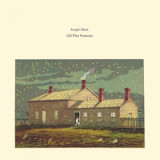
The songwriter Joseph Allred is always prolific, but breaks up their string of solo releases for one of the most orchestrated offerings since the excellent Branches And Trees. Allred’s often monastic guitar works are fleshed out here on Old Time Fantasias, turning them towards ensemble visions of country, Americana, and Appalachia. Album opener, “The Groundhog,” features the distinctive piano of Hans Chew, with bass from Daniel Kimbro and brass from Mikey Allred. Elsewhere the new album features Kelby Clark, Courtney Werner (Magic Tuber String Band), Evan Morgan (Magic Tuber String Band), Lydian Bramblia, and Jack Bird in the mix. “I started recording this album in Spring ‘23, thinking I might be making a mostly solo acoustic album with a couple of duets thrown in for good measure. I met Hans Chew at a Nashville show a few months earlier and sent him a few tracks to see if he wanted to add anything to them. Before long the ‘solo acoustic album’ had given way to what’s probably the most involved and densely orchestrated album I’ve made to date. “I enjoyed following some threads of influence that aren’t as easily discernible in my solo playing—I hear some classic country and psychedelic flourishes, baroque pop glockenspiel and horns, percussion ideas that may be cribbed from Danny Elfman and Tom Waits albums, nods to post-rock-filtered western guitar twang, and a little Cocteau Twins dreaminess. “All in all this was a satisfying record to make. I’m especially grateful to the collaborators for adding their touches and making it a less solipsistic affair than it would have been otherwise. The political climate has changed so much over the last two years that I find it hard to imagine I could make a record with this kind of fantastic mood if I started now. I hope that it can maybe re-enchant those of us who are felling disillusioned.” —Joseph Allred
Marconi Union, one of the most influential names in contemporary ambient and electronic music, announce their twelfth studio album, The Fear of Never Landing, set for release 6th June via Just Music. The news is paired with the release of first single Eight Miles High Alone, out 20th March on all major streaming platforms.
Known for their ability to craft cinematic, immersive soundscapes that blur the lines between ambient, electronic, and experimental music, the Manchester-based duo once again push the boundaries of sonic exploration. The Fear of Never Landing takes us on a dynamic journey that’s atmospheric, diaphanous and never short of mesmerising. While the new record is certainly infused with a sense of hope, there’s more than a soupçon of anxiety too, as the title suggests.
A 55-minute odyssey presented as one seamless piece divided into nine movements, they transcribe the nexus of modern living into a mostly wordless odyssey. The album encapsulates Marconi Union’s ability to translate the complexities of the human experience into sound, all while maintaining a stunning sense of cohesion.
While the music feels effortless, the creative process was anything but. During the two years it took to complete the album, members Jamie Crossley and Duncan Meadows faced creative struggles that even led them to briefly question the band’s future. A pivotal moment came when they performed a live soundtrack to the 1975 skateboarding film Downhill Motion, rekindling their connection to atmospheric composition. By testing new material live and returning to their roots, Marconi Union redefined their creative process, leading to some of their most emotionally impactful work to date.
“We’ve always made atmospheric music but we had started to lose that aspect. Other than some rough ideas, we had no sense of what we were doing anymore, a kind of musical wilderness. Eventually a couple of things fell into place, and it was like, ‘Ah, okay.”
With a foundation to build upon, they went back to basics and decided to take their time going forwards. “We tried out a few new tracks live which gave us the opportunity to see what worked and what didn’t. We've never given ourselves that luxury before.”
The first track to be shared, Eight Miles High Alone, is a mesmerizing sequencer-driven track that builds an immersive, atmospheric soundscape. Its hypnotic pulses and intricate layers evoke a sense of solitude and weightlessness, perfectly capturing the album’s blend of tension and introspection. “Eight Miles High Alone was the first piece that we managed to complete and helped to inform our approach to the rest of the album.”
Formed in Manchester in 2003, their debut album, Under Wires and Searchlights (2003), introduced their signature sound, but it was their 2011 release of Weightless that brought international acclaim. Developed in collaboration with a sound therapist, Weightless was scientifically recognised as “the world’s most relaxing song”, praised for its ability to reduce anxiety and heart rates. With over 900 million streams and widespread coverage across media, the track remains a cultural phenomenon.
Over the years, Marconi Union has continued to evolve, producing critically acclaimed albums such as Signals (2021), Ghost Stations (2016), and Tokyo+ (2017). Their work has been hailed for its emotional resonance and sonic depth, with The Quietus noting their ability to find “beauty in the bleakest places” and The Sunday Times describing them as “amongst today’s most talented musicians.”
Beyond their studio albums, Marconi Union has collaborated with visual artists, provided soundtracks for installations, and remixed notable acts like Max Richter and Vök. Their invitation by Brian Eno to perform at Norway’s Punkt Festival further cemented their reputation as innovators in the ambient music sphere.
With The Fear of Never Landing, Marconi Union once again showcases their unmatched ability to create immersive soundscapes that resonate deeply. The album reaffirms their position as masters of atmosphere and emotional storytelling, making it an essential addition to their storied catalog.
Hardcore is niche, schismatic, and a global phenomenon that refuses to die. Because hardcore will never die. Its symbols have been tattooed onto millions of bodies and its relics passed down through the generations, as its sounds resound worldwide.
This diehard anthology tracks the outsiders and outcasts who banded together to party, in protest, over more than 30 years of obnoxious rebellion, in ecstasy and escape, as a nighttime community more family than family, who need this hard, loud, fast/slow, aggressive, noisy, occasionally silly, kick drum or breakbeat-driven dance music, to connect with people, to survive the world, and to get through the week.
Hardcore: Either you’re in, or you’re out. And if you’re in, you’re in all the way, diehard and dancing to the death. Dance or Die!
Presenting “M.L.K. & The Breadwinners- The World Is In Trouble”. Vintage analogue business. Eleven new vocal cuts in a ROOTS tradition from songwriter and vocalist M.L.K. originally from Sierra Leone and now based in Amsterdam, a man with pure vibes and a serious message to share.
The music is a mix of original Breadwinner riddims and a few choice re-cuts, drawing on some of the more obscure recordings from Lee Perry’s Upsetters house band, most of which have never been re-versioned. They were suggested for a re-cut by long time Breadwinners supporter Chris Durning, who was curious to see where M.L.K. could take the vibes with his unique vocal style and fresh lyrics.
Hi-Dynamic Instrumental & Dub is the latest release from Breadwinners records released on 2nd May 2025. With 11 tracks in total, it has been manufactured in the UK at Press On Vinyl. After a series of vocal-led albums on Breadwinners records, this is first full length instrumental based dub album in a number of years. Featuring the legendary Vin Gordon on Trombone and two of the finest saxophonists in the north west of England in Nat Birchall and Stally. Drawing on rhythm tracks created over the last few years by Al Breadwinner at his analogue Bakery Studio in Manchester, the album utilises various vintage outboard effects and lost dub techniques to create this “Hi-dynamic” sound.
Crafted entirely on an analog monophonic synthesizer with no overdubs, Pièces Monophoniques is a tribute to simplicity in an era of limitless digital possibilities. Since his debut album, Music For Prophet (Les Disques du Festival Permanent, 2017), Majorca-born composer Marc Melià, now a long-time resident of Brussels, has been redefining the contours of electronic music through a minimalist, reductionist approach. Much like a solitary hike through the vastness of mountains, where one carries only the essentials, Melià’s work invites listeners on a journey stripped of excess, focusing instead on the purity of sound and intention.
While some have dismissed monophonic music as overly simplistic, others have embraced its distinct charm. Historical records, such as those by Johannes Quasten, reveal that early Church leaders were drawn to monophonic music because it resonated with the era's cosmological beliefs, highlighting the harmony and unity of all creation. In an age of digital abundance, Marc Melià deliberately embraces constraint, crafting an album that thrives within a limited palette of choices. Yet, from these self-imposed boundaries emerges a stunning universe, brimming with rich textures and elegant harmonies. For his debut album, Melià worked exclusively with a Sequential Prophet. With Pièces Monophoniques, his third LP, he returns armed solely with an analog monophonic synthesizer and handcrafted MIDI sequences etched directly onto a single stereo track. These recordings seek to uncover beauty within the boundaries of limitations and simplicity, rejecting any embellishments that are not essential. Melià presents the bare skeleton of music, highlighting the power of absence and silence as creative forces. Like the hidden mass of an iceberg, what is not heard becomes as significant as what is heard.
The album navigates the boundary where the quest for an uninhibited emotional response intersects with the mechanical sounds generated by synthesizer circuitry. Despite being a collection of beatless tracks, a pulse occasionally surfaces, like in the closing piece, "224 Steps. A sharp sequence blended with multiple delays and reverbs creates the vaporous celestial specter of multiple voices in "Illusions of Polyphony", while "Échoes et Fantasies" conjures the illusion of dual harmony. The expansive reverbs and silences between the euphoric synth phrases in "Overture" transport us to an imaginary magestic landscape shaped out of an electric field. "Resonances," a one-note drone-like sequence, embodies the album's aims as a series of resonances created with the synth filter emerge from the fundamental note.
"Pièces Monophoniques," aims to contribute to a tradition that dates back to the dawn of humanity. After all, there is no denying that the earliest music crafted by humanity was monophonic, from the soothing lullabies sung to newborns to Gregorian chants, traditional labor songs, and the repertoire of solo compositions by countless composers.
This is not the end of a dark alleyway in some US city, this is not the bottom of a platform heel in England, this is not the back corner of some dusty drawer at a record fair in Holland. These are not the places you’ll find rock and roll. This is Quebec: A different sensory perception of rock and roll. A heightened awareness of the highest highs and the lowest lows. This is Belgium with snowmobiles, Catholic Texas, Ugly France. All the crumbling highways, the coldest beers, and the loudest joints. Guitars do different things in Quebec. PUFFER shimmy across the invisible barricade between Montreal and the rest of the world not just as another crop of punks but as the great descendants and inheritors of modern greats like INEPSY’s “Rock and Roll Babylon” and ANNIHILATION TIME's “II.” Loud, brash, unrelenting. You’ll go deaf before you get bored of it.
Self produced, self recorded, and mixed by the band, this is the vanguard of punk that has lived long beyond it’s moments of origin. This pure blast of 1979 by way of the hellish weimar end-times of 2025 never made the necessity of punk rock feel so real.
FFO SLAUGHTER AND THE DOGS, the 222s, THE DISCORDS, MOTORHEAD, INEPSY, AA Restaurant, Montreal pool room, Katacombes, and the eternal flame of punk in La Belle Provence.
Born in Montreal, double platinum- selling artist Sam Roberts launched a career of radio hits with The Inhuman Condition, which included "Brother Down" and the #1 single "Don't Walk Away Eileen". His eight subsequent albums have garnered multiple awards and include life-moment defining favourites "Hard Road", "Where Have All the Good People Gone?", "Them Kids", "We're All In This Together", and "All Of Us".
The band's legendary live show has seen them performing around the world including Australia, Japan, Europe, and North America. Their infectious live energy has brought them to festivals such as Bonnaroo, Austin City Limits, Lollapalooza and Bumbershoot, and on stages alongside giants like the Rolling Stones and AC/DC.
Frequencies is a carefully curated collection of songs that, while familiar to their North American audience, will be receiving a full-fledged release in the UK for the first time. As a special addition, the album will include a newly recorded version of 'Brother Down', the band's breakthrough single from their debut album We Were Born In A Flame. This fresh take captures the energy and evolution of the song as it has been performed night after night over the decades. The album also features a rework of 'All Of Us' by fellow Montrealer Liam O'Neil (The Stills, Kings of Leon).
Having spent the last half decade building up a name as a jazz and soul singer of rare distinction, Ada Morghe now presents her fourth album, 'Pure Good Vibes', which features the British reggae icon Maxi Priest A trip to Jamaica in January 2024 set 'Pure Good Vibes' in motion. Ada headed to th island after hearing that her bassist and producer Livingstone Brown, was flying the to work with Maxi Priest. It was an idea that was underlined by her desire to explo the music, culture and Jamaican heritage that had also shaped the lives of her oth band members Luke Smith (keyboard) and Josh McNasty (drums). The resulting album is a beautiful, intimate reflection on adult themes, such a keeping the passion alive, making the most of life's sweet moments and capturing th closeness of two people in love, which is underpinned by a sound that, though n beholden to Jamaica's musical traditions, certainly shares a spirit with them. The are other influences - such as Michael Kiwanuka's soulful fervour, the vibrancy of '60 R&B, and a love of Sade's 'Diamond Life'. Before stepping whole- heartedly into music, Ada Morghe was already a renowne actress and an award-winning author in her homeland of Germany. Having written an starred in the play-turned-film 'Frau Mutter Tier' and been asked to write songs for i soundtrack, she found herself working with former Prince sound engineer Han Martin Buff. That led her to Abbey Road studios in London, her debut album 'Picture and 2020's 'Box', an expression of her refusal to be tied down to any one genre o profession. From there came 2023's 'Lost', a free-flowing vocal jazz suite based on th four elements. 'Pure Good Vibes', however, pulls her toward what sounds like her most natural albu yet: sophisticated jazz and soul that deals with both the romance and reality o matters of the heart.
Norman Connors was a 'go to' producer in the 70s and 80s for soul and jazz while recording an impressive array of solo albums. His first instrument is drums, and across his recordings were the introduction of singers who went on to have their own individual careers. Besides people like Jean Carne and Phyllis Hyman were more established names like on Once I've Been There', the exceptional Phillip Mitchel. On 12', this song was only ever a promotional release, copies of which now exchange hands at over £100.
A new vinyl album from Nat Birchall, this is the Dub version of his Dimension of the Drums LP, a roots reggae instrumental set that was very enthusiastically received last year, ending up on many best Of The Year lists.
For this album Nat has remixed the tracks in classic early to mid - 1970s style. Inspired by the classic Dub LPs like Keith Hudson’s ‘Pick A Dub’ and Winston Edwards’ ‘King Tubby Meets The Upsetter at the Grass Roots of Dub’ the tracks have been reimagined in Roots Dub fashion, some with new horn lines and all with hand drums, giving the album a very authentic Rootsy sound. Additionally there are two different mixes of a new rhythm track that wasn’t on the previous album.
Once again Nat plays all the instruments and did all the recording, mixing and mastering.
Drums in Dub features eight tracks of instrumental Dub delight, specially designed for the 1970s Dub connoisseur.
out of Stock
Last delivered 16 months ago available to reorder, subject to availability
José James just can’t leave the ’70s alone. Or maybe it’s the other way around. The singer, songwriter, bandleader, and producer was born in 1978, after all, but over his past 17 years of fundamentally forward-looking, blessedly mercurial music, he keeps getting pulled back in. His 2013 Blue Note breakthrough No Beginning No End revisited the hooky, funky, jazz-streaked songcraft of the time through a modern crate-digger’s ears. On 2020’s No Beginning No End 2 — James’ debut on his own Rainbow Blonde Records — he went back through the portal with a small army of fellow celebrated eclecticists. Just last year, there was the album 1978, a richly layered love letter to said year that felt deep, luxe, and cool. It’s as if — vested with the restless fluidity of jazz, the tuned-in sensitivity of soul, and the revisionist grit of hip-hop — he is trying to play his way into the exact moment when, culturally speaking, everything was about to change.
“I'm still so fascinated by the tension in that era of all these seemingly clashing things happening at once,” says James. “The loft scene, the jazz scene, Elton and Billy, Bob Marley, the Isleys, Funkadelic, disco being this behemoth in a way I don't think we even understand today… And then there’s where everybody went from there — into hip-hop, into punk rock, exploding jazz. It's like a summation of the ’70s, and it's about to transform. It's the peak of the rollercoaster.”
Literally breaking into history is impossible, of course, but James’ new LP, 1978: Revenge of the Dragon, does feel like breaking through or bursting out. In loving contrast to its predecessor, the fresh set plays hot, like a Friday night out at the Mudd Club in its prime. Though he’s dreamt up albums with collaborator counts approaching the dozens, James gathered a tight crew for this one. Himself and Taali on vocals. BIGYUKI on keys and analog synth. Jharis Yokley on drums. Bass split between David Ginyard (Blood Orange, Terence Blanchard) and Kyle Miles (Michelle Ndgeocello, Nick Hakim). And an all-star brass lineup: Takuya Kuroda on trumpet, young lion Ebban Dorsey on alto sax, and genre-spanning ronin Ben Wendel on tenor sax. They set up in Dreamland Studios near Woodstock, a restored 19th century church, and recorded live to tape, two tracks, drums pushed to the max — “a small homage to the rise of punk,” says James.
In that place out of time, the band laid down a handful of choice covers and some wild originals, like the single “They Sleep, We Grind (for Badu),” a decades-collapsing cut powered by an ugly groove. Steeped in dub, funk, and sampledelia, James chants an artists’ mantra (“They sleep, we grind / Man, f--- your nine to five”), makes lyrical callouts to Marley and Nas, and channels everything from George Clinton to J Dilla, not to mention the earthy mysticism of Erykah Badu. In 2023, James released and toured his Badu covers LP, On & On. “Living in her musical house for a year was transformative,” he says. “This is my summary of everything I learned through her, tying it to this idea that artists move differently. We are in society but we are outside, too, looking out and in at the same time. Our hours are different, our schedules are different.”
To that point, James and co. actually began each day in the woods, filming the album’s visual companion piece, Revenge of the Dragon, an honest-to-God kung-fu short complete with bad overdubs, training montages, camera tricks, and plot twists. The film pays tribute not only to the genre’s greatest year (1978, of course), but also its cinematic exchange with Blaxploitation, plus James’ own recent Shaolin training and admiration for Bruce Lee as a culture-bridging force (the LP’s cover recreates an iconic shot of Lee). On top of that, says James, “We had this immediacy in the studio. Live, one take, no overdubbing. I feel like that's where the martial arts piece comes in, where it's about being relaxed but also aware, and there's immediacy in your movements.”
Across the project, tribute takes that refracted, multifaceted form. From his personal late-’70s playlist, James chose four covers reflecting the era’s disco-fied churn: the MJ-meets-Quincy dancefloor masterpiece “Rock With You”; Herbie Hancock’s prescient vocoder fever dream, “I Thought It Was You”; and a pair of Black-radio hits from two bands whose fans typically wouldn’t have been caught dead in the same stadium: “Miss You” by the Rolling Stones and the Bee Gees’ “Inside and Out.” All of it gets filtered through a contemporary Black (and beyond) lens, coming out loud, free, funky, and buzzing — dynamic, yes, but also of a joyous piece.
1978: Revenge of the Dragon transports you to a crowded room where all this is playing out in real time. That feeling is helped out by opener “Tokyo Daydream,” a bass-driven swan dive into a neverending night of boutique bar-hopping and neon revelry. Later, “Rise of the Tiger” finds James bringing rare braggadocio to a propulsive track with growling synth lines and a hunger for whatever comes next. And then there’s the closer, “Last Call at the Mudd Club,” which with its upbeat energy and string of Stevie-inspired pickup lines, evokes the sort of unabashedly elated track the DJ throws on at 3:56 a.m. before everyone is kicked out. “I wanted to leave the album on that note,” says James. “If this was a night out in New York, this would be the last thing you hear before you get in that taxi and go back to your apartment.” Or, perhaps, back to 2025.
out of Stock
Last delivered 16 months ago available to reorder, subject to availability
Gladio Operations launches its twelfth release, where the Spanish label returns to the various artists format. Opening the pack is producer and Distrito 91 label owner Fabio Vinuesa. Under his newly created alias Protocolo Sysex, he gives us “NottheFuture,” a powerful track with raw bass lines — a benchmark for the dancefloor.
On the same side, we encounter Sinitsin. The Russian artist, who debuts on the label, leaves his mark with “Thinking Machine”. A track that reveals his enthusiasm for charismatic and effective melodies, very well sequenced throughout the track. The B-side opens up by an acquaintance of the label, Jauzas the Shining. This time he is accompanied by Foreign Sequence, and together they have created “Enter the Body”. A track of dark aesthetics, served with dramatic vocals, very characteristic of the Frenchman who, of course, never disappoints. Another artist making his debut is Italian producer Teslasonic. This fast-paced track titled “Chubby Bee” reveals a minimalist bass line, with subtle and delicate touches of the 303. The EP is brought to a close by another Gladio acquaintance. Igors Vorobjovs returns with this track titled “For One”.
Orientated towards IDM sounds, the Latvian producer once again envelops us with a passage of deep and mysterious harmonies, which undoubtedly makes it a timeless piece.
out of Stock
Last delivered 4 months ago available to reorder, subject to availability
The Ottawa composer/performer and head of Black Bough Records plays every instrument on his CST debut: an accessibly avant-garde work of dark/ambient modern chamber music. Mark Molnar has been a linchpin of the Ottawa experimental music scene for over two decades, spanning contemporary classical, electroacoustic, industrial/noise, and improv. As a string player in a wide range of projects, an organizer and curator of innumerable shows, and via his own avantgarde label Black Bough Records, Molnar's unflagging contributions to independent music culture in Canada's capital city have been significant. EXO is his Constellation debut: a remarkable and bracing suite of post-classical composition on which Molnar plays every instrument. Meticulously self-recorded, primarily with strings, harp, and piano, EXO balances thematic melodicism, polytonality, and dissonance across three elegiac pieces of exquisitely expressive dynamism. This is exacting modern chamber music that blends formal and harmonic complexity with a solemn emotive sensibility accessible to a broad audience. Listeners that yearn for some edge and disquietude in a landscape of often all-too-approachable post-classical music should find EXO eminently worth their time and attention. While Molnar is a highly trained string player, and studied music under Aubrey Wolfe, microtonality with James Tenney, and composition with R. Murray Schafer, his trajectory has been entirely and intentionally outside the academy, signalling a socio-artistic commitment to DIY culture, forged from an early passion for the sonic worlds of post-hardcore, post-punk, no-wave, free improv, power electronics, and other independent/underground musics. His classically-informed works have been described as "tense currents of musical modernism invigorated with punk's raw vitality." EXO carries an undercurrent influenced by dark industrial and ambient metal in particular, with microphones purposely placed to pick up the low-end frequencies of the piano body, and of a bass drum positioned as a resonant skin in the acoustic space; an electroacoustic strategy organically meshed to the crisply defined and pristinely recorded pointillisms and polychords of strings, harp, and piano, which feed into this noisefloor of crepuscular sub-bass disquietude and decay. It's a production aesthetic that lends EXO a distinct undertow of tension and feeling, a sort of roiling maximalism where the chamber instrumentation traces arcs and waves of form and flow as if drawn from a dark, impervious ocean below. It also reinforces the profound hermeticism of Molnar's process, as a forbiddingly solitary creative act of immersion and navigation. The album artwork, featuring semiabstract stills of the sea by British photographer Ed Allen, further reifies this metaphor. The album's opening piece 'Sub Luna' (and its shortest at 8 minutes) showcases Molnar's adeptness at naturalistic and flowing complexity: tight cascades of climbing and descending chordal clusters hold their polytonal densities for various durations, yielding to more clarified harmonic suspensions and motifs, as melodic themes led primarily by violins in the higher registers provide a fractured lyricism. Molnar says: "the opening and closing figures of this piece act as opposing shorelines; the shorelines provide a reliable expression of range and key signature, and the tides come in and swallow them up, the motion of a body that addresses the relationship between states of lucidity and melodic figures." On 'Terre Sacer' everything happens in soupier waters, as a slow and doleful theme, anchored by grinding bass notes, circles in a gyre of dark resonances, until glistening strings gradually ascend to enrobe a plaintive and gently harrowing single-voiced ostinato over the composition's final third. Molnar's drone, ambient, minimalist, and goth-industrial influences are on display here. Side Two of EXO features the 18-minute multi-movement 'pallida Mors' (pale death): a waterfall of heterophony introduces dense chordal movements where strings are recorded and mixed to evoke pipe organ, in the album's most overtly dissonant and (anti)liturgical sequence. This gives way to ever more open and fragile spaces, before a resurgence of dark clusters and noise treatments introduces a final repeating piano coda, shrouded in devastated bass resonance, settling into what Molnar calls "a meditative hollow." Constellation is honoured to release this work by Mark Molnar, a longtime fellow-traveler whose selfless and boundlessly generous activities as an independent arts enabler sometimes obscure his own accomplished and uncompromising artistry. We trust EXO can help shed some much deserved light on this fine composer. Thanks for listening.
A timeless rock & roll band for the modern world, The Prescriptions sharpen their sound with Time Apart. Produced by Ben Tanner (Alabama Shakes) and Brendan Benson (The Raconteurs), the album funnels a half-century of American and British influences including taut power pop, explorative indie rock, jangling heartland hooks, and New Wave nuances into something sharp and singular. The result is a warm, widescreen follow-up to The Prescriptions' 2019 debut, Hollywood Gold, its songs balanced halfway between classic craftsmanship and progressive exploration. Fiery and forward-looking, Time Apart explores both sides of the pop/rock divide. It's a 21st century album rooted in everything that made the classic stuff so compelling sharp songwriting, ringing refrains, percussive stomp, and guitars that chime one minute and churn the next. Time Apart is an album for the heart, head, and hips. The Prescriptions have been never been shy about nodding to the hook-driven rockers who came before them, but here, they carry those influences into uncharted territory, uncovering something that's truly theirs along the way. It was time together that created Time Apart, and The Prescriptions have never defined their ambition or abilities so clearly before. Tracklist: 1 April Blossoms 2 Long Past Tonight 3 Love is Red 4 I Get Lost 5 Compartmentalize 6 Fire Moon 7 On Satellite 8 Not The Issue 9 I Might Try 10 Baby Be Nice 11 Camp Hill