The Steel Woods, die renommierte Südstaaten-Rockband, hat das Publikum mit ihrem kraftvollem Sound und zu Herzen gehenden Texten auf ihren letzten drei Alben. Mit ihrem vierten Album,"On Your Time", begeben sie sich auf eine ergreifende und emotionale Reise, die lose dem Werdegang Onkel Lloyd, einem charmanten, aber ausschweifenden Charakter, der erstmals auf dem Debütalbum "Straw in the Wind" von 2017 vorgestellt wurde.
Dieses ambitionierte Album zeigt nicht nur ihre musikalische Entwicklung und die Fähigkeit, episodische Geschichten zu erzählen, sondern dient auch als Tribut an die Vision und Vermächtnis ihres verstorbenen Mitbegründers Jason "Rowdy" Cope, der kurz vor der Veröffentlichung ihres dritten Albums "All of Your Stones" verstarb. Angeführt von Wes Bayliss, dem Gitarristen, Sänger und Mitbegründer der Band, haben The Steel Woods ihr Herz und ihre Seele in dieses Album gesteckt. Sie haben ein Album geschaffen, das ihre Unverwüstlichkeit, ihr Wachstum und ihren unerschütterlichen Geist widerspiegelt.
Cerca:dr sud
Nur wenige Hardrock-Alben sind so intim wie die modernen Veröffentlichungen von OF MICE & MEN. Während ihre Songs die Art von rhythmischem Druck und hymnischen Bombast haben, die das Festivalpublikum begeistern, sind die konfessionellen Texte und eindringlichen Melodien das Herzstück ihres Schaffens. Das südkalifornische Quartett nahm alle kreativen Angelegenheiten selbst in die Hand und produzierte und konstruierte alle Songs auf Tether, ihrem erstaunlichen achten Album. Frontmann Aaron Pauley hat das Album gemischt und gemastert, während Schlagzeuger Valentino Arteaga das Artwork des Albums entworfen und gemalt hat. Wie es eine Legion treuer Zuhörer auf der ganzen Welt erwartet hat, haben die Gitarristen Phil Manansala und Alan Ashby, Aaron und Tino ihr Herz und ihre Seele in jede Note gesteckt und so ein weiteres Klangdokument ihres Lebens geschaffen.
10th Anniversary Edition auf Limited SPLIT-COLOURED Vinyl!
"Run the Jewels - die herausragende Kollaboration der Hip-Hop-Veteranen El-P und Killer Mike - haben sich seit der Veröffentlichung ihres Debüts Run The Jewels im Jahr 2013 von einem launenhaften Underground-Rap-Projekt zu einer weltweiten Sensation entwickelt. Sie mischen den industriellen Dreck von New York City mit dem pulsierenden Bounce des dreckigen Südens und schmieden die Zukunft des Hip-Hop, während sie an den Grundpfeilern seiner Basis festhalten: gymnastische Darbietungen von Fähigkeiten, aufrührerische politische Rhetorik, gnadenlose Angeberei, kampferprobtes Arschlochgehabe, Punchlines mit Altersfreigabe und ein Hin und Her, das das Zusammenspiel der Adidas-Ära schreiend in unseren heutigen Albtraum bringt. Ihr selbstbetiteltes Debütalbum aus dem Jahr 2013 wurde ursprünglich über eine Reihe von kostenlosen Downloads auf der Website veröffentlicht und zerreißt das Regelwerk der Musikindustrie. Mit Big Boi von Outkast auf "Banana Clipper" und Prince Paul auf "Twin Hype Back" ist es ein "rauer und tollwütiger Ritt"; eine "auftrumpfende Siegesrunde für zwei Künstler auf dem Höhepunkt ihrer Kreativität"; und wurde als "eine der besten
Hip-Hop-Platten des Jahres 2013" betitelt
* In 1993, Andy C & Ant Miles set out about creating a fourth release for the newly established Ram Records, now just a year old. With Hardcore still prominent in the clubs around the world, The Touch features rollercoaster bass swoops against energetic breaks flowing around the main sung vocal "c'mon and touch me".
An early sign of the precision arrangements that became synonymous of Ram's early sound that followed over for many years. Whilst going through the remaining samples in the sampler that had not been used on the A side, the pair suddenly went on a tangent with one of the drum breaks.
Experimenting with the new time stretch function in the Akai sampler, they soon had a shuffle groove layered and moving. With Ant Miles' sculpted and edited arpeggio bell line sample, a new overall sound and vibe was beginning to emerge out of their studio Atari ST computer.
Utilising an original organic analogue string pad, the haunting sinister vibe became complete. With the vocal from the BBC QED documentary 'Glimpses of Death' - "I felt, like I was in a long dark tunnel" all that remained was one of the most memorable pounding bass lines to sit underneath it all.
The result was an instant impact on the scene, heralded as one of the first anthems of the Jungle genre. Multi award winning and the track that cemented Andy & Ant and their label Ram Records within the scene.
Black Vinyl[27,69 €]
There are only a few figures in music whose work influences and
shapes a genre as a whole. This is undoubtedly true of the Swede
Esbjörn Svensson. With his trio e.s.t., the pianist and composer
wowed audiences beyond age and genre affiliations. And his
influence on jazz as a whole reverberates to this day and already
within the second and third generation of musicians worldwide.
‘HOME.S.’ is Esbjörn Svensson’s only solo album and the sheer
existence of such a recording and its completely unexpected
discovery over a decade after its creation are nothing less than a
sensation: Since the early 1990s, Svensson focused almost his entire
creative energy and recording activities on his work with e.s.t.. Thus,
these new recordings are not only the first, but practically the only
ones that show Svensson in a setting other than that of the trio:
Intimate, concentrated and completely one with himself. The
recordings for ‘HOME.S.’ were made only a few weeks before
Esbjörn Svensson’s sudden death on June 14, 2008. Svensson
recorded the music in his Swedish home.
For almost ten years afterwards, the album rested untouched in his
wife Eva Svensson’s personal archive. Here, she tells the story
behind the discovery of the album and the music: “After Esbjörn’s
passing, I made sure all the contents of his computer were saved to
backup hard drives. And then I basically left them untouched for the
next ten years. At the point where I eventually felt ready to look into
the material, I soon realised that there was something I wanted to
look into.
“I took the hard drive and went to Gothenburg to meet with Åke
Linton, the sound engineer who had worked on all e.s.t. albums as
well as on their live shows. He was also the one who had helped me
to save the material from Esbjörn’s computer in the first place. So he
probably already knew that there was something hidden in there. But
nobody had listened to it.
“We went to his studio. And we pressed the start button. Then there
was a total silence and we couldn't speak for the entire time the music
was playing. After it finished, at first we were not able to say anything,
because we were both so touched and surprised that it was all there,
and that it was so beautiful. The tracks seemed to follow one another
like pearls on a string. After we just had sat there for a while we
agreed: This is really good. Musically, but also from a sound
perspective.”
Today, Anjimile Chithambo, better known as Anjimile, announces his new album, The King, out September 8th, his first full-length since 2020’s breakthrough Giver Taker. To herald the announcement, he shares lead single, ‘The King’, accompanied by a visualiser by Daniela Yohannes, whose striking painting takes centre stage on the album cover.
Highlighting the artistic shift from Giver Taker to now, ‘The King’ opens with a lofty, melodic choir, an intro that belies the song’s motives. Suddenly, sinister arpeggios interrupt the reverie, and the voices grow darkly serious. Deeply steeped in the confusion, grief, and rage of being Black in America, ‘The King’ pushes back against the tired adage, “what doesn’t kill you makes you stronger,” hissing, “What don ’t kill you almost killed you// What don’t fill you//pains you// drains you.”
“If Giver Taker was an album of prayers, The King is an album of curses.” In his second album, Anjimile continues exploring what it means to be a Black trans person in America. The brutally honest reflection of 2020’s deadly summer is less reminiscent of the pink cloud of early sobriety and more rooted in the reality of seeing brutality with clear eyes. Drawing from influences ranging from religion, Phillip Glass, and lived experiences, the album is a grand step forward for Anjimile. Nearly every sound you hear on The King comes from two instruments: an acoustic guitar and Anjimile’s own voice. Other than a few beautiful contributions from Justine
Bowe, Brad Allen Williams, Sam Gendel, and James Krivchenia (Big Thief), the album is the result of a year in LA working intimately with Grammy and Juno winner Shawn Everett.
Today, Anjimile Chithambo, better known as Anjimile, announces his new album, The King, out September 8th, his first full-length since 2020’s breakthrough Giver Taker. To herald the announcement, he shares lead single, ‘The King’, accompanied by a visualiser by Daniela Yohannes, whose striking painting takes centre stage on the album cover.
Highlighting the artistic shift from Giver Taker to now, ‘The King’ opens with a lofty, melodic choir, an intro that belies the song’s motives. Suddenly, sinister arpeggios interrupt the reverie, and the voices grow darkly serious. Deeply steeped in the confusion, grief, and rage of being Black in America, ‘The King’ pushes back against the tired adage, “what doesn’t kill you makes you stronger,” hissing, “What don ’t kill you almost killed you// What don’t fill you//pains you// drains you.”
“If Giver Taker was an album of prayers, The King is an album of curses.” In his second album, Anjimile continues exploring what it means to be a Black trans person in America. The brutally honest reflection of 2020’s deadly summer is less reminiscent of the pink cloud of early sobriety and more rooted in the reality of seeing brutality with clear eyes. Drawing from influences ranging from religion, Phillip Glass, and lived experiences, the album is a grand step forward for Anjimile. Nearly every sound you hear on The King comes from two instruments: an acoustic guitar and Anjimile’s own voice. Other than a few beautiful contributions from Justine
Bowe, Brad Allen Williams, Sam Gendel, and James Krivchenia (Big Thief), the album is the result of a year in LA working intimately with Grammy and Juno winner Shawn Everett.
Boy Harsher, Portishead, Thom Yorke, Radiohead, Beak>, ERAAS, SUUNS. Over the past seven years, Public Memory's distinctive use of analog synthesizers, electronic beats mixed with organic percussion, lo-fi sound design, and gritty ambience has created a singularly eerie and shadowy world. The first seconds of Public Memory's new record, Elegiac Beat, thrust us immediately into that world. We are in media res, with a feeling of sudden movement from a sensible point A to B. Given some time however, we realize that there is something askew–a bit of brightness here, some shadows pushed aside, some jazz and funk amongst the dub and Krautrock. This is an unfamiliar, ambiguous mood that pushes Public Memory towards new ground. We still drift past the clouded lights and hollowed out buildings of previous albums, but with an occasional bounce in our step now, a bit of golden haze around the edges. First single "Savage Grin" cements this clearly. The track has a jazzy, trip-hop flavor, albeit filtered through Public Memory's narcotic, hazy lens. We could be in a hotel lounge in the alps somewhere on holiday, or out of time in a majestic, sparkling ballroom. But we still have the feeling of being haunted, or perhaps even hunted in some way. This feeling intensifies and comes to a head towards the ever-darkening end of the track, leading directly into "Afterimage", in which someone almost imperceptibly sings "I hear them coming" in a twisted, auto-tuned flail. Second single "7 Floor" begins with flanged drums and damaged synthesizer stabs, evoking a kind of apparition floating towards us in the mist. As the track moves on there is, similarly to "Savage Grin", a contrast in feeling between a cold exterior roaming and an interior, warmer, human place. This time however, we move from the colder to the warmer as the synths from the track's beginning make way for a Rhodes-style organ and backing string synth, infusing an unexpected sense of peace. But like "Savage Grin", the track moves to its end through an in-between place beyond the haze. Faded and distant synthesizers meld with voices–human, or perhaps otherwise–that beckon us, or perhaps warn us. We can't be sure which. Third single "Far End Of The Courtyard" brings us closest to classic Public Memory territory with hip-hop beats, chopped and screwed samples, lo-fi ambience, and ghostly electric pianos complementing the vocals. There is darkness, perhaps more here than in the previous two singles, but with a crucial moment of uplifting lightness so subtle it may be missed upon first listen. As an inverse to both "Savage Grin" and "7 Floor" we end with brightness, the jazzier side of the record pushed to the forefront as the track fades away on that golden haze. In the end though, the haze may be just that: a vapor, a mist, a slight dusting of some other world on top of the degraded one Public Memory so effectively portrays. Elegiac Beat is between two places, and as it straddles the line between the two, we are uncertain if the light it brings shines directly from the sun, or if it is dimly reflected through that majestic ballroom world. For fans of 1990s Bristol trip hop, coldwave, and Thom Yorke's The Eraser

- Panda Bear, Voice of the Seven Woods, Mammane Sanni Abdoulaye. File under: Jazz / Electronic. Titi Bakorta almost didn't make it. Born in and raised in Kinshasa, the Congolese multi-instrumentalist was on his way to Uganda when he fell off the boat as it traversed the mighty Congo River. Unable to swim, Bakorta was saved by a friend who dragged him to the closest city Kisangani, where he was unexpectedly acquainted with local singer Dancer Papalas. Soon they were performing in bands together, traveling across the continents and settling in Tanzania, South Sudan and Dubai - they even appeared in front of General Defao, the beloved Congolese vocalist who fronted legendary soukous bands Grand Zaiko Wawa, Choc Stars and Big Stars. Now based in Kampala, Bakorta offers his own unique take on Congolese pop and folk sounds, weaving traditional elements through a psychedelic lattice of guitar loops, mangled voices and eccentric beatbox rhythms on his debut full-length. He bends woodblock snaps on 'Kop' into stuttered blurs, wailing emotionally over twanging riffs and bizarre, theatrical xylophone twinkles. It's still pop music on some level, but curved around Bakorta's unwieldy personal narrative - there's a sense that everything could unravel at any time but it all hangs together, strengthened by Bakorta's confident, contemporary production smarts. 'Elles Vais' is more airy, with celestial soukous vocals that float above tight, electronic drums. Tangled guitar echoes overlap each other like dense, weaved tapestries, contrasting perfectly with Bakorta's urgent, driving pulse. Occasionally, he transcends completely, like on 'Molende' where his chants and phrases neatly flutter between praise music and contemporary R&B. "Hustling, hustling, hustling, everyday I'm hustling," an angelic voice coos over phased electric guitar plucks and looped, AutoTuned chorals. It makes perfect sense that Bakorta should team up with Metal Preyers' Jesse Hackett on the album's final track, the aptly-titled 'Titis Haunted House'. The two artists share a similar obsession with moonlit, carnivalesque soundscapes, and Hackett's eerie synths provide a suitably eccentric foundation for Bakorta's ghostly wails and fuzzy guitar sounds.
Black Truffle is pleased to announce The Leisure Principle, a new solo LP from London-based bassist and sound artist Otto Willberg. A key player in the London underground, Willberg is often heard on acoustic and electric bass in free improv settings and bands with Laurie Tompkins (Yes Indeed) and Charles Hayward (Abstract Concrete), as well as the fractured No Wave unit Historically Fucked. His previous solo releases have ranged from extended technique double bass to explorations of the acoustics of a 19th century artillery fort. But nothing Willberg has committed to wax so far prepares a listener for The Leisure Principle, six unashamedly melodic improvisational workouts created almost entirely with heavily filtered bass harmonica and electric bass. On the opening ‘Reap What Thou Sow’, a single-note bass harmonica loop pulses along underneath a roaming bass solo, the side-chained envelope filtering (where the dynamic behaviour of the bass determines the filter for both bass and harmonica) fusing the two instruments into a single stream of burbling shifts in resonance. After several minutes of patient exploration of this low-end landscape, the music suddenly opens up in widescreen with the entrance of Sam Andreae’s graceful melodica chords, spreading out across the stereo field. From this epic opener, each of the remaining pieces goes on to explore a slightly different aspect of the terrain. On ‘Shadow Came into the Eyes as Earth Turned on its Axis’, a similarly buoyant harmonica bass line provides the foundation, but this time playing a soulful descending riff, its almost R&B feel abstracted and half-obscured by the filtering. On ‘Mollusk’, echoed bass arpeggios skitter between elegiac chords somewhat reminiscent of the opening of John Abercrombie’s ‘Timeless’, before settling into a hypnotic groove. On the record’s second half, Willberg pushes further into the possibilities of his idiosyncratic instrumentation. On ‘Wetter’, bass and harmonica come together into a monstrous, growling jaw harp; on ‘Had we but world enough and more time’, the subtly shifting pulsating patterns start to feel almost like a kind of evaporated, drum-less dub techno until an eruption of wheezing bass harmonica gives the piece a comically folkish turn. Willberg’s melodically inventive and virtuosic bass performance calls to mind any number of fusion touchstones, from Jaco Pastorius to Mark Egan’s singing tone in the early Pat Metheny Group—even Anthony Jackson’s work with Steve Kahn. But with its radically reduced instrumentation, The Leisure Principle is also an exercise in minimalism, and the absence of percussion gives even its funkiest moments a strangely abstracted quality. At times, its uncanny blend of the abstruse and the immediate suggests the fried pop experiments of David Rosenboom or the skewed but deeply musical DIY of 80s underground groups like De Fabriek. Both easy on the ear and profoundly strange, The Leisure Principle proudly takes its place among the most eccentric offerings on the Black Truffle menu.
Attarazat Addahabia & Faradjallah's album came to us as quite a mystery. Our friends from Radio Martiko got access to the studio archive of the Boussiphone label and a reel labeled “Faradjallah” was among the items they had found there. After listening to the selection of reels they borrowed, Radio Martiko felt it was not a fit for their label and helped us licensing it from Mr. Boussiphone instead. We knew nothing about the band. We just had the reel with the music but very little information. What we knew was that the music was incredible and very unique. Gnawa sounds were combined with funky electronic guitars, very dense layers of percussions and female backing vocals more reminiscent of musical styles further south than Morocco. We started asking around whether anyone knew the band with no immediate success until we asked Tony Day, a musician from Morocco who helped us during our search for Fadoul’s family. His sharp memory came through once again, remembering all the names of the Attarazat Addahabia band members and even how to contact the bands singer and leader Abdelakabir Faradjallah. After visiting him at his home in Casablanca with our Moroccan colleague Sabrina multiple times, he shared his personal story. His father arrived in Casablanca from Aqqa at the age of six and his mother came from Essaouira. Abdelakabir was born in the neighbourhood of Benjdia in 1942. Abdelakabir Faradjallah studied fine arts in Casablanca, graduating in 1962. He also played soccer in the second team of "Jeunesse Societe One". His brother-in-law Ibrahim Sadr worked for one of the biggest football teams of the time in Morocco called "Moroco Sportive Union", which allowed him to travel to France occasionally. While Ibrahim was never part of the band he brought along a few instruments from trips.
Yet the majority of the instruments they could not afford to buy were build by Faradjallah and Abderrazak, Faradjallah's brother who passed away early. For instance they had built a Spanish guitar and a drum made of wood barrel and sheepskin by themselves.During the 1950s Faradjallah was booked as a singer for surprise parties with friends. He started to write his first songs including "L’gnawi" in 1967 and wanted to make people discover Gnawa culture, or maybe rather his take on the culture to be more exact. Faradjallah recalls his first interaction with the genre in the streets of the Dern neighbourhood, where he used to go to elementary school. Gnawa is one of the essential musical genres of Morocco. It combines ritual poetry with traditional dances and music linked with a spiritual foundation. Musically a lot of influences originated from West Africa as well as Sudan. Gnawa is usually played by a selection of specific instruments such as the qaraqab (large iron castanets centrally associated with the music), the hajhouj (a three string lute), guembri loudaâ (a three stringed bass instrument) and the tbel (large drums). People would put shells on their clothes and instruments and use incense at their parties. "Sidi darbo lalla - lala derbo khadem..." came from Gnawa verses Faradjallah used to sing when he was 14. The lyrics tackle a global (im)balance of power and the question of social status in this course. The band Attarazat Addahabia was formed in 1968. The original line-up included 14 members, all from the same family. They played their first small concerts here and there starting in 1969. Later in 1973 they performed bigger shows for instance at the Municipal Theatre followed by the "Al Massira Show" at Velodrome Stadium in downtown Casablanca. Their first album "Al Hadaoui" (the one you are listening to) was recorded at Boussiphone studios in 1972 and was never released before. Nobody seems to remember the exact reason why Boussiphone ended up deciding not to put the album out. The album's title track also served as the basis for Fadoul's "Maktoub Lah", who frequented the same circles as the band for some time.
Their shows sometimes could go as long as 12 hours, starting at 5pm in the afternoon, with an occasional break here and there. In the 1980s the band took a brief break. Faradjallah recalled the reason for that break like this: "Zaki, the bands drummer, had fallen in love with a young girl from Mohammedia. Soon after, he fell very ill. The group members were convinced that the girl had given him ‘s'hor’ (a kind of local Moroccan version of "black magic"). For four years, the whole group stopped playing. It was unthinkable to find another drummer to replace Zaki, even temporarily." So they waited four years for Zaki to "get back on his feet" before going back on stage. Apart from very few gigs here and there Faradjallah stopped playing music in the mid 1990s. Some members from the younger generations formed a new band and still play frequently to this day. Faradjallah runs a television repair shop coupled offerings beverages and snacks in the Belevedere /Ains Sbaa district of Casablanca. While Faradjallah was primarily a musician, he would work for the local cinema and paint their posters for new movies by hand and he designed all artworks and cover posters of the band.
And this eventually led to him participating actively in our first exhibition dealing with Habibi Funk’s work in Dubai 2018. He helped us by creating calligraphic complementations on large photo prints for that show.
Lee Gamble’s UIQ label unveils a second album from Filipina-Australian artist Corin Ileto, deploying a brace of swarming alien chorales and rapturous digital rave noise to explore the idea of sound as a sentient being. Bold and operatic, cinematic and cybernetic.
Named after the iconic choral work by 20th Century avant-garde legend György Ligeti (as immortalised by Stanley Kubrick in 2001), ‘Lux Aeterna' explores the idea of micropolyphony, a term Ligeti described as a complex polyphony "in which harmonies do not change suddenly, but merge into one another." Like Ligeti, Corin isn't primarily concerned with melody or rhythm, but timbre: the colour and quality of sound itself.
Taking its time to unfurl, the album opens with ‘lumen naturae’, winding tonal clouds that eventually latch onto a misshapen hoover sound that curves into the abyss. Corin shows her hand more formally on 'sunta', balancing layered cybernetic drones against ratcheting metallic rhythms and unstable textures. When the track cuts to almost-silence, it reminds us of Akira Rabelais' ghosted 'Spellewauerynsherde' (itself an impressionistic granulation of vocal recordings), before being disrupted by a dynamic kick that shares DNA with club music.
But despite her occasional flirtations with the club, Ileto doesn't appear to have any interest in making functional dance music. Instead, she emphasises momentum and texture. Like a celestial opera, ecstatic trance is reimagined within the context of sacred liturgy – merging hyper-real soundscapes with Gregorian chant and medieval instrumentation. Chrome-plated clangs and growling subs highlight the album’s sci-fi leanings, tapping into a sort of retro-futurism that balances a hi-tech mindset with a feeling of deep vulnerability and alienation.
This Moment' - Shakti's first new studio album in more than 45 years - is
a work of immense depth and radiant optimism
With John McLaughlin (guitar, guitar synth) and Zakir Hussain (tabla) joined by
vocalist Shankar Mahadevan, violinist Ganesh Rajagopalan, and percussionist
Selvaganesh Vinayakram, the Shakti of now is a powerfully dynamic collective,
defined by deft interplay, dazzling unison passages, extraordinarily dexterous
improvisations, and the ability to draw from a vast well of global traditions and,
miraculously, put them in conversation with one another.
As a cornerstone of what is now called World Music, the vision and virtuosity of
Shakti has inspired generations of musicians from around the world to explore
sonic hybrids once thought impossible. Born of the musical and spiritual
brotherhood shared by the revolutionary British guitarist and bandleader John
McLaughlin and master Indian percussionist Zakir Hussain, Shakti's soulful,
organic intermingling of Eastern and Western musical traditions has proven
transformative for both the band's members and its listeners. Fifty years after the
informal conversations and jam sessions that sparked the band into existence,
their music continues to resonate and evolve.
Despite the large gap in their studio discography, Shakti has persisted
intermittently over the years as a live proposition, releasing several concert
recordings. "Shakti is very much a 'live' band, " explains McLaughlin. "A part of the
problem with making a studio recording has always been the fact that we live on
different continents, and we all follow our individual careers – in addition to
working together in Shakti. 'This Moment' is the result of me calling everyone in
the fall of 2021 and persuading them to use today's recording technology to
realise it."
Recorded and mixed in the U.S., Monaco, India, and Great Britain, This Moment is
nevertheless cohesive, bound by the deeply held bond shared by the players - a
bond that is audibly apparent across the album's eight tracks.
*REISSUED ON LIMITED EDITION BLUE VINYL*
London-based electronic songwriter Ryan Lee West aka Rival Consoles to release his most personal work to date in the form of a mini-album titled ‘Night Melody’ through Erased Tapes on 5th August 2016. During the release of his acclaimed full-length album ‘Howl’ and heavy touring in late 2015, Ryan came out of a 13-year long relationship and found himself making music throughout the winter months. The result of his efforts is a 34-minute, 6-track mini album ‘Night Melody’, born out of and shaped by long hours working into the night. It’s nocturnal in sound; mysterious in the way that the early hours so often are.
“I found myself, in a silent home, with the days getting dark very early. I’ve never before in my life been affected by the lack of light so much. I just remember it always being night time. I would either make music into the night, go out drinking with friends, or go to parties and dance into the early hours, every day, week after week, month after month, until eventually the days became brighter again.” The opening statement ‘Pattern of the North’ starts off with a collage of spliced synth melodies, inspired by anxiety that accompanies going home for Christmas. It’s followed by ‘Johannesburg’, an early sketch gradually filled out during his tour in South Africa.
“After playing it around some of the cities, I got a lot of inspiration to bring it to life and push it into something that really moves me. I think this is one of my most colourful pieces of music, with its driving rhythm and almost a homage to Terry Riley’s ‘In C’ towards the end, with a build of very simple, hypnotic parts. I especially love that for over five minutes the piece is tied to just one note. This makes the ending very dramatic, because all of a sudden there is this harmonic change.” ‘Lone’ started life around the time Ryan was working on his ‘Sonne’ EP in 2014. It’s the result of constant adjustments to find the perfect balance of fragility and assurance. As everything on the album, it’s a carefully considered, emotionally mature piece. “I think, as I get older, I need music to represent something and not just sound interesting, though of course the two are connected.” The closing statement ‘What Sorrow’ is a fitting end to the album, building from gentle melancholia to a joyous crescendo. It’s a sensibility that’s central to the record; joy and sorrow both find their counterpoints.
“This record is very personal to me and I hope it offers something for other people, as it helped me to make it and to listen to it. Almost every synth line was recorded intuitively, without perfection but with a lot of intention and expression. I’m not interested in making something sad or making something happy. I want music to be bittersweet, to be more complex, like life – containing moments of vibrant colour and hope, as much as darkness and sadness.” This summer will see Ryan follow on from his recent North American Tour with the appearance at many festivals including Lovebox, Secret Garden Party, La Route Du Rock, Sea Change and Tale of Us-curated Afterlife party at Space, Ibiza.
Jade Warrior is the debut self-titled and self-produced album by Jade Warrior, released in 1971 as part of the progressive rock movement. The album sets the scene for what the majority of the band's albums were to sound like, mixing various ethnic sounds with a progressive and otherworldly sound, as well as sudden changes between slow acoustic guitar melody, to distorted and heavy electric guitar with a faster tempo.
Limited edition classic LP, reissued on 180g vinyl, audiophile pressing
One of the best albums by the ill-fated trio of Bill Evans with bassist Scott LaFaro and drummer Paul Motian.
Penguin Guide To Jazz review:
"All the Vanguard music is informed by an extra sense of discovery, as ifthe musicians were suddenly aware of what they were on to and werecelebrating the achievement.
This is music which continues to provokemarvel and endless
study." - Richard Cook & Brian Morton
Washed Up Color Vinyl is Clear w/ White Splatter! A white ship sailing in a sea of blackness, Codeine's swan song arrived in 1994 amid grunge's ascension to alt radio's godhead status. John Engle's guitar alternates between crystalline and sludge, and Stephen Immerwhar's distorted bass floats on top of punishing drums from newcomer Doug Scharin (Rex, June of 44), resulting in nine perfect meditations on the loneliness and uncertainty of early adulthood. "Codeine's unyielding numbness creates its own kind of warmth _ the feeling of cold water running for so long that it suddenly feels hot." _ Spin
A white ship sailing in a sea of blackness, Codeine's swan song arrived in 1994 amid grunge's ascension to alt radio's godhead status. John Engle's guitar alternates between crystalline and sludge, and Stephen Immerwhar's distorted bass floats on top of punishing drums from newcomer Doug Scharin (Rex, June of 44), resulting in nine perfect meditations on the loneliness and uncertainty of early adulthood. "Codeine's unyielding numbness creates its own kind of warmth _ the feeling of cold water running for so long that it suddenly feels hot." _ Spin
Gold farbenes Vinyl! De Augustines erstes Soloalbum seit seinem dritten Album, dem von Thomas Bartlett produzierten Tomb (2019), und dem Nachfolger von A Beginner's Mind (2021), einer von der Kritik gefeierten Kollaboration mit Sufjan Stevens, ist eine Rückkehr des südkalifornischen Künstlers zu dem in sich geschlossenen Ansatz seines Debüts Spirals of Silence (2015) und Swim Inside the Moon (2017). De Augustine verbrachte fast drei Jahre damit, allein zu arbeiten und die unendlichen Weiten seiner Vorstellungskraft zu erforschen, um ein allumfassendes Werk zu schaffen, das nach seiner eigenen quixotischen Logik existiert und eine psychische Landschaft bewohnt, die so sublim und mystisch ist wie ein Fiebertraum oder ein Märchen. Er schrieb, arrangierte, nahm auf, produzierte und mischte Toil and Trouble allein und formte den kunstvollen, detaillierten Sound des Albums, indem er auf 27 verschiedenen Instrumenten spielte (darunter so seltsame Dinge wie ein Xylophon aus Glas). Inmitten dieses höchst experimentellen Prozesses durchlebte er eine ephemere, aber alptraumhafte Zeit mit jenseitigen Empfindungen und übernatürlichen Visionen - eine Erfahrung, die die Entstehung des Albums kurzzeitig unterbrochen hat, aber letztendlich dazu beitrug, die immense emotionale Tiefe von Toil and Trouble zu bereichern. "Dieses Album entstand aus dem Nachdenken über den Wahnsinn der Welt und wie überwältigend das sein kann", sagt De Augustine. "Ich habe eine Art Gegenwelt als Leitfaden benutzt, um zu verstehen, was hier eigentlich vor sich geht - ich musste mich selbst aus der Realität herausnehmen, um zu versuchen, die Realität zu verstehen." Das Ergebnis ist das bisher visionärste Werk eines einzigartigen Songwriters, das abwechselnd betörend, niederschmetternd und unaussprechlich schön ist und seine tiefe Fähigkeit offenbart, Schmerz in außergewöhnliche Schönheit zu verwandeln.
Brian Jonestown Massacre, Velvet Underground, TOY. “Upon the highways of Freedom, where Evil is like a Ferrari… “ Unbeknownst to its members, Index For Working Musik was born on an evening in late 2019 amidst the discovery of a collection of faded b&w photocopies that had been marinating on the floor of a urine-alley in the Gothic Quarter of Barcelona. An assortment of sacred and profane imagery were crumpled amongst an essay on early Christian hermits, entitled Men Possessed by God, the meaning of which was enticingly vague. Received together, they planted the seeds for a new endeavour. Though Max Oscarnold and Nathalia Bruno were already engaged in a creative ping-pong of sorts, the results to this point had only totaled a 30 min long ½ inch tape containing one track and four interludes. They needed a page and they needed ink, and they needed a place and it needed energy. Suddenly by chance or divine intervention, their experimental venture had been given form and direction. Back home in London’s cursed smog, they moved themselves and their 8-track studio into a basement in E8, where the project’s gravitational pull gained strength, quickly developing into an unexpected collective with the incorporation of drummer Bobby Voltaire, double bass player E. Smith and guitarist J. Loftus. As the world shifted around them and the Plague Years followed, it became increasingly clear that they were not going to leave that small basement room. The scarcity of light or outer world presence was less a limitation, instead the main tool at hand, allowing the recording to stretch for boundaryless days in architectural isolation, and forcing them to make straight forward free guitar music, adopting a ‘first thought, best thought’ approach. 35 minutes of repeat phrased guitars, slow-clipped drums and dulcet vocals where the recurring landscape is the desert. Reel-to reel-loops of Afghan music compete with the found sound overlays of voices recorded at the queue of the pharmacy and drum machines borrowed from Spanish heroes, channelling both far-off climes and snippets from a closer reality. It’s a strange psychic brew, built of imagined mysticism and domestic realities, of fever dreams and days that stretched into weeks of months. What was sparked by that discovery in the Gothic Quarter was actually a realisation that what they were looking for was with them all the while, buried as it was in piles of voice memos and recorded guitar feedback. Men Possessed By God they may be not: it was self-possession that was to guide their way in the end. “Life, despite all its destructive changes, remains indestructibly powerful and joyful

Tucked in the heart of Koreatown, Los Angeles, lies The Libra Hotel—the titular architecture of Nick Malkin's new album and site of his musical and psychogeographic exploration. Unlike most musical "site-specific" studies, Malkin remains wholly ambivalent to the documentarian approach, instead sharpening an auteur-like focus on the site as a conceptual and highly expressive backdrop. The Libra is musically explored as a space that houses a noir fragmentation of identity—the exhausted trope of a complicated protagonist walking through rain-soaked street corners and fumy neon lights—where an inner monologue is rendered in both miniature and at a cosmic scale. Casting aside stifling tropes around field recording, ambient, and improvised music, Malkin's work finds its own unique fidelity and emotional core through the assembly and reassembly of memory. Nearly every sound on the album—from frayed saxophones, lambent pianos, and dissected jazz drum kits—are multiplied, shattered, and reconstituted into shapes that adorn The Libra in a motion-blurred fog. The narrative of the Hotel suddenly appears as if out of the mist, with intersecting characters interacting within its walls by happenstance. Adminst the languid set pieces, wraith-like sonic grains gravitate around wide subbass beams that give structural form to The Libra, a narrative tension like when a scene is shot from hundreds of different perspectives: an image both luminous and veiled.
Much like Frank Sinatra's own spatial residency immortalized on "Live at The Sands," "At The Libra Hotel" showcases an exuberant view of entertainment, hospitality, and a form of masculinity, one that can quickly detourn into darkness. Knowing this, Malkin extracts a melancholic core out of The Libra locale. The flickering shadows of American decadence are shown in their ephemeral honesty, lines that trace how even in everyday life virtue is tested, sanity is tested, even reality is tested within the confines of desire, within the night. The album is draped in fleeting textures, carefully arranged with a trance-like microtonality, the faint inflections and articulations of a jazz band cascading into dissipated stillness. Voicemails about changed locations and covert eavesdropping on guests' whispered conversations provide an atmosphere of missed connection and voyeurism—a purloined letter of desire receding into a vanishing point. Like the music itself, The Hotel, a chapel perilous at the intersection of desolation row, the center of it all, yet simultaneously at the edge of town, becomes a structure between libidinous virtuality and actuality—our inevitable half-light.
Ultimately, the pensive atmosphere of "At The Libra Hotel," powerfully asserts a plea for the kinds of intimacy only possible in transient spaces. Here, memory cascades into a force that feels like something supernatural, perhaps even religious, yet always subject to the infidelity of our imagination. Here, the album opens into its primary psychodrama, the transient nature of subjectivity itself and how this becomes fractured in the tumult between our commitments and desires. Within this nocturnal space, to quote Louise Bourgeois, "you pile up associations the way you pile up bricks. Memory itself is a form of architecture."
In the quiet surrounding the pandemic, Madeline Kenney made sonic sketches in the basement studio she shared with her then-partner. She arranged phrases that called her—the sharp knife of a synth cutting a path along a blooming arpeggio, drums stuttering firm and tight. Working this way, she amassed a collection of songs she had no particular aims for. Some formed her 2021 EP Summer Quarter, others languished.
But in 2022, Kenney’s partner left suddenly and without warning, plunging her into the solitary act of untangling what happened. In the wake of her ensuing depression, she revisited these songs and found in them something prescient. She’d already laid the foundation for A New Reality Mind.
That her relationship’s end came without warning is only half true, though. The warnings were in the feelings and fears that inspired Kenney’s critically-acclaimed third album, Sucker’s Lunch (2020), which was co-produced by Jenn Wasner (Flock of Dimes) and centered around the idea of flinging oneself freely into the seemingly-assured destruction of new love, come what may.
If sonically Sucker’s Lunch was letting yourself be pulled into the warm bath of a good story, A New Reality Mind reflects the harsh light of truth coming to break the spell. But as sobering as morning light can be, there’s brilliance to it, too. To see in the clarity of day is a gift. A revolution. Rather than reckoning with love lost, the songs on A New Reality Mind grapple with the self that chose to fall. “I guess I only needed to look twice / Reflected in my attitude, my constant compromise,” Kenney sings on “Red Emotion,” the musical landscape screeching and gasping around her observations of how she made herself small to keep the dream of love alive.
These notions of sight and vision pervade the record as Kenney stands before the infinity mirror of selves she’s been to preserve bonds in her life. On “I Drew a Line,” Kenney contends with the stories she’s told herself to keep plodding along, and the way those stories shape her perceived reality. She invokes John Berger’s Ways of Seeing—“Everything around the image is part of its meaning,” we hear him say. “Everything around it confirms and consolidates its meaning.” Here, Kenney isn’t interested in shaming herself for being carried away by the fantasies of the heart, but rather in investigating the unavoidably human propensity to do so. “I, like everyone else, am muddling through my most ordinary disaster of a life,” she acknowledges, a sentiment which reverberates through album opener “Plain Boring Disaster.” “I don’t need to start again,” she sings at the song’s close. “But I can change when it ends.” We may all be doomed to repetitive, ordinary heartbreaks, Kenney realizes, but at least we can cultivate a capacity to witness our missteps and build new realities for ourselves.
This is Kenney’s most expansive work, while also her most solitary. Produced and recorded alone in her basement, these songs are manifestations of what it feels like to be transformed by pain. Textures collide and collude; sonic ornaments emerge and dissipate capriciously; saxophones soar untamed, as on the 80s pop elegy to self-sacrifice, “Reality Mind”. These songs beg you to dance, then pull the rug out from under you once you’ve caught the beat, leaving you dizzy like the whiplash of love’s end.
But in the propulsive power of A New Reality Mind, there’s also acceptance, self-forgiveness, and a willingness to move forward into life, with all its ways of making a sucker of you. “That way of living, I’m over it,” Kenney declares of the habits that hold her back on “Superficial Conversation”. “I do not need to be reminded of what I did,” she assures, the song opening wide and beaming, like a smile expanding to taste a new breath of air.
Sidekick is the evocative, uplifting and adventurous debut from London based producer and composer Chris Hyson. Chris's work as duo Snowpoet with vocalist Lauren Kinsella has earned him a formidable reputation as a producer with refreshing perspective and spot-on taste; his blending of sweet hook-laden vocal lines with warm and lush arrangements has sparked serious interest from many artists, most notably Jordan Rakei (Ninja Tune). Citing influences ranging from James Blake to Bjork and Radiohead, Chris' music is soaked with sun-drenched harmonies yet underwritten with darker sub-tones and a sense of melancholy that deeply enriches the music and emotional narrative. Powerful and compelling, Sidekick is a major new album with collaboration at its core, featuring incredible singers Frida Touray, Alison Sudol and Soren Bryce as well as instrumentalists Josh Arcoleo and Joe Webb.
repressed !
Number 060 in our catalogue, and we are keeping it tight and sharp. Oscar Mulero is the mind behind this creature, offering three cuts of merciless techno exercises both physically and digitally.
Opening track is "Tormenta", Storm in spanish, a fast paced groove with almost all elements up from the very beginning. Wisely distorted drums, continuous filtered sequences, a sharp elastic line running and mutating across the structure. Direct and mental at the time.
"Espectro Rojo", Red spectrum translated begins with obsessive distorted evolving lines, shuffled hi hats and precise kicks. The stereo field is constantly worked out augmenting the experience exponentially.
"Gradiente de Voltaje" closes the EP, the overall feel is less distorted and more opaque and lo-fi. The liquid filtered bassline is soon joined by distorted hats, alternating patterns and twisting the sounds wisely. No sudden interruptions, no abrupt changes, just the right dose of hypnosis to use as a powerful tool.
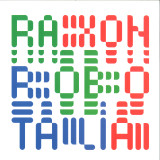
Next up is an overdue reunion with a familiar face. After his outstanding contribution to Cocoon Compilation S and his first solo EP on Cocoon Recordings, Raxon is back with a more than equally fascinating sound. The Egyptian-born and now Barcelona-based artist is back on it again, delivering two tracks that will take you on a journey through the depths of robotic soundscapes.
Intricate beats, hypnotic synthesizer melodies, deep bassline grooves, and distinctive EFX sounds create Raxon’s very special signature sound.
Straight drum programming paired with chirping percussions takes us away to embark on a travel through space and time while distinctive claps poke through a futuristic nebula of floating and shifting sequences. The twisted melody of “Robotalia” carries us to a parallel dimension of machine sound and if you listen closely, you can hear the robots’ screwing and sawing. Warping bleeps and mechanical effects complete the robotic feeling. Raxon’s understanding of structures and architectural abilities are reflected through the arrangement, slowly increasing to ecstasy.
“Kryptonite” scores with alien soundscapes. Stuttering vocals are the questions, while futuristic and dramatic chord stabs are the direct answer. A straight, radiant sound appears as an electronic trombone from outer space, offensively supporting the driving bassline. The symbiotic interplay between the euphoric synthesizer hook line and the relentless beat with pushing sharp hi-hats visualize powerful images in one's mind's eye. Suddenly the beat stagnates and results in a morphing break going head over heels developing a start-stop pitch effect that not only builds up tremendous tension but also bears an increased risk of melting your brain. We just love tape delay!
Hannah Aldridge wuchs an den schlammigen Ufern Alabamas auf, ihre Songs halten ein empfindliches Gleichgewicht zwischen Rebellion und Selbstfindung. Wer den Bible Belt kennt, hört die vertraute Stimme eines alten Freundes, alle anderen lernen die dunkle Seite des Südens kennen, den Kampf, der Vergangenheit zu entkommen und eine Zukunft zu schmieden. 'Dream Of America' bewegt sich auf einem schmalen Grat zwischen freundlichem Americana-Charme und dem rohen, hypnotischen und gelegentlich elektronischen Stil dessen, was man Noir-Indie-Pop nennt. Es ist Musik für diejenigen, die sich ihren Dämonen stellen, ohne an sie gebunden zu bleiben.
Kusōzu : Nine Death Stages is the second album by the Tokyo trio Archeus, which consists of Keiko Higuchi (voice, percussion, trombone, shamisen), Shizuo Uchida (bass strings), and TOMO (hurdy gurdy, voice). It follows their debut, self-titled and self-released CD and cassette from 2021 and is further proof – if any were needed – that these musicians, who’ve known each other for some time, but only started playing together relatively recently, share a telepathic communication, improvising together, fully in the moment, and as one. Where their debut album featured four extended improvisations, Kusōzu is an object lesson in economy and clarity – nine tracks, thirty-three minutes, everything that needs be said and nothing more.
All three musicians are incredibly active in the Japanese underground. Higuchi currently plays with Sachiko in Albedo Fantastica, adding Uchida for Albedo Gravitas; Uchida and Higuchi team up with Masami Kawaguchi (guitar) in vDBG. She’s also recorded with improvisers such as Naoto Yamagishi, Yasumune Morishige, and Shin-Ichiro Kanda. Uchida is also a member of MAI MAO, Kito-Mizukumi Rouber, Hasegawa-Shizuo, UH, and TERROR SHIT, and he’s recently recorded with improvising guitarist Takashi Masubuchi; TOMO has previously been a member of Tetragrammaton and Pouring High Water, and has recently performed live with Mick of Kousokuya, Mitsuru Tabata, Keiji Haino, and Daisuke Takaoka.
While Higuchi and Uchida have been making music together for some time now, they appear careful not to impose their previously articulated lexicon to bear on Archeus. There are trace elements of their playerly voices still present – the stretchy, plastic scrabbling on bass strings from Uchida; Higuchi’s murmurations of tone, and sudden plunges back down to earth, vertiginous and woozy – but there are other things going on here, particularly with TOMO joining in the action. His hurdy gurdy is a wild card in a group of wild cards, here cranking out burred, purring drones, there fidgeting through floods of notes, cranked up really high, ducking and weaving between Higuchi and Uchida as the three pursue the eternal now that is core to the best improvised music.
Archeus seem to work alchemically, transmuting their base matter into gold. Named after the Buddhist art practice of kusōzu, the graphic painting of nine stages of a decaying corpse in the open air, “to demonstrate the effects of impermanence,” as scholar Gail Chin once wrote.
Kusōzu : Nine Death Stages is Archeus at their most rigorously attentive to each other’s playing, and by the end, the music is itself thinking and feeling.
- A1: Cavaliere D'argento (Ft Francesco Wilking)
- A2: Tempo Sprecato (Ft Antje Schomaker)
- A3: L'altra Metá (Ft Tristan Brusch)
- A4: Quello Che Sei (Ft Lina Maly)
- A5: Mi Piace (Ft Jeremias)
- B1: In Dubbio Per Il Dubbio (Ft Tocotronic)
- B2: Lisbeth (Ft Die Höchste Eisenbahn)
- B3: Cinque Minuti (Ft Maike Rosa Vogel)
- B4: Per L'universo (Ft Dota)
- B5: Buonanotte Amici (Ft Francesco Wilking)
Nein, so richtig hatte keiner mit dem Erfolg von „Crucchi Gang“ gerechnet. Das Mitte 2020 erschienene Debütalbum des gleichnamigen Bandprojekts basierte schließlich nicht auf irgendeinem ausgeklügelten Business-Plan, sondern auf einer spontanen Idee von Musikmanagerin Charlotte Goltermann, Element of Crime-Sänger und Autor Sven Regener sowie Francesco Wilking (Die höchste Eisenbahn, Tele).
Deutschsprachige Musiker und Musikerinnen singen ihre eigenen Songs auf Italienisch. Mit auf der ersten Platte waren Von Wegen Lisbeth, Faber, Sophie Hunger und viele mehr.
Jetzt folgt mit „Fellini“ die zweite Runde. Sie ist eigentlich eine nahtlose Fortsetzung der ersten, denn auch Wilking und Reising fanden Gefallen an den kleinen Fluchten aus dem Alltag – und entschieden sich, ohne große Pause weiterzumachen. Diesmal sind Musiker und Musikerinnen wie Tocotronic, Tristan Brusch und
Antje Schomaker dabei und interpretieren ihre Songs auf Italienisch.
Das Album macht Lust darauf, sofort südwärts zu reisen. Es ist gleichzeitig der Beweis dafür, dass Musik eine Sprache ist, die man auch dann versteht, wenn man die eigentliche Sprache nicht versteht. Klingt kompliziert? Ist es überhaupt nicht.
Setzen Sie sich in ihren Lieblingssessel. Schließen die Augen. Schenken Sie sich einen Drink ein. Wenn Sie rauchen, zünden Sie sich eine Zigarette an. Wenn nicht, holen sie sich ein Eis aus der Gefriertruhe. Und jetzt drücken Sie auf die Abspieltaste – capirete cosa voglio dire.
Heiko returns to his own imprint with his new single Procrastinator. As the name suggests, it included moving the release date of this project multiple times.
From the 1st lock-down on I didn't really feel like putting kick-drums in my music, like someone was suddenly pulling a plug. Well, I found the switch and flicked it back.
- A1: On Grounds (Feat. Coby Sey)
- A2: Acute Truth (Feat. Kelsey Lu)
- A3: Fix (Feat. Tirzah)
- A4: Wavelet (Feat. Confucius Mc & Joe Armon-Jones)
- B1: Dreaded ! (Feat. Léa Sen)
- B2: Geronimo Blues (Feat. Kae Tempest)
- B3: Can We Do This? (Feat. Sampha)
- C1: Soapbox Soliloquy (Feat. Leilah)
- C2: Hither Green (Feat. James Massiah)
- C3: Round Again (Feat. Tawiah)
- D1: Behind The Sun (Feat. Lafawndah & Trustfall)
- D2: Shabz Needs Sun (Feat. Shabaka Hutchings)
- D3: Karainagar (Feat. Mica Levi)
Clear color vinyls + MP3 Download Code
Das Südlondoner Speakers Corner Quartet begann 2006 als Hausband der legendären Spoken Word- & Hip-Hop-Nacht Speakers Corner in Brixton und unterstützt seitdem Musiker live und im Studio (u.a. Sampha, Kae Tempest, Tirzah, Dean Blunt, MF DOOM, Lianne La Havas). Sie verfeinerten ihr Handwerk und ihre Vielseitigkeit als multiinstrumentale Produzenten und präsentieren nun ihr Debütalbum 'Further Out Than The Edge' mit einigen der aufregendsten Namen der unabhängigen Szene: Tirzah, Kelsey Lu, Shabaka Hutchings, Coby Sey, Sampha, Kae Tempest, Mica Levi, Joe Armon-Jones, Lawfawndah, Léa Sen und mehr.
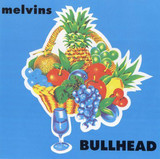
**BACK IN PRINT ON SINGLE LP**After three albums filled for the most part with quick song bursts and the occasional longer track, the eight-song long Bullhead found the Melvins stretching out a bit more at points, this time allowing the heavily stoned tempos plenty of time to really sprawl all over the place. There are fewer sudden shifts between fast and slow moments as well, and a lot more pure lava-flow beat-over-head feedback sludge and noise. It's not all ten mph deliberation, though - "Zodiac" shows the trio at full speed and blasting aside anything that might be so foolish as to get in its way, not to mention one unhinged Osbourne vocal lead. If grunge was achieving breakthrough status in Seattle, it was being perfected in its rawest sense on this album. Opening cut "Boris" does all this in excelsis - the band's longest recorded song at this point, nearly ten minutes long, it practically drips from the bongwater of eight million potheads, with Osbourne invoking his own brand of demons over the deep crawl of the music. Osbourne here really has got the dramatic, theatrical Ozzy Osbourne attitude down, with the occasional double-tracked vocals adding to the off-kilter intensity of the performances. Crover again shows his worth on the drums - he plays things slow most of the time but, crucially, never once sloppily - while Black keeps the bass going, however relatively unheard under Osbourne's guitar attack. "It's Shoved" is the not-so-secret highlight of Bullhead, Crover's brisker drum work and Black's sharp bass playing heralding a wild lead-guitar melody and a great ensemble performance. However, efforts like "Anaconda," with its slowly uncoiling power, and the intense "If I Had an Exorcism," which gets all the more wired and wound up as it goes (Black's bass here is some of her best), are no slouches. (All Music)
Jack Vegas is the sixth album by Swedish electro/post punk outfit Agent Side Grinder. It marks the band’s first exploration of American culture, drawing heavily on the beatnik-era works of Jack Kerouac and William S. Burroughs, as well as the proto-punk and avantgarde movements — while maintaining a contemporary storytelling perspective.
The American dream becomes a symbol for escape from a Europe ravaged by pandemics, war and financial instability. Lyrical themes revolve around boredom, resilience, government and corporate intrusion, and mental health — with the occasional glimmer of light. It’s a drum machine-driven road movie, plotting its course through the desperate heart of rural Sweden.
The name Jack Vegas’ is derived from a Swedish chain of low-stakes slot machines.
The album has been produced by former ASG member Henrik Sunbring, and recorded in Stockholm during 2022.
Genre-wise Agent Side Grinder has always existed in some kind of twilight zone. Deeply rooted in early electronic and industrial music as well as proto- and post punk, their sound is driven by iterative, suggestive beats and sudden bursts of untamed ferocity, built on equal parts dissonant samples and elegant melodies.
repress !
After Space Ghost’s first album Endless Light took to international airwaves and echoed out of cities from London to Los Angeles, his forthcoming release Aquarium Nightclub brings back his signature lo-fi aesthetics with a fresh hit of inspiration from the natural world.
Melding irresistible vintage synths with a meditative groove, Aquarium Nightclub is a journey of sorts. Taking listeners on a tropical tour through 80s house drums, lush synth landscapes, and deep bass melodies, the thirteen-track LP is as adventurous as it is restrained.
Growing up in a small town a few hours from California’s East Bay area, Space Ghost (Sudi Wachspress) moved to Oakland ten years ago to study at the California College of the Arts. In a city known for its vibrant cultural fabric and its experimental music scene, Space Ghost represents a new generation of young artists. His DJ collective Late Feelings, launched in 2013, has allowed him to find his own groove amongst monthly all-vinyl dance parties, where he plucks influences from various corners of the world.
More complex than last year’s release, Aquarium Nightclub shows off Space Ghost’s artistic hunger and unique sonic signature.
Kicking off with “Sea Snake Island,” a track that is best described as late 80s house melancholia is a beautiful dance of shimmering keys, drum machines, and sounds of the jungle. The single “Sim City” ft. Morgan is a classic Chicago house beast; dark but uplifting with heavy bass undertones, fuzzy drum pulse, and plenty of mysterious synth melodies. Other tracks like “Ocean Odyssey,” “Night Dive” and “Aquarium Nightclub” plunge into an ambient world of slow 80s funk, though always rooted in the Bay Area sound.
A product of record-collecting and dance party hosting, Aquarium Nightclub is a glittering postcard from Atlantis. Profound yet undeniably groovy, its mesmerizing tropical undertones promise a safe journey back to the endless days of summer.
In der tiefsten südlichen Hemisphäre der österreichischen Bergwelt, in Nächten voller Belladonna-Kirschen, Lagerfeuerromantik und Hektolitern Bier, zelebrierten drei seltsame Gestalten einen klanglichen Heulkrampf, aus dem das Kind unter dem Namen TABULA RASA geboren wurde.
Mit perverser Lust an purer Freiheit, grenzenlosem, unkontrollierbarem Wahnsinn, grenzenlosen Horizonten des Geistes und schlichter Freude daran, die Regeln und Formeln der Welt zu marodieren, wurde dieser Bund gegründet.
Rebellion! Erhebt euch und sprengt die Ketten unserer heutigen Dumpfheit.
Fünf Jahre nach "Footprints In The Rock" melden sich die unbesungenen NWOBHM-Helden TRESPASS mit einem großartigen neuen Album namens "Wolf At The Door" zurück. Das Album umfasst Themen, die ihnen am Herzen liegen - insbesondere Umweltthemen - und wurde von Gründungsmitglied, Gitarrist und Sänger Mark Sutcliffe in seinem Heimstudio geschrieben und später in den Crooks Hall Studios in der Wildnis von Suffolk aufgenommen. Nigel Palmer (Raging Speedhorn, Satan's Empire) gab dem Ganzen dann in Lowland Masters den letzten Schliff. Diese typisch britische Umgebung half Trespass dabei, ihren charakteristischen NWOBHM-Zwillingsgitarren-Sound beizubehalten, während die Rhythmusgruppe
einen Drive und eine Energie an den Tag legt, die sie direkt in die 20er Jahre zurückversetzt. Das Artwork von Mark Wilkinson (Iron Maiden, Judas Priest) gibt dem Album den letzten Schliff und wird sowohl die Fans der alten Schule als auch die neuen nicht enttäuschen. Trespass wurde 1979 in Sudbury, Suffolk, von Mark Sutcliffe (Gitarre, Gesang) und seinem Bruder Paul am Schlagzeug gegründet. Die Band hatte Anfang der 80er Jahre als Teil der New Wave of British Heavy Metal Erfolg und wurde von der Kritik gelobt, obwohl sie nur ein paar Singles und eine EP - die kultige Bright Lights" von 1981 - veröffentlicht hat. Songs wie "One Of These Days", "Stormchild" und "Bright Lights" haben sich einen Namen gemacht.
First LP from Donna Candy, the bass-vocal-drums trio trawled from the sub genres of experimental rock and busy pushing to the front of heavy music. Nu metal bass riffs, switch-pitched fuzz vocals and big, splashy drums layer over unsettling narratives and extreme loops to bring a bit of the pit to the dancefloor.
Begun as an off the cuff party band with the idea of finding a live sound that would fit between 4am trance sets, the trio soon found themselves addicted to the euphoric sludge they created. Swapping their usual guitar for a bass, JS Donny drives Donna Candy with simple riffs, split half clean and half shredded with Boris / Sunn O))) like distortion. Head-banging the whole way, they’ll switch speed or stop suddenly, bending and drawing out notes to ratchet things up for release. Nadja's vocals tear through the top layer - heavily processed and warped with weird imagery. Together there’s a feeling of what it might be like to see Sightings slowed by codeine but with Elvin Brandi on the mic.
Always set up facing each other, off stage and surrounded by the audience, Donna Candy encourage catharsis - reciprocally transforming energy between themselves and the crowd. They build a queer euphoria that pulls apart metal’s narrow dichotomy of nihilistic machismo vs. hyperfemininity, and begins to make the visceral faux-hybridity of nineties nu metal feel possible this time around. ‘Blooming’ brings us six offerings from the band on a four way split release that speaks for itself - once on board with the DC energy you’ll want to be a part of it.
Farron enters faster territories on this record, telling the story of the hunt after the mysterious jade antique that is hidden in the infamous 'House Of Traps'.
After entering the house, one already feels the oppressive atmosphere. The ubiquitous feeling of not being welcome here is obvious when the golden walls invert and you come to face countless swordsmen ready to attack. The vigorous atmosphere of 'Penny At The Chain' boosts up your confidence for what is about to come.
But what if the intruder is skilled in kung-fu? The mob retreats automatically and bars of iron come down to confine you. 'Wilshire 1015' and its driving bassline, warm pads and whirling breaks will calm you down a bit. But what's next?
In the twinkling of an eye, a field of razor-sharp nails come through the floor that you are standing on, and the escape route up the stairway becomes perilous as the stairs suddenly form into an array of sharp blades. 'Hiatus Phase' keeps you focused and light-footed, so you can manage the jump up to the next floor.
However the next stirring event quickly follows. The moment you feel safe, a giant golden net unexpectedly launches from every direction and traps you in the middle of the room, hung over the floor. As if this wasn't enough, the mob is rushing back again - armed with bows and arrows. But the varied atmosphere of 'All In CST', its floating pads and filtered breaks energize you, and so you are able to make a getaway from the most lethal attack.
After dodging the giant blades suddenly swinging in from each side, you are finally there. The golden cage and its arcane content. The warmth of 'Conback' and its sparkling pads slowly fill the room as you open up the cage. Another trap, or a bright future? Find out...
- A1: Boat
- A2: Salt Water
- A3: Eyes Closed
- A4: Life Goes On
- A5: Dusty
- A6: End Of Youth
- A7: Colourblind
- B1: Curtains
- B2: Borderline
- B3: Spark
- B4: Vega
- B5: Sycamore
- B6: No Strings
- B7: The Hills Of Aberfeldy
White Vinyl[36,93 €]
Ed Sheeran is set to release his new album ‘-‘ (Subtract) - the last in his decade-spanning mathematical album era - on 5 May 2023 through Asylum/Atlantic on vinyl, cassette and CD. An album that revisits Ed’s singer/songwriter roots, and one that was written against a backdrop of personal grief and hope, ‘-’ (Subtract) presents one of the biggest stars on the planet at his most vulnerable and honest.
In Ed’s own words - “I had been working on Subtract for a decade, trying to sculpt the perfect acoustic album, writing and recording hundreds of songs with a clear vision of what I thought it should be. Then at the start of 2022, a series of events changed my life, my mental health, and ultimately the way I viewed music and art.
Writing songs is my therapy. It helps me make sense of my feelings. I wrote without thought of what the songs would be, I just wrote whatever tumbled out. And in just over a week, I replaced a decade’s worth of work with my deepest darkest thoughts.
Within the space of a month, my pregnant wife got told she had a tumour, with no route to treatment until after the birth. My best friend Jamal, a brother to me, died suddenly and I found myself standing in court defending my integrity and career as a songwriter. I was spiralling through fear, depression and anxiety.
I felt like I was drowning, head below the surface, looking up but not being able to break through for air.
As an artist I didn’t feel like I could credibly put a body of work into the world that didn’t accurately represent where I am and how I need to express myself at this point in my life. This album is purely that. It’s opening the trapdoor into my soul. For the first time I’m not trying to craft an album people will like, I’m merely putting something out that’s honest and true to where I am in my adult life.
This is last February’s diary entry and my way of making sense of it. This is Subtract.”
Since he first learnt ‘Layla’ by Eric Clapton on guitar at the age of 12-years-old, Sheeran’s love of the singer/songwriter began. Growing up with the likes of Damian Rice, Bruce Springsteen and Bob Dylan playing on repeat in his parents’ house – artists that his dad, John, introduced him to – ‘-‘was always on Ed’s horizon. Yet as the songs and writing process took on a whole new meaning and direction after a series of hard-hitting events impacted Ed’s world in 2022, one thing that remained untouched was his strong desire to make a record anchored in his love of singer/songwriter compositions. And now, as he gears-up for the release of his most soul-baring work to date, ‘-‘ serves as a timely reminder for why Sheeran remains one of the most gifted lyricists of his generation; an artist who breaks down his own experiences for fans to seek comfort and belonging.
‘-‘ is the result of Sheeran pushing the boundaries of his songcraft, as he delivers the most profound songwriting of his career. Teaming-up with Aaron Dessner (The National) on writing and production after the pair joined forces following an introduction from mutual friend Taylor Swift, Ed and Aaron began crafting the album in February last year. Writing over 30 songs during their month-long studio stint, the album’s fourteen tracks are seamlessly tied together by exquisite production from paired back, folk-leaning textures to bolder, full-band/orchestral arrangements.
Ed Sheeran burst onto the UK music scene in 2011 with his debut album ‘+’. Rapidly establishing himself as a history-making artist, he followed with ‘x’, ‘÷’, ‘No.6 Collaborations Project’ and ‘=’ - a catalogue that has seen Sheeran become one of the world’s biggest musical success stories of the 21st century.
Ed Sheeran is set to release his new album ‘-‘ (Subtract) - the last in his decade-spanning mathematical album era - on 5 May 2023 through Asylum/Atlantic on vinyl, cassette and CD. An album that revisits Ed’s singer/songwriter roots, and one that was written against a backdrop of personal grief and hope, ‘-’ (Subtract) presents one of the biggest stars on the planet at his most vulnerable and honest.
In Ed’s own words - “I had been working on Subtract for a decade, trying to sculpt the perfect acoustic album, writing and recording hundreds of songs with a clear vision of what I thought it should be. Then at the start of 2022, a series of events changed my life, my mental health, and ultimately the way I viewed music and art.
Writing songs is my therapy. It helps me make sense of my feelings. I wrote without thought of what the songs would be, I just wrote whatever tumbled out. And in just over a week, I replaced a decade’s worth of work with my deepest darkest thoughts.
Within the space of a month, my pregnant wife got told she had a tumour, with no route to treatment until after the birth. My best friend Jamal, a brother to me, died suddenly and I found myself standing in court defending my integrity and career as a songwriter. I was spiralling through fear, depression and anxiety.
I felt like I was drowning, head below the surface, looking up but not being able to break through for air.
As an artist I didn’t feel like I could credibly put a body of work into the world that didn’t accurately represent where I am and how I need to express myself at this point in my life. This album is purely that. It’s opening the trapdoor into my soul. For the first time I’m not trying to craft an album people will like, I’m merely putting something out that’s honest and true to where I am in my adult life.
This is last February’s diary entry and my way of making sense of it. This is Subtract.”
Since he first learnt ‘Layla’ by Eric Clapton on guitar at the age of 12-years-old, Sheeran’s love of the singer/songwriter began. Growing up with the likes of Damian Rice, Bruce Springsteen and Bob Dylan playing on repeat in his parents’ house – artists that his dad, John, introduced him to – ‘-‘was always on Ed’s horizon. Yet as the songs and writing process took on a whole new meaning and direction after a series of hard-hitting events impacted Ed’s world in 2022, one thing that remained untouched was his strong desire to make a record anchored in his love of singer/songwriter compositions. And now, as he gears-up for the release of his most soul-baring work to date, ‘-‘ serves as a timely reminder for why Sheeran remains one of the most gifted lyricists of his generation; an artist who breaks down his own experiences for fans to seek comfort and belonging.
‘-‘ is the result of Sheeran pushing the boundaries of his songcraft, as he delivers the most profound songwriting of his career. Teaming-up with Aaron Dessner (The National) on writing and production after the pair joined forces following an introduction from mutual friend Taylor Swift, Ed and Aaron began crafting the album in February last year. Writing over 30 songs during their month-long studio stint, the album’s fourteen tracks are seamlessly tied together by exquisite production from paired back, folk-leaning textures to bolder, full-band/orchestral arrangements.
Ed Sheeran burst onto the UK music scene in 2011 with his debut album ‘+’. Rapidly establishing himself as a history-making artist, he followed with ‘x’, ‘÷’, ‘No.6 Collaborations Project’ and ‘=’ - a catalogue that has seen Sheeran become one of the world’s biggest musical success stories of the 21st century.
"Killing Innocence" - das neunte Studioalbum der Südtiroler Dark Metal-Macht GRAVEWORM! Das lange Warten hat sich gelohnt, die Dark Metal-Institution meldet sich mit ihrem vielleicht besten Album nach acht Jahren endlich zurück!
Es dauerte acht lange Jahre, aber war das Warten mehr als wert: Die Südtiroler Extreme Metal-Institution GRAVEWORM meldet sich nun endlich mit einem neuen Album zurück! Und "Killing Innocence" entschädigt für alles. Ihre ganz eigene Melange aus Thrash, Gothic und Death Metal ist durchschlagskräftig wie eh und je und zeigt, dass Graveworm auch nach all den Jahren nichts an ihrer Härte und Energie verloren haben. Die zehn neuen Songs auf "Killing Innocence" sind geprägt von düsteren Atmosphären, kraftvollen Riffs und treibenden Drums, die den Hörer direkt in den Bann ziehen. Das Album ist eine Hommage an die Wurzeln der Band und doch zeitgemäß und frisch produziert - ein absoluter Pflichtkauf für Fans von düsterem, aber mitreißendem Metal. Mit "Killing Innocence" beweist Graveworm eindrucksvoll, dass sie zu den besten Vertretern des Genres gehören und auch im Jahr 2023 noch für Überraschungen sorgen können.