With a decade between releases, VILDHJARTA remain as inscrutable and as close to anonymity as a band can be. VILDHJARTA's down-tuned, staccato riffs and pulverizing grooves are the sound of music stripped to its essence. Yet, the Swedish collective’s long-awaited album, måsstaden under vatten, is far more than a recitation of djent values. Clocking in at 80 minutes, it thematically picks up where the dark Swedish fable of 2011’s Måsstaden left off and delivers on the promise that record hinted at. Tracks like the recently released “när de du älskar kommer tillbaka från de döda” (“When the Ones You Love Return From the Dead.”) suggest a newfound subtlety and sophistication amidst the bombast and beauty in the breakdown.
Since dropping a minute of new live music in 2016, the band's focus has almost entirely been on the new album with drummer and now noted producer, Buster Odeholm (Born of Osiris, Shadow of Intent, Humanity’s Last Breath) heavily involved in the production, mixing and mastering of the music. Visual artist Rickard Westman, who did art for VILDHJARTA's debut as well as their Thousands of Evils EP in 2013, has also returned to the equation to reprise his disturbing visual iconography. Says the band: “Art happens when art happens.”
The sound of music is rarely this challenging, unforgettable and worth the wait.
A Svart Mondo release. The original vinyl of “Harvest Time”, the debut album by the Finnish band Elonkorjuu (which means ‘Harvest’ in Finnish), has been the among the most valuable collector’s items in Finnish rock: its average prize in 2021 is over 1200 euros, and even over 2000 euros have been paid for a mint copy. Recorded almost entirely live and originally released in 1972, Elonkorjuu’s “Harvest Time” is a best kept secret for many Scandinavian Prog aficionados. With music inspired by groups like Cream and Free with more progressive and free-jam style, Elonkorjuu is one of the few bands that successfully progressed the whole heavy Blues/Psych Rock style in a way that made them a little unique and ahead of their time. Drawing initially from the schools of bands like Sabbath and Colosseum but expanding on those influences with soulful church organ and cutting guitar from leader Jukka Syrenius, “Harvest Time” is entirely worth it’s reputation as a sought after treasure. A killer album from beginning to end. Heavy guitar work all over and great vocals sung in English,which is rare for a Finnish band of this era.
Finally receiving a worthy reissue from the vinyl obsessives at Svart Records, “Harvest Time” sees the light of day again on gatefold vinyl, including new liner notes. If you have an ear and place in your heart for the shadowy and mysterious world of early heavy progressive rock, then it’s probably “Harvest Time” for you!
Colorado songwriter Emily Scott Robinson beckons to those who are lost, lonely, or learning the hard way with American Siren, her first album for John Prine's Oh Boy Records. With hints of bluegrass, country, and folk, the eloquent collection shares her gift for storytelling through her pristine soprano and the perspective of her unconventional path into music. Though not fully autobiographical, American Siren gracefully blends imagined characters with meaningful people she’s encountered on her journey. Robinson grew up in Greensboro, North Carolina, and turned toward guitar at age 13, after a summer camp counselor closed out the nights by playing songs by Joni Mitchell, Cat Stevens, and Dar Williams every night. She taught herself to play in the early 2000s by printing guitar tabs from the internet and singing to CDs by Indigo Girls and James Taylor. But she didn’t pursue songwriting until after seeing Nanci Griffith perform in Greensboro in 2007. Robinson received significant acclaim for her 2019 album, Traveling Mercies.
Her long-held dream came true later that year when she sang on the Telluride Bluegrass Festival stage as the winner of the Telluride Troubadour Contest. A poignant standalone single in 2020, titled “The Time for Flowers,” prompted a private Instagram message from Oh Boy Records’ Jody Whelan, letting her know how meaningful the song was to his family. They struck up a fast friendship, then decided to partner for a release of American Siren. For her fans and for herself, this revealing collection proves that heeding the call to make music was the right decision.
The forthcoming latest edition of the popular compilation series featuring long-lost vintage 60s-70s proto-metal and stoner rock singles, Brown Acid: The Thirteenth Trip will be available on Halloween 2021. Check out the first single "Run Run", released in 1970 by Montreal hard rockers Max is available to hear & share via Metal Injection HERE. (And, direct YouTube and Bandcamp)
The Brown Acid series is curated by L.A. label RidingEasy Records and retailer/label Permanent Records. Read interviews with the series curators via Paste Magazine HERE and LA Weekly HERE.
About The Thirteenth Trip:
Max, from Montreal, QC — originally known as Dawn, before Tony Orlando & Dawn forced a name change — kick things off with “Run Run” from their lone 1970 single. It’s a hard-hitting rocker with scale climbing crunching guitars and powerful Bonham-esque drumming. Sadly, the band didn’t last long due to poor management and various other factors, so this is the only surviving document according to guitarist Gerry Markman. And what a document it is, paired with the A-side “The Flying Dutchman.”
You might remember Ralph Williams and the Wright Brothers from their track “Never Again” on Brown Acid: The Tenth Trip. Here they make their return to the series with the A-side of their 1972 Hour Glass Records 45, which sounds like Blue Cheer mangling Roy Orbison’s “Pretty Woman” (that’s right, several years before Van Halen actually did so.) Alas, Ralph and these Wright Brothers soon disappeared from terrestrial airspace.
“Feelin’ Dead” is extremely heavy blues from this also extremely rare 1974 single by Detroit, MI’s Master Danse, which was only released as a promo 45. Think Led Zeppelin’s “Since I’ve Been Loving You” and you’re on the right track. A little dose of Hendrix acid blues and a heartfelt groove, and you’ll wonder why this single never even made it to official release. The unavoidable tell in the lyric, “help me get this damn thing out of my arm” hints at the post-Vietnam heroin epidemic as a potential clue why we never heard more from Master Danse.
Folks, Gary Del Vecchio is “Buzzin’” hard on this one, and from what sounds like an in-studio party of yelps and chatter at the start of the song, it seems that the whole band was in on the festivities. The funky blues riff, reminiscent of Led Zeppelin’s “Heartbreaker” and rollicking rhythmic changes certainly keep the buzz a rollin’.The recording is technically credited as Gary Del Vecchio with Max, though not the same band as the one that kicks off this Trip.
John Kitko’s 1973 heavy psychedelic rager “Indecision” is the only recording known to exist by the mysterious artist. The Twin Record Productions release features a different artist, Tom Poff on the B-side, which is truly a shame, considering the smoldering ashes Kitko leaves of the turntable by song’s end. It starts out more like a late 60s Acid Rock jam before leaping into a blazing double-time gallop, whipped into a frenzy by wailing, neck-pickup guitar squeals and Kitko’s barely audible howls.
Tampa, FL’s Bacchus made their Brown Acid debut way back on the very first Trip with “Carry My Load.” This 1972 B-side, “Hope” is a huge sounding swinging rocker replete with roadhouse piano bolstering the chunky riffs and confident vocals. After relocating to Southern California a few years later, the band morphed into Fortress, an 80s melodic metal act whose Hands In The Till album of Pomp Rock on Atlantic Records still draws chatter today.
Orchid’s “Go Big Red” is perhaps the most garage-y sounding offering here, with loose rhythms and straightforward stop-and-start riffing. Nonetheless, the stomping energy and fried-amp guitar tone make this one a charming skull thwack. The band’s 1973 single on American records, backed with a cover of Johnny Russell and Voni Morrison’s “Act Naturally” (popularized by Buck Owens and the Buckaroos) is their only release, so the world never did see this Orchid fully blossom.
By the title alone of Dry Ice’s “Don’t Munkey with the Funky Skunky” you know you’re in for a good time. The 1974 barnstormer seems aimed to the novelty tunes crowd, with its kooky lyrics and silly-voiced spoken catchphrase break, “peeyew, you’ll be sorry if you do.” But, the Ohio band’s maniacal drumming, crunching guitars and, of course, drug euphemistic lyrics make it a shoo-in for the Brown Acid series of erudite rock’n’roll.
Good Humore’s swaggering 1976 rocker “Detroit” is a slick and smooth paen to the Motor City. It most likely doesn’t predate “Detroit Rock City” by Kiss, also released in 1976, and it has more rock’n’roll swing, but it could fit comfortably alongside the era’s arena anthems. Not much else is known about the one-off release on P.V. Records, but songwriter Mike Moats is noted to also have been a recording engineer in later years and this well produced track sounds like a labor of love.
The forthcoming latest edition of the popular compilation series featuring long-lost vintage 60s-70s proto-metal and stoner rock singles, Brown Acid: The Thirteenth Trip will be available on Halloween 2021. Check out the first single "Run Run", released in 1970 by Montreal hard rockers Max is available to hear & share via Metal Injection HERE. (And, direct YouTube and Bandcamp)
The Brown Acid series is curated by L.A. label RidingEasy Records and retailer/label Permanent Records. Read interviews with the series curators via Paste Magazine HERE and LA Weekly HERE.
About The Thirteenth Trip:
Max, from Montreal, QC — originally known as Dawn, before Tony Orlando & Dawn forced a name change — kick things off with “Run Run” from their lone 1970 single. It’s a hard-hitting rocker with scale climbing crunching guitars and powerful Bonham-esque drumming. Sadly, the band didn’t last long due to poor management and various other factors, so this is the only surviving document according to guitarist Gerry Markman. And what a document it is, paired with the A-side “The Flying Dutchman.”
You might remember Ralph Williams and the Wright Brothers from their track “Never Again” on Brown Acid: The Tenth Trip. Here they make their return to the series with the A-side of their 1972 Hour Glass Records 45, which sounds like Blue Cheer mangling Roy Orbison’s “Pretty Woman” (that’s right, several years before Van Halen actually did so.) Alas, Ralph and these Wright Brothers soon disappeared from terrestrial airspace.
“Feelin’ Dead” is extremely heavy blues from this also extremely rare 1974 single by Detroit, MI’s Master Danse, which was only released as a promo 45. Think Led Zeppelin’s “Since I’ve Been Loving You” and you’re on the right track. A little dose of Hendrix acid blues and a heartfelt groove, and you’ll wonder why this single never even made it to official release. The unavoidable tell in the lyric, “help me get this damn thing out of my arm” hints at the post-Vietnam heroin epidemic as a potential clue why we never heard more from Master Danse.
Folks, Gary Del Vecchio is “Buzzin’” hard on this one, and from what sounds like an in-studio party of yelps and chatter at the start of the song, it seems that the whole band was in on the festivities. The funky blues riff, reminiscent of Led Zeppelin’s “Heartbreaker” and rollicking rhythmic changes certainly keep the buzz a rollin’.The recording is technically credited as Gary Del Vecchio with Max, though not the same band as the one that kicks off this Trip.
John Kitko’s 1973 heavy psychedelic rager “Indecision” is the only recording known to exist by the mysterious artist. The Twin Record Productions release features a different artist, Tom Poff on the B-side, which is truly a shame, considering the smoldering ashes Kitko leaves of the turntable by song’s end. It starts out more like a late 60s Acid Rock jam before leaping into a blazing double-time gallop, whipped into a frenzy by wailing, neck-pickup guitar squeals and Kitko’s barely audible howls.
Tampa, FL’s Bacchus made their Brown Acid debut way back on the very first Trip with “Carry My Load.” This 1972 B-side, “Hope” is a huge sounding swinging rocker replete with roadhouse piano bolstering the chunky riffs and confident vocals. After relocating to Southern California a few years later, the band morphed into Fortress, an 80s melodic metal act whose Hands In The Till album of Pomp Rock on Atlantic Records still draws chatter today.
Orchid’s “Go Big Red” is perhaps the most garage-y sounding offering here, with loose rhythms and straightforward stop-and-start riffing. Nonetheless, the stomping energy and fried-amp guitar tone make this one a charming skull thwack. The band’s 1973 single on American records, backed with a cover of Johnny Russell and Voni Morrison’s “Act Naturally” (popularized by Buck Owens and the Buckaroos) is their only release, so the world never did see this Orchid fully blossom.
By the title alone of Dry Ice’s “Don’t Munkey with the Funky Skunky” you know you’re in for a good time. The 1974 barnstormer seems aimed to the novelty tunes crowd, with its kooky lyrics and silly-voiced spoken catchphrase break, “peeyew, you’ll be sorry if you do.” But, the Ohio band’s maniacal drumming, crunching guitars and, of course, drug euphemistic lyrics make it a shoo-in for the Brown Acid series of erudite rock’n’roll.
Good Humore’s swaggering 1976 rocker “Detroit” is a slick and smooth paen to the Motor City. It most likely doesn’t predate “Detroit Rock City” by Kiss, also released in 1976, and it has more rock’n’roll swing, but it could fit comfortably alongside the era’s arena anthems. Not much else is known about the one-off release on P.V. Records, but songwriter Mike Moats is noted to also have been a recording engineer in later years and this well produced track sounds like a labor of love.
Since its beginnings in Jamaica in 1959, the story of the pioneering Island Records label has been inextricably linked to the story of its founder, Chris Blackwell. Now, Blackwell has curated a series of compilation LPs featuring his hand-picked tracks that correspond with his and Island's legendary history. On October 29, Island Records / UMC will release the third volume of The Vinyl Series, an 18-track double LP compiling some of the label's key releases of the late 1960s and early '70s. Volume One included pivotal songs from 1962 to 1969, and Volume Two, released over the summer, covered the years 1969 to 1973. Taken together, the sets explore the wide-ranging highlights from Island's remarkable and extensive catalog. This volume of The Vinyl Series includes material which remained rooted in the folk and acoustic-based styles that were crucial to Island's foundation. That side of the label's history is represented by Nick Drake's "Way to Blue" (from his first album, Five Leaves Left) and "Late November" by Sandy Denny, which first appeared on a 1971 label sampler. But it was Cat Stevens who was identified most commonly with Island in the U.K.—he "continued to be Island's biggest seller," notes Blackwell—and this album contains his 1971 global smash "Morning Has Broken," an adaptation of a Christian hymn.
“I want total freedom, total possibility, total acceptance. I want to fall in love with the rock.” That’s how Lillie West describes the theme of “DIVER,” the song she calls the thesis of Lala Lala’s third record, I Want The Door To Open. The rock in question is a reference to Sisyphus, the mythical figure doomed by the gods to forever push a boulder up from the depths of hell. To West, it is the perfect metaphor for, in her words, “the labor of living, of figuring out who you are, what's wrong with you, what's right with you.”
Coming off of 2018’s acclaimed The Lamb, an introspective indie rock album recorded live with a three-piece band, West knew she was ready to make something sonically bigger and thematically more outward-looking than anything she’d done before; a record that would be less a straightforward documentation of her own personal struggles and more like a poem or a puzzle box, with sonic and lyrical clues that would allow the listener to, as the title says, open the door to the greater meaning of those struggles.
The result is I Want The Door To Open, a bold exploration of persona and presence from an artist questioning how to be herself fully in a world where the self is in constant negotiation. From the moment West declares “I want to look right into the camera” over a cascade of dreamy vocal loops on opening track “Lava,” I Want The Door To Open distinguishes itself from anything she’s done before in scope and intensity. The ultra-magnified iteration of Lala Lala is fully encapsulated in the monumental “DIVER.” Inspired by a character from a Jennifer Egan novel, it’s a pop song of Kate Bush-esque proportions replete with layered synths and booming, wide open drumming by fellow Chicago musician Nnamdi Ogbonnaya, and West pushing her vocals to the ragged edge. I Want The Door To Open is a musical quest undertaken with the knowledge that the titular door may never open; but it is through falling in love with the quest itself that one may find the closest thing to total freedom, total possibility, and total acceptance available to us on this plane of existence.
“I want total freedom, total possibility, total acceptance. I want to fall in love with the rock.” That’s how Lillie West describes the theme of “DIVER,” the song she calls the thesis of Lala Lala’s third record, I Want The Door To Open. The rock in question is a reference to Sisyphus, the mythical figure doomed by the gods to forever push a boulder up from the depths of hell. To West, it is the perfect metaphor for, in her words, “the labor of living, of figuring out who you are, what's wrong with you, what's right with you.”
Coming off of 2018’s acclaimed The Lamb, an introspective indie rock album recorded live with a three-piece band, West knew she was ready to make something sonically bigger and thematically more outward-looking than anything she’d done before; a record that would be less a straightforward documentation of her own personal struggles and more like a poem or a puzzle box, with sonic and lyrical clues that would allow the listener to, as the title says, open the door to the greater meaning of those struggles.
The result is I Want The Door To Open, a bold exploration of persona and presence from an artist questioning how to be herself fully in a world where the self is in constant negotiation. From the moment West declares “I want to look right into the camera” over a cascade of dreamy vocal loops on opening track “Lava,” I Want The Door To Open distinguishes itself from anything she’s done before in scope and intensity. The ultra-magnified iteration of Lala Lala is fully encapsulated in the monumental “DIVER.” Inspired by a character from a Jennifer Egan novel, it’s a pop song of Kate Bush-esque proportions replete with layered synths and booming, wide open drumming by fellow Chicago musician Nnamdi Ogbonnaya, and West pushing her vocals to the ragged edge. I Want The Door To Open is a musical quest undertaken with the knowledge that the titular door may never open; but it is through falling in love with the quest itself that one may find the closest thing to total freedom, total possibility, and total acceptance available to us on this plane of existence.
Cardinal Fuzz and Feeding Tube Records are at long last ecstatic to bring to you for your listening pleasure “Nudity - Is God’s Creation” 2xLP . A retrospective release of recordings dating from 2005 to 2010 of orgasmic interstellar mayhem . Reissued and for the first time available domestically in the USA
In 2004, a commune named NUDITY, formed by four travellers from the astral plane, appeared in Olympia, Washington. The founding members were Dave HARVEY (guitar) and Jon Quitty QUITTNER (bass - though Josh Haynes of the mighty guitar fuzz scorchers Feral Ohms plays bass on the majority of the tracks featured here), both of whom were former guitarists of Tight Bros From Way Back When and Eryn ROSS (drums) from Growling, A couple of self-distributed Cdrs and a 12” on Discourage were a visual akin to coloured liquid sloshing around on a transparency machine and were a pure drip feed for psych /kraut and Jap Rock fiends around the world as Julian Cope and Terrascope raved about them. Alas for whatever reason no full length LP arrived from the original line up - something that at last has been rectified as now all these tracks have been brought together (along with some unreleased gems and a couple of live bonus download tracks). The sonic ear candy contained within the 4 sides of vinyl presented here go From Detroit fuzz blazing face melters to acid trippin' head swirling raga’s via The Flower Travelin’ Band and Hawkwind. Nudity were the masters and for those that missed out the first time this double album was released - Don't make the same mistake a second time.
Terrascope gushed about Nudity - "This is seriously fucking good; one of those quite literally extra-ordinary LPs that come along every once in a while which you just know instinctively are going to be dug out and played, sniffed and caressed for years"
The fertile South African house scene keeps on giving rise to brand new goodness. Token is a label whose mission it is to bring such sounds to the wider world and this second EP is another winner. 'Stay' immediately gets you dreaming of warm climates and gorgeous sunsets before 'Set It' picks up the pace but keeps the pads warm and fuzzy and the bass elastic and deep. There is spiritual vocal faire on the cosy 'A Winters Night' and a melodic masterclass on 'The World Order' that is steeped in US house tradition but brings something fresh.
out of Stock
Last delivered 4 years ago available to reorder, subject to availability
Our second LP this month is an unreleased magical modern soul LP from the band Coast To Coast, the full story below by band leader Mark Beiner...
I met Ben iverson in 1976 when I was 17 years old. I was a junior at Newtown High School in Elmhurst, Queens. At that time, I took a part time job as a Produce Clerk at Walbaum's Supermarket on Northern Boulevard in Jackson Heights, Queens, where I met Ben Iverson who was the "Frozen Food Manager." In between the music, this job was steady income, and he and his Wife, Diane, started a family and raised two Daughters, Tonia and Cytherea, whom I am still in contact with today.
Back then, I remember going to work early just to talk to him about his musical background and his time spent in the 50's and 60's with the Ohio Doo Wop Group, "The Hornets", or better known as, "Ben Iverson and The Hornets." However, Ben was somewhat quiet and at a loss for words when I questioned him with regard to "Ben Iverson and the Nue Dey Express", as well as his short career as Manager and Songwriter for Brooklyn's own, "Crown Heights Affair" in the early 70's.
Between the 50's and 60's, "Ben Iverson and The Hornets" shared billing at music events with recording artists such as, The Drifter's, Bill Haley and The Comets, Pat Boone, Etta James, Mary Wells, Nancy Wilson, Jackie Wilson, Sam Cooke, Aretha Franklin, Lloyd Price and Al Green. Many of these names got their start in the 50's, which Ben met at music concert events hosted by Radio Disc Jockey, Alan Freed. Alan was truly the first Concert Promoter for Doo Wop, Rhythm & Blues, and early Rock & Roll.
In 1978 after Ben and I discussed getting together and composing music, I started writing poetry and expressing in writing my break up with my college girl friend, Paula Vasta. Paula's middle name was Marie, so in kidding around, I would call her "Paula Marie." Ben thought my lyrics were "powerful" and wanted to put them in music. Thus our first recorded 45 rpm record called "Paula Marie", backed with "I Want You Dear." This launched our musical partnership and within a year, the Coast to Coast Band was formed. Ben and I went on to writing two albums worth of material, which in turn gave us a lot of time and presence on stage at our live gigs.
The regular Coast to Coast Band members consisted of Ben Iverson on Lead Vocals, Rhythm Guitarist and Co-Executive Producer, Joe Crowley, who is known today as "New York Congressman Joe Crowley." Carl (Woody Wood) Morton on Bass Guitar, Jimmy Johnson on Keyboards. Woody and Jimmy used to hang and play rap in its early days with "Run DMC" in St. Albans, Queens. Lead Guitarist, Lou Jimenez, currently owns his own recording studio, Music Labs in Elmont, Long Island. On Drums, Eddie Byam, on Alto Sax, Jay Cohen, who in the 70's used to record for "Gary U.S. Bonds." Gary Pevols on Trumpet. On Bone, Scott Burrows, Trumpet player, Steve Becker, whom we lost to Testicular Cancer at the age of 25, along side Neil Levine, Stan Stockley, Tom Russo and additional members that came and went that we used for live gigs and studio recordings.
In addition, special recognition goes out to our Producer, Recording Engineer and Multi-sound Recording Studio, Owner, Dave Weiner and staff. Dave and I launched Multi-Sound Records under the Multi-Sound label in 1980.
Last, of course myself, Mark Beiner, where I served as Executive Producer, Songwriter, Business/Marketing Manager, and background vocals.
Unfortunately, Ben Iverson passed away on March 21, 2008, and cannot be here to share this with us, but his music and voice still lives on!
out of Stock
Last delivered 4 years ago available to reorder, subject to availability
Have you ever wondered what would happen if the Spice Girls smoked crack and joined forces with the Power Rangers on acid? Meet BĘÃTFÓØT. These punk-infused electronic poltergeists and big-beat acid trio are Udi Naor, drummer and founding member of electronic duo Red Axes, Adi Bronicki (who also fronts Israeli garage-punk-folk band Deaf Chonky) and ace of all trades guitarist Nimrod Goldfarb.
The band have been launching warped stoner-acid-pop out of Tel Aviv with maniacal intent and are producing post-punk rave bangers that will scorch every dance floor with a huge lethal smile. BĘÃTFÓØT
are a DIY supergroup who describe themselves as sitting somewhere between Aqua, Beastie Boys and The Prodigy.
Their music endeavours feel akin to being hurtled through a kaleidoscopic waterslide, overflowing with the spirit of 90’s youth culture. The radioactive trio are DJ’s, musicians, songwriters and producers with a diverse range of individual projects and talents, their combined sonics map your journey across the hazy astral spectrum of hip-hop, big beat and rave music. Morph these radioactive pieces with the no New Release Informationnonsense attitude of punk-rock and the venomous spitting flow of golden-era rap and you might just come close to fabricating the freakish sound of BĘÃTFÓØT.
The band’s self-titled debut is set for release on 17th September on Manfredi Romano aka DJ Tennis’ Life and Death. Founded in 2010, the imprint curates soulful dance music with a post-rock aesthetic.
This refreshingly original and experimental LP from BĘÃTFÓØT marks a new direction for Life and Death this year and beyond.
“BĘÃTFÓØT” takes unsuspecting listeners on a wild ride of unprecedented musical madness (firmly without seatbelts). Fizzy synthesiser programming stimulates you effervescently through the album like the welcomed sting of sour sweets, surprising accompaniments appear in the form of manipulated vocal lines and quirky samples, all jovially mixed together in a gummy melting pot of wild conceptualisation and starry eyed rhythms.
Thirteen tracks of unprecedented dancefloor mutations send us triumphantly into the candy-covered kingdom of BĘÃTFÓØT with open arms and infinite imagery of fanciful gutter-glam escapades. This project fulfills the role of a musical bulldozer, flattening all previous conceptions of what it means to belong to a genre and leaving behind a hot mess trail of anarchic musical fragments in its wake. The undying spirit of the nineties.
With fans that include legendary Irish born singer, songwriter and producer Roisin Murphy, BĘÃTFÓØT are a breath of fresh air set to be igniting dancefloors this summer.
out of Stock
Last delivered 3 years ago available to reorder, subject to availability
Tiptoes joins the SlothBoogie roster this October with the ‘Good Times Incoming’ EP, comprised of four originals from the Scottish artist.
Hailing from Glasgow, Scotland, Tiptoes is a time-served DJ/Producer who has been in the game for over 15 years and has performed at a variety of venues worldwide. As a DJ, Tiptoes sound traverses from Jazz to Jungle through Detroit, Disco, Techno, Garage, Broken Beat, Deep House and everything in between, always finding that balance between energy and soul which crosses over into his productions also.
Up first on the package is ‘Born Slippery’, a filter house workout fuelled by an amalgamation of funk infused bass, guitar and brass licks alongside swinging drums and dynamic filter work. ‘Green Room’ follows next and lays down soulful strings, stuttering vocal cuts and plucked bass atop an organic drum groove.
Opening the flip-side is ‘Right Here’, stripping things back to robust drums, jazzy keys and processed vocal chants before ‘Alright’ rounds out the release via airy keys, moog like synth licks and crunchy lo-fi percussion.
out of Stock
Last delivered 2 years ago available to reorder, subject to availability
There shouldn't have been a debut album on Anjunabeats, gardenstate shouldn't have existed, and we should have stuck to our normal day job. This album is to everyone out there who has been told that 'you can't do it'." Be it through passion, determination, or just sheer stubbornness, gardenstate continues to bloom. A transatlantic labour of love from superproducer Marcus Schössow and club promoter Matt Felner, their debut album 'Inspirations' is out this year on Above &Beyond's Anjunabeats imprint. At the heart of Sweden's decade-long domination of club music in the 2010s, Marcus' fifteen-year-long career boasts a smörgårdsbord of styles. You've got electro with 'Swedish Beatballs', the mainstage energy of 'Reverie' and 'Ulysses', and the driving progressive of 'London / 1985'. Few artists have record sleeves from Axtone, Armada, Size, Spinnin' and Anjunadeep in their catalogue. Heavily invested in the early 2010's big room sound, he was a permanent feature in the sets of Swedish House Mafia and Knife Party. New Jersey native Matt Felner gave up his blue-collar job to follow his passion for electronic music. A respected promoter and performer, he's brought emerging artists to the clubs of New York and the East Coast. In 2008, he toured Marcus Schössow and they became close friends. Eleven years later, and here we are - a hotly-tipped duo with a debut artist album on Anjunabeats. Making music on their own terms, the gardenstate sound is a melting pot of '90s trance nostalgia, brooding melodic techno, peak-time breaks and poignant song writing. Few acts can worm their way into the DJ sets of Kölsch, Cristoph, Tiestö and Above & Beyond at the same time.
out of Stock
Last delivered 4 years ago available to reorder, subject to availability
Kalipo prepares to launch his new album Happy Little Accidents, which counts with twelve electro-focused tracks as well as the participation of feature artists Rampue, Ira Atari, Oberst & Buchner and subkutan. Iconic 80s painter and TV host, Bob Ross is celebrated for his thirty-minute landscapes, recognizably soothing voice as well as the 'happy little quotes' he imprinted on pop culture. One of Ross' most memorable turns of phrase, "We don't make mistakes; we just have happy accidents," went on to encourage thousands worldwide. And not just painters. "For me, this album was about letting the songs develop very quickly and not evaluating them too much, or trying to avoid mistakes," says German electronic music producer, Kalipo (Jakob Häglsperger) who named his latest release Happy Little Accidents after Ross' signature phrase. "Bob Ross really impressed me as a child, he was always so accessible to everyone and demonstrated how easy it was for anyone to work creatively," says Kalipo, who translated Ross' fast and instinctive wet-on-wet painting technique to music-making on Happy Little Accidents. The 12 tracks that make up PART I and PART II of the album are a celebration of the method - sometimes it's a floaty journey with tinkering sounds, at other times dark fast beats create the core of the music, but there's always a sense of intuition and heart driving Kalipo's productions.
out of Stock
Last delivered 4 years ago available to reorder, subject to availability
In the afterglow of her acclaimed 2020 album Silver Ladders, Los Angeles-based harpist Mary Lattimore returns with a culminating counterpart release, Collected Pieces: 2015- 2020. The limited-edition LP features new and previously unreleased material, Bandcamp-only singles, and other obscurities alongside standouts from her 2017 tape Collected Pieces. Beyond the vinyl compendium, an expanded tracklist on the cassette/digital version brings more of Lattimore's archives together for the first time. Lattimore has described the process of arranging these releases as akin to "opening a box filled with memories," and here that box continues to populate, accessible for both the artist and fans. Evocative material separated by years, framed as a portrait of an instrumental storyteller who rarely pauses, recording and often sharing music as soon as it strikes her. Seemingly in constant forward motion for the last five years since her Ghostly debut, Lattimore glances back for a breath, inviting new chances to live in these fleeting moments and emotions; all the beauty, sorrow, sunshine, and darkness housed within. Opening the cassette version is "Mary, You Were Wrong," which mirrors an author's bout with a broken heart. "It's about how you have to keep on going even if you make some mistakes," she says. The bittersweet refrain cycles throughout, a little brighter every time, slowly, like the way time tends to heal. Unreleased track "Sleeping Deer" came together during Lattimore's artist residency on a cattle ranch in Wyoming. She remembers, "a small deer whose mother I think had been run over by a car would hang out in the yard. I called him Lollipop and would leave vegetable scraps out." Lollipop returned daily to eat, rest, and wait for more. The music this vision inspired is patient and droning, with light plucks giving way to deeper, vibrating tones, permeating with a sense of anticipation. Next is a newer single, "We Wave From Our Boats," which she improvised after walking her neighborhood during the early days of lockdown in 2020, and shared on her Bandcamp. "I would just wave at neighbors I didn't know in a gesture of solidarity and it reminded me of how you're compelled to wave at people on the other boat when you're on a boat yourself, or on a bridge or something. The pull to wave feels very innate and natural." The heart of the track is a somber loop, over top which Lattimore's synth notes ruminate, each a gentle shimmer of optimism in the most anxious and absurd of days. Also recorded in 2020, "What The Living Do" is inspired by Marie Howe's poem of the same name, which reflects on loss through an appreciation for the mundane messiness of being human. The echoed, slow-marching track has a distant feel to it, as if the listener is outside of it, watching life play out as a film. "Princess Nicotine (1909)" scores actual footage, a dream sequence Lattimore imagined for J. Stuart Blackton's surreal silent film Princess Nicotine; or, the Smoke Fairy. She adopted the same approach for "Polly of the Circus," explaining it was the name of one of the old silent films discovered in permafrost in the Yukon featured in the documentary Dawson City: Frozen Time, "the only copy that survived and it kind of warped in the aging process." A trove of pieces are collected here, most recorded in the moment, just Lattimore and her Lyon and Healy Concert Grand Harp, contact mics, and pedals. Like her most affecting work, these songs showcase Lattimore's gifts as an observer, able to shape her craft around emotional frequencies and scenes. Her power as a musician is rooted in how she sees the world: in vivid detail, profoundly empathic, with deep gratitude for nature and nuance.
out of Stock
Last delivered 4 years ago available to reorder, subject to availability
Limited Edition 2 x LP vinyl with 13 remixes and more than 78 minutes of music, comes in gatefold double colour sleeve with exclusive photographs from the film, extensive liner notes and japanese style OBI strip. The score for a film by Oscar winning director Dusan Vukotic 'Visitors From The Galaxy' from 1981 (FOX001LP) was remixed by 11 artists from 9 countries. All original tracks from Visitors From The Galaxy (alternative titles: Gosti Iz Galaksije; Monstrum Z Galaxie Arkana; Gaeste Aus Der Galaxis; I Visitatori Della Galassia Arcana; Goscie Z Galaktyki Arkana; Los Visitantes De La Galaxia) are arranged, composed, conducted and produced by Tomislav Simovic. This compilation includes additional screen sounds from the unpublished tapes of composer Tomislav Simovic also featured in Dusan Vukotic film. With courtesy of Tomislav Simovic estate artists were given complete creative freedom to remix, reinvent and re-imagine the futuristic soundscape of first science-fiction film in Yugoslavia that was scored in analog, abstract, electronic and synthesised music. Alen & Nenad Sinkauz, Ali Renault, Anatolian Weapons, Credit 00, Drvg Cvltvre, Goran Vejvoda, Heinrich Dressel, Repeated Viewing, Security DJ, Tapan and Timothy Fife got the sounds from Tomislav Simovic score and embarked on a musical journey that had no rule or predetermined direction or genre; it was only their creativity inspired by Visitors From The Galaxy sound that led them to a new pieces, more or less experimental, abstract or dance floor friendly. The diversity of music goes wide and deep, it is modern and made by the stars of today paying homage to a composer who always retreated in being a star. As the remix projects of this kind are still very rare and include famous names like Ennio Morricone, Steve Reich or Peter Thomas Orchestra, Tomislav Simovic is now finally, one might say, at home.
out of Stock
Last delivered 4 years ago available to reorder, subject to availability
Heavy South African cut, unearthed by Dene from LCT, All about the massive title track ''Got My Magic Working''... Phat bassline, machinegun claps dipped in acid!
The origins of Amajika is a tale of two worlds colliding at the perfect moment and begin in KwaMushu Township outside Durban. Here would be where a young Tu Nokwe would set up a school to help teach other aspiring youngsters like herself in music, dance and acting. This would become known as the Amajika Youth and Children’s Art Project and would be run from the Nokwe home, a common hangout for artists at the time. Some boast 2000+ pupils going through this program while others claim it wasn’t more than a backyard dance group, but for the lucky group of kids that were members in the mid 80s it would be their chance at stardom.
It was during these years that a young aspiring playwright and musician Mbongeni Ngema had come across Tu and her group of gifted youngsters at the Nokwe family home. Although he was touring extensively at the time with the plays Woza Albert and Asinamali, the latter which eventually ended up on broadway, he would spend any time off from the tour with Tu and her dance troop. After being inspired by the American group New Edition, Mbongeni envisioned Amajika as the South African answer and decided to bankroll a studio session.
The session would take place in a private studio in Durban.The release of the first single would follow very shortly. The lead track, Tomati-So is a fun swinging groove over some basic programmed drums. The song is dedicated to Tu Nokwe sings of her unique style and kind heart. On his next tour Mbongeni would take the remaining masters with him to the US and had the track remixed. Although it never materialized in a release States side he did return with the remixed tape and release it in South Africa the following year. Much like Tomato So the song was an ode and would be dedicated to the man who was making all their dreams come true. Got My Magic Working sings of going overseas and being a star on Broadway and TV and the man who is making it all happen. All these true predictions are sung on top of a groovy acid bass by a clearly matured troop of artists.
During these years of working with Amajika, Mbongeni became very impressed with the exceeding talent of one of the members and decided to cast her in his upcoming musical Sarafina. The other children also wanted to be a part of the Broadway show but not everyone would get a role. This would be the end of Amajika as the next years would be dedicated to creating success on the musical stage. The growing kids that formed Amajika became young adults and pursued their own careers after the fact. Tu Nokwe would leave the country to return years later as the wife of Shaka Zulu on the big screen. To this day she is still very active both on stage and screen while Mbongeni is still writing and adding to the South African Musical Theatre catalog.
Fast forward 30 years from the original release to a smokey club where ESA hears Got My Magic Working played by Rush Hours Store’s own Bonnefooi. Instantly he inquires about the track from his homeland and feels it a perfect addition the repertoire of the Afro Synth band he is quietly cooking up. The band’s instrumental take ended up as the B side on a mysterious and limited white label released by Rush Hour in early 2020 but quickly sold out.
Here you have compiled the two title tracks from original Amajika singles along with the instrumental version by ESA’s Afro Synth Band for The complete Amajika experience, past to present.
out of Stock
Last delivered 4 years ago available to reorder, subject to availability
On their vibrant and eclectic ninth studio album, Clinic -
the band who wore surgical masks before it was a
matter of urgency - are taking you to ‘Fantasy Island’,
where you will find yourself transported to tropical
climes.
In guitarist / keyboard player Jonathan Hartley’s words:
“Clinic look to a brighter future, Fantasy Island it’s a
very positive album, it’s more about what you can make
happen rather than being defeatist.”
Their last album, 2019’s ‘Wheeltappers and Shunters’,
found the band satirising British culture and wallowing in
sleazy Seventies nostalgia. ‘Fantasy Island’ was
recorded in an old studio on Merseyside during the
summer of 2019, with good vibrations seeping into the
grooves. This time they are embracing “the idea of
looking at the future and the different ways it can unfold,”
with their most electronic and pop record to date. “It’s a
more global, international and outward looking record,”
says Hartley. “Clear blue horizons. The brave new
world!”
The album was mixed last year by Claudius Mittendorfer,
who has worked with Parquet Courts, Neon Indian and
many pop greats.
CD in paper inner wallet into spined capacity outer
wallet.
Standard weight black vinyl into shared printed inner
sleeve and digital download card.
In 1971, Bulbous Creation poured what little personal surplus they had into a full day of recording at Cavern Studios, tracking enough material for a full length album. The band wouldn’t stay together long enough to save up for a custom pressing on Rock. Singer/guitarist Paul Parkinson was deeply individualistic, and left to perform his songs as he thought they should be, as a solo act. He preferred coffee shops to concert halls, and would stick to his craft another 20 years before hanging it up. Drummer Horstmann followed suit. Jim “Bugs” Wine and guitarist Alan Lewis soldiered on, shortening their name to the more sensible Creation and adding vocalist Wayne Austin, dynamic drummer Tommy Ward, and guitarist Roger Sewell. The Bulbous Creation LP was nearly doomed to oblivion, but for the efforts of Rich Haupt, who issued an unauthorized eight song LP in 1995 on his Rockadelic imprint. Lewis died in 1998 of esophageal cancer. When Paul Parkinson died of leukemia in 2001, a lone copy turned up amongst his possessions, with piece of mind that someone, somewhere, was listening.”
After a trilogy of spectacular explorations of relentlessly driving rhythms – Sagittarian Domain (2012), Quixotism (2014) and Hubris (2016) – Simian Angel finds Oren Ambarchi renewing his focus on his singular approach to the electric guitar, returning in part to the spacious canvases of classic releases like Grapes from the Estate while also following his muse down previously unexplored byways. Reflecting Ambarchi's profound love of Brazilian music – an aspect of his omnivorous musical appetite not immediately apparent in his own work until now – Simian Angel features the remarkable percussive talents of the legendary Cyro Baptista, a key part of the Downtown scene who has collaborated with everyone from John Zorn and Derek Bailey to Robert Palmer and Herbie Hancock. Like the music of Nana Vasconcelos and Airto Moreira, Simian Angel places Baptista's dexterous and rhythmically nuanced handling of traditional Brazilian percussion instruments into an unexpected musical context. On the first side, 'Palm Sugar Candy', Baptista's spare and halting rhythms wind their way through a landscape of gliding electronic tones, gently rising up and momentarily subsiding until the piece's final minutes leave Ambarchi's guitar unaccompanied. While the rich, swirling harmonics of Ambarchi's guitar performance are familiar to listeners from his previous recordings, the subtly wavering, synthetic guitar tone we hear is quite new, coming across at times like an abstracted, splayed-out take on the 80s guitar-synth work of Pat Metheny or Bill Frisell. Equally new is the harmonic complexity of Ambarchi's playing, which leaves behind the minimalist simplicity of much of his previous work for a constantly-shifting play between lush consonance and uneasy dissonance. Beginning with a beautiful passage of unaccompanied percussion dominated by the berimbau, the side-long title piece carries on the first side's exploration of subtle, non-linear dynamic arcs, taking the form of a gently episodic suite, in which distinctive moments, like a lyrical passage of guitar-triggered piano, unexpectedly arise from intervals of drifting tones like dream images suddenly cohering. In the piece's second half, the piano tones becomes increasingly more clipped and synthetic, scattering themselves into aleatoric melodies that call to mind an imaginary collaboration between Albert Marcoeur and David Behrman, grounded all the while by the pulse of Baptista's percussion. Subtle yet complex, fleeting yet emotionally affecting, Simian Angel is an essential chapter in Ambarchi's restlessly exploratory oeuvre. --- Oren Ambarchi - guitars & whatnot Cyro Baptista - percussion & voice Recorded by Randall Dunn, Joerg Hiller, Iuri Oriente and Oren Ambarchi. Edited by Joerg Hiller and Oren Ambarchi at Choose Studios, Berlin. Mixed by Joe Talia and Oren Ambarchi at Good Mixture, Tokyo. Cut by Rashad Becker at D&M, Berlin. Executive Producers: Konrad Sprenger & Dick Wolf. Photography by Traianos Pakioufakis. Design by Lasse Marhaug.
out of Stock
Last delivered 7 years ago available to reorder, subject to availability
The legendary session from members of The Outsiders, The Sound and Honolulu Mountain Daffodils. released for the very first time.
Overseen by Adrian Janes and remastered by Nick Robbins with sleeve design and artwork by Bi Marshall.
PRESSED ON ‘SPECIAL’ COLOUR VINYL.
In December 1978 Pete Williams, later to achieve cult infamy as Lord Sulaco of the Honolulu Mountain Daffodils, decided to realise a notion which he’d long kicked around with some of his musician friends. This was to record some original songs for which he - who had never been in a studio in his life – would provide the lyrics and sing. These friends were the Outsiders, at that time consisting of Adrian Borland (guitar, vocals), Graham Bailey (bass) and Adrian Janes (drums), plus an increasingly regular guest player in Bi Marshall (clarinet). (A year later, Janes having left, the Outsiders became the Sound.)
With no prior preparation other than Williams writing a set of lyrics (reputedly all based on newspaper stories), he then hired Elephant Studio in London for a day’s session. This was engineered by Nick Robbins, later to produce The Sound among others, but at that point at the very start of his career. This was no bad thing, since he was as open to the bizarre working methods of the Crazies (named after the George Romero sci-fi horror film) as they were innocent of their strangeness:improvise a song during one run-through, record it, and then move on to the next one, each to be created in the same way.
This extremely efficient method left enough studio time after recording six songs for the rest to head off for something to eat, while Williams scribbled lyrics for a final composition, ‘When We’re Dead’, which was recorded upon their return.
The surviving members (Bailey, Marshall and Janes) all recall this as one of the most enjoyable and relaxed sessions they were ever part of. The same experimental freedom and warped humour can also be heard in the albums Williams and Borland made as the Honolulu Mountain Daffodils a decade later.
Cassette copies of the resulting album were produced for all concerned, and it seems that there was an idea of making it more widely available in this format, but this was never to occur. It is only now that, with the original tape rediscovered, that the Crazies’ ‘A Simple Vision’, mastered by Nick Robbins, can at last be perceived by the wider world.
out of Stock
Last delivered 4 years ago available to reorder, subject to availability
PAURA explores the horror repertoire from the precious CAM Sugar archives taking us on a hypnotic journey into the labyrinths of fear, through the different variations that Italian horror took on from the esoteric and supernatural to the slasher films of the early 1970s; to reinterpretations of Romantic literature and gothic fiction to the splatter films of the ‘80s; and from witchcraft to metropolitan horror. This is not a real “best of” but an eclectic menu full of mysterious voices, childlike lullabies, sweet melodies, obsessive music boxes, obstinate harpsichords, crazy distortions and threatening synthesizers, conceived as a succession of sequences, as if a film edit. The new collection includes some of the most creative music ever written and strives to do justice not only to some of the best known composers in this genre, but also to many great unsung composers: From celebrated composers like Ennio Morricone, Riz Ortolani & Stelvio Cipriani to long-forgotten personalities who fed the industrial backbone of Italian cinema such as Daniele Patucchi, Marcelo Giombini & Berto Pisano. The collection includes 6 previously unreleased tracks plus 3 tracks released on vinyl for the first time and 5 tracks available commercially for the first time (originally released only as a limited promo item).
out of Stock
Last delivered 4 years ago available to reorder, subject to availability
Biffy Clyro will release the surprise new project ‘The Myth of the Happily Ever After’ on October 22nd. The record is a homegrown project that represents a reaction to their #1 album ‘A Celebration of Endings’ and a rapid emotional response to the turmoil of the past year. It is the ying to the yang of ‘A Celebration’, the other-side-of-a-coin, a before-and-after comparison: their early optimism of 2020 having been brought back to earth with a resounding thud. It’s the product of a strange and cruel time in our lives, but one that ultimately reinvigorated Biffy Clyro.
“This is a reaction to ‘A Celebration of Endings’,” says vocalist / guitarist Simon Neil. “This album is a real journey, a collision of every thought and emotion we’ve had over the past eighteen months. There was a real fortitude in ‘A Celebration’ but in this record we’re embracing the vulnerabilities of being a band and being a human in this twisted era of our lives. Even the title is the polar opposite. It’s asking, do we create these narratives in our own minds to give us some security when none of us know what’s waiting for us at the end of the day?”
Grounded by lockdown, Biffy Clyro recorded ‘The Myth’ in a completely different way to how they approached ‘A Celebrations’. Rather than spending months in Los Angeles, they traded one West Coast for another by recording for just six weeks in their rehearsal room (converted DIY style into a fully functional studio by rhythm section brothers James and Ben Johnston) in a farmhouse closer to their homes.
The trio went in with the intention of completing some unfinished songs from ‘A Celebration’, but instead ‘The Myth’ took over as it started to take shape late in 2020, with everything written and recorded within a ten-mile radius. Traditionally, 90% of Biffy songs have been written in Scotland before the band head to London or Los Angeles for recording, but this represented the first time they’ve ever recorded in their homeland. As Simon jokes, “It’s our first full-on tartan album!”
‘The Myth’ blends experimental flourishes with flashes of old school Biffy. ‘Existed’ is the moment that shaped the record an elegant expression of self-doubt that redefines the sonics of the band’s catalogue of vulnerable slowburners, while ‘DumDum’ is an even bigger departure, having been constructed primarily around soft synths sampled from Simon’s voice. And ‘Slurpy Slurpy Sleep Sleep’ is just as audacious a closer as ‘Cop Syrup’ from ‘A Celebration’. It also represents one of a selection of “easter eggs” or “turns of phrase” that subtly complement and contrast the two records.
At the other extreme, devoted fans will connect with the feral anger of ‘A Hunger In Your Haunt’, the arena-scaled drama of ‘Errors In The History of God’ and the sheer catchiness of ‘Witch’s Cup’.
‘The Myth’ has been launched alongside the new track ‘Unknown Male 01’. In six adventurous minutes, the band explore every facet they’re renowned for, taking in the unguarded emotion of its introduction, a skewed off-kilter breakdown, and a jagged, spiralling riff that builds towards a cataclysmic crescendo. The song reflects on friends who have taken their own lives.
“When you lose people that you love deeply and have been a big part of your life, it can make you question every single thing about your own life,” he says. “Like a lot of creative people, I struggle with dark thoughts. If you’re that way inclined you realise you’re staring at darkness, but you don't want to succumb. Those moments don’t stop. As the song says, ‘The devil never leaves.’ There’s never a day where you wake up thinking, ‘I feel great, it won’t cross me ever again.’”
A recurring concept of the album is the power of personal convictions, which have taken on an almost religious fervour via the echo chambers of social media and news platforms. But that idea has the nuance to rise above contrasting sides of an argument, arguing that greater unity and open-mindedness is the only way forward. Elsewhere, it spans everything from gaslighting to the ultimate devotion of cults and the beautiful failure of a Japanese racehorse.
‘The Myth of the Happily Ever After’ is now available to pre-order here, with ‘Unknown Male 01’ provided as an instant download. It will be released on CD and digital formats, as well as a limited edition red vinyl which is packaged with a must-have bonus CD for fans: full audio of the acclaimed livestream show that Biffy Clyro performed at Glasgow Barrowland in August 2020 to commemorate the release of ‘A Celebration of Endings’.
After headlining Reading and Leeds in August, Biffy Clyro will also play further large-scale outdoor gigs this summer at Cardiff Bay and Glasgow Green. Plans for 2022 are also taking shape, with April’s long sold-out ‘Fingers Crossed’ intimate tour and a huge Saturday night headline set at Download. Please see the band’s official website for a full list of shows and ticket information.
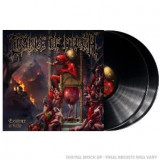
Belched from Hell’s depths into the rustic charms of the Witch County, Suffolk thirty long and disturbing years ago, CRADLE OF FILTH are undisputed giants of the heavy metal realm. Imperious purveyors of a perennially unique strain of dark, dastardly and wilfully extreme metal, with deep roots in the worlds of gothic horror and occult curiosity, the band led by Dani Filth has weathered three decades of tumult and trial, earning a formidable reputation as both a singular creative force and one of the most riotously entertaining live bands the metal world has ever produced.
From primitive early works like 1992 debut »The Principle Of Evil Made Flesh« to more expansive and theatrical classics like ‘Cruelty And The Beast’ and ‘Midian’, CRADLE OF FILTH defied trends and constructed their own idiosyncratic world of foul grandeur, becoming one of the UK’s most notable metal bands in the process. Since then, they have traversed the world countless times, hoovering up plaudits and praise from an ever-expanding international fan base. Resolutely prolific, the band’s catalogue has grown in depth and stature all the while, irrespective of line-up changes or the whims of the faithful.
In more recent times, CRADLE OF FILTH have hit an unmistakable hot streak of creativity and urgency. As a new line-up coalesced around the creation of 2015’s »Hammer Of The Witches«, fresh impetus propelled the band to new heights, as the revitalised crew became more in demand around the world than ever before. 2017’s ‘Cryptoriana - The Seductiveness Of Decay’ repeated the trick with even more explosive flamboyance. Until a global pandemic brought the music industry to a jarring halt, CRADLE OF FILTH were almost permanently on the road and absolutely fucking flying. As a result, it should surprise no one that the band’s brand new album, ‘Existence Is Futile’, is yet another monumental and electrifying journey through the dark.
Buoyed by these recent triumphs, CRADLE OF FILTH recorded »Existence Is Futile« during 2020, piecing the record together in isolation, at Grindstone Studios in Suffolk with studio guru Scott Atkins (Devilment/Benediction/Vader). Although instantly recognisable as the work of these veteran blackhearts, the thirteenth CRADLE OF FILTH album is a wholly different beast from its immediate predecessors. Pitch-black, perverse and at times absurdly brutal and extreme, it hangs together with mesmerising fluidity. It is also absolutely rammed with giant, rousing melodies and moments of jaw-dropping invention. No one could mistake the venomously catchy likes of ‘How Many Tears To Nurture A Rose?’ or monstrous ballad ‘Discourse Between A Man And His Soul’ for anything other than CRADLE OF FILTH, of course, but ‘Existence Is Futile’ confirms that the band’s exploratory instincts remain as sharp as ever.
Underpinned by its huge and disarmingly organic production, »Existence Is Futile« is plainly the darkest and most unsettling album CRADLE OF FILTH have made in a while. Eschewing the band’s trademark twisted storytelling in favour of horrified glimpses into the mortal void and ruminations on the inevitable destruction of life on Earth, its poignancy and relevance to the cluster of nightmares facing humanity in 2021 is impossible to ignore, even if Dani Filth insists, not unreasonably, that he didn’t anticipate a global pandemic when the news songs were being written.
With the best possible timing, CRADLE OF FILTH were already due to make a new album during those long, lonely months of lockdown in 2020. Having grabbed the opportunity with both hands, Dani avows that unavoidable isolation from the rest of the world was the best possible incentive to get the job done, while also adding plenty of eerie atmosphere to the whole experience.
Sonically speaking, ‘Existence Is Futile’ is easily the most powerful and dramatic record CRADLE OF FILTH have ever made: it’s the sound of band’s enviable onstage chemistry spilling over into the studio, propelling each member of the band to new levels of intensity. Combined with the expected labyrinthine arrangements and moments of spellbinding bombast, ‘Existence Is Futile’ may be the most vivid representation of the CRADLE OF FILTH experience yet.
Also, diehard fans will be thrilled to learn that horror icon Doug 'Pinhead' Bradley makes a welcome return to the CRADLE fold, lending his dulcet tones to the epic ‘Suffer Our Dominion’, and to one of the forthcoming new record’s bonus tracks, as Dani explains.
“There are also two bonus tracks in addition to the album, one of which is the culmination to the ‘Her Ghost In The Fog’ trilogy, which began on »Midian«.
For this we had little hesitation in enlisting our friend and actor Doug Bradley to reprise his narrative role. Doug lives in Pittsburgh, which he refers to ‘The Pit’, thus we directed his narrative over Skype from his local studio. He adopts this almost David Attenborough-ish role on ‘Suffer Our Dominion’, which is possibly the most politically astute song we’ve written of late. As a band we usually shy from branching into politics, but it’s something that needed spouting. The fact we’re fucking our ecology up and desperately need to address the situation pronto…”
So, if we’re all going to perish in the fire of our own stupidity, we might as well have a suitably deranged and destructive soundtrack to do it by.
A bewitching, fearless nosedive into the abyss, the band's thirteenth studio album confirms the ferocious efficacy of CRADLE OF FILTH in 2021. Bold, brave, wildly imaginative and heavy as hell, the band’s latest runaway train-ride through the flames is the perfect album for these most imperfect of times. As Dani concludes, “Be like the virus! Mutate and survive!”
Belched from Hell’s depths into the rustic charms of the Witch County, Suffolk thirty long and disturbing years ago, CRADLE OF FILTH are undisputed giants of the heavy metal realm. Imperious purveyors of a perennially unique strain of dark, dastardly and wilfully extreme metal, with deep roots in the worlds of gothic horror and occult curiosity, the band led by Dani Filth has weathered three decades of tumult and trial, earning a formidable reputation as both a singular creative force and one of the most riotously entertaining live bands the metal world has ever produced.
From primitive early works like 1992 debut »The Principle Of Evil Made Flesh« to more expansive and theatrical classics like ‘Cruelty And The Beast’ and ‘Midian’, CRADLE OF FILTH defied trends and constructed their own idiosyncratic world of foul grandeur, becoming one of the UK’s most notable metal bands in the process. Since then, they have traversed the world countless times, hoovering up plaudits and praise from an ever-expanding international fan base. Resolutely prolific, the band’s catalogue has grown in depth and stature all the while, irrespective of line-up changes or the whims of the faithful.
In more recent times, CRADLE OF FILTH have hit an unmistakable hot streak of creativity and urgency. As a new line-up coalesced around the creation of 2015’s »Hammer Of The Witches«, fresh impetus propelled the band to new heights, as the revitalised crew became more in demand around the world than ever before. 2017’s ‘Cryptoriana - The Seductiveness Of Decay’ repeated the trick with even more explosive flamboyance. Until a global pandemic brought the music industry to a jarring halt, CRADLE OF FILTH were almost permanently on the road and absolutely fucking flying. As a result, it should surprise no one that the band’s brand new album, ‘Existence Is Futile’, is yet another monumental and electrifying journey through the dark.
Buoyed by these recent triumphs, CRADLE OF FILTH recorded »Existence Is Futile« during 2020, piecing the record together in isolation, at Grindstone Studios in Suffolk with studio guru Scott Atkins (Devilment/Benediction/Vader). Although instantly recognisable as the work of these veteran blackhearts, the thirteenth CRADLE OF FILTH album is a wholly different beast from its immediate predecessors. Pitch-black, perverse and at times absurdly brutal and extreme, it hangs together with mesmerising fluidity. It is also absolutely rammed with giant, rousing melodies and moments of jaw-dropping invention. No one could mistake the venomously catchy likes of ‘How Many Tears To Nurture A Rose?’ or monstrous ballad ‘Discourse Between A Man And His Soul’ for anything other than CRADLE OF FILTH, of course, but ‘Existence Is Futile’ confirms that the band’s exploratory instincts remain as sharp as ever.
Underpinned by its huge and disarmingly organic production, »Existence Is Futile« is plainly the darkest and most unsettling album CRADLE OF FILTH have made in a while. Eschewing the band’s trademark twisted storytelling in favour of horrified glimpses into the mortal void and ruminations on the inevitable destruction of life on Earth, its poignancy and relevance to the cluster of nightmares facing humanity in 2021 is impossible to ignore, even if Dani Filth insists, not unreasonably, that he didn’t anticipate a global pandemic when the news songs were being written.
With the best possible timing, CRADLE OF FILTH were already due to make a new album during those long, lonely months of lockdown in 2020. Having grabbed the opportunity with both hands, Dani avows that unavoidable isolation from the rest of the world was the best possible incentive to get the job done, while also adding plenty of eerie atmosphere to the whole experience.
Sonically speaking, ‘Existence Is Futile’ is easily the most powerful and dramatic record CRADLE OF FILTH have ever made: it’s the sound of band’s enviable onstage chemistry spilling over into the studio, propelling each member of the band to new levels of intensity. Combined with the expected labyrinthine arrangements and moments of spellbinding bombast, ‘Existence Is Futile’ may be the most vivid representation of the CRADLE OF FILTH experience yet.
Also, diehard fans will be thrilled to learn that horror icon Doug 'Pinhead' Bradley makes a welcome return to the CRADLE fold, lending his dulcet tones to the epic ‘Suffer Our Dominion’, and to one of the forthcoming new record’s bonus tracks, as Dani explains.
“There are also two bonus tracks in addition to the album, one of which is the culmination to the ‘Her Ghost In The Fog’ trilogy, which began on »Midian«.
For this we had little hesitation in enlisting our friend and actor Doug Bradley to reprise his narrative role. Doug lives in Pittsburgh, which he refers to ‘The Pit’, thus we directed his narrative over Skype from his local studio. He adopts this almost David Attenborough-ish role on ‘Suffer Our Dominion’, which is possibly the most politically astute song we’ve written of late. As a band we usually shy from branching into politics, but it’s something that needed spouting. The fact we’re fucking our ecology up and desperately need to address the situation pronto…”
So, if we’re all going to perish in the fire of our own stupidity, we might as well have a suitably deranged and destructive soundtrack to do it by.
A bewitching, fearless nosedive into the abyss, the band's thirteenth studio album confirms the ferocious efficacy of CRADLE OF FILTH in 2021. Bold, brave, wildly imaginative and heavy as hell, the band’s latest runaway train-ride through the flames is the perfect album for these most imperfect of times. As Dani concludes, “Be like the virus! Mutate and survive!”
While meditating on the concept of our next album, we listened to the soundtracks of our favorite movies and dreamed of composing our music for the films. What could the film be like, what would be the story, what would be the idea? What would we like to say this time? And one day such work appeared and suddenly for us, it was not a movie. The book “Star Corsair” by Ukrainian science fiction writer, philosopher, and dissident Oles’ Berdnyk emerged from our distant memories. We even remembered the original cover of the old edition of 1971, a copy of which was immediately found, as if sanctifying our idea and adding a touch of eternity to the process. We decided to read the book again and right after that make our soundtrack to it. We began to dive. And it immediately became clear that in the case of Berdnyk it is impossible only to read his works without reading about his life. Therefore, the reading of “Star Corsair” and its sequel “Kamerton Dazhboga” turned into an in-depth study of a unique phenomenon in the Ukrainian spiritual, art, and political space – Oles’ Berdnyk. From the first pages, the book resonated as much as possible with our ideas about true freedom and personal development. An incredible concentration of powerful ideas, subtly set on multilevel spirals of the modeled future intersected with the myth-created past, in projections of bright explosions and degradations of societies and civilizations, in the unconditional possibility of impossible revolutions and eternal deep struggle with systems, in the fire and explosions of liberation ignited by the freethinkers. “Star Corsair” naturally intersected with our feelings and understanding of the interdependence of personal development and inner freedom, with the vision of the world around us and the direct action. It naturally complemented our vision of how, through the inner realization, we can contribute to the implementation of freedom, and then live it in our own lives. And so, this album became not only music for the novel, but also our reflection of the work, observation of our own transformation in the process, and what new ideas and vectors we will formulate for ourselves and offer to those who want to listen to the album.
First new release from Lizard Music in over two decades Since their hiatus, band members have joined Wilco, become the musical director for Cat Power, been a featured guest on RuPaul’s Drag Race, and worked with artists including Lana Del Rey, Brian Wilson, The Monkees, and more! Available on CD, Digital, and double-LP What Lizard Music says about Arizone! This collection of buzzy, whirly pop songs from a parallel dimension is a testament to Martin Short, Martin Sheen, Sheena Easton, Tina Turner, and Tiny Tim. Arizone! is better than discovering never-before seen discs for a View-Master. Arizone! is the sound of four old friends who spent their formative years playing music, traveling, and learning about the world, reuniting after a 25 year hiatus to compare notes and wound up with a one-way ticket to Arizone! Lizard Music began in Atlantic Highlands, NJ in 1989 when high school friends Mikael Jorgensen and Erik Paparozzi started learning and writing songs with a four-track. They pillaged their parents' record collections and discovered the musical universes of The Beatles, Frank Zappa, Captain Beefheart, XTC, James Brown and The Meters. In the fall of 1990, Lizard Music (named after the book by Daniel Pinkwater) was hired to be the backing band for David Peel and The Lower East Side at the recently-closed Brighton Bar in Long Branch, NJ, which would serve as the unofficial home base for the band for the next five years.
The making of “I Dreamed of Electric Sheep” was heavily influenced by the situation everyone had to face lately. “We were forced to work under very peculiar circumstances, often interrupting our studio activity because of the lockdown”, says Franz Di Cioccio (lead vocals, drums). The whole process took one year spent mostly working at home, sharing ideas and meeting at Patrick Djivas’ (bass, keyboards) home studio, before the band was able to record the album at White Studios in Milan, Italy. Being the rhythm section Cioccio and Djivas make a perfectly working team. “We both have a great passion for SciFi movies. In the past we watched many of them together. In the case of ‘Blade Runner’ we were hit by the question: Do Androids dream of Electric Sheep? - The world has been changing around us. Computers are taking over and Covid has accelerated the process. However, we strongly believe in the power of people to use their imagination and fantasy. To us this is what really makes the difference between human beings and androids.” The band considers themselves being in a similar place when it comes to music that Impressionists were in when it comes to painting: They didn’t paint fixed somatic traits for their figures with their brush strokes while PFM (Premiata Forneria Marconi) do not consider themselves limited to a specific genre. While the album tells multiple stories they are all linked to passion, love and the power of imagination. As a real treat PMF invited a couple of musicians they have been friends with for a long time: Ian Anderson (Jethro Tull) on flute and Steve Hackett (ex-Genesis) on electric guitar. “I Dreamed of Electric Sheep” is simultaneously released in both English and Italian versions, hence the Italian subtitle, “Ho Sognato Pecore Elettriche". PMF’s “I Dreamed of Electric Sheep” is available in the following formats: Special 2 CD Digipak with O-Card, Gatefold 2LP+2CD & Special LP-Booklet and Digital Album.
Atmosphere have distinguished themselves from their peers by creating albums encompassing the entire spectrum of human emotion while tethering each piece to a central aural aesthetic. The Family Sign took this philosophy to new realms of solidarity with Slug metaphorically touching on themes of fatherhood, loss, love, disappointment and jubilation, and tailoring them to an
instrumental framework that draws emotion out of the listener, skillfully composed by producer Ant. The Family Sign was evidence that hip-hop wields the ultimate potential to address and convey life’s virtues and shortcomings.
Over nearly 20 years, Howlin Rain may have become the quintessential independent American rock ’n roll band: a steam-spitting Hydra of cranked guitars, kicking asphalt dust through a kaleidoscoping travelogue of desert motels and dives, volleying forth transmissions of sci-fi poetry from the blacktop veins of this cracked and aching country.
Now, in America 2021, capping these strangest and sorest of times, the band returns with The Dharma Wheel, a six-track, 52-minute dive into a joyous fantasy realm of exaggerated present.
“I wanted The Dharma Wheel to be a portal from our everyday world, the one from which you stand on hard ground and hold the album in your hands and peer into the artwork, and into another universe,” says songwriter, guitarist and vocalist, Ethan Miller. “You enter into that universe with your eyes and ears and mind and take a ride through free-form meditation on these ideas — from big, fundamental concepts about our existence right down to the grease that rolls down the arm of a pulp novel killer as he eats a gas station hot dog in an old Dodge in an alleyway.”
Lyrically, Miller has completed his evolution into a mushroom-plucking Whitman of the West, singing outlandish tales in a topographic blend of Humbead’s Revised Map of the World and an inverted U.S. where downtrodden bodhisattvas roam the back streets and moonless country roads.
“Down in Florida swamps, run by nature’s law, standing in the water, Eden gone. Two men loading rifles, beasts making time, they shot a boy from an orange tree and watched the colored birds take flight, watch the colors as they soar and dive.” — ‘Under the Wheels.’
The band, Jeff McElroy (bass, backing vocals), Justin Smith (drums/percussion, backing vocals) and Dan Cervantes (guitar, backing vocals), again sounds hardwired into Miller’s vision, building tracks that swagger and sway in response to his verse. Lending a hand this time around is the legendary Scarlet Rivera (Bob Dylan’s Rolling Thunder Revue) on violin, and the endlessly inventive Adam MacDougall (Chris Robinson Brotherhood, Circles Around the Sun) on keys.
Songs were shaped via the blast furnace of endless gigs, then recorded often mere hours after the band slipped the stage.
“The captured sonic fact about this record is that it’s the sound of a band that rehearsed this material a lot and put a ton of work into its construction and was on the road a lot and recorded on days off in the tour schedule,” Miller says. “In some cases we were on stage on Saturday night playing these songs at quarter-to-2 in the morning and by Noon the next day we were sipping coffee in the studio playing them for the machine.”
Rivera’s violin is the first sound heard as the album dawns on the instrumental “Prelude.” Soon, the band joins, twirling the theme into a psychedelicized awakening. “Don’t Let the Tears” brings the boogie, with MacDougall’s madcap synth work and wah-wah guitars showering 70’s glitter upon a parquet dance floor of the mind. “Under the Wheels” and “Rotoscope” center the album with taut, compositional epics populated by murdering drifters and fuzz pedal explosions. The blue hour comedown of “Annabelle” meditates upon the weariness of lost love, with Rivera again amping the heartache via her violin strings.
“In the evening the trains go by, and shake the dust from dirty walls, sometimes I feel like a spider in an old mason jar, who threatens only convex light from down the hall. I’ve been lost to the world since the photos of the black hole, landed on my desktop screaming, perhaps the all and nothing all-in-one is just too much to take, for particles and matter that never found their way.” — ‘Annabelle’
The record closes with the 16-minute title track, a multi-movement suite which cycles from Crazy Horse-meets-Traffic jams through colossal, mass-moving funk stomp, eventually cresting and washing into a sing-along gospel lament.
The Dharma Wheel is an album of great depth, and one steeped in good vibes: a rich, glistening world of the ultra-vivid. As illustrated in Arik Roper’s cover art, the grand dharmachakra has been set in motion, churning off the California coast.
“We were trying to build a world big enough that the imagination won’t go soft on you after just a few listens and where our love for this music, and music in general — along with a good dose of audacity — create a magic carpet ride through the world of The Dharma Wheel,” Miller continues. “In pursuing that I think we also managed to make a record that has a lot of joy in it: the joy of playing music, the joy of experiencing music, the joy of storytelling and poetry, the kind of singular joy and extended ecstatic moment that only a real ‘band’ can express in just that way.”
And it’s this joy, this exuberance and dedication to the lines of cosmic expression — all centered in the exalted art of the everyday — that constructs the heart of the record. At its core, The Dharma Wheel is the triumph of a working band, a transmission from a never-paused before arriving for our strange, bruised, spectacular now.”
Over nearly 20 years, Howlin Rain may have become the quintessential independent American rock ’n roll band: a steam-spitting Hydra of cranked guitars, kicking asphalt dust through a kaleidoscoping travelogue of desert motels and dives, volleying forth transmissions of sci-fi poetry from the blacktop veins of this cracked and aching country.
Now, in America 2021, capping these strangest and sorest of times, the band returns with The Dharma Wheel, a six-track, 52-minute dive into a joyous fantasy realm of exaggerated present.
“I wanted The Dharma Wheel to be a portal from our everyday world, the one from which you stand on hard ground and hold the album in your hands and peer into the artwork, and into another universe,” says songwriter, guitarist and vocalist, Ethan Miller. “You enter into that universe with your eyes and ears and mind and take a ride through free-form meditation on these ideas — from big, fundamental concepts about our existence right down to the grease that rolls down the arm of a pulp novel killer as he eats a gas station hot dog in an old Dodge in an alleyway.”
Lyrically, Miller has completed his evolution into a mushroom-plucking Whitman of the West, singing outlandish tales in a topographic blend of Humbead’s Revised Map of the World and an inverted U.S. where downtrodden bodhisattvas roam the back streets and moonless country roads.
“Down in Florida swamps, run by nature’s law, standing in the water, Eden gone. Two men loading rifles, beasts making time, they shot a boy from an orange tree and watched the colored birds take flight, watch the colors as they soar and dive.” — ‘Under the Wheels.’
The band, Jeff McElroy (bass, backing vocals), Justin Smith (drums/percussion, backing vocals) and Dan Cervantes (guitar, backing vocals), again sounds hardwired into Miller’s vision, building tracks that swagger and sway in response to his verse. Lending a hand this time around is the legendary Scarlet Rivera (Bob Dylan’s Rolling Thunder Revue) on violin, and the endlessly inventive Adam MacDougall (Chris Robinson Brotherhood, Circles Around the Sun) on keys.
Songs were shaped via the blast furnace of endless gigs, then recorded often mere hours after the band slipped the stage.
“The captured sonic fact about this record is that it’s the sound of a band that rehearsed this material a lot and put a ton of work into its construction and was on the road a lot and recorded on days off in the tour schedule,” Miller says. “In some cases we were on stage on Saturday night playing these songs at quarter-to-2 in the morning and by Noon the next day we were sipping coffee in the studio playing them for the machine.”
Rivera’s violin is the first sound heard as the album dawns on the instrumental “Prelude.” Soon, the band joins, twirling the theme into a psychedelicized awakening. “Don’t Let the Tears” brings the boogie, with MacDougall’s madcap synth work and wah-wah guitars showering 70’s glitter upon a parquet dance floor of the mind. “Under the Wheels” and “Rotoscope” center the album with taut, compositional epics populated by murdering drifters and fuzz pedal explosions. The blue hour comedown of “Annabelle” meditates upon the weariness of lost love, with Rivera again amping the heartache via her violin strings.
“In the evening the trains go by, and shake the dust from dirty walls, sometimes I feel like a spider in an old mason jar, who threatens only convex light from down the hall. I’ve been lost to the world since the photos of the black hole, landed on my desktop screaming, perhaps the all and nothing all-in-one is just too much to take, for particles and matter that never found their way.” — ‘Annabelle’
The record closes with the 16-minute title track, a multi-movement suite which cycles from Crazy Horse-meets-Traffic jams through colossal, mass-moving funk stomp, eventually cresting and washing into a sing-along gospel lament.
The Dharma Wheel is an album of great depth, and one steeped in good vibes: a rich, glistening world of the ultra-vivid. As illustrated in Arik Roper’s cover art, the grand dharmachakra has been set in motion, churning off the California coast.
“We were trying to build a world big enough that the imagination won’t go soft on you after just a few listens and where our love for this music, and music in general — along with a good dose of audacity — create a magic carpet ride through the world of The Dharma Wheel,” Miller continues. “In pursuing that I think we also managed to make a record that has a lot of joy in it: the joy of playing music, the joy of experiencing music, the joy of storytelling and poetry, the kind of singular joy and extended ecstatic moment that only a real ‘band’ can express in just that way.”
And it’s this joy, this exuberance and dedication to the lines of cosmic expression — all centered in the exalted art of the everyday — that constructs the heart of the record. At its core, The Dharma Wheel is the triumph of a working band, a transmission from a never-paused before arriving for our strange, bruised, spectacular now.”
On Now Where Were We, The Exbats hit the ground running like
a dystopian garage rock version of the Shangri-Las, or like
a message to the future from the pre-Velvet Underground doowop
wannabe Lou Reed. The album rings bright, like a beacon
in the wilderness: eminently, effortlessly catchy, and loaded
with buoyant choruses that rank alongside the best chart-toppers
launched by the Brill Building or Phil Spector’s Wall of Sound.
Kenny McClain and his daughter, vocalist and drummer
Inez McClain, formed the nucleus of the Exbats over a decade
ago, when Inez was just 10 years old; today, Bobby Carlson
rounds out the group on bass. Despite their remote location in
Bisbee, Arizona, just eleven miles north of the U.S.-Mexican
border, the group quickly racked up accolades citing a wealth of
influences that run from cartoon quintet the Archies to punk rock
originators the Avengers, and from the so-sweet-it-hurts 1910
Fruitgum Company to Los Angeles antiheroes the Weirdos.
Truthfully, The Exbats embrace a wider swath of musical styles,
incorporating blue-eyed soul, tongue-in-cheek country, Brit
pop, psych, and R&B into their sound.
The McClains describe this album as “more ambitious” than
its predecessors. They tooled ninety minutes northeast to Tucson
to record, per usual, with Matt Rendon at Midtown Island Studios.
Months later, the Exbats emerged with an album imbued
with harmoniously cautious optimism—the musical equivalent
but psychological antithesis to the Brian Wilson-Tony Asher
masterpiece “I Just Wasn’t Made For These Times.” While Wilson
was looking for “a place to fit in,” The Exbats have found
sanctuary via the brilliant “Ghost In The Record Store,” which
is “for all of us who need the joy of a little bit of plastic making
lots of noise.” Like the best records to croon along with, Now
Where Were We is captivatingly simple, yet hardly simplistic.
The Exbats are singing from their hearts—and they aren’t afraid
to bare their souls.
Bols was a rock band from Tromsø, a town in northern Norway. The band was active through 1983-1986, and drew inspiration from the english post-punk acts of the early eighties (Joy Division, Echo & The Bunnymen, The Fall, Public Image Limited etc). The band was quite successfull locally, and did a couple of tours in Norway and Denmark. The band didn't release any records during their active period, even though recording sessions took place on several occasions in 1984 and 1985. The 2021 release "Film" is a collection of some studio recordings and some rehearsal room recordings, and spans the whole period of 1983-1986. The album was collected and remastered by Geir Jenssen from Biosphere.
Echo & The Bunnymen formed in Liverpool back in 1978, with Ian McCulloch on vocals, Will Sergeant on guitar, bassist Les Pattinson with Pete De Freitas on drums. Their first release came in the form of the single The Pictures On My Wall, with the B-side Read It In Books. Both tracks would appear on their debut album Crocodiles, released in 1980. Released amid the growing wave of post-punk, Crocodiles cemented the band amongst the best around, with the NME at the time describing it as “probably the best album this year by a British band” and featuring amongst many greatest ever debut album lists.
The lead single from the album, Rescue, was produced by Ian Broudie who would later produce more Echo & The Bunnymen material, as well as later forming The Lightning Seeds in 1989. The single would enter the UK charts, with the album breaking into the top 20 and going on to be certified Gold. The original cover was shot by Brian Griffin near Rickmansworth, Hertfordshire. The atmospheric, moody aura of the sleeve sets the tone for quintessential post-punk.
Tenesha the Wordsmith, who came to the fore on On The Corner's 2018 release 'Black Noise 2084', has delivered a hard-cutting, gut-wrenching, and extremely moving spoken word album produced by Khalab that brings together different lines of black music - folkloric, jazz, and electronic dance - into an afro-futurist narrative with thunderous results.
Originally from Oakland, California, "a place where revolutionaries are born, Tenesha the Wordsmith originally began to fuse hip hop and poetry while living in Albany, New York, where she created her first collection 'Body Of Work'. Her early influences have returned with features from beatboxers and vocalists that give the album a distinctly urban hip hop vibe.
out of Stock
Last delivered 4 years ago available to reorder, subject to availability
Nervous Records, the iconic label synonymous with the rise of house from the streets of New York City, will mark 30 years in the music industry by releasing the celebratory compilation LP ‘Nervous Records: 30 Years’ on October 1st (Part 1) and October 15th (Part 2).
Featuring original mixes of the label’s biggest tracks, plus remixes by some of its most celebrated acts, ‘Nervous Records: 30 Years’ is both a celebration of the past and of the future. Featuring a who’s who of electronic dance music, the long player sees names including Louie Vega, David Morales Darius Syrossian, Tensnake, Monki, Franky Rizardo, Danny Howard and more take on iconic Nervous cuts: ‘You Make Me Feel Mighty Real’, ‘Treat Me Right’, ‘Future Groove’, ‘Feel Like Singing’, ‘Get Up Everybody’, ‘Break You’, ‘Hot’, ‘End This Hate’, ‘Unspeakable Joy’, ‘Can Ya Tell Me’, ‘Jerk It’, ‘The Anthem’, ‘It Makes A Difference’, ‘Learn 2 Luv’ and ‘Don’t You Ever Give Up’.
The album marks one of the most enduring, extraordinary legacies to grace America’s illustrious music history, not just in electronica but far beyond. Founded in 1991 by Michael and his father Sam Weiss, and recognizable immediately by its distinctive character logo, the label grew rapidly, in no small part due to Michael Weiss’ practically unmatched passion for discovering new music.
“Louie Vega and Kenny Dope woke me at 4am on Tuesday night, Wednesday morning from their studio telling me they had something really different that I needed to hear,” Michael recollects. “I asked if they could play it over the phone. They said if I wanted to hear it I had to come to the studio. So of course I got myself up, got dressed and went there. That “really different track” ended up being ‘The Nervous Track’, a tune that became our signature release and was also highly instrumental in the emergency of London’s ‘Broken Beat’ movement.”
The label’s willingness to take chances on fresh sounds and innovative concepts rising up from the melting pot sidewalks of NYC ensured a body of work that has become a living musical history of the city. House cuts ‘Unspeakable Joy’ and ‘Nitelife’ (Kim English), ‘Get Up (Everybody)’ (Byron Stingily) and ‘Feel Like Singing’ (Sandy B) bump up against hip-hop anthems like ‘Who Got Da Props’ (Black Moon) and “Bucktown” (Smif-n-Wessun) and reggae cut ‘Take It Easy’ (Mad Lion); soulful flows from Mood II Swing (Kim English ‘Learn 2 Luv’, Loni Clark “Rushing”), Armand Van Helden (‘The Anthem’) and Nuyorican Soul (‘Mind Fluid’) sit alongside seminal techno singles like Winx’ ‘Don’t Laugh’. The young artists and producers who joined the Nervous Records’ family have gone on to become some of the most hallowed and celebrated dance acts of all time: Louie Vega, Kenny Dope, David Morales, Tony Humphries, Roger Sanchez, Armand Van Helden, Kerri Chandler, Kim English, Byron Stingily, Josh Wink, to name just a handful.
“We did a release with Josh Wink under his Winx alias entitled ‘Nervous Build-Up’,” Michael said. “It did well and it was obvious how talented Josh was. Subsequent to that release I was pretty persistent in asking him to continue to play me his new demos. During one phone conversation he said, “Mike I’m gonna play you something over the phone but don’t laugh when you hear it.” That demo ended up being ‘Don’t Laugh’, which became one of our biggest international hits and still to this day is one of America’s earliest and most impactful techno hits.”
As much a celebration of the label’s future as it is of their past, Nervous Records: 30 Years is but a marker in the imprints’ history, a clear sign of where they’ve been and also where they’re going. With 30 years behind them, the label’s determination to unearth new raw diamonds in the rough is as unwavering as ever.
“I’ve always been one to look at what others are doing (the industry at large) and think, “ok, are they doing this specific thing for a reason, or doing it because everyone else is doing the same thing” and make my decision based on that,” says Nervous Records’ General Manager Andrew Salsano. “In an age where data metrics and analytics reign supreme, I remain steadfast that they should be complementary to your decision and not the sole indicator to make one. So many songs today are written with 15 second hooks in mind for social media, and while there’s nothing wrong with that business model you will always be chasing the wave instead of carving out your own path and identity.
“My primary focus for the sound of the label has and will continue to revolve around signing good songs and music that has the ability to react at the street level first. The best results come from artists that are firstly given a bit of local love that grows into a global impact. Fresh ideas that express child-like curiosity and artists showing vulnerability in their music are also something I look for, artists and producers that are not making music with certain markets in mind, but rather their own style and signature that is unique but able to straddle the fine line of underground and overground.”
Still as raw, as underground and as finely tuned to the dance floor as they ever have been, perhaps the secret to the success - and the longevity - of Nervous Records has something to do with that hard, dogged, no-holds-barred NYC edge that runs through the veins of the label. With the next generation of producers rising from the clubs of New York, one thing is certain; Nervous Records will be there to find them, nurture them and bring them to the world at large, over the next decade and beyond.
out of Stock
Last delivered 8 months ago available to reorder, subject to availability
Constant Sound offshoot Cardiology's latest boundary-blurring re-edit release comes courtesy of Alexny, an Argentinian rising star who has previously released a wealth of music on all manner of digital-only imprints. He hits the ground running with 'Everybody Get Up', sneakily adding new beats, bass and musical touches to a string-drenched old disco jam, before applying the same house-style approach to a hybrid disco/electrofunk cut on 'Get On The Floor'. Over on side B, 'Give It To Me' is a chunkier and more bass-heavy disco-house bumper, while 'Do It You Got It' is a rolling, filter-sporting revision of a particularly spacey, turn-of-the-80s disco workout.
out of Stock
Last delivered 4 years ago available to reorder, subject to availability
Faitiche presents, for the first time on vinyl, a selection from the 84-track (!!) remix project originally released in 2013 as a three-tape set by Trip Shrubb aka kptmichigan aka Michael Beckett. Known to many from bands like Tuesday Weld or The Schneider TM Experience, Beckett remixed his way through Harry Smith’s famous Anthology of American Folk Music – a compilation of American folk, blues and country recordings released in 1952, soon to become key point of reference for the emerging folk revival movement. Having translated the title into the local dialect of the part of Germany where he lives, Beckett began reinterpreting all of its 84 tracks using sampler, effect pedals and loops – sometimes making several tracks in a single day. A colossal undertaking whose results are beyond accomplished and that is summed up in the selection of thirteen tracks on 'Trewwer, Leud un Danz'.
Murray Royston-Ward writes about 'Trewwer, Leud un Danz':
"Total sacrilege ... A collection of remixes of tracks from Harry Smith’s Anthology of American Folk Music which was originally released in its entirety. The album is titled Trewwer, Leud un Danz (sorrow, song and dance) which is drawn from an endangered ‘Low German’ dialect (lippisch Platt) and is poetically approximating Smith’s volumes Ballads, Social Music and Songs. The hardware employed encompasses analogue, virtual analogue and digital. A primordial soup of electrical fields, striated granulation, micro-circuitry, molecular oscillations and mathematical manipulation; communicating directly with the guitars, zithers, mountain dulcimers, fiddles, jaw harps, banjos, harmonicas and human voices of 1930’s America: itself a reterritorialization of African and European folk traditions that reach back farther and farther into our collective pasts. (…)"
out of Stock
Last delivered 4 years ago available to reorder, subject to availability
Next release on the label is a collaboration between ISSUES x Woodland studios who run a competition with more than 100 entries on remix duties for Detlef’s “Dub Clap” and Campbell Fryer’s “MOODY”. Honcho of Woodlands Iglesias delivered a strong remix of Dub Clap with heavy basslines, rolling beats and the vocals slightly pitched to create a darker vibe. RN ISMO remix of Dub Clap was definitely close to the sound of ISSUES with a driving bassline, minimal beats, quick drops and a playful vocal breakdown.
On Campbell Fryer’s MOODY the first remixer is Woody who delivered a super groovy remix with a funky bassline, straight beat with swing hihats and atmospheres at the background merging nicely with the beats, using the riff in a different and extra playful way that creates an amazing breakdown. The last remixer for MOODY is Shuski who delivered a housy version of the track. Straight funky beats with a big driving bassline, synth stabs and arpeggios through out the track and some wicked breakdowns with clever fills before the track kicks back in.
out of Stock
Last delivered 4 years ago available to reorder, subject to availability