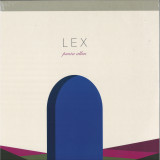
one hand on the steering wheel the other sewing a garden is the name of the second album by Canadian songwriter Alexandra Levy, publicly known by the moniker Ada Lea. On one hand, it’s a collection of walking-paced, cathartic pop/folk songs, on the other it’s a
book of heart-twisting, rear-view stories of city life. Ada Lea has followed up the creative, indie-rock songcraft of her debut what we say in private with surprising arrangements and new perspectives. The album is set in Montreal and each song exists as a dot on a personal history map of the city where Levy grew up. Due on September 24th from Saddle Creek and Next Door Records in Canada, the physical record will be released alongside a map of song locations and a songbook with chords and lyrics, inspired by Levy’s love of real book standards.
Levy penned and demoed this batch of songs in an artist residency in Banff, Alberta. After sorting and editing she made her way to Los Angeles to record with producer/engineer Marshall Vore (Phoebe Bridgers) who had previously worked on 2020’s woman, here E.P. After a long walk to the studio each morning, Levy spent her session days diving into the arrangements, playfully letting everything fall in place with complete trust for her collaborators. She notes “Marshall’s expertise and experience with drumming and songwriting was the perfect blend for what the songs needed. He was able to support me in a harmonic, lyrical, and rhythmic sense.” Other contributors that left a notable fingerprint on the soundscape include drummer Tasy Hudson, guitarist Harrison Whitford (of Phoebe Bridgers band), and mixing engineer Burke Reid (Courtney Barnett). Many songs came together with a blend of studio tracks and elements from the pre-recorded demos.
The resulting sounds range from classic, soft-rock beauty to intimate finger-picked folk passages and night-drive art-pop. And the textures are frequently surprising due to the collage of lo-fi and hi-fi sounds that tastefully decorate the album without ever clouding the heart-center of the song. Tracks like “damn” and “oranges” feel timeless with their AM gold groove and 70’s studio sheen, while songs like “my love 4 u is real '', “salt spring” and “can’t stop me from dying” sound completely modern in their use of electronics, sound effects, and pitched vocals. In their subtle, sonic variety, all of the album’s songs flow together with ease into one big, romantic dream for Levy’s silken vocals to float above.
Inspired by personal experience, daydreams, and Elena Ferrante’s Neapolitan novels, the lyrics of one hand... center storytelling on a bigger scale. The experience and emotions of a year are communicated through Levy’s vignettes of city life. Her prose is centered in its setting of the St Denis area of Montreal as it draws up memories from local haunts like Fameux, La Rockette, and Quai des Brumes in rearview reverie. Levy creates a balance through the album’s year by splitting her songs evenly into four seasons. Opening track “damn”, as a song of winter, kicks off the narrative with the events of a cursed New Year’s Eve party. Immediately this timeline becomes jumbled into a Proustian haziness. The listener is then led through the heat-stricken, brain fog of Summer song, “can’t stop me from dying” and then into the autumnal romanticism of “oranges” before returning back to New Year’s on “partner,” which Levy describes as “a woozy late-night taxi blues reflection on moments when timing can be so right, yet so wrong…”. These collected stories as a whole chart the unavoidable growth that comes with experience. “All is forgiven in time. All is forgotten in time. And when the music stopped, I heard an answer” (from “my love 4 u is real”).
Whether to consider these songs fiction or memoir remains unknown. On one hand, Levy says “Why would I try to write a story that’s not my own? What good would that do?” but on the other hand, she is quick to note the ways that language fails to describe reality, and how difficult this makes it to tell an actually true story. The poetic misuse of the word “sewing” in the album’s title serves as a nod to the limitations words provide. What does it mean to sew the garden? And how can we appreciate its carefully knit blooms when the rearview mirror is so full of car exhaust?
quête:dream city
one hand on the steering wheel the other sewing a garden is the name of the second album by Canadian songwriter Alexandra Levy, publicly known by the moniker Ada Lea. On one hand, it’s a collection of walking-paced, cathartic pop/folk songs, on the other it’s a
book of heart-twisting, rear-view stories of city life. Ada Lea has followed up the creative, indie-rock songcraft of her debut what we say in private with surprising arrangements and new perspectives. The album is set in Montreal and each song exists as a dot on a personal history map of the city where Levy grew up. Due on September 24th from Saddle Creek and Next Door Records in Canada, the physical record will be released alongside a map of song locations and a songbook with chords and lyrics, inspired by Levy’s love of real book standards.
Levy penned and demoed this batch of songs in an artist residency in Banff, Alberta. After sorting and editing she made her way to Los Angeles to record with producer/engineer Marshall Vore (Phoebe Bridgers) who had previously worked on 2020’s woman, here E.P. After a long walk to the studio each morning, Levy spent her session days diving into the arrangements, playfully letting everything fall in place with complete trust for her collaborators. She notes “Marshall’s expertise and experience with drumming and songwriting was the perfect blend for what the songs needed. He was able to support me in a harmonic, lyrical, and rhythmic sense.” Other contributors that left a notable fingerprint on the soundscape include drummer Tasy Hudson, guitarist Harrison Whitford (of Phoebe Bridgers band), and mixing engineer Burke Reid (Courtney Barnett). Many songs came together with a blend of studio tracks and elements from the pre-recorded demos.
The resulting sounds range from classic, soft-rock beauty to intimate finger-picked folk passages and night-drive art-pop. And the textures are frequently surprising due to the collage of lo-fi and hi-fi sounds that tastefully decorate the album without ever clouding the heart-center of the song. Tracks like “damn” and “oranges” feel timeless with their AM gold groove and 70’s studio sheen, while songs like “my love 4 u is real '', “salt spring” and “can’t stop me from dying” sound completely modern in their use of electronics, sound effects, and pitched vocals. In their subtle, sonic variety, all of the album’s songs flow together with ease into one big, romantic dream for Levy’s silken vocals to float above.
Inspired by personal experience, daydreams, and Elena Ferrante’s Neapolitan novels, the lyrics of one hand... center storytelling on a bigger scale. The experience and emotions of a year are communicated through Levy’s vignettes of city life. Her prose is centered in its setting of the St Denis area of Montreal as it draws up memories from local haunts like Fameux, La Rockette, and Quai des Brumes in rearview reverie. Levy creates a balance through the album’s year by splitting her songs evenly into four seasons. Opening track “damn”, as a song of winter, kicks off the narrative with the events of a cursed New Year’s Eve party. Immediately this timeline becomes jumbled into a Proustian haziness. The listener is then led through the heat-stricken, brain fog of Summer song, “can’t stop me from dying” and then into the autumnal romanticism of “oranges” before returning back to New Year’s on “partner,” which Levy describes as “a woozy late-night taxi blues reflection on moments when timing can be so right, yet so wrong…”. These collected stories as a whole chart the unavoidable growth that comes with experience. “All is forgiven in time. All is forgotten in time. And when the music stopped, I heard an answer” (from “my love 4 u is real”).
Whether to consider these songs fiction or memoir remains unknown. On one hand, Levy says “Why would I try to write a story that’s not my own? What good would that do?” but on the other hand, she is quick to note the ways that language fails to describe reality, and how difficult this makes it to tell an actually true story. The poetic misuse of the word “sewing” in the album’s title serves as a nod to the limitations words provide. What does it mean to sew the garden? And how can we appreciate its carefully knit blooms when the rearview mirror is so full of car exhaust?
The Altered Hours have just announced details of their second full length album ‘Convertible’. The Irish group have just signed with Pizza Pizza Records and the 8 track album is set for release in May 2021. Following on from some successful headline tours across Europe supporting their debut album & some blistering EP’s along the way, the group found themselves looking for the next step in their ever- evolving journey. Having previously recorded in Anton Newcombe’s Berlin studio for their debut singles & ending up in the infamous Funkhaus studios to lay down what would become their debut album ‘In Heat Not Sorry ’, the band decided once again to
change the approach & take their new songs back to the privacy of their own studio space on the outskirts of Cork City. The new LP ‘Convertible’ is the result of countless late night/early morning sessions that took place over the past 2 years. Choosing to self produce and engineer this record was a conscious choice as the band felt an urge to take what they had learned on the road & in various studios previously, and condense all of this energy back into the boiling pot of their own rehearsal space.
The group have been a part of some exciting movements since the beginning and their path has been an organic one. They quickly became known in their hometown for taking over an ex-government building in the heart of Cork city, turning into a studio and creating a hub for the scene that surrounded them. The years that follow shine a light on the relentless energy of this group and unwavering love for playing shows anywhere & everywhere. Having been invited to perform at Liverpool Psych Fest numerous times, supporting the Brian Jonestown Massacre, selling out venues, churches & clubs, playing rip-roaring DIY shows in friends’ basements, getting joined by members of Spacemen 3 on stage and more recently, being invited by fellow Irish rockers Fontaines D.C to join them on their 2019 European tour playing sold out shows in venues like The Bataclan, Paris & Paradiso, Amsterdam. It’s been a wild ride for The Altered Hours so far & their music keeps evolving & growing as the experiences build. This is a group with the spirit of music deeply ingrained in them and a passion for making rock music something that you can believe in.
Their second full length album ‘Convertible’ is a window into the band’s idiosyncratic tendencies, a closer look into how their writing & sound continuously moves forwards while somehow remaining rooted in their own unique world all at once. The Altered Hours seem born to be an underground affair, something that they wear with pride and this album is a wonderful culmination of their DIY upbringing, their unfiltered rock ‘n’ roll spirit along with a confident stride into personal songwriting.
The Men’s hugely influential album Leave Home came out during an exciting time in New York City. DIY lofts and shitty bars littered downtown Manhattan and North Brooklyn. The Acheron had just opened its doors. Kill Your Idols had broken up. Toxic State Records was just getting started with Crazy Spirit, Dawn of Humans, Hank Wood and Perdition EP’s. The city was alive with punk and noise and filth. And right at that time, The Men were the show to be at.
Every gig was dripping with sweat. Hallways and sidewalks were packed between sets. Chaos reigned in the pit. The Men hit like a bag of hard cement, a hardcore band with a familiar sound but with an aura of absolute chaos and intensity, like everything was on the brink of going off the rails at every moment of their set, a downhill freight train with no brakes. During these shows one’s focus could shoot back and forth between the intimidatingly angry-eyed, bald-headed Chris Hansell (who went on to front Warthog) and the long haired hippie punks Mark Perro, Nick Chiericozzi and Rich Samis, that made up the surrounding band.
Just one of the many juxtapositions the band embraced. If The Men were a chapter in Michael Azzerad’s Our Band Could Be Your Life, the early EP’s and cassettes would obviously be Minor Threat and Black Flag, while Leave Home would likely be… Sonic Youth. It was just before they made the full jump into each record being a smorgasbord of underground genres, from dream pop to folk;
before they had tracks called “Country Song,” for example. But it was a preview of what was to come. Leave Home was a pivot from pure hardcore punk (some might even call it mysterious guy hardcore), as the band got lost in the groove in a way one couldn’t on a straight up punk record. That groove was so strong on “If You Leave…,” “(),” and “Bataille,” while they spaced out on “Shitting With The Shaw,” and stayed as aggro as ever on “LADOCH.” But of course, Leave Home had a re-recording of their hardest track to date, “Think,” making it clear that they were still the moshers we all had come to know and love. If The Men raised their flag as an important New York punk band with Immaculada, they started waving it in the freakiest way with Leave Home.There is no doubt that Leave Home was one of the most influential records of the last decade.
You can hear their mark everywhere from Ty Segal and The Oh Sees to Milk Music and Hank Wood. Few bands have traversed as many genres as The Men and even fewer have done it so well. It is a testament to the band’s undying authenticity and adventurism that the record sounds as timeless and urgent now as it did when it blew the doors of New York punk off its hinges ten years ago, leaving a giant hole for bands of all kinds to come racing through.
This summer, Saft welcomes Dubbyman after a three-year hiatus from releasing music. He serves up a gorgeous new EP in the SAFTX series that features a remix from Detroit mainstay FIT Siegel.
Dubbyman is a master of the deep. As a DJ and producer, he explores warm and heady soundscapes that are rooted in house and techno but decorated with much more. His musical synths and compelling rhythms have resulted in countless vital EPs on labels like Ferrispark, Soul People Music and the Deep Explorer label he co-runs. Now, after a break, he is back and in brilliant form.
Opener 'En La Ciudad' is an effortlessly loose and languid house track. The hip-swinging claps and funk bass riffs bring a sunset vibe, with wordless vocals from Carlito Brigante Rojo and dreamy pads really soothing the soul. Remixing is legendary FIT Sound label head, FXHE associate and pillar of the Motor City scene FIT Siegel. His famously no-nonsense approach results in a track here that is laced up with smoky soul. The dusty beats roll deep, the twisted synth work brings light and lush pads soften the whole groove with a real sense of heart.
"Up Again" strikes another perfectly seductive pose with its jazzy keys, soulful vocals, and rough-edged beats that make you want to dance. It's a tune packed with feelings and irresistible funk, and is sure to be the soundtrack to many outdoor parties this summer. The Deep Explorer Mix is a little more direct, with dynamic house drums, sunkissed motifs and warm pads taking you straight to the Mediterranean. Last of all, "Tropic" featuring Arturo Sanchidrian on bass is a downtempo classic, with beachy vibes, gently breaking synth waves and soft-focus melodies sinking you deep into a
reverie.
This is an EP of life-affirming, heart-warming house sounds that take you to a better place.
“So much has happened since last year.” After the release of his 2020 debut album Armlock, School of X was hurtled into a new life. Having spent most of the past ten years touring and working on music non-stop, SXSW was cancelled just as he was about to make his first trip to the states under his own name and this life was suddenly put on hold for Rasmus Littauer, the man behind the School of X moniker.
While School of X’s self-produced indie-pop has always been revealing and reflective, “these sudden changes thrust me deep into my emotions.” Littauer took off to his childhood home in the countryside to write, capturing these swelling emotions and reflecting on his childhood. And then there was the news of a little one on the way, bringing his thoughts to his soon-to-be son. “I was facing a lot of
things from my life that I want to do differently for him.” Did he want him to grow up in the city or the countryside? What did he want to teach him about politics? Sexuality?
The result is School of X’s sophomore album, to be released in ‘21 via Tambourhinoceros. “It’s about trying to find the meaning in things. Juggling with the different parts of life that make it a full life. Asking why do I do what I do?” Following his ‘20 debut album Armlock, his ‘19 EP Destiny and his ‘17 EP Faded. Dream, School of X’s new album will be a more varied display of styles and emotions. “It makes it easier to create if there are no boundaries,” says Littauer.
Effortlessly hopscotching between vintage acid and 80s Rn’B, insouciant Francophone pop and twinkling electro house, Lou Hayter has delivered something at once utterly unique and defiantly timeless with her much anticipated debut solo LP, released on Skint Records. It has been a long time coming for London native Hayter, who first made her mark professionally as keyboardist for New Young Pony Club, one of THE bands at the epicentre of the white hot day-glo nu rave scene alongside the likes of the Klaxons and Test Icicles in 2006. But, to fully place her debut album in context, it is necessary to rewind a little bit – to the very beginning in fact, with Hayter growing up on a diet of Bowie, Prince, Human League and Jellybean-era Madonna while concomitantly learning classical piano from the age of five. The flames of this deliciously varied musical palette were further stoked by trips to record shops in Soho with her brother (Soul Jazz was a particular obsession), but it was while studying in Cambridge that the match was well and truly struck – she used her student grant to buy a set of Technics and started putting on club nights, before moving to London and working at Trevor Jackson’s seminal Output Recordings, placing Hayter smack bang in the middle of all the action, with disco punk fever hitting full force and bands like the Rapture and LCD Soundsystem first breaking out.
The hugely successful, Mercury-nominated New Young Pony Club followed shortly after, but it’s through her subsequent output that she started to distil and refine her idiosyncratic tastes. And certainly, you can hear hints of both the New Sins, the 80’s New Wave duo she formed with Nick Phillips, and Tomorrow’s World, the swooning Gallic pop act she fronts alongside Air’s JB Dunckel, in her remarkable debut. Full to bursting with evocative electro-soul love letters to her home town of London alongside addictive disco torch ballads, it’s like Kylie meeting Mr Fingers or, Jam & Lewis producing Jane Birkin – something beautiful and melancholic yet sharply modern and new. From the warm, woozy, lysergic harmonies of opener “Cherry on Top”, which sound like a beloved old cassette unravelling, to the fizzy, infectious “Cold Feet”, which calls to mind Lisa Lisa & Cult Jam at their most heartworn, taken in toto the album perfectly nails the essence of gorgeously nostalgic synth-pop with a twist; crisp, stylish and sophisticated music which heralds the next chapter of Lou Hayter quite nicely, actually. Her retro-futuristic results will give 2021 the pop fix it so desperately needs.
Early support by: Laurent Garnier, AME, Marco Bailey, Jennifer Cardini, Terrence Fixmer, Kyle Geiger, Marcel Dettmann, Apparat, Richie Hawtin, Vril, Charlotte De Witte, Sasha, Benjamin Demage any many more..
Fresh off of a remix for Grimes’ “My Name is Dark”, producer Julien Bracht has been powering through CV19 studio seclusion on full-power, with a distinct vision for brighter days ahead. Bracht’s new album, “Now Forever One,” an emblem of dark analog synthwave, is set to drop June 11. Bracht’s first solo album under his own namesake is cut with surgical precision for the shoegazing astral sound travellers who long to break out of their pandemic quarantines, and reconvene for techno-induced ascension. The album’s first single, “Melancholia,” and it’s accompanying video, is already breaking hearts and charts. An exquisite sonic hybrid of communal revelry and profound introspection, “Now Forever One,” focuses Bracht’s multilayered craftsmanship on resolving this era’s angst with sensory exploration and optimism.
As a lifelong drummer, Bracht’s insatiable musical energy lead him to bang out his first 3 EPs within one year of first being signed in 2011-12. In 2015 he founded the band Lea Porcelain with Markus Nikolaus in London. Their hypnotic post-rock debut release in 2017, “Hymns to the Night,” gained instant acclaim from UK tastemakers Lauren Laverne, Steve Lamacq and Zane Lowe, to name a few. The lads broke back onto the international stage with dates on several major festivals around Europe, including the Leeds/Reading Festival, Great Escape Brighton and Latitude. Rich output combined with the inclusion of live drums in his solo live sets quickly gained Bracht recognition and slots on the global tour circuit.
“Now Forever One” forges Julien Bracht’s transition from techno djing, while continuing the explorations of texture and timbre over functional song structures from Lea Porcelain, to a more open-ended search for the aural sublime — the substrate on which music, life and light glide to create momentary nodes of meaning in an increasingly meaningless sociopolitical atmosphere. These are crucial themes to Bracht’s process and approach. “The intention in my music is to strengthen people’s awareness and minds… I want us all to gather in spirit and stick together.”
The album exemplifies Bracht’s hunt for elemental juxtaposition with the warm Prophet 6’s sawtooth howls and bright pads against chillingly indifferent pulsing basslines and percussion. Clocking in at just under 65 minutes, “Now Forever One’s” tracks are sequenced to take the listener through the full emotional arch of a 15-hour rave, with an emphasis on those moments of collective epiphany where heaving techno floors become the perfect microcosm for an idealistic and interconnected future. Interspersed with improvisational one-takes, the album submerges the listener in polyrhythmic meditations, of which “Streets” and “Nocturne” are standout examples, and soars on the vaulted synth melodies of future dance floor favourites “Melancholia” and “Dreams of Euphoria.” Sascha Ring of Apparat & Moderat puts it perfectly: “I played “Melancholia” the night I got it at Mutek Festival in Mexico City, and instantly knew it’ll shine on a big floor at the right time. It’s just the right balance of majestic melodic deepness.” The sounds are both triumphant and exploratory.
Greater than the sum of its parts, Bracht’s latest release hints at the artist’s emerging potential for nailing our moment’s zeitgeist; learning to live smaller while constantly seeking higher heights. Inhabiting the fertile ground between solitary rumination and dance-floor convenance, the launch of “Now Forever One’s” lunar expedition into the techno oblivion of pandemic lockdown is oddly fitting.
Dynamite cuts 45s series is proud to release two more Jazz fusion gems by the wonderful Judy Roberts. With her amazing jazz fusion keyboard skills and dreamy vocals this single is a must. Both tracks are first time on 45. First released back in 1980 on the Inner City label over 42 years ago.
Moon Duo's debut album Mazes, recorded in San Francisco and mixed in Berlin during 2010 as the band prepared to move to the mountains of Colorado, explores a far broader, lighter, sound. That’s most clear on the dreamy organ and skipping riff of the title track, which recalls the Velvet Underground, or the handclaps and swinging organ bloops over the potent shredding and guttural riff delivered by Johnson in When You Cut. Throughout, Mazes is the sound of Moon Duo carving out their own identity, looking to the horizon, and moving forward.
Late 2011 saw the release of the darker, mostly instrumental Horror Tour EP around the band’s fall tour of Eastern Europe; Record Store Day 2012 brought a limited edition LP Mazes Remixed which featured remixes by the likes of Sonic Boom, Psychic Ills, and Purling Hiss. Now Moon Duo are set to release Circles, their second full-length LP with Souterrain Transmissions. The band will also set off on a worldwide tour in support of the album in October and November.
Formed in San Francisco in 2009 by Wooden Shijps guitarist Ripley Johnson and his partner, Sanae Yamada, Moon Duo’s first two critically acclaimed EPs, Killing Time (2009) and Escape (2010), fused the futuristic pylon hum and transistor reverb of Suicide or Silver Apples with the heat-haze fuzz of American rock ‘n’ roll to create tracks of blistering, 12-cylinder space rock. Now
their debut album Mazes, recorded in San Francisco and mixed in Berlin during 2010 as the band prepared to move to the mountains of Colorado, explores a far broader, lighter, sound.
That’s most clear on the dreamy organ and skipping riff of the title track, which recalls the Velvet Underground, or the handclaps and swinging organ bloops over the potent shredding and guttural riff delivered by Johnson in When You Cut. Throughout, Mazes is the sound of Moon Duo carving out their own identity, looking to the horizon, and moving forward.
In the wake of Bitch Magnet and current of Superchunk, Sooyoung Park and Mac McCaughan formed a raw version of Seam in the summer of ’91. With bassist Lexi Mitchell, the trio banged out an album and two singles worth of shambolic dream pop in the sweltering Chapel Hill heat. Ten songs of talk-whispered vocals, sloshing guitar solos, scattered snare rolls, Velocity Girl’s Sarah Shannon, and the original version of Codeine’s slowcore classic “New Year’s,” on LP for the first time in 30 years.
In 1970, Kevin and David met whilst they were working in the Labour Exchange Office on Aytoun St, Manchester. Both played guitar and had been searching for other musicians who played atmospheric music. Kevin had been playing in small clubs in Manchester and David performed in a few local bands. One evening, they jammed together at Kevin’s family home, and quickly realized that their playing blended together to form the basis of the sound they had been looking for. In the late ‘70s, the music scene in Manchester was bursting with new bands and music.
However, Kevin and David had little in common with the local acts, being disciples of a more meditative approach. They followed a path of their own, reaching for an otherworldly sound that they heard from artists like John Martyn, David Crosby, Erik Satie, Terry Riley, Eberhard Weber, Alice Coltrane, and Ralph Towner. They experimented combining their acoustic guitars and David’s bass with various effects pedals and techniques to try and achieve a warm and expansive sound that rides the line between ambient, jazz, and psychedelic folk Music.
Towards 1981, they had written eleven songs and accompanied a few with Moog synthesizer laid down by Rob Baxter. All were recorded on cassette decks in their simple home studios. They named this collection of music “Light Patterns”, after a poem Kevin had written. With Light Patterns complete, they set out to find a label to represent their music. They started playing a few gigs in Manchester; Band On The Wall, the Gallery, and other venues, such as Rotters which local promoter Alan Wise had organized. They set up with small amps along with their effects and played as though they were back at home. As Kevin remarks, “It was unusual, to say the least, to play such venues in a low volume chilled out way. However, people listened, often in shocked curiosity, and some even asked for tapes.”
Peter Jenner, of Blackhill Enterprises, eventually picked up the album for his new label, “Sheet”. Peter had managed lots of experimental bands and solo artists, including Pink Floyd in their early Syd Barrett days. He always favored outsiders! The tapes were taken to Strawberry Recording Studios in Manchester, who were surprised when Kevin and David walked in with just a couple of home-produced cassette tapes. Fortunately, they liked them and agreed to master the album. It was then sent to Portland Recording Studios in London for final mastering to vinyl. George Peckham, aka “Porky”, did the pressing with a personal message in the deadwax; “Kaftans, Candles and be Cool Man”. The artwork for the album cover was done by the late Barney Bubbles, a truly visionary artist.
After the album’s release, the pair continued to play together regularly until David moved away from the city. Kevin still resides near Manchester in the rolling hills outside of the city. He continues to experiment with dreamy music in his loft, and we are set to share a selection of his ethereal archival and current compositions in the coming months. David lives a quiet life in a small coastal town in the South, he likes to sail and is an avid cricket fan. We’re excited to make Light Patterns accessible again for the first time in nearly 40 years, remastered from the original tapes. As the original press release said, “Put the album on, lie back and enter the land of no floors”.
Austin, Texas-based singer-songwriter and former frontman of The Ugly Americans and The Scabs, Bob Schneider has become one of the most celebrated musicians in the live music capital. Combined with his scruffy good looks and diverse musicals styles, Schneider's talent has defied genres. Combing elements of funk, country, rock, and folk with the more traditional singer/songwriter aesthetic, Schneider draws inspiration from the '70s with a modern twist reminiscent of Beck. His powerful lyrics tackle tough subjects about alienation, drug addiction, and lost romance. Schneider has won more than 59 Austin Music Awards including Best Album, Best Songwriter, Best Musician, and Best Male Vocals making him the most decorated artist in Austin music history. Schneider's fan base reaches far beyond the city limits of Austin. He started gaining national recognition when released 2001's Lonelyland, his major-label debut for Universal Records, followed by 2004's I'm Good Now. Since leaving Universal, Schneider went on to release more award-winning albums under Vanguard and began releasing "side projects" on his label, Shockorama Records. He has released more than a dozen albums and doesn't plan on slowing down anytime soon. Schneider and his team will be releasing a new record 'In A Roomful Of Blood with A Sleeping Tiger' dropping in August 2021 as well numbers live shows all throughout Texas.
Airplay from Mary Ann Hobbs, Liz Alker and Tom Ravenscroft and beyond
Reviews in Mojo, The Wire, Quietus, Uncut and more
On October 9ththe multi-instrumentalist Jack Wyllie (Portico Quartet/Szun Waves) presents his new project Paradise Cinema. It was recorded in Dakar, Senegal in collaboration with mbalax percussionists Khadim Mbaye (saba drums) and Tons Sambe (tama drums).
The impressionistic and dream-like quality of 'Paradise Cinema' is a stunningly effective realisation of Wyllie's experience, in ahypnagogic state of aural consciousness:
"I had a lot of nights in Dakar, when the music around the city would go on until 6am. I could hear this from my bed at night and it all blended together, in what felt like an early version of the record."
Atmospherically 'Paradise Cinema' is vaporous and enigmatic, but also percussive; existing in a paradoxical sound-space that's amorphous,yet still purposeful, serene, but propulsive and aesthetically sharp.
Khadim Mbaye and Tons Sambe, provide the rhythmic backbone of the record. There are traditional elements of mbalax rhythm, but it is often deconstructed or played at tempos outside of the tradition, so while it hints at a location it occupies a space outside of any specific region.
'Paradise Cinema' is also informed by notions of hauntology – a philosophical concept originating in the work of French philosopher Jacques Derrida– on possible futures that were never realised andhow directions taken in the past can haunt the present.
On the album's title Wyllie comments, "there are a handful of old cinemas in Dakar – these big modernist buildings dotted around the city built around independence. They're old and derelict now, but feel to me like monuments to that period, when the city was flooded with utopian ideas about its potential futures."
As such it sits closely to 4thworld music – situated in an imagined culture and time that never came to pass. And while it contains rhythmic references to Senegal it combines these elements with ambient and minimalist music to produce a sound that sits outside of any tradition.
Setting the tone for the long-player's themes is the optimism-driven, balmy beauty of 'Possible Futures', where rich-toned drums throb and levitate in a stratospheric ether.
Like a time-lapse video of plants in bloom, 'It Will Be Summer Soon' is the sound of anticipation and growth. Rhythmically it flickers and flutters, evoking rainfall, or the blurred wings of a bird in in flight.
Casamance moves through field recordings drifting in and out of focus, beats pitched-down low and unfurling saxophone, whilst the ambient 'Utopia' was made mainly with processed saxophone and suggests a longing for a perfect world.
Galloping percussion juxtaposes with a wistful mood on 'Liberté' – a title that referencesa derelict modernist cinema in Dakar of the same name– a hauntological landmark, made more poignant by the its name being part of the French national motto.
Tying into the cover artwork, Jack explains, "the 'Digital Palm is a telecommunications mast disguised as a palm tree in central Dakar. As a modern piece of technology that on first glance looks natural, it mirrors the combination of modern and acoustic elements."
Perhaps eliciting a time that never came, or maybe still in hope of it yet to come, 'Eternal Spring' concludes the LP's otherworldly beauty with hypnotic drums powering a subtly-building, sparkling and powerful crescendo.
Jack Wyllie is a musician, composer, electronic producer who draws on influences of jazz, ambient, and the trance-inducing repetition of minimalism.
Wyllie performs and records in Portico Quartet, Szun Waves (withLuke Abbott and Laurence Pike)and Xoros. He has also collaborated with Charles Hayward, Adrian Corker and Chris Sharkey and released on Ninja Tune, Babel, Leaf, Real World and Gondwana.
Khadim Mbaye and Toms Sambe play in various mbalax groups in Dakar. Khadim has also toured internationally with Cheikh Lo.
- A1: Johnnie Pate - Muskeeta
- A2: Cora Woods - Rock's In Your Head
- A3: Little Esther - Hound Dog
- A4: Roy Brown & His Mighty Mighty Men - Mr Hound Dog's In Town
- A5: Sonny Thompson - Lost In This Great Big City
- B1: The Tenderfoots - Save Me Some Kisses
- B2: Roy Estrada & The Rocketeers - Jungle Dreams (Part 2)
- B3: Albert King - Had You Told It Like It Was (It Wouldn't Be Like It Is) (It Wouldn't Be Like It Is)
- B4: The 5 Royales - I Need Your Lovin' Baby
- C1: Otis Williams & His Charms - Little Turtle Dove
- C2: Little Willie John - It Only Hurts A Little While
- C3: The Zircons - Mama Wants To Drive
- C4: Tonni Kalash - The Boss
- C5: Rosemary - Not Much (Do You Baby) (Do You Baby)
- D1: The Fabulous Denos - I've Enjoyed Being Loved By You
- D2: Dolph Prince - You're Gonna Drive Me Crazy
- D3: Billy Soul - Big Balls Of Fire
- D4: Hank Ballard & The Midnighters - It's Love Baby (24 Hours A Day)
- E1: Kenny Martin - My Love Is Coming Down
- F1: Lulu Reed With Sonny Thompson & His Orchestra - Your Love Keeps A Working On Me (Previously Unreleased Version)
Fifth -and last- volume of our "R&B Hipshakers" series, featuring rockin' R&B and early soul from the King and Federal catalogues. A compilation of tracks from 1953 to 1964 by essential artists such as Hank Ballard, The 5 Royales, Little Esther, Little Willie John, Lula Reed, Albert King… that, after 5 juicy volumes (do you have them all?), reach the magic number of 100 delights from King and Federal's incredible output.
20 terrific dance cuts selected by genre expert Mr Fine Wine, from WFMU's Downtown Soulville. Most of the tracks have never been reissued before. *This volume includes a previously unreleased version of Lulu Reed's 'Your Love Keeps A-Working on Me' on a bonus single that will be solely available as part of this 2LP + bonus 7" pack.
Joshua is the follow-up album to Olympic. While the second album, typically, often shows what critics call “maturity”, here Simon has released instead an album of adolescence. The musician opened up his own memory box to contemplate his childhood souvenirs, and dust them off of all nostalgia. At that time, he would VHS-record movies from TV and tape record soundtracks directly from the TV speaker, so he could listen to them in his bedroom. This is when he “discovered the power of music, the way it makes you enter another world, far from reality. I wanted to pay tribute to the era I shaped myself in – the ’80s and ’90s”. Tangerine Dream, Kraftwerk and Soft Machine. Logically, these are the sonic signatures that seem to haunt the album. The timeless pioneers of synthetic music constitute the sound references, without any established chronological timeline, that blend with the atmosphere of typically “French Touch” movie soundtracks – long before the term was even coined. “I use a musical palette that acts as a flashback to my favourite teenage movies: the synth sounds of Close Encounters of the Third Kind; the synth pads in Jean-Jacques Cousteau’s fascinating documentaries about the sea world; the melodies in the manner of François De Roubaix; the themes that evoke the soundtracks of late-night TV sessions (those by Verneuil, those with Belmondo, Depardieu, etc.); and the sci-fi ambiences like in Blade Runner.” In short, an aesthetic was decided on by Simon very early on: French analog synths instead of North American symphonic orchestras.
The name Joshua has two meanings for French 79: one is linked to the idea of nostalgia, the other to adventure. On the one hand, the computer in the 1983 movie Wargames, and on the other, the boat of French sailor Bernard Moitessier.
The track titled Joshua synthesizes the spirit of the album – an odyssey, a neverending crossing of the world in search of oneself, a spontaneous escape into the future, under the benevolent eye of the past. This epic invites everyone of us to a specific place in our imagination, which is also the source of an indescribable pleasure for French 79: a gust of wind, a sailboat ride, a skateboarding trick, the smell of freshly fallen snow, or the dull roar of an impatient audience.
The same aesthetic preferences are found in the videos that illustrate Joshua’s first tracks: for Hold On, the skateboarder chose to recall the cult ’90s skate videos that he would watch on repeat as a teenager, while Hometown hints at Close Encounters of the Third Kind. Although he now calls Marseille home, Simon continuously draws with passion from the anachronic contemporaneity of his childhood in the Eastern French region.
“I need escape to be able to create. A two or three-day sailing trip gives me enough inspiration to lock myself in the studio for a week when I’m back on dry land.” His boat takes him far away from everything, far from the Old Port where she moors, the rest of the time Simon would escape by walking the streets of his city or climbing the Alpine mountains.
Not only does the new version French 79 reveal a few biographical pieces of Simon henner's history, but it also inaugurates the first vocal track for the musician. One feels a guilty pleasure when hearing him take the lead on the first track, The Remedy. The electronic fugue that opens the album sets the tone: Simon has found the cure for his inner turmoil and wants us to discover our own treatment too. Hold On is a sonic explosion that celebrates the feeling of freedom - what's more of a teenage dream than this feeling - and it eventually command one to feel the same way too. Echoing Olympic, the electronic argonaut invites his muse again, singer Sarah Rebecca. On By Your Side and Touch The Stars, the native of Ocean Springs, Mississippi, now based in Paris, hoisted the mainsail of dream pop. First, though a dialogue that surfaced their unfailing attachment to the bonds of friendship, then through the light hearted atmosphere that leaves us with no choice but to believe in our own dreams and do anything possible to fulfill them. The quest for peace in the midst of the daily din is heard in both Code Zero and the title track Joshua, two majestic journeys in search of hedonism, combined with introspection.
**LONG OVERDUE REPRESS - CLEAR VINYL 300 COPIES ONLY** “With Ela’s music I feel emotional, engaged… I can’t help but feel she’s always looking for a sense of belonging and it
seems to inform all the music that she makes. Glasgow must have more of that belonging feeling than most
cities because she’s spent the most time here, an exotic bird in a rainy city she maybe finds a lttle bit of comfort in. It’s
a pleasure to have her here, in this awful time to be living in Britain, her illuminations feel important and hopeful. A
stubborn light; someone making great timeless music out of the humdrum of the everyday.” - Stephen Pastel
Movies For Ears is a retrospective collection of works by Polish-born, Glasgow-based artist Ela Orleans which
navigates almost two decades of songwriting in the heart of the global pop underground. This remastered collection casts
an ear over what Orleans might call the ‘pop sensibility’ within her back catalogue. Released previously on a number of
small DIY labels, Orleans’ music coincided with the explosion of auto-didactic musicians finding their voice in the age of
the blogosphere, artists emboldened by the democratisation of music-making afforded by the internet. From the outset,
Orleans’ childhood studying formal music mixed with cut-up techniques, sampling, sound-art and experimentation to
create a distinctive signature cloaked in an innate melancholy and playfulness. Fully remastered by James Plotkin,
featuring extensive sleeve-notes and rare photos from Orleans’ archive, Movies For Ears presents an appraisal of the
musician’s work, painting a portrait of an artist with an uncanny ability to evoke emotions and ghosts of memories in the
listener.
Each song pulls sunshine from its surroundings, moments of pleasure plucked from eulogies. The Season employs a
hypnotic loop with Orleans’s prophetic voice heralding the season we’re doomed to repeat. In fact the singer is often cast
as the changing protagonist in her songs: on Walkingman, a hazy ballad heavy with ennui, the narrator is laden with the
world’s weight, forever pacing a groundhog day world blank, a pissed-off actor in a Kafka-esque melodrama. On Light At
Dawn we’re in a seedy kitsch bar-room go-go scene, a ghostly rock’roll romance with shimmering percussion, poledancing
in a Lynchian half-dream. Movies For Ears’ moods straddle memory and fantasy: scratchily invoking halfremembered
exotica, the flickering shadows of europhile cinemas screens, a delicately woven world anchored in Orleans
existential meditations on longing, intimacy, solitude and the search for love. These rich textures in every song don’t
overpower some crystalised moments of emotion however: on In Spring Orleans sings simply “I have been happy two
weeks together,” summarizing that feeling of elation when emerging from a depression, a long winter. It’s a moment that
perfectly illustrates the lightness of touch and clarity in the singer’s voice.
The power of the loop and Orleans’ weaving songwriting that breaks its spell is illustrated perfectly by I Know. Over an
aching chord progression, the vocal takes flight into bittersweet loneliness, Pachelbel’s Canon played at a wedding where
only one person shows up. The repeated refrain “I know, I know” ascends to the heavens as the chords descend to the
dumps and the listener is left in the middle, happy but not knowing why, maybe a little changed, two weeks together. On
Movies For Ears, Ela Orleans lets us into a secret: the rare moments of joy to be found in the joins of the loop, the spaces
between things, the spring after the winter are the moments that last after the day has faded.
Last autumn Leng Records welcomed a new name to the roster, Greek DJ/producer Lex, via some warming and colourful tracks on the label’s 10th Anniversary LP and sampler EP. Now the Athenian has returned with his first full release for Paul Murphy and Simon Purnell’s popular imprint.
Real name Alex Andrikopoulos, Lex first rose to prominence in his home city of Athens when he ran the Radical Soundz record shop during the first decade of the millennium. More recently his reputation has spread worldwide thanks to his association with Leng, a recent 12” on B2 Recordings and DJ sets that frequently join the dots between disco, house and techno.
His first full EP for Leng is arguably his most musically expansive collection of tracks to date, with a swathe of guest players – keyboardist Artis Boriss and drummer/percussionist Harold Perez most prominently – swinging by to help bring Lex’s vivid musical visions to life.
For proof, check out lead cut ‘Punta Allen’, an eight-minute chunk of organic dancefloor goodness in which Lex and his musical associates layer steel pan style melodies, spacey synthesizer flourishes, eyes-closed electric piano solos, warming chords and jangling guitars atop a heady bass guitar line, unfussy drums and sweaty pots-and-pans percussion. The track’s effortless evolution, which slowly unfurls before rising towards a gorgeous and joyous conclusion, is testament to the Greek producer’s dancefloor instincts.
You’ll find more low-slung, dub disco-influenced bass on the exotic ‘The Jamail Pass’, where mazy and feverish organ solos and rolling hand percussion provide a platform for Paqua member Alex Searle’s Nile Rodgers style guitar sounds. The track’s inherent funk – emphasized by occasional bass guitar solos and fills, as well as some tumbling synth sounds – is apparent throughout the track, something that only adds to its smile-inducing allure.
Closing out a very impressive first EP on Leng is ‘Angels of Rhythm’, a hazier, faster and more intergalactic excursion that cannily combines the low-slung bass of dub disco with the intoxicating vibes and warming dreaminess of deep house. The track’s intoxicating late-night feel is partly due to an undecidedly cosmic spoken word vocal from sassy singer Harrier Summer, though Artis Boriss’ pitch-bend-sporting synth solos and fizzing electronic noises certainly help. Driving but also deep and groovy, ‘Angels of Rhythm’ offers a memorable conclusion to a very impressive EP.
- A1: Universe Of Dreams
- A2: I Wrote A Letter
- A3: Hold On - Slow Down
- A4: Singing Songs
- A5: Back To The Roots
- B1: Never Too Late
- B2: About You
- B3: All In Good Time
- B4: One Man Band
- B5: Slow Motion
- B6: My Diary
- C1: Can’t Stop Myself
- C2: Dance It Up
- C3: I Am I
- C4: Two Is One
- C5: Falling In Love
- D1: The Best Thing I Know
- D2: Please, Stand By Me
- D3: A Woman In Love
- D4: Friends
- D5: No Cross - No Crown
- D6: What A Wonderful World
Red Vinyl[38,61 €]
"Inga Rumpf, the myth, the voice - City Preachers, Frumpy, Atlantis, NDR Big Band and so on... it takes a lot of space and time to name all of Inga Rumpf's musical stations. The list of her international companions, colleagues (and admirers) is long and includes such outstanding names as B. B. King, Udo Lindenberg, Lionel Richie, Tina Turner or Keith Richards, to name just a few! If there is a living legend in the music business in Germany, it is Inga Rumpf!
The new studio album “UNIVERSE OF DREAMS” will be released on earMUSIC this late summer. The album is a gift to all fans, but also to Inga Rumpf herself: the Grande Dame celebrates her 75th anniversary birthday on August 2nd."