Named "best kept secret of Canadian funk" by the Quebecois newspaper La Presse, The Brooks are a band of accomplished musicians, well-known in the soul/funk scene across the Atlantic. Expert instrumentalists led by Alexandre Lapointe create a dazzling combo with frontman Alan Prater— an incredibly energetic showman who has worked alongside some of the biggest names in the music industry. This passionate and experienced band fan the sacred fire every time they perform! Thanks to a solid realization, their musical message comes across beautifully. The Brooks go beyond mere interpretation and style exercises: they are a powerful groove machine and a driving force in their sector. 50 years of African American music are condensed in the band's aesthetic. In their live shows and in their records, you can hear James Brown's meticulousness, D'Angelo's delightfulness, Fela Kuti's radiance, Herbie Hancock's intergenerational openness, and J. Dilla's innovative spirit. These heroes of music didn't let rules and trends dictate their messages, and neither do The Brooks. Just like these history makers, they built their reputation with sweat and rigor, outside of conventional channels. The Brooks are incredibly hard workers united in a project where pleasure and complete artistic freedom are the only key words. After 8 years of existence, with an EP and two albums, they have already won many awards and nominations (GAMIQ, Independent Music Awards, ADISQ...) and built a solid reputation in the Quebec indie world.
Who are The Brooks? First, there's the icon, Alan Prater! This Florida-born musician can boast that he shared the stage with the Jacksons! Thanks to his many trips and experiences, he became a key member of Montreal jazz. He is the band's biggest asset: if The Brooks were a sports team, Alan Prater would be captain. Then, at the drums: Maxime Bellavance, one half of the Beat Market duo, whose "dancy and retro futurist" groove can be heard in several major and underground projects in Canada. Philippe Look aces guitar and vocals. His experience as a session musician working with famous bands for 20 years allowed him to take part in different projects: rock, downtempo, trip hop, electro… As one of the founding members of The Brooks, he also wrote many of the band's songs. Keyboardist Daniel Thouin is an integral part of the Montreal jazz scene. He is both an accomplished acoustic piano player and synthesizer player, well versed in writing as well as in improvising, in organic sounds as well as in the latest technologies. Thouin possesses a double vision, which allows him to both exalt and lead productions. Composer Sébastien Grenier wows us with his saxophone. Thanks to his theoretical knowledge and his 20 years of experience, acquired through continuous training all around the world, he is a true guiding force. French trumpetist Hichem Khalfa begun learning the instrument at 7 years old. He attended a musical conservatory before going to the Haute École de Musique and finally pursuing his studies at McGill University. He won prizes at Rimouski International Jazz Festival and received the François Marcaurelle prize at Montreal Off Festival. His successful jazz projects allowed him to work with famous musicians like Blitz the Ambassador, Nomadic Massive, Rhonda Ross and Kalmunity. Philippe Beaudin can be considered an apostle of Afro-Latin percussions, which he teaches and practices with great passion. Thanks to his participation in several projects, you can discover his talent both on stage and onscreen. The Brooks' philosophy is based on art in its rawest form, on perfectionism in musical practice. The choices they make and the directions they take are motivated mostly by instinctive feelings. This is how The Brooks recently crossed the path of Underdog Records during a trip in France. It was love at first sight for the two groups who share a passion for soul. Their chemistry allows them to be completely free in their creative process and natural as ever in their conception-creation-communication approach.
Villa Åbo in the alternative solo project of Swedish musician and Villa Åbo in the alternative solo project of Swedish musician and producer Jan Svensson, who has been making electronic music for the better part of 30 years as the artist behind such aliases as Frak, Studio SS and Alvars Orkestra. Svensson also runs legendary Swedish dance and experimental music label Börft, the product of a mutual appreciation for Severed Heads and Terse Tapes. As Villa Åbo he released two records in 1997 on Börft and remained inactive for 17 years until the Dutch label Bio Rhythm coaxed him into revisiting the project and released a double 12 in 2014. Jan has since followed with a steady stream of 12' singles for Kontra-Musik, Noise In My Head and Radio Lundberg. 'Magnetic Moves' is Villa Åbo's debut album, originally released inan limited edition of 65 hand-numbered cassettes by Funeral Fog in 2016. Clocking in at over 46 minutes, this first-ever vinyl edition spreads the 8 ragged techno tracks across four sides for maximum loudness. Some songs are aggressively potent, with cyclical synth riffs and razor-sharp acid lines riding a heavy, funk-fuelled techno groove. Others tracks are more fluid, vintage Underground Resistance or Derrick May with killer drum machine workouts that come in handy as DJ tools. All songs have been remastered by George Horn at Fantasy Studios in Berkeley. The record is housed in a custom made jacket designed by Eloise Leigh, featuring a photograph of Jan's mother's house, the meaning behind 'Villa Åbo'. Each copy includes a double-sided postcard with notes.producer Jan Svensson, who has been making electronic music for the better part of 30 years as the artist behind such aliases as Frak, Studio SS and Alvars Orkestra. Svensson also runs legendary Swedish dance and experimental music label Börft, the product of a mutual appreciation for Severed Heads and Terse Tapes. As Villa Åbo he released two records in 1997 on Börft and remained inactive for 17 years until the Dutch label Bio Rhythm coaxed him into revisiting the project and released a double 12 in 2014. Jan has since followed with a steady stream of 12' singles for Kontra-Musik, Noise In My Head and Radio Lundberg.'Magnetic Moves' is Villa Åbo's debut album, originally released in an limited edition of 65 hand-numbered cassettes by Funeral Fog in 2016. Clocking in atover 46 minutes, this first-ever vinyl edition spreads the 8 rgged techno tracks across four sides for maximum loudness. Soe songs are aggressively potent, with cyclical synth riffs and razor-harp acid lines riding a heavy, funk-fuelled techno groove. Others tracks are more fluid, vintage Underground Resistance or Derrick May with killer drum machine workouts that come in handy as DJ tools. All songs have been remastered by George Horn at Fantasy Studios in Berkeley. The record is housed in a custom made jacket designed by Eloise Leigh, featuring a photograph of Jan's mother's house, the meaning behind 'Villa Åbo'. Each copy includes a double-sided postcard with notes.
Group Rhoda is the solo electronic music project of Mara Barenbaum, based out of Oakland, California. The project started around 2009 with a debut album 'Out of Time, Out of Touch' in 2012 on Night School Records and '12th House' in 2013 on Not Not Fun. She is also one half of Max and Mara who released the album 'Less Ness' in 2013 on Dark Entries Records. She is committed to live performance, situated within the analog synthesizer and drum machine medium.
'Wilderless' is Group Rhoda's third full length and first for Dark Entries Records. Each of the these 7 songs draw forth tones of tropical darkwave and soft industrial, while negating the sound of conformity and control. The album explore themes of societal and spiritual displacement, contemporary serfdom, the depths of empathy, regeneration through destruction, and the tyranny of claiming recognition and power. Lyrics are poetically expressed through allegory and explore archetypes rooted more in abstract observation rather than hard line experience. Through transgression and imagination, Group Rhoda explores the arc of songwriting interwoven into stark electronic environments, and creates a bridge between the corporeal and the dream worlds.
Each song was mixed by Mark Pistel at Room 5 in San Francisco and mastered by George Horn at Fantasy Studios in Berkeley. Each LP is packaged in a jacket featuring a colorful custom made collage by Hugo Barros and includes a full color sticker and digital download card.
At its heart, this is truly a classic love story...
Musician, songwriter, and entertainer George Butts has always worked in the spirit of independence and love.
Beginning his musical journey on the East Coast, George spent his formative years playing in bands before eventually making his way to Southern California, ready to step out and pursue his own musical vision.
It was here that music and fate would meet, leading him to something equally important: Kathie, the woman who would become his lifelong partner- personally, professionally, and creatively.
Together, they embraced that same independent spirit and began building something of their own. In the mid-1980s, they established K-Star Productions, a label that became the home for George’s music and marked the beginning of a new chapter in their lives.
In 1986, that journey produced “I Love You So Much,” a song title that feels especially fitting once you learn the story behind it. Written as a dedication to their newly formed relationship, the song carries a sense of warmth that somehow feels familiar to us all. Built around the distinctive sound of a Linn drum machine, layered with lush synths and George’s unmistakable horn melodies, the record radiates heartfelt affirmations of love, capturing not only the spirit of independent ’80s Modern Soul, but the energy of two young hearts coming together and dancing in rhythm.
The record would soon become a dancefloor favorite among local DJs and clubgoers alike. But what began in Southern California would carry George much farther than they could have imagined. The success of the music helped establish him as a respected musician and entertainer, leading to performances and residencies throughout the 1980s and ’90s, from lounges along California’s golden coast to stages as far away as Japan.
Nearly four decades later, these recordings have been lovingly remastered from the original source material by Ron Leeper, the original recording engineer, allowing the warmth and spirit of the music to shine once again.
But this is more than the reissue of a rare independent record.
These classic songs evoke feelings of love and unity, filled with warm melodies, soulful grooves, and an undeniable sense of joy, all brought to life through the partnership of George and Kathie.
Together, they created their own label, followed their dreams, and lived life on their own terms- proving just how far a shared vision can take you.
Today, the music carries that same spirit: heartfelt, uplifting, and alive with the optimism of two people creating something they truly believed in. What they started with K-Star Productions helped launch a musical legacy that would take them around the world and back, a journey that continues today with George still performing live.
On his brand new studio effort Styles P proves his key to success has always been consistency. The born in Corona, raised in Yonkers, NY native has really worked harder than most to earn the name GOAT, and by naming his album “S.P. The GOAT: Ghost Of All Time” you know he’s not bragging about it, in fact he’s getting his flowers while he’s alive from Hip Hop connoisseurs who know fire bars when they hear them. With productions by Vinny Idol, Termanology, Dayzel the Machine, and Noah Idol among others and guest appearances by Sheek Louch, Jadakiss, Nino Man, Fame of M.O.P, Whispers and Cris Streetz, the legendary LOX and D-Block member proves once again he’s aging like fine wine.
On his brand new studio effort Styles P proves his key to success has always been consistency. The born in Corona, raised in Yonkers, NY native has really worked harder than most to earn the name GOAT, and by naming his album “S.P. The GOAT: Ghost Of All Time” you know he’s not bragging about it, in fact he’s getting his flowers while he’s alive from Hip Hop connoisseurs who know fire bars when they hear them. With productions by Vinny Idol, Termanology, Dayzel the Machine, and Noah Idol among others and guest appearances by Sheek Louch, Jadakiss, Nino Man, Fame of M.O.P, Whispers and Cris Streetz, the legendary LOX and D-Block member proves once again he’s aging like fine wine.
Following the success of Naturalisten’s release “Forms”, E2-E8 is back with the latest offering from Milan-based artist Joseph Tagliabue. “Espansione” presents a meticulously crafted sonic exploration that transcends conventional genre boundaries. It is a double LP consisting of four distinct parts: an ambient concept presented in Part 1 & 2, and four techno tracks in Part 3 & 4. This structure makes for a multifaceted listening experience, seamlessly blending organic textures with synthetic manipulations.
Part 1 & 2 delve into immersive, post-natural ambient soundscapes. Tagliabue constructs a vaporous, dreamlike environment through the interplay of modular synthesis, analog effects, and meticulously designed soundscapes. The journey into the forest is not a merely thematic narrative, but rather a visceral sonic realisation. These expansive compositions, devoid of clear demarcations, invite the listener to a lysergic, meditative retreat, where ritualistic and mystical elements converge. The blurring of lines between machine and nature is a central motif, achieved through ethereal layers seamlessly integrated with ambient textures.
The album as a whole is a sophisticated sound collage, highlighting Tagliabue’s mastery of sonic manipulation. The dense sonic flow, characterised by echoes of distant temples and molten synthetic modulations, creates a compelling auditory and potentially visual experience. The interplay between organic and synthetic, combined with the album’s thematic depth, makes Espansione a noteworthy evolution in Joseph’s artistic expression. A work designed to be both deeply listened to, and physically experienced.
Early support comes from Vladimir Ivkovic, Marco Shuttle, Konduku, among others.
out of Stock
Last delivered 4 days ago available to reorder, subject to availability
New full-length album from Posthuman, veering deeper into electro and leftfield territory than usual. The A side opens with the Drexciyan ‘What U Need’ then straight into the Rother-style machine funk of Test 14 and Reps, through to the downtempo dubby closer of Torus Dreams. The flipside starts more heavy duty with industrial rave in Break Bones before dropping back to chilled ambient house with Chronophobe. Facts Not Opinions and Detramental close off the album with more classic electronica sounds reminiscent of Posthuman’s early 2000s releases on Seed and Skam. Released on unique starburst/splatter/glitter coloured 12” vinyl. It may be computer music, but no humans were harmed in the making of this album; 100% guaranteed AI free material.
out of Stock
Last delivered 3 months ago available to reorder, subject to availability
Surfing on a sun-drenched wave of psychedelia comes Brighton's very own Merry Pranksters, Wax Machine. Primarily recorded and mixed in a closet room directly above a mortuary, their self-produced album Hermit's Groove is a heady trip through progressive psychedelia, kitsch Italian library music and Brazilian tropicalia.
Jason Dungan (aka Blue Lake) and Johan Carøe find beauty in the rhythms
and repetitions of domestic life for collaborative album, 'Routine' - out September 25
Copenhagen-based multi-instrumentalists Jason Dungan and Johan Carøe didn't set out to make an album. Instead, as the title 'Routine' suggests, they found their way there through a process of habitual making and listening, developing an intuitive musical language to reflect the dreamlike meanderings and creative play of life's quiet moments. 'Routine' blends pop orientated sounds, Avant-garde minimalism, folk and new age with the emotive depth of film-score.
Their meeting was not entirely coincidental. Previously in bands such as Squares and Triangles, Jason Dungan has since recorded multiple albums under the moniker Blue Lake, including the lauded 'Sun Arcs', pursuing his passion for self-built percussion and multi-string instruments. Johan Carøe meanwhile is a composer whose film soundtrack work has seen him collaborate with Angelo Badalamenti, Arp, and Sofie Birch, at whose Andersabo residency (curated by Dungan) the pair first met, resulting in the highly praised album 'Repair Techniques' written by Birch and Carøe.
'Routine' emerged organically over many years against the backdrop of great personal change. As Carøe said goodbye to his father and welcomed his first child, the pair sent each other fragments of melodies and patterns, working up responses when time allowed to assemble a sonic palette that combined acoustic instrumentation of zither, clarinet, cello, saxophone (among others) with the textures of tape, drum machine and Yamaha DX7 synth. Inspired by the vulnerability and DIY ethos of Arthur Russell's home recordings, the vision of labels like Disques de Crepescule, and the art pop, experimentation inherent to late '70s and early '80s recordings from NYC and Japan alike, Dungan and Carøe conjured new forms for their folk, leftfield pop and avant garde influences from the low-lit living rooms of Copenhagen and rural Sweden. "I'm very interested in the ways in which music and art emerge from our wider experiences as people, workers, parents and in the daydreaming activity of making music," Dungan explains of a process which allowed the duo's individual styles to drift apart and merge together seamlessly. "I think the process was definitely capturing moments in time, but over a long time," Carøe adds. "It was a bit like improvisation, but with time stretched."
The music floats with grace and humility, remaining sophisticated yet acutely introverted.
Whether on 'Clouds', where soft layers of zither and clarinet are moved along by a featherlight bass riff and the hypnotic clip-clop of the primitive groovebox, or the gentle grandeur of cello rising and falling through 'Routine 1', the album reveals itself over 10 instrumental tracks, evoking the ineffable calm that descends when the light changes and the world turns inwards. The act of time passing became a key creative ingredient to the evolution of the album, enriched with the exciting challenge to transform their passing rounds of home recordings via a slow release musical dialogue. Jason found creative moments in the twilight hours to lay down zither, melodica, acoustic guitar to name but few, while Johan utilising "line-in and headphones" would manipulate, stretch and pitch Jason's melodic pathways during newly born naptimes.
Carøe rhythmically plucks and slides the stringed cello instrument, leaving palpable foundations on 'Hymn' and 'Chords', in a treated, stylistic approach akin to Mabe Fratti, while 'Silence' draws to a close with a gospel touch. Dungan's harp-motion zither flourishes reveal more classical connotations on 'Reunion' with inspiration of Bedroom Community's Nico Muhly as organs rise with Moogs, culminating with a climatic choral outro from friend, mezzo-soprano Anna Caroline Olesen.
'Routine' then is their first collaboration, an album of deep and sincere reflection with inviting overtones that gesture with unrushed authenticity. A document of a new-found friendship that opens a window into the most personal of spaces, where the daily practices of music and life exist side-by-side to wondrous effect.
At the outset of the project, Jupp assembled a palette of instruments and sounds which evoke a moment in musical history when digital studio technology just started to take over from analogue. Eschewing Belbury Poly’s earlier mid 70s obsessions, to focus on that period around 1983, when artists who could afford it started to experiment with samplers. It was a musical moment dominated by the sounds of Prophet 5, DX7 & PPG synthesizers, Fairlight & Synclavier music computers, TR808 drum machine & Simmons Drums (those ubiquitous hexagonal drum pads) and of course the much-maligned fretless bass.
It’s also an era that’s now seen as something of a golden age for fantasy, sci-fi, comics, book, TV, movies and games (particularly in Britain where it was often fuelled by a post punk reaction to Thatcher’s regime). In Jupp’s memory these things go hand in hand; as a child his nerdy fandom was soundtracked not as it was for most by Heavy Metal, but by the electronic pop of Bill Nelson, Yellow Magic Orchestra, Japan, and Frank Chickens. Also, by otherworldly TV soundtracks & production music of the era: Elizabeth Parker and Paddy Kingsland at the BBC, The Parry Music Library, Rod Argent’s new age library albums and even Clannad’s Robin of Sherwood score.
Some recordings herald the future in ways that are impossible to see in real time. Teodros Makonnen With His Organ (ቴዎድሮስ መኮንን ከኦርጋኑ ጋር), by the artist Teodros Makonnen, also known as Teddy Mak, is one of those. Today, electronic sounds, synthesizers, and digital production are taken for granted in Ethiopian music, but in the early 1980s, they were novelties that polarized opinion. Even to this day, the story of Teodros Makonnen’s legacy has never been properly told. He played a decisive role in defining the sound of the digital era of Ethiopian music that emerged in the 1980s and beyond, both as a keyboard player and as a producer, songwriter, performer, and sound designer.
Ethiopian music was at a crossroads in the early 1980s. Much like music in the rest of the world, technology and automation heralded either a quantum leap in musical development or the annihilation of musicianship, depending on who you’d ask. The changes were incremental nonetheless, but with the benefit of hindsight one can clearly see that the changes meant different things in different contexts. Drum machines and electric organs came to replace many hotel bands because, all of a sudden, one musician could control drums, melody, and accompaniment. Teodros was one of the first musicians in Ethiopia to explore the possibilities this opened up.
Teodros’ father, Captain Makonnen Beri, was a chief pilot at Ethiopian Airlines and a music enthusiast at that. This would prove important to his development, as Makonnen brought back a piano from Germany, which would lead to the first steps in Teodros’ long musical career. Captain Makonnen’s work as Head of Flight Operations and as a pilot exposed him to the wider world that was far from commonplace for most Ethiopians. In a house where music captivated the whole family, the piano gave Teodros’ talent an outlet. Not only was a piano at home rare in Ethiopian households, his father also brought an Indian teacher to their home to teach Teodros and his brother, Captain Samuel Makonnen, music theory (solfeggio or ear training) and piano. Teodros and his youngest brother, the late great Dereje, a member of both the legendary Ibex Band and the Ethiopian reggae group Dallol, took up music from that point onward, with Teodros beginning to develop his proficiency at the age of eight. His father encouraged him to practice tirelessly at home, and Teodros later received musical schooling at the German School in Addis Ababa. His obvious talent led to studies and formal education at the Yared School of Music, followed by continued studies in American jazz at Northern Virginia Community College in Virginia. Teodros cut his teeth professionally in his mid-teens, not only as a keyboardist, but also as an arranger for the Wabi Shebelle and Dahlak bands in the 1970s. He mastered electronic sequencing early, rising to prominence through the midnight recording sessions held during the military curfew. The pressures imposed by the curfew required precise and disciplined recordings, and Teodros delivered just that. This, in turn, led to collaborations with iconic artists such as Mulatu Astatke, Aster Aweke, Menelik Wossenachew, Tilahun Gessesse, Mahmoud Ahmed, and Alemayehu Eshete. In those days, he sat in as a keyboardist with the Dahlak Band when Dawit Yifru took a hiatus to study in Russia, and also with the Ethiostar Band. He secured a residency at the Wabi Shebelle Hotel with the Shebele Band, together with Zelalem Tadese (drums), later succeeded by Elias Bekele, Mulugeta Hailu (bass), Teferi ‘Bibisha’ Mengesha (guitar), Kumelachew G/Selassie (trumpet), and Teshome Deneke (saxophone). A friendly competition developed between the bands associated with the Ras Hotel (the Ibex Band), Ghion Hotel (the Dahlak Band), and Wabi Shebelle Hotel (the Shebele Band). The music scene at Wabi Shebelle saw teenagers commanding the spotlight in an industry otherwise dominated by musicians of an older generation. At the Wabi Shebelle Hotel, Teodros met a diplomat from Saudi Arabia and later visited him at his home in Addis Ababa, a meeting that had unexpected musical consequences. The man owned a Yamaha double-deck keyboard. That evening, they recorded Teodros Makonnen With His Organ (ቴዎድሮስ መኮንን ከኦርጋኑ ጋር) in one take. This recording, a cornerstone in the early digital sound of Ethiopian music, came about almost by chance, simply because Teodros got the opportunity. Traditional Ethiopian songs were cast in a wholly electronic style. Once freed from backing duties, Teodros’ keyboards could explore dreamlike soundscapes that took Ethiopian music in new directions. Even though the cassette contained well-known Ethiopian songs, they were given highly original arrangements, performed on an electric organ with drum machine backing and rhythm patterns that left the listener with suggestive, lingering sounds. “Libesh Kabashen” (also known as “Anchi Bale Game”) and “Odu Gol Golesa” wrap you in the very stuff that dreams are made of. Originally released on cassette only, this recording exudes a mystique that surpasses even some of the most obscure Ethiopian recordings of the day. It remained more or less unknown outside of Ethiopia until now. Some of the tracks, like “Addis Fikir,” are permeated with an almost naive buoyancy, free-floating sounds that lost contact with the ground the moment they were conceived. Others, like “Meche New Hageren Yemayew” and “Lelitu Alnega Alegn,” carry a moodier, quirkier timbre, with pulsating rhythms in the background. Yet even the darker pieces contain an unmistakable wave, something essentially Ethiopian. If most recordings of Teodros’s contemporaries at the time were teeming with atmosphere, his songs seem instead at home in the stratosphere, almost ethereal. Some of the music here could be filed under “lullabies,” were it not for the recurring, almost brooding feeling that engulfs the listener on the aforementioned tracks. You could easily be forgiven for drifting into a blissful haze as the music washes over you.
Up to the advent of electronic music production, Ethiopia was totally dominated by big bands on the one hand, and small groups on the other. The former were tied to large institutions such as the military, the latter emerged from the entertainment industry, in hotel bars and nightclubs. These groups were commercially driven, and bands ultimately had to foster a mercenary approach to employment, albeit not to the passion for music. In the light of this, Teodros’ musical legacy can be seen in two ways. On the one hand, he is a key player in Ethiopian music from the 1970s onwards, leaving an indelible mark through hundreds of compositions and arrangements, including soundtracks for numerous documentary films and advertisements for different companies. On the other hand, the way he and others employed electronics brought Ethiopian music onto a fork in the road.
The replacement of traditional instruments with electronic equipment was seen as impending doom by some. Others, like Teodros, saw new avenues for performance, production, and creativity. Just as later producers like Abegasu Shiota of Admas, Teodros was a trailblazer who opened paths that it took Ethiopian music as a whole more than a decade to rush into. The hotel scene had already been pushed toward electronic music by financial necessity and cost-cutting. Today’s revived global interest in Ethiopian music from the seventies and eighties, alongside a broader resurgence, has changed the reasons for using digital means of music production. They have become tools for musical dreaming. This is where the dreaming began.
out of Stock
Last delivered 8 days ago available to reorder, subject to availability
Featuring a prestigious line-up of guests, the album Sonars brings together iconic voices alongside Maxime Dangles and Tommy Rizzitelli: Oxmo Puccino (Continent plastique), Craig Walker, former lead singer of Archive & Power of Dreams (Bug and Delusion), and Aur (Reef).
Conceived during the Art/Science project of the same name, Sonars draws inspiration from reflections on ecology and the shifting biodiversity of our oceans and rivers. It was in Rimouski, on the shores of Quebec’s Saint Lawrence River, that the duo immersed themselves in the imagery and sensations that breathe life into this record. The result is a collection of breathless, driving tracks—a masterly fusion of machines and drums where organic textures meet the urgency of the climate crisis.
Tape Source’s Romain Da Silva Santos further enriches the album with his guitar work, while the visual identity is graced by the work of photographer Jean Gaumy, whose iconic photography features on the cover.
out of Stock
Last delivered 22 days ago available to reorder, subject to availability
Archimboldos have clawed their way out of the starcaves of their primordial past and into the tranquil light of a coral garden on their third full length album, Crusta Arcana, a gumbo stewpot of transcendent electronica suffused with tribal rhythms and liquid ambience. Across a stereo field smeared with tolling bells, post-industrial folk percussion, and tinkling keys, Archimboldos soundtrack a science fictional journey, not into the depths of space, but deep beneath the waves.
In the past the Chilean duo of Nicolás Carcavilla and Felipe Crocco have described their music as “liminal shrimp folk.” Here they continue this strange exploration when they visit the court of the prawns, producing stately electronic chamber orchestrations. Perhaps these are the frequencies used for ritual dream initiation into the mystery schools of drowned Atlantis. Weaving an ancient sacred science, Archimboldos take listeners on a mystic vovage into their singular crustacean mythology, the crusta of their hidden arcana.
Archimbolodos are masters of conjoining cyclonic and centrifugal lines of electricity into spellbinding incantations. These deep-sea transmissions envelope the listener into aquamarine forcefields that are as hallucinatory as they are hypnotic. Navigating these strange fantasias could lead one to getting lost at sea, but the work is buoyed by the somnolent melodies of lonely harpsichords and swelling synth pads whose sustained tones reach towards distant shores. Sailing across a vast expanse of oceanic harmonies and percolating percussion, these pieces are as precise as the hand of a sailor on the rudder, moving with the tide.
Casting their net wide across eight pieces, Archimboldos have made a big catch. From the emotive electronic counterpoint found on “Bursting Armor” to the blocks of seaweed tangled sonic sculpture trawled up from the ocean floor on “Aphelion IX.” Other songs are like samples of biological ambience collected from luminous tide pools: resplendent tones placed into a Petri dish of sound, swirled, cultured and fermented until it undulates with the rhythmic movement of microscopic lifeforms. Alternating between rippling minimalist sonority and pounding, progressive, synth-heavy entrancement, Crusta Arcana charts its own idiosyncratic itinerary of instrumental invention.
All the while light is down streaming from the heavens to pierce the waters, here calm, there choppy. The intrepid musical captains commanding Archimboldos have laid a course for new archipelagos of the imagination, guided by heavenly constellations.
-Justin Patrick Moore, author of The Radio Phonics Laboratory, Telecommunications, Speech Synthesis and the Birth of Electronic Music
Emerging from the Hungarian underground, POST ANALOG DISORDER inhabits the fractured space where EBM, hard-beat techno and post-punk converge. Cold, spectral melodies collide with relentless machine rhythms, dissolving the boundaries between body music, industrial tension and guitar-driven darkness into a singular, uncompromising language.
Driven by heavy analogue basslines, razor-sharp sequencers, haunting female vocals and hypnotic guitar motifs, the duo shapes a sound that is both mechanical and deeply human. Each composition unfolds through constant friction, balancing disciplined repetition with emotional instability, where raw physical force meets moments of haunting introspection.
Rather than revisiting the vocabulary of classic EBM, POST ANALOG DISORDER deconstructs and reconfigures it through a contemporary, forward-looking perspective. The result is an immersive work of hypnotic intensity, suspended between industrial ritual, post-punk melancholy and uncompromising electronic experimentation—a record conceived not only for the darkest dancefloors, but for those drawn to the outer edges of underground electronic music.
Erin LeCount returns with the release of EP PAREIDOLIA, now on limited edition transparent glitter vinyl and with the addition of hotly-anticipated track THE CINEMA.
Available for pre-order on the 1st July at 5PM BST and set for release on 11th September 2026.
Erin LeCount is a 23-year-old self-taught artist and producer. A visionary sonic architect and the sole writer and producer of her music, her sound ranges from luscious baroque-pop arrangements to alluring gothic-pop. At the foreground of her music are diaristic lyrics and captivating synths which offer an enchanting interplay of vulnerability and power. The themes within her music explore everything from identity to relationships and the meaning of life. Erin’s influences include Fiona Apple, Kate Bush, Lorde, Imogen Heap, Charli xcx, and Sampha.
The newest sound suite by Night Foundation, the solo project of visual artist and Noir Age label owner Richard Vergez. Inspired by reality and light. Mental objects that traverse our minds in the form of sound. Things familiar, but new to your ears. Interest in the things left behind. Some were just accidents that fell on the tape. Manipulations of time.
A memory archive containing exposed wires, slightly broken machines, and those slow, morose moments in film or the happy accidents in dreams. Live, improvised sequences for liminal synths, one-string guitar, mutated trumpet, metal objects, drum box. That type of thing. Under the spell of Brussels, Leeds, and Berlin.
Night Foundation is a current collaborator with Little Annie and has releases on labels such as Psychic Liberation, Jungle Gym, and Amulet of Tears.
For fans of:
Bourbonese Qualk, Klaus Schulze, x.y.r., Tomaga
Limited edition cassette with Rispgraph cover and newsprint insert.
This is a concept record that reflects on events that have had a calculable effect on a generation:
‘’By 83 and 84, it felt that nuclear war was going to happen. Not could happen but was going to.’’
Stephen Brotherstone
"What would you do in the event of a Nuclear war?"
I remember having discussions about what we would do when we heard the four minute warning siren. We would raid the sweet shop. I was 8 or 9 years old. The absurdity of this vivid memory encapsulates the concept of the record. It would take at least four minutes to get to the shop!
The record starts with an early memory of circling a church on a Raleigh Budgie (the smaller lesser known iconic Chopper bicycle) in 1981 and ends with staring up at a clear sky on Oldham Lows in 1990.
The record identifies and plays with the effects of an underlying fear of oblivion on a generation of children, but also society as a whole: The pieces take in media and government propaganda. Machinery (nuclear submarines) and buildings (nuclear bunkers) but also everyday activities of the civilian population, activities such as shopping, clubbing and staring at the sky. Thematically, the record is made up of personal memories mixed with historical events.
Instruments are mainly from 1980s. DX7 and 808 feature predominantly. The pieces feature numerous melodic motifs that develop and intertwine underlying ideas of espionage and layers of secret messaging. It also mirrors the ways in which governments and civilians interact. Decisions being made in the name of defence whilst people go about their daily lives. I am exploring the everyday experiences of the masses whilst major political decisions are taking place. For example, shopping on a Saturday afternoon versus heated Cold War tensions in 1983.
Although taking place conceptually in the years 1979-1991, this record mirrors current events. History repeating. It also mirrors the helplessness or maybe some oblivious everyday normality state that we adopt as a community whilst major political decisions are being made.
The idea that life goes on oblivious to larger scale politics, or on the other hand, the idea that we are all very aware but in a state of unreal normality. Adam Curtis goes into great detail about such things in his film 'Hyper Normalisation'.
MOTORSLICE is the original soundtrack to the viral hit indie video game of the same name, composed and produced by Pizza Hotline. Built around high-speed movement, razor-sharp parkour, and a blue haired girl slicing machines in half with a bad ass chain saw, the album pushes Pizza Hotline’s video game-inspired sound into a harder, faster, and more cinematic space.
Blending jungle, drum and bass, sci-fi ambient pads, and Y2K game soundtrack nostalgia, MOTORSLICE captures the feeling of launching yourself across gaps, slicing through enemies, and chasing perfect momentum over huge post apocalyptic vistas. The soundtrack draws inspiration from games like Mirror’s Edge, Prince of Persia, and Shadow of the Colossus while maintaining a glossy electronic character that defined that era.
To celebrate the release, MOTORSLICE is being pressed as a full length vinyl LP featuring the complete soundtrack on striking orange vinyl, chosen to match the main character’s iconic outfit. It turns the soundtrack into a proper physical artefact from the game's palpable world, tying the music directly to the visual identity of the game.
Where albums like Level Select and Dream Select explored imaginary game worlds, MOTORSLICE is the sound of a real one: a breakout indie game that has already made a huge impact online through viral gameplay clips and a growing community of players. The result is a soundtrack that feels both nostalgic and immediate, built for speed, precision, and impact while still carrying the melodic, emotional, and playful qualities that define Pizza Hotline’s music.
Power Electronics, for the most part, stays within its lanes of transgressive misanthropy, with a blackened explosiveness of tortured psyches and nightmarish reflections for the darkest facets of the human condition. Since Whitehouse introduced the phrase, concept, and framework to Power Electronics, its authorship has been primarily male. But within the past decade or so, a diverse web of voices - female, feminist, non-binary, queer - has thrust the PE aesthetic beyond that of the tortured male artist. As such, the notion that Power Electronics is synonymous with true crime worship, political ugliness, degraded sexual fantasies, and misogynistic perspectives has been somewhat dispelled (though many still pursue such ignoble agendas).
Enter Ester Kärkkäinen. For close to a decade now, she has developed her own voice, tread her own path, and exorcised her own demons in her unique take on Power Electronics, recording as Himukalt. A Power Electronics album based on the collapse of a relationship is probably not as uncommon as one might think. The sexual violence portrayed through Power Electronics may very well have had its origins in the heartbroken, scorned, or otherwise romantically mistreated. Kärkkäinen gives us two very different perspectives on these themes through two rather different sounding records. There is Last Wish from the plague year of 2020, and there is Torn Asunder: The Half Girl, recorded in 2019. Where the 2020 record is a long-form fever dream of the erotic gone horribly wrong and turned morally questionable, Torn Asunder is the more fractured, yet more concise extrapolation of Kärkkäinen's anger, horror, confusion, and depression from the end of a sexless relationship. She nakedly reveals a psyche that has been shattered, scarred, and broken as she alternates between deadpanned proclamations and barked sermons amidst the harrowing articulation of heavy industrial electronics, laced with shrill feedback tones, disjointed rhythms, and harsh noise outbursts. Torn Asunder stands as a significant milestone in Himukalt's catalogue, but remains one her most rarely heard documents given it was originally published as part of Helen Scarsdale's instantly out of print, 10 cassette On Corrosion boxset. With this vinyl reissue, Torn Asunder can get a proper re-evaluation as one of her strongest works.
Hailing from Las Vegas, Himukalt began in 2016 as a vehicle for Kärkkäinen's noise constructs and crude programming that found references to Puce Mary, Anenzephalia, and Atrax Morgue’s Mörder Machine. Since then, she has maintained a manic schedule with releases for Tesco Organisation, Cloister Recordings, Old Europa Cafe and her own EK Verlag. With the release of Torn Asunder, Helen Scarsdale terminates the mission for the On Corrosion reissue campaign.
Lonely Man's Dream marks a milestone for Forager Records: our tenth release, and perhaps our most personal. More than a compilation, it is a self-portrait. A reflection of the musical obsessions, late-night discoveries, and restless digging that have defined this label from our first record to this latest one.
Spanning the dreamy psychedelic folk of the 1970s to the cool shimmer of 1980s synth pop, Lonely Man's Dream traces a decade of curatorial wandering. Eleven artists. Eleven songs. Each one rare, obscure, or otherwise lost to the margins of music history. Among them, two tracks surface here for the very first time: “Never Say Goodbye” by Cocktails and Dreams, a synth pop transmission from Norway, luminous and weightless as the skies on the cover. “True Love” by Keith Jones, a drum machine backed demo that pulses with a late night intimacy.
What unites these songs across genre and era is the same quality we have always chased; a transporting ache, the sound of someone searching, or the feeling of a memory you can't quite place. Like every record before it, this one asks nothing of you but your full attention and an open ear.
Ten releases in, we are still looking for the same thing we started with. We hope you feel it too.
* Featuring a selection of songs sourced from rare records of the 70s & 80s reissued for the first time.
* Includes 2 unreleased songs from the 80s
* Original artwork by Eric Thompson
* Very limited initial first pressing
out of Stock
Last delivered 69 days ago available to reorder, subject to availability
K' Alexi Shelby is a prominent figure in electronic music with a career spanning decades. The cultivation of his massive music catalogue has overflowed into albums and the three labels he heads. It's also led to legendary collaborations with artists like The Pet Shop Boys, Robert Owens, Kenny Dixon, Roy Davis Jr., Joe Smooth, Steve Silke Hurley, Tyree Cooper, Ron Trent, Glenn Underground, Larry Heard, DJ Pierre, Carl Craig, Felix da Housecat, Marshall Jefferson and more. He makes a welcome return to COD3 QR with the jazzy house of opening track, "House Music de Chicago".
Voltaire has built his career through passion and a perfectionist approach to music, creating a richly emotional eclecticism, with inspiration from the pioneers of Detroit to the glorious electro decades of the 2000s and 2010s. Today he's a COD3 QR regular and released his debut album, "Echoes" on the label last year. He leans into the realms of house with a deep techy edge, for new track "Some House".
Finder is the alias of Radial (Jeroen Liebregts), originally from The Netherlands but today residing in Spain. He started mixing records around '98 and in 2002 teamed up with Bas Mooy to started the now legendary label, Audio Assault. He's also released on Token, Perc Trax, Mote-Evolver, Numb, Drumcode, Planet Rhythm, Mord, Will & Ink and MDR, alongside his label, Radial Records. As Finder he goes in a new direction with "Team Dream".
Benny Rodrigues a.k.a. ROD's other moniker, The Lost Souldancer has already seen him drop "No More Voices" and "Life and Death" for the label. In his own words, Benny says: "The Lost Souldancer is about coping with the loss of what once was. Finding comfort in the invisible rather than what can be seen. Disconnect to connect in order to be loved rather than liked." He returns with another emotional journey on "Magnolia".
Producer and manager of Slates Records, Squal G is a French artist who has been passionate about electronic music since the '90s. Initially a DJ, he soon turned to machines and computers. This enabled him to progress with his production and remixes. He never tries to stick to a single style, which, depending on his inspiration, can lead him to be more or less hard, while remaining in the spirit of techno. A popular COD3 QR regular, he's back with the intense techno of "Crackle".
French producer, DJ and live artist, Electric Rescue is world renowned. His productions have been signed on labels like Cocoon, Virgo, Arts, F Communications, COD3 QR, Soma, Sci + Tec, Boys Noize and his own Skrypto¨m. Ahead of his forthcoming artist album (to be released on COD3 QR in October) he closes the vinyl with the electro-tech and wonderfully wonky machine funk of "Internet Was an Illusion".
out of Stock
Last delivered 20 days ago available to reorder, subject to availability
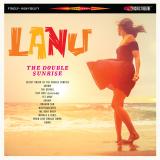
Lance Ferguson (The Bamboos, Menagerie, Rare Groove Spectrum) presents his lush Exotica inspired 2016 album on LP for the first time in a limited edition deluxe gatefold sunset swirl coloured vinyl edition, with each pressing having a unique pattern.
For fans of Air, Martin Denny & DJ Shadow.
'The Double Sunrise' is a re-imagining of Exotica seen through Ferguson’s own lens, which includes Pop and Hip Hop elements plus samplers, synths and drum machines thrown into the mix. That combination of beats and lush cinematics owes as much to Exotica pioneer Martin Denny as it does to Air and DJ Shadow.
Guest vocalists include Melanie Pain (Nouvelle Vague), who brings a sweet Francoise Hardy and Jane Birkin influence to her songs, and Australian singer Meg Washington. As well as her own successful career, Bamboos fans would know Washington from her vocals from “The Wilhelm Scream” and “King Of The Rodeo”, as well as “Beautiful Trash” from the 2011 Lanu album ‘Her 12 Faces’.
Ferguson's own instrumentals are also gems of lush, nostalgic delight.
Reviews for ‘The Double Sunrise’
“Even with the clear influence of South Pacific exotica, this second LP is still typical Ferguson: tight, snappy and doused in retro airs.” - Rolling Stone Magazine
“Bamboos supremo Lance Ferguson uses South Seas exotica as a jumping-off point for a record that deftly crosses datelines. Giddy effervescent soundscapes such as “Tiny Dots” sit back to back with breakbeat grooves like “Nightmarchers””. The Age
“This is one of those summer albums you will return to every year. Stunning.” The Daily Telegraph
“The concept for The Double Sunrise is very specific, but it's executed brilliantly...It's one of those records that evokes a place and a feeling that most of us only ever dream about.” - Double J Radio (Feature Album)
Odysee’s vinyl release schedule for 2026 kicks off with this superb 3-track E.P. from none other than the labels founder, T-Mirage. Following up from his 2024 release Dark Rhodes, this E.P. is an embodiment of the raw Mirage sound; a melting pot of Atmospheric D&B with hard hitting dance-floor sensibilities, where 70's OST & Film Noire sounds are blended with deep Techno and electronica elements.
From the blistering amens and deep textures of 'Expressive Thoughts', to the dreamy atmosphere of 'Dawnbreaker' and the dystopian menace of the breakbeat-driven 'Machines Of London', this E.P. is an absolute must for all true Odysee fans!
In 1994, Tilla was just 17 years old, and an integral part of the original St Albans collective that comprised Jim Baker & Phil Aslett (Source Direct) and Rupert Parkes (Photek), when he set up the Odysee imprint and released the first Source Direct record (Future London/Shimmer). With a follow-up release from Photek (Phaze 1/Try A Style) and a second from Source Direct, the profile of the label began to grow exponentially.
It was the 3 Mirage releases however that really put the label on the map. These tracks were engineered by Jim Baker but heavily co-produced by Tilla himself with a major focus on his keen ear for dark 70’s Noire samples and eerie abstract electronica pitted against soulful R&B vocals. In hindsight, the impact of this rather different soundscape on the Source Direct material that followed is unmistakable.
out of Stock
Last delivered 3 months ago available to reorder, subject to availability
Odysee’s vinyl release schedule for 2026 kicks off with this superb 3-track E.P. from none other than the labels founder, T-Mirage. Following up from his 2024 release Dark Rhodes, this E.P. is an embodiment of the raw Mirage sound; a melting pot of Atmospheric D&B with hard hitting dance-floor sensibilities, where 70's OST & Film Noire sounds are blended with deep Techno and electronica elements.
From the blistering amens and deep textures of 'Expressive Thoughts', to the dreamy atmosphere of 'Dawnbreaker' and the dystopian menace of the breakbeat-driven 'Machines Of London', this E.P. is an absolute must for all true Odysee fans!
In 1994, Tilla was just 17 years old, and an integral part of the original St Albans collective that comprised Jim Baker & Phil Aslett (Source Direct) and Rupert Parkes (Photek), when he set up the Odysee imprint and released the first Source Direct record (Future London/Shimmer). With a follow-up release from Photek (Phaze 1/Try A Style) and a second from Source Direct, the profile of the label began to grow exponentially.
It was the 3 Mirage releases however that really put the label on the map. These tracks were engineered by Jim Baker but heavily co-produced by Tilla himself with a major focus on his keen ear for dark 70’s Noire samples and eerie abstract electronica pitted against soulful R&B vocals. In hindsight, the impact of this rather different soundscape on the Source Direct material that followed is unmistakable.
Bitter Honey is the new album by Eric Silverman. Produced in collaboration with Damien Lewis, the album finds Silverman leaving behind the acid-fried desert rock of 2023’s Stay In It for something far more lush and expansive—a collection of ten psychedelic rock, pop, and folk tracks inspired by Peter Gabriel, John Cale, and Jeff Tweedy. Fittingly, the album is named after the “mad honey” of the rhododendron flower, a rare and potent hallucinogenic found high in the Himalayas.
The process of writing and recording the album started in early 2023, when Silverman and longtime collaborator Lewis retreated to a cabin near Nevada City, CA. Over the course of a week they sketched out the bones of nearly half the album, with Silverman recording the guitar solo for album opener “Anthropocene” live in one take during a particularly inspired moment. Meanwhile, “Get In Where You Fit In”, inspired by a bumper sticker Silverman saw heading up the mountain, was recorded on Jerry Garcia’s old 8-track tape machine and features pedal steel by Jake (Freeman) DeJongh. While at the cabin they also captured the field recordings that bookend the album, starting with the intro of “Anthropocene” and ending with the outro of “Bitter Honey” - an infinite loop.
Later on they decamped to Palomino Sound in LA for a round of sessions – tracking “Light Me Up” and “Trapped In Reverse” while making use of the prodigious assortment of vintage instruments at their disposal, including a 65’ Wurlitzer electric piano that became the centerpiece of a number of tracks. Eventually the pair ended up at 2200 Studios (formerly The Record Plant) in Sausalito, CA—a legendary studio where Prince, The Grateful Dead, and Fleetwood Mac made classic records. It was there that they tracked “New Light”, featuring strings by brothers Graham and Lewis Patzner; recorded all of Adam MacDougall’s (The Black Crowes, Circles Around the Sun) overdubs, including his synth leads on “Living the Dream”; and mixed the album in Studio A.
In a lot of ways Bitter Honey is Silverman’s first proper studio album. It’s also the first time Silverman has sat in the producer’s chair, this time around sharing the credit with Lewis. While his debut album was a product of its environment, all first takes and raw energy, Bitter Honey is thoughtful and focused, the best work Silverman has done and the culmination of his decade plus creative partnership with Lewis.
Highly anticipated sophomore album from Eric Silverman. Press coverage includes reviews and features in Raven Sings the Blues, and more.
“...threading the quicksilver needle of psych, AOR, and ‘70s Cocaine Cowboy territory.” - Raven Sings the Blues.
After five years Simone Guerra (aka Relative) returns to the "House of Mikkit" on his own Flexi Cuts imprint. This dancefloor-oriented album is a manifesto of raw obsession and future patterns, crafted for those who’ve stopped chasing trends to find something real.
The record breathes through deep fat analog basslines and hypnotic arpeggios, layered with dreamy synth lines and ghostly vocoder textures.
It’s a gritty, essential dive into the Italian underground—eight tracks where the machine finds its soul.
If you’re feeling down with your things, if you’re always chasing the tail end of the wave and looking back to it saying "wow"… this is a record you might want to listen to.
______________
Packaged in a protective PVC sleeve with a super raw hand-printed cover.
Including a postcard + 8 tracks download code.
******-----**
Produced, composed and mixed by Simone Guerra aka Relative at Studio Noce (Lugo) between dec '24 and sept '25.
Mastered by Francesco Brini
Design by Yari Calanna and Pietro Galeati.
Words by Matteo Garavini
out of Stock
Last delivered 3 months ago available to reorder, subject to availability
"It's about being really ambitious, and seeing enhanced beauty in the world, and knowing that seeing things in that way isn't unrealistic," she continues. "It's about striving for that ultimate freedom." Recorded in a joyful stay at Wales' residential StudiOwz, 'Tell Me It's A Dream' rings with the audible fizz of friends hanging out and having fun. Though many of its lyrics began during a complicated time for Walton, the record itself is a testament to choosing life and pleasure and the people that make it all worthwhile. "A lot of the record is about stretching outwards and acknowledging how far love can take you; about expressing how I feel about the people I love through music in ways that words can't," she says. "It was important to capture that lightness from the recording, because that spirit is in a lot of the songs." Frequently euphoric and brightly emotional, the songs themselves aim heavenwards. 'Heart To Heartbreak' cracks through the clouds of a break up, taking influence from emotionally-rich bands like The Cure and Prefab Sprout to translate the feeling at its core. "This is a song about feeling like everything in your life has shattered but realising that relationship was holding you back and the world is opening up," she says. "I wanted this song to feel really visual, like things are starting to sparkle and look colourful again.
WRWTFWW Records is thrilled to announce their 5th archival release taken from cult Tokyo label FORM@ RECORDS' catalogue, this time with the first-ever vinyl edition of Re-Form Ver-1.0. The remarkable, yet not widely known, 1999 remix compilation is now available as a limited edition 45rpm cut double LP housed in a heavyweight sleeve, as well as in digital format.
Originally only available on CD in extremely limited quantities, Re-Form Ver-1.0 resurfaces as a fascinating document of FORM@ RECORDS' late-1990s creative peak. Re-imagining key pieces from the label's catalogue, the remix collection offers a rare glimpse into Tokyo's electronic underground, where techno, house, ambient, and IDM breathe freely through FORM@'s soulful and exploratory vision.
Highlights include two remixes of Missing Project's adored gem "Poisson D'Avril" (including its well known ethereal ambient Galaxy Dub which appeared on Music From Memory's Virtual Dreams II) as well as the otherworldly Fossil (aka the legend Virgo) Mix of Penance's "Cure & Soul". Throughout, the compilation balances dancefloor sensibility with introspective listening, embodying the warm human approach to machine music FORM@ RECORDS excels in.
Another essential time capsule from a crucial era of underground music, Re-Form Ver-1.0 echoes the spirit of Warp's Artificial Intelligence era, alongside the forward-thinking energy of Ken Ishii, Carl Craig, The Black Dog, and Ian O'Brien, while keeping its feet and individuality firmly rooted in local context - the magic recipe for creating a universal, timeless language of electronic expression.
Re-Form Ver-1.0 follows the vinyl edition of Virgo's Landform Code (1998) and Remnants (1999), as well as the FORM@ compilations Art Form I (1997) and Art Form 2 (1998), further expanding WRWTFWW's archival series dedicated to uncovering hidden gems of late '90s Japanese electronic music.
out of Stock
Last delivered 4 months ago available to reorder, subject to availability
10 songs from No You - the debut, self-titled LP by Davy Kehoe (Wah Wah Wino, IE) and Diego Herrera (Suzanne Kraft, US). Sharing both vocal and instrumentation duties, D & D venture somewhat off of their respective musical paths - with the collab throwing up a big, small-studio sound. They are maybe at their most melodic on ‘Baby’ where their voices play off each other over bent feedback and crunching drum machine. There’s a real low slung swagger to ‘So Far Gone’ and ‘Miracle Mile’ met with a blown out and blasted approach on songs such as ‘Invisible’ and ‘Side Effect’. The song ‘Put Up A Dream’ exhibits the duo’s more unhinged side.
out of Stock
Last delivered 4 months ago available to reorder, subject to availability
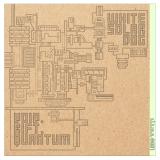
The new label R.I.T.M.O. launches its journey with a clear statement of intent: VOID RIFT QUANTUM, a six-episode cosmic voyage by WHITE SOLAR DOG, complemented by two premium remixes from UNIVAC and PROMISING YOUNGSTER. The EP opens with “VOID RIFT QUANTUM” a dark, expansive electro exercise where crushing basslines, syncopated rhythms, and a dialogue between vocoders and acid lines evoke an interplanetary landscape. On “I.N.S.I.D.E.” the intensity ramps up through driving percussion, tribal voices, razor-sharp breaks, and an almost ritual force that propels the body into physical and mental trance.
UNIVAC’s reinterpretation of the title track unleashes his full arsenal: a steely remix of relentless energy that pushes the original into a hard-edged industrial realm, stamped with the unmistakable signature of the Catalan producer. “MOVE YOUR BODY” showcases WHITE SOLAR DOG’s most direct side: classic electro with heavy bass, pads, and bright melodies, where the machine calls the dancefloor to action without compromise. The journey reaches its most ethereal point with “SING TO ME” where a female vocal intertwines with broken rhythms, crystalline atmospheres, and fresh acid incursions—cementing WSD’s personal hallmark: equal parts intensity and spirituality. The release closes with Promising Youngster’s remix, which takes the vocal elements of “SING TO ME” and guides them into a hypnotic state, suspended between the dreamlike and the club. With VOID RIFT QUANTUM, R.I.T.M.O. presents its inaugural catalog, distilling the power of contemporary electro and the otherworldly vision of WHITE SOLAR DOG. A debut that clearly establishes its coordinates: impact, exploration, and progressiveness, introduces itself to the world through an inaugural catalogue that distills the present and future of electro: mysticism, power, and precision.
All covers are handmade. They feature a fluorescent strip along the sides for easy identification, and under black light, the Spanish version of the cover is visible. Each disc contains three handmade inserts: a pop-up of R.I.T.M.O., a template, and a paper synthesizer model based on the actual synthesizers used to create the album (a different one on each disc). Each disc comes in a plastic sleeve.
All covers are handmade. They feature a fluorescent strip along the sides for easy identification, and under black light, the Spanish version of the cover is visible. Each disc contains three handmade inserts: a pop-up of R.I.T.M.O., a template, and a paper synthesizer model based on the actual synthesizers used to create the album (a different one on each disc). Each disc comes in a plastic sleeve.
out of Stock
Last delivered 3 months ago available to reorder, subject to availability
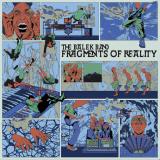
Some grooves don’t rush to the dancefloor — they crawl there, slow and heavy, like smoke wrapping around a bassline. With Fragments of Reality, The Balek Band sculpt an electronic funk that lives between shadow and light — an end-of-the-world fever dream, a Barjavel-style Ravage where chaos turns nihilistic.
No sequencer grid here — just four musicians sharing the same room, shaping air and tension together: drums locked tight with a slap bass, a guitar dripping with echo and heat, and a one-man orchestra behind his machines, weaving acid lines and synth arpeggios while mixing the band live — drenching it in delay, reverb, and saturation, like a dub producer in a Kingston studio, Lee Scratch Perry or King Tubby conjuring ghosts through smoke.
This isn’t fusion — it’s friction. A living ritual where the TB-303 hums, and machines don’t dominate but converse with the human pulse. Each track feels like a night that refuses to end — that humid in-between where trance slips into languor, and the body starts to think for itself.
The record recalls the cosmic jazz of Alain Mion or Eddy Louiss meeting the fiery energy of West African afrobeat musicians freshly arrived in a smoky Belleville basement in the mid-’80s. When The Balek Band summon ghosts, it’s only to reshape them — bending the past into something futuristic, alive, and strangely refreshing. Both disciplined and delirious, Fragments of Reality feels like a promise at dawn: dark funk for the late hours, slow acid for warm blood.
This EP isn’t nostalgic, though it remembers. It’s a transmission from a parallel past — a moment when jazz players met drum machines and decided never to stop playing. Each note sweats, each rhythm breathes. You can almost see the light cutting through the haze, faces half-awake, half-possessed.
The Balek Band aren’t recreating a moment — they’re keeping it alive.
Flesh and cables. Impulse and patience.
A band, not a loop.
A trip, not a format.
out of Stock
Last delivered 4 months ago available to reorder, subject to availability
While brothers Simon and Robin Lee have kept themselves busy, both with EPs as Faze Action and numerous offshoot and solo projects, it's been almost 12 years since we last heard a fresh, full-length excursion from the long-serving duo - at least under their most famous moniker. Predictably, Distant Dreams was worth the wait, with the Lee siblings continuing their richly organic approach - think live bass, guitars, strings, keys, flute and percussion alongside synth sounds and drum machine beats. Musically, it draws on their now well-known influences - warming disco, jazz-funk and Balearica with nods to other musical cultures - and delivers eight impeccable tracks that undoubtedly sit amongst their classiest work to date. It's good to have them back.
out of Stock
Last delivered 4 months ago available to reorder, subject to availability
After releasing their third album, Maintenant Jamais, and touring in Europe, the United States, Canada, and Mexico in 2025, Population II now announces Gimmicks, a new synthedelic rock EP.
Blending vocal and instrumental tracks, Gimmicks is a companion piece to the Montreal band's latest full-length. It's an extension of the electronic sounds we explored on Maintenant Jamais, with tracks like “13 1 3 1” and “Poudreuse Blues, explains Pierre-Luc Gratton. Even though we added upright piano and fuzz bass to some of the songs, our number one rule for this project was: keyboards and synthesizers, first and foremost! This is why they decided to ditch the guitar completely on these new songs, once again demonstrating the extent of their versatility.
Rhythm-wise, the use of a drum machine allowed the musicians to push their own boundaries and take this exercise in style to a higher level. It made us rethink our rhythmic habits and add bursts of intensity by experimenting with timbres and sound dynamics. The result is an EP at times unsettling, at times dreamy, but perfectly calibrated, where constraint gives way to ingenuity, freedom, and friendship. Although prog and krautrock fans will recognize the influence of Syrinx, Tangerine Dream, and Cluster, Gimmicks is, above all, the affirmation of a band capable of looking back to move forward.
LA-based producer Real Bad Man and Detroit rapper Boldy James return with their third collaborative album, Conversational Pieces, out now via Real Bad Man Records. The project features the singles “Come Back Around” featuring DC polymath dreamcastmoe, and “It Factor” featuring El-P. Their creative chemistry has never been clearer: this new album sees the duo pushing into fresh sonic territory through an expanded production palette that Real Bad Man continues to evolve and experiment with.
Recorded immediately after their 2022 album Killing Nothing and revisited in 2023 following Boldy’s serious car accident, Conversational Pieces is a deliberate, reflective body of work. It captures two distinct periods in the artists’ lives—documenting their growth as musicians, fathers, and long-time collaborators. The album’s artwork, along with the accompanying single art, draws inspiration from Rorschach inkblot tests—abstract visuals that invite interpretation and spark conversation, mirroring the album’s introspective nature.
After 90 releases on Future Retro London, I feel like I need to take a bit of a break from the constant workload that's come from running the label on my own. I feel like 50 (the cat number for the main label releases) is a good number to pause on for now.
I've been doing some remixes of the back catalogue & thought that putting them all together on one release at some point would be an interesting concept, so here we are.
Thanks so much to all the supporters, artists, designers & everyone else that's been involved in keeping Future Retro London going for so long, couldn't have done this without each & every one of you.
out of Stock
Last delivered 5 months ago available to reorder, subject to availability
Die legendären Accion Mutante kehren mit einem neuen Album zurück! Sie kamen 1994 aus der Crust-Szene und prägten schon früh den Begriff "Metal Punk". "The Time Machine" verspricht erneut eine brutale, menschenunfreundliche Reise durch drei Jahrzehnte der Geschichte von Accion Mutante, darunter zehn brandneue Tracks plus zehn neu aufgenommene Songs, die von den Anfängen der Band bis zur Gegenwart reichen. Ehrliche Punk-Wut, gemischt mit rauem Metal-Sound und kombiniert mit einem unerbittlichen D-Beat sowie der kehligen Wut zweier Shouter. Auf "The Time Machine" thematisieren Accion Mutante textlich nach wie vor ihre Themen wie religiöser Blödsinn, Verbrechen gegen die Menschlichkeit oder Umweltzerstörung mit ihrem eigenen sarkastischen Ton und einer 100 % antifaschistischen Haltung. Das ist verdammt wütend und verdammt roh. Auch nach mehr als 30 Jahren sind ACCION MUTANTE noch immer Crustasfuck-Vertreter einer großartigen Mischung aus kaputtem Metal, Punk-Gestus, unerbittlichem D-Beat und den lauten Attacken beider Sänger. ACCION MUTANTE in ihrer ganzen Pracht, direkt ins Gesicht, für Fans von Britcore und Bands wie Extreme Noise Terror oder Ripcord.
The album opens with the ominous guitar-driven Hollow Sky, accompanied by its haunting music video's verdant vistas. The song, with Iceglass ghostly vocals, shimmers with that sounds like an Omnichord flittering like sonic firefly lights and brooding bass. This perfectly scores the less traveled wanderings through the dark wooden path of Dante's perdition, leading to the titular well that graces the album cover. The Crater opens with an unsettling riff and bass, with low, repetitive frequencies on the synth create a sense of unease. Here, Iceglass recounts a fatalistic requiem for the king of romance that is cataclysmic and leaves a scar upon the earth. With Fall Industrial Wall, once again, Iceglass channels a silky and Nico-like emotive deadpan; against a dirgelike melody backed by minimal synth, bass, and drum. Almost medieval and plaintive, with its folk droning horns, deep and shallow in their resonance. This song is anachronistic, setting the scene of ruins centuries-old with crumbling edifices strewn about like memories lost in time. With the poetic lyrics of The Chamber do we find the eponymous abyss. Here, dualities are laid bare; besides love, there is heartbreak, and without this sorrow, what meaning would there be to love if one knows not what it is to lose? This song encapsulates the idea that love is heartbreak, and love lost is reaching the deepest chamber of the heart. This is carried through a sombre horn, minimalist drum machine, and deliberate bassline overlaid with Iceglass german and english lyrics. The Well is led in with a softly distorted bassline overlaid with eerie banshee howls give way to Iceglass otherworld vocal refrain, echoing through time as if emanating from a hole in the ground, and encircling that hole is a garden of woe and despair. The sinfully seductive song The Moor features a captivating SAX SOLO courtesy of Perseas; a welcome shift in tone, juxtaposed well with the intensity of Iceglass tenebrous vocal purr. This hitherto unexplored foray into dark sensuality takes the song into sordid mid 80s territory, bringing to mind a dusky drive along a serpentine road, with equally haunting instrumentations straddling time with icy fire. Broken Characters is an acoustic folk interlude featuring Selofan's Dimitris Pavlidis on guitar. Here we find a more gentle approach with its earnest and romantic lyrics. The song's melodic hook is a soft caress along with the forlorn horn elements highlighting Iceglass at her most Nico-sounding vocal yet, singing the sorrowful truth that most artists are indeed broken characters. Chimerical opens with dirgelike synth organs. The chill of winter has befallen the lamentations sung by Iceglass carried by haunting chord progressions and minimal percussion, plaintively beseeching the song's subject to remain elusive, idealistic, and a dreamer. After an album highlighting more Jill than Jack, our male protagonist finally makes his ascent in the sonorous and breathtaking Dark Hill, a masterful march of sweeping synth horns, and trepidatious drum machine with William Maybelline's bellowing voice cracking like thunder, rattling the atmosphere like his heart against his ribs. Spirals swirls in a cautionary knell of cathedral-esque droning synth dirge, with Icarian lyrics shining like a sombre ray of hope; like the sun's rays creeping into the darkest of places. The song, minimalist in its tight percussion, echoes with the solace of Larissa Iceglass vocal litany; invoking elements of the supernatural, almost like a Casio preset sequenced to the beating of an angel's wings.
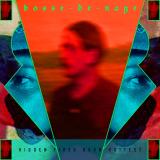
There's a tendency in metal to mistake aggression for honesty, volume for depth. To confuse the performance of darkness with its actual weight. Hidden Fires Burn Hottest, the new album from San Francisco-based post-black metal band Bosse-de-Nage, sidesteps this entirely. It’s the group’s most fully realized work yet, precisely because it refuses to be pinned down.
Bosse-de-Nage have been working with The Flenser for over fifteen years. They were one of the first bands the label ever partnered with and have the longest active relationship in the label's history. But unlike most bands who build momentum through constant touring and visibility, Bosse-de-Nage has largely existed apart from the music world's usual machinery. They've evolved on their own terms, in relative isolation, allowing the work to develop without outside pressure or influence. What began rooted in black metal anonymity has mutated into something that actively defies categorization. The aggression is still there, but it's no longer the point. Hidden Fires Burn Hottest finds the band treating emotions like physical objects, feelings with spatial properties. “No Such Place"" describes a space that can't exist but does anyway, somewhere between thought and location. ""Immortality Project"" examines infinite possibility not as promise but as problem, endless options collapsing under their own weight. These songs don't use metaphor to describe emotion. They make emotion into something you could theoretically touch.
Tracked by Jack Shirley (Deafheaven, Oathbreaker) at Atomic Garden East and mixed and mastered by Richard Chowenhill of Agriculture, Hidden Fires Burn Hottest was years in development, with some tracks beginning in 2018.
The long writing process offered time that most records don't get. Time to live with ideas, revise endlessly, to let structures settle. For the first time, lyricist Bryan Manning wrote everything in advance, creating a surplus to pull from rather than working under deadline pressure. The difference shows.
Coming off Further Still, an album built on constraint and economy, Bosse-de-Nage sought the opposite: sprawl, strangeness, fewer rules. Space for ideas to develop without rushing them. Dynamics that move through quiet as much as noise. Presence earned through atmosphere instead of volume. The record even includes ""Mementos,"" which might be considered the first love song the band has ever written.
Nothing here coheres into a theme. These are pieces pulled from low moments and private feelings made public through sound. The band has never been interested in positivity, in music that resolves cleanly or offers comfort. But bleakness doesn't mean humorlessness. There's something darkly funny running through much of it, even when it shouldn't be.
Hidden Fires Burn Hottest doesn't explain itself. It just insists: what you feel is as real as what you can see."
There's a tendency in metal to mistake aggression for honesty, volume for depth. To confuse the performance of darkness with its actual weight. Hidden Fires Burn Hottest, the new album from San Francisco-based post-black metal band Bosse-de-Nage, sidesteps this entirely. It’s the group’s most fully realized work yet, precisely because it refuses to be pinned down.
Bosse-de-Nage have been working with The Flenser for over fifteen years. They were one of the first bands the label ever partnered with and have the longest active relationship in the label's history. But unlike most bands who build momentum through constant touring and visibility, Bosse-de-Nage has largely existed apart from the music world's usual machinery. They've evolved on their own terms, in relative isolation, allowing the work to develop without outside pressure or influence. What began rooted in black metal anonymity has mutated into something that actively defies categorization. The aggression is still there, but it's no longer the point. Hidden Fires Burn Hottest finds the band treating emotions like physical objects, feelings with spatial properties. “No Such Place"" describes a space that can't exist but does anyway, somewhere between thought and location. ""Immortality Project"" examines infinite possibility not as promise but as problem, endless options collapsing under their own weight. These songs don't use metaphor to describe emotion. They make emotion into something you could theoretically touch.
Tracked by Jack Shirley (Deafheaven, Oathbreaker) at Atomic Garden East and mixed and mastered by Richard Chowenhill of Agriculture, Hidden Fires Burn Hottest was years in development, with some tracks beginning in 2018.
The long writing process offered time that most records don't get. Time to live with ideas, revise endlessly, to let structures settle. For the first time, lyricist Bryan Manning wrote everything in advance, creating a surplus to pull from rather than working under deadline pressure. The difference shows.
Coming off Further Still, an album built on constraint and economy, Bosse-de-Nage sought the opposite: sprawl, strangeness, fewer rules. Space for ideas to develop without rushing them. Dynamics that move through quiet as much as noise. Presence earned through atmosphere instead of volume. The record even includes ""Mementos,"" which might be considered the first love song the band has ever written.
Nothing here coheres into a theme. These are pieces pulled from low moments and private feelings made public through sound. The band has never been interested in positivity, in music that resolves cleanly or offers comfort. But bleakness doesn't mean humorlessness. There's something darkly funny running through much of it, even when it shouldn't be.
Hidden Fires Burn Hottest doesn't explain itself. It just insists: what you feel is as real as what you can see."
What's the first thing you think of when someone mentions Thee Oh Sees? Probably their riot-sparking live show, right? Visions of a guitar-chewing, melody-maiming John Dwyer careening across your cranium, rounded out by a wild-eyed wrecking crew that drives every last hook home like it's a nail in the coffin of what you thought it meant to make 21st-century rock 'n' roll? Yeah, that sounds about right. But it misses a more important point-how impossible Thee Oh Sees have been to pin down since Dwyer launched the project in the late '90s as a solo break from such sorely missed underground bands as Pink and Brown and Coachwhips. (While Dwyer still records songs on his own, Thee Oh Sees is now a five-piece featuring keyboardist / singer Brigid Dawson, guitarist Petey Dammit, drummer Mike Shoun and multi-instrumentalist / singer Lars Finberg.) That restlessness extends to everything from the towering, thirteen-minute title track of 2010's Warm Smile LP to the mercurial moods of 2008's The Master's Bedroom Is Worth Spending a Night In. Now, Thee Oh Sees chase the home-brewed symphonies of Castlemania with the scrappy, high-wire hooks of Carrion Crawler / The Dream. Originally envisioned as two EPs, it was cut live to tape in less than a week at Chris Woodhouse's Sacramento studio in June, reflecting the battering-ram bent of the band's live show better than any bootleg ever could. "As I'm sure most would agree," explains Dwyer, "Castlemania was more of a vocal tirade. This one's meant to pummel and throb." That it does, whether one blasts the slow, speaker-bruising build of "The Dream," the sunburnt organs and dovetailing guitars of "Crack in Your Eye" or the interstellar instrumental "Chem-Farmer," a perfect example of what happens when one takes a well-oiled machine-a gang of rabid road warriors, really-and adds a second, groove-locked drum set to the mix. To listen is to realize that Dwyer's music is as manic as the underground comic inclinations of his artwork; colorful and confusing in a way that's more than welcome. It's downright refreshing, like a slap in the face at 5:00 in the morning. Or, as Dwyer puts it, "You have to leave a mark somehow."
Formed in 1987 by Fruitbat and Jim Bob, Carter The Unstoppable Sex Machine burst onto the scene with their signature style of punk-pop infused with samples, drum machines, and social commentary. Join Jim Bob and Fruitbat, as they take a retrospective look back at the complete Carter U.S.M. singles, from 1988 to 1997.
First released in 1995, 'Straw Donkey' is an essential introduction to Carter The Unstoppable Sex Machine, featuring the U.K. Top 20 singles 'The Only Living Boy In New Cross', 'After The Watershed (Early Learning The Hard Way)', 'Rubbish', and 'Lean On Me I Won't Fall Over', along with classics such as 'Sheriff Fatman', 'Anytime Anyplace Anywhere' and 'Bloodsport For All'.
Limited Green LP is for Indies only. all LPs include a DL card. Island Family is the fifth album from Isle-of-Eigg dwelling electro-acoustic psych-pop wonder Pictish Trail, AKA Johnny Lynch. A strange, unpredictable, sardonic and yet deeply personal record inspired by all from Fever Ray to The Flaming Lips, Liars, Mercury Rev and Beck, Island Family is Pictish Trail's contrarian view of arcadia; a search for the euphoric in the bucolic, bound up in sometimes conflicting ideas and feelings around nature and environment, sincerity and artifice, escapism and belonging. It's an album about how no man can remain an island, however hard he might try. Released by Fire Records, with support from Johnny's own label Lost Map, and produced by long-term collaborator Rob Jones (The Voluntary Butler Scheme, The Gene Dudley Group), 'Island Family' opens with its title track, a song of death, ghosts and the ties that bind, fusing abrasive electronic beats with a tongue-in-cheek fireside folk refrain and the haunted ice cream van melody of a digitally reincarnated traditional Scottish jig. A purgative surrender to nature's whim driven by a clattering machine drumbeat rolled in a puddle of filthy dirty fuzz, 'Natural Successor' is five-and-a-half-minutes of cathartic churning bass. 'In The Land of The Dead' is an eight-bit glitch-core reflection on island party excesses spasming into existential dread and regret, suitably accompanied by a funereal mariachi band. It's followed by the epic 'It Came Back', the understated verses and arms-aloft falsetto chorus of which are accompanied by a tense, foreboding bass-driven electro hip hop instrumental with (spoiler) a brain-shattering industrial-metal meltdown. 'Melody Something' is the album's purest moment, a cautiously uplifting solar-powered-ballad about losing track of time in the cycle of the seasons, and the gap between memory and reality. Shapeshifting closer 'Remote Control' is a channel hopping cabin-fever-dream flipping from warped boyband ballad to deep-fried fuzz pop. "One of my favourite artists" Lauren Laverne, BBC 6 Music
On his new album, the Ivorian balafon virtuoso Aly Keïta explores new horizons for his instrument in improvised music. Together with his Berlin-based trio, he conquers the peaks of balafon possibilities one by one, wandering between groovy African rhythms, spectacular polyphony and elements of jazz, and combining them into a fusion that is both futuristic and deeply in roots. In Balafon Evolution, Keïta establishes a new level of balafon artistry, creating universal, contemporary soundscapes that transcend cultural boundaries. The Aly Keïta Trio embodies the pulsating spirit of the Berlin jazz scene. Coming from different cultural backgrounds, the three musicians found a common language on stage as they explored the metropole, one of the most active, buzzing jazz hubs of Europe. Aly Keïta and the Dutch drummer Marcel van Cleef, began playing together in 2008, forming the core of the trio"s future "groove machine". As a part of the "Aly Keïta and Magic Balafon" formation, they shared a prize of the Global music contest "Creole" in 2009. Recognised as one of the most intriguing and innovative bass players among the new generation, the Italian bass player Roberto Badoglio, joined trio in 2014, becoming a true "fusion reactor" of the band.
The Mountain is Gorillaz’ ninth studio album, a collection of 15 new tracks featuring a stellar list of artists and collaborators. Jamie Hewlett’s album artwork captures the four much-loved animated band members - Murdoc, Noodle, Russel and 2D – in a series of beautifully intricate, hand-drawn illustrations.
The Mountain is Gorillaz 9th studio album. The album is a collection of 15 new tracks featuring artists and collaborators including: Ajay Prasanna, Anoushka Shankar, Asha Bhosle, Asha Puthli, Bizarrap, Black Thought, Gruff Rhys, Idles, Jalen Ngonda, Johnny Marr, Kara Jackson, Omar Souleyman, Paul Simonon, Sparks, Trueno and Yasiin Bey; as well as the voices of Bobby Womack, Dave Jolicoeur, Dennis Hopper, Mark E. Smith, Proof and Tony Allen. Produced by Gorillaz, James Ford, Samuel Egglenton, Remi Kabaka Jr. and Bizarrap (Orange County), The Mountain was recorded in London, Devon, Miami, Jaipur, Mumbai, New Delhi and Rishikesh; and features artists performing in five languages: Arabic, English, Hindi, Spanish and Yoruba. The artwork for The Mountain sees Jamie Hewlett’s distinct, yet ever-evolving, style illustrate the world of Gorillaz with an ever more detailed and beautiful intricacy across a series of hand-drawn illustrations. Circumstances find Murdoc Niccals, Russel Hobbs, 2D and Noodle in India, where our heroes are immersed in the rhythms of mystical music-making as they navigate the mountainous terrain of this thing called life.
out of Stock
Last delivered 7 days ago available to reorder, subject to availability
Marking their 51st release, long time label collaborator and friend Owain K returns to 200 with a brand new solo 4 track EP, Kinematic Equations.
Having joined 200 back in 2012 with the “Colonius EP”, a lot has happened in that time. With 50+ releases on the imprint and Owain setting up his own blog and a label under the Innate banner. However, some things remain - mutual friendship, a shared love of underground Electronic music and Kölsch!
15 years on the Welsh rooted, Bristol (UK) based artist delivers some of his best music to date in the shape of the “Kinematic Equations”. A four track journey into astral electronics that weave together his take on deep space sounds, fused with a healthy dose of dubby aesthetics that are close to the label’s heart.
Starting with the rhythmic pulse of ‘Axial Shifts’ on side A, chords steadily arc into life as the intensity rises and falls, all whilst keeping a measured trajectory. Drifting into the ether, ‘Open Cluster’ fills the zone where heavy sub meets filtered percussion to a rounded 909 kick, set with dreamy atmospherics and shimmering delays.
On side B ‘Eta Aquarid’ blazes a powerful trail to machine-like rumbling and evolving pads which burst brightly over the course. Last but not least, the magical aura of ‘Ghost Of Jupiter’ appears - a fusion of glimmering melodies that float over driving bottom end and steady percussion, bringing the EP to a perfect conclusion.
Written and produced by Owain Kimber
Mastered by Emanuel Geller at Salz Mastering
out of Stock
Last delivered 3 months ago available to reorder, subject to availability
The Mountain is Gorillaz’ ninth studio album, a collection of 15 new tracks featuring a stellar list of artists and collaborators. Jamie Hewlett’s album artwork captures the four much-loved animated band members - Murdoc, Noodle, Russel and 2D – in a series of beautifully intricate, hand-drawn illustrations.
The Mountain is Gorillaz 9th studio album. The album is a collection of 15 new tracks featuring artists and collaborators including: Ajay Prasanna, Anoushka Shankar, Asha Bhosle, Asha Puthli, Bizarrap, Black Thought, Gruff Rhys, Idles, Jalen Ngonda, Johnny Marr, Kara Jackson, Omar Souleyman, Paul Simonon, Sparks, Trueno and Yasiin Bey; as well as the voices of Bobby Womack, Dave Jolicoeur, Dennis Hopper, Mark E. Smith, Proof and Tony Allen. Produced by Gorillaz, James Ford, Samuel Egglenton, Remi Kabaka Jr. and Bizarrap (Orange County), The Mountain was recorded in London, Devon, Miami, Jaipur, Mumbai, New Delhi and Rishikesh; and features artists performing in five languages: Arabic, English, Hindi, Spanish and Yoruba. The artwork for The Mountain sees Jamie Hewlett’s distinct, yet ever-evolving, style illustrate the world of Gorillaz with an ever more detailed and beautiful intricacy across a series of hand-drawn illustrations. Circumstances find Murdoc Niccals, Russel Hobbs, 2D and Noodle in India, where our heroes are immersed in the rhythms of mystical music-making as they navigate the mountainous terrain of this thing called life.
out of Stock
Last delivered 68 days ago available to reorder, subject to availability
21 songs are barely enough to show the "Many Faces of Memphis Electronic"! From less than a minute twisted psych pop and heartbreaking ballads to two minutes something fuzzy rockers, electronic r'n'r and sexy glam, you'll find all you need and much more in this incredible album! It takes at least 21 songs - and 30 Polaroids on the cover! - to show the "Many Faces of Memphis Electronic"! On the XYZ, Dum Dum Boys and NON! guitar player third solo album, entirely home recorded, you will find plenty of fuzzy bangers, trashy rockers, electronic r'n'r, lo fi disköpunk, sexy glam, twisted psych pop and heartbreaking ballads, 21 different faces on just 2 album sides! With the help of 60s fuzz pedals, analog synths, a wild organ, an out-of-space Theremin, raw drum machines and tons of delay, reverb and strange noises, all used to maximize the minimalism of the tracks, Memphis Electronic manages to create an orgy of arousing sounds, an overdose of aural pleasure, an irresistible avalanche of exciting songs, all ranging from 49 seconds snapshots to 2 minutes something instant classics!
Viikatory returns to the UTTU-verse with 'Into The Unknown'. Frequently spotted tearing up the dance floor at TRESOR, Vika proudly channels her influences across six relentless dance trax blending Chicago house, Detroit techno, and deep, sub-aquatic electro. TIP!
out of Stock
Last delivered 5 months ago available to reorder, subject to availability
Mit Laughter In Summer präsentiert die legendäre Singer-Songwriter-Ikone Beverly Glenn-Copeland (bekannt durch das Kultalbum Keyboard Fantasies) ein zutiefst berührendes neues Werk – entstanden in Zusammenarbeit mit seiner Partnerin, der Künstlerin und Produzentin Elizabeth Copeland. Das Album ist ein musikalischer Liebesbrief, der Erinnerung, Hingabe, Verlust und Freude miteinander vereint.
In neun emotionalen Songs – allesamt in One-Takes aufgenommen – entfaltet sich eine außergewöhnliche Intimität, getragen von Glenns charakteristischer Stimme, warmen Chorarrangements und einem unverwechselbaren Gefühl spiritueller Verbundenheit. Der Sound reicht von kontemplativen Balladen wie „Children’s Anthem“ bis zu leuchtenden, hoffnungsvollen Momenten wie „Let Us Dance (Movement One)“.
Produziert wurde das Album von Elizabeth Copeland und Alex Samaras (Hotel2Tango / Howard Bilerman). Es folgt auf Glenns gefeiertes Album The Ones Ahead (2023) und seine Zusammenarbeit mit Sam Smith für Ever New (2024).
Laughter In Summer erscheint auf rosefarbenem Vinyl, als limitierte Dinked Edition auf milchklarem Vinyl inklusive Bonus-7" mit Coverversionen von Marvin Gaye – „What’s Going On“ / „Save The Children“ – sowie digital und auf CD.
Für Fans von Alice Coltrane, Terry Callier, Joanna Newsom, Sam Amidon und spiritueller Folk-Avantgarde.
Machinery Of Emotions marks Torrent’s debut on Cupula Recordings, yet his bond with the label runs far deeper. A trusted figure in our circle and a selector with a rare sensitivity for mood and movement, Torrent channels his craft into four tracks that blur the line between mechanical precision and human feeling.
From hypnotic rhythms to cinematic synth work, designed for both the floor and the mind.
Pressed on vinyl, Machinery Of Emotions captures the essence of our shared vision where sound speaks as strongly as emotion.
out of Stock
Last delivered 32 days ago available to reorder, subject to availability
Gary Numans zweites Studioalbum "Telekon" wurde 1980 veröffentlicht und war sein drittes Album in Folge, das Platz #1 der britischen Charts erreichte. Gary bezeichnet dieses Album - zusammen mit seinen beiden Vorgängern, "Replicas" von Tubeway Army und seinem Solo-Debütalbum "The Pleasure Principle" - als die "Maschinen-Phase" seiner Karriere. Obwohl es schwierig war, an die vorherigen Veröffentlichungen anzuknüpfen, erwies sich "Telekon" als äußerst einflussreich. Im Gegensatz zu seinen Vorgängern enthält "Telekon" viele Gitarren, dazu Streicher und üppige Synthesizer-Klänge. Trent Reznor gab an, das Album während der Entstehung von "Pretty Hate Machine" täglich gehört zu haben. Diese erweiterte Deluxe-Edition enthält vier unveröffentlichte Tracks, darunter: "Like A B-Film", ein unvollendeter Song aus den "Telekon"-Sessions sowie drei frühere Versionen der Songs "Please Push No More", "Aircrash Bureau" und "I"m An Agent". Die 45th Anniversary Editions von "Telekon" wurden von Geoff Pesche in den Abbey Road Studios neu gemastert. Das Artwork stammt von Michael Speed (Beggars), der bereits mehrfach mit Gary an seinen Reissues gearbeitet hat. Alle Editionen enthalten dieselbe Tracklist.
Gary Numans zweites Studioalbum "Telekon" wurde 1980 veröffentlicht und war sein drittes Album in Folge, das Platz #1 der britischen Charts erreichte. Gary bezeichnet dieses Album - zusammen mit seinen beiden Vorgängern, "Replicas" von Tubeway Army und seinem Solo-Debütalbum "The Pleasure Principle" - als die "Maschinen-Phase" seiner Karriere. Obwohl es schwierig war, an die vorherigen Veröffentlichungen anzuknüpfen, erwies sich "Telekon" als äußerst einflussreich. Im Gegensatz zu seinen Vorgängern enthält "Telekon" viele Gitarren, dazu Streicher und üppige Synthesizer-Klänge. Trent Reznor gab an, das Album während der Entstehung von "Pretty Hate Machine" täglich gehört zu haben. Diese Deluxe Expanded Edition ist ein doppelte Rainbow Sparkle-Vinyl-LP mit vier bislang unveröffentlichten Tracks, darunter ein noch nie gehörter Gary-Numan-Song aus den Album-Sessions mit dem Titel "Like A B-Film". Diese Deluxe-Edition enthält außerdem eine Replika des originalen 12-seitigen Tourhefts von 1980.
Grupo um celebrate 50 years with release of lost dictatorship-era album nineteen seventy seven!
First time release - vinyl comes with printed innersleeves
Brazilian avant-jazz vanguardists Grupo Um celebrate their 50th anniversary, sharing a second previously lost 1970s album from the vaults. Nineteen Seventy Seven (titled after the year it was recorded) is another rip-roaring instrumental fusion treasure from the band which spawned from within Hermeto Pascoal’s famed mid-1970s São Paulo collective.
Like their debut album Starting Point, Grupo Um’s Nineteen Seventy Seven was recorded when Brazil's military dictatorship was at its most repressive. “There were no open doors to those who dreamt to be protagonists in creative instrumental music”, remembers drummer Zé Eduardo Nazario, “even popular composers and singers had to submit their songs to censors and many records were banned and confiscated from the stores.”
Just like Hermeto Pascoal's Viajando Com O Som (1977) and Grupo Um's previous album Starting Point (1975), both of which remained unreleased until the 21st century, Zé Eduardo asserts that the 1977 album was flatly 'without any chance to be released at that time."
Recorded at Rogério Duprat’s Vice-Versa Studios in São Paulo, the group were under both time and space restraints, “we chose the small Studio B,” Lelo Nazario recalls, “which had a Tascam (TE AC) 12x8 console and a 4-channel AMPEX AG 440 machine. Therefore, we had to record without overdubs, everything straight to tape.”
Expanding from a trio to a quintet, original Grupo Um members Lelo Nazario (keys), Zé Eduardo Nazario (drums), and Zeca Assumpção (bass) were joined by saxophonist Roberto Sion and percussionist Carlinhos Gonçalves. Carlinhos, Zé and Zeca had already played together in the group Mandala, while brothers Lelo and Zé had just finished a stint backing Hermeto Pascoal during his years in São Paulo.
Lelo was deeply immersed in modular synthesizer experimentation during this period, working extensively with the ARP2600 and EMS Synthi AKS. These electroacoustic explorations formed the sonic foundation for "Mobile/Stabile," one of his first compositions to merge modular synthesis with Brazilian music, a fusion that would ripple throughout the Brazilian jazz scene. The piece premiered at the first São Paulo International Jazz Festival in 1978, performed by Grupo Um with guest trumpeter Márcio Montarroyos. In a shocking moment, festival organizers interrupted the show mid-performance, sparking fierce backlash from both audience members and journalists who denounced the incident as artistic censorship during Brazil's era of political and cultural repression. The version on Nineteen Seventy Seven is the first recording of the composition.
Nineteen Seventy Seven combines Afro-Brazilian rhythm, modular synthesis and a plethora of whistles, percussion and effects pedals. Album opener “Absurdo Mudo” - so titled for the absurd difficulty it poses to the musicians performing it - starts out in a cloud of mysterious dissonance, before the haze breaks for a glorious keyboard and saxophone interplay atop an uptempo samba groove. “Cortejo dos Reis Negros (Version 2)” (Procession of the Black Kings), based on the maracatu rhythm, inverts the traditional jazz song structure by beginning with improvisations, which are followed by the theme and a final coda. “The studio also had two Parasound electronic reverb units,” Lelo notes, “and the timbre is very audible on the soprano sax and percussion.”
Grupo Um’s daring music represents a manifesto of resistance during the dictatorship years, but it’s one which remains just as relevant today. As Lelo puts it: “For me, the aesthetic issue has always been about combining contemporary avant-garde languages with Brazilian music, independent of categories and commercial interests. The result of this fusion takes music to a new level.”
Recording credits (1977)
Recorded at Vice-Versa B Studio, São Paulo, November 9, 1977
Produced by Lelo Nazario and Zé Eduardo Nazario
Engineered by Ricardo “Franja” Carvalheira
Lelo Nazario – Wurlitzer electric piano, acoustic piano, signal generator, percussion
Zé Eduardo Nazario – drums, percussion
Zeca Assumpção – electric bass
Carlinhos Gonçalves – percussion
Roberto Sion – soprano sax, clarinet
Release credits (2025)
Produced by UTOPIA Studio, São Paulo
Project Coordination in Brazil by Irati Antonio (Utopia Studio)
Tape Restoration and Digital Mastering by Lelo Nazario at Utopia Studio, July 2025
Liner Notes by Lelo Nazario and Zé Eduardo Nazario
Photography by Jorge Las Heras, Lelo Nazario, and artists' personal archives
Photo Restoration by Lelo Nazario
Artwork and Design by Alessandro Renaldin
Una interpretación de Soinuarenbidea II debería partir de esta premisa: todo es posible, nada es aleatorio, y en sí mismo es un imposible de aleatoriedades. El escenario planteado explora la idea de realidad aumentada desde una percepción sonora, ambiental y colectiva. La obra transita hacia adelante y hacia atrás recreando experiencias extintas de porvenir incierto, tratando de facilitar un fin pacificador. Cada pieza sonora se crea, se despliega, se repliega y se destruye, en una torsión permanente de toda la realidad que hace posible cada fragmento musical, cada identidad acústica, cada espacio sonoro. Lo onírico, la ficción, y el viaje están continuamente presentes, y es en el transitar de cada fragmento donde se produce el diálogo de la exposición musical. Los elementos de esta ficción se recrean continuamente, en un continuum donde se entrelazan y se van contorsionando a medida que crecen o decrecen con cada fragmento de síntesis concreta. Los temas explícitamente musicales son el magma que conduce a dar voluptuosidad al disco, siendo la piel un contexto o límite que en sí mismo fluctúa indefinidamente en texturas y configuraciones posibles. Y la urdimbre del silencio es la síntesis que está continuamente presente y que trata de cohesionar los fragmentos en continua colisión expresiva. Las grabaciones de campo proporcionan el material sonoro concreto, y como un fractal sonoro cada una de ellas ofrece diferentes grados de interpretación que a su vez conduce a nuevos fragmentos y nuevas creaciones. Así que se puede pensar que esta es una síntesis de una posible realidad, pero interpretable en infinidad de maneras. Un movimiento y una estaticidad implícitas que generan estructuras y dinámicas acústicas. Lo que se escucha no es real, pero en sí mismo forma parte de la realidad, creando un escenario expectante. Lo cinematográfico, plástico y teatral, danzante y dinámico cobra importancia en este juego, porque se trata de contar una historia, una experiencia recreada desde los puntos de vista del arte visual. Es a su vez hilo conductor y entretenimiento, discurso político y puro divertimento. Es desde este espacio de convivencia artística que tiene sentido la totalidad y justifica el formato sonoro planteado. La contradicción de la obra es patente en el formato, y es a su vez el planteamiento de una accidentalidad en el devenir vital. Contenedor de Ruido recoge todas estas contradicciones y las manifiesta en la obra Soinuarenbidea II. Es una historia sonora, es un cuento acústico. Es un fragmento de vitalidad en imágenes audibles. Es una invitación a la reflexión, a la crítica, al disfrute, a la meditación, a la celebración. Y sobre todo es esperanzadora apreciación de la realidad como algo maleable que confeccionamos colectivamente, que requiere de una paciente observación y la participación colectiva global, en un mundo finito pleno de diversidades y del que ignoramos prácticamente todo, al que deberíamos volver con respeto y devoción.
Soinuarenbidea II-ren interpretazio batek premisa honetatik abiatu beharko luke: dena da posible, ezer ez da ausazkoa, eta, berez, ausazkotasun ezinezko bat da. Planteatutako agertokiak errealitate areagotuaren ideia aztertzen du, soinu-, ingurumen- eta talde-pertzepzio batetik abiatuta. Lanak aurrera eta atzera egiten du, etorkizun zalantzagarriko esperientzia desagertuak birsortuz eta helburu baketsua lortzen saiatuz. Soinu-pieza bakoitza sortu, hedatu, tolestu eta suntsitu egiten da, musika-zati bakoitza, identitate akustiko bakoitza eta soinu-espazio bakoitza ahalbidetzen dituen errealitate osoaren etengabeko bihurdura batean. Onirikoa, fikzioa eta bidaia etengabe daude presente, eta pasarte bakoitzaren joan-etorrian gertatzen da musika-erakusketaren elkarrizketa. Fikzio honen elementuak etengabe birsortzen dira, continuum batean, non sintesi zati zehatz bakoitzarekin hazi edo txikitu ahala elkar lotzen eta bihurritzen diren. Esplizituki musikalak diren gaiak diskoari atsegintasuna ematera eramaten duen magma dira, azala testuingurua edo muga izanik, testura eta konfigurazio posibleetan mugarik gabe aldatzen dena. Eta isiltasunaren irazkia etengabe presente dagoen sintesia da, zatiak etengabeko adierazpen-talkan kohesionatzen saiatzen dena. Landa-grabazioek soinu-material zehatza ematen dute, eta soinu-fraktal batek bezala, horietako bakoitzak interpretazio-maila desberdinak eskaintzen ditu, eta horrek, aldi berean, zati eta sorkuntza berrietara eramaten du. Beraz, pentsa daiteke errealitate posible baten sintesia dela, baina hamaika modutan interpreta daitekeena. Egitura eta dinamika akustikoak sortzen dituzten mugimendu eta estatikotasun inplizitu bat. Entzuten dena ez da erreala, baina, berez, errealitatearen parte da, eta agertoki espektakularra sortzen du. Zinematografikoak, plastikoak eta antzerkikoak, dantzariak eta dinamikoak garrantzia hartzen dute joko honetan, ikusizko artearen ikuspegitik birsortutako istorio bat, esperientzia bat, kontatzea baita helburua. Aldi berean, hari gidaria eta entretenimendua da, diskurtso politikoa eta dibertimendu hutsa. Elkarbizitzarako espazio artistiko honetatik osotasunak zentzua du eta planteatutako soinu-formatua justifikatzen du. Obraren kontraesana nabarmena da formatuan, eta, aldi berean, bizi-bilakaeran istripu-tasa bat planteatzea da. Zarata-edukiontziak kontraesan horiek guztiak jasotzen ditu eta Soinuarenbidea II obran adierazten ditu. Soinu istorio bat da, ipuin akustiko bat. Bizitasun zati bat da, irudi entzungarrietan. Hausnarketarako, kritikarako, gozamenerako, meditaziorako eta ospakizunerako gonbidapena da. Eta, batez ere, itxaropentsua da errealitatea modu kolektiboan egiten dugun gauza xaflakor gisa hautematea, behaketa pazientea eta partaidetza kolektibo globala eskatzen dituena, dibertsitatez betetako mundu mugatu batean, ia guztia kontuan hartzen ez duguna, eta errespetuz eta debozioz itzuli beharko genukeena.
An interpretation of Soinuarenbidea II should start from this premise: everything is possible, nothing is random, and in itself is an impossible randomness. The proposed scenario explores the idea of augmented reality from a sonic, environmental, and collective perception. The work moves back and forth, recreating extinct experiences of an uncertain future, seeking to facilitate a peaceful end. Each sound piece is created, unfolds, retreats, and is destroyed, in a permanent twisting of all reality that makes each musical fragment, each acoustic identity, each sonic space possible. The dreamlike, the fictional, and the journey are continually present, and it is in the transit of each fragment that the dialogue of the musical exposition takes place. The elements of this fiction are continually recreated, in a continuum where they intertwine and contort as they grow or diminish with each fragment of concrete synthesis. The explicitly musical themes are the magma that leads to the work's voluptuousness, the skin being a context or boundary that in itself fluctuates indefinitely in possible textures and configurations. And the warp of silence is the synthesis that is continually present and seeks to unite the fragments in a continuous expressive collision. The field recordings provide the concrete sound material, and like a sonic fractal, each one offers different degrees of interpretation that in turn lead to new fragments and new creations. So one can think of this as a synthesis of a possible reality, but interpretable in an infinite number of ways. An implicit movement and staticity that generate acoustic structures and dynamics. What is heard is not real, but in itself is part of reality, creating an expectant scenario. The cinematic, plastic and theatrical, dance and dynamic aspects take on importance in this game, because it is about telling a story, an experience recreated from the perspective of visual art. It is at once a common thread and entertainment, political discourse and pure entertainment. It is from this space of artistic coexistence that the whole makes sense and justifies the proposed sound format. The contradiction of the work is evident in its format, and it is, in turn, the presentation of an accidentality in the course of life. Noise Container gathers all these contradictions and manifests them in the work Soinuarenbidea II. It is a sound story, an acoustic tale. It is a fragment of vitality in audible images. It is an invitation to reflection, to critique, to enjoyment, to meditation, to celebration. And above all, it is a hopeful appreciation of reality as something malleable that we collectively craft, requiring patient observation and global collective participation, in a finite world full of diversity and of which we know practically nothing, to which we should return with respect and devotion.
Paisajes sonoros, diseño sonoro, drones y música grabada, realizada y arreglada para Contenedor de Ruido por David Aranaz. Coro: Basandere Ahotsak. Producido y mezclado por David Aranaz. Mástering: Estanis Elorza. Fotografía: David Aranaz. Texto: David Aranaz. Traducción: Saioa Aranaz Oreja. Trabajo y Diseño artístico: Cristina Martinez. Edición: Contenedor de Ruido Producciones y Sarbide Music. Distribución: Contenedor de Ruido.
Contenedor de Ruido agradece el apoyo en la realización de Soinuarenbidea II al coro Basandere Ahotsak y en especial a Eva Orbara Goicoa.
Soinuarenbidea II está dedicado al pueblo palestino.
Paisajes y objetos Sonoros, samplers y otras músicas transformadas para Soinuarenbidea II
Burlada: Paseos sonoros matinales por Merindad de Sangüesa, Calle Mayor, Capuchinas, Parque Uranga y varias iglesias y plazas. Pasajes del cotidiano: basura de papel, cristal y plástico.
Pamplona: Cementerio de San José. CEIP Sanduzelai /// Quinto Real: Fábrica de Armas, Puerto de Urkiaga y alrededores. Suite del silencio, bosques en movimiento /// Fábrica de armas de Orbaiceta: regatas, biosques, paseo sonoro hasta regata /// Belate: Puerto de Belate y alrededores. Vacas en pradera junto a las turberas /// Bardenas Reales: Suite de guitarra y Suite del silencio, estepa desértica /// Austria: Tranvías de Graz y Viena. Muchedumbre del metro de Viena.
Voces cinematográficas de: Matanza en Texas, Robocop, Espíritu Sagrado, Solo los Amantes Sobreviven, Voces de Gaza, Yojimbo, Terciopelo Azul, Los 7 Magníficos.
La pista A2 está dedicada a la memoria de David Lynch.
La pista B4 está dedicada a Eva Orbara Goicoa.
Pista A4: Contiene interpretaciones de piano de Three Piano Pieces Op.11 de Arnold Schoenberg.
Pista A5: Es una interpretación expandida con síntesis FM del Concerto Op. 24 - Etwas lebhaft - de Anton Webern.
Pista A7: Contiene la canción Besarkatu ninduzun (Letra de Josune López y música de Josu Elberdin) en interpretación de Basandere Ahotsak en la iglesia de Burutain bajo la tormenta.
Pista B2: Contiene la canción Recuerdos de la Alhambra (Fernando Tárrega) en interpretación torsionada de David Aranaz Sarasa.
Pista B14: Contiene la canción Agur María (Letra y Música de Estíbaliz Robles “Estitxu” y arreglo exclusivo de Alfonso Ortiz para Basandere Ahotsak) en interpretación de Basandere Ahotsak.
Equipamiento para Soinuarenbidea II.
Micros de condensador SE7, configuración XY y ORTF; Micros de cinta ORTIZ LUTHIER configuración XY y Blumlein; Grabadoras MARANTZ y ZOOM; Sintetizadores y samplers Elektron MONOMACHINE SPS-1, MACHINEDRUM SFX6 y MODEL:SAMPLES. Dave Smith MOPHO. Torso Electronics S-4. Sintetizador Modular 333 DIY; Guitarra clásica ALHAMBRA 6P; Esculturas Sonoras tipo Baschet, cristal y metales; Mesa Soundcraft FX16ii; Interface de Audio RME Babyface Pro FS; DAW Logic Pro; Procesamiento de modelado analógico con Acústica Audio, Waves, Softube, Brainworx, Sonible, Analog Obsesion, Tokio Dawn. Metering de Logic y RME DigiCheck . Amplificación Hafler PRO2400. Monitorización BW DM602 S3. Mezcla digital; Mastering híbrido.
A collaboration between THE FUNKIN' MACHINE and Chicago's STARCREATURE RECORDS. This 6 track LP features full color art and cuts from cosmic disco to mediterranean boogie. THE FUNKIN' MACHINE specializes in sparkling and groovy funky sounds from the slopes of Vesuvius.After a sold-out 7", KIBBI GIBBONS returns with an album's worth of smooth of smooth, spaced-out, jazz-funk delights. Their debut LP is 7 tracks of deep house/acid jazz instrumentals that land you between an Ibizan beach and a liminal Mario Kart character selection screen. Limited to 300 copies.
out of Stock
Last delivered 5 months ago available to reorder, subject to availability
Electric Satie is a one-off conceptual project by Japanese composer Mitsuto Suzuki, who is mostly known for his work on Final Fantasy soundtracks. Released on CD-only in 1998, “Gymnopédie ’99” reimagines Erik Satie’s beloved piano compositions in electronic form ranging sonically from downtempo bossa-nova (featuring Brazilian percussionist Marco Bosco and vocalist Silvio Anastacio) to freestyle ambience and chillout room IDM, not far from the music featured on Music from Memory’s “Virtual Dreams II” or Warp Record’s “Artificial Intelligence.” A deeply imaginative composer and arranger, Suzuki harnesses a unique mix of drum machines, synthesizers, live percussion, soprano saxophone, piano, and spoken word to craft a lush and vividly futuristic sound world that video game soundtrack enthusiasts will easily fall into.
It's rare to hear a debut 12' single that really blows you away. That's hardly a controversial statement; in truth, most producers take time to find their feet, developing a distinct style over a period of years, rather than months.
Magnesii, then, is something special. Currently based in Amsterdam. The previously unheard of producer has delivered a stunning debut 12' for Tom Trago's Voyage
Direct label. R Raw, fuzzy and in turns melancholic, spellbinding and intense, its' three tracks bubble and hiss to the distinct sound of vintage analogue hardware.
You see, the young Dutch producer tends to avoid modern computers. 'I often feel like those screens suck my soul away,' he says. Instead, he jams out tunes on a tasteful selection of analogue gear, sequencing with either the Alesis MMT-8 or the Akai MPC2000 - a favourite toy of many of the Netherlands' best electronic producers - and adding basslines, beats, acid lines and melodies on obscure synths and drumcomputers'. His creations are then bounced down straight to 1/4" tape or cassette.
Some of these resultant jams, as showcased on this impressive debut, are nothing less than inspired. Acid lines rise and fall, machine drums rattle, and distinctive synth
lines weave in and out of the mix. These are raw tracks for the dancefloor blessed with all the colour and warmth associated with vintage hardware.
'RZTB Tantra' sets the tone, layering bubbling acid lines and dreamy chords over a relentlessly nagging bassline and punchy, scattergun drum machine percussion. 'Lava Jam' is decidedly deeper, with woozy, emotive melodies and alien electronics tumbling over a dusty rhythm pattern and tactile acid bass.
Magnesii completes a sterling debut with 'Van Dyke Island Jam', whose squidgy bassline and long, drawn-out M1 chords work in complete harmony with the crispy rhythm track and densely building percussion hits. Like its' predecessor, it too seems to be tinged with sadness, as if Magnesii's machines are shedding a tear for glories past.
Clearly, Magnesii is a name to look out for in future. For the time being, we'll have to make do with one of the most impressive debut 12' singles of 2014 to date.
Follow up to last years 12" on Voyage Direct from this active Amsterdam DJ/Producer. TIP!
.
" Back in December 2014, Elias Mazian debuted on Voyage Direct with a 12' that perfectly encapsulated his open-minded but interconnected approach to electronic music. He'd already showcased this ability to blend sounds and styles by becoming one of the most talked-about DJs on the Amsterdam scene. With Future Times' (and its superb flipside, They Don't Know'), Mazian gave notice of his undeniable production credentials.
Fast forward to the summer of 2017, and Mazian is ready to drop an EP that not only confirms his status as a rising star of Dutch dance music, but also showcases a newfound ability to combine a finely-tuned sense of what works on the dancefloor with the kind of compositional skills that can take a lifetime to perfect.
The Duplicate EP is an altogether more mature proposition than his debut 12', but retains many of the sounds and influences that marked out his first appearance on Voyage Direct - not least his love of spacey electronics, mood-enhancing chord progressions and sparkling synthesizer motifs.
This can be heard in particular on the title track, an ear-catching club jam that wraps chiming melodies, Mazian's own rapped vocal refrains and electro-era synths around a gently jacking, Chicago style house groove. It's deep, poignant and attractive, with subtle nods to the dreamy Windy City deep house of Larry Heard, the retro-futurist boogie business of Moon B and Dam Funk, and the kaleidoscopic electronic funk of Parliament.
Further proof of Mazian's increased musical maturity can be heard in the breathtaking Dream Mix' of Duplicate'. Featuring a yearning, almost melancholic vocal from the producer himself, the remix offers an analogue style deep house interpretation bristling with cascading melody lines, classic Chicago house bass and bubbly, deep space electronics.
The EP closes with superb bonus cut Ride That Shit Baby', an expansive chunk of mind-altering analogue deep house full of restless ride cymbals, crunchy drum machine hits, starburst electronics, delay-laden organ lines and swirling chord progressions. It's as intricately programmed and produced as anything Mazian has released to date, and twice as emotion-rich. In some ways, it's the perfect end to an EP in which Mazian brilliantly showcases the depth and breadth of his emerging talent."
Spandau20 delivers its eleventh various artists release, a sonically rich and future-facing blend of broken grooves, spatial moods and modern Detroit romanticism. Four tracks, four new angles on the dancefloor. ANNA Z sets the tone with 'Kabeljau', an eclectic, IDM-flirting workout. On the opening track, elastic rhythms stretch and snap while ethereal pads drift overhead, punctured by sudden turns and glitchy surprises. Moody, weird and beautifully unpredictable. Dajusch continues with 'Fallout', diving into shimmering Detroit-inspired chords and pristine production. Clean yet full of soul, its dreamy propulsion moves with effortless optimism. It's a track that lifts heads and hearts without ever losing its club focus. Flip the record and FJAAK welcome you into a breakbeat-infused haze. 'Your Time' pairs groovy percussion and airy atmospheres with those unmistakable powerhouse vocal chops, a warehouse anthem with a gentle cosmic touch, driving yet deeply emotional. Closing the EP, Claus accelerates the pulse. 'Moist Logic' is a faster, more urgent exploration of the techno continuum. Machine funk encoded into a forward-thrusting groove, a sleek atmosphere swirling around a sharp, kinetic core. With SPANDAU20 011, the West-Berlin collective celebrates a hybrid future that is rhythmically adventurous, melodically rich and rooted in the love for the dancefloor. This record combines Berlin grit with dream-state techno, balancing rough energy and refined emotion across four cuts that leave their mark on the floor.
out of Stock
Last delivered 74 days ago available to reorder, subject to availability
Astropolis Records — the label born from the legendary electronic French festival — celebrates a decade of electronic devotion with a generous and deeply emotional anniversary compilation - a bit late, but never short on flair.
This double vinyl gathers the many faces of the Astropolis galaxy: in-house artists, long-time companions of the festival, and rising voices from a perpetually vibrant French scene. Across 18 artists, listeners are invited on a sonic journey where rave legacy, electronic dreamscapes, and collective fervor intertwine — true to the DNA of a festival that’s never known boundaries.
The record opens with grace and wonder courtesy of Rone, whose electronic touch channels both the intimate and the infinite. Between electronica and downtempo, The Dolphin Ambassador bathes in luminous melancholy, offering a moment of calm before the storm. In the same contemplative vein, we’re proud to unveil one of the first productions from Célélé alongside Théo Muller: Drum and Drift, a subtle blend of dubby vibrations and sunlit textures.
Astropolis has always thrived on happy collisions — and this compilation is proof of it. The unlikely meeting between Mézigue and Swooh sends house spiraling into a g-tech vortex on Broken Roll To Venice, a playful burst of groove, hybrid energy, and cheeky mischief. The same spirit of alchemy fuels Belaria & Madben, whose Into The Void burns bright as a 90s rave-meets-EBM anthem wrapped in hypnotic trance. Zaatar & Trunkline bring raw intensity to Come Into The Light, a sweaty, visceral banger at the crossroads of techno, dark disco, and EBM.
French techno pillars Scan X & Electric Rescue deliver a masterclass in elegant machine soul on Lost In Time. When Manu Le Malin teams up with Kmyle, the result is as sharp as it is cinematic: Little Big Man pulses with dramatic tension, balancing raw emotion and restrained fury. Elsewhere, Oniris & Benjamin Rippert reconnect with the melodic techno spirit of the label’s early days on Sonate, guided by a craftsman’s sense of harmony.
For the machine lovers, Legowelt & Cuften resurrect the spirit of early electroclash on Liar, a carnal fusion of analog synths and DIY attitude. And for the diehard dancefloor devotees, KiNK finally releases a cult track from his live sets: Give Me, a breakbeat-meets-vintage-house stormer tailor-made for those late-night sweats.
This anniversary compilation reaffirms the label’s openness to new generations and hybrid sounds, while paying tribute to the techno roots that shaped its foundation. Like the festival itself, it embodies sincerity and collective energy — a small manifesto linking generations, aesthetics, and territories, celebrating roots without nostalgia and the future without bending to trends.
out of Stock
Last delivered 9 months ago available to reorder, subject to availability
French artist based in Brussels, Che Vuoi presents her first album Cinecittàx, a nod to the great Italian studio, and a tribute to false dreams.
A theatre at the back of a run-down piano bar, where surreal and intimate scenes unfold; words and stories drawn from disparate sources: Fellini, G. Réal, Diderot... or written by herself, spoken, shouted or barely whispered by an altered voice.
Noises, samples, a drum machine, a brush on a snare drum, a piano spinning round and round until it reaches delirium and its own abolition, leaving us suspended in a constant in-between or a time that never truly existed.
« This voice, gentle, mad, with lightning verve, tells between the lines and the echoes the presence of threatening shadows and ghosts. And it is Che Vuoi, her character, her world of images, that haunts us. It is a strange bewitchment that carries us beyond the words she has freed from "the stationery I stole from Bellavista the other night" ("le papier à lettre que j’ai chipé au Bellavista l’autre soir") into the lair of her universe, as whimsical as it is silky in which we let ourselves slip, as one would slip over the rock of an esoteric river, in the heart of a forest that makes music and has delirious things to tell us. »
Diggers Society Records announces its fourth release by Giuseppe Angeloro. Giuseppe has quickly made his mark for his ability to move effortlessly between house and techno, enriching each track with trance-tinged textures, complemented by subtle minimalist and hermetic influences. Created entirely on analog machines — with no computers or digital sound — the EP emerged from spontaneous jam sessions, allowing him to follow the flow and draw inspiration directly from his synthesizers. The mix was also carried out on an analog console, a deliberate choice to preserve the pure, raw character of the machines’ sound. Using a Yamaha DX7, Yamaha TG500, Jomox Xbase 999, Alesis SR16, Roland JU06A, Behringer Crave, and Behringer TD-3, along with a Mackie 32.8 mixer, Alesis 3630 compressor, Lexicon MX200 effects unit, and RME Fireface 800 interface, Giuseppe shaped a sonic palette that feels both timeless and forward-thinking.
out of Stock
Last delivered 67 days ago available to reorder, subject to availability
Cold Steel's patented brand of aggressive, hardcore thrash metal takes no prisoners on 'Discipline & Punish'. To bring the album to life, the group decamped to Philadelphia and teamed with producer Arthur Rizk (Blood Incantation, Power Trip, Cavalera). In the studio, they drew on influences like Metallica, Machine Head, and Slipknot while sharpening and solidifying their own signature sound.
"700 Miles of Desert" is the second album by White Rose Transmission, the project of Adrian Borland and Carlo van Putten. The record weaves dark, poetic rock with atmospheric melodies and introspective lyrics, capturing a haunting beauty that became a poignant farewell to Borland's musical journey.
Die deutsche Synthie-Pop-Band Propaganda wurde 1982 in Düsseldorf gegründet. 1983 unterschrieb sie
einen Vertrag bei ZTT Records und veröffentlichte 1984 ihre erste Single „Dr. Mabuse“. Es folgte das
Debütalbum „A Secret Wish“, von dem die beiden Singles „Dr. Mabuse“ und „Duel“ in die britischen
Top 30 kamen. Das von Mertens und Dörper geschriebene Album „A Secret Wish“ erhielt viel Lob von
Kritikern und erreichte Platz 16 der britischen Albumcharts. Auf das Album folgte die Single „p:Machinery“,
die in Italien, Frankreich, den Niederlanden, Deutschland und der Schweiz ein Hit wurde. Anschließend
verbrachte die Gruppe den Rest des Jahres auf ihrer „Outside World“-Tournee durch Europa und Amerika.
Im November 1985 erschien das Remix-Album „Wishful Thinking“. Ursprünglich war das Album für den
amerikanischen Club-Markt gedacht, es wurde jedoch auch in Europa veröffentlicht. Das von ZTT-Experte
Ian Peel zusammengestellte und kuratierte Box-Set enthält neben dem Album eine Auswahl seltener Mixe,
unveröffentlichter Titel und einiger Live-Aufnahmen. Das Booklet in der kompakten, stabilen CD-Box
enthält eine Notiz von Ian Peel über die Geschichte der Band und den Einfluss, den das Album im Laufe
der Jahre hatte. Die Veröffentlichung wird von einer limitierten 1-LP-Version und einer Blu-ray (SDEExklusiv) begleitet, die einen neuen Atmos-Mix von David Kostin enthält.
out of Stock
Last delivered 8 months ago available to reorder, subject to availability
Osaka-based producer and beat-maker Altz reinterprets and remixes Roland P. Young's spiritual jazz classic, Isophonic Boogie Woogie for the EM label!Intergenerational gene-splicing from EM. Roland Young's Isophonic Boogie Woogie, tripped-out minimalist spiritual free jazz from 1980 (previously reissued by EM as EM1045CD/LP), is here mutated, masticated and machined by Altz, renowned "organic electronicist" from Osaka. Maintaining and magnifying the cosmic bliss-vibe of the original release, Altz lovingly massages Young's sounds into the year 2009. Sounds are layered and treated, atmospheres extended, and propulsive elements from Young's original recordings are bolstered (there is some fine drumming here from former Boredoms drummer Muneomi Senju). Altz also respects Young's more absract side, following the elder master into atmospheres of freedom, unrestrained by the gravity of the beat and the conventions of the dance floor.
Funnuvojere’s curator and founder, Massimiliano Pagliara, reunites with longtime collaborator Gian to present a new chapter in their shared musical exploration: a full-length album under the moniker Hidden Frequencies. The pair’s creative dialogue began with a 2017 release on LACKREC — itself a tribute to Detroit electro — and this LP continues that sonic discourse, refining and expanding their vision. Hidden Frequencies pays homage to the emotive minimalism of acts like The Other People Place, channeling the melancholic elegance and machine soul of Detroit’s second wave.
It’s a record built on analog textures, brooding basslines, and crisp drum programming — both a reverent nod and a forward-looking reinterpretation. Tracks like “Oscillations Of Us” and “Dreaming In Electric Blue” inject peak-time energy into the atmospheric and almost restrained narrative, with a techno drive built for the dancefloor. “Obsidian Reflections” walks the line — structured around classic electroarchitecture but charged with intense propulsion. Pieces like “Dancing On Data Streams” — the contemplative title track — and “EncodedWhispers” offer more introspective soundscapes, inviting deep listening and emotional immersion.
Together, these tracks form a nuanced body of work that shifts seamlessly between reflective and kinetic, minimal and expansive. Familiar yet exploratory, Hidden Frequencies is the sound of two artists in conversation —not just with each other, but with a musical legacy they continue to honor and reshape. This is a modern electro séance that blends introspection with intention, nostalgia with forward motion.
out of Stock
Last delivered 11 months ago available to reorder, subject to availability
Westerman’s 3rd album, A Jackal’s Wedding, became a document of leaving and arriving, ongoing transformation, and the liminal spaces between shadows and the lights that cast them. The collaboration with producer Marta Salogni (who mastered An Inbuilt Fault) created a woozy and dreamier work than the 2 previous Westerman albums. Recorded in a 17th century mansion, converted into an art space on the island of Hydra; the album reflects the chaos and limits of the space and uses it as a collaborator.
Westerman’s 3rd album, A Jackal’s Wedding, became a document of leaving and arriving, ongoing transformation, and the liminal spaces between shadows and the lights that cast them. The collaboration with producer Marta Salogni (who mastered An Inbuilt Fault) created a woozy and dreamier work than the 2 previous Westerman albums. Recorded in a 17th century mansion, converted into an art space on the island of Hydra; the album reflects the chaos and limits of the space and uses it as a collaborator.
"Love it! Electronic wonkiness at its finest" - Richard Norris (The Grid)
TEA, CAKES AND THE (WO)MAN MACHINE
Curtain Twitcher could only have emerged from Sheffield.
A female electronic duo whose corrupted downtempo post Balearic chug pulses and wobbles, throbs and twitches - full of fat noises and bolshy Moogery.
It's human and appealingly analogue. More Delia Derbyshire's Radiophonic Workshop than DAF, More Tangerine Dream than Depeche Mode. Not your average bloketronica.
Frankly this music doesn't behave itself in any way you might expect. Plugged in post rave pop can be far too orderly. Music should be messy. Even on occasion revealing a tune your mum could hum.
"Leap The Dips" emerged from machine jamming with a creative freedom that only comes from friendship. That friendship is a musical one but it's also real and genuine: "We’ll talk about pretty much owt if you provide the tea and cakes".
A Place In My Memory Is All I Have To Claim is the new album by Australian atmospheric pop trio Hydroplane, the storied 'offshoot' formed by three quarters of independent pop group, The Cat's Miaow. On this, their first music after two decades plus of radio silence, Andrew Withycombe, Kerrie Bolton and Bart Cummings return to the gentle, close-quarters musical world they shared around the turn of the century.
Recorded during 2024 in Melbourne and Ballarat, A Place In My Memory… picks up the thread Hydroplane set down with its precursor, 2001's The Sound Of Changing Places, though you can hear echoes of their other releases, too, with Withycombe noting a through-line from the group's 1998 "Failed Adventure" single. There's little quite like A Place In My Memory…, then or now, though. Maybe you can draw some connections between Hydroplane and their sister group, The Cat's Miaow, while fellow travellers might include Empress, The Ah Club, and further back, Young Marble Giants, Veronique Vincent (the muffled, ticking drum machine also makes me think of Robin Gibb's Robin's Reign).
There's also an umbilical to the bedroom-crafted electronica doing the rounds in the late nineties and early noughties. Hydroplane hint at this through their approach to songwriting, which often builds creatively around loops as structural devices. Through all this, the trio achieve an effortless, organic weightlessness across these nine lovely songs. Many feature Bolton's clear singing voice, drifting along, while guitars, keyboards, drum machines and loops tickertape away. The constituent parts fit together, but they also have a curiously detached quality - think of abstract cloud formations sharing the same sky.
Hydroplane and The Cat's Miaow often dealt in emotional ambiguity and uncertainty, and the uncertainty of the nostalgic. This was always one of the most appealing facets of their music, and A Place In My Memory… is thus named perfectly. I couldn't dream up a better title for the album and its reflections on history, lived experience, and the inevitable tangle between these two phenomena. These reflections variously address such concerns as human cruelty, flight, space travel, adventurism and spiritualism. There's also "To the Lighthouse", not a direct reference to the Virginia Woolf book, but a great title, nonetheless. (They've always had excellent titles, often borrowed, for songs and albums.)
A beautiful collection of drowsy, sleepy pop, humble and quiet, but resolute in its craft, A Place In My Memory Is All I Have To Claim is dream work in practice; a lovely reintroduction. Welcome back, then.
out of Stock
Last delivered 10 months ago available to reorder, subject to availability
“Tubby did three original dub albums, ‘Dub From The Roots’. ‘The Roots of Dub’ and the third is ‘Brass Rockers’ with Tommy McCook ‘pon the flying cymbals. Where he mixed it with the horn going in and out in a dub way and one named ‘Shalom Dub’ you can call Tubby’s too because he mixed the versions as they were off forty fives’’
Bunny ‘Striker‘ Lee
King Tubby and Producer Bunny ‘Striker’ Lee are intertwined in the birth of Dub Music. After discovering a mistake that made a ‘serious joke’ ( more of which later...) they went on to release the first pressings of this new musical genre namely ‘Dub Music’. Tubby’s vast knowledge of electronics and Bunny’s vast catalogue of rhythms would lay the foundations of what today is taken as a standard... the Remix / Version cuts to an existing vocal tune.
Osbourne ‘King Tubby’ Ruddock was born in Kingston, Jamaica on 28th January 1941 and grew up in the High Holborn Street area of downtown Kingston. He studied electronics at Kingston’s National Technical College and also on two correspondence courses from the U.S.A... When he had qualified Tubby began repairing radios and other electrical appliances in a shack in the back yard of his mother’s home. His work in the early days included winding transformers and building amplifiers for Kingston’s Sound Systems. Tubby built his first Sound System in 1957 playing jazz and Rhythm & Blues at local weddings and birthday parties. His reputation as a man who knew and understood both electronics and music grew steadily and as the sixties drew to a close. Tubby purchased his own basic two track equipment. He installed this alongside his dub cutting machine, a home made mixing console and his impressive collection of Jazz albums in the back bedroom of his home at 18 Dromilly Avenue which he christened his music room.
Tubby and Striker were at Treasure Isle Studio’s one day while Ruddy from Spanish Town was working with the engineer Byron Smith....
“Tubby and myself was talking when Ruddy was cutting some dub but Smithy (engineer) made a mistake through we were talking and forgot to put in the voice. It was two track recording in those days. Ruddy said ‘No Man! Make it stay! and so they cut the rhythm. When I went over to Ruddy’s that Saturday night a dance was in progress and when they played the vocal to the tune... then he said we’re going to play ‘Part Two’. They never called it ‘Version’..and then he played the rhythm track. The song was a catchy song and everybody started to sing along and the deejay started to toast so everything went down well. On Monday morning I went up and I said ‘Tubbs the mistake we made was a serious joke.It mash up Spanish Town! The people went wild. So you have to start to do that now ‘cause when the man put on the ‘Part Two’ everyone start singing this song. It played about twenty times. I said you try Tubbs!’...Well the next Saturday night now when Tubby strung up down the farm U Roy said he’s going to play ‘Part Two’ but Tubby did it different now. He started with the voice then dropped it out and let the rhythm run and then he brought in the voice in the middle and from there Tubby started to get really popular.’’
Bunny ‘Striker’ Lee
Dynamic Sounds upgraded to sixteen track recording in 1972 and Tubby purchased, again with the help of a deal brokered by Bunny Lee. The old four track equipment and the MCI console from their Studio B. The four tracks now gave him far wider scope to work with and he began to create a new musical form where the bass and drum parts were brought up while the faders allowed Tubby to ease the vocal and rhythm in and out of the mix. It was only a matter of time before Tubby’s dub plate experiments began to make it on to vinyl and the first ever long playing King Tubby releases would feature a collection of his mixes to a selection of Strikers rhythms. So please sit back and enjoy this historic set of sounds. Lovingly restored and with a few extra gems added to the CD Editions. These releases were the first to carry the name of King Tubby and the first to credit the great musicians that contributed so much to the rhythms that made these albums possible.
out of Stock
Last delivered 11 months ago available to reorder, subject to availability


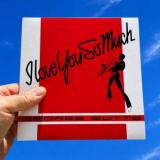






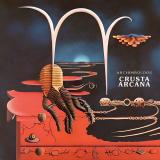



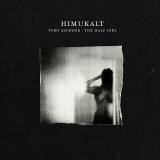

![Various - [QR]V.205.DTON.26](https://www.deejay.de/images/l/7/1/1248271.jpg)