Nach den zwei Klassik-Alben - Garrett vs. Paganini (2013) und - Timeless (2014) meldete sich David Garrett vergangenen Herbst mit - Explosive als Crossover-Künstler fulminant zurück. - Das neue Album ist einzigartig und überhaupt nicht zu vergleichen mit allen Sachen, die ich vorher gemacht habe , erklärt der Star-Geiger zur VÖ. Und Garrett sollte mit dieser Aussage Recht behalten: - Explosive begeistert Crossover-Fans wie Klassik-Liebhaber, platzierte sich gleich in der zweiten Woche auf #4 der Deutschen Album-Charts und hielt sich insgesamt 15 Wochen unter den Top 25. Das Album zeichnet sich durch seine spektakuläre Mischung an Eigenkompositionen Garretts und Crossover-Adaptionen berühmter Rock-/Pop-Klassiker aus. U.a. nimmt sich Garrett der Songs von Eminem (- Lose Yourself ), Michael Jackson (- They Don't Really Care About Us ) und Ed Sheeran (- Thinking Out Loud') an. Dass er für seine Eigenkompositionen - Serenity und - How Many Times Nicole Scherzinger bzw. Xavier Naidoo als Sänger/in gewinnen konnte, ist für David Garrett die Erfüllung eines Traums und Auszeichnung seiner Fähigkeiten gleichzeitig. - Explosive erscheint am 26. Februar 2016 als rote Doppel-Vinyl.
Quartz Rec is finally Back after a year long break with the first release coming from the Label boss Himself : Paul Ritch. This four track ep of the finest crafted Techno called 'Voyage' will set you on a real Trip. Fasten your seatbelt.
"Il corpo" is the last one of Luigi Scattini's trilogy, which started with "La ragazza dalla pelle di luna" (1972) and then continued with "La ragazza fuoristrada" (1973). Umiliani's music privileges jazz and funky moods, dominated by the Hammond organ and wah wah, alternated with languid and almost "sleazy" instrumental ballads. This soundtrack finds its strength in melancholy, but also in drama and tension.
After a storied recording career that has so far taken in albums for Further, Mathematics and Danyy Wolfers Strange Life label, Spanish artist Vagon Brei added label boss to his CV earlier this year with launch of Mystic & Quantum. Record labels come and go but few arrive driven a real specific concept in a way that Mystic & Quantum are with each album length release conceived to show stories of "adventures, magic, science". Having launched in auspicious fashion with albums from DMX KREW and San Laurentino, Vagon Brei helms the third release with a nine track set entitled The Secret Of Swamp Castle. Seemingly taking influence from Giallo Horror, Brei's album comes across as a compelling collection of synth explorations that will have you returning again and again in order to uncover the Swamp Castle's secrets.
Fatima Al Qadiri is a multidisciplinary artist and musician from Kuwait. In just a few years, she has quickly built a reputation as a conceptual artist, exploring themes informed both by her own background and global pop culture, through a number of highly acclaimed EPs, multimedia projects and writings. She is also a founding member of the production team Future Brown. Fatima's debut album is called 'Asiatisch', and as the track titles suggest, the record provides a simulated road trip through an imagined China. Musically, the album is an homage to that quietly influential sub-strain of grime, often loosely termed 'sinogrime' due to its preoccupation with Asian motifs and melodies, pioneered by the likes of Wiley and Jammer at the beginning of the 2000s in East London. 'Asiatisch' is a provocation which asks more questions than it answers. The title is the German word for Asian. Unlike its title, however, the music on 'Asiatisch' revolves around the fantasies of East Asia as refracted through pulpy Western pop culture, in particular Hollywood, literary fiction, music, cartoons and advertising. Fatima asks what is meant by the term 'Asian' in a digital age of viral interchange and the hi-speed trading of cultural bytes; the concept of 'shanzhai' proves pivotal, a term whose meaning stems from a wild, out of control zone of banditry, but which has come to be used to refer to the Chinese counterfeiting of Western brands and goods. While a number of producers have made takes on 'sinogrime' over the last few years, 'Asiatisch' is really the first record that attempts to articulate this weird complex of sonic interchanges between the West and China. With the exception of the opening track, 'Shanzhai', a haunting cover of 'Nothing Compares to You' with nonsensical Mandarin lyrics, and the shimmering 'Loading Beijing', 'Wudang' and 'Jade Stairs' which sample and distort classical Chinese poetry staging an epic confrontation between China's ancient soul and the onslaught of the industrial factory machine, most of the tracks blend mallets, bells, gongs, flutes, steel drums and choral atmospherics with the searing synth-brass and the skittering drums of grime, playing melodies that are inflected as much by classic R&B as to synthetic versions of traditional Chinese music. On "Dragon Tattoo" for example, stereotypical iconography of imagined China is slotted into a threatening, robotic R&B format. The carefree pirating of Western brands blurs into a soft-synth pirating of Chinese musical signs.'Asiatisch' is wrapped in pristine artwork by Babak Radboy from Shanzhai Biennial, and the music was given a 3D sheen by in demand mixer Lexxx. Proclaiming both its love of both ancient and imagined China, 'Asiatisch' is a rare album that is both icily beautiful and conceptually layered.
June 8th, 1984, a deadly F5 tornado nearly destroys the town of Barneveld, Wisconsin, killing 9 people, injuring nearly 200, and causing over $25,000,000 in damage, only five months later Nenad Markovic was born in Belgrade, Serbia. May 3th 2000, a rare conjunction of 7 celestial bodies (Sun, Moon, planets Mercury-Saturn) occurs during the New Moon, few weeks after that in his room on the 10th floor of a new belgrade skyscraper nenad made his first steps into the wild blue yonder. December 27th, 2005 - Astrophysicists from the Max Planck Institute for Extraterrestrial Physics in Garching near Munich measure the strongest burst from a magnetar. At 21:30:26 UT the earth is hit by a huge wave front of gamma and X-rays. It is the strongest flux of high-energetic gamma radiation measured so far. September 23th 2008, in the Akihabara area of Tokyo, Japan, a 25-year-old man stabs seven to death and wounds 10, before being arrested, that night nenad adopted his pseudonym 33. 10. 3402 (33th of october threethousandfourhounded and two) Jun 11th 2009, a Texas mother was hit by lightning while standing in her kitchen inside her Texas home. Witnesses say the lightning came through a light fixture and struck her chest and exited her foot. Her 9-year-old son franticly called 9-1-1 to save her life. She had to spend three days in the hospital. Few months later nenad performed for the first time under the name 33 10 3402 along with Dj Brka in 'The Wash' club. From that time on, nenad had numerous gigs in prominent Belgrade clubs. Dec 8th 2010, with the second launch of the SpaceX Dragon, SpaceX becomes the first privately held company to successfully launch, orbit and recover a spacecraft. The same year nenad become resident in famous balgrade club '20/44'. Nenad is not responsible for many of these events, nonetheless,he is constantly on the move.
For their next release, Phase Group invites you deep into the mind of a singular artist to offer a glimpse of their prolific body of work, zooming in on music composed specifically between 2018 and 2021.
Across 16 tracks, ‘Summa 2018-2021’ by Serbian producer Andria reveals a highly unique approach to sound design and composition, spanning the realms of futuristic IDM, ritual ambient, fourth-world techno and other elusive electronic genres.
Listening to this album in its entirety feels like entering a self-contained sonic world, where animistic and ancestral traditions are refracted through unfamiliar forms of technology. It’s an album which moves effortlessly from moments of deep and contemplative abstraction, as heard in tracks like ‘Sunlessness’, with it's atmosphere of otherworldly field recordings and ancient rites, to propulsive tracks that will guide clubs through ceremonial trance states such as ‘Floating Island’, where industrial kicks underline expressive poly-rhythms, evocative synths and snarling digital glitches.
The release is a gripping and immersive listening experience filled with spellbinding and expertly conjured sounds alongside highly effective moments of dance music that will surely find their way into the sets of the most expressive and fearless DJs. This is one for fans of Coil, Shackleton, Andy Stott and Demdike Stare.
Behind the work is Andrija Čugurović the Belgrade-based artist. A graphic designer by day (and in-house designer here at Phase Group), he dedicates his nights and time away from work and production to Belgrade’s underground electronic scene, digging deep into the worlds of Bass, Techno, Industrial, Ambient, IDM, Experimental and Computer Music.
A regular attendee at spots like Drugstore and the 20/44 boat since a young age, Andrija has honed a deep connection with the music he creates and DJs and that is evidenced in this highly original collection of music. This is his second release on Phase Group, coming after his debut EP ‘o o o o o’ in 2020, the second release on the label.
'Summa 2018-2021’ is available digitally and on high-fidelity C-90 cassette, dubbed at Tapeline UK and distributed by Rubadub.
All tracks composed and produced by Andrija Čugurović.
Mastered by Giuseppe Ielasi.
Artwork by Andrija Čugurović.
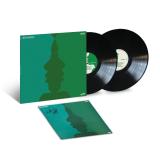
180g Heavy double vinyl LP with liner notes by Tyran Grillo. Limited Japanese Obi for the first pressing. Original artwork by Russell Mills and photography by Jean-Baptiste Mondino.
The third Time Capsule is a body of dub reinterpretations by celebrated producer Bill Laswell of Ethiopian singer Gigi. Curated by Tokyo record collector, music researcher and seasoned reissue supervisor Ken Hidaka, it is the first time Illuminated Audio is pressed to vinyl after its CD release in 2003.
Ejigayehu Shibabaw was born in 1974 in Chagni, northwestern Ethiopia and by pursuing a career as a singer, went against her father’s strict, traditional gender roles. As Gigi, she embraced the same musical freedom she had strived for in her personal life, incorporating the Ethiopian church, funk, hip-hop, West and South African music into her work. She first settled in Nairobi, then Addis Ababa, where she quickly established herself as one of the city’s leading singers. A move to San Francisco in 1998 led to a long and fruitful creative partnership with bassist and producer Bill Laswell.
Around the same time, Chris Blackwell had stepped away from Island Records to start the art house film company and label Palm Pictures. He took an interest in Gigi and together with Laswell, pulled together an all-star cast of musicians for her self-titled US debut album, including Herbie Hancock, Pharoah Sanders and Wayne Shorter. It won international critical acclaim, not just for its musicianship but for making Gigi a “defining voice for the Ethiopian expatriate community”, as journalist Tyran Grillo praises in his Time Capsule liner notes. From the nation-defining 1896 victory over Italian invaders to the quiet revolutionaries who wear simple shemma garments, Grillo believes the themes in Gigi make it “a shower of sunlight on her homeland for those ignorant of its struggles.”
After its success, Blackwell encouraged them to go back into the studio to rethink the album and Illuminated Audio was born. “Anyone can make a voice sound worldly”, Grillo remarks, “but rare are those who can make one sound inner-worldly.” Gigi was clear with Laswell to give her vocals a minor role “because it’s already been done.” Instead her Amharic verse is fleeting, exhaling through the textures like ghostly fragments; soaring yet muted. Yet the album is still titled under her name, an assertion by Laswell of her central role in the album’s creation. Not only was it a fully endorsed project by Gigi, but she would be present throughout its development, giving feedback on half-finished ideas as Laswell played them back in the studio. “It works perfectly”, she reflected after the album’s release. “We wanted to capture the whole spirit of each track, and Bill’s remixes create a different music language that really puts you in a pleasant place”.
This new vocabulary takes its lead from a technical approach that Laswell had been perfecting during a furtive creative period at the turn of the millennium. Much like his ambient interpretations of Miles Davis (Panthalassa, 1998), Bob Marley (Dreams of Freedom, 1997), and Carlos Santana (Divine Light, 2001), Laswell approached Illuminated Audio by returning to the original multitrack masters. Gigi wasn’t just reworked, but recomposed into an expansive lattice of instruments, submerged in a watery ambience of dub and trance undercurrents.
Sonically, this new language that Gigi refers to, is manifested by the original album’s more understated parts being pushed to the fore. Explaining his contrasting methods, Laswell saw Gigi as being “put together in a way that fits”. Contrastingly, in Illuminated Audio, “a lot of things that I featured in the remix weren’t as audible in the original.” Instrumentation laying near-dormant, deep in the mix, are brought to the fore: the acid rock guitar and Wayne Shorter’s saxophone on ‘Tew Ante Sew’, Graham Haynes’ flugelhorn on ‘Nafekeñ’, Laswell’s bass on ‘Kahn’, the melodica in Mengedegna or the floating synths and talking drums in ‘Gud Fella’.
Brought to his attention by mentor DJ Nori, Hidaka describes Illuminated Audio as a “masterful sonic exploration into ethereal ambience and dub” and made sure this reissue also contained a full remaster to give its “deep musicality” much better dynamics and density in the overall sound. Hidaka admits that Laswell's music “is sometimes so out-there, it is often misunderstood” and, indeed, to dub album non-believers this might seem like a prolific producer imposing himself on another artist’s work; eternally developing rearrangements that never quite get to its destination. But that’s missing its true power and triumph. This is more than the reissue of a remix, but “a wholly unique musical entity”, as Hidaka describes. Illuminated Audio refers to the illuminated manuscripts that comprise the major part of Ethiopian art and its new compositions stand in proud solitude as a rare body of reworks that both informs and enhances their originals.
Mutant, in partnership with Universal Pictures, and Back Lot Music, are proud to present the premiere physical media release of 3x Academy Award®-Winning composer Ludwig Göransson's original soundtrack to Christopher Nolan's forthcoming motion picture The Odyssey.
The Odyssey, is a mythic action epic shot across the world using brand new IMAX® film technology. The film brings Homer’s foundational saga to IMAX® film screens for the first time and opens in theatres everywhere on July 17, 2026.
The Original Motion Picture Soundtrack from The Odyssey is available to order on 3x 140gm Black vinyl and 2x CD set.
A much needed repress of French ambient composer and lifeguard Roméo Poirier's cult debut record, Plage Arrière. Released with updated artwork, by London imprint Kit Records.
Plage Arrière is a deep sea meditation on a constellation of Greek beaches across three islands. Trumpets, echo-clicks and Harold Budd-esque shimmer piano whirl together on these sand-caked missives, tumbled and re-engineered by their surroundings like seaglass. Poirier evokes the sub-aqeaous ambitions of Jürgen Müller, or Jan Jelinek inspecting a coral reef.
Compiled onto one vinyl album for the first time, Landlocked (Numbers, 2026) presents Hallucinator’s 1999 debut album originally released under Mark Ernestus and Moritz von Oswald’s label Chain Reaction. Writing much surrounding the culture of what would be later considered ‘Dub Techno’ and its’ primary distribution center, Hard Wax, leads one down roads of shifting primary sources and decades old overheard smoke break recollections. Maybe brevity primes the listener to the paralinguistic to approach the sound on its terms; focusing on how things are uttered and not what.
This theory will remain unconfirmed. Hallucinator original press release left us with three or so gestures to consider over the years since:
“A new act on CHAIN REACTION”s distinct productional thesis. HALLUCINATOR are 3 people from he UK/London and this their first release ever- that’s all what the artists want to let us know…. This record is dedidacted to the memory of Stephen Lawrence!”
The first gesture is one of personnel. Since ’99, we’ve gotten to learn a bit more about the artists behind the Hallucinator project. All London-based, all writers, composers, and sound-designers— Anna Piva, Edward George, Trevor Mathison. These three seem to flow between parameters as aesthetic tactic and tacit structure to the work itself. For example, other collaborative shapes have come from this lineup including Flow Motion (Piva, George and Mathison) as well as the now defunct Black Audio Film Collective of which George and Mathison are founding members.
The second gesture is in the second line of the previous press release, “distinct productional thesis.” Much of Landlocked’s affect and sequencing seems to suggest an emotional study of entropy at the level of sediment. Rhythms play with space and capacity through polyvalence. The production chose subtractive vertigo, often switching and bringing back in elements that vanished from the track 6 minutes ago. Dubbing out so much of a track, one begins to associate sound akin to memories held in the experience of running your hand across a concrete block as a child. Felt (re)memberance in lieu of narrative tale. Using textures that flicker between colour and percussion, Hallucinator’s 12-tracker of loudspeaker perception music might be a mediation on the psychic wake of the Cold War. Intermittent strata of ambience and groove convects an active margin rifting event underneath a scorched geology of power in Western Europe. Again, this is all grapevine hearsay.
But it’s silence that voices the third gesture. The album’s sparse application of the written word touches on the ennui paradox of being landlocked on an island. Stuck. Trapped in the psychosis of occidental hypercentricism. A looping silence of Black British tragedy: “to the memory of Stephen Lawrence”. 18 year-old Lawrence was stabbed to death at a bus stop in southeast London by six white men in 1993. The rift of grief and implicit reiteration of modern subordination left by this hate act went legally silent for almost two decades until Lawrence’s killers were ultimately sentenced to virtually life in jail in 2012. Only six years removed at the time of Hallucinator’s initial invocation of rememory, the mind-numbing accretion of what Black Studies Professor Denise Ferreira da Silva might call “unpayable debt”, finds demonic ground across Landlocked, forming an aural sense of what continues to be refused.
The album ventures through spaces of overactive non-happenings: ‘Red Angel’’s factory floor dub flashes between smokestack and jungle visions, or the halfway mark’s stilted breath of ‘Dusk’ lending its mood to the sort of sedated dreams built from daily life under colony rule for instance. That linked rhythm links us back to our linked fates across Black and Brown folk is real, thus the syncopated signals through this work behave on the level of transnational radiotelegraphy, sounding out its windswept tension of a body negotiating a meat-grinder schema of linear production and wage for others to know that unspeakable thing can be broadcast in every drum tongue.
As the silence continues to reverb, we return to the sort of meaning-making that cannot be told but felt. Soothing to some, disturbing to others. Landlocked, a Rorschach test for a crumbled empire.
Season Two continues with its fifth edition - a shift south this time, from KiF's English hedgerows to the island of Lutruwita, Tasmania, and the work of Soda Lite.
A gooseberry plant took root in the sand between the bricks of Alex's back patio - nutrient-deficient leaves and all - and fruited regardless. That's most of the appeal: "I'm drawn to species that survive in the interstices of human industrialisation." The husk itself carries the same idea, shielding the berry until it's ready to be let go.
Past Soda Lite records - Earthbound, Aqua Solar Cura, Vale & Stone - built outward from field recordings first. Here that flipped: you can't field-record a plant, only the noise around it, so only two tracks (Vibrant Matter and An Sí Gaoithe) carry field sound at all. The rest came from narrowing to a single species instead of the wider non-human world, and "trying to create and replicate sound and energy on the level of the plant and its perceptive world."
Two more things worth knowing. ‘Bryn Celli Ddu’ takes its name from a Neolithic burial chamber in Wales, aligned so the summer solstice sunlight reaches its back wall - the sun turning up again as its own recurring character. And ‘An Sí Gaoithe (Return)’ is a reworking of a Vale & Stone title, old fragments reprocessed into something new - "a bit like composting."
Soda Lite is the recording project of Alex Last, a gardener and composer working from Lutruwita on unceded Palawa land. Their music moves through field recordings gathered directly from the island's own biomes - coastline, forest, alkaline lake bed - alongside slow, warbling synth work, built less as backdrop than as document: proof of a specific place, at a specific time, being listened to closely. Past records have taken their titles and themes from geology and land relationships as often as botany - Aqua Solar Cura, Earthbound, Vale & Stone - so a plant with its own mineral-adjacent etymology (soda, found in dried alkaline lakebeds; lite, from the Greek for stone) suits the pairing.
Fans and headz worldwide have been clamoring for a follow- up, but all Emapea wanted to do was just 'zone out.' And that's what happened, with the release of Emapea's twenty song album Zoning Out, Volume 1. Emapea's cuts are meant for the listener to get lost in - but they're not only for chilling, or when deep in thought, but also for getting in that crucial head-nod zone, like when the DJ drops the dopest beat. Expertly crafted and sequenced, the album presents a boom-bap journey that's dreamy and spacey while remaining tough and jazzy. "Check It Out" exemplifies the mood with its smooth drums, chiming keys, subtle sax riffs, and hip hop shout-outs. The vibe expands on "Motion", adding an exotic, worldly flavor to the seductively loping rhythm. And "Classy" features a smokey saloon piano melody that cruises smugly out of jeep-beat speakers.
DJ Support: Harvey, Balearic Mike, K Andrews, Apiento, Joe Morris, Idjuts, Piers Harrision, Flo Dill, James Holroyd, Andy Wilson, Kenneth Bager, Phil Mison, Colleen Murphy.
Following the success of the Lovehandles ‘Reworks’ EP, Oswego Music returns with a second volume of reinterpretations via the mysterious ‘Love from the Archipelago’ the alter ego of a renowned European digger, dj and producer.
First up here ‘Endless Ocean’ sees our island hopping hero reimagining an underrated antipodean 80’s track. Its pulsing synths and wistful vocal working as equally on a dancefloor as at the after party, or indeed the morning after the night before.
Track Two on side A ‘Carica’ takes us to South America recalling to some extent the west coast fusion of mid eighties artists like Pat Metheny. Brilliant percussion, vocals and synths combining into a heady, hazy workout- permed hair and tiny shorts optional.
First on the flip ‘En Route’ continues our journey (via the local library) with a gritty, synth heavy piece of post disco experimentalism extended here for your listening pleasure
Lastly, ‘A Grain of Sand’ reinterprets a folky aor number- long overdue in making it to vinyl- remaining (until now) a favourite digital secret weapon for the more ‘horizontally inclined’ dj.
Rounding out the EP, 1900-Isla provides a brief meditation on what it is to be free. A beautiful island in the middle of nowhere, with friends, as the sun sets…
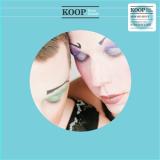
2026 jährt sich die Veröffentlichung von Koop Islands, dem gefeierten dritten und letzten Studioalbum des schwedischen Duos Koop, zum 20. Mal. Mit seiner einzigartigen Verbindung aus Jazz, Swing, Electronica und filmischer Orchestrierung etablierte das Album Koop als international renommierten Act. Umfangreiche weltweite Tourneen und ein Katalog, der bis heute eine große globale Streaming-Hörerschaft begeistert, folgten.Mit Gaststimmen von Ane Brun, Yukimi Nagano von Little Dragon, Mikael Sundin und Earl Zinger enthält Koop Islands den internationalen Streaming-Hit ,Koop Island Blues", der inzwischen mehr als 100 Millionen Streams auf Spotify verzeichnet. Das Album bietet außerdem ,Strange Love", Koops zweiterfolgreichsten Song im Streaming, der hier als Bonustrack enthalten ist. Zuvor war der Titel nicht auf einer regulären europäischen Vinyl-Ausgabe erhältlich - nun erscheint er erstmals in diesem Format.
Ibiza-based Jazz N Palms is back with more musical dispatches from the calmer side of the island that follow on from his Ses Rodes album in 2022. That record was focused on a double album assembled, as if over a Cartesian grid of space-time. While one record was about space/the environment, the other was following the times of the day. This 7" expands that with more music inspired by magical island spaces.
These tracks were recorded in Magrana Studio in Ibiza with three new musicians and, after the post-production, the mixing was made with the help of Ben Westbeech and his beautiful Unfairchild II, an amazing Californian reproduction of the holy grail of tube compressor that has been present in Abbey Road studios since the 60s.
Opener 'El Valle' ('the valley') captures the different shades of light that pass over Ibiza, from early spring light to the arrival of looming clouds and the first thunders of a summer storm. It is the organ which serves as the main character to convey those sensations and the passing from light to dark as a live, loose and dusty groove bounces below. On the flip side, 'La Costa' simulates cruising on the open sea, riding choppy swells as waves lap at the boat and you gaze at the passing landscapes. Only drums and bass have been used to convey the feeling, and the result is a wonderfully uneven, ever-evolving and funky groove full of life.
“Slide in the party like three monkeys wearing a trench,” GDP says in the opening seconds of Cross Off Matthew, his first solo album in over a decade. The line is indicative of the New Jersey emcee/ producer’s relationship with music, one that’s ebbed and flowed throughout his career and eclectic discography. Entirely self-produced, Cross Off Matthew feels like a reintroduction as well as an expansion of what makes the cult rapper so beloved. GDP came up in the respective punk, hardcore, and skateboarding scenes of New Jersey, roots that inspired his DIY approach to making hip-hop. He applied a decidedly punk ethos to his brand of neo- boom bap on early releases like 2009’s Realistic Expectations and 2011’s Useless Eaters, albums that celebrated his youthful indiscretions but also signaled an old soul lying beneath the surface.
He opted to release them on punk/indie labels (including Run For Cover and Ride The Fury Records) instead of more traditional hip-hop outlets, and along with an ambitious touring schedule, he carved out a dedicated fanbase throughout the early 2010’s. Cross Off Matthew is a slow-cooked labor of love, born out of taking enough time away from something to understand the journey with greater perspective and appreciation.“I’m older, arguably wiser, but that creative fire stayed with me,” he says. “I wanted to make something that felt nuanced, something that I could feel proud of.” Throughout the album, the production toggles between foreboding and facetious just as deftly as his bars. Tracks like “Island In The Sky” and “Location Therapy” make rap confetti out of caustic guitars and glaring distortion, while “Seroquel” and “Rock For Light,” (the latter a nod to NJ rap royalty, The Outsidaz) embrace GDP’s signature blend of East Coast hip-hop and punk sensibilities, with lyrics that highlight the sharp wit and heady philosophizing that he made his name on. GDP examines vices, interpersonal relationships, the collective dread of late-stage capitalism as well as the pitfalls and rewards of trying to lead a creative life throughout it all. The wiseman that peaked out from beneath the shield of debauchery on his early releases has now come to the forefront, as GDP’s trademark humor and commentary feel refined by years of life lived experience
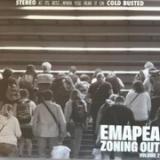
Early in 2018 he unveiled Zoning Out, Volume 1, an album intended for chilling while deep in thought, or for getting into that crucial head-nod zone, like when the DJ drops the dopest beat. With listeners ready for more rhythmic brain-food, Emapea provides with the anticipated next installment: Zoning Out, Volume 2. Developing the theme of Volume 1, Emapea takes his jazzy sensibilities and fresh drum patterns and ups the ante, delivering 18 mandatory cuts that swerve and shimmy while exhibiting pure dopeness. Take "Last Cypher," which is an infectious funk- hip- hop hybrid that flows with more than a few surprise embellishments. There's also the low-rider spy-hop of "Big Small Talks"; "Tantra" with its smooth, old school ride; the sensual boom bap of "Blue Almonds"; and the infectious, latin-lounge-tinged "Rainy Day". These are no- nonsense beat compositions, perfect for thinking, for grooving, for dreaming, for zoning out. Emapea and Cold Busted come correct once again.
Straight from the island of X-Coast, Riviera Records is back -
this time introducing Villa, an emerging duo from Frankfurt.
A side features their fast tribal infused techno killa beats
with ltered disco vocals. To spice things up even more, its
the Get On Up remixes by electro powerhouse DJ Mell G and
XL Traxx (Lag & X-Coast) on the ipside. This music is
meant to be played off of a record!
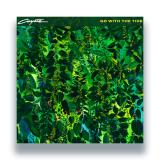
Downtempo legends Coyote offer up a full length of Balearic bliss with Go With The Tide on Universal Cave Records. With one foot in timeless chillout electronica and another in the dubby soundsystem psychedelia of our times, Coyote expand on their distinct cosmic groove with seven songs that dive deep into the sonic underground.
Go With the Tide is a tale of three islands. Coyote drop a heavy dose of modern UK stylings, rumbling bass and chilling vocals, on top of a familiar White Isle dream state while radiating Jamaican dub sensibilities. It’s like coming home from summer holiday and returning to the day to day of city life. The nights grow longer and the air chills, but the shimmering sparkles of sunshine still reflect and refract through your soul.
Coyote pick up that tension between the escapism of summer and the heavier waves of fall, and weave it into a remarkable LP that makes as much sense for a forever summer as it does for an impending winter. For whichever side of that you fall, just Go With The Tide.
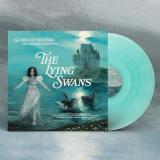
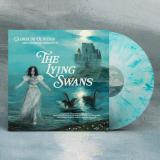
Das neue Album "The Lying Swans" der deutsch-brasilianischen Musikerin und bildenden Künstlerin Gloria de Oliveira entfaltet sich wie ein Werk des Magischen Realismus - bevölkert von Vögeln, Heiligen, Sirenen, blutigen Gesichtern, Geisterschiffen und gespenstischen Erscheinungen - und lädt die Hörer*innen in ihr bislang unmittelbarstes und komplexestes Werk ein. De Oliveiras drittes Album aber eigentliches Debut wirkt wie ein Werk der Gothic-Literatur, angestoßen durch das Bild einer Frau, die aus einem Spukhaus flieht; dieses zentrale Motiv prägte auch die visuelle Welt des Albums. Produziert von Randall Dunn (Anna von Hausswolff, Sunn O))), Marissa Nadler) und aufgenommen zwischen Island, New York und Berlin, ist das Ergebnis eine traumhafte Welt, in der Zauber und Gefahr nebeneinander existieren. Nach der EP-Compilation "Fascination" (2020, Reptile Music) sowie "Oceans of Time" (2022, Sacred Bones) - ihrer Zusammenarbeit mit David Lynchs langjährigem Sounddesigner Dean Hurley - führt "The Lying Swans" de Oliveira in neues Terrain. Sowohl thematisch als auch klanglich scheinen diese neun Songs aus den nebligen Gefilden von Hall und ätherischem Fuzz-Sound herauszutreten und eine erdige, greifbarere und damit verletzlichere Seite zu offenbaren. Dennoch bleibt ihre seraphische, sehnsuchtsvolle Stimme der Mittelpunkt, flankiert von einer beeindruckenden Riege an Musikern: Schlagzeuger Matt Chamberlain (David Bowie, Tori Amos, Pearl Jam), Gitarrist Lennard Zander, Cellistin Gyda Valtysdóttir (múm), Harfenistin Marilu Donovan (LEYA, Eartheater, Julie Byrne) und Keyboarder Ulfur Hansson wirken mit, während Ambient-Ikone Tor Lundvall eine seltene Spoken-Word-Darbietung beisteuert. Lina Andonovskas Querflöte spielt eine tragende Rolle und verleiht den Songs einen ebenso luftigen wie beunruhigenden Klang - inspiriert sowohl von de Oliveiras brasilianischen Wurzeln als auch von den Giallo-Soundtracks der 1970er und 1980er Jahre, jenen atmosphärischen italienischen Horror-Krimis, die stilisierte, drastische Gewalt und Voyeurismus mit prachtvoller Schönheit verbinden. Inspiriert von Lyrik, Literatur, Film und bildender Kunst ebenso wie von Musik, haben de Oliveira und Dunn ein Album geschaffen, das sich mühelos zwischen dem Spektralen und dem Pastoralen bewegt - ein Werk, in dem Anklänge an Fantasy- und Giallo-Soundtracks, alte Folk-Traditionen sowie die rhythmische Zartheit von Bossa Nova, MPB und Tropicália verschmelzen. Auch die Texte verweben Mythologie mit Anspielungen auf Miltons Paradise Lost*sowie die Lyrik von John Keats, Emily Brontë und Anne Sexton. Ein durchweg erhabenes Werk. Als CD (Digisleeve) mit Booklet oder auf LP (in klassisch Schwarz, Coke-Bottle-Green oder weiß-blau marmoriert) mit bedruckter Innenhülle & inside-out Sleeve.
Das neue Album "The Lying Swans" der deutsch-brasilianischen Musikerin und bildenden Künstlerin Gloria de Oliveira entfaltet sich wie ein Werk des Magischen Realismus - bevölkert von Vögeln, Heiligen, Sirenen, blutigen Gesichtern, Geisterschiffen und gespenstischen Erscheinungen - und lädt die Hörer*innen in ihr bislang unmittelbarstes und komplexestes Werk ein. De Oliveiras drittes Album aber eigentliches Debut wirkt wie ein Werk der Gothic-Literatur, angestoßen durch das Bild einer Frau, die aus einem Spukhaus flieht; dieses zentrale Motiv prägte auch die visuelle Welt des Albums. Produziert von Randall Dunn (Anna von Hausswolff, Sunn O))), Marissa Nadler) und aufgenommen zwischen Island, New York und Berlin, ist das Ergebnis eine traumhafte Welt, in der Zauber und Gefahr nebeneinander existieren. Nach der EP-Compilation "Fascination" (2020, Reptile Music) sowie "Oceans of Time" (2022, Sacred Bones) - ihrer Zusammenarbeit mit David Lynchs langjährigem Sounddesigner Dean Hurley - führt "The Lying Swans" de Oliveira in neues Terrain. Sowohl thematisch als auch klanglich scheinen diese neun Songs aus den nebligen Gefilden von Hall und ätherischem Fuzz-Sound herauszutreten und eine erdige, greifbarere und damit verletzlichere Seite zu offenbaren. Dennoch bleibt ihre seraphische, sehnsuchtsvolle Stimme der Mittelpunkt, flankiert von einer beeindruckenden Riege an Musikern: Schlagzeuger Matt Chamberlain (David Bowie, Tori Amos, Pearl Jam), Gitarrist Lennard Zander, Cellistin Gyda Valtysdóttir (múm), Harfenistin Marilu Donovan (LEYA, Eartheater, Julie Byrne) und Keyboarder Ulfur Hansson wirken mit, während Ambient-Ikone Tor Lundvall eine seltene Spoken-Word-Darbietung beisteuert. Lina Andonovskas Querflöte spielt eine tragende Rolle und verleiht den Songs einen ebenso luftigen wie beunruhigenden Klang - inspiriert sowohl von de Oliveiras brasilianischen Wurzeln als auch von den Giallo-Soundtracks der 1970er und 1980er Jahre, jenen atmosphärischen italienischen Horror-Krimis, die stilisierte, drastische Gewalt und Voyeurismus mit prachtvoller Schönheit verbinden. Inspiriert von Lyrik, Literatur, Film und bildender Kunst ebenso wie von Musik, haben de Oliveira und Dunn ein Album geschaffen, das sich mühelos zwischen dem Spektralen und dem Pastoralen bewegt - ein Werk, in dem Anklänge an Fantasy- und Giallo-Soundtracks, alte Folk-Traditionen sowie die rhythmische Zartheit von Bossa Nova, MPB und Tropicália verschmelzen. Auch die Texte verweben Mythologie mit Anspielungen auf Miltons Paradise Lost*sowie die Lyrik von John Keats, Emily Brontë und Anne Sexton. Ein durchweg erhabenes Werk. Als CD (Digisleeve) mit Booklet oder auf LP (in klassisch Schwarz, Coke-Bottle-Green oder weiß-blau marmoriert) mit bedruckter Innenhülle & inside-out Sleeve.
Das neue Album "The Lying Swans" der deutsch-brasilianischen Musikerin und bildenden Künstlerin Gloria de Oliveira entfaltet sich wie ein Werk des Magischen Realismus - bevölkert von Vögeln, Heiligen, Sirenen, blutigen Gesichtern, Geisterschiffen und gespenstischen Erscheinungen - und lädt die Hörer*innen in ihr bislang unmittelbarstes und komplexestes Werk ein. De Oliveiras drittes Album aber eigentliches Debut wirkt wie ein Werk der Gothic-Literatur, angestoßen durch das Bild einer Frau, die aus einem Spukhaus flieht; dieses zentrale Motiv prägte auch die visuelle Welt des Albums. Produziert von Randall Dunn (Anna von Hausswolff, Sunn O))), Marissa Nadler) und aufgenommen zwischen Island, New York und Berlin, ist das Ergebnis eine traumhafte Welt, in der Zauber und Gefahr nebeneinander existieren. Nach der EP-Compilation "Fascination" (2020, Reptile Music) sowie "Oceans of Time" (2022, Sacred Bones) - ihrer Zusammenarbeit mit David Lynchs langjährigem Sounddesigner Dean Hurley - führt "The Lying Swans" de Oliveira in neues Terrain. Sowohl thematisch als auch klanglich scheinen diese neun Songs aus den nebligen Gefilden von Hall und ätherischem Fuzz-Sound herauszutreten und eine erdige, greifbarere und damit verletzlichere Seite zu offenbaren. Dennoch bleibt ihre seraphische, sehnsuchtsvolle Stimme der Mittelpunkt, flankiert von einer beeindruckenden Riege an Musikern: Schlagzeuger Matt Chamberlain (David Bowie, Tori Amos, Pearl Jam), Gitarrist Lennard Zander, Cellistin Gyda Valtysdóttir (múm), Harfenistin Marilu Donovan (LEYA, Eartheater, Julie Byrne) und Keyboarder Ulfur Hansson wirken mit, während Ambient-Ikone Tor Lundvall eine seltene Spoken-Word-Darbietung beisteuert. Lina Andonovskas Querflöte spielt eine tragende Rolle und verleiht den Songs einen ebenso luftigen wie beunruhigenden Klang - inspiriert sowohl von de Oliveiras brasilianischen Wurzeln als auch von den Giallo-Soundtracks der 1970er und 1980er Jahre, jenen atmosphärischen italienischen Horror-Krimis, die stilisierte, drastische Gewalt und Voyeurismus mit prachtvoller Schönheit verbinden. Inspiriert von Lyrik, Literatur, Film und bildender Kunst ebenso wie von Musik, haben de Oliveira und Dunn ein Album geschaffen, das sich mühelos zwischen dem Spektralen und dem Pastoralen bewegt - ein Werk, in dem Anklänge an Fantasy- und Giallo-Soundtracks, alte Folk-Traditionen sowie die rhythmische Zartheit von Bossa Nova, MPB und Tropicália verschmelzen. Auch die Texte verweben Mythologie mit Anspielungen auf Miltons Paradise Lost*sowie die Lyrik von John Keats, Emily Brontë und Anne Sexton. Ein durchweg erhabenes Werk. Als CD (Digisleeve) mit Booklet oder auf LP (in klassisch Schwarz, Coke-Bottle-Green oder weiß-blau marmoriert) mit bedruckter Innenhülle & inside-out Sleeve.
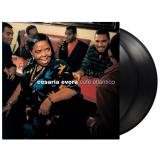
A native of the island nation of Cape Verde, Cesaria Evora was known as the country's foremost practitioner of the morna, a combination of West African percussion with Portuguese fados, Brazilian modinhas, and British sea shanties. After a short singing career in the 1970’s, she returned in the late ‘80s with a string of critically acclaimed and increasingly popular albums.
Her 1999 album Café Atlantico (a reference to her home where she frequently entertained guests) is a much-acclaimed masterpiece, finding Evora venturing into more Latin American musical landscapes, as opposed to Portuguese, which dominated her previous albums. Evora draws from traditional Cuban and Brazilian music to mesmerizing effect. The music is heart-breaking and nostalgic, warm and tragic all at once.
Café Atlantico is available on black vinyl and includes an insert with lyrics.
Phillip George Allison was born and raised in Denham Town, West Kingston, the last of six children and the only boy. As a boy he sang hymns at his mother's side. Before long he was singing radio hits at school concerts, where he did Curtis Mayfield, Smokey Robinson and Eddie Kendricks in a falsetto so close to theirs that friends called him "George Smokey."
With Delroy Williams and Shirley Forbes he formed The Mad Lads. Leroy Sibbles auditioned them at Studio One and called Coxsone Dodd over to listen, and they recorded the same day, with Sylvan Morris as engineer and the Sound Dimensions backing them. Ten To One, Losing You and You Never Know were big with the sound systems. George then left music to study electrical engineering at CAST. Years later producer Carl Prince of Gibbous Records asked him to re-record Ten To One, and that brought him back into the studio for the 1984 album So Unusual, where both of these sides first appeared.
Gypsy Woman was one of the first songs he ever sang in class. "Gypsy Woman was originally done by Curtis Mayfield and the Impressions, one of my favourite groups. I chose to do it a little differently, in my falsetto style, like Ten To One that I recorded while singing lead with the Mad Lads."
War Is Ugly "I wrote War Is Ugly during the politically motivated tensions and killings between rival gangs and gunmen all over the island in that period. My message was to the gunmen: turn in their arms and come. War is ugly, love is lovely."
New York-based Japanese jazz and electronic music polymath Takuya Nakamura presents his debut album Shape The Future - almost 35 years into his storied musical journey.
An expansive double album, the album’s first LP documents a spellbinding live performance by Nakamura recorded at fabric. A hybrid set combining DJing, live electronics, vocals, and trumpet, the set also features studio versions of special collaborations with Shigeto, Currency Audio and Tim Reaper. The second LP complements the first by assembling studio recordings of select album tracks. Altogether the two volumes make for a definitive display of Nakamura’s exceptional musicianship across jazz, DnB, jungle, broken beat, deep techno and more.
Across his career, Nakamura has played Brazilian music, merengue, salsa and straight-ahead jazz. He’s opened for Sun Ra Arkestra, performed with David Byrne, Laurie Anderson, Lee “Scratch” Perry, Wu-Tang Clan, and Arto Lindsay, appeared on sessions with Terry Riley, ASAP Rocky, Goldie, and TV On The Radio, and remixed the likes of Quincy Jones, Sun Ra, Billie Holiday, and The Streets. He’s also played under director and playwright Robert Wilson.
Although the musical past and present of the Tokyo-born, New York-based DJ and trumpet player is undoubtedly eclectic, Nakamura is abidingly steeped in the sounds of jazz and jungle. This’ll be obvious to casual observers who may have seen any viral videos of him. But there’s more to this. The depth of Nakamura’s engagement with these kinds of music, the way they’ve made him into the person he is, the decades-long path they’ve taken him on; to now arrive at the summit of a solo album is all truly remarkable. Shape The Future resonates with every chapter in this story.
In high school, Nakamura’s friends started listening to jazz and jazz fusion, which piqued his interest, especially when they started going to clubs to see it live, where they managed to see US legends like Sonny Rollins play. Eventually he began to play jazz every day and his musical skill emerged early. He soon became obsessed with getting closer to the source of this music, which led to his studies at the New England Conservatory of Music in Boston with George Russell, an influential figure who had taught Miles Davis and John Coltrane. Nakamura drank it in: not only the technical aspects but the sense of a direct connection to “a music culture where Russell and his friends changed harmony forever. I wanted to know how that was possible!”.
This was a radical experience in itself, but then another revolution happened for Nakamura. He was playing in a venue called The Western Front, near Boston and discovered that the elderly owner had his own soundsystem and was playing what was then - in 1992 - only just becoming known as jungle. This was as freeing a musical revelation as his proximity to the giants of jazz was, and in that instant the two things fused. He understood that using technology to fill a dancehall with sound and a jazz musician’s reflexes are all working to the same ends: “You’re always making decisions,” he says, “but it doesn’t have to be really difficult. It’s the truth of the frequencies, and how they’re affecting people’s minds.”
From that moment on, his life path was set. Moving to New York City, he sought out jungle and its offshoot sounds wherever he could find them, gigging and collaborating relentlessly, and gradually developing his own live and hybrid live/DJ shows. Through regular appearances at New York fixtures Zebulon and CBGBs, and continual shows elsewhere in the city, Nakamura developed his live performance and DJing and it was in these environments that he gradually weaved together his twin loves without compromising either, building an international reputation in the process.
It’s only fitting then that his first album, almost 35 years after he first found his musical direction, should be a live one: a window into this never-ending process. Even here, he had to be persuaded that he should make a record. A member of the fabric team got turned on to his music after their daughter saw him play. Of course, as a jungle lover, Nakamura knew fabric – which has a special place in the history of jungle and drum’n’bass – and “had wanted to play there since I was very young.” You can hear the club in the record: this isn’t just a live show, in keeping with his jungle roots, it’s Nakamura duetting with the soundsystem, and you can feel how the emotions in the room would have ebbed and flowed.
This dynamic translates to a transfixing record. Setting the tone with lushly textured ambient and reverberant jazz, Nakamura segues into cinematic breakbeat and stellar fusion, infusing it all with intoxicating low end and hypnotic rhythms. The LP’s midway point locks into mesmeric percussion heightened by resonant echoes of piano and trumpet. There’s an endless pull to this music. Nakamura adjusts the levels for maximum impact throughout, and the overall effect begins to evoke some harmonious hybrid between a jazz ensemble, a classic Metalheadz 12” and a Theo Parrish DJ set. His electric form continues through surreal jazz, intricate electronics and rolling sub-bass velocity, right up to the subtly devastating final cover of Peter Gabriel and Kate Bush’s ‘Don’t Give Up’, with Nakamura’s fragile vocal sitting in the heart of a huge sound.
From Tokyo jazz nights to formative studies and encounters in Boston to his artistic development in New York, Nakamura reaches another milestone with his monumental debut album. It’s a release that happened just the way a Takuya Nakamura record should. In the same way his instincts led him to musical revelations, taking his own sweet time has led him to make one of the most extraordinary debut albums imaginable, all executed in his own singular style. In Nakamura’s world, the universe finds a way.
With her 3rd Blue Note album Synonym, Meshell Ndegeocello presents a remarkable album of duets on classic songs that are known, loved, and diverse in tone, “genre”, intent, and BPM. This is an album about joy, love, selfhood, individual representation and universal experience that explores expressions of desire, care, heartbreak, friendship, disappointment, and love in all the forms. All the songs feature two singers who identify as the same gender, wherever that might be on the continuum, and are musically matched for contrast or compliment including Cynthia Erivo, Cat Power, Robert Glasper, Chaka Khan, Madison Cunningham, Laura Lee (Khruangbin), Emily King, Lizz Wright, Lianne La Havas, Moses Sumney, Brandi Carlile, ANOHNI, WILLOW, Bill Callahan, Chris Thile, and more.
In 2000, after almost two decades of hibernation under the ambient waves and dub currents of the Sargasso Sea, LSD revived the seminal ‘Auntie Aubrey's' series, an Orb Remix Project. Released as a 2 x CD compilation, Part 3 is a veritable smorgasbord of classic, new and unreleased labour-of love remixes that span three decades yet still transcend space and time.
Many influential artists have been involved with The Orb since the beginning, and the project keeps evolving and adapting. Dr. Alex Paterson, the gravitation centre of the Orb is known for his playfully subversive remixes and true to form this album highlights the diversity of his musical mind.
We see the good doctor remix the melancholy and evocative “The Last Lighthouse Keeper” from The Transit Kings, an early British electronic music group that included Jimmy Cauty of The KLF, one of the original members of The Orb. The remix of ‘Davy Jones’ Locker’ from System 7 takes you surfing on a sun-dappled sea of ambient dance nostalgia, while Killing Jokes’ ‘European Super State’ remix (in which LSD label founder Martin ‘Youth’ Glover plays bass guitar) sounds like the soundtrack for an imaginary spy thriller with the powerful lyrics and hypnotizing voice of Jaz Summers.
Legendary producer Youth teams up with Lx yet again on a psychedelic rocker with spellcasting vocals by Lara Smiles, and this is just the beginning! Boasting an all-star lineup, the compilation includes many of our scenes most esteemed electronic music producers such as Coldcut, David Harrow, Sendelica and Gaudi as well as the ambient blissed out vibes from the enigmatic DF Tram, Duende India Collective and The Gyuto Monks of Tibet, this collection offers up such the variety to appease even the most dedicated Orbsessives and music connoisseurs
EPILOGUE is the culmination of more than four decades of music-making by Japanese composer, producer and multi-instrumentalist Ken-ichiro Isoda, an album in which environmental sound, electronics, contemporary classical composition and memory converge into a deeply personal late-career statement. Isoda moved through video-game music, film composition, classical production, Okinawan music, television and collaborative projects, continually developing an approach in which acoustic instrumentation, field recordings and electronics could coexist naturally.
His collaborative album Interwoven with aus, released through WRWTFWW, further demonstrated the openness of a musical philosophy Isoda describes as being rooted in fluctuation, imperfection and organic movement.
EPILOGUE brings those threads together while refusing to function simply as a retrospective. The album consists largely of older compositions that Isoda has returned to, reconstructed and reinterpreted from the perspective of the present.
Opening track “TANEKOMA” refers to the Izu Robin, a rare bird native to Hachijō-jima, the volcanic island where Isoda lives. Its song, recorded by Isoda in the mountains, becomes part of the composition itself. Placed at the beginning of the album, “TANEKOMA” becomes both document and prayer.
Elsewhere, “Circulation 2” develops from a work created around the relationship between forest, sea and the movement of water. Flutist Dogen Kinowaki replaces Isoda’s original piano melody with a performance that gives the piece a distinctly Japanese sense of place. Kinowaki also appears on a newly reimagined version of “Beach of the Pliocene”, one of Isoda’s most recognised compositions.“STEPS”, first composed for film in 2008, looks back toward the electronica of that period. For this definitive version, Tsutomu Sonoda of maya ongaku provides vocals, bringing new emotional and lyrical depth to a piece Isoda had wanted to properly complete for more than a decade.
The title track from Isoda’s 1991 New Age album “Yume no Sazanami” is similarly reconsidered. Originally recorded with a small chamber orchestra, the new arrangement replaces elements of the harp and cello with layers of nylon-string guitar performed by Tatsuro Murakami. Perhaps the album’s clearest meeting point between past and present is “WATERWAYS.”The mysterious European ambient artist Aiko Takahashi, transforming an abandoned demo into what is simultaneously the oldest and newest work on the album.
“A Flowering Tree,” written for film in 2013, is reconstructed around multi-tracked flute performances by Dogen Kinowaki. Isoda carries that association into his own arrangement, allowing the piece to function as another quiet meditation on memory, loss and hope.
The album closes with “EPILOGUE” —less a grand conclusion than a moment of acceptance. Isoda chose it as the album’s title piece to hold what he describes as the complex emotions that accompany the twilight of a life spent making music. EPILOGUE is not simply a look back. It is the sound of older music continuing to move, change and breathe in the present: a lifetime of ideas distilled into Isoda’s own form of pure music, shaped by memory, collaboration, nature and the world immediately outside his home on Hachijō-jima.
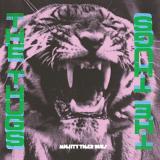
Led by Sicilian musician, producer and visual artist Nicola Giunta (founder of Lay Llamas), The Thugs return with Mighty Tiger Dubs, a new nine-track album via Aagoo Records.
Written and produced by Giunta and performed with Andrea Davi, Mighty Tiger Dubs expands the psychedelic dub world introduced on 2023's Holy Cobra Dub. Blending roots dub, electro-dub, post-punk and psychedelia, the album follows a surreal narrative set on a mysterious pale green island, where Kali worship, a giant anaconda attack, underground fire rituals and anti-colonial struggle unfold through hypnotic rhythms and wordless vocals.
Unlike its predecessor, the album is built entirely around drum machines, creating a more direct rhythmic foundation for Giunta's distinctive fusion of Jamaican dub traditions with post-punk and experimental sounds. Inspired in part by Giunta's experience performing with Damo Suzuki of Can, the record features improvised, lyric-free vocals throughout.
Since emerging in 2021 as a studio-based project, The Thugs have earned praise from dub, psych and underground music circles, with support from figures including On-U Sound, Chris Reeder (Rocket Recordings) and Populous.
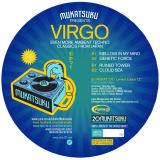
Mukatsuku's endless thirst for archival gold and knack for killer reissues burns strong with this latest third in the series hand-numbered 12" , which digs deep into classic ambient techno from Japan. The man behind the music is Virgo, a solo project by Yasutaka Sato that was active from 1996 to 2004 and then reappeared in 2024. This EP revisit some of his best moments from more than two decades ago, starting with the soothing, pulse-slowing beauty of 'Mellow In My Mind' before cosmic charm defines 'Genetic Force' and 'Ruined Tower' has a more melancholic, sombre feel. 'Cloud Sea' lifts the mood with a gently hopeful closer with soft new age chords and oh-so gentle rhythms that break like waves on a distant island paradise.
“Everyone Thinks” by A for Alpha.
Bristol-based DJ and producer makes her Neptune Discs debut via Jupiter’s Depth, landing with four stripped-back, bassline-led cuts with a garage-esque, tech-house lean. The B2 sees her link with two friends under the Groove Interrogation alias. A DJ as much as a producer, she’s moving across the planet this summer, with stops including EASTERENDERZ in Barcelona and Love International in Tisno. Weighty low-end, dubby chords and a focused groove throughout — a sharp debut on the sub.
Amazzonia is the new album by Alex Puddu and the second volume following the erotic series
I Desideri Di Sadie (Piaceri Tropicali), where the inspiration took us to an imaginary journey in Southeast Asia. With this new album “Amazonia,” Alex Puddu takes us on a trip to Central America, the Caribbean islands, and South America, exploring a new groove of Latin-funk, reggae, and seductive sleazy disco . Here, Sadie’s adventures unfold, from the jungle to the cities and onto the enchanting tropical beaches. Another journey through temptations, on the islands, discovering the beauty of Alex Puddu’s “Erotic World.”
"Amazzonia" was written, arranged, produced, and recorded by Alex Puddu, who plays all the instruments on the album himself. He was assisted by two of the best bassists on the Italian nu-disco and Balearic scene: Domenico Andria—who has played with Pellegrino/Zodyaco and worked closely with Alex Puddu on several releases—and Daniele Labbate, who has performed as a session bassist for artists including Nu Genea and Mystic Jungle.
Other featuring musicians on the album are:
Imelda : Lead and backing vocals
Adrian Wilding: Vocal on Gimme Dub
Hendrik Jørgensen: Trumpet
Jesper Løvdal: Saxophone
,Ma Waraa Al-Shaabi" - ,Beyond Shaabi" - ist das neue Album bei Kou Records von Rizan Said, dem legendären kurdisch-syrischen Keyboard-Virtuosen aus Ras Al Ain in der Region Jazeera im Nordosten Syriens und dem wichtigsten musikalischen Kopf hinter Omar Souleyman. Rizan Said ist ein musikalischer Botschafter aus einem verschwundenen Syrien. Es war einmal vor nicht allzu langer Zeit, als die Jazeera - ein kulturell reiches Grenzgebiet kurdischer, arabischer, syrischer und armenischer Gemeinschaften - von einer unverwechselbaren musikalischen Tradition geprägt war: Handtrommeln und Rohrflöten, Hochzeiten, die tagelang dauerten, Dabke, die schon seit Jahrhunderten getanzt wurde, lange bevor Electro, Disco oder Orientalismus auftauchten, um ihr einen Namen zu geben. Rizan war das Wunderkind dieser Szene, ein Ausnahmetalent an Percussion- und Rohrblattinstrumenten, das zum Meister der Synthese in der Region wurde - er programmierte Korgs so, dass sie Zurna, Saz, Tanbura und Buzuq nachahmten, und vereinte die traditionelle Instrumentierung in einem einzigen Paar Hände, das sich blitzschnell bewegte.? Dies ist sein drittes Soloalbum nach ,King of Keyboard" (Annihaya, 2015) und ,Saz U Dilan" (Akuphone, 2019) - und sein bisher weitreichendstes. Aufgenommen im Sundlaugin Studio von Sigur Rós Sundlaugin Studio in Island aufgenommen und von Randall Dunn produziert, in Koproduktion mit Mark Gergis (Syrian Cassette Archives), führt ,Ma Waraa Al-Shaabi" syrische und kurdische Dabke in unbekanntes Klanggebiet: sieben Stücke, die die Hitze und Geschwindigkeit der Kassetten-Szene in etwas Weites, Fremdes und Lebendigeres als je zuvor übertragen.? Aufgenommen im Sundlaugin Studio, Island, im Mai 2026. Produziert und gemischt von Randall Dunn. Koproduziert von Mark Gergis. Zusätzliche Produktion: Ulfur Hansson. Gemastert von Ben Greenberg. Dolby-Atmos-Mischungen von Ben Greenberg. Lackschnitt von Paul Gold bei Salt Mastering. Cover-Artwork von Rebeka Arce; Porträt auf der Rückseite von Randy Ortiz.
Skilled guitar dances over the ultimate groove by Marcus Miller and Omar Hakim.
This important Japanese fusion album was recorded by guitarist Kiyoshi Sugimoto, who was extremely busy at the time as a first-call musician, together with Marcus Miller, Omar Hakim, and Warren Bernhardt, who were in Japan for Kazumi Watanabe’s "TO CHI KA" tour. The lively playing of Marcus Miller, then 21 years old and just before being discovered by Miles Davis, is a must-hear.
The eye of the storm: welcome to Tornado Wallace's debut album! The accumulation of about four years of work, with tracks written in Berlin and Melbourne, 'Lonely Planet' is nothing like you may have expected from the Australian expat. No stranger to fans and followers of ESP Institute, Beats in Space and Music From Memory's sister Label Second Circle, Tornado Wallace's strain of releases so far merged functionality with a musical playfulness that led him to find himself as one of the producer's behind José Padilla's International Feel album. Here, he leaves the needs of the dance floor behind in order to create a magical mystery tour de trance into his and our inner jungle. How about some references New Age sounds meet new wave melodies, Grace Jones runs into the Dire Straits at Compass Point, while a Korg Mini Pops and a Roland CR78 make amends for Sly & Robbie's absence, Michael Mann pictures Joseph Conrad's 'Heart of Darkness', Robert Rauschenberg tries his luck at naturalism and an imagined Wally Badarou echoes through all of it. Sandwiched between the title track and the yearning beauty of the album's final point 'Healing Feeling', you get all of that as well as collaborations with and contributions of NO ZU, David Hischfelder and the voice of Sui Zhen on 'Today', who would easily make Anna Domino take her proverbial hat off. Tornado Wallace created an album that supersedes the requirements and expectations of a debut. Like a lost Island Records or a never released Made to Measure album, 'Lonely Planet' soundtracks notions and ideas that recall the nostalgic future in the past as much as it looks ahead.
The music on ‘Remanens’ is the result of a commission by Art Cinema OFF off and B.A.A.D.M to score the short silent film ‘Positano’ made by french actor and filmmaker Pierre Clémenti in 1969. The film itself is an ever-shifting series of glimpses, without much context, of a family vacation to the island Positano. The short cuts are similar to a dream or obscured, residual memories where chronology has fallen apart.
The score was reworked into album format on ‘Remanens’, the title being the Swedish word for remanence. The word has several meanings, most commonly residual magnetism left behind in a material. It is consequently used when referring to residue on magnetic tape, as well as data remanence, which is the residual digital data that remains even after attempts have been made to erase a hard drive. The music was reworked with remnant traces of memory in mind, of the film, but also of how glimpses of memories from another life, when the future was undecided, can make a person feel – and how it can unveil one’s own traces of what the future felt like.
Linus Hillborg (b. 1989) is a Swedish composer, musician and multidisciplinary artist based in Stockholm. His diverse creative practice spans experimental music across both electronic and acoustic realms, as well as compositions for film, theatre, and interactive installations. In 2021 he released his acclaimed solo-debut 'Magelungsverket' through Moloton, derived from the installation 'Orphan Works' which he built with an obsolete computer game engine. In 2023 he released 'Four Works' through Kali Malone and Maria W Horn’s label XKatedral, which featured a series of instrumental works by himself and Theodor Kentros.
From deep in the hard funk pocket, the Winston Brothers return to Colemine after four years with a second helping of sounds rooted in horn-heavy, 70s-style soul cinema, taking cues from the soundtrack work of Issac Hayes, Willie Hutch, Roy Ayers, and JJ Johnson. Helmed by multi-instrumentalist/producer Sebastian Nagel and longtime collaborator Lucas Kochbeck on drums, Sweets serves as a timely reminder of how Hamburg, Germany’s music scene helps shape and influence today’s soul sound.
Ultimately, bringing musicians like Kimo Eiserbeck (sax and flute) and Hans Stephan (trumpet), alongside some additional drum contributions by Max Whitefield (née Weissenfeldt), demonstrates the close-knit nature of these musicians. From influential bands like Bacao Rhythm & Steel Band to Angels of Libra and the Mighty Mocambos, Hamburg’s deep groove scene has sired its share of worthy soul and funk acolytes.
These musicians have shared stages and studios over the years, with various
configurations finding their way in the aforementioned bands. “We started as a school project… we were just kids,” Sebastian recalls. “It’s a family thing, and we really know each other well.” Sweets is more than just another addition to this scene’s collective musical canon; it is a vibrant dispatch from funk’s leading edge.
From deep in the hard funk pocket, the Winston Brothers return to Colemine after four years with a second helping of sounds rooted in horn-heavy, 70s-style soul cinema, taking cues from the soundtrack work of Issac Hayes, Willie Hutch, Roy Ayers, and JJ Johnson. Helmed by multi-instrumentalist/producer Sebastian Nagel and longtime collaborator Lucas Kochbeck on drums, Sweets serves as a timely reminder of how Hamburg, Germany’s music scene helps shape and influence today’s soul sound.
Ultimately, bringing musicians like Kimo Eiserbeck (sax and flute) and Hans Stephan (trumpet), alongside some additional drum contributions by Max Whitefield (née Weissenfeldt), demonstrates the close-knit nature of these musicians. From influential bands like Bacao Rhythm & Steel Band to Angels of Libra and the Mighty Mocambos, Hamburg’s deep groove scene has sired its share of worthy soul and funk acolytes.
These musicians have shared stages and studios over the years, with various
configurations finding their way in the aforementioned bands. “We started as a school project… we were just kids,” Sebastian recalls. “It’s a family thing, and we really know each other well.” Sweets is more than just another addition to this scene’s collective musical canon; it is a vibrant dispatch from funk’s leading edge.