Cold and sinister combat electro by Russian newbies Larionov & St Theodore. Infectious analogue rhythms emerged deep down the hearts of these young souls. Bleak Warfare presents five cuts with each their own desire for the dancefloors.
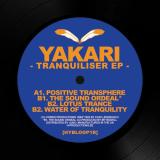
Cari Lekebusch is one of the architects of the Swedish techno scene whose influence naturally spilt out over the wider European landscape as part of the second wave in the late 80s and early 90s. Under his Yakari alias, he explored a tear-jerking and trance-infused style that was about looking outward to distant worlds beyond our own. This EP is a classic example and was originally released in 1994 on Loop Records. 'Positive Transphere' is an absorbing opener with dirty bass offset by sprawling synths, 'The Sound Ordeal' gets darker and more involving emotionally, before 'Lotus Trance' explodes in bright colours and new age love. 'Water Of Tranquility' is a more deep, insular closer. An EP that has aged perfectly and will still turn heads 30 years on.
Obelix is the brainchild of UK producers Richard George and Corine Trembath, whose timeless take on house and techno has long been cherished by underground heads and vinyl collectors alike.
With releases on Pacific Records, Mosaic and Stickman, their music occupies a distinctive space between early house and techno, raw, hypnotic and deeply musical, built around rolling 909 rhythms, expertly programmed 303 acid lines and the unmistakable character of analogue hardware.
Following an extensive dive into their DAT archives, Pariter presents The Lost Tapes, a collection of previously unreleased recordings made in the mid-1990s. Carefully restored and curated by Yossi Amoyal, the material retains all the rawness, warmth and analogue
character of the original tapes, offering a rare glimpse into a particularly fertile period of UK underground dance music.
The two part release is completed by Whatever, their sought after classic originally released on Offshoot, a timeless slice that stands alongside the unreleased recordings as an essential piece of the Obelix story.
The Lost Tapes documents a sound that has lost none of its power, raw, hypnotic and unmistakably timeless.
Unusual Traxx welcomes Young Adults, the Dutch duo who have been making their mark in the underground scene with standout releases on Mood Waves, Private Parts, Seven Hills, and more.
Their four-track EP is a powerful showcase of groove and sound design, built around solid basslines, otherworldly synths, and some of the strangest vocals you are likely to hear. Each track is designed for a different moment of the night, taking you deeper into dark, sweaty rooms where anything can happen.
Pressed on limited edition vinyl, with only 200 copies available. Once they’re gone, they’re gone.
Back after its first release, Life Enigma returns for a second chapter: a dark and warped dispatch from the void.
This time, the London-based artist of many aliases Zuul takes the reins, exploring moodier territory at the low end of the frequency. The result is three slow-burning, horror-flecked cuts that sit somewhere between electro and new wave, each driven by a sinister vocal. The release is rounded off by a more dancefloor-oriented remix from C.ru.z on the B2.
On the A-side, My Mind Is Mean is a driving, sub-heavy opener with menacing synths that do the title justice. It's Hell In There, It's Horror shifts into something more melodic and upbeat, with eerie textures and an ominous undercurrent.
And when we thought things couldn’t get any meaner, Ask Me sinks into haunted, mid-tempo bass hypnosis on the flipside, while C.ru.z’s remix leans further into its darker side with an even nastier groove.
In 2023, Kraków-based composer Martyna Basta and Los Angeles-based sound artist claire rousay were invited to Poland by Unsound for a short residency, where they spent a few days trading ideas and concepts, and brainstorming their first collaboration. Initially motivated to create lengthy, expansive pieces together, they also ended up experimenting with shorter vignettes, and ‘hotel room’ expresses these two extremes, featuring three long-form tracks and three brief, euphoric songs. “It wasn’t something we specifically planned,” explains Basta. “It just unfolded that way.” The most important stage of the process, however, was the period that followed the residency, when rousay and Basta began working on their sketches in isolation, trading drafts and sculpting the sounds independently before rousay handled the final mixdown. In the comfort of their own bedrooms, they were better able to reflect their individual creative routines, organically reaching a junction where their music felt truly unified. Even while they were in Poland, the duo joked that it might have been easier if they’d been holed up in separate rooms emailing each other.
Both artists have had an energetic few years: after steadily building a reputation for her diaristic and candid concrète experiments, rousay signed to Thrill Jockey in 2023, releasing the acclaimed ‘sentiment’, ‘a little death’ and the more eaze collaboration ‘no floor’; Basta, meanwhile, followed up 2023’s hallucinatory ‘Slowly Forgetting, Barely Remembering’ and her debut for Belgium’s Stroom imprint, ‘Diaries Beneath Fragile Glass’ with a studio album on !K7’s 7K sublabel: ‘Winged in Collapse’. The title of their collaboration reflects rousay and Basta’s hectic touring schedules in the wake of these releases, the constant feeling of displacement and the emotions that emerge when the environment is in flux. “I know we aren’t the only musicians traveling and creating work at the same time,” says rousay, “but being able to speak about that experience and all the things that come with it was comforting.” And the music itself, assembled from hypnagogic field recordings, spectral voices, electronics and filtered instrumental improvisations, sounds bewitchingly unmoored, not tied to a specific location but hovering around the uncanny space in-between.
Scratchy ASMR sounds introduce us to the opening track ‘zoom’, initially obscuring the duo’s elegiac harmonies. They are careful to let the various elements evolve at their own pace, with the fictile guitar drones melting into the foreground while Basta’s dissociated whispers and rousay’s illusory synths pick out the subtlest subliminal shades. It all builds to the piece’s dramatic third act, when layered chords ring out like organ blasts, enveloping the negative space. The shorter, more anxiety-provoking ‘denim’ is remarkably divergent, a dismantled folk memory pieced together from skeletal piano notes, vaporous choral echoes, haunting string plucks and pulsating feedback. Where the music aligns is in the mood itself, capturing a feeling that’s neither completely abstract nor fully referential. Not ambient exactly, ‘hotel room’ is a suite of soundscapes that gesture towards structure while repeatedly folding in on themselves.
On ‘Lost and Found’, wordless Autotuned ad-libs spiral around delicate guitar plucks and washing waves, coalescing into a faded Polaroid of opiated Americana, and on ‘Where Are You Now’, operatic squeals and corroded orchestral scrapes are juxtaposed with nauseous low-end tones. Evaporating until only industrial whirrs and music box chimes remain, the latter encapsulates the entire album’s chilling liminality, smudging saturated voices with casual electro-acoustic interjections before it erupts abruptly, transforming into a dense, pitch-skewed hymn. ‘hotel room’ plays like a surreal travelogue, teasing listeners with airy familiarities as it humidifies dry, awkward spaces. More a labyrinth of catacombs than a single, fixed chamber, it’s Escher-like – cryptic and seductive – and decked out with personal asides and intimate details that reward the most patient, curious listeners.
Devo Marries Gritty Guitars with Expansive Keyboard Canvasses on Duty Now for the Future:
Transitional Album Furthers the Band’s Satirical Stance, Includes Cover of “Secret Agent Man”
Hear the 1979 Record in Audiophile-Grade Sound and at 45RPM for the First Time:
Mobile Fidelity’s Numbered-Edition 180g 45RPM 2LP Set
Benefits from Enhanced Definition and Presence
1/4” / 15 IPS Dolby A analogue master to DSD 256 to analogue console to lathe
“Pop music needs a big enema.” Devo created Duty Now for the Future with that mission statement, relayed to the press by co-founding bassist/vocalist Gerald Casale, in mind. Though unfairly pegged by some as an example of the common sophomore slump, the record spurred the group’s interest in electronic instrumentation, extended its penchant for biting social satire, and contained another transformative cover song in the form of “Secret Agent Man.” Above all, the 1979 work proved the Ohio pranksters were anything but a joke even if they would have to wait one more year until for their mainstream breakthrough.
Sourced from the original master tapes, mastered by engineer Krieg Wunderlich, pressed at Fidelity Record Pressing in California, and housed in a Stoughton gatefold jacket, Mobile Fidelity's numbered-edition 180g 45RPM 2LP set presents Duty Now for the Future in audiophile-grade sound. Benefitting from the extra groove space on this first-ever 45RPM version, it plays with enhanced definition, deep-black backgrounds, and ultra-quiet surfaces.
Though certain band members later expressed regret with some of his decisions, the merits of Ken Scott’s production emerge like never before. A lurking edginess serves as a signpost in Devo’s progression before it fully embraced keyboards as a primary tool. Guitars possess punch and grit and, along with the crisp arrangements, are sharpened with an ear toward accuracy and vibrancy. It all helps give Duty Now for the Future a direct immediacy that answers the complaints of listeners who felt the affair too processed or sterilized.
Notably, a majority of the material here stems from the same grab bag of songs Devo banked before Warner Bros. signed it to a deal. The album marks a capstone to Phase One of a career that for all intents and purposes began in 1973. And just like many of the group’s performances of that era, Duty Now for the Future remains just as famous for the critical disdain it inspired as the music itself. A vicious review in Rolling Stone — the very publication that a few decades later would trumpet the band as one of the most important of its age — ended with the writer offering to send readers shards of the LP he planned on smashing to bits.
Perhaps he just needed to experience this new-wave effort with the restored sound that makes everything now feel so explosive and urgent. Whatever the case, the songs hold up and, amid a contemporary period which gives increasing license to artificial intelligence and behemoth conglomerates, seem more apt than ever before.
Consider “Blockhead,” which skewers the predictable appearances and numb-to-the-world actions of a rule follower. Or the similarly themed “Clockout,” an uptempo ditty whose thumbing-its-nose bravado and sardonic lyrics send up corporate culture with an irresistible smirk. As for the wiry, hard-hitting urgency of “Wiggly World” and Mark Mothersbaugh’s loud declaration that “They say the fittest shall survive/Yet the unfit may live”: Evidence these art-school rabble-rousers still had some punk fury to flush out of their system. And the sincere allure of the charged power pop and wishful circumstances of “The Day My Baby Gave Me a Surprize” cannot be denied.
To point to an interesting bit of history that makes Duty Now for the Future all the more intriguing, particularly for the most committed Spuds, more than half its tracks were selected for Greatest Misses — a 1990 anthology that celebrates lesser-known cuts and functions as a rejoinder to a hits compilation from the same year. (The only track from the 1979 album to make the “hits” disc: “Smart Patrol/Mr. DNA.”)
Indeed, tunes like the riff-driven albeit controversial “Pink Pussycat,” atmospherically twitching “S.I.B. (Swelling Itching Brain),” and ceremonial instrumental “Devo Corporate Anthem” may lack the catchy appeal and all-together coherence of what follows on the group’s third and most commercially successful effort, Freedom of Choice. Yet in order to get there, to de-evolve if you will, the band needed the smorgasbord that is Duty Now for the Future.
Move in Stereo: The Cars’ Eponymous Debut Album Functions as a Greatest-Hits Set with Classics Such as "You're All I've Got Tonight," "Good Times Roll," and "Just What I Needed"
Experience the Six-Times-Platinum Record in Definitive Sound on
Mobile Fidelity’s UltraDisc One-Step 180g 45RPM 2LP Box Set:
Strictly Limited to 4,000 Numbered Copies,
It Plays with Reference Definition and Presence
1/4” / 15 IPS analogue master to DSD 256 to analogue console to lathe.
Among the most critically and commercially successful debuts in history, the Cars' eponymous album doubles as a greatest-hits collection. Not one song on it is widely unrecognized or unknown. Consider the list: "You're All I've Got Tonight." "Good Times Roll." "Just What I Needed." "Moving in Stereo." "My Best Friend's Girl." "Don't Cha Stop." “Bye Bye Love.” Just call The Cars the best new-wave rock album ever made. And a natural candidate for preservation on a Mobile Fidelity UltraDisc One-Step pressing.
Sourced from the original analog tapes, pressed at Fidelity Record Pressing in California, mastered by engineer Krieg Wunderlich, and strictly limited to 4,000 numbered copies, MoFi’s UD1S 180g 45RPM 2LP box set presents the six-time platinum record in the most vivid, wide-spanning, three-dimensional sound it has enjoyed on vinyl. Compared to the label’s outstanding and out-of-print 180g 33RPM version, this collectible edition features richer textures, broader openness, greater presence, and bigger dynamics.
Benefitting from the extra groove space on 45RPM by playing with enhanced definition, deep-black backgrounds, and ultra-quiet surfaces, this reissue portrays the band’s oscillating rhythms, futuristic keyboard passages, and panned images with stunning realism. Songs take on an absolutely surreal quality. The Cars and producer Roy Thomas Baker manipulate arrangements at will to mesmerize listeners' senses. The concept of "moving in stereo” has likely never been truer.
The industry-leading packaging of the UD1S set gives fans another reason to gravitate towards the 1978 album. A deluxe slipcase, two foil-stamped jackets, faithful-to-the-original graphics, and MoFi inner sleeves make for a premium tactile experience. It invites you to immerse yourself in everything about the record, including the now-familiar cover art depicting Nataliya Medvedeva behind the wheel. Enhanced by her glistening ruby-red lips, her face flashes an expression caught between surprise, ecstasy, and disbelief — an apropos way of responding to The Cars whether you’re hearing it for the first or 1,115th time.
Introduced in 2024 into the National Recording Registry for its significance, and ranked the 353rd Greatest Album of All Time by Rolling Stone, The Cars explodes with emotion, energy, and hooks. Its songs unite then-disparate styles: bubblegum melodies, art-rock angularity, progressive structuralism, terse minimalism, and power-pop sheen. The stylish arrangements also benefit from a laidback cool and understated irony that remain uncommon in the world of contemporary mainstream music.
Equally rare is the deep chemistry the members shared before they entered London’s AIR Studios and knocked out the record in less than a month. Benjamin Orr and Ric Ocasek began their first band together in the early ‘70s. A subsequent group with future Cars keyboardist Greg Hawke preceded Orr and Ocasek bonding further by temporarily performing as a duo. One final pre-Cars ensemble, Cap’n Swing, brought guitarist Elliot Easton into the fold. A decision by Ocasek to take the band in a rock direction, a crucial lineup shuffle, and a name change begat the Cars so many listeners know and love.
Already a going concern in Boston, the quintet cut its teeth and woodshopped songs for nearly a year and a half before signing with Elektra and partnering with Baker. The Cars enjoyed success right out of the gate, hitting No. 18 on the Billboard Top 200 chart and netting a pair of Top 40 singles in the form of “Just What I Needed” and deceptively happy “My Best Friend’s Girl.” The sarcastic “Good Times Roll” climbed to No. 41, but soon enough, almost every track on The Cars became a radio staple — an honor far more meaningful than chart positions.
Obsessed with incorporating the latest technologies and sounds into its palette, the band spiced tunes with delightful and quirky accents — country-tinged guitar fills, echoing Syndrums, reggae splashes, hard-rock tones, robotic pulses. Orr's low, nuanced deliveries and Ocasek's cool, detached vocals lend shades of doubt and double meaning to the lyrics, which are further counterbalanced by synthesizer flourishes and electronic beats.
Accessible and eccentric, edgy and catchy: The results comprise a landmark whose characters come to vivid life with nuclear boots, dry-drip gloves, ribbon-festooned coiffures, suede-blue eyes, and rock ‘n’ roll hair. It's practically impossible to avoid humming along to every song, all enhanced by Baker's stellar production. Best known for his work with Queen, he ensured the record packed a punchy midrange, opened up with instrumental and vocal separation, and breathed with airy harmonies.
Indeed, from the timeless music to the sleek production and sonic restoration, The Cars on UD1S is just what you needed.
Music From Memory presents 'Mood Programs – Extended Play', a two-track release by LA MARR, a new project conceived by Ron Trent. Representing the first in an ongoing series of releases on Music From Memory, ‘Mood Programs - Extended Play’ opens a new chapter within Trent’s deep and continually evolving body of work, rooted in mood-driven composition, spatial depth and the emotional resonance of sound within physical space.
Influenced by ambient and environmental music, New Age, dub traditions, New Wave, Krautrock and HiFi sound system culture, LA MARR reflects many of the formative ideas that informed Trent’s evolving approach to sound and sonic architecture from the early 1980s onward. Rather than revisiting these influences nostalgically, the project recontextualises them through a contemporary production language, balancing analog warmth with precision and spatial depth.
Developed through years of sonic experimentation and research into the physical and psychological qualities of sound, LA MARR extends Ron Trent’s long-standing interest in the relationship between rhythm, acoustics and human connection. Built through a combination of analog processes and contemporary computer-assisted production, the project explores warmth, resonance, depth and sonic clarity through carefully sculpted environments of tone and texture.
Gently unfolding within a spacious, ambient-leaning framework, 'Mood Programs – Extended Play' moves beyond passive background listening toward something more intentional and immersive. Across both tracks, ‘Good Magic’ and ‘Clear’, layers of hypnotic synthesizer arpeggios and gently floating pads gradually unfold alongside organic percussion and subtle low-end movement, creating compositions that feel simultaneously meditative, physical and emotionally responsive. Sound is treated not simply as musical information, but as an environmental force capable of shaping perception, mood and awareness within a room.
'Mood Programs – Extended Play' will be released digitally and on vinyl through Music From Memory on July 15th. Sleeve art and design by Michael Willis.
Key To World Peace is the third release by Prophetic Justice Ministry - aka Australian musician Sam Perry. An atmospheric, cinematic album that belies a striking pop songwriting nous at its core, its conductor Prophetic Justice Ministry is at the centre of a new wave of creative, rule-bending Melbourne artists. Romantic, smudged and hazy, Perry emerges from behind a wall of
half-light with a clutch of earworms and affecting emotions.
Recorded in home studios in Belgrade (Serbia), Christchurch (New Zealand) and Melbourne (Australia) over the course of three years, Key To World Peace offers a dichotomy in approach. Shifting on a dime between ambient, filmic washes of sound and more traditional song structures, the approach feels natural, casually acid-tipped and emotionally revealing. While Perry’s
distinctive keys and production melding with melody is evidenced in Melbourne group Who Cares?, as Prophetic Justice Ministry there’s a heightened sense of mystery and space being used.
Swirling in a psychedelic fog with dry iced chords falling down like melting stars, the album pulses with an ominous, distorted intro that sculpts air into blocks of sound before Psyop offers a glimpse through the gloom at the artist navigating through crushed, shoe-gazing chords, singing a consolation into an abandoned building. Side A’s more abstract tone veers from industrial tracks (T-A) to pastoral, impressionistic pieces (Trance) before album highlight Life’s A Party showcases the effortless, classic songwriting lurking in Prophetic Justice Ministry. Built on the tension between the upbeat lyrics and suppressed, rich delivery, the song lopes on an alluring loop with acoustic guitars and Perry’s voice walking a tightrope between irony and sincerity. The song blooms into a bright burst of light, almost inducing synesthesia in the listener and reminding a little of The Beta Band’s most outre and catchy moments.
Opening Side B, Naked Shine’s scintillating guitar is punctuated by a sub bass swell that offsets the yearning vocal performance. With palpable sensitivity the song is shepherded into short, atmospheric passages before Love Drum’s direct delivery: Perry’s vocal and guitar, dancing over a hint of distortion feels like Syd Barrett at his most casually brilliant. Carrying on the tradition of a single cover on every Prophetic Justice Ministry release, here Lana Del Rey’s Mariner’s Apartment Complex is given a stripped back but faithful treatment. With a sound that feels like a hushed, Chris Isaak classic it’s testament to Perry’s own compositions that the cover doesn’t outshine the rest of the album. Album closer and single Spirit House Party combines a classic chord progression with Perry’s double-tracked vocal into a murky but brilliantly catchy chorus. While nowhere near as lush in its production, there’s something in the atmosphere of Prophetic Justice Ministry’s vocal sitting in the mix just so that reminds us of The Electric Prunes’ Holy Are You-era work with David Axelrod.
Key To World Peace flits between displaying a spectrum of blurred emotional resonance in its instrumental passages and vulnerability in the shape of raw, melodic songwriting. With his first release outside of Australia and vinyl debut, Sam Perry’s Prophetic Justice Ministry is a beguiling dance in and out shadows.
As Selofan's fifth studio album, Vitrioli, from 2018, is a testament to the tragedy of life. The Greek duo, Joanna Pavlidou and Dimitris Pavlidis, who recorded the album in the Fabrika Records home studio, continue on in their poetic, but heartbreaking, music set to a dance beat. Between languages (Greek, English, German, and Spanish), Selofan feels on the brink of mania with Vitroli. However, the madness is controlled, the songs are restrained hysterics that culminate into the alchemic perfection of the band's specific moody sound.
From synthpop to synthpunk elements, the twelve-track LP leads listeners through dark corridors and into haunted, empty beds. There is a resignation to a doomed destiny with Vitroli—a trait that connects all Selofan releases—as a bitter pain and loneliness that cannot, or will not, subside.
The album begins with "Give Me a Reason" whose lyrics feel universal in this day and age: Give me a reason, to get out of bed / I could just watch the ceiling instead. Its heartbreak is profound as bells and voice pads echo under Joanna's voice. The adjacent music video for the song was directed by Dimitris Chaz Lee, and the band describes the video as "depicting the fragile nature, conflicts, emotional demands, and vulnerability of each person in a relationship."
"Billie Was a Vampire" is a story about an undead creature who works at a nightclub followed by the urgency of "Black Box." Brass sounds moan against the fast beat and suggest a frenzied need to escape.
"I'm Addicted" became the second single for the LP. I am addicted, you are mine, Joanna demands of the lover. The music video, also directed by Dimitris Chaz Lee, depicts a clean, white photoshoot primed for the most beautiful creatures of the Athenian wave scene. Alex Macharias, from the legendary Greek band In Trance 95, acts as the photographer for the session, as the models pose and flail under the bright bulbs. The director states: "Addiction is a mental state, something inside all of us. It altered our perception and created a parallel world of avant-garde beings and flashy lights making us part of this everlasting bond."
Knowledge The Pirate returns with a powerful new statement with his new album, The Round Table, which is now available. The Round Table is produced in its entirety by longtime collaborator and legend Roc Marciano through his Pimpire International imprint.
With roots in New York’s revered ‘90s hip-hop scene, Knowledge The Pirate has steadily built a reputation as one of the genre’s most consistent and authentic voices. A frequent Roc Marci collaborator and key figure in the modern underground renaissance, Knowledge fuses golden-age grit with new wave innovation—bridging generations while staying firmly rooted in New York’s timeless sound.
Since his 2018 debut Flintlock, Knowledge has carved a lane entirely his own through his label Treasure Chest Entertainment, Inc. With five acclaimed projects under his belt, including the recent 5lbs of Pressure, he continues to deliver unfiltered street wisdom and personal reflection in every bar.
The Round Table stands as a testament to his evolution—an uncompromising body of work laced with Roc Marciano’s signature production and Knowledge’s lived-in lyricism. It’s not just a record—it’s a meeting of the minds, an audio council of kings.
“The Round Table is cinematic storytelling, teaching street knowledge, eating etiquette that will save your life” Knowledge professes. “This album is like an Honorable Elijah Muhammad book; How To Eat To Live. Produced fully by the true creator of the new wave sound, Roc Marciano, you are all invited to a seat at The Round Table; and break bread with the true Godfathers of this new wave rap renaissance.”
A sprawling, meditative journey into inner and outer space, the new double album from Ivan The Tolerable sees Oli Heffernan retreat fully into the solo realm - crafting an expansive sonic world that feels both intimate and cosmic in scope. Recorded entirely alone and released via Riot Season, this latest work drifts away from structured forms and toward something more fluid, exploratory, and transcendent.
Drawing on the devotional atmospheres of early ambient pioneers and the hypnotic pulse of kosmische music, the album unfolds as a series of slowly shifting soundscapes—analog synths breathing in long, patient waves, tape loops dissolving into shimmering drones, and melodies that seem to emerge from nowhere before gently receding again. There are echoes of ritual, of vast landscapes, of time stretching and folding in on itself.
Across its two discs, Heffernan embraces a deeply immersive approach—less concerned with destination than with the act of drifting itself. It’s music that invites stillness and surrender, equally suited to deep listening or quiet disconnection from the noise of the everyday.
Unbound by genre yet rooted in a rich lineage of experimental sound, this is Ivan The Tolerable at his most introspective and transportive - a double album that doesn’t just ask for your attention, but your presence.
“Twenty-five years into their existence, The Album Leaf are an old comfy sweater. It might not be the most fashionable thing in your collection but it always feels good when you put it on. Jimmy LaValle’s synth textures are warm, nostalgic and steeped in Boards of Canada / Ulrich Schnauss-style soundscapes that are relaxing, otherworldly and melodic” – Brooklyn Vegan
The Album Leaf shares his new ambient LP, Rotations. The record is a mediative experiment into atmospheric sound. Creator Jimmy LaValle explains, “This collection of music is a true reflection of my creative process—rooted in sound exploration, experimentation, and spontaneous response. Each track captures a moment of creative discovery, free from the pressure of achieving a polished result. Throughout my career, I’ve often placed significant weight on what an album should be. With this release, I’ve let go of those expectations to share a body of work that feels genuine and authentic.
The Album Leaf began as the solo project of Jimmy LaValle, who came up in the San Diego music scene playing in hardcore bands and the instrumental rock band Tristeza. He had inked a deal to release his next solo album through the indie label Tigerstyle Records, so he put the modest advance towards a self-recording starter setup, building out the sound with occasional studio access. The music that emerged — vivid, rhythmic, soaring instrumentals guided by lines of Guitar and Rhodes — not only set the path for The Album Leaf over the next two decades of acclaimed releases (for Sub Pop, City Slang, and others), it became a touchstone for the next generation's wave of melodic and meditative electro-organic music.
Freerange welcomes Italian via Berlin producer/DJ/label boss Enzo Elia for his debut on the label entitled The Lost Guitar Tapes. Enzo is someone who has been releasing consistently great music for many years, although
often hidden behind a myriad of pseudonyms and underground imprints. For starters he's responsible for a mysterious yet established and very excellent edits label as well as being a member of Balearic Gabba Sound System alongside Bjorn Torske amongst others. Following the philosophy of this collective, Enzo is also producing lovingly and respectfully created re-edits of long lost techno and house tracks as well as many new tunes
for influential labels including Golf Channel and Compost.
But for now we turn to The Lost Guitar Tapes and specifically the original mix of Drifting which opens up the release with a brilliant tension builder. A rolling bassline, crisp minimal drums and a subtly Middle Eastern-influenced melodic line give just a hint of mysticism to this jewel of a track.
For the remix we have none other than the Tel Aviv via Berlin producer Moscoman, fresh from his brilliant debut LP on ESP Institute and releases on Eskimo and his own Disco Halal label. Moscoman's organic, percussion- heavy sound and Middle Eastern roots make him the perfect choice to take
on Drifting and we couldn't have wished for a better outcome. He manages to inject his own identity to the track with newly recorded live guitar and bass parts and taking in elements of techno, new wave and house, he's created a sublime piece of dancefloor drama. Finally we have an alternate Dub version which lays down a firmer four on the floor, extra percussion and dubby stabs for a more driving atmospheric club tool.
Returning to Samurai Music following last year's Between Veils, Sciama opens up a new portal of exacting sonic exploration with Wave Interaction. Moving through dense drone shrouds, steely sound design and tense, taut rhythms, Michael Watters lays out a manifesto for waveform resonance within the half-time D&B tempo range. Wave Interaction is the precursor to a forthcoming album that will lay out a purposeful study of the interaction between machine-made sound waves and human perception, inspired by the teachings of early electronic music pioneer Daphne Oram. As an opening statement, 'Cele' maximises on a patient, spacious arrangement that allows the carefully sculpted layers of waveforms to resonate with minimal distractions. Far from minimal, it's a dense and evocative sound world Watters builds up. 'Excitation' brings more detailed percussive sequencing into the mix, teasing pin-prick snatches of breakbeats and designer ripples that dart around the psychoactive tonal elements in the mix. 'Intermodulaton I' opens the second half of Wave Interaction on a crisp, stepping beat more than ready for the club. As ever, functionality is only one part of the picture as further uncanny sheets of ambiguously tuned synth work unfurl across the austere framework. 'Shifting Formants' has a knottier, tunnelling quality that joins the dots with techno hypnotism, made all the more immersive by the harmonic overtones radiating off the vibrant lead lines that give the track its distinctive character. Guided by a clear intention and a finely honed studio practice, the return of Sciama hails an impactful addition to his considerable catalogue and tees up further compelling exploration on the impending long player.
MASK Records founder ZentaSkai joins forces with Berlin-based creative Laura Merino Allue under the name Cuddling Monsters, a project centered on analog processes and tactile sound design. Debuting in March 2024, the project explores Detroit-infused House, dub Techno, and minimal soundscapes shaped by raw texture and spatial depth. Working exclusively with analogue instruments, the duo prioritise warmth, imperfection, and presence over polish. Alongside her music work, Laura Merino Allue is also a graphic designer, bringing a strong visual identity to the project’s wider aesthetic.
‘Cuddling Monsters' is inspired by real-life experiences — the raw, imperfect, beautiful moments we move through. We believe in staying present, feeling everything deeply, and embracing the analog flow of the now. It’s about living the moment fully — and like a cuddle on the dancefloor, creating a space where sound holds you, warmth surrounds you, and even the wildest monsters feel safe enough to soften.’ -
Cuddling Monsters
The Cuddling Monsters ‘Vol. 3’ EP opens with ‘Bubble Bloom’, a melodic house track featuring warped, filtered synth tones that set a hazy foundation before a dub-leaning beat settles in. It’s layered with aquatic, bubbly textures and fragmented samples, adding warmth and movement. ‘Warm Waves’ shifts into a lighter, more atmospheric space, increasing the tempo slightly while maintaining a restrained, ethereal character. The B-side closes with ‘Secret Signal’, a long-form techno piece stretching over ten minutes, where evolving synth lines gradually merge with soft, dubby drums and analogue percussion, building steadily without excess before easing out.
Double vinyl reissue of Skullflower’s epochal “IIRD GATEKEEPER” album - the first time that this album has been available on vinyl for 30 years. In addition to the original LP this definitive and expanded edition includes extra and unreleased tracks taken from the recording sessions. For the first time all the tracks recorded by the band during this period can be heard together giving fans unprecedented access to material previously only available in the bands’ archives. Recorded in London in 1991 and released in 1992 on Justin “Godflesh” Broadrick’s HeadDirt label in 1992, IIRD GATEKEEPER established a worldwide reputation and following for Skullflower and convinced many who heard it that they had encountered nothing less than the best band on the planet. Arriving at the height of the “grunge” and the expansion of underground guitar “rock” into corporate America, IIRD GATEKEEPER had its roots deep in the UK noise and power-electronics scene. Guitarist Matthew Bower and bassist Anthony Di Franco were both graduates of the Broken Flag school of British noise making with their respective projects PURE, TOTAL and JFK. IIRD GATEKEEPER was Skullflower’s third album and was the first of the band’s albums to feature a consistent line-up throughout its production: Matthew Bower (guitar), Anthony Di Franco on (bass) and Stuart Dennison (drums). Recorded and mixed in four sessions between January and June 1991the tracks on this edition of IIRD GATEKEEPER shows the band’s new line up developing their sound, warping and evolving in real time. As such this edition of IIRD GATEKEEPER provides a unique document of the band in a state of transition, with the chemistry of the individual playing combusting in the studio to create a wave of astonishing creativity. IIRD GATEKEEPER is perhaps the definitive British underground rock album of the 1990’s – unique and never equalled. With this new edition Dirter Promotions allows Skullflower fans old and new to listen to this classic album as it was intended: spark up, crank it up and prepare to have your ears and mind blown
New 4-track Ep From Austin, Texas Analogue Hardware Enthusiast Bill Converse. Immersed In The Early Days Of The 90s Midwest Rave Scene, Bill Began Djing At A Young Age In Lansing, Michigan. Luminaries Such As Claude Young, Traxx, And Derrick May Were Key Early Influences. Techno, Noise, Ambient And Tape Processing Are All Part Of His Uncanny Sound Palette. His Debut Album 'meditations/industry' Was Released On Cassette In 2013 And Edited For A Vinyl Release On Dark Entries In 2016 Followed By Two 12' Singles 'warehouse Invocation' And '7 Of 9' The Same Year. In 2017 Converse Released His Second Album 'the Shape Of Things To Come' Followed By The Double Ep 'salt Of Mars'.
'hulled' Is A 25 Minute Journey Spread Across 4 Tracks Of Glacial Abandon. All Tracks Were Recorded Directly To Tape With No Overdubs, Made At Converse's Home Studio. Bill Says These Tracks Represent 'ocean Waves In Stormy Conditions, Dark Grey Blue Water, Or More Generally Speaking Something Ominous And Beautiful.' The Songs On This Album Reveal A Sublime Influence From Detroit Techno, Idm, And Acid. Built Around Vintage Synthesizer Lines And Gritty Drum Machine Percussion, The Tracks Ebb And Flow Like The Effect Of Sun Shimmering On Water, Woozy, Gauzy And Ephemeral. All Songs Were Mastered For Vinyl By George Horn At Fantasy Studios In Berkeley.
Each Ep Is Housed In A Die-cute Jacket Designed By Eloise Leigh With Peachy Pink Patterns Landing On An Alien Water Planet And Seeing Mysterious Playing Forms Under The Turquoise Water. Each Copy Includes A Postcard Featuring Photo Of Bill With Notes.
On this recording, one can hear both resolve and farewell. Just before departing for the United States, Masabumi Kikuchi pours himself into these now-legendary compositions.
Gifted with a singular artistic voice and a keen sense of his time, Masabumi Kikuchi established himself as a pianist of international stature. In 1973, he relocated his base of operations to New York. Recorded immediately before that move, End For The Beginning captures a studio live performance held in front of invited fans, documenting a pivotal moment in his career.
During this period, Kikuchi was exploring innovative sounds through the use of electric instruments and unconventional ensembles. Yet on this album, he returned to a more traditional format: a two-horn frontline backed by a piano trio. The program consists entirely of five original compositions by Kikuchi himself.
The determination surrounding his imminent departure fuels the music's intensity, while the sense of farewell evokes a distinctly Japanese emotional depth. Masterpieces such as “Shuuu”, “GinKai”, and “Green Dance” emerge like waves from beyond an atmosphere charged with tension and anticipation. Each performance unfolds with remarkable focus, lyricism, and power.
A work of striking conviction and emotional resonance, End For The Beginning stands as one of the defining achievements of Kikuchi's career and a fitting summation of his artistic vision.
For thirty years, Alden Tyrell has been at the forefront of electronic music. This analogue alchemist has concocted heady grooves that transmute genres: acid, disco, electro, house, italo and techno; no style left unturned. Under his Tyrell Corporation moniker, he returns to the Bordello with a sound forged for dancefloors. Midnight Machines is a warm embrace that melts electro‑disco with star‑gazing synthlines. “Midnight Machines Pt. 1” balances robust melodies and incising snares with soulful undercurrents and joyous breaks. Past energies are re‑channelled. Arpeggiators rumble as beats throb. Beneath it all, there is a greater consideration of the interplay of elements.
This focus pulsates through speaker cones on the needle‑drop of “Love in Decay.” Elated key changes and bright shifts are tempered by bittersweet moments, early‑morning light piercing fresh mists of grey. Tempos rise on the flip with “Midnight Machines Pt. 2.” Sci‑fi‑scored disco lifts ever higher as scaling notes untether themselves from the floor and soar above vibrant rhythms. Coy and alluring, the bright “Romance Obscura” closes the record. Cowbells and bending wavelengths open into an expansive, intoxicating melody where keys search the horizon as arms fold around celestial bodies.
In a dystopian universe where elites manipulate memory to control the population. Vibracid emerges as a technique of liberation through sound: a method for erasing induced memory.
THE RHYME marks the counterattack phase. The insurgents infect the system used by the elites for control and reprogram it from within: patterns, voices and sequences as active code.
Contemporary bass, electro, breaks, acid and rave converge as transmission vectors. Each track operates as a unit of intervention within this science fiction scenario.
At this stage, new signals are incorporated. Power, with a solid trajectory within the underground circuit, opens the EP in a forceful way, with an acid, surprising and spectacular impact. Exieve, a young producer from Chernihiv, continues the attack with a raw tension where vocals cut through the signal like sharp fragments. Alongside them, Lups Digga, Atix, Parand and Calagad 13 continue expanding the system’s reach.
After the dissolution of his wave-making duo project Ameli Paul, Berlin based musician and producer Paul Valentin aims to venture down new roads and finds help from illustrious folks like Liv Lisa Fries, DJ Koze, Thomass Jackson and Philipp Fein along the way. Valentin’s debut EP on Feines Tier marks his first solo release in 10 years and is a colourful journey through sonic worlds and emotions in the continuous search for his own sound.
Opener ELVAU is a collaboration with actor Liv Lisa Fries built around their intimate voice recordings which are woven delicately into a dreamy web of shimmering synths atop pulsating break beats that would make Bicep proud. For his remix, His Kosiness, the Tripsitter Himself also known as DJ Koze follows the breakbeat path further down, gleefully taking all sorts of wonky and fun diversions on the way, which makes one hope that the ride never ends.
Follow-up tune MALFUNCTION is a more straightforward affair with its rolling synth arps and is - in Valentin’s own words - “about personal failure, dissolution, and the distortion of the self“. Equally dark under- and overtones are throwing shades over WHATTHE!, dealing with anger and transformations, resulting in a banger for the heavier moments on the dancefloor or the mind between your headphones. The EP closes on a more hopeful note with LISTEN, which stands for „everything that could be, if we listened to each other“. And it’s never a bad idea to listen to chirping 303 basslines, especially when paired with melancholic synth pads and weird vocal samples, as is the case here. The rework of Thomass Jackson and FT-head honcho Philipp Fein feels beautifully anachronistic with its reduced tempo and could have been something Andrew Weatherall would have played when he was still playing our earthly dancefloors.
Compounding a reputation for his unique vision on techno with an uncompromising underground ethos utilising a fusion of deep and energetic electronics, Lee’s sound always creates a myriad of tension and construction which has seen him become one of techno’s elite, appearing in the most prestigious underground venues across the planet. His consistently original and dynamic productions, which have earned him much international ecognition, are frequent and in great demand. Appearing on many impeccable cutting edge and classic imprints over the years, Lee’s music has generated relentless plays and support from the brightest and leading connoisseurs in the underground techno scene.
Continuing with the ‘Limited As Fuck’ series of releases, on our fiercely independent techno label based in Scotland, we’ve got an electronic guardian of such resolute astral belief in how the purest of dance music should be relayed to the occupants of any Celestial City. You will believe in RIOT when we say “The ‘Sentinel’ has awoken.”
Featuring eight tear drops out of the smoke fuelled rain from a distant belt in the galaxy, no ‘Moonrunner’ will be able to surf the ‘Gravitational Waves’ this Motor-City inspired journey takes you on. Book yourself passage on the Starliner ‘Off-World’ for a stargazing extravaganza into ‘The Gates Of Orion’ and witness the brightest of glimmers ........... in the dark.
The full digital release also features one bonus spellbinding track so your mind can melt into the depths of
space and time.
WARNING: YOU WILL OBEY IN ORDER THAT RIOT CAN TAKE YOU ONE STEP BEYOND …………….
Credits:
Written by Lee Holman
Mastered by Joe Farr
Artwork by Alan D. Oldham & Nomad
After finding their feet with a couple of remixes for Before I Die, Talking Drums ditch their sea legs and swap the pirate booty of their cult edit series for a five-track EP of original productions, each swimming in LinnDrums, digital chimes and synth-vox sunshine. Summer sounds abound as the crew refract house, disco, ambient and dub through shimmering sea glass, bringing the beach to the bar, club, garden or grotto.
Inspired equally by tropical Sceneries (but Not Songs), Ecco the Dolphin and Echoes of Wally, as well as a few tall tales about trendy whales, this 16-bit caper makes a splash from wave top to bikini bottom. Written and produced as a cohesive EP over three sun-baked weeks in 2025, and stitched together with field recordings and found sounds from Sicily, rural France, Japan and Singapore, Pier Pressure sees each track flow into the next: distinct seas that make up one larger ocean.
Opener ‘Fashionable Whale’ surfaces with mystic motifs and dreamy pads arcing above the spray before a purring low end and drum-box shuffle plunge us into Balearic house depths. A rippling breakdown, bookended by insistent arps, provides respite from the rhythm before the low-tempo pulse returns to take us home. Sticking with Zone 2 cardio, ‘Salmon Hats’ serves wonky disco at Valium pace, its beatific vox and glittering sequences underpinned by a hip-swivelling bassline and topped with a future-primitive melody. After drifting into dream house for a sunset lull, it’s back to the beat and the enduring question of how best to dance on a lilo.
‘Mangrove’ offers an intertidal intermission as tuned percussion finds a place among the cicadas and lapping waves, gently unfolding into an RPGambient ode to humid languor. Refreshed, albeit ailed by a sunstroke haze, we’re back on the dance floor with the optimistic motifs and jolly polyrhythms of ‘Flutti Di Mare’, an uptempo, Afro-adjacent house workout designed to inspire mile-wide smiles. Then the EP sails off into the sunset with the fathoms-deep delight of ‘Squid Dub’, a Cousteau-coded cod-reggae stepper with digi-dub bass, pound-shop marimba and all manner of THCtinged FX. Don’t be deceived by the loose and limber opening: a solid sequencer emerging at the midpoint sees the Squid squeeze every bit of bump out of the finale.
Forget ATOL protection - Talking Drums deliver your summer holiday directly to your stereo.
The Dead Mauriacs is the project of French artist Olivier Prieur, "Paravents et miroirs, une cérémonie" is a live soundtrack.
The Dead Mauriacs describe their music as "Exotica Concrete" - their music is composed of field recordings made on a daily basis, as well as a diverse collection of sounds, including piano, Indian harmonium, violin, ukulele, didgeridoo, pieces of wood, glass, paper, and metal plates. The album is a spectacular 40-minute sound collage, assembled by sampling Exotica music represented by musicians and arrangers such as Les Baxter and Arthur Lyman, who were active in the 1950s.
"Exotica is a musical genre or sub-genre that emerged in the 1950s in the United States with musicians and arrangers like Les Baxter or Arthur Lyman. It is an extraordinary music because it is false: bird calls imitate bird songs, you can hear the sound of the waves, it is a Western fantasy, particularly North American, of a world and an imagery that never existed. It is a music associated with mass tourism, mass entertainment, consumerism. Arthur Lyman recorded about 30 records in 10 years in Waikiki. With his band, they played and recorded under a geodesic aluminum dome. The dome belonged to the owner of the hotel he played for every night. They did this at night to avoid noise. It's music that is both profoundly naive and totally flawed. In this, it is seductive and intellectually interesting. It is music that could easily be criticized today, but it is an imaginary in itself, like the Italian film music of the 1960s and 1970s." (Excerpt from the calax's interview)
The Dead Mauriacs are not only involved in music, but also in a wide range of other creative endeavors, including video and painting. He also repsonsible for the artwork of this LP. The inside of the product is also accompanied by an 8-page interview with Mauriacs and compiled his amazing artworks.
The Dead Mauriacs
Paravents et miroirs : une cérémonie / Screens and mirrors: a ceremony
Side A
Courte dérive, une ouverture / Short drift, an opening
Le retour des insectes électriques / The return of the electric insects Les oiseaux étranges / The strange birds Tension, terreur factice / Tension, false terror
Dénouement malais / Malaysian ending
Rituels et vanités 1 / Rituals and vanities 1
Rituels et vanités 2 / Rituals and vanities 2
Italiens dʼHambourg / Italians in Hamburg
Side B
Secrets pour piano / Secrets for piano
La suite Monory, Padoue-Le Caire-Nassau / The Monory Suite, Padua-Cairo-Nassau Hommes à découper / Men to cut out Lassitude moite / Clammy weariness
Le soleil artificiel du pont croisière / The artificial sun on the cruise deck
Pirogues et palmiers, vus de la scène / Pirogues and palm trees, seen from the stage La traversée / The crossing Rideau / Rideau
Fields recordings : Semproniano and Siena, Italy, Figueira, Portugal, Charentes, France. An electrical wire with a frequency shifter gave birth to the insects. Real and fake piano. Everything made with a computer and a midi keyboard.
Music premiered at Hörbar, Hamburg, 28th of December 2017. Music (and video) Olivier Prieur.
Thanks to Thorsten Soltau and all people at Hörbar.
Hello to Felix Kubin & Marie-Pierre Bonniol, Julia & Jan Warnke. Kisses to Hélène.
“Nimm die rosa Brille … sag was Du siehst … alles viel besser”
44 years after its original release, one of the most idiosyncratic DIY minimal electronics / synth / new wave records of the early ’80s returns: the legendary 7” by German group DEUTSCHE SCHÄFERHUNDE (engl. German shepherds)—now remastered and reissued for the first time as a one-sided 12” on Anna Logue Records. Recorded in the winter of 1981/82 between rehearsal space, provincial disco and bar nights, and a humble four-track setup, these tracks capture the raw spirit of a generation that simply started creating—no formal training, but plenty of attitude. Minimalist, uncompromising, and inspired by krautrock, punk, new wave, electronic music and dub, the songs move between raw electronics, percussive noise, new wave experimentation, and sharp social commentary. „Rosa Brille“ (rose coloured glasses) in particular feels as urgent today as it did back then—a track that has lost none of its relevance, „Gasmasken“ tells of gas masks dancing in the woods to the sound of sirens, and a timeless Holger Czukay/Jah Wobble inspired „Mein Herz“ (my heart).
Originally pressed in a small run of just 500 copies and later becoming a sought-after collector’s item now worth 200€, the record now returns in a carefully crafted edition featuring a laser-printed reverse side and additional materials such as original lyric sheets and articles, postcard and poster. DEUTSCHE SCHÄFERHUNDE thrived on paradox—a provocative name paired with a clear stance, and lyrics that still resonate today. Shaped by Cold War tension, political unease, and youthful rebellion, their sound refused to fit into any neat category. Only few other bands, such as Der Musikant, Im Namen des Volkes, Thorax Wach, Klinisch Sauber oder Stephan Eicher spielt Noise Boys come to mind.
This release is more than a reissue—it’s a document of its time that still hits with full force.
12″ features: limited to 400 copies, hand-numbered, one-sided 180g black vinyl, laser-etched B-side, outer sleeve printed on reverse side of the board, printed inner sleeve with original lyrics sheets and original articles, DIN A3 poster, double-sided postcard
Alina Valentina ignores rule books. When it comes to making music, she bends genres to her own sound and vision. Acid, electro, synth wave, vocoders. All are melted to produce a bracing style that is floor focussed and strikingly individual. It is this distinctive perspective that The Hague based artist brings to Schrödinger’s Box for NPC Dream, eight tracks that map a journey that disregards genre limitations. The intent and mood are immediately set with the fierce “Air Slasher” plunging through the fog as kicks roll and beads of acid bulge. Raw electro is further coarsened by scything keys and vicious vocoder words in the title piece before the technoid mutations and pain-streaked “Echo of Ecco.” The ground is never stable, the direction and ideas darting and shifting to new sonic territory. Punishing and pure, “Mine Cart Madness” is EBM-encrusted cruelty. Tempos shift on the flip, the slow and cinematic atmosphere of “Pixel Swamp” feeding into the sinister and snarling snares of “Wishing Engine.” Paranoia and tension collide in the stabbing chiptune chords and spiking percussion of “Come Get Some”, acid barbs ballooning into a blistering barrage in this warped wrecking ball. “Light Warrior” is cut from the same raucous cloth. Knobs splinter against machined lyrics, sirens blare as kicks thump in this basement lurking beast.
NPC Dream is a relentless record. From the needle drop, Alina Valentina enforces her sound as she teases and taunts styles. Fiery and brimming with energy, this 12” encapsulates the sound of an exciting talent who carves their music with a truly unique ear.
POEME ELECTRONIQUE was Dave Hewson (synthesisers, production), Sharon Abbott (lyrics, lead and backing vocals), Julie Ruler (backing vocals) and Les Hewson (bass), formed in 1980 by Dave Hewson in South London, UK, in 1980. Dave was studying music and as a rare kind of student species he had a deep fascination for New Wave and electronic music thus also playing and recording electronic music ever since like using the Boss DR-55, Cosmo Sound Super Drum, Elka Rhapsody 610, EMS Synthi AKS, Korg MS-20(X2)/Polysix/Polyphonic Ensemble 1000/VC-10 Vocoder, Linn Electronics LM-1, Octave Kitten, Roland RS-09/VP-330 Vocoder Plus, Simmons SDS-V Kit and Yamaha CS-80 on this retrospective POEME ELECTRONIQUE album with original material from 1981/82 only. Over the period of more than two years, Dave has remastered these tracks using the latest high-end tools making them sound better than ever before. The deluxe 2LP vinyl album comprises 16 tracks of which 14 have never been published before. “The Echoes Fade” and “Voice” are the original versions taken off their original 7” from 1982. The album “The Echoes Fade” cannot be described other than being a masterpiece and one of the best-ever early 80’s electropop records ever, and it surely has to be lined up with Rational Youth or Experimental Products’ cult albums (in terms of being minimal synth/wave scene reference albums), but to be frank, Anna thinks that POEME ELECTRONIQUE were even above their level.
Truly, they had deserved to go on the successful path like Depeche Mode, OMD or Soft Cell, but fate was against them as it seems. The main difference to other electropop groups of the time was definitely that Dave did not only master his synths technically-wise, no, he also knew how to actually play, and when you hear his amazing multi-track ‘manual sequencing’, programming skills, great harmonies and melodies throughout the tracks, along with the two girls’ performances – well they can really sing! – you will agree there is some something remarkably extraordinary in these tracks. You will find minimal electropop super hits like “Rendezvous”, “She’s an Image”, “Fragile”, or “Dilemma”; hauntingly beautiful melancholic tracks like “A Mourner’s Lament”, “This Night” or “It’s in the Atmosphere”; darkest minimal electronics on “Inside his Head”; and even more poppier tracks like “Follow”. This record will hopefully be loved by any electronic music lover and most probably marks the highlight in the growing Anna Logue Records catalogue – therefore Anna did not shy away from any costs and the album is truly an outstanding release in every single aspect including sound and artwork presentation. Apart from the bonus tracks you will find in the 2LP deluxe vinyl edition glossy inner sleeves with lyrics to all songs, as well as individual mini 7” sleeves for each song designed by our dear graphic designer Steve Lippert plus many additional group photos on the gatefold sleeves’ inner. After so many efforts and more than two years passing by, Anna is so over the moon to see this release being ready now and we have done all we could to make this an outstanding release, so now it’s up to you to give the band their final glory, but Anna is in no doubt that – at least after hearing the sound samples – you will.
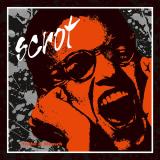
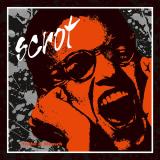
In the early 1990s, at the intersection of New Beat, early techno and EBM, a wave of raw, experimental club music emerged from Germany—dark, mechanical and often strangely playful. Among its most distinctive voices was Scrot, the project of producer Lars Janzik (Base Scan, Decade V, Technoline).
Originally released on ZYX Records, Scrot’s three seminal singles—“Teufelsrhythmus”, “Der Rhythmusmensch” and “Der Amokläufer”—captured a unique moment in early European techno. Built on hypnotic drum machine patterns, lo-fi sequencing and spoken-word German samples, these tracks combined industrial textures and unconventional vocal treatments with early techno production techniques and a peculiar sense of humor.
Limited to 300 copies on black vinyl and 200 copies on orange vinyl, and accompanied by an exclusive postcard, “Teufel & Mensch” brings together some of the project’s most iconic tracks and remixes, alongside the previously unreleased Knauer Remix of “Teufelsrhythmus”.
More than a retrospective, “Teufel & Mensch” stands as a document of a transitional era—when techno was still forming its identity, and artists like Scrot were pushing its boundaries into strange and uncompromising territory.
In the early 1990s, at the intersection of New Beat, early techno and EBM, a wave of raw, experimental club music emerged from Germany—dark, mechanical and often strangely playful. Among its most distinctive voices was Scrot, the project of producer Lars Janzik (Base Scan, Decade V, Technoline).
Originally released on ZYX Records, Scrot’s three seminal singles—“Teufelsrhythmus”, “Der Rhythmusmensch” and “Der Amokläufer”—captured a unique moment in early European techno. Built on hypnotic drum machine patterns, lo-fi sequencing and spoken-word German samples, these tracks combined industrial textures and unconventional vocal treatments with early techno production techniques and a peculiar sense of humor.
Limited to 300 copies on black vinyl and 200 copies on orange vinyl, and accompanied by an exclusive postcard, “Teufel & Mensch” brings together some of the project’s most iconic tracks and remixes, alongside the previously unreleased Knauer Remix of “Teufelsrhythmus”.
More than a retrospective, “Teufel & Mensch” stands as a document of a transitional era—when techno was still forming its identity, and artists like Scrot were pushing its boundaries into strange and uncompromising territory.
Massimiliano Pagliara celebrates 20 years of music production with a special anniversary compilation on Funnuvojere. The release brings together solo productions and collaborations spanning a rich and abundant period that began when Pagliara acquired his first analogue machines, five years after moving to Berlin from Milan, where he worked as a professional dancer and choreographer.
The compilation features 20 previously unreleased tracks, deeply infused with italo grooves, wonky bass-lines, balearic pads, drama, love, sex, and dreams. These tracks evoke a wide spectrum of moments, ranging from intimate, pleasure-driven home listening to full-blown dance-floor euphoria. Throughout the compilation, one can feel Pagliara’s enthusiasm for discovery—his excitement in encountering new machines and immediately putting them to work.
Pagliara’s sonic identity is unmistakable, present in every track and in the compilation as a whole. Like the facets of a crystal, the music reflects his many nuances while maintaining a strong, coherent core. Tracks such as Waves of Desire pay homage to Dream House, reimagined through contemporary production with cosmic tones and infectious drums. Flicker Of Us reveals a dramatic tension between a rowdy bass-line and melancholic pads, while We Can Touch The Sky features Pagliara himself on vocals, blending synth-pop with elements of new wave and glam rock. Cool Breeze unfolds as a sunlit, optimistic walk through a wide Berlin avenue—funky, warm, and filled with curiosity for what lies ahead.
A notable strength of the compilation lies in its collaborations, which highlight Pagliara’s joy in working with other producers and vocalists. Each collaboration reveals a distinct character: the balearic sensibility of A Journey of Discovery with Gatto Fritto, the French house flavour of Neon Memories with Alinka, the 70s disco inflection of It’s In Your Eyes with the late Aérea Negrot, and the driving techno attitude of Whirlwind with Fabrizio Mammarella, to name just a few.
Ultimately, this compilation stands as both a gift to Massimiliano’s long-time fans and an open invitation to new listeners. It offers entry into a world shaped by beauty, order, balance, and ecstasy—guided by an enduring love for the craft.
"MODEM - In itself, as a name invented for a band, it's significant. MO comes from "MOdulazione." DEM comes from ''DEModulazione'', logical functions in analog and digital transmissions. And the signal that the Bologna duo AMIN-PECK want to give us is that "Your Fun" and "Valerie" contain artistic and musical information, especially avant-garde, created in an electronic style with strong new wave tendencies, but absolutely ahead of its time. Among the Italian discos of end 70s that represented a cultural phenomenon that has remained in the collective imagination, ''Picchio Rosso'' stands out. Besides serving as an entertainment venue for thousands of young people, it served as a bridge between DJs and many talented young musicians. The discotheque was the laboratory for 4 Italo-Disco productions, all recorded at the Amin-Peck studios in Bologna, under the direction of Giancarlo Meo, who, after the successes of Easy Going and Vivien Vee and other Claudio Simonetti productions such as Capricorn and Kasso, enjoyed great esteem and prestige. This is how excellent Italo-Disco songs like "Another Song" by Music Service, "Eve of Destruction" by Vivien Vee, "Boogaboo" by The Jugglers, and "Running Straight" by Amin-Peck were born, the latter being the true musical architects of Peecker Melody, including the one-off project MODEM.. What can be said about "Your Fun" and the instrumental "Valerie"? Simple, slightly hypnotic, wellconstructed, and catchy songs. Just as the two songs were mixed by various Picchio Rosso DJs of the time--Luca Zanarini and Silver were the most legendary--Best Record has reissued them, with the same cover designed by Leonard Parker and featuring Claude Gorial, the man who 40 years ago designed the original cover and the current reissue. Same names, same success !!!"
Dutch electronic maverick Spekki Webu stretches out on an expansive album for new label Outer Orbit Records, exploring his deep and wide-ranging influences across a captivating narrative of tripped-out beatdowns and evocative dreamscapes. Spekki Webu is someone who was naturally drawn into the magnetic pull of Outer Orbit after playing for their sister party Mizz Softee. As the time-travelling album title suggests, it's a meditation on formative sounds that propelled him on to myriad adventures across the many microcosms of electronic music. That means indulging in slower tempos and crooked grooves, with the influence of trip hop and illbient looming large in the boom bap drums that punctuate many of the album's passages. There is also space for immersive techno that operates as a lighter reflection of the sound he is best known for, as well as hints of buoyant house music, rolling breakbeat, dislocated ambient and intricate electronica. Cari Lekebusch, a key influence, contributes a rolling, heavy-grooving remix that closes out the record.
We are pleased to announce the first FEX live album, Don't Look Back. The release features selected recordings from two concerts in Paderborn and Uelzen, both captured in 1985. All tracks on the album are previously unissued, including entirely unheard songs such as It's a Hard Life, Just Get Back, Legend, and Waiting Song, alongside a previously unreleased version of Subways of Your Mind, widely known as "The Most Mysterious Song on the Internet."
One of the most striking aspects of the album is the remarkable sound quality of the live recordings, as well as the strength of the performances themselves - particularly given that FEX were still considered a newcomer band at the time. The four-piece lineup consisted of singer, guitarist, and primary songwriter Ture Rückwardt, Michael Hädrich on keyboards and occasional second guitar, Norbert Ziermann on bass, and Hans-Reimer Sievers on drums. In 1985, the band was preparing for broader exposure through a nationwide tour organized by the small promotion company HBM-Musikbüro.
The album opens with the psychedelic Skyscraper, a track Rückwardt reportedly regarded as a personal favorite to perform. Hädrich contributes dynamic synthesizer layers, while Ziermann underpins the track with a distinctive slap bass groove. This is followed by the energetic rock number It's a Hard Life, which once again demonstrates that the band possessed multiple songs capable of matching the impact of their best known track Subways of Your Mind.
After this energetic opening, the album shifts into a more restrained mood with the synth-pop ballad I Got My Eyes On You. It is followed by Strange Feeling, presented here in a particularly compelling live version that arguably surpasses the previously released studio demo featured on the Skyscraper LP, with Rückwardt delivering one of his most expressive vocal performances. On Goldrush, another fan favorite, it is Hädrich's DX7 synthesizer work that stands out.
Don't Look Back continues to flow seamlessly, moving between styles such as new wave, synth pop, and a blues-influenced form of classic rock. On It's Good To Know, a song addressing the theme of stardom, the band returns to a heavier rock sound. In contrast, the synth-driven Just Get Back reflects on the conflict in Northern Ireland, then ongoing at the time. Lines such as "It's the money, it's the money why they come along" are directed at mercenary soldiers, while "even Sunday's a killing time" directly references Sunday Bloody Sunday by U2.
Previously known songs such as Dirty Slapstick and Heart in Danger lead into We Don't Want It No More, perhaps the band's most striking pop ballad. It is easy to imagine that the track had the potential to achieve radio success in the 1980s. The following piece, the epic Legend, explores themes of loneliness and love simultaneously. With poetic and abstract lines such as "some isolate in the falling rain" and "that's why I count all the reasons they call out for living, sadness is falling inside," it builds an almost eerie atmosphere.
One of the final highlights of the album is Subways of Your Mind, recorded in Uelzen. In this version, Rückwardt's vocal performance is even more on point than on the previously issued recording from Paderborn. Another notable moment is the driving, 1970s-inspired rock 'n' roll track Waiting Song. Both the composition and its live performance carry an energy that could easily stand alongside the repertoire of bands such as AC/DC. It was usually the track that FEX ended their concerts with, calling out each band member at the end of the song.
This leads to a broader reflection: it is striking that FEX did not achieve a wider breakthrough at the time. The performances captured here suggest a band capable of delivering consistently, song by song, note by note. It is not difficult to imagine FEX performing in large venues and engaging sizeable audiences. In reality, however, most performances in 1985 took place in front of relatively small crowds. The recordings featured on this album originate from the Roxy club in Paderborn and a small, unknown venue in Uelzen, likely in front of fewer than fifty attendees.
An essential figure behind these recordings is the engineer known only under his nickname Hase (German for "rabbit"), who was responsible for capturing not only these concerts but many other surviving FEX recordings. Bringing his own mixing desk to performances, he developed a deep familiarity with the band's material and was able to shape the live sound with precision, including the timely use of vocal effects. The original recordings existed only on cassette and required careful and extensive restoration work. Zoey Cairs was finally responsible for bringing them to their present quality.
This album marks the beginning of the Live Waves series, following the rediscovery of additional recordings that have gained international attention since November 2024, when they surfaced through what has been described as the largest "lost wave" music search to date. The title of this first live LP Don't Look Back carries a certain paradox. While the album invites listeners to revisit recordings from forty years ago, FEX themselves were always oriented toward the future. In that spirit, further releases of brand new material are already planned.
The cover artwork is once again based on an image by Magnussen from the Kiel archive, depicting the Prinz-Heinrich-Brücke. The bridge, once located in the northern part of the city, no longer exists. As a symbol, however, it remains fitting: a bridge stands for movement and connection - qualities that FEX sought to embody on tour, bringing their music to different places and audiences.
Extinction Burst! is the new invocation in album-form by Guttersnipe, Leeds’ premier and pre-eminent XFCER (XFCER: Xenofeminist crisis-energy rock)* duo. Slamming at full speed to multi-dimensional oblivion, Extinction Burst! is the most full, hidefinition lurid dream-mare yet spewed out by Uroceras Gigas & Tipula Confusa. Engineered and mixed by Ross Halden at Hohm Studio in Bradford and mastered by Rashad Becker, Extinction Burst! follows 2018’s My Mother The Vent, which garnered universal critical adoration. Nevertheless, this long-awaited follow up is more extreme: it is wildness beyond reason, splitting new tears in the reality gauze, ultimate hallucination through sound ecstasy. 2026’s Guttersnipe are evolved, mutated by 8 years of touring together and with the labyrinthine network of groups both Guttersnipe members are involved with - Tristwch Y Fenywod, Nape Neck, Petronn Sphene, Yexxen to name a few. On Extinction Burst!, as with previous material, the duo are heavily augmented with technology. Tipula Confusa's drum kit triggers chasm-causing synth pulses with thumping low end attack.. Strafing from all over the stereo field the constant shatter of the cymbals and toms feel like Sunny Murray or Rashied Ali in full flight during a John Coltrane session in 1967. Uroceras Gigas’s guitar + synth storm is by-now similarly an instantly recognised tool kit in underground music. Switching from screeching guitar atonality to intricate riffs from the black metal/Voivod hinterland to ultra-distorted synth meltdown, it’s an utterly overwhelming, essential and vital pouring-out of the full emotional spectrum. Both artists vocalise, ecstatic and primal, drawn out or yelped in pain or pleasure or panic. Alive On Tuesday begins with some of the only space on Extinction Burst! Digital crackles and tight-delays blow out into a fullthrottled death-dive into sweet opaqueness, offset by the duo’s vocals. There’s a popular believe that Guttersnipe is chaos, but over 9 mins here the group are clinical in their control of the simulated entropy. Mincing while the Maelstrom Churns’s guitar is modulated into jagged atonal atonement, duetting with the virtuoso drum patterns before it thuds into gear at quadruple the speed. Threads Of Radical Unaliveness veers close to the extreme Metal influences with blast beats and guttural vocalisations until the track exhausts itself into unaliveness. Keep Honking summons a demonic digital panic, with the duo reincarnating in real time as haunted versions of themselves, almost translating the lurid, ultra vivid, simultaneous hell+heaven of being alive in this dimension. Primordial Invagination harnesses No Wave’s dissension of normality before the structured collapse of Skra¨ckblandad Fo¨rtjusning, in which Tipula Confusa’s accelerating drums simulate a bouncing barrel of brimstone descending into a primordial gunky ooze, a respite in the middle before the record splutters to a stuttering finale, both members’ vocals out there in the neon realness, alive with crisis energy. There is nothing on this cursed earth like Guttersnipe. For over 10 years they have whirled in a wiggliness both woebegone and wonderstruck on a mission of radical mutant exaltation using rock music weaponry loaded with a queer hysterical ammunition to rupture the fabric of the known Rock universe and unleash a tendril-soft hallucinatory violence; thrumming with the bracing vividness of insect bodies, crazed with alien synaesthetic emotions, harnessing jagged excoriating illogic as a face meltingly snazzy affront to redundant macho mediocrity with the hope to break minds, squeeze hearts, explode pelvises and maybe even reset the parameters of reality. Addendum: xenofeminist : proposing and creating a world defined not only by sexual/gender equality, queer empowerment and the toppling of the racist heteropatriarchal hegemony and it’s tyranny of phallogocentric signifiers, but a philosophy of radical queerness that explodes the basic notion of embodied existence itself beyond even the human, where we see bacteria, invertebrates, reptiles, marine life, animalia in general, inanimate objects, quantum phenomena and as yet inarticulated bodies and minds as social and political equals that may inspire and inform our concepts of self, feeling and meaning as we labour to build a collective reality that doesn’t completely suck!! crisis energy : a term borrowed from the weird fiction author china mieville to describe a type of extreme concentration of power which emerges when a system or organism is pushed to it’s absolute limit; the point of rupture, chaos, entropic overload, just before it all breaks apart. rock : Rock ’n’ Roll, rock music, the devil’s music, sex, guitar, drums, voice, rhythm, riffs!
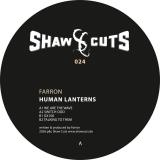
Farron is back on Shaw Cuts with his next EP called ãHuman LanternsÒ - a tale of social jealousy and long-standing rivalry transformed into 4 bass-heavy broken techno tracks.
The two wealthy kung-fu masters Lung and Tan are embroiled in a long lasting game of perpetual one-upmanship. Vowing to show Tan up, Lung enlists the aid of a man he defeated in a duel years ago in fashioning a masterful lantern for the upcoming festival in which both masters will compete. ãWe Are The WaveÒ and its noisy fragments and broken rhythmics led by a hefty stormy bassline, underline the tension and aversion between the two competing masters.
But the eccentric artisan is more interested in seeking revenge for his old defeat, in taking away everything Lung holds dear. The bass-driven ãSwitch OddÒ and its sharp percussions and phat kick underline the ulterior motives of the shady character.
The evil villainÕs plan of revenge contains kidnapping several beloved women of Lung, skinning them alive and using their flaps of skin to create the ordered lantern. ãGX100Ò and its fast-paced drum pattern carried by virulent synth fragments and raucous pads, epitomises the merciless act of violence.
Tan and Lung falsely accuse each other but feel constrained to eventually team up and hunt the criminal together. ãTalking To ThemÒ rings in furiously and chases the enemy with its rolling bass, chopped vocals and stomping drums, but the villain is sneaky and recalcitrant. Silence before the attackÉ
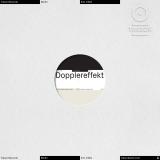
Marking the anniversary of three decades of career, Dopplereffekt debuts on Tresor Records with Metasymmetry, arriving 12 December 2025. This latest release finds members Rudolf Klorzeiger and To-Nhan in deep inquiry in sound, contemplating structure and pattern in physics and nature resulting in a harmonious audio tessellation.
Metasymmetry itself relates to a kind of second-order reality found not in the structures of life but in the rules that govern these structures; that order exists not only in things but in the relationships among systems of order. It is a structure of structures, a logic of laws, an abstract unity embedded in the act of transformation itself.
Accordingly, the four-track EP reflects this duality. Each side opens with a piece of electronic music at its most precise and immovable: defined, kinetic, architectural. This is followed by a second composition that dissolves into a weightless, atmospheric counter-form.
The shift evokes a higher symmetry: an alignment not of parts, but of principles; a sonic model of the universe’s hidden invariance.
Metasymmetry also echoes across Dopplereffekt’s extended sonic continuum; this stands as the first offering on Tresor under the Dopplereffekt name despite an association with the label and club going back to the start. In this, it becomes the source of an echo that reverberates backwards through time; its own reflection:
After a three year hiatus A Good Christian and Abel return to their beloved Surfing In Kansas label with 4 brand new cutzz..
Throwaway New Wave pop gets twisted into unadulterated Balearic bliss, making it safe to even those who are least in touch with their feelings for a chance to dance. Late night double and early hours trouble guaranteed!