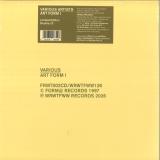
WRWTFWW Records is delighted to announce the first-ever vinyl release of Art Form I, the overlooked 1997 compilation from Tokyo’s cult imprint FORM@ RECORDS, now available as a limited edition double LP housed in a heavyweight sleeve as part of the ongoing collaborative series between the Swiss and Japanese labels.
Originally issued only on CD, Art Form I is a fascinating deep dive into the rich and singular world of late ’90s Tokyo electronic music—an inspired collection of timeless IDM, techno, ambient, and electronica experiments. Showcasing a roster of visionary underground artists including fan-favorite Virgo (Landform Code, Remnants), the compilation maps the innovative spirit of the era: emotional machine music, intricate rhythmic architecture, mind-expanding textures, and the soulful heart that serves as the solid foundation of everything FORM@ RECORDS.
Art Form I reminds of the pioneering explorations from Warp’s Artificial Intelligence series, B12, The Black Dog, Ken Ishii, and early Carl Craig, all while maintaining its own distinctive local identity. This long-awaited vinyl edition offers listeners a fully immersive rediscovery of a pivotal moment in underground music.
Following the acclaimed reissues of Virgo’s Landform Code (1998) and Remnants (1999), the simultaneous releases of Art Form I and Art Form 2 (1998) continue the archival collaboration between WRWTFWW Records and FORM@ RECORDS, with a forthcoming vinyl edition of remix collection Re-Form Ver-1.0 (1999) to follow.
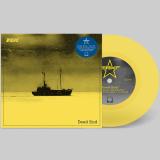
After the promo version flew off the sleeves, now comes the full picture sleeve, yellow vinyl version of French live trio, Oden & Fatzo’s chart topping, house smash hit, ‘Lauren’ limited to 1000 copies. A bootleg experiment that got out of hand, Oden & Fatzo’s Radio 1 A-listed single is the accidental hit that everyone is talking about.
So how do you go about making an ‘accidental hit’, by accident of course... The track came about when French DJ Fatzo tried to demonstrate the difference between an edit and a remix to his dad, “... I took a song from the band Men I Trust, sped it up and added a drum beat and violin. After playing it to Oden, they loved it, and in turn, added their secret ingredients.”
Unlike the name might suggest, Oden & Fatzo consists of three people: The Parisian underground collective are a powerful fusion of the electronic live duo Oden, and house DJ Fatzo. Back in 2020 a bootleg version of ‘Lauren’ was uploaded to the YouTube channel of the electronic label Novaj, kicking off an unforeseeable wave of enthusiasm. That video is now approaching 3 million views. Enthralled listeners begged for a commercial release, a year later Ministry of Sound/B1 cleared the sample and the track started its march across the airwaves and up the charts.
With its captivating beat and nostalgic catchiness, ‘Lauren’ makes up for the party nights lost to the pandemic lockdowns, and sees people dancing in their homes and on the streets, as concerts, parties, and live sets are finally making a return. As the trio put it: “This song was all about hope, freedom and a party atmosphere at a time when you couldn't go anywhere. We think it gave everyone who heard it a little bit of an escape, including us.”
Meanwhile in the UK, the track has seen early support, not only by names like Franky Wah, Danny Howard, Pete Tong, Annie Mac, Jax Jones, Jodie Harsh, HUGEL, Bakermat, Cut Snake, Salomé Le Chat, Piem, David Gausa and many more, but also by the incredibly ecstatic party crowds.
Press:
6th week A List at Radio 1
Plays from Radio 2 and added to Hits Radio Pride playlist
Airplay up +3% week on week
#1 Cool Cuts Chart
#1 Upfront Club Chart
#1 Pop Club Chart
#5 UK Shazam Chart
Holding at #12 on Shazam – over 200k tags for the track in the UK to date
Over 8.6m+ streams WW now across all platforms
Over 200k+ views for the music video
Averaging 50k daily streams in the UK
47k+ sales across UK OCC to date
#1 on Beatports Deep House for 16 consecutive weeks
SAMOH unleashes his new dancefloor weapon, four-track EP ‘Changing Worlds’, out on February 26th, as his debut on Charlotte de Witte’s prestigious KNTXT imprint.
Charlotte de Witte: ‘I have been playing SAMOH’s tracks for quite some time now and I am very happy to welcome him to KNTXT. His acid, techno and trance driven approach to music fits my lane perfectly. There is an energy in his work that feels raw, focused and completely unapologetic. This release in particular has that acidic drive that I love so much. This is powerful club material and I cannot wait to see where it will go.’
Rotterdam’s producer, DJ & live artist SAMOH responds, ‘Releasing this as my first record on KNTXT is an amazing opportunity, and I feel honoured to be able to share my music with so many people and let this sound travel further worldwide.’
‘Changing Worlds’ EP: from the title track’s rampant beat, rattling drums, acid-saturated main theme with euphoric edge, and portentous vocal (‘reality peels away...’) to ‘We Are All Waveforms’ with its psytrancey, insanely acidic builds to banshee pitch over shutter & hiss FX at which point you are indeed ‘entering a non-linear dimension’, you are then a willing victim for ‘Reality Is Gone’ to hammer-drill into the brain and take command of your feet. Final piece ‘Echoes Of Tomorrow’ starts with dystopian chattering percussion and spacey FX, before luring you into a healing euphoric dreamstate with moonstruck, melodic trancey sweetly soaring singing.
’Changing Worlds’ represents my approach to acid techno/trance in its most direct and energetic form.’ SAMOH says.‘I made this EP with three high energy tracks, followed by a more atmospheric closing piece that brings everything together. It’s about a driving motion and intensity, creating moments where dancers can disconnect from everything else and fully give themselves to the music.’
You have been warned. You may as well succumb to acid as voracious as Venusian cloudforms, techno beats galloping over your inhibitions, and trance as bewitching as absinthe for the ears. You’ll be glad you did.
Stepping up for Punctuality number 8 is the dynamic duo of Ciel and Matthis Ruffing. Needing little introduction, both artists are prolific producers and collaborators across tempos and genres. Toronto-based Ciel has released music on labels like NAFF, Peach Discs, and !K7, while Berliner Matthis Ruffing’s work can be found on International Chrome, Infinite Drift, and Strictly Strictly, to name just a few.
Bonding over a shared love for the techno stylings of Claude Young and early 2000s tech/prog house from labels like Future Groove and Slide, the duo’s collaboration began with a spontaneous jam in Ruffing’s Berlin studio during the summer of 2022. With an organic studio chemistry, the pair continued to jam over the following years. Hot Squid is the result of these studio experiments: five tracks of sleek, muscular, contemporary tech house that fluidly distill the creative visions of both artists—slick, shimmering grooves, heavily weighted for the dancefloor.
The title track, Hot Squid, weaves dubbed-out waves of FX and low-end sonics around metallic, staccato drum bursts, sci-fi pads, stuttered vocals, and syncopated snares that flit and flicker around a rolling bassline reminiscent of golden-era UK tech house from the late ’90s. Roza Terenzi’s remix flips the original into a modern, low-stepping tek roller—a mind-bending re-fix that puts more focus on the snaking vocal groove and a sparser percussion arrangement, filled out with lustrous textures and razor-precise sound design.
On Little Voice, glossy synths and spiraling atmospherics cascade around a mesmeric vocal line, while tightly wound, minimal drum loops give way to a swaggering bassline that barely relents throughout the track. The result is a satisfyingly boshy, groove-driven roller, fit for the dancefloor at any time of day.
Late Summer maintains the EP’s high-grade production standard in the form of a dreamy, electro-leaning tech house number, resplendent with deep, pummeling kick drums, woozy low-end, and organic sonics. Its plucked melody and introspective pads nod to halcyon-era IDM and the Detroit techno that inspired the duo in creating Hot Squid.
The release culminates in Bong Bong—a meditative dancefloor tool suffused with ASMR-like nature documentary samples that lend the track a psychedelic intimacy. Careening percussion lines and swooning chord stabs anchor the rhythm, while the title’s “Bong Bong” mantra hums beneath the surface, carried along by barely perceptible sub fills and ultra-processed percussion. A cohesive, unique, and enduring take on seminal tech house and Detroit techno from Ciel and Matthis Ruffing.
After a quiet year in the shadows, Mithra rises once more, offering four tributes to the sun. Opening the ritual, Titino’s “Sole Nero” radiates with dark-wave tension and Italo-synth euphoria, a storm of emotion forged for the twilight hours. Riccardo’s “Neosun” follows as a luminous, left-field Euro-pop surge to an ecstatic sunrise in motion. On the flip, Sweater’s “Talk to Me” drifts into warm organic grooves, a perfect hymn for open-air dusk and introspective transitions. Finally, Ewan Jansen’s “Kuseni Yayo” closes the circle with lush pads and earthy resonance, echoing the spirit of dawn breaking through the forest. Together, these four offerings form the first light of our next journey, an initiation toward the mountain peaks that lie ahead.
Spider Taylor crawls over to Dark Entries with Surge Studio Music, an album of archival gay pornographic soundtracks. James Allan Taylor was born into a working-class family in Los Angeles in 1951. Nicknamed “Spider” by his father due to his frantic energy, Taylor was a natural-born guitarist, gifted with perfect pitch and a voracious musical appetite.
Throughout the 70s, he expanded his musical repertoire, playing in bands ranging from country to post-punk, like his outfit Red Wedding, while always looking for new sounds and styles to explore. During this period, Taylor also partnered with his soulmate and musical collaborator, Michael Ely. They were part of a wave of bold, young, gay couples living openly together in the years immediately following the Stonewall Riots. In the early 80s, while working at the West Hollywood gay sex club Basic Plumbing, Taylor met Al Parker, the legendary pornographic actor and director, who recruited Taylor to produce the soundtrack for a film he was working on. Parker’s partnership with Steve Scott running Surge Studios produced some of the most popular all-male films of the era. Spider’s music was a natural fit for Surge, and throughout 1985 and 1986, he composed the soundtracks for five films produced by the iconic studio. Assisted by engineer Steve Conrad and armed with a drum machine and some synths, Spider’s compositions for film veer from the expansive, reverb-drenched “Rainforest” to the Miami Vice-esque chugger “Tech.”
While Spider thought of this work as little more than a gig, tangential to his real craft, enthusiasts of VHS-era nostalgia and vintage erotica will be brought to bliss. Surge Studio Music will be available on both LP and CD, the latter of which includes a 20-minute version of “Strange Places…Strange Things!” as a bonus track. The album’s cover art was designed by Gwenael Rattke, and features stylish images from Surge Studios releases. Also included is an insert featuring liner notes by Will Lewis, a longtime friend of Spider. The music is released from Spider’s estate by Michael Ely, Spider’s partner of 43 years. The shadow of AIDS lingered over Surge; Steve Scott passed from AIDS-related illness in 1987, and Al Parker succumbed in 1992. In 2014, when it became legal for same-sex couples to marry in Arizona, Spider and Michael finally became wedded. Spider would pass away from liver cancer six months later.
After a series of successful outings alongside sidekicks Ofofo and Zongamin, studio wizard MYTRON turns in his debut solo full-length for Multi Culti World Records. With contributions on Invisible Inc, Calypso, Bongo Joe, Kalahari Oyster Cult, LYO, Codek Records and Earthly Measures, Mytron has carved out a name for himself in a carefully-curated left-field quadrant of the indie-dance galaxy. Tuning his oscillators to myriad sounds — from dub and disco to krautrock — the London-based producer perhaps most notably channels the pristine compositional style of Kraftwerk. While most apparent in the use of vocoder, there’s a consistent efficiency of arrangement that recalls the man-machine in effervescent, idealistic fashion. Mytron manages to keep it simple, funky and musical — whimsical tunes that bop along with analog grit, wilderness, and wonk. There’s a warmth and wit that shine through every synth line, an understated confidence that speaks of years spent tangled in wires and waveforms, with an inclusive sonic eclecticism that flattens hierarchies between genres, geographies, and generations. Each influence is invited to the table, treated not as pastiche but invited to dine and dance in a space where kosmische dub disco and Afro rhythms can coexist without borders. The sleeve design echoes this philosophy: video-feedback patterns hinting at our modern screens, both portals and filters — coloured, distorted intermediaries through which we perceive the world. In the trippiest sense, the record is both reflection and refraction — a sonic mirror held up to an interconnected, glitchy reality. Tailored equally for DJ use and home-listening head trip, the album is meticulous, mischievous and merry.
BanBanTonTon review:
On Mytron’s debut long-player for Multi Culti groovy 21st Century leftfield house gear collides with Daniele Baldelli and Beppe Loda’s hugely influential `80s afro / cosmic. The 9 tracks are chunky, chugging and full of funky, funny noises. Old school B-lines mixing with eccentric electronics. Spinning, spiralling sounds.
Sugar is an electro-pop, vocoder confection, cut from the same sonic cloth as cult classics like Codek’s Tam Tam. Created from tough trap drums, splashing effects and a mutant Giorgio Moroder bass arpeggio. The title track, Propellor, pits Kraftwerk-esque hardware harmonised vocals against a bongo loop and a whistling hook. Playground has simian shrieks surround tumbling tom-toms. Highway Maintenance adds kosmische synths to a dance of woodblocks and buzzing bottom end. Keep On Dubbing is an organ-led, clip clopping percussive canter.
Tracks such as Speaker Can Talk, shot through with disco lasers blasts and recalling Curt Cress’ Dschung Tek, also lift the tempo up, but the bulk of the music here is a mid-tempo, techno drum circle. Squelchy sequences gurgling in and out of programmed percussion. On Quasar, spiky acid edges in and slowly takes over.
Key references that come to mind are Baldelli’s own turn-of-the-2000s Cosmic Sound Project productions, and Wolf Müller’s scene shaking sides on Themes For Great Cites, from around a decade later.
Nicolás Mirón presents Hi-Tech Thoughts, his debut release on Echo Alpha Recordings. A record that draws inspiration from Detroit Techno, as well as New York Hip-Hop and MPC culture, reflected in the way he works with samples and programs chops on his AKAI MPC 2500. His production focuses on beat-making, pursuing a raw, hardware-driven sound rather than an overproduced one.
Nico’s creative foundation is rooted in Black music in all its forms, from soul and jazz to electronic sounds, while also embracing the legacy of figures like Kraftwerk, and genres such as Italo Disco, and New Wave. His musical career began with his residency at Radio Relativa in 2022, with his program “Pa’ Riparla Benne”, a connection between skateboarding and music, as well as its evolution and close relationship with contemporary culture. In the show you can hear different styles of music that have appeared within this scene through legendary video parts from skateboarding history, along with stories and curiosities behind these pieces of art.
Third Space returns with ‘Third Wave’ and it’s a big one! The latest Various Artists EP gathers four deep and soulful house cuts from talented producers SY, Mbius, Jay Gadian, and label boss Miguel Seabra. A tribute to vibey, musical house tracks made for both the soul and the dancefloor. Each tune stands strong as an anthem, respecting the rich heritage of house music while dressing it in fresh, modern grooves. True to Third Space tradition, ‘Third Wave’ arrives as a limited vinyl-only release, capped at 150 copies with a strict no repress clause. A must-have for collectors and house music enthusiasts alike.
DJ Support: Crookers, Dr Banana, Make A Dance, Bluetoof, Joe Milli and more
Nat Home & DJ ADHD deliver a no-holds-barred EP built for the afterhours and beyond. Sleazy, chunky, and unapologetically club-ready, Early Riser / 100 Foot Wave brings rolling grooves and heavyweight energy straight to the floor, featuring powerhouse vocals from Chiara Mascara.
Were FEX the Wildest & Weirdest German New Wave Band in 1984?
Few cult mysteries in modern music have captured the internet's imagination quite like "The Most Mysterious Song on the Internet." Eventually identified as "Subways of Your Mind" by the elusive German band FEX, the track became a viral sensation decades after its creation-and even made its way into a recent Hollywood blockbuster (Black Phone 2).
Now, two more lost FEX recordings have emerged from an old demo cassette: "Dead End" and "Sarah." And they're every bit as electrifying as the legend suggests.
On both songs, guitarist and main songwriter Ture Rückwardt joins forces on lead vocals with his former wife and musical partner Ilona Rückwardt, forming a vocal pairing that channels raw energy and eerie chemistry. What they deliver are two of the most urgent, adrenaline-fueled post-punk artifacts you're likely to hear this year-even if they were recorded more than forty years ago.
Opening with a sharp, melodic guitar solo, "Dead End" bursts forward with uptempo drive-catchy, fierce, and full of momentum. Apparently inspired by Orwell's 1984, its lyrics depict urban desolation-loneliness, homelessness, hopelessness-yet still shimmer with defiance in lines like, "Truth is amazing - hoping is like waiting."
The second track, "Sarah," dives even deeper into darkness. Mixing post-punk intensity with psychedelic textures, Rückwardt tells an imaginary story of a couple lost in drugs and spiraling through a bad trip, only to wake and realize that sobriety offers little comfort-the real world itself can be just as brutal and offers no easy escape.
Neither song makes the slightest concession to commercial trends. Instead, they feel utterly uncompromising-wild, strange, and defiantly timeless. In a world obsessed with polish and playlists, "Dead End" and "Sarah" sound like transmissions from a different planet.
Both tracks were originally recorded as demos in 1984 in the band's rehearsal room, with Hase engineering. The newly restored versions preserve the raw spirit of the original tapes while adding subtle layers to enhance their atmosphere without losing the authentic 1980s sound. FEX hint that the untouched demo versions might surface later, possibly on a second volume of their archival
Indiana Jones never dug this deep.
Church – the brainchild of Joe Washington – were a band both lucky and cursed to come up in the seventies. Lucky, because they rode a wave of community activism, uplifting messages and a moment when music truly mattered. Cursed, because those same times meant their tight, heartfelt output went overlooked.
Mid-sixties to circa 1980 soul and funk were extraordinarily rich. The era’s big releases have aged like fine wine, yet countless hidden gems remain buried. Church’s only single was one of them. Their hypnotic 1976 release “How Long” b/w “Da Da Song” arrived the same year as Stevie Wonder’s Songs in the Key of Life, Marvin Gaye’s I Want You, Diana Ross’s Diana, and at a time when Black mainstream music was shifting toward disco. Church, however, sounded like Sly & The Family Stone in an alternate timeline — gritty, focused, stripped of additives.
“Da Da Song” is pure grits and gravy: furious, tight drums and lyrics that sound like both a plea to DJs to play their record and an insistence to keep the party alive, noticed or not. It cooks from start to finish in just two and a half minutes.
“How Long” is its own universe. Where “Da Da Song” is skeletal, “How Long” blends key strands of Black music in under three minutes: touches of spiritual jazz with a Gary Bartz-like sax, gospel-blues undertones, and echoes of the era’s flower-power-tinged Black creativity — The Undisputed Truth, The Family Stone, even the poetic freedom of Nikki Giovanni. The lyrics are a timeless plea for love.
Church formed in the Bay Area in the early seventies, shaped by the movement, culture and activism of the time. Joseph Washington, based in San Jose, never chased a music career — for him, music was a way to bring people together. Before Church, he led a backing band called Wash, then added gospel singer Linda Williams (née Stephens) and New York–born Joel Como on xylophone to complete the group.
They rehearsed in Joe’s garage, spread through word of mouth and played every gig they could: Black colleges, opening slots for The Whispers, neighbourhood house parties. Some members studied at Nairobi Junior College in East Palo Alto, then a hotbed of Black community activism, with revolution in the air and messages woven naturally into the music.
This single is a message from that era, resurfacing at last — ready to be sampled just as another Joe Washington track, “Look Me in the Eyes”, was on Drake and J. Cole’s “First Person Shooter”. These rare, spirited tunes are begging for new life through samplers, again and again.
With Stronger, her third EP, Mira Ló continues her rapid ascent within the French electronic scene. A cathartic project born from a period of personal upheaval, this EP is both a cry of resilience and a celebration of club culture as a space for healing. The Paris-based queer producer and DJ turns pain into creative force, and the dancefloor into refuge, release, and rebirth. Across four emotionally charged tracks, Stronger traces the contours of a club where one rises through the energy of the beat, the warmth of a caring community, and the affirmation of self through sound and movement. “This EP is my response to a very dark period in my life. I chose to turn pain into strength, to stand back up through music, and to reconnect with joy, intensity, and the collective. Each track follows a movement, of a body rising, a heart beating stronger, a soul regaining its light. Stronger is also a tribute to those who carried me when I could no longer stand on my own. It's proof that even in chaos, we can rebuild together.” Mira Ló The first chapter of this inner journey, “Riser” is a house track filled with enveloping melodies, ethereal pads, and organic chords that create a suspended sonic space. Its steady pulse and warm basslines evoke a rising from within. “I wanted this track to feel like a build-up, like breathing again. It's about that moment when you feel you're ready to rise once more, even after a fall, like a gentle but powerful wave,” says Mira Ló. With its R&B textures, pop-infused touches, and radiant production, “Brighter” glows with warmth. It captures the return of inner clarity, the rediscovery of joy and ease. Made to bring people together, it’s Instagram | Youtube | TikTok | SoundCloudboth immediate and heartfelt. “It’s a song about shining again, after the dark. I wanted something full of light and simplicity, a track that speaks to the heart and makes you want to dance without thinking.” A personal and introspective nod to the French Touch, “Higher” is driven by filtered basslines and hypnotic grooves. It channels a sense of euphoria that builds gradually, almost meditatively, like a joyful vertigo. “This track is about finding euphoria again, that moment when music lifts you beyond yourself. I grew up with the French Touch, and this is my way of coming back to it with my own voice.” Closing the journey, “Louder” is the most assertive track on the EP. Inspired by the UK bassline and garage scene, it bursts with percussive, punchy energy. This is where everything comes into full light, bold, unapologetic, and free. “I wrote Louder as a statement: I’m here, I exist, and I won’t stay silent anymore. It’s about partying as self-affirmation, as a joyful, powerful scream of identity. Meant to be played loud. Very loud.” Mira Ló, born Ana Lopez, is a queer producer and DJ based in Paris. Drawing from the full spectrum of club music, her sets and productions blend melancholic emotion with a unique, high-energy, euphoric touch - inspired by artists like Disclosure, salute, and Sammy Virji. From her early days playing in Parisian bars and intimate clubs, she quickly rose to the lineups of top French venues and festivals such as Peacock Society, Marvellous Island, and Lollapalooza - extending her reach across Europe and even to Chicago. She’s carved out a strong place for herself within the new wave of the French electronic scene, leaving a lasting impression with every appearance. In 2023, she released her debut EP Memories and was featured in Apple Music’s “Women In Electronic” series. That same year, she became a resident at Sacré in Paris, before unveiling her second EP Tribute To Chicago in 2024. She returns in 2025 with her third release, Stronger - once again proving she’s one of the most promising artists shaping the future of electronic music.
The Roots of Chicha, compiled by Barbès Records, was originally released in 2007 and became the first recording to popularize psychedelic cumbia around the world.
From the late 60's through the 80's, Peruvians invented a new popular musical hybrid inspired by music from the Americas. In 1968, Enrique Delgado released his first record on Odeon with his new group, Los Destellos, single-handedly creating Peruvian cumbia. He codified the genre early on by using the electric guitar as the primary melodic instrument, and mixing cumbia rhythms with folkloric huaynos, criollo voicings, Cuban guarachas and guajiras, rock, boogaloo, surf, psychedelia, oriental music, classical music, and bits and pieces from Brazil, France, Chile... All Peruvian cumbia bands for the next thirty years would end up drawing from the exact same sources (Grupo Celeste, Los Mirlos, Juaneco Y Su Combo, Manzanita Y Su Conjunto...).
This new wave of Peruvian cumbia came to be known as chicha. Chicha is originally the name of an alcoholic drink, made of fermented maize, which the Incas were especially fond of. In the past thirty years, however, the word has taken on a pejorative connotation. Peruvian cumbia started being called chicha in the late 70s, around the same time that the music came to be viewed as the expression of the slums – the pueblos jovenes. Little by little, the word became an adjective, and people now talk of chicha culture, chicha press, chicha architecture, even of a chicha president, and none if it – you guessed right – is meant as a compliment. Chicha suggests corruption, shady deals, and cholos – a derogatory term for a person of Andean heritage that, of late, is being reclaimed and worn as a badge of honor by the very cholos it was supposed to demean in the first place.
Back when the first white labels started floating through the hands of German, British, American and Canadian DJs in late ’84, nobody was ready for what was coming. The official drop hit in early ’85 and the scene was never the same again. This was the moment Mike Mareen broke through the static. Yeah, he’d been working with Chris Evans-Ironside since the ’70s but nothing hinted that together they’d channel something this futuristic. “Dancing In The Dark” sounded like it had slipped through a wormhole: melancholic, hypnotic vocals wrapped in vocoder haze, riding an arrangement so razor-sharp it made most releases of the era feel prehistoric. It didn’t need the pop charts… It owned the clubs. And the clubs listened.
One drop of that electro bassline and DJs were hooked. Crowds were hooked. The whole underground was hooked. Soon Europe’s radio charts caved under its pressure, and the track crossed borders on mixtapes, becoming a cult anthem behind the Iron Curtain. It was everywhere, even where it technically wasn’t allowed to be.
Fast-forward four decades and the spell hasn’t faded. “Dancing In The Dark” still shows up in indie dance, italo wave, house and deep house sets. Producers keep re-editing it like it’s sacred material. It’s one of those tracks that DJs treasure, a timeless weapon, one of the top three defining singles of Mareen’s entire career.
And now for the 40th anniversary of its official release, Vintage Pleasure Boutique and Night’n Day Records drop the vinyl every collector and selector has been waiting for: a special reissue loaded with four brand-new remixes spanning the full spectrum of today’s underground indie/disco/italo/house energy.
Tallac – the American Berlin dweller – dives deep into the hypnotic soul of the original, pulling out its buried deep-house DNA and carving out a spacious, emotional roller.
Luksek, Italian producer & DJ, goes raw and dirty: loop-driven, gritty, underground, hypnotic, the kind of edit that eats dancefloors alive.
Flemming Dalum, the Danish Italo grandmaster, finally gets to remix the track he’d always dreamed of touching and of course it’s pure Flemingish electro-italo magic.
And the Polish sparkle: A.P. Mono delivers a shimmering mix of italo disco, glitterbox groove, disco glamour and synthwave glow, all while keeping the spirit of Mareen’s original heartbeat intact.
The wax also features two historical heavy-hitters: the 1985 Jens Lissat’s team remix and Luis Rodriguez’s original arrangement, essential cuts in the Mareen universe.
This release isn’t nostalgia. It’s a resurrection. A celebration. A reminder. “Dancing In The Dark” didn’t survive 40 years by accident, it survived because it still moves bodies, breaks hearts and lights up floors in ways modern tracks can only wish for.
If you’re an indie, italo, wave, house or disco DJ… This record isn’t just worth owning… It’s mandatory.
Das Beste Aus Hagen Redux is an icy transmission from the early circuitry of European minimalism. A revives the pulse of proto-electro with surgical precision—pure voltage, no excess. Cold synth lines snake through monochrome rhythms, delivering drama without decadence. It’s music for neon-lit silence and synthetic nostalgia, built from tape hiss, static tension, and analog dreams. Minimal synth stripped to the bone—resistant, elegant, and eternal. Presented in ONE- OFF truly limited edition of 300 copies lacquered pressed on 180 gr. high quality solid WHITE vinyl. All tracks have been specially remastered for vinyl by Daniel Hallhuber at Young and Cold Studios (Germany).
Next up on Bruno Schmidt’s Assemblies Of God; The eagerly anticipated follow up to one of the most impactful leftfield records of 2023, Bauzer Vep’s The Gurner. Alexander Folonari brings us Gut Und Günstig under his brand new Sabber Mund Alias. Previously appearing under Shampoo Douglas and La Decima Vittima on Quest’s La Nota Del Diablo imprint, Sabber Mund takes a very different form. This music could be described as “Post-everything”, combining elements of dance music, with a punk-meets-folklore education.. Everything from straight Bach-informed dancefloor killers, to medieval lullabies. Across the board, custom no-wave themes from the get go. Hot tip!
Another DINTE tape curated by cult WFMU show and blogger Bodega Pop; Gary Sullivan's long-running project rooted in a passion for digging for music in bodegas and cell-phone stores across NYC's boroughs. This edition focuses in on late 1990s and early 00s hip-hop & rnb from across Southeastern Asia.
"While on a work trip to Chicago in the mid-2000s, I was craving a bowl of pho. A bit of sleuthing led me to hop on the red line "L" up to Argyle Street, ground zero of Chicago's Little Saigon. In the 1960s, Chicago restaurateur Jimmy Wong invested in property on Argyle Street with a vision to build the city's new Chinatown, a kind of mall with pagodas, trees, and reflecting pools. In 1971, the Hip Sing Association, a labor/criminal organization, established itself in the area, and along with Wong, they bought up 80% of the buildings on a three-block stretch of the street. Wong reportedly broke both hips in an accident, leaving his dream to wither; in 1979, Charlie Soo of the Asian American Small Business Association brought it back to life.
Soo expanded the area into a vibrant mix of Chinese, Vietnamese, and other Southeast Asian businesses, pushing for renovations, including an Argyle station facelift and the Taste of Argyle festival. At the time I exited the station and crossed the street to get a better look at a shop with a poster for A Vertical Ray of the Sun in the window, the area was home to some 37,000 Vietnamese residents.
Opening the door, I was gobsmacked by a cavernous Southeast Asian media store, bigger than any I'd been to in Dallas, Montreal, New York, or Seattle. I spent some time at the bins, pulling out collections by some of my then-favorite singers — Giao Linh, Khánh Ly, Phương Dung — before approaching the register to ask the young woman behind the counter if the they carried any Vietnamese rap. It was a longshot, I knew, but if such a thing existed on physical media and anyone carried it, it would be this place.
'Have you heard Vietnamese rap?' she replied, her tone of voice and facial expression betraying a comically exaggerated level of distaste. I admitted my ignorance but assured her that I had long cultivated a high threshold for cheesy pop music of all kinds and genuinely tended to like hip hop from around the world.
She rolled her eyes and pointed to an area I had missed. I walked toward a far corner of the store and knelt over a small box on the floor sparsely populated with CDs, VCDs, and cassettes. I pulled out half a dozen Vietnamese hip hop compilations and a strange-looking CD with a cavalcade of odd typefaces in a queasy multitude of colors: THAILAND RAP HIT, it boasted, with 泰國 "燒香" 勁歌金曲 below it. The information on the back provided an address in Kuala Lumpur and the titles in Thai and English translation. The first track included three simplified Chinese characters after the English-language version of the title, "The Chinese Association": 自己人.
WTF was going on here? Walking back to the register, I waved the CD, asking "What's up with this one?" She gave me a look. I placed it on the counter so she could bask in the cover's full glory. She shrugged. "I'm guessing it's Thai rap?" She looked disappointed in me when I said I'd take it.
It turned out to be a Malaysian pressing of half-Chinese Thai hip hop artist Joey Boy's third album, Fun Fun Fun from 1996, and it completely changed my sense what the genre could sound like. The rapper's self-assured, effortless, silly-but-cool rapid-fire delivery weaved in and out of the most bizarre, antic beats I'd ever heard. The six Vietnamese hip hop CDs were a mixed bag, mostly "serious" sounding mimicry of US rapping over predictable production, but the highs were very high. When I got home and listened to it all, I made a point to find as much hip hop from this part of the world as I could.
The tracks collected here provide a limited but potent reflection of the two-decade ascendency
and ultimate world-takeover of hip hop, as it displaced rock and its endless variants for millions of listeners. This not a fair and balanced overview of regional production: I've only included tracks from Cambodia, Indonesia, Myanmar, Philippines, Thailand, and Vietnam. Nor is this a biggest or most important artists collection; instead, I've tried to recapture the pure visceral thrill of that first time I heard Joey Boy, choosing bangers that sound like nothing else, from nowhere else."
SUPREME STRIKER proudly presents its very first release, SST101 — Quasar “Ritmo Love EP”. This marks the beginning of a new chapter, an exclusive imprint born from the Skylax universe, with a striking visual identity crafted by the legendary studio H5 (Daft Punk, Air, Logorama), delivering an exclusive design destined for collectors. Quasar, the DJ and producer from Russia who already made waves on Mellah #3 under the alias Arash & Quasar, now delivers a true masterpiece of italo-disco infused with 80s nostalgia and modern precision.
The journey starts on Side A with “Ritmo Love,” a dazzling homage to the golden era of italo and new wave, where pulsating basslines and shimmering synths make for an instant classic. It is followed by “Easy Flight,” an uplifting and elegant trip that fuses hi-NRG energy with a deep house sensibility, crafted for nocturnal dancefloors. On the B side, “Forever in Memory” dives into a melancholic yet powerful soundscape, bridging the legacy of synth-pop with a strong club-oriented vision. Things escalate further with his collaborator Salimjan on the hypnotic and dramatic “Urkus,” and finally reach a cosmic climax with “Alhamdu Limusik,” a mystical blend of tribal rhythm and soaring electronics that closes the record with transcendence.
SUPREME STRIKER launches with a statement: this is not just another label, but a new frontier where disco, house and techno are reimagined by artists capable of pushing boundaries. With H5’s exclusive artwork, each release is conceived as a true collector’s piece. Quasar’s “Ritmo Love EP” is a bombshell—an electrifying piece of vinyl designed to delight the most discerning dancefloors and a foundation stone for what promises to be a legendary catalog.
Vinyl only.
For true diggers and devoted believers.
Hyperstellar returns on Bordello A Parigi with a nocturnal and deeply magnetic EP. In For a Flash captures the fleeting beauty of a moment stolen from the night, the tension of a glance that will never return, the sensation of having loved inside a dream. The record carves out a singular aesthetic through new wave, shady atmospheres, and early electronic influences.
The eponymous track, In For a Flash, opens the record like a sudden vision: a burst of light in the dark, propulsive, yet already fading. From its fatalist urgency to the longing of The Dance We Never Had, each piece suggests a different facet of the same mirage. Surrender unfolds like a slow implosion, a toxic war between release and control, while L’Amour sur Saturne drifts endlessly in a suspended space, like a tale where the impossible is still imagined.
Influenced as much by Burial as by New Order, the solitude of classical composers or eccentric glam rock acts, Hyperstellar continues to build his artistry on numbers, and intimate constellations.
Lempuyang has been at the heart of the second wave of dub techno since day one. It's a label that deals in super deep and high-quality sounds from a range of artists. Now they welcome back Adria, three years after his debut, with a heavyweight follow-up that dives deep into the murky edges of dub experimentation. This new release trades dancefloor immediacy for atmosphere and weight by blending low-slung rhythms, hazy tape hiss and hypnotic textures that nod to classic sound system culture. Each track comes rich in analogue warmth and restrained tension. This is dub crafted with precision and that fully rewards close listening and real exploration of space, texture and bass pressure.
To submit or to surrender? Robert Johnson resident Oskar Offermann doesn’t have the answers, and that’s kind of the point. Things change: one moment you’re touring the globe as a recognizable face of one of the greatest clubs in the world, the next you’ve started a new life as a teacher. How do you handle that shift? On this record, Offermann doesn’t offer solutions so much as trace his own way through it, reflecting the whole process in his music and creative work.
Whatever the story, whatever the case, Oskar Offermann can still produce some of the most emotive, bleepy, strange dance music out there and this 12 inch is the proof. Sonically and conceptually it leans into that precise, melancholic German school: at points drawing from 80s wave and experimental music, then flirting with trancey motifs and closing in divinely crafted breakbeat. In just four tracks it packs in a surprising amount of functional range, exactly what you’d expect from one of RJ’s longest-standing residents. The A- and B-sides mirror each other: they open at full intensity, tempos pushed well past the 130 BPM mark, easy to imagine ripping through a peak-time floor – and still both sides land on something far more personal and reflective.
Even inside a framework of high-intensity club tunes, Oskar’s character shines through loud and proud. Think the slightly disjarring yet melodically captivating winds in the middle of the B1 trance induced number “Accepting”, or the masterfully paced build of opener “Planet Interface”. The same goes for A2 “Televise Improvise” and B2 “Sei mal nur lieb”: on paper they should feel like breathers next to the two behemoths, but they don’t. Offermann crams so much substance and personality into them that they become quietly dangerous. There’s that magical mix of squelchy acid, rough low end and naturalistic melodies on B2, and the relentless emotional drive of A2 “Televise Improvise”. Oskar is really, really good at making dance music irresistible.
Character, skill and honesty in one record, meant for the attentive listener and the brave DJ. A rare combination nowadays, get it fast!
The Éthiopiques series returns! Essential archive recordings from an extremely fruitful period in Ethiopian music.
Before “Swinging Addis” took over the world, there was Moussié Nerses Nalbandian — the Armenian-born composer who shaped modern Ethiopian music. Mentor, arranger, and pioneer, he laid the foundations of Ethio-jazz.
This Éthiopiques volume revives his forgotten legacy, recorded live by Either/ Orchestra First issue ever with new exclusive photos and in depth liner 8-page insert.
“Ethiopian jazzmen are the best musicians that we have seen so far in Africa.
They really are promising handlers of jazz instruments.”
Wilbur De Paris
(1959, after a concert in Addis Ababa)
አዲስ፡ዘመን። *Addis zèmèn* **A new era.**
The time is the mid-1950s and early 1960s, just before "Swinging Addis" bloomed – or rather boomed – onto the scene. Brass instruments are still dominant, but the advent of the electric guitar, and the very first electronic organs, are just around the corner. Rock’n'Roll, R’n’B, Soul and the Twist have not yet barged their way in. Addis Ababa is steeped in the big band atmosphere of the post-war era, with Glenn Miller's *In the* *Mood* as its world-wide theme song, neck and neck with the Latin craze that was in vogue at the same period. Life has become enjoyable once again, with the return of peace after the terrible Italian Fascist invasion of Ethiopia (1935-1941). The redeployment of modern music is part and parcel of the postwar reconstruction. *Addis zèmèn* – a new era – is the watchword of the postwar period, just as it was all across war-torn Europe.
The generation who were the young parents of baby boomers** were the first to enjoy this musical renaissance, before the baby boomers themselves took over and forever super-charged the soundtrack of the final days of imperial reign. Music is Ethiopia's most popular art form, and very often serves as the best barometer for the upsurge of energy that is critical for reconstruction. Whether it be jazz in Saint-Germain-des-Prés or the *zazous* who revolutionised both jazz and French *chanson* after the *Libération*, be it Madrid's post-Franco Movida, or Dada, the Surrealists and *les années folles* that followed World War I, the periods just after mourning and hardship always give rise to brighter and more tuneful tomorrows. Addis Ababa, as the country's capital, and the epicentre of change, was no exception to this vital rule.
**Two generations of Nalbandian musicians**
Nersès Nalbandian belonged to a family of Armenian exiles, who had moved to Ethiopia in the mid-1920s. The uncle Kevork arrived along with the fabled "*Arba Lidjotch*", the** "*40 Kids*", young Armenian orphans and musicians that the Ras Tafari had recruited when he visited Jerusalem in 1924, intending to turn their brass band into the official imperial band. If Kevork Nalbandian was the one who first opened the way of modernism, pushing innovation so far as to invent musical theatre, it was his nephew Nersès who would go on to become, from the 1940s and until his death in 1977, a pivotal figure of modern Ethiopian music and of the heights it. Going all the way back to the 1950s. Nothing less. And it is Nersès who is largely to thank for the brassy colours that so greatly contributed to the international renown of Ethiopian groove. While the younger generations today venture timidly into the genealogy of their country's modern music, often losing their way amidst a distinctly xenophobic historiographical complacency, many survivors of the imperial period are still around to bear witness and pay tribute to the essential role that "Moussié Nersès" played in the rise of Abyssinia's musical modernity.
Given the year of his birth (15 March 1915), no one knows for sure if Nersès Nalbandian was born in Aintab, today Gaziantep (Turkiye/former Ottoman Empire) or on the other side of the border in Alep, Syria... What is certain is that his family, like the entire Armenian community, was amongst the victims of the genocide perpetrated by the Turks. Alep, the place of safety – today in ruins.
Before Nersès then, there was uncle Kevork (1887-1963). For a quarter of a century, he was a whirlwind of activity in music teaching and theatrical innovation. *Guèbrè Mariam le Gondaré* (የጎንደሬ ገብረ ማርያም አጥቶ ማግኘት, 1926 EC=1934) is his most famous creation. This play included "ten Ethiopian songs" — a totally innovative approach. According to his autobiographical notes, preserved by the Nalbandian family, Kevork indicates that he composed some 50 such pieces over the course of his career. This shows just how much he understood, very early on, the critical importance of song as Ethiopia's crowning artistic form. Indeed, for Ethiopian listeners, the most important thing is the lyrics, with all their multifarious mischief, far more than a strong melody, sophisticated arrangements or even an exceptional voice. (This is also why Ethiopians by and large, and beginning with the artists and producers themselves, believed for a long time — and wrongly — that their music could not possibly be exported, and could never win over audiences abroad, who did not speak the country's languages).
Last but not least, one of Kevork's major contributions remains composing Ethiopia's first national anthem – with lyrics by Yoftahé Negussié.
Nersès Nalbandian moved to Ethiopia at the end of the 1930s, at the behest of his ground-breaking uncle. Proficient in many instruments (pretty much everything but the drums), conductor, choir director, composer, arranger, adapter, creator, piano tuner, purveyor of rented pianos,... he was above all an energetic and influential teacher. From 1946 onwards, thanks to Kevork's connexion, Nersès was appointed musical director of the Addis Ababa Municipality Band. In just a few years, Nersès transformed it into the first truly modern ensemble, thanks to the quality of his teaching, his choice of repertoire, and the sophistication of his arrangements. It was this group that would go on to become the orchestra of the Haile Selassie Theatre shortly after its inauguration in 1955, which was a major celebration of the Emperor's jubilee, marking the 25th anniversary of his on-again-off-again reign.
At some point or other in his long career, Nersès Nalbandian had a hand in the creation of just about every institutional band (Municipality Band, Police Orchestra, Imperial Bodyguard Band, Army Band, Yared Music School…), but it was with the Haile Selassie Theatre – today the National Theatre – that his abilities were most on display, up until his death in 1977. To this must be added the development of choral singing in Ethiopia, hitherto unknown, and a sort of secret garden dedicated to the memory of Armenian sacred music, and brought together in two thick, unpublished volumes. Shortly before his death (November 13, 1977), he was appointed to lead the impressive Ethiopian delegation at Festac in Lagos, Nigeria (January-February 1977).
His status as a stateless foreigner regularly excluded him from the most senior positions, in spite of the respect he commanded (and commands to this day) from the musicians of his era. Naturally gifted and largely self-taught, Nerses was tirelessly curious about new musical developments, drawing inspiration from the very first imported records, and especially from listening intensely to the musical programmes broadcast over short-wave radio – BBC *First*. A prolific composer and arranger, he was constantly mindful of formalising and integrating Ethiopian parameters (specific “musical modes”, pentatonic scale, and the dominance of ternary rhythms) into his “modernisation” of the musical culture, rather than trying to over-westernise it. It even seems very probable that *Moussié* Nerses made a decisive contribution to the development of tighter music-teaching methods, in order to revitalise musical education during this period of prodigious cultural ferment. Flying in the face of all the historiographical and musicological evidence, it is taken as sacrosanct dogma that the four musical modes or chords officially recognised today, the *qǝñǝt* or *qiñit* (ቅኝት), are every bit as millennial as Ethiopia itself. It would appear however that some streamlining of these chords actually took place in around 1960. It was only from this time onward that music teaching was structured around these four fundamental musical modes and chords: *Ambassel*, *Bati*, *Tezeta* and *Antchi Hoyé*. A historical and musical “details” that is, apparently, difficult to swallow, especially if that should honour a *foreigner*. Modern Ethiopian music has Nersès to thank for many of its standards and, to this day, it is not unusual for the National Radio to broadcast thunderous oldies that bear unmistakable traces of his outrageously groovy touch.
Shoegaze slow dance where distortion and desire merge into a single narcotic pulse. Each track feels like a transmission from a beautiful but broken future, numbing the senses before consuming them completely. Much like the most immersive works of Tropic of Cancer or Death in Vegas, the album drifts beneath a flickering sodium sky, lost in reverb and ritual. This is not just another new release—it’s an unforgettable sonic hallucination, a cinematic comedown carved in echo and melancholy, where time and thought dissolve in waves of velvet static. Presented in ONE-OFF truly limited edition of 300 copies lacquered pressed on 180 gr. high quality solid BLACK vinyl, including printed innersleeve with lyrics.
Finally out is this eagerly-awaited release of SUNANDBASS Recordings, Hits Me In Waves EP by Mark System. Friends and close members of the SAB family know it's been brewing for the last decade, appearing in bits in aftermovies and we are beyond excited to now share it with the world.
'Hits Me In Waves' unveils three currents at once, the surging pull of inspiration, the sweep of new love, and the beautiful embrace of La Cinta's waters, all washing over in unison. Thus, each track of the EP explores a wide range of emotions and moods, expressed in multiple styles within drum & bass; the lead single 'On An Island', sets the tone with unmatched sound design, rich musical elements, and raw, uncompromising production. Next comes 'Point Of Reference', built for the dancefloor and eternally young in its refined appeal. 'Celebration' follows, a powerful track that ties the listening journey together, pairing heavy low-end weight with slick musicality to keep it both melodic and full of energy. 'Where's The Dog' stands out for its playability and tough bass synthesis, making it the hardest-hitting cut on the record. Closing the EP is the beautiful and introspective 'Started At The End', a deep dive into Mark's musical mind, offering a classic, emotive finale.
Hits Me In Waves is more than just a collection of tracks, it's a reflection of Mark's long-standing relationship with SUNANDBASS and our shared vision for music that speaks to the soul and stands the test of time. Spanning from Ibiza, this release embodies the SAB spirit: pushing the boundaries of drum & bass while fostering connection through rhythm, movement, and community.
First album of French band La Femme released in 2013 with which they won Best New Band of the year at the French Music Awards and god certified gold. It marked also the beginning of their international recognition, confirmed since with their 2nd album Mystère in 2016 and their brand new album Paradigmes today. Includes the hits Sur La Planche, It's Time to Wake Up and Antitaxi! La Femmes's debut LP, is a mix of surf revival, updated cold wave (in a similar vein to countryman Lescop), 1960s yéyé and psychedelia. "Psycho Tropical Berlin: is apparently also their self-penned genre, they have also said "strange wave, new Motown, witch wave, silly mental wave"... whatever, aach term makes for a pillar to describe their music. Psycho Tropical Berlin is the story of a couple who slipped into chaos and survives by watching each other. Le Danger est partout - Peril is all around - as written in the booklet. Rock and pop, rococo bauhaus, fed from multiples influences (Krafwerk, Elli & Jacno). La Femme just want to please you. Generous and welcoming, she stretches you her white hand in the dark, if you grasp it, it could be the shiver of your life.
SPHERART Records continues to shape its distinctive imprint on the underground with a new chapter in the KUNST series, introducing CUBA. a fast rising artist from Porto, Portugal.
Known for his sharp and hypnotic approach to acid driven club music, CUBA delivers his debut release, INVICTA EP, a six track journey built around twisted basslines, Progressive percussion, and futuristic tension. Each piece unfolds with precision and atmosphere, capturing the essence of long nights, heavy grooves, and pure vinyl energy.
A timeless exploration of sound and motion, INVICTA stands as both a nod to classic rave aesthetics and a step forward in SPHERART evolving sonic vision.
*IMPORT EXCLUSIVE* Veego Records proudly presents the first-ever vinyl reissue of Jazzburger, the cult 1984 electronic album by Lucas Thanos. The title track “Jazzburger,” rediscovered through Dekmantel’s Profondo Nero compilation, blends cold minimal synths, slow-motion disco, and eerie cinematic tension, featuring the ghostly vocals of Idyli Tsaliki. Includes 2 previously unreleased tracks, an early demo version of Jazzburger as well as a demo of Μόνο ένα Λεπτό. The reissue also includes “Break,” probably the first rap song ever recorded in Greece, echoing the electro-funk style of Egyptian Lover, and “Set on Fire,” a pure slice of French disco elegance. A rare collection that bridges Italo Disco, New Wave, minimal wave, and early European electronic experimentation, Jazzburger is a long-lost time capsule brought back to life for a new generation of listeners.
British-Brazilian jungle artist Janaway announces his brand new EP International Luv via Up Ya Archives Records.
‘50/50 Vision’ is the defining statement of Janaway’s upcoming EP, a single that captures the project’s full essence in one. Blending pulsing jungle rhythms with the rich textures of Brazilian vocals, together, with his UK-centric underground lens, he creates this rolling, dancefloor-ready track that bridges continents and culture.
The title, a play on “20/20 vision,” reflects Janaway’s experience as a dual-heritage artist who views each of his cultures from a balanced perspective. This sense of duality runs throughout his work, expressed through a distinctive fusion of sounds, stories, and collaborations that mirror his own world. The accompanying visuals deepen this connection, featuring Janaway alongside his collaborators and friends, not only adding a personal and authentic layer but providing a snapshot of the community that shapes his music.
‘50/50 Vision’ is a collaboration with two incredible artists that represent each side of his heritage. MC Tchelinho’s (Rio’s Heavy Baile collective), dynamic flow injects raw Brazilian energy and is enhanced by Arinola’s signature mix of UK funk and Ragga vocals which layer in an infectious groove. Together, they create a dynamic intersection of contrasting sound that feels both global and grounded - full of rhythm, movement and connection.
Growing up between cultures, Janaway has always gravitated toward sounds without borders. Now based in Bristol, he’s part of the new wave pushing jungle forward while keeping its essence alive. His signature blend of heavyweight basslines and sharp breakbeats has earned support from Nia Archives, Tim Reaper, Sherelle and Fracture. His acclaimed high-octane DJ sets packed with unreleased tracks, move effortlessly through jungle, footwork, and jungle funk, keeping crowds locked in and dancefloors moving. After a European tour and standout appearances at Boomtown, Glastonbury, and Outlook Festival, Janaway is fast becoming one of the most exciting names shaping the next gen of jungle.
Welcome to the first release on Acid Lamour
A sub label for Lamour Records started in 2018 with a focus on techno and acid dedicated DJs. Releases are limited to 303 vinyls, no re-press.
Anders Ilar and John H are no newcomers to the electronic music scene.
Born in 1973, Anders Ilar began his explorations of electronic music in the mid 80s. Growing up in the small town of Ludvika in Sweden, Ilar spent all of his spare time playing with synthesizers, drum machines, keyboards and sequencers, learning the ins and outs of analogue and digital sound and music creation. Inspired by the early industrial and EBM wave he formed several bands with friends, started playing live shows
at smaller local parties, and released several demo tapes in very limited quantities. In the 90's he gradually shifted his creative influences towards ambient techno and acid and also started to DJ. He started using computer software to produce his music around 1999 and his first vinyl EP was released in 2001 on the german label Plong!, soon to be followed by
many more releases on labels such as Shitkatapult, Audio.nl and Echocord.
Developing his own flavor of deep minimal dub techno and ambient he gained critical acclaim with his album Nightwidth (2006) for Narita Records in the USA. Followed by highly appraised album Sworn on the german label Level Records in 2008. Ilar has also made remixes for celebrated artists such as Apparat, Mikkel Metal and Ripperton and has
appeared on numerous compilations and DJ-mixes. He's performed live on stage through-out most European countries and Japan, as well as doing a small tour with Notch Festival in China in 2008.
Up to 2018 Anders Ilar has produced 13 albums and 25 vinyl EP's and performed in over 15 countries.
Born in 1984 and based in Gothenburg. John H has been DJing, as well as producing tracks, since the late 90s, with Anders as his mentor and teacher, giving John early musical influences spanning across a wide range of genres, from Swedish techno to IDM, Cologne acid craziness and
the sound of Chicago house tracks. The musical output of his DJ-sets usually varies between techno, house, acid, electro and everything in between, depending on the time and location. John has performed on several locations all around Sweden, but also done appreciated gigs in other European countries at clubs like Tresor and Culture Box, and his music has been featured in sets by DJs such as Sven Väth, Adam Beyer,
Joris Voorn, Dense & Pika, Cari Lekebusch, Alan Fitzpatrick, Karotte,
Gregor Tresher, The Hacker and many more.
Coming For Your Tongue EP is Anders and John's 4th collab release, after
acclaimed releases on Flight Recorder and New York Haunted, recorded
during a jam session at John's studio in Bergsjön outside of Gothenburg,
Sweden, using a small setup of analogue synths and drum machines such as
the Roland TR-606, TR-808, a Devil Fish modified TB-303, Minimoog Voyager
and the Arturia Microbrute. After recording Anders spiced things up by
cutting and puzzling loops as well as adding extra effects and drums.
Limited edition of 303, no repress. Vinyl exklusive for 3 months
Welcome to New Fair Tracks, a new and fair story in the New Fair Deal canon. Phase O'Matic, the young yet already prolific UK based artist, presents the first chapter with his potent style of new wave techno beat. With nods to EBM, acid and the early rave days, Phase O'Matic captures the raw and hypnotic sounds of the 80s and 90s with the precision and refinement required to carry forth through the 2020s and beyond. Four tracks for every phase of the night, the 'New Crusade' is geared to get floors moving in dark rooms around the globe. Will you heed the call?
Making his long-awaited return to Spatial, JLM Productions serves up another sizzling andvaried concoction of atmospheric breakbeat goodness.
A1 - Unraveling
Opening with a blissful, playful melody which fades in and out of effects and padwork,Unravelling shows off an insanely crisp 2-step break at its core - definitely suited for thedancefloor with a buoyant bassline rumbling beneath the waves. The track leaps furtherinto life with JLM adding some additional drums to elevate the breaks further still, all withserene, harmonious melodies dancing around in the mix.
A2 - Forced Perspective
A purposeful melody opens Forced Perspective as JLM Productions unleashes a stellarblend of atmospheric bliss with a unique epic urgency. Sci-fi synthwork surrounds anenergetic selection of drums edited with trademark clarity as layers upon layers of synthintertwine dynamic patterns with ease. This is a great example of JLM's expansive suite ofinfluences combining to create a deliciously detailed and unique whole.
AA1 - Surface Scan
Light cymbals commence a DJ-friendly intro to the second track, Surface Scan. Bothrousing and deep, smooth padwork leads into a drop which brings with it long, whooshingmelodic synths and crunchy stacked breakbeats. As the atmosphere develops, JLM addsin a bunch of effects and subtle, sumptuous sci-fi synthwork, strings and more to completeanother masterpiece from a true pillar of "old school brand new" methodology.
AA2 - Mixed Motive
Straight into a serving of subdued breaks perfect for the intro, JLM rounds off this stunningEP with Mixed Motive. This is a track which explores the atmospheric drum & basslandscape in style. Our creatively-edited breaks soon evolve into a crescendo of joyousdrum patterns with an old 720-style stabby melody punctuating the mix while deep &melodic basslines jostle below, adding dense texture to a stunning piece of music.
R.i.O. welcomes a new member. Straight in full length. An album created by Dorsten,North-Rhine-Westfalia based producer Aroma Von Troisdorf - a man who refuses to be putin a box. Unlike others, who politely stay in one lane, he is a tuneful shape shifter. Alreadyhis 2021 debut on the Cologne based label Papercup Records smashed Krautrock, Synthpop,Electro, Ambient, and dub together. His 2023 and 2024 Papercup Ep's "Buttergolem"and "Rodeln am Rhein" added Italo-Disco, Synth-pop and a drop of experimental Electroto his versatility. Now eight new creations, brilliantly composed, yet - even in odd flashes -effortlessly catchy. They bring once more a stylistic melting pot, now enlarged with TheCure-ish dreamscapes, stretching over guitar riffs and bass grooves, like in the closingambient-folk star "Zeiten" or the dreamy opening track "Fog Frog Green". There is themotorik krautrock pulse of "Osmopower", that boogies heavy in drum machine hypnosisunder Aroma's entrancing new-wave vocals. Tunes like "Dreams Unfold" or "AmplifyShrooms" are likewise propulsive, each one psyching in its very own rhythmic sector. Morevoices are present too. In the two-minute manic preacher "Colas", were Togolese rapperand political activist Yao Bobby chants edgy. Or in "Closer", where singer Aprico sendsspoken-word trances echoing through the cosmic jacking. And there is "Lovers Lake", ahypnotic drift of witchy vocals, bluesy chords, and endless synthscapes, that makes youswim on your feed. Shift the shapes, "Blaumilch" opens the gates.
GATEFOLD VINYL 2LP - TRANSPARENT BLUE + ORANGE, A2 Colour Poster, 5x Film Set Photos, Flexi Disc, Sticker Sheet
Blurring the lines between fiction and documentary, the seminal film Wild Style, directed by Charlie Ahearn and developed alongside Fred Braithwaite aka Fab Five Freddy, offered an iconic snapshot of the emerging New York hip hop scene in the early ‘80s. Considered one of the first hip hop films, it documents the styles, culture, attitudes, and most importantly, the music of this evolving era. The accompanying soundtrack remains one of the most influential in hip hop history, featuring a who’s who of artists who stood out during the movement’s nascent block party days.
“Making hip hop’s first and most beloved feature film, Wild Style, with Charlie Ahearn and creating the original music is one of my proudest accomplishments.” - Fab 5 Freddy
In celebration of Arrow Films restoring the original Wild Style film in 4K, Mr Bongo is proud to present this special-edition reissue package. The release comes as a double LP pressed on transparent blue and orange vinyl, offering a freshly curated tracklist that brings together the finest songs from previous editions, the full sought-after instrumental album, and Kenny Dope’s top edits. Also included are an A2 colour poster, five film set photos, a flexi disc containing Fantastic Freaks Live at the Dixie, and a Wild Style sticker sheet.
Originally released on Animal Records, founded by Chris Stein of Blondie fame, the soundtrack focuses on the hip hop scene as it evolved from the streets to the recording studio. Co-produced by Stein and Braithwaite, it features the Double Trouble pairing of Rodney Cee and KK Rockwell, The Chief Rocker himself Busy Bee, and the mighty line-ups of both The Cold Crush Brothers and The Fantastic Freaks, to name but a few. The music offers a transportive glimpse into the streets of the South Bronx, capturing the free-form, roaming nature of the film - it’s rough around the edges, but utterly absorbing.
Behind those foundational voices of hip hop’s first wave was a selection of backing beats that have underpinned and influenced the genre ever since. Easily mistaken for lifted breakbeats from old records, the songs on the Wild Style soundtrack are all unique creations. Overseen by Braithwaite and Stein, with Stein also on guitar and effects, they were intended as a homage to those early breakbeats. Drummer Lenny “Ferrari” Ferraro, who played for Aretha Franklin before emerging on the punk scene, and bassist David Harper laid down many of the iconic grooves, two somewhat forgotten participants in shaping a legendary sound.
Over time, the Wild Style soundtrack, with its Charlie Chase and Grand Wizard Theodore scratches, recurring sounds and motifs, and indelible lyrics, has become a hip hop touchstone: endlessly sampled and referenced, the bedrock of so much music to follow. It perfectly encapsulated the essence of the film, the scene, and hip hop’s emergence from the Bronx to the attention of the wider world. It was, and remains, the blueprint.
Knowledge The Pirate returns with a powerful new statement with his new album, The Round Table, which is now available. The Round Table is produced in its entirety by longtime collaborator and legend Roc Marciano through his Pimpire International imprint.
With roots in New York’s revered ‘90s hip-hop scene, Knowledge The Pirate has steadily built a reputation as one of the genre’s most consistent and authentic voices. A frequent Roc Marci collaborator and key figure in the modern underground renaissance, Knowledge fuses golden-age grit with new wave innovation—bridging generations while staying firmly rooted in New York’s timeless sound.
Since his 2018 debut Flintlock, Knowledge has carved a lane entirely his own through his label Treasure Chest Entertainment, Inc. With five acclaimed projects under his belt, including the recent 5lbs of Pressure, he continues to deliver unfiltered street wisdom and personal reflection in every bar.
The Round Table stands as a testament to his evolution—an uncompromising body of work laced with Roc Marciano’s signature production and Knowledge’s lived-in lyricism. It’s not just a record—it’s a meeting of the minds, an audio council of kings.
“The Round Table is cinematic storytelling, teaching street knowledge, eating etiquette that will save your life” Knowledge professes. “This album is like an Honorable Elijah Muhammad book; How To Eat To Live. Produced fully by the true creator of the new wave sound, Roc Marciano, you are all invited to a seat at The Round Table; and break bread with the true Godfathers of this new wave rap renaissance.”
Bread&Butter Records celebrates its 10th EP with a powerful statement from Romanian duo NTFO, a name synonymous with precision minimalism and timeless groove. The release unfolds across four masterfully produced tracks, each one engineered for those moments when the dancefloor turns into something deeper, heavier, and unforgettable.
Calibre sets the tone in classic NTFO fashion. Its stripped-bacb bassline rolls with hypnotic intent, carrying just enough weight to lock the floor in. By the three-minute mark, subtle shifts into a trance-like state, gently elevating the room into waves of euphoric release. It’s understated yet devastatingly effective, the type of cut that DJs treasure for its power to transform the atmosphere without ever shouting too loud.
Electr pares things back even further, pushing into pure minimal territory. Built on a sleek harmonic groove, it’s a masterclass in restraint, every sound feels perfectly placed, every movement precise. This is a track that thrives in the early hours, where tension, patience and subtle shifts in rhythm rule the floor.
Forap flips the script, injecting an upbeat energy that hits with instant impact. Around the three-to-four minute mark, a vocal element cuts through, commanding attention before the groove locks back in with unstoppable momentum. Hypnotic yet uplifting, it’s the perfect peak-time tool a track that lifts the room into a collective high, as though flying on pure feeling.
Nanomos closes the EP with finesse. A deeper, darker exploration, it glides through murky textures and intricate percussive details, carrying an otherworldly atmosphere that keeps the listener suspended in motion. It’s a slow-burner that lingers long after the last note fades, a testament to NTFO’s ability to balance groove and emotion in equal measure.
With this release, Bread&Butter not only cements its reputation as one of London’s most exciting underground imprints but also showcases NTFO at their most refined. Four cuts, four moods, all bound by that unmistakable Romanian touch that continues to set standards worldwide.
Helsinki based newcomer DJ Sofa debuts on Up Ya Archives Records with the release of 'Lionheart’, the title track to their forthcoming EP, landing on the 12th November 2025.
Drawing inspiration from pioneering duo Digital & Spirit, ‘Lionheart’ channels a moody, mysterious energy. Driven by an organic-meets-machine dub sensibility, the track weaves hypnotic chants and meditative basslines into a soundscape that’s both harsh and mesmerizing. Letting the amen break breathe, ‘Lionheart’ captures an emotional intensity that runs throughout the wider EP.
Rooted in a love for 90s and early 2000s jungle, DJ Sofa’s production pays homage to the era’s raw sound and spirit whilst pushing it forward. Conceptually, the record explores bravery, self-determination, and finding strength in uncertainty. It’s a personal statement of resilience and creative growth from an artist carving out their own path.
Despite operating under this alias for only a few years, DJ Sofa has already made waves with standout releases on Future Retro, with a Tim Reaper collaboration titled ‘Helsinki to London Connection’ and N4, Straight Up Breakbeat, and Ruff n Tuff. Alongside other statement releases which are reminiscent of nineties jungle and their childhood love of The Prodigy, their performances at iconic nights such as Rupture London have cemented their rising status in the scene.
Building on the foundations of his Braindance Records label (2017–2020), Korean musician Go Dam now presents the second release on Stellar Systems. The Digifuga Series: Stellar EP finds him in interplanetary hyperdrive, charting trails blazed by pioneers from Hashim to Mad Mike to Gerard Hanson.
The four tracks were written in the studio Go Dam built with his own hands in Eulji-ro — once Seoul’s printing district, now a hive of small businesses. That same meticulous, artisanal approach runs through all of his work, whether composing film scores, producing K-Pop for online personalities, or fine-tuning sound systems around the city. The EP opens with the irrepressible electro funk of 'Fevernova', its slapping beat driving growling bass and wide-eyed synths. 'Dream Powder' is a stormy banger, surfing waves of filtered acid and noise before breaking into light. 'Chrono Flux' sustains the high energy, like the soundtrack to an anime motorbike chase at sunset, while 'Quasiverve' drifts into deepest night, its sinuous leads creeping over a stalking bassline.
Blending heavyweight vintage hardware with sharp digital tools, Go Dam conjures an epic widescreen sound that nods both to the sci-fi optimism of early electro and techno and to today’s fractured, machine-mediated music economy.
Klur (Patrik Kindvall) has quickly become one of the most exciting names in melodic and progressive house. Since his breakout debut, Summit / Odysée, the Swedish producer has captivated listeners with his signature blend of organic textures, meticulously crafted synths, and evolving melodies, garnering over 100 million streams across DSPs and a loyal fanbase of over 1 million monthly listeners on Spotify.
His music across labels including Colorize, Anjunadeep and This Never Happened, has found global resonance, earning radio support from SiriusXM Chill, where he is one of the most-played artists in the last few years, and DJ endorsements from Lane 8, Madeon, Tritonal, Above & Beyond, Black Coffee, Sultan + Shepard, and more. Recognised as one of Sweden’s fastest-rising songwriters (+100! by STIM), Klur continues to push boundaries, proving that electronic music can be both deeply emotional and sonically cutting-edge.
Beyond the studio, Klur has taken his immersive sound to stages worldwide, with performances in New York City, ADE, London, L.A., San Francisco, Seattle, Phoenix, Denver, Austin, Toronto, Montreal and beyond. His music is more than just sound—it’s an invitation to explore a world where the digital and natural coexist in harmony, stirring emotions and inspiring connection.
Klur drops his sophomore album ‘After The Rain’ on Colorize this October, followed by an album tour across Q4 and into 2026.
‘Cataclysm’ is a poignant call for revolution of both politics and consciousness, conveyed through ten distinct songs written and produced by Zanias between 2020 and 2024. Each piece of music inhabits its own aesthetic universe and rhythm, featuring elemental fusions of coldwave, italo disco, witchhouse, trance, breakbeats, hyperpop and even a touch of drum and bass. The unique amalgamation is best described as post-industrial ethereal wave, of Zanias’s very own signature. The subject matter grapples with how to move forward through times when civilisation and the entire ecosystem of the planet feel like they are on the brink of total collapse, while gazing back over hundreds of thousands of years of human survival in total awe of how far we’ve come. The lyrics aim for a balance of vulnerability and poetic strength, as the audience is beckoned to “thread the power through the pain”. While darker atmospheres are conjured through the sound design and instrumentation, the album ultimately directs itself steadfast toward the glittering sheen of hope. As the tempo ascends through the course of the album’s tracklist, so too does Zanias’s deep attachment to our sacred humanity and refusal to give in to despair.
‘Cataclysm’ represents an ambitious defiance of genre tropes in pursuit of pure artistry, with a potent political message delivered with assertive fervour and playful sincerity. Additional production was contributed by mixing engineer Trey Frye, best known for his work in the band Korine, and the album was mastered by Alain Paul.