German post-punk band Onyon scrambled our brains when we heard them for the first time last year, so much so that we signed them & reissued their eponymous debut cassette EP (originally co-released in limited quantities by the Flennen/U-Bac labels) in June of '22. "Last Days On Earth" is the band's latest & first proper full-length for Trouble In Mind. The oddball, synth-soaked world of Onyon is disorienting at first - the band's herky-jerky rhythms may operate in a familiar fashion to bands like Devo, Kleenex/Liliput or label-mates LITHICS, but Maria Untheim's woozy synth squiggles that populate & punctuate the band's songs keeps everything at arms-length. Flirting with the primitive cool of 80's minimal-synth and the wire-haired cretinism of 60s garage, especially on tunes like the manic `Dogman' or first single `Alien, Alien'. Guitarist Ilka Kellner's six-string salvos rage unpretentiously with edges torn & frayed, rarely (if ever) soloing, but never afraid to unleash a spindly lead-line over Florian Schmidt's rubbery bass lines & Mario Pongratz's stuttering drum patterns that phase in & out of time imperceptibly like drunks doing their best to seem sober. Kellner & Untheim share vocal duties (in both English & German - sometimes in the same song), but the real magic comes when the two sing together, voices merging in loosely harmonic gang vocals; one deadpan, the other slightly unhinged. The group's beguiling lyrics add to the mystique - inscrutable neu-world fables about egg machines, ghosts, worms that talk, and urges to consume newspaper that ooze a rural, old-world understanding of life & the imperceptible spaces in between reality & fiction, transmuted thru a modernist sci-fi lensflare. Recorded, mixed & mastered in late 2022 by Martin Müller, "Last Days On Earth" is released on CD, black vinyl & limited purple vinyl (while supplies last) as well as streaming via most digital platforms.
Search:ear dis
German post-punk band Onyon scrambled our brains when we heard them for the first time last year, so much so that we signed them & reissued their eponymous debut cassette EP (originally co-released in limited quantities by the Flennen/U-Bac labels) in June of '22. "Last Days On Earth" is the band's latest & first proper full-length for Trouble In Mind. The oddball, synth-soaked world of Onyon is disorienting at first - the band's herky-jerky rhythms may operate in a familiar fashion to bands like Devo, Kleenex/Liliput or label-mates LITHICS, but Maria Untheim's woozy synth squiggles that populate & punctuate the band's songs keeps everything at arms-length. Flirting with the primitive cool of 80's minimal-synth and the wire-haired cretinism of 60s garage, especially on tunes like the manic `Dogman' or first single `Alien, Alien'. Guitarist Ilka Kellner's six-string salvos rage unpretentiously with edges torn & frayed, rarely (if ever) soloing, but never afraid to unleash a spindly lead-line over Florian Schmidt's rubbery bass lines & Mario Pongratz's stuttering drum patterns that phase in & out of time imperceptibly like drunks doing their best to seem sober. Kellner & Untheim share vocal duties (in both English & German - sometimes in the same song), but the real magic comes when the two sing together, voices merging in loosely harmonic gang vocals; one deadpan, the other slightly unhinged. The group's beguiling lyrics add to the mystique - inscrutable neu-world fables about egg machines, ghosts, worms that talk, and urges to consume newspaper that ooze a rural, old-world understanding of life & the imperceptible spaces in between reality & fiction, transmuted thru a modernist sci-fi lensflare. Recorded, mixed & mastered in late 2022 by Martin Müller, "Last Days On Earth" is released on CD, black vinyl & limited purple vinyl (while supplies last) as well as streaming via most digital platforms.
The six-track release is the band in their early raw form. Their sound developed over their illustrious 25-year career, but ‘Captain’ is a reflection of a band who, at the time, were disrupting a thriving indie scene with a unique edgier, more angular sound. Their live reputation preceded them, never failing to impress the fast-expanding fanbase. 'Captain' was recorded in October 1997 and was initially released on Deceptive Records in January 1998. The band signed to EMI shortly before the release of 'Captain'.
If you were to ask for a defining Habibi Funk track, there are a few that come to mind: from Fadoul’s “Sid Redad,” Dalton’s “Soul Brother” to Ahmed Malek’s “Omar Gatlato.” However, none are as widely connected with us at this point as Hamid Al Shaeri’s “Ayonha.” We heard the track for the first time when we were working on selecting tracks for your first compilation and we instantly loved it. We obviously had heard of Hamid El Shaeri’s music before, but only material from his Al Jeel phase when he was already the full-blown
superstar he is now.
Listening to his releases from the early 1980’s opened a whole new door for us. At the time, Hamid had just left Libya to pursue his career in Egypt via a detour in London, where he recorded his first album. Hamid’s distinct sound of the sound is quintessentially reliant on heavy synths and so it was particularly important to purchase these synths in a timely manner. “Whenever a new one synthesizer would come out, we would have to buy it immediately, otherwise someone else would get their hands on that sound.” London also played an important role for Hamid as a musical epicenter.
He fondly reminisces about the many live shows he attended there, including some of the biggest international musicians like Freddie Mercury and Michael Jackson. After returning to Cairo where he also recorded his following albums, he connected with SLAM! for the
release of his debut, laying the foundation of a collaboration that lasted for 5 albums. Luckily, we were able to connect with Hamid through our friend Youssra El Hawary, whose extensive network has opened many doors for us within the Egyptian music scene. We met Hamid for the first time probably in 2016 at his office / rehearsal studio in the outskirts Cairo. We were expecting a larger-than-life
character in-line with his status as a certified superstar, yet the actual person turned out to be very approachable and super easy to connect with. He liked the idea of an effort to amplify his early works again,
which, when originally released, were far from an economic success.
While he was down to assist with an interview and his blessing for the project he also told us that for any license we needed to speak with the original label SLAM! who released these songs, still held the rights and also remained in business over the decades though they didn’t actively release any new music. Hany Sabet had started SLAM! records in the early 1980s and focused on cassette tape releases, the
format that expedited the success of a new generation of record labels in Egypt. By the mid 1980’s, SLAM! had become one of the most successful and economically dominant record labels in Egypt, with Hamid El Shaeri being just one of their key artists, alongside Mohamed Mounir, Hanan, Hakim, Mustafa Amar and many more. Luckily, Hany Sabet turned out to be a friend of our colleague Malak Makar’s father, which probably helped to warm him to the idea of licen- sing “Ayonha” to this - in the scale of his world - tiny label
from Germany. Eventually “Ayonha” ended up becoming a widely successful release and either Hany or we brought up the idea of a full album dedicated to Hamid El Shaeri’s work on SLAM!.
"Maktoub Aleina” is the first single and will be released January 14th. Following the massive success of "Ayonha,” “Maktoub Aleina” is another mid-tempo groover with a beautiful, synth-forward melody, that brings together a lovely combination of soul, disco and Arabic pop music of the highest order, giving a taste of full album. The second single, “Yekfini Nesma Sotak” will be released January 28th and combines Hamid’s unique formula of soul and pop, held together by a catchy synth melody. “Yekfini Nesma Sotak” picks up the
pace a bit, making the uplifting mood of the track even more powerful. Third single, arriving February 11th, is “Dari Demou’ek,” one of the stand out tracks of Hamid’s early recordings done for SLAM! in the early 1980s. Dominated by a disco infused bassline, the track offers a lot of space of the funky production to shine while Hamid inserts his vocals at all the right moments. A masterpiece of disco touched by Arabic pop music.
Full album arrives February 25th. This release is dedicated to Hany Sabet, the founder of SLAM! and his wife Rosemary Jane Sabet (who
took the photos we used for the cover and the booklet), who sadly passed away during the time it took us to prepare the release.
Vinyl comes with an extensive booklet with an interview with Hamid as well as unseen photos
A resurgent Dog Meat Records is thrilled and proud to release a new album by a resurgent rock'n'roller and an old friend, PAT TODD and his band THE RANKOUTSIDERS. The seventh album by LA's finest rock'n'roll band comes some 36 years after the label's first dalliances with Pat, back when he fronted the legendary Lazy Cowgirls. The new album shows that Pat has lost none of his spark, that his voice and songwriting have only gotten stronger, and that he's got another killer band behind him, one that mixes classic '70s punk rock roots with country, blues and rock'n'roll in a manner that sits somewhere between Exile on Main Street and LAMF. The new album is highlighted as usual by Pat Todd's fantastic songs. A prolific writer with an eye on life in the margins - whether they be in small towns or the big sprawling city he has called home for 40 years - Todd routinely hits the mark where youth and the advancement of age find common ground in alienation and wilfulness. Pat knows that rock’n’roll is not necessarily a young person's game, and nor is it a glamourous one; the name he gave this band accurately points to where he and they are coming from. New originals like 'All We Have To Show', the horn-riffing rocker 'Living In A World of Hurt' and the raucous country-folk punker 'Goodbye to the World' are up there with anything he has ever written, and the Rankoutsiders play them even better than ever. Indeed, a couple of choice covers - a version of 'Hi Ho Silver Lining', sung by guitarist Nick Alexander and cut before Jeff Beck's unfortunate passing, and a version of David Johansen's old heartbreaker 'Donna' cut before word of Martin Scorsese’s Johansen documentary got out - shows by comparison to the original versions just how well these guys can crank it out. *** For over 20 years - from the early 80s to the early 00’s- Pat Todd fronted the undisputed Los Angeles roots-punk kings: THE LAZY COWGIRLS. Having landed in LA from the mid-west-meets-the south outpost of Vincennes, Indiana early in the decade, the Cowgirls sparked a new LA punk scene; their live album Radio Cowgirl was the first release on scene prime mover SFTRI -and ultimately inspired a resurgence of classic 1976 Ramones/Saints/ Heartbreakers-style punk that stretched across the US into Europe, Japan and elsewhere, inspiring bands like the New Bomb Turks, Oblivions, Teengenerate, Onyas and countless others. THE LAZY COWGIRLS were but a memory in 2006 when PAT TODD and the RANKOUTSIDERS’ 28 song double-disc debut, The Outskirts of Your Heart was released. Where most bands would have exhausted their creative gas to fumes with such an ambitious first release, this was only the beginning for the RANKOUTSIDERS. Prior to the new album Sons of the City Ditch, the RANKOUTSIDERS have released six full-length albums (yes, some are double discs) and over a dozen singles and EPs and have more releases queued up. Each and every one of them is a testament to Pat’s personal vision of raw, high energy rock’n’roll infused with elements of country and rhythm & blues, and documentary proof that the RANKOUTSIDERS are one of the hottest rock'n'roll bands on the planet. Indeed, it must be said the RANKOUTSIDERS truly are a band: energetically flanking Pat stage left is long-time guitarist and vocalist Kevin Keller; to the right is guitarist and founding member, Nick Alexander- the cool, calm and collected eye of the storm; bassist Steven Vigh holds the lower frequencies in check with steadfast authority, pushing the chorus to the next harmonic level, while drummer Walt Phelan drives the engine hard while keeping the band on the rails.
Since 2011, Mike"s been a Drag City stalwart, first with Sic Alps, then as a solo and with The Peacers - but Mike "The Mighty Flashlight" Fellows has been a behind-the-scenes figure at Drag City since the early early days, playing live and on record with Royal Trux, Silver Jews and Will Oldham. Mike D"s music, in all phases, takes the form of a next-phase roots-pop: soaked in the traditional waters of rock and roll and passed through a variety of after-punk sonic sieves, highlighted with DIY and lo-fi values, and making a jolly hallucinatory racket, at that! He prefers a particular density of obtuse angles colliding sweet and hot noise, an arrangement he has perfected over all his Sic Alps/solo/The Peacers years; his innate understanding of the mechanics of a pop song wends purposefully through the junk-strewn landscape, sharing secrets with cipher in hand. Playing in this cracked kingdom of sound/garden of verse, Mighty Flashlight alternately accents and balances Mike"s eccentricities with his playing and knob-spinning - and with the Flashlight shining bright upon him, Donovan"s serpentine path becomes ever so much more elastic, heightened from line to line, change to change, its motility creating different shapes in our ears. Mighty"s own kind of stereo imagining informs Donovan"s smoky subterranea with additional depth of field, while still allowing all the wayward details within the arrangement to diverge as one. Mike and Mighty wind it all together: art punk utterance and top 40 radio junk of yore, the primitivity that formed recorded music in its youth, honkytonk romanticism, liminal chamber-folk and ever-present disassociated psychedelia, transformed via self-medication into a gleeful, extramusical ennui while giving the listener impetus to sing along with Mike"s patented unlikely combos of melody and lyric.
The debut recording by Setting, a trio comprising Nathan Bowles (solo/trio, Pelt, Black Twig Pickers); Jaime Fennelly (Mind Over Mirrors, Peeesseye); and Joe Westerlund (solo, Califone, Sylvan Esso, Jake Xerxes Fussell). Deluxe LP edition features 140g black virgin vinyl and a reverse board jacket with art by Timothy Breen. Deluxe CD edition features a gatefold jacket with art by Timothy Breen. RIYL: Popol Vuh, Brian Eno’s Ambient 4, Harmonia, The Necks. Setting, befitting its name which can be read as noun or verb, and simultaneously suggests the sun, or any star in the firmament from our earthbound perspective; a story and its surroundings, its scenic context or mise en scène; or a psychedelic experience, as in the prescription to mind one’s “set and setting” arose outdoors, uncontained and unconstrained by architecture. The group’s debut recording Shone a Rainbow Light On traverses textural, phosphorescent topography with a certified organic folk-engine. Kosmische correspondences are inevitable and valid, but also somewhat deceptive, given this meditative music’s terrestrial rootedness in the familiar natural world, more in native humus and humidity than in outer space. Fuelled by a vibratory hybrid of acoustic and electronic instrumentation, these four stately longform pieces sound like a UFO slowly sinking into a peat bog (or, as we call it in North Carolina, a pocosin). An instrumental trio comprising Nathan Bowles (solo/trio, Pelt, Black Twig Pickers) on strings, keys, and percussion; Jaime Fennelly (Mind Over Mirrors, Peeesseye) on harmoniums, synthesizers, and piano zither; and Joe Westerlund (solo, Califone, Sylvan Esso, Jake Xerxes Fussell) on drums, percussion, and metallophones, Setting established its own setting and found its footing in regularly scheduled improvisational sessions outside Westerlund’s home in Durham, North Carolina, beginning in 2021. The three players began as two, in the context of occasional Bowles and Westerlund percussion duo performances dating back to 2018. Fennelly provided the initial impetus to gather and play together with intentionality and discipline, as well as an harmonic adhesive and thickening agent in the grain and gravity of his harmonium and synthesizer. As always, Bowles’s background as a pianist and drummer informs his approach to banjo, imparting a woodiness, a piney verticality and resinous tang. Westerlund’s training with Milford Graves is apparent in his polyrhythmic flow and its correspondences to human circulatory and corporeal rhythms. They recorded their collective discoveries with engineer Nick Broste in the spring of 2022.The record begins, like the group’s name, and like the language of its unique instrumental interplay, with ambiguous grammar: “We Center,” the first and longest track at thirteen and a half minutes, builds patiently to a percolating climax of tidal heaving, with ceremonial connotations. “Zoetropics,” the shortest piece, follows, offering a more diaphanous counterpoint to the density of its predecessor. The zithery, shivering “A Sun Harp,” its title redolent of Sun Ra, showcases Westerlund’s unfettered drumming, which skitters restlessly until anchored, at its conclusion, by a minor bass progression. Finally, “Fog Glossaries” exhales through the maritime and meteorological evocations of its title, distant buoys clanging. Although certainly elements and strategies of so-called ambient and drone musical traditions are invoked and deployed, those diffuse terms feel inadequate to describe everything else happening here: the devotional valences, the minimalist rigor, and even submarine jazz inclinations perceptible beneath the surface. Throughout this four-movement program, which invites deep listening, it is often difficult to differentiate individual instruments from the massed choir of the group’s unified sonic presence. At times what sound like field recordings cicadas, birds, wind, water splash out of this slow but powerful current, only to be revealed as overtones produced by harmonium, banjo, or cymbals. Setting’s sound is fundamentally synthetic in the sense of synthesis, not artifice—in a manner remarkable for its almost entirely acoustic arsenal of instrumentation, often registering as the product of a single alien technology, perhaps the rainbow lights of that bog-marooned UFO. (“Setting,” of course, can also refer to a machine’s variable operational amplitude its temperature, volume, speed, elevation, etc.) Sometimes the most seemingly extraterrestrial lifeforms are in fact our unfamiliar earthbound neighbors. Despite the destruction of many such habitats, the coastal plains of eastern, tidewater North Carolina is home to more pocosins freshwater, evergreen wetlands with deep, acidic, sandy, peat soils than anywhere else in the world. These threatened peat-bog ecosystems are the only native environment to sustain the carnivorous Venus flytrap, among other oddities. The sonic ecosystem of Setting similarly deep, acidic, and boggy contains equivalent wonders, savage and delicate, for listeners willing to take the time to sink.
HAVEN is proud to present another new catalogue number with the first full EP on the label from London-based Greek producer of hard-edged speedy techno MarcelDune, following on from their contribution to the Sardonic Tonality Vol. 4 VA compilation.
The A1 kicks off with 'I Am Looking For Date Ideas' - a hectic 4-4 dance-floor assault with chugging synths, hardcore kicks, overdriven percussion and cheeky vocals loops. This is followed by 'Final Loose' with its addictive vocal hooks, charging drum patterns and playful melodies. The A-side is closed with 'The Scene' with rolling bass-lines, bubbling synth sounds and distorted vocal breaks.
On the B-side 'Independence Creating Distance' hits us with hypnotic vocal loops and ear-worm synth patterns amongst its speedy drum patterns sure to get feet moving. HAVEN main-stays New Frames close out the record with their remix of the B1, with their usual heavy drum programming interplaying with dubbed out synth work creating another club killer to end another dance-floor focused record from the imprint.
Johnnie Taylor was an accomplished soul artist despite having little instrumental skill and he rarely wrote any of his own material. He was known variously as the ‘Blues Wailer’ and the ‘Philosopher Of Soul’ and recorded over 30 albums and 120 singles throughout a career that cemented his status as one of the leading male soul vocalists during the late sixties and throughout the seventies.
He started his recording career mid-50s with the doo-wop group The Five Echoes and gospel groups The Highway Q.C.’s and then in 1957, The Soul Stirrers, replacing Sam Cooke who had left the group for a solo career. Taylor followed that path a few years later signing for Cooke’s SAR label. and had a minor hit in 1962 with “Rome Wasn’t Built In A Day”.
in 1964 he moved to Stax Records where he started as a blues artist enjoying many fruitful years, most notably with “Who’s Making Love” selling more than a million copies. Following the unfortunate demise of Stax in 1976 he moved to Columbia Records where he went platinum with the hit “Disco Lady” (ironically not a disco track at all) and the album from which it came ‘Eargasm’ (1976) was a commercial peak he would never scale again. However, he continued with many collectable releases before moving to Beverly Glen Music in the early eighties and then Malaco Records in 1984, where his style became the more soul-blues based sound that was synonymous with the label. He remained with them until he died of a heart attack in Dallas aged 66 in 2000.
“Let’s Get Back On” Track comes from the CD ‘Gotta Get The Groove Back’ (1999) produced (and co-written with Charlie Brooks) by Frederick Knight, who also used the same backing track some 7 years later with his production of the David Sea track “Stay In My Arms” which was a modern soul favourite and will help to register the significance of this earlier production. It is now available as a vinyl release for the first time. It was taken from his final album although Malaco released ‘There’s No Good In Goodbye’ posthumously in 2003.
Robert Calvin Brooks, known professionally as Bobby “Blue” Bland spent his early career in Memphis, developing a sound that mixed gospel with blues and R&B and was known as the ‘Lion Of The Blues ‘and the ‘Sinatra Of The Blues’. His father abandoned the family not long after his birth and he acquired his name from his stepfather, Leroy Bland. His formative musical years were centered around the Beale Street scene and he was scouted by Ike Turner for Modern Records.
His progress was interrupted by a two year stint in the US Army and when he returned to Memphis he signed for Duke Records, run by Don Robey. Bland was illiterate and Robey helped him sign his contract which only gave him half a cent per record sold instead of the industry standard of 2 cents. He had his first hit in 1957 and continued a successful run of R&B chart entries without breaking through into the mainstream markets and was ranked number 13 of the all time chart-topping artists in Joel Whitburn’s “Top R&B/Hip-Hop Singles: 1942-1995”.
Duke Records sold out to ABC and with them he managed to return to the R&B charts but he still couldn’t succeed in the pop charts. In 1985 Bland signed for Malaco who were specialists in the Southern black music sound and he recorded many albums and toured for them, frequently with B.B. King, and was inducted into the ‘Rock And Roll Hall Of Fame’ in 1992.
Whilst “Heart Open Up Again” was a vinyl release in 1985 it was not chosen to be the single release from the Tommy Couch & Wolf Stephenson produced album Members Only (1985). This beautiful ballad, penned by George Jackson/Robert Miller/Michael Wooten, was never before released as a single and is a fabulous pairing with the topside – two of the best from two of the all-time greats.
* 6 melodic instrumental tracks presented in the traditional extended “discomix” showcase dub style, that lean heavily towards the sounds of late 70’s / early 80’s.
* The melodica carries echoes of Augustus Pablo, while the acoustic guitar give the recordings a lighter, more atmospheric touch - reminiscent of Fazal Prendergast - before the dub mixes come in and cause havoc in a King Tubby’s/Scientist style.
* Guiding Shield comprises of producers Liam McGurk from Partial Records and Dougie Wardrop from Conscious Sounds who both share instrument credits and production duties.
- Listen Up
- See What You Mean
- Don’t Let Me Be Misunderstood
- I Can’t Help It
- Balancing Scales
- I’m Hearing You
- Move On
Nicky Prince has never been bound by musical genre. The Milton Keyes born and raised. Vocalist has the versatility to fit any vibe while not compromising her signature sound. Although best known for her Garage hits with Zed Bias in the early 2000s, Nicky was performing and recording with various acts well before the height of Garage’s popularity. She started her career singing in Soul and Funk bands, and over the last two decades has lent her voice to Electro, Hip-Hop, Drum & Bass, House, and Ska tracks.
In 2009 Nicky graced listeners with her debut solo EP “See What You Mean.” Within only five tracks the singer-songwriter displays impressive range, from the up-tempo, energetic funk of “I’m Hearing You” to a bluesy rendition of Nina Simone’s “Don’t Let Me Be Misunderstood,” to the hushed tones of the EP’s sole acoustic number, “Balancing Scales.” She is backed on this effort by her band Soul Selecta, which includes renowned UK session players Dave Baldwin on Hammond organ and Robert ‘Skins’ Anderson on drums/percussion. Sadly, the release was criminally slept-on.
While “See What You Mean” was available on streaming services and CD, the EP
never received the vinyl treatment. So, rather than simply reissuing the project, Nicky has teamed with KU to offer what she calls a “reincarnation” of her debut on wax.
Now retitled “Listen Up,” this underrated affair has had new life breathed into it. To bring out the best in the original recordings, each song has been meticulously remastered by Christian Obermayer at Strype Audio. Then to fill out the 12”, Nicky has added a handful of unreleased songs, including a heavy groove cover of Michael Jackson’s “I Can’t Help It,” which sees her reconnect with Zed Bias; a punchy, funked up tune titled “Listen Up;” and the original version of “Balancing Scales” that reveals what the track sounded like before it was stripped down to just guitar and vocals. This offering perfectly captures Nicky’s distinct tastes and inspirations. Further, it fills a hole in your record collection that you didn’t know was there until now.
We are back with the second part of our series „Quantum Spits“ to highlight the unique qualities of sub-genres and showcase the incredible talent within the house music universe.
Nandu joined forces with the Danish pop-vocalist Ida Corr to present a blend of deep, soulful, and rhythmic house music. Drawing inspiration from rhythms and distinctive sounds that defined the era of the 90s and early 2000s — think the vibes of producers like Kerri Chandler and Denis Ferrer — Nandu and Ida skillfully infused their own signature touch, creating a stellar Release.
"Tell Me" and "Around" are without doubt the lead tracks and the centerpieces of the release. Two perfect blends of what we love about house music, hunting instrumentals highlighted by standout vocal performances from Ida Corr. Both tunes take center stage in Dixon's sets in 2023. Aligned by Dixon’s Re-structure Edit of “Around” and the track “Wasted”, the EP is one of our highlights of the year.
“Tell me if it’s real”
- A1: Andraé Crouch & The Disciples - Satisfied
- A2: Shirley Caesar - Jesus Children Of America
- A3: The Meditation Singers - Trouble's Brewin
- B1: The Clark Sisters - You Brought The Sunshine
- B2: Dorothy Norwood - Let Your Feet Down Easy
- B3: Shirley Caesar - Jesus Is Coming
- B4: Swan Silvertones - If You Believe Your God Is Dead
- C1: The Alvin Darling Ensemble - Is There Anybody Here?
- C2: Roscoe Robinson - There's A Creator
- C3: Destiny - Nothing Can Stop Me Now
- C4: The Meditation Singers - Good Old Gospel Music
- C5: Keith Barrow - Everything Is Gonna Be Alright
- D1: Roscoe Robinson - Elijah
- D2: Dyson's Faces - Till I've Got This Feelin' Of Love
- D3: The Violinaires - The Upper Way
- D4: Leomia Boyd And The Gospel Music Makers - Higher In Jesus' Love
- D6: Keith Barrow - The Right Road Now
red vinyl[31,89 €]
Soul Jazz Records’ Holy Church of the Ecstatic Soul: Gospel, Funk and Soul at the Crossroads 1971-83 draws upon the extensive links between black American gospel music and soul music, showing how the sensibilities of gospel artists such as Shirley Caeser, Dorothy Norwood, Andrae Crouch and others crossed over into secular soul music during this period.
The album was first available as a (sold out) ltd.edn. coloured vinyl for RSD23 and is now available as a black double vinyl + download edition and also for the first time on CD.
Many of the most successful soul artists - from Aretha Franklin to Al Green, The Staple Singers to Sam Cooke - all drew upon their upbringing in the church for their musical inspiration. This album discusses how important the links between the black church and soul music were in creating soul music and spotlights some of the many important (and also little-known) gospel artists who walked this line between sacred music and soul, funk and disco in the 1970s and early 1980s.
Holy Church of the Ecstatic Soul shows how sacred gospel music was at home with Stevie Wonder, Blaxploitation-style funk and produced music celebrated both in New York’s underground discos (The Paradise Garage, Studio 54, etc) and later sampled by the likes of Jay-Z, Snoop Dogg and Mary J Bilge.
Beograd (Belgrade in Serbian) is a four-piece Serbian electronic band, formed in the capital of the former Yugoslavia in 1980. Influenced by bands such as Kraftwerk, Depeche Mode, Ultravox and Human League, it played a role pioneer on the Yugoslav synth-pop scene. Their first studio album, Remek Depo, was released in late 1982 on cassette and early 1983 on vinyl by public label PGP RTB. It was a huge media success, released at the time of the effervescence of Belgrade's alternative scene, a vibrant underground movement of avant-garde artists and musicians that included leading bands such as Sarlo Akrobata, Ekatarina Velika, Idoli, Electricni Orgazam, etc. Unfortunately, the band disbanded shortly after the album's release. The album contains politically provocative lyrics for the time. Produced by Saša Habić, it stands out for the quality of its guest musicians - timpanist Borislav "Bora Longa" Pavićević, avant-garde saxophonist Paul Pignon and veteran jazz trumpeter Stjepko Gut - who contributed to its soulful side. , creating a unique combination of hot and cold.
Having been deck slaying as near their London headquarters as Germany and as far as Canada, goth techno prodigy Lesser Of is steadily approaching double digit release count. With an established residence at queer x trans focused, revolutionary event series Subverted, their efforts have been welcomed to a formidable list of industrial electronic labels and remixed by a tidy sum of high profile scene icons.
Here at Depth.Request our sonars are attuned to emanant potential, and so we conscript Lesser Of to hammer out our fourth acetate offering to date. To this, harsh noise and drone music inspirations are declared, alongside an artistic secret of the trade: lights-off sessions in live room of a recording studio vibrating with the pulse of a bass guitar ran through a freeze pedal were what begot the tracks, and they are well intent on assaulting your headphones with noise. Reeko on the remix - yes, this record fucks.
Prolonged, ominous intro? Nah. Have a face full of Crude Manifestation Of Power instead, as an insatiable, 10-minute long opener braces your ears for a week of ringing with a sonic equivalent of metallic thrashing one could expect from being a sinful, rave-lusting scoundrel. On title-diverting continuation Within My Fragility the words "strength in fragility" are truly alliterated as the pace, abrasiveness and intensity of pummelling are all ramped up fiercely, with linear open hats thrown against them from time to time for good measure. Having reached 140 BPM and concrete mean, Masked proceeds in a well anticipated ra(n)ge: infernal atmosphere, sandy hats and layered tectonic tremors achieved with increasingly undefined low end consisting of a rumble line and rolling kick morphing into abrasive haze. Winding the tempo back a notch, a halftimearranged contemplation Our Descent grows in direct, hyperborean vector: glassy drones and sharp syncopulsation first - atonal reverberations, distorted arpeggios and punchy stabs endwise. Reeko's analog reinvention of Masked convolves the drum structure by borrowing from breakbeat narratives and authorizes the dystopian ambiance to rise and fall on more gradual, panning, confined terms; adding, however, more disorder to the mix with spectrum slicing, high-range chaos.
As you would have learned to expect from Depth.Request, Within My Fragility EP is not an easy listening five-tracker. If by the end of it you find yourself feeling as if you just stepped out of a pounding warehouse at 3AM and you don't know what day it is, you wouldn't have been experiencing this mindspace alone.
First 7'' release from Dressel Amorosi, the duo of Federico Amorosi (bass) and Valerio Lombardozzi (keys, synth & programming). Halfway between cosmic-funk and Italo-disco, the two tracks on this release are infused with the fusion- and electronic-oriented spirit of late '70s and early '80s Italian soundtracks and library music.
"Synthporn", on side A, is a midtempo instrumental with a voluptuous electronic feel, a mixture of glamour and retrofuturism driven by Amorosi's pulsating bass and Lombardozzi's elegant oscillators.
"Cargo", on the flip side, brings infectious '80s dance vibes to the table with a warm slice of synth-pop that can fit any scenario and filmic mood, from action to comedy.
Works for the Ever Present Orchestra Vol. II continues Black Truffle’s documentation of the late work of legendary American experimental composer Alvin Lucier, who sadly passed away in 2021 at the age of 90. Like the first volume of the series, the two works recorded here were written for The Ever Present Orchestra, an ensemble founded in Zürich in 2016 to perform Lucier’s work exclusively. At the core of the music Lucier wrote for the ensemble is the electric guitar, an instrument he began to explore in 2013. Played with e-bows, in these works electric lap steel guitars take on roles akin to the slow sweep pure wave oscillators heard in many of Lucier’s works since the early 1980s. This strikingly elegant pair of compositions would serve as an ideal introduction to Lucier’s late music for a listener as yet unfamiliar with its graceful exploration of beating patterns and other acoustic phenomenon.
The two pieces have quite different characters, exemplifying Lucier’s ability to harvest a remarkable range of musical results from closely related compositional procedures and concerns. In Arrigoni Bridge (2019), Lucier uses a technique familiar from earlier works such as Still Lives (1995), where sine waves traced the shapes of household objects. Here, three lap steel electric guitars (played by Oren Ambarchi, Bernhard Rietbrock, and Jan Thoben) follow the form of the Arrigoni Bridge that connects Middletown and Portland, Connecticut. The bridge’s two enormous steel arcs become slowly sweeping pitches, alongside which alto saxophone (Joan Jordi Oliver Arcos), violin (Rebecca Thies) and cello (Lucy Railton) sustain long tones, creating a variety of audible beating patterns depending on their distance from or proximity to the guitars. With its stately pacing, warm middle register tones, and rich timbral variety in the sustaining instruments, Arrigoni Bridge is a beautiful example of compositional reduction producing immersive results. Flips (2020), on the other hand, is more austere. Scored for two lap steel electric guitars (Rietbock and Thoben), double bass (Ross Wightman) and glockenspiel (Trevor Saint), the two acoustic instruments played with bows, the piece zooms in on the range of a major second (two semitones). The two guitars sweep in opposite directions within the range, crossing every four minutes; the double bass and glockenspiel sustain long tones, producing beats of different speeds determined by their distance from the guitar tones. This limitation of the tonal range means the music is often dissonant and forces the phenomenon of audible beating to the surface, resulting in a paradoxical music composed entirely of long tones yet alive with pulsating rhythm. Exemplifying Lucier’s ability to uncover near-infinite complexity within seemingly simple materials, Works for the Ever Present Orchestra Vol. II is a fitting tribute to one of the major figures of the experimental music tradition and a testament to the continuing power of his work.
- A1: Second Language - Disco Inferno
- A2: Naturally Occurring Anchors – Spoonfed Hybrid
- A3: City Poison - Moonshake
- A4: Every Day Shines (D Mix) - Earwig
- B1: In The Light Of Time - Flying Saucer Attack
- B2: Starry Night - Laika
- B3: Spectra Decay - Main
- B4: In The Sky - Empress
- B5: Darling Effect - Insides
- C1: Loose Threads - Pram
- C2: A Cheery Wave From Stranded Youngsters - Mogwai
- C3: In The Event Of Just Looking - Appliance
- C4: (The) Weight - Hood
- C5: A Street Scene - Bark Psychosis
- D1: I Am The Sub-Librarian - Piano Magic
- D2: Play Away - Electric Sound Of Joy
- D3: Sun Drawing - Movietone
- D4: Through You - Seefeel
Als sich The Damned 1989 erstmalig trennten, gründete Leadsänger David Vanian die Phantom Chords. Ihre erste Single, ein Cover der John Leyton-Nummer 'Johnny Remember Me' erschien 1990 und ihre Version von 'Town Without Pity' folgte 1992. Erst 1995 wurde schließlich von Big Beat ein Phantom Chords-Album veröffentlicht, das gekonnt die Genres Rockabilly und Gothic Rock miteinander verschmolz. Zu den Tracks gehörten u.a. mit 'Voodoo Doll', 'Big Town', 'Fever In My Blood', 'Jezebel', 'Chase The Wild Wind' und 'Swamp Thing' eine Mischung aus Covern und Originalmaterial, die aufgrund zu geringer Verkaufserwartung der LP eine reine CD-Veröffentlichung war. Jetzt, fast drei Jahrzehnte später, wird dieser Fehler korrigiert und 'David Vanian And The Phantom Chords' endlich auf Vinyl als 2LP-Set (Black Vinyl) veröffentlicht - natürlich auf Ace Records!
After releasing their debut album Red Forest in 2022, a stint at the Trans Musicales in Rennes and on legendary American radio station
KEXP confirmed the delicious identity of a corrosive sound that has hypnotised many. Sarakiniko is his name. It's both the name of a lunar-like beach in Greece and, without realising it, the translation of buckwheat, the emblematic plant of Brittany, where he comes from. Sarakiniko is a man, Yann Canevet (Venera 4, Future, Maria False), who writes, composes and records the music that comes from his dreams and his aesthetic vision of a magnificent world in disuse. Having first transported us into the deep forests of her heart-rending, sentimental music, Sarakiniko now unfurls her roots in an even more personal soundscape. Sophisticated, demanding music carved out of a tree trunk with chisels and chisels. A slightly grimy, slightly disturbing pop that he himself describes as "mud-pop", but which ultimately comes across as fearsomely massive shoegaze, with delightful echoes of Andrew Weatherall's productions. His second album, Dehors, takes us back to an inner child overwhelmed by his own élan vital. A naïve child who justly cries out upon his arrival on Earth. Tender, luminous and terribly fatalistic, this new stage in Sarakiniko's journey leaves us hanging in poetic and abrupt lyrics inherchildhoodlanguage,toresonateevenmoreprimal.Powerfulwords,headyrefrainstobesunguntiltheendoftime.
- 1: Pesticide
- 2: Vultures
- 3: Enforcer
- 4: Deflowered Soul
- 5: Dismemberment Of Sanity
- 6: Realms Of Darkness
- 7: Die Drunk
- 8: Few Lines And Tones About Dr Mengele
- 9: No Future, No Past 10. Legal Security Act
- 11: Brainwash
- 12: Sons Of Mother Earth
- 13: This Man
- 14: Satan's Back
- 15: Why?
- 16: For The Jackals Sake
- 17: No Return
- 18: Sick Standard Of Living
No Future, No Past – Svart Records set to release a compilation of the lost treasures of Finnish speed and thrash metal in October The roots of speeding thrash metal stretch out to the early and mid 80’s. It did not take long for the waves arising from the shores of California, central Europe and the United Kingdom hit Finland hard as well. The guiding light of Finnish thrash metal from that era was Stone from Kerava, but the entire scene that was bubbling beneath the surface was surprisingly vivid for such a small country. As the old saying goes, in the late 80’s there was not a single town in Finland without a speed metal band. These dozens – or hundreds, to be more precise – of vivacious bands formed by the long-haired youth didn’t just stay in the basements of their parents’ houses. Soon the youth centres of every county and open-minded venues such as the legendary Lepakko in Helsinki would arrange wild speed and thrash metal gigs. Studios run by more experienced musicians such as Timo Tolkki from Stratovarius were fully booked by hungry young bands eager to record their future metal classics. Many bands released 7” singles and demo tapes by themselves or with support from a record company, yet most of them permanently stayed at the demo stage through the golden era of the eighties. Svart Records is set to release a compilation of the absolute top tunes culled from these sought-after, long-lost demo tapes and singles on vinyl and CD in October. No Future, No Past – Finnish Speed & Thrash Metal Explosion combines the strongest, rarest, and most obscure Finnish metal tracks from the years 1986-1992. Backgrounds of the bands presented on the compilation differ a lot from one another. Vendetta and Damage were born from the ashes of the members’ previous hardcore and punk bands. A.R.G. and Catalepsy got their feet in the door fast of record companies such as Poko Records and Megamania, while other metal acts from that time simply faded away. After a few decades passed, some bands saw it fit to restart their careers, Sacred Crucifix and The Hirvi being examples of such comeback artists. No Future, No Past – Finnish Speed & Thrash Metal Explosion 1986–1992 will be released on October 13th on a limited 2LP vinyl edition and CD version. The compilation is packed with 18 remastered tracks of pure Finnish metal mayhem and accompanied by a booklet that contains band histories, photos, and song details. The compilation’s predecessor Real Delusions: Finnish Speed & Thrash Metal Explosion 1987-1991 was released in 2018 and its limited vinyl edition was sold out in a heartbeat, so get this rare gem now before it’s too late!
- 1: Mimosa
- 2: After My First Murder
- 3: Someone Is Here
- 4: What Have I Done
- 5: Funeral Wedding
- 6: Disgraced Girl
- 7: How The Black Art Was Revealed
- 8: Disco Death
- Disc: 2
- 1: Inauguration Of The Pleasure Dome
- 2: The Thelemite
- 3: My Portrait In Sadness And Glory
- 4: The Stone Orchids
- 5: In The Morning
- 6: Bethrothal And The Rites Of Rape
- 7: She Travels The Fastest Who Travels Alone
- 8: Jubileum In Hell
- 9: The Terrible Secret
This is the first official reissue of The Candles Burning Blue’s highly appraised cult album Pearls Given To The Swine. For two decades the original CD pressing has been sought after but nearly impossible to find. Known for their violent and chaotic gigs, The Candles Burning Blue were an unconventional Gothic Rock band. Instead of romantic beauty they dealt with the harsher aspects of the darkness oozing from their own troubled lives. Even though they only released two CD-r, a split 7” and one full album, their impact on the Finnish Goth underground was a lasting one. Pearls Given To The Swine was recorded in 2000 and released in 2001 on CD, with only 500 official copies pressed. Some years later new copies appeared from shady sources, but basically the album disappeared from the face of the Earth. In 2001 the band started to work on the second album Pleasure Dome and also had some material recorded for the projected third album Abhorrence, but ceased to exist before any of this material was released. Until now. This reissue has a full length bonus disc consisting of these songs. The Candles Burning Blue had its roots firmly in Gothic Rock as performed by bands like Bauhaus, Christian Death, Virgin Prunes and The Cure, but they mixed in elements of experimentalism and art rock. Pearls Given To The Swine is a lost and found classic of Finnish Gothic Rock, and a fine example of Finnish dark culture around the turn of the millennium. Members went on to play in bands like Reverend Bizarre, The Puritan, Werwolf Lodge and Opium Warlords, but never reunited.
- A1: It's Beginning To Look A Lot Like Christmas
- A2: Sleigh Ride
- A3: Let It Snow! Let It Snow! Let It Snow!
- A4: White Christmas (Featuring Pentatonix)
- A5: I'll Be Home For Christmas
- A6: Jingle Bells (With The Andrew Sisters) Featuring The Puppini Sisters
- A7: Have Yourself A Merry Little Christmas
- B1: Do You Hear What I Hear
- B2: The Christmas Song
- B3: Peace On Earth / Little Drummer Boy (With David Bowie)
- B4: The Twelve Days Of Christmas (With The Andrew Sisters) Featuring The Puppini Sisters
- B5: Winter Wonderland
- B6: The Christmas Song (Featuring The Tenors)
- B7: White Christmas
To commemorate the untimely death of the first ‘multimedia’ star of all time, Bing Crosby, the 14th October sees his lifelong record label, Decca, together with his widow and daughter, Kathryn and Mary Crosby, announce the release of the brand new album ‘Bing at Christmas’, to be released on 22nd November. The voice that is completely synonymous with Christmas, here Bing’s utterly distinctive original vocals are set to newly-recorded orchestral arrangements, performed by the London Symphony Orchestra, breathing new life into the best Christmas songs in existence. 'Fourteen classic Bing Crosby Christmas songs including: White Christmas, Little Drummer Boy (feat. David Bowie), Winter Wonderland, Have Yourself A Merry Little Christmas. New orchestration by the London Symphony Orchestra. White Christmas by Bing Crosby is still the top selling Christmas single of all time. Over 50 million copies sold worldwide. White Christmas is the most-recorded song of all time!! Big TV spend over the Xmas period!
As for the direction of their new album, DÉCEMBRE NOIR reveal the following: "Your Sunset | My Sunrise" is the cry for inner peace set to music. A heavy heart full of tears, which threatens to plunge its bearer into the abyss at any moment. Even if this means giving up oneself, in the end only the long-awaited silence counts. It is the escape on the wings of addiction from the battlefield of never-ending depression. The approach of the band from Thuringia, Germany also reaches deep on their fifth full-time album - both lyrically and musically. This is already known from the previous records "The Renaissance Of Hope" (2020), "Autumn Kings" (2018), "Forsaken Earth" (2016) and "A Discouraged Believer" (2014). DÉCEMBRE NOIR act consistently atmospheric, gloomily tuned and open to interpretation. The underlying thoughts, emotions and intentions of the songs of the quintet are not always clearly determinable. And they don't have to be. For the nuances and forebodings set to music have a special significance in the German band's playing. What once started between doom and death metal, has developed over the years and releases to an independent, organic gloomy sound, which achieves its ominous effect space and its captivating fascination quite independently of liking or style questions. On "Your Sunset | My Sunrise", produced by HEAVEN SHALL BURN's Alexander Dietz at his Chemical Burn Studio, DÉCEMBRE NOIR again rely on melancholic as well as melodically addressed pieces that stand completely on their own and therefore captivate because they are presented so heavy, dark and atmospheric.
'Ala Mai' is the second studio album from New Zealand's dynamic metal powerhouse, Shepherds Reign. Shepherds Reign’s unique blend of music, muscle and mayhem, is a supreme listening experience crossing genres, cultures and myriads of other borders. Early press has been glowing, with a 9/10 rating from Distorted Sound, 4.5/5 from Metal Epidemic and Classic Rock mag stating "Beneath the band's groove-metal bedrock lies a capacity for world-beating melodies"
- New Shadows (Featuring Steve Berlin)
- Manzanita Bay (Featuring David Hidalgo, Rosali)
- Lost Days (Featuring James Brandon Lewis)
- Angelina (Featuring Aquiles Navarro)
- These Blues / When You Needed My Help
- 97: Nights (Featuring Steve Berlin, Rosali)
- Walking Stick (Featuring Aquiles Navarro)
- Sing (Featuring David Hidalgo)
- Ivory Tower (Featuring Aquiles Navarro, Jeff Parker)
New Shadows peaks into corners where interior and exterior worlds collide, where miniscule revelations can be found in the darkness of ourselves and our community: lost children, unheard prayers, bugs, money, depression, romantic relationships, regret, and Zoom funerals, all become a lens for self-reflection.
The production (by Don Cento and JDD) is modeled after DeCicca's favorite early 80's albums (Lindsey Buckingham's Law & Order, ZZ Top's Afterburner, Robert Palmer's Clues, Lou Reed's New Sensations,) while the songs' architectures and pathos lean more towards Warren Zevon, Townes Van Zandt, and John Prine - all these record- makers and songwriters are embedded in DeCicca's DNA, having seen them, and in some cases met them after gigs, when his brain was still developing between the ages of 13-19 years old.
The virtual collaborators are the musicians whose kept him company while isolated in his rural town, Bulverde, TX: Brian Harnetty's Many Hands, Rosali's No Medium, Irreversible Entanglements' Who Sent You?, James Brandon Lewis's Jessup Wagon, Jeff Parker's JP's Myspace Beats and Suite for Max Brown, and the Los Lobos discography.
New Shadows isn't so much about DeCicca's new discoveries, as it is the penumbrous reminder of what's always been there.
- Keep Me In The Dark
- On My Way Up
- Place I Wanna Be
- Medina
- Jackal
- Spiral
- Tin Man
- Say That You Don't Know
- White Lamp
- Pass Me By
- Don't Let Go
Emitting a soulful, nu-jazz sound that builds into an uplifting chorus refrain, "On My Way Up" is sonically inspired by the likes of Joy Crookes, Roy Hargrove and Leanne La Havas.
Hailing from Bristol, Cut Capers bring an elevating message and a big sound. The 4 piece horn-section blends with the lead vocal to create a textured juxtaposition rich in depth and layers. With infectious ear- worm melodies and warm vocal energy, Cut Capers deliver a feel-good summer hook that takes you from themes of reflection to new discoveries. With over 13 million streams across major streaming platforms, Cut Capers returned with their first release since their 2019 critically acclaimed album, Metropolis. A passionate and dedicated fanbase has
waited patiently, and the wait is over!
In the Shadows is the third full-length studio album by Danish heavy metal band Mercyful Fate. It is the first offering of the band since their reunion in 1992. After an almost decade-long hiatus, Mercyful Fate's reunion did not disappoint; it was as if they picked up right where they had left off. There are more of King Diamond's gothic tales of horror and the supernatural, and the music sounds better than ever. It doesn't have the historical significance of their early-'80s material, but that doesn't really matter; this is high-quality material from a tight veteran band.
2023 Repress
Best Record lights up a surefire classic from the annals of Italian dance music, made courtesy of Italo-Disco heavyweights Klein & MBO, who were not a company looking to get rich, but just 2 individuals: Tony Carrasco (USA), Mario Boncaldo (Italy), in one word... LEGENDARIES! with something burning inside to share. Italy certainly had a huge influence on the nascent Chicago house scene which embraced the best jams of Italo-Disco and created a movement of those simple yet complex sounds like those of "The MBO Theme", beautiful song, smooth and sweet, to give you time to think about some amazing dance moves and bring back very beautiful memories. The song was originally a hit created by the likes of Ron Hardy thanks to his punchy synth bass and captivating European vocals. So this was the first house song ever made and it's from the '80s, loved from the beginning by Derrick L. Carter, one of the pioneers of House Electronica in Chicago and Farley "Jackmaster" Funk, who broadcast on WBMX-FM of Chicago as a member of the DJ team Hot Mix 5. Pure Italo-Disco! Simple analog drum machine (sounds like a TR-606) and analog synthesizer, which in the case of Klein & MBO, is most likely a Sequential Circuits Pro-one. Italo's first purely minimal songs from the early 80s. This sought-after dancefloor gem has been given a faithful remastering touch, as is the Best Record method, which also brought out a previously unreleased edit of the track called "Italian Version", which extends the club qualities of the jam to the maximum impact of the party.
- A1: A Sunday Morning (Intro)
- A2: A Different Frame Feat Alexandros Miaris
- A3: Secret Places Feat Alexandros Miaris.mp3
- B1: The Sequence Cabinet
- B2: Falling Head First Feat Nadia Ali
- C1: High End
- C2: Empty Hours Feat Alexandros Miaris
- D1: Back To Mine
- D2: When In Rome Feat Alexandros Miaris
- D3: Unchain Melody (Outro)
Echonomist’s synthesizer-driven productions have often circled the fringes of electronic pop. The Greek producer born Petros Manganaris pushes this further on his latest full-length offering Secret Places. Featuring guest musicians Alexandros Miaris, Avangart Tabldot, and Nadia Ali, Secret Places displays Echonomist’s unfiltered and open-eared approach to building songs. The LP moves through gauzy ambient, high-spirited techno, and iridescent indie-electronica to conceive a prismatic world of divergent textures, crystal-clear in melody.
Tube Alloys have made a type of record that is in short supply these days. A record that is untethered to prevailing musical trends, punk or otherwise, in either their native Los Angeles or further afield. It's in keeping with a tradition, sure, one pioneered by bands like Wire, Swell Maps and This Heat, who sought to combine the vitality of punk music with an omnivorous ear for the avant-garde. But Tube Alloys honour this tradition with their disinterest in nostalgia and their ability to cast an irreverent eye towards our present and - crucially - our future, rather than endlessly rehashing our past. In short, Tube Alloys are adventurous where many of their contemporaries are content to play it safe. In doing so they tick a lot of boxes for those with open minds and open ears, while simultaneously making sense of the innate contradictions found in any great work of art. Their songs are muscular without being boneheaded, clever without being nerdy. A dry Australian humour is barked with an American sense of self-assuredness. Songs end before you've had a chance to digest their brilliance, or they explode right when you think they've already peaked. And just when you think you're comfortably along for the ride, the songs disappear altogether, and the record's centrepiece abruptly takes shape as an oblique spoken riff on Time. And Time it is, for something a little different. Finally! If you are in need of refreshment, then look no further, you have found your Oasis!
Rob Mello really needs no introduction, but you're getting one anyway.
Rob has been instrumental in putting UK House music on the map since the early 90's. Numerous legendary projects and collaborations, including the enormous Disco Elements series with Zaki Dee, Reel Houze & the exceptional, way-ahead-of-their-time psychedelic Disco / House jams via Sensory Productions, not forgetting his later, superb work for Classic.
Oh and did we forget Black Science Orchestra ?
Yeah, he was there too.
We helped out with some of Rob's early noughties DISCO45 releases (still sound absolutely amazing)
As well as the slo-mo sleaze (and a secret weapon) of Beulah Heights.
So what do we have here ?
Rob revives his No Ears moniker for a duo of perfectly crafted dancefloor delights.
Pieced together with diligence and more than a little trademark Mello funk, this is up there with his best work.
House hero, master craftsman and absolute gentleman.
Get on it !
- A1: Hasvat Informant - Iridescence
- A2: Vost - Dela7
- B1: Uncrat - Numbers
- B2: Raël - Endgame
- B3: Dj Bazootka & Ryacet - Ghetto Girl
- C1: Cerrot - The Light
- C2: Werfol - De-Esser
- C3: Lacchesi - Jeopardizer
- D1: Gaston Fiore - Watch Me
- D2: David Löhlein - Facelift
- D3: Shaven - Forever
- E1: Benjamin Damage - Whaa
- E2: Tangerine - Luminescence
- F1: Pernox - Flexible Response
- F2: Zoë Mc Pherson - Ussy
- F3: Disjoli - Perseverance
- G1: Bxtr - D4Ncefloor Killer
- G2: Vel & Lds - Velds1
- H1: Boys Noize - Higherpvsh
- H2: A Strange Wedding - Temples Of Quantum (Straigth Backward Mix)
On October 20, 2023, Anetha will release her third tempetuous compilation on her label Mama told ya entitled MTY-AIR «Mille attaques, les vents contrèrent», just one year after MTY-TERRE «Contre tout, toutes et tous, la terre demeure» and two years after MTY-EAU «L’eau repousse les feux agressifs».
Through air element, the compilation comes up with the collaboration of 22 artists with 20 tracks, divided into 4 vinyls: Once again, Anetha carried away with her a generation of electronic artists from around the world to simply blow our mind.
------
ON AIR: After twelve successful releases on Mama told ya, Anetha paraglides in our skies with the stormful MTY-AIR, a volatile new compilation: 4 swirling vinyls, 20 aerodynamics tracks, 1 wind blowing perfume.
Entitled «Mille attaques, les vents contrèrent», it will be the third of a series around the four elements. Capricious yet vigorous, air sweeps out everything on its way. Nothing can save you when you’re in the eye of the cyclone: prepare to fly hard. Alongside our windbreaker artists, skydive into the celestial vastness of sound: Gusts of disturbed techno, squalls of groove, mental tornado, minimal bass hurricane, cloudburst of psytrance… Time to get some fresh air.
Piercing pampero, mad mistral, forceful cierzo are blowing, blazing khamsin, steady sirocco, sharp shamal, dank nor’wester are entwining… Techno winds from all around the world are joining the fight against humanity. This is « Endgame » (B2). Final chapter, twisters and typhoons are cleansing the surface of earth, overthrowing everything on their path. Poor soul, don’t try to confront air’s blast as it will « Facelift » (D2) the shit out of you in less than a second. Take shelter as air is untouchable, unpredictable, unstoppable. Or if you’re brave enough, you’ll jump into the sky, looking for the currents to carry you up, sailing whirlwinds, riding airwaves, on the road to the « Temples of Quantum » (H2). Now jump!
The artwork has been once again entrusted to visual artist Karin Kimel, who worked on MTY-EAU’s artwork. She delivers an aerial scenery where supernal wafts are swirling, embalming our air. Diplomatie Studio took care of the design, mastering was entrusted to Sixbitdeep. And for the second time, with a direct message from earth to Earth, we opted for recycled vinyls.
Freestyle Records proudly present a reissue of Gloria Weems' ace 1983 long-player "Lovelight" - previously only available on a rare South African pressing, and featuring the single "Wanna Dance With You" (licensed for a 12" on storied NYC label Prelude in the same year).
The record was written and produced by Jim Duncombe and Chris Palmer - owner of London's legendary Groove Records and also the man behind UK funk/disco label Groove Production (Surface Noise, Linda Taylor, Caché etc). Chris & Jim had met earlier in the year at the Midem music conference in Cannes, and started writing together shortly after. The initial recording sessions were completed at Duncombe's Powerplay Recording Studios in Switzerland, with American vocalist Gloria Weems (then on a club tour of Switzerland) brought in on vocal duties.
Palmer then added additional recordings and mixed the record down at Groove Production's London base. Criminally it was only ever picked up for release in super limited numbers through the South African label CCP Records - though Chris, through an ongoing licensing relationship via his Groove Production label, managed to license "Wanna Dance With You" and it's dubbed-out b-side "Wanna Version" to the legendary NYC label Prelude. Nevertheless the Lovelight LP represents a lost classic and a rare example of a transatlantic disco-boogie project in the era's golden period, in it's linking up of UK, European and American elements.
Introducing the eagerly awaited second instalment of Fabio's meticulously curated collection of liquid Drum & Bass classics - 'Generation Liquid.'
Fabio, a true legend in the music industry for over three decades, kickstarted his illustrious career as a Pirate Radio DJ in the mid-80s. Throughout the years, he masterfully evolved his style across various musical genres, ranging from Dub and Hip Hop to House, until he ultimately solidified his position as one of the pioneering forces behind Jungle and Drum and Bass. Fate played a remarkable role in Fabio's extraordinary musical journey. Serendipitously, he landed a pivotal spot on the pirate radio station Phase One, all thanks to a connection through a close friend. This opportunity allowed Fabio to showcase his raw talent and hone his early skills. As destiny continued to guide him, Fabio formed a powerful partnership with Grooverider, and together, they soared to fame, headlining numerous major outdoor raves and orbital M25 parties during the late '80s acid house boom. The duo's magnetic presence and innovative sound captivated audiences, setting them apart as trailblazers in the electronic music scene.
As club culture blossomed, Fabio and Grooverider became the distinguished residents at the iconic club night RAGE, hosted at Heaven in the heart of London. Their influence was immense, as they were credited with moulding the early Jungle sound and orchestrating the world's first-ever weekly Jungle night. Fabio's unwavering passion and dedication to music have not only left an indelible mark on the industry but have also inspired countless aspiring artists. His boundless creativity and willingness to push the boundaries continue to shape the ever-evolving landscape of electronic music, solidifying his status as a true pioneer and a living legend.
After the Jungle scene declined and underwent a distinct shift in sound and style, Fabio took the initiative to establish London's first dedicated soulful deep Drum and Bass night, known as Speed. Week after week, Fabio shared the decks with LTJ Bukem, and their skilful sets eventually garnered immense popularity, drawing in not only junglists but also celebrities, club kids, record label A&R representatives, and the who's who of the West End at that time. When the curtain fell on Speed Fabio's legacy continued to flourish with the inception of his legendary Swerve weekly residency at The Velvet Rooms, which later relocated to the iconic club, The End. The influence of Swerve was profound, serving as a catalyst for the creation of influential labels like Hospital Records, Tony Coleman (also known as London Elektricity) became a regular attendee, further contributing to the scene's growth and innovation.
The term 'Liquid', was born out of Fabio's deep admiration and support for his protégé, the talented Northern Irish producer and DJ, Dominick Martin, famously known as Calibre. This inspiration led to the creation of his acclaimed 14-year radio show on BBC Radio 1, 'The Liquid Funk Show', which drew from Calibre's masterful productions that Fabio likened to "liquid gold" for the ears. Through this show, Fabio played a crucial role in breaking numerous iconic records, and artists such as Chase & Status, High Contrast, and many many more.
Now, 'Generation Liquid' takes the baton from the legacy of Speed, Swerve, and 'The Liquid Funk show', capturing the essence of the era and the soulful, deeper music that Fabio has championed throughout his illustrious career. This meticulously curated collection celebrates records that embody the spirit of soulful D&B, making it a must-have for anyone who has followed Fabio's musical journey since the vibrant days of the 1990s up until now.
The second volume of this immersive exploration into the soulful realm of Drum & Bass is just as indispensable as its predecessor. It boasts a curated collection of rarities, timeless classics, and straight-up anthems from the vibrant liquid D&B scene. Esteemed artists such as DJ Marky, Calibre, Calyx & TeeBee, and dBridge all contribute to what is undeniably becoming a seminal anthology of the subgenre. The track selection and seamless programming are expertly guided by none other than Fabio himself, providing listeners with a nostalgic glimpse into the electrifying atmosphere of being right on the dance-floor at iconic events Speed and Swerve.
Presenting the third volume of forward-thinking electronics and peerless Jungle / D&B expressionism from iconoclastic Bristol producer and DJ, Krust. An artist who has always been pushing the sonic envelope while keeping dancefloors fully locked.
Introducing 'Irrational Numbers,' a meticulously curated collection of five parts, available on both vinyl and digital formats. This compilation is a treasure trove of hand-picked records and archival gems from Krust's extensive discography, thoughtfully remastered and presented anew for both devoted fans and newcomers.
'Irrational Numbers' features a dizzying array of self-released 12" cuts, exclusive unreleased VIPs and dub-plates, alongside epic major label widescreen classics. It's an unmissable journey through the sonic output of one of the UK's most distinctive and forward-looking producers.
Volume 3 serves us a plethora of unmissable highlights from Krust's enviable back catalogue. From the raw jump-up chaos of 'Rukus', the early rolling business of 'The Resister' to the epic genre defying voyage that is 'Soul In Motion', no stone is left unturned on what is - once again - an essential purchase for any serious lover of electronic music.
For longtime Krust enthusiasts, this project serves as a fond reminder of the boundless creativity and originality that flourished during the early 1990s and beyond. For those new to his work, it presents an enthralling introduction to innovative electronic music that has comfortably set the tone for generations to come. Get ready to experience the evolution of sound and immerse yourself in the visionary artistry of Krust.
Rainbow Generator are Australia’s first true experimental electronic music group. Consisting of David Labuschagne AKA Mojo, and Rob Greaves AKA Ras. Starting in the mid-70’s, the pair took it upon themselves to begin exploring the possibilities of the sonic dimension and with an ‘open mind’ began investigating the interface between psyche and sound.
In 1976 David established the ‘Lectric Loo’ studio in Woolloomooloo, Sydney. Known to the ‘heads’ as simply the “Loo”, the 3-story building was owned by the Department of Main Roads, and slated for demolition. So, it was that the entire block became a haven for squatters, and while Mojo had the main 3-story building to himself, the rest of the buildings were taken by a hotch-potch of people that included Anarchists, a Clown School and a collection of other random squatters.
Recording in the ‘Lectric Loo’ provided them the ability to record freely. In 1975 they began to experiment, putting Mojo’s Fender Strat through effects pedals, playing with sounds while manipulating shortwave radio stations and also challenging convention by playing the insides of instruments. By 1976 they had built a kit synthesizer and shortly after purchased a full Roland 100 Synthesiser set-up and were on their way.
In 1978, with little resources, or any form of distribution they released their sole LP ‘Dance of the Spheres’. As Mojo puts it, “we were intent on making music with whatever we could beg, borrow, buy, and liberate. Albeit with scant regard for the rules or conventions or niceties of the game. Ultimately, it was all an act of love, of joy. Not just an adventure; it was a musical odyssey”.
This odyssey continued their exploration of the interface between psyche and sound.
Fusing genres and boundaries, Dance of the Spheres incorporates elements of 70’s psych and folk with spoken-word and of course the emerging sounds of the synthesizer and drum machines. Furthermore, the addition of traditional instruments such as the didgeridoo and the classical Indian instrumentation technique of a Raga add a timeless layer, all seamlessly complementing the other elements and launching the album to another dimension.
If you were to ask for a defining Habibi Funk track, there are a few that come to mind: from Fadoul’s “Sid Redad,” Dalton’s “Soul Brother” to Ahmed Malek’s “Omar Gatlato.” However, none are as widely connected with us at this point as Hamid Al Shaeri’s “Ayonha.” We heard the track for the first time when we were working on selecting tracks for your first compilation and we instantly loved it. We obviously had heard of Hamid El Shaeri’s music before, but only material from his Al Jeel phase when he was already the full-blown
superstar he is now.
Listening to his releases from the early 1980’s opened a whole new door for us. At the time, Hamid had just left Libya to pursue his career in Egypt via a detour in London, where he recorded his
first album. Hamid’s distinct sound of the sound is quintessentially reliant on heavy synths and so it was particularly important to purchase these synths in a timely manner. “Whenever a new one synthesizer would come out, we would have to buy it immediately, otherwise someone else would get their hands on that sound.” London also played an important role for Hamid as a musical epicenter.
He fondly reminisces about the many live shows he attended there, including some of the biggest international musicians like Freddie Mercury and Michael Jackson. After returning to Cairo where he also recorded his following albums, he connected with SLAM! for the
release of his debut, laying the foundation of a collaboration that lasted for 5 albums. Luckily, we were able to connect with Hamid through our friend Youssra El Hawary, whose extensive network has opened many doors for us within the Egyptian music scene. We met Hamid for the first time probably in 2016 at his office / rehearsal studio in the outskirts Cairo. We were expecting a larger-than-life
character in-line with his status as a certified superstar, yet the actual person turned out to be very approachable and super easy to connect with. He liked the idea of an effort to amplify his early works again,
which, when originally released, were far from an economic success.
While he was down to assist with an interview and his blessing for the project he also told us that for any license we needed to speak with the original label SLAM! who released these songs, still held the rights and also remained in business over the decades though they didn’t actively release any new music. Hany Sabet had started SLAM! records in the early 1980s and focused on cassette tape releases, the
format that expedited the success of a new generation of record labels in Egypt. By the mid 1980’s, SLAM! had become one of the most successful and economically dominant record labels in Egypt, with Hamid El Shaeri being just one of their key artists, alongside Mohamed Mounir, Hanan, Hakim, Mustafa Amar and many more. Luckily, Hany Sabet turned out to be a friend of our colleague Malak Makar’s father, which probably helped to warm him to the idea of licen- sing “Ayonha” to this - in the scale of his world - tiny label
from Germany. Eventually “Ayonha” ended up becoming a widely successful release and either Hany or we brought up the idea of a full album dedicated to Hamid El Shaeri’s work on SLAM!.
"Maktoub Aleina” is the first single and will be released January 14th. Following the massive success of "Ayonha,” “Maktoub Aleina” is another mid-tempo groover with a beautiful, synth-forward melody, that brings together a lovely combination of soul, disco and Arabic pop music of the highest order, giving a taste of full album. The second single, “Yekfini Nesma Sotak” will be released January 28th and combines Hamid’s unique formula of soul and pop, held together by a catchy synth melody. “Yekfini Nesma Sotak” picks up the
pace a bit, making the uplifting mood of the track even more powerful. Third single, arriving February 11th, is “Dari Demou’ek,” one of the stand out tracks of Hamid’s early recordings done for SLAM! in the early 1980s. Dominated by a disco infused bassline, the track offers a lot of space of the funky production to shine while Hamid inserts his vocals at all the right moments. A masterpiece of disco touched by Arabic pop music.
Full album arrives February 25th. This release is dedicated to Hany Sabet, the founder of SLAM! and his wife Rosemary Jane Sabet (who
took the photos we used for the cover and the booklet), who sadly passed away during the time it took us to prepare the release.
Vinyl comes with an extensive booklet with an interview with Hamid as well as unseen photos
- A1: Point Of No Return (7'' Version) - Expose
- A2: Don't Be Shy (Vocal/Radio Mix) - Janelle
- A3: Lover Girl - Meg
- A4: Two Of Hearts (12'' Version) - Stacey Q
- B1: Together Forever (Radio Edit) - Lisette Melendez
- B2: I Wonder If I Take You Home – Lisa Lisa & Cult Jam With Full Force
- B3: When I Hear Music - Debbie Deb
- B4: Let's Go (Radio Version) - Nocera
- C1: Funky Little Beat - Connie
- C2: Show Me - Cover Girls
- C3: Nightime - Pretty Poison
- C4: Fascinated (12'' Version) - Company B
- D1: Dreamin' - Will To Power
- D2: Baby Talk - Alisha
- D3: Take Me In Your Arms - Lil Suzy
- D4: Thief Of Heart - Cynthia
• Latin Freestyle was a dizzying, passionate, ultra-modern music. It was the aural equivalent of a can of thirst-quenching Quatro or a Spanish Harlem dance-off, and it became the electronically constructed bridge between disco and house.
• Freestyle grew out of the electro sound of the early 80s, combined clean staccato rhythms with morse code synth hooks, and topped them off with emotive, usually female, frequently Latina vocals. There was plenty more going on besides: proto-house piano lines, Cuban percussion, high emotion and synth hooks to die for.
• Put together and annotated by Bob Stanley (who also compiled the acclaimed “The Daisy Age” and “Fell From The Sun”), “Latin Freestyle” is the first compilation to cover the whole gamut of Freestyle from its early 80s breakthrough to its early 90s revival. So many classics… Lisa Lisa made the UK top ten with the 808 joy of ‘I Wonder If I Take You Home’. Stacey Q’s cosmically great ‘Two Of Hearts’ came out in 1986, while 1987 saw the likes of Company B’s ‘Fascinated’ and Exposé’s ‘Point Of No Return’ become huge UK club hits.
• Today, Freestyle is a scene with a solid collector’s market, and rarities like Janelle’s ‘Don’t Be Shy’ sell for hundreds of dollars. It’s a classic summer soundtrack, finally condensed in one Ace Records compilation – “Latin Freestyle”.
Formed in the spring of 2020, Los Angeles-based Sacred Skin is the creative duo of Brian DaMert and Brian Tarney. In short order, the pair has shown a nearly unmatched ability to create anthemic pop music steeped in romanticism and melancholy and drenched in layers upon layers of new wave nostalgia. Backed by an impressive string of singles throughout 2021 and into the following year, the band released their highly anticipated full-length debut, The Decline of Pleasure, in May of 2022 to much fanfare. Armed with vintage gear such as the Sequential Circuits Prophet-VS & E-mu Emulator II and buoyed by strong songwriting, expert production work, and DaMert’s emotionally-charged vocals, Sacred Skin has delivered a modern masterpiece of an album that belongs as much to the ‘80s as it does the present day. An album worthy of standing next to the strongest efforts of idols like Duran Duran, INXS, Peter Gabriel, Depeche Mode, and New Order. An album that has captured the hearts of so many already and will no doubt continue to do so for years to come.
Midnight Mannequin Records is proud to present this deluxe reissue of The Decline of Pleasure, pressed for the first time on 2xLP colored vinyl and housed in a gatefold jacket complete with OBI strip. Newly remastered and cut at 45 rpm for exceptional sound quality, this is Decline like you’ve never heard it before. Featuring the bonus tracks Killer’s Mind and a remix of fan favorite Earthbound by fellow synth pop disciples Nuovo Testamento.
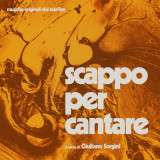
Another dream coming true! One of Giuliano Sorgini's finest and most sought-after titles is finally available as an official LP reissue – the first ever – remastered from the original tapes.
Originally released in 1971on the small library music imprint FAMA, which operated as a sub-label of RCA Italy, the record contains the original music written for Scappo per cantare, a small, pseudo-psychedelic 'musicarello' (musical comedy film) broadcast on RAI television and starring, among others, Italian singers Gianni Morandi and Mauro Lusini.
The only credited album artist is Sorgini, but it's impossible not to perceive, in this record, the hand of his close friend and colleague Alessandro Alessandroni.
This should not come as a surprise. In the early 70s, the two composers and multi-instrumentalists had a fruitful collaboration that saw them, under the monikers Braen (Alessandroni) and Raskovich (Sorgini), produce an abundance of works together, most of which have now gained the recognition they deserve. These include, among others, two 7" singles from their band The Pawnshop, three records in the series Alle sorgenti delle civiltà (Folkmusic), the crime/noir library albums Quarta pagina (Usignolo) and Inchiesta giudiziaria (Octopus Records), as well as the LP Tempo Libero (Panda Records), which was released shortly after the record presented here and in some ways drew rhythmic inspiration from it.
While their collaboration remained unacknowledged on the original release of Scappo per cantare (this was not uncommon at the time, especially in the field of library music), the record sounds perfectly in line with other works composed by Alessandroni in the early 70s, such as Complesso Gisteri's Mostra Collettiva (co-written with Oronzo De Filippi), or even a landmark album like Spontaneous, where Sorgini contributed to a handful of tracks.
So, yes, the sheer beauty of Scappo per cantare is the result of an incredible synergy between two heavyweights of Italian library music! Airy and sweeping melodies à la Zoo Folle, psychedelia à la Under Pompelmo, and various percussion instruments played by Sorgini seamlessly blend and fuse with elements and touches provided by Alessandroni.
More specifically, we find Alessandroni's signature, melancholy whistle in "Desolazione"; the peaceful and dreamy sound of his 12-string guitar in "Scogliere" and "Con Amore"; the trademark harmonies of his vocal ensemble Cantori Moderni in the last two tracks mentioned and in "Per cantare"; and his ingenious use of distortion on his Fender Stratocaster in the suspenseful transitions "Concentrazione" and "Fantocci", as well as in the frantic/hypnotic hippie numbers "Mordente" and "Fendente" (as a side note, it is worth remembering that Alessandroni experimented extensively with distortion in the rock-infused album Underground, co-written with De Filippi and released in 1971 under the moniker Braen's Machine, probably a reference to British psychedelic band Soft Machine).
The creative relationship between Sorgini and Alessandroni was so symbiotic that it would be useless to try to identify in more detail their respective contributions to the sound of Scappo per cantare. The alchemy between these two musical geniuses is the key to the album's exquisitely Italian mixture of cheerful lounge, sweet psychedelia and smooth easy listening.
To do justice to the quality of the music, this remastered reissue is enriched by a new artwork by Eric Adrian Lee, who drew inspiration from the psychedelic visual culture of the period in which the album was written and recorded.
It is with great fanfare that we proudly announce the return of the esteemed improvisational chainsaw blues trio Young James Long. Young James Long formed in Dallas in 2003 with a weekly residency at a local (and appropriately named) dive bar called Muddy Waters. PW Long (guitar, vocals) and Kirkland James (guitar) had known each other socially since the 90s when Long was fronting Quarterstick Records’ Mule, and James was playing with Tenderloin. Long would go onto make a series of incredible solo records under his own name and that of PW Long’s Reelfoot and James would play with Alejandro Escovedo (among many others) before their paths finally crossed again. They recruited Taylor Young (Hi-Fi Drowning, Young Heart Attack, The Polyphonic Spree) on drums and a raw, blues-punk-rock-and-roll band emerged fully formed, songs flying out of them with enthusiasm and ease. They recorded the You Ain’t Know The Man EP with their friend (and eventual Grammy winner) Stuart Sikes not long after. The EP came out via Southern Records in 2007, and thanks to the tasteful ears of the people this side of the pond, a European tour followed. If you saw that tour, you’ll agree that it felt like the band were really hitting their stride. However, here we are in 2023, so what happened? Answer: geography - the age-old enemy of creativity. One member left Texas and the others (being the extremely able and skilled musicians that they are) were perpetually wooed away to play in other bands. Everyone’s got bills to pay, right? And with that, things just kind of fizzled out. Long even insists he quit playing music around 2010. One of the most recognisable voices in underground music: out of the game. Incredible. Inconceivable.
Then, last year we at Wrong Speed got an email asking if we’d be interested in some new music Young James Long had been working on. We thought it might be a joke. They sent some mixes through, and it became very quickly apparent that it was anything but. Turns out the trio had started chatting about music again in 2020 (before the world had other plans) and had finally made their first full-length album Orogeny in the summer of 2021. Orogeny sounds live and thrillingly immediate, as though all obstacles between their delivery and your ears have been removed and discarded as irrelevant. There is no filler, no treading of water at any point. Amps buzz, songs teeter on the edge of collapse, you feel like you’re sitting in the middle of the band as they play and it’s a pretty sweet place to be. The album contains a whopping 17 songs, most under 2 minutes long. They don’t want to waste your time, or most importantly (after sixteen years away), theirs. If you’re familiar with Long’s previous bands, you’ll know he has a rare gift for pairing extreme volume with extreme tenderness and it’s thrilling to find that gift present and correct after over a decade away. And that voice – holy shit, that voice. He can go from a Beefheart howl to the sweetest country baritone in the space of a single line. In James and Young he’s found the perfect foils, a power trio of instinctive and soulful musicians able to conjure shining gems of magic out of the grit and the dirt. Young James Long is risen from the ashes – it’s a miracle!
“The minute your expectations harden or crystallize, you jinx it… nothing was ever abandoned”
The third 12” on Laen Disc from Farren Laen. hand stamped & numbered in NYC. 150 copies.
Early support from: Kornel Kovacs, Mr. Beatnick, Move D, Gene Tellem, Frits Wentink, Nathan Micay, Massimiliano Pagliara, Johannes Albert, & more
Summit Fever is a pair of industry veterans who opt to stay out of the spotlight and prefer to let the music speak for itself. Here they emerge from the shadows with a four-tracker entitled ‘Something Forever’ that includes a mesmerizing remix by Larse (Defected, Glitterbox, DFA, Eskimo). Prepare to be taken on an exhilarating journey back in time as they showcase their love for classic ‘90s house that is set to captivate the hearts and ears of house music enthusiasts and reignite the flame of nostalgia.
DJ support: Wolfram, Jimpster, Marcel Vogel, Graeme Park, Souldynamic, Hifi Sean, Androosh, Johannes Albert, Willie Graff, Dave Jarvis, Pastaboys, DJ Harri, Lisa Loud, Jerry Bouthier, Kiko Navarro, Kelvin Andrews, Neil, Diablo, Lex Athens, Rocksteady Disco, Flash Atkins, FSQ, Mr Shiver, Ravanelli Disco Club, Ed Maho
The group"s second LP for Epitaph finds HUNNY playing in a brand-new musical sandbox, balancing the haze of hindsight with a sun-soaked SoCal summer. From the meditative track "my own age" and breakbeat-backed, late "90s-leaning "all my luck" to the lo-fi punk standout "ring in your ear" (featuring Motion City Soundtrack"s Justin Courtney Pierre) and made-for-dashboard-drumming "89cc" (complete with a searing sax solo) the album is a testament to the band"s musical fluency and dedication to their craft. HUNNY was born out of the tight-knit North LA indie-rock scene of the mid-2010s, sharing stages and even band members with acts like The Neighbourhood and Bad Suns from an early age. The band is well established in the digital space, having racked up over 300+ Million streams to date on their catalog. By the time the band had secured a record deal with legendary Epitaph Records and released their 2019 debut full-length, Yes. Yes. Yes. Yes. Yes., outlets like Alternative Press were hailing HUNNY - vocalist/guitarist Jason Yarger, guitarist Jake Goldstein, bassist Kevin Grimmett and drummer Joey Anderson - for their spin on "perfunctory electronic and new-wave pop, teeming with love, heartbreak, neuroses and impeccably sweet dancing shoes." Now, on the verge of entering their second decade together, it"s clear HUNNY"s greatest asset is their disinterest in doing anything besides what moves them. It"s afforded them great range as a band, the ability to naturally shapeshift on their own albums as well as win over audiences across the entire rock spectrum. Most importantly, it"s propelled them to be unapologetically themselves and trust what"s gotten them this far.
Mistaken Identity is the second studio album by Australian singer Delta Goodrem. It was a huge success in Australia, peaking at #1 on the country’s album chart and achieving a certification of five times Platinum. The album was also very well received in New Zealand, UK, and several European countries. Delta’s second number one album can be described as more classically piano driven, venturing into pop rock and pop jazz. The album features five singles, including “Almost Here (feat. Brian McFadden)”, “Out Of The Blue”, “Mistaken Identity”, “A Little Too Late” and “Be Strong”.
Mistaken Identity is available on vinyl for the first time as a limited edition of 2000 individually numbered copies on translucent blue coloured vinyl, housed in a gatefold sleeve and includes an insert with lyrics.
The prolific Brussels-based ensemble Razen is back on Hands in the Dark with a new stunning collection of fascinating improvisations: ‘Hier l’An 4000’.
Based upon the theme of reincarnation hypnosis and inspired by the writings of Donoso and Slauerhoff, 1940s SF drawings, sky burials and a fantasy of future music where savagery and sophistication meet, the band ventures here into reverse mesozoic exotica. Each piece leans on sampled hand percussion (by grace of the legendary Algerian percussionist Abdelmajid ‘Guem’ Guemguem), augmented by Brecht Ameel, Kim Delcour and David Poltrock’s trademark devotional approach on early music wind instruments and pre-digital keys and synthesisers, spiralling down into their own rabbit hole of repetition and changes.
As gorgeously illustrated by the contemporary British painter Nicholas William Johnson: whilst proposing a futuristic trance-like trek through magenta night skies, toxic radiations and a hostile flora, Razen has never sounded more ecstatic and disruptive.
Forever is a 1993 album by the British shoegaze band Cranes. Forever continues the trend of the band's previous albums, revolving largely around Alison Shaw's distinctive vocals. The album contains elements of shoegaze, dream pop and gothic rock, and features the singles "Adrift" and "Jewel".
The album starts with hypnotizing acoustic guitar chords on the first track "Everywhere". Songs like "Cloudless", "And Ever" and "Far Away" show the band taking an extremely minimalist approach to their songwriting with sometimes nothing more than a piano accompanying Alison's voice. The songs "Adrift" and "Clear" are heavy post-punk rockers and "Jewel" is one of the brightest and most colorful songs that Cranes have ever produced.
"Jewel" ended up being an underground hit in the U.K. and U.S., though thanks to a somewhat transformed remix courtesy of longtime Cranes fan Robert Smith (Forever takes its name from a The Cure rarity of the same title).
Forever turned out to be a favorite amongst fans and critics, it's a lost treasure of early 90s dream pop, delivering unique and mesmerizingly beautiful music. The hidden track "Shine Like Stars" is included on the LP.
2023 marks the 30th anniversary of Forever. Therefore, the album is available as a 30th anniversary edition of 1000 individually numbered copies on crystal clear vinyl and includes an insert. Also, the band will perform the complete album at EartH in London on October 14.
In the Shadows is the third full-length studio album by Danish heavy metal band Mercyful Fate. It is the first offering of the band since their reunion in 1992. After an almost decade-long hiatus, Mercyful Fate's reunion did not disappoint; it was as if they picked up right where they had left off. There are more of King Diamond's gothic tales of horror and the supernatural, and the music sounds better than ever. It doesn't have the historical significance of their early-'80s material, but that doesn't really matter; this is high-quality material from a tight veteran band.
20 albums and 25 years into her recording career and only now does Thea Gilmore feel enough of herself to make the self-titled album that renews her vows to music - her first love. The album is released on 6th October. The album was entirely written, played and produced by Thea. Thea Gilmore is absolutely the record she wanted to make. In many ways the record she had to make. Sustained by the very public dissection of her personal life laid bare on her last full-length release, the stunningly intimate Afterlight, Thea's hard-earned reputation as one of the most distinctive, strident and bold singer songwriters of her generation propels her to reach for new ground and this new release feels like a great leap forward into tomorrow. "That's why this is my first self-titled album," she explains. "On my last album I changed by name to Afterlight and drew a line under everything I'd done up to that point. Not to invalidate it, but to put an end to the 'before'. It was a very inward-looking record that was rooted in the darkness of everything that happened to me up to 2019, whereas this album has its head up and is eyeing the world as a challenge. It's a logical forward motion - the emergence from the shadows of Afterlight into the relative lightness of Thea Gilmore - in a renewal of my vows to music; my first love. In a weird way it feels like a debut of sorts so it made sense to make it eponymous." Across 12 tracks Thea delves into the cracks between the paving slabs of life's big themes. She's exploring the understanding that comes with experience, choosing her battles and finding out who she is now. The stunning 'She Speak In Colours' is a song for love and loss written as part of BBC Radio 2's critically lauded 21st Century Folk project; while 'The Next Time You Win' with its simple piano figures and its collage of spoken and sung lines seems to both accept the way the world works while reaffirming the pledge to stand on the frontline of change. Thea is also excited to bring the album to the stage. She will play London’s Union Chapel on 12th October and then an 11-date tour around the UK in early 2024. Full dates below. Thea Gilmore has made 20 albums since the release of her first, Burning Dorothy, in 1998. The veteran of hundreds of festivals, she has sold out shows across the globe.
Very limited stock available on these. Picture Disc Vinyl Packaging: 2xLP zoetrope (animated) picture discs, 24x36 foldout poster in custom silkscreen PVC gatefold sleeve + download card. On their fifth album, Infinite Granite, Deafheaven are no longer toying with the juxtaposition of pitting metallic abrasion against swirling grandeur. Quite the opposite: Infinite Granite is a bold and brave leap forward, a gorgeous and invigorating album brimming with style and splendor. In the context of their catalog, it takes on a whole other layer of defiant beauty. Across Infinite Granite, vocalist George Clarke showcases a startling vocal range; falsettos, whispers, multi-part harmonies, and other adventurous vocal treatments, with his trademark black metal-inspired howls mostly absent. Guitarists Kerry McCoy and Shiv Mehra expand their sonic palette to include synth textures using them to enrich their astral guitar work rather than outright replace it. Drummer Daniel Tracy has always been a force to reckon with behind the kit, but where he used to floor audiences with his speed and stamina, he’s now free to broaden his approach and lay down authoritative drum patterns that together with bassist Christopher Johnson’s punchy bass lines anchor the band’s lofty arrangements. The refinement of their sound was further encouraged by producer Justin Meldal-Johnsen, who lent a pop ear to the record. Jack Shirley, who helped produce every previous Deafheaven album, remained on board to engineer the album along with additional engineering and mixing from nine-time Grammy Award winner Darrell Thorp. Ultimately, Infinite Granite is Deafheaven’s most goosebump-inducing album to date. Highlights: Follow up to 2018’s grammy nominated album Ordinary Corrupt Human Love and first full-length release with Sargent House. Deafheaven named ‘Artist of the Decade’ by Vice, along with albums featured in ‘Best of 2010s’ lists on Pitchfork, Rolling Stone, Metacritic, AV Club and many more. Three previous albums Sunbather, New Bermuda and Ordinary Corrupt Human Love have received incredible praise from press and named ‘Best New Music’ by Pitchfork. Deafheaven have scanned over 160k albums and streamed over 30 million tracks in the US alone.
- A1: Ifo (Identified Flying Object) (Identified Flying Object)
- A2: Runaway
- A3: Heart Be Still
- A4: I Won't Give Up
- B1: Vote, Baby, Vote
- B2: Two Clouds Above Nine (Feat Jamal-Ski)
- B3: Electric Shock
- C1: I Had A Dream I Was Falling Through The Ozone Layer
- C2: Fuddy Duddy Judge (Feat Michael Franti)
- C3: Pussycat Meow
- D1: Thank You Everyday
- D2: Rubber Lover
- D3: Come On In, The Dreams Are Fine (Feat Arrested Development)
Never Before Reissued On Vinyl! After the smash success of Deee-lite's debut record World Clique, and their now-iconic dance club hit "Groove Is In The Heart", anticipation was high for a follow-up from the New York-based dance music trio of vocalist Miss Lady Kier, and producers DJ Towa Tei and Super DJ Dmitri.
For their sophomore record Infinity Within, Deee-Lite opted to venture in a different direction of sorts. The club-embracing disco-funk sounds and groovy vibes of World Clique were everpresent, but while that record contained themes of global togetherness, Infinity Within took a more socially aware route, with politically charged themes of environmentalism, (To show their bonafidese, Infinity Within was one of the first titles to be issued in an ecologically friendly Eco-pak.) sexual liberation, voting rights, and critique of the juidicial system.
Taking major inspiration from the ancient Chinese divination text I Ching, Miss Lady Kier would later explain that Infinity Within was a natural progression for the group, not a departure. Elaborating in an interview with Reflex Magazine, she remarked: "The reason why we titled this new album Infinity Within to balance out World Clique’s idea of looking outward and thinking about unity is if you look outward, you should look inward to see what you’re doing as an individual.
Because people seem to be so passive I’d like to see people turn their TV sets off and start protesting." Infinity Within was not the overwhelming commercial success that World Clique was, but it's tracks shined on the Billboard Dance Club charts, with it's lead single "Runaway" reaching #1 on the chart, bolstered by a Gus Van Sant-directed music video.
The record also featured a slew of top-tier collaborators, including Parliament veterans Bernie Worrell, Maceo Parker and Bootsy Collins (Returning from their appearances on World Clique) as well as Bootsy's brother Catfish Collins, legendary house DJ Statoshi Tomiie, and rap verses from Michael Franti, Jamal-Ski, and a pre-"Tennessee" Arrested Development.
Even though critical reaction at the time was cooler than their debut, over the years Infinity Within has been considered an underrated
gem of 90's dance, a classic of early club and house music, and a remarkable follow-up for Deee-Lite.
Since his career started over three decades ago back in 1981, The Chicago house veteran Boo Williams has been heavily involved in the house music industry, racking up highly strong reputation with his massive discography which includes a wide range of influences.
Hooking up with Mr Green Velvet, aka Curtis Jones’, much celebrated Relief Records in the mid-‘90s, the hard, jackin’ sub-label of Cajual, and later releasing on the tough-as-nails Dutch label Djax, 1996 saw Boo produce his seminal album with the bouncy house of ‘Home Town Chicago’, the first of a series of reissues by Anotherday Records.
Boo has since gone on to record for reputable imprint such as Ovum Recordings, Relief Records and Rush Hour.
For those who have religiously followed Boo over the many years, he continues to deliver as promised, once again bringing the driving beats and textured etherial soundscapes as you'd expect from the master‘. And for those who are just tuning in for the first time, Boo will open up your ears to a new level of sound.
Many things have been said, written and rightfully attributed to DJ and Producer Boo Williams' monumental career: "innovator".
As Boo Williams said: «House music will never die! Love, peace and hair grease».
Label owner, Adrien Calvet, is in charge of the B side. Always trying to push boundaries of raw sounds and electro glitch.
Gottwax is back with its seventh instalment, and this time, the reins are in the hands of the Beeyou co-founder and FUSE regular, Laidlaw. Laidlaw showcases his unparalleled talent and versatility as a producer in the 'Prophecy' EP, solidifying his status as one of the rising stars in the scene. This four-track EP takes listeners on a journey through deep house, stripped-back grooves, and breakbeat, making it an absolute essential for every discerning DJ's collection.
The EP kicks off with 'Wait Till The End,' a deep house gem with a playful bass line, moody chords, and sparkling top notes. Each element is thoughtfully crafted, blending harmoniously to create an atmosphere that subtly builds throughout the track. 'Wait Till The End' is a flawlessly realised tune, serving as an incredibly strong start to this EP.
Next up is 'Planet 727,’ is a minimal groover with deep, subby bass and hints of tribal drums, infusing the rhythm with captivating movement. This track is one for late-night, ensuring the dance floor keeps moving till the early hours.
As the title track of the EP, 'Prophecy' does not disappoint. This groove-laden breakbeat track is brimming with deep sub bass and intricate textures, leading into an infectious melody. A must-have in every DJ's bag, 'Prophecy' will undoubtedly be the soundtrack for countless future parties.
Closing out the EP is 'That Was Well Quick,' a high-energy composition adorned with mesmerising melodic textures. With its hypnotising baseline groove and captivating top lines, this track creates an infectious atmosphere, injecting an electrifying energy into the dance floor. 'That Was Well Quick' is an absolute essential for all devoted electronic music lovers.
We are beyond excited to welcome Laidlaw to the Gottwax family and share this incredible release you. Prepare to be taken on an unforgettable sonic journey with the ‘Prophecy EP’.
TPG long term friend and homeboy Ben Oyefeso pulls out a trio of double-jointed cuts for the club and not, the German producer's debut EP ‘Lagerfeuer’ packs that left-of-centre house punch that’s come to define the label throughout the previous ten releases and certainly more than just that. Cutting his lane at the junction of oddball party music and deconstructionist boogie, Oyefeso’s maiden sortie floats like a butterfly and stings like a bee. A weird, buzzing slab of body-jacking electronics that doesn’t play by the book.
An off-road bouncer of a track, the opening number ‘Matt’ has us nodding our heads to a high-in-vitamin mix of jacking house programming and erratic acid patterns gone astray. Knee deep in 303-marinated puddles of psychedelic squelch, Oyefeso keeps swinging the pendulum between a proper syncopated 4x4 motif’d framework and frantic digressions into an abstract-leaning headspace.
A2 ‘Kool’ opts for a further sliced-and-diced rhythmic line of action, generously infused with twisted Rephlexian phrases and sustained waves of micro-house clicking. Topping off that strange journey, the title-track ‘Lagerfeuer’ merges polyrhythmic intricacies with a forward-moving, earwormy kind of linear groove, all laced with a spooky baseline that stretches out into a purgatory of frankly eerie dissonances. Enough with the words, just jump on board Ben Oyefeso’s ghost train for a seriously tortuous, nonconformist ride across dance music’s jagged ridges and most secret crevasses.
If the name of this collection of traxxx offends you, move on — there’s no hope for you here. If, on the other hand, Toribio’s salacious fun-pun cracked your cool exterior, here’s an introduction to a set of bangers that helps exemplify New York’s increasingly exuberant dancefloor, and what producer/DJ Cesar Toribio brings to it. His is a ribald, rhythmic take on dance music, neither for the weak of musical character (purists need not apply) nor for the weak of ass (-shaking). In fact, the proof is right there, in Toribio’s label’s and monthly party’s name: Bring Dat Ass. This command is not optional, but *the* key ingredient for a good time.
The five songs Toribio has created for “Tongue In Cheeks,” BDA’s first release, comprise a horny melting pot of tribal house and Linn-drum plug-ins, minimalist synth textures and basslines, hi-hats reminiscent of electro and freestyle classics, some of which are infused with New York’s Latin club history and futures. The lead-off track, “No Pare,” is based on the producer’s 808-driven reinvention of the call-and-response hook from Proyecto Uno’s 1993 merengue-house smash “El Tiburón,” marking the first time the group has ever cleared a sample of this Nuyodominican classic. We predict that “No Pare” will be a Fall 2023 monster.
Guest vocal appearances by The Illustrious Blacks and Maluca, cornerstones of different dance-floor scenes in a city currently hitting peak-energy levels, show the breadth of Toribio’s regard for community: There is a lot of crossover to how the punky Dominicana MC from Washington Heights chooses to slang-tastically “Werk It Out,” and how the Neo-Afro-Futuristic-Psychedelic-Surrealistic-Hippys Monstah Black and Manchildblack infuse a dollop of booty into “Work Dat Shit.” And the two different metallic beats point at seemingly separate parts of Toribio’s musical heritage uniting. There’s no formula, but if there was, it would be: Make it sexy. Make it (consensually) grindy. Make it funny to the point of ridiculous but so funky that the laughter becomes more fuel to the joyous momentum propelling the movement. Then make it home — or try to.
Cesar Toribio’s home is, originally Tampa — and the DR, where he’d spend summers with family. He was a drum-corps prodigy who went to Berklee to become a jazz drummer and be like Gil Evans. He idolized Miles’ orchestral arranger’s work as much as Dilla’s beats, but then discovered house music, so it was a wrap. The 2021 band album Toribio made under the name Conclave — which included his sister Sharin and musicians from such great projects as Standing On the Corner, No Regular Play and Irreversible Entanglements — unearthed the work of a singer-songwriter-arranger-producer of immeasurably nuanced, soulful jazz-house music. But when Toribio started DJing more and more, he decided to listen to the devil on his shoulder who told him to Bring Dat Ass. As Cesar damn-well knows, it’s the devil who has the better jokes and holds the better parties, so his ears perked up. “Tongue in Cheeks” is the music Toribio says he made to play at these parties, because he can’t find it anywhere else. It’s hard to disagree.
Aurora Records proudly presents Temporal Gardening, featuring
composer and performer Stephan Meidell and the baroque ensemble
Bergen Barokk
The new album will be available on vinyl and digital platforms on15th of
September 2023.
Temporal Gardening was originally a commission written in 2020 for Bergen
Barokk. The idea was to explore using early music instrumentation in dialogue
with new electro-acoustic technology. The unique and remarkable ecology grew
from pseudo- baroque music playfully reimagined, reinterpreted, disassembled,
remixed, and resampled.
The trio has been expanded with drums, functioning as speakers for the
electronic manipulations of the ensemble. A double-bass recorder vibrates a subwoofer speaker mounted inside a bass drum, and a live sampled harpsichord
sounds through cymbals, gongs, and a snare drum. Meidell himself part takes as
a musician in the performance, doing live sampling and electronic contributions.
Musician-composer Stephan Meidell is a musical adventurer who, in a nomadic
fashion, improvises his way through a plentitude of styles. Meidell's music exists
where genres dissolve into fragments that canbe picked apartand combined in
new ways. He frequently combines sounds from electronic, acoustic, and
electromechanical instruments and machines and then recontextualises them
with his finely tuned intuition and sense of detail. Meidell has a plentitude of
releases and commissions, including with Erlend Apneseth Trio, Strings &
Timpani, Cakewalk, and TRIGGER on labels such as Hubro, Clean Feed, Playdate,
and Ideophone.
Bergen Barokk was established in 1994 and is today one of Norway's leading
early- music ensembles. The group has concertized and appeared in radio
broadcasts in Europe, Russia and USA. Their recordings on Simax Classics, BIS,
Bergen Digital Studio and Toccata Classics include German, English, Italian and
French repertoire. Bergen Barokk has collaborated with several ensembles
through the recent years, some of them are Pratum Integrum (Moscow),
Norwegian Soloists' Choir and Barokksolistene (Norway). Bergen Barokk has
performed in festivals like Festspillene i Bergen, Bach Festival of Philadelphia,
Moscow Early Music Festival and Janacek International Music Festival (Czech
Republic).
Bay Area technical death metal entity FABRICANT leverages any musical
tool for their riff and song fabrication
Speed, stillness, technicality, simplicity, consonance, dissonance... are all at play
for the express purpose of telling the stories of humanity's hubris, madness, and
frailty. FABRICANT glimpsed into this black vortex, extracted the raw materials of
inspiration, and refined the chaos into the ten fully actualized, death metal songs
on their debut album "Drudge to the Thicket".
This album was FABRICANT's obsession: a forbidden riddle to solve. From its
beginnings stretching as far back as their 2010 demo and to its ultimate end, this
album inhabited the deepest recesses of their minds as an omnipresent
consumer of thought. With the arrival of this debut, FABRICANT frees themselves
of this thicket. The battle was hard-won, but the next ones inexorably begin. From
new obsessions to delirium to the mundane, consciousness marches onwards,
screaming out at all of existence for answers, only to feebly fall on deaf ears.
Descend into the chaos with FABRICANT.
FABRICANT's debut album "Drudge To The Thicket" is unlike anything you'll hear
in the technical death metal genre all year, truly a unique and singular album of its
own kind. One that has been in the works for over a decade.
FABRICANT features members of celebrated technical death/ black metal outfit
Mefitis.
For fans of Necrophagist, early Pestilence, early Atheist, Defeated Sanity, and
Gorguts
- A1: It's The Same Old Story - Act I
- A2: Two Wrongs Don't Make A Right - The Mayberry Movement
- A3: Shake Off That Dream - Eddie Billups & The C.c.c.s
- A4: Just A Little Ugly - Gail Anderson
- A5: I Don't Play Games - Nightchill
- A6: Do You Really Love Me (Edit) - Darondo
- B1: If That Don't Turn You On - Millie Jackson
- B2: If There Were No You - Natural Resources
- B3: Go Away - The Hesitations
- B4: Momma Had A Baby - Street People
- B5: Never Felt This Way Before (Edit) - The New Experience
- B6: Gotta Be Loved Part 2 - Herman Davis
Repress!
Having been brought up as much on albums as singles, it is a natural progression for Kent to make a 12' version of our 'Masterpieces Of Modern Soul' CD series. The Modern soul fan is used to wielding 12' of plastic in various forms and our latest Kent LP is aimed squarely at them.
We have lifted a fantastic LP-only track from theSpring album by Act 1, 'It's The Same Old Story', one of the most catchy, melodious songs of the era and as a Ray Godfrey Spring production it is high quality. The same source provides the Millie Jackson LP track 'If That Don't Turn You On'; inevitably raunchy - but clean!
The Mayberry Movement were on sister label Event and we have their smooth and addictive 'Two Wrongs Don't Make A Right', unreleased until Kent issued it. On the pricey side we feature Eddie Billups' anthem 'Shake Off That Dream'. Scarce is more the word for Gail Anderson's Doré release 'Just A Little Ugly' which is anything but and stablemates Natural Resources have a recently discovered find, 'If There Were No You': it would have been the buzz of the Mecca a few decades earlier. Into the 80s we go with a 60s legend: Dave Hamilton, whose later recordings are proving to be as highly admired as his tracks from the golden era of 60s soul. Nightchill's 'I Don't Play Games' sounds like a hit to me and the New Experience's pleading 'I've Never Felt This Way Before' is one for those who like to sympathise with a bit of anguish. Darondo provides another gem of west coast soul from his own special perspective.
The Hesitations' GWP recording is as polished and professional as ever and there is more top harmony from Street People with a previously unissued track from their first recording session.
There had to be a teaser. After reissuing Herman Davis' 'Gotta Be Loved' we discovered a brilliant unissued Part 2 to the highly collectable single. It had been abandoned before the 45s' pressing but now rounds off an LP that will grace those large and overburdened LP shelves of the modern soul Kent fans.
Limited rerelease. Unavailable for years. The legendary album from 1984. Fully remastered by David Cunningham. These recordings were originally released on cassette by Touch in 1984 with the exception of 'Parts Of My Body', released on a single by Canal Records in 1979. Performed by: Steve Beresford: bass, piano, farfisa organ, prophet 5, trumpet, flugelhorn, euphonium, percussion, glockenspiel, voice, toy piano, melodica, noises, rhythm tracks, drumkit. David Toop: guitar, prepared guitar, bass, percussion, flute, alto flute, glockenspiel, voice, tapes, noises, rhythm tracks David Cunningham: tape treatments with guests: Lol Coxhill, Dawn Roberts and Maartje ten Hoorn 'The atmosphere which General Strike conjure together suits an old fashioned, cold war-ish scenario of technology. Their 'Interplanetary Music' is the space pop of George Pal and 'The Day The Earth Stood Still', of computers built like Blackpool Tower in order to struggle through simple trigonometry, of 'The Jetsons' and I.G.Y. They go no further than Expo 67, the world's last gasp of optimism. And although there are dark and disquieting moods set in this mosaic which their listeners have pieced together, it is made with a humour which is true to the spirit of adventure which those references apply. The sanitation merchants who make up most of the world's record-makers today would forbid our ears from hearing these strangely electric keyboards, earthworked textures, bizarre chattering of percussion, and voices that seem like puzzled robots. Cataloguing the sound in that way makes it all seem a bit of a joke, but it isn't: laughter is encouraged, but it's serious music, made with a great deal more serious spirit than the great and disheartening mountain of music which today implores you to hear and not listen.' (Richard Cook).
"Dance My Hurt Away" is the first single from the upcoming debut album by The Faithful Brothers from Tel Aviv/Israel. Is there a Northern Soul scene in Tel Aviv? The surprising answer is - yes, there is. If you're a soulie and in town, look for the Tel Aviv Soul Club, and you might find yourself swaying across a talcum-powder covered floor to Tel Aviv's own unique blend of classic Northern Soul 45s and early 1960s R&B sounds. Chances are that those 45s will come out of the record boxes of one of the brothers Neeman, Johnnie and Bin. Tel Aviv Soul Club, aka TASC, is the brainchild of Yashiv Cohen, a DJ who, in 2006, lured the brothers Neeman, whose massive soul collections been hitherto confined to their respective living rooms, into playing their records to the Tel Aviv public. Yashiv is also the lead singer of Men of North Country (MONC), a Tel Aviv band with a distinct sound, blending rock, British pop and soul. Since Neeman means Faithful in Hebrew, Yashiv woke up one morning with the crystallization that MONC must create a spin-off, a more puristic soul band, called the Faithful Brothers. It took a few more years, but gradually the brothers succumbed to their fate, to continue their musical progression, from collectors to DJs to musicians. Johnnie took his guitar, Bin took to the piano, and the brothers began pouring out some of their influences, creating new songs. It is finally all coming together now.
Recently reformed Swedish death metal pioneers DISMEMBER are proud to announce that they have once again joined the ranks of NUCLEAR BLAST RECORDS, where they released their demo, Reborn In Blasphemy (1990), their 1991 debut album, Like An Everflowing Stream, as well as the four records that would follow. Between 1988 and 2011 DISMEMBER earned a notorious reputation as the “Motörhead (version) of death metal”, through eight classic albums and furious live shows around the globe. The band was formed by Robert Sennebäck, David Blomqvist and Fred Estby in Stockholm, Sweden, in 1988 and has long since been regarded as one of the originators of the trademark Swedish death metal sound, next to other pioneering bands such as ENTOMBED, GRAVE and UNLEASHED. DISMEMBER recorded a couple of self-released demos before their 1990 demo cassette, Reborn In Blasphemy, with Matti Kärki on vocals and ENTOMBED's Nicke Andersson taking over most lead guitar parts, got picked up for a wider release by NUCLEAR BLAST RECORDS. In 1991, their first full-length, Like An Everflowing Stream (Nuclear Blast Records), saw the light of day, which was recorded by Tomas Skogsberg at the now legendary Sunlight Studios, and featured Richard Cabeza (UNANIMATED) on bass. DISMEMBER released their acclaimed sophomore album, Indecent & Obscene, in 1993, which to this day remains their most successful output.
Released in 1997, the fourth studio album by Sweden's DISMEMBER totally lives up to its title, and provides a harsher, more aggressive sound than its predecessor. Including a barrage of great tracks like 'Misanthropic', 'Of Fire', 'Silent Are The Watchers', it also marked the debut of drummer Fred Estby as producer. This remaster by Patrick W. Engel adds an impressive additional punch resulting in the ultimate version of this classic.
The Esbjörn Svensson Trio, e.s.t. for short, are still
celebrated today as one of the most important and
influential European jazz bands of the last 20
years.
In 1999, the three Swedes achieved their
international breakthrough with ‘From Gagarin’s
Point Of View’. A star rose in the musical sky and a
unique world career followed. But sometimes stars
shine for much longer than one thinks. On ‘e.s.t.
Live 95’ there are recordings that prove that this
was also true for the Esbjörn Svensson Trio.
The band, founded in 1993, found their very
specific sound early on but it was not initially
noticed outside its home country. In 1995, when
the trio’s namesake still wore long hair and a
headband, these recordings were made at various
locations in Sweden. And whoever hears how the
trio played back then is left breathless.
Much of what distinguishes e.s.t. was already
strongly pronounced here: the coherence and
powerful grip of the playing; the catchy themes that
immediately jump out at the listener and yet do not
become clichéd; the fusion of the music of role
models like Thelonious Monk and Keith Jarrett into
a style of their own, always infected by the forward
thrust of rock. Magical moments were saved for
eternity by these recordings.
Now this e.s.t. early work is available on double
vinyl.
Black Vinyl[27,69 €]
There are only a few figures in music whose work influences and
shapes a genre as a whole. This is undoubtedly true of the Swede
Esbjörn Svensson. With his trio e.s.t., the pianist and composer
wowed audiences beyond age and genre affiliations. And his
influence on jazz as a whole reverberates to this day and already
within the second and third generation of musicians worldwide.
‘HOME.S.’ is Esbjörn Svensson’s only solo album and the sheer
existence of such a recording and its completely unexpected
discovery over a decade after its creation are nothing less than a
sensation: Since the early 1990s, Svensson focused almost his entire
creative energy and recording activities on his work with e.s.t.. Thus,
these new recordings are not only the first, but practically the only
ones that show Svensson in a setting other than that of the trio:
Intimate, concentrated and completely one with himself. The
recordings for ‘HOME.S.’ were made only a few weeks before
Esbjörn Svensson’s sudden death on June 14, 2008. Svensson
recorded the music in his Swedish home.
For almost ten years afterwards, the album rested untouched in his
wife Eva Svensson’s personal archive. Here, she tells the story
behind the discovery of the album and the music: “After Esbjörn’s
passing, I made sure all the contents of his computer were saved to
backup hard drives. And then I basically left them untouched for the
next ten years. At the point where I eventually felt ready to look into
the material, I soon realised that there was something I wanted to
look into.
“I took the hard drive and went to Gothenburg to meet with Åke
Linton, the sound engineer who had worked on all e.s.t. albums as
well as on their live shows. He was also the one who had helped me
to save the material from Esbjörn’s computer in the first place. So he
probably already knew that there was something hidden in there. But
nobody had listened to it.
“We went to his studio. And we pressed the start button. Then there
was a total silence and we couldn't speak for the entire time the music
was playing. After it finished, at first we were not able to say anything,
because we were both so touched and surprised that it was all there,
and that it was so beautiful. The tracks seemed to follow one another
like pearls on a string. After we just had sat there for a while we
agreed: This is really good. Musically, but also from a sound
perspective.”
- A1: Baby 00 04:32
- A2: Smoke Gets In Your Eyes 00 03:01
- A3: All The World Is Green 00 04:58
- A4: I'm So Lonesome I Could Cry 00 03:34
- A5: I'd Rather Go Blind 00 03:32
- A6: Amsterdam 00 05:12
- B1: Head In The Clouds 00 03:49
- B2: My Babe 00 02:30
- B3: Naked 00 03:58
- B4: Hang Me 00 04:15
- B5: When Did You Leave Heaven 00 02:58
- B6: End Of The Line 00 01:41
2023 Repress
Since Jesper Munk's debut album in 2013 the German singer-songwriter has made a name for himself as multi-instrumentalist , "in the paths of Jack White and Dan Auerbach," as the Rolling Stone Magazine puts it, playing music that ranges from Blues and Soul to heartfelt Pop and indulging Jazz, all this with a very unique, post-Punk
edge. His new album Taped Heart Sounds offers an evolution of Munk's sound: warm, gentle and soft vibes that go deep. "If there is a way to give you a hug in form of an album, this is how I'd attempt to do so," says Munk.
Recorded in an offbeat band room in Berlin with The Cassette Heads, the album brings together classics reaching from Blues to Rock'n Roll. Twelve songs of legendary artists who have influenced and inspired Munk since his early days, including Tom Waits, JJ Cale, Etta James, Hank Williams, Willie Dixon, Jacques Brel, and Mocky.
The entire album was recorded with a Tascam Portastudio 8-Track Cassette Recorder which brought an original and authentic sound to each song: "The technical limitations immediately liberated all other aspects of the recording," Munk says. "It shows how much of making music is just listening and without a screen to catch your eye, you really have no choice but to do so." All Songs face realness and live from these volatile moments that reveal vulnerability and musical generosity. The outcome of this analogue experiment is a very personal album, both inspiring and consoling.
Taped Heart Sounds courageously opens with Donnie & Joe Emerson's Baby; a song so iconic that it actually cannot be enhanced. However, Munk's interpretation stands out and has a presence that gives the song a life of its own - made for walking. Smoke Gets in Your Eyes, All the World Is Green, I'd Rather Go Blind, Head in the Clouds - what follows is a journey through Blues and Soul that is so vital and "now" that End of the Line may be the final track but certainly not the end of the story.
The album wouldn't be what it is without collaboration and partnership. Munk's special thanks go to his fans who helped to crowd-fund the recording. "On top of having had a real fun learning experience it all felt like a community project with real support from friends, the Cassette Heads, incredibly inspiring guests, and from Miles Deico, a wonderfully open and able engineer," so Munk about the making of the album.
Taped Heart Sounds is Jesper Munk's 4th album, following acclaimed debut album For in My Way it Lies (2013), CLAIM (2016), and Favourite Stranger (2018). Released via Billbrook Records, Hamburg-based Distributor Wordandsound's new label, the album is available for pre-order now - for purchase on vinyl and CD. The first single 'Baby' is going to be released on November 19, 2021.
Toy Tonics going New Wave Disco with Baby’s Berserk’s self-titled debut album (to be released on 29 September).
There are many shades of funk in dance music. Berlin’s Toy Tonics label brings up artists that reflect many of these different aspects in dance music. Now the label comes up with a band! A band that is inspired by 1980ies New Wave as well as the Y2K Indie dance scene. Two guys and 2 girls from Amsterdam and Montreal called Baby’s Berserk.
Baby’s Berserk is about taking the freedom to be who you want to be, about being comfortable. Having played in all-girl punk bands since the age of 14, the bands singer Lieselot is an expert on female empowerment. “Dress like a girl and act like a boy,” is a catchphrase she lives up to every day and it clearly is a message that resonates with the band’s wild fans.
In the great tradition of Roxy Music, Throbbing Gristle and Malcolm McLaren, Baby’s Berserk is not just about the edgy music, but also about a very strong own visual style. They readily blend their sounds with underground fashion. What you see is what you get and seeing Baby’s Berserk is feeling right at home. Lieselot is a visionary when it comes to stage presence. Have you always wanted to see an electronic band with a punk attitude perform wearing a mix of haute couture and Flintstone-style rags? Look no further, it’s Baby’s Berserk.
Following on the critically acclaimed singles ‘What I Mean’ (2020) and ‘Toxic Kisses’ (2022), Baby Berserk’s highly anticipated self-titled full-length is now finally about to see the light on Berlin’s Toy Tonics records. Sonically designed for gritty rock venues as well as up-to-date edgy dance clubs, Mano’s lush compositions smoothly intertwine with the highly associative lyrics written by Puggy and Lieselot. Poets and literary addicts may think they’ve just discovered the rock & roll equivalents of Sylvia Plath, Kurt Vonnegut and Allen Ginsberg. To tell you the truth: their wild guess is pretty accurate as the works by these greats lie scattered around the Baby’s Berserk studio for inspiration.
The band was born in a laboratory back in 2019. Tired of being in bands with unruly and unpredictable humans, Mano Hollestelle set out to create a group of high precision robots to create the post-punk sound he had in mind. His outdated technology of floppy disks and cassette tapes worked well to program the androids, until one day a 90s rave mixtape was mistakenly entered into his computer. House music is a feeling and the punk bots instantly got hooked on it upon hearing it for the first time. They could never be reset to factory settings again. Mano worked tirelessly with his androids, currently known by their humanoid names of Lieselot Elzinga, Puggy Beales and Eva Wijnbergen, to fulfil his evil plan to make the rockers dance and the dancers rock. Baby’s Berserk is the fiendish extension of this plot. Beware, the band’s bass driven grooves and computerized beats have been known to cast a spell upon all within earshot.
So what do the songs on ‘Baby’s Berserk’ tell you? That it’s totally fine to have lots of fun in life! To have a boyfriend as an accessory (‘Accessories’), to get inspired by Sponge Bob (‘Dancing with the Fish’) and to blend your spirits with mixers whenever the hell you feel like it (‘Rum ‘n’ Kola’).
Baby’s Berserk member Puggy Beales on ‘Limousine’: “Decant the wine from my tip jar to yours. Soon we'll be on easy street, chauffeured home from the rat race each evening. Is it everything you'd hoped it would be?”
Check not only the debut album but also the forthcoming Remix EP with remixes by Each Other, Niklas Wandt, Sam Ruffillo, Kris Baha and Nicolini.
- 1: We Said
- 2: Different Rings
- 3: Unbeknownst
- 4: Predestined Confessions
- 5: How Prophetic
- 6: A Caged Dance
- 7: I Have Long Been Fascinated
- 8: Enthralled Not By Her Curious Blend
- 9: No Way Chastened
- 10: But I Never Heard A Sound So Long
- 11: The Promise
- 12: Shake My Bones
- 13: A(Way) Is Not An Option
- 14: For They Do Not Know
- 15: Others Each
- 16: Ain't I...your Mystery Is Our History
Celebrated composer, performer, saxophonist, soloist, band leader, educator, activist, and mixed-media artist Matana Roberts returns with a new installment of their acclaimed Coin Coin series. For over a decade, Coin Coin has been the central artistic project for Roberts, a remarkable exploration of American ancestry and the nature of memory through "sound quilting": modern composition that draws on a wide range of musical sources and traditions, along with research-driven historical and genealogical narratives that yield prose and poetry both spoken and sung, field recordings, and graphic scores. The Quietus declares "when the 12-album cycle is complete, it will be regarded as a singular masterpiece of 21st century sonic and narrative art" and Pitchfork calls it "one of the most provocative ongoing bodies of work by any American musician." Coin Coin Chapter Five: In the garden... is the first new recorded audio chapter since 2019 and centers upon reproductive rights, summoning the story of a family ancestor who died in early adulthood, from a cause kept obfuscated and hushed, shrouded in disinformation and shame. Roberts reimagines diaristic and oral narratives, delivered in strident streams of spoken word that punctuate the hour-long work, with recurring musical themes frequently accompanied by the declarative refrain "my name is your name / our name is their name / we are named / we remember / they forget." As Roberts writes in the accompanying liner notes essay: I find it absolutely disgusting that the same trauma my grand ancestor, whose story we are telling in this chapter, is closely mirroring the experiences of some poor soul today as I write this... Our aforementioned grand, who perished at a young age, leaving her growing children motherless, did not have to die. The negative consequences of her death have reverberated down through generations in my family line, in the same way that a similar resounding might happen for someone else's ancestral line generations from today. While often jazz-adjacent, and with Matana's inimitable saxophone and indomitable voice at the core, Roberts situates Coin Coin outside the Jazz genre and within heterodox pathways of post-modern composition, electroacoustic music, sound collage, experimental voice, and sound art. In the garden... undeniably continues to express and expand upon the project's magnificent iconoclasm, nonetheless being the most jazz-inflected chapter since Coin Coin Chapter Two: Mississippi Moonchile(2013). Recorded in Brooklyn with a stellar acoustic ensemble that includes Stuart Bogie, Gitanjali Jain, Darius Jones, Matt Lavelle, Mike Pride, Ryan Sawyer, Corey Smythe, and Mazz Swift, abetted by some sparkling pieces featuring modular synthesis courtesy of album producer Kyp Malone (Bent Arcana, TV On The Radio), In the garden... traverses a vivid stylistic array of thematic overtures, excursions and set pieces, ranging from spacious textural invocations to gorgeously tempered horn-led compositions to driving free jazz and exhilarating through composed bursts of cacophony. With storytelling spoken-word lead vocals by Roberts channeled recurringly throughout, alongside various other deployments of layered and group voices, the album is alternately a meditation and fever dream of narrative potency. This is some of the most intense and intensive music Roberts has composed and captured to date, richly conceived and deeply felt, restless yet focused, unflinchingly substantive and unique. Coin Coin Chapter Five: In the garden... channels epigenetic trauma and tragedy with teeming complexity and fierce beauty _ a eulogy, testimony, and celebration, melding music and language in a stunning polychromatic flow of vernaculars and poetics. A powerful work of subjective commemoration and historical-cultural communion that speaks indelibly to the present moment.
2x10” in 350 gsm widespine jacket w/interior colour flood + 300 gsm printed inners + 20”x 10” fold-out insert + DL card
Paolo Mosca makes intricate, multi-layered electronic music. Inspired by the early club sound pushed by the pioneers from his home region Veneto, he fuses house, trance and ambient - and moves forward. The Metaphysics EP displays the artist's passion and ingenuity, unfolding technical skill that makes clear his studio clock is set to 2023 and not 1993. On "Luciddreams" a statically charged beat and organ bass work up a groove. Accompanied by a misty pad and a slow, pensive arpeggiator, it pulses towards the break: there an acid line emerges, finds its spot in the mix, and refuels the track. "Energia" draws from a bolder, more euphoric range. Hand drums, a glittering lead and airy yet restrained chords float soaked in reverb and delay. A lean bass sequence tightly keeps the rhythm as flanged claps and subtly positioned sweeps create extra movement. The second side's opener, "Under the sea" features a formant filter lead meandering within the sweaty framework of heavily gated choir pads and a frugal bassline that eventually gets layered with an M1. Modulated vocals and strokes of additional melody ensure the stereo field again gets used to its full capacity. "Acqua" is a fitting coda. Some familiar patches are deployed over a tumbling beat that takes charge of the pace from the get-go. The palette might seem bright and blissful, but as always, the track's latticework contains enough contrast for a slight feeling of melancholy to keep simmering beneath. Mosca cited his meditation routine, how it helps him materialize ideas and thoughts, as a main drive upon finishing this record. The Metaphysics EP is a ruminative work. Comprised of four explorations in deftly manipulating energy with due attention to balance and momentum, it easily flows between genres, details darting in and out, showing the artist's understanding of composition and dance music history. It is a deep-dive selection of club-oriented cuts we are excited to release on Altered Circuits.
- A1: Already Yours
- A2: Horror Head
- A3: Wish You Dead
- A4: Doppelgänger
- A5: Lillies Dying
- B1: Ice That Melts The Tips
- B2: Split Into Fractions
- B3: Think And Act
- B4: Faît Accompli
- B5: Sandpit
Black Vinyl[27,52 €]
Curve were an English alternative rock and electronic music duo from London, formed in 1990 and split in 2005. The band consisted of Toni Halliday (vocals, occasionally guitar) and Dean Garcia (bass, guitar, drums, programming). Halliday wrote the lyrics of their songs and they both contributed to songwriting. Producer Alan Moulder was a prominent collaborator who helped shape their blend of heavy beats and densely layered guitar tracks set against Halliday's vocals.
Doppelgänger is their debut studio album from 1992 and is a continuation of the musical idiom established by the group on its three earlier EPs. Doppelgänger combines elements of dance music and alternative rock with the reverb-laden and distortion-heavy stylings of shoegaze. The album reached No. 11 in the UK Albums Chart and spawned the two singles "Faît Accompli" and "Horror Head".
Doppelgänger is available as a limited edition of 2500 individually numbered copies on translucent orange marbled vinyl and includes an insert.
Black Truffle is pleased to announce Tender Membranes, the label’s first release from Swedish-Finnish sound artist and electro-acoustic composer Marja Ahti. Active for a decade in the Finnish underground music scene, in recent years Ahti has developed a distinctive approach to patiently unfolding electro-acoustic constructions, documented on a string of solo releases and collaborative projects with Judith Hamann and her husband Niko-Matti Ahti. Working with concrete and instrumental sounds, field recordings, and electronics, Ahti favours neither disjunctive collage nor monolithic consistency; rather, her work is composed of organically unfolding sequences of details and textures, which, as she says, ‘can stretch out or cut fast as long as they have a sense of inner stillness’, a sense that she connects to moments of heightened attention in everyday life. Tender Membranes consists of four lengthy pieces, partly inspired by the image of the senses and mind as membranes allowing for the passage between inner and outer spaces, sensation and its causes, creating a world. Ahti’s unhurried pacing encourages this sense of listening as an opening or surrender to sound, which can often create the impression that the listener is moving through a space zooming in on details. The opening Shrine (Aether) exemplifies this aspect of Ahti’s approach: a bell clears the air with a single long tone, followed by the ambience of outdoor spaces, crackling electronics, an archival recording of a horsefly on a windowpane. Dozens of these moments, varying in length, density, and intensity, move past the listener’s attention, momentarily brought into focus then slipping away. Like those of the masters of the French musique concrète tradition, Ahti’s sounds are not often recognisable, though they might suggest proximity or distance, open environments or closed spaces, the urban or rural, day or night. In Ahti’s work, we do not encounter spectacular metamorphoses à la Parmegiani but rather a state of ambiguity where the listener is often unsure what is organic and what is inorganic, where the careful productions of the synthesizer might end and sounds discovered in the environment begin. What Ahti calls her ‘poetic way of experiencing and organising the familiar and the unfamiliar’ is sustained throughout Tender Membranes, but each piece has its own character. On Dust / Light, human presence is more overt, as what appear to be whispers, singing, and distant speech thread between high frequencies, untraceable drips and pops, and metallic shimmers. In all this there is a melody that you can sing and to which you may dance makes more prominent use of musical instruments, gaining a sombre beauty from half-buried piano chords and organ tones. On the closing Oh Fragrant Witness, a delicate cloud of subtly bending pitches is repeatedly disrupted by a resounding, almost ominous mass of low tones, at once a strange detour from much of what has gone before and an almost classical finale. Arriving in a sleeve reproducing contemporary Finnish photographer Sini Pelkki’s fragmented visions of the everyday, Tender Membranes is a balm to reawaken tired ears.
Blue Vinyl[31,05 €]
"Raw talent and power on display: Savatage’s first album!
Mastered for vinyl and reissued with the original 1983 design, including new extensive liner notes by Clay Marshall.
The album will be released on Strictly Limited Heavyweight Collector’s LP Edition on Turquoise Translucent Vinyl with LP-sized 4-page-booklet."
Jazz, funk, and bossa vibes kiss each other, all wrapped up in JLR's trademark cinematic feel. In his colourful Un Hombre de Buenos Aires, recorded in 1978, JLR puts the political outcry of his early 70s works aside and focuses on his love for the city of Buenos Aires.
Jorge López Ruiz gets far less credit than he deserves. His crucial role in shaping Argentina's jazz history should place him right next to Gato Barbieri and Lalo Schifrin, who found success abroad. It's an honour do dig deeper into his vast discography after having already reissued his masterpiece Viejas Raíces and his historical milestone album Bronca Buenos Aires.
As always, Jorge López Ruiz enroled for the recording of Un Hombre de Buenos Aires some of the best musicians in the country. The line-up includes Dino Saluzzi on bandoneon, Domingo Cura on percussion and his lifelong friend Pocho Lapouble on drums.
The female-led discodelic soul band Say She She, named as a silent nod to Nile Rodgers (C’est chi-chi!: It's Chic!”), release their sophomore album ‘Silver’ on the heels of an epic break-out year that grows brighter by the day.
The three strong voices of Piya Malik (El Michels Affair staple feature, and former backing singer for Chicano Batman), Sabrina Mileo Cunningham and Nya Gazelle Brown front the band. This harmonizing trio was formed in a classic New York tale of friends that met by following the music: the downtown dancefloors, through the
Lower East Side floorboards and up to the rooftops of Harlem.
‘Silver’ was entirely written and recorded live to tape at Killion Sound studio in North Hollywood earlier this year and produced by Sergio Rios (of Orgone). While these analog recording techniques help root Say She She’s sound in a bedrock of tonal warmth that only tape can achieve, it is also their process of cutting the track
in the moment and capturing the magic of communal creativity that has seen their sound described as “a glorious overload of joyful elation and spiritual elevation” (MOJO) and “infused with the wonky post-disco spirit of early '80s NYC” (The Guardian).
Silver, the element, is known as the metal of self-confidence and the mirror of the soul. With that, the 16-song double-LP projects not only their growth in writing with confidence, but also reflects a deeper exploration into their punk-chic, femmeforward sensibility.
Ultimately, ‘Silver’ oozes with quirk and adventure and embraces the multifaceted nature of what it means to be a modern femme. The She She's fully embrace their role as beauticians, actively reminding people of the inherent beauty in the world. They skillfully employ double entendres and humor to encourage open dialogue and fearlessly address important matters that demand attention.
The female-led discodelic soul band Say She She, named as a silent nod to Nile Rodgers (C’est chi-chi!: It's Chic!”), release their sophomore album ‘Silver’ on the heels of an epic break-out year that grows brighter by the day.
The three strong voices of Piya Malik (El Michels Affair staple feature, and former backing singer for Chicano Batman), Sabrina Mileo Cunningham and Nya Gazelle Brown front the band. This harmonizing trio was formed in a classic New York tale of friends that met by following the music: the downtown dancefloors, through the
Lower East Side floorboards and up to the rooftops of Harlem.
‘Silver’ was entirely written and recorded live to tape at Killion Sound studio in North Hollywood earlier this year and produced by Sergio Rios (of Orgone). While these analog recording techniques help root Say She She’s sound in a bedrock of tonal warmth that only tape can achieve, it is also their process of cutting the track
in the moment and capturing the magic of communal creativity that has seen their sound described as “a glorious overload of joyful elation and spiritual elevation” (MOJO) and “infused with the wonky post-disco spirit of early '80s NYC” (The Guardian).
Silver, the element, is known as the metal of self-confidence and the mirror of the soul. With that, the 16-song double-LP projects not only their growth in writing with confidence, but also reflects a deeper exploration into their punk-chic, femmeforward sensibility.
Ultimately, ‘Silver’ oozes with quirk and adventure and embraces the multifaceted nature of what it means to be a modern femme. The She She's fully embrace their role as beauticians, actively reminding people of the inherent beauty in the world. They skillfully employ double entendres and humor to encourage open dialogue and fearlessly address important matters that demand attention.
'MULTI-PLATINUM artist Thomas Rhett has put out a collection celebrating his 20 No. One hits in 10 short years, titled 20 NUMBER ONES out now. Set to include all 20 No. One hits so far and, “Angels (Don’t Always Have Wings),” as a bonus track, it’s a project tracing the path behind one of Country’s most vibrant current stars. As the last 10 years have seen Thomas Rhett grow into a never-static artist at the top of his game, the vinyl celebrates Thomas Rhett’s role as one of the best all-time representations of what Country music stands for – a world-class songwriter, an elite entertainer and a guy who’s down-to-earth character shows up in everything he does. Through these 21 songs on two discs, he finally stops to acknowledge it all – to take the journey in, with the knowledge that he’s already surpassed his dreams 100 times over. Radio: BBC Radio 2, Absolute Radio Country, Smooth Country, CountryLine Radio ‘Angels (Don’t Always Have Wings)’ playlisted on Downtown Country, Absolute Radio Country and CountryLine Radio Press: Maverick, CMP, Entertainment Focus, online country specialist press Socials: IG: 4.7M, TW: 2.4M, FB 2.5M
A very special autumnal presentation from FaltyDL & Studio Barnhus, in the form of a perfect little slab of 12'' vinyl, exhibiting the love for the classic house sound that burns within the hearts of the prolific New York producer as well as the Swedish dance music
powerhouse. In particular, “Our House Is Barnhus” honours and updates the deeper side of the French touch – think Pépé Bradock and early St. Germain – fully displaying the state-ofthe-art production skills and emotional depth always present in Drew Lustman's music.
Known for his shapeshifting sound, FaltyDL has been releasing explorative electronic music for over a decade, switching his sound up intuitively across 6 albums, remixes for The xx and Mount Kimbie, executive production credits for Mykki Blanco and a multitude of
singles and EPs, including two previous Studio Barnhus editions in 2021 and 2019.
Our House Is Barnhus (12'' vinyl + digital release) is out on Studio Barnhus on September 29, 2023.
new project from Remy Pablo (The Anomalys, Weird Omen, King Khan Unlimited, Escobar), with Triple Axelle (The Silly Walks) on drums, Weird Ben (Weird Omen) on guitars and Quentin Tarantula (72 records Bruxelles) on bass. "The album is a classic case of a punk-oriented Jack-of-all Trades-Master-of-None production effort laced with influences of psyche, post-punk, and industrial. "Harder We Fall" falls into such a description with Pablo's distorted, wailing vocals over crude, looping riffs reminiscent of the early Wax Trax! releases, screaming-loud psychedelic-guitar cues taking influence from the Kiss To The Brain LP by Helios Creed album, and hard-hitting multi-tempo drum work." (Matthew Hutchison, New Noise Magazine)
When Claude was hunting for tracks to include in his 'Live in Detroit' album, he came across Chambray's 'Evenue' , which ended up making the final mix in his recorded Movement set. When we reached out to him about it, the Berlin artist sent us 4 demos and we signed them all. With an influence from the early stripped down jack sound of the Midwest, Chambray's productions add a polished style and wide range of musical character, both of which are in full display on his 'Where You At' EP. It's not easy to create a 'signature' sound that both crosses boundaries and also appeals to them all, yet Chambray's particular music feels effortless.
The only album to soundtrack both late-'70s Minneapolis lounges and a Travis Scott x Dior fashion show. Recorded in a host of living rooms with only a Fender Rhodes piano, a Donca Matic Mini Pops drum machine, and Senrick's wide-eyed, 20-year-old voice, the 1977 LP disappeared into the wild and joined the Wendigo in Minnesota lore. A provocative mix of marina soul, easy listening, and loner folk, Dreamin' is a sanguine sliver of the American private mind garden. Harsh winters coupled with a relative lack of interest amongst siblings allowed Chuck Senrick years of unfettered access to the family piano in their Farmington, Minnesota, home. Learning both by ear and by instruction, Senrick began gigging professionally at age 15, joining John Zimmer and the CR4 for a weekly rundown of Allman Brothers, Blind Faith, and Cream covers at the Sea Girt Inn in Lake Orchard. Tapping into James Taylor's pop-chart achievements in songwriting and enunciation, Senrick composed the bulk of the songs featured on Dreamin' before graduating from Farmington High School. At 20, Senrick migrated 30 miles north to the Twin Cities to pursue music full-time. Using borrowed equipment and borrowed living rooms, a string of informal recording sessions generated the quarter-inch tape for Dreamin'. "I didn't know how to do it," Senrick says about producing an album. "I just knew it could be done." Constructed with vocals, Fender Rhodes, and an assortment of rhythm presets on his Donca Matic Mini Pops drum machine, a mere 200 copies of the private-press masterpiece were stamped and sleeved and sold hand-to-hand at performances. Chuck's wife Lesli illustrated the album cover_a pen-to-paper portrait of her husband against the backdrop of the Minneapolis Skyline, she and their newborn son situated on a nearby knoll. Any plans for a re-press were quashed when producer Bruce W. Hansen lost the reels during a messy divorce. "I was a kid with big ideas and not much hope to do anything but play," Senrick said of the Dreamin' era. "It still amazes me that people are interested in it."
Absolutely essential funk-fuelled, disco flavoured business from Le'O Roy with ‘Pound For Pound’ on the mighty Golden Flamingo Records. Produced by Bobby Brinson, and P&P’s very own Peter Brown, you’ll struggle to find four and a half more electrifying, feel-good, funk-infused minutes of music than these.
Pound for pound one of the best cuts of this scene, it’s an early ‘80s boogie leaning blend taking the best bits from disco, funk and soul, and adding a heavy dose of NYC spice to the mix. Punchy funk guitar licks, a driving beat laced with hypnotic cowbells and an intoxicating, gritty yet golden dose of vocal power. A rare as hen’s teeth record finally given the official reissue it’s been crying out for.
Part two of the DJ Phantasy Unreleased series. These tracks were discovered over the past few years on the DAT’s that Phantasy has had in storage since the early 90’s. These two tracks were recorded in 1993 at Jack Smooth’s studio and were engineered by Alex Reece.
Dark, moody and melodic – the trademark sound of DJ Phantasy around this time, drawing from the endless raves that he was playing in 1993. But in 1993 the scene and the sound was constantly advancing and tracks were sounding dated within a month or two, so they were not released back then. But now they sound fresh and futuristic and we at Vinyl Fanatiks are so lucky to be able to work alongside Liquid Wax to be able to share them for the first time.
Released in a high quality gloss Liquid Wax housebag and white inner sleeve.
A month after the release of his debut album as Tambores En Benirras, 2021’s fabulous Orbe Dotodo, Graham Newby’s life changed forever. After years living with a visual impairment, his sight had deteriorated so much that he was declared “registered blind”. For a man who had spent decades dividing his time between travelling, DJing, running clubs and lengthy sessions in his own studio, it was a genuinely life-changing moment.
It was against this backdrop, and the need to alter his working methods, that Ondas Horizontales, the second Tambores En Benirras album took shape. Inspired by a mixture of daydreaming, visualisation, immersion in other people’s music (escapism that provided mood enhancement, rather than a specific set of ideas) and long periods spent soaking up the sun in Ibiza, the album is the most vividly detailed, sonically colourful, and sun-soaked collection that Newby has released to date.
Newby’s declining sight forced him to stop spending long spells staring at a screen and undoubtedly slowed down the production process. Yet it also allowed him to reconnect with his emotions, appreciate the storytelling and mood-shifting potential of music, and mine mind’s eye memories of places and spaces that have meant much to him over the years.
The results are undeniably stunning. Designed with horizontal listening in mind, the set distils a range of musical and real-life inspirations –or, as he puts it, “ambient soundtracks, cosmic journeys, Balearic rhythms and poolside sessions” – into ten mesmerising and magical tracks; an undulating, slow-motion journey that’s as breath-taking as it is beguiling.
Newby sets the tone with ‘Mi Sueno Vibe En Reverb’, a swelling, slow-burn ambient masterpiece that tiptoes between hope and melancholia, before flitting between imaginary sunset soundtracks (‘Estrellas En Mastella’, where lilting pedal steel sounds, bubbling electronics and shuffling breakbeats catch the ear), kaleidoscopic sun-up beats (the gorgeous warmth of ‘Generadora De Reyos’), enveloping beatless soundscapes (‘Templos Del Sol’, a drowsy drift in becalmed waters under the heat of the mid-afternoon sun), and dubby, loved-up lusciousness (‘Mokono’).
As the album progresses, bobbing and weaving on an ocean of vibrant chords, pulsing melodies and heart-stopping melodies, there’s no sign of Newby’s inspiration waving. ‘Alma Hablando’ channels the spirit of mid-80s ‘worldbeat’ and douses it in layers of Balearic bliss, while ‘Extrensor Entragado’ recalls the head-nodding haziness of his best Gripper productions of old while combining them with the musical equivalent of a humid summer breeze. Then there’s the mood-enhancing joy of the album’s superb title track –a mission statement of sorts – and the life-affirming post trip-hop/Balearic fusion of ‘Un Placer Celestial (Reprise)’, where the influence of his old friend Aim is clearly evident.
A serious sonic step-up from its predecessor and a future Balearic classic in its’ own right, Ondas Horizontales marks the start of a new musical and personal journey for its creator. It is, in his words, not the end of an era, but the start of a new one.
Tibi Dabo unveils his long-awaited full-length ‘Vista’ on Crosstown Rebels this September, with the kaleidoscopic nine-track album showcasing his diverse and rich sound palette.
Born in Barcelona, DJ, producer, and musician Tibi Dabo has proven himself adept at mixing the classic and the cutting-edge. From his early days touring Europe and the US with a band in which he plays the drums, the foundation for his experimentation for his work within the electronic sphere, he has since grown to become an exciting and much-loved DJ and producer, adding to his growing reputation as a Crosstown Rebels favourite. Stepping things up once more, his spirited new album ‘Vista’ is a perfect fusion of futuristic synths and compelling house grooves, all of which are masterfully designed and full of character. Following three well-received singles across the summer, the full-length is a complete sonic statement that explores deep house, leftfield sonics and widescreen cosmic vistas.
Opener ‘Water Is’ layers up fresh sound sources and playful melodies on nimble basslines that soon make you move. ‘Somewhere Beach’ is then a silky groove layered up with diffuse pads and aching synths that convey real romance, while ‘Licht’ is another masterful display of original drum programming with bursts of cosmic synth and elastic bass. ‘Useless Ideas’ then gets deeper on more low-key drums and bass. Instead, the focus is on the deft percussion and well-treated vocals that swirl and smudge around the mix to a woozy late-night effect.
The elegant ‘Mundo’ channels the machine soul of early Detroit techno, before ‘Mangabeira Manifesto’ featuring Dudu Bongo layers up wonky drums and bass with curling, soft acid sounds and a playful vocal line. ‘Triple Frontier’ picks up the pace and heads out on a high-speed cosmic house journey, all before ‘Overture’, another far-sighted astral trip with starry melodies and rich, rubbery bass, closes the package in fine style.
An expressive and adventurous yet coherent long player with a range of moods, feelings and grooves taking you to all corners of the house world, ‘Vista’ showcases Dabo’s most in-depth project to date and an album which provides the perfect platform for him to display his rich sonic universe.
Lost in time yet always in season, here’s a blast of that old perennial, the punk rock, representative of the swiftly changing times around Bailey’s Crossroads, just outside Washington DC, in the early 80s. Skam recorded this stuff in 1982-1983, then broke up, leaving these songs to be released… maybe never? Or more preferably, now, to race into the bloodstream of jaded, faded today with all the vigour and rigour of Skam’s eternal youth.
Though they didn’t release any records during their three years of existence, it’d be wrong to call Skam ‘never-was’ - in addition to these recordings, there’s a trail of flyers for shows with Scream, No Trend, United Mutations and Media Disease, as well as the memories of the student alumni from Bishop O’Connell High, class of ‘83 or so.
The conglomeration of scenes around the greater DC area at that time produced a variety of bands, but the prevailing recollection of the era is of the incendiary hardcore punk and subsequent straight edge values of the Dischord bands. The band that became Skam was a world apart; they were posited for the first time by 8th graders Vince Forcier and Jack Anderson at a Jackson Browne concert, and their initial rehearsals in their parents’ basement were highlighted by covers of Beatles, Stones, Who and Led Zeppelin songs. Bad covers.
It wasn’t until they’d been playing a bit that they discovered The Ramones, and it was then that the die was cast and pedal pressed to the metal for another frantic couple of years.
The Skam recordings from 1982 have an undeniably Clash-like countenance that sets them definitively apart from the ‘First Four’ of Dischord - in some ways, prefiguring the pop-punk sound of Green Day at the dawn of the 1990s instead - but subsequent recordings found them quickly evolving - or devolving - into a personal mastery of savage riffs and tempos, as well as post-punk conceptions.
But even as they were verging into this new territory, their three years together had frayed their alliance and they soon broke up. Jack joined No Trend, Vince played in Racer X and then Second Wind. And life went on. However, the rediscovered Skam tapes make for an incredible addendum to the more well-known music of that incredible time and place
Black Vinyl[20,80 €]
The latest EP from Drab Majesty marks the start of a stirring new chapter in the band's majestic legacy. Written during a 2021 retreat to the remote coastal Oregon town of Yachats, Deb Demure leaned into the neo- psychedelic resonance of a uniquely bowl - shaped 12 -string Ovation acoustic/electric guitar. After early morning hikes in the rain, Deb would record ambient guitar experiments the rest of the day, tapping into "flow states," letting the sound lead the way. These sessions were then refined or recreated, and later elevated further with key collaborations by Rachel Goswell (Slowdive), Justin Meldal Johnson (Beck, M83, Air), and Ben Greenberg (Uniform, Circular Ruin Studio). An Object In Motion is true to its title, capturing the chrysalis moment of an artist evolving, reborn and untet hered, silhouetted against an open horizon. "Cape Perpetua" kicks off the collection's divergent palette: sparkling acoustic fingerpicking refracted through delay, equal parts raga and reverie. Melodies and moods congeal and dissipate, at the threshold of rustic American primitivism, brooding neo-folk, and pastoral melancholia. "The Skin And The Glove" deploys jangle to different effect baggy, soaring, grey skied kaleidoscopic pop in the spirit of Stone Roses, Primal Scream, and The Glove. Rachel Goswell lends her iconic freefall voice to The Cure - esque ballad, "Vanity," infusing poetic gravity to the doomed refrain: "If the valve breaks / then the earth quakes / and history finds a way / to put you in your place." "Yield To Force", the closing track of the EP, may be the most anomalous offering of the set. A 15 minute instrumental odyssey of cyclical strings, ominous slide guitar, and simmering synthesizer, the piece sways and spirals like a long zoom into distant storm clouds. Demure finesses the guitar with a restless but regal grandeur, unfolding a panorama of peaks, shadows, and plateaus. It's music both intuitive and prophetic, tracing the slow swing of pendulums across an endless plain. Taken as a whole, An Object In Motion presents a showcase of potential futures from Drab's evolving domain, their sound poised to bloom at the precipice of transformation.
Sara Dobbs and Jenny Shore used to work summer stock theater in St. Louis, Missouri. They'd do the hand jive with TV stars past and future; they'd get coldly corrected by the ancient, legendary choreographer Gemze de Lappe. Sara went on to Broadway, including a run as Anybodys in West Side Story. Jenny went on to choreograph in the independent dance scene of early 2000s Chicago. Julie Shore is Jenny's sister. She's always made music_playing Chopin, writing songs, making bands with her friends. She's had the archetypal Millennial journey of entering adulthood in the '08 financial crisis and figuring out what stupid series of jobs you have to take to pay rent while keeping an artistic life alive. Miles Francis grew up in New York City with Backstreet Boys posters covering their walls. An extraordinary drummer since youth, Miles thrives in collaboration_ whether producing artists in their West Village studio, performing with artists like Angelique Kidjo, or powering protests with a big marching drum. These four_Miles, Julie, Jenny, and Sara_are Sister Squares. What made them a musical unit was working with Grammy winner and Oscar nominee Will Butler. They've all just finished a new record together: Will Butler + Sister Squares. "After Generations, I considered making a weird solo record. Me alone in the basement, etc., etc. Mostly I realized that what I wanted was the opposite," says Will. He increasingly turned to the band for feedback on lyrics and song structures. He asked Miles if they'd produce the record. The band played a run of shows in August 2022, airing out studio ideas in live rooms. After coming home, the band regrouped at Figure 8 Studios in Brooklyn. "I had quit my band Arcade Fire very recently, after 20 years_maybe the most complex decision of my life. I had spent the preceding two years at home with my three children. I was 39 years old. I was waking up every morning and reading Emily Dickinson, until I had read every Emily Dickinson poem. I was listening to Morrissey, to Shostakovich, to the Spotify top 50. I had unformed questions with inchoate answers," says Will. "But, honestly, I was feeling great about the record." The album projects widescreen emotional landscapes. Lead-off single "Long Grass" is like a Harry Styles song with 20 more years of life behind it. Standout track "Saturday Night" has a beat, according to Miles, "with that robot-alien-dancing-at-a-haunted- dive-bar feeling that we were going for." The back half of the album is a danceable, weird choral record with harmonies both beautiful and dissonant. Closing song "The Window" is the comedown after the party_Julie playing a Chopin Nocturne on a three-years-out-of-tune piano, slowed to half-speed on tape with Will singing over it in a voice exactly as tired as he was. It's a record with a warm, humane soul.
Get ready to unleash your inner seventies funk and soul enthusiast with the reissued edition of Miami's self-titled album! This record, which sadly became their last before disbanding in the early 1980s following the collapse of T.K. Records, for which they were the in-house band, will take you on a captivating musical journey.
The energy radiating from this album is almost palpable, filling the air with an electrifying atmosphere. From start to finish, Miami's self-titled album bursts with infectious energy that will transport you back to the soulful sounds of the era.
As the needle hits the vinyl, you'll be captivated by the undeniable groove and irresistible beats. It's a sonic experience that will make you want to move your feet and let loose to the soulful rhythms. This reissued masterpiece brings new life to a record that has long deserved celebration and recognition.
So, let's give Miami's self-titled album the overdue acclaim it deserves. Dust off this musical gem, crank up the volume, and let the funky and soulful melodies guide you on a nostalgic journey. Get ready to groove like never before and experience the magic of Miami's
unforgettable sound in this special reissue
Get ready to unleash your inner seventies funk and soul enthusiast with the reissued edition of Miami's self-titled album! This record, which sadly became their last before disbanding in the early 1980s following the collapse of T.K. Records, for which they were the in-house band, will take you on a captivating musical journey.
The energy radiating from this album is almost palpable, filling the air with an electrifying atmosphere. From start to finish, Miami's self-titled album bursts with infectious energy that will transport you back to the soulful sounds of the era.
As the needle hits the vinyl, you'll be captivated by the undeniable groove and irresistible beats. It's a sonic experience that will make you want to move your feet and let loose to the soulful rhythms. This reissued masterpiece brings new life to a record that has long deserved celebration and recognition.
So, let's give Miami's self-titled album the overdue acclaim it deserves. Dust off this musical gem, crank up the volume, and let the funky and soulful melodies guide you on a nostalgic journey. Get ready to groove like never before and experience the magic of Miami's
unforgettable sound in this special reissue
It’s long believed that dreams are a way for our subconscious and conscious selves to interact. A chance meeting between cognitive thought and the expanse of imagination. Our dreams are often half remembered upon waking, leaving bits and shards of the story left to be pieced together. That process of pulling together fragments feels infused within Austin’s Neckbolt, a band with a radiant understanding of pairing disparate elements together to create something magnificent. Introduced back in 2021 with Midwestern Drawl, their self-released debut album, the duo of James Roo and Benjamin Krause formed the project with a specific energy and an alien sound. At its core, that record laid the blueprint for the band, a forward thinking mix of caustic noise rock and vivid psychedelic pop, combining to create something wild yet ingenious, reshaping common genre ideals.
At some point between the recording and release of their debut, Neckbolt expanded, reverse engineering their sound to form a live band that could pull off the music of their recordings. The line-up grew from a duo to the quintet, with Roo (vocals) and Krause (guitar) joined by longtime friends and collaborators, Bill Indelicato (bass), Brent Hodge (drums), and Kilyn Massey (guitar), forming an instant chemistry apparent in their earliest of live shows. With members split between Austin and Oklahoma City, the band adapted their approach to songwriting, opting to record in bits and pieces as they wrote, bouncing ideas back and forth, watching songs take shape in ways that none of the members had intended, but all were quick to embrace. Neckbolt are a freaky band and their second album, Dream Dump, seizes the opportunity to dial up the strange in their own vibrant way.
These sonic stories emerged from a gathering of artists concerned with alternative uses of everyday objects, subversive anti-aesthetics, sensual-absent poetry, moving optical discs, and echoes of activities occurring in the Earth's orbit. It was a performative celebration of entangled audio-visual events that enabled us to learn once again how to tune in to a place: with our eyes, with our ears, with our minds. While listening to the record, I remember what it sounded like in the space. I remember monologues of chairs that were given voice, phones eavesdropping and speaking back to us, cassettes falling on the floor (intentionally): some visions unfolding in front of our very eyes and others in our minds. Try to imagine all that these short pieces might still contain. As Peter Fengler exclaims in his chorus: it will all work out. Just choose a bicycle, low on emissions and also better for the tummy and the legs! (Lucija Gregov)
It is a privilege to welcome Ed Upton back to Shipwrec for his sixth release with the label. An artist who has been at the forefront of electronic music for three decades, under his well-honed DMX Krew guise the British musician has crafted icy electro, thoughtful electronica and textured techno. It is a combination of these styles that culminate in Tree in Space. A steady kick tethers "Parasite" to reality, a thick earthen melody countered by twinkling refrains as soaked drums splash. Off-centre bleep and beats introduce the title piece. Solid basslines are lightened by playful brassy electrofunk notes as genre limitations melt into Summer warmth. Skeletal scales find themselves confronted by a bruising bulwark of bass in "Unbelief." Balancing these angular and globular tones are arcing keys that draw the disparate elements into unity. "Meltdown" is the closer. Blending a spread of sounds, acid, braindance and techno, DMX Krew serves up something truly special. Brooding notes are met by cracked percussion and simmering 303 squawk in a track that pursues its own path. An EP from a musician that continues to stretch boundaries and imaginations.
We walked the earliest edge of Sunday, winter dark; streets lined up with standstill cars,
silver, grey, and black, and white; while the ever-distant sun, then further still, was slowly
breaking into shining. The town was quiet, gleaming; the rows of tenements - awash with sky.
And we rarely chanced upon a person, save the stocking-wrapped, shadows without bodies,
and that nude and mouthless one. We turned into a narrow lane past the power station,
the mute red lights of chimneys looking down at us. We reached the concrete halfpipe
of the dried-out canalside. And listened out for it. To disappear.
For that.
After already having taken forward-thinking extreme music to unprecedented heights over the course of their short but propulsive career, Richmond's INTER ARMA are back with another opus of epic proportions. Like the band's previous works, the new album Paradise Gallows is direct and foreboding while maintaining a nuanced, artful perspective. INTER ARMA's signature palette of dissonant high-end and abyssal low-end has been augmented with swathes of thick, impressionistic melody that lend Paradise Gallows a truly biblical sense of scale, both lyrically and in terms of the album's sonic content. Harsh and acoustic passages (including the band's first-ever foray into clean vocals) spar with complex rhythmic structures across nine sweeping tracks over 71 minutes of expansive, progressive heaviness. Dense, funereal, and richly evocative, Paradise Gallows is a vibrant blend of doom, post-metal, sludge, avant-garde, black and death metal, and is a singular and powerful new addition to the band's already monumental discography. Includes Digital Download
- A1: End Transmission (Album Version)
- A2: Too Little Too Late
- A3: Ashes
- A4: Mother
- A5: White Cells
- A6: Avissos
- A7: Womb
- B1: Neon Dream
- B2: All Else Fails
- B3: Time To Die
- B4: End Transmission (John Beltran's Sweet Sunny Mix)
- B5: White Cells (Yui Onodera Remix)
- B6: Neon Dream (Elwd Vinyl Edit)
- B7: Time To Die (Heathered Pearls Remix)
Stelios Vassiloudis enters an inspiring new phase as he unveils his sophomore LP All Else Fails available March 25th via Balance Music.
Hailing from Athens, Greece, Stelios Vassiloudis poses a triple threat as a composer, producer and DJ. Having been active in the electronic music scene since the early 2000s he has cultivated his own brand of distinctive ambience reflective of his rich and diverse musical background; transcending the dance floor via an emotional narrative of complex soundscapes, intricate harmonies and hypnotic rhythms. Over the past decade Stelios has released music under various other monikers, yet this new endeavour is his most diligent to date - allowing him to rediscover his love for making music during the process, "I'm more hopeful, inspired and determined than ever before."
Ten years on from the release of his debut LP, Stelios' detail-oriented offerings remain incomprehensibly thought-provoking and thorough with this new album. Noticeably dissimilar to any previous efforts, Stelios consciously took a step back from the pressure of maintaining a steadily flowing supply of functional, club-oriented music and as the world stood still amidst the pandemic, he embraced the opportunity to reconnect and express himself with a broader musical vocabulary. He admits that: "with the world around us seemingly on the fast track to Armageddon, the music ended up being very much reflective of the sadness and helplessness I felt."
All Else Fails is a stimulating odyssey to anyone listening. Harmonically dense, arcadian glistens seep throughout the ten tracks, each complementary to the next. Bask in the wistful iridescence and you won't be disappointed.
Stelios carved his way into electronic music by traversing around the globe as a DJ and performer - performing at intimate underground bars in Beirut, festivals in Miami, after-hours in Tokyo, beaches in Goa and mega clubs in Argentina. Having developed a formidable discography on esteemed labels such as Bedrock, Poker Flat, Ovum, Constant Sound and Darkroom Dubs, among others, Stelios' studio prowess and coveted productions cemented his reputation as a versatile and acclaimed artist. His intense passion and drive for innovation in music serves as the fuel to keep him inspired and relevant, qualities that no doubt ensure his reputation as an artist of the highest calibre, will endure.
The Keplar label presents the next instalment in a series of reissues from the catalogue of Sasu Ripatti’s seminal Vladislav Delay project. Originally released on Mille Plateaux, the vinyl edition of »Entain« from 2000 omitted two shorter tracks and included all others in an abridged form. With this reissue, the full album as it was pressed on CD is finally made available on vinyl. Besides a new remaster by Kassian Troyer, it was also given new cover artwork by Marc Hohmann that picks up on that of the »Whistleblower« reissue, released in early 2023 by Keplar. This serial visual approach highlights the conceptual continuity between those masterful explorations of the interplay between dub techniques, noise, and repetition.
Ripatti himself had reworked material from 1999’s »Ele« album for the release of »Entain,« which means that it can be considered the debut album proper of his Vladislav Delay project. It saw the Finnish artist aim more vigorously for abstraction than in his earlier releases as Vladislav Delay for labels such as Chain Reaction, which were collected on the iconic »Multila« compilation in 2000; another milestone from his back catalogue that has been reissued by Keplar in recent times. To mark this special occasion, »Multila« will be repressed by Keplar with a new artwork that matches the new design of »Whisteblower« and »Entain«.
»Multila« and »Entain« correspond with each other conceptually as much as they seem to differ on a musical level. The material on »Multila« was clearly indebted to the Berlin dub techno sound, marked by its grainy and at times abrasive sonic aesthetics. From the very first moments of the 22-minute long opener »Kohde« however, it becomes clear that »Entain« takes things further away from the dancefloor, aiming less for physical impact than for intellectual stimulation. A sort of electronic minimal music, it was primarily interested in letting discrete elements freely come into play with one another.
Much like »Multila,« however, »Entain« highlighted the subtle differences embedded in what only feels like repetitive music. Of course the massive bassline and ghostly dub riddims that permeate »Notke« as well as the deconstructed beat at the core of »Ele« still hint at Ripatti’s roots in beat-driven music. However, they also make his artistic transformation audible by turning their sources of inspirations into something entirely unheard of. »Entain« took the dub techno formula further than any other record before it—onwards into the realms of pure abstraction.
Cover versions of international songs have long thrived in South Africa’s music industry. Often unable to license the original tracks (until the early 90s the result of an international boycott of the country) labels instead hired producers and session artists to re-record them for the local market. Early house music in SA was no different.
When Ron ‘Robot’ Friedman, former bass player for local rockers Rabbitt, was winding down his label On Records in the early 90s, he reached out for new inspiration as the popularity of ‘bubblegum’ disco waned. For one of the label’s final releases he hired young DJ/producer Quentin Foster, obsessed with the new soulful house sound coming out of the US, to take the reins on a studio project dubbed Citi Express.
On Robot’s insistence it included a cover of Stevie Wonder’s ‘Living for the City’ (from 1973’s Innervisions) as the title track. Foster set to work in his home studio, dubbed Tone Def, selecting and re-working other US and UK tracks — ‘It’s Too Late’ (originally released in 1989 by Kelli Sae), ‘Love is the Message’ (influenced by the 70s soul anthem and credited to Gamble & Huff but bearing a closer resemblance to Better Days’ 1990 release written by Steve Proctor), ‘People of The World’ (recorded by Sorell Johnson in the UK in 1990) and ‘Victim of Your Love’ (released in 1990 by Gary Vonqwest as ‘Victim of Love’) — adding some signature South African touches in the process that foreshadow the imminent rise of kwaito. One original composition was added for good measure, ‘Open Invitation’.
The result offers a glimpse into those early days of house, a uniquely South African take on a global sound that still resonates today — reissued for the first time on Afrosynth Records.
When one of South Africa's most sought after trumpet players steps forward after a career alongside the very best in the International jazz scene, you know it's going to be a special record.
Dennis Mpale was one of South Africa's heavyweights. You'll find his name springing up on every important South African jazz record and billing since the 1960's. Chris McGregor's iconic Jazz/The African Sound LP, Abdullah Ibrahim's Dollar Brand, Barney Rachabane in the highly influential ensemble Roots, and early work in house bands appearing alongside Nick Moyake in The Soul jazz Men to name just a few. His trumpet playing had character, an extension of the body and amplifier of that great South African sound.
Leaving South Africa during Apartheid as a strong supporter and member of the ANC, Dennis made London his home, joining the newly established SA Jazz scene and standing in solidarity against the oppressions back in Africa.
Moving between London and South Africa during the 70's and 80's It wasn't till the early 1990's when Dennis finally settled again to make his biggest transition to solo artist, redefining his Jazz past and putting a heavy kwaito infused house slammer on the agenda. 1994s 'Paying My Bills' (a title maybe more appropriate now than it ever has been) is a mighty jazz kwaito house effort: From the heavy synth beat and gorgeous floating solo opener of 'Paying My Bills', to the highly infectious vocal phrasing on thumping house anthem 'Take My Time'. Paying My Bills takes the sensibilities of a jazz maestro and pairs it with one of South Africa's biggest producers Peter 'Hitman' Moticoe, creating the perfect recipe for a certified summer slammer.
Having previously only ever been released on CD, this is the first ever vinyl pressing of the album (hazy early test pressings lurk on a small number of lucky shelves). Vinyl mastering is handled by The Carvery's very own Frank Merritt here in London, with the resulting tracks generously split over 2 discs to fully appreciate the swampy heavy dub bass drolls for full dancefloor effect. It's loud and punchy and makes space for those glorious trumpet improvisations while keeping the synth refrains and heavy bass thumping.
Early plays include resident NTS DJ's and a feature on Palms Trax Radio 1 residency with surely more support to follow.
- A1: Kaoru Inoue ‘Em Paz’
- A2: Gabby And Lopez ‘Drive From Miracles ‘ (Kaoru Inoue Remix)
- A3: Inner Science ‘Alight’
- B1: Aquarium ‘Rainy Night In Shibuya (外神田Deepspace Slow Down Mix)
- B2: Naohito Uchiyama ‘Shugetsu’
- B3: Keta Ra ‘Equals’
- C1: Yuu Udagawa ‘Infinite Possibility’
- C2: Noah ‘Gemini ― Mysterious Lot ‘
- C3: Sauce81 ‘Sign Of Secret Love’
- C4: Keita Sano ‘Tai + Dai’
- D1: Waltz ‘Folkesta’
- D2: Kuniyuki ‘ Free’
- D3: Ken Ishii Presents Metropolitan Harmonic Formulas
Vol. 2[29,20 €]
Still on and about after years of the most intense crate digging, gem mining, desperate head-scratching and avid schooling, thirsty as ever for the next musical thrill to wrap our ears and brains around, here comes the fruit of our life-long love story with Japanese electronics, Denshi Ongaku No Bigaku Vol. 1 and Vol.2. From the soul-fulfilling first crush felt upon hearing the iconic soundtrack of ‘Merry Christmas Mr. Lawrence’ by Ryuichi Sakamoto onto our release of Inner Science ‘Cosmo Tracks’, through the life-affirming sets of Laurent Garnier at Dijon’s seminal club, l’An-fer, which have at all times nurtured and expanded our taste for Easternmost delicacies, the influence of Japanese music on our vision and endeavours was paramount to the development of our catalogue, whether directly or indirectly.
This first volume gets the ball rolling with a fine assortment of mostly ambient, electronica and deep house-focussed joints. Draped in organic membranes and ASMR-like synth tapestries, K. Inoue’s nu-agey opener ‘Em Paz’ takes us on a ride across the most serene dreamscapes. Jazzing up these lush and oneiric coastal vibes, Gabby & Lopez ‘Drive form the Miracle’ merges a sense of Californian psychedelia with a straight out hard-bop swing. No stranger to our catalogue, Inner Science returns to serve up a crystalline slice of laid-back house on a mystique-imbued tip he holds the secret to. Flip it over and here comes Aquarium with the splendidly immersive ‘Rainy Night in Shibuya’, which very much feels like wandering amidst its neon-upholstered streets and swarming hallways in a bubble of your own.
Naohito Uchiyama treats us to a synth-drenched nocturnal ballad with the ‘80s-inflected vibes of ’Shugetsu’, whereas Keta Ra cuts a path of ethereal sublimation via the mischievously fun and bouncy balearic lounge of ‘equals’. Masterly crafted by Yuu Udagawa, ‘Infinite Possibility’ eases us in a realm where weightless pop and low-slung abstract hip-hop combine to further exhilarating effect. All in harp-driven brittleness and velveteen sub-bass stealth, Noah ‘Gemini - Mysterious Lot’ has us drifting to a lavishly orchestrated headspace, laying down an impressive work on textures and arrangements. All in on the sedated drip-tease flex, Sauce81 ’Sign of Secret Love’ is a blast of freaky hedonism, just as ready to cast its hypnotic spell down the sweatbox as it was upon its original release ten years ago.
Languid jacking house tune ’Tai+Dai’ from Keita Sano blows the winds of discoid luvin’ across the room with its impeccable balance of sharp, glimmering synthwork and driving bass onslaughts from the depths. An odd slice of reshuffled folk music, Waltz ‘Folkesta’ makes for some eerie invitation of sorts, enchanting and spookily haunting in equal measure. Back to a fevered, hip-swaying mindset, Kuniyuki hi-NRG jazz number ‘Free’ is an absolute wonder of piano and drums-driven boogie, cut from the same cloth as some of Blue Note’s finest Cuban jazz classics. Rounding off the package, Japanese legend Ken Ishii’s version of Larry Heard’s house Hall-of-Famer ‘Can You Feel It’ is pure bliss in a can, tailored to turn any crowd into a shapeless cloud of balmy euphoria and universal love, whatever the place or time.
- A1: Seiji Ono - Celebrate Your Life
- A2: Uyama Hiroto - Compass
- A3: J A.k.a.m - Pray
- B1: Yuu Udagawa - We Float
- B2: Jazztronik - Neon Forest (Vinyl Only)
- B3: Brisa - State Of Mind
- C1: Ryoma Takemasa - Deepn’(The Backwoods Remix)
- C2: The Backwoods - Cloud Nine
- D1: 909 State - Ratatatam (Hiroshi Watanabe Instrumental Remix)
- D2: Tomi Chair - Remorse (Satoshi Fumi Mix)
Vol. 1[28,53 €]
Still on and about after years of the most intense crate digging, gem mining, desperate head-scratching and avid schooling, thirsty as ever for the next musical thrill to wrap our ears and brains around, here comes the fruit of our life-long love story with Japanese electronics, Denshi Ongaku No Bigaku Vol. 1 and Vol.2. From the soul-fulfilling first crush felt upon hearing the iconic soundtrack of ‘Merry Christmas Mr. Lawrence’ by Ryuichi Sakamoto onto our release of Inner Science ‘Cosmo Tracks’, through the life-affirming sets of Laurent Garnier at Dijon’s seminal club, l’An-fer, which have at all times nurtured and expanded our taste for Easternmost delicacies, the influence of Japanese music on our vision and endeavours was paramount to the development of our catalogue, whether directly or indirectly.
This first volume gets the ball rolling with a fine assortment of mostly ambient, electronica and deep house-focussed joints. Draped in organic membranes and ASMR-like synth tapestries, K. Inoue’s nu-agey opener ‘Em Paz’ takes us on a ride across the most serene dreamscapes. Jazzing up these lush and oneiric coastal vibes, Gabby & Lopez ‘Drive form the Miracle’ merges a sense of Californian psychedelia with a straight out hard-bop swing. No stranger to our catalogue, Inner Science returns to serve up a crystalline slice of laid-back house on a mystique-imbued tip he holds the secret to. Flip it over and here comes Aquarium with the splendidly immersive ‘Rainy Night in Shibuya’, which very much feels like wandering amidst its neon-upholstered streets and swarming hallways in a bubble of your own.
Naohito Uchiyama treats us to a synth-drenched nocturnal ballad with the ‘80s-inflected vibes of ’Shugetsu’, whereas Keta Ra cuts a path of ethereal sublimation via the mischievously fun and bouncy balearic lounge of ‘equals’. Masterly crafted by Yuu Udagawa, ‘Infinite Possibility’ eases us in a realm where weightless pop and low-slung abstract hip-hop combine to further exhilarating effect. All in harp-driven brittleness and velveteen sub-bass stealth, Noah ‘Gemini - Mysterious Lot’ has us drifting to a lavishly orchestrated headspace, laying down an impressive work on textures and arrangements. All in on the sedated drip-tease flex, Sauce81 ’Sign of Secret Love’ is a blast of freaky hedonism, just as ready to cast its hypnotic spell down the sweatbox as it was upon its original release ten years ago.
Languid jacking house tune ’Tai+Dai’ from Keita Sano blows the winds of discoid luvin’ across the room with its impeccable balance of sharp, glimmering synthwork and driving bass onslaughts from the depths. An odd slice of reshuffled folk music, Waltz ‘Folkesta’ makes for some eerie invitation of sorts, enchanting and spookily haunting in equal measure. Back to a fevered, hip-swaying mindset, Kuniyuki hi-NRG jazz number ‘Free’ is an absolute wonder of piano and drums-driven boogie, cut from the same cloth as some of Blue Note’s finest Cuban jazz classics. Rounding off the package, Japanese legend Ken Ishii’s version of Larry Heard’s house Hall-of-Famer ‘Can You Feel It’ is pure bliss in a can, tailored to turn any crowd into a shapeless cloud of balmy euphoria and universal love, whatever the place or time.
DeForrest Brown Jr., the writer and producer behind Speaker Music, describes Techxodus as "abstracting Blackness through information overload". On the album he explores the intersection of tech, Blackness and resistance via music taken from his archived live shows, which are then edited, ordered and reassembled in the studio. The main line of inquiry that feeds into Techxodus is Drexciya, whose myths have informed much recent afrofuturist creativity. DeForrest researches and reimagines the artifacts and stories of Drexciya with new maps, ideas and music, particularly reflecting on the 'Seven Storms', seven albums that came out in quick succession around the death of Drexciya member James Stinson, which seemed to herald Drexciyans in the attack mode. The artwork by Abu Qadim Haqq, who also created artwork for Drexciya, links the work too, with Deforrest re-orienting charts and timelines familiar from Drexciyan mythology, working up clues to all possible environments where Drexciyans could survive, from the depths of the Atlantic, to oceanic islands or even outer space. Like Sun-Ra, another touchstone of Afrofuturist music, it might be that the Drexciyans wanted to leave the planet they hated. With these elements, DeForrest creates a soundtrack for an alternate history, a sort of sci-fi sonic fiction which threads together the sonic warfare and mythos of the Drexciyan records with ideas and references to Ishmael Reed's 'Mumbo Jumbo', which tracks the story of 'Jes Grew', an audio virus, back to the coastal black cities of Alabama and the American South. Musically the album is as intense as its inspirations. DeForrest skilfully hand-plays rhythms which amalgamate trap and jazz drumming, but feel at times like orca-song as they pulse through the thick waves of digital sound. Equally the music evokes the ocean, with deep cold drones, or as if it's floating through time like in 'Holosonic Rebellion' which mixes in recordings of African Warriors. Sometimes there is an energetic turbulence as on 'Jes Grew', where punched-in passages of jazz brass bounce against DeForrest's drums to create a weird disassembled jazz. Towards the end the album begins to feel like a spaceship taking off, the rushes of ascending noise and distortion, distant Southern Gospel Vocals feel like music that's leaving earth. Listen to it without the references or feed your imagination; this is a powerful and immersive original work from one of electronic music's most unique creators.
Woods are in bloom again, inviting you to disappear into a new spectrum of colors and sounds and dreams on Perennial. Formed in Brooklyn in 2004, Woods have matured into a true independent institution, above and below the root, reliably emerging every few years with new music that grows towards the latest sky. Operating the Woodsist label since 2006 and curating the beloved homespun Woodsist Festival for the musical universe they’ve built, Perennial is the sound of a band on the edge of their 20th anniversary and still finding bold new ways to sound like (and challenge) themselves. Perennial grew from a bed of guitar/keyboard/drum loops by Woods head-in-chief Jeremy Earl, a form of winter night meditation that evolved into an unexplored mode of collaborative songwriting. With Earl’s starting points, he and bandmates Jarvis Taveniere and John Andrews convened, first at Earl’s house in New York, then at Panoramic House studio in Stinson Beach, California, site of sessions for 2020’s Strange To Explain. With a view of the sparkling Pacific and tape rolling, they began to build, jamming over the loops, switching instruments, and developing a few dozen building blocks. The album’s resulting 11 songs, 4 of them instrumental, are in the classic Woods mode--shimmering, familiar, fractionally unsettling--but with the half-invisible infinity boxes of Earl’s loops burbling beneath each like a mysterious underground source. From source to seed to bloom, each loop unfolds into something unpredictable, from the jeweled pop of the aching “Little Black Flowers” to the ecstatic starlit freak-beat of “Another Side.” They are blossomings both far-out and comforting, like the Mellotronic cloud-hopping of “Between the Past,” or sometimes just plain comforting, like the widescreen snowglobe fantasia of the instrumental “White Winter Melody,” touched by Connor Gallaher’s pedal steel. Woods have long used the studio as a place of songwriting, naming 2007’s At Rear House after their shared dwelling and recording space. But Perennial also carries with it an even longer view of Woods. Emerging from the process alongside the music was Earl’s reflection that “perennial plants and flowers are nature’s loops,” an idea rolling under the album’s lyrics like the loops themselves. It certainly applies to the band, too, who have quietly tended to a long, committed project of being a band in the weird-ass 21st century, both individually and communally. Though separated by coasts, the communal sprit carries through Earl, Taveniere, and Andrews’ collaboration, a living embodiment of the freedoms rediscovered every time a new collectively created piece of music emerges. For nearly two decades, Woods have survived subgenres, anchored in the fertile soil below hashtags like lo-fi and freak-folk and psychedelic and indie, and built a shared history that’s something to marvel at. As the flagship band for Woodsist, they’ve accumulated a striking extended family of collaborators (and Woods alum) that have made the label one of the most dependable imprints in the kaleidoscopic low-key underground. It’s a glow that’s transferred whole to the blissed-out Woodsist Fests held in Accord, New York in recent years, which have folded in a wide range of diverse sounds, from the the jazz cosmoverse of the Sun Ra Arkestra and adventurous legends Yo La Tengo, to a hard-to-even-count family tree of contemporaries, like Kevin Morby (who served a few tours of duty as Woods bassist) and Kurt Vile (who released his 2009 debut on Woodsist), a living community in sound. Perennial carries all of this, shaped by decades, but made in the moment, and here right now. The smell of the flowers doesn’t remain, but sometimes the flowers do. Jesse Jarnow Recorded and mixed by Jarvis Taveniere at Panoramic House in Stinson Beach, CA with additional recording at The Ship in Los Angeles, CA and Cottekill Bird Sanctuary in Stone Ridge, NY. Produced by Jarvis Taveniere and Jeremy Earl. Mastered by Timothy Stollenwerk at Stereophonic Mastering in Portland, OR. Jeremy Earl - vocals, guitars, drums, percussion, sk-5, mellotron, vibraphone, autoharp, loops Jarvis Taveniere - guitar, bass, upright bass, hammond, vocals John Andrews - piano, organs, mellotron, drums, vocals Connor Gallaher - Pedal Steel Kyle Forester - sax, wurlitzer
- A1: The Is No Motorways In Space
- A2: Rock'n'roll Baby
- A3: Last Sunset Ever
- A4: Nighthunter
- A5: Post Nine Days
- A6: Cyclop Ohne Puppe
- B1: The Dices
- B2: What's A Dj Anyways
- B3: Post Trauma
- B4: When Covid Gave Me Time
- B5: Earthpeople
- B6: The Blue Hole In The Sky
- B7: The Garden Of Uglyness
- B8: Unfollow Me Prayer
- B9: Calmin' More
- C1: The Cute Woman You Don't Want Reggae
- C2: Super Rainy Morning
- C3: Lost Love
- C4: Smoky Disco Test
- C5: Ambient Wet End
- C6: Funkypunk
- C7: Strawberries & Cheese
- C8: Lil Boi
- C9: Djing Killed Itself
- D5: Cosmic Egg
- D6: Morning Modytation
- D1: The Urge To No
- D2: Magic From The Gabin
- D3: Glitter Morning
- D4: Why So Serious
Fake Yourself is an act of revolt as much as it is a celebration of life and an expression of human alienation. As usual in most of his work, soFa here reflects contrasts and contradictions as our existence so often does. It’s about sadness and joy, ups and downs and the fine line which connects them to tell a story. Fake Yourself comes as a spontaneous output of an artist escaping a scene of which the constant superficiality is unavoidable. Mistakes and wrong production with a strong DIY flavor are a conscious choice to not lose the spontaneous feeling which defines these recordings. A pure and direct self, exploring a realm of sound with sharp curiosity, emotion and humour. Where simplicity and complexity marry. This album is a good example on how some of the most authentic musical explorations are the most personal ones. soFa leaves all boundaries behind and let many of his influences confluence. Unconsciously or not, traces of IDM, Disco, New Beat, Dub and mostly Krautrock cross heavenly paths, followed by ironic and confronted vocals and his hypnotic signature basslines. Everything seems to make sense, to fill the chapters of an adventurous short novel. What makes Fake Yourself remarkable is not the deep blend of genres, but the definition of one man shaping and finding his authentic sound. Killing boundaries to create this journey in his very own "style-no-style". All tunes were improvised, recorded and arranged within 10 days in a wooden cabin, isolated in the middle of the nature in Alentejo/Portugal in 2022. This album was not meant to happen and one can strongly feel its spontaneous soul. No overdubs.
- A1: Boku No Kakera (Lp1 Hidari Ude No Yume Japanese Edition)
- A2: Saru To Yuki To Gomi No Kodomo
- A3: Kacha Kucha Nee
- A4: The Garden Of Poppies
- A5: Relache
- B1: Tell 'Em To Me
- B2: Living In The Dark
- B3: Slat Dance
- B4: Venezia
- B5: Saru No Ie
- C1: Boku No Kakera (Lp2 Hidari Ude No Yume Instrumental Mix)
- C2: Saru To Yuki To Gomi No Kodomo
- C3: Kacha Kucha Nee
- C4: The Garden Of Poppies
- C5: Relache
- D1: Tell 'Em To Me
- D2: Living In The Dark
- D3: Slat Dance
- D4: Venezia
- D5: Saru No Ie
RYUICHI SAKAMOTO'S LANDMARK 1981 ALBUM REISSUED FOR THE FIRST TIME IN DECADES OUTSIDE OF JAPAN. THE ALBUM WILL BE REISSUED IN ITS RARE JAPANESE EDITION TOGETHER WITH A 2-LP LIMITED EDITION FEATURING THE ALBUM PLUS A 2ND LP FEATURING ITS NEVER-RELEASED FULL INSTRUMENTAL MIX, ALL REMASTERED BY BERNIE GRUNDMAN.
Wewantsounds is proud to announce the reissue of Ryuichi Sakamoto's third solo album "Hidari Ude No Yume" (Left Handed Dream), originally released in 1981 on the Alfa label. Save for a small-scale Dutch vinyl release in 1981, it is the first time the album's original Japanese edition is released outside of Japan (the European release on Epic Records included significantly different tracks and mixes). Newly remastered from the original tapes by renowned engineer Bernie Grundman, this LP edition comes with original artwork featuring a striking cover shot by famous photographer Masayoshi Sukita (sourced from the original negative), OBI strip and 4-page insert with new introduction by journalist Anton Spice. The album will also be released as a 2-LP limited edition gatefold including the album's full instrumental mix.
Ryuichi Sakamoto's third album, "Hidari Ude No Yume" was recorded at the legendary Alfa Studio 'A' in Tokyo during the Summer of 1981. it came after "B-2 Unit" in 1980 and his debut album "Thousand Knives Of" in 1978, the very year Sakamoto was invited by Haruomi Hosono to join Yellow Magic Orchestra alongside Yukihiro Takahashi. In the process, they became global stars as the group rewrote the rules of electronic pop and toured around the world, yet Sakamoto was keen to remain active as a solo artist.
?In 1981, the musician decided to record an album rooted in Pop, following "B-2 Unit" which had a more of an experimental edge and his landmark electro debut from 1978. For this new album entitled "Hidari Ude No Yume," Sakamoto invited British producer Robin Scott, who had had huge hit with 'Pop Muzik,' to co-produce. They entered the Alfa studio in July 1981, accompanied by a handful of musicians. These included his fellow YMO musicians Haruomi Hosono and Yukihiro Takahashi, keyboard programmer extraordinaire Hideki Matsutake who'd been on Sakamoto's first two albums and became YMO's unofficial fourth member, violinist Kaoru Sato, saxophonist Satoshi Nakamura and American guitarist Adrian Belew who'd played with David Bowie, The Talking Heads' "Remain In Light" and more recently, Tom Tom Club’s debut (co-writing 'Genius Of Love').
?Together, they created a fascinating mix of pop, ambient and electronic music with elements of avant garde and traditional Japanese music, the whole firmly rooted in a solid groove. Sakamoto wanted to give the album a spontaneous feel and decided to let ideas flow and evolve organically during the sessions as musicians would develop them together. From the funk of 'Relâché' to the new wave feel of 'Venezia' and the ambient minimalism of 'Slat Dance,' the album is remarkably consistent while displaying a wealth of global influences as shown by the diversity of instruments featured on the credits: Marimba, didgeridu, traditional Japanese instruments such as the Sho and Hichiriki flutes.
?The album was released in Japan in 1981 and Epic Records picked it up for Europe a year later but decided to release it in a significantly altered version. The sequencing was completely reshuffled and two tracks, 'Saru No Ie' and 'Living In The Dark' were completely dropped while three others, ‘Relâché’, ‘Tell 'em To Me’, ‘Venezia’ were heavily remodelled with english lyrics and became 'Just About Enough', 'Once In A Lifetime' and 'The Left Bank'. Last but not least, a new English-sung track, 'The Arrangement,' was added, making the album nine tracks instead of ten for the Japanese edition.
Altogether this International version called "Left-Handed Dream" was a very different album from the Japanese one and although both were successful at the time and further established Ryuichi Sakamoto as a global solo artist, the Japanese edition of "Hidari Ude No Yume" remains largely unknown to international ears.
Wewantsounds is now delighted to release this original Japanese edition for the first time in decades as a single LP together with a 2-LP limited-edition set adding, as a bonus, its fascinating instrumental mix, discovered in the label's vaults a few years ago (Note that 'The Garden Of Poppies', 'Slat Dance' and 'Saru No Ie' are instrumentals but for the consistency of the album we kept them on the Instrumental Mix). "Hidari Ude No Yume" is an essential album in Ryuichi Sakamoto's rich discography. It is now available in its purest original Japanese form.
Hammered Hulls' debut LP, Careening, may very well be the last record to be recorded and mixed at the famed Washington, D.C. area recording studio, Inner Ear. Engineered by studio owner Don Zientara and produced by Ian MacKaye, Careening was started right before the pandemic lockdown and completed in summer/fall of 2021.
A new band of long-time players, Hammered Hulls' music hews close to some of their early influences. Alec MacKaye is the voice, Mark Cisneros is the guitarist, Mary Timony takes a nimble and rarely-heard turn as bassist, and Chris Wilson commands the drums. Each of them bring their individual imprint to the total sound. This concussion of strength upon strength, unified by vulnerable songs, only barely contained, is the signature sound of Hammered Hulls.
Read any article or comment thread about the Seattle noise-rock outfit GREAT FALLS and you're likely to see descriptors like cathartic, heavy, crushing, and unhinged. Maybe even psychotic. And sure, those are all apt: For over a decade, vocalist/guitarist Demian Johnston and bassist Shane Mehling (who also played together in the early-2000s noisecore band PLAYING ENEMY and the experimental duo HEMINGWAY) have honed their sludgy, overwhelmingly intense brand of heaviness, punctuated by delectably discordant riffs, terrifyingly low, thwacking bass lines, and mesmerizingly tight percussion. In the live setting, too, they’re notorious for a stage presence that is so aggressively confrontational and menacing that Mehling once broke his own arm mid-set.
But the most striking aspect of GREAT FALLS, setting them apart from the murky sea of sludge metal and AmRep-inspired noise-rock bands, is their ability to paint a deeply, utterly human story through an all-out assault on the senses: an art the band has perfected on their fourth full-length album OBJECTS WITHOUT PAIN, out September 15 via NEUROT RECORDINGS.
The album is not only their NEUROT debut, but also the first LP featuring drummer Nickolis Parks (GAYTHEIST, BASTARD FEAST), who joined the band prior to the release of their exhilarating, cacophonous 2023 EP,FUNNY WHAT SURVIVES.
OBJECTS WITHOUT PAIN takes us on a bleak, purgative journey through a separation–a snapshot of the turmoil and indecision that occurs after the initial realization of someone's misery, and before the ultimate decision to end a decades-long partnership. From the foreboding intro riffs of “DRAGGED HOME ALIVE” to the end of the 13-minute closer “THROWN AGAINST THE WAVES,” its eight tracks explore the thoughts that come up when a person is staring down the barrel of blowing up their life: How did this happen? Is it too late for a new life? Will the kid be OK? What will make me happier: familiar torment or unknown freedom?
Adrian Borland and Graham Bailey might be better known as members of legendary post-punk group The Sound, but the two were childhood friends and had been playing together even earlier in The Outsiders, and continued their deep musical rapport as a duo, creating these intense and engaging songs as Second Layer at the same time as their higher profile band output. Following our release of Courts Or Wars, combining their early material, we are proud to reissue their only full length album, World Of Rubber.
Fueled by experimentation in both song construction and recording techniques, the duo leave you enveloped in what The Quietus described as, “a monochrome worldview morbidly obsessed with the dehumanizing effect of war, nuclear weapon annihilation, and the fracturing and negation of the self within an increasingly distorted and technologically mediated society.” Indeed, the goal had been to make each album a concept album, with this to be titled: Second Layer’s World Of Rubber. Alas, this was to be the first and last of those efforts. New detailed liner notes from Graham Bailey shed considerable light on the creation of this cold classic and its immediate aftermath.
Bailey’s inventive construction and deconstruction of various electronics, effects boxes and tape loops form the propulsive base for these songs. Borland’s guitar playing is jagged and unleashed. Above it all is an undeniable sense of melody and Adrian’s distinctive vocals. Soon, they would wonder where Second Layer ended and The Sound began, but World Of Rubber would stand as a document of this fertile period. It would also be a lasting testament to their desire to push the boundaries of their creativity. Dark and brooding the result is what Bandcamp described as “brutally bleak, blank-eyed post-punk that remains chillingly compelling.”
Sometimes, Mitski says, it feels like life would be easier without hope, or a soul, or love. But when she closes her eyes and thinks about what's truly hers, what can't be repossessed or demolished, she sees love. "The best thing I ever did in my life was to love people," Mitski says. "I wish I could leave behind all the love I have, after I die, so that I can shine all this goodness, all this good love that I've created onto other people." She hopes her newest album, The Land Is Inhospitable and So Are We, will continue to shine that love long after she's gone. Listening to it, that's precisely how it feels: like a love that's haunting the land. "This is my most American album," Mitski says about her seventh record, and the music feels like a profound act of witnessing this country, in all of its private sorrows and painful contradictions. In this album, which is sonically Mitski's most expansive, epic, and wise, the songs seem to be introducing wounds and then actively healing them. Here, love is time- traveling to bless our tender days, like the light from a distant star. The album is full of the ache of the grown- up, seemingly mundane heartbreaks and joys that are often unsung but feel enormous. It's a tiny epic. From the bottom of a glass, to a driveway slushy with memory and snow, to a freight train barreling through the Midwest, and all the way to the moon, it feels like everything, and everyone, is crying out, screaming in pain, arching towards love. Love is that inhospitable land, beckoning us and then rejecting us. To love this place _ this earth, this America, this body _ takes active work. It might be impossible. The best things are.
ORKA is a duo comprising Francine Perry from London and Jens L. Thomsen from the Faroe Islands. They crossed paths in the vibrant club scene of London, an immersive world that had a profound impact on their creative journey. ORKA's music draws inspiration from the Hardcore Continuum and UK sound system culture, blending it with elements of minimal techno, progressive electro, and ambient music, resulting in a diverse range of stylistic influences. Now ORKA emerges with their long-awaited new album. Once again, they greet us with their distinct blend of earthy tones and a bold, adventurous spirit, taking us to a realm bursting with neon-lit hues, pulsating club beats, and an abundance of sensory stimulation. Aptly named "All At Once," the album title provides a clue to the auditory and sensory experience that awaits the listener in this immersive record. ORKA has continuously evolved as a project over many years and iterations, embracing fluidity and a relentless quest for fresh sonic amalgamations. Their journey has been marked by a gradual refinement, stripping away layers to reach the core essentials. This transformative process has unfolded over the years, reaching from their site-specific, cowshed sampling and band-based expedition in "Livandi oyða" (2007) to the bold, innovative exploration of minimalist techno in "Vað" (2016). However, their latest release, "All At Once," signifies yet another remarkable leap forward in their artistic evolution. The seeds of this artistic progression were already planted in previous releases like the <13 EP (2017) and the hard-hitting techno single "Juno" (2018). However, it is with the arrival of the album "All At Once" that ORKA's vision fully blossoms, unveiling a vivid and expansive sonic landscape. This latest offering presents a glorious and vibrant tapestry, showcasing a maximalist approach to techno that pulsates with energy coupled with their signature meticulous attention to sound design, reflecting a deep awareness and intentionality in their creative process. If this album was to be thought of as a place, it would be a shimmering, futuristic, buzzing kind of city with vibrating night-time drizzle from above and endless glowing lights in the distance. Several of the tracks are built around cut-up vocal samples that are divided from their semiotic meanings and reconfigured as loops, and thus mined for their timbral and percussive qualities. Recurring collaborators South London duo LV (Hyperdub, Keysound, Brownswood) are featured on a handful of these tracks, mixing in their complex cocktail of grime and bliss. The result is a sort of queer erotic dance-floor mysticism, and the closest to a full-blown dance record that ORKA have ever made. There must be a club in that shimmering futurist city of the night.. and it is a collective, inclusive and alluring place. There is no need to fear any dancefloor exhaustion by listening to this album though, as there are also moments of floating cyber beauty and pure enveloping warmth to be found among its tracks. As always, following the artistic journey of ORKA is a joyous experience, filled with unexpected twists and turns that keep us captivated.
The Faithful Brothers
Soul and R&B from Tel Aviv
"It's so difficult to produce the feel and the excitement of the classic northern sound, but The Faithful Brothers were born to do it and they do it so well." Craig Charles, The Craig Charles Funk & Soul Show, BBC Radio 6 Music.
Is there a Northern Soul scene in Tel Aviv? The surprising answer is – yes, there is. If you're a soulie and in town, look for the Tel Aviv Soul Club, and you might find yourself swaying across a talcum-powder covered floor to Tel Aviv's own unique blend of classic Northern Soul 45s and early 1960s R&B sounds.
Chances are that those 45s will come out of the record boxes of one of the brothers Neeman, Johnnie and Bin. Sons of an Israeli diplomat, they travelled abroad extensively as children, in the 1960s and 1970s, discovering the wonderful world of rare soul music on the way. Tel Aviv Soul Club, aka TASC, is the brainchild of Yashiv Cohen, a DJ who, in 2006, lured the brothers Neeman, whose massive soul collections been hitherto confined to their respective living rooms, into playing their records to the Tel Aviv public. Yashiv is also the lead singer of Men of North Country (MONC), a Tel Aviv band with a distinct sound, blending rock, British pop and soul, that has recorded two albums for the London based label Acid Jazz Records, and toured Europe numerous times.
Since Neeman means Faithful in Hebrew, Yashiv woke up one morning with the crystallization that MONC must create a spin-off, a more puristic soul band, called the Faithful Brothers. There the biological Neeman/Faithful brothers would be joined by some of the members of MONC and a few more musical brothers from Tel Aviv to create new, original soul and R&B music. With a nod to the Northern Soul slogan "Keep The Faith", the name seemed too perfect to waste. The fact that the Neeman brothers were collectors, and not musicians, did not bother a man of vision like Yashiv. One day, he sent Johnnie some lyrics he wrote, asking him to compose music for it. Well, Johnnie called Bin, and they met in Johnnie's record room. With Johnnie playing some of the few chords he knew on his dusty old acoustic guitar, out came Teenage Frost, the first-ever musical composition of the Neeman brothers, recorded by MONC.
It took a few more years, but gradually the brothers succumbed to their fate, to continue their musical progression, from collectors to DJs to musicians. Johnnie took his guitar, Bin took to the piano, and the brothers began pouring out some of their influences, creating new songs. It is finally all coming together. The Faithful Brothers – now an eight-piece band, complete with a mighty brass section – release their first album "The Faithful Brothers".
In the swirl of underground music emerging from Dunedin, New Zealand in the 1980s, Peter Gutteridge stands as one of the era’s most intense and shadowy figures. Despite being a founding member of The Clean and The Chills, Gutteridge would eschew indie-rock fame for the hypnotic and driving sounds of his later bands such as Snapper.
Fittingly, it is Pure—Gutteridge’s lone solo album of intimate home recordings—that serves as the most revealing and celebrated release of his career. As Peter Jefferies writes in the liner notes, “That’s what’s so good about Pure. Not only the songs, but the name, the name for the recording. It is as pure as you can get. That’s the real deal, when it goes from nothing to something and he catches it on his machine.”
Originally released on cassette in 1989 on Xpressway, Pure documents Gutteridge’s stunning use of 4-track as instrument. Featuring lo-fi pop gems and interstitial sketches, the LP combines densely layered keyboards and guitars, distorted drum machines and possessed-sounding vocals to create a truly singular work of undistilled artistic vision.
While Gutteridge denied that he was the architect of the “Dunedin Sound,” Pure sits comfortably next to the most revered Flying Nun releases of its time. Shifting exquisitely from churning rattle to an airy ease without losing momentum, these twenty-one songs hold a lasting place in the canon of DIY music. Recommended for fans of Syd Barrett, Jim Shepard and early Fad Gadget. Includes drawing chosen by Peter’s family.
Recorded in 1989 on the remaining ten minutes left at the end of Swiz’s Hell Yes I Cheated reel-to-reel and originally released at the time as a 33 RPM 7-inch, this 2023 release presents a 12-inch 45RPM version remastered by Tim Green with an extra song recovered from the tape archives of Jason Farrell. The brief story of Fury: At some point in 1989, members of Washington DC punk bands Swiz and Ignition formed Fury as a loose experiment with no intentions beyond being a diversion. The band existed for a few months, wrote six songs, and played two shows. Shawn Brown and Chris Thomson switched their musical roles from their regular bands as vocalist and bass player. The eyes-closed leap into those unfamiliar positions imbued the recording its feeling of deranged chaos, while the well-seasoned duo of Jason Farrell and Alex Daniels nailed down each song with the signature agility and power displayed in their more familiar work together. The recording is a vexing listen that sounds like a Neapolitan swirl of Swiz, Void, and the Germs. Was it precision theatre? Or was it a natural step back into a more primitive and comfortable place for four young veterans that just wanted to fill the daily void of existential restlessness? The track “Resurrection” famously made it onto the final Swiz LP. The final track “Last One” got cut off halfway through recording and the band looped and spliced it into a dizzying psychedelic nightmare / masterpiece. The recording has faded into somewhat of an obsurity, a footnote to the larger careers of all of its members. In its time, it was revered by a small cult of obsessives from numerous early ’90s underground punk circles. It notably had a pronounced influence on the emerging Gravity Records scene, where its echoes can be heard on quite a few of the earlier releases. Resurrection is finally getting the deluxe treatment that it deserves after 34 years!
- Superstition
- Lose Myself With You
- Jeff's Boogie
- Going Down
- Boogie
- Morning Dew
- Sweet Sweet Surrender
- Livin' Alone
- I'm So Proud
- Lady
- Black Cat Moan
- Why Should I Care
- Plynth / Shotgun (Medley)
- Satisfied
- Livin' Alone
- Laughin' Lady
- Lady
- Solid Lifter
- Jizz Whizz
- Name The Missing Word (Prayin')
- (Get Ready) Your Lovemaker's Coming Home
- Superstition
- Blues De Luxe/You Shook Me
- (Rainbow) Boogie
BBA was a short-lived super group made up of Jeff Beck (Guitar/Vocals), Tim Bogert (Bass/Vocals), and Carmen Appice (Drums/Vocals). Their brief, meteoric trajectory as a band included the 1973 release of their eponymous debut studio album, Beck, Bogert & Appice. On May 18th and 19th 1973, they recorded a live show at Koseinenkin Hall in Osaka, Japan, which was released as Live In Japan. The album was only released in Japan and has not been in print widely for some time.
Jeff Beck’s team also discovered a previously unreleased live show recorded at the Rainbow Theatre in London on the 26th of January 1974. The original masters were located and cleaned up where necessary by all three band members, with full approval by Carmine Appice, Tim Bogert, who passed away in 2021 and Jeff Beck, who passed earlier this year. These two amazing live shows will now be properly released or the first time in five decades as Beck, Bogert & Appice Live 1973 & 1974.
Both shows include an eclectic mix of rock, blues, boogie and experimental cuts that reflect the musical prowess of the super group. “Superstition” appears in both concerts, with a heavy pocket groove, highlighted by Beck’s solo and Talk Box contributions. “Going Down” and “Morning Dew,” featured in the Japan set, went on to become ongoing staples in Beck’s live show. The skill and musicianship of Appice and Bogert are displayed throughout and Beck’s unmatched guitar process is in full effect.
Beck, Bogert & Appice Live 1973 & 1974 will include an expansive booklet with extended liner notes detailing the story of the group by music journalist/manager Bruce Pilato, along with memorabilia, archival photos, and a replica poster.
Piotr Kurek’s new album “Smartwoods” is a sprawling root system of tiny melodic phrases that loop and curl around subtly evolving instrumental thickets. The Warsaw-based producer and composer takes his cues from early music, baroque music and experimental jazz, entangling his influences with filigree traces of contemporary computer music and fueling it with sonic vapors from the near future.
Made up of seven distinct segments, the album blurs its acoustic and electronic elements into an illusory hedge of abstract sound. Harp, saxophone, clarinet, double bass, voices and guitar twist into computerized processes and synthesizer chirps, creating an uncanny dreamworld where the real isn’t always what it seems. Each player is entwined with the other to create a living, breathing whole.
Like Kurek’s painterly 2021 album “World Speaks”, “Smartwoods” is also inspired by visual art - particularly the whimsical work of Algerian-French graphic designer Jean Sariano. The album cover features artwork by Polish painter Tomasz Kowalski, whose shapeshifting creatures and miniature stories aptly reflect the music’s wild fantasy. The first manifestation of “Smartwoods” – a live show at Unsound in Kraków in 2022 – featured animations by Italian artist Francesco Marrello, who put together a visual treatment for the single “Harps”.
Music composed, arranged and produced by Piotr Kurek
Anna Pašic - harp
Tomasz Duda - clarinets, saxophone, flute
Wojtek Traczyk - double bass, electric bass
Piotr Kurek - keyboards, MIDI wind controller, electric guitar
Recorded in June and November 2022 by Piotr Kurek, Piotr Zabrodzki (Studio Pasterka) and Tomasz Duda
Hellfish and Bryan Fury, the Axe Gabba Murda Mob, are two of the biggest innovators in hardcore techno. Both have been pushing the genre in all kinds of directions for over two decades providing the pulse for thousands of parties around the globe. So with this in mind, we are honoured to present 'Baby Eaters', an earth shaking joyride to the very edge of the human psyche and beyond.
The eponymous A-side strikes terror into the hearts of men, splitting brain cells like atoms with destructive chain reactions of radical distortion and soul-stripping screams. Pure demonic catharsis, sound frequencies don't get more violent than this. The B side 'Acid Abyss' is an LSD stained hardcore techno anthem where eerily cold voices are strangled by crunchy bellowing kick drums and bleeding 303s. Despite still being cranked up, the precision of the fills in this track offsets the chaotic kicks of the A-side, coming off almost subtle in comparison.
This single is for connoisseurs coming lovingly housed with artwork by the wonderful Jim'll'Paint it, depicting the deadly duo conducting some rather grizzly research in their underworld studio.
For fans of: Venetian Snares - Bloody Fist
Fortunea Records continues its release schedule of 2023 with the 4th edition of their VA-series ‚Fortunea Cookies‘ to highlight the status quo in Austrian house music.
A band that is generating buzz in this country right now is Spitting Ibex. Their music is a mixture of funk and heavy rock, in the style of Red Hot Chili Peppers, Prince and Rage Against The Machine. Currently they are touring with their brand-new album ‚E.G.O.‘ through Europe and Peletronic had the honor to remix the title-track of their
previous record ‚Love Hate Fear Fate‘. In this ‚Disko Miks’ he transforms the song into a driving house weapon.
In 2021 Nick Hanzo released his ‚Candy Places‘ EP. And on this record was a memorable abstract lo-fi house track called ‚Saturn Nate’ that gets on FC4 a treatment by Klaus Benedek. In this new version he accelerates the speed and focuses even more on the aspect of space travel with the addition of sound fx, pads, pianos and a Italo disco-inspired baseline.
Of course this release has not only remixes of previous tracks, but also 2 originals!
The B-side features Dzc. again with her ‚Expressions‘ of night culture. Caution! This will catapult the crowd up to new heights. An energetic peak-time tune that delves deep into 90s house and trance sonic images.
And finally Markus Quittner returns from Linz and brought his ‚Game‘ to the table. A board full of bouncing dices, strong drum patterns and funky orchestrations. A pleasure for the ears.
Fortunea Cookies Vol. 4 will come out this summer on white limited vinyl. Don’t sleep on this!
A true surprise success for Paharas Musica, originally written during the end of the pandemic, 'White Isle Memories' captured the loss of not being able to visit the white isle of Ibiza and combines the producer talents of Ridney & Inner Spirit (aka Richard Earnshaw).
A production aimed at the beach bar culture of the island the production duo are joined by multiinstrumentalist, vocalist and loop pedal extraordinaire Michael Sebastian. In it’s original guise the track has racked up well over 1.3 million streams and in that gained the attention of German producer SOMMA (1.7 million monthly listeners), who was keen to grab the stems and deliver a special 2023 remix.
Adding to the package Ridney’s sunset reprise from his Café Mambo Ibiza DJ sets and Inner Sprits own incredible 2023 remix.
DJ Support:
Mark Knight (support on Kiss FM), Purple Disco Machine, Mousse T, Ken Fan (Café Del Mar), Ryan McDermott (Café Mambo Resident), Hector Romero, Des Mitchell (Radio One Mallorca), Mr V, Lenny Fontana, Loeca, Jazzy M, Dario D’Attis, Danny Rampling, Chad Jackson, Brandon Block, Booker T, Black Legend, David Dunne, Graham Sahara, Lizzie Curious, Martyn the Hat.5
repress!
NIGHT COMMUNICATION was a production team composed by Andrea Gemolotto and Leo Marras.
They both were very active in the early italo house scene, Gemolotto was famous for his technical skills, in fact in 1989 he won the italian DMC Championship as Cutmaster-G. Leo Marras aka Leo Mas, is one of of the most underground italian djs, he started his career playing in the late 80's alongside Alfredo at Amnesia Ibiza, and he was one of the first djs bringing Ibiza atmosphere into the early house italian club scene. Night Communication EP' was originally released in 1992 and it's now officially repressed from Groovin Recordings. All the tracks come from the original tapes and have also been remastered.
All vinyl is in a Gatefold jacket w/ two 12pg booklets, printed insert + download card. SH289LPCB // SH289LPIE are both for Indie stores only. CD Packaging: Digipak w/ 12pg lyric poster insert. The Armed return with their new album Perfect Saviors, the first new music since 2021 breakout release ULTRAPOP. Providing a full accounting of album contributors for the first time, Perfect Saviors was produced by the band’s Tony Wolski along with Ben Chisholm and Troy Van Leeuwen, with contributions from Julien Baker, Sarah Tudzin, Mark Guiliana, Justin Meldal-Johnsen, Eric Avery, Stephen Perkins, Josh Klinghoffer, and many more. The album was mixed by Alan Moulder. Vocalist Tony Wolski offered this statement on the album: “Too much information has made us dumb and confused. Too many ways to connect have inadvertently led to isolation. And too much expectation has forced everyone to become a celebrity. Predictable primal dangers have given way to newer social ones. And the result is a world that is confounding and terrifying but ultimately still beautiful. We hope this record is exactly all of that, too. Perfect Saviors is our completely unironic, sincere effort to create the biggest, greatest rock album of the 21st century.” Perfect Saviors is the conclusion of a trilogy of albums examining and dissecting what constitutes “pop culture” in a world of limitless information and access. Using “pop music” loosely as a format in which to express these ideas, each album used composition and presentation as a way to challenge these questions further. Perfect Saviors is the ultimate product of this evolution. Using one of the world’s most well-known mixing engineers to create a beautiful album fully immersed in the language and world of pop through the inherently unique, extreme, and perverse lens, The Armed communicate their art. Perfect Saviors follows 2021’s critically acclaimed album ULTRAPOP which landed on numerous Best of 2021 lists including Pitchfork, New York Times, Stereogum, Revolver, and many more. Album announce along with first single/video "Sport of Form" and which features Julien Baker on vocals and Iggy Pop playing God set for June 27th . Indie Exclusive Sea Blue vinyl in gatefold jacket w/ two 12 page booklets + printed insert Limited to 1500. FADER cover confirmed to run with announce and additional Cover story features confirmed with The Guardian, Revolver and Kerrang! will run. Supporting Queens of the Stone Age on their North America Headline arena tour in August, UK/EU headline tour scheduled for early 2024. An interactive ARG campaign with numerous stages of engagement is underway and will continue through release. A website, media mailings and various social media interactions are leading fans to find easter eggs including songs, album info, videos and much more. Videos for all three focus tracks are completed and will be released along with each song. UK PR handled by Adrian Read at Inside/Ou.
- Word Games (Live)
- Love The One You’re With (Live)
- Sugar Babe (Live)
- Do For The Other (Live)
- Jesus Gave Love Away For Free (Live)
- 49: Bye-Byes/For What It’s Worth (Live)
- You Don’t Have To Cry (Live)
- The Lee Shore (Live)
- Cherokee (Live)
- Black Queen (Live)
- Know You’ve Got To Run (Live)
- Band Introduction (Live)
- Ecology Song (Live)
- Bluebird Revisited (Live)
- Lean On Me (Live)
Founding member of Buffalo Springfield and folk-rock supergroup Crosby, Stills, Nash & Young, Stills' first solo album, Stephen Stills, earned a gold record, is the only album to feature both Jimi Hendrix and Eric Clapton, and climbed to #3 on the album charts. Stephen Stills’ single "Love the One You're With" became his biggest solo hit, peaking at number 14 on the Billboard Hot 100 and is the first track on this collection. 14 tracks from Stephen Still’s First US Tour, previously unissued and recorded Live at The Berkeley Community Theater in 1971, featuring David Crosby on two songs. In 1971 Stephen Stills embarked on a US tour, opening each show with an intimate acoustic first set, and closing each night with a riveting electric set featuring the Memphis Horns. These historic, previously unreleased recordings took place over two nights at the Berkeley Community Theater, with David Crosby joining him on vocals and guitar for "You Don’t Have To Cry" and "The Lee Shore." These recordings find Stills at peak performance in both vocal delivery and musicianship, effortlessly incorporating alternate instrumentation on his instantly recognizable tracks, including a seamless medley of “49 Bye Byes" and "For What It’s Worth” unexpectedly played on piano. Hand-picked by Stills from his personal archives, this album captures timeless and era defining performances. Fans who were lucky enough to catch his historic debut trek, dubbed “The Memphis Horns Tour,” were treated to the balladeer, the raving troubadour, the acoustic bluesman, the soul driver, and by far the most passionate music maker. Backed by a loyal cast of friends, including his usual steady rhythm section—drummer Dallas Taylor and bassist Calvin “Fuzzy” Samuels—along with keyboardist Paul Harris, guitarist Steve Fromholz, and percussionist Joe Lala, these Northern California shows were one of the most unique and intimate stops on the tour This album, rather than being an artifact from a bygone era, sparkles and stimulates. It cajoles you into thinking, feeling and—most importantly—moving. Stephen Stills Live At Berkeley 1971 is a cornucopia of priceless sound—and all of it bears the distinct and loving fingerprint of Stephen Stills.
- A1: Klangstof - Copper
- A2: Legowelt - Earthbound Atm
- A3: Regularfantasy - Lovely
- A4: D A R K D A Y S - My Attention
- B1: Kypski - Cellonely
- B2: Bastian Benjamin Feat Esther Veen - Opium
- B3: Oguz - Born Sinner
- B4: Disk Space - Reset
- C1: Delano Legito - Deconstruction
- C2: Paul Laurens - Masking
- D1: Cynthia Spiering - Neni
- D2: Dissolver - Wail, Rely & Dig
- E1: Apod - Le Mystere D'automn (Jack Wax Rework)
- F1: Strait-Jackit & Sterling Moss - Acid Hotline
- F2: Disk Space - Assisted Suicide
Recorded in 1995 and 1996, mostly in John Fahey"s room at a Salem, Oregon boardinghouse, the performances on Proofs and Refutations prefigure the ornery turn of the page that marked Fahey"s final years, drawing another enigmatic rabbit from his seemingly bottomless musical hat. Cloaked in the language of dogma - what is he proving? refuting? - this is Fahey dancing a jig in the Duchampian gap, jester cap bells a-jingling. True believers? He"s got something for you: an uncompromising vision that you can sneer at ("guy can"t play anymore and refuses to concede!") or embrace as evidence of his genius ("the reinventor does it again!"). Skeptics? He"s there with you, too: sending up the fallacy of certitudes altogether. Institutions, systems, accepted wisdoms. Heroes. Alternative facts, indeed. Right out of the gate, Fahey re-materializes before us, somewhere between Oracle of Delphi and Clown Prince at Olympus. Mounting a thundering dialectic from on high, "All the Rains" resembles nothing else in his extensive discography - betraying roots in everything from Dada to Episcopal liturgical chant - and contains nary a plucked guitar note. You can"t fool him! When the lap steel of yore appears on "F for Fake," it serves more as soundbed for an extended sequence of vocal improvisations, running the gamut from wordless Bashoian caterwauling to free-form (but decidedly fake) Tuvan, even revealing a burnished falsetto in the process. Fahey takes on a different kind of provocation in the two acoustic guitar-based tracks closing Side 1 - "Morning" parts 1 and 2 - the first of 4 recordings in this session that have him wrestling with the ghost of Skip James, perhaps Fahey"s effort to wrench the "bitter, hateful old creep" (his words) back into the grave. Anchoring Side 2 is the two-part "Evening, Not Night," the second half of his extended cathexis on James (and the latter"s avowed castration complex - another story for another day, perhaps). Bit of a chill in the air - where"s the impish Fahey from earlier? Unmistakably working through some psychic wounds here, we might think: the unheimlich rendered in glistening viscera. Or is he playing with our notions of authenticity, of his reputation as troubadour of raw emotional states, a pilgrim of the ominous, the simmering unconscious? These cards are kept decidedly close to the vest. The opening and closing pieces again feature Fahey"s guitar as drone soundbed - employing distortion, oscillation, and an altogether absurd quotient of reverb to create texture and harmonics that are - if we wanna go there - not dissimilar to the sustained tonic clusters of Tibetan singing bowls, the hurdy gurdy, Hindustani classical music, or La Monte freaking Young. Portions of this material appeared on obscure late "90s vinyl in the 7" or double-78 rpm format, but as a "session" it has lain dormant more than a quarter century now. Taken together, we can now see these tracks as secret blueprints to latter-day Fahey provocations, several years prior to records like 1997"s City of Refuge and Womblife.
Perth-based artist hub 823, led by the extraordinary producer / creator Ta-ku joins forces with Berlin's Jakarta Records for the release of Godblesscomputers's fourth full-length LP, "Faded Views." The LP melds bright electronic flourishes with laidback synth-driven backdrops, weaving tapestries of mellow folktronica and groovy jazz harmony with continuous sonic intrigue that will keep you grooving into a tropical disposition. Paying homage to his musical moniker, the Bologna-based producer makes timely metallic interjections amidst lush, effortlessly groovy soundscapes. Explore a world of found, recycled, and synthesized sound on "Faded Views" out everywhere September 8.
Bologna-based producer, DJ, and sound collector Godblesscomputers (122k Spotify listeners) has returned with the release of his fourth full-length record, "Faded Views." Godblesscomputers's latest LP "The Island" (2020, La Tempesta Dischi) earned him placement on Spotify playlists like "Brain Flood" and "Coffee Club." Since then, his appearance on Willie Peyote's track "La colpa al vento" landed GBC on "Best of Indie Italia 2022." On "Faded Views," it was Godblesscomputers's creative project to explore the sonic potentials of his direct environment, picking up recordings and threads of inspiration from the most commonplace occurrences. A sonic scavenger, Godblesscomputers explored the expanses of his-both digital and physical-soundscapes. "Faded Views" does the work of crafting a unified, yet complex compilation of the noises that mark the experience of being digital natives in ever-expanding dimensions.
Godblesscomputers's use of musique concrète and found-sound composition melds curiously with his undeniable electronic and techno acumen. Superimposing metallic electronica onto esoteric sound bytes creates the occasion for complex sound collage. "Faded Views" marks a decade since the genesis of the Godblesscomputers project; the entire LP testifies to how time warps perception and sound. Godblesscomputers's music seems to decorate time, both commemorating the moments passed with mind-melting sonic collages and looking forward to the infinitudes of the future with frenetic electronic experimentation.
Themes of impermanence and transience-hence "Faded Views"-pervade the record. Godblesscomputers blurs time as each track seeps into the next in what feels like a seamless transition. He makes these swift passages in genre as well-the record opens on "Colors" with a rich horn section which frictionlessly becomes a lo-fi dance groove. It is this melding of the analog and the electronic that makes sense of his found approach to beat-making: Godblesscomputers marries the found and the synthesized; the creator and the created; the past and the future. The process of sonic dissection and recomposition that drives much of Godblesscomputers's creative process yields not only assertive breakdowns and animated dance tracks, but also complex tapestries of sound that keep the listener ever-intrigued-piano, saxophone, and modular synthesis all find a natural home on tracks like "Hello." In an apt description, the producer's work has been described as "sounding like wood, metal, and microchip."
Godblesscomputers's artistic objective lies in blurring definitive lines, constantly shifting perspectives, genres, and origins of inspiration. On "Faded Views," this design cultivates a folktronica record that truly evades definition.
Feelgood lead single "Mirrors" is out June 30th and features a rich meld of warbling layers, mixing upbeat dance music with complex instrumentation. Stream second single, "Above the Lake," for a mellow summer cut on July 21. Finally, the effortlessly groovy third single "You Feel Me" captures a genre-warping foray into folktronica. Listen to "You Feel Me" on August 11.
All LP artwork and stunning single visualizers were single-handedly put together by multi-disciplinary designer Michael Norman. "Faded Views" will be available everywhere physically and digitally on September 8, 2023. Be sure to listen for focus track "Hello" that captures the vast scope of Godblesscomputers's musical prowess. Find the LP, CD, and digital release on 823's and Jakarta Records's Bandcamp and local record stores.
Following nearly 20 years of working together as a trio, and numerous cross-collaborations in different configuration between them, Ideologic Organ presents Placelessness, the debut full-length by Chris Abrahams, Oren Ambarchi, and Robbie Avenaim, comprising two long-form works at juncture of ambient music, minimalism, rigorous experimentalism and improvisation, and machine music. Having carved distinct pathways across a diverse number of musical idioms for decades, Chris Abrahams, Oren Ambarchi, and Robbie Avenaim are each, respectively, among the most noteworthy and groundbreaking figures to have emerged from Australia's thriving experimental music scene. Ambarchi and Avenaim first encountered Abrahams when seeing the Necks - the project that has served as the primary vehicle for his singular approach to the piano since its founding in 1987 - together during the late 1980s, not long after having met in Sydney's underground music community. The pair's collaborations date back more than 35 years, criss-crossing Ambarchi's pioneering solo and ensemble work for guitar and Avenaim's visionary efforts for SARPS (Semi Automated Robotic Percussion System), robotic and kinetic extensions to his drum kit. In 2004, fate brought the three together in a trio performance at the What Is Music? Festival, the annual touring showcase of experimental music founded and run by Ambarchi and Avenaim between 1994-2012. For the nearly two decades since, Abrahams, Ambarchi, and Avenaim have intermittently reformed in exclusively live contexts, in Australia and abroad, cultivating and refining the fertile ground first tilled in that early meeting. Placelessness is the first album to present this remarkable trio's efforts in recorded form. Placelessness is the joining of three highly individualised streams, working in perfect harmony; the point at which friendship, mutual respect, and decades of creative exploration produce a singular spectrum of sound. Featuring Abrahams on piano, Ambarchi on guitar, and Avenaim on drums, the album's two sides draw on each artist's enduring dedication to long-form composition. Its two pieces, Placelessness I and Placelessness II, initially began as a single, 40 minute work, before being divided and reworked into distinct, complimentary gestures for the corresponding sides of the LP. Beginning with restrained clusters of reverberant piano tones, Placelessness I progresses at an almost glacial pace, with Abrahams' interventions increasing met by sparse responses, darting within vast ambiences, on guitar and percussion by Ambarchi and Avenaim. Remarkably conversational within its convergences of tonal, rhythmic, and textural abstraction, over the work's duration a progressive sense of tension unfurls and contracts, refusing release, as each of the ensemble's members contribute to an increasingly tangled sense of density at its resolve. While an entirely autonomous work, Placelessness II rapidly realises a distillation of the energy hinted at across the length of its predecessor. Following a luring passage of harmonious calm, Abrahams' launches into shimmering lines of repeating arpeggios, complimented at each escalation of tempo by Avenaim's machine gun fire percussion work and Ambarchi's masterful delivery of tonality and texture, as the trio collectively generate dense sheets of pointillistic ambience within which individual identity is almost lost, before slowly unspooling into unexpected abstractions and dissonances that deftly intervene with the work's inner logic and calm. What could easily be termed a maximalist take on Minimalism, Placelessness is a masterstroke of contemporary, real time composition, that blurs the boundaries between ambient music, experimentalism, free improvisation, and machine music. Drawing on Chris Abrahams, Oren Ambarchi, and Robbie Avenaim's decades of respective solo and collaborative practice, and the culmination of nearly twenty years of working together as a trio, it's two durational pieces - Placelessness I and Placelessness II - take form with a startling sense of effortlessness and grace, neither shying away from explicit beauty or rigorously tension within their forms.
The Nag's Head was a warts-and-all vessel for the sonic meanderings of Brighton artist Stephen Maskell - taking in richly textural techno, corrupted pop and ASMR drone sculptures. His four releases on Kit Records documented the ecstatic mundanity of life in broken Britain, compositions welded together with snippets of pirate radio, ear-tickling art installations, altercations in terrible pubs, and other end-of-pier hallucinations.
Honky Tonk Cheeseballs is perhaps Maskell's final release, and represents the culmination of his digital dream diary approach. Gone is the Nag's Head moniker (pub burnt down in a possible insurance job?). In the embers we find Basil Neptune: a kind of sentient Airbnb profile, seeking out the smelliest, strangest sonic vestiges of Albion. Expect richly harmonic ambience, ghostly spoken word, and a few trademark booty shakers. All shot through the lens of... Scooby Doo? Zoinks.
For their fourth album, »Bear In Town«, indie avant-pop supergroup Spirit Fest made a virtue of distance, with group members split across Europe, and recording sessions taking place after a brief 2021 tour of Europe. It’s an object lesson in perseverance and commitment, as the music here is some of Spirit Fest’s most moving yet. The six songs on this album illuminate different aspects of the transnational quintet’s character – lovely, heart-rending pop songs; melancholy chants; the joys of simple repetition – with the group’s guitar pop tended by gentle flourishes of piano and electronics.
Some of those flourishes were spirited onto »Bear In Town« across the waves, with Mat Fowler (Bons, Jam Money) contributing from Britain, while the body of the music was recorded in a small apartment studio in Munich by the other members of Spirit Fest: Saya and Ueno (Tenniscoats), Markus Acher (The Notwist) and Cico Beck (Joasinho, Aloa Input). »Bear In Town« is concise and powerful, the infectious joy of the spirit communicated, beautifully, by melodies that balance the heartfelt with the melancholy. Reflecting on those sessions, Acher says, »I think the album captures how well we played together at that time.« It’s all the more impressive given this material was put down live in the studio, with a few vocal overdubs. The depth of feeling at the core of Spirit Fest’s music is evident from the opening notes of »Bear In Town«.
»Kou-Kou Land«, the first song on the album, recalls several earlier Tenniscoats songs, like »Baibaba Bimba«, in the way the musicians weave gentle complexity around a simple, repeated chant; the stop-start structure of »Kou-Kou Land« builds anticipation, while Saya’s simple melody is lovely, delivered in an absent-minded hum that’s deeply affecting. »Lost & Found« revolves around a delightful descending chord change that breaks up the swaying, folksy verses, gorgeous electronic whirrs and purring winds floating through the song. The following »In Our House« possesses such sweet sadness, it’s one of Spirit Fest’s most moving songs yet.
»Like A Plane« repurposes a song that Markus Acher originally wrote and recorded for his solo EP of the same title, released on a 2022 10-inch single on Morr Music. The original was a gentle, introverted lament, but the version on »Bear In Town« has a widescreen tenderness, its melancholy framed by raindrop piano. The album concludes with two moments of playful splendour, the bossa-inflected »Hill Blo«, and the driving title track, both led by Saya, who is in stunning voice on this album; on »Bear In Town«, her awestruck wonder perfectly captures the sense of possibility in the song’s capacious chords. Like the rest of the album, it’s full of kindness, rich with psych-pop splendour… a balm for troubled times.
The Barcelona trio behind the excellent Isla Fantasia from a few years ago are back to enliven another summer season with an anthemic, Ibiza-esque dance floor filler. Reminiscent of an early 90s Euro-house stomper, the production does what it says on the tin: solid four to the floor action, enchanting female vocals(courtesy of Brigitte Emaga), and a refrain that will have 'the brightest light' still lodged in your brain way into autumn.
The flip side, Mistura Magica, is a percussively-driven instrumental that feels like dancing through a tropical rainforest. With just the right amount of rise and fall to keep the rhythmic tension tight with anticipation, it's a journey of Brazilian beats peppered with exotica electronica. Sandwiched between a heavy pounding drums is the sweetest flute (courtesy of Irene Reig), taking the limelight like a bird in flight. A synesthetic track that has you listening in full colour!
Gilberto With Turrentine is an album by Brazilian samba and bossa nova singer Astrud Gilberto and American saxophonist Stanley Turrentine. It features performances recorded in 1971, originally released at CTI Records by Creed Taylor. The album can be described as a blend of jazz, pop, and tropicalia. It was arranged by Eumir Deodato and features appearances by A-list jazz performers including Airto Moreira, Ron Carter, Sam Brown, Hubert Laws, and Toots Thielemans.
Astrud Gilberto gained international fame in the mid-1960s following her recording of the famous bossa nova song "The Girl from Ipanema", while Stanley Turrentine was known for his distinctive work as a jazz musician and his earthy blues style.
Gilberto With Turrentine is available as a limited edition of 1500 individually numbered copies on translucent green coloured vinyl, housed in a gatefold sleeve.
A long-in-the-works project of ours, here comes A Tribe Called Kotori's first foray into full-length territories, as the immensely talented Rampue takes us on a melancholy-riddled ride across his phantasmatic mindscapes. A true sound explorer, deftly steering his ship down the junction of electronica, abstract and balearic-infused prog house, the Berlin-based vibist has us transfixed and elevated throughout the twelve cuts that form the backbone to this lushly textured promenade in sound - at times understatedly euphoric, at others rivetingly exotic.
Of the creative process that lead to 'Bubblebath Trance', Rampue explains "It all started and ended in the same moment: my cherished feline companion, my laptop awash with an unintended bath, and alas, a dearth of backups. The resultant calamity, an echo of chaotic tranquility." Under the generous layer of irony lies some unaltered truth about Rampue's debut long-player for A Tribe Called Kotori: this sense of serenity that goes with stepping into this warm and bubbling primitive chaos of sorts infuses the listening experience far and wide. Distantly emulating the "euphonious strains" of iconic PS1 video games soundtracks from his youth days, the album has us surfing a constant paradox of emotions, wistful but not abandoning itself to sorrow, dynamic yet suspended in some sort of mind-expanding stasis. As if you were looking at the world beneath you in exploded view, conscious of all thing, slowly moving up the many layers of our atmosphere towards uncharted skies.
A paragon of Rampue's most poignant take on classic electronica tropes, 'Harmonie' blazes with a poetic fire that engulfs about everything in its wake. Just figure yourself riding a chocobo across the sand-covered expanse of North Corel (toasting to the FFVII nerds here) as this blasts out in the distance. From this trancey bubblebath emerge lots of musical shades and nuances, from the nicely dubbed-out, brass-heavy coastal jazz of 'Schattenschranz' to the choppy, trip-hop-adjacent future electronics of 'Inside', via the exuberantly joyous mess of faux-organic number 'Tripomatic' and cinematic charisma of 'Ich hasse Sonne' high-flying orchestrations.
Connecting the dots between that trance-indebted ebullience and further downtempo-friendly attraction, 'Verfahren' perhaps encompasses best what 'Bubblebath Trance' is about: gracefully walking the tightrope in-limbo nostalgia-soaked inner movements and a powerful outward thrust, burning to let the feelings ooze out from the shell that holds them.Clad in purely 90s-compatible breaksy motion, 'Salz' is another attempt to reconcile emotional and physical dissonance, like kneading all states - solid, liquid and vaporous - into an impossible mega-vibe of its own; malleable, strong and enveloping in equal measure. Borrowing from two-step and UK garage, 'Take Away' is a definite high in Rampue's master unfolding of musical twists and turns, summoning a Boarder Community-esque atmosphere and clashing it alongside floor-ready footwork motifs to fascinating effect.
An ode to his studio companion, 'Buchla Trip' finds Rampue's exploring his machinic friend's quirky yet soulful array of electronic potentialities - making it sound like a conversation you'd have with R2-D2 in the heart of a Sandcrawler, whereas 'Kajal' beams us up to a fragmented headspace, halfway altered PC-Pop and arps-loaded electronica on amphetamines. Effusive and transporting, the title-track 'Bubblebath Trance' could well figure as the album's no.1 medley in essence: a bountiful lucid dream of dancing forms, colours and sentiments to wrap your head around, confidently drifting from a liminal state of consciousness down the rapids of one's troubled inner workings.
Rounding off the package, the languid ambient finale of 'Die Leiden des hungrigen Fruehstuecks' rubber-stamps the feeling that 'Bubblebath Trance' belongs to that rare category of albums. The ones that mint their own alphabet aside from typical norms and expectations, teaching you the ropes of their new language as it unreels between your ears - real and unreal, elusive to any other meaning than the one your guts and brains will be inclined to give it to, in real time. A crystal-pure object if you will, that shall not reveal its secrets, even after a thousand listens and just as many wowing moments.
Before he was old enough to legally drink, there were "Best Of," rarities compilations, and .zip files floating through the ether.
Whenever industry prospectors earmarked him as the next big thing, he disappeared back underground, only to reemerge sharper, leaner, weirder.
Though only 26, the St. Louis- born rapper and producer has seen enough for several lifetimes--and raps as if he's tapped into many more. But after a few years of highs, lows, and traumatic odysseys, he was able to stare straight into the abyss and conquer it. This regained confidence is exhibited on fish don't climb trees, the largely self-produced new album that reaffirms him as one of rap's great auteurs.
While working on "fish", he vowed to be more true to the emotions and experiences he'd endured. Being true to those fractured, discordant feelings requires a prismatic approach. And so you get fish's exhilarating hairpin turns: from downtempo dub ("bora bora") to 808s rattling through a haunted house ("tourniquet"), beats that sound as if they're molting into new shapes in real time (the two- song suite of "daze" and "grey theory") to ones that that plunge to the
bottom of a pocket ("spirits").
The album's title comes from the maybe-apocryphal Einstein quote, about how a fish judged by its ability to climb trees will "spend its whole life believing it is stupid." For Watson, this meant embracing the cheery first half of the quote ("Everybody is a genius"), but also being cognizant of the dark undercurrents that flow just beneath seemingly innocent misjudgments and mis-categorizations.
Belgian jazz veterans W.E.R.F. records and JazzLab are celebrating their 30th anniversary together with three unique creation projects for which they are joining forces. One of them is with percussionist Chris Joris, a veteran of Belgian jazz who is releasing a haunting new project.
Until the Darkness Fades' immediately says something about Chris Joris' career path, in which the musical and the personal invariably overlap. This percussionist has written one of the most colorful chapters of Belgian jazz. For many years he was active within various genres, but is now mostly praised as the percussionist who constantly demolished boundaries. Not only between all those oppressive genre boxes - pop, experiment, theater, world music, jazz - but also between complete worlds.
Chris Joris was playing "world jazz" long before there was that term, and he signed on for some hot-blooded jazz classics, with "Out Of The Night" perhaps the best-known example. That album was originally released in 2003, was then unavailable for years, but is back on shelves in 2023 and on vinyl for the first time. And rightfully so. Joris also eagerly seized the prospect of a new tour and a brand new album for a musical self-portrait. With "Until the Darkness Fades," he highlights different aspects of his musical identity, both expected and unexpected.
Joris composed new material, but also keeps a prominent place for free improvisation. It will be a tantalizing dichotomy full of hybrid sounds, with familiar and less familiar sounds, between romanticism and uninhibited adventure. He explores these in the presence of notable associates on violin and cello. In this way, he combines earthy percussion with the freedom of jazz and the elegance of chamber music. Discover this story of a Belgian master who is far from finished.
At the end of the 60s and early 70s Brazil was a dream. It was fashionable everywhere in Europe and therefore in France too. One thinks of 'Samba Saravah' from the Un homme et une femme OST, Françoise Hardy and her record produced by Tuca, Isabelle Aubret and her 'Casa Forte' or France Gall with 'Zozoi'. Three Brazilian musicians exiled in France, Edson Lobo (bass), Fernando Martins (piano) and Nelson Serra (drums) form the Trio Camara. They met a group of friends who loved Brazilian music, all professional musicians, but who wanted to remain anonymous, hence the name of the band : Les Masques (The Masks)…
Claude Germain (Les double six), José Bartel, Marie Vassiliu, Pierre Vassiliu … Indeed the singers forming Les Masques are from being unknown. In 1969 they entered Studio Davout with le Trio Camara to record "Brasilian Sound". Composed of 11 tracks, it is a superb album, masterfully produced and recorded, a gripping record to listen in one go and transports us in atmospheres both dreamy and naïve which belong to that period. Produced in 500 copies on CBS, 'Brazilian Sound' was not, unfortunately, a success and it is today impossible to find the original French pressing (which sounds much better than the Canadian pressing released at the same time). This reissue on Le Très Groove Club is welcome, so that 50 years after its release, a larger audience can discover this beautiful record, echo of a once and for all past era.
- 1: Hello
- 2: A Love From Outer Space
- 3: Crack Up
- 4: Timewind
- 5: What's All This Then?
- 6: Snow Joke
- 7: Off Into Space
- 8: And I Say
- 9: Yeti
- 10: Conundrum
- 11: Honeysuckleswallow
- 12: Long Body
- 13: In A Circle
- 14: Fast Ka
- 15: Miles Apart
- 16: Pop
- 17: Mars
- 18: Spook
- 19: Sugarwings
- 20: Back Home
- 21: Down
- 22: Supervixens
- 23: Insect Love
- 24: Sorry
- 25: Catch My Drift
- 26: Challenge
A.R. Kive collates the three most astonishing works from that most miraculous of duos - A.R. Kane - comprising the ‘Up Home’ EP from 1988 that signified the band’s dawning realisation of their own powers and possibilities, their legendary debut LP ‘sixty nine’ (1988) and its kaleidoscopic, prophetic double-LP follow up ‘i’ (1989).
In founder-member Rudy Tambala’s new remastering, the music on these pivotal transmissions from the birth of dream pop, have been reinvigorated and re-infused with a new power, a new depth and intimacy, a new height and immensity. Vivid, timeless and yet always timely whenever they’re recalled, these records still force any listener to realise that despite the habits of retrospective myth-making and the
safe neutering effects of ‘genre’, thirty years have in no way dimmed how resistant and dissident to critical habits of categorisation A.R. Kane always were. Never quite ‘avant-pop’ or ‘shoegaze’ or ‘post-rock’ or any of those sobriquets designed to file and categorise, A.R. Kive is a reminder that those genres had to be coined, had to be invented precisely to contain the astonishing sound of A.R. Kane, because
previous formulations couldn’t come close to their sui generis sound and suggestiveness. This is music that pointed towards futures which a whole generation of artists and sonic explorers would map out. Now beautifully repackaged, remastered and fleshed out with extensive sleeve notes and accompanying materials, ‘A.R. Kive’ reveals that 35 years on it’s still a struggle to defuse the revolutionary and inspirational possibility of A.R. Kane’s music.
A.R. Kane were formed in 1986 by Rudy Tambala and Alex Ayuli, two second-generation immigrants who grew up together in Stratford, East London. From the off the pair were outsiders in the culturally mixed (cockney/Irish/West Indian/Asian) milieu of the East End, with Alex and Rudy’s folks first generation immigrants from Nigeria and Malawi, respectively. The two of them quickly developed and fostered an innate and near-telepathic mutual understanding forged in musical, literary and artistic exploration. Like a lot of second-generation immigrants, they were ferocious autodidacts in all kinds of areas, especially around music and literature. Diving deep into the music of afro-futurist luminaries such as Sun Ra, Miles Davis, Lee Perry and
Hendrix, as well as devouring the explorations of lysergic noise and feedback from contemporaries like Sonic Youth and Butthole Surfers, they also thoroughly immersed themselves in the alternate literary realities of sci-fi and ancient history (the fascination with the arcane that gave the band their name), all to feed their voracious cultural thirsts and intellectual curiosity.
It was seeing the Cocteau Twins performing on Channel 4 show the Tube that spurred A.R. Kane into being - “They had no drummer. They used tapes and technology and Liz Fraser looked completely otherworldly with those big eyes. And the noise coming out of Robin’s guitar! That was the ‘Fuck! We could do that! We could express ourselves like that!’ moment”, recalls Tambala - and through a mix of
confidence, chutzpah, ad hoc almost-mythical live shows and sheer innocent will the duo debuted with the astonishing ‘When You’re Sad’ single for One Little Indian in 1986. Immediately dubbed a ‘black Jesus & Mary Chain’ by a press unsure of WHERE to put a black band clearly immersed in feedback and noise, what was immediately apparent for listeners was just how much more was going on here - a
tapping of dub’s stealth and guile, a resonant umbilicus back to fusion and jazz, the music less a conjuration of past highs than a re-summoning of lost spirits.
The run of singles and EPs that followed picked up increasingly rapt reviews in the press, but it was the ‘Up Home EP’ released in 1988 on their new home, Rough Trade that really suggested something immense was about to break. Simon Reynolds noted the EP was: Their most concentrated slab of iridescent awesomeness and a true pinnacle of an era that abounded with astounding landmarks of guitar-reinvention, A.R. Kane at their most elixir-like.
If anything, the remastered ‘Up Home’ that forms the first part of ‘A.R. Kive’ is even more dazzling, even more startling than it was when it first emerged, and listening now you again wonder not just about how many bands christened ‘shoegaze’ tried to emulate it, but how all of them fell so far short of its lambent, pellucid wonder. This remains intrinsically experimental music but with none of the frowning orthodoxy those words imply. A.R. Kane, thanks to that second generation auto-didacticism were always supremely aware about the interstices of music and magic, but at the same time gloriously free in the way they explored that connection within their own sound, fascinated always with the creation of ‘perfect mistakes’ and the possibilities inherent in informed play.
‘sixty nine’ the group’s debut LP that emerged in 1988 had
critics and listeners struggling to fit language around A.R. Kane’s sound. As a title it was telling - the year of ‘Bitches Brew’, the year of ‘In A Silent Way’, the erotic möbius between two lovers - and as originally coined by the band themselves, ‘dream pop’ (before it became a free-floating signifier of vague import) was entirely apposite for the music A.R. Kane were making. Crafted in a dark small basement studio in which Tambala recalls the duo had “complete freedom - We wanted to go as far out as we could, and in doing so we discovered the point where it stops being music”. There was an irresistibly dreamy, somnambulant, sensual and almost surreal flow to ‘sixty nine’s sound, but also real darkness/dankness, the ruptures of the primordial and the reverberations of the subconscious, within the grooves of remarkable songs like ‘Dizzy’ and ‘Crazy Blue’. Alex’s plangent vocals floated and surged amidst exquisite peals of refracted feedback but crucially there was BASS here, lugubrious and funky and full of dread, sonic pleasure and sonic disturbance crushed together to make music with a center so deep it felt subcutaneous, music constructed from both the accidental and the deliberate, generous enough to dance with both serendipity and chaos. ‘sixty nine’ remains - especially in this remastered iteration - ravishing, revolutionary.
The final part of this ‘A.R. Kive’ contains 1989’s astonishing double-LP ‘i’ which followed up on ‘sixty nine’s promise and saw the duo fully unleash their experimental pop sensibilities over 26 tracks, plunging the A.R. Kane sound into a dazzlingly kaleidoscopic vision of pop experiment and play. Suffused with new digital technologies and combining searingly sweet and danceable pop with perhaps the duo’s strangest and boundary-pushing compositions, the album did exactly what a great double-set should do - indulge the artists sprawling pursuit of their own imaginations but always with a concision and an ear for those moments where pop both transcends and toys with the listeners expectations. Jason Ankeny has noted that “In retrospect, ‘i’ now seems like a crystal ball prophesying virtually every major musical development of the 1990s; from the shimmering techno of ‘A Love from Outer Space’ to the liquid dub of ‘What’s All This Then?’, from the alien drone-pop of ‘Conundrum’ to the sinister shoegazer miasma of ‘Supervixens’ — it’s all here, an underground road map for countless bands to follow.” Perhaps the most overwhelmingly all-encompassing transmission from A.R. Kane, ‘i’ bookended a three year period in which the duo had made some of the most prophetic and revelatory music of the entire decade.
After ‘i’ the duo’s output became more sporadic with Tambala and Ayuli moving in different directions both geographically and musically, with only 1994’s ‘New Clear Child’ a crystalline re-fraction of future and past echoes of jazz, folk and soul, before the duo went their separate ways. Since then, A.R. Kane’s music has endured, not thanks to the usual sepia’d false memories that seem to maintain interest in so much of the musical past, but because those who hear A.R. Kane music and are changed irrevocably, have to share that universe which A.R. Kane opened up, with anyone else who will listen. Far more than other lauded documents of the late 80s it still sounds astonishingly fresh, astonishingly livid and vivid and necessary and NOW.
Minor Science—aka UK-born, Berlin-based musician Angus Finlayson—makes his Balmat debut with Absent Friends Vol. III, the third installment in a shape-shifting series across a variety of formats and platforms. And with it, he pushes forward his vision of ambient music as neither static vista or merely mood-setting atmosphere, but rather a dynamic matrix of textures, sensations, and even rhythms.
The first two Absent Friends—a 2014 set for Blowing Up the Workshop, and a 2017 cassette and web player for Whities (now AD93)—were hybrid affairs, part DJ mix and part collage, mostly featuring music made by other people. Then, in 2020-21, Finlayson developed the project into a live show of his own material. Armed with hundreds of bespoke stems created in his studio—idiosyncratic FX chains, feedback loops through cheap rack gear, heavily post-processed field recordings, found voices, etc.—he would improvise on four CDJs, mixer, FX, and live synths, extending techniques he learned as a club DJ into a live context, accompanied by visuals by Stockholm-based artist Paul Witherden.
Absent Friends Vol. III is an album of studio versions of the music developed for the live show. But in Minor Science’s world, even a category as simple as “studio versions” is slightly opaque. “Most of these tracks weren’t ‘composed’ in the studio,” Finlayson explains: “The sounds started out as stems and source material for the live show, and might not have been intended to go together—but then through performance, they settled into shapes that worked. I then recreated those performances in the studio.” That organic process of ideation and realization might help explain the unusual coherence of the album, in which sounds and textures flow seamlessly from one to the next, sometimes seeming to stand still, and sometimes looping back. There are virtually no melodies, few recognizable motifs or riffs, yet the eight-track album nevertheless moves with a distinctive logic and a determined sense of purpose, from the frozen-in-time shimmer of the opening “Introduction” through the early cuts’ studies of space and light; from the seemingly autobiographical “Summer Diary” through the rushing trance (yes, trance) arpeggios of “Contingency” and on to the dulcet denouement of the closing “Gather Your Party (Dispersed Mix).”
Setting out to create a future Balearic anthem while doffing a cap to street soul and synth-heavy Italo-disco B-sides of the early 1980s, Orbs of Light’s debut single, ‘Billion Days’ lands on Leng after a tip-off from Mind Fair duo Dean Meredith and Ben Shenton, who booked the duo to play live at their Rotation festival last summer.
Orbs of Light’s Baz Bradley and A Girl Called Kate have been friends for decades and have collaborated musically in the past, though it was only a couple of years ago that they dreamed up this project. It was first trialled via a 2021 remix for Andres y Xavi on Hollis Recordings (‘Perfect Timing’) on which Kate added new vocals to Bradley’s interpretation of the track. Since then, regular recording sessions have taken place, with the duo first crafting tight instrumental tracks before – in Bradley’s words – “dream up the best songs we can” with “melodies that will hopefully stay in your head all day”.
It would be fair to say that they’ve achieved that goal on ‘Billion Days’, a hooky and addictive affair whose vocal hooks and strong chorus could well inspire Balearic sing-alongs in the months ahead. Their original mix (B1 on the vinyl version of the EP, track 2 on the digital EP) is joyous, cheery and kaleidoscopic, with steel pan style melodies, bouncy synth stabs, jaunty lead lines and Kate’s wonderful lead vocal riding a shuffling, post street soul beat and a bubbly bassline.
The accompanying remix package is naturally very strong too. San Francisco crew 40 Thieves, fresh from dropping a killer single of their own on Leng (‘The Gift’, with disco legends Gary Davis and Cinnamon Jones), step up first with a take that stretches out and builds on Orbs of Light’s original mix – think wobbly nu-disco synth bass, fresh flute sounds, dubbed-out vocal snippets and a locked-in groove that’s just perfect for sun-soaked alfresco dancing.
Fittingly, the second and final revision comes from Mind Fair, whose email to Leng HQ about Orbs of Light got the ball rolling. Opting for a rubbery, body-popping beat inspired by vintage electro, they deliver a joyful, effects-laden Balearic dancefloor ‘Dub Mix’ that somehow makes a genuinely life-affirming record even more loved-up and saucer-eyed – despite the presence of only a fraction of Kate’s addictive lead vocal.
Mysterious Dutch outfit Doxa Sinistra have been operating on the fringes of the industrial-experimental and sound collage tape scenes since the very early 1980s. Their output has long been coveted by fans of DIY and left-field music since their earliest transmissions, and this featured 1983 recording 'The Other Stranger' might well be one of their most known. A truly strange offering, the track is a cascading acidic and minimal stripped piece, bathed in disparate resonant sample sources that could possibly have been recorded straight from the TV set. Nobody really knows what it all means, but it doesn't matter as the end result is an engaging mesmerising hypnagogic masterpiece of sampling and rhythmic free sound. A true classic from the outer reaches of electronic music.
Midnight Drive label owner Brian Not Brian featured 'The Other Stranger' on his now infamous 'Holywell Session' cassette tape for the sadly missed Blackest Ever Black ever label in 2014, and the track was also a highlight of Boards Of Canada's cult 'Societas X Tape' for NTS in 2019. This special 7" vinyl only edition also features the more stripped back rhythm track version entitled 'Strange' on the b-side that is a slightly longer mix with a different arrangement and no samples, letting the minimalist acid and drum machine workout unfurl at its own steady woozy pace. This is the first time both versions have been remastered and have appeared together as a single and it is presented here with the blessing and involvement of Doxa Sinistra.
Last year Low End Activist mapped out the depth and breadth of his sound with the Hostile Utopia album on Sneaker Social Club and now he returns with a fresh payload of future shock-outs from the grimy depths of his sound well. Recent times have seen LEA releases tipping towards MC guest spots but on this EP he’s turning inward with three varied, mutant workouts for soundsystem immersion.
‘Sent West’ makes no bones about its inspiration from the tough, boxy end of early dubstep, but as ever the kink in the Activist’s sound comes from the detail around the rhythm and his embrace of off-centre textures. ‘Neurosis’ plumbs even further down in its dogged pursuit of infinite subs and dystopian atmospherics, offering the kind of subliminal, wayward stepper to tweak nervous minds to distraction. ‘Dry Chat, Wet Rag’ stretches out on the B side with a phantom dub pulled from rad-blasted wastelands, caked in slime and tough enough to withstand any fallout.
Calling to mind the introspective, evocative work on the likes of Engineers Origins EP, this is LEA using the hardcore continuum to tell his most murked-out tales.
- Jimmy Somerville's debut solo album Read My Lips is re-issued with rarities and new remixes.
- Originally released in 1989, the album enjoyed Gold Sales and 3 Top 30 hits, as well as Jimmy's Top 10 cover of Sylvester's 'You Make Me Feel (Mighty Real)'.
- Across these expanded versions are remixes from Gerd Janson, AMYL, Arpeggius and William Orbit; unreleased demos, B-Sides and rarities such as 'From This Moment On' (from Red, Hot + Blue)
and I Believe in Love (with Arthur Baker and The Beat Disciples).
- New liner notes from journalist and author Paul Burston.
YMO DRUMMER YUKIHIRO TAKAHASHI'S SOPHISTICATED CITY FUNK CLASSIC FROM 1978 CO-PRODUCED BY RYUICHI SAKAMOTO AND FEATURING HARUOMI HOSONO, MINAKO YOSHIDA AND TATSURO YAMASHITA. RELEASED FOR THE FIRST TIME OUTSIDE OF JAPAN - WITH REMASTERED AUDIO, LP COMES WITH OBI AND FOUR PAGE INSERT
Wewantsounds is delighted to announce the release of Yukihiro Takahashi's debut solo album 'Saravah!'. One of the key Japanese albums of the 70s, it was released in 1978 at a key time when, following his tenure with Sadistic Mika Band, Takahashi had just joined the nascent line up of Yellow Magic Orchestra. A sophisticated mix of Disco Funk, synth Pop, Ambient, French Exotica and Bossa Nova, the album has the stylish feel of a night out clubbing in Paris circa 1978. It’s the missing link between the City Pop scene of the late 70s and the synth sound of YMO which was about to revolutionise the world. Newly remastered by renowned engineer Mitsuo Koike, the LP features original artwork with photos by Masayoshi Sukita (David Bowie's Heroes), a 4-page insert and a new Introduction by Benjamin Barouh (Saravah records).
The month before recording the YMO debut album that would help alter the course of music, Yukihiro Takahashi entered the studio with his fellow band-members Ryuichi Sakamoto and Haruomi Hosono to record 'Saravah!' together with the cream of the Japanese scene. He drew his inspiration from globe-trotting French musician Pierre Barouh who had introduced Bossa Nova in France in 1966 with "Samba Saravah" (featured in soundtrack the Oscar Winner A Man And A Woman which he co-wrote) and subsequently launched Saravah Records.
'Saravah' starts off with a couple of French and Italian exotica classics ('Volare' and 'C'est Si Bon') with delicious touches of synth while 'Saravah!' a nod to Pierre Barouh, is a languid Bossa Nova with beautiful soulful strings arranged by Ryuichi Sakamoto. The album gets hotter with 'La Rosa' a superb mid tempo ambient funk featuring Takahashi's beat backed by Haruomi Hosono's bumping bass line, Sakamoto's Hammond Organ and Shigeru Suzuki's fluid guitar.
The first side ends with an amazing exotica-synth version of the standard 'Mood Indigo', announcing the midi revolution that was to come before things get funkier on Side Two starting with Ryuichi Sakamoto's superb up-tempo Disco instrumental ‘Elastic Dummy’ featuring soulful strings and horns with solos by Sakamoto and guitarist Tsunehide Matsuki. The album then moves on to the ambient synth pop of ‘Sunset’ before switching back to Disco Funk with 'Back Street Midnight Queen’ which. like 'Elastic Dummy' has become a dancefloor cult classic over the years.' Saravah! ends on a perfect note with the beautiful 'Present' a perfectly crafted pop song which Takahashi wanted to do in a City Pop mode, featuring a superb melody and high-class arrangements. The perfect soundtrack to an early morning stroll in the Paris streets as illustrated by Masayoshi Sukita's photos featured on the album cover.
A sophisticated album full of glitz and fun, 'Saravah!' gives a unique insight into the versatility the YMO musicians and how funky they could play under Yukihiro Takahashi's influence. This was a key time when the three musicians were just transitioning to a sound that would be dominated by synthesizers and 'Saravah' catch them just at that fascinating moment.
Wewantsounds Is Pursuing Its Ambitious Akiko Yano Reissue Program With The Release Of "japanese Girl", Her Landmark Debut Album From 1976. Backed By Little Feat With Lowell George And By The Cream Of Japanese Musicians (including Haruomi Hosono), Japanese Girl Is One Of The Most Important Japanese Albums Of The 70s, Mixing Pop, Rock, Japanese Folk Together With Little Feat's Superb Classic Sound. This Is The Very First Time The Album Is Released Internationally. The Deluxe Lp Edition Includes Remastered Sound, Tip-on Lp Sleeve, Download Card Plus The Original 4-page Insert With Lyrics And Full Line-up!
When Akiko Suzuki Left Her Home Town Of Aomori For Tokyo In The Early 70s Aged Just 15 To Become A Professional Musician, She Quickly Started Making Waves On The Local Music Scene Performing At The Jazz Club Rob Roy. In 1973 She Released A 7" With The Group Zariba And Caught The Attention Of A&r Man Koki Miura. She Then Recorded One Song, "oinaru Shiino-ki" With Haruomi Hosono On Bass And Drummer Tatsuo Hayashi (who Features On Many Hosono Albums And Also Hiroshi Sato's 1979 Album Orient) With A Full Album In Mind.
After A Marriage With Musician/producer Makoto Yano And The Birth Of Her Son (named Fuuta), Yano And Her Team Resumed The Recording Of The Album And Decided To Pitch Little Feat For A Collaboration As She Loved The Group. Against All Odds They Said Yes And Yano Left Tokyo For Los Angeles In March 1976 To Record A Full Side With Them. The Legend Has It They Found It So Difficult To Keep Up With Yano's Compositions They Returned Some Of Their Fee. The Session Was Nevertheless Stunning And Lowell George Even Compared Yano To Stevie Wonder. The Little Feat Blend Of New Orleans Groove Matched Yano's Melodies Perfectly, As Witnessed On "funamachi-uta Part 2." Originally A Traditional Song From The Nebuta Festival In Her Hometown Of Aomori (part I On Side 2 Gives A Good Idea Of What The Original Form Sounds Like), The Little Feat Version Is A Formidable Slow-funk Workout Not Dissimilar To Their Classic, "spanish Moon", Serving Yano's Beautiful Vocals And Sense Of Groove To Perfection. The Whole Side Is A Match Made In Heaven, Showcasing The Classic Little Feat Line Up At Their Funkiest With Yano's Unique Japanese Twist.
The Japanese Side On The Album Gives A Great Snapshot Of The Tokyo Music Scene Of The 70s With Many Musicians Gravitating Around Haruomi Hosono (and Present On His 1973 Classic Album 'hosono House' Including Sound Engineer Kinji Yoshino) And Also Several Musicians From Japanese Band, The Moonriders.
Recorded At The Legendary Onkyo Haus Studio In Tokyo, The Sessions Mix Singer-songwriter Sensitivity And Pop With Traditional Japanese Sounds And Instruments Like The Shinobue Transverse Flute, The Koto String Instrument Or The Tsuzumi Hand Drum As Played On "hekoriputaa" By The Legendary Percussionist Kisaku Katada Who Was Appointed Living National Treasure By The Japanese State In 1999; Together They Create A Beautiful East-meets-west Mix Masterfully Driven By Yano's Creativity And Unique Talent.
A Breathtaking Debut Album That Made Akiko Yano One Of The Most Important Artists To Emerge From The 70s, Japanese Girl Has Since Become A Milestone In Japanese Music With A Recent Documentary On Nhk Tv Telling The Whole Story Behind This Classic. Wewantsounds Is Now Proud To Present This Essential Album To The Rest Of The World.
RYUICHI SAKAMOTO'S LANDMARK 1981 ALBUM REISSUED FOR THE FIRST TIME IN DECADES OUTSIDE OF JAPAN. THE ALBUM WILL BE REISSUED IN ITS RARE JAPANESE EDITION TOGETHER WITH A 2-LP LIMITED EDITION FEATURING THE ALBUM PLUS A 2ND LP FEATURING ITS NEVER-RELEASED FULL INSTRUMENTAL MIX, ALL REMASTERED BY BERNIE GRUNDMAN.
Wewantsounds is proud to announce the reissue of Ryuichi Sakamoto's third solo album "Hidari Ude No Yume" (Left Handed Dream), originally released in 1981 on the Alfa label. Save for a small-scale Dutch vinyl release in 1981, it is the first time the album's original Japanese edition is released outside of Japan (the European release on Epic Records included significantly different tracks and mixes). Newly remastered from the original tapes by renowned engineer Bernie Grundman, this LP edition comes with original artwork featuring a striking cover shot by famous photographer Masayoshi Sukita (sourced from the original negative), OBI strip and 4-page insert with new introduction by journalist Anton Spice. The album will also be released as a 2-LP limited edition gatefold including the album's full instrumental mix.
Ryuichi Sakamoto's third album, "Hidari Ude No Yume" was recorded at the legendary Alfa Studio 'A' in Tokyo during the Summer of 1981. it came after "B-2 Unit" in 1980 and his debut album "Thousand Knives Of" in 1978, the very year Sakamoto was invited by Haruomi Hosono to join Yellow Magic Orchestra alongside Yukihiro Takahashi. In the process, they became global stars as the group rewrote the rules of electronic pop and toured around the world, yet Sakamoto was keen to remain active as a solo artist.
?In 1981, the musician decided to record an album rooted in Pop, following "B-2 Unit" which had a more of an experimental edge and his landmark electro debut from 1978. For this new album entitled "Hidari Ude No Yume," Sakamoto invited British producer Robin Scott, who had had huge hit with 'Pop Muzik,' to co-produce. They entered the Alfa studio in July 1981, accompanied by a handful of musicians. These included his fellow YMO musicians Haruomi Hosono and Yukihiro Takahashi, keyboard programmer extraordinaire Hideki Matsutake who'd been on Sakamoto's first two albums and became YMO's unofficial fourth member, violinist Kaoru Sato, saxophonist Satoshi Nakamura and American guitarist Adrian Belew who'd played with David Bowie, The Talking Heads' "Remain In Light" and more recently, Tom Tom Club’s debut (co-writing 'Genius Of Love').
?Together, they created a fascinating mix of pop, ambient and electronic music with elements of avant garde and traditional Japanese music, the whole firmly rooted in a solid groove. Sakamoto wanted to give the album a spontaneous feel and decided to let ideas flow and evolve organically during the sessions as musicians would develop them together. From the funk of 'Relâché' to the new wave feel of 'Venezia' and the ambient minimalism of 'Slat Dance,' the album is remarkably consistent while displaying a wealth of global influences as shown by the diversity of instruments featured on the credits: Marimba, didgeridu, traditional Japanese instruments such as the Sho and Hichiriki flutes.
?The album was released in Japan in 1981 and Epic Records picked it up for Europe a year later but decided to release it in a significantly altered version. The sequencing was completely reshuffled and two tracks, 'Saru No Ie' and 'Living In The Dark' were completely dropped while three others, ‘Relâché’, ‘Tell 'em To Me’, ‘Venezia’ were heavily remodelled with english lyrics and became 'Just About Enough', 'Once In A Lifetime' and 'The Left Bank'. Last but not least, a new English-sung track, 'The Arrangement,' was added, making the album nine tracks instead of ten for the Japanese edition.
Altogether this International version called "Left-Handed Dream" was a very different album from the Japanese one and although both were successful at the time and further established Ryuichi Sakamoto as a global solo artist, the Japanese edition of "Hidari Ude No Yume" remains largely unknown to international ears.
Wewantsounds is now delighted to release this original Japanese edition for the first time in decades as a single LP together with a 2-LP limited-edition set adding, as a bonus, its fascinating instrumental mix, discovered in the label's vaults a few years ago (Note that 'The Garden Of Poppies', 'Slat Dance' and 'Saru No Ie' are instrumentals but for the consistency of the album we kept them on the Instrumental Mix). "Hidari Ude No Yume" is an essential album in Ryuichi Sakamoto's rich discography. It is now available in its purest original Japanese form.
- A1: Intro
- A2: Conant Garden
- A3: I Don't Know Feat Jazzy Jeff
- A4: Jealousy
- A5: Climax (Girl Shit)
- A6: Hold Tight Feat Q-Tip
- B1: Tell Me Feat D'angelo
- B2: What's All About Feat Busta Rhymes
- B3: Fourth And Back Feat Kurupt
- B4: Untitled (Fantastic)
- B5: Fall In Love
- C1: Get Dis Money
- C2: Raise It Up
- C3: Once Upon A Time Feat Pete Rock
- C4: Players
- C5: Eyes Up
- D1: 2U 4U
- D2: Cb4
- D3: Go Ladies
- D4: Thelonious (Bonus Cut)
- D5: Fall In Love (Remix-Bonus Cut)
The contributions of the late Detroit producer James DeWitt Yancey -better known to the world as J Dilla- to the world of hip-hop can't be overstated, and nowhere is his legacy more apparent than his work as a member of Slum Village. A founding member of the trio, (Alongside rappers T3 and Baatin) Dilla provided the group's distinctly esoteric, free-wheeling sound, built around winding basslines, quirky drumbeats, subtle low-end frequencies, and classic jazz & soul samples. Against the backdrop of Dilla's rich production, T3 and Baatin's free-flowing style of rhyming would also earn wide critical praise, leading to comparisons as the successors to A Tribe Called Quest. (A label they themselves have rejected.) After the success of Slum's 1997 studio debut, Fan-Tas-Tic Vol. 1, the group went to work on their follow up. Though the project was completed in '98, label turmoil kept the project on ice until 2000. By the time Fantastic Volume II hit Dilla was well on his way to his status as a hip hop legend having produced cuts for Common, Busta Rhymes, Erykah Badu, A Tribe Called Quest and many more. Later works from Slum Village may have had more of an impact sales-wise (in the immediate) but Fantastic Vol. 2 had fans and many critics saying that Slum Village, and Dilla in particular, may single-handedly save rap music.' Perhaps that statement is hyperbole but many consider Fantastic Volume II to be Slum Village's finest work ever to this day. Ne'Astra Media Group now presents the album reissued on vinyl, for the first time in several years. Every wobbling bass note of J Dilla's production has been preserved to maintain the legacy of this hip hop rap classic and maintain the legend of one of hip-hop's greatest beatsmiths.
Machine's self-titled album is shrouded in mystery. Supposedly released in 1972 on All Platinum Records, it completely disappeared without a trace and only a few copies seem to have survived, making it one of the rarest Funk albums on the planet. The album, only known to a handful of hardcore collectors, fetches prices in excess of $5000 whenever one turns up on the auction market, which happened four times in the last twenty years. Consisting of three young session musicians backing their label mates The Whatnauts, the group display a superb mix of socially-conscious hard-hitting funk and earthy soul, the album is reissued here in its original artwork and remastered by Colorsound Studio in Paris. It includes a 2-page insert with new liner notes by Charles Waring. Masterminded by singer and guitarist Michael Watson accompanied by bass player Curtis McTeer and drummer Donald McCoy, the album Machine came straight out of the New Jersey-based All Platinum studios where the label was based. The musicians had been active as session musicians for the label since the late 60s, mainly backing such label acts as The Whatnauts. As a matter of fact, the Whatnauts' manager, Bunch Herndon, makes guest appearance on the album as percussionist. Beside the core group of Watson, McTeer and McCoy, the album's line-up features several other cult musicians and also the orchestrator Sammy Lowe, a seasoned professional who had been arranging for Sam Cooke, James Brown and Nina Simone to name just a few. âÇ
- Jimmy Somerville's debut solo album Read My Lips is re-issued with rarities and new remixes.
- Originally released in 1989, the album enjoyed Gold Sales and 3 Top 30 hits, as well as Jimmy's Top 10 cover of Sylvester's 'You Make Me Feel (Mighty Real)'.
- Across these expanded versions are remixes from Gerd Janson, AMYL, Arpeggius and William Orbit; unreleased demos, B-Sides and rarities such as 'From This Moment On' (from Red, Hot + Blue)
and I Believe in Love (with Arthur Baker and The Beat Disciples).
- New liner notes from journalist and author Paul Burston.
teely Dan's gold-selling third studio album Pretzel Logic, charted at No. 8 on the Billboard 200 and restored the group's radio presence with the single "Rikki Don't Lose That Number," which became the biggest pop hit of their career and peaked at No. 4 on the Billboard Hot 100. The 1974 album was produced by Gary Katz and was written primarily by Walter Becker (bass) and bandleader Donald Fagen (vocals, keyboards). The album marked the beginning of Becker and Fagen's roles as Steely Dan's principal members.
They enlisted prominent Los Angeles-based studio musicians to record Pretzel Logic, but used them only for occasional overdubs, except for drums, where founding drummer Jim Hodder was reduced to a backing singer, replaced by Jim Gordon and Jeff Porcaro on the drum kit for all of the songs on the album. Steely Dan's Jeff "Skunk" Baxter played pedal steel guitar and hand drums.
Pretzel Logic has shorter songs and fewer instrumental jams than the group's 1973 album Countdown to Ecstasy. Steely Dan considered it the band's attempt at complete musical statements within the three-minute pop-song format. The album's music is characterized by harmonies, counter-melodies, and bop phrasing. It also relies often on straightforward pop influences. The syncopated piano line that opens "Rikki Don't Lose That Number" develops into a pop melody, and the title track transitions from a blues song to a jazzy chorus.
Other standout tracks include "Any Major Dude Will Tell You," a reflective ballad with lush harmonies, and "Parker's Band," a playful ode to the jazz great Charlie Parker.
Lyrically, the album explores themes of nostalgia, lost love, and the struggles of the creative process. In "Barrytown," the band reflects on their early days as struggling musicians, while in "Through with Buzz," they offer a biting critique of the music industry and the pressure to conform to commercial expectations.
One of the defining characteristics of Pretzel Logic is its use of unusual chord progressions and unexpected musical twists and turns. The band's intricate arrangements and skilled musicianship are on full display throughout the album.
Rolling Stone praised the album, calling Steely Dan the "most improbable hit-singles band to emerge in ages."
"When the band doesn't undulate to samba rhythms (as it did on 'Do It Again,' its first Top Ten single), it pushes itself to a full gallop (as it did on 'Reelin' in the Years,' its second). These two rhythmic preferences persist and sometimes intermingle, as on 'Rikki Don't Lose That Number,' which jumps in mid-chorus from 'Hernando's Hideaway' into 'Honky Tonk Women.' Great transition." — the review said.
AllMusic gave the album 5 stars, with reviewer Stephen Thomas Erlewine noting that "instead of relying on easy hooks, Walter Becker and Donald Fagen assembled their most complex and cynical set of songs to date." Dense with harmonics, countermelodies, and bop phrasing, Pretzel Logic is vibrant with unpredictable musical juxtapositions and snide, but very funny, wordplay.
The album's cover photo featuring a New York pretzel vendor was taken by Raeanne Rubenstein, a photographer of musicians and Hollywood celebrities. She shot the photo on the west side of Fifth Avenue and 79th Street, just above the 79th Street Transverse (the road through Central Park), at the park entrance called "Miners' Gate."
After a brief battle with esophageal cancer, Walter Becker died on September 3, 2017 at the age of 67. Steely Dan has sold more than 40 million albums worldwide and were inducted into the Rock and Roll Hall of Fame in March 2001. VH1 ranked Steely Dan at No. 82 on their list of the 100 Greatest Musical Artists of All Time. Rolling Stone ranked them No. 15 on its list of the 20 Greatest Duos of All Time.
This stereo UHQR reissue will be limited to 20,000 copies, with gold foil individually numbered jackets, housed in a premium slipcase with a wooden dowel spine.
Overall, Pretzel Logic is a standout album in Steely Dan's discography. The album's blend of catchy hooks, complex arrangements, and thoughtful lyrics has made it a favorite among fans of classic rock and pop music.
Made when mono was still king, Bob Dylan's self-titled 1962 debut is as understated of an entrance as any significant musician as ever made. Already well-versed in American roots music, Dylan simultaneously pays homage to tradition and extends it by putting his own stamp on classic material that metaphorically functions as the soil of our contemporary songs and styles. Free of ego, and performed with masterful conviction, Bob Dylan ranks with the debut efforts of similar artistic giants Elvis Presley and the Rolling Stones.
Mastered from the original master tapes, pressed at RTI, and limited to 3,000 copies, Mobile Fidelity's restored 180g mono 45RPM 2LP version brings the contents of this seminal release as closest as they've ever come to master tape-quality in the original mono configuration. Transparent to the source, the simple sounds of Dylan's voice, acoustic guitar, and harmonica take on lifelike perspective and directness – the "husk and bark" to which Robert Shelton referred in his now-legendary New York Times review of a Dylan appearance at Gerde's Folk City. MoFi has made possible an inexpensive time-traveling trip back to the Greenwich Village coffeehouses and folk clubs in which Dylan cut his teeth, albeit in much better fidelity and without any annoying background chatter. Wider grooves mean more information reaches your ears.
As the preferred mix at the time of the recording, the mono version presents Dylan as he and his producers originally intended. Since the separation of the stereo versions isn't as sharp, the mono edition places Dylan's vocals in the heart of the musical action and as one with the accompaniment. It paints listeners an incredibly accurate portrait of the attention-getting, concrete mass of sound that features no artificial panning and straight-ahead immersion into the music. This is how almost everyone first heard this timeless album – making the mono mix all the more historically valuable and truthful.
Much has been made of the commercial indifference that greeted the album upon its low-key release. Yet focusing on sales figures and the reaction of a public not yet hip to Dylan's name or music is to miss the forest for the trees. Distinguished from the era's other folk efforts by way of the determination, brazenness, and lived-through-this worldliness Dylan approaches the material and sings the songs, Dylan lays the groundwork for the path he'd soon trailblaze and everyone else would follow.
By nodding to Woody Guthrie at the same time he completely re-imagines a sobering tune such as Blind Lemon Jefferson's "See That My Grave Is Kept Clean," Dylan straddles the past and future. He also displays, with challenging authority and savant-like expertise, the ability to handle weighty topics such as death, sorrow, and lamentation with the vaudeville flair, bluesy mannerisms, and poignant command of an artist three times his age.
As Dylan scholar and pop-culture critic Greil Marcus observed in 2010, "Everybody knew Joan Baez and the Kingston Trio; if you knew Bob Dylan, you knew something other people didn't, something that soon enough everybody had to know. Within a year, an album could put an adjective in front of the singer's name as if it were already common coin." It all starts here.
Track List
“Orlando Furioso is a haunting, one-of-a-kind statement, from an important new voice in improvised music.” - Steve Lehman
“…imagining instruments that haven’t been invented yet: space harps, cosmic gamelan, Venusian banjo. It’s the purest distillation of Atria’s musical language, simultaneously grounded and unearthly.” - Stewart Smith for The Wire (November 2022)
“Making liberal use of microtonal harmony and hypnotic, ostinato rhythms – as well as the occasional stylistic smash-cut, reminiscent of John Zorn – Orlando Furioso announced itself on Wednesday as a punchy, creative force on the New York scene. (…) Atria’s rhythms had a welcoming, social propulsion, and the microtonality of his writing for keyboard proposed an individual – even insular – language.” - Seth Colter Walls for The New York Times.
Early European composers felt that their work reflected in its structure the divine nature of the material world. Via tuning, form, and contrapuntal alchemy, these musicians sought to illuminate and edify the complex and perfect order of existence. The music recorded here also reflects the contours of an ordered world, but it is no place any of us has ever visited. By assembling far-flung building blocks from the detritus of a 21st-century musical vocabulary, Orlando Furioso brings the listener into a bizarre new cosmos. The result is deeply expressive music that speaks not with the voice of a narrator or memoirist, but with that of a cartographer.
Like a science-fiction Dante, the listener is taken on a tour of many diverse and colorful provinces of an alien world. Though each composition references its own set of real-world musical locales (from the Andes to Indonesia to Italy to New Orleans), they are bound by stylistic consistency into a coherent, continuous geography. Permeating this world is an uncompromising commitment to microtonal harmony, rhythmic intensity, and an ability to deploy the esoteric (Nicola Vicentino's notorious 31-tone temperament) and the head-smackingly obvious (a surprise djent breakdown) with equal conviction. Though Vicente's compositions are steering the ship, serious recognition is due to all the players on the record for their ability to meet these demands.
Our omnivorous musical diets offer real abundance. They enrich our craft by providing access to limitless approaches from which to choose - more masters to study, traditions to absorb, and techniques to hone than is possible in multiple lifetimes. They can also inflict heavy and often contradictory burdens of influence. When every corner of the map has been charted, it becomes difficult to find a new direction in which to travel. One solution I hope to see more often is the one pursued on this record: breaking down distinct musical worlds into component parts and reassembling them into a language. When completed with precision and with no stone left unturned, the seams between the pieces vanish and the listener is deposited somewhere beautiful and strange, left to assign their sensations meanings of their own. - Mat Muntz
Orlando Furioso is led by Vicente and features David Acevedo, David Leon, Andrew Boudreau, Alec Goldfarb, Daniel Hass, Simón Willson, and Niña Tormenta. Orlando Furioso celebrated its release at Roulette Intermedium in Brooklyn, NY, as a part of Wet Ink Ensemble's 24th Season opening concert, a performance which The New York Times heralded as "virtuosic", "punchy, creative" and "even revelatory."
Winner of the Deutscher Jazz Preis: Best International Debut Album 2023
- A1: Michael Mayer - Talmi - 00 05:33
- A2: Jürgen Paape - Iwanger - 00 05:43
- B1: Jörg Burger - Newtro Cinematic Dance - 00:06:16
- B2: C A.r. / Patrice Bäumel - Four Down (Club Mix) - 00 06:39
- C1: Perel - Matrix (Sofia Kourtesis Remix) - 00 06:45
- C2: M A.p.e - Ice Cream Cake - 00 06:48
- D1: Argia - No Concept - 00 05:10
- D2: Gui Boratto - Drink In Paris Feat Lhana Marlet - 00 03:43
- D3: Reinhard Voigt Feat Eduard Weber - Endlich Xxl - 00 04:19
NOTE. WITH THE PURCHASE OF THE VINYL YOU WILL ALSO RECEIVE THE TRACKS OF THE TOTAL 23 DIGITAL VERSION AS A DIGITAL DOWNLOAD. THE DOWNLOAD CODE CARD CONTAINS ALSO ALL TRACKS OF THE CD.
Okay, you’re listening to the 23rd edition of Kompakt’s annual compilation series TOTAL… hold on… 23??? It’s impossible to look at this number without thinking of William S. Burrough’s Captain Clark anecdote, the Illuminatus trilogy and the Justified Ancients of Mu Mu. But don’t you worry, we’re not giving in to eikositriophobia. We’re enlighted folks, after all.
Total 23 kicks off in a disco mood with a well tempered double punch from label co-founders Michael Mayer and Jürgen Paape. Jörg Burger calls out a trippy new genre named Cinematic Dance before C.A.R. and Patrice Bäumel resurface with a club mix of their early 2023 single ‘Four Down’. Sofia Kourtesis’ sultry remix of Perel ‘Matrix’ finally gets a well deserved vinyl release. ‘Ice Cream Cake’ by Cologne’s newcomer M.A.P.E. helps cooling things down a bit before another debutante, Argia from Madrid makes her first entry to the Kompakt catalogue. Gui Boratto’s recent single ‘Drink In Paris’ raises the energy levels just in time for Reinhard Voigt’s ruthless closing track ‘Endlich XXL’, an ode to some of the best things in this world: Beer and techno.
Okay, du hörst die 23. Ausgabe der jährlichen Kompilationsreihe TOTAL von Kompakt. Moment mal… 23??? Man kann diese Zahl unmöglich betrachten, ohne an William S. Burroughs’ Anekdote über Captain Clark, die Illuminatus-Trilogie und die Justified Ancients of Mu Mu zu denken. Aber keine Sorge, wir erliegen nicht der Eikositriophobie. Immerhin sind wir aufgeklärte Leute.
Total 23 beginnt in Discostimmung und einem wohltemperierten Doppelschlag von den Mitbegründern des Labels, Michael Mayer und Jürgen Paape. Jörg Burger ruft ein psychedelisches neues Genre namens Cinematic Dance aus, bevor C.A.R. und Patrice Bäumel mit einem Club-Mix ihrer Single ‘Four Down’ aus dem Frühjahr 2023 wieder auftauchen. Der tropisch-schwüle Sofia Kourtesis Remix von Perels ‘Matrix’ erhält endlich eine verdiente Vinyl-Veröffentlichung. ‘Ice Cream Cake’ von M.A.P.E., einem Newcomer aus Köln, sorgt für etwas Abkühlung, bevor mit Argia aus Madrid eine weitere Debütantin ihre ersten Spuren im Kompakt Katalog hinterlässt. Gui Borattos aktuelle Single ‘Drink In Paris’ steigert rechtzeitig das Energielevel für Reinhard Voigts gnadenlosen Schlusstrack ‘Endlich XXL’, eine feierliche Ode an einige der besten Dinge dieser Welt: Bier und Techno.
The debut album from Nottingham UK’s chaotic metallers, Outergods, is pure intense grind with a hint of experimentation black metal and disgustingly ferocious and absolutely relentless. A Kingdom Built Upon The Wreckage Of Heaven fuses together elements of death metal, black metal and grindcore – blending Outergods’ abrasive early influences such as Morbid Angel and Strapping Young Lad with the intensity of more modern, expansive but intense bands like Full of Hell.
- A1: Manifest
- A2: Everything Was Set On Fire
- A3: Doba Extazy
- A4: Plague Remedy
- A5: Zmrzli
- A6: Odovzdat
- A7: Dialogicke Vyvolavania
- A8: Goddess Disappears In The Sky
- A9: Puhpowee
- A10: Artemisia
- A11: It Felt Like I Was Supposed To Follow It
- A12: Septat
- A13: Otvorit Zilu
- A14: Doba Odriekania
- A15: Devat Mien
- A16: Ked Si Pan, Zaplat Dzban
- A17: Pohar Viny
- A18: Crash It To Dust
- A19: The Catharsis Of Human Sorrow
- A20: Death Comes When You Stop Counting On It
- A21: A Goddess Comes From Within The Earth
- A22: Chytat Sa
- A23: 13Th Month
In 2020, electronic musician Nina Pixel was offered a track on a compilation album of songs from the Liptov region. What started as a rearrangement of a single folk song eventually grew in scope and size, eventually becoming a series of releases. Titled Ancestral Archaeology, the series counts two self-released EPs, an audiovisual show in co-operation with Adrián Kriška, and now, after two years, a double LP published by Weltschmerzen. In this definitive form of an album, Ancestral Archaeology reveals itself as a musical reimagination of traditional historical Slovak culture at large.
Nina Pixel averts the perils of lapsing into inauthentic fakelore by building her music with, rather than on, the ethnographic riches of Slovakia. With the eagerness of a genuine archeological prospector, Ancestral Archaeology invokes the always present but seldom perceived linchpins of folklore culture: the desperate clinging to the memory of pre-Christian paganism and witchcraft, songs with narratives of beautiful innate wyrdness that is utterly unfit for mass culture, and superstition as the most serious longing for the balance between sense and irrationality.
If we acknowledge the truism of folklore as the shared way of expression in rural society, the techno music on Ancestral Archeology proposes that, in the urban society of ours, this role is served by raves. The argument isn't as much declared as it's implied // in music and in the spoken-word lyrics that are rife with historical and contemporary sources. An 18th-century recipe by the writer and priest Juraj Fándly proposes snorting the grounded flowers of the medicinal weed Valerian as a way of curing bad vision. "It is a proven remedy!" we are repeatedly assured, and it's not hard imagining Fándly and his parishioners, strung out on Valerian, moving almost involuntarily to the rhythms of their era just as we can move to Ancestral Archeology.
Nina Pixel is a Slovak music artist based in Berlin. Lyrics are inspired by Slovak folklore traditions, songs and shared beliefs.
Manifestation tools: cello, overtone flute koncovka, fujara, gong, metal bowls, sheep bell, field recordings of Slovak forests, Andreas's tom and various drum machines.
Founded in 1971, Matumbi was among the earliest and best British reggae bands. They did, however, also record under different guises, including The 4th Street Orchestra. In their acclaimed Rough Guide to Reggae, Steve Barrow and Peter Dalton rate this album (and its counterpart Leggo! Ah-Fi-We-Dis) as "the best showcase for Matumbi's talents". This release marks the first LP reissue of this genuine UK roots-monument since 1976.
Original member Dennis 'Blackbeard' Bovell (of LKJ and Dub Band fame) knew the local sound system-scene like the back of his hand and most tracks on Ah Who Seh? Go Deh! were initially cut as exclusive 'specials' for his own Jah Sufferer sound system and for fellow soundmen. Hardly anyone hearing these tunes at reggae parties or would have guessed they didn't originate in Kingston but were recorded in London. And neither did many who bought the records when they were released a few years later. That's hardly surprising, as the material Bovell & Co churned out could easily compete with the toughest output of their Jamaican counterparts. A splendid version of the 1970 Kingstonians smash "Singer Man" is the most familiar tune here. But it's the band's own outstanding, heavyweight roots tunes like "Jah Chase Dem" or "Za-Ion", their versions popping up later in true sound system style for maximum impact, that will have reggae fans prick up their ears.
Ah Who Seh? Go-Deh! is available as a limited edition of 750 individually numbered copies on orange coloured vinyl.
A pop record for tired times. Sugared with bits of shatterproof glass to put more crack in your strap. At long last, verse / chorus. A weathered thesaurus. This is OSEES bookend sound. Early grade garage pop meets protosynth punk suicide-repellant. Have a whack at the grass or listen while flat on your ass. Heaps of electronic whirling accelerants to gum up your cheapskate broadband. Social media toilet scrapers unite! Allow your 24-hour news cycle eyes to squint at this smiling abattoir doorman. You can find your place here at long last. All are welcome from the get go to the finale…a distant crackling transmission of 80s synth last-dance-of-the-night tune for your lost loves. Suffering from Politic amnesia? Bored of AI-generated pop slop? Then this one is for you, our friends. Wasteland wanderer, stick around. Love y’all. For fans of Teutonic synth punk and Thee Oh Sees (who the fuck are they?)” — John Dwyer
- A1: Earthen Sea - Gleaming Beach
- A2: John Beltran – Elevate It
- A3: Jeremy Wentworth – Relaxed
- B1: Arthur Robert – Remember Me
- B2: Kmru - In A Distance
- C1: The Album Leaf - Md 10
- C2: Len Faki – Flew Away
- D1: Wata Igarashi – Our Place
- D2: Laraaji – Beloved
- E1: Can Love Be Synth – Marzipan
- E2: Biri - Neverending Celestial Dance
- F1: Exos - Shifting In The East
- F2: Future Beat Alliance – Memory Sketch
- F3: Max Cooper – Contour
A year after its first edition, the Open Space series returns in order to keep exploring what ambient music might mean nowadays.
A breadth of fresh artists, some new to the label and others renowned for their more dance-centric works, the compilation aims to give each individual artist their creative freedom to explore the space.
Techno producers such as Arthur Robert or label head Len Faki himself keep the beats present but this time focus on evoking states of introspection rather than the shuffle of dancefloors.
On the other end of the spectrum, we find seasoned multi-instrumentalist Laraaji, who has been crafting deeply meditative soundscapes since the 80’s. Using the special opportunity, the label reaches outside its usual sphere, inviting artists like the modular synth expert Jeremy Wentorth or Jimmy LaValle’s band project The Album Leaf. All while still featuring some well known veteran producers the likes of John Beltran or Exos.
No matter their respective scene or background, all artists are using their unique approach to display something deeply emotive. Be it the warm, expansive electro of Future Beat Alliance or a bubbly cosmic arpride by Hamburg Duo Can Love Be Synth.
Truly living up to its name, the Open Space series aims to open up possibilities for artists to freely pursue their creativity in a completely undefined area, a space for exploration and connection.
- Theres A Fish On Top Of Shandon Swears Hes Elvis
- The Glee Club
- Lorry Across The Lee
- Na- The Woodcutter Song
- Fishing For Compliments
- What Happened Your Leg
- Another Spark
- Beethoven - Day Tripper
- Knocknaheeny Shuffle
- The Glee Club - Jumping Joley
- Nun Attax - White Cortina
- Often
- Aunt Nelly
- Are You A Horse
- Elephants For Fun Anf Profit
Next on Allchival is a compilation tracing the musical pursuits of Cork’s (via Belfast) Finbarr Donnelly and his trilogy of bands – Nun Attax, Five Go Down To The Sea? and Beethoven - before his untimely death by drowning in London’s Hyde Park in 1989. From the post punk of the first band via the discordant indie of the second to the chaos of Beethoven’s short lived existence this compilation shines some light on one of Irelands most enigmatic frontmen over a ten year period. Released on 18th April Record Store Day on a 15 track LP and an expanded CD version with 24 tracks. Featuring tracks released on Setanta, Creation, Kabuki & Abstract plus previously unreleased Fanning Sessions, the LP also comes with a fanzine with detailed liner notes and ephemera.
Nun Attax, formed in the late 70s, are synonymous with the Downtown Kampus at Cork’s Arcadia Ballroom, the lynchpin of the city’s post-punk music scene. Their live performances being the stuff of Southern legend - unforgettable, incendiary events, examples of which can be heard on the tracks here White Cortina, Reekus Sunfare. In the early-80s the band changed its name to Five Go Down To the Sea? and recorded the Knot A Fish EP 7’’ for London–Irish label Kabuki Records and soon after the band left recession-ridden Cork for the UK capital.
Squatting south of the River, working on building sites and collecting welfare under several aliases recording and gigs were sporadic but by 1984 they had hooked into the early Creation scene, and played gigs at Alan McGee’s Living Room club. Working with The Mekons Jon Langford they release The Glee Club on Edward Christie’s Abstract Sounds label. Following it up with the last of their three releases as Five..on Creation itself the band’s chaotic existence led to its demise only re-emerging in 1988 as Beethoven. Down to two original members – Donnelly and guitarist Ricky Dineen – plus two new additions their only release – a 12” on the fledgling Setanta records – features a cover of “Day Tripper” backed with original tracks and was NME’s Single of the Week in the summer of ‘89 when such things carried weight. The planned second single doesn’t go ahead after Donnelly’s death.
Dedicated to Nora Forster, John Lydon's wife of nearly five decades, who passed away on April 5th 2023! Public Image Ltd. (PiL) announce their 11th studio album and first album in 8 years, End of World, to be released on 11th August 2023 on PiL Official via Cargo UK Distribution, followed by a 37-date UK and European Tour. The band began writing and recording End of World in 2018, during their 40th anniversary tour.
After The Great Pause, the band regrouped in the studio and "there was just this massive explosion of ideas," Lydon says. The result finds PiL set to release 13 of the best tracks they have ever written. The announcement comes with the release of new single Penge, which John describes as, "something of a mediaeval Viking epic." Earlier this year, PiL released Hawaii, the most personal piece of songwriting and accompanying artwork that John Lydon has ever shared. The song is a love letter to John's late wife, Nora, who had been living with Alzheimer's since long and sadly passed away on April 5th this year.
A pensive, personal yet universal love song that has resonated with many since its release in January, the song sees John reflecting on their lifetime well spent and in particular one of their happiest moments together in Hawaii. The powerfully emotional ballad is as close as John will ever come to bearing his soul. "It is dedicated to everyone going through tough times on the journey of life, with the person they care for the most," John says. "It's also a message of hope that ultimately love conquers all. As I say in the song, all journeys end and some begin again, but this is the beginning of a new journey with us. And, oddly enough, as bad as Alzheimer's is, there are great moments of tenderness between us. And I tried to capture that in the song." Celebrating their 40-year anniversary in 2018, the band is widely regarded as one of the most innovative and influential bands of all time. PiL's music and vision has earned them 5 UK Top 20 singles and 5 UK Top 20 albums.
With a shifting line-up and unique sound - fusing rock, dance, folk, pop and dub - Lydon guided the band from their debut album First Issue in 1978 through to 1992's That What Is Not, before a 17 year hiatus. Lydon reactivated PiL in 2009, touring extensively worldwide and releasing two critically acclaimed albums This is PiL in 2012 followed by their 10th studio album What The World Needs Now_ in 2015, which peaked at number 29 in the official UK album charts and picked up fantastic acclaim from both press and public. (The album also peaked at number 3 in the official UK indie charts and number 4 in the official UK vinyl charts). What The World Needs Now_ was self-funded by PiL and released on their own label 'PiL Official' via Cargo UK Distribution.
In 2018 PiL celebrated their 40th anniversary with a career-spanning box set and documentary, both called 'The Public Image Is Rotten', and a 32-date UK/Europe tour, plus dates in Japan. John Lydon, Lu Edmonds, Scott Firth and Bruce Smith continue as PiL. They are the longest stable line-up in the band's history and continue to challenge and thrive. PiL will be touring the UK and Europe in September and October 2023.