Club U Nite Records is proud to welcome Marc Cotterell with an outstanding release.
I Want It, I Need It EP (CUNT040) features four quality house cuts, ranging from uplifting soulful grooves to shuffle-driven garage energy.
'I Need That Groove' sets the tone perfectly with dope chords, a deep bassline and warm vocal ad-libs. Pure feel-good house music.
'Too Good For You' follows with infectious organ stabs, a catchy female vocal hook and a stunning jazzy synth solo.
Flipping to the B-side, 'Dance To The Beat' dives straight into classic house territory. Driven by an irresistible shuffle groove, punchy organs and classic vocal samples, it captures the spirit of the early nineties.
Closing the EP, 'It's You' brings rich jazzy chords, soulful vocals and smooth saxophone touches. Warm, uplifting and packed with luv, it's the perfect ending to a classy house package.
Stólar label boss Philipp Priebe delivers the inaugural long player on his own imprint this December, entitled ‘Movements In An Empty Department Store’ and comprising eight original compositions from the German artist. This LP is about a kid’s dream - one night alone in an empty department store. A dream come true for lots of children and adults, as it gives you the opportunity to do what you want, try everything without the side eye of employees, snack through the entire food and sweets section and have a night off without thinking about consequences. This can become great, a nightmare or a feverish dream these eight tracks are your soundtrack to this adventure. Throughout the ‘Movements In An Empty Department Store’ album, Priebe further showcases his ability to craft, raw, cinematic and often mystical deep house music that acts as a cosseting sonic blanket for the listener throughout. From the swelling bass lines, dubby echoes and ethereal textures found in tracks like ‘Marble’, ‘Porcelain’, ‘Drenched In Dust’ and ‘Fever Dreams’, through to more rugged percussion driven dance floor tools like title-cut ‘Movements In An Empty Department Store’, ‘Cedar’ and ‘Clouds Floating In A Haze Of Light’ or the pensive, haunting closer ‘On The Way Out’, Philipp Priebe once again proves himself as a remarkable composer with a striking ear for detail and depth.
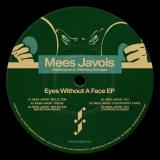
Frenzy steps back into the warehouse fog for FRNZYREC012, marking the arrival of Mees Javois with the Eyes Without A Face EP. This six-track collection functions as a raw blueprint of the early hours, where the steady pulse of hardware meets a stripped-back, mechanical soul.
Already turning heads in the underground circuit, Mees brings a fresh yet timeless approach that feels equally suited to intimate basements and peak-time dance floors. His debut on Frenzy introduces an artist with a clear vision and a deep understanding of club music's darker edges.
FRNZYREC012 is a singular vision of the dancefloor, a deliberate sequence of sound that balances cold precision with a visceral human touch.
Queensbridge duo Mobb Deep were already untouchable by the time Hell On Earth arrived, but this was the record where Havoc and Prodigy stopped sounding hungry and started sounding completely numb to everything around them. The production is brutally spare. Tiny piano fragments repeat for minutes at a time while drums hit with the force of metal doors slamming shut somewhere down the corridor. 'G.O.D. Pt. III' still feels poisonous nearly 30 years later, Prodigy rapping with such flat menace it barely even registers as performance anymore. 'Drop A Gem On 'Em' turns a diss track into psychological warfare, and then 'Nighttime Vultures', alongside Raekwon, moves through the album's nocturnal haze with exhausted precision. Even now, the whole thing feels airless in a way few rap records manage.
Gorizont Sobytiy (Event Horizon), the duo of veteran electronic musician Nocow and his wife, DJ Designer, mark the project's debut with an album worth of material of 'frogg-step' / Pankratov Step. It's safe to say this is an intriguing proposition for even those well-initiated into the world of the contemporary Russian underground. What is perhaps most immediately obvious across the 11 tracks is a clear appreciation for golden-era Rephlex records, as if the duo are reflecting on how the iconic label was perceived in the Eastern bloc at the time. There's a nostalgic touch tugging at the heart strings with the warm ambient tones of 'Bananoivy Twist' or even the ballroom-esque organ melodies of follow up 'Chacha', both swiftly followed by a switch back into frantic gabber style kicks that recur across the album.
To give a little more away in terms of a background story, Nocow and DJ Designer draw influence from a film called Winter Evening in Gagra, a somewhat distant feeling artefact of late-Soviet cinema about a tap dancing champion's late nights spent gallivanting across the glitz of Moscow's pop music scene in the 1980s. Maximalist in its sound design, Pankratov Step draws its name from actor-protagonist Pankratov, not quite an out-of-time soundtrack as such but at the least a wry nod to the former world in which the film takes place. The cascading, brittle synthesis of 'Cemetry's Boss' forms an icy cinematic fusion again with a gabber influence at play whilst a fierce acid line works alongside myriad glitch rhythms and repeating keys on 'Octopus Werk'. Influenced by the local humour and sentimentality surrounding the film, a melodrama with themes of lost art and a kind of old-world transcendence the young circus performer yearns for, the duo use it as a vessel to describe the projects sound - a coalescing of vintage Soviet soundtracks, early IDM, Jake Slazenger and Expert Knob Twiddlers album. 'Pankratov-Step' becoming their own fictional genre. The LP marks another avant-garde chapter in Nocow's long back catalogue, as well as a fully formed collaborative debut for the currently enigmatic DJ Designer. Pankratov Step is the second release on GOST ZVUK sub-label MEMONT, curated by Kuzma Palkin.
Belgian label De:tuned once again dives into the innovative world of Luke Vibert, reviving his legendary Plug moniker with 'Variety Magic', the first new Plug album in nearly 15 years.
For this release, Vibert unearthed and hand-picked a collection of previously unreleased jungle and drum & bass gems, sourced straight from his original mid-90s DAT archive. The result is an 11-track ride through the raw energy and playful experimentation that made his early Plug work so distinctive, all infused with Vibert's unmistakable funk and mischievous flair.
Variety Magic is vibrant, bold, and delightfully off-kilter. A colourful homage to an iconic era, crafted for both deep listeners and the dancefloor. Stay tuned!
Visualised by the Variety Magi. Stencil Art by Pablo Fiasco and rewired by Openmind. Mastered by Matt Colton at Metropolis. A separate digital release will also be available at the usual digital shops.
Belgian label De:tuned once again dives into the innovative world of Luke Vibert, reviving his legendary Plug moniker with 'Variety Magic', the first new Plug album in nearly 15 years.
For this release, Vibert unearthed and hand-picked a collection of previously unreleased jungle and drum & bass gems, sourced straight from his original mid-90s DAT archive. The result is an 11-track ride through the raw energy and playful experimentation that made his early Plug work so distinctive, all infused with Vibert's unmistakable funk and mischievous flair.
Variety Magic is vibrant, bold, and delightfully off-kilter. A colourful homage to an iconic era, crafted for both deep listeners and the dancefloor. Stay tuned!
Visualised by the Variety Magi. Stencil Art by Pablo Fiasco and rewired by Openmind. Mastered by Matt Colton at Metropolis. A separate digital release will also be available at the usual digital shops.
Veinyl returns with Decant Vol 1, the fourth release and the label's first Various Artists compilation. Rooted in the label’s philosophy of connecting sound, atmosphere, and the social ritual surrounding a good bottle of wine, this record unites producers from the deeper edges of house and tech-house. Much like wine, which brings people together and reveals different notes with every sip, Veinyl seeks to curate music that encourages listeners to savour the moment and discover new layers with each play.
Diego Krause opens the bottle with “Currents,” setting the tone with controlled momentum. Punchy kick and bass sync with swinging hats and airy pads as crystalline synths gradually expand in colour, culminating in sparse, darker echoes and an understated atmosphere in its final moments. Lescano’s “Illusion” uses a stripped-back tech-house palette of resonant dubby chords, vocal echoes, and funky bass stabs, all thrown into motion, ready for the dancefloor. On the flip, NVNDO & Until6’s “Donkey Long” brings a playful shift: bongo-driven percussion, rubbery grooves, and 90s-tinted house basslines and synthwork give it a hint of Balearic flavour without losing club weight. Skotsch closes with “Blood,” a dark, jacking tune where acidic basslines, razor-sharp drum programming, and teasing vocal fragments close the V.A. out with punch and style.
With Decant Vol. I, Veinyl distils its approach into four tracks that move between minimal house atmosphere and tech-house mechanics without losing focus on groove. It’s a compilation that highlights the label’s ear for subtle detail and functional design, pointing toward a catalogue shaped less by trends than by carefully curated underground talent and special dancefloor moments.
Narthex means railed-off western portico or ante-nave in earty Christian churches for women, penitents and catechumens.
Narthex is also a trio featuring (at the beginning) Daniel Denis (Universe Zero, Art Zoyd), Alain Neffe (Pseudocode, Human Flesh, Bene Gesserit) and Nicolas de Villemarqué (Nuwage Music). They had a very different musical background, mostly electric-electronic rock, and decided to work in the field of acoustic music recorded live (two microphones + portable DAT) in churches of their area. After several recording sessions, Nicolas de Villemarqué decides to leave the group. ln order to complete the trio, Daniel Denis and Alain Neffe ask the participation of some of their friends. Anna Homler, Michel Berckmans and Daniel Malempré have accepted the challenge and succeed to fit into their musical universe.
The instruments Church organ, harmonium, sitar, saxophone, oboe, bassoon, zither, valiha, senzas, tarang, voice, percussions, metal clarinet, classical guitar, mew's harp, ongolok, violin, dulcimer, mouth organ, etc.
The music Often dark, sometimes repetitive or experimental, sometimes rhythmical and exotic, always based on emotion inducted by the sound. One could define it as dark age music (as opposite to new age music), a sort of minimal come back to the roots and purity of acoustic sound without the cultural background linked to the 'academic' use of some instruments (for example African senzas are transformed and tuned to sound like Indonesian instruments, sitar or harmonium are used as rhythmical instruments, vahilla is played with a bow).
The places Churches located in an area of 20 kms in the region where Daniel Denis and Alain Neffe live for years and where they feel at home (and feel the vibrations. Every church, place emotionally loaded, has its own specific resonance and sound structure. Every church gave to the musicians a particular inspiration and fill the sound of the instruments with a natural reverberation/echo. The place but also the moment is important. They had the privilege to be allowed to record in the Ecaussines church at night lightened only by candles. lt was one of their most productive recording sessions.
Irish label Il Corpo returns for its third outing with a hard to pigeon hole 10” from 710 Exit. 2 tracks that sit on the electro end of things but with a generous nod to the sound of Detroit, early UK breakbeat, soul and the deeper realms of electronic music. Close To The Sun feels like more than just a cosmic position. A solid 808 foundation and loose percussion sit beneath a bed of synth lines and soaring pads that are guaranteed to stir the soul. The signal for nostalgia is strong but there are plenty more twists and turns to keep the listener engaged. Warped guitar and soul samples make Strat an infectious workout brimming with experimentation and originality. Effected chords take on an almost vocal quality which talks over the casual, understated funk on offer here. Ever changing tones draw you in and make it hard to distinguish between guitar, synth or human. A unique E.P. which will find its way into the sets of varying selectors at this summer’s gatherings.
Anthea and Oshana’s tandem label UNIT-Y is back with a steezy new output by Lucio. The artist’s music sounds like Dj Hell would accidentally start peak-ing from a very good designer dr*g at a dirty electro-tech-squat-party somewhere in Rotterdam in the early 2000’s … ruff stuff.
‘They went beyond punk before punk had properly started…the entire album is a controlled explosion of ideas. Nearly fifty years on, This Heat’s debut is something the world has still not completely caught up with.’ - Simon Reynolds
‘Over the years, there have been bands to play as aggressively, or even as strangely, but very few have been able to rise from their collective influences and histories to create music so singularly distinctive and inspiring.’ – Pitchfork 9/10
‘This Heat sounded like the future then ... and still do now.’ - Dan Snaith (Caribou)
Although widely considered to be Post-Punk’s finest, This Heat actually began performing and recording their music in 1976, the early days of London’s punk era. Within their two albums and an EP they perfected a strange and volatile new strain of avant-garde rock that time has proved to be massively influential, a blueprint for much that would follow: post-rock, math rock, homemade musique concrète, experimental electronica.
Numerous critics have recognised the band's influence on the music of Sonic Youth, Glenn Branca, Steven Wilson, Public Image Ltd., Radiohead, Swans, Shellac, Young Knives, Black Dice, Lightning Bolt and numerous other experimental and post-rock bands. Disbanding in 1982 they have left an undeniable legacy that has only continued to grow in stature and relevance.
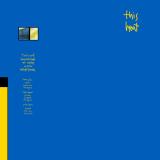
The album This Heat, also known to fans and critics as the ‘Blue and Yellow’, was their eponymous debut release, recorded in sessions between February 1976 and September 1978 in a variety of studios including their own Cold Storage, a converted cold storage room in the Acme Studios complex. Innovating throughout, they combined loops and tape manipulation (producing for example the proto-drum and bass ‘24 Track Loop’) with live performance and haunting vocals to a complex, dissonant whole. The band recorded everything they ever did – including gigs – and tracks such as “Water” were entirely improvised in the studio.
Having recently passed the 50 year anniversary of their first gig, and the recording of material that appears on their debut album, the group’s surviving members Charles Bullen and Charles Hayward, true to their DIY roots, have set up an imprint to release their recordings for their growing fan base that is increasingly recognising their influential place in music history.
Now, following great acclaim for Volume 1, CTR is proud to unveil another equally eclectic Post-Punk Era Selection Compiled by Jason Boardman ( Before I Die Records) Celebrated Manchester club-night curator & record Label Owner , DJ & digger - supreme.
A second compilation of late 1970s / early 1980s Post-Punk era bedroom & small studio innovations & DIY Inspirations - Featuring more rarely & never heard cuts from that period. Including tracks from the enigmatic Prana, Blank Students, Janet Armstrong & The Native Hipsters ..A rich vein .
Jason Writes Of Volume 2 :
"It was a delightful shock that No Ones Listening Anyway Volume One was so well received - thanks to everyone one who bought & enjoyed it. This led to John asking me to collate Volume Two, so here it is.
This time all the material was recorded & released in the UK between 1978 & 1984.
I was conscious that there was minimal female energy on Volume One so have tried to rectify that here on Volume Two. I have also tried to make it as varied as possible with none hit wonders, oddities, collectables, under the radar B-sides & a couple of previously unreleased on vinyl selections."
In an engrossing lattice of polyrhythmic beat science and deep atmospheric meditation, Samurai Music is thrilled to welcome Marco Shuttle to the fold for the Sumud EP.
Since his early years locked into the 00s London techno scene, Marco Sartorelli has developed as an artist entirely on his own terms. Through the rush of new ideas and cross-pollination that has characterised cutting-edge techno over the past 20-odd years, Sartorelli has travelled as Marco Shuttle from one considered stylistic concept to the next. On his own Eerie label and across expansive releases for respected outposts such as Spazio Disponibile, Incensio and Astral Industries, he's taken an exploratory approach to rhythm and spatial design while always drawing on intentional thematic frameworks, creating distinctive and immersive dance music in the process.
As Samurai Music continues to celebrate the rich seams of inspiration where deep techno and drum & bass intersect, Sartorelli's malleable, mysterious strain of drum work fits right in and sets a captivating tone for the label's operations in 2026. 'Sumud' is a steely drum mantra dealing in fractured patterns with the primal patina of the early Artificial Intelligence era, while 'Las Dunas de Taroa' leans on gently pulsing melancholia undulating at a half-time pace. 'Iso 50' taps into raw, analogue minimalism once more, evoking the sound of Roman Flugel's Ro70 records in their icy, alien formation. Completing the set, we're guided towards the tense electronica of 'Polylayering What I've Got', where uneasy melodic chimes interlock with intricately programmed drum machines.
There's a distinct sense of golden-era, mid-90s electronica coursing through Sumud EP, but Sartorelli shrouds the classic tools at his disposal in his subtle signature atmospherics, pushing towards a plain of expression that transcends time.
Samurai Music heralds a new seam of spacious, rhythmically curious exploration with the launch of the Saibai sub label, opened in mesmerising fashion by Brendon Moeller.
The overarching premise of Saibai is to nurture a more delicate, meditative inversion of Samurai's physical, dense sound, leaning less on the dynamics of the dancefloor while holding true to the intricate drum play and dubby principles that bind the label's sound together.
In this open-eared, inquisitive environment, Moeller is the perfect fit as an artist with decades of diverse offerings across all kinds of dubwise manifestations. On SAIBAI1, the US-based, South Africa-born producer stretches out with a live-sounding drum palette and exquisitely rendered synth work loaded with detail, character and organic flourishes. It's a light-footed approach with plenty of air flowing through the mix, but there's considerable weight in every notch of the production, not least the imposing channels of sub bass coursing beneath the frequency range.
SAIBAI1 is a feast for the senses, wholly immediate and front-loaded with fascination, setting the perfect tone for Saibai as a platform for charming, immersive electronics that take a fresh diversion from the fundamental core of Samurai's sharply defined sonic focus.
Luke Una introduces a new series of original, dancefloor-focused productions on his É Soul Cultura imprint, in partnership with Mr Bongo. True to the label’s ethos, the series pushes sonic boundaries into deeper, more expansive territories, delivering forward-thinking music for discerning dancefloors. The first release brings together UK garage royalty Zed Bias and the underground talents of MJK, as we’re served up a double hit of hypnotic, futuristic techno and house.
Zed Bias is an artist that needs little introduction. The main moniker of Manchester’s Dave Jones, over the past 25+ years he’s cemented himself as a crucial figure in UK garage and dance music as a whole. He’s remixed hundreds of artists including Whitney Houston, The Streets and Azymuth, been nominated for a MOBO award and, through his more experimental take on 2 step garage, helped lay the foundations for the development of bass music into dubstep. For this new release he teams up with Ghanaian-British producer and DJ, MJK. Earmarked as ‘One To Watch’ by DJ Mag, and similarly championed by Mixmag, MJK’s sound draws from the worlds of bass, grime, house and beyond.
Opening track ‘Keep On Livin’’ sees Zed Bias and MJK coming together in the studio. Passed to Luke by his manager If Khan, it’s a sonic alchemy rooted in black heart soul music yet seen through a prism of bass futurism. A heads-down cut of driving techno, with nods to Detroit, and firm UK foundations, that is both bass-heavy and otherworldly. It’s a simple yet effective, entrancing combination of percussion, bass, and keys, peppered with old soul samples that lock you into a groove and never let go. A track built for dancefloors big or small.
On the flip, MJK steps up solo with ‘Late to Camberwell’, diving into deeper, late-night territory. Known for his three-deck DJ mixing style, MJK has a real understanding of how to layer elements to keep people moving. A swirling cosmic feel reverberates through ‘Late to Camberwell’. Drum hits, shakers and synth loops are weaved together in style, creating a dose of deep, immersive rolling house. In Luke’s own words, “I found it very exciting to hear a new artist create such a beautiful sound that reminded me of Detroit and Artwork's late ‘90s techno alias Grain. It’s stripped-back raw house music of the highest calibre”.
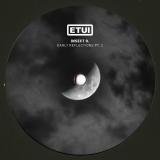
A truly outstanding dub release and another beautiful chapter in the sound of Etui Records.With Early Reflections Pt. 1, Insect O. delivers a remarkably deep and elegant statement that moves effortlessly between Dub Techno, Dub House and Deep House. Released on the ever-reliable Etui Records, this three-track EP is a masterclass in subtle tension, warm textures and hypnotic groove, understated, immersive and incredibly effective.
A record that feels introspective and timeless, balancing dancefloor functionality. With Early Reflections Pt. 2, Insect O. continues the journey with the same quiet confidence and emotional depth that made the first chapter so compelling. Once again rooted in Dub Techno and Dub House, this second installment feels like a natural continuation, deeper in mood, even more immersive in detail, and beautifully refined in its execution. The result is a record that feels introspective and timeless, balancing dancefloor functionality with a deeply emotive listening experience. Insect O. proves once again that true depth does not come from excess, but from restraint, sensitivity and a strong understanding of space and motion.
Telling a tale of house music’s early days or roots without mentioning Tony Humphries as a club DJ, remixer and radio disc jockey would make it an incomplete, forged and most of all a bit of a yawn.
Born in Brooklyn in 1957, Humphries’ musical journey is synonymous with New York City’s dance music history and the evolution from uptempo soul music to house: from being a dancer at David Mancuso’s infamous Loft parties to becoming a mobile DJ and getting the call from Shep Pettibone to become his right hand at
the then new Kiss FM radio station, followed by countless remix offers and a legendary residency at Newark’s Club Zanzibar. Next to that one, is was especially his work as a radio disc jockey for said station during most of the 1980s until 1994 that gave him majestic clout. Breaking new records week in, week out,
putting New Jersey acts like Adeva and Jomanda or countless up-and-coming producers from there on the musical map, while simultaneously playing the hottest imports from Europe, trax from Chicago, dance classics and all things straight from New York’s music factory that never seemed to stop.
Going to his vast and almost complete archive of radio shows from way back when he graced those airwaves, we at Running Back Records have pickedNew Release Information original recordings that symbolize his importance as an industry giant and ambassador of this style of music.
„But one thing I would like to point out is that, as a DJ, the music I play is not my music. I want to make it perfectly clear that it is music that is released, and it’s everyone’s music. I do not take any other credit than being the middle person exposing this music.“
(Tony Humphries in: What Kind of House Party Is This?, Jonathan Fleming, 1996)
Tenampa kicks off 2026 with a release from one of the most respected minds in electronic music, equally renowned for his work as an audio engineer and producer. Known under several aliases including Freestyle Man or Sasse, Klas Lindblad uses the latter for this special outing on the Mexican imprint.
Under his Sasse moniker, Lindblad delivers a refined selection of dubby house cuts, infused with warm, spring/summer energy.Effortlessly groovy with a subtle, hypnotic flow, this is music designed for the dancefloor yet built to stand the test of time, showcasing the depth and sonic excellence that define his work.
This release is strictly limited to 300 copies worldwide and available exclusively on vinyl, reinforcing its status as a true collector's item.
The artwork comes once again from the always outstanding Manuel Cetina, aka El_Stitch, whose visual approach adds an extra layer of character and value to this timeless release, earning it a well-deserved place in any serious record collection.
Art-work by renowned Mexican artist: Manuel Cetina aka el_stitch's.
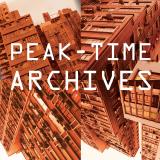
Life and Death launches Peak Time Archives, a new vinyl and digital various artists series shining a light on rising producers and the next wave of label-affiliated talent.
This first edition moves across the full spectrum of the dancefloor. Jennifer Loveless — Guardian 'Artist To Watch', Mixmag Track of the Year recipient, and alumni of !K7, Future Classic and Butter Sessions — opens with "Satisfaction", a warm, body-moving indie dance reinterpretation that feels at home as much at Ibiza sunset as it does on a festival main stage.
UK mystery producer ROKAR follows with "Bedroom Headliner", a garage-rooted house cut that blurs the line between intimate and euphoric, already earning BBC Radio 1 plays and support from Marco Carola, Skream and Chloé Caillet.
Rudy With A Hoodie & J-Land deliver "The Rhythm", a driving, hypnotic peak-time weapon built for main stages, drawing on the analog warmth of Red Axes and DJ Tennis.
Mexico City's PAURRO closes the record with "Chik Fresa" — playful, punchy indie dance with personality to spare, from an artist who has performed at Tresor and Boiler Room and released on Cómeme and Nervous.
Four tracks. Four distinct voices. One dancefloor.---
LOS ANGELES—To celebrate the 40th anniversary of the celebrated Talking Heads and Jonathan Demme’s concert film Stop Making Sense, the set will be re-released as a 2LP and 2CD/Blu-ray set this summer.
Released last year, the sold-out Deluxe Edition of the soundtrack will return as a 2-LP black vinyl on Rhino and 2-LP crystal clear vinyl at retail. Both variants feature a 12-page booklet with liner notes from all four band members –Tina Weymouth, David Byrne, Chris Frantz, and Jerry Harrison—and band photos. The 2CD/Blu-ray version includes the entire 28-page booklet from last year’s Deluxe Edition and a Dolby Atmos mix of the complete concert, mixed by Jerry Harrison and E.T. Thorngren, who also mixed the original release. Both will be available on July 26. Pre-order now.
The band appeared together for a sold-out screening and Q&A last night at the Pantages Theater, the same theater at which Stop Making Sense was recorded. They were joined by Blondshell, who performed “Thank You For Sending Me an Angel.” Another special screening with the band will occur in Brooklyn at the King’s Theater on June 13, with the Q&A hosted by Questlove and The Linda Linda’s performing “Found a Job.” The two events cap off a banner year of celebrations for what many consider to be the best concert film of all time.
The inspiration for Stop Making Sense came when director Jonathan Demme saw Talking Heads perform during the band’s 1983 tour for Speaking in Tongues. Afterward, he approached them with the idea of making the show into a concert film. They agreed and worked together over the next few months to finalize the details. Ultimately, Demme filmed three shows at Hollywood’s Pantages Theater in December 1983 to create Stop Making Sense.
The concert film presents a retrospective of the band up to that point, with a performance that weaves together songs from all six of its studio albums. The show progresses methodically, opening with Byrne onstage performing “Psycho Killer” alone with a drum machine. After each song, he’s joined by a new band member until Weymouth, Frantz, and Harrison are all on stage with him. The group continues to grow throughout the concert as members of the stellar touring band are added: keyboardist Bernie Worrell, percussionist Steve Scales, guitarist Alex Weir, and backup singers Lynn Mabry and Ednah Holt.
The band performs 18 songs in Stop Making Sense, including its recent single at the time, “Burning Down The House.” That summer, the song was in heavy rotation on radio and MTV, helping the song become the band’s first top 10 hit in America. It was, however, a different song from Speaking in Tongues that was destined to deliver one of the film’s signature moments. Talking Heads would perform “Girlfriend Is Better” wearing the now iconic, oversized suit inspired by costumes worn in traditional Japanese theater. For good measure, a picture of David Byrne in the suit also graces the album cover.
Stop Making Sense focuses mainly on music by Talking Heads but does include a few songs recorded outside the band: “Genius Of Love” by Tom Tom Club, “What A Day That Was” and “Big Business” from Byrne’s 1981 album, The Catherine Wheel. Limited edition vinyl versions of both of these albums, along with Harrison’s The Red And The Black, were released for this year’s Record Store Day.
When it arrived in September 1984, Stop Making Sense was an artistic and commercial triumph. The film had people dancing in theatre aisles, and the soundtrack sold over two million copies. Just last year, the Library of Congress added Stop Making Sense to the National Film Registry in recognition of its cultural, historical, and aesthetic significance.
Weymouth praises Demme as a collaborator: “…Jonathan was a very enthusiastic, highly adaptive, and imaginative guy who was just as good a listener as he was a talker and collaborator. From the get-go you just got the impression he was as flexible as he was disciplined. Being team players, that boded well for a great relationship and a great film!”
Harrison says the film still holds up today: “To me, Stop Making Sense has remained relevant because the staging and lighting techniques could have been created in a much earlier time period. For example, Vari-Lights, lights with motors to re-aim them, had just come into vogue. Had we used them, there would have been a timestamp on the film, and it eventually would have felt dated...The absence of interviews, combined with the elegant and timeless lighting, created a film that can be watched over and over.”
Byrne says it’s interesting that this album was – for many people – an introduction to Talking Heads. “We had done a live album before this, but coupled with the film, and with the improved mixes and sound quality, this record reached a whole new audience. As often happens, the songs got an added energy when we performed them live and were inspired by having an audience. In many ways, these versions are more exciting than the studio recordings, so maybe that’s why a lot of folks discovered us via this record.”
Frantz recalls the sheer joy surrounding the entire Stop Making Sense experience. “I’m talking about real, conscious, transcendent joy… I’m talking about what the Southern gospel people call ‘getting happy,’ which means ‘to be filled with the Spirit.’ That is what happened to us onstage every night, and from my seat behind the drums, I recognized that this was happening to the audience too. Joy was visible in front of me and all around me every night.”
With great pleasure we welcome on board ADSR. This is not a standard EP but more a collection of 5 tracks made in the years between 1989 and 2001.
“Kicked” (1989) rides a driving dance groove with subtle Depeche Mode–influenced melodies, fueled by rolling arps and crisp string plucks. “Unit 3” (2001) hits with tough basslines and hard pads over a relentless beat, nodding to mid-80s EBM in the vein of Nitzer Ebb, Skinny Puppy, and Front 242. “Unchained” (1990) drifts on a late-night 808 groove with glassy pads and house-leaning chord stabs, sliding into early techno territory.
The EP closes with two well known tracks but those versions of them have never seen the light before today. “Windswept (Desert Mix)” – 1994 is a pounding early-session track built on tripped-out SH-101 leads, evolving arpeggios, long sweeps, and a steady 909, made for getting completely lost in.“Suboceana (Early Version)” – 1991 serves seductive chord progressions and drawn-out, reflective melodies, a liquid journey for both listening and the dancefloor.
Baby T is a space away from her work as B.Traits in which Brianna Price can lean more into the junglist, drum ‘n’ bass and hardcore sounds which she loves so dearly. With BSHEE02, the second drop on Price’s own Banshee label, Baby T delivers a darkside masterclass of an EP. This record is a quartet of system blowers which doesn’t let up for a single second from start to finish.
Opener ‘Times Up’ is urgent from the off - the initial strains of this joint find sirens wailing in the monitors over a twitchy kick/drum/hats combo. From here on it’s distilled raver perfection, the drums taking us on a wild Wipeout-style ride as the subbiest of bass skulks at the bottom of the mix. Imagine a more technoid take on the classic breakbeat freerides of Skanna and you’re not far off the ‘Times Up’ sound.
A remix of ‘Times Up’ from man like Aloka leans with devilish glee into the murky underworld that lurks beneath Baby T’s original. Aloka’s version is extremely eerie in a manner which makes you think of the darkest corners of a DMZ party. When things really kick into gear, driven by an irresistible kick dembow, the effect is hypnotic - think the dubwise junglism of the UVB-76 cohort.
BSHEE02’s B-side kicks off with ‘Coercive Control’. This is a cut which delivers on its title in spades, putting the listener in a trance with an interplay of low-slung bass, whirligig synth tones and more of those perfectly executed broken beats. The acid starts to kick in around the minute mark, and it turns out to herald a total earworm of a lead melody.
There’s plenty of dimly-lit malevolence to BHSEE02 closer ‘Dense Dickwood’s grinding atmospherics and gurgling bass throbs. However, Baby T opting for a half-time drum break here gives the cut a vibe not dissimilar to the weightiest jams of classic Massive Attack - that is, until an absolutely remorseless switch-up occurs halfway through, delivering volley after volley of intense drum hits.
Nonna Fab returns with the third release on his imprint, Movement and Soul Records, with a 5 track club-focussed EP 'Journey To The Outer Atmosphere'.
Following the success of his last release, we see a deeper dive into the more dance-floor orientated sound that Nonna is curating, spanning deeper soulful house across the release with influences of broken beat, jazz and percussive dance music.
The opening track 'Dawn Chorus' is a trip into a more natural soundscape and deeper arrangement of sound. A perfect track to take a steady dance-floor to higher heights.
The A2, 'Low Winter Sun', aptly named deep house music with no frills. Proper sub-bass tuned for tuned-up soundsystem use.
'Meditations' which is the final track on the A side has clear broken beat influences, percussive, deep and rhythmic. A breather for the dance floor.
The title track of the EP, 'Journey to The Outer Atmosphere' is a big peak time house journey to the cosmos. Expansive synths, 909 kit and if timed well, certified to blow the dance floor up. Clear François K inspiration here.
The final track of the release, 'First Light', is proper deep house music named suitably for an early sun rise roller with a huge hammond organ solo, enough to keep the leavers in the building.
Fresh his Keysound D&B opus Blue, Sully returns to Astrophonica with four pristine slabs of breakbeat science. "Flock" places the full strength melodic elements over the faraway amen echoes in a way that's not dissimilar to early Good Looking. "Helios" is a much colder flashback to the darker corners of jungle's formative dance; all breathy minor key chords and vapour trails of paranoia countered neatly by a precision dub vocal sample. "Crystal Cuts" recalibrates the focus to the drums by way of broad jazz chord strokes while "Hours/Miles & Still" concludes affairs on an emotional electronica tip where the breakbeats thanks to a beautifully arresting intro. Powerful.
Winding Road Records are proud to present the “Last Disco on Earth EP” from the ever-elusive group of “Mar De Novo” which is M & N, Paraiso and Yse Saint Laur’ant. First up on this EP is the title track ‘Last Disco on Earth’ is a monster slab of modern disco. Fat grooves, cheeky melodies and cool glitchy production. Uplifting, positive and energetic - guaranteed to put a smile on the dancefloor. Next up is ‘Over There’ is a twisted slice of bass-heavy undulating house, punctuated by crazy interludes and samples that fly in from nowhere. Starting things off on the B side is ‘Uncanny Valley’ is a sun-kissed downtempo groover, with dreamy strings and wonderful chilled musicality. Following on from that is ‘Reflection’ exudes space, peace, and calm. Guitars and piano intertwine alongside haunting vocals. Soundtrack bliss. Summer vibes. Finally rounding off the EP is ‘Find Love’ rounds off the package with a dreamy balearic sunset vibe.
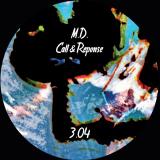
The new 12" release, "Call and Response", by the enigmatic artist MD, is a masterclass in the resurgence of retro techno, bridging the gap between the raw industrialism of early 90s Detroit and a modern, high-fidelity punch. The A-side is defined by its massive, anthemic vibes, built around a thundering TR-909 kick and a soaring, crystalline synth lead that feels both nostalgic and startlingly fresh. What truly sets this record apart, however, is its intricate counterpoint structure; rather than relying on simple loops, MD weaves multiple independent melodic lines together in a rhythmic dance of tension and release. The "call" begins as a jagged, percussive stab that is immediately answered by a "response" of lush, interlocking minor-key arpeggios, creating a sense of constant movement and architectural depth. It’s a track that demands attention on a massive sound system, proving that the classic techno blueprint can still be expanded into something grand and deeply intellectual.
Five years ago, Curren$y proved once again that while the rest of the world might hit the brakes, the Jet Life never stalls. Released in the early months of 2021, Collection Agency arrived as a masterclass in "work-from-home" luxury—a smooth, ten-track victory lap that solidified Curren$y’s status as the most consistent architect in underground hip-hop.
Clocking in at just under 24 minutes, Collection Agency is the sonic equivalent of a pristine, low-mileage 911 Turbo. It’s lean, expensive-sounding, and devoid of filler. While the world was still grappling with a sense of stagnation, Spitta was in the garage, documenting the rewards of a decade-plus grind.
The 10-track release marks his 11th solo studio album, and 90th overall project. Even more impressively, the quality has remained consistent throughout his prolific career. The Louisiana rapper links up with several notable producers on the project including DJ.Fresh, Harry Fraud, Rsonist of The Heatmakerz, Trauma Tone, Purps, & Black Metaphor. We also see an appearance by longtime friend and collaborator, Larry June. Once again, Curren$y delivers another unforgettable round of smooth joints and cruising music.
As a group, Grand Puba, Sadat X, and Lord Jamar fused politically conscious lyrics with jazzy, sample- heavy production rooted in golden age boom bap. Widely praised by critics, \u2000One for All\u2000remains a cornerstone of early '90s East Coast rap. This box set includes the entire track list as 7" singles, including its most celebrated singles: "Brand Nubian," "Feel So Good," "Slow Down," "Wake Up" and "All For One.
Jump Source, the Montréal-based duo of Patrick Holland and Francis Latreille, also known as Priori, announce their debut full-length album Fold, due April 30 via NAFF Recordings.
Fold is their most ambitious project yet—echoing the electronic LP boom of the early 2000s while balancing peak-hour club anthems with an everything-goes pop ethos. Featuring collaborators including POiSON GiRL FRiEND, billy woods, and CFCF, the album moves fluidly between candy-glossed hooks, folktronic balladry, and unexpected rap turns, tracing the turbulence of life in music across shifting cities and timezones.
This new volume of Casquiat diesel into the streets of LA and mixes up the raw realities of life and plenty of lyrical and production innovation across mutant rap, hip-hop, breakbeat and dub sounds. 'Mexican Illegals' is a big opener with distorted bass blasts and ice-cold analogue beats with a stylish delivery up top that twists and turns between the drums. 'Fuck Ice (bonus beat)' is menacing and full of swagger with saw tooth synths and infectious syncopation, then 'Pistol Grip Pump' (Casquiat remix) is an early rap sound made freaky with sci-fi production touches and larger than life bars.
Two lost cuts from the orbit of Tony Humphries surface at last, pulled straight from acetates in his private archive and pressed here for the first time. Unearthed like messages from the booth itself, they capture that raw, transitional moment when club music was still inventing its own language night after night.
On the A-side, Kerri Chandler with “Kerri Kaoz Beats”, a stripped, swinging tool full of basement pressure and early-morning intent. No excess, no compromise, just Kerri doing what Kerri does best. Flip it over for Dee Dee Brave – “My My Lover (Tony Humphries Dub)”, a previously unheard Humphries reconstruction that stretches the vocal into something deeper, moodier and unmistakably floor-ready. Spacious, patient, and quietly euphoric.
Two pieces of house history that never made it past the acetate stage until now. Not revisions, not edits, but originals finally stepping into the light. Essential documents from the roots that still point forward.
Celebrating a decade since its live debut, Detroit-based artist Rebecca Goldberg announces the first-ever vinyl release of her original score for A Trip to the Moon, the iconic 1902 silent film by Georges Méliès. Composed in 2016, Goldberg’s reimagining of the groundbreaking film—originally titled Le Voyage dans la Lune—translates early cinema fantasy into a minimalist electronic soundscape shaped by synthesis, texture, and composed foley.
Goldberg’s approach honors the wonder and theatricality of Méliès’ vision while grounding it in Detroit’s lineage of forward-thinking electronic music. The score premiered in Paris in 2016 with live performances at Silencio, the club founded by David Lynch, and at Bar à Bulles, located above the legendary Moulin Rouge. The Paris events were produced by Why So Serious Productions and marked a rare convergence of experimental electronic performance and historic cinematic space. Goldberg also presented the live score in her native Detroit, reinforcing the transatlantic bridge that has long shaped her conceptual record projects.
Now, ten years later, the score will be released for the first time on vinyl in a limited edition of 300 copies. The pressing captures the nuance of the original live compositions while offering listeners a new way to experience the interplay between silence, rhythm, and sonic illusion. As with Goldberg’s previous conceptual 12" releases, the vinyl format serves not only as a medium but as an artifact that preserves and reframes cultural memory.
Alina Valentina ignores rule books. When it comes to making music, she bends genres to her own sound and vision. Acid, electro, synth wave, vocoders. All are melted to produce a bracing style that is floor focussed and strikingly individual. It is this distinctive perspective that The Hague based artist brings to Schrödinger’s Box for NPC Dream, eight tracks that map a journey that disregards genre limitations. The intent and mood are immediately set with the fierce “Air Slasher” plunging through the fog as kicks roll and beads of acid bulge. Raw electro is further coarsened by scything keys and vicious vocoder words in the title piece before the technoid mutations and pain-streaked “Echo of Ecco.” The ground is never stable, the direction and ideas darting and shifting to new sonic territory. Punishing and pure, “Mine Cart Madness” is EBM-encrusted cruelty. Tempos shift on the flip, the slow and cinematic atmosphere of “Pixel Swamp” feeding into the sinister and snarling snares of “Wishing Engine.” Paranoia and tension collide in the stabbing chiptune chords and spiking percussion of “Come Get Some”, acid barbs ballooning into a blistering barrage in this warped wrecking ball. “Light Warrior” is cut from the same raucous cloth. Knobs splinter against machined lyrics, sirens blare as kicks thump in this basement lurking beast.
NPC Dream is a relentless record. From the needle drop, Alina Valentina enforces her sound as she teases and taunts styles. Fiery and brimming with energy, this 12” encapsulates the sound of an exciting talent who carves their music with a truly unique ear.
“Nimm die rosa Brille … sag was Du siehst … alles viel besser”
44 years after its original release, one of the most idiosyncratic DIY minimal electronics / synth / new wave records of the early ’80s returns: the legendary 7” by German group DEUTSCHE SCHÄFERHUNDE (engl. German shepherds)—now remastered and reissued for the first time as a one-sided 12” on Anna Logue Records. Recorded in the winter of 1981/82 between rehearsal space, provincial disco and bar nights, and a humble four-track setup, these tracks capture the raw spirit of a generation that simply started creating—no formal training, but plenty of attitude. Minimalist, uncompromising, and inspired by krautrock, punk, new wave, electronic music and dub, the songs move between raw electronics, percussive noise, new wave experimentation, and sharp social commentary. „Rosa Brille“ (rose coloured glasses) in particular feels as urgent today as it did back then—a track that has lost none of its relevance, „Gasmasken“ tells of gas masks dancing in the woods to the sound of sirens, and a timeless Holger Czukay/Jah Wobble inspired „Mein Herz“ (my heart).
Originally pressed in a small run of just 500 copies and later becoming a sought-after collector’s item now worth 200€, the record now returns in a carefully crafted edition featuring a laser-printed reverse side and additional materials such as original lyric sheets and articles, postcard and poster. DEUTSCHE SCHÄFERHUNDE thrived on paradox—a provocative name paired with a clear stance, and lyrics that still resonate today. Shaped by Cold War tension, political unease, and youthful rebellion, their sound refused to fit into any neat category. Only few other bands, such as Der Musikant, Im Namen des Volkes, Thorax Wach, Klinisch Sauber oder Stephan Eicher spielt Noise Boys come to mind.
This release is more than a reissue—it’s a document of its time that still hits with full force.
12″ features: limited to 400 copies, hand-numbered, one-sided 180g black vinyl, laser-etched B-side, outer sleeve printed on reverse side of the board, printed inner sleeve with original lyrics sheets and original articles, DIN A3 poster, double-sided postcard
A Lisbon classic by now, Paraiso (a label, a radio show, a party and now also a documentary) is back for its 19th release with a pairing who's no stranger to the label or the portuguese techno underground: lucky for us, head honcho Shcuro got back in the studio with techno legend in the making Vil to make Repercussions part 2 - and they invited iconic Spanish producer Annie Hall (Delsin, CPU) as a remixer. The record opens with a tour de force, the relentless yet perfectly in control, mutanting and experimental yet elegant and timeless 'Motorik'. In it, you can hear echoes of Detroit groove sense, but also a generous splash of dub sonics seamlessly merging into pure peak time, closed eyes, layers of ear-candy hypnotizing you type of stuff. Things strip back a little in 'Emergence Dub' - still immersive fast techno ammunition, but there is a playful, experimental and sometimes ravey spirit to it, with a wonky mutating key, vocal pads and cheeky percussion working together to create a stunning modern dance piece. Side B is inaugurated by 'Origins', a deep bow to dub traditions with delay-drenched stabs and a bouncy bassline for days. An energetic yet dreamy piece with spoken word samples that will have your heart melt, it perfectly mirrors the duo's influences in a beautiful closing original. Annie Hall steps in for the remix, taking A2 'Emergence Dub' into Breaks geographies, with a talking bassline fit for an electro banger, and the ever-present pads sending us off in zen mode after a delightful ride.
Telling a tale of house music’s early days or roots without mentioning Tony Humphries as a club DJ, remixer and radio disc jockey would make it an incomplete, forged and most of all a bit of a yawn.
Born in Brooklyn in 1957, Humphries’ musical journey is synonymous with New York City’s dance music history and the evolution from uptempo soul music to house: from being a dancer at David Mancuso’s infamous Loft parties to becoming a mobile DJ and getting the call from Shep Pettibone to become his right hand at
the then new Kiss FM radio station, followed by countless remix offers and a legendary residency at Newark’s Club Zanzibar. Next to that one, is was especially his work as a radio disc jockey for said station during most of the 1980s until 1994 that gave him majestic clout. Breaking new records week in, week out,
putting New Jersey acts like Adeva and Jomanda or countless up-and-coming producers from there on the musical map, while simultaneously playing the hottest imports from Europe, trax from Chicago, dance classics and all things straight from New York’s music factory that never seemed to stop.
Going to his vast and almost complete archive of radio shows from way back when he graced those airwaves, we at Running Back Records have pickedNew Release Information original recordings that symbolize his importance as an industry giant and ambassador of this style of music.
„But one thing I would like to point out is that, as a DJ, the music I play is not my music. I want to make it perfectly clear that it is music that is released, and it’s everyone’s music. I do not take any other credit than being the middle person exposing this music.“
(Tony Humphries in: What Kind of House Party Is This?, Jonathan Fleming, 1996)
If you’ve been keeping your ears to the ground, chances are this won’t be your first encounter with the glistening, shape-shifting sounds of Yushh. She has spent recent years DJing across the globe and releasing a series of standout tracks and remixes, cementing her status as one of the most vital flag-bearers of the Bristol continuum.
Somehow, it has been three years since her last solo outing. Making up for lost time, we finally welcome Yushh to Timedance for a searing five-track EP, “Full Body AXY”.
Yushh’s sound resists stasis, nothing feels formulaic. Instead, each track moves with an expert sense of detail, striking a rare balance between precision and instinct, dancefloor science and raw emotion. With a natural flair, she bends low-end pressure into something airborne. Heavy sub frequencies dissolve into a feeling of weightlessness that is both physical and elusive.
How can music hit with such precision and still feel like it floats beyond the rules of gravity? Yushh answers in her own language, where tension and release blur, where sounds flicker between density and light, and where the dancefloor becomes a space for both body-centric exploration and emotional catharsis.