»Music for Shared Rooms« is B. Fleischmann’s eleventh solo album and his first since 2018. It is also not an album, or at least not in the conventional sense of the word. These 16 instrumental pieces provide a kaleidoscopic glimpse of a forward-thinking musician at home in many different musical worlds, including experimental and abstract music, pop and more classically-minded compositional forms. These pieces were culled from an archive of roughly 600 compositions for theatre pieces and films written throughout the past twelve years. The Österreichischer Filmpreis-awarded composer, however, aimed for more than simply documenting his extensive work in and with different media. To do so, he edited and re-mixed the individual recordings for this release, taking them out of their contexts and reworking them for an audience who can experience them in a different setting. »Music for Shared Rooms« makes it possible for its listeners to engage with the sounds and to fill the spaces they open up with their own imagination.
Roughly speaking, music for theatre or film can serve two functions: it either takes the lead, or underscores what is happening on stage or screen. The marvelous thing about these pieces is that they manage to do both. Fleischmann’s work as a prolific producer has always drawn on contrasts, at times combining pop sentiment with rigid experimentation, the seemingly naive with the intricate and complex. This approach also marks the tracks collected here: bringing together acoustic elements and electronic sounds, at times working with conventional structures but always de- and re-contextualising them, Fleischmann constructs a vivid dramaturgy out of discrete singular compositions, letting them interact across the record.
Take, for example, the opener »Träumerei« and the following »Brenne«: after the soothing acoustic sounds of the former, the latter quickly picks up speed with hard-hitting drum machine rhythms. It’s a stark contrast sonically and stylistically, however both tracks are tied together by a certain harmonic sensibility. This sort of dramaturgical interconnectedness of varied musical materials is the thread that runs through »Music for Shared Rooms«. A droney piece for string instruments like »Sehnsucht« is followed by a trip-hop beat, before »Schock« lives up to its title with skittering beats and piercing high frequencies. The differences between the pieces may be striking, but the progression from one to the other is subtle. It goes on like this through different moods and tempos. There’s soothing-yet-eerie piano pieces like the »Für Elise«-inspired »Der Lärmkrieg«, gentle house grooves, joyful synthesizer excursions and, finally, »Die Erde ist mir fremd geworden«, a collage of abstract textures and concrete sounds.
All these pieces create distinct situations through the juxtaposition of diverse musical elements, but are also bound together by a single vision. Writing music for theatre pieces or film requires a composer and his pieces to engage with people and their movements in space, which is exactly what Fleischmann offers on this record. He breaks down the fourth wall and invites his listeners into his world, a wide-ranging musical panorama. »Music for Shared Rooms« is indeed not an album in the conventional sense of the word, but more like a photo album in which each page opens up a new space to get lost in; recreates different scenes in which you can immerse yourself. These are shared rooms indeed.
out of Stock
Last delivered 6 months ago available to reorder, subject to availability
"Tapping into a shared affinity for early trance – as in short for transcendental – Function and Nastia Reigel come together on Dekmantel with ‘Devocion’. Bridging the past and the future, this partnership draws deeply on brooding, melancholic early-90s sounds and supercharges it with the immensity of modern techno.
The project began when Nastia Reigel shared a series of discoveries with David ‘Function’ Sumner – records rooted in the rave-leaning edge of the era, spanning labels like R&S, FAX and EXperimental. He responded that this was precisely the music he had been absorbing while coming up in the thick of New York’s club and rave scenes and beginning his journey into DJing. The excited exchange of deep digs around this niche of dance music history naturally led to a conversation about collaborating on music in this vein, and Devocion is the result.
Familiar genre touchstones are everywhere, from the plaintive bleeps and understated breakbeat roll of 'Eternity' through the sad-eyed arpeggios strafing on the edges of 'Reverence' and on to 'Flowstate's blue-hued acid lines and 'Orion's sky-scraping gated pads. But Reigel and Sumner deploy these strongly coded elements with poise, feeding into a richly rendered production that feels anything but old-school. The emotive streak is wielded with care, spelling out the mood without losing the steely, shadowy sensibility that tracks through their respective catalogues.
In a perfect demonstration of honouring the past while embracing the present, Devocion EP lands as a distinctive artistic statement on its own terms."
»Low Tide, Hi Grypus!« is the new live-iteration of JC Leisure as JC Leisure Group. Documenting an encounter and a communication between human improvisers and atlantic grey seals. The record presents responsive improvisation as a form of cross-species collaboration.
The project began on Porthdinllaen, Wales, where Leisure recorded seal vocalisations from a local colony at low tide. Back in their Liverpool studio, Leisure developed a performance system that translates human musical gestures – pitch, timbre, rhythm, density, presence - into triggers for these seal expressions. The resulting system is dual-active, as in it simultaneously acts and is acted upon in the horizontal instance. It creates a new-music non-linear threshold that cannot be replicated.
»Low Tide, Hi Grypus!« was recorded live at 1210 Berlin and captures one instance of this concept. Local improvisers were invited to encounter the performance system. Recorded in one take, pedal-steel, woodwinds, strings, piano, organ, and electronics gradually learn to listen and respond to the marine voices. This interspecific group moves from intimate duets (that's human, seal) into full ensemble works (humans, seals) over the course of one night.
Rather than treating field recordings as static material, the extensive seal archive functions as an active collaborator: shaping form, pacing, and interaction in real-time. Now that’s marine biology meets human communication!
JC Leisure has previously released work on Sun Ark, Warm Winters Ltd, Not Not Fun and collaboratively with Dialect as Raft of Trash. He has composed a radio play commissioned and broadcast by BBC Radio.
The Buenos Aires–based producer’s second album on Umor Rex can be read on at least two levels. The most direct traces its origin to the influence of environmental music, as well as to some pioneers of electronic music. The album was recorded in a single session, making extensive use of loops that were later edited and condensed into the six pieces that make up Pequeño clima doméstico. This working method responds to a playful approach that runs through Entidad Animada’s musical intentions, which often start from a specific genre or aesthetic and then filter it through his own language.
From a more conceptual perspective, the record proposes music as a tool capable of modifying the perception of a moment. Rather than closed songs, the album functions as a device that allows one to tune a state, transform a space, or alter a mood. In this sense, it engages with the idea of functional music not as a utilitarian background, but as a means to equalize time, slow the pace, and reconfigure the listener’s emotional climate.
All songs written and performed by Entidad Animada. Recorded in August 2025 in Buenos Aires, Argentina.
Field recordings and processed textures by Guazuncho.
Mastered by José D’Agostino at Moloko Estudio, Frankfurt, Germany. Cover photo by Diego Berruecos. Layout by Daniel Castrejón.
From the depth of transient memories comes ‘Some Leaves Must Fall 聽其自然’, Temple Rat’s latest EP and the inaugural release for Martin Gilleshøj’s ‘Buttheads’ label.
Across 6 tracks Temple Rat distills fragments of spatial memory, merging conceptual ambience with the mystic, spatial, and driven edges of deep trance and hypnotic techno. A pensive and functional synthesis, one played out like an ode to the sustained.
Through 2024 while moving between Berlin and Sichuan, Temple Rat conceptualized and finished ‘Some Leaves Must Fall 聽其自然’. At its core, the work is an exploration of how the personal memory of cities and their particular acoustic environments can be transmuted in musical form. For these places, altered by the passing of time and the shifting of contexts, mirror the fluid and generative nature of sound itself.
Creatively this approach was borne out in a kind of archaeology of sound: by sampling and capturing auditory fragments Mei was able to preserve otherwise fleeting moments of experience. Sonics which not only embodied the emotions of the present but served too as a mechanism of recall, pulling memory back into focus even against the erasures of time.
In its method this project seeks to transform the sonic textures of urban and natural environments into high-energy dance tracks, exploring the tension between the certainty of space and the uncertainty of time. A tension operating not only within the structural logic of the sound itself, but so too as an affective experience, extending into the listener’s body and perceptual field.
For we are not the first to note that in a world of pervasive temptation and fragmented information, sustained listening has become rarified. Through this project, Temple Rat hopes to counter this tendency; to encourage a deeper mode of listening that restores attention, re-establishing our essential connection with the present.
All music is written, recorded, arranged, and produced by Temple Rat aka Yuxin Mei
Mastered by Giuseppe Tillieci at Enisslab
Distributed by One Eye Witness
out of Stock
Last delivered 5 months ago available to reorder, subject to availability
With Severance, IGLO returns to Figure with a focused yet exploratory EP that reflects his open-ended approach to contemporary techno. The release moves fluidly between restraint and expression, combining functional structures with subtle, unconventional elements that give the tracks a distinct sense of character. Rather than settling into a fixed formula, Severance highlights IGLO's curiosity and willingness to push his sound forward while remaining grounded in precision and control.
Connection opens the release with a restrained, heads-down groove. A firm low-end foundation and sparse percussion lock into a steady momentum, while understated melodic elements add depth without breaking the track's linear drive.
On Kauriraris, the energy tightens. Nervous synth motifs and crisp rhythmic details create a sense of urgency, pushing the track forward through constant micro-variation. It's a lean and effective tool built for sustained pressure.
Flipping the record, Blink Twice moves into darker, denser territory. Murky textures and a weighty groove unfold gradually, building tension through repetition and space. The track thrives on its slow burn, making it well-suited for late-night transitions.
Alive introduces a more open and flowing feel. Warmer tonal elements and a subtle swing soften the edges, while the groove remains firmly anchored and forward-moving.
Digital-only track Forlornly closes the EP with a spacious and introspective mood. Reduced rhythms and airy melodic layers create a calm, drifting atmosphere that rounds off the release with control and restraint.
With Severance, IGLO delivers a tightly structured EP that emphasizes clarity, tension and functionality - a confident addition to the Figure catalogue.
out of Stock
Last delivered 66 days ago available to reorder, subject to availability
Originally released in 1988 on the compilation Acid Tracks Vol. 3 via Needle Records, "The Other Side" has long been recognised as a potent example of early Chicago acid house. Now, more than three decades later, the track receives its first official 12" release - and, crucially, its first release with the original artists correctly credited. While historically attributed to Maurice Joshua, "The Other Side" was in fact produced by Da Posse (Hula Mahone), with vocals by Martell. This forthcoming release marks the first time that the original production has been properly acknowledged and presented in its intended standalone 12" format, restoring authorship to the artists responsible for the record's creation. The release is issued by Island Life Records, a Bali-based label with a growing reputation for carefully curated projects that bridge foundational dance music history and contemporary club culture. By formally reintroducing "The Other Side" with accurate credits, Island Life Records contributes an important corrective to the historical record of Chicago house and acid house music. Musically, "The Other Side" remains a striking artefact of its era: minimal, hypnotic, and emotionally charged, balancing raw machine-driven groove with an atmospheric vocal presence. It exemplifies the experimental, DJ-led ethos of late-1980s Chicago, where tracks were built for function, feeling, and longevity on the dancefloor rather than commercial visibility. The release is accompanied by a set of new remixes that respectfully extend the track's legacy into the present day. Remix duties come from Island Life Records founder Garry Todd under his Clouds Of Kouros alias, Johnny Aux (one half of Paranoid London), and Age Of Hyperion, with the digital including a remix from Garry Todd, each offering a distinct contemporary interpretation while retaining the spirit and tension of the original recording. This release stands not only as a long-overdue physical edition, but as a historically significant moment: the first time the original production has been released on 12", and the first time the correct creative contributors have been formally recognised.
out of Stock
Last delivered 81 days ago available to reorder, subject to availability
A chance meeting in Mexico City set Points of Inaccessibility into motion. When Ibero-American composer Rafael Anton Irisarri crossed paths with Dutch media artist Jaco Schilp at MUTEK in 2024, a conversation about how technology shapes perception revealed an unexpected common ground. Schilp invited Irisarri to a spring 2025 residency at Uncloud, the Utrecht-based collective he co-founded, where Irisarri's sound began to take form amid an environment shaped by Schilp’s visual research.
The Uncloud studio was located inside the former Pieter Baan Centre, a forensic psychiatric prison where suspects of violent crimes were once confined. Its long history of silence and containment shaped the atmosphere in which the project developed. Within this setting, Irisarri coaxed long bowed-guitar tones through a network of pedals and looping systems. The raw gestures thickened into a vaporous and architectural field of sound. Schilp processed the material through a custom point-cloud software patch that produced images in continuous flux. The visuals flickered, dissolved and reformed like memories that resist coherence, functioning as a digital Rorschach that reflected the observer’s own perception.
Amid these spectral echoes, the project evolved into an examination of how the past persists within present signals. Memory endures as residue and interference, continually shaping perception even when its source has faded.
Schilp’s visual process required a continuous stream of sound in real time. Irisarri improvised throughout the residency, generating material that allowed the visuals to develop in parallel. Once back in his New York studio, he began shaping the recordings by carving pathways through the improvisations and mapping selected passages into MIDI. This process allowed him to build outward from the bowed-guitar material with minimal overdubs, adding Prophet 5 textures, Moog bass and strings that expanded the harmonic field while keeping the original performances at the center. To refine the structure, Abul Mogard provided editorial input, working with Irisarri’s stems to guide transitions and strengthen the overall pacing. The material, originally created under conditions of immediacy and constraint, evolved into a fully realized work through careful revision, patience and sustained reworking.
The title engages the geographic concept of the Poles of Inaccessibility, locations defined solely by their distance from all surrounding points. Irisarri adapts this idea to the conditions of digital life, where new forms of inaccessibility arise through the informational enclosures that structure perception. What appears to be a fully connected network often produces a deeper kind of separation, one shaped by the filtering logic of the systems that mediate experience. In this sense, the digital sphere mirrors its geographic counterpart. We inhabit spaces saturated with signals, yet the possibility of genuine contact becomes increasingly remote.
At its core, Points of Inaccessibility considers what can be understood as the new rituals of capitalist realism. Irisarri uses the term digital shamanism to describe the forms of simulated connection that organize contemporary life. These systems promise comfort through algorithms, influencers and AI interlocutors, yet they often reproduce the same conditions that generate loneliness in the first place. What appears as connection becomes the echo of connection, a sequence of gestures that imitate solidarity while withholding it. Like the geographic poles, these rituals are defined by distance. They pull us into environments where everything is illuminated, yet meaningful proximity becomes increasingly rare. In this sense, the work approaches a hauntology of the present, a reflection on futures that have stalled and intimacies that have been thinned by the algorithmic infrastructures that surround us.
This thematic tension unfolds across the album’s four movements. Faded Ghosts of Clouds introduces the work with textures that rise and dissipate in slow cycles, creating an atmosphere that resists clear definition. Breaking the Unison occupies a pivotal position in the sequence and focuses on the moment when the individual and the system fall out of alignment. Its shifting patterns trace the scattering of signals that once suggested connection, revealing the instability at the heart of contemporary perception. Signals from a Distant Afterglow forms the center of the album and features vocals by Karen Vogt, whose presence enters the sound field like a fragile transmission shaped by distance and delay. The closing piece, Memory Strands, follows motifs that appear, recede and briefly intersect before returning to quiet. Across these movements, the album outlines a landscape in which emergence and disappearance continually inform one another.
Listening to Points of Inaccessibility is an encounter with a sound field that is constantly in flux. Elements surface briefly, shift position and recede, creating a sense of motion that resists stable interpretation. The music moves between closeness and vastness, carrying traces of memory while withholding a clear point of resolution.
The album’s visual identity completes the project’s conceptual arc. In Mexico City, where Irisarri and Schilp first met, Daniel Castrejón transformed stills from Schilp’s point-cloud visuals into the cover image. The final artwork captures a single suspended frame of the digital material, a moment extracted from a field that is normally in constant motion. Its surface recalls the texture and abstraction found in the work of Catalan artist Antoni Tàpies, where material presence and erasure coexist within the same plane.
What emerges is a work that examines the tension between technological systems and human presence. Points of Inaccessibility asks whether connection is still possible within environments shaped by mediation and delay, or whether we have become isolated points within the very networks that promise proximity. What possibilities for relation persist within environments organized by algorithms and interruption? And how are we meant to understand presence when so much of it is constructed at a distance?
Points of Inaccessibility will be released on BioVinyl on February 6, 2026, with audiovisual performances planned throughout 2026.
Mastered by Stephan Mathieu
Artwork by Jaco Schilp
Design and layout by Daniel Castrejón
Artist photo by Iulia Alexandra Magheru.
out of Stock
Last delivered 7 months ago available to reorder, subject to availability
Wigwam's previously unreleased rare live recording from 1976 out in February via Svart Records In the summer of 1976, Wigwam performed not only in Finland but also in Sweden, Denmark, the Netherlands, and Germany. However, the pace slowed down afterward. The early autumn tours planned for European countries were cancelled, and even the replacement shows in Finland had to be postponed due to bassist Måns “Måsse” Groundstroem's sick leave. In October 1976 an opening appeared in the schedule for a studio session, during which Jim Pembroke’s third solo album, Corporal Cauliflower’s Mental Function, was recorded. After that, Wigwam played five gigs in Denmark at the end of November, followed by an equal number in Sweden. No exact information has survived about the concert setlists, but the band was in a stable phase, and certain songs had become staples in their live repertoire. Albums from Wigwam's deep-pop era, which began in autumn 1974, as well as Pembroke’s first solo records had already been released, and rehearsals were underway for what would become the Dark Album, released in 1977. It can be said that this concert, recorded for Danish Radio, is a strong representation of the band’s era at the time. The recording took place in northern Denmark, in a district called Lundtofte in Lyngby. Before this, Wigwam had performed in Køge and Århus, and after Lundtofte, gigs in Ballerup and Copenhagen awaited. Lundtofte was home to the Danish Technical University (DTU), where a student venue called “Studenterhuset” (Building 101) hosted a one- to two-day music events known as Polyjoint during the 1970’s. The events typically featured Danish bands, but also visiting acts like Wigwam. Most importantly, Danish Radio was sometimes present at these events. Wigwam had performed a studio concert for Danish Radio the previous year, but this particular recording is considered the more energetic of the two. Details have faded with time — for example, the identity of the second act at the concert is unknown. In any case, both guitarist Pekka “Rekku” Rechardt and keyboardist Pedro Hietanen remember the band being in high spirits, in top form, and highly motivated.
Wigwam's previously unreleased rare live recording from 1976 out in February via Svart Records In the summer of 1976, Wigwam performed not only in Finland but also in Sweden, Denmark, the Netherlands, and Germany. However, the pace slowed down afterward. The early autumn tours planned for European countries were cancelled, and even the replacement shows in Finland had to be postponed due to bassist Måns “Måsse” Groundstroem's sick leave. In October 1976 an opening appeared in the schedule for a studio session, during which Jim Pembroke’s third solo album, Corporal Cauliflower’s Mental Function, was recorded. After that, Wigwam played five gigs in Denmark at the end of November, followed by an equal number in Sweden. No exact information has survived about the concert setlists, but the band was in a stable phase, and certain songs had become staples in their live repertoire. Albums from Wigwam's deep-pop era, which began in autumn 1974, as well as Pembroke’s first solo records had already been released, and rehearsals were underway for what would become the Dark Album, released in 1977. It can be said that this concert, recorded for Danish Radio, is a strong representation of the band’s era at the time. The recording took place in northern Denmark, in a district called Lundtofte in Lyngby. Before this, Wigwam had performed in Køge and Århus, and after Lundtofte, gigs in Ballerup and Copenhagen awaited. Lundtofte was home to the Danish Technical University (DTU), where a student venue called “Studenterhuset” (Building 101) hosted a one- to two-day music events known as Polyjoint during the 1970’s. The events typically featured Danish bands, but also visiting acts like Wigwam. Most importantly, Danish Radio was sometimes present at these events. Wigwam had performed a studio concert for Danish Radio the previous year, but this particular recording is considered the more energetic of the two. Details have faded with time — for example, the identity of the second act at the concert is unknown. In any case, both guitarist Pekka “Rekku” Rechardt and keyboardist Pedro Hietanen remember the band being in high spirits, in top form, and highly motivated.
Swiss artist Lukas Traxel releases his powerful debut album One-Eyed Daruma on We Jazz Records, March 10. The trio features Traxel on double bass, Otis Sandsjö on sax and Moritz Baumgärtner on drums. Compact, deep, and organic to the bone, Traxel & co's sound echoes the innovations of rhythmically driven avantgarde jazz while keeping things moving at all times. There's both drive and freedom to this sound.
ONe-Eyed Daruma features eight new compositions by Traxel, who crafted the outline for the album while dealing with the loss of his father. The group came together after an open invitation from the Zurich jazz club Moods to present a new group. The trio of Traxel, Sandsjö and Baumgärtner creates a full, symphonic, and powerful body of sound despite the instrumentation without a harmony instrument. The trio functions as a collective where the boundaries between composition, melody, and accompaniment are in flux, while keeping the common goal of creating new music together in sight at all times. Traxel reports that after playing bass in various groups with guitar and/or piano, he wanted to create a counterpoint of sorts with his new group and specifically go about it with a more sparse setup. As One-Eyed Drama proves, the idea behind the trio dynamic is a strong one and the unit makes use of their extra space in creating evocative, moody, swinging creative jazz with a distinguishable fingerprint of its own.
Lukas Traxel says:
"The process of composing this music while dealing with the loss of a loved one resulted in a writer's block at first. The notes would just not flow out of my pen until I noticed a mysterious-looking figure in the right upper corner of my piano. It was a daruma, an eyeless figure that in the Japanese tradition brings luck and prosperity. According to the myth, the first eye must be drawn onto the figure while expressing a wish. The second eye can be added only if the wish comes true. My daruma is meant to stay one-eyed as my wish, strongly connected and intertwined with my now gone father, is not meant to be fulfilled. The feeling of unfulfillment and imperfection of life serves as a common thread throughout this album, right down to its title. In a similar fashion, a composition remains incomplete until it is interpreted by musicians, and given form as music. That being said, for me playing together with this trio symbolises the upside: the sense of fulfillment in music and life.
Our musical influences include the American composer and singer Caroline Shaw, Swiss pianist Colin Vallon's trio, and composer/singer-songwriter Gabriel Kahane. In addition, I have listened a lot to the trio albums of Jimmy Guiffre and Sonny Rollins. Besides that, my musical heroes like Charlie Haden, John Coltrane, and Keith Jarrett always flow into the music. Another very important influence in the music is the work of American visual artist Agnes Martin, in whose works the imperfection of a multiplicity of repetitions results in a lively big whole in the end. (See "Wild Flower")
Live, the trio takes a lot of freedom in interpreting this music, yet we have a deeper, almost pop-like attitude towards the live performance as an experience. For me it's always important to build a strong narrative with the band while on stage."
One-Eyed Daruma by Lukas Traxel is released on 10 March 2023 by We Jazz Records on LP/CD/digitally. The LP edition is shelved in an inside-out sleeve and pressed on white vinyl. The CD is housed in a cardboard digisleeve with UV lacquer finish.
out of Stock
Last delivered 3 years ago available to reorder, subject to availability
James Brown wants to know one thing before he and his band begin Sex Machine. “Can I get into the thing, really?,” he asks. His cohorts enthusiastically respond in the affirmative. And for the next hour and change, Mr. Dynamite gets into it and more, turning in a sweat-soaked, feet-moving, hip-swiveling, emotion-purging, in-the-red, drop-everything-you’re-doing-and-dance performance for the ages. Ranked by Rolling Stone among the 500 Greatest Albums of All Time, the sweeping 1970 effort towers as a testament to Brown’s inimitable legacy as well as the peak powers of his voice, vibrancy, and bands.
Sourced from the original master tapes, pressed at Fidelity Record Pressing, and housed in a Stoughton gatefold jacket, Mobile Fidelity’s numbered-edition 180g 33RPM 2LP set presents Sex Machine in audiophile sound for the first time. It explodes with the energy the lightning-strike music demands. Dynamic, immediate, present, airy: Everything from the brassiness and fluidity of the horns to the snap and decay of the snare to the swell and carry of the organ comes across in full-range perspective.
Then there’s Brown’s superhuman singing, which here emerges with a purity, naturalism, and transparency that ensure you feel everything. Screeching, shouting, pleading, moaning, preaching, stinging, commanding, testifying, crooning, humming: The Godfather of Soul contributes one of the finest vocal performances known to man. This definitive 55th anniversary reissue of Brown’s monster funk statement further exhibits a combination of clarity, solidity, separation, and imaging that helps bring to light what he and his crack ensembles committed to tape. Both in the studio and on the stage.
Just how lifelike does this reissue sound? Senior Mobile Fidelity Sound Lab engineer Krieg Wunderlich, who handled the remaster, notes: “There were some artifacts that sounded a bit like mistracking. But they turned out to be breath blasts on the vocal microphone. That is part of history. JB was workin' hard, and breathin' hard. And there was an edit the timing of that was truly strange. Again, a part of history.”
Originally marketed as a live album, Sex Machine contains six songs recorded in the studio and later overdubbed with canned crowd noise and reverberation. Save for “Low Down Popcorn,” the tracks on the latter half stem from a phenomenal performance captured in October 1969 at Bell Auditorium in Brown’s adopted hometown of Augusta, GA. The special relationship between the singer, the audience, and the location is palpable.
As the 1960s gave way to a new decade, Brown experienced immense success and dealt with unexpected change. Soul Brother Number One soon expanded his idea for an official live album captured in Augusta when the ensemble that backed him on that date morphed into the original version of the world-famous J.B.’s just months after the show. The virtuosic abilities, sticky chemistry, and rhythm-forward nature of the J.B.’s prompted him to book a one-off session in Cincinnati, OH, on a late July night.
Anchored by brothers William “Bootsy” Collins and Phelps “Catfish” Collins, the group — as well as two different drummers — laid down a nearly 11-minute rendition of “Get Up I Feel Like Being Like a Sex Machine” and a thrilling medley of “Bewildered,” “I Got the Feeling,” and “Give It Up or Turnit a Loose.” A pair of then-recent studio singles cut in separate locations in 1969, “Brother Rapp” and “Low Down Popcorn,” each featuring his prior group, took care of the second LP worth of material that complements the originally planned live set.
Complicated? Somewhat. Unusual? Definitely. But just as he elevated the expectations for all present and future R&B artists, Brown not only makes it all work. He makes it positively electrifying.
“Get Up I Feel Like Being Like a Sex Machine” is alone deserving of a dissertation on the art of funk music, seeing it moves up and down akin to an oil derrick, witnesses Brown unleashing a trademark series of grunts, squeaks, and “good god” asides, and glides to a hypnotic groove that won’t quit. Or look to the syncopated rhythms of “Brother Rapp (Part I and Part II),” one of multiple pieces here that signify the point where Brown began viewing every instrument as a percussive tool. Brown closes the three-song medley with his new band with a skedaddling “Give It Up or Turnit a Loose,” which provides jolts on the order of sticking your finger into a socket.
Not that the actual live material falls short in any way. Setting an insistent tempo for the vitality that follows, “I Don’t Want Nobody to Give Me Nothing” positions Brown as a role model, leader, and self-sufficient entrepreneur. All simmer and boil, the short and sweet “Licking Stick” dares you to keep pace. The floating, almost comforting “Spinning Wheel” spotlights the instrumental prowess of Maceo Parker and company, and functions as a seamless segue into the tender, horn-saluted “If I Ruled the World.”
And Brown and his mates still aren’t done. Just try to resist the one-two closing punch of “I Can’t Stand Myself (When You Touch Me)” and “Mother Popcorn.” Mercy.
Ain’t it funky? Sure ‘nuff.
out of Stock
Last delivered 9 months ago available to reorder, subject to availability
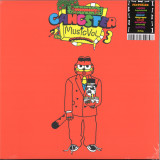
Imagine curating a dream lineup of MCs and producers from every corner of the rap world—sounds impossible, right? Not for artist and illustrator Gangster Doodles, who has been bringing this vision to life for the past decade. Now, with “Gangster Music Vol.3”, the trilogy reaches its grand finale, and it’s bigger, bolder, and more unpredictable than ever before. Gangster Doodles himself puts it best: "It’s hard to believe that I’ve been actively working on this Gangster Music series for the past 10 years. The most gangster music trilogy of ALL TIME is almost complete!! And in my humble opinion Vol.3 is the most exciting out of the 3, both from a music standpoint (special shout-out to all my music heroes on Vol.3) and artistically speaking this is the most fun I’ve had in years”
Since launching Volume 1 in 2019 and following up with the second volume in 2022, Gangster Doodles has been shaping the Gangster Music series into a one-of-a-kind sonic universe—an unfiltered mix of underground titans, unsung legends, and rising stars. Volume 3 is the biggest installment yet, boasting a staggering 30 tracks that traverse the entire spectrum of rap and beat culture.
This time around, the lineup is as eclectic as ever. From legendary pioneers like Lee Perry and Tommy Wright III, to veteran producers such as Mr. Scruff and Peanut Butter Wolf, the album pays homage to hip-hop’s roots while pushing forward into fresh territory. The roster also includes established up-and-comers like Devin Morrison, Low Leaf, DJ Harrison, Quelle Chris, Homeboy Sandman, and Suzi Analogue, ensuring a mix of classic flavors and new-school innovation. The bubbling underground is well represented too, with artists like Raz Fresco, Atlanta’s 645AR, and Pro Era’s Chuck Strangers bringing their own distinct heat.
From pioneering SoundCloud rappers like Pouya to genre-bending composer John Carroll Kirby, from Birmingham’s Romderful to Chile’s RVYO, the album encapsulates a truly global soundscape, proving once again that Gangster Doodles’ ear for cutting-edge talent is second to none.
Sex Tapes From Mars presents Outdom Records' boss, LATENT, who shares a brand-new four-track EP that spars with breakbeat, electro, house, and left-field electronics, neatly centring them all into a steady, sexy collision. The record as a whole captures genuinely original-sounding, rough-edged b-boy breaking badness - nostalgic, but never polite. It's a few BPMs slower than Sex Tapes' last few outings, but no less effective. Arguably, it's more late '80s sounding than ever, although, in fact, it's a brand-new, stonking release that showcases the label's versatility and unpredictability.
The opening track, "Break Machine", sets the pace with a clear nod to the '80s US group of the same name, bringing tidy drum workouts and clipped vocal samples that recall early Chicago, as well as choppy rave and street party energy at its most unfiltered.
"Disco Hijack" pushes the clutch into a more functional gear, merging delay-heavy, druggy, chuggy, sludgy bass with more robotic vocoder tropes, sharing something playful but IDM and European skewed. It's a dancefloor tool with a wink - just the style this now accomplished label has made its identity. Oh, don't forget the amens and clattering jungle breaks. 1990 or 2040? Fuck knows.
On "Distress Robot", pneumatic percussion and malfunctioning android chatter bring a darker, more mechanical edge, while "Virtual Body" closes with a spacious, garage-leaning shuffle that pulls the EP into recognisable contemporary yet still very much peak-time territory.
LATENT gives lean grit, pushes the edges, and lets the tracks feel alive in their imperfections. It’s music that thrives on tension between old-school reference points and modern floor pressure.
Bristol's label head Elon Dust HAS done it again.
Vinyl-only as per, don't sleep."
out of Stock
Last delivered 88 days ago available to reorder, subject to availability
Within the world of theatrical archives, there are the known, the unknown, the forgotten, and the lost. Demetrio Stratos' stage compositions for Teatro dell'Elfo's groundbreaking 1979 production Satyricon - directed by future Oscar winner Gabriele Salvatores - represents one such lost artifact now wondrously returned to life. This radical sonic work, integrating extended vocal techniques, Balinese instruments, and pioneering whale song recordings, stands as the final masterpiece of Italy's most visionary vocal experimenter, lost for over four decades until Die Schachtel's extraordinary recovery. As Stratos himself explained: "The musical operation performed on Satyricon is particular: the composer-musician here does not compose, but borrows ready-made music, vivisects it, melts it, intervenes and recomposes it on magnetic tape. The structure of the signifier, from a morphological point of view, presents itself as a conceptual collage." The music is obtained by utilizing compositions and musical elements from David Behrman, Joan La Barbara, Balinese Ketyak, Turkish Nay flute, Yugoslavian bagpipe, Pan flute, and whale song, with synthesizer interventions by Paolo Tofani. It began as part of something known - a wild, immersive theatrical event that inaugurated Teatro dell'Elfo's historic venue in 1979, was almost entirely forgotten, becoming lost and then unknown. The original production marked a radical departure for the company: no longer popular street theatre, but a dark, immersive, sophisticated spectacle that transformed their space into a rough wooden arena with a sand floor. Demetrio Stratos, working with Paolo Tofani (fellow Area member), created an entire sonic universe that subverted every conventional function of stage music. Their composition wasn't accompaniment, but autonomous sonic dramaturgy that integrated extended vocal techniques, archaic electronic elements, Nay flutes, Balinese instruments, and pioneering whale song recordings. The result was a three-dimensional soundscape that enveloped audiences, creating an otherworldly acoustic dimension. Stratos' score even intervened in the actors' vocal delivery, with the recordings capturing both the performance and his coaching sessions with the cast. The production featured young actors destined for fame - Elio De Capitani, Ferdinando Bruni, Cristina Crippa, Corinna Agustoni, Ida Marinelli - guided by Gabriele Salvatores in this adaptation of Petronius' ancient novel. Shortly after the Satyricon performances, Stratos was hospitalized for the condition that would lead to his death at just 33 years old. This work represents his final composition - a haunting farewell from one of Italy's most innovative sound artists. Die Schachtel presents this recovered work in collaboration with Teatro dell'Elfo, pulled from the original magnetic tape and carefully restored. Satyricon '79 is one of the great artifacts of 1970s Italian avant-garde - a wild, grinding sonic expose which sucks the ear into its depths, made in the spirit of collaboration and creative risk-taking. The edition includes critical apparatus with essays, testimonies from protagonists, and period photographic documentation, documenting an unrepeatable moment where theatre, vocal research and sonic experimentation converged. This release marks a poignant moment in experimental music history - Stratos' final work, now rescued from the archives and restored to its rightful place in the canon of Italian avant-garde masterpieces. A true wonder of towering historical importance. As essential as it gets for any fan of experimental music, or the history of the Italian avant-garde. Fully restored and newly mastered from the original analog tapes. Absolutely essential.
Recital releases The Holy Restaurant, the new full-length album by Derek Baron, and their first solo LP since Curtain (Recital, 2020).
The album is built from years of miniature transcriptions of improvisations, functioning in many ways as a sister to Curtain. Half-thoughts and mistakes are revisited, gilded, and illuminated. The floorboards of the album are laid with piano, organ, string pads, while serrated accruements (distortions, flourishes, and recording interferences) step and drop overhead. The resulting conflux, as Baron notes in the accompanying booklet “becomes the point and the problem to explore.”
The second track “Oven Girls” opens with us galloping on a horse in some video-game meadow on a bed of MIDI strings. Abruptly, a helicopter soars over us and we transition to a latticed guitar and woodwind exploration. The album rolls on in this fashion, juxtaposing musical half-sentences within a museum of sounds rag-picked from history and daily life. Emotional interviews with Midwestern friars who build and sell caskets are set against gothic piano and guitar duets. On “Music in the Casket,” A disorienting and hilariously epic guitar solo erupts. The penultimate titular piece, “The Holy Restaurant,” sets a text written by Baron’s grandfather. A small chorus voices his words, echoing the humanistic storytelling of “Blue” Gene Tyranny’s A Letter From Home. Under sunlit piano progressions, a fleet of smokey trumpets emerges.
Running throughout the album is a series of “traces”: short melodic phrases painted over again and again with different real and MIDI instrumentation. The “luxurious asceticism of doubling” as Baron puts it. They explain, “Part of the allure for me is that the ‘original’ material is itself kind of thin, sketchy, meaningless, maybe calling attention to itself only by way of a felicitous mistake. Hearing, transcribing, and learning what was basically only ever played first on accident becomes the guiding concern.”
The album’s shifting, variegated forms and voices pass quickly; the record feels both comforting and elusive, suitable for any hour of the day.
The Holy Restaurant features guest players Ed Atkins, Lucy Liyou, Quentin Moore, Emily Martin, Dominic Frigo, Jacob Wick, and several of Baron’s family members. It is released in a limited edition vinyl pressing of 200 copies, accompanied by a booklet of effusive program notes by the composer, alongside an assemblage of photographs, scores, and artwork.
out of Stock
Last delivered 10 months ago available to reorder, subject to availability
For its second anniversary, Samba Jean-Baptiste’s 2023 LP, ‘Cardinal' arrives on vinyl and CD. Two years on from its original release on Samba’s own AM Radio imprint, this physical release via Scenic Route Records celebrates an album that’s quietly built a devoted following for its intimate songwriting, cinematic arrangements, and deeply human detail.
This edition features alternative artwork by Rafi Goudy and, for CD buyers, a 32-page lyric booklet featuring images captured by Samba himself.
An intimate, richly textured record that’s grown into a modern cult classic, ‘Cardinal’ stands as a deeply personal snapshot of a singular artist - now a tactile home experience.
out of Stock
Last delivered 6 months ago available to reorder, subject to availability
Young Gun Silver Fox are the captains of AM Waves, setting sail towards an isle where melodies soak the shoreline and grooves sway like palm trees. Their route traces a natural progression fromWest End Coast, an album that cast Andy Platts (Young Gun) and Shawn Lee (Silver Fox) as musical virtuosos of SoCal-infused pop. AM Waves does more than duplicate the perfection of West End Coast. It improves it.
Recorded at The Shop in London and Roffey Hall in the English countryside, AM Waves burnishes the blend between the duo's modern aesthetic and their sumptuously crafted homage to '70s-styled pop, rock, and soul. "This music hits a certain spot for me personally that nothing else quite does," says Shawn, who produced the album amidst his projects for Saint Etienne, Shawn Lee's Ping Pong Orchestra, and several other acts. "It's real high-caliber music. It's easy and breezy to listen to but it's really hard to make. Every aspect is A game."
The A game behind AM Waves fuels 43 minutes of Young Gun Silver Fox in peak form. "AM Waves is much more instinctive," says Andy, whose penchant for writing irresistible hooks and melodies also shapes his role as lead singer and lyricist/composer for the band Mamas Gun. "It's more vivid. You can see the clarity to the colors of AM Waves whereas West End Coast is slightly more impressionist, as it were."
Originally issued as a single in September 2017, "Midnight in Richmond" is the anchor of AM Waves. "I hit one chord, which I'd never played before, and the song sort of wrote itself," notes Shawn. "It was intuitive. In many ways, the primary function of what I'm doing is trying to find that chord that opens a door and takes you someplace else. Those chords have magic." Andy embellishes the song's appeal by nimbly juxtaposing wistful emotions with a sun-kissed melody, his voice evoking richly drawn memories. The qualities that make "Midnight in Richmond" an instant classic abound throughout the album.
"Lenny" and "Take It or Leave It" spotlight Andy's versatility as a songwriter. The former was inspired by a dream he had where Lenny Kravitz owned a bar. "It was surreal," he says. "He was polishing the glasses and just serving me hit after hit." Like swimming through moonshine, Andy languorously savors every syllable in the song. "Take It or Leave It" is pure pop bliss. "That was one of those songs that fell out in half an hour," he says. "I had everything and it was done." Shawn adds, "It's such a perfect song in itself. When I listen to it, it's like you've created a record that already existed."
Young Gun Silver Fox introduce a five-piece horn section on "Underdog" that literally trumpets the song's protagonist. Shawn affectionately dubbed them the "Seaweed Horns" in honor of the Seawind Horns, an LA-based unit that recorded with powerhouses like Michael Jackson,Rufus & Chaka Khan,and Earth, Wind & Fire during the late-'70s. Andy explains, "The horns grab another hue of the west coast sound, which is the starting point, but it's also maybe the point where we're injecting a little bit more of ourselves and some outside colors into the familiar west coast palette."
A bounty of treasures course through AM Waves' ebb and flow. "Mojo Rising," which the duo penned with Rob Johnson, is a veritable retreat to paradise. "Sky-bound, heaven sent / Way above the clouds watching shootingstars descend," Andy sings, mirroring the music's celestial undertones. Sensuality contours the notes on "Just a Man," a song that basks in the allure of a woman who leaves "footprints on the water" while "Love Guarantee" is festooned with the Seaweed Horns. "I wanted to bring more of that R&B slickness into the mix," Shawn notes about the latter track. "We hadn't done a tune with that sort of groove." Similar to his work on "Underdog," Nichol Thomson's intricate horn arrangement on "LoveGuarantee"exemplifies another distinction between AM Waves and its predecessor.
"Caroline" occupies a special place on AM Waves, beyond spawning the album title. It tells the story of Radio Caroline, a pirate radio station that broadcast from an offshore vessel during the '60s and '70s. "They played the music that kids wanted to hear, whether it was the old stuff or cutting edge stuff," says Andy. "'Caroline' is about Radio Caroline's eventual capture." Complementing Andy Platts' deft wordplay, which draws parallels between radio airwaves and the station's literal home on the ocean, Shawn Lee layers nearly a dozen different parts on "Caroline," showcasing the vastness of his musicality. "I loved that track as soon as I heard it," Andy continues. "It's a beautiful fusion of me and Shawn."
The Seaweed Horns joinYoung Gun Silver Foxas they detour to the dance floor on "Kingston Boogie." Shawn explains the track's genesis, "I was thinking, what have we not done yet We definitely should get an AOR disco thing happening. I quite like disco. The beat is so metronomic that it allows you to be really sophisticated on top. 'Kingston Boogie' just laid itself out. I call it 'midnight disco.'" With a nod to "Lenny," Andy Platts sets "Kingston Boogie" back at Lenny's Bar, this time revealing a detail or two about its mysterious proprietor as he pours sweet wine and moonshine.
In a sense, AM Waves ends with the beginning. Even before there was Young Gun Silver Fox, there was "Lolita," the first song Andy Platts and Shawn Lee wrote together and a crowd-pleasing staple of the duo's live sets. The tale of a femme fatale who harbors a secret was recorded for West End Coast but instead furnished the B-side to "Long Way Back" as well as a bonus track on the North American edition of the album. Despite the song's checkered trajectory, its infectious chorus sparked the brighter, more buoyant orientation of AM Waves.
Like the moon pulling the tide, Young Gun Silver Fox are a magnet for good songs. "We're both so obsessed and constantly interested in music-making," says Andy. "We're both thinking about it all the time. When you know you have an accomplice with you that's the same as you, it's very liberating. Suddenly, worlds of color start to appear." Indeed, AM Waves is elemental in its power to induce pleasure. Dive right in.
NATURAL ROOTS MUSIC, tuned to the rhythms of the Earth! A special mix by Rooing SWE from the previous Roots & Foundation (CD) release, Side A: All
Those Who Love the Earth (Roots Man Foundation). Side B: The Danjiri Festival (Prayer for a Good Harvest) in Senshu, Southern Osaka. This first 7-inch release
pays tribute and gratitude to the local area.
As a DJ, I prioritize three key points when selecting music. I'll introduce this record in relation to those points.
The first is the power of the intro. I'm always grateful for killer tunes that get the floor moving naturally. The A-side, which begins with a catchy trombone, is a
perfect example of that. Natural Roots' performance is so dark that it almost makes you forget that you're in Osaka, the city of laughter.
The second is about the lyrics. Especially in times like these, I want to share a positive message with everyone. Frontman Livity Tabasuke sings straightforwardly
about his feelings for the Earth. It reminds us of the gratitude we often forget in our daily lives. Above all, his voice is soft and soothing.
The third is the 7-inch format. If you're going to take it to a venue, nothing beats a small, light record. The older I get, the more my hips instinctively tell me to.
The dub-inspired instrumental tunes on the B-side are also fantastic, and the album's functionality continues to increase. I also appreciate the addition of the
shinobue flute, a unique instrument unique to Senshu, a renowned Kansai reggae region, which adds to the local feel.
This album, which captures all of these elements, is extremely practical for me. I'm sure I'll be using it for a long time to come. I sincerely hope that the limited
edition of 300 records reaches reggae fans all over the country.
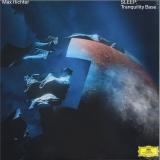
Max Richter presents SLEEP: Tranquility Base, a thirty-minute EP of new SLEEP music alongside remixes from electronic musician Kelly Lee Owens and German sound artist Alva Noto. Richter returns to his celebrated eight-hour magnum opus SLEEP with this new EP which offers a glimpse into the original material from an electronic perspective. “Tranquility Base” is the site on the Moon where, in July 1969, humans landed and walked on a celestial body other than Earth for the first time. With this in mind, the EP functions as a vessel that disconnects and travels through the body of work, allowing art to provide something which resembles peace within ourselves.
out of Stock
Last delivered 12 months ago available to reorder, subject to availability
Livity Sound welcomes Joe Milli to the fold with an assured EP of crisp club workouts that land between techno's evocative depth and UK funky's offbeat, drum-focused functionality.
Over the past few years Milli has been establishing his sound across a swathe of radio shows, guest mixes and releases, and he lands on Livity with a timeless take on the label's commitment to stripped back, atmospheric soundsystem music.
There's variety across the Deep Forest EP, ranging from the balmy bassweight house of the title track to the deep-diving dub pulses and bruk drum science of 'Look Again'. 'Keep That Wire' draws nervous energy from its synth hooks and the taut, angular beat before the rolling Detroit techno pulse of 'Expressions' brings the EP home in punchy, percussion-loaded style.
In line with past releases from the likes of Bakongo, DJ Polo and Tribal Brothers, Milli's strength lies in his ability to bend the UK funky formula to different styles, all precision-tooled for the club.
Livity Sound is a label set up by Peverelist in 2011 as a vehicle for a raw and exploratory strain of UK techno, rooted in the heritage of UK dance music and sound system culture. It has since become one of the UK's foremost protagonists for cutting edge underground electronic music.
out of Stock
Last delivered 12 months ago available to reorder, subject to availability
In Guadeloupe, many people think that jazz and ka music are like a ring and a finger. To some extent, the same could be said about so called Latin music and the music played in the French West Indies.
Both aesthetics were born in the Caribbean and bear so many connections that they can easily be considered cousins. In constant dialogue, there are lots of examples of their fruitful alliance and have been for a while. The English country dance that used to be practiced in European lounges came to be called kadrille in Martinique and contradanza in Cuba. They both featured additional percussion instruments inherited from the transatlantic deportation. Drawing from shared feelings about the same traumatized identity – later to be creolized – it would be hard not to assume that they were meant to inspire each other. The golden age of the orchestras that graced the Pigalle nights during the interwar period further proves the point. As soon as the 1930s, Havana-born Don Barreto naturally mixed danzón and biguine music in a combo based at Melody's Bar. In the following decade, Félix Valvert, a conductor who was born and raised in Basse-Terre in Guadelupe, also worked wonders in Montparnasse with La Coupole, which was an orchestra made up of eclectic musicians. Afro- Caribbean performers of various origins were often hired on rhythm and brass sections in jazz bands, which used to enliven the typical French balls of the capital. In the 1930s and onwards, Rico’s Creole Band was one of them.
Martinican violinist-clarinettist Ernest Léardée, who would become the king of biguine music as well as the main figure of French Uncle Ben's TV commercials (a dark stigma of post-colonial stereotypes), had musicians from the whole Caribbean sphere play at his Bal Blomet – and they all enchanted "ces Zazous-là" (according the words of Léardée's biguine-calypso piece). In les Antilles (French for French West Indies), music history started to speed up in the 1950s, when trade expanded and radio stations grew bigger. The Guadelupean and Martiniquais youth tuned in their old galena radio sets to South American and Caribbean music. As for the women traders, les pacotilleuses, they bought and sold goods across different islands (the "passing of items through various hands" was thought to be most pleasurable) and brought back countless sounds in their luggage. Such was the case of Madame Balthazar, who once returned from Puerto Rico with the first 45rpm and 33rpm to ever enter Martinique.
Out of this adventure was created the famous Martinican label La Maison des Merengues, a music business she opened and undertook with her husband and which proved to be a major landmark. At the end of the 1950s, in Puerto Rico, Marius Cultier competed in the Piano International Contest playing a version of Monk's Round 'Midnight. He won the first prize and this distinction foreshadowed everything that was to come. Cultier, the heretic Monk of jazz, was quickly praised for writing superb melodies, always tinged with a twist that conferred a unique sound to his music. It didn't take long for the gifted self-taught musician to get to play with Los Cubanos, making a name for himself thanks to his impressive maestria on merengues.
The rest is history. Besides, in the late 1950s, Frantz Charles-Denis, born into the upper middle class in Saint-Pierre and better known by his first name Francisco, went back home after working at La Cabane Cubaine – a club located rue Fontaine where he had caught the Latin fever. Francisco's music was therefore heavily marked by his Cuban cousins' influence, which gave the combos he led a specific style and also led to renewal. Things were swinging hard in La Savane, located in the main square in Fort-de-France. He set up the Shango club close by and tested out the biguine lélé there, a new music formula spiced up with Latin rhythms. Soon afterwards, fate had him fly to Puerto Rico and Venezuela.
As for percussionist Henri Guédon (percussions were only a part of his many talents), he was born in Fort-de-France in May 22nd 1944, the day marking the celebration of the abolition of slavery. As an old man, he could remember that in " his father's Teppaz, a lot of hectic 6/8 music was constantly playing...". In the opening lines of his Lettre à Dizzy, a small illustrated collection of writings published by Del Arco, he highlighted the huge impact that cubop had on him as a teenage boy, around 1960. He eventually turned out to be the lider maximo in La Contesta, a big band steeped in Latin jazz. He was also the one who originated the word zouk to describe music which brought the sound of the New York barrio to Paris. It was the culmination of a journey that started in Sainte-Marie: "a mythical place for bélé, the equivalent of Cuban guaguancó". In the early 1960s, the tertiary economy developed to the detriment of agriculture. Yet rural life was where roots music emerged in Martinique and in Guadeloupe.
Record companies played a major part in the process of Latin versions sweeping across the islands – before reaching everywhere else. Producer Célini, boss of the great Aux Ondes label, and Marcel Mavounzy, both the head of Émeraude records - a firm which was founded in 1953 - as well as the brother of famous saxophonist Robert Mavounzy, were big names to bear in mind. Although there were many of them - all of whom are featured on this record - Henri Debs was definitely the major figure in the recording adventure. He proved to be so influential that he even got compared to Berry Gordy. In the mid 1950s, when he acquired his first Teppaz, he worked on his first compositions: a bolero and a chachacha. Then, he became the one man who made people discover Caribbean music, from calypso to merengue. He was among the first ones to rush out to San Juan, Puerto Rico, to buy records and distribute them through a store run by one of his brothers in Fort-de-France. He had members of the Fania All Star come and perform there, which he was madly proud about. He was also the first one to pay attention to Haitian music, such as compas direct and various other rhythms which would soon flood the market. As a result, many of the combos hitting his legendary studio would end up boosted by widespread "Afro-Latin" rhythms. However, he never denied his identity: gwo ka drums were given a major role, although they were instruments which had long been banned from the "official" music spheres. The present selection bears witness to such a creative swarming. Here are fourteen tracks of untimely yet unprecedented cross-fertilization: all types of music rooted in the Creole archipelago have found their way, whatsoever, to the tracklisting. Whether originating from the city or being more rural, they all go back to what Edouard Glissant, in an interview about the place of West Indian music in the Afro-American scope, called "the trace of singing, the one which got erased by slavery." "It is so in jazz, but also in reggae, calypso, biguine, salsa... This trace also manifests through the drums, whether Guadelupean, Dominican, Jamaican or Cuban... None of them being quite the same. They all point to the idea of a trace, seeking it out and connecting to each other through it. This is the hallmark of the African diaspora: its ability to create something new, in relation to itself, out of a trace. It may be the memory of a rhythm, the crafting of a drum, a means of expression which doesn't resort to an old language but to the modalities of it." The opening track features one of the emblematic orchestras of this aesthetic identity, criscrossing many music types from the archipelago. The 1974 Ray Barretto guajira – Ray Barretto was a major New York drummer influenced by Charlie Parker and Chano Pozzo – is magnificently performed by Malavoi, a legendary Fayolais group (i.e from Fort-de-France). Additionally, the compilation ends on a piece by Los Martiniqueños de Francisco. It symbolically closes the circle as it is a genuine potomitan of Martinique culture which also functions as a tireless campaigner for Afro-Caribbean music. Practicing the danmyé rounds (a kind of capoeiria) to the rhythm of the bèlè drum, it delivers a terrific Caterete, a kind of champeta of Afro- Colombian obedience which was originally composed by Colombian Fabián Ramón Veloz Fernández for the group Wgenda Kenya. The icing on the cake is Brazilian Marku Ribas, who found refuge in Martinique in the early 1970s, bringing his singing to the last trance-inducing track. These two "versions" convey the whole tone of a selection composed of rarities and classics of the tropicalized genre, swarming with tonic accents and convoluted rhythms. It is the sort of cocktail that the West Indians never failed to spice up with their own ingredients. For instance, the Los Caraïbes cover of Dónde, a famous Cuban theme composed by producer Ernesto Duarte Brito, has a typical violin and features renowned Martinique singer Joby Valente and his piquant voice.
The track used to be – or so we think – their only existing 45rpm. The meaningful Amor en chachachá by L'Ensemble Tropicana, a band which included Haitian musicians among whom was composer and leader Michel Desgrotte, also recalls how Latin music was pervasive in the tropics in the mid-1960s. They were the ones keeping people dancing at Le Cocoteraie in Guadelupe and La Bananeraie in Martinique. Around the same time, another "foreign" band, Congolese Freddy Mars N'Kounkou's Ryco Jazz, achieved some success on both islands by covering Latin jazz classics – such as their adaptation of Wachi Wara, a "soul sauce" by Dizzy Gillespie and Chano Pozo whose interweaving of strings and percussions can have anyone hit the dancefloor. How can you resist Dap Pinian indeed, a powerful guaguancó by Eugene Balthazar, performed by the Tropicana Orchestra and published by the Martinique-founded La Maison des Merengues? It also acts as a symbol of the maelstrom at work. Going by the name Paco et L'orchestre Cachunga, Roger Jaffory used to play guaguancó too: his Fania-inspired Oye mi consejo is one example of his style. Baila!!!!! Dancing was also one of the Kings' focus points. Oriza is a Puerto Rican bomba and a "classic" originally composed by Nuevayorquino trumpeter Ernie Agosto, which reserves major space for brasses, giving it a special sheen.
Emerging from the New York barrios crucible was also La Perfecta, a Martinique group originating from Trinidad, whose name directly references the totemic Eddie Palmieri figure as well as his own band, also called La Perfecta. Here they borrow Toumbadora from Colombian producer and composer Efraín Lancheros and interpret it by emphasizing percussions, which set fire to the track even more than the wind instruments. The same goes for Martinique's Super Jaguars, who use Tatalibaba – a composition by Cuban guitarist Florencio "Picolo" Santana which was made famous by Celia Cruz & La Sonora Matencera – as a pretext for sending their cadences into a frenzy. In a more typically salsa vein, the Super Combo, a famous Guadelupean orchestra from Pointe-Noire that was formed around the Desplan family and had Roger Plonquitte and Elie Bianay on board, adapt Serana, a theme by Roberto Angleró Pepín, a Puerto Rican composer, singer and musician also known for his song Soy Boricua. Here again, their vision comes close to surpassing the original. In the 1970s, L'Ensemble Abricot provided a handful of tracks of different syles, hence reaching the pinnacle of the art of achieving variety and giving pleasure. They played boleros, biguines, compas direct, guaguancó and even a good old boogaloo - the type they wanted to keep close to their hearts for ever, "pour toujours", as they sang along together in one of their songs. Léon Bertide's Martinican ensemble excelled at the boogaloo which had been composed by Puerto Rican saxophonist Hector Santos for the legendary El Gran Combo.
Three years later, in 1972, Henri Guédon, with the help of Paul Rosine on the vibraphone, tackled the Bilongo made famous by Eddie Palmieri. Such a classic!!!!! And so were the Aiglons, the band from Guadelupe: choosing to execute Pensando en tí, a composition by Dominican Aniceto Batista, on a cooler tempo than the original, they noticeably used a wonderfully (un)tuned keyboard in place of the accordion. On the high-value collectible single – the first one released by Les Aiglons under the Duli Disc label – there is a sticker classifying the track under the generic name "Afro". Now that is what we call a symbol. Jacques Denis
out of Stock
Last delivered 7 months ago available to reorder, subject to availability
The discovery of Doris Dennison's score represents a genuine musicological breakthrough—what once would have been "a tree falling in the woods" thirty years ago now holds the potential to render "a thunderous clap in our minds." While researching Anna Halprin's lesser-known collaborators, scholar Tom Welsh uncovered the archives of AA Leath, one of Halprin's principal dancers. Buried within these materials was Dennison's handwritten score for Earth Interval, dated May 1956. Born in Saskatchewan, Canada, in 1908, and raised near Seattle, Dennison (1908-2009) encountered John Cage while teaching Dalcroze eurythmics at the Cornish College of the Arts. She joined Cage's earliest percussion quartet—alongside Margaret Jansen, the composer and his wife Xenia—in the group widely regarded as having performed the first complete concert of percussion music in the United States. This historic December 1938 concert was followed by tours and the landmark May 1941 performance at the California Club, comprising Cage and Lou Harrison's Double Music, the premiere of Cage's Third Construction, and Harrison's 13th Simfony.
As Bradford Bailey observes in his extensive liner notes, Earth Interval demonstrates "an extraordinary balance of elements that imbues the piece with a sense of clarity, directness, and constraint that is both distinct and ahead of its time." The work's most remarkable innovation lies in its approach to extended techniques, particularly Dennison's notation for the central movement: "In 2nd movement, 1st player lowers + raises a gong into a tub of water while beating." This technique, absorbed from Cage's experimental vocabulary, generates what Bailey describes as "fields of acoustic abstraction that bend and warp time through sustained resonances, beat, and space." The temporal sophistication of these manipulations anticipated Karlheinz Stockhausen's Mikrophonie I (1964) and Annea Lockwood's water-based sound investigations by over a decade. After joining Mills College as dance accompanist, Dennison maintained crucial connections to the Bay Area's experimental scene, collaborating with figures like Merce Cunningham and programming Cage's music throughout the 1950s.
Comprising three movements—Land Form, Air Tide, and Earth Play—Earth Interval is scored for recorder, drums, gongs, maracas, muted gongs, and bowl gongs. In total, the piece is just under eight minutes: "a fleeting glimmer of moment in time, a life spent at the cutting edge, and a singular creative vision that packs a powerful punch." When viewed in historical context, placed in contrast to roughly contemporaneous avant-garde percussion works by Cage, Harrison, Louis Thomas Hardin (Moondog), and Harry Partch, or important precursors like Edgard Varèse's Ionisation (1931) and Henry Cowell's Ostinato Pianissimo (1934), it's clear that Dennison was following her own path. Earth Interval is not derivative. It is a precursor to what was yet to come, alluding to developments of avant-garde and experimental music that wouldn't begin to appear on the cultural landscape until the 1970s and '80s, with the emergence of Post-Minimalism and more idiosyncratic artists and ensembles like Midori Takada, Ros Bandt, Peter Giger, Frank Perry, Christopher Tree, Michael Ranta, Gamelan Son of Lion, and Niagara.
This recording by Chicago's Third Coast Percussion, captured in March 2022, represents the first complete documentation of this pioneering work. The ensemble's interpretation reveals the piece's remarkable contemporaneity while maintaining its historical specificity. Where Cage, Harrison, and Partch employed "self-consciously off-kilter polyrhythms," Dennison's rhythmic sensibility anticipates minimalist developments by nearly a decade, yet integrates "forceful rests, as well as sharp shifts in sonic character, tempo, and meter, that break the momentum and breathe a sense of life into the piece's structure." This positions her work closer to Post-Minimalism decades before its emergence. The architectural approach demonstrates Dennison's understanding that "the composer almost entirely disappears" in favor of phenomenological listening experience, creating what might be called an egoless music that places its realities and meaning entirely in the ear of the beholder. The present recording, realized by Chicago's distinguished Third Coast Percussion ensemble, represents a significant achievement in experimental music scholarship and performance practice. As specialists in the Cage tradition and contemporary percussion repertoire, Third Coast Percussion approached Earth Interval with the historical sensitivity and technical precision required to illuminate Dennison's subtle compositional innovations. The March 2022 recording sessions, engineered by Colin Campbell, capture both the work's intimate chamber music qualities and its bold exploration of extended techniques. The ensemble's interpretation reveals the piece's remarkable contemporaneity—its ability to speak directly to current musical concerns while maintaining its historical specificity.
This recording serves multiple scholarly functions: it provides the first complete documentation of Dennison's compositional voice, offers insight into the broader network of experimental music practitioners surrounding Cage and Harrison, and demonstrates the sophisticated level of compositional thinking that was occurring within the Bay Area's dance-music collaborations of the 1950s. The work's emphasis on phenomenological listening—what might be called an "egoless" approach to musical experience—places it within a lineage of American experimental music that prioritizes perceptual process over compositional personality. The work's original obscurity—limited to AA Leath's performances at venues like the 1957 Pacific Coast Arts Festival at Reed College—paradoxically allowed it to remain "entirely on its own terms," free from the constraints of historical categorization. Drawing on Jacques Derrida's Archive Fever, the argument emerges that "the archive can acknowledge, celebrate, and resurrect" overlooked voices, transforming our understanding of experimental music history. The present Blume edition, featuring Third Coast Percussion's authoritative interpretation, includes a lavishly illustrated 16-page booklet designed by Bruno Stucchi / dinamomilano, containing complete scholarly apparatus, historical photographs, and detailed production notes. This recording enables "cross-temporal intersectionality," allowing Dennison to "belong to a newly formed and more dynamic understanding of the present and past," demonstrating how forgotten voices can reshape entire historical narratives when given proper scholarly attention and performance advocacy.
Since its founding back in 2014, Blume has carved a unique place in cultural landscape, issuing free-standing works, spanning the historical and contemporary, that represent singular gestures of creativity within the field of experimental sound. Joining their broad efforts in building networks of context and understanding that already includes the works by Werner Durand, Sarah Hennies, Bruce Nauman, John Butcher, Jocy de Oliveira, Mary Jane Leach, Valentina Magaletti, Alvin Curran, Julius Eastman, Alvin Lucier, and following the first ever vinyl release to attend to James Tenney's legendary Postal Pieces, the label now presents the first LP published by the visionary Swiss composer Jürg Frey. Drawing from the transformative power of breath and resonance, this release represents one of the most profound explorations of musical metamorphosis to emerge from the contemporary experimental landscape.
The completed work represents a "conjunction of these two artists" that has "activated a transformative form of experimentalism." These renderings "dance with an airy lightness, humour, and play, imbuing them with a beauty and emotiveness that can be rare within experimental music." They exist as "breaths, carrying the curiosities of life, belonging to no time and all time, to no one and everyone: a human music to be inhaled and pondered, for which the outcome remains unknown." In this liminal space between composition and interpretation, between breath and resonance, Zurria and Frey have created something that transcends the boundaries of experimental music itself, offering what might be called a metaphysical cartography of sound in its most essential form. As Bradford Bailey observes in his penetrating liner notes, "music is rarely a fixed entity," existing instead in a state of perpetual flux, "taking on the influences of its interpreters and performers." This fundamental truth finds its most eloquent expression in the transformative collaboration between Italian flutist Manuel Zurria and Frey, longtime member of the Wandelweiser Group. Where conventional recordings might preserve a definitive version, this release activates what Bailey calls "states of unknowing and continued experimentation," allowing Frey's compositions to evolve into entirely new dimensional territories. The original string quartet and piano works dissolve into breath-carried architectures of sound, where "the original remains in a constant dialogue with its transformation." This is not mere arrangement but ontological metamorphosis - an alchemical process through which crystalline harmonies are reborn as atmospheric phenomena.
The metaphysical dimensions of this transformation become clear through detailed analysis of the musical result. Where Frey's original compositions operate through what he calls "basic confidence in the clear and restricted material," Zurria's interpretation activates entirely new perceptual territories. Space holds almost atomic sense of weight against the airy punctuations of timbres, textures, and tones, creating "suspensions of time within which questions and identities posed by instrumentation fade." The Extended Circular Music pieces - each comprising "a small number of bars to be repeated an undetermined number of times" - become organizations of sound that defy being definitive or fixed. Originally scored for different combinations of violin, viola, cello, and piano, these works now exist as pure phenomena of breath and resonance, where "hanging, breath-length utterances dance and intertwine amongst complex harmonic clusters and conjunctions."
The philosophical implications of this transformation illuminate a lineage of composers who have moved "away from abstraction and responding to the need to create" something beyond mere technique. Drawing parallels to Morton Feldman's understanding of non-functional harmony, Zurria's approach represents "a transformative form of experimentalism" that activates what Frey calls the "thaumaturgic power" of music - its capacity to heal and transform consciousness itself. The result is "a radical reimagining of ambience: sprawling sonorities and resonances adrift in space, carrying the liberated traces of the work's former incarnations and their truths." In Zurria's interpretation, Frey's String Quartet n.3 becomes something approaching "an organ played in slow motion, its seals leaking," while the Extended Circular Music pieces transform into "glacial chords from a diverse palette of voicings, harmonies, timbres, and tones."
Performed by Manuel Zurria. Recorded and mixed by Zurria at BigCardo, Catania between 2022-2024, with mastering by Bruno Germano at Vacuumstudio, Bologna, this Blume release represents a profound exploration of musical transformation.
Alanis Morissette Delivers the Equivalent of a Spiritual Awakening on Supposed Former Infatuation Junkie:
Introspective Themes and Compassionate Emotions on Eastern-Tinged Album Have Grown More Relevant
1998 Smash Plays with Enhanced Detail, Rich Textures, and Sharp Focus on Mobile Fidelity’s 180g 33RPM 2LP Set:
First-Ever Audiophile Edition Strictly Limited to 3,000 Numbered Copies
1/2" / 30 IPS analogue master to DSD 256 to analogue console to lathe
Alanis Morissette refuses to adhere to convention on Supposed Former Infatuation Junkie. While most artists follow-up their breakthrough with an album that closely parallels the approaches that helped make them famous, the maverick singer-songwriter stayed true to herself and drew inspiration from travel to India before she began the recording sessions. As much as the preceding Jagged Little Pill put her on the global radar, Supposed Former Infatuation Junkie confirmed her role as a vital generational voice — and proved her blockbuster success was no fluke. Having set a mark for most sales of an LP in its debut week by a female artist, the 1998 smash remains a pop-rock staple.
Sourced from the original master tapes, strictly limited to 3,000 numbered copies, housed in a Stoughton jacket, and pressed at Fidelity Record Pressing, Mobile Fidelity’s 180g 33RPM 2LP set of Supposed Former Infatuation Junkie presents the triple-platinum LP in audiophile sound for the first time. Benefitting from defined grooves that befit the album’s nearly 72-minute length, this pressing plays with enhanced detail, refined clarity, sharper focus, and broader dynamics than prior versions.
Those traits are key given Morissette’s use of more textured and atmospheric soundscapes, not to mention her evolution into a more nuanced and controlled singer. Similarly, the scale and reach of David Campbell’s string arrangements come across as orchestrations should. Ditto the synth-based architecture shaped by producer and principal Morissette collaborator Glen Ballard. All in all, Mobile Fidelity’s collectible edition simply delivers more information via transparent means.
Notable for its balance, sophistication, and richness, Supposed Former Infatuation Junkie at heart finds Morissette pausing, taking a breath, and learning how to navigate life in a healthy manner after enduring one of the most exhausting and rocket-to-fame stretches any musician ever experienced. It’s the sonic equivalent of a spiritual awakening, a call to betterment, a brave assessment of the self and humanity as a whole. As such, the tunes on her second international (and fourth Canadian) release teem with gratitude, compassion, love, empathy — emotions that lend themselves to the largely mellow, contoured scope and Eastern-tinged melodies of the songs themselves.
“How ‘bout how good it feels to finally forgive you,” Morissette sings on the lead single “Thank U.” “How ‘bout grieving it all one at a time.” Those sentiments, and the vocalist’s embrace of concepts such as divinity and acceptance, not only provide a foundation on which Supposed Former Infatuation Junkie rests. They also reflect the personal maturation she gained from her embrace of Buddhist culture in India and a mindset bent toward notions of reconciliation, peace, and sensuality that were nearly absent in popular music in the late ‘90s.
Those themes continue on “That I Would Be Good,” a confident reflection that takes stock of one’s mental, physical, and emotional state in the face of both changing and unpleasant circumstances — and concludes with Morissette performing a flute solo, further exposing the raw intimacy of the introspective tune. She channels relatable simplicity and joy on “So Pure,” with her invocations of “dance” and “freestyle” speaking to the freedom of expression that courses throughout Supposed Former Infatuation Junkie. And perhaps no song finds Morissette showcasing her refreshed attitude toward life and opening up more than the relationship-themed “Unsent,” whose unconventional structures and lack of a chorus only add to its directness.
Akin to many albums that were ahead of their time, and despite the critical and commercial accolades afforded it upon release, Supposed Former Infatuation Junkie attracted new appreciation and perspective as it got older. Issued during an era where its ideas of serenity, absolution, tranquility, and contentment seemed largely alien, the record — akin to the ways its predecessor foreshadowed a movement — now functions as a visionary beacon that foretells of way to maintain sanity, dignity, and goodness amid a contemporary landscape filled with constant distractions, polarizing views, and incessant calls to purchase, promote, and produce without questioning the what-for purpose.
Supposed Former Infatuation Junkie dares to ask the questions and, at its best, supplies meaningful answers and alternatives that lead to longed-for enlightenment, healing, and laughter. For these reasons alone, it’s a record that never goes out of style.
Mobile Fidelity's UltraDisc One-Step 180g 45RPM 2LP Set Plays with Authoritative Tonality, Airiness, and Clarity:
Pressed on MoFi SuperVinyl and Strictly Limited to
3,000 Numbered Copies
1/4” / 15 IPS Dolby A analogue master to DSD 256 to analogue console to lathe
Joni Mitchell is the only artist who could’ve made Hejira. The legendary singer-songwriter said as much when discussing the album decades after its release. Yet that fact seemed obvious from the moment the gold-certified effort streeted in fall 1976. An adventurous travelogue, probing narrative, and offbeat homage to freedom, Hejira remains an inimitable entry in the catalog of recorded music — a spare, gorgeous, meditative series of sonic vignettes comprised of floating harmonic pop, cool jazz, soft rock, and sensitive vocal elements that beckon feelings of motion, discovery, and self-examination.
Sourced from the original analog master tapes, pressed at Fidelity Record Pressing on MoFi SuperVinyl, and strictly limited to 3,000 numbered copies, Mobile Fidelity's UltraDisc One-Step 180g 45RPM 2LP set presents the record ranked the 133rd Greatest of All Time by Rolling Stone with definitive detail, richness, accuracy, and directness. Marking the first time the revered LP has received audiophile treatment, it's one of six iconic 1970s Mitchell records Mobile Fidelity is reissuing on vinyl and SACD.
Playing with a virtually nonexistent noise floor, dead-quiet surfaces, and superior groove definition, this collectible reissue reproduces in enveloping fashion the tones, textures, and craftsmanship that help Hejira function as the equivalent of a liberating trip down an open road with nothing but blue sky, natural landscape, and fresh air in the immediate vicinity. Passages bloom, carry, decay as they do amid an acoustically optimized environment. Soundstages extend far, wide, and deep, with black backgrounds and pinpoint images adding to the realism.
The reference-grade immediacy, airiness, and presence put in transparent perspective Mitchell’s dense strings of words, stream-of-conscious-like phrasing, and unhurried albeit forward momentum. Likewise, the instrumental contributions of her A-list support musicians — a cast that includes L.A. Express members John Guerin, Max Bennett and Tom Scott, plus Neil Young, Victor Feldman, and Abe Most — emerges with breathtaking clarity and dimensionality.
While Mitchell, whose intimate vocals and abstract guitar parts center everything, Mobile Fidelity's restoration of Hejira further reveals the visionary breadth of guitarist Larry Carlton and bassist Jaco Pastorius. Though heard on only four tracks, Pastorius' fretless bass epitomizes the fluid, subtle, flexible, roomy, and shape-shifting characteristics of songs that often appear to transpire out of nowhere akin to the formation of a puffy cumulus cloud overhead. In sync with Mitchell’s voice, Pastorius’ fusion hovers and floats, suspended in a fog you want to deeply inhale. The "grace notes" Mitchell desired on Hejira can now be heard in full. Ditto the luxurious tapestries of alinear lines, fills, and supplements unreeled on Carlton’s six-string.
Visually, the packaging of this UD1S set complements its identity as the copy to own. Housed in a deluxe slipcase, the LPs come in foil-stamped jackets with faithful-to-the-original graphics. This version is for listeners who desire to become immersed in everything about Hejira, including the unforgettable album cover — a pastiche of 14 different photos Mitchell used a Camera Lucida to assemble into one image that’s anchored by a portrait of her in a stoic pose — and the interior shots of Mitchell skating on a frozen Wisconsin lake wearing a pair of black skates, black shirt, and fur cape.
The notion of skating, feeling an awakening wind whipping against your face, and losing yourself to the surroundings are extremely apt for Hejira, which Mitchell wrote after a sequence of trips and relationships prompted her to reflect on the complicated conflicts between independence and marriage, success and satisfaction, duty and desire — and, more specifically, “the cost of being a woman.” The Canadian native delved into such themes before. But never as she does on Hejira, whose liberating, running-away aura doubles as another of Mitchell’s rejections of tradition as well as a suggestion of a better alternative.
At once observational and personal, expansive and insular, cheerful and poignant, Hejira spans a sea of human conditions, emotions, and circumstances. It addresses drifting, isolation, pleasure, place, time, and surroundings with strikingly poetic discourse matched with music that, save for the crooned ballad “Blue Motel Room,” forgoes conventional structures and choruses.
The jazz-based arrangements, marked by scaled-down percussion and all manner of bent, rounded, and unsettled notes, hint that Mitchell has no exact destination in mind. Excursions such as the moody “Furry Sings the Blues,” funky “Coyote” and edgy “Black Crow” throw open previously locked doors to possibility and journey. They signal it’s time for a welcome departure from norms and the past, one that leads to a heightened sense of clarity and perspective. Or, as Mitchell said upon choosing the album title, it’s time for “leaving the dream, no blame.”
For the seventh installment of his Hardspace series, Len Faki selects three standout tracks from his personal vault - polishing them up with signature flair for maximum impact.
The A-side features a powerhouse mix of Jimmy Edgar´s Strike. Len Faki brings extra drive and spatial depth to the mix: sizzling hi-hats pan sharply across a tight stereo field, vocal chops flicker in and out, and the groove is stripped, slick, and forceful. A subtle reverb treatment adds atmosphere without compromising punch.
On the B-side, Faki dives into Robert Armani's 1994 album Right to Silence, revisiting two Chicago-style jacking tracks that are nodding to the Dance Mania era.
Up rides on a fierce hi-hat shuffle and a pounding stomp, centered around a bold vocal loop that captures the rough, battle-cry attitude of classic Chicago jack tracks. Faki's edit sharpens the angles and tightens the structure, giving the track even more bite.
Road Tour originally leaned on a harsh, detuned lead synth. Len´s Hardspace version removes the abrasive top line and lets the looping arp take center stage, which subtly shifts in tone and pans across the stereo field. The groove doesn't push forward so much as it sways side to side, creating a warped sense of motion. A pitched-up vocal sample-half command, half tease-injects just the right dose of jack attitude.
HS007 channels the raw, functional energy of vintage Chicago trax through Faki's modern lens - respectful to its roots, but fully tuned for today's sound systems.
out of Stock
Last delivered 6 months ago available to reorder, subject to availability
Standard redefined The professional RMX-95 4+1 channel club mixer blurs the lines between analogue workflow and digital technology. The RMX-95 is a cutting-edge, extraordinarily versatile creative tool thanks to its dual-USB 2.0 interface, redesigned effects section, optional MIDI mapping of all controls and smooth integration of the djay Pro DJ software. The club mixer has a familiar and user-friendly interface, making it suitable for both professional and hobby DJs.
Surgical sound manipulation in every detail Will you go for ''Classic'' or ''Kill''? The RMX-95's 3-band EQ can be adjusted to allow maximum sound control for unique results. Echo, Reverb, Flanger, Phaser, Vinyl Brake, Loop Roll, Noise, Pitch Shift, Delay, Ping Pong Delay, Tape Delay, Bit Crusher and Transformer are just some of the many studio-quality effects included in the brand-new Beat FX unit. The dedicated FX frequency control (LPF/HPF) lets you apply the effects to a specific frequency range for a more unique sound. And that's not all: Each channel also features a bipolar filter unit (LPF and HPF) with real-time resonance adjustment. This allows for even more complex sound productions. Two digital displays show parameter changes in real time for precise control that goes beyond hearing. Connections galore The RMX-95 also excels in terms of connectivity: Four CD, two line, and two phono inputs are available on the four input channels. The separate microphone channel has two microphone connections (1 x jack, 1 x jack/XLR combination jack) and an additional AUX input. The master output offers RCA or balanced XLR cable connections. The booth output has two jack connections for stereo operation. However, it can also be used in mono mode.
A recording device can be connected to the Rec output via RCA jacks to record DJ sets regardless of the master output level. Last but not least, the DJ mixer has two jacks for headphones. Crisp cuts and smooth blending The adjustable curve of all faders provides DJs with the creative flexibility they want while mixing. Turntablists and scratch wizzards can also upgrade the crossfader with the contactless RMX innoFADER. Maximum flexibility: dual-USB audio interface Superior 24-bit sound quality is provided by the ten inputs and outputs of the high-quality dual-USB 2.0 interface. The two USB ports allow smooth transitions between DJs and maximum flexibility when using different setups in a single club night. In addition, the active USB hub enables the connection of additional USB devices. Fully digital architecture The RMX-95's digital architecture transforms the DJ mixer into an individually mappable MIDI controller. As part of this, the setup menu provides a wealth of customisable options, such as EQ frequency range, Neural Mix EQ mode, audio interface routing, and zone routing for the booth output. DVS-enabled for djay Pro & Neural Mix The RMX-95 works with Algoriddim djay Pro via plug and play. The DJ app's ground-breaking Neural Mix function lets you isolate beats, melodies, and vocals in the mix in real time. The RMX-95 supports djay Pro's advanced DVS integration with Mac, PC, iPhone and iPad.
The DJ software is also compatible with streaming services like Apple Music, Tidal, SoundCloud, Beatport and Beatsource. Indestructible design The club mixer's sleek black metal surface is not only eye-catching but also highly durable. The solid metal housing and hard-wearing metal shafts in all of the built-in potentiometers and switches provide a long service life, even with heavy club use. An internet connection and a separate Apple Music, Tidal, Beatport, Beatsource or SoundCloud subscription is required to use this service.
Professional 4+1-channel DJ club mixer - DUAL 10 In/Out USB 2.0 audio interface with superb, 24-bit sound quality
New Beat FX unit with multiple effects in studio quality: Echo, Reverb, Flanger, Phaser, Vinyl Brake, Loop Roll, Noise, Pitch Shift, Delay, Ping Pong Delay, Tape Delay, Bit Crusher,Transformer - FX frequency control (LPF/HPF) for manipulating effects in selected frequency band -
Sound filters: Bi-polar filter unit with LPF and HPF - Realtime resonance control for channel filters - Active USB hub to connect USB accessories
3-band EQ with adjustable behaviour (classic/kill) -
Two digital displays showing real-time information of parameter changes -
Digital mixer architecture with extensive adjustment options - Extensive setup menu, including:
- EQ frequency range (low, high)
- Neural Mix EQ mode
- Audio interface routing
- Booth output zone routing (matrix)
- Cue solo option
- RMX innoFADER compatible
- Adjustable linefader and crossfader curves
- MIDI-compatible control elements
- 2x High-retention USB 2.0 port, especially durable
- 2x Headphone outputs via 6.3/3.5 mm stereo jack with split cue
- 2x Mic inputs with dedicated MIC ON button
- Booth output in stereo or mono
- High-quality and hard-wearing, pure black metallic finish
- Sturdy construction in a metal housing with bolted metal shafts
- Kensington lock to secure the device
- Incl. instruction manual, power cord and USB cable
- Frequency Range: 20 Hz - 20 kHz +2/-3dB - Inputs: 7x line RCA, 2x phono RCA, 1x mic combo-XLR/jack, 1x mic 6.3mm jack (TR), 2x USB port - Outputs: master XLR (balanced), master RCA (unbalanced), booth (TRS) (balanced), rec RCA (unbalanced), 1x headphones 6.3mm jack, 1x headphones 3.5mm jack - EQ range classic at 70 Hz, 1 kHz, 13 kHz: -26 dB/+9 dB - EQ range isolator at 70 Hz, 1 kHz, 13 kHz: -90 dB (total kill)/+9 dB - EQ range mic at 100 Hz, 10 kHz: -12 dB/+ 12dB - EQ headphones at 100 Hz, 10 kHz: -29dB - Power Source: AC100-240V, 50/60Hz - Power Consumption: 29 W - Dimensions: 322(W) x 387(D) x 107.5(H) mm - Weight: 6.8 kg
Recital presents a new double album of rarely heard Robert Ashley compositions performed by baritone singer Thomas Buckner.
“(Robert Ashley) turned speech into music” - Alvin Lucier.
In the 1960s, Robert Ashley pioneered the American avant garde with the ONCE Group and festivals, before irrefutably changing the face of American opera later in the 20th century. Buckner, in addition to running the fabulous 1750 Arch record label in the 1970s and 80s, is a noted baritone who has collaborated for decades with the likes of Roscoe Mitchell, Annea Lockwood, and the late Noah Creshevsky, amongst countless others.
The title of the album, Spontaneous Musical Invention, refers to Ashley’s method of instructing the singer to do what he called “spontaneous musical invention based on the declamation of the text.” A vocal practice that Thomas Buckner perfected over the 33 years that he collaborated with Ashley. First performing in Ashley’s 1984 opera Atalanta (Acts of God), Buckner continued on as an integral performer in the ensemble until Ashley’s death in 2014.
The album is composed of two halves, the first is a new rendering of Ashley’s second opera Atalanta (Acts of God). Robert Ashley wrote about ten hours of music for the opera Atalanta, divided into three acts: ‘Max', for the surrealist artist Max Ernst; ‘Willard', for the composer’s uncle, Willard Reynolds, a great story teller; and ‘Bud', for Bud Powell, the great jazz pianist and composer. One is invited to construct a version using any material from these ten hours. Over the years they worked together, Thomas Buckner commissioned three reworkings of arias from Atalanta that he could perform in concert: the ‘Odalisque' aria from Max, 'The Mystery of the River' from ‘Willard', & 'The Producer Speaks' from ‘Bud'. So this first section of the album is one of many possible versions of Atalanta, albeit in strikingly different versions from the originals.
The second section of the album is dubbed Occasional Pieces, and holds two unpublished Ashley works. ‘When Famous Last Words Fail You' & 'World War III Just the Highlights' are not from any Ashley opera. However, each is highly dramatic and theatrical. They were written as standalone pieces for Thomas Buckner. Buckner’s distinct vocal cadence projects the sharp wit and wry storytelling of Ashley’s librettos.
A portion of the record was recorded live at Roulette in Brooklyn, NY, at an intimate memorial concert held for Robert Ashley in 2014. Spontaneous Musical Invention, in essence, functions as a tribute to both exceptional artists, and to their decades of collaboration.
Vinyl edition comes with a 24 page 12” x 8.5” booklet of Ashley librettos, scores, & program notes, with an introduction by Alvin Lucier.
out of Stock
Last delivered 15 months ago available to reorder, subject to availability
"Chasing the funky symphonies that filled my head and my dreams..."
December 25th, 2023 - an Instagram post. Stimulator Jones shared half a dozen FIRE tracks from his beat tape archive. We were immediately drawn to the rough hewn boom bap.
"I'd release that", Rob commented.
Hours of material was shared and the result is this: Cool Green Trees (1999-2005). A collection of beats and loops Stimulator Jones created between the ages of 14-20 at home in his basement, bedroom and computer room in Roanoke, Virginia.
You will not believe the profound soulful genius contained within these naive schoolboy melodies.
December 25th, 1998 - 25 years ago to the day and his much-coveted Yamaha SU10 sampler was finally bestowed upon young Stimmy AKA Sam Lunsford: "I immediately hooked up a CD Walkman to the input jack and looped the beginning two bars of Grover Washington Jr.'s "Mercy Mercy Me". I don't know what exactly was so thrilling about hearing two measures of music repeating over and over but it was so infectious and hypnotizing and enthralling to me. I'll never forget that ecstatic rush of making my first loop - an uncontrollable, gleeful smile plastered all over my face." When you hear the pocket breakbeat symphonies featured here on Cool Green Trees, you'll feel the same sense of frisson.
In the wake of his Stones Throw breakthrough - Exotic Worlds & Master Treasures - Stimulator Jones was pegged by many as a 90s throwback artist. However, he literally IS a 90s artist. He's been recording music most of his life and he's now 40. He created the bulk of Cool Green Trees as a teenager. Everything before 2004 was recorded when Sam was still in school. He was in 8th grade when he made the 1999 tracks - he didn't even have his learner's permit. This album is a snapshot of a young man in a simpler time. Things were still mysterious back then and he was flying blind, relying on his ears and having to figure things out for himself: "I had no road map for becoming a beatmaker. I have been collecting music since I was a kid, I am a lifelong digger and seeker of cool and interesting sounds. I was there in the golden age of Hip Hop, and while I may have been a suburban white kid in Roanoke, Virginia, I was tuned in and I bought so many classic albums when they came out. I was attracted to Hip Hop because of the musical and poetic quality. I was hypnotized by the rhythms, partially because I was a drummer. I didn't brag about collecting my breakbeat records or making beats - it was something I did in isolation. It wasn't something I generally wanted to bring attention to and it didn't really score me any cool points. I certainly wasn't flexing on social media about it."
Hell, he can do that now!
Opener "Pharoah Jones" was inspired by Yesterday's New Quintet and Madlib's ability to capture that classic 70s sound whilst playing all the instruments. Sam created this one stoned afternoon by laying down a 2 bar loop and a shaker loop on his Yamaha SU700 sampler. He hung a microphone from the ceiling and played his Yamaha Stage Custom drum kit over the top before adding ender Rhodes and playing his dad's Selmer tenor sax through an Electro Harmonix Memory Man echo pedal. Yes! Up next, "Ghost Gospel" utilises a dope loop from a gospel record and adds some soul-funk drums overtop, whilst working that filter knob. Says Sam: "The loop reminded me of something Ghostface would rap over. The sample was in 3/4 waltz time but I flipped it for a 4/4 groove, a technique I picked up from RZA. "Ill Feeling" uses sped-up pieces from a dusty old funk record and putting them over a classic NOLA drum loop; gain chopping up a slow, bluesy 3/4 time signature and bending it to a 4/4 groove. Classy shit. "Capital Punishment" features drums tapped in live, inspired by MF Doom's Special Herbs series. "Do Not Adjust" consists loops found on a compilation of 70s French music at Happy's Flea Market, a classic Roanoke digging spot.
The sublime, evocative title track, "Cool Green Trees" was created when Sam was still living at home. He dumped samples off his SU10 into the family desktop and arranged them in a demo version of Pro Tools: "This track was sort of my ode to the DJ Shadow style of sample based production. Super spacey, slow, and moody. The heavily filtered drums were inspired by Alec Empire's 'Low on Ice' album. I later added some scratches and sounds from a Spider Man storybook record." "Chill Scratch" snags the final bit of a bossanova record and pairs it with a drum loop before adding experimental scratching run through an Electro Harmonix Memory Man echo pedal. "Poisonous Fumes" was made using a sampler, mixer and a turntable; a kind of mixtape beat collage with added scratches and sounds from various records. Using dialogue from superhero records was a nod to Madlib. "Welcome Aboard The Starship" is dark, downtempo trip-hop with a spooky bent. Sam paired a slow, hard drum loop with a guitar sample grabbed off a psychedelic rock record. To finish, he added various backwards sounds and weird atmospheric effects and a little scratching. Swoon.
Side B opens with "Keep On Runnin", made on a borrowed Roland SP202 sampler. Having always loved the sound of the Lo-Fi filter on those machines, reminiscent of the Emu SP1200, Sam always imagined Del or another of the Hieroglyphics crew rapping over this beat. You can certainly hear why. "Sounds Impossible" sees Sam experimenting with layering multiple kick samples at different volumes to create patterns similar to those heard by Showbiz and Lord Finesse during their God-level 1995 period. "Painted Faces" was made by chopping up a REDACTED record which he had gotten from Happy's Flea Market and paired it with a REDACTED drum loop. By the time Sam recorded "The Knew Style", he had acquired a shitty old 1960s portable turntable off eBay. It didn't function properly when he bought it but his brother opened it up, cleaned it out and got it working: "I remember he told me that there was a bunch of sand inside of it when he opened it up, as if its previous owner had taken it to the beach. I would take that turntable on my Happy's Flea Market digs so I could preview records...that's how I found this loop."
"Chicken Wing Blues Sauce" loops up a classic blues joint and pairs it with some REDACTED drums. A bit of filtering and arranging et voilà! "Kool Breeze", from 1999, is one of Sam's oldest surviving beats, as is "Sexx Bullets". The Roots sampled the same record, leaving Sam frustrated yet vindicated. "Soul Child" was an early SU10 creation, looping a dusty old Soul Children 45 and pairing it with 70s rock drum loops to great effect. "Take Off Runnin" was another loop found digging with a portable turntable. Paired with some boom bap drums it makes for a hypnotic head-nod groove. "Centurian" was intended to be a little beat interlude a la Pete Rock. The sample is from a sun-dappled soft-psych record and it's paired with a Robin Trower drum loop that just happens to fit perfectly. Sometimes you slap things together kind of haphazardly and magic happens. "Bozack" was the first beat Sam made using Pro Tools, his first foray into using chopped sounds instead of loops, an exciting new world. "Church" is beat interlude using a Phil Upchurch loop with the "Long Red" drums - a favourite break of Dilla et al. Sam was really on a tear in late 2004, probably because he was unemployed and phoneless and able to just make beats all day. He made "Splash One" on a borrowed Yamaha SU700 and again was experimenting with tapping the drums in live with his fingers, instead of using a loop or sequenced pattern. Channeling 9th Wonder, Sam used a water splash sound effect from a Batman record as a percussive element, hence the title (also a 13th Floor Elevators reference). The main loop is a backwards portion of one of his favourite Roy Ayers songs.
"Hank" is another fun little beat interlude thing, created on a borrowed Roland SP202 sampler with the fantastic Lo-Fi effect that resembled the Emu SP1200 at a fraction of the price. "73 goatee", from 99, is another of his oldest surviving beats, created in his bedroom with his Yamaha SU10 and his brother's Vestax MR-300 4-track recorder: "This one will always feel special. I can remember having a feeling all the way back then on the night that I created it that this was a solid beat with a catchy loop. There was something in the Fender Rhodes melody that resonated with me emotionally, and I had never heard a producer sample that portion before. I felt like I had found my own unique sound, my own unique loop. It came from an Ahmad Jamal '73. I actually even recorded myself rapping and scratching over this beat way back then, I still have that version in all its imperfect sloppy glory."
Sam explains just how much these tracks mean to him: "They all have immense historical and sentimental value and I'm proud of them. These beats come from an innocent, simple time when I was just figuring out how to craft these sounds. They're something very personal to me. They are the initial part of a journey that I really was taking *alone*. There was no YouTube. I couldn't Google shit. I didn't even know any other beatmakers, producers or DJs in my town that could teach me anything. It was always just me, alone, in a room with some equipment - chasing the funky symphonies that filled my head and my dreams. What I was doing wasn't cool. Most of my peers thought I was a weirdo and couldn't care less. Creating these sounds was an anti-social endeavour. In a sense, I felt like it was me against the world, and all I had to instruct and assist me were the recordings produced by my heroes - RZA, DJ Premier, Erick Sermon, Beatminerz, Showbiz, Diamond D, Beatnuts, Prince Paul, The Bomb Squad, Pete Rock, Q-Tip, E-Swift, Mista Lawnge, DJ Shadow, Cut Chemist, Peanut Butter Wolf, El-P and so many more...I dedicate this collection to them, and to my older brother Joe who has always been a musical and technical guiding light for me.
This was a time before every kid was a self-described producer and beatmaker, before everyone had a DAW, before Kanye and "chipmunk soul", before Red Bull beat battles, before there was any social media beyond chat rooms and AOL Instant Messenger, before Soundcloud, before SP-404 mania, before lo-fi beats to study to, before Splice, before targeted ads for MIDI chord packs, etc. In 99 when I told people that I had a sampler and made beats I was mostly met with bewildered confusion and indifference. Kids and adults alike would wonder why I got this weird machine for Christmas instead of something worthwhile like a Playstation or a mountain bike or even a guitar for that matter because at least that could be used to make "real music". Back then, sampling was still not widely respected as an art form - it was seen as lazy, talentless and unoriginal at best and outright criminal theft at worst. I had gotten respect for playing drums and guitar and things of that nature but this was a step in the wrong direction in the eyes of many."
The cover photo is a picture of Sam standing on his back porch in the latter part of 1998, just before he got his first sampler. He was 13 years old, in 8th grade. His dad took the picture with his 35mm film camera: "I actually wanted to be pointing my dad's .22 pistol at the camera lens but he wouldn't let me. He gave me an old walking cane to use instead. The Tommy Hilfiger puffer jacket came from the lost and found at William Fleming High School where my mom worked as a secretary. I was thrilled when she brought it home because we never spent money on expensive name brand clothing like that - we were for the most part strictly a sale rack, bargain bin, thrift store, yard sale, flea market kind of family when it came to clothes. My watch is some cheap off-brand fake gold department store watch." Mastering for this vinyl edition was overseen by Be With regular Simon Francis and it was cut by the esteemed Cicely Balston at Abbey Road Studios to be pressed in the Netherlands by Record Industry.
out of Stock
Last delivered 15 months ago available to reorder, subject to availability
We’re hyped to welcome back the French producer Carriego, who already made waves with a standout EP on our sister label Cosa Vostra. This time, he lands on Griffé with a four-tracker that dives deep into stripped-back grooves, rhythmic precision, and textured soundscapes.
True to his style, Carriego merges Detroit roots with early 2000s minimal vibes—tight drum machine programming, detailed sound design, and a strong focus on mood and arrangement. The drums hit with intent, and every element feels built for purpose.
The EP unfolds like a proper journey: Hazard sets the tone with tension and space—ideal for an opening move. The Bridge follows up with drive and pressure, perfect for peak-time intensity. Curtain Call brings in a hypnotic, late-night energy, subtly nodding to the Time Passages spirit—refined, trippy, and deep. Then comes Seems Like to close the ride—more introspective, with a dub techno edge that lets everything breathe again.
Techno, minimal, electro, dub—Carriego connects the dots without forcing it. Just functional, thoughtful club music that works on multiple levels.
out of Stock
Last delivered 8 months ago available to reorder, subject to availability
The Understated Debut That Launched a Peerless Career: Bob Dylan Is the Clearest Connection to the Singer-Songwriter's Folk Roots
Pressed on MoFi SuperVinyl for Reference Playback: Mobile Fidelity 33RPM SuperVinyl Mono LP Features the Direct Sound Dylan Intended
1/4" / 15 IPS analogue mono master to DSD 256 to analogue console to lathe
Bob Dylan's self-titled 1962 debut is as understated of an entrance as any significant musician as ever made. Well-versed in American roots music, Dylan simultaneously pays homage to tradition and extends it by putting his own stamp on classic material that metaphorically functions as the soil of contemporary songs and styles. Free of ego, and performed with masterful conviction, Bob Dylan ranks with the initial efforts of giants like Elvis Presley and the Rolling Stones.
Nodding to Woody Guthrie and re-imagining Blind Lemon Jefferson's "See That My Grave Is Kept Clean," Dylan straddles the past and future. He authoritatively displays the ability to handle weighty topics such as death, sorrow, and lamentation with the vaudeville flair, bluesy mannerisms, and poignant command of an artist three times his then-20-year-old age.
Sourced from the original master tapes, housed in a Stoughton jacket, and pressed on MoFi SuperVinyl at Fidelity Record Pressing, Mobile Fidelity's numbered-edition 180g 33RPM mono SuperVinyl LP brings the contents of this seminal release as close as they've ever come to live-in-the-studio quality. Transparent to the source, Dylan's voice, acoustic guitar, and harmonica come across with exceptional realism — the "husk and bark" to which Robert Shelton referred in his legendary New York Times review of a Dylan appearance at Gerde's Folk City — courtesy of the format’s nearly non-existent noise floor, groove definition, and quiet surfaces.
Heard in the original mono configuration, Dylan’s vocals are in the heart of the musical action and as one with the accompaniment. This reissue paints an incredibly accurate portrait of the concrete mass of sound that features no artificial panning and offers a straight-ahead immersion into the music producer John Hammond recorded in just two days in November 1961.
Though much has been made of the commercial indifference that greeted the album upon its low-key release, focusing on sales figures and the reaction of a public not yet hip to Dylan's name miss the forest for the trees. Distinguished from the era's other folk efforts by way of the singer-songwriter’s determination, brazenness, and lived-through-this worldliness, Bob Dylan lays the groundwork for the path he'd soon trailblaze and everyone else would follow.
As Dylan scholar and pop-culture critic Greil Marcus observed in 2010: "Everybody knew Joan Baez and the Kingston Trio; if you knew Bob Dylan, you knew something other people didn't, something that soon enough everybody had to know. Within a year, an album could put an adjective in front of the singer's name as if it were already common coin."
Mono is how almost everyone first heard Dylan’s opening salvo. A career like none other starts here.
MoFi SuperVinyl:
Developed by NEOTECH and RTI, MoFi SuperVinyl is the most exacting-to-specification vinyl compound ever devised. Analog lovers have never seen (or heard) anything like it. Extraordinarily expensive and extremely painstaking to produce, the special proprietary compound addresses two specific areas of improvement: noise floor reduction and enhanced groove definition. The vinyl composition features a new carbonless dye (hold the disc up to the light and see) and produces the world's quietest surfaces. This high-definition formula also allows for the creation of cleaner grooves that are virtually indistinguishable from the original lacquer. MoFi SuperVinyl provides the closest approximation of what the label's engineers hear in the mastering lab.
Chilean-born, Bristol-based DJ, producer, and vocalist Shanti Celeste is back with her highly anticipated second album, Romance, set for release on May 16 via the label head’s own Peach Discs, in collaboration with Method 808. Marking her debut LP on the cult London-based label, Romance sees Celeste fully embracing her artistic evolution, delivering a lush and deeply personal exploration of love, longing and self-discovery across its nine tracks. The album’s bubbling lead single, ‘Thinking About You’, is out now - an emotional and dancefloor-facing glimpse into Celeste’s new era with her voice at the fore.
Shanti Celeste has long been revered for her radiant and infectious sound in a vibrant blend of house and techno. Romance takes this signature style to new heights, exploring the depth of romantic and platonic relationships that permeates the record with a pop-infused sheen. With her vocals placed front and center for the first time, Celeste weaves a sonic tapestry that is as introspective as it is euphoric; it’s a love letter to romance, but also an ode to the transformative power of opening your heart.
For all of Romance's soft focus, it still functions for the dance floor - lead single ‘Thinking About You’ is poignant and heartfelt, driven by a shimmering groove and Celeste’s ethereal falsetto. Inspired by memories of a late friend, the song is a tribute to the enduring nature of love and loss. “He was my first boyfriend but also a really good friend,” Celeste shares. “He was a really important person in my life.” —a beautiful, danceable meditation on the power of remembrance.
The majority of Romance was crafted between Celeste’s home of Bristol and London, featuring collaborations with longtime friend and esteemed producer Batu on ‘Note to Self’, ‘Light as a Feather’ and ‘Softie’. The album also sees Celeste teaming up with Austrian-Ethiopian harpist Miriam Adefris, whose delicate instrumentation adds a celestial edge to tracks like ‘Butterflies’ and ‘Medicine’. It follows her previous smash hit ‘Ice Cream Dream Boy’ last summer, which was named a track of the year by both Mixmag and DJ Mag. Earlier this month, Shanti celebrated the release of the vinyl version with a packed-out in-store set at Phonica Records in Soho.
Shanti will be taking her Club Celeste event series to The Cause for the third year running on May 17, in celebration of the album release. The day & night party will feature sets from Shanti as well as Daisy Moon, Gabrielle Kwarteng, Lishy, Peach and Ryan Elliot b2b Ogazón. Tickets are available here: https://ra.co/events/2062135
With Romance, Celeste steps into her full potential, creating an album that is as deeply personal as it is universally resonant. The album arrives this summer via Method 808. Stream ‘Thinking About You’ now.
out of Stock
Last delivered 11 months ago available to reorder, subject to availability
Many of the greatest artists of all time found inspiration in their dreams... and pdqb is known to be an absolute pro when it comes to creatively exploiting the REM cycles.
Recently, for example, he dreamed of Gunnar, who had witnessed the rise and fall of electronic dance music, which had once held simple-minded creatures in its thrall. The beats had a peculiar effect on them, drawing them into euphoric trances. But Gunnar, allergic to its hypnotic frequencies, stood apart, unaffected. However, eventually, in a hidden enclave in the highlands of Reykjavík, he met Dr. Amara El-Amin, a neuroscientist fascinated by his unique immunity. Together, they discovered that Gunnar's resistance was a gift, offering insights into human consciousness and the power of music. With this knowledge, Gunnar inspired a global movement celebrating frequencies that resonate...differently. Though EDM had become a relic, Gunnar Oliasson remained a legend - a bad taste survivor who embraced a symphony of pure electrical potential, a language of circuits and oscillations beyond sound.
He woke with a jolt, the phantom music still echoing in his mind. He scribbled furiously, equations and diagrams mixing with strange, abstract notations. The dream, he knew, was a glimpse into a world where his inventions would dance, not just function.
For Synaptic Cliffs, it is an extraordinary honor to be able to offer you, dear listeners, the soundtrack of pdqb's world-changing dream: Four beautiful genre-defining Electrocognition tracks, embracing the depths of the human wetware. And three jaw-dropping sonic remodels from a human-like being called The Exaltics.
out of Stock
Last delivered 17 months ago available to reorder, subject to availability
"Dylan Hayes' album debut LP, We Don't Own, We Create, released on Futurepast, is a sonic trip balancing club functionality with experimentation. The two-discs project is a bold statement of artistic intent-where minimalism, industrial textures, and introspective loopy moods collide.
As the result of 8 years of research and experimentation, We Don't Own, We Create is an electronic sci-fi odyssey, unfolding across eight tracks balancing structure with unpredictability. Co-produced and mixed by Davy Vandegaer, this album is also the story of a friendship rooted in a shared vision-crafting a signature 'futurepast' sound where old-school techno aesthetics meet fresh, yet edgy, sonic treatments. The first disc unfolds like a waking dream. My Ikigai sets the tone with pulsating, introspective club energy, blending loopy synths and a growling bass. Plastic World plunges into eerie depths, weaving spectral vocals and fragmented rhythms. Silent Reverie in To Memory drifts through textured atmospheres and layered percussive echoes. Remind Me Ridley twists hypnotic techno into a dense, mantra-like piece-its reverbs and delays build an intensity conjuring into a foggy, shifting auditive illusion.
The second disc marks the awakening, shaking off the haze with Beautiful Struggle, where abrasive loops, industrial bass surges, and dissonant synth layers build tension. Echoes of Fate condenses the album's ethos, unleashing pulsating stabs and humming rhythms that slice through the mix with razor-sharp precision. The eponymous We Don't Own, We Create is an electronic ode to the creative process, where haunting vocal loops weave through deep, trippy synth lines, blurring the boundaries between organic and synthetic. Closing on Mizze, the journey dissolves into pure introspection, fading into the ether.
The record balances four club-driven tracks and four experimental pieces, crafting a distorted, explorative soundscape-an immersive journey where dance music meets dark, avant-garde sound design."
out of Stock
Last delivered 16 months ago available to reorder, subject to availability
Function Records has been blessed by the bassline talents of IP, John and Fiona Cunningham, showcasing their impressive skills. I had the pleasure of meeting IP at an education and bass feedback session at Planet Wax.
Choosing the first four tracks for their debut EP was challenging because they have so many bangers!
1) Nowadays, many track names suggest a connection to Jungle or reggae/dub sound systems, but they often deliver squeaky noises when the track drops. That's not the case with "Foundation Ting"; it hits you with all the elements you'd expect from Jungle music and continues to evolve impressively throughout the arrangement.
2) "Look Around" has garnered significant attention because it's one of those warm tracks that always gets a rewind. The bassline tells a story, and the breakdown and second drop are genuinely next-level.
3) "One Step" is the first track I received from IP. It's a heavy, dubbed-out jungle tune that builds into a midsection reminiscent of Spirit.
4 "Can't' Know That" is 8 minutes 37 of dirt. What a journey!
out of Stock
Last delivered 17 months ago available to reorder, subject to availability
Following the hyperactive “Blood Karaoke” (2022, Reading Group), “Performing Belief” builds rhythmic thickets from gathered sounds interwoven with synths, drum machines and other samples. Having built these rhythmic nests, Krivchenia then called on two contemporary mages of the low end: electric bassist and fellow Angeleno Sam Wilkes (Wilkes/Gendel) and double bassist/multi-instrumentalist from Krivchenia’s native Chicago, Joshua Abrams (Natural Information Society). Wilkes and Abrams bring the presence of a grounding human witness to the rhythmic undergrowth, providing a centering and even at times melodic voice to the gathering. This alchemy carries a profoundly fresh sense of time, blurring the edges of the quantized grid and the generic boundaries of electronic music.
The core of the album is a lush, opulent matrix of percussion ranging from the familiar—hand claps and drum machines—to the mysteriously verdant, sampled largely from Krivchenia’s own performed field recorded collection. For years, he would record any and all of his musical encounters with natural objects: performing on a particularly resonant log on a hike, throwing rocks into a pristine pond, tap dancing in the mud. This archive of “natural” sounds became the fertile soil out of which the tracks on “Performing Belief” grew. What is gained in the process is not just a novel set of sounds, but a new rhythmic language. The particular give, the anticipatory rustle, the extra breath of a hollow log when functioning as a kickdrum provides a greenness that overtakes the rhythmic grid, giving this music a peculiar kind of stickiness. This rhythmic language, set in Krivchenia’s long-fermenting electronic musical palate, feels like a revelation, even while it calls back not only to his wonderfully elastic timekeeping behind the kit with his beloved band Big Thief, but also to his prior work in computer music as well as his deep study and love of the vast human archive of drumming. “Performing Belief” is in good company in the rank and file of the legendary Planet Mu label. From the foundational early releases of the likes of Jega and Venetian Snares, to the contemporary envelope-warping work of Jlin and hundreds of brilliant releases in between, Planet Mu has been a beacon of forward-thinking rhythmic music for decades, informing Krivchenia’s own sense of the weird metaphysics of musical time since he was a kid. Krivchenia’s contribution to this history calls to mind the principle of organic danceability that subtends Mu’s whole catalogue, while bending our sense of rhythm in new and gracious dimensions. Krivchenia brings out the loamy complexity of natural rhythms, a clearing as generous as it is inviting. Let the drummer give you some.
**Gangster Music Vol.3: The Most Gangster Music Trilogy of All Time Comes to a Triumphant Close**
Imagine curating a dream lineup of MCs and producers from every corner of the rap world—sounds impossible, right? Not for artist and illustrator Gangster Doodles, who has been bringing this vision to life for the past decade. Now, with “Gangster Music Vol.3”, the trilogy reaches its grand finale, and it’s bigger, bolder, and more unpredictable than ever before.
Gangster Doodles himself puts it best:
"It’s hard to believe that I’ve been actively working on this Gangster Music series for the past 10 years. The most gangster music trilogy of ALL TIME is almost complete!! And in my humble opinion Vol.3 is the most exciting out of the 3, both from a music standpoint (special shout-out to all my music heroes on Vol.3) and artistically speaking this is the most fun I’ve had in years”
Since launching Volume 1 in 2019 and following up with the second volume in 2022, Gangster Doodles has been shaping the Gangster Music series into a one-of-a-kind sonic universe—an unfiltered mix of underground titans, unsung legends, and rising stars. Volume 3 is the biggest installment yet, boasting a staggering 30 tracks that traverse the entire spectrum of rap and beat culture.
This time around, the lineup is as eclectic as ever. From legendary pioneers like Lee Perry and Tommy Wright III, to veteran producers such as Mr. Scruff and Peanut Butter Wolf, the album pays homage to hip-hop’s roots while pushing forward into fresh territory. The roster also includes established up-and-comers like Devin Morrison, Low Leaf, DJ Harrison, Quelle Chris, Homeboy Sandman, and Suzi Analogue, ensuring a mix of classic flavors and new-school innovation. The bubbling underground is well represented too, with artists like Raz Fresco, Atlanta’s 645AR, and Pro Era’s Chuck Strangers bringing their own distinct heat.
From pioneering SoundCloud rappers like Pouya to genre-bending composer John Carroll Kirby, from Birmingham’s Romderful to Chile’s RVYO, the album encapsulates a truly global soundscape, proving once again that Gangster Doodles’ ear for cutting-edge talent is second to none.
As always, the cover art is a vital piece of the puzzle. This time, Bootleg Garfield & Friends take center stage, bringing the same playful irreverence that has defined Gangster Doodles’ artwork for years. Fans are encouraged to engage, remix, and make the cover their own, staying true to the spirit of interactive creativity that has always fueled the series.
After years of meticulous curation, countless DMs, emails, and behind-the-scenes wrangling, Gangster Music Vol.3 is here to complete the trilogy in legendary fashion. Expect boundary-pushing beats, next-level lyricism, and a lineup that celebrates hip-hop in all its many forms.
“Thanks to everyone who’s actively supported and continues to tap-in. Believe & trust when I say I've got more dope stuff cookin’. STAY TUNED!! GANGSTER DOODLES 4EVER. 1LUV."
Gangster Music Vol.3 is out April 7th on All City. Stay tuned, stay tapped in, and get ready for the most gangster music experience yet.
**Gangster Music Vol.3: The Most Gangster Music Trilogy of All Time Comes to a Triumphant Close**
Imagine curating a dream lineup of MCs and producers from every corner of the rap world—sounds impossible, right? Not for artist and illustrator Gangster Doodles, who has been bringing this vision to life for the past decade. Now, with “Gangster Music Vol.3”, the trilogy reaches its grand finale, and it’s bigger, bolder, and more unpredictable than ever before.
Gangster Doodles himself puts it best:
"It’s hard to believe that I’ve been actively working on this Gangster Music series for the past 10 years. The most gangster music trilogy of ALL TIME is almost complete!! And in my humble opinion Vol.3 is the most exciting out of the 3, both from a music standpoint (special shout-out to all my music heroes on Vol.3) and artistically speaking this is the most fun I’ve had in years”
Since launching Volume 1 in 2019 and following up with the second volume in 2022, Gangster Doodles has been shaping the Gangster Music series into a one-of-a-kind sonic universe—an unfiltered mix of underground titans, unsung legends, and rising stars. Volume 3 is the biggest installment yet, boasting a staggering 30 tracks that traverse the entire spectrum of rap and beat culture.
This time around, the lineup is as eclectic as ever. From legendary pioneers like Lee Perry and Tommy Wright III, to veteran producers such as Mr. Scruff and Peanut Butter Wolf, the album pays homage to hip-hop’s roots while pushing forward into fresh territory. The roster also includes established up-and-comers like Devin Morrison, Low Leaf, DJ Harrison, Quelle Chris, Homeboy Sandman, and Suzi Analogue, ensuring a mix of classic flavors and new-school innovation. The bubbling underground is well represented too, with artists like Raz Fresco, Atlanta’s 645AR, and Pro Era’s Chuck Strangers bringing their own distinct heat.
From pioneering SoundCloud rappers like Pouya to genre-bending composer John Carroll Kirby, from Birmingham’s Romderful to Chile’s RVYO, the album encapsulates a truly global soundscape, proving once again that Gangster Doodles’ ear for cutting-edge talent is second to none.
As always, the cover art is a vital piece of the puzzle. This time, Bootleg Garfield & Friends take center stage, bringing the same playful irreverence that has defined Gangster Doodles’ artwork for years. Fans are encouraged to engage, remix, and make the cover their own, staying true to the spirit of interactive creativity that has always fueled the series.
After years of meticulous curation, countless DMs, emails, and behind-the-scenes wrangling, Gangster Music Vol.3 is here to complete the trilogy in legendary fashion. Expect boundary-pushing beats, next-level lyricism, and a lineup that celebrates hip-hop in all its many forms.
“Thanks to everyone who’s actively supported and continues to tap-in. Believe & trust when I say I've got more dope stuff cookin’. STAY TUNED!! GANGSTER DOODLES 4EVER. 1LUV."
Gangster Music Vol.3 is out April 7th on All City. Stay tuned, stay tapped in, and get ready for the most gangster music experience yet.
out of Stock
Last delivered 15 months ago available to reorder, subject to availability
Buffet Lunch have been a band since 2017. They are a pop group formed of musicians based in Glasgow, Edinburgh and (sometimes) Newcastle. Described previously as a band that creates 'a hodgepodge of noises' who are 'lyrically ridiculous'. Both claims are strongly denied by the group.
Buffet Lunch have released 3 EPs & 2 LPs since 2019 and 6 months after self-releasing 'For Display Purposes Only' are back on Upset the Rhythm with their third album 'Perfect Hit!'
‘Perfect Hit!’ was recorded in the West Highlands, in the shadow of the UK’s Biggest Ben, during Leap Year week 2024. George Horler (Holy Loaf) joined the band as recording engineer along with new members Matthew Lord and Jack Shearer plus founding members Perry O’Bray & Luke Moran, to spend a week writing and creating the record. The majority of the record was completed in the studio, with as much recorded ‘live’ as possible and the week flew by, and we had such a lovely time we forgot to go on a walk. Most of the songs are new and only been played a few times live.
Lyrically, the album contains more deliberately personal lyrics than previous records, with several songs addressing ancestry and becoming a parent (Quarrymen, Shoes, Blue Chairs). Elsewhere, the songs deal with thorny issues such as; identity & full face tattoos, hands, legs & a swordfish sighting (Perfect Hit), the importance of kindness (Blip), disgraced Presbyterian John Knox (Merchandise), a potentially disgraced sportsman featuring star turn from Beef Jerk front man Jack Randall Lee (King Conker) and historical consciousness via Wikipedia (List of Walls).
Musically, the aim (as ever) was to make an album which is as fun to listen to as it was to make. These are mostly playful pop songs with a focus on melody and hooks. There are approximately 40% more guitar chords featured on ‘Perfect Hit!’ than on previous records.