A Modern Revisit to a Cult Classic: A fresh "Twentysix Mix" of the 2016 underground staple In Your Body, updated for 2026 dancefloors with contemporary BPM and sharp remaster.
Ten years after defining the early sound of his own label, Berlin-based electronic explorer Cosmin TRG revisits a cornerstone of his discography. In Your Body (Twentysix Mix) sees the Romanian-born producer breathe new life into the 2016 underground anthem that helped cement the Sportiv label's reputation for high-end, functional techno.
This updated iteration retains the propulsive, hypnotic spirit of the original while sharpening the edges for a contemporary club environment. The package is rounded out by the driving, industrial-tinged cuts "Erodat" and "Iradiat," plus an exclusive digital remix by mysterious newcomers TRYL. Delivered as a classic hand-stamped white label, this release continues the Sportiv tradition of marrying stripped-back, high-impact club aesthetics with meticulous sound design.
out of Stock
Last delivered 3 days ago available to reorder, subject to availability
New super-groovy one-off pressing purple double-vinyl very limited edition of Miami Sound 2 housed in gatefold sleeve, complete with two full-colour inner sleeves containing extensive text and exclusive photography from TK Records in-house photographer Larry Warmoth. Soul Jazz Records’ Miami Sound 2 is a superlative collection of 70s soul, funk, disco and boogie featuring tracks from legendary artists such as Betty Wright, Timmy Thomas, Gwen McRae, Milton Wright, T-Connection and many more, all released on the mighty TK Records musical empire based in Miami, Florida.
Throughout the 1970s founder Henry Stone’s TK Records rose up to be one of the most important forces in black music, successfully pioneering the evolution in musical fashions from the early gritty funk and soul at the start of the decade to the arrival of disco in the mid-70s. This album is a rollercoaster journey across soul, funk, disco and boogie, a party-rocking dancefloor-filling collection of monster tracks that includes million-selling hits such as Betty Wright’s classic ‘Clean Up Woman’, Timmy Thomas’s ‘Why Can’t We Live Together’, T-Connection’s ‘Do What You Wanna Do’, anthemic rare groove club hits including Gwen McCrae’s massive ‘All This Love I’m Giving’ and Milton Wright’s ‘Keep It Up’, plus a host of hard-to-find gems and rarities from the likes of Raw Soul Express, Chocolate Clay, Beginning of the End, Robert Moore, Clarence Reid, Little Beaver, Paulette Reeves and many more. TK Records functioned more like a close-knit family than a typical record company. Based in the industrial Hialeah district of Miami, music man Henry Stone surrounded himself with a host of creative artists, musicians, songwriters and producers who created an immediately identifiable TK sound as well as making musical stars out of many of its artists
First Principles marks the debut release on Groove Disciples Series, a new DJ-focused vinyl catalogue from 80147, created as a natural extension of the Groove Disciples Podcast. While the podcast has connected DJs and selectors from local scenes across Europe through guest mixes and conversations, the new series continues that mission through carefully curated vinyl releases from artists who are both DJs and producers.
Opening the catalogue, Bloody G delivers four dancefloor-oriented cuts that explore the space between deep house and Detroit-inspired techno edges. From the melodic and melanchonic "Message in the Sound" to the driving "Regroup Reclaim Rebuild" and "Machine Funk" with a reinterpretation by Southbound Sounds, the EP is built with club functionality at its core, favouring groove, analogue warmth and musical restraint over passing trends.
First Principles establishes the philosophy behind the series: music first, DJs at the centre, and vinyl as the medium that continues to connect local clubbing scenes through music, collaboration and community.
out of Stock
Last delivered 15 days ago available to reorder, subject to availability
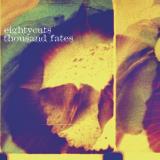
Perhaps because this debut album takes its title from the 80 duplications of the original cell, Eightycuts' first album seems constructed according to an organic logic: one idea contains another, a motif divides, bifurcates, transforms.
The tracks then function like organisms in motion, traversed by passages, secret chambers, and successive metamorphoses.
Nothing remains quite identical to itself. Through these krautrock repetitions, the psychedelic experiments of Siam and Greg, sometimes joined by Frédéric D. Oberland, the group constructs songs that unfold through proliferation. Nervous drums propel the tracks forward while the guitars open up more ambiguous spaces, both abrasive and melodic. Somewhere between the urgency of punk and the slowness of trance.
Remastered limited edition double vinyl with double-sided screenprinted poster-cover (sleeve folds out to be one huge poster). A real collectors item!
When Off Off came out around June 1984, one couldn’t speak of an independent music scene in Portugal. Warm Records’ vague existence didn’t have any impact and Dansa do Som’s inaugural release appeared only in December. 10 years after the revolution, after two IMF interventions, a lot of political instability (not to say turmoil, in the first couple of years) and the natural excesses of a sudden burst of freedom, the Portuguese consumer had more choices but a generally poor standard of living. There was no entrepreneurial culture and serious second thoughts about investing private money in risky ventures.
After many complaints about the whole music scene (institutions, critics and record label executives, popular and classical music alike), something that would continue well beyond the end of the decade, Telectu decided to finance, record, produce, release and sell an album with complete independence from outside structures. Their karmic reward was profit. According to Vítor Rua, Off Off was the only album fully payed by the duo and the only one that really payed off. Not an easy accomplishment for a double LP housed in a large (also double-sided) screenprint with complicated cuts and folds. The artwork was conceived by António Palolo, a friend and multidisciplinary artist. It was based on a collage of heavily saturated and xeroxed polaroids framed in shocking pink and green. Palolo was considered the third member of Telectu, regularly producing slides, video and other visual support for their shows. The inspiration for the type of cover came from GRM’s Gramme series.
Off Off is divided in four distinct sides, each one corresponding to a “theme” or “function” related to Telectu’s manifold artistic interests and interactions. The titles are also gateways to influences and a small portion of Portuguese cultural life:
- Side 1 / “Diagonale” is dedicated to Egídio Álvaro, art critic and gallery director (he opened Diagonale in Paris). Performance art was arguably his main artistic concern over the years, so the music on this side is suggested for use by one or more performers in live or playback situations. The three tracks segue into each other, linked by a synth arpeggio much in the same way as Telectu’s previous “Belzebu” álbum (1983);
- Side 2 / “Anarké” is dedicated to the composer Filipe Pires, one of Jorge Lima Barreto’s recurring invocations when asked about worthwhile contemporary music in Portugal. It is subtitled “concert music”, proposing «a new form of listening». Three tracks also, and these are separated by “clap interludes”, which basically consisted in the following: JLB and VR each had a pair of headphones on, and they clapped their hands according to the rhythm of the music each one was listening. Both musicians were interacting with a different Steve Reich piece: Vítor with “Music for Mallet Instruments”, Jorge with “Six Pianos”. The result is disjointed clapping, an awkwardly deliberate celebration of their own music. Telectu applauded themselves.
- Side 3 / “Cornucópia” is subtitled “music for theatre” and dedicated to Luís Miguel Cintra and Luís Lima Barreto (JLB’s brother), both connected to the Cornucópia theatre company. The side consists of several short pieces previously used as interludes in the Cornucópia staging of “Mariana Espera Casamento” (1983). Field recordings, mood pieces, ambience and a numeric poem (“Soneto Soma 14x”, by E.M. de Melo e Castro) read by João Perry, a quite well-known stage actor. His voice is treated with a flanger effect;
- Side 4 / “Palolo” is “video music”. It’s a one-take mix recorded from cassette sources (Telectu studio experiences) and done live while watching António Palolo’s Om film (1978) projected on the living room wall. It’s a deep, immersive, quasi-mystical 20-minute piece perfectly suiting the meditative, abstract, fluid images created by Palolo by mixing paint and water inside a bathtub. One imagines the Cosmos, hardly suspecting the technique. The film is 90 minutes long, so the music on the LP is of course edited.
The six titles on sides 1 and 2 evoke demons, all of them with conflicting symbolism, since it varies from culture to culture, religion to religion. No explanation is given and Vítor Rua has no idea where this imagery comes from. During virtually the whole stretch of the 1980s, Jorge was the one in charge of titles and concepts, and Vítor didn’t bother too much even reading the liner notes :) In any case, when you synchronize the listening experience with the imagery, a powerful impression emerges, a feeling of being in the presence of these entities while placing yourself inside the sonic narrative.
Off Off is undoubtedly a seminal album in the history of electronic music, as much Heldon as Fripp & Eno, jazz and American minimalism, cosmic out-thereness, mantric miniatures. Telectu at the height of their powers, still very early on, delivering an album-manifesto advocating intermedia art and the fierce independence of Portuguese musicians «from the scum of capitalist music industry monopolies. It’s a path to follow, albeit one that requires enduring hardships and retaliation from music industry gangsters.» Despite a few journalists deemed «capable of being free», the media are «enslaved by the dominant and fascist imbecility of the speculators of light music.» Off Off is addressed to those journalists «and to an audience angry at the cultural misery imposed upon us ..., certain that this music will open new horizons of musical pleasure in the conception of Portuguese avant-garde music, and in the open consciousness of us all. OFF OFF repeats Freedom.»
Those two words are a direct lift from Alberto Arbasino’s 1968 book Off Off, the basis of which is a critical analysis of Theodor Adorno’s and Dwight MacDonald’s ideas concerning the stratification of culture in different levels (high, mid and low) and the pervasiveness of mass culture in the form of a culture industry. In very simplistic terms, and that is precisely the point that inspired Jorge, Arbasino argued that it was possible and desirable to effect a revolution from below, cultivating alternative circuits completely cut-off from what he termed the in-in reality. Telectu’s record was a deliberate demonstration that it could be done, displaying Freedom in the face of all the gatekeepers and other human obstacles.
With Random Constraint Satisfaction Problems, the ever elusive and shape-shifting Thomas Bush offers up a new album of category scrambling song craft. Since earlier solo efforts like Old And Red (2018), Preludes (2022) and The Next 60 Years (2024), Bush—currently based in Malmö—has traced a digressive path that has proven him capable of everything from murky wobbling dirges to uptight head-bopping laments to crystalline synth chords that hang precariously in the air over your new favourite bass line. Like its title, the album's songs/tunes/opportunities for pleasure offer the listener further evidence of a sensibility that is equal parts ambiguity and clarity.
In addition to his solo work, Bush has worked with a range of collaborators in one-off configurations and longer term projects like RAP (with Guy Gormley) and cATHOLIC CHURGH (with Jon Auman). Critical responses to Bush's output have often focused on his predilection for certain folk-ish impulses and instrumentation, but, judging from releases like 2026's guld, his definition of "folk music" seems to have as much to do with A Guy Called Gerald as it does with Shirley Collins or John Martyn.
For all of its diversity, what unites Bush's ever-expanding body of work is its dual commitment to experimentation and a job well done.
“Random Constraint Satisfaction Problems was recorded at Vista Studio 1, Malmö between 2022 and 2025. After creating an account at academia.edu for the purpose of reading a text now forgotten, I began to get emails asking me questions such as ‘Thomas Bush, did you write “Brucellosis and Sacroiliitis: A Common Presentation of an Uncommon Pathogen”?’ or ‘Are you the Thomas Bush who wrote “ATR-dependent phosphorylation of FANCA on serine 1449 after DNA damage is important for FA pathway function”?’, which began to make me wonder if I was, or if not, perhaps I should.
The resulting work is an attempt to find meaning in this, and other chaotic and ambiguous situations through analysis using materials and equipment available to hand. Being sensitive to signs and following them with enthusiasm. Both the source material and evaluation is presented.”
012 proudly presents 01211, a release marking the first-ever collaboration between Claudio PRC and CONCEPTUAL. A long-anticipated meeting of two like-minded artists, Syklit unfolds as a shared exploration of depth, restraint, and sonic research, supported by a masterful revisit by Marcal.
Built around the concept of cycles as continuous motion and transformation, Syklit develops through three original cuts that function as interconnected chapters of a single narrative. Hypnotic structures, stripped-back grooves, and carefully sculpted sound design define the EP. It blends techno sensibilities with an introspective, atmospheric approach. On top of that, Marcal delivers a striking reimagining of Sykli I, merging raw tribal energy with cutting-edge, sci-fi-driven sound design to unleash a relentless groove made for peak-time, late-night sessions.
The result is a cohesive and powerful release, equally suited for immersive listening and deep, forward-thinking dancefloors, celebrating a meaningful first-time collaboration and uncompromising shared sonic visions.
out of Stock
Last delivered 42 days ago available to reorder, subject to availability
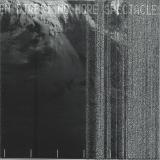
En Direct presents “No More Spectacles”, the fourth release from one of the finest electro EBM projects worldwide. With this new work, En Direct leans further into a sharper and more emotionally charged EBM sound while making clear they do not renounce their roots as the driving force behind the influential electro imprint Clear Memory. The record is infused with strong post- punk overtones, somewhere between the cold intensity of classic body music and the melancholic tension of post-punk reimagined through EBM structures. No More Spectacles delivers a sound that feels both immediate and deeply atmospheric. Drill-like kicks hammer through the mix while distorted basslines split the tracks wide open, locking into martial and commanding vocal lines that push the energy forward with relentless precision. Mechanical yet deeply human, the record balances darkness, groove, and emotional weight with remarkable control. Built for strobe-lit floors and restless bodies, “No More Spectacles” confirms En Direct as masters of a sound where post- punk sensibility and EBM functionality collide at full force. Presented in ONE-OFF truly limited edition of 300 copies lacquered pressed on 180 gr. high quality solid BLACK vinyl. All tracks have been specially remastered and mastered for vinyl by Daniel Hallhuber at Young and Cold Studios (Germany).
out of Stock
Last delivered 52 days ago available to reorder, subject to availability
The fourth chapter of The Third Room's curator-led series is shaped by Freddy K, one of techno's most enduring and uncompromising voices. Through decades behind the decks, an unwavering commitment to vinyl culture and his work with Key Vinyl, he has helped shape a generation of artists rooted in functionality, precision and a direct connection to the dancefloor. For his curation, the focus lies on alignment. The selection brings together artists who reflect that same discipline: a reduced but expressive approach, stripped to essentials yet rich in detail. With contributions from Toobris and Sons of Hidden, both previously featured on Key Vinyl, the release also reflects the long-standing artistic relationships behind his vision. Bat by Toobris opens the record with a powerful, straightforward statement. Driven by a steady pulse and minimal elements, the track feels alive through its control - direct, efficient and highly expressive without excess. Before Mirrors by Sons of Hidden continues this direction while expanding into a more spheric space. Tension is held consistently, with subtle accents carefully placed to shift the energy and draw the listener deeper into the track. On the B-side, Clouds Cream by Quelza stands out as a more intricate and exploratory piece. Deep and immersive, it unfolds through detailed sound design and evolving structures. Rather than relying on repetition alone, the track develops its own internal logic - balancing complexity with clarity, and allowing each element the space to contribute to a larger whole. Closing the record, Swing of Time by Jin Synth shifts into a rougher, more moody territory. Subtle pitch modulation and shifting textures create a sense of instability, giving the track a distinctive edge while maintaining its functionality. Across all four tracks, the release remains focused and cohesive - built on reduction, tension and control, but carried by small, defining moments that shape its movement. A1 Written and Produced by Lennard Miessner | A2 Written and Produced by Sons Of Hidden | B1 Written and Produced by Leo Na?t A?ssa | B2 Written and Produced by Jin Synth Mastered by Ahmet Sisman (The Third Room Studios) Artwork by Charlotte Ernst Design by Daniel Bornmann (STUEDIO.XYZ) Distribution by Clone Pressing by Matter Of Fact
New Furthur Electronic label offshoot Entropic Drift in collaboration with its designer Majkel Kokocinski lands with an inaugural release. Six very classy known and unknown, new and old cuts. From JS Zeiter to Rolando Simmonds and a previously CD-only Coco Steel & Lovebomb ambient cut!
out of Stock
Last delivered 57 days ago available to reorder, subject to availability
In December 2025, I performed alongside Asmus Tietchens and Jetzmann at the final Hörbar Ausklang Festival. This cassette was produced for that occasion. It contains preliminary studies for my live modular synthesiser performance.
The tape wasn't sold on the night, and its release ended up being postponed until now. At one point I had almost forgotten that I had even produced it. Now it's finally here—but what does that change?
Side A features a 24-minute piece titled Aber Was Ändert Das? (What Does That Change?)
Aber Was ändert Das? – Two oscillators coupled via a comparator and routed through a filter bank form the foundation of this piece. Eight filters within the bank are modulated by a synchronised octal triangle wave. Over time, the modulation gradually unfolds like an abanico (fan), shifting into different patterns. The impulses slowly dissolve into noise. A looping voice tape is added to the texture, and the piece concludes with a melody of comb-filtered sine tones.
Side B presents several variations and adjustments of a self-generative patch.
Quantitative Unbestimmbarkeit I-V (Quantitative Indeterminacy I–IV) – At the core of these pieces is a source of uncertainty and three function generators programmed in mutual feedback. The tonal material is derived from a wave-folded sine wave, a noise source, and a pinged state-variable filter. This type of self-generative patch is commonly known as a Krell patch.
The edition is limited to 50 copies. Release day will be the August 7th, 2026.
The title Miszellen Band is derived from the term Miszelle (plural: Miszellen), which refers to a short informative text or brief scholarly essay, often published in academic journals or collected volumes under a "Miscellanea" section. The word originates from the Latin miscella, meaning "mixed things". Such texts typically explore highly specific subjects without the scope or depth of a full-length study. They often consist of etymological notes, addenda to previously published work, concise discussions, or small discoveries from archives.
Chloe Lula Announces Syntax: A Singular Vision Connecting Ambient Meditations and Hypnotic Techno San Francisco-born, Berlin-based artist Chloe Lula announces the launch of Syntax, a record label that codifies her unique position within the electronic music landscape. Arriving as the definitive home for her work as a DJ, producer and cellist, Syntax follows her established residency at Tresor and acclaimed releases on foundational labels including Mord, Blueprint and the highly esteemed experimental imprint Subtext. Her label is the culmination of a decade spent as both a participant in and a defining voice in the scene—a space where Lula’s deep and cohesive vision of electronic music finally converge. The label’s name refers to the arrangement of elements to forge new meaning, a philosophy Lula applies to her singular musical grammar. Whether through her slow-burning, exacting techno or her instrumental compositions, Lula’s work is characterized by a patience that understands nuance and counterpoint. This vision is reflected in the label's structure: releases will arrive in thematic series that bypass traditional genre markers to focus on atmosphere, immersion and hypnotica. The imprint’s debut, SYN-PLS01, marks the beginning of the Pulse series, a collection specifically engineered for the floor. For this inaugural release, Lula took recordings from Swiss electroacoustic composer Alexandra Bellon as a jumping-off point, molding Bellon's architectural sense of space into six tracks of driving techno. Future series will expand the catalog into ambient and instrumental territories, reconciling formal acoustic tradition with the raw functionality of the electronic landscape. With a career spanning editorial leadership at Resident Advisor and her work shaping the dialogue of the culture through her writing and interviews, Lula brings a deep, analytical knowledge to her craft. Syntax is the connective tissue between her work in the booth and her critical contributions to the field—a project that formalizes her distinct perspective as both a curator and a creator. SYN-PLS01 arrives on May 8. Follow @syntax.records for updates.
out of Stock
Last delivered 59 days ago available to reorder, subject to availability
Discrepant presents the LP edition of Tales from the Source, the original film soundtrack by Bear Bones, Lay Low and Laszlo Umbreit.
Originally composed for Belgian-Congolese artist Léonard Pongo’s 2024 film of the same name, this release reworks the film's audio into a continuous, fluid listening experience.
The album is built on a direct contrast between heavy electronic manipulation and raw environmental audio. Laszlo Umbreit captured the foundation of the record through field recordings and additional electronics, focusing on the quiet, tactile sounds of water, riverbeds, and natural spaces. These recordings were then processed and expanded by Bear Bones, Lay Low, who layered the tracks using synthesizers, samplers and various effects processors.
Rather than acting as a standard background score, the music functions as a detailed piece of environmental sound art. The tracks are edited to blend into one another without distinct gaps, mirroring the slow pace and visual flow of the film. Through the use of tape loops, filtering, and electronic processing, the natural landscapes are systematically distorted and rearranged. The result is a dark, slow-moving suite of electroacoustic music that strips away traditional melody to focus entirely on texture,
Puerta Negra presents “Metafísica”, the third chapter in the project’s subversive and revolutionary sonic vision. Moving again through the outer edges of EBM, industrial funk, and mutant electronics, the new EP channels the raw physicality of contemporary American body music, aligned with acts such as High-Functioning Flesh or Spike Hellis, alongside the fractured futurism of late-’80s Cabaret Voltaire and its mutant new beat mutations. The result is tense, hypnotic, and deeply confrontational. At the center of the record are the stripped-down, unfiltered vocals of María Aguirre, moving through broken, hallucinogenic rhythms that continuously destabilize and reconstruct the groove. Mechanical yet visceral, cold yet intensely human, the tracks unfold like transmissions from a collapsing future. With “Metafísica”, Puerta Negra continues to push its singular language forward: radical avant-garde body music for the most restless corners of the underground — perfectly suited to ignite a revolution. Presented in ONE-OFF truly limited edition of 300 copies lacquered pressed on 180 gr. high quality solid BLACK vinyl. All tracks have been specially remastered and mastered for vinyl by Daniel Hallhuber at Young and Cold Studios (Germany).
out of Stock
Last delivered 70 days ago available to reorder, subject to availability
Words by Costanza Acernese
MOVING PRESSURE 04 / Obscur
With its fourth release, Moving Pressure welcomes its first external artist: young Slovenian producer Obscur. With a signature sound that is driving and subtly psychedelic, his debut on the label doesn't stray from the core tenets of its sonic ethos. Obscur delivers minimalism with purpose-dynamic, intentional, and wholly physical.
'F135' opens the A-side with a sinister tilt-rubbery squeaks stretch and coil around a flickering, synthetic voice. It's tactile and strange, without losing movement. 'Soul Eater' follows with a slow-burn crescendo, nestling psychedelic inflections into a warm low-end. On the flip, 'Stockholm Syndrome' pares things back. Dry, stripped rhythms carry an atmospheric tension-it's austere yet playful, leaving space for darker hues to linger without fully settling. A precise, heads-down statement. 'Blasphemy' follows with a tighter percussive grip and Feral-esque, panning modulations. Highs slice through a foundation of finely textured grooves-functional at its core, but laced with enough detail to give the track a sharper, more intricate edge. The digital bonus, 'Diamond City', stretches the sonic palette even further. Not through layers, but through tone: steel blues and deep violets bounce off metallic bleeps with cinematic restraint, closing the EP on a reflective note.
out of Stock
Last delivered 4 days ago available to reorder, subject to availability
In spring 2025, Abul Mogard and Rafael Anton Irisarri created the source material for their second album, Where Light Pauses in the Silence of the Sun, during a three-day residency at Morphine Raum in Berlin. Functioning as both recording studio and performance venue, the space has no stage, with the audience gathered around the performers. Working within an open framework, the duo reshaped the music each evening while recording the performances live to multitrack. Rotary speakers, modular synthesizers and bowed guitar formed the core of their sonic language, captured through a 1970s mixing console and microphones placed around the room.
Back in Mogard’s studio in Rome, the material was further crafted as motifs were stretched, fragments isolated, and tempos dissolved. Irisarri recorded additional guitar textures and treatments in New York, while passages recorded by Martina Bertoni and Andrea Burelli in Berlin reinforced the harmonic centres and brought breath, refinement and a new sensibility to their compositions. The process continued as Mogard’s layering and subtraction reassembled everyone’s parts into the final arrangement.
The album opens with “In the Eastern Wild,” building from a sparse outline into a monumental formation of low-frequency weight, its internal motion shaped by the rotating Leslie speaker. “Over the Domes” widens into a broader acoustic field, where sustained modular tones meet waves of softly plucked guitar. The music then turns inward with “A Blue Descent,” centred on Bertoni’s cello, whose growling timbre introduces a melancholic depth.
At the album’s centre, “In a Quiet Radiance” unfolds around a slow guitar ostinato, its luminous stillness opening into a more expansive and reflective state. Across its ten-minute span, Burelli’s violin lines and Bertoni’s lower cello phrases gradually surface, weaving through the harmonic field. Mogard brings Burelli’s processed voice to the fore, its emotive, operatic presence becoming one of the record’s pivotal moments. “Of Blessed Ages” suspends the sonic flow, shifting between parallel major and minor chords as lingering, slowly decaying melodies shape the music’s internal drift. The closing “Among Shadows” settles into a darker resonance as layered textures recede.
Mogard and Irisarri’s shared language balances restraint and maximalism. UK magazine Crack describes the music as “a tidal wave held in suspension,” while Dutch newspaper de Volkskrant writes, “What a colossal sound, and how this music strikes at the emotions.” Reflecting on the residency sessions, Irisarri recalls: “At moments I genuinely couldn’t tell if a sound was coming from me or from Abul. It stopped feeling like two people making decisions and began to feel like we were inside a system moving on its own."
Marja de Sanctis’ cover artwork revisits the vessel sculpture from the duo’s first album, Impossibly Distant, Impossibly Close. There it appeared as raw, unfired clay. Here it has been fired in the kiln and finished with a glaze. Light gathers on its polished surface and spills into the surrounding space. As she explains, “I wanted to convey the idea of continuity within the duo, and the vessel became a kind of container for that idea. However, their music felt different this time, and with the collaboration of Martina and Andrea, I felt it should have a sleeker, softer, more glamorous look, very distant from the first raw appearance.” The transformation of the vessel from raw clay to fired form suggests a passage from immediacy toward permanence, mirroring the music’s gradual expansion.
out of Stock
Last delivered 3 months ago available to reorder, subject to availability
In spring 2025, Abul Mogard and Rafael Anton Irisarri created the source material for their second album, Where Light Pauses in the Silence of the Sun, during a three-day residency at Morphine Raum in Berlin. Functioning as both recording studio and performance venue, the space has no stage, with the audience gathered around the performers. Working within an open framework, the duo reshaped the music each evening while recording the performances live to multitrack. Rotary speakers, modular synthesizers and bowed guitar formed the core of their sonic language, captured through a 1970s mixing console and microphones placed around the room.
Back in Mogard’s studio in Rome, the material was further crafted as motifs were stretched, fragments isolated, and tempos dissolved. Irisarri recorded additional guitar textures and treatments in New York, while passages recorded by Martina Bertoni and Andrea Burelli in Berlin reinforced the harmonic centres and brought breath, refinement and a new sensibility to their compositions. The process continued as Mogard’s layering and subtraction reassembled everyone’s parts into the final arrangement.
The album opens with “In the Eastern Wild,” building from a sparse outline into a monumental formation of low-frequency weight, its internal motion shaped by the rotating Leslie speaker. “Over the Domes” widens into a broader acoustic field, where sustained modular tones meet waves of softly plucked guitar. The music then turns inward with “A Blue Descent,” centred on Bertoni’s cello, whose growling timbre introduces a melancholic depth.
At the album’s centre, “In a Quiet Radiance” unfolds around a slow guitar ostinato, its luminous stillness opening into a more expansive and reflective state. Across its ten-minute span, Burelli’s violin lines and Bertoni’s lower cello phrases gradually surface, weaving through the harmonic field. Mogard brings Burelli’s processed voice to the fore, its emotive, operatic presence becoming one of the record’s pivotal moments. “Of Blessed Ages” suspends the sonic flow, shifting between parallel major and minor chords as lingering, slowly decaying melodies shape the music’s internal drift. The closing “Among Shadows” settles into a darker resonance as layered textures recede.
Mogard and Irisarri’s shared language balances restraint and maximalism. UK magazine Crack describes the music as “a tidal wave held in suspension,” while Dutch newspaper de Volkskrant writes, “What a colossal sound, and how this music strikes at the emotions.” Reflecting on the residency sessions, Irisarri recalls: “At moments I genuinely couldn’t tell if a sound was coming from me or from Abul. It stopped feeling like two people making decisions and began to feel like we were inside a system moving on its own."
Marja de Sanctis’ cover artwork revisits the vessel sculpture from the duo’s first album, Impossibly Distant, Impossibly Close. There it appeared as raw, unfired clay. Here it has been fired in the kiln and finished with a glaze. Light gathers on its polished surface and spills into the surrounding space. As she explains, “I wanted to convey the idea of continuity within the duo, and the vessel became a kind of container for that idea. However, their music felt different this time, and with the collaboration of Martina and Andrea, I felt it should have a sleeker, softer, more glamorous look, very distant from the first raw appearance.” The transformation of the vessel from raw clay to fired form suggests a passage from immediacy toward permanence, mirroring the music’s gradual expansion.
out of Stock
Last delivered 3 months ago available to reorder, subject to availability
In spring 2025, Abul Mogard and Rafael Anton Irisarri created the source material for their second album, Where Light Pauses in the Silence of the Sun, during a three-day residency at Morphine Raum in Berlin. Functioning as both recording studio and performance venue, the space has no stage, with the audience gathered around the performers. Working within an open framework, the duo reshaped the music each evening while recording the performances live to multitrack. Rotary speakers, modular synthesizers and bowed guitar formed the core of their sonic language, captured through a 1970s mixing console and microphones placed around the room.
Back in Mogard’s studio in Rome, the material was further crafted as motifs were stretched, fragments isolated, and tempos dissolved. Irisarri recorded additional guitar textures and treatments in New York, while passages recorded by Martina Bertoni and Andrea Burelli in Berlin reinforced the harmonic centres and brought breath, refinement and a new sensibility to their compositions. The process continued as Mogard’s layering and subtraction reassembled everyone’s parts into the final arrangement.
The album opens with “In the Eastern Wild,” building from a sparse outline into a monumental formation of low-frequency weight, its internal motion shaped by the rotating Leslie speaker. “Over the Domes” widens into a broader acoustic field, where sustained modular tones meet waves of softly plucked guitar. The music then turns inward with “A Blue Descent,” centred on Bertoni’s cello, whose growling timbre introduces a melancholic depth.
At the album’s centre, “In a Quiet Radiance” unfolds around a slow guitar ostinato, its luminous stillness opening into a more expansive and reflective state. Across its ten-minute span, Burelli’s violin lines and Bertoni’s lower cello phrases gradually surface, weaving through the harmonic field. Mogard brings Burelli’s processed voice to the fore, its emotive, operatic presence becoming one of the record’s pivotal moments. “Of Blessed Ages” suspends the sonic flow, shifting between parallel major and minor chords as lingering, slowly decaying melodies shape the music’s internal drift. The closing “Among Shadows” settles into a darker resonance as layered textures recede.
Mogard and Irisarri’s shared language balances restraint and maximalism. UK magazine Crack describes the music as “a tidal wave held in suspension,” while Dutch newspaper de Volkskrant writes, “What a colossal sound, and how this music strikes at the emotions.” Reflecting on the residency sessions, Irisarri recalls: “At moments I genuinely couldn’t tell if a sound was coming from me or from Abul. It stopped feeling like two people making decisions and began to feel like we were inside a system moving on its own."
Marja de Sanctis’ cover artwork revisits the vessel sculpture from the duo’s first album, Impossibly Distant, Impossibly Close. There it appeared as raw, unfired clay. Here it has been fired in the kiln and finished with a glaze. Light gathers on its polished surface and spills into the surrounding space. As she explains, “I wanted to convey the idea of continuity within the duo, and the vessel became a kind of container for that idea. However, their music felt different this time, and with the collaboration of Martina and Andrea, I felt it should have a sleeker, softer, more glamorous look, very distant from the first raw appearance.” The transformation of the vessel from raw clay to fired form suggests a passage from immediacy toward permanence, mirroring the music’s gradual expansion.
out of Stock
Last delivered 3 months ago available to reorder, subject to availability
LOWERCASE sits in the darker progressive lane — trance-informed, disciplined and hard-edged. Militant pacing with low-end intent, built on pressure and control: long blends, transitions, and that slow-burn momentum that holds the floor without raising its voice.
Progressive motion with a trance backbone — patient, driving, and engineered for fully dialled-in rooms. Three tracks. No excess. Straight function: cycle.
A1 return – A ripping progressive scorcher, primed for larger-floor impact and long-form hypnosis.
B1 cause – An emotional progger: two-tone movement harmonised into break that blooms just to drop back to stride.
B2 way – Rooted in dub culture, a deep trance exploration — spacious, weighty, and quietly consuming.
All tracks written and produced by Boris Salimkhan
out of Stock
Last delivered 14 days ago available to reorder, subject to availability
Ltd. Edition "Rabbit Hole" Vinyl. "A Tale" is the fifth album from the Finnish collective Onségen Ensemble. Based in the north and shaped by its environment, Onségen Ensemble has built a distinctive identity through constant transformation. Rather than a fixed lineup, the band functions as a living ensemble: a stable core surrounded by ever-changing contributors. Each album introduces new voices, instruments and perspectives, allowing the music to evolve freely and remain open to the unexpected. With "A Tale", the band's expression becomes more ethereal and profound than before. While Onségen Ensemble operates within a progressive mindset; they deliberately avoid traditional genre boundaries, creating music that moves forward by absorbing influences intuitively, free from stylistic dogma. As with their previous records, they've always introduced new elements along the way - instruments as well as musicians - and this album is no exception. "The central theme of the album is peace. In many ways, it feels like the only value that still truly holds meaning in today's world. Peace is diverse, what we dare not be."
With the Ease EP, Austrian producer and DJ DOS presents a concise continuation of the sound he has developed since the mid-2010s. Often linked to the early lo-fi house movement, his productions combine rough-edged drum textures, reduced melodic elements and a clear rhythmic focus, balancing club functionality with a more introspective tone.
out of Stock
Last delivered 3 months ago available to reorder, subject to availability
Originally self-released in 2023, Stella Kola, the debut album from Beverly Ketch (Jow Jow, Weeping Bong Band) and Robert Thomas (Sunburned Hand of the Man, Dalthom), now returns in a renewed edition—bringing wider attention to a record that already felt like a quietly essential artifact from the moment it first appeared.
Given the pair’s respective roots—and the presence of collaborators drawn from across the Northeast experimental underground—one might expect “a brutal blast of acid swirl.” Instead, what emerges is something far more unexpected. The album is “steeped, not in noise and dissonance, but in the fragrant, captivating folk of Linda Perhacs, Judee Sill, Karen Dalton, and Bridget St John.”
From the opening moments, especially on “Rosa,” the record reveals its core sensibility: “a ballad that digs deep into the psychedelic-folk tradition until it takes root in a freshly sporous permaculture.” What follows is a set of songs that feel both carefully assembled and organically grown—delicate structures held together by a wide circle of contributing musicians, including Wednesday Knudsen (flute), P.G. Six (harp, guitars, keys), Gary War (synth), Jen Gellineau (viola, violin), Willie Lane, L. Gray, and others.
Rather than functioning as studio additions, these collaborators form a genuine collective presence. “The family affair feeds into the album’s charms,” and the feeling is unmistakably communal. Like many of the ‘60s folk records it echoes, Stella Kola carries “the feeling of community and camaraderie” at its core, shaping a warmth that runs through the entire release.
The album’s emotional palette leans toward a quiet, persistent melancholy: “the best records from that era also carried with them an inherent sadness and Stella Kola’s songs wash over the listener with a beautiful woe.” Its sound edges into the terrain of Fairport Convention and Pentangle, with references to “Beggar’s, Kings, Dark Damsels, and Tarot,” yet never settles into revivalism. Instead, Ketch and Thomas extend the tradition outward, refracting it through their own distinctly American, underground language.
As one early description of the album notes, “the masterful restraint of ‘Rosa’ and the rest of Stella Kola’s shimmering debut evokes Anne Briggs, C.O.B., Pentangle and similar ancestors that knew the best way to honor traditions was to widen the heritage even further.”
Even among a prolific and unpredictable network of underground musicians, Stella Kola stands apart. “It’s early in the year, but it’s hard to see an album, especially a debut, capturing the heart as hard as this one.” With its return in reissue form, the album reasserts itself not just as a hidden gem, but as an essential document of contemporary folk experimentation—an intimate, collective work that continues to unfold with time.
Frenzy steps back into the warehouse fog for FRNZYREC012, marking the arrival of Mees Javois with the Eyes Without A Face EP. This six-track collection functions as a raw blueprint of the early hours, where the steady pulse of hardware meets a stripped-back, mechanical soul.
Already turning heads in the underground circuit, Mees brings a fresh yet timeless approach that feels equally suited to intimate basements and peak-time dance floors. His debut on Frenzy introduces an artist with a clear vision and a deep understanding of club music's darker edges.
FRNZYREC012 is a singular vision of the dancefloor, a deliberate sequence of sound that balances cold precision with a visceral human touch.
c A3: Mees Javois - Reflection Matrixxman Remix
out of Stock
Last delivered 2 days ago available to reorder, subject to availability
Balancing dub techno depth, Detroit spirit and peak-time functionality with class and precision. Parallel 41 Records returns with P41005, a powerful statement built for the darker edges of the dancefloor. On Sakura EP, Manuel Di Martino lays the foundation with two hypnotic originals and remixes that move between stripped-back pressure, dub-soaked depth and raw Detroit-inspired drive.
out of Stock
Last delivered 25 days ago available to reorder, subject to availability
Stanz Amor delivers a five-track EP that blends crunchy sound design, tribal influences and driving grooves into a cohesive statement of energy, movement and atmosphere. Hailing from Blackpool UK, Stanz Amor emerged in 2023 with a distinctly old-school approach, channeling groove, rhythm and intensity into a modern context, which he showcases on his Backspin Records debut EP 'Mercurial'. ??Opening with 'Kong', the EP sets the tone with an old school spirit reimagined through a contemporary lens. Loopy structures, banging percussion and textured, gritty elements create a hypnotic flow designed for peak-time moments. 'Mercurial' raises the intensity, propelled by fast-paced hi-hats and shimmering rides that injectconstant motion, while a rolling low end gives the track serious weight. A striking Latin vocal lingers throughout, leaving a lasting impression long after the track fades. On the B-side 'Count' shifts the energy into a groove led by rolling bongos, underpinned by a heavy sub and catchy, repeating vocals that lock into a tight, circular rhythm. 'Yawhoo' follows with a punchy kick, rumbling foundation and driving percussion, elevated by a cheeky vocal and a whistle straight out of the 90s rave era, adding a playful, nostalgic edge. The closing track is a remix of 'Count' by Steve Redhead, who reinterprets the original with forceful yet hypnotic percussion and finely detailed vocal work. A Belgian techno mainstay since the early 2000s, Redhead is known for his uncompromising, groove-driven sound and lasting influence within the underground. ??With this release, Stanz Amor delivers a focused and effective collection built on groove, repetition and dancefloor functionality. Released on Regal's Backspin Records, a label rooted in the underground and dedicated to honoring techno's origins while pushing its future, the project balances nostalgia with modern clarity, designed to resonate in clubs and leave a lasting impact.
For Record Store Day 2026, Brownswood Recordings mark two decades of boundary-pushing independent music with Twenty Years Deep, a limited-edition 3xLP vinyl compilation celebrating the label’s rich, global catalogue and enduring influence.
Founded in 2006 by broadcaster, DJ, and cultural tastemaker Gilles Peterson, Brownswood has spent the last 20 years championing forward-thinking artists who sit just left of centre: rooted in Afro-diasporic music, but never confined by genre. Twenty Years Deep is a snapshot of that journey: a carefully curated collection spanning the label’s early breakthroughs, cult classics, and defining moments.
Pressed exclusively for Record Store Day on 3 piece coloured vinyl Twenty Years Deep brings together tracks that reflect Brownswood’s long-standing commitment to artistic freedom, musical lineage, and future-facing sounds. From deep jazz explorations and dancefloor mutations to global collaborations and genre-defying hybrids, the compilation captures the connective thread that has defined the label since day one: trust in artists and belief in music that lasts.
Rather than a greatest-hits exercise, Twenty Years Deep functions as an archive and a statement documenting how Brownswood has maintained its own point of view. By following a highly instinctive approach to A&R the label has shaped music culture, introduced new voices, and built a catalogue that continues to resonate well beyond release cycles.
Twenty Years Deep will be available exclusively at participating independent record stores on Record Store Day 2026, pressed as a limited-edition 3 piece vinyl release.
out of Stock
Last delivered 67 days ago available to reorder, subject to availability
Rinascimento Elettronico presents its first vinyl release: R/E001 — Divide By Zero EP by Translate, featuring a remix by Psyk. Out May 28th.
Argentinian artist Translate, a well-established name within the hypnotic techno scene, delivers a refined and immersive EP built on deep, looping structures, textured atmospheres and subtle rhythmic progression. His sound navigates between tension and introspection, maintaining a strong focus on hypnotic continuity and dancefloor functionality.
On remix duties, Spanish master Psyk reinterprets Inactive with his distinctive signature — stripped-back, precise and driving — adding a powerful and functional edge to the release.
With Divide By Zero EP, Rinascimento Elettronico sets the tone for its vinyl series, focusing on forward-thinking techno rooted in depth, repetition and sonic identity.
out of Stock
Last delivered 66 days ago available to reorder, subject to availability
Brussels-based Maloca presents Paradise Mountain, the new EP from Katatonic Silentio, DJ and production moniker of Italian sound artist Mariachiara Troianiello. Positioned in counterpoint to her darker,
more visceral work, the record delicately folds Detroit electro and techno drum structures into a softened New Age glow, generating environments that breathe, shimmer, and slowly coalesce.
Across the EP, tracks unfold gently, rife with wet modular tones, chromatic arpeggiations, and light-touch percussion which drifts in and out of focus, blurring the line between dancefloor function and inward-facing sound art. Paradise Mountain ultimately traces a slow ascent through luminous, carefully crafted terrain - quietly joyful and deeply hypnotic in its approach.
out of Stock
Last delivered 4 months ago available to reorder, subject to availability
A defining transmission in the history of Skylax Records. Originally released across different moments of the Skylax catalogue, these recordings are now assembled as the final chapter of the Skylax House Explosion series — a project exploring the architecture, memory and survival mechanisms embedded within house music culture. The record opens with Move D’s “Outer Rim 64”, originally released in 2018 as part of the Skylax House Explosion narrative. Suspended between motion and distance, the track establishes the conceptual perimeter of this final chapter — a space where rhythm no longer functions only as propulsion, but as orientation. Here the listener stands at the outer edge of the dancefloor’s architecture, where structure persists even as its original social conditions begin to disappear. The sequence continues with Hardrock Striker’s “Motorik Life (DJ Sprinkles Dub)”, originally released in 2011. Rather than operating as a conventional remix, the Dub reinforces the motorik continuum of the original composition, transforming repetition into endurance. DJ Sprinkles preserves the infrastructural skeleton of the dancefloor — its capacity to sustain bodies through duration alone, without narrative resolution or emotional release. The record culminates with “Motorik Life (DJ Sprinkles Mountain Of Despair Remix)”, one of the most politically explicit works ever associated with Skylax Records. Through the relentless repetition of the phrase “mountain of despair,” Terre Thaemlitz dismantles the traditional function of dance music, transforming remix culture into structural critique. Referencing Martin Luther King Jr.’s famous metaphor, the remix removes the promise of redemption and leaves only the architecture of struggle. The dancefloor is no longer presented as escape, but as a temporary condition of survival. Together these recordings reveal house music’s true function: not to resolve despair, but to create temporary conditions in which bodies can continue to exist despite it.
AFTER THE DANCEFLOOR
you cannot preserve a dancefloor
by archiving its sound
because the dancefloor was never sound
it was bodies
finding temporary protection
inside systems designed to erase them
house music was never a genre
it was a survival strategy
when the lights disappeared
the structures remained
and so did we
out of Stock
Last delivered 3 days ago available to reorder, subject to availability
Long overlooked outside specialist circles, Drammi e Speranze is presented for the first time ever on vinyl reissue, newly remastered to highlight the depth and tonal richness of Umiliani’s arrangements.
Originally released in 1976 on Piero Umiliani’s own Sound Work Shop imprint, Drammi e Speranze—issued under the pseudonym Rovi—stands as a refined example of his late-period library work.
Performed by a compact string ensemble and subtly augmented by piano, Hammond organ, Eminent organ, and Rhodes, the album unfolds through a series of classically-informed compositions where melody takes center stage. Each piece is concise, evocative, and purpose-built—reflecting the functional yet highly expressive nature of Italian library music at its peak.
Conceptually, the record is structured in two contrasting halves: the first side explores themes of optimism and resolution, while the second delves into darker, more introspective territories, mirroring the emotional duality suggested by its title (Tragedies and Hopes).
This release celebrates 100 years since the birth of Piero Umiliani, honoring the enduring legacy of a composer whose work continues to resonate across cinematic, library, and contemporary sample-driven music.
Josh Mason’s new collection, "Wave Salt +7," emerges from an oblique origin. Unearthed from a dormant hard drive, it documents a set of work sessions only partially recoverable, their original continuity and intent fractured by time and technical failure. What remains is a constellation of mercurial gestures that proves, against all odds, to be entirely consonant with Mason’s ongoing musical concerns.
In a sense, the very condition of partiality proves generative, with elision operating on multiple levels - structural, sonic, and archival - shaping both the music itself and the circumstances of its (re)appearance. Phrases surface only to be truncated or displaced, hovering at the edge of resolution, and transitions are implied rather than fully enacted. Absence functions not as a deficit, but as an important compositional resource.
Central to the album’s sound is a distinctive use of vocoding. Deployed not to simulate vocal presence but as a tool for tonal sculpting, it yields a shifting lattice of smeared harmonics, angular melody, and attenuated noise. Sounds are pressed through one another, their edges softened, shifted, or selectively erased, producing surfaces simultaneously articulated and porous. Rather than reconstructing a lost whole, the album posits a mode of listening attuned to gaps, interruptions, and unstable forms. Even so, in keeping with Mason’s broader practice, this music remains grounded in melodic logic and a distinctly human scale, ensuring that its fragmentary structures register not solely as experiments, but as expressions of proximity and feeling.
TGP & LDG on their third collaborative release, a four-track statement that moves between raw live energy and deep, hypnotic exploration. The A side captures the essence of the dancefloor with two cuts from Tobias. & Kuniyuki’s live set at EDEN, Japan. Spontaneous, textured, and driven by the moment. A direct transmission from the booth.
B side shifts perspective: Yuta / O-MA strip things down to the core with a minimal techno approach, precise, reduced, and functional. Ness closes the record with a downtempo, hypnotic journey, immersive, subtle, and introspective.A release built on contrast and cohesion, bridging live improvisation and studio precision. Third chapter. Same vision. Expanded language.
out of Stock
Last delivered 4 months ago available to reorder, subject to availability
Studiomaster Digipack Vol. 2 sees Marco Passarani back with another serving of unique club sounds straight from Rome. Following the vibe of the first volume,
this new edition delivers his unmistakable blend of house pressure and pure techno, featuring two brand new gems: “Hypercuatro” and “Locked In A Trance.” Both are wired for late hours and low ceilings, where acid grooves meet hypnotic drum programming and forward leaning intent.
Completing the set are three remastered tracks from his Bandcamp vault, making their first appearance on vinyl: Analog Fingerprints (“Unusual Behaviour”, “Motion 5”) and PSS2099 (“Kir’Shara”). Together, these digitalonly transmissions sketch a lean map of Passarani’s studio practice: tactile, direct, and crafted with that in the moment feel.
No nostalgia trip here, just functional futurism with character. Whether you know these tunes from online drops or the first 12”, Vol. 2 delivers real deal dancefloor tools ready for heavy rotation. No fillers, just groove for dancers who still believe the floor is a testing ground for what comes next.
out of Stock
Last delivered 46 days ago available to reorder, subject to availability
Aspen is very proud to introduce ‘Non Sonett’ by the Christian Wallumrød Ensemble. This ensemble is a pioneering Norwegian chamber group whose work on ECM and Hubro has redefined the boundaries between jazz, contemporary composition and folk music.Across seven albums, the ensemble has developed a highly distinctive l anguage built on restraint, timbral nuance and collective interplay, placing it among the most influential European ensembles of the 21st century.
Bringing together some of the finest musicians in Norway, the ensemble draws on a rare collective sensitivity, where each player contributes to a deeply integrated and texturally rich sound world.
With Non Sonett, the Christian Wallumrød Ensemble opens a new chapter that grows directly out of recent years of work in more solitary and cross-disciplinary contexts. In this period, Wallumrød has developed material for solo performance as well as for dance, allowing ideas to take shape in more fluid and exploratory formats. Some of this material now finds its way into the ensemble, where it is met by the possibilities offered by instrumentation, collective playing, and the distinct voices of the musicians. At the same time, older pieces—originating in entirely different settings— re-emerge here in new forms, reshaped by the ensemble context.
A defining aspect of Non Sonett is the way many of the pieces function less as fully determined compositions and more as open frameworks: starting points, suggestions, or “springboards” for music. These structures invite response rather than prescribe outcome, relying on the ensemble’s inherent sensitivity and capacity to realize and transform the material in performance. The result is music that feels both precise and fluid, shaped in equal measure by composition and by the interpretative presence of the players.
Central to this album is a continued deepening of Wallumrød’s long-standing interest in ambiguity and in dissolving boundaries between different musical elements and expressive worlds. By placing contrasting materials and associations side by side—sometimes subtly, sometimes more overtly—the music opens up spaces where meanings remain fluid and interconnected. On Non Sonett, this approach is taken a step further, allowing these juxtapositions to play an even more active role in shaping the music’s character and flow.
This approach connects closely with the ensemble’s broader artistic trajectory. Over time, the Christian Wallumrød Ensemble has developed a language that is immediately recognizable—marked by reduction, clarity and a deep attention to sonic detail. While each release has its own character, the underlying aesthetic remains consistent: a focus on the inner life of sound itself. Rather than foregrounding gesture or virtuosity, the music draws the listener toward the smallest elements, where meaning emerges gradually through texture, spacing and timbre.
The listening experience becomes one of concentration and proximity, where each sound carries weight, and the accumulation of detail forms a larger whole. References may be sensed—to early polyphonic music, Norwegian folk traditions, or more recent experimental practices—but these are absorbed into a singular musical language that resists categorization.
As with the ensemble’s recent work, Non Sonett also continues the integration of electronics as a fundamental part of the sound world. Each musician engages with electronic elements alongside their acoustic instruments, creating a layered and dynamic sonic environment. At times, this leads into extended, exploratory passages reminiscent of analogue musique concrète; at others, electronics operate almost imperceptibly, subtly altering and extending the acoustic textures in real time.
Shrouded in mystery when it first appeared, Tiger & Woods’ debut album quickly took on a life of its own. With little more than whispers surrounding the project, the music spoke loud enough: a set of extended disco constructions carefully tuned, remixed, over-dubbed, sliced and diced by the elusive duo of Larry Tiger and David Woods. What began as a cult phenomenon soon caused a stir across dance floors and record bags worldwide.
Now, for the first time ever, that legendary debut finally arrives on vinyl. Through the Green captures Tiger & Woods at the moment their distinctive language of groove first took shape. Rooted in the spirit of disco edits but already stretching beyond the format, the album blends loop-driven funk, house-leaning propulsion and the unmistakable bounce that would soon become their signature.
It’s the sound of two producers refining a craft that would later blossom on albums like On The Green Again, where their approach expanded into a wider palette of boogie, electronica, Italo and uptempo house. But here is where the story begins.
Before world tours, live sets and the creation of their own T&W Records imprint, there were these tracks: hypnotic, playful and engineered with a dancer’s instinct for tension and release. Each cut unfolds like a perfectly extended club moment, full of warmth, swing and that unmistakable Tiger & Woods sense of fun and function.
Years after its original digital release, Through the Green remains a cornerstone of modern disco-house culture. Pressed to wax at last, it finally receives the physical format it always deserved: grooves built for the turntable, the dance floor and the crate.
The mystery might be gone. The magic, however, remains very much intact.
out of Stock
Last delivered 4 months ago available to reorder, subject to availability
Aspen is very proud to introduce ‘Non Sonett’ by the Christian Wallumrød Ensemble. This ensemble is a pioneering Norwegian chamber group whose work on ECM and Hubro has redefined the boundaries between jazz, contemporary composition and folk music.Across seven albums, the ensemble has developed a highly distinctive l anguage built on restraint, timbral nuance and collective interplay, placing it among the most influential European ensembles of the 21st century.
Bringing together some of the finest musicians in Norway, the ensemble draws on a rare collective sensitivity, where each player contributes to a deeply integrated and texturally rich sound world.
With Non Sonett, the Christian Wallumrød Ensemble opens a new chapter that grows directly out of recent years of work in more solitary and cross-disciplinary contexts. In this period, Wallumrød has developed material for solo performance as well as for dance, allowing ideas to take shape in more fluid and exploratory formats. Some of this material now finds its way into the ensemble, where it is met by the possibilities offered by instrumentation, collective playing, and the distinct voices of the musicians. At the same time, older pieces—originating in entirely different settings— re-emerge here in new forms, reshaped by the ensemble context.
A defining aspect of Non Sonett is the way many of the pieces function less as fully determined compositions and more as open frameworks: starting points, suggestions, or “springboards” for music. These structures invite response rather than prescribe outcome, relying on the ensemble’s inherent sensitivity and capacity to realize and transform the material in performance. The result is music that feels both precise and fluid, shaped in equal measure by composition and by the interpretative presence of the players.
Central to this album is a continued deepening of Wallumrød’s long-standing interest in ambiguity and in dissolving boundaries between different musical elements and expressive worlds. By placing contrasting materials and associations side by side—sometimes subtly, sometimes more overtly—the music opens up spaces where meanings remain fluid and interconnected. On Non Sonett, this approach is taken a step further, allowing these juxtapositions to play an even more active role in shaping the music’s character and flow.
This approach connects closely with the ensemble’s broader artistic trajectory. Over time, the Christian Wallumrød Ensemble has developed a language that is immediately recognizable—marked by reduction, clarity and a deep attention to sonic detail. While each release has its own character, the underlying aesthetic remains consistent: a focus on the inner life of sound itself. Rather than foregrounding gesture or virtuosity, the music draws the listener toward the smallest elements, where meaning emerges gradually through texture, spacing and timbre.
The listening experience becomes one of concentration and proximity, where each sound carries weight, and the accumulation of detail forms a larger whole. References may be sensed—to early polyphonic music, Norwegian folk traditions, or more recent experimental practices—but these are absorbed into a singular musical language that resists categorization.
As with the ensemble’s recent work, Non Sonett also continues the integration of electronics as a fundamental part of the sound world. Each musician engages with electronic elements alongside their acoustic instruments, creating a layered and dynamic sonic environment. At times, this leads into extended, exploratory passages reminiscent of analogue musique concrète; at others, electronics operate almost imperceptibly, subtly altering and extending the acoustic textures in real time.
Caterina Barbieri & Bendik Giske's At Source resounds music as wellspring, that which is essential and unknowable, and yet utterly primary. It finds two acclaimed composer-musicians building a world together in self-contained collaboration between analogue synthesis and an extended approach to the saxophone that conjures its own universe of sound. It is at once intimate and cosmic, drawing on the challenges and possibilities of their artistic exchange, tearing down technique to access all the expansive possibilities of their sonic meeting point.
At Source is a document of the world of sound to be conjured when two artists strive for something together, discovering the expansions and limitations of performance by bodies and machines. It is not an exercise in assimilation, but in productive exchange and creative confrontation. It does not draw on outside energies or influences, but grapples with what there is to find in their respective playing. "It also reflects how natural the collaboration was," says Barbieri, "a meeting at the source which was spontaneous, graceful and natural".
Barbieri and Giske first met and were enthralled by one another's performances at Kunsthaus Glarus in 2019, a meeting that spurred conversations on the power of transitions as a compositional force. Giske later contributed a rework of Fantas for Fantas Variations (Editions Mego, 2021), an ambitious undertaking to rescore Barbieri’s work for his saxophone and voice, a challenge Giske had started undertaking two years prior as an ongoing practice of transcription. “The request came as a proof of aligned ideas”, says Giske.
Their new collaborative project then started during an artistic residency in Milan’s ICA in 2021, by invitation of swiss artist and curator Jan Vorisek, as the world was emerging from lockdown. This meeting, and the preceding closure of sites for cultural exchange, made their work together 'feel like springtime' says Barbieri. Giske, who was on the brink of releasing his sophomore album, Cracks, then joined Barbieri's light-years tour, which functioned as an inaugural incarnation of her newborn label and platform through a series of multi-artist curated shows with appearances of Lyra Pramuk, Nkisi, MFO, among other artists.
Through the tour, they continued to develop material live, and this release, laid down in the studio, is true to that ever-evolving process of creation, where live feedback stays essential to the vitality of this collaborative effort. The tracks are each named with two evocative words that contain the two poles of their sound. Theirs is both abstract and cosmic, in the synth as machine undermined by Barbieri's naturalistic playing, and in Giske's continuous exploration of the symbiosis between his instrument, voice, and body. These binaries, of body and machine, posed various challenges, notably in how the stepped patterns Barbieri uses were near-impossible to translate for Giske's body to perform, and other times where mathematical resolutions were needed to sync their playing. Explains Giske: "It forced me to go to the core of what I am and what I have to offer”. Barbieri says that it "explores the liminality between the machine and the human, and the vulnerability in this process".
At Source is testament to two divergent practices finding a whole cosmos in which to convene; music is crystalised and made utterly enveloping through the focused and critical work of two musicians working at their peak. The versions here are, temptingly, "just one of many versions" of this abundant source material Giske explains. Like the best collaborations, At Source is more than the sum of its parts – bringing more to the feast than the simple combination of two musicians, promising versions upon versions of the exquisite material captured here.
out of Stock
Last delivered 17 days ago available to reorder, subject to availability
Oceanine, Jolanda Moletta’s third album and her first for Beacon Sound, is a powerful and ethereal statement of artistic community. Expanding on her previous work, each track represents a collaboration with a different female vocalist, with the foundational elements being generated entirely by her own voice. By turns haunting, enchanting, and inspiring, you won’t want to come up for air once you’ve been pulled under. Representing a musical practice that is distinctly feminist, this is an album with a longer view in mind, to an age when the altars were to goddesses and women were centered as powerful beings representing the earth’s cycles of regeneration and renewal. Oceanine then, in all its beauty, can be viewed as an album of survival. It is deeply transportive, accessing something that lies within all of us. As the late, great Lithuanian folklorist and archaeologist Marija Gimbutas noted, “We must refocus our collective memory. The necessity for this has never been greater as we discover that the path of 'progress' is extinguishing the very conditions for life on earth.”
Jolanda Moletta is a multimedia artist and one-woman electronic choir. She creates wordless compositions through extended vocal techniques, integrating wearable-controlled live processing, alongside symbolic visuals. Moletta considers her performances to be a collective ritual and creates her Sonic & Visual Spells following the cycles of nature and the moon. Jolanda's 2022 critically acclaimed album Nine Spells was released on the Ambientologist label, followed by Night Caves on Whitelabrecs in 2025. Moletta’s artistic practice is a radical and spiritual journey through sound art, ritual, and the symbolic archaeology of the feminine.
Oceanine is inspired by sirens, water nymphs, and the timeless call of the sea. At its core lies Jolanda’s deep, lifelong connection to the Mediterranean Sea and to the ancient and modern myths and folklore that have emerged from its waters. Growing up by the Mar Ligure, Jolanda was surrounded by stories carried by salt, wind, and waves: legends of sirens, echoes of ancient voices, and the sea as both origin and oracle. This intimate relationship with the Mediterranean is not merely a backdrop, but a living source that shapes Oceanine’s emotional, symbolic, and sonic world.
Each track features a different female vocalist, creating a rich tapestry of voices, styles, and perspectives. This artistic choice not only broadens the album’s sonic palette, but also deepens its narrative core: celebrating the power, beauty, and mystique of feminine energy through myth, history, and sound.
The entire album is built exclusively from the human voice, processed and layered, yet always remaining voice, and nothing else. For each piece, Jolanda invited every vocalist involved to contribute a raw stem: a short, unedited melodic fragment of just a few seconds, inspired by the album’s themes. These intimate vocal seeds became the foundation of each track: the guest artists’ voices appear as brief, melodic stems, while the entire surrounding “orchestral” fabric is created solely from Jolanda’s own layered and processed voice. In this way, Jolanda’s voice becomes the Ocean itself, embracing, absorbing, and carrying the sirens’ calls within a vast, immersive soundscape. Every song is a unique expression of the feminine experience, revealing its depth, complexity, and emotional range, echoing the call of the sea and the many faces of the siren archetype.
The figure of the siren has transformed across centuries. In myths of Ancient Greece and Rome, sirens were hybrid beings, part woman, part bird, whose irresistible songs lured sailors to their doom. During the Middle Ages, the image shifted toward the half-woman, half-fish figure, often associated with temptation and danger. Historically, the voice of women has often been feared. Sirens were considered harbingers of misfortune not simply because they seduced or destroyed, but because they were powerful liminal beings.
In Ancient Greek, sirens functioned as psychopomps: figures who existed between worlds and guided souls, especially between life and death. Their songs were believed to carry forbidden knowledge, including prophetic insight and the ability to reveal truths about fate and the future. The danger of the sirens lay in what they revealed: knowledge that humans were not meant, or ready, to hear.
Oceanine confronts this legacy head-on. The voices heard throughout the album are not merely beautiful: they are dark and luminous, wild and enchanting, magical, soothing, dreamy, and at times fractured or distorted. They whisper, lament, beckon, and enchant. Like sirens, they skim the surface of the water and sink into its depths, hovering on the edge between tenderness and danger, vulnerability and power. They rise toward the sky, dissolve into mist, and return as echoes charged with raw, elemental emotion: voices that seduce, warn, mourn, and remember. They refuse to be reduced to decoration.
Alongside the album’s release in May, Oceanine will also unfold as a visual and performative work through a short art film. The film includes a live session recorded inside a sea cave facing the Mar Ligure, the very coastline where Jolanda spent her childhood, dreaming of sirens and listening to the sea as if it were speaking directly to her. This site-specific performance reconnects the music to its place of origin, allowing the voice to resonate within stone, water, and air, and transforming the cave into both a sanctuary and a threshold between myth and reality.
What if the sirens’ songs were considered dangerous because they carried another truth, an ancient truth long forgotten?
Oceanine embraces the idea that we are still deeply woven into myth. Though we may see ourselves as rational and modern beings, our world is saturated with ancient symbols and archetypes, often distorted, simplified, or stripped of their original meaning. And if those symbols are allowed to shift, if the mirror once held by the siren becomes an invitation to look beyond appearances and into what has been obscured, then we may finally uncover a deeper truth and reclaim the voice that was always ours.
Oceanine is not just an album. It is a reclamation, a spell, and a call from the depths.
With ADT026, Adroit Recordings deliver a focused, high-impact techno 12" built for late-night floors and proper sound systems. Remco Beekwilder leads the release with a driving, groove-forward aesthetic, tight percussion, raw pressure and hypnotic movement, while Tarkno, Toni Dextor and Unconformist add complementary perspectives that expand the EP’s range without losing its functional, club-ready edge.
Pressed on orange transparent vinyl, Skindeep EP is a straight-to-the-point tool for DJs: energetic, lean, and designed for momentum from start to finish.
With Zera, Len Faki returns to Figure with a tightly focused EP that moves between raw, driving functionality and more open, atmospheric moments. Across five tracks, he explores variations in groove, tone and energy, balancing direct, floor-ready structures with a more fluid and spacious approach.
Opening cut Maschine Girl locks into a restless, forward-driving groove. Crisp percussion and a tightly coiled low end create immediate momentum, while sharp synth fragments and metallic accents add a nervous edge. The track stays stripped and efficient, letting its steady build and controlled tension carry the energy.
Kobold follows with a darker and more twisted tone. Warped synth figures weave through a heavy rhythmic backbone, giving the track a slightly mischievous character while maintaining a firm, heads-down drive. The interplay between tonal movement and grounded percussion keeps the groove dynamic without breaking its focus.
Closing the A-side, Maschine Girl (Version) revisits the opener from a different angle. Elements are tightened and subtly rebalanced, shifting the emphasis further toward rhythm and direct impact. More reduced and tool-like in nature, it pushes the groove forward with a sharper, club-ready feel.
On the flip, Zera unfolds with a broader sense of space. Hypnotic synth movement and layered atmospheres sit atop a firm low-end framework, gradually building intensity while maintaining a deep, immersive flow. The track thrives on its slow development, drawing the listener further into its evolving structure.
Rounding out the release, Zera (Hardspace Mix) reimagines the original with a heavier, more physical approach. The groove becomes more pronounced and the rhythmic pressure more direct, tightening the structure into a denser, floor-driven tool that emphasises impact and propulsion.
With Zera, Len Faki delivers a cohesive and wide-ranging release that connects raw, driving tools with more expansive, early morning-leaning grooves — further reflecting the breadth and versatility that has defined his output in recent years.
out of Stock
Last delivered 5 months ago available to reorder, subject to availability