purple vinyl
The Snake, Ghost, and Demon reconvene for Samurai Hannya II, a supercharged sequel to the 2019 inaugural collection of Samurai Music's current finest outer edge constructions.
Alongside the established Samurai family of producers, Hannya II ushers in some notable names to the Hannya series in Mako, Eusebeia, and introduces some future ascendants - RDG (with Gaze Ill and Ojeblik), Hoji, & Dailiv.
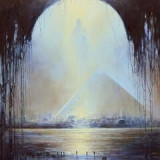
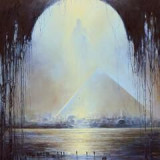
The cryptic Hannya concept is elevated for Vol II with an exclusive luminous illustration by David Paul Seymour as we step further into our exploration with colours.
quête:el sam
On the isle of Crete, the ancient practice of dipping your bread in different sauces and dips is called "papara". True to its music-as-sauce philosophy, Brussels-based groove formation M.CHUZI invites you to dip your ear into the sonic sauces that are on offer in its versatile menu.
Released 4th November via Sdban Ultra, the collective's debut album 'Papara' is an inviting mouthful of afro rhythms, funk, and prog jazz, combined with the spacey soundscapes of the Brussels metropole, as they look to Fela Kuti's afrobeat style for inspiration.
Winner of the prestigious Sound TrackIB1 contest held at Ancienne Belgique back in December 2019, the octet has gone from strength to strength, including having album track 'Tzatzìki' feature on the critically acclaimed various artist's compilation 'Lefto presents Jazz Cats volume 2', released earlier this summer. The track was arguably the highlight of the album and received radio support from leading radio DJs including Gilles Peterson of BBC Radio 6 Music and Worldwide FM fame.
It's the tasty 'Tzatzìki' that launches 'Papara', an exotica-spawned, merry bombardment of fizzing percussion and a subsequent brass freakout. Next up is the heavy acid rock of 'Mammoet' featuring rising trombonist Nabou, which soon breaks out into a groove-laden mix of Egyptian-inspired horns and Fela-style rhythms, before poetic warrior Joy Slam, adds her vocals to the dub-centric rhythms of the sweet 'Carbonade'.
Elsewhere, 'Intermetsauce' fuses skittish horns with funky drums while the spicy 'Tahini Miso' bursts into life with trance-inducing beats and mystical, Middle-Eastern seasoning. The album closes with the multi-rhythms of the burning 'Sambal', before we dive-dip into the funky 'Pickles', featuring Mixmaster Menno's (STUFF.) wildstyle scratching skills. With each track named after a band member or featured artists' favourite sauce, M.CHUZI serves you a diverse and flavourful plate of unique compositions, taking afro-groove and its descendants to a new level of eclectic dynamism.
Limited edition on green vinyl.The collective's debut album 'Papara' is an inviting mouthful of afro rhythms, funk, and prog jazz, combined with the spacey soundscapes of the Brussels metropole, as they look to Fela Kuti's afrobeat style for inspiration.
On the isle of Crete, the ancient practice of dipping your bread in different sauces and dips is called "papara". True to its music-as-sauce philosophy, Brussels-based groove formation M.CHUZI invites you to dip your ear into the sonic sauces that are on offer in its versatile menu.
Released 4th November via Sdban Ultra, the collective's debut album 'Papara' is an inviting mouthful of afro rhythms, funk, and prog jazz, combined with the spacey soundscapes of the Brussels metropole, as they look to Fela Kuti's afrobeat style for inspiration.
Winner of the prestigious Sound Track contest held at Ancienne Belgique back in December 2019, the octet has gone from strength to strength, including having album track 'Tzatzìki' feature on the critically acclaimed various artist's compilation 'Lefto presents Jazz Cats volume 2', released earlier this summer. The track was arguably the highlight of the album and received radio support from leading radio DJs including Gilles Peterson of BBC Radio 6 Music and Worldwide FM fame.
It's the tasty 'Tzatzìki' that launches 'Papara', an exotica-spawned, merry bombardment of fizzing percussion and a subsequent brass freakout. Next up is the heavy acid rock of 'Mammoet' featuring rising trombonist Nabou, which soon breaks out into a groove-laden mix of Egyptian-inspired horns and Fela-style rhythms, before poetic warrior Joy Slam, adds her vocals to the dub-centric rhythms of the sweet 'Carbonade'.
Elsewhere, 'Intermetsauce' fuses skittish horns with funky drums while the spicy 'Tahini Miso' bursts into life with trance-inducing beats and mystical, Middle-Eastern seasoning. The album closes with the multi-rhythms of the burning 'Sambal', before we dive-dip into the funky 'Pickles', featuring Mixmaster Menno's (STUFF.) wildstyle scratching skills. With each track named after a band member or featured artists' favourite sauce, M.CHUZI serves you a diverse and flavourful plate of unique compositions, taking afro-groove and its descendants to a new level of eclectic dynamism.
- A1: Los Avilenos - Cumbia Con Guitarra
- A2: Tito Chicoma Y Su Orquesta - Ritmo Veregua
- A3: Freddy Roland Y Su Orquesta - Arroz Con Coco
- A4: Silvestre Montez Y Sus Guantanameros - El Diablo
- A5: Mita Y Su Monte Adentro - El Yoyo
- A6: Los Kintos - Tin Marin
- A7: Orquesta Reve - Mi Son Combinado
- B1: Poppy Y Sus Piranas - Guayaba
- B2: Al Valdez Y Su Conjunto - Aprieta
- B3: Sonora Casino - El Negro Javier
- B4: German Neciosup Y Su Orquesta - Casamiento No
- B5: La Sonora Mag - El Negro Bembon
- B6: Nico Estrada - La Malanga
- B7: Melcochita Y Karamanduka - Machu Picchu
This sampler compiles 14 killer tropical tracks for the dance floor, all taken from the vaults of Peru's MAG records, including cumbias to descargas, boogaloo to salsa. Classic songs such as 'Arroz Con Coco' or 'Aprieta (Oye Como Va),' and also obscure recordings like the stunning 'Ritmo Veregua' by Tito Chicoma or the totally under-the-radar -recorded in Lima- 'Mi Son Combinado' by Cuba's legendary Orquesta Revé. MAG will turn 70 in 2023 and is a pivotal label in Peruvian music, mainly focused on tropical rhythms although its extensive catalogue also includes rock, pop and jazz recordings. This compilation celebrates the recent addition of Discos MAG to the Vampisoul family, where the best and most elusive titles from the MAG archive will become available again. MAG has been, since its foundation in 1953, an essential label in the music scene of Peru, allowing the development of the careers of both tropical artists and musicians of other genres. At the head was Don Manuel Antonio Guerrero, its founder, whose name comes from the acronym of the label itself (M.A.G.). In 2021 MAG was acquired by the Spanish company Distrolux SL, owner of the Munster and Vampisoul record labels, after years of previous collaborations in which some of the most emblematic titles in the catalog were already reissued for the international market: Nils Jazz Ensemble, Sonora Casino, Traffic Sound, Al Valdez, Pax_ "14 MAGníficos" is a 14-track compilation that celebrates a new era in the history of the label, now under the Vampisoul umbrella, with a selection of astonishing dance floor-oriented gems. This is also a perfect introduction to MAG, showcasing the amazing musical variety sported by the Peruvian label throughout the years. The comp includes juicy Cuban songs like 'Mi Son Combinado', an outstanding original taken from the extremely scarce LP recorded by Cuba's finest Orquesta Revé for MAG in Lima, and the explosive guaracha 'Tin Marin' by Los Kintos, a group lead by guitarist Pancho Acosta. Also classic songs such as 'Arroz Con Coco' or 'Aprieta (Oye Como Va),' and obscure recordings like the stunning 'Ritmo Veregua' by Tito Chicoma.
Like the flower from which he takes his name, which is very rare and only grows once a year in one region of the world, the music of Rose Noir cultivates a form of dark and fascinating elegance. Traces of its genesis can be found in the sampling practice of the golden age of hip hop dear to the musician, but it also manages to retranscribe the total aesthetics of the culture of the 60s and 70s, when the stars aligned to give birth to a music bathed in cinematographic influences in the wake of Marc Moulin, Brian Bennet, Azymuth, Janko Nilovic or David Axelrod. Assembled with the help of instruments, Rose Noir’s music has nonetheless benefited from the hybrid background of its creator, an unrepentant digger with a wide-ranging and curious musical culture.
Rose Noir embodies a new phase in the development of a master craftsman, the sound of the French producer is halfway between beat making and majestic arrangements. Though the tracks of this new project Bloom EP wouldn’t be out of place in the soundtrack of a suspense film from the past, they are the reflection of a man in complete control of his art, guided by the same instinctive and passionate searching that has allowed him to evolve from his first starts, by following a trajectory that belongs to him alone. Rose Noir’s compositions are lush and varied, using as much space as they do sound for dramatic and dynamic effect.
The French musician and producer Rose Noir appears to float across different musical time periods, as if touched by grace. But it’s thanks to his iron will, combined with a highly personal and creative approach to music, that he has managed to define new territories and reinvent himself constantly.
The Blues Don’t Lie is the amazing new album from Buddy Guy, and is the legend’s 34th studio album, and the follow up to 2018’s Grammy winning album The Blues Is Alive and Well. Produced by songwriter / drummer Tom Hambridge, The Blues Don’t Lie features guests including Mavis Staples, Elvis Costello, James Taylor, Jason Isbell, and more.
The album is released exactly 65 years to the day that Buddy Guy arrived in Chicago on a train from Baton Rouge, Louisiana in September of 1957, with just the clothes on his back and his guitar. His life would never be the same, and he was born again in the blues. The Blues Don’t Lie tells the story of his lifelong journey.
Reflecting on this body of work, Buddy says “I promised them all: B.B., Muddy, Sonny Boy as long as I’m alive I’m going to keep the blues alive.” He has indeed proven that again, and proclaims, “I can’t wait for the world to hear my new album cause The Blues Don’t Lie.”
Horse Lords return with Comradely Objects, an alloy of erudite influences and approaches given frenetic gravity in pursuit of a united musical and political vision. The band's fifth album doesn't document a new utopia, so much as limn a thrilling portrait of revolution underway. Comradely Objects adheres to the essential instrumental sound documented on the previous four albums and four mixtapes by the quartet of Andrew Bernstein (saxophone, percussion, electronics), Max Eilbacher (bass, electronics), Owen Gardner (guitar, electronics), and Sam Haberman (drums). But the album refocuses that sound, pulling the disparate strands of the band's restless musical purview tightly around propulsive, rhythmic grids. Comradely Objects ripples, drones, chugs, and soars with a new abandon and steely control. This transformation came, in part, due to circumstance. Sidelined from touring their early 2020 album The Common Task in a world turned upside down, Horse Lords promptly returned to their Baltimore practice space and began piecing together the music that became Comradely Objects (Bernstein, Eilbacher, and Gardner have since relocated to Germany). Removed from their tried and true method of refining new music on the road, the quartet invested less energy ensuring live playability and more rehearsing and recording. The deliberate writing and tracking process, a rarity since the band's earliest days, led to a collection of pieces that signal a new peak of creativity and musical heft without devolving into studio sprawl or frippery. Comradely Objects reflects familiar elements of Horse Lords' established palette_the mantra-like repetition of minimalism and global traditional musics, complex counterpoint, the subtleties of microtonality, a breadth of timbres and textures drawn from all across the avant-garde_with some standout stylistic innovations. At different moments, the album veers closer to free jazz than anything else in the band's catalog, channels spectral electroacoustic tones, and throbs with unexpected yet felicitous synth. While these new elements are evidence of additional studio time and care, Comradely Objects retains the dizzying obsessive rhythmic energy that galvanizes the best moments of the band. Music for people who like Mdou Moctar, This Heat!, Battles, Ndagga Rhythm Force, Can, Captain Beefheart, Art Ensemble of Chicago, LaMonte Young.
Gianluca Petrella is one of the most internationally renowned Italian musician, composer and producer, winner of the Down Beat Critics Poll in the "Rising Stars" category for two years in a row. Cosmic Renaissance is a music collective led by Ganluca with Mirco Rubegni (trumpet), Riccardo Di Vinci (electric bass, double bass), Simone Padovani (percussion) and Federico Scettri (drums, samplers), with Soweto Kinch (vocals and tenor sax) as special guest among others. Cosmic Renaissance's aim is to write and play music that actually starts from jazz and reaches new heights and music genres, in the name of unity, discovery, connection, understanding and other beautiful things that make us human. Try to imagine all this into music, and you'll have an idea of how "Universal Language" really sounds!
As his split album It’s counterpart (faitiche19, 2019) made abundantly clear, Jonathan Scherk is a master of his craft. Toon! immerses us in a highly distinctive world of plunderphonics-sampledelica-variations acousmatiques that’s impossible to classify while feeling familiar nonetheless. Following a strict two-minute format, thirteen complex sound constructions offer a range of experiences – as if the neurosciences had developed an acoustic formula capable of triggering illusions of memory. 13 tracks = 13 déjà-vus.
When department stores dream ... epiphanies appear in elliptical rotations. Afterthoughts recalled on the beach as a child, soft-drawn and befuddling. Are they dreams? Are they metempsychotic leakage? With cup so full-brim, there’s bound to be spillage. Toon! is sleeping on-your-feet, in the light. The pleasure must be more than belletristic, but what’s left to say? Perhaps the sun is simply too bright.
Samuel Dzierzawa/Jan Jelinek, 2021
green marbled vinyl
The Snake, Ghost, and Demon reconvene for Samurai Hannya II, a supercharged sequel to the 2019 inaugural collection of Samurai Music's current finest outer edge constructions.
Alongside the established Samurai family of producers, Hannya II ushers in some notable names to the Hannya series in Mako, Eusebeia, and introduces some future ascendants - RDG (with Gaze Ill and Ojeblik), Hoji, & Dailiv.
The cryptic Hannya concept is elevated for Vol II with an exclusive luminous illustration by David Paul Seymour as we step further into our exploration with colours.
Following the release of acoustic EP Letters To Our Former Selves – Acoustic late last year, Youth Fountain is excited to be back at it with new single “Peace Offering" “This track was written in the perspective of knowing you could never truly love or be loved by anyone before being comfortable with who you are as a person,” shares Tyler Zanon “No matter what positive aspects can come out of a relationship - if the foundation isn’t there of having that bare minimum of self love, things inevitably tend to tarnish.” As Youth Fountain prepares to move forward, the future perfectly mirrors the past. What began as a solo project by guitarist/vocalist Tyler Zanon in 2013 under the name Bedroom Talk eventually blossomed into a full-blown band by 2017, with the Vancouver-based Youth Fountain (then a duo) proudly announcing their presence with the debut single “ Grinding Teeth ” and a pair of Pure Noise Records releases that expertly toed the line between pop-punk fervor and more reflective emo moments. Alternative Press hailed the band’s 2019 debut full-length, Letters To Our Former Selves , as one of the year’s very best, dubbing it the “ perfect blend of emo-tinged punk to soundtrack reflecting on every single life decision you’ve ever made ,” while North American tours with the likes of Free Throw, Can’tSwim, and Chris Farren cemented Youth Fountain’s sweat-soaked sound as something best experienced live – all while dodging a few stray elbows and overzealous crowd-surfers. Now once again, Zanon finds himself as a solo artist following the departure of co-vocalist Cody Muraro in mid-2020 – but this time, he’s exactly where he wants to be. Youth Fountain’s new release, Letters To Our Former Selves – Acoustic EP, re-introduces Zanon’s project to the world, reimagining fan favorite aterial from the 2019 LP of the same name.
From the moment that German producer, Fejká, burst onto the scene at the age of 17, he has captivated listeners with an unrivaled ability to sit comfortably at the intersection of expression and introspection. Where night and day, dreaming and dancing, the fast and the slow, might naturally diverge, he is able to balance them delicately, creating sounds which are, in the same moment, wonderfully ethereal, but also thrillingly dynamic.
His new single Hiræth, meaning ‘long gone’, offers a soundscape full of warmth and calm, enhanced by the unique soothing quality of Kim van Loo’s distinctive vocals – a sound which Fejká accidentally discovered during their time as roommates in lockdown. The track describes a certain sense of nostalgia for a place that might never be reached, or a place that might never be returned to, with an overarching feeling of longing throughout. Working from his studio in
Stuttgart, Fejká processed synths, pads and piano with a tape machine to heighten the nostalgic ambience and, through grainy imperfections, establish a more intimate relationship with the listener. The track is restrained and subtle, yet it cycles through the ups
and downs of an ever-changing landscape keeping listeners on their toes, “Like the feeling of being taken on a journey for the last time“, says Fejká Delving into a vast range of emotions and musical approaches, Fejká’s most recent album,
Reunion, cemented the young producer’s position in the downtempo electronic scene. The album’s single, Svanur, has been streamed over 15 million times with Fejká having recently performed sold-out shows at EartH London, Cross Club Prag, Kater Blau, and Klein Istanbul.
After recent releases on Truncate and Ben Sims’ Hardgroove, the Italian producer Elisa Bee returns to Balkan Vinyl with her new EP, Sample Minds. 3 cuts of peak-time jacking techno and acid with a proper edge of funk, plus a remix from Neville Watson taking it into slower, deeper blissed out territory. Out on a hand-numbered edition of 303 copies, on translucent blue 12” vinyl.
repress
Levon Vincent returns with his fourth full-length studio album Silent Cities a striking departure from his previous records. This, his first release experimenting with the cassette format, Silent Cities is a kind of mixtape through more private moods and personal pitches (literally given Levon’s non-standard tunings).
While Levon has always pro
duced dance floor jams with the intention of raising people’s heart rates, Silent Cities began with 72 bpm: his average resting heart rate, and the concept of tuning the music he was making to his own body rather than increasing anything. This brought the tempos down to 72 bpm or even half of that, at 36bpm. Programming the record during the empty cityscape of Berlin lockdowns, this is the first time Levon’s created an album for the home stereo or for headphone listening whilst navigating through a city. A mixtape specialist in his youth; he was always wanted to play with the cassette format. The results are sure to delight any listener, with the ever-present ambient, krautrock, shoegaze, hip-hop and electro influences coming to the foreground on this work.
“I was expanding further along the lines of a surprise favourite from my previous LP, a song called She Likes To Wave To Passing Boats which was not a 4 on-the-floor piece to play in clubs but a more impressionistic piece of music that I wrote to expound some emotions one day” says Levon. “It was a song written using just intonation. I really love how warm the pure 4ths sound, so when working on the new LP Silent Cities I decided to use my own tunings”.
Historically, the use of just intonation has meant that such instruments could sound "in tune" in one key but at the expense of more dissonance in the other keys. None of the songs on Silent Cities use standard Western equal temperament, Levon created his own scale designs coupled with the ancient ratios found in just intonation.
Born in Houston in 1975, Levon’s life changed dramatically when his parents moved their family to New York in 1981, uprooted from what he knew, the shock, the change from Houston to New York at 6 years old, is referred to constantly in Levon’s Musical output over the years. Levon's family moved houses in and around NYC from 1981 -2010, never more than a mile or two from the WTC. He lived on the Lower East Side during his teenage years and early 20s. This time period and this locale are also a big theme recurrent in his music as he tries to convey how the "downtown" lifestyle and culture-melding affected him so much at a tender age. He cut his teeth working in record shops around lower Manhattan, and while working at the Halcyon Record shop in Brooklyn he (alongside DJ Jus-Ed) was instrumental in creating the wave that came to be known as the "NYC House Renaissance" circa 2010. During the Y2K years he studied 20th C post-minimalism at Purchase college of New York under James McElwaine (who tangentially produced Man Parrish’s Self-Titled proto-hip-hop debt LP). Levon was fortunate to study theory with avant-garde composer Dary John Mizelle and orchestration under conductor Joel Thome. He undertook masterclasses with Philip Glass and also served as intern for John Kilgore, engineer for Steve Reich, where he was present for notable mix sessions such as “Violin Phase.”
Post-minimalism clearly remains an influence not to mention the early sampler stars of 80s freestyle and synth pop. Mixing such far-reaching influences is something Levon executes tremendously well. The first track Everlasting Joy moves at a head nodding 96 BPM tempo, reflecting formative influences like Paul Hardcastle’s Rainforest or Art Of Noise’s Moments in Love. “Those types of songs were a big eye opener for me as a youth, because it was where I realised songs in popular culture didn’t have to be kept to just 3 minutes, and they didn’t require vocals either. So, Everlasting Joy is a song with that intention, one that might be radio-friendly, despite the long arrangement and without vocals. You could say it was inspired by 107.5 in NY because that was a station I listened to a lot in the 1980’s.”
The majority of demos on Silent Cities were recorded before Covid-19 hit the world - when Levon had found a studio space outside of home in his adopted city of Berlin. It was a career first - working on music outside the bedroom. This riding the train or bicycling ‘going to work’ in Berlin opened up a new mood in his music, using the time back and forth to be inspired - commuting as an NYC transplant who still feels as a tourist in Berlin, with a pair of headphones, looking out the window on the train, or stopping on bridges and parking his bike to enjoy Berlin's skyline and horizon. Then, the pandemic struck and “work” came to a halt. Levon had recorded so much material during that year in the studio out of house it seemed like an inflection point for him to lighten the burden of the possessions he was carrying.
“People close to me have watched me give away synths and hardware regularly and I have given away my record collection every few years for my whole life. As a struggling artist in my 20s who had worked in record stores that whole time, I learned that moving constantly with 12k records just wasn't the way to live. So, in light of the pandemic, I set up a shop online, and sold all my music equipment. I also created a separate shop for all my sneakers and clothes. Easy come, Easy go. This provided me with a slow drip type of income that carried me quite well through the pandemic and it allowed me to focus on my own art and music. Getting rid of all my possessions felt like a weight being lifted from my shoulders and I was able to stay the course and remain committed to the music. I needed a further 2 years to mix and arrange the LP. If it weren’t for the pandemic, I would not been able to make this type of LP, so in light of everything, I was able to turn a depressing time in to something lasting and musically very positive.”
You can hear how his approach to a cassette release retains the "Medium is the Message." ethos. Silent Cities is a spooling, warm piece about life memories and embodiment.
OUT OF PLACE ARTEFACTS, the collaboration alchemizing the sounds of german producers Rødhåd and .VRIL, embarks on a new sonic exploration with “II” on Rødhåd’s label WSNWG.
This second longplayer ventures significantly deeper into the spheres of electronic music - exploring a wide range of abysmal drums and breaks as well as focusing on flickering sound sketches and elusive noises whose origin will have to remain a mystery for the listener. It aims to leave them in inexplicable realms between the dance floor and deep listening, unfolding its magnetism beyond genre definitions.
Throughout the listening experience, one is exposed to bewildering surprises such as traces of lightheartedness and stronger use of samples, vocals and strings. “Universian” invites a softer tone, revealing a more seductive, gloomier and poppier facette of the duo.
The closing track “Triskaideka” concludes the journey by featuring classical musicians Angelina Delgado (Violin) and Alexandra Ivanova (Viola).
OUT OF PLACE ARTEFACTS considerably developed the rapport between both artists' contributions for this LP- merging them into a more harmonious, yet very distinct expression. Each of the 13 tracks showcases layered, intricate arrangements so that they become their own microcosms, forming a radiant universe as a whole album.
If you ever wondered what ambient music of the 21st century could sound like, then you should explore the musical spheres of "ifsonever". This colorful debut-album draws a blueprint of an urban ambient club record of a parallel universe. A collage of beautifully improvised pieces, strictly recorded in "one takes". A gripping fusion that brings together the warm analog textures of classic vintage synthesizers and electronic urban ambiences.
Trying to appreciate the recent times of silence and deceleration, Daniel Helmer aka ifsonever has quickly developed a tonal language as a solo artist. With a non-compromising approach he would visit his studio, a cozy garden shed, to record one new track a day in strictly analog fashion as "one takes". His aim for this project was to capture the innocence and instinctive creative energy of the present moment. These 9 timeless pieces invite the listener to explore hypnotic and meditative atmospheres such as on the opener "transpose" or on "jonesy dreams of birds", as well as gloomy and almost mystical sounding tracks such as "total global" or "an unexpected error has occurred". ifsonever is a wonderful amalgamation of organic, laid-back sounds and electronic, club oriented elements.
Recorded at a time when social contact was forbidden and culture was at a standstill, many professional musicians felt challenged not to feel useless when performances and sessions in public were cancelled, while the need for expression, participation and communication persisted. What happens when you've read all your books, when you're tired of looking at screens, and when you're digitally saturated? Then the unbearable lightness of being will begin. Daniel Helmer decided to let his creativity flow into a picture depicting that moment in time. He gave himself the opportunity to reflect this period through the creation of music. Not always an easy thing to do when the only social interactions would be cats passing by or the sound of children playing nearby. However that can be exactly the perfect tranquil surrounding to ground oneself in the here and now and draw inspiration from the inside. This self titled album reflects a peaceful journey from start to finish.
Two old friends have been invited to contribute overdubs in hindsight. MillianX is a film composer and noise artist, a colleague from the viennese filmacademy. Both worked together on the film score for the science fiction movie "Rubikon" while the album was in its final stages. So a collaboration was an obvious choice. The creamy arpeggiated synthline created for "jonesy dreams of birds"' was extended by Millianx with some field recordings and a big cloudy synthwave that dips into a vast sea of noise.
Guido Spannocchi is a london based jazz musician. Both knew each other for several years but never had the chance to work together. When Daniel Helmer wrote "an unknown error has occured" he imagined a saxophone layer to accompany the existing synthline. But when the two musicians finally got together to record in the legendary jazz club "Porgy & Bess", Guido just let his creativity flow and jammed freely to the track with a totally unique jazz vibe.
Between film, music & sound Daniel Helmer is continuously searching for a spot to call his own. Expanding boundaries, pursuing the unheard and breaking genre definitions are byproducts of his curiosity and his drive to avoid repetition. Daniel Helmer resides in Vienna where he studied at the local film academy. He became one of the founding members of the techno-punk band "Gudrun von Laxenburg" with album releases on the legendary Skint label, collaborated with Sam Irl on "International Major Label" as the production duo "Mantra Mantra" and released an album as "Yogtze" on Gerd Janson's imprint "Running Back Incantations", together with Feater. At the moment he is focusing on his work as a film composer and is currently working on two feature films in Austria.
"ifsonever" offers a timeless ambience to help you slow down, reflect and enjoy the beauty of nothingness. It might help us to learn and accept a state of being unutilized without feeling futile and benefit from this rare silence.
The cover artwork is a collaboration between Jazz & Milk graphic designer Tim Schmitt and photographer Frank Hulsbömer. A scan of the artist's head, hand and foot was 3D printed, photographed and transformed into an otherworldly scenery that visualizes the musical atmosphere.
Black Vinyl[27,10 €]
Jordan Reyes is one of the busiest musicians in experimental music
today, and here he takes a bold turn with the metal-inflected Everything Is
Always, touching on death, Zen and science fiction
Reyes' previous collaborators include ONO, Eli Winter and Robert Stokowy, and
here he brings in a large and expert cast: Steve Hauschildt (Emeralds) at the
mixing board, and Heba Kadry (Slowdive, Big Thief, Alex G, Lower Dens)
mastering, plus instrumentalists including Lia Kohl (Whitney, Steve Gunn), Jon
Mueller (Volcano Choir, Death Blues), Patrick Shiroishi and Sam Wagster (Fruit
Bats, Eli Winter). The result is conceptual yet refined, and distinctively American
Dreams. Pressed on Randomly Colored color vinyl.
Random Colour Vinyl[36,77 €]
Jordan Reyes is one of the busiest musicians in experimental music
today, and here he takes a bold turn with the metal-inflected Everything Is
Always, touching on death, Zen and science fiction
Reyes' previous collaborators include ONO, Eli Winter and Robert Stokowy, and
here he brings in a large and expert cast: Steve Hauschildt (Emeralds) at the
mixing board, and Heba Kadry (Slowdive, Big Thief, Alex G, Lower Dens)
mastering, plus instrumentalists including Lia Kohl (Whitney, Steve Gunn), Jon
Mueller (Volcano Choir, Death Blues), Patrick Shiroishi and Sam Wagster (Fruit
Bats, Eli Winter). The result is conceptual yet refined, and distinctively American
Dreams. Pressed on Randomly Colored color vinyl.
- A1: Good Life
- A2: Mecca & The Soul Brother
- A3: Go With The Flow Side
- B1: The Creator
- B2: All Souled Out
- B3: Good Life (Group Home Mix)
Pressed On Clear Vinyl! 1991 was the year that it all broke loose for producer Pete Rock and his rhyme partner, CL Smooth. But the duo was far from an overnight sensation. The two friends had been on the grind since high school in Mt. Vernon, NY in the mid-'80s, and Pete had been building up to his big moment since he first manned the decks on WBLS's hugely influential 'In Control With Marley Marl' radio show, starting in 1987. In '91, Pete's talent finally forced him from the studio shadows into the spotlight, and after remixes and co-productions for Heavy D (1989's Big Tyme album); Johnny Gill ('Rub You The Right Way,' 1990); and Elektra label-mates Brand Nubian ('Slow Down,' 1990); it was time for top billing. As Pete's rep skyrocketed with a revolutionary remix to Public Enemy's 'Shut 'Em Down' in 1991, the stage was set. The duo's debut EP, 'All Souled Out', was the perfect set-up - and bridge to - their flawless LP, Mecca & The Soul Brother, which appeared only one year later. Fans new (thanks to a recent revival, resulting from the song's use in a Google / Android commercial) and old are sure to know the EP's only single, 'The Creator.' The cut is a perfect slice of early '90s hip-hop - jumpy, funky and rolling along at a sprinter's pace, with killer horns that sew up the chorus. Interestingly, it's the only song on the EP where Pete Rock rhymes (and solo at that, with lines written by Brand Nubian's Grand Puba). The remaining five of the EP's songs, with CL Smooth in full charge of the mic, are no less impressive. The sleeper is perhaps 'Go With The Flow,' a kinetic groover with an egregiously thick, muted bassline, surgical cuts and never-endingly captivating lines by the liquid-tongued CL. 'All Souled Out' boasts all of the Pete Rock trademarks - a jumpy, filtered bassline; beautifully stitched horn samples on the hook; and this time with a faster tempo. CL has no issues with Pete's BPM challenge, proving he can drop knowledge at any speed. And of two different versions of 'Good Life' on the platter, the EP's final cut, the 'Group Home Mix,' is perhaps the winner, with an abundance of musical action to back up CL's lyrical musings on ways to achieve success and comfort in life. 25 years after its initial impact, 'All Souled Out' sounds as heavy and essential as ever, and will remind fans how important this duo was to the artform.
Repressed finally. Sometimes a single is released that reaches such dizzying heights of success that it becomes a pinnacle of the decade they're indelibly tied to. "Groove Is In The Heart" by dance-house trio Deee-Lite is one such single. The infectiously quirky, and eminently danceable track is prominently based around samples of "Bring Down The Birds" by Herbie Hancock, and "Get Up" by Vernon Burch, among many others, (Courtesy of dual producers DJs Dmitry and Towa Tei) paired with top-tier guest contributions from JB's veterans Maceo Parker and Fred Wesley, background vocals from Parliament-Funkadelic's own Bootsy Collins, and even a guest rap from Q-Tip, not to mention frontwoman Lady Miss Kier's own siren-like vocals. All disparate and disconnected elements, but ones that would come together to form dancehall greatness, and chart-topping success worldwide for Deee-Lite. "Groove Is In The Heart" managed to reach #4 on the Billboard Hot 100 chart, but excelled at its best on the Hot Dance Club Play chart, where it reached to the #1 spot. On top of its success in America it was a smash internationally, climbing the heights of the charts in the UK, Canada, Australia, and a variety of other countries. It remained in heavy rotation for much of 1990 on MTV as well. As the decades went on, "Groove Is In The Heart" would be ranked among the greatest dance tracks of all time, as well as one of the greatest songs of the 1990s by VH1, Pitchfork, Buzzfeed, and many more. "Groove Is In The Heart" was a potent single for Deee-Lite to lead with, but the album bearing it was nothing to slouch at either. The group's debut record, 1990's World Clique was released to major commercial and critical success, owing just as much to its addictive hybrid of seductive retro aesthetics, modern dancefloor flair, and esoteric, socially conscious messaging, on the back of celebratory club staples like "Power Of Love", "Good Beat", "E.S.P.", and of course "Groove Is In The Heart." World Clique would reach top 20 charts in the US, UK, and Canada in sales, as well as earn rave reviews from NME, Chicago Sun-Times, Rolling Stone, and Slant Magazine, who called it an "essential pop album." A1. Good Beat A2. Power Of Love A3. Try Me On…I’m Very You A4. Smile On A5. What Is Love? B1. World Clique B2. E.S.P. B3. Groove Is In The Heart B4. Who Was That? B5. Deep Ending
Reggie B returns with his much awaited NBN release "Tinky's Jam.” This is his first full length album since “Soulofunkaquarian” released with INnatesounds. The album was most definitely worth the wait. It takes the listener through a personal and musical journey inspired by the birth of his son, who he affectionately calls “Tinky,” and the connection they share. Tinky was a major part of this album, oftentimes found in the studio during the conceptions of many of the songs. This album is unlike any other record released by the Kansas born producer, multi instrumentalist, singer and arranger. After the birth of his son, he was inspired and encouraged to get back into the musical game by the head of NBN, Onra. "Tinky's Jam" is something of a family affair with friends and old collaborators playing their part.
Born into a musical family to parents who were two sides of the same coin, a father who was one of the most renowned drummers in Topeka, Kansas funk and jazz fusion scenes and a mother who was one of the most prominent gospel singers in the city. The apple didn't fall far from the tree and Reggie has spent his life performing and playing with a healthy slew of releases.
This album is the result of countless days in the studio which yielded scores of a dozen slabs of head nodding funk.
Mostly instrumental and showcasing Reggie's many styles from the heavy bounce of "Futuristic Slow", to the George Clinton nod on "P For Life", and the crafted soul of "Gone Fishing" with Dominique Sanders to the cool street jazz feel of "Realize" with Donald Hates's sax adding flare as well as the beat of "Nose Dive" providing the nod factor for the heads.
Closing out the LP ``Tinky's Dance" - a raw soulful jam that lies somewhere between Prince and Larry Heard - for Reggie "the whole project felt like a gift to me and my baby boy Tinky! I wanted to let him know he’s always in my heart and soul and I love my Tinky man infinitely! It’s a children's album for the elevated child like Tinky!”
Skinny Puppy exploded onto the electronic industrial music scene with
1984's Remission, fusing elements of new wave, techno dance, film noir,
and innovative sampling
Lead by cEvin Key and Nivek Ogre, the band quickly garnered an international
fanbase and followed up their new success with 1985's Bites, which produced
their first underground hit, "Assimilate." Restored to their original track listing and
design, Remission and Bites are now available on vinyl for the first time in over 25
years.
XAM Duo – the Yorkshire-based pairing of Matthew Benn and Christopher Duffin – follow-up their The A-side features a reworking of the album’s closing track, ‘Cold Stones’, by legendary electronic artist and DJ, James Holden. In one of his first remixes for a number of years, he has taken the original’s calming, comedown energy and transformed it into an epic, 11-and-a-half-minute journey, which somewhere around the five-minute mark comes right back up. “It didn't turn out quite how I expected, but as they say the sculpture is already in the stone, we just have to find it,” says Holden. “It's like the most rave thing I’ve done for ages and also not rave at all, like a blurry dream about a rave?” Whatever it is, it’s incredible, as are the two further reworkings on the B-side. The Early Years resurface after another lengthy hiatus and reframe ‘LGOC’ as a divine astral jazz / krautrock crossover, while Richard Pike (of PVT and Deep Learning, among others) turns ‘Blue Comet’ into a glitchy and discordant soundtrack to the best 1980s computer game you never played. “It’s lovely to hear three different interpretations of songs that we already tend to keep quite loose and elastic,“ says Matthew Benn. “These remixes feel like a natural extension of the music on the album, like they're from the same world, but perhaps in a different language.” Praise for XAM Duo II: “Thirty minutes of top-quality retro techno ambience and high-tech jazz” – MOJO “An elegant swirl of MIDI exotica, digital wind chimes and health-spa tones... threading saxophone through Boards Of Canada-style funk” – Uncut “Simultaneously more eclectic and more concise, the album expands, refines and folds down the twosome’s electro-organic explorations” – Concrete Islands “XAM Duo’s layered electronics pivot between the meditative and the assertive” – Clash “Made up of sweet synths, precise beats and some piano and sax, they create an atmosphere that feels as if it’s designed to accompany times of concentration and calm” – Loud And Quiet A1 - Cold Stones (James Holden Remix) B1 - LGOC (The Early Years Remix)
B2 - Blue Comet (Richard Pike Remix)
Green Marble Vinyl[26,26 €]
Now available in green marble vinyl. 'Gettin' by on Gettin' Down" is the
follow up to Sam Morrow's career-defining third record 'Concrete and
Mud', a staple of Americana radio on both sides of the Atlantic, with
outlets like Rolling Stone and NPR singing the album's praises
'Gettin' By on Gettin' Down' is a modern album that revisits and reshapes the
primordial sounds of hip- shaking rock & roll. These nine songs are rooted in
grease, grit, and groove, from the swampy soul of "Round 'N Round" to the funky
syncopation of "Rosarita" to the hook-laden rock of "Money Ain't a Thing". There's
hardly an acoustic guitar in sight; instead, amplifiers and guitar pedals rule the
roost, with everything driven forward by percussive rhythms that as much to R&B
as country music. Written and recorded in the wake of 'Concrete & Mud's'
acclaimed tour, 'Gettin' By on Gettin' Down' doubles down on the electrified fire
and fury of Sam Morrow's live shows, with a road-ready band joining him on every
song. Co- Produced with Grammy nominated producer Eric Corne. Musicians
include alumni from bands like Lucinda Williams, Dwight Yoakam, Merle Haggard,
Jacob Dylan and John Mayer. The album was recorded at The Doors' Robby
Krieger's studio.
Black Vinyl[20,97 €]
Now available in green marble vinyl. 'Gettin' by on Gettin' Down" is the
follow up to Sam Morrow's career-defining third record 'Concrete and
Mud', a staple of Americana radio on both sides of the Atlantic, with
outlets like Rolling Stone and NPR singing the album's praises
'Gettin' By on Gettin' Down' is a modern album that revisits and reshapes the
primordial sounds of hip- shaking rock & roll. These nine songs are rooted in
grease, grit, and groove, from the swampy soul of "Round 'N Round" to the funky
syncopation of "Rosarita" to the hook-laden rock of "Money Ain't a Thing". There's
hardly an acoustic guitar in sight; instead, amplifiers and guitar pedals rule the
roost, with everything driven forward by percussive rhythms that as much to R&B
as country music. Written and recorded in the wake of 'Concrete & Mud's'
acclaimed tour, 'Gettin' By on Gettin' Down' doubles down on the electrified fire
and fury of Sam Morrow's live shows, with a road-ready band joining him on every
song. Co- Produced with Grammy nominated producer Eric Corne. Musicians
include alumni from bands like Lucinda Williams, Dwight Yoakam, Merle Haggard,
Jacob Dylan and John Mayer. The album was recorded at The Doors' Robby
Krieger's studio.
Winter’s glittery, holographic image takes on a darker shade in the grooves of their 4th album, What Kind of Blue Are You? The record sees Samira Winter return to the kind of hooky shoegaze of her early recordings. A darker, more world-weary perspective informs the honest and emotionally unguarded lyrics. Sonically, What Kind of Blue... is Winter’s greatest achievement yet. Texturally,, bellowing fuzz and wirey guitars evoke a new sonic territory. Tracks like “Atonement” (ft. Hatchie), “Good” (ft. Sasami) and “Fool” claw, scrape and wriggle their way into your ear. Produced by Joo Joo Ashworth (Sasami, Automatic, Dummy). Recently completed a US and Europe tour as part of Hatchie’s band. 4 pre-release singles and a video for “Atonement”. Featured guest peformances from Sasami Ashworth and Hatchie. Recent collaborations with Pachyman, Mile High Club, and Jorge Elbrecht. “Utterly charming kaleidoscopic dreampop... her perfect palette of sounds draws you in but she’s got the tunes to keep you around” Brooklyn Vegan // Tour Dates Europe & Australia (Supporting Hatchie). Sept 25th Bristol @ Louisiana, Sept 26th Manchester @ YES, Sept 27th London @ Village Underground. // Track Listing: Side A 01. Wish I Knew 02. Atonement 03. Good 04. Sunday 05. Crimson Enclosure Side B 06. Write It Out 07. Lose You 08. Fool 09. Mr. On-My-Mind 10. Kind Of Blue
LP is on baby blue vinyl in a jacket w/ spot gloss + printed inner sleeve + LP3 album download. On October 21, 2022, Merge Records will release Pigments, the debut collaboration between New Orleans electro-revival dynamo Dawn Richard and multi-instrumentalist, producer, and composer Spencer Zahn. Pigments is a project about the power of self-expression through living art, through motion. It’s also a love letter to New Orleans, Louisiana. Not strictly classical, jazz or ambient electronica but rather a body of “movements,” Pigments is an expressive soundscape that is an immersive passage through the city as seen through the eyes of a young Black girl with dreams to paint her future with the pigments given to her. Richard explains: “Spencer wanted to create one long piece of music that would ebb and flow around my lyrics and emotions, which tell a story of growing to love my own skin. I wanted my voice to be moss surrounding the roots of Spencer’s compositions, never forcing the moment to fill every space but rather reveling in the openness of thought and breath.” Zahn agrees, saying, “I wanted to work with all these different textures, tones, and colors to have a new sound to frame Dawn’s voice and lyrics. To hear a lone clarinet as the breath fades and a cello continues its melody to cue Dawn’s vocal entrance is unlike any other record she has made. These are things that excite me as a composer but more as a listener. I hope that other listeners feel the same.” Coming on the heels of Dawn Richard’s critically acclaimed Merge debut Second Line, Pigments will introduce listeners to a different facet of Richard’s outrageous talent and bring Zahn’s thoughtful creativity to a new audience
ARCHITECTS have delivered their 10th studio album; an arena-ready
opus entitled, the classic symptoms of a broken spirit , the follow up to
their 2021 breakout album For Those That Wish To Exist, which hit #1 on
the UK sales chart.Finding yourself with a UK Number One album and
selling out arenas is enough for some to repeat a winning formula
Architects however, are forever moving forward. "It was definitely validating and
felt really cool for like a day," recalls drummer, producer and songwriter Dan
Searle of hitting the top spot with For Those That Wish To Exist."For a lot of the
bucket list things you reach in any career, there's a momentary gratification then
you're like, 'What next?' You just move on. By the time the album came out, my
head was already in the mindset of 'broken spirit'. That was where I was at."
Searle notes how it was their albums Lost Forever/ Lost Together, All Our Gods
Have Abandoned Us, and Holy Hell that really "cemented what the band was
about" and "took them to a new level" as a rock powerhouse and leaders of the
UK's metalcore scene – making it all the more "daunting" to reinvent themselves
on the records that would follow. "I wanted to make this album with a different
aesthetic. We were enjoying working with the synths and doing stuff that we
hadn't done before."
As a band who never stop writing, the kernels of the songs that make up the
classic symptoms of a broken spirit were already in progress before the ink had
time to dry on the artwork of their last record. Architects were on a creative roll,
and the record was born of that creative freedom. Produced by Dan Searle and
guitarist Josh Middleton, with additional production from frontman Sam Carter at
Decon's Middle Farm Studios and their own Brighton Electric Studios before being
mixed by Zakk Cervini, the band were buoyed by finally being back in a room
together after their last album was made mostly remotely due to COVID
restrictions. The result was something altogether more "free, play - ful and
spontaneous," Searle explains.
Carter agrees: "This one feels more live, more exciting and more fun – it has that
energy. We wanted it to be a lot more industrial and electronic. That was the main
mission. They can sit side-by-side: Mr. Electronic and Mr. Organic."
blue marbled vinyl
One of the most revered and respected artists to ascend in the immediate wake of the Autonomic wave - Sam KDC's innate understanding of depth and emotive layering has marked his path as one that leaves an indelible impression.
While his innovative adventures with Grey Area and the outer edges of Techno continue unabated, a collaboration with like-minded artist Flaminia has drawn Sam back to his original home in 170bpm.
Flaminia is a versatile and extremely skilled musician who has lent her talents to luscious dark ambient, and experimental Techno and continues to work on rediscovery and innovation. In our view, Flaminia is one of the more interesting artists currently rising in prominence in the electronic music scene.
Sam and Flaminia are an apt pairing and Grounding brings out a new side to both of them. Textures are applied with considered discernment, never overdone, and always embellishing the delectable grooves. Grounding has a truly ethereal, almost mystical overlay, while also brandishing dance-floor potency - a now inherent skill both artists have spent years assimilating into their construction processes.
Well known as the Deep’a half of Deep’a & Biri, and a huge influential source of energy and innovation in Tel Aviv’s house and techno community, Yaron Amor goes solo for the very first time with an incredibly personal project. Introducing Zeena…
“The decision about the solo project was made during a visit to Morocco, in the main city square of Marrakesh I came across an improvised jam of 20 drummers from all over the country, the crazy rhythms they played together spontaneously amazed me and made me realize that the perfect beat I've been looking for, for so many years, was under my nose. In Arabic and Moroccan music that was constantly played in the house where I grew up…”
Home is where the soul is… Zeena translates to beauty in Moroccan and this label exists wholly to celebrate and push cutting edge Arab electronic music. It starts here with Yaron’s first solo EP. The result of an inspired creative series of recordings with drummers and musicians from Israel, Algiers, Morocco, and Berlin, across three tracks we’re taken on a beautiful excursion of emotions, tension and introspective places.
“I tried to merge together influences from the world of techno which I have been active in for almost 20 years along with the rhythms of Arabic music while paying respect to each of the genres.”
From the tension and powerful emotion of ‘The Pain Body’ (a mesmerising kick-less tableaux that would work perfectly for an intro or mid-set game-changer) to the powerful synth-laced Detroitian drive and thump of title track ‘Zeena’ via the wild rolling toms of ‘Omipresence’, this is Yaron Amor as we’ve never heard him before… Raw, honest, direct and totally at home. The middle east has played a huge role in so many inspirations, influences and sample sources since the very start of electronic music. Now its time to bring that to the fore and celebrate it on a whole new level. Zeena is that level. Stay tuned…
- A1: Dome
- A2: Glass Acc
- A3: Bläser
- A4: Zither
- A5: Audiolab
- A6: Grm
- A7: Ziegenmelker
- A8: Faust
- A9: Karelia Suite
- A10: Silver Bowl (Bohlen/Pierce)
- A11: Gong Gran
- A12: Clickey
- A13: Loop Voix Gran
- A14: Stadtpfarrkirche
- A15: Liquid Plate (17-Tet)
- A16: Gilbert Plasma
- B1: Jeph
- B2: Singing Stone K-Board (Pythagorean)
- B3: Underground Records
- B4: Morgenmelodie
- B5: Var Soundscapes
- B6: Arctic Winds
- B7: Blue
- B8: Happy Metal
- B9: Travelizer 2
- B10: One Man Crowd
- B11: V_Room 2
- B12: Kontour
- B13: Zymbol
Magazine is glad to announce the album Waves 3 by Curd Duca,
the third and last part of the trilogy Waves: Austrian electronic composer Curd Duca is widely known for his 1990es series of critically acclaimed easy listening 1-5 (Normal) and elevator 1-3 (Mille Plateaux).
After a long break from the studio, Duca has issued part 1 of the Waves series in late 2020 on Magazine. This was in fact his first album in 20 years. The Waves recordings pick up the thread of his 90s work and open up a new chapter. Again, everything is shifting constantly and all tracks are quite different (soft, rough, melodic, abstract ... ), but complement each other in a surprisingly coherent way to form an idiosyncratic universe.
While other experimental artists can sound as if they're attempting to lift lead weights over their heads, Duca is content flicking feathers into their faces. After his impressive 1990s/00s run on Normal and Mille Plateaux, Curd Duca had disappeared for 20 years before emerging from the aether last year.
The albums of the new "Waves" Trilogy represent a flawless examination of sound and texture. The Vienna-based producer still straddles high and low culture, but approaches his sonics with a more historically aware ear. So plain and resonant gong recordings are placed next to pop music loops and DSP-fractured cut-ups, and icy electronic jams nudge up against cassette warped instrumental sketches.
Waves 3 is a continuation and culmination of the series. In the final chapter, we’re drawn in with church bells on dome, but quickly transported to another era entirely with the crackly bläser and absurd zither, a tongue-in-cheek plunderphonic experiment assembled from zither samples. Duca follows this evocative run of tracks with a machine-gun blast of experimental sound, from the percussive 500 GRM to the ferric ASMR birdsong of ziegenmelker.
This is Duca at his most uncompromising, grabbing central European culture and dragging it through his array of processes. Playing the album from beginning to end opens up a weightless cut-and-paste mixtape, stitched together with expert foresight and a knowing wink to camera.
Like the best psychedelic experiences, memories are triggered and turned inside-out, and knowledge is allowed to blossom. Curd Duca has been refining his process for three decades now, and few artists have quite the same ability to challenge, provoke, and inspire.
- A1: John Coltrane & Art Blakey's Big Band - Pristine
- A2: Cécile Mclorin Salvant - One Step Ahead
- A3: Serge Gainsbourg - Black Trombone
- A4: Marcus Miller Feat Corinne Bailey Rae - Free
- A5: Anne Paceo - Smile
- B1: Neue Grafik Ensemble Feat Brother Portrait - Hedgehog
- B2: Mel Tormé - Comin' Home Baby
- B2: Michel Legrand Feat Bill Evans, John Coltrane & Miles
- B4: Yaron Herman Trio - Heart Shaped Box
- B5: Miles Davis - Générique (B O.f "Ascenseur Pour L'echafa
- B6: I | Brahim Maalouf - True Sorry
- C1: Melody Gardot & Seth Kallen - My Sweet Darling
- C2: Norah Jones & Joel Harrison - Tennessee Waltz
- C3: Laurent De Wilde - Misterioso
- C4: Mélanie De Biasio - Afro Blue
- C5: Ella Fitzgerald - How High The Moon
- C6: Quincy Jones - Soul Bossa Nova
- D1: Térez Montcalm - Sweet Dreams
- D2: Biréli Lagrène & Sylvain Luc - So What?
- D3: Sandra Nkaké & Jî Drû - Always The Same
- D4: Youn Sun Nah - Jockey Full Of Bourbon
- D5: Nina Simone - Love Me Or Leave Me
- D6: 2Charlie Parker & Miles Davis - A Night In Tunisia
Club Glow powerhouse and all-round Bristol bass-bin baiting badman Borai returns to his Higher Level label with three new drops of elevated breakbeat science. As well as his work alongside Denham Audio, L Major and Mani Festo in Club Glow, Borai has been busy landing uptempo slammers on Hardcore Energy, Vivid, E-Beamz and Infiltrate in the past couple of years, and he returns to home turf in peak shape.
The A side lights up with the dizzying break-juggling ruffness of 'Lights On', a surefire call to squeeze the last juice from the party, while 'Bobbi' opens the B side treading an artful line between deep and depraved as immersive tones face off against taut, driving rhythms. 'Sargasso Sea' smooths the proceedings out good and proper in true B2 style with a pitched-down slice of soul-charged broken beat that smacks where it counts, Borai's established instinct for forward-facing melody shining through in the interplay between 90s keys, diva vocal samples and illustrious pads.
Vargmal Records is an independent record label and multidisciplinary platform founded by Gent Gjonbalaj. Operating from Prishtina, Kosovo, the imprint publishes hypnotic compositions of various forms, exploring the realms of electronic music and beyond. The label's debut release marks the birth of an initiative started several years ago, reflecting on a process of growth, research and refinement.
Conceived as a foundation record, the 'Classics' EP demonstrates Vargmal's concept and overall spirit. The Italian pioneer Leo Anibaldi inaugurates the label featuring two cuts on the A-side, originally produced in the early 1990s--'Muta 5' and an as yet unheard version of 'Endurance 4'--replete with Anibaldi's signature sound programming and high-octane output. On the flip, the torch is passed to another Italian master, Donato Dozzy, who takes them to another level with his peculiar and precise remix treatment. Where Anibaldi paves the way for a possible future, Dozzy applies a modern touch to the same fundamental approach--a balancing act that shows a spectrum within the conceptual framework from two different points in the continuum, transcending any individual style or place in time.
Selected by their ability to extract the full potentiality of the sound, the tracks on this release reflect a minimalist approach that is inherently resourceful and discerning, whilst maximizing effect and impact. The efficiency of the sound can be heard in the stripped-back elements, practical arrangement and execution of the creative idea. 'Muta 5' opens the EP, a throbbing mass of pressure cooker action, continuously building tension with rippling percussion lines and syncopated beats. Ahead of its time in 1993, 'Muta 5' has a raw, driving energy and commanding authority. Dozzy reworks it into a tighter, linear forma--whilst retaining the angst of the original, he applies new synth motifs and notches the speed down for extra poise. 'Endurance 4' (Version II) is a tribal workout with hallmarks of the classic Italian deep techno sound. With arching drones, chugging rhythms and dramatic narratives, 'Endurance 4' presents an idiosyncratic style and emotive character which later became the model for this sound. Dozzy's hypnotic faculty shines through on the remix, a polished re-run that elaborates on the ominous melodic theme, and lifts the sound majestically to a gliding altitude--marking the end of this record and the beginning of Vargmal's journey.
crystal clear vinyl / limited
Vargmal Records is an independent record label and multidisciplinary platform founded by Gent Gjonbalaj. Operating from Prishtina, Kosovo, the imprint publishes hypnotic compositions of various forms, exploring the realms of electronic music and beyond. The label's debut release marks the birth of an initiative started several years ago, reflecting on a process of growth, research and refinement.
Conceived as a foundation record, the 'Classics' EP demonstrates Vargmal's concept and overall spirit. The Italian pioneer Leo Anibaldi inaugurates the label featuring two cuts on the A-side, originally produced in the early 1990s--'Muta 5' and an as yet unheard version of 'Endurance 4'--replete with Anibaldi's signature sound programming and high-octane output. On the flip, the torch is passed to another Italian master, Donato Dozzy, who takes them to another level with his peculiar and precise remix treatment. Where Anibaldi paves the way for a possible future, Dozzy applies a modern touch to the same fundamental approach--a balancing act that shows a spectrum within the conceptual framework from two different points in the continuum, transcending any individual style or place in time.
Selected by their ability to extract the full potentiality of the sound, the tracks on this release reflect a minimalist approach that is inherently resourceful and discerning, whilst maximizing effect and impact. The efficiency of the sound can be heard in the stripped-back elements, practical arrangement and execution of the creative idea. 'Muta 5' opens the EP, a throbbing mass of pressure cooker action, continuously building tension with rippling percussion lines and syncopated beats. Ahead of its time in 1993, 'Muta 5' has a raw, driving energy and commanding authority. Dozzy reworks it into a tighter, linear forma--whilst retaining the angst of the original, he applies new synth motifs and notches the speed down for extra poise. 'Endurance 4' (Version II) is a tribal workout with hallmarks of the classic Italian deep techno sound. With arching drones, chugging rhythms and dramatic narratives, 'Endurance 4' presents an idiosyncratic style and emotive character which later became the model for this sound. Dozzy's hypnotic faculty shines through on the remix, a polished re-run that elaborates on the ominous melodic theme, and lifts the sound majestically to a gliding altitude--marking the end of this record and the beginning of Vargmal's journey.
Panthera is a mysterious figure, and that’s how they plan to keep it. Arriving at the Bordello in a veil of secrecy, the four tracks of Synthesizer Hits do the talking for this unknown artist; and you better believe this music has something to say. The gloriously uplifting “Eurodrink” opens. Beaming bars border on pure elation and sullen sorrow, a tight drum keeping time in this space opera soundtrack. That same line of joy and sadness is maintained in the considered and reflective “20000” with its distant words and epic synthwork. “Bra” melts the pulsating energy of disco with complex percussions while a future vision melody descends. The close comes in the form of “Il Vizietto.” A daring work of astral electronics that takes its cue from the masters of silver screen and beyond. A stunning debut from an artist who music lovers will want to know.
Die Salt Lake City Indie-Rocker “The Backseat Lovers” veröffentlichen ihr neues Album „Waiting To Spill“.
Joshua Harmon, Jonas Swanson, KJ Ward und Juice Welch kennen sich bereits aus Highschool-Tagen.
Seitdem geht es Schlag auf Schlag: Mit ihrer ersten EP „Elevator Days“ sammelten sie über 370 Mio.
globale Streams und ihr Mega-Hit „Kilby Girl“ markierte ihren endgültigen Durchbruch.
Das kommende Album gewährt uns Einlass in die Köpfe der vier Vollblutmusiker. Anspruchsvolle Melodien,
aussagekräftige Texte und einprägsame Beats entführen jeden Fan und (noch) nicht Fan in eine Welt voller
Melancholie und Zuversicht.
Ausverkaufte Shows gehören nun längst zum Alltag der Newcomer Stars und Anfang des kommenden
Jahres bringen „The Backseat Lovers“ ihre Live-Experience auch nach Deutschland.
Das Album erscheint als Standard CD und auf 180g Vinyl.
At any given time, you’re likely to find Jim Lauderdale making music, whether he’s laying down a new track in the studio or working through a spontaneous melody at his home in Nashville. And if he’s not actively crafting new music, he’s certainly thinking about it. “It's a constant challenge to try to keep making better and better records, write better and better songs. I still always feel like I'm a developing artist,” he says. This may be a surprising sentiment from a man who’s won two Grammys, released 34 full-length albums, and taken home the Americana Music Association’s coveted Wagonmaster Award. But forthcoming album Game Changer is convincing evidence that the North Carolina native is only continuing to hone his craft. Operating under his own label, Sky Crunch Records, for the first time since 2016, Lauderdale recorded Game Changer at the renowned Blackbird Studios in Nashville, co-producing the release with Jay Weaver and pulling from songs he’d written over the last several years. “There's a mixture on this record of uplifting songs and, at the same time, songs of heartbreak and despair—because that's part of life as well,” he says. “In the country song world especially, that's always been part of it. That’s real life.” Lauderdale would know: He’s been a vital part of the country music ecosystem since 1991, when he released his debut album and began penning songs for an impressively long roster of country music greats. “When I was a teenager wanting to be a bluegrass banjo player, I never would have imagined that I would get to work with people like Ralph Stanley and Robert Hunter and George Jones and Elvis Costello and John Oates,” he muses. “Getting to work with them inspires me greatly to this day, and I know it always will.” From rollicking guitar riffs on “That Kind of Life (That Kind of Day)” to the slow, sweet harmonies of “I’ll Keep My Heart Open For You,” Game Changer shows off Lauderdale’s ingenuity as a singer, songwriter, and producer—while reestablishing him as one of Americana’s most steadfast champions..”
As three souls plunge down from the heavens, death and destruction can be felt hanging in the air like a foul stench. Red clouds swirl around a black sun that never sets and an erratic clock ticks off-tempo, moving faster and slower before rewinding and starting anew.
“Let me paint you a picture…” vocalist Mikey Arthur sings, welcoming listeners with a dramatic opening scene. It takes a skillful guide to navigate the darkest depths of hell. And, as The Gloom In The Corner depict in their second full-length album Trinity, death is merely the beginning of the series of chilling adventures
Purposefully aligning their song count with unlucky number thirteen – a reoccurring symbol in the ever-unfolding Gloom Cinematic Universe or GCU – it comes as little surprise to longtime fans that each of the Australian quartet’s enticing tracks intertwine to form an interlocking tale; this time centered around the appropriately labeled unholy trinity.
Comprised of previously deceased characters Rachel Barker, Ethan Hardy, and Clara Carne, the group’s bloody battle is woven throughout the album as the anti-heroes determinedly claw their way back to Earth from the Rabbit Hole dimension, slashing, shooting, and extinguishing anyone who dares to oppose their quest. Yet, for the Girl of Glass, Ronin, and Queen of Misanthropy, there is clearly more to the story than what can be contained within a single package.
Projecting a wide and complex web of lore, plot twists, and tongue and cheek humor, frontman Mikey Arthur, guitarist Matt Stevens, bassist Paul Musolino, and drummer Nic Haberle, have been producing highly detailed concept releases since their formation. And, consistently filling in more missing pieces of the puzzle with every body of work, the band equate each new record to a fresh season of The Umbrella Academy dropping on the streaming service of your choice. Because, just as a great TV series captivates viewers with its music and storytelling, the quartet’s work provides a complete experience designed to allow fans to check in with their favorite characters, all the while enjoying a cinematic new soundtrack.
For those just joining the GCU, as well as those looking for a quick refresh, 2016 debut album Fear Me introduced listeners to main protagonists Julian “Jay” Hardy, a Section 13 agent consumed by anger over his girlfriend Rachel’s death, and Jay’s gloom (later known as Sherlock Adaliah Bones), a demonic entity who at times takes over Jay’s body as a host vessel. 2017 EP Homecoming tells the tale of Jay’s brother Ethan, a war veteran suffering from PTSD, who upon discovering his brother’s struggle, kills himself as part of a Dante-style rescue mission to bring Rachel back to life. In 2019 EP Flesh and Bones, we’re introduced to Clara Carne, a past witness to one of Jay and Sherlock’s crimes, who instead of taking revenge, began a twisted love story with Sherlock, only to be murdered by his forced hand. And 2020’s Ultima Pluvia EP where we finally learn of Sherlock’s past as an ancient warlord under the tyrannical King Baphicho, and see Sherlock and Jay’s deaths ushered in by Section 13 opponent and New Order leader Elias DeGraver and his gloom Atticus Encey.
After 2016’s Fear Me, the band admit that their original intention was to jump straight into the events of Trinity before pivoting to create Homecoming, Flesh and Bones, and Ultima Pluvia. However, upon reflection, primary storywriter Mikey Arthur believes that pushing the timeline back actually provided greater opportunity for the group to properly flesh out the songs and plotlines for their sophomore studio record.
Indeed, while Trinity re-introduces the three central “heroes” of this new arc, it’s important to understand that while familiar, the characters are not carbon copies of who they were earlier in the story. And neither is the band who brought them to life.
Fully embracing the weird and whacky has never been a struggle for The Gloom In The Corner. Rather, it’s together with this attitude that the group come away with special moments such as the fascinating old and new dynamic between neighboring tracks “Red Clouds” – a song whose initial version predates the formation of The Gloom In The Corner as an official band – and “Gravity” in which a demo intended for future material was adjusted to fit the sonic drop.
Mirroring this evolution in the band’s musical approach, a sense of growth can also be seen projected in the characters and story that the quartet chronicle across the thirteen tracks.
Classifying their individual sound as an intricate form of “cinema or theater-core” due to the depth and breadth of their musical approach, features, samples, symphonic elements, and conceptual nature, The Gloom In The Corner continue to prove that they’re more than just a simple concept band.
In fact, similar to character theme music in movies and video games, the group seamlessly play off their diverse sonic story in a variety of ways. Continuing to breathe new life into older staples from their catalog, the quartet reworked their infamous “Oxymøron” breakdown from Fear Me into an impactful moment in Trinity’s “Nor Hell A Fury” and sprinkled audio easter eggs of this sort all throughout their new music for fans to discover.
Listeners are also brought further into the world of the GCU with the help of what The Gloom In The Corner call their “casting process.” Like picking actors for a musical, the band meticulously selected eleven different vocal features and several additional voice actors to bring the album and characters to life. Described as a 50/50 split between notable talents such as Ryo Kinoshita (Crystal Lake), Joe Badolato (Fit For An Autopsy), and Lauren Babic (Red Handed Denial), as well as talented friends and family like Elijah Witt (Cane Hill) and Mikey’s sister Amelia Duffield, each featured artist brought their own touch and realistic spark to the characters they portrayed.
For in the end, as much as Trinity and it’s cast live within the confines of their own supernatural worlds, themes such as falling out of love (Gatekeeper), battling depression (Obliteration Imminent), and standing behind women’s empowerment (Nor Hell A Fury), are ones that many can relate to or understand. And, while most individuals may avoid drowning their woes by way of transforming into full-on egotistical murderers like the Queen and King of Misanthropy and the gang, The Gloom In The Corner have illustrated that time and time again, life’s a little more fun when you can crack a smile. Taking a page from the trinity’s playbook: try to avoid the end of the world. But if you can’t…at least spend it with a killer soundtrack.
To celebrate the 10th anniversary of Recital, we present Autumn Fair: A group LP comprised of 44 guest players (full list below), curated and edited together by Sean McCann.
Autumn Fair aptly embodies the feeling of Recital as a record label; the infusion of abstract sound art and sentimental beauty – performed by both younger and older generations of artists.
Oren Ambarchi - guitar, Ed Atkins - paper shredder, Jason Bannon - family, Derek Baron - keyboard, Karla Borecky - upright piano, Andrew Chalk - guitar, crys cole - birds, Loren Connors - guitar, Philip Corner - grand piano, Maxwell August Croy - whistle, Sarah Davachi - electronics, Aaron Dilloway - SFX, Delphine Dora - voice, Giovanni Fontana - voice, Scott Foust - trumpet, Peter Friel - impression, Malcolm Green - camera, Judith Hamann - cello / voice, Mark Harwood - speech, Forest Juziuk - voice, Johnny Kay - tapping, Kajsa Lindgren - hydrophone, Rob Magill - guitar, Lia Mazzari - whip, Molly McCann - flute, Sean McCann - editing / voice, Nour Mobarak - voice sampler, Azikiwe Mohammed - interview, Charlie Morrow - MIDI piano, Kiera Mulhern - SFX, Zachary Paul - violin, claire rousay - SFX, Michel Samson - violin, Troy Schafer - strings, Eric Schmid - tone generator, Ben Schumacher - SFX, Tom James Scott - keyboard / SFX, Asha Sheshadri - reading, Patrick Shiroishi - winds, Sydney Spann - voice, Matthew Sullivan - instruments, Flora Sullivan-Kelly - percussion, Connor Tomaka - SFX / synth, Alex Twomey - upright piano.
I won't go into too much detail on the album itself, but after many twists and turns, the album concludes with “Recital Program,” an intense track that manically collages two-second excerpts from every Recital album to date.
I extend a sincere ‘thank you’ for all the incredible support for Recital over the past decade.
Ltd. LP Edition of 350 copies on 175gram black vinyl, gold foil printing, incl. program notes, comes with printed ticket, mechanically numbered.
- A1: Dua Lipa - Be The One
- A2: Avicii - Hey Brother
- A3: James Bay - Hold Back The River
- A4: Jessie J - Price Tag
- A5: Niall Horan - Slow Hands
- A6: Dermot Kennedy - Power Over Me
- A7: Years & Years - King
- B1: Katy Perry - Roar
- B2: Sheppard - Geronimo
- B3: Of Monsters & Men - Little Talks
- B4: The Weeknd - Starboy
- B5: Scouting For Girls - This Ain't A Love Song
- B6: Neon Trees - Animal
- B7: Lana Del Rey - Blue Velvet
- C1: Miley Cyrus - Malibu
- C2: Axwell & Ingrosso - More Than You Know
- C3: Dnce - Cake By The Ocean
- C4: Lorde - Royals
- C5: Mike Posner - I Took A Pill In Ibiza (Seeb Remix)
- C6: Ellie Goulding - Love Me Like You Do
- C7: Hozier - Take Me To Church
- D1: Bruno Mars - Locked Out Of Heaven
- D2: Icona Pop - I Love It
- D3: Tom Walker - Leave A Light On
- D8: The Teskey Brothers - Hold Me
- D4: American Authors - Best Day Of My Life
- D5: Tove Lo - Stay High (Feat Hippie Sabotage - Habits Remix)
- D6: Sam Smith - Stay With Me
- D7: Bastille - Pompeii
The Decades Collected compilations are part of the new Collected compilation series, which is a collaboration between Universal Music and Music On Vinyl. The compilations bring together the biggest names of each decade, combined with forgotten hits and less discovered gems, giving the listener an experience of listening to their favorite tunes while uncovering new musical grounds at the same time.
Various Artists - Tens Collected features Sam Smith “Stay With Me”, Lorde “Royals”, The Weeknd “Starboy”, Dua Lipa “Be The One”, Niall Horan “Slow Hands” and Ellie Goulding “Love Me Like You Do” amongst others.
reissue with original artwork!
Todd Terje's 2012 EP It's the Arps rumbled the floors of warehouse parties and hedonistic sleepovers alike with lead single 'Inspector Norse' leading the vanguard of electro fun.
Please welcome: It's The Arps! Oslo's magic music maker Todd Terje has already gained a wunderkind like reputation for his gentle yet potent productions (we won't mention the 'E' word here) on labels like Full Pupp, Permanent Vacation and Running Back on top of being one of the best remixers money can buy (Shit Robot, Bryan Ferry, Dølle Jllle etc etc). What is there left for him to do Establish a label of his own! 'It's The Arps' is the starting signal for Olsen. And what a splendid one it is. Created from scratch and solely on the mythical synthesizer ARP 2600, it features four tracks (reads instant classics) that couldn't be a better follow-up to his 2011 super hit EP 'Ragysh'. Towering over the assortment is the laser crime scene called 'Inspector Norse'. Defying genres and blinkers, this is finest goose bumps dance music that makes you whistle along, laughing and crying all at the same time - but the rest isn't half bad either. The short, but sweet 'Myggsommer' gives away Terje's secret love for quirky exotika, whereas 'Swing Star Pt 1' and its brother have a (balearic) brilliance and witchery to them that is rarely found nowadays. Released on Olsen Records and housed in a beautiful sleeve courtesy of Bendik Kaltenborn. 100% Arp 2600 and 200% Todd Terje.
- A1: Enslaved - Eon
- A2: Mono - Er Eb Os
- A3: Ihsahn - Dark Awakening
- B1: Jo Quail - Prime
- B2: Bohren & Der Club Of Gore - Plateau
- C1: Hackedepicciotto - Trinity Past
- C2: Ulver - Godeater
- D1: Jonas Renkse - Er Eb Os
- D2: Zola Jesus - Prime
- D3: Spotlights - Of Eons
- E1: The Ocean - Primal (State Of Being) (State Of Being)
- E2: Crown - Element
- E3: Jaye Jayle - Er Eb Es
- F1: Godflesh - Ashen
- F2: Steve Von Till Aka Harvestman - Testament
- F3: Arabrot - The Last Days (See The Light) (See The Light)
The Others (Lustmord Deconstructed) is a celebration of the fearless attitude of being different and the expression of unique ideas which have never existed before. Over 13 years after the release of O T H E R , Pelagic Records has gathered 16 bands and solo artists to record their own unique takes on tracks from the Other-sessions. The result is an album that is more than a compilation, and more than the sum of its parts; covering a wide range of musical niches and directions, but sharing the same underlying mood and vibe defined by Lustmord's timeless soundscapes: from the ambient solo performances provided by IHSAHN, ENSLAVED or JONAS RENKSE to the subdued voice of ZOLA JESUS woven into Lustmord's sombre fabric to the industrial carnage that is GODFLESH's version of `Ashen'. LUSTMORD is the artistic moniker of Brian Williams. Born in North Wales, he started his musical career in 1980 and soon became a pioneer in the early industrial music scene in the UK. He was a former member of SPK during arguably their most crucial era, and went on to work with THROBBING GRISTLE members Chris & Cosey as well as appearing on early albums by CURRENT 93, NURSE WITH WOUND and others. After relocating to Los Angeles in 1993, Williams worked on dozens of motion picture soundtracks including The Crow, Underworld and Paul Schrader's First Reformed. Additionally he created several video game soundtracks, television scores and solo albums, as well as collaborating with artists as varied as THE MELVINS, CLOCK DVA, JARBOE, John Balance of COIL, Paul Haslinger (TANGERINE DREAM), PUSCIFER, Wes Borland and more, including Grammy Award-winners TOOL on their much acclaimed effort Fear Inoculum. To this day, Lustmord is actively recording and releasing music, his latest release being the collaborative album Alter with Karin Park of A°RABROT, and he is considered to be the founding father of the dark ambient music genre. The original O T H E R was released by independent record label Hydra Head Records, founded by ISIS frontman Aaron Turner and former home of bands such as CONVERGE, PELICAN, JESU, SUN O))) or BORIS. As one journalist put it at the time, O T H E R is a "grim example of a consummate artist who is working frmly within the parameters that he has laid out for himself over the years." This album shows Lustmord at his most characteristic, and the icy, ominous guitar playing of Jones, Turner and Ozborne resonates perfectly within the deep soundscapes that make up this frightening yet inspiring journey. What demonstrates the profound influence of Lustmord on this contemporary music underground showcased here is that artists from disparate ends of the sonic spectrum all feel inspired to explore the essence of his idiosyncratic sounds within their own realm: experimental electronica icons ULVER excel on a stunning, hazy rendition of `Godeater', while Japanese post-rock act MONO deliver a crushing version of `Er Eb Os', and THE OCEAN take us on a cathartically heavy mindtrip back to our `Primal State of Being'. In the end, each of these 16 artists delivers an interpretation that pays the deepest respect to this pivotal artist, while also standing out as a new track of its own.
FEAT. DAVID SYLVIAN & KAZUKO HOHKI
On 'Upon This Fleeting Dream' Clive Bell's Twinkle3 embraces medieval and 16th-century Japanese poems and haiku about death and saying farewell. Bell and his trio, consisting of Dave Ross and Richard Scott, expand their sonic borders: bringing these pithy epigrams to a new Fourth World where electro-acoustic sounds glitches into a hypnagogic, if not the unconscious level of fragile beauty.
The distinctive voice of David Sylvian (ex-singer of Japan and known for his highly acclaimed solo work (Brilliant Trees, Secrets of The Beehive, Blemish...) who reads the English version of the poems and created field recordings and the artwork for this album - blends in the most organic way with the shakuhachi, Thai reed flutes and mouth organs played by Clive Bell.
The narrative voices of David Sylvian and Kazuko Hohki's (Frank Chickens, Kahondo Style...) velvet timbre are the cornerstones of this compelling journey while the tangling and abstract rhythms transcending from Dave Ross' modular synths and Richard Scott's sampler and analogue electronics, unravel and unfold a mesmerizing universe with unknown dimensions and frequencies of a fleeting dream.
File under: electronica, spoken word, fourth world, sound art, shakuhachi, dub, minimal, ambient, abstract, and good music
Recommended if you like: David Sylvian, Japanese poems, Jon Hassell, Pan Sonic, Laraaji, Brian Eno, excellent music
A true love letter to house music, Larson presents his account of the ubiquitous dance music genre diving deep into its origins. Connecting the dots with some of the genre’s most beloved innovators such as Larry Heard, Boo Williams, Ron Trent, Chez Damier or Chris Brann, the Belgian producer pays tribute by adding his own emphases. Setting a bright mood, at times aiming for the dance floor, at others comforting the listener into a casual vibe, Larson is not seeking, but spontaneously drawing attention with his graceful sounds, stripped to the bone and built on an intuitive factor.
Larson hails from Liège, the South Belgian city known for its meat balls and the mighty river La Meuse, and works as a sound editor in movie production. Recognised by those-who-know as one of the most quintessential figures of Liège’s burgeoning underground nightlife scene, the time is now for Larson to step forward. His 2x12” debut release dubbed ‘Interlace Joy Motions’ is one for the house heads, shifting between 121 and 130 BPM and showcasing the diverse sounds the producer has in store.
Opening track Our Inner Sun has smiles written all over. A simple yet effective piano loop, warm strings and a delicately running acid baseline are all Larson needs to set the standard for the beauty that is yet to come. Effortlessly entertaining for close to seven minutes, here is the essence of timeless house music at work.
Pushing up the speed up to 129 BPM, A2 brings the brand new label’s title track, Larson’s take on the many meanings the name may represent. Designed for jubilant dance floor action, Hi Scores is punchy and elegant at the same time.
On the flip side, Slack Breeze is an eleven-minutes-long breezy electro trip paying homage to Detroit music pioneer Juan Atkins and offers two mixes, nicely manufactured as one auditive whole on the vinyl record with a useful visual marker in between. Be aware of the slight tempo drop between the bold Club mix and the more laid back Sensual mix.
In a cultured and charming manner, Lethal Dance opens the second 12”. Driven by a fab bassline and soft as silk string arrangements, here is a slow burner for moments lost track of time. High Jazz Travel on C2 continues this trip to lofty spaces, speeding up the pace but holding on to Larson’s well crafted dream universe, with its mellow aura almost turning into a debonair lullaby for grown-ups.
Adding another layer to the cake is Chris ‘Funk’ Ferreira, the C12 resident DJ and ½ Senga Ferreira. Also active as the mixing engineer of this double 12”, on the D1 the Brussels based producer takes up the role as remixer with his stomping and energy building ‘Magic Force’ version of Hi Scores, contributing the single vocal sample to the EP. Things come to an end with Souvenir d’Enfance, a playful and innocent conga driven house track, cherished as a safe and sound childhood memory, forever in our hearts just as this excellent debut by Larson.
- A1: Bardo State "Sospiro
- A2: Nikolaj Grandjean "Heroes & Saints
- A3: Riccardo Eberspacher "Setira
- A4: Shiftz Feat Hiba El Mansouri "Ahwak
- B1: Ravin, Carlos Campos & David Visan "Homage To Mr V
- B2: Amanaska "Cetacea
- B3: Hess Is More "Yes Boss
- B4: Alihan Samedov "Sen Gelmez Oldun
- C1: Alfida "Allaya Lee (Original Mix)
- C1: Waldeck Get Up .. Carmen
- C2: Arno Elias "El Corazon
- C3: Amanaska "Fracture
- D1: Ravin & Carlos Campos "Romance In Klotild Palace
- D2: Aria "Un Bel Di
- D3: Ganga "Chair
- D4: Laidback "Happy Dreamer
- E1: Consoul Trainin & Pink Noisy Feat Anastasia Zannis "Ta
- E2: Kirpi "The Song
- E3: Riham "Erja Ya Habebi (Dj Srulik Einhorn Remix)
- F1: Amanaska "Wonder Of The Storm
- F2: Panjabi Hit Squad Feat Manpreet Kaur "Hasdi Hasdi (Hit
- F3: Sean Bay Vs Mehdi Mouelhi Feat. Arabella "Maktoub
- F4: Parov Stelar "Chambermaid Swinge
Blue Vinyl
Since 1996, Buddha-Bar has created and developed a new vision of Life. With its enchanting venues and intoxicating music, Buddha-Bar has created Lounge Music. Widely copied but never equaled, our musical signature has delighted millions of people around the world and through the years. Selected by Ravin, this triple Best Of Vinyl gathers the greatest titles that made the Buddha-Bar history from 1996 to 2013.
- A1: Plays Albert Ayler 1 10 01
- A2: Plays Albert Ayler 2 09 45
- B1: Plays John Cassavetes 1 09 58
- B2: Plays John Cassavetes 2 09 57
- C1: Plays Hubert Fichte 1 10 01
- C2: Plays Hubert Fichte 2 09 59
- C3: Plays Cornelius Cardew 1 04 01
- D1: Plays Cornelius Cardew 2 04 03
- D2: Plays Robert Johnson 1 04 04
- D3: Plays Robert Johnson 2 04 00
Ekkehard Ehlers' seminal plays series was originally released on three 12inches (Staubgold) and two 7inches (Bottrop-Boy) in very limited runs. The entire series was previously only available as a CD compilation or digitally. Keplar finally presents it on double vinyl for the first time, featuring a new cover artwork.
Domestic ethnology: Ekkehard Ehlers plays.
‘Play’ is a word in English with many meanings attached. Each one sends you down a different cognitive pathway. When I think of ‘playing’, in the sense of a game, I think of an activity involving more than one person. When Ekkehard Ehlers plays, he is very much on his own. Or, at least, alone but at the same time keeping intimate company with the artistic innovators named in his titles. Robert Johnson. John Cassavetes. Albert Ayler. Cornelius Cardew. Hubert Fichte. Is he playing with them, against them, about them, for them, to them? This can never be known.
It is certainly a mistake to try to hear the ‘work’ of these originals in the sounds played by Ekkehard. They’re not cover versions. They’re hardly tributes in the conventional sense. Cassavetes and Fichte are not even musicians, although music played an important part in both their careers. Sure, there are little nods and flashes of recognition – tiny guitar licks among the minimal beats of ‘Robert Johnson 2’; rich bowed instruments in ‘Albert Ayler’, recalling the violin, cello and double bass arrangements on Ayler’s 1967 Live in Greenwich Village LP; the elongated organ lines of ‘Cornelius Cardew 1’ gesturing towards passages in Paragraph 1 of the British composer’s 1971 Marxist monolith, The Great Learning. Ekkehard is not so much playing these figures as allowing himself to be played by them.
Playing as an activity also suggests freedom. Maybe the only thing all five named persons have in common is that they were all quiet radicals. In music, literature and cinema, they all stepped, without self-promotion or fanfare, into unmapped territories. Once there they found it necessary to invent new languages in order to survive. Necessity was the mother of their inventiveness. They were also uncomfortable avant gardists. Lonely types, fighting their corners out on the margins, with little reward, often misunderstood, ridiculed or ignored.
All died unfairly young. Fichte a victim of HIV/AIDS, Cassavetes of cirrhosis of the liver. (‘Cassavetes 2’ sounds like a tender farewell played across the 59 year old alcoholic director’s death bed.) The deaths of Johnson, Ayler and Cardew have never been satisfactorily explained, and remain shrouded in myths and conspiracy theories. The pioneering expeditions of all five began in that spirit of playful freedom, but inexorably drew them towards the heart of darkness.
So these ‘plays’ are micro-dramas, sonic soliloquies, monolog-ins to the private accounts of various geniuses in Ekkehard’s ‘follow’ list. Hacked sensibilities. Artistic manifestos boiled down and distilled, skinned and dried in the digital smokehouse. (Ekkehard Ehlers Flays.) Each of these plays was originally floated out into the world alone on its own disc. The collected works play well as a team – a tranquil, introspective experience where each artist has his own identifiably unique sound character. As an album, Plays is a ‘Plattenragout’ – a ‘record stew’ – which was the title of Hubert Fichte’s LP review column in the leftist culture magazine konkret in the 1960s. The novelist’s work investigating the cultures of South America and the Caribbean islands has been called ‘domestic ethnology’. The writer himself referred to his ‘ethnopoesie’. Ekkehard Ehlers’s intuitive electronic portraits are a form of domestic ethnology in themselves. Invoking another of Ekkehard’s musical aliases, they are portraits of cultural ‘autopoiesies’ – creators whose works were strong enough to have their own self-regenerating life force. (by Rob Young)
All tracks written and produced by Ekkehard Ehlers.
Featuring Stephan Mathieu, Joseph Suchy, Anka Hirsch.
Tracks A1 to C2 originally released on three 12inches via Staubgold.
Tracks D1 to D4 originally released on two 7inches via Bottrop-Boy.
Plays originally released as CD compilation in 2002 by Staubgold.
Mastered by Rashad Becker.
Cut to vinyl by Lupo, Berlin, 2022.
Redesigned by Sandra Kastl, 2022.
Photos by Ludger Blanke
Clear Vinyl
Future music duo Second Woman's sophomore full-length for Spectrum Spools further hones their distinctive fusion of shapeshifting software sculpture and tessellated footwork. Shivering digital textures oscillate with and against algorithmically mapped percussion samples, smeared synthetic chords levitate in the distance, stabs of digital noise punctuate the mix in twitchy, time-distorting patterns. Their anamorphosis verges on ascetic: stark, splintered waveforms rendered into unique fiber optic hieroglyphs.
Multi-instrumentalists Josh Eustis and Turk Dietrich share a deep history going back to their days in the New Orleans ambient electronic community, as part of Telefon Tel Aviv and Belong, respectively. Even so, S/W pushes beyond their combined discographies to date, flexing impossibilities, building rhythms from arrhythmia, teasing veiled emotion from bold iterations of cold code.
West Mineral return with a followup to Mister Water Wet’s 2019's subtropical ambient slow-burn debut ‘Bought the Farm’, expanding Iggy Romeu's horizons to contrast feverish Afro-Caribbean ambient jazz with jaunty illbient and atmospheric freakouts. Low-lit heat that’s highly recommended if yr into Nick León, Carlos Niño, Kelman Duran, Gonçalo F. Cardoso.
Mister Water Wet continues to excavate the tropical soundscapes that simmer the producer's Kansas City home with his Puerto Rican roots, on a new album of extended vignettes and mood pieces that cross a late 90’s Mo Wax instrumentals vibe with present day feelings of displacement and ennui.
LP opener ‘Bory’ tunes us into Water Wet’s weirdly fuzzed frequencies, where tremeloed strings and found sounds resemble what might have been a lost dean blunt x dean hurley sound design concept for Inland Empire, while ‘I Saw the Green Flash' opens a swirl of strings and traditional rhythms caught in a reflecting pool of canned classical orchestrals and 1950s theremin wails. 'Good Apple’, meanwhile, cranks up the mood with aged x looped piano paired with an undulating, bass-heavy shuffle that wouldn't sound out of place on a Kelman Duran x Martin Denny mixtape.
'When Kennybrook Burned to the Ground' leans into heady jazz vapours, spreading crackle over pitch-fucked horn samples, but it’s the producer's weird use of percussion that keeps us gripped: scattering his arrangements across the grid, mimicking an ensemble of players deployed in irregular formations. Romeu embraces trip-hop on 'Any Other Time', blending Afro-Caribbean percussion with a swung downtempo beat, while ‘Isthmus’ reminds us of the clatterbox plunder of Moonshake’s PJ Harvey hookup ‘Just a Working Girl’ - with all its asymmetric hooks.
The extended closing track 'Losing Blood' takes a leaf out of Fennesz's glitched rulebook, stretching and folding disintegrating loops through an 11 minute descent into the elegiac aether.
This two sided split record between Roberto Auser and Melting Dogmas is a showcase of two sides of contemporary elektro… on one side there is the music of electro veteran Roberto Auser… his modular synth sounds are minimal electronics and 80’s inspired… but these two tracks are a bit different then the beat driven music he released mostly these past few years… despite his recognizable sound these two tracks deliver something new to his repertoire… less beat driven but still very much rhythmic… some industrial and pulsating sounds keep these tracks going and even suitable for the dancefloor late at night or early in the morning… I wish for more of this from Herr Auser! Melting Dogmas is 4Cantons together with Numèric… if you are familiar with the debut EP by 4Cantons then you will recognize his dark elektro sound… but these two debut tracks of Melting Dogmas are a bit more complex… without losing their club minded attitude… the sounds of Melting Dogmas is idm driven with elektro and techno elements all there in a perfect mix and maybe even making these tracks punchier as the music by 4Cantons… and at the same time also a bit more daring… the structure is less straight forward with a good balance between building up the tension and full out beat parts… just like 4Cantons I cannot recommend enough to keep an eye out for Melting Dogmas… it is very hopeful to have musicians like this around with such good and daring sounds…
As a duo they embrace both sides of the coin, drums and guitar, chaos and order, male and female, ying and yang, the angel and the devil. They are more than the sum of both counterparts though, making for a maximalist auditory experience. PIKA brings her skills of mystifying performance to the table, all free-drum bluster and vocals veering between shrine maiden and wild spirit. Kawabata's guitar-work moves from a roar to a whisper, a yell to a sob, he's working on the same canvas of extremes. The aim of their unity is to write truly celestial hymns for the outer world and odes of love for the inner cosmic context.
No strangers to one another, the pair have not only gigged together with their respective bands but also recorded together, when these two outfits temporarily fused in 2005 to become Acid Mothers Afrirampo (releasing an album of the same name). Two years later they distilled their collaboration, all other players being stripped away to leave the core of Pikacyu's manic drums and pop vocal, and Makoto's schizoid guitar conjurings. In 2011 they spent five weeks touring the US and their first album, 'OM Sweet Home: We Are Shining Stars From Darkside', which was released by the esteemed UK label of all things heavy and brilliant, Riot Season. Last year they spent two weeks touring through Europe whilst writing a new album suffused with the outreaching sound and message of their impulsive live performances. This new album is entitled 'Galaxilympics' and will be released by Upset The Rhythm on August 4th on LP and CD.
'Galaxilympics' is an album of contrasts, so much colour, so much shade! 'Space Sumo' kicks off the record in explosive style. Pikacyu's drums jitter, crash and stumble, but steadfastly refuse to groove. Makoto attacks his guitar, cloaking himself in reverb to produce a wall-of-sound, alternating between melody and noise. 'Funifunikonefuni' follows with it's frenzied take on pop music, bubbling with energy and PIKA's multiple vocal layers. 'I'll Forgive' is chant-like in its devotion to following the tumbling melody line of the song even to absurd and unpredictable dimensions. 'Pika Mako Hall' is a more serene affair, with whispered echoes and guitar drones swirling amongst bursts of rapid sequencer ambience. 'Castle Of Sand' picks up on this more spacious approach with slowly developing programmed electronics, before the title track erupts with gurgling synths, soaring guitar trails and PIKA's most searching vocal yet.
The album concludes in reflective manner with the suitably titled 'Sayonownara', a song as much in the present as it is in the act of saying farewell. It's positively elegiac with washes of cymbal and deep acres of guitar drone for the first five minutes before PIKA's drums take things up a gear and into more psychedelic out-rock terrain. This insurgence eventually peaks and the album melts away to silence. PIKACYU-MAKOTO have made an album that takes you on a trip into your very soul before emerging once more at the edge of another galaxy. 'Galaxilympics' is a triumph of opposites united, it enjoys walking out into the unknown, but it's also a portal into the very real world of two musicians who find peace and semblance through their interaction. Hymns and odes to one side, this is a giant album of future-facing song and noise, where better to find harmony enthroned
After "La Légende d'Eer" in 2016, the PERIHEL series presents one of the milestones of electroacoustic music: IANNIS XENAKIS' mindblowing 54-minutes oeuvre "Persepolis", mixed from the original 8 track tapes by MARTIN WURMNEST and mastered / cut by RASHAD BECKER.
"Persepolis" is the longest electroacoustic composition by IANNIS XENAKIS (1922-2001) who ranks among the most influential 20th century avantgarde composers. Commissioned by the Persian Shah, the piece was part of a multimedia performance - XENAKIS' so-called "polytopes" - which premiered in 1971 in Shiraz-Persepolis (Iran) as a performance including light-tracks, laser beams, groups of children walking around with torches and 59 loudspeakers to project the music in an open-air situation. XENAKIS had realized "Persepolis" on 8-track analogue tape in the Studio Acusti in Paris and released a stereo reduction on vinyl in the famous Philips series "Prospective 21e Siècle" in 1972, adding the new subtitle "We bear the light of the earth", his most hymnal title ever.
Out of print for decades now, the LP became - especially the Japanese edition from 1974 - one of the most expensive collector's item of electroacoustic music. There were some later CD versions with different durations - too long due to a wrong sample rate, others shortened by 3 minutes due to other reasons. The PERIHEL series now presents a new version: mixed from the original (!) master 8 track tapes by longtime zeitkratzer sound engineer MARTIN WURMNEST and mastered by RASHAD BECKER at D&M, Berlin - the same experts who had already taken care of the 2016 KARLRECORDS release of "La Légende d'Eer", another milestone composition among the works of the Greek-French avant-garde composer.
When IANNIS XENAKIS (1922-2001), who had fought against the occupation as part of the communist Resistance, moved to Paris in 1947 it was the start of a highly creative and impressive career. XENAKIS not only studied composition with MESSIAEN and became one of the most innovative composers of the 20thcentury, he also worked as assistant to LE CORBUSIER and realized a.o. the Philips Pavilion for the World Exhibition in Brussels 1958. His compositions often are based on mathematical principles (in 1966 he founded the CEMAMu - Centre d'Etudes de Mathematique et Automatique Musicales), which give his music an unprecedented aesthetic and "shocking otherness" (The Guardian). The most famous works of XENAKIS, who won the Polar Music Prize (considered the unofficial Nobel Prize for music) in 1999, are his compositions for orchestra Metastasis, Pithoprakta and Terretektorh (where the 88 musicians are spread within the audience) and the electroacoustic compositions Persepolis (to be re-released later on as part of the PERIHEL series), Concret PH, Bohor and La Legende d'Eer where XENAKIS integrated his stochastic synthesis sounds for the first time. As legendary as this piece itself is the impenetrable thicket of versions and stories around La Legende d'Eer - it exists in different releases, wrong sample rates, digitized backwards ..., this now is a new version, using the 8-track-version that XENAKIS himself presented at Darmstädter Ferienkurse in august 1978. As the automatic spatialization is lost, this became the only original version of this composition and is presented here (mixed down to stereo by MARTIN WURMNEST who tried to preserve the spatial movements as perceptible as possible - mastered by RASHAD BECKER at D&M) for the very first time. La Legende d'Eer not only became a milestone of electroacoustic music but is also an important reference for noise and industrial musicians up to the present day!
AI-32 signals the arrival of ‘The Fifth World Recordings’, by Son of Chi (Hanyo van Oosterom) and long-term collaborator Arthur Flink. A tribute to the late Jon Hassell, who passed away in 2021, the album connects a deep running thread that goes back to the source of Chi project. Carrying on from where Hassell left off, the album takes inspiration and references from his Fourth World music concept and the ancient Hopi tradition of Native America. Illuminating the subliminal space of the arising Fifth World, Son of Chi pays respects to an inimitable force in contemporary music.
Hassell’s ‘Dream Theory in Malaya’ forms a touchstone to Hanyo van Oosterom’s musical journey, which soundtracked long, deep and reflective periods living in the cave of the Kallikatsou (Patmos, Greece) back in the early 80s. This period resulted in Hanyo’s track as Chi - ‘Hopi’ - in 1984. Hanyo met Hassell shortly after in 1987 at his “The Surgeon in the Nightsky” concert in Rotterdam - it wasn’t until twenty years later that Hanyo invited him for two magic nights of “Instant Composing Sessions” with the Numoonlab Orchestra (with a host of other artists) at the LantarenVenster, the very same stage where Hassell had performed in 1987 and also where Chi did their first live performance.
Dreamful, mysterious, prophetic, the Fifth World Recordings features the quiet yet elaborate sound of Chi awash with rich instrumentation, field recordings, and old stories by the firelight. Sketches were created with drones, loops, and soundscapes, with which Arthur Flink (also a member of the Numoonlab Orchestra) jammed on trumpet. Channelling Hassell’s idiosyncratic style, floating melodies and lyrical improvisations are parsed into the mix, where Hanyo has processed and manipulated the recordings, also referencing Hassell’s exotic scales and unique harmonics.
Additionally, the wah Bamboo flute at the closing piece is an homage to the works of Chi co-founder Jacobus Derwort (1952-2019). For this piece Hanyo used his first bamboo flute he made at the cave of the Kallikatsou in 1984. Arthur Flink answers in counterpoint with the wah trumpet, almost like the intuitive communication of the nightbirds..
- A1: Robot Rock/Oh Yeah
- A2: Touch It/Technologic
- A3: Television Rules The Nation/Crescendolls
- B1: Too Long/Steam Machine
- B2: Around The World/Harder, Better, Faster, Stronger
- B3: Burnin'/Too Long
- C1: Face To Face/Short Circuit
- C2: One More Time/Aerodynamic
- C3: Aerodynamic Beats/Gabrielle, Forget About The World
- D1: Prime Time Of Your Life/Brainwasher/Rollin' & Scratchin'/Alive
- D2: Da Funk/Dadftendirekt
- D3: Superheroes/Human After All/Rock'n Roll
Daft Punk's 'ALIVE 2007' set, which won 2 Grammy Awards in 2009 (Best Electronic Album and Best Electronic Single categories) and was previously only available on CD and digital, will be released for the first time as a double vinyl with a triple gatefold sleeve.
Derived from their live performance at Bercy on 14 June 2007, this album was originally published the same year on November 19th. Through this amazing live experience, Daft Punk manipulated and reworked their established material, transposing and deconstructing the structures of their studio tracks.
A limited edition of 'ALIVE 2007' will be released at the same time, in a special box including the album on 2 solid white vinyls, plus a vinyl bonus (Side A: the show's encore (human after all / together / one more time (reprise) / music sounds better with you) /Side B : 'ALIVE 2007' pyramid logo etched), a 52 pages book (pictures taken during the shows), a slipmat and a download card.
'ALIVE 1997' is also being reissued separately. Recorded in 1997 in Birmingham during their first European tour, a few months after the release of 'Homework', this first live testimony was released in 2001. 45 minutes of non-stop live mixing, featuring the band's first standard tracks (Da Funk, Rollin' & Scratchin'...) along with those techno-electronic explosions unique to Daft Punk!
Cassette[13,40 €]
‘Stumpwork’ is the follow-up to 2021’s ‘New Long Leg’. The
South London-based group’s first studio album, recorded in
just two weeks with producer John Parish at the iconic
Rockfield Studios, became a huge critical and commercial
success reaching #4 in the UK Album Charts and featuring in
Best Of 2021 polls across the board. Buoyed by its success,
Nick Buxton (drums), Tom Dowse (guitar), Lewis Maynard
(bass) and Florence Shaw (vocals) returned to rural Wales in
late 2021, partnering once more with Parish and engineer
Joe Jones. Working from a position of trust in the same
studio and with the same team, imposter syndrome and
anxiety was replaced by a fresh freedom and openness to
explore beyond an already rangy sonic palette, a newfound
confidence in their creative vision. A longer period in the
studio afforded the time to experiment, improvise, play,
sharpen their table tennis skills.
‘Stumpwork’ was inspired by a plethora of events, concepts,
and political debacles, be they represented in the icy mess of
ambient elements reflecting a certain existential despair, or
the surprising warmth in celebrating the lives of loved ones
lost through the previous year. Surrealist lyrics are as ever at
the forefront - but there is a sensitivity now to the themes of
family, money, politics, self-deprecation, and sensuality.
Furious alt-rock anthems combine across the record with
jangle pop and ambient noise, demonstrating the wealth of
influences the band feed off and their deep musicality. With
the pressure of their debut album behind them, Dry Cleaning
have crafted an ambitious and deeply rewarding new work
that marks them out as one of the most intelligent and
exciting acts to come out of the UK.
LP pressed on white vinyl.
White Vinyl LP[29,83 €]
‘Stumpwork’ is the follow-up to 2021’s ‘New Long Leg’. The
South London-based group’s first studio album, recorded in
just two weeks with producer John Parish at the iconic
Rockfield Studios, became a huge critical and commercial
success reaching #4 in the UK Album Charts and featuring in
Best Of 2021 polls across the board. Buoyed by its success,
Nick Buxton (drums), Tom Dowse (guitar), Lewis Maynard
(bass) and Florence Shaw (vocals) returned to rural Wales in
late 2021, partnering once more with Parish and engineer
Joe Jones. Working from a position of trust in the same
studio and with the same team, imposter syndrome and
anxiety was replaced by a fresh freedom and openness to
explore beyond an already rangy sonic palette, a newfound
confidence in their creative vision. A longer period in the
studio afforded the time to experiment, improvise, play,
sharpen their table tennis skills.
‘Stumpwork’ was inspired by a plethora of events, concepts,
and political debacles, be they represented in the icy mess of
ambient elements reflecting a certain existential despair, or
the surprising warmth in celebrating the lives of loved ones
lost through the previous year. Surrealist lyrics are as ever at
the forefront - but there is a sensitivity now to the themes of
family, money, politics, self-deprecation, and sensuality.
Furious alt-rock anthems combine across the record with
jangle pop and ambient noise, demonstrating the wealth of
influences the band feed off and their deep musicality. With
the pressure of their debut album behind them, Dry Cleaning
have crafted an ambitious and deeply rewarding new work
that marks them out as one of the most intelligent and
exciting acts to come out of the UK.
LP pressed on white vinyl.
Heist Recordings has been pushing the envelope for house music since day one and we’re always on the lookout for artists that represent our vision on electronic music. Our next guest on the label fits that profile and more. He is the embodiment of modern-day electronic funk and a true wizard on the keys: Atlanta raised cool guy Byron the Aquarius.
Byron has a solid history on the label: He remixed Parker Madicine back in 2017 and did a mad solo on the 2019 released Dam Swindle track ‘The life behind things’. We’ve done some shows together and stayed in touch while Byron was working together with Jeff Mills on his 2020 jazz crossover record ‘Ambrosia’ on Axis. Now, after a solid string of releases on labels like Shall not Fade and Purveyor Underground, Byron is making his solo appearance on Heist. His ‘Akira’ EP goes from dark basement grooves to dreamy broken beats and features a remix by New York dance music wizard Kush Jones.
The Akira EP kicks off with ‘I love yo’. In this track, Byron decides to leave his keys at home and goes in deep with a moody club workout. ‘I love yo’ is a track that juxtaposes dreamy samples with rough percussion and vocal chops with a clear nod to the work of Mr. G. The melody is mellow, but don’t be deceived; clever drum programming and plenty of sub take this track into the club vibe just the way Byron likes it: warm, hazy and sexy AF.
Byron is not known for delivering straightforward house tunes, but when he does deliver them, he does it in style. Enter ‘Get up’; the A2 of the EP. There’s everything we love about house music: smart vocal chops, driving percussion, classic house keys and a booming sub to get you bumping to this beat.
The B-side sees Byron up the tempo and take a deep dive into bass territory with ‘Love’. In this track, there’s lush pads running over a percussive broken beat and chopped R ’n B vocals to add some serious sex appeal. It’s deceptively simple and clean but ever so catchy, which clearly shows Byron’s prowess as an electronic music producer.
Going back to classic house mode, we’ve got ‘Success’: A spoken word house track that fits right in with the classics. Byron sets the mood with some bumpy key-and synth work while brainstorming about originality and blackness throughout the track. Even though the message underneath might be a serious one, Byron succeeds in delivering this in a fun, uplifting way that never gets pretentious or divisive.
The EP finishes with a remix by New Yorker Kush Jones. This is an artist who understands how to build a groove. He could take you anywhere from house to juke, footwork and techno, which is exactly why he’s been getting so much love for his music recently. Kush is an artist who sees no boundaries in his music and still manages to create his own sonic universe. His remix of ‘I love yo’ takes a dreamy approach with soft chords running over an electronic groove with a pure and improvised feel. All elements fit together perfectly and it’s the clever ad-hoc programming and arrangement that suck you into his unbounded world from the first beat.
As always, enjoy the music and play it loud.
Yours sincerely,
Maarten & Lars
Delia Derbyshire's work at the BBC's Radiophonic Workshop in the 60's was recognised initially for her realisation of the now iconic Doctor Who Theme which was written for the show by Ron Grainer. More recently though, she has been celebrated for her own compositions and experiments at what was then the cutting edge of electronic music. The AA side, Blue Veils and Golden Sands, was written for a TV documentary in 1967, a composition in which she used her own voice and a handy green BBC lampshade: "I analysed the sound into all of its partials and frequencies, and took the 12 strongest, and reconstructed the sound on the workshop's famous 12 oscillators to give a whooshing sound. So the camels rode off into the sunset with my voice in their hooves and a green lampshade on their backs."
On the A side is The Delian Mode, which was used as incidental music during The Sky At Night in 1969, finding critical acclaim in Gramophone Magazine's review of the album BBC RADIOPHONIC MUSIC (often known as The Pink Album), in September of the same year: "… Blue Veils and Delian Mode are probably the finest music here. It may be no accident that the latter is reminiscent of the beginning of Xenakis's OrientOccident for Delia Derbyshire follows the analytical approach of the more sustained electronic compositions. If her best pieces seem the most imaginative here—and they are—it is because she more fully explores the implications of her material."
Future music duo Second Woman's sophomore full-length for Spectrum Spools further hones their distinctive fusion of shapeshifting software sculpture and tessellated footwork. Shivering digital textures oscillate with and against algorithmically mapped percussion samples, smeared synthetic chords levitate in the distance, stabs of digital noise punctuate the mix in twitchy, time-distorting patterns. Their anamorphosis verges on ascetic: stark, splintered waveforms rendered into unique fiber optic hieroglyphs.
Multi-instrumentalists Josh Eustis and Turk Dietrich share a deep history going back to their days in the New Orleans ambient electronic community, as part of Telefon Tel Aviv and Belong, respectively. Even so, S/W pushes beyond their combined discographies to date, flexing impossibilities, building rhythms from arrhythmia, teasing veiled emotion from bold iterations of cold code.
The Older I Get, the Funnier I Was, which follows Thomas’ brilliant 2020 HBO special The Golden One and his Can't Believe You're Happy Here EP released earlier this year, surveys a range of emotion and offers a broad sonic palette, moving between pop punk, electro, and the obvious influence of the singer-songwriters he grew up listening to in early childhood. It conjures the ennui of Bright Eyes alongside the barefaced storytelling of John Prine, the overstuffed lists of Fred Thomas with the lackadaisical humor of Colleen Green, among many others.
Thomas attributes the dexterity of the record to Duterte, who recorded and engineered most of it in addition to serving up plenty of encouragement when Thomas got down on the process. “As a comic, I used to test out new songs during sets to see if the funny bits were hitting, but since I wrote this in isolation I ended up writing lyrics and worrying less about making jokes,” Thomas says. That said, the album’s plenty funny. Stand-out and lead single “Rigamarole” opens with a Thomas-voiced infomercial that recalls his oft-cited lookalike Jim Carrey as the Grinch, before launching into a buoyant pop song about being depressed.
Whitmer Thomas will admit that when he traveled home to small town Gulf Shores, Alabama to record his HBO stand-up special, The Golden One, he expected to be greeted as a returning hero, a conquering king, or at minimum, a guy with a moderately successful career as an entertainer in Los Angeles. “I expected a big welcome home, open arms, but when I went back I realized: nobody fucking knows me. Nobody remembers me,” Thomas says. “In the years I’d been performing that show, I’d been romanticizing my childhood in this mythologized place, but the visit made me see that I’m not really from there anymore.”
The sense of alienation compounded when Thomas recognized how few people in town remembered his mom, to whom The Golden One is dedicated and largely about. Thomas grew up watching her perform with her twin sister at the legendary Flora-Bama Lounge, where he set the special, and still counts her as one of his musical influences. His new album, The Older I Get, the Funnier I Was, isn’t overtly about his mom, her presence is deeply felt throughout. While in Gulf Shores, Thomas discovered dozens of her old recordings, all of which had been wrecked by Katrina, but upon returning to LA, Thomas paid “a fancy place in Hollywood” to fix the tapes and hired Melina Duterte (Jay Som, Bachelor, Routine) to mix them. The two struck up a collaborative friendship, and Thomas had the sound of his mom’s voice back. “I was listening to songs she recorded when she was about my age, just these heartfelt, sweet Americana songs,” he says. “I decided then that I wanted to lose the Ian Curtis voice I always sing with; I wanted to do what came naturally, because my mom always sounded like herself, even when she was singing some cheesy reggae song about, like, Jamaica.”
Thus he went into The Older I Get, the Funnier I Was knowing it was time to retire his darkwave persona, and leaning into his natural, chirpier voice, which he says sounds “like a 12-year-old’s.” It makes sense: much of the album chronicles what Thomas calls “being a kid and feeling like you have no control and overcompensating by being annoying.” “So much of the album is about witnessing drug and alcohol addiction as a kid and seeing what it does to people, but also realizing that there's nothing you can do about it,” Thomas says. It’s familiar territory (see: “Partied to Death”) but the methodology is different this time around; true to its title, The Older I Get, the Funnier I Was isn’t always looking for laughs. Thomas might’ve left his hometown behind, but his kid self is still tagging along, a Peter Pan shadow he can’t untether himself from. The first line he sings on The Older I Get, the Funnier I Was is: “There should be a room at every party where you can just sit and watch a movie.” Find a 12-year-old who wouldn’t say the same.
With selections ranging from Praetorius to Britten,
plus all-time favourites by J.S. Bach (The
Christmas Oratorio) and Handel (Messiah), this
album brings together some of the most beautiful
and justly famous musical settings of the Nativity
story.
Festive or intimate, exuberant or elegiac, these
highlights from iconic recordings in harmonia
mundi’s voluminous catalogue are an ideal
sampling of the Christmas magic across epochs
and styles.
- 1: Naya (Wassingue Krew) - Piannah
- 2: Amazone Expérience - On Lache Rien (Vocal & Violon Live)
- 3: Asher - Acid Riff 164 Bpm
- 4: Pix'elles - Pandorah Box
- 5: Mpi (Siamese) - Primitive
- 6: Jamsh - Quasar
- 7: Asher & Al Core - Acid Recall
- 8: Izard & Al Core - Core? No Fulgure!
- 9: Dozash - Form All
- 10: Asher & Jamsh - Fatal Error
- 11: Doodax - Inner Mind
- 12: Samoth - Chernobyl Generation
- 13: Anna Scheele - Sunflower Frequency
- 14: Asher And Jamsh - Tinkle On Acid
Value Pack of last Oniroblast in stock.
MINT records from stock of course.
A chance to get dem all at a cheap easy price :)
The Locked Room imagines a protagonist who experiences the outside world as an endless escape room, a place where, in the early hours, every passing tail-light, train in the distance, hunched bike rider or crying bird might be a possible riddle, leading to a passage or the discovery of a key.
Once opened, however, a room locked from the other side could just be the same room as the one you're in - only slightly different. And maybe the person wanting to break free is not you at all, but the sum or remnant of all of your online actions and conversations, a locked-in avatar whose consciousness wants to experience the real world, and real emotion with it.
"This album is about a struggle with the experience of reality, and about the places and zones where you cross over into a different territory. I tried to address these fixations on steel mandolin and gut-string violone."
Clues and conclusions, finding your way like a kid in the dark, virtual illusions and contemporary gaming culture all have their place on The Locked Room, an album of minimal, kosmische mandolin and violone music that documents the elegant collapse of our 21st-Century grip on reality.
All music written and performed by Ameel Brecht on steel mandolin, violone and electric piano.
An original and particular approach to rhythmic electronics, with an incredible sound, like in all of Potter's works. Six hypnotic tracks from Colin's archive of rarities, for the first time on vinyl, perfect to play really loud.
These six pieces were recorded between the late 80s & mid-90s at IC Studio, which was then located in Tollerton, North Yorkshire.
“I wanted to make some tracks which were much more rhythmic. By then the studio was a 16-track and I had acquired more equipment for making sounds and changing sounds. There was an Akai S950 sampler, an Emulator II, Roland TR727 and Yamaha RX11 digital drum machines, a Roland Juno 60, and some new effects processors. I even, briefly, used an Atari for MIDI sequencing, but using a computer in the studio felt a bit weird in those days. Ironic really, given the situation now. There were a lot of new methods to learn and the tracks on this album were the result of some of these experiments, during which I also found ways of integrating the old analog synths with the newer machines. Mixing was still done hands-on, in real-time, with alternative and often radically different takes being made of the same multitrack. Very different to the way things are done now. Better or worse? Who knows? But different.” - Colin Potter, IC Studio, London 2022.
Colin Potter is a sound engineer and musician currently based in London. He has worked within the fields of electronic and experimental music for over 40 years, collaborating with the likes of Current 93, The Hafler Trio, Organum, Andrew Chalk, and most notably as a key part of Nurse With Wound alongside Steven Stapleton. He started the esteemed ICR (Integrated Circuit Records – still active today) label in 1981 releasing a several wonderful home studio recordings of his own, as small run cassette releases.
“Micro tonal poetry” - Mats Gustafsson
'Its an honor for the AFJ-Series to introduce the self-titled debut album by Danish Oslo resident Signe Emmeluth. Recorded at Flerbruket, in the forest an hour outside of Oslo - Emmeluth alone in a room with her alto and tenor saxophones.
A fantastic session of sax solo ecstasies recorded by Magnus Hemnes Nergård. Much like Joe McPhee’s Tenor and Peter Brötzmann’s 14 Love Songs, this album share the same beautiful intimacy. It is close, sparse, poetic and raw at the same time. Minimalist and soulful free music.
Signe Emmeluth is a Danish saxophonist and composer educated by the Jazz Department in Trondheim and is currently based in Oslo. Emmeluth has recently become a rising star on the international scene for improvised music. She has her own quartet Emmeluth’s Amoeba and has worked with Trondheim Jazzorkester, John Edwards, Tony Buck, Paal Nilssen-Love, Mats Gustafsson and Mette Rasmussen to name a few.'
All music by Signe Emmeluth, except 'I’ll Be Seeing You' by Sammy Fain
Signe Emmeluth: alto saxophone, tenor saxophone, recorder and electronics
Recorded at Flerbruket, Hemnes (December 2020/January 2021)
Sound Engineer: Magnus Skavhaug Nergaard
Mix/Master: Lasse Marhaug
Artwork: Kim Hiorthøy
Tak til Karl, Magnus, Lasse og Joakim for hjælp og gode vibber
Superb EP ! The best from them with a banging full Electro Techno/Freetekno side and 2 Electro Techno groovers on the flip.. Some vocal samples you could recognise from big cheezy classics...
Sound is quite minimal and spacy, the bass is light and groovy, in that Pumpin 2.0 style proper to Ixindamix.
The full EP provides a wicked printed sleeve.
BIG !
‘Blemish’ was David Sylvian’s first solo album to be released on his own Samadhisound label following his departure from Virgin Records in 2003. This is the first official release on 180gram vinyl. Working primarily as a solo artist, Sylvian created an impromptu suite of songs for guitar, electronics and voice. The compositions were crafted from improvisational sessions by Sylvian and the acclaimed free-jazz guitarist, Derek Bailey on 3 tracks. “A Fire In A Forest” features the haunting electronic arrangements by Austrian guitarist / producer Christian Fennesz.
Brand new Italian label “WeDoThings” is happy to introduce “The Beetools” with the debut album ‘SoulNova: The Magical Tones Revenge’.
“The Beetools” are a four elements crew who love music and mostly enjoy live playing instruments and synths.
Their roots start from Latin and Electronic Music as well as Funk & Jazz, inspired and influenced by Mambo & Samba rhythms too.
Starting from here, they have joined together and created an Italian soup/group as follows:
Original Recipe:
- take four poor guys with different music styles and put them in a mixing bowl
- add few spoons of keys, flutes and some drums
- put inside a pinch of synths
- mix and fry 180 grams of magical sound
- a sprinkle of groove and trumpets on top
Everything seems to work fine and now it’s cooked to perfection, ready to please your ears.
Strictly serve it hot on a “vinyl plate”
It’s a limited pleasure, this one is a keeper !!
Shinedoe readies her fifth album ‘Freedom Riders’ on her MTM Records imprint with the release of her vinyl-focused ‘Wake Up’ EP, offering a four-track preview into the project while unveiling a selection of diverse electronic productions for home listening through to the dancefloor.
Over two decades, Dutch DJ and producer Chinedum Nwosu, aka Shinedoe, has established her presence as one of house and techno’s most loved talents, while carving a true path to her own vision. Based in Amsterdam and featuring as a key part of the city’s rich and blossoming underground scene, with performances across De Martkantine, Shelter and Thuishaven to international institutions such as Berghain to fabric, her releases on the likes of Rekids, Cocoon, Bpitch Control and her 2021 release ‘The Observer’ on Jeff Mills’ iconic Axis cemented her reputation as one of the scene’s first talents. Having launched her own label MTM Records in 2018, releasing four EPs on the label to date, October signals the arrival of the label’s first album in the form of her ten-track ‘Freedom Riders’ - an expansive and diverse project created in lockdown capturing sonics from across the spectrum - with the LP preceded by Nwosu’s four-track album sampler EP titled ‘Wake Up’.
“Freedom Riders is about living in a world where there is peace, and all our basic needs are fulfilled. Each being having the right to live in peace, be happy and to be. We are all Freedom Riders, some of us get lost and need to get back to the source.” - Shinedoe.
Opening production ‘Wake Up’ is a tension-building journey through metallic textures, warped vocals and eerie interludes, while album title cut ‘Freedom Riders’ fuses hazy atmospherics, rich chords, crisp percussion and sweeping acid lines to offer a late-night ride through smoky territories. On the flip, B1 ‘Peace’ offers an exemplary balance of light and dark with delicate yet vibrant leads guiding murky undertones and sharp percussion throughout, before closing with the hypnotic, off-kilter and mind-altering sonics of ‘Safety First’, traversing soundscapes to showcase and excellently crafted early-morning cut.
Cuts across the album continue this wide-reaching and rich variation, with the likes of ‘Shine’ and ‘Lockdown’ drawing on classic and modern house influences to offer striking additions for the dancefloor, while ‘Floor Action’ and closing track ‘See The Light’ veering into more dubby, paired back territories to offer up a sense of space and tranquillity - with the ten-track project showcasing a carefully crafted album rich in sound design showcasing one of Amsterdam’s finest talents.
DJ FEEDBACK
early support from
Laurent Garnier: Really like PEACE & SAFETY FIRST niiiiiiiiice
Marcel Dettmann: thx
Luke Slater: nice release thanks!
Ame (Innervisions): thanks
Ben Sims: safety first my fave, thx!!
Slam (Soma): Thanx
Chris Liebing (CLR): great vibe
Radio Slave (Rekids): Woah ! "Freedom Riders" is great... and just in time for the weekend ! Thankyou x
Bambounou (50 Weapons / Sound Pellegrino): There's a vibe I like it thanks
Anthony Parasole (The Corner) this is so good
Truncate: Solid cuts!
'Big or profound sensations from small gestures which are carefully arranged. Using a mixture of sacred and profane, or classical and prosaic sound sources, knitted into intricate, fleet-footed compositions that virtually spring into the ear. Profondo Rosa is composer Ailin Grad’s first vinyl album following years embedded and loved in the Argentinian experimental music scene, with past treats on labels Krut, Sun Ark, Orange Milk Records and her own label Abyss, devoted to ‘connecting Latin Juke with the world’.
There’s a playfulness at the heart of Profondo Rosa that’s immediately charming, with a sense of scale and spatialisation in the sounds being toyed with, exploring the strange pleasures and satisfaction in her approach to delightful and fresh feeling sound design. Aylu is known to be as likely to deploy the sound of a finger click, a fizzy drink being cracked open, or a fly buzzing past the ear, as she is drawn to sampling gorgeous strings or instrumentation. Her debut album for Mana constantly builds territories that tug at your heartstrings and then have you grinning five seconds later. This versatility and acceleration has often resulted in her music being compared to footwork, alongside collaboration with other producers experimenting in that sphere; in 2017 she and Foodman put together a dizzying hour of sounds for NTS.
Her miniaturisation of rhythm and ringtone-like sample size could also bring to mind SND circa their warmer softer glitch Tenderlove phase, or perhaps the approach that Teenage Engineering take to designing tools for music making. Each are deriving pleasure from small and satisfying shapes, as well as advocating an object-oriented philosophy and minimalisation in their work that sidesteps a draining of colour. Sound is fun, and in Profondo Rosa it sounds like Aylu has that at the forefront of her mind.
Her hyperreal sound and its link to the languages of electroacoustic or computer music are clear, but she outmanoeuvres many of the overly-academic and formless examples of those genres. Profondo Rosa’s skeletal assembly of objects becomes tunes in an elegant, almost understated way; tactile elements quickly combine and roll into deeper and persuasively emotional places. These compositions give off an air of being very free, very experimental, despite being meticulously artful and studied arrangements on precise and nimble coordinates.'
'Swooping, sub-heavy sci-fi from Riz Maslen. Leda Maar is a new moniker for the established artist who’s released a crop of downtempo and electronic music as Neotropic and Small Fish With Spine, as well as collaborated with the likes of Future Sound of London, filmmaker Andrew Kötting, and featured in PSP-era Grand Theft Auto soundtracks.
Mana’s long lasting love of Riz’s 1996 Laundrophonic EP, released under her Neotropic name, spurred this new release. That 12” was a deep and dark web of rhythm and ghostly urban found sound that one Discogs reviewer aptly named “coin-slot Dubstep”. With elements mostly sourced from tape recordings made in and of her local laundromat, it still stands out as a remarkably contemporary feeling work; more like a post-Fisher, post-hauntology observation of urban life from the last decade, taking the ambient temperature and undercurrent pressures of the 90s. Asking if she had anything in continuity with this slice of her discography, and describing our interest in her take on “space and bass”, Maslen returned to us with Stairway 13.
Heavy-lidded and ethereal in long form, the album’s balance of bass weight, mechanical metre, and darkly tinted new age feels like a cinematic re-approach to some of the textures, moods, and themes of Laundrophonic. Originally designed for an installation, Stairway 13 folds in her decades’ experience in sound design and theatre, along with shards and elements abstracted from her more recent folk-like music, zoning into a deep, retreated, altogether dreamlike and expansive atmosphere. The scale and soundscape is reminiscent of Geinoh Yamashirogumi and their Ecophony album series, resonating to similar frequencies and exploring themes of chaos and re-birth in feature-length form.
Stairway 13’s four parts spread and swoop as single extended sides across this double LP. Carried by waves of sub bass and heavenly chorus, and later punctuated with autonomic clicks of machinery, whirrs, and pulses - sometimes reminiscent of FSOL’s weirder and more clipped staccato sampling in sections of their cyberpunk ISDN - the work forms a gothic, otherworldly ambience. A subtle space opera.'
Charlotte Dos Santos announces debut album Morfo with lead single 'Hello Hello'. Described as 'as assured as Solange' by The Guardian, Charlotte Dos Santos is a formidable multi-faceted producer, single and composer who has worked with the likes of Blood Orange and Gotts St Park and makes music free of any confines
“MORFO is a sonic tale about transformation, about love and pain. It's a playful journey through my deepest inner thoughts combined with elements of music I admire, such as Soul, R&B, Funk, MBP/Samba and Classical. I am a child of the world, born in two cultures and on this album I am digging deeper into my ancestral roots and into my consciousness, and MORFO is the result”. – Charlotte Dos Santos
At the crossroads of ritual, industrial, and electronic music, there exists a niche where many experimenters are blurring the lines between genres. Among them are the three members of Nze Nze (UVB76 and Sacred Lodge). Summoning sequenced machines, digital samplers, and multi-effects, they make instrumentals collide with guttural vocals and warrior tales from Fangs mythologies (the vernacular language of Central Africa), arranging it all to create hybrid, unclassifiable, and disorienting pieces.
The fundamentals of radical electronic music are there, but the production is on the level of the great free-jazz records, allowing it to claim a heritage far beyond modern-day offerings.
- A1: Rock This Mother
- A2: Talk To Me Girl
- A3: You Can Find Me
- A4: Check This Out
- A5: Jesus Going To Clean House
- A6: Hope You Understood
- A7: Is It What You Want
- A8: Love Is Everlasting
- A9: This Is Hip-Hop Art
- A10: Opposite Of Love
- A11: Do You Know What I Mean
- B1: Saving All My Love For You
- B2: Look Out Here I Come
- B3: Girl You Always Talking
- B4: Have A Great Day
- B5: Take My Hand
- B6: I Need Your Love
- B7: Your Town
- B8: Talk Around Town
- B9: Booty Head/Take A Little Walk
- B10: I Love My Mama
- B11: I Never Found Anyone Like You
Vinyl LP[23,49 €]
As the sun sets on a quaint East Nashville house, a young man bares a piece of his soul. Facing the camera, sporting a silky suit jacket/shirt/slacks/fingerless gloves ensemble that announces "singer" before he's even opened his mouth, Lee Tracy Johnson settles onto his stage, the front yard. He sways to the dirge-like drum machine pulse of a synth-soaked slow jam, extends his arms as if gaining his balance, and croons in affecting, fragile earnest, "I need your love… oh baby…"
Dogs in the yard next door begin barking. A mysterious cardboard robot figure, beamed in from galaxies unknown and affixed to a tree, is less vocal. Lee doesn't acknowledge either's presence. He's busy feeling it, arms and hands gesticulating. His voice rises in falsetto over the now-quiet dogs, over the ambient noise from the street that seeps into the handheld camcorder's microphone, over the recording of his own voice played back from a boombox off-camera. After six minutes the single, continuous shot ends. In this intimate creative universe there are no re-takes. There are many more music videos to shoot, and as Lee later puts it, "The first time you do it is actually the best. Because you can never get that again. You expressing yourself from within."
"I Need Your Love" dates from a lost heyday. From some time in the '80s or early '90s, when Lee Tracy (as he was known in performance) and his music partner/producer/manager Isaac Manning committed hours upon hours of their sonic and visual ideas to tape. Embracing drum machines and synthesizers – electronics that made their personal futurism palpable – they recorded exclusively at home, live in a room into a simple cassette deck. Soul, funk, electro and new wave informed their songs, yet Lee and Isaac eschewed the confinement of conventional categories and genres, preferring to let experimentation guide them.
"Anytime somebody put out a new record they had the same instruments or the same sound," explains Isaac. "So I basically wanted to find something that's really gonna stand out away from all of the rest of 'em." Their ethos meant that every idea they came up with was at least worth trying: echoed out half-rapped exhortations over frantic techno-style beats, gospel synth soul, modal electro-funk, oddball pop reinterpretations, emo AOR balladry, nods to Prince and the Fat Boys, or arrangements that might collapse mid-song into a mess of arcade game-ish blips before rallying to reach the finish line. All of it conjoined by consistent tape hiss, and most vitally, Lee's chameleonic voice, which managed to wildly shape shift and still evoke something sincere – whether toggling between falsetto and tenor exalting Jesus's return, or punctuating a melismatic romantic adlib with a succinct, "We all know how it feels to be alone."
"People think we went to a studio," says Isaac derisively. "We never went to no studio. We didn't have the money to go to no studio! We did this stuff at home. I shot videos in my front yard with whatever we could to get things together." Sometimes Isaac would just put on an instrumental record, be it "Planet Rock" or "Don't Cry For Me Argentina" (from Evita), press "record," and let Lee improvise over it, yielding peculiar love songs, would-be patriotic anthems, or Elvis Presley or Marilyn Monroe tributes. Technical limitations and a lack of professional polish never dissuaded them. They believed they were onto something.
"That struggle," Isaac says, "made that sound sound good to me."
In the parlance of modern music criticism Lee and Isaac's dizzying DIY efforts would inevitably be described as "outsider." But "outsider" carries the burden of untold additional layers of meaning if you're Black and from the South, creating on a budget, and trying to get someone, anyone within the country music capital of the world to take your vision seriously. "What category should we put it in?" Isaac asks rhetorically. "I don't know. All I know is feeling. I ain't gonna name it nothing. It's music. If it grabs your soul and touch your heart that's what it basically is supposed to do."
=
Born in 1963, the baby boy of nine siblings, Lee Tracy spent his earliest years living amidst the shotgun houses on Nashville's south side. "We was poor, man!" he says, recalling the outhouse his family used for a bathroom and the blocks of ice they kept in the kitchen to chill perishables. "But I actually don't think I really realized I was in poverty until I got grown and started thinking about it." Lee's mom worked at the Holiday Inn; his dad did whatever he had to do, from selling fruit from a horse drawn cart to bootlegging. "We didn't have much," Lee continues, "but my mother and my father got us the things we needed, the clothes on our back." By the end of the decade with the city's urban renewal programs razing entire neighborhoods to accommodate construction of the Interstate, the family moved to Edgehill Projects. Lee remembers music and art as a constant source of inspiration for he and his brothers and sisters – especially after seeing the Jackson 5 perform on Ed Sullivan. "As a small child I just knew that was what I wanted to do."
His older brother Don began musically mentoring him, introducing Lee to a variety of instruments and sounds. "He would never play one particular type of music, like R&B," says Lee. "I was surrounded by jazz, hard rock and roll, easy listening, gospel, reggae, country music; I mean I was a sponge absorbing all of that." Lee taught himself to play drums by beating on cardboard boxes, gaining a rep around the way for his timekeeping, and his singing voice. Emulating his favorites, Earth Wind & Fire and Cameo, he formed groups with other kids with era-evocative band names like Concept and TNT Connection, and emerged as the leader of disciplined rehearsals. "I made them practice," says Lee. "We practiced and practiced and practiced. Because I wanted that perfection." By high school the most accomplished of these bands would take top prize in a prominent local talent show. It was a big moment for Lee, and he felt ready to take things to the next level. But his band-mates had other ideas.
"I don't know what happened," he says, still miffed at the memory. "It must have blew they mind after we won and people started showing notice, because it's like everybody quit! I was like, where the hell did everybody go?" Lee had always made a point of interrogating prospective musicians about their intentions before joining his groups: were they really serious or just looking for a way to pick up girls? Now he understood even more the importance of finding a collaborator just as committed to the music as he was.
=
Isaac Manning had spent much of his life immersed in music and the arts – singing in the church choir with his family on Nashville's north side, writing, painting, dancing, and working various gigs within the entertainment industry. After serving in the armed forces, in the early '70s he ran The Teenage Place, a music and performance venue that catered to the local youth. But he was forced out of town when word of one of his recreational routines created a stir beyond the safe haven of his bohemian circles.
"I was growing marijuana," Isaac explains. "It wasn't no business, I was smoking it myself… I would put marijuana in scrambled eggs, cornbread and stuff." His weed use originated as a form of self-medication to combat severe tooth pain. But when he began sharing it with some of the other young people he hung out with, some of who just so happened to be the kids of Nashville politicians, the cops came calling. "When I got busted," he remembers, "they were talking about how they were gonna get rid of me because they didn't want me saying nothing about they children because of the politics and stuff. So I got my family, took two raggedy cars, and left Nashville and went to Vegas."
Out in the desert, Isaac happened to meet Chubby Checker of "The Twist" fame while the singer was gigging at The Flamingo. Impressed by Isaac's zeal, Checker invited him to go on the road with him as his tour manager/roadie/valet. The experience gave Isaac a window into a part of the entertainment world he'd never encountered – a glimpse of what a true pop act's audience looked like. "Chubby Checker, none of his shows were played for Black folks," he remembers. "All his gigs were done at high-class white people areas." Returning home after a few years with Chubby, Isaac was properly motivated to make it in Music City. He began writing songs and scouting around Nashville for local talent anywhere he could find it with an expressed goal: "Find someone who can deliver your songs the way you want 'em delivered and make people feel what you want them to feel."
One day while walking through Edgehill Projects Isaac heard someone playing the drums in a way that made him stop and take notice. "The music was so tight, just the drums made me feel like, oh I'm-a find this person," he recalls. "So I circled through the projects until I found who it was.
"That's how I met him – Lee Tracy. When I found him and he started singing and stuff, I said, ohhh, this is somebody different."
=
Theirs was a true complementary partnership: young Lee possessed the raw talent, the older Isaac the belief. "He's really the only one besides my brother and my family that really seen the potential in me," says Lee. "He made me see that I could do it."
Isaac long being a night owl, his house also made for a fertile collaborative environment – a space where there always seemed to be a new piece of his visual art on display: paintings, illustrations, and dolls and figures (including an enigmatic cardboard robot). Lee and Issac would hang out together and talk, listen to music, conjure ideas, and smoke the herb Isaac had resumed growing in his yard. "It got to where I could trust him, he could trust me," Isaac says of their bond. They also worked together for hours on drawings, spreading larges rolls of paper on the walls and sketching faces with abstract patterns and imagery: alien-like beings, tri-horned horse heads, inverted Janus-like characters where one visage blurred into the other.
Soon it became apparent that they didn't need other collaborators; self-sufficiency was the natural way forward. At Isaac's behest Lee, already fed up with dealing with band musicians, began playing around with a poly-sonic Yamaha keyboard at the local music store. "It had everything on it – trumpet, bass, drums, organ," remembers Lee. "And that's when I started recording my own stuff."
The technology afforded Lee the flexibility and independence he craved, setting him on a path other bedroom musicians and producers around the world were simultaneously following through the '80s into the early '90s. Saving up money from day jobs, he eventually supplemented the Yamaha Isaac had gotten him with Roland and Casio drum machines and a Moog. Lee was living in an apartment in Hillside at that point caring for his dad, who'd been partially paralyzed since early in life. In the evenings up in his second floor room, the music put him in a zone where he could tune out everything and lose himself in his ideas.
"Oh I loved it," he recalls. "I would really experiment with the instruments and use a lot of different sound effects. I was looking for something nobody else had. I wanted something totally different. And once I found the sound I was looking for, I would just smoke me a good joint and just let it go, hit the record button." More potent a creative stimulant than even Isaac's weed was the holistic flow and spontaneity of recording. Between sessions at Isaac's place and Lee's apartment, their volume of output quickly ballooned.
"We was always recording," says Lee. "That's why we have so much music. Even when I went to Isaac's and we start creating, I get home, my mind is racing, I gotta start creating, creating, creating. I remember there were times when I took a 90-minute tape from front to back and just filled it up."
"We never practiced," says Isaac. "See, that was just so odd about the whole thing. I could relate to him, and tell him about the songs I had ideas for and everything and stuff. And then he would bring it back or whatever, and we'd get together and put it down." Once the taskmaster hell bent on rehearsing, Lee had flipped a full 180. Perfection was no longer an aspiration, but the enemy of inspiration.
"I seen where practicing and practicing got me," says Lee. "A lot of musicians you get to playing and they gotta stop, they have to analyze the music. But while you analyzing you losing a lot of the greatness of what you creating. Stop analyzing what you play, just play! And it'll all take shape."
=
"I hope you understood the beginning of the record because this was invented from a dream I had today… (You tell me, I'll tell you, we'll figure it out together)" – Lee Tracy and Isaac Manning, "Hope You Understand"
Lee lets loose a maniacal cackle when he acknowledges that the material that he and Isaac recorded was by anyone's estimation pretty out there. It's the same laugh that commences "Hope You Understand" – a chaotic transmission that encapsulates the duality at the heart of their music: a stated desire to reach people and a compulsion to go as leftfield as they saw fit.
"We just did it," says Lee. "We cut the music on and cut loose. I don't sit around and write. I do it by listening, get a feeling, play the music, and the lyrics and stuff just come out of me."
The approach proved adaptable to interpreting other artists' material. While recording a cover of Whitney Houston's pop ballad "Saving All My Love For You," Lee played Whitney's version in his headphones as he laid down his own vocals – partially following the lyrics, partially using them as a departure point. The end result is barely recognizable compared with the original, Lee and Isaac having switched up the time signature and reinvented the melody along the way towards morphing a slick mainstream radio standard into something that sounds solely their own.
"I really used that song to get me started," says Lee. "Then I said, well I need something else, something is missing. Something just came over me. That's when I came up with 'Is It What You Want.'"
The song would become the centerpiece of Lee and Isaac's repertoire. Pushed along by a percolating metronomic Rhythm King style beat somewhere between a military march and a samba, "Is It What You Want" finds Lee pleading the sincerity of his commitment to a potential love interest embellished by vocal tics and hiccups subtlely reminiscent of his childhood hero MJ. Absent chord changes, only synth riffs gliding in and out like apparitions, the song achieves a lingering lo-fi power that leaves you feeling like it's still playing, somewhere, even after the fade out.
"I don't know, it's like a real spiritual song," Lee reflects. "But it's not just spiritual. To me the more I listen to it it's like about everything that you do in your everyday life, period. Is it what you want? Do you want a car or you don't want a car? Do you want Jesus or do you want the Devil? It's basically asking you the question. Can't nobody answer the question but you yourself."
In 1989 Lee won a lawsuit stemming from injuries sustained from a fight he'd gotten into. He took part of the settlement money and with Isaac pressed up "Saving All My Love For You" b/w "Is It What You Want" as a 45 single. Isaac christened the label One Chance Records. "Because that's all we wanted," he says with a laugh, "one chance."
Isaac sent the record out to radio stations and major labels, hoping for it to make enough noise to get picked up nationally. But the response he and Lee were hoping for never materialized. According to Isaac the closest the single got to getting played on the radio is when a disk jock from a local station made a highly unusual announcement on air: "The dude said on the radio, 107.5 – 'We are not gonna play 'Is It What You Want.' We cracked up! Wow, that's deep.
"It was a whole racist thing that was going on," he reflects. "So we just looked over and kept on going. That was it. That was about the way it goes… If you were Black and you were living in Nashville and stuff, that's the way you got treated." Isaac already knew as much from all the times he'd brought he and Lee's tapes (even their cache of country music tunes) over to Music Row to try to drum up interest to no avail.
"Isaac, he really worked his ass off," says Lee. "He probably been to every record place down on Music Row." Nashville's famed recording and music business corridor wasn't but a few blocks from where Lee grew up. Close enough, he remembers, for him to ride his bike along its back alleys and stumble upon the occasional random treasure, like a discarded box of harmonicas. Getting in through the front door, however, still felt a world away.
"I just don't think at the time our music fell into a category for them," he concedes. "It was before its time."
=
Lee stopped making music some time in the latter part of the '90s, around the time his mom passed away and life became increasingly tough to manage. "When my mother died I had a nervous breakdown," he says, "So I shut down for a long time. I was in such a sadness frame of mind. That's why nobody seen me. I had just disappeared off the map." He fell out of touch with Isaac, and in an indication of just how bad things had gotten for him, lost track of all the recordings they'd made together. Music became a distant memory.
Fortunately, Isaac kept the faith. In a self-published collection of his poetry – paeans to some of his favorite entertainment and public figures entitled Friends and Dick Clark – he'd written that he believed "music has a life of its own." But his prescience and presence of mind were truly manifested in the fact that he kept an archive of he and Lee's work. As perfectly imperfect as "Is It What You Want" now sounds in a post-Personal Space world, Lee and Isaac's lone official release was in fact just a taste. The bulk of the Is It What You Want album is culled from the pair's essentially unheard home recordings – complete songs, half-realized experiments, Isaac's blue monologues and pronouncements et al – compiled, mixed and programmed in the loose and impulsive creative spirit of their regular get-togethers from decades ago. The rest of us, it seems, may have finally caught up to them.
On the prospect of at long last reaching a wider audience, Isaac says simply, "I been trying for a long time, it feels good." Ever the survivor, he adds, "The only way I know how to make it to the top is to keep climbing. If one leg break on the ladder, hey, you gotta fix it and keep on going… That's where I be at. I'll kill death to make it out there."
For Lee it all feels akin to a personal resurrection: "It's like I was in a tomb and the tomb was opened and I'm back… Man, it feels so great. I feel like I'm gonna jump out of my skin." Success at this stage of his life, he realizes, probably means something different than what it did back when he was singing and dancing in Isaac's front yard. "What I really mean by 'making it,'" he explains isn't just the music being heard but, "the story being told."
Occasionally Lee will pull up "Is It What You Want" on YouTube on his phone, put on his headphones, and listen. He remembers the first time he heard his recorded voice. How surreal it was, how he thought to himself, "Is that really me?" What would he say to that younger version of himself now?
"I would probably tell myself, hang in there, don't give up. Keep striving for the goal. And everything will work out."
Despite what's printed on the record label, sometimes you do get more than one chance.
Back from a hot summer we are presenting you this great new release by Steve Mill who truly captures the sun and warmth in these new jams for us. The Greek born artist who lives between Berlin and Thessaloniki just released his “The Mistake EP” on Tensnake’s own True Romance label where we could already hear his soulful and groovey disco infused sound.
The opener “Love Attack” is a real “good times” tune with catchy vocal snips and a bad ass funky arpeggio bass line topped with spaced out strings and pads, this one reminds us a lot of Krystal Klear material and our own Lorenz Rhode. Saying that, we of course could not think of anyone better than him to take on this tune and drawing the inspiration to create his own super funked up version! As always all parts are played and recorded live in his Cologne studio with the same hot summer vibes on this one as well! You can find the vox version on vinyl and an instrumental as bonus digital track to get your party really started. On repeat!
“Make Me Feel” featuring the Berlin based vocalist Tee Amara has disco flavors all over it and is just an irresistible house tune, majestic and soulful. Followed by the slow and developing “Next to You” that’s steadily building towards a crescendo “heaven” gem, much in the tradition of disco edits from back in the 80’s. It reminded us a lot of our old Ben La Desh records we put out some good 10 years ago. Maybe this one is our personal fave, for sure a tune you could drop on any floor: disco, electro or house.
Get in the groove with Steve and Lorenz and let us surprise you with a truly funky, groovey and above all positive vibes only release to reminiscent the summer time. Enjoy!
All tracks have been mastered by Salz Mastering in Cologne. Photography & Art by Break 3000.
Pittsburgh, PA-native Buscrates returns to Bastard Jazz with a synth-heavy 7" single, "Internal Dialogue." The two-tracker sees the artist take an easy-going approach to his signature funk-filled sound, with a slowed-down tempo and melodic key riffs. "Internal Dialogue" is a mellow boogie joint that combines plenty of Moog, rich ARP strings, and syncopated clavinet chord stabs; "Early Morning" is reminiscent of a late-90s neo-soul beat, with rich Rhodes chords, while a squelching bass line evokes 70s electro-funk. Both tracks are undeniably Buscrates and are sure to have your head bobbing.
Buscrates - aka Orlando Marshall - is a DJ, producer, and multi-instrumentalist based in Pittsburgh. He draws influences largely from 90s hip hop and early-mid 80s electronic funk, which is evident in the boomy, swinging drums and bubbly Minimoog bass lines heard throughout some of his productions. He works locally and sometimes internationally either behind a pair of turntables spinning 45s or working his trusty Roland SP-404SX sampler and various other little portable gadgets at one of his beat sets. Some of his production credits include Phonte & Eric Roberson, Wiz Khalifa, and the late great Mac Miller.
GREAT LOST ALBUM BY NC LEGEND SAM MOSS IS DISCOVERED, MIXED
FOR DELUXE RELEASE produced by Chris Stamey In Winston-Salem, NC,
guitarist Sam Moss is a legend - A superior, highly versatile musician
whose advocacy for the blues and mastery of the nuances of electric
blues-based soloing somewhat paralleled Mike Bloomfield's in Chicago,
Moss was an inspiring, charismatic mentor to generations of North
Carolina rockers, including Let's Active and The dB's
He was a larger- than- life character whose club appearances astounded local
audiences, yet he never released a record in his lifetime. So, producer Chris
Stamey was thrilled to discover, in 2020, on the end of an old tape, forgotten
masters of Blues Approved, a spectacular Stax- and Muscle Shoalsinfluenced
solo record, made with Mitch Easter in 1977.This "great lost" record reveals that
Moss was also a soulful songwriter and singer. It has now been carefully remixed
and produced for release, with a deluxe booklet featuring detailed liner notes and
bio, session notes by Easter, and lots of vivid color photos. Peter Holsapple (The
dB's) says, "Sam Moss was an inspiration to so many of us; with the release of
Blues Approved, people everywhere will understand why.
Mitch Easter of Let's Active recalls: "Sam wrote interesting songs that almost
always had a blues angle, but he brought in a lot of elements from elsewhere." But
the material then sat on the shelf, unreleased, as Moss opened a vintage guitar
store, selling internationally to rock stars and other celebrities for several
decades.
On July 30, 2021, the City of Winston-Salem honored Moss with a sidewalk star in
the city's Walk of Fame downtown.
- 1: The Edwin Hawkins Singers - Oh Happy Day
- 2: Louis Armstrong - Go Down Moses
- 3: Ella Fitzgerald - Oh, Doctor Jesus
- 4: The Golden Gate Quartet - Joshua Fit The Battle Of Jeri
- 5: The Staple Singers - Will The Circle Be Unbroken
- 6: Nina Simone - He's Got The Whole World In His Hands
- 7: The Dixie Hummingbirds - Nobody Knows The Trouble I See
- 8: Mahalia Jackson & Duke Ellington - Come Sunday
- 9: Sam Cooke & The Soul Stirrers - Touch The Hem Of His G
- 10: Aretha Franklin - God Bless The Child
- 11: The Blind Boys Of Alabama - Mother's On The Train
- 12: The Harmonizing Four - I Shall Not Be Moved
- 13: Sister Rosetta Tharpe, Marie Knight & Sam Price Trio
The best selection of Gospel music anthems ! Including the iconic " Oh Happy Day " by The Edwin Hawkins Singers ! Originals Versions Remastered
Unlearn is the long awaited fourth album of DJ and producer 2econd Class Citizen. It marks the artist's return back to the newly relaunched label Equinox Records. Their previous collaborations achieved high acclaim for their genre bending fusion of hip hop, electronica and folk music.
The new album is an exploration of an artist journeying beyond their conventional confines. It is a musical adventure peppered with vintage samples concerning the perception of reality and our struggles with conforming to a broken society.
Unlearn is the most musically accomplished work of 2econd Class Citizen to date. As one would expect the drum programming, scratching and production is on point. Several tracks feature soothingly melodic and energetic passages of jazz saxophone from Leroy Horns and electric guitar riffs provided by long term collaborator Paul Drury.
2econd Class Citizen, real name Aaron Thomason, resides in Brighton, UK. He is also a painter and visual artist fascinated with abstraction and the chaos of mixing colours. His musical approach on the new LP draws many parallels to this creative process. An original painting from the artist forms the albums striking cover.
Equinox Records is run by DJ Scientist in Germany. The Unlearn project marks the 51st release and provides the perfect launch vehicle for the dormant label to rise again. The vinyl release of Unlearn as well as the single Be Together signify the first stops in a release plan which will please fans of the label.
FEEDBACK:
"Woah! It's sounds rad! Really heavy and cinematic!"
Kid Koala
"A dark and deep dive into a world of dense and diced samples and moody muted melodies. Would sit well next to Shadow's freakier forays into fractured funk. Or Format's last psychy LP, for sure."
DJ Moneyshot of The Allergies
"I love it. The new treatments with the additional instruments sound great, especially the horns. Glad to see that Equinox is back in action. Dope cover art."
Dday One
"It sounds like 2econd Class Citizen has been at a mountaintop retreat studying and meditating and came back with some superpowers."
Buddy Peace
The French neo big band celebrates its 10th anniversary with a live
concert broadcasted live on the French radio station France Musique.
The genesis of this one is an ode to the explorers who went to visit "the
ends of the world", the North and the South poles
Between icebergs, extreme cold, icy waters, infinite landscapes, clear skies and
current and crazy expeditions as led by Jean-Louis Etienne with Océan Polaire.
POLAR STAR embodies the visual and soundtrack of these crazy epics: a music
that is at the same time intimate, fragile and epic, and sometimes abyssal to
escape in a dreamlike exploration movie.
It is an "awareness" album, taking care of the extreme beauty of the world, but
also a message full of hope: to be amazed and to continue to be. POLAR STAR
reveals a new breath, at the same time powerful, sensitive and luminous. It is an
epic whirlwind that immerses us into the depths of a progressive jazz with rock,
electro, and sometimes pop fragments.
"We love what amazed us and we protect what we love" Jean-Yves Cousteau
We are proud to present "I'm Always Right" by Imagination, an unreleased jazz rock LP from 1977. Comprised of five tracks with a playtime of roughly 30 minutes, you will hear one of the finest German late-70s rock-tinged electric jazz albums of the era. The recording is a delightful stand-out with unique compositions, aspiring solo work, and a soulful spirit throughout. Additionally, the album veritably glows with exceptional sound quality, as it has been remastered from original tapes that were cut more than four decades ago at the WDR Funkhaus, Cologne.
Here is the story of how label founder John Raincoatman became aware of these lost tapes:
"I first got in touch with members of Imagination from Düsseldorf (not to be confused with the UK disco band under the same name) in 2017 for licensing the track "Strawberry Wine" from their collectible "Shake It" album from 1980. A couple of months later, when I was speaking with Willi Hövelmann, the guitarist for Imagination, he told me about some recordings the band had made a couple of years before, when they had been invited to to the studio of the WDR, a major German broadcaster. A couple of weeks later, when Hövelmann finally sent me the files that he had requested from the WDR, I could not believe what I heard - not only that the songs were totally different from what I expected, but that they were also very very good! The music wasn't comparable to any other kind of fusion release that I knew of. These five songs were straight forward, tight and soulful electric jazz rock, a combination rarely heard from Germany from that time period."
How come Imagination - at that time a young newcomer band consisting of musicians between 19 and 22 years of age - was able to record at the well-equipped Funkhaus studio of German radio and television? Hövelmann explains: "The WDR got to know us from a newcomer band competition called "Pop am Rhein" (Pop at the Rhine) which was set up to support local bands and was promoted by several bigger newspapers. Imagination was one of the 5 contestants which were picked from 59 bands by a jury of music journalists and our band was invited to play a concert at the Philipshalle in front of about 3500 guests. Although a band called "Accept" won the contest (yes, the heavy metal band that gained international success in the following years!) and Imagination only made 3rd place, we were invited by music host and journalist Wolfgang Neumann to record in a professional studio."
Neumann's broadcasting show at the WDR was called "Rock Studio", and one of his special goals was to help push newcomer bands by giving them airplay. As a side note, Neumann actually compiled a series of three LPs on the Harvest label from 1979-1982, each of them featuring four bands. However, the earlier recordings of Imagination had only been used for broadcasting reasons, they were aired a couple of times but never made it to a vinyl or CD release.
So, on October 10th, 1977, it was time for the band to show up and prove themselves in the studio. The tracks were all recorded in one afternoon, mainly as one takes. In some cases flute, saxophone were overdubbed, as well as the vocals on "Love is Genesis", as Hövelmann remembers.
The first song, "Jazzgang" can probably be seen as Imagination's most characteristic composition out of their early period: heavy bass, saxophone leads and speedy solos by the band members. A genuine, rough, yet funky uptempo jazz rock tune. But it's "I'm Always Right", the second track on the album, that raises the bar as the key track of the release with its 10-minute length. The song starts with a great piano solo by Mario F. Demonte. In fact, "Demonte" was a pseudonym of Ratko Delorko, a classically trained piano virtuoso who is still active today as conductor, composer and performer. At that time, it was simply impossible for him to officially be part in a band like Imagination and hence the alias was invented. Anyway, the speedy intro leads to a very soulful mid-tempo jazz funk groove that offers space and time for the band members to perform a solo. First off is Uwe Ziss with sax and flute combined. The second solo belongs to Willi "Sultan" Hövelmann on electric guitar. For the furious ending the pace is set back to high speed. Delorko serves us with one of the most brilliant uptempo piano solos you may have heard in a while on a jazz record.
The next song stylistically stands out from the rest. "Biting My Time" incorporates a rhythm and blues feel with a 60s soul jazz attitude. The track was composed by Uwe Ziss who leads through the track with aspiring flute solos which feel like an easy summer breeze after the first two rock tinged tunes.
"Himalaya" sees Imagination move away from jazz quite a bit, rather approaching the psychedelic rock genre with a vibe reminiscent of the sound of the early 70s. Again starting with a piano solo by Ratko Delorko the pace is quickly at 150 bpm with the full band laying down an energetic jazz rock sound. Just after a little over one-and-a-half minutes there is a breakdown to a slower tempo with overdubbed mysterious vocals and psyche-y screams which may remind more of the legendary krautrock band Can than what is typically known as "jazz". The mood continues with tense saxophone and guitar solos, just to speed up again towards the end with furious drumming by Andreas Oelschläger.
"Love Is Genesis" concludes the release. It was composed and sung by former bassist Robert Schlickmann. Though most of the band members didn't really like the song at that time it still is a one-of-a-kind soft rock pop ballad which partly reminds of some of the vocal song tracks later to be found on the "Shake It" LP from 1980. The track manifested that Imagination were never really supposed to be solely an instrumental band.
We are now happy to have cleared the exclusive rights for this recording from the WDR and are proud to re-present this amazing collection of songs. It should appeal to fusion, jazz rock and jazz funk aficionados but also to late krautrock collectors. We are also certain that it will also please fans of the "Shake It" album, simply in terms of being such a bright and soulful debut with great music overall.
For Fans Of : The Black Keys, Otis Rush, J.B. Lenoir, The Ramones, Hound Dog Taylor, Christone Kingfish Ingram, Magic Sam. GA-20 clearly is on to something big. It’s a movement, a new traditional blues revival. The dynamic, throwback blues trio are disciples of the place where traditional blues, country and rock ‘n’ roll intersect. “We make records that we would want to listen to,” says guitarist Matt Stubbs. “It’s our take on the song-based traditional electric blues we love.” Stubbs, guitarist / vocalist Pat Faherty, and drummer Tim Carman have been at the forefront of this traditional blues revival since they first formed in 2018. It’s no wonder they skyrocketed to the top of the Billboard Blues Chart. According to Stubbs, “Since we started the band we’ve focused on the story, the melody, and on creating a mood. Playing live as much as we do, we’re finding more and more that people are discovering how cool it all is. Traditional country, soul and funk music have all had these massive recent revivals, but traditional blues so far has not.” With their new Colemine album, Crackdown, and an intensive tour schedule, that’s all about to change. On Crackdown, GA-20’s third full-length release, the band creates an unvarnished, ramshackle blues that is at once traditional and refreshingly modern. Expanding on their previous releases (2019’s Lonely Soul and 2021’s Try It…You Might Like It! GA-20 Does Hound Dog Taylor) GA-20 finds inspiration on the edges of the genre, where early electric blues first converged with country and rock ‘n’ roll. The album’s nine original songs include the loping, Louisiana-flavored Dry Run, the dirty, and bare-bones Easy On The Eyes and the melodic, garage-tinged Fairweather Friend. With tight, propulsive performances and a brevity and punk energy reminiscent of The Ramones, Crackdown is rowdy and fun, filled with instantly memorable, and well-crafted songs. Tracks: 1. Fairweather Friend 2. Dry Run 3. Easy On The Eyes 4. Crackdown 5.Just Because 6. By My Lonesome 7. I Let Someone In 8. Double Gettin' 9. Gone For Good 10. Fairweather Friend (Final Goodbye)
When James Pepper met Riccardo Paffetti (Black Loops) a bromance was quick to bloom. After touring the Berlin-based Italian across Australia, the two soon realised they not only loved each others company but records too.
Following Black Loops maiden trip down under, the dudes stayed in touch and led to Pep crashing on Riccardo’s sofa bed for a week in Berlin. The duo went to work in the studio, brewing up some gems that were released on classy imprints Neovinyl Recordings and Haŵs.
It was on Paffetti’s most recent trip to Oz (well before the world shutdown) that brought about their most anticipated tracks to date. Bunkering down in a Marrickville studio, the cross-continent pairing got up close and personal with some neat hardware. Experimenting with an array of compressors, a TR8 and the Elektron Analog Four MKII ‘Three Drops’ EP was born.
The EP is a lively affair. A rampant message to club folk far and wide. Founded on lo-fi percussion, a crunchy kick and echoed key sections ‘Three Drops’ throws a flurry of punches. Varied combinations of electro, acid and techno rolling together just right. Here we have a welcome jab of adrenaline. You can almost visualise the duo grinning from ear-to-ear, as they bring in each piece of machinery.
'Three Drops’ made its live debut at Pepper’s recent Boiler Room in Sydney and has since taken the interwebs by storm. Hundred’s of ID requests later and the time is right to share this gem as the clubs open back up across the globe.
The B side and new single has arrived in ‘Arp Love’. A frantically beautiful dose of techno. Soaring risers make way for pulsating chords and shimmering TR8 patterns, as we’re led deep into a clubby rabbit hole. In signature Black Loops style, a spoken word sample on the disappointment of love breaks the piece in two.
For a burgeoning Sydney producer like Pep it must be truly amazing to co-write alongside Riccardo - an artist who’s clocked tens of millions of streams worldwide, claimed Deep House Artist of The Year (2017) via Traxsouce plus released weaponry on revered labels such as Shall Not Fade, Toy Tonics, Gruuv and Good Ratio.
We’re grateful James Pepper and Black Loops got together. These two on tracks makes sense.
Hand Stamped, Hand numbered, Limited press, with insert.
An oddly familiar/familiarly odd entity floating about the relatively cohesive surface of contemporary electronic music, Belgium-via-Italy based duo Front De Cadeau has been knocking genres askew and blowing overused terminologies out of the water with unrelenting panache over the past decade. Championing a sound unmoored by vanishing trends and cross-pollinating approaches, F2C punch back in on Antinote with their anticipated debut album, “We Slowly Riot”, an 8-track mishmash of tunes previously released and not.
Bastardizing tried-and-tested rave tropes by slowing the tempo down to barely recognizable shapes and contours, Hugo Sanchez and Maurizio Ferrara dish out a new high in their ever expanding discography. Free-falling down the K-hole with no parachute on, “La Ketamine” burns slow but steady. A practically immersive dub filled with processed minutiae and vibrational drums out a mystic forest, it’s a helluva trippy post-industrial joint that unfolds, heady and empyreumatic to the bone. “We Slowly Rot” puts on offer a buggy script-like swing, adorned with F2C’s trademark blend of spoken word and jacuzzi-warm vibes, whereas “There is Something Wrong” steers us into further sizzling, syncopated groove territories through a fevered meshwork of sliced-and-diced vox samples, overheated machine talk and primitive percussions on a African Headcharge tip.
Draped in eerie, 8-bit-infused layers and Arabian Nights ambiences, “Slam is Slam” treats us to a spookily fun Oriental mix of hot-tempered darbukkahs and FX-soaked riffs. The outrageously sensual “Ouvre Ta Bouche” is a tactile invitation to get down in some dark alcove of sorts and more if you hit it off. A steely dub primed for post-party divagations, “Climate Change” slowly veers off into verbed-out industrial jazz as bars run by, while “Legal Illegal” cuts a path of acid-dipped dancehall from outer-space across the club. Last but not least, Jewish clarinets quietly move along waves of sedated bass on “Casa Gaza”, rounding it all off on a dreamy, cinematic note that serenely phases into a liquid-like roller over one solidly deeper-than-deep home stretch.
- A1: Dr D Rising
- A2: Spectrangle
- A3: Migera
- A4: Rockwood Riddim
- B1: Sametime Frameline
- B2: Swampland
- B3: Cava
- B4: Stadterboy
- B5: Low End
- B6: Crucial Drone
- C1: Fez
- C2: Wolkenfabrik
- C3: Otherworld
- C4: Scarfacekiller
- C5: Froopy
- C6: Produce Sojuce
- D1: Adventure Time
- D2: Flip Flop Blaster
- D3: Glipglop
- D4: Mr Hyde
- D5: Soft Herbs
- D6: House On Fire
- D7: Roast
First album from Cologne based Jazz / Hip-Hop band for Melting Pot
Music home to artists such as FloFilz, Twit One, Summers Sons,
Pachakuti & young.vishnu, etc.
Bokoya is a four-piece jazz/hip-hop band from Cologne who plays
improvised beat music. Like a four-headed human drum machine, Bokoya improvise, shape, and develop beats in the electric field of repetition and variation. It's impossible to put a tag on Bokoya's music.
BADBADNOTGOOD, Dilla, Krautrock, Ambient and dub might work as
rough reference points for the music but don't do it justice. After a sling of releases on Wadada Records, Bokoya are now signed to Melting Pot Music where they will release their forthcoming projects.
Betty Boo is a Brit and Ivor Novello Award winning singer/songwriter/producer from West London. After a chance meeting in McDonalds on Shepherds Bush Green, she ended up supporting Public Enemy on tour in the US with her Hip Hop trio The She Rockers. In 1989, she featured as guest vocalist on The Beatmasters Top 10 single - Hey DJ/I Can't Dance (To That Music You're Playing). Betty Boo released two albums - Boomania and GRRR! Its Betty Boo - and then mostly retired from the public eye. Earlier this year, she released the Human League sampling banger Get Me To The Weekend - her first solo music in three decades.
2022 sees the return of Betty Boo as a brand new album is set for release entitled Boomerang.
Betty Boo is a Brit and Ivor Novello Award winning singer/songwriter/producer from West London. After a chance meeting in McDonalds on Shepherds Bush Green, she ended up supporting Public Enemy on tour in the US with her Hip Hop trio The She Rockers. In 1989, she featured as guest vocalist on The Beatmasters Top 10 single - Hey DJ/I Can't Dance (To That Music You're Playing). Betty Boo released two albums - Boomania and GRRR! Its Betty Boo - and then mostly retired from the public eye. Earlier this year, she released the Human League sampling banger Get Me To The Weekend - her first solo music in three decades.
2022 sees the return of Betty Boo as a brand new album is set for release entitled Boomerang.
A1. Clifford Brown & Max Roach Quintet - Yesterdays
A2. Bob James - Sign Of The Times
A3. Herb Alpert & The Tijuana Brass - The Lonely Bull (El Solo Toro)
A4. Doris Day - Que Sera, Sera (Whatever Will Be, Will Be)
A5. Nina Simone - Rags And Old Iron
A6. Billie Holiday - God Bless The Child
A7. Ella Fitzgerald With Paul Weston & His Orchestra - Russian Lullaby
B1. Cookin' On 3 Burners Feat. Kylie Auldist - This Girl
B2. Little Willie John - I'm Shakin'
B3. Dinah Washington With Quincy Jones & His Orchestra - Is You Is Or Is You Ain't My Baby
B4. Harry Belfonte - Jump In The Line
B5. Frank Sinatra - High Hopes
B6. Chris Connor - Time Out For Tears
B7. Thelonious Monk - Black And Tan Fantasy
C1. Ella Fitzgerald - All Through The Night
C2. Johnny Mathis - Someone
C3. Cal Tjader - Walk On By
C4. Gil Scott-Heron - Home Is Where The Hatred Is
C5. Mongo Santamaria - Watermelon Man
C6. Peggy Lee - I'ts A Good Day
C7. Ferrante & Teicher - Theme From Exodus
D1. Quincy Jones - Soul Bossa Nova
D2. Ahmad Jamal - Angel Eyes (Live At The Alhambra)
D3. Charlie Parker & Miles Davis - A Night In Tunisia
D4. Les Brown Feat. Doris Day - You Won'T Be Satisfied (Until You Break My Heart)
D5. Cab Calloway - The Hi-De-Ho Man (That's Me)
D6. Glenn Miller - Doin' The Jive
Field Maneuvers residents LMajor and Corporeal Face - who together make up Local Group - follow up a sold out Laser Domes EP, a Secret Race 4 appearance and an XL Recordings inspired release Fresh Rhythms EP with a rave and hardcore inspired 4-tracker for mysterious imprint 1O PILLS MATE.
Heavily inspired by the UK sounds of garage, jungle and breakbeat, the duo's first outing on the label encapsulates everything you might hear in a Local Group set. 'Rhythmic Trip' is an emotional, breaksy number; meandering out of dark tones and patterns and into large vocal samples and uplifting odes to classic hardcore. Netil Radio resident Angel D'lites Dolphins Have Sex For Pleasure release on Banoffee Pie Records last year has already gone down as something of a contemporary classic, and here she continues in typically high velocity fashion with a wicked 150bpm lovecore remix of the Local Group original.
'Watch This Beat' nods to the right side of happy hardcore - its chipmunk vocals, ravey piano stabs and snappy breakbeats providing plenty of gun-finger induced, rush-in-the-rave moments - before 'Work That Thing' closes the door with a scratch-sampled cut of electro that sounds like it was taken from the middle of a Jerome Hill set.
Trumpeter, producer and composer Rory Simmons summons his
iconoclastic musical vision on the genre-blurring Monocled Man album,
'Ex Voto'
Here, the omni-appreciative trio (Simmons, Chris Montague and Jon Scott) travel
down a groove- adjacent pathway in search of solemn industrial
soundscapes.Simmons' cultural inquisitiveness forms a treasure-trove of musical
touchstones, which he uses to sculpt a sound that's truly his own. 'Ex Voto' ('an
offer given in order to fulfil a vow') represents another idiosyncratic journey, this
time inspired by Victorian novelist Samuel Butler and his work of the same name.
The themes found in both Ex Voto and Butler's magnum opus Erewhon punctuate
the album, as the trio conjure visceral musical excitement from base ideas on
dystopia and politics.
'Ex Voto' is an opportunity for Monocled Man to tread new ground. Close
collaboration between Simmons and Scott prompted a creative shift with more
emphasis on both groove and production value. "A lot of the touchstones for the
record are cinematic, ambient, industrial soundscapes," Simmons explains. "I still
wanted it to sound English too, whilst tipping European noir."
"I wanted to make a record that was darkly cinematic and ambient but with big
washes of industrial sound," Simmons says. "I didn't want to make a record based
on how I would play it live, I wanted to make something I could sculpt, and create
something really original." Simmons continues to find new ground through his
thought-provoking, uncategorizable music.
Rory Simmons: trumpet/flugelhorn electronics/synths
Chris Montague: electric guitar acoustic guitar
Jon Scott: drums
In January 2011 Sam Prekop, Archer Prewitt, John McEntire, and Eric Claridge reconvened at Chicago"s Soma Electronic Music Studios to record their latest release The Moonlight Butterfly. This thirty three minute mini-album finds the band deliverying much more long form and cinematic pieces. The new songs lean upon the band"s more experimental tendencies, taking time to stretch the forms and in someways the new material relates to the way the band re-interpretes some of their songs live. With the band making a shorter than usual record they were allowed to take more chances and ended up with a release that leans a bit more towards the instrumental. Rather than having the vocals be the sole focal point the shifts in emphasis to other instruments facilitated a more open approach. The song "Weekend" from Car Alarm was kind of an unwitting blueprint for some of the new material. Especially the new song "Inn Keeping" where a synthesizer pattern became the armature for the song, a constant to play with and against. "Inn Keeping" is also quite a breakthrough for the band, sounding unlike anything they have done before and breaking the 10 minute mark.
Mando Diao is back on full effect having played all the major rock-festivals across Europe in summer 2022 including Southside and Novarock. Just before the summer-season they rolled out the first in a series of volumes with sizzling hot and high octane ROCK fresh of the studio. Vol 1 produced the radio-success "Frustration" that managed to climb all the way to No 2 at rock-radio in Germany. Now we are happy to announce Vol 2 to drop 23rd of September having parts of the band in Hamburg for an exclusive and personal 20 YEARS OF MANDO DIAO panel during Reeperbahn Festival. The lead-track "Primal Call" is a hippie-like sounding one that draws inspiration from Led Zeppelin and King Crimson, a much punkier version. No logic whatsoever in the changes throughout the track but hey, that's how the band likes it. Full of surprises. As if the producer was a total lunatic out of control. "Fire in the hall" is a short, intense song written by Björn and Jens. Once again, a blend of primitive rock'n'roll feel and electronics. For example, the drums are based on samples of Patso's drumming. The lyrics are simple and almost trivial, with a "La Vida Loca" vibe: start a great fire, for yourself and others. Most things can be solved with a cleansing dance - both in reality and in lyrics. "If you write the lyrics together with someone, it's easier to avoid becoming pretentious and over-analytical," they summarize. Finally, "Charlie", about their current producer (Charlie Storm). One of the greatest there is having worked with so many big releases (Roxette, In Flames, Hurl etc). At least partly. They were excited about him and felt that he deserved a song. Or maybe they didn't have anything else to write about. Everyone had different inputs, but it ended up being a pure rock'n'roll song. And a real banger.
Durty Geeks are a band at the boundary between Soul, Funk and Hip Hop born in 2013. The lineup is quite uncommon in the Italian
music scene, despite the usual four elements: Federico “Piezo” Pezzotta, on the electric piano, keyboards and synths; Francesco “Frenz” Crovetto, founding member and drummer of OTU; Gregorio "Greg" Conti, bass player also part of Verbal and Bangarang!; Edoardo “DJ Edo” Fumagalli, on the turntables and samplers.
The Durty Geeks sound universe is an illegitimate son of Hip Hop, but without the main element ‐ the voice ‐ replaced by scratches and
samples. This produces an instrumental form that winks at the American soul and funk of the 60s and 70s, as well as the Italian compo‐ sers who in those same years signed cult movie soundtracks: Piccioni, Nicolai, Bacalov, Trovaioli to name a few.
From “La Dama Rossa uccide sette volte" to "The Mack", the sound flows like a second feature film screening. A sequence shot that
does not indulge in the past but that leads straight into modernity thanks to the more contemporary interventions of synth and scrat‐
ches, and to sporadic experimentations in electronics.
The first EP "We Gun Make It" was released in 2014, an exploration of the american imaginary linked to weapons, between urban and
rural contexts, containing 3 tracks, self‐produced and printed by CORPOC.
The first full length album is "Also Starring", 9 tracks plus 5 skits mixed by Tommaso Colliva (Muse, Afterhours, Caliber 35 etc.) which
constitutes an instrumental journey through B‐movies filmography, citing cinema subgenres such as wuxia, blaxploitation and italo hor‐
ror.
Tropical Disco continue to rewrite the disco handbook as they clock up an impressive quarter century of vinyl releases with a sublime Volume 25 of their series.
Featuring four disco cuts laced with jazz, funk, touches of electro and lots of dancefloor swagger it perfectly continues to build and diversify the sound of the series. Getting in on the party are a trio of Italian disco lovers Musta, an artist whose releases regularly set the disco and house charts alight, alongside the highly rated Corrado Alunni and the mysterious Fun Kool both of whom also hail from Italy.
Opening proceedings, and in stellar form, is co-label boss Sartorial whose ‘Hootin N Tootin’ is a real jazz funk gem. Incessant piano riffs, a groove of a bassline which edges towards acidic in places, guitar licks aplenty and choppy drums all combine for a track which could be played anywhere from a jazz inspired pool party to the funkiest of clubs. ‘Hootin N Tootin’ is as musical as it is dance worthy, two very handy traits which will see it survive the ever onwards march of time.
Musta’s ‘El Matador’ meanwhile has a high energy, fun-filled approach to life. It’s a track which very much defies pigeon holing but which comes from the same effusive family of earworms as Samin’s ‘Heater’ and may well prove to be just as big a breakthrough hit if it lands in the right hands over the summer. It’s very much a track with a big mischievous smile on its sun worshiping face.
Corrado Alunni’s ‘Funk Decision (Dub Mix)’ falls very much into the early Soulfuric camp of Soulful house music, a sound which Tropical Disco has regularly flirted with recently with some fantastic results. Divine live sax, guitar loops and ass shakin’ bass all merge perfectly for a very classy six = minutes of shimmering dancefloor groove.
Fun Kool’s ‘Low Tow’ sees out the EP and takes us off on an 80’s inspired electro journey. Stabby synths, subtle cowbell and Vangelis-esque keys all combine for a track which brings Metro Area’s take on the genre immediately to mind. ‘Low Toe’ deserves all the plaudits which undoubtedly come its way, a future classic for sure.
That Tropical Disco keep conjuring up EP’s of this quality is a major cause for celebration in itself. Disco in 2022 is a progressively more and more interesting place to live given the multifarious avenues which it continues to open up and this EP is a perfect example of the depth, diversity and incredible quality of a genre overflowing with passion. We very much hope that the first 25 volumes are only the beginning.
Emeralds _ musicians John Elliott, Steve Hauschildt, and Mark McGuire _ emerged from the rust-pocked, post-millennial Midwest drone/noise scene seemingly unable or uninterested in keeping up with themselves. Their proliferation of material was intimidating; mountains of improvised, home-recorded music were released on limited-edition tapes, CD-Rs, and split LPs. There is and was a sense that the Ohio trio was after something beyond physical mediums. By 2008, their sprawling live sets were a known can't-miss at any underground experimental event. Tiny Mix Tapes reviewed that year's appearance at No Fun Fest: "No one's sawtooths, sines, and other various waveforms were so beautifully sculpted and beamed out into the Plejades as Emeralds'." These basement dwellers were shaping meditative, psychedelic, arpeggiated electronic music in the veins of German kosmische forebears like Ash Ra Tempel, Klaus Schulze, and Tangerine Dream. Made primarily with synthesizers and guitar, Emeralds' music possessed the same astral psyche with a home-crafted punk edge, a distant descendant of that pioneering era, and a bridge to someplace new, someplace scorched. Released on Aaron Dilloway's (Wolf Eyes, etc.) Hanson imprint, Solar Bridge was the first Emeralds album to receive any kind of proper distribution and represents the first attempt to archivally preserve their fluid craft. The first of an inimitable five-LP run before the band dissolved in 2013, Solar Bridge is a moment of glistening primacy that boots up a catalog and legacy that the heads still grapple with. Emeralds begin to make sense of it in the fall of 2022 with a remas- tered Solar Bridge LP release on Ghostly International. Emeralds materialized as a fully formed entity radiating cosmic potential. Their discography evolved and incorporated different qualities and vocabularies, but hearing where it started will always feel different. The density, the patience, and the sheer refinement presented on Solar Bridge legibly demonstrates how and why Emeralds has become a legendary part of the contemporary electronic music canon.
Completely unknown album by Salah Ragab's Cairo Jazz Band vocalist Maha, recorded in Cairo in 1979. Features productions by Hany Shenoda of Al Massrieen. Maha’s “Orkos,” originally released on cassette, is one of these standout musical diamonds that combines Jazz and Egyptian vocal traditions with Funk, Latin and Soul. Out via Habibi Funk October 10th.
Maha’s “Orkos” immediately catches your ear as a unique album. A strong and energetic voice, equally grounded in jazz as well as Egyptian vocal traditions, Maha sings over instrumentals that offer a wide palette of influences, sonically emblematic of the cultural changes that were occurring in the country. The album features rich compositions and productions by renown Egyptian musician Hany Shenoda, who’s group, Al Massrieen, Habibi Funk worked with in 2017 (the release led to sync placements in Hulu’s “Ramy” TV Series).
At the time of its release, however, the “Orkos” cassette quickly faded away among the growing number of releases populating the Egyptian musical soundscape. For more than 40 years, it sat in near obscurity before being given new life in the form of a properly licensed vinyl release. Habibi Funk and Disco Arabesquo are honored to play a part in sharing Maha’s story. Below is a bit more context around the release as well as the campaign schedule.
The arrival of the cassette brought a seismic shift in how music was produced and consumed around the world. Smaller bands and labels were able to release music without the logistical and financial barrier present in vinyl manufacturing. At the same time, in Egypt, a new crop of musicians and composers made their way into the scene, seeking to bring something fresh to what was perceived as the widely monophonic musical traditions of Egypt. Hany Shenoda, Mohamed Mounir, Magdy El Hossainy, Omar Korshid, Salah Ragab and Hamid El Shaeri are some names that come to mind. Many built their sounds combining their own musical upbringing with influences coming from the outside. The success of these projects varied widely, but for each there were numerous lesser-known bands and singers. Many of these often-short-lived projects would release their music on cassettes on tiny labels only to fade into the musical ether.
Maha’s “Orkos” album fits this category. Put out in a small run of cassettes, it’s fair to say that the singer’s sole recording outing was not a financial success when it was originally released by Egyptian label Sout El Hob in 1979. While it may not have found an engaged and open-eared audience upon its release, the first few bars of the album indicate this is a special, timeless album that transcends the musical boundaries that many artists were seeking to break through at the time.
From the funk sounds of “Law Laffeina El Ard” (Single 1, out September 1 with Pre-Order announcement); the moody, mellow sounds of “Kabl Ma Nessallem We Nemshy” (Single 2, out September 23) or “We Mesheet;” to excursions into Latin sounds in the title track “Orkos,” and disco with “Ana Gaya” (Album Focus Track, out October 10) the album is an amalgamation of genres that stands out from the immense creativity present in Egypt at the time.
We connected Maha in late 2021 and she was clearly surprised to have someone call about music she recorded more than 40 years ago. She also seemed interested in the idea in bringing her music back to people’s attention. A few weeks later we were speaking with our friend Moataz, who runs the Disco Arabesquo project and showed him this great new album we found and to our surprise he knew the album, having found a copy of it a year or two before, in Cairo. It was then obvious to team up for a collaboration for this project. You can find Moataz’s story about Maha and her music, as well as extensive interviews with Maha herself, in the booklet accompanying the release.
As always, both vinyl and CD come with an extensive booklet featuring interviews with Maha as well as unseen photos.
On his fourth solo album, much as in Oh! (2020), the French composer, pianist and vocalist follows his ongoing exploration of the crossroads between poetry and songs, piano and synth, old-time verses and contemporary sounds. Inspired by the rhythms, effects and speech patterns of urban music, he also delivers, with a warm and moving voice, the texts of three poetesses from the past.
Since 2013, Ezéchiel Pailhès has been crafting a unique French synth pop. On his first three albums, he switched between songs inspired by poetry, instrumental ballads and electronica with hummed
choruses. This latest record is a collection of eleven new songs, two of which he wrote: "Opaline" and "Ni toi, ni moi" (neither you nor me). The others are adaptations of poems written in the 16th, 18th and
19th centuries by French poetesses Louise Labé (1524-1566), Marceline Desbordes-Valmore (1786- 1859) and Renée Vivien (1877-1909).
Poetesses from the past...
From classical music to songs, poetry adaptation is an old French tradition. "My universe has always embraced the musicality of this literary genre," the artist recalls. He actually started this project in 2017 with poems and sonnets by William Shakespeare, Pablo Neruda, Victor Hugo and above all Marceline Desbordes-Valmore, who can be heard again on songs such as "Dors-tu?" (Are you sleeping?),
"Élégie" or "L'attente" (The wait). A figure of romanticism, the author left her mark on the early 19th century through the quality of her texts and her formal inventions, particularly praised by Balzac, and
apparently a decisive influence on Verlaine and Baudelaire. "Marceline's poetry is very musical," says Ezéchiel admiringly. "Her use of rhythm and repetition sounds great and takes on a new perspective when set to music. In fact, she wrote some of her texts with singing in mind.”
“Ces longs secrets dont l'amour nous accuse, Viens-tu les rompre en songe à mes genoux ? Dors-tu, ma vie ! ou rêves-tu de moi ?”
“These long secrets for which love accuses us, Do you come to my knees to break them in a dream?
Are you sleeping, my life! or do you dream of me” (“Dors-tu ?”, after “Les pleurs” (the tears), 1833)
Besides her, we find the more famous, and rebellious, Renée Vivien, whose texts inspired three songs, "Regard en arrière" (Looking backwards), "Mélopée" (Melopoeia) and "La fille de la nuit" (The
night girl). Sometimes nicknamed "Sapho 1900", this figure of lesbian culture and, more broadly, of female genius, combined in her work the themes of desire, dreams, melancholy and the relationship with nature.
“Ta forme est un éclair
Ton sourire est l’instant Tu fuis, lorsque l’appel
T’implore, ô mon Désir !”
"Your shape is a spark of lightning
Your smile, the very moment
You flee, when the calling
Begs you, O my Desire!"
(After “Parle-moi, de ta voix pareille à l’eau courante” (Speak to me, with a voice like flowing waters) and “Ta forme est un éclair” (Your shape is a spark of lightning), Renée Vivien, 1901)
Lastly, with "Tant que mes yeux" (As long as my eyes), Ezéchiel was inspired by a 1555 poem by Renaissance poet Louise Labé, whose main topic explored female love, physical and spiritual desire,
and the torments and pains they generate.
" At the start of the project ", Ezéchiel continues, " I was interested in many poets, men and women, past and present, before my selection was narrowed down to these three female authors. Their works,
often written in difficult or secret conditions, express a raging romanticism, a passionate soul, fuelled by desperate and tormented love. I found it interesting, as a man coming from another world and time, to face this otherness, to trade viewpoints. Obviously, I could loudly claim that the album was the result of a concept, that it reflects today's world, and that it allows me to explore the notion of gender,
giving visibility to the work of a few women, while at the same time pairing these ancient texts with a more modern and rhythmic music, and obviously, there is some truth in that. But more than anything, I
wanted to serve the text itself, to express the emotion and connection I felt with these works.”
Today's rhythms and prosody...
Ezéchiel Pailhès combines texts from French literature with electronic music, its effects and rhythms, as well as a form of scansion that echoes rap, R&B or the current fusion between hip hop and pop,
which is part of our musical background and that of younger generations. "I wanted to cross-reference texts from the beginning of the century with this type of music. I wanted to use today’s techniques to tell the tale of different daily lives and experiences.
The album is thus marked by contemporary electronic orchestrations, in which he drops his favourite instrument, the piano, and his digital collage technique to use more extensive synth melodies, enhanced by drum machines, bringing a gentle and bright vibe to the romantic texts. Lastly, we can hear slight digital tones of Auto-Tune, which Ezéchiel uses sparingly and inventively.
Beyond its sophistication, the term "melopoeia" means a "sung declamation", a "recitative song", sometimes interpreted in a monotonous way. On this album, it could also refer to a sense of phrasing, which does not come from rap, but rather from jazz, Ezéchiel's first love. " In the past, I tried to hide my jazz culture, but it naturally came back on this new album, as can be heard, for instance, in Regard en arrière.” With its verses anchored in our literary memory, the following track "Mélopée", perfectly illustrates the album's vision. It manages to transcend eras, mixing past romanticism with a modern
prosody, fuelled by the nonchalance of hip hop and the warm chords of jazz.
“Qu’un hasard guide enfin mon désespoir tranquille
Vers l’eau d’une oasis ou les berges d’une île,
Où je puisse dormir, mon voyage accompli,
Dans la sécurité profonde de l’oubli”
"May chance guide my quiet sorrow, at last
To the water of an oasis, the shores of an island,
Where I may sleep, having traveled my way,
In the safe depths of oblivion".
(After “Sillages” (Trails), René Vivien, 1908)
One of Manchester's most promising yung producers follows a striking debut EP for Visionist's Lost Codes with two sweeter, pop-wise instrumentals for Saturate!Records. Orbiting a sound somewhere between Zomby, Jamie xx, Fantastic Mr Fox and Visionist, his 'Cycles' EP stands him out from the crowd thanks to eloquent melodic arrangements and a unique groove poised on the cusp of UK house and garage-pop. A-side, 'Solar' synchs minor key bell harmonies with the craftiest, staggered drums, and B-side 'Lunar' clocks glassy keys reminding of the hook from 'Xe2' with deftly textured, glancing percussion for that same sorta feminine pressure that Zomby does so well.
Nachdem CHARLOTTE WESSELS 2021 mit ihrer elektrisierenden Song-Sammlung Tales From Six Feet Under den Grundstein für ihre vielversprechende Solo-Karriere gelegt hat, veröffentlicht die ehemalige DELAIN-Frontfrau und Songwriterin nun den Nachfolger,
Tales From Six Feet Under Vol II, der am 7. Oktober 2022 über Napalm Records erscheinen wird.
Wie bereits auf dem Erstwerk wurden alle Instrumente von Wessels selbst eingespielt oder programmiert und in Eigenregie in ihrem eigenen Six Feet Under Studio produziert. Unterstützt wurde sie dabei von ihrer loyalen Patreon-Community. Über diese Plattform veröffentlicht Wessels jeden Monat einen neuen Song und Tales From Six Feet Under Vol II ist eine Sammlung aus den Releases des letzten Jahres. Wessels Stil reicht dabei von melancholischem Alternative Pop bis hin zu synthielastigem Rock und verbindet atmosphärische Elemente mit härteren Klängen, wobei sie Genregrenzen mit Leichtigkeit überschreitet.
Dieser vielschichtige Reichtum an Songs beweist Wessels außergewöhnliche Fähigkeit, aufrichtige Gefühle und wahre Emotionen durch ihre Kunst auszudrücken und verschiedene Stile auf eindrucksvolle Weise miteinander zu kombinieren. Tales From Six Feet Under Vol. II ist ein Zauber seinesgleichen und zur
selben Zeit der Vorbote für alle weiteren Projekte von CHARLOTTE WESSELS. Hauptzielgruppe: Delain, Kamelot, Dark Sarah, Within Temptation, Epica, Allisa White-Gluz
For Fans Of: Aasha Puthli / Grace Jones / Minnie Ripperton/ The Supremes/ Love Apple / Kendra Morris. Previous debut 45 garnered much acclaim from KCRW, the BBC, Albumism, and countless more. The band consists of Piya Malik (El Michels Affair, former 79.5 and backing singer for Chicano Batman), Nya Parker Brown (former 79.5), and Sabrina Cunningham. Housed in a spot-glossed LP with exclusive lyric / photo insert. The highly anticipated debut LP from Say She She, the all female discodelic soul band that will transport you with their dreamy harmonies, catchy hooks and up tempo grooves! The band's sound is a hat tip to late 70’s girl groups with the three strong female lead voices of Piya Malik (featured in El Michels Affair, and backing singer for Chicano Batman), Nya Gazelle Brown, and Sabrina Cunningham - whose vocals soar through a set doused heavily with funky bass lines, rhythmic wah guitar, melodic synths and lilting bansuri flute lines, bursting into a seamless blend of dreamy harmonies and catchy hooks. A multicultural, multi-instrumental, collaborative melting pot, pulling sounds and styles from all corners of their record collections. The largely self-produced debut album ‘Prism’ features contributions from Dap Kings Joey Crispiano & Victor Axelrod, Max Shrager (The Shacks) Bardo Martinez (Chicano Batman) Nikhil Yearwadekar (former Antibalas) Andy Bauer (Twin Shadow) and Matty McDermot (NYPMH). “The funkiest sh*t we’ve heard in a while” (KCRW) // “A glorious overload of joyful elation and spiritual elevation”
For most of us, life is a series of human interactions; some good, some bad, some happy, some sad. But what would life be without those peripheral characters who plant themselves into our worlds through the sheer force of their presence? Whether we speak to them or not, those vibrant contrasts to the everyday tide of ordinary people are a magical part of the human experience. Oddballs and misfits, flamboyant instigators or low-key game changers, we all clock them on our own hectic journeys, and they make the day a little brighter. Everyone has their favourite people.
Following the runaway success of their first one-shot single in 2020, Favourite People reconvene for a full-length of blues-tinged cuts stemming from sessions at Selva Studios in Brooklyn. The project’s roots predate the studio, from scattered jams and sweaty nights in New York nightspots to impromptu recordings on cruise ships, but the flashpoint of inspiration that truly set the album in motion was the arrival of a blonde 1960s Fender Telecaster. From there, the motley crew of sharp-shooting string slingers and sticks men set about crafting paeans to those striking souls who make the world a more colourful place.
The emphasis here is on the kind of forward-facing, electrically charged mix you felt (whether you realised it or not) hearing early Sabbath or Priest for the first time. With their undeniable bias towards vintage soul, Favourite People are far from heavy metal, but the same lineage of blues and by extension jazz informs the music, while the tonal crunch of that 70s era guides the sound. Feasting on tasteful overdrive and leaning on the unmistakable flavour of tape for much of the recording, the deal was sealed on this purposeful exercise in vibe thanks to the near-mythical texture of Guy Davie’s EMI Nigeria console at Electric Mastering.
Across the album there are mellow shades and bursts of good-time get-down exuberance, but the lead singles capture the essence of the band in no uncertain terms.
‘Promise Of Nibbles’ brings the Favourite People MO into sharp relief with a low-slung, hard swinging blues confection full of overheating organ and duelling guitars in pursuit of Southern-stewed boogie (im)perfection.
‘We’ll Be Late To The Party’ turns up the tempo and dials in the fuzz, striking an anthemic note which lands somewhere between urgent highway escapism and euphoric communal revelation.
‘Mass and Mustiness’ leans in on the funk dimension of the group’s sound with the sweetest licks and chops on that fabled telecaster backed up by an acutely angled beat and the slinkiest of b-lines.
These are but three of the vibrant vignettes laid down by this quietly unassuming collective of heads down jammers, loose groovers and vintage sound freaks –heavy grooving instrumentals pulled from their own moments of pure musical magic and captured on disc for your listening, dancing, living, loving pleasure.
Meg Ward has spent years formulating a special relationship with underground culture in the North of the UK and was appointed one of BBC Music's 'Tips For 21' in the North East. Ward has carved her own distinct path through energetic sets tied beautifully together by love and passion; It's on the dancefloor where her taste and musical schooling took place and that same schooling has fed into her dynamic, rich and jubilant productions.
Meg's releases on labels NeedWant, Clipp.Art & a remix on Patrick Topping's imprint Trick have been doing the business around the globe, and she now brings her radiant 'Connections' EP to important UK imprint Distant Horizons.
The result is as a record which brings together the best elements of club and house, evoking a sense of freedom and expression through uplifting synths and body shaking bass lines. Opening track 'Have Your Love' makes full use of Kariya's original vocal, a balanced mix of old and new culminating in a fresh and inspired club ready cut. Meg then turns her head to laden kick-drums and melancholy induced pads, their tension released by the introduction of coiling arps. The A side comes to a close with 'Connections' a functional, yet ethereal track that seems to be signaling to something more.
The B side opens with 'Rupture the Rhythm' starting with breaks and sirens, acting as a signal calling all ravers to the dancefloor before the place erupts with the help of a 4/4 kick-drum and an active bassline. 'TekHerGucci' keeps the floor moving with laseresque synths and glossy vocals. 'Cosmic Heat' sees us out, the perfect end to a thrilling journey through the eyes of one of electronic music's most promising artists.
San Francisco based DJ and bass extraordinaire Farsight knows how to make an entrance, first bursting onto the scene with his adventurous and daring EP 'Wisdom' back in 2016. At the time Farsight's music sounded like it had been beamed from another planet and has played an important role in the crosspollination of genres we've seen in recent years. Farsight has gone on to release on Scuffed Recordings, Maloca and Noire State, remaining firmly fixed on the future of club music. Now his blend of trap, jersey club, reggaeton and dancehall makes its way across the Atlantic with six mind-sizzling cuts for Brakes 'N' Pieces vol. 23.
Opening track 'Triangulation' combines rolling drums with party-starting vocal samples and steady whistles, letting listeners know we're really off! 'Mr Right' then enters the fray with throbbing subs, ravey stabs and a vocal that sits halfway between fun and outright menacing. The A side comes to a close with 'Leaving Las Vegas' a dubstep infused cut of choppy breaks and wide-eyed melodies. A masterclass in raising tension, this track will shut down any club, please use wisely.
'Lesser Light' shows Farsight's love for bass exploration; it's looming shadow pressing amongst some of the darkest corners of electronic. A unique brand of grime infused techno. 'Water Margin' delves even further, adopting a more measured pace for those heads down moments. The record comes to a close with 'Fulminous Edge' and is a reflection of the artist's darkest material. The drums still have a familiar spring in their step but the track's melodic bassline is mesmerizing; resulting in a melancholy trance that deserves a second play.
Bezbog is a duo formed in 2013 by David Machado and Dora Vieira. Since their first release in 2014, the self-titled Bezbog EP, they have been exploring both acoustic and electronic instruments to create music that lives somewhere in between genres, styles, doctrines and musical cultures. Alongside many underground venues throughout Portugal and Spain, they have shown their work in festivals such as No Noise, Milhões de Festa, Out.Fest, and TESLA at the Castile and León Museum of Contemporary Art, and other places such as the Serralves Museum in Porto and MK Gallery in the UK.
Their latest long play takes its name from the solar deity of the slavic pantheon, Dazhbog - the god that gives, and its idea flows into the concept of this record, through the themes of life, light and darkness, birth and rebirth, and the idea of the omnipresent cycle. We can find cycles in nature, music and life itself can be thought of as a cycle, from the micro to the macro scale.
As they seek to embed their music with these ideas, in a way, their music becomes new sacred music, the music of modern pagan rituals. While Bezbog’s music seeks to replicate the meaning of what that music was, an escape from the profane and a connection to the sacred plane, in form it reconstructs it in light of the duo’s influences, from the obvious portuguese and pagan folklore, chamber and sacred music, to the darkness of doom and heavy metal, the structured improvisations of north-american jazz and psycho-acoustic hallucinations and the hash transients of electronic music.
Dazhbog, while a passenger of the same train of thought as their previous studio work, comes in a different direction from it. Chernobog consists of two short and heavy tracks, painstakingly crafted during several months, while their latest studio effort is a long suite of 8 tracks, composed and recorded live throughout 2020, that form a light and bright record where the duo embedded most of their influences. The album will come out on vinyl in late March, in time for the pagan celebration of Spring and Fertility.
Since a couple of years there has been a lot of data transfer between the thief and the rat. After the first bytes got exchanged, it was clear they speak the same code: Communication on the basis of rhythmic structure! After some interferences and transmission drop-outs, we can finally announce the transfer is complete and will materialize in form of a 12'' vinyl record. Data Theft is a six piece strong selection of Rhythm Beat Master ship. It will be difficult to find more bang for the bug anywhere else. You can now own this magnum opus that is Rat Life Records 20th release!
Herva started to work on 'Seez' right after the release of his last Planet Mu album 'Hyper Flux' back in 2017. He was experimenting with home-made hardware and after the album release wanted to raise the bar, challenging himself to build a point-to-point mixer from scratch. This task took almost a year of intense soldering and forced him to scrap music production. Eventually all this hard work grew into making studio hardware properly and he co-founded a new company making mixers and compressors that work with Eurorack, called Audio Gear Obsession. On 'Seez' Herva moves away completely from the sample-based music he's most known for and into programming and computational production, which he mixes and compresses with his newly-built hardware tools to give them the life and feeling he requires. There's also an element of randomness in 'Seez' as the music is generative, defined with numbers and ratios from his own software, tuned by ear rather than to set scales, with unexpected outcomes.To make the record, he spent more time digging between the different iterations of each track than coding the programs that generated them. He says "How I make music is kind of weird for most producers, but I like it, and I plan to dig further. You can think of 'Seez' as the alpha version of what I and my system are able to do." The new music still retains Herva's laid back airy feel. Each track is like a small ecosystem of chiming tones, wafting drones and skittering rhythms, hinting at formal patterns and melodies but developing on its own abstract terms. It feels as if it's the audio equivalent of watching sped-up recordings of a camera capturing different combinations of plants growing, a pleasant and curious experience to let yourself enjoy.
'WINGS' is taken from THE INVISIBLE's album 'RISPAH', and comes with an exquisite remix from Floating Points !
While the lead track from Mercury Nominated indie-electronic mopey types The Invisible is a goodun, our money's on the phenomenal remix from the ever on-form Floating Points. Taking the crunchy drum-machine rhythm, tape hiss and guitar jangle from the original, Sam Shepherd reconfigures the track into a near eight-minute opium opus, whimsical synths and all. Funnily enough Dave Okumu's haunting vocals sound even more focused here as Shepherd tranforms them into a ghostly memory, reframing them as a complex recollection of loss. It's harrowing and beautiful stuff
- A1: Wide Open Space Motion (2:19)
- A2: Incessant Efforts (2:28)
- A3: Pink Sails (2:09)
- A4: Relaxed Mood (4:18)
- A5: Transiency (1:14)
- A6: Driving Sequences (3:26)
- A7: Action And Suspense (2:06)
- B1: Southern Mentality (2:43)
- B2: Hovering (2:13)
- B3: Bows (4:30)
- B4: Outset (1:39)
- B5: Constellation (1:38)
- B6: Changing Directions (2:39)
- B7: Neutral Position (1:49)
- B8: Departure For Universe (2:10)Or Universe (2:10)
They say: "Contemporary synthesizer sounds illustrating wide open space activities, environment and research."
We say: Panoramic proto-techno underwater-electro library dynamite.
One of the hardest pulls on the seminal Coloursound, Open Space Motion (Underscores) isn't just regarded as one of the best releases from library-funk overlord Klaus Weiss. It's one of the very best library records ever.
As cult as it gets when it comes to library music, the Klaus Weiss sound was built on top of sometimes funky, sometimes frenetic, but always hard-hitting drums. AND YET! Open Space Motion departs from his drum-heavy approach by being completely...BEATLESS! That's right, the virtuoso beat smith, Mr "drumcrazy of Deutschland", a man known for snapping necks at will, crafted one of the most horizontally sumptuous, elegantly sweeping electronic masterpieces, sans-drums, a good decade before chill-out rooms became a thing. It features organic instruments married to pulsing synth bass atop brilliantly subdued yet irresistibly funky percussion. Possessing a very special vibe, that's at once futuristic yet cinematic, it overflows with atmosphere.
The highlights - unsurprisingly - are many. The very first track - the unstoppable "Wide Open Space Motion" - is a sinister, string-fried electro bomb that rides an unrelenting bass loop. "Incessant Efforts" is more reflective, with pastoral yet probing flutes atop strutting synth chords and head-nod percussion that really swings. The heavenly, uber-kosmiche "Pink Sails" hovers over swirling neon-synthy-strings and yet more unobtrusive percussion. The beautiful "Transiency" is a dramatic piano-led underscore, its creeping unease created by patient strings, unhurried percussion and some wonderfully strident keys. "Driving Sequences" is perhaps the key tune here, and if the Detroit crew weren't listening to this staggering piece then, well, imagine if they *were*.
The bubbling rhythms of "Southern Mentality", at first ominous, give way to a more optimistic vibe as the movement progresses. The lush, gorgeous "Bows" is deep-sea slow-motion magic whilst the bright-eyed "Outset" feels as fresh as the dawn, and no less beautiful. How these tracks haven't been gobbled up by sample-driven producers is beyond us. Equally calming is the sweeping majesty of "Constellation", again conjuring images of being at one with and fully beguiled by the wonders of nature, of space, of underwater worlds. "Changing Directions" is another fidgety, propulsive non-Detroit beatless bomb.
As with all our library music re-issues, the audio for Open Space Motion comes from the original analogue tapes and has been remastered for vinyl by Be With regular Simon Francis. Richard Robinson has brought the original Coloursound sleeve back to life in all its metallic silver glory.
In response to the current political and ecological turmoil, the famous Malian quintet BKO appeals to the magical spirit of the djinn with Djine Bora (the appearance of the genie). An explosive and mystical third album, embodied by a music of resistance, the fruit of their unique experimentation with Mandingo music and their extraordinary history
The three letters B.K.O. are the code for Bamako airport. It is in the Malian capital that the group has been rehearsing since 2012. In the same year that Mali declared a state of emergency, no one could have imagined that these musicians would be responsible for three albums and over 450 concerts in 25 different countries. BKO fights, does not fail, unifies and looks like no one else.
In this album, the band delivers an abrasive music where tradition is tinged with rock, polyphonies, distortions and shrill breaks. They invoke ancestral spiritualities by marrying for the first time in Mali
two diametrically opposed traditions.
In the course of the ten tracks of Djine Bora, BKO propels the traditions within a powerful and hybrid universe, just like Bamako. In this bewitching atmosphere, crackling concrete and ritual ceremonies
meet. The group has released one of its most accomplished albums, tinged with trance, enigmatic melodies (Ntiaro's Peulh prayer) and unifying messages (Maya, Bamako, Toumaro).
"Nuances", the third album by producer Les Gordon, is the first full-length to be released on his own label, Morning Crash Records.
In this opus to discover his new compositions, we oscillate between dancing electronics and soft atmospheres. This opus is also an invitation to sing, since it features many artists such as Lenparrot, Sauvane, ACES, Anika and Marie-Gold. The 14 tracks are harmonized around the producer's signature, mixing sampled voices, cut and heady beats.
The Japanese theme is finally present, retracing
Les Gordon's origins and roots.
"Is it too Sam Prekop?", Sam Prekop asked me in an email conversation in which he delivered his wonderful illustrations which would become the front cover artwork. No, it is not too Sam Prekop at all. His drawings as well as the freeform music on this album are subtly different from anything else he has produced in his solo career. Regardless of the style he is working in, Sam Prekop’s music is always imbued with a sense of wide-eyed discovery and unpredictable exploration.
On »The Sparrow« Sam Prekop expands his electronic cosmos with a remarkable expression of timeless simplicity and coherent execution. It's deceptively simple music that feels accessible without abandoning the experimental legacy of the Modular hardware system which serves, besides a polyphonic Prophet 5 synthesizer, as the centre piece of this production.
The side long title track opens this album with unpredictable synth dissonances and broken step sequenced patterns. »Palm« brings the set to a close with its irregular fragility while »Fall is Farewell« is build around a yearning brassy fanfare which resembles the noir romance theme of Michael Smalls soundtrack for the 1971 film »Klute«. The sparkling essence of »Step and Stair« seems a suitable space for unforgotten summer holidays of our childhood.
On his first solo release for Düsseldorfs label TAL, electronic experimentalist Sam Prekop offers his most captivating yet stripped down modular music. All compositions on »The Sparrow« were gradually developed piece by piece. Best known for his jazz-leaning tropicalismo with The Sea And Cake, a key part of the Chicago scene with the likes of Tortoise or Chicago Underground Duo, he has in recent years established himself as a modular synthesist, building his instrument meticulously to create a unique system that allows him to create highly individual music through mechanical patterns, repetitions and chance. In this context his widely acclaimed community forming public tutorials on fb should be noted as well.
»The Sparrow« is an exciting new chapter in his development as a constant creative influence.
Stefan Schneider, Düsseldorf August 2022
Der Grammy Gewinner Sammy Hagar veröffentlicht mit seiner Gruppe The Circle am 30. September das
neues Album „Crazy Times“
”Crazy Times”, das zweite Album der Band, ist der Nachfolger ihres viel gelobten Debüts ”Space Between”,
das in mehreren Kategorien Platz 1 der Billboard-Charts erreichte. Das neue Album enthält zehn Songs
und eine bemerkenswerte Coverversion, ”Pump It Up”, ein Song von Elvis Costello and the Attractions aus
dem Jahr 1978. Das Album wurde mit dem Produzenten Dave Cobb aufgenommen, der das Beste aus
Sammy Hager & The Circle geholt hat.
Das Album „Crazy Times“ erscheint als 1CD und am 28. Oktober dann auch auf Vinyl.
- 1: Chamber Of Wind And Thunder
- 2: Chamber Of Oil Cauldrons
- 3: Chamber Of Grinding
- 4: Chamber Of Dismemberment By Sawing
- 5: Chamber Of Flames
- 6: Chamber Of Dismemberment By Chariot
- 7: Chamber Of Mountain Of Knives
- 8: Chamber Of Ice
- 9: Chamber Of Tongue Ripping
- 10: Chamber Of Heart-Digging
- 11: Chamber Of Pounding
- 12: Chamber Of Disembowelment
- 13: Chamber Of Torso-Severing
- 14: Chamber Of Blood
- 15: Chamber Of Scales
- 16: Chamber Of Maggots
- 17: Chamber Of Eye-Gouging
- 18: Chamber Of Avici
Greetings from Buddhist synth pop hell - Sami "Albert Witchfinder" Hynninen joins forces with Finnish hip hop maverick Olli Hänninen A chance meeting in Hell? No! It was destined to happen: Hip hop maverick Olli Hänninen (Ronskibiitti, Hammaspeikko) teaming up with Doom Metal eccentric Sami Hynninen (Opium Warlords, Reverend Bizarre) to create alternative rhythm music unlike anything that has existed before. Hänninen and Hynninen take a trip to eighteen chambers of Buddhist Hell to reflect on the cold and violent world that surrounds us every day. The music stretches from experimental drones through jazz and marching music to bona fide synth pop, but do not try to label this album. It is impossible. It follows only its own laws. It can caress you or hit you in the head, but it never loses its intensity. Imagine a sober but psychotic COIL, or DAF with a shotgun, and you are not even close. The ambient elements and rhythm tracks defining the tone of each chamber morph together everything from weird crackle boxes, self-made anti-instruments and field recordings of a malfunctioning supermarket wicket or unorthodox paving block structures under a luggage trolley, to noisiest distortion and analogue delay effects on a mindlessly abused electric guitar. It is NOT Rock, it is NOT Metal it is just Alternative
First time reissue of one of the essential and most sought-after Venezuelan rock albums, originally released in 1970, along the lines of what other artists such as Santana or El Chicano were doing from the United States in those same years. Grupo Pan was led by Carlos "Nené" Quintero, former member of Los Dementes, Ray Pérez's group, and through this record he aims to retain the rhythmic strength and brass arrangements typical of salsa, but also explore other sounds based on powerful guitars. This reissue includes original artwork, liner notes and exclusive photos. 180g vinyl Grupo Pan was formed in 1970 in the popular Caracas neighborhood of Marín at the initiative of Carlos "Nené" Quintero together with his brother Jesús "Chú" Quintero. His experience as a professional musician as part of Los Dementes, Ray Pérez's group, would allow him to retain the rhythmic strength and brass arrangements typical of salsa, but also explore other sounds based on powerful guitars. The band would be completed with Alfredo Padilla (percussion), David Azuaje and Carlos Guerra (trombones), Henry Camba (trumpet) and Rubén "Micho" Correa (electric guitar), already with a solid reputation as a guitarist after years playing in rock bands. Nené Quintero would resume contact with his acquaintance Mario Tepedino, at that time artistic director of 2001 Juvenil, a Venezuelan tv show focused on the promotion of young musical values, who would offer them to appear on said program. Through the popularity provided by their frequent television appearances, they were offered the opportunity to record an album. In December 1970 their first and only LP would release, recorded at the Fidelis studios in Caracas and produced by Mario Tepedino. It was published by Souvenir, a label responsible for the release of many other essential Venezuelan rock albums, such as the highly sought-after records by The Love Depression or Ladies W.C. "Pan" successes in overcoming through its grooves the eternal rivalry between the followers of the hard rock sounds and those who, on the contrary, were devotees of salsa. All the songs on the album are written by "Nené" Quintero himself and remain as fundamental milestones in the history of Venezuelan rock. The album would contribute to the birth of a new paradigm of Latin rock, along the lines of what other artists such as Santana or El Chicano were doing from the United States in those same years. After this Souvenir release, the band would also record two singles on another label called Promus. Grupo Pan would remain active until 1973 when the band members would follow different paths. "Pan", their only LP, has become one of the essential and most sought-after Venezuelan albums, and we are pleased to now be able to present the first-time reissue, including liner notes and exclusive photos.
restock
Remastered deluxe edition of "_Interval" by AUTiSM. The album is rich in methods, approaches, and emotions. Samples, constructed voices, chopped and clear vocals organically get along with each other — it’s easy to forget that this is primarily an instrumental electronic album. Very visual, song-like tracks swing between shade and light, melancholy and determination. Constructed mostly from bits and pieces coming from diverse digital sources, the album sounds amazingly human and emotional. Hardware and software units, field recordings from multiple world locations, found samples, stock sites discoveries, and on-the-go phone experiments weave a web of visions, dreams, and revelations.
‘Complex and dangerously catchy, lyrically sophisticated and provocative, noisy and somehow serene… Yankee Hotel Foxtrot… is simply a masterpiece.’ – Pitchfork, 10/10, April 2002
‘The looped chaos and plangent melodies... effectively heralded the birth of a new band, as Jeff Tweedy overhauled his compositional modus operandi. So tender was the emotional core of songs like ‘Jesus, Etc.’ that the record became wrapped up in America’s post-9/11 cultural discourse... Yankee Hotel Foxtrot embedded Wilco’s great American songwriter status.’
– Mojo
‘It's as if the Flying Burrito Brothers suddenly decided to cover Pavement songs. There is a gentle, rootsy beauty here that Wilco has buried in a box of vulnerability and covered with a handful of dirt.’ – New York Times
‘Born out of turmoil, Wilco’s fourth album was a stone-cold classic.’ – Uncut
Nonesuch releases seven special editions of Wilco’s landmark 2002 album Yankee Hotel Foxtrot. The now-classic record has been remastered and will be available as part of each set. The Super Deluxe version comprises eleven vinyl LPs and one CD – including demos, drafts, and instrumentals, charting the making of Yankee Hotel Foxtrot – plus a live 2002 concert recording and a September 2001 radio performance and interview. That box set includes eighty-two previously unreleased music tracks as well as a new book featuring an interview with singer/songwriter/guitarist Jeff Tweedy, drummer Glenn Kotche, and Jim O’Rourke, who mixed the acclaimed 2002 album; an in-depth essay by journalist/author Bob Mehr; and previously unseen photos of the band making the album in their Chicago studio, The Loft. For the Yankee Hotel Foxtrot recording, Wilco was Jeff Tweedy, John Stirratt, Leroy Bach, Glenn Kotche, and Jay Bennett with Craig Christiansen, Ken Coomer, Jessy Greene, Fred Lonberg-Holm, and Jim O’Rourke.
A live version of ‘Reservations’ from a legendary concert contained on Snoozin’ at The Pageant – Live 7/23/02 at The Pageant, St. Louis, MO – a recording that is part of the Super Deluxe LP and CD sets as well as the Deluxe LP and digital sets – is now available. A limited-edition vinyl 7” with versions of ‘I’m the Man Who Loves You’ and ‘War on War’, from the Super Deluxe box set, is available now from wilcostore.
Wilco marked the anniversary of Yankee Hotel Foxtrot – which was released commercially on April 23, 2002, after a circuitous and storied gestation, including a period of streaming for free on the band’s website – with a performance of the album’s ‘Poor Places’ on April 18’s Late Show with Stephen Colbert, which may be seen here. The band is currently performing Yankee Hotel Foxtrot in its entirety (plus a mix of concert favourites and rarities) in two limited runs at New York City’s United Palace and Chicago’s Auditorium Theatre. The Chicago show on April 23 will be available as a live stream here.
Yankee Hotel Foxtrot was widely acclaimed as one of 2002’s best albums, appearing in year-end lists of Mojo, NME, Q, Rolling Stone, and Uncut, among many others. Yankee Hotel Foxtrot also was featured in multiple decade-end lists, with Rolling Stone naming it #3 Album of the 2000s, as well as many Greatest Albums of All Time lists, including in the NME.
Among Yankee’s inspirations was a recording Tweedy bought at Tower Records in the late 1990s, The Conet Project: Recordings of Shortwave Numbers Stations. As Bob Mehr points out in his new album note, the record got “deep under Tweedy’s skin.” Tweedy said in his 2017 memoir, Let’s Go (So We Can Get Back), “It was as fascinating to me as anything being made by actual musicians using actual instruments… I wanted to know why it was so hypnotic to me. Why could I listen to hours of this stuff, even though I had no clue what any of them were saying. That question became the foundation for Yankee Hotel Foxtrot… the way people communicated or ultimately failed to communicate.” The album takes its title from a haunting recording of a woman repeating those words that is included in The Conet Project; that recording is sampled in the penultimate song on Yankee Hotel Foxtrot, ‘Poor Places’.
“Conceptually, Tweedy had decided to focus on a big idea for the next album: the state of America. His lyrics – often distilled from scribbled pages of free verse or poetry – became a form of inquiry,” Mehr continues. Tweedy said, in 2004, “I wanted to write about the stuff right in front of my eyes, microscopically looking at America and asking questions about each little thing… How can there be all these good things and things that I love about America, alongside all of these things that I’m ashamed of? And that was an internal question, too; I think I felt that way about myself.”
Mehr says, “Exploring those questions, while weaving in strands of Eastern philosophy and bits of autobiography – Yankee lyrics would be loaded with the pained imagery of someone suffering from migraines and mental health issues – Tweedy would conjure a deep examination of both country and self.”
Describing the uncanny, strangely prescient feeling of the album, which Wilco began offering as a free stream on its website in 2001, Mehr notes: “In the wake of 9/11, Yankee Hotel Foxtrot would be burdened with unintended meaning. The disc had originally been scheduled for a September 11 release. Its cover – a Sam Jones-shot image of Chicago’s twin Marina Towers angled in looming fashion – bore an eerie resemblance to the felled World Trade Center towers. And the songs – with titles like ‘Ashes of American Flags’ and ‘War on War,’ and lyrics about how ‘tall buildings shake, sad voices escape’ – took on a terrible new resonance.”
Yankee Hotel Foxtrot was the first Wilco release on Nonesuch Records following the band’s infamous split with Reprise (both labels are part of Warner Music Group). It was also the first release featuring the line-up of drummer Glenn Kotche and multi-instrumentalist Leroy Bach joining founding members Jeff Tweedy and John Stirratt. The 2002 Sam Jones film I Am Trying to Break Your Heart documented the fraught recording and mixing process, personnel changes, and label issues.
The relationship with Nonesuch would last nearly a decade and include three more studio albums – the Grammy Award-winning A ghost is born, Sky Blue Sky, and Wilco (the album) – along with a live album and a live DVD, plus reissues of earlier records, before Wilco began its own label, dBpm. The band’s current lineup of Jeff Tweedy, John Stirratt, Glenn Kotche, Mikael Jorgensen, Patrick Sansone, and Nels Cline has been together for nearly twenty years.
- E1: Anniversary (Nothing Up My Sleeve)
- G2: Not For The Season (Laminated Cat)
- H2: Not For The Season (Laminated Cat)
- K3: Remember To Remember (Hummingbird)
- N2: Love Will (Let You Down)
- A1: I Am Trying To Break Your Heart (2022 Remaster)
- A2: Kamera (2022 Remaster)
- A3: Radio Cure (2022 Remaster)
- B1: War On War (2022 Remaster)
- B2: Jesus, Etc. (2022 Remaster)
- B3: Ashes Of American Flags (2022 Remaster)
- C1: Heavy Metal Drummer (2022 Remaster) #
- C2: I'm The Man Who Loves You (2022 Remaster) #
- C3: Pot Kettle Black (2022 Remaster) #
- D1: Poor Places (2022 Remaster) #
- D2: Reservations (2022 Remaster) #
- E2: Venus Stopped The Train (American Aquarium Version) *
- E3: Poor Places (American Aquarium Version 1)
- E4: I Am Trying To Break Your Heart (American Aquarium Version) *
- F1: American Aquarium *
- F2: Cars Can't Escape (American Aquarium Version) *
- F3: Kamera (American Aquarium Version) *
- F4: War On War (American Aquarium Version) *
- F5: I'm The Man Who Loves You (American Aquarium Version) *
- G1: Ashes Of American Flags (American Aquarium Version) *
- G3: Shakin' Sugar (American Aquarium Version) * #
- G4: Let Me Come Home (American Aquarium Version) *
- H4: I Am Trying To Break Your Heart (Here Comes Everybody Version) *
- H5: Kamera (Here Comes Everybody Version) *
- K1: Cars Can't Escape (Here Comes Everybody Version) * #
- K2: A Magazine Called Sunset (The Unified Theory Of Everything Version) ** #
- K4: I Am Trying To Break Your Heart (The Unified Theory Of Everything Version)
- L1: Kamera (The Unified Theory Of Everything Version) ** #
- L2: Radio Cure (The Unified Theory Of Everything Version) ** #
- L3: War On War (The Unified Theory Of Everything Version) ** #
- L4: Jesus, Etc. (The Unified Theory Of Everything Version) ** #
- M1: Ashes Of American Flags (Stravinsky Mix) ** #
- M2: Heavy Metal Drummer (The Unified Theory Of Everything Version) ** #
- M3: I'm The Man Who Loves You (The Unified Theory Of Everything Version) **
- M4: Pot Kettle Black (The Unified Theory Of Everything Version) ** #
- M5: Poor Places (The Unified Theory Of Everything Version) ** #
- N1: Reservations (The Unified Theory Of Everything Version) ** #
- N3: Lost Poem Demo (Lonely In The Deep End Version) *
- N4: I’m The Only One Who Lets Her Down (Lonely In The Deep End Version) *
- N5: Has Anybody Seen My Pencil? (Lonely In The Deep End Version) *
- G5: Poor Places (American Aquarium Version 2) *
- H3: Remember To Remember (Hummingbird) (Here Comes Everybody Version)
‘Complex and dangerously catchy, lyrically sophisticated and provocative, noisy and somehow serene… Yankee Hotel Foxtrot… is simply a masterpiece.’ – Pitchfork, 10/10, April 2002
‘The looped chaos and plangent melodies... effectively heralded the birth of a new band, as Jeff Tweedy overhauled his compositional modus operandi. So tender was the emotional core of songs like ‘Jesus, Etc.’ that the record became wrapped up in America’s post-9/11 cultural discourse... Yankee Hotel Foxtrot embedded Wilco’s great American songwriter status.’
– Mojo
‘It's as if the Flying Burrito Brothers suddenly decided to cover Pavement songs. There is a gentle, rootsy beauty here that Wilco has buried in a box of vulnerability and covered with a handful of dirt.’ – New York Times
‘Born out of turmoil, Wilco’s fourth album was a stone-cold classic.’ – Uncut
Nonesuch releases seven special editions of Wilco’s landmark 2002 album Yankee Hotel Foxtrot. The now-classic record has been remastered and will be available as part of each set. The Super Deluxe version comprises eleven vinyl LPs and one CD – including demos, drafts, and instrumentals, charting the making of Yankee Hotel Foxtrot – plus a live 2002 concert recording and a September 2001 radio performance and interview. That box set includes eighty-two previously unreleased music tracks as well as a new book featuring an interview with singer/songwriter/guitarist Jeff Tweedy, drummer Glenn Kotche, and Jim O’Rourke, who mixed the acclaimed 2002 album; an in-depth essay by journalist/author Bob Mehr; and previously unseen photos of the band making the album in their Chicago studio, The Loft. For the Yankee Hotel Foxtrot recording, Wilco was Jeff Tweedy, John Stirratt, Leroy Bach, Glenn Kotche, and Jay Bennett with Craig Christiansen, Ken Coomer, Jessy Greene, Fred Lonberg-Holm, and Jim O’Rourke.
A live version of ‘Reservations’ from a legendary concert contained on Snoozin’ at The Pageant – Live 7/23/02 at The Pageant, St. Louis, MO – a recording that is part of the Super Deluxe LP and CD sets as well as the Deluxe LP and digital sets – is now available. A limited-edition vinyl 7” with versions of ‘I’m the Man Who Loves You’ and ‘War on War’, from the Super Deluxe box set, is available now from wilcostore.
Wilco marked the anniversary of Yankee Hotel Foxtrot – which was released commercially on April 23, 2002, after a circuitous and storied gestation, including a period of streaming for free on the band’s website – with a performance of the album’s ‘Poor Places’ on April 18’s Late Show with Stephen Colbert, which may be seen here. The band is currently performing Yankee Hotel Foxtrot in its entirety (plus a mix of concert favourites and rarities) in two limited runs at New York City’s United Palace and Chicago’s Auditorium Theatre. The Chicago show on April 23 will be available as a live stream here.
Yankee Hotel Foxtrot was widely acclaimed as one of 2002’s best albums, appearing in year-end lists of Mojo, NME, Q, Rolling Stone, and Uncut, among many others. Yankee Hotel Foxtrot also was featured in multiple decade-end lists, with Rolling Stone naming it #3 Album of the 2000s, as well as many Greatest Albums of All Time lists, including in the NME.
Among Yankee’s inspirations was a recording Tweedy bought at Tower Records in the late 1990s, The Conet Project: Recordings of Shortwave Numbers Stations. As Bob Mehr points out in his new album note, the record got “deep under Tweedy’s skin.” Tweedy said in his 2017 memoir, Let’s Go (So We Can Get Back), “It was as fascinating to me as anything being made by actual musicians using actual instruments… I wanted to know why it was so hypnotic to me. Why could I listen to hours of this stuff, even though I had no clue what any of them were saying. That question became the foundation for Yankee Hotel Foxtrot… the way people communicated or ultimately failed to communicate.” The album takes its title from a haunting recording of a woman repeating those words that is included in The Conet Project; that recording is sampled in the penultimate song on Yankee Hotel Foxtrot, ‘Poor Places’.
“Conceptually, Tweedy had decided to focus on a big idea for the next album: the state of America. His lyrics – often distilled from scribbled pages of free verse or poetry – became a form of inquiry,” Mehr continues. Tweedy said, in 2004, “I wanted to write about the stuff right in front of my eyes, microscopically looking at America and asking questions about each little thing… How can there be all these good things and things that I love about America, alongside all of these things that I’m ashamed of? And that was an internal question, too; I think I felt that way about myself.”
Mehr says, “Exploring those questions, while weaving in strands of Eastern philosophy and bits of autobiography – Yankee lyrics would be loaded with the pained imagery of someone suffering from migraines and mental health issues – Tweedy would conjure a deep examination of both country and self.”
Describing the uncanny, strangely prescient feeling of the album, which Wilco began offering as a free stream on its website in 2001, Mehr notes: “In the wake of 9/11, Yankee Hotel Foxtrot would be burdened with unintended meaning. The disc had originally been scheduled for a September 11 release. Its cover – a Sam Jones-shot image of Chicago’s twin Marina Towers angled in looming fashion – bore an eerie resemblance to the felled World Trade Center towers. And the songs – with titles like ‘Ashes of American Flags’ and ‘War on War,’ and lyrics about how ‘tall buildings shake, sad voices escape’ – took on a terrible new resonance.”
Yankee Hotel Foxtrot was the first Wilco release on Nonesuch Records following the band’s infamous split with Reprise (both labels are part of Warner Music Group). It was also the first release featuring the line-up of drummer Glenn Kotche and multi-instrumentalist Leroy Bach joining founding members Jeff Tweedy and John Stirratt. The 2002 Sam Jones film I Am Trying to Break Your Heart documented the fraught recording and mixing process, personnel changes, and label issues.
The relationship with Nonesuch would last nearly a decade and include three more studio albums – the Grammy Award-winning A ghost is born, Sky Blue Sky, and Wilco (the album) – along with a live album and a live DVD, plus reissues of earlier records, before Wilco began its own label, dBpm. The band’s current lineup of Jeff Tweedy, John Stirratt, Glenn Kotche, Mikael Jorgensen, Patrick Sansone, and Nels Cline has been together for nearly twenty years.
DISC 5: HERE COMES EVERYBODY – BUILDING YANKEE HOTEL FOXTROT (PART 2)
Side I: (TRAIN)
1. Radio Cure (Here Comes Everybody Version) *
2. War on War (Here Comes Everybody Version) *
3. Venus Stopped the Train (Here Comes Everybody Version) * #
4. I'm the Man Who Loves You (Here Comes Everybody Version) *
5. The Good Part (Here Comes Everybody Version) * #
Side J: (KETTLE)
1. Pot Kettle Black (Here Comes Everybody Version) *
2. Ashes of American Flags (Here Comes Everybody Version) *
3. Poor Places (Here Comes Everybody Version) *
4. Shakin' Sugar (Here Comes Everybody Version) *
5. Reservations (Here Comes Everybody Version) *
DISC 6: HERE COMES EVERYBODY – BUILDING YANKEE HOTEL FOXTROT (PART 2) / THE UNIFIED THEORY OF EVERYTHING – BUILDING YANKEE HOTEL FOXTROT (PART 3)
Side K: (ESCAPE)
1. Cars Can't Escape (Here Comes Everybody Version) * #
2. A Magazine Called Sunset (The Unified Theory of Everything Version) ** #
3. Remember to Remember (Hummingbird) The Unified Theory of Everything Version ** #
4. I Am Trying to Break Your Heart (The Unified Theory of Everything Version) ** #
Side L: (WAR)
1. Kamera (The Unified Theory of Everything Version) ** #
2. Radio Cure (The Unified Theory of Everything Version) ** #
3. War on War (The Unified Theory of Everything Version) ** #
4. Jesus, Etc. (The Unified Theory of Everything Version) ** #
DISC 7: THE UNIFIED THEORY OF EVERYTHING – BUILDING YANKEE HOTEL FOXTROT (PART 3) / LONELY IN THE DEEP END – DEMOS, DRAFTS, ETC.
Side M: (DRUMMER)
1. Ashes of American Flags (Stravinsky Mix) ** #
2. Heavy Metal Drummer (The Unified Theory of Everything Version) ** #
3. I'm The Man Who Loves You (The Unified Theory of Everything Version) **
4. Pot Kettle Black (The Unified Theory of Everything Version) ** #
5. Poor Places (The Unified Theory of Everything Version) ** #
Side N: (RESERVATIONS)
1. Reservations (The Unified Theory of Everything Version) ** #
2. Love Will (Let You Down) Lonely in the Deep End Version *
3. Lost Poem Demo (Lonely in the Deep End Version) *
4. I’m The Only One Who Lets Her Down (Lonely in the Deep End Version) *
5. Has Anybody Seen My Pencil? (Lonely in the Deep End Version) *
[l] E1. Anniversary (Nothing Up My Sleeve) [American Aquarium Version] *
[v] G2. Not for the Season (Laminated Cat) [American Aquarium Version] *
[y] H2. Not for the Season (Laminated Cat) [Here Comes Everybody Version] * #
[xe] K3. Remember to Remember (Hummingbird) [The Unified Theory of Everything Version] ** #
[xq] N2. Love Will (Let You Down) [Lonely in the Deep End Version] *
‘Complex and dangerously catchy, lyrically sophisticated and provocative, noisy and somehow serene… Yankee Hotel Foxtrot… is simply a masterpiece.’ – Pitchfork, 10/10, April 2002
‘The looped chaos and plangent melodies... effectively heralded the birth of a new band, as Jeff Tweedy overhauled his compositional modus operandi. So tender was the emotional core of songs like ‘Jesus, Etc.’ that the record became wrapped up in America’s post-9/11 cultural discourse... Yankee Hotel Foxtrot embedded Wilco’s great American songwriter status.’
– Mojo
‘It's as if the Flying Burrito Brothers suddenly decided to cover Pavement songs. There is a gentle, rootsy beauty here that Wilco has buried in a box of vulnerability and covered with a handful of dirt.’ – New York Times
‘Born out of turmoil, Wilco’s fourth album was a stone-cold classic.’ – Uncut
Nonesuch releases seven special editions of Wilco’s landmark 2002 album Yankee Hotel Foxtrot. The now-classic record has been remastered and will be available as part of each set. The Super Deluxe version comprises eleven vinyl LPs and one CD – including demos, drafts, and instrumentals, charting the making of Yankee Hotel Foxtrot – plus a live 2002 concert recording and a September 2001 radio performance and interview. That box set includes eighty-two previously unreleased music tracks as well as a new book featuring an interview with singer/songwriter/guitarist Jeff Tweedy, drummer Glenn Kotche, and Jim O’Rourke, who mixed the acclaimed 2002 album; an in-depth essay by journalist/author Bob Mehr; and previously unseen photos of the band making the album in their Chicago studio, The Loft. For the Yankee Hotel Foxtrot recording, Wilco was Jeff Tweedy, John Stirratt, Leroy Bach, Glenn Kotche, and Jay Bennett with Craig Christiansen, Ken Coomer, Jessy Greene, Fred Lonberg-Holm, and Jim O’Rourke.
A live version of ‘Reservations’ from a legendary concert contained on Snoozin’ at The Pageant – Live 7/23/02 at The Pageant, St. Louis, MO – a recording that is part of the Super Deluxe LP and CD sets as well as the Deluxe LP and digital sets – is now available. A limited-edition vinyl 7” with versions of ‘I’m the Man Who Loves You’ and ‘War on War’, from the Super Deluxe box set, is available now from wilcostore.
Wilco marked the anniversary of Yankee Hotel Foxtrot – which was released commercially on April 23, 2002, after a circuitous and storied gestation, including a period of streaming for free on the band’s website – with a performance of the album’s ‘Poor Places’ on April 18’s Late Show with Stephen Colbert, which may be seen here. The band is currently performing Yankee Hotel Foxtrot in its entirety (plus a mix of concert favourites and rarities) in two limited runs at New York City’s United Palace and Chicago’s Auditorium Theatre. The Chicago show on April 23 will be available as a live stream here.
Yankee Hotel Foxtrot was widely acclaimed as one of 2002’s best albums, appearing in year-end lists of Mojo, NME, Q, Rolling Stone, and Uncut, among many others. Yankee Hotel Foxtrot also was featured in multiple decade-end lists, with Rolling Stone naming it #3 Album of the 2000s, as well as many Greatest Albums of All Time lists, including in the NME.
Among Yankee’s inspirations was a recording Tweedy bought at Tower Records in the late 1990s, The Conet Project: Recordings of Shortwave Numbers Stations. As Bob Mehr points out in his new album note, the record got “deep under Tweedy’s skin.” Tweedy said in his 2017 memoir, Let’s Go (So We Can Get Back), “It was as fascinating to me as anything being made by actual musicians using actual instruments… I wanted to know why it was so hypnotic to me. Why could I listen to hours of this stuff, even though I had no clue what any of them were saying. That question became the foundation for Yankee Hotel Foxtrot… the way people communicated or ultimately failed to communicate.” The album takes its title from a haunting recording of a woman repeating those words that is included in The Conet Project; that recording is sampled in the penultimate song on Yankee Hotel Foxtrot, ‘Poor Places’.
“Conceptually, Tweedy had decided to focus on a big idea for the next album: the state of America. His lyrics – often distilled from scribbled pages of free verse or poetry – became a form of inquiry,” Mehr continues. Tweedy said, in 2004, “I wanted to write about the stuff right in front of my eyes, microscopically looking at America and asking questions about each little thing… How can there be all these good things and things that I love about America, alongside all of these things that I’m ashamed of? And that was an internal question, too; I think I felt that way about myself.”
Mehr says, “Exploring those questions, while weaving in strands of Eastern philosophy and bits of autobiography – Yankee lyrics would be loaded with the pained imagery of someone suffering from migraines and mental health issues – Tweedy would conjure a deep examination of both country and self.”
Describing the uncanny, strangely prescient feeling of the album, which Wilco began offering as a free stream on its website in 2001, Mehr notes: “In the wake of 9/11, Yankee Hotel Foxtrot would be burdened with unintended meaning. The disc had originally been scheduled for a September 11 release. Its cover – a Sam Jones-shot image of Chicago’s twin Marina Towers angled in looming fashion – bore an eerie resemblance to the felled World Trade Center towers. And the songs – with titles like ‘Ashes of American Flags’ and ‘War on War,’ and lyrics about how ‘tall buildings shake, sad voices escape’ – took on a terrible new resonance.”
Yankee Hotel Foxtrot was the first Wilco release on Nonesuch Records following the band’s infamous split with Reprise (both labels are part of Warner Music Group). It was also the first release featuring the line-up of drummer Glenn Kotche and multi-instrumentalist Leroy Bach joining founding members Jeff Tweedy and John Stirratt. The 2002 Sam Jones film I Am Trying to Break Your Heart documented the fraught recording and mixing process, personnel changes, and label issues.
The relationship with Nonesuch would last nearly a decade and include three more studio albums – the Grammy Award-winning A ghost is born, Sky Blue Sky, and Wilco (the album) – along with a live album and a live DVD, plus reissues of earlier records, before Wilco began its own label, dBpm. The band’s current lineup of Jeff Tweedy, John Stirratt, Glenn Kotche, Mikael Jorgensen, Patrick Sansone, and Nels Cline has been together for nearly twenty years.
DISC 5: HERE COMES EVERYBODY – BUILDING YANKEE HOTEL FOXTROT (PART 2)
Side I: (TRAIN)
1. Radio Cure (Here Comes Everybody Version) *
2. War on War (Here Comes Everybody Version) *
3. Venus Stopped the Train (Here Comes Everybody Version) * #
4. I'm the Man Who Loves You (Here Comes Everybody Version) *
5. The Good Part (Here Comes Everybody Version) * #
Side J: (KETTLE)
1. Pot Kettle Black (Here Comes Everybody Version) *
2. Ashes of American Flags (Here Comes Everybody Version) *
3. Poor Places (Here Comes Everybody Version) *
4. Shakin' Sugar (Here Comes Everybody Version) *
5. Reservations (Here Comes Everybody Version) *
DISC 6: HERE COMES EVERYBODY – BUILDING YANKEE HOTEL FOXTROT (PART 2) / THE UNIFIED THEORY OF EVERYTHING – BUILDING YANKEE HOTEL FOXTROT (PART 3)
Side K: (ESCAPE)
1. Cars Can't Escape (Here Comes Everybody Version) * #
2. A Magazine Called Sunset (The Unified Theory of Everything Version) ** #
3. Remember to Remember (Hummingbird) The Unified Theory of Everything Version ** #
4. I Am Trying to Break Your Heart (The Unified Theory of Everything Version) ** #
Side L: (WAR)
1. Kamera (The Unified Theory of Everything Version) ** #
2. Radio Cure (The Unified Theory of Everything Version) ** #
3. War on War (The Unified Theory of Everything Version) ** #
4. Jesus, Etc. (The Unified Theory of Everything Version) ** #
DISC 7: THE UNIFIED THEORY OF EVERYTHING – BUILDING YANKEE HOTEL FOXTROT (PART 3) / LONELY IN THE DEEP END – DEMOS, DRAFTS, ETC.
Side M: (DRUMMER)
1. Ashes of American Flags (Stravinsky Mix) ** #
2. Heavy Metal Drummer (The Unified Theory of Everything Version) ** #
3. I'm The Man Who Loves You (The Unified Theory of Everything Version) **
4. Pot Kettle Black (The Unified Theory of Everything Version) ** #
5. Poor Places (The Unified Theory of Everything Version) ** #
Side N: (RESERVATIONS)
1. Reservations (The Unified Theory of Everything Version) ** #
2. Love Will (Let You Down) [Lonely in the Deep End Version] *
3. Lost Poem Demo (Lonely in the Deep End Version) *
4. I’m The Only One Who Lets Her Down (Lonely in the Deep End Version) *
5. Has Anybody Seen My Pencil? (Lonely in the Deep End Version) *
DISC 8: LONELY IN THE DEEP END – DEMOS, DRAFTS, ETC.
Side O: (MAGAZINE)
1. The Good Part (Lonely in the Deep End Version) *
2. A Magazine Called Sunset (Lonely in the Deep End Version) *
3. A Magazine Called Sunset (Backing Track) [Lonely in the Deep End Version] *
4. Anniversary (Nothing Up My Sleeve) (Lonely in the Deep End Version) *
5. Kamera (Lonely in the Deep End Version) *
Side P: (DOOBY)
1. I'm The Man Who Loves You (Lonely in the Deep End Version) *
2. I Am Trying To Break Your Heart (Lonely in the Deep End Version) *
3. Jesus, Etc. (Lonely in the Deep End Version) *
4. Reservations (Backing Track) [Lonely in the Deep End Version] *
5. Let Me Come Home (Synth) [Lonely in the Deep End Version] *
6. Ooby Dooby (Lonely in the Deep End Version) *
DISC 9: SNOOZIN’ AT THE PAGEANT – 7/23/02 THE PAGEANT, ST. LOUIS, MO
Side Q: (SNOOZIN)
1. I Am Trying to Break Your Heart (Live at The Pageant, St. Louis, MO 7/23/02) **
2. I’m the Man Who Loves You (Live at The Pageant, St. Louis, MO 7/23/02) **
3. War on War (Live at The Pageant, St. Louis, MO 7/23/02) **
4. Kamera (Live at The Pageant, St. Louis, MO 7/23/02) **
Side R: (PAGEANT)
1. Radio Cure (Live at The Pageant, St. Louis, MO 7/23/02) **
2. A Shot in the Arm (Live at The Pageant, St. Louis, MO 7/23/02) **
3. She’s a Jar (Live at The Pageant, St. Louis, MO 7/23/02) **
DISC 10: SNOOZIN’ AT THE PAGEANT – 7/23/02 THE PAGEANT, ST. LOUIS, MO
Side S: (RUSTY)
1. I’m Always in Love (Live at The Pageant, St. Louis, MO 7/23/02) **
2. Sunken Treasure (Live at The Pageant, St. Louis, MO 7/23/02) **
3. Jesus, Etc. (Live at The Pageant, St. Louis, MO 7/23/02) **
4. Heavy Metal Drummer (Live at The Pageant, St. Louis, MO 7/23/02) **
Side T: (SWING)
1. Pot Kettle Black (Live at The Pageant, St. Louis, MO 7/23/02) **
2. Ashes of American Flags (Live at The Pageant, St. Louis, MO 7/23/02) **
3. Not for the Season (Laminated Cat) [Live at The Pageant, St. Louis, MO 7/23/02] **
DISC 11: SNOOZIN’ AT THE PAGEANT – 7/23/02 THE PAGEANT, ST. LOUIS, MO
Side U: (OUTTASITE)
1. Reservations (Live at The Pageant, St. Louis, MO 7/23/02) **
2. California Stars (Live at The Pageant, St. Louis, MO 7/23/02) **
3. Red-Eyed and Blue (Live at The Pageant, St. Louis, MO 7/23/02) **
4. I Got You (At the End of The Century) [Live at The Pageant, St. Louis, MO 7/23/02] **
Side V: (WHEEL)
1. Misunderstood (Live at The Pageant, St. Louis, MO 7/23/02) **
2. Far, Far Away (Live at The Pageant, St. Louis, MO 7/23/02) **
3. Outtasite (Outta Mind) [Live at The Pageant, St. Louis, MO 7/23/02] **
4. I’m a Wheel (Live at The Pageant, St. Louis, MO 7/23/02) **
BONUS CD: 9/18/01 SOUND OPINIONS WXRT-CHICAGO, IL WITH GREG KOT & JIM DEROGATIS
1. Interview, Pt. 1 **
2. War on War (Live in Studio) **
3. Interview, Pt. 2 **
4. Interview, Pt. 3 **
5. I'm the Man Who Loves You (Live in Studio) **
6. Interview, Pt. 4 **
7. Should've Been in Love (Live in Studio) **
8. Interview, Pt. 5 **
9. She's a Jar (Live in Studio) **
10. Interview, Pt. 6 **
11. Ashes of American Flags (Live in Studio) **
[l] E1. Anniversary (Nothing Up My Sleeve) [American Aquarium Version] *
[v] G2. Not for the Season (Laminated Cat) [American Aquarium Version] *
[y] H2. Not for the Season (Laminated Cat) [Here Comes Everybody Version] * #
[xe] K3. Remember to Remember (Hummingbird) [The Unified Theory of Everything Version] ** #
[xq] N2. Love Will (Let You Down) [Lonely in the Deep End Version] *
Fresh from the red carpet, award-winning Matt Berry dusts off another of his many bows to bring us a stunning live album.
To be released on November 20th 2015 through Acid Jazz Records, this record, which sees Matt perform his greatest musical moments, lands on shelves the same month that Matt Berry returns to our screens in his BAFTA award-winning comedy series The Toast Of London, placing him once more at the forefront of the public eye.
This album is the perfect opportunity for fans to prepare themselves for the upcoming Matt Berry & The Maypoles tour in December.
Whether you're familiar with Matt's Live shows or want to understand what they are like, this album takes you there! From the excited audience chatter to the clarity of his pulsing KORG, each element resonates with perfect clarity. Berry and The Maypoles' musical prowess shines through their prog-folk excursions and trombone flairs which are reminiscent of an early Acid Jazz release, all with the a nod to Berry's surreal and panoramic world-view.
Available, on Limited Gatefold coloured vinyl, CD, Standard vinyl and digital download. This release offers a format suitable for every Matt Berry fan. It is the first Acid Jazz release to come with a digital download code.
First Live Album
Limited run of coloured vinyls
Each vinyl with download card
Released in the same month as Matt returns in Toast Of London on Channel 4.
A month before Matt Berry UK tour in December
Arrives in the midst of a heavy marketing and promotion campaign based around Matt's TV, and music and his authorial debut.
"I grew up loving all different kinds of music. I loved everyone from Elvis to the Eagles to Merle Haggard to Earth, Wind and Fire to Queen. As a songwriter, I’ve had not only the great opportunity but pretty decent success writing songs in multiple genres. I felt it was finally time to embrace the same opportunity not only as a writer but as a singer. It’s my voice that supplies the common thread of all the different types of songs I wrote for this album”, says Richard. Songwriter showcases four sides of Richard Marx with 20 brand new songs crossing four musical genres - Pop, Rock, Country and Ballads on red colored double vinyl. Co-writers on the set include Keith Urban, Darius Rucker and Burt Bacharach.
TRACKLIST: POP 1.. Same Heartbreak Different Day 2. Only A Memory 3. Anything 4. Moscow Calling 5. Believe In Me ROCK 1. Shame On You 2. My Love, My Enemy 3. Just Go 4. One More Yesterday 5. We Are Not Alone COUNTRY 1. Everything I’ve Got 2. Misery Loves Company 3. One Day Longer 4. Breaking My Heart 5. We Had It All BALLADS 1. Always 2. Still In My Heart 3. Maybe 4. As If We’ll Never Love Again 5. Never After
Private View is distinctly Blancmange while also expanding into new sonic terrain. There’s a deft marriage of futuristic electronic sounds, Neil Arthur’s unmistakable vocal hooks, and songs veer from buoyant and joyful to dark and brooding. Private View will be released on London Records almost exactly 40 years to the day since the label released Blancmange’s debut album Happy Families. This neat full circle of Blancmange re-signing to the same label that ignited things all those years ago is also reflected in the album itself, being the perfect crystallisation of four decades of creativity.
On Private View Neil returns with key collaborator Benge (Wrangler, John Foxx, John Grant), and David Rhodes (Kate Bush, Peter Gabriel, Scott Walker) also returns as the guitarist, having previously performed with the band as early as 1982’s Happy Families (as well as several other Blancmange albums).
Private View is a record that manages to capture an artist who is potently in the moment when it comes to creating new work, while also being able to draw on 40 years’ worth of knowledge, experience, and built-in intuition. “I'm really lucky to be able make the music completely on my own terms,” Arthur says. “Being able to just continue being creative...that's when I'm happiest.” As he said before: “within myself there are no limits.”
Blancmange is also reflected in the ongoing influence the music has on younger generations of artists and fans over the years. Contemporary electronic producers like Honey Dijon and Roman Flügel have paid tribute with remixes, Moby once called Blancmange “probably the most underrated electronic act of all time.”; while John Grant continues to profess his love for Arthur’s music, old and new, and has invited Blancmange to perform as part of Grace Jones’ Meltdown festival.
Emeralds _ musicians John Elliott, Steve Hauschildt, and Mark McGuire _ emerged from the rust-pocked, post-millennial Midwest drone/noise scene seemingly unable or uninterested in keeping up with themselves. Their proliferation of material was intimidating; mountains of improvised, home-recorded music were released on limited-edition tapes, CD-Rs, and split LPs. There is and was a sense that the Ohio trio was after something beyond physical mediums. By 2008, their sprawling live sets were a known can't-miss at any underground experimental event. Tiny Mix Tapes reviewed that year's appearance at No Fun Fest: "No one's sawtooths, sines, and other various waveforms were so beautifully sculpted and beamed out into the Plejades as Emeralds'." These basement dwellers were shaping meditative, psychedelic, arpeggiated electronic music in the veins of German kosmische forebears like Ash Ra Tempel, Klaus Schulze, and Tangerine Dream. Made primarily with synthesizers and guitar, Emeralds' music possessed the same astral psyche with a home-crafted punk edge, a distant descendant of that pioneering era, and a bridge to someplace new, someplace scorched. Released on Aaron Dilloway's (Wolf Eyes, etc.) Hanson imprint, Solar Bridge was the first Emeralds album to receive any kind of proper distribution and represents the first attempt to archivally preserve their fluid craft. The first of an inimitable five-LP run before the band dissolved in 2013, Solar Bridge is a moment of glistening primacy that boots up a catalog and legacy that the heads still grapple with. Emeralds begin to make sense of it in the fall of 2022 with a remas- tered Solar Bridge LP release on Ghostly International. Emeralds materialized as a fully formed entity radiating cosmic potential. Their discography evolved and incorporated different qualities and vocabularies, but hearing where it started will always feel different. The density, the patience, and the sheer refinement presented on Solar Bridge legibly demonstrates how and why Emeralds has become a legendary part of the contemporary electronic music canon.
Finally getting a vinyl re-release is Frank & Tony’s seminal work with breakout duo Bob Moses. Back in 2012 Francis Harris and Anthony Collins (Frank & Tony) worked with their fellow New Yorkers before they went on to sign to Domino and blow up globally.
The four track EP kicks off with Elea - a deep and thoughtful collaboration utilizing Frank & Tony’s slick production with understated vocals. Next up on the A side is Holding On, featuring iconically Bob Moses vocals atop of a low-key bumping groove. There’s also washes of brass that add a new dimension to the track. Flipping over to the B side, Holy for Her (which also appeared back in 2012), is a densely wound, hypnotic rhythm, providing the basis for Tom Howie and Jim Vallance to do their special thing. Winding things up, Marigold is another early classic from the same period - a dubbed-out groove with sharp percussion and a killer, signature vocal. An essential release capturing a vital period in both outfits' development.
- A1: Careful What You Wish For
- A2: Ayor
- A3: Nature Is A Language
- B1: Fire Of The Green Dragon
- B2: Algerian Basses
- B3: Copacaballa
- C1: Paint Me As A Dead Soul
- C2: Backwards
- C3: Princess Margaret's Man In The D'jamalfna
- D1: Ayor (Live Pornmod)
- D2: Ambient Basses (Hijack Mix 1)
- D3: Wur Click Wur Ruff 1994
- E1: Backwards Dist Vox
- E2: Drone Geff Master
- E3: Carny Master
- F1: Drone Skellies
- F2: Choir Droney Skellies
- F3: Backwards (Live Wip)
"“The New Backwards” was conceived by Peter “Sleazy” Christopherson in 2007, revisiting stray tracks which hadn’t seemed to gel with the material he had chosen for the more somber “Ape of Naples” from 2005, COIL’s initial posthumous release, a sort of requiem and a kiss-goodbye to his then recently deceased partner John Balance.
Significantly different to its sister release, this album collects the brilliantly chaotic and outrageously rhythmic material from the original sessions for the album that was begun as early as 1993 and had originally been conceptualised as the follow-up to “Love’s Secret Domain”. These songs are as diverse and wild as the places they originated from, partly infamously spawned in Sharon Tate’s former home in the Hollywood Hills, the Nine Inch Nails home base in New Orleans and London’s Swanyard, remixed and restructured with the help of long-term friend Danny Hyde in Thailand, this collection has its own unique flow and an atmosphere not found on any other COIL release.
Both “AYOR” and “Backwards” had by the time the album was first released already become favourites in COIL’s manic live performances. Some of the other tracks had only leaked in demo versions and are here presented updated and polished as Christopherson and Hyde intended them to be heard. It is interesting to consider Balance’s vocal contributions, too. Whilst on the albums COIL did release at the time this material was first put aside (“Black Light District” and “ElpH”) his voice is all but absent, his vocal performances and his lyric writing here are arguably more closely indebted to the previous “Love’s Secret Domain” era, especially the epic “Copacaballa” is noteworthy in that respect.
The New Backwards” effectively became the final official COIL studio release of all new material whilst Peter was still alive and is here presented for the first time fully supervised by Danny Hyde, its co-creator.
The stunning cover uses a detail from artist Ian Johnstone’s “Cubic Raven” painting, licensed from the estate of IJ..
It is high time to rediscover this timeless album with the Infinite Fog release boasting eight further tracks of previously unheard material from the same sessions, rough working stages and surprising remixes which will surely delight the dedicated COIL archaeologists, as they shine yet another light on the creative process and on what could have been.
Recorded at Swanyard, London and at Nothing Studios, New Orleans, 1996.
Thanks to everyone there, especially Trent Reznor who made it all possible.
Written & Produced by Coil & Danny Hyde.
Remixed by Peter Christopherson & Danny Hyde, Bangkok 2007.
For that session Coil were: Peter Christopherson, Jhonn Balance & Drew McDowall.
Mastered by Jessica Thompson.
Front artwork by Ian Johnstone.
Artwork licensed from The Estate of Ian Johnstone.
Layout Cold Graves and Oleg Galay."
- A1: Another Sketch
- A2: Be Cool (Feat Little Dragon)
- A3: Vera (Judah Speaks) (Judah Speaks)
- A4: Leave It (Feat Charlotte Day Wilson)
- A5: September
- A6: To The Floor (Feat Badbadnotgood)
- B1: Backwards (Feat Sampha)
- B2: What If? (Feat Skiifall)
- B3: Colours
- B4: About Us (Feat Elmiene)
- B5: Still (Feat Sampha & Ghetts)
- B6: Ends Now (Feat Serpentwithfeet)
One of the UK’s most consistently inventive production minds of recent times, Lil Silva has perhaps one of the most varied resumes in the world. Causing a seismic effect on the world of club music with smashes such as ‘Seasons’ and releases with the likes of Night Slugs, production credits for a diverse range of artists such as Adele, BANKS, Mark Ronson and serpentwithfeet, and a collaborative project with George FitzGerald as OTHERLiiNE even before factoring stellar solo releases under the Lil Silva moniker using his own vocal, he has continuously combined a broad range of influences to create a transformative, varied discography. After the release of ‘Backwards’ last month alongside Sampha, today Lil Silva announces his long awaited debut album, Yesterday Is Heavy.
Over 10 years in the making, ‘Yesterday Is Heavy’ is a cumulative product of an already remarkable career filled with highlights. An album about stepping out: outside of a comfort zone, and, for Lil Silva, outside of himself. It’s a debut album of heft and heart, but most of all hope – and trusting the process. Buoyed on by the encouragement of long-time collaborators like Jamie Woon and Sampha early in his career (they both implored him to commit his own voice to record), and bolstered by incomparable session experience working with Mark Ronson, Adele and more, the Lil Silva story that started aged 10 in Bedford is beginning full circle. Created primarily in the town he grew up in (and continues to live now), the pervading solace of home courses through the project, while providing the thrilling moments of sleight of hand that Silva has always been capable of.
As he so often does, Lil Silva shares the spotlight with an astonishing international cast of guests. He fuses well-versed modern legends in the shape of Sampha, Ghetts, and Little Dragon with rising stars serpentwithfeet, Charlotte Day Wilson and Skiifall to thrilling effect, the whole time never allowing his deftly dynamic yet considered touch to be outshone throughout. The album has also been created with musical direction from Louis Vuitton musical director and BBC Radio 1 tastemaker Benji B, as well as creative direction from award winning visual artist BAFIC. It’s with the opening track ‘Another Sketch’ however, where his singular talent introduces itself.
With a visual directed by UKMVA Award winner Fenn O’Meally, ‘Another Sketch’ is a prime example of the vast array of talents that Lil Silva possesses. A video that transcends generations of Black Britons (featuring Lil Silva’s own family as well as Sampha), ‘Another Sketch’ focuses on the subject of time. Looking at generations of black britons as monuments, the visual centres on the idea that despite time being able to wear down your appearance, what’s inside of you can never depreciate. The main centrepiece of this is heritage, with archive and newly recorded footage showing Silva’s family and friends enjoying the same activities they did generations ago, spliced with footage and voice notes from one of the lands of his dual heritage, Jamaica. The track itself focuses on a central theme of actions, their consequences and changing our inevitable future, with Lil Silva’s stunning falsetto shining alongside background vocals from serpentwithfeet and an instrumental that initially opens minimalistically before gradually unfurling to unveil elements of his electronic beginnings; a thumping hip hop infused beat and swelling melodic embellishments.
With ‘Yesterday Is Heavy’, Lil Silva reaps the rewards of over a decade of influence to create the debut album he’s always imagined. Simultaneously riding the line between pertinent storytelling and virtuosic production, ‘Yesterday Is Heavy’ charts the story of one of UK music’s unsung heroes taking his time to build something that is truly timeless. Yesterday Is Heavy, but tomorrow is forever.
- 1: Selah Sue - This World
- 2: Jordan Rakei - Say Something
- 3: Anaiis & Azekel - Learn To Love
- 4: Sarah Mccoy - Beautiful Stranger
- 5: Al Jarreau - Lean On Me
- 6: Greyboy & Quantic Feat. Sharon Jones - Got To Be A Love
- 7: Gil Scott-Heron - Lady Day And John Coltrane
- 8: Alice Russell & Tm Juke - Hurry On Now
- 9: Mysie - In My Mind
- 10: Marvin Gaye - (I'm Afraid) The Masquerade Is Over
- 11: T Om Misch - It Runs Through Me (Feat. De La Soul)
- 12: Júníus Meyvant - Beat Silent Need
- 13: Aloe Blacc & King Most - With My Friends
- 14: Terry Callier - Running Around (Fug City Mix)
- 15: Otis Junior & Dr.dundiff - The
- 16: Kimberose - I'm Sorry
- 17: Aaron Neville - Hercules
- 18: Jamie Lidell - Another Day
- 19: Sam Cooke - (What A) Wonderful World
- 20: Normanton Street - Take A Walk With Me
- 21: Moonchild - Cure
- 22: Asa - The Beginning
Oakland, California dark punk trio TENSION SPAN unites Noah Landis (Neurosis, Christ On Parade) on vocals, Geoff Evans (Asunder) playing guitar and synth, and Matt Parrillo (Dystopia, Kicker) providing bass, guitar, synth, and additional vocals.
Infusing classic elements of punk and post-punk, fans of Killing Joke, T.S.O.L., Subhumans, Conflict, Rudimentary Peni and The Wraith will be instantaneously addicted to TENSION SPAN’s dire urgency and infectious hooks.
During the isolation of Covid, the newly formed trio crafted The Future Died Yesterday, an album that sounds both varied and cohesive, combining musical and emotional heaviness with melody, samples, and synth. Sonically unique and riveting, The Future Died Yesterday sees the band ripping through thirteen doomed anthems.
Tofu Resistance returns with his new ep “Thorídur”, marking his 3rd release on YNFND after his full length debut “1//23“ in 2019.
This EP sits comfortably between both the world of beats and a more relaxed environment. Returning to his roots, Tofu Resistance aka Tobias Kleine remembers his early influences of sample based music and classy hip hop grooves.
The result is a sonorous sketch of deceleration, answering with bouncy rhythms to nod your head to. You can hear him playing the drums, guitars and various other instruments on this record. A beautiful blend of organic and electronic production, adding his unique Tofu flavor.
In 2011, Ard Janssen was one of the first musicians to grace Shipwrec. Now, some eleven years later, the sound sculptor returns for a full album on Phainomena. Music for Delirious Episodes brings together eleven compositions. Ard Bit is known for his delicate, almost brittle, works. This collection focuses on that same fragility that fascinates Janssen. From the first steps of "Troubled Veil", the listener is absorbed into a digital weave of field recordings, everyday undulations, other day modulations and loose harmony. Traditional instruments, string and wind, are filtered and re-imagined. The mundane echoes of routines are reborn as the percussive hum of pieces like "Stripped" and "Broken Respirator (White Funnel)." Behind the shifts and shuffles lurks something triumphal. Memories are given new form through audio carvings. Birdsong is handcrafted through knob tweaks, elephant trumpets bellow past swells of electronic insects as a glowing sun rises through the speaker. Hazes of static are shorn back, as in "Seppuku", to allow moments of intense focus and reflection. And then we return, to that ephemeral beauty that permeates this record, with the final embrace of "Awakening Delusion". An artist who finds the extraordinary in the often overlooked, or unheard.
Debut solo album from Julia Kugel (The Coathangers). Limited edition first LP pressing on heartbeat pink color vinyl, includes DL (1500 copies). If you can’t trust yourself, who can you trust? This is the crucial question at the core of Julia, Julia, the moniker for Julia Kugel, founding member of garage punk icons The Coathangers and the dream pop duo Soft Palms. On her first solo full-length album Derealization, Kugel shifts her focus from collaboration and band dynamics towards a singular artistic vision and private self-discovery. Steeped in the beguiling pop elements of her past work, Derealization is a meditative deep dive into the mind of a person struggling to understand a crumbling internal and external world. The album traverses a landscape of ethereal folk, atmospheric deconstructed pop, and dubbed-out country ballads, all centered around straight forward and direct lyrics. This juxtaposition of nebulousness and lucidity gives the album a sense of clarity emerging from the haze, an apt refection of Kugel's personal growth and journey toward self-acceptance. Derealization is based on weaving the unreal, unsaid, and unknown into an undulating sonic fabric. Vocal layering and abstract instrumentation convey a blurred desperation to connect to an emotional and psychological focal point. Moody, dark, and sumptuous, the record is a flow chart of Julia Kugel coming into herself as an artist and songwriter. The album finds Julia playing almost all the instruments and taking her first stab at engineering at COMA, her and her husband's home recording studio in Long Beach, CA. “You know how touring musicians often speak of whether home is real or tour is real? Well, it can lead you to lose grasp on ‘reality,’ especially when touring is taken away and you are left to wonder if anything was ever real, including yourself. Like you we're just playing a character,” Kugel says of her headspace leading up to the creation of Derealization. “Honestly, I kinda lost it, and through making this record I made peace with it and reconciled myself as a real person. I forgave myself and in turn forgave those around me. The song ‘Forgive Me’ is the apology I wanted to say and to hear. I wrote every song from that place and gained the confidence I was pretending to possess.” This raw and personal approach to the lyrics is present throughout Derealization. On the opening track "I Want You," Kugel creates a woozy sense of space with reverb-soaked drums and spaghetti western guitars while she lists off her desires for a mysterious “you.” Is she actually listing off her desires for herself? For the people around her? As she repeats "do you feel it?" in the song’s chorus, it feels as if she’s conjuring a magical thread by which we are all connected, showing us how our desires are all the same. On "Fever In My Heart" the listener is treated to a lush, acoustic techno track detailing the exhilarating madness of an emotional breakdown. Simple truths percolate to the surface on "Words Don't Mean Much,” as if clearing away the murk of platitudes and empty gestures. The journey continues on the detached and conflicted "Do It Or Don't,” an alluring walk through the winding road of lonely choices. The name for the project Julia, Julia is a look in the mirror, a reflection of what is hidden and unanswered, of what is real and what is transient. The experience of living life not as you planned it but as it unfolded, and the mysterious, magical pain that creates meaning.
Tracklisting 1. I Want You 2. Forgive Me 3. Impromptu 4. Fever In My Heart 5. Words Don’t Mean Much 6. Do It Or Don't 7. No Hard Feelings 8. Big Talkin' 9. Paper Cutout 10. Where Did You Go 11. Corner Town
Limited Blue Sky Colour Vinyl LP Pressing. This release is strictly for Indie Stores Only. First reissue of Love Battery’s 1992 Debut Sub Pop Album. Remastered by Jack Endino from the Original Masters. Includes Liner Notes with photos, lyrics and more. Jackpot Records is proud to announce the upcoming vinyl reissue of the classic 1992 Sub Pop album: LOVE BATTERY “Dayglo”. In the middle of the wonderful sludge that was coming out of Seattle in the late 80s/early 90’s, Love Battery pierced through with something different to offer. They were more psychedelic, more tuneful, and even more...dare we say...British sounding than what Sub Pop was releasing at the time. We were listening. The results are crystal clear on the record Jackpot Records is reissuing, ‘Dayglo’. And like many of the Sub Pop records of the day, this has not been available on vinyl in the U.S. Until now. On 'Dayglo', inventive and underrated guitar wizard Kevin Whitworth and vocalist/guitarist Ron Nine slash and burn through 10 songs that would give bands like Blur, Swervedriver, and yes, Nirvana, a run for their money. It doesn't hurt that the focused driven energy of drummer Jason Finn (soon to be of The Presidents Of The United States) and ex-U-Men bass monster Jim Tillman add more than their weight to the sonic mystery of these songs. From the melodic battle cry of opener 'Out Of Focus' with its slippery, infectious chorus, it's obvious that Love Battery had an incredible knack for hypnotic hooks, cryptic lyrics, and propulsive grooves, ones that record obsessives still drool over when the needle hits the turntable. The record is as mysterious as early R.E.M., with equal hints of 13th Floor Elevators and Screaming Trees sprinkled throughout.
Reviews: “4 ½ stars out of 5 - Dayglo is imbued with a highly energetic style and creative force”. All Music Guide // “Two years later, Oasis made the same record and were called geniuses” SPIN Magazine // Track listing: 1 Out Of Focus 2 Foot 3 Damaged 4 See Your Mind 5 Side (With You) 6 Cool School (Trane Of Thought) 7 Sometimes 8 Blonde 9 Dayglo 10 23 Modern Stories
DJ Scriby - Izingoma zeGqomu / DJ MARIIO - ZULU MAN / DJ Skothan – Nevegation. Highlighting the continuing evolution of Durban's globally influential gqom sound, this special trilogy of releases showcases three separate artists from South Africa's fertile musical landscape. The set captures a fresh wave of gqom innovation from veteran producer DJ Skothan/DJ Scoturn, DJ Scriby, and 20-year-old DJ MaRiiO. DJ Skothan/DJ Scoturn has been a key figure in Durban's underground scene for many years, producing alongside Phelimuncasi, Bhejani, Tweeyking, Lafaristo, MaRiiO and DJ MP3. His gqom and house tracks have quietly provided a rumbling engine for the city's scene, and "Nevegation" is his debut full-length, providing a complex diagram of his dancefloor versatility. This isn't the gqom you might expect to hear: immediately on opener 'The Gringo' familiar sounds - shovel kicks, chopped vocals, sampled gasps, horror movie strings - are shuffled into atypical patterns, creating jerky soundscapes rather than the expected four-on-the-floor bump. 'Salut to DJ Lag' pays respect to Durban's Beyoncé-approved pioneer, but twists the template into a propulsive new form, adding rolling and evolving percussion that teases fractal shapes each bar. But the album's most unexpected and forward-thinking moment arrives with the aptly titled 'The King of Gqom', a track that simmers the genre's percussive sounds into limber sci-fi club futurism, tweaking the bass sounds into patterns that nod to dubstep, Jersey club and ballroom. 25-year-old DJ Scriby has been working behind the scenes since 2013, assisting the first wave of gqom innovators promote their sound both inside Durban and beyond. In 2017 he joined London's Trax Couture to release "The Clermont EP", and here he introduces his long-awaited follow-up "Izingoma zeGqomu". Scriby's approach to gqom is well-studied and self-aware, which gives him the ability to stretch the sound's scope across the diaspora: just peep the Atlanta trap synths on the dynamic 'Friday 13th', or the absorption of tight grime snares on opening track 'Goi'. Scriby's engineering skill pushes his productions to the next level, lending slithering downtempo tracks like 'Ouuu1' and 'Igqom Libuye' a widescreen, big-room punch without losing the genre's undulating funk. And the producer even eyes the EDM mainstage with 'Qumqum!!', balancing saccharine synths with jerky kicks, claps and rolling toms. The youngest artist featured in the collection, DJ MaRiiO started producing when he was just 12 years old, watching YouTube production videos. "No one told me how to use FL Studio," he admits, "and no one helped me doing different genres." This might be why his music sounds so completely unique; the basic structure of gqom is still present, but MaRiiO augments these elements with youthful energy and carefree use of unusual sounds and production methods. "Zulu Man" opener 'GQom NyeGe' manages to mash together trance synths, DMZ bass and a driving woodblock rhythm that reminds you of its Durban roots, while the bizarre 'Ngom ya Phesh', featuring MaRiiO's regular collaborator Hot Chicks on vocals, pushes the gqom template into the red, with overdriven kicks and disorienting environmental sounds. All three records provide a 360 degree view of Durban's contemporary underground, nodding to the past, present and future of gqom. It's a genre that's constantly in flux as it moves from South Africa's bedrooms and basements to main stages and movie screens across the globe.
San Francisco band touches upon black metal, blues, ambient and more. Of all things, it’s laughter that pervades Mamaleek’s Diner Coffee, the San Francisco metal deconstructionists’ sonically crushing ode to the humor found within catastrophe, American diners, and “the little things.” Featuring a mix of live performances, samples, and field recordings, Diner Coffee laughs through its harsh songs in an attempt to reflect the camaraderie found at the heart of global calamities and changing personal situations. It’s an homage to the quotidian set to the backdrop of the mythologized, sanctuary-like properties of a diner, reveling in irony-less nostalgia. Mamaleek embodies this ethos on and off the record. Originally two anonymous brothers, the past few years have seen Mamaleek adding members and venturing into live performance. Diner Coffee, following in the footsteps of 2020’s Come & See, features new, unfamiliar, unknown voices—including expanded experiments with horns, woodwinds, and strings and a Bay Area-local blues harmonica player who improvised recorded selections during practices. The resulting tracks touch on signifiers from black metal, blues, ambient, and more. Diner Coffee simultaneously represents the band’s artistic progression and the state of the world. Taking a surprisingly optimistic perspective, Mamaleek once again puts forward a project of left-field, wholly unique compositions, eluding easy categorization and furthering their abstraction of genre. “The group cloaks its music in the kind of warm, hypnotic distortion that defines shoegaze, and underneath that haze is a style that’s conceptually abrasive yet altogether beautiful.” Forbes //
Tracklist 1 Libations to Sacred Clowns 2 Boiler Room 3 Badtimers 4 Save Your Poor Wicked Soul 5 Grief and a Headhunter's Rage 6 Wharf Rats in the Moonlight 7 Diner Coffee
For Fans Of...El Michels Affair, Adrian Younge, Roy Ayers, Karriem Riggins, The Roots, Khruangbin. Deep, Hard Hitting Soul-Jazz Meets Dub Instrumental Analog Grooves For Your Psyche. In few words, Doctor Bionic can be described as Instrumental b-movie psych-hop. But that doesn't tell the whole story. Doctor Bionic is the brainchild of Cincinnati's Jason Grimes, formerly the producer of the hip-hop group MOOD (with emcees Main Flow & Donte). Having grown up in the Scribble Jam scene here in Cincy, and running in circles that included artists like Hi-Tek & Talib Kweli, Grimes' music has continued to evolve from sample-based loops, to live instrumentation with deep layering; provided by a revolving door of local musicians. The common thread in most Doctor Bionic tracks are the neck snapping drum breaks, but the tempo adjustments and varying instrumentation lends itself to a collection of non-genre specific songs - held together in unity by the flawless drums, often provided by Josiah Wolf (of indie-rock band Why?). The result of these recording sessions are a masterclass in musical juxtaposition. Spacious yet clustered. Futuristic nostalgia. Ideal for long car rides or setting the vibe during a laid back gathering of friends. Also Available From Doctor Bionic: The Invisible Hand LP. Tracks: 1.The Messengers 2. No Middle Ground 3. Purple Spark 4. Decades To Come 5. Shadows In The Sun 6. Snow Bird 7. In The Mirror 8. Dose Of Dank 9. The Things That We Love 10. History Lessons
- A1: Pepe Velasquez Y Su Arpa Paraguaya - Santo Domingo
- A2: Pedro Salcedo Y Su Orquesta - La Pollera Colora
- A3: Pedro Laza Y Sus Pelayeros - La Compatible
- A4: Los Alegres Diablos - La Magdalena
- A5: Juan Pina Y Sus Muchachos - Zapatico Viejo
- A6: Pello Torres Y Sus Diablos Del Ritmo - El Lunatico
- A7: Los Satlites - Pa La Playa
- B1: Julio Erazo Y Su Conjunto - El Indio Chimila
- B2: Ariza Y Su Combo - Ariza En Descarga
- B3: Pedro Jairo Garces Y Su Guitarra Estereofonica - Fajardos Charanga
- B4: Los Claves - El Dulcerito
- B5: Los Super Star De Colombia - El Toro Pusnaix
- B6: Peregoyo Y Su Combo Vacana - Salsa Pa Ti
- B7: La Carnaval Swing - Descarga Colombiana
- C1: El Sexteto Miramar - Cumbia De Serenata
- C2: Tono Y Su Combo - Con El Tambor
- C3: Los Corraleros De Majagual - Amaneci Tomando
- C4: Juancho Vargas Al Organo - La Murga Panamea
- C5: El Super Combo Los Diamantes - Salsa Sabrosa
- C6: Csar Pompeyo Y Su Sonora - Marcela
- D1: La Integracion - Wah Wah
- D2: Dimension Caribe De Pedro Conde - Atruku Truku Ta
- D3: Michi Y Sus Bravos - Corazon De Arana Negra
- D4: The Latin Brothers - La Noche
- D5: Wganda Kenya - El 77
- D6: Afrosound - Zaire Pop
Third volume in our series of Afro-Latin sounds from the golden period of the seminal Discos Fuentes label in Colombia. An outstanding selection of 26 hard-to find-tracks, many reissued for the first time, covering a wide array of Afro-rooted genres, with an stronger focus on the music's folkloric origins than in previous volumes, comprising recordings by the likes of Michi Sarmiento, Wganda Kenya, The Latin Brothers, Los Corraleros De Majagual, Peregoyo_ It's been a few years, but Vampisoul is back with the next installment of Colombian tropical bangers from the deep vaults of Discos Fuentes. The term Afrosound denotes an always exciting, sometimes surprising soundtrack chronicling the embrace, development, dissemination, and commercialization of the country's rich Afro-Coastal musical heritage over more than four decades. It is the proud sound of African-rooted culture translated, transformed, and transmitted through the commercial enterprise of Discos Fuentes, and this third collection offers an even more diverse and chronologically wide-ranging array of tracks than the previous two volumes, with an even stronger focus on the music's folkloric origins. The unifying factor this time is the same: African roots or influences and the period of experimentation, self-expression, upheaval, rebellion, and rebirth in the industry, nurtured by the label and its stable of musicians, song-writers, producers, and engineers. Although this volume does not list Fruko Y Sus Tesos in the track-by-track credits, the presence of Julio Ernesto Estrada Rincón can be felt throughout, with the first half setting the stage for his artistic birth, schooling and eventual emergence at the label, and the second half featuring bands that he was an integral part of or had a hand in creating, producing, and composing for. And with that said, we dedicate this collection to Fruko: long may he reign as The King of Afrosound. This incredible stream of black gold adorned and enriched the public airways of Cali, Buenaventura, Cartagena, Baranquilla, to become a symbol of pride and part of Colombia's collective identity. It includes an extended booklet with notes by compiler Pablo Yglesias aka DJ Bongohead.
Berlin-based psychedelic sludge and dark postmetal heavy weights Shovel are gearing up for the
release of their self-titled, first full length album.
Ever since their first gig, Shovel create an immediate
connection with the vibrant scene of Berlin and,
following their first demo in 2019, they managed to
establish themselves within the heavy music
underground.
The four piece connect the immediacy of an intense
riffage, existential screams and the elusiveness of
experimental sounds and otherworldly atmospheres.
Emerging from the mud of sludge, doom and post
metal, their intense music travels through the
openness and freedom of psychedelic textures to
end up crawling in black metal claustrophobia and
despair with an unconventional and distinct sound.
Shovel’s album was recorded at Big Snuff Studio,
Berlin by producer and engineer Richard Behrens
(Kadavar, Samsara Blues Experiment, Elder). The
album was mastered in The Atomic Garden Studio
(Oakland, California, USA) by Grammy-nominated
producer Jack Shirley (Amenra, Deafheaven,
Oathbreaker).
For fans of EyeHateGod, Iron Monkey, Grief,
Unearthly Trance, Crowbar, Soilent Green, Cavity,
Buzzoven.
LP pressed on clear green coloured vinyl.
Sniffany & The Nits are a deranged, genuinely troubling punk band
from London featuring members of Joanna Gruesome, Ex-Void and
The Tubs. Their debut album, ‘The Unscratchable Itch’, is released
via PRAH Recordings.
Drawing a through line between the British post-punk of The Fall and
the new wave of insolent hardcore typified by bands like Lumpy &
The Dumpers, The Nits have developed a knack for writing unhinged
punk earworms.
But it’s Sister Sniffany, and her singular lyrical and performance style,
who elevates the band beyond the sum of their influences. Her lyrics
inhabit the same world as her “macabre, visceral” (It’s Nice That)
cartoons - a world of hidden humiliations, girl abjection, crumpled
lager cans, clam chowder and lumpy, over-stuffed dollies.
Over the course of ‘The Unscratchable Itch’, Sniffany ventriloquises a
cast of pathetic, unbalanced characters: A secretarial administer tails
her Casanova husband to a suburban swingers party: “I can smell
him from here: a mix of Vaseline, foot cream and Stella beer.” A poor
old grandmother’s glasses fog up as she chastises her
granddaughter: “You self-entitled selfish little twat! / Left me to die in a
popcorn-walled flat! / Spotty little smelly little prick! / Making your poor
grandmother sick!”
But these characters aren’t detached, impersonal creations. As
Sniffany explains: “In Sniffany & The Nits I like to exorcise and exhibit
the deeply shameful parts of myself that I see as the toxic aspects of
my own femininity.” These are confessional songs about love
addiction, jealousy, possession, self-loathing and “egg smashingfury.” Though occasionally they are literally just about Sex & The City,
red-pilled incels or grandmothers.
O Williams (drums), Max ‘Wozza’ Warren (bass) and Matt Green
(guitar) have been entrenched in the UK DIY scene for years, having
played in the aforementio ned bands, as well as countless others.
Warren also runs the influential left-field label Gob Nation - a home
for ‘egg punks’ across the country. As such, the band veer between
atonal no-wave guitar assault, straight-up hardcore, goth/anarcho or
whatever takes their fancy, while remaining identifiably Nit-like.
Always grounded by a pounding, pogo-ing rhythm section, The Nits
provide the perfect backdrop for Sister Sniffany’s wild, relentless live
performances. See them live at 2022’s End of the Road Festival.
Cream vinyl LP.
Joke Lanz and Sudden Infant once again return in their razor-sharp trio setting whereby the absurdist nature that Joke’s work is already cut with is reconfigured in a gnarled and beefy punk-fucked contorted rock setting. Short bursts of angular flex are heavily propelled by depth-charge rhythms, wry lyrical musings on modern living, and sensibilities hatched from years of experience in the worlds of sound art, abstract music, industrialised junk-noise and related areas have manifested in the perfect follow up to 2018’s Buddhist Nihilism album on Harbinger Sound. Aided by Christian Weber on bass and Alexandre Babel on drums, Joke lays on a battery of electronics, loops, field recordings and samples to complement mostly semi-spoken vocals that appear like they’ve been swept from the overflowing gutters of a shopping centre into a huge ball of malaise that can only be laughed at as world leaders look on perplexed. Exactly as the title suggests, 'Lunatic Asylum' depicts a world in absolute disarray as the seams binding it together slowly fall apart to reveal jesters whose best attempts to glue everything back in place are built on bigger lies more transparent than ever. Meanwhile, citizens of the developed world turn on each other for the stupidest of reasons or grow fatter with their descent into an ignorance nourished by half-baked cultural nuggets pre-packaged and sold as great and awe-inspiring work. And everything has to be recorded, photographed and shared as brain cells are decimated by false ideals, propaganda, exaggerated lifestyles and a huge tub of popcorn swimming in indiscernible yellow gloop. Such are the snapshots that resonate as Lunatic Asylum takes some well-aimed swipes at the human condition of the 21st Century. Featuring a fantastic guest appearance by Franz Treichler (The Young Gods) on ' Il y a des Enfants', each of the 12 songs that constitute Lunatic Asylum are bold, heavy, playful and rife with surprising twists and turns Joke’s mostly English splatter-poetry helps guide into a space that’s about as accessible as the outer reaches of rock can get. In a perfect world, this is the stuff even daytime airwaves should be pregnant with but, since the world is presently tripping over its own feet more so than ever, we will have to suffice with wherever this can nudge with the help of Fourth Dimension Records. One day, hopefully, more will catch up. The CD version of Lunatic Asylum features two exclusive bonus tracks. It was released in April 2022. TRACKLIST 1/Good Morning! 2/Head 3/I Ghore Es Gloeggli 4/Mood Swings 5/Damage Control 6/Happiness to Go 7/Pain is a Pain 8/Il y a des Enfants 9/The Lived Body 10/Ah-Ah-Ah 1921 11/Mika the Dog 12/Tuba Manifesto
Ten releases in the space of seven years and then…puff, then nothing (in Europe). Los Peyotes seemingly vanished into the smoke that they knew full well did us wrong. But now they’re back, ripping up the rule book once again to shower us with evil-hearted, spitfire garage punk rock'n'roll on an album that takes in and mashes up straight from the grave garage rock with doses of savage psychedelia and hip-shaking yé-yé. Prepare to be beaten, bastardised, and left twitching on the floor as they hit you with 13 brand new tracks. "They say we’re all the same. Long-haired freaks. Drugs, sex, and into everything filthy. Haters of authority. But Los Peyotes don’t give a damn." As they spit on the opening track, "People are sh+t", but hey, at least their dog ain’t! Screw the haters and critics, everyone thinks they’re one. Take a look around. But who cares when Los Peyotes are biting back with all the force they have? Cranked guitars, a stabbing Farfisa and those ever-present wild-eyed howls. Theirs is, and has always been, a garage that draws lines straight back to their furious forefathers; Los Saicos, The Sonics, Los Shakers, The Seeds; and on their new album, Virgenes, they keep not only the flame but the whole goddamn sin-fuelled incinerating city burning. They rise up in swirling insanity on tracks like No Puedo Aguantar Mas (I Can’t Take Anymore) before bringing everything crashing down on songs like the riotously spooky Dame Dinamita (Gimme Dynamite). And yeah, of course, everything is sung in Spanish, drawing a line firmly back to their musical ancestors who cranked up that British Invasion sound like nobody else to pave the way for proto-punk. All hail Los Peyotes! Prepare to get dosed once again. - Sir Nathan Whittle de Manchester Genre: Alternative / Garage / Punk
Track list: 01 La Gente Es Una Mierda 02 Soy La Droga 03 No Puedo Aguantar Mas 04 El Hombre De Dos Cabezas 05 Terrorista De La Musica 06 Mi Chica 07 Mi Planeta Rosa 08 No Quiero Crecer 09 Soy Asi 10 Cumbia Del Dolor 11 Dame Dinamita 12 Peyolove 13 Nada Pude Ver
- A1: Ragz Nordset - You Started It All (Ron Basejam Rework)
- B1: Captain Sunshine - The Ocean Inside (Part One)
- C1: B J. Smith - Hold On To It (Jonny Nash Remix)
- D1: B J. Smith - Over Land And Sea (Original)
- E1: Ryo Kawasaki - Hawaiian Caravan (Andi Hanley Rework)
- F1: Torn Sail - Disconnected (Original)
- G1: George Koutalieris - Early Morning Ferry (Sun Fanatics Beatless Mix)
- H1: Jim - Whisper In The Wind (Begin Remix)
- I1: My Friend Dario - Fenice (Willie Graff Beatless Remix)
- J1: Tambores En Benirras - Camino A Cala Llonga (Original)
A decade is a long time in music, but it feels less epic when the music in question is timeless, picturesque, and immersive. Founded in London, run from Bali for a period, and now based in Ibiza, NuNorthern Soul has grown from humble roots to become one of the most popular outlets for Balearic music on the planet.
NuNorthern Soul started in the late 1990s, long before the label launched, NuNorthern Soul was a regular Sunday session in a bar in Chester, UK where label founder Phat Phil Cooper and school friend Jim Baron (Ron Basejam, Crazy P, JIM) sat behind the decks and played laidback, eclectic musical selections to wind down the weekend. The name was suggested by one of the event’s regular punters, who likened the community feel of the event to his experiences as a Northern Soul dancer.
Fast forward to 2011. Following a move to London, Cooper was introduced to Ben Smith, a singer-songwriter and producer whose music he’d long admired. After bonding over a few pints of Guinness, Smith offered to hand over a hard drive full of unreleased tracks; together, the pair put together what would become the NuNorthern Soul label’s first ever release: a fine album of beautiful, boundary-free music entitled The Movedrill Projects.
Another EP from Smith, Dedications to the Greats, followed in early 2013, with the sometime Fug and Akwaaba band-member recording emotive, life-affirming cover versions in his signature style. It was followed by an EP of opaque, sunset-ready songs from Ragz Nordset, and NuNorthern Soul was on its way. While the label has subtly moved around musically since, offering up EPs and albums that incorporate elements from a multitude of becalmed and blissful styles, the core ethos remains the same. Significantly, those early Ben Smith and Ragz Nordset releases still stand up to scrutiny all these years on.
Smith has remained a big part of the NuNorthern Soul family ever since, and it’s fitting that two of his tracks – the stunning, undulating downtempo epic ‘Over Land & Sea’, from improvised 2019 album From The Ash, and Jonny Nash’s glistening, shuffling 2015 rework of ‘Hold On To It’ – are featured on this 10th birthday celebration of the NuNorthern Soul story so far.
It’s right, too, that Jim Baron, whose stints behind the decks with Cooper in Chester began the NuNorthern Soul story, also makes two appearances. His chugging, jangling, wide-eyed 2014 Ron Basejam rework of Ragz Nordset’s ‘You Started It All’ – a track that has so far racked up over three million streams on Spotify – was an early label hit, while his fragile, softly spun masterpiece as JIM, ‘Whisper in the Wind’ (featuring none other than Ben Smith on guitar), features here via a deliciously stretched-out, sunrise-ready remix from James Holroyd under his Balearic-friendly BEGIN guise.
Sentimentality aside, the success of NuNorthern Soul is rooted in Cooper’s ability to pick music to release from a wide variety of artists that fits the label’s colourful, atmospheric, and tactile sonic vision. This lovingly curated box set is testament to that, with immersive, yearning efforts from veteran musicians such as Jon Tye (here appearing as Captain Sunshine, via the breath-taking ‘The Oceans Inside’) and the late, great Ryo Kawasaki (remixed by Mancunian, former Body & Soul NYC resident DJ Andi Hanley) being joined by wonderfully on-point productions from relatively recent signings such as Torn Sail (the Balearic folk swell of ‘Disconnected’), George Koultalieris, My Friend Dario and Tambores En Benirras.
10 Years, 5 EPs, 10 tracks, exclusives, previously unreleased and hard to find NuNorthern Soul treasures. Packaged in a full colour commemorative designed box with full colour inner sleeves. 1 track per side of vinyl for maximum audio pleasure. Comes with 4 page NuNorthern Soul insert. Limited edition.
- A1: Gigi Masin - Waterland (Otto Prospettive Veneziane)
- A2: Gigi Masin - Clouds (Otto Prospettive Veneziane)
- A3: Gigi Masin - La Giara Di Gesturi (Otto Prospettive Veneziane)
- A4: Gigi Masin - Three Bridges (Otto Prospettive Veneziane)
- A5: Gigi Masin - The Song Of The Masked Man (Otto Prospettive Veneziane)
- A6: Gigi Masin - Underwords (Otto Prospettive Veneziane)
- A7: Gigi Masin - First Time Ruth Saw The Sea (Otto Prospettive Veneziane)
- A8: Gigi Masin - Goodbye Kisses (Otto Prospettive Veneziane)
- A9: Charles Hayward - Thames Water Authority
This split album featured the Italian composer Gigi Masin on side-a with delicate piano movements rippling above undulating electronics. Its second track 'Clouds,' has become an ambient standard with Bjork, Nujabes and cloud-rap duo Main Attrakionz all sampling its rich and euphoric tones.
Side-b belonged to Charles Hayward and the twenty three minute sound portrait 'Thames Water Authority'. A founding member of post-punk and avant groups This Heat and Camberwell Now, Hayward's natural inclination towards percussive instrumentation is highlighted by shape-shifting cymbal recordings that trace the expansive systems that meander beneath Greater London.
P-VINE is thrilled to reissue Les Nouvelles Musiques de Chambre Volume 2 on limited edition vinyl with an iconic Japanese obi strip attached.
The first collaboration album between Noveliss and Dixon Hill comes in the form of a concept album based on the I Ching or Book of Changes. The track list was constructed using the ancient text and its overall theme stems from the wisdom therein. Conceived, written, and recorded in isolation, Book of Changes sets Noveliss as a hermetic sage seeking balance and enlightenment over Dixon Hill's ethereal musical backdrops. Dixon Hill used samples, live instruments, and field recordings to create the sonic template for this record. Each song transition smoothly from one to another using melodic elements and natural sounds to tether the songs together for a cohesive listening experience. TRACKLIST: 1. Empty 2. Feng Shui 3. Loss for Words 4. Sincerity and Reverence 5. Scheminonameanin' 6. Truthsayer 7. Escaping 8. Spirit Bomb 9. Cold Mountain 10. Permanent Waves
picnic follow up their self-titled debut album with ‘creaky little branch’.
A love for early 00's electronica guides the listener as it sits somewhere between familiarity and the unknown. However, this isn’t an exercise in nostalgia, instead foreground for the here and now.
With contributions from Alejandra & Aeron, el2, Kindtree, Nico Callaghan, samb_rules, Craig Tattersall (The Humble Bee, Hood, The Boats, etc.), Theodore Cale Schafer and Ultrafog.
- A1: Rock This Mother
- A2: Talk To Me Girl
- A3: You Can Find Me
- A4: Check This Out
- A5: Jesus Going To Clean House
- A6: Hope You Understood
- A7: Is It What You Want
- A8: Love Is Everlasting
- A9: This Is Hip-Hop Art
- A10: Opposite Of Love
- A11: Do You Know What I Mean
- B1: Saving All My Love For You
- B2: Look Out Here I Come
- B3: Girl You Always Talking
- B4: Have A Great Day
- B5: Take My Hand
- B6: I Need Your Love
- B7: Your Town
- B8: Talk Around Town
- B9: Booty Head/Take A Little Walk
- B10: I Love My Mama
- B11: I Never Found Anyone Like You
Cassette[11,72 €]
As the sun sets on a quaint East Nashville house, a young man bares a piece of his soul. Facing the camera, sporting a silky suit jacket/shirt/slacks/fingerless gloves ensemble that announces "singer" before he's even opened his mouth, Lee Tracy Johnson settles onto his stage, the front yard. He sways to the dirge-like drum machine pulse of a synth-soaked slow jam, extends his arms as if gaining his balance, and croons in affecting, fragile earnest, "I need your love… oh baby…"
Dogs in the yard next door begin barking. A mysterious cardboard robot figure, beamed in from galaxies unknown and affixed to a tree, is less vocal. Lee doesn't acknowledge either's presence. He's busy feeling it, arms and hands gesticulating. His voice rises in falsetto over the now-quiet dogs, over the ambient noise from the street that seeps into the handheld camcorder's microphone, over the recording of his own voice played back from a boombox off-camera. After six minutes the single, continuous shot ends. In this intimate creative universe there are no re-takes. There are many more music videos to shoot, and as Lee later puts it, "The first time you do it is actually the best. Because you can never get that again. You expressing yourself from within."
"I Need Your Love" dates from a lost heyday. From some time in the '80s or early '90s, when Lee Tracy (as he was known in performance) and his music partner/producer/manager Isaac Manning committed hours upon hours of their sonic and visual ideas to tape. Embracing drum machines and synthesizers – electronics that made their personal futurism palpable – they recorded exclusively at home, live in a room into a simple cassette deck. Soul, funk, electro and new wave informed their songs, yet Lee and Isaac eschewed the confinement of conventional categories and genres, preferring to let experimentation guide them.
"Anytime somebody put out a new record they had the same instruments or the same sound," explains Isaac. "So I basically wanted to find something that's really gonna stand out away from all of the rest of 'em." Their ethos meant that every idea they came up with was at least worth trying: echoed out half-rapped exhortations over frantic techno-style beats, gospel synth soul, modal electro-funk, oddball pop reinterpretations, emo AOR balladry, nods to Prince and the Fat Boys, or arrangements that might collapse mid-song into a mess of arcade game-ish blips before rallying to reach the finish line. All of it conjoined by consistent tape hiss, and most vitally, Lee's chameleonic voice, which managed to wildly shape shift and still evoke something sincere – whether toggling between falsetto and tenor exalting Jesus's return, or punctuating a melismatic romantic adlib with a succinct, "We all know how it feels to be alone."
"People think we went to a studio," says Isaac derisively. "We never went to no studio. We didn't have the money to go to no studio! We did this stuff at home. I shot videos in my front yard with whatever we could to get things together." Sometimes Isaac would just put on an instrumental record, be it "Planet Rock" or "Don't Cry For Me Argentina" (from Evita), press "record," and let Lee improvise over it, yielding peculiar love songs, would-be patriotic anthems, or Elvis Presley or Marilyn Monroe tributes. Technical limitations and a lack of professional polish never dissuaded them. They believed they were onto something.
"That struggle," Isaac says, "made that sound sound good to me."
In the parlance of modern music criticism Lee and Isaac's dizzying DIY efforts would inevitably be described as "outsider." But "outsider" carries the burden of untold additional layers of meaning if you're Black and from the South, creating on a budget, and trying to get someone, anyone within the country music capital of the world to take your vision seriously. "What category should we put it in?" Isaac asks rhetorically. "I don't know. All I know is feeling. I ain't gonna name it nothing. It's music. If it grabs your soul and touch your heart that's what it basically is supposed to do."
=
Born in 1963, the baby boy of nine siblings, Lee Tracy spent his earliest years living amidst the shotgun houses on Nashville's south side. "We was poor, man!" he says, recalling the outhouse his family used for a bathroom and the blocks of ice they kept in the kitchen to chill perishables. "But I actually don't think I really realized I was in poverty until I got grown and started thinking about it." Lee's mom worked at the Holiday Inn; his dad did whatever he had to do, from selling fruit from a horse drawn cart to bootlegging. "We didn't have much," Lee continues, "but my mother and my father got us the things we needed, the clothes on our back." By the end of the decade with the city's urban renewal programs razing entire neighborhoods to accommodate construction of the Interstate, the family moved to Edgehill Projects. Lee remembers music and art as a constant source of inspiration for he and his brothers and sisters – especially after seeing the Jackson 5 perform on Ed Sullivan. "As a small child I just knew that was what I wanted to do."
His older brother Don began musically mentoring him, introducing Lee to a variety of instruments and sounds. "He would never play one particular type of music, like R&B," says Lee. "I was surrounded by jazz, hard rock and roll, easy listening, gospel, reggae, country music; I mean I was a sponge absorbing all of that." Lee taught himself to play drums by beating on cardboard boxes, gaining a rep around the way for his timekeeping, and his singing voice. Emulating his favorites, Earth Wind & Fire and Cameo, he formed groups with other kids with era-evocative band names like Concept and TNT Connection, and emerged as the leader of disciplined rehearsals. "I made them practice," says Lee. "We practiced and practiced and practiced. Because I wanted that perfection." By high school the most accomplished of these bands would take top prize in a prominent local talent show. It was a big moment for Lee, and he felt ready to take things to the next level. But his band-mates had other ideas.
"I don't know what happened," he says, still miffed at the memory. "It must have blew they mind after we won and people started showing notice, because it's like everybody quit! I was like, where the hell did everybody go?" Lee had always made a point of interrogating prospective musicians about their intentions before joining his groups: were they really serious or just looking for a way to pick up girls? Now he understood even more the importance of finding a collaborator just as committed to the music as he was.
=
Isaac Manning had spent much of his life immersed in music and the arts – singing in the church choir with his family on Nashville's north side, writing, painting, dancing, and working various gigs within the entertainment industry. After serving in the armed forces, in the early '70s he ran The Teenage Place, a music and performance venue that catered to the local youth. But he was forced out of town when word of one of his recreational routines created a stir beyond the safe haven of his bohemian circles.
"I was growing marijuana," Isaac explains. "It wasn't no business, I was smoking it myself… I would put marijuana in scrambled eggs, cornbread and stuff." His weed use originated as a form of self-medication to combat severe tooth pain. But when he began sharing it with some of the other young people he hung out with, some of who just so happened to be the kids of Nashville politicians, the cops came calling. "When I got busted," he remembers, "they were talking about how they were gonna get rid of me because they didn't want me saying nothing about they children because of the politics and stuff. So I got my family, took two raggedy cars, and left Nashville and went to Vegas."
Out in the desert, Isaac happened to meet Chubby Checker of "The Twist" fame while the singer was gigging at The Flamingo. Impressed by Isaac's zeal, Checker invited him to go on the road with him as his tour manager/roadie/valet. The experience gave Isaac a window into a part of the entertainment world he'd never encountered – a glimpse of what a true pop act's audience looked like. "Chubby Checker, none of his shows were played for Black folks," he remembers. "All his gigs were done at high-class white people areas." Returning home after a few years with Chubby, Isaac was properly motivated to make it in Music City. He began writing songs and scouting around Nashville for local talent anywhere he could find it with an expressed goal: "Find someone who can deliver your songs the way you want 'em delivered and make people feel what you want them to feel."
One day while walking through Edgehill Projects Isaac heard someone playing the drums in a way that made him stop and take notice. "The music was so tight, just the drums made me feel like, oh I'm-a find this person," he recalls. "So I circled through the projects until I found who it was.
"That's how I met him – Lee Tracy. When I found him and he started singing and stuff, I said, ohhh, this is somebody different."
=
Theirs was a true complementary partnership: young Lee possessed the raw talent, the older Isaac the belief. "He's really the only one besides my brother and my family that really seen the potential in me," says Lee. "He made me see that I could do it."
Isaac long being a night owl, his house also made for a fertile collaborative environment – a space where there always seemed to be a new piece of his visual art on display: paintings, illustrations, and dolls and figures (including an enigmatic cardboard robot). Lee and Issac would hang out together and talk, listen to music, conjure ideas, and smoke the herb Isaac had resumed growing in his yard. "It got to where I could trust him, he could trust me," Isaac says of their bond. They also worked together for hours on drawings, spreading larges rolls of paper on the walls and sketching faces with abstract patterns and imagery: alien-like beings, tri-horned horse heads, inverted Janus-like characters where one visage blurred into the other.
Soon it became apparent that they didn't need other collaborators; self-sufficiency was the natural way forward. At Isaac's behest Lee, already fed up with dealing with band musicians, began playing around with a poly-sonic Yamaha keyboard at the local music store. "It had everything on it – trumpet, bass, drums, organ," remembers Lee. "And that's when I started recording my own stuff."
The technology afforded Lee the flexibility and independence he craved, setting him on a path other bedroom musicians and producers around the world were simultaneously following through the '80s into the early '90s. Saving up money from day jobs, he eventually supplemented the Yamaha Isaac had gotten him with Roland and Casio drum machines and a Moog. Lee was living in an apartment in Hillside at that point caring for his dad, who'd been partially paralyzed since early in life. In the evenings up in his second floor room, the music put him in a zone where he could tune out everything and lose himself in his ideas.
"Oh I loved it," he recalls. "I would really experiment with the instruments and use a lot of different sound effects. I was looking for something nobody else had. I wanted something totally different. And once I found the sound I was looking for, I would just smoke me a good joint and just let it go, hit the record button." More potent a creative stimulant than even Isaac's weed was the holistic flow and spontaneity of recording. Between sessions at Isaac's place and Lee's apartment, their volume of output quickly ballooned.
"We was always recording," says Lee. "That's why we have so much music. Even when I went to Isaac's and we start creating, I get home, my mind is racing, I gotta start creating, creating, creating. I remember there were times when I took a 90-minute tape from front to back and just filled it up."
"We never practiced," says Isaac. "See, that was just so odd about the whole thing. I could relate to him, and tell him about the songs I had ideas for and everything and stuff. And then he would bring it back or whatever, and we'd get together and put it down." Once the taskmaster hell bent on rehearsing, Lee had flipped a full 180. Perfection was no longer an aspiration, but the enemy of inspiration.
"I seen where practicing and practicing got me," says Lee. "A lot of musicians you get to playing and they gotta stop, they have to analyze the music. But while you analyzing you losing a lot of the greatness of what you creating. Stop analyzing what you play, just play! And it'll all take shape."
=
"I hope you understood the beginning of the record because this was invented from a dream I had today… (You tell me, I'll tell you, we'll figure it out together)" – Lee Tracy and Isaac Manning, "Hope You Understand"
Lee lets loose a maniacal cackle when he acknowledges that the material that he and Isaac recorded was by anyone's estimation pretty out there. It's the same laugh that commences "Hope You Understand" – a chaotic transmission that encapsulates the duality at the heart of their music: a stated desire to reach people and a compulsion to go as leftfield as they saw fit.
"We just did it," says Lee. "We cut the music on and cut loose. I don't sit around and write. I do it by listening, get a feeling, play the music, and the lyrics and stuff just come out of me."
The approach proved adaptable to interpreting other artists' material. While recording a cover of Whitney Houston's pop ballad "Saving All My Love For You," Lee played Whitney's version in his headphones as he laid down his own vocals – partially following the lyrics, partially using them as a departure point. The end result is barely recognizable compared with the original, Lee and Isaac having switched up the time signature and reinvented the melody along the way towards morphing a slick mainstream radio standard into something that sounds solely their own.
"I really used that song to get me started," says Lee. "Then I said, well I need something else, something is missing. Something just came over me. That's when I came up with 'Is It What You Want.'"
The song would become the centerpiece of Lee and Isaac's repertoire. Pushed along by a percolating metronomic Rhythm King style beat somewhere between a military march and a samba, "Is It What You Want" finds Lee pleading the sincerity of his commitment to a potential love interest embellished by vocal tics and hiccups subtlely reminiscent of his childhood hero MJ. Absent chord changes, only synth riffs gliding in and out like apparitions, the song achieves a lingering lo-fi power that leaves you feeling like it's still playing, somewhere, even after the fade out.
"I don't know, it's like a real spiritual song," Lee reflects. "But it's not just spiritual. To me the more I listen to it it's like about everything that you do in your everyday life, period. Is it what you want? Do you want a car or you don't want a car? Do you want Jesus or do you want the Devil? It's basically asking you the question. Can't nobody answer the question but you yourself."
In 1989 Lee won a lawsuit stemming from injuries sustained from a fight he'd gotten into. He took part of the settlement money and with Isaac pressed up "Saving All My Love For You" b/w "Is It What You Want" as a 45 single. Isaac christened the label One Chance Records. "Because that's all we wanted," he says with a laugh, "one chance."
Isaac sent the record out to radio stations and major labels, hoping for it to make enough noise to get picked up nationally. But the response he and Lee were hoping for never materialized. According to Isaac the closest the single got to getting played on the radio is when a disk jock from a local station made a highly unusual announcement on air: "The dude said on the radio, 107.5 – 'We are not gonna play 'Is It What You Want.' We cracked up! Wow, that's deep.
"It was a whole racist thing that was going on," he reflects. "So we just looked over and kept on going. That was it. That was about the way it goes… If you were Black and you were living in Nashville and stuff, that's the way you got treated." Isaac already knew as much from all the times he'd brought he and Lee's tapes (even their cache of country music tunes) over to Music Row to try to drum up interest to no avail.
"Isaac, he really worked his ass off," says Lee. "He probably been to every record place down on Music Row." Nashville's famed recording and music business corridor wasn't but a few blocks from where Lee grew up. Close enough, he remembers, for him to ride his bike along its back alleys and stumble upon the occasional random treasure, like a discarded box of harmonicas. Getting in through the front door, however, still felt a world away.
"I just don't think at the time our music fell into a category for them," he concedes. "It was before its time."
=
Lee stopped making music some time in the latter part of the '90s, around the time his mom passed away and life became increasingly tough to manage. "When my mother died I had a nervous breakdown," he says, "So I shut down for a long time. I was in such a sadness frame of mind. That's why nobody seen me. I had just disappeared off the map." He fell out of touch with Isaac, and in an indication of just how bad things had gotten for him, lost track of all the recordings they'd made together. Music became a distant memory.
Fortunately, Isaac kept the faith. In a self-published collection of his poetry – paeans to some of his favorite entertainment and public figures entitled Friends and Dick Clark – he'd written that he believed "music has a life of its own." But his prescience and presence of mind were truly manifested in the fact that he kept an archive of he and Lee's work. As perfectly imperfect as "Is It What You Want" now sounds in a post-Personal Space world, Lee and Isaac's lone official release was in fact just a taste. The bulk of the Is It What You Want album is culled from the pair's essentially unheard home recordings – complete songs, half-realized experiments, Isaac's blue monologues and pronouncements et al – compiled, mixed and programmed in the loose and impulsive creative spirit of their regular get-togethers from decades ago. The rest of us, it seems, may have finally caught up to them.
On the prospect of at long last reaching a wider audience, Isaac says simply, "I been trying for a long time, it feels good." Ever the survivor, he adds, "The only way I know how to make it to the top is to keep climbing. If one leg break on the ladder, hey, you gotta fix it and keep on going… That's where I be at. I'll kill death to make it out there."
For Lee it all feels akin to a personal resurrection: "It's like I was in a tomb and the tomb was opened and I'm back… Man, it feels so great. I feel like I'm gonna jump out of my skin." Success at this stage of his life, he realizes, probably means something different than what it did back when he was singing and dancing in Isaac's front yard. "What I really mean by 'making it,'" he explains isn't just the music being heard but, "the story being told."
Occasionally Lee will pull up "Is It What You Want" on YouTube on his phone, put on his headphones, and listen. He remembers the first time he heard his recorded voice. How surreal it was, how he thought to himself, "Is that really me?" What would he say to that younger version of himself now?
"I would probably tell myself, hang in there, don't give up. Keep striving for the goal. And everything will work out."
Despite what's printed on the record label, sometimes you do get more than one chance.
With his Arjunamusic label and a growing catalog of category-defying releases, Samuel Rohrer
continues to quietly, yet confidently, make a name for himself as a genuinely unique figure within
the European electronic music realm. Over the past decade he has assembled a repertoire of
music that fills a sadly neglected gap in the modern musical landscape. That is to say, he has
made a number of “electronically”-aided works that never seem to make “electronic-ism” the main
selling point or raison d'être. Rohrer understands that we inhabit a networked media landscape
that no longer sees a novelty value in every synthetic or technological sound, and by realizing
this, he makes a music that fully engages with the present without completely disregarding the
exciting speculative sensibility that has allowed electronic music to solidify into a tradition. His
latest solo album, Hungry Ghosts, again shows the high quality of sonic design that can be
achieved by conceptualizing musical passages as living, breathing entities rather than as
signposts to some still distant reality.
Maybe more so than any of Rohrer’s solo records to date, Hungry Ghosts is the one that
most unambiguously displays the artist as a kind of inspired sound “cultivator” or landscaper
rather than just a straightforward “producer”. The emphasis here seems to be biological growth
processes rendered in musical form, and in fact some track titles namechecking the biodiversity
of the external world (“Slow Fox”, “Ctenophora”) and neurochemistry (“Serotonin”) lend some
additional credence to this interpretation.
As with previous outings, Rohrer starts with his skills as a genre-resistant percussionist
and builds from there, with dense clusters of drum hits and icy cymbal exclamations leading the
way into a wide-open atmosphere full of fragmented phrases, marked with strange reversals or
compressions of time. The percussive portions and other ambiences merge together in such a
way that the latter seems like a kind of shifting, holographic camouflage for the former; an effect
which makes for a greater than usual number of shifts in mood. Rohrer’s already established
ambiguity and mystery are the moods that permeate throughout, to be sure, but there are also
surprising moments of humorous whimsy (the flourishes of cartoon mischief and teasing silences
on the tracks “Human Regression” and “Bodylanguage”), reverence (the optimistic organ swells
and steady sequencer guiding “Ceremonism”), and meditative focus (the slow-motion spectral
waltz of “Treehouse”). Also notable here are very brief etudes, such as “Window Pain,” whose
dark, lush ebb and flow actually seem tailored to repeated or looped listening.
It’s particularly remarkable that almost all of this material is recorded solo and in a “live /
no overdubs” mode, given how much it feels like well-rehearsed ensemble playing, and given the
impeccable timing involved in continually exchanging the sounds at the very forefront of the mix.
And here we come full circle to the idea of “electronic music” mentioned at the beginning here:
instead of making us feel that we are in the presence of some fully-realized form brought back
from “the future,” Rohrer invites us instead to witness fascinating processes of transition and
mutation, and to value them for what they are now as much as for where they are headed.
- A1: Round 1. Como Si Estuviera En El Espacio (Like If I Was Out Of Space)
- A2: Round 2. Aro Es Azul (Aro Means Blue)
- A3: Round 3. Me Gusta Meshell (I Like Meshell)
- B1: Round 4. Ya Vienen Les Misak (The Misaks Are Coming)
- B2: Round 5. Esto No Es Un Party (This Is Not A Party)
- B3: Round 6. Sale El Sol, Tranqui! (The Sun Is Coming Out, Chill)
This album records a mystic standoff between Shahzad Ismaily on drums and Niño Lento es Fuego on electric guitar, featuring hypnotic synth storms and spiritual beats brewed into a heavy healing trance. “It was like having that conversation that we never really had,” says Niño Lento es Fuego (a.k.a guitarist Camilo Rodriguez), “‘cause he’s shy, and me too.” Niño Lento and Shahzad Ismaily – multi-instrumentalist, producer and studio owner – have been circling each other for years. They are both legendary players and leaders in their own right who have built many musical worlds in Brooklyn. Ismaily records and performs with artists such as Laurie Anderson, Lou Reed, Tom Waits, Laura Veirs, Sam Amidon, Ceramic Dog, Secret Chiefs 3, John Zorn, Will Oldham and Nels Cline. Rodriguez is a NY-based guitarist and percussionist who co-founded Combo Chimbita, M.A.K.U Soundsystem, Bulla en el Barrio, and Carolina Oliveros y la Nación along with fellow Colombians in New York. He also performs with La Cumbiamba eNeYé, where he first met Ismaily. On September 22, 2022, Figure & Ground releases Ahora Contra el Resto de los Tiempos, Vol. 1, an exploratory and improvisational project comprising six original tracks composed in real time by Shahzad Ali Ismaily (drums) and Niño Lento es Fuego (electric guitar). Produced, recorded and mixed by Lily Wen, the duo recorded guitar and drums live in the room at Figure 8 Recording.
- A1: Disidentes - Martillo (1988)
- A2: Paisaje Electrónico - X2 (1986)
- A3: T De Cobre - No Nunca (1989)
- A4: Meine Katze Und Ich - La Gran Masa (1985)
- B1: El Sueño De Alí - A Donde (1991)
- B2: Cuerpos Del Deseo - En La Tiniebla (1991)
- B3: Circulo Interior - Primera Secuencia (1990)
- B4: Ensamble - Industria De Odio (1990)
- B5: Reacción - Y De Aquí No Me Voy (1990)
This compilation presents for the first time various underground techno groups and projects that emerged in Lima in the mid-1980s. Projects such as Disidentes, Paisaje Electrónico, T de Cobre, Meine Katze Und Ich, El Sueño de Alí, Cuerpos del Deseo, Círculo Interior, Ensamble and Reacción. Disidentes and T de Cobre brought extreme sounds to local electronics, and which has made them an unavoidable reference for any historical account of techno and industrial music in Latin America. This compilation presents for the first time various underground techno groups and projects that emerged in Lima in the mid-1980s. Projects such as Disidentes, Paisaje Electrónico, T de Cobre, Meine Katze Und Ich, El Sueño de Alí, Cuerpos del Deseo, Círculo Interior, Ensamble and Reacción were responsible for introducing styles such as techno-pop, EBM, industrial and minimal synth in Peru. Coinciding with the explosion of punk in Lima and the appearance of the so-called Rock Subterráneo underground rock, these techno groups shared the same DIY spirit, performing in many punk concerts and even creating their own fanzines, and, above all, opening a space for other types of sonic experiences. Meine Katze Und Ich, El Sueño de Alí and Paisaje Electrónico were also the parallel projects of the members of Narcosis, the iconic punk band, one of the founders of Rock Subterráneo. Disidentes and T de Cobre brought extreme sounds to local electronics: viscerality, mechanical rhythms and the use of Casiotones or synthesizers, which resulted in an atypical sound that, in turn, portrayed a critical time in Peru, and which has made them an unavoidable reference for any historical account of techno and industrial music in Latin America. The title of this compilation is inspired by the name of a concert held in Lima in 1991, considered to be the first techno concert to have taken place in Peru. Even though not all intervening groups were doing techno at that time, they did share the fact that they all used keyboards. Four of them, however (Cuerpos del Deseo, Ensamble, Círculo Interior and Reacción), were in fact affiliated to an electronic sound (techno-pop, EBM). The concert was a sign of the diversification of musical styles in Lima's alternative scene, and in particular of the emergence of a micro scene, for which the concert Síntomas de techno [Symptoms of Techno] represented an important step towards the development of a local culture of electronic music during the 90s. Many of the recordings included here are extracted from demos with limited circulation, practically impossible to find. Other tracks are unpublished pieces which come from the private archives of the artists themselves. The compilation has been made by Luis Alvarado and is part of the Essential Sounds Collection, with which Buh Records is making available a vast archive of avant-garde Peruvian music. This compilation is published in vinyl format in a limited edition of 300 copies, with extensive information and visual documentation. Mastered by Alberto Cendra. Art by René Sánchez. Cover photography by Rogelio Martell. This project was awarded with funding from the Economic Stimuli program of the Peruvian Ministry of Culture.
Blue Vinyl
If emptiness is heaviness is Godliness, Birds of Prey’s third full-length LP is an immaculate conception from on high. The record luxuriates in the spaces between. What’s left out says as much as what made it in. Deep, droning, and dub wise, “Vanishing Point” cascades in elegance. Its reference points call towards the sample manipulation of American tape music and the downward gaze of amniotic British bass music. It charts its own path nonetheless, building its own space for drifting off to. Unlike many peers operating in similar realms, Birds of Prey are a proper band, a foursome: Grant Aaron, Clay Wilson, Eric Holmes, and Camille Altay. Each are artists in their own right with a distinct practice. In Birds of Prey, their collaborations in studio take on a greater shape, whittled and edited into cosmic formlessness. Although borne of improvisation, you may never know that in the listening. “Vanishing Point” is a tight, coherent work, the sound of a cadre of talented musicians locked in flow. Rippling tones become glacial melodies. Cavernous drums emerge barely from the ether. Rhythms interlock, interpolate. Patterns repeat and dissolve whence they came. There is untold potency in simplicity, and Birds of Prey make it known.
A band who have never stood still creatively, EBM is a breathlessly heavy step up and Editors’ most leftfield material yet – a thrilling, unrelenting thrust of full-bodied electro-industrial rock. The album title is an acronym of Editors and Blanck Mass, but also a knowing reference to Electronic Body Music, the potent sound that originated in the 1980s and which has hugely influenced Editors’ new material, where the synths of bands like Nitzer Ebb, Front 242 and DAF hammer darkly amongst smoke machines, strobe lights and the smell of leather.
Purple Vinyl
Concentric Records present this special edition EP by the Berlin-based duo YHDESSA - composed of Dutch-Italian composer and poly- instrumentalist Grand River and Sardinian electronic music experimentalist Enrica Falqui.
Entitled Along The Simple Line, the 5-track EP is a unique sonic journey that merges in pure form the distinct worlds of the two composers, exposing a warm and delicate essence. Perfectly punctuated, and in a pace of its own, the album gently and precisely unfolds through touching musical spaces, dramatic textures, entrancing rhythms and unexpected vocal lines, revealing a wonderful depth. The result is so perfectly uniting as if woven by the same two hands.
Yhdessa is a collaborative project made up of Grand River and Enrica Falqui which was conceptualised in 2017 while the duo shared a music studio and were living as a couple in Berlin. Their first piece, released in 2018 on the label One Instrument Records, was named after the Vermona E-Piano and is composed entirely using the analogue synthesizer that was built in 1978. Following this came their lingering soundscape Waldorf Micro Q featured on the record “One Instrument Volume 01” as well as an impelling remix of Dunes by Jiska Huizing and Rudi Valdersnes.
Aimée Portioli is a Berlin-based Dutch-Italian composer and sound designer who records and performs as Grand River. The name Grand River evokes nature, scale, and movement, all key forces in Portioli’s work. Her first release as Grand River was the resolute 2017 Crescente EP, which includes Flies, a composition named by XLR8R as one of the best tracks of that year. She followed this with her melodious debut album Pineapple (Spazio Disponibile, 2018), which garnered praise from The Quietus, amongst others. The moving and dynamic subsequent album, Blink A Few Times To Clear Your Eyes (Editions Mego, 2020) was lauded by Resident Advisor and The Verge, and was elected among the best albums of 2020 by Inverted Audio. Separately, Grand River’s work has appeared on compilations by Ghostly International, Tresor, Longform Editions and has composed an official remix for Tangerine Dream.
Enrica Falqui is a Sardinian music producer and DJ currently based in Berlin. With artistic versatility as one of her defining traits: she comfortably traverses between the dimensions of electronic music. For over a decade she has dedicated herself to the study of sound and the relentless excavation of lesser-known music, which has earned her bookings all over the world and commissions for her productions from some of the most respected labels including Marignal Returns which released Plexus, a mini-album of cool, divergent compositions. Enrica is also part of the coveted duo, ERIS, whose debut and sophomore EPs, Moments and Champions League, found their home on the illustrious Cabaret Recordings. The releases entwine the forceful with the ethereal and create an original, future-facing and club-orientated sound. Moloko, a drum-focussed track laced with weaving synths, was considered by Resident Advisor as one of the best tracks of 2019.
Aimée and Enrica’s musical union through Yhdessa, is one of colour and warmth. It expresses an experimental electro-ambient side of the two composers, to form a style that is meditative, other-worldly and at times introspective. Although, the two are now, no longer romantically engaged, they maintain a passionate friendship to match this profound musical partnership.
‘Amorpha’, a side-long shower of synthetic bells and bass, as
patterns interlock and repeat and the beat within the bar lines
shifts constantly, forms a new, latest miniature of infinity. You flip
it, and ‘Geomancy’ resets you, starting anew, with heavy drift and
drone leading into a space of shorter broken lines and Middle
Eastern tonalities, that roll back into ether again - new spaces, but
mysteriously consonant with the vibe.
‘Bajascillators’ arrives almost five years since their last official fulllength, 2017’s ‘Bajas Fresh’. In the eight years prior to ‘Bajas
Fresh’, Bitchin Bajas issued seven albums, plus cassettes, EPs,
singles… wave after wave of analogue synth tones and zones
extending into a stratospheric arc. Each release its own
headspace, shape and timbre, each one sliding naturally into their
implacable, eternal gene pool.
Following the flow, always, the Bajas went ever-deeper-and-higher
on these records, whether making soundtracks or collaborating
with Bonnie ‘Prince’ Billy, using only fortune cookie fortunes as a
libretto. Plus engagement, with a steady stream of shows and
tours around the world; live re-airings and expansions of the space
captured in their records as they continued to grow and flow - all
the way through, really, to the present moment.
Plus, there have been releases since 2017 - a split 12”, a 7”
single, digital track release and two ‘Cuts’ cassettes, plus the allcovers cassette release ‘Switched On Ra’. But the overall number
of releases, plus the five years between long players, implies a
potential distance between phases, a new line in the sand. The
sound of Bajascillators bear this out. How couldn’t it? Compared to
2017, this is a different world.
Mastered directly from half-inch analogue tape, ‘Bajascillators’
floats transparently from the speakers, its expansive grooves
gathering resonance and building momentum over the four sides,
from genesis to re-conclusion, cascading ecstatically. The elastic
magic of time at its brightest. As the world keeps turning, so too do
Bitchin Bajas, in the same unknowable way. You can’t explain it -
just keep turning.
Divino Niño are no strangers to bold reinvention. When Camilo Medina and Javier Forero_friends whose bond dates back to their childhoods in Bogotá, Colombia_moved to Chicago and recruited guitarist Guillermo Rodriguez to form a band, they were psych-pop outsiders playing live shows with a drum machine. With the addition of drummer Pierce Codina, their 2019 breakthrough and debut LP for Winspear, Foam, solidified their place as local indie rock mainstays. Soon after, multi-instrumentalist Justin Vittori joined to round out their lineup. Once again, with their masterful, unpredictable, and eminently danceable new album, the band has done something radical: They totally upended the way they write songs, eschewing practice room jams for unrelentingly collaborative beats, implied grooves for immersive dance floor heaters, and mellow vibes for frenetic doses of reggaeton, electropop, and trap on their most adventurous and ambitious work to date. Welcome to the Last Spa on Earth. Written and recorded over the past two years, Last Spa on Earth deals in release and catharsis: confronting your darkest moments and coming out better for it. The album artwork, done by Medina, a longstanding visual artist, depicts a dreamy, yet graffiti-tagged spa, void of physical bodies so listeners can envision themselves in this unique environment. It represents the yin and yang approach Divino Niño took while creating the album: the serenity of the spa and the chaos of the party. Ultimately, the band's desire is to provide healing in the same way one feels after sweating, shivering, stretching, and resting at the spa against the backdrop of the world's darkness. Last Spa on Earth is the cathartic product of Divino Niño letting go of their musical preconceptions, past traumas, and future anxieties to embrace change, chaos, and each other's contributions both to these songs and to each other.
Juan Ibarra's jazz quintet blends hypnotic grooves, sonic landscapes and experimentalism with a cinematic touch. Jazz fusion and Avant-garde united with an unmistakable South American feel. Arco is inspired by an imaginary talk between Eduardo Mateo (Uruguayan Musician) and Thom Yorke (Radiohead) in a bar from deep Uruguay, while drinking cane and playing chess. The talk has its focus on the search for what is our "bow" to be able to launch our "arrow". At the same time they discuss calmly, while they think their movements, the different transformations they go through in life, what are the natural and which ones are necessary. The album seeks a sound between the electric guitar of Martín Ibarra and the acoustic guitar of Jeremías Di Pólito, imitating the voice with the trumpet of Juan Olivera supported by the improvised bases of Andrés Pigatto on double bass and Juan Ibarra on drums, thus opening a limbo to discover between the world Uruguayan folk and jazz.